Medical Improvements for Special Needs Beneficiaries Act of 2003
Legislative Activity
Stay on top of the latest movement without scrolling through every action
Referred to the Subcommittee on Health, for a period to be subsequently determined by the Chairman.
February 26, 2003
View full timeline
Introduced in House
February 13, 2003
Referred to the Committee on Ways and Means, and in addition to the Committee on Energy and Commerce, for a period to be subsequently determined by the Speaker, in each case for consideration of such provisions as fall within the jurisdiction of the committee concerned.
February 13, 2003
Referred to the Subcommittee on Health, for a period to be subsequently determined by the Chairman.
February 26, 2003
Floor Debate
24 membersWhat members said about H.R. 841 on the floor
 WJ(
WJ( RP
RP SB
SB RK
RK RP+19
RP+19
Floor Debate
24 membersWhat members said about H.R. 841 on the floor
Mr. Speaker, I yield myself the balance of my time. Mr. Speaker, when we test the arguments made on the floor of the House on a major piece of legislation such as this, it is important to test the…
Mr. Speaker, I yield myself the balance of my time.
Mr. Speaker, when we test the arguments made on the floor of the House on a major piece of legislation such as this, it is important to test the credibility of those arguments. The best way to test that credibility is to first of all tell Members a fairy tale.
Once upon a time Bill Clinton proposed Medicare prescription drug coverage for America. Once upon a time my Democratic friends, the gentleman from California (Mr. Stark), the gentleman from Michigan (Mr. Dingell), the gentleman from California (Mr. Waxman), the gentleman from New York (Mr. Rangel), the gentleman from Ohio (Mr. Brown), and many others introduced a bill, H.R. 1495.
Once upon a time Democrats recommended a bill with a $200 deductible, 80 percent cost sharing by the government up to $1,700 of drug expenses, a doughnut hole, and then $3,000 out-of-pocket catastrophic coverage with no defined premium. And guess what, once upon a time their bill provided that the benefits would be provided through a PBM. Members might ask how would the PBM be selected: By competitive bidding.
Members might further ask how would the contracts be awarded under this privatization of Medicare, and the answer in a fairy tale world would be shared risk capitation of performance. But the truth is this is not a fairy tale. It happens to be the truth. That was the Democratic proposal on Medicare prescription drugs, but tonight Democrats have come to the floor one after the other and criticized this plan because it contained many of those same features. Different, however, in some respects because this plan provides better coverage for seniors on the bottom. In fact, while some of my friends came to the floor and called this a sad day and said how sorry they were for the citizens of California, this bill we proposed would put 1.4 million California senior citizens in plans that would cost them no premiums, no deductibles, free entry for drugs in California for 1.4 million senior citizens, half a million in Indiana, half a million in Ohio, half a million in Pennsylvania, almost a million in Texas, and so on and so forth, free drug coverage under this plan, and yet the fantasy plan offered by the Clinton administration just a few years ago containing many of the same elements is somehow forgotten. It is somehow put away in a closet. It is somehow not to be remembered, and this plan is to be attacked. When we test credibility of arguments on the floor of the House, test them against the reality of the plan offered by the Democrats and the reality of the plan offered today.
I want to thank the gentleman from Michigan (Mr. Dingell) for the courtesies and the respect and the statesmanship he has always shown me in debates in committee and on the floor of House. The gentleman is a dear friend. I wish I could say that about all Members all the time. But let me say something, I am offended that anyone would come to this floor and accuse anyone in this House of wanting to get old people. Do Members think for a second they love their moms and dads any more than we love ours?
I ask the gentleman from California (Mr. Stark), do you really believe that? God bless them. That is the sort of unstatesmanship that should never enter the halls of this House.
There is nobody in this House that loves their mother more than I love my mother. I challenge Members on that. She is a three-time cancer survivor, she is 84 years old, and she won first place at the Senior Olympics this year in shotput, and if you give her trouble, I will sic her on you.
There are Members who have come to the floor and said seniors cannot understand choice. Let me tell Members something, I grew up in a poverty family. My mom and dad never earned above poverty. They made hard choices all their life for us. They sent three out of their four children to college. They fed and clothed us and gave us a great education and a chance for me to come to Congress. I love that woman and I loved my dad as long as I had him. How dare anyone suggest otherwise. We love our parents and grandparents the same.
We differ on how to structure this program today. Apparently we did not a few years ago, but we do now. That is a legitimate debate and that is worthy of this House, but to suggest that any of us care less about old people, to suggest that any of us love those citizens who gave so much and made those hard choices for us any less than we do is a shame. My parents made hard choices. My mother knows how to make hard choices. If we give her choices, she will make the right ones, just like she did all her life. I trust her and I trust seniors in America. We are going to give them drug coverage in Medicare and we are going to give them other choices, too, if they want to make those choices. And if Members do not want to help us do it today, I suggest in a month from now when the conference
committee report is back after a compromise with the Senate, you might want to join us then.
Mr. Speaker, I yield back the balance of my time.
Mr. Speaker, I ask unanimous consent that all Members may have 5 legislative days within which to revise and extend their remarks on H.R. 1.
Mr. Speaker, I yield 15 minutes to the gentleman from California (Mr. Thomas) or his designee, and ask unanimous consent that he may control that time.
Mr. Speaker, I yield myself such time as I may consume.
Let me join in expressing the sorrow of the folks in Louisiana for your loss in South Carolina. We will pray for his soul.
Mr. Speaker, the Democratic substitute in this debate can be summed up rather easily. According to CBO, it will spend over a trillion dollars. It busts the budget. Therefore, it is on the floor with a budget waiver. It at the same time excludes and does not contain any of the reforms that the base bill includes, that are designed to save Medicare from failure, from insolvency. I am not predicting Medicare's failure or insolvency. CBO is. CRS is. Everyone who has estimated the strength of our Medicare system predicts very soon, in our lifetimes, it will go insolvent. None of the reforms that are designed to save Medicare from insolvency are here. In fact, the Democratic substitute piles on a trillion dollars' worth of expenses to the Medicare system with no reforms to make sure the system is saved.
When I mentioned earlier that you ought to test the credibility of arguments on this floor by what is said and what is fact and what is of record, let me take you back to the statements of the distinguished gentlewoman from California who criticized the base bill because CBO said it might mean that as much as 30 percent or so of employers might drop their retiree coverage under the base bill in favor of the plans we offer. CBO estimated the Democratic substitute, too, on that point.
How credible is an argument against the base bill that complains about a potential 30 percent loss of employer coverage when CBO estimates that 100 percent of employers will drop retiree coverage under the Democratic substitute? That all taxpayer dollars will be used to substitute private dollars? And the Medicare system, already crushed and about to go into insolvency, will have to assume all that responsibility, too? If you really believe in Medicare, why would you burden it so? Why would you eliminate private coverage in America, as CBO estimates would happen under the Democratic substitute?
This substitute busts our budget. It purports to provide more drug coverage than the base bill but no reforms, it does not save Medicare; and on top of that it virtually eliminates private retiree coverage in America. Why would we want to go that direction? We rejected that direction during the Clinton years when Mrs. Clinton presented us with one-size-fits-all health care for all Americans. We recognized then that if you do not have the competitive choices in America in health care, just as we do with so many other services, that things go bad in this country and that sooner or later the crushing weight of benefits added upon benefits added upon benefits means the working people of America have to pay more and more and more taxes. In fact, it is estimated that within 70 years, if we do not begin today making decisions like we ask the House to make, entitlements in America will eat up every tax dollar paid into the Treasury by every citizen in America, and we will have no money for any other function in this country. That is where this substitute takes us, and that is why we need to reject it.
Mr. Speaker, I reserve the balance of my time.
Mr. Speaker, I yield 3 minutes to the gentleman from Pennsylvania (Mr. Greenwood), the chairman of the Oversight and Investigations Subcommittee of the Committee on Energy and Commerce.
Mr. Speaker, it is almost like Minister of Information Baghdad Bob just arrived here.
Mr. Speaker, I yield myself 2 minutes.
Parliamentary Inquiry
Mr. Speaker, I do not yield.
Mr. Speaker, I want to illustrate one of the real inadequacies of the Democratic substitute. In the main bill we reformed something called average wholesale price. I hope everyone knows what that is. I am going to illustrate it for you tonight. Under average wholesale price systems built into Medicare by the Democratic Party all these years, this is what happens. A person goes in for cancer therapy, a senior citizen, and the doctor needs a drug that costs $10; so the doctor buys a chemotherapy drug for $10. The patient ought to have to pay $2 under that, 20 percent co-pay under law. But that is not what happens. Under the average wholesale price system devised by Democratic administrations in the past under Medicare, this is what happens. The government has a phony average wholesale price posted. It might be $200 for that drug that only costs the doctor $10, and the poor patient has to put up 20 percent, not of the $10 but 20 percent of the $200. The patient puts up $40 for a drug that only costs the doctor $10 when the patient should have put up $2. That is called the average wholesale price system. It is rotten. It stinks. Our bill gets rid of it. And we replace it by reimbursing oncologists in America for not one time what their practice expense really ought to be reimbursed under the law, but we double it.
We give them $430 million, twice what CMS estimates they ought to get.
So we get rid of this stinky system that is charging American seniors 20 percent of phoney prices and costing the government Medicare system tens of times what the drugs are really costing the doctors, and we replace it with a rational, a rational reimbursement system.
Now, the Democrats try to settle that system too. Let me tell my colleagues what they do in their substitute. They substitute this average wholesale price system with a system of reimbursement that, according to CBO estimates, is going to cost $14 billion over 10 years; and it is going to cost seniors another $3 billion of copays. We ought to reject that solution.
Mr. Speaker, I am pleased to yield 2 minutes to the gentleman from California (Mr. Cunningham), our fighter pilot commander extraordinaire.
Mr. Speaker, I yield myself 30 seconds.
Mr. Speaker, I want to point out that despite what you may have heard on the floor tonight, our basic package contains $27.2 billion of assistance to rural health care. That is the largest package of rural health care we have ever voted on all the times we have voted on Medicare prescription drugs.
Mr. Speaker, I yield 2 minutes to the gentleman from Michigan (Mr. Upton), the chairman of the Subcommittee on Telecommunications and the Internet of the Committee on Energy and Commerce.
(Mr. UPTON asked and was given permission to revise and extend his remarks.)
Mr. Speaker, may I inquire how many minutes are left for each one of the four who have allocated time.
Mr. Speaker, we reserve the balance of our time. If anyone wants to use some more time at this time would be a good time to do it.
Mr. Speaker, while there is little debate about the need to update and modernize the Medicare system to allow seniors to use Medicare funds for prescription drugs, there is much debate about the…
Mr. Speaker, while there is little debate about the need to update and modernize the Medicare system to allow seniors to use Medicare funds for prescription drugs, there is much debate about the proper means to achieve this end. However, much of that debate is phony, since neither H.R. 1 nor the alternative allows seniors the ability to control their own health care. Both plans give a large bureaucracy the power to determine which prescription drugs senior citizens can receive. Under both plans, federal spending and control over health care will rise dramatically. The only difference is that the alternative puts seniors under the total control of the federal bureaucracy, while H.R. 1 shares this power with ``private'' health maintenance organizations and insurance companies. No wonder supporters of nationalized health care are celebrating the greatest expansion of federal control over health care since the Great Society.
I am pleased that the drafters of H.R. 1 incorporate regulatory relief legislation, which I have supported in the past, into the bill. This will help relieve some of the tremendous regulatory burden imposed on health care providers by the Federal Government. I am also pleased that H.R. 1 contains several good provisions addressing the congressionally-created crisis in rural health and attempts to ensure that physicians are fairly reimbursed by the Medicare system.
However, Mr. Speaker, at the heart of this legislation is a fatally flawed plan that will fail to provide seniors access to the pharmaceuticals of their choice. H.R. 1 provides seniors a choice between staying in traditionally Medicare or joining an HMO or a Preferred Provider Organization (PPO). No matter which option the senior selects, choices about which pharmaceuticals are available to seniors will be made by a public or private sector bureaucrat. Furthermore, the bureaucrats will have poor to determine the aggregate prices charged to the plans. Being forced to choose between types of bureaucrats is not choice.
Thus, in order to get any help with their prescription drug costs, seniors have to relinquish their ability to choose the type of prescriptions that meet their own individual needs! The inevitable result of this process will be rationing,
as Medicare and/or HMO bureaucrats attempt to control costs by reducing the reimbursements paid to pharmacists to below-market levels (thus causing pharmacists to refuse to participate in Medicare), and restricting the type of pharmacies seniors may use in the name of ``cost effectiveness.'' Bureaucrats may even go so far as to forbid seniors from using their own money to purchase Medicare-covered pharmaceuticals. I remind may colleagues that today the federal government prohibits seniors from using their own money to obtain health care services that differ from those ``approved'' of by the Medicare bureaucracy!
This bill is even more pernicious when one realizes that this plan provides a perverse incentive for private plans to dump seniors into the government plans. In what is likely to be a futile effort to prevent this from happening, H.R. 1 extends federal subsidies to private insurers to bribe them to keep providing private drug coverage to senior citizens. However, the Joint Economic Committee has estimated that nearly 40 percent of private plans that currently provide prescription drug coverage to seniors will stop providing such coverage if this plan is enacted. This number is certain to skyrocket once the pharmaceutical companies begin passing on any losses caused by Medicare price controls to private plans.
Furthermore, these private plans will be subject to government regulations. Thus, even seniors who are able to maintain their private coverage will fall under federal control. Thus, H.R. 1 will reduce the access of many seniors to the prescription drugs of their choice!
Setting up a system where by many of those currently receiving private coverage are hired into the government program exacerbates one of the major problems with this bill: it hastens the bankruptcy of the Medicare program and the federal government. According to Medicare Trustee, and professor of economics at Texas A&M University, Tom Saving, the costs of this bill could eventually amount to two-thirds of the current public-held debt of $3.8 trillion! Of course, estimates such as this often widely underestimate the costs of government programs. For example, in 1965, the government estimate that the Medicare Part B hospitalization program would cost $9 billion in 1990, but Medicare Part B costs $66 billion in 1990!
This new spending comes on top of recent increases in spending for ``homeland security,'' foreign aid, federal education programs, and new welfare initiatives, such as those transforming churches into agents of the welfare state. In addition we have launched a seemingly endless program of global reconstruction to spread ``democratic capitalism.'' The need to limit spending is never seriously discussed: it is simply assumed that Congress can spend whatever it wants and rely on the Federal Reserve to bail us out of trouble. This is a prescription for disaster.
At the least, we should be debating whether to spend on warfare or welfare and choosing between corporate welfare and welfare for the poor instead of simply increasing spending on every program. While I would much rather spend federal monies on prescription drugs then another unconstitutional war, increasing spending on any program without corresponding spending reductions endangers our nation's economic future.
Congress further exacerbates the fiscal problems created by this bill by failing to take any steps to reform the government policies responsible for the skyrocketing costs of prescription drugs. Congress should help all Americans by reforming federal patent laws and FDA policies, which provide certain large pharmaceutical companies a government-granted monopoly over pharmaceutical products. Perhaps the most important thing Congress can do to reduce pharmaceutical policies is liberalize the regulations surrounding the reimportation of FDA- Approved pharmaceuticals.
As a representative of an area near the Texas-Mexico border, I often hear from angry constituents who cannot purchase inexpensive quality imported pharmaceuticals in their local drug store. Some of these constituents regularly travel to Mexico on their own to purchase pharmaceuticals. It is an outrage that my constituents are being denied the opportunity to benefit from a true free market in pharmaceuticals by their own government.
Supporters of H.R. 1 claim that this bill does liberalize the rules governing the importation of prescription drugs. However, H.R. 1's importation provision allows the Secretary of Health and Human Services to arbitrarily restrict the ability of American consumers to import prescription drugs--and HHS Secretary Thompson has already gone on record as determined to do all he can to block a free trade in pharmaceuticals! Thus, the importation language in H.R. 1 is a smokescreen designed to fool the gullible into thinking Congress is acting to create a free market in pharmaceuticals.
The alternative suffers from the same flaws, and will have the same (if not worse) negative consequences for seniors as will H.R. 1. There are only two differences between the two: First, under the alternative, seniors will not be able to choice to have a federally subsidized HMO bureaucrat deny them their choice of prescription drugs; instead, seniors will have to accept the control of bureaucrats at the Center for Medicare and Medicaid Services (CMS). Second, the alternative is even more fiscally irresponsible than H.R. 1.
Mr. Speaker, our seniors deserve better than a ``choice'' between whether a private or a public sector bureaucrat will control their health care. Meaningful prescription drug legislation should be based on the principles of maximum choice and flexibility for senior citizens. For example, my H.R. 1617 provides seniors the ability to use Medicare dollars to cover the costs of prescription drugs in a manner that increases seniors' control over their own health care.
H.R. 1617 removes the numerical limitations and sunset provisions in the Medicare Medical Savings Accounts (MSA) program. Medicare MSAs consist of a special saving account containing Medicare funds for seniors to use for their routine medical expenses, including prescription drug costs. Unlike the plans contained in H.R. 4504, and the Democratic alternative, Medicare MSAs allow seniors to use Medicare funds to obtain the prescription drugs that fit their unique needs. Medicare MSAs also allow seniors to use Medicare funds for other services not available under traditional Medicare, such as mammograms.
Medicare MSAs will also ensure that seniors have access to a wide variety of health care services by minimizing the role of the federal bureaucracy. As many of my colleagues know, an increasing number of health care providers have withdrawn from the Medicare program because of the paperwork burden and constant interference with their practice by bureaucrats from the Center for Medicare and Medicaid Services. The MSA program frees seniors and providers from this burden, thus making it more likely that quality providers will remain in the Medicare program!
There are claims that this bill provides seniors access to MSAs. It is true that this bill lifts the numerical caps on Medicare MSAs; however, it also imposes price controls and bureaucratic requirements on MSA programs. Thus, the MSAs contained in this bill do nothing to free seniors and health care providers from third party control of health care decisions!
Mr. Speaker, seniors should not be treated like children by the federal government and told what health care services they can and cannot have. We in Congress have a duty to preserve and protect the Medicare trust fund. We must keep the promise to America's seniors and working Americans, whose taxes finance Medicare, that they will have quality health care in their golden years. However, we also have a duty to make sure that seniors can get the health care that suits their needs, instead of being forced into a cookie cutter program designed by Washington, DC-based bureaucrats! Medicare MSAs are a good first step toward allowing seniors the freedom to control their own health care.
Finally, Mr. Speaker, I would like to comment on the procedure under which this will was brought before the House. Last week, the committees with jurisdiction passed two separate, but similar Medicare prescription drug bills. In the middle of last night, the two bills were merged to produce H.R. 1. The bills reported out of Committee were each less than 400 pages, yet the bill we are voting on today is 692 pages. So in the middle of the night, the bill mysteriously doubled in size! Once again, members are asked to vote on a significant piece of legislation with far reaching effects on the American people without having had the chance to read, study, or even see major portions of the bill.
In conclusion, Mr. Speaker, both H.R. 1 and the alternative force seniors to cede control over which prescription medicines they may receive. The only difference between them is that H.R. 1 gives federally funded HMO bureaucrats control over seniors' prescription drugs, whereas the alternative gives government functionaries the power to tell seniors which prescription drug they can (and can't) have. Congress can, and must, do better for our Nation's seniors, by rejecting this command-and-control approach. Instead, Congress should give seniors the ability to use Medicare funds to pay for the prescription drugs of their choice by passing my legislation that gives all seniors access to Medicare Medical Savings Accounts.
Mr. Speaker, I rise in opposition to the bill, H.R. 1, the Medicare Prescription Drug and Modernization Act. I fully support the effort to provide prescription drug coverage to Medicare…
Mr. Speaker, I rise in opposition to the bill, H.R. 1, the Medicare Prescription Drug and Modernization Act.
I fully support the effort to provide prescription drug coverage to Medicare beneficiaries. The successes in modern medicine that we see today can be partly attributed to the advent of safer and more effective pharmaceutical drug therapy. Illnesses and serious diseases that often required hospitalization 40 years ago, when Medicare was created, can now be treated with outpatient care and pharmaceuticals. This is a testament to the many scientists in numerous companies that toil daily to find compounds to treat and manage disease. The pharmaceutical industry is a testament to the free market system of the United States that rewards hard work, initiative, and enterprise. As the great minds of the world push the bounds of modern science, new discoveries in pharmacology lead to the betterment of mankind.
While H.R. 1 has some positive features, including addressing medical doctor and dentist provider reimbursement concerns and regulatory impediments, an insurance product built and guaranteed by the government is not the approach to provide a drug benefit under Medicare.
And, make no mistake, we MUST get it right. I have serious levels of concern.
First, the legislation before us has the government assuming 73 percent of the risk of offering the insurance, 43 percent of the initial
benefit and 30 percent of reinsurance retrospectively. This is the floor! We must all understand that the taxpayer's exposure to risk can only increase. The bill permits the government to assume more risk, up to 99.9 percent if it is necessary to entice an insurance product into a region. And this is an unknown factor. We simply do not, nor cannot, know what this provision will cost the taxpayers.
Today, Medicare already consumes nearly 12 percent of the federal budget. It is expected to be 30 percent or 35 percent of the federal budget in 2030 without the addition of prescription drugs, or any other benefit. It is irresponsible of this Congress to simply add a prescription drug benefit without also addressing the budgetary impact of this benefit. H.R. 1 leaves the federal budget and the taxpayers exposed to unknown expenditure levels in the future. I do not believe that this drug bill will remain within the proposed budget of $400 billion over the next 10 years.
Second, there is no provision in the House bill on how to provide a benefit to seniors in areas where two insurance products are not available in January 2006. It is simply neither realistic, nor fair, for seniors in one region to have products available and seniors in another region to not have choice because two plans have not been forthcoming.
Furthermore, I am adamantly opposed to the proposal by some, especially in the other body, that the government provide this coverage. This will only lead to the government determining what prescription drugs a senior can have and ultimately the imposition of price controls that will have a chilling effect upon research and development of pharmaceutical therapies.
Third, the premium charged to seniors for the drug-only insurance plan is estimated to be $35 per year initially. This premium number is not found in the bill--it is an estimate by the Congressional Budget Office. What if it is more? Will seniors decide that this premium is worth the benefit they will receive under a drug insurance plan? There will be a great deal of kitchen table math being done by seniors in 2005 to decide whether this new benefit meets their drug needs and their wallet realities.
I am also concerned about a number of modifications made under the bill to reimbursement for providers and to the last minute inclusion of language regarding the Patent Term Restoration Act, the so-called Hatch-Waxman legislation. Although some very necessary provider reimbursement changes were made in the bill, particurlary regarding doctors and rural areas, nonetheless, I am concerned about the changes to the market basket update for hospitals, as well as the changes to skilled nursing facilities and home health care providers. In addition, I share the concern of others regarding the sufficiency of the reimbursement to oncologists. It is very true that the Congress needed to address the use of the ``average wholesale price,'' which was neither average nor wholesale, and left Medicare beneficiaries paying 20 percent of an inflated drug price, but oncologists need to be reasonably compensated for the level of care they provide to Medicare patients. I am not convinced that this has been sufficiently addressed.
I also have grave reservations over the inclusion of provisions regarding patent term and generic drugs, the changes to the Hatch- Waxman law. Initiating more litigation of patent rights is not conducive to encouraging innovation in pharmaceuticals. Unfortunately, this is exactly what this provision will do.
The vast majority of seniors have drug coverage today through either an existing government program or through the private sector. However, 27 percent of seniors have nothing. These seniors pay the highest prices when they go to the pharmacy because they have no means to bargain for lower costs. These seniors also tend to be those between 100 percent and 175 percent of the federal poverty level (FPL). A Medicare drug benefit should not displace existing coverage and should address the needs of those seniors who do not have coverage.
The government should encourage employers, families and others to help seniors with the purchase of expensive prescription drugs. It is time that we admit that no proposal that comes to the House floor that meets the budget requirements will fully address all the prescription drug requirements of seniors. Every plan will have a ``so-called donut hole.'' There should be a way to tackle this without putting our heads in the sand and expecting it to simply ``work out.''
We live by a system of checks and balances. We run into the limitations with everything that we do. How can we then create a system that is dependent upon the unknown? The government's assistance to beneficiaries should be a defined contribution. This type of benefit would be manageable and known.
I am committed to providing a prescription drug benefit for seniors. Seniors should have access to the same mechanisms that are available in the private sector to drive down costs and improve health care services.
Along with four of my colleagues on the Energy and Commerce Committee, we submitted legislation, that would address these issues and provide a prescription drug benefit under Medicare. I testified before the Rules Committee to request a vote on our bill. The request was denied. This benefit would have been delivered through a prescription drug discount, or value, card that would be available to all seniors on a voluntary basis for an annual $30 fee. This is an approach that has been recommended by the President.
Any entity qualified by the Centers for Medicare and Medicaid Services could offer a drug value card to seniors. Card issuers would negotiate with pharmaceutical manufacturers for discounts on drug utilizing the same techniques that are found in the marketplace today. These discounts would range from 15 percent to 35 percent of current retail prices. The competition among these card issuers would result in attractive offerings to beneficiaries.
Recognizing that some beneficiaries need financial assistance to pay for prescription drugs, this legislation would tie the drug value card to an account to which the federal government would provide assistance related to the income of the beneficiary. Others could add contributions on a tax preferred basis up to $5,000 for a beneficiary and family; and $5,000 for an employer. Non-profit organizations, like local churches, and State pharmaceutical assistance programs could add contributions to the accounts. Contributions on the accounts would roll over from year to year.
Protection from catastrophic drug expenses would also be offered at $10,000 through the private sector, with federal subsidies on the premium for those with low incomes.
In my opinion, this delivery mechanism for a prescription drug benefit works best for the beneficiary, and best for the taxpayers. Beneficiaries would have access to negotiated discounts and some financial assistance to buy drugs. The taxpayers would have a defined contribution that could be planned from year to year in the federal budget.
My colleagues, this has been a long road for us all. But, it is nothing compared to what could happen if Congress gets this wrong. Please be mindful of our obligations to our nation, not just to seniors.
It is my opinion that Congress needs to grasp this opportunity to provide a prescription drug benefit with a full appreciation of the duty and responsibility this nation has to our seniors, taxpayers, and future generations. To do anything less, we break the trust of all Americans.
Because the margin for error is so thin, my hope is that the majority is right. However, my intellect and instincts tell me that this bill will not fulfill the desired result. I must vote against final passage of this measure.
Mr. Speaker, providing affordable Medicare prescription drug coverage for our nation's seniors is one of the most pressing issues facing our country today. Even though the elderly use the most…
Mr. Speaker, providing affordable Medicare prescription drug coverage for our nation's seniors is one of the most pressing issues facing our country today. Even though the elderly use the most prescriptions, more than 75 percent of seniors on Medicare lack reliable drug coverage. It is time to modernize Medicare to reflect our current health care delivery system. The use of prescription medications is as important today as the use of hospital beds was in 1965 when Medicare was created.
I have heard from a number of seniors in western Wisconsin regarding the problems they have paying for prescription drugs. One woman from Deer Park, Wisconsin, a small town in my district, wrote to me and said:
My medication is $135.00 per month. Fortunately my husband is not on any medication. If we both were not working part-time, I guess that we would have to make a choice between food and Medication--does one eat to survive or take the medication for a ``long and happy life''?
What is to happen to this couple if the husband falls ill and has high drug costs too?
The cost of prescription medicines should not place financial strains on seniors that would force them to choose between buying drugs and buying food. We need to make prescription medicines affordable and accessible to all of our seniors.
I came to Congress to work toward a real solution to this problem. Unfortunately, today's debate is a sham. We will not have the opportunity to discuss this issue in a fair and open process. There were several alternatives presented at the Rules Committee late last night and they should be debated on the floor today. The majority, however, chose to dedicate only one day to this debate and allowed only one alternative and no amendments to be made in order. Our Nation's seniors deserve better. They deserve an open process, but the Republican leadership has failed to deliver this.
The Leadership has also failed seniors with their prescription drug proposal. The Republican plan is doomed to fail because the plan relies on health insurance companies to offer drug only policies which they have said they won't offer. Further, there is no fall back option. So, if insurance companies won't offer these policies, how will seniors actually obtain prescription drug coverage under the leadership plan?
Providing a drug benefit through private plans could be problematic, specifically for folks living in rural and small communities. There are no requirements as to what has to be covered and the coverage may vary from area to area depending on the plan. Because is there is no guaranteed benefit, Wisconsin may end up on the short end of the stick like we have in the past under Medicare.
The biggest problem with the leadership bill is the fact that it will fully privatize Medicare in 2010. This is a radical provision that will be the demise of the traditional Medicare program on which our seniors have depended for nearly 40 years. In 2010, seniors will be given a lump sum to purchase health isuruance, including traditional Medicare. There is concern that the healthy seniors will leave traditional Medicare and the premiums will increase dramatically, up to 47 percent. In addition, under the leadership bill, each local area will have a different premium for fee-for-service Medicare. For example, seniors in Wisconsin might have to pay more to enroll in fee-for-service Medicare than seniors in Florida. This is a drastic departure from Medicare's fundamental principle that seniors across the country pay the same premium for the fee-for-service benefit.
We must provide a real solution to the problem of prescription drug coverage for our seniors. The Republican plan falls woefully short.
All of the Democratic alternatives offered at the Rules Committee would be better than the leadership bill. One proposal, the Medicare Rx NOW Act, is a simple straightforward plan that provides assistance to the seniors most in need, those with low incomes and seniors with high drug costs. This proposal builds on the Medicare program seniors know and provides them with a guaranteed benefit for no additional premium.
Another proposal put forward by the Blue Dogs is based on the bipartisan Senate bill. Unlike the House bill, this proposal includes a fall back provision to ensure that all seniors would have access to a prescription drug plan. In addition, this bill does not include the privatization components of the leadership plan.
In addition, both of these alternatives provide substantial improvements to Medicare payments for rural providers. Both pieces of legislation include equalizing the disproportionate share hospital payments for rural hospitals, an increase in the bed limit for critical access hospitals, and a geographic adjustment for rural physicians. None of these provisions are included in the leadership's bill.
It is unfortunate that the Republican leadership has squandered an excellent opportunity to try and solve the problem of prescription drug coverage in a bipartisan fashion. Instead they have steamrolled ahead and present our nation's seniors with an unworkable solution to a grave problem. I urge my colleagues to reject this flawed proposal.
Mr. Speaker, I rise to speak in supper of provisions in H.R. 1, The Medicare Prescription Drug and Modernization Act, that are designed to address the special pharmacy needs of beneficiaries residing…
Mr. Speaker, I rise to speak in supper of provisions in H.R. 1, The Medicare Prescription Drug and Modernization Act, that are designed to address the special pharmacy needs of beneficiaries residing in nursing homes.
Nursing home residents are not in a position to fill prescriptions like everyone else. They cannot simply walk into a pharmacy and have their prescription filled. Many nursing home residents, because of their physical or mental condition, are not able to take their prescription drugs on their own, especially if they have to take multiple medications throughout the day. Their unique circumstances require specialized pharmacy care that retail and mail order pharmacies do not provide. Long-term care pharmacies meet these special needs. They contract with nursing homes to provide specialized packaging, 24- hour delivery, infusion therapy services, geriatric-specific formularies, clinical consultation and other services that are critical to a nursing home. Importantly, long-term pharmacies play a critical role in preventing medication errors that add to the cost of care and suffering of Medicare patients. In fact, one study estimates $3.6 billion in medication errors have been avoided as a result of long term pharmacy care. I believe it makes sense to preserve specialty pharmacies' ability to perform these vital services for nursing home residents, and I want to point out how H.R. 1 does this.
First, the bill requires the Secretary of Health and Human Services to review the current standards of practice for pharmacy services provide to patients in nursing facilities. Prior to implementation of the prescription drug benefit, the Secretary will submit its findings to Congress on how long-term pharmacy services will be available to nursing home residents, including appropriate reimbursement levels for the specialty pharmacies that currently serve these nursing home residents. The Secretary's report is to include a detailed description of its plans to implement the provisions of this legislation in a manner consistent with state and federal laws designed to protect the safety and quality of care of nursing facility patients.
Second, H.R. 1 directs plan sponsors to implement medication therapy management programs as a tool to reduce medication errors and improve patient outcomes. Long-term care pharmacies currently employ such initiatives to meet the complex medication needs of nursing facility patients, and the bill appropriately allows plan sponsors' programs to distinguish between services provided in ambulatory and institutional settings.
Finally, the bill includes provisions to ensure that beneficiaries are guaranteed access to pharmacy services, including emergency services. These provisions are vitally important to maintain the high standard of care for all beneficiaries, but particularly for patients in nursing facilities, who receive specialized pharmacy services 25 hours-a-day, seven days-a-week, through networks of long-term care pharmacies that contract with nursing facilities to meet their patients' needs.
Mr. Speaker, I believe these long-term pharmacy provisions take a significant step toward ensuring that our nation's most frail and elderly citizens will have affordable, appropriate prescription drugs and delivery services.
Mr. Speaker, it has been a very interesting debate, too, as you listen to this debate tonight. We had 3 hours of good debate on the Republican legislation, the underlying bill which provides historic prescription drug coverage and does so within the budget. Now is the opportunity for the Democrats to talk about their substitute. So what is your idea? And you know what we are having? More discussion of the underlying legislation. Again, historic legislation to add prescription drug coverage that is within the budget.
The Democrats are not talking about their bill. It adds $1 trillion to the deficit. That busts our budget. It busts their budget. In fact, it busts both budgets combined.
The Democrat legislation does so by loading up the bill, not by helping those seniors who need it the most. The underlying legislation provides for about 30 percent of the seniors that need it most, those under 150 percent of poverty, no deduction, no deductible, no cost sharing, a simple copay when you go to the pharmacy, total subsidy for the prescription drug coverage. Instead, the Democrat plan by going to a
trillion dollars would provide coverage for those who do not even need it. It sounds like what they accuse Republicans of.
I was really interested to see, when you look at page 12 of the Democrat bill, there is also something else interesting. They say we do not provide guaranteed access. We do provide guaranteed access. The government actually steps in when there are not plans available, negotiates down the risk which assures coverage.
If you look at page 12, what does the Democrat plan do? It says, ``The Secretary shall develop procedures to ensure coverage.''
That will give you some comfort. I can see why they are not talking about their legislation. I would not either. Vote for the underlying bill. Vote down this substitute that they will not talk about.
Show 8 more
Mr. Speaker, as vice chairman of the Energy and Commerce Committee and a member of the Health Subcommittee, I have worked on Medicare prescription drug legislation for more than four years. The House…
Mr. Speaker, as vice chairman of the Energy and Commerce Committee and a member of the Health Subcommittee, I have worked on Medicare prescription drug legislation for more than four years. The House has passed Medicare prescription drug legislation twice and I voted for both bills.
Mr. Speaker, I will not vote for this bill.
The $400 billion allocated for the Medicare drug benefit is not being spent widely under this legislation. High-income Medicare beneficiaries like Warren Buffett are subsidized 73 percent by the Federal government for their drug-only insurance plans. Low-income seniors who are not dually eligible have no cost-sharing assistance for their drug spending between $2,000 and $3,500. The Secretary is commanded to negotiate with insurance companies who will game the system to receive a 99.99-percent subsidy when 73 percent would have been fine. Mr. Speaker, that's not a negotiation--the insurance company will hold all of the cards. No money is being spent on a fallback plan. Seniors in rural areas of North Carolina will not have drug coverage if insurance companies refuse to offer a plan, even when the companies are bribed with an almost no-risk contract. This bill would benefit insurance companies, not extend a benefit to our Nation's seniors.
Yet insurance companies do not want any part of this legislation. For four years insurance companies have been telling Congress
that they do not want to insure Medicare beneficiaries' drug expenditures, but we keep throwing money at them in the hope that they will finally say yes. The premium subsidy used to be 67 percent, now it is 73 percent and Congress demands that it grow to 99.99 percent if need be. At the end of the day, who are we kidding? Of course it will be 99.99 percent.
Our problem is that the Congressional Budget Office has written this bill. The last time I checked, Mr. Speaker, it was not the job of the Congressional Budget Office to write highly technical and important health care legislation. But policymakers are so convinced that a purely insurance-based product will work that they are willing to follow CBO's instructions and tweak the product one thousand different ways--and cut provider payments at the same time--to fit it under some magical budget ceiling. If CBO is wrong in its estimate, and this drug benefit costs more than $400 billion, our entire health care system will be at risk. This is not wise health care policy.
Where do my colleagues think the extra money is going to come from? When CBO realizes that their estimated insurance penetration rate was off by 10 percent that money will come out of future physician, hospital, nursing home, and home health care reimbursement rates. If only 85 percent of seniors sign up for drug coverage and plans' subsidies skyrocket, that money will come out of Food and Drug Administration modernization efforts, National Institutes of Health research, and bioterrorism preparedness. Congress is working with a limited pot of money, but we are promising a defined benefit. Obviously, the experiences of the private sector have taught us nothing.
If Congress listened to the private sector, we would mirror the success of defined contribution plans and individual empowerment by offering choice. Seniors could choose between twenty different discount drug cards based on the cards' formularies, pharmacy networks, and drug discounts. The government would set up accounts and contribute money to those accounts based on the seniors' needs. Seniors, their family members, friends, and former employers could put money into the accounts and receive a tax deduction. And insurance companies would offer catastrophic coverage that is subsidized by the federal government for low-income seniors. Unfortunately, that plan is not on the floor today.
Mr. Speaker, I wanted to be able to come to the floor today and vote for a good Medicare prescription drug benefit because of the bills passed by the House in the last 3 years this one has the greatest chance of actually becoming law. But not only does this bill contain a bad drug benefit, it also contains a cut in the overall hospital market basket update, a new home health copayment, multiple reimportantion provisions that will harm our Nation's drug supply, and a reduction in the overall reimbursement rate for physicians such as oncologists and rheumatologists who administer Part B drugs. It also constitutes a threat to the very future of our health care system.
I can only compare my feelings today to my experience in 1997, when I voted against the Balanced Budget Act. I was one of only 32 Republicans who opposed that bill. I came to Congress to balance the federal budget, but in the end I could not vote for the legislation because of the drastic and thoughtless cuts in Medicare reimbursements. Since 1997, Congress has done nothing substantive in Medicare except try to fix the damage done under the BBA. I cannot support this legislation that builds on and magnifies those 6-year-old mistakes.
I regret that I cannot and will not vote for this legislation.
Mr. Speaker, in my 13 years in Congress, this House has sometimes risen to the occasion on matters of great national importance. My very first vote on the first Gulf War followed days of debate in…
Mr. Speaker, in my 13 years in Congress, this House has sometimes risen to the occasion on matters of great national importance. My very first vote on the first Gulf War followed days of debate in which Members stated their heartfelt views on the prospect of war. After September 11th, we came together--Democrats and Republicans--to bind the nation's wounds and provide for the national security of the nation's victims of that terrorist act.
I wish I could say that this is one of those eoccsions--I wish I could say that, as we consider the very future of Medicare, we could rise above partisan politics and ideological viewpoint and do the right thing by our senior citizens. Medicare is one of the most important and successful government programs ever enacted, a program that has provided quality health care and a measure of economic security to hundreds of millions of senior citizens over the past four decades. Together, Medicare and Social Security represent the twin pillars of a social safety net and constitute what is in effect a social contract between the generations--that if you work hard all your life you may look forward to a dignified retirement and economic security in your old age.
I understand that we bear the responsibility of meeting the newest challenges that face our seniors--of finding new ways to care for our aging population and that changes to Medicare need to be made. Central to that process is dealing with the cost of prescription drugs and helping seniors afford them.
Unfortunately, the legislation before the House this week fails on both counts. It does not deliver an acceptable or adequate prescription drug benefit and it will not hold down the cost of drugs.
What it does do is open the door to privatization of Medicare--in other words, a return to the way things were before, when 1 out of every 3 seniors lived in poverty, largely due to the cost of medical expenses. Today, thanks to Medicare, that rate is closer to 1 in 10.
This bill sets in motion the privatization of Medicare by converting the program into a voucher system--essentially turning it over to the HMOs, the very organizations that have dropped 52 percent of the Medicare enrollees in my state over the last four years.
And it does nothing to contain costs. It prohibits the Secretary of Health and Human Services from even engaging in negotiations with the drug companies to lower prices. As a result, many seniors will pay more than they do now and their premiums will rise as the cost of drugs rises.
But the most inexplicable aspect of this bill is the huge gap in coverage. Once a senior receives drug benefits totaling $2,000, he or she is cut off until her bills total $4,900, necessitating that they pay $2,900 out of her own pocket--at the same time that they pay premiums for this supposed drug benefit.
It makes no sense. Throughout my time in Congress, the single most common concern I have heard from seniors at the local Stop N' Shop every weekend is how expensive their prescription drug bills are. Seniors know they are being taken advantage of. They know they can get drugs cheaper in Canada and overseas.
And I assure you when they find out we are doing nothing to hold down the excessive profiteering of the pharmaceutical companies, they are going to be angry. When seniors find out that their coverage essentially stops during mid-summer while they still have to pay premiums, they are not only going to be confused, they are going to feel utterly betrayed.
Mr. Speaker, we must provide a meaningful drug plan with guaranteed, defined benefits--with no gaps and no doughnut holes. We should act to contain costs by giving the Secretary of HHS the authority to negotiate lower prices so that seniors will not have to pay more than seniors in other countries for the same drug.
And perhaps most importantly we should honor our social contract with America's seniors by not privatizing Medicare and subjecting seniors to the uncertainties of the private health care market. We should not be penalizing seniors who live in rural communities, where pharmacies and private plans are scarce at best. We should be giving them a plan fully contained within the Medicare system, where seniors will not be forced to shop around for a plan only to be unceremoniously dropped soon thereafter. Giving them a plan that seniors have come to rely on and feel safe with is what we should be doing. That is real economic security. Medicare--the same plan my 89 year-old mother relies on today.
This debate is as important and historic as any I have been a part of in this body. If we allow this bill to become law, we are essentially tearing that social contract up--a contract my friend from Michigan, Mr. Dingell, fought to pass 38 years ago. And by doing so, we would be saying that guaranteed health care for our seniors is no longer an obligation or responsibility of this government.
I did not come to Congress to preside over the dismantling of Medicare. That contract must be honored. I urge my colleagues to support a plan that does that.
Mr. Chairman, I offer an amendment in the nature of a substitute. Mr. Speaker, I yield 15 minutes to the gentleman from Michigan (Mr. Dingell) and ask unanimous consent that he be permitted to…
Mr. Chairman, I offer an amendment in the nature of a substitute.
Mr. Speaker, I yield 15 minutes to the gentleman from Michigan (Mr. Dingell) and ask unanimous consent that he be permitted to further allocate that time.
Mr. Speaker, I yield myself such time as I may consume.
Mr. Speaker, I appreciate the statement made by the gentleman from Louisiana (Mr. Tauzin) that we all are concerned about our older citizens and those that are to follow, and certainly we all have to appreciate the fact that we are all here because we stand on someone else's shoulders, someone else who made the sacrifice, and I am very proud to share the responsibility of this bill with the gentleman from Michigan (Mr. Dingell), who has dedicated his entire life, and his dad before him, in making certain that he and those of us who support him and what he believes in improves the quality of life of not only the seniors today.
It took us a long time to get where we are where people feel some degree of comfort that the Federal Government will be there for them, whether it is Social Security, whether it is Medicaid, whether it is Medicare. It has been government, yes, this government, this wonderful government, this government who gave me the GI bill, this government which allowed older citizens to have some degree of pride in having Social Security to cushion themselves from poverty, and this government that provided health care for the very poor, and under Medicare we had hoped that we would have provided prescription drugs for them.
I do not know when this animosity came against government, why we felt we had to starve these programs which some of us have been so proud of. Somebody asked how do you pay for your bill? This is a strange thing to ask, especially when the chairman of the Committee on the Budget is on the floor. He has been able to do magic with numbers over there. He started out with a $5.6 trillion surplus, and with magic converted it to a $3.4 trillion deficit. He can take $9 trillion and find some way to spend it in tax cuts. Even tonight, some $173 billion, $100 billion just found last night, and we will get $400 billion from what they have allocated, but we think that it takes twice that much.
Is that asking to do, is that something that we have to go to the Committee on the Budget for and ask? Can you sprinkle your magic powder on us and make it possible for the older people not to have gaps in services? Is it asking too much to treat them, not that they are wealthy in dollars and cents, but they are wealthy in terms of the investment they made in this country to make it possible for the multinationals and the wealthy people to get the tax breaks that they are getting, and it seems to me since compassion is not there, that maybe we can look at it as a cost savings vehicle.
How many senior citizens will not have to go to the hospitals which are so expensive, how much of a part of our health expenses is a part of the institutions which our seniors are forced to go
into? If you have to make a decision and you are in doubt, why not make the doubt in favor of the senior citizens? Everything that is missing in the Republican bill that is good, we put in our bill to make certain that it is better.
One thing that we are saying is this, do not hate the government until you do not have any need for it. And seniors when they read the difference of the bills, and you bet your life they can read, they may be old but they are not stupid. They can pick up the daily newspapers, and if they do not go to the pharmaceutical corporations but rather go to the local drugstore, they will find out in short order who is their best friend.
Do not knock the government. It is not as bad as some Members think. Give the people an opportunity so that we can say citizens, we appreciate all that you have done for us, and we in the Congress believe that the least we can do for you as you grow older is to ease your pain and, more important, the fear you have that once you go to the doctor that at least you will be able to get the drugs that are prescribed for your illness.
Mr. Speaker, we do not have to challenge each other's integrity, but I tell Members this, that there are Members on the other side of the aisle that hold Social Security in utter contempt. There are Members who talk about Medicare as though the communists created the package, and they resented it when it started, and they think it is worse than ever today.
What I am saying is let us do what they tell doctors to do, and do no harm. Let us leave here saying that at least on this day there was a substitute, they did not have to do it the way the majority would want.
Mr. Speaker, I yield the balance of my time to the gentleman from California (Mr. Stark), the ranking member of the Subcommittee on Health, and I ask unanimous consent that he may further allocate that time.
Mr. Speaker, this bill will hasten the day when Medicare will go bankrupt, and it also threatens to unravel our children's future. Medicare is already on shaky financial legs, and this will add…
Mr. Speaker, this bill will hasten the day when Medicare will go bankrupt, and it also threatens to unravel our children's future.
Medicare is already on shaky financial legs, and this will add enormous extra expenses that will make it worse. Do we expect our children to pay a lifetime of higher taxes, and still find there's nothing left for them when they retire? That is what we face.
I would like to add prescription drug benefits, but it's wrong to promise something we cannot pay for.
I want to preserve what's good about Medicare, not destroy it by making extravagant promises for political gain.
The enormous extra spending under this bill will be far more than projected. Because today's Medicare is a huge price control system, many doctors already refuse to see Medicare patients. In just a few years this will make it worse, including price controls that will destroy the incentives for companies to create new medicines.
What should we be doing?
Since 76 percent of seniors already have drug coverage, we could focus on helping those who don't. But this bill undoes the coverage for those 76 percent, and puts them in a confusing new medical experiment.
We should be stabilizing Medicare, so it can keep the promises already made, not making new promises that we don't have the money to keep.
We should address the reasons why drug prices and healthcare costs are so high. By banning re-imported drugs, we're forcing Americans to subsidize far-lower drug prices in other countries. We should change our policies so Americans only pay the lower world price, not a higher price.
We should end the 130,000 pages of federal regulations that have driven the costs of medicine and healthcare through the roof. On average, for every hour they spend with a patient, doctors and nurses spend another half-hour doing government paperwork.
We should stress personal responsibility in healthcare, just as we did in welfare reform, so government resources are focused on those who cannot care for themselves, not on those who can.
Bit-by-bit, Congress is undoing the principles of welfare reform, and undercutting basic American principles in the process. Both political parties are making extravagant promises today, trying to outbid each other to win votes. Unfortunately, they are bidding with taxpayers' own money, and our children's hopes will be crushed by the bills they will inherit.
Mr. Speaker, this bill will hasten the day when Medicare will go bankrupt, and it also threatens to unravel our children's future.
Medicare is already on shaky financial legs, and this will add enormous extra expenses that will make it worse. Do we expect our children to pay a lifetime of higher taxes, and still find there's nothing left for them when they retire? That is what we face.
I would like to add prescription drug benefits, but it's wrong to promise something we cannot pay for.
I want to preserve what's good about Medicare, not destroy it by making extravagant promises for political gain.
The enormous extra spending under this bill will be far more than projected. Because today's Medicare is a huge price control system, many doctors already refuse to see Medicare patients. In just a few years this will make it worse, including price controls that will destroy the incentives for companies to create new medicines.
What should we be doing?
Since 76 percent of seniors already have drug coverage, we could focus on helping those who don't. But this bill undoes the coverage for those 76 percent, and puts them in a confusing new medical experiment.
We should be stabilizing Medicare, so it can keep the promises already made, not making new promises that we don't have the money to keep.
We should address the reasons why drug prices and healthcare costs are so high. By banning re-imported drugs, we're forcing Americans to subsidize far-lower drug prices in other countries. We should change our policies so Americans only pay the lower world price, not a higher price.
We should end the 130,000 pages of federal regulations that have driven the costs of medicine and healthcare through the roof. On average, for every hour they spend with a patient, doctors and nurses spend another half-hour to a full hour doing government paperwork.
We should stress personal responsibility in healthcare, just as we did in welfare reform, so government resources are focused on those who cannot care for themselves, not on those who can.
Bit-by-bit, Congress is undoing the principles of welfare reform, and undercutting basic American principles in the process. Both political parties are making extravagant promises today, trying to outbid each other to win votes. Unfortunately, they are bidding with taxpayers' own money, and our children's hopes will be crushed by the bills they inherit.
Mr. Speaker, I yield myself such time as I may consume. I know earlier I moved the distinguished gentleman from Louisiana, the chairman of the Committee on Energy and Commerce, to talk about his…
Mr. Speaker, I yield myself such time as I may consume. I know earlier I moved the distinguished gentleman from Louisiana, the chairman of the Committee on Energy and Commerce, to talk about his poverty and I wanted to join him in that. I too was raised poor. I was raised so poor that I never slept alone until I was married. I want to go on and suggest that I am not going to let you have that field all to yourself.
We have introduced a substitute. Unlike your bill, ours has specific benefits. Your bill, I would remind the gentlewoman from Connecticut, has no benefit in it. It is all estimates. It is all examples. There is no benefit in your bill, and indeed in our substitute there is. You have heard it. It is simple. It is $25 a month, 20 percent coinsurance, no gaps; and we pay out of pocket after $2,000.
Yes, you will say it costs a lot of money. The gentlewoman from Connecticut forgets about the $5.6 trillion surplus that Bush had when he came into office and which he squandered on tax cuts in the meantime. But we do have an income transfer as we have been accused of. It is very simple. You can look at it this way. You have given $800 billion to 10,000 of the richest families each year when you did away with the inheritance tax. No question about it. That is what it costs. Those are the beneficiaries. We would take that money as an alternative and give it to what will be in a short 10 years 100 million seniors. What you have given away to the richest seniors in this country would more than pay for a drug benefit of the magnitude that we offer, a standard Medicare drug benefit, and I suggest that that is a transfer worth making and that that defines the difference between us.
You give $800 billion to 10,000 families a year, the richest in America. We would give that $800 billion to 100 million seniors who needed a drug benefit that they can define, depend on and understand, and that is why the Members should support the Democratic substitute. It is defined. It is real. It solves the problem for seniors, and it is, I think, one of the highest priorities that this House has.
Mr. Speaker, I reserve the balance of my time.
Mr. Speaker, I yield myself 30 seconds.
I have the same letter, and it says nothing about employers dropping coverage.
Mr. Speaker, I yield 2 minutes to the gentleman from Washington (Mr. McDermott), a member of the Committee on Ways and Means, who understands that spending money to provide a decent drug benefit for seniors is not wasting money.
Mr. Speaker, I yield myself 30 seconds for a couple of housekeeping things.
In 13 years, the revenues start to decline, but it does not go insolvent for 24 years. And I say to the gentleman from Ohio (Mr. Nussle), if he has indeed the same letter that we are informed we have from CBO dated June 26, it says nothing in there about employers turning back Medicare, so he either misspoke or made it up, which, in my State, we call telling a lie. Unless he has a different letter, which I am assured by CBO he does not, then he made that up.
Mr. Speaker, I yield 1 minute to the gentleman from New Jersey (Mr. Menendez).
Mr. Speaker, I yield 1 minute to the gentleman from Ohio (Mr. Kucinich).
Mr. Speaker, I yield myself 1\1/2\ minutes.
Mr. Speaker, just to straighten out some of the figures, the Republicans do indeed add $26.7 billion for rural providers. We add $39.1 billion for rural providers. That is $2.5 billion more, and I would hope that the Republicans are not lying to the seniors.
You can lie to us because we are used to it. The White House has set the tone for that. But do not lie to the seniors. There is nothing in your bill. I say to the gentleman from Ohio (Mr. Portman), there is nothing in your bill that guarantees anything, and to say that to the seniors is lying to them.
There is nothing in your bill that guarantees a thing to the seniors and you know it. And if you do not know it, read it again. Otherwise, you are lying to the seniors.
Our bill provides a Medicare benefit which is definable. Yours does not. You do not require any benefits if no insurance company steps up to the plate and there is nothing that requires it. There is not one line in your bill that requires an insurance company to provide anything. So it is all a fantasy. At least we are requiring the government to provide a benefit to the seniors in the same manner they are now familiar, under Medicare with a determined premium, a determined deductible, determined benefits, the same across the country. None of that is available through the Republican bill. To tell the seniors otherwise is lying. You have lied to us tonight and stop lying to the seniors. So support our substitute and vote down the great Republican lie.
Mr. Speaker, for far too long, as I traveled around the state of New Mexico, seniors have told me their heartbreaking stories of being forced to choose between purchasing their medicine and…
Mr. Speaker, for far too long, as I traveled around the state of New Mexico, seniors have told me their heartbreaking stories of being forced to choose between purchasing their medicine and purchasing groceries as a result of the exploding costs of prescription drugs. Today we have an excellent opportunity to address this tragic situation by providing a prescription drug benefit for Medicare beneficiaries and put an end to the outrageous dilemma facing our seniors throughout the country. In addition, we have an historic opportunity to modernize the incredibly important Medicare program, including updating formulas for our health care providers in rural areas--an issue that is of particular importance to my constituents and me.
Thankfully, H.R. 1 does address the latter concern, but unfortunately falls far short on the critically important issue of prescription drug coverage. The prescription drug benefit provided under H.R. 1 would be the first step toward privatizing one of the most successful government programs in history, leaves seniors at the mercy of insurance companies, forces seniors into HMOs, has an incredible gap in coverage, and does nothing to control the exploding costs of prescription drugs. As such, I am forced to vote against H.R. 1.
Under this bill, seniors and disabled Medicare beneficiaries can obtain their prescription drug coverage only from HMOs and private insurance companies. Given the history of HMOs and other private health plans in rural areas, I have serious concerns about this approach. In fact, in 1997 in the state of New Mexico, HMOs dropped approximately 18,000 individuals because of rising costs. These individuals were left with nowhere to turn.
H.R. 1 would put beneficiaries at a similar risk by relying on untested private drug-only plans, which can decide whether or not to serve rural areas, and they can decide to leave every 12 months. Further contributing to the risk of this provision is the fact that there is no fallback option to allow traditional Medicare to provide prescription drug coverage if private plans decline to provide coverage in rural areas. Because much of my district is rural, this legislation would put the seniors in my district at particular risk. I cannot support this.
This is greatly disappointing to me given the several major rural healthcare provisions that are including in this legislation. The labor share revision, the geographic physician payment adjustment, equalizing the Medicare disproportionate share payments, increasing home health services furnished in rural areas, critical access hospital improvements--these are all incredibly important provisions that I strongly support in order to help strengthen the health care system in rural areas. I cannot, however, vote in support of H.R. 1 with the extremely flawed prescription drug benefit included with these strong rural health provisions.
Mr. Speaker, I strongly support adding a voluntary prescription drug benefit to Medicare. I strongly believe that we must take action to provide relief for our nation's seniors. I simply do not believe, however, that H.R. 1 is the most effective way to do so. Tonight I will be voting in support of the substitute being offered by Mr. Rangel and Mr. Dingell.
In addition to including stronger rural provisions than those included in the Majority's bill, the substitute includes a guaranteed benefit of a $25 premium, a $100 deductible, 20% co-insurance, and a $2,000 catastrophic protection. The substitute also allows for lower drug prices by granting the Secretary of Health and Human Services the authority to use the collective purchasing power of Medicare's 40 million beneficiaries to negotiate lower drug prices. Also, the substitute grants access to generic drugs, and allows the safe re- importation of pharmaceuticals, providing further tools to seniors for gaining access to cheaper prescription drugs.
Perhaps most importantly, the substitute will not force seniors to leave traditional Medicare to get drug coverage. Nor will they be forced to join a private insurance plan that will restrict access to needed drugs, deny coverage for the medicine their doctor prescribes, or force them to change pharmacies.
Mr. Speaker, our seniors deserve a real prescription drug benefit, not the flawed benefit included in H.R. 1. I urge my colleagues to vote against H.R. 1 and support the substitute. Our seniors should not be forced into the unconscionable position of being forced to choose between medications and groceries any longer, and, unfortunately, H.R. 1 will not adequately address this situation.
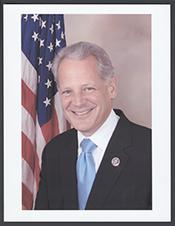
Mr. Speaker, I am proud to be a Democratic Member of this body. I have always been proud to be a Democrat. And always will be. But I came to Congress 2\1/2\ years ago with a promise to my…
Mr. Speaker, I am proud to be a Democratic Member of this body. I have always been proud to be a Democrat. And always will be.
But I came to Congress 2\1/2\ years ago with a promise to my constituents that I would work hard to break through partisan gridlock. I promised that when I agreed with the Republicans I would vote with them; and when I disagreed I would vote against them. But that I would always work to develop consensus and move our country forward.
That is what brings me here today, Mr. Speaker.
In those 2\1/2\ years, I have focused on a health care crisis for seniors on Long Island. We used to have 12 Medicare HMOs in my communities. Now we have two
left. Eighty-five thousand seniors have been tossed out of their Medicare HMOs. One out of five is skipping their medication because they can't afford them.
And in those 2\1/2\ years, I have listened to Republicans blame Democrats for this crisis; Democrats blame Republicans; the House blame the Senate; the Senate blame the House; Congress blame the White House; the White House blame Congress; and everyone blame the insurance companies.
There is plenty of blame to go around. But all the blame in the world isn't going to help a single senior citizen get their prescription drugs at a more affordable price.
It's time to stop blaming. It's time to stop finger pointing. It's time for conservatives to stop railing against a $400 billion prescription drug plan because it's too liberal. It's time for liberals to stop railing against a $400 billion prescription drug plan because it's too conservative. It's time for everyone to stop rejecting the imperfect because we can't get the perfect. It's time to move this process forward.
Mr. Speaker, I believe the Democrats are right. It will take at least $800 billion to provide America's seniors with a truly comprehensive, voluntary prescription drug plan.
Is an $800 billion prescription drugs program better than a $400 billion program that's before us today? Of course. $400 billion is only half as good as $800 billion . . . but it is $400 billion better than nothing. And nothing is exactly what we will leave our seniors if we reject this proposal today.
To reject the largest expansion of Medicare in its 38-year history because it's $400 billion instead of $800 billion just doesn't make sense to me.
Mr. Speaker, only a short time ago, President Bush argued for a $190 billion prescription drug plan. My side of the aisle proposed an $800 billion plan. Some say we have ended up at a $400 billion plan.
I disagree. I think we are beginning with a $400 billion plan. It is the largest expansion of Medicare in its 38-year history. It is, in my view, a down payment. An investment.
Is this plan flawed? I believe it is. I believe the Senate plan, supported by Ted Kennedy, is much better. But we can't get near that plan unless we go to a House-Senate conference. And we can't go to a House-Senate conference unless we pass this bill today.
Yesterday at the White House, I listened carefully to President Bush. He said clearly we must move this process forward and pledged to work on a bipartisan basis to develop a final bill that represents consensus.
But there's no hope for consensus, no hope for a penny of prescription drug spending, if we slam the brakes on the process today by killing this bill today.
Mr. Speaker, of particular importance to me and the constituents I represent is that this bill contains the Greenwood-Israel-Fossella amendment, which ends the economic discrimination in federal reimbursement formulas to suburban Medicare HMOs that have forced 85,000 of my constituents out of their prescription drug plans.
Those seniors are watching us today. They are tired of blame, tired of gridlock, tired of excuses. They don't care whether it's a Democratic solution or a Republican solution, as long as it's a good solution.
This is not a perfect solution. But it is a good start. It is the largest expansion of Medicare in its 38-year history. It ends the price discrimination on Long Island and other suburbs around the nation.
Mr. Speaker, let me close by repeating this: $400 billion is only half as good as $800 billion . . . but it is $400 billion better than nothing. And nothing is exactly what we will leave our seniors if we reject this proposal today. In the spirit of advancing the process, I will support this bill. I reserve the right, however, to vote against a bill that emerges from Conference that does not address the significant flaws in the legislation before us tonight.
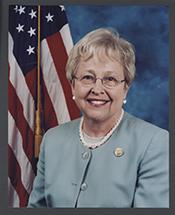
Mr. Speaker, I yield myself such time as I may consume. Mr. Speaker, let us look at the facts behind the rhetoric here. What is going to be the impact of this Democratic substitute on seniors? My…
Mr. Speaker, I yield myself such time as I may consume.
Mr. Speaker, let us look at the facts behind the rhetoric here. What is going to be the impact of this Democratic substitute on seniors? My colleague from Louisiana just reminded us that 100 percent of employers are going to drop their plans. If there is one thing my senior citizens say to me when I go into senior centers it is, look, help those who need it, but do not destroy my employer-provided retiree plan. Do not touch it. This amendment destroys it, wipes it out. That is not in the interest of your seniors.
But let us look at what it will do to premiums. You were concerned that we did not sock a premium into law. Look what you do in your bill. You sock the premium into law and then you have it rise according to drug inflation. Drug inflation is double-digit. Do you not get it? Those premiums are going to rise steeply. Why would you do that to our seniors?
And let us look at the effect on prices. There is one thing seniors say to you over and over again, the prices are too high. Yet according to Dr. Holtz-Eakin's testimony of April 9, 2003, he says, ``If you subsidize 90 percent of any insurance product versus 70 percent of the product, the larger subsidy will lead to a lower incentive to control costs and will lead to higher prices and higher spending.'' Yours is a giveaway to the pharmaceutical industry. It will drive prices up because there is no incentive for the PBM or the plan to negotiate prices down and they can just pass it on to the government, because we are going to pay it all. Yours is going to drive prices up, premiums up and employer plans out of the market. I do not know why you think you are doing the seniors a good service.
And look at the impact on their kids, because they care about their kids and their grandkids. We have heard testimony over and over again that if you have a 10-year-old child, in 20 years when that kid is 30 and trying to pay back college loans, trying to buy a house, trying to get established, having to buy a car, that child will live in a Nation in which three-quarters of all the Federal revenues will go to Social Security, Medicare and Medicaid.
What is that child to do about education for their children? What is that young person to do to make a living? You shoulder so much debt on the next generation that they will not have public education the way we know it today. They will not have the roads and bridges that a strong economy depends on. They will not be able to defend this Nation in a world that is going to be far more dangerous than the one we have known. This is utterly irresponsible. It is so irresponsible that when the other body proposed this plan in the Senate the last session of Congress, they could not write a budget resolution because they did not know how to handle the extraordinary debt that this creates in the decades ahead.
I urge my colleagues to think that something that looks pretty for your seniors, in fact, will be terrible for their health.
Mr. Speaker, I reserve the balance of my time.
Mr. Speaker, I yield 2 minutes to the gentleman from Iowa (Mr. Nussle), a member of the Committee on Ways and Means and esteemed chairman of the Committee on the Budget.
Mr. Speaker, it is my pleasure to yield 2 minutes to the gentleman from Wisconsin (Mr. Ryan), a member of the Committee on Ways and Means.
Mr. Speaker, I yield 2 minutes to the gentleman from Arizona (Mr. Hayworth), a member of the Committee on Ways and Means.
Mr. Speaker, I yield 1\1/2\ minutes to the gentleman from Ohio (Mr. Portman).
Mr. Speaker, I yield 1\1/2\ minutes to the gentleman from Virginia (Mr. Tom Davis).
Mr. Speaker, will the gentleman yield?
Mr. Speaker, yes, that is correct.
That is correct.
I thank the gentleman, and I look forward to working with the gentleman on this issue as the bill moves to conference.
Mr. Speaker, I yield myself 30 seconds.
This is a historic evening. It is our opportunity tonight to provide prescription drugs to all seniors under Medicare as an entitlement and to do it in a way that is fair, simple and generous and sustainable. It is our opportunity tonight to modernize the benefit program under Medicare to deal with chronic care for our seniors, a big concern for them, and to structure Medicare in such a way that it will be sustainable, the dollars will be there and Medicare will be able to provide the health retirement security in the future that it has in the past.
I urge support of H.R. 1 and defeat of the substitute.
Show 11 more
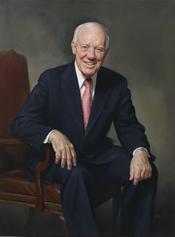
Mr. Speaker, Medicare, the most successful social service program since Social Security, will be dramatically transformed and, in the long run, unraveled by this Republican bill we are debating…
Mr. Speaker, Medicare, the most successful social service program since Social Security, will be dramatically transformed and, in the long run, unraveled by this Republican bill we are debating tonight.
Their plan will convert Medicare from a defined benefit plan to a defined contribution voucher plan. In plain English, it means that seniors will lose the guaranteed coverage and the security of knowing which benefits are covered. Instead of having predictability about Medicare premiums and copayments, seniors will essentially receive a voucher for services to cover the lowest-cost private insurance plan. If this plan does not pay for the services they need, seniors will have to cover the difference--which could be a big figure--out of their own meager income.
As a result, this untested, speculative health care experiment threatens to abandon all seniors, especially rural seniors. The Republican bill replaces Medicare with an illusory promise that private health insurance companies will offer health insurance polices in rural America. Under current law, health insurance companies have found it unprofitable to offer policies in rural America; worse, the Republican plan does not guarantee that rural seniors will have access to the same benefits as seniors in metropolitan areas enjoy.
Not only does this bill undermine Medicare, it fails to provide an affordable prescription drug benefit. I don't understand how the majority, on the one hand can justify trillion dollar tax cuts, and in the other hand, impose an arbitrary limit on Medicare and prescription drug benefits. To comply with this artificial limitation, the Republican plan offers a complicated and untested prescription drug benefit, with an enormous gap in coverage.
The Republican plan is difficult to explain, but let me try: it begins with uncertain private health insurance premiums; then, seniors must pay a $250 deductible before they receive any assistance, and there is a large coverage gap, the ``hole'' in the doughnut, where seniors will be paying premiums but receiving no assistance at all. Seniors first have to spend $250 a year, then they will pay 20 percent co-insurance for up to $2,000 in drug costs. However, no assistance would be provided between $2,000 and $5,100 in drug spending, forcing seniors to pay $3,100 out-of-pocket in drug costs. This plan is as unfair as it is complicated and costly to older Americans living on fixed incomes.
In contrast, the Democratic plan is guaranteed, defined, dependable, and understandable. It sets a premium of $25 a month; a $100 per year deductible; a 20 percent co-insurance payment for beneficiaries, with Medicare paying 80 percent; and a limit of $2,000 in out-of-pocket costs per beneficiary per year.
Health care is essential in greater Minnesota. The hospitals in many small communities throughout northern and northeastern Minnesota are the major employer in town, and the health care they offer is critical for economic development and tourism. The Rangel/Dingell bill offers a substantial improvement in payments to the hospitals and doctors in rural Minnesota who provide those critical health care services.
In particular, I am please that the Democratic Substitute includes numerous provisions to improve reimbursement for rural providers. The increased funding for low-volume, ``critical access'' and ``sole community'' hospitals, rural home health and ambulance providers, and rural physicians adds up to very significant improvements for hospitals in my district, and will assure their continued viability for years to come.
To be specific, the Democratic bill eliminates the 35-mile rule presently in place for Critical Access Hospital ambulance services. That improvement would save the hospital in Ely, Minnesota, and would strengthen ambulance services at nine other Critical Access Hospitals in my district.
The Democratic plan would provide an additional $6 billion for all rural ambulance providers by increasing payments for ambulance services. The increases we propose would ensure the financial solvency of St. Mary's Life Flight, enabling it to continue assisting, for example, people who are injured while vacationing in the Boundary Waters Canoe Area Wilderness.
On the whole, rural health care providers plan are better served, better funded, and treated more fairly under the Democratic plan, which also has the advantage of preserving Medicare. For that reason, I will be supporting the Rangel/Dingell bill.
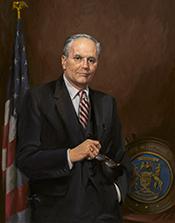
Mr. Speaker, I yield myself 3 minutes. (Mr. DINGELL asked and was given permission to revise and extend his remarks.) My dear friends and colleagues, I lay before you the Republican plan. I ask you…
Mr. Speaker, I yield myself 3 minutes.
(Mr. DINGELL asked and was given permission to revise and extend his remarks.)
My dear friends and colleagues, I lay before you the Republican plan. I ask you to look at it with a straight face, because it is inexplicable, and I cannot explain it to you with a straight face. The amendment which was offered by my dear friend, the gentleman from New York (Mr. Rangel), on behalf of him and me, does the following things: it gives and sets forth a very clear set of benefits. Senior citizens pay $25 a month; they get 80 percent of drug costs from government after a $100 deductible. This is what you get if you get the Republican plan. But that is not the worst you get. If you are a senior citizen, you fall into a doughnut hole. After you get $2,000 in drugs that you get under the plan, all of a sudden your payments by the government stop; you have to keep on paying premiums, but you get no benefit
until you have got $5,100. They are going to privatize your Medicare in the year 2010. That is pretty bad.
But it is followed by other things: massive subsidies to the insurance companies which commence in 2 years, in 2006. But that is not all. No guarantee as to what it costs you in terms of what you have to pay in the way of premiums, no assurance that you will get any particular level of benefits. The only person who is going to cut a fat hog out of this deal are those goodhearted, flinty-hearted, cold- hearted folk in the insurance business who are going to all of a sudden get a key to the United States Treasury, the right to collect any amount of money they want and to sucker the Secretary of HHS any old way they are minded and to walk home and to pay the money perhaps to the senior citizens but possibly to their shareholders or in dividends or perhaps to pay it in salaries or in bonuses to their corporate officers. That is what you get under the Republican plan. And privatization of Social Security as you know it today.
The Republicans have said that they intend to do away with Social Security. Well, this is what is happening here. The Democratic plan compels the drug houses to negotiate with the Federal Government and the Secretary. The Republicans preclude him by absolutely prohibiting him from negotiating. We do not tolerate under the Democratic plan the Republican opportunity to privatize Medicare. And just wait till your senior citizens find out what you are doing to them with privatization and doing away with fee-for-service and substituting in lieu of this the kind of plan that you talk about where there is no assurance of protection for the senior citizens.
The Republicans say the bill costs too much. Well, it pays some $800 billion to 40 million senior citizens. Just last week, without a gasp of shame, my Republican friends set it up so that 200,000 families got the same amount of money. I think it is time we looked after the senior citizens and not the fat cats that my Republican colleagues and friends look after.
Vote for the Democratic plan. Vote down the Republican plan. Let us take care of the senior citizens. It is the right thing to do.
Mr. Speaker, I yield myself 15 seconds.
I hope my colleagues look at that chart because it has the same factual value as Alice in Wonderland. There is no requirement that any of those drugs be made available. There is no requirement that they be made available at any particular price or that they have to be made available under the plan at any particular cost because of cost sharing with the insurance.
Mr. Speaker, I yield 2\1/2\ minutes to the distinguished gentleman from California (Mr. Waxman).
Mr. Speaker, I yield 2\1/2\ minutes to the distinguished gentleman from New Jersey (Mr. Pallone).
Mr. Speaker, I yield 2\1/2\ minutes to the distinguished gentleman from Michigan (Mr. Stupak).
Mr. Speaker, I yield 2\1/4\ minutes to the distinguished gentlewoman from Illinois (Ms. Schakowsky).
Mr. Speaker, I have an inquiry as to time first before I yield the balance of my time. I believe the gentlewoman from Illinois (Ms. Schakowsky) did not get the full 2\1/4\ minutes that I yielded to her. I would like to know how much time I have left and how much I can properly yield the gentlewoman from Illinois.
Mr. Speaker, I yield 1 minute to the distinguished gentlewoman from Illinois (Ms. Schakowsky).
Mr. Speaker, I reserve the balance of my time, and I want to yield it to our leader.
Mr. Speaker, tonight the House of Representatives considered a plan that would supposedly create a Medicare prescription drug benefit. While some touted the plan as an innovative approach, the fact…
Mr. Speaker, tonight the House of Representatives considered a plan that would supposedly create a Medicare prescription drug benefit. While some touted the plan as an innovative approach, the fact is that when you look past the smoke and mirrors, it turns out to be a very bad deal for Maine's seniors. In fact, the House plan could make the current situation for seniors a lot worse: it will do nothing to control rising prescription costs, it will jeopardize the traditional Medicare fee-for-service plan that seniors enjoy right now, it has a large gap in coverage that will force seniors to pay thousands of dollars out of their pockets, and it may cause employers to drop their health coverage.
We all know that drug prices are spiraling out of control. Maine seniors are forced to take bus trips to Canada to buy affordable prescription drugs. Our best hope for getting affordable medicines to people is to lower prices--that is why Maine passed the innovative Maine Rx law, and that's why I introduced a national version of the bill called America Rx. Yet, the House legislation does nothing to control rising costs. In fact, this plan expressly prohibits the Secretary of Health and Human Services from ever negotiating with drug companies for better prices. Pharmaceutical companies are reaping huge profits while seniors are often forced to choose between medicine and food.
Furthermore, this plan doesn't guarantee a prescription benefit for seniors and it actually jeopardizes current Medicare coverage. The proposed benefit is entirely run by the private insurance industry and has no fallback provision of areas with no private plan. Without a fallback provision, there is no guarantee that private plans will be established in largely rural areas like Maine--so our seniors will be left in the cold. This has happened before with Medicare Plus Choice, and it is very likely to happen again, meaning that Maine's seniors would get nothing from this bill.
In addition, this bill also contains a ``premium assistance'' provision that aims to phase out traditional fee-for-service Medicare and replace it with a voucher program. This is just another step toward total privatization of Medicare and the elimination of the only plan available to seniors in areas such as Maine--the traditional Medicare plan. Forcing seniors into private plans, and making them give up Medicare, is not the right approach--but that's what this bill would do.
This bill also has a very large gap in coverage seniors would have to continue to pay a monthly premium, but would receive absolute no benefit fro drug costs between $2,000-$4,900. Having this kind of a gap in coverage is like telling people that their auto insurance doesn't cover accidents in June, July and August.
Finally, and perhaps worst of all, there is a provision in this bill that does not allow for retiree coverage to count toward the out-of- pocket spending cap. It has been estimated that the bill passed by the House would result in up to \1/3\ of employers dropping their retiree coverage, the seniors who enjoy these plans would be forced into a Medicare plan with fewer benefits. The House should not pass a plan that forces seniors to lose what benefits they have.
For all these reasons, groups from AARP to the National Committee to Preserve Social Security and Medicare have sharply criticized this plan. I supported a number of alternative bills that would address the problems with this plan and vastly improve the benefit available to seniors. Unfortunately, the leadership of the House was more concerned about pushing any bill through as quickly as possible than with providing a quality benefit for seniors, and they weren't willing to fix the serious flaws in the bill that could hurt seniors. In fact, the House leadership refused to allow even one real amendment to the legislation.
I want to pass a real prescription drug benefit--but I would not vote for a plan that hurts Maine's seniors. I am disappointed with the legislation that was passed by the House, however the fight for a real Medicare benefit is not over. It is my hope that this legislation will be improved in the upcoming conference with the Senate. I will continue to fight to make sure that all Maine seniors receive an affordable and real Medicare prescription benefit.
Mr. Speaker, I rise today to express my opposition to this legislation and my support for the Blue Dog substitute, offered by Rep. Thompson, which we have not been allowed to debate on the House…
Mr. Speaker, I rise today to express my opposition to this legislation and my support for the Blue Dog substitute, offered by Rep. Thompson, which we have not been allowed to debate on the House floor today, despite support on both sides of the Capitol.
We in Congress have been talking for years now about the necessity of adding a prescription drug benefit to Medicare. We know, as seniors know, that this talk has been cheap and it is imperative that a compromise be reached this year. The Senate has been proceeding in a bipartisan way toward a compromise that adds a substantial, but not perfect, benefit to Medicare and protects the long-term integrity of this social insurance program.
Instead of following the Senate's lead and working toward a compromise that will improve Medicare, a wildly popular and successful program, the House Republican leadership has chosen instead of add provisions to this legislation that attack the foundation of the Medicare program. The bill does not include a federal fallback if private plans choose not to offer a benefit. The experience that my constituents have had with Medicare+Choice show that private health care plans are at best an unstable partner for Medicare, and financial analysts have consistently publicly questioned whether ``drug only'' plans will ever be offered. For these reasons, it is absolutely vital that Medicare provide a viable and guaranteed fallback for all Medicare beneficiaries.
Additionally, H.R. 1 would transform Medicare, beginning in 2010, from a defined-benefit program to a defined-contribution program. This provision would gradually shift enormous costs onto people when they are sick and most in need of care, and destroy the fabric of this program that has served seniors well for nearly 50 years.
The Senate has crafted legislation that has broad support among Senators across the ideological spectrum. This legislation has won the support of both President Bush and Senator Ted Kennedy. Together with Representative Thompson and the Blue Dog Caucus, I am supporting legislation that uses the framework of the Senate compromise and improves on it, making it a much stronger bill. The Thompson plan includes a provision phasing in employer contributions to they will count toward the out-of-pocket limit for catastrophic coverage, thus giving employers an incentive to keep offering retiree benefits. The substitute guarantees a Medicare fall-back plan for all areas that do not have two private plans available. It also gives relief to state Medicaid plans by making Medicare the primary payer for all individuals eligible for Medicare and Medicaid. Finally, the Blue Dog substitute includes language that will reduce the high cost of prescription drugs by allowing Americans to reimport drugs from Canada and speeding approval of generic drugs.
The House bill falls short on several other fronts as well. It ignores the needs of community and teaching hospitals, meaning that hospitals in my district stand to lose over $11 million in denied inflation updates. Kansas teaching hospitals, like KU Med, would additionally lose out to the tune of $3.9 million in 2003 and $21 million over five years due to the Federal Government's failure to help pay for the excess costs of medical education. The Thompson substitute provides an adequate inflation update for all hospitals. Finally, H.R. 1 would cut $16 billion over 10 years from oncology services. Cancer patients all over the country will have to pay for provisions in this bill that sharply cut funding for cancer-fighting drugs and allow Medicare to continue to underpay for costs associated with providing chemotherapy services.
I cannot support the Democratic substitute because I believe that it is simply too expensive. I voted against the most recent tax cut because I believe that it is irresponsible for Congress to run up bills for our children to pay, and the Democratic substitute, although a much more robust benefit for our seniors, is simply more than our country can afford at this time. The Senate bill and the Blue Dog substitute both hew to the budget agreed to by the House and Senate. Neither bill is perfect, but I believe that the Thompson substitute builds a strong foundation for a prescription drug benefit on which we can build in future years.
Mr. Speaker, I rise today to speak against the inadequate Medicare prescription drug bill being considered today, H.R. 2473 and in support of the Rangel/Dingell Substitute. With over 40 million…
Mr. Speaker, I rise today to speak against the inadequate Medicare prescription drug bill being considered today, H.R. 2473 and in support of the Rangel/Dingell Substitute.
With over 40 million elderly and disabled persons covered under the 38-year-old Medicare entitlement, Congress' chief objective should be to ensure that these Americans have access to quality health care coverage. However, today we consider legislation that will do more harm than good because it is the first step in privatizing the Medicare program and as former Speaker Gingrich predicted, causing it to ``wither on the vine''. Passage of this legislation will cause many of our seniors to wither right along with the Medicare program--which will no longer be seen as the social compact with our seniors that this nation embraces.
Medicare is the nation's second largest social welfare program. As an entitlement program, it is imperative to realize that with the implementation of H.R. 2473, fee-for-service Medicare payments would naturally increase. This will result in many seniors facing the horrible prospect of being unable to afford the increasing payments. I think many of my colleagues would agree that this is a very troubling proposition and a totally unnecessary result.
Additionally, with the establishment of the Voluntary Prescription Drug Benefit Program, seniors again would lose because of the lack of negotiated prices for the prescription drugs. Also, although federal subsidies would be provided to encourage participation, the bill would increase the annual out-of-pocket threshold for many beneficiaries. Once again a pseudo-solution of adding a prescription drug benefit while increasing the cost for persons who need the benefit but will not be able to afford its costs.
Furthermore, the use of health maintenance organizations (HMOs) and other private organizations to obtain prescription drugs would deter many seniors from getting the benefit. As Rep. Charles B. Rangel, Ranking Democrat on the Committee on Ways and Means stated, ``to get prescription drug coverage, seniors would have to go to an HMO by another name. Then, all the choices would belong to the private insurance provider--which drugs are covered, which pharmacies you can choose, who your doctor is, etc.'' Mr. Speaker, this bill is an empty pillbox--it is a paltry solution to the problem of providing adequate prescription drug coverage to our seniors; rather, it is creating an inadequate system--based on a provider concept that does not currently exist and will not likely work in practice.
A better alternative to H.R. 2473 is The Medicare RX Drug Benefit an Discount Act (H.R. 1199) offered by my friend Charlie Rangel of New York. This prescription drug plan would guarantee that every Medicare beneficiary, no matter where they live, could have a benefit with a $25 monthly premium, $100 annual deductible, 20 percent co-insurance and $2000 out-of-pocket limit. The bill would also:
Lower prescription drug cost for all Americans, regardless of whether they are covered by Medicare;
Give all Medicare beneficiaries the option of a reasonably priced guaranteed prescription benefit under Medicare;
Ensure that senior citizens and people with disabilities receive coverage for the drug that their doctor prescribes; and
Provide additional assistance for low-income beneficiaries such that many seniors would pay nothing for their prescription drugs.
Unlike the proposal put forth by the Bush Administration and endorsed and worsened by the House GOP Leadership, H.R. 1199 would not require seniors to join an HMO or similar private plan in order to get a prescription drug benefit. In fact, Medicare beneficiaries would be guaranteed a prescription drug benefit rather than offered a marginal, voluntary plan under H.R. 2473. This plan would ensure that we keep our social compact with our seniors. The Republic plan fails to do that.
Since its inception 1965, Medicare has provided important protection for millions of aged and disabled persons. H.R. 2473 would be a detriment to improving and securing this system. I lend my voice in opposition and urge my colleagues to vote against H.R. 4273 and to support H.R. 1199.

Mr. Speaker, I rise today to discuss the prescription drug benefit proposal that my colleagues on the other side of the aisle have rammed through the legislative process. I rise to decry this bill…
Mr. Speaker, I rise today to discuss the prescription drug benefit proposal that my colleagues on the other side of the aisle have rammed through the legislative process. I rise to decry this bill because it does not give seniors what they deserve. It seems pretty simple to me: a prescription drug benefit under Medicare ought to work the same way that Medicare has always worked. That is, it is a guaranteed benefit for all seniors, no matter where they live, how ill they are, or what kind of illness they have.
This bill proposes to turn the prescription drug benefit over to HMOs and the private insurance industry. That means, for one thing, that premium prices are not guaranteed--the insurance industry would be able to charge what ever they wanted for the premium. In addition, it would be the insurance companies that get to decide which drugs would be covered. What this means for seniors is that there will not be a consistent, reliable program for all seniors is that there will not be a consistent, reliable program for all seniors across the country. Seniors in my district might pay higher premiums and get less coverage than their counterparts in other areas of the country. Or, they may get better coverage for lower premiums. We just don't know because it will be left up to the private insurance companies and the HMOs.
This bill also raises out-of-pocket costs for those who need the protection that Medicare had traditionally provided: the sickest and the poorest beneficiaries. In addition to the ``mystery'' premium, seniors will have to pay for the first $250 worth of drugs without any help from the Federal Government. After they have paid $250, they must pay 20 percent of all their drug costs. Once they reach $2,000 worth of medications, they must pay all of their drug costs until they reach $4,900 worth of drug costs. So, once they get to $2,000, in addition to the premium, the $250, the 20 percent copay, they must cover all of their prescription costs until they get to $4,900. That is quite a lot of money.
Allowing HMOs and private insurance companies to take over the Medicare Prescription Drug benefit also presents a problem for rural areas. A very large portion of my district is rural. Everyone knows that for private companies, the bottom line rules. Rural areas aren't as profitable for insurance companies, so there is less incentive for them to offer benefits in those area. This means that there will be fewer choices--if any choices at all--for seniors in rural areas.
In one fell swoop, this bill takes the great success story that is Medicare: Universal healthcare for all beneficiaries, and crushes it. Under this Republican bill, your benefits and your costs depend on your income, where you live and the whim of the insurance company or HMO that is running the program in your area.
Mr. Speaker, I have received many letters and calls from my constituents who are worried about this proposal. They know that this proposal will cost them more money, may not even be available to them if they live in rural areas, and will not cover all their medication needs--especially for those with diabetes or even cancer. I will read one example from my constituent, Edna Monk:
Dear Sir, I am writing my Senators and Representatives to
plead our case regarding Medicare proposals that could
endanger patent access to chemotherapy. I am a lung cancer
survivor, age 71, and my husband, age 78, is now undergoing
chemo, for liver cancer. Chemo drugs are required for my
husband's quality of life now and MRI's have shown the tumors
have diminished in size, so ``it's working!''
She goes on to say, ``We in the cancer community want one thing: for all critical cancer services, including chemotherapy and patient care services to be covered fully and fairly by Medicare.''
Mrs. Monk makes a good point. Services must be covered fully and fairly by Medicare. It does seniors no good to have unequal coverage of medications! That is why I cannot support the Republican bill and I urge my colleagues to vote against this poison pill for Medicare!
Mr. Speaker, I stand here with my colleagues tonight to talk about the need for affordable prescription drug coverage for women. Because women suffer more from chronic illnesses requiring medication…
Mr. Speaker, I stand here with my colleagues tonight to talk about the need for affordable prescription drug coverage for women. Because women suffer more from chronic illnesses requiring medication than men do, they pay more out of pockets for medicine though their financial resources are often limited.
The proposed House bill would fail to offer meaningful prescription drug coverage to the millions of low-income women with incomes below the 135 percent poverty level who do not meet the requirements of asset tests. Also, the House bill would raise the amount of co-payments that our country's poorest women Medicare beneficiaries are forced to pay.
Unlike the House bill, the Senate proposal, while not perfect, would be far more helpful to elderly women who range from 74 to 160 percent of the poverty level. Under the House bill, the out-of-pocket costs paid by elderly women will still make it difficult for them to get their much-needed prescriptions filled. If the House bill is enacted, our struggling women seniors who are in greatest need of assistance will receive up to 40 percent fewer prescriptions than those seniors who are able to afford private insurance. Our elderly women, who are among our most vulnerable citizens, deserve far better treatment than this. It is critical that as Members of Congress, we help women and all seniors by expanding Medicare to offer a prescription drug benefit that is universal, affordable, dependable, and voluntary. We can do no less than to offer elderly women access to adequate healthcare that they can afford and easily access.
Our Republican colleagues are offering a plan that gives no real guarantees or assistance to those who need quality prescription drug coverage the most.
Furthermore, the House plan would force seniors to purchase their own private insurance, a tactic that will benefit insurance companies, and not seniors. This is a catastrophe we can avoid if we craft the right policy to benefit our elderly now. When it come to our elderly women, we know that:
Women make up 58 percent of the Medicare population at age 65, and 71 percent of the Medicare population at age 85.
Overall, elderly women have more chronic health problems than elderly men do.
On average, women live another 19 years after retirement, while men typically live another 15 years after retiring.
Due to the obstacles they face in enrolling, almost half of elderly women with incomes under the poverty limit are not enrolled in Medicare.
As compared to married women, widows are four times as likely, and divorced or single women are five times as likely to live in poverty upon retiring.
Many elderly women survive on fixed incomes. Over half of the older women age 65 and above earn less than $10,000 annually, and three out of four earn under $15,000 yearly. In contrast to elderly men, older women age 65 and above earned $14,820 as compared to $26,543 for men in the same age group.
Once retired, women earn less than men because:
Women tend to save less than men do throughout their lives which decreases their lifetime earnings.
Elderly women usually have smaller Social Security benefits and pension incomes than men do.
Minority women are much more likely to earn less and live in poverty than are White women. Even when they have similar educational backgrounds, minority women tend to earn less money and own fewer assets.
The sad fact is, the older and poorer a woman is, the higher her out- of-pocket health care costs will be, and the more help an elderly woman requires, the less likely she is to receive assistance. As a nation, though we are facing a great economic crisis, we are still obligated to provide assistance to our most needy citizens. Let us take good care of our elderly women and men by not enacting a prescription drug policy that will force them to choose between either buying food or paying for necessary medication.

Mr. Speaker, for forty years, the federal government has kept a promise to our nation's seniors. That promise is called Medicare, and it means that every senior will receive affordable, reliable…
Mr. Speaker, for forty years, the federal government has kept a promise to our nation's seniors. That promise is called Medicare, and it means that every senior will receive affordable, reliable health care in their later years.
Four years ago, I came to this Congress having made a promise to the seniors in my Congressional district--that I would work to bring Medicare into the twenty-first century by including coverage for prescription drugs. Coverage that, like the original Medicare program, is comprehensive, voluntary, universal, and reliable--without hampering the innovation that has brought us so many miraculous drugs over the past few decades.
Today I am voting to keep that promise by opposing a bill that would undermine the Medicare program itself. H.R. 1 purports to offer seniors coverage for the prescription drugs they rely on every day. Unfortunately, it falls far short when held up to the spirit and practice of Medicare.
The most distressing aspect of this bill, to me, to my constituents, and to the AARP, is that it takes the entire Medicare program down a short road to privatization. By the year 2010, Medicare would be converted to a voucher program with competition between managed care plans and traditional fee-for-service--only the deck would be stacked against the traditional plans. Seniors would find themselves have forced to enroll in managed care programs like the Medicare+Choice programs that have failed so miserably in central New Jersey.
Rather than giving seniors what they want and deserve--a reliable, affordable drug benefit under Medicare, this provision, glibly called ``premium support,'' will destabilize the program and lead to substantially higher costs for seniors who want to stay in traditional Medicare.
Yet another element of confusion comes from the bizarre ``donut hole'' in coverage under this bill. Seniors would find themselves paying 20 percent of drug costs up to $2000 in drug costs--then having no coverage until they reach $4900 in drug costs, when a catastrophic cap finally kicks in. Not only is this extremely convoluted, it ends up leaving seniors with a very paltry benefit. A beneficiary with $5000 in annual drug costs would pay nearly $4000 out of their own pocket!
This may be alarming to seniors who currently have no drug coverage. There are millions out there, however, who may think this debate won't really affect them because they already have coverage under their company's retiree benefit packages. I want them to know that the Republicans have quite a surprise in store for them.
If this bill passes, nearly one-third of employers currently offering retiree drug benefits--covering 11 million seniors--would drop that coverage. Retiree benefits would not count towards the beneficiary's out-of-pocket limit, making it almost impossible for seniors with retiree coverage to ever reach the catastrophic cap. So the bill actually discriminates against seniors with existing coverage and will have the practical effect of employers ending their benefits. This provision makes no sense--why on earth do we want to have less private sector drug coverage?
While I am disappointed with the underlying bill, I am pleased to see that the Rules Committee made the Dingell-Rangel substitute bill in order. This legislation would go a long way to fulfilling the promise I mentioned--it would provide a reliable, stable benefit under Medicare. Beneficiaries know exactly what they would pay--20 percent of drug costs up to $2000 in out-of-pocket costs with a defined premium of $25 per month and a defined deductible of $100.
Tonight, in this body, by passing H.R. 1 we could be bringing about the end of a program that served seniors so well. Instead, we should pass the Dingell-Rangel substitute. That is what seniors need and deserve.

Mr. Speaker, I want to support a Medicare prescription drug bill, but I can't support the one we are considering today. It is inadequate, unreliable, will force seniors into HMOs, and will endanger…
Mr. Speaker, I want to support a Medicare prescription drug bill, but I can't support the one we are considering today. It is inadequate, unreliable, will force seniors into HMOs, and will endanger drug benefits that many seniors get through their retirement plans. In fact, instead of drafting a Medicare drug benefit bill, the Republican Majority has used this opportunity to try to end Medicare as we know it.
I have long believed that Congress should act to help seniors with their prescription drug expenses. Nearly everyone agrees that Medicare should be updated with a drug benefit; it is the right and sensible thing to do. How we design that benefit is where the rub is. I had hoped that we would vote on a bill similar to the one in the Senate because I think it's a good start toward building a workable, financially sound prescription drug benefit. But the House bill is not the same as the Senate bill.
First, I think Congress should give seniors greater choice in coverage, however, it should provide an equal prescription drug benefit to all beneficiaries, regardless of whether they enroll in a private health plan or traditional fee-for-service Medicare. We shouldn't force seniors into managed care, which I believe this bill will do by opening the traditional Medicare program up to competitive bidding against private insurers in 2010.
Second, the House bill does not include an important ``fallback'' provision that requires that traditional Medicare would step in as a backup if private insurers show no interest in selling drug plans in a particular area. Currently, private plans don't exist in many parts of the country, including many smaller cities, rural and mountain areas in Colorado. I've heard from many seniors in my district who have been dropped from their Medicare HMO and are now having trouble finding a doctor. In addition, 88 percent of all Medicare beneficiaries are enrolled in traditional Medicare. So, without this ``fallback'' safety net provision, seniors would have no coverage in regions where insurers say it's unprofitable to provide it, especially rural areas.
Taken together, I think these provisions undermine the traditional Medicare program. By opening traditional Medicare to competitive bidding and with no fallback mechanism, I fear that our country will revert to the time before Medicare was established in 1965 when private insurers wouldn't provide affordable coverage to seniors. That's a step backward, not a step forward, in fixing Medicare.
I also have problems with the home health copayment provision in the bill, which I believe will discourage seniors from accessing home health care, which is more cost effective than accessing treatment an emergency room or a skilled nursing facility. And I am concerned that opening durable medical equipment to competitive bidding will give seniors less choice and put many small businesses out of business.
On top of everything, this 692-page bill was introduced at midnight last night. How can anyone know what's in it, except the people who wrote it? Our seniors deserve greater respect.
Mr. Speaker, it is misguided at best that Medicare will pay for a senior's care following a stroke but will not pay for the anti- hypertension drugs that prevent them. The time is ripe to pass a Medicare prescription drug benefit, but not this one. I regret I can't support it. I hope that a bill can be worked out in conference that I can support. We need to put ideological and partisan politics aside and get it done this year.
Mr. Speaker, one of the promises I made when I came to Washington was to improve the lives of East Alabama seniors. Unlike retirees in our country's metropolitan areas, the seniors of the Third…
Mr. Speaker, one of the promises I made when I came to Washington was to improve the lives of East Alabama seniors. Unlike retirees in our country's metropolitan areas, the seniors of the Third District face far greater challenges.
For starters, most Third District seniors lives in rural areas with few choices in health care providers. This undoubtedly means higher health costs and fewer costs when it comes to doctors, and higher out- of-pocket expenses for covering the same level of basic medical needs.
Part of the problem, Mr. Speaker, is Medicare does not fairly and adequately reimburse doctors for their services. This is not fair, especially when retirees just across the Georgia border have far better access to doctors who are reimbursed by Medicare at higher rates. Seniors should not be penalized just because they live in rural areas.
But assuming we fix the reimbursement problem, this still leaves Medicare as a program designed for the 1960s, yet providing care in 2003. That's why I'm pleased to be in the House today to offer my full support for adding a prescription drug benefit under Medicare.
Earlier this year, Speaker Hastert appointed me to his Prescription Drug Action Team to help craft a prescription drug benefit for Medicare. I've taken this responsibility around the Third District to listen to seniors describe what they think this benefit should do, and how it should be designed.
First and foremost, we must reduce the costs of prescription drugs. Modern medicine relies on these life-saving drugs more than ever, and doctors shown no signs of slowing the expected growth in prescriptions. But with Alabama seniors now paying an average of $1,200 per year for prescriptions, these costs are getting out of hand.
Consider seniors on fixed incomes, Mr. Speaker. These Alabamians, already strapped with highly monthly bills, now face the costs of prescriptions rising beyond their means. We've already seen prescription drugs double or even triple in cost over the years. What will these seniors do when these drugs are priced out of reach? Will they be faced with filling their medicine cabinet or their pantry?
Mr. Speaker, this simply cannot continue. The U.S. House of Representatives has drafted a bill, the Medicare Prescription Drug Modernization Act of 2003, which includes a prescription drug benefit for seniors in both the traditional fee-for-service and in the new integrated health plans. The bill is not limited to adding prescription drug coverage for our state's seniors, but also includes much-needed modernizations to Medicare and improvements for health care providers, such as an increase in Medicare payments to doctors to ensure that seniors continue to have access to physician services. Most importantly, the bill includes improvements and increased funding for rural hospitals in the Third District.
This is hardly a perfect bill, but it is a good bill. The legislation helps Alabama's seniors receive better health care under Medicare and provides immediate relief from high prescription drug costs. President Bush supports it, and is ready to sign this bill should the House and Senate pass it.
Mr. Speaker, I'm proud to be in this House today and have the chance to improve the lives of Alabama's seniors. I will continue to work with my colleagues on both sides of the aisle, as well as those in the Senate, to help pass this important legislation now, and send it to the White House for President Bush to sign into law.
Mr. Speaker, the only thing that stinks here is the Republican bill, and it stinks for a lot of reasons. First of all, because it is not going to give the seniors any benefit. They are not going to…
Mr. Speaker, the only thing that stinks here is the Republican bill, and it stinks for a lot of reasons.
First of all, because it is not going to give the seniors any benefit. They are not going to have really any drug benefit whatsoever. It is going to force them into an HMO. They will not have any choice of doctors. And fundamentally, in the end what the Republican bill does is kill Medicare by setting up a voucher system so we do not even have traditional Medicare.
I am sick and tired of hearing my Republican colleagues on the other side criticize traditional Medicare. Medicare is not insolvent. Medicare is a good program. Do not tell me that Medicare is broke or Medicare needs to be fixed. And I say to the gentlewoman from Connecticut, do not insult me and say the Democrats are irresponsible, the Democrats are putting us in debt. The Republicans are the ones that are putting us in debt, because you are borrowing from the trust fund so there is no money left in it because you want to kill Medicare. That is what you are all about.
These gentlemen over here, these Democrats who have been here for a long time, they are here tonight because they want to save Medicare. They understand that Medicare can be helped by putting on a prescription drug benefit, so they look at the tried and true system, they look at what we do in part B for our doctor bills, and they say, yes, let us just add a benefit like part B. We will have a low premium. We will have a low deductible. We will pay 80 percent of the cost on the Federal Government. We will have a catastrophic at 2,000. Just add the tried and true program, like we have in part B, and add a drug benefit. We do not need HMOs. We do not need all of these other gimmicks that the Republicans come up with.
And then these gentlemen, my colleagues, the gentleman from Michigan (Mr. Dingell) and the gentleman from New York (Mr. Rangel), they say, well, we can pay for this very easily by negotiating the price and giving the Secretary the power to lower the prices. That would cut the program in half. That is what our Democratic leader said. That would cut the cost of the program in half so we would not have to go into debt. We would not have to borrow from the trust fund and make it insolvent, which is what my Republican colleagues have been doing here and what they are proposing.
Mr. Speaker, do not sell out to the HMOs and the insurance companies. That is what you are doing. You are selling out by saying everybody has got to go into an HMO because you are in bed with the insurance companies. You are selling out to the pharmaceutical industry because you want no price reductions, because you are going to get some benefit from the pharmaceutical industry.
And then you come up with: this is complicated. The gentleman from Pennsylvania (Mr. Greenwood) said, oh this is complicated. There is nothing complicated here. It is simple. We have had the program for years. We just add the prescription drug benefit, and we have a negotiated price. It is very simple.
Do not give me this chart. I mean, look at this garbage. How could anyone possibly understand it? I cannot even understand it myself, and you expect my mother or somebody's grandmother to understand this thing? You are making it complicated. You are destroying Medicare. Do not insult us as Democrats. We have been out there protecting it for years.
Bill Text
Latest available legislative text
        [Congressional Bills 108th Congress]
[From the U.S. Government Publishing Office]
[H.R. 841 Introduced in House (IH)]

108th CONGRESS
1st Session
H. R. 841

To amend title XVIII of the Social Security Act to improve access to
Medicare+Choice plans for special needs Medicare beneficiaries by
allowing plans to target enrollment to special needs beneficiaries.

_______________________________________________________________________

IN THE HOUSE OF REPRESENTATIVES

February 13, 2003

Mr. Ramstad (for himself and Mr. Cardin) introduced the following bill;
which was referred to the Committee on Ways and Means, and in addition
to the Committee on Energy and Commerce, for a period to be
subsequently determined by the Speaker, in each case for consideration
of such provisions as fall within the jurisdiction of the committee
concerned

_______________________________________________________________________

A BILL

To amend title XVIII of the Social Security Act to improve access to
Medicare+Choice plans for special needs Medicare beneficiaries by
allowing plans to target enrollment to special needs beneficiaries.

Be it enacted by the Senate and House of Representatives of the
United States of America in Congress assembled,

SECTION 1. SHORT TITLE.

This Act may be cited as the ``Medicare Improvements for Special
Needs Beneficiaries Act of 2003''.

SEC. 2. SPECIALIZED MEDICARE+CHOICE PLANS FOR SPECIAL NEEDS
BENEFICIARIES.

(a) Treatment as Coordinated Care Plan.--Section 1851(a)(2)(A) of
the Social Security Act (42 U.S.C. 1395w-21(a)(2)(A)) is amended by
adding at the end the following new sentence: ``Specialized
Medicare+Choice plans for special needs beneficiaries (as defined in
section 1859(b)(4)) may be any type of coordinated care plan.''.
(b) Specialized Medicare+Choice Plan for Special Needs
Beneficiaries Defined.--Section 1859(b) of such Act (42 U.S.C. 1395w-
29(b)) is amended by adding at the end the following new paragraph:
``(4) Specialized medicare+choice plans for special needs
beneficiaries.--
``(A) In general.--The term `specialized
Medicare+Choice plan for special needs beneficiaries'
means a Medicare+Choice plan that exclusively serves
special needs beneficiaries (as defined in subparagraph
(B)).
``(B) Special needs beneficiary.--The term `special
needs beneficiary' means a Medicare+Choice eligible
individual who--
``(i) is institutionalized (as defined by
the Secretary);
``(ii) is entitled to medical assistance
under a State plan under title XIX; or
``(iii) meets such requirements as the
Secretary may determine would benefit from
enrollment in such a specialized
Medicare+Choice plan described in subparagraph
(A) for individuals with severe or disabling
chronic conditions.''.
(c) Restriction on Enrollment Permitted.--Section 1859 of such Act
(42 U.S.C. 1395w-29) is amended by adding at the end the following new
subsection:
``(f) Restriction on Enrollment for Specialized Medicare+Choice
Plans for Special Needs Beneficiaries.--In the case of a specialized
Medicare+Choice plan (as defined in subsection (b)(4)), notwithstanding
any other provision of this part and in accordance with regulations of
the Secretary and for periods before January 1, 2008, the plan may
restrict the enrollment of individuals under the plan to individuals
who are within one or more classes of special needs beneficiaries.''.
(d) Report to Congress.--Not later than December 31, 2006, the
Secretary of Health and Human Services shall submit to Congress a
report that assesses the impact of specialized Medicare+Choice plans
for special needs beneficiaries on the cost and quality of services
provided to enrollees. Such report shall include an assessment of the
costs and savings to the medicare program as a result of amendments
made by subsections (a), (b), and (c).
(e) Effective Dates.--
(1) In general.--The amendments made by subsections (a),
(b), and (c) shall take effect upon the date of the enactment
of this Act.
(2) Deadline for issuance of requirements for special needs
beneficiaries; transition.--No later than 1 year after the date
of the enactment of this Act, the Secretary of Health and Human
Services shall issue final regulations to establish
requirements for special needs beneficiaries under section
1859(b)(4)(B)(iii) of the Social Security Act, as added by
subsection (b).
<all>