To name the Department of Veterans Affairs in Houston, Texas, as the "Michael E. DeBakey Department of Veterans Affairs Medical Center".

Legislative Activity
Stay on top of the latest movement without scrolling through every action
View full timeline
Introduced in House
January 7, 2003
Referred to the House Committee on Veterans' Affairs. (text of measure as introduced: CR 7/25/2003 H7703)
January 7, 2003
Sponsor introductory remarks on measure. (CR H7335)
July 23, 2003
Similar provision incorporated. See S. 1156, Title II, Section 243..
November 19, 2003
Floor Debate
24 membersWhat members said about H.R. 91 on the floor
 JN
JN JTWSJL
 DB
DB CHS+19
Floor Debate
24 membersWhat members said about H.R. 91 on the floor
Mr. Chairman, I offer an amendment. Mr. Chairman, I yield myself such time as I may consume. This amendment would increase the appropriation for the Housing Opportunities for Persons with AIDS…
Mr. Chairman, I offer an amendment.
Mr. Chairman, I yield myself such time as I may consume.
This amendment would increase the appropriation for the Housing Opportunities for Persons with AIDS program, known as HOPWA, by $5 million. It is a far cry from what is truly needed, but it represents an important first step towards full funding.
I would like to thank the gentleman from New York (Mr. Crowley) for cosponsoring the amendment, and I would like to thank the gentleman from Connecticut (Mr. Shays) for cosponsoring the amendment and for demonstrating bipartisan support for this amendment and for this program.
I have a lengthy statement, but since the distinguished chairman has indicated he is prepared to accept the amendment, I will say nothing further other than to thank him.
Mr. Chairman, this amendment would increase the appropriation for the Housing Opportunities for Persons With AIDS, or HOPWA, progam by $5 million. This is a far cry from what is truly needed, but it represents an important first step toward full funding.
I would like to thank Mr. Shays and Mr. Crowley for joining me on this amendment and for demonstrating the bipartisan support for HOPWA.
Mr. Chairman, at any given time, one-third to one-half of all Americans living with AIDS are either homeless or in imminent danger of losing their homes. Without assistance, they face almost certain death on the streets.
This is where HOPWA comes in. Through a variety of services, HOPWA helps thousands of people each year put a roof over their heads and create a stable living environment for themselves.
But HOPWA is not just about being compassionate, it's also good public policy. Having stable, decent housing is the key to maintaining strict treatment regimens which have allowed thousands of people with AIDS to resume normal, productive lives.
HOPWA is a locally controlled program that provides communities with the flexibility to address local housing needs. It also supplies a low- cost alternative to acute-care hospital beds, typically paid for by Medicaid, which are often the only available shelter for people living with AIDS. In fact, while an acute-care facility costs Medicaid, on average more than $1,000 a day assistance under HOPWA costs just $55 to $110 a day.
In Fiscal Year 2002 alone, HOPWA funds served over 60,000 people in 74 cities and 34 states across the nation. This is a well-run, far- reaching and successful program.
When I meet with members of the AIDS community, there is one need that is stressed about all others, and that is housing. Finding affordable housing can be extremely difficult for anyone. Throw in the added complications of living with AIDS--paying for expensive medication, the difficulty in holding a steady job, and perhaps facing discrimination--and it becomes nearly impossible. That's why HOPWA fills such a critical void.
But without sufficient funding, thousands of people will continue to be unable to access these critical services. In San Francisco alone, over 4,700 people are now on waiting lists for HOPWA-funded housing. We must do all we can to reduce this backlog.
The housing crisis facing people living with HIV/AIDS exacts an enormous toll on individuals, their families, and communities across the country. HOPWA dollars help lessen this toll. Without proper funding for HOPWA, people with HIV and AIDS will continue to die prematurely in hospital rooms, shelters, and on the streets of our cities. This amendment is a small step toward what is truly necessary, but even this modest increase will mean the difference between life and death for thousands of people. I urge the adoption of this amendment.
Mr. Chairman, I yield back the balance of my time.
Mr. Chairman, I will upset the normal order of things by first yielding 30 seconds to the gentleman from Massachusetts (Mr. Frank).
Mr. Chairman, I yield myself 2 minutes.
(Mr. NADLER asked and was given permission to revise and extend his remarks.)
Mr. Chairman, this amendment would increase funding for section 8 housing vouchers by $150 million to help low-income families afford safe, decent housing. To offset this increase, the amendment cuts the working capital fund from the management and administration accounts by an equal amount.
The need for housing assistance is staggering. As of January 1, the New York City Housing Authority had 142,000 applicants on its waiting list for section 8. And it gets worse. The section 8 waiting list has been closed to new applicants since December 1994, and there is still 142,000 people waiting, just in New York City. In 1999, a HUD study concluded there were nearly 5 million low-income families who paid more than 50 percent of their income for rent or lived in severely substandard housing.
In the last several years, housing prices have continued to skyrocket, and with the stagnant economy and rising unemployment rates the problem is probably even worse and more severe today. We must not ignore the desperate situation facing these families any longer.
I challenge anyone to argue that tenant-based section 8 vouchers do not achieve their goals. More than 2 million American families benefit from section 8 vouchers. For these families, section 8 is a lifeline and enables them to live in decent housing.
Mr. Chairman, why are we planning to undermine the program in this bill by not expanding it?
The fact is, as recently as a few years ago, in fiscal year 2001, we increased the number of vouchers by 79,000. In fiscal year 2002, we increased it by 18,000. Last year we increased it by zero. This budget proposes to increase it by zero.
The amount of money I am proposing to put into this bill will increase a mere 23,000 new vouchers. Waiting lists are in the millions. We can afford the offset. We have already appropriated over $1 billion in the last couple of years to upgrade the computer system. We are proposing $330 million more this year. We are saying, take about half of that, less than half of that, and provide services for people. If it takes HUD a little longer to upgrade its computer system, they will live with that, so 23,000 people will have decent housing.
Mr. Chairman, that is a fair trade, and that is why I urge my colleagues to support this amendment.
July 25, 2003.
To: Members of the House of Representatives.
Re funding for the Housing Choice (``Section 8'') Voucher
Program.
As members of the faith community, we are writing to
express our concern about funding for the Section 8 housing
voucher program. Our organizations serve millions of low-
income individuals and families who, despite their best
efforts, are struggling to meet their basic needs and to
achieve economic stability. To many of those we assist, the
lack of affordable housing presents a considerable obstacle,
and the Section 8 voucher program offers in turn a critical
form of assistance. Through our work, we are witness to the
important role that housing vouchers play in preventing
homelessness, and in helping low-income individuals and
families to make progress towards economic stability.
Congress has for many years expressed a strong commitment
to the Section 8 voucher program, consistently voting to
increase the number of vouchers authorized and to fully fund
all authorized vouchers. This commitment has been important,
as the need for housing assistance has continued to expand.
In most communities, there are long waiting lists for Section
8 vouchers, and it is estimated that only one third of
eligible households receive voucher assistance.
To our disappointment, however, Congress appears to be
retreating from this commitment. In the appropriations law
for 2003, Congress failed, for the first time in recent
memory, to include funding for incremental Section 8
vouchers. This week, the House Appropriations Committee
reported out a VA-HUD appropriations bill for 2004 that
would, by its own estimate, fund only 96 percent of
authorized Section 8 vouchers, and again includes on funding
for incremental vouchers.
Moreover, while we appreciate that the House Appropriations
Committee has made a sincere effort to improve on the
President's budget request for the voucher program, and we
recognize that estimating future voucher costs is difficult,
there is reason to believe that the Committee's estimate is
overly optimistic. Recent analyses performed independently by
the Congressional Budget Office and the Center on Budget and
Policy Priorities (CBPP) suggest that the Committee's
estimate is based on voucher cost assumptions that are too
low. For example, in an analysis of the most recent voucher
cost data from the U.S. Department of Housing and Urban
Development, CBPP estimates that the Section 8 appropriation
in the House bill would be sufficient to renew only 91
percent of authorized vouchers, and is approximately $580
million short of the funding that will be necessary to fully
renew vouchers leased in 2004. A shortfall of this magnitude
would have a destructive impact on thousands of vulnerable
households--85,000 households, by CBPP's estimate--the great
majority of which are working families, elderly, or disabled.
We therefore urge you to renew Congress's commitment to
fully fund the Section 8 voucher program. Specifically, we
ask that you increase the Section 8 appropriation
sufficiently to ensure that all authorized vouchers will be
funded, and to make certain that no households using vouchers
in the coming year will be denied funding.
As faith-based organizations, we are committed to
strengthening our communities by assisting those who are the
most vulnerable, and we believe that our work is not simply a
matter of charity, but of responsibility, righteousness, and
justice. We urge you to assist us in our work by renewing
Congress's commitment to fully fund and expand the Section 8
voucher program.
Sincerely,
American Baptist Churches USA.
Call to Renewal.
Catholic Charities USA.
The Episcopal Church, USA.
McAuley Institute.
NETWORK, A National Catholic Social Justice Lobby.
Presbyterian Church (U.S.A.) Washington Office.
United Jewish Communities.
Volunteers of America.
Mr. Chairman, I am offering, with Congresswoman Velazquez, this amendment to increase funding for Section 8 vouchers by $150 million to help low-income families afford safe, decent housing. To offset this increase, we propose to cut the working capital fund from the management and administration account by the same amount.
The need for housing assistance is staggering. As of January 1, 2003, the New York City Housing Authority had 141,837 applicants on its Section 8 waiting list. And it gets worse. The Section 8 waiting list has been closed to new applicants since December 1994. That is just in New York City.
In 1999, a HUD study concluded that there were nearly 5 million low- income families who paid more than 50 percent of their income for rent or who lived in severely substandard housing. In the last several years housing prices have continued to skyrocket, and with the stagnant Bush economy and rising unemployment rates the problem is probably even more severe today. We must not ignore the desperate situation facing many families or the severity of their needs any longer.
I challenge anyone to argue that tenant-based Section 8 vouchers do not achieve their goals. More than 2 million American families benefit from Section 8 vouchers. For these families, Section 8 is more than a contract or a subsidy; it is often the foundation upon which they can build lifelong economic self-sufficiency. Section 8 allows families to enter the private housing market and choose where they want to live, helping them to escape from the cycle of poverty and creating better income mixes throughout our communities. Thanks to Section 8, families are able to afford decent, safe housing. Nothing extravagant and, frankly, sometimes not very nice at all, but much better than the alternative.
Research supports the benefits of Section 8 housing. Section 8 children are much less likely to be involved in violent crime, and they are more likely to stay in school and improve their educational performance. Section 8 families are more than twice as likely to leave welfare, and have success moving into the workforce. Based on these and other findings, the bipartisan, congressionally-chartered Millennial Housing Commission strongly endorsed the voucher program in its May 2002 report, describing the program as ``flexible, cost-effective, and successful in its mission.''
So why are we planning to undermine the program in this bill?
The bill, in its current form, does a terrible disservice to those most in need. Unlike the previous administration which in the year 2000 requested 120,000 incremental Section 8 vouchers, the Bush Administration would prefer to block grant the program and cut its funding. Thankfully, not even the Republicans agreed to such a radical proposal. However, this bill would contribute to the growing backlog of families who can't afford decent, safe and sanitary housing.
I want to quote from a letter from religious organizations throughout the country who write that ``Recent analyses performed independently by the Congressional Budget Office and the Center on Budget and Policy Priorities (CBPP) suggest that the Committee's estimate is based on voucher cost assumptions that are too low. . . . CBPP estimates that the Section appropriation . . . is approximately $580 million short of the funding that will be needed to fully renew vouchers leased in 2004.'' That means that 85,000 households will be affected.
Our amendment will allow about 23,500 more families to live in safe, affordable, decent housing. It is not asking for much. We can and should do more. But today, we only ask for a very modest amount.
Franklin Delano Roosevelt spoke eloquently in 1944 of the fact hat, and I quote: ``True individual freedom cannot exist without economic security and independence. Necessitous men are not freemen.'' FDR was right--every family deserves a decent home.
President Roosevelt's commitment to provide decent, safe, affordable housing to those who could not afford the rents in the private market continued through both Democratic and Republican administrations. Richard Nixon, Ronald Reagan and the first George Bush all--to some degree--continued that commitment. And yet today, this bill does not properly fund Section 8 housing vouchers. Families in need will suffer under this bill if we cannot amend it.
We must house our people. Let's continue the legacy of this great nation. Please vote yes on the Nadler-Velazquez amendment.
Mr. Chairman, I reserve the balance of my time.
Mr. Chairman, I yield 2 minutes to the gentleman from New York (Mr. Crowley).
Mr. Chairman, I yield 2 minutes to the distinguished gentleman from Alabama (Mr. Davis).
Mr. Chairman, I yield myself such time as I may consume.
Mr. Chairman, first, let me note and thank the gentlewoman from New York (Ms. Velazquez) for coauthoring this amendment with me. She could not be here on the floor right now, but it is her amendment as well as mine, and I want to express my appreciation to her in public for all the work that she has done on this amendment.
Second, the distinguished chairman said that an outside interest group estimated the costs of the vouchers. The fact of the matter is, and I quote from a letter from some church groups, religious organizations throughout the country who wrote, ``Recent analyses performed independently by the Congressional Budget Office and the Center on Budget and Policy Priorities suggest the committee's estimate is based on voucher cost assumptions that are too low'' because, in fact, they are a couple of years out of date. ``CBPP estimates that the Section 8 appropriation is approximately $580 million short of the funding that will be needed to fully renew vouchers leased in 2004.''
That means that about 85,000 vouchers will not be paid for, assuming the Congressional Budget Office and the Center of Budget and Policy Priorities are more correct than those of the Department, for which I would rather give them the benefit of the doubt than I would the Department.
This amendment would restore funding for 23,500. Frankly, it is simply unacceptable in a time of rampant homelessness, in a time when in New York City, and I use this as an example because conditions are bad in many places, the waiting list for public housing was closed in 1994 and the waiting list is almost 200,000 since then. You cannot get on the waiting list in the last 9 years.
People are desperate for housing. It is unacceptable to have a budget that purports to increase the number of Section 8 vouchers by zero, and that may very well, if in fact the CBO and the CBPP were correct in saying that HUD estimates of costs are wrong, may very well cut it by 85,000. That is just not acceptable.
So I urge my colleagues to accept this amendment. Yes, it will present some difficulties perhaps with computerization. HUD can survive that. But this will enable 23,500 additional households to have decent housing, maybe 23,500 additional kids to be able to learn in school instead of not being able to learn in school because they have no place to do their homework
and no decent place to literally hang their hats.
This is a modest, minimal amendment. It is minimal decency. We should be doing it 10 times larger, but given the constraints of the budget, the constraints of the tax cut, this is the least we can do.
I am sorry, by the way, if it were not for the constraints of the tax cuts and the budget that were forced on this side of the aisle by the other side of the aisle, we would not have to take $150 million away from this computerization program. We would not have to have that offset. We could simply say, in decency, let us help provide more people with decent housing.
But we must do this offset. The offset may not be the best thing, but it is a heck of a lot better than 23,500 families not having decent housing.
So I urge my colleagues to support this amendment.
Mr. Chairman, I demand a recorded vote.
Mr. Chairman, I ask unanimous consent that all Members may have 5 legislative days within which to revise and extend their remarks on H.R. 2861, and that I may include tabular and extraneous…
Mr. Chairman, I ask unanimous consent that all Members may have 5 legislative days within which to revise and extend their remarks on H.R. 2861, and that I may include tabular and extraneous material.
Mr. Chairman, I yield myself such time as I may consume.
Mr. Chairman, it is my pleasure to bring before the House today H.R. 2861, the Departments of Veterans Affairs and Housing and Urban Development, and Independent Agencies Appropriations Act for 2004.
Prior to proceeding, Mr. Chairman, in discussing the bill before us, I would like to offer my sincere recognition and thanks to my ranking member, the gentleman from West Virginia (Mr. Mollohan), for his help in bringing this bill to the floor. He and I have forged a strong relationship over the last 5 years working on this bill. I feel the result reflects most of our shared priorities. We consulted during hearings during the formation of the bill, during markups, and his advice has been remarkable and we would not be here if we had not had it.
I would also like to thank and recognize the staff on both sides of the aisle for their hard work and assistance. My personal thanks to Tim Peterson, the clerk of the subcommittee; Dena Baron; Jennifer Whitson; Jennifer Miller; and Doug Disrud on the majority side, and to Michelle Burkette, Mike Stephens, and Jerry Johnson for the minority.
I would also like to express my appreciation to Gavin Clingham and Angela Ohm on the gentleman from West Virginia's (Mr. Mollohan) personal staff, as well as Ron Anderson and Art Jutton on my personal staff for their assistance in getting this bill to this point in the process.
Mr. Chairman, I would like to just sum up briefly the bill. Most of the attention has been focused on the veterans portion, and I will address that at the end. In housing, we have provided an increase of about close to $1 billion to provide for full funding for section 8 housing vouchers. There are no new incremental vouchers, but we have fully funded the existing vouchers that include vouchers that are targeted for housing for people with AIDS. It is also for disabled individuals in our society. So those are dedicated funds, and they will continue to flow.
In the Environmental Protection Agency, we provided approximately $8 billion, and I think we have done a good job in continuing the progress that we have made in protecting the environment; and we do expect several amendments in that area of the bill, some of which we will accept.
In NASA, NASA really is a status quo budget, pending the outcome and the release of the Gehman Commission report. We expect that that report will have profound implications for NASA, and we expect that the administration, once that report is available, will come forward and express their views to us, which may result in additional supplemental expenditures depending on what the report says, but we do await that report.
The National Science Foundation, the Congress is on record as requesting that we double the National Science Foundation in 5 years. We cannot keep that pace, although in the past we have done close to double-digit increases in the past 3 or 4 years in NSF; and I think the subcommittee has shown great leadership in supporting the investment in the new technologies, information technologies and others that this country leads the world in. We will have a 5 percent increase, which I think given our allocation is a remarkable commitment to our scientific community. These are all peer reviewed, non-earmarked funds. So they encourage some of our finest educational institutions across the country and our finest young people.
Lastly, the veterans budget, which has been the focus of most of the discussion so far. Mr. Chairman, we have increased veterans medical care by approximately $1.3 billion over last year. It is about a 6 percent increase in medical care. We have provided about $1 billion increase in the mandatory portion of the bill which is veterans benefits. It is a $2.5 billion increase.
We were asked to provide additional funds to veterans. We were unable to do that, given the allocation that we had. It is an increase, it is a substantial increase, but it is not a record increase similar to what we provided 2 years ago and then again last year. But, in fact, this subcommittee has increased the veterans budget and the medical care side by close to 50 percent in the last 5 years. So since 1998, close to a 50 percent increase in veterans medical care. The difficulty is that the number of customers, the number of patients that we have had at the veterans hospitals has outstripped those increases.
The Congress has tried diligently and this has been the number one priority of the subcommittee to fully fund veterans health care, and we are trying. It is pretty clear by the discussion that Members expect us to provide more, veterans expect us to provide more, veterans service agencies expect us to provide more.
This is not the end of the process. The process continues after this bill is hopefully passed today. We have to go to conference with the Senate. And I pledge to work with the minority, with the gentleman from West Virginia (Mr. Mollohan), with our Republican leadership, the leadership of the House, and with the Senate to find any way we can to improve the funding for veterans medical care and at the same time looking down the road at things that the Congress can do to improve the situation by making administrative decisions to bring veterans in through the process more quickly, to take some of the pressure off the prescription drug problem by passing a prescription drug benefit for all Americans, by looking at the Medicare subvention issue which would allow veterans to use their Medicare payments to pay for going to the veterans hospital.
There are a number of things we can do. We cannot do them all in this bill, but I do pledge to continue to work to try to improve the situation as we go towards the conference.
[GRAPHIC] [TIFF OMITTED] TH25JY03.001
[GRAPHIC] [TIFF OMITTED] TH25JY03.002
[GRAPHIC] [TIFF OMITTED] TH25JY03.003
[GRAPHIC] [TIFF OMITTED] TH25JY03.004
[GRAPHIC] [TIFF OMITTED] TH25JY03.005
[GRAPHIC] [TIFF OMITTED] TH25JY03.006
[GRAPHIC] [TIFF OMITTED] TH25JY03.007
Mr. Chairman, I reserve the balance of my time.
Mr. Chairman, I yield such time as he may consume to the gentleman from Illinois (Mr. Kirk).
Mr. Chairman, I have no further requests for time, and I yield back the balance of my time.
Mr. Chairman, will the gentleman yield?
Mr. Chairman, I thank the gentleman for yielding. We are prepared to accept the amendment. I thank the gentleman for his diligence, and we think this will help the bill.
Mr. Chairman, I offer an amendment.
Mr. Chairman, I yield myself such time as I may consume.
My amendment would strike three provisions in the bill which are legislative in nature, and I have been asked to do this by the relevant authorization committee Chairs, and I would ask for the adoption of the amendment.
Mr. Chairman, I yield back the balance of my time.
Mr. Chairman, I reserve a point of order against the gentleman's amendment.
Mr. Chairman, I continue to reserve my point of order.
Mr. Chairman, I make a point of order against the amendment because it is in violation of section 302(f) of the Congressional Budget Act of 1974. The Committee on Appropriations filed a suballocation of budget totals for fiscal year 2004 on July 22 of this year. This amendment would provide new budget authority in excess of the subcommittee suballocation made under section 302(b) and is not permitted under section 302(f) of this act.
I ask for a ruling of the Chair.
Mr. Chairman, we have reviewed the amendment, we think it helps the bill, and we are prepared to accept it.
Mr. Chairman, I rise in opposition to the amendment.
Mr. Chairman, I yield myself such time as I may consume.
Mr. Chairman, this amendment adds another bureaucratic arm to the Veterans Administration by creating a new assistant secretary. This function, the function of emergency preparedness, is already under the Assistant Secretary for Policy and Planning. Emergency activities are well planned, managed and executed under the current arrangement.
Another part of this amendment takes money away from regular medical care. We just heard some debate about the cost of medical care and the need for additional funds for medical care. This would take money out of medical care to create these new crisis centers.
I believe the money should be prioritized to treating sick veterans. That is the mission of the Veterans Health Administration, and the focus should remain there.
Emergency response and research centers and activities are already funded under the Departments of Homeland Security, Justice, Defense and Health and Human Services, where they rightly belong. I would urge a strong ``no'' vote on this amendment.
Mr. Chairman, I reserve the balance of my time.
Mr. Chairman, I yield such time as he may consume to the gentleman from Indiana (Mr. Buyer), a member of the Committee on Veterans' Affairs and a combat veteran.
Mr. Chairman, I urge a ``no'' vote on this amendment.
Mr. Chairman, I yield back the balance of my time.
Mr. Chairman, I rise in opposition to the amendment.
Parliamentary Inquiry
Mr. Chairman, I yield myself such time as I may consume.
I rise in reluctant opposition to my good friend and colleague and classmate, the gentleman from Florida's amendment. This is a small amount of money, but I think it would be significant either for AmeriCorps or for VA research. There are a lot of really tough choices in this bill. The gentleman from Florida has created for us another. But I would urge that we resist the temptation to move this money from AmeriCorps into veterans. We are talking about a program in AmeriCorps that has had its problems; but I think it is pretty clear, in the discussion that we had in committee and on the floor of the House regarding the supplemental, that there is broad support for AmeriCorps. These are young people who are idealistic, altruistic, energetic. They want to serve their country, too. I think we owe that to them. I think it is something the government should be involved with, in supporting that activity.
The discussion has been somewhat about the fact that they are paid volunteers. What they are paid is minimum wage. They often live in communities outside of their home so they have to pay rent. They have to pay for food. The only way that they can meet their obligations is by getting paid. But clearly they are volunteering their time and that year of their life to serve their country. I think that should be continued and rewarded. The program AmeriCorps is a priority program for this Congress. We have said that time and time again. It is a priority for the President of the United States. He has asked us to increase funding. We have increased funding in the 2004 request. I would urge Members to give this some thought. We are talking about a very difficult choice between veterans health and AmeriCorps, but this money is needed in AmeriCorps.
I would urge Members to vote ``no'' on the amendment.
Mr. Chairman, I reserve the balance of my time.
Mr. Chairman, I again urge a ``no'' vote on the gentleman's amendment. I respectfully disagree. I urge that the House oppose the amendment.
Mr. Chairman, I yield back the balance of my time.
Mr. Chairman, will the gentlewoman yield?
Mr. Chairman, we would be happy to accept the amendment.
Mr. Chairman, I move to strike the last word.
I yield to the distinguished gentlemen from New York (Mr. Boehlert), my neighbor and colleague, for the purpose of a colloquy.
Mr. Chairman, reclaiming my time, yes, I agree. NSF needs to make implementation of the Cybersecurity Research and Development Act a priority.
Mr. Chairman, I concur.
Mr. Chairman, reclaiming my time, I thank the gentleman for his leadership in the Committee on Science.
Amendment No. 15 Offered by Mr. Sanders
Mr. Chairman, I thank the gentlemen from Pennsylvania and Vermont for the amendment, and we are prepared to accept the amendment.
Mr. Chairman, I thank the gentleman for yielding. We have looked at the amendment. We compared it to what EPA's position is. We are very confident that the EPA has made it very clear that it will not use statistical analysis that devalues the lives of older people, that that was the right decision.
The gentleman's language is perfectly acceptable, and I have no objection to the amendment.
Mr. Chairman, I thank the gentleman for yielding.
We do agree. It is a good amendment, it helps the bill, and this is a worthy goal for the Veterans Administration; and we endorse the amendment.
Mr. Chairman, I rise in opposition to the amendment, and I yield myself such time as I may consume.
Mr. Chairman, this amendment would not slow down HUD's ability to operate; it would slash their annual funding that is required to keep their information technology systems, it would cut it about 67 percent, two-thirds of their ability to manage their information in that department.
The adoption of this amendment would likely bring the department's day-to-day operations to a halt. Public housing authorities would not get paid, grants would not be made, commercial lenders would be unable to process FHA-insured loans.
I share the sponsor's desire to ensure that adequate funding is available for Section 8 renewals, and I believe that the bill does just that. Last year, we instituted major reforms for Section 8 to better estimate actual funding requirements and to end the chronic problems of recapture. This bill continues these reforms.
We have provided $11.6 billion for Section 8 renewals, the full amount necessary to support the projected actual requirement based on the latest verified cost and use data. In addition, we have included another $568 million in Central Fund as a cushion, should actual renewal needs be greater than projected. This means that in total, the bill provides over $12 billion for Section 8 voucher renewals, an $810 million increase over our 2003 bill, and $205 million more than was requested in the budget, 7 percent above the 2003 level.
Last year, there was much discussion and debate over the funding methods that we used, if they would provide adequate funding for 2003. Based on current spending to date, it appears that our new funding methodology is pretty close to the target. In fact, of
the $381 million cushion we provided in Central Fund for 2003, only $99 million is estimated to actually be spent this year, leaving those funds available for 2004, in addition to the $568 million we have included in this bill.
I understand that an outside interest group has provided its own analysis of Section 8 funding requirements, a group that I would note fought the reforms we adopted in 2003. This analysis was not based on HUD data; it was based on unverified information submitted by public housing authorities. It is my understanding that HUD's experts have repeatedly warned this group and others that this information was neither appropriate nor reliable for accurately predicting Section 8 funding needs.
Let me assure my colleagues that this subcommittee will continue to work closely with the experts at HUD to monitor and examine the estimated Section 8 funding needs as we move through the process and verified, reliable data becomes available.
Mr. Chairman, I urge the rejection of this amendment.
Mr. Chairman, I reserve the balance of my time.
Mr. Chairman, I yield myself such time as I may consume.
Mr. Chairman, we had to make some really tough choices in this bill. I believe that the $1.3 billion that we provided for the Superfund program given our allocation and the demands of the bill is the right level. This level keeps cleanups going at a steady pace. A cut of $115 million to NASA would severely hamper the operations of NASA, and I think it would send a terrible signal. It would seem like the Congress is bailing out on NASA at a time when they are in a crisis, and we are awaiting the report from the Gehman Commission.
If the gentleman wants to find money somewhere else in the bill, well, at this point I guess it is too late to do that. But NASA is dealing with unknown costs associated with the return to flight following the Columbia accident. We have to await the Gehman Commission report, and this would really send a bad signal.
It would also place in jeopardy many worthwhile space and Earth missions which would improve the understanding of our world, basic knowledge, which we, as humans, strive for. So I would urge Members to support the Superfund budget at $1.3 billion to maintain critical funding at NASA, and reject the gentleman's amendment.
Mr. Chairman, I reserve the balance of my time.
Mr. Chairman, I yield 3 minutes to the gentleman from West Virginia (Mr. Mollohan), the ranking member of the subcommittee.
Mr. Chairman, how much time do I have remaining?
Mr. Chairman, I yield 3 minutes to the gentleman from California (Mr. Dreier), the distinguished chairman of the Committee on Rules.
Mr. Chairman, I yield 2 minutes to the distinguished gentleman from California (Mr. Schiff).
Mr. Chairman and Ranking Member, I rise in support of this bill, H.R. 2861, the Veterans Affairs and Housing and Urban Development, and Independent Agencies Appropriation Act for FY 2004; however, I…
Mr. Chairman and Ranking Member, I rise in support of this bill, H.R. 2861, the Veterans Affairs and Housing and Urban Development, and Independent Agencies Appropriation Act for FY 2004; however, I do not agree with the rule regarding amendments that was published and allowed to govern the amendment process. H.R. 2861 provides $25.2 billion for the health care of our war heroes, which is $1.8 billion less than the amount promised under H. Con. Res. 95 introduced by the House Republicans and passed earlier this year. Because the rule precluded a bipartisan amendment that was offered by Reps. Evan and Smith, the $1.8 billion for veterans' health care was effectively reneged on the Republicans' promise--at the expense of the lives of those who fought for us.
In providing $25.2 billion overall for veterans' care, the Republicans congratulate themselves for increasing this budget allocation by $1.4 billion from FY 2003. However, a $1.4 billion increase fails to factor in hospital inflation, growth in the number of veterans' enrolled in the programs, and the new costs associated with must needed infrastructure improvements associated with homeland security.
Last week, I supported H.R. 2318, the Assured Funding for Veterans Health Care Act of 2003. That legislation proposed to address shortfalls in the FY 2003 budget appropriations for Veterans' health care. Of our 25 million living veterans, nearly 19 million have served during times of war. There are 19 million stories to tell and 19 million histories to preserve. However, time is of the essence. There are only a few thousand World War I veterans left and they are all more than 100 years old. The average age of our World War II veterans is more than 77 and we are losing 1,500 of them a day. We need to preserve their great legacy now.
Republican tax cuts and the shortfalls to the veterans' health plan will have a negative impact on the veteran community and the veteran- service healthcare facilities of Texas. In the State of Texas, there are approximately 1.721 million veterans. Currently, 3,400 veterans are on the waiting list and due to the war in Iraq we will have new veterans in need of services. The Veterans' Administration Medical Center in the 18th Congressional District of Texas has seen an 18 percent increase in its need for its services this year already. There must be additional funding to meet that need. I am adamantly opposed to any efforts that would reduce the accessibility or the extent of health care to our veterans. The House Republican budget cuts veterans' benefits, including health care and education, by $14.6 billion. The Republican budget cuts veterans programs in order to finance additional tax cuts that we cannot afford. To pay for those tax cuts, we will be leaving thousands of veterans who were disabled during their brave service to this country without the medical services they require-- which is an atrocity and a national embarrassment. At a time when our economy is suffering, the Republican Party wants to take from the poor and disabled to give to the rich.
If H.R. 2861 passes without measures to make up for the $1.8 billion lost in the Committee on Rules, a large economic burden would befall thousands of veterans who will then be forced to bear their medical expenses on their limited incomes. We must renew our
commitment to our nation's veterans who have already given to us.
In Congressional District 18, Harris County alone in 1998, total Veterans Administration patient care costs rose to $240,868,665 and $1,071,793,244 for all of Texas. An extrapolation of this figure with inflationary factors gives but a glimpse of the national shortfall for our veterans. This paints a dismal picture in light of the fact that five of the VA's 22 networks have already projected shortfalls in funding for veterans medical care by the year's end.
In a January 2003 letter, the Disabled American Veterans, the Veterans of Foreign Wars of the U.S., Paralyzed Veterans of America and AMVETS, called on President Bush to propose a veteran's medical care appropriation of $24.5 billion. However, the Administration has not heeded this budget advice from our veterans' organizations in any of the appropriations legislation passed thus far.
The Administration's budget emphasizes the need to reduce the huge backlog in claims for benefits submitted by veterans. During the first four months of fiscal year 2002, the number of rating cases awaiting a decision for over 180 days increased from 172,294 to 204,006. Our veterans are waiting for the VA to reduce claims processing time without sacrificing decision-making quality or the shirking of the VA's statutory duty to assist veterans develop their claims.
The budget as drafted in H.R. 2861 needs re-examination of its misguided priorities that will cause us to provide inadequate funding for health care for the men and women who have served our nation in uniform in order to allow tax cuts that will primarily benefit wealthier Americans.
Unfortunately, too often the President is simply unwilling to work with Congress to develop a fair budget. This means veteran's programs consistently fall prey to political considerations that have little to do with veterans. This year, funding lost to the tax cut will have a direct effect upon the amount of funds that remain available for discretionary priorities, like veterans' health care.
Absent protective amendments or other measures would mean there would be no additional funds available to implement the Homeless Veterans Comprehensive Assistance Act to work toward the goal of eliminating chronic homelessness in a decade. Furthermore, the Capital Assets Realignment for Enhanced Services (CARES) program, a comprehensive planning and evaluation process undertaken by the VA to assess the best use of its physical infrastructure would become a ``de facto'' closure commission with no ability to respond to veterans' needs for primary care, long-term care, and mental health projected by its own models. There would be little money leftover for any of the system's desperately needed construction and improvement projects.
Even more horrifying than the simple health care system problems, the scheduled shortfall for veterans' benefits would carry far-reaching negative implications. The Administration's Budget for 2004 in this bill makes no provision for additional service-connected disability benefits resulting from the present war with Iraq. As we know from the last war in the Persian Gulf, war results in adverse health effects and justifiable claims for service-connected disability compensation. It does acknowledge the expected increase in veteran's claims and an expected worsening of the disabilities of some service-connected veterans. Under these circumstances, cuts in mandatory spending can only be made by cutting benefits to veterans with service-connected disabilities. With a death toll of 153 U.S. Troops since the start of the Iraqi War that is rising on a daily basis, it is incumbent upon our government to plan ahead for expenses that will stem from these deaths--as a courtesy to our fallen heroes at the very least.
Mr. Chairman and Ranking Member, I thank you for this opportunity I also thank those of my colleagues who supported my amendment to prohibit any funds from being used for ``buyouts''--financial incentives to encourage retirement-until the National Aeronautics and Space Administrator assures Congress that the loss of that employee will not compromise the safety of future shuttle missions or the International Space Station.
Mr. Chairman, I offer an amendment.
Mr. Chairman, I yield myself such time as I may consume.
I thank the chairman and the ranking member of the subcommittee on VA-HUD appropriations, first of all, for the excellent work they have done. This is a tough legislative appropriations or appropriations bill to manage with several agencies. And I do know that many of us are still struggling to work to ensure greater assistance of veterans, but I believe that this has been a cooperative effort and look forward to supporting this legislation.
I offer a very simple amendment on one of the supporting agencies, NASA. NASA is an agency that gives us great pride, but in the last 6 months we have suffered with the Columbia 7 tragedy. I serve as a member of the Subcommittee on Space and Aeronautics and have worked over the years as a member of that committee on one question: beyond the question of human space flight is safety, safety, safety.
What this amendment does as we begin to prepare ourselves for Admiral Gehman's report on what happened with the Columbia 7 tragedy and the
loss of life of those brave young men and women, it is to understand that NASA must change its culture and begin to promote safety as an important issue.
I am very gratified that the chairman and ranking member of the committee are concerned about these issues and realize that they will be addressing them as the Gehman report is rendered. We would like to work with you in collaboration. The Committee on Science ranking member, the gentleman from Texas (Mr. Hall), and the gentleman from New York (Chairman Boehlert) have worked on this question; we would like to work with you and be prepared to assist in whatever resource is necessary to promote safety.
This amendment says that we should not lose the skills and the expertise of employees that deal with safety as it relates to the international space station and as well the Space Shuttle. We should not lose those employees in terms of any buy-outs that might be pending at this time. All of the expertise we can muster to save lives and promote safe human Space Shuttle flights and safety on the international space station should be our goal as part of this Congress. I ask my colleagues to support this amendment. I appreciate the consideration.
Mr. Chairman, I have always been a staunch supporter of NASA and its manned and unmanned space exploration missions. However, the Columbia disaster and the loss of seven of my neighbors from Johnson Space Center outside of Houston has opened our eyes to some deep seeded problems at NASA that need to be addressed. NASA needs a new culture of safety and a renewed commitment to the well-being of their spacecraft and crew. I am troubled by the fact that on Tuesday of this week, the Chairman of the Science Committee pushed through legislation, urged by the NSAS Administrator, that will give the NASA Administrator unprecedented flexibility to reorganize the NASA workforce. The bill was about bonuses, and buyouts, designations, and transfers. The bill was rushed through, over protests from the minority, despite the fact that Admiral Gehman and the Columbia Accident Investigation Board, will be giving us a detailed report next month regarding the cause of the Columbia-7 disaster, and the technical and workforce changes necessary to prevent further losses.
It was only after hard work and pressure from us Democrats, with great leadership from my colleague from Texas, Ranking Member Hall, and my colleague from Tennessee, Space Subcommittee Ranking Member Gordon, that some common sense safety provisions were added to that workforce bill. But again, safety seemed to be an afterthought, rather than a top priority in NASA policy.
Two more excellent safety provisions offered by Mr. Hall were blocked by the majority in the Science Committee, and I am concerned that due to long delays in putting forth a NASA reauthorization bill, these provisions might not be able to be put into place in time to prevent loss of lives, or the loss of multi-billion dollar spacecraft, so I hope my colleagues can support their insertion here.
My first amendment will prohibit any funds from being used for ``buyouts''--financial incentives to encourage retirement--until the Administrator assures Congress that the loss of that employee will not compromise the safety of future shuttle missions or the International Space Station.
This amendment will help ensure that we do not put management ``flexibility'' before safety. I am concerned by reports that NASA may not have given high enough priority to safety and quality assurance in the past. We will learn more about that from the Gehman report later, however, I understand that in some cases there is only a single safety expert responsible for a given project subsection.
Therefore, I am worried that if we give the Administrator a flexibility offer to encourage experienced people to retire--we could lose critical knowledge and expertise, and compromise missions in the future.
This amendment will not let that happen. It is a smart and unobtrusive provision. I hope my colleagues can support it.
Mr. Chairman, I reserve the balance of my time.
Mr. Chairman, this Member offers his strong support for H.R. 2861, the Veterans Affairs (VA)/Housing and Urban Development (HUD) Appropriations Act for FY2004. This Member would like to thank the…
Mr. Chairman, this Member offers his strong support for H.R. 2861, the Veterans Affairs (VA)/Housing and Urban Development (HUD) Appropriations Act for FY2004. This Member would like to thank the chairman of the VA/HUD appropriations subcommittee, the distinguished gentleman from New York (Mr. Walsh) and the ranking member of the subcommittee, the distinguished gentleman from West Virginia (Mr. Mollohan) for their dedication to crafting this measure.
1. Department of Veterans Administration (VA)
This measure provides $60.7 billion for veterans programs including $27.2 billion for veterans health care. Although H.R. 2861 does not provide veterans funding equal to the levels authorized in the FY2004 congressional budget resolution (H. Con. Res. 95), the funding levels in H.R. 2861 exceed not only FY2003 appropriation levels by 5 percent but also the Administration's budget request. (This Member would remind his colleagues what he reminds his constituents about the congressional budget process--the levels in the budget resolution are a framework as Congress determines actual funding levels. Of course, the actual funding levels are determined through the annual appropriations process.)
Mr. Chairman, it is simply not true that, as often recently alleged by numerous sources, the Federal Government is cutting back on financial support for veterans' health care or that Congress or recent presidents are not supportive of veterans. Each year, Congress sets new records on the amount of appropriations for veterans' health care, not only because of higher health care costs but also due to a huge bulge of WWII and Korean War veterans who are understandably making larger demands for health care because of their age, plus a very large number of Vietnam War and other veterans who require medical care. During 2002, approximately 4.7 million individual veterans received VA medical care. Outpatient visits are increasing rapidly, with 43.8 million visits last year. Both the general VA inpatient caseload and acute care cases are also increasing, with the daily inpatient caseload projected to be over 57,000 and the acute care up 2,700 over last year. Yet thousands of veterans are on waiting lists for medical care, after waiting months for appointments to see medical staff.
Between FY1998 and FY2003, the appropriation has increased 4 percent, an increase nearly six times greater than the average increase of federal domestic programs. The appropriation for VA medical care in fiscal year 2003 jumped to $23.8 billion--$1.1 billion more than the President's request. Each year, the President asks for a far larger increase than in almost any other domestic program, and each year the Congress exceeds that request. In his budget request for FY2004, for example, the President has requested $25.2 billion for VA medical care.
Mr. Chairman, the health care needs of military veterans must be met to the fullest extent possible, and this Member is committed to continuing to see that veterans receive the benefits they deserve with the resources available. Veterans fought to protect our freedom and way of life. As they served this nation in a time of need, the Federal Government must remember them in their time of need. The people of the U.S. owe veterans a great deal and should keep the promises made to them. Voting for H.R. 2861 is an important step in keeping those promises.
2. Department of Housing and Urban Development (HUD) Economic
Development Initiative
This Member is pleased and appreciative that $450,000 is appropriated in this bill as a HUD Economic Development Initiative (EDI) for Falls City, Nebraska. This appropriation, which could be used for economic development and job creation, represents a continuation of my efforts for Falls City. In the FY2003 appropriations bill, $526,500 was earmarked as a CDBG EDI for the renovation of a Falls City business industry incubator building which is necessary for job creation.
Falls City is a community in extreme Southeast Nebraska, an area of the state with serious economic needs. For example, 51 percent of Falls City's population is categorized as either low or low-moderate income. Moreover, continuing a forty-year trend, the population of the City again has declined by 3.2 percent from 1990 to 2000. In addition, in July of 2001, the U.S. Department of Agriculture designated Richardson County, of which Falls City is the county seat, as a county in severe economic distress. As a result, this funding request for infrastructure is needed to help maintain the economic viability of Falls City.
This is the largest community and employment center in a four-county region that needs economic stimulation: very recent job losses have accentuated the problems; and this community and area really needs the help.
3. Missouri River Sanitary Sewer Connection Between Nebraska and Iowa--
$400,000
This Member greatly appreciates the inclusion in the bill of $400,000 toward the construction of a sanitary sewer connection across the Missouri River which is the boundary between Nebraska and Iowa. This new connector is a very immediate need for the community of South Sioux City, Nebraska, and a much more cost-effective approach than adding to a separate sewage treatment program in this Nebraska suburb of Sioux City, Iowa.
The existing connection is 40 years old and early last year, the trunk sewer carrying sewage between South Sioux City to the treatment plant in Sioux City, Iowa, broke, For several weeks, about 1.6 million gallons of raw sewage each day was dumped into the Missouri River. The sewer connector was eventually replaced, but the incident highlighted the need for a second connector. The new trunk line connector proposed is to be located south of the city. It would provide a more direct link to the regional sewage treatment plant in Sioux City.
Since the original sewer pipe was installed in the early 1960s, South Sioux City's population has increased more than 60 percent. Also, the community's industrial base (with difficult treatment requirements) continues to grow, which places an additional burden on the sewer system. In an effort to meet the growing needs for an improved sewer system, the city's residents have seen significant rate increases over the past several years, including a 27 percent jump in 2001 and a 37 percent jump in 2002. It is now clear that Federal assistance is necessary to assist this municipality meet this unusual and expensive infrastructure project.
4. Indian Housing Loan Guarantee Program
This Member commends the support for the Section 184, American Indian Housing Loan Guarantee Program. An amount of $5.3 million is appropriated for FY2004 for the Section 184 program which, it is estimated, would guarantee up to $197.2 million in commercial loans for Indian families who would otherwise be unable to secure conventional financing due to the trust status of Indian reservation land. As the author of the Section 184 program, this Member strongly supports this innovative program.
This Member is particularly supportive of this funding level in light of the Administration's inadequate request of $1 million for the Section 184 loan guarantee program for FY2004 . Unfortunately, the Administration's request for FY2004 is projected to only guarantee up to $27.5 million of commercial home lands for American Indians.
The Administration's inadequate request for the Section 184 program is also inconsistent with the Indian Lands Title Report Commission which was authorized into law in year 2000. In some parts of the country and on some Indian reservations, the Section 184 program is bringing results, while on others it is stymied. This can be attributed to the Bureau of Indian Affairs (BIA) apparent inability to oversee and track the leases and the rights in trust-held land which continues to inhibit mortgage loans on American Indian reservations.
To help solve this problem, the Indian Lands Title Report Commission was authorized to study the system of the BIA for maintaining land ownership records, title documents, and title status reports. Subsequently, Congress or the Executive Branch will be able to use the findings from this one-year commission to eliminate any BIA/HUD national or regional problems or barriers remaining to the use of Section 184 Indian Housing Loan Guarantee Program on American Indian reservations.
5. Rural Housing Efforts by HUD
This Member also would note his disappointment with the fact that the $25 million which is appropriated for the Office of Rural Housing and Economic Development in the Department of Housing and Urban Development in this appropriations bill. This Member testified earlier this year and also last year before the Veterans, HUD, and Independent Agencies Appropriations Subcommittee, that HUD should not be the source of funding rural housing and rural economic development projects. Although this Member has been and remains a strong and long-term advocate of rural housing and rural development during my tenure in the House, he believes that we need to avoid inappropriate duplication in the efforts of the Federal Government in rural housing and economic development. This Member supports the full funding (and even larger funding) of rural housing and economic development programs through the Rural Development offices of the United States Department of Agriculture. This is the agency that has the real interest and expertise to make such programs work in the more rural parts of non-metropolitan America; HUD doesn't.
6. AmeriCorps Funding
This Member is concerned about AmeriCorps funding. The bill provides a 25-percent increase in funds over FY2003. Indeed, including the $64 million in the first supplemental appropriation passed in April, there is still a slight increase over last year. However, this amount is still inadequate to deal with the results of the bad management decisions that have occurred possibly since the very beginning of the program.
As a long-time AmeriCorps supporter and one of 19 original Republican cosponsors which created this program in 1993, this Member is disappointed to say that the administrative incompetence at the national level of AmeriCorps is largely responsible for creating the current situation. For example, it is amazing and totally unacceptable that AmeriCorps could not even provide an accurate count of the number of participants when asked. Instead, a very faulty and under-estimated count was provided to the Congress which then was used to establish what seemed a reasonable employee cap of 50,000 participants. A basic requirement of proper program administration, at least, is to know the number of people employed by the organization. Another problem is that the AmeriCorps drop-out rate was grossly over-estimated in allocating sufficient educational trust funds.
Real reforms must happen in this program that provides such excellent opportunities for thousands of people around the United States. This Member is hopeful that significant improvements can be made in a reauthorization bill before the end of the year.
Mr. Chairman, in closing, this Member urges his colleagues to vote in support of this important bill.
Mr. Chairman, I offer an amendment. It is the medical care amendment. I have two, Mr. Chairman, and this would be the first one. Since they are very similar, Mr. Chairman, I ask unanimous consent…
Mr. Chairman, I offer an amendment.
It is the medical care amendment. I have two, Mr. Chairman, and this would be the first one.
Since they are very similar, Mr. Chairman, I ask unanimous consent they be considered en bloc with the time allotted. We could dispose of both of them at the same time.
Never mind, do them one at a time.
The amendment would seek to add $1.8 billion to the medical care budget.
I offered two amendments last night, Mr. Chairman, or asked that two be made in order at the Committee on Rules, and I submitted 50 copies of each to the Committee on Rules, so there should be at least one copy.
Mr. Chairman, I yield myself such time as I may consume.
Mr. Chairman, despite significant and sustained efforts by Secretary Principi and the VA to boost effectiveness and efficiencies in the VA health care delivery; despite enhanced DOD-VA sharing of resources, individual facilities, administration, and pharmaceuticals; despite improved collections from individual veterans' insurance companies, and as a matter of fact my committee passed legislation that will boost that even further, and collections are up 70 percent since fiscal year 2001; despite an ongoing crackdown of waste, fraud, and abuse by the VA, and I point out that PL 107-103, one of my bills, goes after fugitive felons and we expect to glean about $209 million per year by recapturing those dollars; despite all of this and increases in the VA health care funding over the past few years, there remains what President Bush's 15-member task force calls a serious mismatch between need and resources.
After 2 years of vigorous investigation and analysis, President Bush's task force, and I would invite every Member to read the Bush task force report, it was co-chaired by Dr. Gail Wilensky and John Paul Hammersmith, the former ranking member of the Committee on Veterans' Affairs, and before then by Congressman Solomon, who has regrettably passed away, but was an outstanding man and lawmaker, and he was co- chair before passing away. This task force found, and I quote, ``that funding provided through the authorization in the appropriations process for VA health care
delivery has not kept pace with demand.''
There are reasons for it, of course. Since 1996, we have seen some 600 new outpatient clinics created. So there are feeder points. Our men and women, either in their wheelchairs or by their feet, are walking into VA health care facilities and getting the kind of care they need; we have seen a 70 percent increase in unique users, new patients since 1996.
The Bush task force pointed out, and I think it needs to be underscored, that there is a significant core underfunding. And you have to read this report because it talks about doing everything humanly possible, realizing every synergy, every efficiency; but when all is said and done, there is still this significant shortfall that needs to be breached by appropriated dollars.
And, of course, one of the outcomes of not having sufficient money is that many of our veterans wait unconscionably long periods in order to get the care they need. The task force found a snapshot in January: 236,000 veterans waiting 6 months or longer to get a first visit or a follow-up visit to their doctor.
An individual can get awfully sick and awfully diseased waiting that long to get health care. And I would respectfully submit that our veterans get sicker and more diseased by that inattention. We can close that gap by providing the proper amount of money.
Let me just say to my colleagues, as well, that last night I went to the Committee on Rules, joined by my good friend, the gentleman from Connecticut (Mr. Simmons), the chairman of our Subcommittee on Health; the gentleman from Illinois (Mr. Evans), the gentleman from Texas (Mr. Rodriguez), the two ranking members of the full committee and the Subcommittee on Health, and asked that this amendment be made in order to add back $1.8 billion.
What are we talking about? That is the number that was in the House- and Senate-passed congressional budget resolution, $27 billion for medical care, so that we meet the needs of our veterans for fiscal year 2004. Sadly, we were turned down.
What is the predictable outcome? I would respectfully submit it will be an awful outcome if we do not provide these resources. The VA has given us an indication, a blueprint, if you will, of 1.2 million veterans being disenrolled. 1.2 million, every State of the Union, men and women currently enrolled will no longer be enrolled. Five thousand nursing home beds for the spinal cord injury patients and others who have very highly skilled needs will be idled, will be done away with if we do not add back this $1.8 billion.
This is a very significant need, I would say to my colleagues, especially at a time when we are at war in Iraq. The war is over, but we have deployments and people are still getting injured and even killed. We need, in a bipartisan way, to step up to the plate and provide this necessary money.
And I would say to my colleagues with regret and with respect for the chairman of the subcommittee and the ranking member, that I will be voting ``no'' on final passage of this bill, and, hopefully, we will go back to committee, get this funding problem solved there and do this right.
I yield to the gentleman from Vermont.
Mr. Chairman, parliamentary inquiry.
Earlier on the amendment I called up regarding the $1.8 billion add-back, there were two amendments. I asked that they be considered en bloc. It was objected to by the gentleman from New York (Mr. Walsh) so they stayed separate, but we were allocated only 5 minutes.
Mr. Chairman, I would ask unanimous consent for those additional 5 minutes to hear from a few Members who were precluded from speaking.
Mr. Chairman, further on my parliamentary inquiry, it is my understanding, especially after a consultation with the Chair, that the time was improperly accorded us. It was not a matter of seeking unanimous consent of any kind. We asked that they not be en bloc, so if they were not en bloc, I do call up the other amendment.
And only 5 minutes was allocated?
Mr. Chairman, I yield myself 2 minutes.
Mr. Chairman, this amendment would strike section 114 of the bill to remove a provision that would bar the VA from using funds to implement provisions of Public Law 107-287, the Department of Veterans Affairs Emergency Preparedness Act. This vital veterans legislation would create new research centers to help protect future veterans and current ones from the effects of weapons of mass destruction.
For the benefit of my colleagues who are not familiar with this law, the VA Emergency Preparedness Act was designed to give the VA health care system better tools and information to prepare for the possibility of injuries and illnesses to servicemembers caused by weapons of mass destruction.
Dr. Susan Mather, the Chief Public Health and Environmental Hazards Officer, is ready to move forward to let these kinds of programs go forward so the research will be done, so if the unthinkable happens to our men and women in uniform with regards to biological, radiological or chemical, that we will have a more adequate response than we do right now.
Let me point out that the VA excels in establishing Centers of Excellence. It does it on a myriad of fronts, including for combat and war-related injuries that are suffered on the battlefield. Two recent centers were established for that purpose.
The VA is ready to go, and Dr. Mather made the point to the Under Secretary of Health that the VA health care system is ``more likely than any large, small, private or public health care system to be required to identify and respond to threats of chemical and biological or other threats to public health or safety.'' Thus, the Medical Emergency Preparedness program will facilitate the best medical care and services to veterans.
The VA is ready to go. This provision in the bill that precludes that, I think, is unfortunate.
Mr. Chairman, I reserve the balance of my time.
Mr. Chairman, I yield 2 minutes to the gentleman from Connecticut (Mr. Simmons), the chairman of the Subcommittee on Health.
Mr. Chairman, I yield 1 minute to the gentleman from Arizona (Mr. Renzi).
Mr. Chairman, I yield 2 minutes to the gentlewoman from Florida (Ms. Ginny Brown-Waite).
Mr. Chairman, I yield 2 minutes to the gentleman from North Carolina (Mr. Jones).
Mr. Chairman, who has the right to close?
Mr. Chairman, I yield myself the balance of my time.
This amendment that has been made in order is not the amendment to add back $1.8 billion, and I say that with great sadness on behalf of our veterans.
What this amendment would do is lift a prohibition in the underlying bill that would prevent the VA from establishing already authorized medical preparedness centers, Centers of Excellence, to work the issue on weapons of mass destruction.
As I said earlier, the VA is ready to go. We already have their time line. It is in print. They are ready to go. They want to do this. I would say to my colleagues that if we are saying we do not have the $5 million approximate in start-up costs, let us grow this budget. That is what we have been saying in this entire debate. I hope my colleagues will vote for this. I would again remind my colleagues that the VA already operates dozens of specialized research centers, the center for limb loss, the center for spinal cord injury, the center for brain rehab, the center for wheelchair and related technology; in May of 2001, two new centers to study war-related illnesses. We are not breaking new ground here; we are moving in a direction that heretofore has not been addressed and that is weapons of mass destruction. I would hope my colleagues would vote for this amendment.
Mr. Chairman, I yield back the balance of my time.
Mr. Chairman, I demand a recorded vote.
Show 8 more
Mr. Chairman, I thank the gentleman for offering this amendment and for yielding. Mr. Chairman, this budget is clearly inadequate for our housing needs. The Committee on Appropriations was given too…
Mr. Chairman, I thank the gentleman for offering this amendment and for yielding.
Mr. Chairman, this budget is clearly inadequate for our housing needs. The Committee on Appropriations was given too little to work with. I would be more sympathetic to the majority on the Committee on Appropriations if they had not all voted for the budget, which is the reason they had too little to work with. But by the time they are through with the tax cuts and other things, there is simply too little left here for basic housing needs, even to keep where we now are, and that has been too low.
Mr. Chairman, I include for the Record a document from the National Low Income Housing Coalition, which makes clear exactly how much of a shortfall there is.
Mr. Chairman, I want to commend the gentleman from New York for his amendment, which goes part of the way towards undoing the damage this bill will do to our housing programs.
Housing Appropriations Inadequate; 85,000 Families at Risk
Tens of thousands of low income families, seniors, and
people with disabilities are at risk of losing their housing
under the VA-HUD-IA Appropriations bill passed by the House
Appropriations Committee on July 21 and set to be considered
by the full House on Friday, July 25.
The most serious problem lies in the funding of the Housing
Choice Voucher program. The Appropriations Committee
appropriated $583 million less to the program than is needed
to renew every voucher currently in use by low income
families, making it almost a certainty that at least 85,000
households will lose their housing assistance sometime in the
coming year.
The Committee appropriated $13.26 billion for the voucher
program. Although the funding represents an improvement over
the Bush Administration's request, which was $1.26 billion
short and would have jeopardized the housing of more than
180,000 families, the cut represents the first time in the
history of the voucher program that Congress or an
Administration would break the federal government's
longstanding commitment to renew all existing vouchers.
``Housing is a foundation of our communities and our
families,'' said NLIHC President Sheila Crowley. ``The
reality today is that millions of families just do not earn
enough to be able to afford even modest housing. It is
outrageous that in a time of economic downturn Congress not
only is failing to address the unmet need, but is actually
taking the unprecedented step of cutting families from the
voucher program.''
In addition, the House bill does not provide funding for
existing vouchers that are not in use at the beginning of
FY04. As a result, a further 95,000 authorized vouchers that
could potentially have been used to serve additional families
from waiting lists will be de-funded, according to the most
recent data analysis by the Center on Budget and Policy
Priorities.
The cuts come while only a fraction of eligible households
receive vouchers, which typically pay the difference between
30% of the family's income and the rent on a modest rental
home. Most families seeking assistance face a several year
wait. In larger cities, waiting lists can be as long as eight
to 10 years.
``The Administration and Congress enacted reckless tax cuts
benefiting the wealthiest elites of this country, and now it
is hard-working families and seniors struggling to make ends
meet who will pay,'' Ms. Crowley added.
The Committee did rebuff the Administration by failing to
take steps to turn the voucher program into a block grant to
the states, something the Administration has been urging.
Advocates have expressed serious concern about the block
granting plan, as block grants typically decrease in value
over time and allow states to make changes to programs that
can lessen their effectiveness and original intent.
The Committee has allocated a net appropriation of $31.8
billion to HUD, not including offsets. The $31.8 billion is
an increase of $817 million from last year's budget and a $96
million increase from the President's requested budget. While
the appropriation looks as if it is a slight increase, the
amount is inadequate because housing costs have risen rapidly
in the past year, meaning that additional funding is required
to serve the same number of households.
In addition, the appropriation does not consider the
increasing number of low income people who are unable to
afford a home. There is currently a 2 million home gap in the
number of lowest income families (those in bottom income
quintile) and the number of rental homes affordable to them,
and the committee does not address this need.
In constant dollars, the amount appropriated to housing for
low income people continues to decline. HUD's FY04 budget of
$31.8 billion would be only one-third of the FY1976 HUD
budget (in the last year of the Ford Administration, in 2002
constant dollars).
Besides the voucher program, key provisions of the bill
include:
HOPE VI. The Administration targeted the HOPE VI program
for elimination in FY04. The Appropriators instead allocated
$50 million to the program, a small fraction of the $574
million it has received in recent years. The program, which
helps communities rehabilitate and demolish distressed public
housing, has received bipartisan support by many Members of
both the subcommittee and the full House. However, it is
unlikely the full House will find funding for the program
equal to current levels.
Public Housing. The public housing capital fund would
receive $2.7 billion, level funding from FY03 and $71 million
more than the President requested. The funding for capital
needs remains wholly inadequate, given the $20 billion
estimated backlog in capital needs. The public housing
operating fund, which funds operating expenses such as
utility payments and maintenance, was appropriated a total
funding level of $3.6 billion. The appropriation represents a
$250 million shortfall, although it is $26 million more than
the President's request and $23 million above the FY03
funding level.
Two of the President's much-touted initiatives were not
fully funded: The American Dream Downpayment Initiative,
which would provide downpayment assistance to first-time
homebuyers, received only $125 million of the $200 million
the President had requested. His Samaritan Initiative, which
would provide $50 million for housing and services for people
experiencing long-term homelessness, was not funded.
In addition, the Committee tempered other of the Bush
Administration's attempts to cut funding. As it has done for
the past two years, the Administration did not request any
funds at all for the Rural Housing and Economic Development
program. Appropriators reinstated funding to $25 million,
last year's level. The Brownfield Redevelopment program,
intended to redevelop contaminated sites and provide jobs to
low income people, was appropriated $25 million despite the
Administration's attempts to eliminate the program. The
subcommittee suggested in the report that HUD work
collaboratively with the Environmental Protection Agency to
redevelop sites.
Mr. Chairman, I am struck by the number
of Members of the majority party who come up and concede, there is not enough here and not enough there. That was their decision. They voted to cut taxes on wealthy people and then voted for a budget that constrains them. So as they complain about these constraints, remember that this is self-flagellation in almost the literal sense.
Given the bad position they have put us in, we have to make choices. Nothing in the gentleman's amendment would interfere with NASA's ability to solve the problems that led to the tragedy of a few months ago. Indeed, the opposite is the case. At this point, NASA ought to be focused on preventing that kind of tragedy, rather than going into new programs that would divert resources and attention; and instead, we have the Superfund program.
The gentleman from California said, Well, you have got to take risks. If, as a society, we decide to take risks, that is one thing. But I do not think the people who live in Fairhaven, Massachusetts, ought to have to take the risk of living next to a Superfund site that has been certified by the EPA as a Superfund site; and now they tell us they have not got enough money to continue.
The gentleman from New York says this is $10 million more, a slight percentage increase than what we now have, but what we now have is a recent announcement by the EPA that existing Superfund sites will get no work. The EPA has just announced some of the hazardous sites in this country will be left in their current situation because they have not had enough money, and we are being told, well, you should be happy we are continuing the situation in which existing Superfund sites will not get the money.
I think it is important to deal with space, but not at the expense of exposing citizens of this country today to the hazards of Superfund sites, and that is what this bill does. It carries forward a situation in which EPA admits it does not have enough money, and that is intolerable.
Mr. Chairman, I yield myself such time as I may consume. Mr. Chairman, first let me express my appreciation to the gentleman from New York (Chairman Walsh) for his hard work and very capable efforts…
Mr. Chairman, I yield myself such time as I may consume.
Mr. Chairman, first let me express my appreciation to the gentleman from New York (Chairman Walsh) for his hard work and very capable efforts in putting together a very tough bill. I would like to express my appreciation to him. He has always been courteous. He is extremely capable and very responsive to both the substantive and procedural issues associated with moving this bill forward. That is greatly appreciated.
I want to join the gentleman in expressing our appreciation to our very capable staff. He has mentioned them all. Let me associate myself with his remarks. Both the majority and the minority have done a tremendous job under very tough circumstances.
Mr. Chairman, the appropriations bill being considered today provides appropriations for a broad array of Federal agencies. While our allocation of $112.7 billion, of which $90 billion represents discretionary spending, sounds large it is, in fact, not adequate to meet the varied needs of these important Federal agencies. It is a stretch to fund the growing number of veterans newly eligible for health care coverage, the renewal of long-standing housing commitments, and the necessity to increase investments in our Nation's research activities. Many accounts in this bill have been flat-funded for too long a period of time. Yes, this bill could use more money.
The veterans medical care increase of $1.3 billion is far short of the $2.4 billion increase provided last year. The Hope VI program is funded at a mere $50 million, down from the current year's $570 million. The EPA Clean Water Revolving Fund is $150 million below the current year. And the CDFI fund is only provided the President's request of $51 million, down from $75 million.
I do intend to work with the Chairman to improve these accounts as the bill moves forward.
Of particular concern, Mr. Chairman, are the veterans accounts. They need attention. There were representations made by those who passed the budget resolution which created expectations that the budget resolution itself did not provide the allocation to meet. Those expectations are fairly out there, they were produced by the budget resolution.
Mr. Chairman, I reserve the balance of my time.
Mr. Chairman, I have no further requests for time, and I yield back the balance of my time.
Mr. Chairman, will the gentleman yield?
Mr. Chairman, we have no objection to the Kirk amendment.
Mr. Chairman, I claim the time in opposition to the amendment, but I rise in support of the amendment.
(Mr. MOLLOHAN asked and was given permission to revise and extend his remarks.)
The amendment would add $1.8 billion in additional funding to VA medical care. It is demonstrably true that veterans' medical care is in need of additional funding. More than 235,000 veterans are currently waiting six months or more that for initial appointments. Veterans in certain areas of the country have reported waiting two years to see a doctor. The VA has now reached capacity at many health-care facilities and has closed enrollment to new patients at many hospitals and clinics. The VA has even taken the step of placing a moratorium on all marketing and outreach efforts.
These problems are all symptoms of a larger illness--the VA consistently is not provided enough funds to provide all the benefits that are authorized for all veterans--not even in the area of medical care.
The Chairman without a doubt did the best he could by veterans in this bill. However, the fiscal year 2004 Budget Resolution did not allow the VA-HUD Subcommittee to have an allocation that would permit the promises the Republican leadership made to be kept. I know that this amendment will be stricken on a point of order, but I was to express my support of it because we need to do more for veterans medical care.
The gentleman's amendment rightly points out the need for more funding for veterans medical care and is providing an invaluable service by allowing the House to debate the consequences of irresponsible budget agreements and tax cuts to millionaires. Consequences such as not being able to adequately fund promised services to the most deserving among us--our Nation's veterans.
I yield back the balance of my time.
Point of Order
Mr. Chairman, the gentleman's amendment shines the light on the problem we have in this bill: to provide additional funds for one account, you have to raid another account. There has to be an offset. That is why so many of the account funding levels are very similar this year as to last year.
In this case, the amendment seek to add funds for EPA Superfund clean-up efforts. It is a good thing, certainly. I think that all of us or at least a great majority of us support the Federal Government playing an important role in providing some of the resources that communities across this country need to ensure that former industrial sites are not a health risk and are reclaimed and reused.
The funds permit EPA to not only provide resources for removal and remedial actions, but also to ensure that primary responsible parties contribute to the clean-up of the site, all very good things.
As an indication of the support for these efforts, the bill as presented provides $1.275 billion for the hazardous substance Superfund. This represents a small increase of $10 million from the current year's funding. The amendment would add a further $114 million to the account in bringing the funding level to what the administration requested, but at what cost?
To allow for the increase the President proposed, cuts and program elimination throughout the bill would be the cost. The gentleman has a different offset in mind. He would look to a NASA program, Project Prometheus. NASA is an agency that as many of you know has been essentially flat-funded for most of the past decade. This program started last year would develop radio isotopes, thermo-electric generators, and nuclear propulsion for planetary exploration space craft technology. And this is technology that if developed would make the exploration of different planets cheaper and more reliable.
The bill provides the budget request for the program, $279 million. A reduction of $114 million would cause a severe disruption to this program at a time when NASA cannot afford budget cuts and should be receiving additional resources.
The bill contains funding for $1.275 billion for Superfund activities. That is a slight increase over last year's level. The funding the amendment would add represents an increase of less than 10 percent. However, the cut proposed for the NASA initiative is roughly 40 percent of that program. If the bill before us had reduced funding for Superfund, I might be in a different position, might be; but as it stands, that account is treated as well as any in this bill. One account should not be gutted to provide funding for another when this bill has been as delicately balanced by the chairman as it has been.

Mr. Chairman, I thank the gentleman for yielding me the time, and I rise in support of this bill, as a member of the committee but also as a veteran. Since 1999, our Congress has provided an almost…
Mr. Chairman, I thank the gentleman for yielding me the time, and I rise in support of this bill, as a member of the committee but also as a veteran.
Since 1999, our Congress has provided an almost 40 percent increase for VA medical services. We provided in this bill over $200 million in construction to repair and rehabilitate and realign VA facilities, and this bill also fully funds the demand for a National Cemetery Administration.
It is important to point out one key fact, though, that this bill fully funds the projected medical needs for all veterans 50 percent, service-connected disability and above. This bill funds all of the medical needs for all veterans 30 to 40 percent, service-connected. This bill fully funds all of the medical needs for prisoners of war, Purple Heart veterans and service-connected, 10 to 20 percent, service disability veterans.
We fully fund all of the medical needs for veterans with catastrophic problems. We fully fund all of the medical needs for no- and very-low- income veterans and, of course, fully fund the needs for the service- connected World War I, Mexican incident and Gulf War veterans.
Our veteran brothers want to make sure that this government honors, first, its commitment to service-connected veterans, and we want to make sure that our comrades in arms who are wounded and are still suffering have their needs fully met.
As a veteran, I can say that I want service-connected veterans to stand first; but there is another opportunity in this bill, and it will be addressed in an amendment coming up, and that is the chance to share resources with other Federal agencies, particularly the military. We have the chance in this legislation to save several hundred million dollars by sharing facilities between the Department of Defense and the Department of Veterans Affairs.
For example, in my own congressional District in north Chicago, Illinois, we provide excellent military health care at a naval hospital and excellent veterans health care at a VA center, but those two Federal institutions with separate galleys, separate security forces, separate steam and heating plants, separate medical staffs are 1 mile apart. This kind of geographic collocation happens in many parts of the country and the ability to combine these institutions gives us the opportunity to upgrade medical care, not just for the active duty, but for veterans.
It will happen in northern Illinois. It is happening in Denver. It is happening in New Mexico. It is happening in South Carolina.
So I urge support for this bill. I think this bill moves us forward, especially on the sharing issue, and it is important to note this bill meets all of the medical needs for veterans in categories 1, 2, 3, 4, 5, and 6.
Mr. Chairman, I offer an amendment.
Mr. Chairman, I yield myself such time as I may consume.
(Mr. KIRK asked and was given permission to revise and extend his remarks.)
Mr. Chairman, this is a technical amendment that calls on the Department of Defense to submit a report to Congress on resource sharing agreements for services, programs and facilities the Department undertakes with the Department of Defense.
I understand this amendment has been cleared with the majority and minority.
I yield to the gentleman from New York.
I yield to the gentleman from West Virginia, our distinguished ranking minority member.
Mr. Chairman, I rise today to offer a technical amendment that calls on the Department of Veterans Affairs (VA) to submit a report to Congress reporting on resource sharing agreements for services, programs and facilities the department undertakes with the Department of Defense (DoD).
Every American knows that the face of health care has changed dramatically over the past decades. This is no less true for military and veterans' health care. It is clear from all the studies undertaken by the departments of Defense and Veterans' Affairs that the integration of health care services--where possible--will enhance the quality of care for the men and women who are serving our country today and those who served blur nation in the past.
My district is home to the North Chicago VA Medical Center and the Great Lakes Naval Hospital. During the last Administration, officials cafe two attempts to close ate North Chicago VA Medical Center. On June 19, 2001 the VA released its Capital Asset Realignment for Enhanced Services (CARES) study. The CARES study developed four options to impose veterans health care in the Chicago area, each of which recommended the preservation of services offered at North Chicago. The CARES study also recommended increasing the level of cooperative between North Chicago VA and the Great Lakes Naval Hospital, located less than a mile apart.
Integration of the two medical facilities is both practical and also urgent in North Chicago, Illinois, where the Great Lakes Naval training Center Hospital and the North Chicago Veterans Medical center both sit underutilized and in such close proximity. Combining these two facilities in a state of the art, federal health care center will maximize the use of tax payer dollars, enhance the training opportunities for young naval medical corps personnel, and, most importantly, bring the health care we promised them men and women into the twenty first century. By directing the VA to report Congress on the issues facing resource sharing Congress will be able to better understand and utilize resource sharing agreements when moving forward with this cost shaving approach.
I have met with Secretary Principi and Secretary Rumsfeld to discuss enhanced cooperation and health care resources sharing between the DoD and the VA. Both secretaries are committed to providing our men and women in uniform, veterans and retirees with world-class health care in an efficient manner. Both agree that cooperation between the two agencies when possible, will enable the departments to meet the growing needs of active and retired soldiers.
As an officer in the Naval Reserve and fellow veteran, I understand the sacrifices made by the men and women who wore their country's uniform. Therefore, I urge my colleagues to support this amendment.
I would like to close by thanking Chairman Walsh, ranking member Mollohan, and the staff of the VA-HUD subcommittee for their help with this amendment. I hope to continue working with them on this issue as this bill moves into a conference committee with the other body.
Mr. Chairman, I yield back the balance of my time.
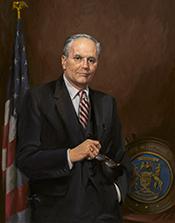
Mr. Chairman, I offer an amendment. Mr. Chairman, I yield myself such time as I may consume. (Mr. DINGELL asked and was given permission to revise and extend his remarks.) Mr. Chairman, I offer this…
Mr. Chairman, I offer an amendment.
Mr. Chairman, I yield myself such time as I may consume.
(Mr. DINGELL asked and was given permission to revise and extend his remarks.)
Mr. Chairman, I offer this amendment on behalf of my colleagues from Michigan, especially my three good friends and colleagues Mr. Upton, Mr. Stupak and Mr. Rogers, all of whom are interested very much in this matter.
We in Michigan are awash in Canadian waste, 180 truckloads a day. EPA can help Michigan citizens control the flow of municipal solid waste from Canada. We have an agreement with the Canadians signed in 1992 that requires the EPA to implement a notice and consent procedure on the flow of trash.
The EPA has spent 11 years shirking its duty. They have determined that they will not implement this safe, simple and internationally recognized agreement.
The amendment is simple. It proposes to take $1 million out of EPA's Office of Media Relations and put the money into the Office of Enforcement, specifically for the enforcement of this bilateral agreement.
I know of no controversy with regard to this amendment. I note that it is a message to EPA bureaucrats to stop stalling and start protecting our citizens in Michigan.
I would note that I would, out of gratitude to my dear friends on the Committee on Appropriations, the gentleman from New York (Mr. Walsh) and also the gentleman from West Virginia (Mr. Mollohan), I now terminate my remarks at this time.
Mr. Chairman, I rise today to ask all my colleagues to support an amendment I have offered with my good friends and colleagues from Michigan, Mr. Upton, Mr. Stupak and Mr. Rogers.
We in Michigan have a bit of a problem, Mr. Speaker. You see, we are awash in Canadian trash. Every single day, 180 truckloads of the stuff cross over the Blue Water Bridge in Port Huron and the Ambassador Bridge in Detroit.
Luckily, in 1986 the United States and Canada signed the Agreement Between the Government of the United States of America and the Government of Canada Concerning the Transboundary Movement of Hazardous Waste, which was amended in 1992 to also govern the transport of municipal waste.
While we are fortunate to have that agreement, the EPA unfortunately had declined to enforce it. They have had 11 years to implement the notice and consent procedure required by the agreement. Eleven years, Mr. Speaker, and incredibly EPA has taken no action!
Meanwhile, Customs officials have told us in no uncertain terms that they consider these trucks ``high risk'' and nearly impossible to inspect. A recent shipment included 50 pounds of marijuana. During the SARS outbreak in Toronto, where much of the garbage comes from, a Michigan State Trooper found a trash can dripping blood.
These truckloads of trash are a nuisance and a danger to Michiganders. In fact, on two separate occasions, innocent citizens were hit by these semi-trucks. Citizens who once lived on quiet country roads now must contend with nearly 200 truckloads of garbage that begin rolling in at six in the morning. Nice summer breezes are a thing of the past for these folks, now houses must be shut up year round in an effort to avoid the stench.
Our amendment, Mr. Speaker, is simple. We take $1 million from EPA's Office of Media
Relations, and put that money into the Office of Enforcement, specifically the enforcement of this Bilateral Agreement.
On Wednesday, July 23, the Energy and Commerce Subcommittee heard testimony from EPA. They were able to give us a timeline for when Canada might be done with their regulatory process. Unfortunately, they were unable to give Members of the Subcommittee any idea when EPA might be through their regulatory process. I think, Mr. Speaker, that this bears repeating: U.S. EPA testified as to when Canada might be through their regulatory process, but they were not able to give us any indication of when they might be through their own.
I would note that Article 5.3 of the Bilateral Agreement expressly provides that ``to the extent any implementing regulations are necessary to comply with this Agreement, the Parties will act expeditiously to issue such regulations consistent with domesic law.'' Article 5.3 further and expressly provides that ``pending such issuance, the Parties will make best efforts to provide notification in accordance with this Agreement where current regulatory authority is insufficient.''
Well, by EPA's own admission, this is not being done. They have not used their best efforts and they have not even begun the regulatory process. How long does it take, Mr. Speaker? How long do the citizens of Michigan have to wait?
My fellow colleagues from Michigan, and indeed, all Michiganders, find it outrageous that EPA has shirked its duty and determined that our health and well-being is not worth their time and effort. This amendment tells them to do their job: issue regulations and enforce them. As they move forward with these regulations, we would request that before EPA consents to a shipment, they consider the views of the state and local governments, as well as the impact of the importation of continued public support and adherence to recycling programs, landfill capacity, air emissions from increased vehicular traffic, road deterioration from increased vehicular traffic, and public health and the environment.
I would ask my colleagues to support this common sense amendment to help protect the citizens of Michigan and to force the EPA to do its job.
Again, I would like to thank my distinguished colleagues from Michigan, Mr. Upton, Mr. Stupak, and Mr. Rogers for their cosponsorship of this important amendment and their leadership on this issue.
Mr. Chairman, I yield back the balance of my time.
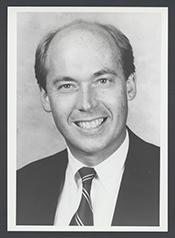
Mr. Chairman, I rise today in strong support of the fiscal year 2004 VA-HUD Appropriations bill. First, let me thank and congratulate Chairman Young, Chairman Walsh, and Members of the Appropriations…
Mr. Chairman, I rise today in strong support of the fiscal year 2004 VA-HUD Appropriations bill. First, let me thank and congratulate Chairman Young, Chairman Walsh, and Members of the Appropriations Committee for all of the hard work they have done in crafting this excellent bill. I am especially thankful for the increase of $2.75 million to the Grants for Construction of State Extended Care Facilities, funding this vital program at a total of over $102 million.
These grants are of great importance to America's veterans, providing many veterans with services they would otherwise be unable to receive. There is one such facility in my district I want to talk about, the Illinois Home for Veterans in LaSalle.
Located in my district, this Home provides intermediate and skilled nursing services for veterans, with a total capacity of 120 beds including 18 special needs beds for veterans suffering Alzheimer's Disease or related dementias. As successful as the Home has been, it is in need of new funding to expand its bed capacity.
With the ranks of those requiring VA care growing on a yearly basis, States already face huge financial burdens in helping to care for our veterans. The waiting list for admittance to the LaSalle home is as long as 2 to 3 years, with over 250 veterans waiting, many of which will go untreated or under treated due to lack of beds.
Recently, the State of Illinois enacted legislation authorizing an increase in the number of beds in this facility by 80. I have asked the State of Illinois to apply for the 65 percent Federal funding under this grant and to secure its 35 percent share of the matching funds for the LaSalle home to proceed with the construction.
In the past, the State has had problems with Federal funding from the State Home Construction Grant program. Specifically, the State made repairs and improvements to the Home in LaSalle and had not been awarded funding by the Federal Government for these projects through the grant program, or reimbursements from the program had been slow and piecemeal.
In consideration of this, I ask for inclusion into the VA-HUD Appropriations Conference Report, priority language which would read, ``The Committee further encourages the Department to work with the State of Illinois as that State applies for a grant to expand the LaSalle facility.''
With so many veterans in need of care, the Illinois Valley can no longer wait to obtain more beds in the veterans home.
Again, let me thank the Appropriations Committee for their hard work, and attention to this important matter.
U.S. House of Representatives, Committee on Ways and Means,
July 18, 2003.
Hon. Rod Blagojevich,
Governor, State of Illinois, Statehouse, Springfield, IL.
Dear Governor Blagojevich, I am pleased to be writing you
in regards to the legislation that you recently signed into
law that will expand the Illinois Home for Veterans in
LaSalle. Congratulations on this accomplishment!
As a result of this landmark legislation, I urge you to
apply for federal funds from the State Home Construction
Grant program, which could reimburse the State for up to 65%
of the cost of the expansions.
As you may know, in the past, the State of Illinois had
expressed concerns about the State Home Construction Grant
program. Specifically, the State had made repairs and/or
improvements to the home in LaSalle and
had not been awarded funding by the federal government for
these projects through the grant program. Last July, after
working with the Ryan Administration and the VA, the State
was paid $7.3 million as a reimbursement for renovations/
improvements made to State veterans' homes. The State is no
longer due any reimbursement funds from this program.
Included in legislation enacted in the 106th Congress were
changes for the requirements needed for submitting an
application. After submitting the application, the VA will
assign it a priority (if it approves the application), and
the State will then have 180 days to meet all necessary
requirements, including proof of the 35 percent matching
funds. With the new law that you have just signed that
guarantees the State has the matching funds for the project,
the expansion will likely be placed high on the priority list
for FY2004 funding. The application deadline for submitting
projects for FY2004 is August 15, 2003. Due to the budget
problems that the State is now having, I strongly urge you to
apply for federal funds through the State Home Construction
Grant program.
As you may know, I offered amendments to the VA, Housing
and Urban Development, and Independent Agencies
appropriations bills in fiscal years 1999, 2000, and 2001 to
increase the funding for veterans' state grants, which are
used by the Manteno and LaSalle facilities for construction
or addition of new beds or facilities. In FT2002 and FY2003,
Congress fully funded the State Home Construction Grant
Program, and President Bush has indicated that he will fully
fund it in upcoming fiscal years. Our success with fully
funding this program increases the chance that the state
could be reimbursed for the LaSalle expansion project.
I am optimistic that funding for the LaSalle expansion
would be awarded soon since this would most likely be
designated by the VA as a Priority One project.
If you have any questions, please do not hesitate to
contact Jack Dusik on my staff.
Thank you for your support of the expansion.
Sincerely,
Jerry Weller,
Member of Congress.
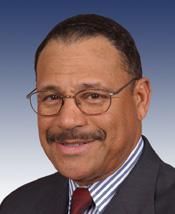
Mr. Chairman, I rise in support of this bill, H.R. 2861, VA, HUD and Independent Agencies. As a member of the Subcommittee that oversees the VA, HUD appropriations, we are all in agreement that this…
Mr. Chairman, I rise in support of this bill, H.R. 2861, VA, HUD and Independent Agencies. As a member of the Subcommittee that oversees the VA, HUD appropriations, we are all in agreement that this bill leaves a lot to be desired. However, I applaud the Chair, Mr. James T. Walsh and the Ranking Member, Mr. Alan B. Mollohan for their leadership in moving this measure to the floor for a vote.
I also want to thank Mr. Obey for his leadership in the Appropriation process and for raising so many concerns that we all have regarding funding cuts in programs in this bill and in other areas. He has so poignantly made it clear to all parties involved that ``the tax cuts fostered by the Bush administration are swallowing up a huge share of the available money.''
Mr. Chairman, I support this bill because of my deep concerns for the veterans in the 2nd District of Georgia and across the country, the needy and poor that live in substandard housing, and for all those who are affected by the downturn of the economy. I concur with some of my colleagues that some of the programs are woefully under-funded. However, I believe we must pass this bill to avoid any further delays in stimulating the economy. This bill provides $137,500,000 for economic development initiatives.
We began the 108th Congress at FY02 funding levels. Many of the FY03 Appropriations bills were not passed until February of this year. We must not bog down this process any further. My constituents and others around the country are hurting. We must move this bill through the House in hopes of working out some of the major differences in Conference.
H.R. 2861 provides for $90 billion in discretionary funds for the Veterans Affairs and, the Housing and Urban Development departments and other independent agencies for fiscal 2004. This bill also includes $27.2 billion in fiscal 2004, an increase of $1.4 billion. The largest component of the VA total is $15.8 billion ``for medical services for veterans with service-connected health needs.''
Further, H.R. 2861 provides funding in fiscal 2004 for NASA in the amount of $15.5 billion; $5.6 billion for the National Science Foundation, a $329 million increase over fiscal 2003; $8 billion for the Environmental Protection Agency, which is $375 million above the President's request but $74 million below 2003; $37 billion for HUD, which is $942 million above last year and $98 million over the President's request; $480 million for the Corporation for National and Community Service, which is $96 million above last year and $118 million below the President's request. This funding level will be able to sustain 55,000 volunteers, and increase of 5,000 and $60 million for the Consumer Product Safety Commission.
I also applaud both Mr. Walsh and Mr. Mollohan for recognizing the need to maintain the HOPE VI program. The allocation of $50,000,000 is not nearly enough to meet the needs of many of the severely distressed public housing facilities in my district and others alike. However, the committee has recognized the need to continue the program and went on record as willing to work with HUD in order to improve the overall performance and operation of the program.
The Committee's recommendation to zero out the Samaritan Housing Initiative, that provides assistance to the homeless community, was very alarming to many of the advocates in the housing community. Again, I am hopeful this issue will be addressed at the Conference level.
The Committee has made a valiant attempt to increase the funding for the National
Science Foundation (NSF). The Committee allocated $5,639,070,000 to NSF to enhance its national policy on science, and to support basic research for research and education.
Further, H.R. 2861 provides for other allocations such as:
One VA Enterprise Architecture in the Veterans Administration budget, public Housing Operating Fund, HOPWA, Rural Housing and Economic Development; Empowerment Zones/Enterprise Communities; Community Development Fund, CDBG; Community Development Block Grant-Formula grants; Habitat for Humanity capacity building; Historically Black Colleges and Universities; Brownfield Redevelopment; HOME Program; HOME/CHDO Technical Assistance; Homeless Program; Housing for the Disabled; Rental Housing Assistance; Fair Housing and Equal Opportunity; Community Development Financial Institutions; Corporation for National and Community Service; STAG--State and Tribal Assistance Grants; Louis Stokes Alliance for Minority Participation (LSAMP); HBCU- UP and the Neighborhood Reinvestment Corporation.
Finally, H.R. 2861 provides for the establishment of a new provision in the Veterans' Budget to establish a $250 enrollment fee for priority 7 and 8 veterans (those veterans who are not service connected or not impoverished). This level is nearly identical to the annual enrollment fee charged to TRICARE retirees. This new provision increases the co- pay on prescription drugs from $7 to $15 for a 30-day supply of pharmaceuticals prescribed for non-service connected conditions.
Mr. Chairman, I have some real concerns about the ability of some veterans to pay the $250 enrollment fee and the increased fees for co- pay on prescription drugs, I am also hopeful that further consideration will be given to this issue at the Conference Committee level.
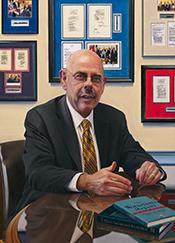
Mr. Chairman, I rise in strong support of Congressman Allen's amendment to protect seniors. This amendment bars EPA from applying the discredited ``senior death discount'' when evaluating the…
Mr. Chairman, I rise in strong support of Congressman Allen's amendment to protect seniors.
This amendment bars EPA from applying the discredited ``senior death discount'' when evaluating the benefits of pollution control. Instead, the amendment requires EPA to place an equal value on each adult life saved.
You may wonder why we need this amendment. After all, the right of equal protection is enshrined in our Constitution.
Well, here's the problem. When EPA adopts a pollution control requirement, EPA often looks at the public health benefits to decide whether to make the requirement more or less protective. In particular, EPA looks at the number of lives we could save by reducing pollution that causes cancer, heart attacks, strokes and other fatal diseases.
Then EPA translates the lives saved into a dollar value. You may or may not agree with putting dollar values on human life, but that's what the agency does.
Traditionally, EPA has said that all lives have an equal value. But recently, the White House Office of Management and Budget has been pushing agencies to base the dollar value of a life on the age of the person. Specifically, the Administration said that the life of each person older than 70 was worth 37 percent less than the life of a younger person.
That's just wrong.
It's so wrong that this past May EPA said it will stop. Then- Administrator Christie Todd Whitman said: ``EPA will not, I repeat, not, use an age-adjusted analysis in decision making.''
But OMB didn't make any promises. According to Dr. John Graham, who oversees all of the Administration's rulemaking, the only thing wrong with the senior death discount was a technical flaw--the 37 percent discount wasn't the right number. OMB still insists that the value of saving a life may depend on a person's age. And OMB is still pushing EPA to use this technique.
This amendment says no. We're not less worried about air pollution if it ``only'' kills our parents and grandparents. Cancer isn't less painful when it strikes the elderly. Senior Americans have worked hard all their lives, and they don't deserve to be abandoned now.
I urge my colleagues to support this amendment to ban the Senior Death Discount.
I rise in strong support of the Bishop amendment.
Mr. Chairman, it is simply wrong to intentionally test pesticides on humans. Yet as we speak here today, the pesticide industry is doing just that.
These studies don't stand up to scientific and ethnical requirements. In many cases, the pesticide industry conducts these studies overseas where it can more easily avoid public scrutiny and accountability. Often the studies are conducted without the informed consent of the test subjects. Sometimes, the test subjects are not even told they are being exposed to pesticides.
For example, in Scotland one company paid volunteers to drink orange juice that contained doses of the extremely toxic insecticide ``aldicarb.''
Some of the participants in this study are now suffering ill health. They are embittered because they say they would not have participated had they known they were being exposed to pesticides.
For most of the last 5 years, EPA has refused to consider these kinds of studies. Since the studies often violate the ethical standards that apply to most research, EPA has simply refused to consider pesticide studies conducted on humans.
However in November 2001, we learned that EPA had departed from its previous policy and was beginning to use these unethical tests. Congress and the public were outraged. As a result, EPA reestablished a moratorium on using these studies.
Unfortunately, just last month, the D.C. District Court of Appeals overturned the moratorium when the pesticide industry argued that EPA had made procedural mistakes in issuing the moratorium.
EPA's procedural mistakes are no reason to allow industry to intentionally expose humans to pesticides.
A number of religious groups including the Coalition on the Environment and Jewish Life and the Washington Office of the Presbyterian Church have written to Congress today on this issue. Let me tell you what they say:
We believe that it is deplorable and unethical to
intentionally dosed humans with substances designed to be
toxic, with no conceivable benefit to the subject, solely for
eliminating or lessening regulatory safety margins.
Mr. Chairman, Congress needs to act to stop this unethical and unscientific practice.
The Bishop amendment addresses this important ethical issue by reestablishing the EPA
moratorium in the coming fiscal year. Specifically, the amendment prohibits EPA from using studies which have intentionally dosed humans with pesticides. If EPA cannot use the studies, industry will have no incentive to conduct them.
I commend the gentleman from New York for his leadership on this issue.
I urge all Members to support the Bishop amendment.
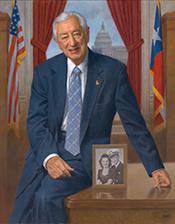
Mr. Chairman, I offer an amendment. Mr. Chairman I yield myself such time as I may consume. (Mr. HALL asked and was given permission to revise and extend his remarks.) Mr. Chairman, I want to thank…
Mr. Chairman, I offer an amendment.
Mr. Chairman I yield myself such time as I may consume.
(Mr. HALL asked and was given permission to revise and extend his remarks.)
Mr. Chairman, I want to thank Chairman Walsh and Ranking Member Mollohan. I am offering an amendment to the NASA portion of the bill. That issue is the safety of the astronauts who fly the Space Shuttle.
Mr. Chairman, the amendment that I am offering today would start NASA down the path to developing a new crew escape system for the entire Space Shuttle crew, not just the pilot and the copilot. My amendment is focusing on increasing the safety of the Space Shuttle astronauts through the development of concepts for crew escape in the event of an accident. It is that simple.
Mr. Chairman, I am offering an amendment to the NASA portion of the bill. It concerns an issue that I feel as strongly about as anything I have fought during my time in Congress. That issue is the safety of the astronauts who fly the space shuttle.
These brave young men and women risk their lives to advance our knowledge and to help this Nation explore space. They know that space travel involves risk. However, I'm not sure that the rest of us fully comprehend how risky it can be until we are confronted with a tragedy like last February's loss the space shuttle Columbia and its crew. Yet the fact that space travel involves risk doesn't mean that we shouldn't be taking all prudent measures possible to reduce that risk--which brings me to the objective of my amendment.
The sad reality is that 17 years after the space shuttle Challenger accident, the loss of a space shuttle almost inevitably means the loss of its crew. I don't think that is right, and I don't think it has to be that way. And I'm not alone in that belief. For years, the independent Aerospace Safety Advisory Panel (ASAP) and others have argued that NASA needs to pay more attention to improving space shuttle crew survivability in the event of an accident. For example, in its March 2002 report to the NASA Administrator, the ASAP expressed its concern that: ``there is no in-flight crew escape system for the [Space Shuttle] Orbiter other than for abort below 20,000 feet during a controlled glide'', and it strongly recommended that NASA: ``complete the ongoing studies of crew escape design options and implement and improved system as soon as possible.''
Moreover, in their meeting with the NASA Administrator earlier this year, ASAP members were vocal in their belief that NASA needed to give serious attention to the development and installation of a space shuttle crew escape system.
I agree with the ASAP members. I think that if we are going to fly the shuttle for an extended period--which I believe we are--then NASA needs to develop and install a crew escape system on the remaining Orbiters in the space shuttle fleet as soon as practicable. And we need to size it so that we are able to fly enough astronauts to the International Space Station (ISS) annually to allow a permanent ISS crew of seven.
The amendment that I am offering today would start NASA down the path to developing a crew escape system for the entire space shuttle crew-- not just the pilot and co-pilot.
My amendment would use $15 million from the as yet unallocated funds in the fiscal year 2004 Space Shuttle Life Extension Program ``Future Projects'' account to solicit the best concepts from the aerospace industry and elsewhere for significantly improving shuttle crew survivability. Those concepts, including estimates of their costs and impacts on shuttle performance, would be independently so that Congress and NASA will know what the best options care. We can then make an informed decision on what to do next. I would hope that the solicitation and independent assessment could be completed expeditiously, certainly in less than a year.
Now I know that some at NASA would agree that it can't be done at a reasonable cost or without a big negative impact on shuttle performance. My reply is that I don't believe that the combined talents of the aerospace industry and NASA aren't capable of rising to the challenge of developing a viable space shuttle crew escape system and dramatically improving shuttle crew survivability. I may be wrong, but I don't think so.
Mr. Chairman, my amendment is a modest first step toward achieving my goal of significantly improving the odds for our brave astronauts when they fly the space shuttle. It is only one step. I intend to keep pressing for the development of a capable space shuttle crew escape system if the nation decides to continue to flying the shuttle.
While my amendment may be only a first step, I believe it is an important role. I hope Members will join me in support of this amendment.
Show 11 more
Mr. Chairman, I offer an amendment. Mr. Chairman, I yield myself such time as I may consume. This is a simple amendment, and I will not take long. It transfers 5 percent of the fiscal year 2004…
Mr. Chairman, I offer an amendment.
Mr. Chairman, I yield myself such time as I may consume.
This is a simple amendment, and I will not take long. It transfers 5 percent of the fiscal year 2004 funding from the Corporation for National and Community Service's AmeriCorps grants to the Veterans Health Administration, Medical and Prosthetic Research.
I think, Mr. Chairman, I would summarize my amendment basically as one of priorities. It is interesting on July 27 now, we are going to celebrate the 50th anniversary of the Korean War armistice. Perhaps this is a perfect time for all of my colleagues to think about the priorities relative to this anniversary of the Korean War.
The Department of Veterans Affairs has a history of producing beneficial research in medicine and prosthetics, the latter of which will be sadly in demand as amputated veterans return from Iraq. Arguing for the transfer of these funds is based upon, I think, the accomplishments of the VA research department. Perhaps many Members do not realize it has produced three Nobel Prize winners, developed the cardiac pacemaker, conducted the first successful drug treatments for high blood pressure and schizophrenia, is undergoing trials of a smallpox treatment in mice, and developed the technology that recently enabled paralyzed actor Christopher Reeve to regain the ability to breathe on his own temporarily. The money is going to go to this research. They have a history, Mr. Chairman, of success. The long-term consequences of helping these people is immense. But from our reading of this bill, their increase in this area is only 2.7 percent. So I thought, well, that is pretty low, why do we not transfer some money over there?
I might point out that when we are talking about volunteer organizations or people that volunteer, I would like to really tout an organized group of committed volunteer military veterans in my hometown of Ocala, Florida. They do not get paid, Mr. Chairman. It is called Vets Helping Vets. Vets Helping Vets lend assistance to their veteran brothers and sisters and volunteer for numerous activities, including helping the homeless. The program is administered by Hank Whittier from my hometown, Ocala, Florida. He has done a great job. I think it is a pilot program that could be done throughout this country.
Let us observe the 50th anniversary of the Korean War by reexamining our priorities, our policy. A vote for my amendment is in support of promising
beneficial medical and prosthetic research for deserving veterans.
I yield to the gentleman from Indiana.
I do not know. I think they are using the term paid volunteers. I think when you look at it, compared to those who have already served their country, maybe even the word ``paid volunteers'' is an area that we might talk further about. I think the point of my amendment is not to discredit any one government agency but just to set priorities here and say that the amount of research increase in dollars in the VA is very small. And so I am just in a very small way asking my colleagues to consider this amendment and moving it forward.
Mr. Chairman, I reserve the balance of my time.
Mr. Chairman, I yield myself the balance of my time.
Mr. Chairman, I respect what my good colleague and classmate, the distinguished gentleman from New York, has said. I might just read from the committee's report itself:
``The committee is completely frustrated at the financial situation created by the lack of financial and grant program accountability at the corporation, even after years of providing funds specifically for the purpose of grant management and assurances made by the corporation during the conference that the corporation, AmeriCorps, was on the path to reform.'' Yet the committee gave it an 11.7 percent increase. When we look at the VA funding for research, it is 2.7 percent. I ask my colleagues to put that in perspective and also put it in the perspective, as the gentleman from New York said, this is a small amount of money but this has a symbolic value to veterans, people who need prosthetic support. To think that you are taking some of the money that is in a program like AmeriCorps and giving it to veterans research, I think, is saying, We're behind you.
I urge support for the Stearns amendment.
Mr. Chairman, I demand a recorded vote.
Mr. Chairman, I rise today to voice my opposition to the fiscal year 2004 VA-HUD Appropriations bill. After passing sweeping tax cuts for the wealthy, the Republican majority in this House is once…
Mr. Chairman, I rise today to voice my opposition to the fiscal year 2004 VA-HUD Appropriations bill. After passing sweeping tax cuts for the wealthy, the Republican majority in this House is once again telling the American people that not enough money is available to adequately fund programs for our Nation's veterans and poor.
Consider, for example, that this appropriations bill provides $25.2 billion for veterans' health care--$1.8 billion less than was promised in the Republican budget resolution passed earlier this year. While Republicans may assert that $25.2 billion is a $1.4 billion increase over fiscal year 2003 levels, the truth is that this modest ``increase'' does not keep pace with hospital inflation or the growth in the numbers of veterans enrolled.
The bill will only exacerbate the crisis in veterans' medical care. In fact, in a recently released report, the American Legion concluded that an average of 200,000 veterans must routinely wait 6 months or more for an appointment at the Veterans Administration's hospitals. Sadly, some veterans die before they even see their doctor. It is shameful that this Congress is turning its back on the same veterans that fought for the safety of this nation. I will continue to fight to fulfill our obligation to those who have served our country so well.
Just as this bill shortchanges America's veterans, it also fails thousands of poor Americans that rely on Federal housing assistance. The VA-HUD Appropriations bill provides funding for the ``Section 8'' housing choice voucher program. The voucher program enables low-income families with children, the elderly, and the disabled to rent apartments in the private market. It makes up the difference between what low-income people can afford to pay for housing and what private rents are, and is a critical source of support for more than 2 million families. Without vouchers, many of these families would be stuck in overcrowded or unsafe housing, or even worse, wind up homeless.
While the bill before us today improves upon the President's inadequate request for this program, it still falls short of the amount needed to continue all vouchers in use, according to estimates by the Congressional Budget Office and outside experts. Specifically, the House bill uses data on voucher costs that date as far back as April 2001. Mr. Chairman, as we all know, housing costs in most parts of the country have been steadily rising since then, and it is unrealistic to ignore those market trends in setting HUD's budget for the year.
If the shortfall in this bill is not addressed, 85,000 families will not have the funding for their vouchers renewed. This kind of cut would be unprecedented in the history of the voucher program. In fact, what we should be talking about today is how to make more vouchers available to families, not fewer. Only a fraction of eligible households receive vouchers, and most people face a several-year wait for a voucher.
And last but not least, I will be opposing the fiscal year 2004 VA- HUD Appropriations bill because it makes rash and unwise cuts in the AmeriCorps program, a program that embodies the spirit of altruism and service that has made our nation great.
In his 2002 State of the Union address, President Bush introduced the Freedom Corps program to further encourage volunteerism across our nation, asserting that ``we need mentors to love children, especially children whose parents are in prison, and we need more talented teachers in troubled schools.'' At that time, the President announced his goal for the Freedom Corps to ``expand and improve the good efforts of AmeriCorps and Senior Corps to recruit more than 200,000 new volunteers.'' In providing 20 percent less than the President's request, the House fails to heed the President's call for national service. Indeed, this bill will limit new enrollment in AmeriCorps to 55,000. The House, once again, is falling short of its responsibility to support all those Americans who so desperately need our help.
We can do much better than the bill before us today. I urge my colleagues to oppose H.R. 2861.

Mr. Chairman, I want to thank the chairman of the Committee on Veterans' Affairs for his leadership. There are a lot of different individuals here on many different committees that after September 11…
Mr. Chairman, I want to thank the chairman of the Committee on Veterans' Affairs for his leadership. There are a lot of different individuals here on many different committees that after September 11 did an assessment. The gentleman from New Jersey (Mr. Smith), the chairman, also did his assessment. At the same time so were other committees. The real question right now is over the issue on redundancy. I want to applaud the chairman for having his bill passed and it is authorized.
The real question now is on the funding and the timeliness of that funding. I recognize the present objection of the chairman of the Committee on Appropriations. With regard to some of the comments from my other colleagues with regard to whether the funding has been underfunded or not and we have been citing back to when we did eligibility reform here on the House floor, I want everybody to note this, that during that time period, the Congressional Budget Office and GAO provided testimony to the House and the Senate. They said, if you change eligibility from the core competencies of the VA and let non- service-connected disabled veterans be treated the same in line with combat- or peace-disabled veterans, you will open up the system and you will have a tremendous cost impact.
The Committee on Veterans' Affairs staff and members on the House and the Senate did not agree with what the recommendations were nor testimony of CBO and OMB. As a matter of fact, the veterans service community and organizations, some in particular mocked CBO and OMB for their testimony. Their testimony was correct. We were wrong.
So what we are doing today is we are trying to now catch up. Members may ask, what do you mean catch up? In the last 5 years in which the gentleman from New York has chaired the subcommittee, we have increased the health budget in the VA 50 percent. Members might say, my gosh, 50 percent, why? Because the category 7's and 8's are rushing into the system. Today we have a system called a no-shame system. A no-shame system. There are things in our society, if you are in a food line and you have already eaten and there are people that have not eaten, do you get in line and cut before them? No, that is shameful. What happens today is that you have individuals who are non-service-connected disabled veterans who are in line before combat-disabled veterans. I think that is shameful. Others can disagree with that, but I think that is. Today this present theme has become that every veteran is a veteran is a veteran. That is the present theme, because we do not want to look back and see what the mistakes were that we made. No one in this House wants to accept the responsibility for having gotten it wrong: Oh, please, Steve, don't tell us the mistakes that we made. Just fund it. Just throw more money at it.
Folks, we are creating a problem. If we do not accept some responsibility here, I am fearful of what is happening to the VA. We need to restore the core competencies of the VA in those categories 1 through 6. I want to applaud the chairman for his work along with the ranking member. It is quality work.
Mr. Chairman, will the gentleman yield?
Mr. Chairman, I want to thank the gentleman for bringing his amendment. One thing that we often must recognize with regard to the recruiting pool for the United States military, AmeriCorps competes with our recruiting pool for an all-volunteer force. It makes it very difficult and very expensive for DOD to go out there and recruit those soldiers.
I have a question for the author of the bill. When President Clinton created the AmeriCorps, he was touting volunteerism. It is my understanding that at AmeriCorps, they do not call them volunteers anymore. Do you know whether that is true or not?
I would just urge my colleagues to support the gentleman from Florida's amendment. If we can move some quality dollars here and prioritization into veterans health care, I think his amendment is in the right intent. I support it.

Mr. Chairman, I rise in support of this amendment and in support of the HOPE VI program. Mr. Chairman, I'm amazed Congress would all but eliminate funding for this highly successful program. While…
Mr. Chairman, I rise in support of this amendment and in support of the HOPE VI program.
Mr. Chairman, I'm amazed Congress would all but eliminate funding for this highly successful program.
While the $50 million for HOPE VI contained in this bill is $50 million more than the President requested for this program, this is still a cut of $524 million from 2003, a reduction of 90 percent, and will gut a program that brings hope and opportunity to so many.
In Stamford, Connecticut, a HOPE VI grant transformed a dim, crime- ridden, and dilapidated housing project into a beautiful place to live and raise your children. As a result of this federal assistance, Southwood Square is now a safe place for children to play, its residents receive job training on site, and working parents have access to a child care facility. Just as importantly, residents are involved in their community.
I wish Members could see the transformation that has taken place there. If they did, I doubt they would be cutting this program.
The most beautiful part of HOPE VI the way a grant from the federal government produces a ripple effect in the neighborhood. The transformation that occurs in HOPE VI communities is funded with a small investment in the form of a federal grant, but primarily is funded with local and private money.
The lesson there is that when the federal government demonstrates its interest in improving the housing needs of low-income families, the community responds in a big way.
The question that begs to be asked is: Why would such a successful program be cut so drastically?
I recognize the fiscal constraints of this budget cycle, but this is not time to weaken our commitment to HOPE VI. I urge passage of this amendment.
Mr. Chairman, I rise in strong support of this amendment to increase
HOPWA funding. This amendment is tremendously important for thousands of people afflicted with AIDS.
I appreciate the good work the Chairman has done on this bill, as well as the fiscal constraints of this budget cycle. The bottom line, Mr. Chairman, is when it comes to the HOPWA program I think we can do better.
The National Institutes of Health estimates there are between 850,000 and 950,000 Americans living with HIV and AIDS. A majority of these individuals will face a housing crisis at some point during their illness as a result of increased medical expenses and lost wages.
More than 200,000 people living with HIV/AIDS are in need of housing assistance and HOPWA is the only federal program specifically designed to meet this need.
The HOPWA program is one of the most cost-effective ways to provide people living with HIV/AIDS with adequate and affordable housing.
Acute care facilities under Medicaid cost more than $1,000 a day as compared to HOPWA community housing, which averages $55 to $110 per day.
The program keeps those living with HIV/AIDS off the streets and out of expensive acute care facilities.
My predecessor, Stewart B. McKinney, died of AIDS-related pneumonia. His wife, Lucie, carries on his work as chairman of the Stewart B. McKinney Foundation. This foundation is dedicated to providing housing to persons and families living with HIV/AIDS.
The McKinney House and other HOPWA programs approach the HIV crisis in a truly caring, community-based and cost-effective manner. Because 90 percent of HOPWA funds are distributed to states by formula, states and localities control how money is spent--not the federal government.
Communities are empowered to use HOPWA funds to meet their unique housing needs, from providing short-term supportive housing for low- income persons with HIV/AIDS, to building new community residences.
The flexibility has, in large measure, contributed to the widespread success of the HOPWA program.
The bottom line is that money for HOPWA is money well spent. I urge support for the HOPWA Amendment.
Mr. Chairman, I offer an amendment. Mr. Chairman, I yield myself such time as I may consume. Mr. Chairman, I rise today to urge the House to pass the Bishop amendment, which will continue the ban on…
Mr. Chairman, I offer an amendment.
Mr. Chairman, I yield myself such time as I may consume.
Mr. Chairman, I rise today to urge the House to pass the Bishop amendment, which will continue the ban on the human testing of pesticides. Human testing of pesticides is wrong on many levels. It is morally wrong, it is ethically wrong, it is environmentally wrong, and it is even scientifically wrong.
In the wake of World War II and the horrendous crimes committed against humanity, many of them by doctors, American judges wrote what is called the Nuremberg Code when those doctors went on trial. This code prohibits non-therapeutic medical testing. Pesticide testing does not meet that criteria. Pesticide testing is not about public safety; it is about private interests.
Because of the stricter requirements of the unanimously passed Food Quality Protection Act of 1996, the pesticide industry has been under mounting pressure to reduce the risks that pesticides pose to infants and children. The industry has adopted a strategy to evade these requirements by testing pesticides on a small number of adult human subjects and to thereby remove safety factors and other protective requirements.
And unlike human testing of drugs, which has the potential to benefit test subjects or to directly improve human health, the pesticide industry's purpose in conducting human tests of pesticides is to weaken otherwise applicable health protections and to increase their profits. Intentional dosing of humans with pesticides is unethical since it is done to advance industry interests and to weaken otherwise applicable health protections, not to benefit test subjects or the public health.
At the end of the day, these tests are scientifically irrelevant for several reasons. Human tests of pesticides are scientifically invalid because they routinely test tiny numbers of healthy people, often just eight adult males, whereas a test of thousands of people is needed to yield statistically valid results for certain effects.
The results of these tests are non-applicable because they are testing self-selected, healthy adult males; yet the protections we seek are for all Americans, including vulnerable children. It is ridiculous to somehow infer if you do not witness symptoms in a small number of adult males, that the level of pesticide is therefore safe for a child.
When media reports first informed the American people that the pesticide industry was conducting human testing, the resulting outrage resulted in an EPA moratorium of the studies, as well as a panel to study the morality of the issue. In 2000, that panel concluded if the use of human subjects in pesticide testing can be justified, that justification cannot be to facilitate the interests of industry or of agriculture, but only to better safeguard the public health. That standard has never been met by the pesticide industry.
More recently, in December of 2001, in the wake of a public outcry after reports that the Bush administration was considering using such human tests, EPA Administrator Whitman announced the EPA would not use these tests to make decisions. However, the pesticide industry sued, arguing that the EPA failed to follow the procedures required by the Administrative Procedures Act in adopting the policy. On June 3, 2003, a court agreed and set aside the Bush administration's temporary moratorium, ruling that the EPA followed the wrong procedures in adopting it.
We simply cannot allow human testing of pesticides to proceed on a loophole. Let us be ethically right, environmentally right and scientifically right, and pass this amendment to prohibit human testing of pesticides.
Mr. Chairman, I yield back my time.

Mr. Chairman, I have a parliamentary inquiry. Mr. Chairman, I am also in opposition and am in the opposite party. Who has control? Mr. Chairman, since no one took time in opposition, can I ask…
Mr. Chairman, I have a parliamentary inquiry.
Mr. Chairman, I am also in opposition and am in the opposite party. Who has control?
Mr. Chairman, since no one took time in opposition, can I ask unanimous consent to take that time in opposition?
Mr. Chairman, I yield myself such time as I may consume.
I thank my colleagues for allowing me this time.
Because of the unanimous consent request, there was little time for those of us who wanted to speak on behalf of the veterans of the United States to make that argument. We simply have before us a bill that is inadequate to the needs of our Nation's veterans. There are a lot of reasons that have been advanced, and there are a lot of understandings of the parameters which we have to work with, but that is the reality. We simply have not put the money in.
And we see some of these trade-offs that have to go on, like moving money from AmeriCorps to prosthetic research. We have to make those kinds of decisions because we do not have enough money for research in the budget. We do not have enough money for our veterans.
We are $2 billion under the amount that left this House when we passed the budget resolution. And I love when my colleagues on the other side of the aisle get up and say we should have 2 billion more, but they voted for the rule that puts this bill on the floor and they have not voted for any of the amendments which would put that money back in. The Committee on Rules rejected the amendments that would give us this additional $2 billion.
Do my colleagues know that we have 160,000 veterans who have been waiting for more than 6 months for their first appointment at the VA center? More than 6 months. Some of them will die before they have their first appointment.
We have disabled veterans who have fought for our Nation who have been waiting 2, 3 or more years to get their adjudication settled. Some will die before they get that claim settled.
Nurses are being laid off from the VA health care system. We do not seem to have enough money for those nurses.
We have a system where we had one member of the Committee on Veterans' Affairs, the gentleman from Indiana, say the Priority 7s and 8s are clogging up our system. He has said that our veterans, because they have a certain income or because they did not have a certain level of disability, they are categorized as 7s and 8s. They are veterans, they have protected our Nation; and we have a Member who says they clog the system.
Let us open the system by giving us the resources that we need. Let us open up that system. We cannot leave off veterans because they are clogging it up. The Secretary of our VA, Secretary Principi, and his chief Health Under Secretary, had to send a memo out to his employees, Do not tell any veterans about their rights because we cannot handle them. Do not tell veterans about their rights because we cannot handle their business. That is wrong.
We should give the Secretary the amount of money so we can handle all the veterans that are eligible for that and who need that care.
So I thank my colleagues for allowing me this time, but this bill does not honor our Nation's veterans. When our folks in Iraq and Kuwait and Korea and Liberia and Germany and wherever else they are, when they hear that we do not give the VA health care sufficient funds, what happens to their morale? What happens to their sense of what this country is about? We have to respect the men and women in our Armed Forces by giving the respect to our veterans who have fought for our Nation.
I yield back, but I yield back hoping that we put this money back into this budget at the end of the process.
Mr. Chairman, I yield back the balance of my time.

Mr. Chairman, I rise in support of the Nadler- Velazquez amendment to increase funding for Section 8 vouchers. This successful program is the principal form of housing assistance for low- income…
Mr. Chairman, I rise in support of the Nadler- Velazquez amendment to increase funding for Section 8 vouchers. This successful program is the principal form of housing assistance for low- income families, the elderly and the disabled.
For the last several years, I have taken to the floor with like- minded colleagues time and time again to decry the deep and sweeping cuts being made to the HUD budget. In FY 2001, 79,000 new vouchers were appropriated--that was the last year of the Clinton Administration. As soon as President Bush took office, the number of new vouchers dropped to 18,000. In FY 2003, no new vouchers were appropriated.
During these debates we have discussed how rising housing costs are far outstripping income growth for low-income Americans. We contrasted the growing need for housing assistance, with the drastic cuts to HUD's budget. And we warned that by allowing the housing crisis to take firm root in time of economic prosperity it would grow beyond control during an economic downturn. Well, Mr. Chairman, you reap what you sow.
Unemployment is up, the markets are down, and housing costs continue to rise. The need for housing assistance is skyrocketing across the nation, and homelessness is at a 10-year high. In fact, the housing crisis is so bad in New York City that low-income families were actually housed in jail cells.
Our cities and States have continuously called on the Federal Government for assistance--yet never has a HUD budget so directly exacerbated this national housing crisis. President Bush's FY 2004 HUD budget proposal called for a mere 5,500 new vouchers.
This spring, my colleague from New York and I sent a letter to chairman and ranking member of this subcommittee, signed by 66 Members of the House, urging funding for 79,000 new vouchers. This request was soundly ignored. We were all well aware that the Republican tax cuts would put us in such a budget crisis that funding for all low-income programs would be on the chopping-block. But I never thought that we would be standing here today voting on a budget that actually cuts current Section 8 assistance for 85,000 families, and will likely lead to their eviction.
The Nadler-Velazquez amendment offers some relief by providing an additional $150 million for this account. It would protect nearly 22,000 low-income families whose housing is jeopardized by this bill.
Clearly, the entire VA-HUD appropriations bill is underfunded. And using funding from one Federal program to offset another is less than ideal. While Mr. Nalder and I reluctantly included this offset, we unequivocally support increasing Section 8 funding. I urge my colleagues to support the Nadler-Velazquez amendment--and the right of low-income American families to safe, decent, affordable housing.
Mr. Chairman, I rise in opposition to this amendment, which would reduce funding for research through the National Science Foundation, NSF, polar research and to briefly discuss the overall NSF…
Mr. Chairman, I rise in opposition to this amendment, which would reduce funding for research through the National Science Foundation, NSF, polar research and to briefly discuss the overall NSF funding. Last year, the President signed into law my bill to re-authorize NSF, allowing for a doubling of funds over the next five years. Among other things, the bill expanded federally funded basic research efforts at America's colleges and universities. Improving science and math education in our country is important because this is how we train new generations of scientists and inventors. Just one example of how crucial NSF is; approximately half of the U.S. Nobel Prize laureates in science and engineering have received NSF research grants. Some of these Nobel laureates gained experience through polar research.
In addition to the purely scientific value that NSF contributes to society, the technological advancements that have resulted from cutting-edge basic research have been the primary force behind the economic and productivity gains of the last fifty years. I am disappointed that the overall increase for NSF is a lessor reduction then last year. Good research leads to the development of new and better products and more efficient ways to produce those goods at a competitive cost. Some examples of what basic federal R&D funding has given us today are the silicon chip, internet, web browsers, supercomputers resulting in more products and more efficient production. The world is getting more competitive, and we must keep finding ways to develop high-quality products that people want at a competitive cost.
Under my re-authorization bill that passed last year, NSF is authorized at nearly $6.4 billion for fiscal year 2004, $4.8 billion of that for research. The bill that we are considering today would only appropriate $5.6 billion for NSF, with $4.3 billion designated for research.
I understand that given the economy and the budget situation, it is necessary for Congress to make tough choices with funding. Still, I am disappointed that the bill before us today would fund NSF at nearly $800 million less than its authorization level. Due to a lack of funding, NSF is currently forced to reject more than 30 percent of its highest rated peer-reviewed proposals. In addition, more resources are needed to invest in emerging fields of research like cyber security, information technology, and nanotechnology.
Mr. Chairman, this Nadler amendment would reduce funding for NSF polar research by $5 million dollars. In light of the significant funding shortfalls that NSF already faces, it would be unwise to drain any more money out of this research program.
Mr. Chairman, I thank the gentleman for yielding me this time. I also have an amendment at the desk which I had understood was going to be handled at the same time as the Fattah amendment.…
Mr. Chairman, I thank the gentleman for yielding me this time. I also have an amendment at the desk which I had understood was going to be handled at the same time as the Fattah amendment.
Announcement by the Chairman
Mr. Chairman, I will then discuss my amendment at the same time as the Fattah amendment, though it is different from the Fattah amendment.
My amendment dealt with the fact that section 8 is underfunded and HOPE VI housing is underfunded in this appropriation. The bill funds the Department of Housing and Urban Development. The single largest low-income housing program at HUD is the section 8 housing choice voucher program.
The voucher program enables low-income families with children, the elderly and the disabled to rent apartments in the private market. It makes up the difference between what low-income people can afford to pay for housing and what private rents are, and is a critical source of support for more than 2 million families. Without vouchers, many of these families would be stuck in overcrowded and unsafe housing, or even worse, homeless.
If the shortcomings of this bill are not addressed, 85,000 families will not have the funding for their vouchers renewed. These families need affordable housing assistance. The current funding in H.R. 2861 does not address nor take into consideration inflation and the high cost of living, unemployment, and the failure of corporations and small businesses.
Another housing program which is underfunded is HOPE VI. The purpose of the HOPE VI program is to revitalize severely distressed public housing developments and transform them into safe, livable environments. A required element of the program is the provision of the effective, targeted self-sufficiency initiatives so that public housing can regain its role as housing for low-income families who are determined to improve their status.
HOPE VI funds are used to provide three types of grants: planning, implementation, and demolition. Mr. Chairman, the vast majority of public housing in Chicago is in my district and, of course, we need public housing assistance. Without HOPE VI, many of the people will lose hope and lose what they have had.
My amendment would have added $300 million to HOPE VI to replace some of the $500 million that is being cut. But since most of the money has already been given back to the wealthy in the form of huge tax cuts, I am afraid that very little is left for HOPE VI for the poor, for veterans health care, for the needy, for the disadvantaged, and for the 3 million people who have lost their jobs.
Since the money is gone, Mr. Chairman, I will withdraw my amendment.
Mr. Chairman, I offer an amendment. Mr. Chairman, I yield myself such time as I may consume. Mr. Chairman, the HOPE VI program, which received a very significant allocation last year in this bill,…
Mr. Chairman, I offer an amendment.
Mr. Chairman, I yield myself such time as I may consume.
Mr. Chairman, the HOPE VI program, which received a very significant allocation last year in this bill, has only a $50 million allocation. Part of the rationale for not aggressively supporting what is the most successful neighborhood revitalization program and the largest in our country is that there is in the pipeline some projects that have not moved as quickly as we might want them to.
I met with the officials at HUD, and my staff has interacted with any number of people since we have become aware of this problem, and I am convinced that part of the problem, which was identified by the GAO in a study done, is that HUD has backed away from and withdrawn services and support, including the use of expediters to move these projects through the pipeline.
So I have offered an amendment to substantially increase technical assistance from $500,000 to $5 million to help move these projects through the pipeline. Hopefully, as we go between now and conference, because a lot of Members are very interested in HOPE VI on a bipartisan basis, we would like to see this subcommittee find a way, and I know that the chairman and my ranking member would work with us on this, to try to see how we could have a greater commitment to seeing this program move forward. It is also up for reauthorization.
But I think at a minimum, at least at this moment, the one thing that the House should do is to substantially increase technical assistance and say to HUD that we want the communities around this country that receive HOPE VI grants to have the type of expertise that they need to be able to make those projects go and to go as quickly as possible so that we never again have any rationale offered that projects previously funded that are desperately needed are not moving as quickly as some might want them to.
I have talked both with the majority and the minority, Mr. Chairman, and I believe this amendment might find acceptance.
I yield to the gentleman from New York.
Reclaiming my time, Mr. Chairman, I thank the gentleman.
For every reason I can think of, Mr. Chairman, this is an important thing to do.
Mr. Chairman, I yield 4 minutes to the gentleman from Illinois (Mr. Davis).
Reclaiming my time, Mr. Chairman, let me in conclusion say that I share the sympathies that have been articulated by the gentleman from Illinois. I do, however, want to say that I think this technical assistance addition is important, and I want to thank the majority and the ranking member.
Mr. Chairman, I yield back the balance of my time.
Mr. Chairman. I rise today in opposition of the rule for the VA/HUD Appropriations bill that shortchanges health care for our nation's veterans. The bill is $2.1 billion below the GOP House Budget…
Mr. Chairman. I rise today in opposition of the rule for the VA/HUD Appropriations bill that shortchanges health care for our nation's veterans. The bill is $2.1 billion below the GOP House Budget Resolution and $3.3 billion below the veterans' consensus budget.
The Rules Committee created a rule for the VA/HUD bill that does not allow two amendments. The first seeks to add $1.8 billion for veterans' health care, in order to fulfill the promise of the Republican budget. The second blocks an amendment by Representative Edwards of Texas to increase veterans' spending for VA medical by $2.2 billion--to meet the funding promises in the GOP budget resolution, taking into account the costs of offsetting the enrollment fees and drug co-payments from the President's budget.
As it stands now, the VA/HUD bill provides $25.2 billion for veterans' health care--$1.8 billion less than was promised in the budget resolution House Republicans passed earlier this year (H. Con. Res. 95). Its increase from last year is $1.4 billion, which does not keep pace with hospital inflation or the growth in the numbers of veterans enrolled. It is plain to me that the VA-HUD Appropriations bill will not meet veterans' needs.
My question is: when does the hypocrisy stop? When will Republicans realize that they can't pay lip-service to men and women who have shed blood on the battlefield for the very freedoms they enjoy? Since his inauguration, President Bush has championed the cause of the veteran, and along with the House Majority, he has continually failed to put his money where his mouth is. We are fighting two wars under his Administration, creating thousands of new veterans--soldiers looking to come home and start their life with the help of the government they just defended. That same government has said, ``Thanks for your sacrifice; sorry we can't do the same.'' No matter how many aircraft carriers you land on, Mr. President, that does not shrink waiting lines at VA clinics!
The Republican Party has provided a terrific show for veterans this year. Initially, the President's budget requests underfund the VA, and the House Budget Resolution approves funding levels below that of the President's. Then, the Appropriations Committee allocates $1.8 billion less than the House Budget Resolution, and the Rules Committee approves a rule that bars amendments seeking to fill those funding gaps. All the while, they spin patriotism and ``support the troops'' rhetoric to further their political agenda.
This show has gone on long enough, and I think it is time this circus and its elephants left town.
Bill Text
Latest available legislative text
        [Congressional Bills 108th Congress]
[From the U.S. Government Publishing Office]
[H.R. 91 Introduced in House (IH)]

108th CONGRESS
1st Session
H. R. 91

To name the Department of Veterans Affairs in Houston, Texas, as the
``Michael E. DeBakey Department of Veterans Affairs Medical Center''.

_______________________________________________________________________

IN THE HOUSE OF REPRESENTATIVES

January 7, 2003

Ms. Jackson-Lee of Texas introduced the following bill; which was
referred to the Committee on Veterans' Affairs

_______________________________________________________________________

A BILL

To name the Department of Veterans Affairs in Houston, Texas, as the
``Michael E. DeBakey Department of Veterans Affairs Medical Center''.

Be it enacted by the Senate and House of Representatives of the
United States of America in Congress assembled,

SECTION 1. FINDINGS.

Congress finds as follows:
(1) Dr. Michael E. DeBakey played a critical role in
establishing and developing the Department of Veterans Affairs
Medical Center in Houston, Texas. He has successfully elevated
its professional staff and quality healthcare to meet high
standards of excellence and encouraged minorities to fulfill
their potential in education, and particularly in the health
professions.
(2) Dr. DeBakey's dedication to the Department of Veterans
Affairs Medical Center is ongoing. He is still chairman of the
Dean's Committee of that medical center, as he has been since
the beginning of that institution.
(3) Dr. DeBakey brought both the City of Houston and the
State of Texas international recognition for the Texas Medical
Center through his pioneering of medical research, his
leadership at Baylor College of Medicine, his national and
international medical statesmanship, and his championing of the
rights and the welfare of the underprivileged.
(4) Dr. DeBakey is credited with the development of the
Mobile Army Surgical Hospitals (MASH) concepts for the
military, which led to saving thousands of lives during the
Korean and Vietnam conflicts, as well as the development of
specialized medical and surgical center systems in order to
treat returning military personnel.
(5) During World War II, Dr. DeBakey served as a colonel in
the United States Army and was assigned to the Surgical
Consultant Division in the office of the Surgeon General. His
active duty service was from 1942 to 1946. He remained on
active duty in 1946 and recruited 100 additional specialists to
care for World War II wounded military personnel in Army
specialty centers.
(6) For his service in the Armed Forces, Dr. DeBakey
received the Legion of Merit.

SEC. 2. NAME OF DEPARTMENT OF VETERANS AFFAIRS MEDICAL CENTER, HOUSTON,
TEXAS.

(a) Name.--The Department of Veterans Affairs medical center in
Houston, Texas, shall after the date of the enactment of this Act be
known and designated as the ``Michael E. DeBakey Department of Veterans
Affairs Medical Center''.
(b) References.--Any reference in any law, regulation, map,
document, record, or other paper of the United States to the medical
center referred to in subsection (a) shall be considered to be a
reference to the Michael E. DeBakey Department of Veterans Affairs
Medical Center.
<all>