Mr. Speaker, I ask unanimous consent that all Members may have 5 legislative days within which to revise and extend their remarks on the subject of this Special Order. Mr. Speaker, this evening,…
Mr. Speaker, I ask unanimous consent that all Members may have 5 legislative days within which to revise and extend their remarks on the subject of this Special Order.
Mr. Speaker, this evening, members of the Congressional Black Caucus wanted to take a moment to salute our troops. These are men and women who have voluntarily put on the uniform of the United States of America to make sure that we maintain our way of life, maintain our constitutional rights, maintain our privileges; and they have put their lives on the line to keep us safe.
Mr. Speaker, it gives me great sadness today to start off my remarks by having to pay tribute to a great American hero who died in the line of duty while serving his country in pursuing the American dream. Originally from my hometown of Baltimore, Marine Staff Sergeant Kendall Damon Waters-Bey, age 29, was one of the four U.S. Marines who died when their CH-46 Sea Knight helicopter crashed near the Iraqi-Kuwait border.
I would like to start off by first expressing my deepest condolences to the Waters-Bey family during this very, very difficult time. I mourn their loss, along with the other members of the Maryland Federal delegation.
Our prayers are with Sergeant Waters-Bey's 10-year old son, Kenneth; his
wife, Belinda Waters-Bey of San Diego, California; his parents, Michael and Angela Waters-Bey; and four sisters, Shernell Waters-Bey, Sharita Waters-Bey, Michelle Waters and Nakia Waters.
This tragedy makes the war in Iraq more personal for all of us. I did not have the privilege of knowing Staff Sergeant Waters-Bey, but his story is one that is familiar to many of us in Baltimore.
Fellow Marine and Captain Ray Coleman said that Sergeant Waters-Bey viewed the military as a path out of the struggles and challenges of urban life. I understand these challenges, Mr. Speaker, as I live in an urban area in Baltimore City.
Not too far from the Capitol in which we stand tonight, many young people are confronted with violence, oppression, lack of quality health care and lack of equal access to the all-American dream every day. Their terror is as real as the terror that the Iraqi people are facing right now. For these Americans, it often takes a miracle to climb over the barriers.
Achieving the American dream is often out of reach, but the barriers did not stop Sergeant Waters-Bey from reaching his dream. In spite of a hard life, friends say that Sergeant Waters-Bey had a jovial spirit. He was known for making people laugh with his funny jokes and funny faces. While a student at Baltimore's Northern High School, he refused to fall into the wrong crowd and chose instead to be an athlete whose afternoons were filled with running track and swimming.
Upon graduation, Sergeant Waters-Bey was determined to make something of himself. Since he could not afford to go to college, he enlisted in the Marines and worked very hard to succeed as a Marine; and he did. He entered the service as a mechanic, but as a result of his determination he quickly moved up to crew chief.
The Marines took Sergeant Waters-Bey around the Nation from Maryland to Florida and then to Camp Pendleton in California. But distance did not keep him from his family. Sergeant Waters-Bey always made time for his 10-year old son Kenneth. Whenever father and son spent time together, they would go on fishing trips, watch cartoons or just play ball, according to family members. Unfortunately, that shall be no more, for he has given his life so that ours might be uplifted.
The evening before his father's death, young Kenneth was about to get a new computer so he could e-mail his dad in the Iraqi desert. Now, young Kenneth will never have a chance to send an e-mail to his father.
Last Thursday, tragically, the helicopter where Sergeant Waters-Bey served as a crew chief crashed and killed all who were aboard.
The other U.S. Marines killed in Thursday's crash were Major Jay Thomas Aubin, 36, of Waterville, Maine; Captain Ryan Anthony Beaupre, 30, of Bloomington, Illinois; and Corporal Brian Matthew Kennedy, 25, of Houston, Texas. Our prayers go out to all of them and to their families.
Before I close, Mr. Speaker, I have to bring up the fact that Mr. Waters-Bey's family is asking why their son, father and brother died in a war that lacks an international mandate. I agree with the Waters-Bey family and also believe that our Nation should have continued to pursue diplomatic measures to disarm Saddam Hussein's regime before sending Sergeant Waters-Bey and other members of our Armed Forces to the Middle East.
I still stand behind our troops. They are our sons, our daughters, our fathers, our mothers, our friends; and I salute all of our men and women in Iraq and pray for their safe return.
Finally, I would like to say Sergeant Kendall Waters-Bey was not only a hero because he served this country in the Armed Forces, but also because he climbed over barriers that were placed before him, so many barriers that many of his neighbors were not able to climb. I applaud Sergeant Waters-Bey for not only what he did in Iraq, but because of what he did right here in the United States. By his example, he was not only on a mission to set the Iraqi people free from oppression, but also set on a mission to set himself free from the obstacles that keep so many Americans from achieving the American dream. God bless Sergeant Waters-Bey.
Congressional Black Caucus Salutes Troops
Mr. Speaker, I will now address the issues that the Congressional Black Caucus would like to bring before the Congress.
Mr. Speaker, at this very hour, this very moment, our servicemen and women are literally fighting for their lives. They are doing so with unbelievable courage and determination. We stand shoulder to shoulder with our military and pledge again tonight that while they are on the battlefield, they will have every resource they need to get the job done. We pray that they will return home soon to their families and loved ones.
But, Mr. Speaker, I worry about what kind of country our servicemen and women will be returning to after the war. What signal and what message is the Congress of the United States sending to our men and women in the military when we pass a budget like the one that the Republican majority passed last week? A budget that cuts veterans' benefits, a budget that cuts funding to address the health care needs in America, a budget that cuts loan opportunities for college students, a budget that cuts school lunch and child nutrition programs, a budget that cuts job training programs; and on top of that, the budget does nothing to create any new jobs or businesses.
Mr. Speaker, I ask what kind of America will our men and women serving in Iraq come back to and what kind of America will their families be living in while they are away? Mr. Speaker, we have to do better. We must do better. They deserve better. We must work to create an America that every American can be proud of, but most importantly, an America that invests in its people.
We still have an opportunity to do better. Over the next few days and weeks, the Congress will have a conference committee on the budget resolutions passed by the House and the Senate. This conference committee has the opportunity to right some of the wrongs passed by the House. In addition, the President announced yesterday that his fiscal year 2003 supplemental legislation would be in the amount of about $75 billion. While we do not know all of the details, much of the money, and rightfully so, will go to ensuring that we win the war as quickly as possible. Some of the money will also go to helping rebuild Iraq and that is understandable, too.
However, I have a question: When are we going to rebuild America? Many of our cities and rural areas need rebuilding today. I am certain that Governors, mayors, city and county officials all around the country can give us a laundry list of infrastructure needs that the American people need right now.
That is why the Congressional Black Caucus will advocate for the inclusion in any supplemental bill monies to help rebuild America. Our citizens deserve the best we can give them, and we should do our very best.
Mr. Speaker, in closing, when our men and women return home from Iraq and any Member of Congress greets them in their State, city or neighborhood, I want us all to be able to say we have done our very best to invest in their future and in their families' futures.
Unfortunately, the budget that we passed last week does not invest in their future, but we can fix that and I hope that we will.
Now, Mr. Speaker, it gives me great honor and privilege to yield to the gentlewoman from California (Ms. Watson).
Mr. Speaker, I thank the gentlewoman for her remarks.
I want all people to know that the Congressional Black Caucus wholeheartedly supports our troops. When I move throughout my district and I have an opportunity to talk to the many men and women in the grocery store, the hardware store and simply stopping at a gas station and hear Americans talk about their sons and daughters and friends that are overseas now fighting for us, my heart definitely goes out.
Over the last few days we have seen a few of our men and women taken as prisoners of war; and every time I see those pictures, I cringe because I cannot imagine what they might be going through and what they might be feeling. So while we stand concerned about the budget situation in our country, while we stand concerned about our cities, many of which need that $1.6 trillion like Iraq will need to be reconstructed; as we stand concerned about young children who are still reading from textbooks printed when Jimmy Carter was President; as we stand still concerned about children who can actually go through high school without ever looking through a microscope; as we stand concerned about so many elderly people who cannot afford prescription drugs; as we stand concerned about people who cannot get medical care because they simply do not have the insurance; as we stand concerned about the National Institute of Medicine's report on ``Disparity in Health Care,'' that shows if one is African American you get one type of treatment and if you are white you get another type, and Hispanics gets another type, and that an African American if they have the same insurance, they have the same level of ailment, they are the same age, and if they have diabetes, for example, they have a four-times greater chance of having an amputation below the waist; as we stand concerned about the many homeless people in our Nation; as we stand concerned about the many people who unfortunately have tried their very best after being put off of welfare and because of our economy are unable to find a job; as we stand watching children who should have an opportunity to go into Head Start but because of budget cuts will not have that opportunity; as we stand looking at so many people who have over and over and over again begged us, begged us for the Hope VI program which would allow them to have decent housing; as we stand where there are schools not very far from here where children sit with rain falling on their heads; as we stand here tonight concerned about all those things and many, many others, I say we stand for our troops.
It gives me great pleasure, Mr. Speaker, to say this, that so often I think what happens is that we lose a sense of balance. I have often said that it is extremely important that we protect ourselves from outside forces and that we protect ourselves from terrorists. I think that is extremely important, and I know that 9/11 and those planes flying into the Twin Towers is embedded in the DNA of every cell of America's brains. But the fact still remains, Mr. Speaker, that we must not only worry about outside forces and, by the way, some homegrown ones, but we must also worry about the implosion of our country from the inside.
So the Congressional Black Caucus comes tonight simply saying that we stand for our troops, but we also stand for America, and we stand for balance. Because we realize that on 9/11, that horrible day when some demented people flew planes into the Twin Towers and brutally and maliciously killed so many of our fellow Americans, we understand that we have to make sure that that never happens again. But, at the same time, we also have to make sure that all the people that I just talked about, that we take care of them, too.
Mr. Speaker, it gives me great pleasure to yield to the distinguished gentleman from Florida (Mr. Meek), a young man who has come from Florida and has already made a name for himself and who is working very, very hard to uplift his district and to uplift the American people.
Mr. Speaker, I listened to the gentleman from Florida very carefully as he talked about a person from Florida who gave his life. Before he came on the floor tonight, I had talked about a young man, not from my district but he lives very close to me, within actually about 10 minutes, Sergeant Kendall Waters-Bey, who was one of the young men who was killed in the helicopter accident, I guess almost in the first 24 hours of this war.
I am so glad that you said all the things you said. You are absolutely right. Our soldiers and their families, they do give a lot. Every time I see the news footage of our soldiers going off to sea and see the small children tugging on daddy's leg or mother is crying as she gets on the bus and has to leave her loved ones behind and not even knowing whether they are going to return, and if they do return, whether they will be disabled. Every time I see that, it just reminds me that we have a lot of truly, truly great Americans.
I just want to thank the gentleman for what he said, because I think so often as we watch what is going on on television in Iraq, that sometimes we have a tendency to forget about those families, but the gentleman is absolutely right. Those families still have to struggle here at home. They still have to do without a parent here at home. There have been some situations, I am sure the gentleman is well aware, where it may have been a single head of household who then had to have loved ones take care of the children.
To all of them, to the families and certainly to our troops and to all of those, as the gentleman said, who were there, we have so many veterans who have given so much. We see them all the time in our districts, at our town hall meetings, at our veterans meetings, and I always try to remind them that we shall never forget them because they stood up for this country, they stood up for us when we could not even stand up for ourselves so many times. I really appreciate what the gentleman said.
Mr. Speaker, I thank the gentleman.
Mr. Speaker, it was the theologian Swindoll who said it is what you do when you are unnoticed, unknown, unappreciated, and unapplauded that means so much. And as I listened to the gentleman from Florida (Mr. Meek), I could not help but think about all of those people that he talked about, people getting sand in their
teeth, like he said, and sand blowing in their eyes and going through very difficult circumstances right now, and our prayers are with them.
There is another thing that the gentleman talked about, Mr. Speaker, and that is balance. And one of the things that we are always concerned about in our Nation is housing. Housing is extremely important for all of us, and when we look at again that balance that we are talking about, supporting our troops, but we also want that balance when it comes to making sure that Americans and those soldiers, when they do come back, that they have housing. And one of the sad things that has happened is that when we look at the President's budget, we have zeroed out under HUD the Hope VI program, zeroed it out; and what that means to Baltimore, we have been able in the city of Baltimore to tear down at least five high-rise public housing projects and replace them with beautiful low-rise neighborhoods, and as I said to a friend of mine the other day, when I ride through there, Mr. Speaker, I feel like I am on ``Andy of Mayberry.'' They are so beautiful, right smack dab in the middle of the seventh congressional district.
So when we have a situation where we have a budget that zeroes out programs that allow that to happen, it certainly concerns the Congressional Black Caucus, and I think it should concern all Americans.
Mr. Speaker, it gives me great pleasure and privilege to yield to the distinguished gentlewoman from the great State of Texas (Ms. Jackson- Lee).
Mr. Speaker, as I listen to the gentlewoman, I cannot help but think about the fact that we do have to make sure that during this time of war and this time of terrorism, since 9/11, that we make sure that we preserve the rights that are granted to our citizens under the Constitution of the United States of America.
I have often said that although we are facing very difficult circumstances, we do not want to be in a situation where, when all the dust settles and the war is over, that we have given up so many rights that we, the country, do not even look like a pre-9/11 country.
So I agree with the things the gentlewoman has been talking about and bringing to bear. The gentlewoman has been a staunch supporter of the Constitution and making sure that we stick to it and that we do not allow it to be set aside in these difficult circumstances to collect dust, and then later on, for generations yet unborn, they look back and say, what did you all do under your watch.
I just want to applaud the gentlewoman for that.
Mr. Speaker, the interesting thing is that that is what I hope, and I know that they are fighting for. They are fighting for that Constitution. They are fighting for the things that this country is all about. They are trying to make sure that those rights that we have are protected, not just for us, not just for our children, but for generations yet unborn.
I think it is quite appropriate that we stand here and make sure that they are not fighting in vain.
Mr. Speaker, I thank the gentlewoman. I just wanted to say this to the gentlewoman: I just wanted to say, Mr. Speaker, the Congressional Black Caucus stands behind our troops, but we also stand for a very strong America. We stand for our Constitution, and we want it to be well. We also stand for that flag that is up there behind you. We stand for the little children that tomorrow morning will put their little hands up to their little hearts and say, ``I pledge allegiance to the Flag of the United States of America, and to the Republic for which it stands, one nation under God.''
That is why we have come here today, to just remind America, and beg America, to pray for our troops, to lift their families up in their prayers, but also to be vigilant, to be vigilant for the rights and the privileges that we have as Americans.
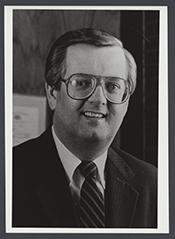 Rep. Curt Weldon (R-PA)