Providing for consideration of the bill (H.R. 1104) to prevent child abduction, and for other purposes.

Legislative Activity
Stay on top of the latest movement without scrolling through every action
Motion to reconsider laid on the table Agreed to without objection.
March 26, 2003 • 11:49 AM
View full timeline
Introduced in House
March 25, 2003
The House Committee on Rules reported an original measure, H. Rept. 108-48, by Mrs. Myrick.
March 25, 2003
It shall be in order to consider as an original bill for the purpose of amendment under the five-minute rule the amendment in the nature of a substitute recommended by the Committee on the Judiciary now printed in the bill. After pasage of H.R. 1104, it shall be in order to consider in the House S. 151. All points of order against the Senate bill and against its consideration are waived. It shall be in order to move to strike all after the enacting clause of the Senate bill and to insert in lieu thereof the provisions of H.R. 1104 as passed by the House. If the motion is adopted and the Senate bill, as amended, is passed, then it shall be in order to move that the House insist on its amendments to S. 151 and request a conference with the Senate thereon.
March 25, 2003 • 7:10 PM
Placed on the House Calendar, Calendar No. 17.
March 25, 2003
Considered as privileged matter. (consideration: CR H2319-2325)
March 26, 2003 • 10:52 AM
DEBATE - The House proceeded with one hour of debate on H. Res. 160.
March 26, 2003 • 10:52 AM
On ordering the previous question Agreed to by the Yeas and Nays: 218 - 198 (Roll no. 86).
March 26, 2003 • 11:45 AM
Passed/agreed to in House: On agreeing to the resolution Agreed to by voice vote.(text: CR H2319-2320)
March 26, 2003 • 11:45 AM
On agreeing to the resolution Agreed to by voice vote. (text: CR H2319-2320)
March 26, 2003 • 11:45 AM
Motion to reconsider laid on the table Agreed to without objection.
March 26, 2003 • 11:49 AM
Voting History
1 vote recorded • Roll call available
Floor Debate
23 membersWhat members said about H.Res. 160 on the floor
 FJS
FJS RC"
RC" MF
MF LS
LS EP+18
EP+18
Floor Debate
23 membersWhat members said about H.Res. 160 on the floor
Mr. Chairman, I yield myself such time as I may consume. Mr. Chairman, sexual predators target America's children every day in large cities, small towns, and even in cyberspace. Sexual exploitation…
Mr. Chairman, I yield myself such time as I may consume.
Mr. Chairman, sexual predators target America's children every day in large cities, small towns, and even in cyberspace. Sexual exploitation of children, a prime motive for kidnapping, is on the rise. When it comes to abduction, rape, and murder of children, the United States must have a zero tolerance policy.
H.R. 1104, the Child Abduction Prevention Act, is comprehensive legislation that directly and forcefully addresses these heinous crimes. The bill is virtually identical to H.R. 5422, which overwhelmingly passed the House last October by a vote of 390 to 24. Like so many other meritorious bills sent to the other body in the last Congress, this legislation was allowed to die by the Democrat leadership.
An abducted child is a parent's worst nightmare. We must ensure that law enforcement has every possible tool necessary to try to recover a missing child quickly and safely. H.R. 1104 not only gets the word out after a kidnapping, but it also takes strong steps to prevent them from occurring in the first place. The bill strengthens penalties against kidnapping and aids law enforcement agencies to effectively prevent, investigate, and prosecute crimes against children.
Prompt public alerts of an abducted child could be the difference between life and death for that innocent victim. Recognizing this, the bill codifies the AMBER Alert program currently in place in the Departments of Justice and Transportation and authorizes increased funding to help States deploy child abduction communications warning networks.
For those individuals that would harm a child, we must ensure that punishment is severe, and that sexual predators are not allowed to slip through the cracks of a system and harm other children.
To this end, this legislation provides a 20-year mandatory minimum sentence of imprisonment for nonfamilial abductions of a child under the age of 18, lifetime supervision for sex offenders, and mandatory life imprisonment for second-time offenders. Furthermore, H.R. 1104 removes any statute of limitations and opportunity for pretrial release for crimes of child abduction and sex offenses.
Those who abduct children are often serial offenders who have already been convicted of similar offenses. Sex offenders and child molesters are four times more likely than other violent criminals to recommit their crimes. This number demands attention, especially in light of the fact that a single child molester, on average, destroys the lives of over 100 children. In response, H.R. 1104 provides judges with the discretion to impose lifetime supervision upon such offenders.
The bill also fights against an industry supporting one of the fastest growing areas of international criminal activity. The sex tourism industry obtains its victims through kidnapping and trafficking of women and children. These women and children are then
forced into prostitution. H.R. 1104 works to end this.
This legislation also authorizes increased support through the National Center for Missing and Exploited Children, the Nation's resource center for child protection. The center assists in the recovery of missing children and raises public awareness about ways to protect children from abduction, molestation, and sexual exploitation.
Some have called for a stand-alone AMBER bill instead of the comprehensive approach we have taken to address the problem of child abductions in this country. I note with interest that the DCCC, the political wing of the House Democrats, have labeled provisions of the bill I have just outlined as controversial.
I do not think these provisions are controversial. Neither do the Department of Justice, the National Center for Missing and Exploited Children, or the 390 Members of Congress that voted for this bill last year. Mark Klaas, father of kidnap and murder victim Polly Klaas, supports us. Mr. Klaas said, ``I'm behind what Mr. Sensenbrenner's doing. I like the idea of a 2-strike law for people who are committing sexual offenses against children. And what it says is that if somebody does that, they are going to spend the rest of their miserable life in prison if they are convicted a second time. I see no problem with putting it out on the floor and seeing where people fall on it.''
Those who say we need a stand-alone AMBER bill on the President's desk today do not understand the actual impact of such a bill. The fact is that much of the stand-alone AMBER bill has already been implemented and is in place right now.
The stand-alone AMBER bill calls for a national coordinator. On October 2, 2002, President Bush directed the Attorney General to designate a Justice Department officer to serve as AMBER Alert coordinator to help expand the AMBER Alert system nationwide. Assistant Attorney General Deborah J. Daniels was designated as that coordinator and for almost 6 months has been working to assist State and local officials with developing and enhancing AMBER plans and promoting statewide and regional AMBER coordination programs ever since.
The Departments of Justice and Transportation already have $12.5 million in the bank today, ready to respond and spend on AMBER programs.
Furthermore, in a March 18, 2003, letter to me, the Department of Justice stated that it has not been hampered in its efforts to implement an AMBER Alert program because of any legislation that has yet to be signed into law. Stand-alone AMBER legislation, in the words of the Department of Justice and their statement of administration policy, merely codifies current practice.
This Congress must do better than codifying current practice, and this bill does that. Let us be clear, if a stand-alone AMBER Alert were enacted into law today, nothing that is already being done would change. This bill merely supplants the Department of Justice general authorization with a specific authorization. It may make some feel good, but it will not help protect America's children from kidnapping and sexual abuse in the first place.
Federal money is in the pipeline for AMBER programs and is ready to be spent. A national coordinator has already been appointed. What we need now is a comprehensive legislative package that will crack down on child abductors, build and expand on the work of the National Center for Missing and Exploited Children, and give Federal authorities additional tools to prevent and to solve these horrific crimes.
I urge my colleagues to ignore the political rhetoric and to protect America's children by supporting this bipartisan and noncontroversial child protection legislation.
Mr. Chairman, I reserve the balance of my time.
Mr. Chairman, I yield 2 minutes to the gentlewoman from Washington (Ms. Dunn), the author of the stand-alone AMBER Alert bill on the House side.
Mr. Chairman, I yield 3 minutes to the gentleman from North Carolina (Mr. Coble), the chairman of the Subcommittee on Crime, Terrorism and Homeland Security.
(Mr. COBLE asked and was given permission to revise and extend his remarks.)
Mr. Chairman, I yield myself 15 seconds just to point out that neither the Senate-passed stand-alone AMBER Alert bill nor its companions in the House establish a mandatory national AMBER system. All of the bills are voluntary. The States can apply for grants. It is my hope that they will do so.
Mr. Chairman, I yield 2 minutes to the gentleman from Michigan (Mr. Upton).
Mr. Chairman, I yield 3 minutes to the gentleman from Wisconsin (Mr. Green).
Mr. Chairman, I yield 2 minutes to the gentleman from Utah (Mr. Cannon).
(Mr. CANNON asked and was given permission to revise and extend his remarks.)
Mr. Chairman, I yield myself the balance of my time.
Mr. Chairman, on the other side of the aisle some Members have come up and stated that we ought to bust this bill apart and strip out all of the non-AMBER Alert-related issues. That would be a big mistake. It would be a huge mistake because most of these provisions are designed to prevent kidnappings and molestations from happening in the first place.
I support AMBER Alert. It is important once a kidnapping takes place that the police and the public and the news media know about that kidnapping so that an alert public can hopefully spot the abducted child and return the child to his or her parents.
But even more important in my opinion is to prevent the kidnappings and the molestations in the first place because if that ever happens, those people's lives are scorched for life.
In H.R. 1104 there are a number of provisions. I do not think they are controversial, but let me enumerate them. It provides the judge with the discretion to extend the supervision of a released child sex offender up to a maximum of life, eliminates the statute of limitations for child abductions and sex crimes, denies pretrial release for child rapists and child abductors, requires a mandatory sentence of life imprisonment for twice-convicted child sex offenders, reauthorizes and doubles the annual grant to the National Center for Missing and Exploited Children to $20 million a year through fiscal 2005, mandates a minimum 20-year prison sentence for the kidnapping of a person under the age of 18 by a nonfamily member, authorizes COPS funding for a sex offender apprehension program, adds four new wiretap predicates that relate to sexual exploitation crimes against children.
We give these predicates so that the police will have the same authority to seek court wiretap authority when someone is using the Internet to try to entice children that the police presently have in cases of organized crime, international terrorism, or drug trafficking.
The bill facilitates the prevention of international parental kidnapping by adding an attempt to liability to the statute defining that offense, and it punishes persons who travel to foreign countries to engage in illegal sexual relations with minors and criminalizes the actions of sex tourism operators.
These are provisions that the opponents of this bill want to strip out. They are important provisions. They ought to be the law of the land, and we ought to pass H.R. 1104 intact today to make them the law of the land.
Mr. Chairman, I yield back the balance of my time.
Mr. Chairman, will the gentleman yield?
Mr. Chairman, I believe the gentleman's amendment is a very constructive amendment. I urge the committee to adopt it.
Mr. Chairman, I compliment the gentleman from Florida for proposing an excellent amendment. Let me say I am really puzzled that my friend the gentleman from Virginia (Mr. Scott) is opposing this amendment.
Back in 1992, there was a citizen of Los Angeles County named Rodney King that was beaten up by a bunch of police officers. Those police officers were tried and convicted of a civil rights violation in a Federal Court.
The judge there had a downward departure from the sentence that Police Officer Koon would have received, which would have been 70 to 87 months under the sentencing guidelines. The District Court said, as a result of the widespread publicity and emotional outrage which would have surrounded this case, the officers were particularly likely to be targets of abuse in prison, had they been burdened by having been subjected to successive State and Federal prosecutions. So Mr. Koon only got 30 months in prison, when the guidelines required 70 to 87 months in prison.
Now, the Congressional Black Caucus sent a letter to Attorney General Janet Reno; and that was reported in the August 13, 1993, edition of the Los Angeles Times. The Black Caucus, the gentlewoman from California (Ms. Waters), and 24 other members of the CBC wrote the Attorney General asking that this be appealed.
The government did appeal that sentence and won its case in the Appeals Court, and the Appeals Court held that there should be a de novo review of the sentence. Then there was an appeal to the United States Supreme Court which reversed the Appeals Court and said that the only time a district judge's departure from sentencing guidelines could be reviewed and reversed was if there was an abuse of discretion.
There is a provision in the amendment offered by the gentleman from Florida (Mr. Feeney) that does precisely what the Congressional Black Caucus asked for almost 10 years ago, and that is to give appeals courts de novo review over sentencing guidelines.
So I am puzzled at the gentleman from Virginia's opposition. We are doing what he asked for, but maybe 10 years too late.
Now, I think it is outrageous that one out of every five cases of those convicted of sexually abusing a child or sexually exploiting a child through child pornography have received a downward departure from the sentencing guidelines. The law says this is supposed to be rare, but, instead, a 20 percent downward departure rate is not rare.
Mr. Chairman, I think that the amendment that has been offered by the gentleman from Florida plugs this loophole. It ought to be passed.
Mr. Chairman, I include for the Record the August 6, 1993, letter from
the Congressional Black Caucus to the Attorney General of the United States.
House of Representatives,
Washington, DC, August 6, 1993.
Hon. Janet Reno,
Attorney General, Department of Justice, Washington, DC.
Dear Attorney General Reno: As members of the Congressional
Black Caucus, we are writing to you because of our concern
about the sentencing of Officer Laurence Powell and Sergeant
Stacey Koon by Judge John Davies in the Rodney King civil
rights case.
We are troubled that the sentence for the crime was reduced
to 30 months upon the court's consideration of mitigating
facts. Such a reduction for mitigation factors may be
appropriate in other circumstances. However, we feel that the
dependents' special status as police officers, with special
duties owned to the public, should have mitigated against
such a significant reduction.
As you well know, the maximum possible penalty was ten
years and fines of up to $250,000. Your federal prosecutors
were asking for seven to nine years. Our federal sentencing
guidelines recommended minimum sentences in a range of four
to seven years in prison.
Instead, Judge John Davies made broad use of subjective
factors. He stated that he read only letters addressed to him
from the friends and families of Officer Powell and Sergeant
Koon. He argued that much of the violence visited on Rodney
King was justified by King's own actions. However, these
officers were convicted on charges of violating Rodney King's
civil rights. We believe these mitigating factors did not
justify so large a reduction given the defendant's special
responsibilities as police officers.
In addition, Judge Davies did not afford proper weight to
the racist comments made over police radio by those convicted
on the night of the beating in discounting race as a
motivation for the beating. He similarly failed to take into
account the remarkable lack of remorse shown by Officer
Powell and Sergeant Koon since their conviction.
People of good will all over this country and of all races
were heartened when Officer Powell and Sergeant Koon were
convicted by a jury of their peers, a verdict made possible
by the Justice Department's resolve to file civil rights
charges and by the phenonemal performance of federal
prosecutors. With these severely reduced sentences, however,
we are sending a mixed message. Are police officers going to
be held responsible for excessive use of force or not?
We think what has been lost, in all this, is the police
officers have an enhanced responsibility to upheld the law.
Notwithstanding Judge Davies' authority to modify the
sentencing guidelines, most experts agreed that the minimum
four to seven years sentence should have been followed in
this case.
We realize that the trial judge is afforded sufficient
latitude in sentencing, but we urge the Department of Justice
to appeal these sentences. We need to reexamine these
sentences so that justice can finally be done in this
difficult, painful case. Only then can we begin to put this
behind us.
Sincerely,
Maxine Waters, Eva M. Clayton, Sanford Bishop, Major R.
Owens, Eddie Bernice Johnson, Walter Tucker, Floyd H.
Flake, William Clay, Albert R. Wynn, Charles B. Rangel,
Carrie P. Meek, William J. Jefferson, James E. Clyburn,
Donald M. Payne, Earl Hilliard, Alcee Hastings, Bennie
M. Thompson, Kweisi Mfume, Glee Fields, Louis Stokes,
Cynthia McKinney, Melvin L. Watt, John Lewis, Ronald V.
Dellums, Corrine Brown.
Mr. Chairman, I believe this amendment is a very good amendment. This program is a very important one. It is too important to let go by the wayside. I believe we should take this opportunity to reauthorize it in the context of this bill and would urge the committee to support the gentleman's amendment.
Mr. Chairman, this is also a very good amendment. I commend the gentleman from Florida for drafting and offering it, and I would urge the Committee to adopt it.
Mr. Chairman, I believe this amendment is a very necessary amendment, if I could just take a minute to explain why.
In 1993, the National Child Protection Act was passed to provide a process for background checks for volunteers. It did not get up and running.
Additional legislation to improve the process was enacted through the Volunteers for Children Act of 1998. It still is not up and running.
What the gentleman from Texas is proposing is to tell the Justice Department that they have 120 days to tell us why these programs are not up and running, what is needed to fix them, and to get on with the background check system so that those who do volunteer to work not only with children, but also the disabled and the elderly, can be checked out to see if altruism is not their sole motivation for working with these groups of people.
I think that this is a very good amendment, and I hope that it would be adopted.
Mr. Chairman, I thank the gentleman for yielding.
This is also a very good amendment. It broadens the tools that law enforcement can use to track down missing children through better forensic investigation. I commend the gentleman from Texas for offering this amendment, and I hope that the committee adopts it.
Mr. Chairman, I also believe that this is a very constructive amendment, and I commend the gentleman from Puerto Rico for offering it; and I hope that it is adopted.
Let me say that one of the first things I did when I came to Congress was I helped pass the Missing Children's Act which was in response to the abduction and gruesome murder of Adam Walsh, whose father, John Walsh, has obtained quite a bit of fame in being an advocate for missing and exploited children.
The Code Adam proposal has been very successful when privately implemented in Wal-Mart stores around the country, and I think that having a Code Adam alert system in place nationwide for all public buildings will significantly improve the chance of recovering children who might be abducted in a shopping mall or some other public building. I think the gentleman from Puerto Rico has done the children of this country a great service by offering this amendment, and I hope that it is adopted.
Mr. Chairman, I thank the gentleman for yielding time to me.
Mr. Chairman, I support this amendment as an important step to stop the exploitation of our children. This amendment is directly connected to the abduction of children, since children are abducted and sold into the sex industry for both pornography and for prostitution.
The amendment addresses growing challenges to the government's ability to prosecute child pornographers. It also includes a provision to address child pornography that is produced overseas to be distributed in the United States. The exploitation of any child is unacceptable, and the United States must take affirmative steps to prevent this exploitation wherever it occurs.
The amendment is essentially the same as the Child Obscenity and Pornography Prevention Act, which passed the House in the last Congress by a vote of 413 to 8. This legislation had strong bipartisan support. Congress understood then what has become even more clear now, that this legislation ensures the enforceability of existing child pornography laws.
During the 1990s, advances in computer technology threatened the government's ability to protect real children. Congress attempted to address this concern in 1996 with the Child Pornography Prevention Act, parts of which were subsequently struck down by the Supreme Court in the Free Speech Coalition decision.
Regardless of whether we agree or disagree with the court's decision, we must now deal with its consequences. Since that decision, defendants in child pornography cases have routinely claimed that the depictions of child pornography could be virtual, thus requiring the government to prove first that the depicted image is a real person.
The mere existence of computer technology that creates virtual depictions which are indistinguishable from depictions of actual children allows defendants who possess images of real children to escape prosecution. This Congress has an obligation to correct this absurd permutation in the law.
Given the prevalence of the Internet, we absolutely cannot protect our children if prosecutors must first complete
the almost impossible task of identifying the children depicted in child pornography. Unless this amendment is adopted, the Supreme Court's decision will effectively legalize all child pornography by throwing an insurmountable burden in the face of the prosecution.
I urge my colleagues to support this critical amendment.
Mr. Speaker, I demand a recorded vote.
Mr. Chairman, I yield myself such time as I may consume. Mr. Chairman, I rise in opposition to H.R. 1104. I would like to be able to support the AMBER Alert part of the bill, but that bipartisan,…
Mr. Chairman, I yield myself such time as I may consume.
Mr. Chairman, I rise in opposition to H.R. 1104. I would like to be able to support the AMBER Alert part of the bill, but that bipartisan, noncontroversial part of the bill has been buried behind literally a host of controversial sound-bite-based provisions which have passed the House several times, only to die in the Senate.
The AMBER Alert portion of the bill would codify a program of grants and assistance to States and localities to establish a nationwide system of communications and alerts to assist in locating and returning missing and abducted children. The system has proven itself on the State level and would help save lives and additional heartache on a national basis.
The AMBER Alert bill has already passed the Senate unanimously and could pass unanimously in the House, I believe, absent the controversial sound bites that have been tacked on.
Last Congress, many of us warned the majority that coupling the AMBER Alert bill with controversial sound bites would mean that neither the AMBER Alert nor the sound bites would be passed, but the House passed the same kind of omnibus bill anyway; and, as expected, the whole thing died in the Senate. Yet, here we are again facing the same misguided strategy and this time again with even more reasons for the Senate to reject the bill which the AMBER Alert bill is buried in. Again, we have to protest the strategy that will again defeat the AMBER Alert system and again defeat the sound bites as well.
Mr. Chairman, I think the Senate has chosen not to consider many of the controversial items hitchhiking on the AMBER Alert bill for good reasons: more death penalties, at a time when we know the death penalty has problems; more mandatory minimums, two strikes and you are out. We are authorizing FBI wiretaps for behavior that is not even a crime; pretrial detention, lifetime supervision, and removing the statute of limitations on crimes such as adults crossing State lines to engage in consensual sex that would be a crime in the home State. I would just remind Members that any kind of sex outside of marriage is a crime in Virginia.
Virtually all of the crimes described in the bill are already crimes with significant penalties. Others have already passed the House in separate bills and are still pending in the Senate, as they have been for the last 6 years.
It is wrong to hijack the AMBER Alert bill to try to pass these things again. It will not help AMBER Alert, and it will not help pass the extraneous provisions.
It is true that the President has not waited for Congress to pass an AMBER Alert bill and has, by executive order, implemented many of the provisions of the bill. But the passage of AMBER Alert is still necessary to make the program permanent and to increase the funding of the program.
Mr. Chairman, we have letters from the National Association of Police Organizations, and I will just read two paragraphs from it:
``On behalf of the National Association of Police Organizations, representing 230,000 rank and file police officers from across the United States, I would applaud your valiant efforts in calling for an immediate passage of stand-alone AMBER Alert legislation. The recent successful recovery of Elizabeth Smart exemplifies the power of an informed public.
``In this light, legislation that will greatly enhance recovery abilities should not be tied down with additional controversial provisions and political wrangling. The Senate quickly passed S. 221 92 to nothing. Like other child abduction bills, H.R. 412 and S. 121 enjoy broad bipartisan support.''
We have other letters asking for passage of a stand-alone AMBER Alert bill from the Edward, Lois and Elizabeth Smart family and from the Polly Klaas Foundation. I would ask that we defeat the bill and take up H.R. 412, the stand-alone AMBER Alert bill.
Mr. Chairman, I reserve the balance of my time.
Mr. Chairman, I yield 6 minutes to the gentlewoman from Texas (Ms. Jackson-Lee).
(Ms. JACKSON-LEE of Texas asked and was given permission to revise and extend her remarks.)
Mr. Chairman, could the Chair advise us as to the amount of time remaining on both sides?
Mr. Chairman, I yield 5 minutes to the gentleman from North Carolina (Mr. Watt).
Mr. Chairman, I ask unanimous consent to yield the balance of my time to the gentleman from Illinois (Mr. Davis) for purposes of control.
Yes, Mr. Chairman.
Mr. Chairman, I yield myself such time as I may consume.
This is one of the reasons why it is difficult to consider legislation on the floor that had not been considered by committee. Reading the legislation, it appears that they have defined things that are obscene and, if that is the case, the whole site can be busted for obscenity. If it is not obscene, I am not sure that the amendment even applies. Adding ``misleading'' will just add complications to the prosecution because if we can prosecute for the obscenity, we do not have to get into the question of whether the title was misleading or not. We have constitutional implications with this because ``misleading'' may apply to adults as well as children.
There have been no hearings on this to my knowledge and certainly no committee consideration of this. I would point out that if the exemption on the bill, if we have a sexual implication in the name of the Web site, that might cause as many problems as it does solutions because it would make it easier to find the pornographic and obscene sites.
The AMBER alert bill ought to be passed by itself. We ought not be complicated with amendments such as this that have not been considered on the floor. So I would hope we would defeat the amendment, take the AMBER alert portion of the bill by itself so that that could be passed and considered, and deal with this kind of a measure in committee where we can deliberate and get all the fact and implications.
Mr. Chairman, I reserve the balance of my time.
Mr. Chairman, I reserve the balance of my time.
Mr. Chairman, I yield myself such time as I may consume.
In closing, I would like to say that this bill has significant constitutional implications. I include for the Record a letter from Artist Empowerment Coalition in opposition to the amendment.
Artist Empowerment Coalition,
New York, NY, March 26, 2003.
Honorable Member,
House Committee on Judiciary,
Washington, DC.
Dear Member: The Artist Empowerment Coalition (AEC)
strongly opposes the language in Section 108 of the Amber
Bill, which refers to MISLEADING DOMAIN NAMES ON THE
INTERNET. The AEC represents a nationwide coalition of
artists, songwriters, producers and industry executives. On
behalf of the coalition, we ask that you oppose this
amendment and prevent its inclusion in the legislation. The
impact of its passage would be much broader and more harmful
than the intent in our view, for the following reasons:
1. It is the artists' 1st Amendment right to express
themselves creatively on the web or otherwise.
2. Recording artists of all genres have website domain
names, which vary in origin and may reflect simply their
names, titles, who they are and/or what they represent
musically.
3. In some instances, an artists website content can
include language and lyrics which are part of their overall
body of work.
4. The content of the website and their creative expression
is not and cannot always be reflected within the domain name.
5. Under Section 108 of this proposed amendment, content of
an artists' website, judged subjectively, may be deemed
``obscene'' and therefore, based upon absence of labeling to
that effect, exposes an artist to punishment under the law
which can include, but is not limited to imprisonment.
6. The domain name selection, and its use on the part of an
artist, is not, in this case, ``knowingly misleading,''
rather it is selected based upon an artists rights under the
1st Amendment of the Constitution.
Further, the AEC believes artists should have the right to
use domain names, which are not subject to ``labeling'' and
third party interpretations. We believe it is wrong to imply
that an artist intends to ``knowingly deceive'' a person or
persons simply by using his or her name, for instance, as the
domain name rather than a description of the website
contents.
While the AEC supports efforts to protect children from
kidnapping and efforts to apprehend criminals, we oppose this
and any measure, which wrongly makes criminals of the
creative community, hinders the creative process and violates
creative rights under the law. Please vote ``NO'' on this
bill as amended.
Sincerely,
Tracey Walker,
Director of Public Affairs.
Mr. Chairman, I yield back the balance of my time.
Mr. Chairman, I claim the time in opposition.
Mr. Chairman, I yield myself such time as I may consume.
Mr. Chairman, this amendment would have the effect of turning the sentencing guidelines into mandatory sentences in the cases it affects. We have not had hearings or markups on this matter; and this is not the way we should amend the sentencing guidelines, without thought or consideration.
The purpose of the sentencing guidelines is to provide intelligent consistency in sentencing, considering each sentence within the overall framework of other sentences, and ensuring that more serious crimes get more serious punishment. That is impossible when you just take one crime at a time outside of that context with a floor amendment such as this.
The fact is, it makes no sense to have people with different degrees of criminality getting equal sentences or people with equal degrees of criminality getting vastly different sentences.
The evidence is that the guidelines are operating the way they are supposed to. About 85 percent of the sentences are either within the guideline range or outside of the guidelines at the request of the prosecution.
The sentencing commission should retain the appropriate discretion, since that discretion has been essentially taken away from judges. If we want the commission to look at this specific problem of downward departures in these cases, we should direct the sentencing commission to do just that and not take it upon ourselves to do it all by ourselves in a vacuum.
Mr. Chairman, I reserve the balance of my time.
Mr. Chairman, I reserve the balance of my time, and reserve the right to close.
Mr. Chairman, I yield myself such time as I may consume.
Mr. Chairman, when you ask for the courts to review it, that is so it can be considered in the courts with all the evidence, not in the political branch. It is better to leave it to the sentencing commission and the courts than to floor amendments in the House of Representatives.
If this is such a good idea, then let us do it through the regular order. Let us have some hearings, subcommittee markup, committee markup, and then we can slowly and deliberately consider such an amendment.
The purpose of the sentencing commission is to get away from the floor amendments and the sound bites so you can have intelligent sentencing. We have had situations where you have had sentences that are way out of proportion to crimes that are just as serious, or less serious, totally out of context. That is why we try to get away from it, so that serious crimes get serious punishment, lesser crimes get lesser punishment.
That is the purpose of the sentencing commission. You cannot do that with floor amendments in the House of Representatives. That is why we would hope this amendment could be defeated. We could get a clean Amber Alert bill passed so we can get that enacted and not have to get bogged down in consideration of amendments such as this.
Mr. Chairman, will the gentleman yield?
Mr. Chairman, I would point out that this is going in the right direction. We need to work on this as quickly as possible, in this bill or outside of this bill. I think it is a good idea, and I am in support of the amendment.
Mr. Chairman, I seek time in opposition.
Mr. Chairman, I yield myself such time as I may consume.
Mr. Chairman, this amendment is designed as a fix for last year's decision in Ashcroft versus Free Speech Coalition. The problem with the amendment is that it has the same problems as the law that was struck down. The Ashcroft case held that sale or possession of non-obscene computer-generated material depicting child-like characters engaged in explicit sexual activities does not constitute a crime. This bill says it is a crime, just like the law that was struck down.
Child pornography and object are despicable and illegal and can and are banned and prosecuted. These crimes and their severe punishments are left intact by the Ashcroft decision. What the court struck down was the criminalization of computer-generated and other depictions of children, which is not obscene, in undesirable, including sexual, situations where no child was actually involved in making the material.
We all see pornography as despicable, period. But under our laws, pornography that is not obscene and does not involve real children is just that, pornography. Whether we like it or not, the Supreme Court has told us that pornography is not illegal. It is a category of speech that is despicable but not illegal.
While pornography is legal, child pornography is illegal. But to constitute child pornography, the Supreme Court has told us that a child has to be involved in the production. Virtual computer-generated images, therefore, unless they are obscene, are not illegal.
The law called into question in Ashcroft was a law enacted in 1996. The problem the court found with the law was that, while it prohibited images that constituted child pornography, it also prohibited images that did not constitute child pornography, because actual children were not involved in the production.
The court made it clear that protected speech may not be banned as a means to ban unprotected speech. This would turn the first amendment upside down.
Proponents of the bill believe that the court left intact or left open the question of whether government can establish a sufficiently compelling State interest to justify criminalization of computer- generated images that are not obscene and do not involve real children. However, the court cited in its decision New York versus Ferber from 1992 when it said, virtual images record no crime and creates no victims by its production and therefore are legal.
Proponents also argue that the court did not consider the harm to real children which would occur when, through technological advances, it will become difficult to tell real children from virtual children, thereby allowing real children to be harmed because the government cannot tell the difference for the purpose of bringing prosecution.
But the court did clearly consider that, and stated, and I quote from the decision, ``The government next argues that its objective of eliminating the market for pornography produced using real children necessitates a prohibition on virtual images as well. Virtual images, the government contends, are indistinguishable from the real ones. They are part of the same market and often exchanged. In this way, it is said virtual images promote the trafficking in works produced through the exploitation of real children.''
But then the court says, and I continue quoting, ``The hypothesis is somewhat implausible. If virtual images are identical to illegal child pornography, the illegal images will be driven from the market by indistinguishable substitutes. Few pornographers would risk prosecution by abusing real children if fictional computer-generated images would suffice.''
Nor was the court persuaded by the argument that virtual images will make it difficult for the government to prosecute cases. As to that concern, the court said, ``Finally, the government says that the possibility of producing images by using computer imaging makes it difficult for it to prosecute those who produce pornography using real children. Experts, we are told, may have difficulty in saying whether the pictures were made using real children or by using computer imaging. The necessary solution, the argument runs, is to prohibit both kinds of images.
``The argument,'' the court said, ``in essence is that protected speech may be banned as a means to ban unprotected speech. This analysis turns the first amendment upside down. The government may not suppress lawful speech as a means to suppress unlawful speech.''
Finally, Mr. Chairman, the government suggests that because the court determined that it did not decide whether an affirmative defense could save an otherwise unconstitutional law, it left open that possibility. That may be technically true, but listen to what the court said: ``In order to force this objection, the government would have us read the CPPA as not a measure suppressing speech but as a law shifting the burden to the accused to prove the speech is lawful. In this connection, the government relies on an affirmative defense under the statute which allows a defendant to avoid conviction for nonpossession offenses by showing that the materials were produced using only adults and were not otherwise distributed in a manner conveying the impression that they depicted real children.
``The government raises serious constitutional difficulties by seeking to impose on the defendant the burden of proving his speech was not unlawful. The affirmative defense applies only after the prosecution has begun, and the speaker must himself prove, on the pain of felony conviction, that his conduct falls within the affirmative defense.
``In cases under the CPPA, the evidentiary burden is not trivial. Where the defendant is not the producer of the work, he may have no way of establishing the identity or even the existence of the actors. If the evidentiary issue is a serious problem for the government, as it asserts, it will be at least as difficult for the innocent possessor.''
This statute, however, Mr. Chairman, by its very words, makes illegal what the court said was legal. Five Justices joined in the majority opinion. One concurred, one concurred in part and dissented in part, two dissented.
With five Justices, all of whom are still on the court, agreeing with the whole decision and only three dissenting in any part at all, this is not a close decision with wavering members.
So, Mr. Chairman, I think we should avoid the necessity of the court's telling us again that we cannot prosecute child pornography unless real children were, in fact, involved in the production of the material or unless they are otherwise legally obscene.
Finally, Mr. Chairman, we should note the subsequent action in the Ashcroft case. The trial court on February 7, just a few weeks ago, ordered attorney's fees to the plaintiff on the grounds that the government's defense of the statute was not substantially justified. This is essentially the same statute. It says that virtual child images can be made illegal. The court has said that virtual images cannot be made illegal. Those of us who are familiar with our system of government recognize that the same ruling by the same Supreme Court will find this bill unconstitutional and unenforceable; and, therefore, the amendment should be opposed.
Mr. Chairman, I reserve the balance of my time.
Mr. Chairman, I yield 2 minutes to the gentleman from North Dakota (Mr. Pomeroy).
Mr. Chairman, I yield myself the balance of my time.
The Supreme Court told us that virtual images produced without real children cannot be prohibited unless they are obscene. The bright line is a person has got to use real children for it to be illegal. This bill says that virtual images without using children are illegal. The same Supreme Court will make the same decision.
This amendment is unconstitutional and ought to be rejected.
Mr. Chairman, I yield back the balance of my time.
Mr. Speaker, I yield myself such time as I may consume. Mr. Speaker, I am going to make a lengthy statement in just a moment, but I think it should be made clear to people who may be watching this on…
Mr. Speaker, I yield myself such time as I may consume.
Mr. Speaker, I am going to make a lengthy statement in just a moment, but I think it should be made clear to people who may be watching this on television, listening to this, Members listening to this in their offices or watching it, what is really going on here today. We have a noncontroversial bill, the AMBER alert bill, that was passed unanimously by the Senate both last year and this year; and we have an omnibus bill with all kinds of provisions, the AMBER alert provision being one of those that has now been reported out of the committee.
While this omnibus bill passed the House in the last session, it did not pass the Senate because there are a number of provisions that the Senate finds objectionable. So what we are doing is we are holding hostage the AMBER bill, the stand-alone AMBER bill, because some Members in the other party want an omnibus crime bill with controversial provisions.
If the leadership on the other side would simply let us have a separate vote on the AMBER provisions that have already passed the Senate unanimously this year, those would be passed by this House immediately and then could be sent to the President for his signature, but that is not what is being done today.
What we are doing is considering an omnibus bill with AMBER as one part of it, an omnibus bill that contains some very controversial provisions that indications are the Senate will not accept.
I would paraphrase something that is often said in criminal court: Justice delayed is justice denied. That is basically what is happening here today, is that we are packaging something that we know probably will not be accepted by the Senate, and even if it is accepted, it would be after a long and lengthy discussion and perhaps a conference committee.
Mr. Speaker, I have been a Member of this House for 25 years, and over that time I have been disappointed with the majority leadership on more than one occasion, but I cannot recall anything as utterly indefensible as the fact that the House leadership, Republican leadership, continues to block a very simple, very noncontroversial legislation, to set up a nationwide network of AMBER alerts to help save abducted children. If that sort of obstructionism is not out of touch, then I do not know what is.
Mr. Speaker, the rule for the Child Abduction Prevention Act is fine enough, fine enough that is if one is okay with politics as usual, fine enough if one is okay with delaying help to abducted children. America's children desperately need a nationwide system of AMBER alerts, and passing the Child Abduction Prevention Act through the House will not provide that anytime soon, if ever, and abducted children do not have time to wait any longer for politics as usual.
Mr. Speaker, House Republican leaders have blocked the simple AMBER Alert bill for 6 long months, and I am confident they have carefully constructed talking points to confuse the issue even further today.
So I want to be very clear about what the House is doing. We will be debating in a little bit two separate bills. One is the large, complicated and somewhat controversial bill this rule makes in order, the Child Abduction Prevention Act, H.R. 1104, of the gentleman from Wisconsin (Mr. Sensenbrenner). The other bill this bill does not make in order is the simple, noncontroversial AMBER Alert Network, S. 121, which has already passed the Senate unanimously and which could become law tomorrow if Republican leaders would only allow us to vote on it today.
I am not here to oppose the bill of the gentleman from Wisconsin (Mr. Sensenbrenner). I am not trying to defeat it. That is why Democrats did not offer a substitute yesterday in the Committee on Rules. All I am asking, as I and others like Ed Smart and Marc Klass have asked for the past 6 months, is for a separate vote on a separate bill, the AMBER Alert Network Act. Why? Because the Senate has passed the simple AMBER bill unanimously; because it has 220 cosponsors in the House, a clear majority; because the President supports it; and because if Republican leaders allow the House to pass it, then it will become law and communities across the Nation will get desperately needed resources to set up and/or strengthen the AMBER Alert systems that save children's lives.
Mr. Speaker, there is no valid reason that the House could not easily pass both bills, the simple AMBER Alert bill and the larger bill of the gentleman from Wisconsin (Mr. Sensenbrenner) today, but the rule only allows a vote on the bill of the gentleman from Wisconsin (Mr. Sensenbrenner), and passing it through the House will not send immediate help to AMBER Alerts any more than passing bankruptcy reform last week did.
Mr. Speaker, that is because the bill of the gentleman from Wisconsin (Mr. Sensenbrenner) is a large and complicated piece of legislation. It has not even been introduced in the Senate, much less passed by the Senate Judiciary Committee or the full Senate, or reconciled with the House bill in a conference committee. No one knows whether it will ever become law. That is why I tried to bring up the simple AMBER bill by unanimous consent last week, but the Republican leadership refused to allow it, and that is why I tried to amend the rule last night in the Committee on Rules to bring up both bills today on the floor, but Republicans blocked the AMBER bill as a stand-alone bill in a party- line vote last night.
Mr. Speaker, this is about protecting our children. It is not about party politics; so I cannot understand why Republican leaders insist on blocking the simple, stand-alone AMBER bill passed by the Senate. But they have been doing it for 6 months, and they make plenty of arguments. Last night in the Committee on Rules, one Republican member, the gentleman from Texas (Mr. Sessions), called it a feel-good, do- nothing piece of legislation. Like me, he is from North Texas where the AMBER Alert was invented, so I was surprised to hear him say that. The gentleman from Wisconsin (Mr. Sensenbrenner) said that those of us arguing for a simple, stand-alone vote on the simple AMBER bill are misinformed about the impacts such a bill would have.
Mr. Speaker, with due respect to the gentleman from Wisconsin (Mr. Sensenbrenner), the family of Elizabeth Smart is not misinformed. That is why they wrote an open letter to the House last week stating, ``As you know, I can't express enough how our children can't wait another day for the National AMBER Alert to be signed into law by President Bush. Please, please, please, pass the stand-alone AMBER Alert legislation now. You cannot comprehend the joy and adulation of having your child return. The AMBER Alert will make this a reality for countless families. Please don't underestimate the immediacy and power of this legislation.''
Similarly, Mr. Speaker, Marc Klass, the father of Polly Klass, was not misinformed when he wrote a letter expressing support for a nationwide network of AMBER Alerts.
And several Republican Members of the other body, including the chairman of the Committee on the Judiciary, were not misinformed when they urged the House to pass the simple stand-alone AMBER bill. Finally, the President of the United States was not misinformed when he said passing the AMBER bill is critical. All of these people are advocates for passing the simple AMBER legislation. Why? Because they understand that the AMBER Alert system works.
Announcement by the Speaker Pro Tempore
Mr. Speaker, I did not mention them by name, but I thank the Chair.
Mr. Speaker, they understand that the AMBER system works. It has helped to recover 52 abducted children, five of them in the month of March alone; but it does not work where it does not exist, and the AMBER Alert Network Act will help set up a nationwide network of AMBER Alerts. It provides 10 times the resources to communities that the President has requested for next year.
But the AMBER Alert bill will never become law as long as House Republican leaders are holding it hostage. Over the past 6 months, they have proven their willingness to do just that. As a result, Mr. Speaker, there is only one way to pass the AMBER Alert Network Act through this House, by defeating the previous question today. If we defeat the previous question, I will offer an amendment to the rule to bring up S. 121, the Senate-passed stand-alone AMBER bill immediately after the House passes H.R. 1104, the Sensenbrenner bill. That way the AMBER bill can become law and we can immediately begin strengthening AMBER Alerts around the country to save abducted children. The larger bill by the gentleman from Wisconsin (Mr. Sensenbrenner) can continue through the legislative process, hopefully through the Senate, through a conference committee, and back to the House and Senate as a conference report, and maybe one day become law. But abducted children cannot wait that long.
I urge Members, especially the 220 who have cosponsored the AMBER Alert Network Act, to defeat the previous question so we can vote on this bill today and begin helping abducted children.
Mr. Speaker, defeating the previous question will not stop the Child Abduction Prevention Act, but it is the only way to immediately strengthen AMBER Alerts around the country.
In closing, let me quote from a letter that the family of Elizabeth Smart sent to all Members of the House this morning. They write: ``Chairman Sensenbrenner's efforts on this issue are greatly appreciated, and his bill contains several worthy measures. But there is no reason the House can't vote on this bill while also passing the AMBER Alert Network Act that has been delayed for over 6 months.
``So we urge Members of the House who want to strengthen the AMBER Alert to vote `no' on the previous question today. That is the only way for the House to pass the National AMBER Alert to help protect America's children immediately.
``Our children can't afford to wait another day for the National AMBER Alert so we urge the House not to waste this opportunity to act on the legislation that has already passed the Senate twice.''
Mr. Speaker, I believe the Smart family has stated the case very clearly, so I urge my colleagues to oppose the previous question.
Mr. Speaker, I reserve the balance of my time.
Mr. Speaker, I yield myself 30 seconds.
Mr. Speaker, Members watching this must be scratching their heads and saying what are they talking about. The stand-alone AMBER bill has already passed the Senate 92-0. It would pass this House probably unanimously. They should just have a vote on it. Why do we just not have a vote on it; they will not let us have a vote on it.
Mr. Speaker, I yield 1 minute to the gentleman from Florida (Mr. Hastings).
Mr. Speaker, I yield myself 30 seconds.
Let us be clear what is going on here. I may have misunderstood my colleague from Georgia, a member of the Committee on Rules. I think he said that I did not support the larger bill. That is not the case. I support the larger bill, the Sensenbrenner bill; and I intend to vote for it. I just want a separate vote on the stand-alone AMBER provisions so that we can do that today rather than 6 months ago, 6 months later or a year later.
Mr. Speaker, I yield 2 minutes to the gentleman from Utah (Mr. Matheson).
Mr. Speaker, I yield myself 30 seconds. I thank the gentlewoman from North Carolina for pointing out that, on an administrative basis, there is $12 million that has been set aside. Of course, this or some subsequent administration could withdraw that money, could terminate the program if it does not become permanent statutory law. We know this administration is under great budgetary pressures because of the large deficit that they have run up, and we do not want to risk someone in the administration waking up tomorrow and deciding that they cannot afford to spend this money for the AMBER Alert. So we want to put it in statutory law where they will have to spend it.
Mr. Speaker, I yield 2 minutes to the gentleman from Minnesota (Mr. Oberstar).
(Mr. OBERSTAR asked and was given permission to revise and extend his remarks.)
Mr. Speaker, I yield 3 minutes to the gentleman from New Jersey (Mr. Holt).
Mr. Speaker, I yield myself such time as I may consume.
It was once observed many years ago in the pre-television age that there are two things that you do not want to see happen. One is the making of sausage and the other is the making of legislation. But, of course, now we see the making of legislation on television; and I would suggest that what the other side is doing today is giving sausage- making a bad name.
It is very clear that this legislation could become law in the next couple of days if they would just let it go, just let us have a separate vote on it. But they are not willing to do so.
My colleague from North Carolina cited the votes in the House for various provisions in this bill, other provisions. Of course those are all true, but the point is that they did not pass the Senate. They did not pass the other body. While they may be very popular in the House, that does not mean that the other body is going to take them all in one package with a little bow around them. They would not do it in the last Congress, and there is no real reason to believe they would do it anytime soon in this Congress. So all we are asking is a vote separate, a stand-alone vote just on the national AMBER network provisions which the other side, unfortunately, in this rule does not give us.
Mr. Speaker, if the previous question is defeated, I will offer an amendment to the rule. My amendment will provide that, immediately after the House passes the Child Abduction Prevention Act, it will take up the Senate-passed version of the AMBER Alert legislation. The Senate bill is identical to its House counterpart, H.R. 412, which has over 220 cosponsors.
The Senate passed S. 121 by a unanimous vote of 92-0 on January 21 of this
year. All that stands in the way of a presidential signature on this legislation is a clean vote by the House. That is what my amendment will allow us to do.
I am sure most of us cannot imagine the horror of having a child kidnapped. Research has shown that most kidnapped children are killed within 3 hours of their abduction. In these terrible, terrible instances, it is absolutely crucial that information be disseminated immediately so that these children can be rescued. AMBER programs in 39 States have already been credited with saving 31 lives.
It is hard to put into words the collective joy that this Nation felt 2 weeks ago when Elizabeth Smart was found alive and returned to her loving family. Let us help more families celebrate the joy of the safe return of a kidnapped child and not the sorrow of a tragic ending. Let us pass the Senate AMBER bill now and send it to the White House immediately.
Let me make very clear that a ``no'' vote on the previous question will not stop consideration of the Child Abduction Prevention Act. A ``no'' vote will allow the House to vote on H.R. 1104 and on S. 121 as well. However, a ``yes'' vote on the previous question will prevent the House from passing the clean AMBER bill and getting it to the President's desk as soon as possible. I urge a ``no'' vote on the previous question.
Mr. Speaker, I ask unanimous consent that the text of the amendment that I would offer be printed in the Record immediately before the vote on the previous question.
Mr. Speaker, again, I have been in this House for 25 years, and I simply do not understand what the other side is doing today. It makes no sense. It is indefensible. Let this legislation come to a vote and let it come to a vote today and be sent to the President.
Mr. Speaker, I yield back the balance of my time.
Mr. Speaker, I object to the vote on the ground that a quorum is not present and make the point of order that a quorum is not present.
Mr. Chairman, I offer an amendment. Mr. Chairman, I yield such time as he may consume to the gentleman from Wisconsin (Mr. Sensenbrenner), chairman of the Committee on the Judiciary. Mr. Chairman, I…
Mr. Chairman, I offer an amendment.
Mr. Chairman, I yield such time as he may consume to the gentleman from Wisconsin (Mr. Sensenbrenner), chairman of the Committee on the Judiciary.
Mr. Chairman, I reserve the balance of my time.
Mr. Chairman, I yield myself such time as I may consume.
Mr. Chairman, this amendment addresses the April 16, 2002, Supreme Court decision in Ashcroft versus Free
Speech Coalition. That decision struck down in 1996 a law written to combat computer-generated pornography because it was too broad.
The overturning of this law to combat child pornography has emboldened those who would have used children. Regrettably, the prediction of the president of the National Center for Missing and Exploited Children has come true. He said, ``The court's decision will result in the proliferation of child pornography in America unlike anything we have seen in more than 20 years.''
A Government Accounting Office report just 2 weeks ago found that in the weight of the Supreme Court decision, child pornographers now are increasing their presence on the Internet and are engaging in their depraved actions with relative ease. The Internet has proved a useful tool for pedophiles and sex predators as they distribute child pornography, engage in sexually explicit conversations with children, and hunt for victims in chat rooms.
Every parent should know what their children see and do online. Unfortunately, the new playground for child pornographers is the Internet.
Our children are the most vulnerable among us, and we need to protect them. If this amendment becomes law, child pornographers will be a mere click away from a lengthy prison sentence. This amendment increases penalties and provides prosecutors with the tools they need to win convictions against child pornographers, and it responds to the Supreme Court's constitutional concerns by narrowing the definition of child pornography and includes an affirmative defense when real children are not depicted.
This amendment passed the House as separate legislation last year by a vote of 413 to 8, but the Senate failed to act. I hope my colleagues again will support the provisions in this amendment which will reduce child pornography on the Internet.
Mr. Chairman, I insert for the Record the analysis of the constitutionality of this legislation.
Constitutional Analysis of the Smith Amendment to H.R. 1104--the
``Child Obscenity and Pornography Prevention Act''
On April 16, 2002, the Supreme Court in Ashcroft v. Free
Speech Coalition, held that two of Federal definitions of
child pornography unconstitutional. Sec. 18 U.S.C.
Sec. 2256(8)(B), defined child pornography to include wholly
computer generated pictures that appear to be of a minor
engaging in sexually explicit conduct. Sec. 18 U.S.C.
Sec. 2256(8)(D), defined child pornography to include a
visual depiction where it is advertised, promoted, or
presented, to convey the impression that the material
contains a visual depiction of a minor engaging in sexually
explicit conduct.
The Court's decision does not bar Congress from outlawing
virtual child pornography when the prohibition is narrowly-
drawn to promote a compelling government interest. In fact,
the Court in its opinion, expressly left that option open for
Congress. The Court stated: ``We need not decide, however,
whether the Government could impose this burden on a speaker.
Even if an affirmative defense can save a statute from First
Amendment challenge, here the defense is incomplete and
insufficient, even on its own terms.'' Justice Thomas,
concurring, stated that the ``Court does leave open the
possibility that a more complete affirmative defense could
save a statute's constitutionality, see ante, at 1405,
implicitly accepting that some regulation of virtual child
pornography might be constitutional.'' No member of the Court
took exception with his conclusion.
Congress clearly has a compelling interest to protect
children from sexual exploitation. That interest extends to
the prosecution of those who exploit children. These
prosecutions are seriously threatened by the mere possibility
that technology exists to create a depiction of a virtual
child. This possibility allows those who harm real children
to claim that the child pornography they possess does not
contain real children.
Computer technology already exists today to disguise
depictions of real children to make them unidentifiable and
to make depictions of real children appear computer
generated. Furthermore, evidence was presented to the
Congress that the technology may already exist to depict
virtual children to look real and completely
indistinguishable.
Compounding the problem, is the fact that the vast majority
of child pornography prosecutions today involve images
contained on computer hard drives, computer disks, or related
media and that a computer image seized from a child
pornographer is rarely a first-generation product. These
pictures are e-mailed over and over again or scanned in from
photographs of real children being abused and exploited. The
transmission of images over an e-mail system can alter the
image and make it impossible even for an expert to know
whether or not a particular image depicts a real child. If
the original image has been scanned from a paper version into
a digital format, this task can be even harder since
proper forensic delineation may depend on the quality of
the image scanned and the tools used to scan it.
To prove a child is real will require identifying the
actual child. This is usually an impossible task. The
quandary is that while there is no substantial evidence that
any of the child pornography images being trafficked today
were made in any other way than by the abuse of real
children, technological advances are leading many criminal
defendants to suggest otherwise. These defendants are
claiming that the images they possess are not those of real
children, insisting that the government prove beyond a
reasonable doubt that the images are not computer-generated.
This is not a new defense, but without a narrowly drafted
statute intended to prohibit the use of virtual child
pornography that an ordinary person viewing the depiction
could not distinguish from a depiction of a real child, it
will be impossible for the government to prosecute child
pornography cases involving computer images. Some in the
Court are cognizant that technology may threaten the
Government's compelling state interest of effective
prosecution of those who sexually exploit children and thus
threaten the Government's ability to protect children.
A representative from the Department of Justice testified:
As Justice Thomas noted in his concurring opinion, ``if
technological advances thwart prosecution of `unlawful
speech,' the Government may well have a compelling interest
in barring or otherwise regulating some narrow category of
`lawful speech' in order to enforce effectively laws against
pornography made through the abuse of real children.'' 122 S.
Ct. at 1406-07 (Thomas, J., concurring in the judgment).
Similarly, Justice O'Connor noted in her opinion concurring
in part and dissenting in part that, ``given the rapid pace
of advances in computer-graphics technology, the Government's
concern is reasonable.'' Id. at 1409. Moreover, to avert
serious harms, Congress may rely on reasonable predictive
judgments, even when legislating in an area implicating
freedom of speech. See Turner Broad. Sys. Inc. v. FCC 520
U.S. 180, 210-11 (1997). We believe that Congress has a
strong basis for concluding that the very existence of
sexually explicit computer images that are virtually
indistinguishable from images of real minors engaged in
sexually explicit conduct poses a serious danger to future
prosecutions involving child pornography. Indeed, we already
have some sense of the impact of the Court's decision. The
Ninth Circuit had invalidated the same provisions of law in
1999, and all accounts indicate that the number and scope of
child pornography prosecutions brought by our prosecutors in
the Ninth Circuit has been adversely impacted.
Since the Supreme Court's decision in Free Speech
Coalition, evidence of this growing threat is clear as
defendants in almost every child pornography case contend
that the depictions could be virtual, requiring the
prosecutors to prove that the children depicted are real.
Some of the defense efforts are succeeding. For example,
after Free Speech Coalition, a court granted the defendant's
motion to withdraw a guilty plea and held that the government
must prove beyond a reasonable doubt that the defendant knew
that the images depicted real children.
Moreover, the existence of computer generated images of
child pornography that is indistinguishable from depictions
of real children will bolster the child pornography market
and those who abuse children to produce such pictures. The
majority opinion in Free speech Coalition stated, in dicta,
that ``if virtual images were identical to illegal child
pornography, the illegal images would be driven from the
market by the indistinguishable substitutes.'' Contrary to
that belief, the President and CEO of NCMEC ``believe[s] that
the Court's decision will result in the proliferation of
child pornography in America, unlike anything we have seen in
more than twenty years.'' He concluded that ``as a result of
the Court's decision, thousands of children will be sexually
victimized, most of whom will not report the offense.''
The Court stated that ``[f]ew pornographers would risk
prosecution by abusing real children if fictional,
computerized images would suffice.'' This conclusion is
simply wrong. The individuals who produce, trade, and
exchange child pornography are rarely profit motivated.
Pictures of abuse of real children are sold, but they are
also traded and displayed--they are trophies and signs of
validation for deviant behavior.
While the Supreme Court has certainly opened the door for
the adult entertainment industry to enter the child
pornography market, legalizing virtual child pornography will
not reduce the market for real children. Rather, the result
will be a market that contains both real and virtual children
(as it does now). The only difference is that now child
molesters will be able to hide their abuse with altered or
merely e-mailed photographs of their victims and the market
will no longer be underground but will return to the public
``adult book stores.''
Child pornography--virtual or otherwise--is detrimental to
the nation's most precious and vulnerable asset, our
children. Regardless of the method of its production, child
pornography is used to promote and incite deviant and
dangerous behavior in our society. As the President and CEO
of the NCMEC
testified ``there is compelling evidence that visual
depictions of sexually explicit conduct involving children
cause real physical, emotional and psychological damage not
only to depicted children but also to non-depicted children.
It is just as insidious, whether it is a photographic record
of a child's actual victimization, or a photographic
depiction used as a tool or device to subsequently victimize
other children.''
Sex predators produce, trade, and use child pornography for
several insidious purposes. Pedophiles not only like to
create a permanent record for arousal and gratification, but
also like to trade these pictures with other pedophiles to
validate their actions. Additionally, sex offenders use child
pornography to lower children's inhibitions to make them
believe that such behavior is acceptable and normal. There
are also those who sell it for profit.
Prior to 1982, child pornography lined the shelves of many
``adult'' entertainment stores. This changed after the 1982
Supreme Court's New York v. Ferber decision that found child
pornography was not entitled to First Amendment protection.
In Ferber, the Court found that: ``[i]t is evident beyond the
need for elaboration that a State's interest in `safeguarding
the physical and psychological well-being of a minor' is
`compelling.' '' Further the Court found that: ``[t]he
distribution of photographs and films depicting sexual
activity by juveniles is intrinsically related to the sexual
abuse of children in at least two ways. First, the material
produced are a permanent record of the children's
participation and the harm to the child is exacerbated by
their circulation. Second, the distribution network for child
pornography must be closed if the production of material
which requires the sexual exploitation of children is to be
effectively controlled.''
While child pornography disappeared from bookstores
following Ferber, it did not disappear from existence.'' The
child pornography market merely went underground, but this
underground market was spurred by the advent of the Internet.
Nevertheless, law enforcement had begun to make enormous
strides in the enforcement and prosecution of child
pornography crimes.
Again, the Government has a compelling state interest in
protecting children from those who sexually exploit them
including both child molesters and child pornographers. The
Supreme Court in New York v. Ferber, concluded that ``[t]he
prevention of sexual exploitation and abuse of children
constitutes a government objective of surpassing
importance.'' In Osborne v. Ohio, the Court recognized that
this compelling state interest extends to stamping out the
vice of child pornography ``at all levels in the distribution
chain.''
It follows that the Government has a compelling interest to
ensure that the criminal prohibitions against child
pornography remain enforceable and effective. As the Court
stated in Ferber, ``[t]he most expeditious if not the only
practical method of law enforcement may be to dry up the
market for this material by imposing severe criminal
penalties on persons selling, advertising, or otherwise
promoting the product.''
It became apparent in the 1990's that advances in
technology threatened the Government's compelling state
interest in protecting real children through the effective
prosecution of the child pornography laws that cover the
visual depictions of real children. In 1996, the Congress
attempted to address this concern with the Child Pornography
Prevention Act. The 1996 language included a prohibition of
any virtual depictions as well as pictures of youthful-
looking adults. The Supreme Court found the 1996 statutory
language overbroad, and therefore, unconstitutional.
This legislation is constitutional as it narrows the
definition in significant ways and strengthens the
affirmative defense. Furthermore, there is a compelling state
interest for the narrowly drawn prohibition. The Government's
compelling state interest is to protect children from
exploitation. And the protection includes the prosecution of
those who would or do exploit children. The Court gave the
Congress an opportunity to addresses its concerns, and the
Congress has an obligation to do so.
Mr. Chairman, I reserve the balance of my time.
Mr. Chairman, I thank the gentleman from North Dakota (Mr. Pomeroy) for his remarks.
Mr. Chairman, may I ask how much time remains on our side.
Mr. Chairman, I yield 2\1/2\ minutes to the gentleman from Wisconsin (Mr. Green) the vice-chairman of the Subcommittee on Crime, Terrorism and Homeland Security.
Mr. Chairman, I yield the balance of my time to the gentlewoman from Pennsylvania (Ms. Hart), a very active member of the Committee on the Judiciary.
Mr. Chairman, I yield back the balance of my time.
Mr. Chairman, I demand a recorded vote; and pending that, I make the point of order that a quorum is not present.
Mr. Chairman, I offer an amendment. Mr. Chairman, I yield myself such time as I may consume. Mr. Chairman, as we consider this bill, which will strengthen penalties against kidnapping and aid law…
Mr. Chairman, I offer an amendment.
Mr. Chairman, I yield myself such time as I may consume.
Mr. Chairman, as we consider this bill, which will strengthen penalties against kidnapping and aid law enforcement agencies to effectively prevent, investigate and prosecute crimes against children, we should also take this opportunity to reauthorize the Victims of Child Abuse Act. This law, initially passed in 1992, supports grants for programs to assist the victims of child abuse.
Our colleague, the gentleman from Alabama (Mr. Cramer), was involved in the original enactment of this legislation and continues to be very active in the programs administered through this program and deserves a great deal of credit for the activity underlying the amendment.
I yield to the gentleman from Wisconsin.
Mr. Chairman, I appreciate very much the chairman's comments in that regard. They are similar to comments made by the district attorneys in a letter from the National District Attorneys Association citing the extraordinary value of these programs.
In the interest of time and in the interest of debate and with the endorsement of the Committee on the Judiciary chairman, I would put into the record the statement that I make on behalf of this amendment, along with the letter from the National District Attorneys Association, and urge its adoption.
Mr. Chairman, as we consider this bill which would strengthen penalties against kidnapping and aid law enforcement agencies to effectively prevent, investigate, and prosecute crimes against children, we should also take this opportunity to reauthorize the Victims of Child Abuse Act. This law supports grants for programs to assist victims of child abuse.
Congress passed the Victims of Child Abuse Act in 1992. This Act provided for the establishment of four Regional Children's Advocacy Centers to provide information, technical assistance, and training to assist communities in establishing programs, particularly children's advocacy centers, that respond to child abuse. Since that time, these local and regional centers have served and assisted victims of child abuse heal and recover.
The need for these centers and programs in increasing. In my home state of North Dakota, we have one Children's Advocacy Center (CAC), located in Bismarck. It opened in 1996 and is completely funded by grants. Since its opening, it has assessed and closed over 4,000 cases of abuse and/or neglect. Unfortunately, over 7,000 children have been suspected to be victims during this time. Referrals have increased by 49 percent since 2000 and 72 percent of all victims were 8 and under. As you can see, this center serves a fragile population and addresses a vital need. The Center serves 49 out of 53 counties and all four Native American reservations.
Children's Advocacy Centers are important because they make the process of reporting child abuse and receiving treatment easier on children. They provide consistent and timely response to abuse reports; effective medical and mental health treatment or referrals; and reduce the number of child interviews by prosecutors and investigators, lessening the mental impact of continued exposure to the abuser.
Nationally, there are 464 Children Advocacy Centers in the United States that are members of the National Children's Alliance (NCA). There are an additional 221 programs that are recognized by NCA as being engaged in the process of creating a CAC. The National Children's Advocacy Center (NCAC) in Hunstville, Alabama has had a significant impact on CAC development, and I want to acknowledge Representative Bud Cramer of his outstanding work in developing the first CAC program.
I support Representative Cramer in his work and seek to extend the legislation that helps fund its programs. The authorization for this funding expired in fiscal year 2000. While funding has continued through the annual appropriations process, Congress should reauthorize the program and demonstrate our support for its mission. The amendment would authorize $15 million for Regional and Local Children's Advocacy Centers through 2005, and would provide $5 million for grants for specialized technical assistance and training programs.
This amendment also adds tools for the Department of Justice to evaluate these grant programs to ensure that these funds are being used to achieve the very important goals they were designed for--helping children and families deal with the tragedy of child abuse. These tools are to be used only to improve the current delivery of child abuse prosecution and recovery.
Let's make sure every victim of child abuse has access to the resources he or she may need to assist in the prosecution of their abuser and recovery. I urge my colleagues to support this vital amendment.
Alexandria, VA, March 27, 2003.
Hon. Jim Sensenbrenner, Jr.,
Chairman, Committee on the Judiciary, Rayburn House Office
Building, Washington, DC.
Dear Chairman Sensenbrenner: On behalf of the National
District Attorneys Association I want to urge the passage of
the Pomperoy amendment to H.R. 1104, the Child Abduction
Prevention Act. This amendment reauthorizes funding for the
National Center for the Prosecution of Child Abuse, a vitally
important resource for the local prosecutors of this country.
The National Center for the Prosecution of Child Abuse is
dedicated to training prosecutors, police investigators,
medical personnel and social workers on the intricacies of
investigating and prosecuting cases of child abuse and
neglect. Additionally they provide on going technical
assistance to prosecutors in the field--even in the midst of
a case.
Child abuse cases are some of the most complex to
investigate and prosecute. The training and assistance that
the Center provides is crucial to fight this scourge. I urge
speedy acceptance of Mr. Pomeroy's effort to ensure that our
children are protected to the utmost extent of the law.
Sincerely,
Dan M. Alsobrooks,
President.
Mr. Chairman, I yield back the balance of my time.
Mr. Chairman, I thank the gentleman for yielding me the time.
I have the greatest respect for the legal skill of my friend and colleague from Virginia. I disagree with his take on this particular amendment, however. I am a cosponsor of the legislation represented by the amendment and am pleased today to speak for its passage.
I want to commend, in particular, the gentleman from Texas (Mr. Smith), who in an exemplary bipartisan manner worked to build this legislation, crafted around a very careful reading of the Supreme Court ruling, a reference by the gentleman from Virginia (Mr. Scott), and then forged the legislative response that will withstand Supreme Court review.
This is not an exercise of making a statement only to be followed by the inevitable Supreme Court ruling throwing out the legislation. This one is written to withstand review to answer the constitutional objections raised about the earlier legislation, and it comes at a critical point in time for our country.
The Internet, as this wonderful new technology is changing so many things, has had the unfortunate effect of enabling child pornographers beyond ever before, at the very time when we have computer technology being used in the creation and dissemination of graphic, completely unacceptable child pornography. The legislation responds to that, includes several different components that go beyond any component of what might be in a free-speech argument, banning the use by an adult to a minor, the exchange of this material over the Internet, commonly used as part of an enticement procedure by perpetrators of those who would exploit children and lure them into contact.
It creates a per se definition that explicit sexual acts depicted between very young children is per se obscene. I believe this will make a very useful contribution to our judges as they evaluate the unseemly cases brought before them.
This is an important amendment. I urge its adoption.
Show 8 more
Mr. Speaker, by direction of the Committee on Rules, I call up House Resolution 160 and ask for its immediate consideration. Mr. Speaker, for purposes of debate only, I yield the customary 30 minutes…
Mr. Speaker, by direction of the Committee on Rules, I call up House Resolution 160 and ask for its immediate consideration.
Mr. Speaker, for purposes of debate only, I yield the customary 30 minutes to the gentleman from Texas (Mr. Frost), pending which I yield myself such time as I may consume. During consideration of this resolution, all time yielded is for the purposes of debate only.
Yesterday, the Committee on Rules met and granted a structured rule for H.R. 1104, the Child Abduction Prevention Act. This fair rule also facilitates resolving the differences between the two bodies by making in order the motion requesting a conference with the Senate after the passage of H.R. 1104.
The Child Abduction Prevention Act sends a clear message to those that prey upon children that, should they commit these crimes, they will be punished. This legislation provides stronger penalties against kidnapping, ensures lifetime supervision of sexual offenders and kidnappers of children, gives law enforcement the tools it needs to effectively prosecute these crimes, and provides assistance to the community when a child is abducted.
It is hard for me to understand how someone could prey on a defenseless child. It is the worst nightmare a parent has to hear, that his or her child has been taken by a stranger and that they do not know what has happened. The agony that they must go through every day is something that no parent should have to endure.
Unfortunately, a family in my area has been living with this agony since Valentine's Day of 2000. Asha Degree has been missing since she left her Fallston, North Carolina, home in the early hours of the morning with a book bag and other items. She was only 9 years old at the time.
It has been quite a while; and, after time, there are torn and damaged billboards seeking information about Asha, and faded yellow ribbons still around town. If this legislation had been enacted earlier, her story may have been very different.
This is a bill that will make a difference. We know that if we can find a missing child within 24 hours after they are abducted, we have the best chance for a safe recovery. To accomplish this, H.R. 1104 authorizes increased funding for a National AMBER Alert Program.
AMBER is an acronym for America's Missing Broadcast Emergency Response. The AMBER program was created in 1996 as a legacy to 9-year- old Amber Hagerman, who was kidnapped and murdered in Arlington, Texas.
States can apply for grants so that information can be broadcast on radio and television. Outdoor boards can be posted; and, in some States, the electronic highway message boards are used so that license plates or vehicles or a description of the child can actually be displayed along the highway. The purpose is to provide a rapid response to the most serious child abduction cases.
Doing this bill will enable all 50 States to implement this life- saving program, and we have seen several examples of it very recently working and saving children's lives.
For the individuals who would harm a child we can ensure that the punishment is severe and that sexual predators are not allowed to slip through the cracks of the system to harm other children. We all know that the recidivism rate of sexual offense is about 70 percent. No excuse for that.
To this end, this legislation provides a 20-year mandatory minimum sentence of imprisonment for stranger abductions of a child under the age of 18, lifetime supervision of sex offenders and mandatory life imprisonment for second-time offenders. We know that, as I said before, that most of them are repeat offenders.
Furthermore, this bill removes any statute of limitations and opportunity for pretrial release for crimes of child abduction and sex offenses. Often times it is years later that the sex offense comes to light out of fear. The child is very afraid to tell.
That is why this bill is so important. Not only does it come to the aid of children after the abduction with the AMBER alert, but it aims to prevent the abduction with the provisions that I just mentioned.
I would also like to note that these provisions have overwhelmingly passed the House in the previous Congress. So there is no reason not to support this overall bill. It is a good bill. I urge my colleagues to support this rule and to support the underlying bill.
Mr. Speaker, I reserve the balance of my time.
Mr. Speaker, I yield myself such time as I may consume.
Mr. Speaker, as the gentleman from Texas (Mr. Frost) is aware, there are technical problems with the stand-alone Senate bill that need to be corrected and that is being done so it can come to the House floor.
My second point is some have suggested that this stand-alone AMBER bill would implement the system. That is erroneous information. It is very misleading because this legislation provides for grants to the States, and the States can apply for that money and then implement the program if they wish to do so. Currently, 38 States have done it, but there is nothing in this bill that says that the other 12 States will be required to implement it
if they chose not to. That is their choice.
I find it difficult to understand how these following things are controversial. We are talking about a 20-year mandatory minimum sentence of imprisonment for abduction of a child under the age of 18, for lifetime supervision of child abductors and sex offenders, for mandatory life imprisonment for second-time offenders. It also removes any statute of limitations for child abduction and sex offenders. It denies pretrial release for those who rape or kidnap children, and it allows local law enforcement agencies to receive funding to establish sex offender apprehension programs, and it doubles the authorization for the National Center for Missing and Exploited Children to $20 million a year.
I would think that any parent who has a child abducted not only wants to find that child, but wants to be sure when that happens the maximum punishment is given to the person who did that horrible thing. That is what this omnibus bill does. Again, I recommend that Members support this rule and the underlying bill.
Mr. Speaker, I yield 5 minutes to the gentleman from Georgia (Mr. Linder), another member of the Committee on Rules.
Mr. Speaker, I yield myself such time as I may consume.
I would like to note that there currently is $12.5 million in the system already for States who wish to implement AMBER Alert systems.
Mr. Speaker, I reserve the balance of my time.
Mr. Speaker, I yield myself such time as I may consume.
I would just make the comment, Mr. Speaker, that there is also an additional $2.5 million in the 2004 budget that just passed the House for AMBER Alert.
Mr. Speaker, I reserve the balance of my time.
Mr. Speaker, I yield myself such time as I may consume.
I would just like to remind people that on these bills that are so controversial, they have been vetted, because on the lifetime supervision for sex offenders, the vote was 409-3; on the two strikes and you're out, the vote was 382-34; on the Child Sex Crime Wiretapping Act, it was 396-11; on the sex tourism bill, it was 418-8; and the Child Abduction Prevention Act was 390-24. Hardly controversial.
Mr. Speaker, I reserve the balance of my time.
Mr. Speaker, I yield myself such time as I may consume.
I also agree AMBER Alert needs to be passed, but I think it is just as important that there be punishment for the abductors of these children. Because any parent is thankful to get their child back, but they do not want that person out on the street so they can do it again, and 70 percent of these people do it again.
Mr. Speaker, I yield back the balance of my time, and I move the previous question on the resolution.

Mr. Chairman, as the chairman and founder of the Congressional Caucus on Missing and Exploited Children, I am proud to be part of this overall issue of child abduction. Missing and exploited children…
Mr. Chairman, as the chairman and founder of the Congressional Caucus on Missing and Exploited Children, I am proud to be part of this overall issue of child abduction. Missing and exploited children is an issue that I became critically aware of within a few months after coming to Congress when, in 1997, Laura Kate Smither was abducted from her neighborhood, and 2\1/2\ weeks later her body was found in a drainage ditch.
Following that, I came back here and met with my staff, and one of my staff had been a volunteer with an organization called the National Center for Missing and Exploited Children during high school.
I quickly went over to the center and met Ernie Allen and have become a good friend of Mr. Allen, who is the president and CEO of that wonderful organization. I think I have found more in that organization than what I ever dreamed of being able to find. It does some amazing work. They have helped raise the overall level of awareness, which is the goal of the congressional caucus since we have formed it in 1997, now with about 150 members.
I am proud of the fact that there are bills, many different bills, plural, that are up on the floor and that are being discussed. Obviously, I too wish that we could take some of them separately. I think the AMBER Alert would instantly become law. We have had that debate; and now we are debating H.R. 1104, of which I am a cosponsor. And I
do ask and urge the passage of H.R. 1104.
The national center does so much varied work in providing their hotline, in providing assistance to communities, to families, to law enforcement, the magnificent work that it has done through its image enhancement activities that have helped find children years later after they were taken. There are a significant number of extremely dedicated, powerful people that they have put together and formed efforts to get information into our schools with curricula that will change the lives of children, with the law enforcement training through the Jimmy Ryce Law Enforcement Center, which offers free training activity to any chief executive of any law enforcement agency in the United States, a powerful organization. The $20 million that we are asking for in fiscal years 2004 and 2005 will be some of the best money that this Congress can possibly spend. I urge the passage of H.R. 1104.
Mr. Chairman, I thank the gentleman from Florida for yielding to me to speak in favor of the amendment that the gentleman is offering.
The gentleman's amendment is designed to enhance the AMBER Alert provisions contained in H.R. 1104. Specifically, the amendment provides an additional $5 million in grant funding to help States implement new technologies designed to improve the dissemination of AMBER alerts.
Though the use of highway signs and media outlets is a start, we must begin to look at new technologies like the Internet and e-mail to get these important alerts out.
The amendment will also require the new AMBER Alert coordinator to submit a report by March 1, 2005, to Congress on the effectiveness and status of the AMBER Alert plans in each State. This report will provide the information Congress needs to determine the progress that the national coordinator and the States are making toward statewide integrated AMBER Alert systems.
AMBER Alert is one of the most effective tools that we have to bring kids home. I thank the gentleman for the work that he has done on this issue and for joining me as the cochair on the Congressional Caucus for Missing and Exploited Children, and I hope the Congress passes the AMBER Alert legislation immediately, and this amendment.
Mr. Chairman, I offer an amendment.
Mr. Chairman, I yield myself such time as I may consume.
For 2\1/2\ years I have stood on this floor almost every day talking about the issue of missing and exploited children, encouraging our colleagues to join us in developing legislation to help raise the level of awareness of this horrendous issue across the United States of America to higher and higher heights, and I am proud of the fact that we are here today discussing the legislation that we are.
I yield to the gentleman from Wisconsin.
Mr. Chairman, I thank the gentleman from Wisconsin (Mr. Sensenbrenner) for his support.
It was about a decade ago, I guess, that Congress authorized the United States Secret Service to participate in a multi-agency task force for the purpose of providing resources, expertise, and other assistance to local law enforcement agencies and the National Center for Missing and Exploited Children in cases involving missing and exploited children. This began a very strong partnership between the Secret Service and the National Center for Missing and Exploited Children and resulted in the Secret Service providing critical forensic support, including polygraph examinations, handwriting examinations, fingerprint research and identification, age progressions and regressions, and audio and video enhancements to NCMEC and law enforcement in numerous missing children's cases.
However, there is a clear need to provide explicit statutory jurisdiction to the Secret Service to continue this forensic and investigative support upon request from local law enforcement and from the National Center for Missing and Exploited Children, and this amendment will do just that.
Ernie Allen, who is the President of the National Center, has strongly endorsed this legislation and has said the
following: ``When the National Center was created, President Reagan envisioned a national clearinghouse that worked hand in hand with Federal and local law enforcement, the private sector, and the public, each playing a strong, diverse role in the effort to reunite families and better protect children. The United States Secret Service has played a key role in this effort, and we could not be more enthusiastic about their partnership with us.''
Mr. Chairman, I think this is a good amendment. I appreciate very much the gentleman's speaking in favor of the amendment, the chairman of the committee; and I urge its adoption.
I yield to the gentleman from Florida.
Mr. Chairman, I yield back the balance of my time.
Mr. Chairman, last year I joined my colleague, the gentleman from Puerto Rico (Mr. Acevedo-Vila), and Senator Hillary Rodham Clinton to introduce the Code Adam Act. Code Adam is a proven, successful program that has saved lives in the retail environment, and it is time that we bring that same measure of safety to children in Federal buildings, just as we have done with the effort to put bulletin boards throughout all Federal buildings and display the pictures of missing children.
Code Adam was created, as we have already heard, by Wal-Mart as a special alert through a store's customer address system when a customer reports a missing child. Since Code Adam began in 1994, it has been a powerful tool against child abductions and lost children in more than 25,000 stores across the Nation.
This amendment would require the implementation of this protocol in all Federal buildings. Wal-Mart started this fantastic program in the name of Adam Walsh, John Walsh's son, who was abducted and murdered in Florida over 20 years ago.
Every day I see children walking through the halls of Congress and in Federal buildings back at home in Texas. God forbid, if a child would go missing in one of these buildings, this amendment would make sure a plan was in place to secure that building and find the child before something tragic occurs.
Mr. Chairman, I offer an amendment. Mr. Chairman, I yield myself such time as I may consume. I rise today in support of my amendment to H.R. 1104, which will help strengthen the AMBER Alert provision…
Mr. Chairman, I offer an amendment.
Mr. Chairman, I yield myself such time as I may consume.
I rise today in support of my amendment to H.R. 1104, which will help strengthen the AMBER Alert provision being considered today.
First let me thank the gentleman from Wisconsin (Mr. Sensenbrenner), the chairman of the committee, for his efforts to move this important package through the House today. Provisions like the ``two strikes and you're out'' for repeat child sex offenders, penalties for international sex tourism, the doubling of funding for the National Center for Missing and Exploited Children, and, of course, the AMBER Alert Act all make this legislation another nail in the coffin for those who prey on the most innocent of our society, and that is our children.
Last summer we were all shocked and horrified by the high-profile abduction cases of children from all over our country. Every time there was a new report of a missing child, one could almost feel the collective shudder of parents from the east coast to the west. The only comfort we had was the successful recovery of several children as a result of the AMBER Alert system.
AMBER, which stands for America's Missing Broadcast Emergency Response plan, is a voluntary partnership between law enforcement agencies and broadcasters to activate an urgent bulletin in the most serious child abduction cases. Just like with severe weather alerts, broadcasters use the Emergency Alert System to air a description of the missing child and suspected abductor.
I yield to the gentleman from Wisconsin.
Mr. Chairman, I appreciate the support of the chairman of the committee.
Mr. Chairman, I yield such time as he may consume to the gentleman from Texas (Mr. Lampson), the cochair of the Congressional Caucus for Missing and Exploited Children.
Mr. Chairman, I yield back the balance of my time.
Mr. Chairman, I will submit my comments for the Record.
I rise to strongly support the Carter amendment. The gentleman from Texas (Mr. Lampson) and I both were authors in 1998 for the Volunteers for Children Act. It is working very successfully in Florida. The FDLA has told us it is one of the most aggressive tools that they have to protect our children. I strongly support the gentleman's inquiry to Justice. I hope they will yield the important results that this is an enormously helpful program. So I support the gentleman's efforts.
Mr. Chairman, I rise today in support of my friend from Texas's amendment.
In 1993, Congress passed a critical safeguard for children--the National Child Protection Act, commonly known as the Oprah Winfrey Act. The law gave groups such as schools, day care facilities and youth volunteer organizations access to FBI fingerprinting checks to help ensure that they weren't inadvertently hiring convicted child molesters to tend their young charges.
But there was a hitch. Under the law, these national fingerprint- based checks are only available if states put into place laws approved by the U.S. Attorney General specifically allowing access to them. As a result, while nearly all states had laws providing background checks for various people, such as school personnel or day care workers, only about six had laws specifically giving nonprofit youth-serving organizations like the Boys and Girls Clubs access to do national fingerprint checks on would-be volunteers.
In 1998, I along with Congressman Lampson and Senator Biden introduced the Volunteers for Children Act which would allow youth- serving nonprofit organizations to request national fingerprint background checks in the absence of state laws providing such access. This bill, which has since been enacted into law, has only been followed by a few states.
The amendment my friend from Texas offers today will require the Department of Justice to conduct a study on the implementation of the Volunteers for Children Act by the states and to provide recommendations to Congress on how to improve state compliance.
In encourage all of my colleagues to vote for the amendment and I look forward to working with Chairman Sensenbrenner and Chairman Coble to once and for all fix this very important law.
Mr. Chairman, will the gentleman yield?
Mr. Chairman, I want to enter my comments into the Record and commend the gentleman for this amendment. It is very, very important work.
Mr. Chairman, I rise today in support of my friend from Texas's amendment. For the past several years, as co-chairs of the Congressional Missing and Exploited Children's Caucus, we have worked diligently to provide the resources to law enforcement necessary to protect our children and this amendment is further proof of Mr. Lampson's commitment and service to that goal.
Nearly a decade ago, Congress authorized the U.S. Secret Service to participate in a multi-agency task force with the purpose of providing resources, expertise and other assistance to local law enforcement agencies and the National Center for Missing and Exploited Children (NCMEC) in cases involving missing and exploited children.
This began a strong partnership between the Secret Service and NCMEC, and resulted in the Secret Service providing critical forensic support--including polygraph examinations, handwriting examinations, fingerprint research and identification, age progressions/regressions and audio and video enhancements--to NCMEC and local law enforcement in numerous missing children cases.
However, there is a clear need to provide explicit statutory jurisdiction to the Secret Service to continue this forensic and investigative support upon request from local law enforcement or NCMEC.
This amendment will do just that and I encourage all of my colleagues today to join with me in voting for this important measure.
Mr. Chairman, I rise today in support of my friend from Puerto Rico's amendment.
Code Adam, one of the country's largest child-safety programs, was created and promoted by the Wal-Mart retail stores and named in memory of 6-year-old Adam Walsh whose abduction from a Florida shopping mall and murder in 1981 brought the horror of child abduction to national attention.
When a customer reports a missing child to a store employee, a ``Code Adam'' alert is announced over the public-address system. A brief description of the child is obtained and provided to all designated employees who immediately stop their normal work to search for the child, and monitor all exits to help prevent the child from leaving the store.
If the child is not found within 10 minutes of initiating a store- wide search, or if the child is seen accompanied by someone other than a parent or guardian, store personnel contact the local police department and request assistance.
Since the Code Adam program began in 1994, it has been a powerful preventive tool against child abductions and lost children in more than 36,000 stores across the nation.
Despite its success, however, the only jurisdiction that has adopted Code Adam for government buildings is Puerto Rico.
This amendment will direct each federal building (including here on Capitol Hill) to establish a Code Adam program and procedures for locating a child who is missing in a federal building.
As co-chair of the Congressional Missing and Exploited Children's Caucus, I urge all of my colleagues to vote for this very important amendment.
Mr. Chairman, I offer an amendment. Mr. Chairman, I yield myself 6 minutes. Mr. Chairman, this amendment addresses long-standing and increasing problems of downward departures from the Federal…
Mr. Chairman, I offer an amendment.
Mr. Chairman, I yield myself 6 minutes.
Mr. Chairman, this amendment addresses long-standing and increasing problems of downward departures from the Federal sentencing guidelines. According to the testimony of the Department of Justice, this is especially a problem in child pornography cases.
Although the guidelines continue to state that departures should be very rare occurrences, they have in fact proved to be anything but. The Department of Justice testified before the Subcommittee on Crime, Terrorism, and Homeland Security that the rate of downward departures on grounds other than substantial assistance to the government has climbed steadily every year for many years. In fact, the rate of such departures for nonimmigration cases has climbed to 50 percent in the last 4 years from 9.6 percent in fiscal year 1996 to 14.7 percent in fiscal year 2001.
Increasingly, the exceptions are overriding the rule.
By contrast, Mr. Chairman, upward departures are virtually nonexistent. During the same period of time, from fiscal year 1996 to fiscal year 2001, the upward departure rate has held steady at 0.6 percent. That means that judges, by a 33 to 1 ratio, are deviating from the guidelines in order to basically help convicted defendants.
The Department of Justice believes that much of this damage is traceable to the Supreme Court's 1996 decision in Koon versus the United States. In the Koon case, the court held that any factor not explicitly disapproved by the
sentencing commission or by statute could serve as grounds for departure. So judges can make up exceptions as they go along. This has led to an accelerated rate of downward departures.
Judges who dislike the Sentencing Reform Act and the sentencing guidelines now have significant discretion to avoid applying a sentence within the range established by the commission, and it is difficult for government to effectively appeal such cases.
The amendment I offer today contains a number of provisions designed to ensure more faithful adherence to the guidelines so defendants in cases involving child pornography and sexual abuse receive the sentences that Congress intended.
Specifically, this amendment would put strict limitations on departures by allowing sentences outside the guidelines range only upon grounds specifically enumerated in the guidelines as proper for departure. This would eliminate ad hoc departures based on vague grounds, such as ``general mitigating circumstances.'' This amendment would also reform the existing grounds of departure set forth in the current guidelines by eliminating those that have been most frequently abused, such as ``aberrant behavior,'' which is already taken into account in a person's past criminal history.
In addition, Mr. Chairman, this amendment would require courts to give specific responses for any departure from the guidelines. It would change the standard of review for appellate courts to a de novo review, which would be more effective to review illegal and inappropriate downward departures. It would prevent sentencing courts upon remand from imposing the same illegal departure on some different theory and only allow courts to reduce a person's sentence for acceptance of responsibility when the government agrees with that finding.
Additionally, the definition of ``pattern of activity involving prohibited sexual conduct'' in the sentencing guidelines is hereby broadened. Currently, the guideline provides that such a pattern exists only where the defendant engaged in prohibited sexual contact on at least two separate occasions with at least two different minor victims. This definition does not adequately take account of the frequent occurrence where repeated sexual abuse against a single child occurs and the severity of the harm to such victims from such repeated abuse. The amendment would broaden the definition to include repeated abuse of the same victim on separate occasions.
Mr. Chairman, finally, the guidelines are remanded with regard to penalties for the possession of child pornography in two ways. First, penalties are increased if the offense involved material that portrays sadistic or masochistic conduct or other depictions of violence; and, second, penalties are increased based on the amount of child pornography involved in the offense.
The famous philosopher and statesman Cicero said that justice is the set and constant purpose which gives every man his due. Unfortunately, judges in our country all too often are arbitrarily deviating from the sentencing guidelines enacted by the United States Congress based on their personal biases and prejudices, resulting in wide disparity in sentencing.
Mr. Chairman, I would ask my colleagues to support this amendment. I want to thank the gentleman from Wisconsin (Chairman Sensenbrenner) for his great work on the bill, H.R. 1104, in protecting children and for his support for this amendment.
Mr. Chairman, I reserve the balance of my time.
Mr. Chairman, I yield 4 minutes to the distinguished gentleman from Wisconsin (Mr. Sensenbrenner), the chairman of the Committee on the Judiciary.
Mr. Chairman, I yield myself such time as I may consume.
Mr. Chairman, it does not surprise me that the Congressional Black Caucus long before I got here took the position that we should not have the whims and biases and prejudices of individual judges responsible for deviating widely in the sentencing in the same exact types of cases. So I think the chairman of the Committee on the Judiciary has done a wonderful job pointing out the problem when you allow widespread deviation.
There really had been no standards. Why have guidelines at all, if judges can make up ad hoc reasons to implement those guidelines?
This is an especially important problem in cases of child abuse and in cases of sexual offenses because of the enormously high recidivism rate. We have heard Attorney General Reno says something like 75 percent of sexual offenders are going to repeat their offenses. We know that exhibitionists, for example, have some of the highest sex offense recidivism rates, something like between 41 and 71 percent. The next highest recidivism rate is found among child molesters who offend against boys, somewhere upwards of 40 or 45 percent.
Now, it does the People's Congress no good to pass laws prohibiting child pornography or kidnapping or sexual abuse, for example, if we are going to have liberal judges deviate on a regular basis.
Mr. Chairman, I am delighted to have the endorsement of the Congressional Black Caucus for my idea, if not my amendment necessarily.
Mr. Chairman, in closing, I would just say that equality in sentencing is important for a number of reasons. Number one, we want to send a message to criminals and would-be criminals; and, number two, we wanted to make sure that all criminals are treated equally.
I think that is what this amendment does. I think it provides certainty. I think it provides a very important deterrent effect. We will have a lot less child abuse, a lot less child pornography, and perhaps less kidnapping if we adopt this amendment.
Mr. Chairman, I yield back the balance of my time.
Mr. Chairman, I demand a recorded vote.
Mr. Chairman, I thank the gentleman for yielding me this time. I have to admit some disappointment in the debate that we are having today. There are those who want to focus on process and the…
Mr. Chairman, I thank the gentleman for yielding me this time.
I have to admit some disappointment in the debate that we are having today. There are those who want to focus on process and the structure of legislation, and there are those who want to get at the serious problem of child molesters and abductors and removing them from the streets. Mr. Chairman, we have been fighting this battle against child abduction and molesting for a long time. We have been fighting it a long time because it is a battle that we dare not lose.
I do not have much time to speak, but let me give Members three quick facts that I think point out the scope of this problem. Mr. Chairman, the average child molester in America will commit crimes for 16 years before he is caught. So when we see on television or when we read in the newspaper about someone who is caught, a child molester who is caught, an abductor who is caught, remember that the chances are that they have been doing this for years before they were caught.
Fact number two. According to former Attorney General Janet Reno, the recidivism rate for child molesters is 75 percent. That is on the low side of the estimates that I have seen. When we find someone, when we catch someone who has molested our young children, the chances are that they have done it before and the chances are that they will do it again unless we stop them.
My final fact is one that I find devastating. According to a number of surveys, the average child molester will commit 511 crimes in his lifetime. The number of repeat child molesters fortunately is relatively small, but the damage and the destruction that they do in America today is incredible. It is outrageous. Every child molester that we put away is a life saved, is a family rescued.
Mr. Chairman, today is a good day. I want to thank the chairman for leading us to this point. Today we fight back against child molestation. Today we fight back against those monsters who would prey upon our kids.
I would like to speak quickly to one provision in here because it is one of these provisions that is, quote-unquote, ``bogging down this bill.'' It is called two strikes. It says that if you have been arrested and convicted of a serious sex crime against our kids and after you are released you do it yet again, you are going to go to prison for the rest of your life, no questions, no parole. We will stop this terrible, terrible scourge. This is not a controversial provision. It had 382 votes last session.
The speaker before me referred to BeyondMissing, an organization I helped launch. I have a letter here that I will place into the Record from BeyondMissing asking us to pass this bill with two strikes in it. They want the bill as has been presented. AMBER Alert after we pass this bill will become the law of the land very quickly, but we must not back down. For the sake of the crimes that we can prevent, for the sake of the innocents we can protect, let us pass this bill as it is constituted, let us get it over to the President's desk, and let us make this the law of the land.
Beyond Missing, Inc.,
Sausalito, CA, March 26, 2003.
Re HR 1104 Child Abduction Prevention Act.
Members of the House of Representatives,
107th Congress (2001-2002), Washington, DC.
Dear Member of Congress: As the father of a child kidnapped
and murdered by a recidivist violent offender I understand
the need to do what ever is necessary to protect America's
children from abuse, abduction and neglect. That is why I
implore you to vote aye on HR 1104 the ``Child Abduction
Prevention Act''.
Although there is a groundswell of support for a National
Amber Alert, this important tool to assist in the recovery of
kidnapped children is but one piece in a very complex puzzle
that must be assembled if we are to truly protect America's
children from victimization.
Strict, mandated prison sentences for those who would
kidnap children; denial of pretrial release for child rapists
or kidnappers; a ``Two Strike'' law for sexual predators and
COPS funding for a sex offender apprehension program are
equally important pieces of the same child protection puzzle.
HR 1104 can deliver the message that America will no longer
tolerate those who would terrorize innocent citizens through
the exploitation and victimization of our children. Although
America's focus is currently on foreign terrorists, it is the
domestic variety that truly threatens our safety. We should
never forget that homeland security begins at home.
I join Chairman Sensenbrenner and Representative Mark Green
in asking you to vote aye on HR 1104 the ``Child Abduction
Prevention Act''. With the unprecedented attention that has
been afforded child abduction in the past year you are in a
position to memorialize America's recent child victims in
accomplishment. If you fail to do so, they will be remembered
only as statistics and surely they deserve better than that.
Please take advantage of this opportunity to send a loud and
clear message that we will no longer tolerate the abduction
and abuse of America's children.
Sincerely,
Marc Klaas,
President, Beyond Missing, Inc.
Mr. Chairman, I thank the gentleman from Texas for yielding me the time, and I want to commend the gentleman for this legislation.
This is a terribly important tool for prosecutors; and it is yet another reason why this bill, this larger legislation, is such a historic advance in the battle against those who would prey on our kids. I know we all recognize that technology, quite frankly, is outpacing our ability to deal with it, ethically and legally.
The computer information revolution has created a wonderful window on the world for our young people, but its darker shadows and darker moments can allow monsters into our home and, quite frankly, allow monsters closer to our children.
We cannot and must not allow the porn industry to hide behind emerging technologies and hyperlegal nuances. I refuse to say what the opponents imply today, that is, that somehow child pornography becomes a victimless crime with a couple of key strokes.
It is time to chase those dark shadows away. It is time to give prosecutors the tools to fight back. It is time to give them what they are asking for, the ability to shine a light on child pornography, the ability to fight back and to end this terrible scourge. This is a critical part, in my view, to a comprehensive response of child abduction and those who would prey on our kids.
Again, I want to compliment the gentleman. I think this is a great addition to this legislation.

Mr. Chairman, I rise in strong support of H.R. 1104, the Child Abduction Prevention Act. Last Congress the House of Representatives passed parts of this bill, unfortunately these reforms were never…
Mr. Chairman, I rise in strong support of H.R. 1104, the Child Abduction Prevention Act. Last Congress the House of Representatives passed parts of this bill, unfortunately these reforms were never taken up by the other body.
Mr. Chairman, the longer I work with this issue of the vulnerability of children to sexual molestation and exploitation, the starker the picture becomes. According to the United States Department of Justice, the number of missing persons reported to law enforcement increased 468 percent in the past 20 years. And every year 3,000 to 5,000 children are kidnapped by sexual predators.
Mr. Chairman, right now while we debate this bill sexual predators are trolling the internet looking for potential victims. They manipulate children, convince them they are a friend, and force the child to not trust anyone else. These predators are serial offenders who often travel to conduct multiple sexual offenses against multiple children.
We need to stop these sexual predators before they can lay a hand on a child, because once a child comes into contact with a predator it is often too late. 3 out of 4 children who are kidnapped and murdered are killed within three hours of their abduction.
Mr. Chairman, the average victim is an 11-year-old-girl with a stable family relationship who has initial contact with the abductor within a quarter mile of her home. Our law enforcement officers are fighting a difficult battle, and this legislation acknowledges that technological advances have fundamentally changed the method through which a sex predator lures a child into an exploitive relationship.
When Detective James Wardwell, from my hometown of New Britain, Connecticut, testified before the Crime Subcommittee on this very issue he told us that as a matter of
course, sex predators want to know who they are communicating with. Invariable, sex predators move their conversations off-line and onto the telephone, especially when they are preparing to meet the child. The authorities need the ability to track these conversations, if we are to effectively protect our children.
In addition to fighting the sexual exploitation of children in the United States, this bill also helps the FBI and the Customs service fight the growing sex tourism industry. More and more Americans are traveling overseas to nations that have limited child prostitution laws or enforcement. Travel agencies have sprung up that cater to these pedophiles, and so called ``situation abusers.'' Just because their intended victims are not American citizens does not absolve us of the need to capture dangerous criminals. These people do not only act on their predatory impulses overseas. They return to the United States emboldened by their experiences. They are often people who commit multiple offenses, with multiple victims. Capturing these dangerous criminals at the earliest opportunity can prevent the needless destruction of the life of any number of children. This bill focuses on the reprehensible agencies which facilitate this travel and makes it easier for law enforcement to track them and their rogue clientele.
We must modernize our laws because sex predators no longer lurk at the school yard. Today they lurk in Internet chatrooms. Today our children are under attack on the Internet, and under siege in chat rooms. Sex predators seek out children on-line, manipulate, meet, molest and murder them. We must act to give our law enforcement agencies all the tools necessary to stop sexual predators before they can strike.
Wiretapping is an effective tool that will prove especially useful in dealing with sex predators and persons involved in the sex tourism industry. Law enforcement officers will still have to present their case to a judge to authorize the use of the wiretap. Wiretapping provides the best physical evidence to secure a conviction and get pedophiles off the street, especially when the child victims are unable to cooperate with authorities. Also, it is worth noting that wiretap transcripts can be used in lieu of a child's testimony when prosecuting these sexual predators.
I urge my colleagues to support the Child Abduction Prevention Act.

Mr. Chairman, I thank the gentleman from Virginia for yielding time; and I hate to disappoint my good friend, the gentleman from Michigan (Mr. Upton), to advise him that our fear is that by burdening…
Mr. Chairman, I thank the gentleman from Virginia for yielding time; and I hate to disappoint my good friend, the gentleman from Michigan (Mr. Upton), to advise him that our fear is that by burdening this bill down with various provisions, other than the AMBER Alert provisions, it will follow the same route that it has followed in the past.
It will be passed here in the House, it will go to the Senate, and it will not receive action because the AMBER Alert part of this bill is burdened with other bills which we have passed many times on this side, but have never been taken up, and the Senate has refused to take them up on the other side. So while I applaud his efforts to support the AMBER Alert part of this bill, doing it in the way that we are doing it is probably the kiss of death for the bill.
Before I go on that, I want to take a moment to praise the efforts of my good friend and colleague from Virginia who for the last 11 years has been the voice of sanity in the criminal law area. He has sat in hearing after hearing after hearing and taken politically difficult positions on bills, trying to reinforce to us that everything that sounds good, that may be politically popular, is not an effective crime tool; and he has done it at a time, on a sustained basis, when many of my colleagues have used as their spring, summer, fall and winter exercises the politically popular exercise of beating on their chest and saying I am hard on crime, without considering the consequences of what they are voting for.
Again, parts of this bill today do exactly the same. I am struck by the argument that the chairman of our committee has put forward to us. On the one hand, he says the AMBER Alert part of this bill really does nothing that is not already able to be done, and then I scratch my head and I said, well, if that is the case, why are we even here doing the AMBER Alert part of this? Is the AMBER Alert part of this bill, which all of us feel so strongly about, which all of us would vote for in a heartbeat if it were a stand-alone bill, is it being used as a bus to load on all of these other controversial provisions that otherwise would not be considered?
If these other provisions have merit, let them be considered as separate stand-alone bills, let us evaluate them, let us evaluate their impact on reducing crime and addressing the problems that exist in our Nation, and let the
Senate and the House vote on those things separately.
What we appeal to the leadership to do and have been for the last 3, 4, 5 weeks is to give us an AMBER Alert bill that is a stand-alone bill, that could pass this House by unanimous consent. There would not be one dissenting vote. And not only would it pass this House by unanimous consent; it would go to the Senate, and the Senate would pass it immediately, probably this week; and it would go to the President's desk and be signed into law probably early next week.
Instead, what we have done is used the AMBER Alert part of the bill as a vehicle to bring other more controversial provisions into a debate; many of those provisions have already been passed by this House and sent to the Senate and have languished there in the past. We have done this before.
The question is why are we doing it again? Is there some real motivation that is different than the one we understand or is there a real desire to pass the AMBER Alert part of the bill? If there is, I would appeal to my colleagues to let that bill, release it, do not hold it as a hostage. Release that bill, and let it stand on its own. Let us vote on it. Let us send it to the Senate; let them vote on it. Let it be sent to the President for signature, and then we would have a national AMBER Alert bill that does and gives us the benefit of that system for the States that wish to use it.
I appreciate the gentleman yielding time; but more importantly, I appreciate him standing and fighting for things that make sense in the criminal justice context, rather than just things that are politically popular, that allow us to beat on our chest and say we are hard on crime regardless of the impact on reducing crime.
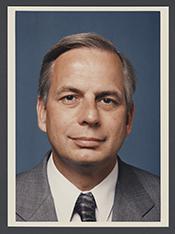
Mr. Chairman, I rise in support of the Child Abduction Protection Act and thank my California colleague for yielding me this time. I am a proud supporter of the AMBER program, which was created in…
Mr. Chairman, I rise in support of the Child Abduction Protection Act and thank my California colleague for yielding me this time. I am a proud supporter of the AMBER program, which was created in Arlington, Texas. Everyone knows the history of the AMBER program, named for Amber Hagerman; but I am particularly proud that about 3 years ago our office in Houston started working on getting our radio network and the law enforcement in Houston, Texas, together.
I have a former staff member who now works for our leader, Nancy Pelosi, Cindy Jimenez, who was instrumental in this. And now in Houston not only this week was the AMBER Alert activated in Houston and a 14- year-old girl returned safely yesterday, but we have used it well over a half a dozen times in my community. My community, I say. We share eight Members of Congress, so it is a large community.
The sooner the word gets out that children are abducted, the better the chances of them being brought home. Particularly in my area we made sure we did it in both Spanish and English. We have had some tragedies in my area that are predominantly Hispanic, so it has to be in both languages, or any language that is available in the community.
H.R. 1104 makes grants to States. Again, we need it for the State of Texas as a whole. I express my disappointment that it has been bogged down, but I intend to support the full bill.
Mr. Chairman, I rise today to voice my support for the Child Abduction Protection Act, which includes language to improve the Amber program.
I am proud supporter of the AMBER program, which was created in Arlington, Texas. The AMBER Plan is named in memory of nine-year-old Amber Hagerman. In 1996, Amber was abducted while playing near her Arlington, Texas home. She was later found murdered.
In response to community concern, the Association of Radio Managers, with the assistance of area law enforcement, created the AMBER Plan to give listeners timely information about area child abductions. The plan calls for law enforcement agencies to provide radio stations with an alert upon the immediate confirmation of a child's abduction. All participating radio stations will break programming to broadcast the alert and any subsequent information provided by police. This program has blossomed into a nationwide effort where 39 states have adopted a statewide AMBER plan. To day the AMBER Plan has been credited with recovering 51 children!
Just this week, the police in my hometown of Houston, Texas, activated the AMBER system when a 14-year-old girl went missing from her middle school. Fortunately, the young lady was returned safely to her home.
The AMBER alert has been successful in Houston, Texas many times and I am proud our office played a part in organizing the Houston effort almost 3 years ago. Ms. Cindy Jimenez, my former staff member now with Democratic leader Nancy Pelosi, worked successfully to coordinate the cooperation between news media and law enforcement.
This kind of success story highlights the needs to ensure that states have the resources they need to set up AMBER plans. Seventy-four percent of abducted children who are murdered are dead within three hours of the abduction. The sooner word gets out that these children have been abducted, the better the chances that they will be brought home safely.
H.R. 1104 makes grants available to the states for them to set up AMBER alert plans, and also creates an Amber alert coordinator within the Department of Justice. I strongly support this provision.
I would like to express my disappointment, however, that this legislation has been weighted down with controversial issues. Issues such as mandatory minimum sentencing and making certain crimes punishable by the death penalty are matters for another day.
These issues are sure to slow down this important legislation. I urge the sponsors of this legislation to remove the controversial provisions so that the AMBER plan legislation can be enacted quickly.
Show 11 more

Mr. Chairman, I rise today to express my serious reservations with the Child Abduction Prevention Act. Although these reservations were not sufficient enough to compel me to vote against it, I want…
Mr. Chairman, I rise today to express my serious reservations with the Child Abduction Prevention Act. Although these reservations were not sufficient enough to compel me to vote against it, I want to make it clear that I am not pleased with the tactics employed by the House leadership that brought this bill to the Floor.
By introducing the Child Abduction Prevention Act today and passing a rule to prevent the clean Frost-Dunn AMBER Alert Network Act from coming to a vote, this House Leadership has imperiled chances for the AMBER Alert to become law in the near-term. In fact, AMBER Alert could have become law this week if the leadership so willed it. The House Leadership, however, has chosen repeatedly to undermine all heartfelt attempts by me and many of my colleagues to make the AMBER Alert national law right now. Today's vote is only another indication of the Leadership's willful intransigence. This bill was supposed to be about protecting our nation's children. It was supposed to be about supporting a National AMBER Alert Network. Sadly, this bill was really about politics.
I ran for Congress more than four years ago because I wanted to restore the trust of the American people in our system of self- government. I wanted to break through the cynicism that had poisoned the people's faith in our democracy and in our elected representatives. The cynical tactics employed by the House Leadership today on the AMBER Alert are exactly what I came here to Congress to fight.
Last October, this same House Leadership had the opportunity to make the AMBER Alert national law. The Senate had passed an AMBER Alert bill. The House had an opportunity to pass it quickly into law, but the Leadership decided to play politics with the bill and added a list of other provisions. At the time I took a stand against the Leadership and opposed their political games, and I took on the nay-sayers back home who said I should have backed down. The facts are the same today as they were then: these tactics are designed to prevent AMBER Alert from becoming law. As a result, six months have passed and we still don't have AMBER Alert.
I wanted to bring a clean AMBER Alert bill to the House floor identical to the one passed twice now by the Senate. I am an original cosponsor of the Frost-Dunn National AMBER Alert bill and I have tried to convince the Leadership to bring it to the Floor for a vote.
I voted for this version of the Child Abduction Act today because I support AMBER Alert, but it was not an easy vote. I voted for this bill despite the fact that I know there is a better way to turn AMBER Alert into national Law. I voted for this bill, despite the fact that I have serious reservations about provisions that would impose the death penalty for certain crimes where it does not now apply, increase mandatory sentences for certain offenses, and expand the wiretapping authority of the federal government.
In the end, however, I voted for this bill because I am now convinced after months of struggle that neither the principle of my protest nor the strength of my argument will change the collectively obstinate mind of the House Leadership. If even the personal pleas of Elizabeth Smart and her family cannot influence the House Leadership to bring a clean AMBER Alert bill to a vote, then I must conclude that neither can mine. I am now convinced that the only way AMBER will become law is by the overwhelming force of conscience--from the public, from Congress, and from me personally--to communicate in no uncertain terms that AMBER Alert will not be stopped by cynical political games. The only true loser today are America's children who will now have to wait even longer for Congress and the President to strengthen our national AMBER Alert system.

Mr. Chairman, I yield myself such time as I may consume. I rise in opposition to H.R. 1104. While I am happy to have this time to speak on the floor, I am very disappointed that the Committee on…
Mr. Chairman, I yield myself such time as I may consume.
I rise in opposition to H.R. 1104. While I am happy to have this time to speak on the floor, I am very disappointed that the Committee on Education and the Workforce did not debate this issue before it came to the
floor. Members on the Committee on Education and the Workforce wanted to review the provisions in the bill that are under our committee's jurisdiction.
It is clear that the AMBER Alert system is highly effective and should be made available nationwide. However, I believe we need a clean AMBER Alert bill; and, once again, my colleagues on the other side of the aisle have failed to bring forth a clean bill. Instead, they have opted to load it up with extra provisions that they know will not be accepted by the other body.
This important legislation could have been passed 6 months ago, but instead today we are considering legislation that is broad and controversial. The controversial provisions include the expansion of the death penalty, mandatory minimum sentencing, criminalization of traveling with a criminal intent, the two-strikes-and-you-are-out provision, the expansion of wiretap authority, the eliminations of the statute of limitations on sexual abuse cases, and eliminating pretrial release.
Mr. Chairman, are all these provisions really necessary to help find and protect missing children?
That is why I have supported and will continue to support the bipartisan Frost-Dunn AMBER Alert Act which will strengthen the AMBER Alert program immediately. The Frost-Dunn bill provides $25 million in grants and works to build a seamless network of local AMBER plans. What our local communities really need is more resources to increase highway signs, to educate and train law enforcement, and to gain additional equipment. This bill is the clean legislation that we should be considering today.
Mr. Chairman, I urge Members to vote ``no'' on H.R. 1104, and I demand that we look at a clean AMBER Alert bill.
Mr. Chairman, I reserve the balance of my time.
Mr. Chairman, I yield 2\1/2\ minutes to the gentleman from Texas (Mr. Lampson).
Mr. Chairman, I yield 1 minute to the gentleman from Texas (Mr. Green).
(Mr. GREEN of Texas asked and was given permission to revise and extend his remarks.)
Mr. Chairman, I yield myself the balance of my time.
Mr. Chairman, citizens in my district have a special desire to see clean AMBER Alert legislation passed because of a beautiful teenaged girl named Polly Klaas. Polly resided in my hometown of Petaluma, California. She was kidnapped from her home and murdered in 1993. It was because of failed communication in the early part of the search that ruined our chances, or any chances, of an early and potentially successful resolution to her kidnapping.
Since then, organizations in my district, namely, the Polly Klaas Foundation and BeyondMissing, have worked to ensure that more is done for missing children. These organizations both advocate a national AMBER Alert system that will define how seriously Americans support child safety and saving lives. But they want a clean AMBER Alert system. That is why it is crucial that we pass a clean bill today, not one that will be filled with extra add-ons, unrelated provisions, provisions not acceptable to the other body, hindering the ultimate goal of creating a system where we can find the children who are lost in this country.
So I ask, please vote for a clean AMBER Alert system, one that will be able to do the job, do it immediately, and not get bogged down in the Senate.
Mr. Chairman, I yield back the balance of my time.
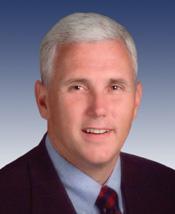
Mr. Chairman, I offer an amendment. Mr. Chairman, I yield myself 3 minutes. Mr. Chairman, I rise today as the author of the Pence amendment, the Truth in Domain Names Act, as a legislator, as a…
Mr. Chairman, I offer an amendment.
Mr. Chairman, I yield myself 3 minutes.
Mr. Chairman, I rise today as the author of the Pence amendment, the Truth in Domain Names Act, as a legislator, as a member of the Committee on the Judiciary, its Subcommittee on Courts, the Internet, and Intellectual Property; but also, most importantly, Mr. Chairman, I rise today as a dad who loves to sit my 9-year-old daughter or my 11- year-old son on my knee and help them with their homework on the Internet. It was the experience of doing that that inspired me in the last Congress to author the Truth in Domain Names Act, and it has inspired me to bring this amendment to the underlying bill, the Child Abduction Prevention Act, today.
Thanks to the extraordinary leadership of the gentleman from Wisconsin (Chairman Sensenbrenner), we are considering a bill today that will make measurable progress in protecting our children from child predators. I would offer humbly today, Mr. Chairman, that the Pence amendment is just such a bill.
I yield to the gentleman from Wisconsin.
Mr. Chairman, I thank the gentleman. The Pence amendment will make it a criminal act to knowingly use a misleading domain name with the intent to deceive a person into viewing obscenity on the Internet; and, most especially, it would make it a criminal act to knowingly use a misleading domain name with the intent to deceive a minor into viewing material on the Internet that is harmful.
Like many of the Members, I believe the Internet should remain free of regulation, Mr. Chairman. The Pence amendment is not regulation of the Internet. It is an anti-fraud bill. It does not prevent any material from being displayed on the Internet. In fact, a domain name that includes word or words to indicate sexual content on the site like the word ``sex'' or ``porn'' is by definition in this law not considered misleading. The amendment simply requires Web site owners to be honest about the content of their site, preventing families just like mine from surfing the Internet as their children do homework and all of a sudden finding themselves in a place of prurient and pornographic material.
I am not the only one with this problem. A recent survey conducted in the year 2000 by the Crimes Against Children Research Center found that 71 percent of teens had accidentally come across inappropriate sexual material on the Internet. Another study conducted by the Berkeman Center at Harvard Law School reviewed 5,000 domain names that were just slight misspellings of existing Web sites and found, and I am quoting, ``A majority of these domain names are variations on sites frequently used by children; and although their domain names do not suggest the presence of sexually explicit content, more than 89 percent of the Web sites examined contained sexually explicit material.''
The Pence amendment is endorsed by leading organizations of a child advocate nature, and I urge its passage.
Mr. Chairman, I reserve the balance of my time.
Mr. Chairman, I am pleased to yield 1 minute to the gentleman from Alabama (Mr. Aderholt), a distinguished member of the Committee on Appropriations, one of the leading advocates of pro-family issues in Congress.
(Mr. ADERHOLT asked and was given permission to revise and extend his remarks.)
Mr. Chairman, I have one remaining speaker on this amendment and would reserve the right to close.
Mr. Chairman, I yield 1 minute to the gentleman from Nebraska (Mr. Osborne), probably one of the leading congressional advocates for youth issues, the gentleman from the Committee on Education and the Workforce.
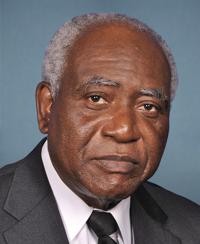
Mr. Chairman, I yield myself 2 minutes. Mr. Chairman, I would like to be associated with the comments that were just made by the gentleman from Georgia (Mr. Gingrey). I rise in strong support of the…
Mr. Chairman, I yield myself 2 minutes.
Mr. Chairman, I would like to be associated with the comments that were just made by the gentleman from Georgia (Mr. Gingrey). I rise in strong support of the AMBER Alert provisions of this bill to prevent child abduction and to then do all we can in finding the child. A nationwide AMBER Alert would allow all of America to have the information to assist the family, the community, and the local police in finding a missing child. If already in place, the two Bradley sisters from Chicago would have been located.
Like most stories of missing children, 10-year-old Tionda and 3-year- old Diamond disappeared without a trace, without anyone seeing where they went or who they went with. On Friday, July 6, 2001, Tionda had left a note telling their mother that she and her sister were going to go to the store and then go to the school playground. Several neighborhood children have told police that they did see the sisters playing outside their complex around noon that day. Sadly, no one has seen them since.
The neighborhood surrounding their home and even Lake Michigan has been searched with only disappointing news. No clues, no evidence has been found to place either child. It has been 659 days since this mother has seen her two daughters. I urge America to go to the Bradley's Web site and see if you have seen either one of them.
Mr. Chairman, all of America would be benefited by the AMBER Alert system put in place now.
Mr. Chairman, I reserve the balance of my time.
Mr. Chairman, I yield myself 2 minutes.
Mr. Chairman, it is unfortunate that we will delay the opportunity to find Tionda and to find Diamond. We will delay the opportunity because, instead of having a simple, clean AMBER Alert bill that could be passed immediately in both Houses, we have a complex, complicated, bogged-down bill with all kinds of impediments and extraneous items in it that makes it very difficult for individuals to support if they also want to support a judicial system that deals in a rational, logical, sane, sensible, less-than-punitive way.
I do not know if it is going to be possible to change that, but I would certainly hope there would be some way to extricate, to take out those onerous portions of the bill so that we can move ahead and find missing children, find children who are away from their parents, find children that we do not know where they are. So I would hope when the end comes, we will come to an alert system that puts us on the track to find missing children.
Mr. Chairman, I reserve the balance of my time.
Mr. Chairman, I yield myself the balance of my time.
Mr. Chairman, as I listened to the debate and as I listened to the virtues of the proposed legislation and as I listened to those who expressed opposition, it would seem to me that there ought to be a middle ground, that there ought to be a point where the children come first, where finding them, making sure that their parents can wake up and see their children that they have not seen. That often requires a bit of give and take.
I think that there could be other opportunities to debate and discuss criminal justice punishment, to discuss what it is that you do as individuals have committed a crime. It would serve us well if we could arrive at the point where today we are simply talking about finding missing children, not punishing perpetrators, not putting people in jail, but finding missing children.
Mr. Chairman, I yield back the balance of my time.
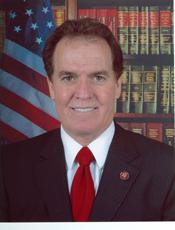
Mr. Chairman, I yield myself 2 minutes. (Mr. GINGREY asked and was given permission to revise and extend his remarks.) Mr. Chairman, I rise in support of H.R. 1104, the Child Abduction Prevention…
Mr. Chairman, I yield myself 2 minutes.
(Mr. GINGREY asked and was given permission to revise and extend his remarks.)
Mr. Chairman, I rise in support of H.R. 1104, the Child Abduction Prevention Act, which provides for the national coordination of the AMBER Alert communications network and strengthens criminal penalties for kidnappers, child molesters, and the sexual exploitation of children.
This legislation also provides double, double the current authorization funding for the National Center for Missing and Exploited Children, which serves as the Nation's resource center to aid in finding and rescuing missing and exploited children and helping their families in their time of need.
In section 305 of H.R. 1104, the Committee on Education and the Workforce, of which I am a member, authorizes $20 million for the National Center for Missing and Exploited Children for fiscal years 2004 and 2005. Again, this is double the current level of funding.
As the Nation's resource center for missing and exploited children, the center carries out many important responsibilities that provide assistance to families and law enforcement agencies in locating and recovering missing and exploited children. The center is active both nationally and internationally.
Mr. Chairman, it is important to note the center does not investigate abducted, runaway or cases involving sexually exploited youth, but receives leads and relays them to various investigative law enforcement units.
In an effort to assist law enforcement, the center offers both technical assistance, information dissemination, and advice. It also offers a free consulting service to agencies by expert retired law enforcement officers who are skilled in investigating cases involving sexual abuse of children and child abduction.
Mr. Chairman, I could continue on about the need for the Center for Missing and Exploited Children, but in the interest of progressing this debate, I would like to urge my colleagues to support this bill.
Mr. Chairman, I reserve the balance of my time.
Mr. Chairman, I yield 2 minutes to the gentleman from Michigan (Mr. Hoekstra), the chairman of the Subcommittee on Select Education.
Mr. Chairman, I yield 2 minutes to the gentleman from California (Mr. Royce), who is a cosponsor of this very important piece of legislation.
Mr. Chairman, I yield 1 minute to the gentleman from Georgia (Mr. Burns) a member of the Committee on Education and the Workforce.
Mr. Chairman, I yield myself the balance of my time.
Mr. Chairman, as the Nation's resource center for child protection, the National Center for Missing and Exploited Children spends 94 percent of its revenue directly on programs and services. Due to their commitment to spend their resources on helping children, the center received an A+ rating in the Winter 2003 American Institute of Philanthropy Charity Rating Guide. This rating is used to recommend charities based on percentage of money spent on charitable purposes versus administrative expenses.
There were an estimated total of 58,200 children abducted by nonfamily members in 1999. Mr. Chairman, that is 160 abductions a day. To reduce this number, we must pass H.R. 1104. I would again urge my colleagues to support this bill.
Mr. Chairman, I rise today in strong support of H.R. 1104, the Child Abduction Prevention Act. This important legislation has several provisions that go a long way toward securing the safety of our…
Mr. Chairman, I rise today in strong support of H.R. 1104, the Child Abduction Prevention Act. This important legislation has several provisions that go a long way toward securing the safety of our Nation's children.
H.R. 1104 allows judges to extend supervision of released sex offenders for the rest of their life. This bill will eliminate the statute of limitations for child abductions and sex crimes so that we can prosecute these criminals whenever and wherever we find them. The clock will never run out and these criminals will not get away with their despicable crimes. H.R. 1104 will deny pre-trial release for child rapists or child abductors so they cannot flee this country and escape prosecution. This bill establishes a mandatory two-strikes- you're-out sentence for twice-convicted child sex offenders. H.R. 1104 will also mandate a minimum 20-year prison sentence for kidnaping of a minor non-family member.
Another important part of this legislation is the re-authorization and doubling of the annual grant to the National Center for Missing and Exploited Children. H.R. 1104 also allows the COPS program to use federal funds for a sex offender apprehension program to track sex offenders that violate the terms of their release. Finally, Mr. Chairman this bill establishes a national AMBER Alert program to facilitate the recovery of abducted children.
On this final point Mr. Chairman I would like to take a minute to discuss the importance of this program. Many people in both chambers of Congress have worked long and hard to create the AMBER Alert program on a national level. I was the first member of this Congress to introduce legislation in the House that would establish a national AMBER Alert program because I feel very strongly that our Nation's youth need to be protected. As many of you are aware, the AMBER Alert program would require the Attorney General to assign a national coordinator for the AMBER Alert communications network. This coordinator would be responsible for (1) eliminating the gaps in this network; (2) working with the States to develop additional networks and ensure regional coordination; (3) act as the nationwide point of contact for network development for regional coordination. The AMBER Alert coordinator would notify the FBI concerning each child abduction for which the AMBER Alert network is activated and establish minimum standards for issuing and disseminating alerts.
The AMBER Alert legislation would require the Secretary of Transportation to provide grants to the States for the development and enhancement of the communications system along highways for the AMBER Alert network. These grants will improve the development or enhancement of electronic message boards and placement of additional signs along highways.
Finally this legislation will direct the Attorney General to provide grants to States for the development of programs and activities for the support of the AMBER Alert communications plans.
Mr. Chairman, I would like to thank all the members who have worked so hard on this legislation. This is a vital piece of legislation that, when enacted, will go a long way toward securing this country's youth.
Mr. Chairman, I thank the gentleman for yielding time to me. The gentleman from Wisconsin has pretty thoroughly examined this bill. I just want to reiterate that this legislation is good policy. It…
Mr. Chairman, I thank the gentleman for yielding time to me.
The gentleman from Wisconsin has pretty thoroughly examined this bill. I just want to reiterate that this legislation is good policy. It has the potential to protect and save lives, the lives of the most innocent among us.
H.R. 1104 is divided into three titles to improve the law related to child abductions by addressing sanctions and offenses, investigation and prosecution, and public outreach. The legislation sends a clear message that child abductors will not escape justice.
Title I, ``Sanctions and offenses,'' strengthens the penalties against kidnapping by providing for a 20-year mandatory minimum sentence of imprisonment for nonfamily abductions of a child under the age of 18. This title also requires lifetime supervision for sex offenders, which is similar to a bill that passed the House last year 409 to 3.
Also included is a provision that requires mandatory life imprisonment for second-time sex offenders that also passed this body 382 to 34 last Congress. In addition, this title directs the U.S. Sentencing Commission to increase offense levels for crimes of kidnapping and adds child abuse that results in death as a predicate for first degree murder.
Title II, ``Effective investigation and prosecution,'' gives law enforcement agencies the tools they need to enforce the laws against child abduction. This title adds four new wiretap predicates that relate to sexual exploitation crimes against children which previously passed the House 396 to 11 last Congress. The title also provides that child abductions and felony sex offenses can be prosecuted without limitation of time and provides a rebuttal presumption that child rapists and kidnappers should not get pretrial release.
Title III, ``Public outreach,'' establishes a national Amber Alert program based on the bill of the gentlewoman from Washington (Ms. Dunn) and the gentleman from Texas (Mr. Frost) to codify the AMBER Alert program currently in place. This is a voluntary partnership between law enforcement agencies and broadcasters to activate an urgent alert bulletin in serious child-abduction cases. The goal of the AMBER Alert, as has been explained, is to have the assistance of millions of people in the search for an abducted child.
This title also increases support for the National Center for Missing and Exploited Children, the Nation's resource center for child protection, by doubling its authorization to $20 million.
Furthermore, Mr. Chairman, the title authorizes COPS funding for local law enforcement agencies to establish sex offender apprehension programs within their States.
Mr. Chairman, the recent wave of high-profile child abductions illustrates the tremendous need for this legislation in this area. The criminals breach the security of our homes to steal, molest, rape and kill our children. Immediate action is necessary.
Mr. Chairman, I offer an amendment. Mr. Chairman, I yield myself 3 minutes. The amendment that I am offering today requires certain procedures be established and followed when a child is reported…
Mr. Chairman, I offer an amendment.
Mr. Chairman, I yield myself 3 minutes.
The amendment that I am offering today requires certain procedures be established and followed when a child is reported lost or missing in a Federal building. The purpose of this set of procedures, called Code Adam, is to prevent child abductions in Federal buildings. Code Adam has proven extremely successful in thwarting many attempted abductions through the issuance of a Code Adam Alert in commercial establishments.
I yield to the gentleman from Wisconsin.
Mr. Chairman, I thank the gentleman from Wisconsin (Mr. Sensenbrenner), the chairman of the Committee on the Judiciary. I appreciate his support for this amendment.
As the chairman said, this was created by Wal-Mart in 1994 as a private initiative, and it has become one of the country's largest child safety programs.
With the help of the National Center for Missing and Exploited Children that also is supporting my amendment, over 36,000 stores across the United States have already used it successfully. Code Adam, as the chairman just mentioned, is named in memory of 6-year-old Adam Walsh, whose abduction from a Florida shopping mall and murder in 1981 brought the horror of child abduction to national attention.
I ask for Members' support for this bipartisan amendment. Its enactment will complement existing security procedures and others being considered in this bill, including the AMBER Alert, in order to guarantee immediate preventive action against successful child abductions.
Effective procedures required by this amendment include notification of security personnel that a child is missing, issuance of a Code Adam alert, and distribution of the child's description to all employees using fast and effective means of communication.
It also provides that all points of egress must be monitored while the Code Adam alert is in effect and the local law enforcement be notified if the child remains missing after all established procedures are followed.
I am very proud to say that Puerto Rico has already enacted a law adopting Code Adam in its government buildings. With the adoption of this amendment, all Federal buildings will also establish Code Adam to ensure that we are prepared to respond quickly if a child is reported missing.
Mr. Chairman, I urge my colleagues to vote yes on the Code Adam amendment. Let us draw from the success achieved in stores across the country and adopt it in Federal buildings, those that belong to the people of the United States, and where all of us, but especially our children, should be safest.
Mr. Chairman, I yield the balance of my time to the gentleman from Texas (Mr. Lampson).
Mr. Speaker, I thank the gentlewoman for yielding me this time. Mr. Speaker, I rise in support of the rule and the underlying legislation, H.R. 1104, the Child Abduction Prevention Act of 2003. H.…
Mr. Speaker, I thank the gentlewoman for yielding me this time.
Mr. Speaker, I rise in support of the rule and the underlying legislation, H.R. 1104, the Child Abduction Prevention Act of 2003.
H. Res. 160 is a structured, but fair, rule designed to ensure that the whole House has the opportunity to consider a number of substantive amendments to improve upon the underlying legislation. The Committee on Rules has worked to be as evenhanded as possible and has permitted the overwhelming majority of amendments that were submitted for review last evening.
Mr. Speaker, it is disheartening to know that the youth of this country are exposed to the harsh realities of life earlier in their lives than ever before. This does not mean, however, that they are better prepared to face those realities. We must do everything possible to protect those who cannot defend themselves.
During this debate, it will be argued that we should simply take up a more limited bill that would be acceptable to the other body. Mr. Speaker, I do not believe that we serve in this House simply to pass legislation acceptable to the other body. We are elected to pass effective legislation that will have the optimum benefits for the people we represent. In this case, we have the opportunity to enact effective legislation that will prevent crimes against children and save lives.
The Committee on Rules heard compelling testimony from the gentleman from Wisconsin (Mr. Sensenbrenner), who stated that he wanted to enact the AMBER Alert legislation into law as soon as possible to assist in finding those children who have been taken. But he continued to state that we have a duty not only to pass legislation to find those who have been abducted, but we have an obligation to ensure that this legislation does everything possible to prevent children from being abducted in the first place. H.R. 1104 will achieve this goal by deterring crimes and providing a necessary line of defense. This bill does not impose excessive fines or punishment on convicted individuals; rather, this bill imposes reasonable, bottom-line standards of intolerance for the violation of our laws. I cannot possibly think of a more appropriate situation where strong punishment is warranted.
The desire to protect our children originates not from the mortal law of man, but rather the rules and state of affairs governed by the laws of nature. As a father and grandfather myself, I fully support any reasonable efforts that prevent harm from befalling our children or grandchildren and that punish those who would commit the crimes.
Mr. Speaker, I ask that the House pass this rule and pass the underlying legislation.
Mr. Speaker, I call on the House to immediately turn to what we know as the Frost-Dunn National AMBER Alert Network Act. This legislation would make $25 million available to State and local entities…
Mr. Speaker, I call on the House to immediately turn to what we know as the Frost-Dunn National AMBER Alert Network Act. This legislation would make $25 million available to State and local entities for highway signage, for education, for training programs. It would make AMBER Alert a national program. AMBER Alert works. It should be a national program.
This legislation has 220 cosponsors. We are all influenced by the evidence that this works with more than 52 abducted children recovered through AMBER Alert-like processes, five here in the month of March alone.
As my colleague from Texas said, anyone who is watching this debate must wonder what in the world is going on. We have the opportunity to pass a clean bill for AMBER Alert to become law. We had this opportunity last fall. At the time I got in some political trouble in my home State for saying this bill is designed to prevent AMBER Alert from becoming law, and it is not very constructive to say I told you so, but in fact 6 months have passed and when AMBER Alert could have been law on a national scale last fall, it still is not.
The reason is, the other side here insists on putting other things into the bill. These might be controversial. At least they are complicated and serious issues that deserve to be aired and debated, such things as expanding the death penalty, increasing mandatory sentences, criminalizing traveling with a criminal intent or a perceived intent, two strikes and you're out for certain kinds of legislation, expanding wiretap authority, eliminating the statute of limitations in some circumstances, eliminating pretrial release in some circumstances.
I think any Member of the House, if they would speak objectively, would have to say that some or all of these provisions deserve thorough airing. They are serious matters. They should not just be stuck into another bill, and they certainly should not be put into this bill that is urgent that we pass now.
We all celebrated with the Smart family, Edward and Lois Smart, when their daughter Elizabeth was returned to them. Just a few days ago, the Smart family wrote to Members of Congress and said:
``As you know, we can't express enough how our children can't wait another day for the national AMBER Alert to be signed into law. Please, please, please, please, pass the stand-alone AMBER Alert legislation now.''
I could not agree more with the Smart family, Edward, Lois and Elizabeth. We have the opportunity to do it. We can do it today. The President will sign it in a matter of days, I am certain.
Mr. Chairman, on behalf of the Smart family, the Polly Klaas Foundation, the National Center for Missing and Exploited Children, and the thousands of families still searching for their missing…
Mr. Chairman, on behalf of the Smart family, the Polly Klaas Foundation, the National Center for Missing and Exploited Children, and the thousands of families still searching for their missing children, I rise today to join our chairman in offering hope that we will establish a voluntary, nationwide AMBER Alert system to find children.
I want to compliment the chairman for moving this bill so speedily through the House of Representatives.
The AMBER Alert was named after a little girl named Amber Hagerman who was kidnapped and killed by her abductor. The community rallied around her family to begin a search that resulted in the AMBER Alert program.
In 1997, a Washington State child homicide study, which examined over 600 child abduction murder cases from all over the country, found that the first 3 hours of a child's abduction are critical to bringing this child home safely. This is the reason that we are seeking an AMBER Alert program.
To date, AMBER has been credited with the safe recovery of 52 children, including, very recently, a 12-year-old California girl reunited with her family after a witness saw the car described in AMBER Alert messages transmitted across the State.
We know the AMBER Alert system works by allowing communities to tap into the resources of an educated public, prepare law enforcement and engage the media in reuniting children with their family. The media and an educated public were absolutely critical in the safe return of Elizabeth Smart.
President Bush and his administration showed strong and early support for our legislation last year and took the first steps by providing grants to States and localities to help establish AMBER Alert programs. It is now time for Congress to codify AMBER Alert and provide additional funding to power all communities with the tools and resources to react quickly to child abductions and bring these children home safely to the arms of their parents.
We witnessed a very joyful reunion of Elizabeth Smart and her family 2 weeks ago. I know that President Bush is committed to signing AMBER Alert into law very soon. I also know that our leadership will keep its commitment not to allow it to languish in a conference committee.
Mr. Chairman, would it not be wonderful never again to have to name another piece of legislation after a little child who died? I urge our opponents and supporters everywhere to get together with us on AMBER Alert. It is a wonderful opportunity to establish a great system. Let us support this legislation today.
Bill Text
2 versions available
        [Congressional Bills 108th Congress]
[From the U.S. Government Publishing Office]
[H. Res. 160 Engrossed in House (EH)]

In the House of Representatives, U.S.,

March 26, 2003.
Resolved, That at any time after the adoption of this resolution the Speaker
may, pursuant to clause 2(b) of rule XVIII, declare the House resolved into the
Committee of the Whole House on the state of the Union for consideration of the
bill (H.R. 1104) to prevent child abduction, and for other purposes. The first
reading of the bill shall be dispensed with. All points of order against
consideration of the bill are waived. General debate shall be confined to the
bill and shall not exceed one hour, with 45 minutes equally divided and
controlled by the chairman and ranking minority member of the Committee on the
Judiciary and 15 minutes equally divided and controlled by the chairman and
ranking minority member of the Committee on Education and the Workforce. After
general debate the bill shall be considered for amendment under the five-minute
rule. It shall be in order to consider as an original bill for the purpose of
amendment under the five-minute rule the amendment in the nature of a substitute
recommended by the Committee on the Judiciary now printed in the bill. The
committee amendment in the nature of a substitute shall be considered as read.
All points of order against the committee amendment in the nature of a
substitute are waived. No amendment to the committee amendment in the nature of
a substitute shall be in order except those printed in the report of the
Committee on Rules accompanying this resolution. Each amendment may be offered
only in the order printed in the report, may be offered only by a Member
designated in the report, shall be considered as read, shall be debatable for
the time specified in the report equally divided and controlled by the proponent
and an opponent, shall not be subject to amendment, and shall not be subject to
a demand for division of the question in the House or in the Committee of the
Whole. All points of order against such amendments are waived. At the conclusion
of consideration of the bill for amendment the Committee shall rise and report
the bill to the House with such amendments as may have been adopted. Any Member
may demand a separate vote in the House on any amendment adopted in the
Committee of the Whole to the bill or to the committee amendment in the nature
of a substitute. The previous question shall be considered as ordered on the
bill and amendments thereto to final passage without intervening motion except
one motion to recommit with or without instructions.
Sec. 2. After passage of H.R. 1104, it shall be in order to consider in the
House S. 151. All points of order against the Senate bill and against its
consideration are waived. It shall be in order to move to strike all after the
enacting clause of the Senate bill and to insert in lieu thereof the provisions
of H.R. 1104 as passed by the House. All points of order against that motion are
waived. If the motion is adopted and the Senate bill, as amended, is passed,
then it shall be in order to move that the House insist on its amendments to S.
151 and request a conference with the Senate thereon.
Attest:

Clerk.