To inform the Senate that a quorum of the House has assembled and of the election of the Speaker and the Clerk.
Legislative Activity
Stay on top of the latest movement without scrolling through every action
Motion to reconsider laid on the table Agreed to without objection.
January 7, 2003 • 2:30 PM
View full timeline
Introduced in House
January 7, 2003
Considered as privileged matter. (consideration: CR H6)
January 7, 2003 • 2:29 PM
Passed/agreed to in House: On agreeing to the resolution Agreed to without objection.(text: CR H6)
January 7, 2003 • 2:30 PM
On agreeing to the resolution Agreed to without objection. (text: CR H6)
January 7, 2003 • 2:30 PM
Motion to reconsider laid on the table Agreed to without objection.
January 7, 2003 • 2:30 PM
Floor Debate
21 membersWhat members said about H.Res. 2 on the floor
 MD
MD MRK
MRK TMR
TMR MF
MF DD+16
DD+16
Floor Debate
21 membersWhat members said about H.Res. 2 on the floor
Mr. Speaker, I ask unanimous consent that all Members may have 5 legislative days within which to revise and extend their remarks on the subject of my Special Order. Mr. Speaker, every time that I…
Mr. Speaker, I ask unanimous consent that all Members may have 5 legislative days within which to revise and extend their remarks on the subject of my Special Order.
Mr. Speaker, every time that I walk into this Chamber I am awed and I am overwhelmed, when you think of the history that has taken place here in this Chamber, in this hall, and the speeches that have also been proclaimed and stated within these walls.
Tonight, Mr. Speaker, I heard some really eloquent speeches as well, some spectacularly eloquent speeches, some of them criticizing the job proposal that this House has passed, the job proposal plan that the President has proposed.
I also heard, Mr. Speaker, some great examples of not letting the facts get in the way of the rhetoric. I have seen some wonderful examples here as to how to just disregard the facts and let us go forward with the rhetoric and hope that you can confuse people, Mr. Speaker.
But the American people, Mr. Speaker, are not easily confused. The Jobs and Growth Tax Act, which is really based on the jobs and growth plan that we passed last week, is a comprehensive approach to creating jobs. We heard criticism after criticism after criticism of that plan; but what you will notice is that not once, not once, was a proposal spoken about, an alternative proposal, that created jobs. No. They criticized the plan that creates jobs, and, in its stead, proposed absolutely nothing. Again, the American people witnessed that here tonight.
Yet the plan that we passed provides, for example, tax relief to American families and immediately eliminates burdensome and unfair taxes that provided huge obstacles to economic growth and job creation.
The gentleman from Iowa (Mr. Nussle) worked awfully hard to get through this House a plan that will create over 1.2 million jobs throughout the entire country by the end of next year. This was a specific proposal, not rhetoric. That is a specific proposal that this House passed. It creates, as a matter of fact, 45,000 new jobs in the State of Florida that I represent; next year, 45,000 jobs. Yet, Mr. Speaker, we heard no other proposal; just criticism, criticism of a plan that creates 1.2 million jobs.
This plan that we passed that our dear friends in the minority love to criticize, and, yet, I repeat, have nothing to show other than criticism, this plan would put $550 billion in economic stimulus and job creation in this country.
Then I heard something that I keep hearing time and time again, and it must be something that the Democratic Party's PR machine has told them to repeat time and time again, again regardless of the facts. They keep saying, oh, the plan that the House passed, the President's plan, cuts taxes on the rich.
Let us again speak of the facts. I know that my dear friends on the Democratic side hate when you bring up the facts. They do not like the facts to be used. They do not want to permit the facts to confuse the rhetoric. But I think it is important to bring up some of those facts.
The rich? Cut taxes on the rich? Twenty-three million small business owners will benefit from tax rate cuts in order to stimulate job growth; 23 million small business owners are going to have their taxes cut. Those are not the rich, those small business owners. Again, the facts, Mr. Speaker.
The tax cut, for example, on dividend income and the capital gains tax cut will provide relief for the 50 percent of Americans who have invested in the stock market and 70 million Americans who own homes. Those are the facts.
Yet what we have heard tonight, all the criticism, all the critiquing of the President's plan, of the plan we passed, with nothing else, no proposal, no alternative proposal, is just criticism based on innuendo, not based on the facts.
Again, the President's job and growth plan, what we passed here in the House, will provide 1.2 million jobs next year. Those are the facts, not the rhetoric.
The energy bill that the gentleman from Georgia (Mr. Kingston) spoke of here last week with me on the floor of this House will provide 750,000 new jobs. But yet both those initiatives our friends from the minority party object to; and they object to them but have no decent, good proposal, as opposed to what we have done. This is a good plan, because it does provide jobs.
I was wondering, I see that the gentleman from Minnesota (Mr. Kennedy) is here; and, Mr. Speaker, I would like to yield to the gentleman. Maybe he can try to shed some light on some of the facts, not on just empty rhetoric, some of the facts: why it is important that we do not just sit idly by and hope the economy gets better; why it is important to incentivize this economy; why it is important to go forward with the President's plan, with what this Congress passed, to make sure the millions of Americans can find good jobs; why it is important to not just sit back and pretend that things are okay, they are going to get better, and the solution is maybe to raise taxes; why it is important that we move forward.
Mr. Speaker, maybe the gentleman can shed some light as to some of the rhetoric that has been heard before here tonight which does not conform with the facts.
Reclaiming my time for a second, as the gentleman knows, I am new in Washington. This is my first year. One of the things that has surprised me a little bit is the ability by some Members, very eloquently, to just espouse things, yet with no facts whatsoever, and sometimes even distorting some facts that are used.
The gentleman mentioned something that is very important. There has to be a proposal. In other words, if we want to create jobs, which is I think the emphasis of this, clearly of the President and the majority of this Congress, we have to put something forward that creates jobs.
One of the ways to create jobs, and that is a bipartisan goal, we have agreed to that, I think, one of the ways you create jobs is by cutting taxes, making sure the people can keep more of their money.
Another way I think we can create jobs is by controlling government spending. Yet, since I have been here, I have never heard one moment where our friends from the other party have ever asked for controlling government spending.
Every time I turn around, they are asking for more government, bigger government; more bureaucracy, more money for that bureaucracy; more taxes from the people for that bureaucracy. That is a common theme I have been hearing in these debates.
I was wondering if the gentleman could shed some light on how does creating a larger government, more bureaucracy, more taxes, how does that help create more jobs for the American people.
One of the things that I keep hearing, and the gentleman just mentioned small businesses, which is a big part of this economic stimulus-job creation package, it is to provide relief for small businesses. That is where most of the jobs are created, in small businesses.
In the State of Florida it is even more dramatic. The numbers are staggering, the number of jobs created by small business. That is the entire economy of the State of Florida.
But we hear when we want to cut taxes on small business owners to help small businesses do well, to incentivize them to spend more money, to hire more people, to create more jobs, you hear that we are cutting taxes on the rich. Yet, when you look at the proposals from our good friends on the minority party, the Democratic Party, everything that they do seems to be trying to raise taxes on working Americans.
By the way, many of those working Americans are now struggling, which is why it is important to pass this package. But yet their proposals seem to be, and I have them here, seem to be raise taxes on the working people, on the hardworking Americans, who are having a hard time paying the mortgage and rent, who are having a hard time staying employed. Some of them have actually lost their jobs. Yet they want to raise taxes on them.
It seems in many cases just to create larger bureaucracies up here in Washington, DC. I do not think one has to be a brilliant economist to realize when you are further taxing people and you are creating more bureaucracy in DC, that does absolutely nothing to help the economy. What it does, it actually helps stagnate the economy; it hurts the economy. It makes sure that the economy does not grow.
Again, the gentleman has been here longer than me. Is that just a normal theme for them, that they always use these blank statements when we are asking to or suggesting or trying to cut taxes on small business owners, that they say those are the rich?
The small business owners in my district, the district that I represent, it is not my district, that I represent, are not rich. They are struggling. They are struggling to pay their employees, to pay for their health care, to keep that business, those small businesses, alive. To call those people rich people and say that cutting the taxes on those people is cutting the taxes on rich people, and, at the same time what they want to do is raise the taxes on the working people of this country, to create a larger bureaucracy, how is that good for the economy?
Mr. Speaker, I think one of the things that we have to note as well is that we keep hearing that government can give these small businesses, is going to give them something. It is not the government's to give. That is the people's money. What we are talking about is allowing hard-working people to keep a little bit more of their money; in other words, for the government to take less of their money. But when we talk about that, we hear that, oh, it is horrible, because it is going to cost government. We are going to be giving away these things. Excuse me? Giving away?
I think that is part of where we have a huge ideological difference, a philosophical difference. It is not government's money to give away. What we are saying is that government is going to take less money of the small businessperson, of the small business. He is going to take a little bit less money, just a little bit less money, take a little bit less so that that person, that small business, can reinvest it in their business.
The gentleman mentioned some great examples to create more jobs. I know that for some people, that is a theory. That is a theory. Why do we have to create more jobs? Let us just criticize the President. They have done that from day one about every issue; whether it is the war to liberate Iraq, they criticize the President. They do not criticize him that much anymore, but they sure were criticizing because it is the thing to do, just criticize the President.
Now they criticize this job creation plan, and they say that, well, we are going to give these people, these small businesses, money. No. What we are saying and what the President is saying is it is the people's money, it is not government's money. The government should allow those small businesses, those individuals, to keep some more of their money so that they can use it back home, in Florida, in Minnesota, and in Texas, in Wyoming. And they tend to do it much better than we do, than government does, because we tend to waste a lot of money. Allow them to keep some of their money, and that will create 1.2 million jobs in 1 year.
But some people say, well, it is only $100,000. It is only $100,000 that we are going to cut, it is only $10,000, it is only $1,000 that businesses are going to be able to reinvest. I guess that think that they have better plans for that money in D.C. But I am, frankly, a little shocked.
I have been doing a little research about some of the waste up here. Our dear friends on the Democratic side hate when we talk about waste and fraud and abuse. But I have been doing just a little research. I have not spent a lot of time on it because the gentleman knows I just got here recently, but I found some very interesting things.
Just one issue, for example. Government purchase cards and travel cards wasted approximately $97 million annually. But let me tell my colleagues what some of those really bright things are that we should take more of the people's money for. This is the kind of thing that we need to tax people more for, to spend it on some of these things. This is $97 million worth of escort services, jewelry, clothing from Victoria's Secret, Macy's, Nordstrom, Calvin Klein; taxpayer money to buy a dog for an individual. Taxpayers' money was spent on pornography for some employees, on expensive luggage. There was one incident of one dinner for $2,100 at Treasure Island Hotel and Casino.
That is why we need to raise more taxes. Take it away from the hard- working American men and women, bring it up here to D.C. so we can spend it and waste it on some really good things such as this: designer leather goods from a prestigious store, Lego toys, expensive sunglasses, beer, wine, and cigars.
There is also, do we remember the travel cards? That is a separate issue altogether. That was used for, well, for interesting places I do not really want to mention. Some of these things I really would rather not talk about, including some gentlemen's clubs, some plastic surgery, down payments on a home. So that is why we have to tax the American people more, because Washington knows how to spend the people's money better; oh, yes, on a down payment for a home for a member of the bureaucracy. That is why we have to take more of their money, on cruises. No, no, no, no. Wait a second.
The reason that some of us, the gentleman from Minnesota and others, have been speaking about waste, fraud and abuse, because it is not a laughing matter, because this is hard-earned money. This is money that government takes from the American people and then misspends it. Government does some really good things with taxpayers' money as well, but we throw a lot of it away. And for anybody to say that government is so efficient, so well run, so lean and mean that we have to take more of the hard-working American people's money, people that are having a hard time because the economy is not as good as we would like it to be; for us to take more of their money to spend it up here as opposed to what we want to do, which is allow them to keep more of their money so that they can spend it on some of the issues that the gentleman mentioned, on their families, on creating wealth within their businesses, of creating more jobs within small businesses, I think is absolutely ludicrous.
But these examples are not new. We have been hearing about waste, fraud and abuse for a long time. So again, I am having a hard time. I know that the gentleman, like me, believes that we need to incentivize this economy, but since the gentleman has been here longer, maybe the gentleman has heard some of the words of wisdom from the other side stating how raising taxes on hard-working Americans, particularly when they are having a hard time, helps create jobs. I do not buy it.
Mr. Speaker, by the way, I have been very impressed with the quality of the speeches. Sometimes the rhetoric is really, really good. I mean, there is some great eloquence on the floor of the House. We heard some great eloquence today bashing the plan to create more jobs. We heard that tonight. We have heard eloquent speeches bashing the President's plan to create more jobs. We have heard eloquent speeches bashing and bashing and bashing. We also heard, the gentleman will recall, very eloquent speeches from our friends on the Democratic side bashing when we were talking about trying to cut wasteful spending. They just hate that. They hate when we talk about that.
I mentioned some examples, but I want to make sure that nobody thinks that, well, because when we add that up, it is only $100 million. Some people say that. We have heard that here, it is only $100 million.
Only $100 million. Ask the American people if that is just only $100 million on some pretty sad things. But it gets worse than that. And when we talk about these things, we get bashed by the Democrats. When we talk about, for example, we were mentioning facts before, and it is important to not just spew rhetoric, but bring in some facts to the discussion.
Mr. Speaker, the Federal Government cannot account for, and we need to listen to this, the Federal Government cannot account for $17.3 billion it spent in the year 2001; $17 billion unaccounted for. Yet some criticize us when we talk about let us have some accountability. Let us not misspend. Let us look at ways that we can save some of this money. Mr. Speaker, $17 billion is not peanuts. That is a lot of money unaccounted for.
The Federal Government made $20 billion in overpayments in the year 2001; $20 billion in overpayments, on people that were not qualified or things that should not have been funded. The Department of Housing and Urban Development made $3.3 billion, and I repeat, billion, with a B, billion dollars in overpayments in 2001, accounting for 10 percent of the Department's budget; 10 percent in overpayments, in waste. Yet some will tell us that there is not enough money up here; that we need to raise taxes on hard-working Americans; that we should not incentivize the economy by letting more hard-working Americans keep some of their money, no, because there is not enough money in D.C. Oh, of course not, when we misspend 10 percent of the Department's budget.
But some will tell us the answer is, no problem. Do not worry about that. Let us just squeeze the American taxpayer a little bit more, a little bit harder, because you know something? It is okay, they will not mind, or they cannot yell loud enough, so let us squeeze them a little bit louder, a little bit tighter.
No, no. It is time that we do not squeeze them anymore, so that we allow them to keep more of their money so that they can spend it and they can create jobs.
If the gentleman will allow me, I would like to mention a couple of other examples. The Department of Agriculture was unable to account for $5 billion in receipts and expenditures; $5 billion. Medicare overpayments, overpayments totaled $12 billion in 2001; $12 billion.
Mr. Speaker, the Republican majority has passed a Medicare prescription drug plan without raising taxes. We have done it. Actually, the House did it last year as well, but the other body refused to do so, but now we have done it again, and we are going to pass it again. Well, do we want to find where some of the money can come from? There is $12 billion in overpayments. That is money that is not going for the elderly that need it, that is not going for the elderly that deserve it, that is not going for the elderly who have paid into it.
No, that is just waste. That is just waste. And that is unacceptable. That is immoral. Totally immoral. So, yes, we are going to do it.
There has been a lot of rhetoric for 40 years; the other party has been talking about it. It took the Republican majority to pass it, and we have passed it again in the House, and we are going to do that; but we need to make sure that this kind of waste stops, stops, because that is our hardworking Americans who are paying for it. The food stamp program pays approximately $1.3 billion in overpayments each year. What can we do with that $1.3 billion for health care, for education, for defense, to incentivize our economy? A lot.
And yet when we talk about these things, our friends on the Democratic party get upset. They say you cannot do that; you have to tax the American people more. Do not look at fraud, waste and abuse. Just tax the American people more. More than $8 billion is lost in erroneous earned income tax payments each year and again the list goes on and on and on, and we are not talking small amounts of money. If we were speaking about small amounts of money, that would be no excuse. We still have to stop it, because it is not government's money. It is the people's money, but what is even worse is we are talking about billions of dollars in misspent, misused, lost money. And some want to tax the American workers, tax the American family more to do more of this? I do not understand it.
Absolutely. You mention a specific issue that, by the way, is in the bill that we passed which would create jobs. Another thing that would create jobs that is also in the bill that we passed, and by the way, it would also save, it would provide relief for 92 million Americans, 92 million Americans, an average of $1,083 in the year 2003, allowing them to keep more of their money. That would put more than a hundred million dollars into the economy of our country over the next 12 months, creating jobs, turning over that economic engine.
You mentioned a little while ago that the way to get out of the deficit, by the way, to pay for the essential service that we all want to pay for, including what the Republican majority is doing with, for example, the prescription drug coverage under Medicare, is to expand the economy. That is not to raise taxes to the point where
people cannot pay them and you destroy business. It is to grow the economy. One way to grow the economy is, again, by allowing the 2 million Americans, now I know, I know, some of our friends on the Democratic side will say, those are rich folk.
You are going to cut $1,083 in the year 2003 on 92 million Americans. Those are rich folks. I wish, by the way, there were 92 million rich people in the United States. Those are not the facts. But that will allow Americans to keep more of their money, to spend more of their money, to invest more of their money, to put it into their businesses; and that alone is a hundred million dollars into the economy that right now is being sucked in, this huge sucking sound that goes from every single city, town, village in our country of money coming up here to D.C. to do with it as we know the government does with it, including some of the things that we mentioned.
The plan that we passed also would see the tax burden eliminated entirely on 3 million moderate-income families. Three million moderate- income families would pay zippo, zilch, nada, zero. Those are rich people? No. Those are working families. Those are working families.
How about the child tax credit that will be raised from $600 to $1,000? Tell me that is not something that has to happen. Tell me that is not something that the American people deserve. Tell me that is not something that the American people can do better with their money than us in D.C., with the bureaucracies, and the size of this government, again, 23 million small businesses would, again, in H.R. 2, the bill that we passed, House Resolution 2, by having more capital to expand on their businesses. That is what this country needs. And I know that some are content to think, no, we should not do anything. We should just kind of pretend that things are okay. They will complain here on the floor, but they will not propose anything that creates any jobs.
I am so proud to have been able to support this package that actually will create, just create so many jobs for the hardworking people of this country. I do not know about the area that the gentleman represents, but in the State of Florida, the area that I represent, people are concerned. People want jobs. People want to work. People want to have good high-paying jobs. And they are looking for government to do something to incentivize this economy, not to just sit back and pretend that things are okay. I am pretty sure it has got to be the same where you are.
You also get taxed when you die. When you die you get taxed again on money you have already paid taxes on, by the way, to the government. So it is one tax after another tax after another tax. It seems some people are never satisfied. There is never enough that we can take away from the American people; and that has to stop, that attitude, that philosophy, that approach, that culture. We have to change the culture from a culture of just grabbing as much money as we can from the taxpayer and spending it whichever way we can, regardless of the waste, of the fraud and abuse, to a culture of responsibility, a culture of real responsibility.
Again, we misspend so much money. It is not only we misspend money but it is the bureaucracy we create that forces the American people to spend a ton of money. For example, the IRS, which by the way spent $8.9 billion administering the Tax Code.
The numbers are astounding. Americans, hardworking Americans spent $135 billion complying with the Tax Code. And yet the other side insists on raising taxes. And, again, let me bring up some facts because I want to make sure we bring up the facts. I have got three proposals that the other side had. I sit on the Committee on the Budget, and we discussed these at length in the Committee on the Budget. We also discussed them at length, some of them, on the floor. One of them, the CBC/Progressive Caucus tax substitute, that is the substitute to what we are doing which is a plan to incentivize the economy by allowing Americans to keep more of their money so they can spend it, invest it, creating more jobs. This plan raised taxes, increased taxes by $44 billion in 2004, by then $420 billion over 5 years and $875 billion over 10 years. And, by the way, it also cuts defense spending at the same time. So they raise taxes, but they cannot fund or did not want to fund defense; and we know how important that is.
This was, of course, the Blue Dog budget proposal that was discussed here on the floor. And I was here for that debate which basically has no support to increase, to get the economy going; but it balanced the budget by raising taxes.
What a concept. Think about it. The economy is not doing too well so you raise taxes to balance the budget. This proposal would have raised taxes by $124 billion in 2006 to 2011. These are their proposals. Here they are. And then, of course, you had another one which raised taxes by $128 billion over 10 years and had much more in government spending as well. Let us just spend more. Let us spend more money, send more money to the bureaucracy in D.C. But then they will say when we say, no, we have to look at fraud and cut fraud, abuse and misspending of money, they say, oh, but you are cutting essential services. We have heard about the cuts in, for example, Medicare. I have heard that on the floor of this House many, many times. We heard it tonight. We will probably hear it later on tonight and the day after and the day after.
In fact, when we look at the facts, what is in the bill, in Medicare, it is a 7.2 percent increase in Medicare. There is no cut. It is an increase. It is a rather substantial increase in Medicare.
Then Medicaid cuts, I have had people talk to me about Medicaid cuts. I have gotten e-mails, how come we are cutting Medicaid, we are so nasty and rude, how come we are cutting Medicaid. Let us look at those cuts of Medicaid in our budget. It is a 9 percent increase in Medicaid. There is not a cut there. It is a 9 percent increase. Washington is the only place in the world where a 9 percent increase is said to be a cut. Nine percent increase is a 9 percent increase. The facts are the facts. Here it is. Yet we have heard that before, I am sure, accused of cutting Medicaid.
Then, of course, we are cutting education. That is why we have to raise taxes, because we are cutting education. If we do not raise taxes, we
have to cut education. Oh, really? Except that it is a 6 percent increase in our budget in education spending, a 6 percent increase.
Oh, one that I have heard time and time again, and this one is annoying because of trying to use veterans, saying that we are cutting veterans, funding for veterans. That is just not true. It is a 10.7 percent increase for 2003. It is a 10.7 percent increase. That is not a cut.
They do not exist. It is not there. It is not true, but again, some will say, do not let the facts confuse the rhetoric. Do not let the facts confuse the issue.
The facts are that the plan that we passed, the plan that is very similar to the President's plan, provides for jobs, creates jobs, keeps more money, allows the American people to keep more of their money. It is not a gift from government. It allows the American people to keep more of their money, provides increases in spending for the essential services like Medicaid, Medicare, education, veterans services. It does so in a responsible fashion, and those are the facts.
Again, I assume, though, that my colleague would probably tell me that that is nothing new, right, saying that a 10.7 percent increase is a cut. That is something that I guess the other side is used to saying quite a bit.
Mr. Speaker, I want to thank the gentleman, and I know that we do not have a lot of time left, and I would like to see if I could ask my colleague to give us a bit of an update, because one of the bills that I am really excited about is one that he has sponsored dealing with health care.
Health care is such a crucial issue, the cost of health care. The cost of health insurance is really getting to the point where it is unobtainable to many American families, and we cannot survive without health insurance. And we hear a lot of people cannot afford health insurance, and we have what I think is a model piece of legislation. And I know we do not have a lot of time, but if the gentleman could just briefly let us know about that bill that my colleague has been so generous to allow me to cosponsor and work with him. I think I would like to hear a little bit about that.
Mr. Speaker, I want to thank the gentleman from Minnesota for coming here today and shedding some light on the facts; not showering with us rhetoric, but getting to the facts, speaking about the facts. He is absolutely right. We did pass legislation to create jobs, and so we are not complaining. We are not just spewing rhetoric. We have results here, and that is a huge difference between, I think, the two sides.
And I again thank the gentleman for his work on health care. I thank him for his work on the budget and transportation. And yes, I think we have to be very proud that we are not going to sit back and just let things happen. We are going to do everything in our power to incentivize this economy so more Americans can have more high-paying jobs, because that is what really it is all about.
Mr. Speaker, I thank the gentleman for yielding, and I wholeheartedly agree with what the gentleman is saying. This focus should be on jobs. Our focus as a Congress should be on creating jobs. A lot…
Mr. Speaker, I thank the gentleman for yielding, and I wholeheartedly agree with what the gentleman is saying. This focus should be on jobs. Our focus as a Congress should be on creating jobs.
A lot of what we have heard earlier today is talk about extending unemployment, and we certainly have. Our hearts go out to those that are unemployed. But if you talk to those that are unemployed, what they really want is a job, and that is what we have to talk about, that is what we have to act on, that is what we have to create.
They have not talked a lot earlier in their discussions on the floor about what they are going to do to create jobs. As the gentleman mentioned, they do not have a plan to say here is how we are going to create jobs.
Our plan that we did pass last week will create, according to estimates, 1.2 million jobs. I know a little bit about jobs. I spent 20 years in the business world creating jobs, keeping people employed; and I know what are some of the things that can help encourage that and what are some of the things that can hurt that. So our focus needs to be what can we do as a government to nurture an environment that creates jobs.
The gentleman spoke of the energy bill. That is clearly part of it. The gentleman spoke about many of the provisions in this bill, in this bill we passed for jobs and growth, which will indeed create jobs and growth.
The economy has suffered. We went through a period where we had not only a bust in the telecom bubble, but soon following that, 9/11, which set the economy back, and the threat of terrorism and the concern with our efforts to free
a people from oppression in Afghanistan and do the same thing again in Iraq.
We are now suffering from concern over SARS and other diseases that are threatening our economy and threatening people and threatening lives around the world. All these put a lot of pressure on our economy, put a lot of pressure on the ability to create jobs; and now more than ever, our focus needs to be on the facts and how do we create those jobs.
I think that is a big issue we are dealing with. There are two different world views. There is a world view that says having the government spend more creates jobs, with the idea that somehow we here in Washington know how to do that. As a businessman, I can tell you, this is not where the jobs are created. They are created back home by small businesses.
I would like to go back to the facts, because so often much of the rhetoric on the other side is lambasting the job creators and lambasting any efforts that we have to encourage those job creators to create jobs. That is what this bill does.
If you think about what bonus depreciation does, going from 30 to 50 percent bonus depreciation, the extra ability to expense immediately investments in equipment that drives jobs, that is critical to providing those jobs.
Also the bill that we passed last week will increase the amount that small businesses can deduct from $25,000 to $100,000, the amount they can deduct in the first year. This is so vitally important. As I talk to so many small businesses around the State, they tell me this is something that can get me to go out and buy that piece of equipment that will allow me to add jobs to my business.
It is a recurring theme, as the gentleman mentioned, that we somehow here in Washington have all the answers; that we can create jobs in some way by just taxing people more, bringing the government more money. And we are overhead; we are overhead. We are a cost to all those small businesses out there. We are the big ``headquarters in the sky'' that does nothing but send the bill to them and say send more money; we need more money.
We do not need more money, but small businesses do. And it is true that too often we demonize small businesses. Too often we say the answer is to throw more penalties their way.
Things like this $100,000, being able to deduct it immediately is thought of as a tax cut for the rich, but let us think about what that means. That means rather than having to expense over 4 or 5 or 7 or 9 or 25 years, it can be deducted immediately. As a finance guy who worked in business and who has gone through the calculations, I can tell my colleagues, that will change businesses' decisions as to what they invest in.
And what could that be used for? I just started to go through my own history. My first job was picking strawberries, and if we think about our agricultural businesses, what they could do with $100,000. There is the harvesting equipment. That allows them to produce more product, to feed more people, to increase our economy.
After I had the opportunity to pick strawberries, I graduated to the local bakery in town, Meisner's Bakery in Pequot Lakes. With that $100,000, you could buy a new oven or a new steamer or a new area to increase your production of doughnuts or whatever. And that is going to add production, it is going to add jobs to a community.
After I got finished at the bakery, I had the opportunity to rent boats at a boat marina. Somebody who is doing that can add boats to their fleet so they can be renting more.
After that I had the opportunity to be at a gas station and pump gas, but they also had a little retail store there with fish and bait and all that stuff. A retail store like that could add fixtures, could expand space and, therefore, grow its sales and add jobs.
I can go on and on and on through the jobs that I have been in, and one can visually picture what could happen with that extra ability to deduct that $100,000 right away rather than over a long period of time, how that could motivate businesses to invest and how that investment could increase jobs. Sometimes we do not hear about that
from the other side. We just hear about lambasting of those business people that are taking the risks, that are investing in something that does not have a certain future, but it is that entrepreneurial risk- taking that creates jobs in this country, and that is what we need to encourage.
And I do not buy it either. And I agree with the gentleman as it relates to the people out there creating jobs. Hard-working families know a whole lot better how to spend money to create jobs and to provide for their families than we ever will here in Washington, and the gentleman's many examples just proved the point.
Mr. Speaker, amongst the wisest words I have heard here was during my freshman year we had a speaker come in, a George Will, who some of my colleagues may have had the opportunity to read his columns, and he tried to make things understandable for us, because sometimes it is hard to understand some of the verbiage that we hear. He said, you will find that on most issues, that the battle of ideas is between freedom on one side and people telling you that you need them here in Washington to keep bringing the gravy train to you, or, said another way, dependency, we are going to cultivate dependency. And if my colleagues listened tonight, they heard that.
We have heard the other side say, you need us here, because without us here, we will not be able to keep you dependent on unemployment rolls; whereas I think what our statement is saying, yes, we will take care of unemployment, and yes, we have extended, and we both voted for that, and we both will again when that need is there. But that is not our main focus. When we get up in the morning, our focus is how can we give the economy more freedom, small businesses more freedom, families and small businesses more of their hard-earned dollars in their pockets so they can take that freedom and they can go out and create jobs and create a more prosperous America for all of us.
Only $100 million.
I do not understand it either. And the waste, fraud and abuse cries out for a razor-sharp focus on what can we do to scale away those costs that are burdening our economy. And we can get back to a sound fiscal picture only by sparking this economy with the kind of tax-relief jobs proposal that we passed and by controlling that spending with a razor-sharp focus, as they say, on waste, fraud and abuse.
They know how to spend money better back home in Florida and back home in Minnesota than we do in Washington. They do not put up with that. They will drill to the bottom of those issues and find out what was causing it and uncover the waste, fraud and abuse, and get it out of the system.
But what could they do, for example, with the dividend and capital gains reductions that we have passed? When I studied economics, they told me it was investments that drive jobs. It is when you invest in the economy, that is when you drive jobs. Where do those investments come from? Those investments come from savings. And this bill encourages savings by reducing the double taxation on dividends, and they are excessively high compared to many other countries' tax that we have on investment income. We should be taxing income at its source, but when we discourage investment and have the very low investment rate that we have here in America, we are hurting our economy. And who is receiving most of those dividends? I think it is important to point out it is primarily seniors that are receiving those dividends. And they have paid taxes on that in the business. They have paid taxes all their lives. Why are we charging them this double investment?
We have a concern here with having good fiscal responsibility. One of the big benefits of the dividend and capital gains proposal we have talked about is that by encouraging more businesses to be giving their dividends back to shareholders, you will be having less cash stockpiled in the company. That will be better for us keeping track and holding our businesses accountable. It is also going to make the balance between debt and equity less tilted towards debt. Right now we have such higher tax benefits for fully deductible debt on interest on debt; and yet on dividends coming out of a business, we are taxing them twice unfairly. By getting that balance more in line, you are going to really have a stronger, sounder capital structure, more equity in our businesses so they can withstand downfalls without having to lay off employees.
Again, our focus here is what can we do to create jobs. How can we run our ship more efficiently here by scaling back on waste, fraud and abuse so that we have to take less out of the pockets of small businesses and hardworking families and let them get on with the business of America, the business of creating jobs, expanding the economy and taking care of our families.
It is the same in Minnesota. And you were right, the jobs proposal that we have passed, as we have spoken of, focuses that help to our job providers on encouraging investment. That is what creates jobs. And as it relates to helping out and providing more money in the pockets of hardworking families, it focuses that in a very appropriate way.
The gentleman spoke of the per child tax credit, and I would also add the marriage penalty. As someone who has 23 years-plus of marriage under his belt and four teenagers to help pay for, I want to make sure there are not disincentives to keep you from enjoying both of those treasures of life, marriage penalty is something we have to get rid of, and getting rid of it now as this bill does is critical. We charge people when they walk down the wedding aisle more for getting married. We tax marriage. They get a little extra gift from Uncle Sam saying, Here is your bill. On average before we passed our tax relief in 2001, $1,400 more on average just for being married.
Families are the foundation of our society, the foundation of our economy. Why we do that is beyond me. And accelerating this marriage penalty relief so that it is eliminated today is something that is very powerful in this bill. The per child tax credit, those that have children know how expensive they are to raise; how we put a lot of blood, sweat, and tears into them. Yes, and we need to, and there is nothing more rewarding. But we also have to put a few dollars out for their education, for their food, for their clothing; and we benefit greatly as a country from the youth having this increase in the per child tax credit from $600 to $1,000. Now, that is something that is very important to do and a very important part of this tax relief jobs bill that we just passed.
That is just the IRS, not all the expense that businesses have had and families have had in order to fill out some of the most complicated tax forms in the world.
We hear it all the time, and the gentleman mentioned that the facts often get distorted, and they get distorted to try to say and try to convince us in all cases that we need to spend more on X, Y or Z, and we have the benefit of many of our constituents coming in and speaking with us, and if they represent a category of spending, it needs to go higher. If they represent a business, we need to do something for their business, I have to tell my colleague, to increase the activity in that business.
I have to tell my colleague, one of the strongest confirmations that I have for his earlier statements about the complexity of the Tax Code and the burden of that Tax Code upon our economy, on our families, is that the one group that sort of stands out from all the rest is when I speak with my fellow certified public accountants. A certified public accountant that helps in preparing those tax returns one might think would want the Tax Code to be more complex so they can have more business, but they are all to a person telling me, whether I am visiting them in their one- or two- or three-person firm in a small town in Minnesota or otherwise, they are saying we have got to reduce the complexity of this Tax Code.
This Tax Code reduces the trust that people have in their government. It takes away far too many of our resources to devote to something that does not do anything for our competitiveness as a country.
One of the areas that they often single out as being just really out of control is the alternative minimum tax, and the alternative minimum tax was put in many, many years ago with the intent of making sure that we all paid taxes, and was targeting those at the very top, but they never changed the dollar amount, and the years and the decades have passed, and now it is being not just a burden of an additional cost to people where it is being unfairly applied, but the complexity of it in having to pool so many moderate to middle-income to lower-middle-income families into it is astoundingly burdensome.
So I am also pleased that part of what we did in the relief that we passed last week was to increase the AMT exemption so that the other provisions were not causing more people to be dumped into this quagmire of a mess with AMT.
We do need to invest in our priorities, and we are in our budget, as the gentleman so eloquently pointed out, but we also need to reduce the burdensome elements of our taxes and our tax preparation and get a simplified form, which this AMT relief is moving us in that direction.
Mr. Speaker, I am very pleased that my colleague has helped me cosponsor my fair care legislation to help with addressing the uninsured, and he is absolutely right. When we go out there and talk to small businesses and employees, the availability of insurance is critical.
What are we doing with insurance right now? We have a growing number of uninsured that are being provided for through the emergency rooms of our hospital, the most expensive way we can treat them. Federal law requires that emergency rooms need to treat everybody, including the uninsured. Where does that cost come from? That cost comes to us from higher Federal, State and local subsidies, but also higher insurance premiums, which drive up the uninsured pool even further, and we get in a vicious cycle.
I am pleased the gentleman has been so supportive of our fair care bill that gives the uninsured the same tax benefits that we that are employed have. When one is employed, they get help from their employer. That help that they give for their health insurance does not come to them as taxable income. They are getting a tax benefit.
My bill would, which my colleague has nicely helped cosponsor, gives $1,000 per child tax credit per person, $500 per dependent, up to $3,000 per family, and this is the way where we can help that uninsured in a way that will give them more choices and really benefit us all through lower insurance premiums and more accessibility. But we have done so much more for helping with that vital thing that is constraining jobs.
The medical malpractice reform that we both supported and passed earlier this year in the House will take away those excessive settlements that have been driving medical professionals out of the business and again driving up the costs of health care. We have many other provisions to help, but this prescription drug bill that, as the gentleman mentioned earlier, we passed in this body twice would take away an expense that has just been so burdensome in a way that is affordable to us, and we can do it in our budget, and it keeps seniors from having to spend their lifetime savings for life-saving prescriptions. But that is, again, another way that we can help keep the costs of insurance from being driven up.
The energy bill we passed earlier and, as my colleague knows, I have spoken on earlier is so critical to this economy because nothing hurts or helps the economy more than the cost of energy and making sure that we have affordable energy, that we are not dependent on foreign sources, that we can grow more alternative sources here as well as encouraging efficiency and conservation are provided there. That is a critical bill, and I know I am working very hard as we are on the roads in the transportations bills.
We met earlier today on an airport improvement plan and making sure we are investing in that infrastructure that is so very critical to our economy. And I am also pushing another proposal on fast lanes to free up the ability of local and State governments and maybe private enterprises to move forward and help put extra lanes in our interstates that without we are congesting traffic and closing down our economy.
There is so much that we are doing, and we do have a razor-sharp focus on jobs. What do we need to do to create jobs? That is our focus. It is not to complain. It is not to talk about the problems in America. It is to say America has always risen above those problems, and we have risen above those problems and succeeded and gotten to a point of leadership in the world not because we have taxed more and brought more dollars to the Federal Government, but because we have relied upon and trusted and given more
freedoms to hard-working entrepreneurs that are taking risks, that are creating jobs, and letting families keep more of their hard-earned money because they know best how to take care of themselves.
I appreciate the gentleman bringing these very important issues before the Chamber and our fellow colleagues and look forward to working with him to continue the type of policies that we have already been able to successfully achieve so far in this Congress and hopefully will have more to come.
Mr. Speaker, by direction of the Committee on Rules, I call up House Resolution 253 and ask for its immediate consideration. Mr. Speaker, for the purpose of debate only, I yield the customary 30…
Mr. Speaker, by direction of the Committee on Rules, I call up House Resolution 253 and ask for its immediate consideration.
Mr. Speaker, for the purpose of debate only, I yield the customary 30 minutes to the gentleman from Texas (Mr. Frost), the ranking member of the Committee on Rules, pending which I yield myself such time as I may consume. During consideration of this resolution all time yielded is for the purpose of debate only.
Mr. Speaker, House Resolution 253 is an appropriate rule providing for 1 hour of debate for consideration of the conference report accompanying H.R. 2, the Jobs and Growth Reconciliation Act of 2003.
The rule waives all points of order against the conference report and against its consideration.
Mr. Speaker, taxes now claim a greater share of the median two-income family's budget than food, clothing, housing, and transportation combined. That just is not right. Families need the flexibility to dedicate their hard-earned resources towards their most pressing concerns. While some may need more money to help pay off their debts, others may need extra money to pay tuition for their child or to invest for their retirement.
The same can be said for small business owners, the entrepreneurial backbone of America. They should be empowered to allocate their resources however they see fit, whether it be hiring more employees, reinvesting, or expanding their business in order to create jobs.
The point is, people should be making decisions on how to best spend their hard-earned dollars, not the government, nor should government punish them with job-killing, unfair taxes.
Today's legislation is not just about tax relief; it is about creating jobs and stimulating the economy. The fact is jobs do not create themselves. And we, in this Congress, have both the ability and responsibility to help create those jobs. Through his consistent and immediate attention to growth and prosperity for working Americans, the President has once again guided Congress to foster job creation and ease the outrageous tax burden on working Americans. Under his direction, we will be helping countless Americans achieve a greater parity in the Tax Code and realize the fulfillment of employment.
No one knows the current job struggle like my constituents and fellow New Yorkers across the State. For my part of the State, which never shared in the economic boom of the 1990s, job growth remains the number one priority. And this type of positive impact is what this and so many other parts of our country need.
On average, over 30,000 new jobs will be created in New York every year for the next 5 years. Instead of an unemployment check, these workers will get a paycheck that they want and they deserve.
The bill recognizes that we cannot create employees if we do not work with employers to create jobs. For example, small businesses will have an option of immediately deducting up to $100,000 in expenses, a significant increase over the current $25,000 deductions. Because most small businesses pay taxes as individuals, accelerating the top rate reduction means lower taxes for small business owners. This means that millions of entrepreneurs will have more money to spend on employees, supplies, or expansion efforts.
The conference report also drastically reduces the dividend tax burden, making stocks more valuable and increasing expected rates of return. By lowering the rates of dividend and capital gains, people will be more willing to invest because they will pay less tax on the returns to their investments.
What this bill also recognizes is the need for an immediate infusion of direct aid to States facing dire fiscal crises. Budget shortfalls and sharply rising Medicaid costs have crippled local governments, restricted access to vital services, such as health care, that our constituents greatly rely on.
By coupling State relief with tax relief and job creation, we can alleviate the strain on State revenues, and further stimulate the economy with direct aid to our States and localities that need it most.
Whether creating jobs, relieving the tax burden, increasing investment, or fostering State and local stability, this bill acknowledges the need for all-encompassing approaches to growing the economy.
Mr. Speaker, former President Ronald Reagan once said the current Tax Code is a daily mugging. This is not what our political science teachers meant by participation in government. Let us not rob the American people of their hard-earned money. This country was founded upon individuals who stretched their imaginations, fostered ingenuity, and broke their backs for freedom and justice. Americans throughout history have not toiled resiliently just to fork over all their earnings to the Federal Government. This was not the intent of our forefathers, nor should it be ours now.
Mr. Speaker, I urge my colleagues to join me in supporting this rule as well as the underlying legislation.
Mr. Speaker, I reserve the balance of my time.
Mr. Speaker, I yield myself such time as I may consume.
Mr. Speaker, my memory serves that at the time, had we not done the tax cuts that we passed in 2001, we might have been in a deeper recession, a slower economy. And, quite frankly, that was part of the stimulus that has moved us to a shallow recession. In moving forward with this tonight, my hope is the economic stimulus will continue to advance.
Quite frankly, I think the Republican agenda, led by our President, has done the job, and I am hoping that we can continue moving on that agenda. I will be happy to take that record to the voters of this land and let them make a decision.
Mr. Speaker, I yield such time as he may consume to the gentleman from California (Mr. Dreier), the distinguished chairman of the Committee on Rules.
Mr. Speaker, I yield myself such time as I may consume.
Mr. Speaker, we are getting to the heart of it. The heart of it is that the left is filing in here to talk about we need bigger government and more spending. We need more of that central Federal Government.
And the debate will happen after this rule is passed of those who want to see a tax cut, those who want to put that money back in the American people's pocket. And then we will begin to look at some of the facts in this debate.
Mr. Speaker, a married couple with two children, an income of $40,000 will see their taxes decline under the Jobs and Growth Tax Relief Act of $1,133 in 2003. That is a decline of 96 percent.
In 2003, 91 million taxpayers will receive on average a tax cut of $1,126 under the Jobs and Growth Act of 2003. And 68 million women will see their taxes decline on average by $1,338; 45 million married couples will receive an average tax cut of $1,786; 34 million families with children will benefit from an average tax cut of $1,549; 6 million single women with children will receive an average tax cut of $558; 12 million elderly taxpayers will receive an average tax cut of $1,401; 23 million small business owners will receive tax cuts averaging $2,209; 3 million individuals and families will have their income tax liability completely eliminated by this act.
I will repeat that again. Mr. Speaker, 3 million individuals and families will have their income tax liability completely eliminated by this act. Half of the tax relief package in 2003 is directed to the child tax credit, expanding a 10 percent bracket eliminating the marriage penalty, accelerating the marginal rate cuts, and ensuring that middle-class families do not face AMT. Ten million seniors will receive some type of dividend income, will be able to make their golden years more secure by keeping more of what their dividend income is.
When I have this vote cast for this rule and then when I vote on the underlying legislation, I am happy to take those facts back to my district and stand before my constituents. Do Americans want more Federal Government and bureaucrats creating programs, or do they want that money in their pocket for them to make that decision?
I yield to the gentleman from Vermont.
For a point of a question.
Mr. Speaker, I also saw a poll that says that the American people want a tax cut. And, quite frankly, as the President traveled the country in the week that we were on recess, he raised the polling numbers for that tax cut by 10 percent.
Mr. Speaker, I yield myself such time as I may consume.
I stated a number of facts of how many millions of Americans benefit from this plan. I realize it was my party that started the graphs and bringing those very scientific presentations before us. I respect listening to the gentleman as he brought some of those today, but there are two important messages that I know I have been taught and trained by my constituents when I go home each week that is drilled into my graph of my mind and my views here.
One is: Keep and create jobs. That is what this bill does.
The other is: Tax cut now. That is what we are going to have the opportunity to vote on.
There is going to be a great debate after this rule on the Thomas tax bill that he will present, but the reality is, at the end of the day, we are going to pass that legislation and we are going to help people go back to work.
We have also done some important things with the unemployment insurance today. We are moving forward. It is a good Bush agenda. It is an agenda that the American people want, and they are going to have it.
Mr. Speaker, I reserve the balance of my time.
Mr. Speaker, I yield myself such time as I may consume.
This is not a new debate for me. I came from the New York legislature. I listened to liberals every day tell me how government was going to solve all of New Yorkers' problems. I will not go through all those facts of the millions and millions of Americans that benefit from this bill as I cited earlier, but I want to remind my colleagues of one simple fact: A married couple with two children and an income of $40,000 will see their taxes decline under the Jobs and Growth Tax Relief Reconciliation Act of 2003 by $1,133 in 2003. It is a decline of 96 percent.
Mr. Speaker, I reserve the balance of my time.
Will the gentleman yield?
Mr. Speaker, I yield 1\1/2\ minutes to the gentleman from
Kentucky (Mr. Fletcher), my good friend and classmate.
Mr. Speaker, I yield myself such time as I may consume.
I cannot speak for the gentleman's constituency as a whole, but I know there is one constituent down there who wants a tax cut.
Mr. Speaker, I reserve the balance of my time.
Mr. Speaker, I yield myself such time as I may consume.
We are nearing the end of our hour debate on the rule, and we have heard a number of different viewpoints. But I want to remind the colleagues as they look at the rule that gives us an opportunity to move forward on a tax cut and also a $20 billion stimulus to our States and localities. The child credit increases our child credit to $1,000 for 2003 and 2004. Families will receive a child credit check this year for up to $400 per child. It accelerates the expansion of the 10 percent bracket for 2003. The marriage penalty relief begins in 2003, individual rate cuts where we accelerate the 2006 individual rate cuts scheduled to 2003. The individual increase of AMT exemptions where that will be increased by an amount of $4,500 for single persons and $9,000 for joint filers.
But I look at jobs and small businesses. I have come up through the elected route of legislative bodies from county to county to State, our Federal Government. All of my working adult life I have been a small businessman. When I go back home to those Chambers of Commerce and, yes, it will not be Waco, Texas, or Crawford, Texas. It is going to be Clarence, New York, or Amherst or Batavia, Greece. I am going to talk about the fact that in small business that they have the opportunity to expense at $100,000 versus $25,000. Not because I thought so, but because they told me, as small businessmen and women, that is what they needed. That is what they needed to first retain their jobs, that is what they needed to grow jobs.
And, by gosh, the Congress heard them, the President heard them, and there is a new law of the land that this Congress will enact tonight. That small business expensing increases the amount that they can expense from $25,000 to $100,000.
Some of you are going to go home to the Chambers of Commerce, and I hope, as they get a chance to look at that, you can answer the question: ``You are right. I have heard your call across the America, and I am going to do that $100,000 expensing in the vote I cast here tonight.''
And in dividends and capital gains, I hear all this class warfare on the rich. Where I come from and in that real estate business I owned for 25 years, I knew a lot of working men and women that built a little capital gains in that second property they owned or the double that they rented out up the street,
and they just want an opportunity to have that money come back to them versus the government gobbling it up for more government programs to give you a solution of how to spend the money versus sending it back to the American people.
This debate is, as we pass the rule and moving on to the debate, we will hear a lot from the left. We will hear a lot from those who cast that 1993 vote to have the largest tax increase in America's history defend it then and then defend it tonight. But, Mr. Speaker, I do not care how we cut it. The American people want to create jobs and jobs growth, and they know tax cuts are the route to get there.
Mr. Speaker, I reserve the balance of my time.
Mr. Speaker, we are going to pay for it by giving it back to the American people. Will there be deficits? There are deficits.
Mr. Speaker, I yield myself such time as I may consume.
Mr. Speaker, I believed when I voted for a $726 billion tax decrease, for tax cuts, that we would have moved our economy even faster. I believed it when I did $550 billion. I am supporting $350 billion with the other things we are doing today for an economic stimulus package because I believe it will create jobs, and those jobs and earning power will more than keep our country running, if we do not let the big spenders in Congress spend our money.
Mr. Speaker, I yield myself the balance of my time.
Mr. Speaker, my two posters are really simple, as I said before: Create and Keep Jobs and Tax Cuts Now.
I want to say that this is not a partisan thing. It is either you believe that bigger government and more government spending is how we solve our problems in America, or you believe it is the people's money and you give it back to them. It is important to really note that in the bipartisan aspect of reality, either you believe one or the other. As President Kennedy said, it is a paradoxical truth that tax rates are too high today and tax revenues are too low, and the soundest way to raise the revenues in the long run is to cut the tax rates now.
Mr. Speaker, if we move ahead on this rule and we move ahead on the underlying legislation, we are going to do just that; and that is what America wants, that is what they deserve. And I think in every poll in America that has been cited in every different direction here, the bottom line is the people, and I go home every week and I know, want to create jobs, and they are going to do it by our cutting taxes, and that is what we are going to do.
Mr. Speaker, let us have a tax cut.
Mr. Speaker, I have no further requests for time, I yield back the balance of my time, and I move the previous question on the resolution.
Mr. Speaker, I yield myself such time as I may consume. (Mr. FROST asked and was given permission to revise and extend his remarks.) Mr. Speaker, here we are again, at quarter to eleven, the shades…
Mr. Speaker, I yield myself such time as I may consume.
(Mr. FROST asked and was given permission to revise and extend his remarks.)
Mr. Speaker, here we are again, at quarter to eleven, the shades of darkness have fallen, and we have to ask ourselves a question, at least I do: Is the other side not particularly competent? Is that why we are here this late at night, as we always are on major pieces of legislation? Or have
they intentionally put us here late at night so no one will watch this on television, so the American public will not know what is going on?
I will complete my statement, and then my friend, the chairman, will have plenty of time to respond.
I understand, but my friend will have plenty of time to speak.
Mr. Speaker, it is more than a coincidence that the major pieces of legislation that this Congress does are always done late at night when not very many people are watching. Tonight, Mr. Speaker, the House will pass and send to the Senate the ``Leave No Millionaire Behind Tax Act.'' Yet at the same time around the country millions of Americans are looking for work.
This country is still suffering from the second Bush recession in just over a decade, the third Republican recession in the past 20 years. The Federal deficit is spiraling even higher. The public debt is growing. Every penny of this tax bill have will to be borrowed. But Republicans in Washington, from the President on down, are busy patting themselves on the back for successfully pulling off another rip-off of the Federal Treasury.
Make no mistake, that is all this conference report is, a welfare package for the very wealthy and a big fat bill for future generations. When you borrow money, you generally have to pay it back. This conference report is the latest attempt to give the average American's Social Security payments and their Medicare payments to a small elite group of very wealthy individuals.
Republicans have argued among themselves about how much this bill costs, but it hardly matters because they are basically making up numbers at this point. After all, the Senate Republicans attached a number to their tax bill last week and then had to admit it was $70 billion too low. And this week House the majority leader, the gentleman from Texas (Mr. DeLay), was in the newspapers bragging about how easy it is to fudge the numbers to make their tax plan look less expensive than it really is.
They can fudge the numbers to pay for a tax bill, but they will not extend unemployment benefits to every American who continues to look for work with no success. They can fudge the numbers to pay for a tax cut, but they kick 1.4 million veterans to the curb and out of the VA health system. They can fudge the numbers to pay for a tax cut, but they cannot hide a record $400 billion deficit.
Mr. Speaker, since George W. Bush became President, some 2.7 million Americans have lost their jobs. Unemployment is the highest it has been since the last Bush administration, and only Herbert Hoover lost more jobs than George W. Bush has. Of course, President Bush still has a year and a half to go to top the Great Depression President in this contest.
Mr. Speaker, the stock market is down. Republicans have driven America's deficit so high that the Bush administration's own Treasury Department has twice asked to raise the debt limit so they can borrow more money. Not only does the administration need to borrow more money, they want to borrow nearly a trillion dollars, the largest increase in the history of the debt limit. This is not a record to be proud of, Mr. Speaker. This is not a record to run for reelection on, Mr. Speaker. It is a record of shame.
After all, 2 years ago, the Republican majority in the House did not sell their economic package as a budget buster. But they were wrong. And they are wrong today. The ``Leave No Millionaires Behind Act'' will not create jobs or stimulate the economy, any more than Part I did 2 years ago. But it will drive this country deeper into debt, raising the debt tax on all Americans to pay for more tax breaks for the richest few. The true cost of this particular bill is closer to a trillion dollars than to any fake numbers Republicans trot out today.
That trillion dollars is about what the administration and the Republican leadership want us to raise the public debt by so they will not have to face up to the failed economic policies before the next election. The Republican leadership wants to force that record-setting debt limit increase through the Congress, along with this tax bill, while they skip town and leave millions of Americans who cannot find work in the lurch. This is reprehensible behavior, Mr. Speaker, but certainly not behavior that surprises Democrats one little bit.
We have a responsibility to govern with the needs of the present and the future in mind. This tax bill thinks of neither the present nor the future in a responsible manner. What the President and the Republican leadership are advocating is a failed economic paradigm that will borrow against the future to pay a few millionaires today, and the Republican Party does not have a clue how they are going to pay this money back and keep this government solvent.
That is why we have to defeat this rule and this conference report. Until someone makes President Bush and the Republicans stop ruining the economy, they will keep raiding ordinary taxpayers to pay for more tax breaks for the wealthiest of the wealthy. This is just wrong, Mr. Speaker. You know it and I know it.
Mr. Speaker, I reserve the balance of my time.
Mr. Speaker, I yield myself such time as I may consume.
Mr. Speaker, I have been listening to the gentleman from California (Mr. Dreier), who has a very interesting description of the bill.
I have a table here, table 5.1, ``Conference Agreement on Jobs and Growth
Tax Relief Reconciliation Act of 2003.'' This table has some very interesting information in it. An American who makes a million dollars or more would get $93,530 of tax cuts on the average. If you make between $20,000 and $30,000 a year, you get $15 a month. If you make between $30,000 and $40,000 a year, you get a little bit less than $30 a month. Let me just comment, the gentleman is trying to say this is a wonderful thing for people in the lower income brackets.
I suggest to Members that the great spread here of $93,530 for the millionaires and $15 a month for the fellow or woman making between $20,000 and $30,000 and less than $30 for the family of between $30,000 and $40,000, I am not sure what the gentleman is trying to say here.
I yield to the gentleman from California.
Reclaiming my time, I am just proposing that we not try and tell them they are getting a really good deal here, that they are getting a really big tax cut, because the people who are getting the really big tax cut are the folks who are the millionaires, and the average folks out there are just getting a little bit.
Mr. Speaker, I yield 3 minutes to the gentleman from Florida (Mr. Hastings).
(Mr. HASTINGS of Florida asked and was given permission to revise and extend his remarks.)
Mr. Speaker, I yield myself 30 seconds.
I have been listening to the gentleman from New York and, of course, he offers a false choice. He says, do you want tax cuts or do you want bigger government? The people that I talk to do not want a government that puts them in debt. They do not want their children and grandchildren to be paying, having to bail out the country for this tax cut that is being passed this year because of the size of the debt that this is causing. No, they do not necessarily want bigger government, but they do not want that debt hanging over their children and grandchildren for several generations.
Mr. Speaker, I yield 4 minutes to the gentleman from South Carolina (Mr. Spratt).
Mr. Speaker, I yield 3 minutes to the gentleman from Vermont (Mr. Sanders).
Mr. Speaker, I yield myself 15 seconds.
The gentleman makes a very interesting point. Of course, that is sunset almost immediately. They may get that for a year or two, and then it is sunset.
I do not have enough time, but I just observed that the gentleman says, oh, we are going to do this thousand dollars, but they take it away in the next year or two.
Mr. Speaker, I yield 2 minutes to the gentleman from Washington (Mr. McDermott).
(Mr. McDERMOTT asked and was given permission to revise and extend his remarks.)
Mr. Speaker, I yield 1 minute to the gentleman from Washington (Mr. Inslee).
(Mr. INSLEE asked and was given permission to revise and extend his remarks.)
Mr. Speaker, may I inquire about the time remaining?
Mr. Speaker, I yield 2 minutes to the gentleman from Texas (Mr. Edwards).
Mr. Speaker, I yield myself 15 seconds.
Is the gentleman talking about the multimillionaire who lives in Crawford, Texas? I think that is who he was talking about. I do recall that the net worth of the resident in Crawford, Texas, is somewhere around $15 to $20 million.
Mr. Speaker, I yield 1 minute to the gentleman from Tennessee (Mr. Tanner).
Mr. Speaker, I yield 1 minute to the gentleman from Texas (Mr. Stenholm).
Mr. Speaker, I yield 2 minutes to the gentleman from California (Mr. Sherman).
(Mr. SHERMAN asked and was given permission to revise and extend his remarks.)
Mr. Speaker, I yield myself the balance of my time.
Mr. Speaker, if the previous question is defeated, I will offer an amendment to the rule. My amendment will allow the House to consider H.R. 2156, a bill introduced by the gentleman from New York (Mr. Rangel) that would require the administration and the Congress to do something about the budget disaster their economic policies are creating.
The Rangel bill attempts to avert the train wreck Republican economic policies are steering us towards. His bill would permit a temporary debt limit increase of $375 billion, on the condition that the administration and Congress come up with a serious plan to balance the budget by the year 2008. The Rangel bill would give the Republicans the opportunity to show some real leadership on economic issues.
Mr. Speaker, let me make it very clear that a ``no'' vote on the previous question will not keep the House from considering the conference agreement. What a ``no'' vote will do is allow the House to consider the Rangel balanced budget proposal as a separate bill. However, a ``yes'' vote on the previous question will prevent the House from taking up this responsible proposal.
Mr. Speaker, the debt tax is not a tax we can repeal or sunset. This vote is the only opportunity the House will have to show some real economic leadership and consider the Rangel balanced budget plan. I urge a ``no'' vote on the previous question.
Mr. Speaker, I ask unanimous consent that the text of H.R. 2156 be printed in the Record immediately before the vote on the previous question.
Mr. Speaker, I object to the vote on the ground that a quorum is not present and make the point of order that a quorum is not present.
Mr. Speaker, will the gentleman yield? I just wanted to respond to the query that was put forth. Mr. Speaker, I rise in strong support of this rule, and I rise to say that this has been a great day…
Mr. Speaker, will the gentleman yield?
I just wanted to respond to the query that was put forth.
Mr. Speaker, I rise in strong support of this rule, and I rise to say that this has been a great day for us. We have been able to pass out, in a bipartisan way, with an overwhelming vote, a spectacular defense authorization bill. We have been able to deal with one of the most pressing needs out there by extending unemployment benefits to those who are really hurting. And now we are dealing with what truly is the number one priority for us economically, and that is we are going to be putting into place a measure which is designed to create jobs and increase economic growth in this country.
I am looking at the clock. It is now 6 minutes before 11 p.m. Now, I know my friend from Texas has described this as the dead of night. But I have to say that it is 6 minutes before 8 p.m. in California, and I suspect that there may even be a broader audience following the debate at this hour across the Nation than there might be at noon following a debate that takes place here in the House of Representatives.
I also have to say that I know there are Members on both sides of the aisle who are anxious for us to complete our work and get this done so that we can create jobs for the American people, which is what this measure is going to do.
Now, I am very proud to be a Republican, and by virtue of being a Republican, I was born to cut taxes. And I am proud, I am proud of the fact that we are putting this measure into place. The ``Leave No Millionaires Behind Act'' was a great line that I heard. I thought that was very creative. But if we are using it on the model of ``No Child Left Behind,'' I guess it should be broadly bipartisan. And, frankly, this is a measure which cuts taxes for virtually everyone who pays taxes.
I yield to the gentleman from Vermont.
Reclaiming my time, Mr. Speaker, I thank my friend for his question. And what I will say is that, frankly, as we look at the numbers, 1 percent of the American people provide 37 percent of the tax revenues that are paid in this country, and 5 percent of the American taxpayers provide over 52 percent of the tax revenues.
But what I wanted to say, Mr. Speaker, and I will say it again, is that this measure will cut taxes for virtually every American who pays taxes. And I am so excited about the fact that it cuts taxes not only for those job creators by dramatically increasing expensing for small businesses, by bringing about the kind of increased depreciation which is very important and necessary, but also I am enthused about cutting the top rate on the capital gains tax.
I am very privileged to have worked for years and years and years here. In fact, I have a bipartisan bicameral Zero Capital Gains Tax Caucus. And guess what? This measure creates a zero capital gains, and not for those who are in the highest income tax brackets, not for those who are out there creating huge numbers of jobs, but this measure will, in the year 2008, establish a zero capital gains tax rate for whom? For those who are in the 10 percent tax bracket and those who are in the 15 percent tax bracket. And, Mr. Speaker, it also provides a zero tax in the year 2008 for those who have dividend income. And there are many Americans who fall in that category.
So we are achieving, with passage of this measure, a zero capital gains rate for those who are at the lowest end of the economic spectrum. And, yes, we are, in fact, cutting it for those in the higher end as well. We are cutting it from 20 percent to 15 percent.
We also know, as we look at the broad cross-section of the American people who are going to be benefitted by this expanding and making permanent the marriage tax penalty, that that relief is very, very important. Also expanding the child credit up to $1,000, another very important provision, will be helpful to middle-income wage earners in this country. So while I hear this measure described by my friend from Texas as only benefiting millionaires, that is an absolutely preposterous description of this very important legislation.
I also have to say, Mr. Speaker, that I am very proud of the fact that we have stepped forward, acknowledging that there are real challenges that our States are facing. My State of California has, tragically, a $38.2 billion deficit. And what is it that we do in this measure? We step up to the plate and provide $20 billion in assistance for those States that have come to us and talked about the very important needs that they face.
So, Mr. Speaker, I am convinced that we have done the right thing. We are going to lay the groundwork to provide a tax-defined effort to create jobs and growth in this country. This measure deserves strong bipartisan support. The President of the United States stood here at the Capitol this morning and said he looks forward to signing this bill.
While it is not exactly what we wanted from the beginning, we have said that we are excited about the fact that the argument has been over what the size of the tax cut will be, because we know that when our friends on the other side of the aisle were in the majority the debate was so often over what the size of the tax increase would be.
Mr. Speaker, we have all heard the lines about the desire to keep these dollars in the pockets of the American people because they have earned them. We all know that is the case; but we also have to realize that these proposals which have come forward from the other side of the aisle to increase taxes, which is the proposal that we had last week that came from that side, would do nothing to create jobs and encourage economic growth.
In fact, as my friend from New York has so eloquently said, it would have exacerbated the economic challenges that we face. The downturn began in the last two quarters of the year 2000. That was before President Bush was elected President of the United States. Since that time this Nation has faced all three of the factors that the President outlined in his campaign that indicated that he possibly would have to lead into deficit spending: war, recession, national emergency.
No one needs to have September 11 redefined for them. We all lived through that right here in the Capitol; and tragically, many of us lost friends on that day. We also have just gone through a war liberating the people of Iraq, and we know it has been very costly.
We also know, as we have looked at this deficit, the real problem is the fact that we have seen a slow economy. How is it that we are going to generate the revenues to deal with these very important priorities that we have? It is to generate a flow of revenues that we need.
I yield to the gentleman from Tennessee.
That is a very good question. I think what I have basically said was this downturn began in the last two quarters of 2000. I did not say whose economy this is or is not. I would say we are all in this together as the American people. We all together stood outside the Capitol as Members of Congress following the tragedy of September 11. We all have been faced with the war with Iraq, and we have all been faced with a downturn that began in the last two quarters of 2000, and we are struggling to emerge. We are struggling to get this economy back on track.
That is why the measure that we passed in 2001 which the gentleman from New York (Mr. Reynolds) was talking about did play a role in mitigating the economic downturn. Virtually every economist indicated had we not passed that measure, the problems would have been worse than they are today. I believe that passage of this measure will go a long way towards creating the kind of revenue flow that we need. As I was saying, every single time we have cut the top rate on capital gains, we have seen an increase in the flow of revenues to the Federal Treasury.
We saw it when John F. Kennedy did it and when Ronald Reagan did it. We doubled the flow of revenues to the Treasury during the 1980s when Ronald Reagan brought about that reduction. In fact, we saw a 500 percent increase in the flow of revenues when the top rate on capital gains was reduced from 28 to 20 percent in 1981.
Unfortunately, in the 1986 tax bill, we saw that rate go back up. That 500 percent increase in the flow of revenues that came by unleashing that potential that was there, unfortunately we saw a diminution of it once we increased that rate.
Mr. Speaker, I am convinced that we are going to observe a dramatic increase in the flow of revenues to the Federal Treasury once we put into place this measure that cuts for most Americans the rate from 20 to 15 percent, and for those in the 10 to 15 percent bracket, reduces it to a great big zero.
When I think about those at the lower end of the spectrum, I think about those individuals who are starting their businesses, maybe have a home that has appreciated, they want to be able to have the chance to create jobs and get onto that first rung of the economic ladder.
This measure is designed to create the opportunity for people to do just that. This is a very good start. It is a good piece of legislation. I am very proud of the work that has been done by the gentleman from California (Mr. Thomas) and the Committee on Ways and Means, our colleagues in the other body, and of course President Bush in providing stellar leadership for this, as well as Speaker Hastert who has constantly pushed in the direction of trying to reduce that burden.
Mr. Speaker, I would like to ask my friend, does he propose that that American who is earning between $20,000 and $40,000 a year, does he propose that they receive a $93,000 tax cut? Is that what the gentleman is proposing?
Show 8 more
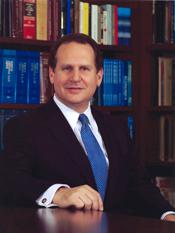
Mr. Speaker, by direction of the Committee on Rules, I call up House Resolution 249 and ask for its immediate consideration. Mr. Speaker, for purposes of debate only, I yield the customary 30 minutes…
Mr. Speaker, by direction of the Committee on Rules, I call up House Resolution 249 and ask for its immediate consideration.
Mr. Speaker, for purposes of debate only, I yield the customary 30 minutes to my colleague and friend, the gentleman from Texas (Mr. Frost), pending which I yield myself such time as I may consume. During consideration of this resolution, all time yielded is for purposes of debate only.
(Mr. LINCOLN DIAZ-BALART of Florida asked and was given permission to revise and extend his remarks, and include extraneous material.)
Mr. Speaker, House Resolution 249 waives clause (6)(a) of rule XIII requiring a two-thirds vote to consider a rule on the same day it is reported from the Committee on Rules.
The rule applies the waiver to a special rule reported on the legislative day of May 22, 2003, providing for consideration or disposition of the bill to provide for reconciliation pursuant to section 201 of the concurrent resolution, any conference report thereon, or any amendment reported in disagreement from a conference thereon.
This rule is the starting block to allow the House to consider legislation that will infuse our economy with job-creating tax relief, investment incentives, and overall economic growth. The House initially passed the Jobs and Growth Reconciliation Tax Act earlier this month, and with today's action we can demonstrate our continued commitment to spurring economic expansion and providing stability to American workers, businesses and families.
Our economy needs a healthy dose of meaningful relief. This Congress has once before exhibited the leadership and sense of purpose needed to create jobs and protect workers. If we delay, we put American jobs and the strength of our economy at risk.
As we prepare to consider legislation extending unemployment compensation, I can think of no better complimentary action for Congress to adopt than legislation to boost employment levels, lower the tax burden, and grow the economy. It is imperative that we move forward at once. Thus, I strongly urge my colleagues to support this rule so we can proceed with a debate on this very important legislation.
Mr. Speaker, I reserve the balance of my time.
Mr. Speaker, I yield myself such time as I may consume.
Mr. Speaker, we believe it is important to move this legislation forward to grow our economy, to create jobs, help people who do not have jobs find jobs; and we strongly support it and strongly support this rule.
Mr. Speaker, I reserve the balance of my time.
Mr. Speaker, I reserve the balance of my time.
Mr. Speaker, I yield myself such time as I may consume.
We are seeing a very clear difference in philosophy and opinion on the floor of the House today between the parties. It was said before by one of our friends on the other side of the aisle that when we cut taxes, when we reduce the burden of taxation on the American people, that that is an imposition. That was the word. We impose this. Congress, it was said, will impose a tax cut on the American people.
We believe that when we relieve the tax burden on the American people, that that is not an imposition on the American people. We believe it is their money in the first place, and we are relieving the tax burden on the American people. We are imposing less taxes from Washington.
So it is an interesting difference of opinion, and I think it is a fundamental difference of opinion. I think the American people are seeing it today. What we believe is that we should return as much as we can of the people's money to the people, and that they are best suited and know best how to spend their own money. So it is a fundamental difference.
Mr. Speaker, I reserve the balance of my time.
Mr. Speaker, I yield myself such time as I may consume.
Mr. Speaker, I have been hearing some interesting arguments today. I thought it was very interesting that one of our colleagues on the other side of the aisle said that by virtue of the fact that the tax cut is set to expire, or parts of it at the end of the year 2008, that that will diminish the incentive for people to invest in the stock market and have the stock market thus increase and contribute to economic growth.
But what was failed to be pointed out is that the opponents of the tax cut have so diligently fought the tax cut that they were able to reduce the amount of the tax cut for the American people, the reduction of taxes for the American people; and thus that portion will expire previously before we would have wanted it to have expired. I do not think it is logical to be able to say I am going to fight the tax cut. You reduce it, and then they say since it expires sooner than it was meant to, then its effectiveness is to be questioned. Wait a minute, do you want the tax cut or do you not want the tax cut?
In a sense I thought that was somewhat incoherent, that argument; but of course there is a right to make any argument in this wonderful body.
I yield to the gentleman from Tennessee.
That is correct.
Yes, there is no doubt about that. But what I was pointing to was that the argument was made that the incentive to invest in the stock market is reduced by virtue of the fact that that tax cut, that tax incentive, is sunsetted.
What I am saying is it is people who oppose the tax cut, from whatever party, and the argument was made against the effectiveness of the tax cut with regard to the dividends part by my distinguished colleague who is a Democrat. I was pointing out that I think it is inconsistent to want to have it both ways and then to say it sunsets, so it is not effective. I thought there was an inconsistency there, and some incoherence.
But the gentleman is right, there are Republicans in the other body that are responsible for reducing the effectiveness of what we are talking about. But what we strongly believe and what we want to do, and we are doing it to the best of our ability, is to reduce the tax burden on the American people.
The gentleman from Texas (Mr. Frost) pointed out previously that the debt burden may be increased. We want to reduce the debt burden by incentivizing economic growth which will not only create jobs now, but also lessen the debt burden in the future.
That is what I was pointing out with regard to the point on the effectiveness of the dividend part. If you are against the tax cut, but then say it sunsets, so it is not effective, I thought that was an incoherent argument.
I am not sure if it is. What we are doing with this rule is making possible for us to have that debate today, and obviously the people who have been involved in the negotiations will explain the details of what they ultimately end up with. We are trying to have that debate today, and that is why we have this rule.
Mr. Speaker, I reserve the balance of my time.
Mr. Speaker, I yield myself such time as I may consume.
Mr. Speaker, we believe it is very important to be able to get to this debate. We need to pass this rule, and then we will debate this matter further. It is obviously a fundamental matter. We believe that we need to do everything that we can to incentivize economic growth and job creation. That is why we are bringing this matter to the floor today.
Mr. Speaker, I yield back the balance of my time, and I move the previous question on the resolution.
Mr. Speaker, I yield myself such time as I may consume. (Mr. FROST asked and was given permission to revise and extend his remarks.) Mr. Speaker, it is often said if you repeat a lie often enough,…
Mr. Speaker, I yield myself such time as I may consume.
(Mr. FROST asked and was given permission to revise and extend his remarks.)
Mr. Speaker, it is often said if you repeat a lie often enough, people begin to believe it. Our record $350 billion deficit, the Republican Congress tells us that does not matter. The fact that this Republican administration has asked us not once, but twice, to raise the debt limit to record levels, ignore that, and maybe it will go away. The promise that all Members made to protect Social Security and Medicare funds in a lockbox, that does not seem to matter either, Mr. Speaker.
This is not government. This is a complete abdication of fiscal responsibility.
In 1995 the now majority leader, Tom DeLay, said, ``By the year 2002, we can have a Federal Government with a balanced budget or we could continue down the present path towards total fiscal catastrophe.''
It is now abundantly clear that the Republicans have lost their way and have decided that the path of fiscal catastrophe is not such a bad path after all. That begs the question, Mr. Speaker, what are the priorities of the Republican Party that makes tripping down the path to fiscal catastrophe such a great idea in 2003 when it was so bad an idea in 1995?
Well, we know the Republicans' top priority is to give millionaires a dividend tax cut. Where does that money come from? Well, the Republican budget conference report cuts veterans' Medicare and burial benefits by $6.2 billion. So if you are a millionaire and you have got a lot of dividend and capital gains income, the Republicans take care of you. If you are a veteran, this Republican Congress wants you to remember this Memorial Day as the one when your benefits were cut. And for what, Mr. Speaker? One of the most gimmick-laden tax cuts this Congress has ever considered. While the dividend and capital gains taxes last until 2008, the marriage penalty relief and child tax credits disappear at the end of 2004.
So while the millionaires enjoy their rate break for the rest of the decade, working families are left with uncertainty.
In 2001 the Republicans told us that their tax cut would create jobs. Instead, the Bush administration has presided over one of the worst job losses in American history; 2.7 million jobs have been lost. A dividend tax package is not going to help these people get jobs. It is simply welfare for millionaires.
Mr. Speaker, Warren Buffett has made a lot of money. Mr. Buffett would, in fact, be one of the greatest recipients of the Republican tax plan. He wrote an op-ed in The Washington Post this week calling the dividend tax plan ``voodoo economics.''
Alan Greenspan said, ``There is no question that as deficits go up, contrary to what some have said, it does effect long-term interest rates. It does have a negative impact on the economy.''
These are two of America's leading economic minds, Mr. Speaker. And they know that financing this tax cut which benefits only the wealthy few with borrowed money is wrong. It is wrong, Mr. Speaker.
Mr. Speaker, I reserve the balance of my time.
Mr. Speaker, I yield 2 minutes to the gentleman from Washington (Mr. McDermott).
Mr. Speaker, I yield 4 minutes to the gentlewoman from Texas (Ms. Jackson-Lee).
Mr. Speaker, I yield 3 minutes to the gentleman from Pennsylvania (Mr. Fattah).
Mr. Speaker, I yield 4 minutes to the gentleman from Texas (Mr. Doggett).
Mr. Speaker, I yield 3 minutes to the gentlewoman from Ohio (Ms. Kaptur).
Mr. Speaker, I yield myself 30 seconds.
Yes, there is a difference between the two parties here. The other side would impose billions of dollars of debt on my 6-year-old granddaughter and my 3-year-old granddaughter and my 2-month-old granddaughter. I do not believe we should be doing that.
Mr. Speaker, I yield 3 minutes to the gentleman from California (Mr. Sherman).
Mr. Speaker, I yield 3 minutes to the gentleman from Tennessee (Mr. Ford).
Mr. Speaker, I yield myself the balance of my time.
The reasoning on the other side is very curious. I do recall in 2001 when they were promoting the first tax cut, the reason they gave for the tax cut was, oh, we have a surplus. Now we have this surplus, we need a tax cut so we can give that money back. Now we are in 2003 and we have a deficit, so we have to have a tax cut. Which one was it? It cannot be both. It cannot be we had a surplus, so we should have a tax cut; we have a deficit, so we should have a tax cut.
I find their logic very curious. Everyone would like a tax cut. The American public obviously would like to pay less in taxes; and certainly we could have made the argument for a tax cut in 2001, perhaps not as large as they did, but we certainly could have made a valid argument: we are running a surplus; we do not need all of this money. Some of us felt like the tax cut was so large it was going to plunge us into a deficit, and that is what has happened.
But it is hard to make the argument that now we are in a deficit, let us drive this country deeper into a deficit.
Mr. Speaker, if the previous question is defeated, I will offer an amendment to the rule. My amendment will allow the House to consider H.R. 2046, introduced by the gentleman from New York (Mr. Rangel), the Democratic Rebuilding America Through Job Creation plan.
I guess I can understand why the Republicans are rushing through what they are claiming is a conference process to come up with a so-called economic growth bill. Every hour the American people have to see what the Republicans are up to, the less they will like it. It is a proposal that hurts American families, it hurts the American economy, and just digs the deficit hole deeper.
In stark contrast to the conference agreement we will soon see here on the floor, the Democratic plan helps all Americans, not just the rich; and it helps the economy immediately. It provides middle-class tax cuts to stimulate demand; it gives tax incentives to all businesses, especially small businesses and U.S. manufacturing businesses; and unlike the Republican proposal, it is fiscally responsible.
Yes, if I were a Republican, I might not want to have to explain a vote against the Democratic Rebuilding America Through Job Creation plan. But guess what, that is not a good enough reason to deny Members a chance to debate and vote on this measure. It is a terrible disservice to the American people if we let our fear of criticism prevent a vote on this very effective and responsible plan.
Let me make it very clear that a ``no'' vote on the previous question will not stop consideration of the conference agreement. A ``no'' vote will allow the House to consider the Democratic job creation plan as a separate bill. However, a ``yes'' vote on the previous question will prevent the House from taking up this responsible alternative. Make no mistake, this vote is the only opportunity the House will have to consider the Rangel plan. I urge a ``no'' vote on the previous question.
Mr. Speaker, I ask unanimous consent that the text of the amendment be printed in the Record immediately before the vote on the previous question.
Mr. Speaker, I yield back the balance of my time.
Mr. Speaker, I object to the vote on the ground that a quorum is not present and make the point of order that a quorum is not present.

Mr. Speaker, pursuant to House Resolution 253, I call up the conference report on the bill (H.R. 2) to provide for reconciliation pursuant to section 201 of the concurrent resolution on the budget…
Mr. Speaker, pursuant to House Resolution 253, I call up the conference report on the bill (H.R. 2) to provide for reconciliation pursuant to section 201 of the concurrent resolution on the budget for fiscal year 2004, and ask for its immediate consideration.
Mr. Speaker, I yield myself such time as I may consume.
Mr. Speaker, at the beginning of the debate, I do want to thank the staffs, the majority staff, the minority staff, and the institutional staffs for something that has to happen before the Members can stand before the Speaker and the House in the Chamber and the American people and debate measures in front of us; that is, do an enormous amount of paperwork, double-checking to make sure that what is the desire of the House and Senate actually is produced in the document.
It happens on every bill that comes up. It especially happens on a very difficult and complex conference report, and I do want to acknowledge the tremendous service that our staffs perform for us on a daily basis.
Mr. Speaker, I also want to say that, as is the wont of legislative bodies, one of the easier ways to gain enough votes to pass a measure is to tend to listen to what people believe are either their needs or wants, collect that in an amalgam, and move forward.
It is my real pleasure to tell the Members of the House that if they have read the text, they will search in vain for any particular provision that is attributed to any particular Member of either body. In the vernacular, this is a clean bill.
I say that because it is very difficult to get people to look from the individual to the collective. That is, when we are talking about reducing something like people's taxes, it is oftentimes very, very difficult to look to the larger, more fundamental societal needs.
And I know we will have a very vigorous and healthy debate on this issue, and everyone will use numbers on both sides. All I request is primarily out of my friends on the other side of the aisle, and listening to the debate that went on on the rule, one individual would stand up and say this was less filling because it only was going to last for 3 years and then it was going to disappear. Only to be followed by another speaker who said this really tastes great because it is going to cost a trillion dollars, and it is going to last an entire decade.
Now, really, I do not care whether you feel it is less filling and it is only going to last 3 years or it tastes great and it is going to last for a decade; but for those of us who also want to participate, you ought to pick one way or the other. When you are arguing on both sides of the same argument, it is a little difficult to really shed light for the American people what this is all about.
If someone is going to watch this debate and they have a child under 17, there is one irrefutable fact. In calendar year 2003, $14 billion is going to be sent to those Americans with children under 17. They are going to be sent checks. They are going to be sent by the middle of July and by August. They will have that money in their hands. If they have children, one single aspect of this aspect of this bill, and we will go on and debate a number of other aspects, this bill puts money in Americans' hands immediately.
Mr. Speaker, I reserve the balance of my time.
Mr. Speaker, I yield myself 10 seconds.
Mr. Speaker, what I really heard in that quote, which I did not hear after it was said, was the Speaker said, And we are really going to have to fight for it because that is exactly what occurs.
We want to help Americans by letting them keep their own money and we are going to have to fight you to do it, because you want to hang on to their money just as hard as you can.
Mr. Speaker, I yield 2 minutes to the gentleman from Iowa (Mr. Nussle), the chairman of the Committee on the Budget, a member of the Committee on Ways and Means.
Mr. Speaker, it is my pleasure to yield 2 minutes to the gentleman from Wisconsin (Mr. Ryan), a member of the Committee on Ways and Means.
And, Mr. Speaker, my colleagues have a very limited playing deck. I am surprised this early in the debate they have already played the class warfare card.
Mr. Speaker, it is now my pleasure to yield 2 minutes to the gentleman from Illinois (Mr. Weller), a member of the Committee on Ways and Means.
Mr. Speaker, I yield myself 10 seconds.
I said they had very few cards in the deck. We may see several come up during the debate, but they just played the class warfare card once again.
Mr. Speaker, it is my pleasure to yield 2 minutes to the gentleman from Arizona (Mr. Hayworth), a valued member of the Committee on Ways and Means.
Mr. Speaker, might I inquire of the remaining time on either side?
Mr. Speaker, it is my pleasure to yield 2 minutes to the gentleman from Texas (Mr. Brady), a member of the Committee on Ways and Means.
Mr. Speaker, I yield 2 minutes to the gentlewoman from Washington (Ms. Dunn), a very responsible member of the Washington delegation and a member of the Committee on Ways and Means.
Mr. Speaker, I yield 1 minute to the gentleman from Michigan (Mr. Camp) for the purpose of a colloquy.
Mr. Speaker, will the gentleman yield?
Mr. Speaker, I would tell the gentleman, the goal of this bill, and other bills we will pursue in the future, is to promote economic growth. Increasing retirement savings will promote economic growth by contributing to our Nation's capital stock. Of course we will monitor the way in which annuity sellers adjust to the new, more efficient financial product market conditions that H.R. 2 will create. As we proceed, we can determine whether adjustments are justified.
Mr. Speaker, I yield myself 15 seconds in case there are any students actually out there in the audience. I believe, if anyone wants to check an almanac, the election of 1960 resulted in the election of President Kennedy with less than 50 percent of the vote and there was some concern about whether or not a recount would reduce that. The argument that somehow there was a significant wave of votes simply is not accurate any more than most of the structures.
Mr. Speaker, prior to yielding 2 minutes to the gentleman from Louisiana (Mr. McCrery), I yield myself 10 seconds. I am just concerned that if people are really worried about not having enough taxes, I understand you can voluntarily write a check to the Treasury and at least you will feel real good about making sure that more of your money stays in Washington.
Mr. Speaker, now another view from the State of Connecticut. It is my pleasure to yield 2 minutes to the gentlewoman from Connecticut (Mrs. Johnson), the chairwoman of the Subcommittee on Health of the Committee on Ways and Means.
Mr. Speaker, it is my pleasure to yield such time as he may consume to the gentleman from Louisiana (Mr. McCrery).
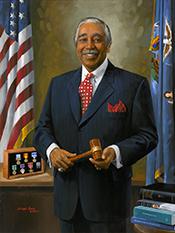
Mr. Speaker, I yield myself such time as I may consume. Mr. Speaker, this, I hope, is going to be an evening and a day that we will all remember as legislators. It is true that the majority tries…
Mr. Speaker, I yield myself such time as I may consume.
Mr. Speaker, this, I hope, is going to be an evening and a day that we will all remember as legislators. It is true that the majority tries desperately hard to bring these bills up in the middle of the night so that sunshine will never see what it is.
It is also true, it is also true that conferences do not mean what they used to mean. It means after a dozen Republicans get together in some room somewhere and decide what they want to do, they then come around and pass out a paper and ask you to sign it.
So I have been accustomed to that on the Committee on Ways and Means. But guess what, a lot of Democrats on this side have been saying forget all of this $726 billion and $550 billion and $300 billion. This is all a game they are playing, and they said that this bill was so full of gimmicks, that the Republicans were trying to fool the American people because we said that this was really a trillion dollar tax cut. And my friends over there started booing and saying this was so unfair and that we were just distorting the numbers.
Well, there is one person in this House that when he says something, people do not point their finger at him. They say the man makes a lot of sense. He is a straight shooter, and he is respected by both sides of the aisle.
Now, I do not normally read statements, but since it involves the Speaker of this great House, I thought it might start off the debate on a high level rather than wait for just the heavy people to come down at the end of debate and start talking about how we should salute the flag and do the right thing. And this is a bill that we have worked on and we have done it within the budget.
Now, it says here that House Speaker Hastert told the Congress Daily Thursday that the final package incorporates key features of the House- passed bill and positions Congress to pass much greater tax relief in the near future. The $350 billion number takes us through the next 2 years basically, Hastert said. Hastert, meaning the Speaker of this august body. But it also could end up being a trillion dollar tax bill because the stuff, that is what the chairman was working with, because the stuff is extendable.
That is the fight we are going to have, and it is not a bad fight to have. This goes on and says, Congressional Journal, Hastert said the final package is front loaded and will boost the economy in the short term but it includes nearly all of the content of the House's original bill. Now, I do not know how far in debt you guys want to take us, but listen, because this is important stuff. This is history-making stuff.
Now, this is what the Speaker said about this bill. That at the end of the day it is not 350, it is not 550, it is not 726. It is a trillion. But guess what? It gets better, to show you just how deep they would want to get us in the hole. I never knew they hated Social Security and Medicare that badly. But at the so-called conference, there was a period of time that I was the only Democrat there on the House side beside the minority leader. The chairman came in later. And so there was opening statements made before the conference report was just passed around to sign. And our distinguished majority leader said, while we are doing this bill and you have done a lot of good work on it and praised the Republican leadership and the House and Senate, he said, before this year is over we will be coming back to pick up the rest of it to make certain we get another trillion.
Now, I mention these names because the only thing that they did not mention was that they were going to borrow the money in order to give the rich these tax cuts, and they want to stick the rest of society with paying the interest on the money that they are borrowing at the expense of the Social Security system. I am so happy and pleased that at the end of this day that we do not have to point fingers and say that it is gimmicks that you are doing or you are trying to hoodwink the people because if the Speaker said it, and you applauded it, so therefore I do not have any apprehensions; and if the majority leader came back and said, you are coming back to raid us again and
you applaud that, well, thank God for your honesty in what you are doing.
And one day somebody is going to ask, when this deficit just grew, when the programs were collapsing, when people were just paying more interest on the debt than all of the programs that we have together, all of the discretionary programs, they may ask, and just what were you doing when this happened, when you shifted the responsibility for paying taxes to the working people that do not have the exclusions that you provided today?
So to the Republican leadership, thank you for making our day. I thank the Speaker for being so honest and saying what these people have done; and to the leader, come back again for the next trillion dollars and maybe some day soon the American people can see what you are doing to them.
Mr. Speaker, I reserve the balance of my time.
Mr. Speaker, I yield 2\1/2\ minutes to the gentleman from California (Mr. Stark), an outstanding, hard-working member of the Committee on Ways and Means.
(Mr. STARK asked and was given permission to revise and extend his remarks.)
Mr. Speaker, I yield 2 minutes to the gentleman from South Carolina (Mr. Spratt), the ranking member on the House Committee on the Budget.
Mr. Speaker, I yield 2 minutes to the gentleman from Michigan (Mr. Levin), the senior member of the Committee on Ways and Means.
Mr. Speaker, I yield 1 minute to the gentleman from North
Dakota (Mr. Pomeroy), a member of the Committee on Ways and Means.
Mr. Speaker, I yield 2 minutes to the gentleman from Washington (Mr. McDermott), a member of the Committee on Ways and Means.
(Mr. McDERMOTT asked and was given permission to revise and extend his remarks.)
Mr. Speaker, I yield 15 seconds to the gentleman from Washington (Mr. Baird).
Mr. Speaker, I yield 2 minutes to the gentlewoman from Ohio (Mrs. Jones).
Mr. Speaker, I yield 3 minutes to the gentleman from Maryland (Mr. Hoyer), the Democratic whip of the House.
Mr. Speaker, I yield 1 minute to the gentlewoman from Connecticut (Ms. DeLauro), the head of the Democratic Steering Committee.
Mr. Speaker, I yield 1 minute to the gentleman from Mississippi (Mr. Taylor).
Mr. Speaker, I would like to agree with the gentleman from Louisiana. It certainly did go down because they stole the money out of the Social Security trust fund in order to make it go down. So he scores there.
Mr. Speaker, I yield 1 minute to the gentleman from Texas (Mr. Turner), the ranking member of the Select Committee on Homeland Security.
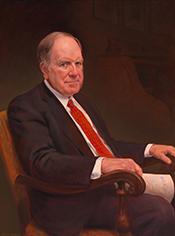
Mr. Speaker, I have to wonder if our good friend from New York, when he tells his constituents about their benefits, will tell them that the child tax credit will expire in 2004, that the 10 percent…
Mr. Speaker, I have to wonder if our good friend from New York, when he tells his constituents about their benefits, will tell them that the child tax credit will expire in 2004, that the 10 percent bracket expansion will expire in 2004, that the AMT exemption and that the marriage penalty negation provision will expire in a year. We give with one hand and take away almost immediately with the next. The sun rises and the sun sets.
Let me dispel, first of all, one myth about this tax bill, the myth that the President is putting out that this is an itty-bitty tax bill. $350 billion by itself would not be itty-bitty, particularly when you have a deficit as we do. But this is not a $350 billion tax bill. If you assume, as we must, that these sunsets are a sham, and why should we not, because the architects of this bill are all saying, they will be extended, we just put them in there to shoehorn this thing into the budget. If you assume that, then this is what this total tax cut will be, not $350 billion but, in the next 10 years, $1 trillion. That is the result. And since the budget is now in deficit, all of this amount, all $1 trillion, will go to the bottom line and will swell the deficit. That means we will have a deficit this year, a record deficit of $425 billion and the deficit will hover in that range, ratcheted at that range, of 3 to $400 billion for as far out as we forecast.
But we do not stop here. Because Republicans have told us, proudly, that they are going to make tax cuts an annual event. If you look in their budget, you will see there are more unreconciled tax cuts still on the back burner yet to be brought forward. If you look in the President's budget, you will see that there are a lot of tax cuts left on the cutting room floor waiting there for next round.
Here are three known tax cuts that are yet to come off the agenda.
First of all, we all know the tax cuts passed in 2001 have to be made permanent, will be made permanent by the majority if it stays the majority in this House. That will cost 6 to $650 billion in revenues.
Second, there is another 2 to $300 billion of various tax cuts lying on the cutting room floor waiting for the next round.
Third, there is the alternative minimum tax. We all know that politically it has to be fixed in the next 10 years or else 25 million Americans are going to pay much higher taxes than they now pay. They will pay the alternative minimum tax. The cost of fixing it is reasonably 650 to $680 billion.
If you add all of these tax cuts together and make a few modest adjustments for the likely cost of defense and homeland security and Medicare/prescription drugs, here are the results. I have got a piece of paper. I am going to leave it here on the desk. We have calculated them on this sheet of paper. If anybody takes exception with them, come down here and refute it.
Here are the results per our reckoning of what is going to happen to the budget.
First, from 2004 until 2013, deficits will total, get this, deficits will total $3.959 trillion. Without Social Security, deficits will total $6.527 trillion. Debt held by the public will increase from $3.5 trillion to $7.9 trillion. Total statutory debt will go up to $14 trillion.
You can overlook and dispute a lot of these facts, but there are two facts you cannot dispute. They will not go away.
First of all, 77 million baby boomers are marching to their retirement, and they are going to double the number of beneficiaries on Social Security and Medicare, and those programs will not sustain their benefits in their current situation.
Secondly, what you sow, our children and their children are going to reap. They will have to support the underfunded Social Security program, the underfunded Medicare program, and they will have to bear the burden of $14 trillion in statutory debt that you are incurring as you move down this path tonight. That is the course you choose. That is the moral decision you make tonight if you vote for these tax cuts.
If you do it in the name of creating jobs, I do not think this is going to create that many jobs, with one exception, I will grant you. It is going to create a lot of jobs for tax lawyers and accountants. This bill will be a bonanza for those who specialize in tax avoidance; and the real cost, believe me, is going to be beyond calculation.
Mr. Speaker, I include the following for the Record:
[GRAPHIC] [TIFF OMITTED] TH22MY03.003
Mr. Speaker, when the President sent his budget up this year, OMB sent with it a message in which they said that the surplus of $5.6 trillion, which they projected just 2 years ago, was a mistake; that now, from 2002 through 2011, they revised downward that surplus from $5.6 trillion to $2.4 trillion. They made an egregious mistake.
We warned our colleagues then not to bet the budget on a blue sky estimate, but they did not take our warning. Now you can blame that on 9/11, you can blame that on this sluggish economy, you can blame it on lots of things, but tonight the buck stops here. The blame rests right there in the well of this House and these meters where you push your card. Because tonight, when you vote for a trillion dollars in tax relief, it goes straight to the bottom line. There is nothing to offset it. It creates a deficit this year which will be a record deficit in the fiscal history of this country, $425 billion, and the deficit stays ratcheted in that range for as far out as we forecast.
Those are the consequences of the policy choices you make tonight. You cannot blame it on 9/11. You cannot blame it on the economy. It will be attributed to what you do tonight, unless some economic miracle happens as a result.
Here is a chart in which we have calculated this tax cut, the tax cuts to come, other likely actions to be taken, Medicare, prescription drugs, a bit more for defense; and we think it is a fair and honest and even conservative statement. I will leave it here for anybody to refute, but this is what we see as a consequence of what you are doing tonight.
We foresee deficits of $3.959 trillion over the next 10 years. Back out Social Security, and those deficits come to $6.527 trillion, a consequence of what you are doing tonight. The debt of this country today, held by the public, is at about $3.5 trillion, $3.6 trillion. This will increase it to $7.9/11 trillion. The total statutory debt will go up to $14 trillion.
That is the course you choose to take tonight if you vote for this tax cut. You cannot blame it on the economy. You cannot blame it on 9/ 11. You can only blame it on yourself.

Mr. Speaker, in light of the fact that both of us are brand new in this job and this is the first time we are doing this, I want the gentleman from Texas (Mr. DeLay) to know that I am pleased to…
Mr. Speaker, in light of the fact that both of us are brand new in this job and this is the first time we are doing this, I want the gentleman from Texas (Mr. DeLay) to know that I am pleased to yield to him today and will be pleased to yield to him in days to come. I want him to stay leader; I would just like to change the designation, the adjective, but I yield to the majority leader.
Mr. Speaker, I thank the gentleman for the information he has given to us. I understand we are coming back at 6:30 p.m. on Wednesday and leaving no later than 1 p.m. on Thursday. I know the gentleman's party has its retreat. Ours is this week, as the gentleman knows.
I would ask the leader, Mr. Speaker, he indicates that the conference committee report may come back on Wednesday. If that is the case, does the gentleman have any information as to when the conference might meet?
Mr. Speaker, I thank the gentleman for that information.
Assuming that the conference report would be offered on Wednesday, assuming that work gets done, can the leader give us any information on the kind of rule under which that conference report would be considered? And I say that, Mr. Speaker, to the leader in the context that most members of the Committee on Appropriations, not to mention most Members of the House,
have not had the opportunity to see exactly what is in the bill. I think we just got the papers yesterday, so there has not been much consideration.
As the chairman, I am sure, knows, there will be a desire on, I am sure, both sides of the aisle, perhaps, to offer some legislative proposals to the conference committee report if they are made in order. Can the gentleman enlighten us as to what kind of rule the conference committee report might be considered under?
Reclaiming my time, Mr. Speaker, I thank the gentleman. Let me make a couple of comments.
First of all, the gentleman is almost right; we did 11 of the 13 bills. But the second largest bill, of course, as the gentleman knows, on discretionary spending, not only did we not do it, but it was not considered in subcommittee, much less in full committee, the Labor- Health bill, which is, of course, itself over $125 billion in discretionary spending, and somewhere approximately $300 billion, when we include the mandatory spending within that bill, as the gentleman recalls.
But as the gentleman makes the point, this is the most unusual procedure for the appropriations process that I have seen in my 20 years on the committee. It is the least involvement, I think, that members of the Committee on Appropriations in the House have had on the product that now is being sent to us by the Senate.
I know that the gentleman from Ohio (Mr. Regula) on the Labor-Health bill introduced 2 days ago a Labor-Health alternative, which presumably will be used as a basis for that title of the bill to be conferenced. However, Mr. Speaker, I would say to the gentleman, I would very much hope that in light of the extraordinarily unusual circumstances under which this appropriation bill is being considered, essentially emanating from the Senate, which obviously from the House position is not what we want to see as normal practice, that the majority would very seriously consider, in the interests of democracy in this House, with a small ``d,'' and in the interest of full debate on the priorities we are going to set forth in this bill that deals with over $360 billion of discretionary spending, to have a rule that is not traditional, because we are not dealing with a traditional process.
I would hope that the leader, in discussions with the Speaker, with the majority whip, and with the gentleman from Florida (Mr. Young), as well as the gentleman from California (Mr. Dreier), would consider a process which would allow Members to have a greater opportunity to express their views on this particular bill.
Reclaiming my time, Mr. Speaker, I understand what the gentleman has said; but I am sure the gentleman also understands our consternation, because we are going on a retreat for 2 days. We are leaving here tomorrow morning. I ask the gentleman when the conference is going to occur. We really do not know when the conference is going to occur.
As the gentleman knows, like himself, I am a ranking member on the Committee on Appropriations. I have received no notice of a scheduled conference on this particular piece of legislation. I am one of the higher-ranking Members in the House. Therefore, I would think the gentleman and I would have access; but the more junior members of the Committee on Appropriations and those who do not serve on the Committee on Appropriations, while theoretically having some access to a conference, if the conference is never held, if there is no scheduled meeting, if they have no opportunity to participate in those deliberations, it is very difficult for them, short of acting on the floor, to consider this legislation.
So I would simply ask of the leader, Mr. Speaker, again in light of the extraordinarily unusual process that has been pursued over the last 12 months in dealing with the appropriation bills, and the fact that we did not bring the Labor-Health, one of the largest bills that our committee considers, to the floor or to full committee or to subcommittee for consideration, and yes, the chairman introduced a bill, but it was introduced by the chairman alone; it was not cosponsored by anybody else. That did not give us much input.
I will not belabor this point further, but I would hope and ask my colleagues, in light of the fact that this is the first substantive piece of legislation that we are going to consider, that it be considered with an opportunity for those of us who represent somewhere in the neighborhood of 49 percent of the people of the United States to have their voice heard meaningfully in the deliberations.
I thank the gentleman for his comments.
Mr. Speaker, I appreciate the gentleman yielding to me, and I appreciate his interest in changing my title, but that will not happen for another 2 years, at least. Before I discuss next week's…
Mr. Speaker, I appreciate the gentleman yielding to me, and I appreciate his interest in changing my title, but that will not happen for another 2 years, at least.
Before I discuss next week's schedule, I would like to note for the gentleman and other Members of the House a very significant historical event that took place in the House of Representatives during this week back in 1815. Mr. Speaker, the Library of Congress was established back in 1800, and the Library was housed here in the Capitol, as many of us know, until 1814 when the British troops set fire to the building and destroyed most of the books in our collection. Retired President Thomas Jefferson graciously offered his personal library from Monticello as a replacement, and Congress purchased the library 188 years ago today for the sum of $23,950.
Now, after the job he did in the Louisiana Purchase, one would have thought Mr. Jefferson would have negotiated a little higher price from us, but, in any case, it was a great deal for America and a gracious gesture for our great champion of ideas.
Mr. Speaker, if the gentleman would continue to yield, the House will convene on Tuesday in pro forma session. On Wednesday we hope to consider the conference report on H. Res. 2, which will finish up the 2003 appropriations process. However, if the conference report is not ready for floor consideration, the House will need to consider another continuing resolution on Wednesday.
In addition, we may consider some measure under suspension of the rules. A list will be provided to all offices by Monday evening. There will be no votes in the House before 6:30 p.m. on Wednesday, and on Thursday we expect to consider H.R. 395, the Do Not Call Implementation Act, to restrain rampant telemarketers, and finish with legislative business for the week by 1 p.m.
Mr. Speaker, I am happy to answer any questions.
If the gentleman will continue to yield, Mr. Speaker, parties, both in the minority and the majority in both Houses, are speaking and talking to each other as we meet. Obviously, the chairman of the Committee on Appropriations in the House and the chairman in the Senate will do their own scheduling when the formal conference would be held.
We are hoping that, working with the minority and the ranking Members of both Houses, and working hard through the weekend, as hard as they can, that they will come to some sort of resolution next week. That is the schedule that the House would like to see happen; but we know, as all these things happen, it could leak and we would have to do another continuing resolution for another week. Hopefully, by then all the work would be done.
If the gentleman will continue to yield, Mr. Speaker, the gentleman, as well as this gentleman, having served on the Committee on Appropriations, understands that this is a very unusual process that we are going through. In fact, I do not think we have gone through this process anytime that I have served on the Committee on Appropriations, so we are sort of feeling our way trying to get the appropriations done.
I remind the gentleman that the Committee on Appropriations in the House passed out every one of the 13 bills out of committee, so we do have something to look at as to what at least the committee had done in the House; and they are trying to reconcile that with what the Senate did or what the other body did.
As far as bringing it back, it is the tradition of this House and has been the tradition of this House to bring back a conference report on an appropriations bill under a closed rule. To be honest, I do not know that we would want to change that.
Mr. Speaker, I appreciate the gentleman for yielding again. The gentleman is correct in correcting me, that we only did 11 bills out of the committee. I do remind the gentleman that the chairman introduced a Labor-HHS bill, and it is my information that that is what they are working from.
Secondly, I would say that the conference committee as named has 12 Republicans and 10 Democrats on it, so the minority is very well represented on the conference committee, and will be, obviously, consulted and worked with in as open a manner as possible.
I would also point out the fact that conference reports are privileged resolutions, and it would be highly unusual for us to change the precedent and the rules governing privileged resolutions. So we are trying the best we can to accommodate any Member that is interested in what is going on in that conference, whether they be Democrat or Republican, by opening up the process as much as possible and having a process that Members can plug into so that their voices can be heard in the consideration of the conference.
Mr. Speaker, if the gentleman will yield further, the gentleman makes a very good point. We want to be fair to all concerned. We want to have this as open a process as we possibly can make it.
I just want the Members of this body to know that we just received the paper from the other body last night, so it is going to take probably the entire time of the gentleman's retreat for the staff to go through that paper and get it ready for Members' consideration. Obviously, the Members that are interested in having an impact on this conference will probably have an opportunity, or I know they will have an opportunity, starting Sunday or Monday, to have input into that process. I offer to the gentleman that if anybody feels that they have been shut out of the process, our office is open and we are more than willing to work with them.
Mr. Speaker, we have heard a lot of talk, and my colleagues on my side of the aisle have suggested that we are traveling down a course we traveled before from 2 years ago when we were promised that a…
Mr. Speaker, we have heard a lot of talk, and my colleagues on my side of the aisle have suggested that we are traveling down a course we traveled before from 2 years ago when we were promised that a tax bill would create millions of new jobs and new opportunities for people. In fact, it did not.
Some will say there are reasons for that. The President will say, as he has said in speech after speech, that this country was attacked. We were. Our Nation responded with great resolve, determination, courage and charity; and our military has responded with unprecedented swiftness and effectiveness. Yet we in Congress have failed the American people, and the President has, in large part, as well. Instead of tailoring and adjusting a plan to conform to the realities of the day, we continue to offer the same rhetoric and the same plan that we offered when things were good, when things were bad, when things were really bad, and now at a time when things are compounded.
Some of my colleagues have come to the floor to detail the challenges that their States face. My colleague on the other side of the aisle, whom I have great respect for, the gentleman from Florida (Mr. Lincoln Diaz-Balart), comes from a State which is running a big deficit. The President's brother is the Governor of that State. My Governor is faced with a $500 million shortfall. Things are so bad in some States that they are releasing prisoners early to help meet or to close budget shortfalls. Something is wrong here in Congress and wrong with us in government when we pretend that these issues are either not ours to confront or not of our making, or somehow our ideas are the only and best ideas.
We could probably come up with a number of ways to stimulate the economy, a number of tax cuts to stimulate the economy. I have heard some say this dividend tax is unfair. The Tax Code is polluted with areas that unfair; inequities litter it. We should prioritize if we are going to clean up and undo some of the unfairness of the Tax Code.
It would seem to me the best thing we can do is to help our States. The President reluctantly agreed to include a $20 billion package. I applaud him on that front. If anything, we should provide more for the States. Not only do we help governors avoid doing the two worse things during an economic downturn, which are to cut services and/or raise taxes, we also help them create more jobs because as you cut State programs, more and more people are laid off.
Those of us from rural areas understand the importance of rural hospitals and rural health care. When you close hospitals, not only do you compromise care, you cause a decline in the job market in those areas as well. I can only say to my friends, and there are those who have come to the floor and have talked about marching orders and even rubber-stamping, and there is great truth and great humor in a lot of the things that they have said. It is my hope that my friends on the other side of the aisle will pay some attention to what we are saying. We understand that they have the votes to ram things down and do what they choose to do. But remember, all of us represent people and all of us have to go home and explain to our Governors, to our mayors, and, more importantly, to our bosses whom we call constituents why we have not done more to assist cities and States, and for that matter the private sector, in creating more and more jobs.
Mr. Speaker, will the gentleman yield?
If my reading is correct, and I have not been a part of any of the meetings, it appeared to me that one of the reasons that the tax cut was reduced from $726 billion to $550 billion to $350 billion was because there was disagreement in the gentleman's own party between the two bodies, between the House and Senate.
So we bear some of the responsibility, but some on the other side of the aisle also bear some of the responsibility.
Fair enough.
If the gentleman would continue to yield, with regard to the efforts the Congress made on behalf of the airline industry right after September 11 and not long ago in the war supplemental, which I thought was the right thing to do and I support it, does it not make sense also, because part of the argument on this side, and I think from some in the other body, to provide greater resources to States that are having to lay nurses and teachers off? And I could go on with our rhetoric, and the other side has rhetoric; but the reality is State governments are forced to make some bad decisions largely because the Governors cannot borrow money, and we can. I am just curious, the $20 billion that was added on the Senate side, is that something that the other side would be supportive of? That was not included in the House bill.
Show 11 more
Well, Mr. Speaker, here we are back at the rubber- stamp Congress. Bring the bill out, rubber-stamp it and go on home. The American people have to understand, these guys are bringing out $1 trillion…
Well, Mr. Speaker, here we are back at the rubber- stamp Congress. Bring the bill out, rubber-stamp it and go on home. The American people have to understand, these guys are bringing out $1 trillion worth of tax cuts and say that you are going to get 1 million jobs out of that. That is $1 million for every job you are going to get. The bill was dropped on the desk out here at 9:20. So we have had just about 2 hours to look at how they are spending $1 trillion.
The gentleman from New York stands up here and very confidently says, da-da-da-da, we're going to get a thousand for this and a thousand for that and all this kind of stuff. Not a soul on this floor knows whether that is right or wrong. Nobody has had any time to look at this bill. You do not want anybody to have any time to look at this bill, because if they did they would find out just how fraudulent it is.
The theory behind it, that is, give the money to the rich and they will go out and invest. The people at the bottom buy most of the stuff that the people at the top make. If the people at the bottom have no money and no job, you could have given a payroll tax holiday and given the money to the people on the bottom. They would spend every nickel of it.
But no. You are going to give it to the top, and then you are going to pray, please, Lord, have them invest and create a new job for some poor person in my district. The million that you left on the table in the last bill, in the bill on unemployment insurance, when you would not take care of the people who were unemployed, you would not give them any money there, you would not give them any money with a tax break, you are going to give them $325 if they make 30,000 bucks. That is a fraud. It will not work, and the American people know it. That is why the Wall Street poll looks the way it looks. You try to fool them. You can fool them once in a while, but after a while it really does not work.
Mr. Speaker, well, here we are, one more time, rubber- stamping whatever the President says he wants.
They come out here with a 43-page bill and 302 pages of explanations, and there is not a soul in here who knows what is in it. Let me tell Members what is here. You are spending a trillion dollars, which is almost exactly what is estimated as the shortfall in Social Security and Medicare. You are going to come back after this break, and you are going to privatize Medicare. We know what you are going to do.
What is nice for the American people about this rubber-stamp Congress out of White House, the junta gets its orders, they bring it to the Committee on Ways and Means or Committee on Rules, and zoom, out it comes. The American people are getting a clear, unadulterated picture of what the Republicans are all about. Every single Member comes from a State where they are cutting their State budget. They are cutting the living daylights out of their budget. If you are from Texas, it is 275,000 kids who will not have health care. In my State, they threw 60,000 people off of health care programs. Every State in the Union is doing that.
The estimated cost of that, $100 billion. That is what States are cutting out of their budget. No, you cannot give that money to them. You give them $20 billion, and I know you are going to stand up and say $20 billion is better than nothing. Yes, it is better than nothing, but it is not going to fix the problem.
When some kid is sick in the State of Washington, and they now have waiting lists in Medicaid, and you are a mother with your kid in the waiting room, maybe you will get into the hospital and maybe you will not, then you have to ask yourself, is this the country that you and I believe in? Is this the common good? I say it is not. You really ought to be ashamed of what you are doing because what you are doing is sticking it to the kids of this country. The President says Leave No Child Behind. My God, not only in education are you leaving them behind, you are leaving them behind in the hospitals and the environment and everywhere else in this society. Vote ``no.''
Mr. Speaker, this job-killer bill will lead to a continuation of the Bush recession. We are told we need to end the double taxation of corporate income, but one-third of corporate income earned by…
Mr. Speaker, this job-killer bill will lead to a continuation of the Bush recession. We are told we need to end the double taxation of corporate income, but one-third of corporate income earned by U.S. corporations is not even subject to corporate tax because of the loopholes in that tax. But, of course, their new provision applies to foreign corporations. Their income is not even taxed once.
We are told this is going to encourage investment in new issues of corporate stock. But it is a temporary provision, so who is going to buy corporate stock, just to find the taxes go up on the dividends? But if it does encourage investment, it will encourage investment of American capital in foreign corporations issuing stock. Those foreign corporations are paying 12 cents an hour to their employees and stealing our jobs.
We are told the low zero percent rate or 5 percent rate will apply to working families. But working families, if they own stock at all, own it in their 401(k) plans that are unaffected by this bill. In fact, when the dividend income is paid out, it is subject to a high rate of tax. The big beneficiaries of that zero percent rate will be rich kids with trust funds earning $10,000 or $20,000 of dividend income and paying zero percent tax.
The corporate tax rate, once you move the corporation to the Bahamas, zero percent.
Individual income taxes on dividends from the Bahamas corporation, 15 percent.
Individual income tax when the stock is held by a trust for rich kids, zero percent.
Knowing that working families are paying about 30 percent tax, FICA and income tax, on their wages--priceless.
There are some things campaign contributions just can't buy. For everything else, there is RepubliCard. Accepted at the finest country clubs in the Bahamas.
And you will want to get the Deficit Express Card, now that the Senate has increased the credit limit by another $981 billion. The Deficit Express Card: Do not leave the House without it.
Mr. Speaker, this job-killer bill will lead to a continuation of the Bush recession.
We are told we need to end the double taxation of corporate income, but one-third of corporate income earned by U.S. corporations is not even subject to corporate tax because of the loopholes in that tax. But, of course, their new provision applies to foreign corporations. Their income is not even taxed once.
We are told this is going to encourage investment in newly issued corporate stock. But the dividend exclusion provision is a temporary provision, so who is going to buy corporate stock, just to find the taxes go up on the dividends? But if it does encourage investment, it will encourage investment of American capital in foreign corporations issuing stock. Those foreign corporations are paying 12 cents an hour to their employees and stealing American jobs.
We are told the low zero percent rate or 5 percent rate on dividend income will apply to working families. But working families, if they own stock at all, own it in their 401(k) plans, and those plans are unaffected by this bill. In fact, even if we pass this bill, when the dividend income is paid out of a 401(k) it will be subject to a high rate of tax. The big beneficiaries of the 5 percent or zero percent rate on dividend, will be rich kids with trust funds earning $10,000 or $20,000 of dividend income and paying virtually no tax.
The corporate tax rate, once you move the corporation to the Bahamas, zero percent.
Individual income taxes on dividends from the Bahamas corporation, 15 percent.
Individual income tax when the stock is held by a trust for rich kids, zero percent.
Knowing that working families are paying about 30 percent tax, FICA and income tax, on their wages--Priceless.
There are some things campaign contributions just can't buy. For everything else, there is Republicard. Accepted at the finest country clubs in the Bahamas.
And you will want to get the Deficit Express Card, now that the Senate has increased the credit limit by another $981 billion. The Deficit Express Card: Do not leave the House without it.
Mr. Speaker, this is a martial law rule, and that is appropriate because there are those in this House and in this country that think the role of all the representatives here is to march in a martial…
Mr. Speaker, this is a martial law rule, and that is appropriate because there are those in this House and in this country that think the role of all the representatives here is to march in a martial fashion behind the leadership of the majority leader, the gentleman from Texas (Mr. DeLay).
So it is appropriate they bring this rule out today, a gag rule, to gag those of us that do not share the views of the majority leader, who might have an amendment or an alternative way to address the problems that American families face. They deny us that right. They have assured there will be no substitutes considered on this floor. It is their way or the highway. It is a martial America that they are supporting and appropriate they bring this rule up to do it.
Their ideas are so narrow and so extreme that they cannot stand to have them debated and voted upon, not so much worrying about the Democrats but worrying that some members of their own party could not be held in line against solid alternatives to do something for the millions of Americans that lack jobs in this Bush economy; to do something about the millions of Americans who lack insurance in this Bush economy; to do something about the children who are denied the opportunity to fulfill their full potential because of teacher freezes, because there are textbooks that will not be renewed in Texas.
Meanwhile, the President tells us that he has to break his promise on the ``Leave No Child Behind'' Act. He has come up with a mere $9 billion, that is billion with a ``B,'' billion dollars. He breaks his promise in the short period
of time that he advanced a bipartisan proposal for education that we all came behind. Now he will break his promise and not fulfill the promise he made to the American people. Though we do not have the money for our children to get access to new textbooks, we do not have enough money for that, we do have enough money for more tax breaks for those at the top of the economic ladder.
The budget deficit puts a hole in the pocket of every American every day of their lives. It threatens the very foundation of our culture. We must seize and act upon this historic opportunity to solve this, the most pressing issue facing the country.
Those are not my words, though I find them rather eloquent. They are the words of Treasury Secretary John Snow in 1995 but forgotten by him now that he has a new job in the administration. No ``Snow job'' can hide this administration's Mt. Everest of debt. Mr. Snow got a new job and a new viewpoint at the same time millions of Americans were losing their jobs in this sorry economy.
A few weeks ago, the President announced a tax cut of the size that will be imposed on America tonight and said that it was just a ``little bitty'' tax cut. Well, Mr. Snow is coming the same week and asking us to raise the debt ceiling by billions of dollars. Is that a ``little bitty'' increase? No, they practically need an extension ladder over there at the Treasury Department because they cannot get the debt ceiling raised fast enough before they are back having to go up a little higher and raise it some more.
Of course, they turn to us and say, ``it is the people's money, give it back to them. It is their taxes.'' Well, it is the people's debt, too, and they are going to have a whole lot more of it. And not billions, but trillions, with a ``T,'' trillions of dollars in additional debt if this lame economic policy, this sorry tax break, one after another writeoff for the rich, is imposed on the children and the grandchildren of America.
This is a borrow and spend Republican Party, and that is why they have to have martial rules because they cannot permit Congress to consider alternative proposals. They cannot have full and fair debate. They need everybody to line up in a line and stand to borrow more from the people of this country. A ``no'' vote is a vote for fiscal responsibility that ensures our children will not be burdened by today's excesses.
Mr. Speaker, will the gentleman yield? Mr. Speaker, my friend says it cuts taxes for almost everybody. The last tax proposal the gentleman brought up here gave as much in tax breaks to the richest…
Mr. Speaker, will the gentleman yield?
Mr. Speaker, my friend says it cuts taxes for almost everybody. The last tax proposal the gentleman brought up here gave as much in tax breaks to the richest one-tenth of 1 percent, those people who are millionaires, as to the bottom 89 percent
of the people. Does my friend think that is fair?
I thank my friend for yielding. I appreciate that.
Here is my question. The Wall Street Journal poll today showed massive opposition to this tax proposal and that more than half of the American people, 55 percent, said they would prefer the government to spend more money on health care coverage. The people want health care. They want Social Security.
Can my friend respond to that?
But he is still losing. The polls are very clear. The people want health care and Social Security.
I thank my friend for yielding me this time.
Mr. Speaker, this bill is a fraud. It will do devastating harm to this country. It is an embarrassment that the Republican leadership brings it up, and it should be defeated.
Mr. Speaker, point number one. This bill is grossly unfair. My Republican friends, it is not the millionaires and billionaires who are struggling. It is the middle class. It is working families who are struggling. Yet your bill gives $93,000 a year in tax breaks to the millionaires, but 36 percent of the American people get nothing, and 53 percent of the households would receive a tax cut of under $100. So the people who need the help get nothing; the millionaires get the lion's share.
Number two. When you give hundreds of billions of dollars in tax breaks, you endanger the middle class. This will lead to drastic cutbacks in education, in Medicare, in Medicaid, in Head Start, in the programs that working families depend upon. Shame. Cutting back on education and Head Start to give tax breaks to billionaires.
Number three. What a legacy to leave to our children and grandchildren. The national debt now is almost $6 trillion, huge debt payments every single year. Your tax breaks for the rich will drive the national debt up by several trillion dollars. What a gift to give to our grandchildren.
Fourth point. You talk about creating jobs. That is what you told us 2 years ago when you brought forth your tax breaks for the rich. You told America it was going to create jobs. In the last 2 years, we have lost 2 million jobs after your tax breaks for the rich. This proposal will do nothing more. If you want to create decent-paying jobs, build affordable housing. Protect workers right now who will lose their jobs at the State and city levels. Tax breaks for the rich do not create jobs.
Lastly, and maybe most importantly, the American people are seeing through this fraud. The Wall Street Journal/NBC poll says today nearly two-thirds, 64 percent, of the people who were polled said there were better ways to boost the economy than tax cuts. Only 29 percent said tax cuts were the answer. These guys say, big government, terrible, terrible.
What you are really saying is you do not want the elderly to have prescription drugs. You do not want the kids to have an education. That is what you mean when you rant and rave against the government.
But here is what the people say. Fifty-five percent said they would prefer the government to spend more money on providing health care coverage, compared to 36 percent who said no.

Mr. Speaker, I thank the distinguished gentleman from Texas (Mr. Frost) for yielding me this time, and I rise in opposition to this martial rule, which essentially restricts debate. It does not…
Mr. Speaker, I thank the distinguished gentleman from Texas (Mr. Frost) for yielding me this time, and I rise in opposition to this martial rule, which essentially restricts debate. It does not permit the Democratic economic program to even be debated today.
Why not? What is the opposition afraid of? They have the votes on their side. Why not even allow us to talk about our program?
Here is why. I remember back to that old saying, if you fool me once, shame on you. If you fool me twice, shame on me. But if you fool me thrice, well, my gosh, it is just a sad and deadly shame.
If we think back to 1981, when Vice President Dick Cheney was then a Member of this House and head of the Republican Policy Group, he was involved in the Republican tax program enacted back in 1981. We had the worst job washout in American history. I was elected in 1983. It took us 15 years to balance this budget and to bring employment up, with the election of Bill Clinton and 8 years of economic growth inside this economy. And it was not easy.
When this administration took over, they blew $1.3 billion in the first year and a half. Fifteen years of work flew out the window. Then with their tax bill that they passed back in 2001, what have we gotten in terms of employment? None. We have got the biggest job loss since World War II, over 3 million more jobs lost in this country. We have three people in this economy looking for every single job that is being created, and most of those jobs do not pay a living wage and they do not have health benefits.
So, fool me once, fool me twice, and now we have the third version that they are bringing up. This bill, what will it do? It is going to create more unemployment. It is no different than what was done back in 1981, no different than what was done back in 2001. Strike one, strike two, strike three. They ought to be out.
If we take a look at our country, we might ask ourselves the question: With 150,000 of our men and women, of our troops, now deployed in Afghanistan and Iraq, is it not amazing that what we do here at home under the Republican plan is reward the Wall Street brokers who just stole your 401(k) money? There is not a single American family that has not been affected. So we say to them, take more of our money. Take more of our money. The interesting thing about the Republican bill is that not a dime that is given to them has to be invested in the USA. We are going to have more job washout to China, to Mexico, and every single American community and worker knows what I am talking about.
So the Democratic plan provides a million jobs this year alone. It invests in the United States. It gives families security. It does not borrow against the Social Security trust funds, which is how they are covering their growing deficits, and it enacts responsible economic programs. That is what the Democratic bill does. It creates jobs this year, it does not add a penny to the deficit, and it preserves Social Security and Medicare, our Democratic legacy.
Fool me once, not me. Fool me twice, not me. Fool me thrice? How about you?
Mr. Speaker, I would like to say to the distinguished chairman that last quarter that he talked about in 2000, the tax measure had not been passed at that time, actually did not pass until June of…
Mr. Speaker, I would like to say to the distinguished chairman that last quarter that he talked about in 2000, the tax measure had not been passed at that time, actually did not pass until June of 2001.
I would also like to say to the chairman who said that he is proud to be a Republican, he was born to cut taxes, the gentleman from California (Mr. Dreier) said. Well, I am proud to be a Democrat, and I was born to help those who cannot help themselves.
When we talk about people who pay taxes receiving benefits, there are people in this country who want to pay taxes, but cannot get a job.
Mr. Speaker, do my colleagues realize that this body will spend a meager 2 hours debating this tax cut? That is the House will dish out more than $2.4 billion to America's wealthiest for every minute it has debated this irresponsible proposal. Let me repeat myself for those who did not hear me the first time: $2.4 billion per minute of debate.
Mark Twain said there are two things you should never watch being made: sausage and legislation. The development of the Republican tax cut plan exemplifies the similarities between the nastiness and ramdomness of sausage-making and law-making. Those on the other side of the aisle have dismembered competing packages into a speculative $318 billion collage. The tax cut conference report is incomprehensible, politically motivated, and fiscally irresponsible. Outside of these hallowed halls is a visitors' center that is being built. Right now it is a big old hole, and what the Republicans are proposing is a $1 trillion hole that is a great metaphor for that big old hole right outside.
This ugly tax sausage is the product of the President and the Republican majority's troubling tax cut fixation. The tax cut conference report is a collection of various misplaced, gruesome, and dishonest provisions. The Frankenstein result is an offensive tax proposal with no legs to stand on, no eyes to see beyond the present, no voice of truth, and no heart with compassion for America's neediest.
For President Bush and the Republican majority, tax cuts are a one- size-fits-all solution. Last year's obese, obtuse, and downright obnoxious tax cut was, according to the majority, correct for the then- existing surplus.
This year while the economy is ailing, the President, House majority, and Senate majority all have professed that their own version of a tax cut plan will solve the current economic problems. Now we are being asked to subscribe to the untruthful claim that this fifth tax cut version more mangled and distorted with gimmicks than the previous four, will restart the economy. I ask that Members do not support this rule and underlying principle of the bigger the wallet, the bigger the benefit.
Mr. Speaker, the chairman of the committee has talked about us talking about class warfare. Warren Buffett talked about it just a couple of years ago, America's second richest person, and he said…
Mr. Speaker, the chairman of the committee has talked about us talking about class warfare. Warren Buffett talked about it just a couple of years ago, America's second richest person, and he said that his class was winning. It wins again tonight, not average Americans.
One of the Republicans came, as they so often do, to quote John Kennedy. I voted for John Kennedy for President, the first President I ever had the opportunity to vote for. Republicans almost to a person opposed him. He said, ``Ask not what your country can do for you, but what you can do for your country.''
That was a call to contribute to the welfare of our society. It was a call not to the greedy, but to the great. It was a call to those who understood the value as the President said of lifting up all people when he said if we cannot save the many who are poor, we will never save the few who are rich.
The gentleman spoke the truth. This is a trillion dollar bill. Some Members of the other body said they would not vote for a bill over $350 billion, and so the other side of the aisle has constructed a sham, a ruse, a trick.
As the gentleman from Michigan (Mr. Levin) said, the sadness is that our children will pay that bill because you will not cut spending, you will not cut spending to comply with this tax bill, and you know it. In 1981 I was on this floor, and Republicans claimed if they passed their economic program, we would balance the budget by October 1, 1983. And I was on this floor in 1990 when you railed against your own President, President Bush, who contributed to creating the surplus that was to come some 6 years later. And I was on this floor in 1993 when Dick Armey and John Kasich, the predecessor to the gentleman from Iowa (Mr. Nussle), claimed that if we enacted the 1993 bill, the economy would go to the Dumpster, unemployment would rise, and the deficit would go through the ceiling. He was wrong on every count.
And I was on this floor in 2001, just 2 years ago, when so many of you stood on this floor and said if we pass this bill, we will create jobs. And you have said it today, and you are wrong.
In 1981, in 1990, in 1993, and in 2001, not any one of those times were you correct in your predictions. And you cost my three daughters a lot of money and my five grandchildren a lot of money because the tax you are putting on them is the debt tax that they will have to pay and they will not get a nickel of defense, not a nickel of education, not a nickel of health care while they are paying the interest that you put upon their heads.
You do recall that he got more votes, however, than Mr. Nixon. Unlike Mr. Bush, who got less votes than Mr. Gore.
Mr. Speaker, the Bush recession continues, and this job killer bill ensures that it will continue to continue. It imposes additional deficits on our budget and additional debt on the American people.…
Mr. Speaker, the Bush recession continues, and this job killer bill ensures that it will continue to continue. It imposes additional deficits on our budget and additional debt on the American people. It imposes higher interest rates on the American people. It will impose upon our teachers and our firefighters layoffs at a time when we need more jobs in the economy, because it virtually ensures that we will provide only very limited and inadequate aid to our States and cities that are falling on hard times right now.
If we look at the details, we become aware that this bill, whatever the arguments that were made in favor of it, is nothing more than an effort to hand as much cash as possible to the Bush class. We are told that it is going to help investments, but when we look at the details, we discover otherwise. Three details: It is temporary, it provides aid to children with huge trust funds, and it provides equal encouragement to invest in foreign corporations as domestic corporations.
At least that is what I am told orally about a bill that, in theory, has not been written yet but in fact is out in the press now.
What about it being temporary? The idea was that we were not just going to give a windfall to people who had already invested in stocks but that we were going to encourage people to invest more. Well, wait a minute. Municipal bonds are a nice investment for tax-free income. But who would buy a municipal bond today if 5 years from now all the income was going to be subject to tax? Nobody is going to invest in stocks long term because of a short-term window in which the dividends are tax free. Sure, if they already own the stock, they will enjoy not paying taxes.
Second, I am told that these same benefits are available to investments in foreign corporations. So if you invest in the Chinese people's low-wage corporation, you pay no American tax at the corporate level, of course, and no American tax at the domestic level, or a very low tax.
Finally, if you transfer half a million bucks worth of Rolls Royce stock to your 14-year-old daughter, in a couple of years she will be eligible to receive the dividends on that stock virtually tax free and then go out and buy a Rolls Royce with the dividend income. This is the Rolls Royce Investment Act, or I like to call it the Rolls Royce for Buffy Act.
The Bush recession continues, and this bill is carefully crafted to make sure it continues.
Mr. Speaker, I do not know whether to give my speech on tax relief or Medicare, but I am going to choose tax relief tonight. I certainly do hope that the gentleman from Washington realizes that this…
Mr. Speaker, I do not know whether to give my speech on tax relief or Medicare, but I am going to choose tax relief tonight. I certainly do hope that the gentleman from Washington realizes that this bill is practically identical to the one that was in his committee, the Committee on Ways and Means, and my committee, that we passed last week; and he should know this bill very well. Certainly we do on this side of the aisle.
Earlier this week, Alan Greenspan testified before the Joint Economic Committee on which I serve. He pointed out that taxing capital discourages investment, so when we reduce taxes on dividends and capital gains, we are encouraging saving, and we are reducing the cost of capital for companies, and we are also producing and promoting economic growth.
One of the most important issues facing our country today is the need to stimulate economic growth to create jobs. The best way we achieve this goal is to pass a jobs and growth package, one that leaves money in the pockets of individuals and families and encourages businesses to invest in business.
This package will quickly lower everybody's tax rates. It will send rebate checks to millions of parents with children, and it will assist seniors who depend on dividend income to supplement their Social Security benefits. This bill goes a long way towards promoting capital investment by allowing small businesses to deduct the cost of major purchases. It increases productivity, increases demand in our economy, and it stimulates production. In all, we expect to create over 1 million new jobs by the end of next year.
While we work to stimulate our economy, we also need to help those still seeking jobs. Unemployment in the State of Washington is above the national average. Unfortunately, in fact, we are consistently in the top three States with the highest unemployment, and I am very happy today we were able to pass legislation to extend unemployment benefits so that people will have more time to get the training and the financial assistance they need to find jobs. It is time to pass this jobs
and growth package. It helps workers, families, low-income and middle- income taxpayers. I urge its adoption.
Mr. Speaker, my good friend, the gentleman from Maryland, the previous speaker, as I think has been the case with the debate generally this evening, was respectful and made some points that he thinks…
Mr. Speaker, my good friend, the gentleman from Maryland, the previous speaker, as I think has been the case with the debate generally this evening, was respectful and made some points that he thinks are legitimate. They are in most cases, I think, factual. I would remind him that in 1995 when Republicans took over this Chamber and we cut taxes and we were running deficits, his side of the aisle made several charges that turned out to be false as well; and, in fact, we did cut taxes, balance the budget, and run a surplus for several years. So there have been a lot of statements made on both sides over the years that have turned out to be inaccurate when history judged them.
I believe Democrats and Republicans in this House want to do what is best for the country. We want this country to be a better place for our children and our grandchildren. The reason we have two different political parties in this country, thank goodness, is that we can have a debate and we can fight it out, choose a path and then be held responsible. We are willing to be held responsible. We believe that the answer
to the long-term problems of this country, the really tough ones, Medicare, Social Security, part of the answer is strong economic growth. If we do not have strong economic growth in this country for a long time, those problems are going to be not only intractable; they are going to be impossible.
So this bill we bring before the House tonight, and we hope you will pass tonight, is one that we think will do the best job to give this country the best chance to have strong economic growth for the long term, short term and long term. This jobs bill, this growth bill gives us the best chance to solve the long-term problems of this country. We ought to vote for it. We ought to support it and hope it works.
Mr. Speaker, just to make sure everyone knows the record of the Republican Congress since we took over in 1995, the entire accumulation of debt in this country is due to debt that we owe the Social Security system and the Medicare system and other trust funds. The publicly held debt has actually gone down since Republicans took control of this House in January of 1995.
Mr. Speaker, I just wanted to suggest that people talked about belief, and I guess if I were appointed President I would think I had a message from God. If I was not too bright, I might think I was…
Mr. Speaker, I just wanted to suggest that people talked about belief, and I guess if I were appointed President I would think I had a message from God. If I was not too bright, I might think I was God. But before I would ask you to pray to me, I would hope that you would think I knew your name.
Now, our Republican leaders and our President do know a few names related to this tax bill and they are called beneficiaries. I have here a list from Citizens for Tax Justice, who compiled estimates based on our most recent financial disclosures: the name Snow for an income of $6 million-plus; Rumsfeld, $14 million-plus; Evans, $4.4 million; Powell for $10.7 million; Whitman for $3.1 million; Zoellick for $900,000; Chaney for $4.5 million; Ashcroft for $3.1 million; and the list goes on.
There are 20 top administration officials with $52,391,000 estimated income. They are the beneficiaries of this bill.
In this Chamber there is a list: Northup, $3,168,000; Petri with $897,000; Taylor with $1,378,000; Boehner with $769,000; Portman with $883,000; Sensenbrenner with $419,000; Shaw with $843,000; Leach with $958,000; Dreier with $772,000. A total of 36 of us in here with $27.5 million in income.
Those are the beneficiaries and this Republican god knows your name; but unfortunately he does not know one name among the 12 million children who will not have health care because they cannot afford health insurance.
You cannot name any of the 8 million seniors who will be denied health care because you are wasting the money on the rich and not providing a prescription drug benefit for the seniors. You cannot name them. You cannot name one of the 8 million jobless in this country. You cannot. You know the rich. You know the beneficiaries. You know the contributors who last night paid you $18 million to give the rich this break; and you cannot name one of the poor people without health care or without a job in your district or in this country. Shame on you. That is immoral.
You ought not to vote for this bill. You ought to vote it down and do something to help the millions of people in this country who count. Vote ``no'' on the bill.
Bill Text
2 versions available
        [Congressional Bills 108th Congress]
[From the U.S. Government Publishing Office]
[H. Res. 2 Agreed to House (ATH)]

108th CONGRESS
1st Session
H. RES. 2

To inform the Senate that a quorum of the House has assembled and of
the election of the Speaker and the Clerk.

_______________________________________________________________________

IN THE HOUSE OF REPRESENTATIVES

January 7, 2003

Mr. DeLay submitted the following resolution; which was considered and
agreed to

_______________________________________________________________________

RESOLUTION

To inform the Senate that a quorum of the House has assembled and of
the election of the Speaker and the Clerk.

Resolved, That the Senate be informed that a quorum of the House of
Representatives has assembled; that J. Dennis Hastert, a Representative
from the State of Illinois, has been elected Speaker; and Jeffrey J.
Trandahl, a citizen of the State of South Dakota, has been elected
Clerk of the House of Representatives of the One Hundred Eighth
Congress.
<all>