Electing chairmen of certain standing committees of the House.

Legislative Activity
Stay on top of the latest movement without scrolling through every action
Motion to reconsider laid on the table Agreed to without objection.
January 8, 2003 • 10:35 PM
View full timeline
Introduced in House
January 8, 2003
Considered as privileged matter. (consideration: CR H130)
January 8, 2003 • 10:35 PM
Passed/agreed to in House: On agreeing to the resolution Agreed to without objection.(text: CR H130)
January 8, 2003 • 10:35 PM
On agreeing to the resolution Agreed to without objection. (text: CR H130)
January 8, 2003 • 10:35 PM
Motion to reconsider laid on the table Agreed to without objection.
January 8, 2003 • 10:35 PM
Floor Debate
3 membersWhat members said about H.Res. 24 on the floor
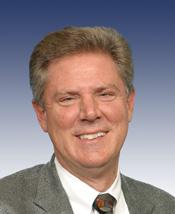 FPJ
FPJ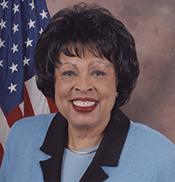 DEWDP
DEWDP
Floor Debate
3 membersWhat members said about H.Res. 24 on the floor
Mr. Speaker, I just wanted to follow up to some extent on the comments made by my Republican colleague from Colorado. I know he mentioned that today the House passed a Republican-sponsored bill that…
Mr. Speaker, I just wanted to follow up to some extent on the comments made by my Republican colleague from Colorado. I know he mentioned that today the House passed a Republican-sponsored bill that would provide an additional 13 weeks of extended unemployment benefits to workers who had exhausted their benefits. But I have to say that this proposal did not go far enough. We know that the economy is in a significant downturn, there are many people who have exhausted their unemployment benefits, who would not be able to continue to receive benefits under the Republican proposal, and also the Republican proposal is for a relatively short period of time, 13 weeks, as opposed to the 26 weeks that had been proposed by the Democrats.
Basically what they agreed to today, the Republicans, was to pass a bill that would provide 13 weeks of extended unemployment benefits in every State during the first 5 months of 2003. However, even now the Republicans still refuse to provide any additional assistance to the 1 million workers who exhausted their 13 weeks of extended benefits last year but who remain unemployed.
During the last recession in the early 1990s, these workers were provided 26 weeks of benefits; but this time they only received 13 weeks. Furthermore, there is $25 billion in the Federal unemployment trust funds, more than enough to both continue the extended benefits program this year and help exhaustees from the last year. Unemployment compensation goes to the families who must spend it very quickly, meaning it acts as an economic stimulus. Economists have estimated that each dollar of unemployment benefits leads to $2.15 in economic growth.
I mention this because I think that to some extent people are going to read now that the Republicans passed this bill and say, that is great, we are going to have some more extended weeks of unemployment benefits, but the fact of the matter is a lot of people will not receive the benefits who really need it and it is for a relatively short period of time. The Democrats have said, of course, that we would go 26 weeks, to the end of June, and we would include all of those who have exhausted their benefits, the 1 million or so from last year who would get an additional 13 weeks under the Democratic proposal.
The other thing, though, that was very upsetting to me today was not only that we did not go far enough in terms of unemployment benefits in what we finally passed here in the House but also even as President Bush announced his economic stimulus plan, which I do not think is an economic stimulus plan at all and I will go into that a little bit, it was announced as part of it that the effect on the deficit over the next 10 years would be about 674, $675 billion.
We know that we are already back into a serious deficit problem this year, about $150 billion. After having several years under President Clinton when we actually had a surplus, now we are back into a deficit situation. And what President Bush proposes in his economic package will cost a tremendous amount of money and not necessarily put anybody back to work, not create the very stimulus that he claims to be talking about. But an important part of that is that it is going to put us so much further into debt, to the tune of something like $674 billion.
But what did I hear? Instead of reacting the way the Democrats said and saying let us have a real economic stimulus plan that actually does something and does not cost that much because the Democrats are at just a little over $100 billion, what we are hearing from the Republican side of the aisle is that this economic plan of the President's is not big enough, is not going to put us enough in deficit. In fact, we have the majority leader, the Republican majority leader, the gentleman from Texas (Mr. DeLay) saying that he wants to boost the size of the Bush tax cut package. He is actually quoted in Congress Daily saying today that the Republicans, the House Republicans would move quickly to pass most of President Bush's 10-year $674 billion tax cut proposal, and they would likely increase the total size of the package. This is a quote: ``The House will pass a bill that will have all the tax relief that is in the President's bill and probably more,'' Mr. DeLay said, adding, ``I see the President's package as a floor, not a ceiling.''
Obviously, what the gentleman from Texas is trying to do is counteract the statements being made by the Democrats that the President's plan is not only ineffective as a stimulus but is also going to put us seriously into debt by suggesting, ``Oh, don't worry about that, I'll come up with an even bigger one.'' It is scary to think what the Republicans are thinking about in the House. They seem to be just perfectly willing to rubber-stamp whatever the President does and then go even further in terms of putting us into debt and doing something that is not going to be very effective for the American people.
Why do I say it is not effective? Why do I say the President's plan that was announced yesterday is not effective as a stimulus package, that it is not going to do anything to put people back to work, that it is not going to do anything to improve the economy? If you look at it, the centerpiece of the President's plan is the complete elimination of all taxes on stock dividends. If you think about it, not only is that primarily going to benefit the wealthy instead of putting back money into the hands of the average American, but what guarantee is it that if you give this windfall essentially to people who have dividends, stock dividends, that they are going to invest it back in the economy and create jobs? We have no guarantee that the stock market is going to go up because of it. We have no guarantee that whatever savings are made are going to be reinvested in new means of production or creating new jobs. This is just speculation. And to say that the centerpiece of your plan is such a speculative proposal and to put us into debt so much more over the next 10 years is just, I think, totally irresponsible.
According to a preliminary estimate by the nonpartisan Tax Policy Center, 45 percent of the benefits of the entire Bush proposal will go to the top 5 percent of taxpayers who have an average income of $350,000. In fact, those making over $1 million will see an average tax break of $88,000, more than 100 times the tax cut for the vast majority of taxpayers making less than $75,000. Let me also add, when I talk about this budget deficit that is going to be increased by 6 to $700 billion under the Bush plan, keep in mind that the President also said when he announced his proposal that he also wanted to make the tax cuts of last year permanent, which would probably double the amount of deficit. You could probably double that 6 to $700 billion figure and go up to, say, 1.4, $1.5 trillion, not to count the debt service that you would have on that. By the time it is all said and done, the thing that the President
proposed or said he wanted to do yesterday not only in this initial so- called stimulus plan but also long term in terms of making the tax cuts permanent that were put into law last year, we would probably be talking about a $2 trillion deficit. We are going to go back to the worst of times that we have ever seen in terms of deficit. The consequence to the economy will be dismal. The impact in terms of creating even more of a downward trend on the economy from that kind of budget deficit is really incredible.
Mr. Speaker, I wanted to talk a little bit about the Democratic alternative, and basically the Democratic alternative is radically different from what President Bush has proposed because it is based on certain very sound principles. First of all, it says that any economic stimulus plan should be front-loaded and fast-acting. The benefits have to accrue to the American people this year, in 2003. It has got to create jobs. It has got to put money in their pockets. It has to put money back to the States so that they can bail themselves out of some of the deficit problems that they have. It should also avoid mushrooming the deficit in the long term. The Democratic proposal basically is targeted towards 2003 and over the 10-year period would only create an additional deficit of about $100 billion.
I think you could make a legitimate argument that the economy would grow enough to make up for that $100 billion because it is front-loaded and fast-acting. It would also boost consumer demand and investment because it would say that some money is going to go directly into consumers' pockets and some money is going to be given back to small businesses so that they can invest here and would be forced to invest here rather than take their stock dividends overseas or put them in some other country.
Also the Democratic plan would help States through their fiscal straits. We know that so many States, my home State of New Jersey we estimate maybe a 4, $5 billion deficit that has to be overcome. Let the Federal Government help out a little bit with that. And also we are investing in infrastructure primarily by funding homeland defense, airport security, security for other infrastructure around the country.
But I think the most important thing, and I do not want to keep repeating myself, is the fact that under the Democratic proposal we are basically doing something that makes a difference now in this next year. I should say in this year, 2003.
Let me just briefly run through what the Democrats are proposing. We have a middle-class tax cut that basically gives a refundable tax cut. It is 10 percent of your taxes up to about $600 for a couple, structured to include those who pay payroll taxes. Basically it is going to be structured in a way that you get a rebate of up to $300 for an individual or up to $600 for a couple. We have business tax incentives to encourage investment so that the investment has to be here in the United States, this year. And we have assistance to the States including money for infrastructure and also to help States defray the cost of Medicaid, which is a big part of the reason why so many of them are in a deficit situation. And I mentioned the unemployment compensation benefits would be much more extensive than what the Republicans proposed today and passed today.
I just wanted to say a little bit, a little commentary by some of the media. The media in the editorials that I have read have essentially panned the Republican proposal and said that the Democratic proposal would be much better and really make a difference in terms of economic growth. I just wanted to read some excerpts, if I could, just from two New York Times editorials and op-eds that were in the paper yesterday. This one is by Paul Krugman, it was in yesterday's paper, just to give you some highlights of it. He is talking about a sensible plan: ``A sensible economic stimulus plan would provide immediate, large-scale aid to beleaguered State governments, which have been burdened with expensive homeland security mandates even as their revenues have plunged. Given our long-run budget problem, any tax relief would be temporary and go largely to low- and middle-income families.
``Yesterday House Democrats released a plan right out of the textbook: aid to States and the jobless, rebates to everyone. But the centerpiece of the administration's proposal'' by contrast ``is the permanent elimination of taxes on dividends.
``So instead of a temporary measure, we get a permanent tax cut. The price tag of the overall plan is a whopping $600 billion; yet less than $100 billion will arrive in the first year. The Democratic plan, with an overall price tag of only $136 billion actually provides more short- term stimulus.
``And instead of helping the needy, the Bush plan is almost ludicrously tilted towards the very, very well off. If you have stocks in a 401(k), your dividends are already tax sheltered; this proposal gives big breaks only to people who have lots of stock outside their retirement accounts. More than half the benefits will go to people making more than $200,000 per year.''
I could go on and on but I think the point is well made. The Democratic proposal is a real stimulus package. It does not increase the deficit in a significant way. It gives money back to the average American. It is primarily skewed to help the average guy. The Republican proposal is primarily for the rich. It does not do anything short term, and it leads to an even greater deficit, worse than the one that we have right now. But the House Republicans are going to say they are going to push this and Mr. DeLay has already said that he wants to do an even bigger one; so we will just have to continue the fight.
At this time I see the gentlewoman from California (Ms. Watson) is here, and I have probably spoken long enough and I would like to yield time to her on the same subject.
Mr. Speaker, I want to thank the gentlewoman from California for her remarks. Obviously, she really set forth the differences between what the Democrats are trying to do with our economic stimulus plan versus the President and the Republicans' plans, which I do not think, and the gentlewoman agrees, that the President's and the Republican plan is really going to make a difference for the economy. It is just sort of a way of getting more tax cuts, more of the same, primarily to the wealthy and to corporate interests. It is almost like they are using the need for a stimulus plan as an excuse to basically continue the same old policies of more and more tax cuts for the wealthy, which have failed.
One of the things that bothers me a great deal, and the gentlewoman hit upon it, is the fact that we still hear, although we do not hear it so much, but for a while we were hearing the Republicans say, oh, this recession really started under President Clinton, as if somehow the Democrats brought about the recession. The gentlewoman and I know, and the facts show, that we had the greatest, or one of the greatest, I think probably the greatest economic growth in the 10 years from 1991 to the end of President Clinton's term in 2001 or the very beginning of 2001, the greatest economic expansion the country has ever seen. All of a sudden, in March of 2001, 3 months into President Bush's term, we start to see the economic downturn.
I had actually mentioned the other night, and this is from the National Bureau of Economic Research Business Cycle Dating Committee, and maybe it
is sort of a minor point, but I only mention it because I see our Republican colleagues saying the opposite. And in this research, it says, ``In November 2001, the Committee determined that a peak in business activity occurred in the U.S. in March of 2001. A peak marks the end of an expansion and the beginning of a recession. The determination of a peak date in March is thus a determination that the expansion that began in March of 1991 ended in March 2001 and a recession began in March of 2001.''
The recession began, as the gentlewoman said, under President Bush's watch. Regardless of that, it has gotten worse. It gets worse every day. I have to say that I am very concerned that if we put in place this Republican economic plan and we continue the same-old-same-old policies of more tax cuts for the wealthy, that we are probably going to be in a worse situation in a few months than we even are today. I do not want to see that happen, but it is very possible.
The other thing that really galls me too, and the gentlewoman brought it up, and the gentlewoman remembers and I remember it even more because I have been here longer is how the Republicans, before they took the majority here in the House under Gingrich, used to get on this floor and rail and rail and rail almost every night about the deficit and how the deficit was getting worse and getting worse all the time. There was one guy I remember, do I not know if he is still here, I do not think he is, who used to have one of the pages bring this sort of clock, digital clock that literally extended almost the entire length of this podium where I am standing, and every night he would come here and do a 1-minute or a 5-minute, and he would see the clock number going up with the higher and higher deficit. That was the centerpiece. The whole theme of the Republicans at the time was how terrible this deficit is.
What happened? How come all of a sudden we do not see the guy with the clock anymore? I think he may have left Congress. But we do not see anybody on the Republican side coming down here. In fact, the other day the President said we should not worry about the deficit; it is no big deal. We will grow out of it. We should expect it. We are going to have this problem. It is just some kind of regular business cycle or something. It was ridiculous. I just appreciate the gentlewoman's comments.
The other thing that the gentlewoman mentioned that I think was so important is this sort of notion of shared sacrifice or caring about the future generations in a time of war, and I think that is what the gentlewoman said, and she may want to dwell on it a little more, that in a time of war, the idea was that we sacrificed. We have a war against terrorism, we may have a war against Iraq, who knows, in the next few weeks or months. So why in the middle of all this are we getting this tax cut plan that primarily helps wealthy individuals and corporate interests? Why are they not paying their share, if you will, of the cost of this war? Why is there not a shared sacrifice? Why does it always have to be on the backs of the little guy, the average guy? It never used to be that way. It seems to me to be an opportunity for the President to get up and say, we have a potential war, we are in a war against terrorists, essentially, and it is costing us more money. I really do not understand the whole philosophy. It really baffles the mind.
There was an article, there was an op-ed in The Washington Post actually today that essentially made that point. It was an analysis by Jonathan Weisman, and it is entitled, ``War's Cost May Dwarf Stimulus Effect.'' Essentially what he said in this opinion page is that we really should not be dealing with any kind of major tax cuts or any kind of a plan that causes a major deficit problem, because we might have a tremendous expense from the war with Iraq, and that the impact of that would create such a large deficit and have such a downward effect on the economy that this is not the time to be playing with a huge tax package, with a huge long-term tax package that has the potential for greater debt, and we should only be doing something, essentially, I mean, to counteract that; we should only be doing something like the Democrats are proposing which is quick, which is one year and does not have any major impact on the deficit.
Mr. Speaker, I promised to yield to the gentlewoman from Ohio (Ms. Pryce) for procedural matters.
Election of Members to Certain Standing Committees of the House
I appreciate it. Mr. Speaker, I think it all goes back to the same thing, which is as the Democrats we are talking about a short-term 2003 plan that does not spend a lot of money relatively and put the government in deficit, and that is specifically directed to jumpstart the economy.
But what the President and the Republicans have proposed does not really even address the short-term economic needs in order to turn the economy around. It is just a long-range plan to basically provide more tax cuts for wealthy people: the stock dividends; the proposal to make the tax cuts permanent in another 10 years.
If we look at that in the context of what the budget needs are, as the gentlewoman says, in this war on terrorism both at home or abroad, we have to wonder where all this money is going to come from and what the consequences are going to be in terms of the deficit.
I have been hesitating to talk about whether the war is just or necessary, but I think the bottom line is if it is going to be fought or whether it is going to be fought, we have to think about the costs of it. This President's economic plan makes absolutely no sense in the context of whether it is a war against Iraq or the other axis of evil, or just the war against terrorism and homeland security. It really does not.
We need to continue. I thank the gentlewoman.
Mr. Speaker, I thank the gentleman from New Jersey (Mr. Pallone) for yielding. This month marks the beginning of the third year of the Bush recession, and I would like to say that even if the Clinton…
Mr. Speaker, I thank the gentleman from New Jersey (Mr. Pallone) for yielding.
This month marks the beginning of the third year of the Bush recession, and I would like to say that even if the Clinton administration is being blamed, it is on this administration's watch that these things are occurring. Across the Nation workers continue to lose their jobs on this watch. Nationwide 800,000 laid-off workers lost their benefits on December 28, and I appreciate the 13-week expansion that was signed today, but I think 26 weeks would have been more likely, more acceptable, and make a better difference.
In my own State, the State of California, our budget deficit has mushroomed to 35 billion, with a ``b,'' dollars, while unemployment has risen by 6.5 percent, and that is only those that can be counted who are still in the system. Many have dropped out of the system, do not even report for unemployment, do not even report seeking jobs. They are just out there on the streets. So I am sure in my district this number would be higher.
As millions of people are out of work and the economy continues in a weak and jobless recovery at its best, it is important to have a strong and immediate economic program that will put money in the hands of consumers now. I am sorry to say that this administration has been more consumed with initiating a war than it has been with initiating a domestic economic policy that will benefit this country and make it stronger in defending against those who would attack us.
Earlier this week the President announced his plan to deal with this slow economy. Why were we not talking about it last year? Why did we have to go through the Christmas holidays with parents wondering if they could afford to buy gifts for their children? Are parents wondering if they can keep shelter, keep a roof over their heads? We knew the economy had slowed, but it was just this week that finally the administration awakened. This was the President's chance to ask Congress for real job-creating plans, to immediately address the economic problems faced by that working class ordinary Americans. Instead, the President chose to stick with more of the same tax schemes that he tried last year.
I wonder if anyone noticed except me that in September a year ago when the tax cut plan was passed that we saw more bankruptcies, corporate misconduct was revealed, and we were in a mess. We saw the jobless rate grow. Now, if the tax cut was meant to stimulate investments in business, it had
the opposite effect, and I would be truly concerned if I were the administration why there were so many bankruptcies when we gave a tax break to corporate America. What happened? I think I know. All we need to do is watch any program that deals with wealth and the wealthy in this country. We will see that they are building larger homes in exotic places, 3,800 square foot homes for these executives of these companies that have gone bankrupt, larger yachts, are buying more business but not employing more people. Some of the biggest corporations cut staff, pare down. Somebody ought to explain that. These policies were skewed to favor these same wealthy Americans, and to think that we have a homeland security proposal that allows a lot of these business owners to escape paying their fair taxes and run to other exotic places to hide their companies I think is un-American. His plan will blow an even bigger hole in the budget and threaten economic growth, and only 15 percent of the Bush package will take effect this year, meaning that most of the economic impact of the program would not be felt until 2004 and thereafter. The centerpiece of the plan, the complete elimination of taxes on stock dividends, and think for a second, many of the people I represent do not know what a stock dividend is. Investing dollars? Are we kidding? They are trying to pay their rent. They are trying to pay their house notes. They are trying to send their children to college if they can even get through elementary, middle school, and high school. They are trying to keep their families together. So they are not the ones that are going to feel any benefit from the elimination of these taxes. And they say it will benefit the seniors. Certainly I think today when you get 50 years old you can claim being a senior, and certainly the guys and gals who have made the big money are in their 60's and they can sit back with all this money flowing in because they do not have taxes to pay. It certainly will benefit them, but it certainly will not get to the people that really make up the core of America. So it primarily benefits this elite class, the wealthy, instead of putting money in the hands of the hard-working Americans who keep this country going.
According to preliminary estimates of the Nonpartisan Tax Policy Center, 45 percent of the benefits of the entire Bush proposal would go, and now get this, do not take my word for it, check it out yourself, but the benefit will go to the top 5 percent of taxpayers who have an average income of $350,000. In fact, those making over a million dollars will see an average tax break of $88,000-plus, more than a hundred times the tax cut for the vast majority of taxpayers making less than $75,000. Do not take my figures. Do the math. Be analytical in your thinking. Look at the President's proposal and see who fits the description of the provisions in it.
As the nonpartisan Congressional Budget Office concluded last year, tax cuts that are targeted towards lower income households are likely to generate more stimulus dollar for dollar of revenue loss, that is, be more cost effective and have more bang for the buck, than those concentrated among higher income households. This is because higher income families are less likely to put that money back into the economy by spending it. So by targeting their tax cuts on the wealthy, the Bush administration has undermined its stimulus effect. Look what happened with the last tax cut.
Furthermore, the Bush plan would worsen the current budget deficits. Anybody concerned about deficits today? I remember several years ago they were. But the Bush plan would worsen the current budget deficits that have ballooned since the Bush administration took over. Check it out. The Bush plan would increase the deficit by nearly $700 billion over 10 years, and I do not think there is any argument over that. We are dealing with concrete numbers. Not only does this threaten key investments like Social Security and Medicare, this growth in deficits would promote higher interest rates and threaten to worsen the economy instead of spurring economic growth. Where is the concern of current Republicans? And I remember under the Newt Gingrich era, they were very concerned about deficit. Maybe it is amnesia.
Democrats have put forth an alternative stimulus plan, one that delivers a real immediate boost for our economy. The House Democratic alternative, economic stimulus package, is fast acting, fair, and fiscally responsible. Does anyone care about fiscal responsibility, or is it smoke and mirrors? It focuses on jump-starting the economy now and quickly moving the United States to a long-term growth agenda. It does not deceive people. It does not make people buy this fluff and try to feel good about it when it is not real. Our package is.
The Democratic economic stimulus plan aimed at those who need it most avoids increasing the deficit and helps States that are deeply suffering through this recession. Not only California but across this country, States are suffering. We ought to have the governors in here to debate these proposals. The Democratic plan will immediately target $18 billion to extend unemployment benefits for laid-off workers who have already exhausted their claims and in addition provide more needed relief to cash strap States and localities. The Democratic plan also provides immediate tax relief for small businesses to generate investment and jobs. It allocates additional funds for transportation, homeland security, healthcare, and extends unemployment benefits for workers whose insurance has run out and who have been unable to find jobs. The plan also puts money in the hands of consumers who drive the economy by giving a $300 tax rebate to every working American and also $600 for couples. Unlike the Republican tax plan which favors the wealthy by providing tax cuts on stock dividends and does little to grow the economy, the Democrats' stimulus package focuses tax cuts on lower and middle class taxpayers and actually will cost less than Republican plan.
In addition, the Democratic plan will spur the economy by providing funding for homeland security. Let us make America secure on the real side that targets rebuilding our Nation's long-neglected infrastructure. Most importantly, the Democratic plan is fiscally responsive and fair. It provides the proper amount of targeted economic stimulus and, at the same time, will not impact the budget deficit.
So in closing, I would like to say, Mr. Speaker, I appreciate this opportunity to discuss the two plans and to give some real numbers and real figures. I represent one of those States that is sorely in need of help. But of the $35 billion deficit, that is with a ``B,'' we cannot cut enough and we cannot raise enough taxes to fill in that gap. We need to put America back to work. We need to put Californians back to work. We need to generate real jobs.
Mr. Speaker, I want to request from the gentleman from New Jersey (Mr. Pallone) if we can do a side-by-side chart on the cost of waging war in Iraq. I understand we have several thousand troops already over in the Middle East, and possibly the dispute with North Korea might require us to commit dollars.
I would like to see a chart with the cost of war and the cost of nationbuilding if we are trying to create a new regime. What is our commitment going to be to this new regime that we have called for? I can tell the Members from my own experience as the ambassador to the Federated States of Micronesia, they were a trust territory until 1986. In 1986, we signed a compact of free association with them that was to last 15 years. It has cost us $5 billion, and we are getting ready to sign on another 20 years.
Now, I saw taxpayers' dollars go into the ocean. I was there. I knew. We had to close down some programs because that money was going into people's pockets, and into building homes for the very wealthy and the families of the very wealthy. We were not monitoring it.
I came back here many times saying, give me not only audits but oversight and follow-up; get the FBI out here, because our money is being taken. I could not get anyone to listen. I left; the problem got worse. Ask the current ambassador.
What is going to happen in Afghanistan in the long run and in Iraq in the long run? We talked about the axis of evil, so let us talk about Iran, too, and let us talk about North Korea. We did not say that; the President stood on this floor and talked about the axis of evil. Getting rid of the evil means changing those who are running those countries now. What is our obligation as Congress, as the Federal Government, and taxpayers? All this has to be
taken into consideration in terms of the proposed tax cuts.
If we talk about homeland security, how do we secure our own home if we cannot even educate our children, if we cannot even improve our infrastructure, if we cannot set out a budget for first responders? In my own city of Los Angeles we only have 9,000 police officers, as compared to Giuliani's New York with 30,000. We have 2 million people.
So are we sincere about protecting our homeland? That means not the home land, that means America's people. What is our plan for seriously doing that? I just wanted to put that out as we go about looking at the budget. I think it is very important to be heard. That is why I said it.
We are cutting our revenue base, and we are fighting a war over 10,000 miles away that we really do not need to fight, we really do not need to fight.
Let me say, we are a member of the United Nations. We went to the Security Council. They have their inspectors out there. If they do not find what they are looking for, it needs to go back to the Security Council.
We are working on an assumption, and North Korea says, we have your bomb. The monies that we give them for food and so on, does it really get to the people? If it did, why do we have such massive starvation over in North Korea? And I do not see why we are treating them any differently than we are treating Iraq.
Where is our commitment? How do we secure the United States? A country is only as strong as its people, and we cannot let the general public forget that. I thank the gentleman.
Mr. Speaker, by the direction of the Republican Conference, I offer a privileged resolution (H. Res. 24) and ask for its immediate consideration. Mr. Speaker, I ask unanimous consent that,…
Mr. Speaker, by the direction of the Republican Conference, I offer a privileged resolution (H. Res. 24) and ask for its immediate consideration.
Mr. Speaker, I ask unanimous consent that, notwithstanding the requirement of clause 11(a)(1) of Rule X, the Permanent Select Committee on Intelligence be composed of not more than 20 Members, Delegates, or the Resident Commissioner, of whom not more than 11 be from the same party.
Mr. Speaker, I offer a privileged concurrent resolution (H. Con. Res. 8) and ask for its immediate consideration.
Mr. Speaker, I ask unanimous consent that when the House adjourns today, it adjourn to meet at 2 p.m. on Friday, January 10, 2003, unless it sooner has received a message from the Senate transmitting its concurrence in House Concurrent Resolution 8, in which case the House will stand adjourned pursuant to that concurrent resolution.
Mr. Speaker, I ask unanimous consent that during the first session of the 108th Congress, the Speaker and majority leader and minority leader be authorized to accept resignations and to make appointments authorized by law or by the House.
Bill Text
2 versions available
        [Congressional Bills 108th Congress]
[From the U.S. Government Publishing Office]
[H. Res. 24 Engrossed in House (EH)]

In the House of Representatives, U.S.,

January 8, 2003.
Resolved, That the following named Members be, and they are hereby, elected
Chairmen of the following standing committees of the House of Representatives:
Committee on Agriculture: Mr. Goodlatte of Virginia.
Committee on Appropriations: Mr. Young of Florida.
Committee on Armed Services: Mr. Hunter of California.
Committee on the Budget: Mr. Nussle of Iowa.
Committee on Education and the Workforce: Mr. Boehner of Ohio.
Committee on Energy and Commerce: Mr. Tauzin of Louisiana.
Committee on Financial Services: Mr. Oxley of Ohio.
Committee on Government Reform: Mr. Tom Davis of Virginia.
Committee on House Administration: Mr. Ney of Ohio.
Committee on International Relations: Mr. Hyde of Illinois.
Committee on the Judiciary: Mr. Sensenbrenner of Wisconsin.
Committee on Resources: Mr. Pombo of California.
Committee on Science: Mr. Boehlert of New York.
Committee on Small Business: Mr. Manzullo of Illinois.
Committee on Standards of Official Conduct: Mr. Hefley of Colorado.
Committee on Transportation and Infrastructure: Mr. Young of Alaska.
Committee on Veterans' Affairs: Mr. Chris Smith of New Jersey.
Committee on Ways and Means: Mr. Thomas of California.
Attest:

Clerk.