Waiving a requirement of clause 6(a) of rule XIII with respect to consideration of certain resolutions reported from the Committee on Rules.

Legislative Activity
Stay on top of the latest movement without scrolling through every action
Motion to reconsider laid on the table Agreed to without objection.
May 22, 2003 • 2:54 PM
View full timeline
Introduced in House
May 21, 2003
The House Committee on Rules reported an original measure, H. Rept. 108-124, by Mr. Reynolds.
May 21, 2003
Placed on the House Calendar, Calendar No. 48.
May 21, 2003
Considered as privileged matter. (consideration: CR H4558-4564)
May 22, 2003 • 1:41 PM
DEBATE - The House proceeded with one hour of debate on H. Res. 249.
May 22, 2003 • 1:43 PM
On ordering the previous question Agreed to by the Yeas and Nays: 221 - 202 (Roll no. 211). (text: CR H4558)
May 22, 2003 • 2:47 PM
Passed/agreed to in House: On agreeing to the resolution Agreed to by recorded vote: 218 - 202 (Roll no. 212).
May 22, 2003 • 2:54 PM
On agreeing to the resolution Agreed to by recorded vote: 218 - 202 (Roll no. 212).
May 22, 2003 • 2:54 PM
Motion to reconsider laid on the table Agreed to without objection.
May 22, 2003 • 2:54 PM
Voting History
2 votes recorded • Roll call available
Floor Debate
10 membersWhat members said about H.Res. 249 on the floor
 LD
LD MF
MF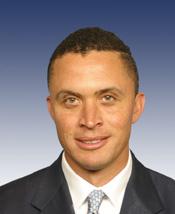 HEF
HEF LD
LD MK+5
MK+5
Floor Debate
10 membersWhat members said about H.Res. 249 on the floor
Mr. Speaker, by direction of the Committee on Rules, I call up House Resolution 249 and ask for its immediate consideration. Mr. Speaker, for purposes of debate only, I yield the customary 30 minutes…
Mr. Speaker, by direction of the Committee on Rules, I call up House Resolution 249 and ask for its immediate consideration.
Mr. Speaker, for purposes of debate only, I yield the customary 30 minutes to my colleague and friend, the gentleman from Texas (Mr. Frost), pending which I yield myself such time as I may consume. During consideration of this resolution, all time yielded is for purposes of debate only.
(Mr. LINCOLN DIAZ-BALART of Florida asked and was given permission to revise and extend his remarks, and include extraneous material.)
Mr. Speaker, House Resolution 249 waives clause (6)(a) of rule XIII requiring a two-thirds vote to consider a rule on the same day it is reported from the Committee on Rules.
The rule applies the waiver to a special rule reported on the legislative day of May 22, 2003, providing for consideration or disposition of the bill to provide for reconciliation pursuant to section 201 of the concurrent resolution, any conference report thereon, or any amendment reported in disagreement from a conference thereon.
This rule is the starting block to allow the House to consider legislation that will infuse our economy with job-creating tax relief, investment incentives, and overall economic growth. The House initially passed the Jobs and Growth Reconciliation Tax Act earlier this month, and with today's action we can demonstrate our continued commitment to spurring economic expansion and providing stability to American workers, businesses and families.
Our economy needs a healthy dose of meaningful relief. This Congress has once before exhibited the leadership and sense of purpose needed to create jobs and protect workers. If we delay, we put American jobs and the strength of our economy at risk.
As we prepare to consider legislation extending unemployment compensation, I can think of no better complimentary action for Congress to adopt than legislation to boost employment levels, lower the tax burden, and grow the economy. It is imperative that we move forward at once. Thus, I strongly urge my colleagues to support this rule so we can proceed with a debate on this very important legislation.
Mr. Speaker, I reserve the balance of my time.
Mr. Speaker, I yield myself such time as I may consume.
Mr. Speaker, we believe it is important to move this legislation forward to grow our economy, to create jobs, help people who do not have jobs find jobs; and we strongly support it and strongly support this rule.
Mr. Speaker, I reserve the balance of my time.
Mr. Speaker, I reserve the balance of my time.
Mr. Speaker, I yield myself such time as I may consume.
We are seeing a very clear difference in philosophy and opinion on the floor of the House today between the parties. It was said before by one of our friends on the other side of the aisle that when we cut taxes, when we reduce the burden of taxation on the American people, that that is an imposition. That was the word. We impose this. Congress, it was said, will impose a tax cut on the American people.
We believe that when we relieve the tax burden on the American people, that that is not an imposition on the American people. We believe it is their money in the first place, and we are relieving the tax burden on the American people. We are imposing less taxes from Washington.
So it is an interesting difference of opinion, and I think it is a fundamental difference of opinion. I think the American people are seeing it today. What we believe is that we should return as much as we can of the people's money to the people, and that they are best suited and know best how to spend their own money. So it is a fundamental difference.
Mr. Speaker, I reserve the balance of my time.
Mr. Speaker, I yield myself such time as I may consume.
Mr. Speaker, I have been hearing some interesting arguments today. I thought it was very interesting that one of our colleagues on the other side of the aisle said that by virtue of the fact that the tax cut is set to expire, or parts of it at the end of the year 2008, that that will diminish the incentive for people to invest in the stock market and have the stock market thus increase and contribute to economic growth.
But what was failed to be pointed out is that the opponents of the tax cut have so diligently fought the tax cut that they were able to reduce the amount of the tax cut for the American people, the reduction of taxes for the American people; and thus that portion will expire previously before we would have wanted it to have expired. I do not think it is logical to be able to say I am going to fight the tax cut. You reduce it, and then they say since it expires sooner than it was meant to, then its effectiveness is to be questioned. Wait a minute, do you want the tax cut or do you not want the tax cut?
In a sense I thought that was somewhat incoherent, that argument; but of course there is a right to make any argument in this wonderful body.
I yield to the gentleman from Tennessee.
That is correct.
Yes, there is no doubt about that. But what I was pointing to was that the argument was made that the incentive to invest in the stock market is reduced by virtue of the fact that that tax cut, that tax incentive, is sunsetted.
What I am saying is it is people who oppose the tax cut, from whatever party, and the argument was made against the effectiveness of the tax cut with regard to the dividends part by my distinguished colleague who is a Democrat. I was pointing out that I think it is inconsistent to want to have it both ways and then to say it sunsets, so it is not effective. I thought there was an inconsistency there, and some incoherence.
But the gentleman is right, there are Republicans in the other body that are responsible for reducing the effectiveness of what we are talking about. But what we strongly believe and what we want to do, and we are doing it to the best of our ability, is to reduce the tax burden on the American people.
The gentleman from Texas (Mr. Frost) pointed out previously that the debt burden may be increased. We want to reduce the debt burden by incentivizing economic growth which will not only create jobs now, but also lessen the debt burden in the future.
That is what I was pointing out with regard to the point on the effectiveness of the dividend part. If you are against the tax cut, but then say it sunsets, so it is not effective, I thought that was an incoherent argument.
I am not sure if it is. What we are doing with this rule is making possible for us to have that debate today, and obviously the people who have been involved in the negotiations will explain the details of what they ultimately end up with. We are trying to have that debate today, and that is why we have this rule.
Mr. Speaker, I reserve the balance of my time.
Mr. Speaker, I yield myself such time as I may consume.
Mr. Speaker, we believe it is very important to be able to get to this debate. We need to pass this rule, and then we will debate this matter further. It is obviously a fundamental matter. We believe that we need to do everything that we can to incentivize economic growth and job creation. That is why we are bringing this matter to the floor today.
Mr. Speaker, I yield back the balance of my time, and I move the previous question on the resolution.
Mr. Speaker, I yield myself such time as I may consume. (Mr. FROST asked and was given permission to revise and extend his remarks.) Mr. Speaker, it is often said if you repeat a lie often enough,…
Mr. Speaker, I yield myself such time as I may consume.
(Mr. FROST asked and was given permission to revise and extend his remarks.)
Mr. Speaker, it is often said if you repeat a lie often enough, people begin to believe it. Our record $350 billion deficit, the Republican Congress tells us that does not matter. The fact that this Republican administration has asked us not once, but twice, to raise the debt limit to record levels, ignore that, and maybe it will go away. The promise that all Members made to protect Social Security and Medicare funds in a lockbox, that does not seem to matter either, Mr. Speaker.
This is not government. This is a complete abdication of fiscal responsibility.
In 1995 the now majority leader, Tom DeLay, said, ``By the year 2002, we can have a Federal Government with a balanced budget or we could continue down the present path towards total fiscal catastrophe.''
It is now abundantly clear that the Republicans have lost their way and have decided that the path of fiscal catastrophe is not such a bad path after all. That begs the question, Mr. Speaker, what are the priorities of the Republican Party that makes tripping down the path to fiscal catastrophe such a great idea in 2003 when it was so bad an idea in 1995?
Well, we know the Republicans' top priority is to give millionaires a dividend tax cut. Where does that money come from? Well, the Republican budget conference report cuts veterans' Medicare and burial benefits by $6.2 billion. So if you are a millionaire and you have got a lot of dividend and capital gains income, the Republicans take care of you. If you are a veteran, this Republican Congress wants you to remember this Memorial Day as the one when your benefits were cut. And for what, Mr. Speaker? One of the most gimmick-laden tax cuts this Congress has ever considered. While the dividend and capital gains taxes last until 2008, the marriage penalty relief and child tax credits disappear at the end of 2004.
So while the millionaires enjoy their rate break for the rest of the decade, working families are left with uncertainty.
In 2001 the Republicans told us that their tax cut would create jobs. Instead, the Bush administration has presided over one of the worst job losses in American history; 2.7 million jobs have been lost. A dividend tax package is not going to help these people get jobs. It is simply welfare for millionaires.
Mr. Speaker, Warren Buffett has made a lot of money. Mr. Buffett would, in fact, be one of the greatest recipients of the Republican tax plan. He wrote an op-ed in The Washington Post this week calling the dividend tax plan ``voodoo economics.''
Alan Greenspan said, ``There is no question that as deficits go up, contrary to what some have said, it does effect long-term interest rates. It does have a negative impact on the economy.''
These are two of America's leading economic minds, Mr. Speaker. And they know that financing this tax cut which benefits only the wealthy few with borrowed money is wrong. It is wrong, Mr. Speaker.
Mr. Speaker, I reserve the balance of my time.
Mr. Speaker, I yield 2 minutes to the gentleman from Washington (Mr. McDermott).
Mr. Speaker, I yield 4 minutes to the gentlewoman from Texas (Ms. Jackson-Lee).
Mr. Speaker, I yield 3 minutes to the gentleman from Pennsylvania (Mr. Fattah).
Mr. Speaker, I yield 4 minutes to the gentleman from Texas (Mr. Doggett).
Mr. Speaker, I yield 3 minutes to the gentlewoman from Ohio (Ms. Kaptur).
Mr. Speaker, I yield myself 30 seconds.
Yes, there is a difference between the two parties here. The other side would impose billions of dollars of debt on my 6-year-old granddaughter and my 3-year-old granddaughter and my 2-month-old granddaughter. I do not believe we should be doing that.
Mr. Speaker, I yield 3 minutes to the gentleman from California (Mr. Sherman).
Mr. Speaker, I yield 3 minutes to the gentleman from Tennessee (Mr. Ford).
Mr. Speaker, I yield myself the balance of my time.
The reasoning on the other side is very curious. I do recall in 2001 when they were promoting the first tax cut, the reason they gave for the tax cut was, oh, we have a surplus. Now we have this surplus, we need a tax cut so we can give that money back. Now we are in 2003 and we have a deficit, so we have to have a tax cut. Which one was it? It cannot be both. It cannot be we had a surplus, so we should have a tax cut; we have a deficit, so we should have a tax cut.
I find their logic very curious. Everyone would like a tax cut. The American public obviously would like to pay less in taxes; and certainly we could have made the argument for a tax cut in 2001, perhaps not as large as they did, but we certainly could have made a valid argument: we are running a surplus; we do not need all of this money. Some of us felt like the tax cut was so large it was going to plunge us into a deficit, and that is what has happened.
But it is hard to make the argument that now we are in a deficit, let us drive this country deeper into a deficit.
Mr. Speaker, if the previous question is defeated, I will offer an amendment to the rule. My amendment will allow the House to consider H.R. 2046, introduced by the gentleman from New York (Mr. Rangel), the Democratic Rebuilding America Through Job Creation plan.
I guess I can understand why the Republicans are rushing through what they are claiming is a conference process to come up with a so-called economic growth bill. Every hour the American people have to see what the Republicans are up to, the less they will like it. It is a proposal that hurts American families, it hurts the American economy, and just digs the deficit hole deeper.
In stark contrast to the conference agreement we will soon see here on the floor, the Democratic plan helps all Americans, not just the rich; and it helps the economy immediately. It provides middle-class tax cuts to stimulate demand; it gives tax incentives to all businesses, especially small businesses and U.S. manufacturing businesses; and unlike the Republican proposal, it is fiscally responsible.
Yes, if I were a Republican, I might not want to have to explain a vote against the Democratic Rebuilding America Through Job Creation plan. But guess what, that is not a good enough reason to deny Members a chance to debate and vote on this measure. It is a terrible disservice to the American people if we let our fear of criticism prevent a vote on this very effective and responsible plan.
Let me make it very clear that a ``no'' vote on the previous question will not stop consideration of the conference agreement. A ``no'' vote will allow the House to consider the Democratic job creation plan as a separate bill. However, a ``yes'' vote on the previous question will prevent the House from taking up this responsible alternative. Make no mistake, this vote is the only opportunity the House will have to consider the Rangel plan. I urge a ``no'' vote on the previous question.
Mr. Speaker, I ask unanimous consent that the text of the amendment be printed in the Record immediately before the vote on the previous question.
Mr. Speaker, I yield back the balance of my time.
Mr. Speaker, I object to the vote on the ground that a quorum is not present and make the point of order that a quorum is not present.
Mr. Speaker, we have heard a lot of talk, and my colleagues on my side of the aisle have suggested that we are traveling down a course we traveled before from 2 years ago when we were promised that a…
Mr. Speaker, we have heard a lot of talk, and my colleagues on my side of the aisle have suggested that we are traveling down a course we traveled before from 2 years ago when we were promised that a tax bill would create millions of new jobs and new opportunities for people. In fact, it did not.
Some will say there are reasons for that. The President will say, as he has said in speech after speech, that this country was attacked. We were. Our Nation responded with great resolve, determination, courage and charity; and our military has responded with unprecedented swiftness and effectiveness. Yet we in Congress have failed the American people, and the President has, in large part, as well. Instead of tailoring and adjusting a plan to conform to the realities of the day, we continue to offer the same rhetoric and the same plan that we offered when things were good, when things were bad, when things were really bad, and now at a time when things are compounded.
Some of my colleagues have come to the floor to detail the challenges that their States face. My colleague on the other side of the aisle, whom I have great respect for, the gentleman from Florida (Mr. Lincoln Diaz-Balart), comes from a State which is running a big deficit. The President's brother is the Governor of that State. My Governor is faced with a $500 million shortfall. Things are so bad in some States that they are releasing prisoners early to help meet or to close budget shortfalls. Something is wrong here in Congress and wrong with us in government when we pretend that these issues are either not ours to confront or not of our making, or somehow our ideas are the only and best ideas.
We could probably come up with a number of ways to stimulate the economy, a number of tax cuts to stimulate the economy. I have heard some say this dividend tax is unfair. The Tax Code is polluted with areas that unfair; inequities litter it. We should prioritize if we are going to clean up and undo some of the unfairness of the Tax Code.
It would seem to me the best thing we can do is to help our States. The President reluctantly agreed to include a $20 billion package. I applaud him on that front. If anything, we should provide more for the States. Not only do we help governors avoid doing the two worse things during an economic downturn, which are to cut services and/or raise taxes, we also help them create more jobs because as you cut State programs, more and more people are laid off.
Those of us from rural areas understand the importance of rural hospitals and rural health care. When you close hospitals, not only do you compromise care, you cause a decline in the job market in those areas as well. I can only say to my friends, and there are those who have come to the floor and have talked about marching orders and even rubber-stamping, and there is great truth and great humor in a lot of the things that they have said. It is my hope that my friends on the other side of the aisle will pay some attention to what we are saying. We understand that they have the votes to ram things down and do what they choose to do. But remember, all of us represent people and all of us have to go home and explain to our Governors, to our mayors, and, more importantly, to our bosses whom we call constituents why we have not done more to assist cities and States, and for that matter the private sector, in creating more and more jobs.
Mr. Speaker, will the gentleman yield?
If my reading is correct, and I have not been a part of any of the meetings, it appeared to me that one of the reasons that the tax cut was reduced from $726 billion to $550 billion to $350 billion was because there was disagreement in the gentleman's own party between the two bodies, between the House and Senate.
So we bear some of the responsibility, but some on the other side of the aisle also bear some of the responsibility.
Fair enough.
If the gentleman would continue to yield, with regard to the efforts the Congress made on behalf of the airline industry right after September 11 and not long ago in the war supplemental, which I thought was the right thing to do and I support it, does it not make sense also, because part of the argument on this side, and I think from some in the other body, to provide greater resources to States that are having to lay nurses and teachers off? And I could go on with our rhetoric, and the other side has rhetoric; but the reality is State governments are forced to make some bad decisions largely because the Governors cannot borrow money, and we can. I am just curious, the $20 billion that was added on the Senate side, is that something that the other side would be supportive of? That was not included in the House bill.
Mr. Speaker, this is a martial law rule, and that is appropriate because there are those in this House and in this country that think the role of all the representatives here is to march in a martial…
Mr. Speaker, this is a martial law rule, and that is appropriate because there are those in this House and in this country that think the role of all the representatives here is to march in a martial fashion behind the leadership of the majority leader, the gentleman from Texas (Mr. DeLay).
So it is appropriate they bring this rule out today, a gag rule, to gag those of us that do not share the views of the majority leader, who might have an amendment or an alternative way to address the problems that American families face. They deny us that right. They have assured there will be no substitutes considered on this floor. It is their way or the highway. It is a martial America that they are supporting and appropriate they bring this rule up to do it.
Their ideas are so narrow and so extreme that they cannot stand to have them debated and voted upon, not so much worrying about the Democrats but worrying that some members of their own party could not be held in line against solid alternatives to do something for the millions of Americans that lack jobs in this Bush economy; to do something about the millions of Americans who lack insurance in this Bush economy; to do something about the children who are denied the opportunity to fulfill their full potential because of teacher freezes, because there are textbooks that will not be renewed in Texas.
Meanwhile, the President tells us that he has to break his promise on the ``Leave No Child Behind'' Act. He has come up with a mere $9 billion, that is billion with a ``B,'' billion dollars. He breaks his promise in the short period
of time that he advanced a bipartisan proposal for education that we all came behind. Now he will break his promise and not fulfill the promise he made to the American people. Though we do not have the money for our children to get access to new textbooks, we do not have enough money for that, we do have enough money for more tax breaks for those at the top of the economic ladder.
The budget deficit puts a hole in the pocket of every American every day of their lives. It threatens the very foundation of our culture. We must seize and act upon this historic opportunity to solve this, the most pressing issue facing the country.
Those are not my words, though I find them rather eloquent. They are the words of Treasury Secretary John Snow in 1995 but forgotten by him now that he has a new job in the administration. No ``Snow job'' can hide this administration's Mt. Everest of debt. Mr. Snow got a new job and a new viewpoint at the same time millions of Americans were losing their jobs in this sorry economy.
A few weeks ago, the President announced a tax cut of the size that will be imposed on America tonight and said that it was just a ``little bitty'' tax cut. Well, Mr. Snow is coming the same week and asking us to raise the debt ceiling by billions of dollars. Is that a ``little bitty'' increase? No, they practically need an extension ladder over there at the Treasury Department because they cannot get the debt ceiling raised fast enough before they are back having to go up a little higher and raise it some more.
Of course, they turn to us and say, ``it is the people's money, give it back to them. It is their taxes.'' Well, it is the people's debt, too, and they are going to have a whole lot more of it. And not billions, but trillions, with a ``T,'' trillions of dollars in additional debt if this lame economic policy, this sorry tax break, one after another writeoff for the rich, is imposed on the children and the grandchildren of America.
This is a borrow and spend Republican Party, and that is why they have to have martial rules because they cannot permit Congress to consider alternative proposals. They cannot have full and fair debate. They need everybody to line up in a line and stand to borrow more from the people of this country. A ``no'' vote is a vote for fiscal responsibility that ensures our children will not be burdened by today's excesses.
Mr. Speaker, I thank the distinguished gentleman from Texas (Mr. Frost) for yielding me this time, and I rise in opposition to this martial rule, which essentially restricts debate. It does not…
Mr. Speaker, I thank the distinguished gentleman from Texas (Mr. Frost) for yielding me this time, and I rise in opposition to this martial rule, which essentially restricts debate. It does not permit the Democratic economic program to even be debated today.
Why not? What is the opposition afraid of? They have the votes on their side. Why not even allow us to talk about our program?
Here is why. I remember back to that old saying, if you fool me once, shame on you. If you fool me twice, shame on me. But if you fool me thrice, well, my gosh, it is just a sad and deadly shame.
If we think back to 1981, when Vice President Dick Cheney was then a Member of this House and head of the Republican Policy Group, he was involved in the Republican tax program enacted back in 1981. We had the worst job washout in American history. I was elected in 1983. It took us 15 years to balance this budget and to bring employment up, with the election of Bill Clinton and 8 years of economic growth inside this economy. And it was not easy.
When this administration took over, they blew $1.3 billion in the first year and a half. Fifteen years of work flew out the window. Then with their tax bill that they passed back in 2001, what have we gotten in terms of employment? None. We have got the biggest job loss since World War II, over 3 million more jobs lost in this country. We have three people in this economy looking for every single job that is being created, and most of those jobs do not pay a living wage and they do not have health benefits.
So, fool me once, fool me twice, and now we have the third version that they are bringing up. This bill, what will it do? It is going to create more unemployment. It is no different than what was done back in 1981, no different than what was done back in 2001. Strike one, strike two, strike three. They ought to be out.
If we take a look at our country, we might ask ourselves the question: With 150,000 of our men and women, of our troops, now deployed in Afghanistan and Iraq, is it not amazing that what we do here at home under the Republican plan is reward the Wall Street brokers who just stole your 401(k) money? There is not a single American family that has not been affected. So we say to them, take more of our money. Take more of our money. The interesting thing about the Republican bill is that not a dime that is given to them has to be invested in the USA. We are going to have more job washout to China, to Mexico, and every single American community and worker knows what I am talking about.
So the Democratic plan provides a million jobs this year alone. It invests in the United States. It gives families security. It does not borrow against the Social Security trust funds, which is how they are covering their growing deficits, and it enacts responsible economic programs. That is what the Democratic bill does. It creates jobs this year, it does not add a penny to the deficit, and it preserves Social Security and Medicare, our Democratic legacy.
Fool me once, not me. Fool me twice, not me. Fool me thrice? How about you?
Show 5 more

Mr. Speaker, the Bush recession continues, and this job killer bill ensures that it will continue to continue. It imposes additional deficits on our budget and additional debt on the American people.…
Mr. Speaker, the Bush recession continues, and this job killer bill ensures that it will continue to continue. It imposes additional deficits on our budget and additional debt on the American people. It imposes higher interest rates on the American people. It will impose upon our teachers and our firefighters layoffs at a time when we need more jobs in the economy, because it virtually ensures that we will provide only very limited and inadequate aid to our States and cities that are falling on hard times right now.
If we look at the details, we become aware that this bill, whatever the arguments that were made in favor of it, is nothing more than an effort to hand as much cash as possible to the Bush class. We are told that it is going to help investments, but when we look at the details, we discover otherwise. Three details: It is temporary, it provides aid to children with huge trust funds, and it provides equal encouragement to invest in foreign corporations as domestic corporations.
At least that is what I am told orally about a bill that, in theory, has not been written yet but in fact is out in the press now.
What about it being temporary? The idea was that we were not just going to give a windfall to people who had already invested in stocks but that we were going to encourage people to invest more. Well, wait a minute. Municipal bonds are a nice investment for tax-free income. But who would buy a municipal bond today if 5 years from now all the income was going to be subject to tax? Nobody is going to invest in stocks long term because of a short-term window in which the dividends are tax free. Sure, if they already own the stock, they will enjoy not paying taxes.
Second, I am told that these same benefits are available to investments in foreign corporations. So if you invest in the Chinese people's low-wage corporation, you pay no American tax at the corporate level, of course, and no American tax at the domestic level, or a very low tax.
Finally, if you transfer half a million bucks worth of Rolls Royce stock to your 14-year-old daughter, in a couple of years she will be eligible to receive the dividends on that stock virtually tax free and then go out and buy a Rolls Royce with the dividend income. This is the Rolls Royce Investment Act, or I like to call it the Rolls Royce for Buffy Act.
The Bush recession continues, and this bill is carefully crafted to make sure it continues.
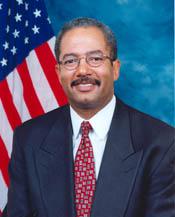
Mr. Speaker, I rise to suggest a caution flag as we rush towards this free lunch-approach to governmental fiscal policy. We cannot have a world-class military and defense, world-class health care,…
Mr. Speaker, I rise to suggest a caution flag as we rush towards this free lunch-approach to governmental fiscal policy. We cannot have a world-class military and defense, world-class health care, education, cities, and culture, and suggest that no one has to pay for it. And we talk about tax cuts today as if they are going to stimulate the economy tomorrow with some type of selective amnesia, because it was right here on this floor just 2 years ago that we passed the largest tax cut supposedly in the history of the country. And it did not stimulate our economy.
Let us just take a look for a minute at where we are.
We have moved from hundreds of billions of dollars of surpluses to now having hundreds of billions of dollars of deficits. We had millions of Americans who were working who are now unemployed; and, even today, the unemployment registration rate in our country has increased again. Consumer confidence is down. Housing starts are down. And every single indicator, in terms of economic health in our country, is troubling.
We have heard from the Chair of the Federal Reserve Board, Alan Greenspan, suggesting that this tax cut is very problematic in both the short term and the long term. He cautions the Congress that our combination of both spending and tax cuts risks the fiscal health of this Nation. And the Republican majority, I am sure, wants to say, well, we just need to get spending under control, as if the country should forget that they are in the majority, that they control spending both in the House and in the Senate, and they control the signature from the executive at the White House.
For so many years now we have been insisting on spending more on defense, we have been insisting on investing in a whole range of exotic weapons systems, and then we come to the floor and the majority offers us more and more tax cuts. The fiscal health of our country is in jeopardy. Future generations will have to pay. We should say to Americans, why do we not be mature, pay the bills as we go, rather than run the country into further deficit?
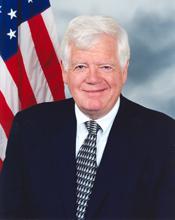
Mr. Speaker, I received my symbol for this Congress just the other day. It is an official stamp from the White House, and they are passing them out. You will all get one in the mail I am pretty sure,…
Mr. Speaker, I received my symbol for this Congress just the other day. It is an official stamp from the White House, and they are passing them out. You will all get one in the mail I am pretty sure, and it says: ``Official rubber stamp. I approve of everything George Bush does. Member of Congress.''
All you have to do is sign your name on there. That is what this Congress is about, rubber stamping the President's proposals. Bring it out here. No debate. Do not let us offer amendments. Do not take any time. Just get out the rubber stamp and put it down there and just roll it on in. You have now joined the rubber stamp Congress.
This party is running a one-party government. They want no input from the Democrats whatsoever. They are a rubber stamp for the President. They are willing to give away all their prerogatives on the war. They said to the President, whenever you think it is time to go to war, go ahead. So they have rubber-stamped whatever he wanted to do. On the tax cut, just give it to him. It will work. On unemployment benefits, well, they stalled and stalled; and he said, look, we are getting bad numbers on those polls. We better do something about employment. So in about an hour we are going to come out here and rubber-stamp again his unemployment bill that the Democrats have been pushing for 4 months. But when the President says it, everybody on the other side jumps up and says, Where is my rubber
stamp? God, I got to get over to the floor and cast my vote for whatever he wants.
Whether he wants to repeal all of the environmental issues related to the military, give the military an open season on doing anything they want. They are killing whales and porpoises in Washington, they are doing all the rest, but over here on the other side, we do not want to have any debate on that. We are rubber-stamping whatever the President wants. I welcome everybody to the rubber stamp club. I hope you got yours. Do not forget to bring them to the floor when you vote.
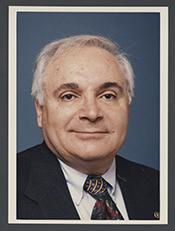
Mr. Speaker, on rollcall No. 212, I was attending the burial of a leading veteran from my district at Arlington National Cemetery. Had I been present, I would have voted ``aye.''
Mr. Speaker, on rollcall No. 212, I was attending the burial of a leading veteran from my district at Arlington National Cemetery. Had I been present, I would have voted ``aye.''

Mr. Speaker, I demand a recorded vote.
Mr. Speaker, I demand a recorded vote.
Bill Text
2 versions available
        [Congressional Bills 108th Congress]
[From the U.S. Government Publishing Office]
[H. Res. 249 Engrossed in House (EH)]

In the House of Representatives, U.S.,

May 22, 2003.
Resolved, That the requirement of clause 6(a) of rule XIII for a two-thirds
vote to consider a report from the Committee on Rules on the same day it is
presented to the House is waived with respect to any resolution reported on the
legislative day of May 22, 2003, providing for consideration or disposition of
the bill (H.R. 2) to provide for reconciliation pursuant to section 201 of the
concurrent resolution on the budget for fiscal year 2004, any amendment thereto,
any conference report thereon, or any amendment reported in disagreement from a
conference thereon.
Attest:

Clerk.