Providing for consideration of the bill (H.R. 1474) to facilitate check truncation by authorizing substitute checks, to foster innovation in the check collection system without mandating receipt of checks in electronic form, and to improve the overall efficiency of the Nation's payments system, and for other purposes.
Legislative Activity
Stay on top of the latest movement without scrolling through every action
Motion to reconsider laid on the table Agreed to without objection.
June 5, 2003 • 12:06 PM
View full timeline
Introduced in House
June 3, 2003
The House Committee on Rules reported an original measure, H. Rept. 108-138, by Mr. Sessions.
June 3, 2003
Rule provides for consideration of H.R. 1474 with 1 hour of general debate. Previous question shall be considered as ordered without intervening motions except motion to recommit. Measure will be read by section. Bill is open to amendments.
June 3, 2003 • 7:38 PM
Placed on the House Calendar, Calendar No. 55.
June 3, 2003
Considered as privileged matter. (consideration: CR H4985-4996)
June 5, 2003 • 10:33 AM
DEBATE - The House proceeded with one hour of debate on H. Res. 256.
June 5, 2003 • 10:34 AM
On ordering the previous question Agreed to by the Yeas and Nays: (Roll No. 243).
June 5, 2003 • 12:06 PM
Passed/agreed to in House: On agreeing to the resolution Agreed to by voice vote.(text: CR H4985)
June 5, 2003 • 12:06 PM
On agreeing to the resolution Agreed to by voice vote. (text: CR H4985)
June 5, 2003 • 12:06 PM
Motion to reconsider laid on the table Agreed to without objection.
June 5, 2003 • 12:06 PM
Voting History
1 vote recorded • Roll call available
Floor Debate
20 membersWhat members said about H.Res. 256 on the floor
 AS
AS JPMPS
JPMPS HEF
HEF MAH+15
Floor Debate
20 membersWhat members said about H.Res. 256 on the floor
Mr. Speaker, due to family reasons, I was unable to vote on rollcall No. 227: H. Res. 159. Had I been present, I would have voted ``yes.'' Mr. Speaker, due to family reasons, I was unable vote on…
Mr. Speaker, due to family reasons, I was unable to vote on rollcall No. 227: H. Res. 159. Had I been present, I would have voted ``yes.''
Mr. Speaker, due to family reasons, I was unable vote on rollcall No. 228: H. Res. 195. Had I been present, I would have voted ``yes.''
Mr. Speaker, due to family reasons, I was unable to vote on rollcall No. 229: H.R. 1465. Had I been present, I would have voted ``yes.''
Mr. Speaker, due to family reasons, I was unable to vote on rollcall No. 230: S. 222. Had I been present, I would have voted ``yes.''
Mr. Speaker, due to family reasons, I was unable to vote on rollcall No. 231: S. 273. Had I been present, I would have voted ``yes.''
Mr. Speaker, due to family reasons, I was unable to vote on rollcall No. 232: S. 763. Had I been present, I would have voted ``yes.''
Mr. Speaker, due to family reasons, I was unable to vote on rollcall No. 233: H. Amdt. to H. J. Res. 4. Had I been present, I would have voted ``no.''
Mr. Speaker, due to family reasons, I was unable to vote on rollcall No. 234: Final passage of H. J. Res. 4. Had I been present, I would have voted ``yes.''
Mr. Speaker, due to family reasons, I was unable to vote on rollcall No. 235: Motion to suspend the rules and pass H. Res. 231. Had I been present, I would have voted ``yes.''
Mr. Speaker, due to family reasons, I was unable to vote on rollcall No. 236: on agreeing to H. Res. 257. Had I been present, I would have voted ``no.''
Mr. Speaker, due to family reasons, I was unable to vote on rollcall No. 237: Motion to suspend the rules and pass H. Res. 177. Had I been present, I would have voted ``yes.''
Mr. Speaker, due to family reasons, I was unable to vote on rollcall No. 238: Motion to suspend the rules and pass H. Res. 201. Had I been present, I would have voted ``yes.''
Mr. Speaker, due to family reasons, I was unable to vote on rollcall No. 239: H.R. 1954. Had I been present, I would have voted ``yes.''
Mr. Speaker, due to family reasons, I was unable to vote on rollcall No. 240: H. Amdt. 154 to H.R. 760. Had I been present, I would have voted ``yes.''
Mr. Speaker, due to family reasons, I was unable to vote on rollcall No. 241: Motion to Recommit to H.R. 760. Had I been present, I would have voted ``yes.''
Mr. Speaker, due to family reasons, I was unable to vote on rollcall No. 242: final passage of H.R. 760. Had I been present, I would have voted ``no.''
Mr. Speaker, due to family reasons, I was unable to vote on rollcall No. 243: On Ordering the Previous Question for H. Res. 256. Had I been present, I would have voted ``yes.''
Mr. Speaker, due to family reasons, I was unable to vote on rollcall No. 244: H. Res. 258. Had I been present, I would have voted ``yes.''
Mr. Speaker, due to family reasons, I was unable to vote on rollcall No. 245: H. Res. 258. Had I been present, I would have voted ``yes.''
Mr. Speaker, due to family reasons, I was unable to vote on rollcall No. 246: on passage of H.R. 1474. Had I been present, I would have voted ``yes.''
Mr. Speaker, due to family reasons, I was unable to vote on rollcall No. 247: S. 222. Had I been present, I would have voted ``yes.''
Mr. Speaker, due to family reasons, I was unable to vote on rollcall No. 248: S. 273. Had I been present, I would have voted ``yes.''
Mr. Speaker, due to family reasons, I was unable to vote on rollcall No. 249: H.R. 1610. Had I been present, I would have voted ``yes.''
Mr. Speaker, due to family reasons, I was unable to vote on rollcall No. 250: H. Con Res. 162. Had I been present, I would have voted ``yes.''
Mr. Speaker, due to family reasons, I was unable to vote on rollcall No. 251: S. 763. Had I been present, I would have voted ``yes.''
Mr. Speaker, due to family reasons, I was unable to vote on rollcall No. 252: H. Res. 263 to H.R. 2143. Had I been present, I would have voted ``yes.''
Mr. Speaker, due to family reasons, I was unable to vote on rollcall No. 253: H. Res. 263 to H.R. 2143. Had I been present, I would have voted ``No.''
Mr. Speaker, due to family reasons, I was unable to vote on rollcall No. 254: H. Amdt. 159 to H.R. 2143. Had I been present, I would have voted ``No.''
Mr. Speaker, due to family reasons, I was unable to vote on rollcall No. 255: Passage of H.R 2143. Had I been present, I would have voted ``yes.''
Mr. Speaker, due to family reasons, I was unable to vote on rollcall No. 256: H. Res. 252: Had I been present, I would have voted ``yes.''
Mr. Speaker, due to family reasons, I was unable to vote on rollcall No. 257: On ordering the previous question for H.R. 2115. Had I been present, I would have voted ``yes.''
Mr. Speaker, due to family reasons, I was unable to vote on rollcall No. 258: On agreeing to the rule for H.R. 2115. Had I been present, I would have voted ``yes.''
Mr. Speaker, due to family reasons, I was unable to vote on rollcall No. 259: On passage of H. Con. Res. 110. Had I been present I would have voted ``yes.''
Mr. Speaker, due to family reasons, I was unable to vote on rollcall No. 260: On passage of H.R. 1320. Had I been present I would have voted ``yes.''
Mr. Speaker, due to family reasons, I was unable to vote on rollcall No. 261: H.R. 2350. Had I been present, I would have voted ``yes.''
Mr. Speaker, due to family reasons, I was unable to vote on rollcall No. 262: H. Amdt. 5 to H.R. 2115. Had I been present, I would have voted ``yes.''
Mr. Speaker, due to family reasons, I was unable to vote on rollcall No. 263: H. Amdt. 4 to H.R. 2115. Had I been present, I would have voted ``yes.''
Mr. Speaker, due to family reasons, I was unable to vote on rollcall No. 264: On passage of H.R. 2115. Had I been present, I would have voted ``yes.''
Mr. Speaker, due to family reasons, I was unable to vote on rollcall No. 265: H. Res. 269 to H.R. 1115. Had I been present, I would have voted ``yes.''
Mr. Speaker, due to family reasons, I was unable to vote on rollcall No. 266: H. Res. 269 to H.R. 1115. Had I been present, I would have voted ``no.''
Mr. Speaker, due to family reasons, I was unable to vote on rollcall No. 268: H. Amdt.
168 to H.R. 1115. Had I been present, I would have voted ``yes.''
Mr. Speaker, due to family reasons, I was unable to vote on rollcall No. 269: H. Amdt. 169 to H.R. 1115. Had I been present, I would have voted ``yes.''
Mr. Speaker, due to family reasons, I was unable to vote on rollcall No. 270: H. Amdt. 170 to H.R. 1115. Had I been present, I would have voted ``yes.''
Mr. Speaker, due to family reasons, I was unable to vote on rollcall No. 271: Motion to Recommit to H.R. 1115. Had I been present, I would have voted ``yes.''
Mr. Speaker, due to family reasons, I was unable to vote on rollcall No. 272: Passage of H.R. 1115. Had I been present, I would have voted ``yes.''
Mr. Speaker, due to family reasons, I was unable to vote on rollcall No. 273: H. Res. 270 to H.R 1308. Had I been present, I would have voted ``no.''
Mr. Speaker, due to family reasons, I was unable to vote on rollcall No. 274: Rule for H.R. 1308. Had I been present, I would have voted ``no.''
Mr. Speaker, due to family reasons, I was unable to vote on rollcall No. 275: Motion to Instruct Conferees H.R. 1308. Had I been present, I would have voted ``yes.''
Mr. Speaker, due to family reasons, I was unable to vote on rollcall No. 276: H.R. 2254. Had I been present, I would have voted ``yes.''
Mr. Speaker, due to family reasons, I was unable to vote on rollcall No. 277: H. Con. Res. 220. Had I been present, I would have voted ``yes.''
Mr. Speaker, due to family reasons, I was unable to vote on rollcall No. 278: S. 703. Had I been present, I would have voted ``yes.''
Mr. Speaker, due to family reasons, I was unable to vote on rollcall No. 279: H. Res. 276. Had I been present, I would have voted ``yes.''
Mr. Speaker, due to family reasons, I was unable to vote on rollcall No. 280: H. Res. 171. Had I been present, I would have voted ``yes.''
Mr. Speaker, due to family reasons, I was unable to vote on rollcall No. 281: Passage of H.R. 658. Had I been present, I would have voted ``yes.''
Mr. Speaker, due to family reasons, I was unable to vote on rollcall No. 282: S. 342. Had I been present, I would have voted ``yes.''
Mr. Speaker, due to family reasons, I was unable to vote on rollcall No. 283: Passage of S. Con. Res. 43. Had I been present, I would have voted ``yes.''
Mr. Speaker, due to family reasons, I was unable to vote on rollcall No. 284: Previous Question to H. Res. 281. Had I been present, I would have voted ``no.''
Mr. Speaker, due to family reasons, I was unable to vote on rollcall No. 285: H. Res. 281 to H.R 8. Had I been present, I would have voted ``no.''
Mr. Speaker, due to family reasons, I was unable to vote on Rollcall No. 286: Approving the Journal. Had I been present, I would have voted ``yes.''
Mr. Speaker, due to family reasons, I was unable to vote on Rollcall No. 287: H. Amdt. 171 to H.R. 8. Had I been present, I would have voted ``yes.''
Mr. Speaker, due to family reasons, I was unable to vote on Rollcall No. 288: Passage of H.R. 8. Had I been present, I would have voted ``no''.
Mr. Speaker, due to family reasons, I was unable to vote on Rollcall No. 289: H. Res. 283 to H.R. 660. Had I been present, I would have voted ``yes.''
Mr. Speaker, due to family reasons, I was unable to vote on Rollcall No. 290: H. Res. 283 to H.R. 660. Had I been present, I would have voted ``no''.
Mr. Speaker, due to family reasons, I was unable to vote on Rollcall No. 291: H. Amdt. 172 to H.R. 1528. Had I been present, I would have voted ``yes.''
Mr. Speaker, due to family reasons, I was unable to vote on Rollcall No. 292: Motion to Recommit H.R. 1528. Had I been present, I would have voted ``yes.''
Mr. Speaker, due to family reasons, I was unable to vote on Rollcall No. 293: Passage of H.R. 1528. Had I been present, I would have voted ``no''.
Mr. Speaker, due to family reasons, I was unable to vote on Rollcall No. 294: Kind amendment to H.R. 660. Had I been present, I would have voted ``yes.''
Mr. Speaker, due to family reasons, I was unable to vote on Rollcall No. 295: On motion to recommit with instructions to H.R. 660. Had I been present, I would have voted ``yes.''
Mr. Speaker, due to family reasons, I was unable to vote on Rollcall No. 296: On final passage to H.R. 660. Had I been present, I would have voted ``yes.''
Mr. Speaker, due to family reasons, I was unable to vote on Rollcall No. 297: H. Res. 264. Had I been present, I would have voted ``yes.''
Mr. Speaker, due to family reasons, I was unable to vote on Rollcall No. 298: H. Res. 177. Had I been present, I would have voted ``yes.''
Mr. Speaker, due to family reasons, I was unable to vote on Rollcall No. 299: H. Con. Res. 209. Had I been present, I would have voted ``yes.''
Mr. Speaker, due to family reasons, I was unable to vote on Rollcall No. 300: Passage of H.R. 2465. Had I been present, I would have voted ``yes.''
Mr. Speaker, due to family reasons, I was unable to vote on Rollcall No. 301: Previous Question to H. Res. 293. Had I been present, I would have voted ``no''.
Mr. Speaker, due to family reasons, I was unable to vote on Rollcall No. 302: Agreeing to H. Res. 293. Had I been present, I would have voted ``no''.
Mr. Speaker, due to family reasons, I was unable to vote on Rollcall No. 303: Passage of H.R. 923. Had I been present, I would have voted ``yes.''
Mr. Speaker, due to family reasons, I was unable to vote on Rollcall No. 304: H.R. 1460. Had I been present, I would have voted ``yes.''
Mr. Speaker, due to family reasons, I was unable to vote on Rollcall No. 305: On sustaining the ruling of the chair on H.R. 2555. Had I been present, I would have voted ``no''.
Mr. Speaker, due to family reasons, I was unable to vote on Rollcall No. 306: Sustain ruling of the chair on H.R. 2555. Had I been present, I would have voted ``yes.''
Mr. Speaker, due to family reasons, I was unable to vote on Rollcall No. 307: H. Amdt. 176 to H.R. 2555. Had I been present, I would have voted ``yes.''
Mr. Speaker, due to family reasons, I was unable to vote on Rollcall No. 308: H. Amdt. 183 to H.R. 2555. Had I been present, I would have voted ``yes.''
Mr. Speaker, due to family reasons, I was unable to vote on Rollcall No. 309: H. Amdt. 188 to H.R. 2555. Had I been present, I would have voted ``no''.
Mr. Speaker, due to family reasons, I was unable to vote on Rollcall No. 310: Passage of H.R. 2555. Had I been present, I would have voted ``yes.''
Mr. Speaker, due to family reasons, I was unable to vote on Rollcall No. 311: Passage to H.R. 1416. Had I been present, I would have voted ``yes.''
Mr. Speaker, due to family reasons, I was unable to vote on Rollcall No. 312: S. 858. Had I been present, I would have voted ``yes.''
Mr. Speaker, due to family reasons, I was unable to vote on Rollcall No. 313: H.R. 2474. Had I been present, I would have voted ``yes.''
Mr. Speaker, due to family reasons, I was unable to vote on Rollcall No. 314: H. J. Res. 49. Had I been present, I would have voted ``yes.''
Mr. Speaker, due to family reasons, I was unable to vote on Rollcall No. 315: H. Con. Res. 49. Had I been present, I would have voted ``yes.''
Mr. Speaker, due to family reasons, I was unable to vote on Rollcall No. 316: H. Res. 199. Had I been present, I would have voted ``yes.''
Mr. Speaker, due to family reasons, I was unable to vote on Rollcall No. 317: H. Res. 294. Had I been present, I would have voted ``yes.''
Mr. Speaker, due to family reasons, I was unable to vote on Rollcall No. 318: On the Hastings amendment to H.R. 2417. Had I been present, I would have voted ``yes.''
Mr. Speaker, due to family reasons, I was unable to vote on Rollcall No. 319: On the Kucinich amendment to H.R. 2417. Had I been present, I would have voted ``no''.
Mr. Speaker, due to family reasons, I was unable to vote on Rollcall No. 320: On the Lee amendment to H.R. 2417. Had I been present, I would have voted ``yes.''
Mr. Speaker, due to family reasons, I was unable to vote on Rollcall No. 321: H. Res. 299 to H.R. 1 and H.R. 2596. Had I been present, I would have voted ``no''.
Mr. Speaker, due to family reasons, I was unable to vote on Rollcall No. 322: H. Res. 299 to H.R. 1 and H.R. 2596. Had I been present, I would have voted ``no''.
Mr. Speaker, due to family reasons, I was unable to vote on Rollcall No. 323: H. Res. 297 to H.R. 1 and H.R. 2596. Had I been present, I would have voted ``no''.
Mr. Speaker, due to family reasons, I was unable to vote on Rollcall No. 324: Ordering the previous question on H. Res. 298. Had I been present, I would have voted ``yes.''
Mr. Speaker, due to family reasons, I was unable to vote on Rollcall No. 325: Passage of H.R. 2559. Had I been present, I would have voted ``yes.''
Mr. Speaker, due to family reasons, I was unable to vote on Rollcall No. 326: Passage of H. Res. 277. Had I been present, I would have voted ``yes.''
Mr. Speaker, due to family reasons, I was unable to vote on Rollcall No. 327: On approval of the Journal. Had I been present, I would have voted ``yes.''
Mr. Speaker, due to family reasons, I was unable to vote on Rollcall No. 328: H.R. 2596. Had I been present, I would have voted ``no''.
Mr. Speaker, due to family reasons, I was unable to vote on Rollcall No. 330: H. Amdt.
197 to H.R. 1. Had I been present, I would have voted ``no''.
Mr. Speaker, due to family reasons, I was unable to vote on Rollcall No. 331: Motion to recommit with instructions to H.R. 1. Had I been present, I would have voted ``yes.''
Mr. Speaker, due to family reasons, I was unable to vote on Rollcall No. 332: Final passage of H.R. 1. Had I been present, I would have voted ``no''.
Mr. Speaker, due to family reasons, I was unable to vote on Rollcall No. 333: On passage of H.R. 2417. Had I been present, I would have voted ``yes.''
Mr. Speaker, I yield myself 6 minutes. Mr. Speaker, we are here today to consider the rule for H.R. 1474, the Check Clearing for the 21st Century Act. I urge my colleagues to look at this resolution…
Mr. Speaker, I yield myself 6 minutes.
Mr. Speaker, we are here today to consider the rule for H.R. 1474, the Check Clearing for the 21st Century Act. I urge my colleagues to look at this resolution very closely, to study it, because it is a very, very rare specimen.
We all know some of the more famous endangered species, including the Virginia big-eared bat, the buff-headed marmoset, and the yellow-footed rock wallaby; but just as rare is the House open rule. Do not make any sudden moves because we might startle it.
So far this year, the House has considered a total of 38 rules. So far, exactly four of them have been open, four for 38. That is a batting average of .105, which would get us kicked off my son's T-ball team.
This is what passes for democracy around here, which brings us to the rule for H.R. 1474, the Check Clearing for the 21st Century Act. This is an open rule for a noncontroversial bill. The issue for me, Mr. Speaker, is not the rule or the bill, but the fact that this open and fair process is almost never used in this body. Whenever an issue is the least bit contentious, whenever there is even a hint of disagreement about a bill, the majority clamps down on its Members, chokes debates, and forces a closed rule through this House. It is a lousy way to run a legislature, Mr. Speaker.
In the meantime, the Check Clearing for the 21st Century Act, also known as CHECK-21, is a bipartisan bill that will modernize the Nation's check payment system for the 21st century. This legislation will help consumers, businesses, and banks by guaranteeing that check processing and payment will be quicker, and more importantly, lead to more efficient banking.
As many of us remember, the days and weeks following the tragic events of September 11 were filled with confusion in the banking industry. Because many of our planes were grounded, checks were held up around the country. Similar delays occurred during the anthrax crisis.
With the passage of CHECK-21, Congress and the banking industry will harness the innovations of the 21st century so our banking system is not crippled as a result of terrorism, natural disasters, or transportation problems.
In my district, I proudly represent the largest credit union in New England, Digital Credit Union.
According to Mary Ann Clancy, Senior Vice President and General Counsel of the Massachusetts Credit Union League, ``Digital has been able to make cleared checks available to members in a more timely, secure and efficient manner ranging from weeks to immediate access. It also helps keep members' information confidential and saves them time searching through piles of checks to balance their checking accounts.''
Mr. Speaker, Democrats have no objection to this bill. Check 21 was reported unanimously out of the Committee on Financial Services. The gentleman from Ohio (Mr. Oxley) and the ranking member, the gentleman from Massachusetts (Mr. Frank), and the members of the committee should be commended for working in a bipartisan way, something the leadership of this House cannot seem to do.
Which, Mr. Speaker, brings us to the Child Tax Credit. As most people know, during their late-night, back-room negotiations on the tax bill, the Republican leadership deliberately dropped a provision that would have helped nearly 12 million children and their families to get the child tax credit.
Their attack on American workers, on those in the middle, on those trying to get into the middle, continues.
Governing is about choices, Mr. Speaker. The Republican leadership chose to keep the tax breaks for millionaires, and they chose to scrap the help for low-income working families.
So at the end of this debate on the rule, I will ask my colleagues to vote no on the previous question. If the previous question is defeated, I will offer an amendment to provide for the consideration of the Rangel/Davis/DeLauro bill to help the people the Republicans would rather leave behind.
In Massachusetts, for example, 225,000 children would benefit from the Democratic bill. Our proposal provides real relief for the people who need it most, not another giveaway for those who need it least. And we actually pay for our tax relief by closing some of the corporate tax-shelter scams that some greedy corporations like to use.
I am not sure if any of my Republican colleagues remember, but they used to think that burdening our children and grandchildren with huge debt was a bad thing.
I know my Republican colleagues would rather not talk about this. I know they would have been happier if their secret agreements would have remained secret. But I will put them on notice. We are going to keep on discussing this issue until you do the right thing. We are going to be here today and tomorrow and next week and next month, and we are going to fight for the people who deserve a helping hand.
The Majority Leader made it quite clear the other day what the Republican priorities are. When asked whether he would consider granting relief to those who had been dropped by the leadership in their secret negotiations, he said, ``There are a lot of other things that are more important.''
If anyone on the other side of the aisle could name one, I would love to hear it.
Mr. Speaker, I reserve the balance of my time.
Mr. Speaker, I yield 2 minutes to the gentleman from Tennessee (Mr. Cooper).
Mr. Speaker, I yield myself such time as I may consume.
Mr. Speaker, I would just remind the gentleman that, unlike the Republican tax bill, we actually pay for this by closing corporate loopholes so we do not add to the debt or deficit.
Mr. Speaker, I yield 2 minutes to the gentleman from New Jersey (Mr. Pallone).
Mr. Speaker, I yield myself such time as I may consume.
I just respond to the gentleman that I cannot believe he finally met a tax cut he did not like. Unfortunately, what we are talking about here is trying to help people, low-income workers and their children; and because of the Republicans' late-night maneuver, these people are being denied the tax cut that he says that they are very much dedicated to.
Mr. Speaker, I yield 2\1/2\ minutes to the gentleman from Massachusetts (Mr. Frank).
Mr. Speaker, I yield 1 minute to the gentleman from Massachusetts (Mr. Frank).
Mr. Speaker, I yield myself such time as I may consume.
I would say to the gentlewoman from Pennsylvania that our side of the aisle would be more than happy to work with her side of the aisle. Unfortunately, we are always shut out of the process; and I would also say to the gentleman from Texas who earlier referred to this Republican House, this is the people's House, something that those on his side of the aisle seem to have forgotten by leaving millions of working families and children out in the cold.
Mr. Speaker, I yield 2\1/2\ minutes to the gentlewoman from Ohio (Ms. Kaptur).
Mr. Speaker, I yield myself such time as I may consume to ask my colleagues to review an editorial from The Washington Post entitled, ``Children Left Behind,'' and also today's New York Times editorial entitled, ``The Poor Held Hostage for Tax Cuts,'' which I now submit for the Record.
[From the Washington Post, June 2, 2003]
Children Left Behind
Even for a debate over taxes, the public discussion taking
place right now about child credits in the new tax law is
particularly galling, hypocritical and ill-informed. The new
law bumps up the credit for each child from $600 to $1,000
(though the benefit phases out for families that earn more
than $110,000). This increase, part of the 2001 tax law, was
pushed forward to this year under the new law. The 2001 law
also allowed some low-income families that don't pay income
taxes to benefit from the child tax credit; these families
receive money from the government, just as with the Earned
Income Tax Credit. Those amounts were set to increase in
2005--but that part was not speeded up under the new law. If
it had been, it would have cost $3.5 billion, or 1 percent of
the supposed cost of the tax bill, and would have helped
almost 12 million children whose families make between
$10,500 and $26,625.
Stiffing these children was not a last-minute oversight or
the unfortunate result of an unreasonably tight $350 billion
ceiling. ``Adjustments had to be made,'' a spokeswoman for
the House Ways and Means Committee said, as if those on her
side would have preferred otherwise. In fact, the
administration didn't include this provision in its original,
$726 billion proposal. The House didn't include it in its
$550 billion version. The Senate Finance Committee didn't
include it in its original package. Most Republicans wanted
relief only for those who pay income tax. As White House
spokesman Ari Fleischer framed it, ``Does tax relief go to
people who pay income taxes . . . or does it go above and
beyond the forgiving of all income taxes, and you actually
get a check back from the government for more than you ever
owed in income taxes?''
But it's not as if these workers pay no federal taxes; they
shell out 7.65 percent of their earnings in Social Security
and Medicare payroll taxes. More fundamentally, if it makes
sense to help families with children, why shouldn't the aid
go to those who need it most? If speeding up the tax credit
makes sense for some, why not for everyone? If one goal of
the tax bill is to pump money into the economy quickly, why
not give it to those most apt to spend it? Such relief could
be paid for by cutting the rates for those in the top
brackets (people with taxable income of more than about
$312,000) just a smidgen less. These folks already get the
biggest rate reduction of all, from 38.6 percent to 35
percent; merely edging that up to 35.3 percent would have
paid for the extra child credits. If anything, the question
lawmakers should consider is why those who make less than
$10,50 shouldn't be entitled to some credit as well. The
theory has been not to subsidize those who choose to work
only part time, but in this economy any number of people are
working fewer hours because that is all that is available.
Some 8 million children live in families who earn below the
current threshold.
Indeed, the discussion should be broadened to include the
question of why the bill, in a similar fashion, speeded up
marriage penalty relief for everyone but the bottom tier,
those who qualify for the Earned Income Tax Credit. This is
arguably even more unfair than the failure to accelerate the
entire child credit: the backwardness of the social policy--
discouraging marriage--is obvious, and the marriage penalty
is particularly steep in this category. For example, two
single parents, each with one child and each earning $10,000,
would receive about $2,500 through the tax credit; if the
married, their tax benefits would drop by more than $1,000.
Democrats, who somehow never managed to get traction with
an argument about the unfairness of the cuts before the bill
was passed, are seizing on the new attention to the child
credit. Today Sens. Blanche L. Lincoln (D-Ark.) and Olympia
J. Snowe (R-Maine) plan to introduce a bill that would
accelerate the credit, paid for by curbing corporate tax
shelters and imposing some user fees. We're looking forward
to the debate.
Mr. Speaker, I yield 2 minutes to the gentleman from Maryland (Mr. Wynn).
Mr. Speaker, can you inform us how much time is left on both sides?
Mr. Speaker, I yield 2 minutes to the gentlewoman from Illinois (Ms. Schakowsky).
Mr. Speaker, I yield 2 minutes to the gentleman from Tennessee (Mr. Ford).
(Mr. FORD asked and was given permission to revise and extend his remarks.)
Mr. Speaker, I yield 1\1/2\ minutes to the gentlewoman from California (Ms. Watson).
Mr. Speaker, I yield 10 seconds to the gentleman from Tennessee (Mr. Ford).
Mr. Speaker, I yield 2\1/2\ minutes to the gentleman from California (Mr. George Miller).
Mr. Speaker, I yield myself the balance of my time.
Mr. Speaker, I will be asking for a no vote on the previous question. If the previous question is defeated, I will offer an amendment to the rule.
My amendment will provide that immediately after the House passes the Check Clearing for the 21st Century Act, it will take up H.R. 2286, the Working Families Tax Credit Act of 2003. The Rangel Working Families Tax Credit bill will give immediate help to more working families by providing the child tax credit to an estimated 19 million additional children. It will also help families of soldiers in combat by
extending the child tax credit to them, and it will speed up the marriage penalty relief to lower-income working couples.
It does not increase the deficit, not by one dime. It is entirely paid for by closing the shameful corporate loophole that allows corporations to move offshore simply to avoid paying taxes.
Let me make very clear that a ``no'' vote on the previous question will not stop the consideration of the Check Clearing for the 21st Century Act. A ``no'' vote will allow the House to vote on both the check bill and the tax fairness bill. However, a ``yes'' vote on the previous question will prevent the House from voting on this bill and the child tax credit for working families. I urge a ``no'' vote on the previous question.
The time to fix this is now. These hard-working taxpayers were left behind, deliberately cut from the tax bill in the middle of the night by the Republican leadership. That is wrong. That is also cruel. These are taxpayers. These are taxpayers. These are workers. I urge my colleagues to do the right thing. Let us come together in a bipartisan way to right a terrible wrong.
I ask unanimous consent, Mr. Speaker, that the text of the amendment and the description of the amendment be printed in the Record immediately before the vote on the previous question.
Mr. Speaker, I yield back the balance of my time.
Mr. Speaker, I object to the vote on the ground that a quorum is not present and make the point of order that a quorum is not present.
Mr. Speaker, by the direction of the Committee on Rules, I call up House Resolution 256 and ask for its immediate consideration. Mr. Speaker, for purposes of debate only, I yield the customary 30…
Mr. Speaker, by the direction of the Committee on Rules, I call up House Resolution 256 and ask for its immediate consideration.
Mr. Speaker, for purposes of debate only, I yield the customary 30 minutes to the gentleman from Massachusetts (Mr. McGovern), pending which I yield myself such time as I may consume.
Mr. Speaker, I rise today in support of the rule, House Resolution 256. This rule provides for consideration of H.R. 1474, the Check Clearing for the 21st Century Act.
The Committee on Rules on Tuesday afternoon granted an open rule providing for 1 hour of general debate in the House on the underlying bill, equally divided and controlled by the chairman and ranking minority member of the Committee on Financial Services. The rule waives all points of order against consideration of the bill, and provides one motion to recommit, with or without instructions.
I would like to reiterate to the House my satisfaction in the open rule granted for consideration of the underlying piece of legislation that we are debating today, which is also known as CHECK-21.
CHECK-21 is an important bill, although it may seem a bit confusing at first blush for America's banking customers and check writers. The good news is this bill garnered bipartisan support in both the Committee on Financial Services and the Committee on Rules, and I anticipate the same result as we move forward towards final passage on the floor today.
The legislative work our House of Representatives will complete today builds on the legislative work that was started back in 1987 to foster innovation in the check collection system. The Expedited Funds Availability Act, which became law back in 1987, directed the Board of Governors of the Federal Reserve System to improve our check processing system.
Today we are making logical extensions to the work started in 1987 by using our much-improved electronic transfer technology to make check writing speedier and more reliable for all parties involved.
Mr. Speaker, each check that is written and used for payment must actually make its way back to the check writer's home bank. That is how each bank patron with a checking account gets the check he or she wrote mailed back to them so that it can appear in their monthly statement.
When we stop to think about it, there is a lot of time, money, and effort invested in getting checks back to their home banks. Checks that are written in one corner of our country today will be trucked and flown to their home bank, wherever they reside, all over the country as a normal part of American commerce, a great expense of time and money. Today, American commerce bears the great expense of time and money associated with shipping checks around the country because it is worth it. Checks are an important commercial instrument that help keep our economy moving.
Today, as a cosponsor of the Check Clearing for the 21st Century Act, I am proud to announce the introduction of a new instrument of commerce into the American economy, the substitute check. The substitute check will provide opportunities to greatly decrease the frantic highway and air traffic associated with the gargantuan task of shipping and flying billions of dollars worth of checks around this country every single year.
Thanks to electronic imaging, paper checks have the opportunity to be converted into electronic form, transmitted in seconds to the home bank across the country, and printed out at their final destination as substitute checks.
The bill provides all those institutions that see electronic transfer of commercial paper as the latest wave in modernizing our economic system the opportunity to use substitute checks, but does not require it. That way we all have a chance to ease into the new potential provided by the creation and introduction of substitute checks into the mainstream of commerce.
Finally, Mr. Speaker, I would like to reassure customers that the same protections provided today under the Uniform Commercial Code for paper checks would also apply to substitute checks. Additionally, CHECK-21 provides legal indemnification protection to bank customers for losses arising from the receipt of substitute checks.
CHECK-21 is a great bill, Mr. Speaker. I congratulate the gentleman from Ohio (Mr. Oxley) of the Committee on Financial Services, the gentleman from California (Mr. Dreier) of the Committee on Rules, as well as the gentleman from Alabama (Mr. Bachus), who is the subcommittee chairman that is directing this legislation today, as well as all the original cosponsors of this very important bill.
Therefore, Mr. Speaker, I urge my colleagues to support both the rule and the underlying legislation.
Mr. Speaker, I reserve the balance of my time.
Mr. Speaker, I yield myself such time as I may consume.
The Committee on Rules meets on a regular basis throughout the week, taking important pieces of legislation, hearing debate. It is not unusual for us to be in the Committee on Rules not only at odd hours of the day and night but also to hear hours of testimony from Members of Congress who have important legislation that they wish to bring forward; and I would like to be one member of that committee that stands up and says that I believe that the leadership of the gentleman from California (Mr. Dreier), our chairman, and his balance and wisdom and his dedication to a fair process is something that I believe sets this Committee on Rules up for success every single day. This bill that is on the floor is yet another example of that success that the chairman and this committee achieve.
Mr. Speaker, I yield such time as he may consume to the gentleman from Alabama (Mr. Bachus), the chairman of the Subcommittee on Financial Institutions and Consumer Credit.
Mr. Speaker, I yield myself such time as I may consume.
Mr. Speaker, as I recall, the debate about this tax bill was all about deficits and all about whether the increase of the debt, the public debt limit was going to be achieved. And what happened is that, as we deliberated about the bill, any motion to instruct conferees from the other party was about those two issues. It was not about the substance of the bill as it related to anything that was contained within or to be talked about by the conferees. But, rather, they were focussed entirely on the debt and the amount of money that would be as a part of bill.
Now we find out that, oh, my gosh, there was a part of this great tax cut that they maybe were for even though they were voting against that. So it is very interesting to hear this debate today.
Mr. Speaker, I reserve the balance of my time.
Mr. Speaker, I yield myself such time as I may consume.
This debate has gone very quickly away from the subject that we had at hand, but I would like to remind my colleagues that tax cuts do work. They get money back to people who are able to utilize them, just like the families that are being talked about here.
The fact of the matter is that this fabulous jobs and growth package that was signed by the President last week has already begun to work in the marketplace. It is seen as a catalyst now for people to want to come and invest more money, not only in this country but also for corporations to have an opportunity to begin employing people, an opportunity for the American people to see the opportunity for them to have jobs and more money back in their pockets; and it is amazing how the debate over all these years and even from just about 10 days ago, May 22, when every single tax cut was bad and every single thing that we would do to take money away from our precious government was seen as a threat to national security, and yet, today, my colleagues on the other side of the aisle are talking about a tax cut that would be necessary to help out the American people again.
That is why we will stay after this. That is why the Republican Party will continue to not only believe in tax cuts that are great for people but an opportunity to give more money back to people who have earned that money and to help out families and children. This is why we have had as part of the bill the marriage penalty because we do not believe that one spouse that works even part-time should be taxed at the highest rate of the household income.
We are proud of what we are doing, and we are going to keep doing it; and so I am pleased to hear my colleagues talk about the need for tax cuts for all Americans.
Mr. Speaker, I reserve the balance of my time.
Mr. Speaker, I yield myself such time as I may consume.
This rule that is before us about check clearing is really something that I think that consumers and the banking community are going to find of interest, and I am sorry that the debate is not on this modernization of the system.
What we are going to do with this wonderful bill that we have before us today is to, once again, prove that an agenda that can move forward problems that are facing the American public, costs that are in its way, inefficiencies in our banking system which is what this bill is about, we are going to solve, be another part of the solution today; and I am very, very proud of not only the gentlewoman from Pennsylvania (Ms. Hart), a bright young Member that we have, and the gentleman from New Jersey (Mr. Ferguson) and the gentleman from Tennessee (Mr. Ford) for bringing this bill, these ideas forward. But I think it shows that, as we talk about and move forward in this great body, the important aspects of that make a difference in America, just like tax cuts; that the American people will see that this House of Representatives not only works, it provides tax relief.
It provides things in our banking system that will keep modernizing America. It will make sure that we are prepared for the future, and as we go past this bill into other areas, whether it be appropriations or working with intelligence or matters of national security, that this House of Representatives every time brings forth a full debate, not only on the issues but makes sure that time is allocated for even the minority party to stand up and to talk about their frustrations.
I think what we are doing today with this bill makes sense. I think the American people see that this House of Representatives and this administration intends to move forward in a proactive, positive way that all Americans can have not only confidence in their government but also confidence in the free market enterprise system that we are so proud of that produces jobs and keeps our economy going.
Mr. Speaker, I reserve the balance of my time.
Mr. Speaker, I yield myself such time as I may consume.
This Republican House has since 1997 made sure that we reduce taxes on people all across the board; and under this new tax cut that we are talking about, a single mother with two children earning $20,000 will receive over $2,000 in payment from the government with no tax liability, no tax liability and $2,000 back. So we really do care about people. We have reduced the tax burden on the American public and will keep doing that.
Mr. Speaker, I yield 4 minutes to the gentlewoman from Pennsylvania (Ms. Hart).
(Ms. HART asked and was given permission to revise and extend her remarks.)
Mr. Speaker, I yield myself such time as I may consume.
Prior to 2001, the child tax credit was $500 for an eligible child. The child tax credit was not refundable for most families. However, for families with three or more eligible children the credit was refundable, to the extent the family had payroll liability that was not offset by the earned income tax credit.
What we have attempted to do, and what was signed into law on May 28, accelerates and increases the child credit. Certainly one has to qualify, but the child credit will increase from $600 per child to $1,000 per child in 2003 and 2004, and in 2005 the credit will revert back to its 2001 act-in phase. That means that what we have done is to move forward very quickly an acceleration, because I believe, and my party believes, and this bill believes that it is the right thing to do.
The bottom line is that due to political constraints there was not as much money. So what we did is we moved forward from $600 to $1,000, but it is only good for 2 tax years. We have a lot of work to do, Mr. Speaker; but I am ready to do that work. I think this body is ready to do that work, and we intend to get it done.
Mr. Speaker, I reserve the balance of my time.
Mr. Speaker, I yield 2 minutes to the gentleman from Alabama (Mr. Bachus).
Mr. Speaker, I yield 2 minutes to the gentleman from Texas (Mr. Hensarling).
Mr. Speaker, I would like to inquire as to the time remaining.
Mr. Speaker, I will allow the minority the opportunity to consume their time, and then I will close.
Mr. Speaker, regular order.
Mr. Speaker, I yield myself such time as I may consume.
We are having this debate on the rule for Check-21. It quickly went to child tax credits.
I include for the Record information on this from the Committee on Ways and Means.
Mr. Speaker, I yield back the balance of my time, and I move the previous question on the resolution.
Mr. Speaker, let me preface by saying I rise in support of the rule and rise in strong support of the bill and thank the gentlewoman from Pennsylvania (Ms. Hart), the gentleman from Ohio (Mr. Oxley)…
Mr. Speaker, let me preface by saying I rise in support of the rule and rise in strong support of the bill and thank the gentlewoman from Pennsylvania (Ms. Hart), the gentleman from Ohio (Mr. Oxley) and the gentleman from Alabama (Mr. Bachus) for all of their hard work.
In light of the conversation that is occurring, there has been a lot of back and forth. I rise just to say two things: One, this really represents the difference in priorities between the two parties. While one cannot dispute that
the bill that passed here a few nights ago in the form of a jobs bill or a tax cut bill, whatever Members choose to call it, the President has suggested that his tax bill will produce a million jobs, so I have taken to calling it a jobs creation bill.
The reality is the bill cuts taxes for some people but not enough people. The $3.5 billion that was taken out of the bill, tax cuts that were removed from the bill to make room for other tax cuts, my side characterizes it as tax cuts for wealthy Americans. The other side characterizes it differently.
The reality is $3.5 billion was taken out of the tax cut that would have gone primarily to families who earn under $25,000 a year. It is suggested that up to 12 million children will lose out.
The gentleman from Alabama (Mr. Bachus) is my friend, but I take issue with one characterization. This is not a welfare program. These people earning under $25,000, they work. Some may work not only in the military but here on this Capitol Hill where we work day in and day out. I believe people who work day in and day out deserve a break.
Not only do these people need it to help feed their families and pay their higher energy bills, they will also spend it in ways that will help rejuvenate this economy.
A point was made about the middle class, and I will submit for the Record yesterday's Washington Post piece that shows numerous studies indicate that the middle-class tax share is set to rise after the passage of the 2001, 2002, and 2003 tax bills. We may not like this, but these are the facts. It reports that people earning between $28,000 and $337,000 a year will end up paying a higher share of taxes than any other group of Americans after the passage of the 2001, 2002 and 2003 tax bills.
Mr. Speaker, I hope that my friends who label this as an effort to increase welfare will take a look at the facts of the tax bills that this Republican House and Republican Senate have passed.
[From the Washington Post, June 4, 2003]
Middle Class Tax Share Set To Rise
Studies Say Burden Of Rich to Decline
(By Dana Milbank and Jonathan Weisman)
Three successive tax cuts pushed by President Bush will
leave middle-income taxpayers paying a greater share of all
federal taxes by the end of the decade, according to new
analyses of the Bush administration's tax policies.
As critics of the tax cuts in 2001, 2002 and 2003 have
noted, the very wealthiest Americans--those earning $337,000
or more per year--will be the greatest beneficiaries of the
changes in the nation's tax laws. And, as administration
officials have argued, low-income taxpayers will also enjoy a
disproportionately lighter tax burden.
The result is that a broad swath of lower-middle, middle-
and upper-middle-income people, as well as some rich
Americans, will carry a greater share of the federal tax
burden after the laws passed in the past three years are
fully implemented. While taxes are scheduled to decline for
all income groups, those earning more than $28,000 but less
than $337,000 will end up paying a greater share of the taxes
than they did before the changes.
The findings, by two groups that have been critical of the
Bush administration's tax policies, add a new wrinkle to the
increasingly contentious debate over the fairness of Bush's
tax policies and which income groups would benefit most.
Liberal groups have argued that the Bush administration is
penalizing the poor while rewarding the rich. In part to
answer those critics, Republicans have targeted the poor with
expanded tax refund checks for families with children, a new
10 percent tax bracket and a larger earned-income credit for
married couples who are poor.
The result may be a surprise to both sides: By the end of
the decade, the middle class will be picking up a greater
share of the government's tab.
``It's hard to get a lot of progressivity at the very
top,'' said R. Glenn Hubbard, the architect of Bush's most
recent tax cut proposal and a former chairman of the White
House Council of Economic Advisers. By slashing taxes on
dividends, capital gains and inheritances, the cuts ensure
that tax burdens will no longer rise consistently with
income, as they would with a perfectly ``progressive''
system. ``But,'' Hubbard added, ``we've very much retained
progressivity overall because so much money was dumped into
the bottom rates.''
The two studies focused on separate issues. Citizens for
Tax Justice examined the percentage changes in total federal
taxes that would be paid by different income groups through
2010. The Tax Policy Center, jointly run by the Brookings
Institution and the Urban Institute, looked at the share of
federal taxes that would remain for the various groups once
those changes are fully phased in. But the studies reached
similar conclusions.
Citizens for Tax Justice found that for the lowest fifth of
taxpayers--those earning below $16,000--federal taxes would
fall 10 percent between now and 2010, while federal taxes for
those in the second quintile--earning between $16,000 to
$28,000--would fall 12 percent. At the other end of the
scale, the decline for the top 1 percent of taxpayers--those
making $337,000 and up--would be 15 percent.
In contrast, for taxpayers earning between $45,000 and
$337,000, the decline would be 7 percent, less than half the
cut reaped by the very wealthy.
Citizens for Tax Justice assumed that those provisions in
the tax laws scheduled to expire before 2011 would expire as
scheduled, although administration officials have said they
are determined to make those changes permanent.
The Tax Policy Center assumed that all proposed tax cuts
would become permanent. It found that the share of federal
taxes paid by the top 1 percent of taxpayers would drop to
22.8 percent of the total in 2011, from 24.3 percent today,
while the share paid by the lowest 40 percent would fall to 2
percent, from 2.2 percent.
All others would have a slightly larger proportion of the
federal tax burden in 2011 than they do today. For families
earning between $22,955 and $80,903, their share of federal
taxes would rise from 25.5 percent to 26.1 percent.
Both groups included all federal income, payroll, corporate
and estate taxes; Citizens for Tax Justice also included
excise taxes.
Treasury Department officials said the studies are skewed
because they include Social Security and Medicare payroll
taxes, which the tax cuts did not seek to reduce. Pamela F.
Olson, the assistant Treasury secretary for tax policy, said
that if Social Security taxes are included, then Social
Security benefits should also be measured. ``Then you would
have a very progressive system,'' she said.
Instead, Olson pointed to the Treasury's analysis of the
impact of successive tax cuts on individual income taxes
only. In that analysis, all taxpayers with less than $100,000
in income are shown to be paying a smaller percentage of
their income in taxes than they did before Bush took office.
Households earning $100,000 or more are now paying 73.3
percent of federal income taxes, up from 70 percent.
Figuring out whether tax policy benefits the wealthy or the
poor is a hotly disputed subject. Liberals favor a
progressive tax system in which households pay higher tax
rates and a higher share of their total income as they climb
up the income ladder. By that measure, the Bush tax cuts have
made the tax code less progressive. By 2011, the poorest
taxpayers' after-tax income will have risen only 0.3 percent,
according to the Tax Policy Center, while household income
for the richest 1 percent of taxpayers will have jumped 8.6
percent.
Conservatives say the better measure is which group winds
up paying a greater proportion of the tax burden after the
tax cut. The rich may get the largest dollar benefit from the
tax cuts, but the top 20 percent of household will still be
paying 71.5 percent of all federal taxes in 2011.
Conservatives and liberals alike agree that Bush's tax
policies have shifted more of the tax burden to the middle
class. Kevin Hassett, a conservative economist with the
American Enterprise Institute, said it ``makes complete
sense'' that this would happen as a result of Bush's
policies.
Changes such as the elimination of the estate tax and the
reduction of the stock-dividend tax disproportionately
benefit the wealthiest 1 percent, who have the largest amount
of assets and capital. Those at the other end of the income
spectrum benefit disproportionately from targeted tax cuts
such as the child tax credit.
With the biggest gains going to the wealthiest and to low-
income taxpayers, those in the middle inevitably get a higher
tax burden because they don't qualify for the targeted tax
breaks that go to the poor or the investment-related tax
breaks that go to the wealthy. ``The middle class is
predominantly labor income,'' Hassett said.
I can sit and listen to a lot of this, and I have a lot of friends on the other side of the aisle. But let us be fair. These people making less than $25,000 a year get up and go to work just like you and I do every single day. They pay a payroll tax which is the highest tax paid by 82 percent of Americans. So the other side of the aisle can label us not being for tax cuts if you choose, but do not call this a welfare plan. This is a plan designed to help people who go to work day in and day out but who earn under $25,000 a year.
Mr. Chairman, I rise in support of H.R. 1474. A lot of people are not familiar with the legislation. We have been calling it ``check truncation.'' The official title is Check Clearing for the 21st…
Mr. Chairman, I rise in support of H.R. 1474.
A lot of people are not familiar with the legislation. We have been calling it ``check truncation.'' The official title is Check Clearing for the 21st Century Act. Our truncated name is Check 21.
This legislation holds the promise of a more efficient check collection system by removing legal barriers to the full utilization of new technologies. It is a win for consumers. It is a win for the financial services industry. It will empower banks to help prevent fraud. It will empower consumers to have more control over their accounts and more efficiency in the transfer of their funds.
Our current check system's legal framework has not kept up with technological advances and has constrained the efforts of many banks to use innovations like digital check imaging to improve check processing efficiency, providing improved service to customers and substantial reductions in transportation and other check processing costs.
This digital check imaging looks like a check. It simply is a copy that is transferable digitally, transferable more quickly, than a paper check. It also can be copied and utilized just like a canceled check.
It is important to implement the technological advances made in the field of payment systems so that we provide customers with expedited access to capital, to credit, yet they will be ensured that they are protected from fraud.
This legislation permits banks, credit unions and other financial institutions to truncate checks, just simply not have to transport that canceled check. It allows them to process and clear checks electronically, without moving those paper checks to clearinghouses and returning the original cancelled checks to customers.
The problem with the current system is that over and over these checks are processed, and it takes a lot of time. It requires physical delivery of the check from the institution of deposit through an intermediary, such as clearinghouses or the Federal Reserve Bank, to the bank of the customer who wrote the check before it can be paid. Each step of this inefficient process relies on the physical transportation of that check, resulting in billions of checks being driven or flown across the country every day.
The problem with this legal framework was highlighted in the days following the September 11 attacks when the Nation's planes were grounded, and the flow of checks transported by air came to a complete stop. During that time, the Federal Reserve's daily check float grew from its normal few hundred million dollars to over $47 billion.
Under current law, banks, credit unions, and other financial institutions are unable to truncate checks. They are only able to truncate checks if they have special arrangements with other institutions that are part of the transaction. There are over 15,000 banks, thrifts, and credit unions, and they are all negotiating separate agreements among themselves, so it is impossible to follow and keep in touch with all of those, even for the most diligent financial institution.
The way this bill would work, a Pennsylvania bank would no longer have to ship a check drawn on a California bank all the way across the country in order for it to clear, for it to be processed, and for the actual payment of the check. This is done by creating a new negotiable instrument called a substitute check.
Again, the substitute check would permit banks to truncate the original check; and it would process the information electronically, immediately, and print and deliver the substitute checks to banks and bank customers. So the customer who wishes to retain that record, such as a canceled check, would have something that looks just like it.
This shows exactly what that substitute check looks like. It looks familiar, does it not? It is just an identical copy of a canceled check.
This is the legal equivalent of the original check under our legislation. It would include all the information contained on the original check and the image of the front and back of the original check, as well as the machine-readable numbers which appear on the bottom of the check. And because the substitute check can be processed just like an original check, a bank would not need to invest in any new technology or otherwise change its current check processing operation, unless the bank chooses to update its technology.
Consumers benefit, and this is the most important part of the legislation. Customers maintain the same protections that they have with this law as they have with their original check. Reducing processing costs will result in efficiency gains and expedited services for customers. Accessing images of checks will take a fraction of the time that it currently takes to access microfilm or the physical archives or the canceled check itself. Customers will no longer have to wait for a copy of the check to be obtained from a central processing facility or the microfilm library.
Institutions that have already implemented this check imaging technology offer their customers a wide variety of ways to access these images, including in person at branches as they would today, or through the mail but also over the Internet and in image statements and advanced ATMs. So, for the customer, this is just a wonderful boost.
Customers will also benefit from the availability of check imaging to help combat fraud and the problems associated with bad checks. The ability to access check images on the Internet helps consumers to quickly and conveniently verify their transactions. They can identify potential errors. They can detect fraudulent transactions sooner, rather than waiting until the end of the month when they receive their traditional statement.
Identifying errors and potential fraud as soon as possible helps everyone. It helps the banks minimize customer inconvenience and cost. It helps control potential losses. It helps give law enforcement an advantage in tracking down the perpetrators of fraud.
Promoting this image technology can help speed processing and encourage banks to provide new and improved products and services to consumers. Financial institutions will be able to establish branches or ATMs in remote locations to further service their customers, provide more cost-effective service, provide customers with later deposit and cut-off times, and provide printed copies of checks deposited at ATMs on ATM receipts. Such changes could result in a check being credited a day earlier and interest accruing a day earlier on interest-bearing accounts. Obviously, that will make customers quite happy.
In conclusion, this is a win-win for everyone. It is a win for the industry, but it is especially a win for consumers. I encourage my colleagues to support H.R. 1474 and significantly increase the efficiency of the Nation's check clearing process.
Mr. Chairman, I offer an amendment.
Mr. Chairman, this amendment is actually very brief. It is one line. It is very simple; and it is, as far as I can tell, completely noncontroversial.
The amendment simply adds another name to this legislation to the title of the bill. It will be, by this amendment, also referred to as the Check 21 Act. Everyone who has been familiar with this bill has commonly referred to it as Check-21, and this amendment simply brings clarity to that issue.
I would urge my colleagues to support the amendment.
Also, I would like to add to the thanks for the cooperation on a bipartisan basis for the bill itself as well. I would like to thank the gentleman from Ohio (Mr. Oxley), the gentleman from Alabama (Mr. Bachus), the ranking member as well, and also my fellow sponsors, the gentleman from Tennessee (Mr. Ford) and the gentleman from New Jersey (Mr. Ferguson).
Everyone's cooperated well and explained this issue; but those who have not been mentioned today, those in the private sector who will be affected by this legislation have also been extremely supportive and very cooperative in working out differences that
they had during the process of moving this legislation forward, and I wish to recognize them as well. When we as the sponsors had asked them to sit down and iron some issues out, they did so and they did so very efficiently.
Mr. Chairman, I simply offer my amendment and ask for its approval, very simply adding the name Check 21 Act.
Show 8 more
Mr. Chairman, I yield myself such time as I may consume. Mr. Chairman, I thank the gentleman from Ohio (Mr. Oxley) and the gentleman from Alabama (Mr. Bachus) for his leadership, as well as the…
Mr. Chairman, I yield myself such time as I may consume.
Mr. Chairman, I thank the gentleman from Ohio (Mr. Oxley) and the gentleman from Alabama (Mr. Bachus) for his leadership, as well as the gentlewoman from Pennsylvania (Ms. Hart) and the gentleman from New Jersey (Mr. Ferguson), and all my friends on the committee and all my friends on the Democrat side.
The rule kind of got heated and spirited over another issue that probably deserves some heat and spirit, but I think this issue here is one that should enjoy relative ease as we move forward.
I thank the gentleman from Ohio (Mr. Oxley) (for working with the gentleman from New York (Mr. Weiner) and the gentleman from Massachusetts (Mr. Frank) in addressing what also is an important issue in how people's checks are cashed and how they may be penalized for someone else wronging them.
That being said, the gentlewoman from Pennsylvania (Ms. Hart) has walked through in pretty good detail what this bill seeks to do. In a lot of ways, Check 21 is pretty simple in what it does. It just modernizes the Nation's check payment system and tries to keep up with all the new technologies in the 21st century.
The gentleman from Alabama (Mr. Bachus) mentioned how many millions of dollars can flow across the continents and across the oceans with the click of a mouse and the challenge we faced 2 years ago after the tragedies of 9/11 and how this bill really tries to respond. I know some people suggested, my good friend, the gentleman from Texas (Mr. Sessions), suggested earlier somehow or another this would really help to decrease oil costs. I hope we are not overstating the impact of the bill, and this will help in our fight against terrorism. Perhaps it will.
But one thing can be said, it is pro-consumer. It is pro-business in a lot of ways, not only pro-business for the banks but pro-business for those institutions who electronically transfer monies and those who depend heavily on checks.
My good friend, the gentleman from Vermont (Mr. Sanders), who deserves some thanks also on our side of the aisle for working with the gentleman from Alabama (Mr. Bachus), in particular raised some legitimate concerns throughout the debate about checks and whether or not these substitute checks that have now been introduced as a legal equivalent will somehow or another diminish the rights of those who rely on checks heavily, particularly seniors.
Perhaps the opposite is true. Not only does this legislation not affect arrangements between banks and customers moving forward, but it will probably also allow for a cheaper, more efficient way for checks to be used. I say that because banks will actually save money on the process and will actually be able to provide a greater array of services to all of its customers, particularly those customers who may rely more on checks.
The year upwards of 60 billion checks will be written in the United States; and although, more and more people are relying on forms of electronic pavements, the Fed makes clear that checks will remain an indispensable part of our financial system.
Mr. Speaker, I could go on and on about the bill, but I take 30 more seconds before yielding to the gentlewoman from New York (Mrs. Maloney) for some comments on the bill.
We talked about check truncation, and just to be real simple about what this is, we wanted to find a way to sort of foster innovation without mandating the receipt of checks in electronic form. It is important for banks and businesses, consumers to continue to have that option of accepting checks in paper form.
Essentially, what truncation is is when information on the paper check is captured off the check and delivered electronically, instead of the paper check being presented physically. Through check truncation, paper checks are rendered into zeros and one digital signals which can move through the payment system at digital speeds.
Check 21 accomplishes this by establishing this new negotiable instrument, a substitute check which has the same legal status as original checks. The substitute checks would contain the two-face image of the original check. They would include the magnetic code at the bottom so that any bank could process them using existing equipment.
They would conform to standards for size, paper stock and the like. The substitute checks can then be used by banks and consumers in the same way as original checks.
I make one last comment about my friend from North Carolina (Mr. Watt). He and the gentleman from Alabama (Mr. Davis) both contributed heavily to this bill ending up as good as it has, largely because of concerns they raised about the language. But for the gentleman from North Carolina (Mr. Watt) bringing to our attention how there might have been some ambiguity regarding coverage of the Uniform Commercial Code as it relates to certain disputes between banks, we might not have tightened the language. And but for the work of the gentleman from Alabama (Mr. Davis), who will speak in a few minutes, the language regarding
the recredit provision, which actually is a new protection for consumers, might not have been included.
Mr. Chairman, I yield 2 minutes to the gentlewoman from New York (Mrs. Maloney).
(Mrs. MALONEY asked and was given permission to revise and extend her remarks.)
Mr. Chairman, I yield 4 minutes to the gentleman from Alabama (Mr. Davis), a new colleague but one who has already distinguished himself in the Congress.
Mr. Chairman, I yield myself the remaining time. I will consume the shortest period of time as I possibly can, Mr. Chairman.
The gentleman from New Jersey (Mr. Ferguson), who walked off the floor, deserves a lot of credit for this, and forgive me for not mentioning him more, and obviously the gentlewoman from Pennsylvania (Ms. Hart), it is her bill this go around; but the gentleman from New Jersey (Mr. Ferguson) brought my attention to the bill, and I thank him for that.
I think all the merits of the bill have been talked about pretty extensively and maybe the more we talk we may lose what unanimous support we have. So I am not going to talk much longer other than to thank a few people.
I want to thank Roger Ferguson at the Federal Reserve, the vice chair. I want to thank Ed Hill and Grant Cole at Bank of America. I want to thank Janelle Duncan with the Consumers Union, as well as the Consumer Federation of America and the United States Public Interest Research Group, for all of their hard work. As the gentleman from Alabama (Mr. Davis) said, this is one bill that I think in a lot of ways can be accurately described as pro-business and pro-consumer.
I want to thank Brant Imperatore with O'Conner and Hannan, and of course, the committee staff on both sides, Erika Jeffers, who is a law school classmate, and Ken Swab and Jaime Lizarraga; as well as the gentleman from Ohio's (Mr. Oxley) staff, Kevin MacMillan, Deena Ellis, Jim Clinger, Carter McDowell.
There were a number of groups outside of here, the Independent Community Bankers, America's Community Bankers, Credit Union National Association and many others, who contributed to making this final product as good as it is.
I ask my colleagues to support the bill.
Mr. Chairman, I yield back the balance of my time.
Mr. Chairman, will the gentleman yield?
Mr. Chairman, before the gentleman yields back, Jim Worth, I forgot to mention him, the legislative counsel. I thank him as well.
Mr. Speaker, the gentlewoman from Pennsylvania (Ms. Hart) and the gentleman from Tennessee (Mr. Ford), along with the gentleman from New Jersey (Mr. Ferguson) introduced this legislation; and the…
Mr. Speaker, the gentlewoman from Pennsylvania (Ms. Hart) and the gentleman from Tennessee (Mr. Ford), along with the gentleman from New Jersey (Mr. Ferguson) introduced this legislation; and the title of this legislation, I think, basically describes what this is all about. It is the Check Clearing for the 21st Century Act. That is what we are doing.
We are replacing what the Chamber of Commerce has described as an antiquated method of presenting and returning checks.
It is amazing to me that we had not taken this step 10 or 15 or 20 years ago.
But I do want to commend the gentlewoman from Pennsylvania (Ms. Hart), and I want to commend the gentleman from Tennessee (Mr. Ford). I want to commend a bipartisan group of Members who come together to push this legislation and bring it out on the floor today.
This is a model for bipartisanship. There are 33 co-sponsors, Democrats, Republicans. The gentleman from Massachusetts (Mr. Frank), the ranking member, and the gentleman from Ohio (Mr. Oxley), both made this a priority.
We have an amendment that was introduced by the gentleman from North Carolina (Mr. Watt) which is included on page 11 in section 3, paragraph E. Part of that language clarifies that nothing in this act shall diminish in any way and everything in this act shall preserve all consumer protections. In fact, we have added consumer protections in this act.
But let me be very brief and say what this does in a nutshell. Americans write 42.5 billion checks a year; and about three-fourths of those checks have to move physically from the bank where they were deposited to the bank where the original maker was, many of them all the way across the country. Most of them travel by air, but a good many of them travel by truck. When they do, they burn oil, making us more oil dependent. This bill as much as anything will help lessen our reliance on foreign oil.
And a lot of people have probably not thought about this, but it is good news for those who travel by air because it will lessen the congestion at our airports. In fact, it is amazing that most Americans do not realize that literally every day tens of thousands of aircraft take to the sky taking back these original checks.
Now, what we are changing today is not something we have not been doing. What the system will go to is actually the system the credit unions in this country have used for over 20 years. So this is nothing new. The credit unions have been using this process. In fact, some of our larger banks by agreement have been doing this process for years without any problems.
The Federal Reserve has urged for several years that we go to this system. It is good for our economy. Not only will it lessen our dependence on foreign oil, not only will it relieve congestion on our highways and airports, but it will also make our process of clearing checks more efficient. In a world economy when we compete with European nations which are already doing this, we do not need costs and burdens to our financial system that they do not have. In fact, we need to have the most efficient system in the world; and, in fact, this legislation will assure that this happens.
In conclusion, we will talk about the nuts and bolts of this legislation in the main debate. We will hear from the gentlewoman from Pennsylvania (Ms. Hart) on this legislation. I want to commend the chairman, the gentleman from Ohio (Mr. Oxley), for making this a priority. I want to commend the gentleman from Tennessee (Mr. Ford) for his leadership on this issue.
In conclusion, I want to commend all the Members of this body for coming together on this important legislation. We built such a consensus piece of legislation that we have the credit unions endorsing this legislation. We have the community banks endorsing this legislation. We have the independent banks endorsing this legislation. We have the largest 100 financial institutions in the country endorsing this legislation. We have the regulators endorsing this legislation. We have the Chamber of Commerce and several consumer groups endorsing this legislation. And I fully expect that the overwhelming vote that this legislation received in the committee will be repeated out here on the floor with a strong bipartisan majority.
I would think that anyone that understands this legislation will vote in favor of it.
Mr. Speaker, the first time I got up, I talked about the subject at hand, and that was Check-21. But I do want to address what the Democratic Members have talked about, and that is the recently passed tax cut.
One would not think there would be such an uproar from the other side because, in fact, the bill we passed exempts 3 million-plus low-income workers from any Federal tax liability. But there is still an uproar. It increases the child tax credit from $600 to $1,000. But there is still an uproar. It actually gives back, and only in Washington could you give back a tax refund above what people pay in, but it actually gives back $2,000 more to low-income families with children than they paid in; yet there is still an uproar.
Why the uproar? Because the other side wants to take tax money, taxpayers' money that was paid in, and pay it back to people who did not pay taxes. In other words, an individual paying in $1,500 ought to get back $3,500. Well, let me tell my colleagues that there is only one problem with that, and that is who pays the $2,000? The answer is the middle class.
In Alabama, if my colleagues talk to my constituents and say to them that they are going to pay back $2,000 to people who did not pay taxes, with their tax dollars, because they have children, they are going to call that welfare. And that is exactly what it is. When we pay folks because they have children, and we pay them back $4,000 just because they have children, not in money they paid in but with someone else's money, that is welfare.
The other side is still upset that we cut welfare several years ago, and they want to use this as an opportunity to start a new welfare program and to fund it out of middle-class taxpayers' pockets.
Mr. Chairman, I thank the gentleman for yielding time to me, and I thank the sponsors for giving me an opportunity to speak. This is clearly a bill, as the previous speaker outlined, that improves…
Mr. Chairman, I thank the gentleman for yielding time to me, and I thank the sponsors for giving me an opportunity to speak.
This is clearly a bill, as the previous speaker outlined, that improves efficiency and hopefully reduces costs to banks. One thing that was not addressed in this legislation, though, is a remaining area of patent unfairness to consumers.
We all know that a check is essentially an article of faith. It is a contract between two people. From time to time, people write checks that they simply do not have the money to cover. They are penalized. They pay a fine by their bank, anywhere in the neighborhood of $15 to $25.
But what continues to be the case in this country, in many banks, in the neighborhood of about 85 percent of the big banks and about 75 percent of smaller banks, is someone who receives the check, who is already out the amount of money that they were supposed to be given, is also charged a fee, a fine. This is patently unfair. It is counterintuitive; and, frankly, it is indefensible. I think we should address this in this House.
Some of the arguments that are raised to defend the idea that the person who gets the check should be fined when someone bounces a check say that there is an added cost to banks when someone bounces a check.
This is true. It is estimated that that cost is in the neighborhood of 48 to 65 cents, depending on what study we see. It is clear that someone should be penalized for that. Frankly, we can argue it is too high, but the person who wrote the check is already getting a $20-some- odd-dollar fine.
Also, there is a relationship between all banks in the system that when there is a bounced check, if the credit union has a bounced check that they have to return to CitiBank, there is a relationship there that they exchange a few dimes to make up for that cost.
The net of all of this is the banking business makes about $6.1 billion of profits, according to 1999 numbers, just on these transactions. They cover the costs, and then industry-wide they make about $6.1 billion. So the idea that the costs are not getting covered is certainly not the case.
Secondly, some have argued that we need to have a disincentive for a merchant who is going to get a bad check. We have to incentivize them, checking vigorously to make sure they are getting it from a legitimate person.
Well, this is the silliest argument. They already have the greatest incentive of all. If they get a bad check, they are out the money or they are out the service or they are out the product that they exchange in exchange for that. That is why we all go to our local diners and we see the checks up, notices up, ``we do not accept checks from this person,'' because they definitely do not want to get snookered a second time. So the idea that they should get a $20, a $15 or $10 fine, somehow creates a disincentive is simply not the case.
A third argument made is that, well, when we are receiving a check, we should be extra vigilant. We should call up to make sure the person has the money in their account. Well, I have news, because of excellent legislation passed by the gentleman from Ohio (Mr. Oxley) and others, we cannot do that. We cannot receive a check for $100 and call up the bank and say, listen, I have account number 1751. Do they have $100 in their account? They cannot even exchange that information, so there is no way you as the person receiving the check can avoid that fee.
Some people have said, well, the receiving banks have costs just like the issuing bank has costs. As I mentioned, those costs are already covered.
Then, finally, after we cut through all of it, I have found in my one experience with this, and some industry leaders have said, do you know what, at the end of the day if you make a stink about it, we do not charge. That is not any way to run a railroad.
Frankly, this fee, this fine, this penalty is indefensible. It does not penalize someone who does something wrong, it does not disincentivize activity in any way, and it does not encourage any type of activity that a person can protect.
One of the things we are doing here is making this transaction more efficient. The gentleman from Alabama (Mr. Bachus) said it in the debate on the rule, do we want to improve the efficiency here? That is the rationale. But I think we also have to restore a sense of fairness. This is one open fissure in the law that I look for opportunities to address.
Now, I know that we are here under an open rule and I have the opportunity, but I would ask the gentleman from Massachusetts if perhaps there might be other opportunities to address this inequity.
I yield to the gentleman from Massachusetts.
I yield to the gentleman from Ohio.
Mr. Chairman, I thank the chairman and the ranking member for those words. Perhaps in the interim we could also inform some of the small business groups and advocates, who are probably the primary victims of these fees, small businesses who are in good faith accepting these things. The larger businesses, the Wal-Marts of the world, probably say to their banks, we refuse to pay them.
But this will be an opportunity. I appreciate the gentleman's willingness to give me another bite at this apple at the appropriate time.
Mr. Speaker, the majority party spokesman for the Committee on Rules was somewhat inaccurate in describing our position. The effort that we are engaged in to provide some financial relief to some of…
Mr. Speaker, the majority party spokesman for the Committee on Rules was somewhat inaccurate in describing our position. The effort that we are engaged in to provide some financial relief to some of the poorest and hardest-working people in this country and their children would not cost the government revenues anymore. It would be balanced.
We find, unlike him, a number of unfairnesses in the Tax Code; and I was struck by, in his conversation, the complete absence of any defense of the decision to deny this benefit to these people.
I came down here today as the ranking member of the Committee on Financial Services to talk about check truncation, but I would agree with my colleagues that fairness truncation is a far more important issue; and that is what we are talking about.
The gentleman who spoke said this is a Republican Party and he is proud of it. I think there is too good of appreciation in the country today of the real differences that exist between the parties. Partisanship is not always a bad thing. There is a legitimate aspect in a democratic society to recognizing differences. The gentleman from Texas is proud that they passed a tax bill that excluded the poorest working people in America.
He said he was proud of it, and I think we are proud on our side to be appalled by it. We are proud on our side to say that we can, without further draining our ability to pay for important public needs, provide help to these lower-income people; and as I said, it is a matter of fairness truncation.
By the way, one of the misarguments that is used to defend stiffing the poorest people in this country when the wealthiest are doing very well is, well, they do not pay taxes. Do people in this Chamber really not notice something called the Social Security payroll tax? In fact, anybody who works pays Social Security payroll taxes. Deductions are made, and in fact, the people who are making $25,000, $30,000, $20,000, they are paying a very large percentage of their income in those taxes.
I hope that we will soon do the noncontroversial bill that allows banks to truncate checks, and I hope we will then undo the Republican decision to truncate fairness and equity even further than it is and use some of the resources that we were able to use for a very large overall tax cut and spend a very few dollars on the poorest people in this country, including children.
Mr. Speaker, I congratulate the gentleman from Texas in the discretion he showed in continuing to avoid defending this outrageous decision to stiff the poor people.
As to the check truncation bill, I appreciate his discussion of the work. As the ranking member, let me say I appreciate we have an open rule here. We do have an inverse relationship here. Well, we have two.
One, the poorer a person is, the less fairly they are going to be treated in the tax bill. Secondly, the less important the legislation, the more open-handed the Committee on Rules will be in letting us discuss it.
I am glad that we are bringing this bill forward. I was the ranking member when it was put forward, but I have to tell my colleagues I am glad that it is going to pass; but it probably will not make it into my next biography. I do not expect being remembered as the coauthor of the check truncation bill will be part of my legacy. So I thank the gentleman for his concern.
The reason we are not debating it is very simple. There is nothing left to say. The banks are going to use the different kinds of paper. People will be able to get a record of their checks. That is the end of it.
I understand why the gentleman would rather talk about something else than being unfair to poor people. Unfortunately, there is not enough substance here.
Mr. Speaker, I have a parliamentary inquiry.
Mr. Speaker, I did not hear the gentleman from California say anything personally offensive to the Vice President. I wonder when we are being told that something was personally offensive to the Vice President, what would that be? He may be more thick-skinned than you give him credit for, Mr. Speaker.
So the ruling is or the indication is that any suggestion that the Vice President might be interested in making money would be personally offensive?
Mr. Chairman, will the gentleman yield? I thank the gentleman for yielding, Mr. Chairman. Mr. Chairman, the gentleman from New York makes an excellent point. This is an issue that needs to be…
Mr. Chairman, will the gentleman yield?
I thank the gentleman for yielding, Mr. Chairman.
Mr. Chairman, the gentleman from New York makes an excellent point. This is an issue that needs to be addressed. I think, indeed, the avenue that the gentleman from Massachusetts (Mr. Franks) mentioned would be
the most appropriate, as opposed to this check truncation bill. So I appreciate the gentleman's withholding the amendment until we have an opportunity to find out where it fits.
Indeed, as the regulatory relief bill works its way through the process, the gentleman would have adequate opportunity to work his amendment in that particular venue. So I appreciate the gentleman for yielding and look forward to working with him.
Mr. Chairman, I rise today to encourage my colleagues to support this important legislation.
I want to particularly pay my highest regards and admiration to the gentleman from Alabama (Chairman Bachus) for working so well in a bipartisan way on this legislation; to our good friend, the gentlewoman from Pennsylvania (Ms. Hart); my good friend, the gentleman from Tennessee (Mr. Ford), for being the lead Democrat to sponsor on this legislation; and the gentleman from New Jersey (Mr. Ferguson).
This is a very important piece of legislation that modernizes the system. Just think about it. We are in many ways operating in kind of a Pony Express system today in moving checks around. Admittedly, instead of ponies, we do it by airplane.
We have found in our hearings, in our deliberations on this legislation, that the 4 days after 9/11/01 were 4 days in which nobody was flying. The checks were piling up. We process 42 billion checks in this economy every year, and the system was badly in need of modernization. I think that 4-day period pointed that out so well.
So this is really recognizing the technology that is out there.
I had an opportunity to visit NCR headquarters in Dayton, just south of my congressional district, last year. I got an eyewitness look at the new technology that is out there that allows this bill to come to fruition. It allows us to move a step forward in the check-clearing process and at the same time making us more efficient as we proceed. That is an amazing effort that can bring about a great deal of change.
So I want to encourage my colleagues to support this legislation. It is long overdue. I again thank the leaders, particularly the gentlewoman from Pennsylvania (Ms. Hart) and the gentleman from Tennessee (Mr. Ford), for their leadership on this issue.
Mr. Chairman. I wanted to take this opportunity to thank the gentleman from Wisconsin (Mr. Sensenbrenner), the Chairman of the Judiciary Committee, for his assistance in bringing this important measure to the floor. I am inserting for the Record an exchange of correspondence regarding his committee's jurisdiction over the measure.
House of Representatives,
Committee on the Judiciary,
Washington, DC, May 22, 2003.
Hon. Michael Oxley,
Chairman, Committee on Financial Services, House of
Representatives, Washington, DC.
Dear Chairman Oxley: In recognition of the desire to
expedite floor consideration of H.R. 1474, the ``Check
Clearing for the 21st Century Act,'' the Committee on the
Judiciary hereby waives consideration of the bill. Certain
provisions of the bill relating to the litigation of claims
relating to check clearing fall within the Committee on the
Judiciary's Rule X jurisdiction. However, given the need to
expedite this legislation, I will not seek a sequential
referral based on their inclusion.
The Committee on the Judiciary takes this action with the
understanding that the Committee's jurisdiction over these
provisions is in no way diminished or altered. I would
appreciate your including this letter in your committee
report on H.R. 1474 and in the Congressional Record during
consideration of H.R. 1474 on the House floor.
Sincerely,
F. James Sensenbrenner, Jr.,
Chairman.
Mr. Chairman, I want to thank the gentleman for yielding me time. This is somewhat of a departure from the debate of the morning and from the debate that we may have this afternoon on some issues,…
Mr. Chairman, I want to thank the gentleman for yielding me time.
This is somewhat of a departure from the debate of the morning and from the debate that we may have this afternoon on some issues, but it is something of a welcome departure I suspect for some of us.
The way this institution works when it is at its best is we find a way to work with the best interests of the business community and we find a way to work with the best interests of the consumer community; and if we get some efficiency out of the process, well, all the better.
This legislation is a good bill. It is outstanding legislation, and I want to compliment the leadership of this committee. I want to compliment our very able colleague, the gentlewoman from Pennsylvania (Ms. Hart), as well as my good friend, my very able colleague, the gentleman from Tennessee (Mr. Ford), as well as a number of members of this committee who have contributed to taking what was a good bill and getting it to the point that it is an excellent piece of legislation.
A number of people have extolled the virtues of this bill as far as efficiencies are concerned. A number of people have extolled its virtues as far as making a system that has been something of a maze a much more comprehensible process.
I want to dwell for a minute on an act of simplification that this bill creates with respect to consumers. Right now, a good many of the people who are watching this or who are part of our districts have had the experience of looking at their bank ledgers and finding out that they have been credited for something that they did not think they wrote. A lot of people regularly run into these kinds of very small issues with the banking community, and those of us who went to law school can recall the portions of our bar books that summarize the UCC and the various protections, and they have been something of an imponderable maze.
This bill improves that. The expedited recredit provision has a number of very simple but very important features.
The first one is that if it is determined that a bank has falsely credited someone's account, within 1 day of that determination the bank must recredit the account. And there is a very specific window of time that is set to resolve a dispute. If a bank has not determined that a claim is valid within 10 business days, the bank has two options: either recrediting the lesser of the amount charged or $25 with interest being recredited and any remaining amount within 45 calendar days. That is an important act of simplification.
Another important act is that if there is an invalid claim or notice of recredit, the consumer must receive it no later than the day after the bank makes the determination. Why is that maze of words important? Because a lot of banks, Mr. Chairman, have not necessarily had the clearest or best guidance from the UCC on what to do in the very simple instance someone comes into a bank and wants to straighten out their account. This bill helps.
Another instance, we had a question during the committee process about the substitute check and a number of valid questions were raised about the meaning of the substitute check. In working with our colleagues on the other side of the aisle, we managed to clear up a lot of these ambiguities. It is now very clear that someone who may not have a substitute check in hand, that individual can still take advantage of the expedited recredit provisions. That is important in a world where paper sometimes gets lost in the mail.
So I will conclude, Mr. Chairman, by saying that this bill reflects what we can do when we are able to step outside of our partisan boxes and what we can do when we bring a little bit of common sense to the process. Again, I want to thank the leadership of the committee for bringing this to place.
Mr. Chairman, I yield such time as she may consume to the gentlewoman from Pennsylvania (Ms. Hart). (Ms. HART asked and was given permission to revise and extend her remarks.) Mr. Chairman, I yield 2…
Mr. Chairman, I yield such time as she may consume to the gentlewoman from Pennsylvania (Ms. Hart).
(Ms. HART asked and was given permission to revise and extend her remarks.)
Mr. Chairman, I yield 2 minutes to the gentleman from Ohio (Mr. Oxley), the chairman of the full committee.
Mr. Chairman, I yield 2 minutes to the gentleman from New Jersey (Mr. Ferguson), who is last year's sponsor of the bill and is an original cosponsor this year.
Mr. Chairman, I yield 2 minutes to the gentleman from Texas (Mr. Hensarling).
Mr. Chairman, I yield 2 minutes to the gentlewoman from Florida (Ms. Harris).
Mr. Chairman, I yield myself such time as may consume.
Mr. Chairman, present law requires that checks be returned to the bank where they were originally drawn, and that way of doing business has basically been the law and the procedure in this country for over 100 years. We have technology now that makes something else possible, and that is electronic transfer, as opposed to transfer of the paper check.
What we have in our country today is an antiquated process, which is also a tedious process, which each day involves as many as 10 to 12,000 cars, trucks and airplanes returning checks when none of this is necessary.
The credit unions some 20 years ago went away from this process. They have had zero consumer complaints. The largest banks have made agreements between banks, and they have gone away from this process; but today, two-thirds of the checks still are processed in this outdated manner.
What this House has done in a bipartisan way is take a bill that has been cosponsored by two of our most able Members, the gentlewoman from Pennsylvania (Ms. Hart) and the gentleman from Tennessee (Mr. Ford), very aware of this issue, very knowledgeable on the issue, they have drafted this bill. The committee has looked at the bill. We have made changes to protect the consumer, slight changes. The bill as it exists today has been endorsed by the Federal Reserve, all the regulators, all the financial institutions involved, all the trade groups, consumer groups. It is a model for what this House can do when it puts aside its differences and works together for the good of the Nation as a whole.
This bill is good for customers. This bill is good for consumers. This bill is good for the economy.
We have talked about little things such as airport congestion, how this will help address that, congestion on the roadway, our energy dependence.
I want to commend, in closing, the gentleman from Ohio (Mr. Oxley), who
has made this one of his three goals for this year to move this legislation; the gentleman from Massachusetts (Mr. Frank), the ranking member, who identified this as necessary legislation.
My colleagues may say, well, this ought to be simple. For 20 years we tried to reform our check-clearing process. We have not been able to do it until this moment. This House today I think will take a historic step in making us more competitive in the world economy by bringing our check-clearing system up to a model for the world.
Mr. Chairman, I commend the gentleman from Tennessee (Mr. Ford) and the gentlewoman from Pennsylvania (Ms. Hart).
I yield to the gentleman from Tennessee.
That is absolutely true. Our staff worked together very closely and in a very bipartisan spirit.
Mr. Chairman, I yield back the balance of my time.
Mr. Chairman, I ask unanimous consent that the remainder of the committee amendment in the nature of a substitute be printed in the Record and open to amendment at any point.
Mr. Speaker, on that I demand the yeas and nays.
Mr. Speaker, I thank the gentleman for yielding me the time. I am sitting through this debate because I am here to talk about the check truncation legislation which we are going to debate shortly.…
Mr. Speaker, I thank the gentleman for yielding me the time.
I am sitting through this debate because I am here to talk about the check truncation legislation which we are going to debate shortly. However, my life experience and history of working as a State senator in Pennsylvania and chairing the Committee on Taxation compels me to rise regarding some of the comments made by the other side.
I believe that the general public knows what a tax credit is. However, it is clear to me that the other side of the aisle does not. One must pay taxes, income taxes, in order to receive a tax credit; and in fact, in our tax bill that we passed and fortunately was signed last week, there is an increase in the child tax credit. The general public has asked us for that, and it has been provided.
Those hard-working parents who have been paying income taxes do receive credit, as the gentleman stated, and additional moneys for the raising of their children. Claims have been made that that is not the case, but that is just not true. A tax credit is only paid to those who pay income taxes, and that is exactly what we do.
Also regarding that issue, it is very important for us to note also that since I have joined this body about 2\1/2\ years ago, the Republican majority has consistently exempted people who are very low income from paying income taxes. It is important to note that because that is clearly something also that those on the other side of the aisle either are not aware of or have ignored.
Our goal has been to encourage families to keep working, even though they may just recently have left the welfare rolls, even though they may have had a difficulty with a layoff and have taken maybe a more entry-level-related job. Our goal is to make sure that those who work and work hard to support their families have a lower burden. The goal is to encourage them to keep working and be promoted and make more money and eventually become taxpayers.
Once they become income tax payers, they then will qualify for things like tax credits because, like I said earlier, one must pay an income tax in order to earn a tax credit. That is the way it works.
I would also like to note a couple of other things, and I represent a district that is very diverse economically and, unfortunately, has seen more unemployment in the last couple of months. Folks I talk to tell me this, they are very pleased that we have made a very good effort to extend the unemployment which is very important for those who respect working and are not receiving an income.
Our Republican majority has done that several times. We have extended unemployment twice now. We intend to keep watching the economy, try to make it move forward as we have done with this tax bill, which will help employers hire more people and reduce the unemployment rolls. While those good people are still unemployed, we are trying to make sure that they have enough money, and it is extended in our unemployment extension so they continue to support their families until they can find that job.
Finally, I just need to note that the partisan rancor in this body is getting a bit silly. It is disappointing to me as a person who has come to Washington with a lot of positive ideas. I am going to continue to work with those who want to work with us and not create kind of their own version of what passed into law. I am going to continue to work for a positive economy, for growth, for opportunity and for more employment because I know people across the United States need it.
Show 11 more
Mr. Speaker, I was absent for legislative business last week from June 2, 2003 through June 5, 2003 due to the birth of my son, Charles Wilson Ryan on Friday, May 30, 2003, As a result, I missed…
Mr. Speaker, I was absent for legislative business last week from June 2, 2003 through June 5, 2003 due to the birth of my son, Charles Wilson Ryan on Friday, May 30, 2003, As a result, I missed rollcall votes 227 through 248.
Had I been present, I would have voted ``yea'' on the following rollcall votes:
227, H. Res. 159, Expressing the Profound Sorrow on the Occasion of the Death of Irma Rangel;
228, H. Res. 195, Congratulating Sammy Sosa of the Chicago Cubs for hitting 500 Major League Home Runs;
229, H.R. 1465, Designating the facility of the United State Postal Service in Iron Station, North Carolina as the ``General Charles Gabriel Post Office'';
230, S. 222, the Zuni Indian Tribe Water Rights Settlement Act;
231, S. 273, the Grand Teton National Park Land Exchange Act;
234, H.J. Res. 4, Proposing an Amendment to the Constitution of the United States Authorizing the Congress to Prohibit the Physical Desecration of the Flag of the United States;
235, H. Res. 231, Supporting the Goals of Peace Officers Memorial Day;
236. H. Res. 257, Providing for Consideration of H.R. 760, The Partial-Birth Abortion Ban Act;
237, H. Con. Res. 177, Recognizing and commending the members of the U.S. Armed Forces, and the allies of the United States and their armed forces, who participate in Operation Enduring Freedom in Afghanistan and Operation Iraqi Freedom in Iraq and the dedication of military families and countless others for their support;
238, H. Res. 201, expressing the sense of the House of Representatives that our Nation's businesses and business owners should be commended for their support of our troops and their families as they serve our country in many ways, especially in these days of increased engagement of our military around the world;
239, H.R. 1954, Armed Forces Naturalization Act;
242, H.R. 760, The Partial-Birth Abortion Ban Act;
243, H. Res. 256, Providing for the consideration of H.R. 1474, Check Clearing for the 21st Century Act;
244, H. Res. 258, On Ordering the Previous Question for the consideration of S. 222, Zuni Indian Tribe Water Rights and Settlement Act and S. 273, Grand Teton National Park Land Exchange Act;
245, H. Res. 258, On Agreeing to the Resolution for the consideration of S. 222, Zuni Indian Tribe Water Rights Settlement Act and S. 273, Grand Teton National Park Land Exchange Act;
246, H.R. 1474, Check Clearing for the 21st Century Act;
247, S. 222, Zuni Indian Tribe Water Rights Settlement Act;
248, S. 273, Grand Teton National Park Land Exchange Act.
Had I been present, I would have voted ``nay'' on the following rollcall votes:
232, S. 763, Birch Bayh Federal Building and United States Courthouse Designation Act;
233, Substitute Amendment offered by Mr. Watt to H.J. Res. 4, Proposing an Amendment to the Constitution of the United States Authorizing the Congress to Prohibit the Physical Desecration of the Flag of the United States;
240, Substitute Amendment offered by Mr. Greenwood to H.R. 760, Partial Birth Abortion Ban Act;
241, Motion to Recommit with Instructions to H.R. 760, Partial Birth Abortion Ban Act.

Mr. Speaker, it is unfortunate that the gentleman from Texas (Mr. Hensarling) who had time remaining would not yield to defend his remarks. He did not have the courage to yield to the gentleman from…
Mr. Speaker, it is unfortunate that the gentleman from Texas (Mr. Hensarling) who had time remaining would not yield to defend his remarks. He did not have the courage to yield to the gentleman from Tennessee (Mr. Ford) who asked him to do so.
Mr. Speaker, as Americans picked up their newspapers this morning, in USA Today they could read about the controversy about Sammy Sosa or the tragedy of Martha Stewart. As they thumbed through the newspaper, they would also read something else, they would read that the child tax credit is not available to 250,000 of our veterans. One in five children in the military will not get the tax credit. Some 750,000 veterans, veterans, their children will not get this tax credit.
It is a shame. How did this happen? How did 250,000 children of active duty veterans, people fighting for this country, their children will not be eligible for the child tax credit?
Let me set the stage. It is late at night. The Republicans are arguing over tax cuts. Some people want to defend the corporations that go to Bermuda, other Members want to defend millionaires. Vice president Dick Cheney is running between the Republican factions. It is all in the record. He is putting out fires. He has to make a decision: Do you help these veterans? Do you help these active duty people with their children, give them the tax credit? Or, Vice President Cheney, if he does that, he will only get $93,000 in tax cuts. If he gives it to the children of hard-working American families earning under $26,000, Dick Cheney will have to take a reduction. He will only get $88,000.
Dick Cheney is now the chief negotiator running between the House and the Senate. He is running between the extreme position of the House, Republicans who say no tax credits for these children, and the Senate which voted to give tax credits to the children. Dick Cheney does not know what to do. What does he do?
He decides he is going to give himself a $93,000 tax cut; and these kids, it is tough. But one would have thought, Mr. Speaker, one would have thought that a former Secretary of Defense would have just dropped off a little change to the troops, to their families and to their children, and to the veterans and their families and their children. It would not have cost Dick Cheney much. If he just took care of the children, he would have still gotten over $90,000 a year in tax cuts. He could not see it.
Announcement by the Speaker Pro Tempore
Mr. Speaker, I am just reporting what has been reported in the press.
Parliamentary Inquiry
Yes.
Mr. Speaker, the context is this: When the Vice President went into the room, the children of veterans and active duty service people had the tax credit. When he left the room, he had the big tax cut; they had nothing.
Mr. Speaker, I thank the gentleman from Massachusetts (Mr. McGovern) for yielding me this time, and I rise against the rule on this check-cashing bill. And the reason I rise against the rule is…
Mr. Speaker, I thank the gentleman from Massachusetts (Mr. McGovern) for yielding me this time, and I rise against the rule on this check-cashing bill. And the reason I rise against the rule is because we are not afforded the opportunity in this House to bring up H.R. 2286, the Rangel-DeLauro bill, that would allow us to include all of America's working families in the relief for child tax credits.
Who is left out? Who is left out are people who earn between $10,500 a year and $26,600 a year who have children. The bill that passed last week left them out. The gentleman from Texas is wrong. Democrats did not even know what was in that bill. The ranking member on our sides of the aisle had to find the room the conference committee was being held in. No Democrat read that bill, and we know the Republicans cut a deal.
My Republican colleagues left out working families who live at the bottom of this economy, and they have 19 million children, not a single one of whom are going to get the extra $400 refund, where those checks are going to be cashed out of this government when they are sent out this summer. Not a one. They left out 6 million families, 19 million children.
The Republicans refuse to see them, but we see them. We really believe in not leaving any child behind. But now, Vice President Cheney, what does he get? He gets $93,700. Republicans are leaving 19 million children twisting in the wind, but that is par for the course. One of their favorite sports is golf. They leave a lot of people out there in the sand traps. But the defining difference between Democrats and Republicans is we include everybody. Everybody.
We think some people got too much out of your bill. Vice President Cheney does not need that money. He will just go out and buy another yacht. But who do we see this bill leaves out? The bill leaves out moms who work at McDonald's. They will not get any refund from the child tax credit refund. It leaves out the janitors that clean the
World Trade Towers who have children. They do not get anything either. And the Republicans' bill leaves out our privates and specialists in the Army, Navy, and Air Force who are at the bottom of the pay scale in our Armed Forces. They will not get the child tax credit refund either.
These folks pay taxes. They not only pay Social Security and Medicare taxes, they pay property taxes, the Federal gas tax, and the cigarette tax. They do not have anybody giving them taxes back. They do not have lobbyists coming in to lobby on their behalf, who are the winners in this bill.
Mr. Speaker, we have a right to include all families. We ought to vote down this rule and demand that the leadership bring up H.R. 2286 to include all of America's children and families.

Mr. Chairman, I thank the gentleman for yielding me time. Mr. Chairman, I rise in support of the Check 21 legislation that will modernize the Nation's check clearing system and benefit our…
Mr. Chairman, I thank the gentleman for yielding me time.
Mr. Chairman, I rise in support of the Check 21 legislation that will modernize the Nation's check clearing system and benefit our constituents across the country. I thank the ranking member, the gentleman from Massachusetts (Mr. Frank) and the gentleman from Tennessee (Mr. Ford) and the gentleman from Vermont (Mr. Sanders), along with the gentleman from Ohio (Mr. Oxley) and the gentleman from Alabama (Mr. Bachus) for their hard work on this bill.
This legislation will increase electronic check presentment and lower the cost of check clearing, and it will make it easier for the payments system to proceed without breakdown in the event of another terrorist attack.
Today, the technology exists to allow customers to view images of checks on their own home computers so they do not have to wait until the end of the month to get their checks. This legislation complements this technology and will spur more financial institutions to offer these services to consumers.
As a practical matter, the ability of a consumer to see an electronic imagine of a check will allow them to more easily resolve disputed checks and combat fraud. The legislation also includes important consumer provisions that will allow customers to retrieve and properly debit funds.
Check truncation legislation will help prevent another post-9/11 situation where the grounding of the Nation's airplanes prevented checks from being cleared. Currently, checks that are not truncated have to be physically flown to their paying bank. With the planes grounded, massive float built up in the payment system after the terror attack and could have threatened a widespread economic interruption had flights not resumed.
Not only was this a problem after 9/11, but there is a long history of inefficiency in the transfer of checks by airplane, especially with respect to check-clearing services provided by the Federal Reserve. I have had a long interest in this issue, and I thank the sponsors of this legislation for including language in the bill that adds check transportation services to the Monetary Control Act.
I have had an interest in this issue and I thank the sponsors of the legislation for including language in the bill that adds check transportation services to the Monetary Control Act.
This provision will require the Federal Reserve the disclosure of costs related to check transportation and prevent further inefficiency.
This legislation is the product of years of work by the Federal Reserve and the Financial Services Committee. It represents contributions from many Members over the course of countless hearings.
I urge my colleagues to support the underlying bill.
Mr. Chairman, I am pleased to be here. I certainly appreciate the chairman of the subcommittee and the chairman of the full committee for their work on this, and the ranking member of the full…
Mr. Chairman, I am pleased to be here. I certainly appreciate the chairman of the subcommittee and the chairman of the full committee for their work on this, and the ranking member of the full committee and the subcommittee and certainly my friend, the gentlewoman from Pennsylvania (Ms. Hart), my friend, the gentleman from Tennessee (Mr. Ford), for their great work in sponsoring this legislation in this Congress.
I rise in support of this important legislation. It is common-sense legislation. It has garnered overwhelming support from financial institutions, from technology companies, from various trade associations, and from the Federal Reserve.
The way in which banks currently handle check transfers is totally outdated. Currently, banks are required to physically present and return original paper checks. It is a tedious process that is inefficient. It is expensive, and it is rife with potential for fraud. As a result, millions of paper checks are physically transported between banks every day. The system relies solely on uninterrupted air and ground traffic in order to ensure that checks are presented to paying banks in a timely manner.
When the horrific events of September 11 grounded all air traffic in the United States, hundreds of millions of checks did not move and the U.S. payment system was stalled, creating a situation that severely threatened our economic security. That is why the Federal Reserve, after consulting with the banking industry, technology companies, and consumer groups, submitted a proposal to Congress that would reduce the need for physical transportation of checks through increased electronic truncation.
Last Congress, I sponsored Check 21, a bill which builds on the Federal Reserves proposal and modernizes the Nation's check payments system by allowing banks to exchange checks electronically. This Congress, I am proud to be a co-sponsor of the gentlewoman from Pennsylvania's (Ms. Hart) and the gentleman from Tennessee's (Mr. Ford) legislation.
Check 21 strengthens our economic security by capitalizing on existing technology to make the collection process faster and more efficient while improving customer service, access to funds, and any fraud protections. Check 21 is simply a better, more efficient way of transferring checks that takes advantage of the technology that we have at hand.
Mr. Chairman, I am pleased that we were poised to pass this legislation.
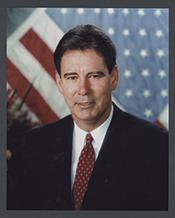
Mr. Speaker, due to a death in the family, I was absent from the House on Wednesday, June 4 and Thursday, June 5. Had I been present, I would have voted the following way: rollcall vote 236--yea,…
Mr. Speaker, due to a death in the family, I was absent from the House on Wednesday, June 4 and Thursday, June 5. Had I been present, I would have voted the following way: rollcall vote 236--yea, rollcall vote 237--yea, rollcall vote 238--yea, rollcall vote 239--yea, rollcall vote 240--nay, rollcall vote 241--nay, rollcall vote 24--yea, rollcall vote 243, H. Res. 256--yea, rollcall vote 244--yea, rollcall vote 245--yea, rollcall vote 246--yea, rollcall vote 247--yea, rollcall vote 248--yea.
In particular, I would like to specifically express my strong support for H.R. 760, the Partial Birth Abortion Ban Act of 2003. This has been a bill that I have supported for many years and I am glad that it has again seen passage in the House. For nearly a decade Congress has attempted to see this legislation become law, and I am pleased that my colleagues have yet again affirmed the message that partial birth abortion is wrong by passing this bill.
There has been overwhelming support for a ban on partial birth abortions. The partial birth abortion ban has been passed in various forms by the House eight times, including multiple veto overrides. Having been first considered during the 104th Congress, we have seen numerous state legislatures take action and vote to end partial birth abortions in their states.
I am pleased that we have acted strongly and unmistakably by voting once again to preserve life and ban the heinous practice of partial birth abortions. The administration has stated their support of this bill and is willing to take positive action and sign this ban into law.
I understand that the issue of abortion is difficult for many. Well- intentioned people on both sides of this debate will continue to disagree. How long, though, can our society continue to justify its denial of the right to life to the defenseless unborn? The value of life has been consistently cheapened.
Partial birth abortion is a graphic example of the worst of abortion. Congress has taken a stand to uphold the value of life, especially in these instances in which life is so blatantly being destroyed. I am pleased that many have acted in support of this legislation. My colleagues have continued to support of human life and have voted in favor of a ban on partial birth abortions. Had I been present, I would have voted ``yea'' on this important bill.
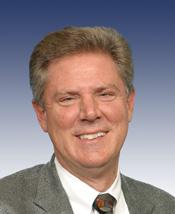
Mr. Speaker, I rise in opposition to the rule because the Republican leadership is not allowing us to bring up the Child Tax Credit for these lower-income working families. Exactly what my colleague…
Mr. Speaker, I rise in opposition to the rule because the Republican leadership is not allowing us to bring up the Child Tax Credit for these lower-income working families.
Exactly what my colleague from Massachusetts said is certainly true. This provision which the Republicans eliminated because they did not want to help the working class and working people was financially paid for, and, again, we are trying to get it passed again and it is paid for completely by closing up corporate tax loopholes.
The problem is that the Republicans, they just do not want to give it to these working families. Already the other side the other body is saying that they want to add a child tax credit for people at a higher income level, or the gentleman from Texas (Mr. DeLay) has said that he wants to add more tax cuts here for wealthy people and for corporate interests.
That is the thing that would cause an increase in deficit because they have not paid for it. We are saying, as Democrats, we can pay for this child tax
credit for these working families under $26,000-or-so in income annually by closing tax corporate tax loopholes; and the Republicans are saying, oh, no, we cannot do that because the only way we will consider it is if we give some child tax credit to higher-income people or other tax cuts to other wealthy people and millionaires, and we do not care whether we pay for that because we do not have any way to pay for that. That just goes into the deficit.
The hypocrisy is unbelievable. My colleagues should simply admit that the Republicans really do not care about the working people at the lower-income levels. They are not willing to give them any kind of tax credit. They can pass the bill today in the other body and send it over here or vice versa, and it is fully paid for; but they are not going to do it, and I can tell my colleagues there are about 200,000 people, children of soldiers in the Armed Forces, that are also being left out of this.
We did a little analysis and found out that these 12 million children that are left out, a good many of them are children of military personnel. So these guys and their families, they are fighting over in Iraq or they are stationed somewhere in the world and defending the country, and they cannot get a lousy child tax credit. It is outrageous.
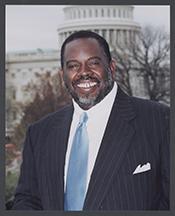
Mr. Speaker, yes, there is an uproar; and, yes, we are appalled. We are appalled that the children of 12 million working families have been excluded from this bill. They are quite content to give…
Mr. Speaker, yes, there is an uproar; and, yes, we are appalled. We are appalled that the children of 12 million working families have been excluded from this bill. They are quite content to give $93,000 in tax cuts to the very wealthy millionaires; but we have 12 million children who have been excluded, 196,000 from my State of Maryland. Yes, there is an uproar. There is something fundamentally wrong with that.
What the Republicans are trying to tell Americans is that these people do not pay taxes. Oh, yes, they do. Number one, they work every day. Every one of these families works every day. Number two, they pay property tax, sales tax, entertainment tax, and they pay all the other kinds of taxes. Importantly, many of these people are in the military. They are privates, they are grunts, they are the people who do the dirty work to defend our country. Yet our Republican colleagues say it is okay to give a millionaire $93,000 in tax cuts, but it is not okay to give someone making less than $26,000 a tax break.
Mr. Speaker, I do not call that welfare; I call that democracy. We are Democrats. Every time we talk about this issue, the Republicans want to say that is class warfare. Yes, that is class warfare. But let me talk about that class. It is a class composed of people who work every day and make less than $26,000 a year. They have 12 million children, and they are not going to get the benefit of tax relief.
Republicans want to talk about putting money back into Americans' pockets. What about the class of Americans that work every day but do not get the benefit of this big $350 billion tax deal? This tax deal gives a $90,000 tax cut to millionaires, but they cannot give $1,000 to a family that works every day and has a child. My colleagues have the audacity to come on this floor and say it is welfare. Yes, there is going to be an uproar. Yes, I am appalled, because it is undemocratic, it is unfair, and it is disgraceful.
All my Republican colleagues want to do is give more money to the very rich; and when we tell them that people are working and need a tax break, they cannot see fit to do it, particularly when some of those people are in our military. It is a disgrace. Let us reject the Republican approach.
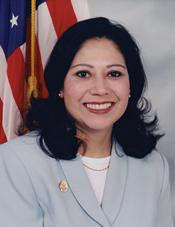
Mr. Speaker, I also rise today to voice my strong opposition to this rule. There is a lot of talk about what the recent tax cuts would do for our economy and for working families, and I would like to…
Mr. Speaker, I also rise today to voice my strong opposition to this rule. There is a lot of talk about what the recent tax cuts would do for our economy and for working families, and I would like to talk a little bit about what they will not do.
The $350 billion in tax cuts leaves out working families, in particular, families that make anywhere between $10,000 and $26,000. They will not qualify for a child care tax credit. I ask my colleagues to look at this photograph that I have here. This is a working family, a representation of a family that lives in my district. They make $24,000 a year. They will not get a rebate. They have a son that is serving in our war, that is serving in our war in Iraq; but he will not get any benefit from this tax cut.
Let us really talk about working families and what they do for our economy. They do pay Social Security taxes, they do pay sales taxes. In fact, they are taxed so much that they are looking to us as representatives of this House to do the right thing. One million children in military families, like these families, will get no tax break or credit. This is wrong.
We know that somehow the Republicans found $90 billion to give to 200,000 millionaire families. Imagine that. That money will not make it to my district because I do not have a single millionaire that lives in my district. We have people that make less than $20,000, so they do not get the benefit of that money.
Republicans say this is class warfare that we are discussing. Look at the facts. The money does not come home to the districts that send money here to Washington because our Republican colleagues are sending it to their friends. In fact, in California, 31 percent of California families will not receive any child tax credit, and that includes 2.4 million children in California alone. Forty-seven percent of those Californians will get a total tax credit of less than $100; $100 does not even help to pay rent in my district, where an apartment goes from $800 to $1,000.
I urge Members to vote ``no'' on the rule. Let us do a child tax credit that is fair for working families.
Mr. Chairman, I yield myself such time as I may consume. Mr. Chairman, I think this is a very good idea. It is efficient. We make sure consumers are fully protected. I agree with just about…
Mr. Chairman, I yield myself such time as I may consume.
Mr. Chairman, I think this is a very good idea. It is efficient. We make sure consumers are fully protected. I agree with just about everything everybody else is going to say today.
Mr. Chairman, I yield such time as he may consume to the gentleman from New York (Mr. Weiner).
Mr. Chairman, will the gentleman yield?
The gentleman is right, we are trying in everything we have done, and I think we have accomplished that in our committee so far. The chairman has been very cooperative in promoting efficiency while protecting consumers. This bill, as I said, does do that with regard to your ability to get the check if you actually need it.
The gentleman raises a point that had not previously occurred to me that I think is a good one. I think it ought to be addressed. I would be obviously, as I have told him, very reluctant to do it now without a chance to examine it and have some hearings.
We do have pending in the process a more comprehensive bill called the Regulatory Relief Bill into which I believe this would fit. The bill passed our committee. It is being sequentially referred to the Committee on the Judiciary.
There are some important issues there, particularly including the industrial loan corporations, where we have given assurances that we are going to try and work some compromises out. So I can guarantee to the gentleman from New York (Mr. Weiner), who has raised this very important issue, that further work remains to be done on regulatory relief. I have spoken to the chairman of both the full committee and the subcommittee, and we agree that this is an issue worthy of consideration.
I would say this, whether or not we would all ultimately agree on a solution cannot be predicted. Certainly the gentleman will, I believe, have an opportunity if not to offer it today to offer it later, and I hope then to be able to offer it with a good deal more agreement.
Mr. Chairman, I ask unanimous consent that the gentleman from Tennessee (Mr. Ford) be allowed to manage the remainder of our time on this bill.
Mr. Speaker, the sort of checks that Americans are interested in hearing about are not the check clearing system technicality but the checks they receive as a result of their hard work or as a result…
Mr. Speaker, the sort of checks that Americans are interested in hearing about are not the check clearing system technicality but the checks they receive as a result of their hard work or as a result of tax refunds.
This July most all Americans with children will be receiving a check in their mailbox as a result of the child tax credit that we passed some 2 weeks ago. Except for the parents who are in the military, who are in the National Guard who do not make a whole lot of money serving our country, and except for the low-income parents who work hard every day for minimum wage or a little bit above, they and their children will not be receiving these checks.
Why? Six million parents, 12 million of the most deserving people in our country, will not be receiving checks because of a deliberate, secret, back-room deal cut by Republican leadership.
Now, most of my constituents want bipartisan government. They want Democrats and Republicans to work together for the greater good of this Nation. And now that our government is under the control of a Republican White House, a Republican Senate, and a Republican House leadership, people are asking, what decisions are they making?
Well, they are making decisions to leave out 12 million poor children, 12 million deserving folks who need a future in this country; and $400 each would do them a lot of good. It would not only stimulate the economy, it would address the fundamental fairness of that legislation.
Now, many of the folks on the right are saying, well, their parents do not pay taxes. They do pay payroll taxes. They pay property taxes. They pay sales taxes. I dare any of the Members to go to these people and say they do not pay taxes. These are not welfare recipients. These are hard-working people trying to build the American dream, and this House deliberately left out those parents and their 12 million children because we did not have room to fit it into a $350 billion tax bill. All we are asking for is 1 percent of that bill, $3.5 billion to be devoted to the needs of 12 million deserving American kids.
Bill Text
2 versions available
        [Congressional Bills 108th Congress]
[From the U.S. Government Publishing Office]
[H. Res. 256 Engrossed in House (EH)]

In the House of Representatives, U.S.,

June 5, 2003.
Resolved, That at any time after the adoption of this resolution the Speaker
may, pursuant to clause 2(b) of rule XVIII, declare the House resolved into the
Committee of the Whole House on the state of the Union for consideration of the
bill (H.R. 1474) to facilitate check truncation by authorizing substitute
checks, to foster innovation in the check collection system without mandating
receipt of checks in electronic form, and to improve the overall efficiency of
the Nation's payments system, and for other purposes. The first reading of the
bill shall be dispensed with. All points of order against consideration of the
bill are waived. General debate shall be confined to the bill and shall not
exceed one hour equally divided and controlled by the chairman and ranking
minority member of the Committee on Financial Services. After general debate the
bill shall be considered for amendment under the five-minute rule. It shall be
in order to consider as an original bill for the purpose of amendment under the
five-minute rule the amendment in the nature of a substitute recommended by the
Committee on Financial Services now printed in the bill. Each section of the
committee amendment in the nature of a substitute shall be considered as read.
During consideration of the bill for amendment, the Chairman of the Committee of
the Whole may accord priority in recognition on the basis of whether the Member
offering an amendment has caused it to be printed in the portion of the
Congressional Record designated for that purpose in clause 8 of rule XVIII.
Amendments so printed shall be considered as read. At the conclusion of
consideration of the bill for amendment the Committee shall rise and report the
bill to the House with such amendments as may have been adopted. Any Member may
demand a separate vote in the House on any amendment adopted in the Committee of
the Whole to the bill or to the committee amendment in the nature of a
substitute. The previous question shall be considered as ordered on the bill and
amendments thereto to final passage without intervening motion except one motion
to recommit with or without instructions.
Attest:

Clerk.