Providing for consideration of the bill (H.R. 2555) making appropriations for the Department of Homeland Security for the fiscal year ending September 30, 2004, and for other purposes.
Legislative Activity
Stay on top of the latest movement without scrolling through every action
Motion to reconsider laid on the table Agreed to without objection.
June 24, 2003 • 1:11 PM
View full timeline
Introduced in House
June 23, 2003
The House Committee on Rules reported an original measure, H. Rept. 108-175, by Mr. Diaz-Balart, L..
June 23, 2003
Waives all points of order against consideration of the bill. The bill shall be read for amendment by paragraph. Waives points of order against provisions in the bill for failure to comply with sec. 501 of H. Con. Res. 95, (prohibiting advanced appropriations) and clause 2 of rule XXI (prohibiting unauthorized appropriations or legislative provisions in an appropriations bill), except as specified in the resolution. Authorizes the Chair to accord priority in recognition to Members who have pre-printed their amendments in the Congressional Record.
June 23, 2003 • 9:20 PM
Placed on the House Calendar, Calendar No. 71.
June 23, 2003
Considered as privileged matter. (consideration: CR H5734-5742)
June 24, 2003 • 11:37 AM
DEBATE - The House proceeded with one hour of debate on H. Res. 293.
June 24, 2003 • 11:38 AM
On ordering the previous question Agreed to by the Yeas and Nays: 221 - 196 (Roll no. 301). (text: CR H5741)
June 24, 2003 • 1:05 PM
Passed/agreed to in House: On agreeing to the resolution Agreed to by recorded vote: 220 - 197 (Roll no. 302).(text: CR H5734)
June 24, 2003 • 1:11 PM
On agreeing to the resolution Agreed to by recorded vote: 220 - 197 (Roll no. 302). (text: CR H5734)
June 24, 2003 • 1:11 PM
Motion to reconsider laid on the table Agreed to without objection.
June 24, 2003 • 1:11 PM
Voting History
2 votes recorded • Roll call available
Floor Debate
23 membersWhat members said about H.Res. 293 on the floor
 HR
HR MF
MF DRO
DRO LR
LR MOS+18
Floor Debate
23 membersWhat members said about H.Res. 293 on the floor
Mr. Chairman, I yield myself such time as I may consume. Mr. Chairman, this is a historic day. Only 4 months after the Department of Homeland Security was stood up, we now consider in the Congress…
Mr. Chairman, I yield myself such time as I may consume.
Mr. Chairman, this is a historic day. Only 4 months after the Department of Homeland Security was stood up, we now consider in the Congress the very first ever Homeland Security appropriations bill on the House floor.
The creation of the Department is by far the largest reorganization of the Federal Government in its history. Mr. Chairman, 180,000 employees, 22 security-related agencies merged into a single unit, agencies as diverse as the new Transportation Security Administration, FEMA, the Customs Service, the Secret Service, the Coast Guard, and some 18 other agencies throughout the government.
But, Mr. Chairman, I want to spend a couple of minutes talking about the breadth of the problem that we face.
On our borders, we have to protect ourselves: 2,000 miles of border with Mexico; 5,500 miles of border with Canada. There are 9,500 miles of shoreline. We have 157 ports of entry, 361 seaports. There are 440 million visitors who arrive in our country by land, sea, and air each year. There are 118 million vehicles that come here, 11 million of them trucks; 2.5 million railcars; and 17 million cargo containers that cross through our ports every year.
In transportation, there are some 768,000 commercial flights that enter the U.S. at 429 commercial airports, carrying some 635 million passengers a year. We have 18,000 general aviation airports. We have 143,000 miles of freight railways, 3.9 million miles of highways, and 550 major public transportation systems throughout our country. There are 590,000 bridges. There are 526,000 interstate trucking companies, 43,000 of them certified to carry hazardous materials.
We have 150 oil refineries, 86,000 miles of crude oil pipelines, 278,000 miles of natural gas pipelines. There are 66,000 chemical and hazardous materials plants. There are 1,800 Federal reservoirs. There are 9,300 power plants, including 104 nuclear, in our country.
And then there are all sorts of high-target, high-risk symbols of our Nation. We are speaking from one even as I talk now: the Capitol. We have the White House, the Washington Monument, the Lincoln Memorial, the Statue of Liberty, the St. Louis Arch, the Golden Gate Bridge, and on and on and on, including some 463 skyscrapers in our land.
I mention those facts, Mr. Chairman, to highlight the enormous challenge that we face as we begin to tackle our homeland security needs. Protecting American citizens from harm is the first and foremost duty of the Federal Government, and this awesome task largely falls upon the shoulders of the Department of Homeland Security.
This bill, Mr. Chairman, provides $29.4 billion for the Department. That is an increase of just over $1 billion above what we were asked by the President, and $535 million more than the current-year levels.
The bill recognizes that while the Department of Homeland Security has the lead in developing our national Homeland Security strategy, implementation of that strategy requires the active participation of State and local governments and the private sector.
When it comes down to it, homeland security, Mr. Chairman, is essentially hometown security; and it requires the active engagement of all Americans and all branches of government.
The bill before us today recognizes the role each stakeholder must play in this big mission. It funds not only the Department's first full year of operations, but also anticipated efforts of State and local governments and the private sector.
As we debate this bill today, I urge my colleagues to remember everything that has been accomplished since September 11. While some might suggest that we are not doing enough, I would say we are making tremendous progress in our war on terror. The glass is not half empty; it is half full.
Since September 11, we have provided $75.8 billion for homeland security funding across the entire government. For these 22 agencies that now make up the new Department of Homeland Security, we have provided $43.9 billion through fiscal year 2003; and in this bill, we add an additional $29.4 billion, bringing the total provided to the Department to $73.3 billion for fiscal years 2002 through 2004.
Protecting the Nation's borders is our first line of defense against terrorism. We include in the bill a total of $9 billion for border protection and related activities. That is an increase of $400 million over the current enacted levels, including $2 billion for the U.S.
Coast Guard homeland security activities. This bill makes innovative technology and capital investments a priority, recognizing that our borders will only be secure when we use a combination of people and technology.
Since September 11, 5,400 inspectors, special agents, and Border Patrol agents have been added to our borders, increasing coverage at ports by 25 percent. An additional 4,100 Coast Guard personnel have been hired to protect our ports and our waterways, increasing the intensity and number of inspections at ports of entry. We will continue to inspect 100 percent of all high-threat cargo and high-threat vessels coming into our waters.
We include $388 million for port security grants. The $100 million included in this bill is another down payment to secure critical port facilities, bringing the total funding since 9-11 to $488 million.
Since September 11, we have provided $263 million for technology, including radiation detectors for our ports and nonintrusive inspection technologies for cargo screening. These technologies have been deployed at our busiest land and sea ports, including Miami, Los Angeles, and Newark; and in this bill we add another $129 million for those technologies, bringing the total since 9-11 to $392 million.
We provide $60 million for the Customs Container Security Initiative, fully funding that effort since its inception. We include $62 million for that program, bringing the total funding to $122 million to support the participation of nearly all of the 20 foreign megaports from which we receive practically all of our cargo. This initiative targets high- threat cargo before it comes into our ports.
We also place in the bill a high priority on funding our State and local first responders. I believe it is essential that our State and local governments have the resources to address the needs of our hometowns. We include $4.4 billion for our first responders, law enforcement officers, firefighters, and emergency response personnel. And since September 11, Mr. Chairman, I want all of my colleagues to hear this: since September 11, the Congress has appropriated $20.8 billion in assistance to our State and local governments for terrorism prevention and preparedness.
That, Mr. Chairman, is an increase of 1,000 percent before 9/11. Despite that significant investment, there are concerns about how and when this money gets to both State and local organizations. I agree in some instances it is taking too long for those funds to get there and the complex process is complicated and cumbersome. We tried to address that in this bill. I am optimistic that this issue will be addressed as part of the final bill that is sent to the President for his signature.
Enhancing transportation security is a continuing concern. Since 9/11 we have provided a total of $10.38 billion for passenger safety through the Transportation Security Administration. Passenger screening, baggage screening, cargo screening, an additional $5.172 billion is included in this bill. Since September 11, $1.5 billion has been spent on explosive and trace detection systems, including the development, procurement and installation in our airports. We include in this bill an additional $335 million for the purchase and installation of these systems, as well as $50 million for air cargo safety and $40 million for research on next generation technologies at our airports.
Science and technology are critical to improving security, increasing efficiency and reducing costs. We include $900 million for science and technology, including $60 million, Mr. Chairman, to design develop and test any missile devices for our commercial aircraft. Other funds are targeted at research, development and rapid deployment of innovative technologies that our universities and other public and private organizations are already developing.
Lastly, the bill includes $5.6 billion over 10 years to encourage commercial development and production of medical countermeasures against bioterrorism, the so-called BioShield program. Funding in fiscal year 2004 is limited to $890 million. These funds will remove the barriers to develop next generation treatment for potential bioterror agents and will encourage the private sector to conduct the necessary research to counter bioterror threats.
Mr. Chairman, the bill before us today is the first Department of Homeland Security appropriations bill ever considered by these bodies. I believe it presents a well-balanced approach to tackling the job ahead. It invests in people. We invest in technology. We invest in partnerships. It funds efforts to assess our vulnerabilities and capitalize on our assets.
A lot of people would want us to spend tons and tons of more money, and believe me, if we thought it was useful to do so we would have no compunction against doing that. But there has got to be somewhere where we sensibly allocate our funds to our vulnerabilities and spend those dollars, but we should not spend money just for throwing it away.
I believe this bill is responsible, and I urge my colleagues to support this historic measure.
Mr. Chairman, I reserve the balance of my time.
Mr. Chairman, I yield 1\1/2\ minutes to the gentleman from Tennessee (Mr. Wamp), a very valuable member of our subcommittee, who has contributed much to this bill.
(Mr. WAMP asked and was given permission to revise and extend his remarks.)
Mr. Chairman, I yield 1 minute to the gentleman from Iowa (Mr. Latham), a very distinguished and very helpful member of our subcommittee who contributed greatly to this bill.
(Mr. LATHAM asked and was given permission to revise and extend his remarks.)
Mr. Chairman, I yield 1 minute to the distinguished gentleman from New York (Mr. Sweeney), who has been a member of the subcommittee who has been extremely helpful to us in this bill.
Mr. Chairman, I yield 1 minute to the gentlewoman from Missouri (Mrs. Emerson), the hard working member of our subcommittee.
Mr. Chairman, I yield 1 minute to the gentlewoman from Texas (Ms. Granger), another hard-working member of our subcommittee.
Mr. Chairman, will the gentlewoman yield?
Mr. Chairman, I thank the gentleman and gentlewoman for this colloquy and applaud the fight they have led for New York, which is one of the reasons we enacted a total of $800 million for high-threat, high-density urban areas in fiscal year 2003.
Of that $800 million, New York received $186 million to assist first responders with the increased security costs associated with the war in Iraq and Operation Liberty Shield. I am aware of the concerns the formula has generated. I assure my colleagues I appreciate the degree to which New York is a target and the expenses New York faces. I am also aware of those rural areas that rely on the basic formula grants to fulfill their first responder requirements. I believe any reform to the formula must ensure that these rural areas are not abandoned. I will work closely with the gentlewoman and the gentleman as the bill progresses to conference on these and other matters.
Mr. Chairman, will the gentleman yield?
Only in a general sense. The presence of high-risk infrastructure, the urban intensity of the region, we leave it to the discretion of the Secretary, as I think we should, rather than some formula. As the gentleman knows, we have been working together.
Mr. Chairman, if the gentleman will continue to yield, the gentleman is correct, but I think in due course of time, perhaps before the bill finally reaches the President, we will have found out more.
Mr. Chairman, I yield 2 minutes to the gentleman from California (Mr. Cox), the chairman of the Select Committee on Homeland Security.
Mr. Chairman, I yield back the balance of my time.
Mr. Chairman, I rise in opposition to the amendment.
Mr. Chairman, I rise in reluctant opposition to this amendment by the gentleman who has been working very
hard on the issue. Originally, this program permitted those certified as low-risk travelers to cross the Mexican border on an expedited basis for 1 year. However, in order to accommodate the unexpected increases in enrollment in that program following 9-11, Customs and Border Protection in February 2003 extended the enrollment period to 2 years. That had the effect of benefiting both participants in the program and the government by reducing paperwork and made the annual enrollment fee a biennial fee. But current enrollees had their eligibility automatically extended for 2 years from the date of their last enrollment and the applications backlog that was being blamed for increased waits at the border has been greatly reduced. So I do not think the problem is as bad as it perhaps was at the outset.
Number two, we took $333 million in the 2003 wartime supplemental and gave that to the Bureau of Customs and Border Protection. We have not received their spend plans on how they intend to use those funds. The Department, however, could, I would remind the gentleman, could use a portion of the supplemental to support the SENTRI expansion. They do have some discretion.
Number three, and the gentleman alluded to this. We have already cut the funds for the Department's administration by 25 percent. The moneys he would take with this amendment would come out of administration. We have already cut them past the bone almost. Additional reductions could reduce the basic departmental administration programs and impair their ability to fulfill management of the entire agency.
For all those reasons, Mr. Chairman, I reluctantly oppose the amendment and would urge Members to reject it.
Mr. Chairman, I move to strike the requisite number of words, and I rise in opposition to the amendment.
Mr. Chairman, the gentleman that just spoke made some comments that I feel must be responded to. It is not really relevant to this amendment, but I will try to make it so, and that is whether or not we are providing enough funding for our State and local responders. I hear it every day. We hear it every day. Most people are uninformed or misinformed about how much money is going out there. In this bill we provide over $4 billion, and added to the moneys that we put in the 2002 bill and the 2003 bill, we will have appropriated some $20.8 billion just for State and local first responders. The money is going out in different sorts of grants. There are eight or 10 different sorts of grants, one of which goes to the high-threat urban areas such as New York, Washington, L.A., other places, and those go out at the discretion and in the decision of the Secretary.
Last year, the current year 2003, we provided $800 million for just the high-threat/high-density urban areas. The administration in the 2004 request did not request any funds in that account. We put $500 million back in that account, and that is in the bill as we speak. However, in the other grant accounts we have increased the grants for State and local first responders by over $1 billion. We do not hear that talked about, but it is there. There is over $1 billion more in those grant programs this year and next year than this year, $203 million above what we gave this year and $1 billion over what the President requested.
So I want to ask where is the beef? Where is the beef?
Those moneys are going out under competitive and discretionary grant programs to our States. Under this bill our States are required by law to give that money, 80 percent of it, to the locals within 60 days. The States have got to set up their own machinery for processing these applications. They have not done that yet. New York's application was almost tardy. We are just now getting the applications. And yet then we are saying you are not giving us the money. The money is there when you qualify and will be there during this year, but we have increased the amounts of money that go to State and local first responders $203 million above what they have now and $1 billion more than was requested by the President.
If the administration wants to submit a change in their budget request that changes these grants in some fashion, I am sure they will send us the supplement to their budget and we will give it due consideration. But, Mr. Chairman, I want to be sure that Members understand the State and local first responder grant moneys are there more than last year, $1 billion more than the President requested. If the States will get their committees together and do their paperwork and apply for these moneys, they will be there, and if there are any delays in the pipeline, it is mainly because the States and localities have not applied for the money.
So Mr. Chairman, I rest my case.
Mr. Chairman, I reserve a point of order.
Mr. Chairman, I make a point of order against the amendment because it proposes to change existing law and constitutes legislation in an appropriations bill and therefore violates clause 2 of rule XXI, which states, in part, an amendment to a general appropriations bill shall not be in order if changing existing law, and I ask for a ruling from the Chair.
Mr. Chairman, I demand a recorded vote.
Mr. Chairman, I rise to oppose the amendment.
I yield to the gentleman from New Jersey.
I certainly will.
I thank the gentleman for his advocacy on behalf of the Coast Guard, and he has been a champion at that for his entire career in the Congress.
While I cannot support his amendment, I do recognize the need to provide additional funding for Deepwater and for the administrative costs associated with the review and approval of the congressionally mandated facility and vessels security plans. I look forward to continuing to work with the gentleman from New Jersey to ensure adequate resources are made for these priorities in fiscal 2004.
Mr. Chairman, I want to thank the distinguished gentleman for his very thoughtful comments and agree that the needs of older Americans and those with special needs should be addressed. I look forward to working with the gentleman on this important issue.
Mr. Chairman, I rise in opposition to the amendment.
Let me say, Mr. Chairman, I reluctantly, very reluctantly rise to oppose this amendment. The gentleman is a good Member, and he has expressed heartfelt thoughts here. And, goodness knows, I have expressed very serious and long-standing reservations about the number of screeners that TSA has deployed in airports throughout the country. But in the bill before us we already reduce the number of screeners by another 4,600 in fiscal 2004, and that is on top of the 6,000 screeners that will be laid off between now and September of this year. That would be a reduction from current levels, roughly, of some 10,600 less than we have now.
In the 2002 bill, when it was in Transportation, we capped the number of screeners at 45,000. This cut the gentleman would make would take us well below that cap. This further reduction of $20 million from the screener fund would require them to lay off another 500 to 1,000 screeners on top of what I just mentioned. That would take us well below the 45,000 level that we had set now for the 2 or 3 years in the Congress as the maximum level at TSA.
The monies the gentleman would take from TSA he would give to the first responders, and heavens knows we want to give them all we can, but in this bill, as the gentleman mentioned, we are already $1 billion for first responders above what the President requested, and some $200 million plus above what the current level of spending for first responders is. So I just think that it would be unwise to adopt this amendment, as much as I sympathize with the gentleman's philosophy in offering it.
I yield to the gentleman from Minnesota.
Reclaiming my time, Mr. Chairman, I thank the gentleman. I would rather that we let the TSA absorb these cuts that we already have in place, which will cut 10,600 screeners by the end of 2004. Let us do that before we take further steps. We can assess it at that time. If we still have a problem, I would be supportive of the gentleman's amendment. But for the moment, I think we have done just about enough.
Mr. Chairman, I move to strike the last word.
Mr. Chairman, I could not let the gentleman's statement go unanswered. We cannot talk in this forum about all that we are doing at our ports in searching container freight and other freight. I would be happy to talk to any Member privately about it, but we cannot talk about all that we are doing in a public forum because it is sensitive information.
However, the Customs and Border Protection Agency tells me that they are inspecting 100 percent of all high-risk cargo based on collecting advanced information such as manifests, intelligence, and targeting systems. I have had the experience of going to some of those ports myself and watching the operation. Watching as we use the equipment on these containers that we do search and then the ones that we physically search.
The 2003 spending bill had monies in it for a thing called the Container Security Initiative, essentially operating at about 20 megaports and several smaller ports all over the world. The idea is to push the perimeter of defense off of our shores. We all know if a bad container gets to us, it is too late. If you catch it only when it comes to your port, it is too late. So we have moved offshore to 20 megaports now, places like Rotterdam, Singapore, and the like, and inspecting and searching and securing containers before they ever sail for America.
Mr. Chairman, the bill provides $62 million to expand that to 30 megaports around the world and especially those in very sensitive parts of the world.
Now we already have in place $165 million from the wartime supplemental that we passed for additional inspectors, agents, technology and $129 million for additional inspection technology in this bill. Those monies will be used to push the border out to these 30 foreign seaports through the Container Security Initiative, but there is also $12 million for government-private partnerships to tighten security in private facilities and $3 million to continue what is called the Operation Safe Commerce to make smart containers and our supply chain even more secure.
I want Members to know that we are focusing exactly on what the gentleman has talked about, and that is container freight. There are more than 17 million containers a year, there is 17 million a year; 7 million comes by sea, 12 million by land across our borders with Mexico and Canada. It is a huge problem to deal with.
However, if we stop and search physically every single container regardless of whether or not it looks to be suspicious for some reason, we would absolutely shut down commerce in the world. So much of our commerce depends on the container freight business. I think we are going about it the sensible way. I am convinced after having visited several ports, spending a lot of time with the folks that are doing this, looking at the machinery and the results and how they go about doing it, that we are doing as good as we can in the span of time that we have had. Obviously it is going to get better. We are going to keep pushing at it. That is the reason we have loaded this bill down with money for that very purpose. I thank the gentleman for bringing this issue to us so we can discuss it.
Mr. Chairman, I move to strike the last word.
I am compelled again to talk about New York. All of us here are sympathetic, understanding, we want to help; but I feel compelled to lay out some facts that have not been laid out here. The fiscal year 2003 bill, we gave $800 million in that bill for the high-threat, high- density urban area grants and the discretion of the Secretary. $100 million of that was in the omnibus; $700 million was in the supplemental. However, that money has not been spent. There is $800 million laying there. Why? Because the grant application deadline for that first $100 million just ended on June 16, a couple of weeks ago, and has not been processed. The application deadline for the $700 million that was in the supplemental is not up until July 7. We have not processed the applications yet. Those moneys will be going out there, to New York and the other cities.
In addition to that, what I am saying is, I guess, have a little patience. Number two, when the President's request
came up to us for fiscal year 2004, there was no request for high threat, high-density urban grant moneys. Zero. The subcommittee worked on it, and we put in $500 million. Now people call that a cut. Boy, that is a strange use of the word. We increased it $500 million. If the Secretary thinks we ought to change that, then he needs to send us a budget supplemental and amend his request and we will consider it.
However, all of the other grant programs, and there are six or seven of them, there are basic formula grants, there are law enforcement terrorism prevention grants, there are critical infrastructure grants, there are firefighter assistance grants, there are emergency management performance grants, there are emergency operations centers grants, all of which New York is eligible to apply for. We increased those funds over what the President wanted us to by $1 billion. So that now there is $4.04 billion available in those grant programs immediately. I would guess just by the odds and by the importance of New York that when you apply for those grants with the increased numbers there, all of these grants, you are probably going to wind up with more money than you got this year. But, please, have patience and understand that the rest of the country is interested in this as well. We want to help you, but I ask for your patience and understanding.
Mr. Chairman, I would be happy to answer a question.
That is correct.
Five hundred million.
It goes to the so-called high-threat/high- density urban areas of the country, and I think they are talking probably of 20 cities or less, in the complete discretion of the Secretary.
I would guess so. But there are not many ocean ports in Minneapolis, I do not think.
I hear the same thing every day.
That is the way I understand the amendment. It would take $200 million away from all the States in order to beef up this cap from $500 million to $700 million just for the high-density/ high-urban area grants.
The gentleman is correct. In addition to that, as we have previously said, the subcommittee increased the amount of money for all of the grant programs of which there are seven, for firefighter grants and for infrastructure grants, emergency management grants, formula grants to States and cities and the like. All those grant programs, we increased by $1 billion above what the President wanted and $203 million more than the 2003 levels. So all of the States that have these high-density urban areas that would be eligible for the high-density grants will also be eligible for very larger pots of money that everyone else is trying to share with, and yet this amendment would take from that moneys and put it into the high-density/high-urban areas. We have gone through this in our subcommittee and in our full committee and we have labored with it and wrestled with it with the gentleman and in a bipartisan fashion from big cities and small, big States and small, and this was the best we could do. We think it is a fair way to do it. And to take the moneys from one area now and give it to another would open us up to an ugliness that I do not think we need to see in this battle.
Mr. Speaker, I yield myself such time as I may consume. (Mr. FROST asked and was given permission to revise and extend his remarks.) Mr. Speaker, I supported the Department of Homeland Security back…
Mr. Speaker, I yield myself such time as I may consume.
(Mr. FROST asked and was given permission to revise and extend his remarks.)
Mr. Speaker, I supported the Department of Homeland Security back when most Republicans still opposed it, and I served on the Select Committee that created the new Department last year, so I expect to vote for this bill to fund the Department on final passage.
But before we get to that point, Members will have the chance to address several serious weaknesses in America's homeland defense system.
First, we need to pass the amendment of the gentleman from Wisconsin (Mr. Obey), the ranking member of the committee, to increase security at our ports, our airports, and our northern border, and to meet other vital security needs identified by the Bush administration. As it stands, the base bill does not address major holes in homeland defense, and the Obey amendment would plug some of those. And to do it, all we have to do is ask millionaires to take slightly smaller tax breaks than they are already getting next year. It is a reasonable trade: about 200,000 millionaires would give up just $5,000 of the over-$88,000 in tax breaks they are getting next year, and all Americans would get critical homeland security investments.
Unfortunately, the Republican leadership is not willing to ask millionaires to accept an $83,000 tax break next year rather than an $88,000 tax break, so they blocked the Obey amendment.
Fortunately, Mr. Speaker, addressing the second issue does not cost a dime, but it is fundamental to the success of the new Department of Homeland Security. As my colleagues will recall, when the Congress created this powerful new domestic security agency last year, several Members, Republicans as well as Democrats, expressed concern that its powers could be abused and turned against law-abiding American citizens. The former House majority leader, Dick Armey of Texas, was particularly outspoken on this issue.
Unfortunately, we have already seen an example of the danger that concerned Mr. Armey.
And that is why it is absolutely critical that the House act to protect the Department of Homeland Security from ever again being used as the Department of Political Security, as happened just last month.
Mr. Speaker, the Department of Homeland Security became involved in a partisan political dispute last month when it helped Texas Republicans hunt down law-abiding Democratic State legislators. Specifically, the Homeland Security agency charged with tracking terrorists was enlisted to help Texas Republicans trying to track Democratic lawmakers who had stood up to the Republican leadership in Austin. These Democratic legislators violated neither State nor Federal law. They simply used a legal parliamentary tactic, breaking a quorum, in a legislative battle to stop an unprecedented bill to unnecessarily redraw Texas's congressional districts. They employed a legitimate parliamentary tactic that Republicans have used at other times and in other places.
But when Abraham Lincoln broke a quorum in the Illinois legislature in 1839, his political opponents did not have the option of using the Department of Homeland Security to track him down. Neither did the officers of the U.S. Senate in 1988 when Senate Republicans tried to break a quorum.
Today, however, the Department of Homeland Security has enormous domestic intelligence powers. And somehow, on May 12, 2003, America's homeland security resources were employed to help Texas Republicans against their political rivals.
There is really no disputing this, Mr. Speaker. According to a report by the Department's own Inspector General, the Homeland Security Department's Air and Marine Interdiction Coordination Center spent its resources helping the Texas State police and the Texas Republican leaders directing the manhunt trying to find the plane of former Texas Speaker Pete Laney, a Democratic legislature who had flown to Oklahoma, to break the quorum. Many of my colleagues will remember Mr. Laney as the Democrat who introduced George W. Bush to the Nation on the night that he was declared President by the Supreme Court.
If my colleagues can believe it, Mr. Speaker, Homeland Security officials maintain that the 40 minutes they spent assisting in the Texas Republican's manhunt was only a ``minimal'' amount of work. That is a troubling excuse.
If the Department of Homeland Security spent just 1 minute in a domestic political dispute, then it was 1 minute too long. But they spent 40 minutes, which is longer than it took for terrorists to carry out their September 11 attack on the World Trade Center.
Even the office of a Republican member, Representative Ken Calvert, who represents the Riverside area where the AMICC is based, called to express shock at their involvement, at the Homeland Security Department's involvement in this political matter.
Mr. Speaker, Homeland Security officials also contend that they were tricked into getting involved. The report issued by the Department's Inspector General indicates that ``several individuals'' were instructing the Texas State police officer who got homeland security involved in the manhunt. According to a partial and heavily blacked-out transcript released by the Homeland Security officials, the officer was taking direct orders from a ``State representative.''
The Texas State police refused to identify who was directing them, and they quickly destroyed most of the documents relating to the episode. As a result, Homeland Security referred this case to the Federal Bureau of Investigation, but the FBI says it has no interest in investigating.
Fortunately, some Texas State police field notes survived the document purge and they indicate that Texas Republicans, Governor Rick Perry, State House Speaker Tom Craddick and others, personally instructed the State police during much of the manhunt which was run out of Speaker Craddick's office.
So as my colleagues can see, Mr. Speaker, a lot of disturbing questions remain unanswered about how homeland security resources were used to help the Texas Republicans track their political rivals.
Mr. Speaker, let me be clear: my goal here today is to protect the Department of Homeland Security. Its mission, safeguarding Americans against the threat of terrorism, is too important to risk undermining its credibility with the public.
But even if homeland security officials were misled, and the available facts do not clearly support that excuse, the entire episode still reveals the Department of Homeland Security's dangerous vulnerability to abuse.
Unfortunately, Homeland Security officials have refused to even acknowledge the Department's vulnerability or the threat it poses to their mission. Secretary Ridge has refused to release the complete tapes of the Department's communications with Texas officials or anyone else involved in this episode, despite legitimate requests from numerous Members of Congress, including the ranking members of the House and Senate committees that oversee the Department.
And the Department's Inspector General declared that its own agency's actions were ``appropriate.''
Mr. Speaker, that is so wrong that it is frightening. It is never appropriate to use homeland resources for partisan purposes, no matter how many minutes Homeland Security officials spend helping one political party, or which party they help. On the contrary, it is a dangerous abuse of power, one that threatens the liberties of all Americans, and one that risks public support for the Department of Homeland Security.
That is why the gentleman from Texas (Mr. Edwards), a member of the Committee on Appropriations, and the gentlewoman from Texas (Ms. Jackson-Lee), a member of the Select Committee on Homeland Security, submitted amendments to the Committee on Rules last night to ensure that the Department of Homeland Security never again finds itself being used for partisan purposes.
Republicans on the Committee on Rules, however, seem not to understand the seriousness of the Department's vulnerability or the importance of closing this loophole immediately, because they blocked both amendments.
As a result, there is only one way to protect the Department of Homeland Security against political abuse: by opposing the important procedural vote known as the previous question. If we defeat the previous question, I will amend the rule to allow the House to consider these two amendments to restore public trust in America's homeland security officials.
Mr. Speaker, this should not be a partisan issue. I urge my colleagues to put politics aside and oppose the previous question.
Mr. Speaker, I yield 3 minutes to the gentleman from Minnesota (Mr. Sabo), the ranking member of the Subcommittee on Homeland Security of the Committee on Appropriations.
Mr. Speaker, I yield 5 minutes to the gentleman from Texas (Mr. Doggett).
Mr. Speaker, I yield 10 minutes to the gentleman from Wisconsin (Mr. Obey), the ranking member on the full Committee on Appropriations.
Mr. Speaker, how much time is remaining on each side?
Mr. Speaker, I yield 15 seconds to the gentleman from Texas (Mr. Doggett).
Mr. Speaker, I yield 2 minutes to the gentlewoman from Texas (Ms. Jackson-Lee).
(Ms. JACKSON-LEE of Texas asked and was given permission to revise and extend her remarks.)
I would inquire as to how much time remains, Mr. Speaker.
Mr. Speaker, I reserve the balance of my time.
Mr. Speaker, I yield myself the balance of my time.
Mr. Speaker, it is unfortunate that Members on the other side of the aisle and their colleagues in Texas sought to misuse Federal resources. Now, the Inspector General said, oh, but it was only 40 minutes, so it is no big deal. I would remind the gentleman on the other side of the aisle that the attack on the World Trade Center occurred in less than 40 minutes, and so Republicans in Texas sought to divert homeland security resources for 40 minutes.
What did they also seek to do? They also contacted the Department of Justice, tried to involve the FBI, tried to involve the U.S. Marshals Service, tried to involve the U.S. Attorney's Office in Texas. This was a blatant misuse of Federal resources, even if it were one minute. But it was not just one minute, and it was not just the Department of Homeland Security. It was other agencies of the Federal Government. They know it. It should never have happened and, hopefully, it will never happen again.
I urge Members to vote ``no'' on the previous question. If the previous question is defeated, I will offer an amendment to the rule that will make in order two very important amendments that were submitted to the Committee on Rules last night and rejected by the Republican majority. Both of these amendments seek to protect the Department of Homeland Security against the type of political abuse it suffered when it ended up helping Texas Republicans hunt down their political rivals in a legislative dispute.
The first amendment, by the gentleman from Texas (Mr. Edwards), a member of the Committee on Appropriations, would require the Secretary of the Department of Homeland Security to implement written procedures for the use of personnel and resources for any nonemergency use of homeland security services; and would prohibit the Office of Air and Marine Interdiction of the Bureau of Immigration and Customs Enforcement from supporting Federal, State or local law enforcement or humanitarian efforts until that is done.
The second amendment, by the gentlewoman from Texas (Ms. Jackson- Lee), a member of the Department of Homeland Security, would prohibit the Department from using funds for political purposes or for any other purpose not relating to protecting homeland security.
I am confident that all Americans and all Members of this House support this sentiment expressed in these two amendments. So I urge Members on both sides of the aisle to vote ``no'' on the previous question. Let me emphasize a ``no'' vote will not stop the House from taking up the Homeland Security appropriations bill. It will not prevent other amendments from being offered under the open rule. However a ``yes'' vote will preclude the House from considering these two very important amendments that are critical to protecting the Department of Homeland Security's ability to protect Americans against terrorism.
Also, assuming that the previous question passes, there will then be a vote on the rule, and I would urge Members at that point to vote against the rule so that the gentleman from Wisconsin (Mr. Obey) will have the opportunity to offer his amendment to put money back in this legislation to do the things that should have been done originally.
Mr. Speaker, I ask unanimous consent to insert the text of the amendment and extraneous materials immediately prior to the vote on the previous question.
Again, Mr. Speaker, let me emphasize that to protect the Department of Homeland Security against political abuse, vote ``no'' on the previous question.
Mr. Speaker, I yield back the balance of my time.
Mr. Speaker, I object to the vote on the ground that a quorum is not present and make the point of order that a quorum is not present.
Mr. Speaker, I demand a recorded vote.
Mr. Chairman, I thank the gentleman for yielding me time. Mr. Chairman, it is difficult to know how to handle the money in this bill because in my view the reorganization which took place leaves us…
Mr. Chairman, I thank the gentleman for yielding me time.
Mr. Chairman, it is difficult to know how to handle the money in this bill because in my view the reorganization which took place leaves us with still a very discombobulated set of agencies, and it also I think has confused people about what our priorities are.
I am proud of the fact that on four separate occasions this Committee on Appropriations on a bipartisan basis tried to add additional funding for key homeland security items even though on each of those four occasions the White House opposed our efforts. But I want to tell you that today I think the chairman has produced a perfectly reasonable bill provided that we think that the status quo is all right given everything that has happened.
My problem is that I and my staff and the chairman of the full committee and his staff, have had extensive conversations with virtually every one of the national securities agencies in this country. And we got from them a year ago, a year and a half ago, and we have gotten from them as recently as a few weeks ago, their honest best estimates about where we need additional support in order to increase security of people on the home front.
The problem we have today is that we cannot put the resources in this bill that we ought to be putting in because the Congress, the majority party in the Congress, has decided that instead their number one and virtually only priority is tax cuts. And those are skewed mightily to the most well-off people in this country.
And the problem is that when you decide that you are going to put a trillion dollars into tax cuts, then that means that money is not available, not even a portion of it, to use to deal with our high priority needs at home, be they education or health care or, in this case, homeland security. And so what happens is that because of the way the budget process is handled, the public never gets to understand what the linkage is between the tax cut decisions that were made by this Congress and the linkage with these funding limitations for high priority security items.
So very simply, I will be trying to offer an amendment that does a number of things. We will add about $400 million to the Coast Guard for port security grants. The Coast Guard estimates that their long-term needs are for $4.4 billion. We think we ought to do more than just add $100 million to it under those circumstances.
We would increase our share of funding, the share of the Federal contribution for port facility security needs. The problem is, if we stay with the $100 million contained in this bill, it will take about 20 years to close the need in the estimate of the Coast Guard.
We also provide $100 million to implement the Maritime Transportation Security Act to improve and analyze vessel threat information.
We also add $100 million to the Customs inspectors so we can have 1,300 additional people inspecting containers shipped into the United States. Right now only 2 percent of those containers are checked. We think that is a needlessly reckless vulnerability. We are trying to increase by 6 percent the total number of inspector personnel. I think that is hardly out of line.
Then we add $200 million to try to improve northern border security. As I pointed out in the Committee on Rules, during Operation Liberty Shield, 10 aircraft came across the border without clearance even while we were patrolling that northern border by air. We have no idea who or what would have been in those planes.
We proposed to pay for this funding by reducing the size of the tax cut that will go to those with incomes of more than a million dollars next year. We proposed to reduce the size of their tax cut by 6 percent so that instead of getting $88,000 on average, they will get $83,000 per average. That is hardly putting them in the poor house. But it would enable us to reestablish additional support for these crucial investments.
I would urge the House to allow us to consider that amendment because the public has a right to know which of us are for it and which of us are against it. They have a right to know whether we put tax cuts for wealthy people ahead of the security of this Nation.
Mr. Chairman, I offer an amendment.
(during the reading). Mr. Chairman, I ask unanimous consent that the amendment be considered as read and printed in the Record.
Mr. Chairman, this amendment attempts to do six things. It would add $400 million for port facility security grants. The Coast Guard says that we need more than $4.5 billion over time to secure those operations. At the committee rate of only an additional $100 million per year, it would take 20 years for us to get halfway to the task that is defined for us by the Coast Guard. I do not think that is fast enough. We would also add $100 million for the Coast Guard to implement the Maritime Transportation Security Act, which passed this Congress last November, which is aimed at strengthening our ability to analyze vessel threat information.
We need simply look at the newspaper headlines yesterday about explosives bound for Sudan that were picked up by the Greek government, 680 tons of explosives and 8,000 detonators in the ship Baltic Sky, which the inspectors described as being tantamount to the power of an atomic bomb. I think that makes eminently clear why we need to protect our own ports to a greater extent.
Thirdly, we would add $100 million to increase the inspections of containers that are being shipped to this country. Right now we inspect only 2 percent. We would add 1,300 more inspectors. We are just scratching the surface in terms of what we need.
Fourth, we would add $200 million to improve northern border security. That border is 5,500 miles long. It is highly vulnerable. I referred earlier to the some 60 aircraft that flew across that border unannounced and unflagged over the past year.
We would then add $150 million for aviation security to secure airport perimeters and to strengthen our ability to screen cargo on passenger planes. It is kind of strange to provide screening for passengers if we do not provide it for cargo.
Lastly, we would add $50 million for the Information Analysis and Infrastructure Protection Division in the new agency that is supposed to be the nerve center, the brain, of that agency in targeting what our biggest vulnerabilities are. We would pay for that by reducing the size of the tax cut that was passed by this Congress. We would reduce the size of the tax cut for taxpayers who earn more than $1 million a year. They are scheduled to get an $88,000 tax cut. We would reduce that tax cut to $83,000. So instead of getting $17.7 billion next year, they would only get $16.6 billion in tax reduction. I hardly think that is laying a scratch on them.
Mr. Chairman, the purpose of the Budget Act was to try to force the Congress to recognize the choices and the trade-offs that are attendant to any budget. The problem is that the way the budget process has been used, we have a situation in which we have a huge disconnect between actions on the tax bill and the consequences that flow in terms of reduced services and reduced security for the country. So I would simply ask that we recognize that this amendment meets essential services. It provides essential services, and it also has the added feature of demonstrating that there is a price to pay for tax cuts primarily aimed at such high-income people, especially when it means and requires that by the time we finish our action on the tax side of the ledger, we have only table scraps left to provide needed services not just for homeland security for that matter but for education, health care, and a number of other crucial items.
For those who say we are invading the jurisdiction of another committee, we did that at the expressed request of the House leadership just a few months ago on the omnibus appropriations bill. So this is nothing new, and I would urge support for the amendment, Mr. Chairman.
Point of Order
Mr. Chairman, I do and I would first raise a parliamentary inquiry. Could the Chair tell us what rules were waived by the Committee on Rules for consideration of the majority committee bill and its provisions?
Mr. Chairman, I have a further parliamentary inquiry.
Is it not true that the selective waiving of the rules as cited by the Chair make clear that the DeLauro amendment and the Sabo amendment, which were offered in committee, were not protected by the rule? That is the practical effect of that language, as I understand it.
So my understanding is that that means that the DeLauro language on corporate expatriates and the Sabo amendment with respect to CAPPS were both precluded from being considered by the House.
Would the Chair answer one other parliamentary inquiry, please. What rules are waived to enable my amendment to be offered on behalf of the minority?
Mr. Chairman, then let me simply raise a further parliamentary inquiry.
Because what I think the Chair just said is that the Committee on Rules, in contrast to the way it handled majority provisions, that the Committee on Rules did not make in order a waiver for our side of the aisle.
But let me ask the Chair as a parliamentary inquiry, is it not correct that on the omnibus appropriations bill just a few months ago that we amended the Medicare Act not once, but in two separate areas, to provide a 6 percent increase in funding for providers under the Medicare Act, even though that was considered invading another committee's jurisdiction?
Is it also not true that on that omnibus legislation the committee was allowed to increase payments under division N, section 401(b) of the Medicare Act for rural hospitals? Is it not true that we waived the rules to allow the U.S. Customs Service to conduct vehicle inspections on the Canadian side of the U.S.-Canada border? And is it not also true that during the tumultuous debate about what to do about the dilemma of the airlines, that we waived rules again to allow the committee to include in its appropriation bill the bailout for the airlines as well as the extension of unemployment benefits to those in that industry?
Well then, Mr. Chairman, I would simply say that I would urge the Chair to uphold my right to offer this amendment, because I cannot believe that the majority leadership would want to be so unfair as to waive provisions of our rules for the majority party's bill, but to not extend the same opportunity to those of us on the minority side, and to point out that I have just recited four instances where, just a few months ago, the majority leadership insisted that we provide these waivers for these nonappropriated purposes.
Mr. Chairman, on that I most reluctantly and respectfully move to appeal the ruling of the Chair.
Mr. Chairman, I move to strike the requisite number of words.
I would simply like to observe one fact, Mr. Chairman. I understand that one of the reasons why so many members of the New York delegation are exercised on this issue today is because Mr. Ridge, who is the head of the Homeland Security agency, was quoted in the newspapers saying that, yes, it was absolutely true, there ought to be more money for high-threat areas. That is very nice to hear him say that.
The problem is, his budget, the budget presented by the President on behalf of his agency, had not one dime in for that purpose, and this committee put in $500 million. It was $700 million that was put in in the omnibus just a few months ago.
So I appreciate the sentiments being voiced here today, but I would point out that since this House passed a tax package which has taken away this committee's ability to provide funding that we ought to be providing for this and other high-priority areas in this bill, it seems to me that at this point, rather than asking this committee to get a double hernia trying to do something which is fiscally impossible, given the budget caps that we have been provided, it seems to me what he ought to do is march down to the White House and tell the President to amend his budget and his tax bill so we can afford his legitimate request. Without that, to me, at this point, we are just flap-jawing and we are not going to have any real opportunity to help the areas of the country you are talking about, except by hurting other areas of the country.
The Republican tax package which my colleagues voted for on that side of the aisle has put us in this position
where, if we are going to deal with problems in one section of the country, we have to beggar thy neighbor. I am not very enthused about that. I think New York and other high-impact areas deserve this money, but I think the rural areas do too; and I would simply say that short as this bill is on this item, it does a whole lot better by that part of the country than the President's recommendation.
So the first thing I would say to Mr. Ridge is, go back to Washington and lobby your President, to ask him to put in the money that you told the New York folks was necessary.
Mr. Chairman, I rise in support of H.R. 2555, the Homeland Security Appropriations Act of 2004. As a member of the Homeland Security Subcommittee, it has been an honor to take part in the formulation…
Mr. Chairman, I rise in support of H.R. 2555, the Homeland Security Appropriations Act of 2004. As a member of the Homeland Security Subcommittee, it has been an honor to take part in the formulation of the new Homeland Security Department. I would like to commend our Chairman, Hal Rogers, and our Ranking Member, Martin Sabo, who under tight fiscal restraints did the best job possible putting together this first appropriations bill for the new Department of Homeland Security.
The Department of Homeland Security has had both success and failures. It has been successful in unifying principal border and transportation security agencies, coordinating a network of disaster response capabilities, and creating a central point for the analysis and dissemination of intelligence pertaining to terrorist threats. Beyond that however, the Department has failed to develop a useful roadmap of security goals the Department seems critical to protecting the homeland, such as securing the northern border, tracking all vessels entering American waters or insuring that airline cargo is effectively screened.
As a result, many of the windows of opportunity for terrorist organizations such as al Qaeda are nearly as wide open today as they were on September 11th. Of equal concern, is the fact that the Department seems to be stalled in its ability to put in place a program to close those windows open to terrorist attacks.
Overall this bill provides $29.4 billion in discretionary funding for fiscal 2004. That is only about 1.8 percent above the overall funding level allocated to agencies within the Department for fiscal year 2003. The Congressional Budget Office however, forecasts that prices will increase during the current fiscal year by 2.3 percent. As a result, the bill actually provides funding for the coming year that in terms of real dollars is about $150 million below current levels.
Mr. Chairman, cities such as my hometown of Los Angeles are the ones who must bear the brunt of this inadequate funding. Los Angeles is one of the largest cities and metropolitan areas in the country, and is considered to be one of the most ``at risk'' areas for terrorist attacks. With one of the world's largest port complexes and a major international airport, Los Angeles has heightened vulnerability to potential terrorist attacks.
Without adequate federal support, protecting our cities and towns is extremely costly and causes tremendous hardship on local governments. For example, Los Angeles officials have reported to me that during the days of the three Orange threat levels, the city registered $7.2 million in additional security costs. This figure includes additional costs for areas such as our city airports, our port, our public utility centers, our convention center and our police department. Although I am pleased that today's bill provides $500 million for ``high threat urban areas'' like Los Angeles, clearly this does not provide the funds needed to address the security needs of Los Angeles and other highly vulnerable urban areas.
In addition to representing the downtown portions of the City of Los Angeles, I also represent nine smaller municipalities including Downey, Commerce, Bell Flower, Huntington Park, and Vernon. Like other small cities and rural communities across the nation, these smaller cities are often overlooked in the urgent rush to protect the homeland and to establish emergency preparedness plans. These smaller cities, have increased security needs since September 11, 2001, and have also had to incur additional costs in response to our nation's heightened security alerts. Protecting our small cities is just as important as protecting our large cities, and national landmarks. To highlight this fact, I successfully included language in the bill's report which establishes a process that ensures local governments will be included in the development and
review process of each state's emergency preparedness and security response plan.
Mr. Chairman, another areas of concern is the fact that the funding for our nation's commercial seaports continues to be dangerously inadequate. Our ports are one of our nation's most vulnerable assets. Yet this administration, and the leadership of this Congress continue to underfund our ports. While critics focus on the cost of providing this security, I want to highlight the cost of not providing this security. The labor shutout at the port complex of Los Angeles and Long Beach last fall is estimated to have cost $1 billion per day nationwide. This was only one port complex and yet the daily cost was staggering. If our ports experience a terrorist attack, international commerce would grind to a standstill. The Coast Guard has estimated that the infrastructure security needs at our ports will cost $1 billion in the first year and some $4 billion over a ten year period. Yes, this bill provides only $100 million in port security grants.
Congress was swift about providing funding to secure our nation's airways following the events of September 11, 2001. We must not wait for a similar tragedy at one of our ports to finally provide the necessary security funds.
Mr. Chairman, I must also express my displeasure that the Homeland Security Subcommittee was unable to hold a budget hearing with the Bureau of Citizenship and Immigration Services. This bureau was created under the Department of Homeland Security. Its responsibility is to build and maintain a service system that provides immigration information and benefits to the more than seven million annual applicants in a timely, accurate, consistent, courteous, and professional manner.
Having never met with Mr. Aguirre, the Acting Director, this committee has no way of knowing if this bureau is fulfilling its stated mission. Consequently, I am fearful that without adequate oversight and funding this new bureau will fall into the same bureaucratic trap that made the INS inadequate to meet the needs of this nation's immigrant community. I am hopeful that the subcommittee will have a hearing and receive a full budget justification from the Bureau of Citizenship and Immigration Services before this bill comes to the floor for a vote next year. I am also hopeful that next year the President's budget will request enough funds to realistically address the thousands of cases in backlog at this bureau. Although the committee increased the President's budget request by $14 million, the amount is still fifteen percent less than what was provided in Fiscal Year 2003 for immigration services.
Mr. Chairman, I am also concerned about the ongoing difficulties regarding airport security screeners at Los Angeles International Airport (LAX). These difficulties stem from the poor quality of the Transportation Security Administration's (TSA) security background checks. Despite assurances from TSA that their airport security workforce had been screened, authorized at LAX and other airports discovered that some members of their security screener workforce had criminal convictions. These airports petitioned TSA for the authority to conduct their own background check of the screeners at their own expense. TSA officials at first rejected the request before finally granting approval. The ongoing background checks by these airports are continuing to identify employees with disqualifying convictions. Hopefully, this issue will be resolved once and for all when the Office of Personnel Management (OPM) completes the last of its outstanding background checks on the TSA airport screeners.
Until such time, I am pleased that the bill includes language I offered that urges the TSA to work cooperatively with airport authorities that wish to conduct their own background checks of their TSA screener workforce.
I am also pleased that the bill includes report language that provides guidance to the Department of Homeland Security on two issues critical to the immigrant community. The report language expresses concern about the pattern of harassment, excessive use of force, and racial profiling by private vigilante groups that conduct paramilitary- like operations along our Southwestern border. In San Antonio for example, the sheriff recently arrested vigilantes who were charged with assault for their illegal arrest of two migrants from El Salvador. Vigilantes taking immigration law into their own hands is illegal, and their activity can lead to serious violations of fundamental rights. It can also interfere with the legal activities of protecting our homeland. For that reason, I am pleased that the report includes language I offered expressing concern that vigilante operations against migrants along the Southwestern border should not be tolerated, and may interfere with the work of the Department of Homeland Security.
Mr. Chairman, I am also pleased that the report contains language I requested directing the Department of Homeland Security to improve the processing and resettlement of refugees. Since the Sept. 11, 2001 attacks, increased security checks on individual refugee cases, combined with greater limits on the travel of refugee and immigration officers, have resulted in a slowdown of interviews necessary for U.S. resettlement. Many of these precautions are understandable, but as the Department of Homeland Security begins to shape its policy and procedures, we need to find a safe and acceptable method to quickly process legitimate refugee claims.
The world is looking to the United States for continued leadership in providing a safe environment free of abuse and persecution for many of the world's refugees. I am pleased that the report requests a plan from the Department of Homeland Security, in conjunction with the State Department, to overcome the hurdles encountered during the processing of refugee claims.
Mr. Chairman, while I am disappointed in this bill's inability to fully fund many of our countries initial national security needs, I support the efforts of the Chair and the Ranking Member to best allocate these limited resources. We have much more work ahead of us. I urge the conferees to address this issue of limited funds. In closing, I want to reiterate that I have enjoyed working with Chairman Rogers who I know did his best given the limited resources the subcommittee was provided.
Mr. Chairman, I yield myself such time as I may consume. Mr. Chairman, first let me congratulate the gentleman from Kentucky (Chairman Rogers) on the first homeland security bill and congratulate him…
Mr. Chairman, I yield myself such time as I may consume.
Mr. Chairman, first let me congratulate the gentleman from Kentucky (Chairman Rogers) on the first homeland security bill and congratulate him on a job well done and also add my thanks to the staff, both minority and majority, for their hard work in putting this bill together. We really do appreciate their efforts.
Mr. Chairman, I rise in support of the fiscal year 2004 Homeland Security appropriations bill. But I must say that in many ways I think it is premature for this bill to be the first appropriations measure brought to the floor. The Department is in serious disarray, and the committee received very little support from the Department in putting together this bill and report. In fact, many of the agencies transferred to the Department were prevented by the Department from providing responsive information to the subcommittee.
Hearings could not even be arranged for four of the largest and most important of the Department's 11 major agencies. Those four agencies constitutes $9 billion, or 31 percent, of the Department's total budget. And I must say that that is an additional reason for thanking the staff, both minority and majority of this committee, for putting a bill together with the lack of information coming from the Department.
In some ways the current state of the Department of Homeland Security reminds me of the situation we faced 1 year ago and still face today with TSA. The management failures of TSA are well known, and I fear that the Department of Homeland Security is going down the same path. The Department so far has failed to develop a useful road map of its security goals for the Nation. If anyone at the Department has a strategy for basic objectives, such as securing the northern border, tracking all vessels entering American waters, or ensuring that airline cargo is effectively screened, no one has been willing to share that information with us. I find that disturbing.
If the Department will not define its goals, it is up to the Congress to do them. This bill provides $29.4 billion in discretionary budget authority for the Department of Homeland Security. This is only $536 million, or 1.8 percent, above fiscal 2003 funding. The gentleman from Kentucky (Chairman Rogers) has managed to fill some of the most glaring funding gaps contained in President Bush's 2004 budget, specifically funding for first responder programs contained in this bill. However, the tightness in the budget resolution restricts this bill from doing more to protect our borders, secure our ports and other critical infrastructure. This does not serve our Nation well.
In conclusion, while I support the bill overall, I have many concerns with the current abilities, or rather inabilities of the Department of Homeland Security to adequately address obvious homeland security gaps.
Mr. Chairman, I reserve the balance of my time.
Mr. Chairman, I yield 5 minutes to the gentleman from Wisconsin (Mr. Obey), the distinguished ranking member of the committee.
Mr. Chairman, I yield 5 minutes to the distinguished gentleman from North Carolina (Mr. Price).
(Mr. PRICE of North Carolina asked and was given permission to revise and extend his remarks.)
Mr. Chairman, I yield 3 minutes to the distinguished gentleman from New York (Mr. Serrano), a member of our subcommittee.
How much time is remaining on both sides, Mr. Chairman?
Mr. Chairman, I yield 2 minutes to the distinguished gentleman from Rhode Island (Mr. Langevin).
Mr. Chairman, I yield myself such time as I may consume.
Mr. Chairman, one of the disappointments I had in this rule was it did not waive a point of order on what I thought was a very reasonable limitation on the development of CAPPS2. The gentleman from Kentucky graciously accepted that amendment in committee. I would hope that the folks who are objecting would not raise a point of order when we get to that in the regular bill.
The provision is a moderate attempt to make sure that this very, very large system of compiling information on the American public receives the closest of scrutiny and the closest of examination by GAO and others before it is implemented.
Our amendment left in place the money for the program, left in place the capacity of the Department to proceed with work on how they want to put the program together, but requires it be scrutinized by GAO and the Academy of Science to look at the privacy issues and also to look at its effectiveness. It has the potential to be the largest intrusion of the American government into the private lives of American people that has ever occurred. It also, on the other hand, has the ability to be a system that totally complicates our screening process if it is not done well. Rather than simplify, it may make our whole screening process more cumbersome and more costly and less effective.
If a point of order is raised, the only alternative we will have is to seek a pure limitation without the language. I would hope the House would adopt such a limitation, if that is the situation we find ourselves in, but I much prefer we preserve the language which is for new activity of the Department, one not specifically authorized with guidelines by Congress. It is a new activity that the Department is pursuing and we simply want to put some regulations in place as they move forward to make sure this whole new large complicated program is put in place in a fashion that would work.
I might remind people this is an agency that has had trouble figuring out whether their own workforce has had criminal involvement in the past. They are struggling to make sure that their personnel do not have criminal backgrounds. They have not succeeded doing that yet. So we should be a little cautious before we give them a blank check to move forward with a huge new complicated screening process of the American public.
Mr. Chairman, I reserve the balance of my time.
How much time do I have left, Mr. Chairman?
Mr. Chairman, I yield 4 minutes to the gentlewoman from New York (Mrs. Lowey).
Mr. Chairman, I yield myself such time as I may consume.
In relationship to our latest colloquy, I understand the concern of people over the situation in New York. They clearly have unusual problems. Would the chairman agree with me that we do not know precisely how the agency sets criteria for the balance of funds in this particular discretionary program?
I yield to the gentleman from Kentucky.
Mr. Chairman, we have a little trouble getting a precise understanding of what criteria are used.
Mr. Chairman, I yield 2 minutes to the gentleman from Texas (Mr. Turner).
Mr. Chairman, I yield 1 minute to the gentleman from Maryland (Mr. Hoyer), a distinguished member of the Committee on Appropriations.
(Mr. HOYER asked and was given permission to revise and extend his remarks.)
Mr. Chairman, I yield 1 minute to the gentlewoman from Texas (Ms. Jackson-Lee) and congratulate the gentlewoman on Rice's victory in the NCAA baseball tournament last night.
Mr. Chairman, I yield back the balance of my time.
Mr. Chairman, will the gentleman yield?
Mr. Chairman, I would join the chairman in opposing the amendment. The committee and the chairman have been very tough task masters of TSA when it comes to the number of screeners. We have been urging them for a long time to use more part-time people and to make more efficient use of their personnel. On the other hand, if we get too harsh, there may be imbalance around the country in terms of where there are vacancies and where there are an overabundance. So if we get too tough, we can be very counterproductive.
I agree with the chairman that first responder money is important, but the committee has been very disciplined in dealing with TSA, and I would join the chairman in opposing this additional cut.
Mr. Chairman, I move to strike the requisite number of words, and I rise in opposition to the amendment.
I would like to ask the gentleman from Kentucky (Mr. Rogers) a question.
Mr. Chairman, did I just hear correctly a little while ago that the Secretary's request of our committee for the high-threat urban grant was zero?
And our committee has recommended what?
Five hundred million. And this goes to a limited number of communities in the country?
Which criteria that many of us have trouble understanding yet. The balance of the money flows by formula to the States, including the States that are eligible for this additional $500 million?
Reclaiming my time, for those of us who come from the heartland of the country, we are having discussion over how much money should go to ports. We have allocated a significant amount, and others would like to allocate more. My assumption is most of that goes along the coast.
No. We do have a river one but fairly small. So I think it would be fair to say we made a special effort to try to allocate more money to ports, that that will go to a limited part of the country.
But we find that when we raise threat levels in this country, the law enforcement and local responders are expected to respond throughout the country and they have the same problem over time, training, teaching people how to use new equipment, wondering what it means, increasing pressure on local law enforcement. What I hear from all of them is that their expenditures exceed whatever revenue they are getting from the Federal Government. I expect the gentleman hears the same thing.
And this amendment, as I understand it, would take some of this little money that we distribute throughout the country and say we are going to cut that from everyone. Where they are working, trying to coordinate expenditures to make most efficient use of it, take it from that and give them to a few areas where we have already increased the administration's budget by $500 million; am I right?
Reclaiming my time, and this is money that local responders can use for buying new equipment in a coordinated fashion, in a State plan or for training to have them become equipped to meet the threats that may occur in this country?
Mr. Chairman, I thank the gentleman for his comments, and I think he has given good advice to the body.
Show 8 more
Mr. Chairman, I want to especially thank the chairman of the subcommittee for all his great work. This is not just about the merging of 22 Federal agencies into one. This is not just about responding…
Mr. Chairman, I want to especially thank the chairman of the subcommittee for all his great work.
This is not just about the merging of 22 Federal agencies into one. This is not just about responding to the needs of first responders. This is not just about establishing a system that not only helps first responders but creates a system of first preventers. This has really been a monumental task undertaken to give direction to an entity, a notion, a thought about protecting the American people here at the homeland, something prior to September 11, 2001 we did not give a lot of time to and that goes well beyond anything this government has ever done. This is about first responders, this is about border security, this is about aviation and port security, it is about a BioShield program, and it is about the four corners of defense.
I want to take my 1 minute to especially tell the chairman of the subcommittee, the gentleman from Kentucky (Mr. Rogers), how thankful I am as a New Yorker, as an American citizen, as someone who lost friends and neighbors in the attack of September 11, for the commitment that he is honoring that we all made on September 11, 2001, for the great work that he has put into this, and for the fact that I feel greatly confident that as we go forward and need to make adjustments as this process evolves, that we have the right person in place at the subcommittee level.
Mr. Chairman, will the gentlewoman yield?
Mr. Chairman, I intend to do just that, and I thank the gentlewoman for yielding to me.
Mr. Chairman, I rise to enter into a colloquy as well with the gentleman from Kentucky, the chairman of the Subcommittee on Homeland Security. The chairman, who I have had the pleasure of working with, has done a great job, as I said before on this bill, and I thank the gentleman for the inclusion of high threat funds in this particular bill and actually for having created the fund in the first instance. But I wish to highlight some concerns I have with the current distribution formula.
The City of New York spends $13.5 million a week, $700 million a year on extra police protection during its current state of alert. That amounts to more than $1 billion since September 11. And I am not talking about money that the city would spend anyway for police protection. I am talking about the net additional amount New York
spends to protect against terrorist attacks.
New York's needs were highlighted as recently as last week when news of an al-Qaeda operative was arrested for plotting to sever the cables on the Brooklyn Bridge. The operative said one of the main foils to his plan was the added security around the bridge which prevented him from acting.
One of the reasons terrorist prevention needs are not met by some cities is because of the formula the Department uses to distribute funds. I know this is an authorizing issue more than an appropriations issue, but no first responder discussion is complete without recognizing the current formulas, which do not provide enough emphasis on the threat information.
The President and the administration at times have said they support a threat-based distribution of first responder funds in this national strategy for homeland security, and it is my hope this Congress moves quickly to enact a new threat-based formula to apply to first responders.
I recently introduced a bill to reform the first responder formula to reflect today's realities, and that bill would lessen the impact of allocating funds based on geography in favor of a quantitative assessment of threat information, vulnerability and consequences. We are dealing with serious people and we need a serious formula.
I know the war in Iraq is over, to whatever degree, and the national threat level has decreased since then, but last week's news stories prove we must remain vigilant in our fight against terrorism, particularly in New York, and I cannot stress strongly enough the need for focusing first responder funds on high-threat areas. It is no secret where the terrorists are focusing their resources, and I would ask the gentleman from Kentucky how he can address the concerns I outlined if the gentlewoman from New York will yield time to the gentleman from Kentucky.
Mr. Chairman, I move to strike the requisite number of words.
Mr. Chairman, I am going to probably not take the full 5 minutes because, in part, I am going to reiterate some things that have already been said here on the floor: in part, the colloquy that the chairman of the subcommittee engaged in and, in part, in reflection of the last two amendments in particular, which I think point out the real difficult task this subcommittee, this chairman, and the ranking member faced in the course of putting together this plan.
In stating the obvious, I will agree with the ranking member of the overall committee. It is quite clear that there apparently has been a change at the administration; that the current plan or the current structure of the plan that was sent forward has changed significantly, certainly overnight, and it is somewhat reflective in the fact that my colleagues in the New York delegation have come to the floor and have argued vehemently. But they are not new to that argument. We have all been making the case that we are not quite sure whether there is enough money in high-risk, high-density funding in this particular program. But I can tell my colleagues that not anyone, Mr. Chairman, in this Chamber, in this House, and in this Nation can tell us whether we have appropriated enough at this point in time. That is exactly the point, exactly the point that I think the chairman of the subcommittee has been making.
Given the information we have now, given the money that has been appropriated and flowed out, given what we know in terms of the expenses, and we talked about it in that colloquy earlier, we are trying to meet those needs, that this House has recognized that needs exist in specific areas that rise to a certain level above what the rest of the community is, and that it is somewhat grossly unfair for us to have to make those determinations on where exactly all of this goes, taking possibly from one area unequally and giving to another area.
But it is absurd to make the point or argue that there is not enough money there. We have appropriated billions and billions of dollars, and what we see here in place is a work in progress.
I would say to my friends from New York especially, but to those from other parts of the country who have introduced the last couple of amendments who would like to see us take from one fund to the other, that that is not the appropriate course at this time, given the information that we have. I actually trust the notion that when we go to conference, the very people who created the high-risk, high-density fund, the gentleman from Kentucky (Chairman Rogers), this subcommittee, are in the best place to determine what that appropriate funding is going to be; and I have every bit of confidence that we are going to be able to meet that need.
There has been an acknowledgment on this floor by the chairman, by this committee, that the work is incomplete; that there are needs that are going to be met. It is not just here in high-risk; it is in a lot of other places. But given the opportunity to examine that, I hear the call from the chairman, and I have every bit of confidence that we are going to be able to do that, equally covering the needs of the rest of the communities in our Nation to ensure the safety of the American people.
I yield to the gentleman from Texas.
Mr. Chairman, I move to strike the last word. Mr. Chairman, I was intending to offer an amendment to this title of the bill, but the amendment is to increase the appropriation in the bill by $5…
Mr. Chairman, I move to strike the last word.
Mr. Chairman, I was intending to offer an amendment to this title of the bill, but the amendment is to increase the appropriation in the bill by $5 billion for the purpose of stationing American inspectors in every foreign port from where ships leave for the United States in order to inspect every container before it is put on a ship bound for the United States. Unfortunately, I could not find a $5 billion offset in this bill. What I wanted to do, obviously, was to reduce the tax cuts, the hundreds and hundreds of billions of dollars of tax cuts, by $5 billion to offset this. But the rules of the House do not permit that, so my hands are tied.
Let me address for a moment the necessity of this amendment, if not in this bill then elsewhere. The greatest danger this Nation faces, which we are not addressing in any real shape or form, is that some foreign terrorist group, al-Qaeda, whoever, or some rogue nation, will get hold of a nuclear bomb and attack the United States. We are spending about $100 billion on an anti-ballistic missile system ostensibly to meet that threat. But think about it a minute. The leader of any rogue nation who had a few atomic bombs and wanted to attack the United States would not put them on a missile, because a missile has a return address. We would know from where the missile came, if God forbid someone attacked American cities. That leader would know that if he launched nuclear-tipped missiles at American cities, his country would cease to exist, along with his regime and him, would cease to exist a half-hour later. So he would not put the atomic bombs on a missile, he would put them in a ship.
Mr. Chairman, six million shipping containers come into this country per year. We inspect less than 2 percent of them. Ninety-eight percent of those six million containers, for all we know, have atomic bombs in them. It does not do any good to inspect them in Newark or New York or Los Angeles where they night explode. I know Secretary Ridge and others are saying we are going to set aside a few hundred million dollars and send some inspectors to foreign ports to look at some high-risk containers. High risk? Well, if we look at the high-risk containers, the bombs will be in the low-risk containers, or at least those that used to be low risk.
Mr. Chairman, the catastrophe that could be caused from one atomic bomb in an American city would make 9/11 look like child's play. That catastrophe would cost half a million lives immediately, probably trillions, trillions in economic damage. We cannot afford to risk one nuclear explosion in an American city. President Bush said, when he was trying to motivate a war with Iraq, that we could not wait for the mushroom cloud. Well, I am not so sure the facts justified that reference with respect to Iraq, but they most certainly justify that reference with respect to six million shipping containers coming into this country with God knows what inside.
So, Mr. Chairman, my amendment that I would have offered, if the majority did not prevent me from offering this amendment, would have appropriated $5 billion, which is little
enough for this purpose, and would have sufficed to enable an American inspection team to see to it that no container, not one container, is put on any ship bound for the United States in a foreign port until that container is searched and sealed and certified by an American inspection team in the foreign port to say there is no weapon of mass destruction on board that.
Mr. Chairman, if we do not do this, during the war that we are engaged in now and maybe for the next 10, 20, 30, or 40 years with the terrorists, then we ought to have our collective heads examined. Any American city could be destroyed, millions of lives lost by one atomic bomb in any container in any ship. We cannot afford not to spend the money to search and inspect every single container, whether our intelligence people think it is a high-risk or a low-risk container, every container in a foreign port with an American inspection team to make sure there is no weapon of mass destruction on board that container.
For $5 billion, Mr. Chairman, we could do that. Five billion dollars a year. Compare that to trillions of dollars in tax cuts that we have passed in these last 2 years. Where does the risk lie for the American people? I would urge, and I would challenge the Bush administration to make the $5 billion a year available and to institute this and to say to foreign countries that no container gets put on a ship in their port without being inspected first by an American inspection team.
And, by the way, if they did not want an American inspection team in their ports, that is fine, they are sovereign, but they cannot ship anything to the United States. We must hermetically seal this country from nuclear bombs possibly contained in ships, and this is the only way to do it. The failure of this Congress and of the administration to deal with this subject seriously is one that I hope will not result in cataclysmic catastrophe for the American people.
Mr. Chairman, I move to strike the requisite number of words.
Mr. Chairman, I appreciate, as do other speakers, the hard work of the members of the Committee on Appropriations and of the chairman and ranking member of the Appropriations subcommittee. The bill before us provides $500 million for 47 high-threat/high-density areas, 47 cities. People are talking about New York. We are talking about 47 cities that are high-risk areas, $500 million. The bill also provides, as I understand it, $1.9 billion for the rest of the country. Low risk or less than high-risk areas. The amendment would change that somewhat to make it $700 million for the 47 high-risk areas, $700 million for all 47 high-risk areas combined, and $1.7 billion the low-risk areas or less-than-high-risk areas in the rest of the country. By way of comparison, just keeping police officers on duty costs the City of New York, one high-risk area, $676 million a year. This amendment would make $700 million available to all 47 high-risk areas. So we are talking about a small fraction of what any of these high-risk areas are spending.
There is not enough being allocated, there is not enough that we could allocate, for all the high-risk areas and the rest of the areas. All some of us are saying here for New York, for Pennsylvania, for Illinois, for Houston, for Texas, for other high-risk areas is that we should be a little more rational in allocating the funds a little more on the basis of where the heavier expenditures are necessary because of where the risks are and how much it costs to guard against those risks and a little less on the uniform geographic basis which is the other half of this allocation.
Now, I understand, of course, that in the end the committee and the conference committee are going to make this allocation. What we are saying now is we want to bring to the attention of the body some of the considerations that say that there should be a little more rationale, rationality, to put a little more of the money for high-risk areas where so much more is necessary.
I appreciate the work that has been done by the committee and the work that will be done. I hope the committee will see its way clear to balancing this a little better, not for New York alone, but for the other 46 high-risk areas which have billions of dollars that have to be spent on this, not hundreds of millions.
Mr. Speaker, will the Chair notify me when I have used 5 minutes? Mr. Speaker, this bill should not even be here at this time. The Committee on Appropriations chairman, the gentleman from Kentucky…
Mr. Speaker, will the Chair notify me when I have used 5 minutes?
Mr. Speaker, this bill should not even be here at this time. The Committee on Appropriations chairman, the gentleman from Kentucky (Mr. Rogers), knows his stuff. And he demonstrated that last year when he did very heavy oversight of the Transportation Security Administration, which was totally screwed up at the time.
The problem we have with this bill being before us today is that this new agency was extremely reluctant to provide useful information to this Congress so that we could make intelligent judgments about how to allocate money to this new agency. And we have a specific problem, because the reorganization bill that passed with much ballyhoo last year is not what it is cracked up to be. Before the passage of that legislation we had 133 agencies that had something to do with homeland security. And what the bill finally did was to take 22 of those agencies, not including the FBI and the CIA, the two gut agencies in our fight against terrorism, so they took 22 agencies, put them in the department that they called ``Homeland Security,'' and we are supposed to stand up and sing Hosannas. The problem is that left 111 other agencies uncoordinated, outside the tent.
So we had that basic confusion to begin with, and now we have even more confusion at the agency. This new agency, for instance, we are told still has not prepared a telephone directory for its employees so people can reach who they are supposed to reach if they have a problem.
Now, there is nothing wrong with this bill if you think it is perfectly okay to proceed on the status quo, because this bill provides a meager 1.8 percent increase over last year's budget for the agencies meant to protect us against terrorism. But because of inflation that means there will be on a per capita basis less security provided to each and every citizen of this country this year than was the case last year. And yet we hear many stories about deficiencies in securing this country.
Example, we had over 60 uncleared aircraft that flew from Canada into the United States last year. We have no assurance about what was in those planes or who was in those planes. We have $4 billion that the Coast Guard has told us that we need to provide over time to our port facilities for security purposes. We are only inspecting 2 percent of all of the cargoes that come into our national ports; and we have what was supposed to be the brain of the agency, the information analysis division, having a terrible time getting off the ground after the reorganization.
So I want to put the House on notice now. I intend to offer an amendment that would add $1 billion to key security functions. I would add $400 million for port security grants. The Coast Guard has told us that we need $4.4 billion, and this will speed up that timetable a bit. My amendment would also bring to 25 percent the Federal contribution of port facility security needs. That leaves a huge percentage of the bill still in local hands. If we do not do this, it will take close to 20 years before we are providing half the cost of meeting that security. That is a little bit too long to wait, I think.
Thirdly, we would add $100 million to the Coast Guard to effectively implement the Maritime Security Administration Act, which was created in order to improve our ability to analyze vessel threat information. And my amendment would also provide $100 million to increase the number of Customs inspectors now inspecting container ships into the United States. This would allow 1,300 additional Customs inspectors to be brought on. That is still a drop in the bucket in comparison to what they need.
We would also provide $200 million to improve security on the northern borders, some 5,500 miles long; and we have virtually no capacity to cover large sections of it. During Operation Liberty Shield, there were 10 aircraft that came across that border without a
clearance, even though that border was being patrolled by air for 30 straight days. I would say that is a problem.
People will say how do we intend to pay for this amendment. We would intend to pay for the amendment by reducing the size of the tax cut that this Congress just provided for people who make over $1 million a year. We would reduce that average tax cut from $88,300 to $83,300. That is hardly crippling the most well-off people in this country, but that tiny adjustment in their windfall would enable us to significantly enhance the security of the United States. It would inure to their benefit as well as citizens who do not get that fat a tax cut. I think it is perfectly rational.
I know some people will say, ``Oh my goodness, you must not do that because you will be invading the jurisdiction of another committee.'' I would point out that if you go back just a few months ago on the omnibus appropriation bill, we had a whole slew of proposals that the House leadership insisted that we put into that appropriation bill. Most of those items were under the jurisdiction of the Committee on Ways and Means. So all we are doing is what the leadership of this House itself did last year, and it seems to me that we ought to put the welfare of the country, ahead of what Dick Bolling, my mentor from Missouri, described years ago as being jurisdictional dung hill politics. We should not worry about jurisdiction. We should worry about what kind of a job we do on the substantive level.
So basically, Mr. Speaker, the Committee on Rules did not allow my amendment to be made in order. What is happening is this: when the budget resolution process was first established by the Congress, the purpose was to make Congress face up to choices and to recognize what the trade-offs would be when you made those choices; but the way the House leadership is running the budget process today, they are guaranteeing that there is never any linkage between actions and consequences.
What this House did on the budget resolution, what this House did on the tax bill has now dictated to this committee the limitations under which we bring this bill to the floor, and that is why this bill is woefully inadequate in terms of meeting the security interests and needs of the United States.
So I make no apology for trying to do something a little different in order to try to get more resources into this area. I think any American concerned with our security would understand why we do it; and I think it is about time that we demonstrate that there are costs, there are costs to the tax action that was just taken in Congress. Those costs mean that we have less money available to make the crucial investments we need in homeland security and, for that matter, also health care, education, science, you name it.
What I am trying to do is to demonstrate what those real trade-offs are, even though it is apparent that the majority leadership in the House wants to hide those trade-offs from the American people. I think the public has a right to know what services they are going to be denied on the security front because of that tax action.
I thank the gentleman for his time.
Mr. Speaker, Austin, Texas is the proud capital of the Lone Star State. And we say rather modestly there that we are the live music capital of the world. We do so because of an immense amount of…
Mr. Speaker, Austin, Texas is the proud capital of the Lone Star State. And we say rather modestly there that we are the live music capital of the world. We do so because of an immense amount of talent and a great interest in music in our community. But of late there has been music of a different type.
We have had the Republican majority leader, the gentleman from Texas (Mr. DeLay) trying to call the tune and forcing the leaders of our State to dance to his tune. Indeed, he has spent so much time in Austin arm twisting and cajoling State legislators, huddling a week ago today with the Governor, Lieutenant Governor, and Speaker of Texas House, that just this past Friday he was named by Texas Monthly as one of the 10 worst members of the Texas legislature, not of the United States Congress. It is difficult to determine for which body he is devoting the most time.
Against that backdrop, we consider this legislation. The problem that we face today is that no matter how much
we appropriate for homeland security to protect us against terrorism, if its resources are being diverted to political purposes, such as fulfilling the desires of the gentleman from Texas (Mr. DeLay), then we will not have the protections that the American people deserve. We know that the Department allocated some of its resources to searching for Texas legislators who were involved in legitimate opposition to the DeLay Redistricting Plan.
The Department first assigned a former Republican Congressional candidate from Texas as the Inspector General to conduct an ``independent'' investigation to decide whether the resources had been misallocated. When that gentleman, after his biased and partisan background on this matter was exposed, recused himself, and then another person was appointed, we were assured that she, as an Inspector General at the Department of Homeland Security, would get to the bottom of this.
She assured us she would explore all aspects of the misuse of the Department of Homeland Security, but then produced a report that only looked at the sole issue of the Department's inability to find a cotton farmer from Plainview and where his plane had gone. I hope they are able to do a better job with terrorism than they did in locating an airplane of a former Democratic Speaker of the Texas House. She did not, as promised, conduct a broad examination of misuse of any resources in any part of the Department. Though she told us she would get to the bottom of who required that this investigation be undertaken, she did not do that and her report is silent on whether any federal office holders or their employees were involved.
As with the Department of Justice, the Federal Bureau of Investigation, the United States Attorneys Office, the U.S. Marshals Service, we have received no information in response to repeated requests about how they may have been misused by the gentleman from Texas (Mr. DeLay) or others in this investigation in the State of Texas. In fact, we have a stone wall and we have asked the gentleman from Texas (Mr. DeLay), well known as ``the hammer'' to tear down that stone wall. To date we have nothing but silence and excuses and stonewalling with reference to these matters.
What relevance does that have to today's appropriations request? All the relevance in the world. If the Department of Homeland Security, the U.S. Marshals Service or the Department of Justice can be used for partisan political purposes like this and all it takes is a call from someone with a badge, what is there to prevent a sheriff somewhere in America who wants the Department of Homeland Security to help with a divorce investigation to involve them in this? If there is a local police chief who wants to do some opposition research on the opponent of a local mayor who is up for reelection, who will prevent the Department of Homeland Security from getting involved in that? If you have a local police officer who is suspicious of a political or religious group, what is there to prevent the Department of Homeland Security from responding to his request.
Well, from what we have learned in ``Texasgate'' so far, one would say there is very little and that this episode only reinforces the concerns of many Americans that this Department, well intentioned as it may be, would bring us a new America in which the watchword is ``spy on our neighbors.'' There is very real concern about government resources that should be dedicated to protecting American families and instead could be misused for personal or political gain.
Until we get a full and complete disclosure from all the participants in this scandal, we will not have a complete answer as to whether Americans are adequately protected, and that is the purpose of defeating this motion for the previous question on this rule. In this way, we can attempt to get to the bottom of this and to ensure that the resources are not diverted from where they should be to protect our families, into protecting some political partisan who is trying to reshape America in his image.
Mr. Speaker, will the gentleman yield?
Mr. Speaker, is the gentleman aware that the Inspector General of the Department of Homeland Security has not reported on any aspect of whether homeland security resources were used other than the aircraft and has specifically declined to report on which individuals may have asked that homeland security resources be diverted for this purpose? In other words, the investigation is incomplete.
Mr. Speaker, just to complete the record, it is very clear that the office of Inspector General did not explore anything other than one aircraft. They did not explore the other misuse of the response of the Department of Homeland Security; and, second, it is clear that they failed to provide or even pursue evidence on the
question of which Federal officials may have asked for this misappropriation of resources. Finally, to complete the record, history shows that it was Abraham Lincoln who was among the first to use this tactic of defeating a quorum.
Mr. Chairman, I rise to speak on the unfolding of the appropriations process for fiscal year 2004 and the Homeland Security appropriations bill in particular. The actual appropriations process…
Mr. Chairman, I rise to speak on the unfolding of the appropriations process for fiscal year 2004 and the Homeland Security appropriations bill in particular. The actual appropriations process commenced on April 10 when, five days before the statutory deadline, the U.S. Congress agreed to a budget resolution that established an overall limit or allocation on appropriations for fiscal year 2004.
The budget resolution
The budget resolution provided a total allocation for discretionary appropriations of $785.6 billion in fiscal year 2004, including the amounts held in reserve for the Bioshield initiative. This represents a 2.6 percent increase over the current year, which is slightly higher than the rate of inflation. Additionally, the budget resolution allowed an additional $23.2 billion to be appropriated in advance for fiscal year 2005.
The Congress agreed on this number after considerable deliberations involving the Leadership, the Budget and Appropriations Committees, and rank and file Members. We started with CBO's reestimate of the President budget request of $786.6 billion. We added $890 million for biological and chemical threats and another $215 million for the Iraq supplemental. At the same time, it was reduced by $2.2 billion to reflect advance appropriations that were not part of the President's original budget submission.
302(b) allocations
Last week the House Appropriations Committee finally decided how to divide that allocation across its 13 appropriations subcommittees. Under these allocations, total appropriations for defense and military construction will have climbed by 7.1 percent a year between fiscal years 2000 and 2004. Somewhat surprisingly, all other non-defense discretionary spending will have increased over the same period by a robust 8.2 percent.
The Appropriations Committee appropriately exercised its prerogative to allocate funding based on Congressional priorities. The Appropriations Committee comes in under the Administration request's by $3.2 billion for defense and $1.8 billion for Foreign Affairs. At the same time, it would exceed the President's request by $448 million for Labor, HHS and Education, $400 million for VA-HUD, $279 million for Energy & Water, $221 million for Agriculture, and $241 million for Commerce, State & Justice.
Homeland Security appropriations
Today we consider the first of these appropriations bills, H.R. 2555, the Homeland Security Appropriations Act of 2004. This is a landmark occasion: the first separate appropriation bill for the Department of Homeland Security, which consolidates 22 Federal agencies and is expected to reach 180,000 employees.
The spending levels in this important measure are consistent with the limits for fiscal year 2004. The bill provides $29.4 billion in appropriations for fiscal year 2004, an increase of $8.1 billion or 38 percent above last year's level. Much of this increase is for Border and Transportation, Emergency Preparedness, Informational Analysis and the Coast Guard. With total fiscal year 2004 appropriations equal to the allocation for the Homeland Security Subcommittee, the bill complies with the Congressional Budget Act.
The bill does provide an advance appropriation for Bioshield in fiscal year 2005, however, that is not permitted under the terms of the budget resolution.
H.R. 2555 does not contain any emergency-designated BA, which are exempt from budget limits. Nor does it rescind any previously appropriated BA.
This bill demonstrates Congress' unflinching commitment to win the war against terrorism.
Consistent with the Budget Resolution, the bill provides resources above the President's request in areas like Border and Transportation Security, Emergency Preparedness and Response, and Science and Technology. This bill will enhance the Nation's ability to secure our borders, protect lives and property, and disrupt terrorist financing.
The bill also provides appropriations for the acquisition of various countermeasures against nuclear, radiological and biological threats. The authorization for these countermeasures has been reported by the Energy and Commerce and Government Reform Committees and will be acted upon by the Homeland Security Committee later this week.
bioshield
I am pleased the Appropriations and authorizing committees were able to meet a critical need in the fiscally responsible manner outlined in the budget resolution. Rather than create another entitlement program, the program was kept fully within the oversight of the Appropriations Committees. In order to give the administration the assurance of adequate funding in the outyears, the bill provides advance appropriations for fiscal years 2005 through 2013.
My only concern with this approach is that some might be tempted to exploit the fact that much of the advance of appropriations are scored in fiscal year 2005 on the expectation they will spend out over time by reducing that amount in 2005 to achieve spurious savings. I take it in good faith that the Appropriations Committee will leave these funds untouched in fiscal year 2005 so they will be available as the need arises in subsequent years.
closing
As we enter the appropriations season, I wish Chairman Young and all our colleagues on the Appropriations Committee the best as we strive to meet the needs of the American public within the framework established by the budget resolution.
Mr. Chairman, I move to strike the last word. Mr. Chairman, I rise today in support of the Filner amendment to the Homeland Security appropriations bill. This amendment would provide the Bureau of…
Mr. Chairman, I move to strike the last word.
Mr. Chairman, I rise today in support of the Filner amendment to the Homeland Security appropriations bill. This amendment would provide the Bureau of Customs and Border Protection with critical funding to reduce the backlog of applications for the SENTRI program. I acknowledge the words that were just spoken about the need to use administrative funding; but, Mr. Chairman, we use less than 1 percent of that budget for this program. I want to tell you how important it is. The gentleman from California (Mr. Filner) and I are well acquainted with the merits of the SENTRI program. I thank him for his work on this amendment and for his continued support on border management issues. The gentleman from California is a cosponsor of the SAFE Border Act, legislation that I introduced to modernize SENTRI. I would also like to thank Chairman Rogers and Ranking Member Sabo for the inclusion of report language regarding SENTRI.
So what does SENTRI do? It prescreens applicants. The program accepts only low-risk travelers who pass a background and a vehicle check, and it focuses enforcement efforts on those travelers who are not prescreened. Moving low-risk travelers into SENTRI lanes permits border agents to concentrate on other border crossers. It allows the entry of thousands of San Diego and Tijuana residents who cross the border every day and play a vital role in the area's economic and social life as commuters, shoppers, or visitors. Unfortunately, our border infrastructure has not kept pace with the booming traffic volume, and travelers frequently encounter delays and congestion at the border. SENTRI is an innovative program. It integrates security with efficiency. In this program we have a model of best practices that enhance national security and facilitate legitimate traffic. Why would we not direct resources to this program? Why would we not take every advantage, every opportunity to increase security?
To some extent SENTRI has become a victim of its own success. Enrollment increased, as we know, by more than 100 percent after September 11 and currently prospective applicants must wait several months. Next March, SENTRI will certainly need funding to handle the heavy processing demands caused by both renewals and new enrollees. Our agents at the border shoulder an enormous responsibility every single day. We owe them the appropriate resources and support they need to carry out their duties. We must also think about the technology and equipment needs of a program like SENTRI. This type of investment in our ports of entry results in greater border security and better trade flow.
Supporting this amendment, Mr. Chairman, would not only allow agents to reduce the SENTRI application backlog but means that the Bureau of Customs and Border Protection could do more background checks and improve national security. The ability to control our border is national security. It is trade and it is commerce for our region. It is an investment in the future of our ports of entry. It is communities seeking solutions to address our border management issues.
I hope my colleagues will join me in supporting the Filner amendment.
I yield to the gentleman from California.
I thank the Member for pointing out the fact that this is a phased-in process, and it is true that we will be doing it in a gradual way. But it gives people a sense of hope, a sense of knowledge, a sense of commitment that they and their businesses will be cared for as they move forward and as they try and increase commerce along the border, the good commerce that we all look forward to.
Mr. Chairman, I move to strike the last word.
Mr. Chairman, I rise in support of the amendments offered by the Members from New York. While it is true that we do not know where the next attack may be and that the entire Nation is vulnerable, I believe that it is important to recognize those areas considered as high-threat and high-density. The gentleman mentioned that there are other cities involved and, of course, we know that. Take my own city of San Diego as an example. San Diego is home to nearly 3 million residents and hosts millions of tourists annually. It is one of the regions that I believe Secretary Ridge has spoken about. In fact, he voiced those concerns when he visited San Diego recently. We have an international border and ports of entry, a coastline, a seaport, a busy airport, several major highways, a mass transit system, large public venues such as SeaWorld and Qualcomm Stadium, site of the Super Bowl. We have numerous military bases and military housing areas, and even a nuclear power plant. Protecting such an extensive list of vulnerable areas requires significant resources. Yes, we are applying for a lot of that money. We are trying. We are doing our best.
Like all of my colleagues, I have heard from my first responders, from the sheriff's department, the police department, the fire department, the Coast Guard, the port authority, the Navy, the Marines and others about their struggle to protect our critical infrastructure. I believe that they are doing a fabulous job. But they need more, and they need our help. This is an important amendment. I urge my colleagues to support it.
amendment offered by mr. brady of texas
Mr. Chairman, I move to strike the requisite number of words. Mr. Chairman, in spite of the wonderful exchange, I rise in support of the amendment, and I have great respect for the Members here on…
Mr. Chairman, I move to strike the requisite number of words.
Mr. Chairman, in spite of the wonderful exchange, I rise in support of the amendment, and I have great respect for the Members here on both sides and what they go through in this process. It is a difficult one to question and constantly evaluating and balancing priorities.
My number one priority, as far as I am concerned, is to protect the American people. I think everybody in this Chamber supports that proposition. The question is how you would do that
the best way? We could do it in a lot of different ways. We can root out the terrorists overseas as our great brave men and women are doing in Iraq and Afghanistan and around the globe. That is one way. We have great local police departments and Federal law enforcement officials, intelligence officials who try to root out evil before it pops its head, and we can allocate funding to the places that need it the most. And I know there may be a fundamental difference as to where that money should go, and that is okay. But if the Members asked me how I stand up here and proclaim that not just New York City but those areas that we have defined as high-threat areas should get a disproportionate amount of this money, Exhibit A is September 11. Exhibit A demonstrates that the terrorists sought out places like New York City. Why? Because it is the capital of finance, the capital of the world in some people's minds, and, indeed, as we hope and pray they are not, but, indeed, they are out there trying to do the same thing right now. So if the Members ask me why we are here to try to shift the money to what we think is a priority, I think I would say I do not ever want to see something like September 11 happen again. And with all due respect to the towns and villages around the country that wrestle with this problem every day, I think it is common sense to suggest that some areas could be more targeted than others. I do not think there is an American who would not say every town is equal in that respect. So I would hope, and I take the chairman at his word because I have immense respect for him, for the people who he has around him, to work with us to ensure that not just New York City, but those urban areas full of American citizens get that funding they need.
It has been brought up before what Secretary Ridge says. I am not going to rehash it. I will submit it for the Record. New York City, counterterrorism, intelligence and public safety, $200 million; training for first responders, police, fire, $99 million; security enhancement for facilities, $187 million; emergency preparation response equipment, $189 million; communications and information technology, $223 million. Total loan, $900 million.
The gentleman from New York (Mr. Weiner) and the gentleman from Texas (Mr. Brady), who offered this, the gentleman from New York (Mr. Nadler), and I know the gentleman from New York (Mr. Sweeney) has worked hard. He mentioned the Brooklyn Bridge. Go to any bridge in New York City, any tunnel, 24 hours a day, people scanning cars, checking cars, checking trucks. Why? So that anybody coming into the city can feel more free and secure. That is what this debate is about. And I am hopeful that the good chairman once again, and I believe him, will follow through and use all existing systems to ensure that these cities and urban areas get what they deserve and get what they need.
Tom Ridge. Well first of all, I share both the Governor's
and the Mayor's concern to reduce distributing those dollars.
According to the old formula, I don't believe we would be at
maximum security with the dollars that are being expended at
the federal level. We are going to work to get that number as
high as possible. Having been a member of Congress for twelve
years, that's the beginning of the process. The House has had
a number in mind. They've passed that and we'll be working
with the Senate. There's still a long way to go, but I would
like to see the number risen, significantly higher than the
$500 million.
Reporter. Mr. Secretary, have you given the Governor and
the Mayor a specific limit, a specific amount of money?
Tom Ridge. No, I think we are all in agreement that it
would have been a nice place to start with the 750. If we can
get the Congress to restore that quarter of a billion
dollars, that would be a great place to start. To finish
there, that would be at least preserving the status quo. As
for the supplemental, we got about $700 million and I think
at least preserving what we are able to distribute before. At
the end of the day ladies and gentlemen, if you take a look
at the population, the density of the population, the
equivocal infrastructure and the threat, there is one city
that no matter how you move those factors around and weigh
those factors it ends up at the top of the list and its New
York City. I think every state should be given a certain
amount of money and they build up a capacity to protect the
infrastructure, and the capacity to respond, and the capacity
to prevent a terrorist attack. But at the end of the day, I
do believe there are some communities and regions that need
more money because of the multitude of factors, not just
population.

Mr. Chairman, I move to strike the last word. Mr. Chairman, I wanted to pick up where the last two speakers spoke, and that is the question of port security and what we know or do not know about the…
Mr. Chairman, I move to strike the last word.
Mr. Chairman, I wanted to pick up where the last two speakers spoke, and that is the question of port security and what we know or do not know about the 20 million containers that come across America's borders every year, come by truck and train traffic, and the rest through ports.
I have to say that I appreciate that the committee is doing a lot. The question is when will the committee be done doing its work, and when will the Nation say that it knows enough about the containers coming into its ports. I am not sure that we can inspect every port, but what is very clear is the amount of information that we have to have about these containers from the point of origin to the time that they embark for the United States is incomplete. Even the effort to go into the megaports, which I think is important since some 80 percent of the commerce is shipped through those ports, that does not tell us, that does not give us the kind of information about the containers even coming to the megaports. That is what has to be established. A system, a credible system has to be established so those individuals responsible for the security of this Nation and the movement of those containers across the borders of this Nation are able to make an assessment as to the security of this Nation posed by those individual containers.
We are not going to be able to inspect every one of them because commerce is not going to allow us to do that. It would break down the system. But we can require a great deal more information about the contents of that container, the sealing of that container, the movement of that container, through electronic locks, through GPS systems, so we can start to trace that. Then we can make our decision upon risk. But by the time that container gets into the port of Hamburg or Hong Kong or Long Beach or Oakland, California, it is too late. If one of these container goes up with a dirty bomb, you will shut down the globalized container system in this world because we then will have to inspect every container. That is too late. That is far too late.
The terrorist does not just have to strike. As we saw, terrorists now understand that beyond the initial act are the economic consequences. They now see what that means. But if they are going to come to the United States and they want to do our people harm, they put in a nuclear device, they put in a dirty bomb, inspecting it in the Port of New York, the Port of Long Beach or the Port of Oakland is far too late. It does not matter if it goes up on the ship once it comes through the Golden Gate, if it goes up on the port property, or it goes up on the railroad train, that is too late. Of those, we are inspecting 2-4 percent of the containers.
At some point we have to establish a deadline so that people will know, as the gentleman from New York (Mr. Nadler) said, if they want to engage in commerce in the United States, an inspection system has to be in place going back to the point of origin to follow that container all of the way.
We did this in the oil spill liability provisions after the Exxon Valdez. We said in 25 years if you want to continue to have access and ship petroleum products to the United States, you will do it in double- hulled ships. We should
be saying to the shippers, to international commerce, by 2004 or 2005 if you want to continue to have access, you have to provide for this monitoring of cargo, for the transparency of the system and the monitoring of the ships.
We have some 40,000 ships roaming around the world with containers on them. This is the kind of system that the American public is entitled to, and why so. As the gentleman from New York (Mr. Nadler) pointed out, many of the experts which have been briefing Congress since September 11, 2001, have been telling us we are more likely to have a dirty bomb come into this country by way of container than we will ever have the risk of it coming in by way of missile. That is the threat to the home front. That is the major threat.
What we see here, while we are taking these incremental steps and I applaud many of them, we do not have a plan for deciding at what point this is going to be a secure system. We have to start putting deadlines on the transparency of this system, on the security of this system, and access to the American markets. That is how we are going to get unified system.
The gentleman from New York is right. The Container Security Initiative, the Operation Safe Commerce, the Customs Trade Partnership Against Terrorism are all important initiatives, but they are taking too long. They are taking too long. What is the price of security? What is the price of the home front? What is the price of a secure port system and a secure transportation system? Those are the questions we have to start asking ourselves, not whether we have put in another $100 million or $200 million; is the system secure. Right now we cannot tell the American public that in the foreseeable future that our system is secure.
Show 11 more

Mr. Chairman, I offer an amendment. Mr. Chairman, I thank the gentleman from Kentucky (Mr. Rogers) and the gentleman from Minnesota (Mr. Sabo) for bringing us this bill on such an urgent matter. I…
Mr. Chairman, I offer an amendment.
Mr. Chairman, I thank the gentleman from Kentucky (Mr. Rogers) and the gentleman from Minnesota (Mr. Sabo) for bringing us this bill on such an urgent matter.
I come with a small amendment that has rather big ramifications on our southern border with Mexico. I represent all of the California- Mexico border. As the President of the United States and his Secretary of Homeland Security agreed with the President of Mexico, we need a smart border, a smart border meaning security, yes, tight security, but efficiency also.
We need a blending at our borders of security and efficiency. In my district, I have got about a quarter of a million, that is over 250,000, legal crossings every day through the six or seven border crossings in my district. That is a lot of traffic. That traffic is very legal. It is for important purposes, important for our economy, important for our families, jobs, housing, culture, education, all that is going on in this exchange across the U.S.-Mexico border. We have shown that we can have the security we want with efficiency. We started a new program several years ago called SENTRI, meaning Secure Electric Network for Travelers Rapid Inspections. What that means in English is that we give people who have legitimate business across the border to travel, and they do it frequently, we give them as extensive a background check as is necessary to guarantee they are secure. We also give their vehicle a background check, and that vehicle and that person is matched when they cross the border by a smart card and a transponder. That is the SENTRI system. The Customs and INS now and under Department of Homeland Security set aside certain lanes of the border crossings for that purpose, for the SENTRI crossings.
Unfortunately, the demand for those smart cards way exceeds the ability right now of the Department of Homeland Security to meet. There is a backlog of 6, 7, 8 months. The Subcommittee on Homeland Security, and I thank the gentleman from Kentucky for this, in their report said what a great program SENTRI is. They complimented the fact that it exists. What we at the border need, though, is some assurance from this Department that money will go to this incredibly important use. We are not sure given some of the problems in the organization of this new Department that people are looking at the border and will think about it. We need some accountability that the money will go into that program.
We now have 42,000 motorists using SENTRI. As I said, there are three or four times that who are waiting to participate. The backlog is over 6 months. There is no assurance that that backlog will decrease unless there is some dedication of funds to this program.
I know that there is on the part of the committee a rightful concern with, ``earmarks.'' I just ask that the chairman think about accountability not only in the Department but for the stakeholders at the border. We have people on both sides of the border, people who are doing legal business that are so important to our economies. Mexico is now our largest trading partner. A big part of that trade goes on trucks through California, the other part through Texas. We need to move that quickly with security guaranteed.
That is what my amendment will do. The folks who are doing this at the border need to know that the money is going to be there. They need to know that their business can be carried on. They need to know that they can expand their business because they know that crossing the border will be enhanced in a positive fashion. I say to the gentleman from Kentucky and the gentleman from Minnesota, I know that there is some reluctance to specify programs in their bill. I would just hope that such an amendment with such ramifications for our whole economy, and not just in Texas and New Mexico and Arizona and California where the border crossings are, but in Kentucky where there are people waiting for just on-time delivery. They need to know that SENTRI is working. I would ask for approval of $5 million for the SENTRI program.
Mr. Chairman, will the gentlewoman yield?
I just would like to point out in furtherance of both our arguments and before the gentleman from Texas speaks, that there may be a rather slow hiring at the Department and thus carryover funding may be more than anticipated. With this really small amount of money from that account, it should not influence in a negative fashion anything about the hiring for this Homeland Security Department. I would again reinforce what she was saying, that the money is there, it is just a question of saying that it is going to be available and thus everybody at the border knows what is going on and we will have a more efficient border.
Mr. Chairman, I demand a recorded vote.
Mr. Chairman, I move to strike the last word. I want to thank the gentleman from Texas, the gentleman from New York (Mr. Fossella), the gentleman from New York (Mr. Nadler), and others with whom we…
Mr. Chairman, I move to strike the last word. I want to thank the gentleman from Texas, the gentleman from New York (Mr. Fossella), the gentleman from New York (Mr. Nadler), and others with whom we have consulted on trying to come up with a way to answer some of the fundamental questions. First of all, I think that we can be of agreement because, frankly, every Member, including the distinguished chairman and ranking member, have said that yes, the total number of dollars is probably not enough and this is going to be an ongoing process to see to it that we do allocate enough money to this because, frankly, we have no choice.
I want to thank the gentleman from Kentucky, the gentleman from Minnesota, the gentleman from Wisconsin, and others who have worked so hard to get that number as high as we can get it. There also, I believe, can be no other answer but yes to the question, do some areas have greater costs than others? Are there greater costs in ports of California, in States like New York? I will give Members an example. It is costing New York City $13 million a week to deal with the needs of homeland security. A week. If you drive over the Brooklyn Bridge at 3 o'clock in the morning on a weekday morning, you will find both lanes inside closest to the stanchion with a fixed patrol car sitting there all day, all night, because of the national security threat that exists. That is more police man-hours than many police departments, and that is something that New York is absorbing because of these risks.
Another question that is a little tougher to answer, but I know how I would answer it, is who should decide how homeland security funds get divided? Should it be my distinguished colleagues on the Committee on Appropriations and those of us in this body,
or should it be Secretary Ridge and the administration? I vote for the gentleman from Kentucky and the gentleman from Minnesota and others here in this body, but I think we should keep in mind what Secretary Ridge has said.
Secretary Ridge has said very clearly, in fact, just within the last 24 hours, that he believes that the present way we are distributing the money should be changed. He said ``distributing those dollars according to the old formula, I don't believe we get maximum security for the dollars that are expended at the national level.''
This is continuing the quote: ``I'd like to see the numbers significantly higher than $500 million.''
He goes on to say, ``I think every State should be given a certain amount of money,'' a sentiment that I agree with, ``but at the end of the day, I do believe that there are some communities and regions that need more money.''
Continuing the quote: ``I have concerns about the distribution formula, [where] We just basically send out dollars to States and localities on a formula that doesn't consider infrastructure, doesn't consider anything other than population.'' I do not believe that is where are we at this House, and frankly I do have great confidence in my colleagues deciding how to distribute the money, but we do have to recognize that this is not just a New York City issue, as the chairman alluded to previously. This is an issue that affects about 30 different States and localities all around the country. The gentleman from Texas articulated the needs of his district. Others have come to this floor and talked about their cities and States. The fact remains that there are certain places that unfortunately are more likely today to be targets of terrorist attack than others and have to take steps that cannot be avoided. If for no other reason, many of the trials that are being held of those that are accused of terrorism are being held in New York City. Just the enforcement costs in Washington, D.C. and suburban Virginia, in New York City, in Chicago, Illinois in one case, just those costs are much higher than they are elsewhere. There has been a large increase in the overall basic formula grant, and I think the committee deserves great credit for this. What this amendment seeks to do is take the $700 million that was allocated last year, increase the $500 million to that $700 million. That still provides a $700 million increase in the basic formula grant, and I believe that that is a healthy step.
I, however, want to say in closing, I want to close the way I began, I do believe that the chairman in his colloquy that he entered into earlier has clearly articulated his desire to get the money where it needs to go. I do believe that this is an amendment that gets the chairman and gets our House to that place.
Mr. Chairman, I offer an amendment. Mr. Chairman, this amendment is simple in the sense that what it does is it provides 20 million additional dollars for our first responders, and it takes it from a…
Mr. Chairman, I offer an amendment.
Mr. Chairman, this amendment is simple in the sense that what it does is it provides 20 million additional dollars for our first responders, and it takes it from a flush, although well-improved, Transportation Security Agency.
I want to start off by complimenting the gentleman from Kentucky (Mr. Rogers), the chairman of the subcommittee. Most of the time when an amendment is offered, it is because that person has disagreed philosophically with the direction of that particular appropriation. I am here to compliment the chairman and say that I agree with his priorities, Mr. Chairman, and two of those priorities that he has provided are an extra $1 billion of funding for our first responders above the President's request. He has also decreased to bring down the number of TSA agents in our airports, and I greatly appreciate both of those.
My goal here today is to improve on what the gentleman has already done, Mr. Chairman. I would like us to take an even bigger step in helping our first responders.
When we look at our homeland security today, we rely a great deal on our fire, police and emergency services; and while we talk about a new Homeland Security Department and funding that Department, most of the people receive a vision of a top-down system that comes from Washington, D.C., down to the local levels. But the reality is when an emergency occurs, when a terrorist attack occurs, whether it is in Oklahoma City or Omaha or New York City or Washington, D.C., the first people on the scene, to take control of the scene, to rescue those that have been injured or killed in the security area are our first responders.
I do not think we can do enough to provide them the proper training and the proper equipment. I have talked to our police officers, who call themselves blue canaries, because they know that when an emergency occurs, when they run into those buildings to secure the areas, they say they know it is biological or chemical or deadly when they keel over. Well, I think when we have a national security policy, a homeland security policy that relies on them, I would like to provide them additional dollars.
Now, why the TSA? I think most of us that go through airports can tell of personal examples with what appears
to be a very flush budget in the respect of seeing the number of white shirts with patches standing around. In fact, at my airport in Eppley, just a few months ago, there was an extremely long line, as there was on Monday morning, but they only had one of the stations open. And I asked the person why there was only one security station open when there were as many as 10 twelve white shirts standing around, and I was told, quote-unquote, they are on break. I called our new security administrator for Eppley and he told me it was broken down. Now, the people on the scene had a different opinion. But that is just one example.
Unfortunately, over the last few months what we have also seen is not only the vast number of employees standing around but the vast number of passengers standing in extremely long passenger lines. Last week, at Reagan National, it literally went out the door. It literally went out the door, yet there were many employees there working. How does that happen, when there is more employees than there were before and the lines are two or three times longer? We are having record numbers of people standing in lines and a number of complaints coming into our office about our own airport.
Now, I go through a lot of airports, and I have talked, Mr. Chairman, to several people in charge of these airports. I get really extremely harsh critique of TSA from airport administrators. In fact, one told me that he wanted to find out the background of the security administrator appointed to their airport to see if this person had any experience with civil airports. TSA denied the request, so a Freedom of Information Act was filed and that was denied on PATRIOT Act grounds. So we do not even know if the people being appointed have any experience in providing security.
At least in Omaha, Nebraska, I know there were two or three people that would have been grade-A-plus in security, yet they were denied for someone we do not even know the background of. And how many of us have similar experiences to tell?
So, Mr. Chairman, I understand your position and I respect it, but I stand by my amendment to help our first responders.

Mr. Speaker, with some personal experience, having served 14 years in the Texas Legislature, and having many friends who serve in the Texas House, and having just been elected in the 2000 election, I…
Mr. Speaker, with some personal experience, having served 14 years in the Texas Legislature, and having many friends who serve in the Texas House, and having just been elected in the 2000 election, I felt compelled to come to the floor and offer some personal perspective on the, I think, highly improper and blatant partisan attacks that the Democrats are making that have absolutely nothing to do with homeland security.
The Inspector General has already made a report on whatever allegations the Democrats are making. The Inspector General has already determined that everything that was done was properly done. The majority leader's office has said repeatedly, and this is confirmed by the Inspector General's report, that there was no contact between the majority leader's office and the Department of Homeland Security. This is an irrelevant distraction from the core important work that this Congress and the Nation must do in protecting our borders, in preventing people from coming across the border who might pose a threat to the security of this Nation.
The Democrats in Texas who walked off the job in the regular session of the legislature did so in a way that the public in Texas, the people of Texas recognized was improper; that it was wrong for them to walk off. And in fact it is incredible to me that the Democrats who walked off the job did so in a way that completely defied the majority will of the people of Texas.
Since Reconstruction, since 1876, the Democrats have controlled the State of Texas. We just elected a new Republican majority to the Texas House. The Texas Senate is now Republican. Our Governor is Republican. The Federal courts have controlled our prisons for up to 25 years. I led the effort to regain control over our Texas prison system from Federal Judge William Wayne Justice. Our State courts control our school finance system. Federal courts control our mental health hospitals in Texas. And it is entirely proper, in fact it is essential under our constitutional republican form of government that the people control their institutions, that the people control the way their congressional districts are drawn, and a majority of the people of Texas elected a Republican Legislature to pass Republican legislation.
Now, I can attest, as the Republican whip in the Texas House, that I still have tread marks on my back from being run over every day by Ann Richards and Speaker Pete Laney. I always
got right back up and dove into the fighting, fighting the tax increases the Democrats passed repeatedly in Texas, fighting Ann Richards and the Democrats' creation of the first income tax on businesses in Texas. I got right back up after they passed those new tax increases, and I did not give up and walk out. It is a part of the process that you make your best argument in the legislative body, and if you lose, that is majority rule.
I think it is also very instructive that the Democrats chose to walk out to protect their own political hides. They did not walk out to protect some minority group or some special interest group they are so fond of. They walked out to protect their own political hide. It is very revealing for the people of the United States to see that the Democrats choose to pick up this kind of dust, to make this sort of distraction, to walk out and shut down the entire legislative process to protect their own political power, to protect their own political hides rather than to go and walk out or make this big statement in defense of some group or some budget cut that they might have disagreed with.
I think it is entirely appropriate that the Inspector General's report has shown that everything that was done was done so properly. And also, the Speaker of the House has authority in Texas, as the Speaker does here, to place a call in the House and use the law enforcement authority at his disposal to find members, to locate them and bring them back on the job. This House Chamber has been locked down before to keep Members in the Chamber so they would do their job, and it has been done several times in Texas.
In fact, while I was there, the Democrats did walk out once in protest over failure of the legislature to create a pre-kindergarten program, I think in 1991. But again, here they walked out to protect their own political skins. I urge the House to vote against this amendment.
Mr. Chairman, I offer an amendment. Mr. Chairman, I rise today to offer an amendment that continues my campaign and the campaign of many others to ensure that our maritime security efforts have as…
Mr. Chairman, I offer an amendment.
Mr. Chairman, I rise today to offer an amendment that continues my campaign and the campaign of many others to ensure that our maritime security efforts have as much resources available to defend against the potential disaster of an attack at one or more of our ports. My amendment would increase funding for the Coast Guard by $110 million; $35 million would go to fund the congressionally mandated review and approval of approximately 10,000 facilities and vessel security plans that owners and operators must submit to the Coast Guard next year; and $75 million to help get the critically needed Deep Water Acquisition Program back on track.
My amendment would provide roughly half of what has been requested for support by the Coast Guard for these programs.
Tomorrow in the full Committee on Transportation and Infrastructure session, we will be marking up the 2004 Coast Guard Authorization Act, which provides the funding for these important programs at the level requested and supported by the Coast Guard.
I would add that over 85 Members of the House have sent the appropriators a letter in support of our authorized level of funding.
At a May 22 hearing before my subcommittee, the commandant of the Coast Guard explained that the Coast Guard would need an additional $70 million to fund 150 full-time personnel to review and approve of the Vessel and Facility Security Plans mandated by the MTSA. If these plans are not reviewed and approved by the Coast Guard within a year of its submission, the owners will not be allowed to operate their vessels in U.S. waters, and noncompliant port facilities would be shut down.
With 95 percent of our Nation's trade entering and leaving our ports, this will have a chilling effect on our economy. Moreover, without additional funding to meet this congressionally imposed mandate, the Coast Guard will have to divert precious resources and personnel from other traditional missions, including search and rescue, drug interdiction, and fisheries enforcement. My amendment would provide $35 million for this purpose, half of what is needed.
At a June 3 hearing before my subcommittee, the commandant announced his support for the $702 million in funding for Deepwater. This level of funding represents what is needed to counteract 3 years of underfunding and would get the program back on track.
The Coast Guard operates the second oldest naval fleet in the world, and some assets have been commissioned since World War II. Nearly half of the 110-foot Patrol Boat Fleet is in immediate need of repair for structural deterioration and has cost over 6 months of lost patrol days on the west coast. On average, the High Endurance Cutter Fleet is having a fire in their main engineering spaces on every patrol, and the fleet's main search and rescue helicopter is equipped with radar designed and installed nearly 20 years ago. Therefore, the successful and timely implementation of Deepwater would ensure that the Coast Guard would have the modern assets necessary to respond to any threats necessary.
Mr. Chairman, I understand the very difficult decision-making process that confronted the appropriators in drafting this bill. I commend the gentleman from Florida (Mr. Young) and the gentleman from Kentucky (Mr. Rogers) for their work, and at this point I would indicate my willingness to withdraw my amendment if the gentleman from Kentucky (Mr. Rogers) would be willing to enter into a colloquy with me.
Mr. Chairman, will the gentleman yield?
Mr. Chairman, will the chairman enter into a colloquy with me on this subject?
Mr. Chairman, as I have said, I am willing to withdraw my amendment if the gentleman agrees to work with me as the bill moves forward to increase funding for the Deepwater program and provide additional funding for the review and approval of the Vessel and Facility Security Plans.
Mr. Chairman, I thank the gentleman for his leadership on this issue and recognize the very difficult decision-making process he was confronted with in development of this bill.
Mr. Chairman, I ask unanimous consent to withdraw my amendment.
Mr. Chairman, I am pleased to participate in this first-ever debate on the Homeland Security appropriations bill. I want to commend the gentleman from Kentucky (Mr. Rogers), the chairman; and the…
Mr. Chairman, I am pleased to participate in this first-ever debate on the Homeland Security appropriations bill. I want to commend the gentleman from Kentucky (Mr. Rogers), the chairman; and the gentleman from Minnesota (Mr. Sabo), the ranking member, for their leadership of our subcommittee and the fine staff, majority and minority, for their good work.
Our task was to develop a budget where none had previously existed for a Department that is struggling to master its mission. Hearings could not even be arranged for many of the largest and most important of the Department's 11 major agencies. As a result, we did not have the benefit of questioning important agencies such as Immigration and Customs Enforcement, Citizenship and Immigration Services, Information Analysis and Infrastructure Protection, and Office of Domestic Programs. Those four agencies alone constitute 31 percent of the Department's total budget.
The bill before us today provides over $35 billion for the new Department, which is $1 billion over the administration's request. In addition to providing for big-ticket items such as $5.6 billion for Project Bioshield, it provides $4.4 billion in grants to our first responders, which is 25 percent more than the President requested, and $900 million for the science and technology directorate to promote the research and development of security-related technologies.
I am also pleased with the attention paid to the equally important non-homeland security traditional missions of the many agencies now incorporated in this new Department. For example, the bill before us today rejects the administration's proposal to discontinue the section 404 postdisaster hazard mitigation program and combines it with $200 million for predisaster mitigation activities to both learn from the past and prepare for the future.
I am also encouraged that the bill recognizes the potential of our Nation's institutions of higher learning: $80 million is included for the rapid development of promising homeland security technologies by universities, national laboratories, nonprofit institutions and private companies, as well as $35 million for university and fellowship programs, including $25 million for the creation of university-based centers of excellence.
There are, however, Mr. Chairman, ample grounds for concern: for example, the security of our Nation's ports. Despite no request from the administration, the subcommittee has appropriated $100 million for port security grants to shore up our significant vulnerabilities there. Unfortunately, our Republican friends rejected a Democratic amendment that would have added $500 million toward the $4.4 billion the Coast Guard estimates is needed for port facility security improvements. We would have paid for that by a small reduction in the tax cut going to people making over $1 million a year.
Still, the subcommittee has been assured and must continue to demand the completion of port vulnerability assessments at the Nation's 55 largest ports by the end of 2004.
I remain concerned, Mr. Chairman, with overall fiscal year 2004 appropriations for law enforcement and emergency services. Given the importance of our Nation's first responders to the security of our communities, I want to ensure that the overall funding levels for the Office of Justice Programs, Community Oriented Policing Services, (COPS), the Byrne grant programs, and related accounts remain at or above fiscal 2003 levels.
I support this Homeland Security appropriations bill with the expectation that other appropriations bills, unlike the President's budget request, will provide adequately for first responders. We cannot allow those on the front lines to fall victim to an appropriations shell game, giving with one hand, taking away with the other, to the detriment of our local communities.
Mr. Chairman, it has been over a year and a half since September 11. Much has been accomplished; yet many, many challenges remain. I rise today in support of this appropriations bill, while recognizing the progress we have yet to make in providing for the security of our homeland.
Mr. Chairman, I rise in support of the Obey amendment to add an additional $1 billion to H.R. 2555 to help fill critical homeland security deficiencies and urge my colleagues to support its adoption.…
Mr. Chairman, I rise in support of the Obey amendment to add an additional $1 billion to H.R. 2555 to help fill critical homeland security deficiencies and urge my colleagues to support its adoption.
Mr. Speaker, the bill before us would provide $30.4 billion for operations and activities of the Department of Homeland Security in Fiscal Year 2004 and permit the Department to use an additional $4.8 billion in Immigration and air passenger fees.
Whether these amounts are sufficient for the Department to successfully carryout its mission is difficult to know because the Department has provided the subcommittee and my own Select Committee on Homeland Security with very little information about their mission and overall plan of operations. In fact, budget justifications for many important activities within the Department were not submitted for months after the President's budget was released and hearings could not even be arranged for four of the largest and most important of the Department's eleven major agencies.
This is very troubling, Mr. Speaker, particularly in light of the enormity of the Department's mission to protect the country from terrorist attacks.
Equally troubling is the denial by the rules committee of an amendment which was offered by our colleague the Ranking Democrat of the Appropriations committee, Dave Obey, to provide an addiitonal $1 billion to help fill critical homeland security deficiencies. The Obey amendment would have added an additional $400 million to the bill for additional port security grants. The Coast Guard has reported that it needs approximately $4 billion more than the $463 million that has been appropriated since September 11th for port security improvements.
In my district, the highest priority for securing our territory against attacks has been and continues to be the establishment of a ``Border Patrol'' unit for the Virgin Islands.
Working in coordination with our U.S. Attorney's Office, the U.S. Customs' Service, the F.B.I., the Transportation Security Administration, and the U.S. Coast Guard, the Government of the Virgin Islands is in the final stages of developing a strategic anti-terrorism and Homeland Security plan for the territory. A critical component of any such plan will require additional resources for our federal agencies, especially the Coast Guard which has to oversee what maybe the busiest cruise ship port in the Caribbean--the port of Charlotte Amalie, St. Thomas. Additionally, the Coast Guard is also called upon to inspect the several ships that visit our waters daily, as well as, the pipes that lead from the ships to the tanks on land. Their search procedure for all ships follow international law and regulations differ for each different type of ship.
In addition to being the location of the busiest cruise ship ports in the Caribbean, the U.S. Virgin Islands is also home to HVENSA, the largest oil refinery in the Western Hemisphere, which regularly receives a number of very large tankers.
The Coast Guard has requested the establishment of a Border Patrol Unit for the Virgin Islands to better enable them to meet their several mandates for protection of our coast, which includes 175 miles of unprotected open borders and is the gateway to the United States as its southern most border.
Enactment of the Obey amendment would have significantly increased the likelihood that the Virgin Islands would receive a critically need border patrol unit.
Mr. Chairman, the Democratic members of the Select Committee on Homeland Security have been seeking answers to a number of fundamental questions about the Department, since the committee's inception. We have been trying to find out whether the Department is fulfilling its responsibility to better coordinate and access threat information and ensure that in the event of a terrorist attack, federal, state, local and private entities are prepared to respond to the event. These questions and others remain unanswered and the bill we are debating today unfortunately does very little to help us receive them.
I urge my colleagues to adopt the Obey amendment.
Mr. Chairman, I move to strike the requisite number of words. Mr. Chairman, I want to express my appreciation to the gentleman from Kentucky as well as the gentleman from Minnesota for the hard work…
Mr. Chairman, I move to strike the requisite number of words.
Mr. Chairman, I want to express my appreciation to the gentleman from Kentucky as well as the gentleman from Minnesota for the hard work that they have done on this bill under very difficult circumstances. Part of the problem is that there does not seem to be enough money to deal with the problems of domestic security at a time when this Nation appears to be under threat. At least that is what the administration would lead us to believe. Every other week we are going up to the orange alert code. Local governments around the Nation are responding to that. So if we are under threat, we need to be providing for the people at the local level who have to deal with that threat. This bill for all the care that has been put into fashioning it does not deal with that problem adequately. The problem seems to be that there is not enough money. I have heard people come to the floor here,
even today, and talk about the fact that this is the appropriations process, it is not the budget process. But nothing here happens in isolation. This is all of a piece. If you are going to cut taxes, if you are going to take money out of the Treasury, do not be surprised if a little while later you do not have enough money to pay for your domestic security programs. That is the situation that we are confronting in the context of this bill.
Let me be even a bit more specific. Last year, we appropriated $2.9 billion of grants to State and local governments to help them prepare for and defend against terrorist attacks.
Eight hundred million dollars or about 30 percent of that was directed to high-threat areas. Some people would argue that 30 percent is not enough to be directed toward high-threat areas. They ought to have more than that. But we are getting even less in this particular bill. Seventy percent in last year's appropriation went to other places across the country. That number under this piece of legislation goes up to 83 percent, and the effective cut for areas under high threat goes from $800 million to $500 million, and that has to be spread all across the country in areas that constitute areas of high threat. Secretary Ridge himself has said that the $800 million is not enough. Certainly the $500 million is not enough.
We are not providing for the kind of national security that the administration talks about and Members of this Congress take this floor to talk about. It is one thing to express one's understanding of the need to deal with the problems of domestic threat. It is another to face up to those domestic threats and provide the resources so that the people out there on the firing line, the local government officials, the police, the firemen, emergency medical services personnel and others are able to contend with the problem when they express themselves and almost certainly they will.
So for all the care that the chairman and the ranking member have put into this bill, it remains deficient overall in the amount of money that we are spending on national security. No fault of theirs. They have been restricted in the amount of money they have to work with. There is not enough money allocated by this Congress or by the administration to deal with this problem. There is a lot of money for tax cuts. There is $80 billion to fight the war in Iraq, but there is not enough money to provide for domestic security. And on top of that in the context of this bill, we are cutting back on the amount of money that is allocated to high-threat areas specifically. That is foolish and we need to correct it.
We are beginning a process with this appropriation bill here today, and it is my hope that we will all work together constructively so that in the final analysis when we pass the final appropriation measure, we will have a bill that adequately provides funding for our domestic security needs and also takes into consideration those additional specific security needs that exist in areas of high threat across the country.
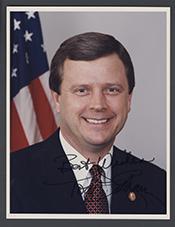
Mr. Chairman, I thank the chairman for yielding to me. Mr. Chairman, first of all, I want to commend the gentleman for the great job that he has done on this bill. It is the first Homeland Security…
Mr. Chairman, I thank the chairman for yielding to me.
Mr. Chairman, first of all, I want to commend the gentleman for the great job that he has done on this bill. It is the first Homeland Security appropriation bill in history. We are charting new waters here, and I also want to strongly compliment the great staff that we have on the subcommittee. They have done just an outstanding job to bring this very difficult bill together with all the ramifications that we have.
All Members here should be keenly aware of how difficult this task is and how broad the jurisdiction is, trying to combine 22 different Federal agencies into one Department, have them communicate with each other, have them function together, have them understand their role is to cooperate with States and local governments to ensure our homeland security.
This is a bill unlike any other that we have; and as the Chairman has said so many times, we are successful when nothing happens. As we are spending all this money, if the final outcome is that everything remains quiet, we have been successful, and it is very difficult to judge exactly how many dollars need to go exactly where to complete our role, but I think the chairman and the subcommittee have done an outstanding job.
Mr. Chairman, I rise in support of this bill, and commend Chairman Rogers for his attention to the many difficult issues we have discussed in our hearings on homeland security.
He has been given the tough job of putting together a spending bill for this new Department and this bill is a testament to his good work and the good work of the Subcommittee staff--they have done an excellent job under difficult circumstances.
Mr. Chairman, the approach the Subcommittee has taken with this bill has been one of strong support for the mission of this new Department and a scrutiny of the many requests and ideas put forth by Members and others.
I believe this has been the best approach because we are moving through uncharted territory. One of my concerns has been that--going forward with this new bill--we would put forth too much money in a way that would paint us into a corner before all of the most pressing homeland security needs became clear.
I believed early on--and still believe--the members of this Committee deserve to know the most efficient methods in which to deploy our Homeland Security resources.
We cannot appropriately fund programs that do not have understandable goals or clear justifications. Every State and Member of Congress should be aware of the pitfalls of adding monies to specific accounts because they feel they have the best answer to our Homeland Security problems.
Let me remind you. We are witnessing the infancy of a Department. There are few of us in this body who have been faced with the enormous and important task of funding a new Department of this size.
I am certain nearly every one of you has been asked to request funding for a specific appropriation for a specific homeland security project. I'm betting that most of you have been overwhelmed by the number of ``potential targets'' in your district.
Those of us on the Subcommittee share your concern. But, this bill is not about Congress making local security decisions--it is about making sure our local responders have a functional Federal agency to work with to solve those problems.
That said--as we move deeper into the process of providing for our Homeland Security, we are going to get a clearer picture of what our needs are. We will be in a better position to prioritize those needs.
Congress is not in a position to mess around with local funding matters. Until the Congress, the administration and our local providers have confidence in the long-term needs, I think the approach we are taking today--in this first year of funding for this new Department--is the correct one.
Again, I want to commend the Chairman for his work on this bill and I urge all of the Members of this body to support this bill.

Mr. Chairman, I offer an amendment. Mr. Chairman, the al Qaeda has not gone away, and we know al Qaeda does not choose its targets at random, it chooses targets to inflict the greatest numbers of…
Mr. Chairman, I offer an amendment.
Mr. Chairman, the al Qaeda has not gone away, and we know al Qaeda does not choose its targets at random, it chooses targets to inflict the greatest numbers of casualties, to do the greatest damage economically, and to get the most publicity. Just last week, we were reminded that New York is still a target when the Attorney General announced that an al Qaeda terrorist was targeting the Brooklyn Bridge. He was deterred from attacking the bridge by the efforts of the New York Police Department.
This is just one example of how since 9/11 a large share of the burden of providing for the national defense has fallen on our cities. In Congress we have provided some funds to help. We even sent part of the money to where the need is. In fiscal year 2003, we provided $2.9 billion for grants to State and local governments to help them prepare for and defend against terrorist attacks. We even said that $800 million of that should be directed to where the threat is greatest. That is about 30 percent. The rest of the fund went out under a formula that is entirely unrelated to where the terror threat is.
Under this bill as it is currently drafted for the next fiscal year, that 70 percent will increase to nearly 83 percent. Our effort to protect the most likely targets of terrorism is moving backwards. We are cutting the funds to the Nation's most threatened cities by almost 40 percent, by $300 million, from $800 million to $500 million, and we are increasing the percentage that will go under the formula that is unrelated to potential threat, a formula that Secretary Ridge has repeatedly said is inappropriate and must be changed.
This formula sends the money where the threat is not. Just yesterday Secretary Ridge himself said of the high threat money and I quote, ``I would like to see the number significantly higher than $500 million.'' He went on to say, ``At the end of the day, I do believe that there are some communities and regions that need more money.''
My amendment will simply follow Secretary Ridge's advice and restore funding for high-threat cities. I understand that this approach is subject to a point of order. I originally had wanted to shift money from another account, but the fact is this bill severely underfunds our security needs. Resources are too scarce to shift between accounts, but our cities need more funding. New York City spent more than $200 million over the last year on counterterrorism. The grants so far amount to $220 million for New York, but very little of that can offset the personnel costs that the city has identified at more than $900 million.
The assistance provided after the September 11 attacks paid for cleanup and replacement of equipment. It did not cover the security costs. This is not just an issue for New York and Washington, but it is a high-priority issue for many cities, including L.A., Chicago, San Francisco, New Orleans, Kansas City, Cincinnati, Houston and any city with a port or a mass transit system.
Mr. Chairman, it is our responsibility to appropriate the funds needed to protect the American people and this bill falls dangerously short. Respecting the request of the gentleman from New York (Mr. Sweeney), who has worked very hard in a bipartisan way for New York City and State, I am withdrawing my amendment, also at the request of the gentleman from Kentucky (Mr. Rogers), and I appreciate the commitment from the New York delegation, the gentleman from New York (Mr. Hinchey), the gentlewoman from New York (Mrs. Lowey), and the gentleman from New York (Mr. Serrano) along with help from the gentleman from Minnesota (Mr. Sabo) and the gentleman from Wisconsin (Mr. Obey) to restore this in conference.
I appreciate very much the leadership of the gentleman from Minnesota (Mr. Sabo) and the gentleman from Kentucky (Mr. Rogers).
Mr. Chairman, I withdraw my amendment.

Mr. Speaker, I thank the gentleman for yielding me the time. Mr. Speaker, I really did not plan to speak on this bill, but some of my good friends on the minority side from Texas have been up talking…
Mr. Speaker, I thank the gentleman for yielding me the time.
Mr. Speaker, I really did not plan to speak on this bill, but some of my good friends on the minority side from Texas have been up talking about alleged abuse of funding or power in terms of homeland security officials attempting to find some missing State legislators who went down to Austin and then left Austin and went up to Ardmore, Oklahoma, hung out at the Holiday Inn for a couple of days while the Texas legislature was considering a redistricting bill for Congress.
The Inspector General of the homeland security has done an investigation of this allegation and found no substance to it, no merit. As it turns out, the information in terms of the tail number and things like that are available to any citizen in this country who wishes to call the FAA. If they have a tail number, and if that airplane is in the air, FAA will tell a person where that particular airplane is. That is public information unless they have changed the protocol in the last 2 or 3 weeks, and is available to anybody who wishes to try to track where somebody is, that is, if they have the tail number.
What happened down in Austin was that the Texas House was going to move a bill to rectify past gerrymanders of the congressional lines that go back over 30 years, and some of the Democratic State legislators decided that they did not want to be part of it; and under the Texas Constitution, it requires a two-thirds vote to have a quorum. Enough legislators left town on an organized basis, went up to Oklahoma and hung out until the legislature session had ended. Well, that is according to the rules and may be good press, but it is not going to work in the long term because the Governor called a special session that is going to start in a couple of weeks, and the lines are going to be redrawn to verify the voting wishes of the people of Texas, not of some of the political polls in the minority party.
So I just wanted to come over and set the record straight. There has been no abuse of power. There has been no illegal use of funds. There has been nothing like that.
I yield to the gentleman from Austin, briefly.
Mr. Speaker, I appreciate my good friend from Austin raising that question.
My information is that the Inspector General has done an investigation. There is not an issue there. I think some State officials when this, what I would call a ``bug out'' to Ardmore, the gentleman may have a different term for it, he might call it something differently, but when that happened, the Governor and the Speaker of the House, as is their authority under the Texas law, sought to bring the recalcitrant lawmakers back to the legislature so there would be a quorum; and they touched bases with a number of State and Federal officials, and some of the Federal officials made a couple of phone calls, but there was no abuse of power and nothing illegal that has happened, and this is what the investigation has said.
Again, I am here as a Republican, a Member of the majority party. I have got no problem if in Austin certain legislators do not want to report for a quorum. That is something that we have the authority to do here; and as my colleague knows, the Texas constitution requires a two- thirds membership present if there is a question of the quorum. So we do not have a problem with that, but I think the State officials in Austin had every right to try to find where those legislators went and try to get them back if they could get them back so there would be a quorum, and there is nothing illegal about that, and there is nothing unethical about that, and there is nothing improper about that.
So I just kind of wanted to set the record straight. It may be good political theater, but there is no illegality that has gone on and the Inspector General said that.
Bill Text
2 versions available
        [Congressional Bills 108th Congress]
[From the U.S. Government Publishing Office]
[H. Res. 293 Engrossed in House (EH)]

In the House of Representatives, U.S.,

June 24, 2003.
Resolved, That at any time after the adoption of this resolution the Speaker
may, pursuant to clause 2(b) of rule XVIII, declare the House resolved into the
Committee of the Whole House on the state of the Union for consideration of the
bill (H.R. 2555) making appropriations for the Department of Homeland Security
for the fiscal year ending September 30, 2004, and for other purposes. The first
reading of the bill shall be dispensed with. All points of order against
consideration of the bill are waived. General debate shall be confined to the
bill and shall not exceed one hour equally divided and controlled by the
chairman and ranking minority member of the Committee on Appropriations. After
general debate the bill shall be considered for amendment under the five-minute
rule. Points of order against provisions in the bill for failure to comply with
section 501 of House Concurrent Resolution 95 and clause 2 of rule XXI are
waived except as follows: sections 514, 521, and 522. During consideration of
the bill for amendment, the Chairman of the Committee of the Whole may accord
priority in recognition on the basis of whether the Member offering an amendment
has caused it to be printed in the portion of the Congressional Record
designated for that purpose in clause 8 of rule XVIII. Amendments so printed
shall be considered as read. At the conclusion of consideration of the bill for
amendment the Committee shall rise and report the bill to the House with such
amendments as may have been adopted. The previous question shall be considered
as ordered on the bill and amendments thereto to final passage without
intervening motion except one motion to recommit with or without instructions.
Attest:

Clerk.