Providing for consideration of the bill (H.R. 2738) to implement the United States-Chile Free Trade Agreement, and for consideration of the bill (H.R. 2739) to implement the United States-Singapore Free Trade Agreement.
Legislative Activity
Stay on top of the latest movement without scrolling through every action
Motion to reconsider adoption of the resolution tabled.
July 23, 2003 • 1:47 PM
View full timeline
Introduced in House
July 22, 2003
The House Committee on Rules reported an original measure, H. Rept. 108-229, by Mr. Dreier.
July 22, 2003
Rule provides for consideration of H.R. 2738 and H.R. 2739 with 2 hours of general debate. Previous question shall be considered as ordered without intervening motions except motion to recommit with or without instructions. Measure will be considered read. Bill is closed to amendments.
July 22, 2003 • 9:45 PM
Placed on the House Calendar, Calendar No. 93.
July 22, 2003
Considered as privileged matter. (consideration: CR H7339-7347, H7348-7351)
July 23, 2003 • 11:28 AM
DEBATE - The House proceeded with one hour of debate on H. Res. 329.
July 23, 2003 • 11:32 AM
On ordering the previous question Agreed to by recorded vote: 226 - 200 (Roll no. 413).
July 23, 2003 • 1:26 PM
Mr. Hastings (FL) moved to table motion to reconsider ordering previous question.
July 23, 2003 • 1:27 PM
On motion to table motion to reconsider Agreed to by recorded vote: 223 - 201 (Roll no. 414).
July 23, 2003 • 1:36 PM
Passed/agreed to in House: On agreeing to the resolution Agreed to by recorded vote: 281 - 144 (Roll no. 415).(text: CR H7339)
July 23, 2003 • 1:44 PM
On agreeing to the resolution Agreed to by recorded vote: 281 - 144 (Roll no. 415). (text: CR H7339)
July 23, 2003 • 1:44 PM
Mr. Hastings (FL) moved to reconsider adoption of the resolution.
July 23, 2003 • 1:44 PM
Mr. Dreier moved to table the motion to reconsider adoption of the resolution
July 23, 2003 • 1:45 PM
On motion to table the motion to reconsider adoption of the resolution Agreed to by recorded vote: 228 - 197 (Roll no. 416).
July 23, 2003 • 1:46 PM
Motion to reconsider adoption of the resolution tabled.
July 23, 2003 • 1:47 PM
Voting History
4 votes recorded • Roll call available
HOUSE
Roll Call AvailableJuly 23, 2003 at 1:53 PM
Table motion to reconsider
Majority required: 1/2 (50%)
228 - 197
HOUSE
Roll Call AvailableJuly 23, 2003 at 1:44 PM
On Agreeing to the Resolution
Majority required: 1/2 (50%)
281 - 144
HOUSE
Roll Call AvailableJuly 23, 2003 at 1:35 PM
Table motion to reconsider ordering previous question
Majority required: 1/2 (50%)
223 - 201
Floor Debate
23 membersWhat members said about H.Res. 329 on the floor
DD SJL
SJL KB
KB ALH
ALH SML+18
Floor Debate
23 membersWhat members said about H.Res. 329 on the floor
Mr. Speaker, by direction of the Committee on Rules, I call up House Resolution 329 and ask for its immediate consideration. Mr. Speaker, for the purpose of debate only, I yield the customary 30…
Mr. Speaker, by direction of the Committee on Rules, I call up House Resolution 329 and ask for its immediate consideration.
Mr. Speaker, for the purpose of debate only, I yield the customary 30 minutes to my very able colleague on the Committee on Rules, the gentleman from Florida (Mr. Hastings), pending which I yield myself such time as I may consume. During consideration of this resolution, all time yielded is for the purpose of debate only.
(Mr. DREIER asked and was given permission to revise and extend his remarks.)
Mr. Speaker, at this moment, we begin debate on the first two measures that will propel our Nation's economy into the 21st century and secure America's economic future. The free trade agreements with Chile and Singapore that we will be debating today are important in and of themselves. But more important, they are the first steps in completing a global economic and trade agenda that seeks to grow our economy by opening up markets overseas and establishing the United States as the leader in the international trade arena.
When Trade Promotion Authority lapsed back in 1994, the executive branch's ability to negotiate meaningful trade agreements was severely impaired. Our efforts to position the United States as the global leader in international trade were stalled. As recently as last year, there were nearly 150 regional free trade and customs agreements put into place worldwide and the United States, the greatest economic power on the face of the Earth, was party to only three of those agreements.
Mr. Speaker, we were losing market share, we were losing tariff battles, and most important, we were losing opportunities for U.S. workers and U.S. producers, opportunity to grow our economy, opportunity to increase the incomes of millions of American families and the opportunity to lead once again in the global marketplace. All of this was being lost as we went through that nearly decade long period, Mr. Speaker, when we did not have that authority in place for the executive branch.
So it was to my great satisfaction last year that we were able to enact into law a renewal of that Trade Promotion Authority. I am also pleased that the Bush administration has responded to Congressional reauthorization of the Trade Promotion Authority with great enthusiasm.
Our terrific Ambassador, U.S. Trade Representative Bob Zoellick, in particular, has been the driving force behind an ambitious and far- reaching trade agenda that will open up markets and raise standards of living both here and abroad, throughout the world. It is very clear that trade is a win-win. We will see benefits on both sides.
So, Mr. Speaker, as I mentioned earlier, the free trade agreements that we consider here today are of great importance. But I am gratified to see that many more trade agreements are on the horizon. Once we get beyond the Singapore and Chile agreements we will have a wide range of other great opportunities for U.S. workers and U.S. producers. We will soon see those benefits come to us and we will see the multilateral agreements as we proceed with Central America, South America, Africa, the Middle East and Australia.
Now, Mr. Speaker, I recognize that many in this body are opposed to some or possibly all of the free trade agreements that I have just mentioned. And I recognize, Mr. Speaker, that Congressional renewal of Trade Promotion Authority last year was very contentious
and as we all know passed by the narrowest of margins on three occasions. But I sincerely hope that today we will demonstrate our bipartisan commitment to improving the economic standing of all American workers and families by strongly supporting the two implementing measures before us.
In fact, we have just a few minutes ago had the minority leader stand in the well and talk about that commitment that the minority party has to the trade agenda, and so there will be a wonderful opportunity here to demonstrate that. The agreement, Mr. Speaker, with Singapore and Chile are perfect examples of what the benefits of free trades can and will deliver to the American people.
Now, we all recognize that Singapore has been a critical ally in Southeast Asia in the war against terrorism. It has been more welcoming to our efforts to clamp down on regional instability and global terrorism than perhaps any other Southeast Asia nation. Singapore is also an extremely important economic ally of the United States. For example, Mr. Speaker, Singapore was the 12th largest trading partner with the United States last year in terms of total trade. Now, that is not bad for a country that has a population that is about the size of a county that I represent.
Mr. Speaker, the Singapore agreement lowers barriers to trade in high technology products and services and establishes unprecedented intellectual properties protections. Intellectual properties protections are of paramount importance and very much need to be recognized.
Mr. Speaker, this agreement pays particular attention to protecting copyrights, patents and trademarks for emerging technologies and digital products, sectors where American innovation has been, continues to be, and I believe will in the future be the global leader.
Now, Mr. Speaker, there can be no doubt that by lowering and eliminating tariffs that Singapore places on American exports that we will increase job opportunities right here at home. Let me underscore that again.
Mr. Speaker, I know there is so much talk about the union influence and the union opposition about what it is we are trying to do here, but Mr. Speaker, it stands to reason that if you are opening up new markets in other parts of the world, as will be the case in Singapore and so many of these service oriented areas, telecommunications for example, there will be more union jobs created right here in the United States as these markets open.
Mr. Speaker, like the Singapore agreement, the Free Trade Agreement with Chile will increase trading opportunities abroad. Under the agreement negotiated by Ambassador Zoellick, Chile will immediately remove its 6 percent tariff that exists on more than 85 percent of American exports.
I have to scratch my head once again, Mr. Speaker, and wonder why it is again that anyone would believe that this agreement would not create an opportunity for U.S. workers, union, nonunion members, workers all the way across the board if they are going to immediately reduce their 6 percent tariff that exists on 85 percent of the products that come from U.S. workers into Chile's market.
Mr. Speaker, the remaining tariffs will phase out over the next 12 years. Conversely, most of Chile's exports to the United States are already duty free. So the fact is the world has access to the U.S. consumer markets. Chile can already get their products here. Doing anything other than supporting this measure will not help U.S. workers. The only benefit to U.S. workers will come from our breaking down those barriers that exist there. Recognizing Chile's relatively small trading relationship with the United States, some might question the need for a Free Trade Agreement at this time. In other words, people will say, why bother?
Now, Mr. Speaker, it is well worth the bother. In 1997, California exported about $490 million worth of goods to Chile. By 2001, the number had decreased by $140 million largely due to Chile's implementation of trade agreements with Brazil, Argentina, Mexico and Canada, getting into the MERCOSUR and other trading blocs. So the fact that other nations are embarking on these agreements, breaking down tariff barriers have unfortunately diminished the flow of U.S. goods into Chile. So it stands to reason now that we need to do everything we can to make sure we are part of that tariff tax reduction effort because a tariff is a tax, and we know that by cutting it we will be able to improve the opportunities for that flow of goods and services.
Mr. Speaker, as we work to get our economy back on track and we all, Democrats and Republicans alike, are committed to enhancing our economy, to improving the plight of workers in this country and creating more and more opportunities, as we work to do that, clearly establishing trade rules within the Americas and the Doha negotiations, it is important that the United States of America be the leader and not the follower. Strong votes, strong bipartisan votes in favor of the Chile and Singapore agreements will mark the first steps in ensuring that the United States reaps the benefit of free trade.
It is time for the United States to unleash our enterprising spirit and allow American entrepreneurs access to some of the fastest growing markets in the world.
Mr. Speaker, I urge strong bipartisan support for this rule and the underlying measures in order to demonstrate the commitment of this body to long-term, bold and dynamic economic growth, the development of strong economies, good governments and the rule of law abroad, which will only help in dealing with the many challenges that we face for peace and stability throughout the world.
Mr. Speaker, I reserve the balance of my time.
Mr. Speaker, I yield myself such time as I may consume to simply thank my colleague for his very thoughtful statement and his willingness to be supportive of this effort here. This sort of buttresses a couple of arguments I was making earlier on this union issue, and I say it specifically with the gentleman in the Chair, Mr. Speaker, because I know this is an issue that was of concern to the Chair.
One of the arguments that has been made has to do with the issue of exporting automobiles, automobiles manufactured right here in the United States of America. Under this agreement with Chile, we actually see Chile agree to an elimination of the luxury auto tax; and by eliminating that tax under this agreement in Chile, it will enhance the chance for us to see the exportation of more U.S.-manufactured automobiles into Chile's market which admittedly is a small one but is growing.
Also, there are agreements to reduce foreign duties for trucks, computers, electrical equipment, paper and construction equipment as well; and so I think that this clearly is again a great opportunity for U.S. workers.
There have been several great champions of trade on our side of the aisle and on the other side of the aisle. One of them is the great chairman of the Subcommittee on Technology and the House, my very good friend from Atlanta, the gentleman from Georgia (Mr. Linder).
Mr. Speaker, I yield 4 minutes to the gentleman from Georgia (Mr. Linder).
Mr. Speaker, will the gentleman yield?
Mr. Speaker, I thank my friend for yielding, and I would simply say one of the reasons we have not been able to have these job opportunities is the lack of this authority that has been put into place. We now for the first time are going to have markets opening up so that the four-letter word in Ohio that is so important, J-O-B-S, will, in fact, be enhanced; and I thank my friend for yielding.
Mr. Speaker, I yield myself such time as I may consume. I have the highest regard for my friend from Ohio, but I want to make a couple of brief comments about the statements he made.
First, at the outset, he talked about this being a Republican leadership effort. Yes, Republicans have provided leadership, but I think it will be very clear that strong bipartisan support, Democrats and Republicans alike, will be embracing both the Chile and the Singapore Free Trade Agreements, realizing what opportunities they will create.
At the close of the gentleman's remarks he talked about lifting standards, and I completely concur with that. I believe very passionately that the best way, the most effective way to lift standards, and I appreciate his acknowledging that those labor standards are already high in Chile, the best way to do that is for us to enhance the economic standing of those people who are seeking the opportunity to get onto the first rung of the economic ladder.
So I just wanted to say that I disagree with some of the conclusions that my friend might have drawn, but I think we do share the exact same goal.
Mr. Speaker, I yield 4 minutes to the gentleman from Tucson, Arizona (Mr. Kolbe), my very able colleague who in 1987 asked me to join him as an original cosponsor of the legislation to obliterate tariffs among Canada, the United States, and Mexico so we could have a Free Trade Agreement. We have seen, with the NAFTA, a tripling of trade from 1993 to today, and he has been a great leader on trade issues and I enjoy working with him.
Mr. Speaker, I yield 1 minute to the gentleman from Ohio (Mr. Strickland).
Mr. Speaker, I thank my friend for yielding. I totally agree, I totally agree with the statement my friend has just made. I believe our number one priority should be U.S. workers, U.S. producers, U.S. manufacturers. That should be our top priority, recognizing the benefits of opening up new markets for them.
Our goal here, as I mentioned earlier, is with the elimination of the luxury tax in Chile we will be able to export more U.S. manufactured automobiles into the Chile market and that is why this will be a win- win.
Mr. Speaker, will the gentleman once again yield?
Mr. Speaker, I thank the gentleman for yielding to me to respond quickly to one point he made.
The gentleman said how can anyone talk about the benefits of the North American Free Trade Agreement, and I would say to my friend that in 1993 trade between Mexico and the United States was roughly $83 billion. Last year, trade between Mexico and the United States was $232 billion.
Mr. Speaker, if the gentleman will continue to yield on that point, I think we have to realize that imports are very good and important for the United States of America. We have the standard of living that we do today because the world does have access to our consumer market.
Mr. Speaker, I thank my friend for yielding to me, and I appreciate his engaging me on this issue.
We did have a nice discussion upstairs in the Committee on Rules last night on this issue, and I was proud to underscore the fact that bringing about economic liberalizations through greater trade did in fact lead to political liberalization and to one-party rule.
My friend has raised the issue of tomatoes, and I appreciate his acknowledging the freeze and the impact that that had on the tomato industry in Florida. One of the challenges I have found, Mr. Speaker, is that there are many people who like to blame every single ailment of society on the North American Free Trade Agreement. I would argue that while I know that there have been great challenges that the tomato industry has faced in Florida, it is important for us to realize that being able to compete in the global marketplace is a priority. And I am not here in this job, and I do not believe we as policymakers should have the protection of one industry over another as a priority.
And so I believe that quite frankly it may not have been the mere existence of the North American Free Trade Agreement that created the challenges that have existed in that area. Many in agriculture have made this claim to us that it is NAFTA that created this, that NAFTA is responsible for that. It is clearly because of the fact that the world has had ready access to the U.S. consumer market.
Absolutely. I look forward to that. And we want to work very closely on that.
Mr. Speaker, I yield 30 seconds to the gentleman from California (Mr. George Miller).
(Mr. GEORGE MILLER of California asked and was given permission to revise and extend his remarks.)
I thank my friend for yielding.
Mr. Speaker, the point that I would like to make is a very clear one. We want to focus on middle-class jobs. We want to do everything that we can to enhance opportunities for U.S. workers in the manufacturing sector of our economy. That is why this Chile agreement will be very beneficial. Why? Under this agreement, Chile's government agrees to eliminate the auto luxury tax that exists there. What does that mean? It means that there will be enhanced opportunity for U.S. auto manufacturers and those middle-class workers that does not exist today.
If the gentleman will yield on that point, I will tell him, they can be made in Argentina today and get in there tariff free because of the agreement that exists between Chile and Argentina. All we are saying with this agreement is, let us create the potential so Detroit autoworkers will have a chance to get into that market.
Mr. Speaker, I yield 2\1/2\ minutes to the gentlewoman from Illinois (Mrs. Biggert), the cochair of the Chile coalition working group who has led the effort to ensure that we get this agreement to the floor today and has counted votes and worked very hard on it.
Mr. Speaker, I am pleased to yield 1 minute to the gentleman from Texas (Mr. Stenholm).
(Mr. STENHOLM asked and was given permission to revise and extend his remarks.)
I thank my friend for yielding.
Mr. Speaker, I would just like to say that my friend's statement is right on target. I would like to congratulate him on a couple of points that he made. First of all, realizing that 90 percent of the world's consumers are outside of U.S. borders. What that means is that as 150 countries have embarked on these free trade agreements and we have been a party to only three of them, we have been left behind the eight ball. I know my California colleague (Mr. George Miller) was talking about workers. I see my friend from Toledo here who is about to speak. We all are focused on jobs and workers. Obviously, the agriculture sector of our economy is a critically important job creator; and I believe that, as my friend has pointed out, creating a chance to get into Chile's market along with dealing with surge safeguards so that we are not seeing a disproportionate negative impact on the United States will in fact inure to the benefit of workers here.
I thank my friend and appreciate his service as cochair along with me with the U.S.-Mexico caucus, underscoring the benefits of the North American Free Trade Agreement.
Mr. Speaker, will the gentlewoman yield?
Mr. Speaker, I thank my friend for yielding and I welcome her to this body. I know she is a new Member here. I would say that the conclusions that have been drawn I believe are totally inaccurate.
Mr. Speaker, I reserve the balance of my time.
Mr. Speaker, I thank my friend for yielding. And the case I would make is I think that Mr. Dobbs is wrong in coming to the conclusion that he has, but that is what the debate is all about.
Mr. Speaker, I yield 1 minute to the gentleman from Ohio (Mr. Ryan) and ask him to yield to me.
Mr. Speaker, I thank the gentleman for yielding.
I think the point that needs to be made is that with this agreement, we are focused. The gentleman talks about the rollback of the Jordan agreement. That was a separate agreement. This is an agreement that was struck between the leaders of Chile and the United States and the leaders of Singapore and the United States. The fact is we are enhancing living standards through greater trade, greater opportunities for that free flow of goods and services. And on those jobs that you talked about, the auto sector, I believe that by the elimination of the luxury tax in Chile we create a chance for his auto workers to have a chance there.
Mr. Speaker, the main reason is that those circumstances do not exist in Chile. It is not necessary. It is not necessary to address those issues.
That is why they do not have to be there.
Announcement by the Speaker Pro Tempore
May I inquire of the Chair how much time we have remaining on each side?
Mr. Speaker, I yield 2 minutes to the gentleman from Texas (Mr. Sessions), the cochair of the Singapore effort to bring about success on the floor here, my very good friend and able colleague on the Committee on Rules.
Mr. Speaker, I am inclined to close the debate myself, and I hope my colleague from Toledo will stay here because I plan to close the debate and respond to some of the statements that were just made. So I have no further requests for time.
Mr. Speaker, I am entitled to close the debate here, and then I will be moving the previous question. So if the gentleman will complete his statement.
Mr. Speaker, I rise to claim the time of the Committee on the Judiciary. Mr. Speaker, I yield myself such time as I may consume. Mr. Speaker, I believe we might have been on another journey if the…
Mr. Speaker, I rise to claim the time of the Committee on the Judiciary.
Mr. Speaker, I yield myself such time as I may consume.
Mr. Speaker, I believe we might have been on another journey if the USTR had responded to the concerns of many of us in a more constructive and readily solvable fashion. The Committee on the Judiciary stands as the monitor of the Constitution, and it is clear that the issue of commerce is designated in the Constitution. But it is also clear that in the Constitution, under Article 1, Section 8, Clause 4 of that document, it provides that Congress shall have the power to establish a uniform rule of naturalization.
The Supreme Court has long found that this provision of the Constitution grants Congress plenary power over immigration policy. Moreover, the Court has found that the formulation of policies pertaining to the entry of aliens and their right to remain here, as entrusted exclusively to Congress, has become as firmly embedded in the legislative and judicial tissues of our body politics as any aspect of our government. Nonetheless, the administration has negotiated a new visa program in the U.S.-Singapore-Chile FTA usurping Congress' clear and constitutional role in creating immigration law.
I yield to the gentleman from Wisconsin.
Reclaiming my time, Mr. Speaker, we want to be friends with all of those very fine neighbors and nations across the ocean, but I believe that the USTR made a terrible mistake in implementing FTA, which many of us questioned, by delving into authority that should be left to this Congress. The USTR should not have included immigration provisions in both of these trade bills. The inclusion of immigration provisions overstepped the bounds of the USTR and usurped the jurisdiction of the Committee on the Judiciary.
Many of us reached out to the USTR in order to analyze ways of retracting some of those negotiated provisions in the trade agreement. Through their stubbornness, they refused to meet or to agree to any of these provisions. Let me give an example.
We have about 8 million undocumented aliens in the United States. Many of us have argued vigorously that we should find a way through the Congress, legislatively, to allow those undocumented individuals who are working, who are paying taxes, to access legalization. In this trade bill, we have a perpetual unlimited visa process that will allow any of those citizens from those countries to stay in the United States forever.
Now, Mr. Speaker, I did not say 1 year, 2 years, or 3 years, I said forever, with an annual renewal. No review by this Congress at all. So rather than come in, try to establish legal permanent residency, all you have to say is that you are coming in under this particular visa provision, and each year you are allowed to renew it.
We simply asked for there to be a capping of 8 years, to at least have the ability, if we are supposed to be concerned about homeland security, securing of this Nation. We now have a gaping new hole that someone can go through to apply for this kind of visa, through certain processes, and stay in the United States forever. Forever, Mr. Speaker.
Negotiating objectives that the Congress laid out for the USTR in the Trade Act of 2002 do not include a single word on entry into the United States. That was my fear about Fast Track Authority. That is what we should be concerned about.
I understand what trade agreements are about. They are a deal. It is that simple. Plain and simple, they are deals. You sit on this side of the table, they sit on that side of the table, and you make a deal. And the dealmakers do not want anyone to oversee the deal so they can slip anything in without any ability of this Congress to oversee it.
What they have done is slipped in a perpetual visa status that no one can oversee. There is no specific authority in the TPA to negotiate new visa categories or to impose new requirements on our temporary entry system, yet that is exactly what the USTR has done in these trade agreements. The trade agreements create a new visa classification for the temporary provision of a nonprofessional that is similar in many respects to the existing H-1B nonimmigrant classification.
The new nonimmigrant visa classifications, however, would differ from the existing H-1B program in significant ways. The provisions for the new nonimmigrant visa permit allow an unlimited number of extensions in 1-year increments. This makes it possible for a foreign employee entering the company on a supposedly temporary basis at the age of 22 to remain until he or she is ready to retire at the age of 70. This is with the backdrop of 6.4 million that are unemployed and with the backdrop of companies like IBM, just reported in the newspapers, outsourcing a number of their jobs, maybe upwards of 3,000 per company, outsourcing them from the United States to places beyond its borders.
In effect, this gives American employers the option of keeping permanent workers in a temporary legal status forever and ever and ever. In contrast to the H-1B program, workers are granted a 3-year visa that can be extended only once. And maybe some of us believe there should be more flexibility, but at least there is an end time. A single 3-year extension is available, but there is an end time.
The labor certification attestation is one of the few safeguards we have in our H-1B system for ensuring that employers do not abuse temporary workers and undermine the domestic labor market. The implementation legislation contains some but not all of the attestation requirements that apply in our H-1B program. The implementing legislation completely omits the category of H-1B independent employers and the additional attestation requirements that apply to them.
The problem we have here, Mr. Speaker, is the fact that we have legislation that includes boundaries beyond that of the USTR. They should not have trampled on the rights of this Congress regarding the issues of immigration, and I would argue that for that very reason this bill has an Achilles heel and should be defeated.
I will begin by saying that I value the trade relations that the United States has with Chile. Although Chile was only our 36th largest trading partner in goods in 2002 (with $2.6 billion in exports and $3.8 billion in imports), Chile has one of the fastest growing economies in the world. Its sound economic policies are reflected in its investment grade market ratings, unique in South America. Over the past 15-20 years, Chile has established a thriving democracy, a free market society and an open economy built on trade. I support trade with Chile.
My concern is with the details of the trade agreement. The U.S. Trade Representative (USTR) should not have included immigration provisions in the Chile Free Trade Agreement. The negotiating objectives that Congress laid out for the USTR in the Trade Protection Act of 2002 (TPA) do not include a single word on temporary entry into the United States. There is no specific authority in the TPA to negotiate new visa categories or to impose new requirements on our temporary entry system, yet that is exactly what USTR has done in the Chile Free Trade Agreement.
The inclusion of immigration provisions overstepped the bounds of the USTR and usurped the jurisdiction of the Congress. Article I, section 8, clause 4 of the Constitution provides that Congress shall have the power to establish a uniform Rule of Naturalization. The Supreme Court has long found that this provision of the Constitution grants Congress plenary power over immigration policy. The Court has found that the formulation of policies [pertaining to the entry of aliens and their right to remain here] is entrusted exclusively to Congress has become as firmly embedded in the legislative and judicial tissues of our body politics as any aspect of our government. Nonetheless, the Administration has negotiated a new visa program in the Chile Free Trade Agreement; usurping Congress' clear constitutional role in creating immigration law.
The Chile Free Trade Agreement creates a new visa classification for the temporary admission of nonimmigrant professionals that is similar in many respects to the existing H-1B nonimmigrant classification. The new nonimmigrant visa classification, however, would
differ from the existing H-1B program in significant ways.
The provisions for the new nonimmigrant visa permit an unlimited number of extensions in 1-year increments. This makes it possible for a foreign employee entering the country on a supposedly temporary basis at the age of 22 to remain until he is ready to retire at the age of 70. In effect, this gives American employers the option of keeping permanent workers in a temporary legal status. In contrast, under the H-1B program, workers are granted a 3-year visa that can be extended only once. A singe 3-year extension is available.
The Labor Certification Attestation is one of the few safeguards we have in our H-1B system for ensuring that employers do not abuse temporary workers to undermine the domestic labor market. The implementing legislation contains some, but not all, of the attestation requirements that apply in our H-1B program.
The implementing legislation completely omits the category of H-1B dependent employers and the additional attestation requirements that apply to them. H-1B dependent employers are required to attest that new entrants will not displace American workers and demonstrate that they have tried to recruit American workers. The implementing legislation should have a similar provision.
In addition, the H-1B program authorizes the Secretary of Labor to initiate her own investigations and enforcement proceedings based on credible information that an employer is violating the rules of the H- 1B program. No such authority is granted to the Secretary in the Chile Free Trade Agreement's implementing legislation.
The Chile Free Trade Agreement requires permanent changes to our immigration system, but for now these changes are limited to two countries. Unfortunately, we may see these programs expanded to dozen of additional countries in future Free Trade Agreements. The administration is currently negotiating additional Free Trade Agreements with Australia, Morocco, five countries in Southern Africa, five countries in Central America, and the 34 countries of the Western Hemisphere.
Immigration policy is a sensitive, political matter. Changes in immigration law traditionally have been the result of intense, open negotiations between workers, employers, immigration advocates, and Members of Congress. These issues simply do not belong in fast-tracked trade agreements negotiated by executive agencies. Because the legislation is being fast-tracked, Congress does not have the power to amend it. We have to vote on it as written with no power to make any changes.
If amendments had been permitted, I would have offered one to put a limit on renewals. My amendment would have permitted no more than eight 1-year renewals of the nonimmigrant status. That would have permitted a 9-year period, which would be 50 percent longer than is allowed for employees who are here with H-1B status.
I also would have offered an amendment that would have used part of the fees generated by the new visa classification for accelerating the processing of nonimmigrant visas by the State Department's consulate offices. Delays in processing nonimmigrant visas are causing difficulty to people coming to the United States for medical treatment, to do important research, or for any of a number of other urgent reasons.
I urge you to vote against the U.S.-Chile Trade Agreement Implementation Act, H.R. 2738.
Mr. Speaker, I reserve the balance of my time.
Mr. Speaker, may I inquire of the Speaker how much time we have remaining?
Mr. Speaker, I yield myself the balance of my time.
Let me conclude by simply saying this. This legislation again has trampled on the constitutional rights delineated for this Congress as it relates to immigration policies. This bill does not even have the provision that says that you need to attest that there are no American workers that can do this job before you give this perpetual visa.
When we tried to get a revenue stream for the visa fees in order to unclog the backlog of visas in our consul offices around the world, for researchers and people who need medical care, we could not even get that established. The USTR has trampled on our rights.
Fast track should not undermine the Constitution. This is a bad trade bill, a bad precedent, and if this Congress does not stand up to its right to protect the American people, who will?
I ask my colleagues to vote against this. They need to go back to the drawing boards, back to the deal-making, and if need be, you need to have Congress sit at this table so that you do not trample on our rights and begin to
put in immigration policies that discriminate against hard-working immigrants who are here in this country seeking legal status, who cannot seek legal status because of our policies, yet you can be overseas, staying overseas, look up, get a visa and never leave this country.
If we are concerned about security, if we are concerned about homeland security, if we are concerned about protecting ourselves against terrorism, what a big, gaping hole.
This is a bad trade bill. I ask my colleagues to vote against it.
Mr. Speaker, I rise in strong support of this agreement for better trade between the U.S. and Chile and, following this, U.S. and Singapore. I appreciate the leadership of the gentleman from Illinois…
Mr. Speaker, I rise in strong support of this agreement for better trade between the U.S. and Chile and, following this, U.S. and Singapore. I appreciate the leadership of the gentleman from Illinois (Chairman Crane) in opening these new markets for American companies.
There is a principle involved in every piece of legislation we deal with. The principle in trade is this: If, as Americans, we build a better mouse trap, we ought to be able to sell it anywhere in the world without discrimination. If someone else builds a better mouse trap, we ought to be able to buy it for our families and for our businesses.
This type of free trade is important to America if we look at the most important thing, jobs. It is important to us because now every one of every three new jobs we are creating in America comes from international trade. No one sells more than our country outside. No one buys more than our country inside. And one out of every three acres that our farmers plant are for sale overseas, so it is important that these markets are open to companies and our farmers.
This is important in our State as well. It is important to Texas already. Just Chile's trade is responsible for almost 180,000 new jobs in Texas. That is enough new Texas workers to fill the Astrodome three times over. We have not even yet begun to scratch the surface of what new jobs we can create through free trade; and as the State which is the largest exporter, in other words, no one sells more, ships more overseas than our State, this is real jobs for our communities. These are real jobs for our families.
But let me state that, though we have not scratched the surface, other countries are not waiting for us to get our act together. They are already reaching agreements so that their companies can sell on level playing fields. We need to make sure American companies have a fair shake.
Mr. Speaker, I yield myself such time as I may consume.
Mr. Speaker, does it matter in all these discussions if we have a trade agreement with Chile or not? Would it matter if this bill simply went away? The answer is, if you care about American jobs, yes, it very much matters.
The National Association of Manufacturers estimates that the lack of an
agreement between America and Chile causes our companies to lose more than $1 billion in sales each year to other countries. For example, when Chile reached free trade agreements with Europe, sales to Europe automatically increased. In fact, it expanded by 30 percent in the year just ending in February, while our increased sales to Chile were negligible at best. We did not have an agreement. Our sales faltered. Germany had an agreement, and their sales grew by almost 50 percent. France had an agreement with Chile. They grew by 41 percent.
We have to ask ourselves, if these free trade agreements are so bad, why do other countries pursue them so much, and why do immediately they begin selling more of their products to Chile, and why do they start creating more jobs in their countries?
We are paying a price in America for not having a free trade agreement; and, frankly, in this economy we cannot stand to lose even one American job or lose the prospect of creating more American jobs.
Mr. Speaker, I yield 4 minutes to the gentleman from Michigan (Mr. Levin).
Mr. Speaker, I yield 3 minutes to the gentleman from Ohio (Mr. Portman), who has played a leading role in expanding markets around the world for American companies.
Mr. Speaker, I yield myself 2 minutes. What kind of partner will we have in free trade with Chile? The answer is, America will have a wonderful partner in trade.
Chile has one of the fastest growing economies in the entire world. Over the last two decades, Chile has established a vigorous democracy, an open democracy, a thriving and open economy built on trade and a free market society. These are American values that we treasure. These are values that Chile embraces. The American-Chile Free Trade Agreement will help Chile continue its impressive record of growth, of development and in alleviating poverty in Chile; it will help spur progress in the Free Trade Area of the Americas; and importantly, I think it will send a positive message throughout the world by demonstrating that America will work in true partnership with those who are committed to free markets.
Free trade opens markets, it opens minds, it fosters democracy, it fosters labor rights and environmental protections. This free trade agreement represents those values, American values that we ought to be embracing.
Mr. Speaker, I reserve the balance of my time.
Mr. Speaker, I yield myself such time as I may consume.
In conclusion, what does this trade agreement mean for America and for American workers? Our answer is, a lot for our future. In this agreement there will be new opportunities for workers, especially those in manufacturing-type companies, because much of the tariffs will be immediately taken away for consumer and industrial products.
It means that our products will be more competitive. That is important if you are a worker in a company that sells construction equipment, automobiles and automobile parts, computers and other information technology products, or if you work for a company that sells medical equipment and paper products.
This agreement is important for U.S. farmers and ranchers because most of the farm goods will be tariff-free within 4 years. That is important if you are selling pork in America, pork and pork products, beef and beef products, soybeans and meal, durum wheat, feed grains, potatoes and processed foods, these are jobs for your industry.
This provides access to the fast-growing services market in Chile. That is important if you work for a U.S. bank, for a U.S. insurance company, for an American telecommunications firm. If you work in a U.S. securities firm or an express delivery company, if you are a professional in that area, these are new opportunities for sales for your company and for yourself.
This is a trade agreement for the Digital Age. So it is important for workers who work in U.S. software, which is a growing part of our economy, in the music world, in the video and text world, these are record protections for our patents, for the work that American workers and inventions that we have created.
This is important for U.S. investors with strong protections and a secure, predictable legal framework for those of us who will invest in Chile. It is important if you are a company who wants to sell to the Chilean government because it creates ground-breaking anticorruption measures and guarantees that we have a fair and transparent process to sell our goods and services to a big range of Chilean government entities, including airports and seaports.
Finally, these are strong protections for labor and environment. Both governments commit to enforce their domestic labor and environmental laws. There is an innovative enforcement mechanism that includes monetary assessments to make sure that commercial, labor and environmental obligations are met. These cooperative projects will help protect wildlife, reduce environmental hazards and promote internationally recognized labor rights.
In conclusion, Mr. Speaker, if we do not pass this trade agreement, we will pass over a billion dollars worth of sales that we could have with Chile each year, a billion dollars that will create a lot of U.S. jobs and save a lot of U.S. workers in America.
The time is now for a free trade agreement between U.S. and Chile, a time for new American jobs, for new American growth, for our economic future.
Mr. Speaker, I yield back the balance of my time.
Mr. Speaker, I yield myself such time as I may consume. Mr. Speaker, of course, let me thank my very good friend, the distinguished and able chairman of the House Committee on Rules, the gentleman…
Mr. Speaker, I yield myself such time as I may consume.
Mr. Speaker, of course, let me thank my very good friend, the distinguished and able chairman of the House Committee on Rules, the gentleman from California (Mr. Dreier) for yielding me time.
As the chairman well knows, he and I both share a passion for the types of issues which will be debated today, and while we do not always end up at the same place at the end of the day, I deeply appreciate his commitment to these issues.
Mr. Speaker, as the chairman has already pointed out, this rule would allow for consideration of both the U.S.-Chile and U.S.-Singapore Free Trade Agreements. What the chairman did not point out, however, was that this rule in a very real sense is unnecessary. The Trade Promotion Authority bill, or Fast Track, that was passed last year by Congress very strictly limits the way trade bills can come to the House floor. By law the agreements cannot be amended. They must be debated and moved expeditiously and in numerous other ways restrict the normal rights that Members of this Chamber are normally able to exercise.
Despite the restrictions imposed by Fast Track, the majority has decided to impose even more restrictive debate on these important bills today. In fact, few previous trade agreements have been given as little time to be debated as the House will have for these two measures today.
Let me repeat for the House what I said to the gentleman from California (Chairman Dreier) last night. We should not be setting a precedent for future trade deals by limiting debate to a couple of hours. In the future there will be other trade agreements that will come to this floor with more acrimony than today's do. These should, indeed must be considered for more than a cursory amount of time.
While I do not oppose today's rule, I will in the future if the majority again attempts to limit debate, more so than that which is required by law.
Substantively, as a member of the Congressional Oversight Group on Trade, I want to commend Trade Representative Robert Zoellick and his staff for the yeoman's work they have put forward over the past 2-plus years putting these agreements together. I have an acute appreciation for the very delicate negotiations that are needed to achieve the success that has brought us to this point. So, again, I congratulate Ambassador Zoellick and his staff.
Let me also say that as we move forward with our new Congressional Oversight Group on Trade, I would like Ambassador Zoellick to continue to keep
the Members engaged and involved in the process as much as possible.
Specifically, it would be helpful if the ambassador and his staff would provide to the oversight group negotiating text several weeks before they are brought to the House of Representatives for tabling. Any less does not provide Members of Congress and our staff the appropriate amount of time to thoroughly review the agreements and offer our substantive insight.
Additionally, when members of the Congressional Oversight Group on Trade do offer constructive proposals, if the Trade Representative ultimately rebuffs those suggestions, it would be helpful to know for what reasons congressional insight was rejected; and I might add, counter to that I raised with Ambassador Zoellick, the fact that in Singapore and in the trade agreement that there was a defense component; and I think the government of Singapore is to be complimented by all of us for the extraordinary undertakings that they put forward on behalf of our United States military who make a substantial number of ports of call in Singapore. So I saw and pointed out to the ambassador the defense component; and I might add, I think that it was taken to heart by the ambassador and his staff in their negotiations.
Finally, text of proposed trade agreements must be made public as soon as the notice of intent to sign is made, if not sooner. Failing that, it is difficult, if not impossible, for the American people to have meaningful input.
Again, though, Mr. Speaker, I do not intend to be nitpicky. These agreements were reached in an admirable fashion by the Trade Representative and those working with him; and I salute him for that, as well as his interlocutors, in what were 2 years of difficult and dynamic negotiations that will affect globally the trade and will affect the United States in substantial ways.
I look forward to the spirited debate which I am certain will follow.
Mr. Speaker, I reserve the balance of our time.
Mr. Speaker, I am very pleased to yield 6 minutes to the gentleman from Ohio (Mr. Brown), my good friend.
Mr. Speaker, I yield 2 minutes to the gentleman from Ohio (Mr. Strickland).
May I inquire of the Speaker the time remaining on both sides?
Mr. Speaker, I yield myself such time as I may consume, only to add to the debate that the distinguished chairman was having with the gentleman from Ohio (Mr. Strickland).
There are other things that happened. I voted for NAFTA, Mr. Chairman, and I thought when I did that it would help in many ways. I pointed out to the gentleman last night, and I guess we could cite a lot of things, but the tomato industry in Florida was destroyed ultimately by NAFTA, accounting for the fact that there was a freeze that took place roughly around
the same time. But the dumping is what was the death knell.
In addition, I genuinely thought in the maquilladoras that there was going to be environmental improvement. I have been down there, and there has not been substantial environmental improvement. And I have talked with a significant number of people from Mexico regarding wages, and I do find that there are still problems with reference to their hourly rate.
But I will make the point that the one good thing NAFTA did was get rid of one-party rule in Mexico. But one-party rule or two-party rule does not account for the fact that the workers are not improving.
I yield to the gentleman from California.
Most respectfully, Mr. Speaker, I would reclaim my time. I understand what the gentleman is saying, but I labored through that with agricultural interests in Florida; and I think that we could point significantly to the North American Free Trade Agreement as causative of our concern. I suggest to him that when CAFTA ultimately comes that he and I will have a very similar, but even more vigorous, debate.
Mr. Speaker, I am pleased to yield 3\1/2\ minutes to the gentleman from California (Mr. George Miller), a leader in this arena as well as of our caucus.
Mr. Speaker, I yield 3 minutes to the distinguished gentleman from Texas (Mr. Stenholm).
Mr. Speaker, it will be interesting to see what the California wine growers think about this measure. Maybe the chairman will describe that on his time.
Mr. Speaker, I am pleased to yield 2 minutes to the gentlewoman from California (Ms. Linda T. Sanchez), a new Member of Congress and a leader in this field.
Mr. Speaker, I yield 2 minutes to the gentleman from Ohio (Mr. Ryan), a new Member of Congress and a leader in this arena.
Mr. Speaker, I would urge the Chair, since the gentleman from California has more time, if he is inclined to yield time on his side.
Mr. Speaker, to close the debate on our side, I yield 2 minutes to the gentlewoman from Ohio (Ms. Kaptur), whose district I had the good fortune of visiting and could see firsthand some of the pain of previous free trade agreements.
Mr. Speaker, I reserve the balance of my time.
Mr. Speaker, let me just be sure of the procedure here so that we are clear. I want to be sure that all the Members who want to speak on both sides of this have a chance to do so. I think the way we…
Mr. Speaker, let me just be sure of the procedure here so that we are clear. I want to be sure that all the Members who want to speak on both sides of this have a chance to do so. I think the way we worked this out, the gentleman from California (Mr. Stark) would go next, and after the gentleman from California (Mr. Stark), the gentleman from California (Mr. Thomas) will go, and then I will go.
Mr. Speaker, I yield 25 minutes to my distinguished colleague from California (Mr. Stark).
Yes, Mr. Speaker.
Mr. Speaker, I yield myself such time as I may consume.
Clearly, the Chile and Singapore Free Trade Agreements have many strong provisions, including comprehensive commitments by Chile and Singapore to open their goods, agricultural and services markets. This will be beneficial to American businesses, workers and farmers, commitments that will increase regulatory transparency and act to the benefit of U.S. investors, intellectual property holders, businesses, workers and consumers.
So what is the major source of controversy, especially since the economic impact of the two agreements combined will account for less than one-
quarter of 1 percent of U.S. GDP? I believe that it is mainly the potential and the existing inappropriate use by this administration of provisions in these agreements as models for other agreements.
For example, the Singapore FTA includes an integrated sourcing initiative. As first drafted, ISI would have allowed in listed instances components from any country in the world imported directly into Singapore to be treated as Singapore content, i.e., Singapore as a proxy for other nations not signatory to the FTA. This local content feature has been restricted through amendments to the agreement and by this legislation at our instigation, making it difficult to use as a practical matter. And, importantly, Democrats took the initiative to prevent any expansion of the ISI list without congressional approval. These efforts should send a clear message: Do not negotiate a similar provision in any future FTA.
Second, both agreements contain provisions relating to the temporary entry of nationals which required the creation of a new H1B visa program for workers from these countries. We were able through the implementing legislation on a bipartisan basis to significantly tighten these provisions. As a result, they are not now, in my judgment, a sufficient reason to vote against these agreements. But in this day and age of heavy loss of American jobs, the changes insisted on by this House must send a clear message to the administration not to negotiate immigration provisions in future FTAs, especially where the number of such visas involved would be larger without the active involvement of Congress.
Third, both agreements contain separate dispute settlement rules that place arbitrary caps on the enforcement of the labor and environmental provisions. This is a mistaken approach, the difficulties of which would only be magnified if used as a precedent for future FTAs involving very different circumstances.
Fourth, while substantial progress was made in the critical area of investment, these agreements should not be a model for all future FTAs. Additional steps should be included in future trade negotiations to ensure fully that foreign investors have no greater rights than U.S. citizens have under U.S. law.
Fifth, of great concern about these agreements is the actual use by USTR in the ongoing Central American negotiations of the ``enforce your own laws'' standard in the Singapore and Chile FTAs relating to basic labor standards. The laws of Chile and Singapore incorporate five internationally recognized core labor standards, prohibition against child labor, forced labor, discrimination, and, vitally, the right to associate and bargain collectively; and they basically enforce them, though there are cultural differences in their doing so.
In clear contrast to Chile and Singapore, the laws of most Central American countries irrefutably do not embody these five standards and the inadequate laws that exist are poorly enforced. Indeed, there is a pervasive antiworker-rights culture that prevents workers from getting a livable piece of the economic pie and climbing the economic ladder to the middle class.
So use of an ``enforce your own law standard'' where opposite conditions exist is a contradiction that would lead to contradictory results.
Central America does not need to suppress its workers to compete. To say that it does, whether with neighbors or with China, is untrue, and such an argument only gives ammunition to those who say that expanded trade, indeed globalization, inevitably leads to helping the rich and continuing to exploit the poor.
CAFTA is the real test and provides a real opportunity to shape expanded trade so that it leads to a leveling up, not a leveling down, with FTAA following next. So there is not a race to the bottom. So people in developing nations, as is basically true now in Chile and Singapore, can move up the ladder. So it is clear to workers in our Nation that when they compete, it is not with workers in other nations suppressed of their basic rights to associate and bargain together to get a decent piece of the economic action.
There are two ways to respond to this situation.
One is to acknowledge the many positives in these agreements, voting a green light while making very clear a red light against misapplication of Chile and Singapore to CAFTA, FTAA, and other future agreements where the conditions are very different. Different conditions, different agreements. Or, to vote ``no.''
My judgment is that the message is more clear, the distinctions between different situations remain starker and less blurred, and efforts to make these distinctions more likely to succeed with a ``yes'' vote in the manner described above. Either way, there must be a similar message: Do not negotiate an agreement with Central American nations on the assumption that conditions are like those in Chile or Singapore when they are not.
We oppose such efforts. They would not lead to the breakthroughs that Central American or FTA nations need in access to U.S. markets. They would result, in my judgment, in the eventual defeat of CAFTA. And they would throw away an opportunity, a major opportunity for those Central American nations and others, and for ours, and an opportunity to move U.S. trade policy forward, with the broad base of support necessary for a healthy future for expanded trade.
Mr. Speaker, I reserve the balance of my time.
Mr. Speaker, it is my pleasure to yield 3 minutes to the gentleman from Washington (Mr. McDermott), my distinguished colleague on the Committee on Ways and Means.
Mr. Speaker, I yield 3\1/2\ minutes to the gentleman from Texas (Mr. Ortiz).
(Mr. ORTIZ asked and was given permission to revise and extend his remarks.)
Mr. Speaker, I yield 5 minutes to the gentleman from Oregon (Mr. Blumenauer).
Mr. Speaker, it is my pleasure to yield 3 minutes to the gentleman from Texas (Mr. Stenholm).
(Mr. STENHOLM asked and was given permission to revise and extend his remarks.)
Mr. Speaker, I yield 4 minutes to the distinguished gentleman from California (Mr. Becerra), a colleague on the Committee on Ways and Means.
Mr. Speaker, I yield the balance of my time to the gentleman from Massachusetts (Mr. Frank).
Show 8 more
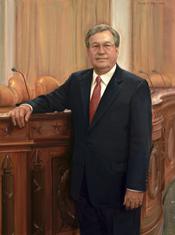
Mr. Speaker, pursuant to House Resolution 329, I call up the bill (H.R. 2738) to implement the United States-Chile Free Trade Agreement, and ask for its immediate consideration. Mr. Speaker, I yield…
Mr. Speaker, pursuant to House Resolution 329, I call up the bill (H.R. 2738) to implement the United States-Chile Free Trade Agreement, and ask for its immediate consideration.
Mr. Speaker, I yield myself such time as I may consume.
Mr. Speaker, I rise in strong support of H.R. 2738 and the companion bill, which we will discuss immediately following, H.R. 2739. These are the first fruits of the passage of the Free Trade Act implementing for the United States its ability to negotiate agreements with countries, with regions, and with multilateral organizations.
We have been out of the arena for a long time. To show you how long we have been out and how much the world has changed in a very positive way, when you look at H.R. 2738, the Free Trade Agreement with Chile, there are a number of firsts in trade agreements with the United States that are racked up by this particular agreement.
One, it is the first true bilateral agreement that we have had in 15 years. It is the first free trade agreement with a South American country. It is the first free trade agreement using a negative list approach in services, a significant step forward where you say where you do not want to play, but everything else is open. That stands on its head the historical free trade agreement arrangement.
This is the first free trade agreement requiring our trading partner to apply the TRIPS Plus Intellectual Property protections which go beyond the WTO protections. This is the first FTA allowing the use of monetary assessments for commercial disputes as a means to avoid collateral damage caused by import sanctions. It is the first FTA treating labor and environment obligations enforceable on a par with commercial disputes.
It is the first FTA requiring our trading partner to utilize transparent rule-making procedures following U.S. standards. It is the first free trade agreement covering e-commerce.
You can go on and on because there are so many firsts in these agreements. The idea is that once we are back in the field, we have leap-frogged across a decade and a half. These are world-class free trade agreements, and one of the things that I think we can say is, it is about time.
Mr. Speaker, I reserve the balance of my time.
Mr. Speaker, I yield such time as she may consume to the gentlewoman from Illinois (Mrs. Biggert).
Mr. Speaker, I yield myself such time as I may consume.
There is no question that we should rightly be concerned about traditional industries, manufacturing and the changing world and the United States relationship to that changing world. And I do believe that there will be some free trade agreements that will come before us when the concern about manufacturing is front and center. But one of the important things about the agreement that is in front of us today, the U.S.-Chile Free Trade Agreement is, first of all, I consider this agreement old business, not new business.
Secondly, I just have to tell you, as someone who represents California and, more particularly, the great Central Valley of California in which when I am back home, and I am greatly anticipating that in less than a week, in the morning the sun comes up over the snowy Sierra Nevadas.
As most of you know, Mount Whitney at 14,500 feet is the highest mountain in the continental 48 States. The Central Valley is the single richest agricultural area in the world. When the sun goes down, it goes down over the Pacific Ocean. If you have the opportunity, as I have, to be able to go to Chile, you will find that the geography, the topography is literally exactly the same.
One of the things that is important about this agreement is that it is a world-class agreement in the area of agriculture. Where many times people use nontariff barriers, argue sanitary or phytosanitary reasons for not allowing the free movement of agricultural products, what we have here is an opportunity to show the rest of the world how it ought to be done.
What I am hearing from people is, why should we enter into this agreement? I guess my response is, why not? It is true that we are trading the entire internal market of the United States for a market about the size of L.A. County.
But the fact of the matter is, Chile has not waited for us, no matter how close our friendship is. They have moved on in the world. They have free trade agreements with other countries who are more than willing to supply the products that we would love to supply, and no matter how close the friendship, if the price is not right, if the structure is not right, they are going to trade with people who are smart enough and wise enough to create a more comfortable trading arrangement.
We are doing this for us, not for Chile. But let me tell you, the U.S. consumer has benefited from this relationship.
Just as I described the geography of California and the geography of Chile, they may be the same, but when you look at them on the globe, they are on opposite sides of the equator, which means we are able to produce the same agricultural products but at a different time of the year. There is a seasonal complementariness to the agriculture on what would otherwise be directly competing products that creates a positive for the American consumer. Just one product, table grapes, currently if you go down to your market, you will find fresh table grapes and especially the new varieties that are seedless and they will be in a bag which says ``Product of USA.'' But if you go to that same market in November or December or January or February, you will find what looks like exactly the same product in a bag and it will say ``Product of Chile.''
What we used to do in the old days was when the growing season was over, we would throw the grapes in cold storage, 4 months later we would drag them out and, as you might expect, consumer demand and interest was pretty low. Today, we can supply 12 months out of the year a fresh product where there is not the kind of conflict that would otherwise occur.
We benefit, the Chileans benefit from the primary focus of agriculture in an agreement that is world class, but beyond that, allows us to go to the market in Chile and offer a product in competition with other countries. But this time we do so under a free trade agreement. And when you have an opportunity to trade under the same economic relationship, then the question is, if there is no difference in terms of economics, why not trade with a friend rather than someone else? That is what this free trade agreement is all about.
Mr. Speaker, it is now my pleasure to yield 3 minutes to the gentlewoman from Washington (Ms. Dunn), but prior to that, I yield my time to the gentleman from Illinois (Mr. Crane), chairman of the Subcommittee on Trade, and ask unanimous consent that he have the ability to disburse the time as he may see fit.

Mr. Speaker, I rise to claim the time for the Committee on the Judiciary. Mr. Speaker, I yield myself such time as I may consume. Mr. Speaker, both the U.S.-Chile and U.S.-Singapore Free Trade…
Mr. Speaker, I rise to claim the time for the Committee on the Judiciary.
Mr. Speaker, I yield myself such time as I may consume.
Mr. Speaker, both the U.S.-Chile and U.S.-Singapore Free Trade Agreements contain several important provisions within the purview of the Committee on the Judiciary. Both agreements contain competition clauses that ensure antitrust laws are applied in a neutral, transparent and nondiscriminatory manner while safeguarding basic procedural rights.
The agreements also contain robust intellectual property protections, requiring the governments of Chile and Singapore to take affirmative steps to eradicate the piracy of trademarks, patents, satellite television rights and other forms of intellectual property. These intellectual property provisions are widely supported and are likely to serve as a model for future free trade agreements. The intellectual property and antitrust provisions required no substantive changes to U.S. law and thus are not within the text of the implementing legislation before the House today.
For the last several years, I have woefully and repeatedly expressed concern about substantive changes to U.S. law contained in free trade agreements. Before passage of the Trade Promotion Authority Act, immigration provisions were included in earlier free trade agreements such as NAFTA without formal consultation with Congress. This regrettable practice created precedent for subsequent trade agreements, and immigration provisions were included in both the Chile and Singapore Free Trade Agreements before the elevated consultation requirements created by the Trade Promotion Authority were enacted last year.
Mr. Speaker, article I, section 8, clause 3 of the Constitution gives the Congress plenary authority over matters pertaining to immigration and naturalization. During the Committee on the Judiciary's mock markup of this legislation, I, the gentleman from Michigan (Mr. Conyers), the ranking member and several members of the committee spoke with a united and bipartisan voice and declared that immigration provisions in future free trade agreements will not receive the support of the Committee on the Judiciary. Plainly stated, the Committee on the Judiciary will oppose any future free trade agreement that contains substantive changes in immigration law.
Following the markup, the gentleman from Michigan (Mr. Conyers), the ranking member, and I transmitted a letter to the United States Trade Representative that reaffirmed Congress' exclusive constitutional mandate to consider immigration law. An additional letter was sent by other members of the committee and several Members of the Congress not on the committee echoing this bipartisan commitment. This was sent to the Trade Representative.
Mr. Speaker, the Committee on the Judiciary's July 10 preintroduction markup of this legislation was a mock markup in name only. At the markup, the committee reported several substantive amendments to the draft we were furnished, and these were incorporated into the legislation which we consider today.
First, while the draft implementing legislation created a separate visa category for skilled workers from Chile and Singapore, the Committee on the Judiciary amended the Immigration and Nationality Act to ensure that these visas, 6,800 in total, are now deducted from the national H-1B visa cap at the time they are issued and when they are renewed after five or more prior extensions.
The committee also reported an amendment to ensure that every second extension of temporary status for citizens of Chile and Singapore be accompanied by a new employer attestation to ensure that an employer updates the prevailing wage determination after each second application for extension.
In addition, the committee approved an amendment that requires an employer to pay a fee equal to that charged to an employer petitioning for H-1B visa status whenever a temporary exit visa is granted and after every second extension of that status.
Finally, H.R. 2738 and H.R. 2739 now explicitly state that an employer generally cannot sponsor an alien for an EL or H-1B1 visa if there is any labor dispute occurring in the occupational classification at the place of employment, regardless of whether the labor dispute is classified as a strike or a lockout. In this regard, title IV of both bills provides greater worker protection than that presently contained in the H-1B program.
The committee's commitment to ensuring that its amendments were incorporated into the introduced bills we consider today dramatically enhanced the quality of the legislation and recaptured a crucial prerogative of the Congress. It is my hope and expectation that the Committee on the Judiciary's clarion call over the last 2 weeks that immigration provisions be excluded from future trade agreements will be clearly received by this and future administrations.
Given the leadership of Ambassador Zoellick, his proven commitment to working with Congress on a cooperative and constructive basis that fully respects the constitutional prerogatives of this body and the dedication and professionalism of his staff, I have great confidence that the will of Congress will not be ignored.
Mr. Speaker, reducing barriers to U.S. exports is crucial to restoring America's economic vibrancy. U.S. products containing intellectual property continue to lead America's exports, and it is incumbent upon this body to ensure that foreign governments stamp out the rampant piracy that costs America and Americans several billion dollars a year.
Strong safeguards in these agreements will ensure that the governments of Chile and Singapore create criminal sanctions to punish intellectual property theft with the seriousness and severity that it demands. In addition, the antitrust provisions will ensure that these governments do not rely on the increasingly common foreign practice of manipulating antitrust laws to discriminate against American businesses.
Mr. Speaker, the Chilean-Singapore Free Trade Agreements contain critical market-opening provisions which will expand commercial opportunities for America's farmers and dairy producers and ensure that the United States continues to lead the world in exports. These agreements also advance America's broader strategic interests by liberalizing trade with two key economic allies which serve as regional models for neighboring countries.
For the reasons I have outlined, Mr. Speaker, I urge my colleagues to support this legislation.
Mr. Speaker, I reserve the balance of my time.
Mr. Speaker, will the gentlewoman yield?
Mr. Speaker, I ask unanimous consent that the balance of my time be yielded to the gentleman from Utah (Mr. Cannon) and that he be allowed to yield time to other Members.
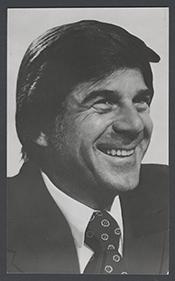
Mr. Speaker, I yield myself such time as I may consume, and in doing so rise in opposition to 2738, the U.S.-Chile Free Trade Agreement implementing the Act. And not only do I speak on behalf of…
Mr. Speaker, I yield myself such time as I may consume, and in doing so rise in opposition to 2738, the U.S.-Chile Free Trade Agreement implementing the Act. And not only do I speak on behalf of numerous Members who oppose this, but I also speak on behalf of the International Brotherhood of Teamsters, the AFL-CIO, the International Brotherhood of Boilermakers, the International Brotherhood of Electrical Workers, United Auto Workers, United Steelworkers of America, the UNITE, the needle trades, and the Machinists Union, all of whom strongly oppose the Singapore and Chile Free Trade Agreements, and it will soon become apparent why they oppose it.
These agreements are notable for their lack of labor rights enforcement language and, for the first time, the addition of a permanent work visa program for a violation of a guest laborer organization that invites foreign workers to come to this country under specialized visa programs, and these agreements are a template for future trade agreements and are sufficient reason to oppose both agreements and the implementing legislation.
American workers have suffered too many job losses for the sake of free trade, for the sake of giving huge tax cuts to the richest Americans, and they have suffered, the children and education and health care in this country, as the current administration has worked its will to harm and dismantle labor unions and to ignore children's education by starving these programs through tax cuts.
The U.S. Trade Representative has the ability to ensure that good- paying jobs are not shipped overseas, I must say, by negotiating labor standards that have strong enforcement measures, but the U.S. Trade Representative has not, he will not, and the administration will not ask him to. Thus, it is up to Congress to require him to protect U.S. workers from the devastation of trade agreements like the Chile Fair Trade Agreement.
Our Nation's unemployment rate reached 6.4 percent in June, the highest rate in more than 9 years, causing the loss of more than 1 million jobs in the last 3 months. Since NAFTA, we have lost 500,000 jobs due to NAFTA. Three-quarters of the jobs lost due to NAFTA have been in the manufacturing sector. These are good-paying jobs that have been shipped overseas. These are traditional American jobs that are the highest skilled among our labor force.
But rather than take the successes of the U.S.-Jordan Fair Trade Agreement, which was heralded by labor and environmental organizations, as the new model for trade agreements, the Bush administration is taking us down the path of further job losses and more degradation of our environment.
Chile's Free Trade Agreement contains only one enforceable provision on workers rights, and it is a hollow, hollow obligation that each country, get this, each country must enforce but not necessarily maintain its own domestic labor laws. If they change their domestic labor laws, that is all they have to do. If they eliminate their domestic labor laws, this fair trade agreement acknowledges that and ignores the fact that there will no longer be any workers rights.
It pays lip service to upholding the International Labor Organization's core worker rights and to not weaken its domestic labor laws, but then both these provisions are expressly excluded from coverage in the dispute settlement chapter. Hence, the Chile Fair Trade Agreement contains virtually no labor standards because any worthwhile labor standard is not enforceable.
The U.S. cannot afford to go down the road of further job losses with the Chile FTA and the Singapore FTA or any other future trade agreements.
It is anticipated that 3.5 million white collar jobs and $136 billion in wages will shift from the United States to low-cost countries in the next 10 years. So all of those, in addition to the 100,000 high-tech jobs we have already lost in California, Silicon Valley, those jobs will become obsolete under the Bush administration's course for free trade. It will not just be IT jobs. We will see a shift in financial service jobs, research and development jobs, service call center jobs and insurance jobs.
Then we get to the new immigration visa program established in the Chile FTA, and it will exacerbate the loss of white collar jobs here. The current H-1B visa program, kind of an enforced slavery program that was written at the behest of the Silicon Valley corporations, is a program of a 3-year temporary work visa renewable one time. So it is a 6-year program. The new visa program will allow an indefinite renewal, time after time, for 1,400 nationals from Chile.
U.S. college grads will increasingly see a future in flipping hamburgers and
waiting on tables, while college grads from overseas will increasingly see good-paying white collar jobs in their future.
The U.S.-Chile Free Trade Agreement is nothing more than a model, a template, an excuse for the Bush administration to diminish labor standards here in the United States. Furthermore, it sets a dangerous precedent as a model for current negotiations with Central America and the Western hemisphere, and I am sorry for my colleagues who think we are going to do something different in Central America. They are just wrong.
We cannot trust the U.S. Trade Representative or the Bush administration to do the right thing. We know it. They behave like China. If we want to get them to do the right thing, we must stop them here before they strike again and diminish more labor standards. It is time for us to stand up, defend the few good-paying jobs we have left in this country and demand the administration go back to the drawing board and include enforceable labor language in the Chile FTA.
I urge my colleagues to oppose H.R. 2738, the implementing language for the U.S.-Chile Free Trade Agreement.
Mr. Speaker, I reserve the balance of my time.
Mr. Speaker, I am pleased to yield 3 minutes to the gentleman from Ohio (Mr. Brown).
Mr. Speaker, I yield 4 minutes to the gentlewoman from Ohio (Mrs. Jones).
(Mrs. JONES of Ohio asked and was given permission to revise and extend her remarks.)
Mr. Speaker, I yield 3 minutes to the gentleman from Wisconsin (Mr. Kleczka).
Mr. Speaker, I yield such time as he may consume to the gentleman from Illinois (Mr. Lipinski).
(Mr. LIPINSKI asked and was given permission to revise and extend his remarks.)
Mr. Speaker, I yield 2 minutes to the gentleman from Oregon (Mr. DeFazio).
Mr. Speaker, I yield 2 minutes to the gentleman from New Jersey (Mr. Pascrell).
Mr. Speaker, I am pleased to yield 2 minutes to the gentlewoman from California (Ms. Solis).
Mr. Speaker, I yield the balance of my time to the gentleman from Massachusetts (Mr. Frank).
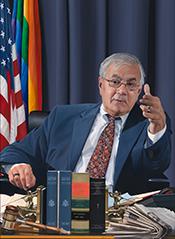
Mr. Speaker, first I do want to comment on the irony of many of us being lectured about the value of free trade by supporters of the most anti-free trade, anti-poor people policy that the United…
Mr. Speaker, first I do want to comment on the irony of many of us being lectured about the value of free trade by supporters of the most anti-free trade, anti-poor people policy that the United States has, our agriculture policy. People who have voted for the American agriculture bill have less credentials to preach to the rest of us about being fair to poor people than anyone I can think of.
I am here to speak against the Chile Free Trade Agreement, as well as the Singapore Free Trade Agreement, both for the reasons that we have heard from from others, but specifically because they have unfortunately become the embodiment of a purist, right-wing ideology gone mad. Chile, in fact, as we have known, has been a successful economy. Part of what Chile did as it
was building its successful economy was to adopt some sensible controls on short-term capital flows. They did not want hot money coming in and out.
Most analysts agree that the major cause of the problems in Asia in the late 1990s had to do with hot money going in and out. Sound economies, sound budgets were undermined when short-term investments had flowed in and there was a run on the country.
Most economists today agree, including advocates of free trade, that it is wise for countries in some cases, particularly developing countries that may not have sound banking systems, to be allowed to put controls not on foreign direct investment, but on short-term hot money. This agreement, because of the right-wing ideology that governs this administration and, I must say, I believe contrary to the wishes of the Trade Representative, embodies a purist view that says no capital controls anywhere, anytime, anyplace.
Let me tell my colleagues what some free trade advocates say of this. The Economist magazine, which prides itself on its free trade credentials, says in an article entitled ``A Place for Capital Controls'':
``In negotiating new free trade agreements with Chile and with Singapore, the U.S. has recently sought assurances of complete capital account liberalization. Bitter experience suggests that such demands are a mistake. It is past time to revise economic orthodoxy.''
Joseph Stiglitz, former chief economist of the World Bank, a strong supporter of the Trade Promotion Act, a free trader, says:
``There is an emerging consensus among economists that emerging markets should be particularly wary about full capital account liberalization. It makes little sense for our trade agreements to be pushing on our trading partners' restrictions which fly in the face of sound economics.'' He is again opposed to this.
Finally, Professor Jagdish Bhagwati, a strong advocate of free trade, says:
``The inclusion of provisions in this regard, in these treaties, in these FTAs, seems to be ideological and a result of narrow lobbying interests hiding behind the assertion of social purposes or ideology.''
I urge the rejection of these treaties. Singapore and Chile were forced to agree to these over their objection. If we rejected these treaties, we could easily renegotiate without these ideological insistencies, right-wing ideology run amuck. I hope that we defeat these treaties and renegotiate them without imposing this rigid capital control prohibition on these two countries.
[Excerpted testimony from Apr. 1, 2003 House Financial Services
Committee Hearing on the U.S.-Singapore and U.S.-Chile FTAs]
The Capital Control Provisions in the Singapore and Chile FTAs
By Jadish Bhagwati, University Professor (Economics), Columbia
University)
The inclusion of capital control provisions in the Chile
and Singapore FTAs is . . . difficult to understand in terms
of economics. Even the IMF, including in its latest report
from its Chief Economist Ken Rogoff and associates, concedes
the case for prudence rather than haste in dismantling
capital controls and in occasional but cautious use of them
when necessary in otherwise capital-wise open economies. The
inclusion of provisions in this regard in these FTAs seems
therefore to be ideological and/or a result of narrow
lobbying interests hiding behind the assertion of social
purpose. I see, in particular, the following problems with
these FTAs as a template:
1. The provisions are overly ambitious in extending to all
kinds of ``investments'', including ``futures, options and
derivatives'', instead of being confined to direct foreign
investment. I see this as a potential problem with the NGO
community which has become properly sensitive to financial
flows and crises, and to the havoc they cause, especially on
the poor in the afflicted countries. It will simply play into
the hands of the many anti-globalization critics who see
trade treaties as being captive to financial and corporate
interests. At a time when trade liberalization itself has
become difficult to manage, the inclusion of such provisions
into a trade agreement is to invite gratuitous criticism.
2. The limitations put on what can be demanded by way of
compensation for use of capital controls and their effects on
the value of investments by foreign entities go some way
towards assuaging the early concerns. But they still amount
to roadblocks. I do not see how it can lead to anything but
political objections when invoked, just as the ultra-
conservative view of ``takings'' that was slipped into
Chapter 11 provisions of NAFTA has led to fierce political
objections.
3. As I read the text of the agreements, it appears that
the traditional protections built in for ``balance of
payments'' situations, which would have been invoked
automatically to suspend ``free transfers'', have been
removed and been replaced by a separate Dispute Settlement
mechanism when capital controls are invoked. This is more
restrictive for Chile and Singapore; it also constitutes a
tightening of the restrictions being imposed on these
countries' ability to use capital controls as they see fit.
None of this is good news. It also seems to me that few
other countries will be prepared to accept such a template.
Such restrictions, which are to be deplored in any event, are
best left to be handled through investment agreements, rather
than fastened on to trade agreements where they will bring
trade liberalization, a policy which is far less
controversial, into disrepute.
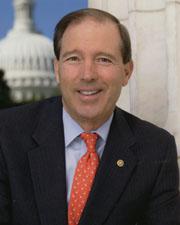
Mr. Speaker, I rise today in opposition to H.R. 2738 and H.R. 2739, the U.S.-Chile FTA Implementation Act and the U.S.-Singapore FTA Implementation Act, respectively. It is unfortunate that I find…
Mr. Speaker, I rise today in opposition to H.R. 2738 and H.R. 2739, the U.S.-Chile FTA Implementation Act and the U.S.-Singapore FTA Implementation Act, respectively. It is unfortunate that I find myself in this position because I want to support trade agreements because I believe they can have a positive effect on our economy. However, they only can have a positive effect if they are negotiated properly. They only can have a positive effect if they have strong labor, environmental, and consumer protections. Unfortunately, these two bills before us, and the underlying Free Trade Agreements, are woefully inadequate in these regards.
Unlike the U.S.-Jordan FTA, which passed unanimously in the 107th Congress, these FTAs--the first signed by the Administration since passage of Trade Promotion Authority--will set a dangerous precedent for future agreements, including the Central American FTA and the Free Trade Area of the Americas (FTAA).
Unlike the U.S.-Jordan FTA, which provided workers with enforceable protections based on the core International Labor Organizations workers' rights--freedom of association; the right to bargain collectively; prohibitions on child labor, forced labor and employment discrimination, these FTAs give scant attention to these important issues. The only reference to workers' rights is a provision stating that each party ``shall not fail to effectively enforce its labor laws,'' not matter how inadequate they may be. There is no parity between our strong labor laws here in the United States and the weak protections in Singapore or Chile.
As predicted during the TPA debate during the 107th Congress, these trade agreements are bad environmental policy--and now, we have no change to amend them. Contrary to the claims of the FTA supporters, the provisions on investment in the Chile and Singapore FTAs do not meet the requirements of the Trade Act of 2002 that foreign investors should receive ``no greater substantive rights'' than U.S. citizens under U.S. law. What this means is that foreign investors will be granted broad rights under international law that do not exist under U.S. law. For example, many companies have aggressively used NAFTA's Chapter 11 authority to undermine our strong environmental protections. This continues with the Chile and Singapore FTAs where foreign investors can bring suit against our laws to prevent pollution because they may claim a right to be compensated. This is just one example. Applied broadly, these two FTAs have investment language that could cause serious harm to the environment and the public interest.
The Chile and Singapore FTAs also undermine U.S. immigration policy. Specifically, they loosen policies regarding temporary entry to workers. Some claim the H1-B visa issue has been addressed. However, this is far from true. While the implementing legislation claims to ``fix'' the problem by limiting the damage by applying some elements of the H1-B, these provisions are not legally binding because the agreements in the actual trade agreement have been violated by these ``fixes'' and will be eliminated in the pacts' dispute resolution systems. Furthermore, the Chile FTA has an unprecedented requirement that the U.S. provide ``written justification'' to any person denied a visa.
The Singapore FTA contains Integrated Sourcing Initiative (ISI)/ Transshipment permissions. Last year's Fast Track, or Trade Promotion Authority contained no authority to negotiate such deals. Yet, the U.S. Trade Representative has this deal in the FTA, and the so-called ``fix'' largely replicates existing terms in the World Trade Organization Information Technology Agreement, for which even the Clinton Administration--as pro-free trade as any--never sought congressional approval.
Also, these FTAs could have very negative affects on the health care system. They will impede the access to life-saving medicines by extending patents beyond the 20-year limit required by the Trade- Related Aspects of Intellection Property Rights (TRIPS); they will require a 5-year waiting period before governments can provide generic drug producers test data, thereby delaying affordable medicines; they also will permit major pharmaceutical companies to block the production of generic medicines. Also, the Singapore FTA reduces tobacco tariffs to zero, which actually will encourage more dumping of U.S. tobacco products in Singapore. Finally, these FTAs will open the door to further privatization and deregulation of vital human services including health care professionals, and the provisions for public control of water and sanitation services. Amazingly, these FTAs will leave the U.S. open to challenges from foreign private corporations and the subsidiaries to compete for these public sector services. This is just plain wrong.
Finally, some have claimed to have ``fixed'' this legislation with a ``mock mark-up'' in the Ways and Means Committee. I'm not quite certain what a ``mock mark-up'' is, but most believe it hasn't done anything. Specifically, some who support this implementing legislation say we have two choices: one, we can block this legislation to send a message to the administration that they need to do a better job of negotiating FTAs that have real environmental and labor protections. Or, two, we can approve this implementing legislation, and then send a message to the White House to do a better job the next time. I, for one, am not willing to take that risk--the risk that this White House and this USTR will actually listen to Congress. That is one of the reasons I voted against TPA in the first place. Sadly, many of my concerns and reason for voting no have come to fruition in these first two negotiations.
I want to support free trade because I know it has the potential to help American workers
and consumers. In fact, I have supported trade agreements previously, including the U.S.-Jordan FTA. Unfortunately, however, I cannot find many positive developments in either the U.S.-Chile Free Trade Agreement or the U.S.-Singapore Free Trade Agreements. Reluctantly, Mr. Speaker, I will vote ``no''on H.R. 2738 and on H.R. 2739. I urge my colleagues to do likewise.
Mr. Speaker, I rise today in support of the Chile-U.S. Free Trade Agreement (FTA). While I maintain reservations about certain sections of this agreement, overall I believe that this FTA succeeds in…
Mr. Speaker, I rise today in support of the Chile-U.S. Free Trade Agreement (FTA). While I maintain reservations about certain sections of this agreement, overall I believe that this FTA succeeds in lowering tariffs on American goods entering Chile and will benefit Wisconsin and the United States.
As our Nation leads the world into the 21st century, we should not shy from opportunities to guide and expand global trade. Chile has persevered as a model of successful, pro-trade economic growth in a region scarred by economic turmoil. Our enhanced engagement with Chile, symbolized in the free trade agreement, is a necessary commitment to stability and economic prosperity in Latin America, while at the same time serving to expand American export opportunities.
The U.S.-Chile Agreement will essentially level the playing field for U.S. companies and workers. Currently, Chile imposes a uniform tariff of six percent on American exports. Under this agreement, the tariff will be eliminated immediately on approximately 85 percent of U.S. exports. Tariffs on the remaining exports will phase out over the next 4 to 12 years. In comparison, 65 percent of Chile's exports enter the United States duty-free under the Generalized System of Preferences program, with the remaining goods facing an average duty of 0.5 percent.
With the United States economy still in a slump, the consequences of not pursuing an FTA with Chile are extreme for American workers. In 2001, exports from the United States to Chile totaled over $3 billion. This was 17 percent of all imports into Chile and made the U.S. Chile's largest single country trade partner. Over the past 2 years, however, the percentage of American imports into Chile has decreased as other international competitors have completed FTA's with Chile, including Mexico, Canada, Central America, European Union, and South Korea, and have taken over as major suppliers to the Chilean market. As a result, the U.S. has seen its share of the Chilean market drop by one third, and its bilateral trade position reverse from surplus to deficit.
This define in market share is evident in my home state of Wisconsin. For example, in 2000, Wisconsin exports to Chile totaled over $120 million--in the top quarter of all U.S. states. Of this amount, over $90 million was in industrial machinery. However, in 2002, Wisconsin exports to Chile declined to $72 million total and $47 million in industrial machinery.
The FTA with Chile will benefit Wisconsin in additional ways, including opening up the Chilean market to U.S. agriculture imports. Chile's tariffs on dairy imports from the U.S. will drop from as high as ten percent to zero in four years. The National Milk Producers Federation expects that exports will increase by several million dollars during the first few years of the agreement, and continue to grown down the road.
As I mentioned earlier, I do have concerns with this agreement, but on its merits, I believe the FTA with Chile addresses a number of important issues and will benefit the American economy. Today's trade environment is constantly changing, with non-tariff trade issues impacting all aspects of our economy and law. Through 14 rounds of negations over 2 years, negotiators were able to hammer out agreements on very complicated and important issues including intellectual property, e-commerce, agriculture, market access, and government procurement. In these respects, this FTA addresses growing challenges facing international trade in the 21st century.
Controversy remains on a few very important aspects of any trade agreement--those dealing with labor and environment. While these provisions are some of the most difficult to find agreement on with potential trade partners, I along with many in Congress, believe trade agreements can serve to raise labor and environmental standards in developing nations and that such provisions must be included in bilateral trade agreements.
While differing from the labor provisions in the Jordan agreement, the labor language in this bill, requiring Chile to enforce its labor laws or be subject to penalty, is acceptable because there is wide agreement that Chile's labor laws are consistent with high International Labor Organization standards and are systematically enforced. In addition, there is wide agreement that, while possible, it is very unlikely that Chile would ever lower labor standards to entice trade.
I, along with many members, also remain concerned with the inclusion of immigration policy in a fast tracked trade bill. While the USTR argues that the temporary workers provisions can be an aspect of services trade, I believe that Congress must thoroughly debate any changes to immigration policy. These objections were strongly conveyed by my colleagues and I to the USTR, and as a result the implementing language before us includes language placing certain H1-B visa restrictions and caps on the temporary worker provisions in this agreement that were previously excluded.
Trade agreements cannot be one-size-fits-all, and this comprehensive bilateral agreement conforms to the characteristics of Chile and the United States. With an open and developed economy grounded in market- based principles, a strong and growing middle class, a credible labor movement, and laws respecting human rights, Chile is a model trading partner. It is in the strategic interest, and economic interest of the United States to engage Chile and complete our nation's 5th bilateral free trade agreement. I urge my colleagues to support this agreement.
Mr. Speaker, I thank my friend from Florida for yielding me the time. Where I come from in Ohio, trade is a four-letter word, J-O-B-S. Unfortunately, the President, the United States Trade…
Mr. Speaker, I thank my friend from Florida for yielding me the time.
Where I come from in Ohio, trade is a four-letter word, J-O-B-S. Unfortunately, the President, the United States Trade Representative, and the
Republican leadership do not spell very well. They ought to simply look around.
Since President Bush has taken office, we have lost 3 million jobs in this country. We have lost 2.1 million manufacturing jobs in this country.
I yield to the gentleman from California.
Mr. Speaker, I thank my friend from California for his comments.
I think that any reasonable people, if we would simply go home and talk to workers, talk to people, they will say that the anxiety they feel so often is because of our trade policy. These 3 million jobs we have lost, these 2.1 million manufacturing jobs are because of an economic program of tax cuts where a millionaire gets a tax cut of $93,000 and children and their families get nothing and families making 15 and 20 and $25,000 a year, a Bush economic program that cuts benefits for health care, cuts benefits for education, cuts benefits for veterans, and these trade agreements, trade agreement after trade agreement after trade agreement, have cost American jobs.
I look around. Last Sunday, there was a rally at a Goodyear plant in Akron, Ohio, in my district. Goodyear has only 14 factories in the United States left, one of the biggest rubber companies in the world. Most of their plants now are overseas. We had rallies at each of these 14 plants simultaneously, and I walked around before speaking at this rally, and these workers get it.
They understand the reason their jobs have gone overseas and those tires are made overseas and sold back into the United States. They understand that the failure of our economic policy lies at the feet of the failure of our trade policy. They understand that NAFTA took a surplus with Mexico and Canada in 1993 and has turned it into a $25 billion trade deficit. They understand that our China policy, with a $100 million trade surplus only a dozen years ago, $100 million with an ``M,'' now is a $100 billion trade deficit with that country.
President Bush, Sr., used to say that $1 billion of trade turned into 18,000 jobs. If we have a $1 billion trade surplus, we have a net gain of 18,000 jobs. If we have a trade deficit of $1 billion, we have a net loss of 18,000 jobs. Our China policy alone has turned basically a neutral job situation into 1.8 million jobs lost every year just because of our bilateral trade situation with China, 1.8 million jobs every year; and most of those jobs are good paying manufacturing jobs.
Mexico has about 400, 500,000 jobs every year, Mexico-Canada trade deficit. Goodyear workers understand that. Steelworkers in Ohio and across the country understand that. Auto workers understand that. People who work with their hands understand that these trade agreements hemorrhage jobs.
Two years ago, even Congress understood it when we passed the Jordan trade agreement. The Jordan trade agreement lifted people up, did not pull standards down. It lifted labor standards up. It lifted environmental standards up. It lifted food safety standards up, but Congress seems to have forgotten that lesson of Jordan. Hence, today, we consider Chile and we consider Singapore.
These are two agreements that do not lift standards up. They pull standards down. They will cost American jobs. They will weaken American labor standards. They will weaken America in world and environmental standards.
Let me just briefly, Mr. Speaker, take two issues to show that with Chile, people say Chile has decent labor standards. They do today, but under this agreement, unlike the Jordan agreement, where the Jordan agreement said labor standards are determined by ILO, International Labor Organization, standards, with Chile, Chile under this agreement gets to enforce its own labor standards. They may be pretty good labor standards today; but if we get a majority in the Chilean government like the majority in this country, we will have effective pressure to weaken labor law, as my friends on the other side of the aisle do here.
So Chile will see a weakening of labor and environmental law, and then we will see a weakening of labor and environmental standards under this trade agreement. If Chile had ILO labor standards, that would not be the case.
The second issue is, under Jordan, we got rid of the Chapter 11 investor state provisions, which, unfortunately, under NAFTA, allows corporations to sue foreign governments, shifting sovereignty from a democratically-elected government to corporate interests where a corporation can sue a government for passing a public health law or a food safety or an environmental law, weakening those laws that governments democratically attain.
We should reject Chile and Singapore. We should go back to the Jordan model. We should reject Chile today, we should reject the Singapore agreement today, and we should go back to the Jordan model. The Jordan model lifts standards. It lifts people up rather than pulling people down. It is good for the environment, it is good for labor, it is good for food safety, and it is good for American values.

Mr. Speaker, I rise in strong opposition to the Singapore and Chile Free Trade Agreements. Such flawed bilateral agreements risk further weakening our economy at a time of record trade deficits and…
Mr. Speaker, I rise in strong opposition to the Singapore and Chile Free Trade Agreements. Such flawed bilateral agreements risk further weakening our economy at a time of record trade deficits and when our nation's unemployment rate is at its highest point in nine years. I cannot support these agreements, which will simply send millions of American manufacturing jobs overseas. I will not put the economic security of my constituents at stake.
Our domestic manufacturing sector has been decimated by the so-called ``liberalization of world trade.'' Since enactment of the North American Free Trade Agreement (NAFTA) and China's entry into the World Trade Organization, the U.S. has experienced a net loss of three million jobs, according to the Economic Policy Institute. In the manufacturing sector alone, we have experience a free fall, with more than 1.7 million jobs lost. The liberalization of world trade and the emergence of nations like China, India and Mexico as centers of manufacturing and technology for U.S. firms has certainly played a role in speeding the decline of U.S. industry.
Mexico and China are not solely to blame for the fact that my own district of Rochester, New York, in my district, has lost half of its manufacturing base in the past two decades. However, I doubt that Eastman Kodak would have moved its entire disposable camera manufacturing operation, ``lock, stock, and barrel'' to Mexico and China last year, in the absence of NAFTA and WTO trade preferences.
My constituents will, no doubt, appreciate the bitter irony that Congress is considering these bills--that are being touted as job- creating initiatives--when, just yesterday, Kodak, which has a long, storied history in Rochester, announced that between two and three thousand jobs would be eliminated in Rochester (6,500 worldwide). Kodak attributes its decision to the fact that its film business has been significantly weakened, with the emergence of the digital camera market. Where are those jobs going? Certainly, Kodak is not going to abandon its film manufacturing altogether? No, those jobs are going overseas, to our trading partners--where wages are low, labor standards are spotty, and the environment is free for the poisoning.
I cannot help but be struck by the glaring reality of what has happened to Kodak's Rochester workforce, about 40,000 jobs lost--never to return--since 1990. In the days leading up to the vote on NAFTA, Kodak tried to assure me that NAFTA would be a ``job-creator''--that Rochester would be booming--that the only jobs that would move abroad would be low-skilled, low-paying. I take no pleasure in saying that Kodak's vision has not come to pass.
At the same time, there's more bad news from Kodak. Kodak is again poised to leave behind its loyal employees and a region that has treated it well as it ships new technology overseas. On Monday, Kodak announced that it plans to begin manufacturing part of its revolutionary new display technology in China. The company has entered into a licensing agreement with a Hong Kong firm to manufacture Kodak's organic light emitting diode display (OLED). This technology, developed in the U.S., represents a major breakthrough in display technology with untold potential for consumer and military products. Making matters worse, Kodak's OLED production facility will be the first of its kind in China--a move that could foreclose any hope of OLED production ever growing in the U.S. This decision represents another missed opportunity to rebuild our electronic component sector.
Mr. Speaker, regrettably Rochester's experience with Kodak is not unique. As an active member of the Congressional Manufacturing Caucus, I know that this issue cuts across party lines, state lines, and economic class. Given what we know about the costs of trade liberalization, enactment of these two bilateral agreements would be tantamount to aiding and abetting in the destruction of our manufacturing base.
When we look at the agreements themselves, I am very disappointed that they fail to establish sufficient enforcement of labor and environmental protections and would loosen U.S. immigration policy regarding temporary entry of workers. Rather than building on the positive labor and environmental provisions in the U.S.-Jordan Free Trade Agreement, these agreements place no requirement on Chile and Singapore to adhere to internationally recognized labor principles. With the Central American Free Trade Agreement and the Free Trade Area of the Americas (FTAA) in the pipeline, these agreements are a terrible model. Simply put, a vote for the U.S.-Chile and U.S.-Singapore agreements would send a signal that the weak labor standards in them are acceptable.
Mr. Speaker, I urge my colleagues to join me in rejecting these flawed agreements.
Show 11 more
Mr. Speaker, I rise in support of both H.R. 2738 and H.R. 2739, the U.S.-Chile and U.S.-Singapore Free Trade Agreements, respectively. Globalization is here to stay. With markets now linked globally…
Mr. Speaker, I rise in support of both H.R. 2738 and H.R. 2739, the U.S.-Chile and U.S.-Singapore Free Trade Agreements, respectively.
Globalization is here to stay. With markets now linked globally by computers, satellite communications, and advanced transportation networks, international trade and investment will play an increasing role in American prosperity. We cannot, as a nation, afford to retreat from a proactive strategy of trade expansion that takes advantage of our position as the world's most prosperous and dynamic economy.
I have great faith in American workers. They are the best in the world. And, I'm convinced they can compete with workers from any other country.
Trade liberalization is also an important tool towards developing responsible global relations. It is a tool, as the preamble of the GATT states, for ``raising standards of living, ensuring full employment, developing the full use of the resources of the world and expanding the production and exchange of goods.'' Indeed, open markets are an important engine of economic growth, which can expand opportunities, raise living standards, and affect social change. Perhaps most importantly, however, trade liberalization provides our nation with an additional diplomatic tool and a forum within which our nation may deal with international disputes and/or coalition building. Trade's national security component cannot be understated.
The Chile and Singapore Free Trade Agreements include strong and comprehensive commitments from both of these nations to open their goods, agricultural and service markets to U.S. producers. These agreements include commitments that will increase regulatory transparency and act to the benefit of U.S.
workers, investors, intellectual property holders, businesses and consumers.
While some of the provisions in these FTAs could serve as a model for other agreements, a number of provisions clearly cannot be, nor should they be. As a general rule, I believe that each country or countries with whom we negotiate are unique; and while the provisions contained in the Chile and Singapore FTAs work for Chile and Singapore, they may not be appropriate for FTAs with other countries, where may exist very different circumstances.
Indeed, concerns have been raised that the Administration may use some of their provisions contained in the agreements as models for other FTAs, such as the Central America Free Trade Agreement (CAFTA), where the conditions may make it inappropriate to do so. Specifically, with regard to the labor and environmental provisions, there are separate dispute settlement rules that place arbitrary caps on the enforceability of those provisions. Moreover, these agreements contain an ``enforce your own laws'' standard for dealing with labor and environmental disputes. In the context of Chile and Singapore, I have limited concerns about this standard since both of these countries' laws essentially reflect internationally recognized core labor rights. How they are applied does vary in the two countries, reflecting the different general characteristics of the two nations; however, there is little practical concern that these countries will backtrack.
Concerns about labor and environmental standards, however, should receive careful scrutiny on a case-by-case basis as different circumstances and situations warrant. Use of the ``enforce your own law'' standard is invalid as a precedent--indeed is a contradiction to the purpose of promoting enforceable core labor standards--when a country's laws clearly do not reflect international standards and when there is a history, not only of non-enforcement, but of a hostile environment towards the rights of workers to organize and bargain collectively. Using a standard in totally different circumstances will lead to totally different results.
As such, my vote for the Chile and Singapore FTAs should not be interpreted as support for using these agreements as boilerplate models for future trade negotiations. I will evaluate all future trade agreements on their merits and their applicability to each country to ensure that core international labor rights and environmental standards are addressed in a meaningful manner. Expanded trade is important to this country and the world; but it will be beneficial to a broad range of persons in our nation and in other nations only if these trade agreements are carefully shaped to include basic standards, including the requirement that nations compete on the basis of core rights for their workers, not by suppression of these basic rights.
The Singapore and Chile FTAs meet these standards and I urge my colleagues to support these two important initiatives.
Mr. Speaker, I thank the gentleman for yielding me this time and for his kind comments, but I would have to say there has been no person in this House who has been a better advocate, a stronger…
Mr. Speaker, I thank the gentleman for yielding me this time and for his kind comments, but I would have to say there has been no person in this House who has been a better advocate, a stronger advocate, a more forceful and articulate advocate of trade and the advantages it brings to American workers and American consumers than the person who just spoke, my friend, the gentleman from California (Mr. Dreier).
Mr. Speaker, I do rise in support of this rule, and I rise in strong support of the underlying trade agreements with Chile and Singapore. I was delighted to see my friend, the gentleman from Florida (Mr. Hastings) saying he supports the rule as well. He spoke about some of the concerns he has. These concerns are ones of process, concern that there is not the ability to amend these bills on the floor.
Well, Mr. Speaker, that was, of course, the debate that we had on Trade Promotion Authority, what we used to call Fast Track. That is not the issue here today. The issue here today is the substance of these two agreements, and the substance of these two agreements is indeed very good.
This a momentous occasion in our trade policy. Passage of these two
trade agreements is the first time in a decade we have been able to use what we used to call Fast Track, now called Trade Promotion Authority, to get agreements. It will once again mean that the United States is aggressively pursuing its national interest, breaking down trade barriers and building a world of free trade. I commend the leadership of the administration and the Congress, both sides of the Capitol and both sides of the aisle, for bringing us to this point.
I have a special reason for feeling very emotional about the Chile Free Trade Agreement. Eight years ago, in 1995, just shortly after NAFTA went into effect, the Speaker of the House asked me to go to Chile and talk to them about trade. I went there and I said I had a good deal of confidence that then President Clinton would seek Trade Promotion Authority, Fast Track Authority, and Congress would give it to him. Of course we know that that did not happen. And it was not until just last year that Trade Promotion Authority was granted the President. Now we are finally back on track.
There has been so many dashed hopes in Chile, so much anticipation of what this could mean for them, and finally we are bringing it to fruition. Since the launching of these negotiations it has been a period of great unease in Chile, of anticipation as we struggled to secure TPA. All of Latin America has been watching the progression of Trade Promotion Authority, and now this agreement with Chile. For them it is the litmus test to verify that the U.S. would not renege on its commitment to the Western Hemisphere, and today Congress fulfills that commitment by moving forward.
If we are to nurture fragile democracies in the region, if we are to foster development, development that actually leads to sustained better economic conditions for people in the region, as well as for Americans and consumers and workers in this country, we have to lead by example. We have to lead by bringing free trade to the region. Chile is that first step. It is an agreement that is in our economic, our foreign policy, our national security interest.
More than 85 percent of bilateral trade in consumer and industrial products will immediately become duty free upon ratification, with most remaining tariffs eliminated within 4 years. Chile is offering new access for U.S. financial service companies, telecommunications, express delivery services, and professional service advisers.
For Singapore, this is the first free trade agreement with an East Asian country. Singapore has expressed its early and unequivocal support for the United States and its war on terrorism following the events of September 11. Their support has been unwavering since that time.
And when it comes to business and commercial interests, Singapore is the biggest customer we have in Southeast Asia. We now have investments in that city state that total $23 billion, and our exports to Singapore are $18 billion. So there is no doubt that the Singapore Free Trade Agreement is in the broad U.S. national interest. It will enhance our mutual interest in a stable, prosperous ASEAN and East Asia.
I believe these agreements will stand as models for other bilateral trade agreements and their regions and in multilateral forms. I urge my colleagues to support this rule and the passage of legislation implementing these important agreements.
Mr. Speaker, I thank the gentleman for yielding me this time. I thank my colleague from Texas for yielding us additional time as well. I hope that we will listen to the debate here by many, including…
Mr. Speaker, I thank the gentleman for yielding me this time. I thank my colleague from Texas for yielding us additional time as well. I hope that we will listen to the debate here by many, including those who are opposed to this agreement. I will stand here today in support of this agreement, but with some trepidation.
First, I have to say that Chile and Singapore perhaps represent the type of country that we would like to extend these free trade agreements to, the opportunity to have these accords with us. Chile and Singapore have both proven that they are advancing countries, they have both demonstrated a respect for their laws and enforcement of their laws; and in regards to Chile in particular, it is a country within Latin America that has over the years demonstrated that it is ready to be a full-fledged partner of the United States when it comes to international commerce.
Quite honestly, we would have had a great standard to work with in negotiating an accord on trade with Chile and
Singapore if we had looked at the model that had just come through this House within the past year and that was the trade agreement with Jordan. In that Jordan agreement, we established that we would respect not just a country's manufactured products, not just that each country would respect its intellectual property and protect those rights of the property, not just that we would respect our agricultural industries, but in Jordan we also said we will respect the people who actually produce all these things, the workers; we will respect each country's environment, and we will respect that we want to bring everybody up, not just the manufactured good, not just a piece of intellectual property, not just agriculture, but the actual people who do the work.
Unfortunately, this agreement did not include that language. This agreement treats workers differently than it treats a manufactured product. It treats workers less than it does capital, inanimate objects, and that, I think, is unfortunate.
Yes, there are some provisions within the deal that speak to enforcement provisions to make sure that each of those two countries, Chile and Singapore, enforces its own laws. But what happens if they do not have these laws in the future? Then we cannot respect labor rights and environmental rights.
Chile and Singapore probably would have been very happy to have negotiated an agreement that was similar to Jordan on labor and the environment because they already meet those standards in their own domestic laws. The unfortunate thing here is that we know that the administration is negotiating future agreements with Central America and other countries that are not prepared, like Chile and Singapore, to take on these obligations, because they have proven, they have demonstrated that they will not protect the rights of workers, the rights of the environment, and they will not enforce even those laws on the books that may be able to do that.
What are we left with? A year ago when we debated the fast track law that gave the President the authority to negotiate these agreements without having to come to Congress for consultation, I said, this is a chance for this country to lead, for our country and its administration to lead.
Mr. Speaker, the administration did not lead. Instead of trying to protect workers and the environment the same way we protect inanimate objects and capital, we did not do that. We had that opportunity to do so.
Not only are we not protecting those things, labor and the environment, but we are also not funding the tools we have in place to try to make sure countries do respect the rights of workers and the environment.
It is unfortunate that we are moving forward with a budget in this administration that would defund those systems that we have in place in agencies that would give us a chance to know if countries are actually protecting their workers and the environment.
Mr. Speaker, this is not a way to lead. But am I going to fault Chile and Singapore for the failings of our government negotiators in not trying to protect workers here and abroad, and the environment here and abroad? I will not do that. But I hope that we will all learn, as the Congressional Hispanic Caucus decided a week ago, that we will not support future agreements on trade that use the same language as the Chile and Singapore agreements do with regard to labor and the environment.
It is time to protect workers and the environment the same way we protect any other inanimate object.
Mr. Speaker, I thank my friend and colleague, the chairman of the Committee on Rules, for yielding me this time. I rise in strong support of H. Res. 329, a rule that will enable the House to consider…
Mr. Speaker, I thank my friend and colleague, the chairman of the Committee on Rules, for yielding me this time. I rise in strong support of H. Res. 329, a rule that will enable the House to consider two historic free trade agreements. I urge all of my colleagues in the House to join me in supporting this rule.
Approval of this rule will allow the House to proceed to consider H.R. 2738, a U.S. free trade agreement with Chile; and H.R. 2739, a U.S. free trade agreement with Singapore.
I consider it an honor to have worked with the gentleman from California (Mr. Dreier), the Committee on Rules chairman, and our House leadership in generating the needed support for these important trade agreements; and I am pleased that they are being considered on the House floor today.
One of the main reasons that the United States of America is a shining beacon on the hill for so many others is our open markets. These open markets help bring wider choices and lower prices for businesses and consumers at home and help to promote better relationships for the U.S. abroad. Trade also helps to build strong economies and assists in fighting poverty and hunger all around the world.
As we continue in the fight against global terrorism, trade can and should be used as a tool to help spread democracy, American values, and stability.
As Governor Ronald Reagan recognized in a 1974 speech: ``Constructive trade, the two-way exchange of goods and services, is the most efficient and logical way for each nation and each area of the world to build a stable prosperity, a prosperity based not on aid, but on mutually beneficial economic contacts.'' I believe that free trade is beneficial to both the United States and our trading partners and is a principal component of proliferating the principles of freedom and democracy worldwide.
Trade is also particularly good for America's small businesses. Small business is the backbone of our Nation's economy, creating three out of every four new jobs and generating roughly half of the U.S. private gross domestic product; 97 percent of America's exporters are small businesses. To stay at the forefront of innovation, U.S. small businesses need access to foreign markets.
The U.S.-Chile Free Trade Agreement will not only bring new market access for U.S. consumers and industrial products, but also new opportunities for our farmers and ranchers. More than 85 percent of trade in the areas of agriculture, construction, automobiles, technology, medical equipment, and paper products will be tariff-free immediately, with most of the remaining tariffs being phased out over 4 years.
Georgia, the State that I am proud to represent, has benefited significantly from trade with Chile. In fact, in 2001, Georgia had the 15th most exports to Chile in the entire United States. These exports have and will continue to provide high-paying jobs to the citizens of Georgia.
The U.S.-Singapore Free Trade Agreement, America's first trade agreement in Asia, is critical because it will give U.S. professionals new access into the fields of financial services, telecommunications, advertising and engineering, to name just a few. We must act now and approve these free trade agreements to give U.S. exporters the chance to compete on a level playing field with foreign exporters.
I believe that America must continue to strive toward expanded free trade and not retreat into the mistaken protectionism of the past. We must work to open markets, eliminate tariffs and barriers, and ensure that our Nation remains at the forefront of global economic success. The freedom to trade is a basic human liberty, and its exercise across political borders unites people in peaceful cooperation and mutual prosperity.
In his last speech as the last British Governor of Hong Kong, Chris Patten spoke about trade; and he said this: If a planetary spaceship had come to the planet Earth in the 16th century from the muddy flats of teepee-strewn North America to the typhoid-driven Longmen, to the warring planes in Paris and landed in the Ming dynasty, they would have concluded in a millisecond that China would rule the world for centuries. She had recently discovered gun powder, the printing press. She had a moderate sea and a growing and rich culture, and then she built a wall around herself and history told a different tale.
Mr. Speaker, I urge my colleagues to support the rule. We need to proceed to debate and immediately adopt both of the underlying measures.

Mr. Speaker, the most troubling part of this debate for me is that with the trade agreements that we have signed, and no one discounts the importance of trade to this country and to the world…
Mr. Speaker, the most troubling part of this debate for me is that with the trade agreements that we have signed, and no one discounts the importance of trade to this country and to the world economy, that we continue to see that Americans subsidize this trade policy with the loss of their good-wage jobs.
We are told time and again, as we were just recently this week, in the Wall Street Journal that those jobs are not coming back. This is not a question of losing your job in recession because of a slow economic time in manufacturing and then you get called back to your workplace. You are not going to get called back because your job has left the country. We said at the beginning of this trade debate some 15 or 20 years ago that the low-paid jobs, the not-so-good jobs were the jobs that would go overseas and because of increased trade and because of our intellectual capacity and our ingenuity that Americans would get the good jobs, that the hot, heavy, dirty jobs would go overseas, the low-wage jobs would go overseas.
But now what we see is that, in fact, middle-class jobs are leaving America to go overseas and in many instances what I am certain people would consider the high-wage jobs, as we were told again in the Wall Street Journal this week, are going overseas. $60,000-a-year software- writing jobs, computer engineering jobs are being sent overseas where they can be done for $5,000 a year. It is just an economic swap. You simply have a job that you have here in California or Minnesota or Florida and you decide that this job you are paying for, as IBM did, you paid $60,000 for this job, you can have it done in India for $5,000; and that is simply an economic equation and it makes a lot of sense. It is just not very good for middle America.
These trade agreements continue to be an assault on middle America. What I do not understand is why we insist that that be the case. Because I think it is clear that we can have expanded trade, we can open up markets, we can open up markets for American products and services and talent and at the same time hold onto these jobs. What we now see is in every industry those high-wage jobs are being traded in for low-wage jobs. It is true in steel. It is true in the automobile industry. You say, well, that is old-fashioned jobs; that is an old- fashioned industry. No, what is old-fashioned about those industries is they had middle-class jobs. You could buy a house, you could buy a car, you could send your kid to school. That is what was old-fashioned about them. And even on the cutting edge of technology, in the steel industry or the automobile industry, they are being sent overseas, even from other countries. We are doing it in insurance and financial services and computer engineering and software-writing.
The point is this, that the first generation of this trade agreement was we wanted to open up Chinese markets so we could sell into the Chinese market. Now what we see is the next generation of cutting-edge technology and cutting-edge countries not just from the United States but from all over the world that are going to China for the purposes of exporting. Those are jobs that are leaving here. Those are middle-class jobs. That is the assault on middle-class jobs. As long as we do not rise up and give workers the right to organize in other countries, then it is a fiction. It is a fiction that somehow we are going to protect American jobs.
I yield to the gentleman from California.
The question is, from what platform will those automobiles be made? The gentleman is suggesting that they are going to be made in Detroit and shipped to Chile. I am suggesting, no, it is more likely they are going to be made in Argentina or they are going to be made in Mexico or they are going to be made in Germany than they are going to be made in the United States. I appreciate that they will have access to the automobile market.
If I could take back the balance of my time, the point is the fastest-growing
group in the United States, the fastest-growing organization is unemployed Americans looking for jobs.
Mr. Speaker, I yield myself such time as I may consume. I rise once again in opposition this time to H.R. 2739, the United States-Singapore Free Trade Agreement Implementation Act. It is not bad…
Mr. Speaker, I yield myself such time as I may consume.
I rise once again in opposition this time to H.R. 2739, the United States-Singapore Free Trade Agreement Implementation Act.
It is not bad enough that we trash workers' rights in Chile. We might as well do two of them at once and trash any hope for workers' rights in Singapore.
I am happy to note that organized labor in the United States opposes the Singapore, as well as the Chile, Free Trade Agreement. The International Brotherhood of Teamsters, the AFL-CIO, the International Brotherhood of Boilermakers, the International Brotherhood of Electrical Workers, the United Auto Workers, United Steelworkers of American, Unite! the Needle Trades Union, and the Machinists Union have all informed us of their opposition to both the Singapore and Chile free trade agreements.
If we are at all interested in protecting workers' rights around the globe, then we must oppose this piece of legislation. In Singapore in particular, a one-party dictatorship has consistently suppressed workers' rights just as they are being suppressed in Cuba, China, Liberia, Haiti, Pakistan, and many other areas of the world; and we are not doing anything about that. And we do set a standard which might very well be followed in Central America as we proceed into that free trade agreement later this year.
This agreement fails the test for acceptable labor rights provisions and trade agreements most miserably, and nowhere is it near the standard we set in the U.S.-Jordan Free Trade Agreement. It does not require Singapore to adopt even the most basic ILO standards for workers' rights. Singapore claims to uphold the ILO core standards; yet our U.S. negotiators have not obligated Singapore even to its hollow claims. Meanwhile, workers' rights are being trampled on.
The State Department outlines the numerous violations in its ``2002 Human Rights Report,'' stating that ``there were no laws or regulations on minimum wages or unemployment compensation,'' and their report goes on to say that there was a prohibition on strikes by workers in the water, gas and electricity sectors; and for the workers that can strike, there were no specific laws that prohibited retaliation against strikers, allowing corporations to apply virtually any tactic they choose to break up a strike.
I realize that the majority would like to see labor standards in this country returned to those conditions that we had in this country in the early part of the 20th century; but it is not going to work, and it is obscene to think that we will turn our backs on the poorest workers in poor nations across the globe where we are exporting jobs from our American workers. Even if this free trade agreement included the ILO core labor standards, it would be toothless. The agreement fails to provide the same enforcement mechanisms for labor violations as it provides for commercial violations; so if one disobeys the rights on patents or copyrights, they will be severely punished; but if they torture our shoot or otherwise bother workers, there is no retaliation. Once again, the administration chooses to relegate labor to a substandard class.
Under the Singapore agreement once a determination of the labor violation has been made, the first course of action is a fine which is capped at $15 million annually, a mere slap on the wrist. The negotiated course of enforcement pales in comparison to the sanctions that are available to protect our industries. The rich in this country get protected by this administration. Working people around the world are ignored. And without binding labor rights provisions, governments around the world will continue to trample on workers with impunity.
It is for this reason that I must strenuously oppose the U.S.- Singapore Free Trade Agreement and urge my colleagues to join me.
Mr. Speaker, I reserve the balance of my time.
Mr. Speaker, I ask unanimous consent to yield the balance of my time to the gentleman from Washington (Mr. McDermott) for the purpose of yielding time.
Mr. Speaker, I thank the gentleman for yielding me this time, and I just want to say that the silence may be deafening to the gentleman, so I will break it. There is no silence among those of us who…
Mr. Speaker, I thank the gentleman for yielding me this time, and I just want to say that the silence may be deafening to the gentleman, so I will break it. There is no silence among those of us who support these trade agreements. These are good trade agreements because they will mean more U.S. jobs. That is the whole point.
This is a very exciting day on the floor, Mr. Speaker, because for years this Congress has been paralyzed on trade. While other countries are gaining market share in countries like Chile and, as an obvious example, where for 10 years the United States has not been able to move forward on trade because this Congress, at least for the past 7 or 8 years, has not had the ability through a Trade Promotion Authority, Fast Track authority to do so, we have lost market share. We have lost jobs.
We have lost jobs in my area of Ohio, which is a heavy export area; we have lost jobs all over the country, and I would daresay in the State of the gentleman from New Jersey as well. And that is what it is all about.
Now there will be an allocation of jobs. There will be a differential, depending on what part of the country you are from. But to lose these jobs because other countries, including our friends in Europe, are getting this market share in countries like Chile is unacceptable. It is irresponsible. So I am delighted to be on the floor to talk about Singapore, to talk about Chile, to talk about two good trade agreements that come out of a process where we finally now have, through this Trade Promotion Authority law, the ability to open up these markets to U.S. goods.
Our country is wide open. We protect a few products, but for the most part we are the most open country in the world. We let them sell stuff here. Talk about trade deficits. That is because we are open. They are not as open as we are. We want to open up their markets, including to products from my area.
Earlier today there was discussion about, gee, there is not enough consultation in these agreements. I do not know where that comes from, because there is unprecedented consultation in these two agreements that come out of, again, this Trade Promotion Authority that we finally passed in Congress, which allows Congress to have a bigger role and the public to have a bigger role in saying how to come up with these agreements.
Is it perfect? No. We would all like to have more of this, more of that, more information.
But let me cite a few facts. There have been more than 250 meetings with Members and staff regarding Singapore and Chile. There has been a proposed draft provided to Congress prior to the negotiating sessions. That was never true previously. The final draft text was made available to Congress not yesterday but in January of 2003.
We have also worked with more than 700 cleared advisors, including labor and environmental representatives. They are the ones that put together these advisory committees that work together with the trade folks at USTR, the U.S. Trade Representative and his negotiators. And, guess what, of those 31 advisory committees looking at everything, all the issues across the board, including environmental policy, of the 31, 30 have endorsed both of these free trade agreements. Thirty of the 31, including the environmental group.
That is pretty good. Yes, we always want to know as Members of Congress how we can represent our constituents better, but we have seen a vast improvement in the consultation. Therefore, I think it is ironic that some would come to this floor and say this is somehow backtracking on the ability of Congress to know what is in these agreements.
I strongly support the Chilean and Singapore Free Trade Agreements.
Mr. Speaker, I appreciate the gentleman's courtesy in permitting me to speak on this today. I have enjoyed working with our colleague, the gentlewoman from Illinois (Mrs. Biggert), in promoting a…
Mr. Speaker, I appreciate the gentleman's courtesy in permitting me to speak on this today. I have enjoyed working with our colleague, the gentlewoman from Illinois (Mrs. Biggert), in promoting a discussion of the benefits of this agreement with Chile. I think it is an important step in getting our balance on trade correct. And I appreciate the dialogue between my friend from New Jersey and the Chair of the Committee on Rules because I think it is important for us to get our facts straight, and I think an honest and open discussion will promote that.
The facts, from my perspective, are that the United States gives up very little in exchange for this agreement. My colleagues have heard, if they have been following the debate on the floor, the fact that the average tariff for U.S. goods is over 5.5 percent for what we send to Chile, but that the vast majority of the product that comes from Chile to the United States is duty free and the average about one-half of 1 percent.
In my community, the facts are, we have seen the impact of losing the market share that the United States used to have with Chile, lost to the other countries that Chile has in the Western Hemisphere, like Argentina, Brazil, Mexico and Canada, and the European Union where we are losing market share.
I represent Freight Liner. Perhaps the largest, most efficient truck manufacturing operation in the world is in my community. They are family wage, union jobs, paying upwards of $20 an hour or more. In the last 10 years, because we have lost market share, because we could not compete with manufacturing in Brazil and in Mexico, we have lost the truck market.
There is a potential with this agreement that we would be able to have a more advantageous situation, and actually it would make more family wage jobs in my community.
We heard talk about labor and environmental practices, and I yield to no one in my concern to make sure that we are protecting quality of life and the environment at home or around the world; but the facts are, if we look at Chile, it has strong labor and environmental standards. They are amongst the best in Latin America. It is important for us to reinforce that, and I would suggest that Chile is a good model in terms of what happens on the ground. Indeed, overall, Chile is a good model. It is an island of stability in very troubled waters in Latin America. We ought to reinforce that model by providing this trade agreement to them.
I have been troubled since I have come to this Chamber listening to some of the debate that has been more emotional than factual, where people on both sides have engaged in the debate between what some say is fair trade and some say is free trade. Well, I would like us to begin an era of honest trade debate.
We have all got our blind spots. The United States has its protections. One of the reasons why I voted against the trade promotion authority that was before us last Congress is that people wanted to draw bright partisan lines and then make a hash out of our trade policy with side agreements on citrus and textiles, and we had this egregious farm bill that really was antitrade.
I think this agreement before us is a step for us to get our balance back. It is a vote for an opportunity to deal with the merits of the agreement, not what is down the line. That is the precedent I want to establish, that we look at the agreements before us, look at the facts and vote on them, that we vote on the merits and that we start rebuilding the trust, the understanding and the dialogue in this Chamber so that we can have an honest trade debate, which is so important for the future of my community, my State and, I think, our country.

Mr. Speaker, I yield 3 minutes to my distinguished colleague, the gentleman from Illinois (Mr. Weller). Mr. Speaker, I yield 2 minutes to the gentleman from Texas (Mr. Hensarling). Mr. Speaker, I…
Mr. Speaker, I yield 3 minutes to my distinguished colleague, the gentleman from Illinois (Mr. Weller).
Mr. Speaker, I yield 2 minutes to the gentleman from Texas (Mr. Hensarling).
Mr. Speaker, I yield two minutes to the gentleman from Texas (Mr. Brady).
Mr. Speaker, I yield 2 minutes to the distinguished gentleman from New York (Mr. Houghton).
Mr. Speaker, I yield 4 minutes to the gentleman from California (Mr. Dreier), our distinguished chairman of the Committee on Rules.
(Mr. DREIER asked and was given permission to revise and extend his remarks.)
Mr. Speaker, I yield myself such time as I may consume.
Mr. Speaker, I am delighted to rise today in support of H.R. 2738, legislation that implements the U.S.-Chile Free Trade Agreement. The U.S.-Chile FTA has been a very long time in coming. During the NAFTA non-markup 10 years ago, I offered an amendment expressing the sense of Congress that the President should begin FTA negotiations with Chile. Finally, this has come to fruition.
Chile has one of the fastest growing economies in the world. Over the last two decades, Chile has established a vigorous democracy, a thriving and open economy built on trade and a free market society. The U.S.-Chile FTA will help Chile continue its impressive record of growth, development and poverty reduction. It will also help spur progress in the free trade area of the Americas, and will send a positive message throughout the world by demonstrating that we will work in partnership with those who are committed to free markets.
The U.S.-Chile FTA provides new trade opportunities for U.S. workers and manufacturers. More than 85 percent of two-way trade in consumer and industrial products will become tariff free immediately, with most remaining tariffs being eliminated within 4 years. This tariff elimination will benefit manufacturers, workers and consumers in such key industries as construction equipment, autos and auto parts, computers and other information technology products and medical equipment.
The agreement also allows access to new opportunities and benefits to Chile's fast-growing services sector for U.S. service providers.
In the area of agriculture, more than three-quarters of U.S. farm goods will enter Chile tariff free within 4 years, and all remaining tariffs will be phased out within 12 years. New opportunities for trade and numerous agricultural sectors such as soybeans, pork and feed grains, as well as in processed food products such as distilled spirits and breakfast cereals, will be created by this FTA.
The U.S.-Chile FTA is also groundbreaking in many areas. For example, the U.S.-Chile FTA will be a benchmark for future trade agreements because of the protections given to U.S. intellectual property rights. These new protections in digital areas such as software, music, text and videos go beyond past trade agreements in addressing protection for U.S. patents and trade secrets.
A U.S.-Chile FTA will provide tremendous benefits to the economies of both the United States and Chile. According to a study that was conducted by the University of Michigan and Tufts University, it is estimated that a U.S.-Chile FTA will expand U.S. GDP by $4.2 billion annually.
I strongly urge my colleagues to support this bill and to use this opportunity to strengthen the United States' strong relationship with Chile, which will extend the benefits of the free trade agreement to the American people.
Mr. Speaker, I reserve the balance of my time.
Mr. Speaker, I ask unanimous consent that I be allowed to yield the balance of my time to the gentleman from Texas (Mr. Brady) and that he be permitted to manage the time.
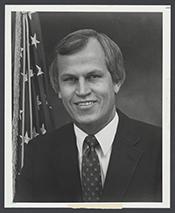
Mr. Speaker, I rise in support of the Chile and Singapore free trade agreements. The Chile Free Trade Agreement will eliminate tariffs on 85 percent of U.S. exports to Chile immediately. The…
Mr. Speaker, I rise in support of the Chile and Singapore free trade agreements. The Chile Free Trade Agreement will eliminate tariffs on 85 percent of U.S. exports to Chile immediately. The Singapore Free Trade Agreement eliminates Singapore's few remaining tariffs to U.S. goods and locks in Singapore's tariff-free treatment of U.S. imports.
Under the U.S.-Chile Free Trade Agreement, American workers, consumers, businesses and farmers will enjoy preferential access to a small, but fast-growing, economy, enabling trade with no tariffs and under streamlined customs procedures. Over 75 percent of U.S. farm goods, including pork, beef, wheat, soybeans, feed grains, and potatoes will enter Chile duty free within 4 years. All other duties on U.S. agriculture products will be phased out over 12 years. U.S. farmers' access to Chilean markets will be as good or better than our competitors' in Chile. This will help reverse the gains Canada and Europe achieved in market share after implementing their free trade agreements with Chile.
In light of the previous debate going on, I fail to understand how we can contend that American workers will benefit by denying our workers the opportunity to compete, in this case in Chile and in Singapore, for the jobs which is exactly what we have been doing, because other countries have negotiated free trade agreements with Chile and with Singapore. We have denied our workers the opportunity to compete. With 96 percent of the world's consumers living outside the United States, we must continually look to expanding our markets outside the United States and, yes, working for fair trade agreements.
While U.S. tariffs will also be eliminated over time under the free trade agreement, the agreement has a provision that will help protect farmers and ranchers from sudden surges in imports of designated agricultural products from Chile. That is a key ingredient. The agricultural safeguard provision will apply to imports of certain Chilean products, including many canned fruits, frozen concentrated orange juice, tomato products and avocados. The safeguard is price- based and automatic. The prices for the commodities subject to safeguards will be programmed into the U.S. Customs Service computers, which will automatically assess the tariff uplift if the import value of the commodity falls below the trigger. I think this is an exciting component of this agreement.
Quickly on Singapore, it guarantees zero tariffs immediately on all U.S. goods, and the FTA ensures that Singapore cannot increase its duties on any U.S. product.
In conclusion, both the Chile and Singapore free trade agreements provide benefits for the United States by lowering duties on exports to Chile and locking in duty-free treatment for U.S. goods to Singapore. Both agreements also include innovative provisions on transparency and customs facilitation that will help promote full implementation of these agreements and further respect for the rule of law.
For these reasons, I urge my colleagues to support implementation of the Chile and Singapore free trade agreements.
I yield to the gentleman from California.
In the remaining part of the minute that the gentleman yielded to me so that I could yield back to him, I would return the compliment and also commend him for continuing to emphasize jobs, workers, environmental issues, which are all going to have to be more seriously addressed in all future agreements. We both agree on that.
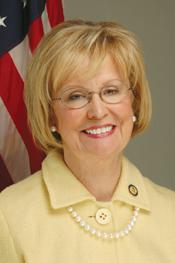
Mr. Speaker, I thank the chairman for yielding me time. Mr. Speaker, it is with great pleasure that I rise today to express my strong support for the U.S.-Chile Free Trade Agreement. Mr. Speaker, it…
Mr. Speaker, I thank the chairman for yielding me time.
Mr. Speaker, it is with great pleasure that I rise today to express my strong support for the U.S.-Chile Free Trade Agreement.
Mr. Speaker, it was back in late 1992, just as the former Bush administration concluded negotiations on NAFTA, that the U.S. announced its intention to pursue a Free Trade Agreement of the Americas, or FTAA, with Chile as its first new partner. Now, at that time, no one could have predicted that it would take more than a decade to conclude an agreement and arrive here at the House today.
The delay, of course, was not the result of changes in the administrations
in the U.S. or Chile, President Clinton supported an FTA with Chile as did President George W. Bush when he was elected in 2000. And successive Chilean governments have backed an agreement.
It was only last year, with the passage of Trade Promotion Authority, or TPA, that the logjam finally was broken and the negotiators, free to conclude the agreement that we address here today.
There is no mystery as to why the United States moved forward first with Chile. It is true, Brazil is potentially a much larger Latin American market for U.S. products and services, and the nations of the Caribbean are undeniably closer to the United States. But it was Chile, not Brazil or the Caribbean or other nations of our hemisphere that exhibited our greatest promise for a partnership, and that is why we should support this agreement today.
Truly a South American success story, Chile during the 1990s, more than doubled its gross domestic product, becoming the fourth fastest growing economy in the world. Even more significant are the political reforms that have supported this growth. Chile has rebuilt its historically solid democracy over the past decade. It has a transparent government that adheres to the rule of law. It has a firm legal commitment to human rights, including strong progressive labor and environmental protection regimes.
Perhaps most importantly, Chile has demonstrated its commitment to open markets, lowering unilaterally many of its own trade barriers and working bilaterally, regionally, and multilaterally for trade liberalization. In short, Chile is a good partner who can only become a better partner within our hemisphere with the enactment into force of this agreement.
It is not a huge trading partner for the United States. Its population of 15 million is only slightly larger than my home State of Illinois. And Chile is our 44th largest trading partner, whereas the United States is Chile's number one trading partner. Right now, most Chilean products enter the United States duty free under the GSP. In contrast, our products face a 6 percent across-the-board tariff when they enter Chile.
This free trade agreement with Chile will put the United States back on an equal or better footing with the Europeans, Brazilians, Mexicans, and Canadians with whom we compete in Chile. It is an agreement that is strong on market access, service openings, intellectual property protection, and labor and environmental safeguards.
The Free Trade Agreement with Chile was a good idea 10 years ago and it is an even better idea today. It is about reducing trade barriers, allowing our companies to compete successfully, and strengthening our friendships in the Western Hemisphere. I urge my colleagues to support the legislation.
Bill Text
2 versions available
        [Congressional Bills 108th Congress]
[From the U.S. Government Publishing Office]
[H. Res. 329 Engrossed in House (EH)]

In the House of Representatives, U.S.,

July 23, 2003.
Resolved, That upon the adoption of this resolution it shall be in order
without intervention of any point of order to consider in the House the bill
(H.R. 2738) to implement the United States-Chile Free Trade Agreement. The bill
shall be considered as read for amendment. The bill shall be debatable for two
hours, with one hour and forty minutes equally divided and controlled by the
chairman and ranking minority member of the Committee on Ways and Means and
twenty minutes equally divided and controlled by the chairman and ranking
minority member of the Committee on the Judiciary. Pursuant to section 151(f)(2)
of the Trade Act of 1974, the previous question shall be considered as ordered
on the bill to final passage without intervening motion.
Sec. 2. Upon the adoption of this resolution it shall be in order without
intervention of any point of order to consider in the House the bill (H.R. 2739)
to implement the United States-Singapore Free Trade Agreement. The bill shall be
considered as read for amendment. The bill shall be debatable for two hours,
with one hour and forty minutes equally divided and controlled by the chairman
and ranking minority member of the Committee on Ways and Means and twenty
minutes equally divided and controlled by the chairman and ranking minority
member of the Committee on the Judiciary. Pursuant to section 151(f)(2) of the
Trade Act of 1974, the previous question shall be considered as ordered on the
bill to final passage without intervening motion.
Sec. 3. During consideration of H.R. 2738 or H.R. 2739 pursuant to this
resolution, notwithstanding the operation of the previous question, the Chair
may postpone further consideration of the bill to a time designated by the
Speaker.
Attest:

Clerk.