Providing for consideration of the bill (H.R. 2557) to provide for the conservation and development of water and related resources, to authorize the Secretary of the Army to construct various projects for improvements to rivers and harbors of the United States, and for other purposes.

Legislative Activity
Stay on top of the latest movement without scrolling through every action
Motion to reconsider laid on the table Agreed to without objection.
September 24, 2003 • 4:10 PM
View full timeline
Introduced in House
September 23, 2003
The House Committee on Rules reported an original measure, H. Rept. 108-282, by Mr. Hastings (WA).
September 23, 2003
It shall be in order to consider as an original bill for the purpose of amendment under the five-minute rule the amendment in the nature of a substitute recommended by the Committee on Transportation and Infrastructure now printed in the bill.
September 23, 2003 • 8:32 PM
Placed on the House Calendar, Calendar No. 105.
September 23, 2003
Considered as privileged matter. (consideration: CR H8831-8833)
September 24, 2003 • 3:49 PM
DEBATE - The House proceeded with one hour of debate on H. Res. 375.
September 24, 2003 • 3:51 PM
The previous question was ordered without objection.
September 24, 2003 • 4:09 PM
Passed/agreed to in House: On agreeing to the resolution Agreed to by voice vote.(text: CR H8831)
September 24, 2003 • 4:09 PM
On agreeing to the resolution Agreed to by voice vote. (text: CR H8831)
September 24, 2003 • 4:09 PM
Motion to reconsider laid on the table Agreed to without objection.
September 24, 2003 • 4:10 PM
Floor Debate
23 membersWhat members said about H.Res. 375 on the floor
 JLO
JLO JJD
JJD DR
DR JFC
JFC JPM+18
Floor Debate
23 membersWhat members said about H.Res. 375 on the floor
Mr. Chairman, I thank the gentleman and want to compliment the gentleman from Illinois on the splendid work that he has done since becoming the ranking member on the Subcommittee on Water Resources…
Mr. Chairman, I thank the gentleman and want to compliment the gentleman from Illinois on the splendid work that he has done since becoming the ranking member on the Subcommittee on Water Resources and Environment. He has devoted himself heart and soul and invested countless hours in the shaping of this legislation, and I really appreciate the splendid professional service he has rendered to the Nation and to the Congress.
And to the Chair of the subcommittee, the gentleman from Tennessee (Mr. Duncan), no more judicious, thoughtful Member serves in this body. His contribution is always one of openness, inclusiveness, and willingness to listen and work to reach the compromises necessary for the legislative process to work.
And to our chairman, the gentleman from Alaska, again, as he has said, we have spent a great deal of time together working out the complexities of this measure. Were it up to us alone, we would have had this bill on the floor in the last Congress, but that was not possible because of a California problem, and maybe some other issues of lesser significance. But as the chairman said, we have together reasoned with the Members from California directly involved in the project in the Sacramento and American Rivers, and that matter is now resolved and is included in this legislation, and we will move forward. The gentleman from Alaska has been a splendid partner and leader in shaping this legislation.
Mr. Chairman, we move with this bill to not only build but rebuild the Nation's water infrastructure, to expand international trade by improving our coastal ports and the inland navigation system. Through flood control and hurricane storm damage reduction, we will meet critical needs to protect lives and property.
We have a bipartisan solution to the complex issue of independent review of corps projects, and I compliment the gentleman from Illinois (Mr. Costello) and the chairman of the subcommittee, the gentleman from Tennessee (Mr. Duncan), on the time they have invested, together with the chairman and me and with the corps, in resolving long-standing issues that span several Congresses.
I am a long-time supporter of the corps, an advocate for and admirer of the Corps of Engineers for the valuable service it does this country. The Nation needs the Corps of Engineers, but the corps also needs to be sure that its proposals can withstand the strictest scrutiny; that its proposals are as rock solid as the foundations of the most secure dams that the corps builds. And that is why we needed to craft this independent review process, to validate and give substance to and authority to the process by which the corps recommends projects for our committee to act upon.
This independent review process will help restore the confidence that Congress has long put in the Corps of Engineers but which has been shaken in recent years by outside critical review of the corps' process in evaluating major, multimillion dollar and multibillion dollar projects.
The corps is not a static entity, and it does not do this work all by itself. The corps, truthfully, does nothing that the Congress does not authorize it to do and direct it to do. Every water resources bill has clear direction for the Corps of Engineers, what to do and how to get to that goal. And several times we have acted to make commonsense reforms to improve the way the corps does its business.
Our committee instituted cost sharing. We established mitigation requirements. In fact, going back to 1977, the gentleman from Minnesota, then on the Republican side, Mr. Quie, and I, had an innovative proposal for the corps to do mitigation and reconstruction concurrently. We gave the corps a no-net loss of wetlands goal. We made environmental restoration a mission priority for the Corps of Engineers. We instituted floodplain management. We eliminated barriers to nonstructural flood damage reduction, allowing rivers to connect with the natural floodplain. This committee has initiated all of these activities and the corps has carried them out, but we always need to review and to move that process further.
Over the past 200 years, the Congress and Presidents have given the Corps of Engineers responsibility for a wide variety of critical military and civilian needs and have made this agency the world's premier water resource manager, the Corps of Engineers, the envy of other countries around the world who come to study the corps and try to emulate it in some fashion in their own back yard.
In the over 200 years since the Corps of Engineers was formed, that organization has served the Nation with great pride and extraordinary results. Throughout the 19th Century, it was the Corps that mapped the coastal fortifications, supervised the construction of those coastal fortifications, that went out and mapped the West in the aftermath of Lewis and Clark, constructed lighthouses, built jetties and piers for harbors, and carefully mapped the navigation channels of this country.
Its most important legacy, perhaps, was the work on canals, on rivers, and on roads. The Corps built those paths of commerce. Out of treacherous streams, the Corps built safe waterways, water highways for inland navigation and coastal safe harbors for a growing Nation that was founded on the water.
Congress expanded the Corps's responsibilities in 1826, authorizing the President to have river surveys made to clean out and to deepen selected waterways and make other river and harbor improvements that extended to the river basin of the Ohio, the Mississippi, and the Missouri River systems.
The Corps shaped this Nation as it entered the 20th Century. Chief of Engineers, Henry M. Robert, who is also and perhaps better known as the author of Robert's Rules of Order, oversaw the planning of the Galveston Seawall, a major engineering project that has protected that area from destruction by numerous hurricanes since his pioneering work.
I would like to point out Hiram M. Chittenden, an engineer officer, who supervised the construction of roads, bridges and aqueducts we know today as Yellowstone National Park, wrote a report on his survey of reservoir sites in Wyoming and Colorado that contributed to the establishment of what we now today know as the U.S. Bureau of Reclamation.
The Corps of Engineers had responsibility for the welfare of restoring Yosemite Valley and was the protector of our natural resources until the creation of the National Park Service. In fact, it was John Muir, founder of the Sierra Club, who in the 1880s said, ``Thank God for the U.S. Army Corps of Engineers. They have saved and restored Yellowstone Park.''
I will conclude by saying that this extraordinary agency is today at work not only at home, but in Afghanistan and in Iraq, ever protecting the long-range best interests and needs of the United States. This bill will assure that the Corps will continue to do that work in a manner of great credibility for the public.
George W. Goethals' early work at Davis Island and Muscle Shoals created the skills and management expertise needed to successfully finish the Panama Canal. Although the Panama Canal was not built by the Corps of Engineers, through the efforts of engineer officers such as Goethals, who were detailed to the Panama Canal Commission, some of the most difficult construction obstacles were overcome. If the Corps' original recommendations on the size of locks had been followed, there would be no need to expand the canal today.
The Corps' military and civilian functions have always been mutually supportive. Thousands of engineers troops served in France in 1917 and 1918, contributing to both front-line and rear-support efforts. The combat engineers constructed bridges, roads, and narrow-gauge railroads at or immediately behind the front. Other engineer troops enlarged French port facilities, constructed more than 20 million square feet of storage space, and built 800 miles of standard-gauge rail lines, plus an equal distance in yards and storage tracks. These types of contributions continued through World War II.
After World War II, the Corps developed and maintained new navigation systems such as the American portion of the St. Lawrence Seaway. At the same time, modernization of existing waterways became a growing concern. Heavier tows, barges, and other vessels plied the nation's major rivers. Locks such as those on the upper Mississippi, built mainly in the 1930s, were no longer adequate to handle the traffic. Lock and Dam 26 near Alton, Illinois, was the principal bottleneck on the upper
Mississippi system until a new lock was constructed in the 1980s.
Corps' construction activities since World War II have been further expanded. The Corps built Veterans Administration hospitals; Nike, Atlas, Titan, and Minuteman missile sites; NASA facilities, including the massive vehicle assembly building at Cape Kennedy; post offices and bulk mail facilities; and armed forces recruiting centers.
Successes at home were matched by the Corps' accomplishments abroad. The Corps provides technical assistance in conjunction with economic aid in an approach that came to typify many American foreign assistance programs.
Since the 1950s, the Corps has engaged in major engineering studies and projects in many countries. Under terms of the Foreign Assistance Act of 1961, the Corps began work in reimbursable programs through the State Department's Agency for International Development (AID).
Today, the Corps is active in both Afghanistan and Iraq.
In foreign affairs, we need instantly available, in-house capabilities to address the Nation's strategic needs. Domestically, only the Corps has the experience to balance economic development with environmental stewardship.
I urge my colleagues to support H.R. 2557, the Water Resources Development Act of 2003, and to continue the quality work of the Corps of Engineers in service to the Nation.
Mr. Chairman, I thank the chairman for yielding me this time.
I just want to point out, in support of the committee position, that during the House-Senate conference on the port security bill last year, we were attempting to negotiate a fee proposition that would provide funding for the needs of ports to conduct the security measures that were required under the Port Security Act, and we hit upon this idea of a container fee. It was discussed between a Member of the other body and the gentleman from Alaska (Chairman Young) and me. And we revised and revised this language down so we had it very narrowly honed to fit the definition of the Office of Management and Budget that a fee is a charge for a service directly related to the purpose for which the charge is imposed. That language proved to be unacceptable to the Office of Management and Budget, not on its merits, but on policy grounds that they did not want to fund port security with a container fee.
At the request of the President, Senator Hollings and I, and the gentleman from Alaska (Chairman Young) agreed to drop that language.
Now, while I am very much in sympathy with the purposes for which the gentleman from California (Mr. Rohrabacher) wishes to generate this source of revenue, we tried a much more narrow application and ran aground on the rocks of OMB. We shoaled, if you will, on this issue. And I fear that there will be the same response were we to take a wider view. And I think that the gentleman from Tennessee's (Mr. Duncan) wise injunction let us put this aside, let us come back to work on the issue together, constructively, and find a way that we can reason together with the Office of Management and Budget.
Mr. Chairman, I yield myself such time as I may consume. Mr. Chairman, I urge all Members to support H.R. 2557, the Water Resources Development Act of 2003. Under the great leadership of the…
Mr. Chairman, I yield myself such time as I may consume.
Mr. Chairman, I urge all Members to support H.R. 2557, the Water Resources Development Act of 2003. Under the great leadership of the gentleman from Alaska (Mr. Young) our committee has focused on the need to meet our Nation's navigation, flood control and environmental restoration needs.
In our subcommittee, we have held numerous hearings in which witnesses have testified about the importance of these water resources projects to our economy. Just last week, our subcommittee held a hearing on the contributions of ports and inland waterways to the Nation's intermodal transportation system. It is clear from the testimony we received that if we do not take action now to improve our ports and waterways, we could severely harm our economy as a result of congestion in our transportation systems.
That is just one reason why we need to pass the Water Resources Development Act of 2003. There are many other reasons.
Each of the over 400 provisions of the bill meets an important national purpose. We are confident of this because for each request the committee received, the committee consulted with the Corps of Engineers to ensure that there was a Federal interest in the project and that the request complied with all rules on cost-sharing and cost-benefit analysis. Obviously not all requests met this standard, but after this review, the committee was able to approve over 60 authorizations, modifications, studies and policies relating to navigation improvements, over 100 flood control authorizations, modifications and studies, over 80 environmental authorizations, modifications or studies.
H.R. 2557 also includes some important new policies. H.R. 2557 encourages watershed planning by authorizing greater technical assistance to State and local governments and authorizes an additional 24 watershed studies.
This bill encourages the Corps of Engineers to carry out projects in partnerships with its local sponsors and to streamline the process for entering into agreements with local sponsors. In fact, this bill has very good streamlining provisions in it so that these very important projects, instead of sometimes taking 8 or 10 or 12 years, hopefully can be done in a much shorter time, saving taxpayer money and saving lives and doing good things for the environment in the process.
H.R. 2557 includes important provisions that allow the Corps of Engineers to help expedite environmental permits for non-Federal water resource projects as well as streamlining approvals for its own projects. And that, as I said, is one of the most important parts of this legislation.
H.R. 2557 includes consensus provisions on peer review of certain Corps of Engineers studies. This is a landmark provision in this legislation. It also includes, Mr. Chairman, 27 shoreline and streambank protection projects, 16 water conservation projects, 12 recreation projects, 12 dam safety projects, and many other projects too numerous to name.
This bill has been put together on a true bipartisan basis. There are no Republican or Democrat navigation, flood control, or environmental restoration projects. We all recognize that communities across the country have water resources needs, very important water resources needs. This bill responds to those communities, our constituents.
I want to recognize the assistance and expertise and friendship provided
by the ranking member of the subcommittee, the gentleman from Illinois (Mr. Costello). Thanks to his efforts and the efforts of the gentleman from Alaska (Mr. Young), chairman of the full committee, and the ranking member, the gentleman from Minnesota (Mr. Oberstar), as well as the entire committee, we tackled some very contentious issues, as I mentioned when I spoke on the rule; and we have come together on a bill that has the unanimous support of the Committee on Transportation and Infrastructure.
Mr. Chairman, this is a good bill, and I urge all Members to support it.
Mr. Chairman, I reserve the balance of my time.
Mr. Chairman, I yield such time as he may consume to the gentleman from Alaska (Mr. Young), the chairman of the full committee, without whose support and hard work this legislation would not be here on the floor today.
(Mr. YOUNG of Alaska asked and was given permission to revise and extend his remarks.)
Mr. Chairman, I yield 2 minutes to the gentleman from California (Mr. Doolittle).
Mr. Chairman, I yield 2 minutes to the gentleman from Oklahoma (Mr. Sullivan).
Mr. Chairman, I yield 3 minutes to the gentlewoman from Illinois (Mrs. Biggert) for the purpose of engaging in a colloquy.
Mr. Chairman, will the gentlewoman yield?
Mr. Chairman, the Corps of Engineers is currently evaluating a test barrier that was authorized under the National Invasive Species Act in 1996. At the same time, the Corps is studying the potential of building a second barrier under a continuing authority for small projects. I will work with the gentlewoman and be glad to do so to see that this project is not delayed.
This is a serious matter that involves the missions of several Federal agencies and impacts the entire Great Lakes region. The committee plans to work on a reauthorization of the National Invasive Species Act during the next session. I am willing to work with the gentlewoman as we work on that legislation to encourage a regional and multi-agency response to this problem.
Mr. Chairman, I thank the gentlewoman from Indiana for her kind words.
Mr. Chairman, I yield 4 minutes to the gentlewoman from Florida (Ms. Harris), another member who has worked hard on certain parts of this legislation.
Mr. Chairman, I have no further requests for time, and I reserve the balance of my time.
Mr. Chairman, I yield myself such time as I may consume.
I likewise would like to thank the gentleman from Illinois (Mr. Costello), ranking member, for his work on this legislation. I used to say that during my 6 years as Chairman of the aviation subcommittee that I knew of no other chairman and ranking member of a subcommittee who got along better than I did with the gentleman from Illinois (Mr. Lipinski), my ranking member. We got along with each. Now, I can say the same thing about the gentleman from Illinois (Mr. Costello). There must be something special about people from Illinois, Mr. Chairman, but it has been a pleasure to work with the gentleman from Illinois (Mr. Costello) on this bill. This is the most environmentally friendly Water Resources Development Act that this Congress has ever produced. It is also a good bill for the taxpayers in the provisions that it has to speed up and thus
hold down the cost of these very needed projects around the country.
So like the gentleman from Illinois (Mr. Costello), I urge passage of this bill.
Mr. Chairman, I yield back the balance of my time.
Mr. Chairman, I offer an amendment as the designee of the gentleman from Alaska (Mr. Young).
Mr. Chairman, I yield myself such time as I may consume.
Mr. Chairman, this en bloc amendment makes technical and conforming changes to project-related provisions in the bill and authorizes or modifies additional projects brought to the committee's attention following committee action.
Specifically, the Corps of Engineers has prepared nine additional chief's reports, recommending that Congress authorize certain water resources projects. The amendment also directs the Corps of Engineers to carry out a number of small projects under existing Corps authorities to improve navigation, provide flood damage reduction and improve the quality of the environment. For other projects that have not been studied, the amendment authorizes four new Corps of Engineers studies.
This amendment, like the underlying bill, has been developed in a bipartisan fashion. All projects must be in the Federal interest and must comply with cost-sharing and cost-benefit rules. This means not every project could be addressed. But, within these constraints, we did our best to meet the needs of all our communities and all the Members that we possibly could.
I urge all Members to support this amendment.
Mr. Chairman, I reserve the balance of my time.
Mr. Chairman, I have no further speakers. I yield back the balance of my time and urge support for this amendment.
Mr. Chairman, will the gentleman yield?
Mr. Chairman, my understanding from staff on the other side is that the staff on the other side of the aisle and the Members on the other side of the aisle, particularly the ranking member, the gentleman from Minnesota (Mr. Oberstar), will be glad to work with the gentleman from Virginia (Mr. Goodlatte) if the gentleman withdraws his colloquy at this point.
I will say that there is language in the bill at this time that attempts to get at the problem that the gentleman from Virginia (Mr. Goodlatte) is trying to solve. The language says, ``In carrying out the project, the Secretary shall award contracts based on an invitation for bids procedure.''
If that is not satisfactory to accomplish the goal of the gentleman from Virginia (Mr. Goodlatte), if he feels that he is in a position to withdraw the colloquy at this point, then it is my understanding that the ranking member, the gentleman from Minnesota (Mr. Oberstar), will try to work with the gentleman from Virginia (Mr. Goodlatte) to resolve this issue.
Mr. Chairman, on behalf of the committee and the gentleman from Alaska (Chairman Young), I claim the time in opposition to the amendment.
Mr. Chairman, I yield such time as he may consume to the gentleman from Illinois (Mr. Costello).
Mr. Chairman, I yield 2 minutes to the gentleman from Florida (Mr. Shaw).
Mr. Chairman, I yield 1\1/2\ minutes to the gentleman from Oregon (Mr. Blumenauer).
Mr. Chairman, I yield myself such time as I may consume.
The gentleman from Alaska (Chairman Young) wanted to be here to make a statement in opposition to this amendment. On his behalf, I have been asked to point out, at least, that the ports already have the authority to charge fees for the services that they render; they do not need Congress to give them this authority.
Also, the gentleman from Alaska (Chairman Young) feels that if this amendment were to pass, this could force ships to go to other ports. Also, we have letters from the American Association of Port Authorities and the California Marine Affairs Navigation Conference, the Port of Long Beach, the California Association of Port Authorities, the Virginia Port Authority, the Port of Stockton, and other similar groups opposing the gentleman's amendment.
Let me just say that as the gentleman from Illinois has said, we certainly sympathize with the gentleman's amendment. The gentleman from California and I came to Congress together. There is almost nobody in this Congress that I admire and respect more than the gentleman from California (Mr. Rohrabacher).
I think, as the gentleman from Illinois said, this amendment is well intentioned. I think it is something that our subcommittee could and should hold a hearing about. And I think that perhaps if the gentleman would work with the committee and the subcommittee and the various organizations, the port authorities and the shipping industry, there might be a way to accomplish what he is attempting to accomplish through this amendment.
But at this point, we do have to rise in opposition to this amendment because it is something that I think probably deserves and probably needs a little additional work.
Mr. Chairman, I yield such time as I may have remaining to the gentleman from Minnesota (Mr. Oberstar).
Mr. Chairman, I move that the Committee do now rise.
Mr. Chairman, I offer an amendment. Mr. Chairman, I yield myself such time as I may consume. Mr. Chairman, my amendment will see to it that the massive costs in making our ports and harbors more…
Mr. Chairman, I offer an amendment.
Mr. Chairman, I yield myself such time as I may consume.
Mr. Chairman, my amendment will see to it that the massive costs in making our ports and harbors more secure are shared by those foreign manufacturers who use these facilities. The American people should not be stuck with the entire costs of the expensive infrastructure and security upgrades now necessary for the sake of homeland security.
What happens under the current system is that Americans are taxed to pay for improvements to our ports, which are then used by foreign manufacturers to move more efficiently in their exporting of products into our market. Yes, we end up taxing our own manufacturers in order to help their foreign competitors put them out of business. Something is wrong with this formula.
My amendment will permit local port authorities the right to levy a fee on containers traversing through their ports. This fee will be fed into a fund controlled by the authority to meet the new and rising cost of security and infrastructure.
Why should all the tens of billions of dollars needed for this upgrading come out of the hide of our own taxpayers? Should the manufacturers in Shanghai not pay a share of the cost through a fee on the containers they use? After all, are these foreign manufacturers not making huge profits by using an infrastructure provided for them by our own taxpayers?
Surprisingly, some of our ports are opposed to this amendment. You can hear lobbyists around the Hill talking about it. They like the status quo. They come to Washington and expect us to provide them more and more money by just simply taking it right out of the hide of the American working people. They want us, whenever there is an upgrade necessary, especially as we look into the future where it is not just regular upgrades and regular structural operations in their ports, now that we are looking at a huge expense because of homeland security needs, they just expect us to hand it to them and take it right out of the pockets of the American people.
Well, I am sorry, but that is not the fair way to do things, and that is not the best way to do things. We should be expecting foreign businesses through a container fee to pay their fair share.
If the ports do not want to ask them for that, but would rather come here and have us take that money out of the pockets of our own people, well, I am sorry, they are going to be disappointed. But the American people will not be disappointed. The American people will be disappointed if we continue to provide people overseas who manufacture products that put our own people out of work, that we continue to provide them these services free of charge, of course, at the expense of the American taxpayer.
Mr. Chairman, lobbyists have been around. Some of the people who vote on this bill will have heard from their lobbyists saying they have to be against the container fee, I am suggesting, because it is going to go to a
non-Federal interest. That is right, it is not going to go into the Federal pool of money here. It is going to be kept locally by the port authorities to be used for infrastructure and security matters in those local areas, or it could perhaps, for example, be used for matching funds. If the Federal Government is going to provide something, they could use that for matching funds. This is fair to the American taxpayer.
If there is any problem with wording, a little bit of wording here, little tweaks that need to happen to make this a perfect bill, I am happy to work with the chairman and work with the people on this committee as this bill moves forward. But if this bill loses today, if my amendment loses today, it will mean the American taxpayer is going to get stuck with all of this cost, and we are basically letting these foreign manufacturers off the hook; and we all know that. This is our chance to start this process down the road so we will have container fees and a more fair system of providing resources to our ports and our harbors.
Mr. Chairman, I reserve the balance of my time.
Mr. Chairman, I yield myself such time as I may consume.
Mr. Chairman, let me just suggest, we do not represent the ports here. By the way, if anybody represents the ports in this room today, it is me. I represent, in my district, the ports of Los Angeles and Long Beach; and if there is anything I understand now about being a Congressman from an area that represents ports is the ports are looking for leadership. The American people, surprise, surprise, are looking for leadership from us.
Our job is not to make our decisions by, well, let us call up the people who want Federal money and see if they want us to give them Federal money. That is not our job. Our job is to try to structure a system that works for the benefit of the American people.
I would suggest this: that even though I represent both the ports of Los Angeles and Long Beach, who I really represent are the American people. I do not know if any of my colleagues have had the experience that I have with the small manufacturers in their areas. I have gone to small manufacturers in my area, and what have I found? They are going out of business. And they are going out of business because we have set up a structure that has permitted foreign manufacturers to slip into our market at almost no expense to those foreign manufacturers and undercut our own manufacturers. Why is it so wrong that we would expect that those foreign manufacturers pay a little fee, a little fee on the containers they are using so they can help build the infrastructure, rather than tax those companies that I visited in my district who are going under because of this, really, actually, American tax-supported competition that they are having to face? This is not right.
I can see why our ports and harbors do not want this. They do not want to have to ask for that fee. Well, the fact is, it is good for America, it is good for the American manufacturer, and it will be good for our ports in the end if we give them this right.
This idea that they may not get the money, we can tweak this language; we all know that. If this amendment passes, we can tweak the language to make sure it goes exactly where we want it, into security and infrastructure for these ports. But if we do not pass this amendment, this idea is dead, this idea is dead; and what is going to happen is, the tens of billions of dollars, right now, that we are making a stand on, will be paid by the American
people, rather than through a container tax paid for by foreign manufacturers.
I say it is time for this body to stand up and provide some leadership. Who cares what the ports say right now. If they are operating in their self interests, we have to operate in America's interests, and it is in America's interests to have foreign manufacturers contribute to infrastructure costs here.
Mr. Chairman, I reserve the balance of my time.
Mr. Chairman, I yield myself 30 seconds.
Mr. Chairman, let me just note that this creates a new revenue flow. This amendment will create new revenue, a new source of revenue that begins perhaps in Shanghai or some other foreign country, and that revenue then can be used to our benefit. Now, the only other option we have, of course, is to fight over limited revenue, all of which is taken out of the pockets of the American people.
Mr. Chairman, I reserve the balance of my time.
Mr. Chairman, I ask unanimous consent that the time be extended by 1 minute on each side to allow the gentleman from Alaska (Mr. Young) to speak.
Mr. Chairman, I yield myself the balance of my time.
Mr. Chairman, I certainly respect those people, especially the gentleman from Alaska (Chairman Young) for the very hard work they have put into this legislation.
It has always been my intent to support this legislation. So this is not
done with the spirit of anything except trying to do something for the American people because this is an opportunity that we have today to start working on a very positive idea.
There is no reason for us to put this off. If we put this on this legislation today, this idea will move forward, and a lot of work will be done on this, and we will move toward this goal.
If this amendment fails, what we have done is condemn the American people to tens of billions of dollars of expense that could have been taken up by foreign manufacturers who are importing their goods into our ports and putting their goods onto our market and undercutting our domestic manufacturers.
Earlier the gentleman from Alaska (Chairman Young) suggested that perhaps the ports already have this authority, thus this amendment is redundant. Let me say if that is the analysis, why not pass it then? There is no reason then, if the ports already have this authority, why are we so hesitant about passing this? The reason we are so hesitant is that there are powerful interests at play. We should be interested in what is the effect on the American people.
We face, in these next 12 months, a horrendous, an astronomic expense in our ports, making them safe, making them more secure and more efficient. We should start working right now, and this is how we can do it, finding a new revenue source, a source for manufacturers overseas that will help us accomplish this mission. OMB will go along. The ports will go along. The American people will applaud us if we provide the leadership today, and that is what I am suggesting.
I would ask my colleagues who are listening to this debate to join me, siding with the American people, the American manufacturer and let us not tax billions of dollars from them when we could have a fee paid by foreign manufacturers that would provide us the revenues necessary to make our ports secure and to upgrade their infrastructure.
Mr. Chairman, I appreciate the good work that those people who have worked on this legislation have done, and I intend to support this one way or the other.
Mr. Chairman, I yield back the balance of my time.
Mr. Chairman, I yield myself such time as I may consume. Mr. Chairman, I rise today in support of H.R. 2557, the Water Resources Development Act of 2003. This bill addresses what Congress failed to…
Mr. Chairman, I yield myself such time as I may consume.
Mr. Chairman, I rise today in support of H.R. 2557, the Water Resources Development Act of 2003. This bill addresses what Congress failed to do last year, enact a Water Resources Development Act for 2002.
Mr. Chairman, the Committee on Transportation and Infrastructure strongly supports this legislation for the corps' water resource program. It is critical to maintain this 2-year cycle to provide continuity to the program and certainty to the non-Federal local sponsors who support the corps' program. This 2-year cycle also affords Congress the opportunity to monitor and, if necessary, amend the workings of the corps' program, often in response to changing circumstances.
H.R. 2557 authorizes projects for the entirety of the corps' civil works program. It includes flood control, navigation, environmental restoration, and authorizations for several important projects to restore and enhance the Nation's environmental infrastructure. In developing this legislation over the past 3 years, the committee received over 300 individual requests from Members for projects of importance to the various regions of this country. The committee tried to accommodate as many requests as feasible within the jurisdiction and authority of the Corps of Engineers.
Mr. Chairman, I would like to take this opportunity now to acknowledge and thank the chairman of the full committee, the gentleman from Alaska (Mr. Young), the ranking member of the full committee, the gentleman from Minnesota (Mr. Oberstar), and in particular my colleague, friend, and chairman of the subcommittee for all of their hard work and their leadership. Without their leadership, support, and work we would not be here today. The gentleman from Tennessee (Mr. Duncan) in particular, let me say, showed a willingness to work with individual Members on both sides; and we were able to put together what I believe is a good bipartisan bill.
The tough issue of independent review, which yielded a bipartisan solution to a very complex issue of great importance to the members of the committee and the entire House and to the improved operation of the corps' civil works program was accomplished because of this bipartisan support and their leadership.
The independent review language that is included in H.R. 2557 creates a firm, yet flexible, standard for the independent review of corps project studies. It is firm in that it establishes a $50 million threshold for projects to be reviewed. It is flexible in that the chief of engineers has the opportunity to exempt certain projects from review and retains the authority to time the reviews to a particular circumstance of an individual project study. This approach is the key to this bipartisan proposal.
Including this language in the bill will ultimately improve the corps' program. It will result in better recommendations for the Committee on Transportation and Infrastructure to consider when developing future water resource legislation. I believe also that it will save the taxpayers money and it will enhance the quality of investment in water resource projects.
I urge all of my colleagues to support the legislation.
Mr. Chairman, I reserve the balance of my time.
Mr. Chairman, I yield such time as he may consume to the gentleman from Minnesota (Mr. Oberstar), the ranking member of the full committee.
(Mr. OBERSTAR asked and was given permission to revise and extend his remarks.)
Mr. Chairman, I yield 3 minutes to the gentleman from California (Mr. Matsui).
Mr. Chairman, I yield 4 minutes to the gentleman from Oregon (Mr. Blumenauer), a member of the subcommittee.
Mr. Chairman, I yield 3 minutes to the gentlewoman from Indiana (Ms. Carson).
Mr. Chairman, I yield 3 minutes to the gentleman from Maryland (Mr. Cardin).
(Mr. CARDIN asked and was given permission to revise and extend his remarks.)
Mr. Chairman I yield 3 minutes to the gentleman from Oregon (Mr. DeFazio), former ranking member of this subcommittee.
Mr. Chairman, I yield myself such time as I may consume.
I would urge passage of this legislation. I again thank the gentleman from Tennessee (Mr. Duncan), my friend, the chairman of the subcommittee, for all of his hard work on this legislation.
Mr. Chairman, I have no further requests for time, and I yield back the balance of my time.
Mr. Chairman, I rise in opposition to the amendment.
Mr. Chairman, I yield myself such time as I may consume.
Mr. Chairman, I am not rising actually in opposition to the amendment, but I am claiming the time. I actually am rising in support of the manager's amendment that is offered by the gentleman from Alaska (Mr. Young).
The amendment offered by the gentleman from Alaska (Chairman Young) is a bipartisan amendment addressing various needs and issues that have come to the committee's attention since the bill was considered at markup in July. The amendment contains modifications to provisions in the bill and a few new items. Each were considered by the leadership of the Committee on Transportation and Infrastructure, and they are consistent with the policies of the committee for inclusion in the Water Resources Development Act.
The Young amendment contains nine new authorizations or modifications based upon completed reports of the Chief of Engineers. It includes authorization of 5 small projects and modification to 10 existing projects. There are two new project deauthorizations and authority for the Corps to conduct four new project studies.
Mr. Chairman, this amendment, like the underlying bill itself, was developed in a bipartisan process that ensured that Members on both sides of the aisle were treated fairly and openly.
Mr. Chairman, I congratulate the chairman of the full committee, the gentleman from Alaska (Mr. Young), and the subcommittee chairman, the gentleman from Tennessee (Mr. Duncan), for their cooperation in developing not only the bill, but this amendment, and I urge the adoption and approval of the manager's amendment.
Mr. Chairman, I yield back the balance of my time.
Mr. Chairman, will the gentleman yield?
Mr. Chairman, let me assure the gentleman that, number one, we have an agreement to strike the language, we agree to that, and we will work with the gentleman and with the chairman of the subcommittee and the gentleman from Alaska (Mr. Young) further. But we are not willing to go any further today than to strike the language.
Parliamentary Inquiry
Mr. Chairman, if the gentleman will yield further, if the subcommittee chairman would make a motion to strike the language without any reference to legislative intent, just take the language out, we would agree to that.
Mr. Chairman, I thank the gentleman for yielding me this time.
I rise in opposition to the gentleman's amendment. I can understand the gentleman's interest in supporting the additional investment in infrastructure and security, but I believe that the Rohrabacher amendment is not the best way to pursue that goal.
In the brief time that we have had to review the proposal, the committee has heard only objections to the proposal. Port interests, those that one would expect would be supporting this proposal, have indicated that they are either in opposition or that they have no position. We have been contacted by the California Marine Affairs and Navigation Conference who are opposed to the amendment; the California Association of Port Authority is opposed; the American Association of Port Authorities, they defer action and recommend that we take no position on this issue, at least they take no position. The Port of Long Beach is opposed, and the Port of Stockton is opposed. Those are just some of the port interests that have contacted us just today, since the amendment was given to us.
Let me also say that a proposal similar to the Rohrabacher proposal, but a little more narrow than the Rohrabacher amendment, was considered in the last Congress during the committee's work on the Maritime Transportation and Security Act of 2002. That proposal was not adopted, in large part due to the strong objections from the Office of Management and Budget within the Bush administration.
The fees contemplated in the Rohrabacher amendment would be available for ports or States to use for any infrastructure project, including infrastructure outside the boundaries of the harbor, if the project is for transportation to, from, or through the harbor. This could be any road, rail, or even any airport project associated with the harbor. It could include the locks and dams on the inland waterway system.
The committee has long supported transportation trust fund financing of transportation modes. Highway users support highways, inland waterway users support inland waterways, airport users support airports, and port users support ports. It is inappropriate to establish a fee system where the containerized cargo industry could be supporting other transportation modes.
This amendment could encourage ports or States to view containerized cargo as a simple source of revenue, in effect, a hidden tax to finance any and all transportation modes.
Mr. Chairman, this amendment simply does not have broad-based support, and we should reject the amendment. There have been no hearings on the proposal. I would suggest that we have the opportunity to learn more about the proposal in the appropriate forum in the subcommittee of this Committee on Transportation and Infrastructure. While I will say that my friend from the Committee on Transportation and Infrastructure and the Committee on Science, whom I serve with on the Committee on Science, that his amendment is well intentioned, and I would like to work with him to achieve what he is attempting to achieve, I believe that this amendment, in its current form, is more harmful than beneficial. Let us, on the appropriate authorizing committee, have the opportunity to consider and debate it. But I stand in opposition to the amendment as it is presented before us today.
Mr. Speaker, I yield myself such time as I may consume. Mr. Speaker, I thank the gentleman from Washington (Mr. Hastings) for yielding me the customary 30 minutes. Mr. Speaker, I am pleased to…
Mr. Speaker, I yield myself such time as I may consume.
Mr. Speaker, I thank the gentleman from Washington (Mr. Hastings) for yielding me the customary 30 minutes.
Mr. Speaker, I am pleased to support the passage of H.R. 2557, the Water Resources Development Act of 2003, and want to begin by thanking and congratulating my colleagues, the gentleman from Alaska (Chairman Young) and the ranking member, the gentleman from Minnesota (Mr. Oberstar) of the full Committee on Transportation and Infrastructure, as well as the gentleman from Tennessee (Chairman Duncan) and the ranking member, the gentleman from Illinois (Mr. Costello) on the Subcommittee of Water Resources and Environment for their hard work on this legislation.
This bill is the result of thoughtful bipartisan cooperation which is clearly evident in the final product. These colleagues and the committee staff deserve a tremendous amount of credit for tackling some difficult issues in this legislation, not the least of which is the reform of the Army Corps of Engineers project review process.
H.R. 2557 reauthorizes the 1986 Water Resources Development Act for the Civil Works Program for the Army Corps of Engineers.
The bill authorizes funding for a number of vitally important water resource development programs, studies and projects all across this country.
The Congressional Budget Office estimates the total outlays authorized by the bill for 2004 to 2008 to be $2.6 billion, with an additional $2.1 billion over the 10 years after fiscal year 2008. CBO also estimates that the Water Resources Development Act of 2003 will increase direct spending by $17 million over the period of fiscal year 2004 through fiscal year 2008.
Mr. Speaker, the Army Corps of Engineers is a unique Federal agency in that it performs a broad range of both military and civilian duties. The Corps' civilian duties have traditionally included the construction and maintenance of passable channels and flood control. However, Congress expanded these responsibilities in the early 1990s to add beach erosion control, ecosystem protection, disaster relief, and other activities to their charge.
Today the Corps maintains more than 11,000 miles of channels for commercial navigation, 300 deep commercial harbors and 600 shallow inland harbors. The Corps also manages 33 major lakes and reservoirs and 8,500 miles of levees for flood control. Perhaps lesser known, but equally as important, is the fact that there are 75 hydropower plants at Army Corps facilities that are responsible for producing approximately one-quarter of the Nation's electricity.
Mr. Speaker, my home State of Massachusetts is a State with an abundance of navigable rivers, harbors, lakes and coastline, and I am especially grateful for the work performed by the Army Corps of Engineers. However, I believe the reforms to the Corps' project review and approval process adopted in this bill are not only necessary, but will serve to strengthen the Corps' capabilities.
By establishing an independent peer review system under the direction of the National Academy of Sciences, this legislation ensures that Corps projects will satisfy acceptable economic and environmental standards. The peer review system applies only to projects estimated to cost $50 million or more, which represents roughly 30 percent of all Corps projects. The bill also provides sufficient flexibility and discretion for the Corps to exempt noncontroversial projects from the review process. This is critically important so that the Corps can move quickly on projects that do not have an adverse impact.
The Water Resources Development Act of 2003 also embraces a number of other important reforms to improve the coordination of environmental reviews and enhance the Corps' ability to work cooperatively with non- Federal partners. I am especially pleased that this legislation recognizes the need for the Federal Government to do more for local communities by substantially increasing the Federal cost share for deep harbor dredging to 65 percent and 100 percent for long-term maintenance. This is welcome news to States and other non-Federal partners that are struggling in this economy to leverage the match for these projects.
Mr. Speaker, although the underlying bill is good, and it is a bipartisan project, I personally wish we were considering this bill under an open rule. The majority leader has already cancelled votes on Mondays and has informed this body that it is unlikely there will be votes on Fridays during the entire month of September. It is clear that we have time to consider thoughtful bills like the Water Resources Development Act under an open rule. Yet the Republican leadership continues to close the democratic process by reporting restrictive rules that only make in order a handful of amendments.
While the chairman and ranking member of the Committee on Transportation and Infrastructure and the Subcommittee on Water Resources and Environment worked with a number of Members, including myself, on a variety of issues, not every issue was addressed by the manager's amendment. A number of thoughtful amendments were brought before the Committee on Rules, requesting waivers for their consideration by this body. While the rule does make in order three amendments, the manager's amendment and one amendment each from majority and minority, other amendments were not made in order.
One of these amendments was offered by the gentlewoman from Michigan (Mrs. Miller). Her amendment would have directed the Department of Transportation to develop regulations to reduce the amount of invasive species that enter the Great Lakes on the cargo ships that travel throughout the region. This is a critically important issue the gentlewoman made clear to the Committee on Rules last night. Her amendment was thoughtful, and I am disappointed that this body will not have the opportunity to debate and vote on it.
However, the underlying bill, the Water Resources Development Act, demonstrates our collective commitment to addressing water resource needs nationally, and it reaffirms our confidence in the Army Corps of Engineers. It was written and considered in a bipartisan fashion, and it deserves the support of every Member of this body.
Once again, I commend the work of the members of the committee, specifically the chairman and the ranking member, on this bill, and I urge my colleagues to support its passage.
Mr. Speaker, I reserve the balance of my time.
Mr. Speaker, I yield myself such time as I may consume.
Before I yield back my time, I again want to thank the gentleman from Alaska (Chairman Young), and the gentleman from Minnesota (Ranking Member Oberstar), and the gentleman from Tennessee (Chairman Duncan), and the gentleman from Illinois (Ranking Member Costello), and the staff of the full Committee on Transportation and Infrastructure for all their work on this bill. This is a good bill, and it deserves to be passed.
Mr. Speaker, I reserve the balance of my time.
Mr. Speaker, I yield 2 minutes to the distinguished gentleman from California (Mr. Filner), a member of the Committee on Transportation and Infrastructure.
Mr. Speaker, I yield back the balance of my time.
Show 8 more
Mr. Chairman, I appreciate the work of the gentleman from Illinois (Mr. Costello), as well as our chairman, the gentleman from Tennessee (Mr. Duncan). It has truly been one of the pleasures for me…
Mr. Chairman, I appreciate the work of the gentleman from Illinois (Mr. Costello), as well as our chairman, the gentleman from Tennessee (Mr. Duncan). It has truly been one of the pleasures for me this Congress, watching the work that has been done in the subcommittee developing a broad range of inputs, looking with fresh eyes at some of the most important environmental and infrastructure issues that the country faces.
I am pleased that we now have a bill that is done right, which can enhance our country's ports, navigation and flood control, as well as the environment, and, ultimately, I am convinced will save the taxpayers money.
We are finally dealing with a number of Corps reform issues that heretofore had bogged down previous bills, including last year's bill. We now have, as has been referenced, independent review of costly and controversial projects, one of the key issues for me over the course of my tenure on this committee. And we are beginning a conversation about updating the Corps' principles and guidelines. These operating principles have not been updated in 20 years. The facts are that we have learned a great deal about our water resources projects, what works and what does not, in that time, and I look forward to working with our committee leadership, especially since the National Academy of Science is set to finish a report on updating the principles and guidelines this fall.
I am pleased that there was an amendment that I offered adopted to
give the Corps more flexibility in its planning process to take into account economic benefits of environmental restoration and environmental benefits of economic restoration. It asks the Corps to calculate the residual flood risk of a project, such as downstream impacts of a structural project like a levee. Our intent is to encourage the Corps to be able to do more nonstructural flood control projects which are clearly beneficial for the environment and the taxpayers, even though these benefits are sometimes more difficult to calculate.
This bill does take important steps that I think will help enhance the credibility of the Corps of Engineers. I must caution, however, that we have got to be continuing our work on the independent review process. It is not exactly as I personally would design it. It gives a bit more discretion, frankly, to the Chief of Engineers and the Secretary of the Army than I think is helpful in terms of providing that clear picture that is important for the integrity of the Corps, but I think this is an important start.
I have some concerns about environmental streamlining provisions. I am all for dealing with ways that can shorten the planning and construction process, but not at the expense of the benefits that are required. Reports from the National Academy of Science show that delays in Corps projects are often caused by their complexity and inconsistent funding; and, occasionally, frankly, we run into problems because people try and jam through things and not follow the process, which creates problems in the long run.
Last but not least, I am very concerned about protections for destruction of our Nation's wetlands. I plan on coming back and speaking on an amendment offered by the gentleman from Wisconsin (Mr. Kind). But on balance, I think this bill moves us in the right direction. It starts a conversation about refining some important areas, and it is testimony to the hard work of our committee leadership in allowing us to come together and do the legislation the people deserve, which I appreciate.
Mr. Chairman, I appreciate the gentleman's courtesy in yielding me this time.
I think one of the things that is important for us to consider when we are dealing with issues of our infrastructure with ports, we have a requirement here I think of the Federal Government to be a full partner. The Federal Government is a full partner with our ports around the country, and I think we need to be careful with the authority to levy charges coming in and out of our ports. This could have a very significant differential effect up and down, for example, the west coast.
I am supportive of the notion of our committee investing more money in infrastructure from water resources to roads to transit, but I would hope that it is not done in a scatter-shot fashion where we take Federal authority and turn it over to interfere with the orderly flow of commerce and trade; but rather that we, as has been recommended by our ranking member and our chairman, have a consideration before the committee about what those resources' needs are.
Frankly, we have higher priorities, in my judgment, that we are not meeting now. We have had difficulty providing adequate resources now to deal with critical maintenance dredging, to deal with port infrastructure, to deal with other areas that are connected; and I think the last thing we need to do is to take a step back to balkanize this, to move away from the system. This is authority that I think we as a committee ought to be looking at to be able to have an integrated system dealing with multimodal requirements and promoting an integrated, smooth flow of trade.

Mr. Chairman, I thank the gentleman for yielding me this time, and I will compliment the gentleman from Tennessee (Mr. Duncan) for his hard work and that of the gentleman from Illinois (Mr. Costello)…
Mr. Chairman, I thank the gentleman for yielding me this time, and I will compliment the gentleman from Tennessee (Mr. Duncan) for his hard work and that of the gentleman from Illinois (Mr. Costello) and the gentleman from Minnesota (Mr. Oberstar) on this legislation. It is a bipartisan piece of legislation, and I am very pleased today that we are considering it because this has been delayed for numerous years.
I also would like to thank the gentleman from California (Mr. Doolittle) and the gentleman from California (Mr. Matsui) for their good work and their understanding, because that is one of the roadblocks we had, and they were able to sit down and work out a solution to a very complex problem in their State. In California, I feel sorry for them because there are 53 of them, and so they have a real problem. In Alaska, there is only one of us. If I start arguing with myself, I know it is a problem; but these gentlemen were able to get together, and I want to compliment them.
As I said, this bill has been stalled for 2 years, but we got together and we have been able to get past the rhetoric, identify real issues and come up with workable bipartisan solutions that will actually help the Corps of Engineers carry out its mission. This negotiation involved a lot of give and take, as I just mentioned. The result does not represent my initial positions nor those of the gentleman from Minnesota (Mr. Oberstar), and that is the nature of compromise.
The compromise language gives the Corps of Engineers the tools it needs to improve and expedite water resource projects. These provisions earned the support of all the members of the Committee on Transportation and Infrastructure and deserve the support of all Members of this House.
Now that the debate over corps reform is past us, both the Congress and the Corps of Engineers can focus on meeting the Nation's navigation, flood control, and environmental restoration needs to provide economic and national security to improve our quality of life.
I know some will complain about the cost of the Corps of Engineers projects, but these investments are critically important to the economy. Over 13 million jobs are dependent on trade, but our harbors are not ready to meet the increasing demands of international trade.
Our farmers and our electric utilities depend on efficient waterways to move grain and coal, but over half are over 50 years old and two have been operating since the 19th century. And may I stress this again. Our goal in this committee is to relieve congestion. We must use our waterways to the best of our ability, as they are doing in other countries.
Many communities along the rivers and shores are not protected from hurricanes and flooding, even though the cost of recovering from a flood is an average six times greater than the cost of investing in the infrastructure needed to prevent those damages.
Finally, there are worthwhile environmental restoration projects to provide both environmental and economic benefits. The Water Resources Development Act addresses the needs in communities all over the country.
Again, I want to thank the Members that worked on bringing this bill to the floor. It is a bill that can do the job for the Nation. I am very, very excited about having this legislation on the floor today.
Mr. Chairman, there will be two amendments. My understanding is that one amendment will be offered and withdrawn. The other amendment, and I hope everybody listens very carefully, because I do have concerns about the effect on our ports, but we will discuss that in debate on those amendments and hopefully listen to all the arguments and then make the right decisions.
Mr. Chairman, I want to compliment the gentleman from Minnesota (Mr. Oberstar) and my friend, the gentleman from Tennessee (Mr. Duncan), the chairman of the committee and rise in opposition. I do this somewhat reluctantly because the gentleman from California (Mr. Rohrabacher) has talked to me about this issue over some time.
But to have a cliche, I do not think this amendment does anything right now but muddy the waters, and this is a very clean bill, and I would suggest respectfully that although his endeavors have great merit, that to put it on this bill, at this time, would be a detriment to the bill itself. We have had most, I would say all of the harbors speak out very strongly about this.
As the gentleman from Minnesota (Mr. Oberstar) said, if this was to be left in the bill or be adopted in this committee, then I think there would be a great opposition to the legislation because of OMB. And I would prefer that not to happen. I would prefer this to be a clean bill. I will work with the gentleman from California (Mr. Rohrabacher) to try to solve this problem because I happen to agree that there ought to be some revenues generated from all the cargo containers that come into our ports, but I do not believe this is the appropriate vehicle to do so.
Mr. Chairman, I offer an amendment. Mr. Chairman, I yield myself such time as I may consume. Let me thank my friend, the gentleman from Tennessee (Mr. Duncan), for the courtesy and consideration that…
Mr. Chairman, I offer an amendment.
Mr. Chairman, I yield myself such time as I may consume.
Let me thank my friend, the gentleman from Tennessee (Mr. Duncan), for the courtesy and consideration that he is showing in allowing this brief discussion.
It is my intent that after a brief debate on this amendment I will ask unanimous consent to withdraw and we will go to final passage at this time.
Mr. Chairman, let me first of all commend the work that the Committee on Transportation and Infrastructure has done on this important piece of legislation. I think it is a good bill. It is a bill that can be made better. I think there has been important progress in a variety of areas, especially the provisions relating to the Corps of Engineers reform.
Mr. Chairman, I believe that the inclusion of these critical Corps reform measures demonstrate a critical recognition that reforms are necessary in how the Corps of Engineers conducts their projects throughout the country and accomplish many of the goals that I set forth nearly 4 years ago when I introduced the Army Corps of Engineer Reform Act of 2000.
These efforts are an important first step towards assuring that the Corps properly plans, constructs, and operates projects and provides Congress with accurate information.
My amendment, Mr. Chairman, briefly would build on the committee's efforts to improve the Corps record on mitigation of civil works projects. The committee took an important step in requiring the Corps to include critical information in its mitigation plans. Unfortunately, I do not think it goes quite far enough.
I am hoping that we can keep an open mind as the Senate begins their work on WRDA and as we enter the
conference committee that perhaps some more improvements can be made with the Corps reforms that are recommended in this base bill.
The Corps track record on mitigation certainly needs improvement. In May 2002, the General Accounting Office reported that the Corps had proposed no mitigation for almost 70 percent of its projects. In addition, despite the existing requirement that the Corps carry out its mitigation concurrently with project construction, the GAO also reported that the Corps has not done so for over 80 percent of the projects where mitigation is supposed to occur.
Mr. Chairman, failure to properly mitigate has real implications for the Nation's health and economic well-being. For example, when wetlands losses are not mitigated, water quality is harmed, water supplies are strained, flood damage increases, and wildlife is harmed. Wetlands filter pollutants from water, absorb and slow the release of storm runoff, recharge aquifers, provide crucial wildlife habitat for millions of migrating waterfowl, shore birds, and other species and provide recreation and enjoyment to millions of Americans who visit wetlands areas throughout the year. We must correct this situation and quickly.
My amendment to section 2030 would do so by requiring the Corps to first fully mitigate habitat loss from the construction of Corps projects by replacing at a minimum each acre of damaged habitat with an equivalent or superior acre of habitat.
Second, complete at least 50 percent of mitigation before construction begins with the remainder to be completed when the project construction is complete wherever it is physically possible.
Third, to prepare detailed mitigation plans that have a high likelihood of successfully replacing loss values and that require monitoring to ensure success.
I wish to emphasize that these recommendations are not mine alone but are also those from a panel of experts of the National Academies of Research Council. Speaking to the specific issue of compensating for wetland loss, the NRC's Water Science and Technology Board recommended, ``Restoration and creation of wetlands should occur simultaneously or before the filling of the natural wetland and according to established design criteria that are better monitored and enforced.''
Again, I would reiterate that hopefully we can keep an open mind as we move forward with the work of the Senate and begin work on the conference report whenever that might occur so we can improve upon, I think, significant improvements that have been made in the area of Corps reform and perhaps produce a better bill at the end of the day for the protection of wetlands and habitats throughout our country.
Mr. Chairman, I reserve the balance of my time.
Mr. Chairman, I yield 2 minutes to the gentleman from Oregon (Mr. Blumenauer).
Mr. Chairman, I yield myself such time as I may consume, and again I want to thank my friend from Tennessee for the courtesy he has shown and my colleagues for their patience.
Mr. Chairman, I ask unanimous consent to withdraw my amendment.
Mr. Chairman, I rise today to take issue with report language included in H.R. 2557, the Water Resources and Development Act that endorses the Army Corps of Engineers' Delaware River Main Channel…
Mr. Chairman, I rise today to take issue with report language included in H.R. 2557, the Water Resources and Development Act that endorses the Army Corps of Engineers' Delaware River Main Channel Deepening project. Although the report language admits that ``close scrutiny revealed that the projected benefits of the project might not exceed the projected costs,'' it goes on to say that ``notwithstanding mathematical errors made by the Corps in its original economic analysis, further analysis has demonstrated that the project remains economically justified and the project is continuing.'' This defies all logic and much evidence to the contrary.
The Delaware River dredging project remains a boondoggle. This ill- advised project continues to undergo tremendous scrutiny that raises more questions than it answers. In June of 2002 the General Accounting Office (GAO) found that the Army Corps of Engineers grossly misrepresented the costs and benefits of the project. The GAO has determined that the economic analysis provided for this project contained a number of ``material errors,'' miscalculations, invalid assumptions, and used significantly outdated information.'' Based on the GAO findings, the benefit-to-cost ratio of this project is .49 to 1.
Last fall the New Jersey Department of Environmental Protection revoked the Army Corps of Engineers' coastal zone permit for this project. A few months later, during the 2002 Christmas holiday, the Army Corps of Engineers released its ``Comprehensive Economic Reanalysis.'' This report represents an attempt by the Army Corps of Engineers to rework the benefit to cost ratio using a significantly lower discount rate than they have used in all prior cost analysis of the project, a possible violation of their own policy. Additionally, there remain concerns that the benefits of the project continue to be overstated.
A July 14, 2003 report by Dr. Robert Stearns, a former high-ranking Army Corps of Engineers official, says the project will lose money. The report says the Army Corps of Engineers' reanalysis, ``does not address the
outstanding issues or the questions raised regarding the project. In fact, the reanalysis raises more questions about his project--questions raised by the independent review panel, questions regarding the process, and questions about the data and models used to justify the project.'' Dr. Stearns estimated the project will lose between 50 cents and 25 cents for every dollar the project costs, and could easily fail to meet the cost-benefit test if even one major assertion does not occur.
I will list just a few of the many problems in the Army Corps of Engineers' reanalysis. One, the Army Corps of Engineers has still not calculated the dramatically higher expense of alternatives to disposing spoils along the river in South Jersey. Second, Army Corps of Engineers economists selectively discounted negative reactions from refiners, who are to be the project's prime beneficiaries by being able to bring tankers up river more fully laden with oil. Third, they used an ``inappropriately low'' discount rate, in calculating the benefits. And fourth, the analysis failed to account for assertions by Maritrans, a company that offloads oil from tankers onto barges, that the project likely will not reduce the number of barges it needs.
From an environmental standpoint, there continue to be many questions about the impact on water quality, dredge spoil disposal, and wildlife and aquatic life. The U.S. Fish and Wildlife Service has recently expressed concerns that contaminants in the Delaware River could adversely affect the bald eagle or peregrine falcon population. There remain serious concerns about whether the Army Corps of Engineers has fulfilled the requirements of the Clean Air Act. This is of critical concern considering that much of the project falls in a portion of New Jersey that is in severe non-attainment for ozone.
On September 11, 2003, in his Statement of Administration Policy on S. 1424, the FY04 Energy and Water Development Appropriations bill, President Bush offered more harsh words for this project. The statement expresses concern ``that the bill includes excessive funding for studies and design of potential new projects, which would add to the backlog and could unrealistically raise sponsor expectations for near- term construction starts.'' The President further objects to the appropriation of ``over $150 million to other work that raises policy concerns, such as directing funds for construction for the Delaware River Main Channel'' project.
Mr. Chairman, the Delaware River dredging project is not economically justified and should not move forward.
Mr. Speaker, by direction of the Committee on Rules, I call up House Resolution 375 and ask for its immediate consideration. Mr. Speaker, for the purpose of debate only, I yield the customary 30…
Mr. Speaker, by direction of the Committee on Rules, I call up House Resolution 375 and ask for its immediate consideration.
Mr. Speaker, for the purpose of debate only, I yield the customary 30 minutes to the gentleman from Massachusetts (Mr. McGovern), pending which I yield myself such time as I may consume. During consideration of this resolution, all time yielded is for the purpose of debate only.
(Mr. HASTINGS of Washington asked and was given permission to revise and extend his remarks.)
Mr. Speaker, House Resolution 375 is a structured rule providing for the consideration of H.R. 2557, the Water Resources Development Act of 2003. The rule provides for 1 hour of general debate to be equally divided and controlled by the chairman and ranking minority member of the Committee on Transportation and Infrastructure.
The rule provides that the amendments in the nature of a substitute, recommended by the Committee on Transportation and Infrastructure, now printed in the bill shall be considered as the original bill for the purpose of amendments and shall be considered as read. The rule also waives all points of order against the committee amendment in the nature of a substitute. Furthermore, the rule makes in order only those amendments printed in the Committee on Rules report accompanying this resolution. It provides that the amendments printed in the report shall be considered only in the order printed in the report, may be offered only by a Member designated in the report, shall be considered as read, shall be debatable for the time specified in the report, equally divided and controlled by a proponent and an opponent, shall not be subject to amendment and shall not be subject to a demand for a division of the question in the House or in the Committee of the Whole.
Finally, the rule waives all points of order against the amendments printed in the report and provides for one motion to recommit, with or without instructions.
Mr. Speaker, H.R. 2557 is a bill providing for the conservation and development of water and related resources and authorizing the Secretary of the Army to construct various projects to improve rivers and harbors in the United States, and for other purposes.
The bill establishes a traditional 2-year cycle of congressional action to authorize, modify and improve the projects, programs and policies of the Corps of Engineers. It authorizes 13 ``Chiefs Reports'' on Federal flood damage reduction, navigation, hurricane and storm damage reduction and environmental restoration.
It should be noted, Mr. Speaker, that this bill includes provisions for streamlining and expediting Corps of Engineers project delivery and permits. It also reflects an important consensus agreement on peer review of Corps of Engineers projects.
I am particularly pleased, Mr. Speaker, that the committee has included in the manager's amendment, language permitting the Corps of Engineers employees working at dams in the Pacific Northwest, my area, to participate in wage surveys that are conducted to determine their rate of pay. This important provision would allow these employees the same participation allowed similar employees at dams in the region operated by the Bonneville Power Administration and the Bureau of Reclamation. I appreciate the committee's consideration of my request on this matter.
Finally, Mr. Speaker, the Congressional Budget Office estimates that implementing H.R. 2557 would cost $2.6 billion over the 2004-2008 period and an additional $2.1 billion over the following 10 years. In addition, the CBO estimates that enacting H.R. 2557 would increase direct spending by $17 billion from the 2004 to 2008 period and by $32 billion through 2013.
H.R. 2557 contains no intergovernmental or private-sector mandates as defined in the Unfunded Mandates Reform Act. Federal participation in water resources projects and programs authorized by this bill would benefit State, local and tribal governments, and any costs incurred by those governments to comply with the conditions of this Federal assistance would be entirely voluntary.
With broad bipartisan support, this bill was reported favorably to the House on July 23 by voice vote. Accordingly, Mr. Speaker, I urge my colleagues to support both H.R. 2557 and the underlying rule.
Mr. Speaker, I reserve the balance of my time.
Mr. Speaker, I am pleased to yield 2 minutes to the gentleman from Tennessee (Mr. Duncan).
Mr. Speaker, I am pleased to yield 2 minutes to the gentleman from California (Mr. Rohrabacher).
Mr. Speaker, I yield back the balance of my time, and I move the previous question on the resolution.
The previous question was ordered.

Mr. Chairman, I thank the gentleman for yielding me this time. Mr. Chairman, I rise to express my vigorous support for the Water Resources and Development Act, particularly in view of the essential…
Mr. Chairman, I thank the gentleman for yielding me this time.
Mr. Chairman, I rise to express my vigorous support for the Water Resources and Development Act, particularly in view of the essential reforms it contains. In my home State of Florida and across America, coastal communities rely upon effective flood control and the maintenance of navigable channels as their economic lifeblood. For example, Port Manatee, which is served by a federally maintained channel, is an essential economic engine for southwest Florida. According to a study conducted by Economic Research Associates, the port supported more than 22,000 jobs in 2002, while contributing in excess of $2.3 billion to the local economy. A successful partnership between the Army Corps of Engineers and the port's local leadership in dredging and expansion of the harbor helped produce these stunning economic achievements.
Nevertheless, the protection of sensitive ecosystems remains essential to preserving our quality of life in Florida. Additionally, our achievement of this goal has become indispensable to the health of our number one industry, tourism. Thus we simply cannot afford to neglect our infrastructure nor our environment. Fortunately, the Water Resources and Development Act strikes an effective balance between these purposes. The act mandates additional project development reform, while imposing more requirements that directly mitigate the impact of projects upon fish and wildlife.
Further, the act removes several impediments to the creation of partnerships between the Army Corps of Engineers and non-Federal sponsors. This reform will not only expedite project execution, it will engage the expertise of our local communities, which know
best how to protect our sensitive ecological areas.
An outstanding partnership between the Army Corps of Engineers and the City of Bradenton received the Hammer Award from former Vice President Al Gore, due to their outstanding efforts in connection with flood control projects on Wares Creek in Manatee County. Working together, the Gore and the city of Bradenton saved taxpayers more than $600,000 by accelerating the start date of this project by 2\1/2\ years.
This reauthorization measure reaffirms the Federal Government's commitment to shoreline protection. Regrettably, the argument persists that the Army Corps of Engineers should not engage in beach nourishment projects. This perspective appears rooted in the erroneous assumption that such projects constitute a taxpayer-funded tourist entitlement.
Quite to the contrary, beach nourishment provides an economical solution to storm damage, while protecting shorefront structures and critical wildlife habitats from the punishing effects of future hurricanes and tropical storms. As we assess the effect of storms like Isabel, we must consider every possible means of reducing their costs. In my district, beaches such as Lido Key in the city of Sarasota routinely endure the effects of the storms that batter our region.
Mr. Chairman, the Army Corps of Engineers is prepared to apply the valuable lessons we have learned from the mistakes committed in the Everglades and other areas. The Corps has adopted environmental operating principles, while expanding its professional development programs that focus upon environmental protection. We must provide them the tools they need to secure the future of our coastal communities.
Mr. Chairman, a 10-county area in southeast Alabama, which I represent, is almost solely dependent on groundwater sources to supply their drinking water needs. The 10-county region includes Barbour,…
Mr. Chairman, a 10-county area in southeast Alabama, which I represent, is almost solely dependent on groundwater sources to supply their drinking water needs. The 10-county region includes Barbour, Bullock, Coffee, Covington, Crenshaw, Dale, Geneva, Henry, Houston, and Pike counties. Due to the drought conditions during 2000 and 2002, water demand increased by 50 to 80 percent in this region.
The Geological Survey of Alabama conducted a 3-year study beginning in 1997 to map the aquifers currently being used in southeast Alabama and to identify other potential aquifers, most of which are at deeper levels. The results of the study reveal that current and future water withdrawals of groundwater within the Choctawhatchee, Pea, and Yellow Rivers Watershed area will be insufficient to meet future demand. Bullock, Barbour, and Pike counties have the most significant, long- range, high-capacity water resources, some of which have not been developed, but counties to the south, including Houston, Dale, and Coffee, will have to rely on their current aquifers and the possible development of a few deeper aquifers.
The study states, ``the development of alternative sources of water, specifically surface impoundments, is essential to the long-range achievement of continued growth, industrial expansion, and prosperity of the citizens in southeastern Alabama.'' The Choctawhatchee, Pea, and Yellow Rivers Watershed Management Authority estimates the timeline to build a regional reservoir is approximately 10 years for the reservoir to be operational.
The Corps of Engineers conducted a needs assessment for a regional reservoir in southeast Alabama, which helped to reinforce the need for a reservoir at this time. This was completed in December 2001 and the Corps is currently completing an alternative analysis to be finished by the end of 2003 that should show the reservoir is the best available option for addressing this concern.
Given these circumstances and the length of time necessary to develop an operational reservoir for water supply purposes, I believe it is imperative that the project receives Congressional authorization to allow the Corps to move forward with design and construction work. Continued delays only prolong the problem and force the local entities to expend scarce resources to develop additional short-term solutions to meet their water supply needs. The more prudent approach is the development of a long-term solution for the region's water supply needs, which could be accomplished through the development of a regional reservoir.
I look forward to working with the Transportation and Infrastructure Committee next year during the development of the 2004 Water Resources Development Act to authorize the Corps to design and construct a multi- purpose regional reservoir for southeast Alabama.
Mr. Chairman, I thank the gentleman from Illinois (Mr. Costello) for yielding me this time. I would like to congratulate the chairman and the ranking member for their excellent work. This is a piece…
Mr. Chairman, I thank the gentleman from Illinois (Mr. Costello) for yielding me this time.
I would like to congratulate the chairman and the ranking member for their excellent work. This is a piece of legislation that is overdue, and we can only hope that the Senate will not be the usual dead weight on this issue and will actually move this needed bill through.
This bill would go a long way toward helping many communities across the United States meet Federal mandates. There is a lot of talk around here in Washington, D.C. about unfunded mandates. The law is replete with unfunded mandates.
Announcement by the Chairman
Mr. Chairman, I thought that we were able to talk about the reality that there are people on the other side of the Capitol.
I understand, Mr. Chairman. I certainly meant not to impugn the other body with that statement, just to talk about the reality of what has happened to the Water Resources Development Act in the past.
But to continue, there are a number of Federal mandates that would be helpful to our local communities and our States if the Water Resources Development Act becomes law. But even more importantly, today in the United States of America, I think, is the fact that this bill represents a real jobs program. We can cut taxes for the wealthy people until the cows come home, and it is not going to put people back to work in the United States of America. But if we invest in infrastructure, it will. We know that the return on the dividend tax cut was 5 cents on the dollar. For every dollar we borrowed to cut dividend taxes, and we borrowed all that money, we are going to get 5 cents of stimulus to the economy; not a great investment. But for every dollar we borrow, and again we would have to borrow, to invest in water infrastructure, we are going to get $7, seven times over the impact on the economy. If we spend $1 billion under the Water Resources Development Act, we get about 45,000 jobs, real jobs, putting Americans back to work. This is an economic stimulus bill.
It is also a bill, as the gentleman who preceded me from Maryland discussed, that helps to deal with environmental problems, and also I want to recognize further that the Corps of Engineers often is subject to criticism, but there is an awful lot of good work that the Corps of Engineers does. I was just up in the mountains of my district last weekend seeing a project they are doing on a reservoir which is to help with fish runs, but also the dam itself was originally built to stop the annual flooding. So there are many good things that the Corps has done and many more that they will do if this legislation becomes law, if whoever else it is who is responsible for passing this somewhere else on Capitol Hill gets their act together.
Show 11 more
Mr. Chairman, I rise today in support of the Water Resources Development Act of 2003. This legislation is a long time coming. The Water Resources Development Act of 2003 authorizes $4 billion dollars…
Mr. Chairman, I rise today in support of the Water Resources Development Act of 2003. This legislation is a long time coming.
The Water Resources Development Act of 2003 authorizes $4 billion dollars worth of new water projects throughout the United States.
Our environmental infrastructure is a vital backdrop to our communities. Congress must continue to work to provide the guidance and resources to the communities across the country that are working to preserve and enhance their environmental infrastructure.
The Water Resources Development Act of 2003 will provide our communities and our Nation with an updated blueprint of the major environmental infrastructure projects that must be undertaken.
Members of the Transportation and Infrastructure Committee, of which I am proud to serve on, and specifically the Water Resources and Environment subcommittee have worked diligently for the past 2 years to produce a bill that works toward addressing our Nation's mounting environmental infrastructure needs. I would like to applaud the work of Ranking Member Costello of the Water Resources and Environment subcommittee for his support and commitment to seeing this legislation through. This legislation is a product of bipartisanship in its purest form.
As all of us are aware, our communities and our Nation must work together to ensure a healthy, productive and efficient environmental infrastructure.
In southern California, where water is quickly becoming a precious commodity, our region is anxious to begin to repair our water infrastructure.
In addition, the Water Resources Development Act of 2003 includes provisions that will enhance dredging and local Federal matches for these projects. Specifically, this bill will provide the Port of Los Angeles the ability to apply in-kind credits to the local match, thereby stretching the impact of precious local funds. This language modifies the project for navigation, Los Angeles Harbor, to direct the Secretary to provide credit for the cost of planning and design work performed by the non-Federal interest.
Finally, this bill is a good first step in providing for our environmental infrastructure and reaffirming our commitment to the American people that the environmental infrastructure in which they live is healthy.

Mr. Chairman, this Member rises today in strong support of H.R. 2557, the Water Resources Development Act (WRDA). This Member commends the distinguished gentleman from Alaska (Mr. Young), chairman of…
Mr. Chairman, this Member rises today in strong support of H.R. 2557, the Water Resources Development Act (WRDA). This Member commends the distinguished gentleman from Alaska (Mr. Young), chairman of the Transportation and Infrastructure Committee, the distinguished gentleman from Minnesota (Mr. Oberstar), ranking member on the committee, the distinguished gentleman from Tennessee (Mr. Duncan), chairman of the Water Resources and Environment Subcommittee, and the distinguished gentleman from Illinois (Mr. Costello), the ranking member on the subcommittee, for all their hard work in bringing this bill to the floor.
This important legislation presents a tremendous opportunity to improve flood control, navigation, shore protection and environmental protection. This Member is pleased that the bill includes necessary provisions which assist the Sand Creek watershed project in Sanders County, NE. Among the many benefits it provides, the Sand Creek project will help meet Federal environmental restoration goals, address local flooding problems and preserve water quality. The Sand Creek Project can serve as a showcase of emerging science and restoration techniques for secluded wetlands with their multiple environmental benefits to the Great Plains and other States. The project is sponsored jointly by the Lower Platte North NRD, the City of Wahoo and Saunders County.
The Sand Creek section of the H.R. 2557 allows the local sponsor of the project to complete needed soil, water and other environmental restoration work and ultimately to receive proper financial credit in its matching share of Federal funds in this project. This action would result in significant cost and time savings. Additionally, the enclosed would authorize the Secretary of the Army to accept advance non-Federal project sponsor funds until Federal funds are available in order to move this project forward consistent with State plans to relocate U.S. Highway 77 as an expressway.
The Sand Creek project received conditional authorization in the Water Resources Development Act of 2000. Earlier this year, the Corps formally approved the project. The Sand Creek project has attracted widespread support.
In closing, Mr. Chairman, this Member urges his colleagues to support this important bill.
Mr. Chairman, today, the House considers the Water Resources Development Act, H.R. 2557, a vital piece of legislation, with a significant impact on the quality of life of our citizens. I commend the…
Mr. Chairman, today, the House considers the Water Resources Development Act, H.R. 2557, a vital piece of legislation, with a significant impact on the quality of life of our citizens. I commend the leadership of the House Transportation and Infrastructure Committee for their steadfast support for this legislation: Chairman Young, Congressman Oberstar, Chairman Duncan and Congressman Costello deserve our recognition and gratitude for their tireless work on this legislation.
Some will say, that WRDA can wait, that there are other more important pieces of legislation. I am here to tell you that it cannot wait. WRDA is not just about large water infrastructure projects, WRDA has a direct impact on the lives of some of our most vulnerable citizens. I offer you the example of the people living on the edge of the Martin Pena Channel in San Juan, Puerto Rico. For generations, people have lived on what used to be the channel. These people are literally living on top of piles of trash. These are U.S. citizens living in Third World conditions.
For years, as I was growing up in Puerto Rico, politicians would talk about the need to move the families from this area and dredge the channel. It never happened. I have made it my priority to change this situation. We are now on the verge of taking the first and most important step of authorizing the dredging of this channel. I am grateful to the members of the Transportation and Infrastructure Committee, many of which have personally visited this area, for recognizing the importance of this project. I also acknowledge the support of Chairman Hobson and Congressman Visclosky who have included the funding for the necessary planning, engineering and design work in the Energy and Water Appropriations Bill for FY 2004.
Those who have seen the living conditions of the families in the areas around the channel will agree that Congress cannot wait any longer to enact WRDA. I hope we can use this project as an example of why we need WRDA now. I urge my fellow House members to vote for this measure and to send a strong message to the Senate that we need their quick action so we can begin to improve the lives of our must vulnerable citizens.
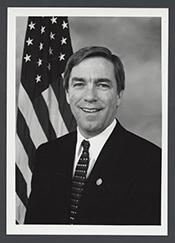
Mr. Chairman, today, I rise to discuss Mr. Rohrabacher's Amendment (No. 1) to the Water Resources Development Act of 2003 (H.R. 2557). This amendment is well intended since it seeks to find a way to…
Mr. Chairman, today, I rise to discuss Mr. Rohrabacher's Amendment (No. 1) to the Water Resources Development Act of 2003 (H.R. 2557). This amendment is well intended since it seeks to find a way to provide additional funds for needed port security improvements. It permits seaports to impose fees to be collected on a per container basis to be used for port security.
On May 21, 2003, after holding a hearing on port security, with my Government Reform Subcommittee Ranking Member John Tierney, I introduced a bi-partisan bill, entitled the ``Port Security Improvements Act of 2003'' (H.R. 2193). Our bill takes a different approach. To date, Congress has provided extensive Federal funding to fully ensure air security. In contrast, Congress has not provided sufficient Federal funding to fully ensure port security. Currently, the U.S. Customs Bureau collects $15.6 billion in duties on commodities entering the U.S. through marine transportation. Our bill dedicates a portion of these duties for five years toward port security enhancements. In addition, our bill reflects other recommendations from our witnesses. It sets deadlines for issuance of regulations governing transportation security cards, and requires regulations that include a national minimum set of standard security requirements for ports, facilities, and vessels.
Since America's ports are crucial to our economic well being, it is essential that we find the right balance between increasing port security while not impeding the flow of commerce and trade. As a Republican, I am sensitive to the costs of excessive government regulation. But, in a post-September 11 world, I realize that we must take additional precautions to protect our fellow citizens and our economy. We need to make sure that our ports are safe. I am not convinced that they are safe today.
H.R. 2193 currently has 31 co-sponsors. This summer, both the American Association of Port Authorities (AAPA) and I requested that Transportation and Infrastructure Subcommittee Chairman Frank LoBiondo hold a hearing on this bill. Today, I ask for additional co-sponsors for H.R. 2193 and for Chairman LoBiondo to schedule the requested hearing.

Mr. Speaker, I thank the gentleman from Massachusetts (Mr. McGovern) for yielding me the time, and I rise today in support obviously of the rule, but also of the underlying bill, and especially the…
Mr. Speaker, I thank the gentleman from Massachusetts (Mr. McGovern) for yielding me the time, and I rise today in support obviously of the rule, but also of the underlying bill, and especially the manager's amendment which the gentleman from Alaska (Mr. Young) will bring up later which authorizes a water-related infrastructure project of great interest and need in my district and to my constituents in Imperial County, California.
The New River, and that is the name of the river we are dealing with, the New River has been described as the world's worst polluted river. The river flows from Mexico north across the U.S. border and through my district in southern California. Due to grossly inadequate sewage treatment and solid waste facilities in Mexico, raw sewage, industrial waste and garbage are constantly released into the New River, hundreds of millions of gallons of raw sewage in the New River every year.
It is extremely polluted. It is foamy, foul-smelling. A person would not want their children to play anywhere near this river. It violates water quality standards, and plants and animals cannot survive in much of the river. It continues to threaten the health of the residents of my district and even of undocumented immigrants who use the waterway to try to cross the international border.
A coalition of citizen groups and government agencies in my district, including the Calexico New River Committee, has developed a feasible plan that will significantly improve the quality of water that flows through this community. They need to be supported, and this bill, which authorizes the Nation's water-related projects, would authorize $10 million to make sanitation improvements to this river. It is an extremely important first step in the process in enhancing the water quality of the New River, enriching life in our community and making a healthier home not only for the human beings, but for fish and wildlife.
So for the sake of my constituents at the U.S.-Mexico border, I urge my colleagues to support the manager's amendment and pass this bill.
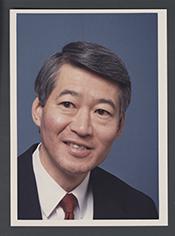
Mr. Chairman, first of all, I would like to take this moment to thank the gentleman from Alaska (Mr. Young) for the work that he has done on this bill along with the ranking member, the gentleman…
Mr. Chairman, first of all, I would like to take this moment to thank the gentleman from Alaska (Mr. Young) for the work that he has done on this bill along with the ranking member, the gentleman from Minnesota (Mr. Oberstar). The work that they have done in terms of putting this legislation together, the Corps reform proposals, the legislation, and, obviously, the projects, will go a long way in making sure America remains strong in terms of our infrastructure.
I would also like to thank Chairman Young and ranking member Oberstar and their staff along with the gentleman from Tennessee (Mr. Duncan) and the gentleman from Illinois (Mr. Costello) for the wonderful work that they have done in helping the gentleman from California (Mr. Doolittle), myself, and the regional members in the northern California area put together, obviously, a piece of legislation within this bill that would take care of many of the water needs that the gentleman from California (Mr. Doolittle) and I have been concerned about over the years with respect to Sacramento County and the American River watershed.
We had a major flood problem in 1986, and then another in 1997, which almost broke our levee system. And as a result of that, the Corps of Engineers has come up with a chief report that would raise the current Folsom Dam by some 7 feet and, obviously, shore up the American River levee system.
Due to the efforts the members that I just mentioned, obviously, we have put together a proposal that would take care of both water needs and, certainly, the needs of the people in the County of Sacramento.
So I just want to take this moment to thank again the members, particularly the gentleman from Alaska (Mr. Young) and the gentleman from Minnesota (Mr. Oberstar) for working out this proposal with the gentleman from California (Mr. Doolittle), myself and the regional members from our area.
Again, I want to make that effort because obviously this is a matter that has been going on for 20 years. I want to thank all members involved in this process.
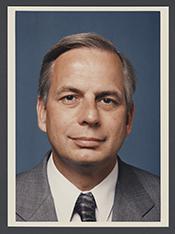
Mr. Chairman, I rise in strong support of the Water Resources Development Act of 2003. This important legislation will authorize critical flood control projects across the country, including…
Mr. Chairman, I rise in strong support of the Water Resources Development Act of 2003. This important legislation will authorize critical flood control projects across the country, including authorizing a project for Halls Bayou to be constructed by the local sponsor and reimbursed by the Army Corps of Engineers.
Located in a 42-square-mile watershed in North Central Harris County, Halls Bayou is already an authorized project, but this bill allows for Halls Bayou work to be done more quickly and with more local input, which is what my constituents want.
After Halls Bayou is added as a Section 211(f) project under the Water Resources Development Act of 1996, the local sponsor will be able to pursue the General Reevaluation Review and identify a Federal project that will protect homes and businesses from the risk of flooding.
The local sponsor has already constructed a detention area in the Halls Bayou watershed at Keith. Weiss Park, but a full Federal project is urgently needed. We are also acquiring other areas for detention in anticipation of the new authorization for Halls Bayou.
Back in 2001 Tropical Storm Allison flooded almost 13,000 homes in the Halls Bayou watershed, a tributary of Greens Bayou, which saw another 15,000 homes flooded. Recently Hurricane Isabel showed the Nation the damage one of these storms can do, even to the most developed, advanced nation in the world. And often, it is not the wind that is the problem, it is the water. Isabel showed why Federal flood control projects are needed more than ever in our country.
Clearly the sooner this legislation is approved, the better for my constituents. I would like to express my sincere thanks to Chairman Young, Ranking Member Oberstar, Subcommittee Chairman Duncan, Ranking Member Costello, Texans Nick Lampson and Eddie Bernice Johnson, and to my friend Bob Menendez for their work getting this bill together and looking out for the critical flood control needs of Harris County.
Mr. Chairman, this bill deserves the support of the full House.

Mr. Chairman, I thank the chairman and the gentleman from Illinois (Mr. Costello), ranking member, and certainly the gentleman from Minnesota (Mr. Oberstar), et cetera. I rise today to speak in favor…
Mr. Chairman, I thank the chairman and the gentleman from Illinois (Mr. Costello), ranking member, and certainly the gentleman from Minnesota (Mr. Oberstar), et cetera.
I rise today to speak in favor of the Water Resources Development Act and to share with my colleagues an experience that I have had in Indianapolis, Indiana of the transformative power of this legislation. As this poster will reveal, it is almost like a tale of two cities, what used to be the worst of times and which is now the very best of times because of the incredible assistance that we received in Indianapolis, that we benefitted from funding from the committee, and in August of 2002 the gentleman from Oregon (Mr. Blumenauer) was in Indianapolis; the gentleman from Minnesota (Mr. Oberstar) was there just a couple of months ago. I was happy to share my experience with my constituents and my colleagues and countless other visitors who have come. We can tell before we received the water appropriation for Indianapolis, the picture to my right revealed the old city that had the dilapidated landscape. The walls of the waterfront were sort of falling down. And because of the yeoman's work of the gentleman from Tennessee (Chairman Duncan) and the gentleman from Illinois (Mr. Costello), ranking member, and the gentleman from Minnesota (Mr. Oberstar), we have been able to transform the city. And I thought it was imperative that I came down and said thanks on behalf of the city to these incredible, wonderful gentlemen who were very beneficial in seeing to it that we got the appropriation, and now that we have the White River there that will carry commerce back and forth from the Ohio River and connecting us to the rest of the world.
From the days we have come a long way, finally turning our attention to the river, and I just wanted to thank them so very much, everybody that was involved in ascertaining that this happen.

Mr. Chairman, I move to strike the last word. Mr. Chairman, I want to clarify one point that is in this bill. I was going to ask unanimous consent to modify the bill, but the Democrats have not had…
Mr. Chairman, I move to strike the last word.
Mr. Chairman, I want to clarify one point that is in this bill. I was going to ask unanimous consent to modify the bill, but the Democrats have not had an opportunity to make a final decision about that, and we are ready to
move to final passage. So I would just ask the gentleman from Tennessee if he would clarify this with me.
I rise to enter into a colloquy with the gentleman from Tennessee (Mr. Duncan) to clarify section 3090 of the bill today.
Included in this bill, H.R. 2557, is language regarding the Roanoke River Upper Basin Flood Control Project, a much-needed project located in the Sixth Congressional District of Virginia. This project has been in discussion for many years, and my community, along with the Corps of Engineers, stands ready to begin construction within the year. As written, section 3090 contains language stating that awards for contracts will be based on invitation for bids procedures.
Mr. Chairman, I wonder if you might clarify the intent of that language.
I yield to the gentleman from Tennessee.
Mr. Chairman, reclaiming my time, as the chairman knows, it is my intention that anybody be able to bid on this contract. That is what the city of Roanoke desires and so on. However, if the understanding is with the other side that they will at least strike this language that does not clarify that, I would ask unanimous consent at this time to strike the language at page 121, lines 5 and 6, carrying to the end of that section.
I yield to the gentleman from Illinois.
Mr. Chairman, I have a parliamentary inquiry.
Is it correct that once we are out of the Committee of the Whole and into the House itself, that this unanimous consent request would be in order at that time?
Mr. Chairman, I would ask the gentleman from Illinois (Costello) if that would be appropriate, to raise it in the House?
Mr. Speaker, I rise in strong support of this rule and support of the legislation as well, and I would hope, first of all, to congratulate all of those in leadership who have been involved in this.…
Mr. Speaker, I rise in strong support of this rule and support of the legislation as well, and I would hope, first of all, to congratulate all of those in leadership who have been involved in this. Water issues are so important, and they are also hard to work out at times, and I know the gentleman from Alaska (Mr. Young) has put a lot of time and effort into this, as well as all of those on the committee.
I especially am, of course, supportive of this rule because it makes in order an amendment that I have to this bill that I believe is vitally important to the security of our country and to the American taxpayers. The amendment
that I will be offering, and I would hope that my fellow colleagues would consider this very deeply when it comes to the floor, it permits the ports around the United States, does not mandate them, but permits them to put a fee on containers coming in or out of the port, up to $100 per container.
As we move forward with an incredibly expensive goal of modernizing our ports so they will be secure and safe, there is going to be this astronomical cost to accomplishing this goal. The ports themselves do not have the revenue resources necessary to do their part unless we give them a source of revenue. Many of the ports are going to complain, and I understand that some of the ports have actually complained that they do not want the power to even ask for a fee from those people who are using the port facilities, the manufacturers overseas who are using the port facilities to send their containers in and out of the port.
The American people should not have to pick up the entire burden that is required to make our ports safe and to keep our ports functioning in a way. My bill would make sure the people overseas pay their part as well and are able to do so through a fee on the containers coming through the ports.
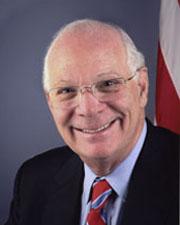
Mr. Chairman, first let me thank the gentleman from Illinois (Mr. Costello) and the gentleman from Tennessee (Mr. Duncan) for their work on this important legislation and the gentleman from Alaska…
Mr. Chairman, first let me thank the gentleman from Illinois (Mr. Costello) and the gentleman from Tennessee (Mr. Duncan) for their work on this important legislation and the gentleman from Alaska (Mr. Young) and the gentleman from Minnesota (Mr. Oberstar).
They have brought out a well-balanced Water Resources Development Act, and we appreciate that. This is a good bill for our Nation. It is a good bill for the people that I represent, and I thank them very much for their courtesies.
I particularly wanted to mention a project authorized in the manager's amendment to restore the stream ecosystem of the Gwynns Falls in Baltimore City. This is a complicated project that has been under study by the Corps and local jurisdictions now since we first authorized the study in April of 1992; so it has been a long time.
The authorization of this ecosystem restoration stream builds on the successful work we have on a greenway/bikepath through the Gwynns Falls. It also is an important part of the Chesapeake Bay program for improving the quality of the water along the bay. We now understand that our watersheds, our streams are a very important part of our work to restore the Chesapeake Bay, and the work done along the Gwynns Falls will be very helpful in that regard.
Let me also mention the fact that Baltimore is currently under a court order to replace its aging sewer system. We need to modernize our sewer system. In doing the work along the Gwynns Falls, we also will be advancing the work of the replacement of our aged sewer system. So for all these reasons, this project is a win-win for our environment, for the appropriate use of our lands. And I want to thank all of them for including this project. I know it was complicated. I know it was difficult, and we thank them very much.
Bill Text
2 versions available
        [Congressional Bills 108th Congress]
[From the U.S. Government Publishing Office]
[H. Res. 375 Engrossed in House (EH)]

In the House of Representatives, U.S.,

September 24, 2003.
Resolved, That at any time after the adoption of this resolution the Speaker
may, pursuant to clause 2(b) of rule XVIII, declare the House resolved into the
Committee of the Whole House on the state of the Union for consideration of the
bill (H.R. 2557) to provide for the conservation and development of water and
related resources, to authorize the Secretary of the Army to construct various
projects for improvements to rivers and harbors of the United States, and for
other purposes. The first reading of the bill shall be dispensed with. General
debate shall be confined to the bill and shall not exceed one hour equally
divided and controlled by the chairman and ranking minority member of the
Committee on Transportation and Infrastructure. After general debate the bill
shall be considered for amendment under the five-minute rule. It shall be in
order to consider as an original bill for the purpose of amendment under the
five-minute rule the amendment in the nature of a substitute recommended by the
Committee on Transportation and Infrastructure now printed in the bill. The
committee amendment in the nature of a substitute shall be considered as read.
All points of order against the committee amendment in the nature of a
substitute are waived. No amendment to the committee amendment in the nature of
a substitute shall be in order except those printed in the report of the
Committee on Rules accompanying this resolution. Each such amendment may be
offered only in the order printed in the report, may be offered only by a Member
designated in the report, shall be considered as read, shall be debatable for
the time specified in the report equally divided and controlled by the proponent
and an opponent, shall not be subject to amendment, and shall not be subject to
a demand for division of the question in the House or in the Committee of the
Whole. All points of order against such amendments are waived. At the conclusion
of consideration of the bill for amendment the Committee shall rise and report
the bill to the House with such amendments as may have been adopted. Any Member
may demand a separate vote in the House on any amendment adopted in the
Committee of the Whole to the bill or to the committee amendment in the nature
of a substitute. The previous question shall be considered as ordered on the
bill and amendments thereto to final passage without intervening motion except
one motion to recommit with or without instructions.
Attest:

Clerk.