Providing for further consideration of the bill (H.R. 3289) making emergency supplemental appropriations for defense and for the reconstruction of Iraq and Afghanistan for the fiscal year ending September 30, 2004, and for other purposes.

Legislative Activity
Stay on top of the latest movement without scrolling through every action
Motion to reconsider laid on the table Agreed to without objection.
October 17, 2003 • 1:52 PM
View full timeline
Introduced in House
October 16, 2003
The House Committee on Rules reported an original measure, H. Rept. 108-322, by Mr. Hastings (WA).
October 17, 2003
Placed on the House Calendar, Calendar No. 112.
October 17, 2003
Considered as privileged matter. (consideration: CR H9643-9652)
October 17, 2003 • 12:35 PM
DEBATE - The House proceeded with one hour of debate on H. Res. 401.
October 17, 2003 • 12:35 PM
On ordering the previous question Agreed to by the Yeas and Nays: 221 - 199, 1 Present (Roll no. 559).
October 17, 2003 • 1:44 PM
Passed/agreed to in House: On agreeing to the resolution Agreed to by recorded vote: 221 - 201 (Roll no. 560).(text: CR H9643)
October 17, 2003 • 1:52 PM
On agreeing to the resolution Agreed to by recorded vote: 221 - 201 (Roll no. 560). (text: CR H9643)
October 17, 2003 • 1:52 PM
Motion to reconsider laid on the table Agreed to without objection.
October 17, 2003 • 1:52 PM
Voting History
2 votes recorded • Roll call available
Floor Debate
24 membersWhat members said about H.Res. 401 on the floor
 CVHDH
CVHDH RC"
RC" PEK
PEK MF+19
MF+19
Floor Debate
24 membersWhat members said about H.Res. 401 on the floor
Mr. Chairman, last spring many of us warned that unilateral military action against Iraq would open a Pandora's Box; that the President had not prepared the American people for the sacrifices that…
Mr. Chairman, last spring many of us warned that unilateral military action against Iraq would open a Pandora's Box; that the President had not prepared the American people for the sacrifices that would be entailed by such an action; and that to act without the support of the international community would seriously jeopardize our ability to win the post-war peace in Iraq. Regretfully, I fear that we were right. And there is little satisfaction in that realization--because the implications for our Nation and the American people are very serious indeed. Our President and his advisors have backed this country into a corner from which there is no easy escape.
Now the President has asked this Congress--asked the American people--for an additional $87 billion for the upcoming year to pay primarily for our efforts in Iraq. This request comes on top of the $79 billion already appropriated for these purposes this fiscal year and we can be sure that this will not be the President's last request for funds for Iraq. Iraq's stabilization and reconstruction needs over the next five years have been estimated at over $50 billion--without taking into the account the costs of continued troops deployment there.
In deciding whether or not to support this request, I believe we must consider three fundamental questions:
How did we get to the situation we are in today?
In light of the current state of affairs in Iraq, is the kind of investment the President has requested necessary to enhance our security and protect our national interests? and,
If this investment is necessary, has the Administration presented us with a responsible plan that will achieve our key national objectives, both in Iraq and at home?
how did we get here?
Six months ago, the President informed the American people that Saddam Hussein posed such a dangerous threat to the Untied States that we had to wage war in Iraq to protect our national security. The President and his advisors sold the Iraq war to the American people primarily based on the argument that Saddam Hussein was a ticking time bomb; that he posed a serious and growing danger to America; and that the only way to eliminate the threat was to eliminate Saddam Hussein.
The Administration's argument was based on the marriage of two claims. The first was the claim that Iraq possessed an arsenal of chemical and biological weapons and would soon obtain a nuclear weapons capability. The second was the claim that Saddam Hussein was in league with Al Qaeda. Taken together, these claims painted a very ominous picture. While many in the international community--and here at home-- had strong doubts about the nature, magnitude and imminence of the threat posed by Saddam, in its rush to war, the Administration exploited the fears of a post 9/11 America. They portrayed the United Nations Security Council, the U.N. weapons inspectors, most of the international community, and critics here at home as a bunch of spineless procrastinators who wanted to look the other way in the face of a growing Iraqi threat.
It now appears that the Administration's two most fundamental arguments for war were false. After interviewing hundreds of former Iraqi military personnel and allowing more than 1,200 of our own inspectors to roam across Iraq over the last six months, we have failed to uncover any actual weapons of mass destruction. The interim report submitted by Dr. David Kay, the Administration's own arms inspector, provides no hard evidence to support the kind of danger President Bush depicted when he made the case for immediate military action. In the absence of evidence of actual weapons, U.S. officials have shifted their rhetoric to focus on ``weapons programs'' and ``the intent'' of the pre-war Iraqi regime. And while it may be true that Iraq was not in full compliance with U.N. Security Council resolutions, it also appears that the sanctions regime, coupled with the inspectors deployed under Resolution 1441, was successful at containing Iraq's ambitions to develop weapons of mass destruction.
Time has also not borne out the Administration's claim that Al Qaeda was in league with Saddam Hussein. There is no credible evidence of any collaboration between Saddam Hussein and Al Qaeda. This argument, made over the objections of many in the intelligence community and most regional experts in this town, was a calculated effort to establish a false link in the minds of the American people between the terrible terrorist attacks of September 11, 2001 and the need to go to war in Iraq. This strategy of fear was not based on the facts, but on a desire to do whatever it would take to win public support for the war.
It is undeniable that Saddam Hussein was a brutal dictator. However, the security threat he posed to the United States was grossly exaggerated by the President and his public relations gurus. The question now looms--Having eliminated the regime of Saddam Hussein, are Americans safer today than they were six months ago?
situation on the ground
By almost every measure, the U.S. post-war mission in Iraq is not going well and the Administration remains deeply divided over the best way to proceed. While it is true that we have removed Saddam Hussein from power, it is far from clear that we have made the American people more secure as a result. The jury is still out on the implications of our actions for the Middle East region, the fight against terrorism and efforts to control the proliferation of weapons of mass destruction.
The Iraq of today does not reflect the rosy pre-war predictions made by the Bush Administration. The situation on the ground is far from secure. Since the President declared the end of major combat operations, 198 brave Americans have died--sixty more than died during the war itself. Hundreds more have been severely wounded. Every week more Americans are killed, more car bombs go off and more international aid workers leave the country.
Our military forces are stretched thin and our troops are prime targets for former Baasthists and other extremists in a country overflowing with supplies of arms and munitions. The senior American commander in the Persian Gulf region has told us that we are engaged in a ``guerrilla war'' in Iraq. At the same time, the political process in Baghdad is bogged down over security issues, the friction of the occupation and increasingly bitter Iraqi-American arguments over the pace of turning over control and responsibility to Iraq's Governing Council. Increasingly, we find ourselves in a shooting gallery with no real exit strategy.
Terrorist Threat. In one of the terrible ironies of the war, in the name of fighting terrorism, we have increased the level of terrorist activity in Iraq. Administration officials report that Baghdad has become a new magnet and breeding ground for extremists and terrorists from around the region. Even worse, our actions in Iraq appear to have forged a link for the first time between the fanatical Islamic extremists of Al Qaeda and the traditionally secular remnants of Saddam's Baathist regime. These two groups, ideological antagonists before the war, have now been driven together in an unholy alliance to wage war on Americans. While the terrorist attacks attributed to this newly forged partnership have so far been confined to Iraq, this virulent combination could begin to extend their activities elsewhere.
International Community. The Bush Administration's contempt for the international community in the lead-up to the war has seriously complicated our ability to gain the cooperation and assistance of the rest of the world in support of common objectives. In the immediate aftermath of September 11, 2001, the entire world stood with us in the war on terrorism. The United Nations and NATO unanimously pledged their support in our fight and multinational involvement in our mission against the Taliban and Al Qaeda in Afghanistan was the highest ever. However, today this situation has greatly changed. Our friends and allies have been unwilling to participate in a substantial way in the reconstruction effort in Iraq. Even under the auspices of a new U.N. Security Council Resolution establishing a United Nations role along side the U.S. in Iraq, very little is expected in new troops and financial pledges for the Iraqi mission.
U.S. Credibility. The Administration's misleading statements about the nature and magnitude of the Iraqi threat have undermined our credibility around the world. Secretary of State Powell's report to the United Nations prior to the war relied on forged documents and information we later admitted to be unreliable. The nuclear specter that Administration officials pointed to has been discredited. Even more recently, Administration Inspector David Kay has been forced to back down from post-war claims that two mobile trailers found in Iraq were used for making biological weapons. The huge credibility gap that now exists for the Administration undermines our future ability to sound the alarm based on sensitive intelligence matters. Future claims about Iran, North Korea and others will be viewed with deep suspicion by a more skeptical public and an international community that, as the Economist described, sees the Bush Administration as having its own arsenal of WMD--``Wielders of Mass Deception.''
Regional Stability in the Middle East. The Bush Administration's predictions that the fall of Saddam Hussein would put extremists in retreat throughout the Middle East and spur progress in the Arab- Israeli conflict have not be realized. The Arab-Israeli conflict has gone from bad to worse in the six months since the end of the Iraq war. And while it is premature to reach any conclusions about the long term effects, the Administration's prediction that the fall of Saddam Hussein would trigger a kind of democratic domino effect, spreading democracy throughout the Middle East, looks unlikely in the foreseeable future. The trend is toward more violence and polarization in that troubled region.
Conflict Management. The new ``preventive war doctrine,'' articulated by the Bush Administration to justify our action in Iraq, has set a dangerous precedent in international relations. The Administration's assertion that America has the right to attack another nation based on the perception of a future threat has--especially in light of what we know now to be faulty and hyped intelligence--undermined many of the long existing norms for international engagement. The world will become much less secure if nations with long histories of bitter differences, such as India and Pakistan, should choose to follow our example.
By almost every measure, our virtually unilateral attack on Iraq has, at least in the short term, made American less--not more--secure. The difficult question we must now face is: Where do we go from here?
Where do we go from here?
The President's request for this $87 billion marks the culmination of his repeated failures--his gross exaggeration of the threats posed by Iraq in order to justify the war; his contempt for the international community before the war; his inability to gain significant international backing to share the military burden and the financial costs of rebuilding Iraq; his failure to level with the American people about the cost and challenges of ``winning the peace''; and, the list goes on. The Bush Administration deserves to suffer the political consequences of these miscalculations, misrepresentations, and missteps. But that decision will--and should--be left to the American people at the ballot box.
In the meantime, we here in the 108th Congress have an obligation and a responsibility to limit the extent to which the American people will suffer the consequences of the President's bad decisions. These decisons have placed not just the Bush Administration--but our entire county--in a difficult predicament. The terrible irony of the war in Iraq is that, in the name of making America more secure, it has--at least for now--made us less secure.
We cannot turn back the clock. The stablization and reconstruction of Iraq is now a critical interest of the United States, Iraq and the international community. I believe that we must help in the reconstruction of Iraq for two reasons. The first is based on the simple principle: ``If you break it, you fix it.'' The second is based on our security interests in preventing another rogue state from emerging in Iraq or the outbreak of a violent crime conflict that will further destablize the volatile Middle East region and further enflame Muslim and world public opinion against the United States. Unless we invest in maintaining and protecting our troops, and in helping to rebuild Iraq, we will make a bad situation worse; we will compound the damage done by the reckless actions of this Administration--and make the challenges facing our Nation in the years to come even more difficult.
American Troops Are Still Necessary
Over two thirds of the request before us--$67 billion of the $87 billion--is allocated to cover the costs of maintaining and protecting the U.S. troop presence on the ground in Iraq. These troops are providing the security framework necessary to maintain some semblance of law and order as efforts are made to create a mechanism for writing a new constitution, holding elections and returning sovereignty to an internationally recognized and legitimate Iraqi authority. The immediate withdrawal of American troops would produce tremendous instability and would likely lead to civil war between the three major communities in Iraq--the Shia, the Sunnis and the Kurds. Just as the precipitous U.S. disengagement from Afghan affairs following the Soviet withdrawal from that country opened the door to the Taliban regime, premature U.S. withdrawal from Iraq would benefit extremists and terrorist groups. If we don't fill the power vacuum that exists, groups like Al Qaeda and Ansar Al Islam will help fill it.
In addition, the immediate withdrawal of American troops would undermine the status of our country around the world. The President engaged our military in Iraq with strong rhetoric about the type of Iraq Americans wished to enable Iraqis to create for themselves. He made pledges to the Iraqi people in our name. We must do what we can to make good on those pledges. Our hasty withdrawal would likely embolden our enemies in the region and around the world. It would be a setback to our common effort to expand representative government and combat terrorism.
The Administration has been forced to recognize that we cannot achieve our post-war goals in Iraq alone. We must do everything we can to replace our troops with international forces and a new Iraqi police force. However, we must be realistic. We face time and resource constraints. For now, it appears that we will be able to attract only a limited number of foreign troops. Our allies and other nations, still seething from the Bush Administration's pre-war treatment are not yet prepared to provide substantial troops and financial support for the current mission. The Security Council resolution passed on October 16th is unlikely to significantly change this situation. In addition, it will take time to train an Iraqi force that can assume day-to-day responsibility for security. Until that Iraqi force is trained, American forces will be needed to prevent chaos and anarchy.
Iraqi Reconstruction is a critical U.S. interest
About twenty billion of the President's $87 billion request is slated for reconstruction efforts in Iraq. This large investment is particularly difficult to stomach given both the mounting deficits caused by the Bush tax cuts weighted toward the super rich and the Administration's gross neglect of pressing needs here at home. However, I strongly believe that it would be short-sighted--and even dangerous-- for our country not to do what is necessary to attempt to win--or at least not lose--the battle for the hearts and minds of the Iraqi people. This will not be easy and the outcome is not guaranteed. Our chances of defeating the remnants of the Hussein regime and various extremists elements will be based in large part on our ability to show that the standard of living is better in the post-Saddam era. If we fail to create an environment in which the great majority of Iraqis see themselves as better off, we will open the door to ethnic, religious and regional strife. This could endanger our troops and undermine our efforts to build a new Iraq at peace with itself and its neighbors and on the course to representative government.
In the long run, our only chance of salvaging the situation is to make a substantial investment. The cost of not making a substantial investment today will be much greater sums tomorrow. We have opened a pandora's box. Significant funds are now needed to try to extricate ourselves from this difficult situation and try to ensure that over the long term the American people will not have been made less secure as a result of this war. The immediate withdrawal of our troops now is not a viable option. Handing the shattered Iraqi infrastructure, economy and body politic over to a makeshift government prematurely, is only a recipe for disaster. We must now all pay the price of the President's misrepresentations, miscalculations, and missteps.
Responsible Leadership
The key question facing Members of Congress today, however, is whether the supplemental request before us reflects an effective and sustainable plan for U.S. engagement in Iraq--and one that meets the test, both at home and abroad, of responsible leadership.
The task before us is enormous. To succeed in Iraq we need a coherent and international plan for moving forward. The Administration's record has been poor and they have given us little reason to believe that they understand the mistakes they have made and will make much needed adjustments to the course they are taking.
Experience with other nation-building efforts tells us that the mission before us is difficult and costly. It will require an extended commitment over a long period of time. And, unlike the military campaign, winning the peace will require the help of our friends and others in the international community. The American people are only beginning to realize the enormous implications of our involvement.
The World Bank has estimated Iraq's reconstruction needs at an additional $55 billion over the next four years--not including the costs of the continued military presence in that country. In Bosnia, a country one-eighth the size of Iraq, the international community has spent close to $50 billion over the last 8 years in nation-building and reconstruction--troop deployments have cost an additional tens of billions for individual countries--and the end is not in sight. Let there be no doubt that the request before us today is just the tip of the iceberg.
Given the record of the last six months it is frankly stunning how unwilling the Administration has been to meet its critics even halfway, to address the problems that exist, to provide a coherent roadmap for moving forward together with the international community, and to ensure that the bill for this mission will not be borne by America's children and grandchildren.
First, the Administration has stubbornly failed to admit the serious mistakes that it has made and to address the serious credibility problem that they have created for themselves among the American people, the U.S. Congress and the international community. This was evident most recently in the President's handling of the report on weapons of mass destruction submitted by former U.N. inspector David Kay, now working for the Bush Administration. The Kay report findings seriously undermined key elements of the Administration's pre-war claims. Yet, the President stubbornly sighted them as proof of his case. In a recent interview, Vice President Cheney suggested a link between Saddam Hussein and the attacks of September 11th, a claim the Administration had never previously made, and a link which the President himself rejected in statements a short time earlier. Unless the Administration is willing to address the serious credibility issue
that exists--or at least not compound it--it will be difficult for the American people to have any confidence in its statement about the situation in Iraq and its assessment of what needs to be done.
In addition, the Administration continues to act as though it has no responsibility or legal obligation to inform the Congress and the people of this country about how they plan to use the money that we approve in this chamber. In recent hearings Administration officials have refused to answer questions regarding the expenditure of funds previously authorized by this institution and to give little or no information on future projected costs. In my own committee I asked Administration representatives about U.S. commitments, financial and other, to the Turkish government in return for deployment of Turkish troops in Iraq and I was not able to get any satisfactory answers. If the American taxpayer is going to foot the bill for Turkish troops--by grant or by loan--they have the right to know. And if we are planning to send U.S. troops to fight--and maybe die--pacifying Turkish-Kurds opposing the Turkish government, then I believe the American people deserve the right to know about that deal.
Second, it has been true from the very start that the President's Iraq policy has suffered from deep divisions within the Administration on the most fundamental issues--dealing with the international community, organizing for reconstruction and interpreting the threat itself. These divisions have been the subject of recent public discussion over the announcement of a new task force headed by National Security Advisor, Condeleeza Rice, with the task of coordinating the stabilization and reconstruction efforts in Iraq. This announcement notwithstanding, there is considerable evidence to suggest that little real progress has been made in this area. Recent statements attributed to senior Administration officials are highly critical of the Bremer mission in Iraq and raise serious questions about who is calling the shots, even today, on U.S. policy.
Without a coherent plan that is implemented by a united Administration we cannot succeed. This plan does not exist today.
Third, it has long been clear that we cannot succeed in the post-war mission in Iraq alone. We must engage the international community for both political and material reasons. The Administration badly miscalculated the extent to which Iraqi suffering under Saddam Hussein would translate into goodwill toward America's role in Iraq. We must understand the complex situation we face today in our new role as an occupying force in Iraq.
Fourth, the Administration's actions must match its rhetoric about supporting Iraqi democracy. The $20.3 billion reconstruction budget presented by the Administration was drawn up without meaningful consultations with Iraqis. In addition, we watch as Administration officials arm twist the Iraqi Governing Council to accept the deployment of Turkish troops in Iraq over the strong objections of all three major Iraqi communities--the Kurds, the Shia and the Sunnis. It appears that the Administration has not grasped the first tenet of nation-building--that the Iraqi people must believe that they are rebuilding their own country.
Fifth, the Administration has ignored the importance of its role in accounting for the funds that we approve and preventing corporate profiteering and abuse of taxpayer money. It must take serious steps to allay fears that appropriated funds will be wasted on large favored corporations. In light of the many stories of abuse we have heard in recent weeks, the ``prudent'' transparency mentioned in Mr. Bremer's testimony before members of Congress does not go far enough. The Administration must provide a satisfactory accounting of how funds have been spent to date and how additional funds are being planned for.
Finally, and most importantly, the President is asking us to ignore the enormous budget implications of this request. Let's not fool ourselves or the American people. It won't be just this $87 billion. It will also require billions more in the months and years ahead.
While we have a responsibility to maintain security on the ground in Iraq and assist with the reconstruction of that country, we also have an obligation to level with the American people. The President totally failed to prepare the American people for the true costs of the war and of ``winning the peace.'' Now he seeks to escape responsibility for those costs by putting them on our national credit card and running up huge deficits. Every penny of the $87 billion requested by the President is borrowed money. But we all know there is no free lunch. His ``out-of-sight, out-of-mind'' approach to such important issues will wind up costing our children down the road.
We should not be waging war and peace by credit card. If we are willing to pay any price to defeat the scourge of terrorism, we must pay for it in an honest way. While the President has asked our troops and their families to make the ultimate sacrifice, he has given the wealthiest Americans a huge tax cut. That is wrong. It is wrong to pass the buck to the next generation; it is wrong to ask the younger generation, including our troops and their children, to bear the burden alone; and it is wrong to shield the wealthiest Americans from paying their fair share.
We have a huge responsibility gap in our government. It is the gap between those who understand that we have a responsibility to establish stability and help rebuild Iraq--and who are prepared to pay for it now, and those who call upon the country to pay any price in Iraq, but run from responsibility paying that price.
I had an amendment to fill that responsibility gap. It was an amendment to scale back the tax cuts for the wealthiest 1 percent of Americans to pay their share of the costs of this bill. Incredibly, the House leadership prohibited that amendment from coming to a vote.
This is a difficult time to be asking the American people to invest billions of dollars of their money to build schools, hospitals, roads, electric grids and communications systems. Here at home, our Federal, State and local governments are experiencing huge revenue shortfalls. The President's budget request for this year falls $9 billion short of what was promised by the Federal Government to meet our obligations to America's school children under the No Child Left Behind legislation. Three our of five children eligible for Head Start cannot receive help because of lack of funds. Years ago the Federal Government pledged to cover 40 percent of the costs of ensuring that children with disabilities received a good education, but today we are meeting only 18 percent of that cost. The same shortfalls occur in health programs, our national transportation infrastructure, and a range of other important domestic needs.
We must meet our needs at home at the same time we meet our international responsibilities in Iraq, Afghanistan and other places around the globe. We as a nation have enormous resources. We can meet both our domestic needs and our international responsibilities. We can help the Iraqis rebuild their country while we construct new hospitals and schools here at home. But we must be prepared to pay for them. If we refuse to pay now for our efforts in Iraq by reducing portions of the tax cut, it will make it impossible to make the investments we must make in education, health, transportation and other needs here at home. Already this year, when many of us called for full funding for No Child Left Behind and meeting our national obligations for special education we were told that we didn't have resources because of the large tax cuts. Adding this $87 billion to the deficit will make it even more difficult to meet those pressing needs. That is why we must pay now for the costs of our efforts in Iraq. We cannot put everything on our national credit card.
The President has totally abdicated his leadership responsibilities. His job is to level with the American people--to inform them that our international responsibilities require us to pay the price of leadership. Leadership is about setting priorities. The war in Iraq was a war of choice. Regardless of what each of us may think about how that choice was made, we now have a responsibility to pay for the consequences of that choice. The President--by refusing to pay for the war and its aftermath--refuses to acknowledge the real costs of those choices.
There are those who argue that, because the President has refused to scale back his tax cuts to pay for the war and its aftermath, those of us who believe we have a responsibility to provide security and aid in the reconstruction in Iraq have no alternative but to support the President's request for $87 billion without condition; that we have to go along with the President's plan to wage war and peace by credit card. That is an irresponsible position and a false choice. If paying for security and reconstruction is that important--and I believe that it is--when we should insist that we pay for it the right way. To do any less is to abdicate our responsibility to the American people.
the false choice
Money alone is not the answer to the problems we face in Iraq. The stakes are high and the mission is difficult. For those of us who support making this enormous investment I believe that we have a duty to ask if the money will be spent wisely and where it will come from.
The Bush Administration has treated our concerns, and those of others, with contempt and arrogance--the same way they treated the international community prior to the war. I fear that if we buckle-in to the Administration's demand to do it ``our way or the highway,'' we will simply be acquiescing in the continuation of a fundamentally failed approach to a very sensitive and vital mission. We cannot allow ourselves to be caught in the false choice that we must engage the Administration's way or no way at all.
For weeks I have struggled with this vote. As the son of a U.S. foreign service officer, I have always had a strong personal commitment to our country's international role. It is with great difficulty that I cast a vote against
funds requested by a President in pursuit of U.S. policies abroad. However, the Administration's arrogant refusal to consider alternative approaches and, most of all, its refusal to pay now for the consequences of its choices has convinced me that they will not address these issues in a responsible manner until we demand a higher standard of leadership. If the President believes, as I do, that we have an obligation to provide security and help rebuild Iraq, he should have the simple courage to pay for it. Despite all my other reservations, if the President were to present a plan to pay now for the costs of our efforts in Iraq, or if my amendment to reduce the tax cuts to cover our costs were adopted, I would support this bill. The choice is not between doing nothing and doing it the President's way. We have a responsibility to the American people to do it the right way.
Mr. Speaker, by direction of the Committee on Rules, I call up House Resolution 401 ask for its immediate consideration. Mr. Speaker, for the purpose of debate only, I yield the customary 30 minutes…
Mr. Speaker, by direction of the Committee on Rules, I call up House Resolution 401 ask for its immediate consideration.
Mr. Speaker, for the purpose of debate only, I yield the customary 30 minutes to the gentleman from Texas (Mr. Frost), pending which I yield myself such time as I may consume. During consideration of this resolution, all time yielded is for the purpose of debate only.
Mr. Speaker, House Resolution 401 provides that H.R. 3289, the Emergency Supplemental Appropriations Act for Defense and the Reconstruction of Iraq and Afghanistan, shall be considered as read, and that no further motion or amendment shall be in order.
Mr. Speaker, the House began debate 3 days ago on this emergency appropriations bill that provides for the needs and protection of our troops in Iraq. The unanimous consent agreement provided for 5 hours of general debate that began on Wednesday. The House resumed debate yesterday morning with discussion and consideration of amendments lasting well into last night. The House began a third day of debate this morning with consideration of 13 amendments.
After hours and days of debate, delay of a final vote on the emergency supplemental bill means a delay in getting the men and women in our military the resources and the equipment that they need. This rule, H. Res. 401, would end the delay and give our troops the funding they require and the support that they deserve.
I urge my colleagues to support both the rule and the underlying bill.
Mr. Speaker, I reserve the balance of my time.
Mr. Speaker, I am pleased to yield 3 minutes to the distinguished gentleman from Missouri (Mr. Blunt), the majority whip.
Mr. Speaker, I reserve my time.
Mr. Speaker, I would advise the gentleman to use his speaker.
Mr. Speaker, I yield myself such time as I may consume.
Mr. Speaker, as has been mentioned in different forms earlier in this debate, this is serious business. It is serious business. And I believe knowing that we are engaged in this war on terrorism, which we have been now for over 2 years, we have to respond in a timely manner to those Americans that we put at risk. And I would remind my colleagues that three-fourths of this bill, or slightly more, goes to support our troops. And we have focused on other parts. Probably that is good for the debate, but we should not lose sight of the fact that three-fourths of this goes directly to our troops.
Now, we have some difference of opinion between the other House with their supplemental budget. The quicker we can get this into conference, the quicker we can get a bill passed; and the quicker we can get the President to sign it to support our troops, frankly, the better off we are.
I would just make one observation that I found rather interesting, because we spent a great deal of time debating before I was here on the Gulf War resolution. I was not here. But I understand that was a debate that was inspiring for the Congress. That really, when we look at that from a historical standpoint, is why we are here today, because of whatever reasons and agreements were made following the Gulf War, Saddam remained in power.
Now we are in a situation where we have to complete that. We had a long debate when we decided to go to war in Iraq this year, properly the right thing to do. And now we have debated this supplemental to support our troops for into the third day.
From a historical standpoint, I would just like to remind Members that sometimes this body moves extremely fast on important issues. Right after December 7, 1941, when we declared war on Japan and Germany, the U.S. House of Representatives allocated 40 minutes for each of those resolutions. I think it is important for us to get this done as quickly as we possibly can. So I urge my colleagues to vote for the previous question.
Mr. Speaker, I oppose this new rule to recklessly cease debate and eliminate all opportunity for amendments on behalf of the American people. I now will speak to H.R. 3289 before us. The task of stabilizing and reconstructing Iraq may end up being one of the greatest challenges of our generation. Although we are getting rosy reports of progress in Iraq from the administration, the fact that we have 130,000 troops in the area and are now being handed an $87 billion tab paints a fully different picture. It is now obvious that the administration grossly underestimated the cost and difficulty of stabilizing Iraq, almost to the same extent that they overestimated the threat posed to the American people by Saddam Hussein. Even the so- called ``soft costs'' of the war and its aftermath are enough to cripple some nations.
This is not revisionist history; at least a hundred of us in Congress, millions of citizens who took to the streets, and even a handful of brave souls in the administration itself, tried to warn the administration of what it was getting into with its pre-emptive strike on Iraq. We were ignored, and those in the administration--the Shinseki's and the Lindsey's have been encouraged to move on. But the problems in Iraq have not gone away so gracefully. We are now at an important crossroads. We can continue to beat this dead horse with the same policies of isolation from our allies around the world and partisanship here in the
United States or, we can start working together--employing the collective wisdom of all of us here and around the Nation with the experience and expertise to be of service in this endeavor--and who are committed to our troops, and to fulfilling the promise the President made to the people of Iraq and Afghanistan and to the world.
As this debate comes to the Halls of Congress, the people who marched us into this war will try to paint this vote as a vote for or against our troops. This is absolutely a false picture. For one thing, our military is extremely well funded. As I just described, including the Iraq supplementals, the Defense budget will be approaching $500 billion. Furthermore, Iraq is not an indigent nation.
If they wanted to, they could take better care of our troops. Secretary Rumsfeld wants to spend billions of dollars on a Star Wars defense system, while we are getting reports that our soldiers risking their lives in Iraq don't have adequate body armor, or clean water supplies, or basic human necessities like feminine hygiene products for our women soldiers. Six months after this battle started, we still have soldiers without kevlar body armor and water purifiers. What did they do with the first $79 billion war supplemental? We now have a new request for money, but we still have not heard details of how they spent the first money, what progress has been made, and what challenges remain.
I visited the As-Sayliyah Central Command Base in Doha, Qatar last weekend and heard the concerns of the troops from their own mouths. I heard testimony about how a ground soldier, watched his partner and the operator of a military vehicle get tossed out as the vehicle was thrown airborne by a land mine. ``Why did you hit this mine,'' I asked. ``It was just one of those mines that was missed in the sweep . . .,'' said the soldier. Because there isn't enough personnel or specialists to assign to technical tasks, unskilled or untrained technicians frequently get asked to do jobs that they have not mastered enough to guarantee the lives of those who must traverse the sands of Baghdad. The soldier misses his wife and newborn baby dearly. Because there hasn't been a change in the personnel on the front lines in several months, many reservists and active duty servicemen and women have spent a longer time in Iraq than was promised by the Administration. May 1, 2003 was supposed to have been a day of hope and homecoming; instead, it was a sham. Some of these troops feel like ``sitting ducks'' out in the foreign terrain. They don't speak Arabic. They don't know Tikrit like they know their hometowns. When I asked them if they have seen any troops of other coalition nations, they responded, ``what coalition troops?'' They need support and they need continuous relief.
The President and his friends in Leadership in Congress did not listen to the warnings of the Congressional Black Caucus, or our international allies, or hundreds of thousands of like-minded citizens who took to the streets. Some of my Democratic colleagues voted for this war, because they believed in the institution of the Presidency, and thought they had to give this administration the benefit of the doubt. I did not. Regardless, now the President has cut open this patient, and the patient is laying on the surgical table. The President has made a promise to the people of Iraq and to the world that we will leave the patient better than we found it--and it is up to our American soldiers and the American taxpayers to fulfill that promise.
Much of the toughest burden will fall on the shoulders of the families of our troops overseas. Therefore, I have submitted amendments that speak to alleviation of this burden. (1) I firmly believe that before any further funds are sent to Iraq to rebuild that country, we need to ensure that our men and women in the armed forces--reservists as well as active servicemen and women are receiving the money and services that they deserve and in a timely fashion. Dr. Jones, who works under Lt. Col. Corbett shared this concern with me during my visit. (2) I also believe that the Pentagon needs to develop a plan to ensure that none of our troops or government employees must remain stationed in Iraq for more than 6 months at a time. (3) Furthermore, the administration must announce a definite and clear exit plan for the troops to give them real hope and a notion that an end to the fighting is truly near. (4) There should also be more trained military policemen and women stationed in Iraq to mitigate the vulnerabilities experienced by these men and women. (5) Similarly, they need proper job allocation so that lives are not lost due to erroneous assignment of duties. (6) Moreover, as to the national guard servicepersons, the scheduled end of deployment should be honored rather than making them continue fighting until their respective units are released. Despite their frustrations, I encouraged them with the following phrase, ``you are as much defenders as you are peace-keepers'' to let them know that their work truly matters the most for the people of Iraq as well as the people at home in the United States.
I sincerely wish the President had not put us in this situation, but he and his administration did. And now we have to deal with it. If we are going to deal with it, I feel at this point it is critical to take some of the control away from the people who have made horrible misjudgments at every step of the way, who misled the American people and the Congress about the need for war, and who ignored warnings from inside and outside the administration. Either they knew the truth, chose to mislead us, or they did not take the time to adequately assess and plan for the true situation. Either way, senior members of this administration were not doing their jobs.
That is why before any appropriations are sent to rebuild Iraq, the Congress and the American people need to see an independent investigation in progress, looking deeply into several questions: whether U.S. intelligence reports were manipulated in order to misrepresent the threat Saddam Hussein posed to American interests; whether the costs and dangers of invading and occupying Iraq were deliberately understated; whether American officials who offered differing views of Iraq became the victims of inappropriate or illegal retaliation; and whether one or more individuals within the administration is or are responsible for the leak of classified information regarding intelligence reports and the veracity of accounts as to the purchase of ``yellowcake'' for nuclear weapons production.
If any of these allegations are proved true, those responsible must be held accountable. I am concerned that there has been a methodical and undemocratic effort to mislead and intimidate the American people and the world in order to march us into this war. And now we are being given an $87 billion bill to pay for that effort.
As we move forward in Iraq, unfortunately, we have severely limited options. Because people like Secretary Rumsfeld have used reckless speech that has angered and exasperated our allies, many of our most staunch allies are now reluctant to get involved in stabilizing and reconstructing Iraq. While our State Department has been reaching out around the world with a hand of cooperation and partnership, Mr. Rumsfeld has proudly displayed his arrogance and disdain for anyone not walking lockstep with him.
Too much is at stake to distance ourselves from those whose help we need. People from democracies around the world are now being asked to trust this administration with the lives of their sons and daughters in the military, by sending them to fight under a U.S. command whose leaders show them blatant disrespect. They are being encouraged to send their hard-earned money to reconstruct Iraq under the authority of this administration that gives the largest contracts to its political supporters, that seems to have no credible plan for the future, and that ignores the advice of even the most trusted experts on the world stage. It is not surprising that they are not stepping up with money and troops.
I think the problem is basically a lack of trust. I can't blame them. I do not trust this administration to do the right thing in Iraq either. I do not intend to vote to send another dime to Iraq until the President takes some dramatic steps to restore credibility to his Administration:
First, I want to see new faces in top positions, starting with Donald Rumsfeld. We need people who choose integrity over politics and respect over arrogance. Second, I want to see a full accounting of how they spent the first $79 billion, and exactly how they came up with this $87 billion figure. Our sources say that the armed services were barely consulted on those numbers--that some critical needs were totally left out, and others grossly exaggerated. We need honest accounting. And third, once we have a true picture of what funds are necessary to support our troops, Congress should be able to vote on that funding alone--separate from the money needed for reconstruction of Iraq. That ``bifurcated vote'' will allow us to quickly get money to protect our brave soldiers, but will also give us the time we need to thoughtfully craft a plan for reconstruction--a plan that will include our allies, and the World Bank, nongovernment organizations (NGOs), and oil and natural resources from Iraq itself.
Those are the three things I want to see before I can consider giving any more money to this administration for the United States effort in Iraq. This does not mean that I do not want to support our troops. And this does not mean that I want to break the president's promise to the Iraqi people and to the world that he would make things better in Iraq.
Instead, it is a call for action. I want to get the appropriate amount of money to the people who deserve it--but right now I am not confident that $87 billion is the right amount or that it would be spent in a way that would help our troops, help the Iraqi people, stabilize the region, or prevent terrorism.
Mr. Speaker, there are just too many questions and not enough answers. Why do we need $950 million for recruiting and training of
police forces in Iraq, when we need more money for police and firefighters in Houston, New York, Washington, DC, and Philadelphia? Why do we need $209 million for prison and detention facilities, and $100 million for construction of a new prison in Iraq, when our Federal prisons are overcrowded and severely underfunded. Too many questions, and not enough answers, Mr. Speaker. Do we really need $100 million for a witness protection program, and $5.65 billion to repair and rehabilitate the infrastructure in Iraq, when a few months ago the whole Eastern seaboard was without power? Are we really serious?
Finally, Mr. Speaker, are we really serious about supplying Iraq with $793 million for health care programs, when we still have children without health insurance, elderly without health insurance, and our poor citizens without health insurance. There are just too many questions, and not enough answers.
There will be many thoughtful amendments offered that could ensure that the funds that we do not bankrupt our Treasury, while failing our troops and the people who need our help. I urge all of my colleagues to put politics and pride aside and consider them, so that together we can get our efforts in the Middle East back on track.
I have several amendments that I think will help get our policies back on track.
My first amendment states that none of the funds made available in this act may be obligated or expended until Government personnel policies have been implemented to ensure that no members of the Armed Forces or Government employees are being required to be stationed in Iraq continuously for a period greater than 6 months. The President has stated that the war on terror will be a long and involved one. Therefore we must pace ourselves, and we must ensure that our armed services can continue to recruit good people in the future. This amendment will help ensure that our troops and their families remain mentally fit and rested, and that military tours will remain a reasonable commitment in service to this Nation.
The second states that of the funds made available in this act may be obligated or expended until all Reserve and National Guard personnel are paid in full.
The third amendment requires that none of the funds made available in this act may be obligated or expended until the President has submitted to Congress a report setting forth in detail the strategy and projected timetable for withdrawing U.S. forces in Iraq. Without goals, I am concerned that our efforts in Iraq could drift indefinitely. Congress and the American people must know what lies ahead, so that we can plan appropriately.
The fourth is a sense of the House of Representatives that, before any appropriation under this act is obligated, a special counsel should be appointed to investigate the propriety and legality of actions by the administration in connection with the unauthorized release of classified information. We have a complex mission ahead of us in the Middle East. To succeed we will need to take advantage of every single national security asset at our disposal. Recently, one of our top CIA operatives was ``outed'' by White House employees, thus compromising her work and even the lives of her sources and acquaintances overseas. If we do not show the appropriate immediate vigorous response, we could undermine our efforts in the Middle East, by discouraging people to come to American officials with assistance or information.
Finally, I have two amendments that will help refocus some of our energy and resources on Afghanistan. The supplemental continues to shortchange Afghanistan's reconstruction and security, and it does this at the peril of jeopardizing the rights of Afghan women and girls and hopes for a peaceful, democratic Afghanistan. The proposed funding levels neither adequately make up for the small amounts of reconstruction funding thus far nor do they meet the country's needs.
In the last 2 years only 1 percent of Afghanistan's reconstruction needs have been met. The country remains in shambles from two decades of war and lack of development. Most people in the country do not have access to electricity, health care, schools, and sanitation. Not only is the lack of reconstruction depriving people of very basic services, but it is contributing to instability in the country and a lack of confidence in the central government.
The transitional government in Afghanistan estimates that between $20 to 30 billion is needed over the next five years. In other post- conflict settings, an average of $250 per person was spent per year in aid. But in Afghanistan, donors spent only $64 per person in 2002.
The proposed $800 million Afghanistan reconstruction supplemental spending request represents less than 1 percent of the total $87 billion Iraq and Afghanistan package. The $20 billion request for Iraq reconstruction funding is 25 times as large as the Afghanistan request. Yet Afghanistan has approximately the same population size as Iraq and suffered more destruction over 23 years of war.
House Chairman Young's mark to increase reconstruction funding for Afghanistan by $400 million is a step in the right direction. But still more must be done. My first Afghanistan amendment will shift $20 million from the Iraq budget toward Afghanistan to be used for developing electricity-generation and transmission infrastructure. If Afghanistan is ever going to thrive and progress, it will need consistent sources of energy, to power its factories, hospitals and homes. These funds will help.
The other amendment will improve the plight of Afghan women and girls. Women and girls continue to face severe hardship and violations of their rights in Afghanistan. Yet the Afghanistan request does not specify funds for programs to improve the status of women and to remedy the tremendous injustices they faced under the Taliban regime. My amendment proposes designating $300 million for women's programs in the area of political rights and human rights, health care, education and training, and security, protection and shelters. I also propose earmarks of $10 million of the Afghan Independent Human Rights Commission and $24 million for the Ministry of Women's Affairs. We must provide direct support to help strengthen those women-led, permanent Afghan institutions whose mission it is to promote women's rights and human rights. These are funds already authorized in the Afghan Freedom Support Act of 2002, but which still for the most part have not been appropriated.
Some girls have gone back to school in Afghanistan, but the majority have not because there are not enough schools and those that do exist are in very bad shape. The Asian Development Bank estimates that an additional 13,851 primary schools need to be constructed, but the administration request is only for 275 schools. Some 40 percent of schools in Afghanistan were completely destroyed during the war, another 15 percent were heavily damaged, and in many areas of the country there were no schools for girls.
What's more, the advances in girls' education that have been made are under attack. In the past year, fundamentalist extremists have burned down, bombed, and otherwise violently attacked more than 30 girls schools. At most of the sites of these attacks, leaflets have been distributed threatening the families of girls who attend school or the teachers who teach them. Flyers distributed at the site of one of the first attacks read ``Stop sending your women to offices and daughters to schools. It spreads indecency and vulgarity. Stand ready for the consequences if you do not heed the advice.'' Some families are now afraid to send their daughters to school. Our Nation promised to help free Afghan women; we cannot allow the extremists to take back these newly won freedoms.
I hope my colleagues will support these amendments. We must look toward a brighter future in Iraq, and work together to make that vision happen.
Mr. Speaker, I yield back the balance of my time, and I move the previous question on the resolution.
Mr. Chairman, the entire Persian Gulf war 12 years ago cost the United States much less than $8 billion. The total cost of that war was $61 billion, but because allies were participating, our share…
Mr. Chairman, the entire Persian Gulf war 12 years ago cost the United States much less than $8 billion. The total cost of that war was $61 billion, but because allies were participating, our share was only 12 percent of the total cost. We have already spent $79 billion on the present war on Iraq, and now we are asked to appropriate another $87 billion for a total of $166 billion, so far.
To put the $166 billion into perspective, the total appropriation for this fiscal year (FY 2003) for the U.S. Department of Homeland Security, the U.S. Department of Transportation, the U.S. Department of Education, the U.S. Department of Labor, and the U.S. Department of State was less than $166 billion.
And on a per person basis, $166 billion is more for each person in Iraq than the total annual U.S. Government spending for each American citizen for everything other than Social Security and Defense.
Although this is a huge expenditure, the administration fails to even give lip service to explain how the bill will be paid. No outline of spending cuts or increased taxes has been presented. The Administration has opposed lending any portion of the funds to Iraq because the Administration claims that Iraq is too far in debt already, even though the national debt in Iraq is approximately $4,000 per person while the national debt in the United States is approximately $20,000 per person. It therefore has to be assumed that all of the money will be borrowed by the United States government. At 5-percent interest, the annual interest on this $166 billion of additional debt will be $8.3 billion or $160 million per week. A yes vote on the bill commits this country to additional annual interest payments that are more than the annual cost of the entire Head Start program.
The vote on this bill represents the only opportunity Congress has had to consider the President's policies in Iraq since October of last year. The President's decision to invade unilaterally, without allies, has meant that we are paying 100 percent of the costs of the war, in cash and in casualties. In the Persian Gulf war, allies paid more than 85 percent of the costs; if they were paying only 50 percent of the costs of this war, we would save $80 billion and countless lives. Unfortunately, a yes cot on the bill will mean that no significant attempt will be made to engage the international community's participation.
There have been widespread reports of financial waste in Iraq. A few weeks ago, ``60 Minutes'' chronicled the profitable no-bid contracts enjoyed by Halliburton and others and pointed out that there were firms who could do much of the work for half of the price paid to Halliburton under those contracts. Last week, National Public Radio's ``Morning Edition'' described sweetheart deals and corruption. Questions have also been raised about the extravagance of the reconstruction of Iraq and whether more modest construction might accomplish the same goals. A yes vote on this bill will mean that no change in contracting procedures will be made.
During his campaign, President Bush frequently insisted that no troops should ever be
deployed without an ``exit strategy''. Not only do we have no apparent exit strategy, we also have no apparent entry strategy: the President recently admitted that Iraq had nothing to do with September 11th; no weapons of mass destruction have been located; Iraq was never an imminent threat to the United States. We cannot develop an exit strategy, if we cannot articulate what the entry strategy was. A yes vote on the bill forfeits a Congressional opportunity to require the administration to clearly establish an exit strategy.
Notwithstanding all of the reasons to vote ``no'', if the passage of the bill would result in a safer America, it would be worth the cost. Unfortunately, even before the war, the CIA concluded that Iraq posed very little threat to the United States at the time, but would pose an increased threat if we attacked them. A letter form CIA Director George Tenet to the Chairman of the Senate Select Committee on Intelligence, dated October 7, 2002, and printed in the Congressional Record stated that: ``Baghdad for now appears to be drawing a line short of conducting terrorist attacks with conventional or CBW (chemical and biological weapons) against the United States. Should Saddam conclude that a United States-led attack could no longer be deterred, he would probably become much less constrained in adopting terrorist actions.'' Certainly we cannot be any safer than the CIA said we were before we attacked; but, most recent reports describe more terrorists now gathering in Iraq than before the war. So, the policy which includes the expenditure of $166 billion and the loss of many courageous lives has failed to make us safer.
Because the appropriations in the bill represent more than the United States last year for the United States Department of Homeland Security, the U.S. Department of Transportation, the U.S. Department of Education, the U.S. Department of Labor, and the U.S. Department of State; because there is no plan for paying the bill; because failed policies will be validated by the passage of the bill; and because we are in fact more at risk, not safer as result of those polices, I urge my colleagues to oppose the bill.
Mr. PAUL. Mr. Chairman, I rise in opposition to this request for nearly $87 billion to continue the occupation and rebuilding of Iraq and Afghanistan. This is money we do not have for a foreign welfare program. The burden on our already weakened economy could well be crippling.
Those who argue that we must vote for this appropriation because ``we must succeed'' in Iraq are misguided. Those who say this, have yet to define what it means--in concrete terms--to have ``success'' in Iraq. What is success in Iraq? How will we achieve success in Iraq? How will we know when we have succeeded in Iraq? About how long will ``success'' take to achieve and about how much will it cost? These are reasonable questions to have when we are asked to spend billions of taxpayers' dollars, but thus far we have heard little more than nice- sounding platitudes.
We have established a troubling precedent that no matter how ill- conceived an intervention, we must continue to become more deeply involved because ``we must succeed.'' That is one reason we see unrelated funding in this supplemental for places like Liberia and Sudan.
Mr. Chairman this reconstruction of Iraq--that we are making but a down-payment on today--is at its core just another foreign policy boondoggle. The $20 billion plan to ``rebuild'' Iraq tilts heavily toward creating a statist economy and is filled with very liberal social-engineering programs. Much of the money in this reconstruction plan will be wasted--as foreign aid most often is. Much will be wasted as corporate welfare to politically-connected corporations; much will be thrown away at all the various ``non-government organizations'' that aim to teach the Iraqis everything from the latest American political correctness to the ``right'' way to vote. The bill includes $900 million to import petroleum products into Iraq (a country with the second largest oil reserves in the world); $793 million for healthcare in Iraq when we're in the midst of our own crisis and about to raise Medicare premiums of our seniors; $10 million for ``women's leadership programs'' (more social engineering); $200 million in loan guarantees to Pakistan (a military dictatorship that likely is the home of Osama bin Laden); $245 million for the ``U.S. share'' of U.N. peacekeeping in Liberia and Sudan; $95 million for education in Afghanistan; $600 million for repair and modernization of roads and bridges in Iraq (while our own infrastructure crumbles).
There has been some discontent among conservatives about the $20 billion reconstruction price tag. They fail to realize that this is just the other side of the coin of military interventionism. It is the same coin, which is why I have consistently opposed foreign interventionism. There is a lesson here that those who call themselves fiscal conservatives seem to not have learned. There is no separation between the military intervention and the post-military intervention, otherwise known as ``nation-building.'' Fiscal conservatives are uneasy about nation-building and foreign aid. The president himself swore off nation-building as a candidate. But anyone concerned about sending American tax dollars to foreign countries must look directly at military interventionism abroad. If there is one thing the history of our interventionism teaches, it is that the best way for a foreign country to become a financial dependent of the United States is to first be attacked by the United States.
This request--which was not the first and will not be the last-- demonstrates in the most concrete terms that there is a real and concrete cost of our policy of interventionism. The American taxpayer paid to bomb Baghdad and now will pay to rebuild Iraq--its schools, hospitals, prisons, roads, and more. Many Americans cannot afford to send their own children to college, but with the money in this bill they will be sending Iraqi kids to college. Is this really what the American people want?
The real point is that the billions we are told we must spend to rebuild Iraq is indeed the natural outcome of our policy of pre-emptive military intervention. All those who voted for the resolution authorizing the president to attack Iraq have really already voted for this supplemental. There is no military intervention without a ``Marshall Plan'' afterward, regardless of our ability to pay. And the American people will be expected to pay for far more. This current request is only perhaps step four in what will likely be a 10 or more step program to remake Iraq and the rest of the Middle East in the image of Washington, D.C. social engineers and ``global planners.'' What will be steps five, six, seven, eight? Long-term occupation, micro-managing Iraq's economy, organizing and managing elections, writing an Iraqi constitution. And so on. When will it end?
There is also much said about how we must support this supplemental because to do otherwise would mean not supporting the troops. I resent this dishonest accusation. It is nothing but a red herring. I wonder if an American currently serving an open-ended occupation in Iraq would think that bringing him home next week would be a good show of support for our troops. Maintaining an increasingly deadly occupation of Iraq and bankrupting many of our reservists and national guard troops by unilaterally extending their contracts to serve in an active deployment is hardly ``supporting the troops.'' Perhaps that is why a Stars and Stripes newspaper survey of the troops in Iraq this week found that a majority had very low morale. And according to the same Stars and Stripes survey, an increasing number are not planning to re-enlist.
Conservatives often proclaim that they are opposed to providing American welfare to the rest of the world. I agree. The only way to do that, however, is to stop supporting a policy of military interventionism. You cannot have one without the other. If a military intervention against Syria and Iran are next, it will be the same thing: we will pay to bomb the country and we will pay even more to rebuild it--and as we see with the plan for Iraq, this rebuilding will not be done on the cheap. The key fallacy in the argument of the militarists is that there is some way to fight a war without associated costs--the costs of occupation, reconstruction, ``institution- building,'' ``democracy programs.''
I opposed our action against Iraq for two main reasons. I sincerely believed that our national security was not threatened and I did not believe that Saddam Hussein's regime was involved in the attack on the United States on 9/11. I believe what we have learned since the intervention has supported my view. Meanwhile, while our troops are trying to police the border between Syria and Iraq our own borders remain as porous as ever. Terrorists who entered our country could easily do so again through our largely un-patrolled borders. While we expend American blood and treasure occupying a country that was not involved in the attack on the U.S., those were responsible for the attack most likely are hiding out in Pakistan--a military dictatorship we are now allied with and to which this supplemental sends some $200 million in loan guarantees.
Our continued occupation of Iraq is not producing the promised results, despite efforts paint a brighter picture of the current situation. What once was a secular dictatorship appears to be moving toward being a fundamentalist Islamic regime--not the democracy we were promised. As repulsive as Saddam's regime was, the prospect of an Iraq run by Islamic clerics, aligned with Iranian radicals and hostile to the United States, is no more palatable. There are signs that this is the trend. The press reports regularly on attacks against Iraq's one million Christians. Those hand-picked by the United States to run Iraq have found themselves targets for assassination. Clerics are forming their own militias. The thousands of non-combatants killed in the U.S. intervention are seeking revenge against the unwanted American occupiers.
Mr. Chairman, throwing billions of dollars after a failed policy will not produce favorable
results. We are heading full-speed toward bankruptcy, yet we continue to spend like there is no tomorrow. There will be a tomorrow, however. The money we are spending today is real. The bill will be paid, whether through raising taxes or printing more money. Either way, the American people will become poorer in pursuit of a policy that cannot and will not work. We cannot re-make the world in our own image. The stated aim was to remove Saddam Hussein. That mission is accomplished. The best policy now for Iraq is to declare victory and bring our troops home. We should let the people of Iraq rebuild their own country. I urge my colleagues to vote against this supplemental request.
Mr. Chairman, as I did a year ago this month, I rise to address this chamber with a heavy heart. Over the past several days, we have engaged in a debate worthy of this institution's history. These…
Mr. Chairman, as I did a year ago this month, I rise to address this chamber with a heavy heart. Over the past several days, we have engaged in a debate worthy of this institution's history. These deliberations have focused on providing additional funding for the Administration's Iraqi policy. Specifically, the resolution we are considering today would provide approximately $86.9 billion in emergency funding for U.S. military operations in Iraq and Afghanistan, $18.6 billion of which would be used for ongoing reconstruction efforts in Iraq.
The debate over the President's policy in Iraq runs deeper than the discussions over the monetary size of this bill. At this moment, before us is the question of how we, as Members of Congress charged with the responsibility to represent our diverse constituencies, should fulfill our constitutional responsibilities. This is an obligation that I take very seriously.
After careful consideration of all sides of today's debate, I have decided to vote against the House's initial supplementary appropriations bill. I do so for three primary reasons. First, this proposal would continue to support a foreign policy that lacks a clear objective and fails to identify a well-reasoned plan for removing our troops from the region. Second, it would unfairly burden American taxpayers and future generations. Third, I look forward to a second opportunity to address this issue and vote on an improved bill based on negotiations with the Senate. I further believe that the Congress can, and should, take this time to reevaluate the Administration's approach to Iraq and recommit itself to our constitutional duties.
During these debates, many have stressed the importance of supporting our troops who find themselves in harm's way. I share these concerns. The fact of the matter is that Members of Congress on both sides of this debate recognize our responsibility to support our troops in Iraq and Afghanistan. These brave American men and women are serving their country with great distinction and this Congress must ensure that they have the equipment, training, resources and amenities necessary to carry out their duties. I therefore very strongly support the more than $60 billion contained in this bill designated for supporting our troops.
Moreover, a vote on this bill is not about whether one political party or one individual Member of Congress supports our armed services. Instead, this debate is a question about how we can most effectively support our troops in Iraq and Afghanistan, encourage regional stability over the long term, and ensure the appropriate use of taxpayer dollars. In a larger context, we must also seek whether this Congress will continue to unquestionable accept the Bush Administration's foreign policy approach to Iraq.
Given the chain of events of the past year, I believe that during this debate we should carefully review and studiously scrutinize the Administration's policy on Iraq. Last fall, President Bush and officials within his Administration made the argument to the Congress, to the American people, and to the world community that the threat to the United States posed by Iraq was imminent. They went to great lengths to present information to Members of this House, including personal presentations to me, about Iraq's imminent capabilities to use weapons of mass destruction against our citizens. Based on the evidence presented at that time, particularly pertaining to Iraq's use of mobile facilities to hide its biological weapons research and especially relating to Iraq's ability to use unmanned aerial vehicles to deliver these weapons to specific targets within the United States, I voted to grant the President the specific powers laid out in the congressional resolution authorizing the use of military force in Iraq.
Following the failure of the Administration to reach consensus on a unified course of action in the United Nations, the onset of hostilities authorized under that resolution, and the President's subsequent declaration of the end of the major combat operations, the Administration has thus far failed to locate any specified weapons of mass destruction in Iraq and the means to deliver them. Moreover, it has uncovered no conclusive evidence of mobile facilities to the best of my knowledge. At this point, the evidence to support the Administration's fundamental premise for going to war--that Iraq posed an imminent threat to our country's national security--has not emerged.
Given these facts and circumstances, my vote today signals my unwillingness at this time to blindly accept the Administration's policy position on proceeding in Iraq. Until this point, I have given the President the benefit of the doubt. I supported the resolution passed by this House authorizing the use of force. When the President came before this Congress last spring requesting $63 billion in emergency funding for operations in Iraq, I joined an overwhelming number of my colleagues in supporting his request. At this time, I must demand accountability from this President in his management of the Iraqi effort and the use of U.S. taxpayer dollars that underwrite it.
One potential approach for promoting fiscal accountability and ensuring that the Iraqis and Americans support our rebuilding effort over the long term is to demand that American taxpayers have the opportunity to recover their investments in Iraq's reconstruction. Iraq is a country with considerable financial and natural resources. It could harness this capital to pay for the rebuilding of its infrastructure and the completion of new projects. In light of this reality, I presently believe that we should provide the reconstruction funds contained in this emergency spending measure in the form of a loan, not an outright grant.
Additionally, before proposing this emergency spending legislation Bush Administration officials had repeatedly heretofore stated that Iraq possessed the financial capability to self-finance its reconstruction efforts. For instance, in February then-White House Press Secretary Ari Fleischer said, ``Iraq has tremendous resources that belong to the Iraqi people. And so there are a variety of means that Iraq has to be able to shoulder much of the burden for their own reconstruction.'' Additionally, when speaking about Iraq's reconstruction before the Senate Appropriations Committee in March Defense Secretary Donald Rumsfeld stated, ``I don't believe that the United States has the responsibility for reconstruction, in a sense. [Reconstruction] funds can come from those various sources I mentioned: frozen assets, oil revenues and a variety of other things, including the Oil for Food, which has a very substantial number of billions of dollars in it.''
In contrast to these statements, Administration officials in recent weeks have now argued that Iraq cannot incur additional debt and that the only way to promote stability in Iraq is through the issuance of an outright grant. For example, during his testimony before the House Appropriations Committee just last month, Secretary Rumsfeld averred, ``Iraq is in no position to pay its current debt service, let alone take on more additional debt. If we want to encourage Iraqi self reliance, so that Iraqis can fund their own reconstruction and so that American troops can go home, it would not be helpful to saddle Iraq with more debt it could not be reasonably expected to pay.'' The rhetorical about-face regarding this element of the Bush Administration's policy toward Iraq has been unmistakable and undisputed.
Yet these same Administration officials have been remiss in explaining why reality in postwar Iraq has not conformed to their original rhetoric. Is this a question of miscalculation, insufficient planning, or arrogance? Is this perhaps a question of a fundamental misunderstanding of the level of sacrifice required to implement a policy? The Congress has a responsibility to ask these questions and to probe the assumptions underlying the Administration's approach to Iraq in light of this significant, and as yet unexplained, foreign policy turnaround.
While I fully recognize the potential logistical difficulties in accessing Iraq's resources to pay for reconstruction efforts, I remain confident that Iraq ultimately will overcome these problems and have the financial capacity to repay these loans to the American people. In the unlikely event that Iraq's financial potential does not emerge, this Congress also can revisit this issue and forgive the loans at a later moment in time. It is, moreover, my understanding that our counterparts in the Senate are actively considering this issue as well, and they have already included a provision in their bill converting at least a portion of the funds appropriated from a grant to a forgivable loan, an approach which I consider fitting.
A vote in favor of this emergency spending legislation at this time would essentially send a message that I am satisfied with its content and the policies it supports. Simply stated: I am not. I, therefore, must fulfill my constitutional obligations to discharge the duties of my office, which include oversight of the executive branch, to the best of my abilities. As a result, I will vote against this bill.
Just one example of the need to scrutinize this Administration's implementation of reconstruction efforts is the repairs made to an Iraqi cement factory. Rather than spending the $15 million U.S. engineers estimated it would cost to transform the factory into a state-of-the-art facility, our troops worked with Iraqis to make the factory operational at a cost of just $80,000.
Moreover, voting against the initial House proposal at this time will, in my view, strengthen the Senate's position as we move into negotiations between the House and Senate on this important legislation and, hopefully, develop a realistic consensus for future action in Iraq. Furthermore, our vote today constitutes just the first step in the legislative process, and it is my strong hope that the coming deliberations on this bill will incorporate a forgivable loan provision or some similar stipulation. Observers should consequently construe my vote following the initial debate in the House over this matter as both evidence of my deep skepticism of the President's current Iraqi policy as well as my position that reconstruction funding should be allocated in the form of a loan to the Iraqi people.
The completion of today's proceedings brings to a close the initial debate over this legislation. It, however, should not end congressional evaluation of the President's Iraqi policy. Moving forward, this Congress must demand accountability from the President and officials in his Administration on these matters. Specifically, we should require the President to outline his objectives in Iraq, detail a logical plan and timetable for achieving those goals, and present long-term estimates of the costs of his proposed policies. We must accomplish these tasks while supporting the needs of our troops and their families.
The American commitment in Iraq has been thus far an open-ended affair, characterized by daily reports of troops under siege. Now my good friend and colleague from Pennsylvania (Mr. Murtha) has brought to the attention of this House evidence that our troops are, in some cases, lacking the equipment they need and the amenities they deserve while selected favored corporations receive contract awards without participating in a competitive bidding process. In the face of all of these inconsistencies, the Administration additionally has to date failed to locate the imminent threats that served as the basis for war. The Congress consequently should take this opportunity to question these developments and ensure that this legislation and any subsequent allocation of federal funds include appropriate accountability measures.
The Constitution vests all legislative powers in us. As Members of this great institution, we
should take that responsibility seriously. While the President can, and does, submit legislative proposals for consideration, we have an obligation to our nation's founders, ourselves, and, most importantly, our constituents to deliberate on these matters, make necessary adjustments to them, and enact laws. I have worked with the President in an effort to remove the perceived threat in Iraq and bring greater stability to the region and the world. The developments of the past few months, however, should serve as evidence of the Administration's ineffective planning effort and misunderstanding of the challenges facing our troops. As this Congress works to support our troops, we must now hold the Bush Administration to account and demand that it provide a justification for its further use of taxpayer dollars to support these endeavors. Anything less would represent a failure of this Congress to meet its constitutional responsibilities and its leaders to provide clear direction for the future.
Mr. Speaker, I yield myself such time as I may consume. (Mr. FROST asked and was given permission to revise and extend his remarks.) Mr. Speaker, this rule is a travesty, but certainly no surprise.…
Mr. Speaker, I yield myself such time as I may consume.
(Mr. FROST asked and was given permission to revise and extend his remarks.)
Mr. Speaker, this rule is a travesty, but certainly no surprise. In the years since the Republican Party took control of this body, their leadership has made a concerted effort to strip away the rights of Members of the House of Representatives, bit by bit by bit. This rule is just more of the same, and every Member of this House who believes in the small ``d'' democratic process should vote to defeat it.
The Republican Party's leadership has been nothing short of disingenuous about the debate on this supplemental.
Mr. Speaker, this has been anything but an open process. There have been some very important discussions on the floor, but those discussions have been truncated. Over 120 amendments were noticed to this bill, yet, despite the fact that there is obviously so much interest on the part of Members of the House in this $87 billion bill, the Republican leadership is now cutting off the last opportunity to bring over half of those amendments to the floor.
Mr. Speaker, I voted in favor of the resolution authorizing the President's action in Iraq. I still believe my vote was the right vote to take. But, if I recall correctly, one of the many reasons the President and the Secretary of Defense and the Secretary of State gave the American people about why we should take military action against the regime of Saddam Hussein was to bring democracy to the Iraqi people.
Quite frankly, I think it is time we bring democracy back to the United States House of Representatives. The way the Republican Party runs this House makes a mockery of the President's laudable goal of bringing democracy to Iraq and its people.
Mr. Speaker, in September the President requested $87.5 billion in emergency funding for the continuing military operations in Iraq as well as to fund reconstruction projects in that country. He made the request and expected the Congress to rush it back to him ready to be signed into law.
We have no authorization for legislation for these funds. In fact, the committees with jurisdiction over the programs funded here have not even been given the chance to add their views to the bill.
On Wednesday, the Committee on Rules reported a so-called open rule, but I have to point out that the Republican Party's version of an open rule is one that does not allow Members the right to amend this bill in a way that affects the policies it moves forward. In fact, the chairman of the Committee on Rules told the committee that an open rule could and should waive all points of order against the committee bill, but not against Member amendments. And why? Why can legislative language offered by other Members be made in order? Because, Mr. Speaker, as the chairman said, ``We are considering this in the same manner which the Democrats did before 1995.''
Mr. Speaker, that is not the case. In fact, if we just take the emergency supplemental for fiscal year 1994, the Committee on Rules, controlled by the Democrats, reported a rule for that supplemental that waived all points of order against two Republican amendments. The gentleman from California (Mr. Dreier) expressed his opposition to the rule at that time because two other Republican amendments were not allowed to be considered under the rule. We may have cut off those two amendments during the consideration of that supplemental, but we did waive points of order against other Republican amendments because, as my chairman so ably pointed out on Wednesday evening, ``We are the Committee on Rules. We do have the authority to do that.'' So I have to ask, why did the Republican Party's leadership not grant waivers to at least some of the thoughtful and constructive policy amendments brought to the Committee on Rules on Wednesday?
As reported by the Committee on Appropriations, the funds for reconstruction in Iraq are $1.4 billion more than were contained in the entire foreign operations appropriation passed by the House and $500 million more than the Senate's foreign operations bill. That represents every single foreign assistance program this country participates in for the entire fiscal year. Yet the Committee on International Relations was not given an opportunity to consider the President's request in a legislative forum and amendments that sought to impose policy in this bill were denied the opportunity to be voted on during this debate.
The Committee on Appropriations has reported funds for the military operations in Iraq and Afghanistan that amount to 56 percent of the funds for all operations and maintenance in the Department of Defense for fiscal year 2004.
I strongly support this funding, but certainly the Committee on Armed Services should have been given an opportunity to fully examine the request and report legislation that would set some policy about how this money is to be spent. Perhaps amendments offered by the members of that committee who have great expertise in these matters might have added substantive policy limits to ensure that these funds are going to be used in the best interests of the men and women in uniform who are on the front lines in Iraq and Afghanistan right now.
Yesterday I heard far too many Members on the other side of the aisle come to the floor and impugn the motives and perhaps the patriotism of Members who sought to reprioritize the funds in this bill. Mr. Speaker, those kinds of remarks are a shameful blemish on this institution. Every Member of this body is entitled to hold his own opinions. We are not elected to march in lockstep with the dictates of the Republican Party's leadership.
No, indeed, Mr. Speaker. We are all here to do what we think is best for the United States of America and its citizens. I hold a different view on going to war in Iraq than do many of my colleagues on this side of the aisle. I cannot and I do not hold them in any less regard for holding views that differ from mine. I believe that a vibrant and vital democracy requires that all of these views be heard, not hidden or muffled to escape the withering attacks of ideologues. I also believe that these views should be brought to this floor and discussed in a civil atmosphere, not subjected to the partisan pot shots that have been lobbed by the other side of the Chamber during this debate.
This rule shuts off debate, pure and simple. This rule cuts Members out of the discussion. By denying Members waivers to bring up amendments that address policy in addition to money, Members were shut out of the process in the first rule. But at least there was a chance for Members to bring up those issues before a point of order would be lodged against them. Now, the autocratic Republican Party leadership, for whatever reason, be it to go home for the weekend or to leave on a CODEL, or perhaps even to cut off debate so that the American people could not find out what the Congress is up to, has brought to the floor a rule that says, That's all, folks. Well, Mr. Speaker, that is just wrong.
In one last attempt to try to give the House an opportunity to set policy, it is my intention to oppose the previous question in order to give the House one last chance to discuss a matter that is of grave concern to millions of Americans who are deeply alarmed about using so many American tax dollars to rebuild Iraq. If the previous question is defeated, I would amend this rule to allow the House to vote on an amendment adopted by the Senate, by the other body, yesterday. That amendment, which is similar to the amendment offered by the gentleman from Wisconsin (Mr. Obey) yesterday in his substitute, is identical to the amendment offered by the senior Senator from Texas, a Republican, and would require half of the reconstruction funds of this bill to be funded through the World Bank. That passed in the United States Senate yesterday on a vote of 51 to 47. Under this rule, we will not even be permitted to vote on that measure on the floor today.
The House should go on record on this language; and if the previous question is defeated, it will have the opportunity to do so. Otherwise, it is, That's all, folks. What a mockery we will make of ourselves.
Mr. Speaker, I reserve the balance of my time.
Mr. Speaker, I yield 3 minutes to the gentleman from Maryland (Mr. Hoyer).
Mr. Speaker, I yield 2 minutes to the gentleman from New York (Mr. Rangel).
(Mr. RANGEL asked and was given permission to revise and extend his remarks.)
Mr. Speaker, I yield 2 minutes to the gentlewoman from New York (Ms. Slaughter).
Mr. Speaker, I yield 4 minutes to the gentleman from Massachusetts (Mr. McGovern).
Mr. Speaker, I have an inquiry of the other side. Is the other side going to just play rope-a-dope here and not have any speakers? I guess the answer to that is yes.
Mr. Speaker, I yield 4 minutes to the gentleman from Florida (Mr. Hastings).
Mr. Speaker, I gather in this time of the World Series that my friend on the other side is the designated ``sitter.''
Mr. Speaker, I yield 4 minutes to the gentleman from Wisconsin (Mr. Obey).
Mr. Speaker I would inquire as to the time remaining.
Mr. Speaker, I gather the other side is not intending to use any time at this point.
Mr. Speaker, I yield 1 minute to the gentleman from Virginia (Mr. Scott).
Mr. Speaker, I yield 1 minute to the gentlewoman from California (Ms. Pelosi), the Democratic leader.
Mr. Speaker, we have only one concluding speaker, and I would ask if the other side intends to close. If they have any other speakers, do they intend to close after our concluding speech.
Mr. Speaker, I yield myself the balance of my time.
Mr. Speaker, I urge Members to oppose the previous question. If the previous question is defeated, I would offer an amendment to the rule. This will give Members an opportunity to vote on an amendment by the ranking member, the gentleman from Wisconsin (Mr. Obey), which is identical to the bipartisan amendment passed in the other body last night by a vote of 51 to 47. That amendment will require that a portion of the money for reconstruction efforts will be in the form of a loan.
The amendment provides $5 billion as a grant to rebuild Iraqi security services, and it provides $5.2 billion as a grant for water, power and other critical infrastructure facilities. Congressional notification would be required for any projects in excess of $250 million; $10 million would be considered as a loan but would convert to a grant upon 90 percent forgiveness of prewar debt by other countries.
I want to stress that a ``no'' vote will not prevent us from voting on this supplemental. But a ``no'' vote will allow Members to vote on the identical language that will be included in the Senate bill.
Mr. Speaker, I ask unanimous consent that the text of this amendment be printed in the Record immediately before the vote on the previous question.
Mr. Speaker, I urge a vote ``no'' on the previous question so we can have an opportunity to vote on the Senate loan amendment.
Mr. Speaker, I yield back balance of my time.
Mr. Speaker, I object to the vote on the ground that a quorum is not present and make the point of order that a quorum is not present.
Mr. Speaker, I demand a recorded vote.
Show 8 more

Mr. Chairman, I rise today to express my full ongoing support for the brave men and women engaged in the war on terrorism. In this great nation, we made a solemn commitment to strike from the face of…
Mr. Chairman, I rise today to express my full ongoing support for the brave men and women engaged in the war on terrorism. In this great nation, we made a solemn commitment to strike from the face of this earth those fanatics who threaten our freedom and our civilization with acts of unrestrained barbarity. It is our firm resolve to achieve a stable and lasting peace, and, accordingly, we must devote the necessary resources to achieve that noble aim.
Since the tragic events of September 11, 2001, we as a nation along with our allies have been engaged in a broad and violent battle against terror--against radicals who target and kill innocent men, women and children in a misguided struggle with the West, with freedom, with equality, with democracy. This battle continues today on many fronts, including, most prominently, Iraq and Afghanistan.
Accordingly, Mr. Chairman, we are called upon today to fulfill our constitutional responsibility to appropriate monies for our national defense. In reviewing the President's $87 billion request, I believe our first priority must be to provide our forces in Iraq the resources they need in order to complete their security mission throughout the country, prevent militias from taking hold, and enhance troop safety and security while they are performing their vitally important mission.
Mr. Chairman, I want to make clear at the outset that, while I have grave concerns about the lack of accountability provided for in this legislation, I plan to support the legislation, because it is critically important that we do not leave the war on terror unfinished and our troops on the ground in Iraq less than safe and secure.
On that point, I want to commend the members of the Appropriations Committee for making two critically important improvements to the President's request. The parents and families of the brave men and women who are now in harm's way in defense of our freedom will doubtless be relieved that this bill requires the Department of Defense to provide Kevlar flak jacket inserts--basic body armor--to our troops. In addition, I am pleased that the Appropriations Committee included specific direction requiring the provision of portable jammers to block the radio signals used to detonate the remote-controlled bombs that have been repeatedly used to kill and wound our troops.
For reasons that defy comprehension, the current civilian leaders at the Pentagon failed to provide adequate supplies of these two types of equipment even after it became terribly apparent this summer that shortages were costing American lives. I was recently appalled to read multiple press reports describing how parents and spouses of our troops found it necessary to purchase body armor to protect their loved ones whom we placed in peril. How is it that we can spend tens of billions of dollars to fight a war on terror while not providing for the basic safety and security of the brave men and women that we have placed in harm's way? I just don't understand. I doubt those families do either.
In addition to perpetuating an unaccounted for and unexplained policy, this bill is also inadequate to meet the needs of our nation's armed services. The Administration failed to consult with the uniformed leadership of the Pentagon in preparing its request. As a consequence, this bill only provides a tenth--10 percent--of the Army's stated needs for spare parts, reconditioning and depot maintenance for critically important heavy machinery. As a result, thousands of pieces of equipment, such as Bradley fighting vehicles and M1 tanks, equipment that the uniformed leadership of our armed services designate as vital to our military success, will sit idle in unusable condition throughout this year and well into the next. In my district, despite the ongoing war effort and the Army's need, my constituents--men and women who have devoted most of their working lives to maintaining our military's equipment needs--at Red River Army Depot are still not working at full capacity.
To allow some of our military's most effective equipment to lay fallow is foolish and short-sighted. The men and women working for our national security at the Red River Army Depot and other depot facilities across the country stand ready--as they have for decades--to ensure that our military has all its heavy equipment needs met, and we should do no less. Let us resolve to give our military all that its uniformed leadership says it needs, not less.
Mr. Chairman, the Republican leadership of this House frequently comes to the floor of this great body to denounce waste, fraud and abuse. Yet it has acted with a single-minded passion to thwart every effort by members of this House to seek an accounting of our nation's ongoing operations in Iraq.
I understand as well as any members of this House the dangers that we confront in the war on terror. There is no question that the United States faces daunting and unprecedented challenges in combating an enemy unlike any other we have ever confronted before. Nevertheless, the Congress of the United States has a sacred and constitutional obligation to ensure that the American taxpayers' money is spend wisely and well. The United States Congress is not the President's personal ATM and should not be treated that way.
Mr. Chairman, this bill does not provide the necessary accountability. The taxpayers of this nation sent us here to deliberate and debate, to discuss and dissect so that we can arrive at policies and practices that produce the best return on our nation's investment-- at home or abroad. However, Mr. Chairman, the Republican leadership of this House is determined to quell any debate or discussion.
The Republican leadership of this House insists that to question the wisdom of this legislation or of this Administration's policy is to commit acts bordering on traitorous. Such accusations are mean-spirited and disingenuous. We have no less than a constitutional obligation to carefully consider each and every component part of this legislation and of this Administration's policy in Iraq. It is our responsibility. The founding fathers of this great nation gave us an important power, the power of the purse. To fail to exercise that power, including the necessary oversight, is to fail the people who elected us. There is nothing unpatriotic about questioning his legislation or the Administration's policy. As a matter of fact, it would be unpatriotic not to do so.
As members of this House, we are obliged to ensure that the legislation that we pass,
that becomes law, does what it purports to do and does it effectively and efficiently. Unfortunately, the leadership of this House seems to have a different view of our obligations as members of Congress than the Constitution contemplates.
Accordingly, one has to ask, Why? Why does the leadership of this House refuse to permit a full-throated debate of both the monies being spent on our ongoing operations in Iraq and the policy underlying the provision of those resources? Why are we in Congress not entitled to have the Administration's plans and proposals explained to us in detail--not the broad brush explanations that this Administration insists we must accept?
The legislation we debate today allocates $87 billion to our operations in Iraq. Yet the Administration has not offered--and the Republican leadership of this House has not allowed--a full and complete explanation of how these dollars will be spent. That is not acceptable. I have every confidence that if we called upon each taxpaying family in this country to write a check directly to the government to pay for our efforts in Iraq, they would demand to know exactly where their money was going. Our constituents would not sign a blank check, and neither should we.
Moreover, Mr. Chairman, the supplemental appropriations provided in this bill are borrowed money. This legislation, however, noble its purpose, piles another $87 billion on to our already crippling national debt--a debt that will be paid by our children and grandchildren, by the brave men and women now serving in Iraq and their children and grandchildren. Personally, I am certain that the taxpaying families in my district will demand to know exactly how their money and that of their children and grandchildren is used, and I demand to know the details for them.
Mr. Chairman, I cannot understand why there is an $18.6 billion gift in this bill devoted to building Iraq's infrastructure, when the Administration cannot even find the monies to fully and appropriately equip our own military personnel. I cannot understand why the taxpayers of the United States need to provide $18.6 billion in grants to Iraq, a country with the world's second largest oil reserves. Nevertheless, the President insists that loans are out of the question.
Again, Mr. Chairman, I ask, Why? The Administration says that loans to Iraq are not workable, because Iraq has an unbearable debt load already. The Administration believes we should borrow $18.6 billion from the American taxpayer to build highways, hospitals, schools, houses, and community centers in Iraq, because Iraq has too much debt. Is this the same Iraq that the Administration said could pay for its own reconstruction six months ago? It certainly makes you wonder.
I object to borrowing $18.6 billion from the American taxpayer to build infrastructure in Iraq, when we neglect our own citizens here at home.
The Administration expresses considerable concern about the debt burden of the Iraqis but ignores the continuing fiscal crisis that confronts our own government. It is reported that Iraq has $100 billion in outstanding debts from the Saddam era, which is less than one quarter of the amount the Administration has piled onto our national debt in this year alone. The vast majority--at least 75 percent--of Iraq's debts are owed to its oil-rich neighbors--poor struggling nations such as Saudi Arabia and Kuwait. Mr. Chairman, it is farcical for this House to accept the proposition that Iraq is unable to bear any additional debt--despite being the world's second most oil-rich nation--because it owes approximately $75 billion to its oil-rich neighbors.
Mr. Chairman, I am firmly committed to fighting through to victory over terror. The American people are resolved to secure themselves against the threat to our freedom and democracy represented by a few violent fanatics. I support and share that resolve. Nevertheless, I continue to question the wisdom of this Administration's plan to conduct the war on terror. Our troops are in the field. They are in harm's way. This Congress must not do anything to compromise the safety and security of these brave men and women.
Mr. Chairman, I will support the bill before the House today, but not without serious concerns. As we continue the war on terror, I would hope that the members of this House from both sides of the aisle will insist on true and complete accountability from this Administration for the expenditure of these funds. It is our right and obligation to do so. Failure to do that is failing the American people.

Mr. Chairman, from the outset I have opposed the Bush administration's approach to Iraq. It embraced the notion of pre- emptive strike where the U.S. could act alone when it determined that there was…
Mr. Chairman, from the outset I have opposed the Bush administration's approach to Iraq. It embraced the notion of pre- emptive strike where the U.S. could act alone when it determined that there was a threat, even if that threat did not pose imminent danger to the United States. Within this misguided doctrine of the Administration, other nations and the United Nations would merely be notified of an American decision with little emphasis on the United States using our unique leadership position in the world community to obtain support for collective action; strengthening the international role rather than the U.S. going it alone.
As the administration was moving to implement their doctrine, I joined others in actively opposing it. When the President asked for the authority to undertake unilateral military action against Iraq, I worked with others to draft an alternative that required the President to come back to the Congress for its approval before taking unilateral military action in the absence of authorization by the U.N. Security Council.
Unfortunately, our resolution did not pass. The rest is history--the use of false arguments to justify unilateral action, the failure to find weapons of mass destruction that were reasons given for taking unilateral military action, the inadequate planning for the aftermath in Iraq, the lack of accountability by the administration on spending to date, and the irresponsibility of not providing our troops the ceramic body armor strong enough to stop bullets fired from assault rifles.
Once again, domestic public and international pressures have forced the administration to consult in recent days with the international community through the U.N. We need to be clear that ensuring the U.N. and the international community a meaningful role in rebuilding Iraq isn't just a matter of approving a new U.N. resolution. The Administration's words must be backed by action and a change in its approach in Iraq.
So today the question for Congress remains--now that the U.S. is where it is, what should happen next?
I totally reject the propagandistic framing of the issue yesterday by Majority Leader Tom DeLay. The issue is not whether or not one supports the battle against terrorism. Mr. DeLay mistakenly describes that if you are for the battle, you are for the supplemental appropriation, and if against that battle, against the supplemental. During this debate we have heard a strong bi-partisan commitment to supporting our troops and to the reconstruction of Iraq. Whether one voted for or--as I did-- against the resolution authorizing the President to unilaterally undertake a war with Iraq, we all take seriously the responsibility to protect our troops and stabilize Iraq now.
The Administration and the Republican majority have resisted dividing the issue before us into two parts: the $65 billion for military equipment and services to support of our armed forces, and $20 billion for reconstruction efforts in Iraq. I think it is useful to consider each of the two components on their own as well as their connections.
As to the $65 billion, there seem only two realistic alternatives. One is to pull out American armed forces quickly and thus oppose the $65 billion. The other is to conclude that such a withdrawal would only add to the chaos and take a chance on what would result. No one has seriously suggested a third alternative--to say but to reduce significantly the $65 billion in military assistance.
Going beyond the rhetoric that the U.S. should not ``cut and run,'' I believe that an abrupt withdrawal of American troops, once the Administration positioned them in Iraq, would lead to chaos that could result in turmoil and potentially dangerous results in Iraq as well as the entire region.
Then, how about the $20 billion for reconstruction? No matter how strongly one opposed the unilateral, pre-emptive military action by the Bush Administration, it is hard to conclude that the U.S. should not bear any responsibility for reconstruction efforts. No matter how vehemently one rejected the Administration's misguided notion that everything would easily fall in place after the military captured Iraq, and how frightful was the lack of effective planning by the administration for its aftermath, it seems inescapable that our Nation must now assist substantially in reconstruction efforts.
But this does not mean that we should bear all the costs and basically control the decisions in this period of reconstruction. As usual, the Administration has dug in its heels, and said it is their way and nothing else. I regret that the Majority Leadership in the House would not even allow a vote on the Obey amendment, which would have offset the entire $87 billion cost of the Iraq package by rolling back a small portion of the 2001 tax cuts for the top 1 percent of income earners in this country. Instead, every dollar of this package will be added to the already huge Federal deficit.
We tried in the House to build into American assistance a mixture of grants and loans. I voted for this approach and was disappointed that it lost by a narrow margin because there were more Republicans who supported the idea than voted for it as a result of pressure from their leadership and the White House. One reason to support this approach is that it is likely to further the Iraqi engagement and investment in the decision making process and results of reconstruction.
The Senate last night passed an amendment that provides for a mixture of grants and loans. The way it is worded, it might well lead to a greater financial responsibility on the part of other nations.
The action of the Senate provides a real hope that the final package will have a mixture
of financing and spread the cost of reconstruction with other nations and Iraq, which possesses the second largest reserves of oil in the world. I believe, therefore, there is now more, not less, reason to support the $20 billion for reconstruction.
Therefore, if one does not oppose the $65 billion for the Armed Forces and one does not believe that we can avoid substantial involvement in the reconstruction of Iraq, my conclusion is that a yes vote is warranted today. I will withhold a decision on the conference bill that is now necessitated by the Senate action last night because an effort to strip out the Senate provision on a loan would again call into question this administration's commitment to internationalizing the reconstruction of Iraq. A major reason to vote no on this bill would be to protest further the mistaken path followed by the Administration from the very start. I respect that approach, through I have chosen otherwise on this bill and I will continue to urge that the mind set and the perspectives of this administration that led them to their go-it-alone actions in Iraq are more than adequate cause for their defeat at the ballot box in 2004.
Ms. CORRINE BROWN of Florida. Mr. Chairman, I was horrified to learn that tens of thousands of our troops were sent out to battle without proper armor. And to this day, they still lack many necessary items. I spoke with several soldiers who suffered injuries to their legs, and many who totally lost their legs when bullets crashed through their vehicles because the cars were not fortified with armored plates. I met with soldiers who suffered chest injuries because they did not have bulletproof vests.
This is a very important issue, and I want the American public to clearly understand this point. Even though we have 44,000 soldiers in Iraq today without proper bulletproof vests, the President asked for absolutely nothing to protect these troops. Let me repeat that. We have 44,000 soldiers in Iraq without body armor, and the President didn't ask for a single cent to protect these soldiers. I guess these brave men and women will have to wait until Halliburton starts making body armor before they can get the protection they need and deserve.
Congress approved $310 million in April to buy 300,000 bulletproof vests for our troops. But sadly, only $75 million of that money has gone to the Army office that is responsible for purchasing these vests. Where is the accountability that this Administration promised this nation?
The Republicans keep telling us this bill is all about the soldiers, and everyone in this Congress supports our soldiers. but how can a bill for our soldiers not include money for basic protections like Body Armor, Boots, Camouflage, Rucksacks, Armored Vehicles, Tank Tracks, Humvee Tires, Signal Jammers, and Chemical Suits. We can't even provide these brave men and women with simple necessities like drinking water, showers, tennis shoes, and even toothpaste.
Just six months ago, we appropriated $79 billion dollars for the war effort, and yet relatives have resorted to buying body armor in the U.S. and shipping it to troops in Iraq. What happened to this money, Mr. President? These families and this Congress want and deserve to know.
Yesterday I was shocked to find out that the Services did not fully meet immunization and other predeployment requirements. Based on GAO review of deployments from four installations, between 14 and 46 percent of servicemembers were missing at least one of their required immunizations prior to deployment. As many as 36 percent of the servicemembers were missing two or more of their required immunizations, such as influenza and hepatitis. We cannot send our servicemembers to war without first making certain that they are protected from in-theater disease threats. We need to take care of the basics for our troops!
The American people who are writing the check for Iraq do not want a grant program. Like anyone who lends money in the real world, they want their money back. I would encourage every citizen to call their Senators and Congressperson to let them know that you do not support another Blank Check slush fund for this Administration.
Vote no on this bill, and no on another blank check for the President and his campaign contributors. Mr. President, this account is already overdrawn.
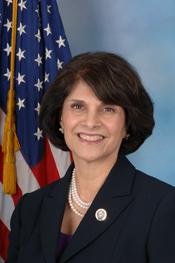
Mr. Chairman, when President Bush's $87 billion supplemental request was presented to the Appropriations Committee, Chairman Young, Chairman Lewis and Chairman Kolbe had corrected a number of serious…
Mr. Chairman, when President Bush's $87 billion supplemental request was presented to the Appropriations Committee, Chairman Young, Chairman Lewis and Chairman Kolbe had corrected a number of serious deficiencies in the President's budget request. For that reason, I reluctantly voted to support the committee bill with the hope that the serious weaknesses that still remained would be strengthened as the bill moved through the process.
Unfortunately, that has not happened. Therefore, I will not support the supplemental bill before us today, because the majority has chosen to prevent the House from addressing the concerns many of my colleagues and I still have on the critical questions American taxpayers are asking. Questions such as: Are we doing all we can for our troops? How are we going to engage the international community for financial support? How are we going to pay for the $87 billion price tag and where is the accountability for this enormous and unprecedented request?
The Obey amendment is the very amendment that best addresses these critical questions. Yet the House will not be allowed to vote on it. And for good reason, because if given the opportunity, the majority knows it would pass. The Obey amendment strengthens the quality of life provisions of our troops, provides accountability to the taxpayers and to Congress, and pays for the $87 billion request instead of adding it to the already enormous debt created by the misguided policies of this Administration--a debt that will be passed on to our children and our children's children.
Let me briefly highlight some of the key provisions of the Obey amendment. First, the Obey amendment addresses quality of life issues for our troops by helping to correct some of the alarming conditions our troops have found themselves. For example, as reported by our colleagues who have visited Iraq, not all our fighting men and women in Iraq have purified drinking water, and many of our troops are getting sick and suffering from dysentery as a result. The Obey amendment, had we been allowed to vote on it, would have provided enough funding for purified drinking water plants so that all our troops have clean water, not just one of nine U.S. bases in Iraq as proposed by the Administration, which would leave 80 percent of the troops unprotected.
The Obey amendment also shows respect and appreciation for the sacrifices made by our troops by providing reservists with pre- deployment medical and dental screening, which they now pay for themselves. The amendment also extends their health care coverage from 60 days to six months following deployments and provides for an adequate supply of prepaid phone cards so all U.S. soldiers can call home. Finally, because troops are currently required to pay their own transportation home once they have reached the U.S., the Obey amendment pays for the R&R transportation costs for troops on a 12-month deployment. Unfortunately, these important quality of life issues for our troops will not be permitted to be a part of the bill before us.
Second, the Obey amendment engages the international community financially by devoting $7 billion to a trust fund at the World Bank. The advantage of the World Bank is that these funds would be conditioned on contributions of at least $3.5 billion from other nations. The accumulated $10.5 billion could then be used as security for an additional $42 billion in World Bank bonds for the reconstruction in Iraq. This would help to eliminate the drain on our own U.S. Treasury by generating the vast majority of the estimated $54 billion needed for Iraq reconstruction. Equally as important is the fact that using the World Bank would eliminate the cronyism and no-bid contracts that have been awarded to Haliburton and Bechtel with funds from the first supplemental bill. As we all know, there is still little disclosure about these no-bid contracts and their resultant long-term costs. Again, the majority has denied us a vote on this important issue.
Finally, Mr. Chairman, the Obey amendment would fully pay for the $87 billion supplemental appropriation by returning the tax rate for individuals with incomes in excess of $350,000 to the level that existed in January 2001. That means that although they will not get the bonus tax cut, the richest one percent will still get the largest tax cut provided to any American. Given the sacrifices that are being made by our servicemen and women and their families, having the richest Americans do their fair share to pay for this appropriation with a smaller tax cut honors the American spirit of ``shared sacrifice.'' Yet again, the majority will prevent this House from voting on the Obey proposal that would pay for this costly appropriation.
And finally, Mr. Chairman, is the issue of accountability, another key issue the House will be unable to adequately address on behalf of the American people, who have a right to know how their tax money is being spent. What makes the lack of transparency and accountability for this $87 billion even more incredible is the fact that the Administration has failed to account for the $63 billion Congress already allocated for the safety of our troops. This is critical especially when we know that the full $63 billion that should have gone for Kevlar flak jacket ``body armor'' and jammers to block the radio signals used to detonate the remote controlled bombs never reached all our troops. Why the current civilian leaders in the Pentagon failed to provide these life-saving supplies to our troops prior to the U.S. invasion of Iraq and even after it became apparent that these shortages were costing American lives must be answered. And it must be answered before we give Secretary Rumsfeld discretion to spend over an estimated $9 billion of taxpayer dollars without being accountable to Congress and the American people for how the money will be spent.
For those who say we cannot afford to wait--that this is an emergency and our troops need these funds right away--I would direct them to the report by the Congressional Research Service on this very question. CRS states that based on the available sums provided through the regular FY '04 Defense Appropriations Bill that military operations can be sustained until early May of next year, and that the billions of dollars of unobligated funds remaining in the last supplemental appropriations also can be used to address the immediate needs of our troops. That means that we can protect our troops and Congress can take the time to get this right and have our questions answered. We do not have to hastily pass $87 billion of taxpayers' dollars in order to meet the Administration's arbitrary deadline.
Since the bill before the House today leaves too many unanswered questions and because the majority has prevented this House from voting on the key policy issues that responsibly should be considered before giving away $87 billion of taxpayers' money, I believe my vote against this appropriation is a responsible vote. Hopefully, it will send a clear message to the Bush Administration that we must pass a bill giving real protection to our troops and improving their quality of life while at the same time requiring a clearly defined plan with transparency and accountability that does not saddle future generations with a huge debt that prevents us from addressing the needs of Americans in our own country.

Mr. Chairman, today Congress again considers the important issue of providing additional funding for military and reconstruction activities in Iraq and Afghanistan. As a member of the House Armed…
Mr. Chairman, today Congress again considers the important issue of providing additional funding for military and reconstruction activities in Iraq and Afghanistan. As a member of the House Armed Service Committee, I appreciate the valiant service of our men and women in uniform, and we must not hesitate to provide them with the appropriate resources to continue their success in the global war on terrorism. However, I have serious concerns with this measure--not because I believe the U.S. should not contribute to rebuilding Afghanistan and Iraq, but because so much of the burden is falling upon American taxpayers. I am frustrated that we are paying for this request through increased deficit spending--thereby shifting the cost to future generations--without considering the options of international loans through the World Bank, as Congressman Obey has recommended, or other revenue sources that would spread the burden to those who can most afford it. Nonetheless, I believe that the United States ultimately has a responsibility to follow through on our international commitments.
While much discussion about the supplemental will focus on the reconstruction request, we must not forget that the majority of its funding goes toward ensuring the safety and success of our troops. For example, the bill will increase the number of protective body suits, flak jackets and armored vehicles available to our military's men and women serving in hostile areas. Just last week, I visited Walter Reed Army Medical Center and spoke with soldiers whose injuries might have been prevented if they had been driving the armored vehicles included in this bill. Additionally, the measure recognizes that the difficult terrain and often inhospitable climate of Iraq have necessitated frequent maintenance of military equipment, and therefore provides funding for parts replacement and much-needed upgrades.
A far more controversial aspect of the bill is the $18.6 billion for reconstruction activities in Iraq and $1.2 billion for Afghanistan. I was concerned with some of the items in the President's original request--including the establishment of postal codes and the purchase of a fleet of pricey garbage trucks--and am pleased that the Appropriations Committee deemed them unworthy of emergency funding. The remaining items, such as utility infrastructure projects, health care improvement and security upgrades, are important building blocks that will help improve the safety of the Iraqi people while allowing them to develop self-sufficiency and independence. While some regions in Iraq are still hostile to U.S. presence, we must build on the progress that we have made in other areas of the nation. Insufficient investment now in Iraq could lead to the spread of religious extremism, an increase in illegal arms trading, and an explosion in anti-American sentiment. To fall short in our reconstruction efforts could have a devastating effect on the stability of the region, causing it to descend into chaos and become a breeding ground for terrorists.
However, I am disappointed that the reconstruction portion of the request was not considered separately from the military component so that Congress could have provided immediate assistance to our troops while having greater opportunity for deliberation and consideration of the longer-term reconstruction proposals and the larger issues of U.S. involvement in Iraq.
Unfortunately, the military improvement and reconstruction efforts come at a high cost, and no one in this chamber should have any question about the impact of this measure on our nation's financial situation. To an already historic deficit projected at $480 billion in fiscal year 2004, we are adding $87 billion. This combination translates into larger interest payments on the national debt and less funding for important domestic priorities such as health care, education, and homeland security. My constituents are fully aware of the impact on our budget; I recently met with a man who has been unemployed for two years who questioned why we are not focusing our spending efforts on job training and other programs to address the nation's unemployment problem. I believe that the costs of this package fall unfairly on American taxpayers, and we must rectify this problem. Consequently, I sent a letter to President Bush asking that he aggressively pursue international cooperation to help defray the costs of reconstruction. Absent a major influx of foreign aid, I requested that he
consider options that would require small sacrifices from those Americans who can most afford them. One possibility would be to reduce a portion of the recent tax cut for the top income tax bracket to generate enough revenue to cover the $87 billion request. This reduction would slightly impact fewer than one million taxpayers, while maintaining the tax cuts for the middle class. Our men and women in uniform have served heroically to safeguard our nation's security, and we must now endure other sacrifices to keep from endangering the economic security of future generations.
What frustrates me most about the current situation is that it was not unforeseen. Many of my colleagues and I cautioned the Bush Administration about the consequences of pursuing military intervention in Iraq without a broad coalition of support. Almost exactly a year ago, I cam to the floor to speak on the resolution authorizing the use of force against Iraq. At that time, I said that I could not vote for it because it lacked a clear mandate that the President seek U.N. Security Council support for military operations in Iraq. I specifically noted that an international coalition would broaden regional support for military intervention and would be essential in promoting a new government in Iraq and undertaking reconstruction efforts. Unfortunately, those words were not heeded, and the onus of reconstruction now falls heavily on our Nation.
The bill before us is a flawed bill, not because of the provisions it contains or the programs that it funds, but because the circumstances that brought us to its consideration could have been different. However, we must not judge this bill based on its history, but on what it can do to shape the future. As Shakespeare wrote, ``What's past is prologue,'' and we cannot allow finger-pointing to obscure the task at hand. Our Nation successfully toppled two oppressive regimes and freed the Afghan and Iraqi people from cruelty, abuse and torture. We bear responsibility in assisting their nations as they transform themselves into successful democratic entities. In so doing, we can also prevent the dire conditions of poverty and political and religious extremism that have led to terrorism and tyrannical regimes throughout the region and the world.
While I will support this measure because our nation must complete what we have started, my vote is by no means an endorsement of the Administration's policies in Iraq, which are severely deficient in accountability, clarity and vision. I know that many of my colleagues share my reservations, and I look forward to the upcoming amendment process as an opportunity to address some of these concerns. I urge the Administration to pay close attention to our debate and recognize that a serious shift in strategy and attitude is needed immediately if we are to avoid having this same discussion again in the near future.

Mr. Chairman, I cannot vote for this supplemental appropriations bill. I voted against the resolution that authorized the President to begin military actions in Iraq at a time and under conditions of…
Mr. Chairman, I cannot vote for this supplemental appropriations bill.
I voted against the resolution that authorized the President to begin military actions in Iraq at a time and under conditions of his own choosing, regardless of the likely costs and sacrifices that would be required. I was concerned that the Bush administration had a plan only for invasion, not for the subsequent ``peace'' and occupation, and was too ready to go it alone.
But Congress unwisely authorized the President to make Iraq the center of our war on terrorism, even without broad-based international support, and did so without a responsible debate that fully weighed the pros and cons of this strategic choice.
In short, I did not think Congress should give the President such a blank check--but we did, and the bills are coming due.
The people of Iraq are freer with Saddam Hussein out of power--at least for now--but our go-it-alone policies have left us with few friends willing to help cover the costs of his removal or Iraq's reconstruction. And with both the stories Iraqi weapons of mass destruction and Saddam himself among the missing, it remains an open question whether the major result of our invasion and occupation of Iraq will be to make America safer or to fuel anti-American sentiment and support for terrorism in the Islamic world. It would be a terrible irony if the way we have waged this war means a critical loss of precious momentum against al-Qaeda and the creation of conditions for more attacks on our country.
So now, President Bush, having gotten us into one hell of a mess, is asking Congress for an emergency appropriation of $87 billion--the largest supplemental appropriations in history.
He is requesting this enormous sum at a time when our economy is weak and when domestic programs are being shortchanged. With 2.7 million jobs lost since 2001, we are on track to see a net loss of jobs over a presidential term for the first time since the Great Depression. New estimates project $5 trillion in Federal deficits over the next decade. And the president wants more tax cuts primarily benefiting the wealthy, despite escalating needs for national defense, homeland security, health care and education.
With the bills coming due, there are several questions to consider. First, should they be paid? I think the answer is yes. I support equipping our troops. And I support the concept of helping Iraq rebuild. I think a stable Iraq is in our national interest. A stable Iraq means a secure Iraq, which leads to a safer environment for our troops and eventually their ticket home.
But I don't support the idea that American taxpayers should pay for the entire $87 billion package.
And that leads me to the second question--who should pay the bills for Iraq? The bill we are voting on today puts the responsibility for rebuilding Iraq squarely on the shoulders of the American people, who didn't ask for this burden. It puts the responsibility on the shoulders of our children, as they will inherit the debt this $87 billion package will incur. And they didn't have a say in selecting the administration that has led us into this quagmire. Still, we ask them to sacrifice.
The Administration says its reconstruction proposal is like the Marshall plan for Europe after World War II. But the Marshall plan was not a $20 billion handout: It provided loans as well as grants. One way to offset reconstruction costs could be to provide loans to Iraq, conditioned on being matched by funds from other donors. Another way is to persuade our allies to forgive part of Iraq's $200 billion debt. The House voted yesterday on a resolution urging Germany, Russia, and France to do just that.
But the best way to offset reconstruction costs is to roll back the President's tax cuts for the wealthiest taxpayers. That's why I would have preferred the Obey substitute. Under this plan, the entire $87 billion bill would be paid for by canceling the tax rate cut for individuals with incomes in the top 1 percent. The substitute would take funds from the reconstruction portion of the bill and add them to programs that help our active and reserve forces and their families with their health care. It would also add funds to repair and replace equipment used in operations and construct water treatment facilities for our troops in Iraq. It would create accountability by requiring a detailed report from the President describing how funds in the previous supplemental have been spent, how funds appropriated in this bill will be spent, and the level and types of funding needed for the future. The substitute would also convert $7 billion of the reconstruction package to loans at a trust fund at the World Bank to leverage additional World Bank loans.
But we weren't allowed to vote on this substitute. Nor were we allowed to change the terms of the debate. For weeks now we have been debating where money should be spent. We should have been debating who should pay--because so long as we refuse to discuss that, we will not be facing all the realities.
We should also have been debating about the priorities on the war on terrorism. I have always believed that Iraq was not the imminent threat this administration made it out to be. While we have been preoccupied with Iraq, we've deprived Afghanistan of the funding it needs--and now that country threatens to revert to the lawless haven for terrorism it was before 9-11. The bill includes some funding for Afghanistan, but not enough.
And we should have been debating more broadly about this country's priorities, period. Sending $87 billion to Iraq undermines our ability to address unmet domestic priorities. The amount the President has requested is more than twice the amount of the Homeland Security Department's entire budget for FY2004--and yet we will still haven't provided our States and local governments with the assistance they need to improve the security of American citizens.
The leadership has refused to allow the House to even consider changing the tax cuts--in the same way that they are insisting on combining the reconstruction costs with the funds necessary to support and supply the troops. This is not the way we should do our work.
So I cannot vote for this bill today.
Rejecting this flawed bill will not immediately cut off funds for our troops. CRS has confirmed that they have enough money to continue operations at least for the rest of this year.
It seems clear that the Senate will pass a different version of this bill. If the House considers a revised version of the bill, I hope it is one I can vote for.
But today I must vote to send the bill back to the President, with this message: I will not vote to spend billions in Iraq unless the administration does what it should already have done--that is, to provide detailed plans for Iraq's reconstruction and security; make concerted efforts to secure increased international participation under a U.N. resolution; demonstrate greater flexibility and openness toward questions of control over reconstruction and democratization; and craft a fiscally responsible plan to provide for the billions of dollars necessary.
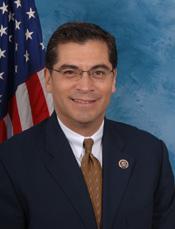
Mr. Chairman, last year, during debate on the resolution granting the President the authorization he sought to commence a war against Iraq, I was concerned that the Administration was ignoring the…
Mr. Chairman, last year, during debate on the resolution granting the President the authorization he sought to commence a war against Iraq, I was concerned that the Administration was ignoring the fact that actions and words have consequences. The consequences of our actions then are exactly what we are trying to address through H.R. 3289 today. We took the burden of a notoriously ill-advised, preemptive war and placed it on the shoulders of our young men and women in the military to carry virtually alone. Now we are asking the American taxpayers to take on the burden almost exclusively of rebuilding an entire nation, while our own nation finds its schools in disrepair, forty-four million Americans without health care, and our homeland security needs under-funded.
If this were a spending package focused on supporting and protecting our troops, this would be an easy vote for me. Nearly 5 months after the Commander-in-Chief declared, ``mission accomplished,'' too many of our troops are dying daily. I do not think these young men and women in the armed forces, National Guard, and Reserves expected to still be there so long after our President's proud and premature declaration of success in Iraq. Our soldiers are sacrificing too much: some their lives, and others their valued role as a parent, breadwinner, or caregiver to their families and their communities.
I would support whatever it takes to bring these young men and women home as quickly as possible, and to ensure their success and safety in their mission while they are away.
But even the portion of the bill that would support our military's ``post-war'' efforts in Iraq is deficient. We know from reports that weapons caches are poorly secured and that our troops are lacking absolutely vital equipment such as body armor. The bill also would leave 80 percent of our troops in Iraq without the ability to ensure a clean water supply for themselves. We should also be paying for our soldiers' rare calls home and for the full cost of traveling home while on leave. Equally disturbing are reports that our troops in Iraq are fatigued and suffering from low morale, the direct consequence of the Administration's failure to secure extensive international cooperation and compose a comprehensive exist strategy.
A significant portion of this bill's $87 billion is for rebuilding Iraq, and like it or not we now have a moral responsibility to carry much of this burden. When scrutinized in the light of day, however, many of the items for which the Administration is asking us to sign away precious tax dollars simply do not make sense. I was appalled by findings reported in the New York times that Halliburton has been exploiting the American taxpayer with a 140 percent mark-up for a gallon of gas in Iraq. Despite our best efforts today to include some Congressional oversight to the contracting process, I am afraid that the Administration and its representatives in Iraq will continue to oppose sensible oversight even while they have compiled a very poor track record of ensuring that the largesse of the American taxpayer will not further be abused. As an example of what is already occurring on the ground, I would reiterate what the Democratic members of the Appropriations Committee reported about the reconstruction of a cement factory in Northern Iraq. In that instance, after the American contractor estimated that it would take $15 million to upgrade the factory, local Iraqis got the job done for $80,000. Something is wrong here, and I do not believe we have done enough to make sure the Administration does not continue to make these mistakes.
I understand the overwhelming pressure to rebuild as quickly as possible, but we cannot afford to do this at any cost and without greater discipline.
The American people know that this will not be the only request on their tax dollars--some have characterized the President's $87 billion request as a mere down-payment in a rebuilding effort that I expect to be long and very expensive. I am heartened that our international allies are starting to offer help, but these agreements should have been taken care of long ago through a collaborative international partnership. Again, the consequence of acting alone and without credible evidence has come back to haunt not just the President, but America's soldiers and taxpayers.
Having said all of this, the most troubling aspect of this bill before us today is that it is not paid for at all; the full amount is added to this year's already alarming $500 billion deficit. Why? We have been told that the funds are simply not available. Why not? In large part it is because of the cost of the excessive tax cuts benefiting the wealthiest among us that this Administration decided were its first priority. The 2001 repeal of the estate tax alone--which benefits 30,000 of America's wealthiest individuals and only them, at the expense of more than 140,000,000 other taxpayers--costs more in two years than this entire appropriations package.
Mr. Chairman, this is a policy with no fiscal discipline that stands in stark contrast to the discipline and sacrifices our young men and women are demonstrating every day in Iraq and Afghanistan.
I sincerely wish I could have voted for the amendment offered by the gentleman from Wisconsin (Mr. Obey) that would have met the burden that we have assumed in Iraq in a responsible way. I do not understand why the leadership denied us the ability to vote on that
amendment, which would have reset our priorities in a very sensible manner, asking Americans to heed the call of shared sacrifice and asking the wealthiest 1 percent of Americans to give up just a little bit of their tax cut to help bring our troops home and rebuild Iraq.
What the Administration has asked us to do here today--approve deficit spending in the amount of $87 billion--will place the cost of rebuilding Iraq and Afghanistan squarely on the shoulders of our children and grandchildren and those of our soldiers, too many of whom have already made the ultimate sacrifice. We should be more responsible than that. I will vote against H.R. 3289.
Mr. Chairman, I will vote for the legislation to approve the administration's request for $87 billion in additional funding for operations in Iraq. We must provide our men and women in uniform in…
Mr. Chairman, I will vote for the legislation to approve the administration's request for $87 billion in additional funding for operations in Iraq. We must provide our men and women in uniform in Iraq with the resources they need to complete their mission, as safely and securely as possible. They have performed brilliantly-- protecting civilians, maintaining order and promoting democracy while facing the threat of attacks each and every day. We are proud of them and we need to continue supporting them. I will vote to provide whatever resources our troops need to complete their mission.
Unfortunately, the administration and leadership have brought this request before us under a process which forces us to approve $20 billion in spending for an ill-advised plan for Iraq reconstruction. Many of the items in the reconstruction are more appropriately the responsibility of the Iraqi provisional government or have extremely inflated costs. I commend the work of Chairman Young, Ranking Member Obey and the rest of the Appropriations Committee to scrub the administration's request and remove many questionable or low-priority items.
Even with these improvements, many questions remain about how these funds will be used. Our constituents deserve to know that their tax dollars are being used in the most effective manner possible. The missteps of the past must not be compounded by wasteful spending now. The President must be willing to report to Congress--and the American people--on how the money is spent. That is what this amendment would require. A detailed accounting is needed.
The American people also deserve to know what our plan is for successfully completing our mission in Iraq to improve the security and political situation and reducing our presence. While the battle to oust Saddam Hussein was well-planned and well-executed, we did not plan well for winning the peace and rebuilding the nation of Iraq. Our troops have been taking almost all the risks, and American taxpayers have been paying all the bills.
Our ``go-it-alone'' strategy must end. This amendment will require the President to present a detailed plan for improving the situation in postwar Iraq and report on our progress in achieving the goals of improving the political and security conditions in Iraq.
Congress and the American public need to know the impact our operations in Iraq will have on a federal budget that is nearly a half trillion dollars in deficit already. It is now abundantly clear that the costs of operations in Iraq will be much greater than was anticipated when the budget was approved just six months ago. Already, we have spent $63 billion in Iraq this year, and we are being asked to provide an additional $87 billion in this bill.
That would bring the total spending on operations in Iraq to $150 billion in the year 2003--a staggering figure for one year--with more to come. There is no question that we will be in Iraq for a long time, at great expense to the American taxpayers.
We have a responsibility to reevaluate our budgetary priorities to reflect that reality so that these additional expenses are not simply added to the national debt. It would be irresponsible to completely ignore those costs. We need to budget honestly for the costs of continued operations in Iraq so that Congress can consider the tradeoffs necessary to provide the needed funding without adding to the national debt. Paying for our operations in Iraq will require sacrifices. It would be extremely irresponsible for us to refuse to make any sacrifices ourselves and expect our troops to also pay the financial debts once they return home. The cause of freedom and justice is great, but it demands great commitment and sacrifice by all of us who enjoy its benefits, not simply by the men and women in uniform.
Like all of my colleagues, I pray for the successful completion of our mission in Iraq and the safe return of our men and women in uniform. This amendment will help ensure that we have a plan to accomplish this goal as quickly as possible.
There being no further amendments in order, pursuant to House Resolution 396, the Committee rises.
Accordingly, the Committee rose; and the Speaker pro tempore (Mr. Hastings of Washington) having assumed the chair, Mr. LaTourette, Chairman of the Committee of the Whole House on the State of the Union, reported that that Committee, having had under consideration the bill (H.R. 3289) making emergency supplemental appropriations for defense and for the reconstruction of Iraq and Afghanistan for the fiscal year ending September 30, 2004, and for other purposes, pursuant to House Resolution 396, he reported the bill back to the House with sundry amendments adopted by the Committee of the Whole.
Under the rule, the previous question is ordered.
Is a separate vote demanded on any amendment? If not, the Chair will put them en gros.
The amendments were agreed to.
Mr. Speaker, $87 billion is a lot of money to add to our already exploding debt. There is no question we will be in Iraq for a long time at great additional expense to American taxpayers. Many of us are willing to make tough choices to pay for these costs. The cost of freedom and justice is great, but it demands great commitment and sacrifice by all of us who enjoy its benefits. Since the leadership of this body will not even allow us to consider options to pay for these costs, the least we can do is require a portion of the spending on rebuilding Iraq to be repaid by those who will benefit most from that spending. Every dime we spend in Iraq will come from borrowed money added to our national debt. It is extremely irresponsible for us to expect the young men and women who are making great sacrifices in Iraq today to also bear the burden of the financial debts for rebuilding Iraq once they return home.
I urge a vote for this motion to recommit.

Mr. Chairman, the most solemn and weighty power conferred by our Constitution upon the Congress is the power to declare war and the power of the purse. Last year, Congress abdicated its…
Mr. Chairman, the most solemn and weighty power conferred by our Constitution upon the Congress is the power to declare war and the power of the purse.
Last year, Congress abdicated its constitutional responsibility by approving a deeply-flawed resolution that gave the President the power to initiate a preemptive war against Iraq, which, in my judgment, expressed at that time, did not pose a clear and present danger to the United States. I opposed that resolution in the strong belief that Congress should have required the President to seek a formal declaration of war because the President had failed to demonstrate a link between Iraq and the al Qaeda terrorist attacks of September 11, failure to prove the presence in Iraq of chemical, biological weapons of mass destruction, a nuclear capability, or the capacity to deliver such weapons against the United States.
After September 11, our Nation was united in common purpose to combat terrorism, and the United States enjoyed near universal support among the community of nations for our actions to destroy the al Qaeda terrorist bases and their Taliban protectors in Afghanistan. While this Administration has not yet been able to achieve many of the goals for Afghanistan, I support the funding in this legislation for continued support to complete our mission there.
Our military campaign against al Qaeda and the Taliban enjoyed strong bipartisan support, and Congress moved quickly to appropriate the necessary funds to carry out this important mission. In the aftermath of the U.S. lightening military strike that toppled the Taliban in Afghanistan, the President maneuvered fervently to muster support at home and abroad for a preemptive war against Iraq. Even though these efforts failed to mobilize the support of many of our key allies, the Administration launched this unilateral war against Iraq, with the result that, we squandered the moral high ground and the support of the international community.
The Administration finds itself in this uncomfortable position, and also has retreated from presidential candidate Bush's pledge not to engage the United States in nation-building during his presidency. Now staring in the face of the reality of a long-term, debilitating military occupation of Iraq, the President has asked Congress to approve a second supplemental payment for the ongoing military operations and reconstruction efforts in Iraq, without providing to Congress and the American people a full accounting of how the previous billions of taxpayer dollars were used, nor a detailed plan for how this money will be utilized. On that point, Congress must assert its constitutional responsibilities to ensure that this spending request is consistent with our national and international budget priorities. Because of the President's misguided economic and foreign policies, this $87 billion request represents money that we will have to borrow, which will increase the national debt, and this spending also represents dollars that could have been utilized to meet urgent needs at home.
It is very troubling that this Administration has expended considerable time and energy
to advance a divisive agenda at home and abroad that has not improved our national security. Recently, Congress approved the first appropriations bill for the Department of Homeland Security, which provides $30 billion for that agency to fulfill its critical responsibilities. The money in this supplemental package that we will spend in Iraq over the next several months is roughly equal to funding the Office of Homeland Security for three years--which raises the question, which is the more appropriate use of $87 billion to promote our national security.
The policy option the President and his team have set before the Congress and the American people will add $87 billion to our already exploding national debt while refusing to ask the wealthiest of the wealthy to forego a portion of their tax breaks in order to help finance this war. At a time when our brave men and women in the armed forces have made significant sacrifices for their nation, and some have made the ultimate sacrifice, it is unthinkable that the President has not asked wealthy Americans to make a modest sacrifice to pay for this war. It is further shameful that the Administration has failed to deliver on its pledge to restore Iraq's oil exports to pay for its own reconstruction.
Because the President failed to win broad international support for this war, the U.S. taxpayer must shoulder the costs of this ill-advised military campaign. It is quite clear, as well, that this $87 billion spending package will not be the final payment, as Congress will be asked to approve billions of additional dollars for Iraq, for many years to come, if this Administration remains in office and on its chosen course.
This supplemental request for Iraq, like all spending bills, reflects our national priorities. In the current budget environment, we must be ever mindful that every dollar that we borrow and spend in Iraq is a dollar that is added to the national debt and denies funds that we need to educate our children, heal the sick, and improve our infrastructure in this country. With this spending request, the President has made clear that he supports massive deficit-spending that will burden working families in this country, and opposes shard sacrifice for the rich or international burden sharing.
In short, this $87 billion spending bill is fiscally irresponsible, fundamentally unfair, and ignores our urgent domestic needs to finance a failed foreign policy. Congress has already provided a blank check for the President to initiate war; Congress must now reassert its constitutional responsibility and deny President Bush a blank check to continue this misguided mission. I cannot vote for this policy of ever- spiraling failure.
Show 11 more

Mr. Speaker, I thank our distinguished ranking member of the Committee on Rules for yielding me time and the fight he and the other members of the Committee on Rules are making in that venue for…
Mr. Speaker, I thank our distinguished ranking member of the Committee on Rules for yielding me time and the fight he and the other members of the Committee on Rules are making in that venue for openness on the floor of this House.
Mr. Speaker, this is a solemn and serious matter that we have before the House today. And the question is what is the best way for us to provide for our troops, help with the reconstruction in Iraq, and accomplish our mission so that we can bring our troops home safely and soon. We know that it is not about cutting and running. We take our responsibilities seriously that we have inherited in Iraq, and it is not about cutting and running. It is about accomplishing our mission. But cutting and running is what is happening here in this House of Representatives.
The debate on these issues relating to the $87 billion supplemental is just too painful for the Republicans to hear. The fact that there was no plan for postwar Iraq is just too painful for them to listen to.
The amendments that have been thoughtfully considered and presented here by our colleagues on both sides of the aisle point out the shortcomings of this supplemental to begin with. The gentleman from Minnesota (Mr. Ramstad) had an excellent amendment earlier talking about paying for transportation for our men and women in uniform, that we would pay for that. Why would that not have been in the President's proposal to begin with? Why is it not the law now? The list goes on and on.
We said it over and over again that, without the intervention of the gentleman from Pennsylvania (Mr. Murtha) and the cooperation of the gentleman from California (Mr. Lewis), our troops would still not have funding for Kevlar in their jackets, jammers to stop the detonation of explosive devices, spare parts for their equipment, and armor for their Humvees. They still do not have it. It will hopefully be in this package. But it was not there in the summer after we gave the administration $63 billion, and it was not in the President's proposal. And that is why these amendments are important, but they again show the concern for the troops was much less than it should be on the part of the administration.
So we come to the floor with this very important matter, a matter relating to war, how we support our troops, how we reconstruct and bring stability to Iraq so that we can accomplish our mission. And we are told that we have an open rule, that the discussion will consider what people propose. And immediately the rule becomes restrictive in terms of what it will allow to be brought to the floor for a vote.
It is beneath the dignity of this House for us to have a debate on the war and not allow the proposal of the Democrats, the Democratic substitute,
to come to this floor. And the main reason it could not come to this floor is because it paid for, it paid for what we would do for the troops and the reconstruction of Iraq. So it is against the rules here to be fiscally responsible to pay for the proposals that we are putting forth.
The gentleman from Florida (Mr. Hastings) put forth some saying that he heard in the Army. I cannot repeat it and I would not repeat it if I could, but I want to go to the Marines. The Marines have an expression, ``Proper Preparation Prevents Poor Performance.''
Our men and women were properly prepared and they performed their duties excellently, but there was no planning for after the military action, which still continues but which the President declared over May 1. There is no plan. There has been no plan. And to quote General Zinni, ``The level of sacrifice has not been met by the level of planning.''
How can we ask our troops to make those sacrifices when we are not really willing to have a plan? And if there was a plan, it is a failure. And if there is a plan, nobody knows what it is. And if there is a plan, it did not take into consideration the risks in postwar Iraq and, therefore, properly protect our troops. It misunderstood the conditions in Iraq and the challenges that we would face, again, endangering our troops. And it misrepresented what the cost would be to the American people.
Again, we have heard Secretary Wolfowitz's statement about how quickly Iraq would be able to provide for its own reconstruction. So that is why there is some level of disapproval of what is happening here. It is an open rule except we will restrict what we can hear and besides, we are sick and tired of hearing what is wrong with this policy.
That is cutting and running. We are opposed to it in anything we undertake.
We are professional people. We have the privilege of representing the American people. They have serious questions about this, and we are cutting and running and stifling debate.
So I hope that the opportunity that is presented under this rule, under the consideration of the previous question, will enable this House to vote on what happened in the Senate in a bipartisan way last night, which basically said that the American people should not be taking all the risks as far as their troops are concerned and paying all the bills. And this amendment specifically addresses the bills. It says if those oil fields get gushing, this is what it means, if these oil fields get gushing and Iraq amasses resources, then and only then would they pay back the loan. If they cannot, there is consideration for that. It could not be more fair. It could not be more reasonable. It should be voted upon by this body. But it is really unfortunate because time is what we were sent here to use for the American people; and if we cut and run, if we cut and run on a matter of this solemnity and this seriousness to the American people, shame on us.
I urge our colleagues to support the motion that the gentleman from Texas (Mr. Frost) will be making in regard to the previous question.

Mr. Chairman, it is with a heavy heart that I vote for this bill. While I am deeply troubled at the prospect of adding even more to our rapidly spiraling debt, poor planning and severe mismanagement…
Mr. Chairman, it is with a heavy heart that I vote for this bill. While I am deeply troubled at the prospect of adding even more to our rapidly spiraling debt, poor planning and severe mismanagement by the White House have left 113,000 American troops in a deadly situation in Iraq without the training or equipment they need.
We cannot make this bill a retroactive referendum on all the mistakes President Bush has made about this war. Nearly $65 billion in this bill is for our troops who are still in Iraq and Afghanistan, and they desperately need it. When I went to Iraq last month, I learned that there are literally thousands of American troops there who lack basic life-saving equipment like bullet-proof vests. How can we tell them their lives are not worth the price tag?
If we don't send the money our troops need, we leave them stranded in an incredibly dangerous environment. If we pull out our troops now, we will leave innocent Iraqis in a security and economic situation worse than before the war began and our own country more vulnerable.
I attempted to amend this bill to hold the administration more accountable for the $20 billion they are requesting for reconstruction. I believe that part, but not all, of the responsibility for reconstructing Iraq lies with the United States, and I call on the administration to increase its efforts to seek international support to pay for the reconstruction of Iraq. Until it is stabilized and self- governing, Iraq will remain a potential breeding ground for terrorism in a volatile region.
Mr. Chairman, I urge you to put good public policy over politics and ensure bills as distasteful as these cease to be the norm in the House of Representatives.
Mr. CAPUANO. Mr. Chairman, I rise today in opposition to H.R. 3289, President Bush's $87 billion funding request for Iraq. This supplemental appropriations bill is not about showing support for our troops. We are all united behind their courageous efforts. This is about where the United States goes from here.
I think most Americans realized that our commitment overseas would be lengthy and it would be costly. However, the Administration has been unwilling or unable to state its plans for the creation of stable representative governments, able to police and defend themselves, in Iraq or in Afghanistan. We have absolutely no idea how long troops will be stationed in Iraq and Afghanistan and we have no idea how much money will be required to complete this mission. When pressed by the Appropriations Committee for answers on these points, the Administration declined to give any answers. That is not good enough. It is time for the President to provide us all with answers to those questions.
I understand that the President cannot set out a precise timetable for troop withdrawal and he may not be able to provide a guaranteed final budget figure. I am not expecting that level of detail. However, I do expect, and this great country deserves, basic information about the future of this mission. That information is not forthcoming, and yet we are being asked to provide an additional $87 billion for an effort that has already cost billions of dollars and hundreds of American lives--without an end in sight to costing more of both.
I opposed the initial decision to invade Iraq because I did not believe that we had given the international inspectors sufficient time to confirm the President's allegations. Furthermore, I do not agree that the United States can or should impose democracy by force. I believe that my vote was correct at the time and every passing day confirms my conviction that I judged rightly. I did not approve of the initial invasion, and until I hear a responsible and realistic plan for dealing with the consequences of the invasion, I cannot in good conscience vote to approve these funds.
I fear that we are lacking more than an exit strategy. We need a foreign policy. This Administration has failed to meet the challenges of the post Cold War, post 9/11 world. Today, I insist on a plan for Iraq. Further, I would respectfully ask for clarification on our plans relative to other countries--notably North Korea, Iran and Syria. I understand that these countries differ from Iraq, and from each other, in their domestic politics and geopolitical importance. Nonetheless, the President has singled out these countries as he did Iraq. How does he plan on addressing his stated concerns relative to each of these? Does he plan another military campaign? Will he rely on diplomacy? Will he engage the international community?
Finally, I would certainly approve the replacement of armaments used in Iraq--we need a well-equipped military. I would approve funds to rebuild Iraq--we have an obligation to leave that country on its feet when we depart and the world expects no less. I would approve funding to increase the size of our military so that Congress would not have to resort to the use of private security to protect our military bases as this proposal allows. If necessary, I would approve funds to provide basic necessities for our troops--such as Kevlar, adequately armored vehicles, necessary communications equipment and comfortable living accommodations. However, I believe that these latter items should have been funded in the annual Defense appropriation; they are foreseeable and should have been available prior to engagement.
I have supported similar appropriations requests in the past, for Iraq and for Afghanistan. I would support similar funding if it were accompanied by a plausible plan for the phased withdrawal of our troops from Iraq. However, absent such information, I cannot, and will not, support this request for funding at this time.

Mr. Chairman, I cannot support a bailout for poor preparation and bad foreign policy. The President squandered the $79 billion that Congress appropriated in April. He is now requesting an $87 billion…
Mr. Chairman, I cannot support a bailout for poor preparation and bad foreign policy. The President squandered the $79 billion that Congress appropriated in April. He is now requesting an $87 billion blank check, and I will not vote to sign it.
This year, America will run the largest deficit in our history--more than $475 billion, excluding the President's request for Iraq. The $87 billion would be better used to create jobs and improve health care and education for Americans.
The substitute to the President's request offered by Congressman David Obey in the Appropriations Committee is a far better alternative. The Obey substitute insists on accountability and transparency for the expenditure of reconstruction dollars and encourages support from other nations thereby reducing the burden on American taxpayers.
Unfortunately, the Obey substitute was rejected in the Appropriations Committee and Republican leadership has blocked it from consideration by the full House. But the Obey substitute offered the best plan for fixing the chaos in post-war Iraq.
I voted against the original bill authorizing the President to use force against Iraq, but once our troops were put in harms way I, like all members of Congress, have done everything necessary to support our troops. Despite many reservations about going to war, my colleagues and I overwhelmingly supported the President's $79 billion supplemental to cover the cost of deploying and operating troops in Iraq. At that time, it was the largest supplemental bill ever considered by Congress.
These funds were to cover our troops' basic necessities such as water, body armor and the correct equipment needed for a desert conflict. I thought the necessary funds had been provided to achieve victory and bring our troops home swiftly and safely, and I assumed the President had a plan.
Yet, six months later, 80 percent of U.S. troops have been drinking putrid water and whole units have come down with dysentery. As many as 40,000 troops do not have the standard issue body armor and, in fact, are using outdated body armor from the Vietnam era.
Our Guard and Reserve Forces are caught in a hidden draft. They are being required to serve far longer in Iraq than they had been told because the troop rotation schedule is in chaos.
Sadly, this could have been avoided because the war on Iraq was a war of choice, not of necessity.
The administration's two primary reasons for the war--Saddam Hussein's alleged weapons of mass destruction and his alleged links to Al-Qaeda--were both intentionally exaggerated to build support for that war. No weapons of mass destruction have been found and the President has now downplayed the alleged link between Saddam Hussein and Al- Qaeda.
If the aftermath of the war were going well, Americans would probably overlook the deliberately misrepresented intelligence on Iraq's weapons of mass destruction and its ties to Al-Qaeda. Now, as Americans are killed almost every day and it is clear that winning the peace will be a long, difficult and expensive process, people are questioning how we got to where we are today.
The swell of opposition to the President's request should surprise no one.
The American people are learning that the President's insistence on a unilateral war means that we will pay for a unilateral peace.
Even our closest allies are reluctant to pay for the aftermath of our war. International donors scheduled to meet in Madrid next month are expected to contribute no more than $2 billion to the reconstruction effort, while most recent estimates to rebuild Iraq over the next four years call for $55 billion above the President's current request.
By channeling $7 billion of reconstruction funds through the World Bank, the Obey substitute would reduce the burden on American taxpayers. This is an effective way to prevent cronyism in reconstruction contracts and to encourage international donors to contribute to the redevelopment of Iraq. The World Bank is much more likely to rely on indigenous workers and companies to carry out construction projects than is an organization that is tied to political appointees in the White House.
The President's request allows for sole-source, no bid contracts to be awarded without the notification of Congress. This is a thinly disguised appropriation for Halliburton, Bechtel and the President's other fundraisers. The Obey substitute includes mechanisms that limit these contracts and directs funding to cost-effective projects, rather than the large, capital-intensive, expensive contracts the President favors.
Mr. Chairman, the Obey substitute is an excellent proposal that will provide for much more effective reconstruction in Iraq.
The Obey substitute also provides the body armor, adequate purified drinking water, portable jammers and 20,000 additional troops to relive Guard and Reserve Forces. It allows our troops to finish their jobs and return home quickly and safely. It prepares for the return of our Guard and Reserve Forces by extending their healthcare coverage from 60 days to 6 months. The Obey substitute will force the President to fess up to the actual long-term costs of our military action, relieve pressure on the Guard and Reserve over time and make our troops safer.
Mr. Chairman, I opposed the President's war on Iraq, but I support the Obey substitute amendment. It makes better use of our limited resources to fix a horrible and dangerous situation.
Mr. Chairman, I rise to oppose the FY '04 Supplemental bill. In April 2003, President Bush asked the American people to provide $77.9 billion for military and reconstruction spending in Iraq. At the…
Mr. Chairman, I rise to oppose the FY '04 Supplemental bill.
In April 2003, President Bush asked the American people to provide $77.9 billion for military and reconstruction spending in Iraq. At the time, his administration repeatedly assured Congress that they would not need additional money for Iraq. We now see that this was either poor planning or a calculated and gross underestimation of the cost. Today, congress is being asked to vote on $87 billion in additional spending for our military actions in Iraq and the reconstruction of both Iraq and Afghanistan for 2004.
Congress needs to start acting in a fiscally responsible manner. In this bill's current form there are no corresponding spending cuts or revenue generators to pay for the nearly $87 billion cost. President Bush is asking for $20.3 billion in reconstruction funds with no strings attached. This proposal has no accountability and, equally as disturbing, there has been no effort made to provide an offset to cover the cost. As a result, the proposal would add significantly to the already massive $500 billion federal budget deficit.
I have attempted to inject some fiscal responsibility into this process by offering an amendment that would eliminate the Bush tax giveaway for taxpayers in the top federal income bracket. My proposal would only impact the top 0.7 percent of all taxpayers with annual incomes of more than $312,000 and would restore approximately $90 billion to the federal budget. Unfortunately my amendment was not allowed and we are left with a bill that we are utterly unable to afford.
We have an obligation to protect our troops in Iraq and to help rebuild Iraq and Afghanistan so that they are no longer havens for the tyranny and misery that spawn violence. This must be done responsibly and within the context of a clear plan for the U.S. to accomplish its goals and turn over both the governance and security of Iraq to the Iraqi people.
Unfortunately, the bill before us today encapsulates all of the problems with the Administration's Iraq policy. President Bush has not explained how the $87 billion in spending helps us meet our goals of protecting our troops and restoring order in Iraq. The President has failed to make clear how many more American tax dollars will be spent on Iraq or the duration of our occupation. The President has no plan for how to pay for the $87 billion without adding dramatically to an already record federal deficit.
The spending for our troops is vital. However, the President's plan needs to include guarantees that the $67 billion in military spending will go to getting critical supplies to our troops in a timely fashion. This is particularly important in the wake of a report this week that more than 40,000 G.I.s in Iraq still do not have the protective body armor for their Kevlar vests that stops rounds from AK-47s, the assault weapon favored by Iraqi guerrillas.
The most troubling portion of this proposal is the $20 billion allocated for the rebuilding of Iraq. To this point, many of the reconstruction contracts have been awarded without competition to companies with close ties to the White House. These no-bid contracts preclude the accountability that is critical to ensuring that our tax dollars are not wasted and that every contract is implemented to meet the goal of a quick restoration of order and self-governance in Iraq.
The question of cost points to the other major concern I have with this request. The President did not provide any way for us to pay for it. Instead of cutting spending or finding another revenue source, he is borrowing on our children's future by adding to the federal deficit. This is the continuation of a reckless economic policy that has already turned a budget surplus in 2000 into a projected $500 billion deficit for 2004.
There is also the question of whether this plan makes our nation more secure. Last year, I voted against the Iraqi war resolution because I believed that there was no clear evidence showing Iraq was an imminent threat or that there were ties between Saddam Hussein and al Qaeda. I was extremely concerned that the Bush Administration's unilateralist approach would seriously harm our international standing, our ability to wage the War on Terror and our ability to rebuild Iraq after the fall of Saddam Hussein.
These concerns have been borne out. Weapons of mass destruction have yet to be found and the Bush Administration has recently admitted that there is very little evidence to tie Iraq to al Qaeda. There is a growing consensus that the Bush Administration did not have the solid evidence they once claimed to have in order to justify invading Iraq.
Congress has an obligation to pass a bill that contains a clear and coherent plan for our troops and the reconstruction of Iraq and does not balloon the deficit. This proposal does not meet these standards.
I urge a no vote on the Supplemental.

Mr. Chairman, I come before you today to urge your continued support for the War on Terror. While there has been spirited debate in this Chamber during the past two days, the stakes are too high for…
Mr. Chairman, I come before you today to urge your continued support for the War on Terror. While there has been spirited debate in this Chamber during the past two days, the stakes are too high for us not to meet the obligations and responsibilities at hand. Make no mistake about it: by passing this War on Terror Bill, we are investing in the future safety and security of the American people.
None of us will ever forget September 11th, 2001, when terrorists attacked our freedom, our peacefulness, our American way of life. I still remember looking out my office window and seeing the smoke from the Pentagon attack rolling across the Washington Mall, at that moment, I knew this Congress--Republicans and Democrats--would stand shoulder- to-shoulder with our President to say ``Never Again.'' The very next day, this House moved swiftly.
We approved emergency funding to rebuild what the terrorists destroyed, and to buttress our homeland security and our intelligence efforts. We enacted new, stringent laws giving our judicial system and law enforcement the tools necessary to fight this new war on terrorism. We embarked on the most ambitious reorganization of our federal government in more than 50 years, establishing a Department of Homeland Security, whose core mission is to prevent terrorist attacks against America.
Now, we must approach the reconstruction of Iraq and Afghanistan with the same vigor with which we undertook the defense of our homeland. The pending legislation does just that. It is estimated that the Terrorists of 9/11 spent less than $500,000 to undertake an operation whose economic toll far exceeds $150 Billion. There is no question as to the significant economic consequences that terrorism holds for the global economy. Yet, there are those who question the need for this War on Terror Bill. Worse yet, they also question our overall mission--
Why are we in Iraq?
Why are we in Afghanistan?
Why spend this money in this way?
Let me be clear; to protect America: Terrorism cannot stand; Terrorism must be rooted out and destroyed.
My colleagues, we have taken the battle to the enemy. Iraq and Afghanistan are now the central fronts in the War on Terror. Our brave men and women in uniform are stamping out terrorists in Baghdad, Iraq and Kandahar, Afghanistan before these methodical killers strike Brooklyn, New York, or Batavia, Illinois.
And while much remains to be achieved, the Commander in Chief and is National Security Team are having remarkable success. We liberated the people of Afghanistan from the Taliban's cruel grip; We rid Iraq of the evil of Saddam Hussein; We have taken into custody hundreds of al-Qaida operatives and benefactors, reducing the likelihood of future attacks on all countries. And, we have begun to sever the financial ties that bank roll these evil acts. Terrorist training camps in Iraq and Afghanistan have been uncovered and destroyed; Forty-three of the fifty-five most wanted former Iraqi leaders are dead or in custody; and, thousands of other Baath Party loyalists and terrorists have met their ultimate fate.
This is an investment in our future. The President is calling on us to provide our courageous troops the tools they need to fight terrorism abroad, finish the job, and return home safely. Our President needs our continued support to help the emerging, democratic government take hold in Baghdad and Kabul. This cause is worthy of our assistance. While I have heard some say we should use this money to rebuild our roads, bridges, and schools here at home, I must remind my colleagues that peace and stability in Iraq and Afghanistan is very much an investment in America's safety and security--both now and in the future.
We all know that until democracy firmly takes root in these two nations, Americans, joined by troops from Poland, Australia, Britain, and thirty allied countries will remain on the ground, risking their lives on our behalf. To date, some sixty nations from around the globe have already pledged their support. Why? Because they understand keenly that what happens in Iraq and Afghanistan affects the Persian Gulf and beyond.
Running water, functioning electricity, an impartial judicial system, and properly trained law enforcement are basic, and essential elements of a government infrastructure that must be in place before we should leave. When it comes to our commitment of resources, let's do it right from the outset so our American military can finish these missions and return home as soon as possible--safe and sound.
Let me be clear: this is much more than a vote on dollars and cents; this is a vote to protect Americans from future attacks both at home and abroad.
We pledged on September 11th, 2001, we would ``Never Again'' fail to do what's necessary. Let us not fail today.
Vote ``yes'' on this War on Terror Spending Bill.

Mr. Chairman, the Congress has a responsibility to work with the President to protect the national security of our nation. When our soldiers are sent in to war, it is the Congress' responsibility to…
Mr. Chairman, the Congress has a responsibility to work with the President to protect the national security of our nation. When our soldiers are sent in to war, it is the Congress' responsibility to make sure that all resources necessary are provided to carry out their missions. Although I disagreed with President Bush's request for unrestricted use of force against Iraq, such a resolution was approved by Congress. It was clear to me from the outset that although we would win the war, the Administration did not have an adequate plan to win the peace; that is, to rebuild Iraq, and to establish democratic institutions in that abused country. To succeed after the war it was critical to engage the international community. Yet the Administration refused to seek international support early or to share responsibility with the international community for the governing of Iraq.
Because of these failures, Americans have paid a heavy price. It is primarily American troops stationed in Iraq that face continuing attacks. It is our taxpayers that are being asked to almost exclusively pay the cost to rebuild Iraq.
I stand behind our brave men and women who have performed admirably in Iraq and Afghanistan. They have made tremendous sacrifices on behalf of their country and have served longer deployments than expected. We should provide our troops with all the resources necessary to carry out their mission. Therefore it is necessary to support the supplemental appropriations bill. Most of the funds in this bill will go directly to support our troops in Iraq and Afghanistan. The funding of the reconstruction efforts are also fundamental to the successful completion of our missions in Iraq and Afghanistan.
However, I believe that the Administration's request of $18 billion for reconstruction requires a higher level of scrutiny. There were a series of amendments considered by Congress during the consideration of the supplemental appropriations bill that I supported. These amendments included:
(1) An amendment to transfer some of the Iraqi reconstruction funds to repair and replace military equipment used in current operations, as well as improve the quality of life for the families of active and reserve forces. The amendment failed by a vote of 209 to 216.
(2) An amendment which would have converted half of the Iraqi reconstruction grants into loans. This amendment was similar to an amendment that was adopted by the Senate yesterday. Although the amendment failed in the House by a vote of 200 to 226, I hope in conference the House will agree with the Senate action.
(3) An amendment which I authored with Congressman Kind of Wisconsin, which would have reduced the reconstruction funds to Iraq by 50 percent. I sponsored that amendment because I thought it was important for the administration to obtain more help from the international community, use loans rather than grants, provide more details to Congress and the American people on the use of these funds, have a plan to transfer authority to Iraqis, and have a plan to bring home our troops stationed in Iraq within a reasonable period of time. The Administration could then seek Congressional approval of additional resources if needed once these conditions have been met. Unfortunately, the amendment failed by a vote of 156 to 267.
The Administration has relied almost exclusively on U.S. troops to take most of the risks in Iraq. The Administration's ``go-it-alone'' strategy must end. I am pleased that on Thursday the United Nations unanimously adopted a resolution, initiated by the Secretary of State Colin Powell, which will strengthen the role of the United Nations and the international community in the reconstruction of Iraq. Iraq must make a transition to a nation that adopts a constitution, holds elections, and creates a democratic government that respects minority rights and operates under the rule of law. The U.S. must show enough flexibility in working with our allies to effectively implement this U.N. resolution, so that other countries will pledge both troops and funds to alleviate the burden on our American soldiers and taxpayers. Ultimately, the quickest way to bring our troops back home is to reach out more aggressively to the international community, establish order and security in Iraq, and transfer authority to the Iraqis.

Mr. Speaker, I rise in strong opposition to this rule. Once again, the Republican leadership that runs this House is attempting to stifle debate. Once again, they are trying to rush important…
Mr. Speaker, I rise in strong opposition to this rule. Once again, the Republican leadership that runs this House is attempting to stifle debate. Once again, they are trying to rush important legislation through without adequate deliberation. And, once again, they are wrong. And I urge my colleagues on both sides of the aisle to reject their tactics.
It saddens me to say this, but the United States House of Representatives has become a place where trivial issues are debated passionately and important ones barely at all. And this is an important issue. We are talking about the war in Iraq. We are talking about an enormous, complicated $87 billion supplemental appropriations bill. We are talking about providing the resources our soldiers need to do their jobs in Iraq and Afghanistan. And we are talking about the financial health of our Nation and about the priorities of this Congress.
Now, at least we were talking about those things until the Republican leadership decided just after midnight last night that they did not want to listen anymore. The Committee on Rules is intended to be a place where debate is structured. It can, and it should be, a tool to manage the House. But under this leadership, the Committee on Rules has become a weapon, a weapon that does not manage debate but smothers it.
Now, here is the situation: Yesterday, we passed what the chairman of the Committee on Rules, the gentleman from California (Mr. Dreier), and other Republican leaders described as an open rule. In reality, the rule was not all that open since it did not allow us to offer very thoughtful and important amendments. Amendments to pay for the $87 billion without passing the debt on to our kids, amendments to require the administration to actually come up with a plan for winning the peace in Iraq. Those amendments and so many others, Republican and Democrat, were not made in order. But they said even though we could not vote on our amendments, we could at least talk about them. They called it an open rule. So let us go with that.
Now, we are told by the Republican leadership that the Republican leadership is tired. They do not want to debate. They do not want to vote past 2 or 3 today. They are tired or they have trips to take or planes to catch or somewhere else to be.
With all due respect, Mr. Speaker, too bad. This is one of the most important pieces of legislation we will consider this year, and we need to get it right. Is this the new standard for appropriations bills? You use an open rule that really is not open until you get sleepy, and then you shut off debate and go home? You muzzle Members of Congress and the people they represent?
There has been a lot of rhetoric in this Chamber this week about establishing democracy in Iraq. I want to say to the Republican leadership that you are setting a lousy example for the Iraqi people to follow. We spent one day authorizing this war, one day as legislatures of parliaments from London to Berlin, to Ankara to Santiago spent significant and meaningful time discussing the issue of war and peace. The United States House of Representatives rushed to a war resolution in a single day.
We did not ask the tough questions, we did not get the straight answers. I do not think there is a Member in this House who really believes that we met our responsibilities, and here we go again.
Now, the leadership tells us you have had 3 days. Well, I do not care if it takes 3 weeks. Let us stay here all weekend for the soldiers in Iraq, for their families, for the people we represent, we cannot afford to get this wrong.
Let me say to my colleagues on the other side of the aisle, many of you had important amendments and thoughtful things to say. If this rule passes, you will be silenced. You know this is wrong. Please take a stand. Do not be a cheap date. Vote no. Because if you do not, this is going to happen again and again and again. Reject this rule and let us get back to work.
Mr. Chairman, I'm proud to represent the Second Congressional District of Georgia, which is home to several major military installations and where military retirees and veterans make up a big…
Mr. Chairman, I'm proud to represent the Second Congressional District of Georgia, which is home to several major military installations and where military retirees and veterans make up a big percentage of the population. At last count, 11,248 active duty, Reserve and National Guard personnel from Georgia bases are serving in Iraq and Afghanistan. A total of 149 Georgia-based soldiers have been wounded in Operation Enduring Freedom, and Operation Iraqi Freedom, and 49 have been killed in action--49 brave Americans.
Like virtually everyone who lives in my area of southwest Georgia, I believe it would be an unconscionable dereliction of duty if we failed to provide for the essential needs of our troops we have sent into harms way. In spite of the strong objections many of us have about the bill's flaws, we cannot deny funding for such things as safe drinking water, which many soldiers lack; body armor and other equipment essential to the safety and success of our troops; and housing and other basic living needs.
We've learned many of the troops serving in Iraq have never been issued the Kevlar flak jacket inserts, or body armor, and some have spent up to $650 out of their own pockets to purchase this updated protective gear. We're told our troops have gone without other critical equipment, such as portable jammers to block the radio signals used to detonate remote control bombs--the same bombs we continually hear about, day in and day out, in attacks that are wounding and killing our soldiers.
Today, we have an opportunity to correct these troubling deficiencies. And we must not fail.
At the same time, people in the Second District are also concerned about the extreme federal deficit, the shortcomings in our own infrastructure, and the burden this added spending imposes on taxpayers. I, too, am concerned when Congress could avoid a bigger deficit by deferring tax cuts just for the wealthiest 1 percent of our citizens, and when U.S. taxpayers are stuck with the entire cost of Iraqi reconstruction even though Iraq is capable of eventually paying for its infrastructure upgrades from its vast oil reserves, the second largest in the world.
It's an affront to the people I represent to spend millions of dollars for roads, schools, hospitals and economic development initiatives in Iraq while these same needs are drastically under funded in the U.S.; to provide high-speed internet access to the people of Iraq while widespread areas of the U.S. including areas of the Second District, are denied the same access; to provide millions of dollars to train unemployed Iraqi workers while U.S. job training programs are cut.
I'm not against helping Iraq rebuild. I support efforts to secure Iraq's borders, to train Iraq's security forces, to restore Iraq's water sanitation, electricity and other utility services, to restore Iraq's transportation and oil production capability, and to help provide the Iraqi people educational and employment opportunities.
But I'm concerned when we unnecessarily pay for these needs with borrowed money, when we fund non-essential reconstruction projects as well as essential ones, which we shortchange the needs of our own communities, and when our international partners have not stepped up to the plate to contribute their fair share of the reconstruction costs.
Mr. Chairman, I support our troops and the funding they must have, while I continue to look to the Administration to present a clear and fiscally responsible plan that makes it possible for our service men and women to carry out their mission as safely and effectively as possible and to bring stability and democracy to the suffering people of Iraq and Afghanistan.

Mr. Chairman, Congress will provide the necessary support for our troops and we will make a significant investment in stabilizing and rebuilding Iraq. The question before Congress is how best to…
Mr. Chairman, Congress will provide the necessary support for our troops and we will make a significant investment in stabilizing and rebuilding Iraq. The question before Congress is how best to provide that troop support and how to make the appropriate investment in both Iraq and Afghanistan--two troubled nations that the United States now ``owns'' as a result of the Bush administration's policies. This $87 billion supplemental appropriation is not the best answer.
We have already provided huge sums that have not been well spent. The costs of Iraq policy are approaching $200 billion dollars of borrowed money with no end in sight. Our troops continue to have unmet needs that were entirely foreseen, like the flat jacket liners and armoring of vehicles. Tales abound of questionable expenditures and contracts, yet proposals were included in this request that simply don't meet the laugh test; millions of dollars for garbage trucks, zip codes, and a witness protection program (at $1,000,000 a person). It was wrong to give this administration a blank check to wage unilateral war and it is wrong to give them a blank check for reconstruction.
During debate, I offered an amendment that would save American taxpayers a quarter of a billion dollars and would have transferred money from Iraq reconstruction efforts to provide $247 million in additional funding for Afghanistan--a country with the same population as Iraq, an even larger land area, and that is still harboring terrorists.
Decades of conflict of Afghanistan, including the war against the Soviet Union, have left about 2 million dead and created 700,000 widows and orphans. Afghanistan remains a hot bed and safe haven for Al Qaeda--responsible for the launching of murderous attacks against the U.S. The UN estimates that 5-7 million unexploded landmines are scattered throughout the country. An estimated 400,000 Afghans have been killed or wounded by mines, leading to the highest per capita number of amputees in the world.
Estimates for reconstruction in Afghanistan range as high as $30 billion over the next decade. There is no shortage of need and the bottom line is we can do much more. Even after the $500 million this amendment removes from Iraq reconstruction, that country is still receiving the most generous aid package in history. Afghanistan was a real threat. We need to do more to make sure Afghanistan does not again spin out of control.
While my amendment did not pass, I was encouraged by the reaction of my colleagues
from both sides of the aisle who recognize the importance of additional funding in Afghanistan. I will continue to fight to ensure that the administration's discredited program for Iraq does not leave other Middle East priorities under-funded and ineffective.
Even though the administration was wrong to claim that this Iraq reconstruction could be financed by Iraq's own oil revenues, and even though it will be ill advised to hopelessly burden the future Iraqi government, the American public should not bare the burden of vast sums of borrowed money because the administration had neither the foresight nor the patience to develop realistic plans and partnerships. We should be working with creditors like the Russians and the French as well as international organizations like The World Bank to soften the impact on American tax payers.
While this proposal has been improved by the Appropriations Committee, it still falls short. There is still too much spent on the wrong things and administered by the wrong people. Congress does no favors to our troops, our citizens, or the Iraqi people, to continue to fund the administration's ill-advised plans.

Mr. Speaker, I thank the gentleman for yielding me this time, and I rise in support of the rule. We have had hours of debate on this legislation. It started 3 days ago. There have been plenty of…
Mr. Speaker, I thank the gentleman for yielding me this time, and I rise in support of the rule. We have had hours of debate on this legislation. It started 3 days ago. There have been plenty of opportunities to discuss what needs to happen and what this House needs to do. Our appropriators have done a great job. They have asked the hard questions. The gentleman from California (Chairman Lewis) and the gentleman from Florida (Chairman Young) in the subcommittee and in the full committee have asked questions. We have not given the President everything he asked for, because part of our job is to put the difficult questions to the administration and try our best to do the right thing.
We all know the right thing here is to continue to work for peace and freedom in Iraq. The international community is beginning to respond. This is exactly the moment when this House should step forward, when our country should step forward and show we have a commitment that will not stop. The
message we send to others in the international community who can help needs to be sent today. The message we send to the donor conference to meet later this month is important that we send and we send it strongly and clearly.
Iraq is not a nation that needs to be saddled down with debt that they cannot deal with. The President has asked us to make a commitment not just to bullets and ammunition, but to the basic services that keep our troops alive. I had someone from St. Louis in my office the other day; and as he was leaving, talking about a totally different topic, he pulled out a picture of his son in his pilot's outfit who is in Iraq and said, all of the money the President asked for will keep my kid alive.
So this is a country where people have not had basic services for 25 or 30 years. But for the last 25 or 30 years when they came up and they were mad in the morning and they got out on the streets, the tyrants that worked for Saddam Hussein just killed them or put them in jail. We do not do that any longer. We can make a commitment to the fundamental infrastructure of this society. We can make a commitment to our troops. We need to do that here today.
Afghanistan and Iraq are now central to the war on terrorism. This is a war that we all knew months ago would not be over in a short period of time. We have to engage the terrorists where they are. We have to show the kind of resolve that the world respects and people in all parts of the world respect.
Mr. Speaker, it is not just the American soldier and sailor, Marine and airman who is a target in Iraq; it is anyone who wants to bring stability to that country. It is policemen in their headquarters. It is Iraqi policemen lined up to get their paychecks. It is a Muslim cleric who sends signals he wants to work with us for peace and stability. We need to do what we can to win this war on terror, and an important part of that is to show our commitment to those who live in the center of this most dangerous part of the world.
The committee has brought a product that allows us to do that. We do not need to continue to debate this for more than 3 days. This debate has gone on for hours. I urge not only support of this rule, but quick and speedy action that sends a message to the world; and that action needs to happen today.

Mr. Speaker, I thank the gentleman from Texas for yielding me this time. My friend who just spoke and I are going to vote together on final passage of this bill, but my friend and I disagree on the…
Mr. Speaker, I thank the gentleman from Texas for yielding me this time.
My friend who just spoke and I are going to vote together on final passage of this bill, but my friend and I disagree on the process that we are pursuing to accomplish the objectives of which he speaks. He speaks of the objectives and not the process because he feels comfortable defending the end result, but obviously not comfortable discussing the process. Why?
This bill that we are considering is larger than 10 of the 13 appropriation bills. As a matter of fact, it is almost 100 times larger than the District of Columbia appropriation bill which we spent in debate in committee and in hearings 10 times longer to consider. Hear me. The District of Columbia bill is 1/100ths of the dollars that we are appropriating in this bill, yet we spent 10 times the time of Congress and Members and allowing the public to have input as we have on this bill.
Now, we passed a bill, I tell the gentleman from Missouri, just a few months ago, almost $70 billion. It tragically has not made our men and women safe, as the gentleman says this bill will. I hope the gentleman is right. But we have over 100 amendments and a number particularly that are very substantive in nature that ought to be considered on their merits, because it may make the bill better. It may make the men and women in our armed services safer. It may more cheaply accomplish the objective of reconstruction in Iraq that will pursue our progress and make our success more probable.
So I say to my colleagues that we ought to reject this rule, this gag rule that shuts down the consideration on one of the largest bills we will pass this year for just a few more hours to give Members, elected by 600,000 Americans, the opportunity to offer their alternatives.
Now, in committee, we considered some of those alternatives; but that committee is but a portion of the House of Representatives. In particular, I say to my colleagues, the ranking member who would be the chairman of this committee if his party, my party, were in control, so he is not just a back-bencher, has a very substantive alternative that got a lot of votes in committee. And what it says is, yes, we need to take responsibility. And, yes, we need to sacrifice. But guess what? We who are here at home, safe in our sanctuary, ought to make a little sacrifice too, and we ought to pay for this bill and not pass it along to our children and to our grandchildren. That is responsible. That is fair. That is the moral position, in my opinion, we ought to be taking.
But the gentleman from Wisconsin who has that amendment is being precluded from offering that amendment, along with 30 or 40 other Members who have substantive, important proposals to bring before this House, the people's House, the people's representatives, to consider the alternatives available. Is that not sad? Does it not undermine our democracy and our product?
Let us reject this rule. Let us vote against the previous question. Let us consider in full the proposals made by the Members elected to this House by the American public.
Bill Text
2 versions available
        [Congressional Bills 108th Congress]
[From the U.S. Government Publishing Office]
[H. Res. 401 Engrossed in House (EH)]

In the House of Representatives, U.S.,

October 17, 2003.
Resolved, That, during further consideration of the bill (H.R. 3289) making
emergency supplemental appropriations for defense and for the reconstruction of
Iraq and Afghanistan for the fiscal year ending September 30, 2004, and for
other purposes in the Committee of the Whole, the bill shall be considered as
read and no further motion or amendment shall be in order.
Attest:

Clerk.