Waiving points of order against the conference report to accompany the bill (H.R. 2754) making appropriations for energy and water development for the fiscal year ending September 30, 2004, and for other purposes.
Legislative Activity
Stay on top of the latest movement without scrolling through every action
Motion to reconsider laid on the table Agreed to without objection.
November 18, 2003 • 12:41 PM
View full timeline
Introduced in House
November 17, 2003
The House Committee on Rules reported an original measure, H. Rept. 108-377, by Mr. Reynolds.
November 18, 2003
Placed on the House Calendar, Calendar No. 128.
November 18, 2003
Rule provides for consideration of the conference report to H.R. 2754 with 1 hour of general debate.
November 18, 2003 • 8:50 AM
Considered as privileged matter. (consideration: CR H11370-11372)
November 18, 2003 • 11:10 AM
DEBATE - The House proceeded with one hour of debate on H. Res. 444.
November 18, 2003 • 11:10 AM
POSTPONED ROLL CALL VOTE - At the conclusion of debate, the Speaker put the question on adoption of the resolution and by voice vote, announced that the ayes had prevailed. Mr. Hastings (FL) demanded the yeas and nays and pursuant to clause 8 of rule XX, the Speaker postponed further proceedings on passage of the resolution until later in the legislative day.
November 18, 2003 • 11:29 AM
Considered as unfinished business. (consideration: CR H11377)
November 18, 2003 • 12:33 PM
Passed/agreed to in House: On agreeing to the resolution Agreed to by the Yeas and Nays: 409 - 2 (Roll no. 625).(text: CR H11370)
November 18, 2003 • 12:41 PM
On agreeing to the resolution Agreed to by the Yeas and Nays: 409 - 2 (Roll no. 625). (text: CR H11370)
November 18, 2003 • 12:41 PM
Motion to reconsider laid on the table Agreed to without objection.
November 18, 2003 • 12:41 PM
Voting History
1 vote recorded • Roll call available
Floor Debate
24 membersWhat members said about H.Res. 444 on the floor
 DLH
DLH DRO
DRO EOT
EOT GM
GM DB+19
DB+19
Floor Debate
24 membersWhat members said about H.Res. 444 on the floor
Mr. Speaker, pursuant to House Resolution 444, I call up the conference report on the bill (H.R. 2754) making appropriations for energy and water development for the fiscal year ending September 30,…
Mr. Speaker, pursuant to House Resolution 444, I call up the conference report on the bill (H.R. 2754) making appropriations for energy and water development for the fiscal year ending September 30, 2004, and for other purposes.
Mr. Speaker, I yield myself such time as I may consume.
Mr. Speaker, this is a bill that has a conference agreement of $27.3 billion. This is a good bill. We worked very hard on it, and we have had a very tough conference; and I hope everybody will vote for the bill.
At this time I would like to make a few remarks concerning the committee staff on both sides. We worked together very diligently to prepare this bill and this conference report. I guess this is my second time to conference the bill, but my first time to be involved in the writing of the bill, which is a rather unusual circumstance.
During that period of time, and for the last number of years, our clerk has had different people being the chairman. And I do not know whether it is because I became the chairman that he is leaving or not. He has had a different chairman about the last five times, and so I said I was going to stay awhile, and then suddenly I heard he was going to retire. So I hope it is not because of the conference we have had that he is leaving, because he has done a great job. He has been 15 years here in this committee. He likes apparently the challenge of breaking in a new chairman, but I am not sure that he likes the continuation of that. But he will have to speak afterwards about that.
I really want to thank him because he has been a great help to me and a great help to the staff as we have worked on this bill. He was dubbed ``Silent Bob'' in one of the reports that was out, I think it was in one of what we call local political rags here around Washington. While most people might say he is silent, I can tell you when he is in the room and Silent Bob speaks, we all listen. He has done a great job for this committee. He has been a great resource to me and to the committee over these years.
So I want to thank him, and I hope he can go out and work on his golf game because he tells me his game is about as bad as mine, and that is really bad. So now he will have plenty of time to learn how to play golf better and also to probably earn a lot more money, as he can come back and lobby us about a lot of issues because he is a real authority, especially on the water part of this bill.
So, again, thanks to you, Bob, for being the clerk for all these years and for leading us during this period of time.
Mr. Speaker, I submit for the Record a document detailing the specifics of this appropriation bill.
Mr. Speaker, I am pleased to present to the House today the conference report on H.R. 2754, the Energy and Water Development Appropriations Act for fiscal year 2004.
We had a challenging conference with the Senate this year, but we were able to resolve our differences and reach a fair compromise. Most importantly, I believe we did the right thing for the Nation in this conference report in a number of important areas, from rebuilding our water infrastructure, to dealing with the disposal of spent nuclear fuel, to advancing the frontiers of our scientific knowledge.
The total amount of funding included in the conference agreement is $27.3 billion. This represents an increase of $1.1 billion over the current fiscal year and approximately $380 million over the budget request.
Title I of this conference report provides funding for the Civil Works program of the U.S. Army Corps of Engineers and for the Corps' Formerly Utilized Sites Remedial Action Program. The conference agreement provides the Corps with $4.6 billion, slightly below the current year but nearly $400 million over the inadequate budget request. The Administration does not seem to comprehend that underfunding the Corps of Engineers ultimately costs the country more in the long run, as projects that are strung out over multiple years always cost more than they would if constructed on an efficient schedule. I have already initiated a dialog with the Administration in an attempt to convince them of the need to increase funding to support the Civil Works program of the Corps of Engineers in future fiscal years.
In fiscal year 2004, we opted to focus our available resources on completing ongoing projects, and therefore limited the number of new starts in this conference agreement.
Funding for Title II of the bill, which includes the Central Utah Project Completion Account and the programs of the Bureau of Reclamation, is $986.5 million, $14 million above the amount appropriated last year and $64 million above the budget request. The Committee did not provide the $15 million requested by the Administration for the CALFED Bay-Delta program. The authorization for this program expired in fiscal year 2000 and it has not been reauthorized.
Total funding for Title III, the Department of Energy is $22 billion, $1.2 billion above fiscal year 2003 and $120 million below the budget request.
In many ways, I am most proud of our accomplishments in this part of the conference agreement. My top priority in the Energy and Water bill this year was to provide sufficient funding for the Yucca Mountain nuclear waste repository, and I believe we succeeded. This conference agreement provides a total of $580 million for Yucca Mountain, only $11 million below the request but an increase of $123 million compared to the current fiscal year. This project has been significantly underfunded in prior years, and we are finally starting to reverse that trend.
Mr. Speaker, it is essential that we keep the Department of Energy on schedule to submit the repository license application late next year and to begin repository operations in 2010. The Yucca Mountain repository is essential for both energy security and homeland security. We have provided the necessary funding in this conference agreement, and I have the commitment of the Secretary of Energy to move forward aggressively on the repository program during this coming fiscal year.
Another priority of mine, and of many other Members in this chamber, is the subject of advanced scientific computing. By a number of key measures of computing power, the United States is now in second place behind Japan. For the sake of our scientific leadership, of our national security, and for economic competitiveness, we cannot afford to stay in second place for very long. We have provided an additional $30 million for the Department of Energy to procure additional state- of-the-art computers in the near term and to begin an interagency effort to develop next-generation computer architectures.
Another area where there is significant Member interest in this conference agreement is the portion of DOE's budget that deals with several new nuclear weapons initiatives proposed by the Administration. I strongly believe that we need to take a hard look at our existing Cold War nuclear arsenal before we start down the path of designing new weapons and new weapons infrastructure. As President Bush said when he announced reductions to the nuclear stockpile on November 13, 2001, ``The United States and Russia have overcome the legacy of the Cold War.'' At that time, he pledged that the United States would reduce our stockpile to 1,700 to 2,200 operationally deployed warheads over the next ten years. Unfortunately, we are still waiting for the Department to Defense, and the Department of energy, to deliver a revised nuclear stockpile plan that reflects the President's commitment of two years ago. It is time for DOD and DOE to take a hard look at our nuclear weapon stockpile and on the infrastructure we are maintaining to support that stockpile.
Mr. Speaker, the funding provided in this conference agreement maintains our strong support for DOE's nonproliferation programs in Russia and other countries. This agreement also makes a key change in DOE's contracting culture, as we require the competition of five laboratory contracts that we awarded without competition back in the 1940s and have never been competed since. Most Members are shocked to learn we have contracts that have never been competed in the past half century. We are fixing that situation.
Funding for Title IV, Independent Agencies, is $229.3 million, an increase of $22.6 million from last year and $81.4 million above the budget request. We have funded the Appalachian Regional Commission at $66 million, $33 million above the request, in recognition of the strong interest in this chamber and in the Senate in the work of the
Mr. Speaker, I yield 2 minutes to the gentleman from Tennessee (Mr. Wamp).
Mr. Speaker, I yield 2 minutes to the gentleman from Pennsylvania (Mr. Peterson), a member of the Committee on Appropriations, Subcommittee on Energy and Water Development.
Mr. Speaker, I yield 2 minutes to the gentleman from Alaska (Mr. Young).
(Mr. YOUNG of Alaska asked and was given permission to revise and extend his remarks.)
Mr. Speaker, I yield myself such time as I may consume.
Mr. Speaker, I do not disagree with the chairman at all. As a matter of fact, the chairman, I, and the ranking member tried when we passed this bill in the House to not put any authorizing language in this bill that was not approved by the chairman when it left here. In our discussions with the other body, they have a different procedure. We had certain things that we had to take the way the procedures works.
I would suggest that we do need to pass a water bill, and I think my ranking member agrees with me on that. We want to work with the gentleman from Alaska in every way we can. There are two large things that were approved over here that I think substantially hurt that, but they were requests from the Senate which I think the gentleman is aware of which we passed by the committee.
But again just generally I want to say, not only generally but specifically, I totally agree with the fact that we should pass a water bill as expeditiously as possible.
Mr. Speaker, I reserve the balance of my time.
Mr. Speaker, I yield myself such time as I may consume.
Again, I want to thank the gentleman from Indiana (Mr. Visclosky), my partner in this. This is the first time we have done this bill together. He and his staff have been absolutely marvelous to work with. We have tried to expose to each other all of our problems. If we would have had more money, we could have helped more people. That is our goal, with the very delicate infrastructure that we have in this country; but we just did not have enough money to do that.
In closing, I would like once again to say that I appreciate the clerkship of Bob Schmidt and all of the staff, but especially Bob. In the time I have worked with him, he has been an invaluable resource. We are going to miss him a lot.
Mr. Speaker, I yield back the balance of my time, and I move the previous question on the conference report.
The previous question was ordered.
Madam Speaker, I offer a motion to instruct. Madam Speaker, I yield myself 8 minutes. Madam Speaker, to the uninitiated, people might think that this is a motion that deals with the agriculture…
Madam Speaker, I offer a motion to instruct.
Madam Speaker, I yield myself 8 minutes.
Madam Speaker, to the uninitiated, people might think that this is a motion that deals with the agriculture appropriations bill. But, in fact, what is happening today is that conferees are being appointed, ostensibly, to deal with the agriculture appropriations bill but, in fact, the agriculture appropriation will then become the vehicle into which all other appropriation bills that have not yet passed the Congress will be dumped, producing one of those glorious omnibus appropriation bills that the Congress deals with at the end of the session when it has not been able to get its work done. So Members can expect to see this conference come back containing not only the material that is appropriate to the agriculture bill, but if the majority has its way, they can expect that the conference report will also contain the State, Justice, and Commerce appropriation, the Labor, Health, and Human Services appropriation, perhaps the VA-HUD appropriation, the D.C. appropriation, and perhaps several others. On this side of the aisle, we do not believe that those bills should be considered together. We believe that each of them should stand on their own merits.
We have another complicating factor, because this legislation will be used by the majority to try and pave the way for passage of its ill- conceived and misbegotten Medicare, so-called Medicare Reform Act. Now, that bill started as an effort to provide a prescription drug benefit for our senior citizens under Medicare. Instead, what is being produced on that score is a very weak, badly-shredded, partial benefit that does not even begin until years down the road, and the enticement of that prescription drug bill or that prescription drug coverage, I should say, is
being used as an effort to blackmail Congress into essentially vitiating Medicare as we know it today. There are not many people on this side of the aisle who think that that is a good idea either.
Now, one of the provisions in the Medicare conference report that will shortly be before this body is a provision which tries to create the impression that senior citizens will be allowed to reimport drugs from Canada as part of the passage of that bill. But, in fact, the FDA has made quite clear that that provision will not work. So what we are going to be faced with is a ``let's pretend'' game. The Congress will pretend in the Medicare bill that it is about to pass that there is a meaningful ability for seniors to reimport drugs at a lower cost from Canada when, in fact, because that provision requires the approval of the very agencies that are opposed to it, no such reimportation will ever take place.
So this Congress, in essence, intends on the Medicare reform bill to practice consumer fraud on the House Floor. This bill is part of that scheme, because this bill presently contains a requirement, in the form of the Northup amendment, that drug reimportation, meaningful drug reimportation be allowed to take place. But the intention of the conferees, at least on the majority side, is to deep-six that provision in conference so that the bill will come back stripped of that, and they will pretend that they have taken care of the need in the Medicare bill but, in fact, the Medicare bill will not have taken care of it at all. It sounds complicated; it is meant to be. Because that is the way that the public is deceived into thinking that there will be real action on reimportation of drugs from Canada when, in fact, the majority has no intention whatsoever of allowing that to occur.
So, therefore, I am offering this motion which says, in effect, that on this bill, if we are going to have a drug reimportation proposal, and I have some questions about the advisability of some of those proposals, but what this motion says is that if we are going to have a drug reimportation provision, it at least ought to be a real one, and that is what we believe the Northup amendment is, in contrast to the phony ``let's pretend'' proposition which will shortly be coming at us in the so-called Medicare reform bill.
So our position is very simple: this language gives people who want to have drugs reimported from Canada, lower-cost prescription drugs, this gives people who want to see that happen an opportunity to vote to require it. This is an effort to keep a real drug reimportation provision before the Congress rather than simply allowing the institution to engage in this widespread charade that somehow there is a meaningful reimportation provision in the Medicare bill which is about to come at us.
A lot of things will happen in this House over the last week, in the closing week of the session, or what is expected to be the closing week of the session. A lot of things will happen which will not bring credit to this House. What I would hope is that we could avoid having a broad- scale consumer fraud effort take place on this House floor and, in my view, without the Northup amendment, any pretense that there is a drug reimportation provision that is being made available to seniors will be just that, a blatant effort to defraud the public. I would hope that the membership of this House would recognize that, and I would hope that the members of the general public who have been waiting for years for a meaningful provision on drugs would remember it as well.
So for those of my colleagues who are interested in having reimportation actually occur, this motion is in support of the only real proposition that will be before the Congress between now and adjournment, and we will see whether Members, in fact, put their votes where their mouths are. Any Member who votes for the Medicare reform bill and claims that they have provided a drug reimportation plan that will provide lower-cost drugs from Canada will be committing consumer fraud, and I want to say that beforehand so that Members are put on notice as to what that provision really is. If my colleagues want to be real, vote for this motion. If they do not, do not. It is as simple as that.
Madam Speaker, I reserve the balance of my time.
Madam Speaker, how much time is remaining on both sides?
And who has the right to close?
Madam Speaker, I yield 8 minutes to the distinguished gentleman from California (Mr. George Miller).
(Mr. GEORGE MILLER of California asked and was given permission to revise and extend his remarks.)
Madam Speaker, how much time is remaining?
Could I ask the gentleman from Texas (Mr. Bonilla), is it his intention not to yield any time?
Madam Speaker, is it the intention of the gentleman not to yield any time?
Madam Speaker, we have the right to close, so I am wondering when the gentleman is intending to use his time.
Madam Speaker, is the gentleman going to be supporting or accepting the motion?
Madam Speaker, I yield 3 minutes to the gentlewoman from Connecticut (Ms. DeLauro).
Madam Speaker, I yield 1\1/2\ minutes to the gentleman from Wisconsin (Mr. Kleczka).
Madam Speaker, I yield 1\1/2\ minutes to the gentleman from Oregon (Mr. DeFazio).
Madam Speaker, I yield 2 minutes to the gentleman from Illinois (Mr. Emanuel).
(Mr. EMANUEL asked and was given permission to revise and extend his remarks.)
Madam Speaker, how much time do I have remaining?
Madam Speaker, I yield 1\1/2\ minutes to the gentleman from Maine (Mr. Allen).
Madam Speaker, I yield 2 minutes to the gentleman from Arkansas (Mr. Ross).
Madam Speaker, I yield myself the balance of my time.
Madam Speaker, this motion is an effort to prevent this Congress from giving to the drug companies two early Christmas presents.
Let me put it this way: this Congress is about to tell the drug companies that they will have carte blanche to do whatever they want on drug costs. And this Congress will accomplish that in two ways. The first step is by obliterating the efforts that we have tried to make to allow the Federal Government to negotiate with drug companies for a lower price for drugs by providing a drug benefit that goes to everyone under Medicare. The Medicare legislation, which this House will be asked to vote on this week, that Medicare legislation, at the instruction of the Republican leadership, has eliminated all possibility for the Federal Government to negotiate lower drug prices. That is gift number one to the drug companies.
That means the only remaining way that seniors can get some help on drug prices is by reimporting them from Canada. And the Medicare legislation which will shortly be before us will state that or will pretend that there is a Canadian drug reimport benefit but, in fact, has a benefit which the FDA itself says will not work. That means the only way left for Members to try to provide some degree of price protection for prescription drugs for seniors is to vote for this motion and to insist that this conference committee come back with the provision that was adopted in the original House legislation. That is why this motion is before us today. I would urge a ``yes'' vote on the motion.
Madam Speaker, I yield back the balance of my time.
Madam Speaker, I object to the vote on the ground that a quorum is not present and make the point of order that a quorum is not present.
Mr. Speaker, I would like to thank Chairman Hobson and Ranking Member Visclosky for their hard work in producing an Energy and Water Appropriations bill that funds a number of important programs This…
Mr. Speaker, I would like to thank Chairman Hobson and Ranking Member Visclosky for their hard work in producing an Energy and Water Appropriations bill that funds a number of important programs This legislation includes significant increases over the President's request for Basic Energy Research and for Energy Supply programs.
Sadly, this bill also marks a watershed in U.S. nuclear policy that will have dire consequences for us and for our children. Indeed, by funding research on adapting nuclear weapons for new uses against hard and deeply buried targets and funding work on new low yield nukes, Congress has given its stamp of approval to a persistent effort by this administration to put the United States back in the business of making nuclear weapons.
The funding of these two initiatives has been the culmination of the work of nuclear hawks in the administration who had produced a Nuclear Posture Review in December of 2001 that places a strong emphasis on the use of nuclear weapons for both offensive and defensive purposes and a misguided National Strategy to Combat Weapons of Mass Destruction in December 2002 that outlines new scenarios when the United States would consider using nuclear weapons.
The development not only marks a new chapter in American national security policy that directly invites a nuclear arms race with any power that wishes to compete, but also a shameful moment for Congress when elected officials have been too willing to embrace a new weapons program without challenging what have been very lightweight justifications.
Mr. Speaker, nuclear weapons will remain a crucial part of America's arsenal for the foreseeable future. They provide a hedge against potentially hostile nuclear powers and underpin security commitments to our allies. But today, the United States is addressing the threat of weapons of mass destruction from Iran, North Korea, India, Pakistan and a growing list of counties.
The Director of the CIA, George Tenet, warned last February that the ``desire for nuclear weapons is on the upsurge ``among small countries'' and that ``we have entered a new world of proliferation.''
Even Russia, our former Cold War rival whom we fought in a conflict that almost brought the world to the brink of annihilation, on noting the administration's current intent to pursue a new generation of nuclear weapons, has responded by making plans to strengthen its nuclear deterrent by modernizing delivery vehicles and keeping a number of heavy ballistic missiles previously slated for dismantlement.
Instead of working to build an equitable global regime that actively devalues nuclear weapons and creates incentives for their elimination, the administration would rather develop new battlefield nuclear capabilities, leading us into a world where nuclear weapons are seen as legitimate alternatives for all nations and the taboo on their use is severely eroded.
The administration's intent to develop a new generation of nuclear weapons of any size makes a mockery of the President's claim that the Strategic Offensive Reductions Treaty (SORT) he signed with Russian President Putin marked the true end of the Cold War.
Indeed, if you combine the repeal of the ban on development of low yield nuclear weapons contained in the Defense Authorization Bill with the funding of these same weapons in this bill and the flexibility in the SORT which allows both Russia and the United States too keep all their weapons rather than dismantle them, we actually have the makings of a nuclear arms buildup in this country for the first time since the end of the Cold War.
While this bill cuts funds in half for the Robust Earth Penetrator and ties $4 million of the $6 million requested for advanced concepts to an important reporting requirement, there is no such thing as opening Pandora's box part way.
With this bill, the United States has crossed a major threshold and entered a new nuclear era.
By approving the administration's request for plans to develop a new generation of nuclear weapons, Congress has failed the American people by adopting policies that potentially make the United States less secure.
The justifications the administration offered for its nuclear agenda--the need to maintain the knowledge of our nuclear designers and the need to strengthen our nulcear deterrent by developing more usable nuclear weapons--were paper thin.
The first justification deserves little comment. The argument that Congress needs to create a jobs program for scientists to help hone their skills doesn't hold water.
Second, the proposition that nuclear weapons can somehow be engineered to be smarter and cause less collateral damage is simply false.
Nuclear weapons will never surgically destroy hardened targets.
They offer no guarantee of destroying chemical and biological agents without releasing them into the atmosphere.
Detonated in an urban area, even a 1-kiloton nuclear bomb with a yield much lower than the nuclear warheads under consideration for an RNEP would kill tens of thousands of civilians and hinder friendly troops.
Our warfighters do not have a military requirement for new nuclear weapons, and we have not exhausted research on conventional alternatives.
I am deeply concerned that by preaching the rhetoric of disarmament and nonproliferation, and on the other hand, developing a new generation of weapons of mass destruction, we are making the world a more dangerous place. Perhaps the most alarming thing this Congress has done is to trivialize nuclear weapons and their destructive power.
The prohibition on low yield weapons not only was necessary, it reinforced the notion that nuclear weapons should always be considered the most destructive weapons known to man.
By lifting the ban on research and funding their development in this bill, it is much easier to believe that they are just like any other usable weapons system, rather than a horrific weapon of last resort.
The American people are poorly served when the executive branch does not engage them on policies that may have catastrophic consequences for them in the future and when their elected officials are reluctant to ask the hard questions or thoroughly review the administration's national security propositions.
I am going to vote for this bill because it contains a number of important provisions for our economy.
It will be up to this Congress and subsequent Congresses however, to ensure that the administration's quest for new and more usable nuclear capabilities does not take us closer to the day when we decide to use them again.
We did not heed the protests of the current mayor of the city of Hiroshima who wrote the President on the anniversary of the bombing of his city this summer that ``this clear indication that the United States intends to develop small nuclear weapons raises the horrifying specter that nuclear weapons will actually be used'' and represents a ``frontal attack on the process of nuclear disarmament.''
If today we are unwilling to listen to those who have the only experience of the consequences of nuclear war, I hope that in the very near future we can at least start giving proper attention to this development in future hearings and debates.
Madam Speaker, I thank the gentleman for yielding me this time, and, more importantly, I thank him for offering this motion that will be our only opportunity to provide a statement by the Members of…
Madam Speaker, I thank the gentleman for yielding me this time, and, more importantly, I thank him for offering this motion that will be our only opportunity to provide a statement by the Members of Congress as to the real issue of importation, since that opportunity will now be denied us in the prescription drug bill that we are anticipating coming to this floor.
As many of our constituents know, millions of Americans have waited for the opportunity to be able to take advantage of the lower prices of pharmaceuticals that are available in Canada and in other countries, but specifically with respect to Canada, as we tried to address in the bill. We now see that that door is going to be slammed shut. The reimportation is going to be granted on one hand, but the certification by the Secretary of Health and Human Services will effectively close, as it has in the past, the opportunity for American citizens who are ill, who need these drugs, who are financially troubled and financially incapable of paying for some of these drugs; as a result of that, they take the prescription that their doctor has given them, they reduce the amount of pills they take per day, they reduce the dosage that they take in trying to get through the month in order to pay for, in many instances, lifesaving drugs that they need by order of their physician. Many of our constituents, hundreds of thousands, if not millions of Americans, have now taken to forming buying clubs, of taking trips by bus, riding long hours on buses, to go to Mexico, to go to Canada to buy these drugs in Canadian pharmacies where the prices are much, much lower than what they are having to pay through their health care plan if they have one or, if they do not have one at all, what they would pay on the market.
It has been suggested that this is forced upon Americans because this is the only way that they can recapture the research and development dollars that continue to flow these pharmaceutical drugs to the marketplace. Some of that is true. But the question millions of American citizens are asking is why is it that only the American ill, the American sick, the American infirm are the ones who have to pay for this? They say, well, the other countries have price controls, the other countries negotiate. We asked for the authority to have the Secretary of Health and Human Services negotiate the prices of drugs for Medicare recipients as we do in the Veterans Administration, as Wal-Mart does, as Costco does, as all big purchasers do with pharmaceuticals, and we were denied that opportunity in the House.
So the only outlet, the only outlet for these citizens where their financial situation does not meet their medical situation is to go to Canada, and now that opportunity is being slammed in terms of this reimportation provision within the Medicare prescription drug benefit that will be coming to the floor.
As a result of that, without the negotiation power of the Secretary of Health and Human Services on the cost of drugs, without the reimportation provision, America's senior citizens, and I must say all American families, are put at the mercy of the pharmaceutical industry that will now have no incentive to lower the cost of drugs.
The prescription drug bill coming to the floor does some wonderful things for hospitals, wonderful things for doctors, some wonderful things for the
pharmaceutical companies, but it does nothing for the people who have to consume those pharmaceuticals. It makes no effort at trying to control the price of those pharmaceuticals, the cost of those to individuals.
And when we say that, we are saying simply have us negotiate as a large purchaser. That is what the business world does. People come to us and ask why do we not run the government more like a business. We try to run it like a business, and the businesses shut us down.
So now the question of reimportation will be shifted from a vote in this Congress to provide for reimportation, in the new bill it will now all go to the Secretary of Health and Human Services. And the entire political and financial clout of the pharmaceutical industry will be focused on the Secretary of Health and Human Services to never certify for the reimportation of pharmaceuticals to the United States, thereby depriving millions of Americans the opportunity to lower the cost of the drugs that are necessary to them on a monthly basis as prescribed by their doctors.
We are going to decide that those senior citizens, those people who are desperately in need of these pharmaceuticals are going to be the sole individuals that are somehow going to pay for the research and development of these drugs if, in fact, that argument is even accurate.
The fact of the matter is, the reason the prices are really high in the United States, as opposed to the other countries, is the power of the pharmaceutical industry to do just as they have done in the Medicare prescription drug bill and that is to take out all of the provisions that would have given a break to the sick and the elderly in this country, that would have given them an opportunity to lower the cost of the drugs that they have to buy every week and every month. That is why the prices are so high in the United States. It is not about research and development. It is about lobbying, it is about political contributions, it is about the force of this industry on this Congress and the House and the Senate and the Republican leadership to strip this bill of those provisions that were put in on a bipartisan basis, on a bipartisan basis in the House, on a bipartisan basis in the Senate, to strip them and remove them to the administration which has opposed these provisions from the very beginning.
So the fate of our senior citizens, the fate of the elderly in this country, the fate of the ill, the sick in this country, is now placed back into hands of the pharmaceutical companies, exactly where it was when we began this process. So the pharmaceutical companies, as this bill comes to the floor, get a great big victory and the consumers and the sick people in this country get nothing. They get a continuation of exorbitant costs of pharmaceuticals that are absolutely essential to their well-being and sustaining their health, maybe, in fact, in sustaining their life.
So this motion by the gentleman from Wisconsin (Mr. Obey) is the most important vote in terms of our ability to express the desire to have reimportation as part of our medical policy in this country and also to tell the conferees that they are bringing to us an imperfect product, and they should to back to the conference committee and make sure that America's elderly and America's sick are protected and have the opportunity to take advantage of the reimportation of those pharmaceuticals that they need.
We should recognize that the bill as reported by the conferees is not a bill that protects the senior citizens of this country, it is not a bill that provides for those who are ill in this country; it protects the pharmaceutical companies and they should have to go back to conference.
Mr. Speaker, this Member supports the FY2004 Energy and Water Development appropriations conference report and urges his colleagues to vote for it. This Member would like to commend the distinguished…
Mr. Speaker, this Member supports the FY2004 Energy and Water Development appropriations conference report and urges his colleagues to vote for it. This Member would like to commend the distinguished gentleman from Ohio (Mr. Hobson), the Chairman of the Energy and Water Development Appropriations Subcommittee, and the distinguished gentleman from Indiana (Mr. Visclosky), the Ranking Member of the subcommittee, for their exceptional work in bringing this conference report to the Floor.
This Member recognizes that extremely tight budgetary constraints made the job of the subcommittee much more difficult this year. Therefore, the subcommittee is to be commended for its diligence in creating such a fiscally responsible measure. In light of these budgetary pressures, this Member would like to express his appreciation to the subcommittee and formally recognize that the Energy and Water Development appropriations conference report for fiscal year 2004 includes funding for several water projects that are of great importance to Nebraska.
This Member greatly appreciates the $18 million funding level provided for the four-State Missouri River Mitigation Project. The funding is needed to restore fish and wildlife habitat lost due to the Federally sponsored channelization and stabilization projects of the Pick-Sloan era. The islands, wetlands, and flat floodplains needed to support the wildlife and waterfowl that once lived along the river are gone. An estimated 475,000 acres of habitat in Iowa, Nebraska, Missouri and Kansas have been lost. Today's fishery resources are estimated to be only one-fifth of those which existed in pre-development days.
In 1986, the Congress authorized over $50 million to fund the Missouri River Mitigation Project to restore fish and wildlife habitat lost due to the construction of structures to implement the Pick-Sloan plan.
Also, this measure provides additional funding for flood-related projects of tremendous importance to residents of Nebraska's First Congressional District. Mr. Speaker, flooding in 1993 temporarily closed Interstate 80 and seriously threatened the Lincoln municipal water system, which is located along the Platte River near Ashland, Nebraska. Therefore, this Member is extremely pleased that this conference report continues funding in the amount of $191,000 for the Lower Platte River and Tributaries Flood Control Study. This study should help formulate and develop feasible solutions which will alleviate future flood problems along the Lower Platte River and tributaries.
This Member recognizes that this bill includes $546,000 for the Sand Creek Watershed project in Saunders County, NE, and $318,000 for the Western Sarpy-Clear Creek project. This funding is to be used for pre- construction engineering and design work. This Member is also very pleased that the conference report includes construction funds for several Nebraska projects including $500,000 for Sand Creek, $500,000 for Western Sarpy-Clear Creek, $1.5 million for Antelope Creek,
and $1 million for Missouri National Recreational River.
Funding for the Sand Creek project is particularly urgent. There is a cooperative effort in Nebraska between the State highway agency and water development agencies which makes this project more cost-effective and feasible. Specifically, the dam for this small reservoir is to be a structure that the Nebraska Department of Roads would construct instead of a bridge as part of the new State expressway in the immediate vicinity of Wahoo, NE. Immediate funding would help ensure that this coordinated effort could continue.
This Member appreciates the report language which directs ``the Secretary of the Army to work closely with the local sponsor on the Sand Creek Environmental Restoration project, accepting advance funds offered by the sponsor, and agreeing to credits and reimbursements, as appropriate, for work done by the sponsor, including work performed in connection with the design and construction of seven upstream detention storage structures.''
The Western-Sarpy-Clear Creek Flood Reduction Project is designed to provide protection to the City of Lincoln's water supply, Interstate 80 and U.S. Highway 6, the Burlington Northern Santa Fe railroad/Amtrak line, telecommunication lines and other public facilities. The project completes and strengthens a levee system, most of which is already in place, to channel water and ice downstream away from the confluence of the Elkhorn and Platte Rivers, which is where major flood problems begin.
The purpose of the Antelope Creek project is to implement solutions to multi-faceted problems involving the flood control and drainage problems in Antelope Creek as well as existing transportation and safety problems all within the context of broad land-use issues. This Member continues to have a strong interest in the project since he was responsible for stimulating the City of Lincoln, the Lower Platte South Natural Resources District, and the University of Nebraska-Lincoln to work jointly and cooperatively with the Army Corps of Engineers to identify an effective flood control system for downtown Lincoln. The Antelope Creek Flood Control Project is a large project and will have a number of phases of right-of-way acquisition and construction.
This Member appreciates the $500,000 included in the conference report for research in Nebraska on improved soybean oil for biodiesel fuel. Biodielsel use is growing rapidly, and an improved oil from soybeans developed for Nebraska growers can open new markets for soybean growers, while contributing to a cleaner environment and reducing our Nation's dependence on non-renewable energy sources. Replacing petroleum-based diesel fuel with biodiesel produced from soybean and other vegetable oils can help make the Nation more self- sufficient in energy and reduce air pollution, including emission of ``greenhouse gases'' contributing to global warming. Biodiesel holds significant potential for expanding markets for soybean growers and processors.
Finally, this Member also is pleased that the conference report includes $1 million in funds from the Drought Emergency Assistance Program for emergency assistance in Nebraska.
Again Mr. Speaker, this Member commends the distinguished gentleman from Ohio (Mr. Hobson), the Chairman of the Energy and Water Development Appropriations Subcommittee, and the distinguished gentleman from Indiana (Mr. Visclosky), the ranking member of the subcommittee, for their support of projects which are important to Nebraska and the First Congressional District, as well as to the people living in the Missouri River Basin.
Show 8 more
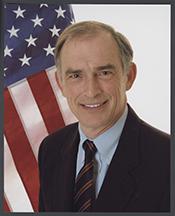
Mr. Speaker, I yield myself such time as I may consume. (Mr. VISCLOSKY asked and was given permission to revise and extend his remarks.) Mr. Speaker, I first of all want to as, I always do on these…
Mr. Speaker, I yield myself such time as I may consume.
(Mr. VISCLOSKY asked and was given permission to revise and extend his remarks.)
Mr. Speaker, I first of all want to as, I always do on these occasions, thank the staff because in the end they are the ones who have done the very hard work. I want to thank Kevin Cook, I want to thank Scott Burnison, I want to thank Dennis Kern, Tracey La Turner, Rob Pace, Kenny Kraft, Rob Nabors, Dixon Butler, Peder Maarbjerg, Leslie Phillips, and I would also like to add my voice of thanks to Bob Schmidt. Bob has done an incredible job as a staff member of the Committee on Appropriations. As a former staffer myself, I truly appreciate the work everyone has done on this bill, and in this case particularly the work of Bob. It is no surprise to me the quality of work he has done since he is a graduate of the University of the Notre Dame.
The second set of thank you's goes to the gentleman from Ohio (Chairman Hobson). The gentleman from Ohio (Mr. Hobson) and I serve together on the Subcommittee on Defense. As mentioned, this is his first full round with the energy and water bill, and he has done an exceptional job. He has been completely bipartisan. He has been a gentleman. He has made decisions. Our Department of Energy and our energy policy in the United States of America is better off because of the work the gentleman has done on this bill.
I have now served with five chairmen; they have all been very able. They have all done very good work; this is the best bill which has been brought to the floor while I have been a ranking member.
Mr. Speaker, on the substance of the bill, I would want to simply say that I think the committee has done a very good job on the nuclear weapons program. On the issue of water infrastructure, we have done our very best. We have added $377 million, and put back into the process 80 programs that were eliminated by the administration under budget requests. Any failings here are not because of lack of effort by the committee.
Mr. Speaker, first of all, I would like to thank the staff that worked to put this bill together, Bob Schmidt, Kevin Cook, Scott Burnison, Dennis Kern, Tracey La Turner, Rob Pace, Kenny Kraft, Peder Maarbjerg, Leslie Phillips, Rob Nabors, and Dixon Butler, all put in countless hours to produce this fine product.
I would also like to thank my Chairman, Chairman Hobson, who guided the House priorities through a very tough Conference, and led us to produce a very good bill. He has been one of the best Chairmen I have ever work with, and I look forward to working with him in future years.
Now, no bill is perfect Mr. Speaker, but this bill was a product of a truly bipartisan effort. Mark Twain once said that ``Common Sense is not that Common'' but this Conference Report advances some very common sense ideas, and though I don't want to take up much time, I would be remiss if I did not mention a few.
In the area of Nuclear Weapons, this Conference Report directs the Dept. of Energy to focus on management of our aging weapons stockpile before moving forward with new concepts and designs.
The Report fenced two-thirds of the money going to Advanced Concepts, or weapons research, until DOE produces a Nuclear Weapons Stockpile plan. This plan is needed to better deal with our aging war-heads and to dispose of many of those systems. Due to advances in technology many warheads are no longer practical or feasible with current Department of Defense technology and strategies.
In addition, the Conference Report, funds the Modern Pit Facility program and the Robust Nuclear Earth Penetrator (RNEP) or Bunker Buster at, $10M and $7.5M respectively, half of the President's and Senate's Requests in both cases. This is because we should not be looking forward to new weapons until we have a solid plan for the weapons and technology we already have.
Mr. Speaker, we should be especially wary of the nuclear waste stored in many sites across this country in this unfortunate time of terrorist threats. The compromise we came to with the other body, funded the Yucca Mountain Repository at it's highest level ever, $580M, and fully supports the submission of the December 2004 license application. I appreciate the Chairman's leadership on this issue.
Finally, Mr. Speaker our funding for the Corps of Engineers was the best that we could do within the money provided. Many important projects could not be fully funded, completed, or started. This under- funding was not the fault of the Chairman or this committee, which funded the Corps approximately $377 million over the President's Request and restored approximately 80 ongoing studies that the Administration did not include in their budget. Unfortunately, this Administration, and previous Administrations, in a bipartisan failure, have not made the infrastructure of this country a priority.
Currently, the Corps O&M program reflects a high priority backlog of $1 billion and an additional $1.9 billion in unfunded work. Though the conference report added $29 million to the President's request, we are still behind.
For on going construction, the backlog was $44 Billion for FY 2002 and $45 billion in FY 2003. The Conference Report added $372 million to the President's request of $1.35 billion to help this situation; this is just a drop in the bucket, and I suspect this backlog will continue to grow in FY 2004.
We need to invest in our future, by creating jobs, advancing the efficiency of commerce and transportation, while improving the environmental outlook and quality of life for people in this country. This can all be done through better investment in our domestic infrastructure.
Mr. Speaker, I reserve the balance of my time.
Mr. Speaker, I yield 3 minutes to the gentlewoman from Nevada (Ms. Berkley).
Mr. Speaker, I yield 3 minutes to the gentleman from Utah (Mr. Matheson).
Mr. Speaker, I yield myself such time as I may consume.
I would just for a moment agree with both of my chairs and refer to my opening remarks where, despite our best efforts, we are also on the appropriations side underfunding these programs. I would agree with the chairman of the authorizing committee that I would hope the other body acts sooner rather than later.
Mr. Speaker, I yield back the balance of my time.

Madam Speaker, I yield myself such time as I may consume, and I thank the gentleman from New York (Mr. Reynolds) for yielding me the time. Madam Speaker, as my colleague on the Committee on Rules…
Madam Speaker, I yield myself such time as I may consume, and I thank the gentleman from New York (Mr. Reynolds) for yielding me the time.
Madam Speaker, as my colleague on the Committee on Rules already noted, this rule is typical for a conference report. It is closed and it allows for 1 hour of debate. I should note that I am pleased to rise today to debate the content of the energy and water appropriations bill and only the energy and water appropriations bill. Let us just hope that when Congress adjourns the first session of the 108th Congress, it will have considered 13 such appropriations conference reports.
To Republican leaders who say that considering 13 separate appropriations reports is not possible or just highly unlikely, I note that while the other body remained in session last week, the House took the week off. Where there is a will, Madam Speaker, there is always a way. The will of the majority is clear, and it is not on the side of the American people.
But I should not dwell on this body's work ethic nor shall I attempt to predict or foresee the prospects of this week, however dim they may be. Instead I rise in support of the underlying conference report.
As previously mentioned, the energy and water appropriations bill provides $27.3 billion in funding for the United States Department of Energy and many of our country's most important water-related projects. The bill appropriates about $4.5 billion for the Army Corps of Engineers, about $1 billion for the Bureau of Reclamation, $22 billion for the Department of Energy, and about $140 million for independent agencies including the Nuclear Regulatory Commission and the Defense Nuclear Facilities Safety Board.
The report also includes more than $15 million in funding for the restoration of Florida's Everglades, and I thank all of our colleagues in the House for continuing to support that vital project in the State of Florida. It further contains legislative language ensuring that the State of Florida fulfills its commitment to improve water quality in the Everglades, and I would urge the Florida legislature to undertake its responsibilities most immediately in that regard. Both of these are prime examples of Congress's continuing commitment to the largest environmental cleanup in the history of the world.
I am proud of the fact that several of our colleagues including the gentleman from Florida (Mr. Foley), the gentleman from Florida (Mr. Goss), the gentleman from Florida (Mr. Mario Diaz-Balart), and myself are the immediate Representatives for the lake and Everglades area. There are other Congress persons, the gentleman from Florida (Mr. Shaw), the gentleman from Florida (Mr. Deutsch), the gentleman from Florida (Mr. Meek), the gentlewoman from Florida (Ms. Ros-Lehtinen) and the gentleman from Florida (Mr. Wexler), all of whom have been directly involved in this historic undertaking. I am proud of the work that Florida's whole congressional delegation has done on a bipartisan basis, particularly the gentleman from Florida (Chairman Young) and the gentleman from Wisconsin (Mr. Obey), the ranking member who is not from Florida but has helped us with this to keep this project moving ahead. The subcommittee chairman and the ranking Democrat are to be thanked for their tireless work, and I look forward to working with each of them in the future.
In addition to funding Everglades restoration efforts, the underlying report provides more than $4.5 million for south Florida beach renourishment and protection projects, $500,000 for Florida Keys water quality improvements, and more than $17 million for improving south Florida's ports and waterways.
I am well aware that some of my colleagues on this side of the aisle have severe reservations regarding the report, particularly funding for the Yucca Mountain site, a Robust Nuclear Earth Penetrator study, and an anti-environmental rider that affects a fair process already underway in Alaska. Their concerns are real, and, frankly, I am disappointed that we have not better addressed them in the conference report.
Again, Madam Speaker, this is by and large a good report. I urge my colleagues to support it.
Madam Speaker, I reserve the balance of my time.
Madam Speaker, I yield 2 minutes to the gentleman from Wisconsin (Mr. Obey).
Madam Speaker, I yield 2\1/2\ minutes to the gentlewoman from Texas (Ms. Jackson-Lee).
Madam Speaker, I yield back the balance of my time.
Madam Speaker, on that I demand the yeas and nays.
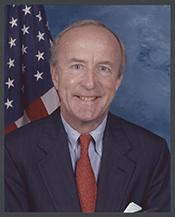
Mr. Speaker, I rise today in support of H.R. 2754, the Energy and Water Appropriations conference report for fiscal year 2004. Let me first thank Chairman Hobson for his strong leadership of our…
Mr. Speaker, I rise today in support of H.R. 2754, the Energy and Water Appropriations conference report for fiscal year 2004. Let me first thank Chairman Hobson for his strong leadership of our subcommittee's work and to Ranking Member Pete Visclosky for his bipartisan approach to this conference report. And my thanks to the subcommittee staff for their tireless efforts to put this conference report together.
While public attention is rightly focused on the war on terrorism abroad, our committee continues to do its part to protect our nation's security at home. The issue of energy security is now clearly before us--our energy facilities and networks must be safe and secure. And we must also continue the critical work of the Department of Energy to do the research and development on domestic sources of energy, reducing the demand of foreign oil imports and to find better ways to protect our nuclear stockpile.
I applaud the chairman for providing $82 million for the new Office of Electric Transmission and Distribution (OETD), which is $5 million over the requested amount. The Office of Electric Transmission & Distribution is a new DOE program office formed to help ensure a robust and reliable U.S. transmission grid for the 21st century. I am pleased our subcommittee has provided DOE with the funding needed to lead a national effort to help modernize and expand America's electric delivery system to better ensure economic and national security.
Further, it is important to note the conferees added the $5 million over the requested amount to allow the Department of Energy to complete its investigation into the causes of the August 14th, 2003 blackout, which highly affected thousands of people in my region of the country. It is important DOE conduct an extensive investigation to get to the bottom of what caused or contributed to the outage so we can take proper steps to ensure such failures are never repeated in the future.
Chairman Hobson has produced a conference report that continues the Federal commitment to work in partnership with our states and local communities to address such vital needs as flood control, shore protection, environmental restoration and improving our Nation's waterways. By doing so, we are helping to meet critical economic, environmental and public safety needs in virtually every state in the country.
I want to especially thank Chairman Hobson for his support of top priorities in my home state of New Jersey. Keeping our port open for business is critical to our regional economy and the 229,000 thousand jobs related to port activity in New Jersey and New York. Protecting and restoring our 127 miles of shoreline is vital $30 billion dollar tourism industry. And, this bill continues to work to protect New Jersey's communities from natural disasters such as flooding and continues New Jersey's special role to provide for a future energy source that is clean and unlimited: that is the work of the Princeton Plasma Physics Laboratory.
Finally, I want to take a moment of my time to thank the Army Corps of Engineers for their efforts to improve the quality of life that the American people have at home as well as for the Iraqi people abroad. Today, well over 300 U.S. Army Corps of Engineers military and civilian employees are in Iraq assisting the people in many areas. The Corps also provides daily assistance to the reconstruction effort with technical advice for the International Aid Developments program of reconstructing water and sanitation facilities; public facilities, such as hospitals and schools; roads, bridges and
railroads; and airport and seaport rehabilitation. Of vital importance is the Corp's work with the Coalition Provisional Authority, the U.S. State Department, and U.S. engineering societies that help Iraqi engineers gain knowledge lost during the last 30 years.
Mr. Speaker, I wholeheartedly support this conference report and urge my colleagues to do the same.

Mr. Speaker, I rise today in support of the fiscal year 2004 energy and water appropriations conference report, which funds several projects of great interest to my constituents in Southern…
Mr. Speaker, I rise today in support of the fiscal year 2004 energy and water appropriations conference report, which funds several projects of great interest to my constituents in Southern California.
The New River has been described as the ``world's most polluted river.'' The river flows from Mexico, north across the U.S. border, and through my district in Imperial County, California. Due to grossly inadequate sewage treatment and solid waste facilities in Mexico, raw sewage, industrial waste, and garbage are constantly released into the New River.
The New River is extremely polluted, foamy, and foul-smelling. The river significantly violates water quality standards, and plants and animals cannot survive in much of it. The New River continues to threaten the health of residents of my district and of undocumented immigrants who use the waterway to cross the international border.
A coalition of citizen groups and government agencies in my district, including the Calexico New River Committee, has developed a feasible plan that will significantly improve the quality of water flowing through the community. The project involves building wastewater infrastructure to improve water quality in the vicinity of the city of Calexico on the southern portion of the New River in Imperial County by installing project headworks and encasing the New River, and constructing a disinfecting facility and wastewater polishing system as the river emerges from its encasement.
Mr. Speaker, this bill, which provides funding for the Nation's energy and water-related projects, would continue environmental restoration efforts on the New River. This is an extremely important first step in the process of enhancing the water quality of the southern portion of the New River, enriching life in the community, and making a healthier home for fish and wildlife.
Better quality water flowing along the New River would also mean improved water quality in the Salton Sea. The Salton Sea is the largest inland water body in California, and one of the largest salt lakes in the world. The Salton Sea is an important habitat for Federal and State listed endangered species, as well as other migrating and resident bird species, a reservoir for agricultural drainage, a center for recreation, and a wetland ecosystem.
But it is quickly becoming too saline to continue supporting wildlife, and a recent rural-to-urban water transfer may shrink the shoreline. This bill would provide funding for the Salton Sea Research project for efforts to continue study of the alternatives for restoration of the Sea.
Water that eventually drains into the Salton Sea comes from the Colorado River, and is delivered to farmers and residents in my community by the All American Canal. This bill provides funding to construct small regulating reservoirs on the canal, which will vastly improve operating efficiencies. The reservoirs would provide storage for water that is unavoidably delivered from the lower Colorado River in excess of what is immediately needed by users, thereby improving water conservation efforts.
Finally, water in the Colorado River is threatened by a uranium mine tailings pile sitting only 700 feet from the River near Moab, Utah. The tailings, which sit in an unlined pond and seep into the ground water, are radioactive and contain high concentrations of toxic metals left by the leaching process used to separate uranium from ore. The tailings are leaking radioactive material into the Colorado River at levels 1,300 times above the allowed limit. This bill provides funding to accelerate remediation of this site, and would ensure that residents of my community, other Colorado River water users, and the environment receive the long-term protection so desperately needed.
For the sake of my constituents at the U.S.-Mexico border, as well as residents of the West, I urge my colleagues to support the conference report.
Madam Speaker, by direction of the Committee on Rules, I call up House Resolution 444 and ask for its immediate consideration. Madam Speaker, for the purpose of debate only, I yield the customary 30…
Madam Speaker, by direction of the Committee on Rules, I call up House Resolution 444 and ask for its immediate consideration.
Madam Speaker, for the purpose of debate only, I yield the customary 30 minutes to the gentleman from Florida (Mr. Hastings), pending which I yield myself such time as I may consume. During consideration of this resolution, all time yielded is for the purpose of debate only.
(Mr. REYNOLDS asked and was given permission to revise and extend his remarks.)
Madam Speaker, House Resolution 444 is a standard rule that provides for consideration of the conference report to accompany H.R. 2754, the Energy and Water Development Appropriations Act for the fiscal year ending September 30, 2004. The rule waives all points of order against the conference report and against its consideration. The rule also provides that the conference report will be considered as read.
Madam Speaker, the underlying conference report is the result of hard work and compromise by the energy and water appropriations conference committee. The conference report suggests a strong civil works program with the Army Corps of Engineers. By concentrating $4.5 billion on the traditional tasks such as flood control, shoreline protection, and navigation, which yield the most economic benefit for the Nation, the bill ensures the highest possible return on taxpayer investment.
Within the agreement, the Department of Energy is provided with $22 billion. Included in that funding is nearly $350 million for renewable energy programs and $393 million for nuclear energy programs. Specific programs funded within the Department are the nuclear energy research initiative of $11.6 million, $6.5 million for the nuclear hydrogen initiative, and $68 million for the advanced fuel cycle initiative. Adequate and needed funding is provided for science programs within the Department, including high-energy physics, nuclear physics, biological and environmental research, fusion energy research, and advanced scientific computing research.
The nuclear waste program continues to be one of our highest environmental priorities and one that is of particular importance to my region. I am also pleased that the conference report provides a total of $580 million for nuclear waste disposal. Additionally, $7.6 billion is provided for environmental management cleanup activities, continuing the strong commitment to accelerate cleanup schedules at contaminated sites throughout the country.
This funding is vital in reducing public health and safety risks. The conference report also provides $8.7 billion for the National Nuclear Security Administration, which includes the nuclear weapons program, defense nuclear nonproliferation, and Naval reactors.
In closing, Madam Speaker, I would like to commend the gentleman from Ohio (Chairman Hobson) and all of the distinguished conferees on both sides of the aisle for their hard work and dedication to our Nation's energy and
water priorities. I urge my colleagues to support this rule and the underlying conference report.
Madam Speaker, I reserve the balance of my time.
Madam Speaker, I yield myself such time as I may consume.
I take with good note the ranking member of the full Committee on Appropriations on the compliments to the gentleman from Ohio (Mr. Hobson) as chair of the subcommittee, and I know that he works hard in those endeavors to achieve that, but it is not easy to get such a fine accolade on behalf of the ranking member, and on behalf of the chair of the subcommittee I will pass along his kind remarks.
Madam Speaker, I reserve the balance of my time.
Madam Speaker, I yield 2 minutes to the gentleman from Nevada (Mr. Gibbons).
(Mr. GIBBONS asked and was given permission to revise and extend his remarks.)
Madam Speaker, I yield back the balance of my time, and I move the previous question on the resolution.
The previous question is ordered.

Madam Speaker, I rise in support of this motion. As high health care prices continue to erode the living standards of middle- class families across this country, the rising price of prescription…
Madam Speaker, I rise in support of this motion. As high health care prices continue to erode the living standards of middle- class families across this country, the rising price of prescription drugs remains front and center in the eyes of seniors. A recent report by Families USA concluded that the prices of the 50 most frequently used prescription drugs by seniors rose by nearly 3\1/2\ times the rate of inflation. That is a problem for them, their children, and their children's children. We all have a stake in driving down prescription drug prices.
In July this body abrogated its responsibility to address the problem of soaring drug prices. It barred the government from negotiating lower prices for seniors. It did worse than nothing.
Since that time the call for prescription drug importation, giving ordinary Americans the choice that they are taking on their own, out of desperation, has reached a critical mass. Today the American people know that importation would save them billions of dollars, $600 billion in the next decade, savings passed directly onto the consumer.
They know it is a safe option, because they know that the U.S. drug companies themselves reimport brand name medications from their overseas plants, $14.7 billion worth in 2001. They know that the reimportation bill passed this body in late July. It guaranteed safety. I would repeat that our bill not only required drugs reimported from other countries be FDA approved, but also that the facilities they are manufactured in are FDA approved as well. Add to that requirement in this bill that all prescription drugs use counterfeit-resistant packaging, and there is little doubt that every drug purchased here in the United States, reimported or otherwise, would be safer than the drugs that are available today.
The FDA is so concerned about safety then they ought to take a look at food safety in the United States. They have jurisdiction over imported foods coming into the United States, and only less than 1 percent, 1 to 2 percent of all imported food is inspected coming into this country. And yet the FDA will certify that that food is the safest food supply in the world. And yet FDA-approved drugs from FDA-approved facilities will not be certified as being safe. Tell us, on whose side is the FDA? This is not an issue of safety, it is an issue of price.
This Congress needs to stop acting as the wholly-owned subsidiary of the pharmaceutical companies, and step up to its responsibilities to help consumers. We need to vote for this motion because it is the only opportunity for this body to vote for lower cost prescription drugs. The Medicare prescription drug policy that has come out of the conference in this body, decimates and destroys Medicare, does nothing about the high cost of prescription drugs. And unless we pass this motion to instruct, there will be no opportunity to do what is the right thing for America's families, for America's seniors, and that is to provide them with the opportunity to get their prescription medications at a price that they can afford in order to save their lives. That is what this issue is about today. It is about providing people in this country the wherewithal to afford prescription drugs.
Madam Speaker, let us vote for this motion to instruct. Let us do the right thing for seniors and for the families in this country.
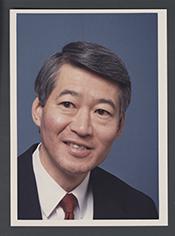
Mr. Speaker, I rise today in support of the Conference Report on H.R. 2754, the Energy and Water Development Appropriations Act for fiscal year 2004. As this Congress is well aware, my district of…
Mr. Speaker, I rise today in support of the Conference Report on H.R. 2754, the Energy and Water Development Appropriations Act for fiscal year 2004. As this Congress is well aware, my district of Sacramento, CA, is the most at-risk river city in the Nation. Situated at the confluence of the American and Sacramento Rivers, Sacramento has narrowly escaped certain disaster twice over the last two decades. My number one priority as a Member of this body has always been to put an end to this grave public safety risk and to provide my constituents with the flood protection they both need and deserve. I am happy to say this bill will do just that. In fact, in the eyes of Sacramento, the passage of this bill is an historic moment.
A major flood along the American River would cripple this economy, causing between $7 and $16 billion in direct property damages and likely result in significant loss of life. The Sacramento floodplain is home to half-a-million people, 5,000 businesses providing 200,000 jobs, 160,000 homes, 1,300 government facilities including the State Capital, over 100 schools, six major hospitals, 26 nursing homes, three major freeways systems, and a regional economy that supports over one million people.
For almost as long as Sacramento has been at risk of a catastrophic flood, there has been a dispute over how to resolve the issue. Earlier this year, my colleague John Doolittle and I reached an agreement that moves forward the two most pressing issues for Northern California: flood control and water supply. This bill contains that agreement and successfully addresses both of those issues for the indefinite future.
I would like to take a moment and recognize the tremendous efforts that have made this possible. Without the leadership of Chairman Hobson and Ranking Member Visclosky of the Energy and Water Appropriations Subcommittee and Chairman Young and Ranking Member Oberstar of the Transportation and Infrastructure Committee Sacramento would still be fighting for incremental flood control projects. Their recognition of Sacramento's dire flood control situation advanced this solution. On behalf of my constituents, thank you.
More specifically, this bill provides for the construction of the Folsom Dam Mini-Raise. This is the crowning project in a series of vital flood control improvements and surpasses the region's long held goal of reaching 200-year level protection. By raising the existing Folsom Dam seven feet, Sacramento's flood control system will be able to weather a storm 50 percent larger than anything in the recorded history of the watershed. In addition, the project provides a new permanent bridge to replace the Folsom Dam Road, which was closed in February due to security concerns, and for ecosystem restoration on the lower American River. Congressional approval of the Mini-Raise benefits the entire Sacramento region, by addressing not only the area's flood control needs, but also ecosystem restoration, transportation issues and Homeland Security needs.
I am grateful for the continued Federal assistance that Sacramento has received throughout the years to bring us to this moment. That commitment is evident in this bill and will ensure that those living and working in the region will be kept out of harm's way.
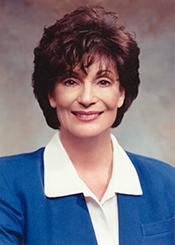
Mr. Speaker, I rise in strong opposition to funding for the Yucca Mountain project in the energy and water appropriations conference report which allocates $580 million for the Yucca Mountain project…
Mr. Speaker, I rise in strong opposition to funding for the Yucca Mountain project in the energy and water appropriations conference report which allocates $580 million for the Yucca Mountain project and nuclear waste disposal. This is an increase of almost 30 percent above current spending levels. Appropriating such a significant increase of funds for a project which is riddled with problems is unconscionable.
I would like to bring to our attention numerous developments that cloud the
future of the Yucca Mountain project. These issues raise major concerns regarding the wisdom of continuing this dangerous folly. Proponents of Yucca Mountain claim that a central site would reduce security concerns at the Nation's 131 nuclear reactor sites. That is preposterous. Even if Yucca Mountain opens, every nuclear reactor in operation will continue to store nuclear waste on site. Instead of eliminating potential terrorist targets, we will be creating a new target, this time in the State of Nevada.
Nuclear waste shipped to Yucca Mountain will pass through 45 States and the District of Columbia, traveling on roads and railroad tracks located next to 50 million people over the course of the next 24 years. Residents of cities such as Chicago, Atlanta, St. Louis, and Salt Lake City could see multiple shipments of this deadly nuclear waste pass through their backyards daily.
The United States Air Force has stated that the Yucca Mountain repository will interfere with training at the Nellis Air Force Base. This would negatively impact military preparedness at one of the Nation's most important training facilities. It is almost unimaginable that we would consider a plan that would limit the ability to train America's combat pilots.
Just last month, the independent Nuclear Waste Technical Review Board found that the canisters that will store high-level waste at Yucca Mountain are likely to corrode and leak, resulting in the release of radioactive nuclear materials that will contaminate nearby water supplies.
Instead of dumping money into the ill-conceived Yucca Mountain project, we should invest in the development of clean energy sources, such as renewable energy. By boosting renewable energy, we are working to bring down energy costs, create a consistent and reliable source of energy, improve the environment and public health, and reduce our vulnerability to terrorists around the world.
We must look far ahead when considering the future of energy. That future is in reliable, renewable energy, not nuclear power. I urge my colleagues to consider the consequences of this project. This Congress will rue the day it got into bed with the nuclear industry. The people of the State of Nevada already do.
Show 11 more

Mr. Speaker, I rise in strong support of the Fiscal Year 2004 Energy and Water Appropriations conference report, which brings the Houston Ship Channel project extremely close to completion and…
Mr. Speaker, I rise in strong support of the Fiscal Year 2004 Energy and Water Appropriations conference report, which brings the Houston Ship Channel project extremely close to completion and provides critical flood relief for residents of the 29th District of Texas.
It was flooding down in Texas yesterday, and this bill is urgently needed down in my hometown of Houston. This bill provides $35.5 million for the Houston Ship Channel deepening and widening project, which will allow our Nation's second largest port to continue to grow and handle the heavy energy and petrochemical traffic that is necessary for the smooth economic functioning of our Nation.
The Port of Houston is home to the single largest petrochemical complex in the country, with a combined capacity to produce nearly 49 percent of the Nation's petrochemical capacity. By increasing the capability of the ship channel to handle newer, larger tankers more safely, Congress will directly increase the energy security of our Nation at a time of tumultuous energy markets. We need to obtain an additional $12 million in reprogramming funding next year as the construction on the ship channel nears completion.
The ship channel is one of the primary economic engines in my district and throughout Texas, directly providing tens of thousands of jobs in the greater Houston area and many more thousands across the State.
For flood control, this legislation provides $750,000 for flood protection construction work along Hunting Bayou, an urban watershed in East-Central Harris County. During Tropical Storm Allison, the most expensive tropical storm in U.S. history, over 8.000 homes flooded in the Hunting Bayou watershed, which is heavily residential and low to moderate income.
The House Energy and Water Appropriations Act for FY 2004 also provides $774,000 to complete the General Re-evaluation Review for Greens Bayou, a highly populated, but economically disadvantaged watershed in North Harris County. The lack of flood control protections in this watershed leaves these residents and businesses unprotected and resulted in the flooding of over 15,000 structures during Tropical Storm Allison. The most major channel flooding during that event occurred in the Greens watershed, and we need to get moving and start moving dirt down there as soon as possible. This bayou came very close to topping its banks just yesterday.
I offer my deep appreciation to Chairman Hobson and Ranking Member Visclosky for their attention and dedication to these critical economic development and flood protection projects for my constituents down in Houston, TX. I hope to work with them as this legislation goes forward, and I urge my colleagues to support the bill.
Mr. Speaker, I rise today in opposition to two provisions in this energy and water conference report. First, this bill provides $7.5 million for study of a new-generation, earth-penetrating nuclear…
Mr. Speaker, I rise today in opposition to two provisions in this energy and water conference report. First, this bill provides $7.5 million for study of a new-generation, earth-penetrating nuclear warhead and $6 million for research on advanced nuclear weapons concepts such as low-yield mini nukes. Supporters of these new nuclear weapons argue the current funding is limited to weapons research and development in DOE labs, but this argument ignores the obvious end results of these studies, and that is that they will have to be tested. These weapons will be tested most likely at the Nevada test site. That will once again expose Utah and the rest of this Nation to fallout from those tests.
High-yield weapons present an additional problem, unacceptable amounts of fallout would endanger U.S. troops approaching the target to confirm the weapons' success. No one is going to argue about pursuing new technologies to address the threats posed by terrorists hiding in hardened or deeply-buried sites, but we should ask and answer this question about whether nuclear weapons, regardless of yield, can even get the job done.
I oppose this bill that would once again move toward exposing Utahans to nuclear testing in Nevada. That brings me to a second point I also raise in opposition to the bill, and that is there is a provision that would reclassify radioactive waste from two Department of Energy sites as a type of waste that can be shipped to commercial facility. This language was included in the conference report without the knowledge of States like Utah that had commercial facilities where the DOE has suggested shipping such highly-concentrated radioactive waste. This waste has much higher radioactive levels than other radioactive waste that commercial facilities are currently regulated to accept under this classification.
This is unacceptable to Utah, and I am fundamentally opposed to language that makes Utah into a dumping ground not only for waste from Ohio and New York, but waste from other east coast States as well. Some Members argue this waste is not that bad. Mr. Speaker, if the waste is not that bad, then Ohio and New York should not be in such a rush to get rid of it.
Utah has a history on this issue, a history of being downwinders. My family comes from southern Utah. I would not put Utah into a back seat to anyone when it comes to their patriotism and commitment to this country, but we need to make sure when we move ahead and potentially expose our citizens to radiation, that we make sure we make these decisions in the clear light of day, and we look out for the health and safety of all Americans.
Madam Speaker, I would like to thank the gentleman from Wisconsin (Mr. Obey) for yielding me time. People from around the world come to America for their medical care. Yet Americans are forced to go…
Madam Speaker, I would like to thank the gentleman from Wisconsin (Mr. Obey) for yielding me time.
People from around the world come to America for their medical care. Yet Americans are forced to go around the world for their medications. Why? Because we have the most expensive prices for prescription drugs anywhere in the world right here in the United States; and yet all the medications are developed with taxpayer-funded research. Now we are given the honor and distinction to pay the most expensive prices.
Now, there are two ways to address the issue of cost and affordability of prescription drugs. One was allowing Americans, like our European colleagues, to buy prescription drugs at 30, 40, 50 percent cheaper, same name-brands drugs in both Canada, Europe, France, Germany, Italy, and Ireland. Yet, twice the Republican Congress has denied the right to Americans to free trade, to competition and choice because through competition prices would reduce and come down for America. Americans would no longer subsidize the poor starving French and Germans. They pay competitive prices. We pay competitive prices. Prices will drop here at home.
Second is give the right to the Secretary of Health and Human Services what the Secretary of the Veterans Administration has and what the private insurers have, which is to negotiate bulk prices, that is, a Medicare Sam's Club. And rather than use the power of 41 million seniors, we take a powder here, twice denying the right to seniors to get cost-effective measures, to get the prescription drugs they need at the prices they can afford.
We deny that right. Why? Because we do not have faith in Tommy Thompson to negotiate good prices, but we have faith in him to deny the right of prescription drugs that come into this country at affordable prices. Our seniors are paying premium prices, and what are we about to do?
We are about to ask the taxpayers to pay $400 billion of their money for the most expensive drugs, prescription drugs, anywhere in the world. We owe the common decency and courtesy to the taxpayers to get the best price and not the most expensive price.
I support this motion so we would finally break the hammer lock the prescription drug companies have on this Congress and the Republican Congress and give the American people the type of relief they need so they can buy the drugs they need for their health at the prices they can afford.
Mr. Speaker, I rise in support of this bill as well, and want to thank the gentleman from Ohio (Mr. Hobson). During no time in my 9 years here have I seen anyone grow as fast on the job in 10 and a…
Mr. Speaker, I rise in support of this bill as well, and want to thank the gentleman from Ohio (Mr. Hobson). During no time in my 9 years here have I seen anyone grow as fast on the job in 10 and a half months as the gentleman from Ohio (Mr. Hobson). His first Subcommittee on Energy and Water Development meeting was coming in as chairman, and in the last 10 and a half months, he has been all across the country, studied these issues, consumed himself with it, and done an outstanding job, in large part because of the bipartisan cooperation. There is no doubt this is a bipartisan product, an excellent work product.
I want to thank again those staff members already mentioned on our side of the aisle, Bob Schmidt, Dennis Kern, Scott Burnison, Kevin Cook, Kenny Kraft, and Tracey LaTurner. They have done outstanding work.
A couple of points I want to make, first as a representative of the premier multipurpose laboratory in the United States, Oak Ridge National Laboratory, science is up. Our long-term investment in the future of our country, the seed corn for the next generation, is up above the President's request because the gentleman from Ohio (Chairman Hobson) and the gentleman from Indiana (Mr. Visclosky) believe we must invest for future generations, and this bill reflects that commitment long term. It is very important. Plus, energy security; everybody has talked for a long time about our need to solve the long-term waste issue relative to our nuclear waste storage and whether we can ever go back into the nuclear business. We are solving that problem by fully funding and adequately funding Yucca Mountain, which we need to do. This committee has moved on this.
We also have an accelerated cleanup program across the country now because this Department of Energy, under Secretary Abraham's leadership, rolled out an ambitious plan to clean these nuclear sites up sooner rather than later and invest more in the short run to save money in the long run. We are doing that at Oak Ridge, at Hanford, Savannah River, and across the country. It is important that we do that for the health and safety of our citizens, and this bill is an excellent work product. I agree with the gentleman from Indiana (Mr. Visclosky) that this is the best energy and water bill that we have offered in a number of years.
Mr. Speaker, I rise to support this conference report and want to commend the chairman and his staff on very, very fine work. I particularly thank them for their willingness to work with those of us…
Mr. Speaker, I rise to support this conference report and want to commend the chairman and his staff on very, very fine work. I particularly thank them for their willingness to work with those of us from Appalachian districts for funding for the Appalachian Regional Commission. That is a part of America that is very rural, it is a part of America that is struggling economically, and with the tremendous loss of manufacturing jobs recently, it is an agency that we believe needed to be funded. We are also pleased that he helped us put language in the bill that said those who receive this funding will be accountable publicly. We want to make sure that these agencies serve us, and that they are open. The language requires that their budgets, their minutes, their audited statements and public meetings be open to the press and public. We thank them for that.
I also commend the committee on authorizing $2.15 billion for hydrogen fuel cells. It is a program I have supported for years. I commend the committee on authorizing $200 million for clean cities. I represent State College, Pennsylvania, which is the first bus system that will be all natural gas, and are now working toward becoming hydrogen, and are leading the way. I thank the committee for the $100 million for increased hydropower which is important. We have a lot of dams in this country which have not been harnessed and hydropower which has not been adequately utilized, and I want to particularly thank the committee for its dramatic increase for LIHEAP from $2 billion to $3.4 billion. With the high cost of natural gas and fuel oil this year, home heating is going to be a problem in cold parts of this country, and this program will be vital. I also was delighted at the $1.8 million clean coal power spending; and I want to thank the chairman and those who worked with him on Yucca Mountain. I know it is a controversial issue, but it needed legislative leadership and the gentleman from Ohio (Chairman Hobson) provided that. I thank him for his work.
Madam Speaker, I thank the gentleman from Wisconsin (Mr. Obey) for yielding me time. I rise in support of the motion to instruct, to instruct the conferees that we accept in this agriculture…
Madam Speaker, I thank the gentleman from Wisconsin (Mr. Obey) for yielding me time.
I rise in support of the motion to instruct, to instruct the conferees that we accept in this agriculture appropriations bill the same language that has already been passed on the House floor as it deals with reimportation, and let me tell you why.
In June of last year, I did a study where we compared the price paid by seniors in Arkansas' Fourth Congressional District with the price paid by seniors in six other countries. And we found that the price paid by seniors in the Fourth Congressional District of Arkansas is 110 percent more on average than the price paid by seniors in places like Canada, France, Germany, Italy, Japan, and the U.K.
Let me give you a couple of examples. Prevacid, 30 milligrams. In our congressional district it costs $128 a month. The average foreign price, $55 a month. Celebrex, 200 milligrams. In my congressional district, $81 a month. The average foreign price, $35 a month. Prilosec, in my district $129 a month. The average foreign price, $56 a month; and the list goes on and on and on.
The drug manufacturers wrote this so-called Medicare prescription drug bill, which is not for our seniors. It is a windfall for the big drug manufacturers, and now we see their fingerprints all over this bill today to go to conference on the ag appropriations bill.
Velma from my district writes and says she takes seven prescriptions a month. It costs her $560, and she is trying to get by and live on $604 a month.
Mary from my district says she takes four prescriptions a month that cost her $401.88, and she is trying to get by on $586 a month.
I rise in support of the motion to instruct on behalf of the seniors of America so we can take on the big drug manufacturers and the Republican leadership and finally bring down the high cost of prescription drugs for our seniors. This is America, and we can do better than this by our seniors.

Madam Speaker, previous to today's debate the House has spoken definitively on what the American people want and today are only getting price relief on their prescription drugs by importing from…
Madam Speaker, previous to today's debate the House has spoken definitively on what the American people want and today are only getting price relief on their prescription drugs by importing from Canada. Yet, through stealth maneuvers, the Republican majority, under pressure from the pharmaceutical industry and the White House, is going to close the border. They are about to say, to quote the FDA Commissioner, the FDA cannot guarantee the safety of Canadian drugs. Well, guess what? They cannot guarantee the safety of American drugs. In fact, it is well documented that the supply chain is more broken in the United States of America than it is in Canada where there is more government control.
That was totally a specious argument that they have drug out here to try and protect one thing: Not the safety of the American public and our seniors, not their health. I will tell you what jeopardizes their health: When they cannot afford the drugs they need for a chronic or an acute condition.
There are tens of thousands of seniors and others across America in that condition.
No, there is only one issue here. There is only one thing to protect, and it is not the safety of America's seniors; it is not the sanctity and the quality of our drug supply, because it is already compromised by phony closed-door pharmacies and hundreds of other loopholes that are getting counterfeit drugs, as is well documented, into the system in our country.
Not in Canada. Their system works a lot better. They are reimporting FDA-approved drugs through Canada, and we know they are probably really American drugs. Here there are a lot of counterfeit drugs being made available though phony wholesalers.
No, there is one thing that is being protected. Well, two things. One is the obscene prices and profits of the pharmaceutical industry; and two is political campaign contributions to the White House and Republicans. That is what is being protected.
Madam Speaker, we are told by my colleague from Texas (Mr. Bonilla), the Republican who is opposing this motion, that he does not have any comments on it, does not have anything to say about it. And…
Madam Speaker, we are told by my colleague from Texas (Mr. Bonilla), the Republican who is opposing this motion, that he does not have any comments on it, does not have anything to say about it. And I think that is kind of funny because we know full well when the Medicare bill comes up here, it is going to be Thursday or Friday at 5 o'clock in the morning when America is sleeping and all the seniors do not know what is happening.
But why is this provision important about the drug importation? Because when this bill originally passed the House, it passed by one vote. And after the roll call was left open an hour with the Republican leadership beating their Members into submission, a deal was struck that, okay, we are going to pass this bill, if we get drug importation. And that is why the bill passed.
Then it went to a conference committee, and there was not a Democrat from the House sitting in there negotiating. But you know what was in there? The drug companies were in there. And now we are going to see the final product a few days from now, and lo and behold, drug importation is only permitted if the Secretary of Health and Human Services says it is okay. But we know that he has already said it is not okay. They oppose it.
The administration is in the pocket of the drug companies. And so your mothers and fathers and grandparents are going to be pay more for drugs. This bill is a bad bill. Not only does it provide no decent drug coverage for America's seniors, but it is an attempt to get them out of the Medicare program.
Madam Speaker, 90 percent of seniors today are in the Medicare fee- for-service program. This bill rewards or gives gifts to insurance companies to get them to move out and go into the private insurance companies where they are going to get a real bad deal on their health care.
Madam Speaker, I rise in strong support of the rule, yet with some strong reservations also regarding final passage of the Energy and Water Appropriations Conference Report. But before I explain my…
Madam Speaker, I rise in strong support of the rule, yet with some strong reservations also regarding final passage of the Energy and Water Appropriations Conference Report. But before I explain my reservation, I would like to recognize the many efforts of the gentleman from Ohio (Chairman Hobson), the gentleman from Indiana (Mr. Visclosky), ranking member, and other hardworking Members and their staffs who have made, over the past year, an effort to work with the Nevada delegation to address our serious concerns with the Yucca Mountain project.
For example, during initial House floor consideration of the energy and water bill this past July, the gentleman from Ohio (Chairman Hobson) was gracious enough to grant the gentleman from Nevada (Mr. Porter) and I a colloquy on the issue of early acceptance of spent nuclear fuel at Yucca Mountain. In response to our concern, the gentleman from Ohio (Chairman Hobson) agreed not only to strip the early acceptance language from the bill, but also to dedicate $4 million in additional Federal spending to bolster security at our Nation's nuclear power stations. I am heartened by the gentleman from Ohio's (Chairman Hobson) willingness to ensure that the early acceptance of spent nuclear language did not remain through the conference on this measure.
However, the conference report still dedicates $580 million in taxpayers' dollars to the Yucca Mountain project, in my opinion, a fatally flawed Federal boondoggle that a majority of Nevadans, millions of Americans, and the Nevada Congressional Delegation strongly opposes.
Madam Speaker, I will vote yes on this rule; however, I will remain opposed to frivolously spending taxpayers' dollars and will never give up the fight against wasteful Yucca Mountain project spending.
Madam Speaker, I thank the gentleman for yielding me time. Madam Speaker, we have got a strange situation here. When we think about this, the most profitable industry in the country, the most…
Madam Speaker, I thank the gentleman for yielding me time.
Madam Speaker, we have got a strange situation here. When we think about this, the most profitable industry in the country, the most profitable industry in the country is charging the highest prices in the world to America's seniors and others without health insurance. And yet the head of the Food and Drug Administration is giving speeches saying the problem is not that prices are too high in this country; the problem is that they are too low in other countries. The rest of the world has it wrong. They should raise their prices.
This is ludicrous. In fact, the drug companies are happy to sell their drugs in Canada and Europe and around the world where on average they are selling their drugs for 40 percent less, and there is research going on in Canada. Look at this, just one example, there are 79 research-based drug companies in Canada. And since 1995, they have increased their research spending by 50 percent. The pharmaceutical industry is not hurting in Canada or around the world. The people who are hurting are our seniors trying to buy their medication here at home.
We need to be able to take drugs from other countries to bring them into this country. We know one thing, this administration is never going to approve the reimportation of low-price drugs from Canada. They will not do it. They are trying to stop it now. So any provision which depends on the authority of the Secretary of Health and Human Services and a Republican administration is not going to fly. That is why it is so important that this motion pass; it is so important that we have legislation that authorizes the reimportation of drugs. We do it for other products. We ought to do it for medication.
Mr. Speaker, I am pleased to support H.R. 2754, the Fiscal Year 2004 Energy and Water Appropriations Conference Report. However, I am concerned about one provision which was added to the statement of…
Mr. Speaker, I am pleased to support H.R. 2754, the Fiscal Year 2004 Energy and Water Appropriations Conference Report. However, I am concerned about one provision which was added to the statement of managers concerning the Bonneville Power Administration. Incorrect language was added stating ``the conferees are aware of the Department of the Treasury's concerns relating to Bonneville Power Administration's financial accounting practices and expect Bonneville to rectify the situation as soon as is possible.'' The Department of the Treasury has not expressed concerns relating to BPA's accounting practices. In fact, a letter from Treasury Acting Under Secretary for Domestic Finance, Brian Roseboro, to Stephen Wright confirms that no concerns about BPA's accounting practices exist. The letter, dated November 18, 2003, states:
Dear Mr. Wright: The Department of the Treasury received
the Conference Report to accompany H.R. 2754 and reviewed the
sentence on page 171 that reads, ``The conferees are aware of
the Department of the Treasury's concerns relating to
Bonneville Power Administration's financial accounting
practices and expects Bonneville to rectify the situation as
soon as is possible.'' The Department of the Treasury has not
expressed any concern about the financial accounting
practices of Bonneville either privately or publicly. Please
let me know if you have any questions. Sincerely, Brian C.
Roseboro, Acting Under Secretary for Domestic Finance.
Mr. Speaker, I wish the Record to reflect the fact that this sentence added to the Conference Report is incorrect, and the letter from Under Secretary Roseboro corrects the Record.
Bill Text
2 versions available
        [Congressional Bills 108th Congress]
[From the U.S. Government Publishing Office]
[H. Res. 444 Reported in House (RH)]

House Calendar No. 128
108th CONGRESS
1st Session
H. RES. 444

[Report No. 108-377]

Waiving points of order against the conference report to accompany the
bill (H.R. 2754) making appropriations for energy and water development
for the fiscal year ending September 30, 2004, and for other purposes.

_______________________________________________________________________

IN THE HOUSE OF REPRESENTATIVES

November 18 (legislative day, November 17), 2003

Mr. Reynolds, from the Committee on Rules, reported the following
resolution; which was referred to the House Calendar and ordered to be
printed

_______________________________________________________________________

RESOLUTION

Waiving points of order against the conference report to accompany the
bill (H.R. 2754) making appropriations for energy and water development
for the fiscal year ending September 30, 2004, and for other purposes.

Resolved, That upon adoption of this resolution it shall be in
order to consider the conference report to accompany the bill (H.R.
2754) making appropriations for energy and water development for the
fiscal year ending September 30, 2004, and for other purposes. All
points of order against the conference report and against its
consideration are waived.

House Calendar No. 128

108th CONGRESS

1st Session

H. RES. 144

[Report No. 108-377]

_______________________________________________________________________

RESOLUTION

Waiving points of order against the conference report to accompany the
bill (H.R. 2754) making appropriations for energy and water development
for the fiscal year ending September 30, 2004, and for other purposes.

_______________________________________________________________________

November 18 (legislative day, November 17), 2003

Referred to the House Calendar and ordered to be printed