Providing for consideration of the bill (H.R. 3717) to increase the penalties for violations by television and radio broadcasters of the prohibitions against transmission of obscene, indecent, and profane language.

Legislative Activity
Stay on top of the latest movement without scrolling through every action
Motion to reconsider laid on the table Agreed to without objection.
March 11, 2004 • 10:42 AM
View full timeline
Introduced in House
March 10, 2004
The House Committee on Rules reported an original measure, H. Rept. 108-436, by Mrs. Myrick.
March 10, 2004
It shall be in order to consider as an original bill for the purpose of amendment under the five-minute rule the amendment in the nature of a substitute recommended by the Committee on Energy and Commerce now printed in the bill.
March 10, 2004 • 6:43 PM
Placed on the House Calendar, Calendar No. 153.
March 10, 2004
Considered as privileged matter. (consideration: CR H1015-1019)
March 11, 2004 • 10:16 AM
DEBATE - The House proceeded with one hour of debate on H. Res. 554.
March 11, 2004 • 10:17 AM
Passed/agreed to in House: On agreeing to the resolution Agreed to by voice vote.(text: CR H1015)
March 11, 2004 • 10:42 AM
On agreeing to the resolution Agreed to by voice vote. (text: CR H1015)
March 11, 2004 • 10:42 AM
Motion to reconsider laid on the table Agreed to without objection.
March 11, 2004 • 10:42 AM
Floor Debate
24 membersWhat members said about H.Res. 554 on the floor
 FU
FU EJM
EJM DEW
DEW JB
JB MF+19
MF+19
Floor Debate
24 membersWhat members said about H.Res. 554 on the floor
Mr. Speaker, I want to compliment the Committee on Rules and the leadership for getting this bill on a fast track, and I want to compliment my colleagues on the Committee on Energy and Commerce. We…
Mr. Speaker, I want to compliment the Committee on Rules and the leadership for getting this bill on a fast track, and I want to compliment my colleagues on the Committee on Energy and Commerce. We acted very swiftly to get this bill to the floor. In fact, we passed the bill out 49 to 1 just last week.
I would like to say as well that I think this rule is a fair rule. I think the amendments will be debated fairly. I think that the membership of the House will respond to those amendments; and obviously my hope is to adopt the bill, the legislation, overwhelmingly at the end of the day.
I want to say to the gentleman from Michigan (Mr. Stupak) on media ownership, there will be a time and place for that debate. We had a little debate on this last year. There was a compromise that was made as part of the appropriations process. This issue is not going to go away, but I think it is imperative that we get this bill to the President's desk as fast we can.
The President did send a veto signal as a statement of administration policy last year on this very issue. If for some reason that amendment was attached to this bill, there is no question it would delay enactment of this bill. It is not in place to add that amendment to this bill. I accept what the Committee on Rules did yesterday. We had a good debate on it yesterday afternoon. I think they made a wise decision not to make that amendment in order, knowing there is another day and time when we can debate that issue.
Mr. Speaker, I compliment the gentleman from Michigan (Mr. Stupak) for offering virtually the same amendment in full committee last week and then withdrawing that amendment even though a point of order had been raised.
I urge Members to support this fair rule so we can get this bill to the President's desk as fast as we can.
Mr. Chairman, I yield myself 5 minutes.
Mr. Chairman, I ask my colleagues to support this legislation this morning. This legislation actually appeared on my radar screen last year as we began to set our agenda for 2004. I introduced the legislation in early January, held our first hearing on the legislation before the Super Bowl, and the administration supports our bill. They sent us a statement that they supported our bill in committee, and I will include that Statement of Administration Policy as part of the Record in support of this legislation today.
Statement of Administration Policy
The Administration strongly supports House passage of H.R.
3717. This legislation will make broadcast television and
radio more suitable for family viewing by giving the Federal
Communications Commission (FCC) the authority to impose
meaningful penalties on broadcasters that air obscene or
indecent material over the public airwaves. In particular,
the Administration applauds the inclusion in the bill of its
proposal to require that the FCC consider whether
inappropriate material has been aired during children's
television programming in determining the fine to be imposed
for violations of the law. The Administration looks forward
to continuing to work with the Congress to make appropriate
adjustments to the language of the bill as it moves through
the legislative process.
I remember a speech well by Michael Powell, the Chairman of the Federal Communications Commission, where he said the fines under current law are peanuts. It is a cost of doing business. They are not high enough.
In fact, in the hearings that we held, we discovered that by the time you saddle up some of those attorneys at the Department of Justice and send them out to file a claim in Federal Court to go after the dollars that the FCC might have fined, they are not going to recoup their costs.
The Upton-Markey-Tauzin-Dingell-Barton bill has been cosponsored by more than 140 Members of Congress, Republicans and Democrats. Chairman Powell and his four other commissioners, two Republicans and two Democrats, when you look at their statements in support of this legislation, when you look at their statements as they imposed fines on broadcasters who cross that line, every one of them, Republican or Democrat, has lamented the fact that they cannot raise the fines higher than they are under current law, a maximum of only $27,500.
Because of the legislation we pursued on a strong bipartisan basis, and again, I commend my colleagues on the other side, the gentleman from Massachusetts (Mr. Markey) and the gentleman from Michigan (Mr. Dingell), we were able to pass this legislation out of the Committee on Energy and Commerce last week on a recorded vote of 49 to 1. The other body is beginning to move as well. They passed their legislation out 34 to 0.
Our bill was strengthened in the full committee markup. We added a provision on three-strikes-and-you-are-out. That is, if you are a repeat offender, a broadcaster, and you go through three series of fines violating the current standard, there is set up an automatic revocation hearing to take away that license.
We established a ``shot clock'' so that the FCC has to act on complaints within a certain number of days. We protected affiliated broadcasters. They do not always know what is coming down the pike in terms of what they are broadcasting. We raised the fine from the initial bill as I introduced it of $275,000 for the maximum fine to $500,000. We added a provision asking for the National Association of Broadcasters to make part of their code a Broadcast Decency Code, something they had years ago and was struck under antitrust violations.
We also added a provision making the performers, the talent, liable for their own words. You cannot tell me that they do not know what the standards are. I have heard them whine, I have heard them take out that violin and whine about what this bill will do. Well, guess what, Mr. Chairman? It is time to take away that violin and give them the fork. They are done. This ought to stop.
Guess what? Our bill does nothing to change existing standards. Zero. Nada. Not a thing. I would note that the 1927 Radio Act has held up in the courts for more than 75 years. The FCC has the authority to punish those who air obscene, indecent or profane language. It has been upheld by the Supreme Court, who ruled in 1978 that the government does have the right to regulate indecent broadcasts and to, in fact, establish a definition of indecency that remains the FCC's guiding principle.
There is language, material, that describes sexual or excretory material or organs, and it is deemed patently offensive as measured by contemporary community standards. In the mid 1990s, the court limited the ban on indecent airing between the hours of 6:00 in the morning and 10:00 at night, when kids are most likely to be watching or listening.
This legislation pertains only to broadcast radio or TV. Why is that? Because it is the public airwaves, that is why. And for those that challenge the standards that are out there and do not realize what some of these broadcasters have said, I would ask them to come see me during the next couple of hours of debate on the floor, because with me I have a notebook, and in that notebook we have the specific language that broadcasters have used in defiance of the law.
You cannot tell me that this stuff should be on the air. It should not be. We need to make sure we stop it, and we do, in its tracks.
Mr. Chairman, I yield 2 minutes to the gentleman from the good State of Indiana (Mr. Buyer), a member of the subcommittee, a cosponsor of the bill, and a very helpful force in getting this bill to the floor.
Mr. Chairman, I yield 2 minutes to the distinguished gentleman from the State of Pennsylvania (Mr. Pitts), a very active member on this issue, an original cosponsor, one that has helped in many ways to get this bill to the floor.
Mr. Chairman, I yield 5 minutes to the gentleman from Texas (Mr. Barton), the distinguished chairman of the Committee on Energy and Commerce, my friend and colleague.
(Mr. BARTON of Texas asked and was given permission to revise and extend his remarks.)
Mr. Chairman, I yield 1\1/2\ minutes to the gentleman from Oregon (Mr. Walden), who offered a very constructive bipartisan amendment that is part of the package of this bill.
Mr. Chairman, will the gentleman yield?
Yes, I do. The testimony was provided by Brent Bozell, President of the Parents Television Council. The FCC claims, however, that they no longer adhere to that policy.
I agree with the gentleman from Illinois (Mr. Rush), consumers should not be forced to record every program that they watch or listen to in order to submit a complaint to the FCC alleging indecent content. It is an outrage that the FCC continues its practice of dismissing consumer complaints for lack of a tape or transcript.
I agree with the gentleman from Illinois (Mr. Rush).
The committee will closely monitor the FCC's action to ensure that the FCC actually changes their policy in that regard, and I thank the gentleman for bringing this to our attention; and I look forward to working with him on this issue to make sure that that change, in fact, is made in order.
Mr. Chairman, I yield 2 minutes to the gentleman from Georgia (Mr. Gingrey).
(Mr. GINGREY asked and was given permission to revise and extend his remarks.)
Mr. Chairman, I yield 2 minutes to the gentleman from Virginia (Mr. Forbes), a cosponsor of the legislation.
Mr. Chairman, I yield 2 minutes to the gentleman from the good State of California (Mr. Ose).
Mr. Chairman, I yield 2 minutes to the gentleman from Texas (Mr. Smith), an original cosponsor of the legislation.
Mr. Chairman, I yield 2 minutes to the gentleman from Nebraska (Mr. Osborne), not only an original cosponsor of this legislation, but also one that came, before the Super Bowl, who sat through our first hearing, way back in January, to sit with the audience.
Mr. Chairman, I yield 2\1/2\ minutes to the gentlewoman from New Mexico (Mrs. Wilson), another original cosponsor of the legislation.
Mr. Chairman, I yield 2 minutes to the gentleman from Mississippi (Mr. Pickering), an original cosponsor of the bill and, more importantly, a fellow dad.
Mr. Chairman, I yield 2 minutes to the gentleman from Virginia (Mr. Goodlatte).
(Mr. GOODLATTE asked and was given permission to revise and extend his remarks.)
Mr. Chairman, I yield 1 minute to the gentleman from Indiana (Mr. Pence), a cosponsor of the legislation.
Mr. Chairman, I yield 2 minutes to the gentleman from California (Mr. Cox), an original cosponsor of the legislation.
Mr. Chairman, I yield 1 minute to the gentleman from Ohio (Mr. Gillmor), again, an original cosponsor of the legislation.
Mr. Chairman, I yield myself such time as I may consume.
Mr. Chairman, I spoke last night with our former chairman, the gentleman from Louisiana (Mr. Tauzin). He wishes that he was going to be here today, but he is preparing himself for cancer surgery next week. But I know that he would very much like to cast votes on every one of the recorded votes that we have the balance of the afternoon.
I want to remind my colleagues that we do not change the standards. That is not what this bill does. It strictly enforces the standards that are already on the books.
I told this story in my first hearing back in January before the Super Bowl. My staff prepared this broadcast indecency briefing materials book for me. Inside this book are the transcripts of broadcasters that have been fined for broadcasting indecent material. The material that is in this book was all on radio, it was not on TV. But what alarmed me more than anything else was the series of repeat offenders, whether they be in Detroit, Chicago, Washington or Los Angeles, and all broadcast on the public airwaves.
When I read through this book, I was embarrassed. I was embarrassed for the fellow that was sitting next to me on the airplane, because I had to read it like this. I had to shield the material in this book, the transcripts, that were fined thousands of dollars.
I made a mistake that day, Mr. Chairman. I read through the book, it was a long flight, we had terrible weather. In fact, frankly that day when we landed back at DCA, I thought we had gone back to Detroit, there was such bad weather here.
I looked through a lot of material, and I left it by mistake in the pocket in the seat that was in front of me. I walked off the plane, went back through the security, and got all the way to my car when I realized this book was still on the plane. Now, with the new security arrangements, I could not go back to the plane to get this book.
It has got my name on it, ``Chairman Upton, broadcast indecency briefing materials.'' Man, was I embarrassed, to go back into the Northwest Airline ticket line and ask someone to go retrieve that book. And, yes, they had found it. They saw my name, and they were very chagrined to get it back to me. But, thank goodness, I did get it back, and I do not think anybody read some of the material. But it is public record, and this stuff, this XXX smut stuff, should never be broadcast on the public airwaves.
I was asked the question by the press when we introduced our bill several weeks ago, ``Do you think, Mr. Upton, that your legislation is going to take this stuff down, that it will increase somehow the FCC's enforcement division?''
I thought about it, and I said, ``You know, I hope not. I hope that this legislation will send a message to the broadcasters and to the talent that is making these indecent remarks,'' and more than just a word, if you come over here and read these transcripts, it is more than a word, it is page, after page, after page, ``that we can get this stuff stopped with this legislation.''
I welcome the opportunity to work with my friend, the gentleman from Massachusetts (Mr. Markey). Together, we fashioned a very bipartisan bill every step of the way, from the calling of the witnesses to the questioning to the amendments, every step of the way, and I am pleased that the other body is working on that same procedure, where, again, they voted 34 to 0 earlier this week to pass similar legislation.
Our bill that passed 49 to 1 is a credit to this institution and to the Members on both sides who care about the public airwaves, to make sure that this stuff is not broadcast, and we send a message, whether it be to the shock jock or the DJ or the person with the finger on the pause button at one of those awards, whether it be the Academy Awards, Golden Globes or whatever else, we are going to make an impact,
and we are going to let our families know that this stuff has got to stop.
This bill does it. It is not an infringement of first amendment rights. It has all been certified, made legitimate from the courts of the land, from the highest court of the land down to the lowest court, and needs a positive vote here this afternoon.
Mr. Chairman, I yield back the balance of my time.
Mr. Chairman, I offer an amendment.
Mr. Chairman, I yield 3 minutes to the gentleman from Missouri (Mr. Blunt), the distinguished whip of the House, an original cosponsor of our legislation, and once a proud member of our proud subcommittee.
Mr. Chairman, I yield myself the balance of my time.
Mr. Chairman, obviously I rise in strong support of the Upton amendment. This amendment ensures that
those who are the subject of indecency complaints are provided with a constitutional right to due process. For instance, until a forfeiture penalty has been paid or a court has finally determined that a forfeiture penalty is justified, a complaint should not be held against the broadcast station license.
Just like someone who is presumed innocent until proven guilty, this amendment guarantees that a broadcast license cannot be revoked or license renewal rejected until all of the appeals have been heard. This is a good amendment, it was pointed out in our hearing at the very end, and I would hope has bipartisan support. It tightens the loophole.
I just want to say in closing in support of this amendment, I want to thank in particular, I think, the many Members who have been so engaged in this legislation, and I want to thank the staff as well. On our side of the aisle, we have had terrific staff that have worked with the very good staff, terrific staff on the other side as well; but I want to particularly cite a number of individuals: Will Nordwind, Howard Waltzman, Neil Fried, Kelly Zerzan, Joan Hillebrands, Sean Bonyur, Jim Barnette, Jaylyn Connaughton, and Andy Black for their hard work in making sure that this bill got to the floor quickly and swiftly, and that, in fact, it was in a very strong bipartisan fashion.
Mr. Chairman, I reserve the balance of my time.
Mr. Speaker, I demand a recorded vote.
Mr. Chairman, I yield myself 7 minutes. Mr. Chairman, I rise in support of this legislation. This is a bipartisan bill that the Subcommittee on Telecommunications and the Internet, led by the…
Mr. Chairman, I yield myself 7 minutes.
Mr. Chairman, I rise in support of this legislation. This is a bipartisan bill that the Subcommittee on Telecommunications and the Internet, led by the gentleman from Michigan (Chairman Upton) and the Chairman of the full committee, the gentleman from Texas (Mr. Barton), have put together, working in conjunction with the gentleman from Michigan (Mr. Dingell) and myself and the other members of the minority on the Committee on Energy and Commerce, working in a bipartisan fashion, in order to craft a bill related to the broadcast radio and television obscenity and decency and profanity issues.
Mr. Chairman, at the outset, I would like to note that this legislation was introduced before the Super Bowl this year, not after. It was an issue that had already percolated up to the attention of the American public and to our subcommittee, and we had already decided that extra attention needed to be paid to the Federal Communications Commission and its lack of enforcement of these very important provisions.
The Subcommittee on Telecommunications and the Internet held three hearings on this issue, and from our hearings we confirmed a number of things. We have learned that although the Federal Communications Commission is charged with ensuring that licensees serve the public interest and that the stations do not air obscene, indecent or profane content in violation of the law and Commission rules, that until very recently, the Commission has not been an aggressive enforcer of the rules. Testimony from Federal Communications Commission
Chairman Michael Powell indicates that cases are still languishing from 2 to 3 years ago.
We also learned that although the Federal Communications Commission has numerous enforcement tools, including the ability to revoke a station license, it appears as though the industry has largely concluded that the Federal Communications Commission is a paper tiger. The rare and paltry fines the Commission assesses have become nothing more than a joke within the broadcast industry, and the Commission never raises license revocation as a consequence for repeated indecency violations, even in the most egregious cases of these repeat violators. This legislation will help us to address the serious enforcement shortcomings at the Federal Communications Commission that we have identified.
Finally, we have also learned that the industry needs to do a better job in educating parents about the tools that already may be in their hands that parents can utilize to address the myriad concerns they raise with us about what is on television. Parents can use the television rating system and the V-Chip, which stems from legislation which I authored as part of the Telecommunications Act of 1996.
However, we have a huge educational challenge with the TV ratings system and how parents can use it in conjunction with the V-Chip. Studies indicate that if a parent of a child 12 and under has a V-Chip- ready TV and knows this, that some 47 percent of such parents use the V-Chip, and they like it, because it allows them to program their TV set for their children 12 and under. Almost all of these parents who know about it are enthused about it. The problem is with the qualifiers. Almost half of those who have bought the approximately 100 million V-Chip capable televisions since 2000 are not aware that they possess a television set with a V-Chip in it.
In addition, many of these parents express confusion over the TV rating system itself, and one major network, NBC, still does not use the comprehensive rating system utilized by everyone else in the television industry. The industry did a good job with much fanfare after the TV rating system was initially finalized, in doing public service announcements and other educational messages regarding the ratings. Yet those efforts have waned in recent years.
In my view, we need a comprehensive, industry-wide campaign to address this issue. The TV set manufacturers and the electronic retailers need to do a better job in alerting television buyers to the V-Chip, in part because many retail employees at these stores who sell TV sets are apparently unaware that the TV sets have a V-Chip in it. In addition, print media ought to include the television ratings of programs in the television guide so that parents see them when they look up what is on television that day or that evening.
Finally, I believe the broadcast industry should renew its educational efforts on the television ratings system and also consider a number of other ideas to better assist parents, which I will address to our television networks on an ongoing basis, in order to ensure that they know that this is an issue that Americans care about.
At our recent hearings, I challenged the industry to do several things to better help parents understand the TV rating system:
First, use the V-Chip and utilize available per-channel blocking technologies on cable television.
I requested that the television industry increase its public service advertisements about the television rating system and the V-Chip. I am happy to report that many, many industry participants on the networks and cable operators have agreed to do so, with some, such as Fox Television, including print advertising in their campaign as well.
I will come back in a while and outline what is happening in the rest of the television and cable industry, but I think it is important for the Congress to pass this legislation, and then to keep up the pressure so that parents are given the tools that they need in order to protect the sights and the sounds which their children are exposed to.
Mr. Chairman, I yield 5 minutes to the gentleman from Texas (Mr. Green).
Mr. Chairman, I yield 3 minutes to the gentleman from Maryland (Mr. Wynn), who added two very important amendments to this legislation.
Mr. Chairman, I yield 4 minutes to the gentlewoman from Los Angeles, California (Ms. Watson).
Mr. Chairman, I yield 6 minutes to the gentleman from Chicago, Illinois (Mr. Rush).
Mr. Chairman, I yield myself 3 minutes.
I just wanted to point out that I have requested that the television industry increase its public service advertisements about the television rating system, and I am happy to report that many in the industry have agreed to provide much more public education about this technology in TV sets so it is easier for parents to be able to figure out how to program it and to provide just the level of protection which they want for the children in their home, at whatever particular age they may be.
I also challenged the television networks to consider a couple of suggestions with respect to the broadcast of the ratings icon on the screen. I requested that the TV ratings icon appear not only at the top of a show but also after commercial breaks when the show resumes. That is because a lot of times people turn on the show after it has already started and they have no idea what the rating is. So I have asked them to actually put on the rating at each commercial break as well so that parents can see what the level of the rating is and make an adjustment for their own particular families.
I also requested that the networks add a voice-over when the ratings appear to also better alert parents. The ABC television network readily agreed to both suggestions, as did Bud Paxon on behalf of his PAX network. The other three major networks, Fox, NBC and CBS, have indicated that they are considering it but have not yet committed to doing so. I hope that they join ABC in doing it because I think it is helpful, quite frankly, to give parents this kind of additional information.
It does not detract from any network's ability to be able to put any programming on that they want. It just gives parents the information they need in order to shield their children from material which they believe may be inappropriate.
I also challenged the cable industry, in addition to increasing their public service advertisements, to increase consumer awareness of the provisions of the 1992 Cable Act that permits any cable subscriber in America to request that the cable company block any one of the cable programs that they believe is inappropriate for their family. It is a right that every American has in terms of their relationship with their cable company, but no more than 1 percent of all Americans even know they have the right to have any one of these individual cable channels blocked from coming into their home, even if they have bought the whole other part of the cable package.
I believe that if the cable industry made it clear in their bills, the information they give to consumers, that millions of American families would be much happier if they could take the whole cable package and then delete a couple of channels that they believe were too offensive for their young children and their family. I think it can be a real step forward, and I have received some very encouraging information from some of these cable networks that they will provide that option.
Mr. Chairman, I reserve the balance of my time.
Mr. Chairman, I yield 4 minutes to the gentleman from Michigan (Mr. Dingell), who is the ranking member of the full committee.
(Mr. DINGELL asked and was given permission to revise and extend his remarks.)
Mr. Chairman, I yield 2\1/2\ minutes to the gentleman from North Carolina (Mr. Price).
(Mr. PRICE of North Carolina asked and was given permission to revise and extend his remarks.)
Mr. Chairman, could the Chair tell me how much time is remaining on either side?
Mr. Chairman, I yield 2 minutes to the gentleman from Wisconsin (Mr. Obey).
Mr. Chairman, I yield 2 minutes to the gentleman from New York (Mr. Hinchey).
Mr. Chairman, I yield 3\1/2\ minutes to the gentleman from New York (Mr. Ackerman).
Mr. Chairman, I yield 3 minutes to the gentleman from New York (Mr. Serrano).
(Mr. SERRANO asked and was given permission to revise and extend his remarks.)
Mr. Chairman, I yield back the balance of my time.
Mr. Chairman, if there is no one seeking recognition in opposition, I ask unanimous consent to control the time in opposition, even though I support the amendment.
Mr. Chairman, I yield myself 1 minute.
I would like to say that this is a good amendment. It has been crafted on a bipartisan basis. We have worked very closely together, Democrat and Republican, on this issue right from the beginning; and this amendment reflects that continuing level of cooperation. I just want any of the Members who are listening to this debate to understand that that consensus has been reached.
Mr. Chairman, I have no other Members seeking recognition, and I yield back the balance of my time.
Mr. Speaker, I rise in strong opposition to the rules for H.R. 3717. Yesterday I offered an amendment to the bill that would end industry-paid travel for commissioners and staff of the Federal…
Mr. Speaker, I rise in strong opposition to the rules for H.R. 3717. Yesterday I offered an amendment to the bill that would end industry-paid travel for commissioners and staff of the Federal Communications Commission once and for all. I am very disappointed that it was not made in order. In fact, 5 of the 6 amendments offered by my Democratic colleagues were not made in order. I hope my colleagues would join me in opposing this rule and request an open rule.
My amendment was a modified version of a bill that I introduced last year in response to a report documenting over $2.8 million in travel costs spent by FCC-regulated private companies for more than 2,500 trips taken by FCC commissioners and staff over the past 8 years. Such practices have contributed to the FCC's reputation as a ``captured agency'' controlled by the industries it regulates.
I am aware that Chairman Powell promised last fall to eliminate the practice of corporate sponsored travel, but I don't believe a one-time promise is strong enough to eliminate the practice once and for all. What if the commission decides to re-institute the policy in a few years? What if there is a change in the administration this fall, and we end up having a new chairman? There is no guarantee that what the FCC has decided to do is not just a way to wait out the storm caused by the report, and that it could revert back to the old arrangement any time.
I support granting the FCC the authority to impose severe penalties for indecent broadcasting, but we must also ensure that the Commission uses the new enforcement powers this bill would provide. One way to do so is to eliminate, once and for all, any potential conflict of interest caused by the practice of corporate sponsored travel for FCC travel. I hope my colleagues would join me in rejecting this rule and allow consideration of my amendment.
Mr. Chairman, very quickly, I want all to know that I rise in support of H.R. 3717, the Broadcast Decency Enforcement Act of 2004, but I am sorry that this was a closed rule on that bill. There are a couple of points I wanted to make.
I have received a letter from the American Federation of Television and Radio Artists on behalf of 80,000 actors, broadcast journalists, announcers, disc jockeys, and sound recording artists saying that they are asking us to reject the provisions of the bill that would fine individual performers and announcers for the programming decisions controlled and implemented by the broadcast licensees. And I would ask my colleagues to think about that particular provision. I understand we have already voted on the rule.
The next point I wanted to make is that since the FCC has already allowed the major networks to own up to 45 percent of the market, I feel that that is the root cause for some of this indecency that we hear through the media. And it is important for us to recognize that this bill taps into the underlying anger of over 2 million individuals who wrote to the FCC last summer opposing its relaxation of media ownership rules. And I just want to mention some shocking statistics that illustrate the connection between indecency and media concentration.
The 1996 Communications Act cleared the way for relaxing some media ownership limits. Since then, complaints received by the FCC regarding indecent programs on television have jumped from 26 in the year 2000 to 217 in the year 2003. Clear Channel Communications Incorporated, the Nation's largest radio chain with 11 percent of the Nation's total studios and stations, has
received about 52 percent of the fines that the FCC has imposed. Viacom's Infinity station, about 2 percent of all stations, has received 28 percent of the FCC's fines. So the fact is when big media gets bigger and the race for audiences turns to the lowest denominator in trash programming to appeal to the broadest possible audience, those conglomerates move further away from quality programming and the principles of ``diversity, localism and competition'' crucial for the service of the public interest.
Finally, I was in support of the Schakowsky amendment that would have exempted individuals from increases in indecency fines. And hearing from the industry, they are very upset about the possibility. So I am hoping that we can clear up some of these issues in another piece of legislation.
Mr. Chairman, I rise in support of H.R. 3717, the Broadcast Decency Enforcement Act of 2004. While I support giving the Federal Communication Commission greater authority in the enforcement of indecency rules, I don't believe it addressed the root cause of indecency in media, namely, the current trend of unfettered media conglomeration and its impact on creative voices.
I think it is important for us to recognize that this bill taps into the underlying anger of the over 2 million individuals who wrote to the FCC last summer opposing its relaxation of media ownership rules, individuals who were truly turned off by a dumb-down media culture that has failed to serve the public interest. The bottom line is, a consolidated media market controlled by profit-driven conglomerates are bound to produce indecent, shock-value programming for the sake of viewership.
I just want to mention some shocking statistics that illustrate the connection between indecency and media concentration. The 1996 Telecommunications Act cleared the way for relaxing some media ownership limits. Since then, complaints received by the FCC regarding indecent programming on television have jumped from 26 in 2000, to 217 in 2003. Clear Channel Communications Inc., the Nation's largest radio chain with 11 percent of the Nation's total stations, has received about 52 percent of the fines the FCC has imposed. Viacom's Infinity Stations, about 2 percent of all stations, has received 28 percent of the FCC's fines.
The fact is, when big media gets bigger, and the race for audiences turns to the lowest denominator in trash programming to appeal to the broadest possible audience, those conglomerates move further away from quality programming and the principles of ``diversity, localism, and competition'' crucial for the service of public interest.
That is why the Senate this week adopted a provision to impose a 1- year moratorium on the FCC's new media-ownership rules pending the outcome of a new GAO study on the connection between media indecency and ownership. I am very disappointed that a similar amendment offered by the gentleman from New York (Mr. Hinchey) was rejected by the Rules Committee. Mr. Chairman, while I am prepared to vote for the bill, I strongly urge this Chamber to allow a thorough debate on the issue of media consolidation.
Mr. Chairman, I rise in strong support to the Schakowsky amendment to H.R. 3717, which would exempt individuals from increase in indecency fines. While I support the goals of H.R. 3717 in giving the Federal Communication Commission more authority to enforce indecency rules, I don't believe individual performers and artists should be threatened by the same penalties imposed on multi-billion dollar corporations, who have the ultimate control on programming decisions.
I believe the provisions within H.R. 3717 to fine individuals would constitute a dangerous chilling effect on artistic expression and a threat to our first amendment rights. It is also completely unnecessary, since broadcast licensees and networks are responsible for programming contents and the decision to air, not the individual artists. Why else would networks start implementing the so-called ``five second delay'' that would remove any objectionable content before it is broadcasted? The broadcasters understand that they are the ones responsible for the contents they air, because they are the ones who eventually profit from the controversies generated by offensive, indecent, and dumb-down programming.
I hope my colleagues will join me in supporting Congresswoman Shakowsky's amendment that would prevent he broadcasters from scapegoating individual artists and hold them truly responsible in the enforcement of indecency rules.
Mr. Speaker, I am in support of this rule. The Broadcast Decency Enforcement Act of 2004, H.R. 3717, has overwhelming bipartisan support. H.R. 3717, which was adopted on a vote of 49 to 1 by my…
Mr. Speaker, I am in support of this rule.
The Broadcast Decency Enforcement Act of 2004, H.R. 3717, has overwhelming bipartisan support. H.R. 3717, which was adopted on a vote of 49 to 1 by my Committee, increases the Federal Communications Commission's authority to assess fines for indecent broadcasts. As Janet Jackson revealed to the entire Nation during the Super Bowl Halftime, broadcasters and performers have stopped minding the public's store, allowing all sorts of offensive material to travel across the public airways.
This is not a new problem. For years now, radio programming has gotten progressively more base, and within the last year and a half a number of so-called celebrities have let expletives fly on live broadcast television coverage of awards shows. Federal law already allows the FCC to assess fines on licensees and non-licensees for the broadcast of indecent content during hours when children are likely to be in the audience, and courts have made clear that the FCC's definition and regulation of indecent content is constitutional.
The problem, however, is that the FCC currently is authorized to assess a maximum fine of only $27,500 per violation on licensees, and $11,000 per violation on individuals. Such weak penalties amount to little more than a cost of doing business, and provide little to no deterrent. What's more, the FCC can only assess such fines on individuals on the second infraction, which means that celebrities such as Ms. Jackson get a free pass on the first offense should they do something indecent.
H.R. 3717 addresses these problems by raising the maximum fine to $500,000; permitting the FCC to consider revoking a broadcast license after the third offense; and allowing the FCC to fine an individual on the first offense. H.R. 3717 does not require such severe penalties, but gives the FCC needed discretion to tailor its sanctions to each particular offense. Perhaps this will send the message to broadcasters and individuals that indecency on our airwaves is no laughing matter. H.R. 3717 also imposes a shot clock on the FCC to ensure that these matters are resolved expeditiously.
Mr. Speaker, this is a fair rule, and I urge Members to support it.
Mr. Chairman, I rise in strong support of H.R. 3717, the Broadcast Decency Enforcement Act of 2004. And I want to compliment the subcommittee chairman, the gentleman from Michigan (Mr. Upton) and the ranking member, the gentleman from Massachusetts (Mr. Markey) for their strong leadership on this issue as well as the ranking full committee member, the gentleman from Michigan (Mr. Dingell). They have all worked very well and very positively on this very important legislation.
This bill has strong bipartisan support, 145 cosponsors in the House. It was reported out of the committee last week 49 to 1. The bill has been dubbed the ``Super Bowl Bill,'' but what many people I think do not realize is that H.R. 3717 was well on its way before the antics that we witnessed during the Super Bowl half-time show.
In fact, the gentleman from Michigan (Mr. Upton) and the gentleman from Massachusetts (Mr. Markey) had already held a hearing on it before the Super Bowl show occurred. But after that event did occur, one thing is absolutely crystal clear: This bill answers the call that we have heard from parents around the country, hundreds of thousands, if not millions of them, who are begging for some help. H.R. 3717 will make living rooms safe again all over America.
We have been bombarded in recent past with indecent language and images over and over again. Between the use of an expletive by Bono at the 2003 Golden Globe Awards, Nicole Ritchie's string of expletives at the 2003 Billboard Awards, Janet Jackson's infamous performance during the 2004 Super Bowl half-time show, and innumerable instances of graphic sexual broadcasts by radio ``shock jocks,'' parents want and demand help.
There is a clear need to provide the FCC with increased authority to hold all parties responsible for their actions. H.R. 3717 targets broadcast indecency by doing the following: Number one, it raises the maximum penalty cap for broadcast stations, networks, and performers to $500,000 for each indecency violation.
Number two, it sets out specific factors the FCC must consider when setting fines so that the FCC must examine whether the violator is a small or large broadcaster, a company or an individual, and what entity is responsible for the indecent programming.
Three, it streamlines the FCC enforcement process for networks and individuals who ``willfully and intentionally'' put indecent material over broadcast airwaves so that the FCC can prosecute on the first instance, instead of having to wait for a second violation. Now everyone, including performers, will be held responsible for their action from the get-go.
Four, the bill requires the FCC to complete an action on indecency complaints within 270 days of receipt so that complaints do not languish at the FCC. In addition to collecting fines for indecency, the bill gives the FCC the authority to require broadcasters to air public service announcements to reverse harm from indecent programming.
This is an idea that came from the gentleman from Massachusetts (Mr. Markey), and it is a very good idea.
Five, it requires the FCC to take indecency violations into account during license applications, renewals and modifications.
This idea came from the gentlewoman from New Mexico (Ms. Wilson).
Number six, after three indecency violations, the bill would require the FCC to hold a hearing to consider revoking the broadcast station license, the gravest of penalties for a broadcaster. That idea, among others, came from the gentleman from Florida (Mr. Stearns).
Seventh and finally, the bill requires the FCC to report annually to Congress on the progress it is making as a result of legislation.
Mr. Chairman, H.R. 3717 makes great strides in our effort to clean up the broadcast airwaves and return them to the decent Americans of our country. I urge all of my colleagues to support it.
Before I conclude, let me say that on the Schakowsky amendment I am going to strongly oppose that particular amendment. I think it is absolutely constitutional that performers themselves can be held accountable in the first instance and not after the second instance after the so-called ``warning ticket'' approach. So I will strongly oppose the Schakowsky amendment and then strongly support passage of the final bill.
I thank the chairman for his strong leadership on the bill.
Mr. Speaker, I yield myself such time as I may consume. (Mr. FROST asked and was given permission to revise and extend his remarks.) Mr. Speaker, I thank the gentlewoman from North Carolina for…
Mr. Speaker, I yield myself such time as I may consume.
(Mr. FROST asked and was given permission to revise and extend his remarks.)
Mr. Speaker, I thank the gentlewoman from North Carolina for yielding me this time, and I rise in support of the rule and the underlying bill. I do so because it is time to send a strong message to broadcasters that indecent television and radio programs are not okay.
For too long, the producers of indecent programming have regarded FCC fines as just a minor nuisance; as a cost of doing business. That attitude has to end. Congress needs to send a strong message to broadcasters that doing anything for profit, no matter how much it offends American viewers and harms the public interest, is definitely not okay.
Mr. Speaker, the basic principle of broadcasting in our country is that the American people grant private businesses the ability to make money while using our public airwaves. In exchange for a license, we ask that broadcasters air programs that serve the public interest, and we ask them not to broadcast indecent material at times when children are likely to be watching or listening. In other words, we have a social contract with our media companies. They can use the airwaves, but they must run their businesses in a socially responsible way. They must remember they have a duty to serve not only their shareholders but also the American people.
The reason we have special rules for radio and television programming is that the broadcast media is, in the words of Supreme Court Justice John Paul Stevens, ``a uniquely pervasive presence in the lives of all Americans.''
When 100 million Americans, including myself, tuned into the Super Bowl, we allowed a broadcast company to enter the privacy of our homes. Just like any other guest, we welcomed them into our home. We expected the Super Bowl broadcast to be respectful of us and our families. We do not expect to agree with our house guests on everything, but we do expect them to show good judgment and to refrain from saying crude and offensive things, especially when children are in the room. What we all got on February 1 was anything but a good guest, Mr. Speaker.
Besides the now infamous incident involving Justin Timberlake and Janet Jackson, the half-time show was full of crude and sexually explicit performances. Throughout the game, we were subjected also to some offensive advertising. And all this was going on in our dens, our living rooms, and the other places we gather every year to watch the Super Bowl. It is estimated that one in five American children were watching this year's Super Bowl broadcast.
I would like to note, Mr. Speaker, that the actual Super Bowl game was one of the most exciting, best-played games in the 38-year history of the sporting event. Decided by a field goal kicked with 4 seconds left, this year's game had plenty of action and drama to sell itself on its own merits, without adding the controversial material that has provoked so much outrage for the past month.
To be fair, we should not be singling out the Super Bowl broadcast for our disapproval. When I drive around the Dallas-Fort Worth metropolitan area, I enjoy going up and down the radio dial to listen to many different stations that offer information and entertainment to the people of North Texas. I hear a lot of good programming, but I am also astonished at the amount of gratuitous foul language some talk show hosts use on a daily basis. The hosts of my favorite sports talk shows in the Dallas market seem to be using more and more offensive language.
I applaud the FCC commissioners for aggressively cracking down on this type of programming and hope that this legislation gives them a more effective enforcement tool.
I would also like to note that this problem goes beyond just the programming we receive in our homes from the FCC broadcast licensees. Congress does not currently have the same power to regulate the indecent content of cable programming as we do over broadcast programming. But all of us who have cable television know that there are cable network shows aired during family hours that are equally offensive and indecent. Although they operate under a regulatory system that would not be covered by the bill we are considering today, I urge the cable networks to remember that they have a social responsibility to the American people too.
Mr. Speaker, some people may be suggesting that with this bill and the speeches we are giving today, we are trying to censor speech or limit expression in our society. Nothing could be further from the truth. As a former broadcast journalist, and as the father of a broadcast journalist, I have a deep respect for the right of journalists, artists, political and religious leaders, and anyone else for that matter, to exercise their constitutional freedom of speech. Our communication laws on obscenity and indecency do not stop free speech or suppression. They simply say it is not always appropriate to broadcast crude and sexually explicit material into our homes and into our motor vehicles, especially when our children could be watching or listening.
I urge all of my colleagues to support this bill and the FCC's new efforts to take back our air waives from the people who have cynically decided the best way to sell advertising is by shocking and offending us. I have more faith in Americans than that. Voting for this bill is not just a vote to protect our families from indecent programming, it is also a vote in support of the vast majority of broadcasters, producers, and performers today who are running profitable businesses while broadcasting in a way that serves the interests of our families and our society.
Mr. Speaker, I reserve the balance of my time.
Mr. Speaker, I yield 3 minutes to the gentleman from Michigan (Mr. Stupak).
Mr. Speaker, I yield 3 minutes to the gentleman from New York (Mr. Weiner).
Mr. Speaker, I have no further requests for time, and I yield back the balance of my time.
Show 8 more
Mr. Chairman, I want to thank the ranking member for yielding me time. I want to engage in colloquy with the chairman of the subcommittee, the gentleman from Michigan (Mr. Upton). During a recent…
Mr. Chairman, I want to thank the ranking member for yielding me time.
I want to engage in colloquy with the chairman of the subcommittee, the gentleman from Michigan (Mr. Upton).
During a recent subcommittee hearing on broadcast indecency, we heard testimony that it is the Federal Communication Commission's policy that persons submitting complaints alleging indecent broadcast must submit a tape, transcript, or significant excerpt of the alleged indecent content or risk having the complaint dismissed.
Do you recall that testimony?
I yield to the gentleman from Michigan.
I understand that it is the FCC's official position; however, unfortunately, the FCC's claim is incorrect. According to a March 2, 2004, letter from Chairman Powell to the ranking member, the gentleman from Michigan (Mr. Dingell), since 2001 the commission has dismissed 170 complaints for lack of a tape or transcript, including six already this year, 2004.
Does the gentleman agree that this policy places an enormous and inappropriate burden on consumers who simply wish to file a complaint about indecent broadcast?
I appreciate the gentleman's concern, Mr. Chairman, on this matter. Do you agree that our committee must closely watch this issue and urge the FCC to change its policy statement in this matter?
I thank my good friend and chairman of the Subcommittee on Telecommunications and the Internet for his concern and assurance on this matter.
That said, Mr. Chairman, I rise in support of H.R. 3717. For the past month, the Committee on Energy and Commerce has held numerous hearings on the issue of broadcast indecency. In those hearings, we heard from the FCC commissioners and the broadcasters on the enforcement of indecency rules. It became clear that the FCC has been neglectful in its duty in enforcing indecency rules. From 2000 to 2003, the commission has received 255,000 complaints on the subject of indecency, yet the commission had filed less than 10 notices of apparent liability. To add insult to injury, since its existence, the commission has yet to fine a broadcaster for airing language that is obscene and profane.
As we can see, there has been a dereliction by the FCC of its duties. Some have argued that the commission needs additional authority from Congress to
make a serious effort to stop indecency. That said, Mr. Chairman, I believe that H.R. 3717 will give the commission the ammunition it needs to do just that.
The bill not only increases fines but compels the FCC to use its renewal and revocation processes to go after licensees, and it compels the FCC to act in a timely manner regarding consumer complaints.
Mr. Chairman, I would be remiss if I did not discuss the pervasiveness of violent programs on our airwaves. During our month- long hearing discussing this issue, I offered and withdrew an amendment that would have required the FCC to include excessive violence in its definition of indecency.
Study after study has shown that there may be a causal link between violence in the media and violence in society.
Mr. Chairman, I am pleased that the gentleman from Michigan (Mr. Upton) and the gentleman from Massachusetts (Mr. Markey), the ranking member, have agreed to hold a separate hearing on this issue. Such a hearing is needed to focus the collective attention of this committee on detrimental effects of violence in the media as it relates to our children.
Again, I urge Members on both sides of the aisle to vote in favor of this wonderful bill, H.R. 3717, the Broadcast Decency Enforcement Act.
Mr. Chairman, I rise in support of H.R. 3717, the Broadcast Decency Enforcement Act. For the past month the Energy and Commerce Committee has held numerous hearings on the issue of broadcast indecency. In those hearings we heard from the FCC Commissioners and the broadcasters on the enforcement of the indecency rules. It became clear that the FCC had been neglectful in its duty in enforcing indecency rules. From 2000 to 2003 the Commission had received 255,000 complaints on the subject of indecency yet the Commission had filed less then ten notices of apparent liability (NAL's). To add insult to injury, since its existence the Commission has yet to fine a broadcaster for airing language that is obscene or profane. As you see, there has been a dereliction by the FCC of its duties. Some have argued that the Commission needs additional authority from Congress to make a serious effort to stop indecency. That said, I believe H.R. 3717 would give the Commission the ammunition it needs to do just that. The bill not only increases fines but compels the FCC to use its renewal and renovation processes to go after licensees and it compels the FCC to act in a timely manner regarding consumer complaints.
I would be remiss if I did not discuss the pervasiveness of violent programming on our airwaves. During our month long hearing discussing this issue I offered and withdrew an amendment that would have required the FCC to include excessive violence in the definition of indecency. Study after study has shown that there may be a causal link between violence in the media and violence in society. I am pleased that Chairman Upton and Ranking Member Markey have agreed to have a separate hearing on this issue. Such a hearing is needed to focus the collective attention of this committee on the detrimental effects of violence in the media as it relates to our children.
And lastly, as we give the FCC this increased power, I would like us to consider giving preference to socially and economically disadvantaged groups for the purchase of the revoked licenses.
Again, I urge members on both sides of the aisle to vote in favor of H.R. 3717, the Broadcast Decency Enforcement Act.
Mr. Chairman, I yield to my colleague from California (Mr. Waxman.) Mr. Chairman, I rise in support of the Broadcast Decency and Enforcement Act of 2004, which is a bipartisan product of the House…
Mr. Chairman, I yield to my colleague from California (Mr. Waxman.)
Mr. Chairman, I rise in support of the Broadcast Decency and Enforcement Act of 2004, which is a bipartisan product of the
House Committee on Energy and Commerce and the Subcommittee on Telecommunications and the Internet. Both the ranking member, the gentleman from Massachusetts (Mr. Markey) and our chairman, the gentleman from Michigan (Mr. Upton), have produced a good bill incorporating ideas of a number of Members.
Let me say in response to my colleague from California, I noticed a substantial change in the last 2 months with the Federal Communications Commission. And I will talk about that a little bit. That without this legislation increasing the penalties, without the hearings we held, we would not see renewed vigor and renewed interest by the FCC enforcing the decency standards.
And so, that is why even though the bill basically just increases the fines, what it did was it brought attention to the issue along with what has happened with our media outlets all across the country, I think, culminated in with what I think my colleague from New England would agree, was a great Super Bowl football game, but was eclipsed by what happened at half time.
So, granted, this bill raises the penalties, but it also brought the attention of the regulators and a renewed vigor in enforcing the current law.
It also includes an accountability in the bill that allows broadcast TV affiliates to place liability for content provided by the networks when the affiliates had little or no input on programming.
Again, I want to thank the chairman and the ranking member for working with me on this provision. We ought to make the penalties be where the people are making the decisions on the content, and not someone who just happens to have a license, who would not want the Super Bowl.
The legislation also reaffirms the authority of the FCC to evaluate the licenses for television, radio, or broadcasters that repeatedly run afoul of FCC's indecency standards. Congress is not creating a new standard for content for public airwaves, we are only requiring that the current standards be enforced in a meaningful way.
I think many radio and television broadcasters and cable and satellite providers are taking significant steps to respond to the American public on this issue. Broadcasters are going to convene a decency submit at the end of this month. The sickest radio shock jock, Bubba the Love Sponge, is off the air. The television networks are going to delayed feed for live shows so we will not have any accidents as we saw at the Super Bowl.
The cable and satellite providers are stepping up efforts to educate their customers about their ability to block out channels they do not want to receive. And I hope these industry actions continue, and combined with our legislation, will cause the increasing indecency of broadcast content over the past few years to be reversed.
In Congress, we can get back to our important things. And this I do agree with my California colleague on reducing the national debt, creating more American jobs, expanding health care for our needy children.
The FCC has never been particularly motivated on the indecency cases, but in the last 3 years, complaints have increased so substantially, and after these hearings, now the Commission has seen a renewed interest in enforcement, particularly, again, after the hearings. And hopefully our action today will get the Commission in an even more aggressive motion.
Again, the ranking member, the gentleman from Massachusetts (Mr. Markey), the chairman, the gentleman from Michigan (Mr. Upton), the ranking member, the gentleman from Michigan (Mr. Dingell), and our new chairman, the gentleman from Texas (Mr. Barton) are to be commended on their work here today. I urge my colleagues to approve the legislation.
Mr. Chairman, I would just briefly say something about our immediate past chairman. I think all of us send our prayers and our hope to the chairman, the gentleman from Louisiana (Mr. Tauzin) on his treatment and his surgery for his illness that was announced this week. Again, as a Democrat, we worked together typically on our committee, and all of us hope that the gentleman and his family are successful in being treated. Again, I yield back my time.
Mr. Chairman, I rise in support of H.R. 3717, a bill that would increase the fines the Federal Communications Commission can impose for the broadcast of obscene, indecent, or profane material. The…
Mr. Chairman, I rise in support of H.R. 3717, a bill that would increase the fines the Federal Communications Commission can impose for the broadcast of obscene, indecent, or profane material.
The level of violent and sexual content in all of forms of media has reached a point where Congress has no choice but to act.
Many people first became aware of this problem while they were watching the Super Bowl, but this is not a new problem.
Whether it is television, movies, video games, or the Internet, you cannot get away from it, and it is getting worse.
As Democrats and Republicans we must continue to work together to address these issues. That is the only way we will be able prevent our children from being needlessly exposed to violent and sexual content in the media.
A growing body of evidence suggests that these messages can be harmful to children's development.
That is why I submitted an amendment that would call on the Surgeon General to produce an annual report assessing the impact of violent media content on children.
Although my amendment was not accepted I hope the Surgeon General will hear us today and understand that Congress takes these issues very seriously and that we demand to know more.
That is also why I created the bipartisan Congressional Sex and Violence in the Media Caucus last October with my friend and colleague, Congressman Tom Osborne.
We will be a strong voice within Congress to reduce violent and sexual content in the media.
We will identify ways to work effectively in Congress and in our districts to prevent violence by and against children through legislation, education, outreach, and advocacy.
Just this Tuesday, we introduced H.R. 3914, the Children's Protection from Violent Programming Act, along with Congressman David Price.
Our bill would require the FCC to assess the effectiveness of the V- chip to determine if it effectively protects children from television violence.
If the study shows that the V-chip is not effective, then it requires the FCC to create a ``safe harbor'' so that violent programming is not televised when children are likely to be watching.
I am proud to have received the endorsement of the Parents Television Council and the Consumers Union.
Last year I re-introduced the Protect Children from Video Game Sex and Violence Act, H.R. 669, which would impose penalties on those who rent or sell video games with violent or sexual content to minors.
It is wrong that our children are being exposed to this kind of violence at an age when their minds and values are still being formed. They play these games when many of them cannot distinguish fantasy from reality. Yet today's most popular games are full of senseless acts of sex and violence that brainwash our kids.
These games show people having sex with prostitutes, car-jacking soccer moms, using illegal drugs, decapitating police officers, and killing innocent people as they beg for mercy. If that isn't enough, games like BMX Triple X even show live video footage of naked strippers. Is that what we really want our kids to be watching?
Let me be clear. It is the responsibility of parents to raise their children and determine what they watch on television or what kinds of games they buy. But when children see these things when they are watching the Super Bowl or when they can walk into their neighborhood store and buy video games with mature content, a parent is cut out of the process.
Some will tell you that early exposure to violence has no harmful effects, but a growing body of academic research tells a different story.
Several of the Nation's most respected public health groups have found that viewing entertainment violence can lead to increases in aggressive attitudes, values, and behaviors, particularly in children.
But we have to go beyond facts and figures. What does this mean for our kids?
We are at the beginning of a long and difficult battle for the hearts, the minds, and the souls of our children.
I hope that other Members of Congress and the public will continue to work to protect our children from these harmful materials.
Mr. Speaker, by direction of the Committee on Rules, I call up House Resolution 554 and ask for its immediate consideration. Mr. Speaker, for purposes of debate only, I yield the customary 30 minutes…
Mr. Speaker, by direction of the Committee on Rules, I call up House Resolution 554 and ask for its immediate consideration.
Mr. Speaker, for purposes of debate only, I yield the customary 30 minutes to the gentleman from Texas (Mr. Frost); pending which I yield myself such time as I may consume. During consideration of this resolution, all time yielded is for the purpose of debate only.
On Tuesday, the Committee on Rules met and granted a structured rule for H.R. 3717, the Broadcast Decency Enforcement Act of 2004. H.R. 3717 is a direct response to the increasing levels of indecency on broadcast television and radio. The bill has strong bipartisan support, with over 145 cosponsors, and is a comprehensive measure that is reasonable, fair and firm.
The problem of obscenity on TV has been going on for far too long. However, the Super Bowl brought it to national attention. On February 1, millions of families were at home watching the Super Bowl together. I myself was watching the game, cheering on my Carolina Panthers. This was a moment of pride for my district, and in one moment the attention was shifted.
I was appalled by the shameless stunt that took place during the Super Bowl. And the excuses I have heard ring very hollow. Obviously, if it was deliberate, then Janet Jackson and Justin Timberlake thought they could get away with it.
Mr. Speaker, my constituents are very tired of having to cover over their children's eyes and ears every time they turn on the television set, especially during the time that is supposed to be considered family time.
H.R. 3717 the Broadcast Decency Enforcement Act of 2004 raises the maximum penalty cap for broadcast stations, networks, and performers to $500,000 for each indecency violation. By significantly increasing the FCC fines for indecency, networks and individuals will do more than just apologize for airing such brazen material, they will be paying big bucks for their offenses.
I am very pleased that this legislation streamlines the Federal Communication Commission enforcement process for networks and individuals who willfully and intentionally put indecent material over the broadcast airwaves. So complaints do not languish at the FCC, the bill requires them to complete action on indecency complaints within 270 days of receipt. In the past, there have been examples where it has taken several years, and the broadcasters know they will not be taken to task until long after the offense is over.
I want to commend the chairman of the Subcommittee on Energy and Air Quality of the Committee on Energy and Commerce, the gentleman from Texas (Mr. Barton), for moving this legislation so swiftly through his committee. I also want to thank the gentleman from Michigan (Mr. Upton) for his resolve to protect our Nation's airwaves. He has been working on this issue for a long, long time.
Broadcast airwaves belong to the American people, not to the networks. So I believe it is time for Congress to defend and protect America's parents and children and pass a tough bill to ensure decency on the airwaves. To that end, I urge my colleagues to support the rule and the underlying bill.
Mr. Speaker, I reserve the balance of my time.
Mr. Speaker, I yield 3 minutes to the gentleman from Georgia (Mr. Linder), a fellow member of the Committee on Rules.
Mr. Speaker, I yield such time as he may consume to the gentleman from Michigan (Mr. Upton), the subcommittee chairman whose bill this is.
Mr. Speaker, I yield 2\1/2\ minutes to the gentleman from Texas (Mr. Paul).
(Mr. PAUL asked and was given permission to revise and extend his remarks.)
Mr. Speaker, I yield back the balance of my time, and I
move the previous question on the resolution.
The previous question was ordered.
Mr. Chairman, never would I have thought that defending the Constitution would be so lonely a job on the floor of the United States House of Representatives. Do not get me wrong, I believe in decency…
Mr. Chairman, never would I have thought that defending the Constitution would be so lonely a job on the floor of the United States House of Representatives. Do not get me wrong, I believe in decency and Mary Poppins and all things nice; but what is at stake here is freedom of speech and the assault thereon.
I become more and more concerned about the concentration of the media in the hands of so few players, that kind of media power concentrated in the hands of so few and influenced specifically by the far right wing and religious right in this country.
We talk about the President and the Presidency, and we say that the President has a bully pulpit, and he does. That does not concern me. What concerns me is the bullyism and the bullying that is going on. When networks and stations and people-owned medias are afraid to be critical of the administration, to impose a fine on speech that you do not like of a half a million dollars a shot, multiplied by 30 or 300 stations, does not have a chilling effect. It has a freezing-out effect where people will be afraid to speak out.
It is not for us to put limits on free speech. The public decides what they want to listen to and wants to hear. They can change the channel, they can change the station, they can turn it off. To talk about motherhood and breast feeding as something that is good is fine, but people are offended by a breast? Is that obscene? Maybe it was in poor taste at the time, but is it obscene?
That Howard Stern on the radio would be threatened with extinction from broadcast because he did not hang up in time on somebody that called in, that was not the issue. The issue is that he is beginning to speak out against the President and the administration, and he is paying the price because of the pressure on the media by the President and his media cronies.
This concentration of the media denies the public access to the right to speak out. It is not just speech that we agree with and we think is pretty that we have to tolerate. The test of freedom of speech is if we tolerate ugly speech, obnoxious speech, and speech that we disagree with. And saying that we are protecting the country and the children, what about personal responsibility? Everybody should protect their own children from what they do not want to listen to or see.
These become weapons of mass communication, and no one will own them except those who have the hands on the levers of power in the White House and their friends.
That is what we find obscene? What is obscene is public officials lying to the public, lying about public policy, lying about education. It is about not providing enough money for AIDS or cancer; that is what is obscene in this country. We need people to defend our Constitution. We need people to defend freedom of speech, and that is really what is at stake here. This is going to become a very dark day in American history. We are going down the slippery slope of limiting our Constitution and the protections that it gives to the American people.
Mr. Chairman, I for one will be voting against this bill.
Mr. Chairman, I would also like to thank the ranking member, the gentleman from Massachusetts (Mr. Markey), for allowing me to have this time. I rise in strong support of this piece of legislation. I…
Mr. Chairman, I would also like to thank the ranking member, the gentleman from Massachusetts (Mr. Markey), for allowing me to have this time.
I rise in strong support of this piece of legislation. I would also add in my thanks to the chairman, the gentleman from Texas (Mr. Barton) and my thanks to the ranking member, the gentleman from Michigan (Mr. Dingell) for working with me on some amendments that I do believe strengthen this bill.
I think this is a very important issue for our country and our society. I do not think Congressmen should be the overseers of morality, I do not think Congress people are in a position to dictate censorship; but I do believe we are in a position to say that there ought to be some standards for decency in this country on broadcast TV.
You see, unlike cable TV, which we invite into our homes, broadcast TV is ubiquitous. It is a public asset which we give away free to broadcasters to make a great deal of money. Because of that relationship, I believe they should adhere to high standards of decency, particularly during family viewing hours. That is why I think this bill is so important.
I think the situation at the Super Bowl was only a small example of some of the things that American families are concerned about. We have to ask
the question, will we sink to the lowest common denominator, the lewdest, most lascivious type of content, or will we say there are standards that have to be balanced. I think this bill says yes, there have to be standards.
Let me tell you, from the Baptist church to the barber shop, people are saying this is the right thing to do. This bill strengthens penalties against broadcasters and others who engage in indecent content, indecent speech over public broadcast airwaves during family hours. And I think it is very appropriate.
I worked with other members, my colleague, the gentlewoman from New Mexico (Mrs. Wilson), as well as my colleague, the gentleman from Mississippi (Mr. Pickering) on the Republican side, to add some strengthening measures in this legislation. Specifically, current law provides a presumption of license renewal. We should not have that presumption. We have now modified that. There is no presumption if there is evidence of incidents of indecent broadcasting.
Similarly, routinely broadcasters have their licenses renewed. We believe that after three strikes, there ought to be an automatic revocation proceeding in which the merits of your conduct are examined before your license is renewed.
As I said at the onset, this is a very important issue for our society. It describes the type of people we are. We are not censors, we are not morality police, but we are fair and decent people who care about what our children see and what they are exposed to.
This bill, I think, strikes a proper balance by giving some real teeth to the enforcement process and providing incentives for broadcasters to be more conscious, to be more aware of public sensibilities. I think we have done the right thing. I am very proud and pleased to support this legislation.
Mr. Chairman, I thank the gentleman for yielding me time. The big question on this bill is why now? There are enough laws in place and regulations to deal with this issue. I feel that some of the…
Mr. Chairman, I thank the gentleman for yielding me time.
The big question on this bill is why now? There are enough laws in place and regulations to deal with this issue. I feel that some of the good, well-intentioned Members have been caught up in this desire to all of a sudden clear up the airwaves. I believe it is a distraction. It is a weapon of mass distraction, to keep us away from the real issues at hand.
The fact is that this is part, in my opinion, of the continuing thinking of the PATRIOT Act, the philosophy of the PATRIOT Act, that says we will read your e-mails, we will find out what you take out from the library, we will hold you in detention without charges or a lawyer, and we will then tell you what you can listen to on the radio.
Now, let us understand something: The target here is coming from the political and religious right, and it is directed only at that which they think is bad anti-American or indecent. Right-wing radio, which demonizes liberals, minorities, environmentalists, pro-choice and animal rights activists, they are fine. They will not be touched. And let me, for the record, say that I support their right to say whatever they want about me and other liberals and Democrats and minorities. They can say whatever they want. But what we are doing in this country is curtailing only people who are saying something else.
The main target these days is Howard Stern. Now, what does Howard Stern have to do with this issue and the political agenda? Well, for years he supported the administration on the war, he supported the administration on capital punishment, he supported the administration on just about everything.
In the last couple of months, he has had a change of heart and started opposing the war, started opposing the opposition to research, opposing the opposition to pro-choice, and, all of a sudden, he is in deeper trouble than he has ever been before.
How else can we explain that the day before his bosses, Clear Channel, were to face a Congressional committee, they fired him from six markets throughout this country? The FCC has been complaining about his locker humor jokes for years. Some people have suggested that he was not in good taste for years. But now, the big bang to get him off the air. He is left now on Infinity Radio, and he says he will be gone in about another 2 weeks.
Why? Was he okay when he was supporting the administration and in trouble, and how did Clear Channel decide to knock out its number one money maker one day before facing Congress? I wish I was the telephone company and could have heard those phone calls coming in with the political pressure.
My friends, this is a dangerous time. This bill should be defeated, if, for no other reason, than to send a message that there is something larger here at work than simply something you do not like. What I do not like may be something you like and vice versa. The best protection we have is not this bill. Just turn the channel, switch the station.
Mr. Chairman, I rise today in support of this bill, but it is only a partial step in the battle to clean up our airwaves. By increasing fines for broadcasters, we are addressing only a symptom of the…
Mr. Chairman, I rise today in support of this bill, but it is only a partial step in the battle to clean up our airwaves.
By increasing fines for broadcasters, we are addressing only a symptom of the problem, not the cause. We cannot ignore the correlation between indecency on our airwaves and the increased concentration of media ownership. It is not a perfect correlation, but it is a strong one.
In recognition of that, our colleagues in the other body have improved this bill in several ways. I wish our colleagues in this Chamber had followed suit.
First, the gentleman from New York (Mr. Hinchey) and I pushed for an
amendment, not made in order, unfortunately, which would have addressed the true effects of media consolidation before moving forward with the FCC's newly relaxed rules. This amendment, introduced by Senator Dorgan and adopted in committee, calls for a GAO study, and it stays the new rules pending the completion of that study. I wish the leadership in this Chamber had allowed us to offer the same.
Secondly, the Senate Commerce Committee also adopted an amendment, sponsored by Senator Hollings, which would take steps to ensure that parents can use V-chips to block violent programming. The bill would require either that programs be rated for content, so that they may be filtered with the V-chip, or that a ``safe harbor'' family hour be created so that violent programming is simply not televised when children are likely to be watching. My colleagues, the gentleman from California (Mr. Baca) and the gentleman from Nebraska (Mr. Osborne) and I have introduced a companion bill in this Chamber.
Mr. Chairman, at the root of all these efforts is the undeniable fact that we are losing control of our airwaves. I hear from constituents all the time saying, ``Where are the standards? How can I shield my children from inappropriate programming? And why are the people who put this on the air not held accountable?''
They are right. Our communities virtually have no say in the quality of the programming they are subjected to on broadcast television. And the network executives in L.A. or New York do not seem to feel they owe them anything.
As big media conglomerates get bigger, they are sinking to new lows. We are witnessing a race to the bottom as these networks seek to expand their influence through shock value instead of quality programming.
The Super Bowl was only one example, Mr. Chairman. CBS may blame MTV for its infamous half-time spectacle, but the common denominator for both networks is their owner, Viacom. And the ``wardrobe malfunctions,'' or whatever you want to call these episodes, will not stop there.
If we are serious about cleaning up our airwaves, we need to do what the American people are demanding: Give them back their local media. And we need to do much more than impose fines on the broadcasters that, even if they are increased, are hardly going to make these corporations bat an eye.
Show 11 more
Mr. Chairman, with thanks I accept 2 minutes from my dear friend. First of all, Mr. Chairman, I rise in support of the legislation. Second of all, I congratulate my dear friend, the gentleman from…
Mr. Chairman, with thanks I accept 2 minutes from my dear friend.
First of all, Mr. Chairman, I rise in support of the legislation.
Second of all, I congratulate my dear friend, the gentleman from Massachusetts (Mr. Markey), for his outstanding leadership in this matter. He has been long interested in this matter and has provided remarkably good leadership in this matter.
I also commend my good friend from Michigan (Mr. Upton). He has served in this body with distinction and has provided extraordinary leadership here, also.
I congratulate the gentleman from Texas (Chairman Barton) for his new position and for his leadership in shepherding H.R. 3717 through the committee process.
This is a bill which is bipartisan; and the committee has worked well in a bipartisan fashion which does great credit to the Members, and particularly the leadership of the committee, for having done so.
Our constituents are fed up with the level of sex and violence on television and radio, as well as the lax attitude of the Federal Communications Commission's handling of decency complaints. Clearly, the commission has been asleep at the switch for some time.
The bill sets a deadline by which the commission must act on consumer indecency complaints. It raises the penalties for that kind of misbehavior. It makes these matters subject to review in connection with license renewal, or makes it possible for the commission to do what they have now the power to do; and it encourages them so to do by seeing to it that this matter will be raised also at the time of license renewal.
The bill raises fines by a significant amount. That is good. It also requires the commission to report annually to the Congress on the handling of these matters, something which will perhaps alert them to the need to proceed with greater vigor.
I applaud the fact that the commission has developed a remarkable and acute sense of newly found virtue. This is good, and it is my hope that the commission will remain awake, alert and vigilant, although their history is significantly against that kind of prospect.
In any event, I look forward to the bill being enacted into law. I commend my colleagues for the work they have done. I look forward to the prospect that this is going to see to it that free, over-the-air television will be something which we can see to it that our families in this country can have their children watch television without having to worry about the kind of situation that they will confront in terms of decency, profanity and other things which are unseemly and unsuited to the way in which most American parents wish to raise their kids.
I urge my colleagues to support the bill. I, again, commend my colleague, the gentleman from Massachusetts (Mr. Markey), and the others for the outstanding job which they have done in presenting this bill to the House, and I urge my colleagues to support it.
Mr. Chairman, public decency on the airwaves should be a subject on which we all agree. Alabama citizens, like the vast majority of Americans, respect and value the meaning of decency, and appreciate…
Mr. Chairman, public decency on the airwaves should be a subject on which we all agree. Alabama citizens, like the vast majority of Americans, respect and value the meaning of decency, and appreciate public institutions that reflect the common values of our society.
But what happens when one or more of those institutions repeatedly violate those standards of decency? In the past year, we have seen one or more of the major broadcast networks repeatedly and blatantly violate the Federal Communications Commission standards for decency, and openly flaunt the laws so clearly upheld in the courts.
CBS's halftime show during the 2004 Super Bowl was a new low for television, Mr. Speaker. Watched by nearly 100 million Americans, as well as my family and children, this 30-minute fantasy of filth managed to break all standards of decency, and brazenly shattered all concepts of responsibility and accountability for our Nation's public broadcasters.
Mr. Chairman, this must stop. It's time we hold the broadcasters accountable for their decisions and help take out the televised trash that continues to invade our homes. H.R. 3717, the Broadcast Decency Enforcement Act of 2004, will help turn the tide. The legislation brings accountability for those broadcasters who follow the rules, as well as penalties for those, like CBS during the Super Bowl, knowingly choose to violate them.
H.R. 3717 increases the FCC's penalties for broadcasting obscene, indecent, and profane language to $275,000 for each violation or each day of a continuing violation. The bill also limits the total amount assessed for any continuing violation to $3 million for any single act or failure to act.
As a co-sponsor of this bi-partisan legislation, I am pleased Congress has chosen to bring this to the House floor today. Let me be clear Mr. Chairman: I am not an advocate of censorship. Although I may find the type of programming seen during the 2004 Super Bowl and the 2003 Golden Globe Awards disgusting and disturbing, we must always work hard to defend the cherished freedoms so clearly outlined in our Constitution, including a healthy and free press.
But when those institutions that are charged with upholding the public trust refuse to live up to their responsibilities, someone must draw the line. The Broadcast Decency Enforcement Act of 2004 helps address the continuing degradation on the broadcast airwaves and helps send a clear message to the broadcast industry that Alabama families, like the rest of American families, have had enough.
Programs like the Super Bowl should be celebrations, not cesspools, Mr. Speaker. It is time we as a Congress rise to this occasion and pass this bill, and help stop the recklessness that has so unnecessarily invaded our homes.
Thank you and congratulations to you, Mr. Upton, for your work in bringing this importance piece of legislation to the House today.
Mr. Speaker, there are clearly some messages to take from recent events and the bill that is on the floor today. The overriding message is that there is a responsibility that comes with being…
Mr. Speaker, there are clearly some messages to take from recent events and the bill that is on the floor today. The overriding message is that there is a responsibility that comes with being entrusted to broadcast over the public airwaves.
People say if viewers do not like the content of a certain show and find it offensive, just do not watch. The problem with that argument is when content is being broadcast over public airwaves, it sometimes cannot be avoided. The fact is that people in this country surf and flip up and down channels on
TV and radio. If we do not regulate what people can see and hear in these forums, children in particular will be exposed to material that is completely inappropriate.
While we, and broadcasters in particular, should take action to crack down on indecent material, we must not allow this focus on indecency to become a mission instead to do everything possible to gain favor with the FCC and their ultimate leader, President Bush. Being contrary to the government and offensive to the President and his campaign donors should not fall into the category of indecent material.
Unfortunately, the Clear Channel case with Howard Stern leaves that impression. Consider the facts: on February 25, Clear Channel announced that its radio stations would no longer carry the ``Howard Stern Show,'' citing ``indecent content'' in Stern's February 24 radio broadcast. But nothing in Mr. Stern's recent shows has been cited for indecency, and it has been years since he has been fined by the FCC. Some commentators have said his show has been milder in recent months. According to the Wall Street Journal, Mr. Stern's sponsors have not pulled their advertisements, meaning that the sponsors do not believe the show is across the line.
The only thing that has changed is that just 2 days before his suspension, Mr. Stern had become more critical of the Bush administration, an administration Clear Channel and its top executives have bank-rolled to the tune of $42,000 this election campaign cycle, and hundreds of thousands of dollars in years past.
Even more curious is the location where Mr. Stern's show is being dropped. Is it simple coincidence that political battlegrounds of Ohio and Florida are losing a popular critic of the Bush administration just as the election season begins?
While we are right to take action today to keep indecent material off the public airwaves, this should not be seen as open season on a diversity of views. If we only have radio personalities who are sympathetic to the President and his large corporate backers, then we will only have a small number of voices being heard, and all of them will be at the far right end of the radio dial.
Mr. Chairman, with any luck, a future member of the chairman's subcommittee. Mr. Chairman, I appreciate the great work the gentleman from Michigan (Mr. Upton) did on this bill, bringing this bill to…
Mr. Chairman, with any luck, a future member of the chairman's subcommittee.
Mr. Chairman, I appreciate the great work the gentleman from Michigan (Mr. Upton) did on this bill, bringing this bill to the floor at this time. I also want to say how much I appreciate the gentleman from Texas (Chairman Barton), the new chairman of our committee, moving quickly to get this legislation to the floor, and also to join my colleagues in our appreciation for and our concern about our former chairman, the gentleman from Louisiana (Mr. Tauzin), as he and his family deal with a health crisis right now.
Mr. Chairman, I think this bill is a bill that we need to do. The gentleman's amendment is one that improves the bill and clarifies the process through which people would have to go if they are subject to the penalties of the bill.
I think the penalties here, the enhanced penalties we heard from many, many people, that the current penalties just are not a deterrent. Not only are the penalties now more in the range that they become a real thing for people who are given custody, temporary custody, of the airwaves to think about, but there is also the possibility they could actually lose their license if they become repeat offenders.
Anybody can have something happen on one occasion that they do not expect to happen, do not anticipate happening, do not approve, are embarrassed by, but the gentleman's bill makes the case that these airwaves do belong to the American people, that this is commercial airspace. If repeatedly somebody chooses to try to benefit financially by what they put on the air that goes beyond the bounds of decency, goes beyond their agreement when they are given custody and right to use these airwaves, I think this bill and the gentleman's clarifying amendment is an amendment that the House needs to deal with.
We all know that it was the Super Bowl half-time show that sort of brought this issue to everybody's attention in this current context, but we also know that if you watched the Super Bowl, if you were watching sort of halfway as I was the half-time show, that we see so much there drifting beyond where we need to be in family entertainment. There are plenty of opportunities in other kinds of entertainment that are not on the airwaves used by commercial television and radio for that.
I appreciate the gentleman's hard work in bringing this bill to the floor in such important and quick fashion, and I rise to support the bill and the gentleman's important amendment to it.
Mr. Chairman, it is about time that we act on broadcast indecency. First I want to commend and thank the chairman, the gentleman from Michigan (Mr. Upton) for his steadfast leadership on this issue.…
Mr. Chairman, it is about time that we act on broadcast indecency. First I want to commend and thank the chairman, the gentleman from Michigan (Mr. Upton) for his steadfast leadership on this issue. He has been one of the primary reasons for its success.
This is not a new issue. Parents have been pleading with us to take action on this issue for years. Unfortunately, it took the use of the four letter word on network TV and Janet Jackson's indecent exposure at the Super Bowl and Howard Stern's foul and racist language to push us into action.
I, for one, am tired of parents telling me how they need to cover their children's eyes and ears often too late because of the unacceptable language that has infiltrated television and radio. For too long, we have told the entertainment industry that the Federal Government is unwilling to hold them accountable for their actions.
Today we are saying enough is enough. H.R. 3717 sends a clear signal to the entertainment industry, we are no longer going to stand idly by and force our parents to put up with this filth.
H.R. 3717 is a good bill. Serious fines ensure that the FCC has the freedom to truly hit these huge companies where it hurts. And one of the most important provisions in the bill was added by my friend, the gentleman from Mississippi (Mr. Pickering), the three-strikes-and-you- are-out provision. It allows broadcast licensees up to two broadcast indecency violations. On the third, proceedings for license revocation will begin. And this provision will make it clear that Congress is not going to put up with multiple violators.
Mr. Chairman, families are sick and tired of worrying about what their children may see or hear every time they turn on television. They are frustrated that the media and industry has seemingly been able to broadcast any type of behavior or speech they feel will bring in advertising dollars. Meanwhile, they feel that the Federal Government has sided with the media elites and turned a blind eye to the concerns of ordinary mom and dads.
To American parents, Congress has finally heard you. We will no longer stand idly by on this topic. As one of our Members said, if the entertainment industry cannot police themselves, we will do it for them. So I thank the gentleman from Michigan (Mr. Upton), I thank the gentleman from Massachusetts (Mr. Markey), and the leadership of the committee for moving this important bill.
Mr. Speaker, I rise in support of the resolution, but I would like to express a few views on why I will oppose the legislation. I am convinced that the Congress has been a very poor steward of the…
Mr. Speaker, I rise in support of the resolution, but I would like to express a few views on why I will oppose the legislation.
I am convinced that the Congress has been a very poor steward of the first amendment, and we are moving in the direction of further undermining the first amendment with this legislation.
First, many years ago, it was an attack on commercial speech by dividing commercial and noncommercial speech, which the Constitution does not permit. Then there was a systematic attack from the left, writing rules against hate speech which introduced the notion of political correctness. Recently, there was a petition to the Department of Justice that has asked the Department to evaluate ``The Passion of Christ'' as an example of hate speech. Unintended consequences do occur.
Next came along a coalition between right and left, and there was an attack on campaign speech with the campaign finance reform with a suspension of freedom of speech during an election period.
Now, once again, we are attacking indecency, which we all should, but how we do it is critical; because ``indecency'' is a subjective term, and it has yet to be defined by the courts.
We should remember that the Congress very clearly by the Constitution is instructed to: ``make no laws abridging the freedom of speech.'' It cannot be any clearer. If we have problems with indecency they are to be solved in different manners. The excuse, because the government is responsible and owns the airwaves, that we can suspend the first amendment is incorrect. That is a good argument for privatizing the airwaves rather than an excuse for suspension of the first amendment.
I would like to close by quoting someone who is obviously not a libertarian and obviously not a liberal who has great concern about what we are doing, and he comes from the conservative right, Rush Limbaugh. He said: ``If the government is going to `censor' what they think is right and wrong, what happens if a whole bunch John Kerrys or Terry McAuliffes start running this country and decide conservative views are leading to violence? I am in the free speech business. It is one thing for a company to determine if they are going to be a party to it. It is another thing for the government to do it.''
Mr. Speaker, we all should be in the free speech business.
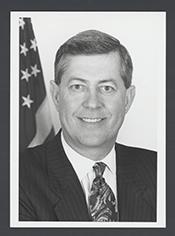
Mr. Speaker, I rise in support of this rule and thank the gentlewoman from North Carolina (Mrs. Myrick) for yielding me this time. Mr. Speaker, H. Res. 554 is a fair and balanced rule that will…
Mr. Speaker, I rise in support of this rule and thank the gentlewoman from North Carolina (Mrs. Myrick) for yielding me this time.
Mr. Speaker, H. Res. 554 is a fair and balanced rule that will provide House Members with the opportunity to consider a number of issues affecting our efforts to get indecent material off our airwaves. Under this rule, the House will have the opportunity to consider a manager's amendment by the gentleman from Michigan (Mr. Upton) and an amendment by the gentlewoman from Illinois (Ms. Schakowsky) to strike the increased fine limit on entertainers, and an amendment by the gentleman from Texas (Mr. Sessions) to direct the General Accounting Office to provide a detailed report to Congress about the number of complaints about indecent broadcasting and the processes and procedures that the FCC has implemented to investigate these complaints.
With respect to H.R. 3717, the underlying legislation, I want to commend the gentleman from Michigan (Mr. Upton), the chairman of the Subcommittee on Telecommunications and the Internet, for all of the time and effort he has invested in bringing this very important and well-crafted legislation to the House floor.
Vulgarity, profanity, and even obscenity are an all-too-common trend on our television and radio airwaves today. Originally, the Golden Globe Awards incident last year appeared to be an isolated event; however, the subsequent profanity during the Billboard Music Awards broadcast and the grossly inappropriate halftime show of the 2004 Super Bowl made clear that Congress needs to take action and give the FCC the tools it needs to crack down on such tawdry programming.
H.R. 3717 provides some of these tools for the FCC and is a step in the right direction. This legislation increases the penalties imposed for broadcast indecency, which allows the FCC to more authoritatively regulate on-air programming. Also, this bill makes it easier for the FCC to hold individuals subject to the same fines as broadcasters for indecent actions.
In conclusion, families must be able to watch prime-time TV together without the fear of watching obscene, profane, or vulgar programming; and H.R. 3717 will help make this a reality.
Mr. Speaker, I urge Members to support the rule so we may proceed to debate the underlying legislation.

Mr. Chairman, I rise in support of H.R. 3717. Every second of every day and in almost everything we do we are confronted by a multitude of images, some of which benefit our lives, others which do…
Mr. Chairman, I rise in support of H.R. 3717. Every second of every day and in almost everything we do we are confronted by a multitude of images, some of which benefit our lives, others which do just the complete opposite.
We live at a time when 98 percent of the households have one or more television sets. As of 2001, there were over 100 million Americans on- line, with almost half of all of U.S. households with Internet access. This new media has enriched our lives. It has given up-to-the-very- minute news reports from around the world, television shows that both educate and entertain, and Web sites that have every answer to every question posed, it seems.
However, unfortunately, there is a negative side, those Web sites whose sole purpose is to satiate the prurient interests of its viewers, television programs that play to the lowest denominator of decency. There are those who seek to test the boundaries, and those who try to ignite a firestorm, so the 24-hour news stations have something to report on at 3 a.m., or attempt to revitalize a career by shocking viewers. It is these images, the ones we shield our children from, that this legislation seeks to penalize.
This legislation was not born out of an isolated incident from a Super Bowl. It is not a hasty reaction to that at all.
This is a very serious level of effort that has lasted over the last year.
We are raising the fine so that it is feasible and equitable for the government to enforce standards of decency. We are allowing the independent broadcasters who have no control over what they air to avoid liability. We are looking to the individual, who willfully and intentionally defies the law, to be held accountable.
There are some who claim that we are towing the line of censorship; that that is the next step and we will go too far. However, I place the onus upon the network, the broadcasters, the entertainers, and the Web site managers to be their own guideposts of the Constitution and community standards.
Governments should not be the decency police, but when laws are defied, we are required to step in and enforce the law.
I support this bill and I want to compliment the gentleman from Massachusetts (Mr. Markey) and also the gentleman from Michigan (Mr. Upton) for the bill.
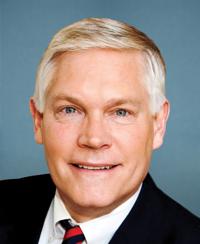
Mr. Chairman, I offer an amendment. Mr. Chairman, I yield myself such time as I may consume. My amendment is a simple contribution to this bill that I believe will bring some additional…
Mr. Chairman, I offer an amendment.
Mr. Chairman, I yield myself such time as I may consume.
My amendment is a simple contribution to this bill that I believe will bring some additional accountability and enforcement to the FCC's current process of handling broadcasting complaints and proposed violation of FCC rules.
My amendment to this legislation would give the General Accounting Office 1 year to study and report back to Congress on the number of complaints concerning the broadcasting of obscenity, indecency, and profane material to the Federal Communications Commission; the number of such complaints that result in final agency actions by the commission; the length of time taken by the commission in responding to such complaints; what mechanisms the commission has established to proceed, investigate, and respond to such complaints; and whether such complaints to the commission are adequately informed by the commission of their responses to those complainants.
I believe that this amendment will help this body to conform with third-party data and the relevant facts and figures that the FCC is doing its utmost to carry out the intent of the important legislation that we are considering today.
The Upton legislation will crack down on indecent over-the-air broadcasts and will bring much-needed accountability to our public airwaves. Last year, there were over 240,000 complaints against 375 programs, but the FCC issued only three notices of proposed violations. I believe that Congress should get more information about what the FCC is doing to help us perform an important oversight function over the FCC's action and its accountability to the American public.
I would like to thank the gentleman from Michigan (Chairman Upton), the gentleman from Texas (Chairman Barton), and the gentleman from California (Chairman Dreier) for their important work and leadership in bringing this legislation to the floor today. I urge my colleagues to support this amendment to allow the GAO to gain more information from the FCC about how they are handling complaints that they receive on indecent material.
Mr. Chairman, I would simply ask that we include this amendment, and I ask for its immediate consideration.
Mr. Chairman, I yield back the balance of my time.

Mr. Chairman, I want to thank the chairman and the ranking member for their leadership on this issue in bringing this bill so rapidly to the floor. The Federal Communications Commission plays a very…
Mr. Chairman, I want to thank the chairman and the ranking member for their leadership on this issue in bringing this bill so rapidly to the floor.
The Federal Communications Commission plays a very important role in protecting Americans, and particularly children, from indecent programming. The FCC has the statutory authority to enforce the laws that are on the books, but their enforcement has been inadequate and the tools that they have had at their disposal have also been insufficient. This bill today will help to change that situation.
This legislation increases the fines from what was really a trivial amount, a cost-of-doing-business kind of fine, to a maximum of $500,000 per violation. It also says that a broadcast company's record of indecency will be a factor when they apply to continue to get their free over-the-air license continued. And I hope that that gets the attention of the companies that are pushing the envelope with respect to indecency.
It also increases the expectations for enforcement by the FCC. We have heard the numbers and the statistics, which are appalling, regarding the enforcement of these laws. Some of the complaints go unanswered or unaddressed for years. This bill establishes a shot clock of 270 days where the FCC has the obligation to take action when there is a complaint for indecency.
I also think that this bill makes very clear, and this effort should make clear, that local affiliates have the right to decline to air programming which is inconsistent with community standards, even when it is not indecent or profane. In the hearings in our committee, we heard about local affiliates who felt as though they really did not have the leverage within the networks. This legislation shows they do have the leverage, they can exercise it, and we also will punish the networks if they fail to follow the law.
Mr. Chairman, I believe we have already had an effect on this industry. FCC enforcement was lax and, when imposed, was largely symbolic. We are changing that. But the real change will come in the board rooms and the general managers' offices and broadcast studios across this country when people decide to be responsible and to entertain rather than denigrate.
Mr. Speaker, the Committee on Rules has denied me and other Democrats the opportunity to offer amendments that are vital and directly relevant to the debate on eliminating indecent content on the…
Mr. Speaker, the Committee on Rules has denied me and other Democrats the opportunity to offer amendments that are vital and directly relevant to the debate on eliminating indecent content on the public airwaves.
Americans should look at the link between the surge in complaints on indecent content on TV and radio and the increasing media consolidation that has occurred in recent years.
During the Committee on Energy and Commerce's three hearings on Indecency in the Media, it became apparent it is the media giants who are the greatest offenders of the FCC's indecency standard. The biggest FCC fines have gone to the biggest media players. In the past 5 years, 80 percent of the fines on violations of the FCC indecency standard were handed out to the media conglomerates.
I believe the increasing amount of indecent content on our public airwaves is a symptom of media consolidation, but the FCC never bothered to look at this possible link before they issued new rules last year to allow these media giants to get even bigger. The Parents Television Council noted this as well. Director Brent Bozell said after the FCC issued the new rules allowing more media consolidation, and I would like to quote him, he said, ``The rules change means that a handful of megaconglomerates will impose their own standards of decency. They have been handed unfettered opportunity to broadcast violent and vulgar programming with impugnity.''
My amendment would have delayed the FCC rules on media consolidation while the GAO conducted a thorough review of the correlation between indecent content on our public airwaves and media consolidation.
I had also offered a pared-down amendment that would have authorized a study without delaying the rules. I will still be seeking the GAO study, and I invite my colleagues to join me in this request I will be making later today.
The growing number of media monopolies is relevant to this indecency debate, and the Committee on Rules should not have denied me and others the opportunity to offer our amendments. I urge my colleagues to vote against this rule until we get the amendments that will help us further this debate.
Bill Text
2 versions available
        [Congressional Bills 108th Congress]
[From the U.S. Government Publishing Office]
[H. Res. 554 Engrossed in House (EH)]

In the House of Representatives, U.S.,

March 11, 2004.
Resolved, That at any time after the adoption of this resolution the Speaker
may, pursuant to clause 2(b) of rule XVIII, declare the House resolved into the
Committee of the Whole House on the state of the Union for consideration of the
bill (H.R. 3717) to increase the penalties for violations by television and
radio broadcasters of the prohibitions against transmission of obscene,
indecent, and profane language. The first reading of the bill shall be dispensed
with. All points of order against consideration of the bill are waived. General
debate shall be confined to the bill and shall not exceed ninety minutes equally
divided and controlled by the chairman and ranking minority member of the
Committee on Energy and Commerce. After general debate the bill shall be
considered for amendment under the five-minute rule. It shall be in order to
consider as an original bill for the purpose of amendment under the five-minute
rule the amendment in the nature of a substitute recommended by the Committee on
Energy and Commerce now printed in the bill. The committee amendment in the
nature of a substitute shall be considered as read. All points of order against
the committee amendment in the nature of a substitute are waived. No amendment
to the committee amendment in the nature of a substitute shall be in order
except those printed in the report of the Committee on Rules accompanying this
resolution. Each such amendment may be offered only in the order printed in the
report, may be offered only by a Member designated in the report, shall be
considered as read, shall be debatable for the time specified in the report
equally divided and controlled by the proponent and an opponent, shall not be
subject to amendment, and shall not be subject to a demand for division of the
question in the House or in the Committee of the Whole. All points of order
against such amendments are waived. At the conclusion of consideration of the
bill for amendment the Committee shall rise and report the bill to the House
with such amendments as may have been adopted. Any Member may demand a separate
vote in the House on any amendment adopted in the Committee of the Whole to the
bill or to the committee amendment in the nature of a substitute. The previous
question shall be considered as ordered on the bill and amendments thereto to
final passage without intervening motion except one motion to recommit with or
without instructions.
Attest:

Clerk.