Welcoming the accession of Bulgaria, Estonia, Latvia, Lithuania, Romania, Slovakia, and Slovenia to the North Atlantic Treaty Organization (NATO), and for other purposes.

Legislative Activity
Stay on top of the latest movement without scrolling through every action
Motion to reconsider laid on the table Agreed to without objection.
March 30, 2004 • 4:15 PM
View full timeline
Introduced in House
March 11, 2004
Referred to the House Committee on International Relations.
March 11, 2004
Forwarded by Subcommittee to Full Committee (Amended) by Voice Vote.
March 17, 2004
Mr. Bereuter moved to suspend the rules and agree to the resolution, as amended.
March 30, 2004 • 12:20 PM
Considered under suspension of the rules. (consideration: CR H1661-1666)
March 30, 2004 • 12:20 PM
DEBATE - The House proceeded with forty minutes of debate on H. Res. 558.
March 30, 2004 • 12:20 PM
At the conclusion of debate, the Yeas and Nays were demanded and ordered. Pursuant to the provisions of clause 8, rule XX, the Chair announced that further proceedings on the motion would be postponed.
March 30, 2004 • 12:49 PM
Considered as unfinished business. (consideration: CR H1701)
March 30, 2004 • 4:08 PM
Passed/agreed to in House: On motion to suspend the rules and agree to the resolution, as amended Agreed to by the Yeas and Nays: (2/3 required): 422 - 2 (Roll no. 99).(text: CR H1661-1662)
March 30, 2004 • 4:15 PM
On motion to suspend the rules and agree to the resolution, as amended Agreed to by the Yeas and Nays: (2/3 required): 422 - 2 (Roll no. 99). (text: CR H1661-1662)
March 30, 2004 • 4:15 PM
Motion to reconsider laid on the table Agreed to without objection.
March 30, 2004 • 4:15 PM
Voting History
1 vote recorded • Roll call available
Floor Debate
15 membersWhat members said about H.Res. 558 on the floor
 JPMDB
JPMDB CC
CC JS
JS BF+10
BF+10
Floor Debate
15 membersWhat members said about H.Res. 558 on the floor
Mr. Speaker, I yield myself such time as I may consume, and I would like to thank the gentlewoman from North Carolina (Mrs. Myrick) for yielding me the customary 30 minutes. Mr. Speaker, we are…
Mr. Speaker, I yield myself such time as I may consume, and I would like to thank the gentlewoman from North Carolina (Mrs. Myrick) for yielding me the customary 30 minutes.
Mr. Speaker, we are considering this bill, surprise, surprise, under a closed rule. Once again, the Republican majority has decided that thoughtful debate and the ability for Members to offer amendments is too much of a bother.
We learned that the underlying bill, H.R. 3966, was going to be on the floor at the end of last week when Members left Washington to return to their districts. Most Members did not arrive back in Washington until yesterday afternoon, which is exactly the time the Committee on Rules was meeting to report out this closed rule. So, once again, the majority has gone out of its way to stifle debate, prevent amendments, and rush legislation through the House before people know what hit them.
Mr. Speaker, one of these days, and I hope it is soon, this kind of heavy-handed use of power is going to backfire, especially when there is so much important work that is not being done.
At the end of the debate on this rule, I will urge a ``no'' vote on the previous question so that the House can consider the critical issue of unemployment insurance for the estimated 1.1 million jobless workers who will have exhausted their regular unemployment benefits without receiving additional aid. This is the largest number of exhaustees in over 30 years, and this figure will only continue to grow when 80,000 more jobless workers exhaust their regular benefits and go without any additional aid each week.
As for the underlying bill, H.R. 3966, it is my view that it should be defeated. In 1995 and 1996, Congress passed legislation to deny Defense Department funding to colleges and universities that failed to give military recruiters access to their campus and students. Known as the Solomon Law, this legislation was passed to respond to efforts by several colleges and universities to protest the discriminatory policies of the Pentagon against gay men and women. Over time, the law was expanded to prohibit funding a university might receive from nearly every Federal agency.
H.R. 3966 would round out that list by expanding it to include the CIA and the National Nuclear Security Administration at the Department of Energy. The bill would also restate the Department of Transportation which was inadvertently deleted 2 years ago.
Now I am grateful that this law does not apply to student financial aid, but, unfortunately, it does apply to all other grants, including research grants.
Last November, a U.S. District Court in New Jersey upheld the constitutionality of the Solomon Law, but the court also determined that the Solomon Law does not give the Pentagon any basis for asserting, as it has in the regulations on implementing the Solomon Law, that universities and colleges must give military recruiters the same degree of access to campuses and students provided to other employers.
Ironically, Mr. Speaker, the Solomon Law is not about equal access at all
but about special access for the Pentagon. As the Servicemembers Legal Defense Network states, and I quote, ``There is no lack of equal access for military recruiters and ROTCs on America's college campuses. Any access for an employer that fails to meet schools' nondiscrimination policies is special access. The Solomon Amendment is about giving the military a special right to discriminate in a way other employers may not.''
So, Mr. Speaker, this House is being asked to use the blunt force of legislation to expand the Solomon Law to include equal treatment and scope for military recruiters who already have access to every campus and every student in the land.
It is my understanding, Mr. Speaker, that the Pentagon sent a list to the Committee on Armed Services regarding a handful of colleges and universities that the Pentagon has predetermined do not provide them with equal treatment and quality of access to students. Now, let me emphasize, these are all colleges and universities that fully comply with the existing Solomon Law. They include several of our premier academic and research universities.
And who gets to make this determination, this judgment, as to whether a college or university is in compliance with this new law? The Secretary of Defense and the Pentagon. And who gets to determine and implement the punishment? That same Secretary of Defense and the Pentagon, with no independent or neutral arbiter and no genuine right to appeal. So in these cases the Pentagon serves as prosecutor, judge, jury, and appeals court. That is not how it is supposed to work in this country, Mr. Speaker.
Until I have a better understanding as to why these colleges and universities are on some predetermined watch list from the Pentagon that could strip them of all their Federal funding and research grants, I cannot support this expansion of the Solomon Law, a law which itself is grounded in discrimination.
Now, Mr. Speaker, every Member of this House, including myself, supports the ability of our Armed Forces to encourage the best educated and best minds of our Nation to consider the military as a career, especially in these perilous times. But, Mr. Speaker, the military already has that ability. It simply does not want to accept ``yes'' as an answer from 100 percent of our colleges and universities regarding access to campuses and students. What the Pentagon wants is 100 percent access on their terms and their terms alone.
It is true that the military has a problem with recruitment and retention, a serious situation when our troops are stretched so thin around the globe. As the resolution says, the Armed Forces face a constant challenge in recruiting top-quality personnel. But, Mr. Speaker, perhaps if the Pentagon truly addressed the serious issues of discrimination against women and against gays and against minorities, more of these top-quality personnel would be willing to serve.
Mr. Speaker, I want to conclude my opening statement by asking: Are there not more urgent issues to consider before Congress adjourns for spring recess? The extension of unemployment benefits genuinely is an urgent issue, increasingly a life-and-death issue for many families, and it seems to me like a far more important issue for this House to consider before we recess on Friday than the bill that is before us this morning.
As I noted earlier, at the end of this debate I will be calling for a ``no'' vote on the previous question so that this House can take up the urgent issue of extending unemployment benefits to the 1.1 million needy Americans whose benefits have been exhausted.
Mr. Speaker, I reserve the balance of my time.
Mr. Speaker, I yield 4 minutes to the distinguished gentleman from Washington (Mr. McDermott).
(Mr. McDERMOTT asked and was given permission to revise and extend his remarks.)
Mr. Speaker, I yield 3 minutes to the distinguished gentlewoman from Oregon (Ms. Hooley).
Mr. Speaker, I yield myself such time as I may consume.
I would just simply say to the gentleman that Harvard does have an ROTC unit. One thing I suggested in my opening remarks, and I would suggest it again, is that probably the best way to kind of put this controversy to rest is for the military to deal with some of the discriminatory practices that currently exist. Some of these colleges have nondiscrimination policies that, quite frankly, conflict with some of the blatantly discriminatory policies that we now see happening in the Pentagon. I would simply say to the gentleman that maybe a way to resolve this, we can also deal with some of the underlying issues that continue to exist.
I yield to the gentleman from California.
I appreciate the gentleman's answer. I would also say to my colleagues on the other side of the aisle, when we talk about the importance of people standing up to their responsibilities during this difficult time, I hope that there will be equal passion that will be brought to demanding that some of these Benedict Arnold companies that, quite frankly, take U.S. tax dollars and are engaged in contracts involving the reconstruction of Iraq and they do not pay U.S. taxes, I hope that there will be some accountability there.
Mr. Speaker, I yield 3 minutes to the gentleman from Maryland (Mr. Cardin).
Mr. Speaker, I yield 5 minutes to the gentleman from Massachusetts (Mr. Frank).
Mr. Speaker, I yield 3 minutes to the gentleman from Michigan (Mr. Levin).
(Mr. LEVIN asked and was given permission to revise and extend his remarks.)
Mr. Speaker, I yield myself such time as I may consume.
Mr. Speaker, I will urge a ``no'' vote on the previous question; and if the previous question is defeated, I will offer an amendment to the rule which will provide that, immediately after the House passes H.R. 3966, it will take up legislation to extend Federal unemployment benefits to the end of September of this year.
Mr. Speaker, last week during testimony before the House Committee on
Financial Services, the Secretary of the Treasury said the President would sign legislation to extend Federal unemployment if it reached his desk. The bill that I will attempt to make in order would give the President that opportunity. It is a simple extension of the current program through September 30, nothing more, nothing less. If the President is willing to sign this badly needed bill, then we should get it to him immediately; and if we defeat the previous question, we can get the process started right away.
From late December through the end of March, an estimated 1.1 million jobless workers will have exhausted their regular unemployment benefits without receiving additional aid. This is the largest number of exhaustees in over 30 years. This figure will continue to grow, with 80,000 more jobless workers exhausting their regular benefits and going without any additional aid each week. Despite this, the Republican leadership in this House refuses to extend this program.
Mr. Speaker, today's unemployment numbers are devastating. With no private sector jobs created last month and only 21,000 jobs created overall, all of them public sector or government jobs, unemployed Americans today are facing insurmountable odds. Today, 8.2 million Americans are unemployed, and 3 million private sector jobs have been lost since President Bush took office. On top of the millions of unemployed, there are 4.4 million people who are working part time, which is an increase of 33 percent since the beginning of this administration. The average length of unemployment hovers at the highest level in almost 20 years; and, worst of all, Mr. Speaker, there is no relief in sight. Yet this Congress cannot seem to find a will or the time to extend unemployment benefits to those workers who have exhausted their benefits but still cannot find work.
What are their families supposed to do, Mr. Speaker? Where will the money come from to pay the rent or the mortgage, to buy medicine, food, or gas for the car? Does this House simply not care about these families and their children?
Mr. Speaker, the extension of unemployment benefits is an urgent issue for many families; and it seems to me like a far more important issue for this House to consider than the bill that we are considering right at this point. Let me be very clear that a ``no'' vote on the previous question will not stop consideration of H.R. 3966. But a ``no'' vote will allow the House to vote on legislation to help provide some much-needed relief to our Nation's unemployed workers, many of whom have not had a paycheck for months. However, a ``yes'' vote on the previous question will prevent the House from passing this desperately needed extension of Federal unemployment benefits to our jobless workers.
Mr. Speaker, let us show the American people that we get it, that we understand what the real problems are facing the people of this country and that this House deliberates on issues that really matter, that make a difference to people's lives.
So vote ``no'' on the previous question and vote to extend unemployment benefits.
Mr. Speaker, I yield back the balance of my time.
Mr. Speaker, I object to the vote on the ground that a quorum is not present and make the point of order that a quorum is not present.
Madam Speaker, I move to suspend the rules and agree to the resolution (H. Res. 558) welcoming the accession of Bulgaria, Estonia, Latvia, Lithuania, Romania, Slovakia, and Slovenia to the North…
Madam Speaker, I move to suspend the rules and agree to the resolution (H. Res. 558) welcoming the accession of Bulgaria, Estonia, Latvia, Lithuania, Romania, Slovakia, and Slovenia to the North Atlantic Treaty Organization (NATO), and for other purposes, as amended.
Madam Speaker, I ask unanimous consent that all Members may have 5 legislative days within which to revise and extend their remarks and include extraneous material on H. Res. 558, as amended.
Madam Speaker, I yield myself such time as I may consume.
Madam Speaker, this Member is extremely pleased to offer this resolution welcoming the accession to NATO membership of seven Central European democracies: Bulgaria, Estonia, Latvia, Lithuania, Romania, Slovakia and Slovenia.
Yesterday, these seven nations became America's newest allies when their prime ministers presented Secretary of State Powell with their instruments of accession. Secretary Powell recalled their struggle for freedom and promised that ``by joining NATO's bond of collective security, Article 5 and all, you will remain free.''
Later, President Bush yesterday publicly welcomed their leaders to the alliance on the south lawn of the White House. In his remarks, the President noted, ``The countries we welcome today were friends before they were allies, and they were allies in action before becoming allies by treaty.''
The decision to admit former communist nations from Central and Eastern Europe, Madam Speaker, into the Atlantic Alliance, is one of the great successes of American and Alliance foreign policy since the end of the Cold War. It is a bipartisan success promoted by Republicans and Democrats in the Congress and by both the Clinton and Bush administrations. It is also a success in which the House of Representatives has played an important role.
Since 1994, the House has repeatedly declared its support for NATO enlargement and the fundamental role of NATO in transatlantic security. We recognize that throughout its history NATO has succeeded not only in keeping its MEMBERS free, but in extending that freedom to new lands that have long yearned for freedom's blessings.
Already, the three nations that joined NATO in 1999, Poland, Hungary and the Czech Republic, have been contributing to the Alliance and its operations in Bosnian and Herzegovina, Kosovo and Afghanistan. Furthermore, Poland has been a major contributor to Operation Iraqi Freedom and currently commands a multinational force in south central Iraq.
The current round of enlargement, the fifth in NATO's history, will further erase the dividing lines across Europe that were drawn at Yalta and will further extend the zone of peace and security in the North Atlantic region.
Bulgaria, Estonia, Latvia, Lithuania, Romania, Slovakia, and Slovenia are already contributing to the Alliance, with each of these new allies contributing to one or more of NATO's ongoing operations. In addition, six of them have forces on the ground in Iraq.
That is far from their only contribution. Last year as president of the NATO Parliamentary Assembly, this Member traveled to all seven of these countries; and after those visits, this Member is confident that they and their membership will reinvigorate the Alliance. In fact, the new vigor is already being felt.
Because the citizens of these new MEMBER countries have recent memories of living under oppressive dictatorships, they are especially committed to NATO and its collective defense guarantee.
Having fought so long and hard to gain their freedom, they know how precious freedom is and how fundamentally important the defense of freedom remains. They have pledged that they are ready to defend their freedom and ours, and we are very fortunate to be able to call them our allies.
In addition to noting the accomplishments of the incoming NATO members and welcoming their accession to the Alliance, this resolution also reaffirms the support of the House for the process of NATO enlargement and for keeping NATO's doors open.
Finally, this resolution expresses our support for the remaining candidates for NATO membership, at this point, Albania, Croatia, and Macedonia.
To ensure that the enlargement process continues after the accession of the seven new members, the resolution recommends that the leaders of the NATO nations at this summer's Istanbul Summit ``should agree to review the enlargement process, including the applications of Albania, Croatia and Macedonia, at a summit meeting to be held no later than 2007.''
This language is consistent with the language of the relevant communique from the 1999 Washington Summit at which Alliance leaders welcomed Poland, Hungary, and the Czech Republic to NATO membership. That communique called for a summit meeting to review the enlargement process to be held ``no later than 2002,'' that is, 3 years after that summit.
Scheduling a 2007 enlargement summit would also establish a 5-year cycle for NATO enlargement. Three nations
received invitations in 1997 at Madrid, and seven nations were invited in 2002 in Prague. This Member believes that this is a reasonable timetable, one that gives NATO time to incorporate the seven new members, while absolutely ensuring that the three remaining candidates are not forgotten and that they have met the necessary requirements to be full-fledged partners in NATO.
Madam Speaker, yesterday was a historic day for America's seven newest allies as they joined the most successful Alliance in history and thereby secured the freedom that they had fought so hard to gain. This Member urges his colleagues to vote for this resolution in order to welcome these countries to NATO and to ensure that NATO's door remains open to Bulgaria, Estonia, Latvia, Lithuania, Romania, Slovakia and Slovenia, and probably to countries to follow.
Madam Speaker, I reserve the balance of my time.
Madam Speaker, I yield myself such time as I may consume for a brief set of comments, and I want to thank the gentleman for his outstanding statement and for his generous remarks directed toward this Member.
I would say to the gentleman with respect to Iraq and with respect to Afghanistan, the two subjects that the gentleman addressed towards the remaining part of his time, I certainly am in absolute agreement. The gentleman will recall, of course, that the House and the Senate have both expressed their view that NATO should take a larger role in Iraq and that, in fact, we should call upon the resources of the United Nations where appropriate. I am sure the gentleman is concerned about the lack of resources from NATO countries being directed towards Afghanistan at this critical time.
Madam Speaker, it is now my pleasure to yield time shortly to the distinguished gentleman from Illinois (Mr. Shimkus), who is a graduate of the U.S. Military Academy and who had the experience of being an infantry officer in a combat unit stationed on the Czechoslovakian border before, in fact, the Wall came down and before we moved to now admit, some 3 or 4 years ago, the Czech Republic to NATO. The gentleman has taken an outstanding interest and involvement in the NATO Parliamentary Assembly as a rapporteur or co-rapporteur on a number of important reports for the Defense and Security committee and, I might also say, he has a special interest in our Baltic neighbors who are, by actions yesterday, joining NATO.
Madam Speaker, I yield such time as he may consume to the gentleman from Illinois (Mr. Shimkus).
(Mr. SHIMKUS asked and was given permission to revise and extend his remarks.)
Madam Speaker, I want to thank the gentlewoman from Texas (Ms. Jackson-Lee) for her kind
remarks and knowledgeable comments. I thank my colleague from California (Mr. Lantos) again for his continued interest and leadership in this subject area.
Madam Speaker, I urge all Members to support this resolution. I have no further requests for time, and I yield back the balance of my time.
Mr. Speaker, I thank the gentlewoman for yielding me this time. I rise in strong support of H.R. 3966, and I want to commend the gentleman from Alabama (Mr. Rogers) for his leadership and hard work…
Mr. Speaker, I thank the gentlewoman for yielding me this time. I rise in strong support of H.R. 3966, and I want to commend the gentleman from Alabama (Mr. Rogers) for his leadership and hard work on this issue. The rule that will bring this bill to the floor is, therefore, very important.
This bill is named the ROTC and Military Recruiter Equal Access to Campus Act of 2004, but it might just as well as be called the Harvard Act, because it squarely addresses the scandal of Harvard University and other schools' banishing ROTC and military recruiters from campus while turning around and cashing Uncle Sam's checks for billions of dollars each year from the Department of Defense and other Federal agencies that are fighting the global war on terror.
The attacks on America, on the World Trade Center, and on the Pentagon should serve as a wake-up call to schools such as Harvard which banished ROTC from campus 35 years ago.
As our Nation wages an aggressive campaign to stop global terrorism, President Kennedy's call to young people to ask what you can do for your country is more important than ever. America's Armed Forces are hunting down al Qaeda and other supporters of terrorism in Afghanistan, in Iraq, and on every continent around the globe. Never in recent history have Americans asked more of members of the Armed Forces, and never have we had a greater need for well-educated leaders in our military.
Today, successful recruitment of exceptional officers depends heavily on the Reserve Officers' Training Corps. This past year, for instance, 70 percent of the Army's newly commissioned officers came from ROTC. Through ROTC, students receive generous scholarship assistance in return for agreeing to serve their country following graduation. As chairman of the Select Committee on Homeland Security, I have been gratified and humbled to see how many of the best and brightest in America have been willing to enlist in the fight against terrorism both through ROTC and by choosing the armed services as a career upon their graduation. Yet I am very troubled that a number of America's most prestigious colleges and universities, including Harvard, Yale, Stanford and Columbia, continue to officially ban ROTC from campus. Many of these same schools deny students the opportunity to interview on-campus with military recruiters. These policies have been successful in discouraging young adults from choosing a career in the military.
The legislation before us today makes several important reforms to protect taxpayers, to protect students' freedom of choice and to protect our armed services from discrimination. The premise of the bill is a simple one: colleges that discriminate against the United States armed services should not receive United States taxpayer funds related to national defense and homeland security.
Specifically, H.R. 3966 makes three major reforms. First, it will stop the current abusive practice under which schools ban ROTC and military recruiting, but then turn around and cash enormous checks from the Department of Defense, the Department of Homeland Security, and other Federal agencies fighting the war on terror. For example, the Homeland Security Act created several new science and technology research programs for which colleges and universities are eligible. This law will say that these funds should not go to schools that discriminate against ROTC or military recruiters.
Second, this legislation will require schools that accept national security and homeland security funds to certify that they do not discriminate against ROTC and that they do permit on-campus ROTC programs if requested by the Department of Defense. Current law, which already requires schools accepting defense funds to accommodate on- campus ROTC programs if requested by the Department of Defense, is not enforced against elite schools such as Harvard, Yale, Stanford, Columbia and others that have banned ROTC on campus. This bill will change that.
Third, this legislation will ensure that schools accepting national security and homeland security funding provide access to military recruiters that is ``equal in quality and scope'' to the access provided to other campus recruiters. At Harvard, even military recruiters who are themselves Harvard graduates are not permitted to meet students on campus like other employers. A Harvard grad that has stained himself in the view of the faculty by participating in the U.S. military cannot visit campus and cannot stuff mailboxes, even though virtually every other group and every other employer is permitted to do so.
On the Harvard campus in Memorial Church, the names of Harvard alums who died in service to this country are inscribed on the wall and there is this inscription by former Harvard President Lawrence Lowell:
``While a bright future beckoned, they freely gave their lives and fondest hopes for us and our allies, that we might learn from them courage in peace to spend our lives making a better world for others.''
Today, as our Nation calls for able new leaders in the war on terror, will Harvard and our Nation's other elite universities step forward and live up to that legacy? It has been a long time since 1969 and Vietnam, John Kerry notwithstanding, when Harvard's faculty, of which I am a former member, banished ROTC. It has been 2\1/2\ short years since our Nation was attacked by terrorists who still make war on our Nation. It is time for universities that accept national security and homeland security funding to support and encourage, not undermine, this Nation's call to service. That is the message of H.R. 3966.
I urge my colleagues to join with me in supporting this important legislation and the rule that will bring it to the floor.
Mr. Speaker, will the gentleman yield?
It is true that there are a handful of brave students at Harvard that are ROTC scholars, and it is true that Harvard is happy to cash their scholarship checks; but Harvard refuses to permit the ROTC program on campus and, therefore, the students have to go down the road to MIT, which will accept them as the gentleman knows. As a result, the discrimination against Harvard students is very real. Furthermore, as the Wall Street Journal has outlined, not on their editorial page but in news articles, there is on campus a very hostile attitude toward students in uniform. That needs to be changed.
Madam Speaker, it is a wonderful day. Actually, the great day was yesterday, and it is an honor to be here on the floor with the gentleman from Nebraska (Chairman Bereuter) and the gentleman from…
Madam Speaker, it is a wonderful day. Actually, the great day was yesterday, and it is an honor to be here on the floor with the gentleman from Nebraska (Chairman Bereuter) and the gentleman from California (Ranking Member Lantos), who have become great friends in this battle. It is a battle that I have really been fortunate to join, really at the closing of it. It is an important step forward to President Bush's goal and others within the administration's goal of a Europe whole, free, and at peace.
It was great at the ceremonies yesterday when, on the lawn, on the east lawn, not only was the current administration there, but representatives of previous administrations: the Honorable Jean Kirkpatrick was there, the Honorable Madeleine Albright was there, Sandy Berger was there. So it really shows that NATO enlargement is really something that has lasted the test of time.
At a time in our country where there seems to be great divisiveness, one unifying aspect is NATO enlargement. I am proud to be a Member of the House where I think all enlargements, actually, the momentum has always started, I think from the Madrid enlargement to even this most recent round. I think the other body gets a lot of credit because of their votes, but we do not want to shy away or take a second seat to anybody in our position and our push for NATO enlargement.
I have enjoyed the relationship with the American citizens who still have a great respect and honor for their ethnic heritage and their home countries. These American citizens, who have fought in our wars and have given their lives for freedom and democracy, really ask their government to do a simple thing and help return that type of stability, peace, and freedom to their home countries, the countries of their birth, the countries of their forefathers. NATO does that.
The North Atlantic Treaty Organization brings a collective self- defense mission to again address that area of a Europe whole and free, so it is just a very important and exciting day. So I appreciate the resolution, because we should be part of the celebratory aspect and make sure that we are on record saying a job well done.
There is still much work to go before us, as both the gentleman from Nebraska (Chairman Bereuter) and the gentleman from California (Mr. Lantos) have mentioned. But we are going to be much stronger as a united world, united under basic principles of freedom and democracy and the rule of law when we address totalitarian regimes than we would be to continue to have a fractured environment in Europe.
We know what these new entrants are already doing. Actually, they have come through the membership action plan, which was not an easy task. When we have these democracies move from a centralized market economy to a free market economy, that creates a lot of stress on the way that the government used to provide services. These governments had to decide whether they needed to move aggressively with large parts of their dollars to transform themselves to be prepared to enter NATO. That is not easy, when you are changing from a system where the government is providing for all of the basic needs and now you are taking money away to increase the ability for self-defense. So they need to be applauded. They have gone through the process of reform in the military, in the economy, the rule of law; and the membership action plan really helped do that.
Now they have also come to the forefront in the war on international terrorism. I know a lot of folks understand that it is important what they have given after September 11, their involvement in Afghanistan and for many their involvement in Iraq; and it is not a small task to ask these new emerging democracies to send their sons and daughters overseas for a cause of freedom, peace, and security in the world.
So this is really appropriate that we do this. Bulgaria is focused on engineers and mine-sweepers; Romania on unmanned aerial vehicles and mountain troops; Slovakia, nuclear, biological, and chemical defense units; Slovenia, mountain warfare troops; Estonia, military divers and mine countermeasures; Latvia, explosive ordnance disposal; and Lithuania, Bulgaria, Latvia, Slovakia, and Slovenia will provide special operations forces.
So they are going to be additive to NATO. But where they are really going to be more additive, actually a multiplier, is really their heart and soul. These countries still have the scars of totalitarian regimes. They still hurt as they look at what has occurred to their countries over the decades. They bring an understanding of the cause for freedom and democracy. That is a message that sometimes those of us who have experienced and benefited from democratic governance for many years, we sort of take for granted and forget. Not after September 11, of course. But they are reenergizing NATO. They are bringing their commitment, their heart and soul.
I wholly applaud, really, the international community, the United States for our leadership, and really the membership countries for saying, this is the right thing to do at the right time. The world will be stronger and more at peace because of the most historical organization in the history of the world that has kept the peace for over 50 years, the North Atlantic Treaty Organization. I am honored to have the chance to be on the floor to recognize them. I look forward to their added power as we move forward in this very dangerous and difficult time in this world.
Mr. Speaker, I do want to talk about the pending legislation, so I do not have time to comment on all the odd things that the previous speaker talked about, but a couple must be mentioned. This…
Mr. Speaker, I do want to talk about the pending legislation, so I do not have time to comment on all the odd things that the previous speaker talked about, but a couple must be mentioned.
This assertion that we in the minority are blocking legislation has to be one of the most bizarre misrepresentations of the actual situation I have ever heard. We have no control over the agenda. We are not blocking anything. I wish we could block some of the stuff that has happened.
But this challenge to us to stop blocking Head Start, I have looked all over. I could not find Head Start laying anywhere here. We have not hidden it under our chairs. We are not blocking Head Start.
Job training, stop blocking job training. Job training is not being held hostage in the Democratic cloakroom. All of the scheduling is up to the majority.
So this arm-waving about stop blocking things when the majority is entirely in control does not make a great deal of sense.
I, on the other hand, did appreciate the honesty of the gentleman when he sneeringly referred to unemployment compensation as a handout. He said, if people are in business, they understand that that is not the way to go.
I had thought Secretary Snow, the Secretary of Treasury appointed by the President, former head of CSX, had some business experience. I was pleased last week when he supported the extension of unemployment benefits. Yes, we should do more about job creation, but there are people who are not going to get those jobs over the next few months who have been on extended unemployment. The refusal to extend unemployment compensation, and it is not the administration we are criticizing here, it is the majority in this House, because they are the ones who will not do it, over the objection of us, the refusal to extend unemployment compensation causes real injury to working families. And then when the gentleman says that is just a handout, he literally adds insult to injury.
But now I want to talk about this pending legislation. It is not aimed at providing more people for the military. There is not an argument that they do not have enough people in the Officers Club. There is not an argument that there are not enough ROTCs around to service the military. That is not this legislation's purpose.
This legislation is to punish those institutions which have said, as a matter of principle, we do not want them recruiting on their campus unless everybody is eligible. We do not want them restricting on irrelevant grounds people because of their race or their religion or their gender or their sexual orientation.
As long as the military says that gay and lesbian people are not suitable to serve, although, as we have seen now, during wartime they stopped throwing people out quite as much because it turns out gay and lesbian military people, as we know, are quite capable of doing the job and when they are needed, they are kept on. But the purpose of this is to penalize those principled institutions that say we dislike this discrimination.
Indeed, this legislation helps restrict the number of people who join the military. We have a shortage of people who speak Arabic working for the United States in the military and elsewhere. About 1\1/2\ or 2 years ago, seven members of the military who were doing very well learning Arabic were kicked out because they were discovered to be gay or lesbian.
So with your policy of ``don't ask, don't tell and, by God, don't translate'' because somehow they will undermine the security of this country, you are restricting the entry into the military of qualified people. And this legislation does not expand the pool of people. It is in the service of a policy that unduly and unwisely and unnecessarily restricts the access, and it does it in a punitive way.
It could be changed. For example, it says, well, wait a minute, if we are going to take money for national security, then they cannot stand up for their principle of nondiscrimination. When did the Department of Transportation get involved there? I am all for public transportation. I had not thought it was a matter of national security.
This legislation also says, the gentleman from California alluded to, a situation where students at Harvard have to go to MIT, and he said that is inappropriate. On Page 6 of the bill, it says that if the Secretary of the Military Department refuses to allow an ROTC in a particular school, he can authorize or she can authorize those students to go elsewhere. Why is that compromise not good enough for the school? This bill calls for the use of a system the gentleman from California said was discriminatory.
I want to just repeat the main point, because no one really believes and the military has not said, oh, we are being so hindered by these recruitment restrictions that we cannot get enough people. This is to penalize those institutions that are just standing up particularly for the principle of nondiscrimination and particularly for the principle that qualified members of their university communities ought not to be discriminated against and punishing them to reinforce an unfair policy hurts the military. It does not help it.
Show 8 more

I thank the gentlewoman for yielding me this time. Mr. Speaker, I had not planned to come to the floor and debate this resolution. This resolution actually deals with the Homeland Security Act of…
I thank the gentlewoman for yielding me this time.
Mr. Speaker, I had not planned to come to the floor and debate this resolution. This resolution actually deals with the Homeland Security Act of 2002 to improve the ability of the Department of Defense to establish and maintain Senior Reserve Officers' Training Corps units at institutions of higher learning. That is the subject of this particular measure. This is the rule, or the resolution, by which we consider that particular bill.
The other side of the aisle, unfortunately, is using this as an opportunity to bash our side of the aisle and also the administration. They are also using it as a vehicle to try to attach a nongermane amendment dealing with extension of unemployment benefits. It may well be necessary to do that, but let me say that I have heard some of the comments that have been made. I disagree with those comments. I come from the business sector. If we want to see jobs created and opportunities for people, we do not want to leave one option and that is extended unemployment benefits. I know the other side is well intended here. But if the other side is truly well intended, they need to take some time and look at pending legislation and proposals that would create jobs. Maybe some on the other side have not had enough familiarity with what a businessperson goes through today. Litigation, taxation, and government regulation are job suppressers in this economy. I challenge the other side, instead of offering a handout or an extended unemployment check, to offer a job and pass some of the legislation that is pending.
If you are going into business today, you take a great chance. I am glad I am out of the business world, because you are sued at every turn. If you want to see why jobs are going overseas, it is because of litigation. We do not even produce in this country anymore a ladder. There are no ladders produced in the United States because people would be sued to where they cannot afford to produce or manufacture in the United States, so they take those jobs and opportunity overseas.
If you are compassionate about people, do not give them just one option. They want a good-paying job, and they want to be able to compete in a global market. Try to go open a business, and I challenge Members of Congress to get back in business. Some of them should return to the private sector and see what it is like. I am so pleased that my wife and I, we are approaching April 15, that we do not have to fill out the mounds of forms and tax returns and comply with all the regulations. And health care, give some options in health care. Talk to a small businessperson. That is where jobs are in this country. Jobs are with small business in this country. They create more than all the big corporations. But you ask a small businessperson if he is going to expand jobs and he will say, it is very difficult. His taxes are high. In fact, taxes on business in the United States are the highest in almost any nation in the world. So would you go overseas, or would you create jobs here in the United States? You cannot afford to have health care.
I challenge the Members. Look at your pay stubs. There is $2,700 going out for health care. That is our part of the equation. The total cost is $9,000, $10,000 a person. How would a small businessperson deal with that for health insurance for themselves or to create jobs? So here we have presented today, they are taking time from another piece of legislation, one option, a handout, a check which people may need, that is true, but they want a good-paying job.
So stop blocking legislation like Head Start that will give our young people some quality in a very expensive program to our neediest students who go on to become failures in our
schools and in our system. Stop blocking job-training programs and initiatives by the President, because everyone is not going to college, community colleges, where we need to train people for changing jobs in technology opportunities that we are missing and helping small business, not hurting small business to create jobs so we can have people working in the future. So I urge the passage of the rule.
Mr. Speaker, I want to rise today to defend the thousands of people in the State of Washington who have no job and no unemployment benefits. Thousands more in our State face the same dire…
Mr. Speaker, I want to rise today to defend the thousands of people in the State of Washington who have no job and no unemployment benefits. Thousands more in our State face the same dire circumstances over the next 3 months.
The Washington State unemployment rate is the fourth worst in the United States. The United States Department of Agriculture Household Food Security Report ranks Washington as the fifth most hungry State in America. The National Law and Employment project says that at least half the people unemployed are putting off needed medical and dental treatment because they cannot pay for it. Half the personal bankruptcies in this country are the result of medical bills people cannot afford to pay.
Time and time again the Democrats have asked the Republicans to show a little compassion and extend a lifeline out to these people who are calling out for help. Republicans and the administration have a deaf ear. Again today we call on the Republicans and we urge the administration to stop pretending that economic recovery is at hand.
In the month of February, there were 21,000 jobs created in the United States. That is 400 for each State and not a single one in the private sector. All of them were government jobs. If you call that a recovery just around the corner, you have a different definition than I do. If that is recovery on the horizon, so the sun is setting on the hopes of average Americans.
No American should face alone at a time like this the problems of the unemployed. And we can change it. We can change it. The money is there. We do not have to raise taxes or do anything. We can change it. No American should feel they have no place to turn and no one to turn to. We can change that, and no American should find the country's leaders listening but not hearing. We can change that today.
Today, we can take a real step toward economic recovery by extending unemployment benefits. America is only as strong as its will to defend its people at home against economic adversity. We need to speak out loud and clear in a voice of unshakable compassion, commitment and concern. Let us extend the unemployment benefits. We have been talking about this since December. Thousands of people have lost their jobs. They have quit looking. The numbers seem to be going down only because they have quit looking because there are three people looking for every job that is out there.
This bill is sort of directed at maybe we should keep them out there, keep them hungry, keep them desperate, and maybe they will go in the military. That is what this is about, perhaps.
The fact that we cannot deal with this issue suggests that the President, who talked about compassionate conservatism, has no idea what it is like to be without a job. If your dad can buy you a company or your father's friends can give you a baseball team, I suppose you really would not understand what it is like to be without a job.
I remember when my father was. He was an insurance man, lost his job, went out and was driving a cab. I used to go down and open the cab company at 5:30 in the morning with him. I know what it is like to see what that does to somebody and how desperately they look. But today they cannot find it. And the Republicans just sit there look at the ceiling and twiddle their thumbs.
Well, the workers in this country and the unemployed in this country are not going to twiddle their thumbs on November 2. They are going to compassionately give Mr. Bush a one-way ticket to Crawford, Texas.
Vote against this bill.

Madam Speaker, I join my colleagues in strong support of House Resolution 558, welcoming the accession of Bulgaria, Estonia, Latvia, Lithuania, Romania, Slovakia, and Slovenia to the North Atlantic…
Madam Speaker, I join my colleagues in strong support of House Resolution 558, welcoming the accession of Bulgaria, Estonia, Latvia, Lithuania, Romania, Slovakia, and Slovenia to the North Atlantic Treaty Organization.
During my tenure in Congress, I have had considerable interaction with the leaders of these countries, as well as the opportunity to witness the transitions which have occurred. For several of our new NATO allies I first encountered as one-party communist states, as Warsaw Pact adversaries and as ``captive nations.'' As Chairman of the Helsinki Commission, I have closely monitored their human rights performance and encouraged their democratic development. The transition for some has been particularly difficult, particularly with the effects of regional conflicts, political or economic crises. Throughout, their peoples have been our friends. Now, they become our allies.
While we must congratulate these countries, first and foremost, on the progress which brought them to this historic point, we can also take some credit for the investments we decided to make, through the human resources and bilateral assistance which planted the democratic ideals that now have triumphed. In my view, the returns on those investments have been notable.
In addition to these seven new NATO members, the resolution before the House also encourages the three members of the Adriatic Charter to continue their efforts toward eventual NATO membership. I particularly want to comment on Croatia. That country has had a particular challenge since 1990. As Yugoslavia fell apart and Croatia asserted its independence, the country faced not only the challenges of democratic transition but of surviving the Yugoslav conflict. From 1991 to 1995, significant portions of the country were destroyed or occupied. The conflict in neighboring Bosnia led to massive inflows of refugees. Croatia itself was vulnerable to those leaders with highly nationalist and less than democratic instincts.
While all of this slowed their transition, Croatia has rapidly moved--especially since 2000--to meet their democratic potential. In the last elections, a smooth transition in government took place, and we have a bilateral relationship which continues to strengthen over time. In addition, Croatia has become a key contributor to stability in a part of Europe where stability is highly fragile.
It is my hope, Madam Speaker, that we recognize this progress as Croatia seeks membership in NATO. Once Croatia meets the criteria for membership, the invitation to join should be extended. I would hope that the upcoming Istanbul summit will make this clear and mandate an assessment of Croatia's progress in this regard. It would be wrong and counter to U.S. interests to leave Croatia or any other country otherwise qualifying for NATO membership waiting unnecessarily.
I believe that taking this action would also encourage its Adriatic Charter partners, Albania and Macedonia, in meeting the criteria for membership more quickly. Rather than abandon its partners, Croatia will help them make progress as well. Albania and Macedonia are also good friends of the United States and would benefit from this encouragement. Ultimately, Bosnia and Herzegovina and Serbia and Montenegro would benefit as well, all in the interest of European security and, therefore, U.S. security interests.

Madam Speaker, I yield myself such time as I may consume. Madam Speaker, I rise in strong support of this resolution. Madam Speaker, first I want to commend my friend, the distinguished gentleman…
Madam Speaker, I yield myself such time as I may consume.
Madam Speaker, I rise in strong support of this resolution.
Madam Speaker, first I want to commend my friend, the distinguished gentleman from Nebraska (Mr. Bereuter), for his outstanding leadership as the current president of the NATO Parliamentary Assembly and as a long-time champion of NATO in our Congress over many years. He is serious and thoughtful in his leadership, and he has served our Nation well through his commitment to NATO and in many other ways.
Madam Speaker, it gives me pleasure and a sense of personal delight to welcome seven new members to NATO. I passionately believe that in NATO we have a powerful group of allies who share our democratic values and objectives.
Congress has consistently led the way in supporting NATO enlargement and in promoting a strong and robust role for NATO. NATO is the longest effective alliance in our time, and it has endured because it is comprised of free and democratic nations. No country was ever forced to join the Alliance by a larger and stronger power. There can be no better endorsement of NATO's success than the eagerness of the newly emerging Central and East European democracies to be part of it.
The accession of seven countries is a milestone in Central and Eastern Europe where, not long ago, some people were skeptical about the fate of democracy and human rights. Some argued that the American emphasis on democracy in this region was misplaced and that our Nation's efforts would fail. We proved the skeptics wrong.
These new NATO allies have taken positive steps to advance their integration into Europe, and they have already contributed to the security and the stability of that continent. They have acted as de facto NATO allies by contributing forces to both peacekeeping and other military operations, both within and outside of Europe, in Afghanistan and in Iraq.
So today, Madam Speaker, as we raise seven European flags at NATO headquarters, we again reaffirm the close friendship and partnership we have with Bulgaria, Estonia, Latvia, Lithuania, Romania, Slovakia, and Slovenia; and we express our desire that this friendship grows stronger and even more vibrant within NATO.
Madam Speaker, let me just say a few words about Russia's relationship to NATO. It is evident that as Russia strives to join the international community of democracies, it is in Russia's interests to have the arena of stability and prosperity in Europe expanded to Russia's borders. It is clear that if democratic forces gain strength within Russia, these democratic forces will welcome the enlargement of NATO and the growth of stable democracies in adjacent countries. It is not in Russia's interests to have a country on its border which is a totalitarian and authoritarian state, like Belarus. It is in Russia's interests to have countries nearby which are democratic, such as Estonia, Latvia and Lithuania, prosperous, free, and proud members of
Madam Speaker, I am pleased to yield such time as she may consume to the gentlewoman from Texas (Ms. Jackson-Lee), our distinguished colleague and my good friend.
Madam Speaker, we have no additional speakers, and I yield back the balance of our time.
Madam Speaker, on that I demand the yeas and nays.
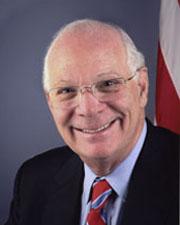
Madam Speaker, I rise in strong support of H. Res. 558, which welcomes the accession of Bulgaria, Estonia, Latvia, Lithuania, Romania, Slovakia, and Slovenia to the North Atlantic Treaty Organization…
Madam Speaker, I rise in strong support of H. Res. 558, which welcomes the accession of Bulgaria, Estonia, Latvia, Lithuania, Romania, Slovakia, and Slovenia to the North Atlantic Treaty Organization (NATO).
Earlier this month I celebrated the 86th anniversary of the declaration of independence of Lithuania with my constituents and the Lithuanian Society in Baltimore. I am very enthusiastic about the accomplishments of the Lithuanian people and my optimism for that nation's future. As you know, I am of Lithuanian heritage and share your special interest in Lithuania's development.
I am proud of the United States' strong support for Lithuania through the extension of membership to the NATO alliance, and the continued endorsement for the nation's integration into the European Union. In 2003 the U.S. Senate unanimously ratified Lithuania's inclusion into NATO, and praised Lithuania for ``serving as an example to emerging democracies worldwide.''
As as an invited member of NATO and the European Union, the Republic of Lithuania plays a role in promoting security abroad and in combating international threats. Since 1994, the Lithuanian Armed Forces have demonstrated this commitment by deploying over 1,300 servicemen on missions to the Balkans and, most recently, Afghanistan and Iraq.
Lithuania's accession to NATO really marks the return of Lithuania to the Euro-Atlantic partnership and alliance, as we face the new challenges of the global war on terrorism.
Lithuania has made considerable progress towards a functioning market economy, and has enjoyed some of the highest domestic product growth rates in all of Europe. I am therefore pleased to see that Lithuania will shortly be joining the European Union (EU), which will grow from 15 to 25 members on May 1, 2004.
By joining the EU, the nation will greatly benefit from a larger, more integrated European marketplace. We should continue our partnership to further strengthen Lithuania's economic growth.
I am also pleased to report that in the last decade Lithuania has made great progress in the area of human rights, rule of law, and religious freedom all while pursuing further integration into European political, economic, and security organizations. As a member of Congress, I serve on the Commission on Security and Cooperation in Europe, commonly known as the Helsinki Commission. I also serve as the Chairman of the Economic Committee of the OSCE Parliamentary Assembly. Lithuania, among other countries, has agreed to the terms of the Helskinki Final Act, which calls upon governments to respect religious freedom and minority rights as well as guarantee free speech and political dissent. Lithuania has successfully moved to establish a strong democratic government, holding fair elections since 1991 and supporting an independent judiciary--both of which are critical components for maintaining rule of law and fighting corruption in any country.
Madam Speaker, I am pleased to join my colleagues in supporting this resolution, in saluting the accomplishments of Lithuania and looking forward with great pride and expectation to the future. I urge my colleagues to take a moment to reflect on the unique Lithuanian culture and its contribution to the world.
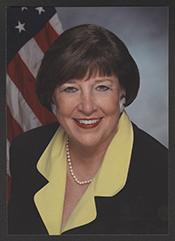
Mr. Speaker, I thank the gentleman from Massachusetts for yielding me this time. Right now, Oregon has 7.7 percent unemployment, the highest in the country. Since January, 2001, the State has lost…
Mr. Speaker, I thank the gentleman from Massachusetts for yielding me this time.
Right now, Oregon has 7.7 percent unemployment, the highest in the country. Since January, 2001, the State has lost over 50,000 jobs. These are hard-working men and women, not statistics. They are real people with real lives and families, and right now they are facing the prospect of not having enough money to put food on the table or enough money to pay for their medical bills if someone should get sick.
I have talked to people who are unemployed. They have sold their homes trying to live off the profit. They said, I do not know what is going to happen when this money runs out.
Unemployment benefits are supposed to be a safety net to get you from one job to the next job. They do not provide 100 percent of the person's previous salaries, but those benefits are absolutely vital for families to make ends meet. They are not out there not going to work because they want to. They are out there because they cannot find a job.
I talked to one gentleman, 52 years old, daughter in high school, and he talks about how bright his daughter is and that he would like to send her to college. He said, I cannot even pay for my mortgage. What am I going to do for my daughter?
Not only do these benefits provide a level of security for families, unemployment benefits are also stimulants for the economy. For every dollar we spend in unemployment benefits, we put $1.73 back into the economy. That is good for business as well as people. These benefits are not used for luxury items. They are used to pay the rent, food, and utility bills.
The President talks about marriage promotion programs costing in the billions of dollars, but it is a scientific fact that poverty and homelessness directly increase the rate of divorce. Unemployment benefits, which keep families together and keep them temporarily off the streets until they find a new job, should be considered the best marriage promotion program of all, yet these benefits have been ignored by Congress and this administration.
Some have raised concerns that extending unemployment benefits would bankrupt the system. Guess what? We have $18 billion sitting in the unemployment trust fund. That is more than enough to continue this program and extend the current benefits. These funds were paid into this unemployment compensation system for the purpose of helping dislocated workers during difficult economic times.
In short, there is not a legitimate argument towards not extending the unemployment benefits.
Again, people talk about stimulating economy. These benefits stimulate the economy. People say, well, we do not have enough money, yet we have $18 billion sitting in that account for that purpose. People talk about promoting marriage and families. Preventing financial crisis is the number one way to keep families together.
Frankly, it is a no-brainer. I urge my colleagues to defeat the previous question so we can extend unemployment benefits for the thousands of suffering Oregonians and Americans.

Mr. Speaker, by direction of the Committee on Rules, I call up House Resolution 580 and ask for its immediate consideration. Mr. Speaker, for the purpose of debate only, I yield the customary 30…
Mr. Speaker, by direction of the Committee on Rules, I call up House Resolution 580 and ask for its immediate consideration.
Mr. Speaker, for the purpose of debate only, I yield the customary 30 minutes to the gentleman from Massachusetts (Mr. McGovern), pending which I yield myself such time as I may consume. During consideration of this resolution, all time yielded is for the purpose of debate only.
On Thursday, March 25, 2004, the Committee on Rules announced that it may meet the week of March 29 to grant a rule which could limit the amendment process for floor consideration of H.R. 3966. The announcement further stated that any Member wishing to offer an amendment submit the amendment to the Committee on Rules by 1 p.m. on Monday, March 29, 2004. No amendments were submitted to the Committee on Rules for their consideration.
H.R. 3966 is based on a simple principle. Colleges and universities that accept Federal funding should also be willing to provide military recruiters the same access as other prospective employers to students in ROTC scholarship programs.
This legislation would improve the ability of the Department of Defense to establish and maintain ROTC detachments and ensure that military recruiters have access to college campuses and students.
Successful recruitment for our military relies heavily on the ability of these recruiters to have access to the students and the students to be able to have access to the recruiter easily.
This bill also requires an annual verification of colleges and universities who already support ROTC that they will continue to do so in the upcoming academic year.
The Department of Defense seeks nothing more than the opportunity to compete for students on an equal footing with other prospective employers. At no time since World War II has our Nation's freedom and security relied more upon our military than now as we engage in the global war on terrorism.
Our Nation's all-volunteer armed services have been called upon to serve, and they are performing their mission with the highest standards. The military's ability to perform at this standard can only be maintained with effective and uninhibited recruitment programs.
As many of my colleagues know, the Armed Forces face a constant challenge in recruiting top-quality personnel, and I believe that ROTC programs are ideally suited to meet those needs. To that end, I urge my colleagues to support the rule and the underlying bill.
Mr. Speaker, I reserve the balance of my time.
Mr. Speaker, I yield such time as he may consume to the gentleman from California (Mr. Cox).
Mr. Speaker, I yield 5 minutes to the gentleman from Florida (Mr. Mica).
Mr. Speaker, I yield myself such time as I may consume.
I would just like to note, Mr. Speaker, that Albania is a country that is a NATO aspirant and Albania's Prime Minister Fatos Nano is visiting Washington today.
Mr. Speaker, I yield back the balance of my time, and I move the previous question on the resolution.
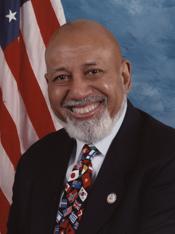
Madam Speaker, I rise today to welcome the accession of Bulgaria, Estonia, Latvia, Lithuania, Romania, Slovakia, and Slovenia to the North Atlantic Treaty Organization. This is a truly historic…
Madam Speaker, I rise today to welcome the accession of Bulgaria, Estonia, Latvia, Lithuania, Romania, Slovakia, and Slovenia to the North Atlantic Treaty Organization. This is a truly historic occasion which transforms the strategic map of Europe, and strengthens the Atlantic Alliance.
In my first term in Congress, I cosponsored H. R. 4210, the NATO Participation Act of 1994. I believed then, as I continue to believe now, that NATO should be inclusive to all European nations that share our belief in democracy and the rule of law. Therefore, I am delighted to welcome the new member states to NATO.
NATO was established in 1949 for the purpose of countering the threat of Communist expansion. While that threat is now securely in the history books, the world has been forced to face new, and different dangers. Throughout the myriad of changes in international relations since NATO was first founded, the salience of a strong alliance among friendly nations remains.
As is necessary with all longstanding organizations, NATO is changing with the times. It remains the world's most powerful regional defense alliance precisely because of its ability to adapt to new conditions. NATO continues to safeguard its member states through political and military means. However, over the past 15 years, the Organization has come to play a growing role in peacekeeping and crisis management.
Originally, NATO consisted of 12 member countries. Over the years the Organization has expanded twice. Once in 1952, to include Greece and Turkey, and a second time in 1955 to include West Germany. The simultaneous accession of seven states is the largest expansion in the history of the Organization. I, for one, hope that it will not take another 50 years before we see another round of NATO expansion.
The accession of Bulgaria, Estonia, Latvia, Lithuania, Romania, Slovakia, and Slovenia to NATO cements the increasingly strong relationship between the United States and those countries. The strengthening of the Atlantic Alliance is of benefit to all parties. Moreover, Congress looks forward to the opportunity to work closely together with the new countries for shared goals.
As the Vice-President of the Organization for Security and Cooperation in Europe's Parliamentary Assembly, I have followed closely the progress of the new NATO member states. In the past, I have had the pleasure of visiting Romania and Slovakia. Later this month, I plan to visit the Baltic region and learn more about our newest alliance partners.
In conclusion, let me again state my wholehearted support for H. Res. 558, welcoming the accession of Bulgaria, Estonia, Latvia, Lithuania, Romania, Slovakia, and Slovenia to the North Atlantic Treaty Organization. I reiterate my hope that we will soon have occasion to celebrate the accession of more states into the Atlantic Alliance.
Show 3 more
Mr. Speaker, I thank my friend from Massachusetts for yielding me this time. Mr. Speaker, I do not object to this rule; but I do strongly object to congressional inaction on an issue of daily…
Mr. Speaker, I thank my friend from Massachusetts for yielding me this time.
Mr. Speaker, I do not object to this rule; but I do strongly object to congressional inaction on an issue of daily importance to millions of Americans, that is, the extension of unemployment benefits for workers who have lost their jobs through no fault of their own. Federal Reserve Chairman Alan Greenspan said earlier this month, ``I think considering the possibility of extending unemployment benefits is not a bad idea in times like this.''
Congress allowed the temporary extended unemployment compensation program to expire at the end of last year despite a tremendous need for these extended benefits. Many of us have been trying to extend the program ever since, but the Republican leadership in Congress has continually blocked those attempts. This obstructionism has occurred even though majorities in both the House and the Senate have voted to extend unemployment benefits. This obstructionism has gone on despite the fact that the average duration of unemployment has reached its highest level in over 20 years. This obstructionism continues even after we have heard our economy had a zero private sector growth in jobs last month. This obstructionism blocks action even as more than 1 million Americans have run out of unemployment benefits without finding work in just the last 3 months. And this obstructionism continues even after the Secretary of the Treasury indicated the President is finally willing to say he would sign an unemployment extension bill if it is sent to his desk.
Mr. Speaker, enough is enough. Congress needs to act to help the unemployed as it has during every other time when jobs were scarce. If the previous question is defeated on this rule, the next order of business before the House will be the consideration of an unemployment extension. More specifically, the House would debate a 6-month extension of the expired temporary extended unemployment compensation program. This extension would help nearly 3 million jobless workers pay their mortgages, put food on the table, and deal with these very difficult economic times.
I, therefore, strongly urge my colleagues to defeat the previous question so that we can provide the necessary assistance to those who are unemployed and cannot find employment.

Madam Speaker, thank you for this opportunity to welcome the nine new members of the North Atlantic Treaty Organization (NATO). For the last 55 years, the United States and its allies have worked…
Madam Speaker, thank you for this opportunity to welcome the nine new members of the North Atlantic Treaty Organization (NATO).
For the last 55 years, the United States and its allies have worked through NATO to ``make the world safe for democracy.'' The accession of Bulgaria, Estonia, Latvia, Lithuania, Romania, Slovakia, and Slovenia to full NATO membership will further strengthen this alliance and enhance the security of the United States and all NATO countries.
I would like to extend an especially warm welcome to Slovakia. In the 107th Congress, I introduced, and the House passed, H. Res. 253 to commend the Slovak Republic for its progress toward political and economic liberty and efforts to meet the guidelines for prospective NATO members.
Slovakia, a once authoritarian regime, embraced a pro-Western government in 1998 and freed its citizens from international isolation. Since independence, the Slovak government has successfully held free and fair elections three times. In their last elections, over 70 percent of eligible voters turned out to express their newfound democratic right.
I am certain that as a member of NATO, Slovakia will contribute to the protection of member states and significantly benefit the security and peace of Europe and the region as a whole. Slovakia's leaders value their participation in our military alliance, and its citizens align themselves with NATO's common values and democratic mission.
The resolution we are voting on today ``reaffirms that NATO's enlargement enhances United States and North Atlantic area security, and agrees that NATO's enlargement should be open to membership by any European democracy that meets NATO membership criteria and whose admission would further the principles of the Washington Treaty of 1949 and enhance North Atlantic area security.''
I am proud to vote for this resolution, and I believe that Slovakia, and the other new members, will greatly enhance our alliance's security and further its principles. I am pleased to be able to welcome them to
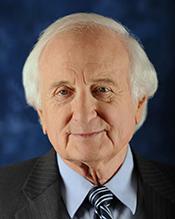
Mr. Speaker, we are asking that the previous question be defeated and that we be allowed to bring up unemployment compensation to extend it; and here is the reason: I am glad we are debating this…
Mr. Speaker, we are asking that the previous question be defeated and that we be allowed to bring up unemployment compensation to extend it; and here is the reason:
I am glad we are debating this because the gentleman from Florida, by his discussion, has exposed exactly what is the thinking of the majority in this House.
Last Friday, I met a fellow, 55, an electrician, working for more than 30 years. He told me he was going to take his retirement, his pension, from the Electrical Workers Union. He was going to do so even though he lost a level of benefits. And I said why?
He said, because I have only 2 weeks of unemployment compensation left and if I do not take early retirement, I am going to lose my house.
And you on the majority side call unemployment compensation a handout? It is part of the employment structure of this country because with employment sometimes comes unemployment.
And you say get a job? You in the majority, who have been in the majority in this city, in the Senate, and occupying the White House, under whose dominion three million jobs have been lost, tell this fellow, and there are hundreds of thousands of men and women like him, get a job? That is an insult to the working people of this country.
So we are bringing this up because you will not bring this bill up for a straight ``yes'' or ``no'' vote. If you brought it up, you know we would carry our position.
The gentleman from Massachusetts (Mr. Frank) has mentioned it was said by Mr. Snow, the Secretary, that the President would sign an extension when there are $18, $19 billion in funds set-aside for this purpose. We do not want a President to passively say he will sign it. We want some leadership from the President of the United States for the millions of people who are unemployed and the hundreds of thousands of people who exhaust their benefits every month. Defeat the previous question.
Bill Text
2 versions available
        [Congressional Bills 108th Congress]
[From the U.S. Government Publishing Office]
[H. Res. 558 Engrossed in House (EH)]

In the House of Representatives, U.S.,

March 30, 2004.
Whereas since 1949 the North Atlantic Treaty Organization (NATO) has played an
essential role in guaranteeing the security, freedom, and prosperity of
the United States and its allies in Europe and North America;
Whereas since 1994 Congress has repeatedly endorsed the enlargement of NATO
through the NATO Participation Act of 1994, the NATO Enlargement
Facilitation Act of 1996, the European Security Act of 1998, the Gerald
B. H. Solomon Freedom Consolidation Act of 2002, the Transatlantic
Security and NATO Enhancement Resolution of 2002, and House Concurrent
Resolution 209 (2003);
Whereas NATO heads of state and government, meeting in Prague on November 21,
2002, invited Bulgaria, Estonia, Latvia, Lithuania, Romania, Slovakia,
and Slovenia to commence accession negotiations with NATO;
Whereas on March 26, 2003, Bulgaria, Estonia, Latvia, Lithuania, Romania,
Slovakia, and Slovenia signed accession protocols to the Washington
Treaty of 1949;
Whereas on May 8, 2003, the Senate voted 96-0 to give its advice and consent to
ratification by the United States of the seven accession protocols;
Whereas on March 2, 2004, NATO Secretary General Jaap de Hoop Scheffer announced
that all 19 NATO members had deposited with the United States Government
their instruments of ratification of the accession protocols;
Whereas Bulgaria, Estonia, Latvia, Lithuania, Romania, Slovakia, and Slovenia
have reformed their political and economic systems in preparation for
NATO membership;
Whereas Bulgaria, Estonia, Latvia, Lithuania, Romania, Slovakia, and Slovenia
have undertaken defense reform programs that will enable each country to
contribute to NATO operations and are working to meet the financial
responsibilities of NATO membership by spending or committing to spend
at least two percent of their gross domestic product on defense;
Whereas Bulgaria, Estonia, Latvia, Lithuania, Romania, Slovakia, and Slovenia
have contributed to military operations in Bosnia and Herzegovina,
Kosovo, Afghanistan, and Iraq;
Whereas Bulgaria, Estonia, Latvia, Lithuania, Romania, Slovakia, and Slovenia
became members of NATO on March 29, 2004, and are expected to be
welcomed by NATO heads of state and government when they meet in
Istanbul on June 28 and 29, 2004;
Whereas Albania, Croatia, and Macedonia, the remaining countries currently in
NATO's Membership Action Plan, signed the United States-Adriatic Charter
on May 2, 2003, thereby affirming their commitment to the values and
principles of NATO, their willingness to contribute to the peace and
security of southeast Europe, and their desire to join the Alliance at
the earliest possible time;
Whereas in 2003 Congress, in House Concurrent Resolution 209, urged NATO to
invite Albania, Croatia, and Macedonia to join NATO as soon as each of
these countries respectively demonstrates the ability to assume the
responsibilities of NATO membership through the Membership Action Plan;
Whereas the Governments of Albania and Macedonia supported Operation Iraqi
Freedom and are contributing forces to stabilization operations in Iraq
and to the NATO-led International Security Assistance Force in
Afghanistan; and
Whereas the Government of Croatia elected in November 2003 has demonstrated its
commitment to implementing reforms and meeting conditions for
integration into Euro-Atlantic institutions, including the defense
reforms necessary for NATO membership, and has contributed forces to the
NATO-led International Security Assistance Force in Afghanistan: Now,
therefore, be it
Resolved, That the House of Representatives--
(1) welcomes with enthusiasm the accession of Bulgaria, Estonia,
Latvia, Lithuania, Romania, Slovakia, and Slovenia to the North Atlantic
Treaty Organization (NATO);
(2) reaffirms that the process of NATO enlargement enhances the
security of the United States and the entire North Atlantic area;
(3) agrees that the process of NATO enlargement should remain open
to potential membership by any interested European democracy that meets
the criteria for NATO membership as set forth in the 1995 Study on NATO
Enlargement and whose admission would further the principles of the
Washington Treaty of 1949 and would enhance security in the North
Atlantic area; and
(4) recommends that NATO heads of state and government, meeting at
Istanbul on June 28 and 29, 2004, should agree to review the enlargement
process, including the applications of Albania, Croatia, and Macedonia,
at a summit meeting to be held no later than 2007.
Attest:

Clerk.