Mr. Speaker, I rise today to address a matter that we would all prefer to hope we never have to address, but that after September 11 we must address. I would ask my colleagues and friends to imagine…
Mr. Speaker, I rise today to address a matter that we would all
prefer to hope we never have to address, but that after September 11 we must address. I would ask my colleagues and friends to imagine the unimaginable. Imagine that the American people are going about their daily business while Congress is meeting in full session here in the House and the Senate is doing its business and suddenly the national news wires, television and radio are interrupted. They are interrupted by an announcement that a nuclear weapon has been detonated without warning in the Nation's Capital. The Capitol has been destroyed. The White House has been obliterated. It is evident that in all likelihood all Members of the House and Senate have perished, that the administration, the President and Vice President and most members at least of the Cabinet have been killed, that the Supreme Court has likely been killed along with thousands of our fellow citizens and government workers. At that moment, we must have an answer to the American people of what happens next, and at this moment we do not have an answer to that question.
It has now been 2\1/2\ years since September 11. On that fateful day, not only did we see live on television as thousands of our fellow citizens were killed in an horrific manner, but what we did not know was that a fourth plane was coming here in an attempt to kill everyone in this building and that were it not for the heroism of the passengers on that flight and fortunate circumstances that delayed it by a few moments, many of us would likely have perished.
The question then arises, what would happen in this event? We know that it is possible. We know that our adversaries seek nuclear weapons. We know that our adversaries seek chemical and biological weapons. And we know that in this era it is very possible, indeed probable, that one day they may obtain such weapons. Yet, Mr. Speaker and my friends, we have not prepared for congressional succession, and there are grave problems with the Presidential succession law.
Let me walk you through, if I may, a scenario of what might happen. First let me start with the Constitution. Under the Constitution of the United States, a quorum to do business is made up of a majority of the Members. House rules stipulate that a quorum is made of the majority chosen and sworn and living. Let us suppose that three Members of the Congress are on a trip abroad and while they are overseas, they witness this horrific event. Everyone else in this body has been killed. The President and the Vice President are dead. America is in crisis to say the least.
Those three Members under current House rules could declare themselves a functioning House of Representatives. They could elect one of the three the Speaker of the House of Representatives. Under current succession law, the third in line to the Presidency is the Speaker of the House of Representatives. Let us suppose further that those three are from a party other than the current President. What we now have is a situation where three surviving Members of a catastrophe, randomly chosen more or less by events, have now become the entire House of Representatives, have chosen one of their own Members Speaker and that person has acceded to the role of Presidency.
We now also have a situation where under our system of checks and balances, the article 1 provisions of the Constitution, declaration of war, approval of spending and taxation, and a host of other issues that are the rightful jurisdiction of this body and the Senate working together are presumably going to be carried out by two or three surviving Members, if there are survivors; or we would have a President who could say that because there is no Congress, the President is declaring extra-constitutional powers, conceivably taking our Nation into war without a vote of the Congress, conceivably imposing martial law, conceivably spending hundreds of billions of dollars and doing a host of other events with no representation from the people of the States as a check and balance on that person.
And who might that person be? If it is not the Speaker of the House or the President pro tem of the Senate, it would most likely be a Cabinet member, assuming a survivor. I think we need to be frank. Cabinet members were never elected to their post. They were approved by the Senate, but they were not elected; and we need to be more frank still. Most Americans have not a clue, once you get past a couple of the top Cabinet members, just who they are. So if one of the lower Secretaries emerges on TV and says, I am now the President of the United States. Because there is no functioning Congress, I have authority to take this country into war, would the American people give that legitimacy? I do not think so. Would the Founders have given that legitimacy? I doubt that still further.
We must face this problem, and we must face it before the time comes. Because when that happens, should it happen, the very institutions charged with crafting a solution will have been destroyed in the very event that demands a solution. And who will be left? The American people will be left wondering who is their Representative in Congress. How does our constitutional system of government function? The world will be left wondering who now has control over nuclear weapons and on what checks and balances can we rely that that person will conduct themselves responsibly?
One of my good friends and colleagues has actually looked at this matter extensively, the matter of Presidential succession. The gentleman from California has offered a resolution that I think would address this, and I would encourage our colleagues to bring this up for a vote at some point soon, certainly before we need it. I would ask my friend from California to describe his resolution and some of the challenges it would address.
I yield to the gentleman from California.
Mr. Speaker, could I ask my colleague a question if I may? There is a recent book out, I think, called The Vulcans, and we have read over the last couple of decades of plans for shadow governments, shadow administrations. I do not recall reading in the Constitution of the United States that the executive branch is empowered to create a shadow government. I do not recall reading it. I do recall, correctly I believe, that the Congress is empowered to provide through statutory language mechanisms to replace the President and the Vice President should those two seats be vacant.
In the gentleman's estimation and thought, as he has spent a great deal of time, which does he think would have more legitimacy with the American public, a public process enshrined in statute, debated thoroughly by the House and Senate and passed into law that gives a clear cut, unambiguous line of succession for who will be President and Vice President or a shadow government created covertly and operating covertly to run the institutions of this country without a Congress to exercise oversight?
Mr. Speaker, I thank the gentleman very much for his remarks. Have there been hearings yet on the gentleman's legislation?
Mr. Speaker, let me make one other observation that I find admirable on the gentleman's part. He and I are from the minority party. We are both Democrats. Everyone knows the administration is from the Republican side of the aisle. The gentleman's resolution assures that the President would stay in the hands of the Republican Party if he were to perish, at least the presidency would. So the gentleman is actually stepping up to the plate and saying he is ensuring that the President's Party would stay in power if the resolution were to pass and that circumstances could not create a scenario whereby, through catastrophe or assassination, the power of the presidency could shift parties. Is that accurate?
Mr. Speaker, I respect that, because one of my principles about this whole debate has been that it should not be a partisan issue. The continuity of our government is not a Republican issue. It is not a Democratic issue. It is an issue for all Americans; and, indeed, it impacts the entire world. It is admirable that the gentleman has created a mechanism in his proposal that is nonpartisan in the sense that it would allow whichever party has been elected to the presidency to maintain that role in the executive branch even under times of catastrophe, and I think that is admirable.
Is there anything else the gentleman would like to add before I move on to discuss congressional continuity?
Mr. Speaker, I thank the gentleman very much for his remarks.
I should emphasize that we are by no means the only people who are working on this issue. Admirable and outstanding work, I think, was done by a working group within the Congress for a time period. That committee was chaired by the gentleman from California (Mr. Cox) and the gentleman from Texas (Mr. Frost), who I think did yeomen's work. In addition, a number of other people participated.
Other resolutions providing for continuity of the Congress, who are for a remote Congress should unique circumstances arise, have also been introduced. The gentleman from Connecticut (Mr. Larson) has a proposal for an amendment to the Constitution to provide for continuity. The gentlewoman from California (Ms. Lofgren) does as well; and the gentleman from Rhode Island (Mr. Langevin), a former Secretary of State from Rhode Island, has proposed a way we could have a remote Congress in extraordinary circumstances such as a threat or an outbreak of infection. All of those folks have done an outstanding job of presenting options, and we ought to be able to discuss them.
I would also commend to my colleagues I think an outstanding service to our country. The Brookings Institution and the American Enterprise Institution formed a bipartisan group of distinguished scholars headed by Lloyd Cutler and Alan Simpson, two statesmen if ever there were people to whom that title would fit, and filled in by scholars and former Members of the Congress, legal scholars, constitutional experts. I would commend my colleagues to their work. It is available at Continuityofgovernment.Org, and I would encourage my colleagues to study this work. It reviews the history of continuity issues. It reviews how special elections can be held. It outlines in careful detail the problems that would arise were an attack to occur, and I think it is, again, a service to our country.
One of the things that emerges from this document is that after close to a year of deliberation, that distinguished committee reached one conclusion, and the conclusion was something they resisted. The conclusion was that we cannot solve adequately the question of continuity of the House of Representatives without a constitutional amendment.
I would underscore this fact. Not one member who served on that commission, and, again, it was a bipartisan commission, not one member began their service thinking that they wanted to amend the Constitution even to address something of this magnitude. But they all agreed after studying the matter that, regrettably, in order to provide real continuity, we must amend that magnificent document. No one races into that, no one sets out to amend the Constitution lightly, but we must have continuity of this government.
Let me walk through, if I may, a few of the issues that could arise that have not yet been addressed. I talked a little bit about what constitutes a quorum. Remember that our government is bicameral, our legislative branch. We have a House and a Senate. The framers wanted the various regions of our States to have their own representatives. And it is absolutely true that no one in this body has ever served who was not elected. We hold that very dear to our hearts. Some have said under no circumstances should we deviate from that.
But here is the problem. The Constitution says that if vacancies occur in the House of Representatives, executives of the States shall issue writs of election. Under normal circumstances, where you have lost one or two Members and have 430 or 434 to continue the people's business, it is not a problem. But when you have two surviving Members, or no surviving Members, you are left without a House of Representatives until you can have an election.
How long does it take to have an election? We have spent a great deal of study and time on this. If you talk to various people who are experts in this field, different numbers emerge. But the critical point is this: even the fastest number you can come up with, until that time can be completed, you are without a House of Representatives.
Frankly, most people with whom I have spoken who are experts and scholars in this field have suggested that a minimal probable length of time would be about 3 months. From the time of catastrophe in order to have real and meaningful elections, would be about 3 months. Anything less than that poses extraordinary logistical challenges and poses some real constitutional challenges potentially.
Some have proposed, and I disagree with this proposal, but some have proposed that we mandate elections within 45 days of a catastrophic loss of Members.
Let me be clear about something: everyone agrees who studied this issue that we want to maintain the tradition of special elections for permanent replacement of Members. But this Continuity of Government Commission and myself and many other scholars have said we are gravely concerned about a 45-day period with no House of Representatives, because how do the article I of the Constitution functions get carried out without a House of Representatives? Who carries those out? Who assumes those?
Yes, it is true that no one has ever served in the House of Representatives that was not elected. But it is also true our country has never functioned without a House of Representatives. It has never functioned under an executive branch alone.
Some have said if there were a catastrophe, the survivors would do the right thing. There is an assumption of survivors, first of all, which there may well not be. But, beyond that, the reason the framers created checks and balances is they were gravely concerned
about vesting too much power in the hands of an individual without checks and balances. They rebelled against such a system. The revolution was all about overthrowing an unelected monarchy who functioned without effective checks and balances.
To assume that a survivor who assumes the executive branch would do the right thing and that we do not need a Congress for up to 45 days strikes me as a direct insult to the fundamental insights of the people who wrote our Constitution, even if you could have a 45-day election. But how would we get to 45 days under the proposals that have been offered?
Well, the Congress, which has constitutional authority to do so, would tell the States you cannot have a primary election because there is not time. Instead, the major political parties will select the candidates, thereby disenfranchising all the voters from choosing the candidates in the primary and thereby prohibiting most people who could run for office from standing for candidacy.
What is more, in an expedited election of this sort, Americans living overseas, including very likely the very young men and women who would be dispatched to try to defend our country, could well be disenfranchised because there was not the time to get them the votes and get them ballots.
So the proposals that we could have a mandated 45-day election leave our country with no functioning Congress for 45 days, and I should say as long as 75 days if it is proximal to a pending regular election; no House of Representatives, no article I functions; further, they mandate that the States allow the parties to select the candidates, when our dear Constitution has never once mentioned the word ``party'' in its entire history. They disenfranchise independents from standing for office, they disenfranchise overseas voters.
And there are still more problems. Under this 45-day mandate, what happens if one State manages to conduct its election in 30 days, and if newly elected Members arrive at Congress and they are the first ones here and say there is nobody else here, we declare ourselves a functioning House of Representatives, and elected one of our Members Speaker of the House, who, by the way, under some circumstances could thereby become the President?
Two days later yet another State, somewhat larger this time, gets its elections completed, and they arrive at the House of Representatives, and their Members are sworn in. They say we have more Members now. Someone from our State will be the Speaker of the House of Representatives. And so it goes, until at last everyone is here. Is that what we need at a time of the greatest crisis in our Nation's entire history, that sort of ambiguity? I submit that it is not.
There is a further problem. If we pass a law that says all States must conduct elections in 45 days, what happens if this institution is struck by a nuclear weapon and some State capitals are taken out simultaneously? Al Qaeda targeted four different sites on September 11.
If they target Washington, D.C., New York City, and Sacramento, California, do the people of New York, do we really expect them to conduct a special election within 45 days after New York City has been hit by a nuclear weapon? Do we expect California to do so after its capital has been destroyed? Or do we just pretend that could not happen and hope for the best? I think we have learned in the last few weeks that hoping for the best does not work, that we have to prepare.
There is an alternative, and it is an alternative I reached with great contemplation and with great study by some of the most distinguished scholars I could speak with, and here it is:
It is that we must find a way to temporarily, and I emphasize temporarily, reinstate this House of Representatives as quickly as possible in order that the people's business can be conducted, that we have checks and balances, that we have proportionate representation, that it is not just an executive or, even worse, a shadow government running our country.
To do that will, regrettably, require a constitutional amendment, but it is not something that will sound extraordinary when I explain it. It is this: the people have elected us as their representatives to make decisions as profound as taking our Nation into war, as taxation and a host of other issues described in article I of the Constitution.
If upon our election, we generate a list of potential successors who could only assume our position if we are killed or incapacitated, and only if that death or incapacitation happens in the course of a catastrophic event, and only for the circumstance that it is temporary until a special election can be held, we would be able, within a week of a catastrophic event, to reinstate the entire House of Representatives and restore our functioning constitutional government.
Let me give you my own State as an example. In Washington State, if we were to create a list of potential successors who would take our place only in catastrophic circumstances, not in the normal course of events, that list could include former Speaker of the House of Representatives Tom Foley. It could include, on the Republican side, Slade Gorton, a man for whom I have the utmost respect. It could include, on the Democratic side, people such as Don Bonker, Al Swift, our Governor, Gary Locke. It could include on the Republican side former Governor and former U.S. Senator Dan Evans, Sid Morrison, former U.S. Representative and former Secretary of Transportation. These are distinguished individuals.
And here is the choice, my friends. If that horrific day happens and if that announcement comes on television, we must have the media know what to tell the American people, and they can either say for the next 45 days a shadow government will run this country with no checks and balances and no representation from you, the people; or they can say your representatives in their best judgment have created a list of statesmen and stateswomen who will temporarily fill their seats until you can have real special elections.
Then, instead of confusion and chaos and hasty disenfranchising elections, we would have a functioning Congress made up of distinguished statesmen and stateswomen who would take care of this country, who would do the right thing. And I would warrant that many of those people would not even stand for reelection or for new election. They would instead serve until the election could be held, and hand the country back to the newly elected people.
What I most ask is that we have an opportunity to debate this. It is 2\1/2\ years now since September 11. I began to work on this the night of September 11. I began to talk to the leadership of this body within a week of that time. And I have asked, pleaded, negotiated and discussed; and we still have not had serious consideration by this body.
On September 10, 2001 thousands of our fellow citizens had no idea that the next day when they kissed their families and went off to work, when they fixed their breakfast cereal, when they rode the elevators to their office or walked from the parking lot of the Pentagon in, they had no idea that they would be dead at the end of that day.
We do not know in this body if on any given day it is the morning of September 11, or if it is September 10 and the next day we will all perish. We do not know that. But we have to assume that there are people in the world who would dearly like to bring that about.
We do know that the weapons of mass destruction are out there. We know that a nuclear scientist from Pakistan essentially had an Amway- like system to help develop nuclear weapons internationally. We know the fissionable material is available in abundance, and we also know that if someone uses it, we are ill-prepared to address the outcome.
I have offered a rule for debate. The rule seeks to achieve fairness. What it does is it invites not only my proposal, but proposals by other Members of this Congress to resolve this issue, to be brought up before the entire body for discussion.
It says essentially, if you have a better way to do it, we are all ears. Let us hear it. Bring it up for debate. We will debate a series of potential solutions. Whichever one gets the most votes will become the new base bill. We will then take several days for contemplation, much the way the framers themselves would bring an issue up for discussion and then either recess for several days for contemplation or invite a subcommittee to review it further.
We would take several days for contemplation, because this is a matter of the utmost seriousness. Then we would bring that base bill which had received the most votes back with an opportunity for amendment, and then we would proceed to a final vote.
I would hope we could get the necessary two-thirds on that process, and I would hope it for this reason: that if we do not find some solution, be it mine or someone wiser than me, we leave this country subject to chaos and constitutional ambiguity and unelected shadow governments, which I think would mortify the people who wrote that magnificent document, and I think would mortify most Americans, should that event occur.
So I will ask my colleagues to consider the resolution that I have put forward. It is H.J. Res. 83. I think it is rather simple, as most constitutional amendments should be. I think it is reasonable. It should be a bipartisan effort.
If one is not compelled by H.J. Res. 83 and one thinks there are better ways, I welcome the discussion. Look, please, then at House Resolution 572. House Resolution 572 says we will have a debate and the rules for debate will be open. There will not be a committee chairman saying, only my amendment or my proposal is allowed. It will be the House of Representatives reviewing several alternatives, having the discussion, and trying to resolve this most grave of problems.
The entire Constitution was written in one hot summer in Philadelphia, several months. We have been 2\1/2\ years since September 11 and we have been unwilling, not unable, but unwilling to address this change.
There are people of good intention who I respect profoundly on the other side, but what I do not respect is the refusal to let other people of good intention engage in this debate. I find it profoundly ironic and troubling that those who assert that they oppose these amendments that I have offered and that others have offered is because they respect the sanctity of the vote, which I respect as well. Again, no one is proposing a substitute for direct election, for permanent replacement of Members. We are talking about temporary replacement. But they have said it is so sacrosanct, this principle of direct election, that we cannot even consider any alternative. And ironically, in defending the principle that one must be elected in order to serve in this body, they have at the same time said the people who have been elected to serve in this body are not entitled to debate this most serious of issues.
So we have been sent here by our constituents. They have entrusted us with the most profound of responsibilities; and yet some individuals in this body have said they will not entrust us with the responsibility to ensure the continuity of this very institution and to ensure that constitutional measures will exist in a time of catastrophe.
Please, I say to my colleagues, I beseech my colleagues, bring this issue up for a vote and for true debate. Let us not play partisan politics; let us not assume that one committee chair or 2 committee chairs have greater wisdom than this body. That assumption flies in the face of the principles of Madison and the rest of the Framers. Let us assume that the collective good intentions and intellect and scholarship of this body can craft a solution that will ensure the continuity of this institution that we all so cherish and will ensure that if that horrific day ever happens and we perish, we will perish knowing that our Nation will be left in good hands, rather than in confusion.
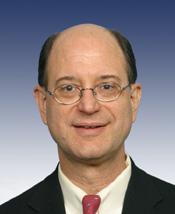
 Rep. Brian Baird (D-WA)