Providing for consideration of the bill (H.R. 4850) making appropriations for the government of the District of Columbia and other activities chargeable in whole or in part against the revenues of said District for the fiscal year ending September 30, 2005, and for other purposes.
Legislative Activity
Stay on top of the latest movement without scrolling through every action
Motion to reconsider laid on the table Agreed to without objection.
July 20, 2004 • 11:55 AM
View full timeline
Introduced in House
July 19, 2004
The House Committee on Rules reported an original measure, H. Rept. 108-615, by Mr. Linder.
July 19, 2004
Rule provides for consideration of H.R. 4850 with 1 hour of general debate. Previous question shall be considered as ordered without intervening motions except motion to recommit with or without instructions. Measure will be read by paragraph. Bill is open to amendments.
July 19, 2004 • 7:40 PM
Placed on the House Calendar, Calendar No. 206.
July 19, 2004
Considered as privileged matter. (consideration: CR H5998-6001)
July 20, 2004 • 11:31 AM
DEBATE - The House proceeded with one hour of debate on H. Res. 724.
July 20, 2004 • 11:33 AM
The previous question was ordered without objection.
July 20, 2004 • 11:55 AM
Passed/agreed to in House: On agreeing to the resolution Agreed to by voice vote.(text: CR H5998)
July 20, 2004 • 11:55 AM
On agreeing to the resolution Agreed to by voice vote. (text: CR H5998)
July 20, 2004 • 11:55 AM
Motion to reconsider laid on the table Agreed to without objection.
July 20, 2004 • 11:55 AM
Floor Debate
12 membersWhat members said about H.Res. 724 on the floor
 EHN
EHN RPF
RPF CF
CF TD
TD ALH+7
ALH+7
Floor Debate
12 membersWhat members said about H.Res. 724 on the floor
Mr. Speaker, I thank the gentleman for yielding me time. I thank the gentleman from Georgia (Mr. Linder) and the gentleman from Florida (Mr. Hastings) for their work in the Committee on Rules on this…
Mr. Speaker, I thank the gentleman for yielding me time. I thank the gentleman from Georgia (Mr. Linder) and the gentleman from Florida (Mr. Hastings) for their work in the Committee on Rules on this bill.
Everything is relative in the Congress and, I appreciate the bill that has been brought forward this year, particularly when I compare the time that this body has had to take up on the smallest appropriations in prior years, and so I thank both of the gentlemen for their work. I want to thank and congratulate the full committee chairman, the gentleman from Florida (Mr. Young), and the full committee ranking member, the gentleman from Wisconsin (Mr. Obey), for the way in which they urge and guide our appropriations bill through, because of their concern for the process and their respect for self- government in the District of Columbia. And their guidance has been, I think, heard and felt this year.
I am particularly grateful to the gentleman from New Jersey (Mr. Frelinghuysen) and the ranking member, the gentleman from Pennsylvania (Mr. Fattah), who did all the heavy lifting on this work. I am grateful for their bipartisan efficiencies and cooperation in handling this appropriations. They have been mindful of the fact that Members are here appropriating funds for a city, not a Federal agency; and that makes all the difference in the world.
First, most of the money comes from the taxpayers of the District of Columbia. This is one of the great anomalies that the Congress has thrust on itself to force taxpayer funds from the District of Columbia to come here and be blessed. And by the way, I thank the committee that from time immemorial the committee does not, in fact, go into the body of the District of Columbia budget. Everybody understands that that would be treacherous. So mostly it comes here for oversight and for attachments that the ranking member spoke of, attachments that would never be abided in Members' own districts. But I am very pleased to simply have this money get out of here with the kind of rule that the Committee on Rules has come forward with this year.
There are huge hardships in any delay in the District of Columbia appropriations, hardships, chaos in city operations, hardships on District of Columbia residents. When our appropriations do not go smoothly and it has to go back and forth, the biggest hit is taken by school children and the schools of the District of Columbia. All manner of problem breaks out with ordering school books, with having to send supplies back because the appropriations is not out yet. I will not regale you with those problems this year, particularly since the Committee on Rules and the Committee on Appropriations have worked so hard to bring this forward.
I do note for Members, particularly those Members who have not had to go through this ordeal before, who are scratching their heads saying, what am I doing here considering the appropriations of a city, that this appropriations has had the oversight of the authorizing committee, the Committee on Government Reform, whose chairman is the gentleman from Virginia (Mr. Tom Davis) and the ranking member is the gentleman from California (Henry Waxman).
It has had the oversight of, of course, the Committee on Rules, and I thank them for the way they have done the rule this year. And, of course, it has gone through the subcommittee and the full Committee on Appropriations.
Let us look and see what these three committees have come forward to recommend to this body. I will call it a clean bill because everything is relative, and this is a clean dirty bill; but it is the kind of bill, perhaps the best bill, that one could get from this House.
Now, all the old attachments are there, and the ranking member has spelled out some of them. I cannot say enough about how much those attachments are resented in the District of Columbia. I cannot say enough about the price residents pay for them. Perhaps the worst price is paid for the needle exchange attachment where none of our own money, there is some private money, but none of our own money can be used to save the lives of men, women, and children with AIDS now
being spread in the District of Columbia faster than in any other jurisdiction in the United States, most of it intravenously; and we cannot do what I must tell you dozens and dozens of jurisdictions do and have done with great effect in halting AIDS, and that is to professionally use needle exchange programs now recommended by literally all the great scientific authorities.
The attachment forbidding abortions for poor women when hundreds of jurisdictions all over the United States, in fact, fund abortions for poor women speaks for itself. Why should one jurisdiction be the exception in the United States of America?
Of course, I suppose the House should really think about how to hang its head in shame, that there is an attachment that bars the District of Columbia from using its own money to lobby for its own rights. George Washington, Thomas Jefferson, try not to turn over in your graves. In the year 2004, we have the Congress saying that American citizens cannot use their own tax money to lobby their own Congress where they have no vote for their own rights.
My colleagues heard me. I hope they will not hear me have to say this again. I do not think that anyone in this House has anything to fear from hearing from elected officials and from the residents of the District of Columbia using their own money to petition their government for their basic rights. It is one of the great shames of this bill, and one that I cannot believe today enjoys majority support of Members of this House.
So I am asking, in short, the House to respect the work of the Committee on Rules, the work of the Committee on Appropriations, and yes, by direction the work of the Committee on Government Reform, and in doing so, I am going to lead by example.
I am asking Members not to come forward with amendments. I am going to lead by example because there is an amendment that I feel strongly about. Again, the gentleman from Florida (Mr. Hastings) spoke of that amendment as well, and that is an amendment I fought in this House with a lot of Republican support last year, when I sought to keep the House from imposing vouchers against the will of a supermajority of the elected officials, the great majority of the people of the District of Columbia, and yet, this was done to the District what has not been done to any other district.
I intended to come forward with an amendment, even if I had to withdraw it, and I would have had to withdraw it because it would have been out of order, to take the $4 million that is lying on the table, that cannot be used for vouchers because not enough residents came forward in the grades that the bill calls for in order to take up the vouchers. All along we had said that what District residents want is charter schools if there is to be an alternative. They have our D.C. public schools. We have the largest number of charter schools per capita in the United States, and I think that is shown by the fact that the waiting lists continue to grow in charter schools. Yet there is $4 million left on the table that has not been used for school vouchers.
So I intended to come forward and say, Pick that money up off of the table, and let it be used by the children of the District of Columbia; but I am going to respect the work of the Committee on Rules, I am going to respect the work of the Committee on Appropriations because they have come forward with a bill without additional attachments, and I am not going to offer that amendment. It particularly would have been subject to a point of order or would have drawn people down here to talk about it.
But if the point is to compliment the Committee on Rules and the Committee on Appropriations for the efficiency with which they have handled this committee, then I think I ought to get in line with what they have done, and I will, therefore, not come forward with such an amendment during the debate.
The matter never passed in the Senate. It passed here by one vote. This was the test vote for the prescription drug vote. This was the vote that was kept open over 40 minutes while they flipped somebody in order to let vouchers go through. It never did get through in the Senate. It was simply attached to an omnibus bill.
This is the great hall of democracy, great Congress of democracy. So I feel strongly about it, but I also feel strongly about the way in which the Committee on Appropriations and the Committee on Rules have accommodated the District of Columbia during this appropriations process, and I am not going to waste the time of this body, and I ask other Members not to waste the time of this body.
I understand a letter went around concerned that a Council member had put a bill in to allow noncitizens to vote in local elections. I do want Members to know that that was put in on the last day of the Council. Everybody went home, taking no action on it, and this is an election year.
One of the things we ought not to do is rise to every bait. Obviously, this is not a bill that was considered serious, certainly not at the moment, because it would have been introduced earlier and there would have been some action on it. If we really feel so moved to come to the floor, it seems to me we ought to wait and see if the District of Columbia, in fact, is going to act on the matter or if there, in their own Council, they can dispose of the matter. At least give us that respect.
Just like there were Members who were concerned about slots. Boy, they could not have been more concerned about slots, as I am. I am with my good friend, the gentleman from Virginia (Mr. Wolf), when it comes to gambling. I am kind of an extremist on the question of gambling. I consider the kind of gambling that goes on, in slots especially, a kind of tax on the poor.
They tell people it is going to be used for their schools. Fine, well, let people who can afford in a progressive fashion to pay for schools do it. It is a real game played on the poor. I could not hate it more. The people who bring it forward in this city are playing a game on the city, particularly on the poor people of the city.
This is basically a class matter. Better-educated people look at the odds and tend not to play these slots. Poor people who, after all, do not have the same opportunities, who cannot see any other way for their ship to come in, are most vulnerable to certain kinds of gambling measures.
So this matter has come forward in the District. Guess what, the majority of the City Council has already said they are going to overturn it.
Suppose we had jumped up here and run to the Committee on Rules and run to the Committee on Appropriations without giving the sensible Council of the District of Columbia the right to say, Slots is not economic development, and we do not want that sleazy stuff in the District of Columbia. We do not want it even if we were not the capital of the United States, but we certainly do not want it, not in the capital of the United States.
We understand who we are, and I am saying to other Members, who would be inclined to come down and offer amendments, to give us the opportunity to consider these matters. My colleagues can always have their opportunity because there is always another appropriation, so they can always come forward with the very same matter. At least give us the respect of dealing with the matter ourselves, particularly if it is a bill that has only been introduced at the end of the session, then everybody went home.
Note that all of the committees I have cited have come to the same conclusions, have come forward with a cleaner bill than I have seen in some time. These are only the committees that spend any time on the District of Columbia, and I apologize to all Members that we are having to spend any time whatsoever on an appropriation that, if it means anything to them, they are in trouble because when the people back home find out they are spending any but the time that they are committed to spend by law on somebody else's money, and almost all of this is our money, I do not think they would be very pleased.
Anything that would be, shall we say, ``untoward'' had opportunity to come to the attention of the Committee on Appropriations, the authorization committee, and the Committee on Rules, and they have put forward the bill that we see before us; and I ask my colleagues to pass the bill we see before us.
Finally, Mr. Speaker, I have to certainly say that while I have apologized that Members are having to consider this matter at all, and I do apologize for it, at the same time I want to say this is a burden that they could relieve themselves of. This entire process violates the most basic American idea, that is, the idea of Federalism. It is the idea of local control on local matters.
The gentleman from New Jersey (Mr. Frelinghuysen) and the gentleman from Pennsylvania (Mr. Fattah) have worked very hard to make this process no worse than it already is by doing it as the law requires. I ask my colleagues to respect their work. I ask them to respect the people of the District of Columbia. I ask my colleagues to pass this rule so that we can get the District's own taxpayer-raised money to the District of Columbia.
Mr. Chairman, I yield myself such time as I may consume. Mr. Chairman, I am pleased to present the fiscal year 2005 District of Columbia appropriations bill. This bill passed out of full committee on…
Mr. Chairman, I yield myself such time as I may consume.
Mr. Chairman, I am pleased to present the fiscal year 2005 District of Columbia appropriations bill. This bill passed out of full committee on July 14.
The bill before us totals $560 million in Federal funds and $8.2 billion in local funds. Within this total, the District expects to receive approximately $1.9 billion in Federal grant funds.
The bill is the product of hard work by every member of the Subcommittee on the District of Columbia. I personally want to thank each of them for their input into the bill. I especially want to thank my ranking member, the gentleman from Pennsylvania (Mr. Fattah), for his advice, counsel, and support in the development of this bill. I enjoyed working with him on behalf of the city of Washington.
The subcommittee held hearings and visited many local sites, including the District of Columbia public schools and charter schools, and police and fire department facilities, to name just a few. We developed this bill with the input from members of the subcommittee, other House Members, the Mayor and city council, and interested citizens.
I believe that this bill continues Congress's commitment to our Nation's Capital. As with every piece of legislation, there are many deserving projects that could not be accommodated within our funding allocation, but this is a balanced and equitable bill, a bill that everyone can and should support.
I am pleased to note that the District of Columbia continues to make significant progress in improving both its financial and program management. This is the seventh balanced budget the District has submitted to Congress for review; and, once again, the District received a clean audit from the city's independent auditors. The city also had a recent upgrading in its bond rating by Moody's Investors Service to an A rating, and this is the first time the city has received an A rating from all three of the major rating agencies. It should be remembered that it was not long ago that the city's credit rating was the lowest of the low. Mayor Williams and the city council should be commended for their actions.
After detailed review of the budget, the bill continues the Federal commitment began in 1997 for funding the District of Columbia courts as well as the Defender Services and the Court Services and the Defender Supervision Agency and the Public Defender Service. The bill also provides $118.9 million for other high-priority District and congressional programs projects.
Among these: $25.6 million for the recently authorized and very successful resident tuition support program; $15 million for emergency planning and security costs; $10 million for the District of Columbia Water and Sewer Authority to continue the combined sewer overflow project; $3 million for continued work on the Anacostia Waterfront Initiative; as well as $7 million for the capital development in the District to complete construction of a multiagency unified communications center, which benefits police, fire, EMS, and other city agencies; $6 million for a new public library learning center initiative; and $5 million for foster care improvement.
At the city's request, the bill also changes the city's reserve requirement from 7 to 6 percent. This change frees up additional resources, provides the city with more flexibility in balancing its budget, and does so without impacting the city's favorable bond rating.
As I noted earlier, the District has accomplished much, but still more needs to be done. We are particularly troubled by some of the more intractable problems facing the District that seem to revolve around its children. If this bill has a theme, it is to continue to make sure to help the children of the District of Columbia. To help address this issue, this bill also includes $5 million for the recently established foster care improvement program, additional money for family literacy, and $6 million for the new library/learning center initiative subject to a 1-to-1 match by the District.
Over the past year, we visited many of the city's schools, and I can tell my colleagues from personal observation
there is a real need to improve student and teacher performance. In these visits, I was struck by the very poor physical condition of some of the District's schools and by the lack of resources available to students, especially in their school libraries. This is a new initiative, and it is designed to enhance and restore District of Columbia elementary school libraries as fully functioning learning centers and, in doing so, bring together local, Federal, and potentially private resources. This initiative, when implemented, will enhance our ability to provide critical educational resources the city's children deserve in order to receive a quality education.
This bill also fully funds the school improvement program authorized last year. This bill maintains the three-pronged commitment made last year to both the District schools, the District of Columbia charter schools, and $14 million for opportunity scholarships for students in underachieving schools. This three-pronged approach is designed to improve academic performance, while promoting school choice and more potential parent involvement.
Mr. Chairman, this bill also retains the general provisions from last year's bill, which are the same as the President's request.
Mr. Chairman, I believe it is important to move this bill through the appropriations process as quickly as possible so as to allow the District to spend its own funds to operate the programs and projects in the bill at the beginning of the fiscal year in October.
Let me personally thank the gentlewoman from the District of Columbia (Ms. Norton) for her comments earlier in the day during the debate on the D.C. rule. She is an incredible leader of this city, and it has been a pleasure to work with her. I do appreciate her cooperation by not offering an amendment, because I know in her heart she continues to be a principal advocate on behalf of the city, and I am grateful for her support and her action in that regard.
To summarize, Mr. Chairman, the bill we have before us is a fiscally responsible, balanced bill that deserves bipartisan support. It was not done alone. The gentleman from Pennsylvania (Mr. Fattah) and I count on some key people. I would like to thank them for helping to put this bill together. The subcommittee led by our clerk, Joel Kaplan, Martha Foley, and Clelia Alvarado for their professional work on the bill. I also want to thank Nancy Fox from my staff and Michelle Anderson-Lee from the gentleman from Pennsylvania's (Mr. Fattah) staff for their hard work.
At this point I will include for the Record a table detailing the various accounts included in the bill.
[GRAPHIC] [TIFF OMITTED] TH20JY04.001
[GRAPHIC] [TIFF OMITTED] TH20JY04.002
[GRAPHIC] [TIFF OMITTED] TH20JY04.003
Mr. Chairman, I reserve the balance of my time.
Mr. Chairman, I am pleased to yield 3 minutes to the gentleman from Virginia (Mr. Tom Davis), the distinguished chairman of the Committee on Government Reform.
(Mr. TOM DAVIS of Virginia asked and was given permission to revise and extend his remarks.)
Mr. Chairman, I yield 3 minutes to the gentleman from California (Mr. Cunningham), a distinguished member of the committee, who is vice chairman of the committee and has served on the committee for 10 years.
Mr. Chairman, I have no further requests for time, and I yield back the balance of my time.
Mr. Chairman, will the gentleman yield?
Yes, it is. I wanted to thank my distinguished colleague for bringing this issue to my attention. Let me say from the onset that I am very sympathetic to the gentleman's position on the issue. It is my understanding that the Committee on Government Reform has a 30-day review period in which to approve or disapprove all legislative provisions enacted by the city council.
Mr. Chairman, I rise in opposition to the amendment.
Let me say, Mr. Chairman, I have watched the gentleman from Colorado (Mr. Hefley) stand on an appropriations bill, and I know his heart is in the right place; and, reluctantly, I do rise in opposition to his amendment.
The entire Federal portion of the bill is only $560 million. Within this total, the committee had to make some hard funding choices. It reduced a number of things that are key priorities to the Members of Congress and to the city's leadership. An additional 1 percent reduction in this bill would, I think, seriously hinder the District's ability to effectively manage its program at a time when the District government is sincerely making major improvements to its financial and program management.
I will not go through any examples, but I do rise in opposition. I understand where his heart is.
Mr. Chairman, I yield back the balance of my time.
Mr. Chairman, I thank the gentleman from Pennsylvania (Mr. Fattah) for yielding me this time. We are not going to tarry long this time, and that is itself an extraordinary victory and feat of…
Mr. Chairman, I thank the gentleman from Pennsylvania (Mr. Fattah) for yielding me this time.
We are not going to tarry long this time, and that is itself an extraordinary victory and feat of leadership. Members should know that I have seen this. The smallest appropriation often take the longest period of time to get through this House, much to the consternation of Members.
I spoke during the Committee on Rules about the extraordinary leadership of the gentleman from Florida (Chairman Young) and the gentleman from Wisconsin (Mr. Obey), who have always been wonderful captains of the ship, pressing to get this appropriation out, understanding what a waste of time it would be for Members to involve themselves deeply in this matter, often going to extraordinary lengths to clear this bill. They have been just where they always were.
The gentleman from Virginia (Chairman Tom Davis) deserves a lot of credit for his invaluable assistance to the Committee on Appropriations and to me with this bill, and I have already given my thanks to the Committee on Rules, who gave us the cleanest bill under the circumstances.
But the real applause belongs to the gentleman from New Jersey (Chairman Frelinghuysen) and the gentleman from Pennsylvania (Mr. Fattah). I can
say to both of them that I do not believe we have gotten this bill through in as short a period of time since I have been in Congress. This is my seventh term.
I want to thank them for the exceptionally smooth and efficient way they have handled the D.C. appropriation now for 2 years. It has affected the operations of the District of Columbia, not only the efficiency of this House.
I want to thank them for their regard for self-government in the District of Columbia. I want to thank them for their respect for the efficiency of the House of Representatives itself and the processes. There are very few Members that care beans about this. That is no insult to you, Members. I don't care beans about your districts either. That is your job.
And finally, I want to thank both the chairman and the ranking member for their keen understanding of the need to move the bill to get the city's own money to the bill, and that has been what has been most important about the way in which they have handled this bill. We cannot spend a red cent of our own money until the House says so, and almost all of this bill consists of our own money.
The District has always deserved self-respect for running its own affairs. That is the way we believe in this country, but I must say, Mr. Chairman, that the city today, and most of the Members of the House agree, has really earned congressional respect. I think a real tribute is due to Mayor Tony Williams, Chair of the Council Linda Cropp and the entire D.C. Council for the way they have improved the city, I mean in every important way, from the city operations, the day-to-day operations, to its bond rating.
They have taken this city from fiscal crisis, now to more than a balanced budget, to a better financial position than our far-richer surrounding States, not because they have managed to raise significant revenue, but because of the very conservative prudence with which they have run the D.C. government.
I mean, they still have a structural deficit, which means that we have high taxes and high debt because of the structural relationship with the Federal Government, and I appreciate that this entire region and the gentleman from Pennsylvania (Mr. Fattah) have gone on to a bill to help us correct the structural deficit.
So to be prudent, even though you are carrying a federally imposed structural deficit is to deserve high praise. In Virginia, they have just gone through a terribly long period, and they finally had to raise taxes in order to assure their financial standing and keep their bond rating. Maryland, they are still struggling with gambling, something we are not going to have in the District of Columbia in order to pull it out of crisis.
The D.C. economy is run so well that people are moving in, not moving out. The city has become so attractive, that you cannot find a scrap of land on which to build any longer. We are building all through the inner city, the poorest wards of the city, because of the way in which the city is now being run.
Finally, to let me give you a sense of the District's financial prudence, I appreciate that the committee is going to allow the District to save for its emergency and contingency fund not 7 percent of it budget but 6 percent. Now, that is interesting, because going down from 7 percent to 6 percent is not going to affect its bond rating, because it is still the strictest conditions for an emergency and contingency fund in the United States, or pretty close to it.
The District is going to have 2 years instead of 1 year to repay any funds it happens to withdraw, does not withdraw from this bond, 2 years instead of 1 year to repay the fund, and that still makes these conditions among the strictest in the country. Forty-five States with similar emergency contingency funds have no replenishment requirement; and yet, the District must pay it back if it uses it within 2 years.
And among the six States which do require you to replenish any money you take out of the contingency fund, no State requires you to pay back as readily as our fund does.
But, Mr. Chairman, perhaps what I am most proud of is that the District has the highest rating. You have alluded to that in its history, an A rating. This is a city that 8 years ago was in virtual bankruptcy, and I would like to read what Moody's, one of the three investment houses that has given the District an A rating, has said. ``The upgrade reflects the sustained improvement in the District's economy and property tax base, as well as the District's multiyear record of improved financial management, controls and results. In addition, the District's elected leadership has demonstrated a commitment to maintaining this balance,'' that enviable language from investment houses.
The District has done this with the assistance of Congress. It has done it with the structural deficit. It is not because it struck it rich. It is because of conservative budgeting and financial management. We have taken the lead as a city, but we have done it with a partnership, with a Congress, that is now paying off.
I am proud to represent the city. I believe that the city has made us proud of our Capital, and I am particularly grateful to the Chair and to the ranking member for their contribution to what the District has achieved.
Mr. Chairman, I yield myself such time as I may consume. (Mr. FATTAH asked and was given permission to revise and extend his remarks.) Mr. Chairman, I thank the chairman of the subcommittee, who has…
Mr. Chairman, I yield myself such time as I may consume.
(Mr. FATTAH asked and was given permission to revise and extend his remarks.)
Mr. Chairman, I thank the chairman of the subcommittee, who has done a yeoman's job in working and providing leadership to the Congress on the critical issues facing the District. A great Nation indeed requires us to have a capital that is responsive in both substance and symbol to the Nation and to the world, and the chairman has worked long and hard with his staff on this bill. I would accept his comments as my own opening comments on the bill, because I think it puts into perspective the approach that he has taken, which is that we have worked in a bipartisan fashion; and I think we have a product that is worthy of unanimous support here in the House as we move this bill through the process.
I join with him again, although I will not name them all, in complimenting the staff who have really done a great job. This would not have been possible without the help and advice and counsel of the delegate, the person elected by the residents here in the District to represent their interests; and the gentlewoman from the District of Columbia (Ms. Norton) has been invaluable to both the chairman and me as we have worked through this process.
Mr. Chairman, I reserve the remainder of my time.
Mr. Chairman, consuming whatever time I may, just to make a few brief remarks before I yield to the delegate, the District operates unlike any other city in our country, because it has the responsibility to be the home of the Nation's Federal Government. There are no problems that exist in the District that have been solved elsewhere in the country. Whatever problems exist in this city exist other places. But the District has, in a unique way, been able to tackle its fiscal problems far better than any other city in the country: a 7-year balanced budget, bond ratings that have been elevated by all three of the rating agencies, and a cash reserve, I say to the gentleman from Florida (Mr. Young), that any city would be the envy of. The city's leaders, I would say, deserve all of the credit; that is, the Mayor, the city council, and the civic leadership here have worked so very hard.
The gentleman from Virginia (Mr. Tom Davis) and I and others, like our chairman, have been involved in important ways, whether it is the financial relief bill or the college access program, the chairman's initiative on libraries that he has allowed me to join with him on; but it is really his initiative to make sure that in our elementary schools here in the District that there is real access to material that will help inspire reading as a lifelong activity of the young people here.
All of that is important, but the District has had to operate without the benefit of a State government. It has had to operate with the increased cost of being the home of the Nation's Capital, and again, its own leadership has brought it to this moment when I think we can have a bill come to the floor without controversy and move through, because it is out of respect for their hard work.
Mr. Chairman, I yield 7 minutes to the gentlewoman from the District of Columbia (Ms. Norton).
Mr. Chairman, I have no further requests for time, and I yield back the balance of my time.
Mr. Chairman, I move to strike the last word.
Mr. Chairman, I wanted to say that I would like to commend the gentleman from Colorado (Mr. Hefley) for his great service to the House as chairman of the Committee on Standards of Official Conduct. I served with him for many years on the committee. I cannot find a way to support his amendment today; but if he were to offer, for instance, to reduce by even a greater percent the reconstruction dollars of 20 billion we sent to Iraq, I would be prepared to vote to cut those dollars. But here in the Nation's Capital I believe that there are too many needs to be met.
I still have great respect for my colleague. Colorado has a warm place in my heart. My wife is from Colorado; but I would oppose this amendment.
Mr. Chairman, I thank my friend for yielding me this time. Over the past decade, the District of Columbia, which previously had faced a fiscal crisis of Shakespearean proportions, has embarked on an…
Mr. Chairman, I thank my friend for yielding me this time.
Over the past decade, the District of Columbia, which previously had faced a fiscal crisis of Shakespearean proportions, has embarked on an impressive road to financial recovery. With the help of the now-dormant Control Board and the 1997 Revitalization Act, the District has taken care of its financial house. It has balanced its budget for 7 consecutive years without tricks or gimmicks, and it has a cash reserve that is the envy of almost every municipality in the Nation.
The Federal assistance provided in our annual appropriation bills promotes and advances the rebirth of our Nation's Capital.
This year's bill funds a wide range of programs that will enhance the quality of life for D.C. residents and those who visit and work in the Nation's Capital. The increase in funding for emergency planning and security will help ensure that we are ready for the worst. I am pleased to see that the Child and Family Services Agency will continue to receive adequate funding to help protect the District's most vulnerable residents and that the D.C. court will have additional funds to continue its much-needed renovation project.
I am particularly pleased the D.C. College Access Program will receive enhanced funding. The increase reflects the program's indisputable positive impact on the District. The College Access Program has been a key component of the District's revitalization efforts, and I am heartened that the gentleman from New Jersey (Chairman Frelinghuysen) agrees that Congress needs to continue its partnership with the District in providing access to higher education, resources, and opportunities.
Since the inception of this legislation, the number of high school seniors in the District going on to college has increased by 28 percent. That is a remarkable achievement. The impact is undeniable. The national average over the same period, while it was 28 percent in the District of Columbia, was 5 percent nationally.
Finally, I want to thank the gentleman from New Jersey (Chairman Frelinghuysen) for fully funding the D.C. School Choice initiative. The bill before us maintains the careful balance that was struck last year. Of the $40 million for education, there is $13 million for the District's public schools for teacher training, recruitment, and improving student achievement. These funds are in addition to the large increases already guaranteed to D.C. public schools through Federal programs. There is another $13 million for D.C. charter schools to support and expand their capacity, and there is $13 million for the School Choice Scholarship program, along with an additional $1 million for administrative expenses.
The fact is, the District of Columbia is one of the most troubled public school systems in the United States; and working with the local government, working with the school system, working with the Mayor, we are trying to reverse that.
Again, I want to thank the gentleman from New Jersey (Chairman Frelinghuysen) for the time and the energy he and his staff have devoted in reviewing the D.C. budget and bringing this bill to the floor. I also thank the ranking member, the gentleman from Pennsylvania (Mr. Fattah), for his work and, of course, my colleague, the gentlewoman from the District of Columbia (Ms. Norton), for our continued partnership.
Show 8 more
Mr. Speaker, I yield myself such time as I may consume. Mr. Speaker, I thank the gentleman from Georgia (Mr. Linder) for the time. Mr. Speaker, this rule is typical for most appropriations bills, and…
Mr. Speaker, I yield myself such time as I may consume.
Mr. Speaker, I thank the gentleman from Georgia (Mr. Linder) for the time.
Mr. Speaker, this rule is typical for most appropriations bills, and I would support it. I rise today, albeit reluctantly, in support of the District of Columbia appropriations bill for fiscal year 2005.
Mr. Speaker, as there is no perfect legislation and certainly not when it comes to funding matters, I would be remiss if I did not say that the bill includes provisions that are controversial and detrimental, in my view, to the District's residents and the country as a whole. I do not have to tell any of my colleagues about the uniqueness of the District of Columbia as a Federal city.
It is the only place in the Nation where constitutionally Congress can exercise micromanagement at the highest and lowest levels. It is the petri dish of the country where the ideological differences of those in this body wreak havoc on the lives of some 560,000-plus District of Columbia residents.
Taking into consideration the fact that the District of Columbia has no voting representation in Congress, we should be mindful of the privileged duties and be careful not to put our own parochial agendas on the table when considering this legislation. The underlying legislation includes a direct Federal funding increase for the District of $18 million over last year. A large part of the increase will go towards paying the cost of the District's court system as well as related criminal justice programs.
The bill also provides for direct appropriations for the Resident Tuition Support program and $13 million for District of Columbia charter schools. It also includes $14 million for school vouchers, despite the fact that a significant portion of the funds appropriated last year for this controversial program went unused.
The underlying legislation also includes legislative riders that prohibit the use of funds for abortions, registering same-sex couples. And for the distribution of clean needles and syringes. This bill has quickly become a smorgasbord of controversy.
Hot-button social issues should not enter into play when considering the needs and lives of the residents of the Nation's capital. It is high time that we as lawmakers in this great body stop playing political chess games with our responsibility to this process. We should allow the people of Washington, D.C. to govern themselves.
Funding for the education of the Nation's children and the overall healthy well-being of its citizens should be our primary focus and goal. The District of Columbia appropriations bill is not the stage to act out experimental projects that will not necessarily prove beneficial in the end. We must be mindful of the District's citizens that we have been given charge of. They are silenced in this process by the Constitution, and we must be responsible in our actions on their behalf.
I urge my colleagues to consider this responsibility when voting on the underlying legislation.
Mr. Speaker, I reserve the balance of my time.
Mr. Speaker, I yield such time as she may consume to the gentlewoman from the District of Columbia (Ms. Norton), who knows more about this appropriations measure and about the things of which I just spoke.
Mr. Speaker, I have no further requests for time, and I yield back the balance of my time.
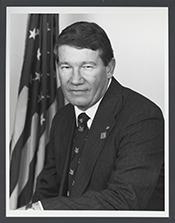
Mr. Chairman, I thank the gentleman for yielding me this time, and I would like to thank the ranking member, the gentlewoman from the District of Columbia (Ms. Norton) and the chairman. And sometimes…
Mr. Chairman, I thank the gentleman for yielding me this time, and I would like to thank the ranking member, the gentlewoman from the District of Columbia (Ms. Norton) and the chairman. And sometimes my colleagues may think this is a free vote to vote ``no'' on. After all, it is the D.C. bill.
A lot of times, if you ask Members of Congress to serve on the Committee on Appropriations, Subcommittee on the District of Columbia, you have to pull them out from under the bed. They will not do it. But I want to tell you, if you want a rewarding job, take something like D.C. that had so many problems. I mean, instead of a sterling city like San Diego that does not need much upgrade, if you take D.C., that is where you can make the most and have the most benefit, and I think we have done that, a lot of it.
A very controversial name with the Democrats is Newt Gingrich, but Newt Gingrich set a path to upgrade this city's Capital and to move it forward for the first time in decades, and I would like to remind my people that if you are thinking about voting ``no,'' think where we have come on this bill.
I have seen this bill take 3 or 4 hours on the House floor. We passed it in about four minutes. Does it mean everything we agreed on? No. But we came together as Republican and Democrat Representatives, and we have done a lot.
I remember when the schools could not open because the fire department had to control the schools. They were unsafe. They would not open. And that has been fixed by the folks mentioned.
Summer school, we did not have a summer school, and we opened it up for the first time. We had 12,000 children volunteer for summer school, not because they had to, because they wanted to learn. That is why this opportunity scholarship program, I think, is important; and also the program of the gentleman from Virginia (Mr. Tom Davis) and the chairman and ranking member put forward on college scholarships and college access.
I happen to believe as a conservative that there should be no child that qualifies for college that should not have that opportunity, because it is either pay-me-now or pay-me-a-lot-later by not giving education. And those are going to be the people that are the rich that we give tax breaks to from the other side, I think, some day because they have got a college education.
But I look at the waterfront and the Anacostia River. One of the things that is a challenge to this committee and to this body, every time it rains in Washington, D.C., the Anacostia River is flooded from the sewage system at Washington, D.C. It has the highest fecal count of any river almost in the world. The pollutants are terrible. Fish die because the bacteria is so high, it eats all the oxygen. The waterfront has been fixed. They used to give 1-year leases, and who is going to invest in a waterfront.
This waterfront is going to be like San Diego or San Francisco. It is going
to be revenue-producing for the city instead of drawing money. It is already starting to do that, and that is because of this committee and Mayor Williams.
I especially want to give attention to Mayor Williams and the job he has done.
Mr. Speaker, by direction of the Committee on Rules, I call up House Resolution 724 and ask for its immediate consideration. Mr. Speaker, for the purpose of debate only, I yield the customary 30…
Mr. Speaker, by direction of the Committee on Rules, I call up House Resolution 724 and ask for its immediate consideration.
Mr. Speaker, for the purpose of debate only, I yield the customary 30 minutes to the gentleman from Florida (Mr. Hastings), pending which I yield myself such time as I may consume. During consideration of this resolution, all time yielded is for the purpose of debate only.
H. Res. 724 provides for consideration of H.R. 4850, the District of Columbia Appropriations Act of 2005, under an open rule, as is customary with most annual appropriations measures.
I am very pleased that the normal, open amendment process outlined in H. Res. 724 will allow a Member to offer any amendment to the bill, as long as it complies with the standing rules of the House.
The rule provides 1 hour of debate in the House on the bill equally divided and controlled by the chairman and ranking minority member of the Committee on Appropriations. The resolution waives all points of order against consideration of the bill.
H. Res. 724 waives points of order against provisions in the bill for failure to comply with clause 2 of rule XXI, which prohibits unauthorized appropriations or legislative provisions in an appropriations bill, except as specified in the resolution.
H. Res. 724 also authorizes the Chair to accord priority in recognition to Members who have preprinted their amendments in the Congressional Record. This procedure will help the House in considering amendments in a more orderly manner. Finally, H. Res. 724 provides for one motion to recommit with or without instructions.
Mr. Speaker, with respect to the underlying legislation, I want to begin by commending the chairman of the Subcommittee on the District of Columbia of the Committee on Appropriations, the gentleman from New Jersey (Mr. Frelinghuysen). He has done a good job in working with the gentleman from Pennsylvania (Mr. Fattah) in crafting H.R. 4850, and the bill deserves the support of the House today.
This provides the District of Columbia with a $560 million Federal payment, and it provides $8.2 billion in
funds for the District of Columbia's governmental activities. Both of these figures match the President's budget request.
On a parenthetical note, I would note that the county in which I live, Gwinnett County, Georgia, has 50 percent more citizens than the District of Columbia and provides all the same services with the exception of welfare, and it does it for $1 billion a year.
Mr. Speaker, this rule provides for an open amendment process for consideration of the FY 2005 District of Columbia appropriations bill. I urge my colleagues to support this fair rule.
Mr. Speaker, I reserve the balance of my time.
Mr. Speaker, I yield back the balance of my time, and I move the previous question on the resolution.
The previous question was ordered.

Mr. Chairman, I rise today to speak on H.R. 4850, the District of Columbia Appropriations Act for Fiscal Year 2005. Under authority granted in Article I of the United States Constitution (section 8,…
Mr. Chairman, I rise today to speak on H.R. 4850, the District of Columbia Appropriations Act for Fiscal Year 2005.
Under authority granted in Article I of the United States Constitution (section 8, clause 17), this bill appropriates Federal payments to the District to fund certain activities, and also approves the District of Columbia's entire budget, including the expenditure of local funds ($8.2 billion in local funds for fiscal year 2005). Although a vast majority of the funds discussed in this bill are local funds originating from the District of Columbia, I speak today only about the $560 million in Federal funds appropriated in this bill.
This is the ninth bill we are considering pursuant to the 302(b) allocation adopted by the Appropriations Committee on June 9. I am pleased to report that it is consistent with the levels established the conference report to S. Con. Res. 95, the concurrent resolution on the budget for fiscal year 2005, which the House adopted as its fiscal blueprint on May 19.
H.R. 4850 provides $560 million in new discretionary BA, which is equal to the 302(b) allocation to the Subcommittee on the District of Columbia; outlays are 416 million below the allocation. The bill contains no emergency-designated new budget authority, nor does it include rescissions of previously enacted appropriations.
Accordingly, the bill complies with section 302(f) of the Budget Act, which prohibits consideration of bills in excess of an appropriations subcommittee's 302(b) allocation of budget authority and outlays established in the budget resolution.
Nonetheless, because House-passed appropriations bills to date have exceeded their allocations by a total of $114 million, it is possible that conference agreements on appropriations bills will cause a breach in the BA ceiling unless corrective action is taken by the Appropriations Committee.
With that reservation, I express my support for H.R. 4850.
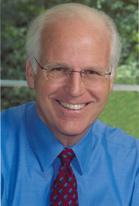
Mr. Chairman, I rise today in support of H.R. 4850, the D.C. Appropriations Bill. I am particularly pleased the legislation included $14 million for school vouchers because I believe too many…
Mr. Chairman, I rise today in support of H.R. 4850, the D.C. Appropriations Bill.
I am particularly pleased the legislation included $14 million for school vouchers because I believe too many children in our Nation's Capital are not getting the education they need and deserve.
The D.C. School Choice Incentive Act provides scholarships of up to $7,500 to students in D.C. schools identified for improvement, corrective action, or restructuring. It targets resources to students and families lacking the financial resources to take advantage of available educational options.
The scholarships cover costs of tuition, fees, and transportation expenses.
There is little doubt that D.C. public schools are in serious crisis, but it is not a crisis caused by a lack of resources. In fact, D.C. public schools spend more per pupil than surrounding school districts in Virginia and Maryland.
Clearly, alternatives to increased funding should be tested.
I oppose directly spending Federal tax dollars on private schools. But just as I support providing Pell grants to college students for use at the university of their choice, public or private, including religious schools, I also support school choice programs that provide parents with similar choices for their elementary and secondary school children.
Opponents of school choice argue such a proposal could drain public schools of money and students. These scholarships are assistance to the students, not the schools. And because all funding for the scholarship program comes from new funds, no public, private or charter school will be drained of its funding. They will just have fewer students to educate.
By promoting a competitive model, all schools are forced to improve academically, provide better quality services, and create an administrative structure that operates efficiently.
For these reasons I support this legislation, and I urge my colleagues to do so as well.
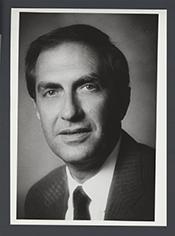
Mr. Chairman, I offer an amendment. Mr. Chairman, I rise again to offer an amendment to cut the level of funding in this appropriations bill by 1 percent. This equals about $5.6 million. This is not…
Mr. Chairman, I offer an amendment.
Mr. Chairman, I rise again to offer an amendment to cut the level of funding in this appropriations bill by 1 percent. This equals about $5.6 million. This is not the biggest bill that we deal with. However, the increase in the bill is over 3 percent over last year. I do not mean this at all as a slap against D.C., our Nation's Capital, certainly not a slap against the committee, because as most Members are aware, I have offered a series of these amendments on the appropriations bills because I think we have to start drawing the line somewhere and some time.
The budget we have for next year is too large, and we can do something about the deficit now if we would start doing it. I would really be remiss, however, Mr. Chairman, if I did not commend the chairman and ranking member on a very difficult job that they have had to do; and, obviously, they have done a very excellent job of it as evidenced by the fact that we are not spending half a day on the D.C. bill down here, that they have worked out the problems beforehand.
So I commend them on a tremendous job that both of them and the committee have done. And it is many times a thankless job because most of the folks back home do not care what happens in the D.C. bill, and so it does not get them any great acclaim back home for the good job they are doing. But I would like to put in the record that they have done a good job.
Still, I do not think a cut of 1 cent on a dollar is too much to ask for or is unreasonable, given our current budget situation.
Mr. Chairman, I demand a recorded vote.
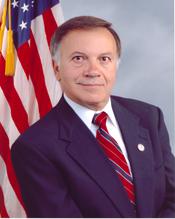
Mr. Chairman, I move to strike the last word to engage in a colloquy with the gentleman from New Jersey (Mr. Frelinghuysen), the distinguished chairman of the Committee on Appropriations,…
Mr. Chairman, I move to strike the last word to engage in a colloquy with the gentleman from New Jersey (Mr. Frelinghuysen), the distinguished chairman of the Committee on Appropriations, Subcommittee on the District of Columbia, regarding a move by certain District of Columbia Council members to enact a bill that would give noncitizens the right to vote in local elections.
Mr. Chairman, passage of such a measure would eliminate one of the few remaining distinctions between noncitizens and citizens, and I firmly believe that it is not too much to ask that American citizenship be a prerequisite for voting in an American election. Therefore, I am opposed to the adoption of such a measure.
Mr. Chairman, it was my intention to offer an amendment that would prohibit implementation of such a measure. However, after receiving assurances from the gentleman from Virginia (Chairman Tom Davis) of the Committee on Government Reform that that measure would be overturned by Congress before it becomes law, I am satisfied that the amendment will no longer be necessary.
Mr. Chairman, is that your understanding of the situation?
I yield to the gentleman from New Jersey.
I thank the chairman for working with me on the issue. I will not offer my amendment.
Amendment No. 2 Offered by Mr. Hefley

Mr. Chairman, on rollcall No. 398, I was unavoidably detained. Had I been present, I would have voted ``no.''
Mr. Chairman, on rollcall No. 398, I was unavoidably detained. Had I been present, I would have voted ``no.''
Bill Text
2 versions available
        [Congressional Bills 108th Congress]
[From the U.S. Government Publishing Office]
[H. Res. 724 Engrossed in House (EH)]

In the House of Representatives, U.S.,

July 20, 2004.
Resolved, That at any time after the adoption of this resolution the Speaker
may, pursuant to clause 2(b) of rule XVIII, declare the House resolved into the
Committee of the Whole House on the state of the Union for consideration of the
bill (H.R. 4850) making appropriations for the government of the District of
Columbia and other activities chargeable in whole or in part against the
revenues of said District for the fiscal year ending September 30, 2005, and for
other purposes. The first reading of the bill shall be dispensed with. All
points of order against consideration of the bill are waived. General debate
shall be confined to the bill and shall not exceed one hour equally divided and
controlled by the chairman and ranking minority member of the Committee on
Appropriations. After general debate the bill shall be considered for amendment
under the five-minute rule. Points of order against provisions in the bill for
failure to comply with clause 2 of rule XXI are waived except: sections 116,
126, 130, and 131. During consideration of the bill for amendment, the Chairman
of the Committee of the Whole may accord priority in recognition on the basis of
whether the Member offering an amendment has caused it to be printed in the
portion of the Congressional Record designated for that purpose in clause 8 of
rule XVIII. Amendments so printed shall be considered as read. At the conclusion
of consideration of the bill for amendment the Committee shall rise and report
the bill to the House with such amendments as may have been adopted. The
previous question shall be considered as ordered on the bill and amendments
thereto to final passage without intervening motion except one motion to
recommit with or without instructions.
Attest:

Clerk.