Expressing the sense of the House of Representatives that the actions of terrorists will never cause the date of any Presidential election to be postponed and that no single individual or agency should be given the authority to postpone the date of a Presidential election.
Legislative Activity
Stay on top of the latest movement without scrolling through every action
Motion to reconsider laid on the table Agreed to without objection.
July 22, 2004 • 12:58 PM
View full timeline
Introduced in House
July 20, 2004
Referred to the House Committee on House Administration.
July 20, 2004
Mr. Ney moved to suspend the rules and agree to the resolution.
July 20, 2004 • 6:23 PM
Considered under suspension of the rules. (consideration: CR H6085-6089)
July 20, 2004 • 6:24 PM
DEBATE - The House proceeded with forty minutes of debate on H. Res. 728.
July 20, 2004 • 6:24 PM
At the conclusion of debate, the Yeas and Nays were demanded and ordered. Pursuant to the provisions of clause 8, rule XX, the Chair announced that further proceedings on the motion would be postponed.
July 20, 2004 • 6:56 PM
Considered as unfinished business (CR H6579-6580)
July 22, 2004 • 12:51 PM
Passed/agreed to in House: On motion to suspend the rules and agree to the resolution Agreed to by the Yeas and Nays (2/3 required): 419 - 2 (Roll No. 409).(consideration: CR H6579-6580; text: CR 7/20/2004 H6085-6086)
July 22, 2004 • 12:57 PM
On motion to suspend the rules and agree to the resolution Agreed to by the Yeas and Nays (2/3 required): 419 - 2 (Roll No. 409). (consideration: CR H6579-6580; text: CR 7/20/2004 H6085-6086)
July 22, 2004 • 12:57 PM
Motion to reconsider laid on the table Agreed to without objection.
July 22, 2004 • 12:58 PM
Voting History
1 vote recorded • Roll call available
Floor Debate
12 membersWhat members said about H.Res. 728 on the floor
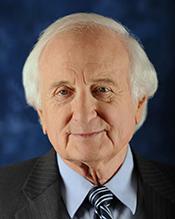 SMLRWN
 DD
DD JBL
JBL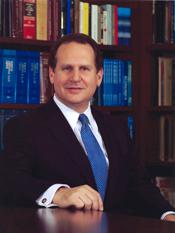 LD+7
LD+7
Floor Debate
12 membersWhat members said about H.Res. 728 on the floor
Mr. Speaker, I support this rule. However, I want to make it clear that we do not want this as a precedent that on trade agreements only 2 hours of debate always are allowed. In this case I think 2…
Mr. Speaker, I support this rule. However, I want to make it clear that we do not want this as a precedent that on trade agreements only 2 hours of debate always are allowed. In this case I think 2 hours will be satisfactory. That will not always be true.
There are good reasons to support this FTA, and I do so. There is the historical relationship between our two countries, as mentioned. There are the present realities in our relationship, Morocco's important role in its area and beyond that. Also, there are some important provisions in this agreement; for example, relating to manufacturing goods outside of the textile area. Ninety-five percent of them will become duty-free. There are strong services commitments, strong IPR commitments. So there are good reasons to be supportive of this.
I do want to put in perspective, though, several issues that have come up in our discussion, and these issues really were raised by us on the minority side. The gentleman from California (Mr. Dreier) likes to talk about raising issues as if it is a reflection of economic isolationism. That is the rubric, the mantra, the propaganda of the majority. They try to pin it on Democrats, including John Kerry. It is absurd. We raised several issues because they were legitimate ones, not because we opposed expanded trade, but because we want expanded trade to work for everybody. We want expanded trade to be shaped. We do not think it is some magic bullet that we simply have to shoot and everything will work out. We do not think trade policy should be on automatic pilot. We do not think that what is necessarily appropriate in one trade agreement is appropriate in another. These cookie cutter approaches of this administration are wrong, and surely we do not support this agreement because we think that the economic record of this administration is worthy of support by anybody in this country.
So we raised a couple of issues. And the gentlewoman from New York (Ms. Slaughter) referred to the prescription medicine provision, and I want to talk about it. Before I do that, a brief word and we will have more discussion during the 2 hours about the core labor standard provisions. The gentleman from California said we should not impose U.S. wages, identical laws on other countries. That is not what we are talking about. That again is propaganda from the majority side. What we are talking about are basic core international standards, and countries, including ours, have signed on to a declaration that says that people should have the right to associate, to bargain, to be free from discrimination, there should be no child or forced labor. That is what we are talking about when we say they should be incorporated into free trade agreements.
We asked the question, an important one, where is Morocco? Where is Morocco today in terms of their laws and their enforcement of these core labor standards? And the majority, because of their view that trade always works out for the best, it is always win-win, did not raise any questions about that. In fact, as to the reforms of 2003 in Morocco, there was not even within our government an English translation of these laws. And we asked for one and we looked at them. We talked to the Moroccan government about these laws, and I am pleased to say that we had a very useful discussion, which we initiated and the Moroccan government responded to, regarding the status of these core labor standards in Moroccan law and in Moroccan practice.
The reforms that were inaugurated last year were a major step forward. The Moroccan society has some history of some freedom for workers, and the independent union in Morocco supports this agreement, I think, as a result. But there were issues raised as to the ability of people to associate, to bargain, and to strike, and so we asked the Moroccan government to give us in writing the status, and I want to quote from their letter and I will place that letter in the Record. The letter read this way:
``The government of Morocco is committed to protecting the right to strike in conformance with ILO, International Labor Organization's core principles. In particular, the government will not use Article 288 of our penal code against lawful strikers.''
So I very much disagree with the administration's approach in general. They have in the agreements enforce their own laws. They put these in the agreements regardless of whether the laws incorporate the standards and whether there is implementation of them. And when we have a chance, when we take over, that will change. But in the meanwhile, the question is, is there conformance, is there conformance basically in Morocco with the core labor standards? And I think the realities as we were able to dig them out indicate that they are basically in conformance with the core labor standards.
Now a few words about prescription medicines. Why did we inquire? First of all, there is the same provision here as there is in the previous agreement, including Australia, the general patent provision that could be applied to reimportation of prescription medicines. It turns out in the case of Morocco that that provision is not going to have any potential effect. All of the legislation that has been introduced regarding reimportation does not include Morocco. They have a very small pharmaceutical industry. So I do not think, though I do not like this provision as a general rule, that we should vote against Morocco because of it, but we should make clear that we do not believe these provisions or this provision should be in trade agreements.
Now what about the impact of these provisions not on our important health needs but the important health needs of the people of Morocco? And we were concerned about that. The gentleman from California (Mr. Dreier) talked about AIDS. Look, if we are really concerned, and I think we all are, we need to look at these agreements to see what is the potential impact on the availability of medicines to people in Morocco who are suffering from AIDS and where there is in other cases as well some kind of a health emergency? And there were several provisions in this agreement that raised questions about the accessibility of the people of Morocco in these cases to necessary pharmaceuticals and the ability of the government of Morocco to take the steps necessary to make these drugs available. And these are fairly technical provisions, but they relate to the lives of hundreds of thousands of people. One relates to so-called parallel imports and the other to test data protections.
So I will make a long story short, and, if necessary, we can talk more about this when we have the debate of 2 hours. We entered into discussions with USTR. We on the Democratic side sent a letter to USTR, and they responded. And I include those two letters in the Record. And we said, in a few words, would the provisions in these two cases prevent accessibility to necessary drugs in a real case of emergency or necessity? And essentially what USTR has said: The agreement in the side letters, when read together, would not prohibit action by the Moroccan government to provide access to these drugs. And these side letters do have effect. The USTR has told us the
following, and I want to read them so there is clarity. This is from page 8 of the mentioned letter to me:
``As stated in the side letter, the letter constitutes a formal agreement between the parties. It is thus a significant part of the interpretive context for this agreement and not merely rhetorical.'' And they also then earlier have said: ``Therefore, if circumstances ever arise in which a drug is produced under compulsory license,'' meaning the government of Morocco has given that license to make these drugs available, ``and it is necessary to approve that drug to protect public health or effectively utilize the TRIPS/health solution, the data protection provisions in the FTA would not stand in the way.'' And they say the same as to the parallel import issue.
So I just finish by saying this to make it very clear: We were concerned. There is an AIDS epidemic. There are other health issues of serious import for the lives of children and other citizens of Morocco, and we took the initiative to be sure that this agreement would not prevent the availability of medicines in these circumstances. The Declaration, the language that was worked out in Doha, made it clear as to WTO that countries could protect themselves and their citizens when there was an overriding health need, and we wanted to make sure that nothing in this FTA would override that ability. And I am satisfied because of the exchange of letters. I am satisfied because of what was written to us by USTR. I am now satisfied by their categorical statement at our hearing just a few days ago that there would be nothing that would prevent access to these medicines in the circumstances I mentioned because of the FTA.
For all of those reasons, I believe that the issue for Morocco has been addressed. But I want to make it very clear that when we negotiate these agreements in the first place, as is true for core labor standards, as is true for health needs, as is true for anything else, we should be sensitive to what the possible impact would be. We should not be using cookie cutter approaches when the lives and the livelihoods of people in our country and in other countries are involved.
So I support this agreement. I urge passage of the rule. But I think this has been a healthy process, and I think we have both clarified the meaning of this agreement, and also I think what we have done is to serve notice as to how these agreements should be negotiated in the future.
Embassy of the
Kingdom of Morocco,
Washington, DC, July 14, 2004.
Hon. Sandy Levin,
Rayburn House Office Building,
Washington, DC.
Dear Congressman Levin: I have deeply appreciated the
continuing opportunity to work with you on the U.S. Morocco
Free Trade Agreement. In particular, I welcome your interest
in our nation's labor law, specifically the comprehensive
reforms, passed last year.
I want to address through this letter some of the issues
that have been highlighted in conversations with you and your
staff. Under Moroccan law, it is illegal to fire an
individual because they are a member of a labor organization
or have engaged in labor organizing. To fire someone on these
grounds would be arbitrary under the 2003 law and would make
available the full remedies provided under that law.
Under Moroccan law, it is illegal to refuse to hire an
individual because they are a member of a labor organization
or have engaged in labor organizing. It is also illegal to
refuse to rehire or extend the contract of an individual for
these reasons.
Section 473 is a provision in the 2003 Labor Law and the
provision's intent is to ensure that labor representatives do
not undermine the traditional labor organizations. The
government intends to implement this provision to achieve
that goal, consistent with the core provisions of the ILO.
The right to strike is protected in the Moroccan
constitution. Further clarification of these rights is
underway. The government of Morocco is committed to
protecting the right to strike in conformance with the
International Labor Organization's core principles. In
particular, the government of Morocco will not use Article
288 of our penal code against lawful strikers.
Concerning the questions regarding Labor Representatives,
employers have the obligation to organize the elections for
the labor representatives. Employers cannot vote in these
elections and are not able to choose labor representatives.
Only employees can vote and elect freely the labor
representatives.
Employees can join freely the Union of their own choice.
Unions designate their representatives within the companies.
On the ILO involvement, Morocco has always worked with ILO.
For instance, ILO assisted Morocco to write the Labor Code of
2003 and the new law on child labor. Morocco, as in the past,
will continue to ask the support of ILO and work with this
organization in all labor issues such as new laws and will
ask its help in providing assistance for the implementation
of the current rules.
I look forward to continuing to work with you on these
issues and any others of potential concern. Nevertheless, I
wanted to get back to you in a timely manner on the key
issues addressed in this letter.
Sincerely,
Aziz Mekouar,
Ambassador.
Madam Speaker, I move to suspend the rules and agree to the resolution (H. Res. 728) expressing the sense of the House of Representatives that the actions of terrorists will never cause the date of…
Madam Speaker, I move to suspend the rules and agree to the resolution (H. Res. 728) expressing the sense of the House of Representatives that the actions of terrorists will never cause the date of any Presidential election to be postponed and that no single individual or agency should be given the authority to postpone the date of a Presidential election.
Madam Speaker, I yield myself such time as I may consume.
I rise today to introduce, I think, an extremely important resolution, House Resolution 728, which expresses the sense of the House that the actions of terrorists will never cause the date of any national election, Presidential election, to be postponed and that no single individual or agency should be given the authority to postpone the date of a national election.
In a great democratic republic such as ours, there is nothing more fundamental than the bond that is forged between citizens and their representatives during the course of regularly scheduled elections. In our country and by design of our Federal Constitution, the people are sovereign. The power that we exercise as representatives derives directly from their consent.
James Madison, writing in Federalist No. 52, stated that ``It is essential to liberty that the government in general should have a common interest with the people.'' According to Madison, ``Frequent elections are unquestionably the only policy by which this dependence and sympathy can be effectually secured.''
Congress is authorized by the Constitution to determine the date on which the Presidential election and all other Federal elections will take place. Thus, only an act of Congress, and not the actions of a single individual or agency, could change that date.
The ability of the United States to conduct regularly scheduled Federal elections even during the most difficult and trying of times, for example, such as during the Civil War and during World Wars I and II, is a hallmark of our strength and our resiliency, the great cornerstone of our democracy itself. We would do well to remember the counsel of Abraham Lincoln who, after having been reelected President while the Civil War was raging, stated:
``We cannot have free government without elections. And if the rebellion could force us to forgo, or postpone a national election, it might fairly claim to have already conquered and ruined us. The election, along with its incidental and undesirable strife, has done good. It has demonstrated that a people's government can sustain a national election in the midst of a great civil war. Until now it has not been known to the world that this was a possibility.''
The resolution that we are introducing today reaffirms our national commitment to holding Federal elections, including the election for President, on the date prescribed by law and to stand firm in the face of terrorist enemies who seek to derail the operation of our democracy.
Since the terrible and fateful morning of September 11, 2001, we all have become in this country painfully aware of the destructive intent of our country's terrorist enemies as well as the increasingly sophisticated and devastating methods by which they carry out their deadly work. We were further reminded of al Qaeda's hatefulness and total disregard for innocent life this past March when, in the days leading up to the Spanish national elections, they unleashed a string of lethal bombings that killed scores of civilians in Madrid. Shortly thereafter, the Spanish Government, that had stood shoulder to shoulder with us, was then voted out of office. But it is not a matter of who was voted into office or who was voted out of office. It is the matter of the action that the terrorists took to intimidate a country.
I realize that many factors were at play during that election. However, I have no doubt that al Qaeda believes its actions led directly to the defeat of a government. And I believe, in fact, the threats that we hear about are intimidation factors on us in the United States to attempt to get us to think about the possibility of a national election being changed.
We hope that there are no terrorist attacks, of course, and we hope that our Central Intelligence Agency and FBI and Homeland Security will do everything possible, as we know they will, in conjunction with the States, to make sure that attacks are not carried out.
But if an attack did occur and we in fact postponed an election, what would we do? Would we say it will happen in 1 week? Or it will happen in 2 weeks? And there is another attack and we postpone it for 2 more weeks. One could imagine the chaos that would be caused by this type of action.
It has been suggested that such an attack may require the postponement of this November's election. I strongly disagree. Any delay in the conduct of an election in the aftermath of a terrorist attack would signify weakness rather than strength and would be a victory for the terrorists if they could accomplish that here on our soil. I believe that if such an attack were ever to occur, and I earnestly pray, as we all do, that it never happens, the actions of millions of Americans across this great country casting their ballots in a regularly scheduled election would send a very powerful signal to our terrorist enemies and to all the world about the vigor of our democracy and the fortitude of our citizens to continue on where America does her work, at the ballot box.
With this resolution the House declares on behalf of the American people it represents that the strength and stability of the American democratic system and the values upon which it is founded are much greater than any attempts our terrorist enemies may make to disrupt or destroy them. The message we send is unmistakably clear: we will not shrink in the face of terrorist threats.
And let me add one other point I think that is important to make. As there has been chatter about the possibility of talking about one person or one agency postponing the elections, we live in a democracy. Elections are postponed in countries that have dictators by one individual. We do not operate that way. So there are many good reasons to support this.
I want to thank the Speaker of the House, all of the Republicans. I want to thank the gentlewoman from California (Ms. Pelosi) and most of all also the gentleman from Connecticut (Mr. Larson), our ranking member. This is a truly bipartisan resolution. This is a resolution where everybody has joined together to say that we will not be intimidated and to say that Congress has the authority on the elections, the elections will go forward, and that no one single person or agency will even entertain the idea that, in fact, they can postpone an election. I thank the gentleman from Connecticut (Mr. Larson) for his great support.
Madam Speaker, I reserve the balance of my time.
Madam Speaker, I yield 3 minutes to the gentleman from Michigan (Mr. Smith), and I would also note that the gentleman has introduced House Concurrent Resolution 474 into our committee, and it supports the very same objectives; and I appreciate the gentleman's introducing that resolution.
Madam Speaker, I have no further requests for time, and I reserve the balance of my time.
Madam Speaker, I yield myself such time as I may consume.
I am not sure I am going to attempt to actually answer that, but I will say this, and I respect always the gentleman's opinion: when he says the issue is about counting votes, we cannot count votes unless we have an election, I understand where he is coming from. However, there is an issue about the security of the ballots. Let us take terrorists away from it. There could be an earthquake. It could be in California. It could be in Texas. Do we then stop the national elections? Forget terrorism. Would we stop the national elections if on the day of the elections there was an earthquake somewhere? Would we somehow broadcast to the Nation stop, turn around, and go home? But I think, frankly, understanding what he is saying, respecting what he is saying about security, this still goes way beyond that.
At issue tonight is not forgetting about security elections, not forgetting about having accurate elections, but the issue is with the chatter about one person being able to stop elections; the Congress, I think this is the time the Congress is the body that can do that, and this is as a result of the chatter about one person.
Now, whom would we pick? Would we pick you, would we pick the Speaker, would we pick the minority leader, would we pick the Attorney General, would we pick Homeland Security?
So I think the issue of this is stating on the record that Congress will not even entertain one person, because the idea of one person is something so foreign to us, that no one individual in this country ever, ever has the power to stop an election.
Madam Speaker, I reserve the balance of my time.
Madam Speaker, I yield myself such time as I may consume.
Madam Speaker, we have gone a long way in this country, and we always continue to look for ways we can better improve security, ways that we can have integrity in the elections, the Help America Vote Act. There are a lot of different things that we continuously do in the history of our country.
On this issue, I am so proud of this House. I want to thank the Speaker for his support, the gentleman from Connecticut (Mr. Larson) for his quick action on this, the Democratic leader, the gentlewoman from California (Ms. Pelosi).
You take Members from all backgrounds in this House and sometimes people say, do you ever agree on anything? Well, you know, we might disagree here and there. But you take Members from the left, the right and the middle, you take Members from the rural and the urban, they have come together so quickly on this resolution on a bipartisan basis, because I believe that this Chamber knows and respects the integrity of our process and the rule of law that we have on the election process and Congress' clear, defined role in that.
Madam Speaker, I thank the gentleman and I urge support of this resolution.
Madam Speaker, I yield back the balance of my time.
Mr. Speaker, on that I demand the yeas and nays.
Mr. Speaker, I rise in strong support of the U.S.-Morocco Free Trade Agreement. Let me begin by responding to some of the comments my very good friend, the gentlewoman from Rochester, New York (Ms.…
Mr. Speaker, I rise in strong support of the U.S.-Morocco Free Trade Agreement. Let me begin by responding to some of the comments my very good friend, the gentlewoman from Rochester, New York (Ms. Slaughter), offered. Those have to do with HIV/AIDS and with gender inequality. We are all very concerned about dealing with those very serious crises that are out there. Most of us have come to the conclusion that one of the best tools that we can utilize to deal with those challenges is to encourage greater economic growth. Improving the standard of living for people will dramatically enhance the chance to deal with gender inequality, to deal with the challenge of having the resources to tackle greater education when it comes to the proliferation of HIV/AIDS.
So let me say that this agreement is itself a very, very comprehensive, unique and cutting-edge agreement which will create opportunities on both sides of the Atlantic.
Last week this body overwhelmingly passed the U.S.-Australia Free Trade Agreement. There is certainly a great deal of differences between Australia and Morocco. Australia has an economy which is very much like ours. They are a developed, industrialized nation with stringent labor and environmental standards. And like the United States, they have an economy that is increasingly based on services.
Morocco, by contrast, is a developing country facing many of the challenges that confront nations throughout the developing world. They are working very hard in Morocco to modernize their infrastructure and develop new sectors even as they strengthen the traditional industries like agriculture and textiles. They are aggressively pursuing labor and environmental reforms as well as combating piracy and counterfeiting. In short, Morocco is working diligently to climb higher and higher up that proverbial economic ladder.
The very remarkable thing about trade liberalization is these two trade agreements, with vastly different economies, can both be unequivocally good for all parties involved, making it a win/win. Trade is not only beneficial for big economies like the United States or wealthy economies like Australia, but it is very, very important for small, developing economies like Morocco, and I would argue in many ways because of the contrast that exists, trade agreements like this for developing nations create a potential for an even more dramatic improvement in the quality of life and the standard of living in those countries.
Unfortunately, economic isolationists often hide behind the guise of fair trade, an argument that was just put forth by my colleague from New York. They use fair trade to argue that because some countries lack the resources to pay American wages or enforce identical labor standards that we have in America, the most developed nation in the world, that we should somehow not trade with these countries. This is a tragically misguided argument.
It is precisely because these countries have further to go up that economic ladder that we should and must pursue open trade. Trade liberalization provides the tools for economic growth by opening up new markets, by building the legal framework necessary for a healthy business and investment environment by creating the resources to set high labor and environmental standards. Morocco is a perfect example of just such a country.
Mr. Speaker, for many years Morocco has been working to bring its economy into this new and vibrant 21st century. It has been working to increase its standard of living, and it has been striving to raise its labor and environmental standards. In fact, Morocco's aggressive efforts to reform its labor laws since the start of the free trade agreement process began, culminated in a groundbreaking new labor law that was passed just a few weeks ago.
These reforms address issues ranging from child labor to the minimum wage to nondiscrimination of women and the disabled, leading again to deal with the challenge that the gentlewoman from Rochester, New York (Ms. Slaughter) raised. This new labor code makes Morocco a leader in the developing world, and it is a testament both to Morocco's commitment to high standards and the effectiveness and the importance and the dynamism of economic engagement.
Morocco is living up to its commitments even before implementation of this free trade agreement, but I want to make it very clear, while the FTA is critical to helping Morocco stay on its current path of economic development, it is by no means a mere gift from the United States of America. American businesses, American consumers, American workers and investors will all benefit from this agreement. Mr. Speaker, 95 percent of all trade in consumer and industrial goods will immediately become duty free. American farmers will have a huge advantage as they gain greater access than even Morocco's traditional European trading partners currently enjoy. U.S. service providers will benefit from broad-based liberalization across all service sectors, and American producers will benefit from the highest intellectual property protections ever negotiated in a free trade agreement, and that is particularly of concern to those Members from areas like southern California where our entertainment industry is so important. Setting an example and dealing with this issue of intellectual property is key.
The FTA also grants us an opportunity to strengthen our relationship. I want to say that relationship has been dramatically strengthened from the work that the gentleman from Florida (Mr. Lincoln Diaz-Balart) has done in developing this important relationship we have. He and the gentleman from Pennsylvania (Mr. English) and others he mentioned have been very critical to building this U.S.-Morocco Caucus, and I congratulate them for their hard work in doing what we can to build that relationship which I believe has played a big role in leading us to this point where we, by an overwhelming margin, are going to pass this.
I believe this trade agreement is going to have a chance to deal with one of the challenges that exists in Morocco, and that is dealing with a challenge which has been going on for a long period of time with the Western Sahara. It is my hope that as we strengthen further this relationship between our two countries, we will be able to see a resolution to that.
Mr. Speaker, we know this has been a very important relationship between our two countries. Since 1777, when our
friendship formally began, Morocco has proven to be an important and strategic partner. This friendship has never been more apparent than throughout our recent global efforts to combat terrorism. We all know Morocco has been a critically important ally to us in that effort, and as a Muslim-Arab country, they have been an ardent U.S. supporter in a part of the world where our list of very good friends is not as strong as we would have liked.
Mr. Speaker, on both economic and political fronts, Morocco is making tremendous efforts. Today we are able to strengthen this important relationship while tearing down barriers, creating new opportunities for, as I said, American workers, American investors, American business people, and Moroccans alike. I urge my colleagues to demonstrate their support for our pro-economic growth agenda by voting for this rule and for the underlying measure.
Madam Speaker, I yield myself such time as I may consume. I wish to associate myself with the remarks of the gentleman from Ohio (Chairman Ney), my good friend. I rise today in support of this…
Madam Speaker, I yield myself such time as I may consume.
I wish to associate myself with the remarks of the gentleman from Ohio (Chairman Ney), my good friend.
I rise today in support of this resolution to reaffirm that our Federal elections should not be postponed in the event of terrorist attacks, as our chairman has eloquently stated in his remarks. I stand in support of this resolution because of the matters contained in the resolving clauses. Number one, the actions of terrorists will never cause the date of any Presidential election to be postponed; and, number two, no single individual or agency should be given the authority to postpone the date of a Presidential election. This is the meat of this resolution.
I further join with the gentlewoman (Ms. Pelosi), our distinguished leader, in calling for the United States to be an example for democracies around the world, and that means holding our elections on schedule. I would also like to thank the gentleman from Texas (Mr. Turner), ranking member of the Select Committee on Homeland Security, who spoke out so eloquently on this issue, and the gentlewoman from California (Ms. Woolsey), who has already circulated in the immediate comments following some of the press with respect to this issue and garnered more than 150 signatures, as the chairman has indicated, along bipartisan lines.
The Union has stood for over 225 years and has never had a Federal election postponed or cancelled. Not in time of war, not in time of economic turmoil, and not in time of natural disaster. We should not start now. We as a country will not bend in the face of threats to our democracy. The United States was founded on the ideas of hope and freedom. Those who believe that they will break those pillars with the threat of terror are misguided.
I have requested a briefing from Department of Homeland Security Secretary Tom Ridge to learn how his Department plans to work with Congress to safeguard the November elections and on reducing the risk of attack. I join with the committee chairman and we share the concerns, and we all hope and pray and abide that no such attacks will occur, and yet we must be prepared for those contingencies. I would suggest that while we are mindful of security and the safety of voters, we should not focus on these issues to the extent that they damage democracy by frightening voters away from the polls. Americans should go to the polls in record numbers to show our determination that we take our democracy seriously.
Madam Speaker, I reserve the balance of my time.
Madam Speaker, I yield 3 minutes to the gentlewoman from California (Ms. Woolsey), who has led the effort here in the House and petitioned to Secretary Ridge.
Madam Speaker, I yield 3 minutes to the distinguished gentleman from Washington (Mr. Baird).
Madam Speaker, I yield myself such time as I may consume.
Madam Speaker, I just wanted to comment, as well, that I appreciate the spirit of my colleague's comments and what he had to say, and I think that votes being conducted does truly matter.
In the legislative process, would it be that every time we passed a piece of legislation did we not think the problem had been solved? So I agree that we have to continue to follow through on this issue.
But I think the chairman is correct in terms of looking at the gravity of this situation and an individual, and, as the gentleman pointed out in his remarks as well, understanding completely that that authority should derive with the United States Congress.
Madam Speaker, I yield such time as he may consume to the gentleman from Washington (Mr. Baird).
Madam Speaker, I thank the gentleman for his thoughtful comments.
Madam Speaker, I yield 4 minutes to the distinguished gentlewoman from Texas (Ms. Jackson-Lee)
(Ms. JACKSON-LEE of Texas asked and was given permission to revise and extend her remarks.)
Madam Speaker, I yield myself such time as I may consume.
Mr. Speaker, I thank the distinguished gentlewoman, and I again want to add both my praise and thanks for the leadership of our distinguished chairman, the gentleman from Ohio (Mr. Ney), in bringing this resolution to the floor.
We are the greatest country on the face of the Earth. We are known throughout the globe for our great strength and resolve. We are known for the great strength of our military and our armies and the shock and awe that they create.
But the most awesome thing that we have, the thing that sticks out in everybody's minds, what makes us the Nation that we are, is our freedom of expression and our right to vote. That is why this is such an important resolution and such an important issue.
In the final analysis, it will not be the strength of our armies; it will be the strength of the individual and collective thoughts of our citizens that are expressed on the day we vote that makes us the Nation that we are.
Madam Speaker, I thank the gentleman from Ohio for his leadership.
Madam Speaker, today I rise in support of this resolution to reaffirm that our Federal elections should not be postponed in the event of terrorist attack. I would like to associate myself with the remarks of the Chairman and thank his staff for drafting this resolution. I stand in support of this resolution because of the matters contained in the resolving clauses (1) the actions of terrorists will never cause the date of any Presidential election to be postponed; and (2) no single individual or agency should be given the authority to postpone the date of a Presidential election. This is the meat of the resolution, and others can debate about the meaning of the ``whereas'' clauses--and I am sure there will be lots of different interpretations.
I further join with Leader Pelosi in calling for ``the United States to be an example for democracies around the world, and that means holding our elections as scheduled.'' I would also like to thank the ranking minority member of the Homeland Security subcommittee Jim Turner and Representative Lynn Woolsey for their leadership on this very important issue. This union has stood for over 225 years and has never had a Federal election postponed or cancelled. Not in time of war; not in time of economic turmoil and not in time of natural disaster. We should not start now! We as a country will not bend in the face of threats to our democracy. The United States was founded on the ideals of Hope and Freedom! Those who believe that they will break those pillars with the threat of terror are misguided.
I have requested a briefing from Homeland Security Secretary Thomas Ridge to learn how his department plans to work with Congress to safeguard the November elections and on reducing the risk of an attack.
I would suggest that while we must be mindful of the security and safety of voters, we should not focus on these issues to the extent that it damages democracy by frightening voters away from the polls. Americans should go to the polls in record numbers to show our determination that we take democracy seriously.
Madam Speaker, I urge my colleagues to join me in supporting this resolution.
Madam Speaker, I yield back the balance of my time.
Mr. Speaker, by direction of the Committee on Rules, I call up House Resolution 738 and ask for its immediate consideration. Mr. Speaker, for the purpose of debate only, I yield the customary 30…
Mr. Speaker, by direction of the Committee on Rules, I call up House Resolution 738 and ask for its immediate consideration.
Mr. Speaker, for the purpose of debate only, I yield the customary 30 minutes to the distinguished gentlewoman from New York (Ms. Slaughter), pending which I yield myself such time as I may consume. During consideration of this resolution, all time yielded is for the purpose of debate only.
(Mr. LINCOLN DIAZ-BALART of Florida asked and was given permission to revise and extend his remarks.)
Mr. Speaker, House Resolution 738 is a standard, closed resolution for consideration of the underlying trade legislation that provides for fair and extensive debate on H.R. 4842, the United States-Morocco Free Trade Agreement Implementation Act.
The rule provides 2 hours of general debate evenly divided and controlled by the chairman and the ranking minority member of the Committee on Ways and Means.
Mr. Speaker, the relationship between the Kingdom of Morocco and the United States of America has existed throughout the history of the United States. In December of 1777, when war raged between the American colonies and Britain, Sultan Sidi Mohammed boldly recognized our young, and not yet free, Republic. That magnanimous act of recognition was cemented in a Treaty of Peace and Friendship between our countries, ratified in July of 1878. That enduring document remains the oldest unbroken treaty in the history of the foreign relations of the United States. Quite simply, the Kingdom of Morocco is our most permanent and enduring friend.
The gentleman from Pennsylvania (Mr. English), the gentleman from Tennessee (Mr. Tanner), the gentleman from Louisiana (Mr. John), and I came together to form the Morocco Caucus in Congress to highlight and to further deepen the truly magnificent and critically important relationship between the United States and the Kingdom of Morocco. The United States has no better friend and ally in the Maghreb, in North Africa and in the Arab world than Morocco.
We are cognizant of, and grateful for, the help Morocco provided during the reign of the great statesman King Hassan II in the dangerous and prolonged struggle known as the Cold War and in the initial and ultimately delicate stages of the peace process between Israel and her neighbors.
We are cognizant of, and grateful for, the unequivocal and decisive help Morocco has provided during the reign of another great statesman, King Mohammed VI, in our common war against the forces of international terrorism. Both our peoples have been victims of the scourge of cowardly attacks upon unarmed civilians, and both nations have answered the challenge of this difficult time with strong leadership and decisive action.
The United States must be cognizant and supportive of the wisdom and experience of Morocco, that great influence for stability in North Africa, in the Middle East, regarding issues related to international terrorism. We must understand that Morocco's insistence upon its territorial integrity and its refusal to accept a terrorist state in the Western Sahara is critically important, not only for the national security of Morocco, but also for the security of the United States and of our European allies.
Today, Mr. Speaker, we celebrate another milestone in the wonderful relationship between the United States and Morocco as we prepare to consider H.R. 4842, legislation to implement the United States-Morocco Free Trade Agreement. This agreement will benefit both our peoples as it facilitates and encourages ever-growing commerce between our countries and the creation of many new jobs in Morocco and in the United States. This agreement will help turn an already solid relationship into an even greater friendship.
Mr. Speaker, I would like to take this opportunity to publicly thank a few distinguished leaders for making this important free trade agreement a reality.
Understanding the importance of this agreement and with the August recess quickly approaching, the gentleman from California (Mr. Thomas) made great efforts to expedite the consideration of this agreement in the House. The gentleman from Illinois (Speaker Hastert) has been especially solid in his leadership on this critical issue, as has been the gentleman from Texas (Mr. DeLay), the majority leader, and the gentleman from California (Mr. Dreier), chairman of the Committee on Rules. Ambassador Bob Zoellick has been and continues to be a stalwart, strong advocate on behalf of the economic interests of the United States and especially job creation in America, and President Bush's leadership has truly been the linchpin for great accomplishments such as this.
While we fight terror across the globe, the United States, under this President, has deepened economic and security-based relationships with our friends for the benefit of our protection and our freedom.
Mr. Speaker, I urge my colleagues to support both the rule and the underlying legislation that we bring before the House today.
Mr. Speaker, I reserve the balance of my time.
Mr. Speaker, I yield myself such time as he may consume to the gentleman from California (Mr. Dreier), the distinguished chairman of the Committee on Rules.
(Mr. DREIER asked and was given permission to revise and extend his remarks.)
Mr. Speaker, I reserve the balance of my time.
Mr. Speaker, I yield myself such time as I may consume.
Mr. Speaker, I think the gentleman from Virginia brought up some very important points, and I think they are important to emphasize and not only take note of. This agreement, in addition to the many, many important aspects that it contains for the economy, obviously, of Morocco, and the United States, is a very important agreement politically; and it encourages the extraordinary progress that Morocco has made in the area of labor rights, in the area of a free press, and in the area of democratization.
Morocco has multiple political parties, espousing all conceivable viewpoints. It has an elected parliament and an elected prime minister. It has made commendable progress. It is a great friend and ally of the United States.
For so many reasons, Mr. Speaker, it is important and appropriate for this Congress to be moving forward today passing this implementing legislation for the United States-Morocco Free Trade Agreement.
Mr. Speaker, I yield back the balance of my time, and I move the previous question on the resolution.
The previous question was ordered.
Show 8 more
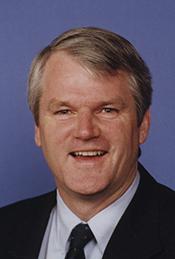
Madam Speaker, I thank the gentleman from Connecticut for yielding me this time and thank the gentleman from Ohio (Mr. Ney). I want to raise a question here because, first of all, I absolutely agree…
Madam Speaker, I thank the gentleman from Connecticut for yielding me this time and thank the gentleman from Ohio (Mr. Ney).
I want to raise a question here because, first of all, I absolutely agree that the executive branch must not be given the authority or must not assume the authority to change our elections. On that I one hundred percent agree. That must be the purview and the prerogative of the United States Congress.
But I just want to raise a question. The issue really is not the holding of elections. The issue is whether or not in the elections everyone's vote gets counted, and we must be very careful in our rhetorical concerns to not just say they will never disrupt the elections but to instead ensure that terrorists not allow individual votes to not be counted.
We have seen elections in which individual votes were not counted, and that is the threat to the democracy. And I mean this very seriously. It is quite plausible to imagine scenarios wherein we go forth with an election, but individual votes are not counted and thereby the election of an individual as President of the United States or as Members of the House or Senate does produce an outcome, but the outcome is not based on a fair and full counting of each of our votes.
And that is my concern. And my concern, frankly, is I think we are moving this forward too fast. My own preference would be to follow something along the lines of what Norm Ornstein recommended, and that is appoint a commission to study in the interim what the possible scenarios are and what our opportunities are because if, for example, one State, let us say California, is attacked by terrorists and the number of the votes are not in some way able to be tallied, are we today setting a marker in the ground that says it is better not to count the votes of the State of California or to only partially count those in order that we can say the election was held on time?
Quite frankly, I am not comfortable with the results of elections where we have said what matters is that we say we have held the election rather than we say what matters is every single person's vote is counted. It is that principle on which the integrity of a democratic Republic depends, not merely holding elections on a designated time.
So I will very likely vote for this, but I will do so with reservations. And I would suggest that if we do pass this resolution, we not assume that in so doing we have solved this problem. Nor do we assume that in so doing, we have assured the American people that their votes will be counted. Because the American people say not that we must hold the election on the first Tuesday of November. What they say is, most important is my vote must count. In the past it has not counted, and it must count ever after.
Madam Speaker, I thank the gentleman for yielding me time.
I appreciate the discussion here. I absolutely agree. I want to underscore that. The gentleman, I could not agree more; it must not reside with one person. Frankly, not because we feel that way, not because we cannot think of who that one person would be, but because the Constitution of the United States of America has never said that the President or a designee of the President can delay an election. That must reside with Congress, if anything is going to happen to elections.
But I really do want to underscore, what is the purpose of an election? The purpose of an election is not simply to say we had an election and someone was declared the winner. The purpose of the election is to understand the will of the majority of the American people.
If events, be they natural or terrorist, in some way distort the ability of us to accurately glean and determine the will of the American people, then that is to be of profound consideration.
My concern, again, is we must first and foremost ask ourselves what mechanisms are in place to ensure that the will of the American people is accurately recorded and counted, not what mechanisms are in place so that at the close of business on November 2 we can all declare we have had an election. That is all I am trying to say here.
I absolutely applaud the gentleman for saying no one person must make this decision. If nothing else than that, I would vote for this resolution. But I think we must step back after that and say, What mechanisms do we have in place? If on Election Day something profound has happened, be it terrorist or natural, that we reliably can reliably say we do not have an accurate count at the end of this day, should we move forward so that we can say, We had an election; or should we have some mechanism in place to ask ourselves, Has this mechanism of an election been valid? And if it has not been valid, then it behooves us and it is our duty to the American people and the voters to say, We are going to do something beforehand to make sure it is valid and not leave it up to chance. That is all I am trying to say.
So if we pass this, let us please continue this discussion, and ask if something does happen that interferes with your right to have your vote counted and accurately represented, we have some mechanism to anticipate that.
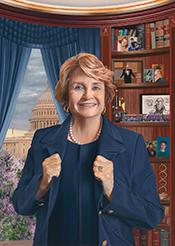
Mr. Speaker, I yield myself such time as I may consume. (Ms. SLAUGHTER asked and was given permission to revise and extend her remarks.) Mr. Speaker, I thank the gentleman from Florida (Mr. Lincoln…
Mr. Speaker, I yield myself such time as I may consume.
(Ms. SLAUGHTER asked and was given permission to revise and extend her remarks.)
Mr. Speaker, I thank the gentleman from Florida (Mr. Lincoln Diaz-Balart) for yielding me the customary 30 minutes.
Mr. Speaker, an important part of our job is to encourage the purchase of U.S. goods and services by others in the international community, especially now when the economy is limping along and failing to replace the 1.1 million jobs lost since the Bush administration took office. Hopefully opening up foreign markets for American products will lead to the creation of good, high-paying jobs here in the United States. However, we must be mindful of the consequences of free trade agreements such as the U.S.-Morocco Free Trade Agreement.
Last week this body considered the free trade agreement, FTA, between the United States and our ally Australia. Serious questions were raised about the impact patent protection language might have on the ability of the United States to reimport lower cost drugs from other countries and the impact on the Australian government's low-cost pharmaceutical drug program.
According to the Wall Street Journal, urged by the drug industry, the U.S. Trade Representative is seeking to strengthen protections for costlier brand-name drugs, defending the U.S. companies from foreign competition of foreign producers of generic drugs. So far the USTR has successfully added this safeguard to the trade agreements with Jordan, Chile, Singapore, Australia, Costa Rica, El Salvador, Guatemala, Honduras, Nicaragua, Dominican Republic, and Morocco.
The U.S.-Morocco agreement contains patent protection language which restricts Morocco for 5 years from approving generic-drug applications if the application is based on the data of the original manufacturer. What impact will this 5-year ban have when enforced? Will this interfere with a developing African nation's ability to get affordable, generic pharmaceuticals to fight public health crises like the HIV infection?
In response to these serious concerns, the USTR points to a letter of understanding between the United States and Morocco. In the letter, both countries agree that the patent provisions ``do not affect the ability of either country to take necessary measures to protect public health by promoting access to medicine for all, and in particular concerning cases such as HIV/AIDS, tuberculosis, malaria, and other epidemics as well as circumstances of extreme urgency or national emergency.''
This mutual understanding is promising. However, it is not directly part of the free trade agreement or the implementing legislation. According to Robert Weissman of Essential Action, ``This statement of understanding expresses noble sentiments, but is unlikely to make much, if any, material difference in the implementation of the agreement.'' I hope Mr. Weissman is wrong.
Approximately 16,000 Moroccans are infected with HIV, and the pandemic of HIV and AIDS is devastating the nations of Africa. Will Morocco be able to purchase or produce less expensive, generic anti- viral and other medications needed to fight HIV infection? Of the 40 million people with HIV or AIDS globally, less than 10 percent have access to drugs that have transformed many cases of HIV infection to a chronic illness, from a death sentence. In most of the developing world, drugs to fight HIV infection and AIDS are far too expensive for most. Any barrier to access to more affordable generic medicine denies essential health care to the poor.
Women are nearly half of the 40 million infected with HIV, and the infection rate of women is climbing faster than the infection rate of men in many regions. Irene Khan, Secretary-General of Amnesty International, told last week's World AIDS Conference that ``gender inequality is driving new infections among women and girls like never before.''
Mr. Speaker, more free trade agreements are in the works. The U.S. Trade Representative has negotiated with six Central American countries and has just initiated negotiations with Thailand. The consequences of trade agreements go far beyond merely eliminating trade barriers, such as tariffs. These agreements enforce significant public policy decisions made not by Congress, but by the Trade Representative. Congress has a narrow role in trade agreements, so I urge my colleagues to carefully consider the language in this and all future agreements. Free trade must be fair trade.
Mr. Speaker, I reserve the balance of my time.
Mr. Speaker, I yield such time as he may consume to the gentleman from Michigan (Mr. Levin), a valued member of the Committee on Ways and Means.
(Mr. LEVIN asked and was given permission to revise and extend his remarks.)
Mr. Speaker, I yield 3 minutes to the gentleman from Virginia (Mr. Moran).
Mr. Speaker, I have no further requests for time, and I yield back the balance of my time.
Mr. Speaker, I object to the vote on the ground that a quorum is not present and make the point of order that a quorum is not present.
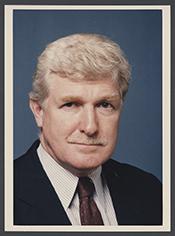
Mr. Speaker, I thank the gentlewoman from Rochester, New York for yielding me this time. I rise today in support of the Moroccan Free Trade Agreement because it is an important agreement with a…
Mr. Speaker, I thank the gentlewoman from Rochester, New York for yielding me this time.
I rise today in support of the Moroccan Free Trade Agreement because it is an important agreement with a moderate Muslim country and it represents a vital step towards establishing broader free trade in the Middle East.
Former Clinton administration U.S. Trade Representative Mickey Kantor said, ``Closer and mutually beneficial ties between Morocco and the United States will bolster a country that has for several centuries earned a reputation for moderation, tolerance, and stability. The Moroccans have democratized their political structures. They recently made historic reforms to improve women's rights, and codified new labor rights and protections based upon key International Labor Organization conventions.
Mr. Speaker, the Moroccan Free Trade Agreement is the first trade pact to be negotiated with an Arab and Muslim country since September 11, and it
would permit Morocco to join Jordan in the ranks of countries that have entered into an enhanced partnership with the United States.
This agreement will enhance our foreign policy and diplomatic efforts to bridge greater understanding and cooperation with moderate Arab nations.
This FTA is going to ensure that U.S. businesses and workers have greater access to the Moroccan market by further eliminating trade barriers. It will deepen and expand bilateral commercial ties beyond the average level of $1 billion in current annual two-way trade flows. In fact, the United States enjoyed a surplus of $2 billion between 1999 and 2003. So they are buying more from us than we are buying from them. This is creating more jobs in the United States.
More than 95 percent of bilateral trade in consumer and industrial products will become duty free immediately upon entry into this agreement, with all remaining tariffs to be eliminated within 9 years. It is the best markets access package of any U.S. free trade agreement with a developing country.
It is going to create new opportunities for U.S. banks, insurance, securities and related services and telecommunications. Key U.S. export sectors gain immediate duty-free access to Morocco, such as information technology, machinery, construction equipment, and chemicals. Morocco is going to accord substantial market access across its entire services regime and adhere to strong and detailed disciplines on regulatory transparency, a key factor.
Additionally, Morocco has agreed to strengthen its intellectual property laws, and the agreement is going to help Morocco to further expand its economic and labor reform efforts.
Mr. Speaker, this FTA will expand trade and bring greater economic opportunities for U.S. workers, farmers and businesses, and is going to promote economic development in other nations.
Through this type of economic engagement, we can forge stronger ties with our allies around the world and promote democracy, free markets, and improved labor standards. That is why I support this agreement. I urge my very good friends, particularly on this side of the aisle, to vote in favor of this implementing legislation.
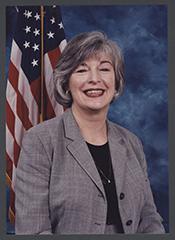
Madam Speaker, it appeared earlier this month that if DeForest Soaries, the chairman of the U.S. Election Assistance Commission, had gotten his wish, his agency would have the authority to postpone…
Madam Speaker, it appeared earlier this month that if DeForest Soaries, the chairman of the U.S. Election Assistance Commission, had gotten his wish, his agency would have the authority to postpone the November Presidential elections in the event of a terrorist threat or attack. I was personally appalled that Soaries made such a request and that it was even considered.
The postponement of a Presidential election would present the greatest threat to date to our democratic process. It would be an admission of defeat to the terrorists, inviting them to disrupt the selection of our highest leader, and it would be unprecedented in our Nation's history. Such a proposal suggests that State officials responsible for elections in their region are incapable of deciding what steps to take in the event of a catastrophe. The legislative branch of the government has always held the authority to regulate elections, not the executive branch.
So last week I wrote a letter to Secretary Ridge, as the gentleman from Connecticut (Mr. Larson) stated, and I requested that he take no further steps to postpone this year's Presidential election. 190 Members of Congress signed this letter with me, and I credit the gentleman from Ohio (Mr. Ney) and the gentleman from Connecticut (Mr. Larson) for bringing this important resolution H. Res. 728, to the House floor immediately, showing support of our request and showing full appreciation for the election process.
Madam Speaker, in early 1864, President Abraham Lincoln feared that he would lose his Presidency due to the widespread criticism of his handling of the Civil War. No President had won a second term in more than 30 years, and the Union had recently suffered a string of military disappointments, and his advisers told him that they thought he should postpone the election. Many of President Lincoln's closest advisers told him he would lose the election, in fact, if it were held. But President Lincoln never considered that possibility, nor will we.
Wars, droughts, floods, and hurricanes have not stopped elections. And the possibility of a terrorist attack must not stop one either. I urge my colleagues to support this resolution.
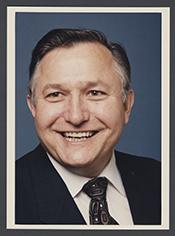
Madam Speaker, I thank the chairman for yielding me this time, and I think there is going to be unanimous support for this resolution. I think it is appropriate to mention the only reason this really…
Madam Speaker, I thank the chairman for yielding me this time, and I think there is going to be unanimous support for this resolution.
I think it is appropriate to mention the only reason this really came to the forefront and has become an issue is because the Election Assistance Commission Chairman, DeForest Soaries, proposed a possibility of a policy for allowing the alteration of the schedule for Federal elections in the event of an unspecified emergency. He said maybe we should be looking at that possibility. I think it was never the intention of Congress or the administration or anybody else for the reasons that have been presented from both sides to ever alter our election schedule in the United States of America.
I would like to add some of the whereases in the concurrent resolution that I introduced earlier in July, on H. Con. Res. 474.
And it says: ``Whereas the United States has never postponed or delayed a Federal election for any reason, even during the Civil War'' and ``Whereas Condoleezza Rice, the Assistant to the President for National Security Affairs, has stated that the administration has no intention of altering the schedule for Federal elections and expects the elections to occur as scheduled'' and ``Whereas the American people have a longstanding and legitimate expectation that regularly scheduled Federal elections will continue to be held in accordance with Federal law'' and ``Whereas keeping the schedule of Federal elections is necessary to maintain confidence in the legitimacy of the Presidency and Congress both in the United States and around the world: Now therefore be it resolved'' it is not going to happen and this Congress is never going to permit the alteration of law that would be required to have a postponement of our Federal elections because of terrorist threat.
I compliment both sides of the aisle for moving ahead with this resolution.

Mr. Speaker, today I missed a series of votes due to the visit of the President to my district. Had I been present, I would have voted in the following way: ``Yes'' on rollcall No. 407, H. Res. 738,…
Mr. Speaker, today I missed a series of votes due to the visit of the President to my district. Had I been present, I would have voted in the following way:
``Yes'' on rollcall No. 407, H. Res. 738, the rule providing for the Morocco Free Trade Agreement.
``Yes'' on rollcall No. 408, H.R. 4175, Veteran's Compensation COLA Act of 2004.
``Yes'' on rollcall No. 409, H. Res. 728, sense of Congress on Presidential election postponement.
``No'' on rollcall No. 410, H.R. 3313, Marriage Protection Act of 2003.
``Yes'' on rollcall No. 411, H.R. 4056, Commercial Aviation MANPADS Defense Act.
``Yes'' on rollcall No. 412, H. Res. 652, urging the Government of the Republic of Belarus to ensure a democratic, transparent, and fair election process for its parliamentary elections in the fall of 2004.
``Yes'' on rollcall No. 413, H.R. 4842, United States-Morocco Free Trade Implementation Act.
``Yes'' on rollcall No. 414, H. Con. Res. 436, celebrating 10 years of majority rule in the Republic of South Africa.
``Yes'' on rollcall No. 415, H. Con. Res. 418, recognizing the importance in history of the 150th anniversary of the establishment of diplomatic relations between the United States and Japan.
``No'' on rollcall No. 416, motion to recommit H.R. 4837, Military Construction Appropriations Act for fiscal year 2005.
``Yes'' on rollcall No. 417, H.R. 4837, Military Construction Appropriations Act for fiscal year 2005.
``Yes'' on rollcall No. 418, conference report on H.R. 4613, Department of Defense Appropriations Act for fiscal year 2005.
``Yes'' on rollcall No. 419, H. Con. Res. 469, condemning the attack on the AMIA Jewish Community Center in Buenos Aires, Argentina.
``Yes'' on rollcall No. 420, H. Con. Res. 467, declaring genocide in Darfur, Sudan.
``No'' on rollcall No. 421, motion to instruct conferees on H.R. 1308.
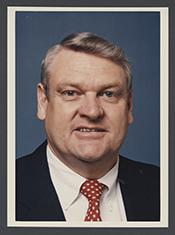
Mr. Speaker, I was not present for debate on rollcall vote 407, rule providing for consideration of U.S.-Morocco Free Trade (H. Res. 738); rollcall vote 408, to increase disability compensation for…
Mr. Speaker, I was not present for debate on rollcall vote 407, rule providing for consideration of U.S.-Morocco Free Trade (H. Res. 738); rollcall vote 408, to increase disability compensation for veterans (H.R. 4175); rollcall vote 409, expressing that Presidential elections should not be postponed due to terrorist attacks (H. Res. 728); rollcall vote 410, final passage of Marriage Protection Act (H.R. 3313), rollcall vote 411, Commercial Aviation MANPADS Defense Act (H.R. 4056); and rollcall vote 412, expressing the sense of Congress for fair elections in Belarus (H. Res. 652).
Had I been present, I would have voted ``yea'' for rollcall votes 407, 408, 409, 410, 411, and 412.
Mr. Speaker, I ask unanimous consent that all Members may have 5 legislative days within which to revise and extend their remarks and include extraneous material on H. Res. 728.
Mr. Speaker, I ask unanimous consent that all Members may have 5 legislative days within which to revise and extend their remarks and include extraneous material on H. Res. 728.
Bill Text
2 versions available
        [Congressional Bills 108th Congress]
[From the U.S. Government Publishing Office]
[H. Res. 728 Engrossed in House (EH)]

In the House of Representatives, U.S.,

July 22, 2004.
Whereas no regularly scheduled national election for Federal office has ever
been postponed for any reason;
Whereas regularly scheduled Federal elections took place as scheduled during the
Civil War, World War I, and World War II;
Whereas after having been re-elected in an election that took place while the
Civil War continued to rage, Abraham Lincoln said ``We can not have free
government without elections; and if the rebellion could force us to
forego, or postpone a national election it might fairly claim to have
already conquered and ruined us. . . . [T]he election, along with its
incidental and undesirable strife, has done good too. It has
demonstrated that a people's government can sustain a national election,
in the midst of a great civil war. Until now it has not been known to
the world that this was a possibility.'';
Whereas the terrorist bombings that took place in Spain on the eve of the
Spanish elections in March 2004 were almost certainly perceived by Al
Qaeda as having contributed to the defeat of the government that had
stood with the United States in the Global War on Terror;
Whereas terrorists may attempt to strike again against the United States in the
months leading up to the November 2004 Presidential election in an
attempt to alter or affect the election's outcome;
Whereas in the event that such a horrific attack were to occur, the actions of
millions of Americans across the Nation casting their ballots would
demonstrate powerfully the strength and resilience of our democracy;
Whereas there is no reason to believe that the men and women who administer
elections in jurisdictions across the Nation would be incapable of
determining how to react to a terrorist attack;
Whereas postponing an election in the aftermath of a terrorist attack would
demonstrate weakness, not strength, and would be interpreted as a
victory for the terrorists; and
Whereas under section 4 of article II of the Constitution, Congress has the
authority to determine the date on which a Presidential election shall
take place: Now, therefore, be it
Resolved, That it is the sense of the House of Representatives that--
(1) the actions of terrorists will never cause the date of any
Presidential election to be postponed; and
(2) no single individual or agency should be given the authority to
postpone the date of a Presidential election.
Attest:

Clerk.