Access to Affordable Health Care Act
 Sen. Susan M. Collins (R-ME)
Legislative Activity
Stay on top of the latest movement without scrolling through every action
Read twice and referred to the Committee on Finance.
January 7, 2003
View full timeline
Introduced in Senate
January 7, 2003
Sponsor introductory remarks on measure. (CR S78-80)
January 7, 2003
Read twice and referred to the Committee on Finance.
January 7, 2003
Floor Debate
22 membersWhat members said about S. 100 on the floor

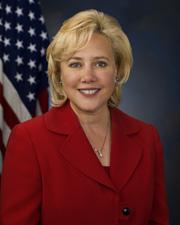

 +17
+17
Floor Debate
22 membersWhat members said about S. 100 on the floor
Mr. President, I would welcome the opportunity to yield such time as our friend and colleague from Louisiana would care to use. Mr. President, I ask unanimous consent that the order for the quorum…
Mr. President, I understand we have about 2 hours on the Democrat side to debate this important bill. I appreciate the Senator from Massachusetts giving me such time as I might use. It will probably…
It is my understanding there are 4 hours equally divided; is that correct? This is an important piece of legislation which deals with the solvency of a large number of companies and benefits that are…
Mr. President, I am reintroducing legislation today that would direct the Secretary of the Army to determine whether certain nationals of the Philippine Islands performed military service on behalf…
Mr. President, I am pleased to join with my colleague from Louisiana, Senator Landrieu, in introducing the Access to Affordable Health Care Act, a comprehensive, seven-point plan that builds on the…
Show 8 more

Will the Senator from Louisiana yield for a unanimous consent request? Madam President, I ask unanimous consent that following the statement by the Senator from Louisiana, I be recognized for 10…

Mr. President, I join my good friend, Senator Kyl, in introducing S.J. Res, 1, the Victims' Rights Amendment. Two years ago, the Senate debated a proposed constitutional amendment drafted by Senator…

Mr. President, I have three subjects I intend to address today. Let me address the first and the most sad of those. That is, of course, the enormous price that many families are paying as part of the…

Mr. President, I rise to introduce the Crime Victims' Rights Amendment. The scales of justice are imbalanced. The U.S. Constitution, mainly through amendments, grants those accused of crime many…

I thank the Senator from Massachusetts for yielding some time from this important debate on pensions. Obviously it has been a busy day in Washington talking about a variety of different issues…

Mr. President, I am introducing the Small Employer Tax Assistance for Health Care Act of 2003, SETAH, a bill to provide tax subsidy to small employers to help them provide health coverage to their…

Yes. I share my colleague's understanding. Under current law, the IRS is authorized to waive all or a portion of the minimum funding standard requirements for a given year or, alternatively, to allow…

Mr. President, I know my colleague from New Jersey wishes to speak on this issue for 2 minutes. I thank the Senator for his generous yielding of time. I yield 2 of my 10 minutes to Senator Corzine,…
Show 11 more
I want to express my great disappointment with this conference agreement and to explain why I will vote against it. This legislation, H.R. 3108, was originally intended to provide a temporary…

Mr. President, I rise today to oppose the conference report for H.R. 3108, the Pension Funding Equity Act, which the Senate is now considering. The original version of this bill that the House passed…

Mr. President, the conference report on the Pension bill is another example of a broken legislative process. We passed a good bill in the Senate. There was bipartisan cooperation. Two committees--…

Mr. President, I rise today in reluctant support, for the conference report in front of us. The conference agreement makes great strides towards heading off an impending crisis in private pensions.…

Mr. President, I am pleased to join today with my colleague from New Hampshire, Mr. Gregg, to introduce legislation to extend budgetary enforcement and to maintain fiscal accountability and…

Mr. President, although I rise in support of the conference report for the Pension Funding Equity Act, I have serious reservations about the lack of relief for multiemployer pension plans. This…
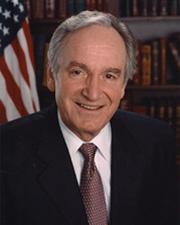
Mr. President, I rise to discuss my thoughts before this very difficult vote on the Pension Funding Equity Act conference bill. The bill arrives at a reasonable immediate solution to a very…

Mr. President, I rise today to recognize the 10th anniversary of majority rule in the Republic of South Africa and to commend the South African people for the momentous social and economic…
Mr. President, I will vote in support of this conference report today because many of the private pension systems in this nation are on the verge of collapse. Many companies are staring at an April…

Mr. President, today I am reintroducing a Balanced Budget Amendment to the Constitution of the United States. When we were in deficit and when we were in surplus, I have always said, if we could…

Mr. President, I rise to speak as a cosponsor of S. 105. This bill repeals provisions of the Homeland Security Act offering certain liability protections to pharmaceutical companies. Mr. President,…
Bill Text
Latest available legislative text
        [Congressional Bills 108th Congress]
[From the U.S. Government Publishing Office]
[S. 100 Introduced in Senate (IS)]

108th CONGRESS
1st Session
S. 100

To expand access to affordable health care and to strengthen the health
care safety net and make health care services more available in rural
and underserved areas.

_______________________________________________________________________

IN THE SENATE OF THE UNITED STATES

January 7, 2003

Ms. Collins (for herself and Ms. Landrieu) introduced the following
bill; which was read twice and referred to the Committee on Finance

_______________________________________________________________________

A BILL

To expand access to affordable health care and to strengthen the health
care safety net and make health care services more available in rural
and underserved areas.

Be it enacted by the Senate and House of Representatives of the
United States of America in Congress assembled,

SECTION 1. SHORT TITLE; TABLE OF CONTENTS.

(a) Short Title.--This Act may be cited as the ``Access to
Affordable Health Care Act''.
(b) Table of Contents.--The table of contents of this Act is as
follows:

Sec. 1. Short title; table of contents.
TITLE I--EXPANSION OF ACCESS TO AFFORDABLE HEALTH CARE FOR SMALL
BUSINESSES

Subtitle A--Small Business Tax Credit

Sec. 101. Credit for employee health insurance expenses.
Subtitle B--Grants to States for Small Business Purchasing Groups

Sec. 121. Grants for small employer purchasing groups.
Sec. 122. Qualified small employer purchasing groups.
Subtitle C--Health Benefits Information for Small Employers

Sec. 131. Grant program to facilitate health benefits information for
small employers.
Subtitle D--Grant Program to Encourage State Innovation

Sec. 141. Grant program to encourage State innovation.
TITLE II--EXPANSION OF ACCESS TO AFFORDABLE HEALTH CARE FOR INDIVIDUALS
AND FAMILIES

Subtitle A--Internal Revenue Code Provisions

Chapter 1--Refundable Credit for Uninsured Families

Sec. 201. Refundable health insurance costs credit.
Sec. 202. Advance payment of credit to issuers of qualified health
insurance.
Chapter 2--Immediate, Full Deductibility of Health Insurance Costs of
Self-Employed Individuals

Sec. 205. Deduction for 100 percent of health insurance costs of self-
employed individuals.
Subtitle B--FamilyCare

Sec. 211. Renaming of title XXI program.
Sec. 212. FamilyCare coverage of parents under the medicaid program and
title XXI.
Sec. 213. Optional coverage of children through age 20 under the
medicaid program and title XXI.
Sec. 214. Increase in chip allotment for each of fiscal years 2003
through 2005.
Sec. 215. Additional chip revisions.
Sec. 216. Limitations on conflicts of interest.
Sec. 217. Technical and conforming amendments to authority to pay
medicaid expansion costs from title XXI
appropriation.
Subtitle C--Simplified Enrollment

Sec. 221. Automatic enrollment of children born to title XXI parents.
Sec. 222. Application of simplified title XXI procedures under the
medicaid program.
Sec. 223. Elimination of 100 hour rule and other AFDC-related
eligibility restrictions.
Subtitle D--State Option to Provide Coverage of Legal Immigrants Under
Medicaid and SCHIP

Sec. 231. Optional coverage of legal immigrants under the medicaid
program and title XXI.
Subtitle E--State Option to Extend Medicaid Coverage to Certain Low-
Income Individuals

Sec. 241. State option to extend medicaid coverage to certain low-
income individuals.
Subtitle F--Improving Welfare-to-Work Transition Under Medicaid

Sec. 251. Improving welfare-to-work transition under medicaid.
Subtitle G--Demonstration Programs to Improve Medicaid and SCHIP
Outreach to Homeless Individuals and Families

Sec. 261. Demonstration programs to improve medicaid and SCHIP outreach
to homeless individuals and families.
Subtitle H--High Risk Pools

Sec. 271. Promotion of State high risk pools.
TITLE III--STRENGTHENING THE HEALTH CARE SAFETY NET

Sec. 301. Increase in funding for the consolidated health centers
program.
TITLE IV--EXPANSION OF ACCESS TO HEALTH CARE IN RURAL AND UNDERSERVED
AREAS

Subtitle A--National Health Service Corps

Sec. 401. Expansion of funding.
Sec. 402. Loan repayment and scholarship programs.
Subtitle B--Tax Exclusion for National Health Service Corps Loan
Repayment Recipients

Sec. 411. Exclusion for loan payments under National Health Service
Corps loan repayment program.
TITLE V--EXPANDED ACCESS TO AFFORDABLE LONG-TERM CARE

Sec. 501. Treatment of premiums on qualified long-term care insurance
contracts.
Sec. 502. Credit for taxpayers with long-term care needs.
Sec. 503. Additional consumer protections for long-term care insurance.
TITLE VI--PROMOTING HEALTHIER LIFESTYLES

Sec. 601. Community partnerships to promote healthy lifestyles.
Sec. 602. Worksite wellness grant program.
Sec. 603. Comprehensive school health education.
TITLE VII--MEDICARE FAIRNESS

Subtitle A--Medicare Value and Quality Demonstration

Sec. 701. Findings.
Sec. 702. Demonstration project to encourage the provision of high-
quality, cost-effective inpatient hospital
services.
Sec. 703. Demonstration project to encourage the provision of high-
quality, cost-effective physicians'
services.
Subtitle B--Graduate Medical Education Demonstration

Sec. 711. Clinical rotation demonstration project.

TITLE I--EXPANSION OF ACCESS TO AFFORDABLE HEALTH CARE FOR SMALL
BUSINESSES

Subtitle A--Small Business Tax Credit

SEC. 101. CREDIT FOR EMPLOYEE HEALTH INSURANCE EXPENSES.

(a) In General.--Subpart D of part IV of subchapter A of chapter 1
of the Internal Revenue Code of 1986 (relating to business-related
credits) is amended by adding at the end the following:

``SEC. 45G. EMPLOYEE HEALTH INSURANCE EXPENSES.

``(a) General Rule.--For purposes of section 38, in the case of an
employer, the employee health insurance expenses credit determined
under this section is an amount equal to the applicable percentage of
the amount paid by the taxpayer during the taxable year for qualified
employee health insurance expenses.
``(b) Applicable Percentage.--For purposes of subsection (a), the
applicable percentage is equal to--
``(1) 50 percent in the case of an employer with less than
10 employees, and
``(2) 30 percent in the case of an employer with more than
9 but less than 26 employees.
``(c) Per Employee Dollar Limitation.--The amount of qualified
employee health insurance expenses taken into account under subsection
(a) with respect to any qualified employee for any taxable year shall
not exceed--
``(1) $2,000 in the case of self-only coverage, and
``(2) $4,000 in the case of family coverage (as so
defined).
``(d) Special Rules and Definitions.--For purposes of this
section--
``(1) Eligibility for credit.--No credit shall be allowed
under subsection (a) with respect to any employer which, with
respect to the number of employees employed during any period,
employs more than 20 percent of highly compensated employees
(within the meaning of section 414(q)).
``(2) Determination of employment.--
``(A) In general.--An employer shall be considered
an employer described in paragraph (1) or (2) of
subsection (b) if such employer employed an average of
the number of employees described in such paragraph on
business days during either of the 2 preceding calendar
years. For purposes of the preceding sentence, a preceding calendar
year may be taken into account only if the employer was in existence
throughout such year.
``(B) Employers not in existence in preceding
year.--In the case of an employer which was not in
existence throughout the 1st preceding calendar year,
the determination under subparagraph (A) shall be based
on the average number of employees that it is
reasonably expected such employer will employ on
business days in the current calendar year.
``(3) Qualified employee health insurance expenses.--
``(A) In general.--The term `qualified employee
health insurance expenses' means any amount paid by an
employer for health insurance coverage to the extent
such amount--
``(i) is attributable to coverage provided
to any employee while such employee is a
qualified employee; and
``(ii) is at least 50 percent of the
premium for such coverage.
``(B) Exception for amounts paid under salary
reduction arrangements.--No amount paid or incurred for
health insurance coverage pursuant to a salary
reduction arrangement shall be taken into account under
subparagraph (A).
``(C) Health insurance coverage.--The term `health
insurance coverage' has the meaning given such term by
section 9832(b)(1).
``(4) Qualified employee.--
``(A) In general.--The term `qualified employee'
means, with respect to any period, an employee of an
employer if the total amount of wages paid or incurred
by such employer to such employee at an annual rate
during the taxable year is not less than $5,000.
``(B) Treatment of certain employees.--For purposes
of subparagraph (A), the term `employee'--
``(i) shall not include an employee within
the meaning of section 401(c)(1), but
``(ii) shall include a leased employee
within the meaning of section 414(n).
``(C) Wages.--The term `wages' has the meaning
given such term by section 3121(a) (determined without
regard to any dollar limitation contained in such
section).
``(e) Certain Rules Made Applicable.--For purposes of this section,
rules similar to the rules of section 52 shall apply.
``(f) Denial of Double Benefit.--No deduction or credit under any
other provision of this chapter shall be allowed with respect to
qualified employee health insurance expenses taken into account under
subsection (a).''.
(b) Credit To Be Part of General Business Credit.--Section 38(b) of
the Internal Revenue Code of 1986 (relating to current year business
credit) is amended by striking ``plus'' at the end of paragraph (14),
by striking the period at the end of paragraph (15) and inserting ``,
plus'', and by adding at the end the following:
``(16) the employee health insurance expenses credit
determined under section 45G.''.
(c) No Carrybacks.--Subsection (d) of section 39 of the Internal
Revenue Code of 1986 (relating to carryback and carryforward of unused
credits) is amended by adding at the end the following:
``(11) No carryback of section 45g credit before effective
date.--No portion of the unused business credit for any taxable
year which is attributable to the employee health insurance
expenses credit determined under section 45G may be carried
back to a taxable year ending before January 1, 2003.''.
(d) Clerical Amendment.--The table of sections for subpart D of
part IV of subchapter A of chapter 1 of the Internal Revenue Code of
1986 is amended by adding at the end the following:

``Sec. 45G. Employee health insurance
expenses.''.
(e) Effective Date.--The amendments made by this section shall
apply to amounts paid or incurred in taxable years beginning after
December 31, 2002.

Subtitle B--Grants to States for Small Business Purchasing Groups

SEC. 121. GRANTS FOR SMALL EMPLOYER PURCHASING GROUPS.

(a) In General.--The Secretary of Labor (referred to in this
section as the ``Secretary'') shall award grants to States to assist
such States in planning, developing, and operating qualified small
employer purchasing groups.
(b) Application Requirements.--To be eligible to receive a grant
under this section, a State shall prepare and submit to the Secretary
an application in such form, at such time, and containing such
information, certifications, and assurances as the Secretary shall
reasonably require.
(c) Use of Funds.--Amounts awarded under this section may be used
to finance the costs associated with planning, developing, and
operating a qualified small employer purchasing group that meets the
requirements of section 122. Such costs may include the costs
associated with--
(1) engaging in education and outreach efforts to inform
small employers, insurers, and the public about the small
employer purchasing group;
(2) soliciting bids and negotiating with insurers to make
available group health plans;
(3) preparing the documentation required to receive
certification by the Secretary as a qualified small employer
purchasing group; and
(4) such other activities determined appropriate by the
Secretary.
(d) Authorization of Appropriations.--There are authorized to be
appropriated to carry out this section, such sums as may be necessary
for each of fiscal years 2004 through 2008.

SEC. 122. QUALIFIED SMALL EMPLOYER PURCHASING GROUPS.

(a) Qualified Small Employer Purchasing Groups Described.--
(1) In general.--A qualified small employer purchasing
group is an entity that--
(A) is a nonprofit entity certified under State
law;
(B) has a membership consisting solely of small
employers;
(C) is administered solely under the authority and
control of its member employers;
(D) with respect to each State in which its members
are located, consists of not fewer than the number of
small employers established by the State as appropriate
for such a group;
(E) offers a program under which group health plans
are offered to eligible employees and eligible
individuals (including the dependents of such employees
and individuals) through its member employers; and
(F) an insurer, agent, broker, or any other
individual or entity engaged in the sale of insurance--
(i) does not form or underwrite; and
(ii) does not hold or control any right to
vote with respect to.
(2) Special rule.--Notwithstanding paragraph (1)(B), an
employer member of a small employer purchasing group that has
been certified by the State as meeting the requirements of
paragraph (1) may retain its membership in the group if the
number of employees of the employer increases such that the
employer is no longer a small employer.
(b) Board of Directors.--Each qualified small employer purchasing
group established under this section shall be governed by a board of
directors or have active input from an advisory board consisting of
individuals and businesses participating in the group.
(c) Membership.--
(1) In general.--A qualified small employer purchasing
group shall accept all small employers residing within the area
served by the group as members if such employers request such
membership.
(2) Voting.--Members of a qualified small employer
purchasing group shall have voting rights consistent with the
rules established by the State.
(d) Duties of Qualified Small Employer Purchasing Groups.--Each
qualified small employer purchasing group shall--
(1) enter into agreements with insurers offering qualified
group health plans;
(2) enter into agreements with small employers for the
purchase of health insurance;
(3) enroll only eligible employees, eligible individuals,
and the dependents of such employees and individuals in group
health plans; and
(4) provide enrollee information to the State.
(e) Limitation on Activities.--A qualified small employer
purchasing group shall not--
(1) perform any activity involving approval or enforcement
of payment rates for providers;
(2) assume financial risk in relation to any such health
plan; or
(3) perform other activities identified by the State as
being inconsistent with the performance of its duties.
(f) Rules of Construction.--
(1) Establishment not required.--Nothing in this section
shall be construed as requiring that a State organize, operate
or otherwise establish a qualified small employer purchasing
group, or otherwise require the establishment of purchasing
groups.
(2) Voluntary participation.--Nothing in this section shall
be construed as requiring any individual or small employer to
purchase a group health plan exclusively through a qualified
small employer purchasing group.
(g) Definition.--In this subtitle, the term ``small employer''
means an employer that employs at least 1, but not more than 50
employees. Such term shall include sole proprietorships and self-
employed individuals.

Subtitle C--Health Benefits Information for Small Employers

SEC. 131. GRANT PROGRAM TO FACILITATE HEALTH BENEFITS INFORMATION FOR
SMALL EMPLOYERS.

(a) In General.--The Small Business Administration shall award
grants to 1 or more States, local governments, and non-profit
organizations for the purposes of--
(1) demonstrating new and effective ways to provide
information about the benefits of health insurance to small
employers, including tax benefits, increased productivity of
employees, and decreased turnover of employees;
(2) making small employers aware of their current rights in
the marketplace under Federal and State health insurance reform
laws; and
(3) making small employers aware of the tax treatment of
insurance premiums.
(b) Authorization.--There is authorized to be appropriated to carry
out this section, such sums as may be necessary for each of fiscal
years 2004 through 2008.

Subtitle D--Grant Program to Encourage State Innovation

SEC. 141. GRANT PROGRAM TO ENCOURAGE STATE INNOVATION.

(a) In General.--The Secretary of Health and Human Services (in
this section referred to as the ``Secretary'') shall establish a
program (in this section referred to as the ``program'') to award
demonstration grants under this section to States to allow States to
demonstrate the effectiveness of innovative ways to increase access to
health insurance through market reforms and other innovative means.
Such innovative means may include any of the following:
(1) Alternative group purchasing or pooling arrangements,
such as purchasing cooperatives for small businesses,
reinsurance pools, or high risk pools.
(2) Individual or small group market reforms.
(3) Consumer education and outreach.
(4) Subsidies to individuals, employers, or both, in
obtaining health insurance.
(b) Scope; Duration.--The program shall be limited to not more than
10 States and to a total period of 5 years, beginning on the date the
first demonstration grant is made.
(c) Conditions for Demonstration Grants.--
(1) In general.--The Secretary may not provide for a
demonstration grant to a State under the program unless the
Secretary finds that under the proposed demonstration grant--
(A) the State will provide for demonstrated
increase of access for some portion of the existing
uninsured population through a market innovation (other
than merely through a financial expansion of a program
initiated before the date of enactment of this Act);
(B) the State will comply with applicable Federal
laws;
(C) the State will not discriminate among
participants on the basis of any health status-related
factor (as defined in section 2791(d)(9) of the Public
Health Service Act (42 U.S.C. 300gg-91(d)(9)), except
to the extent a State wishes to focus on populations
that otherwise would not obtain health insurance
because of such factors; and
(D) the State will provide for such evaluation, in
coordination with the evaluation required under
subsection (d), as the Secretary may specify.
(2) Application.--The Secretary shall not provide a
demonstration grant under the program to a State unless--
(A) the State submits to the Secretary such an
application, in such a form and manner, as the
Secretary specifies;
(B) the application includes information regarding
how the demonstration grant will address issues such as
governance, targeted population, expected cost, and the
continuation after the completion of the demonstration
grant period; and
(C) the Secretary determines that the demonstration
grant will be used consistent with this section.
(3) Focus.--A demonstration grant proposal under this
section need not cover all uninsured individuals in a State or
all health care benefits with respect to such individuals.
(d) Evaluation.--The Secretary shall enter into a contract with an
appropriate entity outside the Department of Health and Human Services
to conduct an overall evaluation of the program at the end of the
program period. Such evaluation shall include an analysis of
improvements in access, costs, quality of care, or choice of coverage,
under different demonstration grants.
(e) Option To Provide for Initial Planning Grants.--Notwithstanding
the previous provisions of this section, under the program the
Secretary may provide for a portion of the amounts appropriated under
subsection (f) (not to exceed $5,000,000) to be made available to any
State for initial planning grants to permit States to develop
demonstration grant proposals under the previous provisions of this
section.
(f) Authorization of Appropriations.--There are authorized to be
appropriated such sums as may be necessary to carry out this section.
Amounts appropriated under this subsection shall remain available until
expended.
(g) State Defined.--In this section, the term ``State'' has the
meaning given such term for purposes of title XIX of the Social
Security Act (42 U.S.C. 1396 et seq.).

TITLE II--EXPANSION OF ACCESS TO AFFORDABLE HEALTH CARE FOR INDIVIDUALS
AND FAMILIES

Subtitle A--Internal Revenue Code Provisions

CHAPTER 1--REFUNDABLE CREDIT FOR UNINSURED FAMILIES

SEC. 201. REFUNDABLE HEALTH INSURANCE COSTS CREDIT.

(a) Allowance of Credit.--
(1) In general.--Subpart C of part IV of subchapter A of
chapter 1 of the Internal Revenue Code of 1986 (relating to
refundable personal credits) is amended by redesignating
section 36 as section 37 and inserting after section 35 the
following:

``SEC. 36. HEALTH INSURANCE COSTS FOR UNINSURED ELIGIBLE INDIVIDUALS.

``(a) Allowance of Credit.--In the case of an uninsured eligible
individual, there shall be allowed as a credit against the tax imposed
by this subtitle for the taxable year an amount equal to the amount
paid by the taxpayer during such taxable year for qualified health
insurance for the taxpayer and the taxpayer's spouse and dependents.
``(b) Limitations.--
``(1) In general.--The amount allowed as a credit under
subsection (a) to the taxpayer for the taxable year shall not
exceed the lesser of--
``(A) the sum of the monthly limitations for
coverage months during such taxable year for the
individuals referred to in subsection (a) for whom the
taxpayer paid during the taxable year any amount for
coverage under qualified health insurance, or
``(B) 90 percent of the amount paid by the taxpayer
during such taxable year for qualified health insurance
for such individuals.
``(2) Monthly limitation.--
``(A) In general.--The monthly limitation for an
individual for each coverage month of such individual
during the taxable year is the amount equal to \1/12\
of--
``(i) $1,000 if such individual is the
taxpayer,
``(ii) $1,000 if--
``(I) such individual is the spouse
of the taxpayer,
``(II) the taxpayer and such spouse
are married as of the first day of such
month, and
``(III) the taxpayer files a joint
return for the taxable year, and
``(iii) $500 if such individual is an
individual for whom a deduction under section
151(c) is allowable to the taxpayer for such
taxable year.
``(B) Limitation to 2 dependents.--Not more than 2
individuals may be taken into account by the taxpayer
under subparagraph (A)(iii).
``(C) Special rule for married individuals.--In the
case of an individual--
``(i) who is married (within the meaning of
section 7703) as of the close of the taxable
year but does not file a joint return for such
year, and
``(ii) who does not live apart from such
individual's spouse at all times during the
taxable year,
the limitation imposed by subparagraph (B) shall be
divided equally between the individual and the
individual's spouse unless they agree on a different
division.
``(3) Phaseout of credit.--
``(A) In general.--The amount which would (but for
this paragraph) be taken into account under subsection
(a) shall be reduced (but not below zero) by the amount
determined under subparagraph (B).
``(B) Amount of reduction.--The amount determined
under this subparagraph is the amount which bears the
same ratio to the amount which would be so taken into
account for the taxable year as--
``(i) the excess of--
``(I) the taxpayer's modified
adjusted gross income for the preceding
taxable year, over
``(II) $15,000 ($25,000 in the case
of family coverage), bears to
``(ii) $15,000 ($35,000 in the case of
family coverage).
``(C) Modified adjusted gross income.--The term
`modified adjusted gross income' means adjusted gross
income determined--
``(i) without regard to this section and
sections 911, 931, and 933, and
``(ii) after application of sections 86,
135, 137, 219, 221, and 469.
``(4) Coverage month.--For purposes of this subsection--
``(A) In general.--The term `coverage month' means,
with respect to an individual, any month if--
``(i) as of the first day of such month
such individual is covered by qualified health
insurance, and
``(ii) the premium for coverage under such
insurance for such month is paid by the
taxpayer.
``(B) Employer-subsidized coverage.--
``(i) In general.--Such term shall not
include any month for which such individual is
eligible to participate in any subsidized
health plan (within the meaning of section
162(l)(2)) maintained by any employer of the
taxpayer or of the spouse of the taxpayer.
``(ii) Premiums to nonsubsidized plans.--If
an employer of the taxpayer or the spouse of
the taxpayer maintains a health plan which is
not a subsidized health plan (as so defined)
and which constitutes qualified health
insurance, employee contributions to the plan
shall be treated as amounts paid for qualified
health insurance.
``(C) Cafeteria plan and flexible spending account
beneficiaries.--Such term shall not include any month
during a taxable year if any amount is not includible
in the gross income of the taxpayer for such year under
section 106 with respect to--
``(i) a benefit chosen under a cafeteria
plan (as defined in section 125(d)), or
``(ii) a benefit provided under a flexible
spending or similar arrangement.
``(D) Medicare and medicaid.--Such term shall not
include any month with respect to an individual if, as
of the first day of such month, such individual--
``(i) is entitled to any benefits under
title XVIII of the Social Security Act, or
``(ii) is a participant in the program
under title XIX or XXI of such Act.
``(E) Certain other coverage.--Such term shall not
include any month during a taxable year with respect to
an individual if, at any time during such year, any
benefit is provided to such individual under--
``(i) chapter 89 of title 5, United States
Code,
``(ii) chapter 55 of title 10, United
States Code,
``(iii) chapter 17 of title 38, United
States Code, or
``(iv) any medical care program under the
Indian Health Care Improvement Act.
``(F) Prisoners.--Such term shall not include any
month with respect to an individual if, as of the first
day of such month, such individual is imprisoned under
Federal, State, or local authority.
``(G) Insufficient presence in united states.--Such
term shall not include any month during a taxable year
with respect to an individual if such individual is
present in the United States on fewer than 183 days
during such year (determined in accordance with section
7701(b)(7)).
``(5) Coordination with deduction for health insurance
costs of self-employed individuals.--In the case of a taxpayer
who is eligible to deduct any amount under section 162(l) for
the taxable year, this section shall apply only if the taxpayer
elects not to claim any amount as a deduction under such
section for such year.
``(c) Qualified Health Insurance.--For purposes of this section,
the term `qualified health insurance' means health insurance coverage
(as defined in section 9832(b)(1)), including coverage under a COBRA
continuation provision (as defined in section 9832(d)(1)).
``(d) Archer MSA Contributions.--If a deduction would be allowed
under section 220 to the taxpayer for a payment for the taxable year to
the Archer MSA of an individual, subsection (a) shall not apply to the
taxpayer for such taxable year.
``(e) Special Rules.--
``(1) Coordination with medical expense deduction.--The
amount which would (but for this paragraph) be taken into
account by the taxpayer under section 213 for the taxable year
shall be reduced by the credit (if any) allowed by this section
to the taxpayer for such year.
``(2) Denial of credit to dependents.--No credit shall be
allowed under this section to any individual with respect to
whom a deduction under section 151 is allowable to another
taxpayer for a taxable year beginning in the calendar year in
which such individual's taxable year begins.
``(3) Coordination with advance payment.--Rules similar to
the rules of section 32(g) shall apply to any credit to which
this section applies.
``(f) Expenses Must Be Substantiated.--A payment for insurance to
which subsection (a) applies may be taken into account under this
section only if the taxpayer substantiates such payment in such form as
the Secretary may prescribe.
``(g) Regulations.--The Secretary shall prescribe such regulations
as may be necessary to carry out the purposes of this section.''.
(b) Information Reporting.--
(1) In general.--Subpart B of part III of subchapter A of
chapter 61 of the Internal Revenue Code of 1986 (relating to
information concerning transactions with other persons) is
amended by inserting after section 6050T the following:

``SEC. 6050U. RETURNS RELATING TO PAYMENTS FOR QUALIFIED HEALTH
INSURANCE.

``(a) In General.--Any person who, in connection with a trade or
business conducted by such person, receives payments during any
calendar year from any individual for coverage of such individual or
any other individual under creditable health insurance, shall make the
return described in subsection (b) (at such time as the Secretary may
by regulations prescribe) with respect to each individual from whom
such payments were received.
``(b) Form and Manner of Returns.--A return is described in this
subsection if such return--
``(1) is in such form as the Secretary may prescribe, and
``(2) contains--
``(A) the name, address, and TIN of the individual
from whom payments described in subsection (a) were
received,
``(B) the name, address, and TIN of each individual
who was provided by such person with coverage under
creditable health insurance by reason of such payments
and the period of such coverage,
``(C) the aggregate amount of payments described in
subsection (a),
``(D) the qualified health insurance credit advance
amount (as defined in section 7528(e)) received by such
person with respect to the individual described in
subparagraph (A), and
``(E) such other information as the Secretary may
reasonably prescribe.
``(c) Creditable Health Insurance.--For purposes of this section,
the term `creditable health insurance' means qualified health insurance
(as defined in section 36(c)).
``(d) Statements To Be Furnished to Individuals With Respect to
Whom Information Is Required.--Every person required to make a return
under subsection (a) shall furnish to each individual whose name is
required under subsection (b)(2)(A) to be set forth in such return a
written statement showing--
``(1) the name and address of the person required to make
such return and the phone number of the information contact for
such person,
``(2) the aggregate amount of payments described in
subsection (a) received by the person required to make such
return from the individual to whom the statement is required to
be furnished,
``(3) the information required under subsection (b)(2)(B)
with respect to such payments, and
``(4) the qualified health insurance credit advance amount
(as defined in section 7528(e)) received by such person with
respect to the individual described in paragraph (2).
The written statement required under the preceding sentence shall be
furnished on or before January 31 of the year following the calendar
year for which the return under subsection (a) is required to be made.
``(e) Returns Which Would Be Required To Be Made by 2 or More
Persons.--Except to the extent provided in regulations prescribed by
the Secretary, in the case of any amount received by any person on
behalf of another person, only the person first receiving such amount
shall be required to make the return under subsection (a).''.
(2) Assessable penalties.--
(A) Subparagraph (B) of section 6724(d)(1) of such
Code (relating to definitions) is amended by
redesignating clauses (xii) through (xviii) as clauses
(xiii) through (xix), respectively, and by inserting
after clause (xi) the following:
``(xii) section 6050U (relating to returns
relating to payments for qualified health
insurance),''.
(B) Paragraph (2) of section 6724(d) of such Code
is amended by striking ``or'' at the end of
subparagraph (AA), by striking the period at the end of
the subparagraph (BB) and inserting ``, or'', and by
adding at the end the following:
``(CC) section 6050U(d) (relating to returns
relating to payments for qualified health
insurance).''.
(3) Clerical amendment.--The table of sections for subpart
B of part III of subchapter A of chapter 61 of such Code is
amended by inserting after the item relating to section 6050T
the following:

``Sec. 6050U. Returns relating to
payments for qualified health
insurance.''.
(c) Criminal Penalty for Fraud.--Subchapter B of chapter 75 of the
Internal Revenue Code of 1986 (relating to other offenses) is amended
by adding at the end the following:

``SEC. 7276. PENALTIES FOR OFFENSES RELATING TO HEALTH INSURANCE TAX
CREDIT.

``Any person who knowingly misuses Department of the Treasury
names, symbols, titles, or initials to convey the false impression of
association with, or approval or endorsement by, the Department of the
Treasury of any insurance products or group health coverage in
connection with the credit for health insurance costs under section 36
shall on conviction thereof be fined not more than $10,000, or
imprisoned not more than 1 year, or both.''.
(d) Conforming Amendments.--
(1) Section 162(l) of the Internal Revenue Code of 1986 is
amended by adding at the end the following:
``(6) Election to have subsection apply.--No deduction
shall be allowed under paragraph (1) for a taxable year unless
the taxpayer elects to have this subsection apply for such
year.''.
(2) Paragraph (2) of section 1324(b) of title 31, United
States Code, is amended by inserting before the period ``, or
from section 36 of such Code''.
(3) The table of sections for subpart C of part IV of
subchapter A of chapter 1 of the Internal Revenue Code of 1986
is amended by striking the last item and inserting the
following:

``Sec. 36. Health insurance costs for
uninsured eligible individuals.
``Sec. 37. Overpayments of tax.''.
(4) The table of sections for subchapter B of chapter 75 of
such Code is amended by adding at the end the following:

``Sec. 7276. Penalties for offenses
relating to health insurance
tax credit.''.
(e) Effective Dates.--
(1) In general.--Except as provided in paragraph (2), the
amendments made by this section shall apply to taxable years
beginning after December 31, 2003, without regard to whether
final regulations to carry out such amendments have been
promulgated by such date.
(2) Penalties.--The amendments made by subsections (c) and
(d)(4) shall take effect on the date of the enactment of this
Act.

SEC. 202. ADVANCE PAYMENT OF CREDIT TO ISSUERS OF QUALIFIED HEALTH
INSURANCE.

(a) In General.--Chapter 77 of the Internal Revenue Code of 1986
(relating to miscellaneous provisions) is amended by adding at the end
the following:

``SEC. 7528. ADVANCE PAYMENT OF HEALTH INSURANCE CREDIT FOR PURCHASERS
OF QUALIFIED HEALTH INSURANCE.

``(a) General Rule.--Every plan sponsor of a group health plan
providing, or qualified health insurance issuer of, qualified health
insurance to an eligible individual shall--
``(1) make qualified premium payments with respect to such
individual in an amount equal to the qualified health insurance
credit advance amount, and
``(2) treat such payments in the manner provided in
subsection (g).
``(b) Eligible Individual.--For purposes of this section, the term
`eligible individual' means any individual--
``(1) who purchases qualified health insurance (as defined
in section 36(c)), and
``(2) for whom a qualified health insurance credit
eligibility certificate is in effect.
``(c) Definitions.--For purposes of this section--
``(1) Qualified health insurance issuer.--The term
`qualified health insurance issuer' means a health insurance
issuer described in section 9832(b)(2) (determined without
regard to the last sentence thereof) offering coverage in
connection with a group health plan.
``(2) Group health plan.--The term `group health plan' has
the meaning given such term by section 5000(b)(1) (determined
without regard to subsection (d) thereof).
``(3) Qualified premium payments.--The term `qualified
premium payments' means any amount paid or incurred, cost
incurred, or health coverage value provided, with respect to
qualified health insurance for an eligible individual and the
individual's spouse and dependents. For purposes of the
preceding sentence, in the case of a group health plan, the
health coverage value is equal to the applicable premium under
the plan for the qualified health insurance coverage provided
to an eligible individual and the individual's spouse and
dependents, as determined under section 4980B.
``(d) Qualified Health Insurance Credit Eligibility Certificate.--
For purposes of this section, a qualified health insurance credit
eligibility certificate is a statement furnished by an individual to a
plan sponsor of a group health plan or qualified health insurance
issuer which--
``(1) certifies that the individual will be eligible to
receive the credit provided by section 36 for the taxable year,
``(2) estimates the amount of such credit for such taxable
year, and
``(3) provides such other information as the Secretary may
require for purposes of this section.
``(e) Qualified Health Insurance Credit Advance Amount.--For
purposes of this section, the term `qualified health insurance credit
advance amount' means, with respect to any plan sponsor of a group
health plan providing, or qualified health insurance issuer of,
qualified health insurance, the amount of credit allowable under
section 36 to the individual for the taxable year which is attributable
to the insurance provided to the individual by such sponsor or issuer.
``(f) Required Documentation for Receipt of Payments of Advance
Amount.--No payment of a qualified health insurance credit advance
amount with respect to any eligible individual may be made under
subsection (a) unless the plan sponsor of the group health plan or
qualified health insurance issuer provides to the Secretary--
``(1) the qualified health insurance credit eligibility
certificate of such individual, and
``(2) the return relating to such individual under section
6050U.
``(g) Qualified Premium Payments To Be Treated as Payments of
Withholding Amounts and Certain Employer Tax.--
``(1) In general.--For purposes of this title, qualified
premium payments made or costs incurred by the sponsor of a
group health plan, or any entity designated by the sponsor to
make such payments or incur such costs--
``(A) shall not be treated as compensation, and
``(B) shall be treated, in such manner as provided
by the Secretary, as made out of--
``(i) amounts required to be deposited by
the taxpayer as estimated income tax under
section 6654 or 6655,
``(ii) amounts required to be deducted and
withheld under section 3401 (relating to wage
withholding),
``(iii) amounts of the taxes imposed under
section 3111(a) or 50 percent of taxes imposed
under section 1401(a) (relating to FICA
employer taxes), or
``(iv) amounts required to be deducted
under section 3102 with respect to taxes
imposed under section 3101(a) or 50 percent of
taxes imposed under section 1401(a) (relating
to FICA employee taxes),
as if such sponsor, or such designated entity, had paid
to the Secretary an amount equal to such payments.
``(2) Qualified premium payments exceed taxes due.--In the
case of any entity, if for any time period the aggregate
qualified premium payments exceed the amounts described in
paragraph (1)(B), the Secretary shall reduce amounts described
in such paragraph for any succeeding time period as necessary
to reflect such excess.
``(3) Failure to make qualified premium payments.--For
purposes of this title (including penalties), failure to make a
qualified premium payment with respect to an eligible
individual at the time provided therefor shall be treated as
the failure at such time to deduct and withhold under chapter
24 of such Code in an amount equal to the amount of such
qualified premium payments.
``(h) Regulations.--The Secretary shall prescribe such regulations
as may be necessary to carry out the purposes of this section.''.
(b) Clerical Amendment.--The table of sections for chapter 77 of
the Internal Revenue Code of 1986 is amended by adding at the end the
following:

``Sec. 7528. Advance payment of health
insurance credit for purchasers
of qualified health
insurance.''.
(c) Effective Date.--The amendments made by this section shall take
effect on January 1, 2005, without regard to whether final regulations
to carry out such amendments have been promulgated by such date.

CHAPTER 2--IMMEDIATE, FULL DEDUCTIBILITY OF HEALTH INSURANCE COSTS OF
SELF-EMPLOYED INDIVIDUALS

SEC. 205. DEDUCTION FOR 100 PERCENT OF HEALTH INSURANCE COSTS OF SELF-
EMPLOYED INDIVIDUALS.

(a) In General.--Paragraph (1) of section 162(l) of the Internal
Revenue Code of 1986 is amended to read as follows:
``(1) Allowance of deduction.--In the case of an individual
who is an employee within the meaning of section 401(c)(1),
there shall be allowed as a deduction under this section an
amount equal to 100 percent of the amount paid during the
taxable year for insurance which constitutes medical care for
the taxpayer and the taxpayer's spouse and dependents.''.
(b) Clarification of Limitations on Other Coverage.--The first
sentence of section 162(l)(2)(B) of the Internal Revenue Code of 1986
is amended to read as follows: ``Paragraph (1) shall not apply to any
taxpayer for any calendar month for which the taxpayer participates in
any subsidized health plan maintained by any employer (other than an
employer described in section 401(c)(4)) of the taxpayer or the spouse
of the taxpayer.''.
(c) Effective Date.--The amendments made by this section shall
apply to taxable years beginning after December 31, 2002.

Subtitle B--FamilyCare

SEC. 211. RENAMING OF TITLE XXI PROGRAM.

(a) In General.--The heading of title XXI of the Social Security
Act (42 U.S.C. 1397aa et seq.) is amended to read as follows:

``TITLE XXI--FAMILYCARE PROGRAM''.

(b) Program References.--Any reference in any provision of Federal
law or regulation to ``SCHIP'' or ``State children's health insurance
program'' under title XXI of the Social Security Act shall be deemed a
reference to the FamilyCare program under such title.

SEC. 212. FAMILYCARE COVERAGE OF PARENTS UNDER THE MEDICAID PROGRAM AND
TITLE XXI.

(a) Incentives To Implement FamilyCare Coverage.--
(1) Under medicaid.--
(A) Establishment of new optional eligibility
category.--Section 1902(a)(10)(A)(ii) of the Social
Security Act (42 U.S.C. 1396a(a)(10)(A)(ii)) is
amended--
(i) by striking ``or'' at the end of
subclause (XVII);
(ii) by adding ``or'' at the end of
subclause (XVIII); and
(iii) by adding at the end the following:
``(XIX) who are individuals
described in subsection (k)(1)
(relating to parents of categorically
eligible children);''.
(B) Parents described.--Section 1902 of the Social
Security Act is further amended by inserting after
subsection (j) the following:
``(k)(1)(A) Individuals described in this paragraph are
individuals--
``(i) who are the parents of an individual who is under 19
years of age (or such higher age as the State may have elected
under section 1902(l)(1)(D)) and who is eligible for medical
assistance under subsection (a)(10)(A);
``(ii) who are not otherwise eligible for medical
assistance under such subsection, under section 1931, or under
a waiver approved under section 1115 or otherwise (except under
subsection (a)(10)(A)(ii)(XIX)); and
``(iii) whose family income exceeds the income level
applicable under the State plan under part A of title IV as in
effect as of July 16, 1996, but does not exceed the highest
income level applicable to a child in the family under this
title.
``(B) In establishing an income eligibility level for individuals
described in this paragraph, a State may vary such level consistent
with the various income levels established under subsection (l)(2)
based on the ages of children described in subsection (l)(1) in order
to ensure, to the maximum extent possible, that such individuals shall
be enrolled in the same program as their children.
``(C) An individual may not be treated as being described in this
paragraph unless, at the time of the individual's enrollment under this
title, the child referred to in subparagraph (A)(i) of the individual
is also enrolled under this title.
``(D) In this subsection, the term `parent' includes an individual
treated as a caregiver for purposes of carrying out section 1931.
``(2) In the case of a parent described in paragraph (1) who is
also the parent of a child who is eligible for child health assistance
under title XXI, the State may elect (on a uniform basis) to cover all
such parents under section 2111 or under this title.''.
(C) Enhanced matching funds available if certain
conditions met.--Section 1905 of the Social Security
Act (42 U.S.C. 1396d) is amended--
(i) in the fourth sentence of subsection
(b), by striking ``or subsection (u)(3)'' and
inserting ``, (u)(3), or (u)(4)''; and
(ii) in subsection (u)--
(I) by redesignating paragraph (4)
as paragraph (6), and
(II) by inserting after paragraph
(3) the following:
``(4) For purposes of subsection (b) and section 2105(a)(1):
``(A) FamilyCare parents.--The expenditures described in
this subparagraph are the expenditures described in the
following clauses (i) and (ii):
``(i) Parents.--If the conditions described in
clause (iii) are met, expenditures for medical
assistance for parents described in section 1902(k)(1)
and for parents who would be described in such section
but for the fact that they are eligible for medical
assistance under section 1931 or under a waiver
approved under section 1115.
``(ii) Certain pregnant women.--Expenditures for
medical assistance for pregnant women under section
1902(l)(1)(A) in a family the income of which exceeds
the income level applicable under section 1902(l)(2)(A)
to a family of the size involved as of January 1, 2003.
``(iii) Conditions.--The conditions described in
this clause are the following:
``(I) The State has a State child health
plan under title XXI which (whether implemented
under such title or under this title) has an
effective income level for children that is at
least 200 percent of the poverty line.
``(II) Such State child health plan does
not limit the acceptance of applications, does
not use a waiting list for children who meet
eligibility standards to qualify for
assistance, and provides benefits to all
children in the State who apply for and meet
eligibility standards.
``(III) The State plans under this title
and title XXI do not provide coverage for
parents with higher family income without
covering parents with a lower family income.
``(IV) The State does not apply an income
level for parents that is lower than the
effective income level (expressed as a percent
of the poverty line) that has been specified
under the State plan under title XIX (including
under a waiver authorized by the Secretary or
under section 1902(r)(2)), as of January 1,
2003, to be eligible for medical assistance as
a parent under this title.
``(iv) Definitions.--For purposes of this
subsection:
``(I) The term `parent' has the meaning
given such term for purposes of section
1902(k)(1).
``(II) The term `poverty line' has the
meaning given such term in section
2110(c)(5).''.
(D) Appropriation from title xxi allotment for
certain medicaid expansion costs.--Subparagraph (B) of
section 2105(a)(1) of the Social Security Act, as
amended by section 217(a), is amended to read as
follows:
``(B) FamilyCare parents.--Expenditures for medical
assistance that is attributable to expenditures
described in section 1905(u)(4)(A).''.
(E) Only counting enhanced portion for coverage of
additional pregnant women.--Section 1905 of the Social
Security Act (42 U.S.C. 1396d) is amended--
(i) in the fourth sentence of subsection
(b), by inserting ``(except in the case of
expenditures described in subsection (u)(5))''
after ``do not exceed''; and
(ii) in subsection (u), by inserting after
paragraph (4) (as inserted by subparagraph
(C)), the following:
``(5) For purposes of the fourth sentence of subsection (b) and
section 2105(a), the following payments under this title do not count
against a State's allotment under section 2104:
``(A) Regular fmap for expenditures for pregnant women with
income above january 1, 2003 income level and below 185 percent
of poverty.--The portion of the payments made for expenditures
described in paragraph (4)(A)(ii) that represents the amount
that would have been paid if the enhanced FMAP had not been
substituted for the Federal medical assistance percentage.''.
(2) Under title xxi.--
(A) FamilyCare coverage.--Title XXI of the Social
Security Act (42 U.S.C. 1397aa et seq.) is amended by
adding at the end the following:

``SEC. 2111. OPTIONAL FAMILYCARE COVERAGE OF PARENTS OF TARGETED LOW-
INCOME CHILDREN.

``(a) Optional Coverage.--Notwithstanding any other provision of
this title, a State child health plan may provide for coverage, through
an amendment to its State child health plan under section 2102, of
FamilyCare assistance for individuals who are targeted low-income
parents in accordance with this section, but only if--
``(1) the State meets the conditions described in section
1905(u)(4)(A)(iii); and
``(2) the State elects to provide medical assistance under
section 1902(a)(10)(A)(ii)(XIX), under section 1931, or under a
waiver under section 1115 to individuals described in section
1902(k)(1)(A)(i) and elects an applicable income level for such
individuals that consistent with paragraphs (1)(B) and (2) of
section 1902(k), ensures to the maximum extent possible, that
those individuals shall be enrolled in the same program as
their children if their children are eligible for coverage
under title XIX (including under a waiver authorized by the
Secretary or under section 1902(r)(2)).''.
``(b) Definitions.--For purposes of this title:
``(1) FamilyCare assistance.--The term `FamilyCare
assistance' has the meaning given the term child health
assistance in section 2110(a) as if any reference to targeted
low-income children were a reference to targeted low-income
parents.
``(2) Targeted low-income parent.--The term `targeted low-
income parent' has the meaning given the term targeted low-
income child in section 2110(b) as if the reference to a child
were deemed a reference to a parent (as defined in paragraph
(3)) of the child; except that in applying such section--
``(A) there shall be substituted for the income
level described in paragraph (1)(B)(ii)(I) the
applicable income level in effect for a targeted low-
income child;
``(B) in paragraph (3), January 1, 2003, shall be
substituted for July 1, 1997; and
``(C) in paragraph (4), January 1, 2003, shall be
substituted for March 31, 1997.
``(3) Parent.--The term `parent' includes an individual
treated as a caregiver for purposes of carrying out section
1931.
``(4) Optional treatment of pregnant women as parents.--A
State child health plan may treat a pregnant woman who is not
otherwise a parent as a targeted low-income parent for purposes
of this section but only if the State has established an income
level under section 1902(l)(2)(A)(i) for pregnant women that is
at least 185 percent of the income official poverty line
described in such section.
``(c) References to Terms and Special Rules.--In the case of, and
with respect to, a State providing for coverage of FamilyCare
assistance to targeted low-income parents under subsection (a), the
following special rules apply:
``(1) Any reference in this title (other than subsection
(b)) to a targeted low-income child is deemed to include a
reference to a targeted low-income parent.
``(2) Any such reference to child health assistance with
respect to such parents is deemed a reference to FamilyCare
assistance.
``(3) In applying section 2103(e)(3)(B) in the case of a
family provided coverage under this section, the limitation on
total annual aggregate cost-sharing shall be applied to the
entire family.
``(4) In applying section 2110(b)(4), any reference to
`section 1902(l)(2) or 1905(n)(2) (as selected by a State)' is
deemed a reference to the income level applicable to parents
under section 1931 or under a waiver approved under section
1115, or, in the case of a pregnant woman described in
subsection (b)(4), the income level established under section
1902(l)(2)(A).
``(5) In applying section 2102(b)(3)(B), any reference to
children is deemed a reference to parents.''.
(B) Additional allotment for states providing
familycare.--
(i) In general.--Section 2104 of the Social
Security Act (42 U.S.C. 1397dd) is amended by
inserting after subsection (c) the following:
``(d) Additional Allotments for State Providing FamilyCare.--
``(1) Appropriation; total allotment.--For the purpose of
providing additional allotments to States to provide FamilyCare
coverage under section 2111, there is appropriated, out of any
money in the Treasury not otherwise appropriated--
``(A) for fiscal year 2004, $2,000,000,000;
``(B) for fiscal year 2005, $3,000,000,000;
``(C) for fiscal year 2006, $3,000,000,000;
``(D) for fiscal year 2007, $6,000,000,000;
``(E) for fiscal year 2008, $7,000,000,000;
``(F) for fiscal year 2009, $8,000,000,000;
``(G) for fiscal year 2010, $9,000,000,000;
``(H) for fiscal year 2011, $10,000,000,000; and
``(I) for fiscal year 2012 and each fiscal year
thereafter, the amount of the allotment provided under
this paragraph for the preceding fiscal year increased
by the percentage increase (if any) in the medical care
expenditure category of the Consumer Price Index for
All Urban Consumers (United States city average).
``(2) State and territorial allotments.--
``(A) In general.--In addition to the allotments
provided under subsections (b) and (c), subject to
paragraphs (3) and (4), of the amount available for the
additional allotments under paragraph (1) for a fiscal
year, the Secretary shall allot to each State with a
State child health plan approved under this title--
``(i) in the case of such a State other
than a commonwealth or territory described in
clause (ii), the same proportion as the
proportion of the State's allotment under
subsection (b) (determined without regard to
subsection (f)) to 98.95 percent of the total
amount of the allotments under such section for
such States eligible for an allotment under
this subparagraph for such fiscal year; and
``(ii) in the case of a commonwealth or
territory described in subsection (c)(3), the
same proportion as the proportion of the
commonwealth's or territory's allotment under
subsection (c) (determined without regard to
subsection (f)) to 1.05 percent of the total
amount of the allotments under such section for
commonwealths and territories eligible for an
allotment under this subparagraph for such
fiscal year.
``(B) Availability and redistribution of unused
allotments.--In applying subsections (e) and (f) with
respect to additional allotments made available under
this subsection, the procedures established under such
subsections shall ensure such additional allotments are
only made available to States which have elected to
provide coverage under section 2111.
``(3) Use of additional allotment.--Additional allotments
provided under this subsection are not available for amounts
expended before October 1, 2002. Such amounts are available for
amounts expended on or after such date for child health
assistance for targeted low-income children, as well as for
FamilyCare assistance.
``(4) Requiring election to provide familycare coverage.--
No payments may be made to a State under this title from an
allotment provided under this subsection unless the State has
made an election to provide FamilyCare assistance.''.
(ii) Conforming amendments.--Section 2104
of the Social Security Act (42 U.S.C. 1397dd)
is amended--
(I) in subsection (a), by inserting
``subject to subsection (d),'' after
``under this section,'';
(II) in subsection (b)(1), by
inserting ``and subsection (d)'' after
``Subject to paragraph (4)''; and
(III) in subsection (c)(1), by
inserting ``subject to subsection
(d),'' after ``for a fiscal year,''.
(C) No cost-sharing for pregnancy-related
benefits.--Section 2103(e)(2) of the Social Security
Act (42 U.S.C. 1397cc(e)(2)) is amended--
(i) in the heading, by inserting ``and
pregnancy-related services'' after ``preventive
services''; and
(ii) by inserting before the period at the
end the following: ``and for pregnancy-related
services''.
(3) Effective date.--The amendments made by this subsection
apply to items and services furnished on or after October 1,
2003, whether or not regulations implementing such amendments
have been issued.
(b) Rules for Implementation Beginning With Fiscal Year 2006.--
(1) Required coverage of familycare parents.--Section
1902(a)(10)(A)(i) of the Social Security Act (42 U.S.C.
1396a(a)(10)(A)(i)) is amended--
(A) by striking ``or'' at the end of subclause
(VI);
(B) by striking the semicolon at the end of
subclause (VII) and insert ``, or''; and
(C) by adding at the end the following:
``(VIII) who are described in
subsection (k)(1) (or would be
described if subparagraph (A)(ii) of
such subsection did not apply) and who
are in families with incomes that do
not exceed 100 percent of the poverty
line applicable to a family of the size
involved;''.
(2) Expansion of availability of enhanced match under
medicaid for pre-chip expansions.--Paragraph (4) of section
1905(u) of the Social Security Act (42 U.S.C. 1396d(u)), as
inserted by subsection (a)(1)(C), is amended--
(A) by amending clause (ii) of subparagraph (A) to
read as follows:
``(ii) Certain pregnant women.--Expenditures for
medical assistance for pregnant women under section
1902(l)(1)(A) in a family the income of which exceeds
the 133 percent of the income official poverty line.'';
and
(B) by adding at the end the following:
``(B) Children in families with income above medicaid
mandatory level not previously described.--The expenditures
described in this subparagraph are expenditures (other than
expenditures described in paragraph (2) or (3)) for medical
assistance made available to any child who is eligible for
assistance under section 1902(a)(10)(A) (other than under
clause (i)) and the income of whose family exceeds the minimum
income level required under subsection 1902(l)(2) (or, if
higher, the minimum level required under section 1931 for that
State) for a child of the age involved (treating any child who
is 19 or 20 years of age as being 18 years of age).''.
(3) Offset of additional expenditures for enhanced match
for pre-chip expansion; elimination of offset for required
coverage of familycare parents.--
(A) In general.--Section 1905(u)(5) of the Social
Security Act (42 U.S.C. 1396d(u)(5)), as added by
subsection (a)(1)(E), is amended--
(i) by amending subparagraph (A) to read as
follows:
``(A) Regular fmap for expenditures for pregnant women with
income above 133 percent of poverty.--The portion of the
payments made for expenditures described in paragraph
(4)(A)(ii) that represents the amount that would have been paid
if the enhanced FMAP had not been substituted for the Federal
medical assistance percentage.''; and
(ii) by adding at the end the following:
``(B) FamilyCare parents under 100 percent of poverty.--
Payments for expenditures described in paragraph (4)(A)(i) in
the case of parents whose income does not exceed 100 percent of
the income official poverty line applicable to a family of the
size involved.
``(C) Regular fmap for expenditures for certain children in
families with income above medicaid mandatory level.--The
portion of the payments made for expenditures described in
paragraph (4)(B) that represents the amount that would have
been paid if the enhanced FMAP had not been substituted for the
Federal medical assistance percentage.''.
(B) Conforming amendments.--Subparagraph (B) of
section 2105(a)(1) of the Social Security Act, as
amended by section 217(a) and subsection (a)(1)(D), is
amended to read as follows:
``(B) Certain familycare parents and others.--
Expenditures for medical assistance that is
attributable to expenditures described in section
1905(u)(4), except as provided in section
1905(u)(5).''.
(4) Effective date.--The amendments made by this subsection
apply as of October 1, 2005, to fiscal years beginning on or
after such date and to expenditures under the State plan on and
after such date, whether or not regulations implementing such
amendments have been issued.
(c) Making Title XXI Base Allotments Permanent.--Section 2104(a) of
the Social Security Act (42 U.S.C. 1397dd(a)) is amended--
(1) by striking ``and'' at the end of paragraph (9);
(2) by striking the period at the end of paragraph (10) and
inserting ``; and''; and
(3) by adding at the end the following:
``(11) for fiscal year 2009 and each fiscal year
thereafter, the amount of the allotment provided under this
subsection for the preceding fiscal year increased by the
percentage increase (if any) in the medical care expenditure
category of the Consumer Price Index for All Urban Consumers
(United States city average).''.
(d) Optional Application of Presumptive Eligibility Provisions to
Parents.--Section 1920A of the Social Security Act (42 U.S.C. 1396r-1a)
is amended by adding at the end the following:
``(e) A State may elect to apply the previous provisions of this
section to provide for a period of presumptive eligibility for medical
assistance for a parent (as defined for purposes of section 1902(k)(1))
of a child with respect to whom such a period is provided under this
section.''.
(e) Conforming Amendments.--
(1) Eligibility categories.--Section 1905(a) of the Social
Security Act (42 U.S.C. 1396d(a)) is amended, in the matter
before paragraph (1)--
(A) by striking ``or'' at the end of clause (xii);
(B) by inserting ``or'' at the end of clause
(xiii); and
(C) by inserting after clause (xiii) the following:
``(xiv) who are parents described (or treated as if
described) in section 1902(k)(1),''.
(2) Income limitations.--Section 1903(f)(4) of the Social
Security Act (42 U.S.C. 1396b(f)(4)) is amended--
(A) effective October 1, 2005, by inserting
``1902(a)(10)(A)(i)(VIII),'' after
``1902(a)(10)(A)(i)(VII),''; and
(B) by inserting ``1902(a)(10)(A)(ii)(XIX),'' after
``1902(a)(10)(A)(ii)(XVIII),''.
(3) Conforming amendment relating to no waiting period for
pregnant women.--Section 2102(b)(1)(B) of the Social Security
Act (42 U.S.C. 1397bb(b)(1)(B)) is amended--
(A) by striking ``, and'' at the end of clause (i)
and inserting a semicolon;
(B) by striking the period at the end of clause
(ii) and inserting ``; and''; and
(C) by adding at the end the following:
``(iii) may not apply a waiting period
(including a waiting period to carry out
paragraph (3)(C)) in the case of a targeted
low-income parent who is pregnant.''.

SEC. 213. OPTIONAL COVERAGE OF CHILDREN THROUGH AGE 20 UNDER THE
MEDICAID PROGRAM AND TITLE XXI.

(a) Medicaid.--
(1) In general.--Section 1902(l)(1)(D) of the Social
Security Act (42 U.S.C. 1396a(l)(1)(D)) is amended by inserting
``(or, at the election of a State, 20 or 21 years of age)''
after ``19 years of age''.
(2) Conforming amendments.--
(A) Section 1902(e)(3)(A) of the Social Security
Act (42 U.S.C. 1396a(e)(3)(A)) is amended by inserting
``(or 1 year less than the age the State has elected
under subsection (l)(1)(D))'' after ``18 years of
age''.
(B) Section 1902(e)(12) of the Social Security Act
(42 U.S.C. 1396a(e)(12)) is amended by inserting ``or
such higher age as the State has elected under
subsection (l)(1)(D)'' after ``19 years of age''.
(C) Section 1920A(b)(1) of the Social Security Act
(42 U.S.C. 1396r-1a(b)(1)) is amended by inserting ``or
such higher age as the State has elected under section
1902(l)(1)(D)'' after ``19 years of age''.
(D) Section 1928(h)(1) of the Social Security Act
(42 U.S.C. 1396s(h)(1)) is amended by inserting ``or 1
year less than the age the State has elected under
section 1902(l)(1)(D)'' before the period at the end.
(E) Section 1932(a)(2)(A) of the Social Security
Act (42 U.S.C. 1396u-2(a)(2)(A)) is amended by
inserting ``(or such higher age as the State has
elected under section 1902(l)(1)(D))'' after ``19 years
of age''.
(b) Title XXI.--Section 2110(c)(1) of the Social Security Act (42
U.S.C. 1397jj(c)(1)) is amended by inserting ``(or such higher age as
the State has elected under section 1902(l)(1)(D))''.
(c) Effective Date.--The amendments made by this section take
effect on October 1, 2003, and apply to medical assistance and child
health assistance provided on or after such date, whether or not
regulations implementing such amendments have been issued.

SEC. 214. INCREASE IN CHIP ALLOTMENT FOR EACH OF FISCAL YEARS 2002
THROUGH 2004.

Paragraphs (5), (6), and (7) of section 2104(a) of the Social
Security Act (42 U.S.C. 1397dd(a)) are amended by striking
``$3,150,000,000'' each place it appears and inserting
``$4,150,000,000''.

SEC. 215. ADDITIONAL CHIP REVISIONS.

(a) Limiting Cost-Sharing to 2.5 Percent for Families With Income
Below 150 Percent of Poverty.--Section 2103(e)(3)(A) of the Social
Security Act (42 U.S.C. 1397cc(e)(3)(A)) is amended--
(1) by striking ``and'' at the end of clause (i);
(2) by striking the period at the end of clause (ii) and
inserting ``; and''; and
(3) by adding at the end the following new clause:
``(iii) total annual aggregate cost-sharing
described in clauses (i) and (ii) with respect
to all such targeted low-income children in a
family under this title that exceeds 2.5
percent of such family's income for the year
involved.''.
(b) Reporting of Enrollment Data.--
(1) Quarterly reports.--Section 2107(b)(1) of such Act (42
U.S.C. 1397gg(b)(1)) is amended by adding at the end the
following: ``In quarterly reports on enrollment required under
this paragraph, a State shall include information on the age,
gender, race, ethnicity, service delivery system, and family
income of individuals enrolled.''.
(2) Annual reports.--Section 2108(b)(1)(B)(i) of such Act
(42 U.S.C. 1397hh(b)(1)(B)(i)) is amended by inserting
``primary language of enrollees,'' after ``family income,''.
(c) Employer Coverage Waiver Changes.--Section 2105(c)(3) of such
Act (42 U.S.C. 1397ee(c)(3)) is amended--
(1) by redesignating subparagraphs (A) and (B) as clauses
(i) and (ii) and indenting appropriately;
(2) by designating the matter beginning with ``Payment may
be made'' as a subparagraph (A) with the heading ``In general''
and indenting appropriately;
(3) in subparagraph (A) (as so designated)--
(A) in the matter preceding clause (i) (as
redesignated by paragraph (1)), by striking ``targeted
low-income children'' and inserting ``a targeted low-
income child, a targeted low-income parent, or a
pregnant woman who is treated as a targeted low-income
parent under section 2111(b)(4)'';
(B) in clause (i) (as so redesignated), by striking
``children'' and inserting ``child, targeted low-income
parent, or pregnant woman treated as such a parent'';
and
(C) in clause (ii) (as so redesignated), by
striking ``children'' and inserting ``child, parent, or
pregnant women''; and
(4) by adding at the end the following new subparagraphs:
``(B) Application of requirements.--In carrying out
subparagraph (A)--
``(i) the Secretary shall not require a
minimum employer contribution level that is
separate from the requirement of cost-
effectiveness under subparagraph (A)(i), but a
State shall identify a reasonable minimum employer contribution level
that is based on data demonstrating that such a level is representative
to the employer-sponsored insurance market in the State and shall
monitor employer contribution levels over time to determine whether
substitution is occurring and report the findings in annual reports
under section 2108(a);
``(ii) the State shall establish a waiting
period of at least 6 months without group
health coverage, but may establish reasonable
exceptions to such period and shall not apply
such a waiting period to a child who is
provided coverage under a group health plan
under section 1906;
``(iii) subject to clause (iv), the State
shall provide satisfactory assurances that the
minimum benefits and cost-sharing protections
established under this title are provided,
either through the coverage under subparagraph
(A) or as a supplement to such coverage; and
``(iv) coverage under such subparagraph
shall not be considered to violate clause (iii)
because it does not comply with requirements
relating to reviews of health service decisions
if the enrollee involved is provided the option
of being provided benefits directly under this
title.
``(C) Access to external review process.--In
carrying out subparagraph (A), if a State provides
coverage under a group health plan that does not meet
the following external review requirements, the State
must give applicants and enrollees (at initial
enrollment and at each redetermination of eligibility)
the option to obtain health benefits coverage other
than through that group health plan:
``(i) The enrollee has an opportunity for
external review of a--
``(I) delay, denial, reduction,
suspension, or termination of health
services, in whole or in part,
including a determination about the
type or level of services; and
``(II) failure to approve, furnish,
or provide payment for health services
in a timely manner.
``(ii) The external review is conducted by
the State or a impartial contractor other than
the contractor responsible for the matter
subject to external review.
``(iii) The external review decision is
made on a timely basis in accordance with the
medical needs of the patient. If the medical
needs of the patient do not dictate a shorter
time frame, the review must be completed--
``(I) within 90 calendar days of
the date of the request for internal or
external review; or
``(II) within 72 hours if the
enrollee's physician or plan determines
that the deadline under subclause (I)
could seriously jeopardize the
enrollee's life or health or ability to
attain, maintain, or regain maximum
function (except that a State may
extend the 72-hour deadline by up to 14
days if the enrollee requests an
extension).
``(iv) The external review decision shall
be in writing.
``(v) Applicants and enrollees have an
opportunity--
``(I) to represent themselves or
have representatives of their choosing
in the review process;
``(II) timely review their files
and other applicable information
relevant to the review of the decision;
and
``(III) fully participate in the
review process, whether the review is
conducted in person or in writing,
including by presenting supplemental
information during the review
process.''.
(d) Sense of the Senate Regarding Authority To Use SCHIP Funds To
Purchase Family Coverage.--It is the sense of the Senate that section
2105(c)(3) of the Social Security Act (42 U.S.C. 1397ee(c)(3)) permits
States to use funds provided under the State children's health
insurance program established under title XXI of that Act (42 U.S.C.
1397aa et seq.) to help low-income working families and pregnant
women eligible for assistance under that program pay their share of
employer-sponsored health insurance coverage.
(e) Effective Date.--The amendments made by this section apply as
of October 1, 2003, whether or not regulations implementing such
amendments have been issued.

SEC. 216. LIMITATIONS ON CONFLICTS OF INTEREST.

(a) Limitation on Conflicts of Interest in Marketing Activities.--
(1) Title xxi.--Section 2105(c) of the Social Security Act
(42 U.S.C. 300aa-5(c)) is amended by adding at the end the
following:
``(8) Limitation on expenditures for marketing
activities.--Amounts expended by a State for the use of an
administrative vendor in marketing health benefits coverage to
low-income children under this title shall not be considered,
for purposes of subsection (a)(2)(D), to be reasonable costs to
administer the plan unless the following conditions are met
with respect to the vendor:
``(A) The vendor is independent of any entity
offering the coverage in the same area of the State in
which the vendor is conducting marketing activities.
``(B) No person who is an owner, employee,
consultant, or has a contract with the vendor either
has any direct or indirect financial interest with such
an entity or has been excluded from participation in
the program under this title or title XVIII or XIX or
debarred by any Federal agency, or subject to a civil
money penalty under this Act.''.
(b) Prohibition of Affiliation With Debarred Individuals.--
(1) Medicaid.--Section 1903(i) of the Social Security Act
(42 U.S.C. 1396b(i))is amended--
(A) by striking the period at the end of paragraph
(20) and inserting ``; or''; and
(B) by inserting after paragraph (20) the
following:
``(21) with respect to any amounts expended for an entity
that receives payments under the plan unless--
``(A) no person with an ownership or control
interest (as defined in section 1124(a)(3)) in the
entity is a person that is debarred, suspended, or
otherwise excluded from participating in procurement or
non-procurement activities under the Federal
Acquisition Regulation; and
``(B) such entity has not entered into an
employment, consulting, or other agreement for the
provision of items or services that are material to
such entity's obligations under the plan with a person
described in subparagraph (A).''.
(2) Title xxi.--Section 2107(e)(1) of the Social Security
Act (42 U.S.C. 1397gg(e)(1)) is amended--
(A) in subparagraph (B), by striking ``and (17)''
and inserting ``(17), and (21)''; and
(B) by adding at the end the following:
``(E) Section 1902(a)(67) (relating to prohibition
of affiliation with debarred individuals).''.
(c) Effective Date.--The amendments made by this section shall
apply to expenditures made on or after October 1, 2003, whether or not
regulations implementing such amendments have been issued.

SEC. 217. TECHNICAL AND CONFORMING AMENDMENTS TO AUTHORITY TO PAY
MEDICAID EXPANSION COSTS FROM TITLE XXI APPROPRIATION.

(a) Authority To Pay Medicaid Expansion Costs From Title XXI
Appropriation.--Section 2105(a) of the Social Security Act (42 U.S.C.
1397ee(a)) is amended to read as follows:
``(a) Allowable Expenditures.--
``(1) In general.--Subject to the succeeding provisions of
this section, the Secretary shall pay to each State with a plan
approved under this title, from its allotment under section
2104, an amount for each quarter equal to the enhanced FMAP of
the following expenditures in the quarter:
``(A) Child health assistance under medicaid.--
Expenditures for child health assistance under the plan
for targeted low-income children in the form of
providing medical assistance for expenditures described
in the fourth sentence of section 1905(b).
``(B) Reserved.--[reserved].
``(C) Child health assistance under this title.--
Expenditures for child health assistance under the plan
for targeted low-income children in the form of
providing health benefits coverage that meets the
requirements of section 2103.
``(D) Assistance and administrative expenditures
subject to limit.--Expenditures only to the extent
permitted consistent with subsection (c)--
``(i) for other child health assistance for
targeted low-income children;
``(ii) for expenditures for health services
initiatives under the plan for improving the
health of children (including targeted low-
income children and other low-income children);
``(iii) for expenditures for outreach
activities as provided in section 2102(c)(1)
under the plan; and
``(iv) for other reasonable costs incurred
by the State to administer the plan.
``(2) Order of payments.--Payments under a subparagraph of
paragraph (1) from a State's allotment for expenditures
described in each such subparagraph shall be made on a
quarterly basis in the order of such subparagraph in such
paragraph.
``(3) No duplicative payment.--In the case of expenditures
for which payment is made under paragraph (1), no payment shall
be made under title XIX.''.
(b) Conforming Amendments.--
(1) Section 1905(u).--Section 1905(u)(1)(B) of the Social
Security Act (42 U.S.C. 1396d(u)(1)(B)) is amended by inserting
``and section 2105(a)(1)'' after ``subsection (b)''.
(2) Section 2105(c).--Section 2105(c)(2)(A) of the Social
Security Act (42 U.S.C. 1397ee(c)(2)(A)) is amended by striking
``subparagraphs (A), (C), and (D) of''.
(c) Effective Date.--The amendments made by this section shall be
effective as if included in the enactment of the Balanced Budget Act of
1997 (Public Law 105-33; 111 Stat. 251), whether or not regulations
implementing such amendments have been issued.

Subtitle C--Simplified Enrollment

SEC. 221. AUTOMATIC ENROLLMENT OF CHILDREN BORN TO TITLE XXI PARENTS.

Section 2102(b)(1) of the Social Security Act (42 U.S.C.
1397bb(b)(1)) is amended by adding at the end the following:
``(C) Automatic eligibility of children born to a
parent being provided familycare.--Such eligibility
standards shall provide for automatic coverage of a
child born to an individual who is provided assistance
under this title in the same manner as
medical assistance would be provided under section 1902(e)(4) to a
child described in such section.''.

SEC. 222. APPLICATION OF SIMPLIFIED TITLE XXI PROCEDURES UNDER THE
MEDICAID PROGRAM.

(a) Application Under Medicaid.--
(1) In general.--Section 1902(l) of the Social Security Act
(42 U.S.C. 1396a(l)) is amended--
(A) in paragraph (3), by inserting ``subject to
paragraph (5)'', after ``Notwithstanding subsection
(a)(17),''; and
(B) by adding at the end the following:
``(5) With respect to determining the eligibility of individuals
under 19 years of age (or such higher age as the State has elected
under paragraph (1)(D)) for medical assistance under subsection
(a)(10)(A) and, separately, with respect to determining the eligibility
of individuals for medical assistance under subsection
(a)(10)(A)(i)(VIII) or (a)(10)(A)(ii)(XIX), notwithstanding any other
provision of this title, if the State has established a State child
health plan under title XXI--
``(A) the State may not apply a resource standard;
``(B) the State shall use the same simplified eligibility
form (including, if applicable, permitting application other
than in person) as the State uses under such State child health
plan with respect to such individuals;
``(C) the State shall provide for initial eligibility
determinations and redeterminations of eligibility using
verification policies, forms, and frequency that are no less
restrictive than the policies, forms, and frequency the State
uses for such purposes under such State child health plan with
respect to such individuals; and
``(D) the State shall not require a face-to-face interview
for purposes of initial eligibility determinations and
redeterminations unless the State requires such an interview
for such purposes under such child health plan with respect to
such individuals.''.
(2) Effective date.--The amendments made by paragraph (1)
apply to determinations of eligibility made on or after the
date that is 1 year after the date of enactment of this Act,
whether or not regulations implementing such amendments have
been issued.
(b) Presumptive Eligibility.--
(1) In general.--Section 1920A(b)(3)(A)(i) of the Social
Security Act (42 U.S.C. 1396r-1a(b)(3)(A)(i)) is amended by
inserting ``a child care resource and referral agency,'' after
``a State or tribal child support enforcement agency,''.
(2) Application to presumptive eligibility for pregnant
women under medicaid.--Section 1920(b) of the Social Security
Act (42 U.S.C. 1396r-1(b)) is amended by adding at the end
after and below paragraph (2) the following flush sentence:
``The term `qualified provider' includes a qualified entity as defined
in section 1920A(b)(3).''.
(3) Application under title xxi.--
(A) In general.--Section 2107(e)(1)(D) of the
Social Security Act (42 U.S.C. 1397gg(e)(1)) is amended
to read as follows:
``(D) Sections 1920 and 1920A (relating to
presumptive eligibility).''.
(B) Conforming elimination of resource test.--
Section 2102(b)(1)(A) of such Act (42 U.S.C.
1397bb(b)(1)(A)) is amended--
(i) by striking `` and resources (including
any standards relating to spenddowns and
disposition of resources)''; and
(ii) by adding at the end the following:
``Effective 1 year after the date of enactment
of the Access to Affordable Health Care Act,
such standards may not include the application
of a resource standard or test.''.
(c) Automatic Reassessment of Eligibility for Title XXI and
Medicaid Benefits for Children Losing Medicaid or Title XXI
Eligibility.--
(1) Loss of medicaid eligibility.--Section 1902(a) of the
Social Security Act (42 U.S.C. 1396a(a)) is amended--
(A) by striking the period at the end of paragraph
(65) and inserting ``; and'', and
(B) by inserting after paragraph (65) the
following:
``(66) provide, in the case of a State with a State child
health plan under title XXI, that before medical assistance to
a child (or a parent of a child) is discontinued under this
title, a determination of whether the child (or parent) is
eligible for benefits under title XXI shall be made and, if
determined to be so eligible, the child (or parent) shall be
automatically enrolled in the program under such title without
the need for a new application.''.
(2) Loss of title xxi eligibility and coordination with
medicaid.--Section 2102(b) (42 U.S.C. 1397bb(b)) is amended--
(A) in paragraph (3), by redesignating
subparagraphs (D) and (E) as subparagraphs (E) and (F),
respectively, and by inserting after subparagraph (C)
the following:
``(D) that before health assistance to a child (or
a parent of a child) is discontinued under this title,
a determination of whether the child (or parent) is
eligible for benefits under title XIX is made and, if
determined to be so eligible, the child (or parent) is
automatically enrolled in the program under such title
without the need for a new application;'';
(B) by redesignating paragraph (4) as paragraph
(5); and
(C) by inserting after paragraph (3) the following
new paragraph:
``(4) Coordination with medicaid.--The State shall
coordinate the screening and enrollment of individuals under
this title and under title XIX consistent with the following:
``(A) Information that is collected under this
title or under title XIX which is needed to make an
eligibility determination under the other title shall be transmitted to
the appropriate administering entity under such other title in a timely
manner so that coverage is not delayed and families do not have to
submit the same information twice. Families shall be provided the
information they need to complete the application process for coverage
under both titles and be given appropriate notice of any determinations
made on their applications for such coverage.
``(B) If a State does not use a joint application
under this title and such title, the State shall--
``(i) promptly inform a child's parent or
caretaker in writing and, if appropriate,
orally, that a child has been found likely to
be eligible under title XIX;
``(ii) provide the family with an
application for medical assistance under such
title and offer information about what (if any)
further information, documentation, or other
steps are needed to complete such application
process;
``(iii) offer assistance in completing such
application process; and
``(iv) promptly transmit the separate
application under this title or the information
obtained through such application, and all
other relevant information and documentation,
including the results of the screening process,
to the State agency under title XIX for a final
determination on eligibility under such title.
``(C) Applicants are notified in writing of--
``(i) benefits (including restrictions on
cost-sharing) under title XIX; and
``(ii) eligibility rules that prohibit
children who have been screened eligible for
medical assistance under such title from being
enrolled under this title, other than
provisional temporary enrollment while a final
eligibility determination is being made under
such title.
``(D) If the agency administering this title is
different from the agency administering a State plan
under title XIX, such agencies shall coordinate the
screening and enrollment of applicants for such
coverage under both titles.
``(E) The coordination procedures established
between the program under this title and under title
XIX shall apply not only to the initial eligibility
determination of a family but also to any renewals or
redeterminations of such eligibility.''.
(3) Effective date.--The amendments made by paragraphs (1)
and (2) apply to individuals who lose eligibility under the
medicaid program under title XIX, or under a State child health
insurance plan under title XXI, respectively, of the Social
Security Act on or after October 1, 2003 (or, if later, 60 days
after the date of enactment of this Act), whether or not
regulations implementing such amendments have been issued.
(d) Provision of Medicaid and CHIP Applications and Information
Under the School Lunch Program.--Section 9(b)(2)(B) of the Richard B.
Russell National School Lunch Act (42 U.S.C. 1758(b)(2)(B)) is
amended--
(1) by striking ``(B) Applications'' and inserting ``(B)(i)
Applications''; and
(2) by adding at the end the following:
``(ii)(I) Applications for free and reduced price lunches that are
distributed pursuant to clause (i) to parents or guardians of children
in attendance at schools participating in the school lunch program
under this Act shall also contain information on the availability of
medical assistance under title XIX of the Social Security Act (42
U.S.C. 1396 et seq.) and of child health and FamilyCare assistance
under title XXI of such Act, including information on how to obtain an
application for assistance under such programs.
``(II) Information on the programs referred to in subclause (I)
shall be provided on a form separate from the application form for free
and reduced price lunches under clause (i).''.
(e) 12-Months Continuous Eligibility.--
(1) Medicaid.--Section 1902(e)(12) of the Social Security
Act (42 U.S.C. 1396a(e)(12)) is amended--
(A) by striking ``At the option of the State, the
plan may'' and inserting ``The plan shall'';
(B) by striking ``an age specified by the State
(not to exceed 19 years of age)'' and inserting ``19
years of age (or such higher age as the State has
elected under subsection (l)(1)(D)) or, at the option
of the State, who is eligible for medical assistance as
the parent of such a child''; and
(C) in subparagraph (A), by striking ``a period
(not to exceed 12 months)'' and inserting ``the 12-
month period beginning on the date''.
(2) Title xxi.--Section 2102(b)(2) of such Act (42 U.S.C.
1397bb(b)(2)) is amended by adding at the end the following:
``Such methods shall provide 12-months continuous eligibility
for children under this title in the same manner that section
1902(e)(12) provides 12-months continuous eligibility for
children described in such section under title XIX. If a State
has elected to apply section 1902(e)(12) to parents, such
methods may provide 12-months continuous eligibility for
parents under this title in the same manner that such section
provides 12-months continuous eligibility for parents described
in such section under title XIX.''.
(3) Effective date.--
(A) In general.--The amendments made by this
subsection take effect on October 1, 2003 (or, if
later, 60 days after the date of enactment of this
Act), whether or not regulations implementing such
amendments have been issued.

SEC. 223. ELIMINATION OF 100 HOUR RULE AND OTHER AFDC-RELATED
ELIGIBILITY RESTRICTIONS.

(a) In General.--Section 1931(b)(1)(A)(ii) of the Social Security
Act (42 U.S.C. 1396u-1(b)(1)(A)(ii)) is amended by inserting ``other
than the requirement that the child be deprived of parental support or
care by reason of the death, continued absence from the home,
incapacity, or unemployment of a parent,'' after ``section 407(a),''.
(b) Conforming Amendment.--Section 1905(a) of the Social Security
Act (42 U.S.C. 1396d(a)) is amended, in the matter before paragraph
(1), in clause (ii), by striking ``if such child is (or would, if
needy, be) a dependent child under part A of title IV''.
(c) Effective Date.--The amendments made by this section apply to
eligibility determinations made on or after October 1, 2003, whether or
not regulations implementing such amendments have been issued.

Subtitle D--State Option to Provide Coverage of Legal Immigrants Under
Medicaid and SCHIP

SEC. 231. OPTIONAL COVERAGE OF LEGAL IMMIGRANTS UNDER THE MEDICAID
PROGRAM AND TITLE XXI.

(a) Medicaid Program.--Section 1903(v) of the Social Security Act
(42 U.S.C. 1396b(v)) is amended--
(1) in paragraph (1), by striking ``paragraph (2)'' and
inserting ``paragraphs (2) and (4)''; and
(2) by adding at the end the following:
``(4)(A) A State may elect (in a plan amendment under this title)
to provide medical assistance under this title, notwithstanding
sections 401(a), 402(b), 403, and 421 of the Personal Responsibility
and Work Opportunity Reconciliation Act of 1996, for aliens who are
lawfully residing in the United States (including battered aliens
described in section 431(c) of such Act) and who are otherwise eligible
for such assistance, within any of the following eligibility
categories:
``(i) Pregnant women.--Women during pregnancy (and during
the 60-day period beginning on the last day of the pregnancy).
``(ii) Children.--Children (as defined under such plan),
including optional targeted low-income children described in
section 1905(u)(2)(B).
``(iii) Parents.--If the State has elected the eligibility
category described in clause (ii), caretaker relatives who are
parents (including individuals treated as a caregiver for
purposes of carrying out section 1931) of children (described
in such clause or otherwise) who are eligible for medical
assistance under the plan.
``(B) In the case of a State that has elected to provide medical
assistance to a category of aliens under subparagraph (A), no debt
shall accrue under an affidavit of support against any sponsor of such
an alien on the basis of provision of assistance to such category and
the cost of such assistance shall not be considered as an unreimbursed
cost.''.
(b) Title XXI.--Section 2107(e)(1) of the Social Security Act (42
U.S.C. 1397gg(e)(1)), as amended by section 216(b)(2), is amended by
adding at the end the following:
``(F) Section 1903(v)(4) (relating to optional
coverage of categories of lawful resident alien
children and parents), but only with respect to an
eligibility category under this title, if the same
eligibility category has been elected under such
section for purposes of title XIX.''.
(c) Effective Date.--The amendments made by this section take
effect on October 1, 2003, and apply to medical assistance and child
health assistance furnished on or after such date, whether or not
regulations implementing such amendments have been issued.

Subtitle E--State Option to Extend Medicaid Coverage to Certain Low-
Income Individuals

SEC. 241. STATE OPTION TO EXTEND MEDICAID COVERAGE TO CERTAIN LOW-
INCOME INDIVIDUALS.

(a) State Option.--Section 1902(a)(10)(A)(ii) of the Social
Security Act (42 U.S.C. 1396a(a)(10)(A)(ii)), as amended by section
212(a)(1)(A), is amended--
(1) by striking ``or'' at the end of subclause (XVIII);
(2) by adding ``or'' at the end of subclause (XIX); and
(3) by adding at the end the following:
``(XX) who are individuals who are
not otherwise eligible for medical
assistance under this subparagraph, or
under a waiver approved under section
1115, or otherwise, as of the date of
enactment of this subclause and whose family income does not exceed 125
percent of the income official poverty line (as defined by the Office
of Management and Budget and revised annually in accordance with
section 673(2) of the Omnibus Budget Reconciliation Act of 1981)
applicable to a family of the size involved;''.
(b) Conforming Amendments.--
(1) Medical assistance eligibility categories.--Section
1905(a) of such Act (42 U.S.C. 1396d(a)), as amended by section
212(e)(1), is amended in the matter preceding paragraph (1)--
(i) by striking ``or'' at the end of clause
(xiii);
(ii) by adding ``or'' at the end of clause
(xiv); and
(iii) by inserting after clause (xiv) the
following:
``(xv) who are individuals described in section
1902(a)(10)(A)(ii)(XX),''.
(2) Exemption from upper income limitation.--Section
1903(f)(4) of such Act (42 U.S.C. 1396b(f)(4)), as amended by
section 212(e)(2)(B), is amended by inserting
``1902(a)(10)(A)(ii)(XX),'' after ``1902(a)(10)(A)(ii)(XIX),''.
(c) Effective Dates.--The amendments made by this subsection take
effect on October 1, 2003.

Subtitle F--Improving Welfare-to-Work Transition Under Medicaid

SEC. 251. IMPROVING WELFARE-TO-WORK TRANSITION UNDER MEDICAID.

(a) Making Provision Permanent.--
(1) In general.--Subsection (f) of section 1925 of the
Social Security Act (42 U.S.C. 1396r-6) is repealed.
(2) Conforming amendment.--Section 1902(e)(1) of the Social
Security Act (42 U.S.C. 1396a(e)(1)) is repealed.
(b) State Option of Initial 12-Month Eligibility.--Section 1925 of
the Social Security Act (42 U.S.C. 1396r-6) is amended--
(1) in subsection (a), by adding at the end the following:
``(5) Option of 12-month initial eligibility period.--A
State may elect to treat any reference in this subsection to a
6-month period (or 6 months) as a reference to a 12-month
period (or 12 months). In the case of such an election,
subsection (b) shall not apply.''; and
(2) in subsection (b)(1), by inserting ``and subsection
(a)(5)'' after ``paragraph (3)''.
(c) Simplification.--
(1) Removal of administrative reporting requirements for
additional 6-month extension.--Section 1925(b)(2) of the Social
Security Act (42 U.S.C. 1396r-6(b)(2)) is amended--
(A) by striking subparagraph (B);
(B) in subparagraph (A)(i)--
(i) in the heading, by striking ``and
requirements'';
(ii) by striking ``(I)'' and all that
follows through ``(II)'' and inserting ``(i)'';
(iii) by striking ``, and (III)'' and
inserting ``and (ii)''; and
(iv) by redesignating such subparagraph as
subparagraph (A) (with appropriate
indentation); and
(C) in subparagraph (A)(ii)--
(i) in the heading, by striking ``reporting
requirements and'';
(ii) by striking ``notify the family of the
reporting requirement under subparagraph
(B)(ii) and'' and inserting ``provide the
family with notification of''; and
(iii) by redesignating such subparagraph as
subparagraph (B) (with appropriate
indentation).
(2) Removal of requirement for previous receipt of medical
assistance.--Section 1925(a)(1) of the Social Security Act (42
U.S.C. 1396r-6(a)(1)) is amended--
(A) by inserting ``but subject to subparagraph
(B)'' after ``any other provision of this title'';
(B) by redesignating the matter after
``Requirement.--'' as a subparagraph (A) with the
heading ``In general.--'' and with the same indentation
as subparagraph (B) (as added by subparagraph (C)); and
(C) by adding at the end the following:
``(B) State option to waive requirement for 3
months previous receipt of medical assistance.--A State
may, at its option, elect also to apply subparagraph
(A) in the case of a family that had applied for and
was eligible for such aid for fewer than 3 months
during the 6 immediately preceding months described in
such subparagraph.''.
(3) Permitting increase or waiver of 185 percent of poverty
earning limit.--Section 1925(b)(3)(A)(iii)(III) of the Social
Security Act (42 U.S.C. 1396r-6(b)(3)(A)(iii)(III)) is
amended--
(A) by inserting ``(at its option)'' after ``the
State''; and
(B) by inserting ``(or such higher percent as the
State may specify)'' after ``185 percent''.
(4) Exemption for states covering needy families up to 185
percent of poverty.--Section 1925 of the Social Security Act
(42 U.S.C. 1396r-6), as amended by subsection (a), is amended--
(A) in each of subsections (a)(1) and (b)(1), by
inserting ``but subject to subsection (f),'' after
``Notwithstanding any other provision of this title,'';
and
(B) by adding at the end the following:
``(f) Exemption for State Covering Needy Families up to 185 Percent
of Poverty.--
``(1) In general.--At State option, the provisions of this
section shall not apply to a State that uses the authority
under section 1902(a)(10)(A)(ii)(XIX), section 1931(b)(2)(C),
or otherwise to make medical assistance available under the State plan
under this title to eligibleindividuals described in section
1902(k)(1), or all individuals described in section 1931(b)(1), and who
are in families with gross incomes (determined without regard to work-
related child care expenses of such individuals) at or below 185
percent of the income official poverty line (as defined by the Office
of Management and Budget, and revised annually in accordance with
section 673(2) of the Omnibus Budget Reconciliation Act of 1981)
applicable to a family of the size involved.
``(2) Application to other provisions of this title.--The
State plan of a State described in paragraph (1) shall be
deemed to meet the requirements of section
1902(a)(10)(A)(i)(I).''.
(d) Effective Date.--The amendments made by this section take
effect on October 1, 2003, whether or not regulations implementing such
amendments have been issued.

Subtitle G--Demonstration Programs to Improve Medicaid and SCHIP
Outreach to Homeless Individuals and Families

SEC. 261. DEMONSTRATION PROGRAMS TO IMPROVE MEDICAID AND SCHIP OUTREACH
TO HOMELESS INDIVIDUALS AND FAMILIES.

(a) Authority.--The Secretary of Health and Human Services may
award demonstration grants to not more than 7 States (or other
qualified entities) to conduct innovative programs that are designed to
improve outreach to homeless individuals and families under the
programs described in subsection (b) with respect to enrollment of such
individuals and families under such programs and the provision of
services (and coordinating the provision of such services) under such
programs.
(b) Programs for Homeless Described.--The programs described in
this subsection are as follows:
(1) Medicaid.--The program under title XIX of the Social
Security Act (42 U.S.C. 1396 et seq.).
(2) CHIP.--The program under title XXI of the Social
Security Act (42 U.S.C. 1397aa et seq.).
(3) TANF.--The program under part of A of title IV of the
Social Security Act (42 U.S.C. 601 et seq.).
(4) SAMHSA block grants.--The program of grants under part
B of title XIX of the Public Health Service Act (42 U.S.C.
300x-1 et seq.).
(5) Food stamp program.--The program under the Food Stamp
Act of 1977 (7 U.S.C. 2011 et seq.).
(6) Workforce investment act.--The program under the
Workforce Investment Act of 1999 (29 U.S.C. 2801 et seq.).
(7) Welfare-to-work.--The welfare-to-work program under
section 403(a)(5) of the Social Security Act (42 U.S.C.
603(a)(5)).
(8) Other programs.--Other public and private benefit
programs that serve low-income individuals.
(c) Appropriations.--For the purposes of carrying out this section,
there is appropriated for fiscal year 2004, out of any funds in the
Treasury not otherwise appropriated, $10,000,000, to remain available
until expended.

Subtitle H--High Risk Pools

SEC. 271. PROMOTION OF STATE HIGH RISK POOLS.

Title XXVII of the Public Health Service Act is amended by
inserting after section 2745 (42 U.S.C. 300gg-45) the following:

``SEC. 2746. PROMOTION OF QUALIFIED HIGH RISK POOLS.

``(a) Seed Grants to States.--From amounts appropriate under
subsection (c)(1), the Secretary shall award a grant of up to
$1,000,000 to each State that has not created a qualified high risk
pool as of the date of the enactment of this section for the State's
costs of the creation and initial operation of such a pool.
``(b) Matching Funds for Operation of Pools.--
``(1) In general.--In the case of a State that has
established a qualified high risk pool that restricts premiums
charged under the pool to no more than 150 percent of the
premium for applicable standard risk rates and that offers a
choice of two or more coverage options through the pool, from
the amounts appropriated under subsection (c)(2) and allotted
to the State under paragraph (2), the Secretary shall provide a
grant to such State in an amount that does not exceed 50
percent of the losses incurred by the State in connection with
the operation of the pool.
``(2) Allotment.--The amount appropriated under subsection
(c)(2) for a fiscal year shall be made available to the States
in accordance with a formula that is developed by the Secretary
based upon the number of uninsured individuals in the States.
``(3) Construction.--Nothing in this subsection shall be
construed as preventing a State from supplementing the funds
made available under this subsection for the support and
operation of a qualified high risk pool.
``(c) Authorization of Appropriations.--There is authorized to be
appropriated to carry out this section--
``(1) $20,000,000 for fiscal year 2004 to carry out
subsection (a); and
``(2) $40,000,000 for each of fiscal years 2004 and 2005.
Amounts appropriated under this subsection for a fiscal year shall
remain available for obligation through the end of the following fiscal
year.
``(d) Limitation.--Nothing in this section shall be construed as
providing a State with an entitlement to a grant under this section.
``(e) Definitions.--In this section:
``(1) Qualified high risk pool.--The term `qualified high
risk pool' has the meaning given such term in section
2744(c)(2);
``(2) State.--The term `State' means any of the 50 States
and the District of Columbia.''.

TITLE III--STRENGTHENING THE HEALTH CARE SAFETY NET

SEC. 301. INCREASE IN FUNDING FOR THE CONSOLIDATED HEALTH CENTERS
PROGRAM.

It is the sense of the Senate that the amounts appropriated for
consolidated health centers under section 330 of the Public Health
Service Act (42 U.S.C. 254b) should be doubled over the 5-fiscal year
period beginning with fiscal year 2004.

TITLE IV--EXPANSION OF ACCESS TO HEALTH CARE IN RURAL AND UNDERSERVED
AREAS

Subtitle A--National Health Service Corps

SEC. 401. EXPANSION OF FUNDING.

It is the sense of the Senate that the amounts appropriated for
National Health Service Corps under subpart II of part D of title III
of the Public Health Service Act (42 U.S.C. 254d et seq.) should be
doubled over the 5-fiscal year period beginning with fiscal year 2004
to assist in provide support for physicians, dentists, and other health
care clinicians who serve in rural and inner city areas.

SEC. 402. LOAN REPAYMENT AND SCHOLARSHIP PROGRAMS.

Section 338C of the Public Health Service Act (42 U.S.C. 254m) is
amended by adding at the end the following:
``(e) Notwithstanding any other provision of this title, periods of
obligated service may be served and fulfilled on a part time basis if--
``(1) such part time service is agreed to by both the
placement site or sites and the recipient of the scholarship or
loan repayment; and
``(2) the recipient's total obligation is fulfilled.''.

Subtitle B--Tax Exclusion for National Health Service Corps Loan
Repayment Recipients

SEC. 411. EXCLUSION FOR LOAN PAYMENTS UNDER NATIONAL HEALTH SERVICE
CORPS LOAN REPAYMENT PROGRAM.

(a) In General.--Section 117 of the Internal Revenue Code of 1986
is amended by adding at the end the following new subsection:
``(e) Loan Payments Under National Health Service Corps Loan
Repayment Program.--Gross income shall not include any amount received
under section 338B(g) of the Public Health Service Act.''.
(b) Effective Date.--The amendment made by subsection (a) shall
apply to amounts received by an individual in taxable years beginning
after December 31, 2002.

TITLE V--EXPANDED ACCESS TO AFFORDABLE LONG-TERM CARE

SEC. 501. TREATMENT OF PREMIUMS ON QUALIFIED LONG-TERM CARE INSURANCE
CONTRACTS.

(a) In General.--Part VII of subchapter B of chapter 1 of the
Internal Revenue Code of 1986 (relating to additional itemized
deductions) is amended by redesignating section 223 as section 224 and
by inserting after section 221 the following new section:

``SEC. 223. PREMIUMS ON QUALIFIED LONG-TERM CARE INSURANCE CONTRACTS.

``(a) In General.--In the case of an individual, there shall be
allowed as a deduction an amount equal to the applicable percentage of
the amount of eligible long-term care premiums (as defined in section
213(d)(10)) paid during the taxable year for coverage for the taxpayer,
his spouse, and dependents under a qualified long-term care insurance
contract (as defined in section 7702B(b)).
``(b) Applicable Percentage.--For purposes of subsection (a)--
``(1) In general.--Except as otherwise provided in this
subsection, the applicable percentage shall be determined in
accordance with the following table based on the number of
years of continuous coverage (as of the close of the taxable
year) of the individual under any qualified long-term care
insurance contracts (as defined in section 7702B(b)):

``If the number of years of
The applicable long-term
continuous coverage is--
care percentage is--
Less than 1............................      60
At least 1 but less than 2.............      70
At least 2 but less than 3.............      80
At least 3 but less than 4.............      90
At least 4.............................    100.
``(2) Special rules for individuals who have attained age
55.--In the case of an individual who has attained age 55 as of
the close of the taxable year, the following table shall be
substituted for the table in paragraph (1).

``If the number of years of
The applicable long-term
continuous coverage is--
care percentage is--
Less than 1............................      70
At least 1 but less than 2.............      85
At least 2.............................    100.
``(3) Only coverage after 2002 taken into account.--Only
coverage for periods after December 31, 2002, shall be taken
into account under this subsection.
``(4) Continuous coverage.--An individual shall not fail to
be treated as having continuous coverage if the aggregate
breaks in coverage during any 1-year period are less than 60
days.
``(c) Coordination With Other Deductions.--Any amount paid by a
taxpayer for any qualified long-term care insurance contract to which
subsection (a) applies shall not be taken into account in computing the
amount allowable to the taxpayer as a deduction under section 162(l) or
213(a).''.
(b) Long-Term Care Insurance Permitted To Be Offered Under
Cafeteria Plans and Flexible Spending Arrangements.--
(1) Cafeteria plans.--Section 125(f) of the Internal
Revenue Code of 1986 (defining qualified benefits) is amended
by inserting before the period at the end ``; except that such
term shall include the payment of premiums for any qualified
long-term care insurance contract (as defined in section 7702B)
to the extent the amount of such payment does not exceed the
eligible long-term care premiums (as defined in section
213(d)(10)) for such contract''.
(2) Flexible spending arrangements.--Section 106 of such
Code (relating to contributions by an employer to accident and
health plans) is amended by striking subsection (c).
(c) Conforming Amendments.--
(1) Section 62(a) of the Internal Revenue Code of 1986 is
amended by inserting after paragraph (18) the following new
item:
``(19) Premiums on qualified long-term care insurance
contracts.--The deduction allowed by section 223.''.
(2) The table of sections for part VII of subchapter B of
chapter 1 of such Code is amended by striking the last item and
inserting the following new items:

``Sec. 223. Premiums on qualified long-
term care insurance contracts.
``Sec. 224. Cross reference.''.
(d) Effective Dates.--
(1) In general.--Except as provided in paragraph (2), the
amendments made by this section shall apply to taxable years
beginning after December 31, 2002.
(2) Cafeteria plans and flexible spending arrangements.--
The amendments made by subsection (b) shall apply to taxable
years beginning after December 31, 2003.

SEC. 502. CREDIT FOR TAXPAYERS WITH LONG-TERM CARE NEEDS.

(a) In General.--Subpart A of part IV of subchapter A of chapter 1
of the Internal Revenue Code of 1986 (relating to nonrefundable
personal credits) is amended by inserting after section 25B the
following new section:

``SEC. 25C. CREDIT FOR TAXPAYERS WITH LONG-TERM CARE NEEDS.

``(a) Allowance of Credit.--
``(1) In general.--There shall be allowed as a credit
against the tax imposed by this chapter for the taxable year an
amount equal to the applicable credit amount multiplied by the
number of applicable individuals with respect to whom the
taxpayer is an eligible caregiver for the taxable year.
``(2) Applicable credit amount.--For purposes of paragraph
(1), the applicable credit amount shall be determined in
accordance with the following table:

``For taxable years beginning
The applicable
in calendar year--
credit amount is--
2002...........................................     $1,000
2003...........................................      1,500
2004...........................................      2,000
2005...........................................      2,500
2006 or thereafter.............................     3,000 .
``(b) Limitation Based on Adjusted Gross Income.--
``(1) In general.--The amount of the credit allowable under
subsection (a) shall be reduced (but not below zero) by $100
for each $1,000 (or fraction thereof) by which the taxpayer's
modified adjusted gross income exceeds the threshold amount.
For purposes of the preceding sentence, the term `modified
adjusted gross income' means adjusted gross income increased by
any amount excluded from gross income under section 911, 931,
or 933.
``(2) Threshold amount.--For purposes of paragraph (1), the
term `threshold amount' means--
``(A) $150,000 in the case of a joint return, and
``(B) $75,000 in any other case.
``(3) Indexing.--In the case of any taxable year beginning
in a calendar year after 2002, each dollar amount contained in
paragraph (2) shall be increased by an amount equal to the
product of--
``(A) such dollar amount, and
``(B) the medical care cost adjustment determined
under section 213(d)(10)(B)(ii) for the calendar year
in which the taxable year begins, determined by
substituting `August 2002' for `August 1996' in
subclause (II) thereof.
If any increase determined under the preceding sentence is not
a multiple of $50, such increase shall be rounded to the next
lowest multiple of $50.
``(c) Definitions.--For purposes of this section--
``(1) Applicable individual.--
``(A) In general.--The term `applicable individual'
means, with respect to any taxable year, any individual
who has been certified, before the due date for filing
the return of tax for the taxable year (without
extensions), by a physician (as defined in section
1861(r)(1) of the Social Security Act) as being an
individual with long-term care needs described in
subparagraph (B) for a period--
``(i) which is at least 180 consecutive
days, and
``(ii) a portion of which occurs within the
taxable year.
Such term shall not include any individual otherwise
meeting the requirements of the preceding sentence
unless within the 39\1/2\ month period ending on such
due date (or such other period as the Secretary
prescribes) a physician (as so defined) has certified
that such individual meets such requirements.
``(B) Individuals with long-term care needs.--An
individual is described in this subparagraph if the
individual meets any of the following requirements:
``(i) The individual is at least 6 years of
age and--
``(I) is unable to perform (without
substantial assistance from another
individual) at least 3 activities of
daily living (as defined in section
7702B(c)(2)(B)) due to a loss of
functional capacity, or
``(II) requires substantial
supervision to protect such individual
from threats to health and safety due
to severe cognitive impairment and is
unable to perform, without reminding or
cuing assistance, at least 1 activity
of daily living (as so defined) or to
the extent provided in regulations
prescribed by the Secretary (in
consultation with the Secretary of
Health and Human Services), is unable
to engage in age appropriate
activities.
``(ii) The individual is at least 2 but not
6 years of age and is unable due to a loss of
functional capacity to perform (without
substantial assistance from another individual)
at least 2 of the following activities: eating,
transferring, or mobility.
``(iii) The individual is under 2 years of
age and requires specific durable medical
equipment by reason of a severe health
condition or requires a skilled practitioner
trained to address the individual's condition
to be available if the individual's parents or
guardians are absent.
``(2) Eligible caregiver.--
``(A) In general.--A taxpayer shall be treated as
an eligible caregiver for any taxable year with respect
to the following individuals:
``(i) The taxpayer.
``(ii) The taxpayer's spouse.
``(iii) An individual with respect to whom
the taxpayer is allowed a deduction under
section 151 for the taxable year.
``(iv) An individual who would be described
in clause (iii) for the taxable year if section
151(c)(1)(A) were applied by substituting for
the exemption amount an amount equal to the sum
of the exemption amount, the standard deduction
under section 63(c)(2)(C), and any additional
standard deduction under section 63(c)(3) which
would be applicable to the individual if clause
(iii) applied.
``(v) An individual who would be described
in clause (iii) for the taxable year if--
``(I) the requirements of clause
(iv) are met with respect to the
individual, and
``(II) the requirements of
subparagraph (B) are met with respect
to the individual in lieu of the
support test of section 152(a).
``(B) Residency test.--The requirements of this
subparagraph are met if an individual has as his
principal place of abode the home of the taxpayer and--
``(i) in the case of an individual who is
an ancestor or descendant of the taxpayer or
the taxpayer's spouse, is a member of the
taxpayer's household for over half the taxable
year, or
``(ii) in the case of any other individual,
is a member of the taxpayer's household for the
entire taxable year.
``(C) Special rules where more than 1 eligible
caregiver.--
``(i) In general.--If more than 1
individual is an eligible caregiver with
respect to the same applicable individual for
taxable years ending with or within the same
calendar year, a taxpayer shall be treated as
the eligible caregiver if each such individual
(other than the taxpayer) files a written
declaration (in such form and manner as the
Secretary may prescribe) that such individual
will not claim such applicable individual for
the credit under this section.
``(ii) No agreement.--If each individual
required under clause (i) to file a written
declaration under clause (i) does not do so,
the individual with the highest modified
adjusted gross income (as defined in section
32(c)(5)) shall be treated as the eligible
caregiver.
``(iii) Married individuals filing
separately.--In the case of married individuals
filing separately, the determination under this
subparagraph as to whether the husband or wife
is the eligible caregiver shall be made under
the rules of clause (ii) (whether or not one of
them has filed a written declaration under
clause (i)).
``(d) Identification Requirement.--No credit shall be allowed under
this section to a taxpayer with respect to any applicable individual
unless the taxpayer includes the name and taxpayer identification
number of such individual, and the identification number of the
physician certifying such individual, on the return of tax for the
taxable year.
``(e) Taxable Year Must Be Full Taxable Year.--Except in the case
of a taxable year closed by reason of the death of the taxpayer, no
credit shall be allowable under this section in the case of a taxable
year covering a period of less than 12 months.''.
(b) Conforming Amendments.--
(1) Section 6213(g)(2) of the Internal Revenue Code of 1986
is amended by striking ``and'' at the end of subparagraph (K),
by striking the period at the end of subparagraph (L) and
inserting ``, and'', and by inserting after subparagraph (L)
the following new subparagraph:
``(M) an omission of a correct TIN or physician
identification required under section 25C(d) (relating
to credit for taxpayers with long-term care needs) to be included on a
return.''.
(2) Section 6213(g)(2) of the Internal Revenue Code of
1986, as amended by section 303(g) of the Economic Growth and
Tax Relief Reconciliation Act of 2001, is amended by striking
``and'' at the end of subparagraph (L), by striking the period
at the end of subparagraph (M) and inserting ``, and'', and by
inserting after subparagraph (M) the following new
subparagraph:
``(N) an omission of a correct TIN or physician
identification required under section 25C(d) (relating
to credit for taxpayers with long-term care needs) to
be included on a return.''.
(3) The table of sections for subpart A of part IV of
subchapter A of chapter 1 of such Code is amended by inserting
after the item relating to section 25B the following new item:

``Sec. 25C. Credit for taxpayers with
long-term care needs.''.
(c) Effective Dates.--
(1) In general.--Except as provided in paragraphs (2) and
(3), the amendments made by this section shall apply to taxable
years beginning after December 31, 2002.
(2) Subsection (b)(1).--The amendments made by subsection
(b)(1) shall apply for the period beginning after December 31,
2002, and before January 1, 2005.
(3) Subsection (b)(2).--The amendments made by subsection
(b)(2) shall take effect on January 1, 2005.

SEC. 503. ADDITIONAL CONSUMER PROTECTIONS FOR LONG-TERM CARE INSURANCE.

(a) Additional Protections Applicable to Long-Term Care
Insurance.--Subparagraphs (A) and (B) of section 7702B(g)(2) of the
Internal Revenue Code of 1986 (relating to requirements of model
regulation and Act) are amended to read as follows:
``(A) In general.--The requirements of this
paragraph are met with respect to any contract if such
contract meets--
``(i) Model regulation.--The following
requirements of the model regulation:
``(I) Section 6A (relating to
guaranteed renewal or
noncancellability), and the
requirements of section 6B of the model
Act relating to such section 6A.
``(II) Section 6B (relating to
prohibitions on limitations and
exclusions).
``(III) Section 6C (relating to
extension of benefits).
``(IV) Section 6D (relating to
continuation or conversion of
coverage).
``(V) Section 6E (relating to
discontinuance and replacement of
policies).
``(VI) Section 7 (relating to
unintentional lapse).
``(VII) Section 8 (relating to
disclosure), other than section 8F
thereof.
``(VIII) Section 11 (relating to
prohibitions against post-claims
underwriting).
``(IX) Section 12 (relating to
minimum standards).
``(X) Section 13 (relating to
requirement to offer inflation
protection), except that any
requirement for a signature on a
rejection of inflation protection shall
permit the signature to be on an
application or on a separate form.
``(XI) Section 25 (relating to
prohibition against preexisting
conditions and probationary periods in
replacement policies or certificates).
``(XII) The provisions of section
26 relating to contingent nonforfeiture
benefits, if the policyholder declines
the offer of a nonforfeiture provision
described in paragraph (4).
``(ii) Model act.--The following
requirements of the model Act:
``(I) Section 6C (relating to
preexisting conditions).
``(II) Section 6D (relating to
prior hospitalization).
``(III) The provisions of section 8
relating to contingent nonforfeiture
benefits, if the policyholder declines
the offer of a nonforfeiture provision
described in paragraph (4).
``(B) Definitions.--For purposes of this
paragraph--
``(i) Model provisions.--The terms `model
regulation' and `model Act' mean the long-term
care insurance model regulation, and the long-
term care insurance model Act, respectively,
promulgated by the National Association of
Insurance Commissioners (as adopted as of
September 2000).
``(ii) Coordination.--Any provision of the
model regulation or model Act listed under
clause (i) or (ii) of subparagraph (A) shall be
treated as including any other provision of
such regulation or Act necessary to implement
the provision.
``(iii) Determination.--For purposes of
this section and section 4980C, the
determination of whether any requirement of a
model regulation or the model Act has been met
shall be made by the Secretary.''.
(b) Excise Tax.--Paragraph (1) of section 4980C(c) of the Internal
Revenue Code of 1986 (relating to requirements of model provisions) is
amended to read as follows:
``(1) Requirements of model provisions.--
``(A) Model regulation.--The following requirements
of the model regulation must be met:
``(i) Section 9 (relating to required
disclosure of rating practices to consumer).''
``(ii) Section 14 (relating to application
forms and replacement coverage).
``(iii) Section 15 (relating to reporting
requirements), except that the issuer shall
also report at least annually the number of
claims denied during the reporting period for
each class of business (expressed as a
percentage of claims denied), other than claims
denied for failure to meet the waiting period
or because of any applicable preexisting
condition.
``(iv) Section 22 (relating to filing
requirements for marketing).
``(v) Section 23 (relating to standards for
marketing), including inaccurate completion of
medical histories, other than paragraphs (1),
(6), and (9) of section 23C, except that--
``(I) in addition to such
requirements, no person shall, in
selling or offering to sell a qualified
long-term care insurance contract,
misrepresent a material fact; and
``(II) no such requirements shall
include a requirement to inquire or
identify whether a prospective
applicant or enrollee for long-term
care insurance has accident and
sickness insurance.
``(vi) Section 24 (relating to
suitability).
``(vii) Section 29 (relating to standard
format outline of coverage).
``(viii) Section 30 (relating to
requirement to deliver shopper's guide).
The requirements referred to in clause (vi) shall not
include those portions of the personal worksheet
described in Appendix B relating to consumer protection
requirements not imposed by section 4980C or 7702B.
``(B) Model act.--The following requirements of the
model Act must be met:
``(i) Section 6F (relating to right to
return), except that such section shall also
apply to denials of applications and any refund
shall be made within 30 days of the return or
denial.
``(ii) Section 6G (relating to outline of
coverage).
``(iii) Section 6H (relating to
requirements for certificates under group
plans).
``(iv) Section 6I (relating to policy
summary).
``(v) Section 6J (relating to monthly
reports on accelerated death benefits).
``(vi) Section 7 (relating to
incontestability period).
``(C) Definitions.--For purposes of this paragraph,
the terms `model regulation' and `model Act' have the
meanings given such terms by section 7702B(g)(2)(B).''.
(c) Effective Date.--The amendments made by this section shall
apply to policies issued more than 1 year after the date of the
enactment of this Act.

TITLE VI--PROMOTING HEALTHIER LIFESTYLES

SEC. 601. COMMUNITY PARTNERSHIPS TO PROMOTE HEALTHY LIFESTYLES.

(a) Grants.--The Secretary of Health and Human Services (referred
to in this title as the ``Secretary'') shall award grants to States to
enable such States to provide assistance to eligible community
partnerships that will carry out activities to promote healthy
lifestyles.
(b) Eligibility.--
(1) State.--To be eligible to receive a grant under
subsection (a), a State shall prepare and submit to the
Secretary an application at such time, in such manner and
containing such information as the Secretary may require.
(2) Community partnership.--To be eligible to receive
assistance from a State under a grant under subsection (a), an
entity shall--
(A) be a partnership consisting of one or more
public and private organizations (such as hospitals,
health centers, other health care providers, employers,
local educational agencies, community organizations,
and public health organizations); and
(B) prepare and submit to the State an application
at such time, in such manner and containing such
information as the State may require, including a
description of the activities that the partnership will
carry out with assistance provided under this section.
(c) Activities.--A State shall use amounts received under a grant
under this section to support activities conducted by an eligible
community partnership to promote health lifestyles, including--
(1) activities to reduce the primary risk factors for
diseases, such as smoking, obesity, and sedentary lifestyles;
(2) implementing employee health promotion programs in the
workplace using best practices to improve health access,
education, and prevention promotion and disease management;
(3) activities to decrease hospital inpatient admissions of
individuals with chronic diseases; and
(4) the development of programs relating to mental health
and substance abuse.
(d) Authorization of Appropriations.--There are authorized to be
appropriated to carry out this section, such sums as may be necessary
for each of fiscal years 2004 through 2006.

SEC. 602. WORKSITE WELLNESS GRANT PROGRAM.

(a) Grants.--The Secretary shall award grants to States (through
State health departments or other State agencies working in
consultation with the State health agency) to enable such States to
provide assistance to employers that employ not to exceed 100 employees
to enable such employers to establish and operate worksite wellness
programs for their employees.
(b) Application.--To be eligible to receive a grant under
subsection (a), a State shall prepare and submit to the Secretary an
application at such time, in such manner, and containing such
information as the Secretary may require, including--
(1) a description of the manner in which the State intends
to use amounts received under the grant; and
(2) assurances that the State will only use amounts
provided under such grant to provide assistance to employers
that can demonstrate that they are in compliance with minimum
program characteristics (relative to scope and regularity of
services offered) that are developed by the Secretary in
consultation with experts in public health and representatives
of small employers.
(c) Allocation.--Grants shall be allocated among States based on
the population of individuals employed by small employers in such
States.
(d) Program Characteristics.--In developing minimum program
characteristics under subsection (b)(2), the Secretary shall ensure
that all activities established or enhanced under a grant under this
section have clearly defined goals and objectives and demonstrate how
receipt of such assistance will help to achieve established State or
local health objectives based on the National Health Promotion and
Disease Prevention Objectives.
(e) Use of Funds.--Amounts received under a grant awarded under
subsection (a) shall be used by a State to provide grants to employers
(as described in subsection (a)), nonprofit organizations, or public
authorities, or to operate State-based worksite wellness programs.
(f) Special Emphasis.--In funding employer worksite wellness
projects under this section, a State shall give special emphasis to--
(1) the development of joint wellness programs between
employers;
(2) the development of employee assistance programs dealing
with substance abuse;
(3) maximizing the use of, and coordination with, existing
community resources such as nonprofit health organizations; and
(4) encouraging the participation of dependents of
employees and retirees in wellness programs.
(g) Authorization of Appropriations.--There are authorized to be
appropriated to carry out this section, such sums as may be necessary
for each of fiscal years 2004 through 2006.

SEC. 603. COMPREHENSIVE SCHOOL HEALTH EDUCATION.

(a) In General.--The Secretary shall use amounts appropriated in
each fiscal year under subsection (d) to expand comprehensive school
health education programs administered by the Centers for Disease
Control and Prevention under sections 301 and 311 of the Public Health
Service Act (42 U.S.C. 241 and 243).
(b) Specified Use of Funds.--In meeting the requirement of
subsection (a), the Secretary shall expand the number of children
receiving planned, sequential kindergarten through 12th grade
comprehensive school education as a component of comprehensive programs
of school health, including--
(1) physical education programs that provide lifelong
physical activity;
(2) healthy school food service selections;
(3) programs that promote a healthy and safe school
environment;
(4) schoolsite health promotion for faculty and staff;
(5) integrated school and community health promotion
efforts; and
(6) school nursing disease prevention and health promotion
services.
(c) Coordination of Existing Programs.--The Secretary of Health and
Human Services, the Secretary of Education, and the Secretary of
Agriculture shall work cooperatively to coordinate existing school
health education programs within the jurisdiction of their respective
Departments in a manner that maximizes the efficiency and effectiveness
of Federal expenditures for such programs.
(d) Authorization of Appropriations.--There are authorized to be
appropriated to carry out this section, such sums as may be necessary
for each of fiscal years 2004 through 2006.

TITLE VII--MEDICARE FAIRNESS

Subtitle A--Medicare Value and Quality Demonstration

SEC. 701. FINDINGS.

The Senate makes the following findings:
(1) The United States Government should reward physicians,
hospitals, and other health care providers that provide high-
quality, cost-effective health care to beneficiaries under the
medicare program.
(2) The Journal of the American Medical Association has
published quality indicators in an article entitled ``Quality
of Medical Care Delivered to Medicare Beneficiaries: A Profile
at State and National Levels''.
(3) The cost of health care is--
(A) reflected in the type and volume of physicians'
services and in physician ordering and prescribing
behavior; and
(B) reflected in the amount of the average payment
to hospitals under the medicare program for each
medicare beneficiary in each State.
(4) Physician and hospital practice patterns contribute to
the total cost and quality of care for each medicare
beneficiary in each State.
(5) The original medicare fee-for-service program under
parts A and B of title XVIII of the Social Security Act does
not include a mechanism to pay for interventions designed to
improve quality of care. While the framework for payments to
managed care organizations under the Medicare+Choice program under part
C of such title allows for the reallocation of capitation revenues to
cover such things as disease state management and quality improvement
infrastructure, even the most optimistic projections for managed care
enrollment leave the majority of medicare beneficiaries in the original
medicare fee-for-service program.

SEC. 702. DEMONSTRATION PROJECT TO ENCOURAGE THE PROVISION OF HIGH-
QUALITY, COST-EFFECTIVE INPATIENT HOSPITAL SERVICES.

(a) Purpose.--The purpose of the demonstration project conducted
under this section is to encourage the provision of high-quality, cost-
effective health care to beneficiaries under the medicare program under
title XVIII of the Social Security Act (42 U.S.C. 1395 et seq.) by
providing incentive payments to hospitals located in States in which
high-quality and cost-effective services are being provided in order to
finance further quality improvements.
(b) Demonstration Project.--
(1) Establishment.--Not later than 6 months after the date
of enactment of this Act, the Secretary shall establish a
demonstration project under which--
(A) the Secretary provides bonus payments to
providers of inpatient hospital services that deliver
high-quality health care at low costs in accordance
with the methodology established by the Agency for
Healthcare Research and Quality under paragraph (2);
and
(B) the Secretary funds a plan at each site to
increase the number of providers of inpatient hospital
services that provide high-quality, low-cost health
care to beneficiaries under the medicare program under
title XVIII of the Social Security Act.
(2) Value and quality ranking methodology.--
(A) In general.--The Agency for Healthcare Research
and Quality shall establish a value and quality ranking
methodology under which the Secretary awards bonus
payments to providers of inpatient hospital services
located in those States that demonstrate that such
providers in the State are providing high value because
of the high-quality, cost-effective health care
services being provided to medicare beneficiaries.
(B) Basis.--The methodology established under
subparagraph (A) shall be based on the rank and
performance on medicare quality indicators contained in
the article entitled ``Quality of Medical Care
Delivered to Medicare Beneficiaries: A Profile at State
and National Levels'' published in the October 4, 2000,
issue of the Journal of the American Medical
Association or such other quality indicators as the
Secretary determines to be appropriate.
(3) Sites.--The Secretary shall select 2 States in which to
conduct the demonstration project--
(A) from among the top 25 States (as ranked using
the methodology established under paragraph (2)) that
are also among the group of 25 States with the lowest
per capita cost to the medicare program under title
XVIII of the Social Security Act during the most recent
12-month period for which data are available; and
(B) based upon information contained in
applications submitted to the Secretary by such States
at such time, in such form and manner, and containing
such information as the Secretary may require.
(4) Duration of project.--The demonstration project shall
be conducted over a 5-year period.
(c) Reports.--The Secretary shall submit to the appropriate
committees of Congress interim reports on the demonstration project and
a final report on the project within 6 months after the conclusion of
the project together with recommendations for such legislative or
administrative action as the Secretary determines appropriate.
(d) Waiver.--The Secretary shall waive such provisions of titles XI
and XVIII of the Social Security Act (42 U.S.C. 1301 et seq. and 1395
et seq.) as may be necessary to conduct the demonstration project under
this section.
(e) Definitions.--In this section:
(1) Provider of inpatient hospital services.--The term
``provider of inpatient hospital services'' means any
individual or entity that receives payment under the medicare
program under title XVIII of the Social Security Act (42 U.S.C.
1395 et seq.) for providing an inpatient hospital service (as
defined in section 1861(b) of such Act (42 U.S.C. 1395x(b))).
(2) Secretary.--The term ``Secretary'' means the Secretary
of Health and Human Services.
(f) Funding.--There are appropriated from the Federal Hospital
Insurance Trust Fund under section 1817 of the Social Security Act (42
U.S.C. 1395i) such sums as the Secretary determines are necessary to
conduct the demonstration project under this section.

SEC. 703. DEMONSTRATION PROJECT TO ENCOURAGE THE PROVISION OF HIGH-
QUALITY, COST-EFFECTIVE PHYSICIANS' SERVICES.

(a) Purpose.--The purpose of the demonstration project conducted
under this section is to encourage the provision of high-quality, cost-
effective health care to beneficiaries under the medicare program under
title XVIII of the Social Security Act (42 U.S.C. 1395 et seq.) by
providing incentive payments to physicians located in States in which
high-quality and cost-effective services are being provided in order to
finance further quality improvements.
(b) Demonstration Project.--
(1) Establishment.--Not later than 6 months after the date
of enactment of this Act, the Secretary shall establish a
demonstration project under which--
(A) the Secretary provides bonus payments to
providers of physicians' services that deliver high-
quality, cost-effective health care in accordance with
the methodology established by the Agency for
Healthcare Research and Quality under paragraph (2);
and
(B) the Secretary funds a plan in each State to
increase the number of providers of physicians'
services that provide high-quality, cost-effective
health care to beneficiaries under the medicare program
under title XVIII of the Social Security Act.
(2) Value and quality ranking methodology.--
(A) In general.--The Agency for Healthcare Research
and Quality shall establish a value and quality ranking
methodology under which the Secretary awards bonus
payments to providers of physicians' services located
in those States that demonstrate that such providers in
the State are providing high value because of the high-
quality, cost-effective health care services being
provided to medicare beneficiaries.
(B) Basis.--The methodology established under
subparagraph (A) shall be based on the rank and
performance on medicare quality indicators contained in
the article entitled ``Quality of Medical Care
Delivered to Medicare Beneficiaries: A Profile at State
and National Levels'' published in the October 4, 2000,
issue of the Journal of the American Medical
Association or such other quality indicators as the
Secretary determines to be appropriate.
(3) Sites.--The Secretary shall select 2 States in which to
conduct the demonstration project--
(A) from among the top 25 States (as ranked using
the methodology established under paragraph (2)) that
are also among the 25 States with the lowest per capita
cost to the medicare program under title XVIII of the
Social Security Act during the most recent 12-month
period for which data are available; and
(B) based upon information contained in
applications submitted to the Secretary by such States
at such time, in such form and manner, and containing
such information as the Secretary may require.
(4) Duration of project.--The demonstration project shall
be conducted over a 5-year period.
(c) Reports.--The Secretary shall submit to the appropriate
committees of Congress interim reports on the demonstration project and
a final report on the project within 6 months after the conclusion of
the project together with recommendations for such legislative or
administrative action as the Secretary determines appropriate.
(d) Waiver.--The Secretary shall waive such provisions of titles XI
and XVIII of the Social Security Act (42 U.S.C. 1301 et seq. and 1395
et seq.) as may be necessary to conduct the demonstration project under
this section.
(e) Definitions.--In this section:
(1) Provider of physicians' services.--The term ``provider
of physicians' services'' means any individual or entity that
receives payment under the medicare program under title XVIII
of the Social Security Act (42 U.S.C. 1395 et seq.) for
providing physicians' services (as defined in section 1861(q)
of such Act (42 U.S.C. 1395x(q))).
(2) Secretary.--The term ``Secretary'' means the Secretary
of Health and Human Services.
(f) Funding.--There are appropriated from the Federal Supplementary
Medical Insurance Trust Fund under section 1841 of the Social Security
Act (42 U.S.C. 1395t) such sums as the Secretary determines are
necessary to conduct the demonstration project under this section.

Subtitle B--Graduate Medical Education Demonstration

SEC. 711. CLINICAL ROTATION DEMONSTRATION PROJECT.

(a) Establishment.--Not later than 6 months after the date of
enactment of this Act, the Secretary shall establish a demonstration
project that provides for demonstration grants designed to provide
financial or other incentives to hospitals to attract educators and
clinical practitioners so that hospitals that serve beneficiaries under
the medicare program under title XVIII of the Social Security Act (42
U.S.C. 1395 et seq.) who are residents of underserved areas may host
clinical rotations.
(b) Duration of Project.--The demonstration project shall be
conducted over a 5-year period.
(c) Funding.--
(1) In general.--Subject to paragraph (2), the Secretary
shall pay the costs of the demonstration project conducted
under this section from the Federal Hospital Insurance Trust
Fund under section 1817 of the Social Security Act (42 U.S.C.
1395i).
(2) Cap on funding.--The Secretary may not expend more than
$20,000,000 to conduct the demonstration project under this
section.
(3) Budget neutrality for demonstration project.--
Notwithstanding any other provision of law, the Secretary shall
provide for an appropriate reduction in the aggregate amount of
additional payments made under subsection (d)(5)(B) of section
1886 of the Social Security Act (42 U.S.C. 1395ww) for the
indirect costs of medical education and for direct graduate
medical education costs under subsection (h) of such section to
reflect any increase in amounts expended from the Federal
Hospital Insurance Trust Fund as a result of the demonstration
project conducted under this section.
(d) Reports.--The Secretary shall submit to the appropriate
committees of Congress interim reports on the demonstration project and
a final report on such project within 6 months after the conclusion of
the project together with recommendations for such legislative or
administrative action as the Secretary determines appropriate.
(e) Waiver.--The Secretary shall waive such provisions of titles XI
and XVIII of the Social Security Act (42 U.S.C. 1301 et seq. and 1395
et seq.) as may be necessary to conduct the demonstration project under
this section.
(f) Definitions.--In this section:
(1) Hospital.--The term ``hospital'' means any subsection
(d) hospital (as defined in section 1886(d)(1)(B) of the Social
Security Act (42 U.S.C. 1395ww(d)(1)(B)) that had indirect or
direct costs of medical education during the most recent cost
reporting period preceding the date of enactment of this Act.
(2) Secretary.--The term ``Secretary'' means the Secretary
of Health and Human Services.
(3) Underserved area.--The term ``underserved area'' means
such medically underserved urban areas and medically
underserved rural areas as the Secretary may specify.
<all>