Cuba Transition Act of 2003
Legislative Activity
Stay on top of the latest movement without scrolling through every action
Read twice and referred to the Committee on Foreign Relations. (text of measure as introduced: CR S6714-6715)
May 20, 2003
View full timeline
Introduced in Senate
May 20, 2003
Read twice and referred to the Committee on Foreign Relations. (text of measure as introduced: CR S6714-6715)
May 20, 2003
Floor Debate
23 membersWhat members said about S. 1089 on the floor
 JM
JM TL
TL FRL
FRL BLD
BLD JB+18
JB+18
Floor Debate
23 membersWhat members said about S. 1089 on the floor
Mr. President, I ask unanimous consent that the order for the quorum call be rescinded. May I ask what the pending Senate business is? Mr. President, I thank my colleagues, Senator Hollings, Senator…
Mr. President, I ask unanimous consent that the order for the quorum call be rescinded.
May I ask what the pending Senate business is?
Mr. President, I thank my colleagues, Senator Hollings, Senator Lott, and Senator Rockefeller, for their hard work on this very important legislation. Senator Lott and Senator Rockefeller held extensive hearings in the Aviation Subcommittee. They have come up with a product that has addressed many of the concerns and very important issues associated with aviation. I believe what they have done is a very agreeable product.
I note that our friends on the other side of the Capitol have completed their work on this bill, so if we could complete this legislation and go quickly to conference, I think we could have this done pretty quickly.
I am pleased the Senate is now considering S. 824, the Aviation Investment and Revitalization Vision Act, AIR-V. This legislation was introduced by Senators Lott Hollings, Rockefeller, and myself on April 8, 2003, and approved by the Senate Commerce Committee on May 1, 2003.
I don't think that anyone could have predicted 100 years ago, when the Wright Brothers first flew their Wright Flyer over Kitty Hawk, NC, that air travel would become such a significant part of our Nation's economy. Aviation has evolved from the first controlled flight that traveled about 120 feet, to a system that has reached more than 550 million enplanements annually. Air travel has revolutionized the world. We are becoming a global culture for which air travel has contributed significantly. The United States has played a critical role in the explosion in air travel, with nearly two-thirds of world aviation travelers taking off or landing on U.S. soil.
Mr. President, 4 years ago, the Congress approved the Aviation Investment Reform Act for the 21st Century, known as AIR-21. That reauthorization measure provided for far reaching changes to our Federal aviation policies, coupled with significant investment in aviation. We increased airport spending by significant amounts and greatly improved our aviation system. At the same time, a great deal has happened in aviation during the past few years. The airlines have gone through several cycles of good and bad times.
The tragic events of September 11, 2001, forced a major restructuring of aviation transportation security. As a result of September 11 and other economic factors, Congress has twice voted to provide the airline industry aid totaling $8 billion in cash and the potential for $11 billion in other benefits. We have taken unprecedented actions to help ensure the continued viability of the airlines. I recognize that intervening events have been the cause of many of the industry's problems, which is why I was a strong supporter of these initiatives. However, I do believe that the industry must being to
solve its own problems and not come back to Congress when confronted with new challenges.
It is time for Congress to now focus its efforts on the Federal Aviation Administration. We must continue to ensure the safety and efficiency of our aviation system. We must address the continued modernization of our air traffic control system. We must continue our oversight of the FAA so that it continues to move towards more efficient operation. We must continue the expansion of our infrastructure. And, we must continue to strive to promote the security of our traveling public.
I believe the legislation before us, S. 824, the Aviation Investment and Revitalization Vision Act, AIR-Vision, meets these objectives. This bill would reauthorize FAA programs for 3 years and continue the investments in the aviation system that began under AIR 21. Specifically, it would authorize funding for FAA Operations at $7.6 billion for fiscal year 2004; $7.7 billion for fiscal year 2005; and $7.9 billion for fiscal year 2006, and it would authorize funding for the Airport Improvement Program at $3.4 billion in fiscal year 2004; $3.5 billion in fiscal year 2005; and $3.6 billion in fiscal year 2006. The bill also authorizes $2.9 billion in fiscal year 2004; $2.97 billion in fiscal year 2005; and $3 billion in fiscal year 2006 for the Airway Facilities Improvement Program and requires a report on major FAA modernization programs.
The funding levels in this bill do not require any new or increased taxes or user fees. The taxes currently paid by air travelers and others into the Aviation Trust Fund are in place through fiscal year 2007 and are sufficient to pay for this bill.
We also must ensure that the FAA manages its resources wisely. The bill includes provisions, first proposed by former FAA Administrator Garvey and endorsed by the current Administrator, to improve FAA management. The FAA's management of its programs, especially its modernization efforts, continue to be of particular interest to Congress. I note that the FAA has finally hired its first Chief Operating Officer, Russ Chew, three and one-half years after the office was authorized. This bill would provide additional clarification of the FAA's Chief Operating Officers' responsibilities for managing the FAA's air traffic control system.
The bill would create a process to enhance airport capacity at certain large hub airports that significantly add to delays in the national aviation system by ensuring that these airports' needs are continually reviewed. It also attempts to streamline the environmental review process by coordinating the reviews by different agencies. This is important as this process is sometimes used to unnecessarily delay airport expansion.
The bill makes several improvements and reforms to services to small communities and the essential air service program by continuing programs created in AIR-21 to incentivize communities to take a greater ownership role in their service. It also allows the communities flexibility to opt out of the program in return for payment or to look at alternate services for the community.
The bill extends the small community air service development pilot program, established in AIR-21, until 2006, and provides funding of $27.5 million per year during the 3 year extension. It also clarifies that 40 communities per year may participate in the program and that no community may participate twice. This program has been well-received for the innovative ideas that have sprung from it regarding the provision of and payment for air service to small communities, and we believe it is important for the program to continue in the near term.
Regarding competition, the bill instructs the Secretary of Transportation to study competition and airline access problems at hub airports. Specially, the Department of Transportation is to look at gate usage and availability, and the effects of pricing of gates and other facilities on competition and access. Within 6 months, the Secretary's findings, conclusions, and recommendations are to be submitted to the Senate Committee on Commerce, Science and Transportation and the House of Representatives Committee on Transportation and Infrastructure.
In addition, the bill requires that airports which deny applications by an air carrier for access to gates or other facilities submit to the Secretary notification of the denial and a report explaining the reasons for the denial and a time line, if any, for when the request will be accommodated.
For security, the bill establishes the Aviation Security Capital Fund which is financed with $500 million annually in security service fees which are already collected by the Transportation Security Administration. The fund will be administered by the TSA and the TSA will make grants to airports to assist with capital security costs. The fund will allocate 40 percent to hub airports; 20 percent to medium hub airports; 15 percent to small hub airports; and 25 percent is to be distributed at the Secretary's discretion to address security risks. At the same time, the bill protects the AIP funding from continued raids on what was created for capital improvement funding, but which in recent years has been used for security funding.
The bill also directs the Secretary of the Department of Homeland Security to study the effectiveness of the aviation security system. Within 6 months, the Secretary's findings, conclusions, and recommendations are to be submitted to the Senate Committee on Commerce, Science, and Transportation and the House of Representatives Committee on Transportation and Infrastructure. The Secretary is directed to redeploy the department's resources based on the results of the study.
For aviation modernization, the bill establishes a new Office of Aerospace and Aviation Liaison within the DOT. This office will be charged with coordinating aviation and aeronautics research programs, activities, goals, and priorities within the Federal Government. Areas of responsibility include air traffic control, technology transfer from government programs to private sector, noise, emissions, fuel consumption, and safety. This office will work with the FAA and the National Aeronautics and Space Administration to ensure that aviation and aerospace research is coordinated and funds are well spent.
This bill also establishes a National Air Traffic Management System Development Office within the FAA with the mission of developing a next generation air traffic management system plan for the United States. This plan is required to focus on transforming the national airspace system to meet air transportation mobility, efficiency, and capacity needs beyond those currently included in the FAA's Operational Evolution Plan in an effort to build on existing capabilities while improving the security, safety, quality, and affordability of the system.
Finally, we have developed a manager's amendment which has been agreed to by myself and Senator Lott, Hollings, and Rockefeller. It includes a number of technical changes and improvements recommended by the executive agencies affected by this bill. It also includes some substantive changes to the bill, including: extending whistle blower protections to the employees of contractors doing business with the FAA; requiring that the GAO periodically report to Congress on the economic state of the airline industry and on airline executives' compensation; clarifying that the war risk insurance provision only applies to U.S. air carriers; moving the new security capital fund from the FAA to the TSA; and removing the provision adding additional ``outside the perimeter'' slots at Reagan National Airport.
I yield to my colleague from South Carolina and perhaps the Senator from Mississippi.
I say to my colleagues, if they are prepared to bring forward an amendment, we would like to consider that quickly and move forward with the amending process as it would be our intention to try to finish this legislation this evening.
I yield the floor.
I thank the Senator from Mississippi for his kind comments.
Mr. President, we are awaiting the appearance of Senator Lautenberg, who has an amendment we will be considering shortly. Until then, I remind my colleagues we would like to move forward with amendments.
I understand that Senator Cochran may have an amendment, and several others. But I don't think there are many. We could go ahead and move forward as quickly as possible with the legislation.
Pending their arrival, I suggest the absence of a quorum.
Mr. President, I send an amendment to the desk.
Mr. President, I ask unanimous consent that reading of the amendment be dispensed with.
Mr. President, this is a managers' amendment which we have developed working with Senators Lott, Hollings, and Rockefeller. It includes a number of technical changes
and improvements recommended by the executive agencies affected by the bill. It also includes some substantive changes, including whistleblower protections for the employees of contractors doing business with the FAA; requiring the GAO to periodically report to Congress on the economic state of the airline industry; airline executives' compensation; clarifying that the war risk insurance provision only applies to U.S. air carriers; moving the new security capital fund from FAA to TSA; and removing a provision--I emphasize ``removing''--a provision that was added in the markup concerning outside-the-perimeter slots at Reagan National Airport.
Mr. President, I understand the Senator from North Dakota has to leave at this time. We will be glad to discuss this amendment at his convenience, hopefully later this afternoon, and perhaps we can get something worked out on it.
Will the Senator yield for a question?
It is my understanding, from talking with you and your colleague, that at McCarran Airport--for example, on a Sunday--a 3-hour delay is a routine kind of experience. That is a normal experience rather than an exception, which is remarkably different from almost every other airport in America. Is that true?
Before the Senator from Nevada leaves the Chamber, I would like to ask him another question.
So that my colleagues will understand this problem--and it is a serious one--if I fly from here to the Atlanta Airport, or the Dallas/ Fort Worth Airport, which I will do tomorrow, and then change airplanes but stay within the terminal, not having to go through security again, and then I go on to the Phoenix, AZ, airport, that, for the purposes of the present formula, would be counted as the same as someone who enters an airport, flies and lands at another airport, leaves that airport, and then later on has to reenter the airport to leave that area.
In other words, what we are saying is, we have a formula now where someone who remains within the airport and does not have to go through security is basically counted the same as a person who does have to go through security.
So that, obviously, is an incredible burden if you have to put every passenger through security where a large majority of them, particularly at hub airports, do not have to send passengers through security. Is that basically the problem we are trying to confront here?
I say to the Senator, I think your concern is legitimate. I think the formula needs to be changed. We will work on it.
First, we will get a letter over to communications with TSA and tell them we need to look at this formula again. I have been told they are already doing that, but I want to assure the Senator from Nevada, we will try to do everything in our power to address this clear inequity that exists in the formula as we go to conference.
I thank the Senator.
I thank the Senator from Nevada. But I have done many foolish things in my life--many. One of those that ranks up in the top 10 is when I was being accused by the local newspaper for attempting to seek some
relief from the perimeter rule in hopes that I might then have the convenience of flying direct from Reagan National Airport to Phoenix. I swore I would never fly direct from Reagan National Airport. Many years have gone by, and I had hoped that people's memories had grown dim on that, but now I will probably have to go another 5 years since the Senator has raised that.
I thank my colleague.
Mr. President, this is a sense-of-the-Senate amendment. Frankly, I would like to see it in law, but I am not sure whether it would be constitutional and in keeping with existing law.
Basically, it says that the airlines should do whatever they can to make sure that members of the Armed Forces can get the lowest fare even if they are late; that they will offer them the lowest fare available; and that when there are cancellations or other reasons they have to change their travel plans, the airlines will show the flexibility that will afford them the lowest possible cost for their airfare.
We have a lot of transience amongst the men and women in the military and their families, not just being transferred from one place to another but, generally speaking, they are not based where they grew up and where their families or friends are located.
There are a lot of men and women in the military who make use of the airlines and many times on short notice. We are simply urging the airlines to show the kind of patriotism that is necessary to provide these very low income Americans the ability to move from one place to another.
I might add, this amendment was offered by Senator Kay Bailey Hutchison on the DOD authorization bill as well. I hope the airlines will react positively to this sense-of-the-Senate resolution. I yield the floor.
Mr. President, I suggest the absence of a quorum.
Mr. President, I oppose this amendment and I think we ought to understand this amendment does more than tie FAA's hands with respect to air traffic control management. It would prevent a host of broader measures as well. Certain FAA responsibilities are best fulfilled by contract, using a combination of Government and private services, as is the case today.
Congress gave the FAA unique procurement authority for exactly this reason and the amendment would compromise that authority. For example, the FAA's air traffic control systems are increasingly composed of commercial components and software that build upon privately developed computer programs. If this amendment passes, the FAA's costs to maintain and install its systems would most likely increase significantly as the FAA tries to acquire needed data rights to maintain the equipment or forgoes the advantages of using commercial products.
Furthermore, the FAA would pay ever-escalating training costs to provide its workforce with the changing skills needed to maintain multiple systems.
The amendment prevents the FAA's ability to reduce its operating costs by contracting out certain operations--such as providing weather information to pilots. Congress has been very critical of the FAA's continually increasing operating costs. This amendment would take a very important tool for controlling costs away from the FAA.
The FAA is currently conducting a competition to evaluate the performance of its 61 flight service stations, which provide needed services, such as weather briefings, to general aviation pilots. The FAA expects that the competition will identify innovations and lead to greater value for America's pilots at a lower cost to the taxpayer. The bottom line is that the legislation would stop this study--a study that encourages the FAA.
Finally, this amendment prevents the FAA from expanding the existing contract tower program. This program allows smaller airports to continue to have air traffic control where an FAA tower might not be fully justified.
The Transportation Department's Inspector General has examined this program. He found that contract towers are just as safe and effective as FAA towers and on average cost $800 thousand a year less. This amendment would prohibit any other existing towers from becoming contract towers.
FAA continues to operate about 71 towers that are similar in traffic and complexity to towers currently in the contract program. For example, in Virginia, the tower at Manassas Regional Airport, which has general aviation only, is FAA-operated but the tower at Charlottesville-Albemarle Airport, which has frequent commercial service, is a contract tower. Converting these towers could save the FAA about $57 million dollars per year in operating costs and free up 900 controllers that could be used in more complex facilities and help meeting the pending wave of controller retirements.
The Administration is adamantly opposed to this amendment or any other provisions that would reduce the FAA's flexibility and ability to control costs. In a letter to the House, Secretary Mineta indicated that he will recommend a veto of any bill that contained provisions similar to this amendment.
We will hear today a lot of discussion about how admirably the air traffic controllers performed on September 11, and it is true. It is absolutely true. They did a magnificent job. It is also true that the air traffic controllers in Canada worked extremely well with their partners, the counterparts in the U.S., and they are not government employees. They are privatized air control providers.
All of us appreciate the enormous contributions and terrific jobs that our air traffic controllers did, and do. The question is, Will the administration be able to have the flexibility necessary to do such things as contract towers that operate without the complexities and difficulties that are associated with major air traffic control centers?
I ask unanimous consent that a letter dated June 12 from the Office of Management and Budget, Statement of Administration Policy, be printed in the Record.
Mr. President, I will not bother with the entire letter except to say that the administration strongly supports passage of the bill. It talks about all the good things which will happen as a result of the bill, most of which we have already covered. I am sure we will cover it again. But it also says the administration is aware that an amendment may be offered to S. 824 that would inappropriately prohibit conversion of any FAA facilities or functions from the Federal Government to the private sector. They say that such restrictions are unnecessary and would hinder the FAA's ability to manage the air traffic control system; and, if such an amendment were included in the final legislation presented to the President, his senior advisers would recommend that he veto the bill.
I very much dislike having all the work that has been done on this legislation for literally months be negated by one amendment. Although it may be emotionally an important issue, I would hate to see that provision destroy all the hard work and important programs that are included in this bill.
I don't know what the plans are for the other side. We would obviously like to have a vote on the Lautenberg amendment. I think there are negotiations going on and conversations concerning that. In the meantime, I note the presence of the Senator from Texas.
I yield the floor.
Mr. President, if my friend from Mississippi would not mind, the Senator from Wyoming has a brief statement counter to the Lautenberg amendment.
So that we can be agreeable, I ask unanimous consent that immediately following the Senator from Wyoming, we set aside the Lautenberg amendment for the purpose of the Senator from Mississippi proposing an amendment.
When would the Senator like to have that vote?
Mr. President, I ask unanimous consent that pending the discussion of the Cochran amendment, we move then to a vote.
The Senator says 5 minutes.
Mr. President, I say, we are prepared to accept the amendment by Senator Cochran.
Mr. President, we are ready to accept the amendment on this side.
Mr. President, I move to reconsider the vote.
Mr. President, I understand it is the agreement of the Senator from Nevada that we will have a vote at 2:30 on the pending amendment.
Could I have a small modification, a technical amendment?
Mr. President, I have a modification of amendment No. 889 at the desk. It is a technical correction concerning the sale of airline tickets that was inadvertently included in the managers' package.
Mr. President, I ask unanimous consent that the vote in relation to the Lautenberg amendment No. 893 occur at 2:30 today, with no amendments in order to the amendment prior to the vote; further, that the remaining time until 2:30 be equally divided in the usual form.
Mr. President, I wish to mention to my colleagues that we are moving along on the amendments on this side. I know there is an amendment by the Senator from Oklahoma, Mr. Inhofe, which I hope we can consider rather quickly. It is a very interesting amendment on raising the age from 60 to 65. There are several amendments by Senator Burns.
I say to my friend on this side that I think we can probably agree to at least a majority of them. I know of no other amendments that would be pending on this side. If there are, we hope that during the vote that takes place at 2:30 we can get pending amendments at least brought to our attention so we can schedule them. I still believe there is a very good opportunity to finish this legislation tonight.
Mr. President, I suggest the absence of a quorum.
Equally divided.
Forty minutes equally divided.
Mr. President, before we move to the Inhofe amendment, I wish to state for the benefit of my colleagues, we have a Dorgan amendment which is being worked on. We have a Bunning amendment which is being worked on.
I believe a Burns amendment is being worked on as well. I think we are close to completion of work on the amendments. If our colleagues have additional amendments, we would certainly like to see them during this 40 minutes of debate on the Inhofe amendment.
I yield the floor.
Mr. President, I have been on the Commerce Committee for quite a few years, not nearly as long as my friend from South Carolina, but
long enough to know that this issue has been around for a long time.
When it was first presented to me, it was presented to my office by a group of pilots who were nearing the age of 60. And they said: Gee, we are in great shape. We fly planes that have two pilots in the cockpit. We would be willing to take three or four physicals every year if necessary. We all know people are living longer. We know that fewer and fewer people smoke. We have rigorous physicals.
I said: Gee, it makes good sense to me. And as I grow older, it makes even more sense to me, I might add to my friend from Oklahoma.
But here is the problem. The airlines do not want it because they do not want to pay senior pilots the amount of money they have to pay them, and so they want to get rid of them at age 60 and bring in lower salaried pilots. And, of course, then, incredibly, the younger members of ALPA, the Airline Pilots Association, want the old geezers gone so they can move up more rapidly. It is really kind of an incredible scenario, when you think about it.
We all know that people live longer and are healthier longer. And the Senator from Oklahoma probably knows when this rule went into effect. I am not sure.
Forty years ago. The demographics have changed, and everything else has changed. It argues for at least allowing pilots to fly longer.
By the way, I might say, also--again, maybe I have a little senior's bias here--more experienced pilots are better pilots. And if they are in good health, and there are two of them in almost every commercial airliner, why in the world are we opposed to allowing them to fly longer? Southwest Airlines supports the efforts. SWAPA and other organizations and individuals allow pilots to fly commercial jet aircraft beyond age 60. JetBlue supports it. The low-cost airlines all support it. The most expensive airlines, the more established ones-- most of them are rotating in and out of bankruptcy because of their outstanding management practices--are opposed to it.
So this is really a no-brainer, Mr. President. We should allow these pilots to serve longer and fly longer and be able to realize an income that comes from serving these airlines and the American public for a long time.
Having said that, we will probably lose because right now, ALPA, the Airline Pilots Association, and the executives and lobbyists for the major airlines are on the phone saying: Don't do this. This could be really dangerous.
It is hard for me to believe that someone 61 years old, who passed a physical, who is flying with another qualified pilot, plus, in many cases, a flight engineer, is in any way a danger. Not only that, in case there is some kind of emergency, that pilot is probably better qualified to handle that emergency by virtue of that pilot's experience than a much younger individual would be.
So I will clearly be supporting the amendment of the Senator from Oklahoma. I appreciate his courage in bringing up this issue. Maybe someday we will be able to allow these young men and women to serve past age 60 if they are physically and mentally qualified to do so.
I yield the floor.
Mr. President, we have four Members here who have pending amendments which are going to be accepted. All four Members want to have their amendment proposed and discussed. I ask unanimous consent Senator Bingaman be recognized for his amendment, and Senator Bunning, Senator Dorgan, and Senator Inhofe, in that order. I know all will speak briefly.
Will the Senator yield for a question? Isn't it the case the Senator has added language that indicates that nonlethal weapons-- --
I support the amendment.
Mr. President, I believe Senator McCain will arrive momentarily to manage this legislation. I suggest the absence of a quorum. I thank the distinguished Senator from South Carolina for those…
Mr. President, I believe Senator McCain will arrive momentarily to manage this legislation.
I suggest the absence of a quorum.
I thank the distinguished Senator from South Carolina for those comments. He and Senator McCain certainly have been very interested in this important issue. A couple of hearings we had on this legislation were in the full committee because of the importance of the issues involved.
I also particularly thank Senator Rockefeller, who is the ranking member on the Aviation Subcommittee, for his work and his cooperation on this legislation. This is truly bipartisan legislation: Senator McCain, Senator Hollings, Senator Rockefeller and I all have worked on it. Where we have had problems we have been able to work out most of them. I think we have a really good product.
I want to say at the beginning we are hoping to move this legislation through rapidly. Hopefully we could even complete it today. We have a few issues that have not been resolved yet. Two or three of them may require votes. We ask our colleagues to come to the floor, let's have a debate and, if we have to, we will have a vote. There are not that many amendments that I think would actually require a vote.
I also want to emphasize the importance of this legislation. Because we have moved it fast, and because we have been able to get an agreement worked out to bring it to the floor, and because we may be able to handle it in a brief period of time, it should not diminish at all the importance of passing this legislation. Transportation in America is unique. If we are going to have a strong economy, we have to have good transportation systems--not just roads and bridges, which are very important, and not just a good railroad system, freight and passenger, and not just good ports and harbors, but we also need a strong aviation system in America.
We all know the industry has been having difficult times for a variety of reasons. In some cases it was bad management decisions. Obviously all of them have been affected by high fuel costs. There have been some difficult management-labor decisions. But also probably no other industry was as dramatically and directly affected by 9/11 as the aviation industry. Aircraft were involved on that infamous day, used as weapons of destruction, as missiles--both in New York and, of course, one plane that hit the Pentagon and the one that went down in Pennsylvania. We saw the industry basically shut down that day--for days. We are still having fallout, the ramifications of that day and those decisions in terms of access to airports, including Washington Reagan National. General aviation is still dealing with the problems as a result.
There is no question the industry has had difficulties and some of those difficulties have been related to 9/11. Government decisions were made that needed to be made. We had to deal with security considerations on our airplanes and at our airports. So a lot of costs have been put on the industry that have caused them additional problems.
We have taken action immediately after 9/11, of course, to provide some assistance to the aviation industry. We did it again in the supplemental appropriations this year. But this is the third step and in some respects maybe the most important step in helping the airline industry, helping aviation get back to where they can see blue skies and begin to make profits and provide the kind of service the American people are entitled to.
I do think it is important we get this bill done, that we get into conference and see if we can come to a reasonable and relatively quick agreement with the House. That will allow this bill to be completed before we get into the time-consuming and very important TEA-21 extension, and the appropriations process.
This bill's title is Aviation Investment and Revitalization Vision Act--AIR-V. Our intent is to go all the way from stabilizing the industry, giving them dependability and reliability of what they can expect from FAA, from the Airport Improvement Program, to all the different programs that are involved in aviation including service to small communities. I think we do have the fundamental provisions we need to make sure that happens. We will ensure the Airport Improvement Program will continue uninterrupted for the next 3 years. We also are going to make sure the funds that go into Airport Improvement Programs are actually used for their original purpose, and that is to improve our airports, the runways, the terminals, and the services our constituents need and deserve.
On that note, this legislation also no longer allows AIP funds to be used for security mandates. Up to this point approximately $500 million has been skimmed off the top of the AIP fund to pay for security mandates that the Federal government placed on our local airports. The Transportation Security Administration--TSA--predicts that an additional $500 million will be needed to complete these capital improvements that have been deemed necessary for security purposes. This bill proposes that these unfunded mandates be paid for by directing the passenger security fee into a separate fund to cover these costs. The first $500 million of these fees that is collected will be directed to this fund.
This legislation also looks at excessiveness at TSA. It will require TSA to do a study to look at the efficiency of their employees and then redeploy them as necessary based on the results of the study. I am pleased that TSA is already reassessing their workforce. While it is not the goal of this Congress to have less than adequate security at any airport, it is important for TSA to recognize the areas in which they have gold-plated security.
In another effort to help the industry, this legislation also makes permanent a provision already in the annual appropriations bill that requires TSA to pay fair market value for the space they occupy at airports. The bill also keep AIP funding at the fiscal year 2003 level for FY04, but changes the match requirement from 10 percent to 5 percent for that 1 year. AIP funding will then be increased by $100 million for the out years. This is very important to local communities that are hard pressed to make that local match, because their funds have been depleted due to these unfunded mandates. AIR-V also maintains the budget firewalls that were put in place during the debate over Air- 21. These firewalls require that the trust fund continues to be spent down.
Of particular importance to my home state of Mississippi is language in this legislation that continues the authorization of the Small Community Pilot Program. This provision will allow 40 new communities to be eligible to receive one-time money each year. This is a good program that requires innovative thinking on the part of airports and their local communities.
Another important issue to rural States such as mine and Senator Rockefeller's is the Essential Air Service Program. The two of us introduced legislation that works to improve this program, while not implementing the drastic change the administration has pushed. In short, it provides incentive to the local communities to get involved in determining the quality and type of air service their community receives. We have included that legislation in this bill.
Transportation infrastructure spending is important, and it is one of my top priorities. I want to continue the Republican congressional majority's commitment to transportation infrastructure. Our Nation's growing economy demands attention to this issue. Passage of this bill will be a step in that direction.
I say again, in Senator McCain's presence, I appreciate his attention to this and his interest and his desire to move forward. Without his tenacity we would not be here now. I believe we have a good bill that we can complete in short order.
I am glad to yield the floor at this time.
Mr. President, I ask unanimous consent that the order for the quorum call be rescinded.
Mr. President, while discussions are taking place on other issues or amendments, I wanted to go back and comment briefly on the statement by Senator Dorgan and his amendment.
First of all, I appreciate his membership on the committee and his interest in this aviation hearing. Most of the time we agree on how we can be helpful to the aviation industry. I appreciated the fact that he said he thought it was important we have this revolving fund for TSA security. There are those who are going to speak against that fund later today.
The appropriators feel as if the fund is not a positive thing, that it is taking funds from their bottom line. My concern is, if we have these fees collected for airport security and there is no specification that it go into that area, then it may be spread all over the place. If you go into port security, Coast Guard, or any number of programs-- which may be very important and may be needed--if fees are collected for a purpose, they should not be spread out into other areas. It is like the highway trust fund. You collect gasoline taxes for highways, and to let it be spent for airports or ports--that is not the intended purpose and what people think they are paying for.
This fund is not intended in any way to get into the appropriators' job. They have a tough job. I know my colleague from Mississippi and Senator Stevens will work hard to help our homeland security. We will continue to work to see if we can come up with some compromise agreement that will accommodate all concerned. Our goal is to just make sure we have these fees that are collected for airport security and security for the TSA used for that purpose.
With regard to the local share, I have a State that, obviously, is not a wealthy State. We have a limited number of airports. Several of them are relatively small. So any kind of cost share is not easy for them, plus the airline industry will tell you very quickly that in a lot of airports--particularly the bigger ones--any kind of a local cost share, the airlines will wind up having to pick up the cost because airports cannot get money from the local government. So they will say, all right, we have to get it from the airlines and they will pass it on to the airlines. That is a legitimate concern. It is really not fair.
I know it is not easy for the local airports sometimes to get a match. But we are talking about a small match here. Even if we can have the match 10 percent, it would still have the principle that the local governments are doing their share. Airports and airline service is a very important part of the economy in these smaller towns. It creates jobs, helps attract industry, and it is a big plus. Yet the cities or counties, even the big cities--Detroit, Chicago, New York--get tremendous benefits from their international airports, but they don't want to participate or pay any of the costs. Of course not. The trend in America is just let the Federal Government do it. Let the Federal Government do it all. Let the Federal Government pay for all of the airport costs, pay for all the housing costs, pay for all of the farming costs--just let the Federal Government do it. That is why we are going to have a $500 billion deficit this year, and probably the same next year, and it may come down some in 2005, but it is still going to be really ugly. Let Uncle Sam do it.
All I am saying is, let the local communities do a little bit, participate some, help a little in the cost of this huge benefit. I promote local airports in my State, such as Tupelo, Meridian, Golden Triangle, Biloxi, Pine Belt, and others. We have small airports that mean a lot. For them to help a little bit looks to me like a good idea. So I realize maybe that is not the way to do things around here. I am arguing on principle and some degree of responsibility for everybody to pay a little bit. Why should the Federal Government always have to pay the first and the last dollar?
We will work with Senator Dorgan, a very valuable member of the committee. I understand his concerns in these smaller communities. But the problem is not really the smaller communities; it is actually the bigger airports that will be inclined to pass them along to the airlines. I realize they have plenty of burdens of their own.
I wanted to respond and make it clear why I feel that some small amount of local participation is a responsible thing to do. It makes good, common sense. We may have a way to work it out. I wanted to get that on the record before we got too far away from Senator Dorgan's remarks.
I suggest the absence of a quorum.
Will the Senator yield?
My questions and my comments are related to your subject.
First of all, I appreciate Senator Lautenburg and what he is doing here. I understand his point. I indicated to him on the committee we would work with him and see if we could come up with compromise language that we could agree to. Unfortunately, we could not get that done. However, the Senator knows I have tried to act in good faith. I know he has, too. I appreciate that.
My concern is, I, like you, have concern about privatizing the air traffic controllers themselves. I also have sympathy for the flight weather service people because, in effect, in some areas I am familiar with, they are the air traffic controllers. But the amendment, as I understand it, and I think the Senator admitted, goes beyond demanding the tower or demanding the actual person looking at the screen and the flight weather service, it does expand to the other employees who are employed in the area--the service people, the repairmen, and perhaps even further than that.
My question is, is that a fact? Would your amendment expand beyond the professional air traffic controller or even the FWS employee and other employees? Could you perhaps specify some of the areas that might be covered, just for the edification of myself and the other Senators.
If the Senator will continue to yield, we will continue to work on this. I know Senator McCain will have something to say about it later. Regardless of how it works here, we will continue to work together.
I want to make note of the fact for the record that Secretary Mineta has determined that air traffic control is a core function of the FAA and as such the administration would not consider outsourcing beyond the current contract tower program. I note that is a program that is in place, the contract towers, and it has broad general support. Twenty- five percent of all takeoffs and landings, mainly general aviation in the United States, occur at these traffic towers. There is an example of how contracting out has been done and is working.
We will continue to work with the Senator. While I have some sympathy with what the Senator is trying to do as the amendment presently exists, it is too broad and I would have to oppose it.
I thank the Senator for yielding.
Mr. President, how much time remains?
I don't believe I will need the entire time. I will take a few minutes to say that, in this case, I do feel the need to oppose this amendment by Senator Inhofe. Our Commerce Committee has discussed this issue several times in the past and at various times we have gone different ways on it. In this case, I think you need to look at how we got where we are.
The Federal Aviation Administration has the responsibility that is mandated to ensure aviation safety. In 1959, they concluded, after concerns developed of potential detrimental effects of aging and the risk of acute and incapacitating medical conditions, that commercial pilots need to be required to retire at age 60. Today I believe there is sufficient evidence to keep that rule. There is not enough evidence to reverse that. There is a case here where I believe most of the airlines, although not all, support keeping it at 60. There is no question that the representatives of the pilots prefer to keep it at 60. So you have an agreement.
Also, I do feel as if, particularly in the aviation area, there is a need right now to have some opportunity for retirement at 60, to bring in newer, young pilots or, as a matter of fact, to decide they don't need all those pilots. This is a unique time in the aftermath of 9/11, where at this time I am inclined not to think we should raise the age to 65, whereas sometime down the road I might be so inclined.
I do worry about age discrimination. As I get older, I worry about it more than I used to. I think in this case, with medical science and the acknowledgement of the current situation in the industry, we should keep it at 60.
I don't like to be on the other side of my good friend, the Senator from Oklahoma, but I think, all things considered, we should stick with what the rule has been.
Mr. President, I ask for the yeas and nays.
Reserving the right to object, I want to clarify there were no time agreements included, just the order that they would discuss the amendments briefly.
I move to lay that motion on the table.
The motion to lay on the table was agreed to.
Has Senator Dorgan completed his remarks?
I think the order was for Senator Inhofe to be next, but since he is not here, I ask unanimous consent I be permitted to speak at this time, despite the previous agreement.
Mr. President, certainly I always enjoy working with Senator Dorgan on these issues. I think he has a legitimate point.
He does note that we need a fund to make sure these security fees go for the purpose they were intended. But he does think, at least in this instance because of the security aspect, we should waive the local requirement.
It should also be noted that, in fact, local communities, particularly with bigger airports, are probably not going to get or could not get a cost share, and, even if they did in some ways, it would be passed on to the airlines, therefore undermining a lot of what we are trying to do now.
We are trying to get the priorities set where the people who are getting certain parts of the security should be the ones who pay for it, and we shouldn't always try to find a way to pass it off to the airlines. Sometimes it is a Federal responsibility. In other instances, other people--I think also local governments--should have some part of this pie. But we agreed for a variety of reasons to accept Senator Dorgan's amendment.
But I want colleagues to know and the American people to know the Bingaman amendment does the same thing but in a different category. I think, in fact, it is even worse. In the essential air service area, where special help goes to small airports and a lot of rural airports-- that affects airports in West Virginia, North Dakota, and probably in my State of Mississippi--with this additional Federal assistance to keep airports functioning, there would be some small local match. The administration recommended, by the way, that we eliminate the EAS problem; or, if we had EAS, you have the local match required for all of the airports.
The language in the bill specifies that there would be 10 airports where we would have this local match to see how it would work, and if it would work.
We now are agreeing to accept the Bingaman amendment because right now, I think out of concern for local communities and trying to have this essential air service, the amendment would probably pass.
But I want to say, again, I think for us to set the precedent and require not even a dollar from local communities when they are getting additional security, particularly where they are getting essential air service which is vital to their communities and which is important from an economic standpoint for the local cities and counties to put up no money--and in the case of the Dorgan amendment--at least in the bigger airports, it could create definite problems in terms of costs being passed on to the airlines. In this case, it is
just a question of these local communities not wanting to have to share at all.
I think we should continue to look at some small amount--10 percent or 5 percent, some amount of local share.
But for now, we will accept it. We will continue to work on these issues. It is important for us to get this important legislation completed so that the airlines, the airports, general aviation, and the American people will know what they can count on in terms of the Federal Aviation Administration and their programs over the next 3 years. I thank my colleagues for allowing me to interject my remarks at this point.
I believe Senator Inhofe is next in order to speak.
I yield the floor, unless Senator Dorgan would like me to yield to him. Does he want to get action on his amendment?
Mr. President, we have considered these amendments and we find no problem with them at this point. They have been cleared on both sides.
Mr. President, are we going to dispose of that amendment now?
It has been cleared. It may save some time if we could go ahead and agree to it.
Has this been approved on both sides?
Mr. President, I ask unanimous consent that the order for the quorum call be rescinded. Mr. President, I commend the chairman and the ranking member of the Commerce Committee for moving this…
Mr. President, I ask unanimous consent that the order for the quorum call be rescinded.
Mr. President, I commend the chairman and the ranking member of the Commerce Committee for moving this reauthorization forward. It is critical. The FAA is an essential part of our travel and aviation system. I encourage its consideration promptly.
A principal issue these days in aviation is security. How do we best protect those who are flying and those who are working in the airplanes, the cockpit crew, the cabin crew? How do we best protect all of those people? Well, we review the passenger lists. We review the baggage. We look at what anybody brings aboard. One of the things that does not always get the attention it deserves is what happens with the FAA. What kind of people are they? Are they up to snuff in their training? Have we a reservoir, a reserve, of people who are trained and ready to take over when we are looking forward to a fairly large retirement possibility for those people who came in after some of the labor problems were resolved?
I send an amendment to the desk to make certain that FAA is going to be able to maintain its integrity, and I ask for its immediate consideration.
Mr. President, I ask unanimous consent that the reading of the amendment be dispensed with.
I rise to offer a critical safety and security amendment to this FAA bill. My amendment would ensure that the air traffic control system and its personnel remain a government function.
There is an attempt underway right now in the executive branch to open up air traffic control to private contractors. I believe we in the Congress must put a stop to this. There are some areas where it makes sense to contract work out to private entities, but air traffic control is not one of them. The safety of our skies should not be put in the hands of the lowest bidder. We should not be looking to buy security on the cheap.
I believe those who operate and maintain our air traffic control system are almost like a wing of the military. They keep us safe. They police our skies.
On September 11, 2001, we had a tragic day for all Americans. In my State of New Jersey, nearly 700 people lost their lives. As my colleagues know, Transportation Secretary Norman Mineta ordered all aircraft in the U.S. airspace grounded that day. They wanted those airplanes safely out of the sky. It was a massive undertaking.
I have a visual of 9/11 at 12:30 p.m. The assault took place around the 9 hour. This is a picture of the traffic, each one of these denoting an airplane, that was in the sky at 12:30. Many planes had already landed, but there were still thousands in the air, as we can see. The bulk of this traffic was in the East, as it was still early morning on the west coast. My home State of New Jersey is all but covered in air traffic in this picture.
In the next visual, we will see what the skies looked like roughly an hour later, at 1:45. We see some reduction in the cluster, but there are still hundreds, if not thousands, of airplanes in the sky. Planes are being rapidly grounded in the Northeast, and they are headed to the points in the Midwest to try to land safely, to take care of their passengers.
We have the next picture, which is only half an hour later, and look at this. Look at how empty the space, on a relative basis, is compared to where it was. The first one, this is now 3 to 3\1/2\ hours after the terrible assault on our buildings and our people took place. There is a cluster. We cannot even see the ground. But the air traffic controllers went to work, the system went to work, and now at 2:15, an hour and three-quarters later, they have cleared the skies, which is not an insignificant job.
We did not have one accident that day. We had the attacks with the aircraft on the towers, but all other aircraft that were in the sky that day got to the ground safely. People were able to call their families and say: Do not worry about me. I was flying. I am here. I am safe. I am well. I will be home tonight. I will be home this weekend. To the children: Daddy is alive and well, and we will be there.
We can see a massive number of planes were landing in that last half hour. Meanwhile, we can see the clusters of airplanes circling major airports, waiting for clearance to land, making sure the separations were maintained. The airports were at Dallas, Fort Worth, Atlanta, Kansas City, Denver, Indianapolis, Cincinnati, Minneapolis-St. Paul. That was the extent of the impact of this attack and the need to disperse the airplanes in the sky. And out west, Phoenix, Salt Lake City, Las Vegas, NV, Los Angeles, San Francisco, all of these planes landed safely in an amazingly short amount of time.
Let's look at the picture at 3:45. The sky almost looks clear, and thank goodness. Those were tense moments for everybody, for those who saw the smoke coming out of the Trade Center buildings and noted the absence of these two giant towers that were built, this testimonial to man, gone.
We did what we had to in the rest of the country to make sure those planes got on the ground safely. There were still some government planes in the air. We can see the military aircraft in the blue--they are a little hard to discern--as they patrolled the near empty skies.
On September 11, those who operated our Federal air traffic system demonstrated great heroism and dedication. Air traffic controllers across the Nation performed heroically as they guided thousands of aircraft out of the sky.
I wish to point out a bit of a technicality. They think of the air traffic control group sometimes as just the
people in the tower who have the microphones at that moment, but we have specialists who keep this equipment going, and it is a complicated network. We have those flight service people who are on the ground giving advice, watching the separation, making sure that the system is in an orderly condition. It is a package. It is one part of it. It is very obvious that we in this body need lots of people around to make the system work, such as our staff people who are very good. We could not take part of them and have them working for one entity while we worked for another. It would not make sense, especially if there is a moment of need when the owner of the company says we are cutting back on some of the company benefits. It does not work. This is a unified system.
In my home State, from the tower of Newark International Airport, the air traffic controllers looking out the window could see the World Trade Center on fire as they worked to return tens of thousands of Americans to the ground safely. Like many public servants on that day, they were heroes, along with the police and firefighters and other emergency personnel. These public employees gave 110 percent of their ability to secure the safety of the American people.
In the aftermath of these tragic events, our people demanded one thing in particular of their government. They wanted government personnel, not private contracting firms, to perform security screening of baggage at our Nation's airports. If the American people demanded that baggage screeners become Federal employees at substantially increased salaries, this was an enormous cost burden we picked up. We took it out of the hands of the private sector, away from the airlines, to say: You were not buying security appropriately; you were not spending the money needed to keep the people interested, trained, and functioning.
Why in the world, if we wanted the baggage screeners to become Federal employees, would we contract out air traffic control to the lowest bidder? It does not make sense. One bag getting through at the wrong time could be a terrible tragedy. But one airplane in the wrong place at the wrong time would dwarf many of the opportunities others have to attack an airplane with a piece of baggage.
The safety and security of the American people should not be the responsibility of the lowest bidder. It is a core responsibility of our Government. To be able to muster the forces we need for our military endeavors, we have to know the people in the towers and their support system are always on the job, that they are reliable, that there is no dispute between a company or corporate headquarters and the need of the people.
That is why it is so shocking the FAA is being asked to take steps to privatize air traffic control in this country. It makes no sense, especially after September 11. It is the opposite of what the public wants.
I yield.
The Senator from Mississippi is a sincere advocate of safety in our skies and has been very supportive of introductions of technology. The Senator has had a long period of service as chairman of the Subcommittee on Aviation. There is mutual respect.
We are including all parts of the FAA, of the controller system, systems specialists, and the safety inspectors. As I tried to demonstrate, it is a whole unit. One thing and is quite apparent. Very often when you have an organization the size of FAA, when functions are parceled out, very often the segment you have taken out--look at railroads where you have different unions that control different parts. If one of those unions has a disagreement with the management or with the operations of the company, they go out and can tie the whole thing up.
Keeping this team together--the nurses in the operating room, the orderlies, all those people, beside the doctor and the guy now who is the person developing the equipment that in many cases now is doing the surgery--is all one thing. Would you think of splitting off parts of that and saying one part ought to be here, one part ought to be there? I think not. We include them all. We say this is one integrated system.
I come out of the technology business--of course, it was 20 years ago--but there are certain buttons you have to push to connect everything. You have to make sure the equipment is working properly. If one asks the distinguished Senator from Alaska, Senator Stevens--and I take this from recall so I am not giving his statement--he talked about the value of the flight service people in the State of Alaska and remote places. The Senator from Mississippi said it himself; very often they turn into controllers.
It is our intention to keep this package together. If we want to talk about it at another time in the future, certainly I would like to do so.
We are leaving out the contract tower program. We do not touch that at all. Those are special situations, smaller airports where more is demanded from the operation than can be given as part of the FAA. We have no problem with those.
The amendment we offer now is smaller in scope than my original bill. It covers only air traffic control, separation functions, system specialists, and flight service station controllers.
There is a world far larger than that, that could be included which we have not included.
The administration has already changed the designation of air traffic control from ``inherently governmental'' to ``commercial.'' It is more than a technical change. It opens the door to privatizing the air traffic control system.
We currently have the best air traffic control system in the world, with 15,000 dedicated Federal air traffic controllers who guide home safely more than 2 million passengers a day. They are expert professionals who perform under pressure every day to keep our skies safe.
Air traffic controllers play a major role in homeland security. When President Bush gave his State of the Union speech this year, it was the flight service station air traffic controllers who
sent alerts to pilots around here to avoid the expanded no-fly zone around Washington. We wanted to keep the President safe. We wanted the security to be maintained. It takes a certain skill and dedication and experience to make sure it gets done, that it gets done in a timely fashion.
When the Space Shuttle Columbia tragically exploded in the skies over Texas, it was the air traffic controllers who directed the aircraft away from the falling debris field.
These men and women perform a critical function. Our security ought not be up for bid. Some claim privatization will save money, but we have to take a look at other countries' experiments with air traffic control privatization. When you do, you see financial messes and safety hazards. Australia, Canada, and Great Britain have all privatized systems that are now in crisis. Costs have gone up and safety has gone down. Since Great Britain adopted privatization, near misses have increased. That means near misses in the sky. When I told someone this, he said, You mean people missed more flights? I said, No, no, airplanes missing one another. Near misses have increased by 50 percent, and delays have increased by 20 percent. The British government has already had to bail out the privatized air traffic control company twice.
Look at this quote from a Member of the British Parliament.
The privatization of the UK's air traffic control system
was a grave mistake, and one that the United States can still
avoid making. British Air Traffic Controllers are among the
best in the world, and they fought tooth and nail to keep ATC
in the public sector. They insisted that the sale of the
National Air Traffic Services--NATS--would lead to a collapse
in morale, the unwise introduction of inadequate and
unreliable equipment, and an increasing danger of
catastrophic accidents. The Government did not listen and
went ahead. They were wrong and the air traffic controllers
were right.
This is from Gwyneth Dunwoody, a British MP in the House of Commons.
Why should we jeopardize the public's safety in the skies? We have the best system in the world now. Why should we risk making it more dangerous and costly. We should not repeat the mistake other countries have already made.
I want to make clear to my colleagues my amendment does not affect the expansion of the contract tower program. That is one that is contracted out away from the FAA, typically in smaller communities, and that service seems to function very well. It has been in place a long time. That program, which affects the small visual-flight-rules airports, can be expanded to any of the 4,000 airports that are eligible. My amendment only affects FAA towers.
Our luggage is important, important enough to be screened by trained Federal workers. But once you are up in the sky, it seems the administration believes your safety should be in the hands of the lowest bidder. It makes no sense.
My amendment declares air traffic control functions to be ``inherently governmental'' and therefore it means they ought to stay with the Government and they are therefore not eligible for outsourcing.
I want to point out the Member of the British Parliament, Gwyneth Dunwoody, the MP, is the equivalent of our distinguished Senator McCain in this body. So we have a considered opinion from someone who has the responsibility and has been through it.
I urge my colleagues to support safety and security in our skies by voting for the amendment, keeping the FAA as a body in the hands of the Government.
I yield the floor.
Mr. President, I listened carefully to comments made by our leader, the distinguished colleague from Arizona. I want to say that there are places where the contract tower process can be used. There are some 4,000 airports across the country where the contract tower program might apply. I have no objection to those smaller airports converting to that system. But we are grandfathering those that are presently FAA controlled to continue in that vein to make sure that the system is intact, and that the integrity of the functioning is as planned. If there is a point in time at some future date when we want to look at this, I am more than willing to discuss it. But I want to know exactly what the implications are to the total system, and not simply look at this as a financial gain because in the long run, the financial gains are ephemeral. We saw it in the British experience. We saw it in the Canadian experience.
The Senator from Arizona talked about how nobly the controllers from Canada performed on 9/11. Yes, we give them credit for that. But still in all, their system falls into higher costs all the time, and it is in financial despair, if I can use the terminology. We believe we take care of the issues concerned.
I think we would like to see what our colleagues have to say about that. In due time, I hope we will bring it to a vote.
I yield the floor.
Will the Senator from Wyoming yield for a question?
Mr. President, I asked if the Senator from Wyoming would yield for a question.
I ask if the Senator from Wyoming is aware of the fact that some $20 million has already been spent on a survey or a study of this process?
No.
The outcome is one we see that says perhaps we ought to put the security of the FAA out to the cheapest bidder. I am aware that is where it comes out. And can the distinguished Senator from Wyoming explain why it is we took this very comfortable, privately managed sector of our aviation system, the baggage screeners, and brought them into Government at three times the wage they were working? There are 33,000 or 28,000 of those people.
I am delighted--I always enjoy the comments of my friend from Wyoming. We talk the same language in New Jersey.
But to say it was a political decision, then it sounds relatively meritoriousless. But I hear people say things are better with the folks working for Government. Of course, we have started to lay off a lot of baggage screeners already. And so, to me, the chances of baggage screening being of the same danger as changing the system that now----
Mr. President, I am sorry. Forgive me. I did not mean to use the time of the Senator from Wyoming. I was just trying to respond to his answer.
I move to lay that motion on the table.
The motion to lay on the table was agreed to.
Mr. President, I wanted to alert my colleagues that I intend to offer an amendment to this bill this afternoon. I have talked to several people about it. I will not take a lot of time. I don't intend…
Mr. President, I wanted to alert my colleagues that I intend to offer an amendment to this bill this afternoon. I have talked to several people about it. I will not take a lot of time. I don't intend to delay the bill at all. But there is an important piece of policy in this legislation.
Before I explain it, I should congratulate my colleagues, Senator McCain, chairman of the full committee, and Senator Hollings, ranking member, for their work on this bill. It is really important for us to complete this legislation. Hopefully, perhaps we can complete it today, in fact.
On page 145, there is an aviation security capital fund of $500 million. I think that is an important fund which it establishes in the Department of Transportation. I think that is perhaps transferred in the managers' amendment in fact to homeland security.
This capital fund provides funds for the security needs at airports around the country, and for investment in the construction and infrastructure for security purposes.
All of us know in the shadow of 9/11 and the terrorist attacks that occurred in our country that security, especially aviation security, is critically important.
This provision, as important as it is, however, has a local match requirement. My great concern is that this money will not be invested in aviation security because many communities and States around the country simply won't have the capability of coming up with the local match. That is why we put money in legislation previously. In the tax bill that passed the Congress, we included a substantial amount of money to try to help State and local governments, many of which are flat on their backs financially. They are having trouble funding their own needs.
I think having a security capital fund is very important. But having that fund available only if there is matching money available for it locally will mean that much of it will not be spent, much of it will not be invested, and much of it will not contribute anything to this country's security.
What I propose to do on this occasion, because it deals with security, which is a national issue, and because the State and local governments are in a pretty precarious fiscal position, is eliminate the local match so we could expect that this money would be invested. The construction and the infrastructure that will be completed with this money will contribute, in fact, to aviation security in this country.
I have visited with my colleague, the Senator from Mississippi. I think he has some persuasive reasons for not eliminating the local match. But, on the other hand, I think there is a persuasive argument that the only way we will see this money truly invested in airports around the country is if we eliminate the local match.
Perhaps I should offer this amendment now and have it pending. I have to chair a luncheon in a few minutes and will have to leave the floor.
If it is all right with the chairman and ranking member, I will offer the amendment. We will have it pending.
Amendment No. 890
Mr. President, I send an amendment to the desk.
Mr. President, I have explained my amendment already. What I would like to do is work with my colleagues, Senator McCain, Senator Lott, Senator Hollings, and others. I think this is an important amendment. I am not suggesting this be a precedent forever, for all time. At this moment, in this place, for this reason, I believe if we want to invest $500 million in aviation security in this country, it is likely the only way that will be invested is to eliminate the State and local match. I think there are good reasons to do that. So if I can work with my colleagues in the next several hours, I hope we can make some progress on this amendment.
I do want to make one final point. It is not my intention in any way to hold up this bill. I do not expect this would be a lengthy debate, in any event. I would agree to a short time agreement. But my hope is perhaps we could support this by a voice vote at some point.
I yield the floor.
Mr. President, let me take such time as I may consume on our side.
I intend to oppose the amendment. In many ways, I regret opposing my friend from Oklahoma. He is quite a remarkable pilot. I have had the opportunity to ride with him. I believe he flew around the world in a single-engine airplane at one point.
Nonetheless, he is a pilot who has flown around the world. He knows a bit about flying.
I learned to fly at one point in my life. I know something about the wonders of it. I know something about the time the instructor steps out of the plane and says: It is your turn. Take it up alone. That is one of the moments in your life you will always remember.
The issue here is about an age limit for commercial pilots. I don't stand here as an expert on this subject. I don't expect there is an expert in the Senate on this subject. The question of the age rule is a question that the FAA has dealt with, and they have dealt with it repeatedly.
The history of this rule goes back many years. It is a rule that has been around for a long while. It was established by the FAA as a matter of safety. I know this rule has actually been considered by the Senate previously as well.
At one point during its consideration in the Senate, it was considered and proposed that we had a shortage of pilots, and, therefore, we should remove this age restriction and increase it some. Of course, now we have exactly the opposite. We have many pilots who are furloughed and laid off and would like to come to work. That is not the issue. The issue is one of safety.
I think the FAA has always erred on the side of safety. I expect that all of us want them to err on the side of safety.
My judgment about this is that the decision about age requirements for commercial pilots ought to be left to the regulatory agency, the FAA. They are the experts in this area. We are not. They know more about this subject than we do.
I just feel uncomfortable substituting our judgment, with an arbitrary number, for the judgment of the FAA.
Let me say I am sure the Senator from Oklahoma would agree, the FAA has the opportunity and the discretion and the ability right now this afternoon to make that age change, if they wish to do that. The FAA has the authority under law, as I understand it, to change the rule as they see fit. They have continuously, however, kept the 60-year age rule because they want to maintain the highest degree of safety in air transportation.
There have been a number of studies dealing with this issue. In 1979, Congress mandated a study conducted under the auspices of the NIH. In 1990, the House Committee on Public Works asked the Office of Technology Assessment to examine the medical aspects of the Federal requirement that airline pilots retire at age 60 and to assess the state of the art medical risk assessment. There have been a number of these studies.
I chose not to go into the conclusions of all the studies except to say that the FAA, in reviewing the body of information in those studies, decided that they believed the 60-year age retirement rule was appropriate.
Again, in April 2000, the FAA reaffirmed its position and decision to maintain the 60-year retirement age. That decision was appealed to the courts actually in 2001, and the Seventh Circuit Court of Appeals upheld the FAA's decision.
Once again, I say I am not an expert. I would expect, perhaps, the Senator from Oklahoma would make the same statement. The question of safety and the question of the proper retirement age given medical circumstances with respect to commercial flight and the commercial license that one needs to fly is a decision that is enormously complicated. It is a decision that has been studied and restudied by the FAA folks whose job it is to provide the assurance of safety. I frankly am comfortable with whatever decision they make.
If they were to decide this afternoon, look, we have studied this from six more angles and here is what we have concluded, and it came up with a different number, that would be fine with me. But I must say, I am not comfortable with the Senate arbitrarily deciding there is a number that we know better than the FAA which represents the risk assessment with respect to this mandatory retirement age. For that reason, I regret I have to oppose the amendment.
Again, let me finish by saying this is not a new subject and not a new debate. We may not know much more about it than we did the last time we debated it, but I believed then and believe now it is appropriate to allow the Federal Aviation Administration--the regulatory agency that has the experts and has the charge to make these decisions--to make this judgment.
Again, it is my contention, if they decided this afternoon to increase that mandatory retirement age, that would be fine with me. And they have that capability under current law to do so, but they have not because they believe it not advisable. I think the Senate would be well advised to listen to the FAA on this subject.
I yield the floor and reserve the remainder of my time.
Mr. President, let me make one final point.
It is not quite so simple to say it is ALPA, the airlines. The fact is, the Federal Aviation Administration, the FAA, has the authority today to make a decision about increasing this retirement age. It has chosen not to, I assume because the experts there have taken a look at the OTA study, the accident rates, and whole series of things.
I agree, people are living longer, better lives. I have an 81-year- old uncle who runs in the Senior Olympics. He runs the 400 and the 800 at age 81. People are living longer. I understand all that.
The issue is, what the proper age is for retirement of commercial airline pilots is not a function of the Senate, making a judgment on the floor of the Senate. In my judgment, it is a function of people who know, the medical experts at the FAA, looking through the data and making a considered judgment on behalf of the American people of what constitutes their best safety.
So that is the basis of this position. It is not, in my judgment, about ALPA or the airlines, it is just saying, look, whatever the judgment is, let it be, but let's have the experts make it. That is my whole point.
I yield the floor.
Will the Senator yield for a question?
The Senator talked about a proficiency test. We would not have difficulty if the FAA could find a device that is appropriate to deal with that. I think they have evaluated that for a long period of time and have not been able to come to that conclusion. I don't think even those of us who would agree with your amendment believe there is a magic number here. I am not qualified to set the number.
I am not suggesting that it is ever appropriate to increase the age limit. I would prefer someone with the capabilities of the FAA to evaluate the medical histories to be able to do that.
Is my amendment the amendment pending before the Senate?
Mr. President, I ask it be considered at this point.
Mr. President, I visited with my colleagues Senator Lott and Senator McCain on this amendment. I believe they are prepared to accept it. This deals with the creation of an aviation security capital fund. Many of us know both revenues and passenger boardings are down in airports. We have gone through a pretty difficult time. The creation of this aviation security capital fund is very important in order for these funds to be invested in what that will make aviation safer and deal with the security issues we intend to have dealt with with this fund.
I think it appropriate at this point to waive the local match, State and local match, which I believe in most cases cannot be raised because of the circumstances I mentioned earlier.
I believe accepting this amendment will give us the assurance that this investment in security will be made across this country. It will be a wise investment. I think it ought not be borne by the carriers at this point, nor the local airports that can least afford it.
I appreciate very much the fact this will now be accepted by the Senate. I want to especially say thanks to the Senator from Mississippi. We have talked about this, I suppose, 10 times in recent days. He is a tireless advocate for what makes sense for our aviation system in this country. Of course, he is chairing the subcommittee here in the Senate on those issues.
I thank him for his cooperation in allowing us to move forward with this amendment at this stage.
I have.
Mr. President, let me ask the Senator to yield for a moment.
I think there is great merit in local matching, by and large, because you need local support. We ought not just create pools of money here in the Congress to send out around the country unless there is evidence of local support.
The Senator from Mississippi made the point, and I think it is an important point.
First, I ask unanimous consent that a letter from the American Association of Airport Executives, and a letter from the Air Transport Association be printed in the Record.
Mr. President, the American Association of Airport Executives and the Air Transport Association, and others, have told us it is unlikely we would see the security investment--after all, this is national security--we would not see the security investment in airport improvement and safety with this money if we did not waive the local match.
I continue to believe we ought to make this habit forming. The value expressed by the Senator from Mississippi is on the mark in many cases. I appreciate very much the ability to work this out and be able to move this amendment. If appropriate, I think it has been agreed to by both sides. I ask if we can have the amendment considered at this point.
Mr. President, I send an amendment to the desk and ask for its immediate consideration. I ask unanimous consent the reading of the amendment be dispensed with. Mr. President, I rise today to speak…
Mr. President, I send an amendment to the desk and ask for its immediate consideration.
I ask unanimous consent the reading of the amendment be dispensed with.
Mr. President, I rise today to speak briefly about the Bingaman-Inhofe amendment to preserve the Essential Air Service Program. Our amendment is cosponsored by Senators Snowe, Jeffords, Collins, Specter, Harkin, Clinton, Schumer, Pryor, Ben Nelson, Lincoln, and Grassley. I thank them for their support.
I first want to compliment Commerce Committee Chariman McCain, Aviation Subcomittee Chairman Lott, and Ranking Members Hollings and Rockefeller for their good work on this bill to reauthorize FAA. The bill the Senate is now considering, S. 824, will do much to assure the safety and security of the traveling public.
I am also pleased S. 824 includes a number of provisions that will help improve commercial air service in rural areas, including a reauthorization of the Small Community Air Service Development Pilot Program.
However, we do take issue with one provision in this bill that would for the first time impose new costs on some communities that participate in the EAS program.
As the bill now stands, some communities would be required to pay to continue to receive scheduled air service I believe this arbitrary proposal could eliminate scheduled air service from many rural communities. Yesterday, the House of Representatives voted to eliminate all mandatory cost sharing language from the FAA reauthorization bill. I hope the Senate will do the same.
Congress established the Essential Air Service Program in 1978 to ensure that communities that had commercial air service before airline deregulation could continue to receive scheduled service. Without EAS, many rural communities would have no commercial air service at all.
All across America, small communities face ever-increasing hurdles to promoting their economic growth and development. Today, many rural areas lack access to interstate or even four-lane highways, railroads or broadband telecommunications. Business development in rural areas frequently hinges on the availability of scheduled air service. For small communities, commercial air service provides a critical link to the national and international transportation system.
A recent study from the Department of Agriculture, titled ``How Important is Airport Access for Rural Businesses'' underscores the importance of commercial air service to rural communities. In a survey of rural businesses, access to airport facilities and air service was frequently cited as one of the top problems for businesses in most rural counties. Air facilities, services, and fares were also found to be important to tourist-related and service businesses in rural areas. Not surprisingly, airport access was one of the least cited concerns of manufacturers in large- and medium-sized cities.
The Essential Air Service Program currently ensures commercial air service to over 100 communities in thirty-four states. EAS supports an additional 33 communities in Alaska. Because of increasing costs and the current financial turndown in the aviation industry, particularly among commuter airlines, about 28 additional communities have been forced into the EAS program since the terrorist attacks in 2001.
Congress already limits the eligibility of the EAS program to communities more than 70 miles from a major airport. In addition, the amount of the subsidy must be less than $200 per passenger for communities less than 210 miles from a major airport. These requirements serve to limit the cost to the government of the EAS program. In fact, in the past two years, about a dozen airports, including one in New Mexico, have been eliminated from EAS because the cost per passenger has exceeded the limit. We feel the additional requirements imposed in this bill are not appropriate and could force a number of communities to lose their commercial air service.
In my State of New Mexico, five cities currently rely on EAS for their commercial air service. The communities are Clovis, Hobbs, Carlsbad, Alamogordo and my hometown of Silver City. In each case commercial service is provided to Albuquerque, the State's largest city and business center.
I hope that all Senators recognize the vast distances between communities in my State. If you drive, Hobbs is 320 miles from Albuquerque, Carlsbad is 283 miles, Silver City 233, Clovis 216, and Alamogordo 210 miles. None of these cities are on interstate highways, so the driving times to Albuquerque can be 4, 5, and even 6 hours. Commercial air service is the only practical way to make the trip for business people or community leaders going to Albuquerque or to the nearby state capital in Santa Fe. Though so called ``hub'' airports may be located a hundred miles away in another state, it is just not practical to drive the long distance to another airport in order to fly to Albuquerque. However, that's exactly what is likely to happen if the Congress imposes new costs on our communities to maintain their commercial air service.
As I understand it, under the proposal in this bill communities in 16 states could be affected by the mandatory cost-sharing requirements in the Senate bill. These States are, Alabama, Arkansas, Colorado, Georgia, Iowa, Kansas, Maine, Mississippi, New Hampshire, New Mexico, New York, Oklahoma, Pennsylvania, Tennessee, Texas, and Vermont.
The House-reported bill--H.R. 2115--also requires some rural communities to pay or lose their commercial air service. We believe this ill-conceived proposal could not come at a worse time for small communities already facing depressed economies and declining tax revenues.
The Governor of my state of New Mexico, Bill Richardson, said in a letter to me supporting this amendment: The cost sharing provision has the potential to affect the economic welfare of small communities in over 35 states---particularly those in New Mexico.
I also have a letter of support from the New Mexico State Aviation Director, Mike Rice, who said this: This significant additional financial burden would have profound negative impacts on both current sir service and economic development efforts in several of our cities. Changes to current EAS funding could very well jeopardize existing air service in our state.
Mayor Donald Carroll of Alamogordo, writes that it is improbable that funding will be available to locally subsidize air service. He also notes that the city is actively working with the commercial carrier, Rio Grande Air, to increase enplanements.
The National Association of Development Organizations says:
During these challenging economic times, Congress should be
working to improve and enhance air service to rural and
underserved communities, instead of adding new requirements
that would further isolate hundreds of our nation's smaller
communities.
I'm not entirely sure that the proposal to charge the communities to continue their air service has been thoroughly thought out. The chairman's report on this bill from the Commerce Committee indicates that the Secretary will select 10 EAS communities to pay for their air service. However, the way I read the reported bill, only a one city in each of 8 states would be required to pay. Now, the chairman has offered an amendment that ups that total to 16 states with about 27 communities that could be impacted.
At the same time, the bill isn't clear on what exactly is a ``hub'' airport. As I understand it, the FAA compiles one set of data on annual enplanements, but the Department of Transportation currently uses a different set of data from the department's Bureau of Transportation Statistics to determine eligibility for EAS. These data produce a different list of ``hub'' airports, which could change which airports would be required to pay, simply because of the source of the data the government chooses to use. Finally, new cities are coming into the EAS program, so that additional states could have cities that would be required to pay for their air service.
Just one last point on the impacts of this proposal. I think we should make clear this isn't about saving the Government a lot of money. We estimate the payments from the communities would amount to less than $2 million a year out of a $113 million annual program.
Advocates of this proposal may claim they've made it as easy as possible for the communities to provide the mandatory 10 percent match. I just don't believe these alternatives will be all that effective. I understand, none of the five EAS cities in New Mexico currently charge the commercial carrier any fees to land at the airport. In this way, our cities are already contributing to the cost of their commercial air service.
I think we all appreciate the current concerns about the aviation industry and the EAS program. Ridership levels to rural cities are down. Meanwhile operating costs continue to increase, resulting in ticket prices that fewer people can afford. There are too many commuter aircraft flying at less than half capacity. Clearly, some improvements are needed.
But what are some better options? Well, I think senators need only look in this same bill for the answer. In my view the bill already includes a number of excellent improvements in the EAS program that I believe will significantly enhance commercial air service in rural communities.
For example, section 352 of the bill authorizes a new Marketing Incentive Program to increase ridership, reduce the Federal subsidies, and improve service. Section 353 provides for a number of pilot programs to help communities improve their commercial air service. One option is to allow communities to receive service with a smaller airplane. In my State, Alamogordo has decided to try service with a nine-passenger plane. In addition, communities may opt to convert their EAS service to alternative transportation, which might include bus or vans. I think these ideas represent a better approach to improving commercial air service in rural areas. I support these proposals and want to thank the chairman and ranking member for including them.
The choice here is clear: If we do not preserve the Essential Air Service Program today, we could well see the end of all commercial air service in rural areas. The EAS program provides vital resources that help link rural communities to the national and global aviation system. Our amendment will help ensure affordable, reliable, and safe air service remains available in rural America.
The House of Representatives has already voted to eliminate the mandatory cost sharing language from the FAA reauthorization bill. I hope all Senators will vote for this amendment.
I ask unanimous consent that a listing of the communities that could be affected and a letter of support for the amendment by the Governor of New Mexico, a letter of support for the amendment from the Director of the New Mexico Aviation Division of the New Mexico Department of Transportation, a letter from the Mayor of Alamogordo, NM, and a letter from the National Association of Development Organizations, all in support of this amendment, be printed in the Record.
I urge the adoption of the amendment.
Show 8 more
Mr. President, I rise today in support of legislation that will reauthorize the programs of the Federal Aviation Administration for the next 3 years, S. 824, the Aviation Investment and…
Mr. President, I rise today in support of legislation that will reauthorize the programs of the Federal Aviation Administration for the next 3 years, S. 824, the Aviation Investment and Revitalization Vision Act, AIR-V. I would like to thank Chairman McCain, Senator Lott and Senator Rockefeller for their hard
work in helping to craft this bipartisan bill that seeks to address the needs of the Nation's air transportation system.
The troubled state of the aviation industry has made FAA reauthorization a high priority of the 108th Congress. From the start, the Senate Commerce Committee pursued an ambitious schedule, and held several hearings on this matter in the first few months of the year. Our focus on this matter permitted all involved parties to express their concerns about the aviation system in the United States, and helped us develop a constructive approach to improve the work of the FAA as we move into an unclear future. We have crafted a strong bill that focuses properly on safety, security, efficiency and environmental friendliness in the realm of aviation.
AIR-V is a good starting point, but we have a long way to go make certain that the FAA's budget adequately supports the agency's ability to oversee an increasingly complex system to ensure safe flying. Recent reports have pointed to the FAA's laxity on plane maintenance as airlines have increasingly farmed out repair work to trim more expensive in-house operations over the past decade. The Department of Transportation Inspector General found that major air carriers paid contractors $2.9 billion for maintenance in 2001, which was 80 percent more than in 1996. While maintenance responsibility has shifted, the FAA's policies have not, and the DOT IG is currently conducting an audit of repair stations and the FAA's oversight of them. We must take steps to provide FAA needed funding to improve outdated oversight, monitor gaps in overseas repair service, and update training methods which have not changed significantly in almost 50 years. It is vital that we adequately fund to FAA's budget to ensure the safest aviation system possible.
The impact of the aviation industry on our Nation is clear. Prior to September 11, 2001, the total impact of civil aviation on the national economy exceeded $900 billion and 11 million jobs, representing 9 percent of the U.S. gross domestic product. Since that time, the airline industry has faced consecutive years of record multibillion dollar losses while our national economy continues to struggle. This has made reauthorization of the FAA that much more critical, and I believe AIR-V strikes the proper balance among key FAA programs to advance our Nation's air transportation system.
After September 11, 2001, Congress created the Transportation Security Administration, which has taken charge of a massive restructuring of transportation security, which has led to a greater confidence in the traveling public. Even with the vast downturn in aviation traffic over the past couple of years, the FAA's Aerospace Forecast anticipates that enplanements in the U.S. are expected to increase over the next 10 years by roughly 50 percent, with as many as 1 billion passenger boardings expected annually by 2013.
Knowing of the expected growth in airline traffic, we must press our efforts to make system-wide improvements that will allow the U.S. aviation industry to flourish in the coming years and beyond. Air-V promotes airport development with increased funding for the Airport Improvement Program, and additional support for vital components of the National Airspace System through the designation of certain essential undertakings as ``national capacity'' projects. When the Bush Administration's FAA reauthorization proposal was unveiled it was criticized by Aviation Week for not providing enough long-term support for AIP at a time when the FAA is in a tight budget situation and the Nation's airports are looking for increased funding to pursue needed projects to improve their facilities. AIR-V also takes steps to resolve the bleeding of hundred of millions of dollars from AIP for security purposes and seeks to expedite the installation of EDS machines at airports across the country while diverting none of the AIP funds away from important infrastructure projects through the creation of an Aviation Security Capital Fund to be financed with $500 million annually in security service fees to allow TSA to make grants to airports to assist with capital security costs.
I have had increasing concerns that the European Community will continue its bold efforts to surpass the American aerospace industry in the coming years. We must recognized the importance of the FAA's Research, Engineering and Development program in maintaining our position as the worldwide leader in the aviation and aerospace industries. AIR-V will significantly increase funding for the R,E&D program with the understanding that long term planning will be needed to keep up with the rapidly changing dynamic of this industry. The EC has already introduced a ``2020 plan'' aimed at surpassing America-- FAA, NASA and our aerospace industry--as the world's aerospace leaders within the next two decades. We must respond to this challenge with an emphasis on technology, and public-private cooperation that will ensure our advantage over the EC by strengthening our R,E&D programs and U.S. education and interest in aerospace.
I am pleased that key components of S. 788, the Second Century of Flight Act, legislation I introduced along with Senators Brownback, Rockefeller, Inouye, Cantwell, and Kerry have been included in this reauthorization effort. Among the most important steps that the bill take to promote FAA, R,E&D is the creation of a national office to coordinate aviation and aerospace research activities within the U.S. Government tasked with coordinating programs and developing goals to facilitate the nation's R,E&D technologies, and a national office to focus on a next generation air traffic management system. Of equal importance is the establishment of a new educational program to train the next generation of aeronautics engineers and mechanics. According to the Commission Report on Aerospace, more than a quarter of the U.S. science, engineering and manufacturing workforce will be eligible to retire in the next 5 years. This workforce initiative is aimed at increasing participation of U.S. students in fields related to aerospace and aviation safety through the use of grants and scholarships for service to ensure the growth of interest in the United States and increase the talent pool of American students.
To ensure that the U.S. continues to have the safest aviation system possible we must also make improvements to the FAA's Facilities and Equipment program which contains financing for the purchase, installation and construction of equipment and facilities required to maintain the NAS. Through this bill we should boost the F&E program so that it will be a better complement to the improved AIP program in preparation for increased passenger levels. However, we must consider ways to make further advances to this program to ensure our ability to provide crucial enhancements to the safety of our aviation system.
AIR-V will have an enormous impact on the future of our entire air transportation system, and makes a strong statement about the direction that we want our air transportation system to go. Please support this effort and work with us to help the FAA take real steps forward and maintain our strength in aviation for the future.
I yield to our distinguished leader who really held the hearings and led for this particular measure.
Mr. President, these particular modifications have been checked through by both the chairman and ranking member of our Aviation Subcommittee. Let the Record show that the distinguished Senator from West Virginia, Senator Rockefeller, our ranking member, is at an important Finance Committee markup at the moment with respect to prescription drugs and Medicare. I have checked it through with him, and it has been checked through on this side. We ask for support of the amendment.
Mr. President, the Senator from Nevada is correct. The money is for security, and a security check is what we are trying to fund, finance. It just hasn't been vetted at FAA. It is very logical to this particular Senator that the Senator from Nevada is correct, and I will make every effort in the conference to change the particular formula or rather embellish the word emplanement, so as to get destinations and takeoffs considered as going just through the security and the money be allocated thereof.
So I assure the Senator from Nevada that I will support it in every way I can.
I suggest the absence of a quorum.
Mr. President, I thank the distinguished chairman and Senator Kay Bailey Hutchison for this initiative. It is well deserved. Whether or not it can be worked out--as the Senator indicates, we hope it can be. It has been cleared on our side, and I urge its adoption.
It has been cleared on this side.
Mr. President, I yield as much time as the Senator from Mississippi wants from the time remaining.
Are they prepared to yield back their time?
We yield back our time on this side.
Mr. President, the distinguished chairman, Senator McCain, and myself have four amendments that we will send to the desk in due time. One is a Wyden amendment which is a privacy study of the CAPP Program, Computer Assisted Passenger Prescreening.
I send it to the desk.
Mr. President, I ask unanimous consent that reading of the amendment be dispensed with.
Yes, we are going to go ahead and vote on it.
Mr. President, I also have another amendment by the distinguished Senator from Florida, Mr. Nelson, which deals with the background checks of new pilots on the smaller planes.
Yes, it has been approved.
I send the amendment to the desk.
Mr. President, I urge adoption of the amendment.

Mr. President, it is a privilege to join my colleagues in introducing this legislation on fairness in our Federal sentencing system. The Judicial Use of Discretion to Guarantee Equity in Sentencing…
Mr. President, it is a privilege to join my colleagues in introducing this legislation on fairness in our Federal sentencing system. The Judicial Use of Discretion to Guarantee Equity in Sentencing Act, or the JUDGES Act, will repeal a number of controversial sentencing provisions that were added at the last moment to the recently enacted ``AMBER Alert law'' on missing, abducted, and exploited children.
These provisions--called the ``Feeney Amendment''--have nothing to do with protecting children, and everything to do with handcuffing judges and eliminating fairness in our Federal sentencing system. As Chief Justice Rehnquist said, they ``do serious harm to the basic structure of the sentencing guidelines system and . . . seriously impair the ability of courts to impose just and responsible sentences.''
The Judicial Conference of the United States, the American Bar Association, the U.S. Sentencing Commission, and many prosecutors, defense attorneys, law professors, civil rights organizations, and business groups vigorously opposed them. Now that the child-abduction legislation has passed, it is the responsibility of Congress to repeal these extraneous and ill-considered provisions and begin a serious and thorough review of the current sentencing guidelines system.
The Sentencing Reform Act of 1984 was the result of extraordinary bipartisan cooperation. In the Senate Judiciary Committee, over a ten- year period, Senator Thurmond, Senator Hatch, Senator Biden, and I worked with the Carter and Reagan administrations to strike the best balance between the goal of consistent sentencing in Federal law and the need to give Federal judges discretion to make the sentence fit the crime in individual cases. There was also strong bipartisan cooperation in the House Judiciary Committee, and we worked together over several years to enact a strong, balanced, and bipartisan bill.
Many judges think the 1984 Act went too far in limiting their discretion. Over the years, I have heard many Senators suggest that we should give judges more authority to consider the circumstances of each offender and the facts of each offense. Enacted without hearings or meaningful debate, the Feeney Amendment was a giant step in the wrong direction.
The Feeney Amendment effectively strips Federal judges of discretion to impose individualized sentences, and transforms the longstanding sentencing guidelines system into a mandatory minimum sentencing system. It limits in several ways the ability of judges to depart downwards from the guidelines. It overturns a unanimous 1996 Supreme Court decision, Koon v. United States, which established a deferential standard of review for departures from the guidelines based on the facts of the case--thereby undermining what the Court described as the ``traditional sentencing discretion'' of trial
courts and the ``institutional advantage'' of Federal district courts over appellate courts to make fact-based sentencing determinations.
The Feeney Amendment also limits the number of judges who can serve on the Sentencing Commission, and directs the Commission to amend the guidelines and policy statements under them ``to ensure that the incidence of downward departures are [sic] substantially reduced.'' It also requires the Attorney General to establish a ``judicial blacklist'' by informing Congress whenever a district judge departs downward from the guidelines. It imposes new, burdensome record-keeping and reporting requirements on Federal judges, and requires the Sentencing Commission to disclose confidential court records to the House and Senate Judiciary Committees upon request. Earlier this month, Chief Justice Rehnquist specifically criticized these record-keeping and reporting requirements as potentially amounting ``to an unwarranted and ill-considered effort to intimidate individual judges in the performance of their judicial duties.''
It was an extreme step for Congress to insist that Federal judges-- appointed by the President and confirmed by the Senate--should not have discretion to impose lower sentences in unusual cases, subject to appeal. It was even more extreme to pass such a sweeping proposal without the benefit of hearings and full debate in either House of Congress.
Because the Feeney Amendment was introduced at the last possible moment, Congress was deprived of full and balanced information on whether departure decisions are made in inappropriate instances. The Justice Department compounded that problem by submitting a highly misleading letter on April 4th expressing its ``strong support'' for the Amendment. The Department argued that the Amendment was justified because an epidemic of lenient sentences was undermining the Sentencing Reform Act. It failed, however, to mention that the committee report accompanying the 1984 Act anticipated a departure rate of about 20 percent. Today, the rate at which judges depart from the guidelines over the objection of the government is slightly more than 10 percent-- well within acceptable rates.
The Department claimed that there are too many downward departures from the sentencing guidelines, but it failed to mention that, according to the American Bar Association, almost 80 percent of these departures are requested by the Justice Department itself. In arguing for the abrogation of the Supreme Court's ruling in Boon v. United States, the Department also failed to mention that it wins 78 percent of all sentencing appeals, or that 85 percent of all defendants who receive downward departures based on grounds other than cooperation with the government nevertheless receive prison time.
Last week, I asked Michael Chertoff, a nominee to the United States Court of Appeals for the Third Circuit, about his involvement in drafting the Justice Department's letter of support for the Feeney Amendment. He said that he had ``no part in drafting'' the letter, and that he did not review the letter before it was sent. In his current position as Assistant Attorney General in charge of the Criminal Division in the Department, Mr. Chertoff is chiefly responsible for formulating criminal law enforcement policy and advising the Attorney General and the White House on matters of criminal law. The fact that the Department's leading authority on criminal law did not participate in writing its influential letter demonstrates the travesty of the process that led to the Feeney Amendment's enactment.
It is important for Congress to undo the damage done to the Federal criminal justice system. The JUDGES Act, which we are introducing today and which Congressman Conyers is introducing in the House, repeals the provisions of the Feeney Amendment that do not specifically involve sex crimes or crimes against children--the purpose of the underlying child- abduction legislation to which it was attached. In the place of these ill-advised changes to Federal sentencing law, the JUDGES Act directs the Sentencing Commission to report to Congress within 180 days on the incidence of downward departures from the Sentencing Guidelines. The Commission's report will provide Congress with useful information to evaluate the need for reform, including information on rates of departures by district, circuit, offense, and departure ground. It will also provide a review of departure appeals, an assessment of the extent to which departures affect the guideline system, and an assessment of variations in the magnitude of departures and the frequency with which the final sentences result in imprisonment, other conditions of confinement, or release.
When completed, the Commission's report will provide a solid basis for further action by Congress. We need to hold hearings; collect the relevant data; consult with the judges, the Sentencing Commission, the Justice Department, the defense bar, and other authorities; and decide whether legislation is needed to improve the sentencing guidelines. If judges are abusing their discretion, we should limit it. If more discretion is appropriate, we should provide it. In the words of Chief Justice Rehnquist, ``Before such legislation is enacted there should, at least, be a thorough and dispassionate inquiry into the consequences of such action.''
It was a serious mistake for Congress to enact the Feeney Amendment over the strong objections of the Chief Justice, the Judicial Conference, the American Bar Association, the Sentencing Commission, and the overwhelming majority of prosecutors and defense attorneys who deal with the guidelines on a daily basis. The JUDGES Act will correct this mistake and set us on the right path to achieving any necessary reforms. I urge my colleagues to support it.
I ask unanimous consent that the following letter from the Leadership Conference on Civil Rights, the National Association of Criminal Defense Lawyers, the National Legal Aid and Defender Association, the National Association of Federal Defenders, and Families Against Mandatory Minimums be printed in the Record.
Mr. President, I send an amendment to the desk. Mr. President, I ask unanimous consent that reading of the amendment be dispensed with. Mr. President, first of all, I would like to say this is a…
Mr. President, I send an amendment to the desk.
Mr. President, I ask unanimous consent that reading of the amendment be dispensed with.
Mr. President, first of all, I would like to say this is a noncontroversial amendment which everyone is for.
That is not true. But it is a very old subject. I say that in two ways.
It is a subject that has been around for a long time and one that needs to be addressed one way or another.
Second, I am offering an amendment that passed out of the Commerce Committee last year. It does one very simple thing. Currently, the age limit for a commercial pilot is age 60. That was established some 40 years ago. The life expectancy since that time has increased by about 12 years. There is no medical reason that anyone has ever put forward why a pilot should have to stop flying at age 60. Quite frankly, I know pilots who are too old to fly at age 50. I am an exception. I am age 68, and I am a better pilot than I was 40 years ago. But age is arbitrary. There are no two people alike.
For that reason, age 60 being an arbitrary number and having been around for some 40 years, my preference would be not to have any age limit at all. Frankly, I think we should have very strong, stringent medical requirements. That is in the law today. And we should have very strong proficiency requirements. That is in the law today. So long as a person is able to do that, that person should be able to continue. But, realistically, I believe people are going to say, well, that could lead up to very old ages--even my age. They do not want that to happen.
So we are putting an arbitrary age limit of 65 so we can at least look at it for a period of time. There have been a lot of studies. Johns Hopkins University School of Hygiene did a study as to what age someone would not have the proficiency in flying an airplane. They came back and said age has absolutely nothing to do with it. There are other predictors that are much more important. In fact, some studies have shown that airline pilots exceed population norms for physical health and mental ability. I believe that is true because they are required to take physicals on a regular basis.
I am a commercially rated pilot. I have been for some 40 years. I can tell you from personal experience in my particular case. Some of you in this Chamber will remember this. I had an experience just a couple of years ago with a single-engine airplane where the front end of the airplane came off in flight. Normally, with that situation you are through. However, drawing upon experience, I was able to determine where the new stalling speed was, which was three times what the stalling speed normally would be for that aircraft, and come back and made somewhat of a crash landing, I guess, only because I didn't have any gears down there. But, nonetheless, quite frankly, I wonder if I would have been able to do that before.
At this time, I would like to yield the floor so I can see what type of opposition is here today.
I would like to tell you that everyone is for it. Quite frankly, ALPA, the Airline Pilots Association, is not for it. There is a very good reason. It is not a safety reason. It is not an age reason. It is a monetary reason. I have a great deal of respect for younger pilots who are commercial pilots working for the
airlines. By getting rid of older pilots, that leaves more upward mobility. That is true. I think that is one of the reasons they are opposed to it. In fact, I think that is the only reason they are opposed to it. Many of the airlines are for it, and some are against it. Some of them are in opposition to my amendment as an economic issue. As a pilot becomes older, he is paid more money. Consequently, the payrolls in an ailing industry would go up. I am sensitive to that. I have weighed that carefully and have determined this is the best thing.
With that, I yield the floor.
It was actually a twin-engine plane.
Mr. President, first of all, I have a great deal of respect for the Senator from North Dakota, and some of the things he says certainly do make sense. I would have to say this, though. There is not a bureaucracy out there that, now and then, does not have to be prodded a little bit because it is the very nature of a bureaucracy not to change. They do not want to change.
Not long ago, I had a bill, on which I believe the Senator from North Dakota supported me, called the emergency revocation bill. It took 3 years before we got the votes to pass it. It was something that should have been done, I believe, by the FAA; and I think most of them would agree. Many of them in the field have told me since then that it was something they should have done. They are very busy, they have their hands full, and probably the furthest thing from their minds is making a change.
When it gets down to age, when you talk about 60, age 60, when this rule was put in, is the same as age 72 today. Everything that is tied to an index--whether it is retirement, Social Security--they all have increased in age, except this one issue.
As far as safety is concerned, I do not think the FAA would tell you the arbitrary age of 60 or 65 is going to relate to safety. But what they relate to safety is the medical and proficiency requirements, which are very stringent. And the older you get, I suggested to my friend from North Dakota, the more stringent they become, because I have had to live through this myself.
On the argument that there is not a shortage of pilots, now we are going through a temporary phase. I think, as everyone in this Chamber knows, we are going through a rebuilding process of our military, and the supply and demand of pilots is something that is going to change. I just hope that does not influence a person into making that decision on a vote.
I say to the Senator, he is right, safety is the big issue. But we can show--and have testimony, a lot of which I have already talked about--that safety is not related to age; it is related to medical conditions and proficiency.
With that, I yield the floor to see if there are those who want to be heard. If not, I will yield back the remainder of my time.
Forty years ago.
Mr. President, first of all, I thank the Senator from Arizona. I would suggest that this is exactly like the bill that came out of the Commerce Committee last year or the year before, the 107th Congress. I really believe it is time for us to do this. I know where the pressures are against it.
If there is no one else on the other side who wants to be heard, I will yield back.
Yes.
Mr. President, I think we have responded to everything the Senator from North Dakota has said. I would only say that there are a lot of forces out there against it. But every argument that is against it, that is a legitimate argument, is an economic argument.
I believe everyone in this Chamber has to understand that what was being age 60, 40 years ago, is not the same as being age 60 today. And everything else, every other schedule we have written into law, has changed more than this amount during that 40-year period.
Mr. President, the three arguments used by the distinguished Senator from Mississippi are, first, economic. The pilots' union is opposed to it. I said that in my opening statement. There is a justified reason for that. If I were a young pilot and a member of the union, I might feel the same way because they want more upward mobility. As far as the airlines are concerned, yes, they are going to have to pay a little more. The average older pilots have greater salaries and benefits. These are economic reasons.
I think we should consider these reasons but I don't want anybody voting on this and believing in their heart that they are doing it for safety or because of the supply and demand of pilots. We all know that will change; we
know that with the restructuring of our military.
As I said, if it is a good age--first, it should not be an age at all. It ought to be based on medical tests and proficiency tests. If 40 years ago 60 was a good age, 65 would be better now.
We will have a chance to look at this. I think there are a lot of people who would like to see a realistic approach to this. I think we used the same thing for 40 years and certainly it is justified to raise that at this time.
I yield the floor.
In terms of proficiency tests, I am a flight instructor. I test people, and I think everybody doing that takes into consideration age, and they are more stringent with them as they get older.
Again, a person could be more proficient at age 70 than at age 40. This happens to some people. That is why age should not be the determining factor; proficiency and health should be. Certainly, economic factors should not.
I yield the floor.
I yield back my time.
Mr. President, I have two technical amendments. They have been agreed to.
Mr. President, I ask unanimous consent that reading of the amendments be dispensed with.

Mr. President, Senator Lautenberg is in the Chamber to offer an extremely important amendment. He will be ready to do that in a matter of a few minutes. In the meantime, Mr. President, I ask…
Mr. President, Senator Lautenberg is in the Chamber to offer an extremely important amendment. He will be ready to do that in a matter of a few minutes.
In the meantime, Mr. President, I ask unanimous consent that the pending amendment be set aside.
Mr. President, I send an amendment to the desk.
Mr. President, I ask unanimous consent that reading of the amendment be dispensed with.
Mr. President, the events of September 11, 2001, have been catastrophic on the aviation and travel industry. And that is an understatement. I strongly supported the formation of the Transportation Security Administration because I believed then and believe now it is critical that the public has confidence in the safety and security of our airports and airlines.
This enhanced security will save jobs, protect Americans' ability to travel freely and safely, and boost business for the travel and tourism industries.
The need for capital security costs, such as explosives detection and screeners, should be based on real need. Unfortunately, the formula in this bill that allocates grants in the aviation security fund to assist with capital security costs is not based on real needs. It does not accurately account for the number of passengers who must be
carefully screened as they enter airport terminals at their point of origin. That is where delays occur and additional security equipment is always badly needed.
My amendment corrects the language in section 402 of this bill that allocates funding for capital security costs based on ``emplanements.'' This is wrong.
My amendment would change the formula for allocating funding in the aviation security fund from ``emplanements'' to ``origination and destination emplanements.''
My amendment allocates resources to airports that are screening the largest number of passengers and not at airports where passengers simply connect to another flight. As an example: Someone flies from New York to Chicago and they have a connection to go to Des Moines, IA. They don't leave the airport. The problem in Las Vegas is people come to Las Vegas. They go downtown or to the strip and then they come back and have to get back through all the screening. That is where the need should be, for people who enter and leave the airport not simply the fact that people land at the airport.
My amendment would allocate resources, as I said, to airports that are screening the largest number of passengers, and not at airports where passengers simply connect to another flight.
At large hub airports many passengers simply change flights. They don't enter and leave the terminal where security is most needed. These passengers have already been screened.
This is especially important in Las Vegas but it is a bigger issue. It is important that we prevent another terrorist attack on our airlines. Terrorists will search for the weakest link in our security and try to exploit it.
Capital security resources must be allocated fairly and equitably and correctly. Las Vegas McCarran Airport has the second largest number of origination and destination passengers in the entire Nation, second only to LAX. This means that McCarran processes more people through TSA security checkpoints than every other airport, except Los Angeles.
Under the present formula, other airports would get far more security resources even though they screen fewer passengers. McCarran clearly needs more resources than many hub airports where a great number of passengers emplane but do not need to be screened.
Nothing could be worse for the Nation than allocating its precious security resources in the wrong manner. We need additional security at origination and destination airports--and we need it now--where passengers are actually screened. We do not want resources allocated where they are unnecessary, especially at a time when Congress is asking TSA to get its costs under control.
Mr. President, I ask unanimous consent that Senator Ensign be added as a cosponsor of this amendment with the Senator now speaking.
I urge my colleagues to support this amendment for the safety of the flying public and the health of our economy. We need to put our security resources in the right place. Let's keep the skies safe.
Now, Mr. President, I have spoken----
I am happy to yield.
That is absolutely right. It is based upon the formula I have just given.
I say to the managers of this bill--the chairman of the Commerce Committee and the ranking member of the Commerce Committee--I have spoken to their staffs, I have spoken to them, as has Senator Ensign. We have been given an assurance by these two fine men and their staffs that this is something the conference will look at as soon as the bill leaves this body. The staff will start reviewing this.
They have a concern now that they may not have adequate figures to justify what Senator Ensign and I are saying. We want them to have adequate numbers so that what we are saying is valid.
We want, as I have indicated in my statement, there to be a fair allocation of resources. We believe, as the Senator from Arizona has indicated, that Las Vegas is a very unique place. It is not like Chicago O'Hare. It is not like the airports in New York. It is similar to what we have in Phoenix. Phoenix has a problem similar to us. I believe Phoenix would benefit from the formula I am suggesting.
But I have been given an assurance, as I have indicated, by the two managers of this very important committee, that they will do what they can in conference to allocate the resources fairly.
The language I have in this amendment may not be perfect. There may be some need to look at other issues to have a fair apportionment of these resources.
So based upon the assurances I have been given by the two managers of this bill, I will withdraw this amendment, on behalf of Senators Reid and Ensign, and look to the good offices of these two gentlemen to make sure that, for our country, there is a fair allocation of resources.
That is right.
The Senator is absolutely right. We have places, such as at McCarran Airport, where, if we had additional help, we could move people into the airport more quickly but we simply don't have the TSA people to do that. We have some of our hub airports where, as the Senator has indicated, they have people standing around looking at each other because they are not having people coming in and out of the airport like we have at McCarran.
If I could say one additional thing before I sit down. I do not have the opportunity very often to talk about the good work of the committee but, as far as this Senator is concerned, some of the best work of this committee is to allow flights from National Airport to Las Vegas, to Phoenix, to Salt Lake. I would suggest that the Senator from Arizona--and I am sure he will check with his staff--I think he might find a better flight than going from Dallas to Phoenix.
Well, the statute of limitations has run.
Reserving the right to object, Mr. President, I missed the unanimous consent request. What is it? What is the request?
I would agree to that if we have a time set for a vote on the Lautenberg amendment. Other than that, because I don't want his amendment to----
Mr. McCAIN addressed the Chair.
We would like to have it as soon as possible.
Well, I know we have two of our most senior Members here involved in this debate, Senator Cochran and Senator Byrd, and they usually do not talk for 5 minutes.
No objection.
I move to lay that motion on the table.
The motion to lay on the table was agreed to.
Yes.
Yes.
Amendment No. 889, as modified
Mr. President, I ask unanimous consent that the order for the quorum call be rescinded.
Mr. President, I ask that my amendment No. 891 which I offered earlier today be withdrawn.
I suggest the absence of a quorum.
I ask for the yeas and nays on the Lautenberg amendment.
Mr. President, I move to reconsider the vote.
If I may have the attention of the managers of the bill.
One of the important amendments on this bill is the Inhofe amendment that has been discussed at some length, on both sides, off the floor. But both have agreed that the Inhofe amendment will be handled in 40 minutes, equally divided.
I ask unanimous consent that the Inhofe amendment be the next in order and that the time for the amendment be 40 minutes.
And no second-degree amendments be in order prior to the vote, on or in relation to the amendment.

Mr. President, I am very pleased to join the senior Senator from Massachusetts and Senators Feingold and Lautenberg in introducing the Judicial Use of Discretion to Guarantee Equity in Sentencing Act…
Mr. President, I am very pleased to join the senior Senator from Massachusetts and Senators Feingold and Lautenberg in introducing the Judicial Use of Discretion to Guarantee Equity in Sentencing Act of 2003, or the JUDGES Act. This bill will restore judicial discretion in Federal criminal sentencing, a responsibility that was all but stripped away in controversial, extraneous provisions that were added to the AMBER Alert law enacted last month.
I was deeply disappointed when the Republicans took the bipartisan, non-controversial AMBER Alert bill and added numerous unrelated and ill-considered provisions. One set of provisions, collectively called the Feeney Amendment, blithely overturned the basic structure of the carefully crafted sentencing guideline system without any serious process in either the House or the Senate, and over the strong objections of the Nation's most senior jurists. Speaking about the original Feeney Amendment, the Chief Justice of the United States wrote: ``This legislation, if enacted, would do serious harm to the basic structure of the sentencing system and would seriously impair the ability of courts to impose just and responsible sentences.'' I commend Senator Kennedy for trying to repair the harm done in the Feeney Amendment by introducing the JUDGES Act today.
Rather than directly address important measures to protect our children, the AMBER Alert conference committee effectively rewrote the criminal code on the back of an envelope. First, the final language established one set of sentencing rules for child pornographers and a more flexible set of sentencing rules for other Federal defendants, including terrorists, murderers, mobsters, civil rights violators, and white collar criminals. No one here believes that sex offenders deserve anything less than harsh sentences, but I cannot understand why we would treat the terrorists better.
Second, the conference report overturned a unanimous Supreme Court decision, Koon v. United States, by establishing a new standard of appellate review in all departure cases. This provision, like so many others in the Feeney Amendment, is not limited to cases involving children. The Court in Koon interpreted the departure standard in a way that limited departures but left some room for judicial discretion. By contrast, the enacted provision appears to require appellate courts to consider the merits of a departure before it can decide what standard of review to apply to the merits. This sloppy drafted, circular provision is likely to tie up the courts in endless litigation, draining already scarce judicial resources, and costing the taxpayers money.
In addition, the Feeney Amendment effectively created a ``black list'' of judges that stray from the draconian mandates of the new law. The enacted amendment attempt to intimate the Federal judiciary by compiling a list of all judges who impose sentences that the Justice Department does not like. Again, this provision is not limited to crimes against children, but applies in any type of criminal case. It takes a sledge hammer to the concept of separation of powers.
In justifying this assault on Federal judges, my colleagues on the other side of the aisle claimed that there was a ``crisis'' of downward departures in sentencing. In fact, downward departure rates are well below the range contemplated by Congress when it authorized the Sentencing Guidelines, except for departures requested by the government. The overwhelming majority of downward departures are requested by federal prosecutors to reward cooperation by defendants or to manage the high volume of immigration cases in certain border districts. When the government does not like a specific downward departure, it can appeal that decision, and it often wins-- approximately 80 percent of such appeals are successful. The Feeney Amendment, forced through Congress with virtually no debate, was a solution in search of a problem.
The legislation that I join Senator Kennedy in introducing today will repeal those provisions of the Feeney Amendment that veered from the underlying purpose of the AMBER Alert bill. Specifically, it will annul those sections that do not specifically involve crimes against children or sex crimes, effectively reversing the Feeney Amendment's attack on judicial discretion.
The JUDGES Act will provide accurate and complete information on the incidence of downward departures in sentencing--a set of data that we were denied when the Feeney Amendment was adopted in the AMBER conference. This bill directs the Sentencing Commission to conduct a comprehensive study on sentencing departures and report to Congress within 180 days. This is the type of review Chief Justice Rehnquist called for in his letter opposing the original Feeney language. He urged the Congress to engage in a ``thorough and dispassionate inquiry'' before changes were made to the Federal sentencing structure. That request was dismissed by supporters of the Feeney Amendment, but still deserves full consideration by the Congress.
Finally, the JUDGES Act will reverse a provision that goes beyond the Feeney Amendment, having been added to the AMBER Alert bill during the conference committee's one meeting. This provision limits the number of Federal judges who can serve on the Sentencing Commission. I, for one, believe that judges are extremely valuable members of the Commission. They bring years of highly relevant experience, not to mention reasoned judgment, to the table. The Republicans apparently believe that their expertise is of limited value.
The JUDGES Act is a reasoned correction to the far-reaching provisions enacted in the Feeney Amendment. It will restore the integrity of the Federal sentencing system by allowing judges to impose just and responsible sentences. I urge my colleagues to support this important legislation.
Mr. President, I rise to introduce the Uterine Fibroid Research and Education Act. This bill expands and coordinates research on uterine fibroids at the National Institutes of Health, NIH, and…
Mr. President, I rise to introduce the Uterine Fibroid Research and Education Act. This bill expands and coordinates research on uterine fibroids at the National Institutes of Health, NIH, and creates an education campaign to make sure women and their doctors have the facts they need about this painful, chronic condition. I want to thank Representative Stephanie Tubbs Jones for introducing this legislation in the House of Representatives and Senator Clinton for joining me as an original cosponsor.
Uterine fibroids are a major health issue for American women. Three quarters of all reproductive age women, and an even greater number of African American women, have uterine fibroids. Although many women with fibroids have few or no symptoms, it is estimated that a quarter of all women in their thirties and forties seek medical care for the abnormal or heavy bleeding, pain, infertility, or miscarriage that uterine fibroids cause.
Despite their prevalence, little is known about uterine fibroids, and few good treatment options are available to women who suffer from them. Right now, hysterectomy--the surgical removal of the uterus--is the most common treatment for uterine fibroids. More than 200,000 women undergo a hysterectomy each year to treat their uterine fibroids, which requires a six week recovery, has a 20 to 40 percent risk of complications, and means a women can no longer bear children. Less invasive treatment options, like drug regimes or fibroid embolyzation, are promising, but many have not undergone the rigorous testing that women expect. In fact, the Agency for Healthcare Research and Quality at the Department of Health and Human Services found ``a remarkable lack of high quality evidence supporting the effectiveness of most interventions for symptomatic fibroids.''
Women deserve better. That's why I am introducing the uterine Fibroid Research and Education Act--to find new and better ways to treat or even cure uterine fibroids.
This bill does three things. First, it expands research at the National Institutes of Health, NIH, by doubling funding for uterine fibroids every year for the next five years. Despite a budget of
over $27 billion, NIH spent just $5 million on uterine fibroids research in 2002. This legislation authorizes $50 million over five years to provide the investment needed to jumpstart basic research and lay the groundwork to find a cure.
This additional funding will help researchers find out why so many women get uterine fibroids, why African American women are disproportionately affected, what tests women can take to prevent uterine fibroids, and what are the best ways to treat them.
Second, this legislation coordinates research on uterine fibroids through the Office of Research on Women's Health, ORWH. More than a decade ago, I fought to create this Office at NIH to give women a seat at the table when decisions were made about funding priorities. This bill directs this Office to lead the Federal Government's research effort on uterine fibroids. A coordinated research effort is needed to make the best use of limited resources and to give women a one-stop shop to find out what the Federal Government is doing to combat uterine fibroids.
Finally, this bill creates education campaigns for patients and health care providers. According to a 1999 survey conducted by the Society for Women's Health Research, as many as one-third of women who have hysterectomies do so without discussing potential alternatives with their doctors. This bill will make sure women can count on their doctors for information about the best possible treatment for uterine fibroids. It will also give women the facts they need to make good health care decisions and take control of their health.
Since my first days in Congress, I have been fighting to make sure women don't get left out or left behind when it comes to their health. From women's inclusion in clinical trials to quality standards for mammograms, I have led the way to make sure women's health needs are treated fairly and taken seriously. This legislation builds on these past successes to address this silent epidemic among American women.
The Uterine Fibroid Research and Education Act is supported by the National Uterine Fibroid Foundation, the American College of Obstetricians and Gynecologists, the National Medical Association, the American Nurses Association, the Feminist Majority Foundation, the Center for Uterine Fibroids at Brigham and Women's Hospital, the National Urban League,, Delta Sigma Theta, and the Society for Women's Health Research. I look forward to working with these advocates and my colleagues to get this bill signed into law.
Five minutes. Mr. President, I am pleased to join my friend and the Chairman of the Homeland Security Appropriations Subcommittee, Senator Cochran, in offering this amendment today. At the same time,…
Five minutes.
Mr. President, I am pleased to join my friend and the
Chairman of the Homeland Security Appropriations Subcommittee, Senator Cochran, in offering this amendment today. At the same time, I deeply regret the fact that we are being forced to have to come to this floor and offer this amendment.
S. 824 contains a brand new $500 million entitlement program. This legislation would earmark $500 million of existing aviation security fees for grants to airports for construction.
The Transportation Security Administration was created by the Congress in response to the attacks of September 11. It was a failure of our airport screening procedures that allowed 19 men to board domestic airliners with weapons and turn four planes into instruments of death and destruction. With the creation of the Department of Homeland Security, the TSA was transferred from the Department of Transportation to the new Homeland Security Department. The Appropriations Subcommittee on Homeland Security, which is so ably chaired by the senior Senator from Mississippi, is charged with funding the TSA--one of many agencies now in the Department of Homeland Security.
The President's Fiscal Year 2004 budget request for the TSA assumes that $2 billion and $70 million in aviation security fees will go to the TSA to meet its security requirements. These fees are used to fund the thousands of screeners at our airports, for purchasing security equipment such as explosives detection equipment, and for the Federal Air Marshals program, all of which help secure our airports and the millions of travelers who use them. The provision in this bill that Senator Cochran and I are seeking to modify would take $500 million of those fees that the President has requested for the TSA and instead earmark the $500 million for a new entitlement program for airport construction grants.
This new mandatory program purports to ``solve'' an airport security construction problem. However, the provision actually creates a homeland security problem. The provision will create a $500 million hole in the TSA budget--a hole that the Homeland Security Subcommittee will be unable to fill without creating other holes in our homeland security budget.
How should we fill that $500 million hole? Should we take Border Patrol agents off our Southwest border? Should we cut port security programs? Should we further slow down the Coast Guard's modernization program? Should we reduce the numbers of inspectors at our ports of entry on our borders and increase the waiting time for agricultural produce to enter the U.S. from Mexico and Canada? Should we cut grants to our States and cities to equip and train first responders? These are the very real choices we on the Homeland Security Appropriations Subcommittee will have to face if the provision in this bill is permitted to pass.
I sympathize with the dilemma facing the members of the Commerce Committee. They are attempting to relieve the security construction burden facing our Nation's airports. I support these airport security programs and have provided funds in the past to begin to meet these airport security needs. However, the President did not request one dime for airport security construction in his budget, not one dime. So if this provision became law, we would need to cut $500 million from homeland security priorities requested by the President.
Our amendment is a simple one. Instead of creating a new entitlement program, instead of creating a colossal new $500 million earmark, instead of putting airport construction grants at the front of the line, ahead of border security, port security or first responder grants, this amendment would simply turn this new $500 million program into an authorization. It would allow the Senate to use the appropriations process to make careful choices among the competing homeland security priorities.
I urge my colleagues to join us on this amendment and strike this ill-advised provision.
I yield the floor.
If the Senator will yield briefly, I thank the Senator from Arizona and the comanager on this side of the aisle for their accepting the amendment. I think it is a real service.

Mr. President, I rise to offer an amendment that will close a serious loophole regarding foreign flight student training that was created in the Aviation Security Act of 2001. This amendment has…
Mr. President, I rise to offer an amendment that will close a serious loophole regarding foreign flight student training that was created in the Aviation Security Act of 2001. This amendment has passed the Senate twice on other bills since I first introduced it in the 107th Congress.
This amendment is another important step toward fully protecting the United States and all Americans from terrorists who intend to use our aviation system to commit future attacks.
We must continue to be vigilant in protecting our Nation. This amendment addresses a deep concern regarding foreign citizens coming to the United States to receive pilot training on all sizes of aircraft. This concern clearly is shared by the administration. In fact, the Department of Homeland Security, DHS, released an advisory on May 1, 2003 titled ``The Continuing Threat to Aviation'' citing that al-Qaida operatives may ``attempt to use charter or general aviation aircraft to conduct future attacks because of their availability, less stringent protective measures, and destructive potential.'' The advisory continued on to say that ``[c]harter aircraft also may be attractive because terrorists may only need an established line of credit to gain access to an aircraft and because some agencies allow the use of customer pilots.'' Finally, and of greatest concern, the DHS warns that ``[r]eliable information . . . indicated al-Qaida might use experienced non-Arab pilots to rent three to four light aircraft under the guise of flying lessons.'' This threat to our national security is real and cannot be understated. I ask unanimous consent that the Department of Homeland Security advisory be printed in the Record.
Unfortunately, we all have seen what can happen when people come to our country with the specific intent to do us great harm. It has become painfully clear that many of the September 11 hijackers learned to fly the planes they used as deadly weapons at flight schools here in the United States, some in my home State of Florida.
Section 113 of the Aviation and Transportation Security Act, which was enacted in the 107th Congress, requires background checks of all foreign flight school applicants seeking training to operate aircraft weighing 12,500 pounds or more. While this provision should help prevent September 11 style
attacks by U.S. trained pilots using hijacked jets in the future, it does nothing to prevent different types of potential attacks against our domestic security. To rectify this problem, I introduced S. 236 together with Senators Corzine, Enzi, Feinstein, and Thomas earlier this year.
Small aircraft can be used by terrorists to attack nuclear facilities, carry explosives, or deliver biological or chemical agents. For example, if a crop duster filled with a combination of fertilizers and explosives were crashed into a filled sporting event stadium thousands of people could be seriously injured or killed. We cannot allow this to happen. We need to ensure that we are not training terrorists to perform these activities. We cannot allow critical warnings to go unheeded.
This bill will close an important loophole and answer these critical warnings by extending the background check requirement to all foreign applicants to U.S. flight schools, regardless of the size aircraft they seek to learn to fly. It also transfers the entire security background check program from the Department of Justice to the Department of Homeland Security, specifically to the Transportation Security Administration. It is my expectation that the Transportation Security Administration, which provided excellent advice in the fine tuning of this legislation, will apply a stringent level of background screening to all foreign nationals who seek flight training here in the United States. We cannot allow anyone to slip through the cracks. We cannot aid anyone who intends to do harm to Americans and to our Nation.
I yield the floor.
Show 11 more
Mr. President, today I am pleased to introduce the Reclamation Rural and Small Community Water Enhancement Act, which is being co-sponsored by my colleagues, Senator Daschle, Senator Dorgan, and…
Mr. President, today I am pleased to introduce the Reclamation Rural and Small Community Water Enhancement Act, which is being co-sponsored by my colleagues, Senator Daschle, Senator Dorgan, and Senator Baucus.
In introducing this bill, let me note that the Economic Research Service at the Agriculture Department estimates that 56 million Americans--around 20 percent of the population--live in nonmetropolitan areas. In the arid west, this percentage is likely much higher. In my home State of New Mexico, for example, over 50 percent of the population resides outside the four major metropolitan areas--clearly a significant number of people.
This bill is intended to address a critical issue facing many small towns and rural areas--access to adequate water supplies to provide for present and future needs. A stable and reliable water supply is the foundation for the economic activity that sustains our communities. Addressing this most basic need, however, poses a challenge that many of these localities simply cannot meet on their own. The challenge is magnified by the prolonged drought that many are predicting for the arid West.
For a number of reasons, including limited access to water supplies and the requirements of the Federal Clean Water and Safe Drinking Water Acts, many small communities in the western United States are taking a regional approach to water that involves the cooperative development of water
projects serving several communities over a large area. In New Mexico, the State Water Trust Board prioritizes funding assistance to those projects that represent a partnership of communities on a regional basis. Currently, there are three such projects rapidly taking shape in 1. Eastern New Mexico; 2. the Santa Fe Area; and 3. the Espanola Valley.
In other areas of the country, this regional approach has already taken root. Currently, the Bureau of Reclamation is authorized to construct seven rural water supply projects--most of these in the Great Plains region. The authorized cost of these projects is approximately $1.8 billion. In just two years, however, the administration has cut back the appropriations requests for authorized rural water projects by 80 percent, or almost $60 million. This includes zeroing out the funding for most of these projects--a policy choice severely impacting those communities relying on this infrastructure.
The bill being introduced today is intended to ensure there exists an active Federal program to address water needs in the rural West. It does so in a manner that respects the role of the States in water resources management and is fiscally responsible by requiring a financial partnership between Federal, State, and local entities. The bill utilizes the experience and expertise of the Bureau of Reclamation to implementation a rural water program that complements, not duplicates, existing Federal programs at the Environmental Protection Agency and the Department of Agriculture; ensures that existing projects move towards full and timely implementation; and ensures that Reclamation is fully authorized to provide assistance in evaluating all water supply options if requested by rural communities.
I believe that this is a bill for which there should be strong bipartisan support. Having helped to reclaim the West during the 20th century, the Bureau of Reclamation should help sustain it in the 21st century. Accordingly, I urge my colleagues to support this legislation and, by that, support rural and small communities within our States.
I ask unanimous consent that the text of the bill be printed in the Record.
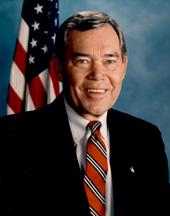
I thank the President, and I thank the Senator from Mississippi. I will not take long. In fact, I just came from a markup in health care. I was very much interested in the discussion that was going…
I thank the President, and I thank the Senator from Mississippi. I will not take long. In fact, I just came from a markup in health care. I was very much interested in the discussion that was going on here. We are all involved, of course, in one way or another in air traffic control. I am a former private pilot and have experienced a great deal over the years. I don't fly anymore because I don't get enough opportunity to be safe. Nevertheless, I have listened.
First of all, I am very much interested in doing all we can in government to modernize and make it as efficient as can be. That is what the administration seeks to do in various kinds of activities, taking a look at those to see if there is something that can be done governmentally. If they can do it just as well or better in the private sector, there ought to be some competition for that. I believe that. I believe that very strongly.
I am always sort of surprised at the efforts made to keep the government from doing that. If they study it and come up with the right answer, I think that is a good idea, instead of saying we ought not to be doing any of those things.
I am an advocate of trying to have competition to see how we can do the best thing.
Currently, the FAA is reviewing the jobs done by the flight services staff to determine if these jobs could indeed be done better by the private sector.
I think most everyone knows that President Bush and his Secretary have no intention of having private competition for the air traffic controllers.
What we are talking about here is the flight service function, which is quite different. Currently provided for in general aviation, of course, is that pilots currently review it to see if flight service functions could be modernized by allowing the private sector to provide some of these services.
So it seems to me that is reasonable. And to come in with an amendment that says you cannot take a look at doing something better is a surprise to me.
The commercial airlines rely on the private sector for weather and all kinds of things. There is really no reason to think that is something that is done better by Government people than it is by private sector people. Who is flying the airplane, for example? That is where the real test comes.
So it seems to me we ought not to adopt this kind of an amendment. Remember, this is a current A-76 study that is underway. It is a study, and we ought to give that an opportunity to happen.
The FAA has categorized air traffic controllers as noninherently governmental. They have shielded the air traffic controllers from the A-76 study.
Sure. Yes.
I am not aware of that. Are you aware of the outcome?
No.
May I answer the question, please?
I do know why that is, and I would think you do, too.
We decided it right here. I voted against it. I voted for having the private sector continue. That is why it was done, because it is a political thing, and you know it and I know it.
Is there a question?
I understand, and you will probably have an opportunity to do that. Let me respond to what you are saying.
You talk about how much better it is. I think if you had spent that many billions of dollars doing it on the other side, it perhaps would have been better as well.
So I urge Senators to not accept this amendment and to let us continue to have a study of what might better be done rather than saying, flatly, we cannot even take a look at a possible modernization.
I yield the floor.
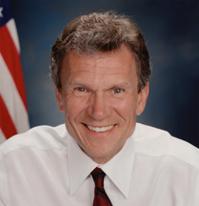
Mr. President, I am pleased to join my colleague, Senator Bingaman, in introducing the Reclamation Rural and Small Community Water Enhancement Act, S. 1085. The Bureau of Reclamation has accomplished…
Mr. President, I am pleased to join my colleague, Senator Bingaman, in introducing the Reclamation Rural and Small Community Water Enhancement Act, S. 1085.
The Bureau of Reclamation has accomplished a great deal over the last century, starting with the early irrigation and water development programs that opened the West to settlement and economic growth. Clean, abundant water supplies were integral to our Nation's westward expansion. Without the vision and effort of the Bureau over the last century, the West would be a vastly different, and less hospitable, place.
Though the role of the Bureau has changed over the years, it is still the premier Federal water development agency. Today, one of its primary duties is the building of rural water projects in South Dakota and other Western States. Rural areas often lack the resources and infrastructure necessary to provide stable water supplies to their residents. Most families, farmers, and ranchers rely on inadequate wells, or live in areas where the water quality is so poor they are required to truck or haul water over long distances. Rural water projects conducted by the Bureau have helped overcome these obstacles, tackling the problem on a regional level and vastly improving the quality of water and the quality of life in much of my State. Rural water systems have become an indispensable lifeline to help deal with the severe drought that has affected much my State.
The bill we are introducing today takes the next, logical step to bring the Bureau's rural water projects into the 21st century. The Reclamation Rural and Small Community Water Enhancement Act will create a new program within the Bureau of Reclamation to help rural and tribal communities develop water supply solutions, like rural water systems, to address regional water needs. The Bureau's experience in administering other rural water systems will ensure this program compliments existing Federal drinking water programs, like those operated by the Environmental Protection Agency and the Department of Agriculture, and provide rural communities with the tools they need to plan for the future.
As we look forward, however, it is equally important that we not ignore those projects that have already received approval by Congress. In South Dakota, the Mni Wiconi, Mid-Dakota, Perkins County, and Lewis and Clark rural water systems will serve thousands of families, farms, and businesses. Their timely completion is integral to the health, welfare, and economic security of my State. Unfortunately, the administration's fiscal year 2004 budget request drastically cuts funding for these and other rural water projects throughout the country by more than 80 percent. This will lead to unnecessary delays in the provision of drinking water to homes and families and will only serve to increase the cost of the projects.
That is why this legislation directs the Secretary of the Interior to take all necessary steps to complete these and all other rural water projects that have already received congressional authorization. The bill recognizes the hard work that has already gone into the development of these projects, and will help ensure that they are completed on schedule. At the same time, this new program will aid in the development of future projects so that other communities can finally realize the benefits that a well-run rural water system can provide.
I urge my colleagues to support this legislation.
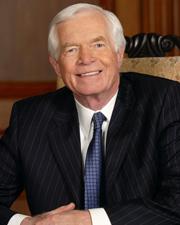
Mr. President, I ask unanimous consent the pending amendment be set aside so I may offer an amendment to the bill. I thank the Chair. Mr. President, under the unanimous consent agreement propounded…
Mr. President, I ask unanimous consent the pending amendment be set aside so I may offer an amendment to the bill.
I thank the Chair.
Mr. President, under the unanimous consent agreement propounded by the distinguished Senator from Arizona, I ask unanimous consent that the pending amendments be set aside, and I send an amendment to the desk and ask it be reported. The amendment is at the desk.
The request is that the pending amendments be set aside and that I may be permitted to offer an amendment to the bill.
Mr. President, if the Senator will yield, I do not intend to talk long. I do hope we can permit Senator Byrd to make a statement on this amendment. I do not know how much time he would need for that purpose.
Mr. President, I ask unanimous consent that reading of the amendment be dispensed with.
Mr. President, I also note that Senator Byrd is a cosponsor of the amendment. I appreciate very much hearing the assurance of the Senator from Arizona that this amendment will be accepted, so I am not going to talk long. I do not want to talk our way out of getting this amendment accepted, but I do briefly want to say what it does, and then I will be happy to yield to Senator Byrd for whatever comments he would like to make.
This amendment seeks to amend section 402 of the bill. Section 402 creates a new entitlement program, in effect, and it is a capital fund program that would permit the Transportation Security Administration to use up to $500 million--the first $500 million collected each year from the emplanement fee; $2.50 per passenger that is now collected under current law--and transfer those funds to the Department of Transportation for administration of this capital fund.
The Department of Transportation could then allocate those funds to airports for security improvements. There are provisions in the amendment about how much hub airports would be entitled to--40 percent; 20 percent to medium hub airports, and the like. But the problem with it is the CBO says that, unlike the arrangement under current law, where the Transportation Security Administration spends these funds for airport screeners and other activities under the jurisdiction of the Transportation Security Administration, it would no longer be able to have those activities offset by the funds that are collected from the passengers, which means we would have to appropriate additional money each year to pay for those purposes that are now being paid for out of the emplanement fund that is designated and earmarked for that purpose now.
So what we are doing is saying, it is OK to set up this new capital fund, and it is OK to authorize the Transportation Security Agency to collect the money and make it available, but we need to make that subject to appropriations. That is the point because we are going to divert money from the Department of Homeland Security for this new purpose, and we have a letter from Secretary Ridge explaining that. I ask unanimous consent that a copy of his letter dated June 11 to me be printed in the Record.
Mr. President, I am hopeful we can go forward. I appreciate very much the assurance of the Senator from Arizona that the amendment will be included in the bill.
I yield the floor.
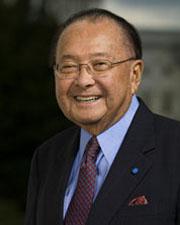
Mr. President, today I introduce the United States Military Cancer Institute Center of Excellence Research Collaborative Act of 2003. This legislation seeks to formally establish the United States…
Mr. President, today I introduce the United States Military Cancer Institute Center of Excellence Research Collaborative Act of 2003. This legislation seeks to formally establish the United States Military Cancer Institute, Center of Excellence and seeks support for the collaborative augmentation of research efforts in cancer epidemiology, prevention, and control. The mission of the Institute is to provide for the maintenance of health in the military by enhancing cancer research and treatment, and to study the epidemiological causes of cancer among various ethnic groups. By formally establishing the USMCI as a Center of Excellence it will better unite military research efforts with other cancer research centers.
Cancer prevention and treatment for the military population is a significant issue, thus the USMCI was organized to coordinate the military cancer assets already established. The USMCI has a comprehensive database on its beneficiary population of 9 million people. The military's nationwide tumor registry, the Automated Central Tumor Registry, has acquired more than 180,000 cases in the last 14 years, and a serum repository of 30 million specimens from military personnel collected sequentially since 1987. This population is predominantly Caucasian, African-American, and Hispanic.
The Director of the USMCI, Dr. John Potter, is also a Professor of Surgery at the Uniformed Services University of the Health Sciences, USUHS. A highly talented cancer epidemiologist, Dr. Kangmin Zhu, has also been recruited to lead the USMCI Prevention and Control Programs.
The USMCI currently functions in the Washington, D.C. area, and its components are located at the National Naval Medical Center, the Malcolm Grow Medical Center, the Armed Forces Institute of Pathology, and the Armed Forces Radiobiology Research Institute. Currently there are more than 70 research workers, both active duty and Department of Defense civilian scientists, in the USMCI.
The USMCI intends to expand its research activities to military medical centers across the Nation. Special emphasis will be placed on the study of genetic and environmental factors in carcinogenesis among the entire population including Asian, Causasian, African-American and Hispanic populations.
I ask unanimous consent that the text of this bill be printed in the Record.
Mr. President, I rise today to introduce the Children's Express Lane to Health Coverage Act of 2003. This bill will give States greater flexibility in the ways they can enroll uninsured children into…
Mr. President, I rise today to introduce the Children's Express Lane to Health Coverage Act of 2003. This bill will give States greater flexibility in the ways they can enroll uninsured children into Medicaid and SCHIP while at the same time increasing government efficiency. Furthermore, it will help States reduce bureaucracy and red-tape.
In 1999, 4.4 million low-income uninsured children were in families that received benefits through Food Stamps, the National School Lunch Program, or the Special Supplemental Nutrition Program for Women, Infants and Children, WIC. Recognizing this, I worked to include a provision in the Agricultural Risk Protection Act of 2000,
which allowed schools and school districts to share school lunch information with State health insurance agencies for outreach and enrollment activities.
The good news is that this provision has inspired numerous States to share information with Medicaid and SCHIP for the purposes of enrollment and outreach. Some States and communities have gone even further and simplified the health insurance application process by utilizing information provided in another program application to make the eligibility or renewal determination for Medicaid and or SCHIP.
Some States would like to go further still, and determine that a child is income eligible for Medicaid or SCHIP based on the fact that they have already been found eligible for a nutrition or other comparable program that operates under similar financial guidelines. Unfortunately, they have found Federal law not flexible enough.
The Express Lane Act would give States the option of establishing that their Medicaid or SCHIP financial eligibility rules are satisfied when a family presents proof that their child is already enrolled in another public program with comparable income guidelines. Express lane does not affect other, non-income eligibility requirements and maintains existing quality control measures.
If given the ability to adopt automatic income eligibility, as set out in The Children's Express Lane to Health Coverage Act of 2003, States could reach a tangible population of uninsured children, build upon the initiative already taken by families, eliminate multi-agency duplicative efforts to collect and verify income and resource eligibility, and at the same time maintain program integrity.
Mr. President, I thank the Senator from Arizona. I also thank the Senator from South Carolina for making sure that we have an FAA reauthorization bill on the floor in a timely manner. There has been…
Mr. President, I thank the Senator from Arizona. I also thank the Senator from South Carolina for making sure that we have an FAA reauthorization bill on the floor in a timely manner.
There has been so much impact on the aviation industry over the last 2 years that I think we have had to refocus our efforts from capacity issues which we were trying to address before 9/11 to now security issues. Certainly, the parts of the bill that deal with capacity are still here. I think it is warranted that we look ahead. The aviation industry is going to come back, and we need to make sure we have the expedited environmental procedures for building new runways and help communities be able to meet the needs of increased demand when that occurs. If we can do that before a crisis, it will help us allow airports to grow in an environmentally positive way. In a way, that can be handled by the community effectively.
I think this bill is a good bill. I have worked on it as the former chairman of the Aviation Subcommittee and now as a member of the Aviation Subcommittee. I think it is very important that we look at the major issues of security.
I commend the committee for keeping the Security Trust Fund, which I think is so important. People pay a ticket tax for security. I want to make sure this ticket tax goes for security purposes. That is what this bill does. If we start having a shoestring for the Transportation Security Agency, they are going to start cutting corners, and we are not going to have an airtight system that a number of us want to ensure. We have a safer aviation system today than we had on 9/10 in 2001. We want to make sure it stays that way. We should not let our guard down. The kind of enemies there are today are looking for vulnerabilities, and we are not going to allow them to have that.
I think that is why this reauthorization discusses and handles the security issues, the capacity issues, and the issues of air traffic control and safety all in a way that I think is quite positive.
I appreciate the chairman of the committee and the ranking member working to get this bill out. It came out of our Commerce Committee, and I look forward to supporting it.
Thank you, Mr. President. I yield the floor.
Mr. President, I rise today, along with Senator Boxer, to offer the Arming Cargo Pilots Against Terrorism Act as an amendment to this bill. This amendment closes a loophole to better protect our…
Mr. President, I rise today, along with Senator Boxer, to offer the Arming Cargo Pilots Against Terrorism Act as an amendment to this bill. This amendment closes a loophole to better protect our homeland against terrorists. As a result of the airplane hijackings on September 11, 2001, Congress took the appropriate action to prevent the use of airliners being used as missiles. Last year, large majorities of the Senate and House of Representatives voted to arm both cargo and passenger pilots who voluntarily went for stringent training as part of a program of homeland security which was in the Homeland Security bill. Arming these pilots served to protect the pilots and crew, passengers, and those on the ground from ever being victims of another airline hijacking. It was the right thing to do.
However, during conference of the Homeland Security bill, the cargo pilots were yanked out of the bill. This amendment will return them and close the loophole created when they were left out last year.
This provision enjoys broad support and has already passed the Senate as part of the Air Cargo Security Act earlier this year.
Obviously, I would not be offering it had not the bill gotten tied up in conference and we need another vehicle to get it back to the House, so that is the reason we are offering it on this bill.
Not too many people realize that cargo space is usually not secured as well as passenger space. There are no air marshals, there are no passengers to help protect against terrorists, and there are sometimes invasions of privacy on these planes. In fact, someone from North Dakota actually broke the security and entered an aircraft. Thank God she was found out before the aircraft took off.
We would like this to be added to this bill so we can get it back to the House and a new conference. The whole area of cargo aircraft is not secured by the TSA and many other people who secure passenger terminals or commercial flights. I hope we can agree and get this bill over to the House.
I hope the rest of my colleagues here in the Senate will support this amendment.
Mr. President, I ask for a voice vote.
Nonlethal weapons, and totally voluntary.
They are called Tasers.

Mr. President, I thank my colleague from New Jersey for offering this amendment, which I am proud to cosponsor. This amendment will bar the use of funds to privatize the functions of the air traffic…
Mr. President, I thank my colleague from New Jersey for offering this amendment, which I am proud to cosponsor. This amendment will bar the use of funds to privatize the functions of the air traffic control system in the United States, which will ensure that air traffic control will remain a Government function under the control of the Federal Aviation Administration.
I believe that there are few functions of Government more inherent to our responsibility than guaranteeing the safety and security of consumers of transportation in our country. Since September 11, 2001, we have worked to increase the Federal role in improving air security. Air traffic control is essential to our Nation's security and it is vital that we keep air traffic control within the Government's function in order to ensure a safe aviation system on a day-to-day basis. It is also vital in the case of a terrorist attack. This was
demonstrated vividly on September 11, when central Government control of air traffic proved essential in quickly clearing our skies and possibly preventing further casualties.
Furthermore, it is clear that the intention of those who oppose this amendment is to open the door for privatization of air traffic control. This would be a disaster. An extensive Columbia University study that looked at air traffic control privatization in other countries found that there are no operational or economic advantages to privatizing air traffic control. In fact, there is some evidence that suggests privatization can lead to an increase in incidents, as fewer controllers are used in an attempt to cut costs. For example, privatization in Canada has led to an operational irregularity rate twice ours despite the fact that their air system is 7 percent the size of ours. Privatization may also increase costs. The British Government has twice had to bail out its privatized system for $131 million, about two-thirds of what they originally sold it for.
I urge all of my colleagues to support this amendment in order to ensure the continued safety of our aviation system. Let us focus on how to improve our air traffic control system without compromising safety.

Mr. President, this amendment is to close a loophole in the Federal Flight Deck Officer program. Last year, in response to the September 11 attacks, I worked along with our former colleague Senator…
Mr. President, this amendment is to close a loophole in the Federal Flight Deck Officer program.
Last year, in response to the September 11 attacks, I worked along with our former colleague Senator Bob Smith to pass the Arming Pilots Against Terrorism and Cabin Defense Act, which allowed passenger and cargo pilots who volunteer and receive special training to have guns in the cockpit as a last line of defense.
The bill passed the Senate 87-6 as an amendment to the Homeland Security bill.
Unfortunately, during the Homeland Security conference, cargo pilots were left out of the program.
This amendment will close this dangerous loophole in the law and add an important new layer to our homeland security by allowing cargo pilots to participate in the Federal Flight Deck Officer program.
With less security than passenger aircraft, cargo planes are tempting targets for terrorists. These planes do not have strengthened cockpit doors, Federal Air Marshals, trained cabin crew, or alert passengers on board.
Cargo planes are usually more vulnerable on the tarmac than passenger aircraft. Most cargo planes are parked in remote areas with relatively easy access; many operate at airfields that do not have the same level of security as passenger airports.
Late last year in Fargo, ND, a mentally unbalanced woman walked across a runway, boarded a cargo aircraft, entered the cockpit, and asked the crew to fly her to California.
Just think what a terrorist could do. A terrorist could hijack a cargo plane and fly it into a building, nuclear power plant, or other target on the ground.
Cargo pilots must be given a last line of defense to keep terrorists from gaining control of their aircraft.
We need to close this gap in our homeland security.
Mr. President, I rise today in support of the Bingaman- Inhofe amendment to strike language requiring certain communities enrolled in the Essential Air Service to provide a local cost-share. We are…
Mr. President, I rise today in support of the Bingaman- Inhofe amendment to strike language requiring certain communities enrolled in the Essential Air Service to provide a local cost-share.
We are asking our towns and communities, our local governments, hardest hit by difficult economic times to suddenly find thousands of dollars in their already overstretched budgets to replace a significant source of Federal funding, for a critical economic function.
In this time of economic uncertainty, rural communities are struggling to maintain their daily ways of life. With an added burden placed upon them, survival and the opportunity for further rural development will be nearly impossible.
Local airports and the commercial air service they provide are extremely important to small towns, and a strong component of a State's economy. By enacting a cost-share provision, we run the risk of losing these airports, and cutting off a vital economic lifeline to rural America.
In my State, airports in Jonesboro, Hot Springs, and Harrison provide affordable and reliable service to over 10,000 customers a year. The EAS funding they receive is a sound investment in our State's transportation network. Cost share provisions, however, could put those airports out of business.
We are already putting enough strain on our small towns and local governments. We do not need to add to that by eliminating a vital source of funding for a vital function. This amendment would prevent that from happening, and I urge my colleagues to support it.
Bill Text
Latest available legislative text
        [Congressional Bills 108th Congress]
[From the U.S. Government Publishing Office]
[S. 1089 Introduced in Senate (IS)]

108th CONGRESS
1st Session
S. 1089

To encourage multilateral cooperation and authorize a program of
assistance to facilitate a peaceful transition in Cuba, and for other
purposes.

_______________________________________________________________________

IN THE SENATE OF THE UNITED STATES

May 20, 2003

Mr. Ensign introduced the following bill; which was read twice and
referred to the Committee on Foreign Relations

_______________________________________________________________________

A BILL

To encourage multilateral cooperation and authorize a program of
assistance to facilitate a peaceful transition in Cuba, and for other
purposes.

Be it enacted by the Senate and House of Representatives of the
United States of America in Congress assembled,

SECTION 1. SHORT TITLE.

This Act may be cited as the ``Cuba Transition Act of 2003''.

SEC. 2. FINDINGS.

Congress makes the following findings:
(1) The Cuban people are seeking change in their country,
including through the Varela Project, Concilio Cubano,
independent journalist activity, and other civil society
initiatives.
(2) Civil society groups and independent, self-employed
Cuban citizens will be essential to the consolidation of a
genuine and effective transition to democracy from an
authoritarian, communist government in Cuba, and therefore
merit increased international assistance.
(3) The people of the United States support a policy of
proactively helping the Cuban people to establish a democratic
system of government, including supporting Cuban citizen
efforts to prepare for transition to a better and more
prosperous future.
(4) Without profound political and economic changes, Cuba
will not meet the criteria for participation in the Summit of
the Americas process.
(5) The Inter-American Democratic Charter adopted by the
General Assembly of the Organization of American States (OAS)
provides both guidance and mechanisms for response by OAS
members to the governmental transition in Cuba and that
country's eventual reintegration into the inter-American
system.
(6) United States Government support of pro-democracy
elements in Cuba and planning for the transition in Cuba is
essential for the identification of resources and mechanisms
that can be made available immediately in response to profound
political and economic changes on the island.
(7) Consultations with democratic development institutions
and international development agencies regarding Cuba are a
critical element in the preparation of an effective
multilateral response to the transition in Cuba.

SEC. 3. PURPOSES.

The purposes of this Act are as follows:
(1) To support multilateral efforts by the countries of the
Western Hemisphere in planning for a transition of the
government in Cuba and the return of that country to the
Western Hemisphere community of democracies.
(2) To encourage the development of an international group
to coordinate multilateral planning to a transition of the
government in Cuba.
(3) To authorize funding for programs to assist the Cuban
people and independent nongovernmental organizations in Cuba in
preparing the groundwork for a peaceful transition of
government in Cuba.
(4) To provide the President with funding to implement
assistance programs essential to the development of a
democratic government in Cuba.

SEC. 4. DEFINITIONS.

In this Act:
(1) Democratically elected government in cuba.--The term
``democratically elected government in Cuba'' has the meaning
given the term in section 4 of the Cuban Liberty and Democratic
Solidarity (LIBERTAD) Act of 1996 (22 U.S.C. 6023).
(2) Transition government in cuba.--The term ``transition
government in Cuba'' has the meaning given the term in section
4 of the Cuban Liberty and Democratic Solidarity (LIBERTAD) Act
of 1996 (22 U.S.C. 6023).

SEC. 5. DESIGNATION OF COORDINATOR FOR CUBA TRANSITION.

(a) In General.--The Secretary of State shall designate, within the
Department of State, a coordinator who shall be responsible for--
(1) designing an overall strategy to coordinate
preparations for, and a response to, a transition in Cuba;
(2) coordinating assistance provided to the Cuban people in
preparation for a transition in Cuba;
(3) coordinating strategic support for the consolidation of
a political and economic transition in Cuba;
(4) ensuring program and policy coordination among agencies
of the United States Government in carrying out the policies
set forth in this Act; and
(5) pursuing coordination with other countries and
international organizations, including international financial
institutions, with respect to assisting a transition in Cuba.
(b) Rank and Status of the Transition Coordinator.--The coordinator
designated in subsection (a) shall have the rank and status of
ambassador.

SEC. 6. MULTILATERAL INITIATIVES RELATED TO CUBA.

The Secretary of State is authorized to designate up to $5,000,000
of total amounts made available for contributions to international
organizations to be provided to the Organization of American States
for--
(1) Inter-American Commission on Human Rights activities
relating to the situation of human rights in Cuba;
(2) the funding of an OAS emergency fund for the deployment
of human rights observers, election support, and election
observation in Cuba as described in section 109(b) of the Cuban
Liberty and Democratic Solidarity (LIBERTAD) Act of 1996 (22
U.S.C. 6039(b)(1)); and
(3) scholarships for Cuban students attending colleges,
universities, or other educational programs in member states of
the OAS.

SEC. 7. SENSE OF CONGRESS.

(a) Sense of Congress Regarding Consultation With Western
Hemisphere.--It is the sense of Congress that the President should
begin consultation, as appropriate, with governments of other Western
Hemisphere countries regarding a transition in Cuba.
(b) Sense of Congress Regarding Other Consultations.--It is the
sense of Congress that the President should begin consultations with
appropriate international partners and governments regarding a
multilateral diplomatic and financial support program for response to a
transition in Cuba.

SEC. 8. ASSISTANCE PROVIDED TO THE CUBAN PEOPLE IN PREPARATION FOR A
TRANSITION IN CUBA.

(a) Authorization.--Notwithstanding any other provision of law
other than section 634A of the Foreign Assistance Act of 1961 (22
U.S.C. 2394-1) and comparable notification requirements contained in
any Act making appropriations for foreign operations, export financing,
and related programs, the President is authorized to furnish an amount
not to exceed $15,000,000 in assistance and provide other support for
individuals and independent nongovernmental organizations to support
democracy-building efforts for Cuba, including--
(1) political prisoners and members of their families;
(2) persons persecuted or harassed for dissident
activities;
(3) independent libraries;
(4) independent workers' rights activists;
(5) independent agricultural cooperatives;
(6) independent associations of self-employed Cubans;
(7) independent journalists;
(8) independent youth organizations;
(9) independent environmental groups;
(10) independent economists, medical doctors, and other
professionals;
(11) in establishing and maintaining an information and
resources center to be in the United States interests section
in Havana, Cuba;
(12) prodemocracy programs of the National Endowment for
Democracy that are related to Cuba;
(13) nongovernmental programs to facilitate access to the
Internet, subject to section 102(g) of the Cuban Liberty and
Democratic Solidarity (LIBERTAD) Act of 1996 (22 U.S.C.
6032(g));
(14) nongovernmental charitable programs that provide
nutrition and basic medical care to persons most at risk,
including children and elderly persons; and
(15) nongovernmental charitable programs to reintegrate
into civilian life persons who have abandoned, resigned, or
been expelled from the Cuban armed forces for ideological
reasons.
(b) Definitions.--In this section:
(1) Independent nongovernmental organization.--The term
``independent nongovernmental organization'' means an
organization that the Secretary of State determines, not less
than 15 days before any obligation of funds to the
organization, is a charitable or nonprofit nongovernmental
organization that is not an agency or instrumentality of the
Cuban Government.
(2) Eligible cuban recipients.--The term ``eligible Cuban
recipients'' is limited to any Cuban national in Cuba,
including political prisoners and their families, who are not
officials of the Cuban Government or of the ruling political
party in Cuba, as defined in section 4(10) of the Cuban Liberty
and Democratic Solidarity (LIBERTAD) Act of 1996 (22 U.S.C.
6023(10)).

SEC. 9. SUPPORT FOR A TRANSITION GOVERNMENT IN CUBA.

(a) Authorization of Appropriations.--In addition to funds
otherwise available for such purposes, there are authorized to be
appropriated $30,000,000 to the President to establish a fund to
provide assistance to a transition government in Cuba as defined in
section 205 of the Cuban Liberty and Democratic Solidarity (LIBERTAD)
Act of 1996 (22 U.S.C. 6023).
(b) Designation of Fund.--The fund authorized in subsection (a)
shall be known as the ``Fund for a Free Cuba''.
(c) Availability of Funds.--Amounts appropriated pursuant to
subsection (a) are authorized to remain available until expended.
<all>