Patients First Act of 2003
Legislative Activity
Stay on top of the latest movement without scrolling through every action
Cloture on the motion to proceed to the measure not invoked in Senate by Yea-Nay Vote. 49 - 48. Record Vote Number: 264. (consideration: CR S9083)
July 9, 2003
View full timeline
Introduced in Senate
June 26, 2003
Introduced in the Senate. Read the first time. Placed on Senate Legislative Calendar under Read the First Time.
June 27, 2003
Read the second time. Placed on Senate Legislative Calendar under General Orders. Calendar No. 186.
June 27, 2003
Motion to proceed to consideration of measure made in Senate. (consideration: CR S8871-8893, S8893-8894)
July 7, 2003
Cloture motion on the motion to proceed to the measure presented in Senate.
July 7, 2003
Motion to proceed to measure considered in Senate. (consideration: CR S9001-9009, S9010-9043)
July 8, 2003
Motion to proceed to measure considered in Senate. (consideration: CR S9061-9083)
July 9, 2003
Cloture on the motion to proceed to the measure not invoked in Senate by Yea-Nay Vote. 49 - 48. Record Vote Number: 264. (consideration: CR S9083)
July 9, 2003
Voting History
1 vote recorded • Roll call available
Floor Debate
20 membersWhat members said about S. 11 on the floor
 RJD
RJD MM
MM GVV
GVV EFH
EFH EMK+15
Floor Debate
20 membersWhat members said about S. 11 on the floor
Mr. President, I object. Mr. President, let me first commend my colleague, Senator McConnell of Kentucky, for his presentation and his leadership on this issue. Though we disagree on some very…
Mr. President, I object.
Mr. President, let me first commend my colleague, Senator McConnell of Kentucky, for his presentation and his leadership on this issue. Though we disagree on some very fundamental parts of this issue, I have the highest regard and respect for his ability and I look forward to working with him.
What occurred about 45 minutes ago was that Senator Frist, the majority leader, came to the Chamber and filed a motion to proceed, and I objected. What Senator Frist was asking was that the Senate stop its business and move directly to S. 11 relative to the issue of medical malpractice. Because I have filed an objection, Senator Frist indicated he would file a cloture motion. After collecting the necessary signatures from our colleagues, this will lead to a vote on cloture come Wednesday.
If Senator Frist can gather some 60 votes, he will be in a position to then move to this bill and begin the debate and the amendment process. That is the ordinary course of the procedure.
An obvious question is why I objected. An issue clearly as important as medical malpractice should be considered by the Senate. There is no doubt in my mind. But I would object to the fact that this bill comes to the floor without any hearing before a Senate committee. Consider that. The most revolutionary and dramatic reform of tort law in America, in modern memory, will come to the floor without the normal hearings, witnesses, opportunities to amend, opportunity to work out compromises and negotiate, all part of the legislative process. So why then does a bill of this gravity and importance only come to us in this circumstance where there is no chance for us to work out ways to resolve our differences? Why, I cannot explain that to my colleagues. For a person like myself who served for some time in the House and the Senate, it seems to me that the Republican leadership in control of the committee structure would not object to taking this bill to one of their committees, having hearings, bringing in the doctors, the lawyers, the victims, the insurance companies, the pharmaceutical companies, and the companies that make medical devices. Let's hear about this problem in its entirety. But, no, they object to that. They do not want hearings. They do not want the people of this country to hear both sides of the story. They would rather come to the floor and present their side with a take-it-or-leave-it approach. I do not think that is fair. I think we can and we should do better.
Let me say at the outset that though I have objected and though most major medical associations, like the American Medical Association, support this bill, I want to make clear my high regard for the medical profession. Time and time again, in my life and the life of my family, I have turned to some of the best and most talented medical professionals in America. I have entrusted them with the most important things I have on Earth--my wife, my children, and the people whom I love.
Time and again I have found them to be selfless, extraordinarily talented, compassionate men and women who give the medical profession a good name every single day. Thank God they are there, and I want them to continue to be there. So I do not come to this Chamber as a doctor basher, as someone who thinks doctors are overpaid or frankly should be held to task for this, that, and the other. Not at all. Like most Americans, if I, my wife, or children are ever sick, I want to look up into the eyes of the best and brightest doctor in America helping a member of my family through a medical crisis. My family and I have been lucky in our lives. Many times I think we have had the best and the brightest, and I still continue to thank them as I take a position with which many of them will not agree.
I believe there is a fundamental unfairness in the current situation with medical malpractice. I have seen that unfairness in my State. Senator McConnell has noted it in many other States. The largest medical malpractice insurance company in Illinois, the Illinois State Mutual Insurance Company, raised its rates last week 35 percent on doctors for medical malpractice insurance. Many lines of insurance are going up in cost, health insurance and other insurance, but this is an extraordinary increase.
Two neurosurgeons in Joliet, IL, have given up the practice of brain surgery because of malpractice premium increases. They have left the city's only two hospitals without a full-time coverage for head trauma cases. Senator McConnell is right; Victims of automobile accidents and trauma need immediate help and immediate care.
Memorial Hospital in Belleville, IL, near the area where I grew up, has lost three OB/GYN physicians in the past 6 months due to increases in rising malpractice premiums. I met one of them. I met one during the course of the campaign last year. She came to me and said: Senator, I just cannot continue to pay these premiums and deliver babies. And I believe her.
Eduardo Barriuso of Humboldt Park, an obstetrician in my State of Illinois, pays $104,000 a year for malpractice insurance. He says he earns $175,000 a year treating mostly poor people, Medicaid patients. He pays $104,000 in malpractice, and has $175,000 in income. Like other doctors who treat patients who depend on Medicare or Medicaid or insurance through an HMO, Dr. Barriuso cannot pass on his higher insurance rates to his patients.
The Family Health Partnership Clinic in McHenry, IL, was almost forced to close after its insurer left my home State. They found new insurance at four times the cost. The clinic serves the uninsured and operates off the volunteer services of physicians. It now pays $28,000 a year for malpractice insurance, up from $7,000 last year, for a clinic serving poor people.
A Chicago area OB/GYN is studying to obtain his pharmacist license. He has decided he cannot continue as a doctor. He thinks he can make a better life as a pharmacist. He is now paying $115,000 for his liability insurance. I would readily concede the point made over and over by Senator McConnell that these malpractice premiums are not fair. They are unfair particularly to certain specialties--neurosurgery, trauma care physicians, OB/GYN, and several others who have been hit hard by these increases. That is just not fair.
I suggest there is another unfairness involved in this discussion, an unfairness which my colleague from Kentucky never conceded. Frankly, there is an unfairness in this bill when it comes to the victims of medical malpractice. Of all the comments made by my colleague from Kentucky, little was said about whether it is fair to cap the recovery for a victim of medical malpractice at medical bills, lost wages, and pain and suffering of no more than $250,000.
Now, I do not come as an expert on anything. Some 20 years ago, in my legal practice in Springfield, IL, I handled medical malpractice cases. For a number of years I defended doctors through their insurance company. I had about 7 years with that experience. Another 2\1/2\ years I was a plaintiffs' attorney suing some doctors and hospitals for malpractice. So I have seen it from both sides of the table in a courtroom. I do understand the dynamics of a medical malpractice case, at least as they applied 20 years ago. I do not know how many others in this Chamber have had that experience. Some have but very few.
So we come to this discussion, frankly, listening to others who are experts
in the subject asking them for advice. What is the right thing to do to deal with this medical malpractice insurance crisis? I think, frankly, that this bill, which limits the compensation to be paid to an individual under a medical malpractice case to $250,000, is fundamentally unfair. It is as unfair to victims as the malpractice insurance rates are to doctors.
Is that the best the Senate can do, that we take the unfairness to doctors and then visit it on unsuspecting people who go to a doctor or to a hospital expecting professional care and come home with their lives changed or ruined?
I recall one case in Chicago. Let me give an illustration of what S. 11 would mean in this case. This woman, about 50 years old, had two moles on the side of her face. She said to her doctor: I think I would like to have those removed, doctor. He said: I will send you to one of the very best hospitals for this surgical procedure, and he did.
She went in for this surgical procedure to have two moles removed. She was given an anesthesia. They administered oxygen to her and they began to cauterize these moles. But there was a problem. Medical personnel were not supposed to use a cauterizing gun near oxygen.
As a consequence, there was an explosion and a fire on her face, burning off her nose, completely disfiguring and scarring her face. She is in her early fifties now and has gone through extensive reconstructive surgery. She is lucky to be able to breathe through what was once her nose. Her life will never, ever be the same.
She told the story herself in an article published in the newspaper in Chicago. Routine surgery went disastrously bad and her life was changed forever.
According to those who have brought the bill to the Senate, they have decided how much it is worth to live 20 or 30 years with permanent disfigurement and scarring, what it is worth to go into the hospital for routine surgery and have something happen that completely changes your life. Do you know what it is worth under this bill? It is worth $250,000 for her pain and suffering. Not a penny more, not one penny more.
The decision will be made in the Senate that in her case, and thousands of others across America, we will decide the maximum amount to which she is entitled. I don't think that is fair. I don't think it is fair to victims.
Malpractice premiums are too high and that is unfair to doctors. But a $250,000 pain and suffering cap? That is unfair in many cases of which I am aware.
Let me talk about another case from my home State of Illinois, in the city of Urbana. David was born prematurely with a lot of problems. By the time he was 6 years old many of the problems were behind him, though he still had some problems with his lungs and asthma. When he was 6 he had a respiratory infection and started running a fever. The doctor who usually cared for him was out of town so his parents took him to a clinic for nighttime care. At the clinic, he was given an antibiotic and sent home. He got worse. His parents took him to an emergency room that same night where he remained overnight with a fever. The next day, concerned about David's continuing fever, David and his parents returned. The doctor admitted him to the hospital at 5 p.m. At the hospital, they took his temperature and admitted him to a regular hospital room. They did not refer him to the ICU, nor did they place a temperature monitor on him.
His mother was dozing in the chair in his room when a nurse observed he appeared to be lapsing into a seizure condition. The nurse did an emergency code. By the time the emergency team arrived, he was in full seizure. His temperature spiked to 107.7 degrees. He remained in a state of seizure for quite some time and eventually went into cardiac arrest.
As a result of this ordeal, this 6-year-old boy was rendered a quadriplegic and lost all expressive ability. Professionals believe he has what is called receptive language. He can understand spoken language at an age-appropriate level but he is unable to communicate. He breathes through a tracheotomy stoma and is fed through a gastrointestinal tube.
That was 11 years ago. He is now 17. David can never be left alone, not for 1 minute of 1 day. His mother says she can tell he is interested in girls by the way he perks up when a girl his age enters the room. But he cannot express himself. He cannot say a word. There is no chance of recovery and, of course, in his condition he is at a heightened risk prone to infection.
The very issue that brought David to the hospital in the first place was his elevated temperature. Despite that fact, no temperature monitor was ever placed on him. In light of his history and his delicate medical condition he should have been admitted to the ICU rather than simply sent to the regular hospital room and given periodic attention. His family reached a settlement with the doctors and the hospital for the negligence in the treatment of David.
It is not likely with all of the liability protections and extreme cap on damages under this bill that defendants would have felt compelled to reach a settlement with that family if the bill before the Senate would have been the law of the land.
The tragic malpractice of which David was a victim literally took away from him all that every one of us take for granted. He will never walk again. He will never have a normal relationship with other people. Though he remains alert and is apparently not intellectually impaired, he cannot express himself and he never will be able to. He requires constant care. His mother gave up her job at a local college to care for him full time.
For all of these losses with their child, for being denied a normal life, those who bring S. 11 today say they know what it is worth. They know what the pain and suffering of David is worth for the rest of his life. It is worth $250,000. Not a penny more. Is that fair? Is that fair to David, his mother, his father? I don't think it is.
What we have here is a response to a medical insurance crisis which I don't believe gets to the root cause of a problem.
What I am about to say now is not a statement made by trial lawyers or those friendly to them. I quote from Dr. Carolyn Clancy, director for the Agency for Health Care Research and Quality at the U.S. Department of Health and Human Services. What I am stating she said, under oath, before a committee I attended several weeks ago. This is what she said:
As we all know, medical errors and patient safety issues
represent a national problem of epidemic proportion.
This is a spokesman for the Department of Health and Human Services, a medical doctor herself.
When listening to the explanation of this bill, at any point in time did you hear any reference to the fact that we are facing an epidemic of medical errors on patient safety issues in America? No. What we heard was we have lawyers who want to make too much money in court and they are taking these cases to the courtroom.
Do you know, according to Harvard, what percentage of medical malpractice actually ends up in a lawsuit being filed? Two percent. One case out of 50 ends up with a lawsuit being filed. Think of that. In the universe of medical errors and patient safety, think of it in terms of this statement by Dr. Clancy that we have a national problem of epidemic proportions.
The response of S. 11 to this epidemic of malpractice and medical negligence is to do what? It is to say that David, who is now 17, who is now a quadriplegic, unable to respond or express himself, is going to pay the price. David and children like him in the future will never, ever be able to recover more than $250,000 regardless of medical malpractice that brings them to the court.
I understand my colleague from Oregon is here and I yield to him for the purpose of a question.
That is correct. I say to my friend and colleague from Oregon, I think it is a disservice to the medical profession of America not to concede there is a medical malpractice insurance crisis affecting some specialties in some States. I do not argue that point. I have seen those doctors face to face. Maybe my colleague from Oregon has, too.
It is interesting, I might say to my friend from Oregon, as I listened carefully to the explanation on the other side as to how to deal with this crisis, I waited in vain to hear any suggestion that insurance companies should be brought in as part of this conversation. To the other side of the aisle it appears the only thing we need to do is to make sure the victims of medical malpractice have a limitation on what they can recover in court, no matter whether we are dealing with children or elderly people, no matter how serious the injuries. I do not think that is a complete and honest approach to an extremely complicated problem.
I thank the Senator. I did not have a chance to speak to Senator McConnell, but I did speak to Senator Frist, who was here earlier and made that same offer. I said to him, instead of bringing this bill to the floor, take it or leave it, with no committee hearings and no effort to try to work out our differences, wouldn't it be better for us to sit down at some point and try to engage all the elements that are necessary for success if we are going to deal with this true crisis in America?
He is open. I hope, if opportunity presents itself, we have that chance. I think we need to bring to the table, not only the legal profession but also the medical profession and the insurance companies. If you do not have all three of them at the table, as I will make clear in my statement, you are not going to get to the root cause of the problem.
The answer from the other side is strictly to limit for malpractice victims the amount they can recover in court. I am going to show in charts I will present that that has not worked. Caps really do not guarantee that malpractice premiums come down, for a variety of very complicated reasons.
I hope we can do that. I hope on a bipartisan basis we can stop this high-noon standoff and reach a point where we have real conversation and dialog.
I yield for the purpose of a question.
I would say through the Presiding Officer, there is no reason why it should not start this evening and I hope it will. But it will require people of good will on both sides. It will require some of the special interest groups that have not even been brought into this conversation to be brought in and to accept their share of responsibility.
I think we can work this out. We must work this out so we do not have the denial of basic medical services that are needed across the State of Oregon and Illinois and New Hampshire and Kentucky and so many other States. But we have to do it in a bipartisan, constructive way.
I thank the Senator from Oregon for coming to the floor.
The point I wanted to make with Dr. Clancy's quote is that medical malpractice in this country is a very serious problem. It is not just a matter of how many lawsuits are filed. As I indicated, only one out of 50 malpractice cases actually ends up in court, and fewer than half of them end up going to verdict or settlement. It is a serious problem. The source of my statement is none other than the Institute of Medicine, a well respected organization here in Washington. They say this epidemic of medical malpractice has caused more American deaths this year than breast cancer, AIDS, and car accidents combined. It is an equivalent of a jumbo jet liner crashing every 24 hours for a year.
More than 70 studies in the past decade have documented serious quality problems in medical treatment. One of the most well known studies published in 1991 by a team of Harvard researchers found adverse events occur in 3.7 percent of all hospital admissions and 58 percent of those events are due to error.
The Institute of Medicine later took that study and another similar study done in Colorado and Utah and extrapolated the results to all U.S. hospital admissions. The Institute of Medicine found that there are at least 44,000 adverse events every year and as many as 98,000.
They also found that each year drugs kill 14,000 hospital patients and injure another 750,000.
The group of Harvard researchers that published the 1991 study found only 47 malpractice claims in the 31,429 cases they discovered. Of the 280 identified patients who experienced adverse events as a result of medical negligence, only eight filed malpractice lawsuits. That is only 2 percent of the people who had a justifiable reason to file a claim. Those researchers concluded that we do not now have a problem of too many claims. If anything, they said they were surprised there were so few.
A similar study published in The Lancet found that although 17.7 percent of patients experienced an adverse event that led to longer hospital stays, only 1.2 percent filed a claim. Thirty patients filed a malpractice claim out of 1,047 who could have, under this study.
There are profound problems with the current system. Doctors are not being disciplined and errors are not being reported. How can we expect fewer errors in the future if we do not address the system as a whole? Despite the alarming incidence of malpractice, only about 2,000 doctors, one-third of 1 percent of the doctors in the United States, are disciplined each year by State medical boards. Let me repeat, one- third of 1 percent of all doctors are disciplined each year by State medical boards.
I was on a trip recently and picked up a book in a book store which I recommend to people on both sides of this issue because I think it is the best and most balanced story of what we are
facing and debating. It is entitled ``Complications.'' It is by a surgical resident from Boston, Atul Gawande, a National Book Award finalist for this book. It is subtitled ``A Surgeon's Notes On An Imperfect Science.''
If you read this book--some people won't want to because there are some parts that may make you squeamish. I think Dr. Gawande really talks to you about the difficulty of being a medical doctor. The first chapter talks about placing a central line. It was tough for me to read this chapter, let alone what it was like for him as a surgical resident after having seen this central line implanted in a person's chest to do it for the first time himself. He had to. Trial and error was the only way he would learn. Of course, some mistakes were made. In his case they were not fatal or serious. But it was part of the learning process.
I think we have to concede that medical practice is not perfect. But we also know some serious mistakes can be made with terrible consequences on an innocent patient.
Dr. Gawande refers in one part to this whole question of what to do or how to deal with the fact that many doctors practice with other doctors who they really are worried about.
Let me give you an example of what he refers to in a chapter entitled ``When Good Doctors Go Bad.'' He says:
But the problem of bad doctors isn't the problem of these
frightening aberrations. . . . In medicine, we all come to
know such physicians: the illustrious cardiologist who has
slowly gone senile and won't retire; the long-respected
obstetrician with a drinking habit; the surgeon who has
somehow lost his touch. On the one hand, strong evidence
indicates that mistakes are not made primarily by this
minority of doctors. Errors are too common and widespread to
be explained so simply. On the other hand, problem doctors do
exist. Even good doctors can go bad, and when they do,
colleagues tend to be almost entirely unequipped to do
anything about them.
He talks about situations that he has faced where doctors are taking drugs. Doctors continue to practice and make errors every day. Because of the tight-knit community of physicians, other doctors are even afraid to speak to them, let alone to governing boards. Those doctors continue to make serious mistakes.
Quoting again, he says:
When a skilled, decent, ordinarily conscientious colleague,
whom you've known and worked with for years, starts popping
Percodans, or become preoccupied with personal problems and
neglects the proper care of patients, you want to help, not
destroy the doctor's career.
There is no easy way to help, though. In private practice, there are no sabbaticals to offer, no leaves of absence, only disciplinary proceedings of public reports and misdeeds. As a consequence, when people try to help, they do it quietly, privately. Their intentions are good; the result usually isn't.
This is a serious problem. If we are talking about malpractice claims, don't we owe it to the American people to be talking about medical errors and negligence and what we can responsibly do to make certain that the small minority of physicians who are guilty of malpractice are changed or removed from the practice?
It is estimated that 50 percent of the malpractice cases in America are filed against 5 percent of the doctors. Yet all of the doctors end up seeing their malpractice premiums increase.
When Congress set up a national practitioner database in 1986 to collect data on adverse medical practice, it was expected that at most it would report about 1,000 disciplinary actions a month. However, fewer than 1,000 a year are reported across the United States.
Let me address another issue. It is interesting, when I speak to groups of doctors, this is the focus of their attention, as it should be, because malpractice premiums have gone up so high. But 2 years ago, this wasn't what doctors were talking about. Malpractice premiums were lower. They weren't raising this issue as often.
They were raising another issue which is related. They were raising the issue of HMOs and managed care. Doctors across America told me that for years they were having difficulty being good doctors because insurance companies were telling them whether or not they could have tests performed, how long they could leave a patient in the hospital, and whether or not a surgery was indicated. They were beside themselves saying we were trained as medical professionals. We are being overruled by insurance companies.
Is it a great leap for us to take that concern of doctors over these many years and understand that perhaps one of the reasons why malpractice has increased is that HMOs and managed care companies are squeezing doctors away from the professional standards that they were taught to follow? That is part of the reality.
Another part of the reality is that not very long ago increased malpractice premiums were passed on to patients. Patients paid more in fees. Hospitals, of course, charged more for their services. Now, with HMOs and managed care and strict accounting and restrictions in compensation, the malpractice premiums can't be passed on. The doctor pays more of it personally.
That is why this has become a dominant issue. But it also relates to insurance companies.
A special interest group that is so heavily favored here in the U.S. Senate, which was hardly mentioned in the opening statement about S. 11, is the insurance companies. We just do not talk about insurance companies in polite Senate company. It is considered inappropriate to think that perhaps they have gone too far.
Do you know what this bill does? I think this is a classic. When you get to section 13 of this bill, the sense of Congress--this is like sending a note to your sister, but it is a sense of Congress, not a law--that a health insurer should be liable for damages for harm caused when it makes a decision as to what care is medically necessary and appropriate.
We debated for months as to whether the HMO and managed care company would be held accountable for making the decision on what is medically necessary and appropriate. Those on the other side of the aisle stood with the insurance companies and said: No, we don't want to hold those insurance companies liable. If they say that somebody has to leave a hospital too soon or that surgery is not indicated, the best we can do in this bill on malpractice is a sense of Congress--note to your sister--that says we really think a health insurer should be liable for damages performed. No law, just that is what we think; that is what we sense.
Is that any way to address this serious problem that is part of the medical malpractice crisis facing our country? Doctors and nurses many times know who the problem doctors are, and they know the problems with insurance companies. But the culture we are creating in the medical profession and the political culture which we created on the floor of the Senate has led us to the point where we can't honestly speak to the American people about remedying this problem.
I think there is a better way to deal with this. We should enact legislation following the lead of Senator Kennedy, who introduced a bill last year. It would establish a voluntary system to share medical error information among providers' and patients' safety organizations through the National Patients' Safety Database. Information shared in this manner would be privileged and not subject to legal discovery. But it would allow health care professionals to report accidents without fear that that information will put anyone in legal jeopardy. It would take a bad doctor out of the operating room when he should be out.
Health professionals who submit reports would also be protected from discrimination in the workplace for participating in reporting systems.
Also, consistent with the Institute of Medicine recommendation, this bill creates a new Center for Quality Improvement and Patient Safety and the Agency for Health Care Research and Quality. The center would conduct and support research on medical errors--something we need to face and face honestly.
We also have to concede another point. When the doctors from Illinois came in and said they favored this bill, I asked them: If we imposed a strict limitation of $250,000 on David and his family, a child who went to the doctor and hospital but unfortunately did not have his temperature monitored and became quadriplegic, if we said that child, no matter how long he lives, can never get more than $250,000 for pain
and suffering, no matter what the circumstances, if we did that, would it bring down your malpractice premiums? The doctors said: No, not right away, but maybe in 3 or 4 years we would start to see that turn around. In 3 or 4 years?
I listened to the Senator from Kentucky come before us and talk about an immediate national crisis. If his bill passes, it doesn't respond to this immediate national crisis. There is a better way to do this.
Over the past 2\1/2\ years with the Bush administration, we have been rather liberal--I guess I could use that word--in relation to their particular subject, tax cuts. We decided to use the tax cuts to reward and help certain people in our society. I believe we should construct legislation that allows a tax credit for those medical professionals and doctors who see their malpractice premiums going through the roof. To do that gives them immediate assistance, not something that may or may not help them 3 or 4 years from now.
The same could be true for hospitals and certainly for high-risk specialties. We need to allow doctors and hospitals to claim a tax credit for the percentage of malpractice premiums they are paying or will pay in the next number of years.
I also want to talk to you about the whole question of insurers and why we are in this dilemma. This has been analyzed by many groups, including the Government Accounting Office, the Wall Street Journal, and USA Today. How did we reach this point of a malpractice insurance crisis today? Why is it so much worse today than it was?
According to the Senator from Kentucky, one of the sponsors of S. 11, it is all about lawyers filing claims. That is not the whole story.
Insurance works in this fashion. If I am going to insure you for a loss, I collect the premium from you. The only way that I make a profit is if I collect more premiums from you than I have to pay back or I take those premiums and invest them in a way where I make money, and, coupling that together with excess premiums, make my profit.
It turned out that a few years ago, with the booming stock market and during the period of economic expansion in this country, a malpractice insurance company--a leading company in St. Paul, which is now out of business--had collected so much money in reserves and was making so much money in investments that they decided to declare a $1 billion dividend. Other companies saw this and said we need to get in the malpractice business; this is lucrative. So they did. They went in and made their investments. As the stock market started to crumble, they had no choice but to cut off their malpractice insurance or raise their premiums dramatically.
Did you hear any part of that explanation in the introduction of S. 11? You didn't. It was all about lawyers filing claims.
But there is another part of the story. The insurance companies are a part of the story. We are not supposed to talk about that on the floor of the U.S. Senate. Perhaps someone is entertaining a rule to prohibit reference to insurance companies. We just don't do that around here. That is not considered polite. But it is part of the problem, and it is also part of the solution. We need to deal with making certain that insurance companies treat doctors fairly--and reinsurance companies.
Now, this gets into the complexity of insurance policy, which I may not understand as well as I should, but I do know this part: There are five reinsurance companies in the world that reinsure for medical malpractice. Only one of them, the Hartford, is regulated in the United States and subject to State regulation; the other four are not. We have no idea whether the rates they are charging are fair. So before we say to David and his family, $250,000 and not a penny more, no matter how long you live, the obvious questions is, Are the insurance companies dealing with this challenge and dealing with it fairly?
Incidentally, the insurance companies are exempt from antitrust law. They can gather information and share that information without any penalty, through the Department of Justice, for violations of antitrust.
I think we understand what we are dealing with, but let me give you an idea of actual cases in States. The Senator from Kentucky talked about various States facing a malpractice insurance crisis, with which I do not quarrel. He suggested caps on recovery was the way to bring down malpractice insurance premiums.
The Weiss Ratings analysis took a look at the percentage increase in median medical malpractice premiums in the period between 1991 and 2002. They took a look at the States with caps, with limitations on how much a victim can recover, and those without caps.
You would assume, by the opening argument, that if the State has caps on how much a victim and his family can recover, the malpractice premiums must be low. But look at these States as examples of what happened during that 10- or 11-year period of time. The States without caps on recovery for malpractice victims such as this child David: Arizona had a 3 percent increase in median premiums for medical malpractice; New York, 6 percent; Georgia, 8 percent; the State of Washington, 27 percent.
When you go to the States with caps on recovery, let's see how their premiums reacted in the same period of time: California, up 50 percent; Kansas, up 60 percent; Utah, up 82 percent; and Louisiana, up 84 percent. So there is no direct correlation, no linear relation between caps and the premiums charged to doctors--exactly the opposite of what has been argued on the floor of the Senate on the motion to proceed to the bill.
In fact, if you look at it on a national basis--this, again, from the Weiss Ratings, Incorporated--the percentage increase in median medical malpractice premiums from 1991 to 2002: States with caps, with limitations on how much victims can recover, if they are the victims of medical negligence, a 48 percent increase in that period time; States without caps, 36 percent. So it is counterintuitive to argue that we are dealing with a linear relationship, direct relationship between caps and the premiums that are charged.
I would like to also add that I think we have to be honest about how we bring the groups together to deal with this. I think we also have to look to the legal profession. I do believe that if attorneys are guilty of filing frivolous medical malpractice lawsuits, we should put into law penalties to not only penalize them for costs and attorney's fees but ultimately to prohibit them from filing this kind of lawsuit if it is done with any repetition.
I do not believe doctors should be harassed. I want them to be doctors first and not sitting around in depositions and courtrooms for lawsuits that never should have been filed. But let me add very quickly, I have been there. I, as an attorney, had people walk into my office where they had husbands who had died, children who had died, and asked me to file medical malpractice lawsuits. I had to listen to those facts and make a decision. I will tell you, I thought long and hard before I considered taking on any of those cases.
Filing a medical malpractice case is not easy. It is not cheap. It is complicated and extremely expensive. If you do not start off with an understanding that you have a good chance of recovery, then, frankly, most attorneys will turn down those cases. That is why so few cases are filed relative to the number of malpractice claims that could be filed. Attorneys know that getting involved in those lawsuits in my State, now, requires an affidavit from a doctor which says, before you can file the complaint, that you do have a legitimate claim for medical malpractice.
We know the depositions will require expert witnesses, who are extremely expensive, in preparing your case to take it to the jury. All of these things are understood. We also know, at the end of the day, most plaintiffs lose their cases filed for medical malpractice, and that is after they have cleared all these hurdles. So to suggest that attorneys are just filing these cases frivolously, believing they are going to receive money for just filing a complaint, is certainly not my experience.
Let me say before I yield the floor--I notice my colleagues are in the Chamber and would like to speak--there is an element of this bill which the Senator from Kentucky made no mention of and no reference to whatsoever. He told us very good and important stories about doctors who could
not practice because of malpractice premiums. I think he should have also included the fact that this bill does not just provide a limitation on recovery for lawsuits brought against doctors; this bill provides a limitation on recovery for lawsuits brought against pharmaceutical companies and medical device manufacturers.
I did not read anywhere about a malpractice crisis involving pharmaceutical companies, but we learned 2 weeks ago, when we debated the prescription drug bill--and we have learned time and again--that hardly any major bill could go through the Senate unless it figured out a way to help drug companies. This bill is no exception. This bill has been designed to make certain there is a limitation on the amount of money that can be recovered from drug companies and medical device companies when they may be guilty of product liability, when they may have sold a product which injured someone.
I can recall a specific situation: heart catheters. I am a little bit familiar with this issue, and maybe some of those who have followed the debate are as well. These are tiny little lines which are passed through a vein of a person to their heart, and they actually film what is going on in the person's heart. It is an amazing diagnostic device.
The medical device itself had been cleared by the Food and Drug Administration, but it turned out that the manufacturer was guilty of shoddy practices in Massachusetts. This manufacturer was creating and producing catheters which, when inserted into a patient and sent up to the heart, would break, leaving portions within the heart, leading to the necessity for surgery to retrieve those pieces that were left behind.
Now, I ask you, is that truly what this debate is all about, that medical device manufacturers which negligently make a product that can endanger the lives of individuals should also be limited in terms of their liability? These are not individual doctors; these are medical device companies. The same thing can be said of pharmaceutical companies.
So I would just ask the sponsor of this legislation, the next time he comes to the floor to explain this bill--and does it in compassionate terms about doctors--why he does not tell us the rest of the story. I want to hear the rationale about drug companies and medical device companies, why they, too, need this protection when their products cause extremely excessive damage to individuals.
It is my understanding that tomorrow we are going to return to the motion to proceed to this bill, and I am sure many of my colleagues will be coming to the floor. But I will say this, as I did at the outset: It is unfair the way doctors are being treated with medical malpractice premiums. Something needs to be done in a responsible fashion, and involving doctors and lawyers as well as insurance companies. If we do it, and do it right, it will be a service to every family in America and every community in America.
But this bill, S. 11, is equally unfair to the victims of medical negligence. To put a limitation on the amount a person can recover-- regardless of the permanent disfigurement, the incontinence, the blindness, the quadriplegia that these people will suffer for a lifetime--is fundamentally unfair and, as we have demonstrated, will not lead to lower premiums. There are better, more reasonable ways to approach this problem.
As I said before on the floor, and I repeat at this point, I stand ready to work with the majority and other Members of the Senate. Let's roll up our sleeves and do this the right way. Let's do it in a way that we can be proud of, and not do it in a take-it-or-leave-it fashion, as this bill has been brought to the floor.
I yield the floor.
Will the Senator yield?
I thank the Senator. I ask him this question: Is the Senator familiar with the provisions in this law relating to collateral sources? For example, health insurance?
Is the Senator from Mississippi familiar with the fact that in all 50 States across the United States, including his State and mine, there is no similar provision about the deduction of collateral sources? There is only one other instance where we have passed a law where collateral sources would be credited, and that was for the victims of 9/11.
If the Senator will further yield, is he aware of the fact that in most States, if you go into a civil lawsuit and raise the issue of insurance coverage, it is an automatic mistrial?
If the Senator will further yield, this bill says that in any health care lawsuit any party may introduce evidence of collateral source benefits. I ask the Senator, does he consider it fair that if David's family had health insurance that paid for some or all of his medical bills, that those who were guilty of malpractice, in his case, should somehow be absolved from paying because his family had the foresight to have insurance?
Mr. President, I assume the Senator from Mississippi has the floor.
I will do it in the nature of a question. Is it not true if the jury knows that the plaintiff's family, in David's case, has health insurance which is going to pay for some of his medical costs, which are obviously going to be extensive, that this is likely to diminish the amount that will have to be paid by the party responsible for David's condition?
I ask the Senator, he suggested earlier that this should not be about punishment. Is there not a question of accountability? If the doctor in this case did not monitor his temperature leading to quadriplegia and a lifetime of pain and suffering, is there not a question of holding that doctor accountable rather than his parents for having the foresight of buying insurance?
Mr. President, I thank my colleagues for joining us in this floor debate, and I hope others will tomorrow, and I am sure they will. It is worth noting that the State of Mississippi, faced with the circumstances described by my colleague and friend, Senator Lott, decided to do what each State has the right to do, and that is establish its own standards of recovering for noneconomic losses.
It is my understanding they have established a schedule that starts at half a million dollars and, over a period of 10 or 15 years, goes up as high as $1 million or $1.2 million. That has been done by the State of Mississippi, as it could be done by any other State. What we are considering here is what we will do on a national basis.
I was wondering if the Senator from Kentucky would help me understand the portion of the bill relative to what he described as flexibility in terms of States rights.
Would the Senator be kind enough to yield, without me yielding the floor, to engage him in a dialog about this State flexibility? Is that permissible under the rules of the Senate? I direct that request through the Chair.
If the Senator from Kentucky is kind enough to yield to this procedure, I ask unanimous consent--I do not yield the floor--that we be allowed to engage in a dialog about some aspects of this bill so there is a clear understanding on the record of his intention.
Mr. President, I thank the Senator from Kentucky. As I have said before, we get dangerously close to Senate debate on this floor from time to time. This just happens to be one of those moments. I am happy to be here to witness it.
I ask the Senator from Kentucky, what is the Senator's intention in the portion of the bill relative to State flexibility? I want to make certain I understand. If my State has any law relative to medical malpractice, relative to discovery or expert witnesses or, in my case, we do not have a limitation on noneconomic losses, what part of State laws would this new S. 11 preempt, and which portion would it not preempt?
If I could ask my colleague from Kentucky, that paragraph (b) goes on to say:
This Act does not preempt or supersede any law that imposes
greater protections (such as a shorter statute of
limitations) for health care providers and health care
organizations from liability, loss, or damages than those
provided by this Act.
As I read that, though, I understand that if one's State law is more generous to doctors, hospitals, drug companies, medical device providers, HMO
insurance companies, then that State provision would be the applicable provision. Is that correct?
So it is not a balanced playing field completely. We are not leaving it to the States to decide, for example, that wrongdoers of medical malpractice cases would be treated more strictly, more severely? If there is a stricter provision in the treatment of those individuals, it would be preempted by this act? Is that the way we have explained it?
Then if I might ask, the next section (c)--I am trying to get to the point of let's use an example of the State of Mississippi which has just decided on a cap of $500,000 on noneconomic losses effective January 1 of this year. Now, the underlying bill, S. 11, says that the cap on noneconomic losses will be $250,000. So in that instance, is it the position of the Senator that this bill would not preempt Mississippi law; that Mississippi's number would apply even though it is larger than S. 11?
May I ask the Senator to explain subsection 2(c)(2) in terms of defenses available to a party in a health care lawsuit under any other provision of State or Federal law that does not preempt it? I do not understand that particular section. If I have caught the Senator off guard on that particular section, we can return to it at a later time, but perhaps he could explain what that particular section means.
We can come back. I do not mean to catch the Senator off guard.
We can come back to that at some point. I thank the Senator for yielding and providing that additional information.
As my colleagues can tell, during the course of this exchange we are doing what usually happens in a committee hearing where sections of the bill are explained and members of the committee have a chance to ask questions such as I have asked of one of the sponsors, Senator McConnell. Then perhaps members of the committee say, perhaps, we need to change that language and we offer amendments. That is the committee process.
For this bill on medical malpractice, we have not done that. We are bringing it directly to the floor. As my colleagues can see, despite the fact that my colleague, the Senator from Kentucky, is certainly an able attorney, there are some complicated elements.
It is important, if we are going to consider a bill of this gravity, that we do take the time to do it and do it right.
I also note that a case which I mentioned earlier is a clear illustration of why this bill is fundamentally unfair to victims. I mentioned this case earlier because it involves a woman who lives in the city of Chicago. As I said in my opening statement, this lady, who has written an article in a leading newspaper in our town, says that she is literally the face of tort reform.
Three years ago, she went to a prestigious hospital in Chicago for a routine surgery to have two moles removed from the side of her head. During the surgery, the oxygen which was being administered to her ignited. In her words, it set her face on fire. It ended with her face in flames.
In her words:
My entire upper lip was burned off and much of my nose is
gone. For two years, I couldn't breathe on my own, and I now
wear a face mask with nasal tubes in what's left of my nose,
23 hours a day. I have endured eight surgeries, with more to
follow. The doctors who are trying to reconstruct my face and
teeth say the whole process could take up to seven years.
That is 10 years of surgery from that tragic accident.
Even then, the scars and burn marks will still be visible
and the emotional cost will be with me forever.
She says:
I'm 50 years old, and the mistakes made at the hospital
have damaged every part of my life--from my career to my
personal life to my sense of self. . . .
But today's proponents of medical malpractice reform don't
want to consider each case individually. They want to put a
cap on damages--regardless of how old a person was when they
were injured, how serious the injury, how an individual's
life has been affected by the negligence of others.
Let me interject for a moment. What is at stake in this debate is not just this important issue of medical malpractice but several other important issues. We are now talking about changing, at least in some respects, the right of States to make individual decisions about the lawsuits filed in their States.
As the Senator from Kentucky said earlier, there are some parts where the States will still have the last word but in other parts they will not. So we will preempt a State's right to establish standards for lawsuits in its State. Now that is an important issue which we consider from time to time, and depending on one's prejudice on the issue before them, they either ignore or honor States' rights. In this case, we clearly do not honor States' rights. The sponsors of S. 11 have decided that on a national basis we will preempt States' rights.
The other thing that S. 11 preempts that is critically important is the jury system. It is interesting that the men and women in the Senate who came here because of the votes of the people they represent, who trust the decision of the people they represent, would say that when 12 of them are gathered together in a jury box we cannot trust them; they are just not reasonable. They get carried away. And because they get carried away, according to those supporting S. 11, we have to restrain them. The only way to restrain them is to put limits in the law, say to them no matter how much they think this poor lady's case is worth they cannot give her more than $250,000. This bill says we just do not trust that jury.
Put the good lawyers in the room representing the doctor and the hospital, as well as those representing her, and the fear is, from those who bring S. 11 to the floor today, that they are just going to see this situation and say this is not fair, it is not right, and this poor lady deserves more than $250,000. Because of that fear that the jury may go too far, this bill says: We will stop them. We will stop them in every State in the Union.
Is it not interesting that when it comes to juries in medical malpractice cases we have so little regard for their ability to find the truth and do what is fair? And yet when it comes to so many other areas of the law, such as criminal justice and the imposition of the death penalty, the jury is sacrosanct; the jury has the final word. When it comes to deciding what this is worth for this lady, we do not trust them.
She goes on to say:
Some claim that $250,000 compensates people who are
injured.
I refer to this photograph of this poor lady and what she has been through, and she asks: ``Would any healthy person allow their face to be set on fire, or worse, to receive that sum of money?''
She says:
Not in the worst type of reality television show.
Some claim that caps are necessary to protect insurance
companies and HMOs. With documented medical mistakes soaring,
it is astonishing that federally proposed legislation would
first target the victims of medical error, before addressing
the errors themselves.
Now the Senator from Mississippi earlier suggested that I went too far in suggesting we ought to look at the whole issue of medical malpractice. Well, I do not think that is an issue foreign to this debate. I think it is an issue central to this debate. If we are going to reduce exposure to lawsuits, if we are going to reduce the size of premiums, then we certainly have to look to the root cause of the problem. If we do not deal with medical malpractice and the fact that only 1 out of every 50 cases of malpractice ends up in a lawsuit being filed, then frankly no matter how much we lower the noneconomic losses per case, there is still a universe of liability, a universe of exposure, for doctors and hospitals which goes untouched.
If this is going to be an honest discussion about reducing malpractice insurance premiums and the crisis that
they have created among some specialities in some States, then I think frankly, as is said by this poor lady who was a victim, what is wrong with asking how we make our hospitals safer? How do we get our doctors to reach a point where they are making better informed decisions? That is a reasonable inquiry. It is one from which we should not shy away. It is certainly one that applies directly to what we are discussing.
She goes on to say:
Some claim that juries are the problem. I trust a jury of
my peers to competently determine a fair judgment in cases
like mine.
The proponents of this legislation want to rein in juries
in medical malpractice cases, but never question the
legitimacy of the jury in cases of the death penalty or other
cases of wrongdoing. It appears that their concerns focus
more on satisfying specific constituencies than protecting
citizens from harm.
Like many people, I have been injured by poor care at a
hospital. More than anything in my life, I wish I could take
that day back, to make myself the way I was before the fire
exploded all around me. But I can't have that day back. All I
can have now is the right to be treated as an individual, to
have others understand how this event has changed my life.
Caps on damages seek to treat all injured people in the
same way. No victim is exactly like any other. Devastating
injuries affect each life differently and deserve to be
treated individually.
In short, my injuries are personal--though part of a
national epidemic of negligence in hospitals. A recent study
showed that 98,000 people were killed in hospitals, through
neglect, in a single year.
I'm hoping that Congress and the public will see that each
victim of medical malpractice is worth considering on his own
and not put arbitrary caps on the personal suffering of so
many people.
That is what it comes down to, a question of individual worth. The question is whether or not we have reached such a point in our society where we have to step away from the rights of this individual who was clearly a victim--as much a victim as someone who would be shot by a gun on the street or hit by a drunk driver on the road--whether we have to say in her circumstance we cannot trust a jury of her neighbors and people in her community to decide what that injury was worth.
Have we reached that point? I hope we have not. I hope, instead, we will do something which would be a breakthrough in the Senate--that we will bring together the parties who are clearly responsible for where we are today. Those include insurance companies.
The Senator from Mississippi conceded the point. He said: I will concede that the investments of insurance companies have something to do with the premiums, of how high they are.
Well, though the Senator from Mississippi conceded the point, this bill doesn't have anything to do with it. It does not bring to task the insurance companies for the premiums they are charging or hold them accountable for premiums they will charge in the future.
We can keep noneconomic losses, limit the amount of money the victims like this can recover, find premiums still rising through the roof as they have in many States that already have these caps, and be powerless to respond. Our friends in the medical profession who are rightly asking us to do something should be enraged at that point, as well. Having been promised this so-called tort reform--though I don't believe it is real reform--that this limitation on the amount that can be recovered on individuals is going to be the answer to their prayers, it may fail. That is not fair to them.
Bringing together in one place the medical profession to deal with lessening medical malpractice, which according to the Bush administration spokesman, Dr. Clancy, has reached epidemic proportions, bringing together the insurance companies, which because of bad investments have seen their premiums skyrocket to try to make up the difference, bringing together the attorneys to make sure frivolous lawsuits are not filed, can bring a solution. If that solution is to be immediate--and it should be--it should necessarily involve some help in the Tax Code for doctors who are currently facing these problems, as well as hospitals.
I would like to know if the Senator from Kentucky would engage me, if he would explain why he has included in this medical malpractice bill, that was originally designed for doctors and hospitals, protection against lawsuits relative to medical device manufacturers and drug manufacturers. Why were these two additional groups included in S. 11 to limit their exposure to lawsuits? I don't recall any reports of a crisis when it comes to insurance for pharmaceutical companies.
I ask unanimous consent that the Senator from Kentucky be allowed to respond and I still retain the floor.
Fair enough. I yield the floor.
Let me go on to say that in this case the question I was going to ask the Senator from Kentucky is this: This poor lady was a victim in my home State of Illinois which does not allow punitive damages in medical malpractice cases. My question for him, which I will save for a time when he has a chance to answer--whether or not, under those circumstances, this victim of medical malpractice has been allowed to recover punitive damages under his bill.
The reason I ask that question is I think that the section relative to State flexibility and protection of State rights is not altogether clear. If he is saying that this lady who was a victim of this explosion in her face, which led to multiple surgeries over a projected 10-year period of time, might have recovered punitive damages under S. 11, then in my home State you cannot turn to punitive damages. Your recourse, in her case, is for noneconomic losses, which are limited.
I might also add the Senator should note his punitive damage section includes a phrase which is a very restrictive phrase. In my home State, when punitive damages were allowed they were allowed for reckless misconduct or willful and wanton misconduct, which is a higher level of negligence.
Under the specific language of S. 11, in order to recover for punitive damages, you must show a malicious intent to injure. So to have cases of gross negligence is not enough. There must be ``malicious intent to injure.''
Another question which I am going to ask the Senator from Kentucky to consider, and perhaps respond to at another time, is whether or not a situation where a doctor is either on drugs, addicted to drugs, or intoxicated, is a case of malicious intent as opposed to gross negligence or willful and wanton misconduct. Because if the doctor is clearly addicted or intoxicated and as a consequence someone is severely injured, the question in my mind is, Is that plaintiff, that victim, then strictly limited to $250,000? Is that a question of negligence or is that a malicious intentional act?
The reason I raise that is because though we come to the floor and have these phrases go back and forth in debate, in a courtroom it makes all the difference in the world, as in this case or similar cases where States allow punitive damages.
From my point of view, I think this bill is certainly deserving of a committee hearing where many of these questions could be asked and answered before taken up on the floor. We should have an amendment process. At the end of that process, we should decide whether or not this is the only way to deal with the malpractice insurance premium crisis, which we are facing in this country.
I will also add at this point, the Senator made reference earlier to some of the challenges facing my home State of Illinois as part of the crisis which he has referred to in his opening remarks. I might also note it was just a couple of weeks ago in his home State of Kentucky that a report that became very controversial was put together by the Program Review and Investigations Committee on the cost of medical malpractice insurance and its effect on health care. It turned out when this report was filed there were those who tried to suppress it so it would not be made public because it addressed the question of why malpractice insurance premiums were high in the State of Kentucky. They raised, I think, some important points that deserve being part of our debate, since the Senator from Kentucky has been kind enough to bring in my home State of Illinois.
This report talked about the impact of medical malpractice costs and access in Kentucky, and I quote:
The total number of physicians in Kentucky has increased in
every year for which data was available--1981 through 2000--
suggesting that the cost of medical malpractice has not
reduced the overall availability of physicians for the State.
It goes on to say:
The difference of premiums in states with joint and several
liability [another provision in S. 11] and other states was
generally not statistically significant.
Then it went on to say:
Premiums in states with caps on non-economic damages were
not statistically different than in other states.
This is a report from the State of Kentucky written as it considered capping its own noneconomic losses. They concluded:
Premiums in States with caps on non-economic damages were
not significantly different than in other states.
It said:
Premiums for internists and general surgeons were higher in
States that capped the amount of punitive damages that may be
awarded than in other states.
. . . There was no evidence that limiting the amount that
attorneys may charge for fees resulted in lower premiums.
That is from the State of Kentucky, this controversial report, which many people did not want released to the public.
I think it raises questions as to whether or not the premise of S. 11 is a sound premise. Certainly in the State of Kentucky, people who looked at it came to the opposite conclusion.
Let me say a word about attorneys' fees. There has been a lot said here about attorneys and contingency fees. The contingency fee is the way a poor person comes to court. Unless you are independently wealthy and can finance a lawsuit and pay a lawyer by the hour, your only recourse is to say to the lawyer, You recover your fee if I recover a settlement or a verdict. That is what a contingency fee is.
In this bill, S. 11, the authors go to great lengths to limit the amount of fees that can be recovered by attorneys filing medical malpractice cases.
I will tell you in my experience as a down-State Illinois attorney--I don't speak for any other part of the State or for current practitioners--it was not uncommon to say to someone coming in: I am going to charge you a 25 percent fee if we can settle this before court; a third if we have to go through a trial; and up to 40 percent if there is an appeal. You will also have to pay costs, but I will try to hold onto those in the hopes that ultimately you recover and we can take that out of the ultimate settlement.
Many people would say, What is my recourse? I can't pay for this lawsuit. I know it is expensive to hire experts, it is expensive to have attorneys prepare the case--for this lady who was a victim of malpractice and many others.
In this particular law that is before us today, we try to put, at least it is suggested that we put, limits on the amount attorneys can be paid. We take away from the individuals the right to make that decision with their own attorney.
Undoubtedly there have been abuses on attorneys' fees. I am sure that is the case, as there have been abuses on medical fees and abuses on fees charged by hospitals. But to say we are going to have a one-size- fits-all, one single approach nationwide as to the amount you can recover is in fact to work a disservice as to whether or not attorneys will be able to take these cases.
I spoke to an attorney today who took an extremely complicated case in Chicago who said before he finally reached a settlement his firm had incurred $250,000 in costs alone and there was no way that a 70-year- old plaintiff could pay them. So this attorney and his firm decided they would put the money on the table, believing the case was meritorious, hoping ultimately they could recover it if there were settlement or verdict. And there was in this case.
But in this approach here, there is an attempt to try to limit the amount attorneys can receive. I think people like the woman I showed here, this lady here, who is a victim and certainly one deserving of any compensation coming back--but she may never have her day in court, may never have an attorney, may never get a chance to submit her case to a jury of her peers if some attorney doesn't offer a contingency fee arrangement. I have serious concerns about where this will take us in terms of limiting these contingency fee contracts. That, to me, is a concern which should be I think debated and debated openly here.
I also want to raise a question--I hope if the Senator from Kentucky does not want to address the issue at this point; he will at a later point--as to his qualifications of experts in medical malpractice cases. I want to understand the limitations he is putting on the experts who come before the court.
In each trial I have been involved in, it was a decision to be made by the judge initially, and ultimately by the
jury, as to the credibility of an expert witness. The difficulty which a plaintiff has in a medical malpractice lawsuit, in any city--whether it's in Illinois or Kentucky or New Hampshire--is most doctors are not anxious to testify against their colleagues. So if you are a person who has been injured in a malpractice case, you have to look hard, far, and wide to find an expert who will come to the courtroom and say the doctor did something wrong.
In this particular legislation there is a limitation on the types of doctors who can testify in medical malpractice cases. I hope tomorrow when we return to this bill the Senator from Kentucky will consider addressing that particular issue as well--what kind of limitations he puts in place. Usually it is a case for the judge to decide initially and the jury to weigh. If they take a look at the doctor who is brought in and say, This doctor doesn't even have a specialty that relates to this lawsuit, or has no experience or really no testimony, then they discount this and perhaps even reject it and maybe even use it against the party who called this doctor. But to establish standards of evidence in this law--I think at least during the course of debating this motion to proceed, we should have an opportunity to discuss the matter.
I yield the floor.
Mr. President, I thank the Senator from Kentucky for his invitation to improve the bill. I believe it would be a better exercise done in a committee setting with experts and witnesses and Senators having the opportunity to debate it openly and amend it and to include not just changes to the rights of malpractice victims to recover, but also the insurance industry and the medical profession. I think all of those would make for a very constructive and important and timely undertaking which, unfortunately, we are not doing here.
This is a vote to bring this bill to the floor immediately, and to literally debate it and pass it in a span of 3 or 4 weeks that we have left before the August recess.
I might also add that California is often referred to in this debate. It is true that in 1975 California passed a malpractice law which put caps on the amount that individuals could recover from malpractice lawsuits. They have not changed that $250,000 cap in the interim. The actual value has been calculated. Because there has been some 28 years since California put that in place, inflation has really taken its toll on $250,000. Its value today is about $38,877.
I am happy to yield.
I would be open to the Senator bringing that in as an option, as long as we are dealing with honest figures and fair compensation. But I would also say that in most States which have caps, there are exceptions. For instance, in the State of Mississippi, there were exceptions where judges could see extraordinary cases like the one I mentioned earlier and say that should not be subject to the caps. My problem with California is it is a blanket cap.
I hope the Senator also agrees with me that we ought to allow some exceptions to the cap. I don't want to put words in his mouth. But that is what I think. I think those exceptions should be allowed.
I would also say it is important to remember if there has been any containment of malpractice premiums in California, they also followed Proposition 103 which is insurance reform. It is not just the limitation on malpractice law that California has, but they passed insurance reform. After that reform, we saw some changes in the amount that was charged to physicians.
The last point I want to make is this: There has been talk that if we don't do something about malpractice insurance, some doctors are forced to leave the State in which they are practicing. I don't doubt that is a fact. I have spoken to doctors in Illinois in specialties in certain areas who are seriously considering leaving. I hope they don't have to. I hope we can do something here to avoid it.
But the fact is, in California there are indicators of significant physician dissatisfaction with medical malpractice, and they have the caps. There appears to be widespread problems recruiting physicians. Only a third of California physicians would still choose to practice in California, if they had to do it over today.
To suggest that this is all about malpractice premiums and whether you have a cap on how much victims of malpractice can recover, the California experience does not necessarily prove that.
Let me also say I would take exception--and we can debate this, I am
sure--to my colleague's interpretations of the punitive damage section. It is true there are two elements here for punitive damages. They are both possibilities.
One is that the person who is being charged with malpractice has acted with ``malicious intent to injure the claimant.''
So that is an intentional act.
Then it goes on to say, ``or that such person deliberately failed to avoid unnecessary injury that such person knew the claimant was substantially certain to suffer.''
I would say to my colleague from Kentucky and those who drafted this bill that is unusual wording, and wording I am not familiar with. I would have to study that. But I think to talk about the deliberate act rises to intentional conduct again. The example I used was not a deliberate act but the act of a doctor who was under the influence of alcohol or drugs who may have imbibed or taken drugs, and then in that state of mind did a careless thing which resulted in medical malpractice. Whether that is included in the phrase ``deliberately failed to avoid unnecessary injury,'' I think is arguable. It should be clarified.
I also want to say in fairness to my friend from Kentucky, since Kentucky and Illinois have been part of this debate, that a report of Wednesday, August 9, 2000, in the Courier Journal noted that 329 physicians had been disciplined in Kentucky for alcohol or drug abuse, incompetence, and other offenses from 1990-1999 according to a report issued on questionable doctors.
I might also say, Kentucky was ranked as one of the 10 best States in 1999 in responding to this problem. I only raise that because, as painful as it is to concede by anyone, including those on the Senate floor, and certainly those in the medical profession, there are, in fact, cases where individuals have been involved in alcohol and drug abuse and then involved in malpractice.
What I am hoping we can do, if we seriously want to deal with the malpractice issue, is to go beyond limiting the amount that victims can recover and bringing this conversation to how we police the ranks, so doctors who are not doing the right thing are not going to continue to commit malpractice. That isn't fair to the patients, and it certainly isn't fair to other members of their profession who end up paying higher premiums as a result of it. I think that should be part of any legitimate discussion that deals with this malpractice crisis.
Mr. President, I know my colleague from Kentucky has yielded the floor for the evening, and I am prepared now, for my side, to close the debate on this matter and perhaps return to it tomorrow. At this point, until the Senate business is clear, I suggest the absence of a quorum.
Mr. President, there is perhaps no more vexing challenge confronting this Congress than improving the quality and affordability of health care for all our citizens. Just a few weeks ago, this Senate…
Mr. President, there is perhaps no more vexing challenge confronting this Congress than improving the quality and affordability of health care for all our citizens.
Just a few weeks ago, this Senate took historic action to strengthen and modernize Medicare by providing seniors new choices and adding a prescription drug benefit. During the past year, this Senate passed legislation to provide new resources to the scientists at the National Institutes of Health and to strengthen our Nation's defenses against the threat of bioterrorism.
While we shouldn't minimize the importance of these initiatives, the Senate has not addressed one of the most fundamental problems limiting American access to quality health care; that is, reforming our Nation's flawed medical liability system.
Our current medical liability system encourages excessive litigation, drives up costs, and is literally scaring doctors out of the medical profession. All too often, these lawsuits result in exorbitant judgments that benefit personal injury lawyers more than they compensate injured patients. I am pleased that the Senate will soon consider legislation, the Patients First Act, authored by Senator Ensign, to address many of these shortcomings.
As we debate this legislation over the next several days, Members will use some complex actuarial terms such as ``combined loss ratios,'' ``asset allocation,'' and ``the McCarran-Ferguson Act'' to illustrate their points. While they may be important, I believe it is more important that we recognize this is a real crisis facing real families.
Let's look first at this photo of Tony and Leanne Dyess with their family. This picture was taken prior to July 5 of last year. On that evening, Tony was critically injured in a car accident while on his way home from work in Gulfport, MS. Immediately after the crash, Tony was rushed to Garden Park Hospital, right there in Gulfport, suffering from serious brain injuries that required immediate medical attention.
Tragically, nearly all of the specialists capable of treating this type of head injury had left Gulfport because of the medical liability crisis and none was available to treat Tony Dyess.
Tony had to be airlifted to University Medical Center in Jackson, MS. Six excruciating hours passed before he received the surgery he needed to relieve the swelling in his brain. As Dr. Frist can explain to us, every minute is critical when treating patients who have experienced serious brain trauma.
While the doctors in Jackson saved Tony's life, they were unable-- unable--to prevent him from suffering permanent brain damage. As a result, Tony will require constant care and medical attention for the rest of his life.
The Senate was fortunate to hear from Leanne Dyess when she testified before a joint HELP-Judiciary Committee hearing on the medical liability crisis earlier this year. I thank her for her willingness to share her story with the American people and ask unanimous consent that her testimony be printed in the Record following my remarks.
Mr. President, let's consider the case of Melinda Sallard. This is a picture of Melinda Sallard and her daughter. They live in Arizona.
In 2002, the administrators at Copper Queen Community Hospital in Bisbee, AZ, were forced to close their maternity ward because their doctors' insurance premiums had risen by 500 percent.
A few months later, Melinda awoke at 2 o'clock in the morning with sharp labor pains. Since her local hospital stopped delivering babies because of the medical liability crisis, Melinda and her husband were faced with a 45-mile drive to Sierra Vista in order to reach the nearest hospital with a maternity ward. As many of us who are parents know, babies do not always wait for the hospital, particularly when that hospital is almost an hour away.
Melinda gave birth to her daughter in a car on a desert highway heading to Sierra Vista. When the newborn was not breathing, her levelheaded mother cleared the child's mouth and performed CPR. After resuscitating the infant, Melinda wrapped her in a sweater, and the new family completed the journey to Sierra Vista. Thankfully, both mother and daughter survived. However, it is unacceptable that expectant mothers should be forced to drive past a perfectly good hospital and drive 45 miles through the desert to deliver a child.
Unfortunately, these are not isolated anecdotes but just a few examples of the impact runaway litigation is having on patients in every corner of our country. Patients across America--from the Pacific Northwest to the Southeast, from New England to the desert Southwest-- are facing a medical liability crisis.
As many of our colleagues will recall, I offered an amendment to the generic drug legislation just last year that included some very modest medical liability reforms. During that debate, I called our colleagues' attention to this map produced by the American Medical Association. At that time, the AMA had identified 12 States, those States that are depicted on the map in red--this was a little over a year ago--as experiencing a medical liability crisis. The States shown on the map in yellow were ones at that time with significant problems which were nearing a crisis.
As I am about to illustrate, the situation has grown worse in the past year. The AMA reports there are now 19 States experiencing a medical liability crisis, with the addition of Wyoming just today.
Unfortunately, my own State of Kentucky is one of those States now facing a medical liability crisis. Knox County Hospital in Barbourville, KY, which is in the eastern part of our State, recently announced it would no longer deliver babies because its doctors could no longer handle the malpractice premiums. The hospital averaged about 200 deliveries per year. These mothers-to-be will now be forced to travel an additional one-half hour through Kentucky's mountain roads to the next closest hospital.
Not surprisingly, these expectant mothers are upset. One mother-to-be told the Lexington Herald Leader: ``To have to see someone new at the last moment is just horrible. You develop a close bond with your doctor, almost like family. You don't want a stranger.''
In another part of our State, Dr. Susan Coleman, up in Danville, was forced to give up delivering babies after her premiums doubled from $44,000 a year to $105,000 a year--even though she has never lost a jury verdict or paid an out-of-court settlement. More than two-thirds-- 84 of 120--of Kentucky's counties have either one or no obstetricians who will deliver babies.
This crisis has hit Kentucky's teaching hospitals as well. These valuable institutions not only train our future doctors, they also tackle many of the most difficult medical procedures. Earlier this year, the University of Louisville Obstetrics Department was just days away from closure because it could not find insurance for its doctors.
As I travel through Kentucky, I am approached frequently by doctors who plead for reforms we are proposing today. Some have already packed up their practices and moved across the river to Indiana, which has medical liability reforms. Many more doctors are thinking about following them.
Kentucky is now one of these States facing a medical liability crisis. So, Mr. President, Kentucky now goes from yellow to red.
Let's talk about Connecticut. This year, 28 OB/GYNs in Connecticut announced they could no longer afford to deliver babies because of rising medical liability premiums. According to the Connecticut State Medical Society, each doctor would deliver approximately 100 babies a year. This means that 2,800 Connecticut patients must now find new doctors because of the medical liability crisis.
Dr. Sally Crawford of Norwich, CT, provides a compelling example. She retired from medicine this year at age 55 because she could no longer afford her medical liability premiums. She had never been sued, but her liability insurance premiums became so expensive, they cost her $124,000 a year.
Dr. Jose Pecheco's insurer stopped offering medical liability insurance, so he shopped around for a new policy. When he learned that a new policy with ``tail'' coverage would cost him $150,000 a year, he did what Dr. Crawford did; he retired.
Why are insurance premiums for doctors rising? They are rising because the size of jury verdicts and settlements is rising at an alarming rate. According to the Hartford Courant, the average payment made of one of the State's major insurers to resolve claims increased from $271,000 in 1995 to $536,000 in 2001. When so many experienced physicians such as these take early retirement or curtail services, it is not surprising that the AMA has now designated Connecticut a crisis State. So Connecticut goes from yellow to red. Connecticut is now a State in crisis.
Let's take a look at North Carolina. Time magazine recently featured the story of Dr. Mary-Emma Beres, a family practitioner in Sparta, NC, who had always loved delivering babies. However, when she learned her malpractice premiums were about to triple, she was forced to give up her calling. Now Sparta is left with one obstetrician for difficult cases, and some women who need C-sections must now take a 40-minute ambulance ride to the next nearest facility.
We have heard several examples about escalating premiums that cause some doctors to retire early, but what impact is the medical liability crisis having on doctors at the beginning of
their careers? The same article in Time features the story of Martin Palmeri, a medical student at East Carolina University. He had his heart set on a career in obstetrics, but after witnessing a medical liability trial in North Carolina, he decided ``the risks of the specialty were greater than the rewards.'' He is now considering a less risky specialty.
The crisis has hit North Carolina hospitals particularly hard. According to McNeary Healthcare Services, small rural hospitals in North Carolina experienced an average increase in liability premiums of 180 percent in 2002 alone.
The crisis is impacting patient access to emergency care in Cabarrus County. The county's Level III trauma center was facing possible closure this year when its 17-member emergency medical group was faced with an 88-percent increase in premiums for reduced coverage. It is no wonder that North Carolina is facing a medical liability crisis, and North Carolina now moves from a yellow State to a red State, a State in crisis.
Like Kentucky and North Carolina, the AMA has recently added Arkansas to its list of States facing a medical liability crisis. In Ashdown, AK, the emergency room at the Little River Memorial Hospital was in danger of closing when it could not find an insurance carrier. It was only able to stay open after obtaining new insurance coverage at a 300- percent increase in premiums. According to a recent survey by the Arkansas Medical Society, 90 percent of doctors have practiced expensive and often unnecessary defensive medicine; 80 percent of doctors are less willing to perform high-risk procedures; 71 percent of physicians surveyed in Arkansas stated they were considering early retirement; and one-third of Arkansas physicians are considering moving their practices.
Doctors in Arkansas who want to care for the State's frailest patients are in a particularly difficult bind. There are currently no insurers writing new policies for doctors who treat nursing home patients, and those doctors who have coverage report a whopping 1,000- percent increase. Let me say that again: There are currently no insurers, none, in Arkansas writing new policies for doctors who treat nursing home patients, and those doctors who have coverage report a whopping 1,000-percent increase.
Why? Jury awards and settlements are rising faster than insurers can raise their premiums to meet these increased costs. From 1992 to 2000, the amount that doctors and insurers paid out in jury verdicts and settlements tripled, but then it doubled again in 2001. In that year, for every $1 an Arkansas medical liability insurer received in premiums, it had to pay out $1.61 in jury awards and settlements. Arkansas, as you can imagine, is now confronting a medical liability crisis. So Arkansas moves from a yellow State, which indicates a State with problems, to red, indicating a State in crisis.
Next we turn north to Missouri. This April, St. Joseph Health Center in Kansas City was forced to close its trauma center when its neurosurgeons decided to leave. Last April, Overland Park Regional Medical Center in suburban Kansas City closed the only trauma center ever in suburban Johnson County, KS. This means residents of southern Kansas City and the millions of motorists who pass through on I-35 or I-70 have limited access to a trauma center in an emergency. Now critically injured patients in Kansas City must be transported to either the University of Kansas Medical Center or the Medical Center of Independence, but even that may not be for long. Because of exorbitant medical liability premiums, the two neurosurgeons who service the Independence Medical Center are packing up their practice and moving on November 1.
But this crisis isn't limited to just Missouri's major cities. In May, Dr. Julie Wood was forced to close her rural family practice in Macon because she could no longer afford her $71,000 malpractice premium while treating Medicare and Medicaid patients. Macon's other two family doctors recently stopped delivering babies in order to reduce their insurance premiums, making the nearest point of care for expectant mothers nearly an hour away.
All of that explains why Missouri unfortunately is now facing a medical liability crisis and moves from a State with problems to a State in crisis.
Let's look across the Mississippi River to Missouri's neighbor, the great State of Illinois.
Time magazine recently ran a cover story entitled ``The Doctor is Out,'' highlighting the plight of Dr. Alexander Sosenko of Joliet, IL, and his patients.
Dr. Sosenko's insurance carrier recently dropped him and his cardiology partners, even though the practice had never lost or settled a single malpractice case. The one offer of insurance the practice received would have raised their annual premiums from $14,000 per doctor to nearly $100,000 per doctor.
Dr. Sosenko and his colleagues are trying to determine their next step, but he is clearly worried about his practice's 6,000 patients. He told Time: ``We doctors can move, but our patients can't.''
Dr. Sosenko's cardiology practice is not the only one in Joliet coping with a medical liability crisis. The town is quickly losing all of its neurosurgeons.
In February, two Joliet neurosurgeons gave up performing brain surgery, leaving the city's two hospitals without full-time coverage for head trauma cases. The situation may soon get worse for Joliet's patients. The town's last remaining neurosurgeon must now pay $468,000 a year for insurance and is considering leaving the State. If seriously injured patients need the trauma services of a neurosurgeon, then they will have to travel another 45 minutes to the next nearest trauma center.
These problems are not confined to Joliet. The Chicago Tribune reports that for specialties such as neurosurgery and obstetrics, medical liability rates have increased by more than 100 percent and could climb even higher later this year. So it is no wonder the AMA has now observed that Illinois is experiencing a medical liability crisis.
Mr. President, I am sorry to say that this week the AMA added a 19th State to its list of States facing a medical liability crisis. Dr. Willard Woods of Wheatland, WY, was forced to give up delivering babies earlier this year. Throughout his career, he delivered 2,500 babies, which is most of the young people within Wheatland and the surrounding communities.
Dr. Woods described his situation in the Washington Post. He said:
I love delivering babies. I really love delivering the
babies of women I delivered a couple of decades ago. And I
know this community needs an obstetrician. But you can't
practice without insurance. And I can't get coverage for
deliveries anymore.
Since Dr. Woods stopped delivering babies, mothers with complicated pregnancies must now make the 3-hour round trip to Cheyenne. Sadly, Wyoming, too, is now facing a medical liability crisis.
So why are premiums rising so quickly that good physicians such as Dr. Coleman, Dr. Crawford, and Dr. Woods are forced to give up their practices? The primary reason is rapidly increasing jury awards.
As this chart clearly shows, the Jury Verdict Research Service reports that the median award made by a jury has more than doubled between 1996 and 2000. As you can see, between 1996 and 2000 the median jury awards have gone up dramatically, actually more than doubling. In fact, the median liability award jumped 43 percent in just 1 year--from $700,000 in 1999 to $1 million in 2000.
This chart depicts growth in liability claim payments. Not surprisingly, the increase in jury awards has led to similar increases in the dollar value of settlements reached out of court.
As this chart shows, the average claim--including both jury awards and out-of-court settlements--has risen sharply in the past 6 years, rising from $176,000 in 1995 to approximately $325,000 in 2001.
The crisis will continue to grow worse until Congress acts. If we miss yet another opportunity to pass meaningful liability reforms, I have no doubt that more of these yellow States will turn red next year as they find themselves facing a medical liability crisis.
Thankfully, President Bush has outlined several commonsense legal reforms that Congress can adopt to address this crisis. The President's proposal is based on the Medical Injury
Compensation Reform Act, commonly called MICRA, which California adopted back in 1975.
As this chart shows, California MICRA reforms have kept medical liability premiums affordable for California's physicians. Since the reforms were adopted back in 1975, California's total premiums have risen 182 percent, while the rest of the Nation's have risen 573 percent--three times the California increase.
In short, while medical liability premiums across the country have taken off over the last 25 years, California's have remained relatively stable.
So what do the California MICRA reforms mean for the average doctor and his patients? Quite a bit, as this chart shows.
This chart lists the going market rate for an insurance policy with the largest insurer in each of the following cities. It should be noted that Colorado has passed meaningful liability reforms that are very similar to California's reforms. These take a look at Los Angeles, Denver, New York, Las Vegas, Chicago, and Miami. Doctors in Los Angeles and Denver, where States have enacted reforms, pay less than those in States that have not enacted comprehensive reforms.
For example, an obstetrician in Los Angeles, with the State's MICRA reforms, can expect to pay $54,000, while his colleague in Miami is looking at a bill of more than $200,000. As you can see, Florida is certainly a medical liability crisis State.
Similarly, a surgeon in Los Angeles or Denver can expect to pay about one-half as much as a colleague in Las Vegas or Chicago. These same surgeons would face an enormous liability bill--about $175,000--if they moved their practices to Miami.
Senator Ensign has shown a great deal of leadership on this issue dating back to his days in the House of Representatives. He has incorporated the best parts of the President's proposal and MICRA, the California law, into the legislation before the Senate, S. 11, the Patients First Act of 2003.
While I would allow the author of this legislation to explain it in detail, I will briefly describe some of the important reforms included in the Patients First Act.
First and foremost, the Patients First Act allows patients to recover 100 percent of their economic damages. This can include hospital bills, lost wages, therapy, and rehabilitation costs and a wide variety of additional expenses a victim might incur. So all of the economic losses would be recovered.
In addition to recovering every dime of economic damages, patients can receive additional sums up to $250,000 to compensate for ``pain and suffering.'' The $250,000 is a substantial amount of money, identical to California's MICRA limit. But it still places at least some limit on unquantifiable noneconomic damages in order to prevent doctors from being driven out of business.
Let's look at punitive damages. In those rare instances where a medical professional acts in a malicious or particularly egregious manner, the Patients First Act also allows victims to recover punitive damages the greater of $250,000 or twice the economic damages. This is in addition to recovering full economic damages and up to $250,000 in noneconomic damages.
The legislation establishes a standard of ``fair share'' liability. What this simply means is doctors and hospitals will not be held liable for harm they did not cause. Simple justice. Doctors and hospitals won't be held liable for harm they didn't cause which is possible today and would not be possible after the passage of this act.
The Patients First Act also protects the injured by ensuring that a majority of any jury award or settlement goes to the patient who is actually hurt and not their personal injury lawyer.
Finally, this legislation preserves State flexibility on damages by including what is commonly referred to as a flexicap. Recognizing that different States have adopted different approaches to address this crisis, the Patients First Act allows States to establish their own limits on damages. Under the flexicap provision, in any State that has adopted limits on economic, noneconomic, or punitive damages, those State limits, not the Federal limits, will apply.
The flexicap also applies prospectively. If any State legislature believes the monetary limits established in this bill are too generous or not generous enough, it can simply enact a statute to change the limits within that State.
I will be happy to yield.
Mr. President, I say to my friend from Mississippi, the argument typically made for this type of legislation is that we are interfering with the rights of the States. What we have done in this measure is to give the States an opportunity to act, to, in effect, supercede what we have done to make it less generous or more generous, depending on what they may conclude. A State is given an option to address this crisis in a way that is different from the way we addressed it within certain guidelines. By doing that, we do make an effort to respect the State's right to act.
Mr. President, I say to my friend from Mississippi, I do not know the exact figure--maybe my staff does--but clearly it has had an impact on the cost to the Federal Government. In addition, these doctors are moving back and forth across State lines seeking a place where they can practice their profession without basically giving away their services.
Kentucky happens to be next to Indiana which adopted standards similar to California some two decades ago. I have met a number of doctors in Louisville and Henderson who are contemplating simply moving across the river to even afford to continue to practice their profession.
At least in two ways it impacts at the Federal level, with interstate movement of doctors seeking a place to go where they can practice their profession, and the direct costs to the Federal Government under Medicare.
Mr. President, I say to my friend from Mississippi, he is absolutely right. Not only does it affect decisionmaking at the end of one's career but at the beginning. The younger doctors taking a look at which speciality to choose are shying away from obstetrics because they believe they cannot afford to go into that specialty, thus creating a shortage at that end as well as on the other end where doctors who have been in the field a number of years are no longer able to afford it. This is truly a national problem that cries out for a national solution.
One modest estimate from CBO, in response to Senator Lott's earlier question--this is from my staff--this bill would probably save the Federal Government at least $11 billion. Our suspicion is it is higher than that.
In conclusion, as this map shows, most of America is either nearing or facing a medical liability crisis. There are not many white States on this map. The white States are the ones that are currently OK. There are six of them. The rest are either in yellow, States showing problem signs, or red, States now in crisis, to which we have added a reasonable number just since this debate last year.
During the last 8 years, the House of Representatives has recognized this brewing storm and has passed meaningful medical liability reforms on multiple occasions. Unfortunately, during this same period, the Senate has served as a graveyard for meaningful legal reforms.
However, I believe the tide has begun to turn. The American people are beginning to understand this is not a battle about doctors, personal injuries, lawyers, and insurance companies; it is about ensuring their access, the patients of America, to needed medical care. Expectant mothers are worried that their obstetricians will have to discontinue practice before their baby is born. Parents are concerned that their local trauma center might not have a neurosurgeon on staff to treat a child injured in a car accident. Seniors worry that the double whammy of rising malpractice premiums and reduced Medicare payments will drive their doctors out of business.
I believe the Patients First Act encompasses the key reforms needed to address this crisis. This legislation allows patients to be fairly compensated--fairly compensated--while placing badly needed limits on often out-of-control damage awards. I believe it is time for the Senate to address this crisis, and I urge my colleagues to support the Patients First Act.
Mr. President, I yield the floor.
Exhibit 1
Testimony--United States Senate Committee on the Judiciary: Patient
Access Crisis: The Role of Medical Litigation--February 11, 2003
Ms. Leanne Dyess. Chairman Hatch, Chairman Gregg, Senators
Leahy and Kennedy, distinguished members of the Senate
Judiciary and HELP committees, it's an honor for me to sit
before you this afternoon--to open up my life, and the life
of my family, in an attempt to demonstrate how medical
liability costs are hurting people all across America. While
others may talk in terms of economics and policy, I want to
speak from the heart.
I want to share with you the life of my two children and I
are now forced to live because of a crisis in health care
that I believe can be fixed. And when I leave and the lights
turn off and the television cameras go away, I want you--and
all America--to know one thing, and that is that this crisis
is not about insurance. It's not about doctors, or hospitals,
or even personal injury lawyers. It's a crisis about
individuals and their access to what I believe is, otherwise,
the greatest health care in the world.
Our story began on July 5th of last year, when my husband
Tony was returning from work in Gulfport, Mississippi. We had
started a new business. Tony was working hard, as was I. We
were doing our best to build a life for our children, and
their futures were filled with promise. Everything looked
bright. Then, in an instant, it changed. Tony was involved in
a single car accident. They suspect he may have fallen
asleep, though we'll never know.
What we do know is that after removing him from the car,
they rushed Tony to Garden Park hospital in Gulfport. He had
head injuries and required immediate attention. Shortly
thereafter, I received the telephone call that I pray no
other wife will ever have to receive. I was informed of the
accident and told that the injuries were serious. But I
cannot describe to you the panic that gave way to
hopelessness when they somberly said, ``We don't have the
specialist necessary to take care of him. We need to airlift
him to another hospital.''
I couldn't understand this. Gulfport is one of the fastest
growing and most prosperous regions of Mississippi. Garden
Park is a good hospital. Where, I wondered, was the
specialist--the specialist who could have taken care of my
husband? Almost six hours passed before Tony was airlifted to
the University Medical Center--six hours for the damage to
his brain to continue before they had a specialist capable of
putting a shunt into his brain to drain the swelling--six
unforgettable hours that changed our life.
Today Tony is permanently brain damaged. He is mentally
incompetent, unable to care for himself--unable to provide
for his children--unable to live the vibrant, active and
loving life he was living only moments before his accident.
I could share with you the panic of a woman suddenly forced
into the role of both mother and father to her teenage
children--of a woman whose life is suddenly caught in limbo,
unable to move forward or backward. I could tell you about a
woman who now had to worry about the constant care of her
husband, who had to make concessions she thought she'd never
have to make to be able to pay for his therapy and care. But
to describe this would be to take us away from the most
important point and the value of what I learned. Senator
Hatch, I learned that there was no specialist on staff that
night in Gulfport because rising medical liability costs had
forced physicians in that community to abandon their
practices. In that area, at that time, there was only one
doctor who had the expertise to care for Tony and he was
forced to cover multiple hospitals--stretched thin and unable
to care for everyone. Another doctor had recently quit his
practice because his insurance company terminated all of the
medical liability policies nationwide. That doctor could not
obtain affordable coverage. He could not practice. And on
that hot night in July, my husband and our family drew the
short straw.
I have also learned that Mississippi is not unique, that
this crisis rages in states all across America. It rages in
Nevada, where young expectant mothers cannot find ob/gyns. It
rages in Florida, where children cannot find pediatric
neurosurgeons. And it rages in Pennsylvania, where the
elderly who have come to depend on their orthopedic
surgeons are being told that those trusted doctors are
moving to states where practicing medicine is affordable
and less risky.
The real danger of this crisis is that it is not readily
seen. It's insidious, like termites in the structure of a
home. They get into the woodwork, but you cannot see the
damage. The walls of the house remain beautiful. You don't
know what's going on just beneath the surface. At least not
for a season. Then, one day you go to hang a shelf and the
whole wall comes down; everything is destroyed. Before July
5th, I was like most Americans, completely unaware that just
below the surface of our nation's health care delivery
system, serious damage was being done by excessive and
frivolous litigation--litigation that was forcing liability
costs beyond the ability of doctors to pay. I had heard about
some of the frivolous cases and, of course, the awards that
climbed into the hundreds of millions of dollars. And like
most Americans I shook my head and said, ``Someone hit the
lottery.''
But I never asked, ``At what cost?'' I never asked, ``Who
has to pay for those incredible awards?'' It is a tragedy
when a medical mistake results in serious injury. But when
that injury--often an accident or oversight by an otherwise
skilled physician--is compounded by a lottery-like award, and
that award along with others make it too expensive to
practice medicine, there is a cost. And believe me, it's a
terrible cost to pay. Like
many Americans, I did not know the cost. I did not known the
damage. You see, Senator Hatch, it's not until your spouse
needs a specialist, or you're the expectant mother who needs
an ob/gyn, or it's your child who needs a pediatric
neurosurgeon, that you realize the damage beneath the
surface.
From my perspective, sitting here today, this problem far
exceeds any other challenge facing America's health care--
even the challenge of the uninsured. My family had insurance
when Tony was injured. We had good insurance. What we didn't
have was a doctor. And now, no amount of money can relieve
our pain and suffering. But knowing that others may not have
to go through what we've gone through, could go a long way
toward healing us heal.
Senator Hatch, I know of your efforts to see America
through this crisis. I know this is important to you, and
that it's important to the President. I know of the priority
Congress and many in the Senate are placing upon doing
something . . . and doing it now. Today, I pledge to you my
complete support. It is my prayer that no woman--or anyone
else--anywhere will ever have to go through what I've gone
through, and what I continue to go through every day with my
two beautiful children and a husband I dearly love.
Mr. President, briefly, I thank the Senator from Wyoming for his contribution to this debate. We were discussing off the floor the fact that Wyoming got added to the crisis list--today, actually. Talk about a State in which the distances are great and the problems are compounded by it; Wyoming has to be at the top of the list. I thank the Senator.
I yield the floor.
Mr. President, I say to my friend, my understanding of the way this provision would work is the collateral rule would allow the jury to know but does not reduce the award and does not allow the insurer to subrogate. That is the way this provision is crafted in this legislation. It would allow a jury to know, but it would not reduce the award and would not allow the insurer to subrogate. That is my understanding of the way it is crafted in the underlying legislation.
Mr. President, I want to make sure my friend from Mississippi is aware that, in fact, there was a joint hearing on February 11 between the Judiciary Committee and the Labor Committee on this subject. There has been a recent hearing. Of course, in previous Congresses, there have been numerous hearings on this subject for as long as the Senator from Mississippi and I have been Members of the Senate.
Mr. President, to make sure we all understand what the provision is in the bill we have been discussing, let's put it this way, Mr. President: This provision only allows a jury to know the victim has received benefits from a third party, such as a health insurer. It allows the jury to know that, I say to my friend from Mississippi, but the jury is free to ignore that evidence if they like. It would allow them to know there was insurance coverage, but the jury is free to ignore that evidence if they like. The provision also prevents health insurers, a third party, from recovering payments it made to the victim. That is what this bill actually does.
I think it is important just to set the record straight on what is, in fact, contained in this legislation on that point.
Mr. President, I yield the floor.
Mr. President, I say to my friend from Illinois, reading from the bill, of which I hope he has a copy, section 11 says:
It is correct that this legislation allows states to provide greater protections to health care providers than are contained in this legislation.
Again, to ensure the availability of health care services, the states are allowed to provide greater or additional protections to health care providers than are contained in this bill.
Yes. This legislation does not preempt existing or future state laws on noneconomic damages.
Let's come back to that.
I want to respond to some of the other suggestions my friend from Illinois has made, so if he completes his comments, I will be happy to respond.
Mr. President, with regard to medical errors, were we not debating a motion to proceed, and if we were on the bill, I am sure my friend from Illinois or other Members of the Senate would offer amendments with regard to medical errors. A medical errors bill has passed the House of Representatives.
I don't think anyone is suggesting--certainly not I--that the underlying bill which we are seeking consent to get before the Senate should not be amended or improved in a variety of different ways. However, it is pretty hard to offer an amendment when we are on a motion to proceed.
With regard to the lady who was horribly disfigured--this picture displayed by my friend from Illinois--it is important to remember that her damages would not be capped at $250,000. She would get all of her economic damages--all of them--plus $250,000 noneconomic damages, plus, in all likelihood, punitive damages on top of that equal to twice economic damages or a quarter of a million, whichever is greater.
So the notion that there is simply no other compensation, that there is a $250,000 cap, is not accurate, I say with all due respect to my friend from Illinois.
Senator Lott read off a few moments ago a list of awards under the California system--which is the underlying bill, the one we are seeking to get before the Senate, which this bill mirrors--of multimillions of dollars for compensatory damages; and punitive damages in a case of truly egregious events could be twice the economic damages. Then there is a pain and suffering award potential of $250,000 on top of that.
The people who do not get a penny are the ones who cannot find a doctor because the doctor is no longer there. One of the examples I used in my remarks earlier, Leanne Dyess from Mississippi, did not get a penny. Nor did the women who give birth by the side of the road. They don't get any money when their doctors have been driven out of business.
So the point I make in response to my friend from Illinois: This is not nearly as draconian as he suggests. On the economic side, there are no limits at all. Under punitive damages, there could be twice what compensatory damages are, and there is a $250,000 possibility on pain and suffering already. We think that clearly the victims are not denied adequate compensation.
As we have already pointed out with several speeches, the States that have tried this kind of approach have lower malpractice insurance premiums and do not have the crisis that we have in most of America today without that kind of legislation.
I will not yield at the moment.
With regard to an earlier reference to the FDA, if a product is found to be appropriate by the FDA, the companies should not have punitive damages assessed when they follow the FDA approval process. Punitive damages are for illegal conduct, and if the Federal Government blesses that conduct, it can't be illegal. However, there is no cap on economic or noneconomic damages against the drug companies in that situation.
The other part of the FDA section prevents doctors from being sued on product liability cases just because they prescribed a drug that the FDA has approved.
That is the answer to the question the Senator asked earlier.
Mr. President, the Senator from Illinois mentioned the Legislative Research Service's study in Kentucky, which has been quite controversial and discredited by some. I think a more interesting study was released today by HHS here in Washington which revealed that the States' that enacted limits on noneconomic damages and medical losses have been about 12 percent more for physicians per capita than States without such a cap.
As was pointed out earlier by a number of speakers on this side of the issue, California and Colorado tend to prove the point. This legislation is modeled after the California legislation. They enjoy lower malpractice insurance premiums in California. Widely believed by everyone is that the reason for that is a sensible system of caps on noneconomic damages.
With regard to the limitation of lawyer's fees, I would remind everyone that is for the benefit of the victim because every penny the lawyer doesn't get, the victim does. The notion that somehow there would not be lawyers available to pursue worthy litigation if there were some kind of reasonable cap on lawyer's fees, it seems to me, is not substantiated by the facts. Under the Federal Tort Claims Act, there has been a 25-percent cap for many years. I never heard of any crisis created by the absence of lawyers willing to bring litigation under the Federal Tort Claims Act. Certainly there should be a reasonable limitation on fees. We want to make it possible for lawyers to be adequately compensated. But to protect the victim from his own lawyer, it seems to me that some reasonable limitation is appropriate. This bill includes what we believe to be a reasonable limitation.
The Senator from Illinois also suggested the bill only allows punitive damages in case of malicious intent. It is not just malicious intent; the bill also allows punitive damages when the doctor deliberately failed to avoid unnecessary injury that such person knew the claimant was substantially certain to suffer. Interpreted, that means that would apply to the situation of the drunk doctor Senator Durbin refers to, or a doctor who was on drugs or somehow incapacitated through this kind of behavior. This would clearly mean that punitive damages would be allowed in this case.
We are making a careful list of all the questions which the Senator from Illinois asked. All of them are good questions. They deserve a response and further argument for getting past the motion to proceed and getting onto the bill. So if there are improvements that the Senator from Illinois and others think should be made to the bill, offer those amendments, debate them, vote on them. It could well be that by the time we get to the end of this bill it would be in such a form that the Senator from Illinois might applaud and want to clear the Senate. Who knows.
But at the moment, what we are left with is a cloture motion which the leader will later file on the motion to proceed in order to even get into a position to do anything beyond having an interesting back and forth conversation between the Senator from Illinois and myself and get beyond that and actually begin to offer amendments to the bill and have debate on them and see where the votes may lie.
I think that pretty well covers my observations for today. We look forward to continuing the discussion tomorrow.
I yield the floor.
Mr. President, will the Senator yield for a question on that point?
If we indexed that amount under this bill, would the Senator then support the bill?
I agree with the Senator from Illinois that some kind of inflation adjustment is an appropriate suggestion.
Mr. President, let me make a few observations about the record of the Senate this year. This year, the Senate had to complete 11 of last year's appropriations bills. There were only 13 that were supposed to pass the basic work of the Government. This Senate had to come back and approve last year's work that was never done, 11 of the 13 appropriation bills. Last year, for the first time since the Budget Act was enacted in the early 1970s, there was no budget. The Senate never passed a budget. This year, the Senate enacted a budget.
It is important to note that this year's Senate has also enacted the President's growth package which included the third largest tax cut in American history. And just before the recently completed recess, the Senate completed a bill modernizing and preserving Medicare and adding a prescription drug benefit for our seniors, an issue that had languished over the last three or four Congresses with no action.
This has been an extraordinarily productive first part of the first session of the 108th Congress, one of which we all have a right to be proud. We are moving forward to complete the agenda for the American people.
The measure we are considering today, or hoping to consider in the course of the week, the medical liability crisis, is a major part of trying to do what we need to do to make life better for the American people.
I suggest the absence of a quorum.
Mr. President, I will not object, but I would like to amend that to be recognized after the Senator from Nebraska. Madam President, I thank my colleagues on the other side of the aisle and on the…
Mr. President, I will not object, but I would like to amend that to be recognized after the Senator from Nebraska.
Madam President, I thank my colleagues on the other side of the aisle and on the other side of this issue for coming to the floor because I hope the tone we have set in this debate indicates that regardless of which side of the aisle you are on, regardless of which side of the bill you are on, we understand that we are facing a national challenge.
There is entirely too much medical malpractice in our country today. The best doctors concede that. However, the insurance that is being charged to even good doctors is too unreasonable in many areas, depending on the specialty and where they choose to live. Frankly, there are a lot of people who will suffer if we don't do something about that. Obviously, the doctors themselves who have dedicated their lives to the medical profession want to see some solution to this. I do as well. But the patients who are served by them are also looking for us to do something constructive and positive to make certain that quality health care is available across America.
I don't personally believe S. 11 is up to that challenge. I am not even certain it is a step in the right direction. There has been lengthy debate about whether or not putting a limitation on the amount that can be awarded to a person who has been a victim of medical malpractice is going to bring down malpractice insurance premiums.
This bill, S. 11, suggests that rather than giving that decision to a jury--whether it is in Rhode Island or Illinois or Nebraska--that decision on how much an injured patient should receive will be made by a jury of 100 U.S. Senators. We will pass a bill that says: Regardless of what has happened to you, what happens to your family as a result of medical negligence and medical malpractice, you will be unable to recover anything more than $250,000 for your pain and suffering. Oh, yes, they will pay the medical bills. And if you have lost wages, those will be paid, too. But when it comes to pain and suffering, regardless of whether you are 6 years old, 60, or 96, there will be a limitation of $250,000 which can come your way.
Now, $250,000 in the abstract sounds like a large sum of money--until you sit down and consider the cases, the actual people who have been affected by medical malpractice.
In a few moments, I am going to talk about a number of them, some of whom I met for the first time today. When you hear their stories, I hope those who are following the debate will step back for a second and say: Wait a minute--as I have--is this right for the Senate, for those of us elected from 50 States across the Nation, to decide in each and every case what the maximum recovery will be for medical malpractice injuries? I think the answer is clearly no. That is why I am encouraging my colleagues to vote against the cloture motion, which is a motion which tries to bring this bill before the Senate.
What I believe--and others, I think, share this belief--is that we have a national challenge and a problem when it comes to medical malpractice. But it is a problem that will not be resolved until we deal with it responsibly and completely, until we look at all the facets of the problem.
This bill says it comes down to one thing: Injured victims of medical malpractice are recovering too much money for their injuries. If we can limit the amount of money they recover, then the system is going to be so much better.
I think that oversimplifies it. In fact, I think it really is an abuse of the situation rather than an effort to rectify it. That is why I am opposing it.
We had testimony a few weeks ago from the Bush administration, a doctor from the Department of Health and Human Services, saying that medical malpractice in America has reached epidemic proportions-- epidemic proportions. There are those who estimate that as many as 100,000 Americans lose their lives each year because of medical malpractice--not because they are destined to die because of God's choice but, rather, because someone has made a very serious and fatal mistake in their medical treatment--100,000 a year.
We also have studies that have come out from Harvard University that suggest that only 1 out of every 50 cases of medical malpractice ends up in a lawyer's office with a claim against a doctor or hospital--1 out of 50. So I say to those who support this bill, if you do not look at the underlying incidence of medical malpractice in this country, simply limiting the amount that an injured person can recover is no guarantee you will not face an avalanche of cases coming at you for medical malpractice. We have to go to the underlying issues in how to deal with it.
It is interesting to me, as well, how many elements are being overlooked during the course of this debate. All the debate on the floor has been about doctors: States that do not have doctors, communities that do not have obstetricians to deliver babies, red maps brought before us to show State after State where doctors are facing problems.
But read this bill. This bill isn't just about doctors. This bill is about protecting HMOs, managed care insurance companies, pharmaceutical companies, medical device companies, and nursing
homes. So in all of this debate about the sad situations many doctors do face in America, no one has come to the floor to justify why, within this bill, there is protection for these special interests: HMOs, managed care insurance companies, which many times make decisions which can be as lethal and fatal as any decision made by any doctor.
I think most Americans know of what I am speaking. When an HMO that you are a part of or a managed care insurance company that your family is a part of makes a decision as to whether or not they will pay for a diagnostic test, a laboratory procedure, your hospitalization, or a surgery, when they decide how many days you can stay in the hospital, they are, in fact, dictating medical care in the name of profitability. They want to make more money. They would like to keep you out of the hospital as much as possible, reduce your costs as much as possible, and they make medical decisions.
It is interesting that today a report came out. It is a report that was published by Health Affairs, and those who prepared it are people from the American Medical Association based in Chicago: Matthew Wynia, Jonathan VanGeest, Deborah Cummins, and Ira Wilson. This report is entitled ``Do Physicians Not Offer Useful Services Because Of Coverage Restrictions?''
They surveyed doctors across America and asked them the question: How often have you decided not to offer a useful service to a patient because of health plan rules?
I have talked to doctors who have told me many times that is happening more often than they would like to admit.
Let me show you a chart which tells you what they found in asking doctors across America that question. They were asked this question: How often have you, as a doctor, decided not to offer a useful service to a patient because of health plan rules, insurance rules? In this case, ``very often,'' 2 percent; ``often,'' 6 percent; ``sometimes,'' 23 percent; ``rarely,'' 27 percent. Even if you take the ``very often,'' ``often,'' and ``sometimes,'' you have 31 percent of the cases. Almost a third of the time doctors are saying they are making decisions not to provide a useful service to a patient because the health insurance company tells them they will not pay for it and they cannot do it.
Now, that isn't part of this debate. No one has brought into this conversation the question as to whether or not HMOs, in the way they are treating doctors, are having some impact on medical malpractice and injuries to patients. No. What we are doing for HMOs is not holding them accountable but, rather, saying we are going to give them even more privileges under law. We are going to insulate them from the liability of these bad decisions. So the insurance companies, particularly the HMOs, are running rampant across the Senate when it comes to malpractice instead of being held accountable, as they should be, for their restrictions on good doctors making sound medical decisions.
This is another question asked of these doctors in this Health Affairs study that came out today: If ``sometimes'' or ``more often'' you decide not to offer a useful service because the insurance company tells you you can't, are you doing so more often, less often, or about as often as you were 5 years ago? Most of them say unchanged: 55 percent. But 35 percent say ``more often.''
So you have doctors who are increasingly finding insurance companies making decisions on what you, your mother and father, your wife or husband or child is going to receive in terms of medical care. Is that the answer to this issue, that we are going to say that HMOs will make these decisions, and when they are wrong, and people are injured, and these poor people then turn to a court and ask for some compensation for their injury, they will be limited not only in what they can recover from the doctor or the hospital but even the HMO insurance company? That is what this bill says. That is what this bill is designed to do: to insulate from liability even HMO insurance companies which are responsible for more and more doctors making medical decisions which they believe, based on their training and experience, are not the right decisions for their patients. I do not think that is fair. I do not think it treats people as they should be treated.
Let me mention a couple other items. We have a nursing shortage in America. It worries me. I am reaching an age when I am thinking about the day when I want to punch a button at a hospital or some other place to call a nurse and hope that someone shows up. But the likelihood that is going to occur is diminishing because we have a nursing shortage, and it is a serious shortage.
As America's population ages, we need more nurses to take care of us in convalescent homes and nursing homes and hospitals and other places. Sadly, those nurses are not as plentiful as they once were.
Let me tell you about a report from the Journal of the American Medical Association that relates to the issue of malpractice and the shortage of nurses. This is a report from October of 2002 from the Journal of the American Medical Association. They published the results of a study that, for the first time, showed that the number of patients who die in the hospital increases when nurses are assigned to care for too many patients. An estimated 20,000 people die each year in hospitals from medical mistakes attributed to nurses caring for more patients than they can handle.
This accounts for 20 percent of the nearly 100,000 deaths annually from medical mistakes. While a link between nurse staffing and quality of care seems like common sense, many hospitals downplayed the link until the study was published.
This is a troubling report as well. I read from a book entitled ``The Wall of Silence,'' written by Rosemary Gibson and Janardan Singh. This is a quote from the book:
Experienced nurses as well as newly-minted nurses are
leaving patient care at the bedside at a time when other job
opportunities exist. Their knowledge and skills are valued in
pharmaceutical companies, managed care organizations and
information technology firms. How many are leaving? It is
hard to say precisely. The Federal Government's Bureau of
Health Professions issued a report showing that about 50,000
fewer nurses were using their licenses in 2000, as compared
with 1996.
As our population ages, as the demand for nurses increases, the number of nurses in America diminishes. We have seen that when there are fewer nurses in a hospital, there is more likelihood of medical mistakes, medical malpractice, and medical injuries. Has that even been mentioned in the course of this debate? Has anyone talked about the HMOs and their impact on medical practice? Has anyone talked about the shortage of nurses and the fact that it is leading to more medical mistakes, leading to more lawsuits filed against doctors and hospitals. Instead what we have had in this debate is a strict debate, limited to the question of how much injured parties can recover once they face medical malpractice, once the injuries have occurred.
I would like to introduce in the debate now some real-life stories about people who have been victims of medical malpractice. As I mentioned earlier, some of them were kind enough to join Senator Lindsey Graham and myself earlier this morning when we held a press conference and introduced our version of a bill which we think is a more reasonable approach to dealing with the medical malpractice challenge we face in America.
The first person is Colin Gourley. Colin is on your left as you view this picture here in the striped shirt. This is his twin brother Connor. Nine-year-old Colin Gourley, from the State of Nebraska, suffered a terrible complication at birth as a result of a doctor's negligence. Colin has cerebral palsy. He cannot walk. He could not speak until he was 5 years old. He has irregular brain waves and the amount of time he has spent in a wheelchair has affected his bone growth. He has had five different surgeries, and he needs to sleep in a cast every night to prevent further orthopedic problems. His twin brother Connor survived birth without any injury.
A jury ruled that Colin was a victim of medical negligence. They decided that because of that medical negligence the Gourley family was entitled to receive $5.6 million. That was what was needed to compensate him for his medical care and for the lifetime of suffering and problems which
he will face. Last month, the Nebraska Supreme Court upheld a Nebraska law that severely cut this jury verdict to about one-fourth of the award. As a result, Colin will have to rely on the State of Nebraska and the Federal Government for assistance for the rest of his life.
The jury understood what the case was worth. The jury got to meet Colin, his brother, his two sisters, and mom and dad. The jury heard what happened that led to this terrible medical malpractice, and the jury decided in fairness that he and his family were entitled to $5.6 million. Yet the law came in and said: I am sorry. We have to limit you--a law similar to the one we are considering in the Senate this evening, a law which will say no jury in Nebraska nor Illinois nor North Carolina is going to make that decision. This decision will be made by a jury of 100 United States Senators, and we will decide, in the case of Colin, that no matter what his life may be, whether it is 5, 10, 20, 50, or 80 years, the maximum amount we will pay for his pain and suffering is $250,000.
What may have sounded like a large amount of money at the beginning of this conversation, as we understand as we consider each and every case, becomes an amount which is hardly adequate to take care of what Colin is going to face, as well as his family.
Let me introduce you now to Kim Jones. This is a picture taken before Kim's medical malpractice. As you can see, she is a lovely, proud mother from King County, WA. She was 30 years old and she remains severely brain damaged and in a comatose state today after undergoing routine tubal ligation surgery following childbirth at the Washington State Medical Center. After the operation, the hospital staff failed to notice that Kim had stopped breathing since her vital monitors had been improperly removed. Though successfully resuscitated, Kim suffered multiple seizures and was given seizure control medication that actually worsened her condition. She was later taken by helicopter to another medical facility.
Today Kim is unable to control her bodily functions. She has no discernable mental function and is being cared for at a convalescent center. Kim's father filed a lawsuit against the hospital and the anesthesiologist. The case is still pending.
Kim is standing there at a better time before the medical injury with her daughter. Now she is in a nursing home or convalescent home for the rest of her natural life. What is it worth? After the medical bills are paid, after her lost income is paid, what is it worth to her, to her daughter, to her parents? According to this bill, we know exactly what it is worth. It is worth no more than $250,000 for the pain and suffering she will endure for the rest of her life.
Now let me introduce you to a young lady who made quite an impact on us this morning. She told her terrible story. This is Sherry Keller from Conyers, GA. Sherry is shown in her wheelchair. That is where she was today when she came to speak to us. She stood up and said: I am from Conyers, GA, and I am a registered Republican. I want to make that clear.
I said: We have Republicans and Democrats and Independents. Then she told her story.
Sherry Keller received a complete hysterectomy. Her surgeon relied upon staples rather than sutures to hold her incision closed. Upon having the staples removed, Sherry's incision began to bleed. The surgeon began cleansing the wound. Unfortunately, the incision opened. I won't go into the graphic details. But the doctor in that situation-- this happened at the doctor's office--apparently panicked and left her alone in the room for 35 minutes when the doctor went to call a wound specialist. She left her lying on an examination table. The doctor continued to see other patients while the specialist was on the way and left Sherry in that examining room for 35 minutes. Sherry went into shock from loss of blood, lost consciousness, and fell off the exam table. There was no one with her. Her head hit the counter as she fell. She came to but in the process damaged her spinal cord and rendered her an incomplete quadriplegic. She dragged herself out in that condition into the hallway to get the attention of a nurse or doctor to come to her aid. The doctor called for an ambulance but gave directions that she should be transported only. She, the doctor, left instructions that a doctor would go to the emergency room to dress the wound later.
Sherry was then left in the emergency room for 2\1/2\ hours waiting for a doctor to treat her wound. As a result of that fall in the office, Sherry will never walk again. As she was not employed outside the home, she has no lost income for her injury. Her damages were virtually all medical bills and pain and suffering. Here she is, a woman, some 35 years of age, who faces a lifetime in a wheelchair now because of malpractice.
This law we are considering would pay her medical bills but say that the total amount of compensation for her for the pain and suffering she and her family will go through is limited to $250,000. Some Senators as jurors have decided that in her case $250,000 is adequate, thank you.
I think a jury has a right to consider that case. A jury has a right to consider whether that doctor is guilty of malpractice and whether this woman and her family are entitled to more than $250,000. The fact that she was at home raising her children, because of this bill, will be used against her. She has no job where she earns a paycheck, but she has a real job as far as America is concerned; she was raising her family.
And now look at this situation. This bill will actually penalize her for being a stay-at-home mother with her family. For a Senate that is supposed to be dedicated to family values, it is hard to understand how Sherry's case tells that story.
The next person I would like you to meet is Evelyn Babb of Tyler, TX. This case is similar to many you may have read about. She is a bright, happy-looking person in this picture. She needed arthroscopic surgery on her right knee for a torn lateral meniscus. Her doctor marked her right knee to be operated on with an X. However, the hospital staff negligently prepared her left knee for surgery. Without verifying whether the staff had properly prepared the patient, the doctor proceeded to operate on the knee which the staff had prepared. He began performing the partial lateral meniscectomy before he realized he was operating on the wrong knee. The staff then prepared the other knee, and the doctor performed the operation as previously planned.
Due to the unnecessary surgery on the one knee, Mrs. Babb's recovery was considerably longer and more painful than it would have been. She has severe pain and swelling in her left knee and a lingering infection. She continues to suffer from pain, has difficulty walking, and has a markedly decreased range of motion in her knee.
As an elderly woman of 75, Mrs. Babb will suffer no loss of income, however, and there will be few, if any, additional medical expenses because there is nothing that could be done to improve her condition. Virtually all of the damages she could recover for this obvious malpractice would relate to the pain and suffering she would endure. This bill has decided how much her case is worth: no more than $250,000, period.
When you look at that situation, a person who is retired, with no active income, and with limited medical bills, but a serious medical outcome, it is an indication of the unfairness of this underlying bill.
This case I will tell you about now involves Heather Lewinsky from Pittsburgh, PA. Seventeen-year-old Heather Lewinsky's face remains scarred for life after a Pittsburgh plastic surgeon performed radical surgery to correct a skin disorder near the left corner of her mouth when she was 8 years old.
The doctor claimed to have done this procedure on children many times before when, in fact, neither he nor any doctor in the United States had ever done the surgery to treat a condition such as Heather's. Following the operation, Heather was left with horrific facial scarring and a terrible stroke-like tugging at the corner of her mouth.
The doctor attempted to fix the problem with two additional surgeries, which made it even worse, forcing her to undergo 10 more operations with other doctors between the third and tenth grades.
The pain, swelling, and recuperation with each procedure were excruciating. Heather and her family filed a lawsuit
against the doctor who only paid a small fraction of the jury verdict because he had insufficient insurance coverage.
This is an indication of a young lady who is scarred for the rest of her life. What is permanent disfigurement worth if it is the result of medical malpractice? A point will be reached when no more surgeries will be indicated; they won't add much to her improvement. She may not have lost wages, but she is scarred for life. As far as this bill is concerned, permanent disfigurement because of medical malpractice is worth $250,000, not one penny more.
The last case I want to talk to you about is a case that involves Alan Cronin of California. In the year 2000, Alan Cronin, then 42 years old, went into the hospital for a routine hernia surgery. Alan was married with three children at the time--two of them still at home. He goes in for a routine hernia surgery. After the surgery, two doctors failed to diagnose an acute infection following the routine hernia repair. The doctors treated him as though he had the flu rather than inspecting the surgery site. He became septic and suffered toxic shock. Once the doctors finally opened the surgery site, the pus and sepsis were so overwhelming that they told Alan's family that he had a 98- percent chance of dying. Gangrene had set in and all of Alan's limbs were amputated. When he awoke from his coma, he no longer had arms or legs.
Alan was a customer service representative for a medical equipment manufacturer. Workers' compensation paid for all of his medical bills, including future expenses. He also had a private disability policy that was used as an offset against future economic damages.
In speaking with Alan about the cap on noneconomic damages, he says that there are so many things that you don't think of as necessities, and $250,000 could not begin to cover those expenses. Alan, 42 years old, has had the amputation of his arms and legs from medical malpractice. How much is the suffering and pain that he will endure in the next 30, 40 years of his life worth? We know in the Senate. It is worth $250,000 and not one penny more.
Incidentally, there is another provision in the bill. Because Alan had the foresight to work for a company that provided him with health insurance that covered some of his medical bills after the medical malpractice, and because he also had a private disability policy that will help him with some of his expenses as he tries to struggle through rehabilitation and rebuilding his life, that information, according to the bill, should be brought up in the trial. As a former trial lawyer, I can tell you it is being brought out so as to encourage the jury to diminish any award they are going to give to Alan Cronin. Because he had the foresight to pay for health insurance and a private disability policy, he would be penalized in a court of law by the disclosure of this insurance and this disability policy.
That isn't done today in any court in America, but it would be done under this bill. S. 11 has decided that is a fair way to deal with medical malpractice. I think most Americans would disagree. What they believe is, if you put a cap or limit on the recovery of a person who is a victim of medical malpractice, the malpractice insurance premiums may come down. They hope if they come down, the threat to the lifestyle and future careers of doctors is going to be diminished. Yet when you look at the studies--the Weiss study, for example--you find the opposite is true.
States with limitations on what can be recovered in court had a higher percentage increase in malpractice premiums between 1991 to 2001 than States without caps. So not only is this proposal in S. 11 fundamentally unfair, it is totally ineffective. What we are doing is seeing, frankly, this battle between the White House and the people who are gearing up for some Presidential campaign and the American trial lawyers. That is what this is about. It is not about malpractice premiums, bringing them down. It is not about the incidence of malpractice and reducing it. Frankly, it is about a political battle which should be secondary to the more important issues before us.
S. 11, as it has been brought to us today, is a bill against which I have led the fight. I am sorry I have to do it in one respect, but I am proud to do it in another. I am sorry because this should not be the bill we are considering. We ought to be coming before the American people with a bill that addresses this problem in its entirety and in a fair way. We ought to bring into this conversation medical providers across America. We should sit down and have an honest and open conversation about how to reduce medical injuries and medical errors. That would be good for everyone. I am sure doctors could tell us ways to do that.
Let me give you an example of what we have tried to do in the past. We decided at one point that we would create a national registry to try to find out how often we have these incidents of problems. With that national data bank, we would say to hospitals that before you hire a doctor on your staff, you can check to see whether he has had his license suspended or has been sued successfully for malpractice. In the 1980s, we established that--my colleague, Ron Wyden from Oregon, was then a Congressman who proposed the legislation. He thought if this data bank were present, we could find the limited number of doctors who are most responsible for malpractice and make certain that they either change their ways or get out of the practice of medicine. It was certainly a good idea.
Sadly, there haven't been many people who have used it. Consider this fact:
The data bank is an effective information tool only if
hospitals and other health organizations actually report
adverse actions involving a health care professional. Federal
law requires this information to be reported. But hospitals
are not complying. Since the data bank was established, more
than 60 percent of hospitals have never reported any adverse
action [against a doctor that occurred on the premises.] It
was expected that hospitals would report more than 1,000
disciplinary actions every month, yet fewer than 1,000 are
reported in a year.
Managed care organizations, which are protected by this bill from liability--the HMOs and managed care organizations which, again, receive preferred treatment by the Senate under this bill--are not doing much better.
From September 1, 1990, to September 30, 1999, [the managed
care organizations in America] reported only 715 adverse
events to the data bank. Eighty-four percent of them have
never reported any adverse action. The investigative arm of
the Federal Department of Health and Human Services, the
Office of the Inspector General, notes that ``with close to
100 million individuals enrolled in [managed care
organizations and HMOs] and hundreds of thousands of
physicians and dentists associated with them, fewer than a
thousand adverse action reports over nearly a decade of
service, for all practical purposes, are reported.
So the efforts we put in place to track medical malpractice, to try to weed out the bad actors, to try to take the doctors away who perform some of these acts of malpractice have been in vain.
Hospitals, HMOs, managed care organizations, have refused to report the bad actors. Yet our answer on how to deal with that situation is S. 11. We are going to limit the amount of money victims can recover. Is this totally upside down?
Should we not start with the premise that we want to limit the amount of malpractice itself and medical error in America and then follow through to the next and obvious question: When doctors are going to buy insurance, how can we help them secure reasonably priced malpractice insurance policies? That, of course, would mean bringing in the malpractice insurance companies and reinsurance companies.
Incidentally, there is one thing I said yesterday that we are going to look into. It was my understanding from reports we received that there were five reinsurance companies available to U.S. insurers. A call today to the Illinois State Medical Society said they work with 9 or 10. I want to make sure the record is corrected and reflects the fact that at least we are trying to come to the right number of reinsurance companies. Regardless of whether it is 5 or 50, the reinsurance companies have to be part of this conversation as to how we are going to reduce the cost of malpractice insurance for doctors and hospitals across America.
The third point, and equally important, and I speak to this one as a
former trial lawyer myself, is that the legal profession has to be part of this conversation. We have to say those lawyers who would consider filing a frivolous lawsuit are going to face severe penalties. They will have to pay compensation of cost and fees associated with those cases, and if, in fact, they are found to have done it repeatedly, we can prohibit them from that field of practice completely.
I add, based on my personal experience, it would take an absolute fool as a lawyer to entertain a medical malpractice case that really did not have a chance of success and that could be considered frivolous. Those cases in my State of Illinois are extremely expensive. You start with a certification by a doctor that you actually have a justifiable cause of action before you file your complaint. An important consideration in taking these cases up is whether or not you can move them forward to recover for the plaintiff who is injured. If you do not think you have a chance, you have to tell that sad news to the client who sits in your office, and I have done that.
Frankly, you have to honestly tell many people who are seriously injured: I do not think you have a case on which you can recover.
We have to bring together, if we are serious about medical malpractice, the doctors who can speak for their profession, nurses who can help us understand how we can bring more medical professionals to the job to reduce the likelihood of medical injuries, HMO insurance companies that have to be told they can no longer dictate sound medical practice, where doctors are told what they have to do regardless of whether they think it is right professionally. We have to bring in the insurance companies to make certain the rates they charge are reasonable, and lawyers have to be brought in as well so they are involved in responsible conduct which is focused more than anything else on recovery for the patient or claimant involved. That is what this is about.
The idea that by limiting recovery for the victims we have talked about here is going to solve the problem just will not work.
Let me use this chart as an illustration as well. Here are two States in the Midwest: One I am very familiar with, my State of Illinois, and a neighboring State, Michigan. They are comparable States in makeup of the population in rural areas and urban areas. They are big States by most standards.
Michigan has caps and limitations on how much a person can recover in court. Illinois does not. Here we take a look at the professional liability insurance that is being paid in these two States as of October of last year. We will see in the State of Michigan, OB/GYNs on average are paying more than in the State of Illinois that does not have caps. With surgery, it is the same story. With internal medicine, it is the same story. Michigan, with caps, has higher medical malpractice insurance rates than the State of Illinois without caps.
The belief that in passing this bill and establishing caps across America we are going to bring down malpractice insurance premiums I do not think is a reasonable conclusion, which is borne by the evidence presented here, and this comes from an analysis of the medical liability monitor data, the same monitor data used by both sides of the debate.
I understand the Senator from Utah is here and would like to speak. I close at this point by saying what I said at the outset, and I repeat today, I value very much the medical profession. They have meant so much to me and my family. I have entrusted the care of my greatest treasures on Earth--my wife and children--to great doctors, and I thank God they were there when we needed them.
I want them to continue in practice. I want them to feel good about what they do for a living. I do not want them looking over the shoulders at lawyers who are filing frivolous lawsuits. I do not want them facing 35-percent increases in malpractice premiums they cannot cope with, that they cannot pass on to patients, that force them to make decisions that, frankly, are not in the best interest of good medicine.
Today, during the course of our press conference with these victims of medical malpractice, one of the staff in the back of the room fainted. When he fainted, we stopped everything and somebody said: Call a doctor. How many times have we heard that said? We say it because we all know in those dire emergency situations and in everyday situations, we need the medical profession.
I said at the outset of this debate, and I repeat, I stand ready to sit down with anyone in good faith who wants to deal with the medical malpractice crisis facing America. Let us deal with this in its entirety and in an honest fashion. Let us ask everyone to make a sacrifice--the doctors, the lawyers, and the insurance companies--and then I think we can come up with a bill that is worthy of the Senate.
For us to deliberately limit the amount of money available to these victims with tragic stories, which I have brought to the Senate today, is fundamentally unfair. It is as unfair to those victims as those malpractice premiums are unfair to many of the doctors who are paying them today.
Madam President, I yield the floor.
Will the Senator yield for a question?
If the Senator from Massachusetts would yield for a question, I would ask him, since he has been our leader in the Senate on the issue of a Patients' Bill of Rights to ensure that patients across America have their rights against HMOs and managed care companies--I ask the Senator from Massachusetts, is he aware
that despite the copious debate on the floor about the crisis facing physicians across America, S. 11 provides a limitation on liability not just for doctors and hospitals but also for HMO insurance companies, managed care organizations, pharmaceutical companies, and manufacturers of medical devices?
May I ask the Senator from Massachusetts another question through the Chair. There is a section in this bill I would like to call to his attention, section 13. I would like to read it to the Senator and ask him to respond, since he has been the sponsor of a Patients' Bill of Rights, so that once and for all HMOs and managed care companies will be held responsible and accountable for medical decisions they make that injure patients. I ask the Senator if he would respond and tell the Senate on the record what it means to include in S. 11 a section 13, with the following language--sense of Congress:
It is the sense of Congress that a health insurer should be
liable for damages for harm caused when it makes a decision
as to what care is medically necessary and appropriate.
I ask the Senator from Massachusetts, does this sense of Congress language guarantee that those who are harmed by health insurers who make bad decisions about diagnostic procedures, stays in the hospital, necessary surgery--is this language some refuge and comfort for them that finally now they will have their day in court and now, with this sense of Congress, they can hold these health insurance companies accountable?
Mr. President, I would like to speak in morning business on the issue that is pending before the Senate, which is the motion to proceed on S. 11. This is a bill relative to an important issue that…
Mr. President, I would like to speak in morning business on the issue that is pending before the Senate, which is the motion to proceed on S. 11. This is a bill relative to an important issue that really we have to grapple with in this country, and that
is the question of medical malpractice. It is an issue which has come at us in so many different ways. Unfortunately, the bill that is before us, S. 11, which we are now considering under a motion to proceed, looks at the issue of medical malpractice from only one narrow perspective, and from my point of view a very ineffective perspective.
What the bill before us would suggest is if you or a member of your family or one of your children is a victim of medical malpractice, there would be a strict limitation in this bill of how much you could recover in court for what is known as noneconomic losses, pain and suffering. That strict limitation would be $250,000.
To many people, $250,000 seems to be a very substantial sum of money, and it is until it is put in the perspective of the injuries we are discussing. Yesterday, in the course of the debate, I told the story of a 6-year-old boy in my home State of Illinois who went to a downstate clinic with a high fever. Unfortunately, he did not receive appropriate medical care and a jury decided he had been a victim of medical negligence. The doctors who had treated him did not perform the type of medical procedures necessary to monitor his serious condition. As a result of that, this poor little boy at the age of 6 became quadriplegic and uncommunicative. It is now 11 years later. He is 17 years old. He needs care around the clock. He cannot respond to stimulus that ordinary people do. He certainly cannot communicate. His situation for the past 11 years is, frankly, what he will face as long as he is alive.
That is a harrowing prospect for his family and it means they are going to have to dedicate the rest of their lives, as mother and father, to try to make his life on Earth as bearable as possible. So $250,000 in that context has to be taken from a different perspective. It goes beyond his medical bills, of which he will receive compensation, to the question of pain and suffering for him and certainly for his family.
If this young man, now at the age of 17, is going to live 20, 30, or 40 years, what is $250,000 worth? That $250,000 turns out to be a very small amount when we consider that the injuries he suffered and the problems he has endured are going to be there for a lifetime. So for us to say we will decide in the Senate in S. 11, the bill that is before us, that this little boy and his family will never receive more than $250,000 regardless of the circumstances facing him for the rest of his life, I think is totally unfair.
In fact, it is a dramatic departure from where we have been in the United States for so long. We have said, first, that this is an issue to be decided by each State. Each State should decide if there is going to be a limitation on how much money someone can receive if they are a victim of a certain injury or malpractice.
Secondly, we have said historically this is an issue not to be decided by 100 Senators, men and women sitting in Washington, but literally by 12 of this family's neighbors and friends who live in the community, who will try to reach a fair amount of compensation when in fact they find fault on the part of the doctor and the hospital. That is the jury system. It is a system we have believed in in America from the start of this Nation. It really is a system which parallels free elections in America where we say we entrust our Government to the people of this country.
In the courtroom, we entrust these decisions to the people of America, 12 of them chosen at random to come to a fair conclusion. Those who are pushing this bill today say we can no longer trust the jury system in America; we cannot trust 12 of this little boy's neighbors and friends and people in the community to come forward and reach a fair verdict.
I think that is a terrible condemnation of a system of justice which has really been the bedrock of American principles and American values.
It is curious to me that many of the same people who decide today that the jury system consists of people who cannot be trusted will readily trust the jury system when it comes to questions of criminal penalties, penalties as severe as the death penalty. If we trust a jury of 12 to decide the life or death of a criminal defendant, is it not also fair to say we would trust them to decide a fair amount of damages, a fair amount of compensation, for this child and his family?
Well, no. S. 11, offered on the Republican side of the aisle, says the opposite. It says, we will make the decision here. We are smarter. We know what is fair, and $250,000 is adequate compensation for this little boy who will face a lifetime now of care on a daily basis, minute by minute, whose mother has had to quit her job so she can stay home and tend to this 17-year-old boy who was a victim of medical malpractice.
Let me also add that equally unfair and unjust in S. 11 is the treatment of people who are senior citizens, who have been the victims of medical malpractice, because what this bill compensates are medical bills and lost wages, and limits any other recovery to $250,000. So if one happens to be a senior citizen who has no active income, perhaps a little retirement and the money they derive from their savings, and they are a victim of medical malpractice, they are limited to $250,000 compensation.
I will come back later today and talk about a couple who were victimized frankly because a blood bank gave them blood that was tainted with the HIV virus, which resulted in this 70-year-old couple contracting that HIV infection, ultimately dying of AIDS. It was a sad situation and one that was graphic in terms of the malpractice involved. But because they were not wage earners, their compensation under this bill would be virtually nothing.
The medical care which they would receive, of course, would be compensated, but it would only be $250,000 for pain and suffering.
Let's go to the root cause of this debate. Why are we even talking about medical malpractice on the Senate floor? It is because we do have a serious national challenge. In many States, including my own, for many specialities of medical practice we have seen medical malpractice insurance premiums increasing at an alarming rate. When we have asked the General Accounting Office and private firms to analyze why this has happened, they have said there is a variety of reasons that have led up to it. Yes, in fact, there are more settlements in cases involving medical malpractice than there have been in the past, and in some marginal cases more verdicts. It is an indication of the fact there is more medical negligence being discovered, and even the Department of Health and Human Services gave us testimony a few weeks ago that we are facing medical negligence and medical errors across America, in their words, of epidemic proportion. So now we have this huge wave of exposure and liability coming at the medical profession, and naturally there are more lawsuits that are being filed to reflect this wave, this epidemic, of medical negligence.
What has happened on the insurance side to protect the doctors? Sadly, this has been, frankly, a casino mentality among many of the medical malpractice insurers. Back in the Clinton administration, when we had a strong, vibrant, growing economy, when the Dow Jones index was going up regularly and people saw their retirement incomes growing and their savings growing, many people were investing in the stock market and doing well and many insurance companies did as well, too.
In the case of medical malpractice insurers, they would collect the premiums from the doctors, invest them in the stock market or in bonds and do very well.
Now what has happened? In the last 2\1/2\ years under this administration, we have seen the economy in recession; we have lost jobs; we have lost businesses; we have seen people lose their life savings; they have made new decisions on whether they have to continue to work.
Business investment, as well, has not been as profitable. These insurance companies that thought they had a winning formula are starting to lose. The premiums collected from doctors, invested in bonds and the stock market, have not been as profitable. Because of this, many of these companies have gone out of business or raised their premiums because of anticipated exposure for medical errors. Those raised premiums have caused real hardship among doctors in America.
Senator Daschle came to the Senate floor yesterday--and I tried to make the point, also--to say we understand
this issue is serious. On the Democratic side of the aisle, we have offered to the Republican side of the aisle to come together on a bipartisan basis to deal with the malpractice insurance crisis and the malpractice crisis in America. But we cannot resolve this issue by introducing a bill, S. 11, that only goes after one discrete part of it--limiting the recovery of medical malpractice to victims.
This drastic response is not going to solve the underlying problem. We need to come together on a bipartisan basis as we did on terrorism insurance after September 11. We found a way to do it. But we can only do it if we engage the three elements that can lead to success. Those elements are: First, the medical profession itself. We have to bring together those doctors of good will across America who want to work with us to reduce medical errors, to bring more safety to the practice of medicine, to take away from the practice of medicine those doctors and practitioners who are largely responsible for medical malpractice. Fifty percent of the medical malpractice claims in America can be attributed to 5 percent of the doctors. We need to make certain the medical profession is more vigilant in taking these doctors out of the practice of medicine, are changing the way they practice medicine so fewer innocent victims emerge from this experience.
Second, we need to bring in the insurance industry. I know this is a sacred cow in the Senate, to talk about insurance companies and holding them accountable for the way they are treating doctors across America. But you cannot have an honest conversation about dealing with medical malpractice premiums without talking about the insurance industry. We could cap recoveries across America in every courtroom for every victim of medical malpractice with no guarantee that medical malpractice premiums are going to decrease for doctors across America.
Here is what I think we should do. First, we should eliminate the antitrust exemption for insurance companies across America. To think we allow these companies to collude, to come together and share pricing information to the detriment of their customers--in this case, their doctors--is indefensible. The McCarran-Ferguson Act should be repealed so the antitrust exemption is removed from the U.S. industry.
Second, we need to look at the whole question of reinsurance. Most of these malpractice insurance companies only protect doctors up to a certain amount--perhaps $1 million or $2 million--in terms of their exposure to liability. Then they sell off the additional exposure-- $2 million to $10 million, $2 million to $20 million--and buy insurance to cover it. There are five major companies selling reinsurance in the medical malpractice area. Four are offshore and not regulated by any State or Federal regulation in the United States. We have no oversight of the way they are treating malpractice insurers in America. That is a guarantee that, no matter what we do in the Senate, there will still be ultimate vulnerability by the medical profession to unreasonable and excessive malpractice premiums.
The solution involves: Bringing together the medical profession to reduce medical errors, to reduce medical injuries; bringing the insurance industry in to make certain that we have some accountability and fairness in the premium charges; and, finally, bringing in those in the legal profession to make certain that any lawyer filing a frivolous malpractice lawsuit is going to be held accountable for the costs and attorney fees, initially, and ultimately, if he or she continues doing so, banned from filing future lawsuits; also making certain that punitive damages would be eliminated in virtually all medical malpractice cases. All of these factors will move us toward a solution to this problem.
This week, we are going to be visited by many doctors from across the United States. They will come and tell us of their legitimate concerns about malpractice premiums that are hurting their profession and limiting the availability of good medicine and good doctors across America. I do not quarrel with their premise that they have a problem that needs to be resolved, that we need to face squarely and honestly.
But this morning, at 11 o'clock, I will hold a press conference in which we will have five victims of medical malpractice. They will tell their heartbreaking stories, how they went to the doctor, they went to the hospital, and came home so injured and so changed that their lives were never the same. The $250,000 being offered by the sponsors of S. 11 is totally inadequate to the injuries they suffered. The limitation of $250,000 would make them wards of the state and dependent on government and charity for the rest of their life. That is what is being offered on the Republican side of the aisle.
The last point I make is this: When you read S. 11 closely, you will find it is not only about doctors and hospitals, it is also about protecting from liability HMO insurance companies and health care organizations, the makers of medical devices, and those pharmaceutical companies that are found to have been negligent in the sale of their products.
I cannot understand how the medical profession can allow itself to be used by the sponsors of this bill so that those who are coming in to represent these special interest groups--the HMOs and managed care organizations, the pharmaceutical companies, and the medical device companies--get protection, using as their argument the sympathy that is being generated on behalf of doctors who are struggling with malpractice premiums. That is unfair to the doctors; it is unfair to the hospitals; it is unfair to the Senate, that we would include in S. 11 that type of limitation.
Finally, this bill, S. 11, allows for punitive damages in the most limited circumstances. It requires that there be a deliberate act on the part of a doctor for punitive damages to apply, as well as malicious intent being another option under punitive damages.
When I made an inquiry yesterday as to what it would mean if a doctor were intoxicated or an addict to drugs and, because of that intoxication or addiction, performed some medical procedure which harmed a person for life, I was told that punitive damage section would apply. I have to say quite honestly it does not because the language of the section is only about deliberate and intentional conduct, not about the kind of gross negligence involved in addiction and intoxication.
As we look at S. 11, we owe the medical profession as well as the people of America more than is being offered. To bring this bill on a take-it-or-leave-it basis, to say we will have no committee hearings, no amendment process in committee, no opportunity for an exchange of information, is not fair to the people of America. I hope we can do better--I think we can--that when the vote takes place tomorrow on the cloture motion, we will see a number of Senators are going to come forward and ask that we try to resolve this difference in a fair way, in a balanced way, rather than this unbalanced and unfair way being offered.
I am happy to yield.
That is exactly true. The Senator's home State, the State of Nevada, was a classic example of serious problems that were ultimately addressed last year by legislative action when the State of Nevada accepted its responsibility.
We need to deal with this through each State, and we need to find ways on the Federal level to try to make certain we do not have States in crisis, as mentioned yesterday, because of malpractice premiums.
I would say to the Senator from Nevada, that is accurate. In fact, we had a limited hearing last February on the issue but not on this bill. Senator Coleman of Minnesota had a hearing in the Governmental Affairs Committee to talk about the general issue of medical malpractice, where the administration testified we are facing an epidemic of medical malpractice in America. But no one has sat down to measure whether this bill will actually reduce malpractice premiums. The only studies that have been done by the General Accounting Office, as well as by a group known as the Weiss Institute, have come to the conclusion that limiting the recovery of victims in medical malpractice lawsuits is no guarantee of malpractice premiums coming down. In fact, in many cases of States with caps on the recovery, limitations on recovery for malpractice victims, the malpractice premiums for doctors have gone up.
There is no linear connection or guarantee that limiting the recovery for victims is going to help the doctors, yet that is the only solution that is before us on the floor today.
That is exactly right. I would say to the Senator from Nevada, it is true the medical profession feels very strongly on one side and the trial bar on the other. But what I have tried to do is gather information from those who have no axe to grind, people who are trying to analyze this problem honestly. The conclusions they have reached suggest to me this is a much more complex problem than what we see today.
Unfortunately, S. 11 I think is a political answer to a much more serious problem. If this is a question about whether the White House is going to take on the trial bar in some sort of confrontation for the next election, that is one thing. It is an interesting political battle. It is not going to solve the problem, not in my State or any other State. We have to deal with it honestly by saying the medical profession, the insurance industry, as well as the legal profession have to come to the table. We need to have not only committee hearings so we can see publicly what this issue is all about, but we need to have a good-faith effort. We can do it.
I think the Senator from Nevada recalls after 9/11 we had a problem with terrorism, of course, and the threat of terrorism. That had an impact on the construction industry and on investment. So people came to us and said: We can't get people to invest in building new buildings unless we do something about terrorism insurance.
We sat down on a bipartisan basis and worked it out. Senator Daschle came to the floor yesterday and said: Use the same model on malpractice. Bring us together, Republican and Democrat alike, and try to find common ground and a solution. If it is not through a committee process, let it be through an honest to goodness, good-faith negotiation, but we can achieve that goal.
Yes.
I agree with the Senator.
One other thing that needs to be part of the record: Even if we enacted S. 11, which is the cap on recovery for medical malpractice victims--children, elderly people and families alike--there is no guarantee medical malpractice insurance premiums will come down. In Nevada, significant reform legislation was passed but, as I understand it, the premiums did not start coming down for some period of time, if at all.
I agree. I say to the Senator from Nevada, I do not profess to be an expert, but I did, in my private practice as an attorney before I came to the Congress, have several malpractice cases. In some I defended doctors and in some I sued doctors for what I believed to be malpractice. Those are heartbreaking cases and should not be dismissed easily by the Members of the Senate until they sit down and talk to families.
I can recall a family who brought in an infant girl to my office. She had gone to the doctor for her ordinary baby shots, which I am sure the Senator from Nevada and my family have done; we have brought our children in for them without any real concern. This poor little girl, because she had a condition known as roseola, a form of measles that was undetected before the administration of the baby shot, ended up with a serious reaction to the pertussis vaccine for whooping cough and literally became a quadriplegic. This little girl was going to live the rest of her life in a virtual coma-like state and need constant care.
What we hear from the other side of the aisle is that that is not worth more than $250,000.
I would say, if I were the parent of that little girl, I would view this a lot differently. I would want to have a jury of my peers to decide what it is worth, what is the value.
But S. 11 takes away the authority of the jury to make that decision and decides we will make the decision here for every case in America-- no matter how serious the injury to the infant or the person who is the victim of malpractice, no matter what the circumstances--to strictly limit it to a $250,000 recovery.
I think that is unfair. I think the Senator from Nevada has made the point.
The last point I will make on this issue is that I think we need to give the doctors immediate relief on malpractice premiums. I am going to introduce legislation with Senator Graham of South Carolina that will provide an immediate tax credit, in addition to the deductibility, an immediate tax credit of up to 20 percent for relief to the specialties that are hardest hit by these increases in premiums for malpractice insurance--neurosurgery, OB/GYN, trauma surgeons. I really believe we need to do something quickly.
S. 11 does nothing but change a law which may or may not, in 3 or 4 years,
result in premiums going down. It is far better for us to do something on an immediate basis, an emergency basis. I hope the medical association and societies across America will take a hard look at this bill--it is being offered in good faith to deal with the immediate crisis--rather than penalize the victims of medical malpractice.
Mr. President, I yield the floor.
Mr. President, I thank the Democratic leader for his comments and for his leadership on this issue. I think he has shown a good-faith effort in the past to deal with issues and with the complexity of terrorism insurance. And that opportunity is still here today.
This week in Washington, many representatives of the medical profession will come to visit us and talk about the seriousness of this issue. They don't need to convince me; I am convinced.
The question is, How do we resolve it fairly and not just for doctors but for the victims of medical malpractice. We can do this. But I don't believe S. 11 is the way to approach it.
If we are going to allow this to disintegrate into a political face- off between the White House and the trial lawyers of America, perhaps when it is all over someone will have bragging rights for a 30-second ad. It will not help the doctor with whom I met who is serving Primbrook Township, south of the city of Chicago about an hour-and-a- half drive. You will find some of the poorest rural towns in America in Primbrook Township. This doctor is literally giving his life to the poor who need medical care. He said to me 2 weeks ago in Washington: Senator, I am here to receive this Jefferson Award, and I am proud of it, but I need help with malpractice insurance. I want to help him.
Limiting the recovery by malpractice victims may ultimately give someone some satisfaction that they have scored a political victory over the trial bar, or perhaps their limitation of victims' recovery will give them some satisfaction, but it is not going to help that doctor. It is not going to reduce his premiums. It is not going to give him an opportunity to continue his practice.
So I say to my friends in the medical profession--and this doctor is a good example--we honor and respect what you do. We need you. We need to work with you. Do not get so caught up in a political agenda involving the White House and the trial lawyers that you overlook the fact there are many people of good faith and good will who want to sit down and help.
We believe this can be done. It can be done in a way that is not going to deny the parents and the family of the small child, who, as I mentioned earlier, is going to live a lifetime of medical dependency because of medical malpractice. It is not going to be done in a way that is going to deny a woman who went in for simple cosmetic surgery and ended up with horrific burns on her face that required a dozen operations and years and years of suffering. That is not the way to resolve this.
Do this in a fair way for doctors; do it in a fair way for medical malpractice victims. Do not be afraid to call in the special interest group, the insurance companies, and tell them they have to be part of this conversation. We have the power in Congress to bring them in. We have the power to change the laws to make sure they treat doctors and hospitals fairly and to make certain the medical profession comes forward.
It is interesting to me that as I have discussed the issue of medical malpractice with doctors in my State and across the Nation, they have been of one mind and one voice and they have agreed: We need to do more to make certain we reduce the incidence of medical errors.
A doctor, who is a friend of mine, in Decatur, IL, also works on the board of a local hospital. He said he went to the hospital pharmacy where they literally write thousands of prescriptions each year for the patients who come through that hospital and they wanted to find out how many errors had been made in the prescriptions that had been written. They came up with a handful of examples. The doctor said to me: Senator, I know better, and you know better. We're not doing a good enough job here to make certain that mistakes are not made in the drugs that are prescribed and the prescriptions that are written.
We can do a better job--and we should--to have medical safety. Doctors want the best results. They do not want bad results. Certainly, the families and patients do not, either. We can work together to try to improve medical care in America in a professional way.
The bill I am going to introduce is going to allow for the transfer of information, data on medical safety, and the transfer of information without legal liability, so a doctor who would report an incident at a hospital that may lead to a change in a procedure or perhaps to a disciplining of a doctor is not going to be held legally responsible for having come forward with this information.
I think that is the only fair and honest way to deal with this issue. But if we are going to deal with it, let us look at each of those components: the medical profession, the insurance industry, as well as the legal profession.
What I do not want to see occur is what S. 11 really mandates; that is, instead of a jury of 12 in communities across America taking a look at each individual case to decide what a fair, reasonable verdict and outcome might be, we would have a jury of 100, 100 Senators, men and women elected here, who would sit in judgment of every single case in America involving medical malpractice.
We are not going to hear the story of the parents, who are going to come from that downstate community in Illinois, who took their little boy in with a high fever, who expected medical care--which each of us would expect as parents bringing in our baby with a fever to a clinic-- and did not receive it because no temperature monitor was in place and, as a consequence, that little boy's high fever led to complications, quadriplegia, and the fact that he now has a lifetime of medical dependence on his parents. He will never enjoy the simple things in life which each of us takes for granted.
We are not going to hear that story in the Senate as a jury would hear in a courtroom. We will not hear the details of his life and what it means now: the pain and suffering he goes through every single day. No, we will not hear those facts. We will not make a decision based on the reality of the malpractice that this family and boy endured.
Instead, we will make a decision, under S. 11, that says $250,000 is the maximum amount that boy and his family will ever receive for the injuries which they have suffered when it comes to pain and suffering. That isn't fair. We should not stand as a jury and make that decision. We ought to trust a jury system that has been part of American justice for a long time, a system that we rely on every single day in thousands of courtrooms across America.
I think a sensible approach is to say that we do have a problem; we will work with the doctors; we will work with the insurance companies; and we will work with the legal profession to find a reasonable alternative to it. S. 11 is not that alternative.
If, in fact, the cloture motion is defeated tomorrow, which means we do not proceed to the bill, I make this offer, not only to the sponsors of that bill but to all who are interested in this issue, that I will personally engage myself in trying to find a reasonable, good-faith alternative that reduces malpractice rates, premium rates, particularly for those doctors who have no experience of wrongdoing--now, there are some doctors paying high rates who, frankly, have to pay them because they have been found guilty of malpractice--but for the innocent doctors, who have given their lives to medicine and who come forward every single day in a valiant effort to save and improve lives, I will stand on their side to make certain that they are treated reasonably and fairly.
Please do not turn to S. 11 as your only recourse because S. 11, being offered on the floor today, is one bill which is as unfair to malpractice victims as the insurance premiums are unfair to doctors in many places in America today. Let us work together--
as we can; as we did under the terrorism insurance legislation--to find a reasonable alternative.
Mr. President, I yield the floor and suggest the absence of a quorum.
Mr. President, I rise today in strong support of S. 11, the Patients First Act, of which I am an original cosponsor. Throughout my career in public service, health care has been one of my top…
Mr. President, I rise today in strong support of S. 11, the Patients First Act, of which I am an original cosponsor. Throughout my career in public service, health care has been one of my top legislative priorities. We all want access to quality, affordable health care. And when the quality is not there, when people die or are truly sick due to negligence or other medical error, they should be compensated. But when healthy plaintiffs file meaningless lawsuits to coerce settlements or to shake the money tree to get as much as they can get, there's a snowball effect and all of us pay the price.
For the system to work, we must strike a delicate balance between the rights of aggrieved parties to bring lawsuits and the rights of society to be protected against frivolous lawsuits and outrageous judgments that are disproportionate to compensating the injured and made at the expense of society as a whole.
I have been concerned about this issue since my days as Governor of Ohio. I wish we had the outpouring of support for medical liability reform 6 years ago that I see now. In 1996, I essentially had to pull teeth in the Ohio Legislature to pass my tort reform bill. I signed it into law in October 1996. Three years later, the Ohio Supreme Court ruled it unconstitutional, and if that law had withstood the Supreme Court's scrutiny, Ohioans wouldn't be facing the medical access problems they are facing today: doctors leaving their practice, patients unable to receive the care they need and costs of health insurance going through the roof.
During my time in the Senate, I have continued my work to alleviate the medical liability crisis. To this end, I worked with the American Tort Reform Association to produce a study that captured the impact of this crisis on Ohio's economy in order to share these findings with my constituents and colleagues. Guess what we found? In Ohio, the litigation crisis costs every Ohioan $636 per year, and every Ohio family of four $2,544 per year. These are alarming numbers! In these economic times, families can not afford to pay $2,500 for the lawsuit abuse of a few individuals.
It is not just the individuals but the lawyers who bear some of the responsibility. I recently received my yellow and white pages. Look what I found on the front and back covers, advertisements for personal injuries. This is the yellow pages of the Cleveland phonebook and the white pages, advertisements on the front cover and on the back cover. One of them says: Medical malpractice. It talks about wrongful death, quadriplegic/paraplegic. They have pictures, birth injuries, nursing home negligence, Erb's palsy, cerebral palsy, heart attacks/late treatment, cancer late diagnosis, emergency room negligence.
It goes on to say, ``Our firm will advance expenses for our clients in most cases,'' and ``Clients do not have to repay expenses unless there is a successful outcome.'' This kind of stuff is in the yellow pages and on television every night.
When I got out of law school, solicitation was a violation of the canons of professional ethics of lawyers. That has all changed today. I think unfortunately so.
Next to the economy and jobs--the most important issue facing our country today is health care. In fact, it is a major part of what is wrong with the economy. We have too many uninsured, employers face spiraling costs, and those who have insurance face soaring premiums every year. The impact on
businesses is great. It affects their ability to offer health insurance to employees. Too many times, they pass on the added costs to their employees, whose family budgets are often already stretched razor thin. And then there are those who lose their jobs and can't afford COBRA, assuming their company is still in business and COBRA is available.
This issue is a personal one for me. My daughter-in-law, who is expecting her fourth child, recently learned from her obstetrician that after her delivery, she is no longer going to deliver any more babies. Her doctor is in a four-physician group, all of them obstetricians. They have never had any lawsuits against them, yet their insurance premiums have skyrocketed from $81,000 three years ago to over $381,000 today. That's $75,000 per person over a period of 3 years. How can physicians be expected to afford rate hikes like these? And how many babies do they have to deliver in order to pay for medical insurance. Think of somebody getting out of medical school that is an OB/GYN and being told: Before you open the door, you will have to pay a premium of $75,000 to $80,000 to practice medicine.
This crisis is out of control, and when you listen to the statistics, you will be astounded:
From 1994 to 2000, the median award for medical negligence in childbirth cases, $2.05 million, was the highest for all types of medical malpractice cases analyzed.
The median medical liability award jumped 43% in one year, from $700,000 in 1999 to $1 million in 2000; it has doubled since 1995.
Medical liability reform could produce $12.1 billion to $19.5 billion in annual savings for the Federal Government and increase the number of Americans with health insurance by up to 3.9 million people.
There are some who say the Federal Government doesn't have a dog in the fight. We certainly have, when medical liability reform could produce $12.1 billion to $19.5 billion in annual savings and increase the number of Americans covered by insurance.
Seventy-six percent of physicians in Ohio, surveyed by the Ohio State Medical Association, said rising professional liability premiums have impacted their willingness to perform high-risk procedures.
Over half said they are considering early retirement as a result of rising costs.
There has also been an immense jump in million-dollar verdicts. In 1995-97, a little over 36 percent of cases resulted in an award of $1 million or more. By 1998-99, the rate of million dollar awards reached 43 percent. By 2000-01, it was at 54 percent, with one quarter of all awards exceeding $2.7 million. It is going up like a rocketship.
These numbers are shocking, and they continue to grow. We feel this crisis very strongly in Ohio. Medical Liability Monitor ranked Ohio among the top five states for premium increases in 2002. OHIC Insurance Co., among the largest medical liability insurers in the State, reports that average premiums for Ohio doctors have doubled over the last 3 years. But don't listen only to the statistics. Let's talk about doctors--human beings who have practices and patients:
Dr. Perm Jawa, a Cleveland urologist, says that soaring liability premiums leave him in perpetual fear of career-ending lawsuits. ``I shy away from major cases now. Sometimes you know what the best thing is but you don't want to be doing it because there are potential complications with it,'' Jawa said. ``You're not as aggressive as you should be.''
In Columbus, Dr. David Stockwell has seen coverage for his two- physician OB-GYN practice climb to over $100,000 a year. And he expected his premiums to rise 20 to 25 percent in May.
Dr. Robert Norman, a geriatrician in Cuyahoga Falls, saw his annual medical liability premium jump $5,700 to $34,000 last year. He had been warned that it could reach $100,000 this year if he continued treating patients in nursing homes. But in May he received an unexpected ultimatum from his insurer and every other carrier he queried: agree to stop seeing nursing home patients or lose liability coverage altogether. As a result, 150 of Dr. Norman's patients had to find a new doctor.
Dr. Stephen Cochran lost his hospital privileges at Akron General Medical Center when his insurer's financial stability rating was downgraded recently. He is seeking another insurer, but meanwhile, he says, ``We receive daily phone calls from the patients: `Why aren't you here? Why aren't you seeing me? I want my doctor.' '' He says. ``It's been very stressful to a lot of the patients, particularly the geriatric patients . . . This [the malpractice crisis] has probably changed the nature of our practice more than anything that has happened in the last 10 to 20 years.''
After practicing for 15 years--their entire careers--in Cleveland, Dr. Christopher Magiera and his wife, surgeon Patricia Galloway, decided to leave Ohio to seek refuge from overwhelming liability premiums. Their insurance agent warned them that both would soon be paying $100,000 in annual premiums, up from $30,000 this year. Magiera and his wife decided to ``get out before the situation became hopeless,'' he said. They resettled in Wisconsin. Good for Wisconsin.
This is disgraceful. This crisis is forcing doctors to close their doors and greatly affecting patient access to care.
I want to commend the physicians' grassroots efforts--they are really starting to get attention for this issue. On May 3, 2003, I spoke in my home State of Ohio at the annual conference of the Ohio State Medical Association. I also participated in a physicians rally last October in Columbus, OH which was sponsored by the Ohio State Medical Association. I was impressed with all of the speakers, in particular, Dr. Evangeline Andarsio, an OB-GYN from Dayton, who described the changes in the profession and the effect of the litigation cloud:
The professional liability crisis is creating a barrier to
patients' access to good medical care, especially pregnant
women. . . . a paradigm shift needs to occur in our society.
Our laws must change to begin to reflect this paradigm shift.
After speaking at this rally, I received a letter from a young doctor, telling me that he was leaving Ohio because he couldn't afford his medical liability insurance premiums. Dr. Cly had received a notice from his insurance carrier that his premiums would be increased by $20,000-30,000. This, plus the $20,000 increase from last year, forced him to make the difficult decision of uprooting his family and his practice to another State. Dr. Cly was unable to make the insurance premiums and still take care of his student loan obligations and his family. Even though he has never had a malpractice claim or judgment against him during his residency training or his private practice years, his rates continued to skyrocket to the point where he could no longer afford them. His move to Fort Wayne, IN, will save him $50,000 per year in liability insurance.
In his letter to me, which I would like to submit for the record, Dr. Cly writes:
I represent young physicians in Ohio. Most young physicians
I speak with are all considering relocating to a place where
the ability to practice medicine is better and the liability
situation is more stable. I do not want to leave. I have
developed close relationships with many patients, families,
nurses, physicians, and staff here in Dayton, Ohio. I always
planned to retire here and raise my children here. It saddens
me greatly to have to make this decision. I feel as if I am
giving up and ``throwing in the towel'' by leaving, but I
believe my decision is the right one for my family.
I ask unanimous consent that this entire letter be printed in the Record.
For those of my colleagues who think medical liability reform is a State issue, I ask them to read this letter and see how the medical liability crisis transcends State lines--particularly my friends from the neighboring State of West Virginia. Our Ohio physicians who practice along the border are feeling the effects of their proximity to West Virginia and its favorable plaintiff's verdicts. They are feeling these effects in their increasing insurance premiums.
This is a nationwide crisis. And it's not only doctors crossing State borders to find better insurance rates--it's patients as well. Citizens living along the thousands of miles of State borders very often obtain their medical care across that line. Federal action is appropriate and critically necessary. Even more so because this crisis affects Federal health care programs, including Medicare and Medicaid, and costs the Federal Government billions of dollars every year.
In fact, the cost of this crisis to the economy is quite staggering. With over 41 million Americans without health insurance, including an estimated 1.25 million Ohioans at some time in 2001, we have to look at a new system--because this crisis is not only bad for doctors and patients, it also affects our competitiveness in the global marketplace. Many of our company's insurance costs have skyrocketed because of medical lawsuit abuse costs that their competitors just do not have.
The Nation's medical schools and students feel the effects of the medical liability crisis. According to the National Resident Matching Program, a private, nonprofit corporation, the number of American medical students applying to general surgery residency programs declined by 30 percent from 1992 to 2002. If this trend continues, less than 5 percent of medical school graduates will choose a career in surgery by 2005, and only 75 percent of general surgery residency positions will be filled by graduates of medical schools in the United States.
Thank God we have foreign doctors who have come to the United States of America. In Ohio, one out of six doctors is an Asian Indian.
And, in its 2003 biennial survey of medical residents in their final year of training, the firm of Merritt, Hawkins & Associates, MHA, noticed a disturbing trend. When asked if they would study medicine or select another field if they had their education to begin again, one quarter of all residents surveyed indicated they would select another field--this compared with only 5 percent in 2001. It is sweeping across the country and everybody is getting hit. It is going to have a disastrous effect--it already is--and we have to do something about it. When asked to identify what factors caused them a significant level of concern, sixty-two percent of residents indicated that malpractice is a significant area--compared to just 15 percent of residents surveyed 2 years ago.
Specific medical specialties feel the crisis more than others. A September 25, 2002 report by the American Association of Neurological Surgeons, Congress of Neurological Surgeons, and Council of State Neurological Societies, entitled ``Neurosurgery in a State of Crisis'' found that professional liability costs among Ohio neurosurgeons have skyrocketed since 2000. For a $5 to $7 million coverage policy, in 2000, a physician would have paid $75,000. By 2002, this number had jumped to $168,000.
Not only in Ohio, but across the nation, between 2000 and 2002, the average premium increase was 63 percent. As a result, of those neurosurgeons polled: 14 percent said they plan to, or are considering moving; 25 percent said they either plan to, or are considering, retiring; 34 percent said they already do, or are considering, restricting their practices.
In my hometown of Cleveland, OH, at one of our hospitals, the neurosurgeons just left. There was no one there to take care of emergency patients, although just recently because of something the Cleveland Clinic did, they agreed to step in, but there were four neurosurgeons serving about 15 hospitals, and they just decided they were getting out. Who is going to pick that up for them? What is going to happen to those patients?
Patients cannot get emergency medical treatment because fewer neurosurgeons are covering ERs, and trauma hospitals are shutting their doors and diverting patients with serious head and spinal cord injuries to other locations.
Patients cannot find a neurosurgeon close to home because neurosurgeons are moving to States where insurance costs are relatively stable.
Further exacerbating this problem is the high retirement rate. According to the American Board of Neurological Surgery, in 2001 alone, over 300 neurosurgeons retired. This is 10 percent of our Nation's neurosurgical workforce. And for the first time in over a decade, there are now fewer than 3,000 board certified neurosurgeons practicing in the U.S.
Earlier this year, I participated in a press conference with my distinguished colleague from Pennsylvania, Senator Santorum, and my distinguished colleague from Nevada, Senator Ensign. During this conference, I met a doctor from Florida who had rushed his son to the hospital with his head hemorrhaging, only to find that there were no pediatric neurosurgeons there. He asked if a regular neurosurgeon could help, but they could not because pediatric neurosurgeons require special liability insurance. Due to the exorbitant costs of insurance for pediatric neurosurgeons, only seven were practicing in the State of Florida and the nearest one was 150 miles away. Fortunately, the boy survived, but this type of scenario does not need to happen.
I was recently speaking with some doctors in Cleveland who told me that the nephrologists practicing there will not even look at a baby facing kidney problems, because adding pediatric work to their existing practices will cause their premiums to skyrocket.
The effects of the medical liability crisis can also be felt by the obstetrics-gynecologists community. In fact, obstetrics-gynecology is among the top three specialties in the cost of professional liability insurance premiums. Nationally, insurance premiums for OB-GYNs have increased dramatically: the median premium increased 167 percent between 1982 and 1998. The median rate rose 7 percent in 2000, 12.5 percent in 2001, and 15.3 percent in 2002 with increases as high as 69 percent, according to a survey by Medical Liability Monitor, a newsletter covering the liability insurance industry.
According to Physicians Insurance Association of America, OB-GYNs were first among 28 specialty groups in the number of claims filed against them in 2000. OB-GYNs were the highest of all specialty groups in the average cost of defending against a claim in 2000, at a cost of $34,308. In the 1990s, they were first--along with family physicians- general practitioners--in the percentage of claims against them closed with a payout of 36 percent. They were second, after neurologists, in the average claim payment made during that period.
Although the number of claims filed against all physicians climbed in recent decades, the phenomenon does not reflect an increased rate of medical negligence.
That is something we should point out. It does not reflect an increased rate in negligence.
In fact, OB-GYNS win most of the claims filed against them. A 1999 American College of Obstetrics and Gynecology survey of its membership found that over one-half of claims against OB-GYNS were dropped by plaintiffs' attorneys, dismissed or settled without a payment. Of cases that did proceed, OB-GYNS won seven out of ten times. Enormous resources are spent to deal with these claims, only 10 percent of which are found to have merit. The costs to defend these claims can be staggering and often mean that physicians invest less in new technologies that help patients. In 2000, the average cost to defend a claim against an OB-GYN was the highest of all physician specialties: $35,000.
According to an ACOG survey of its members, the typical OB-GYN is 47 years old, has been in practice for over 15 years, and can expect to be sued 2.53 times over his or her career. Over one-fourth of ACOG fellows have even been sued for care provided during their residency. In 1999, 76.5 percent of ACOG fellows reported they had been sued at least once so far in their career. The average claim takes over 4 years to resolve.
Practicing medicine and having lawsuits hanging over your head, and only 10 percent are well taken, can you imagine, Mr. President, how it is to practice medicine under those conditions?
How does all of this affect patients' access to care?
As premiums increase, women's access to general health care-- including regular screenings for reproductive cancers, high blood pressure and cholesterol, diabetes, and other serious health risks-- will decrease. OB/GYNs are disappearing.
It leads to more uninsured women. Last year, 11.7 million women of childbearing age were uninsured. Without medical liability reform, a greater number of women ages 19 to 44 will move into the ranks of the uninsured.
The legislation we are debating today gets us on our way to enacting meaningful medical liability reform.
There are going to be a lot of excuses. We are going to hear from some colleagues as to why this is not a good thing, and they are going to get into specific caps and so forth.
The fact is, this legislation provides a commonsense approach to our litigation problems that will help keep consumers from bearing the cost of costly and unnecessary litigation, while making sure those with legitimate grievances have recourse to the courts.
That is what we want to do. We want to make sure those who are legitimately harmed have recourse to the courts and are compensated.
The bill sets sensible limits on noneconomic damages to help restrain medical liability premium increases, while ensuring unlimited economic compensation for patients injured by negligence.
In other words, there is no cap on economic compensation. All of those issues that can be documented, you can be reimbursed for. It limits attorney's fees so the money awarded in the court goes to the injured parties, who are the people who really need it. It mandates that relevant medical experts testify in malpractice trials, as opposed to highly paid ``expert witnesses'' who are often used to influence juries and foster abuses in the legal system. It also allows physicians to pay any large judgments against them over a period of time in order to avoid bankruptcy, and requires all parties to participate in alternative dispute resolution proceedings, such as mediation or arbitration, before going to court.
It is a sensible way of handling a problem in our country and, at the same time, looking at the societal costs that are being paid today by all Americans.
Providing this commonsense approach to our medical liability premiums is a win-win situation. Patients would not have to give away large portions of their judgments to their attorneys, truly injured parties can recover 100 percent of their economic damages, punitive damages are reserved for those cases that are truly justified, doctors and hospitals will not be held liable for harms they did not cause, and physicians can focus on doing what they do best: practicing medicine and providing health care.
I end with the words of Dr. Andarsio, whom I quoted earlier:
Help us to maintain an ability to have a practice that
offers patients excellent access to care--to continue one of
the most important relationships in our lives--the doctor-
patient relationship--thus maintaining individualized and
compassionate care.
In my own particular case--and it may be why I am probably more fired up about this than some people in the Senate--when I was about 2 years old, I contracted osteomyelitis.
It is a disease in the marrow of the bone. There was a lot of controversy among a couple of doctors on how I should be treated for that osteomyelitis. There was one physician who had the courage to try some new things. His name was Dr. Holloway. Dr. Holloway saved my life. I will not ever forget going to his funeral.
There are a lot of other people around this country like George Voinovich who are in need of access to orthopedic surgeons and other types of medical care. I want them to have the same opportunity I had, to have a life. That is what this is about.
I suggest the absence of a quorum.
Show 8 more
I thank the distinguished Presiding Officer. My most respected colleague from Texas said it is not about doctors and it is not about insurance companies. I would have to dissent from that view from…
I thank the distinguished Presiding Officer.
My most respected colleague from Texas said it is not about doctors and it is not about insurance companies. I would have to dissent from that view from the standpoint of my experience over some 30 years dealing with this particular problem.
We started in the early 1970s with my good friend Victor Schwartz. Product liability was the style of the day, the crisis. The Little Leaguers could not play anymore at the playgrounds. Football was going to have to be abolished because they could not buy safe helmets. They were all being sued because of the helmets. We faced down the situation of so-called product liability and tort reform with the help of the National Legislative Association, the National Governors Association, and some others.
We went to Y2K. We would go to terrorism insurance. I resisted, being an old States righter. I have an unusually good insurance commissioner in South Carolina. In fact, we have low rates as a result of his administration. But from a studied view of this particular situation, the problem is, yes, the doctors and, yes, the insurance companies.
Why do I say that? Well, according to the Secretary of Health and Human Services, Mr. Thompson, there are 100,000 deaths a year in America as a result of medical malpractice. That is people killed. That is casualties. We had 58,000 people killed over 10 years, just about, in Vietnam.
Now, the doctors have to get ahold of themselves in the State of West Virginia, for example. There are some 40 doctors, I think it is, who account for some 25 percent, one-fourth, of the 2,300 malpractice claims.
Incidentally, they are moving down to South Carolina because I have talked to some of my doctor friends. There is no better friend of medicine than this Senator from South Carolina. I have worked with them closely over the many years I have been in the National Government, and as their Governor. We have a very disciplined, one might call it, medical practice in South Carolina. In fact, they have always told me, and again recently affirmed, that if we had the average licensed doctors of some of the other States we would immediately add 1,000 doctors. In other words, it is not easy to practice medicine in the State of South Carolina.
So we go immediately to the doctors disciplining themselves like the lawyers, and I can get example after example of us at the bar association disciplining the lawyers. Unfortunately, the doctors just recently returned now to that particular practice and they are beginning to see that they are having to pay for the whole thing. Otherwise, it is not tort reform; it is insurance reform.
The distinguished Senator from Texas mentioned California. I have heard, and it is true, that California has brought down the malpractice insurance rates for the doctors there. That was done with caps in the beginning, but it did not work--in 1975. And it wasn't until 1988 that they had Proposition 103, to institute insurance reform--not tort reform but insurance reform, where they had an immediate rollback of the rates of some 25 percent, regulation written by the insurance commission, and anyone who wanted to question any rate increase had a right before the commission to petition and be heard.
So, yes, there is a way to do it. But you will see, as I speak here this afternoon, it is not this tort reform. In fact, tort reform is being taken care of in the States. They are moving fast. They are already moving in the State of Illinois, as the distinguished Senator Durbin has been pointing out, with respect to that, and other States have not waited.
The only trouble with the cap is that it has not brought down the rates. The cap States--I mentioned Illinois that has no cap. The rates are up there. But four of the first five--Florida, Michigan, Texas, West Virginia--these four of the five top States with the highest premiums have caps on damages.
So the proof of the pudding is in the eating. We have experienced this with caps. I have other examples to show. Time and again, the insurance executives say: Pass the caps, we are not going to lower the rates.
But the majority leader, the distinguished Senator from Tennessee, is one of the most eminent physicians. And I don't say that just speaking on the floor in a right fashion. He saved the life of a good friend of mine with a lung transplant back in Tennessee. She has been getting along extremely well as a result of the expertise, the touch, the sensitivity, the bedside manner of Dr. Frist. So there is no question in this body that we have a very valued doctor friend as a Senator from Tennessee.
But Tennessee doesn't have that problem. Of course, there are no caps there. They are below the median in premiums, and they do not have damage caps. I am sure the distinguished doctor/Senator would long since have asked that his State move in that direction if that were the problem.
No, the problem is a political one. We have the doctors in town. It is almost like the computer crowd who came to town with Y2K, and the sky was going to fall--we had to immediately pass Y2K to make sure at the first of the century the world wouldn't end.
We have a similar situation now where we look for the needs of the campaign rather than the needs of the country. We call this bill, right in the middle of the energy bill, appropriations bill, and all the other important matters that we have, tort reform, medical malpractice, because the doctors are in town.
I guess instead of $2,000, those doctors could give $4,000 to political campaigns, so you might call this the $4,000 bill we will be voting on tomorrow morning, as to whether or not we should have cloture. I hope we do have cloture because we ought to nail this buzzard quickly and get rid of it.
You never hear anybody who has been represented as a result of medical malpractice complain about the fee. It is always the loser who complains about a plaintiff's fee. I never have found a plaintiff yet who complained about lawyers' fees.
That gets me right into lawyers because that is the pollster cancer we have in Government in Washington today. You get the pollsters--and they don't know. I never have found a pollster, incidentally, who ever served in government or public office. So they do not know the questions to ask, What about lawyers? Shouldn't we have tort reform? Of course, the Chamber of Commerce has us behaving like toadies for corporate America, doing everything they want because we want their money in order to run for office. So we only pay attention to the money needs and the campaign needs and not the needs of the country.
As far as tort reform is concerned, it is being taken care of at the State level. The big problem, of course, is the losses that have been, not from medical malpractice, incidentally, but from their investments.
Let's say a word about those lawyers because, after all, we just had the
Fourth of July. I saw a program about the forefathers. They were all mentioning the different ones who brought us this 227 years of freedom.
Is life so dear or peace so sweet as to be bought at the
price of chains of liberty and freedom? I know not what
course others may take, but as for me, give me liberty or
give me death.
A lawyer said that.
I can see that 34-year-old Jefferson, with the quill in hand:
We hold these truths to be self-evident, that all men are
created equal.
Equal justice under law, with the Declaration of Independence.
What is government itself, but the greatest of all reflections on human nature? If men were angels, no government would be necessary. If angels were to govern men, neither external nor internal controls on government would be necessary. In framing a government which is to be administered by men over men, the great difficulty lies in this: You must first enable the government to control the governed; and in the next place oblige it to control itself.
We are out of control: We have a $428 billion budget deficit, after talking about the surplus, surplus, and surpluses for 2 years. The public debt to the penny is $428 billion, and we have not finished the fiscal year.
Madison, the lawyer, the Emancipation Proclamation--Abraham Lincoln, the lawyer.
The only thing we have to fear is fear itself.
Franklin Delano Roosevelt, the lawyer.
You go right on down the line, giving meaning to equal justice under law.
Thurgood Marshall, the lawyer.
These were eminent lawyers and not jury fixers. We have 60,000 lawyers working on K Street. I am one of the 60,000 licensed to practice in the District of Columbia. There are 60,000, and 59,000 will never see the courtroom of law. They are supposed to fix the 535 of us lawmakers here in Government. They are salesmen. I delight in seeing them. They are a big help because we have to have the proceedings, and I listen to both sides and I make up my mind.
But they are, under the bill at hand that has been introduced, not limited in their fees. They sit there claiming frivolity. If you are a trial lawyer, you get the client who comes in. You have to perhaps get the doctor for him, get the medicine. Then if you get the case, get out on the highway, get some pictures and everything else like that, get the experts, draw up the pleadings. After the pleadings are drawn, make all the motions, the interrogatories, and discoveries. Still you haven't gotten a red cent. Time passes on, and what happens is you get to the trial and, after all the trial and the motions in the trial, you have to win all 12 jurors. And after the 12, you have to make the motions on appeal, you have to print up the briefs, you have to go and make the arguments before the appellate court. Then, if you finally win--if you finally win, yes, you get a good fee. But you probably spent a couple of years or more waiting around. And that is the practice of the trial bar.
I have been in it. I have also defended. And they are lazy. Man, they are lazy. I have seen them. They just absolutely sit there and let the runners and investigators do all the work, call that doctor and do this and do that, and then if it is inconvenient, they say: We have a witness who is sick, and we will move for a continuance--because, why? The clock runs. The clock runs, and they get, what, $450 an hour?
I remember when I passed the first textile bill here, a Senator on the other side of the aisle came and said: I know a lawyer downtown who has been paid $1 million to get that bill passed, and he didn't do anything. Here you are, a freshman Senator, and you passed it.
I said: Yes, and I passed it for free because I believe in it.
But you have big fees down here. The clock runs with this corporate crowd, just look at the bill. They say: Oh, no, no--they have no control over their fees. Just control the trial lawyers--with tort reform. You have the biggest myth on the courts we have ever experienced.
Let's go, since my time is limited, to the truth about malpractice premiums. According to the National Association of Insurance Commissioners:
Total profits as a percentage of premiums for 1999 [that is
the most recent year for which data is available] are nearly
twice as high in the medical malpractice line than the
casualty and property insurance industry coverage. Recent
price increases are merely an attempt by the insurance
industry to maintain the extremely high level of
profitability for malpractice coverage.
If that is all the profits, where are the losses? This is Enron. This is Kenny Boy. The Justice Department spent 2\1/2\ years and they can't get him. They have gotten everybody in the world. They have gotten WorldCom all the way through the courts up to the SEC and reaffirmed their bankruptcy plan, but you haven't heard any more about Kenny Boy.
Listen to what this says:
When terrorists slammed airplanes into the World Trade
Center in 2001, the Donaldson Co. in Bloomington felt the
blow almost immediately. The manufacturer's property
insurance renewed just days later, with nasty surprises.
Our premium quadrupled from $500,000 to $2 million.
I ask unanimous consent to have this article from the Metro edition of the Star Tribune in Minneapolis printed in the Record.
Mr. President, Enron alone hit 11 insurance companies for $350 million in director and officer claims. Enron's bankruptcy also cost St. Paul $10 million in surety bond losses and $12 million in unsecured debt insurers held in the energy company. AIG has announced a $1.8 billion charge in part to deal with claims for both Enron and WorldCom.
All of this was on top of 9/11 which cost insurers $40 billion in losses. Now, we find 9/11 and Enron. Kenny Boy is responsible for the losses. It is not medical malpractice. In fact, in all of the cases, only 1 out of 9, or 12 percent, of the cases actually go to court. Some 26 percent of that small percentage actually are tried. The verdicts are up instead of down. But now we find out from where they come.
I have another article in the final edition of the Gannett Corporation on Friday, January 3, 2003. I ask unanimous consent that it be printed in the Record.
Mr. President, it says:
Hoping to cut loose the Enron albatross, J.P. Morgan Chase
early Thursday settled a legal dispute with 11 insurance
firms that had accused the Wall Street bank of engaging in
sham financial deals with the collapsed energy-trading firm.
As part of the settlement, Travelers Property Casualty
could pay up to $159 million; Chubb's Federal Insurance, $110
million; Lumbermens Mutual Casualty, $94 million; Allianz's
Firemen's Fund, $93 million; St. Paul Fire & Marine
Insurance, $80 million; CNA Financial's Continental Casualty
and National Fire Insurance, $47 million; Safeco, $33
million; Hartford Financial Services, $25 million; and
Liberty Mutual Insurance, $13 million.
Let us talk about those losses. Where do we go?
I quote from an article dated June 30 in U.S. News and World Report.
The case of Samuel Desiderio, while tragic, seems to give
perfect voice to the complaints of many doctors who see a
legal system gone wild. As a 4-year-old, he suffered brain
damage following surgery at a New York City
hospital. A state court jury awarded him a hefty $80 million
for medical expenses and pain and suffering. In April, just
two months ago, an appeals court approved boosting the award
against his doctors and the hospital to an astonishing $140
million.
But as Joan Butsko's modest award suggests, caps may not be
the answer. Insurance costs are up, but it's not clear that
juries or the courts are the culprits, or even that the
crisis is as dire as it's being portrayed. The statistics
don't line up as neatly as doctors and insurers would have
them, and left out of the argument is recognition that
ordinary market forces may be at work instead.
For starters, there's no explosion of cases that might
drive up legal costs. The number filed each year has remained
fairly steady during the past decade, according to the
National Center for State Courts. Further, most malpractice
plaintiffs never even see a jury--two thirds of their cases
are dropped or dismissed--and when they do, it often isn't a
sympathetic one. Only a tiny sliver of cases filed--just 0.9
percent of some 5,500 cases surveyed for 2002--produce jury
verdicts for patients claiming injury. And even the size of
that small wedge is down by half since 2000, according to the
Physicians Insurers Association of America, the trade group
for malpractice insurers owned or operated by doctors, which
account for about 60 percent of the market.
Within that wedge, the number of payments that doctors'
insurers make following jury verdicts has held steady in
recent years, at around 400 annually, according to a U.S.
News review of hundreds of thousands of payments of all kinds
reported to the federal National Practitioner Data Bank.
These payments total about $143 million each year.
Malpractice insurers are required by law to report their
payouts to the system.
Doctors and insurers say that frequency of claims aside,
the prime issue is the size of awards. Indeed, the size of
insurer payments stemming from jury verdicts has been
increasing in recent years, U.S. News has found; in 2002 it
reached a median of $295,000. But, that's far below the
median jury award of $1 million the AMA and others often
cite. Even assuming two defendants per case--a number
insurers say is typical--plus other adjustments, the median
payment remains hundreds of thousands of dollars short of the
$1 million figure.
But it's not clear that verdicts are really the whip behind
settlements. Over time, the size of a typical settlement
payment has grown somewhat faster than a typical jury verdict
payment. And while the sum from jury awards has remained
stable over the past decade, the total of payouts from
settlements has soared, especially recently, when doctors say
the crisis has emerged.
Mr. President, that is what punitive damages do. They really set the pace.
Dickie Scruggs and Ron Motley, the trial lawyers in the tobacco case, did more to cure people of cancer or prevent people from getting cancer than Dr. Koop and Dr. Kessler.
I have been in the vanguard since Warren Magnuson had me have cancer hearings all the way back in 1967 and 1968. And over the years, we have tried everything in the world to stop people from smoking.
If my time is up, I ask unanimous consent for 10 additional minutes, Mr. President.
I thank the distinguished Presiding Officer.
People talk about those two lawyers and say, ``Look at all the fees they got.'' I say look at all the good they did. Over the many years, we have had the American Cancer Society, we have had fundraisers, we have had cancer institutes, we have had all kinds of research and everything else like that, but how do you stop people from smoking? When they got that 360-some-billion-dollar settlement with the Government, the Attorney General, the medical community, and everybody concerned, and the State attorneys general, that failed to pass the Senate, so it was taken up, and I think it was $232 billion that the States settled for. That money is being paid out. In many States they have programs to teach youngsters to avoid smoking. I go to the heart of the Pee Dee in South Carolina where they grow tobacco, and you will see a big sign on the courthouse that says: ``No smoking.''
Now, that really got me. Those two lawyers really deserve every dime they get out of the legal fees. They had been bringing cases upon cases upon cases, and I think their average victory was some 4 in 100 cases.
They just lost another case down in Charleston last year. Of course, there have been ridiculous verdicts, like in Florida, where the punitive damages is somewhere around $27 million, but had been $145 billion. Well, that was a six-man jury and a judge who did not know what they were doing. That was just a seven-man conspiracy. I agree, it was wild and unjustified.
My point is, these trial lawyers are really doing a wonderful service. I can go to the class actions, I can go to the asbestos cases. The onslaught has got to be stopped here on this so-called tort reform because it is totally political. It is totally campaign funds. It is totally the election next year and not the needs of the country.
Mr. President, that is what is going on, and colleagues have to wake up and realize we have a President who runs off to Africa, who has not settled Afghanistan, who does not know where he is in Iraq. All he knows is the election is next year, in November. So there we are. We are being put upon with not the needs of the country but, frankly, with the needs of the campaign.
I have an article here dated September 7 of last year from the New York Times. I ask unanimous consent to have that article printed in the Record.
We really are in trouble. I have in my own State the widow of a physician who worked at a hospital in Columbia, where her husband died after surgery. They had to sue as a result of his death.
How can we, the Congress, solve this problem? Let the doctors discipline the doctors. They are going to have to do it on the one hand. And let's have insurance reform. Yes, the Durbin-Graham approach is salutary in that it does away with the fixing of rates. That ought to be done away with. But the only way to really get at the problem itself is what they did in California with proposition 103 that passed in 1988 and that is to regulate the rates themselves.
You can get the information only then from the insurance companies, and I have tried my best as a member of the Commerce Committee, subject to insurance jurisdiction, to try to again and again, year in and year out. And the insurance companies won't tell you anything because they say they are State regulated and we have no jurisdiction whatsoever over them. If there is one thing that is engaged in interstate commerce, it is insurance.
Let's don't just go with terrorism insurance, and just tax credits to pay the premiums, and patchwork little Band-Aids on this problem. Let's get to the real heart of the problem. The insurance companies lost money. They lost it on Kenny Boy. And now the officers and directors of these corporations are being sued, and the rates have gone up with respect to corporate bad practice. The only way to get at it is insurance reform itself.
We are just acting like a dog chasing its tail when we go on about tort reform, and the lawyer's fees, and joint and severable liability, and product liability. If they are real problems, every State has a legislature and they are subject to that jurisdiction. They can do it. But as far as insurance goes, I have worked with them. I have seen them, after 50 years of governmental service at every level. I had to clean up my own insurance department as Governor of South Carolina. I know it intimately.
I can tell you that we have an insurance reform bill, and I want to work with my colleagues on this, for this is how to take care of the medical malpractice increase in premiums.
I yield the floor.
Madam President, this legislation, S. 11, is not a serious attempt to address a significant problem being faced by physicians in some States. It is the product of a party caucus rather than a…
Madam President, this legislation, S. 11, is not a serious attempt to address a significant problem being faced by physicians in some States. It is the product of a party caucus rather than a bipartisan deliberation of a Senate committee. It was designed to score political points, not to achieve a bipartisan consensus which is needed to enact major legislation. For that reason, it does not deserve to be taken seriously by the Senate.
We must reject the simplistic and ineffective responses proposed by those who contend that the only way to help doctors is to further hurt seriously injured patients.
Unfortunately, as we saw in the Patients' Bill of Rights debate, the Bush administration and congressional Republicans are again advocating a policy which will benefit neither doctors nor patients, only insurance companies. Caps on compensatory damages and other extreme tort reforms are not only unfair to the victims of malpractice, they do not result in a reduction of malpractice insurance premiums. Not only does this legislation fail to do what it claims but it would do many things that its authors are attempting to conceal.
In reality, this legislation is designed to shield the entire health care industry from basic accountability for the care it provides. While those across the aisle like to talk about doctors, the real beneficiaries will be the insurance companies and large health care corporations. This amendment would enrich them at the expense of the most seriously injured patients, men and women and children whose entire lives have been devastated by medical neglect and corporate abuse.
This proposal would shield HMOs that refuse to provide needed care, drug companies whose medicine has toxic side effects, and manufacturers of defective medical equipment.
In the last 2 years, the entire Nation has been focused on the need for greater corporate accountability. This legislation does just the reverse. It would drastically limit the financial responsibility of the entire health care industry to compensate injured patients for the harm that they have suffered. When will the Republican Party start worrying about the injured patients and stop trying to shield big business from the consequences of its wrongdoing? Less accountability will never lead to better health care.
According to professor Sara Rosenbaum, a nationally respected expert on health care law at the George Washington University School of Public Health:
This measure is so vast in scope that it reaches every
conceivable health care claim against every health care
corporation or manufacturer of health care products . . . In
this sense the measure extends far beyond its popular billing
as one related to the crisis facing physicians and other
medical professionals in individual practice.
In testimony on the companion bill to S. 11 before the House Commerce Committee, she stated that the bill was written so broadly that it would shield health care companies from claims as varied as billing fraud, providing tainted blood to patients, fixing the prices of drugs, deliberately overcharging Medicare or Medicaid for health services, making defective implants and violating nursing home safety rules. This legislation is attempting to use the sympathetic family doctor as a Trojan horse concealing an enormous array of special legal privileges for every corporation which makes a health care product, provides a health care service, or insures the payment of a medical bill. Every provision of this bill is carefully designed to take existing rights away from those who have been harmed by medical neglect and corporate greed.
This legislation would deprive seriously injured patients of the right to recover fair compensation for their injuries by placing arbitrary caps on compensation for noneconomic loss in all of these cases. These caps only serve to hurt those patients who have suffered the most severe, life-altering injuries and who have proven their cases in court.
They are the paralyzed, the brain-injured, and the blinded. They are the ones who have lost limbs, organs, reproductive capacity, and in some cases even years of life. These are life-altering conditions which deprive a person of the ability to engage in many of the normal activities of day to day living. It would be terribly wrong to take their rights away. The Bush administration talks about deterring frivolous cases, but caps by their nature apply only to the most serious cases which have been proven in court.
A person with a severe injury is not made whole merely by receiving reimbursement for medical bills and lost wages. Noneconomic damages compensate victims for the very real, though not easily quantifiable, loss in quality of life that results from a serious, permanent injury. It is absurd to suggest that $250,000 is fair compensation for a person paralyzed for life.
Caps are totally arbitrary. They do not adjust the amount of the compensation ceiling with either the seriousness of the injury, or with the length of years that the victim must endure the resulting disability. Someone with a less serious injury can be fully compensated without reaching the cap. However, a patient with severe, permanent injuries is prevented by the cap from receiving full compensation for their more serious injuries. Is it fair to apply the same limit on compensation to a person who is confined to a wheelchair for life that is applied to someone with a temporary leg injury?
Caps discriminate against younger victims. A young person with a severe injury such as paralysis must endure it for many more years than an older person with the same injury. Yet that young person is prohibited from receiving greater compensation for the many more years he will be disabled. Is that fair?
Caps on noneconomic damages discriminate against women, children, minorities, and low-income workers. These groups do not receive large economic damages attributable to lost earning capacity. Women who are homeowners and caregivers for their families sustain no lost wages when they are injured, so they only receive minimal economic damages. Noneconomic damages are particularly important to these vulnerable populations.
In addition to imposing caps, this legislation would place other major restrictions on seriously injured patients seeking to recover fair compensation. At every stage of the judicial process, it would change long-established judicial rules to disadvantage patients and shield defendants from the consequences of their actions.
It would abolish joint and several liability noneconomic damages. This means the most seriously injured people may never receive all of the compensation that the court has awarded to them. Under the amendment, health care providers whose misconduct contributed to the patient's injuries will be able to escape responsibility for paying full compensation to that patient.
The bias in the legislation could not be clearer. It would preempt State laws that allow fair trdatment for injured patients, but would allow State laws to be enacted which contained greater restrictions on patients' rights than the proposed federal law. This one-way preemption contained in Section 11(b) shows how result-oriented the legislation really is. It is not about fairness or balance. It is about protecting defendants.
The amendment preempts State statutes of limitation, cutting back the time allowed by many States for a patient to file suit against the health care provider who injured him. Under the legislation, the statute of limitations can expire before the injured patient even knows that it was malpractice which caused his or her injury.
It places severe limitations on when an injured patient can receive punitive damages, and how much punitive damages the victim can recover. Under the bill, punitive damages can only be awarded if the defendant acted ``with malicious intent to injure'' or ``deliberately failed to avoid unnecessary injury.''
This is far more restrictive than current law. It prohibits punitive damages for '`reckless'' and ``wanton'' misconduct, which the overwhelming majority of States allow. In the very small number of cases where punitive damages would still be allowed, it would cap them at twice the amount of economic damages, no matter how egregious the defendant's conduct and no matter how large its assets.
It imposes unprecedented limits on the amount of the contingent fee which a client and his or her attorney can agree to. This will make it more difficult for injured patients to retain the attorney of their choice in cases that involve complex legal issues. It can have the effect of denying them their day in court. Again the provision is one- sided, because it places no limit on how much the health care provider can spend defending the case.
If we were to arbitrarily restrict the rights of seriously inured patients as the sponsors of this legislation propose, what benefits would result? Certainly less accountability for health care providers will never improve the quality of health care. It will not even result in less costly care. The cost of medical malpractice premiums constitutes less than two-thirds of 1 percent--66 percent--of the Nation's health care expenditures each year. For example, in 2001, health care costs totaled $1.42 trillion, while the total cost of all medical malpractice insurance premiums was $7.3 billion. Malpractice premiums are not the cause of the high rate of medical inflation.
This chart clearly reflects that we spend $1.42 trillion a year in total personal health care expenditures. It is a very large amount per individual. If we are ever able to get the cost of health care per individual down to a reasonable amount there would be real savings. But that isn't what this is about. This is about $7.3 billion, and that amounts to just one-half of 1 percent of all medical costs. Medical malpractice premiums do not contribute to the overall rise. We ought to address the cost of health care. That isn't what this bill is about.
Over the last 15 years, medical costs increased by 113 percent. The total amount spent on medical malpractice insurance rose just 52 percent over that period, less than half the rate of inflation for health care services. The increase is rising at virtually one-half of what other health care services are rising.
The White House and other supporters of caps have argued that restricting an injured patient's right to recover fair compensation will reduce malpractice premiums. But there is scant evidence to support their claim. In fact, there is substantial evidence to refute it.
In the past year, there have been dramatic increases in the cost of medical malpractice insurance in States that already have damage caps and other restrictive tort reforms on the statute books, as well as in States that do not. No substantial increase in the number or size of malpractice judgments has suddenly occurred which would justify the enormous increase in premiums which many doctors are being forced to pay.
Comprehensive national studies show that the medical malpractice premiums are not significantly lower on average in States that have enacted damage caps and other restrictions on patient rights than in States without these restrictions. Insurance companies are merely pocketing the dollars which patients no longer receive when ``tort reform'' is enacted.
Let's look at the facts. Approximately half of the States have a cap on medical malpractice damages. Most have had those statutes for a substantial number of years. The other half of the States do not have a cap on malpractice damages. The best evidence of whether such caps affect the cost of malpractice insurance is to compare the rates in those two groups of States.
Based on data from the Medical Liability Monitor on all 50 States, the average liability premium in 2002 for doctors practicing in States without caps on malpractice damages was $31,926, virtually the same as the average premium for doctors practicing in States with caps, which was $30,521.
There are many reasons why insurance rates vary substantially from State to State. This data demonstrates that it is not a State's tort reform laws which determine the rates. Caps do not make a significant difference in the malpractice premiums which doctors pay. This is borne out by a comparison of premium levels for a range of medical specialties.
The average liability premium in 2002 for doctors practicing internal medicine was less--2.8 percent--for doctors in States without caps on malpractice damages--$9,552--than in States with caps on damages-- $9,820. Internists actually pay more for malpractice insurance in the States that have caps.
The average liability premium in 2002 for general surgeons was almost identical for doctors in States without caps--$33,016--than States with caps--$33,157. Surgeons are paying the same regardless of the State's tort laws.
The average liability premium for OB/GYN physicians in 2002 in States without caps--$53,163--exceeded the rate for doctors in States with caps--$48,586--by less than 10 percent, a relatively small difference.
Shown on this chart are the figures for: internal medicine, general surgery, OB/GYN, and the physicians in States without caps on damages and the physicians in States with caps on damages. A fair reading of that would indicate there is virtually little that would reflect itself in lower malpractice insurance rates for those States with caps.
This evidence clearly demonstrates that capping malpractice damages does not benefit the doctors it purports to help. Their rates remain virtually the same. It only helps the insurance companies earn even bigger profits. As Business Week Magazine concluded after reviewing the data ``the statistical case for caps is flimsy.'' That is from their March 3, 2003 issue.
Since malpractice premiums are not significantly effected by the imposition of caps on recovery, it stands to reason that the availability of physicians does not differ between States that have caps and States that do not. AMA data shows that there are 233 physicians per 100,000 residents in States that do not have medical malpractice caps and 223 physicians per 100,000 residents in States with caps. Looking at the particularly high cost speciality of obstetrics and gynecology, States without caps have 29 OB/GYNs per 100,000 women while States with caps have 27.4 OB/GYNs per 100,000 women. Clearly there is no correlation.
If a Federal cap on noneconomic compensatory damages were to pass, it would sacrifice fair compensation for injured patients in a vain attempt to reduce medical malpractice premiums. Doctors will not get the relief they are seeking. Only the insurance companies, which created the recent market instability, will benefit.
A National Association of Insurance Commissioners study shows that in 2000, total insurance industry profits as a percentage of premiums for medical malpractice insurance was nearly twice as high--13.6 percent-- as overall casualty and property insurance profits--7.9 percent. Do we understand that now? This is the National Association of Insurance Commissioners. Their study showed, in the year 2000, that the insurance industry profits as a percentage of premiums for medical malpractice insurance was twice as high as casualty and property insurance profits. The profits from the premiums for medical malpractice insurance were twice as high. This is the National Association of Insurance Commissioners study.
In fact, malpractice was a very lucrative line of insurance for the industry throughout the 1990s. Recent premium increases have been an attempt to maintain the high profit margins despite sharply declining investment earnings. That is what is at the root cause here.
Insurance industry practices are responsible for the sudden, dramatic premium increases which have occurred in some States in the past 2 years. The explanation for these premium spikes can be found not in legislative halls or in courtrooms, but in the boardrooms of the insurance companies themselves.
There have been substantial increases in the last 2 years in a number of insurance lines, not just medical malpractice. Insurers make much of their money from investment income. Interest earned on premium dollars is particularly important in medical malpractice insurance because there is a much longer period of time between receipt of the premium and payment of the claim than in most lines of casualty insurance.
The industry creates a ``malpractice crisis'' whenever its investments do poorly. The combination of a sharp decline in the equity markets and record low interest rates in the last 2 years is the reason for the sharp increase in medical malpractice insurance premiums. What we are witnessing is not new. The industry has engaged in this pattern of behavior repeatedly over the last 30 years. When ``tort reform laws'' are enacted, the insurance companies pocket the resulting savings to bolster their profits.
Last month, Weiss Ratings, Inc., a nationally recognized financial analyst, conducted an in-depth examination of the impact of capping damages in medical malpractice cases. This is a nationally recognized financial analyst. Their conclusions sharply contradict the assumptions on which this legislation is based. Weiss found capping damages does reduce the amount of money that malpractice insurance companies pay out to injured patients. However, those savings are not--those savings are not--passed on to doctors in lower premiums. That is the conclusion.
This is what the Weiss report, issued on June 3 of this year, states:
Since the insurers in the states with caps reaped the
benefit of lower medical malpractice payouts, one would
expect that they would reduce the premiums they charged
doctors.
At the very minimum, they should have been able to slow down the premium increases. Surprisingly, the data show they did precisely the opposite. Between 1991 and 2002, the Weiss analysis shows that premiums rose by substantially more in the States with damage caps than in the States without caps. The 12-year increase in the median annual premium was 48.2 percent in the States that had the caps, and only 35.9 percent in the States that had no caps. In the words of the report:
On average, doctors in states with caps actually suffered a
significantly larger increase than doctors in states without
caps. . . . In short, the results clearly invalidate the
expectations of caps proponents.
There it is. Those States with the caps, 48.2 percent median premium increase; States without caps, 35.9 percent. That is from the study by Weiss Rating, Inc. It is not a study that is made up by those of us who are expressing opposition.
Doctors, especially those in high-risk specialties, whose malpractice premiums have increased dramatically over the past 2 years, do deserve premium relief. That relief will only come as a result of tougher regulation on the insurance industry.
When insurance companies lose money on their investments, they should not be able to recover those losses from the doctors they insure. Unfortunately, that is what is happening.
Doctors and patients are both victims of the insurance industry. Excess profits from the boom years should be used to keep premiums stable when investment earnings drop. However, the insurance industry will never do that voluntarily. Only by recognizing the real problem can we begin to structure an effective solution that will bring an end to unreasonably high medical practice premiums.
I conclude with a quotation from the analysis of medical malpractice premiums by Weiss Ratings, Inc. Weiss Ratings, as I said, is not speaking from the perspective of a trial lawyer or a patient advocate, but as a hard-nosed financial analyst that has studied the facts of malpractice insurance ratings. Here are their recommendations to us based on those facts:
First, legislators must immediately put on hold all
proposals involving non-economic damage caps until convincing
evidence can be produced to demonstrate a true benefit to
doctors in the form of reduced med mal costs. Right now,
consumers are being asked to sacrifice not only large damage
claims, but also critical leverage to help regulate the
medical profession--all with the stated goal that it will end
the med mal crisis for doctors. However, the data indicate
that similar state legislation has merely produced the worst
of both worlds: The sacrifice by consumers plus a
continuing--and even worsening--crisis for doctors.
Neither party derived any benefit whatsoever from the
caps.
I also reference a really excellent article in U.S. News and World Report from June 30 that shows on a chart what has been happening with premiums going from $2.9 billion to $4.9 billion and, on the other hand, points out insurers' payments after the jury verdict was $147 billion in 1993 and in the year 2001, $172 billion--so basically a fairly flat line across almost a 10-year period, a dramatic increase in the premiums and virtually flat in terms of the payments.
I am glad to yield.
The Senator is exactly right. It is not only limited to those groups the Senator has cited, but there is a strong belief that it would also apply protection for billing fraud, tainted blood to patients, fixing of prices of drugs, deliberately overcharging Medicare and Medicaid for health services, as well as making defective implants, and violating nursing home safety standards.
We don't hear much from those who are supporting this about why all of these various groups need this kind of protection. It is a catch all, not dealing with what was stated by many of those who were speaking in favor. This is a catch all for anything to do in any way, under any pretense, with the health care industry.

Madam President, because of the circumstances, I really don't have a prepared statement. I wish to outline for the Senate how we intend to proceed. We have been working for some time trying to obtain…
Madam President, because of the circumstances, I really don't have a prepared statement. I wish to outline for the Senate how we intend to proceed. We have been working for some time trying to obtain a process by which we could proceed to act on the 11 appropriations bills for the fiscal year 2003 which were not completed by the end of the last Congress.
I commend my good friend from West Virginia and his staff for assistance in working with us to work out this procedure. These bills that will soon be included in an omnibus amendment to
this continuing resolution are familiar to the Senate. We worked on them throughout the last year. And I wish to say that to the best of my knowledge the components of this bill, except for one portion, were worked on on a bipartisan basis by the staffs of the 11 subcommittees that handled these 11 bills. I can't say that there has been total agreement on the part of anybody as to what we have done, but we have proceeded to reduce the 11 bills that were involved to the amount of the President's request, which was $750.5 billion, plus an amount that is represented by a budget request for the fire items that are included in the bill of $825 million. In doing so, we come down considerably in many of these bills.
But I point out to the Senate that the Government has been operating under the CRs that have been passed since October 1. All of the agencies affected by these bills have been operating on the basis of the 2002 appropriations level--the enacted level of funds for those agencies. If we do not finish these bills now, they will continue to act under the 2002 level until obviously we do something to take us down to the end of this fiscal year.
I have taken the position that the sooner we can enact these 11 bills the better off all the agencies are, and the better off the Congress is because our job is to turn to the requirements of the law to deal with the fiscal year 2004 bills through the budget process and through the consideration of the 13 bills that we have in the Appropriations Committee through the individual subcommittees and get them done this year--God willing--according to the normal schedule and before September 30. We cannot do that if we labor over these bills intensively for a period of time.
I am pleased to say that everyone concerned has been very cooperative, and, above all, the members of the Appropriations Committee on both sides of the aisle have worked hard to get us where we are today.
The amendment that I will soon present contains not only that portion that I mentioned in terms of a series of bills but it contains the Agriculture, Rural Development, Food and Drug Administration, and Related Agencies appropriations for fiscal year 2003. It provides budget authority for Agriculture, rural development, and the nutritional programs.
There is in this bill $670.4 million--more than the President's request--and more than $1.1 billion more than 2002.
I have a whole series of highlights on this bill. I don't want to take the time of the Senate to outline the individual ones. We will do that as we proceed on the bill. There are definitely needs for the programs for each of these items.
The second bill we have is the Commerce, State, Justice and related agencies appropriations bill. Again, this is the recommendation of the subcommittee as adjusted by the process I just outlined. It is approximately $2.5 billion above the 2002 enacted funding level.
These, of course, are a series of highlights. I may later ask to put them all in the Record as part of my opening statement. I want to review these outlines later. I do not make that request now.
We also have the District of Columbia appropriations bill. It makes appropriations for the District of Columbia. It is an item that is substantially higher than the President's request. It is a total of $512 million in discretionary budget authority for the District of Columbia.
We have the energy and water appropriations bill. It recommends $26.164 billion for 2003. It exceeds the President's request by $649 million, and it exceeds the 2002 level by $900 million.
We have the foreign operations bill among the 11 included in this amendment. This bill is $221 million below the President's request. It is also below the fiscal year 2002 level by $73.5 million.
The Department of the Interior bill provides $19.18 billion in total discretionary budget authority--an increase of $641 million over the enacted level of 2002. It is $36 million over the President's budget request for 2003.
The Labor-Health and Human Services bill deals with the President's request, which was $131.9 billion. This bill as recommended by my amendment will be $131.3 billion. The details will be in the items that I will put in the Record.
On the Department of Transportation and related agencies, we recommend $64.6 billion for 2003. This is $9.4 billion more than the President's request of $55.2 billion. I do not have a figure above the 2002 level. I will put it in the Record later.
We have the Treasury and general government appropriations bill. This provision is in the bill at $34.5 billion. The President's request was $34.2 billion, and the 2002 level was $32.8 billion. This is another area where it is above the President's request.
The last section is the section that deals with items that have been added to the 13 bills. One is to fund the election reform bill that was enacted in the last Congress. The maximum authorized level for that program for 12 months for fiscal 2003 was $2.35 billion. For the remainder of the bill, this amendment that I offer will fund election reform at $1.5 billion.
For drought relief, we have set a target of $3.1 billion. The provisions of the bill as presented by the Agriculture Committee and others will adjust the mandatory programs in order to provide relief for the drought that has occurred.
We also have a provision dealing with Medicare adjustments, dealing with physicians' payments and payments for rural hospitals. The total amount would be $1.6 billion. These items would be offset by a 1.6- percent across-the-board cut on the other 11 bills.
We have done our best to present to the Senate--I have, working with the members of the committee and their staffs--a bill to meet the requirements of the administration, to meet the requirements of the agencies, and to present a bill that can be taken to conference and worked out with the House in conference.
Madam President, I point out, the House has not passed any bills. The House has passed this continuing resolution, to give us a House-passed bill, to return this bill to the House for their consideration. We are hopeful that the House will enact its own version and send it to conference. As has been outlined already by the unanimous consent agreement that is in place, we will seek a conference with the House at the earliest possible time.
I urge Senators to consider the problem we face, and that is the problem of catching up with the bills we should have enacted last year. I point no fingers as to reasons we did not. The Senate Appropriations Committee, under the chairmanship of Senator Byrd, did report out all the bills. We were prepared to act, but circumstances at that time made it impossible for us to pass those bills.
Under the circumstances now, we cannot afford the process of passing separate bills, facing vetoes or veto threats, and having bills go back and forth between the Houses. If we are going to catch up and start the process of dealing with the 2004 appropriations, as is our duty in this new Congress, we must put these requests of the past, for the remainder of this fiscal year, in place. We must pass this amendment or something similar to it as soon as is possible, as soon as the Congress can agree and the President will concur with our actions.
I will say, I have discussed this at length with the Office of Management and Budget. I cannot say they approve of what we are doing, but I can say they approve of the fact that we are doing something. So that is what I am asking the Senate to do tonight, to start the process of doing something on these accumulated items that must be faced by this Congress as quickly as possible.
Madam President, I ask unanimous consent to have printed in the Record summaries from which I read partially.
Madam President, again, I thank my friend from West Virginia for his courtesy. I know that while I have been working on these other matters, my friend has had a very erudite statement prepared, and I am prepared to listen to it.
I thank the Chair.
Mr. President, I believe under the unanimous consent request that now is the time for me to offer my amendment.
Amendment No. 1
Mr. President, there is an amendment at the desk.
Mr. President, I ask unanimous consent that further reading of the amendment be dispensed with.
The Senator from West Virginia has an amendment to offer. I thank him for his comments. We are in substantial agreement, except in the conclusion. We both feel that the Government of the United States should not operate under a continuing resolution. What it means is that our agencies are not moving forward in 2003 at the rate actually requested by the President in 2001 for the fiscal year 2002.
Times have changed. They have changed considerably. Each of these agencies are subject to new laws that were passed both in 2001 and 2002 with regard to the programs that they administer. They cannot do those new programs without new money.
As the Senator from West Virginia said, they are currently operating on autopilot. I am an old pilot and autopilot is a wonderful thing to have, but it doesn't know how to change course unless someone turns the dials. Autopilot cannot take you off or land you. It only continues on the course that it is on. It will fly right into a mountain if you don't change the course. There is a mountain ahead of us, which is the mountain of unfulfilled commitments in the Federal Government, which both the President and Congress have made and changes that were made since the President first conceived the budget of 2002.
I do believe that the Senator is right. I would have joined him last year in proceeding as we did with the bill as reported. But it is different now. We are ready to start a new Congress. We, hopefully, will have our organization resolution soon, and we will be working toward complying with the laws that we work under--the Budget Act--and the requirement that we pass 13 appropriations bills for 2004.
We cannot get there if we pass these bills separately. As I said before, we
will face the prospect of disagreement with the House and endless conferences on 11 bills, and possibilities of vetoes and motions to override, and all the time it will take. Mr. President, it will be June before we get down to the business of this Congress if we do not follow the recommendation to proceed that has been made now by me on behalf of the President and on behalf, I believe, of all the members of our committee.
We have differences on what should be in the bill, but the main thing is that we should proceed. I await the offering of the Senator's amendment. I know pretty well what is in it, and I regret that I cannot join him this year in supporting it.
Is the amendment now pending before the Senate, Mr. President?
I yield to the Senator from West Virginia.
Amendment No. 2
Mr. President, I suggest the absence of a quorum.
Mr. President, I ask unanimous consent that the order for the quorum call be rescinded.
Mr. President, the distinguished Senator from West Virginia, Mr. Byrd, presented a chart showing the major elements of the $5 billion homeland security package. Eventually, this homeland security money, since it is money that people involved in that area want, we will address not only this year, in this 2003 bill, not only in the 2004 bill, but out into 2005. This Homeland Security Department has not even formed yet, as we know. There are several components in the existing Government that will be transferred into homeland security, and they have funding in this amendment I have offered.
For instance, Senator Byrd wants to add to this amendment I have offered $1.4 billion for State and local assistance to combat terrorism, but we already have spread throughout the 11 bills $2.2 billion to deal with the same concepts. We have money for first responder radio equipment. We have money for emergency planning and training.
Last year, I supported this money that Senator Byrd wants in his amendment for this bill--in a series of bills, as a matter of fact. The problem we face now is, should we continue to operate at the 2002 level until we can find an agreement with the President as to the amounts Senator Byrd wants to add to the President's request or should we move forward through the way we allocated money in the bill for the various elements of homeland security in the existing Departments? The money we put in the existing Departments will be transferred to Homeland Security as that Department is formed.
Senator Byrd wants to put up an additional $1.8 billion for border security. Again, in the period ahead we will spend money like that, but in these bills already is a total of $4.3 billion, and we are looking at a period of less than 8 months to spend that money.
I have presented the amendment that is before the Senate now because we want to find a way to work with the President to close the books on the 2003 appropriations. We cannot do that if we continue to battle with the administration and try to give them money beyond what they believe is necessary.
At the time we were looking at this last year, we thought the Homeland Security Department would have been created before September 30 of last year. We wanted to put up money so it would be there for the Homeland Security Department to be transferred to start spending in October. This money would be started to be spent in late February or March.
I am trying to make a point. Take airport security; Senator Byrd wants an additional $720 million. We have already appropriated substantial monies that are in the supplemental from last year for airport security. We have tried to fund the needs of the Transportation Security Administration. We already have an additional $374 million in these separate portions of the amendment I have offered.
I am trying to emphasize the fact that we do not need to give this Department of Homeland Security more money beyond what has been asked.
On nuclear and energy security, I do not disagree with the statements that have been made about the needs for additional money. In this amendment I have offered is $1.650 billion for that function. Senator Byrd wants to add another $296 million. I understand he is trying to fully fund the estimated needs of homeland security for the future, which is a laudable goal, but we are trying to stay within some sort of budget constraint.
As I said, let's finish the job of getting the books closed on how much the agencies have to spend in the remainder of fiscal year 2003.
On Federal law enforcement with the FBI, Senator Byrd wants to add $212 million to the $1.2 billion already in the bill. I am urging the Senate to listen in terms of the concepts we have worked out. Stop this battle with the President over how much is needed for the agency that has not even been established yet. The various components of that agency, the Homeland Security Department, will have enough money coming into this new Department to fully fund whatever they can do by the time they get organized as a Department.
I urge the Senate to oppose the amendment offered by the Senator from West Virginia--not because he is not right at estimating the future needs of homeland security--because we believe we are right in saying, let's fund now the money that can be spent before the end of this fiscal year, be spent before September 30. I am confident we have sufficient moneys in this amendment that we have offered in the 11 separate sections which would normally be separate appropriations bills, enough money to deal with the problems of homeland security.
Beyond that, I remind the Senate the President still has some money left from the $20 billion we gave him after 9/11. If there are any defects here, he has more than $5 billion in that account and can allocate it if it is necessary to establish Homeland Security so long as it is working toward establishing the facilities and entities we need to prevent further repetition of the catastrophe of September 11.
I hope the Senate will listen. To adopt the Byrd amendment will be to prolong the conference. If it was in a bill that would go to the President, he would veto it. Then where are we? Maybe I am too pragmatic about this, but it is time to get this job done. The amendment I have offered will get the job done. There will still be some differences with the House. As a matter of fact, there will still be some differences with the administration because we have increased some items that they do not want to see increased and we have decreased some they do not want decreased. But overall, we are within the total limit and parameters of the requests of the President.
I hope tomorrow the Senate will be looking at this. There will be further debate tomorrow morning. The leader will, of course, state what the procedure will be. We expect a vote sometime around noon or soon thereafter on the Byrd amendment. I am hopeful that the Senate will work with us to try and understand my job now is to get this amendment to conference.
As I told the Senate Members, the House has not passed any of these bills. It passed some of them last year. We did not act on them. We passed some last year and they did not act on them. We are trying to restart the 2003 conference and there will be an overall conference on all 11 bills at one time if the Senate will give us the support to pass this bill and take it to conference.
There will be individual differences as far as amendments are concerned. As a matter of fact, there are some things in this amendment I personally would change, but they have been brought here by the work of the subcommittee chairmen and ranking Members of the individual areas covered by these bills. I think it is the best course to follow, to take this amendment to conference, to go to the House and say, let's get these 11 bills finished so the agencies will know for certain the money they have. Even the homeland security bill was not passed when we originally contemplated passing the appropriations to fund it.
I am confident we have done the best we can under the circumstance. Again, I do not criticize Senator Byrd. Eventually, we will spend more than $5 billion in addition to what we have in the amendment before the Senate. However, we do not need it now. I sat through all the hearings that have been mentioned, that Senator Byrd had on the needs for homeland security across the Nation. I remember going to small towns in my State when the mayor told me they needed a new fire truck. They needed a new fire truck? They have never had a fire truck. There is not anyone in the country that does not want some of this homeland security money. The question is, what is needed now to go on with the job and protect the country. I believe our amendment does it.
I send to the desk a statement prepared by the individual subcommittees that goes along with 11 components of this bill. Had we had the meetings of
the separate subcommittees and reported separate bills, we would have prepared 11 reports. Instead, I am submitting for the Record to be printed the overview and summary of each of the components so there will be no question in the future of what is intended by the provisions of the amendment I have offered if it is enacted. I ask unanimous consent it be printed in the Record.
Mr. President, I was scheduled to make a statement on the medical liability bill, and I am prepared to do that at this time. Probably 10, 20 minutes. Mr. President, I have come to the Chamber to talk…
Mr. President, I was scheduled to make a statement on the medical liability bill, and I am prepared to do that at this time.
Probably 10, 20 minutes.
Mr. President, I have come to the Chamber to talk about the legislation we are going to be discussing for the next couple of days. It is very important legislation that affects people in virtually every State in the country.
We have patients today being denied access to medical care in many States across the country, and we are going to explore why that is happening and what I believe the solution should be. Several States are losing medical professionals at an alarming rate, leaving thousands of patients without a health care provider to serve their needs.
In Bisbee, AZ, the town's only maternity ward closed. Today expectant mothers must drive more than half an hour to have their babies delivered. In Mississippi, 11 out of 21 obstetricians terminated service in four rural counties. In my home State of Nevada, our only level 1 trauma center closed for 10 days, leaving every patient within 10,000 square miles unserved by a trauma unit.
The bottom line is patients cannot get care when they need it most. By definition, this is a crisis. This crisis boils down to two factors: affordability and availability of medical liability insurance for providers.
The States in red are currently in crisis. A number are new States in crisis. We can see they have been added, including the Chair's State of Wyoming. My State has been in crisis for quite some time now, and it has led to a lot of the national press, but it is certainly not alone. The States indicated in yellow are the States that have problem signs. The States that currently seem to be OK are indicated in white, and we can see that very few States are in pretty good shape. Most of those States have enacted medical liability reform that has been in place long enough to stabilize the rates on medical liability insurance.
On affordability, the American Medical Association found that in the year 2000, medical liability insurance rates increased at least 30 percent in 8 States and by at least 25 percent in more than 12 other States. In this past year, the physicians in my State would be pleased if the rates had only gone up that much. These rates are forcing more physicians, hospitals, and other health care providers to limit their practices or to leave the profession altogether.
Anecdotally--and obviously this hospital would not want this word to get out--at this time of the year when they get applications for new residents, they normally get about 18 to 20 residents applying for slots at that hospital. That is an average of 18 to 20 each year. This year they have received zero applications, and that is because of the medical liability crisis that is occurring in my State.
Rates are forcing so many physicians and hospitals into a situation they did not want to be in. They went into these practices because of the compassion they felt for patients, and they are not being able to deliver the services because of the out-of-control costs of medical liability insurance.
On the issue of availability, thousands of doctors nationwide have been left with no liability insurance as major insurers are either leaving the market or raising the rates to astronomical levels.
Why are insurers raising rates or leaving the market? Because there is no stability in the marketplace for providing medical liability insurance. Why is that the case? Because our health care system is being overrun by frivolous lawsuits and outrageous jury awards. This excessive litigation is leading to higher health care costs to every American and an unstable peace of mind for our health care providers.
This chart shows the average payment in red from the year 1989 to the year 2001 and the median payment. We can see the dramatic increase, especially in the last few years, and if this chart continued out, it is continuing that trend up to the point where the average being paid in jury awards is continuing to skyrocket, and it is doing that because of the number of over $1 million awards being made by juries.
This is a chart reflecting the median jury award. We can see this is the $1 million line, and we can see what has happened. It has gone up. This, unfortunately, has created a situation where doctors, hospitals, and health care providers cannot afford to buy the insurance they need to continue practicing.
This excessive litigation is leading to higher health care costs for every American and an unstable peace of mind for our health care providers. Health care professionals are forced to practice defensive medicine by ordering unnecessary tests just to avoid being sued for ``underdiagnosing'' their patients. A study by the Department of Health and Human Services found defensive medicine is costing the Federal Government an estimated $28 billion to $47 billion in unnecessary health care costs.
Who else pays for these unnecessary costs? Every American with health insurance in the form of higher premiums and, obviously, the American taxpayer. Too often costs are so great that employers have to stop offering coverage altogether, thereby increasing the number of uninsured Americans. A lot of those uninsured Americans are younger, healthier people. So the people who are left in the health care field are a higher risk pool, which drives up the cost even more, which causes more and more people to not be able to afford health care insurance; therefore, more uninsured. It is a vicious cycle that goes on and on. This cycle has to be stopped. We can do that by passing national medical liability reform right now.
Comprehensive reform is critical on a national level because every American patient should have access to affordable and high quality health care. Likewise, every responsible, meritorious member of the health care community should not be afraid to provide such care because of the fear of litigation.
To achieve these reforms, I have introduced the legislation that is before us today, known as the HEALTH Act. It has several key reforms. It includes a $250,000 cap on noneconomic damages, joint liability, and collateral source improvements, and limits on attorney's fees according to a sliding scale award.
In addition, my legislation includes an expert witness provision to ensure that relevant medical experts serve as trial witnesses instead of the so-called professional witnesses who are used to further abuse the system today. If one talks to physicians, there is literally a whole industry that has been created of these ``professional witnesses.'' It would make sense that if somebody
was testifying in a case involving neurology, that the person should have expertise in the field of neurology. I think that makes incredible common sense, but that is not the way it works today. As long as somebody is a physician, they are able to testify and be called an ``expert.''
Our legislation today says that if they are to be called an expert, they must have expertise in the field in which they are testifying. Over 50 organizations are in support of my bill, including business groups, medical associates, device manufacturers, and the list goes on. I have heard from people all over my State, and not just physicians. This is not a doctors versus lawyers issue. This is about patient access to medical care. That is why we have heard from nurses, physical therapists, and people who work in doctors' offices and understand the problem that is going on. We have heard, of course, from physicians, but we have also heard mostly from the patients who understand; we have gotten so many calls from women whose physicians used to deliver babies. The women are now pregnant and their obstetricians no longer can deliver babies because they may be a high risk delivery and they can no longer afford to provide that type of a service.
The broad coalition that has come forward to urge meaningful reform highlights that this problem affects a number of industries, not only our health care system. Starting the Senate debate with our strongest proposal is critical because we must not approve a weak bill that the President will not be able to sign into law. Doing something weak as a Band-Aid would actually make things worse, and that is why we need very strong legislation.
Opponents of this legislation ask how I know this approach works. It works because this legislation is modeled after the highly successful legislation that passed and has been in place for over 20 years in California. It is known as MICRA. MICRA has brought about real reform to California's liability system. The number of frivolous lawsuits going to trial has declined dramatically. Injured patients receive a larger share of their rewards because of the limits on the fees that go to the trial attorneys. Disciplinary actions against incompetent health care providers have increased.
The bottom line is that California's medical liability system works. This is a quote by one of our colleagues from the other side of the aisle, Senator Dianne Feinstein, January 14, 2003:
With the California law, we have a time-tested solution.
California passed MICRA in 1975, so we have our 27 years of
successful experience with the law.
One important point, neither MICRA nor my legislation limits the amount of economic damages that an injured patient can recover. As in every other profession, mistakes are made by health care providers. I practiced veterinary medicine after graduating from Colorado State University. I saw firsthand that mistakes are made.
Medicine is an art and a science, and there is a human being practicing that very inexact science. Every day somewhere mistakes are made. They are unfortunate. We should do everything we can to limit those mistakes, but we know mistakes will be made.
Sometimes they are mistakes in judgment. When one looks back in hindsight, they can see how they could have made that decision differently. But when they are faced with it at the time, because the human body does not read the textbook--this is how the disease is supposed to progress, this is how the injury is supposed to progress-- the human body does not read that. So sometimes it reacts differently to the way the physician was trained, and so what looks like a mistake in a court of law could have actually been a very difficult judgment call. Yet a lot of these are frivolous lawsuits that are going to trial.
In our legislation, we are trying to bring some balance back to the system. We do limit the amount of noneconomic damages, pain and suffering as it is most often referred. People say, how can that be limited? How can losing a leg be limited or how can a dollar figure be put on that?
Well, a dollar figure can never be put on it. No amount could ever be justified to somebody for some of the things that happen to them, but we have to look at the overall good of our system.
With the system we have now, we are losing doctors, and we are losing the kind of patient care we need. How does one put a dollar figure on the doctor not being there, on the health care provider not being there, on the hospital closing, on the trauma center closing?
We had a press conference several months ago in Washington with a woman whose father was in Las Vegas visiting, and it happened to be the week that our trauma center closed. During that week, unfortunately, he needed our trauma center. I cannot tell my colleagues that he would have lived if it was open, but the reason trauma centers exist is because they provide intense expertise in the area of trauma. They have great results, much better than normal emergency rooms. Unfortunately for this family, that trauma center was closed.
By the way, the only way we were able to reopen the trauma center in Las Vegas was because the State stepped in and said that we are going to limit not to $250,000, but we are going to limit to $50,000 any injuries and malpractice that occurs. That is not just noneconomic, that is even economic damages. That is the only way that the trauma center in Las Vegas was able to open. We are losing all kinds of experts in emergency rooms in other areas in Las Vegas as well.
People talk about decreasing the amount of mistakes by physicians, and we need to do that. It is very difficult and very complex to do. One of the ways we can do that is to enact legislation to encourage voluntary reporting. The current system actually is a protectionist- type system that if somebody voluntarily reports mistakes, they set themselves up for lawsuits. So we have no way to follow where the mistakes are being made and to point out trends so we can correct those mistakes.
The House has passed patient safety legislation. We are going to be working on that in the HELP Committee, of which I am a member. I hope, in a bipartisan fashion, we can craft patient safety legislation that will make the outcomes more of what we all want to see. That means fewer mistakes. But understand that there is no way to have a mistake- free environment in such an area where the science is so inexact. We have an opportunity here.
We have an opportunity with so many States now in crisis. The States in red on the chart are in crisis; the States in yellow show serious problem signs. We have a chance in the Senate--the House of Representatives has already enacted this legislation--to make a real difference in patients' lives. We can make sure trauma centers do not close. We can make sure when a woman needs access to an obstetrician she can have that access.
A friend of mine has Parkinson's disease, lives in Las Vegas, and has to go to Loma Linda where his specialist treats him. We do not have that particular field of subspecialty in southern Nevada. He talked his physician into coming to Las Vegas before the crisis hit Nevada. When the crisis hit and we lost our major carrier of medical liability insurance, the rates literally doubled and tripled overnight, and that physician decided to stay in California. Why? Because they have enacted a law that has kept rates reasonably low.
My next chart shows differences in larger cities around the country. First, OB/GYN in Los Angeles, a well-to-do area that has enacted medical liability reform, $54,000 on average for an OB/GYN; in Denver, also where they have had enacted legislation, $30,000. Then we have New York, Las Vegas, Chicago, with Miami the worst. These are places that do not have medical liability reform. In Miami, rates are over $200,000 on average for an OB/GYN.
People say doctors make plenty of money. Have you talked to an OB/GYN lately about their average income? In Las Vegas, the average income is around $200,000 for an OB/GYN who goes through 8 years of undergraduate and medical school and then a 5-year residency. They come out $250,000 to $300,000 in debt minimum and they work about 100 to 110 hours a week to make $200,000. And their rates now in Las Vegas are around $130,000 to $140,000, up from a couple of years ago around $40,000 or $50,000 a year.
Because of managed care they are not able to increase their rates, so it comes out of their pockets. That is why a lot of them are leaving our
State. That is why a lot of new people are not going into the practice of obstetrics and gynecology. Especially for delivery of high-risk patients, rates have skyrocketed. Many physicians simply will not treat high-risk patients.
What are the women to do with a high-risk pregnancy? More and more women today are choosing to have babies later and later in life, and more and more of them have high-risk pregnancies as a result. With fewer and fewer doctors able to deliver high-risk pregnancies, this does not add up. That is why it is so critical to enact this legislation before the Senate today.
I know where the politics lie. We will probably not be able to pass this legislation at this point. However, I want people to take a hard look, talk to the patients in your States, find out what is really happening at the grassroots level. This is not a question of how much money a physician makes. This is not a question of whether hospitals or insurance companies are going to be profitable. This is a question of whether when somebody needs the health care services to save lives or deliver babies, that health care will be there because the provider is there.
I am passionate about this issue because people are in jeopardy of not getting the kinds of lifesaving services they need, the types of services that improve the quality of life for so many Americans. That is why this legislation is so critical today.
As we go forward over the next 24 hours debating this bill, I encourage Members to have a healthy debate with an up-or-down vote and start hearing from the American people on this issue. If Senators listen to their constituents, they will hear loudly and clearly we need to reform our medical liability system so we can afford to have health care that is so desperately needed.
I yield the floor.

Mr. President, I wanted to use 12 minutes of the Senate's time to discuss my reaction to this bill and my general thinking about the subject of medical malpractice insurance premiums. I think it is…
Mr. President, I wanted to use 12 minutes of the Senate's time to discuss my reaction to this bill and my general thinking about the subject of medical malpractice insurance premiums.
I think it is pretty clear that medicine is at a crossroads. I think it is pretty clear that something has to be done. My own State of California was at the crossroads 28 years ago. A bill was passed through the legislature called the Medical Injury Compensation Reform Act, known as MICRA. MICRA had a rough road initially. It had a number of court challenges. Finally, it was sustained by the California Supreme Court.
What we saw--I will go into this in more detail later on--was that premium costs began to settle down. In fact, I think it is fair to say that the California medical profession is very pleased with the MICRA bill as it stands today.
The problem I have--and I am probably one of the few on my side of the aisle who is not opposed to the issue of caps because I think in this situation they are helpful, but my problem is with the bill that is before us today because that bill is nearly identical to the bill passed out of the House and, frankly speaking, it is not one that I can support.
This bill before us sets a $250,000 cap for noneconomic damages in medical malpractice suits. Now, this can be applied not only to suits against doctors but to suits against HMOs, nursing homes, and medical product manufacturers. It is a very broad provision. This cap would even apply for extraordinary cases. I will give you one: A youngster, Jessica Santillan, a 17-year-old who died after doctors mistakenly transplanted the wrong kidneys into her body.
So under this bill, suits against drug and device manufacturers also, such as the makers of the weight loss drug Phen-Fen, the Dalkon shield contraceptive device, faulty heart valves, and other products that have caused innocent deaths, would be limited to $250,000 in noneconomic damages. I find that unacceptable.
Secondly, this legislation would severely limit the availability of punitive damages not only for doctors but
also for manufacturers. In general, punitive damages are capped at the greater of $250,000 or twice economic damages in this bill. But the bill also wipes out any punitive damages in several different types of lawsuits against medical product manufacturers. It would immunize the manufacturer or seller of drugs from punitive damages for any packaging or labeling defect on their product. So, presumably, if a drug package label had mistakenly directed a patient to take 10 pills a day instead of 1 pill a day, a patient could not sue for punitive damages, regardless of the harm caused or the basis of the mistaken direction.
It would also limit the availability of punitive damages against any manufacturer or distributor of medical products if the product complied with FDA regulations. Let me give you an example: a product such as the Bjork-Shiley artificial heart valve. It originally received FDA approval, but these valves broke in an estimated 619 patients and led to hundreds of deaths. Under this bill, they would be immune from any punitive damage case. I think that is wrong.
This FDA exemption, in a sense, sets a downward and unacceptable course. If a company has an FDA-approved product on the market and then learns of a dangerous complication presented by that product or a failure of that product, it should have the incentive to remove that product from the marketplace as soon as possible. I think to provide an exemption if the product has FDA approval creates a disincentive to the rapid removal of that product from the shelf.
So while I cannot support this proposal, there are, however, proposals which I could support because I do believe that rising premiums are creating a crisis all across this country in terms of access to care. Others have placed before this body a number of situations. Let me just repeat a few.
Obstetricians and gynecologists in Florida pay over $200,000 a year for malpractice insurance as opposed to $57,000 a year in California. And there is no more high-cost State than California. So OB/GYN premiums in Florida, $200,000; in California, because of MICRA, $57,000; surgeons in Michigan pay $110,000 for malpractice insurance. Twenty percent of the OBs and GYNs in West Virginia and Georgia have been forced out of their practice due to rising premiums.
Nine hundred doctors in Pennsylvania have left the State since 2001 to avoid annual premiums as high as $200,000. The Methodist Hospital in Philadelphia discontinued its prenatal program for low-income women because of high premium costs.
The neurosurgeons of Wheeling, WV, have left the area, and local trauma patients requiring neurosurgery need to be airlifted out of the State.
Not only are insurance premiums skyrocketing in some States, but insurers are leaving the market, and that is a very dangerous signal. There were 14 companies underwriting liability in Mississippi; today, there is but one willing to write new policies. Texas had 17 insurance carriers; today it has 4.
In California, we have nonprofits handling the insurance for California's doctors, and that is one reason the system works.
I have spent a number of months taking a good look at the California law to see what could be transferred to the national level. And I want to say, here and now, this Senator would support reasonable caps on noneconomic damages because I deeply believe they can lead to more stable premium rates.
At the time MICRA was enacted in 1975, the cost of health insurance in California was higher than any other market except New York City. In the 6 years before 1975, the number of malpractice suits filed per 100 physicians in California more than doubled.
MICRA has kept costs down. In 1975, California's doctors paid 20 percent of the gross costs of all malpractice insurance premiums in the country. Today, they pay 11 percent of the Nation's total malpractice insurance premiums. Clearly, costs have dropped in comparison with other States.
All over the United States, premiums have grown 505 percent in the past 25 years. California's premiums have grown 167 percent. In other words, premiums have grown three times slower in California than in other States. That alone shows that MICRA is working, regardless of what anyone might say.
Also, because of MICRA, patients get their money 23 percent faster than in States without caps on noneconomic damages. Bottom line: California's malpractice premiums today are one-third to one-half lower, on average, than those in Florida or New York.
Because the California law has proven successful at keeping premiums down--and I know there are those who do not want to believe it; they will say it is some other reason; but I believe it has--I used the law as a departure point for crafting a proposal which I believe is both just and fair and which I believe should stabilize and, over time, reduce premium costs.
I very much appreciate the efforts of Senator Frist and Senator McConnell in working with me to explore this option. I am not going to offer it on the floor today for one reason: Unfortunately, it would not have the necessary votes.
Specifically, my proposal would do the following: It would create a schedule for attorney's fees. It would create a strict statute of limitations, requiring that medical negligence claims be brought within 1 year from the discovery of an injury or within 3 years of the injury's occurrence. It would require a claimant to give a defendant 90 days' notice of his or her intent to file a lawsuit before a claim could actually be filed. It would allow defendants to pay damage awards in periodic installments. It would allow defendants to introduce evidence at trial to show that claimants have already been compensated for their injuries through workers compensation benefits, disability benefits, health insurance, or other payments--that is only fair--and it would permit the recovery of unlimited economic damages.
My proposal would differ from California's law in two key areas: One, noneconomic damages and, two, punitive damages. The California MICRA law has a $250,000 cap on noneconomic damages. In contrast, I would propose a $500,000 general cap on noneconomic damages. Today 15 States have caps of $500,000 or less for noneconomic damages. Twelve States have a cap of $500,000 or less on noneconomic damages, and that includes Alaska, Florida, Louisiana, Massachusetts, Michigan, Mississippi, Nevada, Oregon, Texas, Hawaii, North Dakota, and South Dakota. Three States have caps of $250,000-or-less and they include Montana, New Hampshire, and California. Thus, 15 States already have caps of $500,000 or lower.
In catastrophic cases, where a victim of malpractice was subject to severe disfigurement, severe disability, or death--in other words, a catastrophic exemption--the cap would be the greater of $2 million or 50,000 times the number of years of the life expectancy of the victim. This really takes into consideration terrible morbidity done to a young child whose life span might be 50 or 60 years more. Clearly, a cap of $250,000 or $500,000 is really not fair to that youngster. Therefore, the catastrophic exemption we would propose would provide the greater of $2 million or 50,000 times the number of years of life expectancy of the victim.
In addition, we would propose a less onerous punitive damages standard than California law. California law is very strict today with respect to a plaintiff's ability to prove punitives under the very high standard of fraud, oppression, or malice. In other words, if you can't prove fraud, oppression, or malice, you can't prove punitive damages. If a doctor is in the middle of surgery and walks out to go to his bank to make a deposit while the patient is under a general anesthetic, in my view, that doctor should have punitive damages brought against him because that clearly is not accepted medical procedure.
California's law is much stricter. You have to prove fraud, oppression, or malice. Under this law, I am not aware of a single case where a plaintiff has obtained punitive damages in California over the past 10 years. So at least in my view, for situations such as the one I just indicated, the California law is too strict in this regard.
Instead we would offer a four-part test where a plaintiff would have to show by clear and convincing evidence--and this was put together based on measures that have passed this Senate in the not too distant past--that
the defendant, one, intended to injure the claimant unrelated to the provision of health care; or two, understood that the claimant was substantially certain to suffer unnecessary injury and, in providing or failing to provide health care services, the defendant deliberately failed to avoid such injury; three, the defendant acted with a conscious flagrant disregard of a substantial and unjustifiable risk of unnecessary injury which the defendant failed to avoid; or four, the defendant acted with a conscious flagrant disregard of acceptable medical practice in such circumstances.
Clearly, the doctor who walked out of a surgery and left a patient under a general anesthetic would fall under this fourth plank. It certainly is a flagrant disregard of acceptable medical practice which would be, you don't go to your bank in the middle of an operation to make a deposit when the patient is under a general anesthetic.
I firmly believe a variant of this type could lead to a compromise in the proposal in the Senate. Why didn't I go ahead with it? Much to my chagrin and, I think, surprise, both the American Medical Association and the California Medical Association rejected this proposal. The AMA contends that despite the fact 15 States have caps of $500,000 or less, they believe that a $500,000 cap is too high and it would not stabilize premiums.
The California Medical Association is opposed to it for a different reason. Although we leave State law in place, whether that State law is retroactively passed or prospectively passed, the CMA felt the State legislature might--I say ``might''--change the $250,000 cap to $500,000. So both of these associations have rejected that proposal which meant I wouldn't have a chance to get the necessary votes on either my side of the aisle or pick up a few votes on the other side of the aisle.
They refused to move from a cap of $250,000 for noneconomic damages in even catastrophic cases. To me this is wrong because a $250,000 cap in 1975, when the California law set this cap, adjusted for inflation was worth $839,000 in 2002. So last year a $250,000 cap, passed in 1975, would be worth $839,000, if passed today. If a figure of $250,000 was adequate in 1975, why couldn't a figure of $500,000, which is lower than the 1975 cap adjusted for inflation, be acceptable this year?
Now if a victim receives $250,000 today, this is equal to $40,000 in 1975. So when California led the Nation by passing the Medical Injury Compensation Reform Act and setting a cap for noneconomic damages of $250,000 in 1975, everybody should know that that is worth $40,000 today. In my book, that is unacceptable.
There are many specific instances of why it is unacceptable. Let me share one case. That is Linda McDougal. She is 46. She is a Navy veteran. She is an accountant, a mother. She was diagnosed with an aggressive form of cancer and underwent a double mastectomy. Two days later she was told that a mistake was made. She didn't have cancer and the amputation of both her breasts was not necessary.
A pathologist had mistakenly switched her test results with another woman who had cancer. Is this Congress willing to say there should be a cap of $250,000 on noneconomic damages for this kind of mistake? I think not.
A cap on noneconomic damages must take into account severe morbidity produced by a physician's mistake, such as amputating the wrong limb or transfusing a patient with the wrong type of blood.
Unfortunately, because of the opposition of both the American Medical Association and the California Medical Association, I am not proposing an amendment at this time. My purpose was to help physicians and patients, and I deeply believe that a $500,000 noneconomic damage cap, coupled with the catastrophic exception I outlined, would accomplish this, would accomplish it fairly, and would stabilize premiums over the long term.
I also suggest that State laws, where they exist, should prevail. So the California MICRA law, or any other State law, would prevail regardless of whether that State law was already enacted or retroactive.
So, bottom line, I could not get 60 votes for this proposal with the opposition of physicians. So the result may well be an alternative because I don't believe the House bill can pass in the Senate in its present form.
Let me say this. I have given this bill a great deal of thought. I really mean what I say--that I am prepared to support a reform bill. I am prepared to support a cap on noneconomic damages. But it has to be a cap that is realistic in view of today's time. It cannot be a cap that was passed 28 years ago that has an actual value of $40,000 today. So I am hopeful there will be another time and another place when a bill such as the one I have tried to outline might be found to be acceptable. In the interim, I will vote against S. 11. But, again, I stand ready to participate in a solution along the lines I have mentioned.
Mr. President, I yield the floor and I suggest the absence of a quorum.
Mr. President, I ask unanimous consent that the order for the quorum call be rescinded. Mr. President, I also understand we are under an agreement that we go back and forth. It could be that a…
Mr. President, I ask unanimous consent that the order for the quorum call be rescinded.
Mr. President, I also understand we are under an agreement that we go back and forth. It could be that a Democratic speaker might have been next. Therefore, I ask unanimous consent that I be allowed to go ahead and speak since I am in the Chamber and prepared to speak.
Mr. President, I have heard colleagues on the other side of the aisle extol the virtues of the Weiss report to justify opposing limits on noneconomic damages. Some of our colleagues on the other side of the aisle seem to view this report as the end all and be all of reports on the effect of damage caps.
This Weiss report makes the rather bold and somewhat astonishing assertion that States with caps on damages actually have higher premiums than States without caps on damages. I never heard of such a conclusion. Indeed, it flies in the face of common sense, common experience, and the expertise of actuaries and insurance commissioners.
As one can imagine, I was intrigued by this report and wanted to learn more about it. Upon reviewing the report, it reminded me of the saying by Mark Twain, or Will Rogers, who said: There are lies, there are damn lies, and then there are statistics.
I am wondering how Weiss calculated the median premiums found in his report. No one can seem to figure that out because the report never really explains how the median premium was established.
The Weiss report uses data over a decade-long period. We are talking about the cost of something, in this case insurance coverage, over a substantial amount of time. Inflation is a pretty basic statistical variable for which one should account. Does the Weiss report take inflation into account in reaching its conclusion regarding caps? It looks as if the Weiss report knows that to do a proper analysis one should take inflation into account. After all, it does so in analyzing insurance company payoffs.
For some inexplicable reason the Weiss report fails to do so in its analysis of the increase in insurance company premiums. There is no indication Weiss took inflation into account, despite the fact it does so in making a similar calculation for insurance company payoffs in other parts of the report. If I didn't know better, I would say such a glaring and telling omission was part of an effort to arrive at a predetermined conclusion.
The publication from which the Weiss report obtained its data is something called the Medical Liability Monitor. It is one of the best sources for medical malpractice premium information. Many legitimate reports use the data found in this publication to help explain the crisis. The most recent comprehensive rate survey in the Medical Liability Monitor, dated October 2002, had a headline that reads ``2002 rate survey finds malpractice premiums are soaring. Hard market wallops physicians. Average rate increase more than double those in 2001.''
It seems to me the methods the Weiss report uses are not only wrong but, in fact, misleading. The Weiss report is so seriously flawed, according to the Medical Liability Monitor, the experts who collect the data that Weiss manipulated, actually had to print the following disclaimer in a June 2003 issue to ensure this report was not used to mislead the public.
Let me read the most salient parts.
The Weiss ratings analysis of medical malpractice caps
cites Medical Liability Monitor as the source of data Weiss
uses to calculate average and median premiums for physicians
during the last 12 years.
While we are an independent news publication and take no
position on tort reform or other proposals to improve the
medical liability climate, we feel it necessary to comment
on the use of our statistics because some readers have
expressed concern.
The medians and averages in the Weiss report are not the
numbers we report in our annual rates surveys. Weiss may have
taken our numbers--the amounts and increases of premiums paid
by doctors State by State--and used them to arrive at their
statistics, but it is impossible from their report to say
definitely how our numbers have been used.
It is our view that it is impossible to calculate a valid
``average'' premium for physicians or for physicians in a
particular State or territory, and we state that clearly in
the executive summary of our rate survey.
But the editor of the Medical Liability Monitor goes further, advising the leaders it is misleading to use median annual premiums compiled from data from the Medical Liability Monitor to demonstrate the effect of noneconomic damage limits on medical liability rates. This is exactly what Weiss does. The report uses median annual premiums compiled with data from the Medical Liability Monitor to try to demonstrate the effect of noneconomic damage limits on liability rates. Not only is this wrong, it down right misleads the public.
I would be the first to confess I am not an expert on the subject but according to many experts, including the PIAA, it is impossible to calculate a valid and useful median premium using the numbers found in the Medical Liability Monitor for many reasons. One of the obvious reasons is a median is not a weighted average. Thus, the Weiss methodology, as far as we can tell, actually inflates the insurance carrier's premium increase by not weighing premiums according to market share. This is critically important because the highest rate probably has the lowest market share.
In fact, the Medical Liability Monitor does not report how many doctors have a particular premium, so a helpful weighted average is impossible to calculate based upon that data as the authors of the Weiss report will tell you.
In short, according to the very experts upon whom the Weiss report relies, the conclusion of the Weiss report on the effective economic damages are wrong, misleading, and should be avoided.
I think it is better to look at some legitimate studies. While folks should question the Weiss study, we can generally trust CBO. So let's look at some highlights from CBO.
Reading from pertinent parts, States with limits of $250,000 or $350,000 on noneconomic damages have an average combined highest premium increase of 15 percent compared to 44 percent to States without caps on noneconomic damages. In California, where the State has placed a cap on noneconomic damages, punitive damages, or rewards for pain and suffering at a quarter of a million, insurance rates have not shown the sharp increase experienced in other States.
Looking at my next chart which has been used by a number of proponents of the underlying legislation, it is very clear that major cities in States which have adopted some kind of caps on noneconomic damages are experiencing lower malpractice insurance rates for physicians. California and Colorado, where there are sensible restraints on noneconomic damages, whether you look at a specialty of internal medicine or general surgery or obstetrics, there is a dramatic difference between the rates in California and in Colorado compared to States such as New York, Nevada, Illinois, and Florida where there are no such caps.
The most dramatic example, I suppose, is in the area of obstetrics where in California the annual premium is $54,000; in Colorado, $30,000; compare these figures to a premium for obstetrics in Florida, which is $200,000 a year, Illinois is $100,000 a year, Nevada is $107,000 a year, and New York is just under $90,000 a year. These are actual 2002 premium survey data looking at selected specialties in States where there are caps versus States where there are no caps.
I repeat, once again, this legislation does not deny the victim a full recovery for all economic damages, plus on top of that, a quarter of a million dollars for pain and suffering, plus on top of that, punitive damages at twice the amount of economic damages or a quarter of a million, whichever is greater.
This is a bill that does provide for victims. In addition to that, it provides some reasonable restraint on lawyer's fees, which of course also benefit the victim because the dollars the lawyers don't get, the victims do.
We can have many legitimate arguments. I know my colleagues on the other side of the aisle seem to be terribly concerned about States' rights as it applies to this issue. I think that is certainly a reasonable argument to make. But it seems to me it borders on nonsensical to argue that caps on noneconomic damages have not had an impact on premiums, because clearly they have. The facts speak for themselves. All you have to do is look at the premiums for these specialists in States where there are caps on noneconomic damages and compare them to premiums in States where there are not. Clearly it makes an enormous difference.
Taking a look at California again, their underlying legislation, which is commonly referred to as MICRA, is the model for the bill which we hope to be able to proceed to. California has had very stable rates over the years going back to 1976 when MICRA was adopted, going right up to the present. If you look at the rest of the United States, California has had a 182 percent increase in medical malpractice liability insurance premiums over this quarter of a century period, but if you compare that to the rest of the country, there has been a 573 percent increase. Any way you look at it, the California law obviously has had a positive impact on making it possible for physicians to afford their liability insurance and therefore continue to offer health services for their people.
That takes us back to where I started yesterday. A year ago when the underlying bill was offered as an amendment, or a portion of it was offered as an amendment, we had a number of States in crisis. Today we have more States in crisis. Wyoming just yesterday changed from a state with problem signs to a state in crisis. Also, in the year since we last debated this issue, my own State of Kentucky, which was a State with problems a year ago, is now a State in crisis. We have to add both states to the red State list.
Connecticut. A year ago Connecticut was a State in trouble. Today, it is a State with a genuine crisis. So it will have to be added to the crisis State list today.
North Carolina. A year ago North Carolina was a State with problem signs. Today it is a State that is in crisis over this issue.
Arkansas. One year ago when we were considering legislation similar to this, Arkansas was a State with problems. Today, Arkansas is a State in crisis.
Missouri. A year ago, Missouri was in trouble. But today it is in crisis.
Finally, Illinois would have to be added today as a State in crisis.
So let's take a look at the map, where we stand today. As I can count them, there are only six States in America that are currently OK according to the AMA; that is, physicians are not avoiding choosing certain specialties or retiring early or closing their shops over the cost of their medical malpractice premiums. We now have 19 red States. Red States are States in crisis. I think we had 11 this time a year ago. Now we are up to 19. Then the rest of America is yellow. That is, States with problem signs. At the rate we are going, many of these yellow States will become red States in the coming months if we do not act to deal with this truly national problem.
I think the argument of States' rights occasionally makes sense, but this is a national issue, affecting health care for all Americans. This is really largely about the patients. Some people have described this as sort of a titanic struggle with doctors and insurance companies on one side and lawyers on the other. Frankly, I am not particularly interested in that struggle. I am sure it exists in a number of different ways. The real issue is whether or not patients are going to be cared for, whether or not there is going to be a medical professional within reasonable proximity of patients in order to deliver a service all Americans are entitled to. That is no longer the case in a significant part of our country.
In my State in eastern Kentucky we have had a number of horrendous occurrences as a direct result of medical professionals not being available because they went out of business. They simply could not afford to pay their medical malpractice insurance premiums and still be in business. So this is a national crisis.
Let me just say in closing, we are debating a motion to proceed. Reasonable people can differ about how to do something about this crisis, but I don't think there are many Senators coming out here, saying this is not a crisis. It is a crisis. Even those who are opposing the motion to proceed, I would expect most of them think we have a major problem here. One of the advantages of voting for the motion to proceed is to get us onto the bill so amendments can be considered. I would not even rule out the possibility that by the time we came to final passage of this legislation, it might look quite different. I might not like that, but I am not sure where the votes are unless we get onto the bill and have a chance to consider amendments and options to deal with this measure about the national health care crisis.
Two weeks ago we added a prescription drugs benefit to a reformation of Medicare. The House has acted. A conference will unfold in the coming weeks and we will on a bipartisan basis deal with one of the major health care issues confronting senior citizens, that is how to afford prescription drugs and whether or not they are going to have choices under the Medicare program.
Now we need to turn our attention to another major health care crisis, and that is the unavailability of health care in major portions of the country simply because physicians can no longer afford to pay their medical liability insurance premiums and still provide health care for patients. That is why we call this the Patients First Act of 2003.
I hope tomorrow, late morning, when we have the vote on cloture on the motion to proceed, that cloture will be invoked, that we will move on to this legislation, consider the various suggestions that have been made by Senators on both sides of the aisle as to how we ought to deal with this crisis. But let's act. Let's act. Let's make an effort to tackle one of America's great health care problems of the 21st century.
I yield the floor.
Mr. President, will the distinguished Senator from Kentucky yield for a couple questions on these issues? Mr. President, I know the Senator from Kentucky is presenting his prepared statement, and it…
Mr. President, will the distinguished Senator from Kentucky yield for a couple questions on these issues?
Mr. President, I know the Senator from Kentucky is presenting his prepared statement, and it really has been quite interesting, and I share his concern. My State is one of those first States to be in red. We have a crisis in health care delivery. We are losing doctors to retirement, leaving the State, or leaving part of their practice, like OB/GYNs getting out of the OB part of their practice. The Senator made a particular point. I think the bill is a good solution, and it is based, as Senator McConnell said, on the California plan that has been successful that does have some limits on punitive damages.
The Senator from Kentucky just made a point about the abilities of the States to act differently if they so choose. Will the Senator explain that? I did not understand that was in the bill. I am very interested because one of the complaints I have heard is that we are imposing our will on the States and the State legislatures cannot act, if they want to or if they will, although not many of them have. Will the Senator from Kentucky expand on that point?
Mr. President, if the Senator will yield further, I say to the Senator, just coming back from my State, I had occasion to meet with doctors, hospital administrators, and civilians who are having problems, like some of those the Senator pointed out earlier. I also met with some of the attorneys who raise the point that the States should be allowed to act.
My own State legislature tried to deal with this issue and made a little progress, but it is still very weak. Our crisis is getting worse, and we are losing particularly those critical services that we need in our trauma systems, for instance.
The point I wish to make or ask the Senator to further expand on is, they say: What is the Federal role in this situation? Why is it necessary for the Federal Government to become involved? My response has been, clearly, there is a Federal application for medical liability that may not exist in other areas because of the impact it is having on Medicare. The additional threat of these lawsuits, the defensive medicine, the additional costs of medical liability insurance are causing all kinds of additional costs to be added to our Medicare system. I have heard billions of dollars, and I am going to find out in the next day or so what is the approximate amount that is being added each year to the cost of Medicare.
We are trying to improve Medicare and trying to add prescription drugs, but there are other costs that are being heaped on to the system that are very destructive.
I think the answer is, more than in any other area where we tried to get some legal reform, there is a Federal application in medical liability because of the impact it is having on the Medicare system.
Does the Senator from Kentucky care to respond?
A similar situation exists in my State. We are right next to Louisiana and not a State one would think would have the type of reforms they have in place. It is very easy to move from Mississippi to Louisiana. They serve different patients in a different State and medical liability costs are probably half of what they are right across the border.
What worries me more is we have doctors leaving tremendously underserved areas such as the Delta. One doctor in particular I know moved up to South Dakota and started practicing medicine. Others are retiring when they would not have retired if they believed they could make a decent living.
Even worse than that, doctors are getting out of certain practices. It has become a serious problem for health care delivery in my State. We have to act in this area, and soon, because the bleeding is growing in terms of losing doctors in these critical areas.
Mr. President, I want to correct some of the perceptions that perhaps have been left about what this legislation would do, or what the situation is.
First, it is very interesting to me that it appears there is an effort to blame the medical profession, the doctors. I ask this question now of most Americans: Who do you have more confidence in, your local doctors, the drugs you have been taking, the medical devices that are keeping many alive, the type of medical care you are getting in home towns, or your local trial lawyer?
Well, that is an easy question to answer. I have had to deal with that myself on both sides of the issue. By the way, I do have a law degree and I do know a lot of lawyers on both sides of the issue for whom I have a great deal of respect. Nobody is saying you should not have an opportunity to bring a lawsuit when you have been wronged or damaged. That is clearly not the case. But the idea that we are going to say no, no, there is not a medical liability crisis, there is a medical malpractice crisis--in fact, when I go around and talk to people who have pacemakers and have drugs that make their lives somewhat acceptable, or they have had strokes but they are controlling their blood pressure, up or down, they feel pretty good about health care in America.
Health care in America is the goose that laid the golden egg. We are the most blessed people in the world when it comes to medical care. Is it perfect? No. Are mistakes made? Yes. Do we need better reporting or to keep records of this sort of thing? I will support that. The AMA may not like it that we keep closer track and deal with some of these mistakes that are made. But I am for that. I think we need to know where the problems are and we need to deal with them.
But to say the problem here is the medical profession or the insurance industry--by the way, I don't want to just dismiss their involvement either. I want to make sure we understand why these medical liability insurance rates are going through the ceiling like they are. It is a variety of issues, I believe. I don't believe it is just the lawsuits but I think that is a big contributor. I think defensive medicine is a big part of it. I think that some of their investments went south on them and that is causing some insurance companies to raise rates.
But to shift the burden over to the medical profession, when I know these men and women practicing medicine--the neurosurgeons, orthopedics, OB/GYNs--these general practitioners in the Mississippi Delta are already so terribly underserved and are just saying: We cannot continue. We are retiring or leaving and going to another State. This is the crisis. Maybe my State is worse than most but this is a huge problem, and it is all over the country now.
One of the things I want to correct is this: Senator Durbin talked about David, referred to David's situation. The inference was that all he would get is $250,000. As a matter of fact, under this legislation, he would get all of his hospital bills paid for, all rehabilitation bills paid for, all physical therapy, all speech therapy, all occupational therapy; and if a home nurse is needed 24 hours a day, he could receive full compensation for that. He could get lost wages up to a lifetime of what he could have earned, which could be, obviously, millions of dollars. It could cover anything David's family would have to spend on his condition. Plus, the punitive damages in this legislation is not $250,000; it is the greater of
$250,000 or two times economic damages. Quite often, economic damages could easily be $10 million.
Then it would be two times that--$20 million--that a victim could receive if the economic damages are $10 million.
So let me give an example, and then I will yield. I want to make this point. Under the California situation, with the $250,000 limit, what has happened? I ask unanimous consent to have this printed in the Record.
This shows that in December of 2002 there was an $84,250,000 total award in a case under the current California law; a $21 million in January of 1999; a $25 million award in October of 1997 for a boy with severe brain damage and mental retardation because of the anesthesia. It goes on. Here is one for a $59 million total award.
So the inference that all you could get under this legislation would be $250,000 is absolutely not the case. It would depend on the economic damages, the totality of the costs, and the verdict rendered. So I just wanted to make sure people are aware that there is flexibility here and that, depending on the severity and how long it would last, it could be a multimillion-dollar recovery.
I am glad to yield to Senator Durbin for a comment or question.
That you would get health insurance and that would be deducted, in effect, from the damage? I was not familiar with that particular provision but I understand that does happen all the time. I am not a cosponsor of the legislation but I am planning on being one. That is why I have been here listening to the debate and reading the legislation. I want to know all of the ramifications of it. There may be the collateral insurance provision that would allow the amount of money received to be reduced by that.
I wasn't aware it doesn't apply to any other States. I would think the States would want to take that into consideration. I don't have a problem with that. You need to look at the totality of a situation--and you have judges and juries who will do that--to see what recovery they might be getting through their insurance, as you decide what the award may be in terms of what their economic needs are.
Absolutely. I have seen it happen. I was involved in a case one time and one of the lawyers accidentally mentioned insurance, and there was a mistrial on the spot. I always thought that was kind of ridiculous. But I also know that some juries, when they think an insurance company is involved and that actually the doctor might not himself be paying, that might affect the amount of the verdict they would give. So that is why that law is on the books.
Are these lawsuits about punishment, or are they about helping the people who have been damaged? Sometimes both. By the way, there could be, I guess, under certain circumstances, a criminal act involved. While I am not an expert in this area--it has been a long time since I practiced law and defended anybody--I have always thought the admission of evidence about where the money would come from or how much should be admissible in court. I have to defer to others who have more experience and more expertise in this area than I do.
Mr. President, does Senator McConnell wish to comment? I yield for a question.
I yield to Senator Durbin for a further question or answer to the comments from Senator McConnell.
To answer the question, I see no problem in a jury being able to consider the totality of the situation. I do not think we should ignore the fact a doctor--first of all, they are human beings. They do make mistakes. There are lawsuits based on very good cases and recoveries of a significant nature because of the extent of the damage or
the longtime life impact on that person.
When a doctor goes through this, don't you think it has an effect on his practice in that community? Do you think he is not adversely affected by it? I remember a case in my home area where a doctor left a sponge in a patient and it affected his career the rest of his life. He was punished. He was punished by the verdict, his insurance company had to pay, obviously--the patient got significant damages, both economic and punitive damages, and he suffered mightily.
The point is, I have watched this issue for pretty close to 34 years, both as a lawyer and then as a Member of Congress, and it has gotten worse and worse. It is leading to a serious problem. It is about the patients, and it is about the doctors' insurance companies. But what about the people now who are losing access to medical care, to expert doctors, to especially the trauma doctors we are about to lose in my own State, the women who have to drive literally hundreds of miles to get to an obstetrician when they are going to have a baby, what about their risks? Maybe they should be able to file a lawsuit against somebody because they do not get sufficient health care.
This is something we are going to talk about over the next 24 to 48 hours. I do think something has to be done.
I want to make this point, too, in terms of working something out: We saw last year prescription drug legislation was brought directly to the Senate floor. It did not go through the Finance Committee. Because of that, we were required to get 60 votes, and that is why we did not get prescription drug legislation last year. A couple of the alternatives that were voted on got over 50 votes, but we had to have 60. So there is nothing extraordinary about taking up a bill that comes over from the House or taking a bill directly to the floor for consideration.
I would prefer we have hearings. I think hearings would be a lot of fun. I would like to see the doctors, the nurses, and patients who are being denied care have a chance to say what this is doing to them. Maybe we could work out some of the disagreements.
I wish to make this point: That effort has been made this year. Senator Frist has been working with Senator Feinstein to come up with a bipartisan bill basically along the lines of what is in this bill with the $250,000 limit on punitive damages or two times economic damages, whichever is greater. Senator McConnell probably was involved in those negotiations, but it fell apart when there was pressure to raise it from $250,000 to $500,000, and they just basically quit working on it, I guess, because they could not get an agreement.
I would hope a committee would act--have hearings, report a bill, and let's make sure it is a good bill, but let's make sure it is not one written by just the plaintiffs' lawyers.
Mr. President, does Senator McConnell wish to comment?
Mr. President, I yield the floor.
Mr. President, I ask unanimous consent that the order for the quorum call be rescinded. Mr. President, I rise to support the amendment offered by the distinguished chairman, perhaps ranking member,…
Mr. President, I ask unanimous consent that the order for the quorum call be rescinded.
Mr. President, I rise to support the amendment offered by the distinguished chairman, perhaps ranking member, depending on the time of the month in January of this year, of the Senate Appropriations Committee. He has led the fight in the Senate on these issues dealing with homeland security, an extremely important subject for this Senate.
I wish to talk about why his amendment is a very important choice for us to make. This is, after all, about making choices. It is not a case that there is not the money to do one thing or the other; it is a matter of making the choices of what the right things are for this country's future. Emerson once said that common sense is genius dressed in work clothes. Common sense with respect to homeland security to me is to understand that post-9/11, we are in an urgent situation to protect our country at home. We are prosecuting the war against terrorists here and abroad, and we have an urgent requirement to protect our homeland.
The head of the CIA just a couple months ago said to the Nation that we are as vulnerable today to a terrorist attack as we were on September 10, the day before that devastating terrorist attack on our Nation. The head of the CIA said: We are as vulnerable today as we were the day before that devastating attack.
If that is the case, then the question is, What more do we need to do and how soon must we do it to give a measure of assurance to the American people that we are doing everything possible to thwart those terrorists who would attack our country?
I wish to talk about a couple areas of homeland security that my colleague, Senator Byrd, has spoken about previously and spoke about again this evening, and addresses in his amendment. I wish to talk about the security of our country's ports.
I come from a State that does not have any ports. North Dakota is not surrounded by oceans, so we do not have ports. I did recently tour one of our large ports in this country. That follows on the heels of a tour I did several years previous. I was curious as to what kind of security exists in America's ports.
I know we get 5.7 million containers coming into this country every year stacked on container ships. These 5.7 million containers pull up to a dock at 2 miles an hour, then are offloaded on to 18-wheel trucks, and they motor off to the rest of the country. I also know of the 5.7 million containers that come into our country every year, 100,000 of them are inspected, 5.6 million are not.
One asks the question: We spend a lot of money and time talking about an antiballistic missile program or a missile defense system to protect against an incoming ballistic missile or a ballistic missile traveling 10 or 15,000 miles an hour. So we spend $8 billion creating a ballistic missile defense system.
How much money do we spend protecting against the threat of a ship with a container carrying a weapon of mass destruction coming to a dock at 2 miles an hour at one of America's major ports in America's major cities? The answer is we do not spend nearly enough.
I recently, with the Customs Service and others, toured one of our country's major ports. This is a port that gets a great deal of freight and commerce from Asia. I was very impressed with the men and women who worked there. I was very impressed with what they do there. I took a look at their x-ray technology in which they x-ray containers that are on an 18-wheel truck, having been taken from the deck of a ship. This technology is remarkable. What they are doing at the Customs Service is extraordinary, but they are desperately short of funds. They are incapable, in my judgment, of assuring the American people that of these 5.7 million containers reaching America's ports, they are able to inspect a sufficient number to give us a measure of confidence that terrorists will not use these containers with which to attack our country.
We might all remember the story about a fellow who was a suspected terrorist who actually put himself in one of those large containers. In that container, he included a heater, a cot, water supply, a GPS system, a computer--he had all the comforts of home locked with him in a container, shipping himself from the Middle East to Canada, presumably then to go from Canada into the United States.
If someone decides to ship a weapon of mass destruction in a container aimed at this country with only 2 percent of the containers being inspected at our docks, how confident are we that we have the homeland security and homeland protection we need and deserve at this point?
Senator Byrd includes in this amendment the resources that are necessary to add to that measure of confidence, to create more inspections, to provide more security at America's ports, and that is important.
He also in this amendment deals with the issue of border security. I do represent a State that has a long and common border with the country of Canada. Just a couple of months ago, there were concerns across our country about five men, suspected terrorists, who apparently entered the U.S. through Canada. We did not know who they were. We did not know where they entered our country. We did not know what they planned to do. But there was a national manhunt for five men from those parts of the world from which terrorists have originated who entered our country, and we were searching for these individuals. Apparently they were never found.
The point is, they were supposed to have entered our country through Canada. How would one do that? Along the border between the United States and Canada, we have a great many ports of entry where we have very little security, as a matter of fact. Prior to our Appropriations Committee adding some money in the last year and a half, at many ports of entry in North Dakota, when the ports of entry closed because they are open only a certain portion of the day, at the end of the day, at 9 o'clock or 10 o'clock at night, they put up an orange rubber cone, and that was the security to keep terrorists out of this country or to keep out those who are not supposed to enter this country.
The polite ones who enter this country illegally say they would get out of the car, remove the cone, drive into this country, and replace the orange cone. Those not so polite would shred that cone at 60 or 70 miles an hour, with nothing to stop them.
We changed some of that at ports of entry, but we have a 4,000-mile border. There is not a ghost of a chance that the Border Patrol and others who are required to provide the security on this country's northern border can possibly do all that is necessary to keep terrorists from entering our country.
Despite that, we have the Immigration Service, the Customs Service, the Border Patrol, and others doing heroic work, but they need more resources. They are short of money. And that also is included in Senator Byrd's proposal.
Last July in Congress, we on the Appropriations Committee passed by a wide margin a supplemental appropriations bill that included $2.5 billion for homeland defense, port security, as I mentioned, the security of nuclear plants in our country, airport security, cyber security, and training for police and fire personnel, the first responders for any terrorist attack. Yet the President decided he would not use that $2.5 billion. He blocked it, and this amendment restores much of those funds.
I know earlier today we had people come to the Chamber and talk about those who want to spend money. There are those who say this is all about spending money. This is a rather small amount compared to what we did for Defense, for example, in this year.
The President asked for and we agreed to increase Defense spending nearly $45 billion in this year. We face some very significant challenges in Iraq, North Korea, terrorists. We call on young men and women in this country to put on their uniform and, in a moment's notice, be called up, put on a ship or airplane and shipped to the farthest points of the world to protect our country. We increased that spending in a very significant way.
Just a year ago--in fact, a year ago this week--I was in central Asia. I was in Afghanistan and Uzbekistan and toured those areas where our young men and women--American soldiers--were defending our liberty and freedom.
I do not think anyone will ever want to shortchange them in what we do to spend money to protect them, and I commend Senator Byrd, Senator Stevens, and Senator Inouye for their leadership in making certain we make that investment. But it is not only with respect to this Nation's defense that we must make investment. We also must make those investments in our homeland security. If we fail to do that, there will be a time, after some additional national tragedy as a result of a terrorist attack, when we will ask the question: Why did we not plug that hole? Why did we not add those resources? Why did we not have those additional inspections?
We can avoid all of that if we simply make wise and prudent investments in homeland security in this legislation. I prefer we not be required to spend any money on homeland security. I prefer we live in a world in which there is not a terrorist threat, in which those who have evil in their hearts, such as Saddam Hussein and others, would not exist and we would live in peace and harmony and not have to worry about protecting our homeland. But the attacks of 9/11, which killed thousands of innocent Americans, by those holed up in caves in the mountains of Afghanistan plotting the murder of innocent people tell us we can never again be sure that that kind of world will exist.
We must understand that terrorists want to do damage to this country and kill innocent Americans. As a result,
we simply must have adequate homeland security and adequate protection. That is all this amendment offered by Senator Byrd does.
We will have an opportunity to discuss other issues with respect to the omnibus bill. Although I have been talking about homeland security, I fully agree with Senator Stevens and Senator Byrd that we should handle these appropriations bills this way. It is the only way we can solve this issue of getting the eleven bills done, getting to a conference, getting them to the President, and getting them signed. So there is no disagreement about that. Senator Byrd and Senator Stevens are absolutely correct. This is what we should do. We should do it this month and get these priorities funded. But as I say that, the question is: What priorities? What choices?
I have not yet seen the entire amendment or the entire omnibus bill that has been offered. I expect I will be able to review some of it this evening and perhaps tomorrow. But this is significant legislation. I know what part of it is. Chairing one of the subcommittees on appropriations, I know what is in that subcommittee. With Senator Campbell and me working closely together, I know what is in that particular part, but the rest of it I am not aware of, and I think most Members would not be aware of the specific provisions. We need to work together in the coming days to make sure the choices we make in terms of priorities are the right choices.
I will have a lot to say on a couple of other issues, but I want to specifically say to Senator Byrd, I think this amendment makes eminent good sense. It is an important amendment, an urgent amendment, and represents one of our first priorities: Making the right investment for homeland security.
There is a part in this omnibus bill that deals with disaster legislation, drought relief, for farmers. I do not know this for sure, but my understanding is the money for that actually comes out of the agricultural spending base, which in my judgment should not happen. Second, it is only about half the size of what is needed.
By a very wide margin, we passed last year a $5.9 billion disaster relief bill for drought relief for a major part of the country's agricultural producers. That is about what we need. In my judgment, we are going to have to amend this provision.
My understanding also is that in order to get part of this money, there is an across-the-board reduction, and I believe there are certain areas where we cannot do across-the-board reductions. Having said all of that, we need to debate those amendment by amendment. This first amendment is an important amendment. As Senator Byrd said, and let me hasten to say as well because I serve on this committee, the leadership of Senator Stevens is exemplary. I am proud to be on this committee, whether under his leadership or Senator Byrd's. Our differences in choices with respect to both the White House and those who support this amendment are not meant to be disrespectful but are an assertive difference, representing what we believe to be an urgent priority.
There is no greater priority than to make sure we have done what we can do to thwart the efforts of terrorists to attack this country, and in a number of areas we are markedly and substantially deficient in homeland security investment. We have known that for some long while. This is the time to correct it. It is not spending, it is an investment, just as it is an investment in this country when we make the kind of appropriations we need to make for defense. We have done that. Now we need to make the same judgment with respect to homeland security.
I yield the floor, and I suggest the absence of a quorum.
Show 11 more
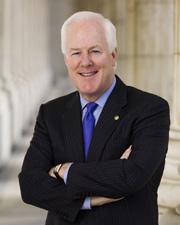
Mr. President, I ask unanimous consent that the order for the quorum call be rescinded. Mr. President, I wish to say a few words about the issue of medical liability reform, a matter that cries out…
Mr. President, I ask unanimous consent that the order for the quorum call be rescinded.
Mr. President, I wish to say a few words about the issue of medical liability reform, a matter that cries out for a remedy from the Congress because of its sheer scope and size.
When it comes to health care, I believe the proper role of the Government is to protect the freedom of all people to act in their own interests and in the interests of their health. I think it is appropriate that we make sure their decisions are not made by the Government but by themselves and their families. Patients and doctors, rather than lawyers and bureaucrats, should be trusted to decide what treatment is best for themselves and their patients.
I strongly believe that when people have good choices in a health care system built upon free market principles, it ultimately translates into high-quality care. One of the obstacles, though, to achieving access to that high-quality care is the current crisis involving medical liability litigation.
Today, America is experiencing a medical liability litigation crisis that is increasing the cost of health care, it is decreasing access to physicians and hospitals for many patients, and it is generally lowering the quality of care. As a matter of fact, we could hardly call our medical liability system a ``system'' because it is such a mess. In recent years, average jury awards have more than doubled, from more than $460,000 in 1996 to more than $1 million in the year 2000.
In the past year, medical liability insurance premiums in many States have increased by more than 20 percent, on average, and more than 75 percent for certain specialties. That is just in 1 year. Between 1991 and 2001, the number of medical malpractice payments of $1 million or more that were reported to the National Practitioners' Database increased from 298 to 806. The overall result is sky-high costs for liability insurance, increased costs for those who provide health treatment, and costs that have really created a crisis of enormous proportions, one that is threatening the quality of care, diminishing access to care, and exploding the cost of care.
According to studies at the Department of Health and Human Services, doctors across the country are closing their practices, they are limiting the types of patients they see, or they are leaving communities where they have long practiced because they cannot afford the rapidly increasing costs of medical liability insurance or, worse yet, insurance coverage is unavailable altogether.
Fear of liability suits--even frivolous litigation--also results in the practice of defensive medicine.
A recent survey, for example, conducted by an organization known as Common Good, revealed some disturbing trends: 79 percent of physicians admit that the fear of litigation has caused them to order more tests than they thought medically necessary, and 74 percent refer more patients to specialists than their best medical judgment would otherwise dictate. Half have recommended invasive procedures they do not consider on a medical basis to be necessary, but they have done it in an effort to protect themselves against the second-guessing that goes
along with the medical liability regime.
Defensive medicine increases risks for patients and it raises health care costs by as much as $126 billion per year. This is a crisis not just for the Nation's physicians, it is a danger to America's patients--in other words, every single one of us.
For example, pregnant women in Nevada, Mississippi, West Virginia, and Florida must drive hours just to find an obstetrician who can care for them, and many still cannot get the essential prenatal care they desperately need. The only level 1 trauma center in Las Vegas had to close temporarily last year because its surgeons could not afford medical liability insurance. Some physicians' annual premiums had increased from $40,000 to $200,000 in just a year.
In many States, physicians are retiring or moving their practices because they either cannot afford the liability insurance or simply cannot buy the liability insurance they need in order to protect what they have worked a lifetime to achieve.
In Mississippi, physicians are actually moving across the river to Louisiana to serve the same patients they would serve in Mississippi because they can no longer afford to practice in that State, and most cities in the State of Mississippi with populations under 20,000 no longer have any physician who will even deliver a baby.
There are many more examples from my State, the State of Texas. The city of Austin, for example, is suffering from a shortage of neurosurgeons caused by retirements and relocation to avoid liability coverage costs, a shortage so heavy that some patients have to travel more than 65 miles away to find treatment.
In 100 of the 254 counties in the State of Texas, there is no obstetrician; in other words, there is no medically trained specialist who will deliver a baby in 152 Texas counties. After 44 years, Spring Branch Medical Center near Houston has stopped delivering babies altogether due to the soaring malpractice insurance costs and the shrinking pool of physicians that will actually deliver babies.
According to the Texas Medical Association's physician survey last year, more than half of all Texas physicians, including those in the prime of their professional career, are considering early retirement because of the State's medical liability insurance crisis, and earlier this year the Fort Worth Star-Telegram reported about one story that illustrates the way this problem affects patients who need care the most. The story said:
Last summer, a pregnant woman showed up at Dr. Lloyd Van
Winkle's Castroville office in south Texas, less than 10
minutes from delivery. Her family doctor in Uvalde had
recently stopped delivering babies, citing malpractice
concerns, and the woman was trying to drive 80 miles to her
San Antonio doctor and hospital. ``She made it as far as
Castroville and decided she wasn't going to make it any
further,'' Van Winkle said.
We all want to prevent disease and injury. When patients get sick, we all want to prevent medical errors, and when errors do happen, we can all agree that a patient should be compensated fairly. But if you can find some goal hidden somewhere within the current dysfunctional medical liability system, that goal would not be either the prevention of errors or the fair compensation for injury. Very clearly, the current medical liability crisis operates for the benefit of a few at the expense of the many.
Personal injury trial lawyers should not be able to drive good doctors out of medicine or to reduce patients' access to health care. This system undermines the ability of physicians to treat their patients without fear, and it destroys the trust and the important relationship between patients and their physicians, and it truly abandons the American patient--that is, every one of us--when we need the help the most.
I am proud to say that in my home State of Texas, the State government has stepped up in the legislative session just ended and passed some needed reforms in this and other areas. This year, despite overwhelming pressures from special interest groups, the State passed historic liability reform which makes it possible for doctors to practice in Texas without fear of unwarranted and frivolous lawsuits. The law puts caps on punitive damages while allowing for patients who are truly hurt to be fairly compensated. Judgments will be based on the amount of involvement in the act caused in the suit without consideration of who has the deepest pocket.
I must add, though, that even in my State of Texas, there will be a vote of the people on whether the Texas Constitution will be amended to provide a means to achieve this historic reform and much needed reform, and that vote remains to be given and taken. Yet there is still little recourse for patients in States without meaningful reform, and this is truly a nationwide crisis and not one that should be addressed by individual States, given the sheer magnitude of the crisis, its geographic expanse and, frankly, the amount of Federal taxpayers' dollars to go in to paying for the current dysfunctional system.
Our health care system is still burdened with frivolous lawsuits and outrageous jury awards. According to a Health and Human Services study, premiums in States without meaningful liability reform went up 39 percent in the year 2001 and an additional 51 percent in 2002. An out- of-control system in one State can have an effect on malpractice premiums in other States, even those States that have made some incremental step toward reform.
This is a national problem, and it demands a national solution. This legislation is comprehensive reform that will enact several critically needed components. For example, it caps noneconomic damages awarded in medical malpractice cases at $250,000. It will eliminate joint and several liability; in other words, the person at fault will pay for their percentage or their share of fault and no more. It will create a uniform statute of limitations; in other words, a period of time in which a lawsuit can be filed and pursued in court in a way that will preserve both the rights of the patient, as well as make sure that so much time does not pass that memories dim, records are destroyed, and the facts are difficult to discern.
It will reform the collateral source rule, another arcane rule of our legal system that says that even if someone has already been paid from one source they can still keep that information from the jury and seek to be paid yet again for the same loss.
Finally, it will create reasonable limits and court approval of attorney contingency fee awards. In many places, the amount of money that a lawyer will receive, and others will receive, in terms of costs of expert witnesses and the like routinely exceeds the amount of money that an injured patient will receive, somewhere on the order of out of every dollar that is awarded by a jury the injured patient only gets 40 cents. It is the lawyer and the bureaucracy in our litigation system that absorb the rest.
If this were truly about what is best for the patients, we would see reform. We would see it in the Senate. Unfortunately, this is about the 60 cents on the dollar that goes to people, other than the patient, who are obstructing true reform.
This legislation is a comprehensive reform and is modeled after the highly successful MICRA law in California, one that has been very successful both in making sure injured patients are fairly compensated while at the same time holding down the escalating costs of medical liability insurance in a way that allows most physicians to practice their chosen profession and which provides better access to good quality health care.
This act will help protect our critical care hospitals and provide needed relief for nursing homes and medical specialists. The cost of health care will be reduced as the need for high premiums for liability insurance will become a thing of the past.
We must remember that this crisis is not, in the end, about what is best for doctors, hospitals, insurance companies, or personal injury trial lawyers. What this bill is about is what is best for patients--in other words, what is best for the American people.
This crisis is threatening the quality of care, jeopardizing access to care, and escalating the costs of care. In my own State, one can travel to the gulf coast and Corpus Christi where emergency room physicians live in fear that they will be called to answer to a patient in a hospital emergency room, someone who they know they have never seen before and will never perhaps see again
after treating them in the emergency room, and for a patient visit that they will likely not get paid or will get paid only pennies on a dollar for their usual fee, but yet because of the medical liability crisis they will put at risk everything they have worked a lifetime to build and achieve for themselves and for their family. That is even when they can buy insurance.
The truth is, the costs of medical liability insurance have escalated so dramatically because of this crisis that many physicians cannot even buy adequate amounts of coverage. If they can, it is at such a cost that they figure why bother, why bother to practice, and so they simply leave.
I reiterate that in the end this is not about doctors, lawyers, hospitals, or insurance companies. This is about who gets access to quality health care, and in many parts of my State, and in many States across the Nation, access to health care is simply not there because of this crisis.
I believe we should end the liability lottery, where select patients and some trial lawyers receive astronomical awards, while others pay more--all of us really--for health care and many suffer access problems because of it. We should pass meaningful medical liability reform that includes real and lasting change and bring the lessons of Texas and other States that have done so to the Nation's Capital and the American people.
I yield the floor.

Madam President, first, I thank my esteemed colleague and dear friend, Senator Ted Stevens, for his characteristic courtesy, and for his friendship, and for the cooperation he has shown to me over…
Madam President, first, I thank my esteemed colleague and dear
friend, Senator Ted Stevens, for his characteristic courtesy, and for his friendship, and for the cooperation he has shown to me over many years of working together.
I thank him for joining with me, last year, in reporting out of our committee all appropriations bills before the close of July.
I thank all of the Republican members as well as the Democratic members of my committee who voted unanimously to report those 13 bills out of the Appropriations Committee, without a single vote cast against those bills.
I am sorry that the situation has developed, as it has, when I must oppose the distinguished Senator's amendment. I always do whatever I have to do to meet my own conscience and to deal with requirements that are incumbent upon me as the chairman of the committee or as the ranking member of the committee, whichever is my role at the particular time.
I do not like to be in a position of differing with my friend from Alaska, but there are times when we do have to differ. In this case, I find myself at odds with him, but I want to say here that it is only for the purposes of advancing this bill. It certainly does not cut across our friendship, as far as I am concerned, when I have to differ with Senator Stevens, and differ with him vigorously. He is still my friend.
I understand what he has to do, as he sees his responsibilities. And I have to do what I have to do as I see my responsibilities. Our friendship is unaffected. I want to assure him of that, as far as I am concerned.
Last July, almost 6 months ago, the Senate Appropriations Committee completed action on all 13 of our appropriations bills, each on a bipartisan unanimous vote. These bills restored essential funding for programs that the President proposed to cut.
We provided $1.1 billion more than the President requested for veterans medical care. We restored the $8.6 billion cut proposed by the President in highway funding. The President proposed only a 1 percent increase for education programs. He would have turned the No Child Left Behind bill into another unfunded mandate. Our bill provided a 6 percent increase for education, including key funding to reduce class size.
We included sufficient funding to keep Amtrak operating. We restored over $1 billion of cuts that the President proposed for State and local law enforcement programs.
We fully funded the President's proposed increases for homeland security programs, but we provided the funds through existing programs that our Nation's fire and police organizations support. We provided a significant increase for the Securities and Exchange Commission in order to investigate corporate fraud. We provided $400 million for election reform.
Now this White House believes that these increases represent wasteful and unnecessary spending. Last year this White House worked with the House Republican leadership to slow the appropriations process down. The House has not passed a regular appropriations bill in nearly 6 months.
Let me repeat that. The House of Representatives has not passed a regular appropriations bill in nearly 6 months.
The domestic agencies of the Government are now operating under the sixth--the sixth--continuing resolution, which expires on Friday, January 31.
My friend, Senator Ted Stevens--who is the very able ranking minority member of the Appropriations Committee, who will soon succeed me as chairman of the Senate Appropriations Committee, and who has already succeeded me as President pro tempore of the Senate--and I worked together to produce those 13 bi-partisan bills last summer. Each of those 13 appropriations bills was reported by the Senate Appropriations Committee with a unanimous vote--not a single vote cast against any one of the 13 appropriations bills.
After the election, however, the President indicated his determination to limit discretionary spending to the arbitrary figure of $751.3 billion. This level will necessitate cuts of $9.8 billion from 11 of the bills approved last July. After providing for modest increases for homeland security programs, the substitute that Senator Stevens is forced to offer provides for a virtual freeze in all other domestic spending.
I oppose the $9.8 billion cut that is contained in the substitute. The needs of the American people for homeland security, for education, for transportation, for veterans, for public health, and for other programs have not gone away. The needs are still there as plain as ever.
I am not being critical of my colleague, Senator Stevens. I am not being critical of the chairman of the House Appropriations Committee, Mr. Young of Florida. However, the President has now thrown down the gauntlet and is insisting on a $9.8 billion reduction, resulting in cuts in priority programs designed for what? Designed to defend our homeland, to educate our children, to improve our transportation systems, and strengthen our law enforcement programs.
I am extremely disappointed, not with Senator Stevens or the other members of the Senate Appropriations Committee or my friend, the chairman of the House Appropriations Committee, Mr. Young, or his ranking member, Mr. Obey, but with this administration, with this White House and its lack of vision and knowledge regarding the needs of the people of this country.
With great fanfare, the President signed numerous authorization bills this year that would increase spending demands for many of these same important programs. Last January he signed the No Child Left Behind Act with great fanfare. The President signed the No Child Left Behind Act which had passed the Senate 87 to 10 and which endorsed additional resources in important education programs for our children. Last May, the President, Mr. Bush, signed a border security bill with great fanfare, which had passed the Senate 97 to nothing, which authorized strengthening glaring and dangerous weaknesses in our border security. Last July, President Bush signed the Sarbanes-Oxley Act which had passed the Senate 89 to nothing, and which addressed shameful corporate fraud that bilks innocent people. In October, Mr. Bush signed the election reform bill with great fanfare which had passed the Senate 92 to 2 to help State governments overhaul the Nation's outdated and corruptible electoral system. In November, President Bush signed legislation which had passed the Senate 95 to nothing to improve security at our ports.
Yet in order to reduce our bills by $9.8 billion, the omnibus legislation that we will consider this week will cut education by $1.5 billion. It will cut homeland security programs by $1 billion, including cuts of $627 million for border security, $23 million from port security and $132 million from first responder funds. It will cut Securities and Exchange Commission funding below the levels in Senator Hollings' bill by $94 million.
This omnibus legislation will reduce Head Start funding by $202 million. It will reduce job training by $534 million. It will reduce low income home energy assistance by $300 million.
The new omnibus bill will cut Amtrak funding by $374 million, a level that will result, I am told, in the termination of Amtrak service.
In addition, the bill includes 1.6 percent across the board cut on all domestic programs. This represents a $435 million cut in the National Institutes of Health. It represents a $182 million cut to Education for the Disadvantaged. It represents a $372 million cut in Veterans Medical Care. On top of these cuts, every homeland security initiative in this package is reduced by 1.6 percent. This is no way to govern. We must move forward on this legislation. As much as I chafe about these mindless cuts, we cannot allow the domestic agencies of our government to continue operating on automatic pilot for the rest of the fiscal year. The people elected us to make choices about how we invest their tax dollars. There will be amendments offered in the coming days to restore some of the cuts contained in the substitute to be offered by Senator Stevens for homeland security, for education, and for other worthy programs. I urge Members to consider these amendments carefully and to ponder the impact of the reductions in this bill.
These should not be up or down party-line votes. When the Congress
passed, with broad bi-partisan votes, and President Bush signed, authorization bills for homeland security, for port security, for border security, for investigating corporate fraud, and for No Child Left Behind, we all recognized that these programs required adequate resources. We did not vote to address these critical problems with rhetoric alone. We have heard plenty of rhetoric. We collectively decided that these were real problems that needed real solutions. To solve these problems requires resources, not empty promises. I urge every Member to reflect on their support of these authorization bills as they decide how to vote on amendments that will be offered in the coming days. Let's make the rhetoric match the resolve.
While I oppose the $9.8 billion in cuts which are being required by the administration as the price to move these bills, I recognize that an even worse alternative is to fail in our duty to enact appropriation bills and allow the United States Government to operate without sufficient funding for the remainder of this fiscal year. I believe my colleague, Senator Stevens, is of a similar frame of mind. He is doing what he sees as his duty. He is a good soldier. He has my profound empathy.
This is the U.S. Senate. We are 100 Senators who have taken an oath of office to protect and defend the Constitution of the United States. We serve with Presidents. We don't serve under any President, I have served with 11 Presidents, not under any President. The votes that we will take on this important legislation, especially those relating to the defense of our homeland and the education of our children, are not about politics. They are about doing what is right and what was promised to the people of this country.
I ask unanimous consent that a summary of the $9.8 billion of cuts contained in the substitute compared to the fiscal year 2003 bills reported last July by unanimous vote in the full Appropriations Committee, be printed in the Record.
Mr. President, I send to the desk an amendment.
Mr. President, I ask unanimous consent that further reading of the amendment be dispensed with.
Mr. President, this Nation faces a turning point as we are challenged once again by the threat of attack on our shores. We know that terrorists live among us. Yet we do not know where they will strike, or when, or how they will strike. With endless warnings in mind, and with a clear realization of our many homeland security gaps, it is time that Congress invest the necessary resources in homeland security to match its rhetoric and to match the rhetoric of this administration. So I have offered an amendment that would accomplish three goals:
First, it would restore the $1 billion in reductions in homeland security initiatives made from the original committee-passed appropriations bills and for which every member of the Appropriations Committee voted--every member, 29 members of the Appropriations Committee, with 15 Democrats and 14 Republicans.
Second, it would restore much of the $2.5 billion in emergency homeland security funds that passed this Congress overwhelmingly in the summer of last year, but which was rejected by this White House.
Finally, this amendment would fund the priorities that Congress has found so necessary and that President Bush has signed into law. This amendment would fund the Airport Security Act that created the Transportation Security Administration and placed rigorous, new safety standards on the Nation's airports. This amendment would fund the border security authorization bill that passed the Senate by a vote of 97 to 0 and that President Bush signed into law last May. This amendment would fund the port security authorization bill that passed the Senate by a vote of 95 to 0 and that President Bush signed into law last November.
These dollars address our Nation's most critical needs. These funds would help to shore up our Nation's defenses and save lives at home.
The Congress has voted to create the Department of Homeland Security, but that Department is months--if not years--away. I read in the Washington Post today about the slowdown in the fulfillment of that dream, but that Department is months--if not years--away from being a strong defense against terrorist attacks. There are many details to be worked out. We cannot wait to address gaps in our Nation's defenses while this new Department is organized. Terrorists will not wait to attack. We cannot afford delay. I urge my colleagues to support this amendment.
I ask unanimous consent that a summary of the amendment be printed in the Record at this point so that all Senators, members of the press, and the people at large may read on tomorrow the contents of the amendment.
Mr. President, I yield the floor.
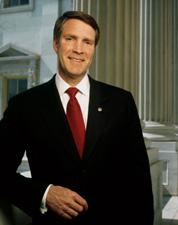
Mr. President, I ask unanimous consent that the Senate now proceed to the consideration of Calendar No. 186, S. 11, the Patients First Act of 2003. Mr. President, with that objection, I now move to…
Mr. President, I ask unanimous consent that the Senate now proceed to the consideration of Calendar No. 186, S. 11, the Patients First Act of 2003.
Mr. President, with that objection, I now move to proceed to S. 11. I understand that Members on the other side of the aisle are prepared to debate the motion itself. The majority whip, Senator McConnell, is prepared to open our debate on this issue as well.
It would be my intent later today to file a cloture motion on the motion to proceed to this medical liabilities reform bill. This vote would then occur on Wednesday of this week. I look forward to the very important debate on this truly national crisis, and I encourage Members who want to speak to come to the floor today. We will be debating this legislation today as well as tomorrow. We encourage Members to come to the floor today.
I yield the floor.
Mr. President, I ask unanimous consent that the order for the quorum call be rescinded.
Mr. President, I rise to continue the discussion on the health care crisis that exists because of our medical liability system. It is an issue we began talking about 4 hours ago, and it is an issue that does affect every single American. I have been very pleased in listening to the debate with the wide range of issues that have been discussed. For those who have listened, I think the debate today provides a very effective beginning of a debate the American people deserve and the American people expect.
Much of the discussion today has been about procedure and the fact that we are moving to proceed with a discussion of this bill on the Senate floor. Although we can argue procedure back and forth, what we are trying to do is respond to a health care crisis that is real. The crisis affects not just doctors and providers in health care today but does, in effect, have an impact on every American, whether it is through being beneficiaries of our Government program, Medicare, Medicaid, the Federal Employees Health Benefit Plan, or through the private sector, or even for those who have no insurance today.
I will outline a little bit about how every American is affected and why it is a bill that is important to every State and every citizen in every State.
Medical malpractice premiums, as we reviewed over the course of the day, have skyrocketed in recent years. So it is a problem we have been able to identify for a period of time. A lot of people will date the debate back to the mid-1970s when MICRA, or the health care medical liability refrom that was put forth in California, was first passed and then implemented. It is an issue that in States which have not addressed the problem that is growing and is growing rapidly. We see access to doctors being threatened, especially for women, and I will come back to that particular point. Especially in rural areas, we see this access to care being threatened, and this is why it is a crisis. Access to care is being totally taken away in certain regions of the country. The AMA has a chart to be brought out, I am sure, in the next day or so that depicts
those States which are in crisis. Since we last talked about some of these issues on the Senate floor, the number of States in crisis, where access to health care is threatened, has grown and grown dramatically.
Every American should participate in this debate. We hear the anecdotes. We see the trauma centers closing down. If one talks to their doctor or if my colleagues would talk to their doctors, or if the people who are listening talk to their doctors, they know it is a real problem and challenge that is increasing every day.
The situation is grave now. The crisis is there. It is getting worse and thus we bring the bill to the floor of the Senate for open debate. Once we get to the bill, it will be open for amendment where we can discuss these issues before the American people.
The horror stories are there. The headlines are there. Hospitals are closing labor wards, delivery units, obstetric units. We see the trauma centers that have either threatened to close or have actually closed. We hear the stories of the expectant mothers who are unable to find obstetricians. Doctors, especially orthopedic doctors, bone doctors, who often are in a high-risk specialty, are the ones who are involved most often in trauma centers. We see the specialties, neurosurgeons, as well as orthopedists and obstetricians, all high-risk specialities, treating the very sick in many cases, leaving their States. If they are in a high-risk State with skyrocketing premiums, they are often moving to a low-risk State. In the case of obstetricians, they are leaving the practice of specializing in the delivery of children and stopping the delivery of children totally. There are neurosurgeons who are no longer signing up to take trauma calls or work in trauma centers because of the risk of being sued. The headlines go on.
What I really want to stress as a physician, because I talk to my colleagues on a regular basis about this issue, the problem is getting worse, and getting worse by the day.
Time Magazine, June 9, the cover article--actually, I did not see Time when it came out but have gone back to look at that particular front page cover and then the articles behind it. They talk about this problem in very real terms.
I do encourage people, if they are unfamiliar with the debate, to go back and read the stories, the anecdotes, about what is happening around the country.
A year ago last July, when we talked about a particular amendment my distinguished colleague from Kentucky had offered and we debated the issue, there were 12 States that were in crisis according to criteria used by the American Medical Association. That number went from 12 States to 13, to 14, to 16, and 19. Now it is 19 States. Seven additional States have reached that threshold of being in crisis level.
Crisis level means that premiums are skyrocketing. There are increasing numbers of frivolous lawsuits, but that translates now to worse access, greater barriers to access, to everybody. All the citizens of that crisis State are harmed in the event there is a trauma accident, in the event somebody needs to see a neurosurgeon or somebody needs to see an orthopedic surgeon or somebody is going to have a baby delivered. That is really the simple reason why we need to bring this legislation to the floor now. We should not be blocking proceeding to this very important bill.
As a physician, this crisis is something I am close to because I watch what it is doing to my colleagues. These colleagues have chosen to go into this profession which is very special. I have a bias, but it is very special because they can go in and can heal, prevent disease, and people can live a better quality of life, day in, day out. That is why people go into the profession of medicine.
Yet as we talk to doctors today, many will say--and this is very different than 15 or 20 years ago--that the greatest threat to their being able to continue in this healing profession is this skyrocketing escalation of malpractice premiums. They are being forced to pay for what ends up being a lot of frivolous lawsuits. These lawsuits are engendered or occur because the current system, which needs to be reformed, gives incentives to those trial lawyers--not all trial lawyers--to go out and stir up business. I think that is what is most offensive to the American people, that a component of our liability system is unnecessarily driving up the numbers of lawsuits which in turn is diminishing access to health care. Driving up the cost of health care, which we all know, makes it more difficult for people to receive the care they deserve.
The fact that highly qualified and committed health care providers are being literally driven from the field they entered so they would have that opportunity to heal and to make others' lives better, is tragic. These individuals do not want to drop these vital services. They do not want to leave the specialities they spent years to develop, whether it is obstetrics, neurosurgery, or trauma surgery. They do not want to have to walk away from these fields. They do not want to have to leave underserved areas where this problem can be particularly bad.
Tomorrow or once we get on the bill, I will bring letters to the Senate from physicians writing if they worked in, say, the Appalachian Mountains. In underserved areas or rural areas, they are being hit particularly hard because they are having to pay these skyrocketing premiums, going from $20,000 to $40,000 to 60,000 to $80,000. They simply cannot stay in business. They cannot afford paying an $80,000 or $100,000 premium for malpractice insurance. Without the insurance, they cannot ``go bare'' because then if they do get sued, it destroys their livelihood and any chance of practicing medicine in the future.
The crisis is made real by the victims themselves. I hope the opponents of the underlying reform measure, or even those people who are saying, now is not the time to be addressing this in the Senate--I hope they look at those anecdotes, those individual stories now which, when accumulated in the aggregate, have reached crisis proportion. I hope they will agree that there is a crisis and now is the time to respond.
The medical liability system is the root cause of this crisis. It is the perverse incentives we need to address and that this underlying bill, when we are allowed to go to the bill, does address. The current system, with the inefficiencies, with the perverse incentives, hurts every American. In addition, it hurts the negligently injured patients it is supposed to help.
The good news is there is something to be done about the problem to make the system more fair, more just, to get rid of the waste and frivolous lawsuits. That is what the underlying bill does.
Our system encourages lawsuit abuse in lots of different ways, in part, by rewarding personal injury lawyers who file huge claims in friendly venues, looking for that big payday. These lawyers often keep up to 40 percent--I think the least is probably around 30 percent or 33 percent. They keep up to 40 percent of many of the settlements or verdicts of those injured. If there is a million-dollar verdict, for example, in some States the personal injury lawyer, the trial lawyer, pockets 40 percent, or $400,000, and the injured patient gets only $600,000.
At the same time, negligently injured patient many times don't receive any compensation at all. They are never addressed because the personal injury lawyers go after the big bucks, the big pockets, the large lawsuits. When one is negligently injured and should be appropriately compensated, the personal injury lawyers are not there to address their particular needs. Again, they are going after the big pockets, the big sum. We have a system that compensates the few all too often at the expense of the many.
The effect of these suits is staggering. Between 1996 and 2002, the average jury award in medical liability cases jumped 83 percent. Between 1997 and 2002, over that 5-year period, the percentage of medical malpractice payments of more than $1 million more than doubled. Again, this illustrates that the problem we have in this system is getting worse by the day.
The mere threat of these huge, multimillion-dollar awards forces many doctors and many insurance companies to settle cases for large amounts even if that individual physician is not guilty. The incentive is to settle, simply to avoid the exorbitant suit, even if there is no guilt involved.
We will show charts in the Senate that most of the cases filed in the
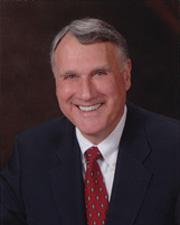
Mr. President, I am pleased to address one of the most important issues I think we are going to be talking about all year. I hope our colleagues will permit us to conclude our debate with a vote so…
Mr. President, I am pleased to address one of the most important issues I think we are going to be talking about all year. I hope our colleagues will permit us to conclude our debate with a vote so we can actually adopt some legislation to deal with this crisis of lawsuit abuse in the United States. Some call it medical malpractice reform. Whatever you call it, we have to deal with it.
Unfortunately, what we have heard is that some of our colleagues are going to prevent us from having a vote on the bill that is before us, S. 11. It is a bill that addresses one of the most fundamental problems we have, and that is access to available quality medical care by a lot of people in our society today. We need to reform this flawed medical malpractice system which is prohibiting people from getting the quality medical care they need and deserve.
We debated just before the Fourth of July recess Medicare reform to provide prescription drug benefits to all of our senior citizens. We took a lot of time talking about why our senior citizens needed access to care and how we were going to improve that access. But all of that will go for naught, it will do no good, if there are no hospitals and there are no pharmacists, if there are no physicians and other health care providers--or an insufficient number of those providers--to help those people in need, whether they be senior citizens or others, because of the high cost of malpractice premiums and therefore the inability of these providers to continue to serve the people in their communities.
Last year, the American Medical Association released a study on this lawsuit abuse problem. It concluded that 12 States were having a full- blown crisis and that 30 States were seeing serious problems in terms of the ability of physicians and hospitals to stay in practice to take care of their patients.
Today, just a year later, that study has been updated and the AMA has now concluded that 19 States are having a full-blown crisis in dealing with the medical malpractice insurance rates just for physicians. Let me give some examples of how this is affecting different communities around the country so you can see it is truly a nationwide problem.
In my State of Arizona, health care providers have experienced dramatic increases in their insurance rates. Between 2001 and 2002, two hospitals in Phoenix saw a threefold increase in their malpractice premiums, paying more than $1.7 million. Meanwhile, in Winslow, AZ, the hospital premiums have more than doubled, to $1.8 million.
Some of you know the town of Winslow, AR, from a famous song by the Eagles. It is a town with great history and rich in tradition in Arizona but it is not very big. It doesn't have the patient base to support a hospital that has to pay almost $2 million a year in medical malpractice premiums. It is not just in my State of Arizona. Methodist Hospital in south Philadelphia recently closed its maternity ward and prenatal program because of its medical liability insurance rates. Greenwood Hospital in Mississippi was unable to keep its level II trauma center rating because the neurosurgeons in the area had left citing the high cost of liability insurance.
I spoke with a woman whose husband had been very seriously injured in an automobile accident in Mississippi. She told the story of how-- because of the lack of physicians and because of the high cost of premiums--her husband has suffered so terribly as a result of that accident and the inability to get quick medical attention.
Back to my home State of Arizona, the Copper Queen Community Hospital in Bisbee, AZ, was recently forced to close its maternity ward because the family practitioners in that community were looking at a 500- percent premium increase. Expectant mothers now must travel more than 60 miles to the closest hospital, which is either in Sierra Vista or in Tucson. According to the recent news accounts, four women have since had to deliver babies en route.
To cite the news accounts, Time magazine has a June 9 cover story about the doctor being out and why so many patients are losing doctors to the rising cost of malpractice.
This is now truly a national event.
In the Time magazine piece dealing with this question of physicians having to leave the practice, there is a particularly interesting story about a woman in Arizona whose name is Vanessa Valdez. The title of the story is ``Taking the Highway to Have a Baby.'' The story points out that Vanessa has to drive about 50 miles to see her OB/GYN and to have a baby. She lives in the town of Douglas, which is on the Arizona- Mexico border. But there is no obstetrician within an hour's drive to deliver her child. There were six family practitioners in that community but they couldn't afford the soaring malpractice premiums. As a result, the hospital was forced to close its delivery room, and suddenly rural Cochise County has but one delivery room for the 118,000 residents. That is in Sierra Vista, 50 miles from Valdez's home of Douglas.
This is beautiful country. It is a great place to live. But it is no place to live if you are going to get sick or you know you are going to have a baby because you have an hour's drive to get to a doctor. That is not right. It is not as if this is out in the middle of nowhere and you chose to live there with all of the attendant risks involved. No. There are a lot of communities in this area but none of them had physicians able to continue to practice because of the medical malpractice premiums they had to pay.
One other example: Nevada was very much in the news last year because of the crisis in that State. Nevada's top level trauma center was recently closed for 10 days after 58 orthopedic specialists in Las Vegas temporarily quit because of the skyrocketing insurance costs. Also, a lot of the physicians delivering babies and performing high- risk surgeries have indicated that they won't be able to continue to practice without some kind of relief.
Ultimately, this destructive lawsuit abuse hurts the patients. Yes. The doctors can't make it, so they leave. But ultimately it is the patients who are the ones who suffer.
Therefore, we are trying to deal with that through legislation that will make it a little bit more difficult for this kind of lawsuit abuse to occur so that the insurance companies won't have to charge quite as high a rate, so the physicians and hospitals can stay in business, and so the people of the communities can continue to be served.
Also, the threat of lawsuit abuse often forces doctors to perform a lot more in the way of tests and surgeries and other kinds of treatments than they otherwise would do simply to protect themselves from a claim that they weren't doing enough for the patients--sometimes expensive tests, sometimes invasive procedures.
All of this is called defensive medicine--trying to do everything they can to make sure some smart lawyer out there doesn't try to pick at what they did and find some kind of fault with it and find a client who is willing and able to hire a lawyer to bring a lawsuit against the doctor.
That is another effect of this lawsuit abuse. Another is the fact that a lot of times doctors are no longer willing to perform risky procedures that may be necessary to really help somebody or even save somebody's life. Obviously, the more serious the condition, frequently the more risky the procedure. You want to be served by a physician who is willing to go to the mat for you in that case. But if the physician is looking at a big medical liability suit, if the result doesn't happen to work out right, then that physician is going to be less likely to try to treat you.
All of this results in an inferior quality of medical care for American citizens, which is wrong. It is not at all uncommon for these lawsuits to be brought and the lawyers to get over half the settlement. That is wrong. That is one of the issues with which this legislation deals.
The Congressional Budget Office determined that the House bill, which passed and which was pretty similar to S. 11, would reduce direct Federal spending for Medicare, Medicaid, and other Federal health programs by almost $15 billion over the next 10 years. Since the Federal Government is a payer for many of the medical services, particularly for our seniors who are indigent, it is a saving to the Federal Government as well for this lawsuit abuse to be addressed. Because employers will pay less for health insurance for their employees and more of the employees' compensation will be in the form of taxable wages and other fringe benefits, including, of course, money that could be plowed back into greater health care for the employees, the Congressional Budget Office estimated that enacting this legislation would increase Federal revenues by about $3 billion over the next 10 years as employees receive higher wages.
Just a note about the legislation itself, there are a lot of different ways you can do this. I had actually cosponsored a bill somewhat different than this. But the basic idea is the same, even though we might want to change specific provisions of this legislation. It basically sets sensible limits on the noneconomic damages that can be obtained in these lawsuits. The noneconomic damages are those damages that go above and beyond the bills that have to be paid. When you get sick and the physician allegedly committed malpractice, you had to go to another doctor to get the problem resolved. Those are economic damages as you lost wages, and any other expenses that you have. And those economic losses are fully compensated. But above and beyond that, you are entitled and juries will award substantial damages for noneconomic losses, mostly called pain and suffering because of what you had to go through. Certainly people recover something for their pain and suffering. The question is how much.
In order to avoid lawsuit abuse, some States--for example, the State of California has put a $250,000 limit on those noneconomic damages. That is precisely what this legislation does as well. However, states with higher caps can keep those under this legislation too. It also reserves punitive damages for cases that justify it. Part of lawsuit abuse is very large punitive damage awards which have nothing whatsoever to do with either the economic or noneconomic losses but nevertheless help to enrich the lawyers.
There are some other features of the legislation as well. But the point I wanted to make is whatever the specifics of the legislation, we need to act.
I hope our colleagues will permit us to conclude the debate and have a vote on this legislation so we can get together with the House of Representatives, which also passed a bill, have a conference committee work out any differences, all have a chance to vote on that, and then hopefully have a bill we can send to the President.
If we are never able to have a vote on this, it is not just the doctors, hospitals, and other providers that are going to suffer; it is the American people because they will not have access to the quality of medical care which they need and deserve. I hope we cannot only debate this legislation but also permit it to come to a vote so we can address this serious crisis in America today.

Mr. President, I ask unanimous consent that the order for the quorum call be rescinded. Mr. President, Senator Byrd has offered an amendment. I would like to address that amendment. Senator Byrd has…
Mr. President, I ask unanimous consent that the order for the quorum call be rescinded.
Mr. President, Senator Byrd has offered an amendment. I would like to address that amendment.
Senator Byrd has been an advocate, for many months now, of doing something to properly fund homeland security. One member of our caucus referred to it as hometown security. The Senator from Nebraska, Mr. Nelson, referred to it as hometown security, and that is really what it is. It is to make sure the cities and towns in our States have the protection that is necessary as a result of the terrible events of September 11.
The bill I am interested in is part of S. 11 from the Energy and Water Subcommittee. For the next half hour or so, I will be the chairman of that committee. That will change sometime this evening.
Senator Domenici and I have had a longtime relationship on this subcommittee. I have been chairman; he has been chairman; we really have worked extremely well together. He has been, from my perspective, extremely good to work with. He is an absolute expert on numbers, having been the chairman of the Budget Committee and having been so long with the Appropriations Committee. It has been a pleasure to work with him.
But Senator Domenici, I am sure, recognized that this bill, our bill, should have more money--more money as it relates to homeland security. During last year's consideration of the supplemental spending bill for homeland security, when we were in the majority, we included hundreds of millions of dollars for nuclear security, funding that had been requested by the administration and by the Department of Energy but was rejected by the Office of Management and Budget. During final negotiations on that supplemental, we agreed to provide funding for these activities on a contingency basis. In essence, we provided the money but gave the President the opportunity to accept it or not. He decided not to accept it. I think that is really wrong. I am disappointed and sorry that is the case. I believe it was unreasonable that the President declined to request emergency funding for nuclear security for which his own Department of Energy was screaming. We didn't invent this. This came from his own Department of Energy.
So this evening Senator Byrd has offered it again and is making another effort to give this administration the funds they need to keep nuclear and other deadly material safe and secure in this country. As always, I am grateful to Senator Byrd for his leadership in this area.
The bill Senator Domenici and I have brought to the floor for many years is a big bill, approximately $24- or $25 billion, and it is all discretionary. It is the only subcommittee in which the money is discretionary, all of it. It has many important components. Tonight we are only going to talk about that part relating to nuclear security.
This amendment provides $25 million to enhance the safety and security of nuclear and other materials at the Department of Energy Office of Science Laboratories, nationwide; another $25 million for the National Nuclear Security Administration, to enhance security during the transport of nuclear weapons and materials nationwide; and $35 million for construction and renovation activities of the National Center for Combating Terrorism, again funding that the Department of Energy asked the White House to provide.
Again, we didn't dream it up, saying this would be great for New Mexico because they have a lot of things goings on there, or Nevada, or Idaho, or Mississippi, where a lot of these activities take place. The Department of Energy came forward with this recommendation. Again, the White House refused the recommendation that its own Department brought forward.
We are also requesting $90 million for increased safeguards and security needs throughout the nuclear weapons complex. Funding is provided for explosive detection equipment, protective force support, hardened perimeter barriers, and consolidation of special nuclear materials and complex-wide security improvements. A minimum of $25 million is provided for cybersecurity activities.
Just reading this off should give every person within the sound of my voice pause. Why have we been asked this by the Department of Energy? We have been asked to do this because we need safeguards throughout the nuclear weapons complex that are not now there.
Funding is provided for explosive detection equipment. We don't have that
equipment. I hate to say it here on the Senate floor, but we don't. We are lacking.
Protective force support. That means we don't have enough people making sure the materials are safe, that the facilities are safe.
Hardened perimeter barriers. It seems to me, if we have been told by the Department of Energy that we should have hardened perimeter barriers, that means that what we have now is inadequate.
Consolidation of special nuclear materials, and complex-wide security improvements.
Also, $56 million is provided for the Defense Environmental Administration Restoration and Waste Management Program at the Department of Energy to enhance safeguards and security at nuclear and weapons cleanup sites at Savannah River in South Carolina, Hanford in Washington, Idaho, and in Tennessee.
Mr. President, you, as a new Senator, did not come and say: Senator Domenici, Senator Reid, will you give us some money for Oak Ridge, in Tennessee? You didn't do that. The Department of Energy recognized there were needs at that very important facility, important for this country, and that is why Senator Byrd has stuck in this amendment before this body, $56 million, part of which would go to Oak Ridge to make sure there is enhancement of safeguards and security at nuclear weapons cleanup sites, at this facility and these facilities.
There is $14 million for the Defense Facilities Closure Projects, the program at DOE, to enhance the safeguard and security of these sites nationwide.
The amendment also provides $25 million for the National Infrastructure Simulation and Analysis Center in New Mexico and $25 million for the National Energy Laboratory to conduct critical infrastructure assessments at critical energy supply facilities nationwide.
The funds provided in the Byrd amendment for nuclear safety are critical for ensuring the safety of the American people in the post-9/ 11 era. I don't expect the White House to take my word for it. They should, however, listen to their own Department of Energy. I did, and the nuclear safety language in the Byrd amendment reflects what we were told, what they said was needed.
We also have some new information that has come out. We have a report that has been done, and we know there are some Nuclear Regulatory Commission employees who worry that safety training requirements for the nuclear facilities are outdated and ``leave the security of the nuclear sites . . . vulnerable to sabotage.''
Should we not go forward with this work? Yes, we should. It is extremely important that we provide this money. If there were ever an emergency need in the history of this country, it would be to take care of the nuclear facilities.
They have inadequate security guards. One security company is working at one facility and another, which has the lowest bid, at another facility. It simply is not the way to do business.
All over America we have 101 nuclear powerplants. There are workers who are questioning the safety of these facilities. A recent survey commissioned by the NRC found that a third of its employees question the agency's commitment to safety, and almost one-half say they are afraid to speak up at the NRC. Employees who are designated to protect these plants from terrorists and others are afraid to speak up for fear they will get fired or their jobs will be changed or they will be transferred.
According to the survey conducted by an outside firm, these people complained that the NRC is influenced by the nuclear industry and that its regulatory powers have atrophied. The poll was based on surveys completed by one-half of the agency's employees. The most dramatic findings came up when pollsters sorted responders by rank. Although almost 90 percent of the agency's executive-level employees answered favorably on the questions regarding the Commissions's commitment to safety, less than two-thirds of those in the midlevel ranks answered that they were afraid.
The study said those differences point to the political influence of the nuclear industry. NRC officials declined comment.
We should be very concerned about workers at the NRC who are afraid to come forward and say: We do not have proper safety standards, and we are afraid to come forward and tell our own bosses what is wrong. Why? Because they are so driven by the nuclear power industry.
It has been nearly a year since the President warned us in his last State of the Union Address how vulnerable our nuclear facilities are. But the NRC has still not taken any clear steps to secure the safety and security of our Nation's nuclear powerplants. That is not acceptable.
We know the inspector general of the NRC paints a very bleak picture of their safety and security. A few days ago, the NRC's inspector general released a survey of the employees. I have talked about that to some extent.
This amendment is a very important amendment if we are concerned--I know everyone is concerned--about the safety and security of our nuclear-generating facilities.
Senator Byrd is to be commended for asking us to support him in making sure that we have adequate resources to protect our nuclear facilities.
I repeat what I said earlier when I talked about some of the things that the Department of Energy has said is so important. If we ignore them, and if the administration ignores them, it is simply not right.
This money enhances the safety and security of nuclear and other materials. It will enhance security during the transport of nuclear weapons and materials. There is money for construction and renovation activities of the National Center for Combating Terrorism; for increased safeguards and security needs throughout the nuclear weapons complex. Funding is provided for explosive detection equipment, protective force support, hardened perimeter barriers, consolidation of special nuclear materials, and complex-wide security improvements.
I see the Senator from Washington is on the floor. There is $56 million, as I have mentioned, for the Defense Environmental Restoration and Waste Management Program to enhance safeguards and security at nuclear and weapons cleanup sites, such as the one at Hanford in Washington. I would place it throughout our complex.
There is money for the Defense Facilities Closure Projects Program to enhance safeguards and security at these sites. This is important. If we pass the Byrd amendment for no other reason--and there are lots of other reasons to talk about--money is provided in my subcommittee of appropriations for making our nuclear weapons facilities throughout the country and our nuclear powerplants throughout our country safe and secure. They are not safe and secure now. That should be of concern for every American.
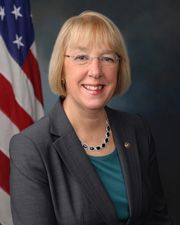
Mr. President, I rise this evening in strong support of the homeland security amendment that was offered earlier this evening by Senator Byrd. I am pleased that I had the opportunity to work closely…
Mr. President, I rise this evening in strong support of the homeland security amendment that was offered earlier this evening by Senator Byrd. I am pleased that I had the opportunity to work closely with Senator Byrd on the details of the amendment because it impacts the security of our transportation system.
Before I start, I wish to align myself with the very thoughtful and important remarks of the Senator from North Dakota made earlier regarding the northern border. Senator Dorgan has brought some real attention to the northern border issues that are so important to my home State of Washington. This work must continue despite the President's cuts to the border security initiative that the Senate previously approved.
This amendment represents months of work on behalf of Senator Byrd and the Appropriations Committee. Senator Byrd, as chairman of the Appropriations Committee, convened a series of hearings last spring to discuss homeland security needs. We heard from numerous Cabinet Secretaries, including Secretary Powell, Secretary Rumsfeld, and Secretary Mineta. Several respective national security experts gave us very valuable testimony. We also heard from several Governors, including Governor Locke from Washington State. Mayors appeared before the Appropriations Committee as did fire chiefs, health department officials, and water and sewer authorities.
Senator Byrd and the Appropriations Committee worked very hard to identify real needs for homeland security. The Byrd homeland security amendment is in large part the result of those hearings and our continued efforts to work with the true first responders.
Homeland security is an enormous task. We all know this. It is going to be enormously expensive. We all know this. Sadly, the administration has not requested adequate funding for homeland security needs throughout our country. The President refused to spend homeland security money previously approved in a bipartisan fashion by this Congress.
The bill before us today, at the President's insistence, makes further cuts in homeland security funding.
Homeland security is about our entire country. However, I must tell you that this issue is tremendously important to Washington State. Already, thanks to an alert Customs agent, we arrested a terrorist suspect crossing into Washington State with explosive materials.
We are an international State with vulnerabilities in our ports, our rail and highway infrastructure, and our international airports.
We are a trade State with an economy that is closely linked to the world. We have significant military assets, nuclear facilities, and many popular tourist-gathering points. My State is aggressively moving forward to protect Washingtonians. We need a partner in the President and the Federal Government. Unfortunately, the underlying bill does not address all of our homeland security needs. Homeland security should not be an unfunded mandate.
As a nation, we are working hard to close the security gaps that still exist. We know the transportation systems are a frequent target of terrorist attack. In fact, when you look at the worldwide statistics, one-third of terrorist attacks that take place around the world target transportation systems, including aircraft, highways, rail systems, subways, commercial ships, and ferries.
As many have observed, our security is only as strong as our weakest link. This amendment offered by Senator Byrd will help strengthen some of our weakest links in port security, aviation, and mass transit.
Let me start with port security. We have a lot of work to do to protect our Nation's ports. As my colleagues will recall, we passed the Maritime Transportation Security Act 95 to 0. That act puts new requirements on our ports. However, effectively no funds have been provided to our Nation's port authorities to implement those new requirements, which will cost billions of dollars.
The underlying bill that we are looking at this evening, provides very little money to enhance port security. So I am really, pleased that the Byrd amendment would dramatically increase the security funds available to our ports.
I ask Senators to reflect for a moment on what a terrorist incident in our Nation's ports would mean to our Nation's economy.
Just look at what happened this past fall, when West Coast dockworkers were locked out of their jobs. It is estimated that the lockout cost our economy $1 billion a day.
A terrorist attack on our ports--or an attack carried out through our cargo container system--would undermine our Nation's confidence in the hundreds of thousands of containers that crisscross our country every single day.
And beyond the human toll--an attack on, or through, our ports would have a dramatic economic impact and could bring the flow of commerce to a dead stop.
It is not enough just to pass an authorization bill saying that we have better secured our ports. We have to actually provide the resources to make our ports more secure.
The Byrd amendment boosts--by almost half a billion dollars--the amount of grant money available to our public port authorities. I commend the Senator for his vision and leadership on this critical challenge.
Another way to secure our ports is through Operation Safe Commerce, an initiative that I started in last year's emergency supplemental appropriations bill. This TSA initiative was launched with the cooperation of the Customs Service. For the first time, it provides us a mechanism to track containers from their point of origin to their point of destination. As a result, we will have much better information about where the container came from, what is in it, and whether or not it requires either x-ray or further inspection.
With the initial funding that we provided for this initiative--and the $30 million that is included in the underlying bill--we have had to limit these grants to the three major container ports in our country. Those three ports take in roughly three-quarters of all the containers entering the United States. With the additional funding provided under Senator Byrd's amendment, we will be able to greatly expand the number of ports that can participate in this important initiative.
Finally, as I talk about port security, I want to talk about the new demands being placed on our Coast Guard. For a long time I have been very concerned that these new homeland security requirements mean the Coast Guard isn't getting adequate resources--or paying adequate attention--to its traditional missions, such as search and rescue, fisheries enforcement, and marine environmental protection.
In order to get the Coast Guard the kind of assets it needs to conduct port security, Senator Byrd's amendment includes sufficient funds to boost the Coast Guard's inventory of coastal patrol boats. These are the ideal platform for the Coast Guard's homeland security mission. Unfortunately the Coast Guard has not been able to buy enough of them, in part because of other major contract obligations that are outstanding.
We cannot continue to burden the Coast Guard with additional missions without providing them with the resources and the tools they need to do their job. I am pleased the Byrd amendment provides these resources.
Another weak link this amendment will address concerns mass transit. I think we should all recognize that the majority of fatalities resulting from transportation terrorist incidents have been in the area of mass transit, specifically from buses.
The challenge in securing our mass transit systems is daunting. By their very nature, transit systems are designed to be open and accessible and to accommodate many people in a very short period of time. It is a real challenge, but we have to address it.
The amendment that Senator Byrd has offered states that we are not going to shrink away from this vulnerability. It says we will better protect the millions of citizens who commute to their jobs every day. The $300 million included in this amendment will make a serious downpayment and get our Nation's transit systems focused on mechanisms that will simultaneously protect their passengers without clogging our transit systems.
I commend Senator Byrd for recognizing this vulnerability and for addressing it.
Finally, I want to talk about aviation security. I commend the Senator for including an additional $250 million for our Nation's airports.
As my colleagues know, the Aviation Transportation Security Act mandated that we check all passengers' checked baggage for explosives. Just a few weeks ago, the Transportation Security Administration met that deadline. But the truth is, there is a huge amount of construction that needs to be done to transition our Nation's airports from the interim explosive detection solutions to more permanent and efficient systems to check all bags for explosives.
From the very first day that this requirement was put into law, the Transportation Security Administration has consistently refused to request adequate funds to compensate the airports for these costs. They have consistently underestimated the true costs to implement these massive retrofits in order to leave our airports ``holding the bag'' for these costs.
The amendment offered by Senator Byrd provides an extra $200 million--over and above the $250 million included in the underlying bill--to more accurately reflect the real cost of this initiative in fiscal year 2003.
We will be paying the cost to implement the Transportation Security Act for many years to come. Our airports do not have easy access to the kind of resources that will be needed to make
these very necessary investments. The airlines--which the airports depend on for rates and charges--are almost uniformly in serious financial difficulty. Many airports have already extended about as many bonds as they can currently afford to pay off. So this amendment would provide very critical support.
I am proud of the progress this amendment makes in adequately funding port security, mass transit, and aviation security. I commend Chairman Byrd for this amendment, and I urge all my colleagues to support it.
We cannot let the protection of the American people be ignored because an OMB director--a few blocks down the road--has said that discretionary spending will not exceed a certain arbitrary figure.
We have serious security needs in this country, and this amendment will help us meet them.
Mr. President, I yield the floor.
Mr. President, I ask unanimous consent that the order for the quorum call be rescinded. Mr. President, I did not come to the floor to talk specifically about this debate but I commend the…
Mr. President, I ask unanimous consent that the order for the quorum call be rescinded.
Mr. President, I did not come to the floor to talk specifically about this debate but I commend the distinguished Senator from Illinois for his excellent presentation today and for the work he has already committed to with our colleague, Senator Graham, and others in an effort to try to resolve this matter and provide some meaningful direction and leadership.
I am disappointed we find ourselves in the position we are in, both procedurally as well as substantively--procedurally because this bill, obviously, has not had the benefit of committee consideration. The majority leader, as is his right, brought it directly to the floor.
We have a model we used last year to resolve issues of controversy of this nature, in particular the terrorism insurance bill. That bill was brought to the floor after a significant degree of consultation and cooperation and, ultimately, negotiation. As a result of that negotiation, even though the whole question of jury awards and issues involving tort reform were brought up--because there were some who argued that was the only way to resolve this issue involving terrorism and the problems of insurance related to terrorism--we passed the legislation on a bipartisan basis.
If you ask anybody today in the industry, they will tell you that insurance premiums have gone down dramatically. The terrorism insurance bill has worked. I would only hope that we could use a model such as that with this issue as well. We can find legitimate, bipartisan, constructive, substantive ways to deal with this issue.
There is no question this is a problem. There is no question that unless we address the problem successfully, it will become even more of a problem, exacerbated by the month. So clearly we have to address it. The question is how to address it.
If you look at independent analysis done over and over by studies-- the most recent, the Weiss study, issued about 3 weeks ago--those studies have shown conclusively, and I would say almost unanimously, that there is no connection between caps and reduced insurance premiums, none.
So we know we have to find a way to deal with the very legitimate problem being faced today by physicians across the country. The question is how.
I give great credit to the Senator from Illinois and the Senator from South Carolina and others who have tried to find a way to address this issue in a meaningful, effective, and, ultimately, bipartisan manner. I hope we can continue to work.
There is a problem on the other side as well. We want to relieve the problem, financially, that doctors are facing but let us not forget that we had reported by Health and Human Services that there were approximately 100,000 deaths due to malpractice last year. Mr. President, 100,000 people died due to mistakes made in the operating room, in the hospital, in the clinic. I will talk more about this at a later date but there are cases in South Dakota that are troubling.
So while we ought to be concerned with one side of this ledger, let us not forget the real problem that exists, as the Senator from Illinois has said so powerfully this afternoon, on the other side of the ledger. Let's find that balance. I hope we can do that.
But the reason I oppose the motion to proceed is because we have not really allowed the same opportunity that worked with terrorism insurance to work here. If Senator Durbin and Senator Graham can work together to find some solution, you would think there could be other ways with which we could use that terrorism model and truly find a constructive, bipartisan solution to this issue.
Jamming this in the Senate, overriding the committee, and filing cloture on the motion to proceed is not the way to achieve some bipartisan consensus on a very legitimate issue. So we will vote in opposition to the motion to proceed, not because we do not want to address the issue but because there is a better model if we are ultimately going to find a solution. That is what it is we are trying to do. Let's use the model we established last year. I would hope we could do that.
But we are spinning our wheels. We have 4 weeks in July, 4 weeks in September, maybe a week or two in October--roughly 10 weeks to deal with all the appropriations bills, all of the other issues that have come before the Senate so far, a prescription drug bill, the child tax credit legislation that is still languishing here, and an education bill that falls far short of even what the President said he would commit with regard to resources.
We have a homeland security situation now, we are told by a report by Senators Rudman and Hart, that falls $98 billion short of where we need to be. One of the most stunning comments in that most recent report is that there isn't a first responder in the country that will survive today a chemical, biological, or nuclear attack to respond in the first place. That is right out of the report. So if we are serious about dealing with the Nation's issues, I hope we will not look at the ideological agenda. I hope we will look at the real agenda.
I understand the President is going to be spending some time traveling the country over the course of the next several days talking about jobs. I hope he does. When we look at all the administrations, from the very first time we started looking at whether jobs were created or lost in any administration, you cannot find one--you cannot find one--where in the first term of an
administration that administration was actually responsible for the loss of jobs, not the gain of jobs. We gained them in the Eisenhower administration, the Kennedy administration, the Johnson administration, all through the 1980s and 1990s. This will be the first administration since Herbert Hoover that has actually seen a net loss of jobs--so far 3 million of those jobs in the first 2\1/2\ years.
So my point in raising these other issues is simply to say we have a lot of work to do. The more we spend time on ideological agendas and issues for which there has not been adequate committee consideration, much less an effort made by people on both sides of the aisle to address them in a substantive way rather than in a political way, we are going to lose time and lose an opportunity to address these issues.
Mr. President, I know the majority leader came to the Senate floor earlier to talk about how unprecedented it is to consider the possibility of a filibuster on a judge. I go back to our record and I will say we have broken all records with regard to the speedy confirmation of judges. The New York Times again addressed it over the weekend.
Out of 134 judges considered so far under this administration, 132 have been confirmed; 132 confirmed and 2 have not so far. But for the record I want to make sure people understand. Michael Gerhardt is one of the most respected analysts and experts with regard to the constitutionality of advice and consent. I want to read one segment of a speech he gave a few weeks ago. He talks about the historical practices of the constitutional right of advice and consent, especially as it applies to the rules of the Senate.
Obviously, we talk about rule XXII, and we are very cognizant of the importance of Senate rules in this regard. Senate historical practice, according to Mr. Gerhardt, goes back to the first recorded filibuster of a judge in 1881, to block President Hayes's nomination of Stanley Matthews to the Supreme Court. Numerous nominees before him were denied votes by delay--in other words, they didn't come to the floor--which has been a common practice for the 215 years the Senate has been meeting. But on the very first occasion of a recorded filibuster, in 1881, President Hayes's nomination was defeated; that being of Stanley Matthews.
From 1949 to the year 2002, 35 nominations were filibustered, 3 fatally, including Abe Fortas's nomination as Chief Justice. Seventeen of those thirty-five filibusters were of judicial nominations. From 1968 to 2002, Republicans filibustered against 19 Presidential nominations. So these historical practices weigh heavily in support, of course, of the constitutionality in addition to the language itself.
That really doesn't tell the whole story: Thirty-five nominations, seventeen filibustered against judicial nominations by Republicans since 1968. But the other story is the 65 nominations filibustered by 1 person in the committee, not on the floor. Sixty-five nominations failed to come out of the Judiciary Committee because of a hold respected by the majority leader at the time or by a committee chairman. Ten had hearings. Fifty-five did not. Sixty-five nominations died before they could even be considered by the Senate on the Senate floor.
You have 35 nominations which came to the floor, 17 of which were judicial, all of which were filibustered, the 17 by Republicans, but 65 didn't even have the opportunity to come to the Senate floor for even a vote on cloture.
I want to make sure the record, as the majority leader discussed the issue earlier today, is complete with regard to judicial nominations as well.
Again, I go back to my hope that we can look back on those occasions when we actually succeeded at addressing a real problem and how it was we did so. We succeeded with terrorism insurance because people such as Dick Durbin and Mitch McConnell and others sat down and negotiated and ultimately came to a resolution that solved a problem, solved it almost, I would say today, by acclamation. Nobody would differ with that assertion that we have solved, at least for now, the issue on terrorism insurance, even though it had many of the same questions involving it that we are dealing with today regarding malpractice.
We have a lot of work to do. I hope we can address education and jobs and prescription drugs and the child tax credit and homeland security, not to mention energy and a lot of other issues that have to be addressed in the month before we leave. We can spend our time more productively. I hope that realization will be one that will be accepted by our Republican colleagues sooner rather than later.
I yield the floor.
Mr. President, I rise today to introduce this resolution on behalf of myself and Senator George Allen from Virginia. This resolution underscores a very serious and ongoing problem relating to the…
Mr. President, I rise today to introduce this resolution on behalf of myself and Senator George Allen from Virginia. This resolution underscores a very serious and ongoing problem relating to the illegal subsidies being provided by the Korean Government to Hynix Semiconductor, one of the companies operating in South Korea. With this resolution, my
colleagues and I urge Secretary Evans, our Secretary of the Department of Commerce, and Ambassador Zoellick, U.S. Trade Representative, to use all means at their disposal to combat these illegal subsidies in the strongest ways possible under our trade laws.
Since October 2000, the Government of Korea, acting through the banks that it owns and controls, has provided an astounding $16 billion in subsidies to Hynix, a Korean producer of DRAM semiconductors. Hynix is a company with massive debt resulting from the easy lending practices of the Korean banks during the late 1990s. With these preferential loans, Hynix built substantial new capacity and became the third largest DRAM producer in the world.
Starting in late 2000, Hynix's overdevelopment began to catch up with them and Hynix became unable to repay the principal and interest on these massive loans and bonds. Rather than letting Hynix undergo formal bankruptcy and deal with the financial situation it faced, the Korean Government orchestrated no less than five separate bailouts of Hynix. Had it not done so, Hynix would have had to face a restructuring with substantial asset sales, and would have been simply another competitor in the marketplace in a more balanced and fair playing field.
However, these subsidies have permitted Hynix to stay in business with its unrealistic business practices. Hynix, a company that cannot compete in the market on a balanced playing field, in a fair market environment, continues to run its inefficient DRAM plants at full speed, flooding world markets with subsidized products. Despite the subsidies, Hynix continues to lose money--$8 billion over the last 3 years. Yet the Korean Government continues to pour money into this company.
Just 2 months ago there was yet another bailout, amounting to $4.1 billion. This is almost twice Hynix's revenues in all of the year 2002, which amounted to $2.4 billion.
The Korean Government must not be allowed to continue to underwrite the horrendous operating losses of this company as it has done for the past 3 years. It is time for the Korean Government to stop its illegal subsidies. In the highly competitive DRAM market, subsidies of this sort completely distort production and trade.
Every other DRAM company in the world is being crippled by the subsidized DRAM products that Hynix floods the markets with. This has resulted in the worst and longest downturn in the DRAM sector that has ever been experienced by this sector. Nobody can make money in this business if one of the biggest players is being underwritten by the South Korean government treasury. Subsidies of Hynix have had a huge impact on Micron Technology, the last remaining U.S.-based producer of DRAMs. Just last week, Micron announced it was laying off 10 percent of its worldwide workforce. This translates into 1,100 lost jobs in Idaho alone, and 560 lost jobs in the State of Virginia, which is why my colleague, Senator Allen, is joining in this resolution.
This is the first time Micron has had to have layoffs since 1985, and it was only done by the company as a last resort. Hynix subsidies have had a real impact on Micron's bottom line as well. The subsidies have impacted pricing to such an extent that even Micron, one of the most efficient DRAM producers in the world, has lost $2 billion over the past 2 years. We cannot afford to see an important technology like DRAMs lost in the United States because of illegal, predatory foreign government subsidies.
The South Korean government is clearly responsible for the bailouts that have occurred. The creditor bank now owns 67 percent of Hynix, and the government owns the vast majority of the creditor bank. To argue that the government plays no role in this bailout is the height of absurdity.
The Secretary of Commerce and the United States Trade Representative have the power to remedy this situation and put a stop to more bailouts. We need to use the trade laws we have to the fullest extent possible and countervailing duty should be imposed that offsets the full amount of these subsidies. These sorts of subsidies have absolutely no place in today's global economy, particularly as we are engaged in a round of new trade talks aimed at further liberalizing trade regimes around the world. The injurious and anachronistic policies of the government of South Korea must stop.
In this context, already the European Union and the United States Government are engaged in investigations under our trade laws of the predator conduct of the South Korean government in DRAM markets. We expect decisions on these cases sometime in the next couple of months, and hopefully these cases will establish the necessary groundwork for us to be able to deal as we should in the global community with this kind of unacceptable government subsidy.
The U.S. International Trade Commission has already issued its ruling that Micron Technology has been injured by these illegal activities of the South Korean government. We must now move on to determine the extent of these activities and assure that countervailing duties are identified and applied to the DRAMs that Hynix continues to flood the world markets with.
I want to read a part of the resolution to establish what it is we are asking our Congress to do.
After the whereas clauses, it states:
Resolved by the Senate and House of Representatives
concurring, That, No. 1, it is the sense of the Congress that
the actions of the Republic of Korea with respect to the
bailouts of Hynix Semiconductor, Inc. are severely
detrimental to the bilateral friendship and economic
relationships between the United States and Korea; and, No.
2, Congress calls on the Republic of Korea to immediately
cease any further bailouts of Hynix and to immediately comply
with all of its obligations as a member of the World Trade
Organization, including its obligations regarding
subsidies. The Secretary of Commerce and the U.S. Trade
Representative are called on to immediately take such
actions as are necessary to end any further bailouts of
Hynix, including the self-initiation of further trade
cases, the initiation of a further government
investigation of the financial impact of these bailouts,
and the calling of a special subsidies code meeting to
raise legal concerns with this issue and to begin
consultations with Congress regarding appropriate
legislative action to fully deal with the impact of
bailout of Hynix; and, the President is called on to
consult with the European Union regarding joint action
with respect to the unlawful subsidies to Hynix that are
harming the international DRAM semiconductor and
electronics markets.
As I have indicated, we face incredibly difficult times in the DRAM and semiconductor industry as a result of one nation's desire to continually prop up its competitors against all other world competitors--a competitor that has shown it cannot effectively compete without continuous government subsidies.
This is one of the core reasons why we are engaged worldwide in negotiations to reduce government subsidies to inefficient competitors, to stop nations from trying to flood the market with their company's products so that they can drive other, more efficient and more effective competitors out of the market and take those markets from other countries where they properly reside.
I encourage all of my colleagues to strongly support this resolution and send a strong message to the government of South Korea that the bailouts of Hynix must stop.
Mr. President, I was present as the debate took place with regard to the editorial issues that have been raised relating to the Miguel Estrada nomination. The Senator from Nevada raised this issue. In the debate over the Estrada nomination, there are many issues that flow back and forth. One of them is the question of what the public believes, and what the editorial boards across this Nation believe.
The editorial from the New York Times was discussed earlier. I point out that this editorial in the New York Times was one of only a few editorials in the country that supports the position that the Senate should continue with a filibuster of this nomination. In fact, only eight of the editorial boards across this Nation have taken the position of supporting the filibuster of Miguel Estrada's nomination, while fully 51 editorial boards across the Nation support ending the obstruction of this nomination and conclusion of the filibuster and resulting in an up-or-down vote in the Senate on the Estrada nomination, including the Los Angeles Review Journal which on two separate occasions supported Mr. Estrada.
Thank you, Mr. President. I yield the floor.
Mr. President, we are on this subject now. We are out of morning business; is that correct? I thank the Chairman. I am very pleased to come to the floor this afternoon and join my colleagues to…
Mr. President, we are on this subject now. We are out of morning business; is that correct?
I thank the Chairman.
I am very pleased to come to the floor this afternoon and join my colleagues to address an issue that has a crippling effect on the health care system. It has helped take out of control Medicare costs, malpractice costs. I guess specifically I am interested in it for my own State, of course, as well as everyone else's. Some providers have seen premiums jump as much as 81 percent in 2 years. Rural areas are disproportionately impacted. Often there is no other provider to fill in when a doctor is forced to close shop. That has been the case in my State.
Recent studies by HHS show that in States where they have enacted limits on noneconomic damages in lawsuits, there are about 12 percent more physicians per capita than there are where there is no such cap.
So we are beginning to not only test the costs but whether we have providers. That is a very important one. OB/GYN services have been especially impacted in my State, where 9 out of 54 recently surveyed have either stopped delivering babies or plan to do so because of rising liability costs.
I have listened to my friend from Illinois talk about this issue. Obviously it is going to be a controversial issue. There are different views, very different views, but it is not a new solution. It is one that has been in place and has proven to work in many of the States. It also is interesting that we have talked a lot--I happen to be involved with the rural health caucus. We have spent 2 weeks previous to this talking about Medicare. And we talk about, frankly, who is going to pay, but we seldom ever talk about what the costs are and what we could do about reducing some of the costs that put people out of touch with their own physician. This is one that is proven. This is one that does work. It is here to be acted upon.
As to the discussion on the other side of the aisle that maybe we are in too much of a hurry, this has been on our minds and on our floor and in our States for a very long time. This is not a new idea as a matter of fact.
I just wanted to show one little chart I think is interesting. That is to show that reforms do work as a matter of fact. This says, ``2003 Premium Survey Data Selected by Specialties, $1 million to $3 million limits.'' Here are the specialties. Los Angeles, CA; Denver which has the limitation versus similar to what is here; New York, Nevada, Illinois, Florida do not. Then take a look here at internal medicine. Here is an $11,000 premium, $9,000 premium. Over here where there is no control--$16,000, $19,000, $26,000, $56,000. Down here is the OB/GYN. In these cases where there is some limitation, $54,000, which is obviously too much anywhere, and $30,000. But look over here where there are none, none of the controls we are talking about here, $89,000, $107,000, $102,000, $200,000. It does work. It does work. Medical Liability Monitor is the source of these numbers.
It isn't as if we are talking about something that is untested, something that we don't know about. It is not as if we are talking about a new problem of which we were not aware. The fact is, we have physicians living in Cheyenne, WY, who drive to Colorado for this reason. Can you imagine Wyoming being one of the highest places to pay. You wouldn't think that, would you? I think this is something that has a good deal of merit, something that we need to talk about.
We have cited some of the things that are peculiar to our own States. We have a doctor in Wheatland, WY, who over the last several years has delivered more than 2,000 babies in about four different counties. He has been the major provider of services there. He has quit operating. He has quit delivering babies.
Sheridan, a little larger town, has one of two OB/GYNs in the area. His medical malpractice insurance costs over $60,000 a year. So we are in the position, then, when providers drop out of communities like this, where people are forced to drive 2 to 3 hours before they can get services. We have talked a lot, and we have a lot of concerns about rural health care. And it is difficult to keep providers in those areas. When you have one or two who leave, you have none. And so it is really quite different to be in our area.
The Wyoming physician population ranks 47th out of 50 States. So every physician is very valuable to us. Forty percent of our family physicians are over the age of 50, and we are going to see more retirements. We are going to
see more movement, particularly if there are disincentives to serve such as this cost of malpractice insurance. So we need to deal with this.
As I said, this idea that is being promoted has been in place. We know that it works. Is it going to solve all the problems of cost? Of course not. But we know this one will solve some of the problems of cost, and we can move forward to find some other ones.
As I said, we talk all the time about health care and who is going to pay. But as all health care costs keep going up 12 or 13, 14 percent a year, we have to begin sometime to take a look at how we can contain some of the costs so that somebody will be able to pay for it.
One of our orthopedic surgeons in Teton County, Jackson Hole, WY, has seen a 300-percent increase in liability premiums in the last 12 months. Without trauma care in Jackson, these people have to go to Salt Lake City. This is the kind of additional difficulty we have.
We all pay for medical liability costs. All patients pay the escalating costs generated by the Nation's dysfunctional medical liability system. And these increased premiums are the result. It also reduces the access to care, especially specialty care. So every taxpayer pays the price.
We think we can reduce Federal spending in Medicare, Medicaid, the Federal Employees Benefits Plan. It is suggested we can reduce this by $14 billion in 10 years. This would be a savings to everyone. Local and State governments could save over $8 billion over that period of time. So it isn't just a focus on a few people. This is the kind of thing that would save us all money and I think would make our lives much better.
What we are doing--and I think there needs to be a little explanation of it, to talk about it--doesn't limit damages to $250,000. It limits noneconomic damages to $250,000. So if someone needs care, if somebody needs various things that are economic costs, those things are not there. We want to make sure we listen carefully to what is being said here.
So what we are seeking to do, of course--it seems to me reasonable-- is to set reasonable limits on noneconomic damages, provide for a quicker review of liability claims, assure claims are filed within a reasonable limit of time, and educate folks that frivolous suits only add to the overall cost of care for everyone. We spend a lot of time talking about who should pay. I have already discussed that but rarely do we talk about the costs. They are becoming increasingly important to us.
This bill is modeled after California's liability reform bill. California's law stabilized the State's medical liability insurance market, increasing patient access to care, saving more than $1 billion a year in liability premiums. As I said, specifically it allows unlimited economic damages. Past and future medical expense, loss of past and future earnings, cost of domestic services, these things are not limited. It establishes a reasonable limit on noneconomic damages which is exactly what we are seeking to do. States, however, would have the flexibility to establish or maintain their own laws on damage awards. It establishes a fair share rule that allocates damages properly and fairly in proportion to the party's degree of fault. There is a sliding scale for attorney's contingency fees; therefore, maximizing recovery for patients, which this is really all about.
It authorizes periodic payments to injured parties rather than one lump payment.
It is interesting to me, it does seem to present kind of strange politics. We argue on the other side of the aisle all the time about health care and that we ought to pay and make sure everybody has health care and so we will do it with taxes so that they are appealing to those people who need help in terms of costs. But when we come up with something that will impact the costs, suddenly the sympathy shifts over to the trial lawyers. It is sort of interesting to try to argue both sides, when there is a certain amount of conflict here.
I think this is a real opportunity for us to do some things that will be helpful to everyone, whether they are taxpayers, patients, physicians, or whatever. We have a chance to do something with that. Now is our opportunity. It is not a new problem. I think it is time we act. I am pleased to be among the sponsors. I want to work to see that this moves forward.

Mr. President, at the outset, I thank my colleagues and the clerical staff awaiting my arrival from the customary Monday travel day from Philadelphia to Scranton to Harrisburg to Washington. For…
Mr. President, at the outset, I thank my colleagues and the clerical staff awaiting my arrival from the customary Monday travel day from Philadelphia to Scranton to Harrisburg to Washington. For those who may be about to venture onto the Baltimore Washington Parkway, the traffic is very heavy indeed. Although when I arrived in the Senate Chamber and I saw active debate, I am not quite sure my late arrival has caused too much inconvenience.
I support legislation which would address the serious problems faced today by doctors, hospitals and other medical professionals and at the same time provide balance to treat fairly people who are injured in the course of medical treatment.
While most of the attention has been directed to medical malpractice verdicts, the issues are much broader, involving medical errors, insurance company investments and administrative practices.
I support caps on noneconomic damages so long as they do not apply to situations like the paperwork mix-up leading to the erroneous double mastectomy of a woman or the recent death of a 17-year-old woman on a North Carolina transplant case where there was a faulty blood test.
An appropriate standard for cases not covered could be analogous provisions in Pennsylvania law which limit actions against governmental entities or in the limited tort context which exclude death, serious impairment of bodily function, and permanent disfigurement or dismemberment.
Beyond the issue of caps, I believe there could be savings on the cost of medical malpractice insurance by eliminating frivolous cases by requiring plaintiffs to file with the court a certification by a doctor in the field that it is an appropriate case to bring to court. This proposal, which is now part of Pennsylvania State procedure, would be expanded federally, thus reducing claims and saving costs. While most malpractice cases are won by defendants, the high cost of litigation drives up malpractice premiums. The proposed certification would reduce plaintiff's joinder of peripheral defendants and cut defense costs.
Further savings could be accomplished through patient safety initiatives identified in the report of the Institute of Medicine.
On November 29, 1999, the Institute of Medicine--IOM--issued a report entitled: To Err is Human: Building a Safer Health System. The IOM Report estimated that anywhere between 44,000 and 98,000 hospitalized Americans die each year due to avoidable medical mistakes. However, only a fraction of these deaths and injuries are due to negligence; most errors are caused by system failures. The IOM issued a comprehensive set of recommendations, including the establishment of a nationwide, mandatory reporting system; incorporation of patient safety standards in regulatory and accreditation programs; and the development of a non-punitive culture of safety in health care organizations. The report called for a 50 percent reduction in medical errors over 5 years.
The Appropriations Subcommittee on Labor, Health and Human Services and Education, which I chair, held three
hearings to discuss the IOM's findings and explore ways to implement the recommendations outlined in the IOM report. The FY 2001 Labor-HHS appropriations bill contained $50 million for a patient safety initiative and directed the Agency for Healthcare Research and Quality--AHRQ--to develop guidelines on the collection of uniform error data; establish a competitive demonstration program to test best practices; and research ways to improve provider training. In Fiscal Year 2002 and Fiscal Year 2003, $55 million was included to continue these initiatives. We are awaiting a report, scheduled to be issued in September by the Department of Health and Human Services, which will detail the results of the patient safety initiative.
There is evidence that increases in insurance premiums have been caused, at least in part, by insurance company losses, the declining stock market of the past several years, and the general rate-setting practices of the industry. As a matter of insurance company calculations, premiums are collected and invested to build up an insurance reserve where there is considerable lag time between the payment of the premium and litigation which results in a verdict or settlement. When the stock market has gone down, for example, that has resulted in insufficient funding to pay claims and the attendant increase in insurance premiums. A similar result occurred in Texas on homeowners' insurance where cost and availability of insurance became an issue because companies lost money in the market and could not cover the insured losses on hurricanes.
In structuring legislation to put caps on jury verdicts, due regard should be given to the history and development of trial by jury under the common law where reliance is placed on average men and women who comprise a jury to reach a just result reflecting the values and views of the community.
Jury trials in modern tort cases descend from the common law jury in trespass, which was drawn from and intended to be representative of the average members of the community in which the alleged trespass occurred. This coincides with the incorporation of negligence standards of liability into trespass actions.
This ``representative'' jury right in civil actions was protected by consensus among the state drafters of the U.S. Constitution's Bill of Rights. The explicit trial by jury safeguards in the Seventh Amendment to the Constitution were adaptations of these common law concepts harmonized with the Sixth Amendment's clause that local juries be used in criminal trials. Thus, from its inception at common law through its inclusion in the Bill of Rights and today, the jury in tort/negligence cases is meant to be representative of the judgment of average members of the community--not of elected representatives.
The right to have a jury decide one's damages has been greatly circumscribed in recent decisions of the United States Supreme Court. An example is the analysis that the Court has recently applied to limit punitive damage awards.
In recent cases, the Court has shifted its Seventh Amendment focus away from 2 centuries of precedent in deciding that federal appellate review of punitive damage awards will be decided on a de novo basis and that a jury's determination of punitive damages is not a finding of fact for purposes of the re-examination clause of the Seventh Amendment which provides that ``no fact tried by a jury shall be otherwise re- examined in any Court of the United States, than according to the rules of the common law''. Then, earlier this year, the Court reasoned that any ratio of punitive damages to compensatory damages greater than 9/1 will likely be considered unreasonable and disproportionate, and thus constitute an unconstitutional deprivation of property in non-personal injury cases. Plaintiffs will inevitably face a vastly increased burden to justify a greater ratio, and appellate courts have far greater latitude to disallow or reduce such an award.
These decisions may have already, in effect, placed caps on some jury verdicts in medical malpractice cases which may involve punitive damages.
Consideration of the many complex issues on the Senate floor on the pending legislation will obviously be very difficult in the absence of a markup in committee or the submission of a committee report and a committee bill.
The pending bill is the starting point for analysis, discussion, debate, and possible amendment. I am prepared to proceed with the caveat that there is much work to be done before the Senate would be ready, in my opinion, for consideration of final passage.
I thank the Chair and yield the floor.
Mr. President, I compliment again, as I did yesterday, the distinguished Senator from Illinois for his great work on this issue and for beginning this educational process that I think has to be a…
Mr. President, I compliment again, as I did yesterday, the distinguished Senator from Illinois for his great work on this issue and for beginning this educational process that I think has to be a part of the debate at this time.
I also want to thank, as is always the case, the distinguished assistant Democratic leader for his involvement in these discussions as well.
I have concerns about where we are with regard to this issue on at least two counts.
First of all, the procedural count: I wish I had $1 for every occasion when Republicans would lament the fact that the committee process was bypassed. Yet here we are. There has been no hearing. There has been no markup. There has been no committee consideration at all of what is one of the most complex and extremely controversial issues to face the Senate and the country. To bypass the entire committee process and bring the bill straight to the floor does an injustice to the issue.
As Senator Reid has noted, a bill of this magnitude deserves careful consideration, deserves the opportunity to be heard, and deserves the chance to have some debate in the committee among the experts who know this issue. I think it would be very helpful.
It is interesting that the president of the Tort Reform Association said don't count on insurance premiums going down if this legislation passes. I think Senators need to know that. If the president of the Tort Association of America says, look, don't expect any relief, what is it we are doing? This isn't from some trial. This is a person who advocates tort reform, but he is in the name of real honesty saying: Look, this is not the reason we are arguing for tort reform today. It is not going to bring down insurance premiums.
I think procedurally we have a real concern about the reason we are here today. I think that is something that ought to be considered very carefully. This is an important bill. It deserves the kind of careful, substantive attention that only committees can bring.
Second, of course, is the issue itself. As the distinguished Senator from Illinois has said so ably, we understand how important it is to address the seriousness of insurance premiums. We have two approaches before us: The one offered by the Senator from Illinois, and the one offered by the Senator from South Carolina which will give immediate relief. We are talking within the next couple of weeks, if this went to the President's desk, immediate relief for meaningful insurance cost reduction.
When I go home that is the issue about which doctors tell me they are concerned. They can't afford to pay the premiums. There is no better way to reduce the premiums than to give them the immediate relief offered in the Graham-Durbin bill. But I must say this is also a recognition of the concern.
There has to be a way to address the problems created when mistakes are made. Tommy Thompson himself--certainly no advocate of the status quo--has recognized that last year, the year before that, and the year before that 100,000 people died as a result of mistakes made in operating rooms, in clinics, and hospitals across the country. That is not my figure. That is not some special interest figure. That is the Secretary of Health and Human Services--100,000 people died.
I oftentimes find myself equating numbers with Vietnam and Vietnam- era veterans. We lost 58,000 people in Vietnam. We are losing almost twice that number every year due to mistakes made in operating rooms and in hospitals.
What I find perplexing--interesting--is that our Republican colleagues, who say the States know best how to govern, are saying: Well, in this case we don't think that is the case. In this case what we think is we know better. Washington is going to dictate to the States what the laws with regard to tort will be. Not only are we going to set the cap at $250,000, but we are actually, under the legislation before us today, going to preempt every single State law except the cap.
We are going to tell the States we know better and we are going to dictate to the States what it is they are going to have to abide by from here on out--total Federal preemption of State law. It is amazing that is coming from our Republican colleagues.
I would also say I am concerned because I can probably even consider looking at caps if there was any conclusive evidence that caps work. There is a very respected analytical group that made, with some fanfare, a decision a couple of years ago to examine this whole relationship between caps and premiums. They announced when they started the study that they did not know how it is was going to turn out. It could be pro-cap or it could be anti-cap. They didn't know. But they believed an objective review of the available information ought to be considered. They studied it. They looked at every single State. They released their findings about 3 weeks ago.
Do you know what they found? They found that there is no relationship. In fact, what they found is, in those States where there are caps, insurance premiums went up more than in those States that didn't have caps.
They are not arguing that caps had anything to do with it. But it is an interesting fact. Those States today with caps have actually seen higher insurance premiums than those without caps, according to this very respected independent study just released.
Both on the substantive as well as on the procedural issue, we have great concern with the fact that we are here today. We have a solution. I would argue to anyone on the other side who really wants to resolve this issue that we go back to what we did last year with terrorism insurance. That, too, was a tort reform question. Member after Member came to the floor and said unless we deal with tort reform we will never solve the terrorism insurance question. We sat together in a bipartisan fashion--Republicans and Democrats--worked out a reinsurance concept and passed it on the Senate floor, finally, after a great deal of tribulation and negotiation, with a large margin.
If you go to New York or to Chicago or to the hometown of the Senator from Illinois or a lot of other places, you will find that the terrorism insurance bill worked. I would argue it worked in part because procedurally we decided to come together and resolve it and solve it. I think it worked in partly because we addressed the issue with real solutions. We didn't get hung up on all of this tort reform because that wasn't the issue there either.
Today, we still celebrate a success story. We celebrate a success story here, too. We have a bipartisan Graham-Durbin bill. It might not be everything. Maybe we can figure out a way to make it an even better bill. I think we have to deal with reinsurance. I think we have to find a way to deal with reinsurance reform. We have to provide immediate relief and the tax credit relief proposed by the Senator from Illinois. We can do that. I think it is important that we do it. I think it is important that we recognize unless we do it that way we are not going to solve this issue.
Cloture will not be invoked tomorrow--not because we don't want to solve this problem but because we don't want to have a bill that is poorly conceived and will not solve the problem and which will be rammed down the throats of the country. We can find a better way to do this.
I would just implore my colleagues on the other side to work with us to make that happen.
Let me again thank the distinguished Senator from Illinois for his work.
I yield the floor.
Bill Text
Latest available legislative text
        [Congressional Bills 108th Congress]
[From the U.S. Government Publishing Office]
[S. 11 Placed on Calendar Senate (PCS)]

Calendar No. 186
108th CONGRESS
1st Session
S. 11

To protect patients' access to quality and affordable health care by
reducing the effects of excessive liability costs.

_______________________________________________________________________

IN THE SENATE OF THE UNITED STATES

June 27 (legislative day, June 26), 2003

Mr. Ensign (for himself, Mr. Frist, Mr. McConnell, Mr. Kyl, Mr.
Bunning, Mr. Enzi, Mr. Thomas, Mr. Voinovich, Mr. Hagel, Mr. Cornyn,
and Mr. Inhofe) introduced the following bill; which was read the first
time

June 27, 2003

Read the second time and placed on the calendar

_______________________________________________________________________

A BILL

To protect patients' access to quality and affordable health care by
reducing the effects of excessive liability costs.

Be it enacted by the Senate and House of Representatives of the
United States of America in Congress assembled,

SECTION 1. SHORT TITLE.

This Act may be cited as the ``Patients First Act of 2003''.

SEC. 2. FINDINGS AND PURPOSE.

(a) Findings.--
(1) Effect on health care access and costs.--Congress finds
that our current civil justice system is adversely affecting
patient access to health care services, better patient care,
and cost-efficient health care, in that the health care
liability system is a costly and ineffective mechanism for
resolving claims of health care liability and compensating
injured patients, and is a deterrent to the sharing of
information among health care professionals which impedes
efforts to improve patient safety and quality of care.
(2) Effect on interstate commerce.--Congress finds that the
health care and insurance industries are industries affecting
interstate commerce and the health care liability litigation
systems existing throughout the United States are activities
that affect interstate commerce by contributing to the high
costs of health care and premiums for health care liability
insurance purchased by health care system providers.
(3) Effect on federal spending.--Congress finds that the
health care liability litigation systems existing throughout
the United States have a significant effect on the amount,
distribution, and use of Federal funds because of--
(A) the large number of individuals who receive
health care benefits under programs operated or
financed by the Federal Government;
(B) the large number of individuals who benefit
because of the exclusion from Federal taxes of the
amounts spent to provide them with health insurance
benefits; and
(C) the large number of health care providers who
provide items or services for which the Federal
Government makes payments.
(b) Purpose.--It is the purpose of this Act to implement
reasonable, comprehensive, and effective health care liability reforms
designed to--
(1) improve the availability of health care services in
cases in which health care liability actions have been shown to
be a factor in the decreased availability of services;
(2) reduce the incidence of ``defensive medicine'' and
lower the cost of health care liability insurance, all of which
contribute to the escalation of health care costs;
(3) ensure that persons with meritorious health care injury
claims receive fair and adequate compensation, including
reasonable noneconomic damages;
(4) improve the fairness and cost-effectiveness of our
current health care liability system to resolve disputes over,
and provide compensation for, health care liability by reducing
uncertainty in the amount of compensation provided to injured
individuals;
(5) provide an increased sharing of information in the
health care system which will reduce unintended injury and
improve patient care.

SEC. 3. ENCOURAGING SPEEDY RESOLUTION OF CLAIMS.

The time for the commencement of a health care lawsuit shall be 3
years after the date of manifestation of injury or 1 year after the
claimant discovers, or through the use of reasonable diligence should
have discovered, the injury, whichever occurs first. In no event shall
the time for commencement of a health care lawsuit exceed 3 years after
the date of manifestation of injury unless tolled for any of the
following:
(1) Upon proof of fraud;
(2) Intentional concealment; or
(3) The presence of a foreign body, which has no
therapeutic or diagnostic purpose or effect, in the person of
the injured person.
Actions by a minor shall be commenced within 3 years from the date of
the alleged manifestation of injury except that actions by a minor
under the full age of 6 years shall be commenced within 3 years of
manifestation of injury or prior to the minor's 8th birthday, whichever
provides a longer period. Such time limitation shall be tolled for
minors for any period during which a parent or guardian and a health
care provider or health care organization have committed fraud or
collusion in the failure to bring an action on behalf of the injured
minor.

SEC. 4. COMPENSATING PATIENT INJURY.

(a) Unlimited Amount of Damages for Actual Economic Losses in
Health Care Lawsuits.--In any health care lawsuit, the full amount of a
claimant's economic loss may be fully recovered without limitation.
(b) Additional Noneconomic Damages.--In any health care lawsuit,
the amount of noneconomic damages recovered may be as much as $250,000,
regardless of the number of parties against whom the action is brought
or the number of separate claims or actions brought with respect to the
same occurrence.
(c) No Discount of Award for Noneconomic Damages.--In any health
care lawsuit, an award for future noneconomic damages shall not be
discounted to present value. The jury shall not be informed about the
maximum award for noneconomic damages. An award for noneconomic damages
in excess of $250,000 shall be reduced either before the entry of
judgment, or by amendment of the judgment after entry of judgment, and
such reduction shall be made before accounting for any other reduction
in damages required by law. If separate awards are rendered for past
and future noneconomic damages and the combined awards exceed $250,000,
the future noneconomic damages shall be reduced first.
(d) Fair Share Rule.--In any health care lawsuit, each party shall
be liable for that party's several share of any damages only and not
for the share of any other person. Each party shall be liable only for
the amount of damages allocated to such party in direct proportion to
such party's percentage of responsibility. A separate judgment shall be
rendered against each such party for the amount allocated to such
party. For purposes of this section, the trier of fact shall determine
the proportion of responsibility of each party for the claimant's harm.

SEC. 5. MAXIMIZING PATIENT RECOVERY.

(a) Court Supervision of Share of Damages Actually Paid to
Claimants.--In any health care lawsuit, the court shall supervise the
arrangements for payment of damages to protect against conflicts of
interest that may have the effect of reducing the amount of damages
awarded that are actually paid to claimants. In particular, in any
health care lawsuit in which the attorney for a party claims a
financial stake in the outcome by virtue of a contingent fee, the court
shall have the power to restrict the payment of a claimant's damage
recovery to such attorney, and to redirect such damages to the claimant
based upon the interests of justice and principles of equity. In no
event shall the total of all contingent fees for representing all
claimants in a health care lawsuit exceed the following limits:
(1) 40 percent of the first $50,000 recovered by the
claimant(s).
(2) 33\1/3\ percent of the next $50,000 recovered by the
claimant(s).
(3) 25 percent of the next $500,000 recovered by the
claimant(s).
(4) 15 percent of any amount by which the recovery by the
claimant(s) is in excess of $600,000.
(b) Applicability.--The limitations in subsection (a) shall apply
whether the recovery is by judgment, settlement, mediation,
arbitration, or any other form of alternative dispute resolution. In a
health care lawsuit involving a minor or incompetent person, a court
retains the authority to authorize or approve a fee that is less than
the maximum permitted under this section.
(c) Expert Witnesses.--
(1) Requirement.--No individual shall be qualified to
testify as an expert witness concerning issues of negligence in
any health care lawsuit against a defendant unless such
individual--
(A) except as required under paragraph (2), is a
health care professional who--
(i) is appropriately credentialed or
licensed in 1 or more States to deliver health
care services; and
(ii) typically treats the diagnosis or
condition or provides the type of treatment
under review; and
(B) can demonstrate by competent evidence that, as
a result of training, education, knowledge, and
experience in the evaluation, diagnosis, and treatment
of the disease or injury which is the subject matter of
the lawsuit against the defendant, the individual was
substantially familiar with applicable standards of
care and practice as they relate to the act or omission
which is the subject of the lawsuit on the date of the
incident.
(2) Physician review.--In a health care lawsuit, if the
claim of the plaintiff involved treatment that is recommended
or provided by a physician (allopathic or osteopathic), an
individual shall not be qualified to be an expert witness under
this subsection with respect to issues of negligence concerning
such treatment unless such individual is a physician.
(3) Specialties and subspecialties.--With respect to a
lawsuit described in paragraph (1), a court shall not permit an
expert in one medical specialty or subspecialty to testify
against a defendant in another medical specialty or
subspecialty unless, in addition to a showing of substantial
familiarity in accordance with paragraph (1)(B), there is a
showing that the standards of care and practice in the two
specialty or subspecialty fields are similar.
(4) Limitation.--The limitations in this subsection shall
not apply to expert witnesses testifying as to the degree or
permanency of medical or physical impairment.

SEC. 6. ADDITIONAL HEALTH BENEFITS.

In any health care lawsuit, any party may introduce evidence of
collateral source benefits. If a party elects to introduce such
evidence, any opposing party may introduce evidence of any amount paid
or contributed or reasonably likely to be paid or contributed in the
future by or on behalf of the opposing party to secure the right to
such collateral source benefits. No provider of collateral source
benefits shall recover any amount against the claimant or receive any
lien or credit against the claimant's recovery or be equitably or
legally subrogated to the right of the claimant in a health care
lawsuit. This section shall apply to any health care lawsuit that is
settled as well as a health care lawsuit that is resolved by a fact
finder. This section shall not apply to section 1862(b) (42 U.S.C.
1395y(b)) or section 1902(a)(25) (42 U.S.C. 1396a(a)(25)) of the Social
Security Act.

SEC. 7. PUNITIVE DAMAGES.

(a) In General.--Punitive damages may, if otherwise permitted by
applicable State or Federal law, be awarded against any person in a
health care lawsuit only if it is proven by clear and convincing
evidence that such person acted with malicious intent to injure the
claimant, or that such person deliberately failed to avoid unnecessary
injury that such person knew the claimant was substantially certain to
suffer. In any health care lawsuit where no judgment for compensatory
damages is rendered against such person, no punitive damages may be
awarded with respect to the claim in such lawsuit. No demand for
punitive damages shall be included in a health care lawsuit as
initially filed. A court may allow a claimant to file an amended
pleading for punitive damages only upon a motion by the claimant and
after a finding by the court, upon review of supporting and opposing
affidavits or after a hearing, after weighing the evidence, that the
claimant has established by a substantial probability that the claimant
will prevail on the claim for punitive damages. At the request of any
party in a health care lawsuit, the trier of fact shall consider in a
separate proceeding--
(1) whether punitive damages are to be awarded and the
amount of such award; and
(2) the amount of punitive damages following a
determination of punitive liability.
If a separate proceeding is requested, evidence relevant only to the
claim for punitive damages, as determined by applicable State law,
shall be inadmissible in any proceeding to determine whether
compensatory damages are to be awarded.
(b) Determining Amount of Punitive Damages.--
(1) Factors considered.--In determining the amount of
punitive damages, if awarded, in a health care lawsuit, the
trier of fact shall consider only the following:
(A) the severity of the harm caused by the conduct
of such party;
(B) the duration of the conduct or any concealment
of it by such party;
(C) the profitability of the conduct to such party;
(D) the number of products sold or medical
procedures rendered for compensation, as the case may
be, by such party, of the kind causing the harm
complained of by the claimant;
(E) any criminal penalties imposed on such party,
as a result of the conduct complained of by the
claimant; and
(F) the amount of any civil fines assessed against
such party as a result of the conduct complained of by
the claimant.
(2) Maximum award.--The amount of punitive damages, if
awarded, in a health care lawsuit may be as much as $250,000 or
as much as two times the amount of economic damages awarded,
whichever is greater. The jury shall not be informed of this
limitation.
(c) No Civil Monetary Penalties for Products in Compliance With FDA
Standards.--
(1) Punitive damages.--
(A) In general.--In addition to the requirements of
subsection (a), punitive damages may not be awarded
against the manufacturer or distributor of a medical
product, or a supplier of any component or raw material
of such medical product, on the basis that the harm to
the claimant was caused by the lack of safety or
effectiveness of the particular medical product
involved, unless the claimant demonstrates by clear and
convincing evidence that--
(i) the manufacturer or distributor of the
particular medical product, or supplier of any
component or raw material of such medical
product, failed to comply with a specific
requirement of the Federal Food, Drug, and
Cosmetic Act or the regulations promulgated
thereunder; and
(ii) the harm attributed to the particular
medical product resulted from such failure to
comply with such specific statutory requirement
or regulation.
(B) Rule of construction.--Subparagraph (A) may not
be construed as establishing the obligation of the Food
and Drug Administration to demonstrate affirmatively
that a manufacturer, distributor, or supplier referred
to in such subparagraph meets any of the conditions
described in such subparagraph.
(2) Liability of health care providers.--A health care
provider who prescribes a medical product approved or cleared
by the Food and Drug Administration shall not be named as a
party to a product liability lawsuit involving such product and
shall not be liable to a claimant in a class action lawsuit
against the manufacturer, distributor, or seller of such
product.

SEC. 8. AUTHORIZATION OF PAYMENT OF FUTURE DAMAGES TO CLAIMANTS IN
HEALTH CARE LAWSUITS.

(a) In General.--In any health care lawsuit, if an award of future
damages, without reduction to present value, equaling or exceeding
$50,000 is made against a party with sufficient insurance or other
assets to fund a periodic payment of such a judgment, the court shall,
at the request of any party, enter a judgment ordering that the future
damages be paid by periodic payments in accordance with the Uniform
Periodic Payment of Judgments Act promulgated by the National
Conference of Commissioners on Uniform State Laws.
(b) Applicability.--This section applies to all actions which have
not been first set for trial or retrial before the effective date of
this Act.

SEC. 9. DEFINITIONS.

In this Act:
(1) Alternative dispute resolution system; adr.--The term
``alternative dispute resolution system'' or ``ADR'' means a
system that provides for the resolution of health care lawsuits
in a manner other than through a civil action brought in a
State or Federal court.
(2) Claimant.--The term ``claimant'' means any person who
brings a health care lawsuit, including a person who asserts or
claims a right to legal or equitable contribution, indemnity or
subrogation, arising out of a health care liability claim or
action, and any person on whose behalf such a claim is asserted
or such an action is brought, whether deceased, incompetent, or
a minor.
(3) Collateral source benefits.--The term ``collateral
source benefits'' means any amount paid or reasonably likely to
be paid in the future to or on behalf of the claimant, or any
service, product or other benefit provided or reasonably likely
to be provided in the future to or on behalf of the claimant,
as a result of the injury or wrongful death, pursuant to--
(A) any State or Federal health, sickness, income-
disability, accident, or workers' compensation law;
(B) any health, sickness, income-disability, or
accident insurance that provides health benefits or
income-disability coverage;
(C) any contract or agreement of any group,
organization, partnership, or corporation to provide,
pay for, or reimburse the cost of medical, hospital,
dental, or income disability benefits; and
(D) any other publicly or privately funded program.
(4) Compensatory damages.--The term ``compensatory
damages'' means objectively verifiable monetary losses incurred
as a result of the provision of, use of, or payment for (or
failure to provide, use, or pay for) health care services or
medical products, such as past and future medical expenses,
loss of past and future earnings, cost of obtaining domestic
services, loss of employment, and loss of business or
employment opportunities, damages for physical and emotional
pain, suffering, inconvenience, physical impairment, mental
anguish, disfigurement, loss of enjoyment of life, loss of
society and companionship, loss of consortium (other than loss
of domestic service), hedonic damages, injury to reputation,
and all other nonpecuniary losses of any kind or nature. The
term ``compensatory damages'' includes economic damages and
noneconomic damages, as such terms are defined in this section.
(5) Contingent fee.--The term ``contingent fee'' includes
all compensation to any person or persons which is payable only
if a recovery is effected on behalf of one or more claimants.
(6) Economic damages.--The term ``economic damages'' means
objectively verifiable monetary losses incurred as a result of
the provision of, use of, or payment for (or failure to
provide, use, or pay for) health care services or medical
products, such as past and future medical expenses, loss of
past and future earnings, cost of obtaining domestic services,
loss of employment, and loss of business or employment
opportunities.
(7) Health care lawsuit.--The term ``health care lawsuit''
means any health care liability claim concerning the provision
of health care goods or services affecting interstate commerce,
or any health care liability action concerning the provision of
health care goods or services affecting interstate commerce,
brought in a State or Federal court or pursuant to an
alternative dispute resolution system, against a health care
provider, a health care organization, or the manufacturer,
distributor, supplier, marketer, promoter, or seller of a
medical product, regardless of the theory of liability on which
the claim is based, or the number of claimants, plaintiffs,
defendants, or other parties, or the number of claims or causes
of action, in which the claimant alleges a health care
liability claim.
(8) Health care liability action.--The term ``health care
liability action'' means a civil action brought in a State or
Federal Court or pursuant to an alternative dispute resolution
system, against a health care provider, a health care
organization, or the manufacturer, distributor, supplier,
marketer, promoter, or seller of a medical product, regardless
of the theory of liability on which the claim is based, or the
number of plaintiffs, defendants, or other parties, or the
number of causes of action, in which the claimant alleges a
health care liability claim.
(9) Health care liability claim.--The term ``health care
liability claim'' means a demand by any person, whether or not
pursuant to ADR, against a health care provider, health care
organization, or the manufacturer, distributor, supplier,
marketer, promoter, or seller of a medical product, including,
but not limited to, third-party claims, cross-claims, counter-
claims, or contribution claims, which are based upon the
provision of, use of, or payment for (or the failure to
provide, use, or pay for) health care services or medical
products, regardless of the theory of liability on which the
claim is based, or the number of plaintiffs, defendants, or
other parties, or the number of causes of action.
(10) Health care organization.--The term ``health care
organization'' means any person or entity which is obligated to
provide or pay for health benefits under any health plan,
including any person or entity acting under a contract or
arrangement with a health care organization to provide or
administer any health benefit.
(11) Health care provider.--The term ``health care
provider'' means any person or entity required by State or
Federal laws or regulations to be licensed, registered, or
certified to provide health care services, and being either so
licensed, registered, or certified, or exempted from such
requirement by other statute or regulation.
(12) Health care goods or services.--The term ``health care
goods or services'' means any goods or services provided by a
health care organization, provider, or by any individual
working under the supervision of a health care provider, that
relates to the diagnosis, prevention, or treatment of any human
disease or impairment, or the assessment of the health of human
beings.
(13) Malicious intent to injure.--The term ``malicious
intent to injure'' means intentionally causing or attempting to
cause physical injury other than providing health care goods or
services.
(14) Medical product.--The term ``medical product'' means a
drug or device intended for humans, and the terms ``drug'' and
``device'' have the meanings given such terms in sections
201(g)(1) and 201(h) of the Federal Food, Drug and Cosmetic Act
(21 U.S.C. 321), respectively, including any component or raw
material used therein, but excluding health care services.
(15) Noneconomic damages.--The term ``noneconomic damages''
means damages for physical and emotional pain, suffering,
inconvenience, physical impairment, mental anguish,
disfigurement, loss of enjoyment of life, loss of society and
companionship, loss of consortium (other than loss of domestic
service), hedonic damages, injury to reputation, and all other
nonpecuniary losses of any kind or nature.
(16) Punitive damages.--The term ``punitive damages'' means
damages awarded, for the purpose of punishment or deterrence,
and not solely for compensatory purposes, against a health care
provider, health care organization, or a manufacturer,
distributor, or supplier of a medical product. Punitive damages
are neither economic nor noneconomic damages.
(17) Recovery.--The term ``recovery'' means the net sum
recovered after deducting any disbursements or costs incurred
in connection with prosecution or settlement of the claim,
including all costs paid or advanced by any person. Costs of
health care incurred by the plaintiff and the attorneys' office
overhead costs or charges for legal services are not deductible
disbursements or costs for such purpose.
(18) State.--The term ``State'' means each of the several
States, the District of Columbia, the Commonwealth of Puerto
Rico, the Virgin Islands, Guam, American Samoa, the Northern
Mariana Islands, the Trust Territory of the Pacific Islands,
and any other territory or possession of the United States, or
any political subdivision thereof.

SEC. 10. EFFECT ON OTHER LAWS.

(a) Vaccine Injury.--
(1) To the extent that title XXI of the Public Health
Service Act establishes a Federal rule of law applicable to a
civil action brought for a vaccine-related injury or death--
(A) this Act does not affect the application of the
rule of law to such an action; and
(B) any rule of law prescribed by this Act in
conflict with a rule of law of such title XXI shall not
apply to such action.
(2) If there is an aspect of a civil action brought for a
vaccine-related injury or death to which a Federal rule of law
under title XXI of the Public Health Service Act does not
apply, then this Act or otherwise applicable law (as determined
under this Act) will apply to such aspect of such action.
(b) Other Federal Law.--Except as provided in this section, nothing
in this Act shall be deemed to affect any defense available to a
defendant in a health care lawsuit or action under any other provision
of Federal law.

SEC. 11. STATE FLEXIBILITY AND PROTECTION OF STATES' RIGHTS.

(a) Health Care Lawsuits.--The provisions governing health care
lawsuits set forth in this Act preempt, subject to subsections (b) and
(c), State law to the extent that State law prevents the application of
any provisions of law established by or under this Act. The provisions
governing health care lawsuits set forth in this Act supersede chapter
171 of title 28, United States Code, to the extent that such chapter--
(1) provides for a greater amount of damages or contingent
fees, a longer period in which a health care lawsuit may be
commenced, or a reduced applicability or scope of periodic
payment of future damages, than provided in this Act; or
(2) prohibits the introduction of evidence regarding
collateral source benefits, or mandates or permits subrogation
or a lien on collateral source benefits.
(b) Protection of States' Rights.--Any issue that is not governed
by any provision of law established by or under this Act (including
State standards of negligence) shall be governed by otherwise
applicable State or Federal law. This Act does not preempt or supersede
any law that imposes greater protections (such as a shorter statute of
limitations) for health care providers and health care organizations
from liability, loss, or damages than those provided by this Act.
(c) State Flexibility.--No provision of this Act shall be construed
to preempt--
(1) any State law (whether effective before, on, or after
the date of the enactment of this Act) that specifies a
particular monetary amount of compensatory or punitive damages
(or the total amount of damages) that may be awarded in a
health care lawsuit, regardless of whether such monetary amount
is greater or lesser than is provided for under this Act,
notwithstanding section 4(a); or
(2) any defense available to a party in a health care
lawsuit under any other provision of State or Federal law.

SEC. 12. APPLICABILITY; EFFECTIVE DATE.

This Act shall apply to any health care lawsuit brought in a
Federal or State court, or subject to an alternative dispute resolution
system, that is initiated on or after the date of the enactment of this
Act, except that any health care lawsuit arising from an injury
occurring prior to the date of the enactment of this Act shall be
governed by the applicable statute of limitations provisions in effect
at the time the injury occurred.

SEC. 13. SENSE OF CONGRESS.

It is the sense of Congress that a health insurer should be liable
for damages for harm caused when it makes a decision as to what care is
medically necessary and appropriate.

Calendar No. 186

108th CONGRESS

1st Session

S. 11

_______________________________________________________________________

A BILL

To protect patients' access to quality and affordable health care by
reducing the effects of excessive liability costs.

_______________________________________________________________________

June 27, 2003

Read the second time and placed on the calendar