Consumer and Small Business Energy Commission Act of 2003
 Sen. Richard J. Durbin (D-IL)
Legislative Activity
Stay on top of the latest movement without scrolling through every action
Read twice and referred to the Committee on Energy and Natural Resources. (text of measure as introduced: CR S7482-7483)
June 5, 2003
View full timeline
Introduced in Senate
June 5, 2003
Sponsor introductory remarks on measure. (CR S7482)
June 5, 2003
Read twice and referred to the Committee on Energy and Natural Resources. (text of measure as introduced: CR S7482-7483)
June 5, 2003
Floor Debate
15 membersWhat members said about S. 1192 on the floor


 +10
+10
Floor Debate
15 membersWhat members said about S. 1192 on the floor
Mr. President, in June 1999, the United States Supreme Court issued a pair of decisions that altered the legal landscape with respect to intellectual property. I am referring to Florida Prepaid v.…
Mr. President, imagine for a moment you have gone to the doctor to have a medical condition evaluated. Uncertain as to what your injury may be, your doctor sends you to a specialist for a medical…
Mr. President, I rise today, along with Senators Domenici, Leahy, Grassley, and Cantwell, to introduce the ``Mentally Ill Offender Treatment and Crime Reduction Act of 2003.'' This bipartisan measure…
Mr. President, today I am happy to be joining my colleague Senator Lindsey Graham in introducing the YMCA Healthy Teen Act. Senator Graham and I are introducing this bill along with Senators Bunning,…
Mr. President, I am proud to join with Senator DeWine and Senator Patrick Leahy along with Senators Grassley and Domenici in cosponsoring this important legislation. This bill will take steps to…
Show 8 more

Mr. President, today I am introducing legislation that will help to ensure that all of our veterans know about Federal benefits to which they may be entitled by improving outreach programs conducted…
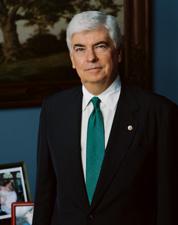
Mr. President, I rise today to introduce the Focus on Committed and Underpaid Staff for Children's Sake Act. I am pleased that Senators Kennedy, Murray, and Bingaman are joining me as original…
Mr. President, today I am introducing the Consumer and Small Business Energy Commission Act. I am pleased to have the support of the Senator from Michigan, Senator Stabenow, in introducing this…
Mr. President, today I am introducing the Consumer and Small Business Energy Commission Act. I am pleased to have the support of the Senator from Michigan, Senator Stabenow, in introducing this…
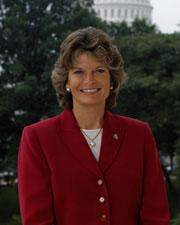
Mr. President, I rise to introduce a bill that will have a profound effect on the retention of good teachers, administrators, and other school staff in remote and rural areas of Alaska and in the…
Mr. President, I rise today with Senators Bingaman, Rockefeller, McCain, Frist, Alexander, Lincoln, Bunning, Smith, Bob Graham, Santorum, Kerry, Kennedy and Hatch to introduce a modest but important…
Mr. President, I am pleased today to introduce the Capital Construction Fund Qualified Withdrawal Act of 2003. My friends and colleagues, Senator Smith and Senator Murray, join me in introducing this…
Mr. President, I am pleased to introduce a bill to provide permanent tax relief from one of the most egregious, anti- family aspects of the tax code--the marriage penalty. Relieving American…
Show 3 more
Mr. President, I rise today to introduce the Hunting Heritage Protection Act. With the introduction of this important legislation, we are able to acknowledge our Nation's rich heritage of hunting.…

Mr. President, I am pleased today to be once again introducing with Senator DeWine the Mentally Ill Offender Treatment and Crime Reduction Act of 2003. This bipartisan bill authorizes the Attorney…
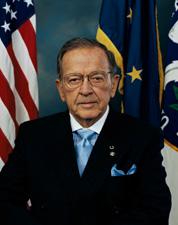
Mr. President, on behalf of Senator Murkowski, I rise to introduce the Rural Teacher Housing Act of 2003.
Bill Text
Latest available legislative text
        [Congressional Bills 108th Congress]
[From the U.S. Government Publishing Office]
[S. 1192 Introduced in Senate (IS)]

108th CONGRESS
1st Session
S. 1192

To establish a Consumer and Small Business Energy Commission to assess
and provide recommendations regarding recent energy price spikes from
the perspective of consumers and small businesses.

_______________________________________________________________________

IN THE SENATE OF THE UNITED STATES

June 5, 2003

Mr. Durbin (for himself and Ms. Stabenow) introduced the following
bill; which was read twice and referred to the Committee on Energy and
Natural Resources

_______________________________________________________________________

A BILL

To establish a Consumer and Small Business Energy Commission to assess
and provide recommendations regarding recent energy price spikes from
the perspective of consumers and small businesses.

Be it enacted by the Senate and House of Representatives of the
United States of America in Congress assembled,

SECTION 1. SHORT TITLE.

This Act may be cited as the ``Consumer and Small Business Energy
Commission Act of 2003''.

SEC. 2. FINDINGS.

Congress finds that--
(1) there have been several sharp increases since 1990 in
the price of electricity, gasoline, home heating oil, natural
gas, and propane in the United States;
(2) recent examples of such increases include--
(A) unusually high gasoline prices that are at
least partly attributable to global politics;
(B) electricity price spikes during the California
energy crisis of 2001; and
(C) the Midwest gasoline price spikes in spring
2001;
(3) shifts in energy regulation, including the allowance of
greater flexibility in competition and trading, have affected
price stability and consumers in ways that are not fully
understood;
(4) price spikes undermine the ability of low-income
families, the elderly, and small businesses (including farmers
and other agricultural producers) to afford essential energy
services and products;
(5) energy price spikes can exacerbate a weak economy by
creating uncertainties that discourage investment, growth, and
other activities that contribute to a strong economy;
(6) the Department of Energy has determined that the
economy would be likely to perform better with stable or
predictable energy prices;
(7) price spikes can be caused by many factors, including
insufficient inventories, supply disruptions, refinery capacity
limits, insufficient infrastructure, over-regulation or under-
regulation, flawed deregulation, excessive consumption, over-
reliance on foreign supplies, insufficient research and
development of alternative energy sources, opportunistic
behavior by energy companies, and abuses of market power;
(8) consumers and small businesses have few options other
than to pay higher energy costs when prices spike, resulting in
reduced investment and slower economic growth and job creation;
(9) the effect of price spikes, and possible responses to
price spikes, on consumers and small businesses should be
examined; and
(10) studies have examined price spikes of specific energy
products in specific contexts or for specific reasons, but no
study has examined price spikes comprehensively with a focus on
the impacts on consumers and small businesses.

SEC. 3. DEFINITIONS.

In this Act:
(1) Commission.--The term ``Commission'' means the Consumer
and Small Business Energy Commission established by section
4(a).
(2) Consumer energy product.--The term ``consumer energy
product'' means--
(A) electricity;
(B) gasoline;
(C) home heating oil;
(D) natural gas; and
(E) propane.
(3) Consumer group focusing on energy issues.--The term
``consumer group focusing on energy issues'' means--
(A) an organization that is a member of the
National Association of State Utility Consumer
Advocates;
(B) a nongovernmental organization representing the
interests of residential energy consumers; and
(C) a nongovernmental organization that--
(i) receives not more than \1/4\ of its
funding from energy industries; and
(ii) represent the interests of energy
consumers.
(4) Energy consumer.--The term ``energy consumer'' means an
individual or small business that purchases 1 or more consumer
energy products.
(5) Energy industry.--The term ``energy industry'' means
for-profit or not-for-profit entities involved in the
generation, selling, or buying of any energy-producing fuel
involved in the production or use of consumer energy products.
(6) Executive committee.--The term ``Executive Committee''
means the executive committee of the Commission.
(7) Small business.--The term ``small business'' has the
meaning given the term ``small business concern'' in section
3(a) of the Small Business Act (15 U.S.C. 632(a)).

SEC. 4. CONSUMER ENERGY COMMISSION.

(a) Establishment.--There is established a commission to be known
as the ``Consumer and Small Business Energy Commission''.
(b) Membership.--
(1) In general.--The Commission shall be comprised of 20
members.
(2) Appointments by the senate and house of
representatives.--The majority leader and minority leader of
the Senate and the Speaker and minority leader of the House of
Representatives shall each appoint 4 members, of whom--
(A) 2 shall represent consumer groups focusing on
energy issues;
(B) 1 shall represent small businesses; and
(C) 1 shall represent the energy industry.
(3) Appointments by the president.--The President shall
appoint 1 member from each of--
(A) the Energy Information Administration of the
Department of Energy;
(B) the Federal Energy Regulatory Commission;
(C) the Federal Trade Commission; and
(D) the Commodities Future Trading Commission.
(4) Date of appointments.--The appointment of a member of
the Commission shall be made not later than 30 days after the
date of enactment of this Act.
(c) Term.--A member shall be appointed for the life of the
Commission.
(d) Initial Meeting.--The Commission shall hold the initial meeting
of the Commission not later than the earlier of--
(1) the date that is 30 days after the date on which all
members of the Commission have been appointed; or
(2) the date that is 90 days after the date of enactment of
this Act, regardless of whether all members have been
appointed.
(e) Chairperson and Vice Chairperson.--The Commission shall select
a Chairperson and Vice Chairperson from among the members of the
Commission, excluding the members appointed under subparagraphs (B),
(C), and (D) of subsection (b)(3).
(f) Executive Committee.--The Commission shall have an executive
committee comprised of all members of the Commission except the members
appointed under subparagraphs (B), (C), and (D) of subsection (b)(3).
(g) Information and Administrative Expenses.--The Federal agencies
specified in subsection (b)(3) shall provide the Commission such
information and pay such administrative expenses as the Commission
requires to carry out this section, consistent with the requirements
and guidelines of the Federal Advisory Commission Act (5 U.S.C. App.).
(h) Duties.--
(1) Study.--
(A) In general.--The Commission shall conduct a
nationwide study of significant price spikes in major
United States consumer energy products since 1990.
(B) Matters to be studied by the commission.--In
conducting the study, the Commission shall--
(i) focus on the causes of the price
spikes, including insufficient inventories,
supply disruptions, refinery capacity limits,
insufficient infrastructure, any over-
regulation or under-regulation, flawed
deregulation, excessive consumption, over-
reliance on foreign supplies, insufficient
research and development of alternative energy
sources, opportunistic behavior by energy
companies, and abuses of market power;
(ii) examine the effects of price spikes on
consumers and small businesses;
(iii) investigate market concentration,
opportunities for misuse of market power, and
any other relevant market failures; and
(iv) consider--
(I) proposals for administrative
actions to mitigate price spikes
affecting consumers and small
businesses;
(II) proposals for legislative
action; and
(III) proposals for voluntary
actions by energy consumers and the
energy industry.
(2) Report.--Not later than 270 days after the date of
enactment of this Act, the Executive Committee shall submit to
Congress a report that contains--
(A) a detailed statement of the findings and
conclusions of the Commission; and
(B) recommendations for legislation, administrative
actions, and voluntary actions by energy consumers and
the energy industry to protect consumers from future
price spikes in consumer energy products, including a
recommendation on whether energy consumers need an
advocate on energy issues within the Federal
Government.
(i) Termination.--
(1) Definition of legislative day.--In this subsection, the
term ``legislative day'' means a day on which both Houses of
Congress are in session.
(2) Date of termination.--The Commission shall terminate on
the date that is 30 legislative days after the date of
submission of the report under subsection (h)(2).
<all>