Mentally Ill Offender Treatment and Crime Reduction Act of 2004
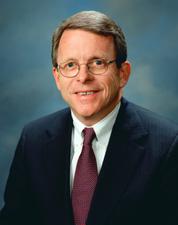 Sen. Mike DeWine (R-OH)
Legislative Activity
Stay on top of the latest movement without scrolling through every action
Became Public Law No: 108-414.
October 30, 2004
View full timeline
Introduced in Senate
June 5, 2003
Sponsor introductory remarks on measure. (CR S7483-7484)
June 5, 2003
Read twice and referred to the Committee on the Judiciary. (text of measure as introduced: CR S7484-7486)
June 5, 2003
Committee on the Judiciary. Hearings held. Hearings printed: S.Hrg. 108-372.
July 30, 2003
Committee on the Judiciary. Ordered to be reported with an amendment in the nature of a substitute favorably.
October 23, 2003
Committee on the Judiciary. Reported by Senator Hatch with an amendment in the nature of a substitute. Without written report.
October 23, 2003
Placed on Senate Legislative Calendar under General Orders. Calendar No. 321.
October 23, 2003
Passed Senate with an amendment by Unanimous Consent. (consideration: CR S13317-13322; text as passed Senate: CR S13317-13322)
October 27, 2003
Received in the House.
October 28, 2003 • 12:30 PM
Message on Senate action sent to the House.
October 28, 2003
Referred to the House Committee on the Judiciary.
October 28, 2003
Referred to the Subcommittee on Crime, Terrorism, and Homeland Security.
December 10, 2003
Subcommittee Hearings Held.
June 22, 2004
Subcommittee Consideration and Mark-up Session Held.
September 23, 2004
Forwarded by Subcommittee to Full Committee (Amended) by Voice Vote.
September 23, 2004
Committee Consideration and Mark-up Session Held.
September 30, 2004
Reported (Amended) by the Committee on Judiciary. H. Rept. 108-732.
October 5, 2004
Placed on the Union Calendar, Calendar No. 452.
October 5, 2004
Mr. Sensenbrenner moved to suspend the rules and pass the bill, as amended.
October 6, 2004 • 2:49 PM
Considered under suspension of the rules. (consideration: CR H8239-8245)
October 6, 2004 • 2:49 PM
DEBATE - The House proceeded with forty minutes of debate on S. 1194.
October 6, 2004 • 2:49 PM
Passed/agreed to in House: On motion to suspend the rules and pass the bill, as amended Agreed to by voice vote.(text: CR H8239-8242)
October 6, 2004 • 3:15 PM
On motion to suspend the rules and pass the bill, as amended Agreed to by voice vote. (text: CR H8239-8242)
October 6, 2004 • 3:15 PM
Motion to reconsider laid on the table Agreed to without objection.
October 6, 2004 • 3:15 PM
Message on House action received in Senate and at desk: House amendment to Senate bill.
October 7, 2004
Resolving differences -- Senate actions: Senate agreed to House amendment by Unanimous Consent.(consideration: CR S11261-11263; text as Senate agreed to House amendment: CR S11261-11263)
October 11, 2004
Senate agreed to House amendment by Unanimous Consent. (consideration: CR S11261-11263; text as Senate agreed to House amendment: CR S11261-11263)
October 11, 2004
Message on Senate action sent to the House.
October 18, 2004
Presented to President.
October 21, 2004
Signed by President.
October 30, 2004
Became Public Law No: 108-414.
October 30, 2004
Floor Debate
20 membersWhat members said about S. 1194 on the floor


 +15
+15
Floor Debate
20 membersWhat members said about S. 1194 on the floor
Mr. Speaker, I yield myself such time as I may consume. Mr. Speaker, this is Mental Health Awareness Week, and I rise to support S. 1194, the Mentally Ill Offender Treatment and Crime Reduction Act…
Mr. President, in June 1999, the United States Supreme Court issued a pair of decisions that altered the legal landscape with respect to intellectual property. I am referring to Florida Prepaid v.…
Mr. President, imagine for a moment you have gone to the doctor to have a medical condition evaluated. Uncertain as to what your injury may be, your doctor sends you to a specialist for a medical…
Mr. President, I wanted to take this opportunity while we are in the quorum call to come to the floor and comment briefly on what we have done in the last several days and look ahead as to next week.…
Mr. President, I rise today, along with Senators Domenici, Leahy, Grassley, and Cantwell, to introduce the ``Mentally Ill Offender Treatment and Crime Reduction Act of 2003.'' This bipartisan measure…
Show 8 more
Mr. President, I rise today, along with Senators Domenici, Leahy, Grassley, and Cantwell, to introduce the ``Mentally Ill Offender Treatment and Crime Reduction Act of 2003.'' This bipartisan measure…
Mr. President, today I am happy to be joining my colleague Senator Lindsey Graham in introducing the YMCA Healthy Teen Act. Senator Graham and I are introducing this bill along with Senators Bunning,…

Mr. President, I am proud to join with Senator DeWine and Senator Patrick Leahy along with Senators Grassley and Domenici in cosponsoring this important legislation. This bill will take steps to…
Mr. President, I am proud to join with Senator DeWine and Senator Patrick Leahy along with Senators Grassley and Domenici in cosponsoring this important legislation. This bill will take steps to…

Mr. President, today I am introducing legislation that will help to ensure that all of our veterans know about Federal benefits to which they may be entitled by improving outreach programs conducted…

Mr. Speaker, I thank the gentlewoman for her kind words and her leadership on this issue as well. I thank the chairman as well for his work on this legislation. I just wanted an opportunity to speak…
Mr. President, I ask unanimous consent that the Committee on Environment and Public Works be authorized to meet on Wednesday, July 30, at 9:30 a.m., to conduct a business meeting to consider S. 930,…
Madam President, the Mentally Ill Offender Treatment and Crime Reduction Act is a good bipartisan bill that will help State and local governments deal effectively with a serious law enforcement and…
Show 11 more
Mr. President, I ask unanimous consent that the Committee on Armed Services be authorized to meet during the session of the Senate on Thursday, October 23, 2003, at 10:30 a.m., in executive session…
Mr. President, I rise today to introduce the Focus on Committed and Underpaid Staff for Children's Sake Act. I am pleased that Senators Kennedy, Murray, and Bingaman are joining me as original…
Mr. Speaker, I rise in support of S. 1194, the Mentally Ill Offender Treatment and Crime Reduction Act. As the sponsor of H.R. 2387, the companion House bill to S. 1194, I am very pleased to have…

Mr. President, today I am introducing the Consumer and Small Business Energy Commission Act. I am pleased to have the support of the Senator from Michigan, Senator Stabenow, in introducing this…
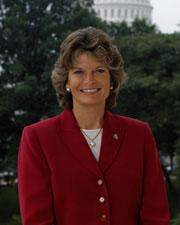
Mr. President, I rise to introduce a bill that will have a profound effect on the retention of good teachers, administrators, and other school staff in remote and rural areas of Alaska and in the…
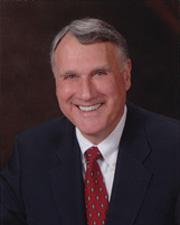
Mr. President, I rise today with Senators Bingaman, Rockefeller, McCain, Frist, Alexander, Lincoln, Bunning, Smith, Bob Graham, Santorum, Kerry, Kennedy and Hatch to introduce a modest but important…
Mr. President, I have joined today with Senators DeWine, Grassley, Cantwell, and Domenici to introduce legislation that will help State and local governments reduce crime by providing more effective…

Mr. President, I am pleased today to introduce the Capital Construction Fund Qualified Withdrawal Act of 2003. My friends and colleagues, Senator Smith and Senator Murray, join me in introducing this…
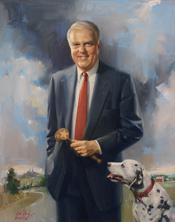
Mr. Speaker, I move to suspend the rules and pass the Senate bill (S. 1194) to foster local collaborations which will ensure that resources are effectively and efficiently used within the criminal…
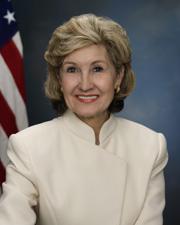
Mr. President, I am pleased to introduce a bill to provide permanent tax relief from one of the most egregious, anti- family aspects of the tax code--the marriage penalty. Relieving American…
Mr. President, I rise today to introduce the Hunting Heritage Protection Act. With the introduction of this important legislation, we are able to acknowledge our Nation's rich heritage of hunting.…
Bill Text
8 versions available
        [Congressional Bills 108th Congress]
[From the U.S. Government Publishing Office]
[S. 1194 Enrolled Bill (ENR)]

S.1194

One Hundred Eighth Congress

of the

United States of America

AT THE SECOND SESSION

Begun and held at the City of Washington on Tuesday,
the twentieth day of January, two thousand and four

An Act

To foster local collaborations which will ensure that resources are
effectively and efficiently used within the criminal and juvenile
justice systems.

Be it enacted by the Senate and House of Representatives of the
United States of America in Congress assembled,

SECTION 1. SHORT TITLE.

This Act may be cited as the ``Mentally Ill Offender Treatment and
Crime Reduction Act of 2004''.

SEC. 2. FINDINGS.

Congress finds the following:
(1) According to the Bureau of Justice Statistics, over 16
percent of adults incarcerated in United States jails and prisons
have a mental illness.
(2) According to the Office of Juvenile Justice and Delinquency
Prevention, approximately 20 percent of youth in the juvenile
justice system have serious mental health problems, and a
significant number have co-occurring mental health and substance
abuse disorders.
(3) According to the National Alliance for the Mentally Ill, up
to 40 percent of adults who suffer from a serious mental illness
will come into contact with the American criminal justice system at
some point in their lives.
(4) According to the Office of Juvenile Justice and Delinquency
Prevention, over 150,000 juveniles who come into contact with the
juvenile justice system each year meet the diagnostic criteria for
at least 1 mental or emotional disorder.
(5) A significant proportion of adults with a serious mental
illness who are involved with the criminal justice system are
homeless or at imminent risk of homelessness, and many of these
individuals are arrested and jailed for minor, nonviolent offenses.
(6) The majority of individuals with a mental illness or
emotional disorder who are involved in the criminal or juvenile
justice systems are responsive to medical and psychological
interventions that integrate treatment, rehabilitation, and support
services.
(7) Collaborative programs between mental health, substance
abuse, and criminal or juvenile justice systems that ensure the
provision of services for those with mental illness or co-occurring
mental illness and substance abuse disorders can reduce the number
of such individuals in adult and juvenile corrections facilities,
while providing improved public safety.

SEC. 3. PURPOSE.

The purpose of this Act is to increase public safety by
facilitating collaboration among the criminal justice, juvenile
justice, mental health treatment, and substance abuse systems. Such
collaboration is needed to--
(1) protect public safety by intervening with adult and
juvenile offenders with mental illness or co-occurring mental
illness and substance abuse disorders;
(2) provide courts, including existing and new mental health
courts, with appropriate mental health and substance abuse
treatment options;
(3) maximize the use of alternatives to prosecution through
graduated sanctions in appropriate cases involving nonviolent
offenders with mental illness;
(4) promote adequate training for criminal justice system
personnel about mental illness and substance abuse disorders and
the appropriate responses to people with such illnesses;
(5) promote adequate training for mental health and substance
abuse treatment personnel about criminal offenders with mental
illness or co-occurring substance abuse disorders and the
appropriate response to such offenders in the criminal justice
system;
(6) promote communication among adult or juvenile justice
personnel, mental health and co-occurring mental illness and
substance abuse disorders treatment personnel, nonviolent offenders
with mental illness or co-occurring mental illness and substance
abuse disorders, and support services such as housing, job
placement, community, faith-based, and crime victims organizations;
and
(7) promote communication, collaboration, and intergovernmental
partnerships among municipal, county, and State elected officials
with respect to mentally ill offenders.
SEC. 4. DEPARTMENT OF JUSTICE MENTAL HEALTH AND CRIMINAL JUSTICE
COLLABORATION PROGRAM.
(a) In General.--Title I of the Omnibus Crime Control and Safe
Streets Act of 1968 (42 U.S.C. 3711 et seq.) is amended by adding at
the end the following:

``PART HH--ADULT AND JUVENILE COLLABORATION PROGRAM GRANTS

``SEC. 2991. ADULT AND JUVENILE COLLABORATION PROGRAMS.

``(a) Definitions.--In this section, the following definitions
shall apply:
``(1) Applicant.--The term `applicant' means States, units of
local government, Indian tribes, and tribal organizations that
apply for a grant under this section.
``(2) Collaboration program.--The term `collaboration program'
means a program to promote public safety by ensuring access to
adequate mental health and other treatment services for mentally
ill adults or juveniles that is overseen cooperatively by--
``(A) a criminal or juvenile justice agency or a mental
health court; and
``(B) a mental health agency.
``(3) Criminal or juvenile justice agency.--The term `criminal
or juvenile justice agency' means an agency of a State or local
government or its contracted agency that is responsible for
detection, arrest, enforcement, prosecution, defense, adjudication,
incarceration, probation, or parole relating to the violation of
the criminal laws of that State or local government.
``(4) Diversion and alternative prosecution and sentencing.--
``(A) In general.--The terms `diversion' and `alternative
prosecution and sentencing' mean the appropriate use of
effective mental health treatment alternatives to juvenile
justice or criminal justice system institutional placements for
preliminarily qualified offenders.
``(B) Appropriate use.--In this paragraph, the term
`appropriate use' includes the discretion of the judge or
supervising authority, the leveraging of graduated sanctions to
encourage compliance with treatment, and law enforcement
diversion, including crisis intervention teams.
``(C) Graduated sanctions.--In this paragraph, the term
`graduated sanctions' means an accountability-based graduated
series of sanctions (including incentives, treatments, and
services) applicable to mentally ill offenders within both the
juvenile and adult justice system to hold individuals
accountable for their actions and to protect communities by
providing appropriate sanctions for inducing law-abiding
behavior and preventing subsequent involvement in the criminal
justice system.
``(5) Mental health agency.--The term `mental health agency'
means an agency of a State or local government or its contracted
agency that is responsible for mental health services or co-
occurring mental health and substance abuse services.
``(6) Mental health court.--The term `mental health court'
means a judicial program that meets the requirements of part V of
this title.
``(7) Mental illness.--The term `mental illness' means a
diagnosable mental, behavioral, or emotional disorder--
``(A) of sufficient duration to meet diagnostic criteria
within the most recent edition of the Diagnostic and
Statistical Manual of Mental Disorders published by the
American Psychiatric Association; and
``(B)(i) that, in the case of an adult, has resulted in
functional impairment that substantially interferes with or
limits 1 or more major life activities; or
``(ii) that, in the case of a juvenile, has resulted in
functional impairment that substantially interferes with or
limits the juvenile's role or functioning in family, school, or
community activities.
``(8) Nonviolent offense.--The term `nonviolent offense' means
an offense that does not have as an element the use, attempted use,
or threatened use of physical force against the person or property
of another or is not a felony that by its nature involves a
substantial risk that physical force against the person or property
of another may be used in the course of committing the offense.
``(9) Preliminarily qualified offender.--The term
`preliminarily qualified offender' means an adult or juvenile
accused of a nonviolent offense who--
``(A)(i) previously or currently has been diagnosed by a
qualified mental health professional as having a mental illness
or co-occurring mental illness and substance abuse disorders;
or
``(ii) manifests obvious signs of mental illness or co-
occurring mental illness and substance abuse disorders during
arrest or confinement or before any court; and
``(B) has faced, is facing, or could face criminal charges
for a misdemeanor or nonviolent offense and is deemed eligible
by a diversion process, designated pretrial screening process,
or by a magistrate or judge, on the ground that the commission
of the offense is the product of the person's mental illness.
``(10) Secretary.--The term `Secretary' means the Secretary of
Health and Human Services.
``(11) Unit of local government.--The term `unit of local
government' means any city, county, township, town, borough,
parish, village, or other general purpose political subdivision of
a State, including a State court, local court, or a governmental
agency located within a city, county, township, town, borough,
parish, or village.
``(b) Planning and Implementation Grants.--
``(1) In general.--The Attorney General, in consultation with
the Secretary, may award nonrenewable grants to eligible applicants
to prepare a comprehensive plan for and implement an adult or
juvenile collaboration program, which targets preliminarily
qualified offenders in order to promote public safety and public
health.
``(2) Purposes.--Grants awarded under this section shall be
used to create or expand--
``(A) mental health courts or other court-based programs
for preliminarily qualified offenders;
``(B) programs that offer specialized training to the
officers and employees of a criminal or juvenile justice agency
and mental health personnel serving those with co-occurring
mental illness and substance abuse problems in procedures for
identifying the symptoms of preliminarily qualified offenders
in order to respond appropriately to individuals with such
illnesses;
``(C) programs that support cooperative efforts by criminal
and juvenile justice agencies and mental health agencies to
promote public safety by offering mental health treatment
services and, where appropriate, substance abuse treatment
services for--
``(i) preliminarily qualified offenders with mental
illness or co-occurring mental illness and substance abuse
disorders; or
``(ii) adult offenders with mental illness during
periods of incarceration, while under the supervision of a
criminal justice agency, or following release from
correctional facilities; and
``(D) programs that support intergovernmental cooperation
between State and local governments with respect to the
mentally ill offender.
``(3) Applications.--
``(A) In general.--To receive a planning grant or an
implementation grant, the joint applicants shall prepare and
submit a single application to the Attorney General at such
time, in such manner, and containing such information as the
Attorney General and the Secretary shall reasonably require. An
application under part V of this title may be made in
conjunction with an application under this section.
``(B) Combined planning and implementation grant
application.--The Attorney General and the Secretary shall
develop a procedure under which applicants may apply at the
same time and in a single application for a planning grant and
an implementation grant, with receipt of the implementation
grant conditioned on successful completion of the activities
funded by the planning grant.
``(4) Planning grants.--
``(A) Application.--The joint applicants may apply to the
Attorney General for a nonrenewable planning grant to develop a
collaboration program.
``(B) Contents.--The Attorney General and the Secretary may
not approve a planning grant unless the application for the
grant includes or provides, at a minimum, for a budget and a
budget justification, a description of the outcome measures
that will be used to measure the effectiveness of the program
in promoting public safety and public health, the activities
proposed (including the provision of substance abuse treatment
services, where appropriate) and a schedule for completion of
such activities, and the personnel necessary to complete such
activities.
``(C) Period of grant.--A planning grant shall be effective
for a period of 1 year, beginning on the first day of the month
in which the planning grant is made. Applicants may not receive
more than 1 such planning grant.
``(D) Amount.--The amount of a planning grant may not
exceed $75,000, except that the Attorney General may, for good
cause, approve a grant in a higher amount.
``(E) Collaboration set aside.--Up to 5 percent of all
planning funds shall be used to foster collaboration between
State and local governments in furtherance of the purposes set
forth in the Mentally Ill Offender Treatment and Crime
Reduction Act of 2004.
``(5) Implementation grants.--
``(A) Application.--Joint applicants that have prepared a
planning grant application may apply to the Attorney General
for approval of a nonrenewable implementation grant to develop
a collaboration program.
``(B) Collaboration.--To receive an implementation grant,
the joint applicants shall--
``(i) document that at least 1 criminal or juvenile
justice agency (which can include a mental health court)
and 1 mental health agency will participate in the
administration of the collaboration program;
``(ii) describe the responsibilities of each
participating agency, including how each agency will use
grant resources to provide supervision of offenders and
jointly ensure that the provision of mental health
treatment services and substance abuse services for
individuals with co-occurring mental health and substance
abuse disorders are coordinated, which may range from
consultation or collaboration to integration in a single
setting or treatment model;
``(iii) in the case of an application from a unit of
local government, document that a State mental health
authority has provided comment and review; and
``(iv) involve, to the extent practicable, in
developing the grant application--

``(I) preliminarily qualified offenders;
``(II) the families and advocates of such
individuals under subclause (I); and
``(III) advocates for victims of crime.

``(C) Content.--To be eligible for an implementation grant,
joint applicants shall comply with the following:
``(i) Definition of target population.--Applicants for
an implementation grant shall--

``(I) describe the population with mental illness
or co-occurring mental illness and substance abuse
disorders that is targeted for the collaboration
program; and
``(II) develop guidelines that can be used by
personnel of an adult or juvenile justice agency to
identify preliminarily qualified offenders.

``(ii) Services.--Applicants for an implementation
grant shall--

``(I) ensure that preliminarily qualified offenders
who are to receive treatment services under the
collaboration program will first receive
individualized, validated, needs-based assessments to
determine, plan, and coordinate the most appropriate
services for such individuals;
``(II) specify plans for making mental health, or
mental health and substance abuse, treatment services
available and accessible to preliminarily qualified
offenders at the time of their release from the
criminal justice system, including outside of normal
business hours;
``(III) ensure that there are substance abuse
personnel available to respond appropriately to the
treatment needs of preliminarily qualified offenders;
``(IV) determine eligibility for Federal benefits;
``(V) ensure that preliminarily qualified offenders
served by the collaboration program will have adequate
supervision and access to effective and appropriate
community-based mental health services, including, in
the case of individuals with co-occurring mental health
and substance abuse disorders, coordinated services,
which may range from consultation or collaboration to
integration in a single setting treatment model;
``(VI) make available, to the extent practicable,
other support services that will ensure the
preliminarily qualified offender's successful
reintegration into the community (such as housing,
education, job placement, mentoring, and health care
and benefits, as well as the services of faith-based
and community organizations for mentally ill
individuals served by the collaboration program); and
``(VII) include strategies, to the extent
practicable, to address developmental and learning
disabilities and problems arising from a documented
history of physical or sexual abuse.

``(D) Housing and job placement.--Recipients of an
implementation grant may use grant funds to assist mentally ill
offenders compliant with the program in seeking housing or
employment assistance.
``(E) Policies and procedures.--Applicants for an
implementation grant shall strive to ensure prompt access to
defense counsel by criminal defendants with mental illness who
are facing charges that would trigger a constitutional right to
counsel.
``(F) Financial.--Applicants for an implementation grant
shall--
``(i) explain the applicant's inability to fund the
collaboration program adequately without Federal
assistance;
``(ii) specify how the Federal support provided will be
used to supplement, and not supplant, State, local, Indian
tribe, or tribal organization sources of funding that would
otherwise be available, including billing third-party
resources for services already covered under programs (such
as Medicaid, Medicare, and the State Children's Insurance
Program); and
``(iii) outline plans for obtaining necessary support
and continuing the proposed collaboration program following
the conclusion of Federal support.
``(G) Outcomes.--Applicants for an implementation grant
shall--
``(i) identify methodology and outcome measures, as
required by the Attorney General and the Secretary, to be
used in evaluating the effectiveness of the collaboration
program;
``(ii) ensure mechanisms are in place to capture data,
consistent with the methodology and outcome measures under
clause (i); and
``(iii) submit specific agreements from affected
agencies to provide the data needed by the Attorney General
and the Secretary to accomplish the evaluation under clause
(i).
``(H) State plans.--Applicants for an implementation grant
shall describe how the adult or juvenile collaboration program
relates to existing State criminal or juvenile justice and
mental health plans and programs.
``(I) Use of funds.--Applicants that receive an
implementation grant may use funds for 1 or more of the
following purposes:
``(i) Mental health courts and diversion/alternative
prosecution and sentencing programs.--Funds may be used to
create or expand existing mental health courts that meet
program requirements established by the Attorney General
under part V of this title, other court-based programs, or
diversion and alternative prosecution and sentencing
programs (including crisis intervention teams and treatment
accountability services for communities) that meet
requirements established by the Attorney General and the
Secretary.
``(ii) Training.--Funds may be used to create or expand
programs, such as crisis intervention training, which offer
specialized training to--

``(I) criminal justice system personnel to identify
and respond appropriately to the unique needs of
preliminarily qualified offenders; or
``(II) mental health system personnel to respond
appropriately to the treatment needs of preliminarily
qualified offenders.

``(iii) Service delivery.--Funds may be used to create
or expand programs that promote public safety by providing
the services described in subparagraph (C)(ii) to
preliminarily qualified offenders.
``(iv) In-jail and transitional services.--Funds may be
used to promote and provide mental health treatment and
transitional services for those incarcerated or for
transitional re-entry programs for those released from any
penal or correctional institution.
``(J) Geographic distribution of grants.--The Attorney
General, in consultation with the Secretary, shall ensure that
planning and implementation grants are equitably distributed
among the geographical regions of the United States and between
urban and rural populations.
``(c) Priority.--The Attorney General, in awarding funds under this
section, shall give priority to applications that--
``(1) demonstrate the strongest commitment to ensuring that
such funds are used to promote both public health and public
safety;
``(2) demonstrate the active participation of each co-applicant
in the administration of the collaboration program;
``(3) document, in the case of an application for a grant to be
used in whole or in part to fund treatment services for adults or
juveniles during periods of incarceration or detention, that
treatment programs will be available to provide transition and re-
entry services for such individuals; and
``(4) have the support of both the Attorney General and the
Secretary.
``(d) Matching Requirements.--
``(1) Federal share.--The Federal share of the cost of a
collaboration program carried out by a State, unit of local
government, Indian tribe, or tribal organization under this section
shall not exceed--
``(A) 80 percent of the total cost of the program during
the first 2 years of the grant;
``(B) 60 percent of the total cost of the program in year
3; and
``(C) 25 percent of the total cost of the program in years
4 and 5.
``(2) Non-federal share.--The non-Federal share of payments
made under this section may be made in cash or in-kind fairly
evaluated, including planned equipment or services.
``(e) Federal Use of Funds.--The Attorney General, in consultation
with the Secretary, in administering grants under this section, may use
up to 3 percent of funds appropriated to--
``(1) research the use of alternatives to prosecution through
pretrial diversion in appropriate cases involving individuals with
mental illness;
``(2) offer specialized training to personnel of criminal and
juvenile justice agencies in appropriate diversion techniques;
``(3) provide technical assistance to local governments, mental
health courts, and diversion programs, including technical
assistance relating to program evaluation;
``(4) help localities build public understanding and support
for community reintegration of individuals with mental illness;
``(5) develop a uniform program evaluation process; and
``(6) conduct a national evaluation of the collaboration
program that will include an assessment of its cost-effectiveness.
``(f) Interagency Task Force.--
``(1) In general.--The Attorney General and the Secretary shall
establish an interagency task force with the Secretaries of Housing
and Urban Development, Labor, Education, and Veterans Affairs and
the Commissioner of Social Security, or their designees.
``(2) Responsibilities.--The task force established under
paragraph (1) shall--
``(A) identify policies within their departments that
hinder or facilitate local collaborative initiatives for
preliminarily qualified offenders; and
``(B) submit, not later than 2 years after the date of
enactment of this section, a report to Congress containing
recommendations for improved interdepartmental collaboration
regarding the provision of services to preliminarily qualified
offenders.
``(g) Minimum Allocation.--Unless all eligible applications
submitted by any State or unit of local government within such State
for a planning or implementation grant under this section have been
funded, such State, together with grantees within the State (other than
Indian tribes), shall be allocated in each fiscal year under this
section not less than 0.75 percent of the total amount appropriated in
the fiscal year for planning or implementation grants pursuant to this
section.
``(h) Authorization of Appropriations.--There are authorized to be
appropriated to the Department of Justice to carry out this section--
``(1) $50,000,000 for fiscal year 2005; and
``(2) such sums as may be necessary for fiscal years 2006
through 2009.''.
(b) List of ``Best Practices''.--The Attorney General, in
consultation with the Secretary of Health and Human Services, shall
develop a list of ``best practices'' for appropriate diversion from
incarceration of adult and juvenile offenders.

Speaker of the House of Representatives.

Vice President of the United States and
President of the Senate.