Consumer Assurance of Radiologic Excellence Act of 2003
A bill to amend the Public Health Service Act to ensure the safety and accuracy of medical imaging examinations and radiation therapy treatments.
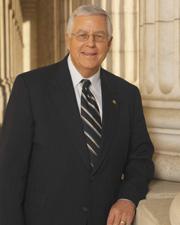 Sen. Michael B. Enzi (R-WY)
Legislative Activity
Stay on top of the latest movement without scrolling through every action
Read twice and referred to the Committee on Health, Education, Labor, and Pensions. (text of measure as introduced: CR S7490-7491)
June 5, 2003
View full timeline
Introduced in Senate
June 5, 2003
Sponsor introductory remarks on measure. (CR S7489-7490)
June 5, 2003
Read twice and referred to the Committee on Health, Education, Labor, and Pensions. (text of measure as introduced: CR S7490-7491)
June 5, 2003
Floor Debate
15 membersWhat members said about S. 1197 on the floor


 +10
Floor Debate
15 membersWhat members said about S. 1197 on the floor
Mr. President, in June 1999, the United States Supreme Court issued a pair of decisions that altered the legal landscape with respect to intellectual property. I am referring to Florida Prepaid v.…
Mr. President, imagine for a moment you have gone to the doctor to have a medical condition evaluated. Uncertain as to what your injury may be, your doctor sends you to a specialist for a medical…
Mr. President, I rise today, along with Senators Domenici, Leahy, Grassley, and Cantwell, to introduce the ``Mentally Ill Offender Treatment and Crime Reduction Act of 2003.'' This bipartisan measure…
Mr. President, today I am happy to be joining my colleague Senator Lindsey Graham in introducing the YMCA Healthy Teen Act. Senator Graham and I are introducing this bill along with Senators Bunning,…
Mr. President, I am proud to join with Senator DeWine and Senator Patrick Leahy along with Senators Grassley and Domenici in cosponsoring this important legislation. This bill will take steps to…
Show 8 more

Mr. President, today I am introducing legislation that will help to ensure that all of our veterans know about Federal benefits to which they may be entitled by improving outreach programs conducted…
Mr. President, imagine for a moment you have gone to the doctor to have a medical condition evaluated. Uncertain as to what your injury may be, your doctor sends you to a specialist for a medical…

Mr. President, I rise today to introduce the Focus on Committed and Underpaid Staff for Children's Sake Act. I am pleased that Senators Kennedy, Murray, and Bingaman are joining me as original…

Mr. President, today I am introducing the Consumer and Small Business Energy Commission Act. I am pleased to have the support of the Senator from Michigan, Senator Stabenow, in introducing this…

Mr. President, I rise to introduce a bill that will have a profound effect on the retention of good teachers, administrators, and other school staff in remote and rural areas of Alaska and in the…
Mr. President, I rise today with Senators Bingaman, Rockefeller, McCain, Frist, Alexander, Lincoln, Bunning, Smith, Bob Graham, Santorum, Kerry, Kennedy and Hatch to introduce a modest but important…
Mr. President, I am pleased today to introduce the Capital Construction Fund Qualified Withdrawal Act of 2003. My friends and colleagues, Senator Smith and Senator Murray, join me in introducing this…
Mr. President, I am pleased to introduce a bill to provide permanent tax relief from one of the most egregious, anti- family aspects of the tax code--the marriage penalty. Relieving American…
Show 3 more
Mr. President, I rise today to introduce the Hunting Heritage Protection Act. With the introduction of this important legislation, we are able to acknowledge our Nation's rich heritage of hunting.…

Mr. President, I am pleased today to be once again introducing with Senator DeWine the Mentally Ill Offender Treatment and Crime Reduction Act of 2003. This bipartisan bill authorizes the Attorney…

Mr. President, on behalf of Senator Murkowski, I rise to introduce the Rural Teacher Housing Act of 2003.
Bill Text
Latest available legislative text
        [Congressional Bills 108th Congress]
[From the U.S. Government Publishing Office]
[S. 1197 Introduced in Senate (IS)]

108th CONGRESS
1st Session
S. 1197

To amend the Public Health Service Act to ensure the safety and
accuracy of medical imaging examinations and radiation therapy
treatments.

_______________________________________________________________________

IN THE SENATE OF THE UNITED STATES

June 5, 2003

Mr. Enzi (for himself, Mr. Kennedy, Mr. Daschle, Mr. Lautenberg, and
Mr. Dorgan) introduced the following bill; which was read twice and
referred to the Committee on Health, Education, Labor, and Pensions

_______________________________________________________________________

A BILL

To amend the Public Health Service Act to ensure the safety and
accuracy of medical imaging examinations and radiation therapy
treatments.

Be it enacted by the Senate and House of Representatives of the
United States of America in Congress assembled,

SECTION 1. SHORT TITLE.

This Act may be cited as the ``Consumer Assurance of Radiologic
Excellence Act of 2003''.

SEC. 2. FINDINGS AND PURPOSES.

(a) Findings.--Congress makes the following findings:
(1) More than 300,000,000 medical imaging examinations and
radiation therapy treatments are administered annually in the
United States.
(2) Seven out of every 10 Americans undergo a medical
imaging examination or radiation therapy treatment every year
in the United States.
(3) The administration of medical imaging examinations and
radiation therapy treatments and the effect on individuals of
such procedures have a substantial and direct effect upon
public health and safety and upon interstate commerce.
(4) It is in the interest of public health and safety to
minimize unnecessary or inappropriate exposure to radiation due
to the performance of medical imaging and radiation therapy
procedures by personnel lacking appropriate education and
credentials.
(5) It is in the interest of public health and safety to
have a continuing supply of adequately educated persons and
appropriate accreditation and certification programs
administered by State governments.
(6) Persons who perform or plan medical imaging or
radiation therapy, including those employed at Federal
facilities or reimbursed by Federal health programs, should be
required to demonstrate competence by reason of education,
training, and experience.
(7) The protection of public health and safety from
unnecessary or inappropriate medical imaging and radiation
therapy procedures and the assurance of efficacious procedures
are the responsibilities of both the State and the Federal
Governments.
(8) Facilities that conduct medical imaging or radiation
therapy engage in and affect interstate commerce. Patients
travel regularly across State lines to receive medical imaging
services or radiation therapy. Facilities that conduct medical
imaging or radiation therapy engage technicians, physicians,
and other staff in an interstate market, and purchase medical
and other supplies in an interstate market.
(9) In 1981, Congress enacted the Consumer-Patient
Radiation Health and Safety Act of 1981 (Public Law 97-35)
which established minimum Federal standards for the
accreditation of education programs for persons who perform or
plan medical imaging examinations and radiation therapy
treatments and for the certification of such persons. The Act
also provided the States with a model State law for the
licensing of such persons.
(10) Twenty-two years after the enactment of the Consumer-
Patient Radiation Health and Safety Act of 1981--
(A) 13 States do not require licensure of any kind
for persons who perform or plan medical imaging
examinations and radiation therapy treatments;
(B) 37 States license, regulate, or register
radiographers;
(C) 28 States license radiation therapists;
(D) 22 States license nuclear medicine
technologists;
(E) 8 States license or require board certification
of medical physicists; and
(F) no States regulate or license medical
dosimetrists.
(b) Purposes.--The purposes of this Act are--
(1) to ensure the accreditation of education programs for,
and the licensure or certification of, persons who perform,
plan, evaluate, or verify patient dose for medical imaging
examinations and radiation therapy treatments; and
(2) to ensure the safety and accuracy of medical imaging
examinations and radiation therapy treatments.

SEC. 3. QUALITY OF MEDICAL IMAGING AND RADIATION THERAPY.

Part F of title III of the Public Health Service Act (42 U.S.C. 262
et seq.) is amended by adding at the end the following:

``Subpart 4--Medical Imaging and Radiation Therapy

``SEC. 355. QUALITY OF MEDICAL IMAGING AND RADIATION THERAPY.

``(a) In General.--The Secretary shall establish standards to
assure the safety and accuracy of medical imaging or radiation therapy.
Such standards shall include licensure or certification, accreditation,
and other requirements determined by the Secretary to be appropriate.
``(b) Exemptions.--The standards established under subsection (a)
shall not apply to physicians (as defined in section 1861(r) of the
Social Security Act (42 U.S.C. 1395x(r))), nurse practitioners and
physician assistants (as defined in section 1861(aa)(5) of the Social
Security Act (42 U.S.C. 1395x(aa)(5))).
``(c) Requirements.--Under the standards established under
subsection (a), the Secretary shall ensure that individuals prior to
performing or planning such imaging or therapy--
``(1) have successfully completed a national examination
approved by the Secretary under subsection (d) for individuals
who perform or plan medical imaging or radiation therapy; and
``(2) meet such other requirements relating to medical
imaging or radiation therapy as the Secretary may prescribe.
``(d) Approved Bodies.--
``(1) In general.--The Secretary shall certify private
nonprofit organizations or State agencies as approved bodies
with respect to the accreditation of educational programs or
the administration of examinations to individuals for purposes
of subsection (c)(1) if such organizations or agencies meet the
standards established by the Secretary under paragraph (2) and
provide the assurances required under paragraph (3).
``(2) Standards.--The Secretary shall establish minimum
standards for the certification of approved bodies under
paragraph (1) (including standards for recordkeeping, the
approval of curricula and instructors, the charging of
reasonable fees for accreditation or for undertaking
examinations), and other additional standards as the Secretary
may require.
``(3) Assurances.--To be certified as an approved body
under paragraph (1), an organization or agency shall provide
the Secretary satisfactory assurances that the body will--
``(A) comply with the standards described in
paragraph (2);
``(B) notify the Secretary in a timely manner
before the approved body changes the standards of the
body; and
``(C) provide such other information as the
Secretary may require.
``(4) Withdrawal of approval.--
``(A) In general.--The Secretary may withdraw the
certification of an approved body if the Secretary
determines the body does not meet the standards under
paragraph (2).
``(B) Effect of withdrawal.--If the Secretary
withdraws the certification of an approved body under
subparagraph (A), the accreditation of an individual or
the completion of an examination administered by such
body shall continue in effect until the expiration of a
reasonable period, as determined by the Secretary, for
such individual to obtain another accreditation or to
complete another examination.
``(e) Existing State Standards.--Standards for the licensure or
certification of personnel, accreditation of educational programs, or
administration of examinations, established by a State prior to the
effective date of the standards promulgated under this section, shall
be deemed to be in compliance with the requirements of this section
unless the Secretary determines that such State standards do not meet
the minimum standards prescribed by the Secretary or are inconsistent
with the purposes of this section.
``(f) Evaluation and Report.--The Secretary shall periodically
evaluate the performance of each approved body under subsection (d) at
an interval determined appropriate by the Secretary. The results of
such evaluations shall be included as part of the report submitted to
the Committee on Health, Education, Labor, and Pensions of the Senate
and the Committee on Energy and Commerce of the House of
Representatives in accordance with 354(e)(6)(B).
``(g) Delivery of and Payment for Services.--Not later than 18
months after the date of enactment of this section, the Secretary shall
promulgate regulations to ensure that all programs that involve the
performance of or payment for medical imaging or radiation therapy,
that are under the authority of the Secretary, are performed in
accordance with the standards established under this section.
``(h) Alternative Standards for Rural Areas.--The Secretary shall
determine whether the standards developed under subsection (a) must be
met in their entirety with respect to payment for medical imaging or
radiation therapy that is performed in a geographic area that is
determined by the Medicare Geographic Classification Review Board to be
a `rural area'. If the Secretary determines that alternative standards
for such rural areas are appropriate to assure access to quality
medical imaging, the Secretary is authorized to develop such
alternative standards. Alternative standards developed under this
subsection shall apply in rural areas to the same extent and in the
same manner as standards developed under subsection (a) apply in other
areas.
``(i) Regulations.--Not later than 18 months after the date of
enactment of this section, the Secretary shall promulgate such
regulations as may be necessary to implement this section.
``(j) Definitions.--In this section:
``(1) Approved body.--The term `approved body' means a
nonprofit organization or State agency that has been certified
by the Secretary under subsection (d)(1) to accredit or
administer examinations to individuals who perform or plan
medical imaging or radiation therapy.
``(2) Medical imaging.--The term `medical imaging' means
any procedure or article, excluding medical ultrasound
procedures, intended for use in the diagnosis or treatment of
disease or other medical or chiropractic conditions in humans,
including diagnostic X-rays, nuclear medicine, and magnetic
resonance procedures.
``(3) Perform.--The term `perform', with respect to medical
imaging or radiation therapy, means--
``(A) the act of directly exposing a patient to
radiation via ionizing or radio frequency radiation or
to a magnetic field for purposes of medical imaging or
for purposes of radiation therapy; and
``(B) the act of positioning a patient to receive
such an exposure.
``(4) Plan.--The term `plan' with respect to medical
imaging or radiation therapy, means the act of preparing for
the performance of such a procedure to a patient by evaluating
site-specific information, based on measurement and
verification of radiation dose distribution, computer analysis,
or direct measurement of dose, in order to customize the
procedure for the patient.
``(5) Radiation therapy.--The term `radiation therapy',
means any procedure or article intended for use in the cure,
mitigation, treatment, or prevention of disease in humans that
achieves its intended purpose through the emission of
radiation.''.
<all>