A bill to provide for the acquisition of property in Washington County, Utah, for implementation of a desert tortoise habitat conservation plan.
Legislative Activity
Stay on top of the latest movement without scrolling through every action
Committee on Energy and Natural Resources Subcommittee on Public Lands and Forests. Hearings held. With printed Hearing: S.Hrg. 108-321.
November 18, 2003
View full timeline
Introduced in Senate
June 9, 2003
Sponsor introductory remarks on measure. (CR S7546-7547)
June 9, 2003
Read twice and referred to the Committee on Energy and Natural Resources.
June 9, 2003
Committee on Energy and Natural Resources Subcommittee on Public Lands and Forests. Hearings held. With printed Hearing: S.Hrg. 108-321.
November 18, 2003
Floor Debate
12 membersWhat members said about S. 1209 on the floor
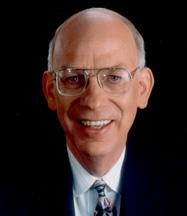
RFB CSB
CSB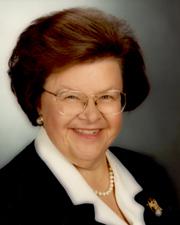 BAM
BAM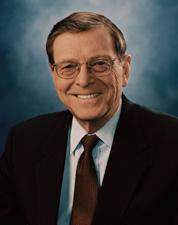 PVD
PVD SMC+7
SMC+7
Floor Debate
12 membersWhat members said about S. 1209 on the floor
Mr. President, today I am introducing a bill which will bring to a close the Federal acquisition of an important piece of privately held land, located within the federally designated desert tortoise…
Mr. President, today I am introducing a bill which will bring to a close the Federal acquisition of an important piece of privately held land, located within the federally designated desert tortoise reserve in Washington County, UT.
As some of my colleagues are aware, this is not the first time legislation has been introduced in an attempt to resolve this issue. In July of 2000, I introduced S. 2873, which was referred to and reported favorably by the Senate committee on Energy and Natural Resources. In addition, similar legislation was twice approved by the other body, both in the 106th and 107th Congresses. Nevertheless, we have been unable to bring this issue to resolution in the full Senate. For nearly a decade, the private property addressed by this bill has been under Federal control during which time the Federal Government has been enjoying the benefits of the private property without compensating the landowner. It is my hope that the time has come to finally resolve this issue.
In March of 1991, the desert tortoise was listed as an endangered species under the Endangered Species Act. Government and environmental researchers determined that the land immediately north of St. George, UT, was prime desert tortoise habitat. Consequently, in February 1996, nearly five years after the listing, the United States Fish and Wildlife Service, USFWS, issued Washington County a section 10 permit under the Endangered Species Act which paved the way for the adoption of a habitat conservation plan, HCP, and an implementation agreement. Under the plan and agreement, the Bureau of Land Management, BLM, committed to acquire all private lands in the designated habitat area for the formation of the Red Cliffs Reserve for the protection of the dessert tortoise.
One of the private land owners within the reserve is Environmental Land Technology, Limited, ELT, which had begun acquiring lands from the State of Utah in 1981 for purposes of residential and recreational development several years prior to the listing of the species. Moreover, in the years preceding the listing of the desert tortoise and the adoption of the habitat conservation plan, ELT completed appraisals, cost estimates, engineering studies, site plans, surveys, utility layouts, and right-of-way negotiations. They staked out golf courses, and obtained water rights for the development of this land. Prior to the adoption of the HCP, it was not clear which lands the Federal and local governments would set aside for the desert tortoise, although it was assumed that there were sufficient surrounding Federal lands to provide adequate habitat. However, when the HCP was adopted in 1996, the decision was made to include ELT's lands within the boundaries of the reserve primarily because of the high concentrations of tortoises. The tortoises on ELT land also appeared to be one of, if not the only population without an upper respiratory disease that afflicted all of the other populations. As a consequence of the inclusion of the ELT lands, the development efforts were halted.
With assurances from the Federal Government that the acquisition of the ELT development lands was a high priority, the owner negotiated with, and entered into, an assembled land exchange agreement with the BLM in anticipation of intrastate land exchanges. The private land owner then began a costly process of identifying comparable federal lands within the state that would be suitable for an exchange for his lands in Washington County. Over the last seven years, BLM and the private land owners, including ELT, have completed several exchanges, and the Federal Government has acquired, through those exchanges or direct purchases, nearly all of the private property located within the reserve, except for approximately 1,516 acres of the ELT development land. However, with the creation of the Grand Staircase-Escalante National Monument in September 1996, and the subsequent land exchanges between the state of Utah and the Federal Government to consolidate federal lands within that monument, there are no longer sufficient comparable federal lands within Utah to complete the originally contemplated intrastate exchanges for the remainder of the ELT land.
Faced with this problem, and in light of the high priority the Department of the Interior has placed on acquiring these lands, BLM officials recommended that the ELT lands be acquired by direct purchase: During the FY 2000 budget process, BLM proposed that $30 million be set aside to begin acquiring the remaining lands in Washington County. Unfortunately, because this project involves endangered species habitat and the USFWS is responsible for administering activities under the Endangered Species Act, the Office of Management and Budget shifted the $30 million from the BLM budget request to the USFWS's Cooperative Endangered Species Conservation Fund budget request. Ultimately, however, none of those funds were made available for BLM acquisitions within the Federal section of the reserve. Instead, the funds in that account were made available on a matching basis for the use of individual states to acquire wildlife habitat. The result of this bureaucratic fumbling has resulted in extreme financial hardship for ELT.
The lands within the Red Cliffs Reserve are ELT's main asset. The establishment of the Washington County HCP has effectively taken this property and prevented ELT from developing or otherwise disposing of the property. ELT has been brought to the brink of financial ruin as it has exhausted its resources in an effort to hold the property while awaiting the compensation to which it is entitled. ELT has had to sell its remaining assets, and the private land owner has also had to sell assets, including his home, to simply hold the property. This has become a financial crisis for the landowner. It is simply wrong for the Federal Government to expect the landowner to continue to bear the cost of the government's efforts to provide habitat for an endangered species. That is the responsibility of the Federal Government. Moreover, while the landowner is bearing these costs, he continues to pay taxes on the property. This situation is made more egregious by the failure of the Department of the Interior to request any acquisition funding for FY 2004, even though this acquisition has been designated a high priority by the agency. Over the past several years, ELT has pursued all possible avenues to complete the acquisition of these lands. The private land owner has spent millions of dollars pursuing both intrastate and interstate land exchanges and has worked cooperatively with the Department of the Interior. Unfortunately, all of these efforts have thus far been fruitless.
The bill that I am introducing today will finally bring this acquisition to a close. In my view, a legislative taking should be an action of last resort. But, if ever a case warranted legislative condemnation, this is it. This bill will transfer all right, title, and interest in the ELT development property within the Red Cliffs Reserve, including an additional 34 acres of landlocked real property owned by ELT adjacent to the land within the reserve, to the federal government. It provides an initial payment to ELT to pay off existing debts accrued in holding the property, and provides 90 days during which ELT and the Department of the Interior can attempt to reach a negotiated settlement on the remaining value of the property. I am aware that one of the difficulties in solving this issue is the high value of the lands to be acquired. Due to the absence of comparable lands within the state for exchange, the legislation also authorizes an interstate land exchange as a means of acquiring the property. In the absence of a negotiated amount, the Secretary of the Interior will be required to bring an action in the Federal District Court for the District of Utah to determine a value for the land. Payment for the land, whether negotiated or determined by the court, will be made from the permanent judgment appropriation or any other appropriate account, or, at the option of the land owner, the Secretary of the Interior will credit a surplus property account, established and maintained by the General Services Administration, which the land owner can then use to bid on surplus government property.
Unfortunately, when this bill has been introduced in the past, there has been occasional misunderstanding regarding the inclusion of the bill's reference to section 309(f) of Public Law 104-333, which requires all Federal appraisals and acquisitions of land within Washington County to be conducted ``without regard'' to the presence of an endangered species. This references does not create a new appraisal standard but rather restates the existing standard for all Federal land acquisition in Washington County, UT. Since its enactment, and without exception, the Department of the Interior has applied this standard to all its acquisitions in the county. This language was originally adopted to allay concerns that local landowners would not receive fair compensation for their property which was being acquired for government purposes. Some have supposed the inclusion of this language would constitute preferential treatment. To the contrary, the absence of this language would unfairly treat this landowner differently than every other landowner in the reserve whose land has thus far been acquired by the Federal Government. Moreover, its omission at this point would likely lead the Justice Department to argue that Congress did not intend for this statutory standard to apply.
The bill includes language to allow, as part of the legislative taking, for the landowner to recover reasonable costs, interest, and damages. It is important to understand that while Federal acquisitions should be completed on the basis of fair market value, when the Federal Government makes the commitment to acquire private land, the landowner should not have to be driven into financial ruin while waiting upon the federal government to discharge its obligation. While the Federal Government has never disputed its obligation to acquire the property, it has had the benefit of the private land for all these years without having to pay for it. The private landowner should not have to bear the costs of this Federal foot-dragging.
This legislation is consistent with the high priority the Department of the Interior has repeatedly placed on this land acquisition, and is a necessary final step towards an equitable resolution. The time for pursuing other options has long since expired and it is unfortunate that it requires legislation action. Without commenting on the Endangered Species Act itself, it would seem that if it is the government's objective to provide habitat for the benefit of an endangered species, then the government ought to bear the costs, rather than forcing them upon the landowner. It is also time to address this issue so that the Federal agencies may be single minded in their efforts to recover the desert tortoise which remains the aim of the creation of the reserve. It is time to right this wrong and get on with the efforts to recover the species and I encourage my colleagues to support the timely enactment of this important legislation.
Mr. President, today I rise to introduce a bill that will ensure that cancer patients continue to have access to the treatment and care they desperately need in their communities. In Missouri alone,…
Mr. President, today I rise to introduce a bill that will ensure that cancer patients continue to have access to the treatment and care they desperately need in their communities.
In Missouri alone, the number of new cancer patients is estimated to reach almost 30,000 this year. For the Nation, we're talking well over 1.3 million. And the numbers continue to climb every year. These numbers are in addition to patients currently living with cancer. Many of them are surviving--and thriving--because of new tests, new treatments, and care they receive in community cancer centers across the country.
Many of these patients will turn to hospitals in their communities for lifesaving treatment. Hospital outpatient departments are a critical part of the cancer care delivery system that provide a significant portion of the cancer care across the country.
However, this vital care is in jeopardy because this year, the Centers for Medicare and Medicaid Services, CMS, has implemented drastic reductions in reimbursements for cancer services, including chemotherapy. These cuts are forcing cancer centers across the country to reconsider how they are providing care or accept reimbursement that fails to cover their costs.
I was recently contacted by Wes Thompson, Director of Radiology at Ray County Memorial Hospital in Richmond, MO. For those of you unfamiliar with Missouri, Richmond is a small town with a population of about 6,100 approximately 50 miles east of Kansas City. Ray County Memorial Hospital is the sole referral center for chemotherapy treatment for the rural residents outside of Kansas City.
In 1999, Wes' wife died of cancer at the age of 26. She happened to be a patient of the pharmacist, Robert Courtney, who has been convicted of diluting thousands of chemotherapy treatments for profit over the last several years. Wes will be receiving a monetary settlement from the legal proceeding involving Robert Courtney and he would like to donate it to the Ray County's oncology program in his wife's name. Unfortunately, cuts in reimbursements by Medicare for chemotherapy treatment will force Ray County Memorial Hospital to discontinue outpatient cancer treatment on January 1, 2004. And, that is devastating news to the community.
This is a department that treats over 250 patients a year across three counties. 60-70 percent of their patients are Medicare beneficiaries and about 40 percent of their patients are indigent. Many of these cancer patients would receive no care at all if Ray County Memorial closed the doors of the cancer program. And yet, that's exactly what they are considering. Their cancer program can't stay afloat when every chemotherapy treatment they give is reimbursed by Medicare at less than their costs. There are a lot of expensive drugs involved in the treatment of cancer. The heavy dependence on drugs has a lot to do with why the cuts are devastating to cancer care in particular.
At Ray County Memorial, the first round of cuts last year meant that hospital overall took a loss of over $150,000. This year's cuts will result in the loss of approximately $200,000-$300,000 for oncology services alone.
As of January 1 of next year 250 patients in rural Missouri will be forced to drive to Kansas City to receive cancer treatment. Oncologists at Ray County Memorial Hospital estimate that 40 percent of the patients they treat will be unable to make the trip to Kansan City area facilities to receive their treatment--either because they lack the transportation or the help to get there and back, or they are too sick or too weak to endure that trip. As a result of this cancer center closing, 80-100 people will die from cancer with no treatment and no hope. Of course Ray Memorial Hospital will continue to give these people loving care and try to make them as comfortable as possible, but they will be unable to treat their cancer anymore.
This is not a problem unique to Ray County Memorial Hospital. Due to cuts in Medicare reimbursement for cancer treatments hospitals across Missouri and across the county that provide outpatient cancer care-- large or small, rural or urban--are struggling to continue to provide this care. These cancer centers work every day to ensure that the thousands of Americans diagnosed with cancer are receiving the best care possible.
I also have the privilege of representing Truman Medical Center, distinguished in its own way--for providing free care to so many. While Truman Medical Center sees only about 300-350 newly diagnosed cancer patients each year, about 70-75 percent of them are indigent. For these patients, they provide some 1,500-2,000 treatments of chemotherapy each year . . . and starting in January of this year, Medicare is reimbursing for many of these at levels dramatically below Truman's costs. And there are so many others.
In rural areas, where it is often hard to recruit physicians, it is the community cancer centers that provide all the chemotherapy and other services that help ensure that cancer patients don't have to travel long distances for the care they need. This is particularly important in cancer treatment, where life saving treatments often result in difficult side effects in the short term.
These cancer centers are also often the early adopters of some of the newest and most complicated drug regimens that cancer patients need today. And not only are they a ``safety net'' for rural patients, they are often the safety net for Medicaid and uninsured patients.
And yet, these are the very institutions that have been suffering under
what is essentially an experiment underway by the Centers for Medicare and Medicaid Services, CMS. I know that this isn't anyone's favorite agency, but I expect more under a Republican Administration.
For a number of years now, CMS has been trying to bring a new payment system to these hospitals. Each year this experiment brings a new set of rules and payments--for the hospitals to sort through and try to implement.
But this isn't just an administrative burden that takes our caregivers away from their payments. In the last two years, this payment system has resulted in significant payment reductions for a setting of care that can now barely meet its costs.
My own Missouri institutions tell me they're considering closing their indigent care programs or worse, closing their doors altogether.
My office is hearing stories from around the country, about hospital administration arming their doctors with lists of the most expensive drugs and what CMS is now reimbursing them. Why do this if you aren't trying to influence a doctor's decision about what to prescribe? Pharmacists are under pressure to review dosing regimens to see where they can cut corners. Some drugs are just not being given in these community centers. Others that used to be given free of charge until their Medicare codes were assigned now aren't given at all.
In some cases, hospitals are sending patients to the nearest physician's office, where inexplicably, Medicare is paying more for the same drugs. But sometimes theses offices aren't nearby. Other times, hospitals are getting patients returned to them with complications that have arisen--and now have to be admitted for overnight stays and close monitoring.
How scary for a cancer patient? Sometimes with only months to live, to be told that it could take nine months before the next breakthrough drug can be given because it's just too expensive. To be told that the hospital where you've gotten to know your doctors and nurses after weeks of chemotherapy is now closing its doors. To be told that you now have to drive miles for care, away from friends and family who have helped care for you when you return feeling nauseous and weak from treatments.
These stories are accumulating--all because of a failed CMS experiment. So should we terminate the experiment and start over with a payment system that actually reflects that cost of providing this care? Yes, of course.
But that would take time--and while the time honored tradition here in Washington of debate and compromise for long term reform is a worthy one--these community cancer centers around the country continue to rack up the stories of compromised care and reduced access for patients, and time is one luxury many cancer patients simply do not have.
And this brings me to my legislation, which is measured, timely, and focused on the most immediate of needs. And, written so as to recognize the budgetary constraints facing us.
This legislation would set a payment floor for some of the most costly drugs given in the outpatient community centers today. This bill isn't limited to cancer drugs. But cancer is one of those diseases that relies so heavily on new drugs for treatment that tend to be costly drugs, so the impact of this experiment has been felt here more. The bill provides this relief immediately--so that in January 2004, these hospitals can start receiving increased payments that at least cover more of their costs.
This payment floor, by the way, was set not on the basis of these centers' true costs. Instead, recognizing the little time they have and the immediacy of their need, they have settled for payment rates advocated by various members of Congress over the last year--as it began to be clear how devastating an impact this experiment could have.
This bill, for example, wouldn't help them cover the costs of the pharmacy services they provide, so critical to ensuring safe and effective care in the hospitals. Again, these costs are especially significant for cancer patients, where mixing highly toxic chemotherapeutic agents using special equipment and wearing protective gear, reviewing protocols and checking for patient risks and side effects are all more intensive efforts. It recognizes these services by asking for a study of these costs, so that they may be recognized in longer term solutions that we develop over the next year or so.
The legislation I introduce today will provide hospitals like Ray County Memorial Hospital and Truman Medical Center, and so many around Missouri and across the country the immediate relief they need to be able to treat their patients.
I look forward to working with my Finance Committee colleagues to ensure that the provisions of this legislation and the immediate relief that it provides are incorporated in anything we do on Medicare.
We have learned our lessons the hard way in home health. This crisis in community cancer centers promises to reach similar proportions if we don't act now.
Madam President, I rise to introduce the Family Caregiver Relief Act of 2003--my legislation to help those who face the crushing consequences of caring for a chronically ill family member. While we…
Madam President, I rise to introduce the Family Caregiver Relief Act of 2003--my legislation to help those who face the crushing consequences of caring for a chronically ill family member. While we stand up for America, we must also stand up for what America stands for. That means strengthening the safety net for those who need it most. That means standing up for American families.
Families are hurting. The economy is weak. Many are holding down two jobs to make ends meet, going into debt to put kids through college, or finding and paying for health insurance.
Some families are facing extraordinary challenges. They are caring for a loved one with special needs which could be a child with autism, or cerebral palsy, a parent with alzheimer's, or a spouse with multiple sclerosis. These families struggle every day to take care of their loved ones.
I want to give help to those who practice self-help. My bill would provide a tax credit of up to $5,000 for family caregivers. This tax credit would help people pay for prescription drugs, home health care, specialized day care, respite care, transportation to chronic care or medical facilities, specialized therapy, including occupational, physical, or rehabilitational therapy, and other specialized services for children, including day care for children with special needs.
Family caregivers face so many stresses--emotional, physical, and financial stresses of caregiving. They face long days, supporting a family--while caring for a loved one with a chronic condition. A dad might have to work two jobs to meet the costs of care which places strains on marriage and relationships with other family members.
Caregivers also face high costs for medications, home health care, adult day care, physical therapy, durable medical equipment like a wheelchair, day care for children with special needs, and medical bills from care with specialists.
People who care for chronically ill family must patch together whatever care they can afford. Too often they go into debt, use their college accounts or their retirement savings or go without the care their loved ones need.
I have heard from families from around Maryland who are facing these strains, who are trying to make ends meet, and who are caring for a loved one who is chronically ill or needs assistance with activities of daily living.
The Hart family from Baltimore has a 2 year old son named Jackson who was born with severe brain abnormalities. He has the motor skill development of a 4 month old. He has daily seizures, so he needs total, round the clock care. The emotional cost of caring for a severely disabled child are incalculable and the financial costs are crushing. For the Harts, the costs include: $650 a month for day care for medically fragile children; $1,400 for a wheel chair; and, $700 for a special shower chair--since Jackson can't sit up in the bath. My proposal would help them meet these costs by providing them with a tax credit of $2,750.
I know of a a couple in Baltimore where the wife is in the final stages of Alzheimers. She was a school teacher and once spoke 5 languages. Now, she can only say a few words. She needs 24 hour-a-day care which costs almost three thousand dollars a month. Their retirement savings are gone though this couple is only in their early sixties. My bill would only provide a tax credit of five thousand to this couple. I know that this would help this couple as they face the challenges of her final days.
My last example is a woman in Potomac, MD who is caring for her husband who has multiple sclerosis. He can no longer talk, walk, stand or feed himself. She works full time to support them and cobbles together whatever home care she can afford. She is not able to afford respite care to run errands, or take herself to the doctor. This couple made a commitment in sickness or in health.
These are just a few examples of the stresses facing thousands of American families. One in five Americans has multiple chronic conditions. About 26 million people in this country care for a family members who is chronically ill or disabled.
My legislation is supported by groups who see everyday the human cost of family caregiving, including: Autism Society of America; Cystic Fibrosis Foundation; National Organization for Rare Disorders; Easter Seals; United Cerebral Palsy Associations; Arc of the United States; National Health Council; National Council on the Aging; Paralyzed Veterans of America; Family Voices; National Respite Coalition; National Family Caregivers Association; and National Alliance for Caregiving.
One of my first milestones in the Senate was the enactment of the Spousal Anti-Impoverishment Act to change the cruel rules of Medicaid so that families would not have to go bankrupt before Medicaid would pay for nursing home care for a spouse. Under this law, the spouse living in the community could keep the family home, keep a car, and keep some income each month to live on. This law helped one million people. But this was only a down payment.
Not much has been done since then except the National Family Caregiver Support Program and long-term care insurance for federal employees. I was proud to sponsor and work on both of these bills on a bipartisan basis to get them signed into law.
Now it is time to help family caregivers. They are the backbone of the long term care system in this country. They must be a priority in the Federal law books and the tax code.
I thank Senators Clinton, Corzine, Sarbanes, Johnson, Lautenberg, Murray, Kennedy, Landrieu, Dayton, and Harkin for cosponsoring the Family Caregiver Relief Act.
I ask unanimous consent that the text of my bill be printed in the Record.
Mr. President, I am pleased to join Senator Enzi in introducing the Elder Fall Prevention Act of 2003. Falls are a serious public health problem that affect millions of seniors each year. This bill expands research and education on elder falls to help keep seniors safe and in their own homes longer.
The facts are staggering. One out of every three Americans over age 65 falls every year. In 2000, over 10,200 seniors died and approximately 1.6 million seniors visited an emergency department as a result of a fall. Falls are the leading cause of injury deaths among seniors, accounting for 64,000 traumatic brain injuries and 340,000 hip fractures each year. Falls can be financially disastrous for families, and falls place a serious financial strain on our health care system. By 2020, senior falls are estimated to cost the health care system more than $32 billion.
These facts do not begin to tell the story of what falls can mean for seniors and their loved ones. Falls don't discriminate. Kay Graham was the victim of a fall. Many of us have friends or relatives who have fallen. A fall can have a devastating impact on a person's physical, emotional, and mental health. If an older woman loses her footing on her front porch steps, falls, and suffer a hip fracture, she would likely spend about two weeks in the hospital, and there is a 50 percent chance that she would not return home or live independently as a result of her injuries.
Last year, I chaired a hearing of the Subcommittee on Aging on the problem of elder falls. The Subcommittee heard testimony from Lillie Marie Struchen, a 91-year-old woman who had recently fallen in her bathroom when she slipped on the tile. Lillie Marie could not reach the panic button in her apartment, and it took her some time before she could get to her feet and call for help. Lille Marie was lucky. She recovered from her fall and returned to her normal routines. She shared with the Subcommittee some steps that she and her family had taken to prevent future falls, knowing that she may not be so lucky next time.
These falls, like the ones that Lillie Marie and thousands of others suffer from each year, can be prevented. With some help, there are simple ways that seniors can improve the safety of their homes and make a fall far less likely. Home modifications like hand rails in the bathroom, rubber mats on slippery tile floors, and cordless telephones that seniors can keep nearby can make a big difference. Well-trained pharmacists can review medications to make sure that two drugs do not interact to cause dizziness and throw a senior off balance.
That's what this legislation is about--getting behind our Nation's seniors and giving help to those who practice self-help. This bill creates public education campaigns for seniors, their families, and health care providers about how to prevent falls. It expands research on elder falls to develop better ways to prevent falls and to improve the treatment and rehabilitation of elder falls victims. This legislation also requires an evaluation of the effect of falls on Medicare and Medicaid, to look at potentially reducing costs by expanding coverage to include fall-related services.
Reducing the number of falls will help seniors live longer, healthier, more independent lives. This bill has the strong support of the National Safety Council and has been supported in the past by over 30 national and local aging and safety organizations. I look forward to working with Senator Enzi and my colleagues on the Health, Education, Labor, and Pensions Committee to get this bill signed into law.
Madam President, in the United States, especially when you live in the eastern United States, you take water and the availability of water for granted. Probably the only thing that is ever thought…
Madam President, in the United States, especially when you live in the eastern United States, you take water and the availability of water for granted. Probably the only thing that is ever thought about is: Do we have a big enough reservoir? Or are those aqueducts getting too old that feed New York and northeastern America?
But I am here to suggest there are parts of these great United States where there is a huge shortage of the kind of water we need day by day for our daily activities: to drink, to use for our families, and for the everyday use of our people.
First, I show you a little chart with blue and white areas on it. All of the blue areas on this chart of the United States, believe it or not, are areas in these United States where saline--that is, salty-- aquifers exist; that is, salty water either in large ponds or underground in large pools.
So while we are running out of water, at the same time we have been blessed in that we have plenty of water available if we do something about it. And I propose that we do something about it. I have a bill that I hope will do something about it.
This second chart shows what would be a proposed Tularosa Basin desalination facility. I show it because this is not a new concept. As a matter of fact, this Tularosa Basin is a huge underground water basin in New Mexico. Much of it is very salty, large quantities are not so salty, and then large quantities are of minor salt content.
The legislation I am introducing is to try to make a leap of technology for it directs the Secretary of the Interior to undertake at this program, for lack of a better way to do it, what we call a demonstration program, but it would be one that would be easily adopted anywhere. We ask that it have a capability of 100,000 gallons so that the research would not be carried out at an academic level but really usable.
The Secretary is supposed to work with the greatest laboratories in the Nation that have access in this regard to develop new desalination technology and a plan. The facility should be completed within 3 years. The water from this facility will be disposed of to communities in and around this basin and in and around the county of Otero. We authorize the money necessary for it. I have a detailed statement indicating why we are doing this along with the bill and an extra bill which goes to the desk, one for reference and one for retention.
I am quite confident that a new method of desalination beyond that one that we all hear about is going to be forthcoming. I believe one of the laboratories--probably Sandia National Laboratory in Albuquerque, but not certain, but probably--will make the breakthrough so that we will not be using the old system that we might have been trying for as long now as the occupant of the chair is of age. I even remember that system being used when I first came to the Senate. We were experimenting with it in the city of Roswell under a Government program, and we stopped the program because it was too farfetched.
We have come a long way. Just as we have serious problems cleaning water of other pollutants, and we have old-fashioned ways of doing it, very modern technology is being applied. As an example, we all know there is a big problem in some parts of America where arsenic which is found in the normal topography, normal ground of the surrounding area and has been consumed by whoever lived there for years with no harm--we are going to have to remove it now to some very minuscule content per thousand gallons. In order to do that the old-fashioned way, the costs are enormous. But believe it or not, because of science, we might be able to do that job--albeit some of it should not have to be done at all--for a tenth of the cost.
We are hopeful that same new breed of technology will apply to taking salt out of inland water or ocean water.
Mr. President, as I say, I rise today to introduce a bill that has the potential to supply vast quantities of water to a thirsty New Mexico and a number of Western States. New Mexico and the West face a critical lack of water, but through the program contained in my bill, the faucets could be ready to flow.
Most Western States already have large quantities of water. However, the water contains such high levels of salt that it is simply unusable. My bill proposes to turn untapped resource into potable water that cities, towns, farmers, industry, and nature can use to meet their needs. This bill provides the opportunity for use to utilize brand new technology that may save the West.
This piece of legislation directs the Secretary of the Interior to undertake a desalination demonstration program in the Tularosa Basin located in southern New Mexico. Additionally, it requires collaboration between the Bureau of Reclamation, an established leader in desalination research and development, and the Department of Energy. Our national laboratories are at the forefront of science in many areas including water technology. The collaboration between these two departments would bring together the best minds and the most experienced technicians. This bill would further task the Bureau of Reclamation and the Department of Energy with evaluating current technology, advising on how to proceed with additional research, developing a research plan and confirming project and operation costs in a real-world application. Finally, the bill authorizes the building of a facility where advances in technology could be tested.
The bill authorizes appropriations of $1.5 million for development of a desalination technology plan which will utilize the experiences of present facilities and programs to build the facility and guide its research. It further authorizes $30 million to construct the desalination facility, $6 million for each of fiscal years 2004 through 2010 for research programs at Sandia National Lab associated with the facility, and $10 million for each of the fiscal years 2004 through 2010 for research and development of desalination technologies.
Only 3 percent of the world's water is fresh and much of that is stored in the ice that caps the Earth's poles. We must develop the technology to economically utilize the rest of that water. Today, most of the world's desalination plants are applied to sea water. As I states before, much of the west and, indeed, the Nation, sits on saline aquifers. The facility I propose will develop and test the technologies to best access and utilize this inland water.
Currently, Sandia National Lab and the Department of the Interior are looking for optimum sites to locate the facility and are developing a feasibility study for the program. The sites are all in or around the city of Alamogordo, NM. The designers envision a 13,000 square foot facility that can process up
to 100,000 gallons of water per day. It will draw researchers from around the country and play an essential role in alleviating the pressures on our water resources.
Mr. President, let me also say that I have a broader vision for what can be accomplished with desalination. This is only the first step. This is a serious issue, not only for New Mexico, but the world. More than half the world's population will face severe water shortages in the next 50 years. We must get started on this problem.
I have no doubt that this legislation will help to push forward the state of the art to ensure that we have access to the most precious of resources. Let's take the first step.
Mr. President, I ask unanimous consent that a copy of the bill be printed in the Record.
Mr. President, the people of Maine have always been faithful stewards of their forest lands because we understand and appreciate its tremendous value to our economy and to our way of life. From the…
Mr. President, the people of Maine have always been faithful stewards of their forest lands because we understand and appreciate its tremendous value to our economy and to our way of life.
From the vast tracts of undeveloped land in the north, to the small woodlots in the south, forest land has helped to shape the character and the heritage of my State.
While our commitment to stewardship has preserved the forests for generations, there is a new and troubling thereat to Maine's forest lands that requires a fresh approach. This threat is suburban sprawl. It has already consumed tens of thousands of acres of forest land in the southern part of my State. Sprawl occurs because the economic value of forests or crop land cannot compete with the value of developed land.
This problem is particularly acute in southern Maine where there has been more than a 100-percent increase in urbanized sprawl over the past two decades. This has resulted in the labeling of the greater Portland area as the ``sprawl capital of the Northeast.''
I am alarmed by the amount of working forest land and open space in southern and coastal Maine that has given way to strip malls and cul- de-sacs. Our State is working to respond to this challenge because once that land is paved over, it is gone forever. Those forest lands and those small woodlots are lost forever once that land is developed.
The people of Maine in response to this concern have approved a $50 million bond issue to preserve land through the Land for Maine's Future Board. They have also worked hard supporting local efforts to preserve open space. And they have contributed their time, their energy, and their money to the work done by our State's 88 land trusts.
The people of my State are dedicated to preserving our working forests and protecting our communities from sprawl. It is now time for the Federal
Government to lend a helping hand in support of those efforts.
Today, I am introducing the Suburban Community Forestry and Open Space Act. This legislation, which was drafted with the advice of landowners, conservation groups, and the Maine State Forester, establishes a $50 million grant program within the U.S. Forest Service to support locally driven projects that will preserve our working forests. Local governments and nonprofit organizations would compete for funds to purchase land outright or to buy conservation easements to keep the forest land threatened by development in their traditional use.
Projects funded under this legislation must be targeted at lands located in parts of the country that are threatened by sprawl. The legislation requires that Federal funds be matched dollar for dollar by State, local, or private resources so that it is a true partnership to preserve this open space and working forests.
This grant program would help to promote sustainable forestry as well as public access to our forest lands. My legislation protects the rights of property owners with the inclusion of a ``willing seller'' provision, which requires the consent of a landowner if a parcel of land is eligible to participate in the program.
The grant program would also allow nonprofits and municipalities, but not the Federal Government, to hold title to the land or the easements purchased under this program. The $50 million is a modest amount but it would help to achieve a number of stewardship objectives.
First, my legislation would help prevent forest fragmentation and preserve our working forests, helping to maintain the supply of timber that fuels Maine most significant industry.
Second, the resources made available by my legislation would be a valuable tool for communities that are struggling to manage growth and prevent sprawl. Currently, if a community trying to cope with the effects of sprawl turns to the Federal Government for help, they would find that no assistance is available.
The Forest Legacy Program, which has been critical in preserving undeveloped forest land in my State and many others, is really not suitable for the kinds of projects my bill envisions. My bill would change that by making the Federal Government an active partner in preserving forest lands and managing sprawl, while leaving the decisionmaking at the State and local level where it belongs.
Last year, this legislation was included in the forestry title of the Senate-approved version of the farm bill which passed this Senate by a vote of 58-40. Unfortunately, the forestry title was stripped out of the farm bill conference report, despite bipartisan support for provisions such as my legislation.
There is a great deal that needs to be done to protect our working forests for the next generation. I believe the legislation I am reintroducing today will help advance that goal. I am grateful for the support of many of the people and organizations that are leading the effort to support this legislation. By enacting the Suburban and Community Forestry and Open Space Act, Congress can provide a real boost to local conservation initiatives, help prevent sprawl, and help sustain the vitality of natural resource-based industries.
Mr. President, I would like to submit for the Record several letters of support for my legislation. They are from the National Association of State Foresters, the New England Forestry Foundation, The Trust for Public Land, and the Pacific Forest Trust. I ask unanimous consent that those letters of support be printed in the Record.
Show 8 more
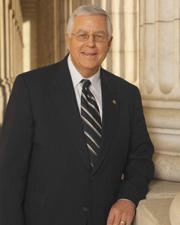
Mr. President, walking--climbing the stairs--reaching for an object or a needed item on a shelf. They're all things we do and take for granted every day. But for many of our nation's elderly, they…
Mr. President, walking--climbing the stairs--reaching for an object or a needed item on a shelf. They're all things we do and take for granted every day. But for many of our nation's elderly, they are a constant source of anxiety and apprehension.
Anyone who has an elderly parent, relative or friend who lives alone knows the concern that is often raised when a phone call placed to them goes unanswered. Our first and immediate reaction is often worry because we know that for many of our nation's elderly, a fall can produce a very serious injury. As the phone continues to ring we wonder if Mom is upstairs and can't hear the phone, or Dad is in his workshop, or our friend has just stepped outside to catch a breath of fresh air.
We hang up, wait a few minutes and place our call again, often with a greater sense of urgency.
This time, our concern becomes worry as we picture our loved one suffering from the effects of a fall, alone, with no one to help them.
Then, when the phone is answered, a huge rush of relief overcomes us as we realize our fears were misplaced.
Would that every story like that have such a happy ending. For too many of our Nation's elderly, however, it sometimes ends tragically as brittle bones and a reduction in our sense of balance becomes a formula for serious injury and a dramatic reduction in one's quality of life.
Although the physical healing process after a fall can be long and traumatic, it often pales in comparison to the psychological effects of a loss of confidence--and therefore activity--of an elderly individual who no longer takes for granted his or her ability to walk and safely navigate their world without assistance or support.
Fortunately, there are things that can be done to both reduce the number of these tragic falls and restore the confidence of our loved ones in their ability to once again lead a normal life.
In an effort to address this issue I am introducing legislation, together with my distinguished colleague form Maryland, Senator Mikulski, that would take a multi-faceted approach to solving this problem. The Elder Fall Prevention Act of 2003 will look at every aspect of this matter, from educating the elderly about how to ``fall- proof'' their home, to researching the causes of most falls and trying to find ways both to avoid them and to provide better treatment to those who are recovering from them.
In today's world, when so many of us are living longer, it is quite commonplace to hear of elderly friends and relatives who have fallen and faced the challenge of recovering from a broken bone. Almost all of us have had that experience, either with family or friends.
What is less well know is that 25 percent of the elderly who sustain a hip fracture die within one year. On an annual basis, 40,000 people over age 65
visit emergency departments with traumatic brain injuries suffered as a result of a fall; 16,000 of those people are hospitalized, and 4,000 die. By the year 2030, as the baby boomer generation is added to the ranks of the elderly, the number of people over age 65 will double, potentially doubling the current elder fall injury statistics.
There are also significant costs associated with such a large volume of fall-related injuries among our nation's senior citizens. Direct costs to the Medicaid and Medicare programs alone will exceed an estimated $32 billion in the year 2020.
The Elder Fall Prevention Act of 2003 takes a three-pronged approach to this problem. It will direct the Department of Health and Human Services to develop public education on fall prevention for the elderly, family members, caregivers, and others involved with the elderly. It further calls for an expansion of research on effective approaches to fall prevention and treatment. Finally, the Elder Fall Prevention Act requires an evaluation of the effect of falls on the costs of Medicare and Medicaid, as well as the potential for reducing those costs through education, prevention and early intervention.
A wide variety of groups support this legislation, including the National Safety Council, the Emergency Nurses Association, the Assisted Living Federation of America, the American Geriatrics Society, the Brain Injury Association, the American Health Care Association, and many more. All of these groups should and will be partners in this comprehensive effort to address one of the leading causes of death and disability in the elderly.
The largest generation in our nation's history is rapidly approaching retirement. Passing this bill into law will mean a better quality of life for them and for all our nation's elderly. It will also help us reduce the cost of the Medicaid and Medicare programs for all Americans.
I am looking forward to working on this bill in Committee and sending it on to the Senate floor for a vote. The sooner we act the sooner we can begin to work to prevent falls and help our nation's elderly live safely and in better health.
Mr. President, I ask unanimous consent that the Committee on Armed Services be authorized to meet during the session of the Senate on Tuesday, November 18, 2003, at 4 p.m., in open session, to…
Mr. President, I ask unanimous consent that the Committee on Armed Services be authorized to meet during the session of the Senate on Tuesday, November 18, 2003, at 4 p.m., in open session, to consider the nomination of the Honorable Michael W. Wynne to be Under Secretary of Defense for Acquisition, Technology, and Logistics.
Mr. President, I ask unanimous consent that the Committee on
Banking, Housing, and Urban Affairs be authorized to meet during the session of the Senate on November 18, 2003, at 10 a.m. to conduct a hearing on the ``Review of Current Investigations and Regulatory Actions Regarding the Mutual Fund Industry.''
Mr. President, I ask unanimous consent that the Committee on Commerce, Science, and Transportation be authorized to meet on Tuesday, November 18, 2003, in the President's Room, immediately following the first vote, on pending committee business.
Mr. President, I ask unanimous consent that the Committee on Finance be authorized to meet during the session on Tuesday, November 18, 2003, at 10 a.m., to hear testimony on nomination of Arnold I. Havens, to be General Counsel for the Department of the Treasury.
Mr. President, I ask unanimous consent that the Committee on Governmental Affairs be authorized to meet on Tuesday, November 18, 2003, at 2:30 p.m. for a hearing to consider the nomination of James M. Loy to be Deputy Secretary of Homeland Security, Department of Homeland Security.
Mr. President, I ask unanimous consent that the Committee on the Judiciary be authorized to meet to conduct a hearing on Tuesday, November 18, 2003, at 9:30 a.m, on ``America after 9/11: Freedom Preserved or Freedom Lost?,'' in the Dirksen Senate Office Building Room 226.
Panel I: Bob Barr, Former United States Representative, Atlanta, GA; Viet Dinh, Professor, Georgetown University Law Center, Washington, DC; James Zogby, Arab American Institute, Washington, DC; James Dempsey, Center for Democracy and Technology, Washington, DC; Robert Cleary, Proskauer Rose, LLP, New York, NY; Nadine Strossen, President, American Civil Liberties Union, New York, NY; and Muzaffar Chishti, Director, Migration Policy Institute at New York University School of Law; New York, NY.
Mr. President, I ask unanimous consent that the subcommittee on Public Lands and Forests of the Committee on Energy and Natural Resources be authorized to meet during the session of the Senate on Tuesday, November 18, at 2:30 p.m.
The purpose of the hearings is to receive testimony on S. 1467, a bill to establish the Rio Grande outstanding natural area in the state of Colorado, and for other purposes, S. 1209, a bill to provide for the acquisition of property in Washington County, Utah, for implementation of a desert tortoise habitat conservation plan, and H.R. 708, a bill to require the conveyance of certain national forest system lands in Mendocino National Forest, California, to provide for the use of the proceeds from such conveyance for national forest purposes, and for other purposes; S. 1167, which would resolve boundary conflicts in Barry and Stone counties in the State of Missouri, and S. 1848, which would amend the Bend Pine Nursery Land Conveyance Act to direct the Secretary of Agriculture to sell the Bend Pine Nursery Administrative site in the State of Oregon.
Mr. President, I ask unanimous consent that the subcommittee on strategic forces of the committee on armed services be authorized to meet during the session of the Senate on Tuesday, November 18, 2003, at 2:00 p.m., in open session to receive testimony on space acquisition policies and processes.
Mr. President, I ask unanimous consent that the Permanent Subcommittee on Investigations of the Committee on Governmental Affairs be authorized to meet on Tuesday, November 18, 2003, at 9:30 a.m. for a hearing entitled ``U.S. Tax Shelter Industry: The Role of Accountants, Lawyers and Financial Professionals.''

Madam President, I rise today to introduce the ``Marine Turtle Conservation Act of 2003''. Marine turtles were once abundant, but now they are in serious trouble. Six of the seven recognized species…
Madam President, I rise today to introduce the ``Marine Turtle Conservation Act of 2003''.
Marine turtles were once abundant, but now they are in serious trouble. Six of the seven recognized species are listed as threatened or endangered under the Endangered Species Act, and all seven species have been included in Appendix I of the Convention on International Trade in Endangered Species of Wild Flora and Fauna, CITES. Because marine turtles are long-lived, late-maturing, and highly migratory, they are particularly vulnerable to the impacts of human exploitation and habitat loss. In addition, for some species, illegal trade seriously threatens wild populations. Because of the immense challenges facing marine turtles, the resources available to date have not been sufficient to cope with the continued loss of nesting habitat due to human activities and the resulting diminution of marine turtle populations.
The Marine Turtle Conservation Act of 2003 is modeled after the successful Asian Elephant Conservation Act, the African Elephant Conservation Act, and the Rhinoceros and Tiger Conservation Act. These acts have established programs within the Department of the Interior to assist in the conservation and preservation of these species around the world. More than 300 projects have been funded and generated millions of dollars in private matching funds from sponsors representing a diverse group of conservation organizations. The projects range from purchasing anti-poaching equipment for wildlife rangers to implementing elephant conservation plans to aerial monitoring of the Northern white rhinoceros.
The Marine Turtle Conservation Act of 2003 will assist in the recovery and protection of marine turtles by supporting and providing financial resources for projects to conserve nesting habitats of marine turtles in foreign countries and marine turtles while they are found in such habitats, to prevent illegal trade in marine turtle parts and products, and to address other threats to the survival of marine turtles. The bill authorizes $5 million annually to implement the program.
This legislation will help to preserve this ancient and distinctive part of the world's biological diversity.
I ask unanimous consent that the text of the bill be printed in the Record.

Mr. President, I announce for the information of the Senate and the public that the Subcommittee on Public Lands and Forests of the Committee on Energy and Natural Resources will add two bills to the…
Mr. President, I announce for the information of the Senate and the public that the Subcommittee on Public Lands and Forests of the Committee on Energy and Natural Resources will add two bills to the agenda of the hearing scheduled for November 18, 2003 at 2:30 p.m. in room SD-366 of the Dirksen Senate Office Building.
The bills being added are S. 1167, which would resolve boundary conflicts in Barry and Stone Counties in the State of Missouri, and S. 1848, which would amend the Bend Pine Nursery Land Conveyance Act to direct the Secretary of Agriculture to sell the Bend Pine Nursery Administrative Site in the State of Oregon.
The other bills that will be considered at the hearing are S. 1467, a bill to establish the Rio Grande Outstanding Natural Area in the State of Colorado, and for other purposes, S. 1209, a bill to provide for the acquisition of property in Washington County, UT, for implementation of a desert tortoise habitat conservation plan, and H.R. 708, a bill to require the conveyance of certain National Forest System lands in Mendocino National Forest, CA, to provide for the use of the proceeds from such conveyance for National Forest purposes, and for other purposes.
Because of the limited time available for the hearing, witnesses may testify by invitation only. However, those wishing to submit written testimony for the hearing record should send two copies of their testimony to the Committee on Energy and Natural Resources, United States Senate, SD-364, Washington, DC 20510-6150 prior to the hearing date.
For further information, please contact Dick Bouts or Meghan Beal (202-224-7556).
committee on energy and natural resources
Mr. President, I would like to announce, for the information of the Senate and the public, that the Subcommittee on Public Lands and Forests of the Committee on Energy and Natural Resources will hold…
Mr. President, I would like to announce, for the information of the Senate and the public, that the Subcommittee on Public Lands and Forests of the Committee on Energy and Natural Resources will hold a hearing on November 18, 2003 at 2:30 p.m. in room SD 366 of the Dirksen Senate Office Building.
The purpose of the hearing is to consider S. 1467, a bill to establish the Rio Grande Outstanding Natural Area in the State of Colorado, and for other purposes, S. 1209, a bill to provide for the acquisition of property in Washington County, UT, for implementation of a desert tortoise habitat conservation plan, and H.R. 708, a bill to require the conveyance of certain National Forest System lands in Mendocino National Forest, California, to provide for the use of the proceeds from such conveyance for National Forest purposes, and for other purposes.
Because of the limited time available for the hearing, witnesses may testify by invitation only. However, those wishing to submit written testimony for the hearing record should send two copies of their testimony to the Committee on Energy and Natural Resources, United States Senate, SD-364, Washington, DC 20510-6150 prior to the hearing date.
For further information, please contact Dick Bouts or Meghan Beal (202-224-7556).
Subcommittee on Energy
Mr. President, I announce for the information of the Senate and the public that the hearing to conduct oversight of the implementation of the Energy Employees Occupational Illness Compensation…
Mr. President, I announce for the information of the Senate and the public that the hearing to conduct oversight of the implementation of the Energy Employees Occupational Illness Compensation Program previously scheduled before the Committee on Energy and Natural Resources on Friday, November 14 at 10 a.m. has been cancelled and will be rescheduled as soon as practicable.
For further information regarding this hearing, please contact Pete Lyons of the Committee staff at 202-224-5861.
subcommittee on public lands and forests
Mr. President, I announce for the information of the Senate and the public that a hearing has been scheduled before the Committee on Energy and Natural Resources.
The hearing will be held on Friday, November 21, at 9:30 a.m. in room SD-366 of the Dirksen Senate Office Building.
The purpose of the hearing is to conduct oversight of the implementation of the Energy Employees Occupational Illness Compensation Program.
Because of the limited time available for the hearings, witnesses may testify by invitation only. However, those wishing to submit written testimony for the hearing record should send two copies of their testimony to the Committee on Energy and Natural Resources, United States Senate, Washington, DC 20510-6150.

Mr. President, as Chairman of the Committee on Veterans' Affairs, I have today introduced, at the request of the Secretary of Veterans Affairs, S. 1213, a proposed bill to improve the benefits for…
Mr. President, as Chairman of the Committee on Veterans' Affairs, I have today introduced, at the request of the Secretary of Veterans Affairs, S. 1213, a proposed bill to improve the benefits for Filipino veterans of World War II and survivors of such veterans and for other purposes. The Secretary of Veterans Affairs has submitted this proposed legislation to the President of the Senate by letter dated May 12, 2003.
My introduction of this measure is in keeping with the policy which I have adopted of generally introducing--so that there will be specific bills to which my colleagues and others may direct their attention and comments--all Administration-proposed draft legislation referred to the Committee on Veterans' Affairs. Thus, I reserve the right to support or oppose the provisions of, as well as any amendment to, this legislation.
I ask unanimous consent that the text of the bill be printed in the Record, together with the transmittal letter and a section-by-section analysis which accomplished it.
Mr. President, I would like to announce for the information of the Senate and the public that the Subcommittee on Energy of the Committee on Energy and Natural Resources will hold a hearing on…
Mr. President, I would like to announce for the information of the Senate and the public
that the Subcommittee on Energy of the Committee on Energy and Natural Resources will hold a hearing on Saturday, December 6, 2003 at 9 a.m. The hearing will be held at the Paducah Information Age Park, 2000 McCracken Blvd., Paducah, KY.
The purpose of the hearing is to conduct oversight and accounting of the cleanup at the Department of Energy's Paducah, KY site.
Because of the limited time available for the hearing, witnesses may testify by invitation only. However, those wishing to submit written testimony for the hearing record should send two copies of their testimony to the Committee on Energy and Natural Resources, United States Senate, SD-364, Washington, DC 20510-6150.
For further information, please contact Pete Lyons (202-224-5861) or Shane Perkins (202-224-7555).
Show 3 more
Mr. President, I would like to announce for the information of the Senate and the public that the hearing previously scheduled before the Committee on Energy and Natural Resources on Wednesday,…
Mr. President, I would like to announce for the information of the Senate and the public that the hearing previously scheduled before the Committee on Energy and Natural Resources on Wednesday, November 12 at 10 a.m. has been rescheduled for Friday, November 14 at 10 a.m. in room SD-366 of the Dirksen Senate Office Building.
The purpose of the hearing is to conduct oversight of the implementation of the Energy Employees Occupational Illness Compensation Program.
Because of the limited time available for the hearings, witnesses may testify by invitation only. However, those wishing to submit written testimony for the hearing record should send two copies of their testimony to the Committee on Energy and Natural Resources, United States Senate, Washington, DC 20510-6150.
committee on energy and natural resources

Mr. President, I also Unanimous Consent that the text of the bill, to identify certain sites as key resources for protection by the Directorate for Information Analysis and Infrastructure Protection…
Mr. President, I also Unanimous Consent that the text of the bill, to identify certain sites as key resources for protection by the Directorate for Information Analysis and Infrastructure Protection of the Department of Homeland Security, and for other purposes, be printed in the Record.
Mr. President, I ask unanimous consent that the text of the bill be printed in the Record.
Mr. President, I ask unanimous consent that the text of the bill be printed in the Record.
Bill Text
Latest available legislative text
        [Congressional Bills 108th Congress]
[From the U.S. Government Publishing Office]
[S. 1209 Introduced in Senate (IS)]

108th CONGRESS
1st Session
S. 1209

To provide for the acquisition of property in Washington County, Utah,
for implementation of a desert tortoise habitat conservation plan.

_______________________________________________________________________

IN THE SENATE OF THE UNITED STATES

June 9, 2003

Mr. Bennett introduced the following bill; which was read twice and
referred to the Committee on Energy and Natural Resources

_______________________________________________________________________

A BILL

To provide for the acquisition of property in Washington County, Utah,
for implementation of a desert tortoise habitat conservation plan.

Be it enacted by the Senate and House of Representatives of the
United States of America in Congress assembled,

SECTION 1. ACQUISITION OF CERTAIN PROPERTY IN WASHINGTON COUNTY, UTAH.

(a) Definitions.--In this section:
(1) Owner.--The term ``owner'' means an owner of property
taken under subsection (b).
(2) Secretary.--The term ``Secretary'' means the Secretary
of the Interior.
(b) Taking of Property.--Notwithstanding any other provision of
law, effective 30 days after the date of the enactment of this Act,
there is vested in the United States all right, title, and interest in
and to, and the right to immediate possession of--
(1) certain land located in a master planned community
development in Washington County, Utah, known as ``PAHO'',
owned by Environmental Land Technology, Ltd., Rocky Mountain
Ventures, and James Doyle, within the Red Cliffs Reserve in
Washington County, Utah, consisting of--
(A) the fee simple interest in approximately 1,516
acres of real property; and
(B) certain other interests; and
(2) the fee simple interest in 34 acres of real property
adjacent to the Red Cliffs Reserve owned by Environmental Land
Technology, Ltd.
(c) Just Compensation.--
(1) In general.--Subject to section 309(f) of the Omnibus
Parks and Public Lands Management of 1996 (110 Stat. 4138), the
United States shall pay the owner just compensation determined
as of the date of enactment of this Act.
(2) Amount.--Payment of just compensation shall be in the
amount of--
(A)(i) the appraised value of the property as
agreed to by the owner and the Secretary in a
negotiated settlement; plus
(ii) interest from the date of the enactment of
this Act; or
(B)(i) the valuation of the property determined by
judgment awarded in a civil action absent a negotiated
settlement; plus
(ii)(I) interest from the date of the enactment of
this Act;
(II) the reasonable costs and expenses of holding
the property from February 1990 to the date of final
payment, including damages, if any; and
(III) reasonable costs and attorney's fees, as
determined by the court.
(3) Interest.--Interest under this subsection shall be
compounded in the same manner as under subsection (b)(2)(B) of
the first section of the Act of April 17, 1954 (16 U.S.C.
429b(b)(2)(B)), except that the reference in that provision to
the date of enactment of the Manassas National Battlefield Park
Amendments of 1988 shall be deemed to be a reference to the
date of enactment of this Act.
(4) Initial payment.--Not later than 60 days after the date
of enactment of this Act, the Secretary shall make an initial
payment of $15,000,000 to the owner.
(5) Source of payment.--Payment of the amount under
paragraph (2) shall be made--
(A)(i) from the permanent judgment appropriation
under section 1304 of title 31, United States Code; or
(ii) from other appropriated funds available to the
Secretary; or
(B) if the Secretary and the owner reach a
negotiated settlement--
(i) from a source referred to in
subparagraph (A); or
(ii) by means of an exchange of--
(I) Federal land under the
jurisdiction of the Secretary in the
State of Utah or elsewhere; or
(II) surplus Federal property.
(6) Full faith and credit.--The full faith and credit of
the United States is pledged to the payment of any judgment
entered against the United States with respect to the taking of
property under subsection (b).
(d) No Negotiated Settlement.--In the absence of a negotiated
settlement or of a civil action for just compensation brought by the
owner, not later than 90 days after the date of enactment of this Act,
the Secretary shall bring a civil action in the United States District
Court for the District of Utah, seeking a determination of the amount
to be paid under subsection (c)(2).
<all>