A bill to designate the newly-constructed annex to the E. Barrett Prettyman Courthouse located at 333 Constitution Ave., N.W. in Washington D.C., as the "James L. Buckley Annex to the E. Barrett Prettyman United States Courthouse".

Legislative Activity
Stay on top of the latest movement without scrolling through every action
Read twice and referred to the Committee on Environment and Public Works.
June 11, 2003
View full timeline
Introduced in Senate
June 11, 2003
Sponsor introductory remarks on measure. (CR S7720)
June 11, 2003
Read twice and referred to the Committee on Environment and Public Works.
June 11, 2003
Floor Debate
8 membersWhat members said about S. 1232 on the floor
 JE
JE JM
JM BLL
BLL BNCOGH+3
Floor Debate
8 membersWhat members said about S. 1232 on the floor
Mr. President, today I am proud to join with two of my colleagues--Senator Reed and Senator Roberts--to introduce legislation that will help America meet a critical challenge that, during the past…
Mr. President, today I am proud to join with two of my colleagues--Senator Reed and Senator Roberts--to introduce legislation that will help America meet a critical challenge that, during the past decade, it has faced over and over: helping countries that have suffered from conflict work to rebuild their societies.
Over the past two years, America has proved again that we have the finest military force in the world. In Afghanistan and Iraq, the men and women of America's military performed with great bravery and skill. By defeating the Taliban and removing Saddam Hussein's regime from power, they showed that they are the world's best trained troops using the world's most sophisticated weapons. This is a powerful example of the leadership and commitment both here in the Congress and in successive Administrations--both Democrat and Republican--to ensure that our military remains the best equipped, best trained, most prepared fighting force in the world.
But these decisive military victories have been followed by a peace where success has not been so clear. First in Afghanistan, and now in Iraq, our efforts to help these societies get back on their feet have produced mixed results. To be sure, the challenges in both countries are profound: Afghanistan suffered from nearly a quarter-century of civil war, and Iraq suffered for more than two decades under the thumb of Saddam Hussein and his brutal regime. Both countries have deep internal divisions and little experience with representative government. While it is reasonable to assume post-conflict reconstruction efforts in both nations will take considerable time, these realities cannot be an excuse for the overall shortcoming in our own efforts, especially because we have the resources and capabilities to do better.
This is not the first time we have faced such challenges. Since the end of the Cold War, thousands of American military, diplomatic and humanitarian personnel have also been involved in major post-conflict reconstruction efforts in such places as Bosnia, Kosovo, Somalia, Rwanda, Haiti, and East Timor. Each of these efforts has had varying degrees of success, but on balance, I think we all can agree that we could have done better.
Too often, our response to post-conflict situations has been haphazard and slow to start. And once underway, our efforts often suffer from a cumbersome chain-of-command, lack of resources, and inadequate accountability.
The problem is that our government is still not well organized to deal with such situations. Each time we get involved in a post-conflict reconstruction effort we end up making it up as we go. We waste valuable time reinventing the bureaucratic wheel. And we get in unnecessary arguments about who should do what and who should be in charge.
It is remarkable that even with all the commitments we have made during the past decade, next to nothing has been done to reform the way our government works to enhance our capacity to deal with these situations effectively. Governmental mechanisms developed during the Cold War are outdated and not suited to addressing the complex set of challenges created by failed states.
We must do better. After more than ten years of improvising our responses to these challenges, it is time to change the way we do things. We need to improve our ability to plan, coordinate, and organize U.S. government resources to assist with post-conflict reconstruction. We need to train our people more effectively. We need a better sense of what works and what does not. We need greater accountability. And we need to promote the means for involving other countries in these efforts, including through institutions like NATO.
I believe that the ``Winning the Peace Act'' is an important step toward accomplishing these goals. This legislation is based upon the work of the bipartisan ``Commission on Post-Conflict Reconstruction,'' convened by the Association of the U.S. Army and the Center for Strategic and International Studies, CSIS. This Commission was very ably led by Dr. John Hamre, the former Deputy Secretary of Defense, and General Gordon Sullivan, the former Army Chief of Staff. The Commission was composed of twenty-seven distinguished military, diplomatic and humanitarian experts, including myself and my two Senate cosponsors.
The legislation includes five key proposals:
First, it calls on the President to appoint a Director of Reconstruction for areas where the U.S. will assist with post-conflict reconstruction. These Directors will provide oversight, help coordinate, and have decision-making authority for all U.S. government reconstruction activities in a particular country. They will also coordinate with the representatives of the country in question, other foreign governments, multilateral organizations, and relevant NGOs.
Second, it establishes a permanent office within the State Department to provide support to Directors of Reconstruction, ensuring that these Directors can hit the ground running and not waste valuable time hiring staff and getting office space.
Third, it establishes within USAID an Office of International Emergency Management. This new office will develop and maintain a database of individuals with expertise in reconstruction, and provide support for mobilizing these experts.
Fourth, it calls on NATO to develop an ``Integrated Security Support Component'' to assist with reconstruction. This NATO-led force will help provide security, including assistance with policing ensuring that America will not be forced to shoulder these burdens alone.
Finally, this bill establishes an interagency training center for post-conflict reconstruction. This will be run by the State Department, and will help train personnel in assessment, strategy development, planning, and coordination related to providing reconstruction services. It will also develop and certify experts in the field, and conduct lesson-learned reviews of operations.
Having these resources in place will enhance America's capacity to assist reconstruction in four critical areas: Security and public safety, such as assisting with disarmament and training of police forces; Justice, such as developing the rule of law, preventing human rights violations, and bringing war criminals to justice; Governance, such as reforming civil administration, restoring basic civil functions, and establishing processes of governance and participation; and Economic and Social Well-being, such as providing humanitarian assistance and developing national economic institutions.
With these changes, we will not only make America's efforts to assist in post-conflict reconstruction more efficient and accountable. We will also make our efforts more effective contributing more to the safety and security of the people we are trying to help, and helping them run their countries on their own.
By ensuring that we maintain the best military in the world, we have made a full commitment to winning wars. It is now time to ensure that we are capable of winning the peace.
I ask unanimous consent that the text of the legislation be printed in the Record.
Mr. President, today I am joined by the Chairman of the Senate Commerce Committee's Competition, Foreign Commerce, and Infrastructure Subcommittee, Senator Smith, in introducing the Federal Trade…
Mr. President, today I am joined by the Chairman of the Senate Commerce Committee's Competition, Foreign Commerce, and Infrastructure Subcommittee, Senator Smith, in introducing the Federal Trade Commission Reauthorization Act of 2003. This legislation is designed to reauthorize the Federal Trade Commission, FTC or Commission, in furtherance of its mission to enhance the efficient operation of the marketplace by both eliminating acts or practices that are unfair or deceptive and preventing anti-competitive conduct. This vital consumer protection agency has not been reauthorized since 1996.
Title I of the bill is nearly identical to legislation that was reported by the Commerce Committee last year. It would authorize funding for Fiscal Years 2004 through 2006. In addition, this portion of the bill would authorize the FTC to provide investigative and other services to a requesting law enforcement agency and receive from that agency, if offered, reimbursement for the FTC's involvement. This part of the bill also would grant the Commission the authority it has requested to receive gifts or items that would be useful to the Commission as long as a conflict of interest is not created by such receipt.
The second title of the bill is designed to mitigate the challenges that the FTC currently faces in combating cross-border fraud. The FTC's responsibility to protect consumers is essential, particularly in today's global climate of high-speed information and marketing, which knows no international borders. This title would improve the Commission's ability to: share information involving cross-border fraud with foreign consumer protection agencies; secure confidential
information from those foreign agencies; take legal action in foreign jurisdictions; seek redress on behalf of foreign consumers victimized by U.S.-based wrongdoers; make criminal referrals for cross-border criminal activity; and strengthen its relationship with foreign consumer protection agencies. The Competition Subcommittee will hold a hearing later today on the FTC's reauthorization and will consider a number of issues including the Commission's cross-border fraud proposal.
Not included in the bill is language that was reported by the Commerce Committee last Fall that would repeal the ``common carrier'' exemption in the FTC's organizing statute that currently precludes the Commission from exercising authority over certain activities of telecommunications common carriers. The Federal Communications Commission, FCC, currently has jurisdiction over these common carriers.
While I fully support any effort to combat entities that perpetrate fraud on consumers, and I respect the expertise and ability of the FTC and FCC to seek redress for victims of such fraud, I made it clear during the Commerce Committee's executive session last Fall that a discussion was necessary between the two agencies to resolve any overlap in jurisdiction that may exist. It is our understanding that the FTC and FCC are in the process of negotiating an agreement that would satisfy the objectives of both agencies to further their respective consumer protection missions. Thus, for now, we will reserve judgment as to whether such a repeal is necessary.
Meanwhile, I look forward to working on this important consumer protection legislation and I hope that my colleagues will agree to join us in expeditiously moving this reauthorization through the legislative process. Reauthorizing the FTC is important if the agency is to continue to successfully carry out its many responsibilities.
I ask unanimous consent that the text of this bill be printed in the Record.
Mr. President, I am pleased to be joined by Senator Hollings, the Ranking Member of the Senate Commerce Committee; and Senator Hutchison, the Chairman of the Surface Transportation and Merchant Marine Subcommittee, in introducing a bipartisan bill to reauthorize the Federal Maritime Commission, FMC.
The Federal Maritime Commission is an independent agency comprised of five commissioners. Its primary responsibility is administering the Shipping Act of 1984 and enforcing the Foreign Shipping Practices Act and Section 19 of the Merchant Marine Act of 1920. The work carried out by the FMC is critical to protecting shippers and carriers from restrictive or unfair practices by foreign-flag carriers.
This legislation would authorize funding for the Commission to continue its important work through fiscal year 2005. Specifically, the bill would authorize $18.5 million for fiscal year 2004, which is the level requested by the Administration, and $19.5 million for fiscal year 2005. The bill also would amend Section 102(b) of the Reorganization Plan No. 7 of 1961 to require that the Commission's chairman be subject to Senate confirmation. Additionally, the bill would require the Commission to report to Congress on the status of any agreements or discussions with other Federal, State, or local governmental agencies concerning issues dealing with the sharing of ocean shipping information for the purpose of assisting law enforcement or anti-terrorism efforts. The Commission also would be directed to make recommendations on how the Commission's ocean shipping information could be better utilized to improve port security efforts.
I look forward to working with my colleagues in moving this bill through the legislative process in the weeks ahead.
Mr. President, I am pleased to introduce the Improving Women's Health Act of 2003, which seeks to make Medicare, Medicaid, and S-CHIP better programs for women. I am pleased to be joined in this…
Mr. President, I am pleased to introduce the Improving Women's Health Act of 2003, which seeks to make Medicare, Medicaid, and S-CHIP better programs for women. I am pleased to be joined in this effort today by my friends Senators Murray, Landrieu, and Cantwell.
Women are the majority of Medicare recipients, and, at age 85, women make up 71 percent of the Medicare population. By adding several modern treatments to the list of Medicare benefits, we will begin to address some of the most prominent, underlying risk factors for illness that face women Medicare beneficiaries today. These new benefits represent the highest recommendations for Medicare beneficiaries in the U.S. Preventive Services Task Force and the Institute of Medicine. These benefits can help reduce Medicare beneficiaries' risk for health problems such as diabetes, stroke, cancer, osteoporosis, and heart disease.
This bill would also eliminate all cost-sharing for these and existing preventive health benefits to encourage women to get screened for diseases such as osteoporosis and breast cancer. We need to get rid of all barriers to preventative services. Studies have
shown that cost-sharing deters beneficiaries, especially those with low-incomes, from getting screened.
Because heart disease is the number one killer of women, this bill would add new preventive services to Medicare, such as cholesterol screening, medical nutrition therapy services for beneficiaries with cardiovascular disease, counseling for cessation of tobacco use, and diabetes screening.
In addition, this bill provides for coverage of annual pap smear and pelvic exams and boosts the payment amount for screening mammography under Medicare. Numerous reports in the media have indicated that screening mammography is not adequately reimbursed and, as a result, facilities are closing or ending their service. Facilities are saying that they are losing money on every patient that comes through the door, and patient load is rising.
Recognizing the role women play as caregivers for aging family members, this bill provides Medicare beneficiaries with a new option of receiving home health services in an adult day care setting. Adult day centers enable family caregivers to continue working or simply take a break from their caregiving duties. Most importantly, adult day care patients benefit from social interaction, therapeutic activities, nutrition, health monitoring, and medication management.
More than 22 million families nationwide, or nearly 1 in 4 families, serve as caregivers for aging seniors, providing close to 80 percent of the care of to individuals requiring long-term care. Nearly 75 percent of people providing care for aging family members are women who also maintain other responsibilities, such as working outside of the home and raising young children. The average loss of income to these caregivers has been shown to be over $650,000 in wages, pension, and Social Security benefits. The loss of productivity in U.S. businesses ranges from $11 to $29 billion a year. The services offered in adult day care facilities provide continuity of care and an important sense of community for both the senior and the caregiver. This important provision will benefit women of all ages.
Finally, this legislation provides States with the flexibility and Federal resources to improve and expand prenatal care for low-income pregnant women. It gives States new options to cover pregnant women under their State Children's Health Insurance Program, S-CHIP, to cover low-income legal immigrant pregnant women and children under Medicaid and S-CHIP, and to cover tobacco cessation counseling services for pregnant women under the Medicaid program. The bill also gives States the option to provide family planning services and supplies to low- income women. In recent years, a number of States, including Arkansas, have sought and received Federal permission in the form of waivers to provide Medicaid-financed family planning services and supplies to lower income, uninsured residents whose incomes are above the state's regular Medicaid eligibility ceilings. Under this section, States would no longer have to seek a waiver to extend Medicaid coverage for family planning services; instead they could establish these programs at their option.
I encourage my colleagues to join me by supporting this important legislation that will make Medicare, Medicaid, and S-CHIP better programs for all women.
Mr. President, I rise today to introduce the Tamarisk Control & Riparian Restoration Act. Tamarisk is a noxious weed that is not native to the Americas, but has spread across 11 States, from…
Mr. President, I rise today to introduce the Tamarisk Control & Riparian Restoration Act.
Tamarisk is a noxious weed that is not native to the Americas, but has spread across 11 States, from California to Oklahoma, like a plague. Many westerners consider Tamarisk, also known as Salt Cedar, to be one of the West's most significant natural resources problems for a variety of reasons.
Tamarisk's major threat is that it uses a significant amount of water, far more water than many realize. Yet, folks out West know all too well that we have been and are still experiencing one of the worst droughts in the West's recorded history. People who have been farming and ranching for generations have been forced to sell their homesteads and give up the life they love because there just hasn't been enough water for crops or to maintain livestock. I've personally felt the effects of the drought as my wife and I have had to sell our little cow/calf operation.
I mentioned earlier that Tamarisk uses significant amounts of water, but I want to speak a little bit now about just how much water it uses. Studies have found that Tamarisk uses from 2 to 4\1/2\ million acre feet of water each year, water we frankly cannot afford to lose.
To put that in perspective, several other States and the Republic of Mexico are delivered 10 million acre feet from all of Colorado's rivers and streams, including the mighty Colorado River. California is allotted 4\1/2\ million acre feet of Colorado water per year. That means that Tamarisk, a noxious, nonnative weed, uses the same amount of water flowing from Colorado to California. We must address the preventable loss of this most valuable resource before it's too late.
My bill seeks to begin get the Tamarisk problem under control in a few innovative ways. First, my bill requires the Secretary of the Interior to assess the extent of Tamarisk invasion, identifying where it is in each affected State, and estimate the costs to restore the land.
Second, my bill establishes a State Tamarisk Assistance Program to provide States the needed funds to control or eradicate Tamarisk. Grant funds will be distributed to states in accordance with the severity of the Tamarisk problem they have.
The Governor of each State will appoint a state lead agency to administer the program in the State, working with Indian Tribes, colleges and universities, nonprofit organizations, soil and water conservancy districts, and Federal partners. This coordinate approach provides sufficient flexibility to deal with Tamarisk's spread and to reduce duplicative efforts.
A watershed or basin can stretch across all kinds of land, including Federal, State, or tribal lands. Noxious weeds don't recognize those ownership boundaries and neither can we.
Since my bill's focus is on getting rid of this water-sucking weed, it requires that 90 percent of the Federal funds must be used for eradiction or rehabilitation.
This legislation authorizes $20 million for 2004 and such sums as necessary thereafter. States must share the burden by ponying up 25 percent of the costs. The Tamarisk problem hurts everyone and the non- Federal share can come from counties, municipalities, special districts, nongovernmental entities, or the States themselves.
Our Nation is in a deficit, and every state is experiencing money shortages. Americans demand to know that their hard earned money is being spent wisely and in the most effient way possible. That is why my bill requires that each participating State must submit a report of the Secretary describing the purpose and results of the project in order to receive funding. In the West, water is more precious and scarce than elsewhere in our great nation. To do nothing about the preventable loss of precious water by the spread of this noxious plant and the loss of native habitat will cost us untold millions more in the future.
Back in my State of Colorado, constituents tell me how the drought has affected them, even devastated their livelihoods. No one can control the weather and bring rain. However, getting a handle on the water-sucking Tamarisk plaguing the West is possible--if we act now.
My bill provides the necessary tools to deal with this problem so that ther will be enough water for all of us, and habitat suitable for native species of plants and animals.
I ask unanimous consent that the next of the bill be printed in the Record.
Mr. President, I rise today to introduce a bill to designate the newly-constructed annex to the E. Barrett Prettyman United States Courthouse as the ``James L. Buckley Annex.'' As members of this…
Mr. President, I rise today to introduce a bill to designate the newly-constructed annex to the E. Barrett Prettyman United States Courthouse as the ``James L. Buckley Annex.'' As members of this body well know, Judge Buckley served in this Senate from 1971- 77, as a trusted colleague from the State of New York. During his tenure here, Judge Buckley was greatly admired for his dedication, integrity, and professionalism.
Judge Buckley's lengthy public service career is one of great distinction. In addition to the time he spent here in the Senate, Judge Buckley served in the United States Navy during World War II, as Undersecretary of State for Security Assistance, and as President of Radio Free Europe. Most recently, he served for more than a decade as a Circuit Judge on the United States Court of Appeals for the District of Columbia Circuit, in the E. Barrett Prettyman courthouse.
Earlier this Congress, we honored Judge Buckley, on the celebration of his 80th birthday, by passing unanimously a resolution, S. Res. 88, acknowledging his distinguished career in the executive, legislative, and judicial branches of the United States.
Naming the new annex to the E. Barrett Prettyman courthouse after Judge Buckley would be a fitting tribute to our former colleague and prominent jurist. I am honored to offer this legislation, and I urge my colleagues to support this well-deserved commendation.
Mr. President, I am proud to join Senator Mikulski as cosponsor of the ``National Great Black Americans Commemoration Act of 2003.'' This legislation will help offer a more complete portrayal of our Nation's proud history--one that includes an increased awareness of the contributions made by many great black Americans of various fields and accomplishments.
This legislation seeks to recognize the contributions of African Americans who have served in Congress or other government capacities, in the military, or in other important roles as educators, authors, scientists, inventors, athletes, clergy and civil rights leaders. Clearly, there are few, if any, areas of American culture and history that have not been touched and improved upon by the impact of black individuals. As we recognize this, it is important that we also recognize those whose goal is to make available the history of these outstanding people.
One such institution is The Great Blacks in Wax Museum, a nonprofit organization in Baltimore, MD, whose mission is to present the history of black Americans and to highlight their contributions to our nation. I believe that this institution's work thus far and its goals for the future make it worthy of our support. This legislation not only commends the efforts made by this museum to date, but authorizes the appropriation of funds that will help the museum to improve and expand. Appropriate Federal assistance, coupled with other funding raised by the museum, will allow the current institution to become the National Great Blacks in Wax Museum and Justice Learning Center, which will be better equipped to serve its purposes. This improved museum will be a bright example for projects with similar goals and will provide an excellent source of historical education for all who visit.
I am a strong believer that our history should be presented in a complete and accurate manner. Where we have understated in the past, we should make amends. The development of the National Great Blacks in Wax Museum and Justice Learning Center will be a valuable statement recognizing the contributions of so many great African Americans. I hope that my colleagues will see the merit in this endeavor and will lend their support to the National Great Black Americans Commemoration Act.
Show 4 more
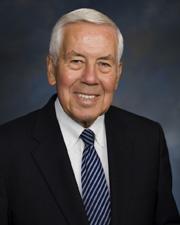
Mr. President, I rise to introduce legislation that is intended to unite Senators behind the President's bold new commitment to international development. As my colleagues are aware, the President…
Mr. President, I rise to introduce legislation that is intended to unite Senators behind the President's bold new commitment to international development. As my colleagues are aware, the President has offered a plan called the Millennium Challenge Corporation that will focus U.S. energy and resources on countries that, while very poor, show commitment to economic reform and development. It is a unique plan that would reward and showcase what we Americans believe to be the essential ingredients for success: good government, investments in people, and a reliance on free markets.
My colleagues on the Senate Foreign Relations Committee strongly supported the goals of the President's initiative and applauded his enthusiasm and personal commitment. But, when we considered the MCC legislation a few weeks ago, organizational issues divided the Committee. The Committee voted 11 to 8 against creating the MCC as an independent agency. Instead the functions of the MCC were integrated into the State Department.
This outcome did not capture the President's vision of a fresh start for a unique approach to development assistance. The Secretary of State himself argued against the Committee's majority on that vote. Secretary Powell said that the President's plan would be best achieved through the establishment of an innovative, flexible, narrowly targeted and highly visible separate organization that can complement other assistance provided through more traditional means.
I believe the Senate should work for a consensus on this issue. This important initiative cannot be allowed to founder on a question of organization.
I have been working to develop a middle ground that will satisfy the basic goals of all sides. My bill creates the needed ingredients for interagency coordination, a top priority among a majority on the Committee. But it does not undermine the integrity of the President's concept. It puts the MCC under the authority of the Secretary of State and has the MCC's Chief Executive Officer report to the Secretary. It gives the MCC the same status within the State Department as the U.S. Agency for International Development, with the right to manage itself, hire staff, and create its own culture. It mandates coordination between the MCC and USAID in the field and give USAID the primary role in preparing countries for MCC eligibility. It also includes the Administrator of USAID on the MCC board to ensure that the perspective of USAID is considered.
Through these means, I believe that the MCC can be substantially independent, as envisioned by the President, while preserving the leadership of the Secretary of State and the input of USAID.
I would emphasize that the President has invested his personal attention and time in the MCC concept. It is rare for a President of either party to provide such strong leadership in the area of development assistance. President Bush's advocacy is critical to the success of this initiative. I believe Congress will regret its actions if we undercut this opportunity for U.S. foreign policy by failing to reach a workable consensus on the MCC's organization.
I am hoping for a strong Senate vote on the MCC and will bring up my compromise proposal at an appropriate time. The MCC provides a way to focus single-mindedly on economic development that is results-based and meets clear benchmarks of success. We can have the coordination we seek while also insulating it from short-term political considerations so that it can focus on widening the universe of countries that live in peace and look to a prosperous and stable future.
I ask unanimous consent that the two accompany pages be printed in the Record.
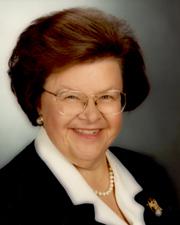
Mr. President, I rise to introduce the National Great Black Americans Commemoration Act. I am proud to sponsor this legislation. Black Americans have a rich history that must be cherished and…
Mr. President, I rise to introduce the National Great Black Americans Commemoration Act. I am proud to sponsor this legislation. Black Americans have a rich history that must be cherished and remembered. This bill will honor African American leaders from across the country--some who are well known, and others who are almost forgotten--by helping to preserve their names, faces, and stories for generations to come.
This legislation will provide Federal assistance to expand exhibits and educational programs at the National Great Blacks in Wax Museum and Justice Learning Center in Baltimore, Maryland. The museum showcases the lives of great Black Americans who have proudly served the United States--from civil servants like Mary McLeod Bethune, to military heroes like Colin Powell, to Congressional leaders like Senator Edward Brooke, R-MA, and civil rights leaders like Rosa Parks. Some are household names, like Frederick Douglass and Dr. Martin Luther King, Jr. Yet many more are unfamiliar, like the 22 African Americans who served in Congress in the 1800s. It's time we give these pioneers the recognition they deserve.
Maryland is proud to be home to so many important figures in black history. From the dark days of slavery through the civil rights movement, Marylanders have led the way. The brilliant Frederick Douglass was the voice of the voiceless in the struggle against slavery. The courageous Harriet Tubman delivered 300 slaves to freedom on the Underground Railroad. The great Thurgood Marshall argued the Brown v. Board of Education Case before the Supreme Court, and later became a Supreme Court Justice himself.
Maryland is home to contemporary leaders, too. The dynamic Kweisi Mfume, president of the NAACP, who, like me, came out of the Baltimore City Council. The passionate Elijah Cummings, Chair of the Congressional Black Caucus. Clarence Mitchell who was called by many the 101st Senator. Parren Mitchell and Al Wynn, fighting for their constituents. And all the members of the NAACP, which calls Baltimore home.
It is fitting that the national Great Blacks in Wax Museum and Justice Learning Center also calls Baltimore home. The museum and learning center is a popular and respected black history museum. Approximately 300,000 people a year from around the country and the world visit the museum. Many are school children, who can see historical figures come to life in the museum's exhibits. Expansion will allow the museum to teach even more visitors about the important contributions of Black Americans. It will also help revitalize a poor neighborhood in East Baltimore. There will be new jobs. There will be more tourists. There will be new small businesses. And most important, there will be new inspiration for our young people.
The State of Maryland and City of Baltimore have already contributed over $5 million toward this expansion project. Private donors are contributing too. Now it's time for the Federal Government to do its part. Let's help make this museum a treasure for the entire Nation.
I ask unanimous consent that the text of the bill be printed in the Record.
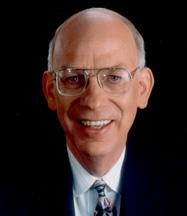
Mr. President, today I am introducing The Independent Living Improvement Act of 2003, a bill to provide a more equitable allotment of funds to States for Centers for Independent Living. Centers for…
Mr. President, today I am introducing The Independent Living Improvement Act of 2003, a bill to provide a more equitable allotment of funds to States for Centers for Independent Living.
Centers for Independent Living, CILs, are non-profit organizations that assist people with significant disabilities who want to live more independently. CILs are primarily staffed by people with disabilities who act as role models, mentors, and counselors to other individuals with disabilities. Each center not only offers fundamental services such as information referral, and independent living skills training, it also tailors its services to the particular needs of its community. The ultimate goal of these centers is to help individuals become more independent and decrease the need for institutional care.
Currently, funds authorized for CILs under Title VII, Part C of the Rehabilitation Act are essentially allocated to States on the basis of their share of the total population. States with small populations are guaranteed the larger of $450,000 or \1/3\ of 1 percent of the funds available for the fiscal year in which the allocation is made, with a guaranteed minimum at the fiscal 1992 funding level for each State.
While the Federal appropriation to CILs has increased over the last five years, the growing disparity between funding for small States and larger States is problematic. The proposed formula change would amend the current funding formula for CILs to provide for more equitable distribution of future funds to each state. Fifty percent of any increase in CILs appropriated fund would be allocated according to population, as is currently done, and the remaining fifty percent would be divided equally among all States. The formula would only be applicable to any future increases in funding. This more equitable sharing of funds ensures that each State's CILs will receive additional funding each time there is an increase in funding and programs will be developed for people with disabilities regardless of where they live in the country.
This bill is supported by the National Council on Independent Living. I believe this a reasonable approach to solving this problem and look forward to working with my colleagues on this issue.
I ask unanimous consent that the text of the bill be printed in the Record.
Mr. President, I rise today to introduce a bill to designate the newly-constructed annex to the E. Barrett Prettyman United States Courthouse as the ``James L. Buckley Annex.'' As members of this…
Mr. President, I rise today to introduce a bill to designate the newly-constructed annex to the E. Barrett Prettyman United States Courthouse as the ``James L. Buckley Annex.'' As members of this body well know, Judge Buckley served in this Senate from 1971- 77, as a trusted colleague from the State of New York. During his tenure here, Judge Buckley was greatly admired for his dedication, integrity, and professionalism.
Judge Buckley's lengthy public service career is one of great distinction. In addition to the time he spent here in the Senate, Judge Buckley served in the United States Navy during World War II, as Undersecretary of State for Security Assistance, and as President of Radio Free Europe. Most recently, he served for more than a decade as a Circuit Judge on the United States Court of Appeals for the District of Columbia Circuit, in the E. Barrett Prettyman courthouse.
Earlier this Congress, we honored Judge Buckley, on the celebration of his 80th birthday, by passing unanimously a resolution, S. Res. 88, acknowledging his distinguished career in the executive, legislative, and judicial branches of the United States.
Naming the new annex to the E. Barrett Prettyman courthouse after Judge Buckley would be a fitting tribute to our former colleague and prominent jurist. I am honored to offer this legislation, and I urge my colleagues to support this well-deserved commendation.
Bill Text
Latest available legislative text
        [Congressional Bills 108th Congress]
[From the U.S. Government Publishing Office]
[S. 1232 Introduced in Senate (IS)]

108th CONGRESS
1st Session
S. 1232

To designate the newly-constructed annex to the E. Barrett Prettyman
Courthouse located at 333 Constitution Ave., N.W., in Washington, D.C.,
as the ``James L. Buckley Annex to the E. Barrett Prettyman United
States Courthouse''.

_______________________________________________________________________

IN THE SENATE OF THE UNITED STATES

June 11, 2003

Mr. Hatch introduced the following bill; which was read twice and
referred to the Committee on Environment and Public Works

_______________________________________________________________________

A BILL

To designate the newly-constructed annex to the E. Barrett Prettyman
Courthouse located at 333 Constitution Ave., N.W., in Washington, D.C.,
as the ``James L. Buckley Annex to the E. Barrett Prettyman United
States Courthouse''.

Be it enacted by the Senate and House of Representatives of the
United States of America in Congress assembled,

SECTION 1. DESIGNATION OF JAMES L. BUCKLEY ANNEX TO THE E. BARRETT
PRETTYMAN UNITED STATES COURTHOUSE.

The newly-constructed annex to the Federal building and E. Barrett
Prettyman United States Courthouse located at 333 Constitution Ave.,
N.W., in Washington, D.C., shall be known and designated as the ``James
L. Buckley Annex to the E. Barrett Prettyman United States
Courthouse''.

SEC. 2. REFERENCES.

Any reference in a law, map, regulation, document, paper, or other
record of the United States to the annex to the Federal building and
United States Courthouse referred to in section 1 shall be deemed to be
a reference to the James L. Buckley Annex to the E. Barrett Prettyman
United States Courthouse.
<all>