Tamarisk Control and Riparian Restoration Act
A bill to direct the Secretary of the Interior to establish a program to control or eradicate tamarisk in the western States, and for other purposes.
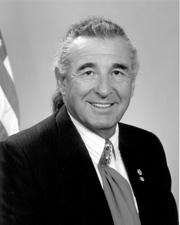 Sen. Ben Nighthorse Campbell (R-CO)
Legislative Activity
Stay on top of the latest movement without scrolling through every action
Committee on Energy and Natural Resources Subcommittee on Water and Power. Hearings held. With printed Hearing: S.Hrg. 108-211.
September 23, 2003
View full timeline
Introduced in Senate
June 11, 2003
Sponsor introductory remarks on measure. (CR S7726-7727)
June 11, 2003
Read twice and referred to the Committee on Energy and Natural Resources. (text of measure as introduced: CR S7727-7728)
June 11, 2003
Committee on Energy and Natural Resources Subcommittee on Water and Power. Hearings held. With printed Hearing: S.Hrg. 108-211.
September 23, 2003
Floor Debate
10 membersWhat members said about S. 1236 on the floor



 +5
Floor Debate
10 membersWhat members said about S. 1236 on the floor
Mr. President, today I am proud to join with two of my colleagues--Senator Reed and Senator Roberts--to introduce legislation that will help America meet a critical challenge that, during the past…
Mr. President, I ask unanimous consent that the Committee on Armed Services be authorized to meet during the session of the Senate on Tuesday, September 23, 2003, at 11 a.m., in open session to…
Mr. President, today I am joined by the Chairman of the Senate Commerce Committee's Competition, Foreign Commerce, and Infrastructure Subcommittee, Senator Smith, in introducing the Federal Trade…
Mr. President, I am pleased to introduce the Improving Women's Health Act of 2003, which seeks to make Medicare, Medicaid, and S-CHIP better programs for women. I am pleased to be joined in this…
Mr. President, I rise today to introduce the Tamarisk Control & Riparian Restoration Act. Tamarisk is a noxious weed that is not native to the Americas, but has spread across 11 States, from…
Show 8 more
Mr. President, I rise today to introduce the Tamarisk Control & Riparian Restoration Act. Tamarisk is a noxious weed that is not native to the Americas, but has spread across 11 States, from…

Mr. President, I rise today to introduce a bill to designate the newly-constructed annex to the E. Barrett Prettyman United States Courthouse as the ``James L. Buckley Annex.'' As members of this…
Mr. President, I rise to introduce legislation that is intended to unite Senators behind the President's bold new commitment to international development. As my colleagues are aware, the President…

Mr. President, I rise to introduce the National Great Black Americans Commemoration Act. I am proud to sponsor this legislation. Black Americans have a rich history that must be cherished and…

Mr. President, today I am introducing The Independent Living Improvement Act of 2003, a bill to provide a more equitable allotment of funds to States for Centers for Independent Living. Centers for…

Mr. President, I would like to announce for the information of the Senate and the public that the hearing before the Subcommittee on Water and Power of the Committee on Energy and Natural Resources…
Mr. President, I would like to announce for the information of the Senate and the public that a hearing has been scheduled before the Subcommittee on Energy and Natural Resources. The hearing will be…
Mr. President, I would like to announce that the Committee on Indian Affairs will meet on Wednesday, September 17, 2003, at 10 a.m. in Room 485 of the Russell Senate Office Building to conduct a…
Bill Text
Latest available legislative text
        [Congressional Bills 108th Congress]
[From the U.S. Government Publishing Office]
[S. 1236 Introduced in Senate (IS)]

108th CONGRESS
1st Session
S. 1236

To direct the Secretary of the Interior to establish a program to
control or eradicate tamarisk in the Western States, and for other
purposes.

_______________________________________________________________________

IN THE SENATE OF THE UNITED STATES

June 11, 2003

Mr. Campbell (for himself and Mr. Allard) introduced the following
bill; which was read twice and referred to the Committee on Energy and
Natural Resources

_______________________________________________________________________

A BILL

To direct the Secretary of the Interior to establish a program to
control or eradicate tamarisk in the Western States, and for other
purposes.

Be it enacted by the Senate and House of Representatives of the
United States of America in Congress assembled,

SECTION 1. SHORT TITLE.

This Act may be cited as the ``Tamarisk Control and Riparian
Restoration Act''.

SEC. 2. FINDINGS.

Congress finds that--
(1) the western United States is currently experiencing its
worst drought in modern history;
(2) the drought in the western United States has caused--
(A) severe losses in rural, agricultural, and
recreational economies;
(B) detrimental effects on wildlife; and
(C) increased risk of wildfires;
(3) it is estimated that throughout the western United
States tamarisk, a noxious and non-native plant--
(A) occupies between 1,000,000 and 1,500,000 acres
of land; and
(B) is a nonbeneficial user of 2,000,000 to
4,500,000 acre-feet of water per year;
(4) the amount of nonbeneficial use of water by tamarisk--
(A) is greater than the amount that valuable native
vegetation would have used; and
(B) represents enough water for--
(i) use by 20,000,000 or more people; or
(ii) the irrigation of over 1,000,000 acres
of land;
(5) scientists have established that tamarisk infestations
can--
(A) increase soil and water salinity;
(B) increase the risk of flooding through increased
sedimentation and decreased channel conveyance;
(C) increase wildfire potential;
(D) diminish human enjoyment of and interaction
with the river environment; and
(E) adversely affect--
(i) wildlife habitat for threatened and
endangered species; and
(ii) the abundance and biodiversity of
other species; and
(6) as drought conditions and legal requirements relating
to water supply accelerate water shortages, innovative
approaches are needed to address the increasing demand for a
diminishing water supply.

SEC. 3. DEFINITIONS.

In this Act:
(1) Program.--The term ``program'' means the Tamarisk
Assistance Program established under section 5.
(2) Secretary.--The term ``Secretary'' means the Secretary
of the Interior, acting through the Commissioner of
Reclamation.
(3) State.--The term ``State'' means--
(A) each of the States of Arizona, California,
Colorado, Idaho, Montana, New Mexico, Nevada, Oklahoma,
Texas, Utah, and Wyoming; and
(B) any other State that is affected by tamarisk,
as determined by the assessment conducted under section
4.

SEC. 4. TAMARISK ASSESSMENT.

(a) In General.--Not later than 180 days after the date on which
funds are made available to carry out this section, the Secretary shall
complete an assessment of the extent of tamarisk invasion in the
western United States.
(b) Components.--The assessment under subsection (a) shall--
(1) address past and ongoing research on tested and
innovative methods to control tamarisk;
(2) estimate the costs for destruction of tamarisk, biomass
removal, and restoration and maintenance of land;
(3) identify the States affected by tamarisk; and
(4) include a gross-scale estimation of infested acreage
within the States identified.

SEC. 5. STATE TAMARISK ASSISTANCE PROGRAM.

(a) Establishment.--Based on the findings of the assessment under
section 4, the Secretary shall establish the Tamarisk Assistance
Program to provide grants to States to carry out projects to control or
eradicate tamarisk.
(b) Amount of Grant.--The amount of a grant to a State under
subsection (a) shall be determined by the Secretary, based on the
estimated infested acreage in the State.
(c) Designation of Lead State Agency.--On receipt of a grant under
subsection (a), the Governor of a State shall designate a lead State
agency to administer the program in the State.
(d) Priority.--
(1) In general.--The lead State agency designated under
subsection (c), in consultation with the entities described in
paragraph (2), shall establish the priority by which grant
funds are distributed to projects to control or eradicate
tamarisk in the State.
(2) Entities.--The entities referred to in paragraph (1)
are--
(A) the National Invasive Species Council;
(B) the Invasive Species Advisory Committee;
(C) representatives from Indian tribes in the State
that have weed management entities or that have
particular problems with noxious weeds;
(D) institutions of higher education in the State;
(E) State agencies;
(F) nonprofit organizations in the State; and
(G) soil and water conservation districts in the
State that are actively conducting research on or
implementing activities to control or eradicate
tamarisk.
(e) Conditions.--A lead State agency shall require that, as a
condition of receipt of a grant under this Act, a grant recipient
provide to the lead State agency any necessary information relating to
a project carried out under this Act.
(f) Administrative Expenses.--Not more than 10 percent of the
amount of a grant provided under subsection (a) may be used for
administrative expenses.
(g) Cost Sharing.--
(1) Federal share.--The Federal share of the cost of
carrying out a project under this section shall be not more
than 75 percent.
(2) Non-federal share.--The non-Federal share may be paid
by a State, county, municipality, special district, or
nongovernmental entity.
(h) Report.--To be eligible for additional grants under the
program, not later than 180 days after the date of completion of a
project carried out under this Act, a lead State agency shall submit to
the Secretary a report that describes the purposes and results of the
project.

SEC. 6. AUTHORIZATION OF APPROPRIATIONS.

There are authorized to be appropriated to carry out this Act--
(1) $20,000,000 for fiscal year 2004; and
(2) such sums as are necessary for each fiscal year
thereafter.
<all>