A bill to redesignate the facility of the United States Postal Service located at 101 South Vine Street in Glenwood, Iowa, as the "William J. Scherle Post Office Building".
Legislative Activity
Stay on top of the latest movement without scrolling through every action
Became Public Law No: 108-65.
July 29, 2003
View full timeline
Introduced in Senate
July 14, 2003
Read twice and referred to the Committee on Governmental Affairs.
July 14, 2003
Senate Committee on Governmental Affairs discharged by Unanimous Consent.(consideration: CR S9618-9619)
July 17, 2003
Senate Committee on Governmental Affairs discharged by Unanimous Consent. (consideration: CR S9618-9619)
July 17, 2003
Passed Senate without amendment by Unanimous Consent. (text: CR S9619)
July 17, 2003
Received in the House.
July 18, 2003 • 9:05 AM
Message on Senate action sent to the House.
July 18, 2003
Referred to the House Committee on Government Reform.
July 18, 2003
Mr. Shays moved to suspend the rules and pass the bill.
July 21, 2003 • 2:50 PM
Considered under suspension of the rules. (consideration: CR H7183-7184)
July 21, 2003 • 2:50 PM
DEBATE - The House proceeded with forty minutes of debate on S. 1399.
July 21, 2003 • 2:50 PM
Passed/agreed to in House: On motion to suspend the rules and pass the bill Agreed to by voice vote.(text: CR H7183)
July 21, 2003 • 2:55 PM
On motion to suspend the rules and pass the bill Agreed to by voice vote. (text: CR H7183)
July 21, 2003 • 2:55 PM
Motion to reconsider laid on the table Agreed to without objection.
July 21, 2003 • 2:55 PM
Presented to President.
July 23, 2003
Signed by President.
July 29, 2003
Became Public Law No: 108-65.
July 29, 2003
Floor Debate
7 membersWhat members said about S. 1399 on the floor
 BLDTH
BLDTH CS
CS SK
SK CG+2
CG+2
Floor Debate
7 membersWhat members said about S. 1399 on the floor
Mr. President, the Senate will be asked to approve two free-trade agreements with respect to Singapore and Chile. I expect the Senate will approve both trade agreements by very wide margins. I intend…
Mr. President, the Senate will be asked to approve two free-trade agreements with respect to Singapore and Chile. I expect the Senate will approve both trade agreements by very wide margins. I intend to oppose both and wanted to explain why. It is not the case that I believe a free-trade agreement with Singapore is inappropriate. It is not the case that I believe a free-trade agreement with Chile is inappropriate. It is the case, however, that this country has a trade regime that is in total chaos and it is a significant mess.
For 20 years, under Republican and Democratic administrations, we have seen our trade deficit ratchet way up. We now have the largest trade deficit in human history that has occurred anywhere on the globe. It has been rising very rapidly. Instead of fixing the problems that exist in international trade and demanding fair trade and demanding from our allies fair trade treatment and doing something to prevent the erosion of American jobs which, incidentally, are now moving overseas at a rapid pace, we have trade negotiators rushing across the world trying to do new agreements.
I say fix the old agreements before we start running around doing new agreements. The reason we are going to consider new agreements today under something called fast track is that Congress decided to handcuff itself and agree to a procedure by which no amendments will be able to be offered to either free-trade agreement.
Singapore is a tiny nation of 3 million people a half a world away. We already have a very favorable trade relationship with Singapore. It has little manufacturing and little agriculture. It is wide open to imported goods. Singapore is not an example of a trade problem for us. So it does not matter much to me whether we have a free-trade agreement with Singapore.
The trade ambassador has brought us an 800-page free-trade agreement with Singapore. But demonstrative of the problem we have created for ourselves is a small provision in the free-trade agreement with Singapore that provides an authorization for the opportunity for Singapore to send to our
country 5,400 people under a visa program to take jobs in this country.
Normally that would be a circumstance that would be dealt with by other committees in Congress, in which we evaluate how many people do we want to come in under a visa to work in this country, but instead this has been negotiated in a foreign-trade agreement negotiation somewhere, perhaps most of it overseas, certainly behind closed doors, inevitably in secret, and they put an immigration provision in this proposal. The immigration provision would allow 5,400 immigrants to come from Singapore to the United States to take jobs in the United States.
Think of this for a second. We have 8 to 10 million people out of work, desperate for jobs, needing to go to work, who cannot find a job in this country. We read a story every day in the major newspapers about someone who has hundreds of resumes out, they spend all day desperately trying to find a job because we have lost 2\1/2\ million jobs in the last couple of years.
It is not as if our economy is growing by creating new jobs. To the extent there is any growth at all, it is jobless growth in this country. Some have made the point that, no, there are jobs attached to this growth, it is just that jobs do not exist in the United States. The growth occurs here in terms of profits and economic expansion of sales and profits, but the jobs attached to that growth are in Bangladesh, Indonesia, China, and elsewhere.
So if we have a jobless expansion, which we have, having lost 2\1/2\ million jobs in the last couple of years, and we have people desperately searching for jobs, and then we get a free-trade agreement brought to the Senate floor our trade ambassador negotiated with Singapore, and deep in the bowels of that agreement is a provision that says 5,400 people from Singapore will come to this country to take jobs in this country and we ask the question: Why? Why would we do that?
So then the immediate instinct is, if there is a provision in this free-trade agreement with Singapore that is that odious, then let's get rid of it by offering an amendment. Dump it. The problem is, fast track means trade agreements brought to the Senate floor prevent any Member of the Senate from offering any amendment under any circumstance.
This Congress foolishly decided that it would straitjacket itself and whatever is negotiated anywhere by our trade ambassador and brought back in the form of a trade agreement, we will agree that we will be prevented from offering an amendment.
So we will vote on this. The majority of the Senate will vote yes to free trade with Singapore, and yes to 5,400 immigrants from Singapore to come to this country to take American jobs. I am not going to vote for that. Once again, the lesson is, those who believe fast-track trade procedures make sense ought to think again.
Also, this trade agreement with Singapore provides for transshipment. It provides for transshipment of high-tech products from anywhere, China, Burma, Indonesia, if they are transshipped through Singapore to the United States to get the full benefit of the Singapore free-trade agreement.
Singapore is already one of the largest transshipping points in the world. Should we be negotiating trade agreements that encourage transshipment so we do not know the origin of shipments to this country of high-tech products or others? I do not think so.
I understand, interestingly enough, that a bipartisan group of my colleagues will offer a resolution on the immigration piece that is in the free-trade agreement. The resolution is going to be a sense-of-the- Senate amendment. I think I was asked if I put my name on it. I am happy to put my name on it, but it does not mean anything. It is beating someone over the head with a feather.
It is a sense-of-the-Senate resolution that says: You better watch it; you should not have done this. But it cannot be more than a sense of the Senate because we cannot take out this provision. This provision is stuck in the trade bill and we cannot get it out. This Senate has already agreed we will not allow amendments.
I didn't vote for that; I voted against it. But the majority of this Senate says: Let us line up so we can be subservient to the trade ambassador--whoever it is, Republican or Democrat--and agree whatever they negotiate in secret overseas that affects American jobs, count us out. We will not be able to offer amendments. That is just fine with us.
Apparently, these are colleagues who have forgotten what is written in the Constitution of the United States. The Constitution clearly says that trade is the Senate's responsibility, not anyone else's; not the President but the Senate.
Fast track trade agreements have been disastrous for this country. This chart shows the runaway deficits we have experienced.
It does not matter which administration is in office. A person could be blindfolded and listen and cannot tell if it is a Republican or Democratic administration. They all say the same thing: all we care about is getting another trade agreement. Meanwhile, we had $470 billion in the year 2002 in merchandise trade deficits. Is that alarming to some? One cannot detect it in the Senate. No one seems to care much about it. There are only two or three Members who talk about this, and we are considered the xenophobic isolationist stooges that do not get it.
What I get is this country fought for a century for a series of things that make life better in our country. There are people who died in the streets of America for the right to organize in labor unions. We fought about child labor laws, saying you should not work 12-year-old kids 12 hours a day in a coal mine or manufacturing plant. We fought about prohibiting companies from dumping chemicals into the air and the water. We fought about safe workplaces, believing the American workers have a right to work in safe workplaces. We fought about all those issues for a century.
Now some have decided you can pole-vault over all of that by producing what you want to produce elsewhere, where you do not have to worry about hiring children, where you do not have to worry about clean air and clean water. You do not have to worry about safe workplaces. You could prohibit all workers from organizing any bargaining unit. We have decided that is OK, let companies do that. They pole-vault to China or Indonesia or Bangladesh, produce there but sell here.
The problem is, in the long term, it does not work because the very people who earned the income in the manufacturing plants in this country are the people who were able to purchase the products off the store shelves. Without the incomes from those jobs--and our manufacturing sector is shrinking badly--from that manufacturing sector, who will buy these products?
This morning in the Wall Street Journal an article reads, ``U.S.- Chinese Trade Becomes a Delicate Issue of Turf.'' It is talking about the debate within the National Association of Manufacturers between the big manufacturers that are international in scope that want to move their manufacturing to other countries where they can pay pennies on the dollar for labor, and the other businesses, medium and small businesses, that rely on the business from the larger companies to spill over to them. It is a fascinating article. I commend the reading to people who are interested in the subject.
Jim Schollaert, a lobbyist with the American Manufacturing Trade Action Coalition, says simply: The big companies are following a new business model--pay Chinese wages but charge U.S. prices.
That is the question these days for us. Is there a price of admission to the American marketplace? We understand we have a globalization of the international economy, and it will not stop. But have the rules for this new global economy kept pace with globalization itself? The answer, clearly, is no. If a large international company has a choice to decide where it wants to produce, and it flies its jet around the world and looks down at the landscape and sees different kinds of governance, different philosophies, different local politics, and different labor forces and decides to choose where to produce, does it not all too often these days decide to produce where it can hire a 12- year-old, work them 12 hours a day and pay them 12 cents an hour?
You think it does not happen? Of course it does. We can describe it and use names in the Senate, names of workers and names of companies. Not
only can they settle on a site in the world where they can put a manufacturing plant, hire kids and adults and pay them pennies on the dollar and pollute the air and water and decide they shall not be allowed to organize as a bargaining unit and they do not have to have safe workplaces in which the workers conduct their daily activities, and then produce there, but they also ship it back to Toledo, Anchorage, Fargo, or Los Angeles and sell it on the store shelves in this country. That is the global marketplace.
Let me talk about a series of specific countries. First, I will talk about China. China has the largest trade deficit with us. It is $103 billion a year. They ship us their trinkets, trousers, shirts, shoes. We are a huge sponge for Chinese production.
One reason we have a very large trade deficit with China, which hurts us and strengthens them, is because the Chinese do not want certain things from us. They are not buying our grain in any significant way. They do not want our wheat. They do not want to buy airplanes. They need airplanes, but do not want to buy our airplanes off the shelf where we manufacture them and send our airplanes to China. They say they want some of our technology, but they want us to build our airplane plant in China and hire Chinese workers. That is the way they would like to buy American airplanes.
The problem is, it does not work that way. That is not what international trade is about. We buy that which we can best use from China, they ought to buy what they can best use from us. That is the doctrine of comparative advantage. It is as old as the study of economics itself.
Our negotiators, our U.S. official negotiators negotiate with other countries and typically underserve American interests.
About 2\1/2\ years ago we had a bilateral trade agreement done with China. It was a prelude to China joining the WTO. At the end of the agreement, there was once again celebration by negotiators because negotiators judge their success by whether or not they got a negotiated agreement. It is a terrible agreement, I might say. They decided, for example, that if there is automobile trade between the United States and China in the future, after a long phase-in, the following will exist: China will be allowed a 25-percent tariff on United States automobiles sold in China, and we would have a 2.5-percent tariff on any Chinese automobiles sold in the United States.
Our negotiators went to China and said: All right, we agree if there is automobile trade, vehicle trade between the United States and China. We will agree that you shall have a tariff that is 10 times higher than what we will impose on your products. Who negotiated this on our behalf? Did they forget who they were working for?
Do you know how many movies we get into China? Before the trade agreement, only 10 imported movies could be shipped to China in a year. Just 10. So after the agreement, we get to ship 20 movies. People say, Look at that; what a great thing that is, to double it to 20. Our expectations on fair trade are pathetic.
The Chinese, by and large, keep their market reasonably closed to us, prevent us from accessing opportunities in their marketplace but expect our marketplace to be wide open to Chinese goods.
We have become a cash cow for the hard currency needs for China, and it is hurting our country. The imbalance in the trade relationship that exists between the United States and China is almost unforgivable. Is anybody doing anything about it? Not a thing. Nothing. Just nothing. All you get, when you talk to the trade ambassador's office, again under Democratic and Republican administrations--all you get from them are a few grunts and groans about we would like to do better and then they rush off and do a new agreement with some other country.
This is what we have with Korea. I mentioned the absurd situation with automobile trade with China. Well, in 2001, 618,000 cars were shipped from Korea to the United States. I believe last year it was 680,000 but use this as a working number; 618,000 cars were shipped from Korea to the United States to U.S. consumers--Hyundais, Daewoos. Probably they are wonderful automobiles. I have not driven one but I am sure they are fine automobiles.
They sent us 618,000 into our marketplace. Can anyone guess how many U.S. automobiles were sold in Korea? It was 2,800; 618,000 coming into our marketplace; we got 2,800 into the Korean market. Korea ships us as many cars as they can get into our marketplace and the Korean Government will keep out as many U.S. cars as they can.
A recent example of that is the Dodge Dakota pickup, which showed great promise in the Korean marketplace. The Dodge Dakota pickup, after 2 months, started penetrating the Korean marketplace. The Korean Government cracked down on it, big headlines in the newspapers, and immediately most of the orders were canceled.
My State produces potatoes in the Red River Valley, great potato country. We produce potatoes and we ship potato flakes to Korea for use in confection food--potato flakes. Do you know what the tariff on potato flakes is to Korea? It is 300 percent. Why do we allow that? I don't know. Our country doesn't seem to be interested in standing up for its economic interests.
Perhaps we should say to the Koreans, these great cars you are shipping into the marketplace, if you don't allow our cars into your marketplace and fair access to your consumers, then you ought to take your cars and sell them in Zaire. Try to sell them in Zaire. If you don't like it, then open your marketplace. Until your marketplace is open, we are not going to absorb more than a half a million of your vehicles. That is simple enough.
But we will not do that because our country is unwilling to stand up for its economic interests. In fact, that which I am presenting today on the floor of the Senate, I can't even present in an op-ed piece in the Washington Post. The Washington Post wouldn't run an op-ed piece in a million years talking about this because they are for one thing: free trade, free trade, free trade. It is as if they were wearing a robe, standing on a street corner chanting, and they only want one view expressed in their op-ed pages. Those of us who raise questions about the requirement for fair trade to stand up for the interests of American jobs are called protectionists.
My goal is not to put a wall around this country. I want to expand trade. I think expanded trade will be good for everyone, provided the rules are fair. When the rules are not fair, it is time for this country to stand up for itself and stand up for its jobs and stand up for its businesses.
I will give some other examples. I have mentioned Korea and I mentioned China. Now let me discuss Europe. I am using some agricultural examples simply because I come from a farm State. There are so many other examples.
If you take a look at what is happening in beef with Europe, the Europeans do not want U.S. beef in their marketplace because they say it is produced with growth hormones and is therefore harmful to their health. There is no scientific evidence of that. In fact, all the evidence is on the other side. But Europe says, We are not going to allow American beef into the European marketplace. In fact, they portray our beef as two-headed cows, some sort of obscene animal that would be terribly harmful to the marketplace, so they say, Keep it out.
So we go to the World Trade Organization and file a complaint against Europe and we win. It doesn't matter to Europe that we win. They are still not going to allow American beef into Europe. So what do we do? We are going to get tough. This is symbolic of the lack of backbone we have in this country when it comes to trade. How do we get tough? We decide to slap some retaliation on Europe. We hit them with some tariffs on truffles, goose liver, and Roquefort cheese.
God bless us, we are really getting tough with Europe. We are going to sock them around with truffles, goose liver, and Roquefort cheese. So what is Europe's idea to retaliate against us? Tariffs on U.S. steel and textiles.
Can you just see the difference? We simply do not have the backbone, the nerve, or the will to stand up for this country's economic interests.
I am mentioning Europe. There are plenty of problems with Europe in terms of our trade agreements. We continue to see country after country--with respect to Europe, we see the entire continent--with large, abiding,
yearly trade deficits that relate to jobs lost in this country.
If we were losing those jobs just because we couldn't compete, that is one thing. That is fine. I wouldn't like it but I would understand it and I would say we better figure out how to compete in the international marketplace. But if we are losing those jobs because the basis of competition is fundamentally unfair to America, then I say there is something wrong with the trade agreements.
We connect to other countries in a way that says to other countries: All right. We will trade and this is the circumstance. We will just tie one or two hands behind our back and then we will start. You can hire kids, you can put them in plants that are unsafe, dump your chemicals into the streams and the air, and you can prohibit them from organizing by law. You can do all those things and it is fine. Make your product as cheap as you can make it and ship it to the marketplace in Bismarck, ND, or Boise, ID, or Fairbanks, AK, or Los Angeles, and we would love to purchase that.
How absurd is that? Is there not any basic standard at all? Are the standards we fought for in this country for so long so old-fashioned? Is it not a timeless truth that workers ought to be able to organize, they ought to be able to expect a fair wage, and that you ought not be able to work 12-year-olds 12 hours a day 7 days a week?
If you wonder about that, let me give an example of a story. This story is entitled ``Worked Till They Drop.'' This happens to be about a 19-year-old girl but it is happening way too often in parts of the world where they do not care about the conditions of production that we have cared about for a long while and that we fought over for many decades. This is a story about Li Chunmei, May 13 of last year. She had been on her feet for 16 hours, her coworkers said:
. . . running back and forth inside the Bainan Toy Factory,
[in China] carrying toy parts from machine to machine.
Let me read a bit from the piece.
This was the busy season, before Christmas, when orders
peaked from Japan and the United States for the factory's
stuffed animals. Long hours were mandatory, and at least 2
months had passed since Li and the other workers had enjoyed
even a Sunday off.
Sixteen hours a day, 7 days a week.
Lying on her bed in the night, staring at the bunk above
her, the slight 19-year-old complained she felt worn out.
She was massaging her aching legs, coughing, and she told them she was hungry.
The factory food was so bad, she said, she felt as if she
had not eaten at all. . . .
``I want to quit,'' one of her roommates . . . remembered
her saying. ``I want to go home.'' Her roommates had already
fallen asleep when Li started coughing up blood. They found
her in the bathroom a few hours later, curled up on the
floor. . . .
She was dead.
The exact cause of Li's death remains unknown. But what happened to her last November in this industrial town in southeastern Guangdong province is described by family friends and coworkers as an example of what China's more daring newspapers call guolaosi.
The phrase means ``over-work death,'' and usually applies to young workers who suddenly collapse and die after working exceedingly long hours, day after day.
This is the sort of thing that is happening in some factories around the world, producing, in this case, stuffed toys. They could have been producing baseball caps. A prominent Ivy League college buys baseball caps from similar factories. They pay \1/5\ cent labor for each cap produced and each cap is sold at $17 on the campus of the Ivy League university. Fair trade?
The question is, What did we fight about all these years? It seems to me we fought about having an economy that gave American businesses a chance to compete fairly and provide good-paying jobs to American workers. On issue after issue in international trade, we have trade agreements being brought to the floor of the Senate that have been negotiated with other countries in a way that is fundamentally incompetent.
One other example I have spent 10 years working on is the aftermatch of a free-trade agreement with Canada. The free-trade agreement with Canada is one I voted against. Incidentally, it was a vote when I was serving in the United States House Ways and Means Committee. It was 34- 1. I was the one who voted against it. I was told by my colleagues we really need to make this a unanimous consent vote, that Canada was our good neighbor to the north and we share a common border. I said no. What you are proposing here is wrong. It is going to dramatically injure family farmers in this country.
But the deal was passed under fast track and no one could offer amendments. Oh, we had an assurance in writing from Trade Ambassador Yeutter that it would not represent a change or a significant change in the quantity of grain going back and forth across the border. The minute it was passed, we began to see a flood--a virtual avalanche--of Canadian wheat coming into this country sold by the Canadian Wheat Board, a state-sanctioned monopoly that would be illegal in this country. Our farmers were badly undercut by this unfair competition. We haven't been able to do a thing about it--nothing.
I had the GAO go to the Canadian Wheat Board because we think they are dumping in our marketplace. The Canadian Wheat Board simply thumbed its nose at the General Accounting Office, saying we don't intend to open our records to you at all. We intend to show you no information.
Year after year, we face this unfair grain trade from Canada. In fact, one day I went to the Canadian border--I have mentioned this many times--with a man named Earl Jensen in a 12-year-old orange truck with a couple hundred bushels of durum wheat. We drove to the Canadian border. All the way to the Canadian border we saw 18-wheelers coming south full of Canadian grain being dumped on our marketplace injuring our farmers. We saw semi load after semi load. I bet we met 20 semi loads of Canadian grain. When we got to the border in the 12-year-old little orange truck, guess what. We were stopped dead in place and we could not get that truck across the border because you couldn't take 200 bushels of durum wheat into Canada. The Canadian market was closed to us, but our market was wide open to unfair Canadian trade in this country. This has gone on for 10 years and we have not been able to do a thing about it.
Today we have a trade ambassador who has been scurrying around the world doing new trade agreements. So we have two new agreements to vote on, one of which has a 5,400 immigrant quota of people coming into our country from Singapore to take American jobs. Everyone knows that is wrong. Everybody in this Chamber knows that is foolish. That is not the way you do immigration policy--behind closed doors in secret on a trade bill. And yet no one in this Chamber will be able to get rid of that provision. That provision will be ratified by this Congress either this afternoon or tomorrow. Not with my vote.
At some point, somehow, somebody will have to wake up on trade. It is not the case that I believe we ought to shut down trade or that we ought to build walls and prevent trade. It is the case that this country needs to have a backbone and some nerve and some will--yes, dealing with China, Japan, Europe, Korea, Canada, and Mexico. And until we get that will and are willing to protect American jobs with the requirement for fair trade, this country is going to continue to lose economic strength.
After the Second World War, for a quarter of a century our trade policy was almost exclusively foreign policy. It wasn't trade. It wasn't economics. It was all foreign policy coming out of the State Department. It didn't matter because we were the biggest, the best, and the strongest country in the world by far and we could tie one hand behind our backs and out-compete anybody under any circumstance. So it was just fine. We could have mushy-headed foreign policy masquerading as trade policy. It didn't matter. We just would win.
But in the second 25 years after the Second World War, we saw the development of some pretty tough and canny competitors--Japan, Europe, now China, and others. Still much of our trade policy is fuzzy-headed foreign policy. Now you tie one hand behind your back with moves that are fairer and this country loses. Again, what do we lose? We lose jobs, economic expansion, opportunity for businesses, opportunity for workers, and some say it doesn't matter; it is just irrelevant.
I do not for the life of me understand that. It makes no sense that this country does not any longer understand that international trade is a significant foundation for this country's economic future. That foundation is either a foundation of cement with strength or quicksand that washes away quickly.
I have a chart which I believe shows a graph of where we have been with all these trade agreements. One after another of these trade agreements has traded away this country's economic interests. You can see the line. It describes when the Tokyo round of GATT was approved. It describes the Uruguay round of GATT. It describes where we are with WTO, and with NAFTA.
It seems to me when something isn't working, you ought to change it. Yet we see no proposal here for change at all. It is just let's have a couple more helpings from the same menu, and the menu isn't working for our country.
There are so many issues related to this. I talked about jobs because, in my judgment, that is central to this. First, you have currency issues and the fact that China, for example, dramatically undervalues its currency against the U.S. dollar. They have a terrific advantage in our marketplace in trade.
There are so many different facets of trade that it is almost hard to describe. You have the political issues. Some countries as a matter of governance decide here is the way we will compete. For example, I have mentioned on a couple of occasions today that some countries will prohibit workers from organizing. We are proud that our country protects those rights. We understand it has strengthened this country and it is good for our country. In fact, the way we have developed a strong middle class in our country is with the development of a manufacturing sector in which workers are organized and have been able through their strength to collect a reasonable share of the national income from manufacturing. But some countries say we will prohibit as a matter of political choice workers from organizing.
Then there are some others who say it doesn't matter that our manufacturing base is eroding; if that is what happens as a result of some natural function of trade, that is all right for our country. Well, it is not all right. There is no country that will long remain a world power--none--without a strong manufacturing base. You cannot be a world economic power without a strong manufacturing base. Those who think this country will remain a strong, vibrant, growing, economic superpower are dead wrong if they allow this manufacturing base to be dissipated. Too many of my colleagues seem to think it is just fine; whatever happens, happens.
It is not fine with me. All you have to do is look at where this country is headed in international trade. Look at what has happened to our manufacturing base. Look at how good jobs have shrunk in this country. I am talking about those people who worked in the coal mines, those who worked in the steel mills, those who worked in our manufacturing plants who used to earn a good wage with good benefits and good job security, and who now discover we are racing toward the bottom to figure out how we can compete with other countries that pay a dime an hour or 20 cents an hour.
How can we compete with other countries that have no laws that prevent them from abusing the environment with chemicals going into the airshed and into the water? If you wonder about that, just travel a bit. Go to those countries--I have--and take a look at what happens. Then ask yourself, Is that the level of competition? Is there an admission price to the American marketplace that says it is almost free? That you don't have to reach any threshold? And any trade--using circumstances I have previously described--is fair trade to which we ought to subject our workers and our employers?
I have explained at great length why I intend to vote no on these two trades agreements. It is not about Chile. It is not about Singapore. It is about a process that is fundamentally bankrupt. It is about trade negotiators who ought to be ashamed of themselves. It is about past trade agreements that are incompetent, whose repercussions we are dealing with today.
I have, from time to time, threatened to offer legislation that would require all U.S. trade negotiators to wear a jersey. When you are representing the United States of America in the Olympics, you wear a jersey that says ``USA.'' It seems to me that perhaps our trade negotiators--more than almost anyone--need to have a jersey to be able to look down at and understand who they represent.
Will Rogers used to say: The United States of America has never lost a war and never won a conference. He surely must have been thinking about trade negotiators. This country had better develop a backbone and some will and some nerve to stand up for its economy and stand up for its workers and stand up for its employers--no, not in a way that is unfair to any other country but in a way that says to any other country: We are open for business, we are ready for competition, and we will compete anywhere and with anyone in the world, but we, by God, demand that the rules be fair. And if the rules are not fair, then we intend to change them to create rules that are fair to our country.
I yield the floor.
Mr. President, I am very pleased that the Senate and the House of Representatives have passed S. 1399, legislation that names the Glenwood, IA Post Office for former Iowa Congressman William J.…
Mr. President, I am very pleased that the Senate and the House of Representatives have passed S. 1399, legislation that names the Glenwood, IA Post Office for former Iowa Congressman William J. Scherle. I understand that the President will soon sign that measure--I hope this week.
Congressman Bill Scherle--or Bill, as his friends call him--and his wife Jane live on their family farm just outside of Henderson, IA, in Mills County. Glenwood is the county seat of Mills County. Bill served 4 terms in the U.S. House of Representatives, beginning with 3 terms in 1967 in what was then Iowa's 7th Congressional District, and a term in the redistricted 5th Congressional District. I think it is appropriate that Glenwood's Post Office will soon permanently bear Congressman Scherle's name.
Bill long served this Nation. He started with military service in the navy and Coast Guard during World War II, then afterward served in the Naval Reserve. He chaired the Mills County Republican Party for almost a decade starting in 1956. He served in the Iowa legislature from 1960 through 1966. He then was elected to the U.S. Congress and served through 1974, including service on the Education and Labor Committee as well as on the Appropriations Committee. His public service continued in 1975 and 1976, when he was appointed to a senior position at the Department of Agriculture.
In January 1968, North Korea seized the USS Pueblo, imprisoning and torturing the crew. Congressman Scherle led the effort in Congress to free the crew of the Pueblo. I have always admired Bill's tenacity in never letting the Pueblo crew be forgotten. Bill was the only member of Congress invited to attend Pueblo reunions, and, as their health has allowed, Bill and Jane always have attended.
Bill and I are at different places on the political spectrum, and I ran against him for Congress twice. He won the first time, and I won the rematch. We disagreed on many issues, but I always understood that he acted on the basis of strongly held views about what he considered were the best interests of those he represented and of the Nation.
Long after we ran as opponents, I got to know Bill and visited on his farm. He is a good person who cares deeply about his community and rural America. Politics has always had a certain amount of rough and tumble.
But while Bill was certainly a good Republican who wanted to see consistent victories for the GOP, he also could see the good in all people.
One area of our mutual interest was the Iowa School for the Deaf in Council Bluffs. Bill always did what he could for the school my brother attended years ago, and for deaf people in general.
Congressman Scherle always cared about children and their welfare. He wrote a children's book, ``The Happy Barn.'' He gave away thousands of copies to schools, hospitals and individual families in Southwest Iowa and the Omaha area, reading to young children time after time. He had lots of fun reading to children, and I believe that there are few more valuable things we can do as adults than to read to children and get them started on that most important activity.
Bill was a businessman and farmer, proud of both professions. He received the Alegent Health Mercy Hospital Heritage Award for his contributions to business in Southwest Iowa.
Bill Scherle remains a good father to his two sons, and a good husband to his wife of 55 years, Jane. He is blessed with six grandchildren--five girls and a boy. Bill has lived a dedicated life, full of patriotism, family and public service. I am please that my colleague, Senator Grassley, joins me in sponsoring this legislation. Congressman King introduced the companion legislation in the House of Representatives, which was cosponsored by the entire Iowa delegation.
I thank my colleagues for helping us all to honor Congressman Bill Scherle, and I look forward to hearing that the President has signed this bill--hopefully this week.
Mr. President, I am very pleased that the Senate is moving towards passage today of legislation that would name the Glenwood, IA, post office for former Iowa Congressman, William J. Scherle. Bill…
Mr. President, I am very pleased that the Senate is moving towards passage today of legislation that would name the Glenwood, IA, post office for former Iowa Congressman, William J. Scherle. Bill Scherle and his wife Jane live on their family farm just outside of Henderson, IA, in Mills County. Glenwood is the county seat of Mills County. Bill served four terms in the U.S. House of Representatives, beginning with three terms in 1967 in what was then Iowa's 7th Congressional District, and a term in the re-districted 5th Congressional District. I think it is appropriate that Glenwood's Post Office will soon permanently bear Congressman Scherle's name.
Bill long served his Nation. He started with military service in the Navy and Coast Guard during World War II, then afterwards served in the Naval Reserve. He chaired the Mills County Republican Party for almost a decade starting in 1956. He served in the Iowa legislature from 1960 through 1966. He then was elected to the U.S. Congress and served through 1974, including service on the Education and Labor Committee and the Appropriations Committee. His public service continued in 1975 and 1976, when he was appointed to a senior position at the Department of Agriculture.
In January 1968, North Korea seized the USS Pueblo, imprisoned and tortured the crew. Congressman Scherle led the effort in Congress to free the crew of the Pueblo. I have always admired Bill's tenacity in never letting the Pueblo crew be forgotten. Bill was the only Member of Congress invited to attend Pueblo reunions and as their health has allowed, Bill and Jane always have attended.
Bill and I are at different places on the political spectrum, and I ran
against him for Congress twice. He wont the first time, and I won the re-match. We disagreed on many issues, but I always understood that he acted on the basis of strong-held views about what he considered were the best interests of those he represented and of the Nation.
Long after we ran as opponents, I got to know Bill and visited him on his farm. He is a good person who cares deeply about his community and rural America. Politics has always had a certain amount of rough and tumble. But while Bill was certainly a good Republican who wanted to see consistent victories for the GOP, he also could see the good in all people.
One area of our mutual interest was the Iowa School for the Deaf in Council Bluffs. Bill always did what he could for the school my brother attended years ago, and for deaf people in general.
Congressman Scherle always cared about children and their welfare. He wrote a children's book. ``The Happy Barn.'' He gave away thousands of copies to schools, hospitals and individual families in Southwest Iowa and the Omaha area, reading to young children time after time. He had lots of fun reading to children, and I believe that there are few more valuable things we can do as adults than to read to children and get them started on that most important activity.
Bill was a businessman and farmer, proud of both professions. He received the Alegent Health Mercy Hospital Heritage Award for his contributions to business in Southwest Iowa.
He remains a good father to his two sons, and a good husband to his wife of 55 years, Jane. He is blessed with 6 grandchildren--five girls and a boy. Bill has lived a dedicated, patriotic, family and public service life.
I am pleased that my colleague, Senator Grassley, joins me in sponsoring this legislation. Congressman King has introduced similar legislation in the House of Representatives.
Mr. Speaker, I move to suspend the rules and pass the Senate bill (S. 1399) to redesignate the facility of the United States Postal Service located at 101 South Vine Street in Glenwood, Iowa, as the…
Mr. Speaker, I move to suspend the rules and pass the Senate bill (S. 1399) to redesignate the facility of the United States Postal Service located at 101 South Vine Street in Glenwood, Iowa, as the ``William J. Scherle Post Office Building.''
Mr. Speaker, I ask unanimous consent that all Members may have 5 legislative days in which to revise and extend their remarks on the bill under consideration.
Mr. Speaker, I yield myself such time as I may consume.
Mr. Speaker, S. 1399, introduced by the esteemed gentleman from Iowa, Senator Harkin, redesignates the facility of the United States Postal Service located at 101 South Vine Street in Glenwood, Iowa, as the William J. Scherle Post Office Building.
Mr. Speaker, Congressman Bill Scherle of Iowa has lived a life that is worthy of commemoration by this House. He served four terms as a representative of the people of Iowa in this body, from 1967 to 1975, and prior to that he was a member of the Iowa State legislature for 6 years.
One of Congressman Scherle's most remarkable contributions in office was his determined work in freeing the crew of the USS Pueblo, which was captured by North Korea in January 1968. The North Koreans imprisoned and brutally tortured the members of the crew, and Congressman Scherle was the most outspoken leader in Congress on the crisis. Eventually, due largely to his leadership, all but one member of the crew, Richard Benden, was released and returned safely home.
In addition, Congressman Scherle took particular interest in rural issues, which were most important to his district's constituents. He was a farmer himself, as well as a businessman, which seems somewhat redundant because farmers have to be businessmen as well. But in addition to being a farmer/businessman, he was a businessman and a Republican Party official in his State prior to becoming an elected official.
Now retired, Congressman Scherle continues to live with his beloved wife, Jane, on their farm outside of Henderson, Iowa. I understand he enjoys spending as much time as he can with his six grandchildren.
I think it is pretty special, as well, that the Senator from Iowa has introduced this bill because he ran two House races against Bill Scherle. The first match-up in 1972 was won by Congressman Scherle, and the second time around, in 1974, the Senator from Iowa was victorious. The two have since become good friends, and after running two campaigns against each other, I think that is a refreshing commentary on both these dedicated public officials and the process.
I also want to recognize the gentleman from Iowa (Mr. King) for his work on H.R. 2558, a virtually identical
piece of legislation introduced here in the House. I know he worked alongside the Senator from Iowa to recognize Bill Scherle in the Congress, and I commend him for his efforts as well.
Therefore, Mr. Speaker, I commend the Senator from Iowa for introducing S. 1399 that honors W.J. Scherle, as well as commending the gentleman from Iowa (Mr. King). I urge all Members to support its passage.
Mr. Speaker, I reserve the balance of my time.
Mr. Speaker, I am pleased to bring forth S. 1399, the William J. Scherle Post Office Building Redesignation Act, to honor the selfless service of a great Iowan, Bill Scherle. I want to thank the Iowa…
Mr. Speaker, I am pleased to bring forth S. 1399, the William J. Scherle Post Office Building Redesignation Act, to honor the selfless service of a great Iowan, Bill Scherle. I want to thank the Iowa delegation in the House of Representatives for joining me and Senators Harkin and Grassley in supporting this well-deserved gesture to honor the service of a great American by their cosponsorship of my House version, H.R. 2758.
Mr. Scherle was born in Little Falls, New York in 1923. After serving this great country in the Second World War, Mr. Scherle attended Southern Methodist University and subsequently served in the United States Naval Reserve. After serving his country in the military, Mr. Scherle decided to engage in grain and livestock farming and settled in rural Mills County, Iowa. Mr. Scherle was elected to 3 consecutive terms in the Iowa House of Representatives.
In 1966, he was elected to his first of four terms in the United States House of Representatives. Bill was known as a watchdog of government waste who brought a keen eye for economic accountability to the Congress.
Bill was an outspoken and persistent voice for the members of the captured spy boat, the Pueblo, during 1968 when the boat and crew were captured by the North Koreans. Thanks to his daily reminders on the floor of Congress, the members of the Pueblo and their plight were kept at the forefront of the Congress' consciousness until they were released by the North Korean government.
Mr. Scherle promoted personal responsibility, agricultural growth and innovation, and was the embodiment of common sense conservatism during his tenure in this honorable House. After serving in the United States Department of Agriculture and as a consultant in Washington D.C., Mr. Scherle retired to Henderson, where he currently resides with his wife Jane.
Mr. Speaker, members of the House, please join me and the entire Iowa delegation in voting to designate the Glenwood, Iowa Post Office the William J. Scherle Post Office Building.
Show 3 more
Mr. President, I rise in support of S. 1399, a bill I am happy to cosponsor with Senator Harkin, to name the post office in Glenwood, IA, the William J. Scherle Post Office Building. Former…
Mr. President, I rise in support of S. 1399, a bill I am happy to cosponsor with Senator Harkin, to name the post office in Glenwood, IA, the William J. Scherle Post Office Building. Former Congressman Bill Scherle served in the U.S. House of Representatives for four terms, from 1967-1975. Before that, we served together in the Iowa House of Representatives. Bill Scherle is originally from New York State, so he was not born an Iowan, but you would never know it. He acclimated well to Iowa, living on a farm near the small southwestern Iowa town of Henderson. Bill is a farmer through and through. He was a plainspoken conservative voice in Congress and he represented his largely rural western Iowa district well. He then went on to serve his country in the Department of Agriculture. Bill Scherle has given a good portion of his life to public service and it is fitting that a post office near his home be named in his honor. In fact, Bill Scherle's legacy as a public servant is demonstrated by the fact that this bill to honor him is a bipartisan initiative. Both Senator Harkin and I recognize the contribution made by Bill Scherle to Iowa and to the United States. I was very sorry when I recently learned that Bill is in poor health. I wish him the best and my prayers are with him and his family. I am glad that we have this opportunity now to recognize Bill and his service to his State and his Nation. I would like to thank Chairman Collins for her help in allowing this bill to be moved quickly through the Government Affairs Committee and the Senate. I know that Congressman King, who follows in Congressman Scherle's footsteps, has sponsored a similar measure in the House with the support of others from the Iowa delegation. Those who know Bill Scherle or know of his legacy understand why this honor is so appropriate and I hope this bill can be enacted very soon.
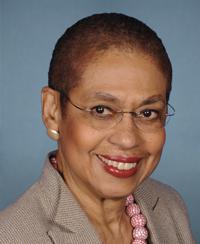
Mr. Speaker, I yield myself such time as I may consume. I rise in support of S. 1399, a bill that would name a U.S. postal facility after W.J. Scherle. S. 1399 was introduced by Senator Tom Harkin of…
Mr. Speaker, I yield myself such time as I may consume.
I rise in support of S. 1399, a bill that would name a U.S. postal facility after W.J. Scherle. S. 1399 was introduced by Senator Tom Harkin of Iowa on July 14, 2003, and passed unanimously by the Senate on July 17, 2003.
S. 1399 would name the Glenwood, Iowa, Post Office after W.J. Scherle, a former Member of Congress. Congressman Scherle was first elected to represent Iowa's Seventh Congressional District in 1967. After redistricting, Representative Scherle represented the Fifth Congressional District until 1974.
During his tenure in Congress, Representative Scherle served on the Committees on Education and Labor and Appropriations. Prior to serving in the Congress, Bill Scherle served in the Navy and Coast Guard during World War II, and then later in the Navy Reserve. He served as chairman of the Mills County Republican Party, and then went on to serve in the Iowa legislature for 6 years.
According to Senator Harkin, the sponsor of this measure, Representative Scherle will particularly be remembered for leading the effort in Congress to release the crew of the U.S.S. Pueblo, which had been seized by North Korea in 1968.
Mr. Speaker, I urge the swift adoption of this bill.
Mr. Speaker, I have no further requests for time, and I yield back the balance of my time.
Mr. SHAYS. Mr. Speaker, I yield back the balance of my time.
The SPEAKER pro tempore. The question is on the motion offered by the gentleman from Connecticut (Mr. Shays) that the House suspend the rules and pass the Senate bill, S. 1399.
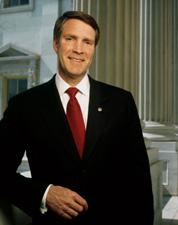
Mr. President, I ask unanimous consent that the Governmental Affairs Committee be discharged from further consideration of S. 1399 and the Senate proceed to its immediate consideration. I ask…
Mr. President, I ask unanimous consent that the Governmental Affairs Committee be discharged from further consideration of S. 1399 and the Senate proceed to its immediate consideration.
I ask unanimous consent that the bill be read a third time and passed, that the motion to reconsider be laid upon the table, and any statements relating to the bill be printed in the Record.
Bill Text
5 versions available
        [Congressional Bills 108th Congress]
[From the U.S. Government Publishing Office]
[S. 1399 Enrolled Bill (ENR)]

S.1399

One Hundred Eighth Congress

of the

United States of America

AT THE FIRST SESSION

Begun and held at the City of Washington on Tuesday,
the seventh day of January, two thousand and three

An Act

To redesignate the facility of the United States Postal Service located
at 101 South Vine Street in Glenwood, Iowa, as the ``William J. Scherle
Post Office Building''.

Be it enacted by the Senate and House of Representatives of the
United States of America in Congress assembled,

SECTION 1. WILLIAM J. SCHERLE POST OFFICE BUILDING.

(a) Redesignation.--The facility of the United States Postal
Service located at 101 South Vine Street in Glenwood, Iowa, and known
as the Glenwood Main Office, shall be known and designated as the
``William J. Scherle Post Office Building''.
(b) References.--Any reference in a law, map, regulation, document,
paper, or other record of the United States to the facility referred to
in subsection (a) shall be deemed to be a reference to the William J.
Scherle Post Office Building.

Speaker of the House of Representatives.

Vice President of the United States and
President of the Senate.