America's Healthy Forest Restoration and Research Act
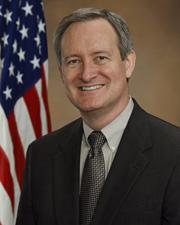 Sen. Mike Crapo (R-ID)
Legislative Activity
Stay on top of the latest movement without scrolling through every action
Read twice and referred to the Committee on Agriculture, Nutrition, and Forestry.
July 23, 2003
View full timeline
Introduced in Senate
July 23, 2003
Sponsor introductory remarks on measure. (CR S9799-9801)
July 23, 2003
Read twice and referred to the Committee on Agriculture, Nutrition, and Forestry.
July 23, 2003
Floor Debate
18 membersWhat members said about S. 1449 on the floor



 +13
+13
Floor Debate
18 membersWhat members said about S. 1449 on the floor
Madam President, I will talk about the bill pending and share some thoughts and concerns I have about the bill. This is not a matter of light substance that is before the Senate. This is not a bill…
Mr. President, I thank the Senator from Idaho for his comments and for his support. I have worked with him on this issue now for a long, long time. As you know, California has great and challenging…
Madam President, it is an honor for me to participate in this debate, not only because of the importance of this legislation, which I will talk about in a minute, but because of the process which has…
I thank the Chair. Madam President, even if we were not having the catastrophic fires we are seeing every day in southern California right now, the forest health issue is of vital importance to us in…
Mr. President, forestry can often make Middle East politics seem noncontroversial. I think it is fair to say that today it would be hard to find a topic that is more emotionally flammable than the…
Show 8 more

I yield to Senator Reid. Madam President, I thank the Senate for allowing a lengthy debate this morning about a very serious issue. I am looking across the Senate to the distinguished junior Senator…

Mr. President, before the ranking member of the Agriculture Committee sits down, I would be more than happy to include the protection of all the old growth in the Federal forests of Iowa in this…
Madam President, I will make a few comments about the underlying legislation, the Healthy Forest initiative, and give a perspective from another western state, the State of Nevada, my home State, and…

Mr. President, I thank Senators Cochran and Reid for allowing me to do this. I have been waiting for quite a while. We can get through some of these amendments. I rise again with a heavy heart to…
Mr. President, Idaho faces grim news this morning as the deaths of two young wildland firefighters are reported. They were killed late Tuesday afternoon while fighting the Cramer fire in the…
Mr. President, Idaho faces grim news this morning as the deaths of two young wildland firefighters are reported. They were killed late Tuesday afternoon while fighting the Cramer fire in the…

Madam President, I am very proud to be in the Chamber discussing the Healthy Forests Restoration Act with an eye toward its quick passage through the Senate. I first want to applaud both Chairman…

Mr. President, I thank the manager of the bill. I commend the managers and the bipartisan group who worked on this bill. It is vitally needed, and I rise in strong support of it. Mr. President, this…
Show 11 more

That is correct. That is correct. It is not just a small patch we are talking about. We have over 5 million acres of infested and dead timber standing there just waiting, as the Senator indicated, to…
Mr. President, I rise today to join my good friend Senator Crapo of Idaho in introducing legislation aimed at rehabilitating this Nation's public and private forestlands. Senator Crapo and I serve as…
Mr. President, I rise today to join my good friend Senator Crapo of Idaho in introducing legislation aimed at rehabilitating this Nation's public and private forestlands. Senator Crapo and I serve as…
Mr. President, today I am introducing a bill with Senators McCain, Feinstein, and Cornyn entitled the Border Health Security Act of 2003. This bill addresses the tremendous health problems…

Madam President, I rise today in strong support of the H.R. 1904 title I compromise reached by many of my colleagues on both sides of the aisle. I commend them for their work. The issue we take up…

Mr. President, on July 24, the Committee on Agriculture, Nutrition, and Forestry reported to the Senate H.R. 1904, the Healthy Forests Restoration Act. This bill, which is now before the Senate,…

Madam President, if ever there was a bill where one could say its time has come, this is such a bill. It is critically important at this time for us to move forward to a vote on the Healthy Forests…
Mr. President today I introduce a very important piece of legislation, the Calista Energy and Economic Revitalization Act. This legislation will create a profound and positive effect on one of the…
Madam President, in just a couple minutes I am going to offer a unanimous consent request to move to consideration of a bill to provide extended unemployment compensation benefits to displaced…

Madam President, I ask unanimous consent that Senator Miller and I be added as cosponsors of amendment No. 1828. Madam President, I appreciate the comments made by my colleague from Idaho and I rise…

Mr. President, I am very pleased to join my colleagues in supporting the bipartisan forest health legislation. Catastrophic wildfires raging in California today underscore the urgent need for action.…
Bill Text
Latest available legislative text
        [Congressional Bills 108th Congress]
[From the U.S. Government Publishing Office]
[S. 1449 Introduced in Senate (IS)]

108th CONGRESS
1st Session
S. 1449

To improve the capacity of the Secretary of Agriculture and the
Secretary of the Interior to prepare and conduct hazardous fuels
reduction projects on National Forest System land and Bureau of Land
Management land that are aimed at protecting communities, watersheds,
and certain other at-risk land from catastrophic wildfire, to enhance
efforts to protect watersheds and address threats to forest and
rangeland health on public and private land, including catastrophic
wildfire, to increase research on forest health and forest-damaging
agents, and for other purposes.

_______________________________________________________________________

IN THE SENATE OF THE UNITED STATES

July 23 (legislative day, July 21), 2003

Mr. Crapo (for himself and Mrs. Lincoln) introduced the following bill;
which was read twice and referred to the Committee on Agriculture,
Nutrition, and Forestry

_______________________________________________________________________

A BILL

To improve the capacity of the Secretary of Agriculture and the
Secretary of the Interior to prepare and conduct hazardous fuels
reduction projects on National Forest System land and Bureau of Land
Management land that are aimed at protecting communities, watersheds,
and certain other at-risk land from catastrophic wildfire, to enhance
efforts to protect watersheds and address threats to forest and
rangeland health on public and private land, including catastrophic
wildfire, to increase research on forest health and forest-damaging
agents, and for other purposes.

Be it enacted by the Senate and House of Representatives of the
United States of America in Congress assembled,

SECTION 1. SHORT TITLE; TABLE OF CONTENTS.

(a) Short Title.--This Act may be cited as the ``America's Healthy
Forest Restoration and Research Act''.
(b) Table of Contents.--The table of contents of this Act is as
follows:

Sec. 1. Short title; table of contents.
Sec. 2. Purposes.
Sec. 3. Definitions.
TITLE I--HAZARDOUS FUELS REDUCTION ON FEDERAL LAND

Sec. 101. Findings.
Sec. 102. Definitions.
Sec. 103. Authorized hazardous fuels reduction projects.
Sec. 104. Prioritization for communities and watersheds.
Sec. 105. Environmental analysis.
Sec. 106. Special Forest Service administrative review process.
Sec. 107. Special requirements regarding judicial review of authorized
hazardous fuels reduction projects.
Sec. 108. Standard for injunctive relief for agency action to restore
fire-adapted forest or rangeland
ecosystems.
Sec. 109. Local preference contracting.
Sec. 110. Effect of title.
TITLE II--BIOMASS

Sec. 201. Findings.
Sec. 202. Definitions.
Sec. 203. Grants to improve the commercial value of forest biomass for
electric energy, useful heat,
transportation fuels, petroleum-based
product substitutes, and for other
commercial purposes.
Sec. 204. Reporting requirement.
TITLE III--WATERSHED FORESTRY ASSISTANCE

Sec. 301. Findings and purposes.
Sec. 302. Watershed forestry assistance program.
TITLE IV--RESEARCH

Subtitle A--General Provisions

Sec. 401. Findings and purposes.
Sec. 402. Definitions.
Sec. 403. Cooperation and assistance.
Sec. 404. Relation to other laws.
Subtitle B--Accelerated Information Gathering and Applied Silvicultural
Research

Sec. 411. Accelerated information gathering.
Sec. 412. Applied silvicultural research.
Sec. 413. Authorization of appropriations.
Subtitle C--Forest Stands Inventory and Monitoring

Sec. 421. Forest land inventory and monitoring program to improve
detection of and response to environmental
threats.
Subtitle D--Biomass

Sec. 431. Improved biomass use research program.
Subtitle E--Revitalization and Research

Sec. 441. Rural revitalization through forestry.
Sec. 442. Upland Hardwoods Research Center.
TITLE V--HEALTHY FORESTS RESERVE PROGRAM

Sec. 501. Establishment of healthy forests reserve program.
Sec. 502. Eligibility and enrollment of land in program.
Sec. 503. Restoration plans.
Sec. 504. Financial assistance.
Sec. 505. Technical assistance.
Sec. 506. Assurances and measures.
Sec. 507. Involvement by other agencies and organizations.
Sec. 508. Authorization of appropriations.
TITLE VI--MISCELLANEOUS PROVISIONS

Sec. 601. Program for emergency treatment and reduction of nonnative
invasive plants.
Sec. 602. Sense of Congress regarding enhanced community fire
protection.

SEC. 2. PURPOSES.

The purposes of this Act are--
(1) to reduce the risks and severity of damage to
communities, municipal water supplies, and certain at-risk
Federal land from catastrophic wildfires, insects, disease, and
other damaging agents;
(2) to authorize grant programs to improve the commercial
value of forest biomass that otherwise contributes to the risk
of catastrophic fire or insect or disease infestation for
producing electric energy, useful heat, transportation fuels,
and petroleum-based product substitutes, and for other
commercial purposes;
(3) to enhance efforts to protect watersheds and address
threats to forest and rangeland health, including catastrophic
wildfire, across the landscape;
(4) to promote systematic gathering of information to
address the impact of fire, insect and disease infestations,
and other damaging agents on forest and rangeland health;
(5) to improve the capacity to detect insect and disease
infestations at an early stage, particularly with respect to
hardwood forests;
(6) to advance research to improve the use of biomass and
hardwood species;
(7) to restore and enhance components of the forest
ecosystem--
(A) to promote the recovery of threatened and
endangered species;
(B) to improve biological diversity; and
(C) to enhance productivity and carbon
sequestration; and
(8) to authorize a grant program to address the threat of
catastrophic fire resulting from infestation by nonnative
species.

SEC. 3. DEFINITIONS.

In this Act:
(1) Federal land.--The term ``Federal land'' means--
(A) land of the National Forest System (as defined
in section 11(a) of the Forest and Rangeland Renewable
Resources Planning Act of 1974 (16 U.S.C. 1609(a)))
administered by the Secretary of Agriculture, acting
through the Chief of the Forest Service; and
(B) public lands (as defined in section 103 of the
Federal Land Policy and Management Act of 1976 (43
U.S.C. 1702)), the surface of which is administered by
the Secretary of the Interior, acting through the
Director of the Bureau of Land Management.
(2) Indian tribe.--The term ``Indian tribe'' has the
meaning given the term in section 4 of the Indian Self-
Determination and Education Assistance Act (25 U.S.C. 450b).

TITLE I--HAZARDOUS FUELS REDUCTION ON FEDERAL LAND

SEC. 101. FINDINGS.

Congress finds that--
(1) thousands of communities in the United States, many of
which are located near Federal land, are at risk of wildfire;
(2) approximately 190,000,000 acres of land managed by the
Secretary of Agriculture and the Secretary of the Interior are
at risk of catastrophic fire in the near future;
(3) the accumulation of heavy forest and rangeland fuel
loads continues to increase as a result of fire exclusion
disease, insect infestations, and drought, further raising the
risk of fire each year and increasing the threats to homes,
businesses, and community watersheds;
(4) more than 70,000,000 acres of publicly and privately
owned land are at risk of experiencing higher-than-normal
mortality rates over the next 15 years as a result of insect
infestation and disease;
(5) high rates of tree mortality from insects and disease
result in increased fire risk, degraded watershed conditions,
and changes in species diversity and productivity, as well as
diminished fish and wildlife habitat and decreased timber
values;
(6) preventive treatments, such as reducing fuel loads,
crown density, ladder fuels, and hazard trees, planting proper
species mixtures, restoring, protecting, and maintaining
habitats in a diverse array of seral stages, and other specific
restoration treatments designed to reduce the susceptibility of
forest and rangeland to insect outbreaks, disease, and
catastrophic fire present the greatest opportunity for long-
term forest and rangeland health by creating a mosaic of
species-mix and age distribution; and
(7) those prevention treatments are widely acknowledged to
be more successful and cost-effective than suppression
treatments in the case of insects, disease, and fire.

SEC. 102. DEFINITIONS.

In this title:
(1) Authorized hazardous fuels reduction project.--The term
``authorized hazardous fuels reduction project'' means a
hazardous fuels reduction project on Federal land described in
section 103(a) that is planned and conducted in accordance with
sections 105 and 106.
(2) Condition class 2.--The term ``condition class 2'',
with respect to an area of Federal land, means the condition
class description developed by the Forest Service Rocky
Mountain Research Station in the general technical report
entitled ``Development of Coarse-Scale Spatial Data for
Wildland Fire and Fuel Management'' (RMRS-87), dated April 2000
(including any subsequent revision to the report), under
which--
(A) fire regimes on the land have been moderately
altered from historical ranges;
(B) there exists a moderate risk of losing key
ecosystem components from fire;
(C) fire frequencies have increased or decreased
from historical frequencies by 1 or more return
intervals, resulting in moderate changes to--
(i) the size, frequency, intensity, or
severity of fires; or
(ii) landscape patterns; and
(D) vegetation attributes have been moderately
altered from the historical range of the attributes.
(3) Condition class 3.--The term ``condition class 3'',
with respect to an area of Federal land, means the condition
class description developed by the Rocky Mountain Research
Station in the general technical report referred to in
paragraph (2) (including any subsequent revision to the
report), under which--
(A) fire regimes on land have been significantly
altered from historical ranges;
(B) there exists a high risk of losing key
ecosystem components from fire;
(C) fire frequencies have departed from historical
frequencies by multiple return intervals, resulting in
dramatic changes to--
(i) the size, frequency, intensity, or
severity of fires; or
(ii) landscape patterns; and
(D) vegetation attributes have been significantly
altered from the historical range of the attributes.
(4) Day.--The term ``day'' means--
(A) a calendar day; or
(B) if a deadline imposed by this title would
expire on a nonbusiness day, the end of the next
business day.
(5) Decision document.--The term ``decision document''
means a decision notice or record of decision, as those terms
are used in applicable regulations of the Council on
Environmental Quality and the Forest Service Handbook.
(6) Hazardous fuels reduction project.--The term
``hazardous fuels reduction project'' means the measures and
methods described in the definition of ``appropriate tools'' contained
in the glossary of the Implementation Plan.
(7) Implementation plan.--The term ``Implementation Plan''
means the Implementation Plan for the 10-year Comprehensive
Strategy for a Collaborative Approach for Reducing Wildland
Fire Risks to Communities and the Environment, dated May 2002,
which was developed in accordance with the Department of the
Interior and Related Agencies Appropriations Act, 2001 (Public
Law 106-291) (including any subsequent revision to the Plan).
(8) Interface community.--The term ``interface community''
has the meaning given the term in the notice published at 66
Fed. Reg. 751 (January 4, 2001) (including any subsequent
revision to the notice).
(9) Intermix community.--The term ``intermix community''
has the meaning given the term in the notice published at 66
Fed. Reg. 751 (January 4, 2001) (including any subsequent
revision to the notice).
(10) Municipal watershed.--The term ``municipal watershed''
means the land, waterways, impoundments, and storage areas used
to collect and distribute drinking water to a community.
(11) Resource management plan.--The term ``resource
management plan'' means--
(A) a land and resource management plan prepared
for 1 or more units of land of the National Forest
System described in paragraph (6)(A) under section 6 of
the Forest and Rangeland Renewable Resources Planning
Act of 1974 (16 U.S.C. 1604); or
(B) a land use plan prepared for 1 or more units of
the public land described in paragraph (6)(B) under
section 202 of the Federal Land Policy and Management
Act of 1976 (43 U.S.C. 1712).
(12) Secretary.--The term ``Secretary'' means--
(A) the Secretary of Agriculture, with respect to
land of the National Forest System described in section
(3)(1)(A); and
(B) the Secretary of the Interior, with respect to
public lands described in section 3(1)(B).
(13) Threatened and endangered species habitat.--The term
``threatened and endangered species habitat'' means Federal
land identified in--
(A) a determination that a species is an endangered
species or a threatened species under the Endangered
Species Act of 1973 (16 U.S.C. 1531 et seq.);
(B) a designation of critical habitat of the
species under that Act; or
(C) a recovery plan prepared for the species under
that Act.

SEC. 103. AUTHORIZED HAZARDOUS FUELS REDUCTION PROJECTS.

(a) Authorized Projects.--The Secretary may prepare and conduct
hazardous fuels reduction projects on--
(1) Federal land located in an interface community or
intermix community;
(2) Federal land located in such proximity to an interface
community or intermix community that there is a significant
risk that the spread of a fire disturbance event from that land
would threaten human life or property in proximity to or within
the interface community or intermix community;
(3) condition class 3 or condition class 2 Federal land
located in such proximity to a municipal watershed, water
supply system or a stream feeding a municipal water supply
system that a significant risk exists that a fire disturbance
event would have adverse effects on the water quality of the
municipal water supply or the maintenance of the system,
including the risk to water quality posed by erosion following
such a fire disturbance event;
(4) Federal land on which the existence or threat of
disease or insect infestation, or the aftermath of a severe
weather event poses a significant threat to an ecosystem
component, or forest or rangeland resource, on the Federal land
or adjacent private land;
(5) Federal land not described in paragraph (1), (2), (3),
or (4) that contains threatened and endangered species habitat,
if--
(A)(i) natural fire regimes on that land are
identified as being important for, or wildfire is
identified as a threat to, an endangered species, a
threatened species, or habitat of an endangered species
or threatened species in--
(I) a species recovery plan prepared under
section 4 of the Endangered Species Act of 1973
(16 U.S.C. 1533); or
(II) a notice published in the Federal
Register determining a species to be an
endangered species or a threatened species or
designating critical habitat;
(ii) the threatened or endangered species habitat
contains land in condition class 2 or condition class
3;
(B) the project will provide enhanced protection
from catastrophic wildfire for the endangered species,
threatened species, or habitat of the endangered
species or threatened species; and
(C) the Secretary complies with any applicable
guidelines specified in any recovery plan described in
subparagraph (A).
(b) Relation to Agency Plans.--An authorized hazardous fuels
reduction project shall be prepared and conducted in a manner
consistent with the resource management plan applicable to the Federal
land covered by the project.
(c) Exclusion of Certain Federal Land.--The Secretary may not
prepare or conduct an authorized hazardous fuels reduction project that
would occur on--
(1) a component of the National Wilderness Preservation
System;
(2) Federal land on which, by Act of Congress or
Presidential proclamation, the removal of vegetation is
prohibited or restricted; or
(3) a Wilderness Study Area.

SEC. 104. PRIORITIZATION FOR COMMUNITIES AND WATERSHEDS.

As provided for in the Implementation Plan, the Secretary shall
give priority to authorized hazardous fuel reduction projects that
provide for the protection of communities and watersheds.

SEC. 105. ENVIRONMENTAL ANALYSIS.

(a) Hazardous Fuels Reduction Projects.--
(1) In general.--Except as otherwise provided in this
title, the Secretary shall prepare and conduct authorized
hazardous fuels reduction projects in accordance with--
(A) the National Environmental Policy Act of 1969
(42 U.S.C. 4331 et seq.); and
(B) other applicable laws.
(2) Environmental assessment or impact statement.--The
Secretary shall prepare an environmental assessment or an
environmental impact statement (pursuant to section 102(2) of
the National Environmental Policy Act of 1969 (42 U.S.C.
4332(2))) for each authorized hazardous fuels reduction
project.
(b) Alternatives.--The Secretary is not required to study, develop,
or describe any alternative to the proposed agency action in the
environmental assessment or environmental impact statement prepared in
accordance with subsection (a)(2).
(c) Public Notice and Meeting.--
(1) Public notice.--The Secretary shall provide notice of
each authorized hazardous fuels reduction project in accordance
with applicable regulations and administrative guidelines,
including a clear reference to applicable appeals requirements.
(2) Public meeting.--During the preparation stage of each
authorized hazardous fuels reduction project, the Secretary
shall--
(A) conduct a public meeting at an appropriate
location proximate to the administrative unit of the
Federal land on which the authorized hazardous fuels
reduction project will be conducted; and
(B) provide advance notice of the date, time, and
location of the meeting.
(d) Public Collaboration.--In order to encourage meaningful public
participation in the identification and development of authorized
hazardous fuels reduction projects, the Secretary shall facilitate
collaboration among State and local governments and Indian tribes, and
participation of interested persons, during the preparation of each
authorized fuels reduction project in a manner consistent with the
Implementation Plan.
(e) Environmental Analysis and Public Comment.--In accordance with
section 102(2) of the National Environmental Policy Act of 1969 (42
U.S.C. 4332(2)) and applicable regulations and administrative
guidelines, the Secretary shall provide an opportunity for public input
during the preparation of any environmental assessment or environmental
impact statement for proposed agency action for an authorized hazardous
fuels reduction project.
(f) Decision Document.--The Secretary shall sign a decision
document for each authorized hazardous fuels reduction project and
provide notice of the decision document.
(g) Project Monitoring.--In accordance with the Implementation
Plan, the Secretary shall monitor the implementation of authorized
hazardous fuels reduction projects.

SEC. 106. SPECIAL FOREST SERVICE ADMINISTRATIVE REVIEW PROCESS.

(a) Development of Administrative Process.--Not later than 90 days
after the date of the enactment of this Act, the Secretary of
Agriculture shall promulgate final regulations to establish an
administrative process that will serve as the sole means by which a
person described in subsection (b) can seek administrative redress
regarding an authorized hazardous fuels reduction project.
(b) Eligible Persons.--
(1) In general.--To be eligible to participate in the
administrative process established under subsection (a) with
respect to an authorized hazardous fuels reduction project, a
person shall submit specific and substantive written comments
during the preparation stage of the authorized hazardous fuels
reduction project.
(2) Notice and comment.--The Secretary of Agriculture shall
ensure that, during the preparation stage of each authorized
hazardous fuels reduction project, notice and comment is
provided in a manner sufficient to permit interested persons a
reasonable opportunity to comply with this subsection.
(c) Relation to Appeals Reform Act.--Section 322 of the Department
of the Interior and Related Agencies Appropriations Act, 1993 (Public
Law 102-381; 16 U.S.C. 1612 note), does not apply to an authorized
hazardous fuels reduction project.

SEC. 107. SPECIAL REQUIREMENTS REGARDING JUDICIAL REVIEW OF AUTHORIZED
HAZARDOUS FUELS REDUCTION PROJECTS.

(a) Filing Deadline.--
(1) Time limit established for filing.--
(A) In general.--Notwithstanding any other
provision of law, to be timely, an action in a court of
the United States challenging an authorized hazardous
fuels reduction project shall be filed in the court
before the end of the 15-day period beginning on the
date on which the Secretary publishes notice of the
final agency action regarding the authorized hazardous
fuels reduction project.
(B) Applicability.--The time limitation under
subparagraph (A) supersedes any requirement regarding
notice of intent to file a lawsuit, or filing deadline,
otherwise applicable to an action challenging an
authorized hazardous fuels reduction project under any provision of
law.
(2) Waiver prohibited.--The Secretary may not agree to, and
a court of the United States may not grant, a waiver of the
requirements of this subsection.
(b) Duration of Preliminary Injunction.--
(1) Duration; extension.--
(A) Duration.--Any preliminary injunction, or
injunction pending appeal, granted by a court of the
United States regarding an authorized hazardous fuels
reduction project shall be limited to 45 days.
(B) Extension.--A court may renew the preliminary
injunction, taking into consideration the goal
expressed in subsection (c) for the expeditious
resolution of cases regarding authorized hazardous
fuels reduction projects.
(2) Submission of information.--As part of a request to
renew a preliminary injunction, or injunction pending appeal,
granted regarding an authorized hazardous fuels reduction
project, the parties involved shall present to the court a
description of any changes that may have occurred during the
period of the injunction to the forest or rangeland conditions
that the authorized hazardous fuels reduction project is
intended to address.
(3) Congressional notification.--In the event of the
renewal of a preliminary injunction, or injunction pending
appeal, regarding an authorized hazardous fuels reduction
project, the Secretary shall submit notice of the renewal to--
(A) the Committee on Resources and the Committee on
Agriculture of the House of Representatives; and
(B) the Committee on Energy and Natural Resources
and the Committee on Agriculture, Nutrition, and
Forestry of the Senate.
(c) Expeditious Completion of Judicial Review.--Congress intends
and encourages any court in which is filed an action or appeal of an
action challenging a lawsuit or appeal of a lawsuit challenging an
authorized hazardous fuels reduction project to expedite, to the
maximum extent practicable, the proceedings in the lawsuit or appeal
with the goal of rendering, not later than 100 days after the date on
which the lawsuit or appeal is filed--
(1) a final determination on jurisdiction; and
(2) if jurisdiction exists, a final determination on the
merits.

SEC. 108. STANDARD FOR INJUNCTIVE RELIEF FOR AGENCY ACTION TO RESTORE
FIRE-ADAPTED FOREST OR RANGELAND ECOSYSTEMS.

If a civil action brought against the Secretary under section 703
of title 5, United States Code, involves an agency action on Federal
land on which the Secretary found that the agency action is necessary
to restore a fire-adapted forest or rangeland ecosystem (including an
authorized hazardous fuels reduction project), the court reviewing the
agency action, in considering a request for a prohibitory or mandatory
injunction against the agency action, shall--
(1) balance the impact to the ecosystem and forest
resources likely affected by the project of the short- and
long-term effects of undertaking the agency action against the
short- and long-term effects of not undertaking the agency
action; and
(2) give weight to a finding by the Secretary in the
administrative record of the agency action concerning the
short- and long-term effects of undertaking the agency action
and of not undertaking the agency action, unless the court
finds that the finding was arbitrary and capricious.

SEC. 109. LOCAL PREFERENCE CONTRACTING.

Notwithstanding any Federal procurement or contracting law, to
provide employment and training and opportunities to individuals in
rural communities, the Secretaries may award contracts, including
contracts for monitoring activities, to entities that operate in a
rural area and agree to hire or train a significant percentage of local
individuals to complete the contracts, such as--
(1) local private, nonprofit, and cooperative entities;
(2) Youth Conservation Corps crews and related State,
local, and nonprofit youth groups; and
(3) small businesses and microbusinesses.

SEC. 110. EFFECT OF TITLE.

(a) Relation to Other Authority.--Nothing in this title affects, or
otherwise biases, the use by the Secretary of other statutory or
administrative authority to prepare or conduct a hazardous fuels
reduction project on Federal land (including Federal land identified in
section 102(d)) that is not prepared or conducted using the process
authorized by section 104.
(b) Relation to Legal Action.--Nothing in this title prejudices or
otherwise affects the consideration or disposition of any legal action
concerning the Roadless Area Conservation Rule contained in part 294 of
title 36, Code of Federal Regulations, and amended in the final rule
and record of decision published in the Federal Register on January 12,
2001 (66 Fed. Reg. 3244).

TITLE II--BIOMASS

SEC. 201. FINDINGS.

Congress finds that--
(1)(A) the byproducts of vegetation management treatment
(such as trees, brush, thinnings, chips, slash, and other
hazardous fuels) removed from forest and rangeland represent an
abundant supply of--
(i) biomass for biomass-to-energy facilities;
(ii) raw material for business; and
(iii) public lands (as defined in section 103 of
the Federal Land Policy and Management Act of 1976 (43
U.S.C. 1702)); and
(B) there are currently few markets for the extraordinary
volumes of by-products being generated as a result of the
necessary large-scale preventive treatment activities; and
(2) the United States should--
(A) promote economic and entrepreneurial
opportunities in using by-products removed through
vegetation management treatment activities relating to
hazardous fuels reduction, disease, and insect
infestation; and
(B) develop and expand markets for traditionally
underused wood and biomass as an outlet for by-products
of vegetation management treatment activities.

SEC. 202. DEFINITIONS.

In this title:
(1) Biomass.--The term ``biomass'' means trees and woody
plants (including limbs, tops, needles, other woody parts, and
wood waste) and byproducts of vegetation management treatment
(such as wood, brush, thinnings, chips, and slash) that are
removed--
(A) to reduce hazardous fuels; or
(B) to reduce the risk of or to contain disease or
insect infestation.
(2) Person.--The term ``person'' includes--
(A) an individual;
(B) a community (as determined by the Secretary);
(C) an Indian tribe;
(D) a small business, microbusiness, or a
corporation that is incorporated in the United States;
and
(E) a nonprofit organization.
(3) Preferred community.--The term ``preferred community''
means--
(A) any town, township, municipality, or other
similar unit of local government (as determined by the
Secretary) that--
(i) has a population of not more than
50,000 individuals; and
(ii) the Secretary, in the sole discretion
of the Secretary, determines contains or is
located near, or has a municipal watershed that
contains or is located near, land that--
(I) is at significant risk of
catastrophic wildfire, disease, or
insect infestation; or
(II) suffers from disease or insect
infestation; or
(B) any county that--
(i) is not wholly contained within a
metropolitan statistical area; and
(ii) the Secretary, in the sole discretion
of the Secretary, determines contains or is
located near, or has a water supply system that
contains or is located near, land--
(I) the condition of which is at
significant risk of catastrophic
wildfire, disease, or insect
infestation; or
(II) that suffers from disease or
insect infestation.
(4) Secretary.--The term ``Secretary'' means--
(A) the Secretary of Agriculture, with respect to
National Forest System land; and
(B) the Secretary of the Interior, with respect to
Federal land under the jurisdiction of the Secretary of
the Interior (including land held in trust for the
benefit of an Indian tribe).

SEC. 203. GRANTS TO IMPROVE THE COMMERCIAL VALUE OF FOREST BIOMASS FOR
ELECTRIC ENERGY, USEFUL HEAT, TRANSPORTATION FUELS,
PETROLEUM-BASED PRODUCT SUBSTITUTES, AND FOR OTHER
COMMERCIAL PURPOSES.

(a) Biomass Commercial Use Grant Program.--
(1) In general.--The Secretary may make grants to any
person that owns or operates a facility that uses biomass as a
raw material to produce electric energy, sensible heat,
transportation fuels, or substitutes for petroleum-based
products or for other commercial purposes to offset the costs
incurred to purchase biomass for use by the facility.
(2) Grant amounts.--A grant under this subsection may not
exceed $20 per green ton of biomass delivered.
(3) Monitoring of grant recipient activities.--
(A) In general.--As a condition of a grant under
this subsection, the grant recipient shall keep such
records as the Secretary may require to fully and
correctly disclose the use of the grant funds and all
transactions involved in the purchase of biomass.
(B) Access.--On notice by a representative of the
Secretary, the grant recipient shall afford the
representative--
(i) reasonable access to the facility that
purchases or uses biomass; and
(ii) an opportunity to examine the
inventory and records of the facility.
(b) Value-Added Grant Program.--
(1) In general.--The Secretary--
(A) may make grants to persons to offset the cost
of projects to improve the use of, or add value to,
biomass; and
(B) in making a grant under subparagraph (A), shall
give preference to persons in preferred communities.
(2) Selection.--The Secretary shall select a grant
recipient under paragraph (1)(A) after giving consideration
to--
(A) the anticipated public benefits of the project;
(B) opportunities for the creation or expansion of
small businesses and microbusinesses resulting from the
project; and
(C) the potential for new job creation as a result
of the project.
(3) Grant amount.--A grant under this subsection shall not
exceed $100,000.
(c) Authorization of Appropriations.--There is authorized to be
appropriated to carry out this section $25,000,000 for each of fiscal
years 2004 through 2008.

SEC. 204. REPORTING REQUIREMENT.

(a) Report Required.--Not later than October 1, 2010, the Secretary
of Agriculture, in consultation with the Secretary of the Interior,
shall submit to the Committee on Resources and the Committee on
Agriculture of the House of Representatives and the Committee on Energy
and Natural Resources and the Committee on Agriculture, Nutrition, and
Forestry of the Senate a report describing the results of the grant
programs authorized by section 203.
(b) Contents of Report.--The report shall include--
(1) an identification of the source, size, type, and the
end-use of biomass by persons that receive grants under section
203;
(2) a statement of the haul costs incurred and the distance
between the land from which the biomass was removed and the
facilities that used the biomass; and
(3) a description of the economic impacts, particularly new
job creation, resulting from the grants to and operation of the
eligible operations.

TITLE III--WATERSHED FORESTRY ASSISTANCE

SEC. 301. FINDINGS AND PURPOSES.

(a) Findings.--Congress finds that--
(1) there has been a dramatic shift in public attitudes and
perceptions about forest management, particularly in the
understanding and practice of sustainable forest management;
(2) it is commonly recognized that the proper stewardship
of forest land is essential to sustaining and restoring the
health of watersheds;
(3) forests can provide essential ecological services in
filtering pollutants, buffering important rivers and estuaries,
and minimizing flooding, which makes forest restoration worthy
of special focus; and
(4) strengthened education, technical assistance, and
financial assistance for nonindustrial private forest
landowners and communities, relating to the protection of
watershed health, is needed to realize the expectations of the
general public.
(b) Purposes.--The purposes of this title are--
(1) to improve landowner and public understanding of the
connection between forest management and watershed health;
(2) to encourage landowners to maintain tree cover on
property and to use tree plantings and vegetative treatments as
creative solutions to watershed problems associated with
varying land uses;
(3) to enhance and complement forest management and buffer
use for watersheds, with an emphasis on urban community
watersheds;
(4) to establish new partnerships and collaborative
watershed approaches to forest management, stewardship, and
conservation;
(5) to provide technical and financial assistance to States
to deliver a coordinated program that enhances State forestry
best-management practices programs, and conserves and improves
forested land and potentially forested land, through technical,
financial, and educational assistance to qualifying individuals
and entities; and
(6) to maximize the proper management and conservation of
wetland forests and to assist in the necessary restoration of
those forests.

SEC. 302. WATERSHED FORESTRY ASSISTANCE PROGRAM.

The Cooperative Forestry Assistance Act of 1978 is amended by
inserting after section 5 (16 U.S.C. 2103a) the following:

``SEC. 6. WATERSHED FORESTRY ASSISTANCE PROGRAM.

``(a) Definitions.--In this section:
``(1) Indian tribe.--The term `Indian tribe' has the
meaning given the term in section 4 of the Indian Self-
Determination and Education Assistance Act (25 U.S.C. 450b).
``(2) Nonindustrial private forest land.--The term
`nonindustrial private forest land' means rural land, as
determined by the Secretary, that--
``(A) has existing tree cover or that is suitable
for growing trees; and
``(B) is owned by any nonindustrial private
individual, group, association, corporation, Indian
tribe, or other private legal entity, that has
definitive decisionmaking authority over the land.
``(b) General Authority and Purpose.--The Secretary, acting through
the Chief of the Forest Service, may provide technical, financial, and
related assistance to State foresters and equivalent State officials
for the purpose of expanding State forest stewardship capacities and
activities through State forestry best-management practices and other
means at the State level to address watershed issues on nonindustrial
private forest land.
``(c) Technical Assistance To Enhance Water Quality.--
``(1) In general.--The Secretary, in cooperation with State
foresters or equivalent State officials, shall engage
interested members of the public, including nonprofit
organizations and local watershed councils, to develop a
program of technical assistance to enhance water quality
described in paragraph (2).
``(2) Purpose of program.--The program under this
subsection shall be designed--
``(A) to build and strengthen watershed
partnerships that focus on forested landscapes at the
State, regional, and local levels;
``(B) to provide State forestry best-management
practices and water quality technical assistance
directly to owners of nonindustrial private forest
land;
``(C) to provide technical guidance to land
managers and policymakers for water quality protection
through forest management;
``(D) to complement State and local efforts to
enhance water quality and provide enhanced
opportunities for consultation and cooperation among
Federal and State agencies charged with responsibility
for water and watershed management; and
``(E) to provide enhanced forest resource data and
support for improved implementation and monitoring of
State forestry best-management practices.
``(3) Implementation.--The program of technical assistance
shall be implemented by State foresters or equivalent State
officials.
``(d) Watershed Forestry Cost-Share Program.--
``(1) In general.--The Secretary shall establish a
watershed forestry cost-share program--
``(A) which shall be--
``(i) administered by the Forest Service;
and
``(ii) implemented by State foresters or
equivalent State officials; and
``(B) under which funds or other support provided
shall be made available for State forestry best-
management practices programs and watershed forestry
projects.
``(2) Watershed forestry projects.--The State forester or
equivalent State official of a State, in coordination with the
State Forest Stewardship Coordinating Committee established
under section 19(b) for that State (or an equivalent
committee), shall make awards to communities, nonprofit groups,
and owners of nonindustrial private forest land under the
program for watershed forestry projects described in paragraph
(3).
``(3) Project elements and objectives.--A watershed
forestry project shall accomplish critical forest stewardship,
watershed protection, and restoration needs within a State by
demonstrating the value of trees and forests to watershed
health and condition through--
``(A) the use of trees as solutions to water
quality problems in urban and rural areas;
``(B) community-based planning, involvement, and
action through State, local and nonprofit partnerships;
``(C) application of and dissemination of
monitoring information on forestry best-management
practices relating to watershed forestry;
``(D) watershed-scale forest management activities
and conservation planning; and
``(E)(i) the restoration of wetland (as defined by
the States) and stream-side forests; and
``(ii) the establishment of riparian vegetative
buffers.
``(4) Cost-sharing.--
``(A) Federal share.--
``(i) Funds under this subsection.--Funds
provided under this subsection for a watershed
forestry project may not exceed 75 percent of
the cost of the project.
``(ii) Other federal funds.--The percentage
of the cost of a project described in clause
(i) that is not covered by funds made available
under this subsection may be paid using other
Federal funding sources, except that the total
Federal share of the costs of the project may
not exceed 90 percent.
``(B) Form.--The non-Federal share of the costs of
a project may be provided in the form of cash,
services, or other in-kind contributions.
``(5) Prioritization.--The State Forest Stewardship
Coordinating Committee for a State (or an equivalent committee)
shall prioritize watersheds in that State to target watershed
forestry projects funded under this subsection.
``(6) Watershed forester.--Financial and technical
assistance shall be made available to the State Forester or
equivalent State official to create a State watershed forester
to--
``(A) lead statewide programs; and
``(B) coordinate small watershed-level projects.
``(e) Distribution.--
``(1) In general.--Of the funds made available for a fiscal
year under subsection (g), the Secretary shall use--
``(A) at least 75 percent of the funds to carry out
the cost-share program under subsection (d); and
``(B) the remainder of the funds to deliver
technical assistance, education, and planning, at the
local level, through the State Forester or equivalent
State official.
``(2) Special considerations.--Distribution of funds by the
Secretary among States under paragraph (1) shall be made only
after giving appropriate consideration to--
``(A) the acres of nonindustrial private forest
land and highly erodible land in each State;
``(B) the efforts of each State to conserve
forests;
``(C) the acreage of forests in each State that has
been lost or degraded, or that may be used to
facilitate the restoration of watersheds; and
``(D) the number of owners of nonindustrial private
forest land in each State.
``(f) Willing Owners.--
``(1) In general.--Participation of an owner of
nonindustrial private forest land in the watershed forestry
assistance program under this section is voluntary.
``(2) Written consent.--The watershed forestry assistance
program shall not be carried out on nonindustrial private
forest land without the written consent of the owner of the
nonindustrial private forest land.
``(g) Authorization of Appropriations.--There is authorized to be
appropriated to carry out this section $15,000,000 for each of fiscal
years 2004 through 2008.''.

TITLE IV--RESEARCH

Subtitle A--General Provisions

SEC. 401. FINDINGS AND PURPOSES.

(a) Findings.--Congress finds that--
(1) high levels of tree mortality resulting from insect
infestation result in--
(A) increased fire risk;
(B) loss of threatened and endangered species;
(C) loss of species diversity;
(D) degraded watershed conditions;
(E) increased potential for damage from other
agents of disturbance, including exotic, invasive
species; and
(F) decreased timber values;
(2)(A) previous silvicultural research, while useful and
informative, have been limited in scale and scope of
application; and
(B) there have not been sufficient resources available to
adequately test a full array of individual and combined applied
silvicultural research; and
(3) only through the full funding, development, and
assessment of potential applied silvicultural research over
specific time frames across an array of environmental and
climatic conditions can the most innovative and cost effective
management applications be determined that will help reduce the
susceptibility of forest ecosystems to attack by forest pests.
(b) Purposes.--The purposes of this title are--
(1) to require the Secretary to develop an accelerated
basic and applied research program to combat infestations by
insects and disease;
(2) to enlist the assistance of colleges and universities
(including forestry schools, land grant colleges and
universities, and 1890 Institutions), State agencies, and
private landowners to carry out the program; and
(3) to carry out applied silvicultural research.

SEC. 402. DEFINITIONS.

In this title:
(1) Applied silvicultural research.--
(A) In general.--The term ``applied silvicultural
research'' means any vegetative or other treatment
carried out for a purpose described in section 412.
(B) Inclusions.--The term ``applied silvicultural
research'' includes timber harvesting, thinning,
prescribed burning, use of chemical treatments,
pruning, and any combination of those activities.
(2) 1890 institution.--
(A) In general.--The term ``1890 Institution''
means a college or university that is eligible to
receive funds under the Act of August 30, 1890 (7
U.S.C. 321 et seq.).
(B) Inclusion.--The term ``1890 Institution''
includes Tuskegee University.
(3) Eligible institution.--The term ``eligible
institution'' means--
(A) an 1890 institution;
(B) a college or university other than an 1890
institution that is maintained, in whole or in part,
using funds made available under--
(i) the Act of July 2, 1862 (7 U.S.C. 301
et seq.); and
(ii) the Act of August 30, 1890 (7 U.S.C.
321 et seq.); and
(C) a forestry school that is authorized to receive
funding under the McIntire-Stennis Cooperative Forestry
Research Act (16 U.S.C. 582a et seq.).
(4) Secretary.--The term ``Secretary'' means--
(A) the Secretary of Agriculture, acting through
the Forest Service, with respect to National Forest
System land; and
(B) the Secretary of the Interior, acting through
appropriate offices of the United States Geological
Survey, with respect to federally owned land
administered by the Secretary of the Interior.

SEC. 403. COOPERATION AND ASSISTANCE.

The Secretary shall--
(1) establish and carry out the programs under this title
in cooperation with--
(A) scientists from eligible institutions;
(B) State agencies; and
(C) private and industrial landowners; and
(2) designate eligible institutions to assist in carrying
out the programs.

SEC. 404. RELATION TO OTHER LAWS.

The authority provided to each Secretary under this title is
supplemental to, and not in lieu of, any authority provided to the
Secretaries under any other law.

Subtitle B--Accelerated Information Gathering and Applied Silvicultural
Research

SEC. 411. ACCELERATED INFORMATION GATHERING.

The Secretary, acting through the Forest Service and United States
Geological Survey, as appropriate, shall establish an accelerated
program--
(1) to prepare, conduct, and promote comprehensive and
systematic information gathering on the response to insect and
disease infestation and the aftermath of severe weather events,
including an evaluation of--
(A) prevention and control methods;
(B) effects on forest ecosystems;
(C) forest ecosystem restoration;
(D) use options regarding infested and damaged
trees; and
(E) models to predict the occurrence, distribution,
and impact of outbreaks of insects and disease and
susceptibility to other damaging agents;
(2) to assist land managers in the development of
treatments and strategies to improve forest health and reduce
the susceptibility of forest ecosystems to severe infestations
of insects and disease on Federal land and State and private
land; and
(3) to disseminate the results of the information
gathering, treatments, and strategies.

SEC. 412. APPLIED SILVICULTURAL RESEARCH.

(a) Assessment Efforts.--For information gathering and research
purposes, the Secretary may conduct applied silvicultural research on
Federal land, on such a scale as is appropriate with respect to the
damaging agent, that the Secretary determines is--
(1) at risk of infestation by, or is infested with, insects
or disease;
(2) at risk of catastrophic fire; or
(3) damaged as a result of a severe weather event.
(b) Limitations.--
(1) Exclusion of certain areas.--Subsection (a) does not
apply to--
(A) a component of the National Wilderness
Preservation System;
(B) any Federal land on which, by Act of Congress
or Presidential proclamation, the removal of vegetation
is restricted or prohibited; or
(C) Wilderness Study Area.
(2) Certain treatment prohibited.--Nothing in subsection
(a) authorizes the application of insecticides in municipal
watersheds or associated riparian areas.
(3) Peer review.--
(A) In general.--Before being carried out, each
applied silvicultural research project under this title
shall be peer reviewed by scientific experts selected
by the Secretary, which shall include non-Federal
experts.
(B) Existing peer review processes.--The Secretary
may use existing peer review processes to the extent
the processes comply with subparagraph (A).
(4) Compliance with forest and resource management plans.--
Each applied silvicultural research project and related
silvicultural treatment carried out under this title shall
comply with--
(A) the applicable forest or resource management
plan in place for land to be assessed or treated; and
(B) regulations promulgated under section 14 of the
National Forest Management Act of 1976 (16 U.S.C.
472a).
(c) Public Notice and Comment.--
(1) Public notice.--The Secretary shall provide notice of
each applied silvicultural research project proposed to be
carried out under this section in accordance with applicable
regulations and administrative guidelines.
(2) Public comment.--During the planning stage of each
applied silvicultural research project proposed to be carried
out under this section, the Secretary shall provide an
opportunity for public input.
(d) Categorical Exclusion.--
(1) In general.--An applied silvicultural research project
or silvicultural treatment carried out under this section shall
not be subject to the National Environmental Policy Act of 1969
(42 U.S.C. 4321 et seq.).
(2) No additional findings required.--In accordance with
paragraph (1), the Secretary shall not be required to make any
findings as to whether the an applied silvicultural research
project, either individually or cumulatively, has a significant
effect on the environment.
(e) Forest Health Restoration Objectives.--
(1) In general.--Each silvicultural research project
carried out under this title shall establish specific,
measurable objectives for restoring forest health that are
directed toward restoring ecological conditions within the
historical range of natural variability.
(2) Categories of objectives.--Forest health restoration
objectives of a silvicultural research project should include,
as appropriate--
(A) the reduction of hazardous fuel loads;
(B) the restoration of ecosystem structure,
function, and composition;
(C) the reintroduction of fire as a natural
process;
(D) the protection and restoration of at-risk
species, such as--
(i) species that are listed as threatened
or endangered under the Endangered Species Act
of 1973 (16 U.S.C. 1531 et. seq.);
(ii) candidate, State-listed species; and
(iii) special concern species identified by
the Secretary;
(E) detection and control of ecologically-harmful
nonnative species; and
(F) prevention of severe native insect or disease
epidemics.
(3) Landscape context.--To the maximum extent practicable,
forest health restoration objectives should be determined in a
landscape context.

SEC. 413. AUTHORIZATION OF APPROPRIATIONS.

There is authorized to be appropriated to carry out this subtitle
$25,000,000 for each of fiscal years 2004 through 2008.

Subtitle C--Forest Stands Inventory and Monitoring

SEC. 421. FOREST LAND INVENTORY AND MONITORING PROGRAM TO IMPROVE
DETECTION OF AND RESPONSE TO ENVIRONMENTAL THREATS.

(a) In General.--The Secretary of Agriculture (on land under the
jusisdiction of the Secretary of Agriculture) and the Secretary of
Interior (on land under the jurisdiction of the Secretary of the
Interior) (referred to in this section as the ``Secretaries'') shall
carry out a comprehensive program to inventory, monitor, characterize,
assess, and identify forest land (with emphasis on hardwood forest
land) and potential forest land--
(1) on Federal land; and
(2) on private forest land, with the consent of the owner
of the land.
(b) Administration.--In carrying out the program, the Secretaries
shall address issues including--
(1) early detection, identification, and assessment of
environmental threats (including insect, disease, invasive
species, fire, and weather-related risks and other episodic
events);
(2) loss or degradation of forests;
(3) degradation of quality forest land caused by inadequate
forest regeneration practices and type conversion;
(4) quantification of carbon uptake rates; and
(5) management practices that focus on preventing further
forest degradation.
(c) Early Warning System.--In carrying out the program, the
Secretaries shall develop a comprehensive early warning system for
potential catastrophic environmental threats to forests to increase the
likelihood that forest managers will be able to--
(1) isolate and treat a threat before the threat becomes
out of control; and
(2) prevent epidemics, such as the American chestnut blight
in the first half of the twentieth century, that could be
environmentally and economically devastating to forests.
(d) Authorization of Appropriations.--There is authorized to be
appropriated to carry out this section $5,000,000 for each of fiscal
years 2004 through 2008.

Subtitle D--Biomass

SEC. 431. IMPROVED BIOMASS USE RESEARCH PROGRAM.

(a) Uses of Grants, Contracts, and Assistance.--Section 307(d) of
the Biomass Research and Development Act of 2000 (7 U.S.C. 7624 note;
Public Law 106-224) is amended--
(1) in paragraph (3), by striking ``or'' at the end;
(2) in paragraph (4), by striking the period at the end and
inserting ``; or''; and
(3) by adding at the end the following:
``(5) research to integrate silviculture, harvesting,
product development, processing information, and economic
evaluation to provide the science, technology, and tools to
forest managers and community developers for use in evaluating
forest treatment and production alternatives, including--
``(A) to develop tools that would enable land
managers, locally or in a several-State region, to
estimate--
``(i) the cost to deliver varying
quantities of wood to a particular location;
and
``(ii) the amount that could be paid for
stumpage if delivered wood was used for a
specific mix of products;
``(B) to conduct research focused on developing
appropriate thinning systems and equipment designs that
are--
``(i) capable of being used on land without
significant adverse effects on the land;
``(ii) capable of handling large and varied
landscapes;
``(iii) adaptable to handling a wide
variety of tree sizes;
``(iv) inexpensive; and
``(v) adaptable to various terrains; and
``(C) to develop, test, and employ in the training
of forestry managers and community developers curricula
materials and training programs on matters described in
subparagraphs (A) and (B).''.
(b) Funding.--Section 310(b) of the Biomass Research and
Development Act of 2000 (7 U.S.C. 7624 note; Public Law 106-224) is
amended--
(1) by striking ``$49,000,000'' and inserting
``$54,000,000''; and
(2) by inserting before the period at the end the
following: ``, of which not less than $5,000,000 shall be used
for each fiscal year to carry out section 307(d)(5)''.

Subtitle E--Revitalization and Research

SEC. 441. RURAL REVITALIZATION THROUGH FORESTRY.

Section 2371 of the Food, Agriculture, Conservation, and Trade Act
of 1990 (7 U.S.C. 6601) is amended by adding at the end the following:
``(d) Rural Revitalization Technologies.--
``(1) In general.--The Secretary of Agriculture, acting
through the Chief of the Forest Service, in consultation with
the State and Private Forestry Technology Marketing Unit at the
Forest Products Laboratory, and in collaboration with eligible
institutions, may carry out a program--
``(A) to accelerate adoption of technologies using
biomass and small-diameter materials;
``(B) to create community-based enterprises through
marketing activities and demonstration projects; and
``(C) to establish small-scale business enterprises
to make use of biomass and small-diameter materials.
``(2) Authorization of appropriations.--There is authorized
to be appropriated to carry out this subsection $5,000,000 for
each fiscal year.''.

SEC. 442. UPLAND HARDWOODS RESEARCH CENTER.

(a) In General.--Not later than 180 days after the date of
enactment of this Act, the Secretary of Agriculture (referred to in
this section as the ``Secretary'') shall establish an Upland Hardwood
Research Center.
(b) Location.--The Secretary shall locate the Research Center in an
area that, as determined by the Secretary, would best use and study the
upland hardwood resources of the Ozark Mountains and the South.
(c) Duties.--The Upland Hardwood Research Center shall, in
conjunction with the Southern Forest Research Station of the Department
of Agriculture--
(1) provide the scientific basis for sustainable management
of southern upland hardwood forests, particularly in the Ozark
Mountains and associated mountain and upland forests; and
(2) conduct research in all areas to emphasize practical
application toward the rehabilitation, restoration, and use of
upland hardwood forests, particularly--
(A) the effects of pests and pathogens on upland
hardwoods;
(B) hardwood stand regeneration and reproductive
biology;
(C) upland hardwood stand management and forest
health;
(D) threatened, endangered and sensitive aquatic
and terrestrial fauna;
(E) ecological processes and hardwood ecosystem
restoration; and
(F) education and outreach to nonindustrial private
forest landowners and associations.
(d) Research.--In carrying out the duties under subsection (c), the
Upland Hardwood Research Center shall cooperate with--
(1) the Center for Bottomland Hardwood Research of the
Southern Forest Research Station of the Department of
Agriculture, located in Stoneville, Mississippi; and
(2) the Upland Forests Ecosystems Unit of the Southern
Forest Research Station of the Department of Agriculture,
located in Monticello, Arkansas.
(e) Participation of Private Landowners.--The Secretary shall
encourage and facilitate the participation of private landowners in the
program under this section.
(f) Authorization of Appropriations.--There is authorized to be
appropriated to carry out this section $2,500,000 for each fiscal year.

TITLE V--HEALTHY FORESTS RESERVE PROGRAM

SEC. 501. ESTABLISHMENT OF HEALTHY FORESTS RESERVE PROGRAM.

The Secretary of Agriculture (referred to in this title as the
``Secretary'') shall establish a healthy forests reserve program for
the purpose of restoring and enhancing forest ecosystems--
(1) to promote the recovery of threatened and endangered
species;
(2) to improve biodiversity; and
(3) to enhance carbon sequestration.

SEC. 502. ELIGIBILITY AND ENROLLMENT OF LAND IN PROGRAM.

(a) Eligible Land.--
(1) Designation.--The Secretary shall designate forest
ecosystem types for enrollment in the healthy forests reserve
program.
(2) Consultation.--In designating land under paragraph (1),
the Secretary shall consult with (as appropriate)--
(A) the Secretary of the Interior;
(B) the Secretary of Commerce; and
(C) representatives of State agencies and Indian
tribes.
(3) Eligibility.--To be eligible for enrollment in the
healthy forests reserve program, land shall be--
(A) private land the enrollment of which would (as
determined by the Secretary) restore, enhance, or
otherwise measurably increase the likelihood of
recovery of a species that is listed as endangered or
threatened under section 4 of the Endangered Species
Act of 1973 (16 U.S.C. 1533); and
(B) private land the enrollment of which would (as
determined by the Secretary) restore, enhance, or
otherwise measurably increase the likelihood of the
recovery of an animal or plant species before the
species reaches threatened or endangered status under
the Endangered Species Act of 1973 (15 U.S.C. 1531 et
seq.), such as candidate species, State-listed species,
and special concern species.
(b) Other Considerations.--In enrolling land that satisfies the
criteria under subsection (a)(3), the Secretary shall give additional
consideration to land the enrollment of which would--
(1) improve biological diversity; and
(2) increase carbon sequestration.
(c) Enrollment by Willing Owners.--The Secretary shall enroll land
in the healthy forests reserve program only with the consent of the
owner of the land.
(d) Maximum Enrollment.--The total number of acres enrolled in the
healthy forests reserve program shall not, to the maximum extent
practicable, exceed 1,000,000 acres at any 1 time.
(e) Methods of Enrollment.--Land may be enrolled in the healthy
forests reserve program in accordance with--
(1) a 10-year cost-sharing agreement;
(2) a 30-year easement; or
(3) a permanent easement with a landowner choice option.
(f) Enrollment Priority.--In carrying out the program, the
Secretary shall give priority to the enrollment of land that the
Secretary determines would provide the best opportunity to resolve
conflicts between--
(1) the presence of an animal or plant species referred to
in subsection (a); and
(2) otherwise permissible land use activities.

SEC. 503. RESTORATION PLANS.

(a) In General.--A landowner seeking to enroll eligible land in the
healthy forests reserve program shall submit, for the approval of the
Secretary, a restoration plan that identifies and describes--
(1) projects and activities to be carried out on the
enrolled land to meet the purposes of section 501; and
(2) land use practices that are permissible on the enrolled
land.
(b) Cost Effectiveness.--A restoration plan shall, to the maximum
extent practicable, optimize the environmental benefits per dollar
expended.

SEC. 504. FINANCIAL ASSISTANCE.

(a) Permanent Easement With Landowner Choice Option.--
(1) Payment amount.--In the case of land enrolled in the
healthy forests reserve program using a permanent easement with
a landowner choice option, the Secretary shall pay the owner of
the land an amount equal to the sum of--
(A) the fair market value of the enrolled land
during the period the land is subject to the permanent
easement, less the fair market value of the land
encumbered by the easement; and
(B) the actual costs of the approved conservation
practices or the average cost of approved practices
carried out on the land during the period the land is
subject to the permanent easement, as determined by the
Secretary.
(2) Landowner choice option.--In the case of land enrolled
in the healthy forests reserve program using a permanent
easement with a landowner choice option, beginning on date that
is 50 years after the date of enrollment of the land, and every
10 years thereafter, the owner of the land shall be permitted
to purchase the easement back from the United States for an
amount equal to the sum of--
(A) the fair market value of the land less the fair
market value of the land encumbered by the easement;
and
(B) the costs, adjusted by the Secretary in
accordance with the Consumer Price Index for all-urban
consumers, as published by the Bureau of Labor
Statistics, of the conservation practices necessary for
establishing the restored forest and funded by the
healthy forests reserve program.
(b) 30-Year Easement.--In the case of land enrolled in the healthy
forests reserve program using a 30-year easement, the Secretary shall
pay the owner of the land an amount equal to the sum of--
(1) 75 percent of the fair market value of the land less
the fair market value of the land encumbered by the easement;
and
(2) 75 percent of the actual costs of the approved
conservation practices for the land, as determined by the
Secretary.
(c) 10-Year Agreement.--In the case of land enrolled in the healthy
forests reserve program using a 10-year cost-share agreement, the
Secretary of Agriculture shall pay the owner of the land an amount
equal to--
(1) 75 percent of the actual costs of the approved
conservation practices for the land, as determined by the
Secretary; or
(2) 75 percent of the average cost of approved conservation
practices for the land, as determined by the Secretary.
(d) Acceptance of Contributions.--The Secretary may accept and use
contributions of non-Federal funds to make payments under this section.

SEC. 505. TECHNICAL ASSISTANCE.

(a) In General.--The Secretary shall provide landowners with
technical assistance to assist the landowners in complying with the
terms of agreements and easements under the healthy forests reserve
program and restoration plans under this title.
(b) Technical Service Providers.--The Secretary may request the
services of, and enter into cooperative agreements with, individuals or
entities certified as technical service providers under section 1242 of
the Food Security Act of 1985 (16 U.S.C. 3842), to assist the Secretary
in providing technical assistance necessary to develop and implement
the healthy forests reserve program.

SEC. 506. ASSURANCES AND MEASURES.

(a) Assurances.--A landowner that enrolls land in the healthy
forests reserve program may seek appropriate protection under section
7(b)(4) or 10(a)(1) of the Endangered Species Act of 1973 (16 U.S.C.
1536(b)(4), 1536(a)(1)).
(b) Measures.--If the protection under subsection (a) requires the
taking of measures for species conservation in addition to the measures
covered by the applicable restoration plan agreed to under section 503,
the additional measures, as well as the cost of any permit, shall be
considered part of the restoration plan for the purpose of receiving
financial assistance under section 504.

SEC. 507. INVOLVEMENT BY OTHER AGENCIES AND ORGANIZATIONS.

In carrying out this title, the Secretary may consult with other
individuals and entities with relevant expertise in the development and
implementation of the healthy forests reserve program, including--
(1) private forest landowners;
(2) other Federal agencies;
(3) State agencies;
(4) forestry schools and other schools in colleges and
universities (including land grant colleges and 1890
institutions); and
(5) nonprofit conservation organizations.

SEC. 508. AUTHORIZATION OF APPROPRIATIONS.

There is authorized to be appropriated to carry out this title
$15,000,000 for each of fiscal years 2004 through 2008.

TITLE VI--MISCELLANEOUS PROVISIONS

SEC. 601. PROGRAM FOR EMERGENCY TREATMENT AND REDUCTION OF NONNATIVE
INVASIVE PLANTS.

(a) Definitions.--In this section:
(1) Interface community.--The term ``interface community''
has the meaning given the term in the notice published at 66
Fed. Reg. 751 (January 4, 2001) (including any subsequent
revision to the notice).
(2) Intermix community.--The term ``intermix community''
has the meaning given the term in the notice published at 66
Fed. Reg. 751 (January 4, 2001) (including any subsequent
revision to the notice).
(3) Plant.--The term ``plant'' includes--
(A) a tree;
(B) a shrub; and
(C) a vine.
(4) Program.--The term ``program'' means the program for
emergency treatment and reduction of nonnative invasive plants
established under subsection (b)(1).
(5) Secretaries.--The term ``Secretaries'' means the
Secretary of Agriculture and the Secretary of the Interior,
acting jointly.
(b) Establishment.--
(1) In general.--The Secretaries shall establish a program
for emergency treatment and reduction of nonnative invasive
plants to provide to State and local governments and agencies,
conservation districts, tribal governments, and willing private
landowners grants for use in carrying out hazardous fuel
reduction projects to address threats of catastrophic fires
that have been determined by the Secretaries to pose a serious
threat to--
(A) property;
(B) human life; or
(C) the ecological stability of an area.
(2) Coordination.--In carrying out the program, the
Secretaries shall coordinate with such Federal agencies, State
and local governments and agencies, and conservancy districts
as are affected by projects under the program.
(c) Eligible Land.--A project under the program shall--
(1) be carried out only on land that is located--
(A) in an interface community or intermix
community;
(B) in such proximity to an interface community or
intermix community as would pose a significant risk in
the event of the spread of a fire disturbance event
from the land (including a risk that would threaten
human life or property in proximity to or within the
interface community or intermix community), as
determined by the Secretaries; or
(C) in an area in which the existence of nonnative
invasive plants poses a significant threat to an
ecosystem component;
(2) remove fuel loads determined by the Secretaries, a
State or local government, a tribal government, or a private
landowner to pose a serious threat to--
(A) property;
(B) human life; or
(C) the ecological stability of an area; and
(3) involve the removal of nonnative invasive plants.
(c) Use of Funds.--Funds made available for a project under the
program shall be used only for--
(1) the removal of plants or other potential fuels that
are--
(A) in proximity to or within an interface
community or intermix community; or
(B) in proximity to a municipal watershed, river,
or water course;
(2) the removal of erosion structures that impede the
removal of nonnative plants; or
(3) the replanting of native vegetation to reduce the
reestablishment of nonnative invasive plants in a treatment
area.
(d) Reimbursement of Grants.--As a condition for receiving
assistance for a project under the program, the recipient of the
assistance shall agree that all proceeds from the sale of timber or
biomass removed from land under the project, not to exceed the amount
of funds provided for the project under this section, shall be--
(1) deposited in a revolving fund established by the State;
and
(2) used to provide additional grants to carry out projects
that are consistent with the program.
(e) Authorization of Appropriations.--There are authorized to be
appropriated such sums as are necessary to carry out this section, to
remain available until expended.

SEC. 602. SENSE OF CONGRESS REGARDING ENHANCED COMMUNITY FIRE
PROTECTION.

It is the sense of Congress to reaffirm the importance of the
enhanced community fire protection program under section 10A of the
Cooperative Forestry Assistance Act of 1978 (16 U.S.C. 2106c).
<all>