A bill to authorize the Secretary of the Interior to provide a grant for the construction of a statue of Harry S Truman at Union Station in Kansas City, Missouri.
Legislative Activity
Stay on top of the latest movement without scrolling through every action
Committee on Energy and Natural Resources Subcommittee on National Parks. Hearings held. With printed Hearing: S.Hrg. 108-225.
October 2, 2003
View full timeline
Introduced in Senate
July 28, 2003
Read twice and referred to the Committee on Energy and Natural Resources. (text of measure as introduced: CR S10062)
July 28, 2003
Committee on Energy and Natural Resources Subcommittee on National Parks. Hearings held. With printed Hearing: S.Hrg. 108-225.
October 2, 2003
Floor Debate
10 membersWhat members said about S. 1472 on the floor
 OGH
OGH PSS
PSS LA
LA JSC
JSC JB+5
JB+5
Floor Debate
10 membersWhat members said about S. 1472 on the floor
Mr. President, I rise today to introduce legislation to change the way this country taxes business income, whether earned at home or abroad. The bill I am introducing, the ``Promote Growth and Jobs…
Mr. President, I rise today to introduce legislation to change the way this country taxes business income, whether earned at home or abroad. The bill I am introducing, the ``Promote Growth and Jobs in the USA Act of 2003,'' or the ``Pro Grow USA Act,'' was made necessary because the World Trade Organization has ruled that a significant feature of our current tax system, the Extraterritorial Income Exclusion (or ETI), is an impermissible trade subsidy under WTO rules.
This final WTO ruling followed a similar decision of that body made a few years ago that a previous U.S. tax provision, the Foreign Sales Corporation (or FSC), was also an illegal trade subsidy under the WTO rules. After that first WTO decision, Congress replaced the FSC provision with the ETI provision, which generally replicated the benefits of the FSC to its recipients. Both provisions were designed to help U.S. exporters better compete in the global economy.
Unfortunately, we now find ourselves in the very unpleasant situation of having to repeal the ETI tax benefit. This repeal will cost the exporters of this nation more than $4 billion per year. Failure to repeal it by the end of 2003 could bring upon us trade sanctions by the European Union, which has already been authorized by the WTO to assess these sanctions in an amount exceeding $4 billion per year.
Even though I am not enthusiastic about introducing legislation to repeal that tax benefit, I believe we should make a virtue out of necessity. This is what I am trying to accomplish with this bill. We know we cannot, in a WTO-compliant way, give those lost tax benefits back to the companies that are losing them by the repeal. What we can do, however, is pass tax reform measures to strengthen all American businesses.
I see this as an opportunity to once again make America the world's greatest location to start a business, and the world's greatest location to grow a business.
Today, savings and investment dollars flow around the world at the speed of light, and businesses look all over the world when deciding where to put their global headquarters, their research departments, and their manufacturing operations. We need to take these facts into account when we reform our tax rules, which we now are forced to do. Our goal should be to make the U.S. economy a magnet for greater innovation and greater capital formation.
I believe, that this is the right time to look at how our companies do business overseas, both how they export products abroad and how they expand their operations abroad. And, I believe we should also take this opportunity to examine whether our tax policy can be improved to better help U.S. firms that operate only domestically grow and thrive.
In my view, the ETI repeal has to address the legitimate concerns of both domestic producers and U.S.-based multinationals. Both kinds of companies hire Americans, both kinds of companies make interest payments and dividend payments to Americans, and both kinds of companies pay American taxes.
In response to this situation, Members of Congress have introduced several proposals to repeal and replace the ETI benefit. One leading proposal would create a new, lower tax rate for American manufacturers. While I am certainly not opposed to lowering tax rates on U.S. manufacturers, I am convinced that such a solution, by itself, is not adequate. This is because it ignores the very real problems our tax code presents to U.S. businesses that expand overseas.
As with several of my colleagues on the Finance Committee, I have long been interested in improving our tax rules that govern international transactions. They are woefully out of date and harm the ability of U.S. firms to compete on a global basis. Moreover, the rules are mind numbingly complex.
Legislation I introduced with Senator Baucus in 1999 would have gone a long way toward updating and simplifying these laws so they work much better. Some of those provisions were included in a large tax bill that both the Senate and House passed that year that was unfortunately vetoed by President Clinton for reasons unrelated to the international provisions.
Since then, however, there has been a great deal of interest in reforming the international rules, but the opportunities to bring such measures to the floors of the House and Senate have been quite limited, until now. As I mentioned, I believe that the repeal of the ETI represents a rare opportunity to address these much-needed changes.
Another major solution to the ETI repeal and replacement problem is the one taken by Chairman Bill Thomas of the House Ways and Means Committee in the bill he introduced last Friday. I want to emphasize that while my bill and Chairman Thomas's bill are very different in many respects, they are very much alike in the approach they take to the problem. Both Chairman Thomas and I believe it is vital to address the issues presented by both domestic businesses and by multinational firms.
There are three principles underlying my legislation. The first is that as we repeal ETI, we should strive to replace it with provisions that would increase the competitiveness of U.S. companies at home as well as abroad, and that would increase the productivity growth of our economy. I want to increase the ability of all American firms to compete, both those just at home and those that also operate abroad
There is a false notion we hear from time to time that if we make it easier for U.S. companies to operate effectively on a worldwide basis, we are making them more likely to move U.S. jobs abroad. I believe just the opposite is true--that making U.S. firms more competitive worldwide increases the quality and quantity of American jobs.
When companies expand overseas, they likely hire more people at the U.S. headquarters. The R&D jobs, the marketing jobs, management and support jobs--we can have those jobs here, supporting a U.S. company's worldwide operations. I think we should make it easier to grow those kind of good-paying headquarters jobs right here at home.
The second principle is that we ought to simplify the tax code to the extent possible. My bill would do this both in the international arena and in the depreciation rules.
Finally, I want to make it clear that I disagree with the notion that replacing the ETI provision has to be a zero
sum game. The Senate budget resolution calls for nearly $500 billion more in tax cuts outside of budget reconciliation. I believe we should be willing to spend some of this tax cut money to ensure that all American businesses are better able to grow and compete.
Notwithstanding our new deficit projections, I still believe that President Bush and those who support him are on the right track in trying to pass tax cuts to increase economic growth and productivity, combined with spending discipline. One thing is for certain--we will never get out of a deficit mode with the slower growth that comes from tax hikes and more government spending.
I understand the political realities facing the Senate in this, the 108th Congress. I understand that a bill featuring $200 billion or more in additional tax cuts is not likely to attract the kind of bipartisan support it needs in order to be marked up in the Finance Committee and to make it to the floor of the Senate.
Therefore, my goal in introducing this legislation is threefold. First, I hope to help convince my colleagues of the importance of meeting our WTO obligations this year, by repealing the ETI provision. As our economy struggles to shake off the last recession, the last thing we need is to impose large and onerous trade sanctions upon it.
Second, I want to expand the options on the table for the Finance Committee to consider when we start putting the bill together this autumn. Even in a revenue neutral environment, the ideas put forward by my bill should provide many additional choices for the Committee to consider.
Finally, I hope that by introducing this legislation, we will end up with a final bill that will be more beneficial to U.S. domestic and U.S.-based multinational companies and their workers. In my view, we simply cannot afford to focus on just workers for domestic companies or just on employees of global companies. We need both for our long-term prosperity.
The bill I am introducing today has four major components. First, of course, it repeals the ETI provision and provides three years of generous transition relief. When a representative of the U.S. Trade Representative's office testified before the Finance Committee a few weeks ago, I asked him what the appropriate phase-out of the ETI benefit might be, so as not to trigger the trade sanctions by the E.U. In reply to my question, he stated that he believed the Europeans would view one or two years as a normal and expected phase out period.
On the other hand, the USTR official indicated that he believed that a longer period of, four or five years I believe he said, would definitely cause some real concern on the part of the Europeans. Therefore, I included a three-year phaseout of the ETI benefit in my bill. Specifically, the benefits of the ETI exclusion would be phased out at the rate of 25 percent in 2004, 50 percent in 2005, 75 percent in 2006, and no benefits in 2007 and thereafter.
Second, the bill contains a substantial international tax reform title. Our international tax system is based on two key principles, neither of which work very well in practice under our current outdated laws. The first principle is that U.S. companies that pay income tax to other countries should not be double taxed on that income. The second principle is that companies engaged in active overseas businesses should not pay tax on that income until it is returned to the U.S. parent corporation. Our current rules violate these principles again and again, and I think it's time to return to these principles.
For example, our foreign base company tax rules, which make it expensive for companies to create an overseas regional marketing and distribution network for U.S. products, are an anachronism. They hurt U.S. exports, and need to be fixed. But we are told that repealing these rules would cost the Treasury too much revenue, and that they may open up opportunities for transfer pricing abuses.
Recognizing this revenue concern, I am proposing to allow a repeal of the foreign base company rules as long as the base company is in a country with which we have a comprehensive tax treaty, or when the U.S. parent has an advanced pricing agreement in place with the IRS. These backstops should reduce these concerns about base company repeal.
Further, I want to open a debate on the merits of a territorial tax system. I want to open that debate by proposing an expansion of the temporary dividend repatriation proposal that some of my colleagues have embraced, and that I myself voted for in the Finance Committee and on the floor. While I believe that such a temporary provision has merit from an economic stimulus standpoint, I have real tax policy concerns about it.
Therefore, in my bill I propose a permanent, reduced corporate tax rate of 5.25 percent to companies that repatriate foreign earnings to the U.S., as long as they spend that money on higher levels of business equipment and research expenditures. Overseas profits can pay for new machines, new research, and better jobs right here at home, and multinational businesses will be given a strong incentive in my bill to invest in such economically positive activities. I hope that my colleagues will give serious consideration to this proposal.
In the 107th Congress, Senator Breaux and I introduced S. 1475, a bill to provide an appropriate and permanent tax structure for investments in the Commonwealth of Puerto Rico and the possessions of the United States. That bill would have allowed subsidiaries of U.S. companies incorporated in Puerto Rico and the U.S. possessions to repatriate active business income earned in these jurisdictions at the equivalent of a 5.25 percent tax rate.
As I just mentioned, the bill I am introducing today would provide generally comparable treatment for U.S. subsidiaries incorporated in all foreign jurisdictions, including Puerto Rico and the U.S. possessions, to the extent the companies invested those repatriated earnings on higher levels of business equipment and research.
As a result of expanding the scope of last year's bill, I recognize that U.S. companies might not be encouraged to invest in Puerto Rico and the U.S. possessions as compared to any foreign country. Since 1921, the United States has accorded preferential tax treatment to the business operations of U.S. companies in Puerto Rico and the U.S. possessions. This tax treatment offsets U.S. regulatory mandates--such as minimum wage and environmental and safety regulations--and has supported Puerto Rico's industrial development program, which has resulted in an increase in Puerto Rico's per capita income from 16 percent of the U.S. average in 1948 when the industrial incentives program began, to 32 percent today.
I remain concerned about the economic development of Puerto Rico and the U.S. possessions and therefore will continue to support separate legislation that supports employment and economic opportunity for American citizens living in the Commonwealth and the possessions.
The third section of my bill extends and expands the research credit on a permanent basis. This provision is identical to the bill that Senator Baucus and I introduced earlier this year. And as many of my colleagues know, a permanent research credit enjoys significant bipartisan support here in the Senate, both on and off the Finance Committee.
Finally, the bill offers real depreciation reform. The bill offers three years of complete expensing of business equipment and leasehold improvements. It builds on the bonus depreciation incentives we included in both the 2002 stimulus tax cut bill and the growth tax cut bill we passed earlier this year.
Essentially, all the same kinds of assets that qualified for the bonus depreciation benefits in those two bills would now qualify for 100 percent immediate expensing under this bill. Moreover, the bill would extend the Section 179 expensing provision for small businesses by one full year. Economists tell us that what this recovery lacks is capital spending by business. By building on the incentives we passed in the earlier tax bills, we can get capital spending moving again. This will lead to higher productivity and higher wages.
I would like to comment on more aspects of the depreciation section of my bill. I have been told by some of my business constituents in Utah that the bonus depreciation provisions are not
helpful to them. This is because those companies are currently suffering losses and have no current taxable income. Moreover, some of these businesses have been having difficulties for so long that they have no recent year when tax was paid to which they may carry back a net operating loss.
One tax attribute that many of these companies do have, however, is prepayment credits under the Alternative Minimum Tax. As many of my colleagues know, the AMT has the perverse effect of hurting companies when business conditions are poor, thus exacerbating an already difficult financial situation. So, unprofitable companies often find themselves continuing to pay the alternative minimum tax.
In order to assist companies like the ones I described, my bill includes a provision that would allow a taxpayer to elect to forego the expensing of newly acquired business property and instead to effectively monetize their corporate alternative minimum tax credits to that extent. This simple proposal bestows no new tax benefits on these companies, but rather delivers the full expensing provision at the time it is most needed by the company and in the economy generally.
Moreover, this provision helps to equalize the tax treatment between fully taxable companies that can take full advantage of tax incentives and their less fortunate competitors that cannot at the present fully utilize those benefits. Having Congress assist those companies who are enjoying good times at the expense of those who are struggling is not in the best interest of this nation.
I hope this bill will make a positive contribution to the debate in both the Senate and the House. And, I hope the final ETI repeal and replacement bill that the President signs will be more beneficial to more domestic and multinational companies because of the ideas we are proposing.
Finally, I hope that throughout this debate, as accusations and proposals fly back and forth regarding how best to help the U.S. economy, we keep our eyes on the real goal--keeping America's workers the most productive in the world, whether they work in an office park or in a factory. And as the 1990s proved beyond doubt, high productivity and lower unemployment rates can easily go hand in hand. As we saw in the 1990s, higher productivity is the key to higher wages and better jobs.
I ask unanimous consent that a section-by-section summary of my bill be printed in the Record.
Mr. President, today I am introducing the Financial Literacy and Education Coordinating Act of 2003. This legislation creates an intergovernmental coordinating Committee whose goal is to improve the…
Mr. President, today I am introducing the Financial Literacy and Education Coordinating Act of 2003. This legislation creates an intergovernmental coordinating Committee whose goal is to improve the financial decision making of all Americans by strengthening education to raise financial literacy levels.
The phrase ``financial literacy'' is one we often hear but often do not really understand. It is analogous in financial matters to basic literacy--the ability to read and understand what is read--in our everyday lives. We are keenly aware from our efforts to improve our schools and raise our students' ability to read that there are higher and lower levels of literacy. Numerous statistical studies indicate that in the field of personal finances, substantial numbers of people are financially illiterate. Among those who have some degree of literacy, the vast majority are performing below what their `grade level' ought to be.
This bill addresses that problem. It reflects my long-standing concern that inadequate knowledge of financial issues leaves our consumers seriously vulnerable to exploitation, with devastating consequences for them and their families. As Chairman of the Committee on Banking, Housing and Urban Affairs, during the last Congress, I chaired a series of hearings to examine the state of financial literacy and education throughout the Nation. The Committee received testimony from a wide range of witnesses on the state of financial literacy and education among Americans of all ages and from all walks of life--from school age children to retirees, small investors to those without bank accounts, and first time workers to those saving for retirement. The witnesses were unanimous in the view that we needed to increase financial education in this country.
Federal Reserve Chairman Alan Greenspan stated before the Committee
that: ``In considering means to improve the financial status of families, education can play a critical role by equipping consumers with the knowledge required to make wise decisions. . . . This is especially the case for populations that have traditionally been underserved by our financial system.'' Chairman Greenspan made the point that increased financial education has the potential to improve significantly the economic situation of the vast majority of Americans.
The goal of this legislation is to promote better financial decision- making among consumers. While at present substantial work is in progress both within the government and outside of it, it suffers from the lack of a single comprehensive strategy--there is too little coordination, and too much duplication. As Tess Canja, President of AARP testified before the Committee: ``We see a need for a coherent and coordinated national strategy for making available a well-researched and well-evaluated progression of financial literacy programs and services.'' By creating an underlying strategy to address these problems, the legislation will help enable Americans to make the financial decisions that best serve their needs and aspirations. This legislation seeks to address these problems and create a strategy to improve the financial choices and outcomes for all Americans.
The bill creates a Coordinating Committee chaired by the Secretary of the Treasury, based in the Treasury Department's Office of Financial Education. The Committee will be responsible for coordinating and centralizing the various existing financial education activities in our government agencies as well as any future initiatives. Currently there are at least sixteen active financial-education programs. They operate in each of the Federal banking agencies--the Federal Reserve, FDIC, OCC, and OTS; the NCUA; the SEC; in six executive departments-- Education, Agriculture, Defense, Health and Human Services, Labor, and Veterans Affairs; and in such agencies as the Social Security Administration, Federal Trade Commission, the Commodities Futures Trading Commission, and the Office of Personnel Management.
The Committee will coordinate these and other efforts. Additional members can be added at the discretion of the Chairperson of the Committee. All will benefit from the better coordination and the elimination of unnecessary duplication that the Committee will provide.
In addition, many State and local governments, non-profit entities, and private enterprises have developed and implemented excellent financial education programs. A successful national strategy to increase financial literacy and education must involve a partnership that engages all levels of government, including at the State and local level, along with leaders of the non-profit and private sectors. As Don Blandin, President of the American Savings Education Council noted in his testimony before the Committee: ``Organizations in both the private and public sectors must collaborate on all levels to help educate Americans about the importance of taking control of their financial future. By combining and leveraging our comprehensive networks and resources, we have a better chance of reaching people that none of us would be able to reach alone.'' The Coordinating Committee established by this legislation will undertake just such a collaboration. It will develop a national strategy in conjunction with State and local governments and with the private and non-profit sectors, and will report its findings back to the Congress.
It is disturbing to hear the statistics about the current situation and how financially under-educated the American people are. The Consumer Federation of America found that the typical American failed a 14-question test of basic knowledge of personal finances. Fewer than one in ten, 8, answered three-quarters of the questions correctly. Eighty-two percent of high school seniors failed a 13-question personal financial quiz on such basic questions as interest rates, savings, loans, credit cards, and calculating net worth.
The lack of financial education affects Americans of every age and background. There may be differing opinions on issues of financial security for retirees, but I suspect there is little disagreement on the importance to every family of budgeting and savings for retirement. We have data showing that households with a savings plan save twice as much as those without a plan, and yet surveys indicate that half of all Americans have not taken the basic step of calculating how much they will need to save for retirement. Teaching families how to budget and develop a savings plan as well as the importance of doing so would enhance many Americans' financial security.
There are far too many people today who lack a bank account, which is the passport for access to mainstream financial services. The Wall Street Journal, in an article appearing June 28, 2001, estimated that 10 million adult Americans have no relationship with a mainstream financial services provider. Of the millions of households that have no relationship with a bank, one-third are African American and 29 percent are Hispanic. The large costs of failing to bring people into the mainstream financial system makes it imperative to pursue all avenues to bring them in. A lack of basic consumer financial education on how a checking and a savings account work and why it's important to have such an account is one explanation for these disturbing figures. Once people enter into the financial mainstream a lot of the protections and safeguards which have been developed for the board mass of the public are enjoyed by these newly banked people.
The Banking Committee heard from witnesses that many college students have access to significant credit through credit cards, but have little experience and often little to no education on how to use them responsibly. Kentucky State Treasurer Jonathan Miller, who has held a series of hearings on financial literacy throughout his state, testified before the Banking Committee that: ``for a significant and growing minority of college students, credit card use and misuse can be devastating.'' The Department of Education estimates that the average credit card debt among college students was over $3,000 in the year 2000. College students are not the only ones susceptible to credit card debt: the average credit card debt per American family is over $8,000. Furthermore, too many people are unaware of their own credit score, how to access that score, and the impact that their credit score has on both their access to credit and the terms on which that credit is offered.
Students are entering college with insufficient knowledge of the financial system and as a result, they are getting into serious financial problems. One of the Committee's witnesses, Ms. Ellen Frishberg, Director of Student Financial Services at John Hopkins University, testified that, ``Because of the case of getting credit, the lack of financial savy on the part of these otherwise very bright students, and the unchecked solicitation and giveaways that were going on during orientation, in 1994 the Dean of Students decided it was best to prohibit credit card vendors from the Homewood campus.'' We can all agree that college students who are better educated in the basics of the financial system will be less susceptible to falling into serious credit card debt.
Special attention should also be paid to immigrants, often of modest means who send, or remit, a significant portion of their income to family in their country of origin. According to a recent study by the Inter-American Development Bank, in the aggregate $32 billion was remitted out of America last year, with over $10 billion going to Mexico alone. It is estimated that nearly 70 percent of all Hispanic immigrants send money home. The financial transaction of sending money internationally is complex: there are transaction fees, currency conversion fees and exchange rate spreads. The full costs can range up to $50 even when the amount being sent home is $300. A survey by Bendixen and Associates estimated that \2/3\ of Hispanic immigrants who send money home are unaware of the full costs. Before the Banking Committee, Mr. Bendixen testified that, ``When these immigrants were informed that besides a fee paid in the U.S., international money transfer companies often provide unfavorable exchange rates or discount additional commissions or charges in Latin America, a large majority of them felt that the fees paid for the service are excessive and unfair. Customers should have
access to information about the full costs of their transactions, and they need a level of financial literacy that enables them to interpret the information. Only then will they be able to shop effectively, compare costs, and make wise financial choices.
Increased financial education is a first step in the consumer education process but as Federal Reserve vice-Chairman Roger Ferguson testified before the Committee, ``legislation, careful regulation and education are all components of the response to these emerging consumer concerns.'' The legislation I introduce today will make a significant contribution to improving the quality of financial education in this country. It is modeled closely on the Trade Promotion Coordinating Committee established by the Export Enhancement Act of 1992.
A number of Senators have taken a strong interest in this issue. Senator Corzine is a co-sponsor of this legislation and has been actively involved on the issue. I particularly want to acknowledge the outstanding leadership of Senators Stabenow and Enzi as well as Senator Akaka. I know that Senators Stabenow and Enzi are working on a bill and I look forward to working closely with them.
I also want to express my appreciation to Senate Banking Committee Chairman Shelby for the time and attention is devoting to this subject. Tomorrow Chairman Shelby is holding a hearing in the Committee on ``Consumer Awareness and Understanding of the Credit Granting Process.'' These issues are directly related.
I ask unanimous consent that a summary of the Financial Literacy and Education Coordinating Act and the bill be printed in the Record together with letters in support of the bill. I urge my colleagues to work toward speedy enactment of meaningful legislation to improve the financial literacy and education of all Americans.
Mr. President, I introduce today a bill to be considered as part of the legislation reauthorizing Head Start. My bill would create a way for states to help strengthen and coordinate Head Start, but…
Mr. President, I introduce today a bill to be considered as part of the legislation reauthorizing Head Start. My bill would create a way for states to help strengthen and coordinate Head Start, but would continue to send federal funds directly to grantees for the 19,000 Head Start centers that serve one million disadvantaged children.
My proposal authorizes the Secretary of Health and Human Services to create a nationwide network of 200 Centers of Excellence in Early Childhood built around exemplary Head Start programs. These Centers of Excellence would be nominated by Governors. Each Center of Excellence would receive a Federal bonus grant of at least $100,000 in each of 5 years, in addition to its base funding. And each State would receive a grant to establish and fund a State Council in Early Childhood, which would work with the State Head Start collaboration office to showcase the work of exemplary Head Start centers within a state, capture and disseminate best practices, and identify barriers to and opportunities for coordinated service delivery.
The bill would authorize $100 million for those grants for each of the 5 years.
The Centers of Excellence bonus grants will be used for centers:
(1) to work in their community to model the best of what
Head Start can do for at-risk children and families,
including getting those children ready for school and ready
for academic success;
(2) to coordinate all early childhood services in their
community;
(3) to offer training and support to all professionals
working with at-risk children;
(4) to track these families and ensure seamless continuity
of services from prenatal to age 8;
(5) to become models of excellence by all performance
measures and be willing to be held accountable for good
outcomes for our most disadvantaged children; and
(6) to have the flexibility to serve additional Head Start
or early Head Start children or provide more full-day
services to better meet the needs of working parents.
Head Start has been one of our country's most successful and popular social programs. That is because it is based upon the principle of equal opportunity, which is at the core of the American character. Americans uniquely believe that each of us has the right to begin at the same starting line and that, if we do, anything is possible for any one of us.
We also understand that some of us need help getting to that starting line. Most Federal funding for social programs is based upon this understanding of equal opportunity.
Head Start began in 1965 to make it more likely that disadvantaged children would successfully arrive at one of the most important of our starting lines, the beginning of school.
Head Start over the years has served hundreds of thousands of our most at risk children. The program has grown and changed. It has been subjected to debates and studies touting its successes and decrying its deficiencies. But Head Start has stood the test of time because it is so very important.
We have made great progress in what we know about the early growth and development of young children since Head Start began in 1965. At that time very few professionals had studied early childhood education. Even fewer had designed programs specifically for children in poverty.
The origins of Head Start had its roots in an understanding that success for these children was not only about education. The program was designed to be certain these children were healthy, got their immunizations, were fed hot meals, and, of crucial importance that their parents were deeply involved in the program.
From the beginning comprehensive services and parent and community involvement were essential parts of good Head Start programs. And that is still true today. In the early days, teacher training and curriculum were seen as less important. But we now know a great deal more about brain development and how children learn from birth.
Today young children are expected to learn more and be able to do more in order to succeed in school. Public schools offer kindergarten and 40 states now offer early childhood programs.
In addition to the $7 billion spent each year on federal Head Start programs, there are 69 other federal and state programs costing $18 billion a year. The greatest increases have come in private spending as parents seek early childhood development services for their own children.
As Congress approached the 5-year reauthorization of Head Start, President Bush challenged Congress to make a ``good Head Start program excellent.'' The President suggested four objectives for strengthening Head Start:
(1) Improve school readiness by focusing more attention on
specific cognitive development;
(2) Increase accountability;
(3) Improve coordination with other programs that serve
young children, including public and private schools.
(4) Increase state involvement in strengthening Head Start
by transferring federal funding for Head Start to states,
with certain criteria and restrictions.
The House of Representatives completed work last week on the reauthorization bill. It is called the School Readiness Act. It made significant progress toward the President's first three objectives: school readiness, accountability, and coordination.
(1) On school readiness, the bill would ensure a greater
number of Head Start teachers are adequately trained.
(2) On accountability, the triennial reviews are
strengthened by adding unscheduled visits, and chronic
underachievers would be subject to a more aggressive review.
(3) On coordination, the bill expands the requirements for
the State Head Start Collaboration Offices to coordination.
As for the idea of letting states administer Head Start, the House created a pilot program that would allow eight states to take over Head Start as long as they maintain or improve the level of services.
As the Senate begins its consideration of Head Start, I believe there is consensus about the need to improve school readiness, accountability, and coordination of programs--but no consensus on how to involve the states more actively.
I believe that states should be more involved with Head Start. States have primary responsibility for setting standards for and funding public education. A child who arrives at school too far behind the starting line may never catch up. In addition, the state is in the best position to help coordinate the variety of public and private programs that have grown up since Head Start began.
But the need to involve states does not necessarily mean sending federal dollars first to states and then to Head Start centers. As important as the state is, education and caring for children is primarily local--a community and family responsibility. I believe that in education and in child care local solutions work best.
While Head Start centers are uneven in performance, they have generally excelled in two areas critical to success in caring for and educating children--developing community support and encouraging parental involvement. I do not believe that it would be wise--at least at this stage of the Head Start program--to risk interrupting the strong community support and parental involvement in the 19,000 Head Start centers by transferring funding to the states. There are other and better ways to meet this objective.
That is why I believe creating a nationwide network of 200 Head Start Centers of Excellence in Early Childhood is the right step for the next 5 years. Governors would nominate 149 of these centers. Governors would create or designate a State Council for Early Childhood. Governors could then use these Centers of Excellence and the State Council to encourage other centers to adopt best practices and to improve coordination of programs.
At the federal level additional funds will be made available--$100 million is authorized--for research on the effectiveness of these Centers of Excellence as a strategy for coordination of all early childhood federal and state programs and ensure school success for at- risk children.
In addition, I would hope the President would convene an annual conference of these Centers of Excellence and State Councils to highlight their successes. After four years, we would learn from these activities how state involvement in Head Start might be increased in the next 5-year authorization.
Alex Haley, the author of Roots lived by these six words, ``Find the good and praise it.'' For me that was an invaluable lesson. My mother taught me another invaluable lesson--the importance of preschool education. When I was growing up, she ran a kindergarten in a converted garage in our backyard in Maryville, Tennessee. She helped our community appreciate the value of a good preschool program. I have remembered both lessons in trying to fashion this proposal to bring out the best in Head Start.
The work that the House of Representatives has done on readiness, accountability and coordination--plus the adoption of this proposal for 200 Centers of Excellence in Early Childhood should provide a strong basis for our Head Start reauthorization bill.
The president would have challenged the Congress to improve Head Start in four major respects--readiness accountability, coordination, and state involvement--and he will be able to sign legislation that will do just that.
I ask unanimous consent to have printed in the Record a one-page summary of my bill and a copy of the bill itself.
Mr. President, I rise to honor the magnificent life, and the legacy, of Celia Cruz, and to introduce legislation to award her posthumously our Nation's highest civilian award, the Congressional Gold…
Mr. President, I rise to honor the magnificent life, and the legacy, of Celia Cruz, and to introduce legislation to award her posthumously our Nation's highest civilian award, the Congressional Gold Medal. This award would be an appropriate tribute to Ms. Cruz's life, given her innumerable accomplishments in the world of entertainment, her work as an ambassador of Latino culture, and her many contributions to American society.
Celia de la Caridad Cruz Alonso was born on October 21 during the 1920's. She died on July 17, 2003, at her home in Fort Lee, NJ.
Over a prolific 50-year career as an entertainer, Celia Cruz, the ``Queen of Salsa,'' recorded more than 50 albums. Each was a showcase of her talent, flair, and the passion she brought to her work. Her collaborative efforts ranged from work with legendary salsa artist Tito Puente, pop star David Byrne, and hip-hop producer Wyclef Jean. Through those cross-cultural efforts, Cruz's music reached over four generations of fans, and helped break down ethnic and cultural barriers.
Celia Cruz's gifts as an entertainer were recognized throughout the world, and she won hundreds of awards, most notably a 1990 Grammy Award and Billboard Magazine's ``Lifetime Achievement Award'' in 1995. In 1994, Ms. Cruz was recognized by President Clinton with a National Endowment of the Arts award.
While best known for her work as an entertainer, Celia Cruz was much more than a singer to her fans, especially to Latinos in America. She touched the lives of millions. The outpouring of sorrow that accompanied the news of her passing underscores that point. More than 100,000 people turned out to pay their respect, and honor the memory of Celia Cruz at her wake in Miami, FL. More than 75,000 people lined the streets of Manhattan--some crying, many singing and fondly recalling Ms. Cruz's life--as her funeral procession made its way from the St. Patrick's Cathedral.
The enormous outpouring of support that accompanied news of the death of Celia Cruz provides some indication about the special nature of this amazing woman. Her story is that of a girl from meager means in Havana, Cuba who eventually grew up to become a ``queen.''
Celia Cruz was one of 14 children raised in Havana's Santa Suarez district. As a child, she could be heard by neighbors as she sung her siblings to sleep. She received her first award in a competition on the talent show La Hora Del Te on Radio Garcia Serra, in which she won first prize.
Her first break came in 1950 when she took over as the lead singer with Cuba's Sonora Matancera. Cruz's first recording was a 78 rpm single released with Sonora Matancera in January 1951, entitled ``Cao Cao Mani Picao''.
On July 15, 1960, Cruz and members of her band fled Cuba for the United States, to escape the regime of Fidel Castro. They were able to get out by convincing Castro's officials that the group was simply going on another tour abroad. Enraged by the singer's choice to pursue freedom, Castro never forgave Cruz for this and refused to let Celia return to Cuba--even as her mother was sick and when her father passed away.
In the 60's, Celia Cruz and Pedro Knight, her husband and a member of the band, decided to make America their permanent home and Celia Cruz became a citizen of the United States.
During that time, Celia Cruz transformed from a gifted, charismatic Cuban-American singer to a woman who would become the ``Queen of Salsa.''
In 1966, she teamed up with the legendary Tito Puente and together they released eight albums. Although her classic style, the origins of salsa, did not immediately appeal to Latin youth during the 1960's, Celia Cruz returned with a vengeance after a stint in the Operetta ``Hommy,'' in the early 1970's.
By 1973, Latin pride had begun to take hold in American cities with large Latino communities--particularly in New York, New Jersey and Florida.
In New York, Latin musicians had begun to mix classical musical styles from Puerto Rico, such as Bomba and Plena, with classical musical styles from Cuba, such as Mambo and Son, combining them with the trombone for a more urban sound. This combination created what is now known as salsa--and Celia Cruz was a pioneer of the genre.
Ms. Cruz signed with Fania Records, one of the major salsa record labels of the time, and in the summer of '74 released Celia & Johnny, the first in a series of collaborations with Johnny Pacheco. Building upon the success of these albums, Cruz then recorded albums with other top leaders on the Fania roster, like Willie Colon, Papo Lucca and Ray Barretto, whose bands each had their own trademark sound. She toured with the Fania until 1988.
While Latin music has historically been predominately dominated by male artists the talent of Celia Cruz could not be ignored. Her flamboyant clothing, charismatic presence, proud voice and her trademark ``Azuuuuuuuuuuuuucar!'' tag line became legendary.
In addition to her lucrative recording career, Cruz also had roles in several American films such as Salsa, the Mambo Kings and the Perez Family. She was a true pioneer.
As I mentioned earlier, Celia Cruz received hundreds of awards as a result of her contributions to music, most notable the Grammy Award and the National Endowment of the Arts Award from President Clinton. Her contributions to society and her contributions to Latino culture have also been well recognized. Among those the Presidential Medal in Arts from the Republic of Colombia and the Hispanic Heritage Award's Lifetime Achievement Award.
Other notable recognitions bestowed upon Ms. Cruz include an honorary Doctorate of Music from Yale, a star on Hollywood's ``Walk of Fame,'' and the keys to the cities of Union City, NJ; Miami, FL; Dallas, TX; and New York City.
Those recognitions are all noteworthy, and the life of Celia Cruz warrants each and every one of them. But of the hundreds of awards won by Celia Cruz, there is one award that she did not receive, but most certainly deserves the Congressional Gold Medal.
This award is considered our Nation's highest civilian honor, and has been
awarded to a rare and esteemed group of individuals. Notable recipients include George Washington, Sir Winston Churchill, Bob Hope, Robert Frost, Joe Louis, Mother Teresa, and most recently Tony Blair.
The standards for considering legislation authorizing Congressional Gold Medal state that, among other things, ``the recipient shall have performed an achievement that has an impact on American history and culture that is likely to be recognized as a major achievement in the recipient's field long after that achievement.''
Celia Cruz, music pioneer and the acknowledged ``Queen of Salsa,'' certainly fits the criteria to receive the Congressional Gold Medal. Celia Cruz, ambassador of Latin culture, impassioned voice of freedom, and American is what the Congressional Gold Medal is about.
This award would properly honor the legacy, and the life, of Celia Cruz. I urge my colleagues to support this important legislation, and ask unanimous consent that the text of the legislation be printed in the Record.
Mr. President, I rise today to introduce the Tribal Colleges and Universities/Head Start Partnership Act, on behalf of myself and Senators Enzi, Daschle, Johnson, and Inouye. As I am sure you all…
Mr. President, I rise today to introduce the Tribal Colleges and Universities/Head Start Partnership Act, on behalf of myself and Senators Enzi, Daschle, Johnson, and Inouye.
As I am sure you all know, Head Start is the flagship Federal program that insures that disadvantaged children have access to the educational, social, health, and behavioral services that they need in order to be ready to enter and excel in school. Studies clearly show that Head Start is a strong and effective program and that children who enroll in it benefit from improved cognitive and social skills. Although Head Start is a model program, it can be even better. One factor that we know is strongly related to student outcomes is teacher quality and education. Simply put, the more advanced the credentials of the teacher, the better the outcomes for students.
In recognition of this fact, the 1998 Head Start reauthorization required that 50 percent of all Head Start teachers have at least an Associate's Degree, AA, in early childhood or a related field by 2003. In the impending reauthorization of Head Start, is it likely that teacher credential requirements will be increased even further.
Although across the Nation as a whole, the 50 percent AA degree requirement for Head Start teachers has been met, there are some regions and sub-groups in the U.S. for which this is not the case. It is particularly difficult for Head Start teachers on Indian reservations, in rural areas, and those who teach migrants to access the necessary educational opportunities. Often, the distance these individuals would have to travel to take classes at the nearest college that offers an early childhood education degree is simply prohibitive.
The purpose of the Tribal College and University/Head Start Partnership Act is to facilitate the continuing education of Native American Head Start teachers so that they can obtain the credentials they need to provide the best outcomes for the children under their care. Nationally, only 14 percent of Native American Head Start teachers have an AA degree and a scant 7 percent have a BA degree or higher.
The current Act is based on the ``Head Start Partnerships with Tribally Controlled Land-Grant Colleges and Universities'' discretionary grants program at HHS. This program provided grants to 16 tribal universities and colleges during the period 1999-2001. The purpose of the program was to utilize the capabilities of these institutions of higher education to improve the quality of Head Start and Early Head Start programs funded through the American Indian Programs Branch, primarily by providing education and training opportunities for Head Start staff. Partnership agreements provided academic credits primarily toward Associate's or Bachelor's Degrees. Since the program began in 1999, 322 students have graduated from these programs and an additional 59 are expected to graduate by the end of 2003.
In my home State of New Mexico, Southwestern Indian Polytechnic Institute, SIPI, received a 3-year grant of $150,000 per year. This grant has supported the teaching of courses leading directly to an AA degree in early childhood. There are roughly 125 declared majors, 90 percent of whom are Head Start teachers, enrolled in these classes each semester, distributed across eleven reservations and pueblos in New Mexico, the closest of which is 30 miles from the SIPI campus. Without access to this type of distance education, these dedicated Head Start teachers would not be able to receive the education that is crucial to both their own futures and to the lives of the many children they teach.
Although the Head Start Partnerships discretionary grants program at HHS has been very successful, funding has been sporadic. No grants were awarded in 2001 and 2002. Although HHS just recently announced a new competition for these grants, it is unclear if new grants will also be awarded in future years. I believe that an authorized grants program would be the best way to insure a steady and dependable source of funding so that tribal Head Start teachers can obtain the education that is so crucial to their success.
The TCU /Head Start Partnership Act would authorize 5-year grants to TCUs so that these institutions can develop programs resulting in increased numbers of advanced degrees for tribal Head Start teachers, particularly in technology mediated formats. The act authorizes $10,000,000 for fiscal year 2004 and such sums as may be necessary for fiscal years 2005-2008, in order to achieve these goals.
I urge my colleagues to join me in supporting this extremely important program. At a time when we are rightfully demanding that Head Start teachers be highly credentialed, we must provide the supports that are necessary to help teachers gain these credentials.
I ask unanimous consent that the text of the bill be printed in the Record.
Show 6 more
Mr. President, I am introducing today the Wind Power Tax Incentives Act of 2003. I am pleased to be joined by Senator Dayton. This legislation makes it easier for farmers and others around the…
Mr. President, I am introducing today the Wind Power Tax Incentives Act of 2003. I am pleased to be joined by Senator Dayton. This legislation makes it easier for farmers and others around the country to invest in wind power for commercial electricity production. Wind power is a clean, economical, and reliable source of renewable energy abundant on farms and in rural areas in Iowa and elsewhere.
With this legislation we can help farmers help themselves by developing a new source of income, and help the rest of the country in the production of renewable energy. Farmers are ready to take on this effort. A recent study found that 93 percent of corn producers support wind energy generally. They also strongly support the farm bill's historic energy title.
This bill complements the farm bill's energy programs and other wind power initiatives currently being considered by this body. The bill would make changes to Federal tax law to make the section 45 wind production tax credit more widely available to farmers, farm cooperatives, and other investors. Section 45 of Federal tax law provides a tax credit, currently 1.8 cents per kiowatthour, for electricity actually produced and sold during the first ten years of the life of a wind turbine. The credit has been extraordinarily successful in spearheading the installation of new wind power capacity by utilities and in bringing down the cost of this sustainable energy source to consumers. However, certain barriers have prevented wide use by farmers and other investors.
It's time to take the next step and help our family farmers and other investors benefit from the credit as well. Our legislation does this by making three changes to the tax code. First, under current tax law most losses, deductions, and credits from passive investments cannot be used to reduce taxes on wages or other income. So a farmer who passively invested in wind energy could not use the tax credits to offset taxes on farm income. This bill creates an exception to passive loss restrictions for an interest in a wind facility that qualifies for the section 45 credit. The wind facility's loss or tax credits could then offset the income or taxes on the taxpayer's farming business. Similar exceptions currently apply to oil and gas investments. To prevent potential abuse by wealthy taxpayers, the exception is limited to taxpayers with income under $1 million.
Second, under current law individual and corporate taxpayers are subject to an alternative minimum tax (AMT) if their tax rates fall below certain levels. Taxpayers subject to an AMT cannot currently use the section 45 wind tax credit. This bill allows a farmer or other taxpayer who invests in a wind electric generating facility to use the resulting tax credit against the taxpayer's alternate minimum tax (AMT). Similar provisions already exist for several other tax credits. Again, this provision is limited to taxpayers with income under $1 million.
Third, the bill allows cooperatives to invest in qualified wind facilities and pass through the section 45 credits to cooperative members. This will allow farmers to join together and pool their resources in a cooperative and still take advantage of the credit.
The benefits of this legislation are obvious. Increased renewable energy production lessens our dependence on foreign oil, provides environmental and public health gains, bolsters farm income, creates jobs and boosts economic growth, especially in rural areas. The Nation must move toward energy independence, and domestically produced wind power, along with other forms of renewable energy like biofuels, play an important part in this endeavor.
I want to thank Senator Dayton for co-sponsoring this legislation with me. His leadership in this area will be instrumental to moving the bill forward. I am hopeful we can pass this legislation soon to help secure a brighter future for our Nation's farmers and fellow citizens.
I ask unanimous consent that the text of the bill be printed in the Record.
Mr. President, I ask unanimous consent that the Committee on Banking, Housing, and Urban Affairs be authorized to meet during the session of the Senate on October 2, 2003, at 10 a.m. to conduct a…
Mr. President, I ask unanimous consent that the Committee on Banking, Housing, and Urban Affairs be authorized to meet during the session of the Senate on October 2, 2003, at 10 a.m. to conduct a hearing on ``The Implementation of the Sarbanes-Oxley Act and Restoring Investor Confidence.''
Mr. President, I ask unanimous consent that the Committee on Commerce, Science, and Transportation be authorized to meet on Thursday, October 2, 2003, at 9:30 a.m. on media ownership.
Mr. President, I ask unanimous consent that the Committee on Commerce, Science, and Transportation be authorized to meet on Thursday, October 2, 2003, at 2:30 p.m. on Amtrak.
Mr. President, I ask unanimous consent that the Committee on Foreign Relations be authorized to meet during the session of the Senate on Thursday, October 2, 2003 at 1:30 a.m. to hold a Business Meeting.
Mr. President, I ask unanimous consent that the Committee on Foreign Relations be authorized to meet during the session of the Senate on Thursday, October 2, 2003 at 2:30 p.m. to hold a hearing on U.S. Policy Toward Cuba.
Mr. President, I ask unanimous consent that the Committee on Governmental Affairs be authorized to meet on Thursday, October 2, 2003 at a time and location to be determined to hold a business meeting to consider the nomination of C. Suzanne Mencer to be Director, Office for Domestic Preparedness, Department of Homeland Security.
Mr. President, I ask unanimous consent that the Committee on Health, Education, Labor, and Pensions and House Committee on Energy and Commerce be authorized to meet for a Joint hearing on Managing Biomedical Research to Prevent and Cure Disease in the 21st Century: Matching NIH Policy with Science during the session of the Senate on Thursday, October 2, 2003 at 10 a.m. in SD-106.
Mr. President, I ask unanimous consent that the Select Committee on Intelligence be authorized to meet during the session of the Senate on Thursday, October 2, 2003 at 2:30 p.m. to hold a closed hearing.
subcommittee on national parks
Mr. President, I ask unanimous consent that the Subcommittee on National Parks of the Committee on Energy and Natural Resources be authorized to meet during the session of the Senate on Thursday, October 2, 2003 at 10:00 a.m.
The purpose of the hearing is to receive testimony on the following bills: S. 524, to expand the boundaries of the Fort Donelson National Battlefield to authorize the acquisition and interpretation of lands associated with the campaign that resulted in the capture of the fort in 1862, and for other purposes; S. 1313, to establish the Congaree Swamp National Park in the State of South Carolina, and other purposes; S. 1472, to authorize the Secretary of the Interior to provide for the construction of a statue of Harry S. Truman at Union Station in Kansas City, MO; and S. 1576, to revise the boundary of Harpers Ferry National Historic Park, and for other purposes.
Mr. President, I would like to announce for the information of the Senate and the public that the following hearing has been scheduled before the Subcommittee on National Parks of the Committee on…
Mr. President, I would like to announce for the information of the Senate and the public that the following hearing has been scheduled before the Subcommittee on National Parks of the Committee on Energy and Natural Resources:
The hearing will be held on Thursday, October 2, 2003 at 10 a.m. in room SD-366 of the Dirksen Senate Office Building in Washington, DC.
The purpose of the hearing is to receive testimony on the following bills: S. 524, to expand the boundaries of the Fort Donelson National Battlefield to authorize the acquisition and interpretation of lands associated with the campaign that resulted in the capture of the fort in 1862, and for other purposes; S. 1313, to establish the Congaree Swamp National Park in the State of South Carolina, and other purposes; S. 1472, to authorize the Secretary of the Interior to provide for the construction of a statue of Harry S. Truman at Union Station in Kansas City, Missouri; and S. 1576, to revise the boundary of Harpers Ferry National Historic Park, and for other purposes.
Because of the limited time available for the hearings, witnesses may testify by invitation only. However, those wishing to submit written testimony for the hearing record should send two copies of their testimony to the Committee on Energy and Natural Resources, United States Senate, SD-364 Dirksen Senate Office Building, Washington, DC 20510-6150.
For further information, please contact Tom Lillie at (202) 224-5161 or Pete Lucero at (202) 224-6293.
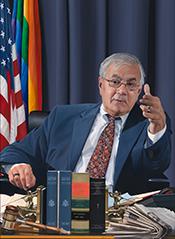
Mr. Speaker, earlier this year, I received a very thoughtful letter from Eugene O'Kelly, the Chairman and Chief Executive Officer of KPMG. I was thoroughly impressed to receive a strong letter in…
Mr. Speaker, earlier this year, I received a very thoughtful letter from Eugene O'Kelly, the Chairman and Chief Executive Officer of KPMG. I was thoroughly impressed to receive a strong letter in favor of the independence of accounting standards from the Chief Executive of this major accounting firm. I believe Mr. O'Kelly's letter makes a very important contribution to the debate on a significant public policy issue and I ask that it be printed here.
Mr. President, I ask unanimous consent that the text of the bill be printed in the Record.
Mr. President, I ask unanimous consent that the text of the bill be printed in the Record.
Mr. President, I ask unanimous consent that the text of the bill be printed in the Record.
Mr. President, I ask unanimous consent that the text of the bill be printed in the Record.
Bill Text
Latest available legislative text
        [Congressional Bills 108th Congress]
[From the U.S. Government Publishing Office]
[S. 1472 Introduced in Senate (IS)]

108th CONGRESS
1st Session
S. 1472

To authorize the Secretary of the Interior to provide a grant for the
construction of a statue of Harry S Truman at Union Station in Kansas
City, Missouri.

_______________________________________________________________________

IN THE SENATE OF THE UNITED STATES

July 28 (legislative day, July 21), 2003

Mr. Talent introduced the following bill; which was read twice and
referred to the Committee on Energy and Natural Resources

_______________________________________________________________________

A BILL

To authorize the Secretary of the Interior to provide a grant for the
construction of a statue of Harry S Truman at Union Station in Kansas
City, Missouri.

Be it enacted by the Senate and House of Representatives of the
United States of America in Congress assembled,

SECTION 1. HARRY S. TRUMAN STATUE, KANSAS CITY, MISSOURI.

(a) Grant Authority.--The Secretary of the Interior (referred to in
this Act as the ``Secretary'') may provide a grant to pay the Federal
share of the costs for the construction of a statue of Harry S Truman
at Union Station in Kansas City, Missouri.
(b) Requirements.--To receive a grant under subsection (a), an
eligible entity shall submit to the Secretary a proposal for the use of
the grant funds.
(c) Maintenance.--The Federal Government shall not be responsible
for the costs of maintaining the statue.
(d) Federal Share.--The Federal share of the costs described in
subsection (a) shall not exceed $50,000.
(e) Authorization of Appropriations.--There is authorized to be
appropriated to carry out this Act $50,000, to remain available until
expended.
<all>