Upper White Salmon Wild and Scenic Rivers Act

Legislative Activity
Stay on top of the latest movement without scrolling through every action
Referred to the Subcommittee on Forests and Forest Health.
November 18, 2004
View full timeline
Introduced in Senate
September 15, 2003
Read twice and referred to the Committee on Energy and Natural Resources. (text of measure as introduced: CR S11480)
September 15, 2003
Committee on Energy and Natural Resources Subcommittee on Public Lands and Forests. Hearings held. With printed Hearing: S.Hrg. 108-714.
July 21, 2004
Committee on Energy and Natural Resources. Ordered to be reported with an amendment in the nature of a substitute favorably.
September 15, 2004
Committee on Energy and Natural Resources. Reported by Senator Domenici with an amendment in the nature of a substitute. With written report No. 108-362.
September 28, 2004
Placed on Senate Legislative Calendar under General Orders. Calendar No. 721.
September 28, 2004
Passed Senate with an amendment by Unanimous Consent. (consideration: CR S11127-11183; text as passed Senate: CR S11172-11173)
October 10, 2004
Received in the House.
November 16, 2004 • 2:03 PM
Message on Senate action sent to the House.
November 16, 2004
Referred to the House Committee on Resources.
November 16, 2004
Referred to the Subcommittee on Forests and Forest Health.
November 18, 2004
Floor Debate
9 membersWhat members said about S. 1614 on the floor
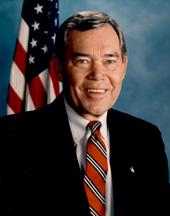 CT
CT RJD
RJD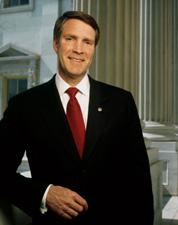 WHF
WHF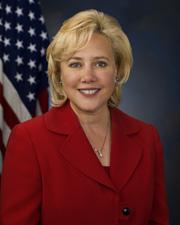 MLL
MLL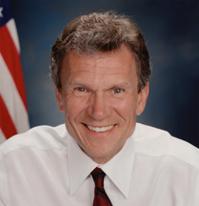 TAD+4
TAD+4
Floor Debate
9 membersWhat members said about S. 1614 on the floor
Mr. President, I ask unanimous consent that the Committee on Armed Services be authorized to meet during the session of the Senate on July 21, 2004, at 9:30 a.m., in open session to consider the…
Mr. President, I ask unanimous consent that the Committee on Armed Services be authorized to meet during the session of the Senate on July 21, 2004, at 9:30 a.m., in open session to consider the following nominations:
1. Vice Admiral Timothy J. Keating, USN, for appointment to the grade of Admiral and to be Commander, United States Northern Command/ Commander, North American Aerospace Defense Command;
2. Lieutenant General Bantz J. Craddock, USA, for appointment to the grade of General and to be Commander, United States Southern Command;
3. Peter Cyril Wyche Flory to be Assistant Secretary of Defense for International Security Policy; and
4. Valerie Lynn Baldwin to be Assistant Secretary of the Army for Financial Management and Comptroller.
Mr. President, I ask unanimous consent that the Committee on Banking, Housing, and
Urban Affairs be authorized to meet during the session of the Senate on Wednesday, July 21, 2004, at 10 a.m., to conduct an oversight hearing on ``Regulation N.M.S. and Developments in Market Structure.''
Mr. President, I ask unanimous consent that the Committee on Finance be authorized to meet during the session on Wednesday, July 21, 2004, at 10 a.m., to hear testimony on ``Bridging the Tax Gap.''
Mr. President, I ask unanimous consent that the Committee on Foreign Relations be authorized to meet during the session of the Senate on Wednesday, July 21, 2004 at 9:30 a.m. to hold a hearing on ``The Multilateral Development Banks.''
Mr. President, I ask unanimous consent that the Committee on Governmental Affairs be authorized to meet on Wednesday, July 21, 2004, at 10 a.m., to hold a business meeting to consider pending committee business.
Agenda
Legislation
1. S. 1230, a bill to provide for additional responsibilities for the Chief Information Officer of the Department of Homeland Security relating to geospatial information.
2. S. 2347, a bill to amend the District of Columbia Access Act of 1999 to permanently authorize the public school and private school tuition assistance programs established under the Act.
3. S. 2409, a bill to provide for continued health benefits coverage for certain federal employees.
4. S. 2628, a bill to amend chapter 23 of title 5, United States Code, to clarify the disclosures of information protected from prohibited personnel practices, require a statement in nondisclosure policies, forms, and agreements that such policies, forms, and agreements conform with certain disclosure protections, provide certain authority for the Special Counsel, and for other purposes.
5. S. 2536, the Homeland Security Civil Rights and Civil Liberties Protection Act of 2004.
6. S. 2635, a bill to establish an intergovernmental grant program to identify and develop homeland security information, equipment, capabilities, technologies, and services to further the homeland security needs of Federal, State, and local governments.
7. S. 2657, a bill to amend part III of title 5, United States Code, to provide for the establishment of programs under which supplemental dental and vision benefits are made available to Federal employees, retirees, and their dependents, to expand the contracting authority of the Office of Personnel Management, and for other purposes.
8. S. 2639, a bill to reauthorize the Congressional Award Act.
9. S. 2275, the High Risk Nonprofit Security Enhancement Act of 2004.
10. S. 593, Reservists Pay Security Act of 2003.
11. H.R. 3797, the 2004 District of Columbia Omnibus Authorization Act.
Post Office Naming Bills
1. S. 2501/H.R. 4427, a bill to designate the facility of the United States Postal Service located at 73 South Euclid Avenue in Montauk, New York, as the ``Perry B. Duryea, Jr. Post Office''.
2. S. 2640, a bill to designate the facility of the United States Postal Service located at 1050 North Hills Boulevard in Reno, Nevada, as the ``Guardians of Freedom Memorial Post Office Building'' and to authorize the installation of a plaque at such site, and for other purposes.
3. H.R. 3340, an act to redesignate the facilities of the United States Postal Service located at 7715 and 7748 S. Cottage Grove Avenue in Chicago, Illinois, as the ``James E. Worsham Post Office'' and the ``James E. Worsham Carrier Annex Building'', respectively, and for other purposes.
4. H.R. 4222, an act to designate the facility of the United States Postal Service located at 550 Nebraska Avenue in Kansas City, Kansas, as the ``Newell George Post Office Building''.
5. H.R. 4327, an act to designate the facility of the United States Postal Service located at 7450 Natural Bridge Road in St. Louis, Missouri, as the ``Vitilas `Veto' Reid Post Office Building''.
6. H.R. 4380, an act to designate the facility of the United States Postal Service located at 4737 Mile Stretch Drive in Holiday, Florida, as the ``Sergeant First Class Paul Ray Smith Post Office Building''.
Nominations
1. Neil McPhine to be Chairman, Merit Systems Protection Board.
2. Barbara J. Sapin to be a Member, Merit Systems Protection Board.
Mr. President, I ask unanimous consent that the Committee on Health, Education, Labor, and Pensions be authorized to meet in Executive Session during the session of the Senate on Wednesday, July 21, 2004.
Agenda
Mr. President, I ask unanimous consent that the Committee on Indian Affairs be authorized to meet on Wednesday, July 21, 2004, at 2 p.m. in Room 216 of the Hart Senate Office Building to conduct an oversight hearing on pending legislation to reauthorize the Indian Health Care Improvement Act.
Mr. President, I ask unanimous consent that the Committee on Indian Affairs be authorized to meet on Wednesday, July 21, 2004, at 10 a.m. in Room 485 of the Russell Senate Office Building to conduct a business meeting on pending Committee matters, to be followed immediately by a hearing on S. 519, the Native American Capital Formation and Economic Development Act of 2003.
Mr. President, I ask unanimous consent that the Committee on the Judiciary be authorized to meet to conduct a hearing on Wednesday, July 21, 2004, at 10 a.m., on ``An Overview of the Radiation Exposure Compensation Program'' in the Dirksen Senate Office Building room 226.
Witness List
Panel I: Jeffrey S. Bucholtz, Deputy Assistant Attorney General for the Civil Division, Department of Justice, Washington, DC.
Panel II: Helen Bandley Houghton, San Antonio, TX; Jeffrey Thompson, San Antonio, TX; Jeffrey Thompson, Jacksonville, AK; Rita Torres, Surprise, AZ.
Mr. President, I ask unanimous consent that the Committee on Health, Education, Labor, and Pensions, Subcommittee on Children and Families and Committee on Armed Services, Subcommittee on Personnel be authorized to meet for a joint hearing on The Needs of Military Families: How Are States and the Pentagon Responding, Especially for the Guard and Reservists? during the session of the Senate on Wednesday, July 21, 2004., at 2 p.m., in SD-430.
Mr. President, I ask unanimous consent that the Subcommittee on Personnel of the Committee on Armed Services be authorized to meet during the session of the Senate on July 21, 2004, at 2 p.m., in open session to receive testimony on how States have responded to military families' unique challenges during military deployments and what the Federal Government can do to support States in this important work.
Mr. President, I ask unanimous consent that the Subcommittee on Public Lands and Forests of the Committee on Energy and Natural Resources be authorized to meet during the session of the Senate on Wednesday, July 21, at 2:30 p.m.
The purpose of the hearing is to receive testimony on S. 738, to designate certain public lands in Humboldt, Del Norte, Mendocino, Lake, Napa, and Yolo counties in the State of California as wilderness, to designate certain segments of the Black Butte River in Mendocino County, California, as a wild or scenic river, and for other purposes; S. 1614, to designate a portion of White Salmon River as a component of the National Wild and Scenic Rivers System; S. 2221, to authorize the Secretary of Agriculture to sell or exchange certain National Forest System land in the State of Oregon, and for other purposes; S. 2253, to permit young adults to perform projects to prevent fire and suppress fires, and provide disaster relief on public land through a Healthy Forest Youth Conservation Corps; S. 2334, to designate certain National Forest System Land in the Commonwealth of Puerto Rico as components of the National Wilderness Preservation System; and S. 2408, to adjust the boundaries of the Helena, Lolo, and Beaverhead-Deerlodge National Forests in the State of Montana.
Mr. President, I have joined Senator Daschle in introducing a bill today that would make permanent the increases in Imminent Danger Pay and Family Separation Allowance passed by Congress in the…
Mr. President, I have joined Senator Daschle in introducing a bill today that would make permanent the increases in Imminent Danger Pay and Family Separation Allowance passed by Congress in the Fiscal Year 2003 Emergency Wartime Supplemental Appropriations Act.
Last spring, when the Senate considered the Budget Resolution, it passed, by a vote of 100 to 0, an amendment I offered with Senator Landrieu that would have allowed for $1 billion to cover the increase in these special pay categories.
Then when the Senate considered the Fiscal Year 2003 Emergency Wartime Supplemental Appropriations Act, it unanimously accepted an amendment I offered with Senator Stevens and Senator Inouye, increasing these pay categories for the remainder of the fiscal year.
The amendment we offered to the supplemental, sunset these pay increases, not because we wished to end them, but simply to allow the Armed Services Committee--the Committee of Jurisdiction--to increase these pay levels in the Fiscal Year 2004 Defense Authorization bill, which it did.
Now, when soldiers are dying in Iraq and military families have been separated for many months, we hear that the administration wishes to cut these pay increases in the conference committee.
The Statement of Administration Policy on the House version of the bill objects to the provision increasing both pay categories, saying it would ``divert resources unnecessarily.'' The statement on the Senate bill only objects to the increase in Family Separation Allowance.
When confronted with questions about why the administration wanted to reduce these pay categories, Defense Department spokesman, Under Secretary David Chu, came up with the classic Washington non-denial denial. On August 14, Chu said:
I'd just like very quickly to put to rest what I understand
has been a burgeoning rumor that somehow we are going to
reduce compensation for those serving in Iraq and
Afghanistan. That is not true . . .
What I think you're pointing to is one piece of a very
thick technical appeal document that speaks to the question,
do we want to extend the language Congress used in the Family
Separation Allowance and Imminent Danger Pay statutes. And
no, we don't think we need to extend that language. That's a
different statement from, are we going to reduce compensation
for those in Iraq and Afghanistan . . .
What do these statements mean?
Evidently the administration wants to claim that it will keep compensation the same for those serving in Iraq and Afghanistan, through other pay categories, but does indeed intend to roll back the increases to Imminent Danger Pay and Family Separation Allowance.
This means that a soldier getting shot at fighting the war on terrorism in Yemen or the Philippines would receive less money than one who is similarly risking his or her life in Iraq. This means that a family bearing huge costs because of burdensome, long-term deployments would only be helped if the service member is deployed to Iraq or Afghanistan, but not if that same service member is deployed anywhere else in the world.
It is unfair to cut funding intended to help military families that are bearing the costs of far-flung U.S. deployments. It is unacceptable that imminent danger would be worth less in one combat zone than in another.
The bill we introduce today makes a clear statement that these pay categories should be increased permanently and should not be cut in conference.
Until these pay levels were increased in the supplemental, an American soldier, sailor, airman, or Marine who put his or her life on the line in imminent danger only received an extra $150 per month. My amendment increased that amount to $225 per month--still only an acknowledgment of their courage, but an increase nonetheless.
Prior to the increase in the Supplemental Appropriations bill, Family Separation had been only $100 per month. We succeeded in raising it to $250 per month.
These increases are only part of a normal progression of increases-- for example, in 1965, Imminent Danger Pay was $55; $100 in 1985, and raised to $150 in 1991. Family Separation Allowance was $30 in 1970, $60 in 1985, $75 in 1991, and $100 in 1997.
Family Separation Allowance was originally intended to pay for things that the deployed service member would have done, like cut the grass, that the spouse may then have had to hire someone to do. That may well have been appropriate in the past, but now most families have two working spouses--sometimes two working military spouses--and the absence of one or both parents may add huge child care costs that even the increased rate is unlikely to cover.
Military spouses sometimes find that they must give up their jobs or curtail their working hours in order to take up the family responsibilities that otherwise would have been shared by the missing spouse.
Examples of increased costs that families may incur when military personnel are deployed, in addition to increased child care costs, include: health care costs not covered by TRICARE; for example, the cost of counseling for children having a difficult time with their parents' deployment; costs for the family of an activated Reservist or National Guard member to travel to mobilization briefings, which may be in another state; various communication and information-gathering costs.
I would like to quote for the Record from an article that appeared in The Washington Post on April 11, 2003, entitled ``Military Familes Turn to Aid Groups,'' that outlines how military families have had to rely on private aid organizations to help them when their spouses are deployed. The article highlights the case of one mother, Michele Mignosa and says:
The last 18 months have brought one mishap or another to
Michelle Mignosa. Her husband, Kevin, is an Air Force
reservist who since the Sept. 11, 2001, terrorist attacks has
been away from their Lancaster, Calif., home almost as much
as he's been there. First, there were the out-of-state trips
to provide airport security. Then he was deployed to Turkey
for 2\1/2\ months last spring. Now he's in Greece with an
air-refueling unit. . . . And while he has been gone, the
problems have piled up at home. . . . Strapped for cash since
giving up her part-time job because of Kevin's frequent far-
off postings, she didn't know where the money would come from
to resolve yet another problem.
I applaud the efforts of private aid groups to help military families, but I believe that it is the duty of the U.S. Government to cover more of the costs incurred because of military deployments. If should not matter to which country the service member is deployed. Cuts must not be made to funds helping military families that are bearing the costs of war, homeland security, and U.S. military commitments abroad.
To say that pay will not decrease to those serving in Iraq or Afghanistan is ignoring the truth--rolling back Family Separation Allowance from $250 per month to $100 per month will cost our military families and could be especially painful for those living on the edge.
I urge my colleagues to support the bill that Senator Daschle and I introduce today and make a strong statement to the Defense Department that Congress will not stand for cutting Imminent Danger Pay and Family Separation Allowance.
3_____
Mr. President, I ask unanimous consent that the Commerce, Science, and Transportation Committee be authorized to meet on Wednesday, September 15, 2004, at 10 a.m., on ``Impacts of Climate Change.''…
Mr. President, I ask unanimous consent that the Commerce, Science, and Transportation Committee be authorized to meet on Wednesday, September 15, 2004, at 10 a.m., on ``Impacts of Climate Change.''
Mr. President, I ask unanimous consent that the Committee on Energy and Natural Resources be authorized to meet during the session of the Senate, on Wednesday, September 15 at 9:30 a.m., to consider pending calendar business.
Agenda Item 1: S. Con. Res. 121--A concurrent resolution supporting the goals and ideals of the World Year of Physics.
Agenda Item 2: S. 437--A bill to provide for adjustments to the Central Arizona Project in Arizona, to authorize the Gila River Indian Community water rights settlement, to reauthorize and amend the Southern Arizona Water Rights Settlement Act of 1982, and for other purposes.
Agenda Item 3: S. 511--A bill to provide permanent funding for the Payment in Lieu of Taxes program, and for other purposes.
Agenda Item 7: S. 1064--A bill to establish a commission to commemorate the sesquicentennial of the American Civil War, and for other purposes.
Agenda Item 9: S. 1354--A bill to resolve certain conveyances and provide for alternative land selections under the Alaska Native Claims Settlement Act related to Cape Fox Corporation and Sealaska Corporation, and for other purposes.
Agenda Item 12: S. 1462--A bill to adjust the boundary of the Cumberland Island Wilderness, to authorize tours of the Cumberland Island National Seashore, and for other purposes.
Agenda Item 13: S. 1466--A bill to facilitate the transfer of land in the State of Alaska, and for other purposes.
Agenda Item 14: S. 1614--A bill to designate a portion of White Salmon River as a component of the National Wild and Scenic Rivers System.
Agenda Item 15: S. 1649--A bill to designate the Ojito Wilderness Study Area as wilderness, to take certain land into trust for the Pueblo of Zia, and for other purposes.
Agenda Item 16: S. 1678--A bill to provide for the establishment of the Uintah Research and Curatorial Center for Dinosaur National Monument in the States of Colorado and Utah, and for other purposes.
Agenda Item 17: S. 1852--A bill to provide financial assistance for the rehabilitation of the Benjamin Franklin National Memorial in Philadelphia, Pennsylvania, and the development of an exhibit to commemorate the 300th anniversary of the birth of Benjamin Franklin.
Agenda Item 18: S. 1876--A bill to authorize the Secretary of the Interior to convey certain lands and facilities of the Provo River Project.
Agenda Item 19: S. 2086--A bill to amend the Surface Mining Control and Reclamation Act of 1977 to improve the reclamation of abandoned mines.
Agenda Item 20: S. 2142--A bill to authorize appropriations for the New Jersey Coastal Heritage Trail Route, and for other purposes.
Agenda Item 21: S. 2181--A bill to adjust the boundary of Rocky Mountain National Park in the State of Colorado.
Agenda Item 23: S. 2334--A bill to designate certain National Forest System land in the Commonwealth of Puerto Rico as components of the National Wilderness Preservation System.
Agenda Item 24: S. 2374--A bill to provide for the conveyance of certain lands to the United States and to revise the boundary of Chickasaw National Recreation Area, Oklahoma, and for other purposes.
Agenda Item 25: S. 2408--A bill to adjust the boundaries of the Helena, Lolo, and Beaverhead-Deerlodge National Forests in the State of Montana.
Agenda Item 26: S. 2432--A bill to expand the boundaries of Wilson's Creek Battlefield National Park, and for other purposes.
Agenda Item 27: S. 2567--A bill to adjust the boundary of Redwood National Park in the State of California.
Agenda Item 28: S. 2622--A bill to provide for the exchange of certain Federal land in the Santa Fe National Forest and certain non- Federal land in the Pecos National Historic Park in the State of New Mexico.
Agenda Item 31: H.R. 1113--To authorize an exchange of land at Fort Frederica National Monument, and for other purposes.
Agenda Item 32: H.R. 1446--To support the efforts of the California Missions Foundation to restore and repair the Spanish colonial and mission-era missions in the State of California and to preserve the artworks and artifacts of these missions, and for other purposes.
Agenda Item 33: H.R. 1964--To assist the States of Connecticut, New Jersey, New York, and Pennsylvania in conserving priority lands and natural resources in the Highlands region, and for other purposes.
Agenda Item 34: H.R. 2010--To protect the voting rights of members of the Armed Services in elections for the Delegate representing American Samoa in the United States House of Representatives, and for other purposes.
Agenda Item 35: H.R. 3706--To adjust the boundary of the John Muir National Historic site, and for other purposes.
Agenda Item 36: H.R. 4516--To require the Secretary of Energy to carry out a program of research and development to advance high-end computing.
In addition, the committee may turn to any other measures that are ready for consideration.
Mr. President, I ask unanimous consent that the Committee on Finance be authorized to meet in open executive session during the session on September 15, 2004, at 10 a.m., to consider favorably reporting S. 333, a bill to promote elder justice, and the nomination of Joey Russell George, to be Treasury Inspector General for Tax Administration, U.S. Department of Treasury.
Mr. President, I ask unanimous consent that the Committee on Foreign Relations be authorized to meet during the session of the Senate on Wednesday, September 15, 2004, at 9:30 a.m., to hold a hearing on ``Accelerating U.S. Assistance to Iraq.''
Mr. President, I ask unanimous consent that the Committee on Indian Affairs be authorized to meet on Wednesday, September 15, 2004, at 10 a.m., in room 485 of the Russell Senate Office Building to conduct a business meeting on pending committee matters.
Mr. President, the Senate is expected to consider important legislation that will affect the pensions of millions of Americans and their families during the 108th Congress. In the last Congress we…
Mr. President, the Senate is expected to consider important legislation that will affect the pensions of millions of Americans and
their families during the 108th Congress. In the last Congress we provided greater security to pensions by correcting the accounting abuses that lay at the heart of the Enron and WorldCom bankruptcies-- bankruptcies that caused the employees of these companies to lose their life savings and hurt the investment portfolios of thousands of individual investors.
Today, I am introducing legislation to correct a unique problem under ERISA for States with community property laws. The issue came to light in the 1997 Supreme Court decision in the case of Boggs v. Boggs. The Court held that ERISA preempted the application of Louisiana's community property law in the disposition of pension benefits. While the case originated in Louisiana, the holding tears a hole in the fabric of community property laws of seven other States, Texas, New Mexico, California, Arizona, Nevada, Washington, and Idaho.
Long before the women's movement, community property laws stood for the basic premise that a marriage is an economic, as well as social, child rearing partnership in which the ownership of property acquired during the marriage is shared equally. The Boggs case involved a husband and wife. The husband began accumulating benefits in a pension plan after they got married. The wife did not have a pension plan, but under the community property law of Louisiana, half of her husband's benefits were hers. The wife died before her husband retired, and before the plan's benefits were subject to distribution. In her will she left her interest in the pension benefits to her husband for the rest of his life, with the remaining interest to her sons for after her husband died. The husband subsequently remarried, retired, and ultimately died, leaving property to his second wife and an interest in his remaining assets to his sons. The sons attempted to enforce their State-law interest in the pension benefits bequeathed to them by their mother against the second wife. The Supreme Court held against the sons, saying that they were not beneficiaries of, nor participants in, the pension plan under ERISA.
This holding goes against the fundamental principles of community property. What the Court is saying is that although a husband's 401K plan may contain a million dollars of deferred earnings accumulated during the course of his marriage, if his wife dies before he retires, her interest terminates; she co-owned none of it. The fundamental principle of marriage as an equal partnership under community property is rendered meaningless by this decision.
The Boggs ruling will also lead to conflicting results in the disposition of assets at death in community property States. If, instead, the money had been put in an ordinary savings account that is not covered by ERISA, half of it would have been owned by the wife as community property in recognition of her contribution to the marriage. At her death, she would have been free to dispose of the assets as she saw fit. Furthermore, after Boggs, if a couple has both a 401K plan and a savings account, upon the death of the wife the husband gets all of the 401K plan plus half of the savings account; the wife's estate gets only half of the savings account. That is not the equal outcome community property laws seek.
The legislation that I am proposing will create a narrow exception within the ERISA preemption provisions to address the circumstances under Boggs. Instead of losing the community property interest in any non-forfeitable accrued pension benefits at death, a spouse will retain that interest and will be able to pass that interest on to his or her heirs. This is not an exceptional change to ERISA. What I am proposing does not affect the joint and survivor annuity required by ERISA nor does it prevent the participant from having the use and enjoyment of the entire retirement asset until his death. It does not place any new burden on the retirement plan administrators. It envisions that upon the death of the participant, the State probate court will apply normal community property principles, taking into account the value of the retirement assets at the time of the participant's death, in distributing the participant's property between the heirs of the participant and the heirs of the predeceased spouse. Furthermore, each community property State will have the freedom to implement the amendment by whatever means the State deems best, including the option not to implement the amendment at all.
ERISA already contains exceptions to its preemption provisions. One applies to divorce or other Qualified Domestic Relations Orders. This exception, added to ERISA by the Retirement Equity Act of 1984, allows States to apply their community property laws or equitable division laws to retirement assets when a couple gets divorced. A divorced spouse can retain an interest in the undistributed pension assets of their ex-husband or wife. As it now stands, therefore, ERISA is more favorable to a spouse who divorced the participant before dying, than a spouse who remained married to the participant until death.
The Senate should act to reaffirm the principles of community property. My legislation upholds the basic ideal of community property law: that marriage is a partnership that values as equal the contributions of both the husband and the wife. This notion of equality holds true whether one spouse worked and the other stayed at home. I urge my colleagues to pass this legislation.
I ask unanimous consent that the text of this bill be printed in the Record.
Mr. President, today, I rise to introduce a bill that is as simple as it is significant. It promises our soldiers that while they fight to protect us, we will do what we can do protect them and their…
Mr. President, today, I rise to introduce a bill that is as simple as it is significant. It promises our soldiers that while they fight to protect us, we will do what we can do protect them and their families by not allowing their pay to be cut.
Each day brings a fresh reminder of the debt we owe our men and women in uniform. Today, well over 200,000 Americans are stationed abroad, many facing hostile fire in difficult conditions, thousands of miles from home. In spite of enormous difficulties, they have served magnificently, bringing honor to their families and their country.
In light of all that we read in our daily newspapers about our soldiers' heroic performance, it should be unthinkable that anyone would consider cutting their pay. But this isn't a rumor or some errant bureaucratic proposal. Unless the President and the Congress act soon, many of our soldiers will see their monthly pay reduced by as much as $225 at the end of the current fiscal year. My legislation would help us honor the debt we owe to our soldiers by making permanent the rates of pay currently provided to our soldiers.
Unfortunately, we have received very mixed messages from the administration about their position on this issue. In July, the Defense Department issued a position paper to the Congress expressing its views on military pay and a series of other legislative proposals. According to the official Pentagon document, the Defense Department urged Congress to reduce our troops' pay. Last month, the San Francisco Chronicle, in an article entitled ``Troops In Iraq Face Pay Cut,'' reported, ``The Pentagon wants to cut the pay of its 148,000 U.S. troops in Iraq, who are already contending with guerrilla-style attacks, homesickness, and 120-degree plus heat. . . . The Defense Department supports the cuts, saying its budget can't sustain the higher payments and a host of other priorities.''
Not surprisingly, these reports triggered a fire storm. The administration quickly backpedaled. Its latest position is that pay will be kept at current levels for our troops in Iraq and Afghanistan, but pay for troops deployed abroad in other countries should be cut. This does a disservice to the men and women who have chosen to risk their lives for their country and have been deployed far from their homes and their families.
At a time when we are asking so much of these troops and their families, it is inconceivable to me that this Nation can't sustain current pay levels for all troops deployed abroad and that the administration would not fully support this proposition.
The legislation would send a clear signal to all of our troops, both those deployed abroad and those facing the possibility of deployment in the coming weeks and months. This Nation recognizes and appreciates the risks they take on our behalf and we honor our commitment to them. I urge the administration and my colleagues to join with me in this effort. Our troops and their families deserve no less.
I ask unanimous consent that the text of the bill be printed in the Record.
Show 4 more

Mr. President, it's a privilege to join Senator Snowe in introducing the Women's Pension Protection Act of 2003, and I commend her for her commitment. Retirement security is essential for all…
Mr. President, it's a privilege to join Senator Snowe in introducing the Women's Pension Protection Act of 2003, and I commend her for her commitment.
Retirement security is essential for all Americans, but too often we have failed to meet the needs of women on this basic issue. Women live longer than men, but they continue to earn far less in wages over their lifetimes. Women are much less likely to benefit from the private pension system. Just as women receive less pay and less recognition of their contributions in the workplace, they also receive fewer retirement benefits.
Women's lack of retirement security is based in the unfair treatment they face in the workplace. Women still earn only 76 percent of the wages of men, and this gap in pay leads to hundreds of thousands of dollars in lower pay over their careers. Women are twice as likely as men to work in part-time jobs without benefits. They are much more likely to spend time out of the workforce to meet their family responsibilities. All of these factors translate into seriously inadequate retirement income for vast numbers of women.
The realities of this injustice are grim. According to the most recent Census data, fewer than 20 percent of women age 65 and over are receiving private pension income--and these women are receiving an average of only $4,200 a year in such income, compared with $7,800 for men. Minority women are in even more desperate straits--only 15 percent of African-American women and 8 percent of Hispanic women receive pension income.
As a result of these lower wages, longer lifespans and unfair pensions, nearly one in five older single women are living in poverty.
Almost twenty years ago, we modified federal pension laws to provide greater protections for women in their retirements. The Retirement Equity Act of 1984 required defined benefit pension plans to pay survivor benefits, unless the spouse waived this protection. The time has come to extend and expand these protections. In many cases, the amount a spouse receives as a survivor benefit is often far too little to provide adequate support. The existing protections do not cover 401(k) and other defined contribution plans--which are now the only retirement assistance for over half of the American who have private pensions.
Under the legislation we are introducing today, women will have greater retirement security. They will have greater say in the management of their husband's 401(k) funds. Widows will have more generous survivor benefits. Divorced women will have a greater ability to receive a share of their former husband's pension after a divorce. Our legislation offer long overdue improvements in the private system, so that retirement savings programs are more responsive to the realities of women's lives and careers. Congress must do all it can to strengthen women's retirement security and end the many inequities that affect women in our current pension laws. I urge my colleagues to support the Women's Pension Protection Act.
Mr. President, I would like to announce for the information of the Senate and the public that the Permanent Subcommittee on Investigations of the Committee on Governmental Affairs will hold a hearing…
Mr. President, I would like to announce for the information of the Senate and the public that the Permanent Subcommittee on Investigations of the Committee on Governmental Affairs will hold a hearing entitled ``Money Laundering and Foreign Corruption: Enforcement and Effectiveness of the Patriot Act.'' The Subcommittee hearing will examine current enforcement of key provisions in the Patriot Act combating money laundering and foreign corruption, using a single case study involving Riggs Bank. The hearing will examine Riggs' anti-money laundering program, administration of accounts associated with senior foreign political figures and their family members, and interactions with its primary regulator, the Office of the Comptroller of the Currency (OCC). The hearing will also examine the OCC's anti- money laundering oversight and enforcement actions. In addition, the hearing will examine the activities of some oil companies in Equatorial Guinea.
The hearing will take place on Thursday, July 15, 2004, at 9 a.m., in Room 342 of the Dirksen Senate Office Building. For further information, please contact Elise J. Bean, Staff Director and Chief Counsel to the Minority, of the Permanent Subcommittee on Investigations, at 224-3721.
subcommittee on public lands and forests
Mr. President, I would like to announce for the information of the Senate and the public that the Permanent Subcommittee on Investigations of the Committee on Governmental Affairs will hold a second hearing on the danger of purchasing pharmaceuticals over the Internet. The Subcommittee held a hearing on June 17, 2004, on this issue and will hold a second day of hearings, entitled ``Buyer Beware: The Danger of Purchasing Pharmaceuticals Over the Internet-- Federal & Private Sector Response.'' The Subcommittee hearings are examining the extent to which consumers can purchase pharmaceuticals over the Internet without a medical prescription, the importation of pharmaceuticals into the United States, and whether the pharmaceuticals from foreign sources are counterfeit, expired, unsafe, or illegitimate. In addition, the Subcommittee hearings are examining the extent to which U.S. consumers can purchase dangerous and often addictive controlled substances from Internet pharmacy websites and the procedures utilized by the Bureau of Customs and Border Protection, the Drug Enforcement Administration, the U.S. Postal Service, and the Food and Drug Administration, as well as the private sector to address these issues.
The Subcommittee hearing is scheduled for Thursday, July 22, 2004, at 9 a.m., in Room 342 of the Dirksen Senate Office Building. For further information, please contact Raymond V. Shepherd, III, Staff Director and Chief Counsel to the Permanent Subcommittee on Investigations, at 224-3721.

Mr. President, I would like to announce for the information of the Senate and the public that a hearing has been scheduled before the Subcommittee on Public Lands and Forests of the Committee on…
Mr. President, I would like to announce for the information of the Senate and the public that a hearing has been scheduled before the Subcommittee on Public Lands and Forests of the Committee on Energy and Natural Resources.
The hearing will be held on Wednesday, July 21, at 2:30 p.m. in Room SD-366 of the Dirksen Senate Office Building.
The purpose of the hearing is to receive testimony on the following bills: S. 738, to designate certain public lands in Humboldt, Del Norte, Mendocino, Lake, Napa, and Yolo Counties in the State of California as wilderness, to designate certain segments of the Black Butte River in Mendocino County, CA as a wild or scenic river, and for other purposes; S. 1614, to designate a portion of White Salmon River as a component of the National Wild and Scenic Rivers System; S. 2221, to authorize the Secretary of Agriculture to sell or exchange certain National Forest System land in the State of Oregon, and for other purposes; S. 2253, to permit young adults to perform projects to prevent fire and suppress fires, and provide disaster relief on public land through a Healthy Forest Youth Conservation Corps; S. 2334, to designate certain National Forest System land in the Commonwealth of Puerto Rico as components of the National Wilderness Preservation System; and S. 2408, to adjust the boundaries of the Helena, Lolo, and Beaverhead-Deerlodge National Forests in the State of Montana.
Because of the limited time available for the hearing, witnesses may testify by invitation only. However, those wishing to submit written testimony for the hearing record should send 2 copies of their testimony to the Committee on Energy and Natural Resources, United States Senate, Washington, DC 20510-6150.
For further information, please contact Frank Gladics at 202-224-2878 or Amy Millet at 202-224-8276.
permanent subcommittee on investigations
Mr. President, I ask unanimous consent that the text of the bill be printed in the Record.
Mr. President, I ask unanimous consent that the text of the bill be printed in the Record.
Bill Text
4 versions available
        [Congressional Bills 108th Congress]
[From the U.S. Government Publishing Office]
[S. 1614 Referred in House (RFH)]

2d Session
S. 1614

_______________________________________________________________________

IN THE HOUSE OF REPRESENTATIVES

November 16, 2004

Referred to the Committee on Resources

_______________________________________________________________________

AN ACT

To designate a portion of the White Salmon River as a component of the
National Wild and Scenic Rivers System.

Be it enacted by the Senate and House of Representatives of the
United States of America in Congress assembled,

SECTION 1. SHORT TITLE.

This Act may be cited as the ``Upper White Salmon Wild and Scenic
Rivers Act''.

SEC. 2. UPPER WHITE SALMON WILD AND SCENIC RIVER.

Section 3(a) of the Wild and Scenic Rivers Act (16 U.S.C. 1274(a))
is amended by adding at the end the following:
``( ) White Salmon River, Washington.--The 20 miles of
river segments of the main stem of the White Salmon River and
Cascade Creek, Washington, to be administered by the Secretary
of Agriculture in the following classifications:
``(A) The approximately 1.6-mile segment of the
main stem of the White Salmon River from the headwaters
on Mount Adams in section 17, township 8 north, range
10 east, downstream to the Mount Adams wilderness
boundary as a wild river.
``(B) The approximately 5.1-mile segment of Cascade
Creek from its headwaters on Mount Adams in section 10,
township 8 north, range 10 east, downstream to the
Mount Adams Wilderness boundary as a wild river.
``(C) The approximately 1.5-mile segment of Cascade
Creek from the Mount Adams Wilderness boundary
downstream to its confluence with the White Salmon
River as a scenic river.
``(D) The approximately 11.8-mile segment of the
main stem of the White Salmon River from the Mount
Adams Wilderness boundary downstream to the Gifford
Pinchot National Forest boundary as a scenic river.''.

SEC. 3. AUTHORIZATION OF APPROPRIATIONS.

There are authorized to be appropriated such sums as are necessary
to carry out this Act.

Passed the Senate October 10, 2004.

Attest:

EMILY J. REYNOLDS,

Secretary.