A bill to prescribe the oath of renunciation and allegiance for purposes of the Immigration and Nationality Act.
Legislative Activity
Stay on top of the latest movement without scrolling through every action
Read twice and referred to the Committee on the Judiciary.
September 17, 2003
View full timeline
Introduced in Senate
September 17, 2003
Sponsor introductory remarks on measure. (CR S11680)
September 17, 2003
Read twice and referred to the Committee on the Judiciary.
September 17, 2003
Floor Debate
11 membersWhat members said about S. 1628 on the floor
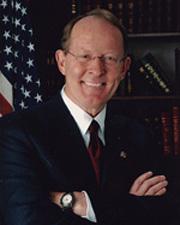
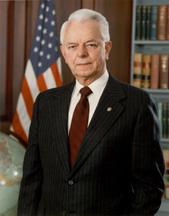 RCB
RCB MD
MD HR
HR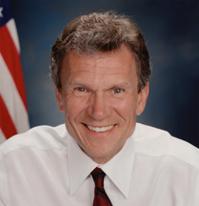 TAD
TAD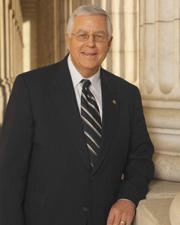 MBE+6
MBE+6
Floor Debate
11 membersWhat members said about S. 1628 on the floor
Madam President, I rise today to voice my concern about the disastrous turn which the fortunes of this Nation have taken. The Bush administration, in a scant 2\1/2\ years, has imperiled our country…
Madam President, I rise today to voice my concern about the disastrous turn which the fortunes of this Nation have taken. The Bush administration, in a scant 2\1/2\ years, has imperiled our country in the gravest of ways, and set us up for a possible crisis of mammoth proportions. The crisis may not occur tomorrow in these proportions, or the next day, but it is coming.
Instead of linking arms with a world which offered its heart in sympathy after the brutality of the terrorist attacks in September of 2001, this White House, the Bush White House, through hubris and false bravado, has slapped away the hand of assistance. This administration has insulted our allies and our friends with its bullying and go-it- alone frenzy to attack the nation of Iraq.
In order to justify such an attack, it was decided somewhere in the White House to blur the images of Saddam Hussein and Osama bin Laden. Blurred images notwithstanding, what is becoming increasingly clear to many Americans is that they are going to be asked to carry a heavy, heavy load for a long, long time.
Let me be clear. We are presently engaged in not one war but two wars: The war begun by Osama bin Laden, who attacked this Nation on the September 11, 2001, and then there is the war begun by President George W. Bush when he directed U.S. forces to attack Iraq on March 19, 2003. The first war was thrust upon us. The bombing of Afghanistan was a just retaliation against that attack. The second war, on the other hand, was a war of our choosing. We chose it. It was an unnecessary attack upon a sovereign nation. This President and this administration have tried mightily to convince the people of America that attacking Iraq was critical to protecting them, the people of this country, from terrorism. The case that the administration makes is false, it is flimsy, and the war, I believe, was unwise and was unnecessary and was without ample justification.
The war against Iraq has crippled the global effort to counter terrorism. The war in Iraq has made a peace agreement between Israel and its adversaries harder to obtain. The obsession with Iraq has served to downplay the resurgence of the Taliban in Afghanistan. The focus on Saddam Hussein has diverted attention from bin Laden, who is apparently still on the loose and threatening to attack again. The war in Iraq has alienated our traditional allies and fractured the cohesive alliance against terrorism which existed after 9/11. It has made the United States appear to the world to be a bellicose invader of another country. It has called our motives into question. It has galvanized the worldwide terrorism movement against us. The war in Iraq has cost us lives and treasure. Yet this President will shortly request $87 billion more for his ill-fated adventure.
He says we will spend whatever it takes. So he says your money--it is your money. We have heard that many times. It is your money, and he says your money we will spend, whatever it takes.
Prudence dictates that we consider the risks. This Nation has suffered massive job losses amounting to 93,000 in August alone and approximately 600,000 since January of this year. Job losses of this magnitude mean less money coming into the Treasury and more money going out. U.S. manufacturing jobs continue to disappear overseas as companies relocate operations on other shores. There seems to be no end, thus far--there seems to be no end to the job hemorrhage. The manufacturing sector has lost jobs for 37 months in a row. The weak job market threatens to sap our strength from our domestic economy. Should inflation begin to creep up, as some worry that it will, higher energy costs and lower consumer confidence may slow the economy further.
Suppose another massive al-Qaida attack were to occur here at home, killing hundreds or thousands and delivering another devastating blow to the U.S. economy? Could we still afford to continue to send billions of taxpayer dollars to Iraq? At best, our future economic growth is uncertain. There are too many unknowns. Our deficit is growing. When the $87 billion 2004 Iraq Supplemental is included, as it probably will be, the deficit for 2004 alone is expected to total $535 billion.
That is $530 for every minute since Jesus Christ was born. That number will only grow, if we continue to experience massive job losses and the economy takes a turn for the worse.
We can ill afford to finance the rebuilding of Iraq alone. Yet President Bush steadfastly resists doing what it takes to involve the international community.
It should be obvious that we need assistance. The United States cannot even continue to supply the troops to secure Iraq without more help. A recent Congressional Budget Office study, which I requested, makes it clear that maintaining the level of troops we now have in Iraq will stretch us very thin should something happen in Korea or elsewhere on this troubled globe. Our National Guard is being asked to stay longer and longer in Iraq to help backfill the shortage in regular troops. These are men and women with jobs and families and key roles to play in their own communities. We cannot continue to utilize their skills in Iraq without suffering the consequences at home.
Even now, as a hurricane lurks off our shores, there are worries about shortages of emergency personnel because so many National Guard men and women are serving in Iraq.
But the Bush administration continues to spend our treasure and our troop strength in a single-focusd obsession with the fiasco in Iraq. Are we to mortgage the future of our Nation to years of financing this unwise adventure? Surely we cannot ask American families for sacrifice indefinitely, especially when their sacrifices are made to advance a war we do not need to fight, that we ought not to have gone overseas to fight. We chose to attack another country.
We must come to grips with our limits. We must acknowledge risks and reality.
Yet on last Sunday, Vice President Cheney dug his heels in at the suggestion of rethinking our policy in Iraq. In a television interview, Vice President Cheney said he saw no reason to ``think that the strategy is flawed or needs to be changed.''
He went on to try to convince the American public that Iraq was ``the geographic base'' for the perpetrators of 9/11. Think of that--a claim that this humble Senator has never heard before, and that flies in the face of U.S. intelligence agencies which repeatedly have said they have found no links--none--between the 9/11 attacks and Saddam Hussein or Iraq. We may come to rue the day when we took our eyes off bin Laden and sapped our energies and our credibility in this quagmire in Iraq. We chose to attack that country. Yet there seems to be no soul searching in this White House about the consequences of this war.
While Bush's aides talk of ``generational commitment'' and the President talks of ``sacrifice,'' I wonder if the American people fully comprehend what they are being urged to forego. They have already sacrificed loved ones with 158 troops killed and 856 wounded just since President Bush declared the end of major combat on May 1. How many more families must sacrifice? How many more families must sacrifice while we occupy Iraq?
The President says we will do whatever it takes. Mr. Rumsfeld says we will do whatever it takes. How many more families must sacrifice while we occupy Iraq?
A generation of ``sacrifice'' may also mean a slow sapping of key national priorities, including repairing the infrastructure which fuels our economic engine and funding the institutions and programs which benefit all Americans. Compare the latest request for the Iraq supplemental with the commitment in dollars to other vital programs, and the picture becomes more clear. President Bush is asking for $87 billion for Iraq but only $34.6 billion for Homeland Security--$29-plus billion--which will come to the Senate soon in a bill which was marked up today. The President wants $87 billion for Iraq but only $66.2 billion for the discretionary programs for the Department of Health and Human Services.
The President seeks $87 billion to secure Iraq but only $52.1 billion for the U.S. Department of Education. The President wants $87 billion to shore up Iraq but only $29.3 billion for America's highways and road construction.
For the State Department and foreign aid for the entire world, President Bush sees a need for only $27.4 billion. Yet Iraq is worth over three times that much to this White House.
Remember that $87 billion is just for 2004 alone. Does anyone really believe it will be the last request we will receive for Iraq? No. This is just the tip of the iceberg, in all likelihood.
The President asked America for a generation of ``sacrifice,'' but that noble-sounding word does not reveal the true nature of what the President demands from the American people. He asks them to supply the fighting men and women to prosecute his war.
Yes, he asked them, the American people, to supply the fighting men and women to prosecute his war. I am not talking about the war that began on September 11, 2001. That was an attack upon us by al-Qaida. I am talking about his war, the President's war in Iraq, which began in March of this year in which he, the Commander in Chief, ordered the attack on Iraq, a sovereign country that had not attacked us and which did not represent an imminent threat to the security of our country.
He implores our people to sacrifice adequate health care. He asks our people to settle for less than the best education for their children. Think about it. He asks our people, the American people, to sacrifice medical research that could prolong and save lives. He asks the American people to put up with unsafe highways and dangerous bridges. He asks them to live with substandard housing and foul water. He asks the American people to forego better public transportation and not just for now but for generations. And all of it for his folly in Iraq.
Most puzzling to this Senator is this President's stubborn refusal to guard against the terror threat at home by adequately funding Homeland Security. Is he asking us all to risk the safety of our homeland, too?
And to further insult the hard-working people of this Nation, George Walker Bush proposes to lay this sacrifice not only on the adult population of this great country but on their children and their grandchildren by increasing the deficit with nary a thought to the consequences.
Yet not a peep can be heard from this White House about paying for some of this sacrifice of which the President speaks by foregoing a portion of future tax cuts, tax cuts that mainly benefit those citizens who do not need so many of the services the Government has to provide.
Our reputation around the globe, America's reputation around the globe, has already been seriously damaged by this administration. Are the dreams and hopes of millions of Americans to be ``sacrificed'' as well on the altar, on the bloody altar, of Iraq?
I urge my colleagues to think long and hard about the growing quagmire in Iraq. I urge members of the President's own party to warn him about the quicksand he asks America to wade in. We need a long and thorough debate about the future of our country. We need a serious discussion about the kind of America we will leave to our children and grandchildren. We need to renew our efforts to negotiate a peace agreement between Israel and the Palestinians. Are we fighting a war in Iraq when pushing the peace might better serve our cause? We must think again about world-wide terrorism--and it comes in many forms and shapes--and the best way to combat it. Let us not continue to simply wage the wrong war, Mr. Bush's war in Iraq.
Mr. President, September 17 is a day of history in American calendar. On this day in 1630, the city of Boston was founded. On September 17, 1947, James V. Forrestal was sworn in as this Nation's first Secretary of Defense.
On September 17, 1920, the National Football league was formed in Canton, OH. On September 17, 1954, Ernie Banks became the first Black baseball player to wear a Chicago Cubs uniform. He was voted ``best player ever'' by Chicago fans when he retired in 1971. On September 17, 1984, Reggie Jackson hit his 500th career homer, seventeen years to the day after he hit his first major league home run.
On this day in 1911, the first transcontinental airplane flight took place between New York City and Pasadena, CA. It took pilot C.P. Rogers 82 hours to cover that distance. Just 65 years later, on September 17, 1976, the Space Shuttle was revealed to the public for the first time, ready to take men into the heavens. Such a lot of change in such a short period of time.
Last week, in another airplane related piece of history, the nation sadly observed the second anniversary of the tragic events of September 11, 2001. It was a terrible, terrible day, marked by the awful, abrupt end of too many innocent lives. September 17, 1862, was another terrible, terrible day. On that beautiful September day, over 23,000 men were killed, wounded, or missing in action after the Battle of Antietam, outside Sharpsburg, MD--just over the line from the eastern panhandle of West Virginia. That battle was a turning point in the Civil War.
But by far, one of the most important events in this Nation's history happened on the 17th of September, 1787. On that memorable day, the members of the Constitutional Convention signed the document that has led this Nation safely through the shoals of history for the past 216 years, surviving even the devastation of the Civil War. It was this document that I hold in my hand: the Constitution of the United States of America.
That Constitution was not our first attempt at self-governance. It followed on the heels of the Articles of Confederation, which was the first Constitution, correcting the failures of that weak Government by establishing a stronger central Government to manage the differences between the States and to provide for the common good. And then, to assuage the concerns of those citizens who feared that a strong central Government would trample on the rights of the individual, the Constitution was amended after ratification with the first 10 constitutional amendments, guaranteeing individual freedoms in what has become known as the American Bill of Rights.
The Constitution of the United States has, sadly, been overlooked by many in the public over the years. It is not a lofty piece of rhetoric like the better known Declaration of Independence. But the Constitution is the strongest piece of armor protecting the rights and the freedoms of each and every citizen--your rights, your rights, your rights, yes, your rights, and yours, and yours, and mine. It deserves to be better known. It is, after all, our manual for governance, our handbook of Government, the tech manual for our national operating system. And unlike many technical manuals, it is easy to read and to understand, even 216 years later.
This short document is blunt and straightforward. It starts with only a preamble and then gets right to the heart. In Article I, it sets forth the domain of the legislative branch and the qualifying requirements for us legislators. It does the same for the executive branch in Article II, laying out the procedure for selecting a President and stating what his domain and powers shall be. Then the judicial branch gets the same treatment, short and sweet, in Article III. Article IV sets out the States' rights and duties to the central Government and provides for the addition of new States. Article V, in a single paragraph, lays out the procedure for amending the Constitution. Article VI provides for the transfer of power from the Articles of Confederation to the new Constitution and makes the Constitution and the Federal laws the
supreme law--together with treaties--the supreme law of the land. Article VII provides the procedure for ratifying the Constitution.
There it is. There it is--a new Government in only seven articles. It takes more verbiage than that just to buy a house in these days.
The Constitution is an amazing product of compromise and balance, created by just a handful of delegates--55--in under 4 months. Many of the delegates' names should be familiar to most Americans, names such as George Washington, who presided over the Constitutional Convention, and James Madison, George Mason, Benjamin Franklin, and Alexander Hamilton. Other famous names were not present, such as Thomas Jefferson. He was not there. He was serving at the time as the Ambassador to France. Then there was John Adams, who was in London as the U.S. Ambassador. The details of the Convention of 1787 make fascinating reading.
The Convention met in closed session, but James Madison obtained permission to take notes on the debates. His notes, supplemented by the outlines or drafts of other delegates, were not published until 1840--4 years after his death. They outline the evolution of the document, showing competing alternatives and the compromises that allowed the large and small States, and all of the other conflicting interests, to reach agreement on a final document that all agreed could be ratified by the States.
The body in which I speak, and to which I have been elected time and time again by the people of West Virginia, the Senate, is the result of one such contentious debate that almost caused the Convention to adjourn.
I was talking with the pages just the other day, and we talked about the Great Compromise. I talk with these pages, the Republican pages and the Democratic pages. They change from time to time. They will be here perhaps for half a semester or a full semester or a few days. When we are out for a break, there will be a different group of pages. And we talk about history. These fine pages and I were just commenting the other day about the Great Compromise. I said, What do we mean by the phrase the ``Great Compromise''? Well, that is what I am referring to now.
At one point during the Convention, the Virginia plan called for the creation of a bicameral legislature, with each House's representation apportioned by population. This suited Virginia and other large States well but was opposed by small States that feared joining a Union so dominated by the larger States. The delegations from the small States argued that their citizens would never ratify a Constitution that did not recognize some form of State equality.
After 3 weeks of increasingly bitter debate, the delegates agreed to what has come to be known as the Great Compromise. The result of that compromise is the Congress that we know today--a lower House, chosen according to population, and with the sole authority to originate revenue bills; and an upper House, the Senate, in which each State has an equal vote.
Other compromises were necessary for the Convention to reach agreement, some less successful than that which led to the composition of the Congress, some positively inspired. The delegates deliberated over the power of the executive; they deliberated over interstate commerce; they deliberated over the subject of slavery--these among other topics.
A small but inspired compromise is contained in the Preamble. The Preamble to the Articles of Confederation named the States in geographic order from north to south. Without knowing which States would ratify the Constitution, and in what order, the delegates in Philadelphia were uncertain how to list the participating States.
So the answer was a graceful new opening: ``We the people of the United States . . . do ordain and establish this Constitution . . .'' without ever mentioning the States by name.
Every citizen should be familiar with the Constitution. We should each have a little radar system, an intuitive raising of the hairs along the back of one's neck, when attempts are made to flout the Constitution, either by design or out of misguided good intentions. I fear that this radar system is not functioning as well as it should be. When it fails, the checks and balances contained in our Constitution begin to rust and then begin to grind to a halt. When the Congress does not jealously guard its prerogatives against an overreaching executive, the executive branch gains strength from power that it should not have.
The Founders of this Nation worried about creating too strong an executive. They worried about creating a tyrant such as the one, George III, against whom they had fought a war for freedom. So they created a system where the people's direct representatives called the shots the Congress writes the laws, controls the funds, and approves the nominees for key executive posts. If all of those restraints failed, the President was subject to impeachment and trial by Congress.
But today, in our fears about national security and our national political system dominated by political party considerations, we face a situation in which Congress is being pressured to act as a rubber stamp for a strong-willed Executive. We have seen this happen with respect to various and sundry executives some Democratic, some Republican. But in this instance, in the aftermath of September 11, 2001, there was a stampede to do something, anything, to avenge this vile attack on our citizens. The Congress did not seriously debate or consider the long term consequences of the call to action, and apparently, neither did the White House. We rushed into war without a real declaration of war. Instead, Congress passed a resolution giving the President sweeping powers to take such action as he saw fit, including military action, in that region. As a result, our military is over-extended and committed to long-term nation-building efforts in Iraq and, to a degree, in Afghanistan. Members of Congress are labeled ``unpatriotic'' if Members question--even question--any request for additional funds for those efforts.
At the same time, political party pressures were applied to pass expensive ``temporary'' tax cuts theoretically aimed at restarting a sluggish economy. The long-term impact on the deficit will hamstring the Nation for years to come. Congress should know better. This Senate should know better. Those of us who have been around for a while can recall the tremendous effort--and compromise--needed to achieve deficit control in the late 1980s and early 1990s. We can recall all of the hard, hard decisions that had to be made to bring the deficit under control. Did we really forget all of that in those few short years of surplus? Well, if we did forget that lesson from history, I fear we are doomed to repeat it, and we struggle to bring these even larger deficits under control.
The time is long past for Members of Congress to reassert the authorities granted to them in the Constitution. A citizenry familiar with their Constitution should demand it. We are, after all, ``. . . bound by oath or affirmation to support this Constitution . . .'' in Article VI, if we take the time to read it that far.
In his Farewell Address, delivered to his cabinet on, fortuitously enough, September 17, 1796, George Washington made this observation:
. . . [Y]ou have improved upon your first essay by the
adoption of a Constitution of government better calculated
than your former for an intimate union and for the
efficacious management of your common concerns. This
government, the offspring of your own choice, uninfluenced
and unawed, adopted upon full investigation and mature
deliberation, completely free in its principles, in the
distribution of its powers, uniting security with energy, and
containing within itself a provision for its own amendment,
has a just claim to your confidence and your support. Respect
for its authority, compliance with its laws, acquiescence
with its measures, are duties enjoined by the fundamental
maxims of true liberty.
Our Constitution is the foundation of our liberties, and we must be its guardians.
I would like to close with a poem by Henry Wadsworth Longfellow, entitled ``O Ship of State.''
Thou, too, sail on, O Ship of State!
Sail on, O Union, strong and great!
Humanity with all its fears,
With all the hopes of future years,
Is hanging breathless on thy fate!
We know what Master laid thy keel,
What Workmen wrought thy ribs of steel,
Who made each mast, and sail, and rope,
What anvils rang, what hammers beat,
In what a forge and what a heat
Were shaped the anchors of thy hope!
Fear not each sudden sound and shock,
'Tis of the wave and not the rock;
'Tis but the flapping of the sail,
And not a rent made by the gale!
In spite of rock and tempest's roar,
In spite of false lights on the shore,
Sail on, nor fear to breast the sea!
Our hearts, our hopes, are all with thee.
Our hearts, our hopes, our prayers, our tears,
Our faith triumphant o'er our fears,
Are all with thee, -are all with thee!
I yield the floor and suggest absence of a quorum.
Mr. President, I would like to take a few moments to talk about a bill I will be introducing today, along with Senator Chris Dodd, a bill that has to do with children. It is an issue that is…
Mr. President, I would like to take a few moments to talk about a bill I will be introducing today, along with Senator Chris Dodd, a bill that has to do with children. It is an issue that is difficult to think about or talk about but one that is critical to many children and their families in our Nation.
What I am taking about is what we do, or what we can do, when a child develops a life-threatening or terminal illness. What I am talking about is we need to make sure we do everything in our power to make sick children as comfortable as possible and as happy as possible-- everything in our power to ease their suffering. What I am talking about is the pressing need for comprehensive, compassionate, continuous care for children who are facing death as a result of serious illness; the need
to make palliative care available to any child who is seriously ill and who might possibly be facing death.
No parent or family member ever expects a child to die. With today's modern medicine and research advances, it is easy to think that only older people die, but, tragically, we all know that is not the case. That is why today, along with Senator Dodd and Congresswoman Pryce and Congressman Murtha, we are introducing a bill, the Compassionate Care for Children Act, 2003, in an effort to help ensure that very sick children receive a continuum of care and that young lives do not end in preventable pain or fear or sadness.
Every year, over 55,000 children die in the United States. Some children will die suddenly and unexpectedly, in a car accident, by drowning, or fire, or by choking. Some may even be murdered.
Others, though, thousands of children, will be diagnosed with life- threatening illnesses or disease that might eventually, over a period of time, take away their lives. Children with these kinds of illnesses are in and out of hospitals and clinics. They receive chemotherapy and radiation treatments. They might undergo multiple surgeries.
They might have nurses and doctors poking and prodding at them nearly all the time. Some of these children are old enough to realize that they might die if the treatments for their diseases might not work. Others are too young to understand that reality.
One poor girl--Liza--knew she was going to die. Shortly after her fourth birthday, she was diagnosed with a form of leukemia. For the next year, Liza's parents explored every possible medical option for her, and every possible treatment. They took her to doctor after doctor after doctor, and they had access to the most cutting-edge therapies available to treat Liza's disease. But nothing seemed to work. At the age of 5, Liza began to ask her mother about what would come next, and whether she would soon die after her bone marrow transplant--her last chance for a cure--had failed.
Once the medical treatments had failed, hospitals has little else to offer Liza. There was no discussion, tragically, about end-of-life care at the hospital for this little child. No one wanted to admit that they were out of treatment options, that there was no cure, that she wasn't going to get better, have her life restored and her health restored, and that she wasn't going to grow up and become an adult and have her own children someday. There was no discussion of that. No one in that hospital wanted to talk with Liza about death, even though this little girl pleaded with them to do so.
Liza's mother told the Washington Post that Liza asked her oncologist to tell her when death was near. This little 5-year-old girl asked her doctor to tell her when she was going to die. Yet on the final night of her life, as this little child lay dying in her mother's arms, near her father and her older sister, Liza asked, ``Why didn't the doctor call to tell me.''
Liza's parents were able to get some hospice care for their daughter during the last 3 months of her life. Tragically, fewer than 10 percent of children who die in the United States ever receive any sort of hospice care. When children like Liza are terminally ill, parents are forced to make decisions for their children under extremely emotional and stressful conditions. The decisions that confront these parents are ones that they never, of course, expected to have to make. Parents want what is best for their children. They want their children to get better and be healthy. They want their children to be pain free. They want their children to receive comfort and care when they are sick.
God forbid that parents find out their children are very sick--so sick they are never going to get better, so sick there are no more treatments and no more cures, and so sick they know their children are going to die. Those parents will try to do everything imaginable and everything possible in their power to help their children and make them comfortable, pain-free, and happy in their remaining days.
We have an obligation to help those parents achieve those goals.
Children with life-threatening diseases and illnesses require special medical attention to make their shortened lives more comfortable. We know that. Yet despite that knowledge, the fact is, current Federal law and regulations do not take into consideration the special care needs of a gravely ill or dying child. In fact, these Federal laws and regulations get in the way of taking care of these children.
The legislation we are introducing today would help correct the deficiencies in current law and help sick children facing possible death live more comfortably and live with dignity and would help them receive the comprehensive care they deserve and the comprehensive care we would expect for our own children.
Let me take a few moments to explain what our bill actually does.
First, it offers grants so doctors and nurses can receive training and education to enable them to better understand these issues and to help them provide end-of-life care for these kids. The goal of these grants is to improve the quality of care terminally ill children receive. One of the ways we do this is to make sure doctors and nurses truly understand these issues so they can provide the care and be better informed.
Our bill also provides money for the National Institutes of Health to conduct research in pain and symptom management in children. This research is critically important to improve the type of care dying children receive.
A recent article in the New England Journal of Medicine stated that 89 percent of children dying of cancer die experiencing ``a lot or a great deal'' of pain and suffering.
This does not have to happen. We can change that, and we must. This is simply not acceptable. Research has to be done so that children will not suffer needlessly.
In addition to grants, the second piece of our bill changes the way care is delivered to children with life-threatening illnesses. Right now, doctors, hospitals, and parents have to overcome significant insurance and eligibility barriers to enroll a dying child in hospice. First, to qualify for hospice, a doctor must certify that a child has 6 months or less to live. The problem with this ``6-month rule'' is that it is harder for a doctor to determine the life expectancy of a sick child than it is to determine the life expectancy of a sick adult or elderly person. A child dying of cancer, for example, may die in 6 months or 6 years, making that child ineligible for hospice care that would ensure a comfortable life while that child is alive. It is very difficult many times to estimate how long that child is going to live. This very rigid 6-month predictability rule which denies care is very inhumane for these kids. It is wrong, and we have to change that rule.
According to Dr. Joanne Hilden and Dr. Dan Tobin, ``Sick children are still growing, which is a biological process very much like healing. So when a child is diagnosed with illness such as cancer or heart disease, he is much more likely to be cured than an adult.''
Simply put, diseases progress differently in children than adults, and children with terminal diseases get lost in the health care system designed for adults--a health care system that does not take into consideration the special needs of children.
Furthermore, the current system does not allow a patient to receive curative and palliative care simultaneously. In other words, current law does not allow doctors to continue trying life-prolonging treatments--treatments that could cure an illness or extend their life, and also at the same time provide palliative care to that patient. In other words, current law does not allow the assistance, the doctors to go in to try to provide typical hospice care where you make that child comfortable and do all the things to alleviate the pain and at the same time you are still trying to save the child's life.
That is wrong. That is simply wrong. That presents a parent with a horrible choice, a choice that no parent should have.
That is tragic. Palliative care offers a continuum of care, care that involves counseling to families and patients about how to confront death, care that involves making the patient comfortable in his or her sickest hours, care that acknowledges that death is a real possibility.
Federal law requires a person who wishes to receive end-of-life care to discontinue receiving curative or life-prolonging treatment. When a child is involved, this means a parent must agree to no longer provide curative treatment, treatment that could cure the child--that is wrong--in order for their child to receive care and support for the possible end of life.
This should not be an either/or decision for parents. I don't know of any parent who would give up trying to cure a sick child when there was any chance that child might be saved. They should not be put in this position.
Current law places parents in impossible positions. We simply must fix this. End-of-life care should be integrated with curative care so that parents, children, and doctors have access to a range of benefits and services. As I said earlier, palliative care should not be confined to the dying. It should be available to any child who is seriously ill.
That is why our bill creates Medicare and private market demonstration programs to remove these barriers, making it simpler and easier for doctors and parents to make end-of-life decisions for children. the demonstration program will allow children to receive curative and palliative care concurrently. This means children can continue to receive treatment and life-prolonging care while receiving palliative care at the same time. The demonstration program also removes the 6-month rule so children can receive palliative care benefit at the time of diagnosis.
I take a moment to tell my colleagues about another girl, Rachel Ann. Rachel Ann was a little girl who did receive palliative care from the time she was diagnosed with a grave heart problem. Rachel Ann had a heart that doctors describe as ``incompatible with life.'' Most babies with heart malformations like Rachel Ann die within a matter of days after birth. Rachel Ann's parents were devastated and distraught to see their tiny baby connected to a sea of wire and tubes, clinging to life.
Rachel Ann's parents were referred to a pediatric hospice and decided to bring their daughter home from the hospital so she could experience life with her family, surrounded by parents, brothers, relatives and church community at home. Rachel Ann's parents say she seemed truly happy at home. She smiled and wiggled in response to voices and being held. Her brothers doted on their baby sister.
Rachel Ann was able to spend her life at home in comfort with her family. She lived for 42 days and her family was able to make every single moment count. On Christmas day, after spending the morning with her family, Rachel Ann passed away.
This is truly a tragic story. Fortunately, Rachel Ann and her family were able to spend as much time together as possible with Rachel Ann as comfortable as possible. Her brothers were able to know their sister and to talk with hospice professionals about what was happening to her. Rachel Ann's parents and grandparents also were able to talk about her condition with hospice professionals and maintained an active role in her care. There was a support system in place for this family.
The terminal illness of a child must be an incredibly difficult thing to confront for a parent and a family. No one wants to think about children dying. No one wants to believe that children suffer, especially in this age of great medical advances. It is a horrible situation. But it is one that we must face. We can always do more to improve the care that our children receive. We should continue to support research and finding cures for the diseases and illnesses from which children suffer. But until those cures are found, and as long as children die from these diseases, we must provide care and support for a dying child. We have an obligation to provide that care and that support.
The bill we will introduce later today will be an important step in this direction. It will provide tools and support networks to help grieving families in their time of need. It is the right thing to do. I encourage my colleagues to join us in cosponsoring this important piece of legislation.
Mr. President, I ask unanimous consent that the text of the bill be printed in the Record.
Madam President, I suggest the absence of a quorum. Mr. President, I ask unanimous consent that the order for the quorum call be rescinded. Mr. President, what is the matter now before the Senate?…
Madam President, I suggest the absence of a quorum.
Mr. President, I ask unanimous consent that the order for the quorum call be rescinded.
Mr. President, what is the matter now before the Senate?
Mr. President, I am going to send an amendment to the desk. I have spoken with both leaders. I have not spoken with Senator Burns. I have spoken through his staff to him. I have spoken, of course, to Senator Dorgan. I am sending this amendment to the desk with the understanding that we will not vote on it until after the caucus on Tuesday. The reason for that is this is a very important amendment for this side. We want to make sure we have the opportunity on Tuesday to speak on it, all 49 members of the Democratic caucus, prior to the vote.
Amendment No. 1731
(Purpose: To prohibit the use of funds for initiating any new
competitive sourcing studies)
Mr. President, I send an amendment to the desk not only on my behalf but on the behalf of Senators Lieberman, Landrieu, Kennedy, and Murray.
Mr. President, this is a very short amendment, but it affects the lives of thousands and thousands of people who work for the Park Service. It affects the lives of every American who enjoys the great resources of our country.
The amendment I sent to the desk will stop this administration from moving forward to privatize our national parks, forest lands, and other public lands. It would nip the administration's ill-conceived privatization plan in the bud.
More specifically, this amendment prohibits the expenditure of funds on new outsourcing studies. These are privatization studies for the agencies funded in this bill. These agencies were created to protect special places in nature as a legacy for future generations. They should be managed for posterity and not managed for profit.
The House of Representatives has agreed that privatization is a bad idea. It included this language in the Interior appropriations bill that passed in July. The Nation's hard-working public servants who care for our forests and parks not only collect fees and maintain parks, but also give directions, fight wildfires, and help injured visitors.
Volunteers who love our public spaces provide tens of thousands of hours of work for these agencies every year. Will contractors receive volunteers? Will there be volunteers for these people who are working for profit in our national resources, our national treasures? It is very unlikely.
While the administration's plan has been marketed as a cost-saving measure, just the opposite is true. Privatization will waste taxpayer dollars. Privatization studies may cost as much as $8,000 per position studied. This means that next year, the agencies funded in this bill could waste as much as $26.4 million on these studies, studies for a wrongheaded idea that is bad for our parks, forests, the people who care for them, and the people who visit these parks.
Also, these contractors lack the knowledge of the sites that public servants possess. They are at the sites for one reason: Not people, but profit. I have nothing against profit motive. I think it is great selling cars, books, shoes, clothes--virtually everything. I certainly don't think it is a good idea to privatize our beautiful resources, our national treasures.
At a recreation area in Nevada, a contractor designed metal courtesy docks to be built in an area where temperatures reach up to 120 degrees in the summer. These docks would have burned visitors in the months when the docks were the busiest. The discarded design cost $21,000 in taxpayer money, and instead of building five courtesy docks as intended, the recreation area only had funding to build two docks.
Nevadans visiting our public places, Americans visiting our public places want professionals enriching their experience by directing them to famous sites and the best-kept secrets of our parks.
These are a few things people have written to me about on this subject. Zephyr Cove, NV, is in the Lake Tahoe region. It surrounds Lake Tahoe. This is not a public employee, but she says:
I'm one small voice, but I'm convinced that privatization
of our National Park System would be another step to
demolishing what little resources we have now and what we can
hope to gain in the future to hold and treasure for future
generations.
She says further:
Many of the Park Service personnel are neighbors and our friends. They care deeply about what they do. Their pay is relatively low for the expertise they have. They do it because they know the value of protecting our parks, wildlife habitats, and environment.
I do not know for sure if the administration's true agenda here is to undermine that commitment to our national parks, forests, and other public lands. I don't know that, but that is what many feel.
An editorial in The Tennessean believes that. Editorializing recently against this plan, the paper had this to say:
. . . privatizing the professionals on whom the parks depend
to manage resources will rid the administration of those
pesky folks who keep pointing out what harm has been done by
President Bush's reckless environmental policies.
This is an editorial that was written in The Tennessean on August 29, 2003.
We have heard not only from newspapers around the country and people who don't work for the public entities, but we also heard from public custodians of our treasures. I am not going to use their names here, of course. They might somehow be harmed at work.
One public employee writes:
The depth and breadth of loyalty that is inherent to the
average [public] employee cannot be contracted out.
And he is absolutely right. The public employees my amendment would honor share a lot in common with Members of this body, our staffs, our police, and others who work here. They, like us, sought their jobs to serve other people and to advance positive goals and ideals. It is that motivation and loyalty that cannot be outsourced no matter how much money we throw at studying it.
The privatizing concept, as set forth in The Tennessean, says it all:
. . . privatizing the professionals on whom the parks depend
to manage resources will rid the administration of those
pesky folks who keep pointing out what harm has been done by
President Bush's reckless environmental policies.
Loyalty, public service, and dedication to our public lands cannot be outsourced. It cannot be privatized.
I hope people understand these great national parks we have. These are treasures. These national parks are the envy of the world. Nevada is fortunate, but we only have one national park. It is a wonderful place, Great Basin National Park, a very new national park. It is small by national park standards, about 80,000 acres. It has a 13,000-foot mountain on it, Wheeler Peak. It has a glacier. It has the oldest living thing in the world, a bristlecone pine.
These trees are over 5,000 years old. Think about that--trees that started
growing before Christ came to Earth. These trees were around the same time the pyramids came into existence. They are living things at the Great Basin National Park.
In our park, we have the Lehman Caves. Around the turn of the last century, a man who was a cowboy was out riding his horse and he suddenly found himself in a deep underground cavern. The horse, as far as I know, was not injured, but that was the beginning of a great odyssey for people to visit this magnificent part of nature, Lehman Caves, which is now in the Great Basin National Park.
We were fortunate enough a short time ago to be present at that facility when they dedicated the new visitors center. It is in a remote part of the State of Nevada, but it is a place that people from all over the world travel to because of its uniqueness.
Great Basin is only one of our many national parks. I was in Montana and Wyoming recently. I had the good fortune, after these many years, to once again visit Yellowstone National Park. I was only able to spend a couple of hours there, but it was a great experience.
I first went there shortly after my wife and I returned from law school in Washington. We traveled from Las Vegas on one of the first vacations we ever took. We could have gone anyplace our small budget at that time would handle, but we drove from Las Vegas to Yellowstone. I still look back with great awe at Old Faithful and the many other things we were able to see, the buffalos and other animals. So when I returned there, even though it was only for a few hours, the place I wanted to go visit again was Old Faithful.
Old Faithful spewed a few times during the time I was there. We took a walk through Geyser Park. We saw buffalo lying right near the geysers. The reason these great animals come and lie down near these spewing geysers is that, to a great extent, they keep the pests off themselves by doing so.
Even though I was there just a short time, it was wonderful again, after 25 years, to reflect back on my little children when they were tiny going there and visiting that park.
This experience I had was magnified on both occasions by virtue of the people who work there. They have nothing of which to be ashamed. They are Government employees who have dedicated their lives not to seeing how much money they can make but to being in the great outdoors, being part of nature.
I can remember the woman who took us on our walk through this little Geyser Park. She was an expert. She knew when every geyser was going to spew forth some water. She was able to tell stories about how people first discovered them. She is a woman who makes very little money but is talented, as a person in her position should be.
So on the two occasions I visited Yellowstone, my experiences were so much better as a result of the people who work there for the Federal Government--park rangers, other park employees.
I hope this Senate will respond overwhelmingly and support this amendment, as was done in the House.
The people who work in these parks are not Democrats. They are not Republicans. In the true sense of the word, this should not be a Democratic amendment. It should be an amendment that is supported by the Senate to protect these faithful employees of the Federal Government.
We are very fortunate in the State of Nevada to have a large presence of the Federal Government. I say fortunate because 87 percent of the land in the State of Nevada is owned by the Federal Government. Only 13 percent of Nevada is owned by individuals; the rest is Government land. The Bureau of Land Management's largest assets are in the State of Nevada.
In addition to the national forests and the park I have described, we have large parts of the State of Nevada, as I have indicated, that are controlled by the Bureau of Land Management. The employees who work for the BLM are just as dedicated as those people who work in our parks.
The forest rangers are also people who work so hard for so little return. I am convinced that if this is put out to the lowest bidder, we are going to have parks that are visited by people who recognize that these people are not there for any purpose other than somebody who got the contract and is trying to make a buck, someone who has gotten minimum-wage employees to get by with as little as possible.
We cannot let this go forward. It is a slap in the face to these loyal, dedicated public servants. It is a slap in the face of the American public. These Federal assets are owned by all of us, and all of us should have a say in how these parks are run. Renting them out to the lowest bidder is not the way to do it.
I suggest the absence of a quorum.
Madam President, I ask unanimous consent that the order for the quorum call be rescinded.
I ask unanimous consent that the pending amendment be set aside.
I send an amendment to the desk.
Madam President, I ask unanimous consent that the reading of the amendment be dispensed with.
Madam President, I ask unanimous consent that the pending amendment be set aside.
Madam President, before I turn the floor over to the distinguished Senator from West Virginia, I would simply like to say that upon completion of the last judge vote today, that means we have approved 151 judges during the little over 2\1/2\ years President Bush has been President. I think we
are doing remarkably good work for this President as relates to judges. The count is 151 to 3. That means there have been three judges who have been submitted to us we have not accepted.
President Reagan did not reach 150 judges until well into the fourth year of his first term. The first President Bush did not receive his 150th Federal judge until well into his fourth year. During President Clinton's second term, the term just preceding this administration, he did not appoint his 150th judge until his fourth year. So we are a year and a half--at least a year ahead of Reagan, first President Bush, and the second term of President Clinton.
So we have done extremely well. Senator Leahy is to be commended for his ability to move these judges in conjunction with the distinguished Senator from Utah, the chairman, Senator Hatch.
Madam President, I ask unanimous consent that the order for the quorum call be rescinded. Madam President, I ask unanimous consent that the pending amendment be set aside, and I send an amendment to…
Madam President, I ask unanimous consent that the order for the quorum call be rescinded.
Madam President, I ask unanimous consent that the pending amendment be set aside, and I send an amendment to the desk.
Madam President, I ask unanimous consent that the reading of the amendment be dispensed with.
Madam President, once again I come to the floor to bring to the attention of the Senate the critical shortfall in funding for the Indian Health Service. Through treaties and Federal statute, the Federal Government has promised to provide health care to American Indians and Alaskan Natives. Sadly, we have not even come close to honoring this commitment.
The Indian Health Service is the only source of health care for many Indians and is required to provide it, yet funding has never been adequate.
The chronic underfunding has only grown worse in recent years, as appropriations have failed to keep up with the steep rise in private health care spending.
Last March, we offered an amendment to the budget resolution to provide $2.9 billion to the Indian Health Service for the budget for the fiscal year 2004. Our amendment would not have met all of the health care needs in Indian country, not by far, but it would have provided enough room in the budget to fund basic clinical health care services for American Indians and Alaskan Natives.
Unfortunately, that amendment was defeated by a vote of 48 to 51, on a party-line vote.
The Republican leadership made a counteroffer. They proposed an amendment to increase IHS funding next year by $292 million, one-tenth of what our amendment called for. The Senate adopted that amendment.
Since then, two important reports have been released.
In July, the U.S. Commission on Civil Rights released a report documenting shocking health care disparities between Indians and other Americans. In August, the U.S. Centers for Disease Control issued a report showing that Native Americans live sicker and die younger than other Americans as a result of inadequate health care.
Another important thing happened since the Senate voted last March to add $292 million to the Indian Health Service's budget next year. Our colleagues on the other side agreed in conference to kill that funding increase. I am now offering an amendment that simply does what the Senate is on record having supported last March.
The amendment would restore the $292 million increase for the Indian Health Service that this Senate supported overwhelmingly last March.
The Civil Rights Commission report compared health care funding for Native Americans to that for other groups for which the Federal Government has direct responsibility for health care. The report compared per capita health expenditures for 2003 by category.
This chart describes in detail the comparison, I would say in somewhat embarrassing detail when you look at where we are. For the general U.S. population on an annual per capita basis, about $5,000 is spent. We spend in the VA a little more than what we spend on a national per capita basis, $5,214. For understandable reasons, seniors generate more expense, and the per capita cost for Medicare is $5,915. Medicaid drops somewhat below, about $2,000 or $1,500 below what we spend for the general population. Prisoners actually do almost as well as Medicare beneficiaries with $3,803 for Federal prisoners and $3,879 for Medicare.
Look where we are for the Indian Health Service clinical services per capita spending, $1,914, well below what we pay for Federal prisoners; about half, frankly, of what it is we pay for prisoners today. This is what the Indian population gets per capita, this is what Federal prisoners get per capita: $3,800 to $1,900.
I have to say that I don't know what clearer message we could send than that if we only spend per capita half for the Native American and Alaska population than what we spend for Federal prisoners in this country.
This funding is obviously woefully inadequate to meet the health care needs of Native Americans who, as I already noted, have a lower life expectancy than other Americans and a disproportionate number of serious medical problems. Indians have the highest rates of diabetes in the country, the highest rates of heart disease, the highest rates of sudden infant death syndrome, the highest rates of tuberculosis. There is also a great need for substance abuse and mental health services.
So while they have the greatest need, the greatest incidence of these extraordinarily difficult health problems, they have one-half the resources of what we commit to our Federal prisoners.
Native Americans are often denied care most of us take for granted, and in many cases would even consider essential. They are often required to endure long waits before seeing a doctor and may be unable to obtain a referral to see a specialist. Sometimes lack of funds means care is postponed until Indians are literally at risk of losing their lives or their limbs. Others receive no care at all.
I will never forget talking to a man who is now a tribal leader from the Yankton reservation. He told me he was hunting and he stepped in a hole. This was before he was elected. He stepped in a badger hole or one of the holes in the field as he was hunting. He broke his leg, went to the hospital, and they said there was nothing they could do. They told him to come back. He came back the next day. They said there was nothing they could do. They said, we do not know when we can help you. You may need to go somewhere else.
Well, he was in such pain that he ended up lying in bed for close to 6 months and healed without any help whatsoever.
Today he walks with a limp, he has deep scars on his leg, and he considers himself lucky, lucky because he can walk again. That is happening today in America, and I think that is so intolerable, so unacceptable, so contrary to the commitment we made to Native American people. This is rationing at its worst. Rationing of care means all too often Indians are forced to wait until their medical condition becomes even more serious and more difficult to treat. It is a situation none of us would find acceptable, but this is the reality in Indian country.
Right now, the IHS service unit at Eagle Butte in South Dakota does not have an obstetrician. The Eagle Butte service unit is funded at 44 percent of the need calculated by the Indian Health Service. The facility has a birthing room and 22 beds, but there are only 2 to 3 doctors to staff the clinic, hospital, and emergency room.
Naturally, as a result, many children and expectant mothers do not receive
the care they need and deserve. Due to budget constraints, the IHS policy is to allow only one ultrasound per pregnancy. The visiting obstetrician is available only every couple of weeks.
The story of Brayden Robert Thompson points out how dangerous this situation is. On March 3, 2002, Brayden's mother was in labor with a full-term, perfectly healthy baby. Brayden's umbilical cord was wrapped around his neck, but without ultrasound that went undetected. The available medical staff did not know what to do about his lowered heartbeat, abnormal urinalysis, or the fact his mother was not feeling well. Despite the symptoms, IHS refused to provide an ultrasound or to send her to Pierre, which is the closest city off the reservation, to see an obstetrician. Brayden was stillborn.
This tragic death was completely preventable, but tough choices are being made every single day at IHS facilities throughout the country because there simply is not enough money to provide the care every American deserves.
I received a letter not long ago from Michelle German about her daughter Brittany.
This is Brittany. I have the letter, and I will read portions of it. Michelle writes:
My daughter Brittany is thirteen years old and for the last
couple of years has suffered from a skin disorder called
polymorphous light erosion/eruption, which basically means
she is allergic to UV rays (the sun). We had visited many
doctors, at the Sisseton Indian Health Service and the Coteau
des Prairie Clinic (also located in Sisseton) before being
referred to a dermatologist in Fargo. . . .The Indian Health
Service denied our request for a referral due to the lack of
funding, but I find this very ironic because I had my own
insurance. However, I was told that her condition has already
been diagnosed, it is not life threatening and that the
Indian Health Services were not going to be responsible for
any debt that my insurance would not cover. Since this had
all taken place, I had lost my job and my insurance. I find
it frustrating that we were over income to qualify for
Medicaid or the CHIPS program through the State of South
Dakota!
To make a long story a little shorter, we have been
doctoring back at the Indian Health Service and now we are
battling the pharmacy because it does not carry the
medication that has been prescribed to her by the
dermatologist. Brittany has been [on] various medications
throughout her clinic visits at the Indian Health Service
without success. The prescribed medications, that are
working, are not available through the Indian Health Pharmacy
and I have been purchasing it from our local drug store in
the amount of forty-five dollars per forty-five gram tube.
Brittany has gone through quite an ordeal because of the
question ``what is the matter with your face?'' and now it is
on her arms and legs which are beginning to scar due to the
scratching. She has been limited to being kept indoors from
the hours of 10 a.m. to 3 p.m. to prevent any outbreaks and
the itchiness that follows. This is very hard for both of us
because she is a very active teenager who enjoys playing
golf, softball and swimming. We have had to change the type
of clothing worn in the summer, the bathing soaps and
lotions; she is now required to wear sunscreen and lip screen
throughout her time outside. . . .
I could go on, . . . but I think you get the idea. I have
attached a picture of my daughter when the skin rash started
on her face for your review.
I hope this helps explain her story. We have case after case. This may not be life-threatening. But Brittany is not able to get the help she needs, the attention she needs, the treatment she needs, in large measure because IHS has said in her case they do not see a life- threatening problem.
This is not solely an Indian issue. It affects surrounding rural community hospitals, ambulance services, and other health care providers who work with the IHS.
The Lake Andes-Wagner ambulance district in southeastern South Dakota is facing financial disaster, in part because they have not been reimbursed properly by the Indian Health Service. This ambulance service offers emergency transport for citizens of Charles Mix County and Yankton Sioux tribal members, since the Wagner IHS hospital cannot afford to operate its own service. If this ambulance service shuts down, what will these residents, Indian or non-Indian, do when they face an emergency?
Bennett County Hospital in southwestern South Dakota suffers similar IHS reimbursement problems, as do others in the non-IHS areas throughout rural America.
In his budget request for the next fiscal year, the President requested only $1.9 billion for clinical services for Indians. This represents a very small increase over what the President requested for fiscal year 2003 and no increase over what was finally included in the omnibus appropriations bill. We can and we must do better.
The amendment I am proposing again would increase funding for clinical services by a mere $292 million. I would like to say that this is the minimum amount that is necessary to provide basic health care to the current IHS user population, but I can't say that. The minimum amount necessary is an additional $2.9 billion, and this is one-tenth of that amount.
Today, I am asking the Senate to live up to the commitment it made last March, to make that extremely modest $292 million increase real by including it in this appropriations bill. It is nowhere near enough, and it is sorely needed to address the severe funding shortfall the Indian Health Service faces.
The cost of the amendment is offset by revenue raised from an extension of the customs user fee that will otherwise expire on September 30. We all agree the extension is inevitable. This will require only a small portion of those funds, and I can think of no better use for the money.
Native Americans are facing a literal ``life or limb'' test before they can access health care today. We are spending twice as much per capita on Federal prisoners' health than on the health care for the Indians to whom we promised full health benefits. We simply cannot tolerate this. The problem is real. The solution is simple. We must start giving the Indian Health Service the funds it needs to provide Native Americans the health benefits they were promised.
Let's take this modest step toward that end.
I yield the floor and suggest the absence of a quorum.
Mr. President, as I consulted the morning weather reports, the thought occurred to me that today's economic forecast sounds a lot like the weather forecast. There is good reason to believe dramatic…
Mr. President, as I consulted the morning weather reports, the thought occurred to me that today's economic forecast sounds a lot like the weather forecast. There is good reason to believe dramatic change is on the way. Yet, unlike the weather, how dramatic the economic change will be and how prepared we will be for it is in our hands. While we can't do anything about the weather, we can do something about helping America's workers get back to work.
We have already taken action to lay the groundwork for our economic recovery. We have ensured the presence of more capital in our economy which will lead to the creation of more jobs for our people. We have also begun to deal with the changing face of our Nation's economy. Because the kinds of jobs that will be available in the days to come will be different from those that were highly valued just months ago, we need to ensure that those who are looking for jobs find them. To do that we must ensure they have the training they will need for these new positions. We must also bring workforce supply and demand together to ensure that our businesses have the skilled employees they need to compete in a more global economy.
Workforce development is a powerful economic development tool. In these challenging times, the reauthorization of the Workforce Investment Act will give us an opportunity to improve the lives of millions of our workers, and increase the strength of our businesses and communities.
Legislation I am introducing today, the Workforce Investment Act Amendments of 2003, along with my colleagues Senator Kennedy, Senator Gregg and Senator Murray, will build upon the success of the Workforce Investment Act while addressing its shortcomings.
In 1998 the Workforce Investment Act was enacted to create a streamlined job training and employment system that would be responsive to the needs of employers and workers. The system may be fairly new, but we've already learned a great deal about its strengths and weaknesses. These lessons reinforce what I learned as a small business owner in Wyoming: real opportunity in America comes from the small business sector; economic development and workforce development go hand in hand; rural areas face unique workforce development challenges; Washington cannot--and should not--determine state, local and individual workforce needs; and overly burdensome administrative requirements divert resources from serving customers.
Prior to coming to the Senate, my wife and I owned a small chain of shoe stores. We were not shoe salesmen, we were shoe fitters. There is a big difference. Shoe fitters listen to their customers and then meet their need for footwear with something comfortable to wear. Some people may be born salesmen, but they have to be trained to be shoe fitters. We had a series of courses we put our employees through. Few people are aware that slight changes can be made in a shoe to make it especially comfortable as well as useful and attractive. They aren't aware of the possibilities because they haven't been coming to see shoe fitters-- they've been dealing with salesmen.
We taught listening, needs questioning, and technical fitting. Any staff person could advance through our training and begin filling foot doctor's prescriptions. The value of the training was that it made our stores special. We made sure our customers received the help they needed--even though they didn't know to ask for it--because they didn't know it was available.
Along the way we got to see some very special people achieve. One young returning Vietnam vet became a store manager, then bought that store--and later--bought a second store from us. Now he owns his own building and is also in the motel business. Bill Schepeler of Miles City, MT has and is playing a role in building three communities. I also consider him to be one of my good friends. He went through a workforce training program that we had approved in conjunction with the federal government.
My wife has also served on several boards that dealt with training and jobs and is currently on the Advisory Committee On Apprenticeship of the Department of Labor. She and I know that real opportunity in America comes from the small business sector where the American dream can still happen.
This bipartisan legislation I am introducing today wil help keep the American dream alive for millions of American workers. It will provide workers with the training they need to find new or better jobs.
Our bill improves upon the existing one-stop career center delivery system to ensure that it can respond quickly and effectively to the changing needs of employers and workers in the new economy and address the needs of hard-to-serve populations. The bill also better connects the job training system with the private sector and with post-secondary education and training, social services, and economic development systems. Doing so will prepare the 21st century workforce for career opportunities and skills in high-growing sectors. Our bill removes barriers in the laws that have discouraged business involvement in workforce training. As a result, job training and employment services will be more demand-driven and responsive to the needs of employers, both large and small.
One-stop career centers are the focal point of WIA's job training and employment system. However, distance can create a barrier to delivering job training and employment services in many rural and frontier areas, like Wyoming. A job seeker or employer in Dubois, WY has to travel 150 miles round trip to get to the nearest one-stop center in Lander. It isn't hard to understand the impact that traveling distances like that can have on a trainee or business owner. If you live in a big city-- there's probably a facility just down the road--or a short bus ride downtown. There is an answer to that problem--technology can effectively remove the barrier created by distance. This legislation will leverage technology to improve access to WIA services throughout each state, including rural areas.
Some states and localities have found creative ways to overcome the challenges imposed by current law. Wyoming has done a magnificent job with the resources they have been allotted, and I commend their ingenuity. With this legislation, we will give Wyoming and the other states and localities the tools they need to help the unemployed or underemployed.
I want to thank my colleagues on the HELP Committee for all their work on this bipartisan Workforce Amendment Act. I also want to thank the Department of Labor for their assistance. I look forward to working with my colleagues and the administration to expeditiously address outstanding issues and enact this vital legislation. A demand-driven, flexible, and accountable system that works in all areas of the country in all economic times is what we can achieve through the reauthorization of the Workforce Investment Act.
We can't do anything to change the path of Hurricane Isabel. However, we can do something to put our workers on the path to new and better jobs. In fact, this bill means more than just jobs--it means good, solid careers for the workers of this country.
I ask unanimous consent that the text of the bill be printed in the Record.
Show 8 more

Mr. Speaker, I rise today to recognize a most distinguished public servant, Mr. David E. Schaffer, Senior Counsel on the Transportation Committee's Aviation Subcommittee. Mr. Schaffer is retiring…
Mr. Speaker, I rise today to recognize a most distinguished public servant, Mr. David E. Schaffer, Senior Counsel on the Transportation Committee's Aviation Subcommittee. Mr. Schaffer is retiring after twenty-six years of Federal service, including the past 20 years with the Committee. His unmatched knowledge in the field of aviation, as well as his engaging personality, will be sorely missed in the halls of Congress. David's work stands as a prime example of the good that can be accomplished through public service. The American people have been quite fortunate to have Mr. Schaffer's expertise and guidance throughout his career. Every single aviation law passed in the last two decades is marked with David's creative ideas and approaches. As an attachment to my remarks, a list of all aviation laws passed during David's tenure is included.
David's ability to work with people on both sides of the aisle serves as a major reason for the overwhelming bipartisan support aviation legislation has gathered over the last twenty years. His evenhanded and steady demeanor, as well as his thoughtful approach to a matter ensures that all ideas are heard, and that every opinion is considered. The relationships that David has cultivated among both government and industry officials has allowed for a free exchange of ideas on a wide variety of issues. Such exchanges have helped foster the growth of our nation's aviation industry. He has earned an immeasurable amount of respect from everyone with whom he has worked, including Members of Congress, staff, and those in the transportation community.
David began his career in public service in 1978, when he joined the Office of General Counsel of the Civil Aeronautics Board as an attorney, specializing in rules, legislation, and litigation involving small community air service, international air service, consumer protection, and charters. In 1984, he began work with the Aviation Subcommittee as an Assistant Minority Counsel, becoming the Chief Minority Counsel in 1992, and Majority Counsel in 1995. Throughout his tenure with the Aviation Subcommittee, he has been involved in all aspects of aviation legislation, including safety, security, airline competition, international air service, the Airport Improvement Program, air traffic control modernization, Federal Aviation Administration reform, and oversight of the Federal Aviation Administration, Transportation Security Administration, and the National Transportation Safety Board.
David's leadership proved critical in the weeks following the events of September 11, 2001. His experience played an essential role in creating the Aviation and Transportation Security Act, which helped restore confidence to the flying public. In a most precarious time for our nation, we were extremely fortunate to have someone like David Schaffer assisting us. Most recently, his assistance led to the successful passage of Vision 100, the FAA Reauthorization Act, which will have a lasting effect on the aviation industry for years to come.
Mr. Speaker, I ask all of my colleagues to join me in celebrating the retirement of David Schaffer, and wish him well in whatever venture he seeks next. I would also like to offer an extended note of gratitude on behalf of the previous Chairmen of the Transportation Committee and Aviation Subcommittee whom David has served with great distinction. We wish you good luck and again say thank you for all you have done for both the Congress as well as the American people.
Aviation Laws Passed During David Schaffer's Tenure
108th Congress
H.R. 2115, Vision 100--Century of Aviation Reauthorization
Act
S. 579, National Transportation Safety Board
Reauthorization Act of 2003
107th Congress
H.R. 2926, Air Transportation Safety and System
Stabilization Act
S. 1447, Aviation and Transportation Security Act
106th Congress
H.R. 1000, Wendell H. Ford Aviation Investment and Reform
Act for the 21st Century
S. 2440, Airport Security Improvement Act of 2000
105th Congress
H.R. 2476, To amend title 49, United States Code, to
require the National Transportation Safety Board and
individual foreign air carriers to address the needs of
families of passengers involved in aircraft accidents
involving foreign air carriers.
H.R. 2626, To make clarifications to the Pilot Records
Improvement Act of 1996, and for other purposes.
H.R. 2843, Aviation Medical Assistance Act of 1998
104th Congress
H.R. 3159, National Transportation Safety Board Amendments
of 1996
H.R. 3539, Federal Aviation Authorization Act of 1996
103rd Congress
H.R. 904, To amend the Airport and Airway Safety, Capacity,
Noise Improvement, and Inter-nodal Transportation Act of 1992
with respect to the establishment of the National Commission
to Ensure a Strong Competitive Airline Industry.
H.R. 2440, Independent Safety Board Act Amendments of 1994
H.R. 2739, Federal Aviation Administration Authorization
Act of 1994
S. 1458, General Aviation Revitalization Authorization Act
of 1994
102nd Congress
H.R. 5481, FAA Civil Penalty Administrative Assessment Act
of 1992
H.R. 6168, Airport and Airway Safety, Capacity, Noise
Improvement, and Intermodal Transportation Act of 1992
101st Congress
H.R. 968, Noise Reduction Reimbursement Act of 1989
H.R. 5732, Aviation Security Improvement Act of 1990
H.R. 3671, To amend the Federal Aviation Act of 1958 to
extend the civil penalty assessment demonstration program.
H.R. 5131, To amend the Federal Aviation Act of 1958 to
extend the civil penalty assessment demonstration program,
and for other purposes.
100th Congress
H.R. 2310, Airport and Airway Improvement Amendments of
1987
S. 623, Independent Safety Board Act Amendments of 1987
S. 1628, An original bill to extend the Aviation Insurance
Program for 5 years
99th Congress
S. 2703, Air Carrier Access Act of 1986
98th Congress
H.R. 5297, Civil Aeronautics Board Sunset Act of 1984
S. 197, A bill to direct the Secretary of the Department of
Transportation to conduct an independent study to determine
the adequacy of certain industry practices and Federal
Aviation Administration rules and regulations, and for other
purposes.
S. 1146, Aviation Drug-Trafficking Control Act

Mr. President, I want to think you Len Roberts and the people of United Way for making this day possible. The tremendous board members, including Brian Gallagher and Dr. Johnnetta Cole. And Paul…
Mr. President, I want to think you Len Roberts and the people of United Way for making this day possible. The tremendous board members, including Brian Gallagher and Dr. Johnnetta Cole. And Paul Thornell and Bridget Gavaghan, of the staff.
I also want to thank Senator Dole for working with me on this project. Because of her long history with the Red Cross, she understands the important of 2-1-1, and I am so pleased to be working with her to champion the Calling for 2-1-1 Act. I know that she will be a tremendous help in getting this legislation passed into law.
Representatives Richard Burr and Anna Eshoo are leading this effort in the House and I appreciate their efforts.
I also want to thank you Major Dennis E. Fowler who was here this morning from Florida to share his perspective on the value of 2-1-1.
And of course, I have to mention George Clooney who is on the board of United Way and came to a press conference this morning to help publicize this legislation. I am always happy to thank people who take time away from K Street to help Main Street.
This is a piece of legislation whose time has come.
As you all know, I represent a State that experienced a horrible tragedy on September 11. The silver lining in that tragedy was the tremendous outgrowth of volunteerism. We saw thousands of individuals-- people from all over the country--who came to New York just to lend a hand.
But the biggest challenge the city experienced was coordinating those efforts. Making sure we knew exactly how many people were needed to heal the wounded, clean up debris at the site, donate blood, bring food and coffee to the firefighters and police officers who were working round the clock, and so much more.
The needs were great and the people of America rose to the challenge. But our infrastructure struggled to keep up.
As time wore on, the economic repercussions of the disaster became more and more apparent. More than 100,000 people lost their jobs. Close to 2,000 families applied for housing assistance because they couldn't pay their rent or mortgage. Ninety thousand people developed symptoms of posttraumatic stress disorder or clinical depression within 8 weeks of the attacks. Another 34,000 people met the criteria for both diagnoses.
Again, our communities rose to the challenge. Philanthropic organizations like United Way, along with corporations, foundations, and community organizations raise more than $1 billion to help the victims.
But our government did not have the infrastructure to handle the outpouring of support. In a study of the aftermath of September 11, the Brookings Institution and Urban Institute found that as the dislocated workers struggled to obtain assistance. people ``found it difficult to connect with resources due to a social-services infrastructure that does not support a simple and deficient method for people to learn about and access services and for agencies to coordinate their activities.''
That's what 2-1-1 is all about. It provides a single, efficient, coordinated way for people who need help to connect with those who can provide it.
The Federal Communications Commission land the groundwork for a 2-1-1 number in 2000 when it directed the telephone number to be reserved for information and referral to social- and human-services agencies. The 2- 1-1 system opens the way to a user-friendly social-services network, by providing an easy-to-remember and universally available phone number that links individuals and families in need to the appropriate non- profit and government agencies.
Where 2-1-1 is now active, it has done just that. 2-1-1 is helping our youth to navigate through difficult situations like exiting a gang, assisting a suicidal friend, and rejecting illegal drugs.
2-1-1 was already operating in Connecticut during September 11 and it was critical in helping identify the whereabouts of victims, connecting frightened children with their parents, providing information on terrorist suspects, and linking ready volunteers with coordinated efforts and victims with necessary mental and physical health services. 2-1-1 provided locations of vigils and support groups, and information on bioterrorism.
I want those services to be available to New Yorkers who continue to need services in the recovery process. Some have mental health problems. Other are still out of work. Others need legal and financial advice. Whatever the need, 2-1-1 can help.
So I am thrilled to announce today that I am introducing the Calling for 2-1-1 Act. I hope that we soon reach a day when all Americans have the 4-1-1 on 2-1-1 so it can help them through life's toughest challenges. Thank you.
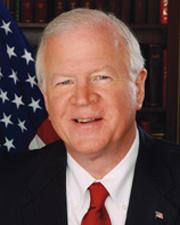
Mr. President, I rise today to introduce the L-1 Visa Reform Act which affects intracompany transferees seeking entry to the United States. Congress created the L-1 visa to allow international…
Mr. President, I rise today to introduce the L-1 Visa Reform Act which affects intracompany transferees seeking entry to the United States. Congress created the L-1 visa to allow international companies to move executives, managers, and other key personnel within the company and into the U.S. temporarily. The L-1 is an important tool for our multi-national corporations, however, some companies are making an end-run around the visa process by bringing in professional workers on L-1 visas and then outsourcing those workers to a third party company. In other words, some firms are using the so-called ``L-1 loophole'' to become the international equivalent of temp agencies, or ``job shops.'' As a result, American workers are being displaced by foreign workers who are brought to the U.S. essentially for their labor. This must stop--my legislation targets the problem, closes the loophole, and protects U.S. jobs from inappropriate use of the L-1 visa.
The situation in question arises when a company with both foreign and U.S.-based operations obtains an L-1 visa to transfer a foreign employee who has ``specialized knowledge'' of the company's product or processes. The problem occurs only when an employee with specialized knowledge is placed offsite at the business location of a third party company. In this context, if the L-1 employee does not bring anything more than generic knowledge of the third party company's operations, the foreign worker is acting more like an H-1B professional than a true intracompany transferee. Outsourcing an L-1 worker in this way has resulted in American workers being displaced at the third party company. In these difficult economic times, we must ensure that American workers aren't losing their jobs to cheap foreign labor by those circumventing protections already in law.
Several weeks ago I held a hearing on L-1 visa concerns in the Immigration Subcommittee. We heard from a full-range of witnesses--from a displaced worker and labor unions to small and large U.S. companies to business immigration experts. The hearing clearly demonstrated a problem exists, and the testimony of our witnesses directed attention to Congress' intent in creating the L-1 visa. The bill I am introducing today clarifies Congress' intent and restricts the inappropriate use of the L-1 visa. The bill does so without forcing unnecessary restrictions on the visa that would only result in adverse effects on legitimate L-1 users.
The L-1 Visa Reform Act prevents companies from using the L-1 visa when an H-1B visa with its worker protections is appropriate. The legislation requires that any employee with specialized knowledge who is located offsite must, first, be controlled and supervised by the petitioning company and, second, be provided in connection with an exchange of products or services between the petitioning company and the third-party company. This will stop the practice of a consulting company bringing in foreign workers to send over to a manufacturer when the consulting company does nothing more than cut the foreign worker's paycheck once a month. Instead, the bill requires the third-party company to have a pre-existing business relationship with the petitioning company that is more than just supplying workers.
In addition, the legislation requires companies to employ a worker for at least one year before sending the employee over on an L-1 intra- company
transfer. One year is a reasonable amount of time to require an employee to have attained the specialized knowledge of the company's products, services or processes to qualify for the visa. The bill also mandates the Department of Homeland Security to maintain statistics differentiating between L-1 transferees who are managers and executives and those who are specialized knowledge employees. This will provide better accountability and fraud prevention when L-1 petitions are reviewed and approved.
We need the best people in the world to come to the United States, to bring their skills and innovative ideas, and to support our business enterprises. The L-1 visa is an important tool to achieve these purposes. But we must ensure that American workers are not displaced by foreign workers, particularly when we have safeguards in place albeit a loophole in law. The L-1 Visa Reform Act will close that loophole for the benefit of U.S. workers and for U.S. businesses who use the visa as it is intended.
I yield the floor.
Mr. President, today is Citizenship Day. On this day in 1787 the Constitution of the United States was signed. In 1952, Congress passed a law designating Citizenship Day on this day with the intent…
Mr. President, today is Citizenship Day. On this day in 1787 the Constitution of the United States was signed. In 1952, Congress passed a law designating Citizenship Day on this day with the intent of recognizing those who had become American citizens during the preceding year.
In the ceremony where an immigrant becomes a naturalized citizen of this country, where he or she becomes a new American, he or she swears an oath of renunciation and allegiance.
Last week, on September 11, I noted that the oath of allegiance is currently a matter of mere Federal regulation and not a matter of law. I said that Congress ought to enshrine the oath in law.
Today, on behalf of Mr. Burns, Mr. Sessions, and 30 Members of the Senate, I rise to introduce legislation to do precisely that--to make the current oath of allegiance the law of the land. Doing so will give the oath of allegiance the same status enjoyed by other key symbols and statements of being an American--the American flag, the Pledge of Allegiance, the national anthem, and our national motto. All these symbols and statements have been specifically approved by Congress and are now a matter of law. The oath of allegiance ought to be treated with the same dignity.
The Bureau of Citizenship and Immigration Services--or BCIS--an agency of the Department of Homeland Security, was recently planning to change the oath of allegiance that immigrants take to become a citizen of this Nation. While those changes seem now to be on hold, it seems inappropriate to me that the BCIS, or any other Government agency, no matter how well intentioned, should have the power to alter the oath without congressional approval.
In the first 5 months of this fiscal year, 166,968 immigrants took the oath and were naturalized as new citizens of this country.
The oath assumed its present form in the 1950s and was first adopted in Federal regulations in 1929. But some of the language dates all the way back to 1790.
Yesterday, I attended a naturalization ceremony for new citizens. They were proud to take the oath of allegiance to the United States. They were proud to become Americans. This is the oath they took to become U.S. citizens--the oath which will become law if the bill I will introduce today should pass and be signed by the President.
I quote:
I--and the citizen states his or her name--hereby declare,
on oath, that I absolutely and entirely renounce and abjure
all allegiance and fidelity to any foreign prince, potentate,
state, or sovereignty of whom or which I have heretofore been
a subject or citizen; that I will support and defend the
Constitution and laws of the United States of America against
all enemies, foreign and domestic; that I will bear true
faith and allegiance to the same; that I will bear arms on
behalf of the United States when required by the law; that I
will perform noncombatant service in the Armed Forces of the
United States when required by the law; that I will perform
work of national importance under civilian direction when
required by the law; and that I take this obligation freely
without any mental reservation or purpose of evasion; so help
me God.
That is the oath of allegiance. That is quite an oath. It has strength. It has clarity. It sounds as if it might have been written by some rowdy patriots in Philadelphia or Williamsburg.
Yet, surprisingly, Congress has never voted on the content of this oath. We have left it to Federal regulators. It is time to protect it.
This is a straightforward bill that simply codifies the oath of allegiance as it presently stands. The bill I introduce today has, as I mentioned, already attracted 30 cosponsors, including the distinguished Senator from North Carolina who is presiding today.
I hope more Senators will join us in protecting this key statement on what it means to become an American.
Mr. President, today is Citizenship Day. On this day in 1787 the Constitution of the United States was signed. In 1952, Congress passed a law designating Citizenship Day on this day with the intent…
Mr. President, today is Citizenship Day. On this day in 1787 the Constitution of the United States was signed. In 1952, Congress passed a law designating Citizenship Day on this day with the intent of recognizing those who had become American citizens during the preceding year.
In the ceremony where an immigrant becomes a naturalized citizen of this country, where he or she becomes a new American, he or she swears an oath of renunciation and allegiance.
Last week, on September 11, I noted that the oath of allegiance is currently a matter of mere Federal regulation and not a matter of law. I said that Congress ought to enshrine the oath in law.
Today, on behalf of Mr. Burns, Mr. Sessions, and 30 Members of the Senate, I rise to introduce legislation to do precisely that--to make the current oath of allegiance the law of the land. Doing so will give the oath of allegiance the same status enjoyed by other key symbols and statements of being an American--the American flag, the Pledge of Allegiance, the national anthem, and our national motto. All these symbols and statements have been specifically approved by Congress and are now a matter of law. The oath of allegiance ought to be treated with the same dignity.
The Bureau of Citizenship and Immigration Services--or BCIS--an agency of the Department of Homeland Security, was recently planning to change the oath of allegiance that immigrants take to become a citizen of this Nation. While those changes seem now to be on hold, it seems inappropriate to me that the BCIS, or any other Government agency, no matter how well intentioned, should have the power to alter the oath without congressional approval.
In the first 5 months of this fiscal year, 166,968 immigrants took the oath and were naturalized as new citizens of this country.
The oath assumed its present form in the 1950s and was first adopted in Federal regulations in 1929. But some of the language dates all the way back to 1790.
Yesterday, I attended a naturalization ceremony for new citizens. They were proud to take the oath of allegiance to the United States. They were proud to become Americans. This is the oath they took to become U.S. citizens--the oath which will become law if the bill I will introduce today should pass and be signed by the President.
I quote:
I--and the citizen states his or her name--hereby declare,
on oath, that I absolutely and entirely renounce and abjure
all allegiance and fidelity to any foreign prince, potentate,
state, or sovereignty of whom or which I have heretofore been
a subject or citizen; that I will support and defend the
Constitution and laws of the United States of America against
all enemies, foreign and domestic; that I will bear true
faith and allegiance to the same; that I will bear arms on
behalf of the United States when required by the law; that I
will perform noncombatant service in the Armed Forces of the
United States when required by the law; that I will perform
work of national importance under civilian direction when
required by the law; and that I take this obligation freely
without any mental reservation or purpose of evasion; so help
me God.
That is the oath of allegiance. That is quite an oath. It has strength. It has clarity. It sounds as if it might have been written by some rowdy patriots in Philadelphia or Williamsburg.
Yet, surprisingly, Congress has never voted on the content of this oath. We have left it to Federal regulators. It is time to protect it.
This is a straightforward bill that simply codifies the oath of allegiance as it presently stands. The bill I introduce today has, as I mentioned, already attracted 30 cosponsors, including the distinguished Senator from North Carolina who is presiding today.
I hope more Senators will join us in protecting this key statement on what it means to become an American.
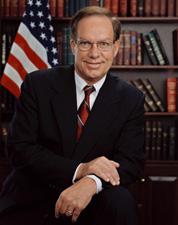
Mr. President, it gives me great pleasure to introduce today a bill to provide a tax credit for apprenticeship training programs for various construction trades recognized by the Bureau of Labor…
Mr. President, it gives me great pleasure to introduce today a
bill to provide a tax credit for apprenticeship training programs for various construction trades recognized by the Bureau of Labor Statistics (BLS), including masonry, electrical contract work, plumbing and heating and a host of other important vocations.
There are several reasons why I believe this legislation is necessary for apprenticeship training in these trades. First and foremost, these are highly skilled trades requiring many years of training. Second, there is a significant shortage of workers in these trades; in fact it is my understanding that many contractors often have to look outside the country to find a craftsman trained in one of these particular fields. Third, the average age of some of the workers in these crafts is over 50 and we must make every effort to ensure that we retain and recruit the most capable people in these jobs. And finally, many of these industries are very capital intensive and it makes sense to me to offer small businesses a short term tax credit to encourage productivity and stimulate economic growth and job creation.
During the last Congress a similar bill was introduced in the House of Representatives by Congressman Foley of Florida. Regrettably the bill was not met with a great deal of enthusiasm, primarily due to the price tag attached to it. The legislation I am introducing, the Apprenticeship Training and Education Act of 2003, has been modified to address budgetary concerns as well as the concerns of those in some of the building trades that the apprenticeship training programs were indeed legitimate ones that would ultimately produce certified craftsmen. I greatly appreciate the assistance of the Mason Contractors Association of America and the Independent Electrical Contractors in crafting a bill that is fiscally responsible and credible.
I believe this tax credit will go a long way toward encouraging companies with a certified apprenticeship program to hire and train new workers. As the population of these workers continues to age and decline, it is absolutely essential that we look for ways to attract more, younger workers to what I believe to be excellent, high-paying and high skilled jobs in these construction trades.
Under my bill, a tax credit of up to $10,000 per year for the first 2 years of a 4-year program would be provided and companies could hire three new apprentices each year. The normal business deduction taken for this expense would be offset by the amount of the tax credit. The bill also specifically targets trades in the construction industry recognized by the BLS and only those programs certified by a State's or the Federal Department of Labor would qualify for the credit.
In my view there are many companies across the country that would benefit tremendously from this tax credit. I commend this legislation to my colleagues and urge them to cosponsor it with me. These are jobs and trades to be proud of and I encourage other Members of this body to promote the skills and education necessary to keep them viable in the United States.
I ask unanimous consent that the text of the bill be printed in the Record.
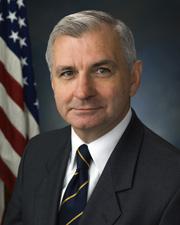
Mr. President, I rise today to introduce the Rhode Island Fishermen's Fairness Act of 2003. This legislation would address a serious flaw in our Nation's regional fisheries management system by…
Mr. President, I rise today to introduce the Rhode Island Fishermen's Fairness Act of 2003. This legislation would address a serious flaw in our Nation's regional fisheries management system by adding Rhode Island to the Mid-Atlantic Fishery Management Council (MAFMC), which currently consists of representatives from New York, New Jersey, Delaware, Pennsylvania, Maryland, Virginia, and North Carolina.
The MAFMC manages the following 13 species, all of which are landed in Rhode Island: Illex squid, loligo squid, Atlantic mackerel, black sea bass, bluefish, butterfish, monkfish, scup, spiny dogfish, summer flounder, surfclam, ocean quahog, and tilefish.
In 2001, the most recent year for which final data are available, Rhode Island fishermen brought in over 21 percent of MAFMC landings by weight--more than any of the MAFMC member States except New Jersey, which is responsible for about 56 percent of total MAFMC landings. In fact, with the exception of New Jersey, Rhode Island's total 2001 MAFMC landings, 44.1 million pounds, nearly equaled those of all other MAFMC member States combined, 45.9 million pounds.
If Rhode Island fishermen are responsible for a large percentage of overall MAFMC landings, these species make up an even larger proportion of landings within Rhode Island every year. Between 1995 and 2002, MAFMC species represented between 29 percent and 58 percent of all finfish landed in Rhode Island annually, for an average of 43 percent of total landings by weight. In eight of the years between 1990 and 2002, squid, Illex and loligo, was the number one finfish landed in Rhode Island, with a value of between $13 million and $20 million annually.
Yet Rhode Island has no voice in the management of these species.
Following council tradition and Federal fisheries law, the Rhode Island Fishermen's Fairness Act would create two seats on the MAFMC for Rhode Island: one seat nominated by the Governor of Rhode Island and appointed by the Secretary of Commerce, and a second seat filled by Rhode Island's principal State official with marine fishery management responsibility. The MAFMC would increase in size from 21 voting members to 23.
There is a precedent for this proposed legislation. In 1996, North Carolina's representatives in Congress succeeded in adding that State to the MAFMC through an amendment to the Sustainable Fisheries Act. Like Rhode Island, a significant proportion of North Carolina's landed fish species were managed by the MAFMC, yet the State had no vote on the council. Today, Rhode Island's share of total landings for species managed by the MAFMC is more than six times greater than that of North Carolina.
I look forward to working with my colleagues to restore a measure of equity to the fisheries management process by passing the Rhode Island Fishermen's Fairness Act. I ask unanimous consent that the text of the legislation be printed in the Record.
Mr. President, I ask unanimous consent that the order for the quorum call be rescinded. Mr. President, I ask unanimous consent to proceed as if in morning business.
Mr. President, I ask unanimous consent that the order for the quorum call be rescinded.
Mr. President, I ask unanimous consent to proceed as if in morning business.
Show 1 more
Madam President, I ask unanimous consent to be allowed to speak for up to 5 minutes as if in morning business.
Madam President, I ask unanimous consent to be allowed to speak for up to 5 minutes as if in morning business.
Bill Text
Latest available legislative text
        [Congressional Bills 108th Congress]
[From the U.S. Government Publishing Office]
[S. 1628 Introduced in Senate (IS)]

108th CONGRESS
1st Session
S. 1628

To prescribe the oath of renunciation and allegiance for purposes of
the Immigration and Nationality Act.

_______________________________________________________________________

IN THE SENATE OF THE UNITED STATES

September 17, 2003

Mr. Alexander (for himself, Mr. Schumer, Mr. Burns, Mr. Sessions, Mr.
Graham of South Carolina, Mr. Inhofe, Mr. Roberts, Mr. Enzi, Mr.
Thomas, Mr. Craig, Mr. Allard, Mr. Coleman, Mr. Cochran, Mr. Bunning,
Mr. Cornyn, Mr. McConnell, Mrs. Hutchison, Mr. Bennett, Mr. Brownback,
Mr. Voinovich, Mr. Lott, Mr. Domenici, Ms. Murkowski, Mr. McCain, Mr.
Kyl, Mr. Ensign, Mrs. Dole, Mr. Santorum, Mr. Grassley, Mr. Allen, and
Mr. Chambliss) introduced the following bill; which was read twice and
referred to the Committee on the Judiciary

_______________________________________________________________________

A BILL

To prescribe the oath of renunciation and allegiance for purposes of
the Immigration and Nationality Act.

Be it enacted by the Senate and House of Representatives of the
United States of America in Congress assembled,

SECTION 1. OATH OF RENUNCIATION AND ALLEGIANCE.

Section 337(a) of the Immigration and Nationality Act (8 U.S.C.
1448(a)) is amended by inserting after ``the child is unable to
understand its meaning.'' the following: ``The oath referred to in this
section shall read the same as the oath provided for in paragraph (a)
or (b) of part 337.1 of title 8, Code of Federal Regulations, as in
effect on September 1, 2003.''.
<all>