A bill to modify the date as of which certain tribal land of the Lytton Rancheria of California is deemed to be held in trust.

Legislative Activity
Stay on top of the latest movement without scrolling through every action
Read twice and referred to the Committee on Indian Affairs. (text of measure as introduced: CR S11915)
September 24, 2003
View full timeline
Introduced in Senate
September 24, 2003
Sponsor introductory remarks on measure. (CR S11914-11915)
September 24, 2003
Read twice and referred to the Committee on Indian Affairs. (text of measure as introduced: CR S11915)
September 24, 2003
Floor Debate
5 membersWhat members said about S. 1648 on the floor
 JBDF
JBDF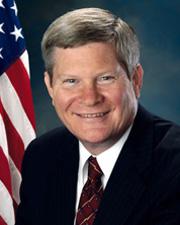 TJ
TJ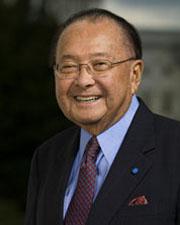 DKI
DKI BNC
BNC
Floor Debate
5 membersWhat members said about S. 1648 on the floor
Mr. President, I am proud to introduce the ``Ojito Wilderness Act'', a wilderness bill that has broad support in New Mexico. This bill designates the State's fourth Bureau of Land Management…
Mr. President, I am proud to introduce the ``Ojito Wilderness Act'', a wilderness bill that has broad support in New Mexico. This bill designates the State's fourth Bureau of Land Management Wilderness area, and its first new wilderness area in more than 15 years. Keeping in mind Theodore Roosevelt's statement that ``there are no words that can tell the hidden spirit of the wilderness, that can reveal its mystery, its melancholy, and its charm,'' the Ojito can be described as nearly 11,000 acres of dramatic landforms and multi-colored rock formations, with sculptured badlands, expansive plateaus and mesa tops, a high density of cultural and archaeological sites and paleontological resources, and a diverse array of plant and animal species. It is an area that is big enough to get lost in, but small enough that it will not change the fact that only one percent of New Mexico's BLM lands are designated as wilderness. The bill also provides for the acquisition of some adjacent public lands by the Pueblo of Zia for preservation as public open space. I am pleased that the senior Senator from New Mexico, Senator Domenici, is cosponsoring this bill and that my distinguished colleague from the Third District of New Mexico, Representative Udall, is introducing a companion measure in the House of Representatives.
The support for this proposal truly is impressive. It has been formally endorsed by the Governor of New Mexico; the local Sandoval County Commission and the neighboring Bernalillo County Commission; the Albuquerque City Council; New Mexico House of Representatives Energy and Natural Resources Committee Chairman James Roger Madalena; the Governors of the Pueblos of Zia, Santa Ana, Santo Domingo, Cochiti, Tesuque, San Ildefonso, Pojoaque, Nambe, Santa Clara, San Juan, Sandia, Laguna, Acoma, Isleta, Picuris, and Taos; the National Congress of American Indians; the Hopi Tribe; The Wilderness Society; the New Mexico Wilderness Alliance; the Coalition for New Mexico Wilderness, on behalf of more than 375 businesses and organizations; the Rio Grande Chapter of the Sierra Club; the National Parks and Conservation Association; the Albuquerque Convention and Visitors Bureau; 1000 Friends of New Mexico; and numerous individuals.
The designation of the Ojito Wilderness was recommended by Secretary of the Interior Manuel Lujan, Jr,.--a former New Mexico Congressman of 20 years--in 1991. Secretary Lujan found the Ojito to have ``high quality wilderness values'' with ``outstanding opportunities for solitude and primitive and unconfined recreation,'' as well as ``outstanding photographic and sightseeing opportunities.'' The ``close proximity to the Albuquerque and Santa Fe population centers, cultural and paleontological special features, and the lack of resource conflicts'' made the recommendation particularly strong. President George H.W. Bush concurred in the recommendation and forwarded it to Congress for designation. This bill adopts the boundaries recommended at that time, so there should be no question or dispute that all of the lands proposed for wilderness in this bill fully qualify for wilderness status under the Wilderness Act.
This bill also takes advantage of a unique opportunity to benefit both the Pueblo and the public by authorizing the Pueblo to acquire some public lands that are sandwiched between the Zia Reservation and the Ojito Wilderness Study Area. The general public will benefit from the assurance that these lands will be protected for the future, forming a protective buffer around the Ojito Wilderness and providing additional opportunities for primitive public recreation. This bill secures continued public access to this open space for recreational, scenic, paleontological, scientific, educational, and conservation uses.
While these lands are--and will remain--important to the public, they have special importance to the Pueblo and its people. These lands are part of the Pueblo's aboriginal land base, and they harbor many cultural, religious, historical, and archaeological sites of great import to the Pueblo. By acquiring these lands, the Pueblo will finally unite the two non-contiguous parts of its Reservation. The Pueblo may continue to graze its cattle on these lands, but it is prohibited from using the lands for housing, gaming, mining, or other commercial enterprises.
The Pueblo will purchase these lands for fair market value, which will, of course, take into consideration the restrictions and prohibitions on various uses, the requirement that the natural characteristics of the land be preserved in perpetuity, and the guarantee that public access be maintained. Existing rights are protected, so, for example, the main access road will remain a county road and the existing pipelines
and transmission line will be unaffected. The Pueblo also has agreed to recognize the grazing privileges of a neighboring ranch that has the only other outstanding grazing permit on the lands to be transferred, and it is working on memorializing that agreement.
The New Mexico Commissioner of Public Lands, Patrick H. Lyons, supports this transfer. In a letter endorsing the proposal, he told the Pueblo that it ``makes sense from a management perspective, and I applaud your efforts to address this matter in a cooperative manner. Once transferred, I am confident that the Pueblo of Zia will manage its acquisition with the same sensitivity with which it manages all its lands.'' I agree, and this bill authorizes the Pueblo to manage this land pursuant to regulations that are approved by the Secretary of the Interior.
I am particularly pleased to introduce this legislation in celebration of the upcoming 40th anniversary of the Wilderness Act of 1964 and the eightieth anniversary of the Nation's first administratively-designated wilderness. This celebration is particularly meaningful to my State of New Mexico, for it is both the proud birthplace of wilderness and the home to two of its fathers: Aldo Leopold, who worked from Albuquerque for 15 years to create in 1924 the Gila wilderness near my home in southern New Mexico, and New Mexico Senator Clinton Anderson, who was instrumental in codifying Aldo Leopold's wilderness and ethic 40 years later.
Forty years later still, the Ojito provides a unique wilderness area that is important not only to its local stewards, but also to the nearby residents of Albuquerque and Santa Fe, as well as visitors from across the country. It is an outdoor geology laboratory, offering a spectacular and unique opportunity to view from a single location the juxtaposition of the southwestern margin of the Rocky Mountains, the Colorado Plateau, and the Rio Grande Rift, along with the volcanic necks of the Rio Puerco Fault. Its rugged terrain offers a rewarding challenge to hikers, backpackers, and photographers. It shelters ancient Puebloan ruins and an endemic endangered plant, solitude and inspiration.
The words of Aldo Leopold and Senator Clinton Anderson are fitting for the Ojito, for it is ``what the land was, what it is, and what it ought to be''; let this ``Ojito Wilderness Act'' be ``a demonstration by our people that we can put aside a portion of this which we have as a tribute to the Maker and say this we will leave as we found it.''
I ask unanimous consent that the text of the bill be printed in the Record.
Mr. President, I rise today to introduce legislation that would partially repeal language from the Omnibus Indian Advancement Act of 2000; language that circumvents the Indian Gaming Regulatory Act's…
Mr. President, I rise today to introduce legislation that would partially repeal language from the Omnibus Indian Advancement Act of 2000; language that circumvents the Indian Gaming Regulatory Act's common-sense protections and regulatory safeguards against the inappropriate siting of Nevada-style casinos.
In 2000, a one-paragraph provision was attached to the Omnibus Indian Advancement Act taking land into trust for a single Indian tribe, the Lytton, with the aim of allowing the tribe to expedite plans to establish a large gaming complex in San Pablo, CA.
The site which is not part of, nor adjacent to, any land traditionally held by the Lytton is, in fact, a 10-acre property which includes a card club and parking lot, and is located in a major urban area just outside of San Francisco. The process to bring this land into trust and sidestep gaming oversight was done without regard for Federal laws currently in place to regulate the siting of such a casino.
Today California is home to 109 federally recognized tribes. 64 tribes have gaming compacts with the State and there are 54 tribal casinos. With more than 50 tribes seeking Federal recognition and approximately 25 recognized
tribes seeking gaming compacts from the Governor, revenues from California's tribal gaming industry are expected to be the highest of any State's by the end of the decade.
I have serious reservations about the expansion of Nevada-style gaming--with its slot machines and in-house banking--into urban areas, and I am particularly concerned about off-reservation gambling and ``reservation shopping''. Off-reservation casinos often cause counties additional costs in public and local services, intrude on residential areas, and are responsible for an increase of traffic and crime within local communities.
That said, under proper regulation, gaming in California has the potential to yield much needed benefits for tribal members in terms of healthcare, education and general welfare, as Congress and California voters intended. However, the question is not whether gaming should be permitted, but rather how and where. Those questions have been appropriately addressed by the Indian Gaming Regulatory Act.
Without this legislation, the Lytton will be able to take a former card club and the adjacent parking lot as their reservation and turn it into a large gambling complex outside the regulations set up by the Indian Gaming Regulatory Act. Allowing this to happen would set a dangerous precedent not only for California, but every State where tribal gaming is permitted.
The changes I seek today are extremely limited. This legislation would not reverse restoration of the tribe. It would not infringe on Native American sovereignty. It does not even block the casino proposal. It only seeks to give the State and the local communities a voice in the process and ensure that gaming continues to be organized within the framework of the Indian Gaming Regulatory Act.
Circumventing the processes for Federal recognition of tribal governments and for granting land into trust presents a variety of serious and critical multi-jurisdictional issues--issues which can negatively affect the lives of ordinary citizens and deprive local governments of their political power to protect their communities.
That is why I believe it is important to seek a remedy which would restore the Indian Gaming Regulatory Act's oversight over the matter.
The Indian Gaming Regulatory Act has provided this Nation with a fair and balanced approach to Indian gaming by facilitating tribal plans for economic recovery without compromising a multitude of factors that should be taken into account when deciding on the siting of casinos. This law works. It is a fair process that should continue to be followed.
It is simply not asking too much to require that Lytton be subject to the regulatory and approval processes applicable to newly acquired tribal lands by the Indian Gaming Regulatory Act.
I hope my colleagues will support this legislation and I look forward to working with the Chairman and Ranking Member of the Indian Affairs Committee to pass this legislation quickly.
I ask unanimous consent that the text of the bill be printed in the Record.
Mr. President, I rise today to introduce legislation that would partially repeal language from the Omnibus Indian Advancement Act of 2000; language that circumvents the Indian Gaming Regulatory Act's…
Mr. President, I rise today to introduce legislation that would partially repeal language from the Omnibus Indian Advancement Act of 2000; language that circumvents the Indian Gaming Regulatory Act's common-sense protections and regulatory safeguards against the inappropriate siting of Nevada-style casinos.
In 2000, a one-paragraph provision was attached to the Omnibus Indian Advancement Act taking land into trust for a single Indian tribe, the Lytton, with the aim of allowing the tribe to expedite plans to establish a large gaming complex in San Pablo, CA.
The site which is not part of, nor adjacent to, any land traditionally held by the Lytton is, in fact, a 10-acre property which includes a card club and parking lot, and is located in a major urban area just outside of San Francisco. The process to bring this land into trust and sidestep gaming oversight was done without regard for Federal laws currently in place to regulate the siting of such a casino.
Today California is home to 109 federally recognized tribes. 64 tribes have gaming compacts with the State and there are 54 tribal casinos. With more than 50 tribes seeking Federal recognition and approximately 25 recognized
tribes seeking gaming compacts from the Governor, revenues from California's tribal gaming industry are expected to be the highest of any State's by the end of the decade.
I have serious reservations about the expansion of Nevada-style gaming--with its slot machines and in-house banking--into urban areas, and I am particularly concerned about off-reservation gambling and ``reservation shopping''. Off-reservation casinos often cause counties additional costs in public and local services, intrude on residential areas, and are responsible for an increase of traffic and crime within local communities.
That said, under proper regulation, gaming in California has the potential to yield much needed benefits for tribal members in terms of healthcare, education and general welfare, as Congress and California voters intended. However, the question is not whether gaming should be permitted, but rather how and where. Those questions have been appropriately addressed by the Indian Gaming Regulatory Act.
Without this legislation, the Lytton will be able to take a former card club and the adjacent parking lot as their reservation and turn it into a large gambling complex outside the regulations set up by the Indian Gaming Regulatory Act. Allowing this to happen would set a dangerous precedent not only for California, but every State where tribal gaming is permitted.
The changes I seek today are extremely limited. This legislation would not reverse restoration of the tribe. It would not infringe on Native American sovereignty. It does not even block the casino proposal. It only seeks to give the State and the local communities a voice in the process and ensure that gaming continues to be organized within the framework of the Indian Gaming Regulatory Act.
Circumventing the processes for Federal recognition of tribal governments and for granting land into trust presents a variety of serious and critical multi-jurisdictional issues--issues which can negatively affect the lives of ordinary citizens and deprive local governments of their political power to protect their communities.
That is why I believe it is important to seek a remedy which would restore the Indian Gaming Regulatory Act's oversight over the matter.
The Indian Gaming Regulatory Act has provided this Nation with a fair and balanced approach to Indian gaming by facilitating tribal plans for economic recovery without compromising a multitude of factors that should be taken into account when deciding on the siting of casinos. This law works. It is a fair process that should continue to be followed.
It is simply not asking too much to require that Lytton be subject to the regulatory and approval processes applicable to newly acquired tribal lands by the Indian Gaming Regulatory Act.
I hope my colleagues will support this legislation and I look forward to working with the Chairman and Ranking Member of the Indian Affairs Committee to pass this legislation quickly.
I ask unanimous consent that the text of the bill be printed in the Record.
Mr. President, today I am happy to join my colleague, Senator Campbell, in introducing legislation that will provide millions of seniors with direct access to important audiology services through the…
Mr. President, today I am happy to join my colleague, Senator Campbell, in introducing legislation that will provide millions of seniors with direct access to important audiology services through the Medicare Program.
Approximately 28 million people in the U.S. have some degree of reduced hearing sensitivity, and of this number, 80 percent have irreversible hearing loss. The majority of these individuals are 65 and older, and as the baby boom generation ages, this number will skyrocket. Hearing loss is the 3rd most prevalent chronic condition in the older population. One in three people older than 60 and half of those older than 85 have a hearing loss problem and only about one- fourth of those who could benefit from a hearing aid actually use one.
Hearing problems can make it difficult to understand and follow a doctor's advice, respond to warnings, and to hear doorbells and alarms. They can also take away from the enjoyment of the simple things in life, like talking to friends and family, or listening to the radio or television. Additionally, the 21st century work environment requires intense use of communication and information skills and technologies. As seniors continue to remain in the workforce for longer periods, work-related hearing challenges will become increasingly evident and the individual who has a communication disability, disorder, or difference will be at a distinct disadvantage.
This legislation will help seniors challenged by hearing problems obtain direct access to licensed audiologists through the Medicare Program. Because most of these hearing conditions are not medically or surgically treatable, direct access to audiology services will allow comprehensive and timely care through the diagnosis, treatment, and management of hearing loss. Audiologists can conduct a variety of specialized auditory assessments and based on such examinations, can present numerous options to help patients cope with hearing problems. This legislation will not diminish the important role of primary care physicians, who closely with audiologists and will remain intimately involved in patient care as needed under this bill.
Direct access to such audiology services is supported by numerous governmental agencies. The Centers for Disease Control and Prevention has recognized the importance of this issue by making access by persons with hearing impairments to rehabilitative services a Health People 2010 objective. Additionally, the Veteran's Administration and Office of Personnel Management have established policies to allow beneficiaries such access. Seniors under the Medicare Program deserve similar benefits, and I urge my colleagues to support this important bill.
Mr. President, I rise to introduce the National Beach Recreation and Economic Benefits Act. This measure would require the U.S. Army Corps of Engineers, Army Corps, to give recreational benefits the…
Mr. President, I rise to introduce the National Beach Recreation and Economic Benefits Act. This measure would require the U.S. Army Corps of Engineers, Army Corps, to give recreational benefits the same priority as hurricane and storm damage reduction benefits when justifying beach restoration projects.
The Army Corps performs a valuable service in protecting our nation's beaches against erosion. They have effectively restored and repaired damaged beaches for over the past 50 years. Unfortunately, under current policy, the Army Corps only authorizes and funds beach restoration projects that protect property against storm and hurricane damage. The Army Corps does not recommend authorization or funding of beach restoration projects that only provide recreational benefits.
Beaches help support tourism and serve as an important source of fun for many Americans who seek inexpensive recreation. Many of these beaches are not eligible for beach restoration because they lack sufficient structural development along coastlines to warrant a restoration project solely on the basis of storm or hurricane damage reduction. While local governments and communities have taken proactive measures to avert flood damage, they are being denied the much needed beach restoration assistance by the Army Corps.
In addition, by limiting beach restoration projects to storm and hurricane damage reduction, the Army Corps has established a policy that inadvertently aids more developed shorelines than others. The method for determining storm and hurricane damage reduction benefits is based on the assessed value of the private property and public infrastructure immediately adjacent to the beach. Therefore, the benefits will be much higher for densely developed shorelines than less densely developed shorelines. For example, a high-rise residential condominium or hotel would provide more storm reduction benefits than a single family home.
Accordingly, the National Beach Recreation and Economic Benefits Act will ensure that recreation benefits are accorded the same considerations as storm and hurricane damage reduction benefits. I urge my colleagues to support this measure. I ask unanimous consent that the text of my bill be printed in the Record.
Show 1 more
Mr. President, today I am introducing legislation which would give Medicare recipients the same hearing care options available to veterans and Senators. Specifically, it would give Medicare…
Mr. President, today I am introducing legislation which would give Medicare recipients the same hearing care options available to veterans and Senators. Specifically, it would give Medicare beneficiaries direct access to qualified, licensed audiologists. I am pleased to be joined in this effort by my colleague, Senator Tim Johnson.
Today, approximately 28 million Americans are hearing disabled. Many of them are older Americans--a statistic that is fast increasing with the aging of the ``baby boomers.'' With 80 to 90 percent of hearing problems not medically or surgically treatable, it seems only reasonable that Medicare patients be allowed to consult with an audiologist without first seeing another provider. It is part of regular audiological practice to refer patients for medical management when clinical indicators are present.
In the 1990's, the Department of Veterans Affairs (VA) and the Office of Personnel Management changed their respective healthcare policies to allow for the option of direct access to a licensed audiologist. Earlier this year, I wrote the VA asking if veterans were satisfied with that coverage for audiological services. According to the VA response, ``The policy has provided and continues to provide high quality, cost effective, and successful hearing health care to veterans.'' It is important to point out that this bill would not diminish the important role of medical doctors, or expand the scope of practice for audiology.
This legislation is consumer friendly. It will help our elderly and rural citizens who often find it difficult to access health care services. It will provide consistency of policy among Government agencies. That is why I urge my colleagues to act quickly on this legislation.
I ask unanimous consent that the text of the bill be printed in the Record.
Bill Text
Latest available legislative text
        [Congressional Bills 108th Congress]
[From the U.S. Government Publishing Office]
[S. 1648 Introduced in Senate (IS)]

108th CONGRESS
1st Session
S. 1648

To modify the date as of which certain tribal land of the Lytton
Rancheria of California is deemed to be held in trust.

_______________________________________________________________________

IN THE SENATE OF THE UNITED STATES

September 24, 2003

Mrs. Feinstein introduced the following bill; which was read twice and
referred to the Committee on Indian Affairs

_______________________________________________________________________

A BILL

To modify the date as of which certain tribal land of the Lytton
Rancheria of California is deemed to be held in trust.

Be it enacted by the Senate and House of Representatives of the
United States of America in Congress assembled,

SECTION 1. LYTTON RANCHERIA OF CALIFORNIA.

Section 819 of the Omnibus Indian Advancement Act (114 Stat. 2919)
is amended by striking the last sentence.
<all>