A bill to authorize the award of the Iraqi Liberation Medal as a campaign medal for members of the Armed Forces who serve in Southwest Asia in connection with Operation Iraqi Freedom.
Legislative Activity
Stay on top of the latest movement without scrolling through every action
Sponsor introductory remarks on measure. (CR S3346-3347)
March 30, 2004
View full timeline
Introduced in Senate
September 29, 2003
Sponsor introductory remarks on measure. (CR S12139-12141)
September 29, 2003
Read twice and referred to the Committee on Armed Services. (text of measure as introduced: CR S12141)
September 29, 2003
Sponsor introductory remarks on measure. (CR S3346-3347)
March 30, 2004
Floor Debate
18 membersWhat members said about S. 1673 on the floor
 JM
JM JMJJB
JMJJB RDF
RDF RS+13
RS+13
Floor Debate
18 membersWhat members said about S. 1673 on the floor
Mr. President, along with Senator Russ Feingold, I am proud today to introduce the Presidential Funding Act of 2003. This legislation will improve and reform the presidential public financing system.…
Mr. President, along with Senator Russ Feingold, I am proud today to introduce the Presidential Funding Act of 2003. This legislation will improve and reform the presidential public financing system. With major presidential candidates opting out of public financing for their 2004 primary campaigns, reform of the system of financing presidential nominations is needed more than ever.
The presidential public financing system has been in place for three decades and has achieved broad public acceptance. From 1976 to 2000, every major party presidential nominee has accepted public financing for the general election and, nearly all of the nominees have also accepted it for their primary elections. A total of 46 Democrats and 29 Republicans have accepted public financing for the presidential primaries during this period.
Since its creation, the presidential financing system has worked non- ideologically, with victories for three Republicans and two Democrats. It has also provided for competitive elections. In the five races that have been run under the system involving an incumbent president, challengers have won in three of those elections. This system of voluntary spending limits in exchange for public funding has been a nonpartisan success.
Last year's enactment of a ban on soft money addressed what had become a basic problem for the effectiveness and credibility of the presidential system. For the system to continue serving the nation effectively, its remaining problems now must be solved. This legislation will repair and revitalize the presidential campaign finance system in the following ways.
First, our legislation increases the overall spending limit for the presidential primaries and provide more public matching funds for presidential primary candidates.
The overall spending limit in the primaries for publicly financed candidates has failed to keep pace with reality. This was demonstrated when in 2000, public financing and spending limits for the primaries were rejected and a record $100 million in private contributions was spent to gain the Republican party's nomination--more than twice the amount that the publicly financed candidates were allowed to spend. During the 2004 presidential primary period, it is expected that Republicans will raise and spend as much as $200 million.
Our legislation increases the individual contribution limit from $1,000 to $2,000. Therefore, it will be easier over time for other candidates to reject public financing and raise private money in excess of the overall primary spending limit, thereby worsening the competitive disadvantage of publicly-financed candidates.
In addition, the ``front-loading'' of presidential primaries has created a much shorter nominating period--now likely to end by early March--and a longer actual general election period than existed when the presidential financing system was created in 1974. As a result, a potential ``gap'' exists in funds available for a publicly financed nominee to spend between gaining the party nomination in March and the party's summer nominating convention, when the nominee receives public funds for the general election. This creates a further competitive disadvantage.
To address these problems, our legislation increases the overall spending limit for the presidential primaries to $75 million from the $45 million limit in effect for the 2004 presidential election. This would equal the $75 million spending limit in effect for the general election, which applies to a much shorter period than the primaries.
The amount of public matching funds for individual contributions in the primaries is also increased from the current one-to-one match to a four-to-one match for up to $250 of each individual contribution. This would greatly increase the value of smaller contributions in the presidential nominating process, as was intended by the presidential financing system. It would decrease the reliance on larger contributions, provide more public funds to meet the higher spending limit, and improve the ability of publicly financed candidates to run competitive elections.
When the $1000 individual contribution limit was doubled last year, increasing the potential role of private contributions in the presidential financing system, no similar adjustment was made to increase the role of public matching funds. A new four-to-one multiple match for up to $250 of each individual contribution would accomplish that goal.
In addition, the threshold for qualifying for matching public funds in the primary has not changed since the system was established. Our legislation increases the qualifying threshold should be increased by more than doubling the threshold to require candidates to raise $15,000 in each of 20 states in amounts of no more than $250 per individual donor. Although the existing threshold has worked well during the history of the current system, a higher qualifying amount is appropriate for the future, especially since candidates would now be eligible to receive greater amounts of matching funds.
Second, our legislation requires a candidate to opt in or out of the public financing system for the entire presidential election, including both the primary and general election.
The purpose of the presidential public financing system is to allow candidates to run competitive races for the presidency without becoming dependent on or obligated to campaign donors. That purpose is undermined when a candidate opts out of the system to raise and spend large amounts of private money for a primary or general election race. Such candidates should not be able to reject public financing and then get the system's benefits when it suits their tactical advantage. A candidate should have to opt in or out of the system for the whole election.
Third, our legislation repeals the state-by-state primary spending limits and allows publicly financed primary candidates to receive their public matching funds before January 1st of the presidential election year.
The State-by-State primary spending limits have not worked. The limits have proven to be ineffective and have served to unjustifiably micromanage presidential campaigns.
Under current law, primary candidates can begin to raise private contributions eligible to be matched beginning on January 1 of the year before a presidential election year. They are not eligible, however, to receive any of the matching public funds until January 1 of the presidential election year. With the current ``front-loaded'' primary system, and with the nomination likely to be decided in the early months of a presidential election year, primary candidates need to be able to spend more funds at an earlier period than before. As a result, under our legislation, presidential primary candidates will be eligible to start receiving matching public funds on July 1 of the year before a presidential election year.
Fourth, our legislation provides additional public funds in the presidential general election for a publicly financed candidate facing a privately financed candidate who has substantially outspent the combined primary and general election spending limits.
As more wealthy individuals decide to spend their personal wealth to run for public office, the potential grows for an individual to spend an enormous amount of personal wealth to seek the presidency. There already have been candidates for the U.S. Senate and in mayoral races, for example, who have spent as much in personal wealth on their races as each major party presidential nominee received in public funds in 2000 to run their general election campaign.
In addition, with the increased individual contribution limit, a presidential candidate could decide to forgo public funding and raise and spend private contributions far in excess of the spending limits for publicly financed candidates.
To address this potential problem, our legislation makes a publicly financed major party nominee eligible to receive an additional $75 million for the general election race, when a privately financed general election candidate has spent more than 50 percent above the total primary and general election spending limit for the publicly financed candidate.
In other words, once a presidential general election candidate has spent more than a total of $225 million to seek the presidency, a publicly financed major party nominee, subject to a spending limit of $75 million for the primaries and $75 million for the general election, would receive an additional $75 million for the general election race.
Fifth, our legislation increases the funds available to finance the presidential public financing system.
Currently, the public financing system is funded by a voluntary $3 check-off available to taxpayers on their tax forms on an annual basis. This mechanism will not raise sufficient resources in the long term to finance the costs of a revised presidential system.
The $3 tax check-off is increased to $6 and indexed for inflation to help ensure there are sufficient funds available for future presidential elections. In addition, the Federal Election Commission (FEC) is authorized to conduct a public education campaign to explain to citizens why the check-off exists and how it works, including the fact that it does not increase the tax liability of taxpayers.
The current presidential public financing law creates a priority system that allocates available public funds from the check-off to the nomination conventions, the presidential general election and the presidential primaries in that order. This order of priority does not make sense.
Our legislation revises the order of priority for use of public funds to make funding of the general election candidates the first priority, funding of the primary election candidates the second priority, and funding of the nomination conventions the third priority.
Furthermore, a U.S. Department of the Treasury ruling prohibits taking into account the tax check-off revenues that will be received in April of the presidential election year in determining at the start of each presidential election year the total amount of funds available to be given to eligible candidates from the fund. This has had the effect of artificially lowering the amount of funds available and creating temporary shortfalls for primary candidates during the opening months of the presidential election year at the time when they need the funds the most.
Our legislation revises the law to require the U.S. Department of the Treasury (as it used to do) to estimate at the end of the year prior to a presidential election year the amount of check-off funds that will be received in the presidential election year and to take these funds into account in determining the total amount of funds available under the presidential system.
Finally, our legislation implements the soft money ban to ensure that the parties and federal officeholders and candidates do not raise or spend soft money in connection with the presidential nominating conventions.
Despite the passage of the new campaign finance law and its ban on soft money, federal officeholders and national party officials have continued to raise soft money to finance the national nomination conventions on the fictional premise that such funds are not in connection with a ``federal election'' but rather are for municipal or civic purposes.
The reality is that a presidential nominating convention is defined as a ``federal election'' election under the campaign finance law. Furthermore, federal officeholders and candidates and national party officials who raise soft money for the conventions are subject to precisely the same kind of problems of corruption and the appearance of corruption that the new law prevents by banning soft money.
To reaffirm that the soft money ban applies to the presidential nominating conventions, our legislation explicitly prohibits the national parties and federal officeholders and candidates from raising and spending soft money to pay for the presidential nominating conventions, including for a host committee, civic committee or municipality.
The highly expensive, front-loaded, nationalized, primary system requires that we more than ever fix the presidential public funding system. We must continue to promote competition in order to give voters choices. Our legislation not only saves the existing system but improves it as well. It not only shores up the financial foundations of the system but it would also bring more donors into the system, making financial participation more democratic. It would give our citizens a stake in their government. It is our hope that with the enactment of this legislation, candidates will no longer take small donors for granted and finally hear their voices. In return, all of our citizens will feel reconnected to the presidential financing process that at times, has left them behind.
Mr. President, today, together with Senators Hatch and Snowe, I am introducing, the Retirement Account Portability and Improvement Act of 2003. This legislation improves the portability of retirement…
Mr. President, today, together with Senators Hatch and Snowe, I am introducing, the Retirement Account Portability and Improvement Act of 2003. This legislation improves the portability of retirement savings by eliminating unnecessary complexities and barriers in the retirement savings system, and helps preserve retirement savings by giving American workers tools that will help them consolidate their retirement savings into one easily managed account.
In brief, this bill will make a number of improvements in the retirement savings system to help families preserve retirement assets. It will, for example, enhance the portability of retirement savings by expanding rollover options in traditional IRAs, Roth IRAs, and SIMPLE Plans. The bill also clarifies that when employees are permitted to make after-tax contributions to retirement plans, those after-tax amounts may be rolled over into other retirement plans eligible to receive such rollovers. This clarification will make it easier for workers to move all elements of their 401(k) of 403(b) savings when they change jobs and move between private sector and the tax-exempt sector.
In addition, the bill builds on defined contribution plan reforms enacted in 2001 by requiring a shortened vesting schedule for employer non-elective contributions, such as profit-sharing contributions, to defined contribution plans. As a result, employer contributions will become employee property more quickly, helping workers to build more meaningful retirement benefits. This new vesting schedule corresponds to rules for 401(k) matching contributions enacted in 2001.
Another provision in the bill would end an unfair tax penalty faced by non-spouse beneficiaries. Today, when an employee dies, the benefits in that employee's retirement account are paid out to a non-spouse beneficiary in one payment. The beneficiary must pay tax on the entire amount, and is often forced into a higher tax bracket as a result of the payment. A provision in this bill would allow non-spouse beneficiaries--siblings, children, domestic partners, parents--to roll over the money from the plan to an IRA. This will prevent an immediate tax bite to grieving beneficiaries and allow them to withdraw the money from their IRA over five years or over their own life expectancy.
The bill also helps preserve retirement savings by allowing plans to designate default IRAs or annuity contracts to which employee rollovers may be directed. Employers should be more willing to establish default IRA and annuity rollover options as a result, making it easier for employees to keep savings in the retirement system when they change jobs.
For workers who leave a job without claiming their retirement benefits, the bill improves on the automatic rollover provisions enacted in 2001, by allowing certain small distributions from retirement plans to be sent to the Pension Benefit Guaranty Corporation (PBGC), ensuring that participants are ultimately reunited with their earned benefits. The bill also expands the scope of the PBGC's successful Missing Participants program that matches workers with lost pension benefits.
Employees of state and local governments, including teachers, will benefit from a number of this bill's technical corrections that will facilitate the purchase of service credits in public pension programs, allowing state and local employees to more easily attain a full pension in the jurisdiction where they conclude their career. The bill also contains provisions that would clarify eligibility rights of certain state and local employees who participate in a Section 457 deferred compensation plan.
Congress must take every opportunity to encourage American workers not only to save for retirement, but also to preserve those hard-earned retirement savings. These portability improvements offer one set of tools for making it easier to navigate the retirement savings system and reach retirement with an adequate nest egg. There are many pressing and complex retirement issues that demand attention, but I am hopeful that this legislation, narrowly focused on portability, can be considered quickly and on its own merits.
Mr. President, today I rise to introduce the Dairy Farm Workers Fairness Act.
Family dairy farms are critically important to our agricultural economy and to the rural way of life in many parts of the country. These farms support the rural economy by supporting the local tax base and many local businesses. The working landscape created by our farms, especially a patchwork of small farms, is also the best antidote for the urban sprawl that is overtaking so much of the country. And, of course, the availability of fresh, locally produced milk is an amenity that we have come to take for granted. To support our rural economies, the working landscape and our local food supply systems we need to help small family dairy farms survive and thrive.
The most difficult challenge to the family dairy farm, after the volatility in milk price, is finding and hiring workers. In my home State of Vermont, dairy farms are not only an important part of our economy; they are an institution that has come to define our landscape. Vermont's beauty lies in the green fields, the red barns and the cows grazing on the hillside. When a farm family sells their land, which in many cases may have been worked by them and their ancestors for 5 or more generations, the decision is often driven by the non-stop, 7 day a week, 365 days a year work schedule. As fewer rural residents choose to work in agriculture, these farmers have been forced to take on more themselves. The whole family can end up working without vacations, sick leave or having weekends off. Although dairy farming might not seem seasonal, the burden becomes particularly heavy during the growing season when planting, haying, harvesting and storage of feed must all occur.
Dairy farmers are being forced to explore other options to find a predictable source of qualified labor. While other agricultural businesses in the country benefit from the temporary workers qualified under the H2A Work Visa Program, dairy farms do not. The job of milking cows on dairy farms has been judged under the current H2A program to not meet the definition of temporary or seasonal and is thus excluded. The largest labor need on dairy farms during the growing season, remains the need for assistance with milking. The cows must be milked two or three times a day by hired help so the farmer is able to take on the more complex and specialized work of operating large machinery to plant and harvest. While the work of milking is not seasonal or temporary, the need for additional labor to accomplish the
work is seasonal and temporary. I believe the exclusion of dairy farming under the H2A program is an unintended problem in definitions, and our legislation is designed to fix that glitch. We must do this out of fairness, so that dairy farms can benefit from the same access to labor that other farms have, and more importantly to help our farms survive.
Recently, I heard from a farmer who owns and operates, along with his wife, a small dairy farm in central Vermont. The couple is nearing retirement age and have no children of their own. They had attempted to find a farm hand that could live on the farm and help with milking and some of the heavier chores. After placing ads in the paper and working with the state of Vermont's Department of Employment and Training, it became clear that their best option was to hire a family friend who had a strong desire to learn farming. Since the young man was from Honduras they began the visa process only to have their request for certification by the U.S. Department of Labor denied because their need was considered neither temporary nor seasonal. This farm plays such an important role in their rural Vermont community that I heard from several other constituents who asked for my assistance on this family's behalf. The couple continues to work their land but in doing so they are straining their health and pushing themselves harder than they should. They continue to operate their farm because they do not want to sell it since it is land that has been farmed for generations.
The legislation I am introducing today would allow this family farm, and so many others like it, to avail themselves of a labor source that exists for virtually every other farm in this country. By creating a period based on the summer growing season, dairy farms will be able to bring on extra help during the busiest part of the year, providing much needed relief for our farm families. I urge my colleagues to join me in supporting dairy farms across the United States by cosponsoring this important legislation. I ask unanimous consent that the text of the bill be printed in the Record.
Mr. President, I rise today with my colleagues, Senators Lugar, Lieberman and Bayh to offer legislation to honor our servicemen and women in Iraq, who serve far from home, and far from family and…
Mr. President, I rise today with my colleagues, Senators Lugar, Lieberman and Bayh to offer legislation to honor our servicemen and women in Iraq, who serve far from home, and far from family and friends. They left the freedom and security of home to provide freedom and security to those who have not known it for many years. The human cost has been great, over 300 American fighting men and women will never come home, and over 1,500 will return wounded. Today, over 130,000 troops remain in the region. They remain to ensure that those who paid the ultimate sacrifice did not die in vain. They are also there to build a new Iraqi nation of stability and freedom. My fellow Senators, the liberation of Iraq is turning out to be the most significant military, occupation and reconstruction effort since the end of World War II.
Despite their sacrifice and courage, these brave young men and women will not be specifically recognized for their service in Iraq. Instead, the Department of Defense has decided to award them the Global War on Terrorism Expeditionary Medal. I believe that this is a mistake, and that our military deserves better. Along with my colleagues, Senator Lugar, Senator Bayh and Senator Lieberman, I propose to correct this mistake by offering legislation authorizing the Iraqi Lieberation Medal in lieu of the Global War on Terrorism Expeditionary Medal.
While some of us in this body have not shared the administration's view on this war, we are united when it comes to supporting our troops. These young men and women from active duty, National Guard, and Reserves are all volunteers and exemplify the very essence of what it means to be a patriot. They continue to serve even though they do not know when they will return home to family and friends. They continue to serve despite the tremendous hardships they face and they continue to serve despite the constant threat to their lives. The President agrees with our view of the exemplary service of these young men and women. On the deck of the U.S.S. Abraham Lincoln, President Bush proclaimed: ``In this battle, we have fought for the cause of liberty and for the peace of the world. Our Nation and our coalition are proud of this accomplishment, yet it is you, the members of the United States military, who achieved it. Your courage, your willingness to face danger for your country and for each other made this day possible.''
I was extremely disappointed when I learned that those serving in Iraq would not be specifically recognized for their efforts. There will be no Iraqi campaign medal. Instead, the Department of Defense will award them a Global War on Terrorism Expeditionary. I think this is a grave mistake.
During Operation Desert Storm, service members received three separate military decorations for their service: the Armed Forces Expeditionary Medal, the Southwest Asia Service Medal, and the Liberation of Kuwait medal. For service in Kosovo, our service men and women received the NATO Service Medal, and the Kosovo Campaign Medal.
Many within the military share this view; according to the Army Times: ``Campaign medals help establish an immediate rapport with individuals checking into a unit.'' An expeditionary medal like the GWOT does not necessarily denote combat. A campaign medal is designed to recognize military personnel who have risked their lives in combat.
Campaign medals matter. ``When a Marine shows up at a new duty station, commanders look first at his decorations and his physical fitness score--the first to see where he's been, the second to see if he can hang. `They show what you've done and how serious
you are,' said Gunnery Sgt. James Cuneo. `If you're a good Marine, people are going to award you when it comes time . . .'.''
My fellow distinguished colleagues, it is time.
We must recognize the sacrifice and courage of our young men and women who liberated Iraq, including great Americans like Army Specialist Joseph Hudson from Alamogordo, New Mexico, who was held as a prisoner of war. The Nation was captivated as we watched Specialist Hudson being interrogated by the enemy. Asked to divulge his military occupation, Specialist Hudson stared defiantly into the camera and said, ``I follow orders.'' Those of us with sons and daughters were united in worry with Specialist Hudson's family. The entire Nation rejoiced when he was liberated.
We have also asked much from our reserve and National Guard forces. The reconstruction of Iraq would not be possible without the commitment and sacrifice of the 170,000 Guard and Reservists currently on active duty. As recently as this weekend an additional 10,000 troops from Washington State and North Carolina were activated for service in Iraq.
My colleagues, Senator Lugar, Senator Lieberman, Senator Bayh, and I are committed to honoring our over 200,000 heroes who liberated Iraq. We believe that current administration policy does a disservice to our fighting men and women. Therefore we propose, in lieu of the GWOT medal, a new decoration that characterizes the real mission in Iraq, one that is distinctive and honors their sacrifice, the Iraqi Liberation Medal.
What we do today is not without precedent; Congress has been responsible for recognizing the sacrifice and courage of our military forces throughout history. Congress has had a significant and historically central role in authorizing military decorations. Our Nation's highest military decorations were authorized by Congress, including: The Congressional Medal of Honor; the Air Force Cross; the Navy Cross; the Army's Distinctive Service Cross; the Silver Star; and the Distinguished Flying Cross.
We have also authorized campaign and liberation medals similar to what we hope to accomplish with this legislation. A partial list includes: Spanish War Service Medal; Army Occupation of Germany Medal; World War II Victory Medal; Berlin Airlift Medal; Korean Service Medal; and Prisoner of War Medal.
And the list goes on and on. The great men and women of our military forces are doing their jobs everyday in Iraq. It is time to do our job and honor them with a medal that truly stands for their heroic service, the Iraqi Liberation Medal.
I ask unanimous consent that an Air Force Times article also be printed in the Congressional Record.
I also ask unanimous consent that the text of the bill be printed in the Record.
Mr. President, I rise today with my colleagues, Senators Lugar, Lieberman and Bayh to offer legislation to honor our servicemen and women in Iraq, who serve far from home, and far from family and…
Mr. President, I rise today with my colleagues, Senators Lugar, Lieberman and Bayh to offer legislation to honor our servicemen and women in Iraq, who serve far from home, and far from family and friends. They left the freedom and security of home to provide freedom and security to those who have not known it for many years. The human cost has been great, over 300 American fighting men and women will never come home, and over 1,500 will return wounded. Today, over 130,000 troops remain in the region. They remain to ensure that those who paid the ultimate sacrifice did not die in vain. They are also there to build a new Iraqi nation of stability and freedom. My fellow Senators, the liberation of Iraq is turning out to be the most significant military, occupation and reconstruction effort since the end of World War II.
Despite their sacrifice and courage, these brave young men and women will not be specifically recognized for their service in Iraq. Instead, the Department of Defense has decided to award them the Global War on Terrorism Expeditionary Medal. I believe that this is a mistake, and that our military deserves better. Along with my colleagues, Senator Lugar, Senator Bayh and Senator Lieberman, I propose to correct this mistake by offering legislation authorizing the Iraqi Lieberation Medal in lieu of the Global War on Terrorism Expeditionary Medal.
While some of us in this body have not shared the administration's view on this war, we are united when it comes to supporting our troops. These young men and women from active duty, National Guard, and Reserves are all volunteers and exemplify the very essence of what it means to be a patriot. They continue to serve even though they do not know when they will return home to family and friends. They continue to serve despite the tremendous hardships they face and they continue to serve despite the constant threat to their lives. The President agrees with our view of the exemplary service of these young men and women. On the deck of the U.S.S. Abraham Lincoln, President Bush proclaimed: ``In this battle, we have fought for the cause of liberty and for the peace of the world. Our Nation and our coalition are proud of this accomplishment, yet it is you, the members of the United States military, who achieved it. Your courage, your willingness to face danger for your country and for each other made this day possible.''
I was extremely disappointed when I learned that those serving in Iraq would not be specifically recognized for their efforts. There will be no Iraqi campaign medal. Instead, the Department of Defense will award them a Global War on Terrorism Expeditionary. I think this is a grave mistake.
During Operation Desert Storm, service members received three separate military decorations for their service: the Armed Forces Expeditionary Medal, the Southwest Asia Service Medal, and the Liberation of Kuwait medal. For service in Kosovo, our service men and women received the NATO Service Medal, and the Kosovo Campaign Medal.
Many within the military share this view; according to the Army Times: ``Campaign medals help establish an immediate rapport with individuals checking into a unit.'' An expeditionary medal like the GWOT does not necessarily denote combat. A campaign medal is designed to recognize military personnel who have risked their lives in combat.
Campaign medals matter. ``When a Marine shows up at a new duty station, commanders look first at his decorations and his physical fitness score--the first to see where he's been, the second to see if he can hang. `They show what you've done and how serious
you are,' said Gunnery Sgt. James Cuneo. `If you're a good Marine, people are going to award you when it comes time . . .'.''
My fellow distinguished colleagues, it is time.
We must recognize the sacrifice and courage of our young men and women who liberated Iraq, including great Americans like Army Specialist Joseph Hudson from Alamogordo, New Mexico, who was held as a prisoner of war. The Nation was captivated as we watched Specialist Hudson being interrogated by the enemy. Asked to divulge his military occupation, Specialist Hudson stared defiantly into the camera and said, ``I follow orders.'' Those of us with sons and daughters were united in worry with Specialist Hudson's family. The entire Nation rejoiced when he was liberated.
We have also asked much from our reserve and National Guard forces. The reconstruction of Iraq would not be possible without the commitment and sacrifice of the 170,000 Guard and Reservists currently on active duty. As recently as this weekend an additional 10,000 troops from Washington State and North Carolina were activated for service in Iraq.
My colleagues, Senator Lugar, Senator Lieberman, Senator Bayh, and I are committed to honoring our over 200,000 heroes who liberated Iraq. We believe that current administration policy does a disservice to our fighting men and women. Therefore we propose, in lieu of the GWOT medal, a new decoration that characterizes the real mission in Iraq, one that is distinctive and honors their sacrifice, the Iraqi Liberation Medal.
What we do today is not without precedent; Congress has been responsible for recognizing the sacrifice and courage of our military forces throughout history. Congress has had a significant and historically central role in authorizing military decorations. Our Nation's highest military decorations were authorized by Congress, including: The Congressional Medal of Honor; the Air Force Cross; the Navy Cross; the Army's Distinctive Service Cross; the Silver Star; and the Distinguished Flying Cross.
We have also authorized campaign and liberation medals similar to what we hope to accomplish with this legislation. A partial list includes: Spanish War Service Medal; Army Occupation of Germany Medal; World War II Victory Medal; Berlin Airlift Medal; Korean Service Medal; and Prisoner of War Medal.
And the list goes on and on. The great men and women of our military forces are doing their jobs everyday in Iraq. It is time to do our job and honor them with a medal that truly stands for their heroic service, the Iraqi Liberation Medal.
I ask unanimous consent that an Air Force Times article also be printed in the Congressional Record.
I also ask unanimous consent that the text of the bill be printed in the Record.
Mr. President, it is pleasure to join my friend and colleague Senator McCain in introducing a bill to repair and strengthen the presidential public financing system. The Presidential Funding Act of…
Mr. President, it is pleasure to join my friend and colleague Senator McCain in introducing a bill to repair and strengthen the presidential public financing system. The Presidential Funding Act of 2003 will ensure that this system that has served our country so well for over a generation will continue to fulfill its promise in the 21st century.
The presidential public financing system was put into place in the wake of the Watergate scandals as part of the Federal Election Campaign Act of 1974. It was held to be constitutional by the Supreme Court in Buckley v. Valeo. Every major party nominee for President since 1976 has participated in the
system for the general election. The system, of course, is voluntary, as the Supreme Court required. In the last election, then-Governor George W. Bush opted out of the system for the presidential primaries, but elected to take the taxpayer funded grant in the general election. He appears ready to make the same choice in this election, and so far two of the Democratic presidential candidates have decided not to seek federal matching funds in the primaries. Before 2000, almost all serious candidates for President had participated in the system.
It is unfortunate that the matching funds system for the primaries is becoming less viable. The system reduces the fundraising pressures on candidates and levels the playing field between candidates. It allows candidates to run viable campaigns without becoming overly dependent on private donors. The system has worked well in the past, and its advantages for candidates and for the country make it worth repairing so that it can work in the future. If we don't repair it, the pressures on candidates to opt out because their opponents are opting out will increase until the system collapse from disuse.
At the outset, I want to emphasize that this bill is not designed to have any impact on the ongoing presidential race. It will take effect only after the 2004 elections. Therefore, there is no partisan purpose here. Once again, Senator McCain and I are working together to try to improve the campaign finance system, regardless of any partisan impact that these reforms might have. Second, we do not expect Congress to take action on this bill during an election year. Instead, our hope is that by introducing a bill now we can begin a conversation with our colleagues and with the public that will allow us to take quick action beginning in 2005 so that a new system can be in place for the 2008 election.
The bill makes changes to both the primary and general election system to address the weaknesses and problems that have been identified by both participants in the system and experts on the presidential election financing process. First and most important, it eliminates the state-by-state spending limits in the current law and substantially increases the overall spending limit from the current limit of approximately $45 million to $75 million. This should make the system more viable for serious candidates facing opponents who are capable of raising significant sums outside the system. The bill also makes available significantly more public money for participating candidates by increasing the match of small contributions from 1:1 to 4:1. Thus, significantly more public money will be available to those candidates who choose to participate in the system.
One very important provision of this bill ties the primary and general election systems together and requires candidates to make a single decision on whether to participate. Candidates who opt out of the primary system and decide to rely solely on private money cannot return to the system for the general election. And candidates must commit to participate in the system in the general election if they want to receive federal matching funds in the primaries. The bill also increases the spending limits for participating candidates in the primaries who face a non-participating opponent if that opponent raises more than 33 percent more than the spending limit. This provides some protection against being far outspent by a non-participating opponent.
The bill also sets the general election spending limit at $75 million, indexed for inflation, which is about what it is projected to be in 2008. And if a general election candidate does not participate in the system and spends more than 33 percent more than the combined primary and general election spending limits, a participating candidate will receive a grant equal to twice the general election spending limit.
This bill also addresses what some have called the ``gap'' between the primary and general election seasons. Presumptive presidential nominees have emerged earlier in the election year over the life of the public financing system. This had led to some nominees being essentially out of money between the time that they nail down the nomination and the convention where they are formally nominated and become eligible for the general election grant. For a few cycles, soft money raised by the parties filled in that gap, but the Bipartisan Campaign Reform Act of 2002 thankfully has now closed that loophole. This bill doubles the amount of hard money that parties can spend in coordination with their candidates, allowing them to fill the gap once the party has a presumptive nominee.
Fixing the presidential public financing system will obviously cost money, but our best calculations at the present time indicate that the changes to the system in this bill can be paid for by doubling the income tax check-off on an individual return from $3 to just $6. The total cost of the changes to the system is projected to be around $175 million over the four-year election cycle. Of course, these projections may change as we get more data from the 2004 elections. But even a somewhat larger cost would be a very small investment to make to protect the health of our democracy and integrity of our presidential elections. The American people do not want to see a return to the pre- Watergate days of unlimited spending on presidential elections and candidates entirely beholden to private donors. We must act now to preserve the crown jewel of the Watergate reforms and assure the fairness of our elections and the confidence of our citizens in the process.
Show 8 more
Mr. President, I am please to introduce today, along with my colleague from California, Senator Feinstein, legislation that will further one of the most important public policy goals we have as a…
Mr. President, I am please to introduce today, along with my colleague from California, Senator Feinstein, legislation that will further one of the most important public policy goals we have as a Nation--the goal of homeownership. Homeownership is a significant part of the American dream. It has been called the backbone of our economy. It is widely considered the primary means by which American families create middle-class wealth and build financial security.
Homeownership is all those things and more. It is the cornerstone of healthy communities across our Nation. It is good for families, good for our schools, good for our neighborhoods. Equity in homes is the leading source for collateral for small business start-up borrowing, and home equity loans are the leading provider of funds for a college education. Some experts even say home owners are more likely to vote.
Despite the many benefits, there are still too many Americans for whom the
American dream of homeownership is unreachable. There are too many American families who pay rent month after month, never accumulating equity, never experiencing the joy of raising their children in a home they own, and look forward to passing along to future generations. That is especially true among Americans from minority populations. Though nationwide nearly 70 percent of Americans own their own home, homeownership rates among African-Americans and Hispanics is less than 50 percent.
There are any number of obstacles to homeownership, but there is one problem that is widely considered the single biggest obstacle: the lack of funds for a down payment. Again, this is disproportionately true among minority families, which frequently have less accumulated wealth that can be used for a down payment.
President Bush has proposed creating the American Dream Down Payment Fund, which would provide down payment assistance to 40,000 families every year. I support that effort, and I applaud President Bush for proposing this bold new initiative. The President has set a goal of increasing the number of minority homeowners by at least 5.5 million by the end of this decade, which the Department of Housing and Urban Development estimates would create $256 billion in economic activity. I believe that is an important goal for us as a Nation.
I also believe that as we work to find ways for the Federal Government to increase homeownership, we need to encourage the private sector to do the same. There are a number of non-profit organizations in our country doing just that by providing a gift of down payment assistance to potential homeowners. These gifts of down payment assistance go to families and individuals who have the income to afford a mortgage, but who would otherwise be prevented from buying a home because they lack funds for a down payment. Last year non-profit organizations provided gifts of down payment assistance to over 85,000 home buyers--and the number will likely be much higher this year. One organization alone has helped over 160,000 individuals and families become homeowners, by providing a gift of funds for a down payment. And all without collecting a single dime of government funding.
That is why I am so pleased to be introducing this legislation today. I want to be sure the private sector can continue playing such a vital role in increasing homeownership by providing down payment assistance. Although many charities holding tax exemptions under section 501(c)(3) of the Internal Revenue Code provide down payment assistance, IRS regulations do not clearly address down payment assistance programs.
Our legislation will clarify that, under certain circumstances, the provision of down payment assistance to American families for use in purchasing low or moderate price homes constitutes charitable activity. Rather than developing our own standard for eligible home purchases, we have relied on the National Housing Act rule for FHA-insured loans. Our provision applies to purchases of a principal residence if the amount of the mortgage is less than the maximum mortgage amount eligible for FHA insurance in the geographic area in which the home is located. That will ensure that a charitable down payment assistance program is not used to support the purchase of rental properties or expensive homes.
Our legislation also includes one other provision designed to protect the Treasury. Home sellers often contribute to charitable down payment assistance providers in connection with the sale of a home. Those contributions are used to replenish the pool to make available gift assistance for other home buyers. Although the contributions are being made to a charity, they are not charitable in nature; they are expenses of selling a home. The legislation clarifies that a party to a home sale transaction may not claim a charitable contribution deduction for a contribution to a down payment assistance provider made in connection with the sale.
Although IRS regulations do not clearly address down payment assistance programs, our legislation merely codifies current practice. As a result, I do not anticipate that the legislation will result in a significant change in tax revenues.
Non-profit providers of down payment assistance help tens of thousands of Americans every year become homeowners. These organizations are changing lives, changing families, changing our communities--and they are doing it all without a single dime of taxpayer funds. I am pleased my colleague from California, Senator Feinstein, has joined me in introducing this legislation. I ask all of my colleagues to join us in this important effort.

Mr. President, I rise today to discuss one of the most important issues facing our country today. How we prepare our students to compete for the jobs that are still in demand today and the jobs that…
Mr. President, I rise today to discuss one of the most important issues facing our country today. How we prepare our students to compete for the jobs that are still in demand today and the jobs that will be in demand tomorrow. In order to address this issue, we must increase our support for the entire education and training continuum--incuding secondary schools, community colleges, 4-year colleges and universities.
Today, I want to focus on one key part of this continuum: community and technical colleges. Nationwide, there are now more than 1,100 of these institutions, which enroll 10.4 million students. For over a century, community colleges have grown and changed with the times. No other segment of higher education is more responsive to its community and workforce needs than the community college. Whether providing academic preparation for a 4-year degree, or technical training for a job requiring a community college credential, 2-year institutions play a very significant role in creating a skilled workforce.
However, transfer rates are low: only about one quarter to one third of those students who intend to transfer to a 4-year institution actually do so. These low transfer rates and the continuing challenges employers face in finding skilled workers mean that we must strengthen the connections between community colleges and 4-year institutions and between community colleges and employers.
I am introducing a bill today that will address these issues. The Community College Partnership Act of 2003 will encourage partnerships between community and technical colleges and 4-year colleges and universities. This bill will provide $70 million for 6 to 12 grants to partnerships between 2- and 4-year institutions to identify and address barriers to staying in school, to transferring to a 4-year institution, and to responding to the demand for skilled workers in high-quality, emerging and established industries.
The fact is employers depend on skilled workers to provide services and produce goods. Even in this time of high unemployment, some employers are having hard times finding skilled workers. For example, according to the American Hospital Association, there are 126,000 nursing positions that are unfilled across the country. In Washington State, there are currently 2,564 nursing vacancies even though our State ranks as one of the highest unemployment States. Why are these jobs going begging? The answer is that we have a lack of trained workers.
From personal experience as both an employee and as an employer, I understand the importance of skills in the private sector. When I changed careers several years ago, I was able to succeed as a software company executive because I had the chance to get a good basic education. I come from a working-class family, but I was able to be the first in my family to get a college degree, thanks to the Federal Pell Grant program.
As an employer in that software company, I realized that because of the fast pace of change we needed to hire a workforce of people who were prepared to respond quickly to changing situations. We also had to hire people who could create new ways of doing business literally overnight. I strongly believe that a good basic education coupled with lifelong training opportunities are key to equiping workers with the types of decision-making abilities necessary to be successful in today's economy.
Yet, we are failing at our job of preparing workers. There is a crisis in our education and training system. Underfunding is a significant issue. Both 2- and 4-year institutions lack the capacity to respond to demand. More State and Federal investment is essential. However, to truly close the skills gap, we must also address the other problems 2- and 4-year institutions face. These problems center on keeping students in the system and advancing them to the next level.
The sad reality is that along the way to a good basic education, students get diverted away from their goals. In high school, they may lack information about the opportunities higher education promises. If they make it into a community college, they may be forced to abandon their education because the opportunity cost of not earning a wage is too high. If they do earn an associate's degree, the transition to a 4- year institution is fraught with challenges.
Agreements between 2- and 4-year institutions to accept students may not exist. Credits may not easily transfer. Community or technical college students may need additional tutoring, mentoring or support to succeed in a 4-year institution. Programs and schedules may be structured to preclude work and study--a growing necessity as college costs rise.
These are significant barriers than can and should be addressed. That is why I am introducing the Community College Partnership Act today. I am proud of this bill and believe that it will go a long way toward closing our skills gap. In addition, however, I remain committed to addressing the significant funding shortfalls that our educational institutions face. Ensuring students get the skills necessary for our new economy is essential. We must meet the needs of employers who have unfilled jobs now, as well as employers in emerging technologies that will provide significant job opportunities in the coming years.
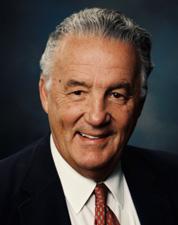
Mr. President, in July of 2001, and continuing through January of the following year, the Committee on Banking, Housing, and Urban Affairs held a series of hearings to shine a bright light on the…
Mr. President, in July of 2001, and continuing through January of the following year, the Committee on Banking, Housing, and Urban Affairs held a series of hearings to shine a bright light on the deceptive and destructive practices of predatory mortgage lenders. At those hearings, the Committee heard from housing experts, community groups, legal advocates, industry representatives and victims of predatory lending in an effort to determine how best to address this terrible problem. Today, I am introducing legislation, the ``Predatory Lending Consumer Protection Act of 2003,'' along with a number of my colleagues, that would begin to address the problems that came to light in those hearings.
Homeownership is the American Dream. Indeed, the Committee has already passed legislation this year that would authorize a new $200 million downpayment assistance program to ensure that more people can achieve this goal.
We have taken this step because homeownership is the best opportunity for most Americans to put down roots and start creating equity for themselves and their families. Homeownership has been the path to building wealth for generations of Americans, wealth that can be tapped to send children to college, pay for a secure retirement, or simply work as a reserve against unexpected emergencies. It has been the key to ensuring stable communities, good schools, and safe streets. Common sense tells us, and the evidence confirms, that homeowners are more engaged citizens and more active in their communities.
Little wonder, then, that so many Americans, young and old, aspire to achieve this dream.
Unhappily, predatory lenders cynically play on these hopes and dreams to cheat people out of their wealth. These lenders target lower income, elderly, and, often, uneducated homeowners for their abusive practices. Study after study has shown that predatory lenders also target minorities, driving a wedge between these families and the hope of a productive life in the economic and financial mainstream of America.
We owe it to these hardworking families to provide protections against these unscrupulous players.
Let me share with you one of the stories we heard at our hearings. Mary Ann Podelco, a widowed waitress from West Virginia, used $19,000 from her husband's life insurance to pay off the balance on her mortgage, thus owning her home free and clear. Before her husband's death, she had never had a checking account or a credit card. She then took out a $11,921 loan for repairs. At the time, her monthly income from Social Security was $458, and her loan payments were more than half this amount. Ms. Podelco, who has a sixth grade education, testified that after her first refinancing, ``I began getting calls from people trying to refinance my mortgage all hours of the day and night.'' Within 2 years, having been advised to refinance seven times-- each time seeing high points and fees being financed into her new loan--she owed $64,000, and lost her home to foreclosure.
Ms. Podelco's story is all too typical. Unfortunately, most of the sharp practices used by unscrupulous lenders and brokers, while unethical and clearly abusive, are not illegal. This bill is designed to address that problem by tightening the interest rate and fee triggers that define high cost loans; the bill improves protections for borrowers receiving such loans by prohibiting the financing of exorbitant fees, ``packing'' in of unnecessary and costly products, such as single premium credit insurance, and limiting prepayment penalties. Finally, it protects these consumers' rights to seek redress by prohibiting mandatory arbitration, as the Federal Trade Commission (FTC) proposed unanimously in 2000.We often hear about the importance of improved enforcement as a way to combat this
problem. As the FTC pointed out, mandatory arbitration prevents homeowners from exercising any of their rights to enforce existing law.
We cannot extol the virtues of homeownership, as we so often do, without seeking at the same time to preserve this benefit for so many elderly, minority, and unsophisticated Americans who are the targets of unscrupulous lenders and brokers. This legislation will help achieve this important goal. This bill has been endorsed by the Leadership Conference on Civil Rights, the U.S. Conference of Mayors, the National Council of La Raza, the National Consumer Law Center, ACORN, National Consumer Reinvestment Coalition, Consumer Federation of America, the NAACP, the Self-Help Credit Union, the National Association of Local Housing Finance Agencies, the National Community Development Association, the National Association of Consumer Advocates, and the National League of Cities, among others.
Mr. President, I ask unanimous consent that the text of the bill be printed in the Record.

Mr. President, I am pleased today to introduce the National Oilheat Research Alliance Act of 2003, and to be joined by Senators Smith, Leahy, Warner, Bunning, and Jack Reed. This bill permanently…
Mr. President, I am pleased today to introduce the National Oilheat Research Alliance Act of 2003, and to be joined by Senators Smith, Leahy, Warner, Bunning, and Jack Reed. This bill permanently authorizes the National Oilheat Research Alliance, commonly referred to as NORA, which was created by a referendum of oilheat retailers and wholesalers in February of 2001.
I was proud to sponsor the Senate bill that originally authorized the creation of NORA during the 106th Congress, and I am pleased to report that during its almost three years of existence, NORA has proved an unqualified success. Its activities have created genuine, tangible benefits for the heating oil industry and its consumers in the areas of research, education, safety and training, as well as providing information about the industry to existing and potential customers.
This bill is necessary because the original authorization statute for NORA included a sunset provision that, without congressional action, will force NORA to cease operations four years after its creation. The provision was included to allow Congress to assess its performance and determine whether it deserved continued authorization. It is readily apparent, from its numerous activities and the wide support it enjoys from consumer, environmental, and labor groups, along with the industry itself, that NORA should continue in perpetuity.
In a short time, NORA has set the standard for industry-wide cooperative activity with its professionalism, effectiveness, and most importantly, satisfaction from its supporting members. Through its rigorous commitment to activities that benefit all of its members, customers and the public at large, NORA is able to harness the collective strength of its companies and their resources to share cutting-edge technological advances, the latest in training methods, and promising environmental initiatives throughout the industry.
Of particular note is the creation of the National Oilheat Research Institute, or NORI, which oversees valuable study as the industry moves toward the introduction of low sulfur heating oil to help reduce the amount of sulfur emissions in the industry. This forward-looking work highlights NORA's genuine commitment to building an environmentally sound oil heat industry.
Other research undertaken by NORI includes a thorough, systematic evaluation of the fuel component of the oil heat system to maximize fuel performance--and therefore lower heating costs--for oil heat customers. These and other consumer-friendly activities have won NORA the support of the Consumer Energy Council of America, the oldest public interest energy policy organization in the Nation.
In fact, NORA's research and development activities were identified in a report from the Brookhaven National Laboratory, which concluded that the NORA program ``will provide economic support to millions of American households by reducing fuel bills, and thousands of small family businesses in the United States who will gain from having satisfied consumers and reduced operating costs.''
NORA is also playing a leading role in continuing education and training for oil heat technicians through the introduction of new and updated training
material, creation of a standardized certification program to encourage professional development, partnerships with community colleges to provide equipment for training, and a new website to provide easy access to NORA safety and training material.
NORA also understands that new homeowners who buy houses with existing oil heat systems have questions about the best way to make use of and maintain their heating source, and publishes a Homeowner's Guide that describes the cleanliness and efficiency of their system, and offers helpful information for real estate purchasers.
This is just a sampling of the many activities taking place in states using oil heat all over the country. Numerous State associations benefit from their partnership with NORA, which supports local and statewide initiatives for the heating oil industry, its customers, and the professionals working within it. Indeed, the Maine Oil Dealers Association has provided me with uniformly positive feedback about its partnership with NORA, including its assistance with development of information brochures and production of safety manuals in both printed and electronic form.
I am persuaded that NORA's performance has exceeded all expectation and deserves permanent authorization from the Congress. I look forward to helping make sure that NORA can continue its beneficial activities long into the future.
I ask unanimous consent that the text of the bill be printed in the Record.
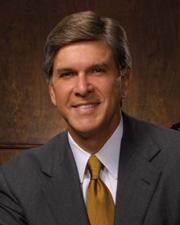
Mr. President, I rise today to introduce The American Manufacturing Jobs Bill of 2003--which will provide a tax rate cut for all manufacturers who employ American workers. I am pleased to be joined…
Mr. President, I rise today to introduce The American Manufacturing Jobs Bill of 2003--which will
provide a tax rate cut for all manufacturers who employ American workers. I am pleased to be joined in this effort by Senator John Breaux. On October 1, 2003, the Senate Finance Committee approved on a bipartisan basis S. 1673, the centerpiece of which resolves the FSC/ETI issue by replacing the export tax benefit with a reduction in the tax burden on domestic manufacturing companies.
I applaud S. 1673, a balanced piece of legislation crafted by Chairman Charles Grassley, R-IA, and ranking member Senator Max Baucus, D-MT. I am, however, concerned that the domestic manufacturing benefit in S. 1673 is not applied equally to all U.S. manufacturers. This bill includes a provision--a ``haircut''--that provides less of a benefit to companies that also manufacture abroad.
For example, a company that has 55 percent of its manufacturing in the United States and 45 percent abroad will calculate its benefit under the bill and then reduce that benefit by a fraction--the numerator of which is the gross receipts from domestic manufacturing over the same derived from worldwide manufacturing.
This company thus suffers twice. First, the domestic manufacturing benefit in S. 1673 is less valuable than the benefit currently provided under FSC/ETI. Second, this company's manufacturing benefit is further reduced by the ``haircut'' merely because it also has overseas manufacturing operations in order to be closer to their markets.
The ``haircut'' is a discriminatory measure that hurts both foreign- owned and U.S.-owned companies alike. It is structured so that the more a company manufactures abroad, the less of a manufacturing rate cut it gets. The ``haircut'' makes the United States a less competitive location for current and future investment because multinational companies will believe they are being ``cheated'' and discriminated against.
At a time when American manufacturing jobs are leaving our country in record numbers, Congress should support all companies that employ Americans. U.S. companies with global operations employ more than 23 million Americans--9 million of which are in manufacturing jobs--this is tantamount to three out of every five manufacturing jobs in this country. Foreign-owned companies with U.S. operations employ more than 2 million manufacturing workers in the United States. It is these many of millions of manufacturing workers who will suffer if the ``haircut'' remains and companies are therefore discouraged to invest in the United States.
Moreover, the ``haircut'' is inconsistent with historic tax and trade policies to encourage U.S. companies to open up facilities outside the United States. In fact, there is an entire department--the Department of Commerce--set up to assist U.S. companies going global and then to promote and facilitate those same companies' efforts once they have established themselves in-country. I am also concerned that the ``haircut'' invites mirror legislation in other countries and may invite another WTO challenge to this legislation.
I believe we have a duty to encourage the retention and creation of manufacturing jobs in the United States. We must not treat U.S. jobs created by multinational companies as ``less worthy'' than U.S. jobs created by strictly domestic manufacturers. Congress should be in the business of rewarding all well-paid, manufacturing jobs that are created in the United States, not just those created by domestic manufacturers. I believe that by eliminating the ``haircut'' and providing a tax rate cut for all manufacturers who employ American workers, we can help to revitalize the U.S. manufacturing sector. I ask unanimous consent that the full text of this important legislation be printed in the Record.
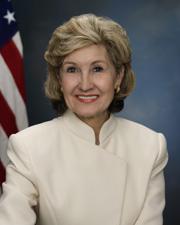
Mr. President, I am proud to offer the Clean Air and Water Investment and Infrastructure Act. Texas, like many States, faces increasingly difficult challenges in improving air and water quality. The…
Mr. President, I am proud to offer the Clean Air and Water Investment and Infrastructure Act.
Texas, like many States, faces increasingly difficult challenges in improving air and water quality.
The Clean Air Act requires the Environmental Protection Agency to set air quality standards and establishes deadlines for State and local governments to achieve those levels. Today, more than 90 communities across the country are out of compliance with the Clean Air Act. These so-called ``non-attainment'' areas are threated with regulatory sanctions, such as loss of federal highway funding, if they do not meet mandated ozone levels by 2007.
Texas has four non-attainment areas: Beaumont-Port Arthur, Dallas- Fort Worth, El Paso and Houston. The Houston area alone needs an estimated $4.1 billion annually in order to meet Federal air quality standards.
These communities will not achieve compliance without assistance. Too many industrial plants need to install expensive equipment. If these environmental investments do not become more affordable, communities will either suffer sanctions or force industrial facilities to close and move offshore, causing substantial economic hardship.
Texas and many areas of the country, especially in the Southwest and West, also face critical water and wastewater problems. Investments in sources of clean water must be made or we will face shortages in the coming decades. However, necessary water infrastructure improvements are extremely expensive. According to the Texas State water plan, the cost of water supply acquisition projects, water and wastewater treatment, and other infrastructure projects in Texas through 2050 will be more than $100 billion.
Currently, air and water pollution control facilities cannot be financed by tax-exempt bonds. Even if they could, they would be limited by a cap which sets the total amount of tax-exempt private activity bonds issued by a state. Given the demands of other projects, such as housing, relatively few of the air and water pollution projects would have an opportunity to access this financing option.
In order to help us meet the challenges, I am introducing the Clear Air and Water Investment and Infrastructure Act. My bill will allow federal tax-exempt bonds to be used by private firms for air and water pollution control projects. Given the importance of these critical projects, these bonds also would be issued outside the constraints of the private-activity bond caps. The Texas Water Development Board estimates this could save 30 percent in financing costs for water projects.
For example, this bill would allow tax-exempt debt to be used to finance private systems along the Gulf Coast that desalinate seawater and brackish groundwater, and to install air pollution facilities on electric utility plants. States and communities would have an important new tool for addressing air and water pollution control needs.
Pollution control is a problem for all of us. It is to everyone's benefit to develop ways to promote public and private partnerships which can finance projects to improve air and water quality. I hope my colleagues will support this effort.
I ask unanimous consent that the text of the bill be printed in the Record.

Mr. President, I am pleased to join with the distinguished Senator from Pennsylvania, Senator Santorum, to introduce legislation that will promote the American dream of homeownership. Our legislation…
Mr. President, I am pleased to join with the distinguished Senator from Pennsylvania, Senator Santorum, to introduce legislation that will promote the American dream of homeownership.
Our legislation will specify that providing homeownership down payment assistance to American families constitutes a charitable activity under the regulations of the Internal Revenue Service.
As the cornerstone of middle-class wealth in our nation, we should be doing everything possible to promote broad investment in owner-occupied housing. Today, we have that chance.
It should not be a surprise that homeownership among low to moderate income families is lower than for those with higher incomes. The single biggest obstacle to achieving this dream is the lack of a downpayment.
Across America there are organizations that assist low to moderate income families with that first important step toward homeownership. In California, one of these groups, the Nehemiah Corporation, helps literally thousands of families each year by providing down payments.
While the Federal Government provides tax incentives for increased homeownership, we should make it easier for the private sector to provide their own brand of incentives. Importantly, this legislation will do several things to ensure that the private sector continues to have the tools it needs to provide this important assistance.
One, our legislation will specify that homeownership down payment assistance to American families constitutes a charitable activity.
Currently, Internal Revenue Service regulations do not clearly address the special circumstances of those organizations that provide downpayment assistance to families.
Two, our bill is structured to ensure that a charitable down payment assistance program is not used to support the purchase of rental properties or expensive homes.
Three, our legislation is designed so that the taxpayers do not pick- up the tab. Since, home sellers often contribute to charitable down payment assistance providers in connection with the sale of a home, those contributions are not charitable in nature; they are an expense related to selling a home.
This legislation clarifies that a party to a home sale transaction may not claim a charitable contribution deduction for a contribution to a down payment assistance organization made in connection with the sale.
And, although Internal Revenue Service regulations do not specifically address down payment assistance programs, our legislation merely codifies current practice.
This legislation will ensure the continued growth of this essential segment of the financial services market at no cost to the taxpayers.
And, as my friend from Pennsylvania has said, equity in homes is the leading source for collateral for small business start-up borrowing.
At a time when the economy still fails to produce jobs, the expansion of small business and the employment they provide is essential to the health of our economy.
It is a win-win situation in the truest sense of the term and I urge my colleagues to support it.
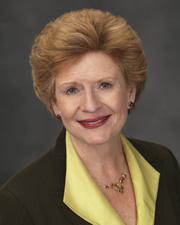
Mr. President, I rise today to introduce legislation that would prevent the closure of the Saginaw Veterans Administration Medical Center in Saginaw, MI. As of August 2003, there were almost one…
Mr. President, I rise today to introduce legislation that would prevent the closure of the Saginaw Veterans Administration Medical Center in Saginaw, MI.
As of August 2003, there were almost one million veterans in lower Michigan and Northwestern Ohio. These one million veterans are served by four V.A. Medical Centers--Saginaw, Detroit, Ann Arbor and Battle Creek--and 12 Community Based Outpatient Clinics (CBOCs), all located in lower Michigan or Toledo, OH.
Regrettably, the Department of Veterans Affairs' Capitol Asset Realignment for Enhanced Services (CARES) Commission is recommending closing all acute care beds at the Aleda E. Lutz Department of Veterans Affairs Medical Center in Saginaw, MI. The geographic range for the acute services in Saginaw is vast. The facility essentially covers half of Michigan's Lower Peninsula. Therefore, closing these inpatient beds in Saginaw would have a devastating impact on veterans who live in Central and Northern Michigan.
If the Saginaw facility were to close, a veteran who lived in Mackinaw City would have to drive 281 miles to the Detroit facility or 272 miles to the Ann Arbor facility for medical care. Under ideal conditions these trips would take six hours instead of the current two hour trip that it would take to reach the existing Saginaw facility. Asking a veteran to go from Mackinaw City to Detroit is like asking a veteran to go from southeast Michigan to Buffalo, New York to get acute care.
How can we ask veterans, many of whom are sick and frail, to travel six hours to get necessary inpatient services? Going through a major illness is tough enough for our veterans. The closing of this hospital would add insult to injury.
This bill seeks to stop this closure and ensure that the thousands of veterans who live in central and northern Michigan have access to the medical services they deserve. I urge my colleagues to support this bill.
Mr. President, I ask unanimous consent that the text of the bill be printed in the Record.
Mr. President, I rise today to introduce legislation that would allow us to help our providers and patients now.
If we immediately pass this bill, we can make our providers whole and then go back to the drawing board to get a better Medicare prescription drug benefit bill.
The bill includes all of the provider givebacks in the Conference Report accompanying H.R. 1, the Medicare Prescription Drug and Modernization Act of 2003.
It includes all adjustments, word for word, for the rural provisions, physician updates, graduate medical education, GME, and home health services.
It does not add new language.
It does not include any provider cuts or premium increases in H.R.1.
Congress should pass these provisions on their own to help hospitals, physicians, and patients and not hold them hostage to a prescription drug bill that privatizes Medicare and provides a mediocre benefit to most seniors.
I ask unanimous consent that the text of the bill be printed in the Record.
Show 6 more
Mr. President, ever since the events of September 11, 2001 awakened this Nation to the very real dangers of the world we live in, we have been struggling to defend ourselves against terrorism. Our…
Mr. President, ever since the events of September 11, 2001 awakened this Nation to the very real dangers of the world we live in, we have been struggling to defend ourselves against terrorism. Our aviation system remains a primary target for terrorists, and we must be every vigilant in the fight to keep that system safe. The economic viability, not to mention safety and security, of our country is at stake in that fight.
Nowhere is this more obvious than in New York. Not only did we bear the brunt of the worst terrorist attack in our Nation's history, but we also depend on our airports to fuel our state economy. John F. Kennedy Airport in Queens is the Nation's premier international gateway and contributes approximately $30 billion to the regional economy while employing 35,000 people. LaGuardia Airport, also in Queens, handles over 20 million passengers a year despite having only two 7000-foot runways on 680 acres. Our airports in Albany, Syracuse, Rochester, and Buffalo have seen strong growth in recent years with the arrival of low-cost carriers.
Unfortunately, our economic and physical security remains at risk because we still have not developed a way to effectively scan each piece of passenger luggage for explosives. We have recognized that in the current world environment, we must scan each bag, but technology has not kept up with our needs. The current technology used in most airports in this country is known to have a false-positive rate of approximately 20 percent. This means that machines incorrectly identify 20 percent of all bags going through them as containing explosives, thus slowing down the process considerably as well as costing time and money. Even more dangerous is the false-negative rate of these machines. This number, the percentage of bags going undetected through these machines with bombs inside of them during test runs, should be close to zero. The actual false-negative rate is not publicized for obvious reasons, but it is known to be well above zero.
I am proposing a bill today that seeks to create a major incentive for firms to invent a bomb-scanning technology that actually works. It will award $20 million to any firm that can successfully produce a machine that has a false-positive rate less than 10 percent, a false negative rate less than 2 percent, and is feasible for deployment en masse at our Nation's airports. Although we are currently spending money on researching this technology, that funding is clearly not getting us there fast enough. This new award will help to spur the private sector to develop new technology that will make a major difference in the safety of our aviation system.
Mr. President, I rise today to introduce a very important piece of legislation, the RU-486 Suspension and Review Act of 2003. The abortion drug RU-486 increases in infamy as its lethal nature…
Mr. President, I rise today to introduce a very important piece of legislation, the RU-486 Suspension and Review Act of 2003. The abortion drug RU-486 increases in infamy as its lethal nature continues to reveal itself. As my colleagues may remember, in September, RU-486 claimed two more lives, one of whom was an 18-year- old woman. Holly Patterson, a resident of the San Francisco suburb of Livermore, died from an infection caused by fragments of her baby left in
her uterus after she was administered RU-486 at a Planned Parenthood facility. This tragedy underscores the dangerous nature of this drug.
The available data from the U.S. trials of RU-486 raises serious questions in my mind as to whether or not this drug truly is ``safe'' for the women who use it. Women who participated in the U.S. trials of this drug were carefully screened, and only those who were in the most physically ideal condition were accepted. Even so, among these physically ideal participants, troubling results emerged. Two-percent of the women participating hemorrhaged; one-percent had to be hospitalized; several others required surgery to stop the bleeding-- some of whom needed blood transfusions; and one woman in Iowa, after losing between one-half to two-thirds of her total blood volume, would have died if she had not undergone emergency surgery. If these side- effects occurred in the most physically ideal candidates, what about those who are not in the physically ideal category? Is this drug ``safe'' for women? I believe medical results suggest it is not.
The bill I am introducing today will require the suspension of the Food and Drug Administration's approval of RU-486. Following this suspension, the General Accounting Office is directed to review the process the FDA used to approve RU-486 and to determine whether the FDA followed its own guidelines. If it is determined that the FDA violated its guidelines, RU-486 will be suspended indefinitely. Monty and Helen Patterson, the parents of Holly Patterson, have expressed their firm support for this legislation and have requested that it be known as ``Holly's Law'' in honor of their daughter whose life was prematurely ended. I ask that their open letter on this subject be printed in the Record.
The Food and Drug Administration should not have authorized this dangerous drug. RU-486 is perilous both to the baby and to the woman who uses it. I urgently call on my colleagues in this Chamber to support ``Holly's Law'' to prevent more unnecessary deaths.
Mr. President, today I am introducing legislation, S. 1670, which would pay for the travel of U.S. troops stationed in Iraq, or in that theater, to and from their homes for the 2-weeks leave they are…
Mr. President, today I am introducing legislation, S. 1670, which would pay for the travel of U.S. troops stationed in Iraq, or in that theater, to and from their homes for the 2-weeks leave they are being granted.
Incredibly, while asking the Congress for an additional $87 billion for the war in Iraq, the Department of Defense wants to drop soldiers on leave off at the Baltimore Airport and then make them pay for their transportation home and back. Those service men and women are serving with great courage in 115-degree temperatures and other truly awful conditions. They are being given 2 weeks leave--many of them--because they are in the Reserves or National Guard and they have just had their 5- or 6-month tour extended by another 6 months. This will be the only time that many of them will have a chance to see their families during an entire year.
The least we can do is get them home and back at Government expense. If all 138,000 troops who are stationed in Iraq were to take this leave to travel to their homes, the total cost would be approximately $69 million. My legislation would not increase the $87 billion requested by the President, it would just direct that up to $69 million be available to be expensed for this purpose.
Last week, I also cosponsored legislation introduced by Senator Bob Graham, which exempted soldiers wounded in Iraq or Afghanistan from having to pay for meals while they are hospitalized. I was astonished to learn that the military would otherwise dock their pay for the cost of their meals. We are appropriating over $400 billion for our military operations next year through the regular appropriations and supplemental bills. Surely, that provides enough money that U.S. troops who are fighting, risking their lives, being wounded, and dying can be treated compassionately and fairly, not nickeled and dimed with travel and meal costs while on leave, or, even worse, while being hospitalized with combat wounds and injuries.
The American people are generous enough to support our troops properly and care for the wounded compassionately. The Department of Defense should not have to be required to do the right thing. It should be obvious enough to them, but if not, they should give me a call and I will let them know.
Mr. President, I ask unanimous consent that the text of the bill be printed in the Record.

Mr. President, I rise today to introduce a joint resolution recognizing the accomplishments of the inspectors general during the past 25 years. I am very pleased to be joined in this undertaking by…
Mr. President, I rise today to introduce a joint resolution recognizing the accomplishments of the inspectors general during the past 25 years. I am very pleased to be joined in this undertaking by Senator Lieberman and many of our distinguished colleagues in both Houses of Congress.
Since 1978, the inspectors general (IGs) have made valuable contributions to the efficient and economical operation of the Federal Government. They have made thousands of recommendations, which ultimately saved the American taxpayers literally billions of dollars.
We've all heard the horror stories of $500 hammers and roads build to nowhere: those are examples of the kind of wasteful spending that the IGs have exposed. The waste of scarce Federal resources not only picks the pockets of taxpayers but also places severe financial pressures on already overburdened programs, forcing cutbacks in vital government services.
Investigations by inspectors general have also resulted in the recovery of hundreds of millions of dollars to the U.S. Treasury from companies and individuals who defrauded the Federal Government. These investigations have been the basis for thousands of criminal prosecutions, debarments, exclusions, and suspensions.
In my capacity as chairman of the Governmental Affairs Committee and previously as chairman of the Permanent Subcommittee on Investigations, I have had the opportunity to work hand-in-hand with IGs to combat fraud and waste in a variety of programs.
To cite just one example, I worked with the Office of Inspector General for the Department of Health and Human Services to uncover flagrant examples of Medicare fraud. We found that the Federal Government had been sending Medicare checks to 14 fraudulent health care companies that had provided no services whatsoever. Indeed, the address listed by one company did not exist, and, if it had, the address would have been located in the middle of the runway of the Miami International Airport.
The Offices of Inspector General have demonstrated a record of tremendous success over the past 25 years, and we wish to commend them and their employees for their dedication and professionalism in the performance of their duties.
I hope my colleagues will join Senator Lieberman and me in passing this resolution commending the IGS for their many accomplishments.

Mr. President, I call attention today to a part of American heritage that is literally disintegrating faster than can be saved. Motion pictures are an important part of our American experience and…
Mr. President, I call attention today to a part of American heritage that is literally disintegrating faster than can be saved. Motion pictures are an important part of our American experience and provide an extraordinary record of our history, our dreams, and our aspirations. The National Film Preservation Board and the National Film Preservation Foundation were created by Congress under the auspices of the Library of Congress, to help save America's film heritage. Today, I am introducing the ``National Film Preservation Act of 2003,'' which will reauthorize and extend the ``National Film Preservation Act of 1996.''
We first acted in 1988 in order to recognize both the educational, cultural, and historical importance of our film heritage, and its inherently fragile nature. The ``National Film Preservation Act of 2003'' will allow the Library of Congress to continue its important work in preserving America's fading treasures, as well as providing grants that will help libraries, museums, and archives preserve films, and make those works available for study and research. These continued efforts are more critical today than ever before. Fewer than 20 percent of the features of the 1920s exist in complete form and less than 10 percent of the features of the 1910s have survived into the new millennium.
The films saved by the National Film Preservation Board are precisely those types of films that would be unlikely to survive without public support. At-risk documentaries, silent-era films, avant-garde works, ethnic films, newsreels, and home movies are in many ways more illuminating on the question of who we are as a society than the Hollywood sound features kept and preserved by major studios. What is more, in many cases only one copy of these ``orphaned'' works exists. As the Librarian of Congress, Dr. James H. Billington, has noted, ``Our film heritage is America's living past.'' I encourage my colleagues to support the ``Film Preservation Act of 2003'' so that America's past can survive in order to enlighten and entertain future generations.
I ask unanimous consent that the text of this bill be printed in the Record.

Mr. President, I rise today to introduce a bill that will preserve a part of the history of Florida and America. My bill will allow 20 acres of untouched, undeveloped sand dune land on American…
Mr. President, I rise today to introduce a bill that will preserve a part of the history of Florida and America. My bill will allow 20 acres of untouched, undeveloped sand dune land on American Beach, Amelia Island, FL to become part of Timucuan Ecological and Historic Preserve.
The history of American Beach is partly the chronicle of Africa- American achievement and economic autonomy during the Jim Crow era. American Beach was purchased in 1932 by the Afro American Life Insurance Company and its President, A.L. Lewis. This insurance company was the first insurance company owned by any Floridian, either a black or white. Mr. Lewis' granddaughter, affectionately referred to as the ``Beachlady,'' still resides on American Beach and is revered for her colorful life and her work to preserve the American Beach from development and environmental degradation.
American Beach was an integrated beach when all beach communities throughout the United States were segregated. For decades, it flourished as an ocean-side paradise for blacks from all parts of the country. American Beach is still owned primarily by African Americans who are the descendants of the original owners. But, developers are slowly moving in to destroy this property that holds a chapter of American history. The sand dunes tell many stories of generations long past--writer Zora Neale Hurston, heavy-weight champion Joe Louis, entertainer Cab Calloway, and civil rights leader A. Philip Randolph vacationed on American Beach. But, most of the beach dwellers and visitors were ordinary working-class African Americans.
This legislation merely seeks to expand the boundaries of a wonderful nature preserve already in place to preserve this unique and special place called American Beach.
I ask unanimous consent that the text of the bill be printed in the Record.
Bill Text
Latest available legislative text
        [Congressional Bills 108th Congress]
[From the U.S. Government Publishing Office]
[S. 1673 Introduced in Senate (IS)]

108th CONGRESS
1st Session
S. 1673

To authorize the award of the Iraqi Liberation Medal as a campaign
medal for members of the Armed Forces who serve in Southwest Asia in
connection with Operation Iraqi Freedom.

_______________________________________________________________________

IN THE SENATE OF THE UNITED STATES

September 29, 2003

Mr. Bingaman (for himself, Mr. Lugar, Mr. Lieberman, and Mr. Bayh)
introduced the following bill; which was read twice and referred to the
Committee on Armed Services

_______________________________________________________________________

A BILL

To authorize the award of the Iraqi Liberation Medal as a campaign
medal for members of the Armed Forces who serve in Southwest Asia in
connection with Operation Iraqi Freedom.

Be it enacted by the Senate and House of Representatives of the
United States of America in Congress assembled,

SECTION 1. AUTHORIZATION OF AWARD OF IRAQI LIBERATION MEDAL AS CAMPAIGN
MEDAL FOR SERVICE IN SOUTHWEST ASIA IN OPERATION IRAQI
FREEDOM.

(a) Findings.--Congress makes the following findings:
(1) According to President George W. Bush, Operation Iraqi
Freedom was ``fought for the cause of liberty, and for the
peace of the world...'' and ``to free a nation by breaking a
dangerous and aggressive regime''.
(2) The military victory in Iraq has been characterized by
President George W. Bush as one of the ``swiftest advances in
heavy arms in history''.
(3) There are more than 130,000 Soldiers, Sailors, Airmen,
and Marines of the United States serving in the Iraqi Theater
of Operations, far from family and friends, and for an unknown
duration.
(4) Since the beginning of Operation Iraqi Freedom, almost
300 members of the Armed Forces of the United States have died
in Iraq and nearly 1,500 have been wounded in action.
(5) Congress has authorized and Presidents have issued
specific decorations recognizing the sacrifice and service of
the members of the Armed Forces of the United States in the
Korean War, the Vietnam conflict, and the liberation of Kuwait.
(6) Current Department of Defense guidance authorizes the
award of only one expeditionary medal for overseas duty in
Afghanistan, the Philippines, and Iraq.
(7) The conflict in Iraq is significant enough in scope and
sacrifice to warrant a specific military decoration for the
liberation of Iraq.
(b) Authorization of Award of Campaign Medal.--The Secretary
concerned may award a campaign medal of appropriate design, with
ribbons and appurtenances, to any person who serves in any capacity
with the Armed Forces in the Southwest Asia region in connection with
Operation Iraqi Freedom.
(c) Name of Medal.--The campaign medal authorized by subsection (b)
shall be known as the ``Iraqi Liberation Medal''.
(d) Prohibition on Concurrent Award of Global War on Terrorism
Expeditionary Medal.--A person who is awarded the campaign medal
authorized by subsection (b) for service described in that subsection
may not also be awarded the Global War on Terrorism Expeditionary Medal
for that service.
(e) Other Limitations.--The award of the campaign medal authorized
by subsection (b) shall be subject to such limitations as the President
may prescribe.
(f) Regulations.--(1) Each Secretary concerned shall prescribe
regulations on the award of the campaign medal authorized by subsection
(b).
(2) The regulations prescribed under paragraph (1) shall not go
into effect until approved by the Secretary of Defense.
(3) The Secretary of Defense shall ensure that the regulations
prescribed under paragraph (1) are uniform, so far as practicable.
(g) Secretary Concerned Defined.--In this section, the term
``Secretary concerned'' means the following:
(1) The Secretary of the Army with respect to matters
concerning members of the Army.
(2) The Secretary of the Navy with respect to matters
concerning members of the Navy, Marine Corps, and Coast Guard
when it is operating as a service in the Navy.
(3) The Secretary of the Air Force with respect to matters
concerning members of the Air Force.
(4) The Secretary of Homeland Security with respect to
matters concerning members of the Coast Guard when it is not
operating as a service in the Navy.
<all>