Private Security Officer Employment Authorization Act of 2003
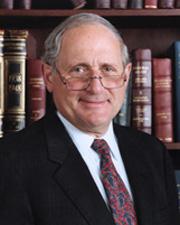 Sen. Carl Levin (D-MI)
Legislative Activity
Stay on top of the latest movement without scrolling through every action
Subcommittee Hearings Held.
March 30, 2004
View full timeline
Introduced in Senate
October 16, 2003
Read twice and referred to the Committee on the Judiciary.
October 16, 2003
Committee on the Judiciary. Ordered to be reported without amendment favorably.
October 23, 2003
Committee on the Judiciary. Reported by Senator Hatch without amendment. Without written report.
October 23, 2003
Placed on Senate Legislative Calendar under General Orders. Calendar No. 322.
October 23, 2003
Passed Senate without amendment by Unanimous Consent. (consideration: CR S14969-14970; text as passed Senate: CR S14970)
November 17, 2003
Message on Senate action sent to the House.
November 18, 2003
Received in the House.
November 18, 2003 • 10:03 AM
Referred to the Committee on Education and the Workforce, and in addition to the Committee on the Judiciary, for a period to be subsequently determined by the Speaker, in each case for consideration of such provisions as fall within the jurisdiction of the committee concerned.
November 18, 2003
Referred to the Subcommittee on Employer-Employee Relations.
December 1, 2003
Referred to the Subcommittee on Crime, Terrorism, and Homeland Security.
December 10, 2003
Subcommittee Hearings Held.
March 30, 2004
Floor Debate
2 membersWhat members said about S. 1743 on the floor


Floor Debate
2 membersWhat members said about S. 1743 on the floor
Mr. President, I ask unanimous consent that the Committee on Armed Services be authorized to meet during the session of the Senate on Thursday, October 23, 2003, at 10:30 a.m., in executive session…
Mr. President, I ask unanimous consent that the Senate proceed to the immediate consideration of Calendar No. 322, S. 1743. Mr. President, I ask unanimous consent that the bill be read the third time…
Bill Text
4 versions available
        [Congressional Bills 108th Congress]
[From the U.S. Government Publishing Office]
[S. 1743 Referred in House (RFH)]

1st Session
S. 1743

_______________________________________________________________________

IN THE HOUSE OF REPRESENTATIVES

November 18, 2003

Referred to the Committee on Education and the Workforce, and in
addition to the Committee on the Judiciary, for a period to be
subsequently determined by the Speaker, in each case for consideration
of such provisions as fall within the jurisdiction of the committee
concerned

_______________________________________________________________________

AN ACT

To permit reviews of criminal records of applicants for private
security officer employment.

Be it enacted by the Senate and House of Representatives of the
United States of America in Congress assembled,

SECTION 1. SHORT TITLE.

This Act may be cited as the ``Private Security Officer Employment
Authorization Act of 2003''.

SEC. 2. FINDINGS.

Congress finds that--
(1) employment of private security officers in the United
States is growing rapidly;
(2) private security officers function as an adjunct to,
but not a replacement for, public law enforcement by helping to
reduce and prevent crime;
(3) such private security officers protect individuals,
property, and proprietary information, and provide protection
to such diverse operations as banks, hospitals, research and
development centers, manufacturing facilities, defense and
aerospace contractors, high technology businesses, nuclear
power plants, chemical companies, oil and gas refineries,
airports, communication facilities and operations, office
complexes, schools, residential properties, apartment
complexes, gated communities, and others;
(4) sworn law enforcement officers provide significant
services to the citizens of the United States in its public
areas, and are supplemented by private security officers;
(5) the threat of additional terrorist attacks requires
cooperation between public and private sectors and demands
professional, reliable, and responsible security officers for
the protection of people, facilities, and institutions;
(6) the trend in the Nation toward growth in such security
services has accelerated rapidly;
(7) such growth makes available more public sector law
enforcement officers to combat serious and violent crimes,
including terrorism;
(8) the American public deserves the employment of
qualified, well-trained private security personnel as an
adjunct to sworn law enforcement officers; and
(9) private security officers and applicants for private
security officer positions should be thoroughly screened and
trained.

SEC. 3. DEFINITIONS.

In this Act:
(1) Employee.--The term ``employee'' includes both a
current employee and an applicant for employment as a private
security officer.
(2) Authorized employer.--The term ``authorized employer''
means any person that--
(A) employs private security officers; and
(B) is authorized by regulations promulgated by the
Attorney General to request a criminal history record
information search of an employee through a State
identification bureau pursuant to this section.
(3) Private security officer.-- The term ``private security
officer''--
(A) means an individual other than an employee of a
Federal, State, or local government, whose primary duty
is to perform security services, full- or part-time,
for consideration, whether armed or unarmed and in
uniform or plain clothes (except for services excluded
from coverage under this Act if the Attorney General
determines by regulation that such exclusion would
serve the public interest); but
(B) does not include--
(i) employees whose duties are primarily
internal audit or credit functions;
(ii) employees of electronic security
system companies acting as technicians or
monitors; or
(iii) employees whose duties primarily
involve the secure movement of prisoners.
(4) Security services.--The term ``security services''
means acts to protect people or property as defined by
regulations promulgated by the Attorney General.
(5) State identification bureau.--The term ``State
identification bureau'' means the State entity designated by
the Attorney General for the submission and receipt of criminal
history record information.

SEC. 4. CRIMINAL HISTORY RECORD INFORMATION SEARCH.

(a) In General.--
(1) Submission of fingerprints.--An authorized employer may
submit to the State identification bureau of a participating
State, fingerprints or other means of positive identification,
as determined by the Attorney General, of an employee of such
employer for purposes of a criminal history record information
search pursuant to this Act.
(2) Employee rights.--
(A) Permission.--An authorized employer shall
obtain written consent from an employee to submit to
the State identification bureau of a participating
State the request to search the criminal history record
information of the employee under this Act.
(B) Access.--An authorized employer shall provide
to the employee confidential access to any information
relating to the employee received by the authorized
employer pursuant to this Act.
(3) Providing information to the state identification
bureau.--Upon receipt of a request for a criminal history
record information search from an authorized employer pursuant
to this Act, submitted through the State identification bureau
of a participating State, the Attorney General shall--
(A) search the appropriate records of the Criminal
Justice Information Services Division of the Federal
Bureau of Investigation; and
(B) promptly provide any resulting identification
and criminal history record information to the
submitting State identification bureau requesting the
information.
(4) Use of information.--
(A) In general.--Upon receipt of the criminal
history record information from the Attorney General by
the State identification bureau, the information shall
be used only as provided in subparagraph (B).
(B) Terms.--In the case of--
(i) a participating State that has no State
standards for qualification to be a private
security officer, the State shall notify an
authorized employer as to the fact of whether
an employee has been--
(I) convicted of a felony, an
offense involving dishonesty or a false
statement if the conviction occurred
during the previous 10 years, or an
offense involving the use or attempted
use of physical force against the
person of another if the conviction
occurred during the previous 10 years;
or
(II) charged with a criminal felony
for which there has been no resolution
during the preceding 365 days; or
(ii) a participating State that has State
standards for qualification to be a private
security officer, the State shall use the
information received pursuant to this Act in
applying the State standards and shall only
notify the employer of the results of the
application of the State standards.
(5) Frequency of requests.--An authorized employer may
request a criminal history record information search for an
employee only once every 12 months of continuous employment by
that employee unless the authorized employer has good cause to
submit additional requests.
(b) Regulations.--Not later than 180 days after the date of
enactment of this Act, the Attorney General shall issue such final or
interim final regulations as may be necessary to carry out this Act,
including--
(1) measures relating to the security, confidentiality,
accuracy, use, submission, dissemination, destruction of
information and audits, and recordkeeping;
(2) standards for qualification as an authorized employer;
and
(3) the imposition of reasonable fees necessary for
conducting the background checks.
(c) Criminal Penalties for Use of Information.--Whoever knowingly
and intentionally uses any information obtained pursuant to this Act
other than for the purpose of determining the suitability of an
individual for employment as a private security officer shall be fined
under title 18, United States Code, or imprisoned for not more than 2
years, or both.
(d) User Fees.--
(1) In general.--The Director of the Federal Bureau of
Investigation may--
(A) collect fees to process background checks
provided for by this Act; and
(B) establish such fees at a level to include an
additional amount to defray expenses for the automation
of fingerprint identification and criminal justice
information services and associated costs.
(2) Limitations.--Any fee collected under this subsection--
(A) shall, consistent with Public Law 101-515 and
Public Law 104-99, be credited to the appropriation to
be used for salaries and other expenses incurred
through providing the services described in such Public
Laws and in paragraph (1);
(B) shall be available for expenditure only to pay
the costs of such activities and services; and
(C) shall remain available until expended.
(3) State costs.--Nothing in this Act shall be construed as
restricting the right of a State to assess a reasonable fee on
an authorized employer for the costs to the State of
administering this Act.
(e) State Opt Out.--A State may decline to participate in the
background check system authorized by this Act by enacting a law or
issuing an order by the Governor (if consistent with State law)
providing that the State is declining to participate pursuant to this
subsection.

Passed the Senate November 17, 2003.

Attest:

EMILY J. REYNOLDS,

Secretary.