Advancing Justice Through DNA Technology Act of 2003
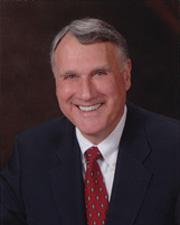 Sen. Jon Kyl (R-AZ)
Legislative Activity
Stay on top of the latest movement without scrolling through every action
Read twice and referred to the Committee on the Judiciary. (text of measure as introduced: CR S14046-14050)
November 5, 2003
View full timeline
Introduced in Senate
November 5, 2003
Sponsor introductory remarks on measure. (CR S14044-14046)
November 5, 2003
Read twice and referred to the Committee on the Judiciary. (text of measure as introduced: CR S14046-14050)
November 5, 2003
Floor Debate
9 membersWhat members said about S. 1828 on the floor


 +4
+4
Floor Debate
9 membersWhat members said about S. 1828 on the floor
Mr. President, last month, the House and Senate overwhelmingly approved H.R. 5107, the Justice for All Act of 2004. This important criminal justice package includes the Innocence Protection Act, a…
Mr. President, I rise today to introduce the ``Advancing Justice Through DNA Technology Act of 2003.'' This bill consists of the President's DNA initiative, which will expand and improve DNA…
Mr. President, I rise today to introduce the ``Advancing Justice Through DNA Technology Act of 2003.'' This bill consists of the President's DNA initiative, which will expand and improve DNA…
Mr. President, we have 17 dead astronauts on our plate--3 from Apollo I, all preventable; 7 from the Challenger, all preventable; and 7 from the Columbia, all preventable. What we are trying to do on…
Mr. President, I rise today to introduce legislation intended to restore public trust in mutual funds, the Mutual Fund Transparency Act of 2003. I thank Senator Fitzgerald and Senator Lieberman for…
Show 5 more
Mr. President, I rise today to join with my colleagues Senator Daniel Akaka and Senator Peter Fitzgerald and cosponsor legislation that would begin the crucial process of reforming the mutual fund…

Mr. President, I rise to say a few words about the continuity of Government. More than 2 years since the terrible events of September 11, Congress has not taken any steps necessary to protect the…

Mr. President, sometime, when the opportunity arises, I am going to introduce, for myself and Senator Ensign, the Dandini Research Park Transfer Act, which will transfer an important tract of land in…
Mr. President, I rise today, to introduce the Safe Intersections Act of 2003. This bill would criminalize the unauthorized sale and possession of a mobile infrared transmitter, MIRT. A MIRT is a…

Mr. President, I rise today to introduce the Northern Border Lease Extension legislation. Currently, and since 1981, Northern Border Pipeline Company has leased tribally owned lands on the Fort Peck…
Bill Text
Latest available legislative text
        [Congressional Bills 108th Congress]
[From the U.S. Government Publishing Office]
[S. 1828 Introduced in Senate (IS)]

108th CONGRESS
1st Session
S. 1828

To eliminate the substantial backlog of DNA samples collected from
crime scenes and convicted offenders, to improve and expand the DNA
testing capacity of Federal, State, and local crime laboratories, to
increase research and development of new DNA testing technologies, to
develop new training programs regarding the collection and use of DNA
evidence, and for other purposes.

_______________________________________________________________________

IN THE SENATE OF THE UNITED STATES

November 5, 2003

Mr. Kyl (for himself, Mr. Chambliss, Mr. Craig, Mr. Nickles, Mr.
Sessions, and Mr. Cornyn) introduced the following bill; which was read
twice and referred to the Committee on the Judiciary

_______________________________________________________________________

A BILL

To eliminate the substantial backlog of DNA samples collected from
crime scenes and convicted offenders, to improve and expand the DNA
testing capacity of Federal, State, and local crime laboratories, to
increase research and development of new DNA testing technologies, to
develop new training programs regarding the collection and use of DNA
evidence, and for other purposes.

Be it enacted by the Senate and House of Representatives of the
United States of America in Congress assembled,

SECTION 1. SHORT TITLE; TABLE OF CONTENTS.

(a) Short Title.--This Act may be cited as the ``Advancing Justice
Through DNA Technology Act of 2003''.
(b) Table of Contents.--The table of contents of this Act is as
follows:

Sec. 1. Short title; table of contents.
TITLE I--RAPE KITS AND DNA EVIDENCE BACKLOG ELIMINATION ACT OF 2003

Sec. 101. Short title.
Sec. 102. Debbie Smith DNA Backlog Grant Program.
Sec. 103. Expansion of Combined DNA Index System.
Sec. 104. Tolling of statute of limitations.
Sec. 105. Legal assistance for victims of violence.
Sec. 106. Ensuring private laboratory assistance in eliminating DNA
backlog.
TITLE II--DNA SEXUAL ASSAULT JUSTICE ACT OF 2003

Sec. 201. Short title.
Sec. 202. Ensuring public crime laboratory compliance with Federal
standards.
Sec. 203. DNA training and education for law enforcement, correctional
personnel, and court officers.
Sec. 204. Sexual assault forensic exam program grants.
Sec. 205. DNA research and development.
Sec. 206. FBI DNA programs.
Sec. 207. DNA identification of missing persons.
Sec. 208. Enhanced criminal penalties for unauthorized disclosure or
use of DNA information.
Sec. 209. Tribal coalition grants.
Sec. 210. Expansion of Paul Coverdell Forensic Science Improvement
Grant Program.
Sec. 211. Creation of new Forensic Backlog Elimination Grant Program.
Sec. 212. Report to Congress.

TITLE I--RAPE KITS AND DNA EVIDENCE BACKLOG ELIMINATION ACT OF 2003

SEC. 101. SHORT TITLE.

This title may be cited as the ``Rape Kits and DNA Evidence Backlog
Elimination Act of 2003''.

SEC. 102. DEBBIE SMITH DNA BACKLOG GRANT PROGRAM.

(a) Designation of Program; Eligibility of Local Governments as
Grantees.--Section 2 of the DNA Analysis Backlog Elimination Act of
2000 (42 U.S.C. 14135) is amended--
(1) by amending the heading to read as follows:

``SEC. 2. THE DEBBIE SMITH DNA BACKLOG GRANT PROGRAM.'';

(2) in subsection (a)--
(A) in the matter preceding paragraph (1)--
(i) by inserting ``or units of local
government'' after ``eligible States''; and
(ii) by inserting ``or unit of local
government'' after ``State'';
(B) in paragraph (2), by inserting before the
period at the end the following: ``, including samples
from rape kits, samples from other sexual assault
evidence, and samples taken in cases without an
identified suspect''; and
(C) in paragraph (3), by striking ``within the
State'';
(3) in subsection (b)--
(A) in the matter preceding paragraph (1)--
(i) by inserting ``or unit of local
government'' after ``State'' both places that
term appears; and
(ii) by inserting ``, as required by the
Attorney General'' after ``application shall'';
(B) in paragraph (1), by inserting ``or unit of
local government'' after ``State'';
(C) in paragraph (3), by inserting ``or unit of
local government'' after ``State'' the first place that
term appears;
(D) in paragraph (4)--
(i) by inserting ``or unit of local
government'' after ``State''; and
(ii) by striking ``and'' at the end;
(E) in paragraph (5)--
(i) by inserting ``or unit of local
government'' after ``State''; and
(ii) by striking the period at the end and
inserting a semicolon; and
(F) by adding at the end the following:
``(6) if submitted by a unit of local government, certify
that the unit of local government has taken, or is taking, all
necessary steps to ensure that it is eligible to include,
directly or through a State law enforcement agency, all
analyses of samples for which it has requested funding in the
Combined DNA Index System; and'';
(4) in subsection (d)--
(A) in paragraph (1)--
(i) in the matter preceding subparagraph
(A), by striking ``The plan'' and inserting ``A
plan pursuant to subsection (b)(1)'';
(ii) in subparagraph (A), by striking
``within the State''; and
(iii) in subparagraph (B), by striking
``within the State''; and
(B) in paragraph (2)(A), by inserting ``and units
of local government'' after ``States'';
(5) in subsection (e)--
(A) in paragraph (1), by inserting ``or local
government'' after ``State'' both places that term
appears; and
(B) in paragraph (2), by inserting ``or unit of
local government'' after ``State'';
(6) in subsection (f), in the matter preceding paragraph
(1), by inserting ``or unit of local government'' after
``State'';
(7) in subsection (g)--
(A) in paragraph (1), by inserting ``or unit of
local government'' after ``State''; and
(B) in paragraph (2), by inserting ``or units of
local government'' after ``States''; and
(8) in subsection (h), by inserting ``or unit of local
government'' after ``State'' both places that term appears.
(b) Reauthorization and Expansion of Program.--Section 2 of the DNA
Analysis Backlog Elimination Act of 2000 (42 U.S.C. 14135) is amended--
(1) in subsection (a)--
(A) in paragraph (3), by inserting ``(1) or''
before ``(2)''; and
(B) by inserting at the end the following:
``(4) To collect DNA samples specified in paragraph (1).
``(5) To ensure that DNA testing and analysis of samples
from crimes, including sexual assault and other serious violent
crimes, are carried out in a timely manner.'';
(2) in subsection (b), as amended by this section, by
inserting at the end the following:
``(7) specify that portion of grant amounts that the State
or unit of local government shall use for the purpose specified
in subsection (a)(4).'';
(3) by amending subsection (c) to read as follows:
``(c) Formula for Distribution of Grants.--
``(1) In general.--The Attorney General shall distribute
grant amounts, and establish appropriate grant conditions under
this section, in conformity with a formula or formulas that are
designed to effectuate a distribution of funds among eligible
States and units of local government that--
``(A) maximizes the effective utilization of DNA
technology to solve crimes and protect public safety;
and
``(B) allocates grants among eligible entities
fairly and efficiently to address areas where
significant backlogs exist, by considering--
``(i) the number of offender and casework
samples awaiting DNA analysis in a
jurisdiction;
``(ii) the population in the jurisdiction;
and
``(iii) the number of part I violent crimes
in the jurisdiction.
``(2) Minimum amount.--The Attorney General shall allocate
to each State not less than 0.50 percent of the total amount
appropriated in a fiscal year for grants under this section,
except that the United States Virgin Islands, American Samoa,
Guam, and the Northern Mariana Islands shall each be allocated
0.125 percent of the total appropriation.
``(3) Limitation.--Grant amounts distributed under
paragraph (1) shall be awarded to conduct DNA analyses of
samples from casework or from victims of crime under subsection
(a)(2) in accordance with the following limitations:
``(A) For fiscal year 2004, not less than 50
percent of the grant amounts shall be awarded for
purposes under subsection (a)(2).
``(B) For fiscal year 2005 not less than 50 percent
of the grant amounts shall be awarded for purposes
under subsection (a)(2).
``(C) For fiscal year 2006, not less than 45
percent of the grant amounts shall be awarded for
purposes under subsection (a)(2).
``(D) For fiscal year 2007, not less than 40
percent of the grant amounts shall be awarded for
purposes under subsection (a)(2).
``(E) For fiscal year 2008, not less than 40
percent of the grant amounts shall be awarded for
purposes under subsection (a)(2).'';
(4) in subsection (g)--
(A) in paragraph (1), by striking ``and'' at the
end;
(B) in paragraph (2), by striking the period at the
end and inserting ``; and''; and
(C) by adding at the end the following:
``(3) a description of the priorities and plan for awarding
grants among eligible States and units of local government, and
how such plan will ensure the effective use of DNA technology
to solve crimes and protect public safety.'';
(5) in subsection (j), by striking paragraphs (1) and (2)
and inserting the following:
``(1) $151,000,000 for fiscal year 2004;
``(2) $151,000,000 for fiscal year 2005;
``(3) $151,000,000 for fiscal year 2006;
``(4) $151,000,000 for fiscal year 2007; and
``(5) $151,000,000 for fiscal year 2008.''; and
(6) by adding at the end the following:
``(k) Use of Funds for Accreditation and Audits.--The Attorney
General may distribute not more than 1 percent of the grant amounts
under subsection (j)--
``(1) to States or units of local government to defray the
costs incurred by laboratories operated by each such State or
unit of local government in preparing for accreditation or
reaccreditation;
``(2) in the form of additional grants to States, units of
local government, or nonprofit professional organizations of
persons actively involved in forensic science and nationally
recognized within the forensic science community--
``(A) to defray the costs of external audits of
laboratories operated by such State or unit of local
government, which are participating in the National DNA
Index System in order to ensure compliance with quality
assurance standards;
``(B) to assess compliance with any plans submitted
to the National Institute of Justice, which detail the
use of funds received by States or units of local
government under this Act; and
``(C) to support future capacity building efforts;
and
``(3) in the form of additional grants to nonprofit
professional associations actively involved in forensic science
and nationally recognized within the forensic science community
to defray the costs of training persons who conduct external
audits of laboratories operated by States and units of local
government and which participate in the National DNA Index
System.
``(l) External Audits and Remedial Efforts.--In the event that a
laboratory operated by a State or unit of local government which has
received funds under this Act, has undergone an external audit
conducted in order to demonstrate compliance with standards established
by the Director of the Federal Bureau of Investigation, and, as a
result of such audit, identifies measures to remedy deficiencies with
respect to the compliance by the laboratory with such standards, the
State or unit of local government shall implement any such remediation
as soon as practicable.''.

SEC. 103. EXPANSION OF COMBINED DNA INDEX SYSTEM.

(a) Inclusion of All DNA Samples From States.--Section 210304 of
the DNA Identification Act of 1994 (42 U.S.C. 14132) is amended--
(1) in subsection (a)(1), by striking ``of persons
convicted of crimes;'' and inserting the following: ``of--
``(A) persons convicted of crimes; and
``(B) other persons whose DNA samples are collected
under applicable legal authorities;''; and
(2) by striking subsection (d).
(b) Felons Convicted of Federal Crimes.--Section 3(d) of the DNA
Analysis Backlog Elimination Act of 2000 (42 U.S.C. 14135a(d)) is
amended to read as follows:
``(d) Qualifying Federal Offenses.--The offenses that shall be
treated for purposes of this section as qualifying Federal offenses are
the following offenses, as determined by the Attorney General:
``(1) Any felony.
``(2) Any offense under chapter 109A of title 18, United
States Code.
``(3) Any crime of violence (as that term is defined in
section 16 of title 18, United States Code).
``(4) Any attempt or conspiracy to commit any of the
offenses in paragraphs (1) through (3).''.
(c) Military Offenses.--Section 1565 of title 10, United States
Code, is amended--
(1) by amending subsection (d) to read as follows:
``(d) Qualifying Military Offenses.--The offenses that shall be
treated for purposes of this section as qualifying military offenses
are the following offenses, as determined by the Secretary of Defense,
in consultation with the Attorney General:
``(1) Any offense under the Uniform Code of Military
Justice for which a sentence of confinement for more than one
year may be imposed.
``(2) Any other offense under the Uniform Code of Military
Justice that is comparable to a qualifying Federal offense (as
determined under section 3(d) of the DNA Analysis Backlog
Elimination Act of 2000 (42 U.S.C. 14135a(d)).'';
(2) by striking subsection (e); and
(3) by redesignating subsection (f) as subsection (e).
(d) Collection of DNA Identification Information From Persons
Arrested for Qualifying Federal Offenses.--
(1) In general.--Section 3 of the DNA Analysis Backlog
Elimination Act of 2000 (42 U.S.C. 14135a) is amended--
(A) in subsection (a)--
(i) in paragraph (1), by striking ``The
Director'', and inserting the following:
``(A) The Attorney General shall collect a DNA
sample from each individual who is arrested for, or
accused by information or indictment of, a qualifying
Federal offense (as determined under subsection (d)).
The Attorney General may delegate this function within
the Department of Justice as provided in section 510 of
title 28, United States Code, and may also authorize
and direct any other agency that makes arrests for such
offenses or supervises persons facing charges of such
offenses to carry out any function and exercise any
power of the Attorney General under this section.
``(B) The Director''; and
(ii) in paragraphs (3) and (4), by striking
``Director of the Bureau of Prisons'' each
place it appears and inserting ``Attorney
General, the Director of the Bureau of
Prisons,''; and
(B) in subsection (b), by striking ``Director of
the Bureau of Prisons'' and inserting ``Attorney
General, the Director of the Bureau of Prisons,''.
(2) Conditions of release.--
(A) Section 3142 amendments.--Subsections (b) and
(c)(1)(A) of section 3142 of title 18, United States
Code, are each amended by inserting ``and subject to
the condition that the person cooperate in the
collection of a DNA sample from the person if the
collection of such a sample is authorized pursuant to
section 3 of the DNA Analysis Backlog Elimination Act of 2000 (42
U.S.C. 14135a)'' after ``period of release''.
(B) Backlog elimination act amendment.--Section
7(d) of the DNA Analysis Backlog Elimination Act of
2000 (42 U.S.C. 14135c) is amended by inserting ``, or
on release under chapter 207 of title 18, United States
Code,'' before ``is authorized''.

SEC. 104. TOLLING OF STATUTE OF LIMITATIONS.

(a) In General.--Chapter 213 of title 18, United States Code, is
amended by adding at the end the following:
``Sec. 3297. Cases involving DNA evidence
``In a case in which DNA testing implicates a person in the
commission of a felony, no statute of limitations that would otherwise
preclude prosecution of the offense shall preclude such prosecution
until a period of time following the implication of the person by DNA
testing has elapsed that is equal to the otherwise applicable
limitation period.''.
(b) Clerical Amendment.--The table of sections for chapter 213 of
title 18, United States Code, is amended by adding at the end the
following:

``3297. Cases involving DNA evidence.''.
(c) Application.--The amendments made by this section shall apply
to the prosecution of any offense committed before, on, or after the
date of the enactment of this section to the full extent permitted by
the Constitution.

SEC. 105. LEGAL ASSISTANCE FOR VICTIMS OF VIOLENCE.

Section 1201 of the Violence Against Women Act of 2000 (42 U.S.C.
3796gg-6) is amended--
(1) in subsection (a), by inserting ``dating violence,''
after ``domestic violence,'';
(2) in subsection (b)--
(A) by redesignating paragraphs (1) through (3) as
paragraphs (2) through (4), respectively;
(B) by inserting before paragraph (2), as
redesignated by subparagraph (A), the following:
``(1) Dating violence.--The term `dating violence' means
violence committed by a person who is or has been in a social
relationship of a romantic or intimate nature with the victim.
The existence of such a relationship shall be determined based
on a consideration of--
``(A) the length of the relationship;
``(B) the type of relationship; and
``(C) the frequency of interaction between the
persons involved in the relationship.''; and
(C) in paragraph (3), as redesignated by
subparagraph (A), by inserting ``dating violence,''
after ``domestic violence,'';
(3) in subsection (c)--
(A) in paragraph (1)--
(i) by inserting ``, dating violence,''
after ``between domestic violence''; and
(ii) by inserting ``dating violence,''
after ``victims of domestic violence,'';
(B) in paragraph (2), by inserting ``dating
violence,'' after ``domestic violence,''; and
(C) in paragraph (3), by inserting ``dating
violence,'' after ``domestic violence,'';
(4) in subsection (d)--
(A) in paragraph (1), by inserting ``, dating
violence,'' after ``domestic violence'';
(B) in paragraph (2), by inserting ``, dating
violence,'' after ``domestic violence'';
(C) in paragraph (3), by inserting ``, dating
violence,'' after ``domestic violence''; and
(D) in paragraph (4), by inserting ``dating
violence,'' after ``domestic violence,'';
(5) in subsection (e), by inserting ``dating violence,''
after ``domestic violence,''; and
(6) in subsection (f)(2)(A), by inserting ``dating
violence,'' after ``domestic violence,''.

SEC. 106. ENSURING PRIVATE LABORATORY ASSISTANCE IN ELIMINATING DNA
BACKLOG.

Section 2(d)(3) of the DNA Analysis Backlog Elimination Act of 2000
(42 U.S.C. 14135(d)(3)) is amended to read as follows:
``(3) Use of vouchers or contracts for certain purposes.--
``(A) In general.--A grant for the purposes
specified in paragraph (1), (2), or (5) of subsection
(a) may be made in the form of a voucher or contract
for laboratory services, even if the laboratory makes a
reasonable profit for the services.
``(B) Redemption.--A voucher or contract under
subparagraph (A) may be redeemed at a laboratory
operated on a non-profit or for-profit basis by a
private entity that satisfies quality assurance
standards and has been approved by the Attorney
General.
``(C) Payments.--The Attorney General may use
amounts authorized under subsection (j) to make
payments to a laboratory described under subparagraph
(B).''.

TITLE II--DNA SEXUAL ASSAULT JUSTICE ACT OF 2003

SEC. 201. SHORT TITLE.

This title may be cited as the ``DNA Sexual Assault Justice Act of
2003''.

SEC. 202. ENSURING PUBLIC CRIME LABORATORY COMPLIANCE WITH FEDERAL
STANDARDS.

Section 210304(b)(2) of the DNA Identification Act of 1994 (42
U.S.C. 14132(b)(2)), is amended to read as follows:
``(2) prepared by laboratories that--
``(A) not later than 2 years after the date of
enactment of the DNA Sexual Assault Justice Act of
2003, have been accredited by a nonprofit professional
association of persons actively involved in forensic
science that is nationally recognized within the
forensic science community; and
``(B) undergo external audits, not less than once
every 2 years, that demonstrate compliance with
standards established by the Director of the Federal
Bureau of Investigation; and''.

SEC. 203. DNA TRAINING AND EDUCATION FOR LAW ENFORCEMENT, CORRECTIONAL
PERSONNEL, AND COURT OFFICERS.

(a) In General.--The Attorney General shall make grants to provide
training, technical assistance, education, and information relating to
the identification, collection, preservation, analysis, and use of DNA
samples and DNA evidence by--
(1) law enforcement personnel, including police officers
and other first responders, evidence technicians,
investigators, and others who collect or examine evidence of
crime;
(2) court officers, including State and local prosecutors,
defense lawyers, and judges;
(3) forensic science professionals; and
(4) corrections personnel, including prison and jail
personnel, and probation, parole, and other officers involved
in supervision.
(b) Authorization of Appropriations.--There are authorized to be
appropriated $12,500,000 for each of the fiscal years 2004 through 2008
to carry out this section.

SEC. 204. SEXUAL ASSAULT FORENSIC EXAM PROGRAM GRANTS.

(a) In General.--The Attorney General shall make grants to eligible
entities to provide training, technical assistance, education,
equipment, and information relating to the identification, collection,
preservation, analysis, and use of DNA samples and DNA evidence by
medical personnel and other personnel, including doctors, medical
examiners, coroners, nurses, victim service providers, and other
professionals involved in treating victims of sexual assault and sexual
assault examination programs, including SANE (Sexual Assault Nurse
Examiner), SAFE (Sexual Assault Forensic Examiner), and SART (Sexual
Assault Response Team).
(b) Eligible Entity.--For purposes of this section, the term
``eligible entity'' includes--
(1) States;
(2) units of local government; and
(3) sexual assault examination programs, including--
(A) sexual assault nurse examiner (SANE) programs;
(B) sexual assault forensic examiner (SAFE)
programs;
(C) sexual assault response team (SART) programs;
and
(D) State sexual assault coalitions.
(c) Authorization of Appropriations.--There are authorized to be
appropriated $30,000,000 for each of the fiscal years 2004 through 2008
to carry out this section.

SEC. 205. DNA RESEARCH AND DEVELOPMENT.

(a) Improving DNA Technology.--The Attorney General shall make
grants for research and development to improve forensic DNA technology,
including increasing the identification accuracy and efficiency of DNA
analysis, decreasing time and expense, and increasing portability.
(b) Demonstration Projects.--The Attorney General shall conduct
research through grants for demonstration projects involving
coordinated training and commitment of resources to law enforcement
agencies and key criminal justice participants to demonstrate and
evaluate the use of forensic DNA technology in conjunction with other
forensic tools. The demonstration projects shall include scientific
evaluation of the public safety benefits, improvements to law
enforcement operations, and cost-effectiveness of increased collection
and use of DNA evidence.
(c) National Forensic Science Commission.--
(1) Appointment.--The Attorney General shall appoint a
National Forensic Science Commission (in this section referred
to as the ``Commission''), composed of persons experienced in
criminal justice issues, including persons from the forensic
science and criminal justice communities, to carry out the
responsibilities under paragraph (2).
(2) Responsibilities.--The Commission shall--
(A) assess the present and future resource needs of
the forensic science community;
(B) make recommendations to the Attorney General
for maximizing the use of forensic technologies and
techniques to solve crimes and protect the public;
(C) identify potential scientific advances that may
assist law enforcement in using forensic technologies
and techniques to protect the public;
(D) make recommendations to the Attorney General
for programs that will increase the number of qualified
forensic scientists available to work in public crime
laboratories;
(E) disseminate, through the National Institute of
Justice, best practices concerning the collection and
analyses of forensic evidence to help ensure quality
and consistency in the use of forensic technologies and
techniques to solve crimes and protect the public;
(F) examine additional issues pertaining to
forensic science as requested by the Attorney General;
(G) examine Federal, State, and local privacy
protection statutes, regulations, and practices
relating to access to, or use of, stored DNA samples or
DNA analyses, to determine whether such protections are
sufficient;
(H) make specific recommendations to the Attorney
General, as necessary, to enhance the protections
described in subparagraph (G) to ensure--
(i) the appropriate use and dissemination
of DNA information;
(ii) the accuracy, security, and
confidentiality of DNA information;
(iii) the timely removal and destruction of
obsolete, expunged, or inaccurate DNA
information; and
(iv) that any other necessary measures are
taken to protect privacy; and
(I) provide a forum for the exchange and
dissemination of ideas and information in furtherance
of the objectives described in subparagraphs (A)
through (H).
(3) Personnel; procedures.--The Attorney General shall--
(A) designate the Chair of the Commission from
among its members;
(B) designate any necessary staff to assist in
carrying out the functions of the Commission; and
(C) establish procedures and guidelines for the
operations of the Commission.
(d) Authorization of Appropriations.--There are authorized to be
appropriated $15,000,000 for each of the fiscal years 2004 through 2008
to carry out this section.

SEC. 206. FBI DNA PROGRAMS.

(a) Authorization of Appropriations.--There are authorized to be
appropriated to the Federal Bureau of Investigation $42,100,000 for
each of the fiscal years 2004 through 2008 to carry out the DNA
programs and activities described under subsection (b).
(b) Programs and Activities.--The Federal Bureau of Investigation
may use any amounts appropriated pursuant to subsection (a) for--
(1) nuclear DNA analysis;
(2) mitochondrial DNA analysis;
(3) regional mitochondrial DNA laboratories;
(4) the Combined DNA Index System;
(5) the Federal Convicted Offender DNA Program; and
(6) DNA research and development.

SEC. 207. DNA IDENTIFICATION OF MISSING PERSONS.

(a) In General.--The Attorney General shall make grants to promote
the use of forensic DNA technology to identify missing persons and
unidentified human remains.
(b) Authorization of Appropriations.--There are authorized to be
appropriated $2,000,000 for each of the fiscal years 2004 through 2008
to carry out this section.

SEC. 208. ENHANCED CRIMINAL PENALTIES FOR UNAUTHORIZED DISCLOSURE OR
USE OF DNA INFORMATION.

Section 10(c) of the DNA Analysis Backlog Elimination Act of 2000
(42 U.S.C. 14135e(c)) is amended to read as follows:
``(c) Criminal Penalty.--A person who knowingly discloses a sample
or result described in subsection (a) in any manner to any person not
authorized to receive it, or obtains or uses, without authorization,
such sample or result, shall be fined not more than $100,000. Each
instance of disclosure, obtaining, or use shall constitute a separate
offense under this subsection.''.

SEC. 209. TRIBAL COALITION GRANTS.

Section 2001 of title I of the Omnibus Crime Control and Safe
Streets Act of 1968 (42 U.S.C. 3796gg) is amended by adding at the end
the following:
``(d) Tribal Coalition Grants.--
``(1) Purpose.--The Attorney General shall award grants to
tribal domestic violence and sexual assault coalitions for
purposes of--
``(A) increasing awareness of domestic violence and
sexual assault against Indian women;
``(B) enhancing the response to violence against
Indian women at the tribal, Federal, and State levels;
and
``(C) identifying and providing technical
assistance to coalition membership and tribal
communities to enhance access to essential services to
Indian women victimized by domestic and sexual
violence.
``(2) Grants to tribal coalitions.--The Attorney General
shall award grants under paragraph (1) to--
``(A) established nonprofit, nongovernmental tribal
coalitions addressing domestic violence and sexual
assault against Indian women; and
``(B) individuals or organizations that propose to
incorporate as nonprofit, nongovernmental tribal
coalitions to address domestic violence and sexual
assault against Indian women.
``(3) Eligibility for other grants.--Receipt of an award
under this subsection by tribal domestic violence and sexual
assault coalitions shall not preclude the coalition from
receiving additional grants under this title to carry out the
purposes described in subsection (b).''.

SEC. 210. EXPANSION OF PAUL COVERDELL FORENSIC SCIENCES IMPROVEMENT
GRANT PROGRAM.

(a) Forensic Backlog Elimination Grants.--Section 2804 of the
Omnibus Crime Control and Safe Streets Act of 1968 (42 U.S.C. 3797m) is
amended--
(1) in subsection (a)--
(A) by striking ``shall use the grant to carry
out'' and inserting ``shall use the grant to--
``(1) carry out'';
(B) by striking the period at the end and inserting
a semicolon; and
(C) by adding at the end the following:
``(2) eliminate a backlog in the analysis of forensic
science evidence, including firearms examination, latent
prints, toxicology, controlled substances, forensic pathology,
questionable documents, and trace evidence; and
``(3) train, assist, and employ forensic laboratory
personnel, as needed, to eliminate a forensic evidence
backlog.'';
(2) in subsection (b), by striking ``under this part'' and
inserting ``for the purpose set forth in subsection (a)(1)'';
and
(3) by adding at the end the following:
``(e) Defined Term.--As used in this section, the term `forensic
evidence backlog' means forensic evidence that--
``(1) has been stored in a laboratory, medical examiner's
office, or coroner's office; and
``(2) has not been subjected to all appropriate forensic
testing because of a lack of resources or personnel.''.
(b) External Audits.--Section 2802 of the Omnibus Crime Control and
Safe Streets Act of 1968 (42 U.S.C. 3797k) is amended--
(1) in paragraph (2), by striking the ``and'' at the end;
(2) in paragraph (3), by striking the period at the end and
inserting ``; and''; and
(3) by adding at the end the following:
``(4) a certification that a government entity exists and
an appropriate process is in place to conduct independent
external investigations into allegations of serious negligence
or misconduct substantially affecting the integrity of the
forensic results committed by employees or contractors of any
forensic laboratory system, medical examiner's office, or
coroner's office in the State that will receive a portion of
the grant amount.''.
(c) Three-Year Extension of Authorization of Appropriations.--
Section 1001(a) of the Omnibus Crime Control and Safe Streets Act of
1968 (42 U.S.C. 3793(a)) is amended by striking paragraph (24) and
inserting the following:
``(24) There are authorized to be appropriated to carry out
part BB of this Act, to remain available until expended--
``(A) $35,000,000 for fiscal year 2004;
``(B) $85,400,000 for fiscal year 2005;
``(C) $134,733,000 for fiscal year 2006;
``(D) $128,067,000 for fiscal year 2007;
``(E) $56,733,000 for fiscal year 2008; and
``(F) $42,067,000 for fiscal year 2009.''.

SEC. 211. CREATION OF NEW FORENSIC BACKLOG ELIMINATION GRANT PROGRAM.

(a) Grants Authorized.--The Attorney General is authorized to award
grants to States, units of local government, and tribal governments to
eliminate forensic science backlogs.
(b) Purpose.--The purpose of the grant program established under
this section is to--
(1) eliminate the backlog in the analysis of any area of
forensic science evidence, including firearms examination,
latent prints, toxicology, controlled substances, forensic
pathology, questionable documents, and trace evidence; and
(2) train, assist, and employ forensic laboratory personnel
as needed to eliminate a forensic evidence backlog.
(c) Use of Funds.--
(1) Supplanting prohibited.--Grant funds made available to
applicants under this section shall be used to supplement and
not supplant other Federal or State funds.
(2) Administrative costs.--An applicant may use not more
than 5 percent of the funds received through grants awarded
under this section for administrative costs.
(d) Application.--
(1) In general.--A State, local government, or tribal
government desiring a grant under this section, shall submit to
the Attorney General an application in such form and containing
such information as the Attorney General may require.
(2) Assurances and certification.--The application
submitted under paragraph (1) shall--
(A) provide assurances that the applicant has
implemented, or will implement not later than 120 days
after the submission date of such application, a
comprehensive plan for the expeditious analysis of the
forensic evidence currently backlogged; and
(B) certify that the forensic science laboratory--
(i) employs generally accepted practices
and procedures; and
(ii) is accredited by the Laboratory
Accreditation Board of the American Society of
Crime Laboratory Directors or the National
Association of Medical Examiners or any other
nonprofit professional organization that may be
recognized within the forensic science
community as competent to award such
accreditation.
(e) Defined Term.--As used in this section, the term ``forensic
evidence backlog'' means--
(1) particular forensic evidence has been admitted to the
laboratory faster than it can be analyzed; or
(2) pertinent testing has been curtailed or not performed
due to lack of resources.
(f) Authorization of Appropriations.--There are authorized to be
appropriated to the Attorney General $20,000,000 for each of the fiscal
years 2005 through 2009 for grants under this section.

SEC. 212. REPORT TO CONGRESS.

(a) In General.--Not later than 2 years after the date of enactment
of this Act, the Attorney General shall submit to Congress a report on
the implementation of this Act.
(b) Contents.--The report submitted under subsection (a) shall
include a description of--
(1) the progress made by Federal, State, and local entities
in--
(A) collecting and entering DNA samples from
offenders convicted of qualifying offenses for
inclusion in the Combined DNA Index System (referred to
in this subsection as ``CODIS'');
(B) analyzing samples from crime scenes, including
evidence collected from sexual assaults and other
serious violent crimes, and entering such DNA analyses
in CODIS; and
(C) increasing the capacity of forensic
laboratories to conduct DNA analyses;
(2) the priorities and plan for awarding grants among
eligible States and units of local government to ensure that
the purposes of this Act are carried out;
(3) the distribution of grant amounts under this Act among
eligible States and local governments, and whether the
distribution of such funds has served the purposes of the
Debbie Smith DNA Backlog Grant Program;
(4) grants awarded and the use of such grants by eligible
entities for DNA training and education programs for law
enforcement, correctional personnel, court officers, medical
personnel, victim service providers, and other personnel
authorized under sections 203 and 204;
(5) grants awarded and the use of such grants by eligible
entities to conduct DNA research and development programs to
improve forensic DNA technology, and implement demonstration
projects under section 205;
(6) the steps taken to establish the National Forensic
Science Commission, and the activities of the Commission under
section 205(c);
(7) the use of funds by the Federal Bureau of Investigation
under section 206;
(8) grants awarded and the use of such grants by eligible
entities to promote the use of forensic DNA technology to
identify missing persons and unidentified human remains under
section 207;
(9) grants awarded and the use of such grants by eligible
entities to eliminate forensic science backlogs under sections
210 and 211; and
(10) any other matters considered relevant by the Attorney
General.
<all>