Mr. President, I rise today to introduce the Homeland Security Enhancement Act of 1003. Senator Miller and I have taken the lead in encouraging a culture of cooperation of all levels of immigration…
Mr. President, I rise today to introduce the Homeland Security Enhancement Act of 1003. Senator Miller and I have taken the lead in encouraging a culture of cooperation of all levels of immigration law enforcement--Federal, State, and local--and seek to build an immigration law enforcement system that uses unified
databases for information sharing from one level to another.
The subject matter of the bill introduced today is one I care very deeply about--the ability of State and local law enforcement to voluntarily aid the Federal Government in the Enforcement of immigration law. Let me be clear, this bill is not about the commandeering of State and local police forces or about forcing them to dedicate resources toward immigration law enforcement, it is simply about their authority to participate in immigration law enforcement if they so choose.
I am convinced that our ability to successfully enforce our immigration laws is a test of whether we will be a Nation governed by laws.
Many of the immigration reforms enacted by this Congress since 9/11 have been aimed at fixing the first half of our broken immigration system, the visa issuance process that allowed terrorists to enter our country under the guise of legality.
It is now time to look at the second half of our broken immigration system--the half that allows people to remain here illegally for indefinite time periods, regardless of how they came here.
We know that Americans strongly value our heritage as a Nation of immigrants. Americans openly welcome legal immigrants and new citizens with character, ability, decency, and a strong work ethic. However, it is also clear Americans do not feel the same way about illegal immigration. The fact is that a large majority of Americans feel that State and local governments should be aiding the Federal Government in stopping illegal immigration.
A RoperASW poll published in March of this year titled ``Americans Talk About Illegal Immigration'' found that 88 percent of Americans agree, and 68 percent ``strongly'' agree, that Congress should require State and local government agencies to notify the INS, now ICE, and their local law enforcement when they determine that a person is here illegally or has presented fraudulent documentation. Additionally, 85 percent of Americans agree, and 62 percent ``strongly'' agree that Congress should pass a law requiring State and local governments and law enforcement agencies, to apprehend and turn over to the INS, now ICE, illegal immigrants with whom they come in contact.
Those numbers speak volumes about the desires of the American population. It is important to note that those numbers were collected on requiring state and local action. It is very likely that a poll on this bill, a bill that is about volunteer State and local action would yield even stronger support.
America's strength is based on its commitment to the rule of law. Inscribed on the front of the Supreme Court Building just down the street are the words, ``Equal Justice Under Law.''
In the world of immigration laws, a facade of enforcement that holds no real consequences for law breakers is both dangerous and irresponsible. If the only real consequence of coming to this country illegally is a social label, then our immigration laws are but a brightly painted sepulcher full of dead bones, for it is impossible to be a Nation governed by the rule of law, if our laws have no real effect on the lives of the people they govern.
Our illegal alien population is at a record high. The lack of immigration enforcement in our country's interior has resulted in 8-10 million illegal aliens living in the U.S. with another estimated 800,000 illegal aliens joining them every year--that is on top of the more than 1 million that legally immigrate each year. These numbers make it easy for criminal aliens to disappear inside our borders.
Of the 8-10 million illegal aliens present today, the Department of Homeland Security has estimated that 450,000 are ``alien absconders''-- people that have been issued final deportation orders but have not shown up for their hearings.
An estimated 86,000 of them are criminal illegal aliens--people convicted of crimes they committed in the U.S. who should have been deported, but have slipped through the cracks and are still here.
The next number is perhaps the most concerning--3,000 of the ``alien absconders'' within our borders are from one of the countries that the State Department has designated to be a ``state sponsor of terrorism.''
The number of illegal aliens outweighs the number of federal agents whose job it is to find them within our borders by 5,000 to 1. The enforcement arm of the old INS, now called The Bureau of Immigration and Customs Enforcement (ICE) has a mere 2,000 interior agents inside the borders. Leaving the job of interior immigration enforcement solely to them will guarantee failure.
State and local police, a force 650,000 strong, are the eyes and ears of our communities. They are sworn to uphold the law. They police our streets and neighborhoods every day. Their role is critical to the success of our immigration system.
For that critical role to be effective, a few very important things need to happen: 1. State and local law enforcement need clear authority to voluntarily act; 2. the NCIC needs to contain critical immigration related information that can be accessed on the roadside; 3. Federal immigration officials have to take custody of illegal aliens apprehended by State officers, they can not continue to tell them to just let them go; 4. the Institutional Removal Program has to be expanded so that criminal aliens are detained after their State sentences until deportation, they can't be released back into the community just to be searched for by federal officials at a later date; and 5. critically needed federal bedspace has to be given to DHS for they can not guarantee effective removal without adequate detention space.
The Homeland Security Enhancement Act that Senator Miller and I are introducing today will do all of those things.
Let me tell you about a few of the problems in immigration enforcement that started my interest in this area and prompted me to author this bill.
A few years ago, police chiefs and sheriffs in Alabama began to tell me that they had been shut out of the system and felt powerless to do anything about Alabama's growing illegal immigrant population.
As I went to town hall meetings and conferences with police, I heard the same story--``we have given up calling the INS because INS tells us we have to have 15 or more illegal aliens in custody or they will not even come pick them up.''
Even worse is that Alabama police were told that the aliens could not be detained until the INS could manage to send someone. They were told they had to just let them go! They were being told this, even though I thought the legal authority of State and local officers to voluntarily act on violations of immigration law was clear. If there is any doubt that State and local officers have this authority, Congress needs to fix that, which is what this bill will do.
Only two circuits have expressly ruled on State and local law enforcement authority to make an arrest on an immigration law violation. In 1983, the Ninth Circuit, while not mentioning a preexisting general authority, held that nothing in federal law precludes the police from enforcing the criminal provisions of the Immigration and Naturalization Act. See Gonzales v. City of Peoria, 722 F.2d 468 (9th Cir. 1983).
The Tenth Circuit has reviewed this question on several occasions, concluding squarely that a ``State trooper has general investigatory authority to inquire into possible immigration violations.'' United States v. Salinas-Calderon, 728 f.2d 1298, 1301 n.3 (10th Cir. 1984).
As the Tenth Circuit has described it, there is a ``preexisting general authority of State or local police officers to investigate and make arrests for violations of federal law, including immigration laws.,'' United States v. Vasquez-Alvares, 176 F.3d 1294, 1295 (10th Cir. 1999). And again, in 2001, the Tenth Circuit reiterated that ``State and local police officers [have] implicit authority within their respective jurisdictions `to investigate and make arrests for violations of federal law, including immigration laws.' '' United States v. Santana-Garcia, 264 F.3d 1188, 1194 (citing United States v. Vasquez-Alvarez, 176 F.3d 1294, 1295).
None of these Tenth Circuit holdings drew any distinction between criminal violations of the INA and civil provisions that render an alien deportable.
It appears that the Ninth Circuit started the confusion regarding the distinction between civil and criminal violations in Gonzales v. City of Peoria by asserting in dicta that the civil provisions of the INA are a persuasive regulatory scheme, and therefore only the federal government has the power to enforce civil violations. See Gonzales v. City of Peoria, 722 F.2d 468 (9th Cir. 1983).
This confusion was, to some extent, fostered by an erroneous 1996 opinion of the Office of Legal Counsel (OLC) of the department of Justice, the relevant part of which has since been withdrawn by OLC.
Why was the Federal agency responsible for immigration enforcement telling my police chiefs in Alabama to just let illegal aliens go?
To be fair, ICE probably does not have the manpower or detention space to take custody and detain all illegal aliens. With less than 20,000 appropriated detention beds, ICE tells my office that they do not have the bed space to detain all the illegal aliens that they apprehend; instead, they have to give first priority to detaining the worst of the worst--individuals such as convicted felon aliens.
It is shocking to me that even though we know that detention is a key element of effective removal, we do not even detail all illegal aliens that have been convicted of crimes, even convicted of felonies, before removal. Last February, in a report titled ``the Immigration and Naturalization Service's Removal of Aliens Issued Final Orders'' the Department of Justice Inspector General found that 87 percent of those not detained before removal never get deported. Even in high risk categories, the IG found that only fractions of non-detained violators are ever removed--35 percent of those with criminal records and 6 percent of those from ``state sponsors of terrorism.''
These percentages have not changed substantially since 1996, when the last IG report issued on the ability to remove aliens found that 89 percent of aliens with final deportation orders that are not detained are never removed.
But we cannot lay all the blame on DHS--they can only detain illegal aliens that they have space to detain. They are using all of the bedspace that they have and are releasing people that should be detained because there is no more room. The Homeland Security Enhancement Act would add the critical bedspace DHS needs to fulfill its mission of interior enforcement.
The third problem that has been brought to my attention is the inadequate way we share immigration information with State and local police. We have databases full or information on criminal aliens and aliens with final deportation orders, but that information is not directly available to state and local police. They have to make a special second inquiry to the immigration center in Vermont just to see if an illegal alien is a wanted by DHS.
Without easy access to immigration database information, and with ICE unwilling to come and identify every suspected illegal alien, State and local police cannot quickly and accurately identify who they have detained and who they will be releasing back into the community if they follow ICE's instruction to ``just let them go.''
State and local police are accustomed to checking for criminal information in the NCIC (National Crime Information Center) database, which is maintained by the FBI. They can and routinely do access the NCIC on the roadside when they pull over a car or stop a suspect.
An NCIC check, which takes just minutes, includes information about individuals with outstanding warrants. Even fugitives that use false identification can be identified on the roadside through use of the NCIC when, as is often the case, a police officer has access to an instant fingerprint scanner in his car.
Separately, ICE operates the Law Enforcement Support Center, which makes immigration information available to State and local police, but requires a second additional check after NCIC that most State and local police either don't know about or don't have the time to perform.
The Hart Rudman Report, ``America Still Unprepared--America Still In Danger,'' found that one problem America still confronts is ``650,000 local and State police officials continue to operate in a virtual intelligence vacuum, without access to terrorist watchlists.'' The first recommendation of the report was to ``tap the eyes and ears of local and State law enforcement officers in preventing attacks.'' On page 19, the report specifically cited the burden of finding hundreds of thousands of fugitive aliens living among the population of more than 8.5 million illegal aliens living in the U.S. and suggested that the burden could and should be shared with 650,000 local, county, and State law enforcement officers if they could be brought out of the information void.
If State and local police are not accessing the immigration information we have worked hard to make available, we must find a way to get the information to them, through systems that are used to using. Our bill will get information to them through the system that are already using--the NCIC.
As part of its Alien Absconder Initiative, ICE tells us that it is in the process of entering information on the estimated 450,000 alien absconders into NCIC. As of October 31, only information on 15,200 alien absconders had been entered into NCIC. That number is totally unacceptable and is shocking to me.
This should only be the beginning. At the least, the NCIC should contain information on all illegal aliens who have received final orders of departure and all illegal aliens who have signed voluntary departure agreements. In truth, the NCIC should contain information on all violations of law.
Our bill will ensure that when a NCIC roadside check is done on an individual pulled over for speeding, police will know immediately if the individual has already been ordered to leave the country, has signed a legal document promising to leave, or has overstayed their visa.
Understanding the value of getting immigration information to State and local police comes from understanding that they are the ones who will come into contact with the dangerous illegal aliens on a day-to- day basis.
Three 9/11 hijackers were stopped by State and local police in the weeks proceeding 9/11. Hijacker Mohammad Atta, believed to have piloted American Airlines Flight 77 into the World Trade Center's north tower, was stopped twice by police in Florida, Hijacker Ziad S. Jarrah was stopped for speeding by Maryland State Police two days before 9/11. And, Hani Hanjour, who was on the flight that crashed into the Pentagon, was stopped for speeding by police in Arlington, VA. Local police can be our most powerful tool in the war against terrorism.
The D.C. Snipers were caught because of the fingerprint collected by local police. John Lee Malvo was identified when the fingerprint collected from a magazine at the scene of the liquor store murder and robbery in Montgomery, Alabama matched with the fingerprints collected by INS agents in Washington State. Had both law enforcement entities not done their job by taking prints, it is possible that the identity of John Lee Malvo could have been a mystery for weeks longer.
In February, a 42-year-old woman sitting on a park bench in New York with her boyfriend was dragged away and gang-raped by five deportable illegal immigrants. Although 4 of the 5 had State criminal convictions and 2 had served jail time, the INS claims they were never told about them--thus, they were not deported as the law requires.
Fifty-six illegal aliens were caught by State and local police, and convicted of molestation and child abuse, long before ICE's ``Operation Predator'' found them a few weeks ago living in New York and Northern New Jersey after they should have been deported. Of the 56 arrested, one had raped his 10-year-old niece; another has sexually assaulted a 6-year-old boy; one had raped his 7-year-old niece; and another has sexually assaulted a 2-year-old.
The 9/11 hijacker cases, the D.C. sniper cases, and a multitude of criminal alien cases clearly illustrate that our State and local police are on the front lines in combating alien crime. To cut them out of the system, as we do now, whether intentionally or unintentionally, is to eliminate our most effective weapon against criminal and terrorist aliens.
The opponents of this bill will say that we don't want immigrants to succeed and that we don't want people to
come here. That is absolutely not true. We believe in the rule of law. We believe that people should come here to be citizens of this country under the color of law. We want people to come here and reach their fullest potential. But, we believe that a Nation has the right to set the standards by which it accepts people, and if it sets those standards it ought to create a legal system to enforce those standards. This bill will work to enforce the immigration standards our Nation has created.
The opposition will say that State and local police can not adequately respect the civil rights of illegal aliens, and that enforcement will cost too much and will discourage the reporting of crimes. It is curious logic to say that we trust our police to enforce laws against citizens but not against non-citizens here illegally.
I know that State and local police are trained to protect the civil rights of all types of suspects and defendants and that they do so every day in this country. In Alabama, State troopers receive annual training on racial profiling. In New York, the NYC Police Department operations order #11 strictly prohibits racial profiling in law enforcement actions. If Alabama and New York are consistent in how they instruct and train their State and local police with regards to racial profiling, it is safe to assume that the rest of the Nation does as well.
Under this bill, State and local police will have to respect the civil rights of illegal aliens the same way they respect the civil rights of all people against whom they enforce the law. State and local police will continue to be held responsible for violations of civil rights; this bill does not change that fact.
The opposition will say that this bill is expensive; that it costs too much. It is always expensive to enforce the law. I do not think this bill is overly expensive. We have made it as cost affordable as we can by electing to efficiently use resources already available to us. Law enforcement is not an area where it pays to pinch pennies. In immigration enforcement, I believe that it costs us too much not to enforce the law. I believe it is time that Congress take responsibility for providing DHS with the resources they need to do the job we have given them.
When it comes to immigration enforcement in America, the rule of law is not prevailing. If we are serious about securing the homeland, we simply must get serious about immigration enforcement.
It is time to talk about the big picture--time to be honest about what it will really take to fix our broken immigration system. In most cases, we don't need tougher immigration laws, we just need to utilize our existing resources and use some new resources to enforce the laws we already have.
If State and local police are confused about their authority to enforce immigration laws, that authority needs to be clarified. This bill will do that. If State and local police can not access immigration background information on individuals quickly enough, we should change that. This bill makes that information more accessible. If DHS is not taking custody of the illegal aliens being apprehended by State and local police, we need to make it possible for them to do so. This bill will address the practice of ``catching and releasing'' illegal aliens. If we do not have enough detection space to hold people that break the law, then we need more detention space. This bill gives DHS 50 percent more bedspace to use in immigration enforcement. If illegal aliens are being released back into the community after their prison sentences instead of being deported, we need to fix the system that releases them. This bill will extend the Institutional Removal Program to ensure that custody is transferred from the state prison to federal officials at the end of the alien's prison sentence.
Once again I would like to thank Senator Miller for joining with me to introduce this legislation. It is imperative that we take critical steps toward regaining control of our out-of-control immigration system. This bill is a critical step in the right direction. I encourage my colleagues to study this bill and to join Senator Miller and I as we work to pass the Homeland Security Act of 2003.
I ask unanimous consent that the text of the bill be printed in the Record.
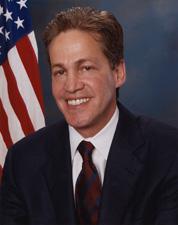 Sen. Norm Coleman (R-MN)



 +5
+5