ART Act
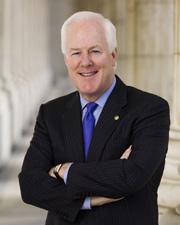 Sen. John Cornyn (R-TX)
Legislative Activity
Stay on top of the latest movement without scrolling through every action
Referred to the Subcommittee on Courts, the Internet, and Intellectual Property.
August 4, 2004
View full timeline
Introduced in Senate
November 22, 2003
Read twice and referred to the Committee on the Judiciary.
November 22, 2003
Committee on the Judiciary. Ordered to be reported with an amendment in the nature of a substitute favorably.
April 29, 2004
Committee on the Judiciary. Reported by Senator Hatch with an amendment in the nature of a substitute. Without written report.
April 29, 2004
Placed on Senate Legislative Calendar under General Orders. Calendar No. 482.
April 29, 2004
Star Print ordered on the reported bill.
May 4, 2004
Passed Senate with an amendment by Unanimous Consent. (consideration: CR S7524-7527; text as passed Senate: CR S7524-7526)
June 25, 2004
Received in the House.
June 25, 2004 • 3:03 PM
Message on Senate action sent to the House.
June 25, 2004
Referred to the House Committee on the Judiciary.
June 25, 2004
Referred to the Subcommittee on Courts, the Internet, and Intellectual Property.
August 4, 2004
Floor Debate
7 membersWhat members said about S. 1932 on the floor


 +2
+2
Floor Debate
7 membersWhat members said about S. 1932 on the floor
Mr. President, I commend my esteemed colleagues in the Senate for passing S. 3021, the Family Entertainment and Copyright Act of 2004, which I introduced today with the senior Senator from Vermont.…
Mr. President, I ask unanimous consent that the Committee on Banking, Housing, and Urban Affairs be authorized to meet during the session of the Senate on Thursday, April 29, 2004, at 10 a.m., to…
Mr. President, I ask unanimous consent that the Committee on Commerce, Science, and Transportation be authorized to meet on Thursday, April 22, 2004, at 9:30 a.m. on the U.S. Commission on Ocean…
Absolutely, on all points. No, it is not. The definition of a motion picture exhibition facility includes the concept that the exhibition has to be ``open to the public or is made to an assembled…
Mr. President, I note that Senator Leahy today made a floor statement referencing important Intellectual Property legislation that unfortunately will not pass in the 108th Congress. I agree…
Show 5 more
Madam President, I am glad that the Senate can today pass the ART Act, a piece of legislation that will help protect America's movies from a form of piracy that has become all too prevalent. This…
Section 3 addresses a serious piracy issue facing the movie business: the use of camcorders in a motion picture theater. Sad to say, there are people who go to the movie theater, generally during…
Mr. President, Section 3 of the ART Act establishes a new provision of Title 18 entitled, ``Unauthorized Recording of Motion Pictures in a Motion Picture Exhibition Facility.'' I ask Senator Cornyn,…
Mr. President, I ask unanimous consent that the Senate proceed to the immediate consideration of S. 3021, which was introduced earlier today by Senators Hatch and Leahy. Mr. President, I ask…
I ask unanimous consent that the Senate now proceed to the immediate consideration of Calendar No. 482, S. 1932. I ask unanimous consent that the committee substitute amendment be adopted, the bill,…
Bill Text
4 versions available
        [Congressional Bills 108th Congress]
[From the U.S. Government Publishing Office]
[S. 1932 Referred in House (RFH)]

2d Session
S. 1932

_______________________________________________________________________

IN THE HOUSE OF REPRESENTATIVES

June 25, 2004

Referred to the Committee on the Judiciary

_______________________________________________________________________

AN ACT

To provide criminal penalties for unauthorized recording of motion
pictures in a motion picture exhibition facility, to provide criminal
and civil penalties for unauthorized distribution of commercial
prerelease copyrighted works, and for other purposes.

Be it enacted by the Senate and House of Representatives of the
United States of America in Congress assembled,

SECTION 1. SHORT TITLE.

This Act may be cited as the ``Artists' Rights and Theft Prevention
Act of 2004'' or the ``ART Act''.

SEC. 2. CONGRESSIONAL FINDINGS.

Congress finds the following:
(1) Intellectual property--
(A) represents the ideas, imagination and
creativity needed to innovate long before a product is
brought to market;
(B) is fundamental to the continued economic,
social, and cultural development of society; and
(C) deserves the protection of our laws.
(2) Music, film, software, and all other forms of
intellectual property represent one of the strongest and most
significant sectors of the United States economy, as
demonstrated by the fact that these industries--
(A) accounted for more than 5 percent of the United
States Gross Domestic Product, or $535,100,000,000 in
2001;
(B) represent almost 6 percent of all United States
employment; and
(C) led all major industry sectors in foreign sales
and exports in 2001.
(3) In an attempt to combat the growing use of the Internet
and technology for the illegal reproduction and distribution of
copyrighted materials, Congress unanimously passed and
President Clinton signed the ``No Electronic Theft (NET) Act''
in 1997. The NET Act is designed to strengthen copyright and
trademark laws and to permit the prosecution of individuals in
cases involving large-scale illegal reproduction or
distribution of copyrighted works where the infringers act
willfully.
(4) Under the No Electronic Theft (NET) Act's economic harm
requirement, investigations by law enforcement of copyright
infringements are particularly resource intensive and pose
significant challenges. In the interest of broader deterrence
and in order to facilitate the prosecution of particularly
egregious copyright violations, it is important to recognize
that a significant level of economic harm can be reached by the
distribution of prerelease commercial works.
(5) The use of camcorders and other audiovisual recording
devices in movie theaters to make illegal copies of films is
posing a serious threat to the motion picture industry.
According to a recent industry study, 92.4 percent of the first
copies of movies available for download on the Internet
originate from camcorders.
(6) Given the difficulty of enforcement, online theft of
music, film, software, and all forms of intellectual property
continues to rise. The negative effects on this large segment
of the United States economy are significant, as exemplified by
almost a 31 percent drop in sales for the music industry from
the middle of 2000 to the middle of 2003.
(7) Federal legislation is necessary and warranted to
combat the most egregious forms of online theft of intellectual
property and its significant, negative economic impact on the
United States economy because--
(A) Article 1, section 8 of the United States
Constitution gives Congress the power ``[t]o promote
the Progress of Science and useful Arts, by securing
for limited Times to Authors and Inventors the
exclusive Right to their respective Writings and
Discoveries,'' as well as the power ``[t]o regulate
Commerce with foreign nations, and among the several
States.'';
(B) the importance of the music, film, software and
other intellectual property-based industries to the
overall health of the United States economy is well
documented and significant; and
(C) theft and unauthorized distribution of
intellectual property across State and international
lines occurs on a regular basis.

SEC. 3. CRIMINAL PENALTIES FOR UNAUTHORIZED RE-CORDING OF MOTION
PICTURES IN A MOTION PICTURE EXHIBITION FACILITY.

(a) In General.--Chapter 113 of title 18, United States Code, is
amended by adding after section 2319A the following new section:
``Sec. 2319B. Unauthorized recording of motion pictures in a motion
picture exhibition facility
``(a) Offense.--Any person who, without the authorization of the
copyright owner, knowingly uses or attempts to use an audiovisual
recording device to transmit or make a copy of a motion picture or
other audiovisual work protected under title 17, or any part thereof,
from a performance of such work in a motion picture exhibition
facility, shall--
``(1) be imprisoned for not more than 3 years, fined under
this title, or both; or
``(2) if the offense is a second or subsequent offense, be
imprisoned for no more than 6 years, fined under this title, or
both.
``(b) Forfeiture and Destruction.--When a person is convicted of a
violation of subsection (a), the court in its judgment of conviction
shall, in addition to any penalty provided, order the forfeiture and
destruction or other disposition of all unauthorized copies of motion
pictures or other audiovisual works protected under title 17, or parts
thereof, and any audiovisual recording devices or other equipment used
in connection with the offense.
``(c) Authorized Activities.--This section does not prevent any
lawfully authorized investigative, protective, or intelligence activity
by an officer, agent, or employee of the United States, a State, or a
political subdivision of a State, or a person acting under a contract
with the United States, a State, or a political subdivision of a State.
``(d) Immunity for Theaters.--With reasonable cause, the owner or
lessee of a facility where a motion picture is being exhibited, the
authorized agent or employee of such owner or lessee, the licensor of
the motion picture being exhibited, or the agent or employee of such
licensor--
``(1) may detain, in a reasonable manner and for a
reasonable time, any person suspected of a violation of this
section for the purpose of questioning or summoning a law
enforcement officer; and
``(2) shall not be held liable in any civil or criminal
action arising out of a detention under paragraph (1).
``(e) Victim Impact Statement.--
``(1) In general.--During the preparation of the
presentence report under rule 32(c) of the Federal Rules of
Criminal Procedure, victims of an offense under this section
shall be permitted to submit to the probation officer a victim
impact statement that identifies the victim of the offense and
the extent and scope of the injury and loss suffered by the
victim, including the estimated economic impact of the offense
on that victim.
``(2) Contents.--A victim impact statement submitted under
this subsection shall include--
``(A) producers and sellers of legitimate works
affected by conduct involved in the offense;
``(B) holders of intellectual property rights in
the works described in subparagraph (A); and
``(C) the legal representatives of such producers,
sellers, and holders.
``(f) Definitions.--In this section, the following definitions
shall apply:
``(1) Title 17 definitions.--The terms `audiovisual work',
`copy', `copyright owner', `motion picture', `motion picture
exhibition facility', and `transmit' have, respectively, the
meanings given those terms in section 101 of title 17.
``(2) Audiovisual recording device.--The term `audiovisual
recording device' means a digital or analog photographic or
video camera, or any other technology or device capable of
enabling the recording or transmission of a copyrighted motion
picture or other audiovisual work, or any part thereof,
regardless of whether audiovisual recording is the sole or
primary purpose of the device.''.
(b) Clerical Amendment.--The table of sections at the beginning of
chapter 113 of title 18, United States Code, is amended by inserting
after the item relating to section 2319A the following:

``2319B. Unauthorized recording of motion pictures in a motion picture
exhibition facility.''.
(c) Definition.--Section 101 of title 17, United States Code, is
amended by inserting after the definition of ``Motion pictures'' the
following:
``The term `motion picture exhibition facility' means a movie
theater, screening room, or other venue that is being used primarily
for the exhibition of a copyrighted motion picture, if such exhibition
is open to the public or is made to an assembled group of viewers
outside of a normal circle of a family and its social acquaintances.''.

SEC. 4. CRIMINAL INFRINGEMENT OF A WORK BEING PREPARED FOR COMMERCIAL
DISTRIBUTION.

(a) Prohibited Acts.--Section 506(a) of title 17, United States
Code, is amended to read as follows:
``(a) Criminal Infringement.--
``(1) In general.--Any person who willfully infringes a
copyright shall be punished as provided under section 2319 of
title 18, if the infringement was committed--
``(A) for purposes of commercial advantage or
private financial gain;
``(B) by the reproduction or distribution,
including by electronic means, during any 180-day
period, of 1 or more copies or phonorecords of 1 or
more copyrighted works, which have a total retail value
of more than $1,000; or
``(C) by the distribution of a work being prepared
for commercial distribution, by making it available on
a computer network accessible to members of the public,
if such person knew or should have known that the work
was intended for commercial distribution.
``(2) Evidence.--For purposes of this subsection, evidence
of reproduction or distribution of a copyrighted work, by
itself, shall not be sufficient to establish willful
infringement of a copyright.
``(3) Definition.--In this subsection, the term `work being
prepared for commercial distribution' means--
``(A) a computer program, a musical work, a motion
picture or other audiovisual work, or a sound
recording, if at the time of unauthorized
distribution--
``(i) the copyright owner has a reasonable
expectation of commercial distribution; and
``(ii) the copies or phonorecords of the
work have not been commercially distributed; or
``(B) a motion picture, if at the time of
unauthorized distribution, the motion picture--
``(i) has been made available for viewing
in a motion picture exhibition facility; and
``(ii) has not been made available in
copies for sale to the general public in the
United States in a format intended to permit
viewing outside a motion picture exhibition
facility.''.
(b) Criminal Penalties.--Section 2319 of title 18, United States
Code, is amended--
(1) in subsection (a)--
(A) by striking ``Whoever'' and inserting ``Any
person who''; and
(B) by striking ``and (c) of this section'' and
inserting ``, (c), and (d)'';
(2) in subsection (b), by striking ``section 506(a)(1)''
and inserting ``section 506(a)(1)(A)'';
(3) in subsection (c), by striking ``section 506(a)(2) of
title 17, United States Code'' and inserting ``section
506(a)(1)(B) of title 17'';
(4) by redesignating subsections (d) and (e) as subsections
(e) and (f), respectively;
(5) by adding after subsection (c) the following:
``(d) Any person who commits an offense under section 506(a)(1)(C)
of title 17--
``(1) shall be imprisoned not more than 3 years, fined
under this title, or both;
``(2) shall be imprisoned not more than 5 years, fined
under this title, or both, if the offense was committed for
purposes of commercial advantage or private financial gain;
``(3) shall be imprisoned not more than 6 years, fined
under this title, or both, if the offense is a second or
subsequent offense; and
``(4) shall be imprisoned not more than 10 years, fined
under this title, or both, if the offense is a second or
subsequent offense under paragraph (2).''; and
(6) in subsection (f), as redesignated--
(A) in paragraph (1), by striking ``and'' at the
end;
(B) in paragraph (2), by striking the period at the
end and inserting a semicolon; and
(C) by adding at the end the following:
``(3) the term `financial gain' has the meaning given the
term in section 101 of title 17; and
``(4) the term `work being prepared for commercial
distribution' has the meaning given the term in section 506(a)
of title 17.''.

SEC. 5. CIVIL REMEDIES FOR INFRINGEMENT OF A WORK BEING PREPARED FOR
COMMERCIAL DISTRIBUTION.

(a) Preregistration.--Section 408 of title 17, United States Code,
is amended by adding at the end the following:
``(f) Preregistration of Works Being Prepared for Commercial
Distribution.--
``(1) Rulemaking.--Not later than 180 days after the date
of enactment of this Act, the Register of Copyrights shall
issue regulations to establish procedures for preregistration
of a work that is being prepared for commercial distribution
and has not been published.
``(2) Class of works.--The regulations established under
paragraph (1) shall permit preregistration for any work that is
in a class of works that the Register determines has had a
history of infringement prior to authorized commercial
distribution.
``(3) Application for registration.--Not later than 3
months after the first publication of the work, the applicant
shall submit to the Copyright Office--
``(A) an application for registration of the work;
``(B) a deposit; and
``(C) the applicable fee.
``(4) Effect of untimely application.--An action for
infringement under this chapter shall be dismissed, and no
award of statutory damages or attorney fees shall be made for a
preregistered work, if the items described in paragraph 3 are
not submitted to the Copyright Office in proper form within the
earlier of--
``(A) 3 months after the first publication of the
work; or
``(B) 1 month after the copyright owner has learned
of the infringement.''.
(b) Infringement Actions.--Section 411(a) of title 17, United
States Code, is amended by inserting ``preregistration or'' after
``shall be instituted until''.
(c) Exclusion.--Section 412 of title 17, United States Code, is
amended by inserting ``, an action for infringement of the copyright of
a work that has been preregistered under section 408(f) before the
commencement of the infringement,'' after ``section 106A(a)''.

SEC. 6. FEDERAL SENTENCING GUIDELINES.

(a) Review and Amendment.--Not later than 180 days after the date
of enactment of this Act, the United States Sentencing Commission,
pursuant to its authority under section 994 of title 28, United States
Code, and in accordance with this section, shall review and, if
appropriate, amend the Federal sentencing guidelines and policy
statements applicable to persons convicted of intellectual property
rights crimes, including any offense under--
(1) section 506, 1201, or 1202 of title 17, United States
Code; or
(2) section 2318, 2319, 2319A, 2319B, or 2320 of title 18,
United States Code.
(b) Authorization.--The United States Sentencing Commission may
amend the Federal sentencing guidelines in accordance with the
procedures set forth in section 21(a) of the Sentencing Act of 1987 (28
U.S.C. 994 note) as though the authority under that section had not
expired.
(c) Responsibilities of United States Sentencing Commission.--In
carrying out this subsection, the United States Sentencing Commission
shall--
(1) take all appropriate measures to ensure that the
Federal sentencing guidelines and policy statements described
in subsection (a) are sufficiently stringent to deter, and
adequately reflect the nature of, intellectual property rights
crimes;
(2) determine whether to provide a sentencing enhancement
for those convicted of the offenses described in subsection
(a), if the conduct involves the display, performance,
publication, reproduction, or distribution of a copyrighted
work before it has been authorized by the copyright owner,
whether in the media format used by the infringing party or in
any other media format;
(3) determine whether the scope of ``uploading'' set forth
in application note 3 of section 2B5.3 of the Federal
sentencing guidelines is adequate to address the loss
attributable to people who broadly distribute copyrighted works
without authorization over the Internet; and
(4) determine whether the sentencing guidelines and policy
statements applicable to the offenses described in subsection
(a) adequately reflect any harm to victims from copyright
infringement if law enforcement authorities cannot determine
how many times copyright material has been reproduced or
distributed.

SEC. 7. AUTHORIZATION OF APPROPRIATIONS.

There are authorized to be appropriated to the Department of
Justice $5,000,000 for each of the fiscal years 2005, 2006, 2007, 2008,
and 2009 to prosecute violations of intellectual property rights as set
forth under sections 2318, 2319, 2319A, 2319B, and 2320 of title 18,
United States Code.

Passed the Senate June 25, 2004.

Attest:

EMILY J. REYNOLDS,

Secretary.