Mexican Agricultural Trade Compliance Act

Legislative Activity
Stay on top of the latest movement without scrolling through every action
Read twice and referred to the Committee on Finance.
November 25, 2003
View full timeline
Introduced in Senate
November 25, 2003
Sponsor introductory remarks on measure. (CR S15977-15978)
November 25, 2003
Read twice and referred to the Committee on Finance.
November 25, 2003
Floor Debate
23 membersWhat members said about S. 1952 on the floor
 JB
JB OJS
OJS JFK
JFK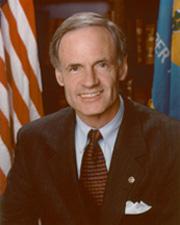 TRCCG+18
Floor Debate
23 membersWhat members said about S. 1952 on the floor
Mr. President, today I am pleased to introduce the United States-Mexico Transboundary Aquifer Assessment Act. This bill is the result of a field hearing I conducted in Las Cruces, NM two years ago…
Mr. President, today I am pleased to introduce the United States-Mexico Transboundary Aquifer Assessment Act.
This bill is the result of a field hearing I conducted in Las Cruces, NM two years ago during my tenure as the Chairman of the Energy and Natural Resources Committee. The focus of the hearing was water resource issues that were developing along the U.S.-Mexico border-- particularly the area encompassing Las Cruces, El Paso, Texas, and Juarez, Mexico.
There had long existed an ongoing effort to address water quality issues and waste-water infrastructure needs in the border region, but I was concerned that issues regarding the availability of future water supplies were growing. The testimony at that hearing made clear that there exists little consensus on how growing communities in the border region will address their future water needs. In particular, I was struck by the lack of agreement on the long-term viability of future groundwater sources, many of which involve aquifers underlying communities in both the United States and Mexico. Given the rapid population growth along the U.S.-Mexico border and the increasing demand for water, there is a strong need to gain a common understanding of the limits of our shared groundwater resources. A thorough understanding of the resource is the first step to avoiding conflicts similar to those that have arisen between the United States and Mexico over shared surface waters--e.g. the Rio Grande.
The United States-Mexico Transboundary Assessment Act is intended to address the lack of binational consensus regarding the source and availability of future water supplies along the border. It will do this by establishing a scientific program, involving entities on both sides of the border, to comprehensively assess priority transboundary aquifers. The information and scientific tools developed by this program will be extremely valuable to State and local water resource managers in the border region. This effort is to be led by the United States Geological Survey (USGS) working closely with the border states and local entities. Over the last several years the USGS has been working with key stakeholders in the border region to design this technical program.
I understand that establishing this scientific program and accurately assessing our shared water resources is just a step towards developing the long-term plans and solutions that will help avoid future international disputes concerning scarce water supplies. This small step, however, is an important one, and is recognized by a number of organizations familiar with the need for cooperative efforts between the United States and Mexico on shared water resources. In its 6th Report on the U.S.-Mexico Border Environment, the Good Neighbor Environmental Board, an independent federal advisory committee managed by the U.S. Environmental Protection Agency, recommended the initiation of a ``border-wide groundwater assessment program to systematically analyze priority trans-boundary aquifers.'' Also, the Center for Strategic and International Studies, in a January 2003 report of its U.S.-Mexico Binational Council, included as one of its recommendations that Mexico and the United States ``improve data collection, information gathering, and transparency as the first step to developing a long-term strategy for water management.''
Ultimately, the necessary long-term strategy will have to be developed by the communities and other water users who reside along the border. Working with each other and their state water resource agencies, I believe successful strategies can be developed so long as the information that is the basis for the plans is the most accurate possible. In that respect, the USGS has a strong and important role to play. This bill will ensure that the USGS will be able to fulfill this role which, in turn, will enhance the prospects for our border communities to plan for their future and manage their growth in a manner that ensures their long-term viability and prosperity.
I ask unanimous consent that the text of the bill be printed in the Record.
Mr. President, I want to speak for just a few minutes today on an issue on which I have introduced a bill. The bill is S. 1966. It is a bill to require a report on the detainees being held at Guantanamo Bay, Cuba.
The purpose of this legislation is to shed some light on the process that is being used by this administration to determine the status of so-called enemy combatants who are held by our Government at Guantanamo Bay Naval Base. It has now been nearly 2 years since the first detainees arrived at Guantanamo as prisoners of the United States. Yet these individuals are still being held in what most would refer to as legal limbo.
My colleagues will recall that on July 16, I urged the Senate to adopt an amendment to the Defense appropriations bill. That amendment was tabled 52 to 42. It is essentially the same provision--it contained the same provisions I have now put into S. 1966, this freestanding legislation I have introduced.
The day after that amendment was defeated I sent a letter to Secretary Rumsfeld expressing my concern over the apparent lack of any kind of legal process being extended to the detainees being held at Guantanamo. Only recently I received a reply from the Department of Defense. In that letter, the Department of Defense maintains that it:
. . . reviews on a regular basis the continued detention of
each enemy combatant and assesses the appropriate disposition
of each individual case.
According to the Defense Department, at the time they wrote back to me, they said that the review had resulted in the release of 64 detainees who were determined to no longer pose a threat to the United States, and more releases were expected.
However, the letter fails to address the more important question, which is whether the Department's review of these detainees is being done in accordance with any recognized civilian or military legal process.
I ask unanimous consent to have the letter printed in the Record at the conclusion of my remarks.
What prompted me to come to the floor of the Senate today was an article I saw in the morning paper. This appeared in various papers around the country, but the one I have here in front of me is from the Boston Globe. It says:
The U.S. military sent home 20 ``enemy combatants'' last
weekend who were being held without trial at Guantanamo Bay
Naval Base in Cuba, only to replace them with the same number
of new prisoners.
It has a quotation from a spokesperson for the military saying:
We cannot talk about any of the individuals that may have
departed the island due to security concerns.
According to this article, all those transferred last week have been returned, many of them to Pakistan, and all of those transferred last weekend, according to representatives from the countries they are citizens of, said they will be released once they have arrived in those countries.
The figure now, as I understand it, is there are 88 suspects who have been transferred out of Guantanamo Bay. Four were released, 4 were handed over to Saudi Arabia, and the remaining 650 or 700 are still there. As this article indicated, we continue to add additional people to this prison we are operating there at Guantanamo.
There are various complaints described in the article by foreign diplomats about the process we are following. There is a statement by the attorney for one of the human rights organizations that has complained bitterly about the improvisational policy decisions and the arbitrary power over prisoners at the base.
My motives for offering this legislation are very simple. While I obviously have concerns about judicial treatment and the failure of any kind of legal process being followed in the treatment of these detainees in Guantanamo, I am even more concerned about the implications of this treatment we are affording these individuals for our own fighting forces as well as our international reputation.
The bill I filed here in the Senate today requires the Secretary of Defense to report on the status of these detainees, including the process that was utilized to determine that status for those who have already been released from Guantanamo. The bill requires the Secretary to provide information related to this release, how long they were detained, the conditions of their release, if any, the explanations of why the Department of Defense has now determined these individuals could be released after what has in many cases been a very long detention.
For the remaining detainees--those who are still at Guantanamo--the administration has still refused to provide ``access to an impartial tribunal to review whether any basis exists for [detainees] continued detention.'' The detainees have not been allowed to speak with their families or their counsel, nor have they been informed of any charges against them, as far as I am informed.
The bill I filed requires that within 90 days of its enactment the Secretary of Defense provide the Senate with information related to the process used to categorize and hold these detainees. It does not call for release of the detainees. It does not in any way, shape, or form require the release of any classified information other than to the chairman and vice chairman of the Senate and House committees. The amendment merely seeks to clarify for the Senate and for the Congress the process by which the detainees' status is determined.
Like most Americans, I have always thought that what distinguished our country in the history of the world was our commitment to individual freedom and to the rule of law; that the bedrock of a free society is the obligation taken by the Government to afford individuals with certain legal protections, and as a Nation committed to these principles we have been instrumental in the formulation and enforcement of international law, particularly when it came to the treatment of prisoners of war. For over 75 years, the United States has adhered to the Geneva Convention. Even during conflicts with insurgents and irregular forces, we have adhered to the Geneva Convention. Whenever our Nation has gone to war, we have taken pride in going above and beyond the requirements of international law as set out in the third Geneva Convention of 1929. In fact, the Department of Defense has adopted its own detailed regulations and doctrine and field manuals built on the provisions of the Geneva Convention which have guided our military through many conflicts regardless of size and scope and duration.
These regulations we have in our own military, like international law, do not contemplate the legal limbo we are holding these detainees in at Guantanamo. Neither the Geneva Convention nor the established military regulations define or use the term the President is using here. This term, unlawful combatant, is a new term which has come up in order to sidestep the requirements both of the Geneva Convention and of our own military regulations. Army Regulation 190-8 provides an effective and efficient process to
categorize the detainees on the battlefield. According to that provision, detainees must be classified either as an enemy prisoner of war, a recommended retained person entitled to enemy prisoner-of-war protections, an innocent civilian who should be immediately returned to his or her home or released, or a civilian internee who, for reasons of operational security, or probable cause incident to criminal investigation, should be retained. Such internees have the right to appeal the order directing their internment by challenging the existence of imperative security reasons that led to their detention.
The President's unilateral determination of the detainee's status at Guantanamo Bay signals a significant departure from the spirit of the Geneva Convention and a significant departure from the letter of established military regulations. In stark contrast to our Government's previous commitment to adherence to the rule of law and human rights, this administration has adopted a position that once the President designates that a person is a so-called enemy combatant or unlawful combatant, a term created by the administration, that person can be locked up and held incommunicado as long as the President desires, with absolutely no legal rights; no right to review of that decision. This means even if the administration makes a mistake or is given faulty information, it is virtually impossible for the person involved to prove his or her innocence because not only can they not talk to a lawyer or to family members, but they do not have the right even to know what they are being charged with.
The U.S. Supreme Court has agreed to consider the narrow question of whether the Federal courts have the power to hear challenges to the detainees' imprisonment. This is a significant move towards restoring the system of checks and balances, which needs to be restored--the system of checks and balances our Founders felt was essential to preserving liberty in the country. Similarly, the bill I have filed begins to fulfill Congress's constitutional responsibility to oversee what the executive branch does. It calls on the administration to tell us whether its actions are in accordance with military regulations and doctrine.
Our goal is to bring transparency to the issue and to fulfill Congress's constitutional role of oversight of the executive. We should know what process the administration is using to determine the status of these detainees.
My concern is much broader than what happens to these particular detainees. I am concerned about the impact of our treatment of these detainees on the treatment of our own military personnel who are captured in future conflicts. Former U.S. diplomats and judge advocate generals and even former U.S. prisoners of war filed ``friend of the court'' briefs in the Supreme Court questioning the legality and wisdom of the administration's policy of open-ended detentions at Guantanamo. Some of those briefs were extremely thoughtful, in my view. One former diplomat wrote:
It has been the experience of each of us that our most
important diplomatic asset has been this Nation's values. . .
. The hint that America is not all that it claims, that it .
. . can accept that the Executive Branch may imprison whom it
will and do so beyond the reach of due process of law demeans
and weakens this Nation's voice abroad.
In their brief, former judge advocate generals, the military's legal prosecutors and those most familiar with the law as it applies to enemy prisoners of war, strongly argue:
To be sure, this is a perilous time, as the President has
stated. But that does not justify indefinite confinement
without any type of hearing or judicial review. The United
States played a major role in the development and adoption of
the Geneva Conventions. The requirements of those
Conventions. The requirements of those Conventions are
incorporated directly into American Military Regulations.
American failure to provide foreign prisoners with the
protections of the Geneva Conventions may well provide
foreign authorities, in current or future conflicts, with an
excuse not to comply with the Geneva Conventions with respect
to captured American military forces.
Just as compelling are the stories told in the ``friends of the court'' brief filed by former prisoners of war. They argue that as a result of their own experience as prisoners of war, the United States has an interest ``in fostering the development, acceptance and enforcement of international norms pursuant to which prisoners of war and others captured during armed conflicts will be treated humanely and in accordance with the rule of law.'' They emphasize, that in particular, they ``wish to ensure that the treatment by the Untied States of foreign detainees . . . is such that the United States and former American POWs retain the moral authority to demand fair and humane treatment for any future Americans detained by foreign governments.''
However, nothing more clearly demonstrates this point than the actual stories themselves. Leslie H. Jackson, Edward Jackfert, and Neal Harrington are former prisoners of war. Mr. Jackson was captured by the Germans, who adhered to the Geneva Conventions. Mr. Jackfert and Mr. Harrington were held by Japan, which had not ratified and did not purport to follow international law.
If you will allow me to read them their brief:
Mr. Jackson was captured by the German Army on April 24,
1944, when his B-17 bomber crashed. Jailed and interrogated
for approximately one week, he was then transported to Stalag
17, a converted concentration camp. In his 13 months of
captivity, Mr. Jackson was granted the bare necessities:
shelter, minimal food, and the ability to socialize with
other American POWs. While the experience was harsh and
unpleasant, Mr. Jackson was never tortured or otherwise hurt
by the German guards. To follow the terms of the Geneva
Conventions of 1929, to which Germany was a party, Mr.
Jackson's German captors placed the appropriate Geneva
Convention signage in the barracks, permitted the
international Red Cross to ship basic necessities to POWs,
and allowed a Geneva inspector to survey the premises. Mr.
Jackson believes that his survival and relatively good health
while in captivity are the result of the German Army's
adherence to the 1929 Geneva Conventions.
The experiences of Mr. Jackfert and Mr. Harrington in the
custody of Japan, which had not ratified and did not purport
to follow the 1929 Geneva Conventions, offer a sharp
contrast. Both men were serving with the U.S. Army in the
Philippines when it surrendered to the Japanese in 1942, and
both subsequently served several years of hard captivity
beyond the reach of any Geneva Convention protections. Both
were part of the Bataan Death March and its well-documented
horrors. Mr. Harrington was forced into slave labor in a
Japanese coalmine, and saw his compatriots starved, beaten
and killed. Mr. Jackfert was also forced into slave labor
and suffered the extreme effects of heavy labor, cruelty
and inadequate nourishment, going from 125 pounds to 90
pounds in a matter of months. There was no Geneva signage,
no recognition of prisoner rights, and virtually no Red
Cross access.
Nor were the experiences of Mr. Harrington and Mr. Jackfert
atypical. Studies have determined that the death rate of U.S.
Military personnel interned by Japan was as high as 40
percent while the death rate of personnel captured and
interned by Germany was little more than 1 percent. . . .
Moreover, while it was rare for American POWs detained in
Germany to be tortured, the opposite was true for American
POWs in Japan. No one can adequately impart the suffering
most allied prisoners endured [in Japan]. . . . They were
beaten, kicked, robbed . . . and were buried alive. . . .
[T]he overwhelming majority endured ``hell on earth.''
Again, let me say, I am in no way suggesting that the detainees are not being treated humanely. In fact, from all information I have received, they are being treated humanely. But what I and these briefs that were filed in the Supreme Court are suggesting is that our failure to adhere to some recognized legal process in determining the status of these detainees opens the door for other countries to refuse to adhere to any legal process as well. It may very well result in arbitrary confinement and harsh treatment or other inhumane practices applied to our own citizens.
This bill will help Congress fulfill its duties and obligations as outlined in the Constitution and in U.S. law and regulation.
I hope we can quickly pass this legislation when we return for the second session of the Congress in January.
I yield the floor.
Exhibit 1
[From the Boston Globe, Nov. 25, 2003]
US Releases 20 Detainees, Transfers 20 More to Cuba
(By Charlie Savage)
Washington.--The U.S. military sent home 20 ``enemy
combatants'' last weekend who were being held without trial
at Guantanamo Bay naval base in Cuba--only to replace them
with the same number of new prisoners.
The prisoner transfer, the first such movement since mid-
July, followed a determination by senior military and
intelligence officials that the outgoing group ``either no
longer posed a threat to U.S. security or no longer required
detention by the United States,'' according to a statement
the Department of Defense released yesterday.
``We can't talk about any of the individuals that may have
departed the island due to security concerns,'' said
Lieutenant Colonel Pamela Hart, a spokeswoman for the
isolated facility at which the United States detains and
interrogates suspected terrorists.
But a high-ranking Pakistani official, who said yesterday
that at least five of the outgoing transferees were Pakistani
citizens, offered a chilly reaction to the Pentagon's news.
``The government is happy, but this is too damn late,''
said Imran Ali, second secretary of the Pakistan Embassy,
adding that 21 Pakistanis have been released from Guantanamo,
but another 37 are still there.
``Their lives have been destroyed. Their families have gone
through psychological trauma, since they were not terrorists;
they were just low-level Taliban fighters.''
The Pakistani official's reaction illustrated the pressure
on the United States to resolve the situation--especially
from allies in the war on terrorism who have expressed
concern for their citizens who are among the 660 prisoners
from 42 countries being held at the base.
Although the State Department has been negotiating with a
number of countries to continue the detention of some, all
those transferred last weekend will be released by their
countries, U.S. officials said.
The Pentagon statement said that ``at the time of their
detention, these enemy combatants posed a threat to U.S.
security.'' It offered little information about the new
arrivals, except that they were transferred from U.S. Central
Command in the Middle East.
Navy Lieutenant Commander Barbara Burfeind, a Pentagon
spokeswoman, said none of the new detainees were captured in
Iraq.
The weekend transfers of the detainees bring to 88 the
number of Al Qaeda or Taliban suspects who have been
transferred out. Of those, 84 were released and four were
handed over to Saudi Arabia.
Ruth Wedgwood, an international law professor at Johns
Hopkins University, said the arrival of the 20 new detainees
follows a flare-up of fighting by Taliban insurgents in
Afghanistan.
Wedgwood has defended the Bush administration's position
that the rules of the Geneva Conventions do not apply to the
detainees because they were not soldiers of a regular Afghan
army.
``Dismayingly, the Taliban have become very active again in
the southern area, so really . . . the war isn't over in that
area,'' she said.
Not among those who were transferred for release, according
to a senior Pentagon official, were the three ``juvenile
enemy combatants''--Afghans ages 13 to 15 who were captured
fighting alongside the Taliban and whose detention at the
prison has attracted particularly intense international
criticism. The commander of Guantanamo operations, Major
General Geoffrey Miller, had recommended that they be sent
home in August.
U.S. officials say they have been coordinating with UNICEF
in the event that the young fighters are released. UNICEF, a
United Nations agency that has offered to handle the juvenile
combatants, runs a program to ease the reintegration of
former child soldiers back into their home societies.
``The State Department and UNICEF will make sure that if
they're returned to Afghanistan, they won't just be plopped
down,'' a Pentagon official told The Boston Globe last week.
Ken Hurwitz of the Lawyers Committee for Human Rights, a
New York-based organization, said that the surprise release
reflected the military's ``improvisational'' policy decisions
and its arbitrary power over the prisoners at the base.
``It's the rule of law that's the point,'' he said.
``They're saying, `Trust us, and we'll do the right thing.'
But there is no right thing unless it's pursuant to some kind
of ordered, lawful proceeding.''
Challenges to the detentions that have been filed in
federal court have so far been dismissed because the base is
located on Cuban soil--it has been leased and controlled by
the United States for a century--and outside the jurisdiction
of U.S. sovereignty. Two weeks ago, the Supreme Court said it
would review the question of whether federal court
jurisdiction may extend there.
In a related development, the lawyer for Army Captain James
``Yousef'' Yee, the former Muslim chaplain at Guantanamo who
was arrested in September in the alleged mishandling of
classified material, sent a letter to President Bush
yesterday asking that his client be released from pretrial
detention for Thanksgiving and his daughter's birthday.
``These charges do not warrant pretrial confinement of any
kind,'' Eugene Fidell wrote in the letter. ``While military
sources initially reported a wild laundry list of suspected
offenses, such as spying or aiding the enemy, these have now
been reduced to two relatively minor [charges]. . . .
Nonetheless, he is being treated as if the original laundry
list of charges was the legal basis for his confinement. This
is totally wrong and unfair.''
Sean McCormack, a spokesman for the National Security
Council, said he would look into the letter, but had no
comment on the president's behalf.
Mr. President, I rise today to introduce legislation with Senators Domenici, Murray, Jeffords, Cantwell, Akaka, Reed, Chafee, and Inouye entitled the ``Children's Health Equity Technical Amendments Act of 2003.''
Since the passage of the Children's Health Insurance Program, or CHIP, in 1997, a group of States that expanded coverage to children in Medicaid prior to the enactment of CHIP have been unfairly penalized for that expansion. States are not allowed to use the enhanced matching rate available to other States for children at similar levels of poverty under the act. As a result, a child in the States of New York, Florida, and Pennsylvania, because they were grandfathered in the original act or in Iowa, Montana, or a number of other States at 134 percent of poverty is eligible for an enhanced matching rate in CHIP but that has not been the case for States such as New Mexico, Vermont, Washington, Rhode Island, Hawaii, and a number of others, including Connecticut, Tennessee, Minnesota, New Hampshire, Wisconsin, and Maryland.
As the health policy statement by the National Governors' Association reads, ``The Governors believe that it is critical that innovative states not be penalized for having expanded coverage to children before the enactment of S-CHIP, which provides enhanced funding to meet these goals. To this end, the Governors support providing additional funding flexibility to states that had already significantly expanded coverage of the majority of uninsured children in their states.
For six years, our group of States have sought to have this inequity addressed. Early this year, I introduced the ``Children's Health Equity of 2003'' with Senators Jeffords, Murray, Leahy, and Ms. Cantwell and we worked successfully to get a compromise worked out for inclusion in S. 312 by Senators Rockefeller, and Chafee. This compromise extended expiring CHIP allotments only for fiscal years 1998 through 2001 in order to meet budgetary caps.
The compromise allowed States to be able to use up to 20 percent of our State's CHIP allotments to pay for Medicaid eligible children about 150 percent of poverty that were part of our State's expansions prior to the enactment of CHIP. That language was maintained in conference and included in H.R. 2854 that was signed by the President as Public Law 108-74. Unfortunately, a slight change was made in the conference language that excluded New Mexico and Hawaii, Maryland, and Rhode Island needed specific changes so an additional bill was passed, H.R. 3288, and signed into law as Public Law 108-107, on November 17, 2003. This second bill included language from legislation that I introduced with Senator Domenici, S. 1547, to address the problem caused to New Mexico by the conference committee's change.
Unfortunately, one major problem with the compromise was that it would allow the 10 States flexibility with its CHIP funds for allotments between 1998 and 2001 and not in the future. Therefore, the inequity continues with CHIP allotments last year, this year, and into the future. This legislation would address that problem and ensure that all future allotments give these 11 States the flexibility to use up to 20 percent of our CHIP allotments to pay for health care services of children above 150 percent of poverty in our respective state Medicaid programs.
This rather technical issue has real and negative consequences in States such as New Mexico. In fact, due to the CHIP inequity, New Mexico has been allocated $266 million from CHIP between fiscal years 1998 and 2002, and yet, has only been able to spend slightly over $26 million as of the end of last fiscal year. In other words, New Mexico has been allowed to spend less than 10 percent of its federal CHIP allocations.
With the passage of H.R. 2854 and H.R. 3288, that situations will improve somewhat. Unfortunately, the change was not made permanent and does not apply to future CHIP allotments. This legislation would correct this problem.
It is important to note that this initiative includes strong maintenance of effort language as well as incentives for our State to conduct outreach and
enrollment efforts and program simplification to find and enroll uninsured kids because we feel strongly that they must receive the health coverage for which they are eligible.
The bill does not take money from other States's CHIP allotments. It simple allows our States to spend our States' specific CHIP allotments from the Federal government on our uninsured children--just as other States across the country are doing.
I ask unanimous consent that the text of the bill be printed in the Record.
Mr. President, I rise today to introduce the ``Small Manufacturers Assistance, and Trade (SMART) Act,'' which responds to the needs of America's small manufacturers. This bill offers a new emphasis…
Mr. President, I rise today to introduce the ``Small Manufacturers Assistance, and Trade (SMART) Act,'' which responds to the needs of America's small manufacturers. This bill offers a new emphasis on programs and services within the Federal Government that will provide small companies a better opportunity to survive in these challenging times and compete in our global economy. The SMART Act introduces new resources, improves existing programs, and expands those programs that work to serve a larger constituency. It is critical that we revitalize our country's manufacturing base and establish an environment for economic growth and job creation.
Small manufacturers constitute over 98 percent of our Nation's manufacturing enterprises, employ 12 million people, and supply more than 50 percent of the value-added U.S. production. It is a sector we cannot afford to ignore. In addition, no industry has witnessed a more profound erosion of jobs.
The damage manufacturing has sustained is nothing short of alarming. Since July 2000, almost 2.8 million U.S. manufacturing jobs have been eliminated. New England alone lost more than 214,000 jobs between June 1993 through June 2003, with 78 percent of those losses, 166,000 jobs, occurring since January of 2001.
In my home State of Maine, we've been shedding jobs at a startling rate over the past decade--and even more so in the past 2 years. Between July 2000 and June 2003 an astounding 17,300 manufacturing jobs were lost.
The bottom line is that we must bolster our manufacturing industry, especially with the current 6.0 percent unemployment rate in the United States. To ensure that the road to recovery is robust, we have a special obligation to provide the investment to allow small companies to grow. In fact, it has been reported that for every dollar of final manufacturing output, an additional $1.26 is created in other industry sectors such as suppliers of raw materials, marketing, and retail industries.
Looking even more broadly, a healthy manufacturing base is essential to the preservation of our Nation's security and its status as a world power. We must end the trend of becoming increasingly dependent upon other countries for the products we use and rely upon. Now is the crucial time for everyone--industry representatives, Congress, the President, Republicans and Democrats alike--to work together toward the common goal of revitalizing this industry.
As the Chair of the Committee on Small Business, I have been focusing considerable attention on the concerns of small business manufacturers and efforts to aid in their recovery. Last month, I held a field hearing on this critical subject in Lewiston, ME. I invited Grant Aldonas, Under Secretary for International Trade of the Commerce Department, and Pamela Olson, Assistant Secretary for Tax Policy of the Treasury Department, to participate and explored with them ways to strengthen and expand this vital industry. Their testimony and comments confirmed that we cannot delay and must act quickly to support our small manufacturing base.
Additionally, I heard from a number of small businesses in the manufacturing industry. Their testimony confirmed the damage sustained by our country's manufacturing sector, and the sense of urgency that we need to act immediately to assist them. The SMART Act is a vital first step toward helping them do what they do best--create jobs.
The bill I introduce today starts by establishing a strong and influential voice for manufacturers within the Federal Government through the creation of an Assistant Secretary for Manufacturing within the U.S. Department of Commerce. The new Assistant Secretary will be responsible for identifying and addressing the concerns of small manufacturers at the highest level of our Federal Government. Senator Voinovich has introduced S. 1326, which similarly creates an Assistant Secretary for Manufacturing. I support that bill and Senator Voinovich's efforts to assisting our country's manufacturers.
To ensure that the government acts on the needs of manufacturers, the SMART Act creates an Interagency Manufacturing Task Force (IMTF). The mission of the IMTF will be to encourage the Federal departments and agencies to coordinate their efforts by identifying and addressing manufacturing concerns collectively. The IMTF will
be chaired by the Commerce Department's new Assistant Secretary for Manufacturing and will be comprised of representatives from the Federal departments and agencies that directly affect this sector of our economy. In addition, the IMTF will be tasked with the duty of submitting an annual report on their findings and recommendations to the President and the Senate and House Small Business Committees.
In conjunction with this government-wide task force, the SMART Act also continues to improve the Federal infrastructure supporting the industry by establishing a Small Business Manufacturing Task Force (SBMTF) within the Small Business Administration (SBA). The SBA has a wide spectrum of programs and services available to small manufacturers. The mission of the new SBMTF will be to refocus the agency's programs and services to ensure that they respond to the particular needs of small manufacturers while still serving all aspects of the small business community.
Adding to the information gained from the Committee's hearing, we have reviewed the SBA's programs and services that are geared specifically toward manufacturing and international trade. I was alarmed to learn, during this hearing, that small manufacturers were unfamiliar with the SBA programs that can assist them. These findings revealed that the SBA needs to realign its efforts specifically to include manufacturers in the delivery of the agency's program and services.
In order to improve existing SBA small business development programs, the agency needs to take its services beyond the traditional small business enterprise. The SMART Act improves the SBA's entrepreneurial development programs and services so that small manufacturers can grow their business operation, expand their facilities, and purchase new equipment--all of which will result in creating jobs throughout the industry and its supply chain.
Partnerships developed between SBA related organizations and non-SBA related entities will be an additional asset for these producers. The SMART Act directs the SBA to develop partnerships with the Manufacturing Extension Partnership (MEP), community economic development organizations, and the agency's resource partners--such as Small Business Development Centers and SCORE--to create new outreach and training programs for small manufacturers and small businesses in the manufacturing supply chain.
The SMART Act requires SCORE, with its long established expertise in counseling, to extend its reach to small manufacturers and exporters through its online counseling services and its community based offices. The Act also directs SCORE to recruit more counselors with manufacturing and international trade expertise and increase its partnerships with manufacturing and exporting related organizations, which will help increase the marketing capabilities of these small producers and exporters.
I have also learned that small and medium sized companies are often hesitant to engage in the export of their product as a way to grow their small business, because they are often fearful of the many unfamiliar intricacies involved in doing business in a foreign market. Small businesses currently account for almost $300 billion of yearly export sales--nearly one-third of total U.S. exports. However, according to an Administration survey through the SBA's Export Trade Assistance Partnership, approximately 30 percent of non-exporting small businesses are interested in exporting their products and services. These businesses hold the potential to be a major source for even more economic activity and job growth.
The SBA is a pivotal resource in delivering financial and business development tools to businesses seeking to export. The SMART Act improves the SBA's international trade and exporting programs to assist small businesses and manufacturers expand into the export market and play an even greater role in the balance of U.S. trade.
The SMART Act also requires the SBA to establish annual goals that are linked to its trade promotion activities, and to develop programs that will help small businesses compete against imports. This objective will be more easily obtained by incrementally increasing the number of SBA representatives at the U.S. Export Assistance Centers (USEACs) over the next 3 years. To ensure that all States have the same services available, the SBA Office of International Trade will have at least one financial specialist dedicated to the international loan programs and providing oversight of trade financing issues.
The SBA's financing programs have helped American small businesses create and retain jobs, even as other sources of financing have become more scarce. This bill provides improvements to the SBA's 7(a), 504, and Surety Bond programs.
From Fiscal Year 1999 through Fiscal Year 2002, the 7(a) loan program helped small businesses create more than 1.3 million new jobs by making $37.7 billion in financing available to more than 182,000 small businesses. This bill increases the maximum size of 7(a) loans for small exporters from $2 million to $2.6 million by increasing the maximum amount guaranteed by the SBA from $1 million to $1.3 million.
During that same period, the 504 loan program provided more than 20,000 new loans to small businesses, allowing those businesses to create or retain almost 450,000 jobs. The SMART Act increases 504 loan sizes in two ways. First, the bill increases the maximum loan size for manufacturing projects by increasing the SBA's maximum guarantee, which is 40 percent of the total loan size, from $1 million to $4 million. Second, for loans to exporters, the bill increases the maximum loan size from $3.25 million to $5 million by increasing the SBA's maximum guarantee from $1.3 million to $2 million.
Finally, the bill clarifies that under the SBA's Surety Bond Guarantee Program, the SBA may guarantee bonds for specific contracts of $2 million or less, even if the total range of affiliated contracts may exceed $2 million.
These SBA financing programs have helped to create millions of jobs in America, and manufacturers and exporters have been an important part of that success. This bill will increase small companies' and exporters' ability to obtain vital capital that will help them compete in a very difficult international environment and enable them to create more jobs for American workers.
I am drawing these provisions from another bill I have authored, the Small Business Administration 50th Anniversary Reauthorization Act of 203 (S. 1375), which the Committee and the Senate unanimously approved earlier this year. While we are waiting for the House of Representatives to pass an SBA reauthorization bill, I believe that given the importance of these financing provisions, they must be included in this bill as well to increase their chance of being signed into law.
Because Federal assistance for small manufacturers should extend beyond the SBA, the SMART Act will also establish a new Assistant United States Trade Representatives for Small Business within the Office of the United States Trade Representatives (USTR). This office will be tasked with focusing on small businesses', including small manufacturers, concerns in trade negotiations and promoting their exports.
There are currently 21 Assistant USTRs covering issues from services to telecommunications to labor. While small businesses face many of the same issues that serve as barriers to trade as many of the largest multinational corporations, they do not have the same resources to overcome these barriers, thus blocking them from reaping the benefits of international trade. In particular, small businesses do not have the resources necessary to settle private trade disputes in a timely and cost effective fashion, meet physical presence requirements in other countries, conform to complex customs procedures, or meet off-set exclusions in government procurement. By establishing a new Assistant U.S. Trade Representative, we will ensure that the views and concerns of small businesses will have an appropriate seat at the negotiating table and help secure the competitiveness of our small exporters abroad.
The Small Manufacturers Assistance, Recovery, and Trade Act answers the call for help that I have heard too often of late from small manufacturers in this country. These improvements to existing resources within the Federal
government will give these companies a better opportunity to survive in these challenging times and compete in the global economy.
This bill is a critical starting point to revitalize our country's manufacturing base and create an environment that allows them to grow and create jobs again. We must help these businesses access the global marketplace through expanded exporting opportunities and assistance. I intend to work with all groups and interested parties that are committed to improving and passing this bill. There are still many needs that face our Nation's manufacturers--and this is just the beginning.
I look forward to working with my colleagues in the Senate to ensure that the provisions of this bill are enacted so that these companies can continue to grow and reach their full potential.
Mr. President, I ask unanimous consent that the text of the bill and a section-by-section analysis be printed in the Record.
Mr. President, as the world's largest economy, I believe the United States must have the fairest, most transparent and efficient financial markets in the world. Our financial services companies must…
Mr. President, as the world's largest economy, I believe the United States must have the fairest, most transparent and efficient financial markets in the world. Our financial services companies must live up to the highest standards of accountability. This is critical to ensure that the United States remains strong, competitive and safe in the global economy. Unfortunately, recent reports of late trading and market timing have brought into question whether mutual fund companies have lived up to the highest standards of accountability. They have also shown that the Bush Administration failed to provide effective oversight and examination of mutual fund companies, while poorly enforcing our securities laws. The inaction of the Bush Administration has dangerously eroded the trust and confidence of the American people in mutual funds and may have allowed mutual fund companies and big investors to engage in fraudulent behavior against individuals and pension funds.
New York and Massachusetts regulators have uncovered a scheme in which some of America's top mutual fund companies let big investors profit illegally at the expense of small investors with so-called ``late trades'' and ``market timing.'' The scam appears to be widespread. Today, roughly half of all American households own mutual funds either directly or through a retirement account or pension fund. It's been reported that as much as one quarter of mutual fund companies may be involved in late trading and market timing and that such schemes may cost investors as much as $5 billion annually.
In a late trade, big investors purchase mutual fund shares after the close of the market but at the closing price, allowing them to take advantage of late-breaking financial news. A mutual fund manager might allow a big investor to buy shares in a technology fund at the 4 p.m. close price after learning at 5 p.m. that a major technology company has reported unexpectedly strong earnings. The investor is almost guaranteed a profit when the market opens the following day and share prices climb. In return for this illegal access, the big investor might pledge to continue to invest in the fund.
Market timing exploits the unique way that mutual funds set their prices. While it is not illegal, most mutual fund companies assure investors that they discourage such practices and that they are working to prevent fund timing. Under a market timing trade, big investors trade in and out of certain mutual funds in order to exploit the inefficient way mutual funds price their shares and ensure a profit.
In 2002, individuals who invested in mutual funds paid approximately $70 billion in advisory and management
fees, an average of more than $700 per investor. There is a significant disparity between the rate of advisory fees charged to mutual fund investors and the rate paid by institutional investors, even though they provide the similar services. Currently, mutual fund managers are under no obligation to negotiate advisory and management fees that are in the best interest of their shareholders. In some instances, mutual fund managers has a financial relationship with the contractor which receives a no-bid contract from the same mutual fund.
In a September 2003 complaint, New York Attorney General Spitzer alleged that Canary Capital Partners, a New Jersey hedge fund, engaged in illegal and unethical trading in mutual funds, such as late trading and market timing. After the New York State complaint, the SEC ordered a preliminary investigation, which found that half of the 88 mutual fund companies and brokerage firms had arrangements to make market- timing trades. These arrangements occurred even though about half of the fund companies have policies specifically barring market timing. Other investigations of mutual fund companies have begun, and it appears as though many mutual fund companies have been involved directly or indirectly in late trading and market-timing schemes.
I am very concerned that the actions of the SEC in response to the State investigations of late trading and market timing have been inadequate and show a bias in favor of mutual fund companies at the expense of small investors.
For example, earlier this year the SEC conducted a four-month investigation of Putnam Investments' record keeping, internal controls, and ability to comply with Federal securities laws. During that review, a Putnam employee informed the SEC that the company had failed to stop improper market-timing trades. Despite the tip, SEC examiners did not identify any problems with market timing in its report on Putnam. The Putnam employee, after being rejected by the SEC, brought the same information to the Massachusetts Secretary of State's office, which began an investigation. Only after the Commonwealth of Massachusetts began an investigation did the SEC begin its own investigation of market timing at Putnam. In October, both the Commonwealth of Massachusetts and the SEC charged Putnam with securities fraud, only months after the SEC gave Putnam a clean bill of health. Only a few weeks later, Putnam reached a partial settlement of the securities fraud charges with the SEC which did not include the Commonwealth of Massachusetts. Under the settlement, Putnam agrees to make restitution only for losses to investors attributable to excessive short-term and market-timing trading by its employees and to make structural reforms. Under the agreement, Putnam neither admitted nor denied wrongdoing and the SEC still has not investigated whether outside investors were engaged in market-timing activities. New York Attorney General Eliot Spitzer said that Putnam's agreement with the SEC does not address crucial issues involving restitution to fund holders, fees and penalties. William Galvin, the Massachusetts Secretary of State said that the agreement clearly demonstrates that the SEC is more interested in protecting the mutual fund industry than the average investor.
These actions by the SEC highlight a fundamental problem in the Bush Administration's hands-off approach to regulating financial markets and the danger it poses to small investors and the national economy.
Compounding this danger and lack of responsible leadership, President Bush has repeatedly nominated individuals to important economic positions notable for their corporate sympathies. The President selected a lobbyist for financial deregulation as the chief regulator of the federal mortgage lender Freddie Mac. His first SEC chairman was an accounting industry who was forced to resign in a storm of public outrage over his lenient treatment of his former business.
Even after the accounting scandals that felled Enron and WorldCom, it was last year's Democratic Senate that pushed to enact an historic corporate reform law and the President who joined the effort only once its passage was all but ensured. It was state attorneys general who exposed dubious conflicts of interest at brokerage houses. And when energy companies gauged ratepayers in the West through questionable trades, the Administration sat on its hands for months.
The message from the White House to the regulatory agencies, in actions if not words, is don't ask and don't tell when it comes to protecting investors and consumers.
Justice demands that we fully prosecute Wall Street insiders that steal from Americans saving for retirement, education or simply a brighter future. And we can only hope to revive our economy if we restore investor confidence in the markets so that capital flows to business growth and job creation.
To stop the erosion of trust in our financial markets and to help restore the American investor's faith in the mutual fund industry, I am introducing the Mutual Fund Investor Protection Act to update federal securities laws to curb late-trading and market-timing abuses and institute new limits on mutual fund fees paid by investors.
The actions by the SEC show that it is incapable of protecting investors from securities fraud by mutual fund companies and will not prosecute this type of fraud to the full extent of the law. Therefore, we must take the day-to-day oversight of mutual funds away from the SEC and develop a new Mutual Fund Oversight Board to provide oversight, examination and enforcement of mutual funds. This new board will be similar to the Public Company Accounting Oversight Board developed in the Sarbanes-Oxley Act. It will be charged with identifying potential problems in the mutual fund industry and ensuring that fund boards are actively addressing these problems--before they spread. It would promulgate guidance regarding current regulatory issues and best practices regarding how to deal with them, and it would examine mutual funds to ensure that they are taking necessary steps to protect shareholders. The Board itself would determine how to provide an adequate and reliable source of funding for its investigations.
I believe that every investor has the right to know how much their mutual fund takes away from their investment to pay for advisory, management, and investment service fees. Under this legislation, each investor will receive in their statement a regular accounting as to what types of fees they are paying to invest in their mutual fund. This will help investors shop around and find the mutual funds that have the lowest fees. Mutual funds will have to respond to the changing marketplace and only charge fees that are absolutely necessary to the management of the fund. Also, this legislation requires mutual fund managers to negotiate fee contracts that are reasonable and in their investors' best interest and to report on any significant or material business or professional relationship with companies that the mutual fund provides contracts. Finally, the bill requires each mutual fund to hire a compliance officer to ensure that the mutual fund complies with all relevant laws and makes sure that they provide any information on scams to the independent mutual fund directors to stop abuse. Taken together, these provisions will help investors by making it much more difficult for mutual funds to charge unreasonable and unnecessary fees.
Today, mutual funds are valued once a day, called the Net Asset Value or NAV, usually at 4 p.m. EST, when the New York market closes. The bill will require that all mutual fund companies receive an order prior to the time the fund sets a share price or NAV for an investor to receive that day's price. This will make it much more difficult for big investors to use brokers to send in trades after the 4 p.m. deadline.
We should include late-trading laws as an offense under the Racketeer Influenced and Corrupt Organization (RICO) provisions of the criminal code. First used to prosecute the Mob, RICO should now be used to stop and punish organized crime on Wall Street. This will help limit mutual fund employees and big investors from attempting to defraud small investors. It will also help investors who lose money due to late- trading schemes to recover treble damages, costs and attorneys' fees.
The SEC recently found that many mutual fund companies and brokerage
firms had arrangements with big investors allowing them to make market- timing trades even though these fund companies have policies specifically barring market timing. My legislation bars mutual fund employees from engaging in market timing trades. It requires each mutual fund prospectus to explicitly disclose market-timing policies and procedures to stop abuse. Then, it increases penalties for mutual funds which do not follow their own policies and procedures to limit abuse.
In order to help stop mutual fund abuse, this legislation increases the penalties and jail time for current securities laws including: defrauding the offer or sale of securities, failing to keep current and appropriate records of brokerage transactions, and not selling or redeeming fund shares at a price based on current Net Asset Value (NAV). These changes will make criminals think twice before committing violations of securities laws. The proceeds of the additional fines collected by this legislation will be put into a fund to assist the victims of their crimes.
Today, individual mutual funds are effectively dominated by their advisers. My legislation strengthens the influence of independent directors on fund boards by requiring that independent directors comprise at least three-quarters of the board. It will also require mutual funds to have an independent chairman with the authority and ability to demand and receive all information from the fund advisory and management companies. This will increase the voice investors have in fund management and limit mutual fund abuses.
By developing a new structure to provide appropriate oversight and enforcement mechanisms to fight abuse in the mutual fund industry, this legislation restores the confidence of investors in mutual funds. Ultimately, investor confidence will increase investment and enhance economic growth. I ask all my colleagues to support this legislation.
Mr. President, I rise today to join Senators Hollings, Collins, Specter, Jeffords and Lautenberg in introducing ``ARRIVE 21,'' the American Railroad Revitalization, Investment, and Enhancement Act of…
Mr. President, I rise today to join Senators Hollings, Collins, Specter, Jeffords and Lautenberg in introducing ``ARRIVE 21,'' the American Railroad Revitalization, Investment, and Enhancement Act of the 21st Century. ARRIVE 21 is a comprehensive proposal that creates a new public/private partnership to fund rail infrastructure development, reauthorizes and improves Amtrak, and enhances Federal and State rail policy and planning efforts.
As our Nation faces a mobility crisis of staggering proportions, with freight movements expected to double and our highways and airways already overburdened with congestion, ARRIVE 21 will give our States a new and powerful tool to unlock the potential of intercity passenger rail, bringing high-speed rail to viable corridors across the country while providing capital funding for freight rail projects that deliver public benefits. Today's passenger and freight railroads are already essential components of our surface transportation system and I believe that greater use of rail offers one of the best opportunities to augment the capacity of our existing transportation network, while benefiting the environment and reducing our dependency on foreign oil.
Historically, railroads have been built, maintained and operated outside of the publicly funded programs that finance our other transportation modes, relying almost exclusively on the private sector to fund their infrastructure. However, today's railroads face restricted access to capital and capacity constraints that limit service quality and expansion, all the while facing ever-growing modal competition financed by federally funded trust funds. If rail is to remain viable or increase its share of the intercity passenger and freight markets--necessary developments if we are to reach other transportation and public policy goals including highway infrastructure preservation, highway and air congestion relief, energy efficiency, environmental stewardship and smart growth development--then the pubic sector, through arm's length voluntary partnerships with private railroads, must play a more active role in financing the development of freight and passenger rail infrastructure, as it has with all other modes.
Today, America's freight railroads carry 16 percent of the nation's freight by tonnage and intercity passenger rail carriers roughly 23 million passenger annually. But, the ability of our passenger and freight rail systems to generate the sufficient investment capital needed to maintain this market share, or expand it to handle the expected increases in passenger and freight traffic over the next 20 years, is limited or in jeopardy. According to the America Association of State Highway and Transportation Officials' (ASSHTO) ``Freight Rail Bottom Line Report,'' the nation's freight railroads will need an additional $2.65 billion of public sector annual capital investment over the next 20 years above and beyond what they can finance themselves just to maintain their current share of the freight tonnage.
Without this additional investment, freight traffic is likely to shift from rail to our highways, resulting in an additional 450 million tons of freight and 15 billion truck VMT (Vehicle Miles Traveled) on our roads and $162 billion in increased shipper costs, $238 billion in increased highway user costs, and approximately $20 billion in direct additional highway infrastructure costs. Alternatively, ASSHTO has concluded that with a public investment of $4 billion annually in freight rail infrastructure over the next 20 years, freight rail's tonnage share would increase 1 percentage point to 17 percent. This shift would thereby relieve our highways of an estimated 600 million tons of freight traffic and 25 billion VMT, while saving shippers $239 billion and highways users $397 billion, and reducing direct highway infrastructure costs by $17 billion.
For intercity passenger rail, ASSHTO similarly concludes that roughly $3 billion in annual public sector investment over the next 20 years is needed to expand intercity passenger rail services and advance the many viable high speed rail corridors that could reduce highway and aviation congestion. The Texas Transportation Institute's ``2003 Urban Mobility Report,'' which looks at transportation mobility in 75 cities of varying sizes, concludes that the average annual transportation delay time per person climbed from ``16 hours in 1982 to 60 hours in 2001'' due to the congestion of our surface system.
High-quality and high-speed intercity passenger service, especially in intercity corridors of 500 miles or less where rail can offer competitive trip times, offers a tremendous opportunity to relieve such congestion by shifting travelers who current drive and fly onto trains. Today, roughly 80 percent off all trips of more than 100 miles are less than 500 miles in length. Successful rail corridors in California, the Pacific Northwest, and in the Northeast have shown that rail can be viable option for travelers in such markets, capturing significant market share and in same cases becoming the dominate mode when frequent and high-quality service
is offered. Where intercity passenger rail is successful, congestion in our airports and on our highways is reduced, smart development is induced, jobs are created and citizens' safety and quality of life are improved.
Theses facts lead to the obvious conclusion that leveraging modest public investment in our rail system will reap benefits to our entire surface transportation system and to our Nation as a whole. In my State of Delaware, we have clearly seen the value that high-quality passenger and freight rail service brings and we have made significant investments to upgrade both Amtrak facilities and infrastructure and enhance freight capacity for the railroads that serve Delaware industries. But despite of all the good reasons to invest in our railroad infrastructure, Delaware and other States are limited in what they can do on there own without the benefit of the financing partnership that our Federal Government provides the State for all other transportation investments. ARRIVE 21 is designed to change that.
ARRIVE 21 will empower our States to make rational investments in our rail system when such investments provide significant pubic benefits. Through the creation of the Rail Infrastructure Finance Corporation (RIFCO) a non-profit, non-Federal, congressionally-chartered corporation that can issue $30 billion in tax-credit bonds over 6 years, States will have a new partner to assist them in undertaking rail capital projects. RIFCO will award, using a portion of the proceeds from the bond issuance, discretionary capital matching grants to States and Amtrak for high-speed rail and intercity passenger rail projects and State formula matching grants for freight capital projects. Prior to issuing grants, a portion of the bond proceeds will be deposited in a secure and continually monitored repayment fund managed by the RIFCO investment trust to retire the debt over the life of the bonds.
Passenger and freight rail projects eligible for funding through RIFCO include planning and environmental review, rail line rehabilitation, upgrades and development, safety and security projects, passenger equipment acquisition, station improvements, and intermodal facilities development. In order to receive grants, States must prepare a State rail plan and provide a 20 percent non-Federal match to RIFCO, thereby replicating the cost sharing relationship our States currently have for investments in other modes.
ARRIVE 21 will promote jobs and economic growth through the rehabilitation and expansion of rail infrastructure, the manufacture and procurement of new rail equipment and the enhancement of mobility and development in and around or cities and towns. Our bill provides a total $42 billion investment in U.S. rail infrastructure and service to expand high-speed passenger rail in congested corridors, strengthen Amtrak, and improve freight mobility. Such investment will revitalize the U.S. rail supply industry and create thousands of jobs. According to U.S. Transportation Secretary Mineta, every $1 billion invested in transportation infrastructure creates roughly 47,500 jobs. That means ARRIVE 21 stands to create roughly 2 million jobs, if enacted.
ARRIVE 21 reauthorizes and reforms Amtrak. Designed to improve upon Amtrak's current congressional and State funding processes, our bill authorizes approximately $1.5 billion annually for 6 years to Amtrak for the basic capital and operating needs required to run and maintain the current system. In addition to these funds, the States and Amtrak can pursue major capital improvements and equipment acquisition through RIFCO, with reductions in Amtrak's capital authorizations for projects funded through RIFCO capital grants. Through this process, the amount needed for annual Amtrak appropriation for capital will be reduced over the life of the reauthorization, as RIFCO begins to finance a growing share of Amtrak's capital needs. As is the case today, operating costs on long distance trains will be covered by Amtrak's annual appropriation, while States will share the costs with Amtrak for operations of short distance corridors.
For such shot distance corridors, ARRIVE 21 infuse fairness into the current system by requiring parity between Amtrak and all States for cost sharing, putting an end to disparate treatment among the States that contract with Amtrak to provide corridor service. Furthermore, it authorizes a study of new methodologies to determine Amtrak routes and services while defining the national passenger rail system based on existing service and high-speed rail corridors. ARRIVE 21 also requires a whole host of new reforms including accounting transparency measures, the establishment of a quarterly grant process for Amtrak through the U.S. Department of Transportation to ensure accountability, and the creation of new service metrics that will improve the monitoring and quantification of Amtrak service performance and quality.
ARRIVE 21 helps to coordinate rail-planning efforts across the U.S. at the national and State level and increases the Federal Railroad Administration's advocacy role in promoting a safe, secure, efficient, environmentally sound rail transportation system nationwide. The bill directs the Federal Government to develop a national rail plan in coordination with State rail plans and creates a rail cooperative research program through the National Academies of Sciences. It also authorizes additional funds for planning of high-speed rail projects through the U.S. Secretary of Transportation and addresses rail safety needs by authorizing funding for emergency passenger safety improvement projects. In light of the security risks facing our railroads, ARRIVE 21 authorizes $515 million in 2004 for rail security threat assessments and grants through the Department of Homeland Security.
In total, ARRIVE 21 provides the needed funding for the more than $5 billion annual shortfall in U.S. rail infrastructure investment cited by AASHTO Bottom Line Report without involving the Highway Trust Fund or sapping funds away from other important transportation priorities. This bill will provide our States and the Nation with a fiscally responsible and innovative opportunity to enhance our entire transportation system. We owe it to the American people to support this bill and move towards the type of high-quality, high-speed intercity passenger rail service that Americans desire and deserve, while meeting the ever-growing demands that trade and our economy are placing on our freight system. I ask my colleagues to join me in supporting ARRIVE 21.
Mr. President, I rise today to introduce the Mexican Agricultural Trade Compliance Act. This bill directs the U.S. Trade Representative to retaliate against Mexico over that country's de facto…
Mr. President, I rise today to introduce the Mexican Agricultural Trade Compliance Act. This bill directs the U.S. Trade Representative to retaliate against Mexico over that country's de facto prohibition on the importation of U.S.-produced high fructose corn syrup.
I introduce this bill reluctantly. For months I have made it clear, through letters, floor statements, a hearing, and a trade roundtable, that if the Mexican Congress did not lift its illegal 20 percent tax on soft drinks containing high fructose corn syrup, I would be forced to consider introducing retaliatory legislation, such as this ``tequila tariff'' which also covers other agricultural products.
We're at the end of our legislative session and there has been no action by the Mexican Congress. So, I'm faced with no alternative but to introduce this bill.
Let me explain how we got to where we are today. Mexico was formerly the largest export market for U.S.-produced high fructose corn syrup. But since 1997, Mexico has engaged in a concerted effort to restrict U.S. imports of this product. Throughout this time, Mexico has consistently violated its NAFTA and WTO commitments.
Let me give you a short history of Mexico's unjustified actions. In February 1997, Mexico initiated an antidumping investigation of U.S. high fructose corn syrup, followed by the imposition of an antidumping order the following year. The United States challenged Mexico's antidumping order under the NAFTA. On two different occasions, NAFTA panels determined that Mexico's actions violated its NAFTA obligations.
The United States also challenged Mexico's antidumping order at the Wortd Trade Organization. On two separate occasions, the Dispute Settlement Body of the WTO held that Mexico's actions violated its international trade commitments.
But Mexico continued to ignore its NAFTA and WTO obligations. In fact, Mexico went one step further and in effect threw gasoline onto the fire. On January 1, 2002, in a transparent attempt to evade the NAFTA and WTO determinations against it, Mexico imposed a 20 percent tax on soft drinks containing high fructose corn syrup. The intent and effect of this tax was to continue Mexico's antidumping order on U.S. produced high fructose corn syrup by other means.
In April 2002, with its tax now in place, and in a continuous event with the imposition of this tax, Mexico lifted its antidumping order on high fructose corn syrup. These actions enabled Mexico to make the disingenuous claim that it had come into compliance with the findings adopted by the NAFTA and the WTO regarding its antidumping order.
The effects of the import restrictions of Mexico's antidumping order continue, with even more egregious results. Because of Mexico's tax, U.S. exports of high fructose corn syrup to Mexico are now at almost zero levels.
This is an extraordinary situation. Mexico lost under the NAFTA, and it lost at the WTO commitments, Mexico responded by imposing a de facto ban on imports of U.S. high fructose corn syrup. Mexico is not only violating its international trade commitments, but also causing significant harm for Iowa's corn farmers. Iowa's producers of high fructose corn syrup are suffering as well. I know of no other U.S. agricultural product that has been shut out of its largest export market for so long.
The United States has worked diligently, and patiently with Mexico on this issue. U.S. Trade Representative Robert Zoellick and Ambassador Allen Johnson, our Chief Agricultural Negotiator, have put in countless hours trying to convince Mexico to come into compliance with its trade obligations regarding high fructose corn syrup. But still, the tax remains in place. My colleagues on both sides of the aisle, and
in both the Senate and the House, have repeatedly contacted Mexican officials reminding them of Mexico's trade commitments with regard to this issue. But still, the tax remains in place.
I too have worked hard, since the beginning, to try to convince Mexico to lift its de facto ban on the sale of U.S.-produced high fructose corn syrup. As I have mentioned, I've written letters to Mexican officials, delivered floor speeches, conducted a Finance Committee hearing, and held an agricultural roundtable, all in an effort to convince Mexico to lift its de facto ban on imports of U.S. high fructose corn syrup. During a hearing of the Finance Committee on September 23, I stated clearly that if the Mexican tax on soft drinks containing high fructose corn syrup was not lifted--and soon--I would be forced to consider introducing retaliatory legislation. But still, the tax remains in place.
So now, at the end of our legislative session, I see no alternative but to introduce the Mexican Agricultural Trade Compliance Act.
The Mexican Agricultural Trade Compliance Act establishes that the Government of Mexico has engaged in a pattern of activity that has continuously denied the rights of U.S. exporters of high fructose corn syrup under existing trade agreements. Further, the denial of these rights is unjustifiable and burdens or restricts U.S. commerce. Therefore, Mexico's actions meet the statutory criteria under section 301 of the Trade Act of 1974 for retaliatory action.
The Mexican Agricultural Trade Compliance Act requires the U.S. Trade Representative to retaliate, pursuant to section 301, against imports from Mexico within 60 days of enactment of the Act. However, the U.S. Trade Representative shall not take such action if he certifies, within 30 days after enactment of the Act, that Mexico has eliminated its tax on soft drinks containing high fructose corn syrup and is according the U.S. high fructose corn syrup industry the benefits of all applicable trade agreements.
I fully hope that prior to the return of the U.S. Senate in January, the Mexican Congress will act rationally and bring Mexico into compliance with its international trade obligations regarding high fructose corn syrup. If it does not, I'll work hard to advance the Mexican Agricultural Trade Compliance Act through the Senate. Given the large number of unjustified barriers imposed by Mexico over the past months against imports of U.S. agricultural products, Mexico has not been earning goodwill with Members of the Senate. I expect that my legislation will receive broad support.
I also intend to work with the U.S. Trade Representative to designate Mexican products upon which retaliatory duties will be imposed. The products on this list will consist first and foremost of Mexican agricultural products that are prospering on account of their access to the U.S. market. These Mexican products will likely include bottled tequila, tomatoes, bell peppers, avocados, limes, asparagus, mangos, papayas, watermelons, honey, pecans, and shrimp and prawns. The total amount of duties imposed on these Mexican products will equal the lost sales being experienced by U.S. producers of high fructose corn syrup on account of Mexico's de facto ban of this product, an amount which-- according to U.S. industry--could be as high as $465 million annually.
Let me conclude by stating that I know that some in Mexico are working constructively to try to resolve this issue. Earlier this month President Fox of Mexico sent to the Mexican Congress a formal request to repeal the tax on high fructose corn syrup. I hope that his request becomes law. I appreciated the offer of Mexico's Secretary of Agriculture, Javier Usabiaga, to speak with me regarding the tax, and I regret that our schedules have not permitted us to meet personally. I also note that U.S. and Mexican private sector representatives have been negotiating over access for U.S. high fructose corn syrup to the Mexican market.
Regardless of these efforts, Mexico's de facto ban on imports of U.S. high fructose corn syrup remains in place. Meanwhile, Iowa's corn growers and Iowa's high fructose corn syrup producers continue to suffer on account of Mexico's NAFTA and WTO illegal actions. Again, I strongly hope that Mexican legislators will remove Mexico's tax on soft drinks containing high fructose corn syrup prior to the return of the U.S. Senate next January. But if this tax is not repealed by January, I have every intention of working to advance this legislation through the Senate.
I'm a strong believer in free trade. I fought hard for passage of the NAFTA. I did so because I know free trade benefits farmers in Iowa and other states. U.S. agriculture certainly benefits from the NAFTA, as does Mexican agriculture. But Mexico has engaged in a blatantly illegal act against U.S. agriculture for too long. Mexico's action is having a particularly negative impact on my State of Iowa. If we are to maintain support for free trade in this country, we must ensure that our trading partners live up to their obligations. If they do not, we must take action. I hope the introduction of this bill sends a strong message to my Mexican counterparts that we are ready and willing to stand up for U.S. agriculture. I sincerely hope that they will do the right thing and repeal their illegal tax on high fructose corn syrup.
I hope they repeal their illegal tax to demonstrate their commitment to living up to the letter and spirit of Mexico's promises under NAFTA and the WTO. I hope they repeal their illegal tax to improve relations between the United States and Mexico and to bring the benefits of free trade to consumers and producers in both countries. And, Mr. President, I hope they repeal their illegal tax so the Mexican Agricultural Trade Compliance act is no longer needed. But, if that's what it takes, then that's what we should do.
Mr. President, today we introduce a bill to fight tax fraud. I am not talking about just moving around a few numbers on a tax return. Today we will begin closing the loop holes that have created millions of gallon and billions of dollars of missing fuel and missing tax dollars. This problem not only robs the U.S. Treasury it also robs the American Taxpayer.
We rely on these tax dollars to fund not only the Highway Trust Fund, which is charged with constructing and maintaining our national transportation system, this also robs money from our Airport Trust Fund.
In light of investigations completed since September 11th, the safety and soundness of maintaining our nation's transportation infrastructure is now more than ever of the utmost importance. These issues are not just tax fraud--not only are we concerned with the tax loss, but where else is this money going--is it being used to fund terrorism? We need to know where all of this fuel is going. What makes us think that if we cannot find the fuel to collect the tax, that we could find the fuel to stop the terrorists acts. A missing barge could hold ninety tanker truck loads of fuel, that's about $500,000 in Federal and State excise taxes left uncollected, its also hundreds of thousands of gallons that we cannot account. That cannot happen, and this bill should help our enforcement officers close the loop holes and collect the tax that builds our highways.
Show 8 more
Mr. President, I rise today to introduce the American Railroad Revitalization, Investment, and Enhancement Act of the 21st Century, better known as ``ARRIVE-21.'' This legislation is of vital…
Mr. President, I rise today to introduce the American Railroad Revitalization, Investment, and Enhancement Act of the 21st Century, better known as ``ARRIVE-21.'' This legislation is of vital importance to rail transportation because it provides steady, dependable funding for our beleaguered national passenger rail system. It also provides funding for infrastructure investment in the railroad industry as a whole, including freight railroads. And it establishes a financing mechanism to ensure that our rail system benefits from a steady stream of funding, just like our airline industry, our transit systems, and our national highway system.
For the past 30 years, Amtrak has provided us with a valuable public service, even though it was forced year after year to come beg for money from the Congress. And year after year, the Congress gave it just enough money to barely survive another 12 months. Sometimes Congress didn't appropriate even enough money to last 12 months, and Amtrak had to come back and beg for a supplemental appropriation just to remain in business until the end of the fiscal year. Never mind having enough money to grow the railroad; never mind having enough money to run a first-class passenger railroad. And never mind having enough money to keep the infrastructure in a state of good repair. All Amtrak has been able to do for 30 years is stay alive. It's time to give Amtrak the tools and funding it needs to do the job we keep asking it to do.
Last year I introduced the National Defense Rail Act of 2002 which was approved by the Senate Commerce Committee by a vote of 20-3. We have shown that bipartisan support exists for authorizing a strong rail program, however the main obstacle we have faced has been securing funding to live up to the authorized amounts. This legislation attempts to address the lack of a guaranteed revenue stream for passenger rail programs and establishes a framework to address freight needs where there is a clear public benefit.
It's a foregone conclusion that transportation development requires money. We somehow figured this out a long time ago with regard to every other mode of transportation. We federally funded the development of the interstate highway system; we subsidized airport construction; we dredged harbors and channels; and we built locks and dams. And the result of all that investment is that our citizens and our goods can move across the country, from big cities and from small towns, efficiently and relatively cheaply. We have today a national transportation system with many impressive components.
You might even say we have been a little too successful with these modes of transportation because many of them are now strained to capacity in many areas of the country. This situation presents not only an economic dilemma, but also a genuine security risk. The atrocious events of September 11th, and the aftermath that followed, exposed the vulnerability of our society and our economy when transportation choices become limited and our mobility is diminished. Effective transportation security means that, as a Nation, we nurture all transportation options and we do not allow ourselves to be overly dependent on only one or two particular modes. In effect, that's what we have done by favoring highways and aviation, where we have directed the flow of billions of dollars. Ironically, rail passenger service is more environmentally-friendly, more fuel-efficient, and more capable of mitigating the impacts of population congestion to help foster regional economic growth than any of the other modes. But in the process of shoring up those other transportation modes for all those years, we lost our focus on passenger rail and we sadly neglected investing in its development.
For passenger rail to be successful, its infrastructure must be developed through the kind of bold Federal leadership we exercised for our other modes of transportation. That's why my colleagues and I are pleased to introduce this landmark piece of legislation designed to change the way we think
about financing passenger rail service and designed to grow our passenger rail system into the world-class system it should be. The bill creates Federal/State and public/private partnerships to promote infrastructure development for both freight and passenger rail. It provides $20-$25 billion in grants over six years to States and State compacts for rail capital projects to provide for a safe, secure, and efficient rail transportation system. It enhances Federal and State rail transportation policy, and it promotes intermodal transportation investment.
ARRIVE-21 creates a non-profit Rail Infrastructure Finance Corporation (RIFCO) to issue $30 billion in tax-credit bonds over six years for the purpose of providing grants to States for capital investment in freight and passenger rail infrastructure and facilities. RIFCO will establish a trust account made up of bond proceeds and contributions from States that receive RIFCO grants. Bond proceeds and State contributions in excess of the amount required to maintain the trust account will then be available for grants to the States through a competitive process.
Although my first choice would be to fully fund the needs authorized in this legislation by straight federal spending, it has become clear that over the last thirty years that there is no pot of gold at the end of the rainbow when it comes to Amtrak. There is not enough money in the scant pot available for discretionary spending on transportation programs. We have established dedicated trust funds for the airlines with their ticket taxes, and we have the trust fund for the highways and transit programs which are funded through the gas tax, but when it comes to passenger railroads, there is no such revenue stream. The establishment of RIFCO was not my first choice to finance the publicly needed improvements of the railroad system, but it is an option for the Congress to debate and consider as we attempt to address what we need the rail system to do for this country.
RIFCO is set up to assist the States fund both passenger and freight projects that benefit the public on a State, regional or national basis. State or State compacts may apply for RIFCO funds for discretionary and formula funds for capital projects in four categories: State Intercity Passenger Rail Corridor Development, including equipment, stations, and facilities. State Freight Rail Infrastructure Development Projects, including capital projects that primarily benefit freight rail transportation. States may use a percentage of these formula funds to manage State rail programs. National System Improvement Projects, including projects that significantly benefit the national passenger rail system, Amtrak- sponsored projects and Northeast Corridor projects. High Priority Projects, including projects with major public policy benefits to the national rail system or significantly expand rail intermodal capacity in connection with maritime, aviation, and highway facilities.
Eligible capital projects would include new rail line development, planning and environmental reviews, track upgrades and restoration, highway-rail grade crossing improvements and eliminations, relocation of track, infrastructure and facilities, construction of intermodal facilities and passenger rail stations, tunnel and bridge repairs, communication and signaling improvements, environmental impact mitigation, acquisition of passenger rail equipment, and security improvements. Projects to receive discretionary funding would be selected by RIFCO according to selection criteria contained in the bill. The projects would require a 20 percent non-Federal contribution paid to RIFCO for bond repayment.
ARRIVE-21 also directs the Federal Railroad Administration to develop a National Rail Plan and to work with States in developing State rail plans, so that we have a comprehensive and coordinated long-range plan for rail development for the whole country. The bill also directs the Office of Intermodalism in the Department of Transportation to create a ``50-Year Blueprint'' for the development of a national intermodal transportation system and provide a vision of emerging trends and opportunities for the future of passenger and freight rail transportation.
Before I close, I would be remiss if I did not recognize the work of Nancy Lummens Lewis, a detailee from the Federal Railroad Administration, who has worked on the Commerce Committee since January. We have appreciated her professionalism, competency, and her willingness to work and share her time with us. I thank Nancy for her time spent on this bill, as well as her efforts on the reauthorization of the Transportation Equity Act of the 21st Century, The Federal Railroad Safety Improvement Act, and The Surface Transportation Board Act of 2003. We wish her well in her future endeavors.
ARRIVE-21 presents a smart and efficient solution to a very important transportation dilemma. I am joined by several of my colleagues, including Senators Collins, Specter, Carper and Jeffords, in introducing this bipartisan legislation. As we have passed legislation this week providing approximately $15 billion annually for aviation for the next 4 years, and plan to take up a highway bill next year which will spend $40 to $60 billion annually on highways and transit over six years, we must not leave rail out. It is critical that the Senate take this bill up, and pass it, to ensure that our railroad transportation system, especially our passenger rail system, can grow and develop to meet our current and future transportation needs.
Attached is an amendment that the sponsors of ARRIVE-21 intend to offer during floor consideration of the bill. I ask unanimous consent that the amendment and the text of the bill be printed in the Record.
Mr. President, I rise along with my colleague from Connecticut, Senator Dodd, to introduce the Mutual Fund Investor Confidence Restoration Act of 2003, a bill that would improve the oversight of the…
Mr. President, I rise along with my colleague from Connecticut, Senator Dodd, to introduce the Mutual Fund Investor Confidence Restoration Act of 2003, a bill that would improve the oversight of the mutual fund industry, enhance fund governance, and protect the millions of Americans who invest in these funds.
Mutual funds are the primary means for investors to participate in the market. Approximately 95 million Americans invest in mutual funds, and investments total near $7 trillion dollars. The industry, one of our oldest and most-revered, is entrusted by those shareholders with their dreams of a comfortable retirement, the ability to pay their children's college tuition, buy a first home or pursue other life-long dreams.
It's not a stretch to say that in many ways the mutual fund industry has been the standard bearer for ethical behavior, strong oversight and governance committed to investor protection in our capital markets. Few, if anyone, would dare to have suggested that our mutual fund industry could become fertile ground for the types of `infectious greed' we witnessed during the governance and accounting scandals a few years ago.
But that is just what has happened.
Today, the mutual fund industry faces its own litany of scandals centered on allegations of investor fraud,
flawed corporate governance, financial conflicts of interest and outright investor abuse. Names like Putnam and Canary Capital have become synonymous with Enron, Tyco and WorldCom in terms of the financial harm inflicted upon investors, undermining their confidence and trust in America's financial markets.
The vast majority of those who work in this industry are decent, hard-working individuals who make a significant contribution to the betterment of our nation.
Unfortunately, there are also far too many associated with this profession--including some investment advisors, fund board members, and those in fund company management--who are all too willing to disregard their fiduciary obligation to shareholders in order to pursue their own personal self-enrichment.
Investors should not perceive that the deck is stacked against them. They should not think that there are different rules--one that applies to them and a different and considerably less stringent set that applies to wealthy industry insiders.
The legislation we are introducing today, The Mutual Fund Investor Confidence Restoration Act will make sure that the playing field stays level.
This bill has five primary themes: improving mutual fund governance; enhancing cost, fee and other important disclosures to shareholders; preventing abusive mutual fund practices such as late trading and market timing; strengthening mutual fund industry oversight; and promoting fund shareholder literacy.
Let me give a more detailed summation of what this legislation would do and why it is so important.
Boards of directors for mutual funds have been criticized recently for the high number of directorships that members hold, the lack of board independence from fund management and the failure of several to fulfill their fiduciary responsibility to shareholders. This legislation would strengthen fund governance by establishing truly independent mutual fund boards, chairmen, nominating committees and independent audit committees that conform to Sarbanes-Oxley Act requirements for those at publicly traded companies.
The bill would also improve fund governance by requiring Sarbanes- Oxley-like ``certification'' from Board Chairmen and newly-designated Chief Compliance Officers that shareholders safeguards are in place within the fund.
Also, it would ensure that accurate disclosures to shareholders, including cost and fee information, are contained in the prospectus.
The legislation includes other `certifiable' requirements for board chairmen and chief compliance officers, including disclosures that internal controls, a code of ethics and personnel designated to ensuring adherence to stated polices and compliance with relevant securities laws, including measures preventing market-timing and late trading abuses, are in place at the fund and with the investment adviser. Additionally, the legislation calls for the disclosure of insider transactions by mutual fund managers and Board notification of Securities and Exchange Commission (SEC) deficiency letters.
Another issue of concern with the mutual fund industry is the inadequate and confusing disclosure provided to shareholders regarding expenses. Fund shareholders are responsible for paying various fees and costs related to the operation and trading activity of the fund. While funds provide investors with certain fee-related disclosure, shareholders are largely in the dark about many other costs that impact the value of their fund's assets.
The legislation includes numerous provisions aimed at improving the cost, fee and other disclosures shareholders receive from mutual funds. These would include requirements that funds disclose the actual cost borne by each shareholder for the operating expenses of the fund and the estimated expenses paid for costs associated with management of the fund that reduces the fund's overall value, including brokerage commissions, revenue sharing and directed brokerage arrangements, transactions costs another fees.
The legislation would require a breakdown of these respective costs to be displayed graphically, in order to provide shareholders with the requisite information to compare the costs associated with owning shares of various mutual funds.
In addition these requirements, the legislation would require fund companies and investment advisers to fully disclose certain sales practices, including revenue-sharing and directed brokerage arrangements, shareholder eligibility for breakpoint discounts and the value of research and other services paid for as part of brokerage commissions, directing the SEC to study so-called ``soft-dollar'' arrangements.
As I mentioned earlier, Mr. President, this bill includes measures aimed at preventing abusive mutual fund practices, such as late trading and market timing, that diminish the shareholders' assets of a particular fund. First, the legislation seeks to ensure that fund companies and investment advisers have adequate shareholder safeguards in palace, and that they `certify' these internal control procedures. Those would include establishing a code of ethics, improving the accurate disclosure of fund company policies, and ensuring compliance efforts are overseen by the chief compliance officer.
The bill also would also take steps aimed at directly preventing abusive practices and conflicts of interest. The recent scandals surrounding mutual funds primarily focus on brokers and fund officials that have engaged in the improper trading of mutual fund shares through late trading and market timing. Late trading refers to the practice of placing orders to buy or sell mutual fund shares after 4 p.m., and market timing is short-term trading in and out of stocks in the hope of exploiting an inefficiency in the fund's share price.
To address the issue of market timing, the legislation requires the SEC to ensure that fund companies are in compliance with the Investment Company Act rules requiring them to use fair value calculation to determine the net asset value a fund company's securities when market quotations are otherwise unavailable or do not accurately reflect the companies fair market value. This provision would eliminate the stale pricing that allows market timers to profit, often illicitly, from the inaccurate pricing of a fund's shares.
The legislation would also require the SEC to establish a rule requiring fund companies and investment advisers to develop and disclose formal policies related to market timing and short term trading. Certification by fund company management would further ensure that policies are being adhered to.
To address late trading, the bill requires the SEC to issues rules and establishes guidelines for trades in fund securities that go through newly established ``permitted intermediaries'', such as broker- dealers. The rules would allow these permitted intermediaries to execute trades of a fund after the funds net asset value has been derived, if the intermediary has; a policy in place that the company does not permit late trades, mechanisms in place to detect late-trades and if that intermediary make those procedures available for inspection by the SEC. Non-permitted intermediaries would be required to submit their transactions to the fund company prior to market close.
To reduce other conflicts, the legislation would prohibit mutual fund managers from jointly managing a hedge fund, and would prohibit short- term trading by fund and investment company management and requires disclosure of insider transactions.
In seeking to bolster mutual fund industry oversight, this legislation would require the SEC to review the allocation of the resources it has dedicated to industry oversight and the General Accounting Office (GAO) to study the feasibility of establishing a new, independent regulator--the Mutual Fund Oversight Board. The bill also would direct the SEC to establish incentives and protections for whistleblowers and would require the GAO to independently review and report to Congress on the coordination of enforcement efforts between the SEC, its regional offices, and state regulators.
Finally, this bill calls for a study into ways in which we can improve and promote financial literacy among mutual fund shareholders. And the legislation, through its enhanced disclosures to shareholders, already makes a significant contribution to improving
shareholder understanding of the policies of the fund and the costs associated with its management and operation.
Mr. President, I rise today to introduce the Mexican Agricultural Trade Compliance Act. This bill directs the U.S. Trade Representative to retaliate against Mexico over that country's de facto…
Mr. President, I rise today to introduce the Mexican Agricultural Trade Compliance Act. This bill directs the U.S. Trade Representative to retaliate against Mexico over that country's de facto prohibition on the importation of U.S.-produced high fructose corn syrup.
I introduce this bill reluctantly. For months I have made it clear, through letters, floor statements, a hearing, and a trade roundtable, that if the Mexican Congress did not lift its illegal 20 percent tax on soft drinks containing high fructose corn syrup, I would be forced to consider introducing retaliatory legislation, such as this ``tequila tariff'' which also covers other agricultural products.
We're at the end of our legislative session and there has been no action by the Mexican Congress. So, I'm faced with no alternative but to introduce this bill.
Let me explain how we got to where we are today. Mexico was formerly the largest export market for U.S.-produced high fructose corn syrup. But since 1997, Mexico has engaged in a concerted effort to restrict U.S. imports of this product. Throughout this time, Mexico has consistently violated its NAFTA and WTO commitments.
Let me give you a short history of Mexico's unjustified actions. In February 1997, Mexico initiated an antidumping investigation of U.S. high fructose corn syrup, followed by the imposition of an antidumping order the following year. The United States challenged Mexico's antidumping order under the NAFTA. On two different occasions, NAFTA panels determined that Mexico's actions violated its NAFTA obligations.
The United States also challenged Mexico's antidumping order at the Wortd Trade Organization. On two separate occasions, the Dispute Settlement Body of the WTO held that Mexico's actions violated its international trade commitments.
But Mexico continued to ignore its NAFTA and WTO obligations. In fact, Mexico went one step further and in effect threw gasoline onto the fire. On January 1, 2002, in a transparent attempt to evade the NAFTA and WTO determinations against it, Mexico imposed a 20 percent tax on soft drinks containing high fructose corn syrup. The intent and effect of this tax was to continue Mexico's antidumping order on U.S. produced high fructose corn syrup by other means.
In April 2002, with its tax now in place, and in a continuous event with the imposition of this tax, Mexico lifted its antidumping order on high fructose corn syrup. These actions enabled Mexico to make the disingenuous claim that it had come into compliance with the findings adopted by the NAFTA and the WTO regarding its antidumping order.
The effects of the import restrictions of Mexico's antidumping order continue, with even more egregious results. Because of Mexico's tax, U.S. exports of high fructose corn syrup to Mexico are now at almost zero levels.
This is an extraordinary situation. Mexico lost under the NAFTA, and it lost at the WTO commitments, Mexico responded by imposing a de facto ban on imports of U.S. high fructose corn syrup. Mexico is not only violating its international trade commitments, but also causing significant harm for Iowa's corn farmers. Iowa's producers of high fructose corn syrup are suffering as well. I know of no other U.S. agricultural product that has been shut out of its largest export market for so long.
The United States has worked diligently, and patiently with Mexico on this issue. U.S. Trade Representative Robert Zoellick and Ambassador Allen Johnson, our Chief Agricultural Negotiator, have put in countless hours trying to convince Mexico to come into compliance with its trade obligations regarding high fructose corn syrup. But still, the tax remains in place. My colleagues on both sides of the aisle, and
in both the Senate and the House, have repeatedly contacted Mexican officials reminding them of Mexico's trade commitments with regard to this issue. But still, the tax remains in place.
I too have worked hard, since the beginning, to try to convince Mexico to lift its de facto ban on the sale of U.S.-produced high fructose corn syrup. As I have mentioned, I've written letters to Mexican officials, delivered floor speeches, conducted a Finance Committee hearing, and held an agricultural roundtable, all in an effort to convince Mexico to lift its de facto ban on imports of U.S. high fructose corn syrup. During a hearing of the Finance Committee on September 23, I stated clearly that if the Mexican tax on soft drinks containing high fructose corn syrup was not lifted--and soon--I would be forced to consider introducing retaliatory legislation. But still, the tax remains in place.
So now, at the end of our legislative session, I see no alternative but to introduce the Mexican Agricultural Trade Compliance Act.
The Mexican Agricultural Trade Compliance Act establishes that the Government of Mexico has engaged in a pattern of activity that has continuously denied the rights of U.S. exporters of high fructose corn syrup under existing trade agreements. Further, the denial of these rights is unjustifiable and burdens or restricts U.S. commerce. Therefore, Mexico's actions meet the statutory criteria under section 301 of the Trade Act of 1974 for retaliatory action.
The Mexican Agricultural Trade Compliance Act requires the U.S. Trade Representative to retaliate, pursuant to section 301, against imports from Mexico within 60 days of enactment of the Act. However, the U.S. Trade Representative shall not take such action if he certifies, within 30 days after enactment of the Act, that Mexico has eliminated its tax on soft drinks containing high fructose corn syrup and is according the U.S. high fructose corn syrup industry the benefits of all applicable trade agreements.
I fully hope that prior to the return of the U.S. Senate in January, the Mexican Congress will act rationally and bring Mexico into compliance with its international trade obligations regarding high fructose corn syrup. If it does not, I'll work hard to advance the Mexican Agricultural Trade Compliance Act through the Senate. Given the large number of unjustified barriers imposed by Mexico over the past months against imports of U.S. agricultural products, Mexico has not been earning goodwill with Members of the Senate. I expect that my legislation will receive broad support.
I also intend to work with the U.S. Trade Representative to designate Mexican products upon which retaliatory duties will be imposed. The products on this list will consist first and foremost of Mexican agricultural products that are prospering on account of their access to the U.S. market. These Mexican products will likely include bottled tequila, tomatoes, bell peppers, avocados, limes, asparagus, mangos, papayas, watermelons, honey, pecans, and shrimp and prawns. The total amount of duties imposed on these Mexican products will equal the lost sales being experienced by U.S. producers of high fructose corn syrup on account of Mexico's de facto ban of this product, an amount which-- according to U.S. industry--could be as high as $465 million annually.
Let me conclude by stating that I know that some in Mexico are working constructively to try to resolve this issue. Earlier this month President Fox of Mexico sent to the Mexican Congress a formal request to repeal the tax on high fructose corn syrup. I hope that his request becomes law. I appreciated the offer of Mexico's Secretary of Agriculture, Javier Usabiaga, to speak with me regarding the tax, and I regret that our schedules have not permitted us to meet personally. I also note that U.S. and Mexican private sector representatives have been negotiating over access for U.S. high fructose corn syrup to the Mexican market.
Regardless of these efforts, Mexico's de facto ban on imports of U.S. high fructose corn syrup remains in place. Meanwhile, Iowa's corn growers and Iowa's high fructose corn syrup producers continue to suffer on account of Mexico's NAFTA and WTO illegal actions. Again, I strongly hope that Mexican legislators will remove Mexico's tax on soft drinks containing high fructose corn syrup prior to the return of the U.S. Senate next January. But if this tax is not repealed by January, I have every intention of working to advance this legislation through the Senate.
I'm a strong believer in free trade. I fought hard for passage of the NAFTA. I did so because I know free trade benefits farmers in Iowa and other states. U.S. agriculture certainly benefits from the NAFTA, as does Mexican agriculture. But Mexico has engaged in a blatantly illegal act against U.S. agriculture for too long. Mexico's action is having a particularly negative impact on my State of Iowa. If we are to maintain support for free trade in this country, we must ensure that our trading partners live up to their obligations. If they do not, we must take action. I hope the introduction of this bill sends a strong message to my Mexican counterparts that we are ready and willing to stand up for U.S. agriculture. I sincerely hope that they will do the right thing and repeal their illegal tax on high fructose corn syrup.
I hope they repeal their illegal tax to demonstrate their commitment to living up to the letter and spirit of Mexico's promises under NAFTA and the WTO. I hope they repeal their illegal tax to improve relations between the United States and Mexico and to bring the benefits of free trade to consumers and producers in both countries. And, Mr. President, I hope they repeal their illegal tax so the Mexican Agricultural Trade Compliance act is no longer needed. But, if that's what it takes, then that's what we should do.

Mr. President, over the last several years as the economy came down from the high of the 1990s, we have seen how devastating it can be for workers when their companies declare bankruptcy. From the…
Mr. President, over the last several years as the economy came down from the high of the 1990s, we have seen how devastating it can be for workers when their companies declare bankruptcy. From the enormous Enron bankruptcy at the end of 2001 to the bankruptcies of Wheeling-Pitt and then Weirton Steel in my own home State, every bankruptcy has brought heartache for workers who had dedicated themselves to their employers. In many cases, employees and retirees have very limited ability to recover the wages, severance, or benefits they are due when their companies seek protection from creditors.
Workers deserve better. So today I am introducing the Bankruptcy Fairness Act to strengthen workers' rights in bankruptcy and to provide greater authority to bankruptcy courts to ensure a fair distribution of assets. Specifically, my bill will do three things. It will ensure that retirees whose promised health insurance is taken away receive at least some compensation for their lost benefits. Second, my legislation would allow employees to recover more of the back-pay or other compensation that is owed to them at the time of the bankruptcy. And lastly, I would provide bankruptcy courts the authority to recover company assets in cases where company managers flagrantly paid excessive compensation to favored employees just before declaring bankruptcy.
I am proposing this legislation as a way to start a dialogue about how we can better protect workers whose companies file for bankruptcy. I do not pretend to have all the answers. But I do know that we must do a better job of easing the burden that bankruptcy imposes on employees and retirees. And I believe that we can do so in creative ways that do not make it more difficult for companies to successfully reorganize and emerge from bankruptcy. I look forward to the ideas and suggestions of my colleagues.
In the simplest economic terms, employees sell their labor to their companies. They toil away in offices, plants, factories, mills, and mines, because they are promised that at the end of the day they will receive certain compensation. One of the most important types of compensation that workers earn is the right to enjoy certain benefits when they retire. Pensions, life insurance, or health care coverage are earned by workers in addition to their weekly paychecks. Yet, sadly we have seen many companies in the last few years abandon these promises when they declare bankruptcy.
More and more we see companies taking the easy road to profitability by abandoning commitments that they made to workers. For retirees who have planned for their golden years based on the benefits they have earned, losing health insurance can be a devastating blow. Retirees must have the right to reasonable compensation if the company seeks to break its promise to provide health insurance. Under current law, these retirees receive what is called a general unsecured claim for the value of the benefits they lost. As any creditor will tell you, a general unsecured claim is essentially worthless in most bankruptcies. It means you are at the end of the line, and there are not enough assets to go around. This law allows companies to essentially rescind compensation that retirees have earned with virtually no cost to the company. Of course that is a great deal for the company, but it is spectacularly unfair to the retirees.
Recognizing that so-called legacy costs are often an impossible burden for a company that is trying to emerge from bankruptcy, my legislation would still allow companies in some circumstances to alter the health coverage offered to retirees. However, it would require that the company pay a minimum level of compensation to retirees. Under this bill, each retiree would be entitled to a payment equal to the cost of purchasing comparable health insurance for a period of 18 months. Of course, 18 months of health insurance coverage is a lot less than many of these retirees are losing, but it can ease the transition as retirees make alternative plans, and it will discourage companies from thinking that terminating retiree health coverage is an easy solution. The retirees would still be entitled to a general unsecured claim for the value of the benefits lost in excess of this one time payment. This change would ensure that retirees, while still not being made whole on lost benefits, will at least receive some compensation for the broken promises.
Many active workers, too, have a difficult time recovering what is owed to them by their employer when the company files bankruptcy. Under current law, employees are entitled to a priority claim of up to $4,650. But that figure is usually not enough to cover the back-wages, vacation time, severance pay, or benefit payments that the employees are owed for work done prior to the bankruptcy. Congress needs to update the amount of the priority claim to ensure that more workers are able to receive what is rightfully theirs. The Bankruptcy Fairness Act would establish a priority claim for the first $15,000 of compensation owed to an employee.
In most cases, employees have been working their hardest to help the company avoid the nightmare of bankruptcy, only to find that they will not be compensated for their services as promised. As we saw so clearly with the Enron case, employees are often left holding the bag when their company declares bankruptcy. In that case, employees were owed an average of $35,000 in back-wages, severance, and other promised compensation. They deserved to recover more than a mere $4,650 of what was owed them. Let me be clear, this bill does not establish any new obligation for a company to pay severance or other compensation to employees caught up in a company's bankruptcy. It merely ensures that employees can recover more of what is already owed to them through the bankruptcy process.
I understand that many creditors or investors are not able to recover what is rightfully owed to them in bankruptcy, but employees deserve protection that recognizes the unique nature of their dependence on their employer. Any smart investor diversifies his or her portfolio so that a bankruptcy at one company does not bankrupt the investor. Likewise, suppliers and creditors that do business with a company typically have many other clients. This is not the case with workers. They cannot diversify away from the risk of working for a bankrupt company, and the financial hardship a bankruptcy brings is more devastating to the average worker than the average creditor or supplier.
Now, I know that some of my colleagues listening to this may be worrying that this legislation is insensitive to the needs of companies that are trying to reorganize in order to emerge from bankruptcy and go forward as successful businesses. I am fully aware that sometimes, too often in the real world, the bankruptcy process can help companies stay open and maintain jobs by restructuring obligations to creditors. Too many companies in West Virginia have had to go through the painful process of Chapter 11 reorganization. I completely understand the need to keep the factories open. And I have always worked side by side with companies to help them recover.
I will continue that important work, and I have included a provision in this bill to help bankrupt companies that are struggling to survive to recover assets that have been pilfered from the corporate coffers. In too many cases, company executives reward themselves even as their companies careen toward bankruptcy. The most egregious recent example is at Enron in 2001. In the days and weeks leading up to the bankruptcy filing, executives granted large bonuses to themselves and their favored employees. Millions of dollars were paid to a select group of employees just before the company declared bankruptcy. It is unconscionable that executives would grant themselves undeserved bonuses and then weeks later claim that the company did not have the resources to pay its rank and file employees.
My legislation provides bankruptcy courts greater authority to recover excessive compensation that was paid just prior to the bankruptcy filing. If
the court finds that compensation was out of the ordinary course of business or was unjust enrichment, the court can recover those assets for the bankrupt company, ensuring that more creditors, employees, and retirees can receive what is rightfully owed to them by the company.
The reforms I have outlined are modest. They will not take the sting out of bankruptcy. By definition a bankruptcy is a failure, and it is painful for the company's employees, retirees, and business partners. But the Bankruptcy Fairness Act I am introducing today would make progress toward ensuring that bankruptcies are more fair to the workers who gave their time and energy and sweat to the company in exchange for certain promised compensation. And by helping a company recover assets that should not have been paid out as undeserved bonuses just before bankruptcy the bill ensures that more of a company's assets are paid to the employees, retirees, and creditors who are rightfully owed.
It is my hope that this legislation will receive serious consideration from my colleagues, and that this can open an important debate about how workers and retirees can be better protected from the ugly side of prolonged economic downturns.

Mr. President, I rise today, with my colleague from New Jersey, to introduce a measure that is critical to improving the investing public's faith in our capital markets. This legislation, the…
Mr. President, I rise today, with my colleague from New Jersey, to introduce a measure that is critical to improving the investing public's faith in our capital markets. This legislation, the ``Mutual Fund Investor Confidence Restoration Act'' will fundamentally strengthen protections for the millions of investors who rely on mutual funds for their financial security.
America is the land of opportunity. Millions of Americans and countless others around the world seek the opportunity to participate in the economic life of our nation. Mutual funds are a principal pathway through which most investors achieve financial security. Mutual funds have in the past not only lived up to, but in many cases exceeded, the grand expectations of investors. They are a true success story of our securities markets and our system of securities regulation.
However, in recent months, a series of revelations has shaken investor confidence in the promise of mutual funds. We must restore the faith of investors in mutual funds and those who manage them. This legislation is designed to address some of the abuses and shortcomings which have received so much recent attention.
There are five broad areas which this legislation addresses: corporate governance, disclosures to investors, late trading and market timing, increased regulatory oversight, and financial literacy.
This legislation significantly improves corporate governance standards at mutual funds. Investors have begun to lose faith that their hard earned savings are not being managed with their best interests in mind. Mutual fund boards must have greater independence from fund managers and be more accountable to shareholders of the fund. Directors and chairmen must exercise greater oversight to ensure that funds are run in the interest of their shareholders--and be accountable to shareholders for failing to do so. Additionally, this legislation directs the SEC to determine whether directors and chairmen need additional tools to carry out that job.
This legislation mandates that corporate governance requirements created in the Sarbanes-Oxley Act, such as director independence requirements, financial expertise, and certification measures apply to mutual funds. Of particular note, this legislation mandates that funds employ a chief compliance officer to ensure that internal controls, policies and procedures are met by the fund in the interest of shareholders.
We need to improve the disclosures to investors about the fees and costs associated with mutual funds. Current disclosures are inadequate in providing investors the information necessary to understand the true costs of investing through mutual funds. The current expense ratio by no means includes all of the fund's expenses.
This legislation requires that currently unaccounted for expenses, such as brokerage commissions, advertising fees and research costs, among others, are fully disclosed.
Additionally, the legislation requires the breakout of these respective costs to be displayed as a graph provided to shareholders that will enable them to compare the costs associated with owning shares of different mutual funds. The ability to compare the total costs of mutual funds with each other will drive competition and lower costs for investors.
Investors deserve to know if their broker has a financial incentive to steer them into particular mutual funds. This legislation mandates greater disclosure of financial incentives provided to intermediaries and requires fund companies and investment advisers to fully disclose certain sales practices, including revenue-sharing and directed brokerage arrangements and disclose the value of research and other services paid for as part of brokerage commissions.
The recent abuses that we have seen with respect to late trading and market timing must be stopped to restore investors faith in mutual funds. Insider dealings at mutual funds must never recur. Fund insiders must be prohibited from trading against their own shareholders' interest. Neither fund insiders nor preferred customers must enjoy privileges like market timing that are denied to the millions of average mutual fund investors.
Late trading is already illegal, but we now know it isn't isolated. The system for prohibiting late trading in mutual funds must be strengthened, so all mutual fund investors are treated fairly. This legislation creates new requirements for intermediaries and funds to ensure that illegal late trading activities are stopped.
As a result of the recent widespread scandals in this area, we must rededicate our regulatory oversight of the mutual fund industry. Due to the tremendous size of mutual funds and how critical of an investment tool they are to small investors, this legislation directs the General Accounting Office to consider the value of creating a new self regulatory body and/or independent regulator for mutual fund oversight.
Lastly, this legislation calls for improved efforts to promote financial literacy among mutual fund shareholders. Ensuring that investors have the resources available to them to understand the benefits and costs of mutual funds is a fundamental importance.
The Mutual Fund Investor Confidence Restoration Act is an important step in the right direction of restoring the integrity of the mutual fund industry and will greatly improve the basic protections given to investors who rely upon these investment vehicles for their economic security.
Mr. President, I rise today to introduce important legislation designed to ensure that corporate wrongdoers are held fully responsible for their illegal actions and that investors are given fair compensation for such actions.
As most of my colleagues are aware, in April of this year, 10 large securities firms agreed to pay a total of $1.4 billion in fines and payments for giving their investment clients tainted and misleading advice--advice which cost those clients hundreds of millions of dollars.
The ``global settlement'' was initially lauded as a historic victory against corporate wrongdoers. And indeed, thanks to the efforts of Federal and State securities regulators, and New York State Attorney General Eliot Spitzer, the settlement has the potential to fundamentally change pervasive business practices that were so harmful to so many.
But the settlement's impact could be significantly weakened by a loophole that would allow the firms to avoid paying taxes on nearly $900 million of the penalties--by deducting them as standard business costs.
Only one-third of the total settlement is specifically prohibited by law from being tax-deductible. If the firms are able to write off the remainder of the costs as business expenses, then the total price tag of the settlement will be much smaller than advertised.
However, there is much more at stake. America's financial markets are the most vibrant in the world for one reason--investor confidence. The securities laws of the 1930's built the foundation for the deepest, most liquid markets in the world. They have created a public trust in our markets among investors worldwide who know that we have a zero- tolerance policy towards corporate malfeasance.
If we allow firms to write off fines as the cost of doing business, then we will perpetuate the idea that fraud is no longer a crime, but an accepted business practice. And we will compromise the very principles on which our markets are based--credibility, honesty, and responsibility.
We need to send the strongest possible message to corporate America that defrauding people of their life savings can never, under any circumstances, be considered ``business as usual.'' Our tax code should not reward these practices--it should discourage and punish them, to the greatest extent possible. Otherwise, the victims of corporate misconduct will include not only individual investors, but the credibility of our capital markets. And if our markets suffer, so will America's place in the world economy.
That is why I rise today to introduce my legislation. This legislation takes two important steps towards fixing this problem. First, it expressly prohibits any tax deduction on payments for violations of securities laws, including those required by the global settlement. Second, it directs all of the tax revenues gained from those payments into existing funds administered by the Securities and Exchange Commission which repay money to defrauded investors. Under my bill, the perpetrators of corporate misdeeds will be fairly punished, and the victims will be fairly compensated.
Everyone agrees that restoring investor confidence is a crucial part of getting our economy back on the right track. The vitality of 10 largest securities firms represent an important piece of this puzzle. But Americans will only be willing to entrust them with their hard- earned money if they can be sure that they are being dealt with ethically and honestly.
The global settlement represents a tremendous opportunity to help mend the tattered relationship between corporate America and the American people. We can't afford to lose that opportunity in a tax loophole. We need to show Americans that corporate fraud is a real crime--not business as usual. I urge my colleagues to support this bill.

Mr. President, today, I am proud to introduce the HOPE Youth Pregnancy Prevention Act. While teen pregnancy rates in the United States have dropped significantly in the last decade, we still have one…
Mr. President, today, I am proud to introduce the HOPE Youth Pregnancy Prevention Act.
While teen pregnancy rates in the United States have dropped significantly in the last decade, we still have one of the highest rates among industrialized nations. American teens are twice as likely to become pregnant as teenagers in Great Britain and four times more likely than teens in Sweden and France. At the same time, the teen pregnancy rates for Hispanic and other minority teens in the United States are significantly higher than the national average.
The HOPE Youth Pregnancy Prevention Act would provide resources to help prevent teen pregnancy among at-risk and minority youth.
Specifically, my bill would provide grants to States, localities, and non-
governmental organizations for teenage pregnancy prevention activities targeted to areas with large ethnic minorities and other at-risk youth. These grants could be used for a number of activities, including youth development, work-related interventions and other educational activities, parental involvement, teenage outreach and clinical services. The bill would authorize $30 million a year for five years for these grants.
The bill would also provide grants to States and non-governmental organizations to establish multimedia public awareness campaigns to combat teenage pregnancy. These campaigns would aim to prevent teen pregnancy through TV, radio and print ads, billboards, posters, and the Internet. Priority would be given to those activities that target ethnic minorities and other at-risk youth. The bill would authorize $20 million a year for 5 years.
Over the past 10 years, we have made progress reducing teen pregnancy. But out work is not done. We need to strengthen our efforts, especially among Hispanic and other minority youth. I encourage my colleagues to support this effort.
Mr. President, last summer I visited Del Norte County--in the most northern part of my State. Del Norte County has been hit particularly hard during these tough economic times. Unemployment in the county tops 7.6 percent. Local officials are working hard to revitalize the economy, and one of their top priorities is to renovate Del Norte County's airport. And they would like federal assistance.
However, under the federal Airport Improvement Program, federal grants must be matched with local funds. In general, I support that policy. But, for communities facing severe economic problems, this match is prohibitive. It's a bit of a Catch-22. The Federal funds that would help the local economy rebound are not available because the local economy is in such bad shape that the community can't match the federal grants.
The bill that I am introducing today would address this by eliminating the match required under the Airport Improvement Program for economically depressed communities.
To be considered an economically depressed community, a community would have a variety of ways to quality. First, for the last two years, the unemployment rate could be one percent higher than the nation's unemployment rate. Second, the per capita income of the community could be 80 percent or less of the nation's per capita income. Or third, the Secretary of Transportation could decide that a particular community had a special needs. These criteria are consistent with other provisions of federal law.
I believe that by waiving the matching grant in communities that have a high unemployment rate or low per capita income, we will help to rejuvenate their business climate and reinvigorate their local economies.
With a little bit of help, I am very optimistic about the future of Del Norte County and other areas in California and across the Nation that are facing tough economic times. This bill will provide that little bit of help.
Mr. President, I am pleased to join Senator Specter in introducing the Wireless 411 Privacy Act of 2003.
About 150 million Americans subscribe to wireless telephone service. They rely on wireless service to stay in touch with friends, family, and the workplace. As a cellular phone user myself, I value the privacy of my wireless number. I want to have control over who can reach me on my cell phone.
However, the wireless phone industry is planning to list customers in a wireless phone directory starting sometime next year. The Specter- Boxer bill would protect consumers by providing them with the right not to have their cell phone number listed in the directory and the right not to be charged a fee for being unlisted.
As we saw with the strong consumer support for the right to keep a cell phone when you switch carriers, consumers consider their cell phone number their property. It is not the property of the carrier to hand out to whomever the carrier wishes, and the carrier should not be allowed to charge consumers for the right to keep that number private.
This is especially important when you consider that wireless users pay for both their incoming and outgoing calls. Having your number listed could easily lead to receiving calls that you did not want but for which you will have to pay. That seems wrong to me.
To date, the wireless phone industry has been unclear on how they will address these valid concerns when they move forward with their directory plans next year. To avoid any confusion or uncertainty, Congress must make clear to the cell phone companies that the rights of consumers to keep their cell phone numbers private is paramount.
Mr. President, today, I am introducing the ``Small Business State Mandated Health Insurance Assistance Act.''
The legislation would provide a tax credit to small businesses in states where the law mandates that they provide health insurance to their employees. The credit would be for 50 percent of the amount the employer spends providing health insurance for his or her employees.
In California 6.4 million people are uninsured. That's more than 18 percent of the state. To deal with the issue, the state legislature recently passed a law mandating that employers provide their workers with health insurance.
Many smaller businesses have told me that they do not object to the law itself, but that they will have a hard time financially complying with the mandate--especially in these tough economic times. Furthermore, there is concern that neighboring States without such a mandate will recruit our small businesses entrepreneurs to move to their states where they would not have to provide insurance for their workers.
While businesses can currently deduct from federal taxes, as costs of doing businesses, the costs of the health insurance provided to their employees, this assistance is simply not large enough to provide the help that small businesses truly need. That is why I am introducing this bill today. I encourage my colleagues to join me in this effort.

Mr. President, I rise today to introduce the Manufacturing Opportunities to Revitalize our Economy's JOBS Act, or the MORE JOBS Act. We are facing a manufacturing job crisis in this country, and that…
Mr. President, I rise today to introduce the Manufacturing Opportunities to Revitalize our Economy's JOBS Act, or the MORE JOBS Act. We are facing a manufacturing job crisis in this country, and that is why I am introducing this bill to help our U.S. manufacturers to create manufacturing jobs here at home.
Since January of 2001, the State of Michigan has faced devastating losses in the manufacturing sector. While the U.S. has lost 3.3 million private sector jobs--2.5 million in the manufacturing sector, Michigan has lost 162,300 manufacturing jobs. That is 18 percent of the state's manufacturing employment. In other words, 1 in 6 Michiganians has lost their manufacturing job in the last 2 years.
It is an unfortunate fact that Michigan is one of the leading states in the country in manufacturing job loss. Indeed, while the U.S. employment rate is around 6 percent, Michigan's unemployment rate is currently around 7.6 percent. In some parts of Michigan, the unemployment rate is as high as 12 percent.
The people of Michigan and the people of the United States need relief to help revitalize our economy. In the midst of these troubling times, we are faced with a new challenge: complying with a World Trade Organization (WTO) decision finding that our Foreign Sales Corporation (FSC) and Extraterritorial Income (ETI) tax code must be reformed to meet international trade law requirements. I understand that our colleagues on the Senate Finance Committee have been and continue to work diligently on this issue. Our country is one that plays by the rules and we will ultimately fix our tax code.
The tax benefits of the FSC and ETI, however, are valued at nearly $50 billion over 10 years. We cannot just take away these benefits to our American manufacturers without creating new tax relief for them. The practical effect of that would be a $50 billion tax increase. And, that is why we must create a new tax credit for our U.S. manufacturers.
The MORE JOBS Act that I am introducing today lays out a vision on how I believe we should reform the code. First of all it, it phases out the non-compliant FSC/ETI tax code over the next three years.
Then, to help our U.S. manufacturers, the bill creates a Manufacturers' Tax Credit for domestic companies. A company, under my proposal, would be allowed to deduct 9 percent of its domestic production income before it has to figure its tax liability. In effect, this would result in a new tax rate for our U.S. manufacturers that are 3 percent lower--32 percent instead of 35 percent. And, my bill would make this effective immediately, not phased in as others have suggested.
The credit would be extended to a wide array of companies: small businesses, large businesses and agricultural cooperatives. So whether it is a small furniture manufacturer in western Michigan, a tool and die company in Grand Rapids, or one of our automakers in metro Detroit, companies will be rewarded for their domestic production. And, our farmers will benefit, too.
I often say that we in Michigan pride ourselves on what we make and what we grow. These two activities are vital to a strong economy, and our farmers would also benefit under my bill.
Farmers themselves, if they have at least one employee, will directly benefit under my bill, since they qualify for the tax benefit as manufacturers. In addition, agricultural cooperatives would also receive this tax benefit. Farmers often belong to an agricultural cooperative which is covered under my bill. Agricultural cooperatives do the processing, handling, storing, and marketing for their members. For example, a farmer will sell his specialty crop to the cooperative. The cooperative then takes the farmer's crop and puts it with other farmers' produce and then stores and prepares the produce for sale to a food processing company. The coop passes its profits on to the members of the cooperative based on the amount of business each member does with the cooperative. So the tax benefits for the cooperative can be passed-through to farmer members of the coop.
Finally, one of the cornerstones of my legislation is that my bill would create incentives for companies to keep jobs in the U.S. and to bring more jobs to our country. The MORE JOBS Act would encourage companies to keep their manufacturing in the U.S. by basing the amount of their tax credit on how much of their manufacturing is done in the U.S. Companies that have all of their manufacturing in the U.S. would receive the full 3 percent tax credit. Companies that have much their manufacturing outside of the U.S. would receive a reduced credit in proportion to their U.S. manufacturing. While other proposals being circulated eventually eliminate this incentive, my bill would make this incentive permanent.
Why would we want to reward companies if they send their jobs overseas? We want to reward those who are contributing to our economy and putting Americans to work here at home.
I want to work closely with my colleagues to reform our manufacturing
tax code. In doing so, we will make our country stronger, our economy more resilient, and we can create millions of new good jobs in the manufacturing and agricultural sector. But we must do it carefully and with a priority on our U.S. manufacturing base. I urge my colleagues to support the MORE JOBS Act.

Mr. President, I have frequently reiterated my conviction that investment in transportation is a means to an end. Our national transportation policy must be designed to serve the public good. In my…
Mr. President, I have frequently reiterated my conviction that investment in transportation is a means to an end. Our national transportation policy must be designed to serve the public good. In my view, the outcomes we seek are a strong economy, safe and healthy communities, and a clean environment. A balanced transportation system, including a strong freight and passenger rail system, is necessary for us to attain these goals.
As ranking member of the Committee on Environment and Public Works, I have been highly involved in the Senate's effort to reauthorize the nation's surface transportation program. Over the past two years, I have traveled around the country, visiting local examples of national transportation challenges. I have heard critiques and suggestions from dozens of transportation officials, users, and advocates.
In order to best serve the needs of this country, we must redouble our investment in an efficient, intermodal transportation system. I have often expressed my view that the success of our surface transportation program rests on four fundamental `pillars':
First, asset management. We must maintain and preserve existing infrastructure. Second, we must enhance access and mobility, particularly for Americans living in our most congested urban areas.
The third pillar is freight and trade. We need new and improved facilities to accommodate the quantity of goods moving through our system.
Fourth, I believe that rail is the final component of a successful surface transportation system. We are not currently meeting the nation's freight and passenger rail needs. We must invest in a modern national rail system, comparable to our highway and aviation systems. The bill that we are introducing today will help us achieve that goal.
The American Railroad Revitalization, Investment, and Enhancement
Act of the 21st Century (ARRIVE 21) strives to provide sustainable, meaningful, and continuous funding opportunities for states that want to improve and expand their rail systems. Currently, the federal government provides few funding sources to assist states in their efforts to maintain and improve freight and passenger rail service. This bill creates a nonprofit, public-private partnership--the Rail Infrastructure Finance Corporation (RIFCO)--with the authority to issue $30 billion in tax-credit bonds over six years. With the resulting revenue, RIFCO will award capital grants to states and to Amtrak.
My State of Vermont has long displayed a commitment to maintaining an effective and efficient freight and passenger rail system. This legislation would provide Vermont a significant new source of revenue to fund capital projects such as rail line rehabilitation, safety and security projects, and development of intermodal facilities. In fact, grants awarded by RIFCO could be used to reimburse States for the capital investments they've already made, a provision that is particularly helpful to States, like Vermont, that have invested State money into eligible projects.
For Amtrak, this legislation introduces financial and policy commitments to dramatically improve passenger rail service in this country. We envision a future that includes a healthy and efficient passenger rail system and provide the resources to move Amtrak in that direction.
ARRIVE 21 authorizes approximately $1.5 billion per year, for six years, for capital and operating expenses. We have under-funded Amtrak for too long. This funding level will provide Amtrak the resources it needs to address urgent infrastructure needs and system-wide service improvements.
Amtrak will also benefit from provisions in this bill that encourage long-term sustainability and enhanced operations. ARRIVE 21 requires improved accounting procedures and oversight. Additionally, states that currently share responsibility with Amtrak for supporting services through or within their states will see changes to equalize their cost burden. This bill requires that Amtrak, in collaboration with the Department of Transportation, adopt fair and uniform standards for cost sharing on short-distance services that states contract with Amtrak to provide.
ARRIVE 21 also directs an independent study to research Amtrak's current and past procedures for determining intercity passenger rail routes and services. The study will recommend changes to that process to improve the efficiency, accessibility, and effectiveness of our national rail service.
I have long been a strong advocate for rail. I firmly believe that nation-wide investment in freight and passenger rail infrastructure will invite rewards in the form of reduced congestion, improved environmental quality, and improved mobility options for our nation's travelers. ARRIVE 21 encourages States, and the Federal Government, to more fully integrate freight and passenger rail into the surface transportation system. Improved rail planning policy, at both the Federal and State levels, will enhance the efficiency and longevity of our transportation system and will promote safe, efficient, and environmentally sound transportation options.
Show 11 more
Mr. President, today I am introducing legislation to bolster efforts to restore the Anacostia River. Joining me in sponsoring this measure are my colleagues Senators Landrieu, Mikulski and Allen. A…
Mr. President, today I am introducing legislation to bolster efforts to restore the Anacostia River. Joining me in sponsoring this measure are my colleagues Senators Landrieu, Mikulski and Allen. A companion bill has also been introduced in the House, sponsored by Representative Eleanor Holmes Norton and other members of the Washington metropolitan area Congressional Delegation.
Mr. President, the Anacostia River is a resource rich in history and with tremendous natural resources and recreational potential. It is homes to 43 species of fish, some 200 species of birds, as well as more than 800,000 people whose neighborhoods border the watershed. Flowing through Montgomery and Prince George's Counties in Maryland and emptying into the Potomac at the District of Columbia, the watershed consists of a 176-square-mile drainage area. One of the most urbanized watersheds in the United States, the Anacostia suffers a series of problems including trash, toxic pollution from urban runoff, sewage pollution from leaking sewer lines and combined sewer overflows, sediment pollution from erosion, and loss of fish and wildlife and recreational resources. It is a resource that has long been abused and neglected, but one that, in my view, can and must be protected and restored.
Efforts to begin rejuvenating the Anacostia watershed began formally in 1987 when the State of Maryland, Montgomery and Prince George's Counties, and the District of Columbia signed an Anacostia Watershed Restoration Agreement. The agreement authorized the Washington Area Council of Governments, COG, to manage the restoration program and the Interstate Commission on the Potomac River Basin, ICPRB, to protect the resources and facilitate public participation. COG created an Anacostia Watershed Restoration Committee, AWRC, to coordinate and implement restoration projects throughout the watershed. Since that time, local, State, and Federal Government agencies, as well as the Anacostia Watershed Society, the Anacostia Citizens Advisory Committee and other environmental organizations and dedicated private citizens have contributed significant resources toward re-establishing the Anacostia watershed ecosystem.
Thanks to this cooperative and coordinated Federal, State, local and private effort, we are beginning to make some progress in restoring the watershed. A Six Point Action Plan was signed in 1991 setting ambitious and broad-reaching goals for the river's restoration. In 1993 we celebrated the successful restoration of 32 acres of emergent tidal wetlands by the Army Corps of Engineers at Kenilworth marsh. The project has shown significant results in improving tidal water flow through the marsh, and reducing the concentration of nitrogen and phosphorus in the area and demonstrates what can be achieved in urban river restoration. There have been other success stories as well in urban stream restoration in Montgomery and Prince George's counties, removing barriers to fish passage and reforestation efforts throughout the watershed, to name only a few. In 1999, a new Anacostia Watershed Agreement was signed to strengthen the regional governmental commitment to Anacostia restoration. There are today more than 60 local, State and Federal agencies involved in Anacostia watershed restoration. And more than $100 million has been spent cleaning up the river. There is clearly much for which we can all be proud. But the job of restoring the Anacostia watershed is far from complete. The Anacostia is still one of North America's most endangered and threatened rivers. It is designated one of three ``regions of concern'' for toxics in the Chesapeake Bay watershed.
The legislation which we are introducing authorizes more than $200 million in Federal assistance over the next 10 years to restore the Anacostia. Of these funds, $170 million is authorized to address the biggest pollution problems in the watershed--stormwater runoff and failing wastewater infrastructure. As the builder of much of the original infrastructure and a major user, the Federal Government has an important responsibility to help stem the flow of this pollution and comply with the Clean Water Act. The remaining funds will allow the administrator of EPA, working together with an ``Anacostia Watershed Council'' of State and local officials, to develop a comprehensive environmental protection and resource management plan for the watershed, for several Federal agencies to join in the implementation of the plan.
Mr. President, the Anacostia River suffers from centuries of impacts and changes. Once a healthy, thriving river, it is today severely degraded. This legislation is urgently needed if we are to achieve the goal of making the Anacostia and its tributaries swimmable and fishable again. I urge my colleagues to join me in supporting this measure and ask unanimous consent that a section-by-section analysis of the legislation be printed in the Record.
Mr. President, it wasn't all that long ago that a good education consisted of providing our children with a strong background in reading, writing and arithmetic skills, mixed with an understanding of…
Mr. President, it wasn't all that long ago that a good education consisted of providing our children with a strong background in reading, writing and arithmetic skills, mixed with an understanding of history and a good hard look at civics and how our government works. We thought, if our sons and daughters had taken courses in those subjects and mastered them, they were as prepared as they could be to face the real world, get good jobs, and one day, live happily ever after. Unfortunately, we left one vital skill out of the mix.
As an accountant, I have become increasingly concerned about the lack of knowledge we have as a society, and especially, the lack of insight we share with our children about money and how to properly handle it, budget it, and use it to plan for their retirement. The numbers are quite startling when you take a close look at how many of our children are leaving college already saddled with credit card debt and school loans that need to be repaid. It wasn't like that when many of us were in college. School didn't seem to cost nearly as much as it does now, and the scourge of a strong economy, easily available credit, hadn't reached the ranks of our schools yet.
This is a problem at the present time, but if we don't act quickly to make sure our Nation's young people receive the advice and education they need on handling money and planning their finances for the future, we will have a disaster on our hands. Young men and women, in their prime earning years, are facing a mountain of personal debt at high interest rates, with little hope of paying it off anytime soon. Clearly, that is something we must take every action to help future generations of students avoid.
That is why I am introducing the Financial Literacy in Higher Education Act with my colleague, Senator Akaka. Senator Akaka and I share many of the same ideas with respect to the importance of financial literacy and ensuring our children have a grasp of the implications of their actions when they use the credit they have been extended by banks eager to make quick loans at high interest rates. Senator Akaka and I worked together on language included in the No Child Left Behind Act to ensure elementary and secondary students would have more access to financial literacy training that we hope will make our children wiser and better users of consumer credit.
This bill builds on the activities we helped authorize in No Child Left Behind. It emphasizes financial literacy for students enrolled in institutions of higher education, or students who will soon be enrolled. With the training and real life advice they will receive in these courses we will be able to reduce the number of our children who leave high school and head out into the world on their own with little or no preparation for the demands that will be placed on their limited incomes.
Our legislation would include financial literacy and personal finance in the list of permissible activities of several programs authorized under the Higher Education Act. These programs are set up to support students, and I believe financial literacy should be an important aspect of the support process. Attending college is a necessary step that must be taken if our young adults are to succeed in the work force, and learning how to make a personal budget and meet individual financial obligations should be a priority in that process.
Our bill would also emphasize financial literacy in exit counseling for college students receiving federal student financial assistance. Today's undergraduate students are leaving school with an average of nearly $17,000 in student loan obligations. This can be a large burden to bear, but it becomes impossible to address if a young man or woman is unable to successfully manage their own finances.
The answer to this challenge is to start educating students before they experience financial difficulty. Students who are faced with the possibility of accruing larger and larger levels of debt must be taught the full meaning and significance of concepts as simple as compound interest, credit scores, and minimum payments. That way, when they leave school with their lives before them, they will be able to plan how to pay back their student loans, and keep credit card debt to a minimum. Taking the initiative while these students are in school will help them avoid some of the serious problems that can develop when someone has little or poor financial skills. These problems can literally have lifelong implications for those who overextend their resources or fail to learn to live within the limits of a budget.
I ask unanimous consent that the text of the bill be printed in the Record.
Mr. President, I rise today to introduce the Wireless Consumer Privacy Protection Act. As every Senator is aware, consumers today rely on their wireless telephones as a vital and important means of…
Mr. President, I rise today to introduce the Wireless Consumer Privacy Protection Act.
As every Senator is aware, consumers today rely on their wireless telephones as a vital and important means of communication. Wireless telephones enable families to stay connected, permit commerce to be conducted anywhere at any time, and provide a vital link in the event of an emergency. Some people have even abandoned traditional telephones and now use their wireless phones as their primary phone service. In fact, just this month, the Federal Communications Commission began requiring number portability for wireless phones so that consumers, if they wish, can make their wireless phone their only phone.
The wireless industry is on the verge of introducing a ``wireless white pages'' service, and though this step could have positive benefits, it raises concerns about how consumers' expectation of privacy will be protected. The
legislation I am introducing today along with Senator Boxer ensures that consumers expectations will be preserved.
An important reason that Americans increasingly trust their cell phone service is that they have a great deal of privacy on their cell phone numbers. For more than 20 years of cellular service, consumers have become accustomed to not having their wireless phone numbers available to the public. The protection of wireless telephone number is important. For example, wireless customers are typically charged for incoming calls. Without protections for wireless numbers, subscribers could incur large bills, or use up their allotted minutes of use, simply by receiving calls they do not want--from telemarketers and others. Because consumers often take their cell phones with them everywhere, repeated unwanted calls are particularly disruptive, and may even present safety concerns for those behind the wheel.
It may surprise my colleagues that today, no federal or state law or regulation prohibits a carrier from divulging your wireless telephone number. And with the industry poised to introduce wireless director assistance services, it is important for Congress to act now to preserve the expectation of privacy that consumers have in their wireless phone numbers. Because wireless directory assistance offer great benefits as well as posing significant privacy concerns, the legislation I am introducing today strikes an important balance. It enables those consumers who want to be reached to be accessible, while providing privacy protections that are important to consumers.
First, this legislation permits wireless subscribers to choose not to be listed in wireless directory assistance databases. This feature gives consumers the ultimate ability to keep their numbers entirely private. Second, for those in the directory assistance database, the bill requires wireless providers to use systems that give users privacy protections and control over the use of their wireless numbers. These services must not divulge a subscriber's wireless number (unless the subscriber consents to disclosure), the service must provide identifying information to the wireless subscriber so that the subscriber knows who is calling through the forwarding service, and the service must give a subscriber the option of rejecting or accepting each incoming call. Finally, this legislation prohibits wireless carriers from charging any special fees to consumers who wish to receive the privacy protections provided by the bill. Customers should not have to pay extra for the privacy protections that they have come to expect. There should be no ``privacy tax'' for consumers to continue the privacy protection they have long enjoyed, and this bill ensures that will be the case.
I urge my colleagues to join me in supporting this important legislation. Mr. President, I ask unanimous consent that the text of the bill be printed in the Record.

Mr. President, I am proud to be a cosponsor of ARRIVE-21. I believe rail is a vital component of our national transportation system, and investment in our Nation's rail infrastructure is necessary…
Mr. President, I am proud to be a cosponsor of ARRIVE-21. I believe rail is a vital component of our national transportation system, and investment in our Nation's rail infrastructure is necessary for our economy, our security, and the effective and safe movement of people and goods in our country.
The importance of rail service became apparent in the Northeast long ago, as we dealt with the myriad transportation planning and congestion issues that many other States are now just facing. These States are joining us Northeasterners in looking to the Federal Government to provide the leadership needed to ensure that passenger rail is given the priority it deserves.
It took Federal money, not just gasoline taxes, to build the Dwight D. Eisenhower Interstate Highway System. It took Federal money to build our national aviation system.
Here in the Northeast, the first part of the country to become densely populated, we faced congestion problems long ago, and passenger rail service became a mainstay. In the Northeast, we rely heavily on Amtrak's high-speed service between Boston and Washington, D.C. The Northeast Corridor serves cities with four of the Nation's seven most congested airports: Logan, LaGuardia, Newark, and Reagan National. Amtrak carries more passengers between New York and Washington than all of the airlines combined and, unlike airline passengers, rail travelers are able to stop in Trenton and Newark, New Jersey, and in other places along the way.
Next month, New Jersey Transit will open for service a new rail station in Secaucus, NJ. As a result of this opening, more than 15,000 cars will be diverted from our roads each day by 2010. That will reduce carbon monoxide emissions by nearly 277,000 pounds each year. New Jersey riders who switch to rail because of this one station will cut their gasoline consumption by 1.3 million gallons each year.
Also, in this post-9-11 environment we have a new perspective about the national security interest in ensuring that there is more than one way to get from here to there, and this includes passenger rail. September 11 underscored just how important passenger rail is to America's economy and security.
New Jersey's economy is so dependent on passenger rail and mass transit as a result of being the most densely populated State in the Nation. New Jersey needs federal assistance for passenger rail infrastructure. But New Jersey is not alone. As metropolitan areas across the country continue to swell with people, our roads and airports become more and more congested. I think the prudence of increasing our investment in another way to move people--passenger rail--has become more and more obvious. And ARRIVE-21 provides this investment opportunity.
The benefits of rail service are not limited to urban areas. In rural towns across America, passenger trains may be the only option for intercity travel for many people.
From 1987 through 2000, I was the Chairman or Ranking Member of the Senate Appropriations Subcommittee on Transportation. During that time, I helped to secure 10.3 billion dollars in operating funds for AMTRAK and an additional 2.2 billion dollars in tax-advantaged financing for capital improvements. Unfortunately, during that time, we have not been able to make the capital investments necessary to bring Amtrak's infrastructure up to a state of good repair.
ARRIVE-21 gives the Federal Government the impetus to step up and take charge with a strong program to invest in our rail infrastructure. The States are interested, the traveling public is interested. This kind of investment will lay the tracks for the future of all Americans to have travel options, provide a national security role, and support our economy.
For these reasons, I am proud to cosponsor ARRIVE-21.
Mr. President, by adopting the Medicare Conference Report today, the Senate has done great harm to one of our most successful and important social programs. As I have said over the past week, I…
Mr. President, by adopting the Medicare Conference Report today, the Senate has done great harm to one of our most successful and important social programs. As I have said over the past week, I believe that this will not be the end of the issue. I believe this is just the end of the first chapter.
And I predict that the call from beneficiaries and future beneficiaries to repair this damage will be so loud that Congress will be compelled to act. We are hearing already from seniors in South Dakota and all across the country. For that reason, I am introducing today the Medicare Preservation and Drug Price Fairness Act. It is only a first step in addressing some of the many problems in the Republican Medicare bill--but it is an important step.
This summer, the Senate passed a prescription drug bill. It was not perfect. But it was a start at providing the most necessary reform Medicare needs--covering prescription drugs for the program's 41 million beneficiaries. And I reluctantly supported it.
What came back from the Conference was no longer a bill to add a drug benefit to Medicare. It was a vehicle for Republicans to harm Medicare under the guise of ``reforms.''
I am introducing a bill today to address some of the main weaknesses in the Conference bill. It will not be the last of these bills introduced. And it does not repair all of the damage done to Medicare by the Conference bill.
The bill I introduce today is simply an initial effort to carve out some of the more egregious provisions of the Conference bill. It does not address the critical issues of the 2.7 million retirees who will lose their good coverage or the 6 million of the lowest-income seniors who will be worse off than they are now. It does not address the inadequacy of the drug benefit itself. We will come back to those issues in the near future.
The Medicare Preservation and Drug Price Fairness Act is a start toward righting the wrongs done to Medicare today. It repeals the language in the Republican bill that prohibits Medicare from negotiating lower prices on behalf of beneficiaries. It repeals the highly controversial ``premium support'' demonstration projects that would force beneficiaries who do not want to join an HMO to pay higher premiums. It ensures that the guaranteed Medicare fallback is triggered whenever there are not two stand-alone drug plans available in an area so that seniors are not forced to join an HMO if the one that is available to them is priced too high. It repeals the $12 billion slush fund giveaway to HMOs and the $6 billion tax shelters for the wealthy and healthy. And, unlike the Republican bill, it allows Americans to obtain US-made drugs at lower prices safely from other industrialized countries.
I noted earlier today when we voted on the Conference Report that there were few, if any, seniors looking on expectantly from the gallery. And in fact, we have heard from them in large numbers that they do not support the Conference bill. In contrast, the lobbies were full of well-tailored lobbyists--and the big drug companies and the HMOs are the ones celebrating the passage of the Conference bill. The Republicans got it backwards. The Medicare Preservation and Drug Price Fairness Act is a first step toward the bill Congress should have passed--a bill that truly benefits America's seniors.
Mr. President, I am pleased to introduce the Financial Literacy in Higher Education Act with Senator Enzi and original cosponsors of S. 1800, the College LIFE, Literacy in Finance and Economics Act,…
Mr. President, I am pleased to introduce the Financial Literacy in Higher Education Act with Senator Enzi and original cosponsors of S. 1800, the College LIFE, Literacy in Finance and Economics Act, Senators Sarbanes and Corzine.
This is truly a bipartisan compromise on the provisions of S. 1800, the College LIFE Act, and I appreciate Senator Enzi's willingness to collaborate on this matter. As in S. 1800, the Financial Literacy in Higher Education Act proposes a pilot program for five higher education institutions to encourage students to take a personal finance course and participate in preventive annual credit counseling, working in conjunction with State or local public, private, and nonprofit entities selected by the local education agency or the school, and measuring the effectiveness of efforts in any behavioral changes that may result.
The bill emphasizes the importance of personal finance and economic education and counseling by authorizing these activities as allowable uses in existing Higher Education Act programs, such as TRIO, GEAR UP, and title III and title V Serving Institutions. These are programs that have been successful in expanding higher education access to populations with unique needs and, therefore, are ideal avenues through which we can further the important components of financial and economic literacy, such as wise budgeting, saving, debt management, tax preparation, and avoiding predatory or abusive practices.
The bill promotes greater collaboration with and support from Federal agencies in the higher education arena with respect to economic and financial literacy, including coordination with the Financial Literacy and Education Commission, which was created by title V of H.R. 2622, the Fair and Accurate Credit Transactions Act of 2003. The conference report of H.R. 2622 was adopted recently by this Chamber and the other body. For those who may not be familiar with the Commission, the new entity will work to improve financial literacy and education in the United States through the development of a national strategy.
I urge my colleagues to support this bipartisan effort to increase the financial and economic literacy of our college students. I will also work with my colleagues on advancing the grant programs in S. 1800 that are not in our compromise package, because I feel that those, too, are important parts of our overall effort. Students in higher education are some of our Nation's best and brightest, and we must work to give them the tools that will help them succeed. Not the least among these is literacy in personal finance and economics.
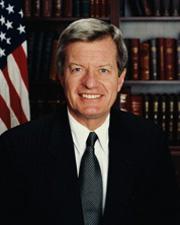
Mr. President, today Senator Grassley and I introduce a bill that is the essence of good government. For a few years now the Senate Finance Committee has been working to increase the revenue into the…
Mr. President, today Senator Grassley and I introduce a bill that is the essence of good government. For a few years now the Senate Finance Committee has been working to increase the revenue into the Highway Fund Trust so we can fund a strong national highway program.
The committee has also been looking at preventing several schemes, scams and cons against the federal government. These are schemes that are used by participants in the fuel distribution chain to evade federal and state fuel taxes, fuel fraud prevention marries both those goals-fighting fraud and increasing revenue into the Highway Trust Fund.
It is crucial to ensure that all the taxes that are due to the Trust Fund are actually getting there, not being diverted as part of some scam to defraud the Federal Government.
That is why I am proud to introduce today the Fuel Fraud Prevention Act of 2003.
I am aware that this is a very controversial subject, but one that we must address. This fraud represents money that the federal government is losing while crooked individuals are getting rich on the backs of good honest citizens.
Uncovering this kind of corruption is what we mean by practicing good government. We need to catch these folks and make sure the money is going where it should.
This is money that goes to transportation projects and creates transportation jobs. That is important to Montana and to all states.
As a result of both TEA 21 and AIR 21, revenues collected by the Trust Funds are directly tied to spending on surface and air transportation. Therefore adequately funding the nation's transportation infrastructure--both surface and air--is almost entirely based on actually collecting all the taxes that should be collected by law.
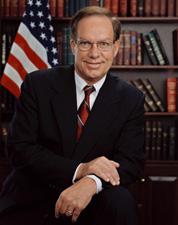
Mr. President, I rise today to submit legislation that would amend the United States Constitution identifying and reaffirming the institution of marriage as a union between a man and a woman. The…
Mr. President, I rise today to submit legislation that would amend the United States Constitution identifying and reaffirming the institution of marriage as a union between a man and a woman. The language I submit today is brief and simple:
Marriage in the United States shall consist only of the union of a man and a woman. Neither this Constitution, nor the Constitution of any State, nor State or Federal law, shall be construed to require that marital status or the legal incidents thereof be conferred upon unmarried couples or groups.
This language is simple, direct and to the point. This union is sacred and must remain so.
This resolution is a starting point for a more comprehensive discussion. I look forward to having an involved, informed debate with the other members of this chamber.
I am pleased to be joined in this effort by my colleagues Senator Sam Brownback and Senator Jeff Sessions who are original cosponsors of this Resolution.
I ask unanimous consent that the text of this Resolution be printed in the Record.
Mr. President, today I am introducing the Native American Technical Corrections Act of 2004 to provide amendments to certain Federal statutes affecting Indian tribes and Indian people. Though a…
Mr. President, today I am introducing the Native American Technical Corrections Act of 2004 to provide amendments to certain Federal statutes affecting Indian tribes and Indian people.
Though a modest bill, when it is enacted it will provide real relief to the affected tribes that seek Congress' help in removing the many obstacles that block the paths to greater levels of advancement.
I ask unanimous consent that the text of the legislation be printed in the Record.
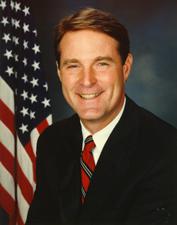
Mr. President, I ask unanimous consent that the text of the bill be printed in the Record.
Mr. President, I ask unanimous consent that the text of the bill be printed in the Record.
Mr. President, I ask unanimous consent that the text of the bill be printed in the Record.
Mr. President, I ask unanimous consent that the text of the bill be printed in the Record.
Bill Text
Latest available legislative text
        [Congressional Bills 108th Congress]
[From the U.S. Government Publishing Office]
[S. 1952 Introduced in Senate (IS)]

108th CONGRESS
1st Session
S. 1952

To direct the United States Trade Representative to enforce United
States rights under certain trade agreements with respect to Mexico,
pursuant to title III of the Trade Act of 1974.

_______________________________________________________________________

IN THE SENATE OF THE UNITED STATES

November 25, 2003

Mr. Grassley introduced the following bill; which was read twice and
referred to the Committee on Finance

_______________________________________________________________________

A BILL

To direct the United States Trade Representative to enforce United
States rights under certain trade agreements with respect to Mexico,
pursuant to title III of the Trade Act of 1974.

Be it enacted by the Senate and House of Representatives of the
United States of America in Congress assembled,

SECTION 1. SHORT TITLE.

This Act may be cited as the ``Mexican Agricultural Trade
Compliance Act''.

SEC. 2. FINDINGS.

Congress makes the following findings:
(1) Section 301 of the Trade Act of 1974 provides that, if
the United States Trade Representative determines that the
rights of the United States under any trade agreement are being
denied, the Trade Representative shall take action to enforce
such rights.
(2) The Statement of Administrative Action accompanying the
Uruguay Round Agreements Act provided that the United States
Trade Representative would base any section 301 determination
as to whether there has been a violation or denial of United
States rights under the Uruguay Round Agreements on panel or
Appellate Body findings adopted by the Dispute Settlement Body
of the World Trade Organization.
(3) In a panel report adopted by the Dispute Settlement
Body on January 27, 2000, the Dispute Settlement Body
determined that section 301 of the Trade Act of 1974 is not
inconsistent with United States obligations under the Uruguay
Round Agreements, particularly in light of the decision of the
United States to use section 301 only after exhausting its
rights under the Dispute Settlement Understanding.
(4) On January 28, 2000, a panel of the World Trade
Organization determined that Mexico's antidumping order on high
fructose corn syrup imported from the United States violated
Mexico's commitments under the Uruguay Round Agreements.
(5) On February 24, 2000, the Dispute Settlement Body
adopted the report of the panel.
(6) On April 10, 2000, the United States and Mexico agreed
to a September 22, 2000, deadline for Mexico to come into
compliance with the panel report as adopted by the Dispute
Settlement Body.
(7) On September 20, 2000, just 2 days prior to the date
Mexico had agreed to come into compliance with the panel
report, Mexico issued a revised antidumping threat
determination in an obvious attempt to evade its commitment to
come into compliance with the panel report adopted by the
Dispute Settlement Body.
(8) On June 22, 2001, a panel, convened pursuant to Article
21.5 of the Dispute Settlement Understanding, found that
Mexico's revised antidumping threat determination failed to
bring Mexico into compliance with its commitments under the
World Trade Organization.
(9) On October 22, 2001, the Appellate Body affirmed the
ruling of the Article 21.5 panel and recommended that Mexico
come into compliance with its obligations under the World Trade
Organization.
(10) On November 21, 2001, the Dispute Settlement Body
adopted the Appellate Body ruling that affirmed the findings of
the Article 21.5 panel.
(11) On January 1, 2002, in a transparent attempt to evade
the determinations of the Dispute Settlement Body regarding
Mexico's antidumping order on high fructose corn syrup, and in
an affront to the rules-based system of the World Trade
Organization, Mexico imposed a de facto discriminatory 20
percent tax on soft drinks containing high fructose corn syrup,
the intent and effect of which is to continue Mexico's
antidumping order on United States high fructose corn syrup by
other means by restricting access to the Mexican market.
(12) On April 20, 2002, with its discriminatory tax on soft
drinks containing high fructose corn syrup now in place, and in
a continuous event with the imposition of this tax, Mexico
lifted its antidumping order on high fructose corn syrup.
Importantly, Mexico lifted its antidumping order only after
ensuring that imports of United States high fructose corn syrup
would not enter the Mexican market due to the imposition of the
tax on soft drinks. Mexico's lifting of its antidumping order
enabled it to make the disingenuous claim that it had come into
compliance with the findings adopted by the Dispute Settlement
Body regarding Mexico's antidumping order.
(13) The imposition of the tax on soft drinks and the
lifting of the antidumping order by Mexico are related aspects
of a unified effort by Mexico to deny the rights of the United
States with respect to the trade of high fructose corn syrup.
(14) The effects of the import restrictions of Mexico's
antidumping order continue with even more egregious results
through the imposition of a 20 percent tax on high fructose
corn syrup. Imports of high fructose corn syrup from the United
States dropped from 110,893 metric tons in 2001 (the year prior
to the lifting of the antidumping order) to 4,868 metric tons
in 2002 (the first year of the tax).
(15) The United States has exhausted proceedings under the
Dispute Settlement Understanding, and the Dispute Settlement
Body has on more than 1 occasion adopted findings adverse to
Mexico.

SEC. 3. DEFINITIONS.

In this Act:
(1) Appellate body.--The term ``Appellate Body'' means the
Appellate Body established under Article 17.1 of the Dispute
Settlement Understanding.
(2) Dispute settlement body.--The term ``Dispute Settlement
Body'' has the meaning given that term in section 121(5) of the
Uruguay Round Agreements Act (19 U.S.C. 3531(5)).
(3) Dispute settlement panel; panel.--The terms ``dispute
settlement panel'' and ``panel'' mean a panel established
pursuant to Article 6 of the Dispute Settlement Understanding.
(4) Dispute settlement understanding.--The term ``Dispute
Settlement Understanding'' means the Understanding on Rules and
Procedures Governing the Settlement of Disputes referred to in
section 101(d)(16) of the Uruguay Round Agreements Act (19
U.S.C. 3511(d)(16)).
(5) GATT 1994.--The term ``GATT 1994'' has the meaning
given such term in section 2(1)(B) of the Uruguay Round
Agreements Act (19 U.S.C. 3501(1)(B).
(6) Uruguay round agreements.--The term ``Uruguay Round
Agreements'' has the meaning given such term in section 2(7) of
the Uruguay Round Agreements Act (19 U.S.C. 3501(7).
(7) World trade organization.--The term ``World Trade
Organization'' means the organization established pursuant to
the WTO Agreement.
(8) WTO agreement.--The term ``WTO Agreement'' means the
Agreement Establishing The World Trade Organization entered
into on April 15, 1994.

SEC. 4. ENFORCEMENT OF UNITED STATES RIGHTS UNDER THE URUGUAY ROUND
AGREEMENTS AND OTHER TRADE AGREEMENTS WITH RESPECT TO
HIGH FRUCTOSE CORN SYRUP EXPORTED TO MEXICO.

(a) Determination.--Congress determines that--
(1) the rights of the United States under the Uruguay Round
Agreements are being denied by Mexico in connection with the
imposition by Mexico of a 20 percent tax on soft drinks
containing high fructose corn syrup, an extension by other
means of Mexico's unjustified antidumping order on high
fructose corn syrup from the United States;
(2) the United States has exhausted proceedings under the
Dispute Settlement Understanding;
(3) Mexico's imposition of a tax on high fructose corn
syrup, an extension by other means of its unjustified
antidumping order on high fructose corn syrup from the United
States--
(A) constitutes an act, policy, or practice by
Mexico that is unjustifiable and burdens or restricts
United States commerce for purposes of section
304(a)(1) of the Trade Act of 1974 (19 U.S.C.
2414(a)(1)); and
(B) denies rights to which the United States is
entitled under existing trade agreements with Mexico
for purposes of such section 304; and
(4) unless, a certification described in subsection (b) is
submitted, the United States Trade Representative shall take
appropriate action under subsection (c).
(b) Certification.--The certification described in this subsection
means a certification from the United States Trade Representative
submitted to Congress not later than 30 days after the date of
enactment of this Act that states that Mexico has eliminated its tax on
soft drinks containing high fructose corn syrup and is taking
satisfactory measures to preserve the rights of the United States under
all applicable trade agreements with respect to high fructose corn
syrup.
(c) Action To Be Taken by USTR.--If a certification is not made
under subsection (b), the United States Trade Representative, not later
than 60 days after the date of enactment of this Act and after
consultation with the Committee on Finance of the Senate and the
Committee on Ways and Means of the House of Representatives, shall,
pursuant to section 301(c)(1) (A) and (B) of the Trade Act of 1974 (19
U.S.C. 2411(c)(1) (A) and (B))--
(1) suspend, withdraw, or prevent the application of,
benefits of trade agreement concessions to carry out a trade
agreement with Mexico; or
(2) impose duties or other import restrictions on the goods
of Mexico, including agricultural products imported from
Mexico, and notwithstanding any other provision of law, fees or
restrictions on the services of, Mexico for such time as the
Trade Representative determines appropriate.
<all>