A bill to authorize an annual appropriations of $10,000,000 for mental health courts through fiscal year 2009.

Legislative Activity
Stay on top of the latest movement without scrolling through every action
Placed on Senate Legislative Calendar under General Orders. Calendar No. 483.
April 29, 2004
View full timeline
Introduced in Senate
February 24, 2004
Sponsor introductory remarks on measure. (CR S1522-1523)
February 24, 2004
Read twice and referred to the Committee on the Judiciary. (text of measure as introduced: CR S1523)
February 24, 2004
Committee on the Judiciary. Ordered to be reported without amendment favorably.
April 29, 2004
Committee on the Judiciary. Reported by Senator Hatch without amendment. Without written report.
April 29, 2004
Placed on Senate Legislative Calendar under General Orders. Calendar No. 483.
April 29, 2004
Floor Debate
9 membersWhat members said about S. 2107 on the floor
 DFMD
DFMD FRL
FRL LA
LA OGH+4
OGH+4
Floor Debate
9 membersWhat members said about S. 2107 on the floor
Mr. President, I rise on behalf of myself and Senators Warner, Schumer, DeWine, Levin, Chafee, Dodd, Jeffords, Boxer, Clinton, Reed and Lautenberg to offer legislation that will reauthorize the 1994…
Mr. President, I rise on behalf of myself and Senators Warner, Schumer, DeWine, Levin, Chafee, Dodd, Jeffords, Boxer, Clinton, Reed and Lautenberg to offer legislation that will reauthorize the 1994 assault weapons ban--which is now set to expire on September 13, 2004--for another ten years.
I would first like to thank my courageous colleague from Virginia, Senator Warner, for joining me in this effort. Senator Warner voted against the assault weapons ban in 1994.
But this year, Senator Warner was willing to revisit his position on the issue. He saw that--contrary to the fears of many in 1994--the ban has done nothing to hurt innocent gun owners. Instead, the ban has only made it harder for criminals to get access to military style firearms. A willingness to look at issues like this with an open mind, particularly this issue, shows a courage and a commitment to making the right decisions that should be emulated by all public servants, and I want to again thank Senator Warner for this.
Second, I would like to speak about who else supports this legislation.
Those who join us in supporting a reauthorization of the assault weapons ban include: Fraternal Order of Police; National League of Cities; United States Conference of Mayors; National Association of Counties; International Association of Chiefs of Police; National Association of Police Organizations; International Brotherhood of Police Officers; U.S. Conference of Catholic Bishops; National Education Association; Americans for Gun Safety; The Brady Campaign/ Million Mom March; NAACP; American Bar Association; and the list goes on, and on.
More than ten years ago--on July 1, 1993--Gian Luigi Ferri walked into 101 California Street in San Francisco carrying two high-capacity TEC-9 assault pistols. Within minutes, Ferri had murdered eight people, and six others were wounded. This tragedy shook San Francisco, and it shook the entire Nation.
The American people saw in that incident and so many others that came before and after it the incredible destruction that could be inflicted with military-style assault weapons--weapons designed and manufactured with one goal in mind--maximum lethality.
It all started, really, on August 1, 1966, when Charlie Whitman climbed the clock tower at the University of Texas and killed more than a dozen people in an hour and a half shooting spree before he was finally killed himself.
The day Whitman climbed that tower was the first time Americans realized that they could become the random victims of gun violence no matter where they were, and no matter what they were doing.
What made the Texas shooting so terrible was the total inability of law enforcement to get to Charlie Whitman until he had been firing shots for almost 96 minutes. The tower allowed him to do this. The tower made him, at least for that amount of time, invincible.
But gunmen no longer need the protection of clock towers, because they now have assault weapons.
We saw in the Columbine shooting, in the Long Island Rail Road shooting, and so many others, that high capacity assault weapons can make those who wield them temporarily invincible to law enforcement, because it is so difficult to get close to the shooter.
It is often only when a gunman stops to reload that bystanders or the police can move in to stop the shooting. And if the gun's magazine holds hundreds of bullets, that could take a long time, and result in a lot of deaths.
This is vitally important, because grievance killings by disgruntled members of society have taken an increasing number of lives in recent years. And when those grievance killers wield high capacity weapons, the toll on lives is exponentially increased.
The grievance killings have been across the Nation, in every forum: In a San Ysidro, CA, McDonald's in 1984, when a gunman with an Uzi killed 21 and wounded 15 others. In Stockton, CA, in 1989, when drifter Patrick Purdy walked into a schoolyard with an AK-47 and killed 5, wounding 30 others. In Long Island, NY, in 1993, when a gunman killed 6 and wounded 19 others on a commuter train--he was only brought down when he finally stopped to reload. In Pearl, MS, in 1997 when 2 students killed. In Paducah, KY, in 1998 when 3 students were killed. In Jonesboro, AR, in 1998 when 5 were killed, and 10 more wounded. In Springfield, OR, in 1998 when 2 were killed, and 22 wounded. In Littleton, CO, when 12 teens and one teacher were killed in Columbine High School. In Atlanta, GA in 1999 when a troubled day trader killed his wife, 2 children and several people trading stocks. At a Granada Hills, CA, Jewish Community Center when a gunman wounded three and killed a Filipino-American postal worker--many of us remember that one touching photo of small children being quickly led across the street to escape the gunfire. No child should have to go through that. At a Fort Worth, TX, Baptist church where seven were killed and seven more wounded at a teens church event, all by a man with two guns and 9 high capacity clips, with a capacity of 15 rounds each.
Recognizing the earliest of these shootings as a problem that needed to be dealt with, Congress finally took notice in 1993. In the aftermath of the 101 California shooting, we in Congress did something that no one had succeeded in doing before--we banned the manufacture and importation of military-style assault weapons.
We were told it could not be done--but we did it. I was even told by colleagues on my own side of the aisle that I was wasting my time--that the gun lobby was just too strong. I hear many of the same arguments today. But we succeeded in 1994, and we will succeed this year. We succeeded, and we will succeed, because the American people will accept no less of us.
The goal of the 1994 legislation was to drive down the supply of these weapons and to make them more difficult to obtain, and to eventually get them off our streets. And in the years following the enactment of the ban, crimes using assault weapons were indeed reduced dramatically--in fact, the percentage of crimes using banned assault weapons fell by more than 65 percent between 1995 and 2002.
The ATF has found that the proportion of banned assault weapons used in crime has fallen from 3.57 percent in 1995 to just 1.22 percent by 2002. Now these are not big percentages--most crimes are not committed by assault weapons.
But it is important to note that crimes committed with assault weapons often result in many more deaths than crimes committed with other guns. A simple robbery with a handgun is far less likely to result in multiple deaths than a drive-by shooting with an Uzi, or a grievance killing in a school using an AK-47 with a large capacity ammunition magazine.
And contrary to the near-hysterical rhetoric coming from the NRA at the time, no innocent gun owner lost an assault weapon. No gun was confiscated as a result of the ban. The sky did not fall. And life went on--but it went on with fewer grievance killers, juveniles, and drive- by shooters having access to the most dangerous of firearms.
Despite these results, House Majority Leader Tom Delay said last year that House Republicans will let the Assault Weapons ban die when it sunsets after ten years.
To those of us who have been in Congress for some time, this comes as little surprise--after all, the House actually voted to repeal the original assault weapons ban soon after it was signed into law.
But the good news is that the President of the United States does support reauthorizing the ban.
In April of last year, White House spokesman Scott McClellan said of the assault weapons ban, ``The president supports the current law, and he supports reauthorization of the current law.''
That is what we are doing with this legislation--reauthorizing the current law. Period.
I know the President agrees with me when I say that I don't believe that banned guns like the AK-47, the TEC-9, or the Street Sweeper should once again be manufactured or imported into the United States. These are military guns, with no purpose but the killing of other human beings. They have pistol grips and other features designed solely to allow the weapons to be more easily concealed, and more easily fired from the hip in close quarters combat--or, tragically, in places like the schoolyard in Stockton, where five children died, the McDonalds in San Ysidro, the law firm at 101 California Street in San Francisco, Columbine High School, or so many other places where maniacs with their military guns were able to shoot large numbers of people in short periods of time.
That is why I believe that Congress should reauthorize the 1994 law, which expires next September 13. And that is undoubtedly why the President also supports our efforts.
I know there will be some who will say that the current law doesn't go far enough--and frankly, I agree. I would prefer to expand the ban to California law, so that we prohibit the copycat assault weapons that manufacturers so cravenly designed following the ban.
Senator Lautenberg has introduced legislation to do this, and I co- sponsored that bill. Ideally, we would pass legislation that fully prevents craven manufacturers from circumventing the ban.
But in an environment where the NRA has such a stranglehold on gun legislation, we will need all the help we can get just to keep the current ban.
The current ban has been effective in limiting the supply of these most dangerous guns. Even the copycat guns are less dangerous, because they are harder to conceal, harder to fire from the hip.
And no matter whether the ban has been entirely effective or not, what is the argument for letting these banned guns back on the streets?
Who is clamoring for newly manufactured AK-47s?
Who is clamoring for new TEC-9s?
These are guns that are never used for hunting. They are not used for self defense, and if they are it is more likely that they will kill innocents than intruders.
These guns--and everyone knows it--have but one purpose, and that purpose is to kill other human beings. Why would we want to open the floodgates again and let them back on our streets? There is simply no good reason.
This debate should not be about whether the assault weapons ban is perfect. This debate should be about whether these guns need to come back--and the American people know that they do not.
With the President, law enforcement, and the American people behind us, we
can succeed. We can beat the NRA's narrow, special interest agenda and keep these guns off the streets.
I urge my colleagues to read the dozens of editorials in support of the ban, to listen to their constituents, to ask us questions, and to make the only decision that makes sense--to support this bill.
I ask unanimous consent that the text of the bill be printed in the Record.
Mr. President, I rise today to introduce a bill that would reauthorize America's Law Enforcement and Mental Health Project. This program addresses the impact that mentally ill offenders have had on…
Mr. President, I rise today to introduce a bill that would reauthorize America's Law Enforcement and Mental Health Project. This program addresses the impact that mentally ill offenders have had on our criminal justice system and the impact the system has had on the offenders and their special needs.
My interest in, and experience with this issue began over thirty years ago, when I was working as Assistant County Prosecuting Attorney in Greene County, OH, and then as County Prosecutor. What I learned then--and what I have continued to encounter throughout my career in public service--is that our State and local correctional facilities have become way stations for far too many mentally ill individuals in our Nation.
A recent Justice Department study revealed that 16 percent of all inmates in America's State prisons and local jails today are mentally ill. The American Jails Association estimates that 600,000 to 700,000 seriously mentally ill persons each year are booked into local jails, alone. In Ohio, nearly 1 in 5 prisoners need psychiatric services or special accommodations.
Far too many of our Nation's mentally ill persons have ended up in our prisons and jails. In fact, on any given day, the Los Angeles County Jail is home to more mentally ill inmates than the largest mental health care institution in our country. What happens is that all too often, the mentally ill act out their symptoms on the streets. They are arrested for minor offenses and wind up in jail. They serve their sentences or are paroled, but find themselves right back in the system only a short time later after committing additional--often more serious--crimes.
Throughout this destructive cycle, law enforcement and corrections spend time and money trying to cope with the unique problems posed by these individuals. Certainly, many mentally ill offenders must be incarcerated because of the severity of their crimes. However, those who commit very minor non-violent offenses don't necessarily need to be incarcerated; instead, if given appropriate care early, their illnesses could be addressed, helping the offenders, while reducing recidivism and decreasing the burdens on our police and corrections officials.
That's why, four years ago Senator Domenici and I introduced America's Law Enforcement and Mental Health Project, to begin to identify--early in the process--mentally ill offenders within our justice system and to use the power of the courts to assist them in obtaining the treatment they need.
This program has been a success. In pilot programs around the country, mental health courts have begun to help local communities take steps toward effectively addressing the issues raised by the mentally ill in our justice system, and these steps must continue. That's why Senators Leahy and Domenici join me in cosponsoring this bill to reauthorize this important program.
America's Law Enforcement and Mental Health Project established a Federal grant program to help States and localities develop mental health courts in their jurisdictions. These courts are specialized courts with separate dockets. They hear cases exclusively involving nonviolent offenses committed by mentally ill individuals. Fundamentally, mental health courts enable State and local courts to offer alternative sentences or alternatives to prosecution for those offenders who could be served best by mental health services. These courts are designed to address the historic lack of coordination between local law enforcement and social service systems and the lack of interaction within the criminal justice system.
To deal with the separate needs of mentally ill offenders, these mental health courts are staffed by a core group of specialized professionals, including a dedicated judge, prosecutor, public defender, and court liaison to the mental health services community. The courts promote efficiency and consistency by centrally managing all outstanding cases involving a mentally ill defendant referred to the mental health court.
Mental health court judges decide whether or not to hear each case referred to them. The courts only deal with defendants deemed mentally ill by qualified mental health professionals or the mental health court judge. Similarly, participation in the court by the mentally ill is voluntary; however, once the defendant volunteers for the Mental Health Court, he or she is expected to follow the decision of the court. For instance, in any given case, the mental health court judge, attorneys, and health services liaison may all agree on a plan of treatment as an alternative sentence or in lieu of prosecution. The defendant must adhere strictly to this court-imposed treatment plan. The court must then provide supervision with periodic review. This way, the court can quickly deal with any failure of the defendant to fulfill the treatment plan obligations. The mental health courts provide supervision of participants that is more intensive than might otherwise be available, with an emphasis on accountability and monitoring the participant's performance. In this sense, the mental health courts function similarly to drug courts.
Mr. President, mentally ill persons who choose to have their cases heard in a mental health court often do so because that is the first real opportunity that many of these people have to seek treatment. A judicial program offering the possibility of effective treatment-- rather than jail time--gives a measure of hope and a chance for rehabilitation to these defendants.
The successes of mental health courts are encouraging and show that we can improve the health and safety of our communities through these programs. For example, in Ohio, the Fairfield Municipal Mental Health Court began its program on January 1, 2001. Of those participating in the Fairfield program, 46 percent are bipolar, 42 percent suffer from depression, and 13 percent are schizophrenic. It recently conducted its first ``graduation'' ceremony of program participants. The program's
first graduate came to them hostile, uncommunicative, and unable to function in society due to her bipolar mood disorder. Two years later, she left the program confident, talkative, healthier, and reconnected to her family and her life.
Many jurisdictions across America have established mental health courts as a result of the program that we established four years ago. Our Nation's communities are trying desperately to find the best way to cope with the problems associated with mental illness. Law enforcement agencies and correctional facilities remain challenged by difficulties posed by mental illnesses. Mental health courts offer a solution.
Mental health courts have shown great success, and we must ensure their continuation. Our Nation has long been enriched by the dual ideals of compassion and justice, and these programs are a wonderful embodiment of both ideals. I urge my colleagues to join in support of this important legislation.
I ask unanimous consent that the text of the bill be printed in the Record.
Mr. President, I rise today to introduce a bill that would reauthorize America's Law Enforcement and Mental Health Project. This program addresses the impact that mentally ill offenders have had on…
Mr. President, I rise today to introduce a bill that would reauthorize America's Law Enforcement and Mental Health Project. This program addresses the impact that mentally ill offenders have had on our criminal justice system and the impact the system has had on the offenders and their special needs.
My interest in, and experience with this issue began over thirty years ago, when I was working as Assistant County Prosecuting Attorney in Greene County, OH, and then as County Prosecutor. What I learned then--and what I have continued to encounter throughout my career in public service--is that our State and local correctional facilities have become way stations for far too many mentally ill individuals in our Nation.
A recent Justice Department study revealed that 16 percent of all inmates in America's State prisons and local jails today are mentally ill. The American Jails Association estimates that 600,000 to 700,000 seriously mentally ill persons each year are booked into local jails, alone. In Ohio, nearly 1 in 5 prisoners need psychiatric services or special accommodations.
Far too many of our Nation's mentally ill persons have ended up in our prisons and jails. In fact, on any given day, the Los Angeles County Jail is home to more mentally ill inmates than the largest mental health care institution in our country. What happens is that all too often, the mentally ill act out their symptoms on the streets. They are arrested for minor offenses and wind up in jail. They serve their sentences or are paroled, but find themselves right back in the system only a short time later after committing additional--often more serious--crimes.
Throughout this destructive cycle, law enforcement and corrections spend time and money trying to cope with the unique problems posed by these individuals. Certainly, many mentally ill offenders must be incarcerated because of the severity of their crimes. However, those who commit very minor non-violent offenses don't necessarily need to be incarcerated; instead, if given appropriate care early, their illnesses could be addressed, helping the offenders, while reducing recidivism and decreasing the burdens on our police and corrections officials.
That's why, four years ago Senator Domenici and I introduced America's Law Enforcement and Mental Health Project, to begin to identify--early in the process--mentally ill offenders within our justice system and to use the power of the courts to assist them in obtaining the treatment they need.
This program has been a success. In pilot programs around the country, mental health courts have begun to help local communities take steps toward effectively addressing the issues raised by the mentally ill in our justice system, and these steps must continue. That's why Senators Leahy and Domenici join me in cosponsoring this bill to reauthorize this important program.
America's Law Enforcement and Mental Health Project established a Federal grant program to help States and localities develop mental health courts in their jurisdictions. These courts are specialized courts with separate dockets. They hear cases exclusively involving nonviolent offenses committed by mentally ill individuals. Fundamentally, mental health courts enable State and local courts to offer alternative sentences or alternatives to prosecution for those offenders who could be served best by mental health services. These courts are designed to address the historic lack of coordination between local law enforcement and social service systems and the lack of interaction within the criminal justice system.
To deal with the separate needs of mentally ill offenders, these mental health courts are staffed by a core group of specialized professionals, including a dedicated judge, prosecutor, public defender, and court liaison to the mental health services community. The courts promote efficiency and consistency by centrally managing all outstanding cases involving a mentally ill defendant referred to the mental health court.
Mental health court judges decide whether or not to hear each case referred to them. The courts only deal with defendants deemed mentally ill by qualified mental health professionals or the mental health court judge. Similarly, participation in the court by the mentally ill is voluntary; however, once the defendant volunteers for the Mental Health Court, he or she is expected to follow the decision of the court. For instance, in any given case, the mental health court judge, attorneys, and health services liaison may all agree on a plan of treatment as an alternative sentence or in lieu of prosecution. The defendant must adhere strictly to this court-imposed treatment plan. The court must then provide supervision with periodic review. This way, the court can quickly deal with any failure of the defendant to fulfill the treatment plan obligations. The mental health courts provide supervision of participants that is more intensive than might otherwise be available, with an emphasis on accountability and monitoring the participant's performance. In this sense, the mental health courts function similarly to drug courts.
Mr. President, mentally ill persons who choose to have their cases heard in a mental health court often do so because that is the first real opportunity that many of these people have to seek treatment. A judicial program offering the possibility of effective treatment-- rather than jail time--gives a measure of hope and a chance for rehabilitation to these defendants.
The successes of mental health courts are encouraging and show that we can improve the health and safety of our communities through these programs. For example, in Ohio, the Fairfield Municipal Mental Health Court began its program on January 1, 2001. Of those participating in the Fairfield program, 46 percent are bipolar, 42 percent suffer from depression, and 13 percent are schizophrenic. It recently conducted its first ``graduation'' ceremony of program participants. The program's
first graduate came to them hostile, uncommunicative, and unable to function in society due to her bipolar mood disorder. Two years later, she left the program confident, talkative, healthier, and reconnected to her family and her life.
Many jurisdictions across America have established mental health courts as a result of the program that we established four years ago. Our Nation's communities are trying desperately to find the best way to cope with the problems associated with mental illness. Law enforcement agencies and correctional facilities remain challenged by difficulties posed by mental illnesses. Mental health courts offer a solution.
Mental health courts have shown great success, and we must ensure their continuation. Our Nation has long been enriched by the dual ideals of compassion and justice, and these programs are a wonderful embodiment of both ideals. I urge my colleagues to join in support of this important legislation.
I ask unanimous consent that the text of the bill be printed in the Record.
Mr. President, I rise to introduce the Coastal Restoration Act of 2004 for myself and Senator Corzine. Since 1995, the Federal beach nourishment program has been a regular target of the White House…
Mr. President, I rise to introduce the Coastal Restoration Act of 2004 for myself and Senator Corzine. Since 1995, the Federal beach nourishment program has been a regular target of the White House Office of Management and Budget, OMB. Under two separate administrations there have been at least five efforts to radically change or terminate the program.
The 1996, Congress passed the Shore Protection Act as Section 227 of the Water Resources Development Act of 1996. That legislation was the first statement by Congress since 1946 of its intent that the Nation needed an ongoing Federal beach nourishment program. Unfortunately, that has not stopped OMB from trying to change Federal policies by making budget proposals that would cripple the program.
The Coastal Restoration Act, CRA, restates the congressional intent regarding the importance of the Federal beach nourishment program. The CRA makes it clear that changes in administration policy will not prevent feasibility and other types of studies from being processed through the Corps of Engineers and sent to Congress. The legislation emphasizes the role of Congress in determining which beach nourishment projects should be authorized for construction. It also re-states and strengthens existing law that periodic renourishment is an integral part of the ongoing construction of a beach nourishment project.
This bill states the intent of Congress that preference shall be given to areas 1, where there has been a previous investment of federal funds; 2, where regional sediment management plans have been adopted to integrate coastal beach nourishment, navigation, and environmental projects; 3, where there is a need to prevent or mitigate damage to shores, beaches, and other coastal infrastructure where that damage is caused at least in part by Federal activities; or 4, where the project promotes human health and safety as well as the quality of life for individuals and families. This recognizes that a primary purpose for establishing the Federal beach nourishment program in 1946 was the promotion of public recreation.
My bill will also raise the low priority now accorded by the U.S. Army Corps to the recreational benefits of beach nourishment, giving equal consideration to all national projects. It also establishes the cost share for beach nourishment projects whose primary net benefit is recreational at the same level of Federal cost share participation as it applies to storm damage and environmental restoration beach nourishment projects. Congress retains the prerogative to authorize the project and appropriate funds based on the Corps' report findings.
These changes are needed to protect and restore our beaches as the national treasure they are. According to a recent study, travel and tourism is the world's largest industry, contributing $3.5 trillion to the world's economy in 2001. In the United States, nearly 17 million people are employed in the tourism industry.
Beaches are the leading tourist destination in the Nation. Each year about 180 million Americans make 2 billion visits to the ocean, the Gulf, and our inland beaches. That is almost twice as many visits as those made to State and national parks and wilderness areas combined. In its ``State of the Beach 2003'' report the Surfrider Foundation states that tourist expenditures in 16 of our coastal States topped $104 billion.
My home State, New Jersey, has 127 miles of shoreline and we are proud of every mile. A significant portion of our tourism industry, which generates $10 billion a year, is due to our beaches. I know many of my colleagues in the Senate have similar situations in their States.
Our beaches also provide vital habitat for numerous species of plants, and for animals such as claims, snails, and crabs. Every time a wave hits the shore it brings nutrients and oxygen to support the tiny but necessary life forms that live there.
Not to be overlooked are the peace and relaxation that a day, or week, at the beach can provide. The poet Lord Byron put it so exquisitely nearly two hundred years ago when he wrote:
There is a rapture on the lonely shore,
There is a society, where none intrudes,
By the deep sea, and music in its roar:
I love not man the less, but Nature more.
The shore's economic, environmental, and aesthetic benefits are truly limitless. That is why I am introducing the Coastal Restoration Act of 2004. My legislation will revitalize the Federal beach nourishment program by placing beach nourishment projects on a par with other Army Corps projects, and assigning recreational benefits the same priority as storm damage protection and environmental restoration, correcting the inequities in our current practices.
Since the 1980s, when medical waste, sewage, and garbage began washing up on the Jersey shore I have been working hard to protect and nurture our beaches. I wrote the Ocean Dumping Act of 1988, which ended ocean dumping of sewage sludge and industry waste. And I have led the fight to ban oil and gas drilling off the Jersey shore. We have made a lot of progress since the 1980s, but our work is far from over.
I ask unanimous consent the text of my bill be printed in the Record following my remarks.
Mr. President, I ask unanimous consent that the Committee on Banking, Housing, and Urban Affairs be authorized to meet during the session of the Senate on Thursday, April 29, 2004, at 10 a.m., to…
Mr. President, I ask unanimous consent that the Committee on Banking, Housing, and Urban Affairs be authorized to meet during the session of the Senate on Thursday, April 29, 2004, at 10 a.m., to conduct a hearing on ``Counter-Terror Initiatives and Concerns in the Terror Finance Program.''
Concurrent with the hearing, the Committee intends to vote on the nominations of the Hon. Romolo A. (Roy) Bernardi, of New York, to be Deputy Secretary of Housing and Urban Development; Mr. Dennis C. Shea, of Virginia, to be Assistant Secretary for Policy Development and Research, Department of Housing and Urban Development; and Ms. Cathy M. MacFarlane, of Virginia, to be Assistant Secretary for Public Affairs, Department of Housing and Urban Development.
Mr. President, I ask unanimous consent that the Committee on Foreign Relations be authorized to meet during the session of the Senate on Thursday, April 29, 2004, to hold a business meeting.
Mr. President, I ask unanimous consent that the Committee on Foreign Relations be authorized to meet during the session of the Senate on Thursday, April 29, 2004, at 2:30 p.m., to hold a hearing on Middle East Broadcasting.
Mr. President, I ask unanimous consent that the Committee on Governmental Affairs be authorized to meet on Thursday, April 29, 2004, at 10 a.m. to consider the nomination of Dawn Tisdale to be Commissioner, U.S. Postal Rate Commission.
Mr. President, I ask unanimous consent that the Committee on Government Affairs be authorized to meet on Thursday, April 29, 2004, immediately following a 10 a.m. nominations hearing, to consider the nominations of David Safavian to be Administrator for Federal Procurement Policy, Office of Management and Budget.
Mr. President, I ask unanimous consent that the Committee on Indian Affairs be authorized to meet on Thursday, April 29, 2004, at 10 am., in room 485 of the Russell Senate Office Building to conduct a hearing on S. 2301, a discussion draft bill to improve the management of Native American fish and wildlife and gathering, and for other purposes.
Mr. President, I ask unanimous consent that the Committee on the Judiciary be authorized to meet to conduct a markup on Thursday, April 29, 2004, at 9:30 a.m. in Dirksen Senate Building Room 226.
Agenda
I. Nominations: Henry W. Saad to be U.S. Circuit Judge for the Sixth Circuit; William Duane Benton to be United States Circuit Judge for the Eighth Circuit; Robert Bryan Harwell to be United States District Judge for the District of South Carolina; George P. Schiavelli to be United States District Judge for the Central District of California; and Curtis V. Gomez to be Judge for the District Court of the Virgin Islands.
II. Legislation:
S. 1735. Gang Prevention and Effective Deterrence Act of 2003 [Hatch, Chambliss, Cornyn, Feinstein, Graham, Grassley, Schumer].
S. 2107. A bill to authorize an annual appropriations of $10,000,000 for mental health courts through fiscal year 2009 [DeWine, Leahy].
S. 2192. Cooperative Research and Technology Enhancement (CREATE) Act of 2004 [Hatch, Feingold, Kohl, Leahy].
S. 1933. Enhancing Federal Obscenity Reporting and Copyright Enforcement (ENFORCE) Act of 2003 [Hatch, Cornyn, Feinstein].
S. 2237. Protecting Intellectual Rights Against Theft and Expropriation (PIRATE) Act of 2004 [Leahy, Hatch].
S. 1932. Artists' Rights and Theft Prevention (ART) Act of 2003 [Cornyn, DeWine, Durbin, Feinstein, Graham, Hatch, Kennedy].
H.R. 1561. United States Patent and Trademark Fee Modernization Act of 2004.
S. 1635. A bill to amend the Immigration and Nationality Act to ensure the integrity of the L-1 visa for intracompany transferees [Chambliss].
S. 1609. Parental Responsibility Obligations Met through Immigration System Enforcement (PROMISE) Act [Hatch, Cornyn].
S. 1129. Unaccompanied Alien Child Protection Act of 2003 [Feinstein, DeWine, Durbin, Edwards, Feingold, Kennedy, Kohl, Leahy, Schumer, Specter].
S. Res. 334. A resolution designating May 2004 as National Electrical Safety Month.
Mr. President, I ask unanimous consent that the Select Committee on Intelligence be authorized to meet during the session of the Senate on April 29, 2004, at 2:30 p.m. to hold a closed mark-up on the fiscal year 2005 Intelligence Authorization Bill.
Mr. President, I ask unanimous consent that the Subcommittee on Oceans, Fisheries, and Coast Guard be authorized to meet on Thursday, April 29, 2004, at 10 a.m. on NOAA Oversight, in SR- 253.
Show 6 more
Mr. President, I ask unanimous consent that the Committee on Commerce, Science, and Transportation be authorized to meet on Thursday, April 22, 2004, at 9:30 a.m. on the U.S. Commission on Ocean…
Mr. President, I ask unanimous consent that the Committee on Commerce, Science, and Transportation be authorized to meet on Thursday, April 22, 2004, at 9:30 a.m. on the U.S. Commission on Ocean Policy.
Mr. President, I ask unanimous consent that the Committee on Foreign Relations be authorized to meet during the session of the Senate on Thursday, April 22, 2004, at 9:30 a.m. to hold a hearing on Iraq Transition: Obstacles and Opportunities.
Mr. President, I ask unanimous consent that the Committee on Foreign Relations be authorized to meet during the session of the Senate on Thursday, April 22, 2004, at 1:30 p.m. to hold a hearing on Nominations.
Mr. President, I ask unanimous consent that the Committee on Foreign Relations be authorized to meet during the session of the Senate on Thursday, April 22, 2004, at 2:30 p.m. to hold a Subcommittee on East Asian and Pacific Affairs hearing on U.S.-China Relations: Status of Reforms in China.
Mr. President, I ask unanimous consent that the Committee on Foreign Relations be authorized to meet during the session of the Senate on Thursday, April 22, 2004, at 4 p.m. to hold a hearing on Nominations.
Mr. President, I ask unanimous consent that the Committee on the Judiciary be authorized to meet to conduct a markup on Thursday, April 22, 2004, at 11 a.m. in Senate Dirksen Building Room 226.
Agenda
I. Nominations: Henry W. Saad to be U.S. Circuit Judge for the Sixth Circuit; William Duane Benton to be United States Circuit Judge for the Eighth Circuit; Robert Bryan Harwell to be United States District of South Carolina; George P. Schiavelli to be United States District Judge for the Central District of California; and Curtis V. Gomez to be Judge for the District Court of the Virgin Islands.
II. Legislation: S. 1735. Gang Prevention and Effective Deterrence Act of
2003 [Hatch, Chambliss, Cornyn, Feinstein, Graham, Grassley, Schumer]; S. Res. 310. A resolution commemorating and acknowledging the dedication and sacrifice made by the men and women who have lost their lives while serving as law enforcement officers [Campbell, Hatch, Leahy]; H. Con. Res. 328. Recognizing and honoring the United States Armed Forces and supporting the goals and objectives of a National Military Appreciation Month; S. 2270. No Oil Producing and Exporting Cartels (NOPEC) Act of 2004 [DeWine, Durbin, Feingold, Grassley, Kohl, Leahy, Schumer, Specter]; S. 2107. A bill to authorize an annual appropriations of $10,000,000 for mental health courts through fiscal year 2009 [DeWine, Leahy]; S. 2192. Cooperative Research and Technology Enhancement (CREATE) Act of 2004 [Hatch, Feingold, Leahy]; H.R. 1561. United States Patent and Trademark Fee Modernization Act of 2004; S. 1933. Enhancing Federal Obscenity Reporting and Copyright Enforcement (ENFORCE) Act of 2003 [Hatch, Cornyn, Feinstein]; S. 2237. Protecting Intellectual Rights Against Theft and Expropriation (PIRATE) Act of 2004 [Leahy, Hatch]; and S. 1932. Artists' Rights and Theft Prevention (ART) Act of 2003 [Cornyn, Feinstein, Graham, Hatch].
Mr. President, I ask unanimous consent that the Select Committee on Intelligence be authorized to meet during the session of the Senate on April 22, 2004, at 2:30 p.m. to hold a closed business meeting.
Mr. President, I ask unanimous consent that the Committee on Health, Education, Labor, and Pensions, Subcommittee on Children and Families, be authorized to meet for a hearing on Parents Raising Children: The Workplace during the session of the Senate on April 22, 2004, at 10 a.m.
Mr. President, I ask unanimous consent that the Committee on the Judiciary Subcommittee on Immigration and Border Security be authorized to meet conduct a hearing on ``State and Local Authority To Enforce Immigration Law: Evaluating a unified approach for stopping terrorists'' on Thursday, April 22, 2004, at 2:30 p.m. in SD226
Witness List:
Panel I: Professor Kris W. Kobach, Former Counsel to the Attorney General, Professor of Law, University of Missouri-Kansas City School of Law, Kansas City, MO; E.J. Picolo, Regional Director, Florida Department of Law Enforcement, Ft. Myers, FL; Michelle Malkin, Journalist and Author of Invasion, Bethesda, MD; and David A. Harris, Balk Professor of Law and Values, University of Toledo College of Law, Toledo, OH.

Mr. President, I rise today in support of reauthorizing the Assault Weapons Ban. Signed into law in 1994, the Assault Weapons Ban placed a 10-year prohibition on the domestic manufacture of…
Mr. President, I rise today in support of reauthorizing the Assault Weapons Ban.
Signed into law in 1994, the Assault Weapons Ban placed a 10-year prohibition on the domestic manufacture of semi-automatic assault weapons and high capacity ammunition clips. The 10-year ban ends on September 13, 2004. Consequently, unless Congress and the President act prior to September 13, 2004, weapons like Uzis and AK-47s will once again be produced in America, and more and more often, these weapons will fall into the hands of criminals who lurk in our neighborhoods.
For a number of years now, President Bush has indicated that he supports reauthorizing the assault weapons ban. To date, though, no legislation has been introduced in the Senate to accomplish the President's goal. While measures have been introduced to make the ban permanent or to even expand the ban further, no legislation has been introduced to simply reauthorize the Assault Weapons Ban for another ten years.
I am pleased today to introduce, with Senator Feinstein, legislation that models exactly what the President has indicated he would sign into law: a straight 10-year reauthorization of the Assault Weapons Ban.
Not only does President Bush support this legislation--law enforcement does as well. The men and women of law enforcement know that this legislation makes communities safer. In a letter dated February 18, 2004, the Grand Lodge of the Fraternal Order of Police writes, ``It is the position of the Grand Lodge that we will support the reauthorization of current law, but we will not support any expansion of the ban.'' This endorsement comes in addition to the endorsement of just about every other major law enforcement organization, and in addition to the endorsements of chiefs of police all across Virginia.
Now, admittedly, I have not always been a supporter of the Assault Weapons Ban. When the ban legislation came before the United States Senate for a vote in 1993, I opposed it. At the time, I believed Senator Feinstein's legislation would do nothing to help reduce crime in this country, and I believed it would be a back door way to take firearms out of the hands of law abiding gun-owners and hunters.
Ten years have since passed from the day of that vote. Over the course of those ten years, I have watched the bill be signed into law, and I have watched its implementation. I have studied the law and its affect on crime, and I have watched carefully to see how it affects law abiding gun-owners.
Based on the ten years of history of the Assault Weapons Ban, my thoughts on the ban have evolved.
Ten years of experience provides us with key facts. The Assault Weapons Ban has helped to dramatically reduce the number of crimes using assault weapons. It has made America's streets safer, and it has protected the rights of law abiding gun-owners better than many of us predicted. In fact, the law explicitly protects 670 hunting and recreational rifles.
Moreover, we all know that the world has dramatically changed since that Senate vote in 1993. September 11, 2001, has forever changed our country and has taught us many lessons.
No longer is America protected by the great oceans. The war on terror is not only being fought abroad, but now here at home. September 11 showed us that terrorism lurks in the shadows of our own backyard. Given the world today, now is not the time to make it easier for terrorists to acquire deadly rapid fire assault weapons and use them in our neighborhoods.
Now, over my 25 years plus in the United States Senate, I have always tried to stand up for what is right, regardless of politics. I believe that is why the good people of the Commonwealth of Virginia have given me their trust and elected me to represent them in the United States Senate for five terms.
I know that reauthorizing the Assault Weapons Ban is the right thing to do.
I am pleased to join Senator Feinstein in introducing this legislation, and it is my hope that the Senate will act expeditiously and send this legislation to President Bush to sign into law.

Mr. President, I regret that the President and the Republican leadership in the Senate continue to choose division over cooperation and confrontation over consensus on the Presidents' most…
Mr. President, I regret that the President and the Republican leadership in the Senate continue to choose division over cooperation and confrontation over consensus on the Presidents' most controversial judicial nominees. Senators can work together, Republicans and Democrats. The conflict we are experiencing on the Senate floor, which has the collateral consequence of disrupting important and unfinished work of the Senate, is by Republican partisan design. It is bad for the Senate and the country.
Earlier this morning I was at the White House for the signing of the Law Enforcement Officers Safety Act. Senator Campbell and I were the lead sponsors in the Senate on this successful effort, which we know as the ``Steve Young Act'' to honor an outstanding law enforcement officer.
Another example of our bipartisan cooperation is the resolution the Senate passed unanimously last night regarding with the consequences of the Supreme Court's decision in the Blakely case and the need to clarify Federal criminal sentencing law, S. Con. Res. 130. The Senate has now said, consistent with the record we developed at our recent Judiciary Committee hearing, that the Supreme Court should expeditiously clarify the status of the Federal Sentencing Guidelines. The Second Circuit Court of Appeals urged expedited consideration. The Department of Justice is bringing cases to the Supreme Court and should seek expedited consideration to afford the opportunity needed to obtain that necessary guidance.
There are scores of other measures on the Senate Calendar of Business on which we should be acting and could have been acting this week. We still need to enact the Satellite Home Viewer Improvement Act, S. 2013; the Ag Workers bill, S. 1645; the Dream Act, S. 1545; the judicial pay raise, S. 1023, the Anti-Atrocity Act, S. 710; the authorization for mental health courts, S. 2107; and other needed legislation on which there is so much bipartisan agreement.
With all this to do, with the 13 appropriations bills as yet unfinished, without a budget, without serious oversight of significant problems, it is incredible
to me that the Republican Senate leadership is devoting this week to divisive cloture votes on controversial nominations. Why they choose to sow division rather than make progress on matters that could improve the lives of so many Americans across the country is for others to explain.
Criticism of this ``do-nothing'' Congress is becoming universal. Conservative writers who are more prone to promote the Republican agenda than criticize its leadership have even joined in the chorus. Maybe that explains this misguided exercise, maybe it is reaction to all the criticism and an effort to shore up the extreme right-wing of Republican support. I do not know.
I fear more and more that some want the Senate to become a wholly- owned subsidiary of this Presidency and the Federal courts to become an arm of the Republican Party. That is wrong, that is unwise, that is unsound. The American people need to say no and preserve this great democracy.
Rather than doing the people's business, the Senate is being forced into contrived stunts for partisan political purposes. I urge the Republican leadership to use the upcoming recess to learn about the Senate and its role in our Federal Government. Maybe read Master of the Senate, the extraordinary and award winning book by Robert Caro, or the Constitution of the United States.
The American people deserve better. The Senate deserves better. Senator Byrd has spoken to this situation. Senator Daschle, Senator Reid and all Democratic Senators have demonstrated over and over again our good faith and commitment to moving forward. Let us all, Republicans and Democrats, come back from the upcoming hiatus in our Senate proceedings with a commitment to find the common ground that Senator Daschle spoke about so well last month in the interests of the American people.
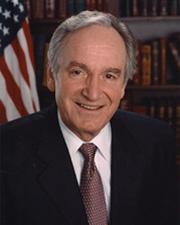
Mr. President, I rise to introduce a bill, the Menu Education and Labeling Act, on behalf of myself and my colleagues, Senators Kennedy, Lieberman and Cantwell. More than 65 percent of American…
Mr. President, I rise to introduce a bill, the Menu Education and Labeling Act, on behalf of myself and my colleagues, Senators Kennedy, Lieberman and Cantwell.
More than 65 percent of American adults are overweight, and more than 30 percent are clinically obese. We lead the world in this dubious distinction, which is growing worse. In the past 20 years, obesity rates have doubled among American adults and children, while they have tripled among teens. If we do not change course, kids attending school today will be the first generation in American history to live a shorter lifespan than their parents.
The issue is far from merely cosmetic. It is medical and economic. The obesity epidemic has huge consequences. Overweight people have an increased risk of diabetes, cardiovascular disease, cancers and other illnesses. Sixty percent of overweight youth already have at least one risk factor for heart disease which is the No. 1 killer of adults in the U.S. Obesity also causes or contributes to $117 billion a year in health care and related costs, more than half borne by taxpayers.
There is no single solution to the complex problem of obesity, but we must start taking meaningful steps to address this growing problem by giving people the tools necessary to live healthier lifestyles. That is why my colleagues and I are introducing this bill today to extend nutrition labeling beyond packaged foods to include foods at chain restaurants with 20 or more locations, as well as food in vending machines. This common-sense idea will give consumers a needed tool to make wiser choices and achieve a healthier lifestyle. It is a positive step toward addressing the obesity epidemic.
In 1990, Congress passed the Nutrition Labeling and Education Act, NLEA, requiring food manufacturers to provide nutrition information on nearly all packaged foods. The impact has been tremendous. Not only do nearly three-quarters of adults use the food labels on packaged foods, but studies indicate that consumers who read labels have healthier diets.
Restaurants, which are more and more important to Americans' diet and health, were excluded from the NLEA. American adults and children consume a third of their calories at restaurants at the very time when nutrition and health experts say that rising caloric consumption and growing portion sizes are causes of obesity. We also know that when children eat in restaurants, they consume twice as many calories as when they eat at home. Consumers say that they would like nutrition information provided when they order their food at restaurants, yet, while they have good nutrition information in supermarkets, at restaurants they can only guess.
Vending machine food sales also plays a large role in contributing to the diets of Americans. Over the last three decades vending machine sales have shot up eighty-five percent after inflation. Most vending machine sales include foods of low nutritional value. The Menu Education and Labeling Act will require fast-food and other chain restaurants, as well as vending machines, to list basic nutritional information clearly--so consumers can make better choices about the foods that they eat.
Let there be no doubt: obesity is indeed an epidemic, and it is continuing to grow. This is a public health crisis and we must address it. Although this bill alone will not halt rising obesity in its tracks, it provides consumers with an important tool with which to make better choices about the food that they and their children consume.
In the coming weeks I will be offering additional initiatives to give Americans the tools they need to stay healthy and address risk factors like obesity and mental health that are associated with the rising medical and financial costs of chronic illnesses. The common thread will be an emphasis on preventing unnecessary disease and illness.
Mr. President, I applaud Senator Bunning for introducing the bill to amend the Internal Revenue Code of 1986 to provide capital gains treatment for certain self-created musical works, and I am proud…
Mr. President, I applaud Senator Bunning for introducing the bill to amend the Internal Revenue Code of 1986 to provide capital gains treatment for certain self-created musical works, and I am proud to be a co-sponsor of this bill.
This bill will make songwriters eligible for the capital gains tax rate when
they sell their portion of a song catalogue. It treats the taxation of songwriters fairly so that they are on equal footing with musical publishers. Many songwriters are self-employed small business owners, but they are distinguishable from other similar small business owners, such as authors, because the rate of pay for songwriters is set by the Federal Government.
Historically, almost all professional songwriters assigned their copyright to a music publisher. As a result, the songwriters did not own the song or receive any royalty payments from the song. The songwriters did not own the copyright, and therefore, were not required to participate in any expenses toward exploiting it.
Currently, songwriters and music publishers are equal, joint-venture business partners. The publisher serves as the songwriter's agent in getting songs recorded or placed, otherwise known as ``co-publishing.'' Under this scenario, the songwriter and publisher equally share expenses of, among other things, demos costs and legal fees, and they equally share in any royalty income. Alternatively, the songwriter is the music publisher and bears all of the expenses of, among other things, demo costs and legal fees. Under the first scenario, the songwriter is subject to ordinary income tax, rather than capital gains tax, despite the fact that the sale of the song catalogue was actually a capital gain and should have been taxed at a lower rate. A capital gain is the result of a sale of a capital asset. Clearly, a song catalog is a capital gain because it is an asset of the songwriter.
Under current law, music publishers are eligible for the capital gains tax rate when they sell their portion of a song catalogue, but songwriters are not. When the publishing rights or the song catalogue is sold, music-publishing companies are allowed to claim the capital gains tax rate on their portion of the sale. However, because the songwriter wrote the song, they must pay ordinary income tax on their share of the same sale even though they share in expenses toward exploiting the copyright.
I am proud to be a cosponsor of this bill because it levels the tax playing field between songwriters and music publishers.

Mr. President, I ask unanimous consent that the text of the bill be printed in the Record.
Mr. President, I ask unanimous consent that the text of the bill be printed in the Record.
Bill Text
2 versions available
        [Congressional Bills 108th Congress]
[From the U.S. Government Publishing Office]
[S. 2107 Reported in Senate (RS)]

Calendar No. 483
108th CONGRESS
2d Session
S. 2107

To authorize an annual appropriation of $10,000,000 for mental health
courts through fiscal year 2009.

_______________________________________________________________________

IN THE SENATE OF THE UNITED STATES

February 24, 2004

Mr. DeWine (for himself, Mr. Leahy,  Mr. Domenici, and Mr. Durbin)
introduced the following bill; which was read twice and referred to the
Committee on the Judiciary

April 29, 2004

Reported by Mr. Hatch, without amendment

_______________________________________________________________________

A BILL

To authorize an annual appropriation of $10,000,000 for mental health
courts through fiscal year 2009.

Be it enacted by the Senate and House of Representatives of the
United States of America in Congress assembled,

SECTION 1. AUTHORIZATION OF APPROPRIATIONS.

Section 1001(a)(20) of title I of the Omnibus Crime Control and
Safe Streets Act of 1968 (42 U.S.C. 3793(a)(20)) is amended by striking
``fiscal years 2001 through 2004'' and inserting ``fiscal years 2004
through 2009''.

Calendar No. 483

108th CONGRESS

2d Session

S. 2107

_______________________________________________________________________

A BILL

To authorize an annual appropriation of $10,000,000 for mental health
courts through fiscal year 2009.

_______________________________________________________________________

April 29, 2004

Reported without amendment