Expanding and Making Mount Rainier National Park More Accessible Act

Legislative Activity
Stay on top of the latest movement without scrolling through every action
Committee on Energy and Natural Resources Subcommittee on National Parks. Hearings held. With printed Hearing: S.Hrg. 108-638.
June 8, 2004
View full timeline
Introduced in Senate
February 26, 2004
Sponsor introductory remarks on measure. (CR S1694-1695)
February 26, 2004
Read twice and referred to the Committee on Energy and Natural Resources.
February 26, 2004
Committee on Energy and Natural Resources Subcommittee on National Parks. Hearings held. With printed Hearing: S.Hrg. 108-638.
June 8, 2004
Floor Debate
13 membersWhat members said about S. 2140 on the floor
 JSC
JSC WHF
WHF RDF
RDF RW
RW CRB+8
CRB+8
Floor Debate
13 membersWhat members said about S. 2140 on the floor
Mr. President, I am very pleased to be joining my colleague Senator Russell Feingold and 12 others in reintroducing the End Racial Profiling Act. I first want to recognize Senator Russ Feingold who…
Mr. President, I am very pleased to be joining my colleague Senator Russell Feingold and 12 others in reintroducing the End Racial Profiling Act.
I first want to recognize Senator Russ Feingold who has been a tremendous leader on this issue--during the last two sessions he held the first Senate hearings on racial profiling and he and his staff have worked tirelessly to elevate the importance of this issue as a matter of civil rights. I also want to commend Representative John Conyers, who is introducing companion legislation in the House of Representatives today. This is just on example of his indefatigable work to address inequities in our society. I also want to thank Reverend Reginald Jackson, Executive Director of the New Jersey Black Ministers' Council. He and the entire council have worked tirelessly for years to address the issue of racial profiling in New Jersey and have provided immeasurable assistance in crafting this legislation.
The practice of racial profiling is the antithesis of America's belief in fairness and equal protection under the law.
Stopping people on our highways, our streets, and at our borders because of the color of their skin tears at the very fabric of American society.
We are a Nation of laws and everyone should receive equal protection under the law. Our Constitution tolerates nothing less. We should demand nothing less.
There is no equal protection--there is no equal justice--if law enforcement agencies engage in policies and practices that are premised on a theory that the way to stop crime is to go after black and brown people on the hunch that they are more likely to be criminals.
Let me add, that not only is racial profiling wrong, it is simply not an effective law enforcement tool. There is no evidence that stopping people of color adds up to catching bad guys.
In fact, there is statistical evidence which points out that singling out black motorist or Hispanic motorists for stops and searches doesn't lead to a higher percentage of arrests. Minority motorists are simply no more likely to be breaking the law than white motorists.
But unfortunately racial profiling persists.
In 2001, minority motorists accounted for 73 percent of those searched on the New Jersey turnpike. But even the State Attorney General admitted that State troopers were twice--I repeat twice--as likely to find drugs or other illegal items when searching vehicles driven by whites.
Or take the example of the March 2000 Government Accounting Office report on the U.S. Customs Service.
The report found that black, Asian, and Hispanic women were four to nine times more likely than white women to be subjected to X rays after being frisked or patted down.
But on the basis of the X ray results, black women were less than half as likely as white women to be found carrying contraband.
This is law enforcement by hunch. No warrants. No probable cause.
And what is the hunch based on?
Race--plain and simple.
No where was this more evident, than in my own home State six years ago.
Four young men on the New Jersey Turnpike in a minivan--on their way to North Carolina, hoping to go to school on basketball scholarships.
Two State troopers pulled them off the road, the frightened driver lost control of the van, two dozens shots rang out. Three of the four kids were shot.
I spoke to these kids a while ago. One of the them told me he was asleep when the van was pulled over.
He told me, ``What woke me up was a bullet.''
Stories like this should wake us all up.
The practice of racial profiling broadly undermines the confidence of the American people in the institutions that we depend on to protect and defend us. Different rules for different people do not work.
Now--We know that many law enforcement agencies, including some from my home State, have acknowledged the danger of the practice and have taken steps to combat it. Indeed, I am proud to report that New Jersey has banned racial profiling. I commend them for their efforts.
That said, it is clear that this is a national problem that requires a national response applicable to all.
That is why Senator Feingold and I and many others introduced the End Racial Profiling Act in 2001 to end this practice. The legislation provided a clear, enforceable ban on racial profiling and established a ``carrot and stick'' approach to encourage law enforcement to take steps to end the practice.
The legislation helped bring much-needed attention to this critical issue and was positively received by the civil rights community and many in law enforcement. Soon after introduction, Senator Feingold held very informative hearings on the bill, at which I testified. We heard from several law enforcement leaders, including Oakland Police Chief Ronald Davis and Raymond Kelly, former Commissioner of the U.S. Customs Service and the New York City Police Department, on the pernicious impact of racial profiling on the trust between law enforcement and communities that is essential for successful police work. They testified that racial profiling is contrary to effective law enforcement and indeed takes energy and focus away from finding real criminals.
Then, in June 2003, the U.S. Department of Justice issued guidelines to prohibit racial profiling by federal law enforcement agencies, following up on President Bush's statement in his February 27, 2001, address to a Joint Session of Congress, that racial profiling is ``wrong and we will end it in America.''
In this guidance, the Department stated:
Racial profiling in law enforcement is not merely wrong,
but also ineffective. Race-based assumptions in law
enforcement perpetuate negative racial stereotypes that are
harmful to our rich and diverse democracy, and materially
impair our efforts to maintain a fair and just society.
These guidelines, as well as current efforts by State and local governments, to eradicate racial profiling and redress the harms it causes, while laudable, have been limited in scope and insufficient to address this national problem. Quite simply, federal legislation is still very much needed.
In most respects the legislation we are now introducing today is very similar to the bill that we introduced in 2001.
It clearly defines racial profiling and bans it.
No routine stops based solely on race, religion, national origin or ethnicity. Religion is a new addition to the category of protected classes, in acknowledgment of some of the new law enforcement tactics developed after the September 11, 2001, terrorist attacks. For example, in the wake of the attacks, Arab-American, Muslim-American, South Asian-American and Sikh-American communities were made the target of generalized suspicion and subjected to searches and seizures based upon their religion and national origin, which has created a fear and mistrust of law enforcement agencies and failed to produce tangible investigative benefit.
We will also require the collection of statistics to accurately measure whether progress is being made. By collecting this data, we will get a fair picture of law enforcement at work. And we will provide law enforcement with the information they need to detect problems early on.
It is not our intention to micromanage law enforcement. Our bill does not tell law enforcement agencies what data should be collected. Instead, we direct the Attorney General to develop the standards for data collection, and he presumably would work with law enforcement in developing those standards. Our legislation also specifically directs the Attorney General to also establish standards for setting benchmarks against which the collected data should be measured--so that no data is taken out of context, as some in law enforcement rightly fear.
If the numbers reveal a portrait of continued racial profiling, then the Justice Department or independent third parties can seek relief in Federal court ordering that remedies be put into effect to end racial profiling.
Our bill would also put in place procedures to receive and investigate complaints alleging racial profiling.
It will require procedures to discipline law enforcement officers engaging in racial profiling.
Finally, we will encourage a climate of cultural change in law enforcement with a carrot and a stick.
First, the carrot: We recognize that law enforcement shouldn't be expected to do this alone. So we are saying that if you do the job right--fairly and equitably--you can be eligible to receive a best practices development grant--to help pay for programs dealing with advanced training.
To help pay for the computer technology that is necessary to collect the data and statistics we have demanded.
We'll help pay for video cameras and recorders for your patrol cars.
We'll help pay for establishing or improving systems for handling complaints alleging ethnic or racial profiling.
We'll help to establish management systems to ensure that supervisors are held accountable for the conduct of subordinates.
But if you don't do the job right, there is the stick. If State and local
law enforcement agencies refuse to implement procedures to end and prevent profiling, they will be subject to a loss of Federal law enforcement funds.
Let me be clear, this bill is not about blaming law enforcement, and it is not designed to prevent law enforcement from doing its job. In fact, we believe that it will help our officers maintain the public trust they need to do their jobs.
If race is a part of a description of a specific suspect involved in an investigation, this law does not prevent that information from being distributed. But stopping people on a random or race-based hunch will be outlawed. Race has been a never-ending battle in this country. It began with our constitution, when the founding fathers argued over the rights of slaves. And then we fought a war over race. We fought a war that ripped our country apart.
Our country emerged whole, but discrimination continued for decades-- discrimination sanctioned in part, unfortunately, by our own Supreme Court.
But our country's history has always been about change, about growth, about recognizing those things that weaken us from within.
A generation ago, we began to fight another war--a war founded in peaceful principles, but a war that killed our heroes, burned our cities, and shook us once again to the very core.
But we advanced, with important civil rights initiatives like the Voting Rights Act. Like the public accommodations law. We demanded and gained laws to fight discrimination in employment, in housing, in education. Today, it is time for us to take another step. Racial profiling has bred humiliation, anger, resentment and cynicism throughout this country. It has weakened respect for the law--by everyone, not just those offended.
Simply put--it is wrong and we must end it. Today we pledge to do just that--to define it, to ban it, and to enforce that ban.
Mr. President, I ask unanimous consent that the Committee on Commerce, Science, and Transportation be authorized to meet on Wednesday, July 14, 2004, at 9:30 a.m. on Home Products Fire Safety. Mr.…
Mr. President, I ask unanimous consent that the Committee on Commerce, Science, and Transportation be authorized to meet on Wednesday, July 14, 2004, at 9:30 a.m. on Home Products Fire Safety.
Mr. President, I ask unanimous consent that the Committee on Commerce, Science, and Transportation be authorized to meet on Wednesday, July 14, 2004, at 2:30 p.m. on Adult Stem Cell Research.
Mr. President, I ask unanimous consent that the Committee on Energy and Natural Resources be authorized to meet during the session of the Senate, on Wednesday, July 14, at 11:30 a.m. to consider pending calendar business.
Agenda Item 1: S. 203--A bill to open certain withdrawn land in Big Horn County, Wyoming, to locatable mineral development for bentonite mining.
Agenda Item 4: S. 931--A bill to direct the Secretary of the Interior to undertake a program to reduce the risks from and mitigate the effects of avalanches on visitors to units of the National Park System and on other recreational users of public land.
Agenda Item 7: S. 1211--A bill to further the purposes of title XVI of the Reclamation Projects Authorization and Adjustment Act of 1992, the ``Reclamation Wastewater and Groundwater Study and Facilities Act'', by directing the Secretary of the Interior to undertake a demonstration program for water reclamation in the Tularosa Basin of New Mexico, and for other purposes.
Agenda Item 14: S. 2052--A bill to amend the National Trails System Act to designate El Camino Real de los Tejas as a National Historic Trail.
Agenda Item 16: S. 2140--A bill to expand the boundary of the Mount Rainier National Park.
Agenda Item 17: S. 2167--A bill to establish the Lewis and Clark National Historical Park in the States of Washington and Oregon, and for other purposes.
Agenda Item 18: S. 2173--A bill to further the purposes of the Sand Creek Massacre National Historic Site Establishment Act of 2000.
Agenda Item 19: S. 2285--A bill to direct the Secretary of the Interior to convey a parcel of real property to Beaver County, Utah.
Agenda Item 20: S. 2287--A bill to adjust the boundary of the Barataria Preserve Unit of Jean Lafitte National Historical Park and Preserve in the State of Louisiana, and for other purposes.
Agenda Item 21: S. 2460--A bill to provide assistance to the State of New Mexico for the development of comprehensive State water plans, and for other purposes.
Agenda Item 22: S. 2508--A bill to redesignate the Ridges Basin Reservoir, Colorado, as Lake Nighthorse.
Agenda Item 23: S. 2511--A bill to direct the Secretary of the Interior to conduct a feasibility study of a Chimayo water supply system, to provide for the planning, design, and construction of a water supply, reclamation, and filtration facility for Espanola, New Mexico, and for other purposes.
Agenda Item 24: S. 2543--A bill to establish a program and criteria for National Heritage Areas in the United States, and for other purposes.
Agenda Item 27: H.R. 1284--To amend the Reclamation Projects Authorization and Adjustment Act of 1992 to increase the Federal share of the costs of the San Gabriel Basin demonstration project.
Agenda Item 29: H.R. 1616--To authorize the exchange of certain lands within the Martin Luther King, Junior, National Historic Site for lands owned by the City of Atlanta, Georgia, and for other purposes.
Agenda Item 30: H.R. 3768--To expand the Timucuan Ecological and Historic Preserve, Florida.
In addition, the Committee may turn to any other measures that are ready for consideration.
Mr. President, I ask unanimous consent that the Committee on Finance be authorized to meet in open Executive Session during the session on July 14, 2004, at 10 a.m., in a mock markup to consider proposed legislation implementing the U.S.-Morocco Free Trade Agreement; and to consider favorably reporting S. 2610, the U.S.- Australia Free Trade Agreement Implementation Act; and the nominations of Joey Russell George, to be Treasury Inspector General for Tax Administration, U.S. Department of Treasury; Patrick P. O'Carroll, Jr., to be Inspector General, Social Security Administration; Timothy S. Bitsberger, to be Assistant Secretary for Financial Markets, U.S. Department of Treasury; Paul B. Jones, to be Member, IRS Oversight Board; and, Charles L. Kolbe, to be Member, IRA Oversight Board.
Mr. President, I ask unanimous consent that the Committee on Foreign Relations be authorized to meet during the session of the Senate on Wednesday, July 14, 2004, at 9:30 a.m., to hold a hearing on Pakistan: Balancing Reform and Counterterrorism.
Mr. President, I ask unanimous consent that the Committee on Foreign Relations be authorized to meet during the session of the Senate on Wednesday, July 14, 2004, at 2:30 p.m., to hold a hearing on U.S. Policy Toward Southeast Europe: Unfinished Business in the Balkans.
Mr. President, I ask unanimous consent that the Committee on Indian Affairs be authorized to meet on Wednesday, July 14, 2004, at 10 a.m., in room 485 of the Russell Senate Office Building, to conduct an oversight hearing on the American Indian Religious Freedom Act.
Mr. President, I ask unanimous consent that the Committee on the Judiciary be authorized to meet to conduct a hearing on Wednesday, July 14, 2004, at 10 a.m. on ``Examining the Implications of Drug Importation'' in the Dirksen Senate Office Building Room 226. The witness list will be delivered later today.
Witness List
Panel I: Hon. John Breaux, U.S. Senator; and Hon. Bryon Dorgan, U.S. Senator.
Panel II: William K. Hubbard, Associate Commissioner for Policy and Planning, U.S. Food and Drug Administration; John Taylor, III, Associate Commissioner for Regulatory Affairs, U.S. Food and Drug Administration; and Elizabeth G. Durant, Director of Trade Programs, Bureau of Customs and Border Protection.
Panel III: Hon. Rudolph Giuliani; Carmen Catizone, M.S., RPh, DPh, Executive Director/Secretary, National Association of Boards of Pharmacy Boards; Kathleen Jaeger, President and CEO, GPhA; Ms. Joanna Disch, Board Member, AARP; and Ms. Elizabeth A. Wennar, M.P.H, D.H.A., President and CEO, United Health Alliance of Bennington, VT and Principle, HealthInova of Manchester, VT, United Health Alliance, Health Care Economist.
Mr. President, I ask unanimous consent that the Committee on Rules and Administration be authorized to meet during the session of the Senate on Wednesday, July 14, 2004, at 9:30 a.m., to conduct an oversight hearing on the Federal Election Commission.
Mr. President, I ask unanimous consent that the subcommittee on Public Lands and Forests of the Committee on Energy and Natural Resources be authorized to meet during the session of the Senate on Wednesday, July 14, at 2:30 p.m.
The purpose of the hearing is to receive testimony on S. 2317, to limit the royalty on soda ash; S. 2353, to reauthorize and amend the National Geologic Mapping Act of 1992; H.R. 1189, to increase the waiver requirement for certain local matching requirements for grants provided to American Samoa, Guam, the Virgin Islands, or the Commonwealth of the Northern Mariana Islands, and for other purposes; and H.R. 2010, to protect the voting rights of members of the armed services in elections for the delegate representing American Samoa in the United States House of Representatives, and for other purposes.
Mr. President, three years ago tomorrow, in his first address to a joint session of Congress, President Bush declared that racial profiling is wrong and pledged to end it in America. He then directed…
Mr. President, three years ago tomorrow, in his first address to a joint session of Congress, President Bush declared that racial profiling is wrong and pledged to end it in America. He then directed his Attorney General to implement this policy.
It is now three years later, and the American people are still waiting for the President to follow through on his pledge to end racial profiling.
So, today I join with Representative John Conyers, the distinguished ranking member of the House Judiciary Committee, in re-introducing the End Racial Profiling Act. We first introduced this bill in 2001, shortly after the President made his pledge and the Attorney General asserted that he would work with us on our legislation.
The End Racial Profiling Act would do exactly what the President promised to do: it would ban racial profiling once and for all and require Federal, State, and local law enforcement to take steps to end and prevent racial profiling.
I am very pleased that several of my distinguished colleagues have joined me on this bill Senators Corzine, Clinton, Lautenberg, Kennedy, Schumer, Durbin, Kerry, Boxer, Reid, Dodd, Cantwell, Mikulski, and Edwards.
Racial profiling is the practice by which some law enforcement agents routinely stop African Americans, Latinos, Asian Americans, Arab Americans and others simply because of their race, ethnicity, or national origin. Reports in States from New Jersey to Florida, and Maryland to Texas all show that African Americans, Hispanics, and members of other minority groups are being stopped by some police far in excess of their share of the population and the rate at which they engage in criminal conduct.
I might add that the urgency for legislation banning racial profiling is compounded by concerns post-September 11 that racial profiling--not good police work and following up on legitimate leads--is being used against Arab and Muslim Americans, or Americans perceived to be Arab or Muslim.
The September 11 attacks were horrific and I share the determination of many Americans that finding those responsible and preventing future attacks should be this Nation's top priority. This is a challenge that our country can and must meet. But we need improved intelligence and law enforcement, not racial, ethnic or religious stereotypes, to protect our Nation from crime and future terrorist attacks.
In fact, I believe that the End Racial Profiling Act is a pro-law enforcement bill. It will help to restore the trust and confidence of the communities our law enforcement have pledged to serve and protect. That confidence is crucial to our success in stopping crime, and in stopping terrorism. The End Racial Profiling Act is good for law enforcement and good for America.
I'm very pleased that many state and local law enforcement officials stand with the sponsors of this bill in condemning racial profiling. Many law enforcement officials across the country agree that racial profiling is wrong and should not take place in America. In fact, many State and local law enforcement officials have begun to take steps to address the problem, or even the perception of a problem. For example, in my own State of Wisconsin, law enforcement officials have taken steps to train police officers, improve academy training, establish model policies prohibiting racial profiling, and improve relations with our State's diverse communities. I applaud the efforts of Wisconsin law enforcement.
But the Federal Government has a vital role in protecting civil rights and acting as a model for State and local law enforcement. Last June, the Justice Department issued a policy guidance to Federal law enforcement agencies banning racial profiling. But while this guidance is a useful first step, it does not achieve the President's stated goal of ending racial profiling in America. It does not carry the force of law and does not apply to State and local law enforcement. Federal legislation is still very much needed.
Our bill, the End Racial Profiling Act, would ban racial profiling and allow the Justice Department or individuals the ability to enforce this prohibition by filing a suit for injunctive relief. The bill would also require Federal, state, and local law enforcement agencies to adopt policies prohibiting racial profiling; to implement effective complaint procedures; to implement disciplinary procedures for officers who engage in the practice; and to collect data on stops. In addition, it requires the Attorney General to report to Congress to allow Congress and the American people to monitor whether the steps outlined in the bill to prevent and end racial profiling have been effective.
Like the bill we introduced last Congress, the bill also authorizes the Attorney General to provide incentive grants to help law enforcement comply with the ban on racial profiling, including funds to conduct training of police officers or purchase in-car video cameras.
Finally, we have revised the bill to conform with the definition of racial profiling in the Justice Department's guidance and to reflect concerns about racial profiling based on religion in a post-September 11 America.
Let me emphasize that local, State, and Federal law enforcement agents play a vital role in protecting the public from crime and protecting the Nation from terrorism. The vast majority of law enforcement agents nationwide discharge their duties professionally and without bias and we are all indebted to them for their courage and dedication. This bill should not be misinterpreted as a criticism of those who put their lives on the line for the rest of us every day. Rather, it is a statement that the use of race, ethnicity, religion, or national origin in deciding which persons should be subject to traffic stops, stops and frisks, questioning, searches, and seizures is wrong and ineffective, except where there is specific information linking persons of a particular race, ethnicity, religion, or national origin to a crime.
Now, perhaps more than ever before, our Nation cannot afford to waste precious law enforcement resources or alienate Americans by tolerating discriminatory practices. It is past time for Congress and the President to enact comprehensive federal legislation that will end racial profiling once and for all.
I urge the President to make good on his pledge to end racial profiling, and I urge my colleagues to join me in supporting the End Racial Profiling Act.
I ask unanimous consent that the text of the bill be printed in the Record.
Mr. President, my good friend Senator Burns and I have pioneered a number of legislative efforts aimed at protecting ordinary computer users from the tricks and schemes of those who would abuse the…
Mr. President, my good friend Senator Burns and I have pioneered a number of legislative efforts aimed at protecting ordinary computer users from the tricks and schemes of those who would abuse the open and interconnected nature of the Internet. From online privacy to spam, we have sought to establish some basic, commonsense rules to address sleazy, intrusive, and anti-consumer practices that have arisen in the new world of the Internet. In each case, our goal has not been to stifle or restrict legitimate and innovative modes of e-commerce, but rather to promote them by reining in unfair and annoying behavior that undermines consumer confidence and use of the Internet.
Today, we continue on that path by introducing the ``SPY BLOCK'' Act, together with our colleague Senator Boxer.
This legislation will put the brakes on the growing problem of software being installed secretly on people's computers, for purposes they might object to if given the chance. Sometimes, the problem is a ``drive-by download,'' where the consumer's mere visit to a website or decision to click on an advertisement secretly triggers the downloading of software onto the consumer's machine. Or, it can be a ``double whammy download,'' where the consumer's voluntary download of one software program also triggers the inadvertent download of a second software program which, although it may serve a very different purpose, has been bundled together with the first one.
Once installed, the unwanted software operates in the background, performing functions that ordinary computer users cannot detect. As a result, the computer user may never even know the software is there, let alone what it is doing. And to add insult to injury, software that spreads in this fashion often is designed to be nearly impossible to uninstall.
What might such software do, once it is installed? The legislation we are introducing today identifies several possible functions that pose concerns. First, some software, often referred to as ``spyware,'' collects information about the computer user and transmits that information over the Internet to the spyware's author. Second, software sometimes referred to as ``adware'' causes pop-up ads to appear on the user's computer, perhaps based on the user's apparent interests or on the websites he or she visits. Third, some software essentially hijacks the computer's processing and communications capability to forward spam, viruses, or other messages, all without the user's knowledge. Finally, some software changes user settings--for example, overriding the user's intended choice of homepage.
If a computer user truly understands what the software is going to do and knowingly consents to it, that's fine. The issue really comes down to user knowledge and control. Too often, software like this allows a third party to wrest control of some of the computer's functions and commandeer
them for the third party's own purposes. The software is essentially a parasite--it attaches itself without consent to the host computer and taps into the host's resources, making use of them for its own selfish purposes. Our bill would make such unauthorized practices clearly unlawful.
How common is all this? There is little hard data, but one report last year estimated that 20 million people have downloaded software that serves them targeted advertising. I have to suspect that many of these downloads did not involve informed consent. It has also been widely reported that many of the most popular peer-to-peer file sharing software programs come packaged with other software that is not clearly disclosed to the user. So the number of affected users is likely very high.
The bill we are introducing today would, for the first time, establish a clear legal principle that you cannot cause software to be installed on somebody else's computer without that person's knowledge and consent. This general notice and consent requirement could be satisfied by something as simple as an on-screen dialogue box telling the user that clicking ``ok'' will trigger the download of, say, a particular game program. In addition, the bill says that software must be capable of being uninstalled without resorting to extraordinary and highly technical procedures.
Beyond these general requirements, the legislation calls for certain types of software features--those performing the four functions I discussed a moment ago--to be specifically and separately brought to the user's attention prior to installation. For example, if a software program has a spyware feature designed to collect and transmit information about the user, the user would need to be provided with sufficient notice based on criteria set forth in the bill. That notice would need to explain the types of information that would be collected and the purposes for which the information would be used. Following this notice, the user would have the option of granting or withholding consent. In the absence of such notice and consent, it would be unlawful to download the software onto the user's computer, or subsequently to use the software to gather information about that user.
The bill contains some exceptions, for example, for pre-installed software and software features that are necessary to make basic features like e-mail or Internet browsing function properly. Enforcement under the bill would be by the Federal Trade Commission and state Attorneys General.
I recognize that the bill we introduce today may benefit from further attention and input on the particular wording of the definitions, on the types of software or software features that should be listed in the exceptions, and so forth. Senator Burns, Senator Boxer, and I are open to further discussion about fine tuning the scope of the bill, so that we don't create a regime that ends up being impractical or imposing undue burdens on legitimate and useful software. This is the starting point, not the end point.
It is important, however, to get this process moving. I believe it's time to send a clear message that unauthorized and privacy-compromising spyware, adware, and other software are unlawful and punishable. I urge my colleagues to join Senators Burns, Boxer, and myself in supporting this bill.
Mr. President, I rise in support of a measure that I introduce today, with the support of my colleague, Senator Wyden. We worked closely on the CAN SPAM bill together, and after four years of effort…
Mr. President, I rise in support of a measure that I introduce today, with the support of my colleague, Senator Wyden. We worked closely on the CAN SPAM bill together, and after four years of effort finally saw its successful passage last year. I am pleased to work with Senator Wyden again on another critical issue which is potentially of even greater concern than junk email given its invasive nature--that of spyware. I also appreciate the support of another of my colleagues on the Senate Commerce Committee, Senator Boxer. Together, we have crafted legislation aimed at ending the insidious operation of spyware, the SPYBLOCK Act of 2004. By introducing this legislation today, we take the first step in giving consumers the control to stop this deceitful practice.
Spyware refers to software that is downloaded onto users' computers without their knowledge or consent. This sneaky software is then often used to track the movements of consumers online or even to steal passwords. The porous gaps spyware creates in a computer's security may be difficult to close. For example, one popular peer-to-peer file sharing network routinely installs spyware to track users' information and retrieves targeted banner ads and popups. As noted by a recent article in PC Magazine these file-sharing networks may be free, but at the cost of privacy, not money. Of the 60 million users, few know they are being watched. Of those who do discover spyware, uninstalling it may prove more difficult than other software programs. Some spyware includes tricklers, which reinstall the files as you delete them. Users may think they are getting rid of the problem, but the reality of the situation is far different.
The creators of spyware have engineered the technology so that once it is installed on a computer, it is difficult and sometimes impossible to remove and in some cases requires the entire hard drive to be erased to get rid of this poisonous product. Such drastic measures must be taken, because often spyware tells the installer what websites a user visits, steals passwords or other sensitive documents on a personal computer, and also redirects Internet traffic through certain web sites.
One of the most disturbing aspects about the spyware problem is that so few consumers are even aware of it. Bearing this factor in mind, the SPYBLOCK bill relies on a commonsense approach which prohibits the installation of software on consumers' computers without notice, consent and reasonable ``uninstall'' procedures.
The notice and consent approach which SPYBLOCK takes would end the practice of so-called ``drive-by downloads'' which some bad actors use to secretly download programs onto users' computers without their knowledge. Under SPYBLOCK, software providers must give consumers clear and conspicuous notice that a software program will be downloaded to their computers and requires user consent. This simple provision could be fulfilled by clicking ``yes'' on a dialog box, for example.
SPYBLOCK also requires notice and consent for other types of software. In the case of ``Adware,'' providers are required to tell consumers what types of ads will pop up on users' screens and with what frequency. Consent is required for software that modifies user settings or uses ``distributed computing'' methods to utilize the processing power of individual computers to create larger networks. Finally, software providers must allow for their programs to be easily ``uninstalled'' by users after they are downloaded. As with the CAN- SPAM law, enforcement authority would be given to the Federal Trade Commission. States attorneys general could take action against the purveyors of spyware.
Clearly, it is time to call the bad actors to account. It is impossible to understand how any of the individuals or companies using spyware believe tracking Internet usage, stealing passwords, and hijacking the processors of someone else's computer, all without their knowledge, is justifiable.
Working closely with my colleagues Senator Wyden and Senator Boxer, I am confident we can make major progress on this critical legislation, before spyware infects a critical mass of computers and renders them useless. Just trying to keep up with the latest anti-spyware software poses a tremendous cost to businesses, let alone individuals who have to spend their time online worried about the next spyware infestation. Again, I would like to thank Senators Wyden and Boxer for their hard work on this vital issue, and I urge my colleagues to support this measure. I ask unanimous consent that the text of the bill be printed in the Record.
Show 8 more

Mr. President, I rise to introduce an important piece of legislation to assist our atomic weapons workers. The legislation addresses a major flaw in the Energy Employees Occupational Illness…
Mr. President, I rise to introduce an important piece of legislation to assist our atomic weapons workers. The legislation addresses a major flaw in the Energy Employees Occupational Illness Compensation Program by expanding eligibility for benefits.
Under the Energy Employees Occupational Illness Compensation Program Act (EEOICPA), workers are eligible for a payment of $150,000 and medical coverage for expenses associated with the treatment of diseases contracted due to exposure to radiation at atomic weapons plants. However, under EEOICPA, workers who became sick from working in contaminated atomic weapons plants after weapons production ceased are not eligible for benefits.
In 2003, the National Institute of Occupational Safety and Health released a Congressionally-mandated report, entitled `` Report on Residual Radioactive and Beryllium Contamination in Atomic Weapons Employer and Beryllium Vendor Facilities.'' The report concluded that ``significant'' residual radioactive contamination existed in many of these plants for years and decades after weapons production ceased, posing a risk of radiation-related cancers or disease to unknowing workers.
In fact, the report found that: 97, 44 percent, of covered facilities have potential for significant residual radioactive contamination outside of the periods in which atomic weapons-related production occurred; 88, 40 percent, of such facilities have little potential for significant residual radioactive contamination outside of the periods in which atomic weapons-related production occurred; and 34, 16 percent, of such facilities have insufficient information to make a determination.
In my State of New York, 16 of 31 covered facilities were found to have the potential for significant contamination, 10 had little potential for significant contamination, and 5 of the 31 had insufficient information.
In other words, more than half of the New York Atomic Weapons Employer Facilities in New York were contaminated after weapons production ceased. As a result, workers were exposed to radiation, and deserve to be eligible for benefits under EEOICPA.
That is why I am introducing the Residual Radioactive Contamination Compensation Act (RRCCA) today. The bill would extend eligibility for benefits under EEOICPA to workers who were employed at facilities where NIOSH has found potential for significant radioactive contamination.
In addition to expanding eligibility to workers employed at facilities where NIOSH has found potential for significant radioactive contamination, the Residual Radioactive Contamination Compensation Act would require NIOSH to update the list of such facilities annually. This addresses the fact that there was insufficient information for NIOSH to characterize a number of sites in its 2003 report.
I would also like to take the opportunity to draw attention to another important issue--the special cohort rule. Under EEOICPA, the Department of Health and Human Services was to establish procedures so that workers can petition the government to be included in a ``special cohort''--meaning that they would be eligible for the program--if their radiation doses are difficult to estimate but it is likely that they have radiation-caused illnesses. Despite this important mandate, the letter notes that ``. . . nearly 39 months after EEOICPA was signed into law, the promise of ``timely, uniform and adequate compensation'' has not been met.
As a result, I sent a letter to Secretary Thompson, along with Senator Voinovich and 16 of my other Senate colleagues--Senators Harkin, Kennedy, Schumer, Murray, DeWine, Alexander, Craig, Bond, and Talent, Reid, Grassley, Hollings, Cantwell, Domenici, Campbell, and Bingaman. The letter requested that the Secretary immediately put out the special cohort rule. I ask unanimous consent that a copy of that letter be printed in the Record.
More than two weeks after the letter was sent, I have still not received a response. This is unacceptable. The Administration seems to have no sense of urgency in addressing this issue. But each day that passes only delays long overdue justice for the Cold War heroes who worked in our weapons facilities.
I ask unanimous consent that the text of the Residual Radioactive Contamination Compensation Act be printed in the Record.
Mr. President, I ask unanimous consent that the Committee on Energy and Natural Resources be authorized to meet during the session of the Senate on Tuesday, June 8 at 10 a.m. to consider the…
Mr. President, I ask unanimous consent that the Committee on Energy and Natural Resources be authorized to meet during the session of the Senate on Tuesday, June 8 at 10 a.m. to consider the nomination of Suedeen G. Kelly, to be a member of the Federal Energy Regulatory Commission for the term expiring June 30, 2009.
Mr. President, I ask unanimous consent that the Committee on Finance be authorized to meet during the session on Tuesday, June 8, 2004, at 10 a.m. in 215 Dirksen Senate Office Building, to hear testimony on Medicare Drug Card: Delivering Savings for Participating beneficiaries.
Mr. President, I ask unanimous consent that the Committee on Indian Affairs be authorized to meet on Tuesday, June 8, 2004, at 10 a.m. in Room 485 of the Russell Senate Office Building to conduct a hearing on S. 2436, a bill to reauthorize the Native American Programs Act.
Mr. President, I ask unanimous consent that the Committee on the Judiciary be authorized to meet to conduct a hearing on Tuesday, June 8, 2004 at 10 a.m. on ``DOJ Oversight: Terrorism and Other Topics'' in the Dirksen Senate Office Building Room 226. The Honorable John Ashcroft, U.S. Attorney General, will testify.
Mr. President, I ask unanimous consent that the Select Committee on Intelligence be authorized to meet during the session of the Senate on June 8, 2004 at 2:30 p.m. to hold a closed hearing.
Mr. President, I ask unanimous consent that the Committee on Health, Education, Labor, and Pensions, Subcommittee on Aging be authorized to meet for a hearing on Arthritis: A National Epidemic during the session of the Senate on Tuesday, June 8, 2004, at 10 a.m. in SD-430.
Mr. President, I ask unanimous consent that the Committee on the Judiciary Subcommittee on the Constitution, Civil Rights and Property Rights be authorized to meet to conduct a hearing on ``Beyond the Pledge of Allegiance: Hostility to Religious Expression in the Public Square'' on Tuesday, June 8, 2004, at 2 p.m. in SD-226.
Panel I: The Honorable Chet Edwards, United States Representative, (D-TX); The Honorable Mary Landrieu, United States Senator, (D-LA); The Honorable Richard Shelby, United States Senator, (R-AL).
Panel II: William ``Barney'' Clark, Balch Springs, TX; Nashala Hearn, Muskogee, OK; The Honorable Roy Moore, Former Chief Justice, Supreme Court of Alabama, Birmingham, AL; Steven Rosenauer, Bradenton, FL; Kelly J. Shackelford, Chief Counsel, Liberty Legal Institute, Plano, TX; J. Brent Walker, Executive Director, Baptist Joint Committee on Public Affairs, Washington, DC.
Panel III: Professor Richard W. Garnett, Associate Professor of Law, Notre Dame Law School, South Bend, IN; Professor Vincent Phillip Munoz, Civitas Fellow, American Enterprise Institute, Assistant Professor of Political Science, North Carolina State University, Washington, DC; Professor Melissa Rogers, Wake Forest University Divinity School, Winston-Salem, NC.
Witnesses are listed in alphabetical order, not necessarily in order of testimony.
THE PRESIDING OFFICER. Without objection, it is so ordered.
subcommittee on national parks
Mr. President, I ask unanimous consent that the Subcommittee on National Parks of the Committee on Energy and Natural Resources be authorized to meet during the session of the Senate on Tuesday, June 8, 2004 at 2:30 p.m.
The purpose of the hearing is to receive testimony on the following bills: S. 931, to direct the Secretary of the Interior to undertake a program to reduce the risks from and mitigate the effects of avalanches on visitors to units of the National Park System and on other recreational users of public land; S. 1678, to provide for the establishment of the Uintah Research and Curatorial Center for Dinosaur National Monument in the States of Colorado and Utah, and for other purposes; S. 2140, to expand the boundary of the Mount Rainier National Park; S. 2287, to adjust the boundary of the Barataria Preserve Unit of the Jean Lafitte National Historical Park and Preserve in the State of Louisiana, and for other purposes; and S. 2469, to amend the National Historic Preservation Act to provide appropriation authorization and improve the operations of the Advisory Council on Historic Preservation.
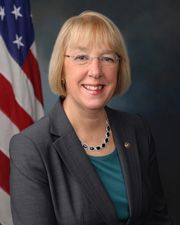
Mr. President, I rise today to again join my colleague, Senator Cantwell, in introducing the MediFair Act of 2004. My bill will restore fairness to the Medicare program and provide equity for health…
Mr. President, I rise today to again join my colleague, Senator Cantwell, in introducing the MediFair Act of 2004. My bill will restore fairness to the Medicare program and provide equity for health care providers participating in Medicare. Most importantly, it will open doors of care to more seniors and the disabled in my State.
Today, unfair Medicare reimbursement rates are causing doctors to limit their care for Medicare beneficiaries. Throughout my State, seniors and the disabled are having a hard time finding a doctor who will accept new Medicare patients.
Unfortunately, the recently-passed Medicare Prescription Drug, Improvement and Modernization Act of 2003 further compromises health care in Washington State because it reduces Washington State's per beneficiary payments from 42nd to 45th nationwide. This reduction places health care providers in my State at an economic disadvantage and further limits access to health care in Washington State.
My bill will reduce the regional inequities that have resulted in vastly different levels of care and access to care by ensuring that every State receives at least the national average of per-patient spending. This measure will encourage more doctors to accept Medicare patients and will also guarantee that seniors are not penalized when they choose to retire in the State of Washington.
In addition to ensuring that no State receives less than the national average, my legislation will encourage healthy outcomes and efficient use of Medicare payments. The current Medicare system punishes health care providers who practice efficient healthcare and healthy outcomes. Physicians and hospitals in my State are proud of the pioneering role they have played in providing high quality, cost effective medicine. Unfortunately, they have been rewarded for their exceptional service by being paid a fraction of their actual costs.
On the other hand, States that are inefficient and that over-utilize the system are rewarded with higher states of reimbursement. As we grapple with an ever-increasing budget deficit. We need to make sure that every dollar spent on Medicare is used as effectively as possible. I ask each and every one of my colleagues to join me in restoring fairness to the Medicare program and increasing access to health care for Medicare beneficiaries by supporting the MediFair Act.
I want to acknowledge the lead sponsor of the MediFair bill in the House, Representative Adam Smith, as well as the other cosponsors, Representative Baird, Representative Dicks, Representative Inslee, Representative Larsen, and Representative McDermott.
I have been working on addressing the issue of inequitable Medicare reimbursement policies for a number of years, and I am pleased that we have made inroads in addressing this issue. I especially appreciate the efforts by the Department of Health and Human Services (HHS) to reward healthy outcomes, and I look forward to working with HHS in the future to meet these goals.
Medicare should reward States like Washington that have a proven tradition of efficient and effective health care. Passing the MediFair Act will go a long way to improving health care access for seniors in States like Washington and ensuring that Federal health care dollars produce the best results possible for our patients.
Mr. President, I rise today to introduce--along with my colleague Senator Murray--the Expanding and Making Mount Rainier National Park More Accessible Act. This bill authorizes a boundary expansion…
Mr. President, I rise today to introduce--along with my colleague Senator Murray--the Expanding and Making Mount Rainier National Park More Accessible Act.
This bill authorizes a boundary expansion of Mount Rainier National Park to allow the National Park Service to acquire 800 acres of land from private landowners, on a willing seller basis. These lands are located near the Carbon River and, if acquired, they would be included in Mount Rainier National Park, one of America's greatest national parks.
If enacted, the proposed expansion will improve access for visitors, allow for a new campsite to be built, and save taxpayers money that will no longer be needed to repair a frequently washed out road.
While this legislation will make Mount Rainier National Park safer and
more accessible for families and outdoor enthusiasts, it is important to note that this expansion will also promote the local economy. Outdoor recreation is more than an activity in the Northwest, it is also a key part of our economy. By improving access to the park, my bill will make it easier for visitors to enjoy the park and to purchase goods and services in nearby communities.
This expansion will ensure continued access to the park because the northwest entrance road is continually washed out by seasonal fluctuations of the glacier-fed Carbon River. The river, which now flows at a higher elevation than the roadbed, has blocked visitors from accessing the National Park Service's Ipsut Creek campground and nearby hiking trails inside the park. The repairs to this road have proven both costly and short-lived and have strained the National Park Service's already limited maintenance budget. In the long run, the expansion will save taxpayers money because the road will not have to be maintained to current standards. If this bill is enacted, the National Park Service plans to provide a shuttle service to take visitors to the Carbon Glacier trailhead. That way, visitors will still be able to hike to the Carbon Glacier during day trips.
If this bill is enacted, local conservation groups and the National Park Service will work to reach agreements with landowners in the proposed expansion area. I am pleased that the current landowners actively participated in the process and enthusiastically support this legislation. In fact, they are eager to sell their land to the National Park Service so that these lands will be permanently protected for the enjoyment of future generations.
I look forward to working with my colleagues in the Senate as well as other members of the Washington state congressional delegation to ensure swift passage of this important legislation.
Mr. President, I rise today to introduce--along with my colleague Senator Murray--the Expanding and Making Mount Rainier National Park More Accessible Act. This bill authorizes a boundary expansion…
Mr. President, I rise today to introduce--along with my colleague Senator Murray--the Expanding and Making Mount Rainier National Park More Accessible Act.
This bill authorizes a boundary expansion of Mount Rainier National Park to allow the National Park Service to acquire 800 acres of land from private landowners, on a willing seller basis. These lands are located near the Carbon River and, if acquired, they would be included in Mount Rainier National Park, one of America's greatest national parks.
If enacted, the proposed expansion will improve access for visitors, allow for a new campsite to be built, and save taxpayers money that will no longer be needed to repair a frequently washed out road.
While this legislation will make Mount Rainier National Park safer and
more accessible for families and outdoor enthusiasts, it is important to note that this expansion will also promote the local economy. Outdoor recreation is more than an activity in the Northwest, it is also a key part of our economy. By improving access to the park, my bill will make it easier for visitors to enjoy the park and to purchase goods and services in nearby communities.
This expansion will ensure continued access to the park because the northwest entrance road is continually washed out by seasonal fluctuations of the glacier-fed Carbon River. The river, which now flows at a higher elevation than the roadbed, has blocked visitors from accessing the National Park Service's Ipsut Creek campground and nearby hiking trails inside the park. The repairs to this road have proven both costly and short-lived and have strained the National Park Service's already limited maintenance budget. In the long run, the expansion will save taxpayers money because the road will not have to be maintained to current standards. If this bill is enacted, the National Park Service plans to provide a shuttle service to take visitors to the Carbon Glacier trailhead. That way, visitors will still be able to hike to the Carbon Glacier during day trips.
If this bill is enacted, local conservation groups and the National Park Service will work to reach agreements with landowners in the proposed expansion area. I am pleased that the current landowners actively participated in the process and enthusiastically support this legislation. In fact, they are eager to sell their land to the National Park Service so that these lands will be permanently protected for the enjoyment of future generations.
I look forward to working with my colleagues in the Senate as well as other members of the Washington state congressional delegation to ensure swift passage of this important legislation.

Mr. President, I am pleased to introduce a bipartisan bill today that gives Native American tribes a chance to protect their reservation lands from catastrophic fire. I want to thank my cosponsors,…
Mr. President, I am pleased to introduce a bipartisan bill today that gives Native American tribes a chance to protect their reservation lands from catastrophic fire. I want to thank my cosponsors, Chairman Pete Domenici of the Energy and Natural Resources Committee, and Chairman Ben Nighthorse Campbell of the Committee on Indian Affairs.
Like other Americans, many Native American tribes are concerned about the risk of catastrophic forest fires spreading from nearby Federal lands onto their own lands. Last summer, at least 18 reservations were invaded by fire from adjacent Federal public forest lands.
This bill attempts to give the tribes a chance to defend themselves and their ancestral lands by involving them in brush-clearing projects on Federal lands near their reservations.
This is not just a theoretical problem, as tribes from my State know all too well.
Last fall's devastating wildfires in southern California caused disproportionate suffering for Native Americans: Over 30,000 acres burned on 11 tribal reservations. Most tragically, 10 lives were lost on or near reservations.
I am determined to give the tribes of my State and from around the country the opportunity to prevent this tragedy from recurring: The bill sets up a process for the Forest Service or the Bureau of Land Management to enter into contracts with the tribes for fuel reduction purposes. If a tribe requests a brush-clearing project on federal lands near its reservation, the agencies are encouraged to respond within specific timeframes and suggest remedies for any agency concerns with the tribe's proposal. There remains free and open competition for timber contracts on Federal land. However, in determining the recipients of the contracts, the agencies are encouraged to consider such factors as tribal treaty rights or cultural and historical affiliation to the land involved.
Nearly 100 Native American tribes support this legislation, including most, if not all, the tribes in the State of California.
So I am pleased to introduce this bill today, and I hope my colleagues will support it.
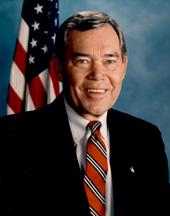
Mr. President, I would like to announce for the information of the Senate and the public that the following hearing has been scheduled before the Subcommittee on National Parks of the Committee on…
Mr. President, I would like to announce for the information of the Senate and the public that the following hearing has been scheduled before the Subcommittee on National Parks of the Committee on Energy and Natural Resources:
The hearing will be held on Tuesday, June 8, 2004 at 2:30 p.m. in room SD-366 of the Dirksen Senate Office Building in Washington, DC.
The purpose of the hearing is to receive testimony on the following bills: S. 931, to direct the Secretary of the Interior to undertake a program to reduce the risks from and mitigate the effects of avalanches on visitors to units of the National Park System and on other recreational users of public land; S. 1678, to provide for the establishment of the Uintah Research and Curatorial Center for Dinosaur National Monument in the States of Colorado and Utah, and for other purposes; S. 2140, to expand the boundary of the Mount Rainier National Park; S. 2287, to adjust the boundary of the Barataria Preserve Unit of the Jean Lafitte National Historical Park and Preserve in the State of Louisiana, and for other purposes; and S. 2469, to amend the National Historic Preservation Act to provide appropriation authorization and improve the operations of the Advisory Council on Historic Preservation.
Because of the limited time available for the hearings, witnesses may testify by invitation only. However, those wishing to submit written testimony for the hearing record should send two copies of their testimony to the Committee on Energy and Natural Resources, United States Senate, SD-364 Dirksen Senate Office Building, Washington, DC 20510-6150.
For further information, please contact Tom Lillie at (202) 224-5161 or Sarah Creachbaum at (202) 224-6293.
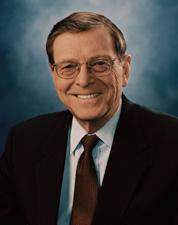
Mr. President, I would like to announce for the information of the Senate and the public that the following hearing has been scheduled before the Committee on Energy and Natural Resources. The…
Mr. President, I would like to announce for the information of the Senate and the public that the following hearing has been scheduled before the Committee on Energy and Natural Resources.
The hearing will take place on Tuesday, June 8th, 2004 at 10:00 a.m. in Room 366 of the Dirksen Senate Office Building in Washington, DC.
The purpose of this hearing is to consider the nomination of Suedeen G. Kelly, to be a Member of the Federal Energy Regulatory Commission for the term expiring June 30, 2009.
For further information, please contact Judy Pensabene of the Committee staff at (202) 224-1327.
subcommittee on national parks
Show 1 more
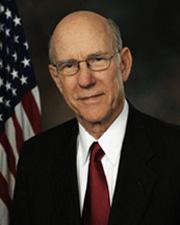
Mr. President, I ask unanimous consent that the text of the bill be printed in the Record.
Mr. President, I ask unanimous consent that the text of the bill be printed in the Record.
Bill Text
Latest available legislative text
        [Congressional Bills 108th Congress]
[From the U.S. Government Publishing Office]
[S. 2140 Introduced in Senate (IS)]

108th CONGRESS
2d Session
S. 2140

To expand the boundary of the Mount Rainier National Park.

_______________________________________________________________________

IN THE SENATE OF THE UNITED STATES

February 26, 2004

Ms. Cantwell (for herself and Mrs. Murray) introduced the following
bill; which was read twice and referred to the Committee on Energy and
Natural Resources

_______________________________________________________________________

A BILL

To expand the boundary of the Mount Rainier National Park.

Be it enacted by the Senate and House of Representatives of the
United States of America in Congress assembled,

SECTION 1. SHORT TITLE.

This Act may be cited as the ``Expanding and Making Mount Rainier
National Park More Accessible Act''.

SEC. 2. FINDINGS.

The Congress finds the following:
(1) The Carbon River watershed within Pierce County in the
State of Washington has unique qualities of ecological,
economic, and educational importance, including clean water,
productive salmon streams, important wildlife habitat, active
geologic processes, outdoor recreational opportunities, and
diverse economic opportunities.
(2) Mount Rainier National Park is one of the premier
attractions in the State of Washington, providing recreational,
educational, and economic opportunities that will be enhanced
by the construction of new campgrounds and visitor contact
facilities in the Carbon River valley outside old-growth forest
habitats and above the flood plain.
(3) Coordination of management across national forest and
national park lands in this corridor will enhance the
conservation of the forest ecosystem and public enjoyment of
these public lands.
(4) Protection and development of historic and recreational
facilities in the Carbon River valley, such as trails and
visitor centers, can be facilitated by the National Park
Service.

SEC. 3. MOUNT RAINIER NATIONAL PARK BOUNDARY ADJUSTMENT.

(a) Boundary Adjustment.--The boundary of Mount Rainier National
Park is modified to include the area within the boundary generally
depicted on the map entitled ``Mount Rainier National Park, Carbon
River Boundary Adjustment,'' numbered 105/92,002B, and dated June 2003.
The Secretary of the Interior shall keep the map on file in the
appropriate offices of the National Park Service.
(b) Land Acquisition.--The Secretary of the Interior may acquire,
only with consent of the owner, by donation, purchase with donated or
appropriated funds or exchange--
(1) land or interests in land, totaling not more than 800
acres, and improvements thereon within the boundary generally
depicted on the map referred to in subsection (a) for
development of camping and other recreational facilities; and
(2) land or interests in land, totaling not more than one
acre, and improvements thereon in the vicinity of Wilkeson,
Washington, for a facility to serve visitors to public lands
along the Carbon and Mowich Corridors.
(c) Administration of Acquired Lands.--Lands acquired under this
section shall be administered by the Secretary of the Interior as part
of Mount Rainier National Park in accordance with applicable laws and
regulations.

SEC. 4. ASSOCIATED LANDS.

The Secretary of Agriculture shall manage that portion of the Mt.
Baker-Snoqualmie National Forest lying adjacent to Mt. Rainier National
Park, as identified on the map referred to in section 3(a), to maintain
the area's natural setting in a manner consistent with the area's
designation as part of a late successional reserve.

SEC. 5. AUTHORIZATION OF APPROPRIATIONS.

There are authorized to be appropriated such sums as may be
necessary to carry out this Act.
<all>