Dru's Law
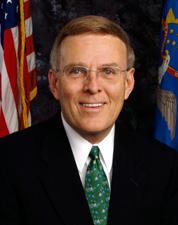 Sen. Byron L. Dorgan (D-ND)
Legislative Activity
Stay on top of the latest movement without scrolling through every action
Referred to the House Committee on the Judiciary.
November 20, 2004
View full timeline
Introduced in Senate
March 2, 2004
Sponsor introductory remarks on measure. (CR S2001)
March 2, 2004
Read twice and referred to the Committee on the Judiciary. (text of measure as introduced: CR S2001-2002)
March 2, 2004
Sponsor introductory remarks on measure. (CR S3255-3256)
March 29, 2004
Senate Committee on the Judiciary discharged by Unanimous Consent.
November 19, 2004
Measure laid before Senate by unanimous consent. (consideration: CR 11/20/2004 S11662-11663)
November 19, 2004
Passed Senate with an amendment by Unanimous Consent.
November 19, 2004
Message on Senate action sent to the House.
November 20, 2004
Received in the House.
November 20, 2004 • 11:24 AM
Referred to the House Committee on the Judiciary.
November 20, 2004
Floor Debate
6 membersWhat members said about S. 2154 on the floor
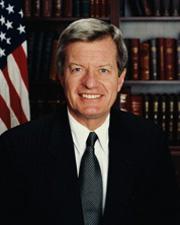


 +1
+1
Floor Debate
6 membersWhat members said about S. 2154 on the floor
Mr. President, I rise today to introduce the Trade Adjustment Assistance Equity for Service Workers Act. Since 1962, Trade Adjustment Assistance--what we call ``TAA''--has provided retraining, income…
Mr. President, I rise today to offer a bipartisan piece of legislation. As I will describe, this bill seeks to fill a gaping hole in our criminal justice system, made tragically evident by a recent…
Mr. President, I rise today to offer a bipartisan piece of legislation. As I will describe, this bill seeks to fill a gaping hole in our criminal justice system, made tragically evident by a recent…
Mr. President, I am pleased to join my colleague from Washington, Senator Patty Murray, in introducing the Pancreatic Islet Cell Transplantation Act of 2004, which will help to advance tremendously…
Mr. President, I rise today to introduce legislation, the ``Community College Teacher Preparation Enhancement Act of 2004,'' which addresses two of the Nation's most pressing education needs: first,…
Show 2 more
Mr. President, I rise today to commend my colleagues on passage of S. 2154, Dru's Law. After last year's abduction of Dru Sjodin in North Dakota, Senator Dorgan introduced this bill to address a…
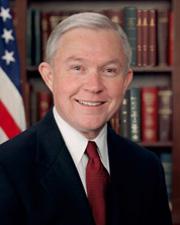
Mr. President, I ask unanimous consent that the Judiciary Committee be discharged from further consideration of S. 2154, and the Senate proceed to its immediate consideration. Mr. President, I send…
Bill Text
3 versions available
        [Congressional Bills 108th Congress]
[From the U.S. Government Publishing Office]
[S. 2154 Referred in House (RFH)]

2d Session
S. 2154

_______________________________________________________________________

IN THE HOUSE OF REPRESENTATIVES

November 20, 2004

Referred to the Committee on the Judiciary

_______________________________________________________________________

AN ACT

To establish a National sex offender registration database, and for
other purposes.

Be it enacted by the Senate and House of Representatives of the
United States of America in Congress assembled,

SECTION 1. SHORT TITLE.

This Act may be cited as the ``Dru Sjodin National Sex Offender
Public Database Act of 2004'' or ``Dru's Law''.

SEC. 2. DEFINITION.

In this Act:
(1) Criminal offense against a victim who is a minor.--The
term ``criminal offense against a victim who is a minor'' has
the same meaning as in section 170101(a)(3) of the Jacob
Wetterling Crimes Against Children and Sexually Violent
Offender Registration Act (42 U.S.C. 14071(a)(3)).
(2) Minimally sufficient sexual offender registration
program.--The term ``minimally sufficient sexual offender
registration program'' has the same meaning as in section
170102(a) of the Jacob Wetterling Crimes Against Children and
Sexually Violent Offender Registration Act (42 U.S.C.
14072(a)).
(3) Sexually violent offense.--The term ``sexually violent
offense'' has the same meaning as in section 170101(a)(3) of
the Jacob Wetterling Crimes Against Children and Sexually
Violent Offender Registration Act (42 U.S.C. 14071(a)(3)).
(4) Sexually violent predator.--The term ``sexually violent
predator'' has the same meaning as in section 170102(a) of the
Jacob Wetterling Crimes Against Children and Sexually Violent
Offender Registration Act (42 U.S.C. 14072(a)).

SEC. 3. AVAILABILITY OF THE NSOR DATABASE TO THE PUBLIC.

(a) In General.--The Attorney General shall--
(1) make publicly available in a registry (in this Act
referred to as the ``public registry'') from information
contained in the the National Sex Offender Registry, via the
Internet, all information described in subsection (b); and
(2) allow for users of the public registry to determine
which registered sex offenders are currently residing within a
radius, as specified by the user of the public registry, of the
location indicated by the user of the public registry.
(b) Information Available in Public Registry.--With respect to any
person convicted of a criminal offense against a victim who is a minor
or a sexually violent offense, or any sexually violent predator,
required to register with a minimally sufficient sexual offender
registration program within a State, including a program established
under section 170101 of the Jacob Wetterling Crimes Against Children
and Sexually Violent Offender Registration Act (42 U.S.C. 14017(b)),
the public registry shall provide, to the extent available in the
National Sex Offender Registry--
(1) the name and any known aliases of the person;
(2) the date of birth of the person;
(3) the current address of the person and any subsequent
changes of that address;
(4) a physical description and current photograph of the
person;
(5) the nature of and date of commission of the offense by
the person;
(6) the date on which the person is released from prison,
or placed on parole, supervised release, or probation; and
(7) any other information the Attorney General considers
appropriate.

SEC. 4. RELEASE OF HIGH RISK INMATES.

(a) Civil Commitment Proceedings.--
(1) In general.--Any State that provides for a civil
commitment proceeding, or any equivalent proceeding, shall
issue timely notice to the attorney general of that State of
the impending release of any person incarcerated by the State
who--
(A) is a sexually violent predator; or
(B) has been deemed by the State to be at high-risk
for recommitting any sexually violent offense or
criminal offense against a victim who is a minor.
(2) Review.--Upon receiving notice under paragraph (1), the
State attorney general shall consider whether or not to
institute a civil commitment proceeding, or any equivalent
proceeding required under State law.
(b) Monitoring of Released Persons.--
(1) In general.--Each State shall intensively monitor, for
not less than 1 year, any person described under paragraph (2)
who--
(A) has been unconditionally released from
incarceration by the State; and
(B) has not been civilly committed pursuant to a
civil commitment proceeding, or any equivalent
proceeding under State law.
(2) Applicability.--Paragraph (1) shall apply to--
(A) any sexually violent predator; or
(B) any person who has been deemed by the State to
be at high-risk for recommitting any sexually violent
offense or criminal offense against a victim who is a
minor.
(c) Compliance.--
(1) Compliance date.--Each State shall have not more than 3
years from the date of enactment of this Act in which to
implement the requirements of this section.
(2) Ineligibility for funds.--A State that fails to
implement the requirements of this section, shall not receive
25 percent of the funds that would otherwise be allocated to
the State under section 20106(b) of the Violent Crime Control
and Law Enforcement Act of 1994 (42 U.S.C. 13706(b)).
(3) Reallocation of funds.--Any funds that are not
allocated for failure to comply with this section shall be
reallocated to States that comply with this section.

Passed the Senate November 19, 2004.

Attest:

EMILY J. REYNOLDS,

Secretary.