Military Survivors' Fairness Act of 2004
Legislative Activity
Stay on top of the latest movement without scrolling through every action
Read twice and referred to the Committee on Armed Services. (text of measure as introduced: CR S2442)
March 9, 2004
View full timeline
Introduced in Senate
March 9, 2004
Sponsor introductory remarks on measure. (CR 2441-2442)
March 9, 2004
Read twice and referred to the Committee on Armed Services. (text of measure as introduced: CR S2442)
March 9, 2004
Floor Debate
5 membersWhat members said about S. 2177 on the floor
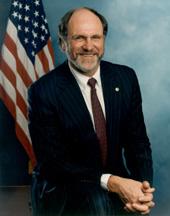
 JFK
JFK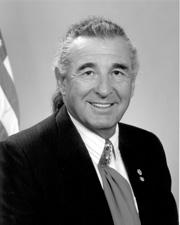 BNCJSC
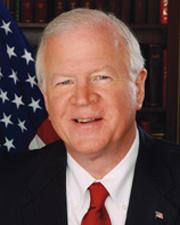 SC
SC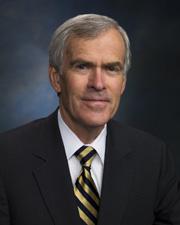 JB
JB
Floor Debate
5 membersWhat members said about S. 2177 on the floor
Mr. President, today I introduce legislation that keeps the Small Business Administration and its financing and counseling assistance available to small businesses. Small businesses need us to act…
Mr. President, today I introduce legislation that keeps the Small Business Administration and its financing and counseling assistance available to small businesses. Small businesses need us to act now to keep critical assistance available to our Nation's biggest job creators.
There should not be any objections to this bill. It has broad support in the small business and the lending communities. The lending provisions of the bill have the support of small borrowers that testified before Congress over the past few weeks and the support of a coalition of small business trade associations, including the trade associations of 504 lenders and of 7(a) lenders, the American Bankers Association and the Independent Community Bankers Association, as well as the National Small Business Alliance and the U.S. Chamber of Commerce, and the women's business center provisions have the support of women's trade associations such as Women Impacting Public Policy and the Association of Women's Business Centers.
This bill authorizes the SBA and most of its programs through the May 15, 2004, which will allow time for the House to complete its work on the SBA's 3-year reauthorization bill, passed by the Senate in September 2003. In addition, this bill addresses several urgent issues that are critical to keep SBA programs operating and helping small businesses across the country.
Let me outline these for you. The first provision authorizes the continued operation of the SBA's 504 loan guarantee program for the rest of fiscal year 2004. Unless we act, the authority to operate this program will expire on March 15, next Monday, and small businesses in need of financing for fixed assets will be turned away. These loans are for growing small businesses that need loans with long repayment terms and fixed interest rates to afford a new building or perhaps land to expand their business and their workforce, or equipment to improve or increase production. The lenders who make these loans serve a unique role in our economy--they develop economic opportunities where conventional lenders are not willing to take a risk. They are not a shy group, and care deeply about the communities where they live. I am sure most, if not all, Senators have received numerous calls and communications from them over the past few weeks. It is my hope that extending authorization will provide some stability to the industry so that they continue to fund our growing businesses, and then in the near future, the House will consider our more comprehensive SBA reauthorization legislation, bill number S. 1375, that we passed in September, to enact other important 504 program improvements that are supported by the small business community. This loan program requires no appropriations because it is funded entirely by fees that borrowers and lenders pay.
The second provision keeps open the doors of our most experienced and successful Women's Business Centers, again without added cost to the Treasury. This bill contains a small adjustment to the Women's Business Center program that updates the current funding formula. The adjustment changes the portion of funding allowed for women's business centers in the sustainability part of the program to keep up with the increasing number of centers that will need funding this fiscal year. In short, this change directs the SBA to reserve 48 percent of the appropriated funds for the sustainability centers, instead of 30 percent, which will give the most experienced centers the greatest opportunity to receive sustainability funding, while still allowing for new centers and protecting existing ones.
Currently there are 88 women's business centers. Of these, 35 are in the initial grant program and 53 will have graduated to the sustainability part of
the program. These sustainability centers make up more than half of the total women's business centers, but under the current funding formula are only allotted 30 percent of the funds. Without the change to 48 percent, all grants to sustainability centers could be cut in half--or worse, 23 experienced centers could lose funding completely. Cutting funding for these, our most efficient and successful centers, would not only be detrimental to the centers themselves, but also to the women they serve, to their local communities, to their states, and to the national economy.
As the author of the Women's Business Centers Sustainability Act of 1999, I can tell you that when the bill was signed into law, it was Congress's intent to protect the established and successful infrastructure of worth, performing centers. The law was designed to allow all graduating Women's Business Centers that meet certain performance standards to receive continued funding under sustainability grants. This approach allows for new centers to be established--but not by penalizing those that have already demonstrated their worth. It was our intention to continue helping the most productive and well-equipped women's business centers, knowing that demand for such services was rapidly growing.
Today, with women-owned businesses opening at one-and-a-half times the rate of all privately held firms, the demand and need for women's business centers is even greater. Until Congress makes permanent the Women's Business Center Sustainability Pilot program, as intended in Senate-passed legislation, an extension of authority and increase in sustainability funds is vital--not only to the centers themselves, but to the women's business community and to the millions of workers employed by women-owned businesses around the country.
The importance of the women's business centers to small business owners in communities across this country cannot be overstated. Take for instance the story of Melanie Marsden and Shannon Lawler, who recently opened A Better Place to Be Day Spa in Charlestown, MA. While working on a business plan last summer, the two hopeful entrepreneurs happened across the website of the Center for Women and Enterprise (CWE), a women's business center in Boston. Having just signed a lease and with a target opening for their spa quickly approaching, Melanie and Shannon were looking for help, and quick. At first, the process seemed overwhelming, but the experts at CWE were able to guide Melanie and Shannon through the complicated process--from business plan to long-term financing and management. CWE helped Melanie and Shannon open A Better Place to Be Day Spa and already see a steady stream of clients pass through their doors. Without CWE, Melanie and Shannon believe that they would not have opened their business on time, or at all. Last year alone, women's business centers like CWE helped over 100,000 entrepreneurs just like Melanie and Shannon with their small business needs. The majority of these women have few resources and little access to business development assistance, and without the women's business centers, they might have none.
As I have said on more than one occasion, women business owners do not get the recognition they deserve for the contribution to our economy: Eighteen million Americans would be without jobs today if it weren't for these entrepreneurs who had the courage and the vision to strike out on their own. For 19 years, as a member of the Senate Committee on Small Business and Entrepreneurship, I have worked to increase the opportunities for these enterprising women, leading to greater earning power, financial independence and asset accumulation. For these women, in addition to the challenge and experience of running their own business, it means having a bank account, buying a home, sending their children to college, and being in control of their own future.
I want to again express my sincere and continuing support for the growing community of women entrepreneurs across the Nation and for the invaluable programs through which the SBA provides women business owners with the tools they need to succeed. For years, I have fought for increased funding for SBA assistance that helps women entrepreneurs, including measures that have sustained and expanded the Women's Business Centers, and give women entrepreneurs their deserved representation within the Federal procurement process.
The third provision makes temporary changes to the SBA's largest loan program, the so-called 7(a) program, in order to compensate for the administration's budget gimmicks and program mismanagement that caused a substantial shortage in funding. This shortage led to a temporary shutdown of the program in January, followed by lending restrictions that created serious financial hardships for small businesses and reduced access to affordable capital for small businesses in general. For the remainder of fiscal year 2004, a coalition of 7(a) lenders and small business groups have worked with Congress to come up with some limited fees, paid by lenders and not borrowers, that will increase the amount of lending available. That extra funding will increase from $9.5 billion to more than $11 billion the amount of loan guarantees available to small businesses. With more funding, Congress expects the SBA to lift the loan cap size of $750,000 and other restrictions, give priority in processing and approval to eligible small businesses that have been shut out this year, and require the SBA to renew export working capital loans to eligible small businesses.
Of course, these changes would not be necessary if the administration had either requested adequate funding in its budget or used its authority to reprogram money to compensate for the shortfall. It also could have sent up a request for supplemental funding. On three different occasions, I wrote to the administration urging these actions, with the support of Senators Levin, Harkin, Lieberman, Landrieu, Edwards, Cantwell, Bayh, and Pryor, urging any of these solutions, but the administration refused to act. Instead, the insufficient funding was compounded by mismanagement and the program was completely shutdown from January 6 to January 14. When the administration reopened the program, it was with extreme restrictions. The restrictions were aimed at keeping the demand for the loans down without regard to their effect on the small businesses the Agency is intended to serve. Small businesses appealed to the administration and our committees for help because they were caught in the middle. For example, one company in Pennsylvania has a $1 million export working capital loan that needs to be renewed, but it can't because one of SBA's restrictions does not allow loans of more than $750,000. At risk is the home of one of the owners because it is part of the collateral securing the existing loan. This company is qualified; it's just trapped by the SBA's restrictions. With your help in passing this bill immediately, we can do the right thing for these small business owners and others who played by the rules. There is no cost to the Treasury in enacting these provisions.
Last, the fourth provision, addresses an urgent need for some firms in New York needing disaster loan assistance. Many have said we should wait until we address other SBA legislation in the next 60 days. However, hundreds of jobs are at stake and these businesses do not have 2 months. This language is included at the bipartisan request of the House Small Business Committee leadership. Their staffs worked closely with the SBA to develop this language, which is acceptable to all of them. In addition to the support of House Committee Chairman Don Manzullo and Ranking Member Nydia Velazquez, this provision is also supported by Congresswoman Sue Kelly and Senator Charles Schumer.
All four provisions address circumstances that require immediate action. Let me remind everyone: Without this legislation, the SBA's loan program for growing businesses, commonly referred to as the 504 Loan Guarantee Program, would shut down next Monday, March 15, 2004. Without this legislation, the future of counseling and training for women starting and growing their businesses, through the most established SBA's Women's Business Centers, would be compromised. Without this legislation, small businesses with their homes and life savings at stake may face financial and personal devastation because of program mismanagement. Without this
legislation, small business disaster victims may go out of business.
Mr. President, I ask unanimous consent that two letters relating to programs affected by this legislation be printed in the Record. I thank my colleagues for their support of small businesses and for considering immediate passage of this important small business bill.
Mr. President, I am pleased to introduce a bill today that would effect a small land exchange to help the city of Golden, CO in its efforts to augment its water supply, that it might better prepare…
Mr. President, I am pleased to introduce a bill today that would effect a small land exchange to help the city of Golden, CO in its efforts to augment its water supply, that it might better prepare for a resumption of the drought which has plagued our State in the past several years. The bill I am proposing would direct that the U.S. Forest Service complete a land exchange with the city of Golden at the earliest possible date.
In the land exchange, the city would receive approximately 10 acres of National Forest land near Empire, CO. The city needs this land to complete construction of a 140-foot stretch of water pipeline connecting the West Fork of Clear Creek with a brand new water storage reservoir, known as the Guanella Reservoir, which the city completed in December. The Guanella Reservoir will increase the city's existing water storage capacity by approximately 40 percent, and better enable it to cope with future water shortages.
This legislation is critical, because while the Guanella Reservoir is now completed, as is the diversion dam, penstock, and all but 140 feet of the connecting pipeline, the reservoir remains dry. In short, the pipeline is completed up to the National Forest boundary, and authorization is needed from either the Forest Service or Congress to complete the small remaining stretch of pipeline that must cross National Forest land. Until that authorization is provided, the reservoir is sitting empty, and that is a situation we do not want to see continued into the dry summer months. Unfortunately, the Forest Service has indicated it would take quite some time, possibly several years, to authorize the pipeline, and we have agreed with them that this land exchange is the best approach to meet everyone's needs and time frames.
For this reason, I am introducing this important legislation, and have asked the Committee on Energy and Natural Resources to expedite it in every way possible.
Additionally, I would like to note that while providing the city of Golden the ability to finish a critical water storage project, my proposal is also a beneficial deal for the United States. In return for the 10 acres it will give up, the Forest Service will receive up to 80 acres of land near a popular trail and recreation area in Evergreen, CO, and will also receive 55 acres of land on and near the Continental Divide National Scenic Trail in Clear Creek and Summit Counties. The 55 acres are located along one of the most popular stretches of the Trail, and are one of the ways hikers and other users can access the popular Greys and Torreys Peaks, two of the most heavily-climbed 14,000 foot peaks in our State. Further, my bill provides that all land values will be determined in accordance with Forest Service appraisal procedures, so we will be insuring that the United States will receive full market value for its land. In addition, the City is making a donation of Continental Divide Trail lands above which are required. I believe this is truly a ``win-win'' situation for all concerned, and commend the City for making the additional donation to the Forest Service.
Finally, I would like to note that my proposal has been endorsed by the County Commissioners of all three counties that have lands involved in the trade, the non-profit Continental Divide Trail Alliance, the City of Blackhawk Public Works Department, the Georgetown Loop Scenic Railroad, and by numerous others.
Again, I would recommend this legislation for my colleagues' quick approval in order that the City of Golden can get on with its urgent needs to supply adequate additional water to its residents this summer.
I ask unanimous consent that the text of the bill be printed in the Record.
Mr. President, I am today introducing legislation that would authorize the exchange of lands between the Muriel MacGregor Trust and the National Park Service, and to amend the boundary of Rocky Mountain National Park to include the newly acquired land.
Rocky Mountain National Park was established by Congress on January 26, 1915, for the benefit and enjoyment of the people of the United States and to protect the natural conditions and scenic beauties of this portion of the Rocky Mountains. The park currently encompasses approximately 266,000 acres and has some of the most beautiful mountain scenery to be found anywhere in our country. Each year the park draws over 3 million visitors.
The MacGregor Ranch, located near Estes Park, CO, was homesteaded in 1873, which predates the establishment of Rocky Mountain National Park. In 1917, shortly after the establishment of the national park, the National Park Service built a residence for park employees just inside the park boundary, with access via a one-lane dirt road which crosses the MacGregor Ranch for about \3/4\ of a mile. This access was provided with the permission of the MacGregor family, but no easement, right-of- way, or other legal document was ever recorded.
The MacGregor Ranch is listed on the National Register of Historic Places and is owned by the charitable Muriel MacGregor Trust. The mission of the trust is to support youth education through the preservation and interpretation of the historic buildings and educational tours of this working high mountain cattle ranch. In 1980, the boundary of Rocky Mountain National Park was amended to include much of the MacGregor Ranch, and in 1983 the National Park Service purchased a conservation easement covering 1,221 acres of the ranch. While the ranch is located within the authorized boundary of the national park, it remains private property.
In the early 1970s, hikers and rock climbers began using the access road through the MacGregor Ranch to reach a small parking lot located just inside the park boundary. Known as the Twin Owls trailhead, the popularity of the area has grown steadily. In recent years, overflow parking has negatively impacted the ranch, and traffic on the one-lane access road has negatively affected the character of the historic homestead and has diminished the quality of the historic scene that visitors to the ranch come to experience.
For several years, the National Park Service and the MacGregor Ranch have been working to find a solution to the traffic and parking problems. Several environmental assessments have been prepared to examine various alternatives and gather public input. In 2003, based on public input and an Environmental Assessment, the National Park Service decided to relocate the Twin Owls parking lot to the east end of the MacGregor Ranch, some distance away from the historic homestead. A new access road and a larger trailhead parking lot that can accommodate 80 to 100 cars will be built at the new location.
So that the rules and regulations governing Rocky Mountain National Park can be enforced at the new trailhead and along the access road, the land needs to be incorporated into the national park. To accomplish this, the MacGregor Trust and the National Park Service have agreed to a land exchange. The National Park Service will acquire three parcels of land containing 5.9 acres from the MacGregor Trust for the development of the new parking lot and access road. In exchange, the MacGregor Trust will acquire up to 70 acres from the National Park Service that will be used for
growing hay and cattle grazing. A conservation easement will be placed on the 70 acres that is transferred to the MacGregor Trust. The conservation easement will ensure that the property is used solely for ranching.
The land exchange is intended to be an equal value exchange. One of the three parcels currently owned by the MacGregor Trust is zoned for residential development and has a high monetary value. A conservation easement will be placed on the 70 acres currently owned by the National Park Service, which will diminish its monetary value. If the lands currently owned by the National Park Service are of higher value, less than 70 acres will be transferred to the MacGregor Ranch. If the three parcels owned by the MacGregor ranch are of higher value, the Ranch is willing to accept the unequal value and will only receive a maximum of 70 acres from the National Park Service.
This legislation is needed to authorize the land exchange, and to amend the park boundary to include the new lands to be added to park.
I ask unanimous consent that the text of the bill be printed in the Record.
Mr. President, I rise today to introduce the Military Survivors' Fairness Act of 2004, legislation to eliminate a major inequity that has existed for several years among certain year-groups of…
Mr. President, I rise today to introduce the Military Survivors' Fairness Act of 2004, legislation to eliminate a major inequity that has existed for several years among certain year-groups of military retirees already enrolled in the Survivors' Benefit Plan.
In the interest of a strong national defense, it is critical that we keep faith with the men and women who serve in our military. This applies both while military members are serving, and as they move beyond their working years. Our military retirees and their families have made significant sacrifices in the defense of their country. They deserve benefits commensurate with those sacrifices.
In 1972, Congress created the Survivors' Benefit Plan (SBP), giving career military members the option of taking less retirement pay in their own lifetime in return for the continuation of that pay to the surviving spouse, in the event the retiree pre-deceased his or her spouse.
SBP was a wise and important decision by the Congress; hundreds of thousands of military members have enrolled in SBP since 1972, and the program has given much-deserved security and peace of mind to those spouses who, along with military members, share the burdens of a military career.
Congress expanded the Survivor Benefit Plan (SBP) in 1999, by creating the ``Paid-Up Provision.'' Under that provision, retirees who are at least seventy years old and have already been paying into SBP for at least thirty years are considered ``paid up'' and do not have to continue paying in to receive benefits.
This change provides a modest but frequently important boost to retirees' income at a stage in their lives, in their 70's, when they may be less able to supplement their retirement income from other employment.
However, there is a major caveat, and a significant inequity here. The ``Paid-Up Provision'', under the 1999 legislation, does not take effect until October 2008. As a result, those who enrolled before 1978 will continue under the current law to have to pay in as much as six years longer than enrollees from 1978 or after.
The SBP program was created in 1972. An effective date of 2008 for the SBP's ``Paid-Up Provision'' means that those who enrolled in the first six years of the program, i.e., between 1972 and 1977, must, in order to get the same retirement benefits, pay in longer, as much as six years longer, than those who enrolled in 1978 or later.
In other words, those who signed up before 1978 get the same benefits but have to pay a much higher price. This arrangement is unfair on its face and should be corrected.
My bill, the Military Survivors' Fairness Act of 2004, simply takes the ``Paid-Up Provision''--already established by Congress in 1999, and moves its effective date ahead four years, from October 1, 2008 to October 1, 2004. That is the only change it makes.
This bill, if approved, would benefit some ninety-two thousand military retirees nationwide, those who enrolled in SBP between 1974 and 1977. The Military Officers Association of America has estimated that the cost would be $2.7 billion over ten years.
Under my bill, ninety-two thousand military retirees participating in the SBP program, from every State and congressional district, will no longer be forced to pay more for their retirement than military retirees who enrolled in SBP in 1978 or later. This is only fair--the benefits for which these 92,000 are paying are identical, and their service was just as worthy.
The 1999 legislation establishing the ``Paid-Up Provision'' was a good idea with the wrong effective date--it was given a 2008 effective date because that Congress wanted to defer any budgetary impact. Accounting conventions and budgetary targets, however, should not determine whether we are going to keep faith with our military men and women. Any arrangement that treats them with any trace of unfairness or lack of appreciation for their service is not right, is not in our national interest and should be fixed.
The Military Survivors' Fairness Act of 2004 is such a fix it-- corrects a significant inequity among an important group of military retirees, and I urge its adoption.
I ask unanimous consent that the text of the legislation be printed in the Record.
Mr. President, I rise today to introduce the Military Survivors' Fairness Act of 2004, legislation to eliminate a major inequity that has existed for several years among certain year-groups of…
Mr. President, I rise today to introduce the Military Survivors' Fairness Act of 2004, legislation to eliminate a major inequity that has existed for several years among certain year-groups of military retirees already enrolled in the Survivors' Benefit Plan.
In the interest of a strong national defense, it is critical that we keep faith with the men and women who serve in our military. This applies both while military members are serving, and as they move beyond their working years. Our military retirees and their families have made significant sacrifices in the defense of their country. They deserve benefits commensurate with those sacrifices.
In 1972, Congress created the Survivors' Benefit Plan (SBP), giving career military members the option of taking less retirement pay in their own lifetime in return for the continuation of that pay to the surviving spouse, in the event the retiree pre-deceased his or her spouse.
SBP was a wise and important decision by the Congress; hundreds of thousands of military members have enrolled in SBP since 1972, and the program has given much-deserved security and peace of mind to those spouses who, along with military members, share the burdens of a military career.
Congress expanded the Survivor Benefit Plan (SBP) in 1999, by creating the ``Paid-Up Provision.'' Under that provision, retirees who are at least seventy years old and have already been paying into SBP for at least thirty years are considered ``paid up'' and do not have to continue paying in to receive benefits.
This change provides a modest but frequently important boost to retirees' income at a stage in their lives, in their 70's, when they may be less able to supplement their retirement income from other employment.
However, there is a major caveat, and a significant inequity here. The ``Paid-Up Provision'', under the 1999 legislation, does not take effect until October 2008. As a result, those who enrolled before 1978 will continue under the current law to have to pay in as much as six years longer than enrollees from 1978 or after.
The SBP program was created in 1972. An effective date of 2008 for the SBP's ``Paid-Up Provision'' means that those who enrolled in the first six years of the program, i.e., between 1972 and 1977, must, in order to get the same retirement benefits, pay in longer, as much as six years longer, than those who enrolled in 1978 or later.
In other words, those who signed up before 1978 get the same benefits but have to pay a much higher price. This arrangement is unfair on its face and should be corrected.
My bill, the Military Survivors' Fairness Act of 2004, simply takes the ``Paid-Up Provision''--already established by Congress in 1999, and moves its effective date ahead four years, from October 1, 2008 to October 1, 2004. That is the only change it makes.
This bill, if approved, would benefit some ninety-two thousand military retirees nationwide, those who enrolled in SBP between 1974 and 1977. The Military Officers Association of America has estimated that the cost would be $2.7 billion over ten years.
Under my bill, ninety-two thousand military retirees participating in the SBP program, from every State and congressional district, will no longer be forced to pay more for their retirement than military retirees who enrolled in SBP in 1978 or later. This is only fair--the benefits for which these 92,000 are paying are identical, and their service was just as worthy.
The 1999 legislation establishing the ``Paid-Up Provision'' was a good idea with the wrong effective date--it was given a 2008 effective date because that Congress wanted to defer any budgetary impact. Accounting conventions and budgetary targets, however, should not determine whether we are going to keep faith with our military men and women. Any arrangement that treats them with any trace of unfairness or lack of appreciation for their service is not right, is not in our national interest and should be fixed.
The Military Survivors' Fairness Act of 2004 is such a fix it-- corrects a significant inequity among an important group of military retirees, and I urge its adoption.
I ask unanimous consent that the text of the legislation be printed in the Record.
Mr. President, I introduce the Temporary Agriculture Work Reform Act of 2004. American farmers are the most efficient farmers in the world. Technologies have allowed farmers to produce higher quality…
Mr. President, I introduce the Temporary Agriculture Work Reform Act of 2004.
American farmers are the most efficient farmers in the world. Technologies have allowed farmers to produce higher quality products while increasing yields, and at the same time, reducing pesticide use. I applaud our farmers for their important role in our Nation's economy.
One obstacle that agriculture producers continually grapple with is labor. For many years, migrant workers have been the main source of labor for agriculture. In fact, today migrant workers make up about 56 percent of farm labor. A key issue for our American producers is having an efficient program to provide an agriculture workforce.
Reforms to the H2A program are warranted and needed. The program should be user-friendly for both growers and workers with less bureaucratic hassle. The program should operate in such a way to ensure that American producers can have their crops harvested in a timely fashion and that willing workers can get access to job opportunities. We need a program that is easy to use and provides a stable, reliable workforce for America's farmers.
My guest worker legislation reforms the cumbersome and uncompetitive aspects of the H2A temporary agriculture worker program--without providing amnesty to illegal aliens in the U.S. The bill gives farmers and workers a more functional program by simplifying the application process, providing a prevailing wage rate, and ensuring U.S. workers are not displaced.
The Adverse Effect Wage Rate, known by its acronym AEWR, has consistently failed to provide competitive incentives for farmers to become users of the H2A program. Due to the current need for foreign workers and job protections in place for domestic workers, the AEWR is no longer necessary. By replacing the AEWR with a prevailing wage rate, legal workers will maintain a pay scale that is equal with their counterparts.
The bill provides a labor attestation process to ensure that American workers are not displaced. This labor attestation process replaces the burdensome labor certification process currently in effect, which too often causes delays that have a detrimental effect on the seasonal agricultural industry. A similar labor attestation process has worked well for the H1B visa program, and I believe it can be used effectively for the H2A program. The bill also mandates stiff penalties on employers for misrepresentation and U.S. worker displacement. Bottom line, if a U.S. worker wants the job, under my bill he can have it.
But when foreign workers are needed, the bill encourages workers to come to the United States through legal channels. A one-time waiver allows foreign workers to apply for the H2A program from their home country if that person is inadmissible to the U.S. due to prior authorized entry--this will deter the cycle of illegal entry that endangers our national security. My bill does not provide amnesty or a new way for illegal aliens to adjust to legal permanent resident status other than in accordance with current law.
Finally, the bill includes a few narrow provisions, including re- establishing language that Congress has repeatedly passed on appropriations bills, to protect against frivolous lawsuits. Our farmers should be providing for America's dinner table, not defending meritless lawsuits.
There are a number of guest worker bills already introduced in the Senate, and in fact, my Subcommittee held the first hearing several weeks ago on the President's guest worker proposal. The bill I am introducing today is a good first step to the kind of overall reform we need. It meets our economic interests, protects U.S. workers, and respects the rule of law without a broad amnesty for illegal aliens.
This legislation establishes a common sense and competitive H2A program so that these employers can continue to produce the highest quality food supply in the world. I look forward to working with my colleagues to pass a much needed reform to the H2A program this year.
Show 1 more
Mr. President, Federal child nutrition programs have long played a critical role in promoting healthy diets for American children. First conceived over 50 years ago in response to concerns about the…
Mr. President, Federal child nutrition programs have long played a critical role in promoting healthy diets for American children. First conceived over 50 years ago in response to concerns about the impacts of the diets of American youth on their fitness for the armed forces, Federal child nutrition programs have since expanded and evolved to meet the needs of a diverse population.
However, alarming increases in obesity rates for children and adolescents indicate that we are not doing enough in terms of nutrition education. The statistics are truly startling. Heart disease, cancer, stroke, and diabetes are responsible for two out of three deaths in the United States, and the major risk factors for those diseases and conditions are established in childhood through unhealthy eating habits, physical inactivity, obesity, and tobacco use. In the last two decades, obesity rates have doubled in children and tripled in adolescents, and today, one in seven young people are obese, and one in three are overweight. Additionally, three out of four high school students in the United States do not eat the recommended five or more servings of fruits and vegetables each day. Finally, a recent report by the Surgeon General estimated that obesity-related costs in the U.S. are close to $100 billion a year.
Unfortunately, nutrition education programs have been chronically under-funded. We have authorized 50 cents for every child served through Federal child nutrition programs, which is equivalent to over $24 million. This amount refers not to 50 cents per day, per week, or per month--this is 50 cents per year! However, last year, the only nutrition education program specifically directed at our Nation's school children, Team Nutrition, was funded at $10 million. This is equivalent to spending 21 cents a year on each child, a woefully inadequate amount. In addition, no funds were appropriated to nutrition education programs specifically designed to help States implement Team Nutrition materials.
The Early Attention to Nutrition (EATN) Act of 2004, which I am introducing today together with Senators Lugar and Dodd, would raise the total amount dedicated to nutrition education to $50 million a year. The funds would be used by the USDA to develop Team Nutrition materials, and to support Team Nutrition Networks in the States. Currently, only 21 States receive funding through Team Nutrition. This bill would allow all States to obtain Team Nutrition grants, and would fund a Team Nutrition Network in each State, which would be responsible for disseminating and coordinating nutrition education initiatives. The goal of the Team Nutrition Networks is to: instruct students with regard to the nutritional value of foods and the relationship between food and human health; provide assistance to schools in the adoption and implementation of school policies that promote healthy eating; foster community environments that support healthy eating and physical activities; provide training and technical assistance to teachers and school food service professionals consistent with this section; evaluate State and local nutrition education programs; disseminate educational materials statewide through the use of the Internet, mailings, conferences, and other communication channels; provide subgrants to school and school food authorities for carrying out nutrition education activities at the local level; and provide information to parents and caregivers regarding the nutritional value of food and the relationship between food and health.
Now is the time to take action toward improving the health and well- being of our Nation's youth. The cost of improving the health of our children will be far less than the cost of the health consequences to come if we do nothing.
I ask unanimous consent that the text of the bill and two letters of support be printed in the Record.
Bill Text
Latest available legislative text
        [Congressional Bills 108th Congress]
[From the U.S. Government Publishing Office]
[S. 2177 Introduced in Senate (IS)]

108th CONGRESS
2d Session
S. 2177

To amend title 10, United States Code, to change the effective date for
paid-up coverage under the military Survivor Benefit Plan from October
1, 2008, to October 1, 2004.

_______________________________________________________________________

IN THE SENATE OF THE UNITED STATES

March 9, 2004

Mr. Corzine introduced the following bill; which was read twice and
referred to the Committee on Armed Services

_______________________________________________________________________

A BILL

To amend title 10, United States Code, to change the effective date for
paid-up coverage under the military Survivor Benefit Plan from October
1, 2008, to October 1, 2004.

Be it enacted by the Senate and House of Representatives of the
United States of America in Congress assembled,

SECTION 1. SHORT TITLE.

This Act may be cited as the ``Military Survivors' Fairness Act of
2004''.

SEC. 2. EFFECTIVE DATE FOR PAID-UP COVERAGE UNDER SURVIVOR BENEFIT
PLAN.

Section 1452(j) of title 10, United States Code, is amended by
striking ``October 1, 2008'' and inserting ``October 1, 2004''.
<all>