A bill to amend title 38, United States Code, to clarify that per diem payments by the Department of Veterans Affairs for the care of veterans in State homes shall not be used to offset payments that are made under the medicaid program for the purpose of assisting veterans.
Legislative Activity
Stay on top of the latest movement without scrolling through every action
Read twice and referred to the Committee on Finance. (text of measure as introduced: CR 3/12/2004 S2721)
March 11, 2004
View full timeline
Introduced in Senate
March 11, 2004
Sponsor introductory remarks on measure. (CR 3/12/2004 S2720-2721)
March 11, 2004
Read twice and referred to the Committee on Finance. (text of measure as introduced: CR 3/12/2004 S2721)
March 11, 2004
Floor Debate
13 membersWhat members said about S. 2196 on the floor
 RCS
RCS JC
JC OJS
OJS DF
DF BB+8
BB+8
Floor Debate
13 membersWhat members said about S. 2196 on the floor
Mr. President, as we continue to debate the Federal Government's fiscal year 2005 budget, I can think of no better time to discuss the need for a balanced budget amendment to the Constitution. It is…
Mr. President, as we continue to debate the Federal Government's fiscal year 2005 budget, I can think of no better time to discuss the need for a balanced budget amendment to the Constitution. It is for that reason that I stand before you today--to introduce a balanced budget amendment to the Constitution.
This is the same amendment that I have introduced in every Congress since the 97th Congress. Throughout my entire tenure in Congress, during the good economic times and the bad, I have devoted much time and attention to this idea because I believe that one of the most important things the Federal Government can do to enhance the lives of all Americans and future generations is to balance the Federal budget.
Our Founding Fathers, wise men indeed, had great concerns regarding the capability of those in government to operate within budgetary constraints. Alexander Hamilton once wrote that ``. . . . . there is a general propensity in those who govern, founded in the constitution of man, to shift the burden from the present to a future day.'' Thomas Jefferson commented on the moral significance of this ``shifting of the burden from the present to the future.'' He said: ``the question whether one generation has the right to bind another by the deficit it imposes is a question of such consequence as to place it among the fundamental principles of government. We should consider ourselves unauthorized to saddle posterity with our debts and morally bound to pay them ourselves.''
I completely agree with these sentiments. History has shown that Hamilton was correct. Those who govern have, in fact, saddled future generations with the responsibility of paying for their debts. Over the past 30 years, annual deficits have become routine and the Federal Government has built up massive debt. Furthermore, Jefferson's assessment of the significance of this is also correct: intergenerational debt shifting is morally wrong.
Over the years, we have witnessed countless ``budget summits'' and ``bipartisan budget deals,'' and we have heard, time and again, the promises of ``deficit reduction.'' But despite all of these charades, the Federal budget remains severely out of balance today. The truth is, it will never be balanced as long as the President and the Congress are allowed to shortchange the welfare of future generations to pay for current consumption. This is evidenced by the fact that I stood in this same place, introducing this same legislation during both the 106th and the 107th Congresses while the Federal budget was actually in balance. But alas, I stand here today with an enormous Federal deficit and a ballooning Federal debt.
A balanced budget amendment to the Constitution is the only certain mechanism to break the cycle of deficit spending and ensure that the Government does not continue to saddle our children and grandchildren with the current generation's debts.
A permanently balanced budget would have a considerable impact in the everyday lives of the American people. A balanced budget would dramatically lower interest rates thereby saving money for anyone with a home mortgage, a student loan, a car loan, credit card debt, or any other interest rate sensitive payment responsibility. Simply by balancing its books, the Federal Government would put real money into the hands of hard working people. Moreover, if the government demand for capital is reduced, more money would be available for private sector use, which in turn, would generate substantial economic growth and create thousands of new jobs.
More money in the pockets of Americans and more job creation by the economy can become a reality with a simple step--a balanced budget amendment.
On the other hand, without a balanced budget amendment, the Government will continue to waste the taxpayers' money on unnecessary interest payments. In fiscal year 2003, the Federal Government spent more than $318 billion just to pay the interest on the national debt. That is more than the amount spent on all education, job training, and crime programs combined.
We might as well be taking these hard-earned tax dollars and pouring them down the drain. I believe that this money could be better spent on improving education, developing new medical technologies, finding a cure for cancer, or even returning it to the people who earned it in the first place. But instead, about 15 percent of the Federal budget is being wasted on interest payments because advocates of big government continue to block all efforts to balance the budget.
A balanced budget amendment to the Constitution can be the solution to this perpetual problem. A balanced budget amendment will put us on a path to paying off our national debt, which is currently more than $7 trillion. This amendment will help ensure that taxpayers' money will no longer be wasted on interest payments.
Opponents of a balanced budget amendment treat it as if it is something extraordinary. They are right, a balanced Federal budget would be extraordinary. And I believe that adopting an amendment that would require the Federal Government to do what every American already has to do--balance their checkbook--is exactly what this country needs to prove that Washington is serious about accomplishing this extraordinary feat. A balanced budget amendment is simply a promise to the American people that the Government will spend their hard-earned tax dollars responsibly. I think that we owe our constituents and future generations of Americans that much.
We do not need any more budget deals or false promises from Washington to reduce the deficit. What we need is a hammer to force Congress and the President to agree on a balanced budget, not just this year, but forever. A constitutional amendment to balance the Federal budget is the only hammer forceful enough to make that happen.
I urge my colleagues to join with me in supporting this important legislation.
I ask unanimous consent that the text of the bill be printed in the Record.
Mr. President, I rise today to introduce a bill that is very close to my heart--the Child Support Improvement Act of 2004. I want to express my appreciation for the leadership of the Senator from…
Mr. President, I rise today to introduce a bill that is very close to my heart--the Child Support Improvement Act of 2004. I want to express my appreciation for the leadership of the Senator from Connecticut on these issues, and his willingness to co-sponsor this bill.
In my career, I have had the opportunity to see the significant problems facing our child support system from several different perspectives.
As a district judge in Texas, I ruled in divorce and custody cases. I saw the powerful emotions involved in these cases, where the best interests of children are fought over even as the relationships that brought them into this world fall apart.
And I had to make judgments in a large number of child support cases before Texas implemented the system for expediting these cases by establishing the masters program.
As a Supreme Court justice, I had the opportunity to write opinions that had a real and positive affect on child support.
As Attorney General, I saw the positive effects of enforced guidelines for child support, visitation, and income withholding. I worked to implement Federal mandates. And I saw that we had a deep hole to climb out of, a child support system that was in terrible shape.
My first priority was to improve customer service. I saw that more than $16 million in child support payments were collected but undistributed due to computer errors, leaving those most in need of assistance without their child support payments merely because of computer or administrative problems.
And the vast majority of the people calling the child support offices for assistance were automatically disconnected or received a busy signal. Only one in every seven phone calls was actually answered--one in seven.
We got to work fast. We focused on both the dead beat and the dead broke parents. We fixed the customer service system, establishing eight regional call centers and an interactive web site to provide case- specific information on a secure site for parents to access. We worked with community organizations to establish a dozen fatherhood programs. We got payments out the door more quickly, and we reduced undistributed collections. And I announced a top ten list of ``Texas' Most Wanted Child Support Evaders,'' those dead beat parents who willfully evaded arrest.
In the end, we collected more than $3 billion in child support. Some folks called it a miracle. I call it a good start.
I believe that this body has the responsibility to do more to help our child support system be more efficient, more responsive, and do more to improve the lives of children and families.
The proposal that I am introducing today, along with the distinguished Senator from Connecticut--who has a deep understanding of the issue and, like me, served his State as attorney general--features several long-needed reforms of our child support provisions.
It includes new distribution options for states to get more child support to families on TANF, and to pay more child support to families who were previously on TANF.
This bill also has several provisions based on my experience as Attorney General: 1. It encourages States to do more medical support enforcement, by giving states a funding incentive that will ultimately reduce our Federal Medicaid and S-CHIP costs. 2. It promotes early monitoring of child support orders, cutting red tape so that states have greater freedom to innovate and large arrearages never occur. 3. It focuses on reducing undistributed collections by directing more Federal resources toward finding solutions to this widespread problem. 4. It gets payments to custodial parents quickly, by urging States to use electronic payment methods. 5. And it allows States the option to send all non-IV-D child support payments to the State Disbursement Unit, reducing expenses, paperwork and confusion for employers and accelerating payments to families.
I believe that all of these reforms are necessary and important steps. They will lower costs, increase efficiency, and get children more of the help they need.
Even as we strive to improve our child support system, we cannot underestimate the social importance of the family as a component of our mission. As author Maggie Gallagher once wrote: ``When men and women fail to form stable marriages, the first result is a vast expansion of government attempts to cope with the terrible social needs that result. There is scarcely a dollar that state and federal government spends on social programs that is not driven in large part by family fragmentation: crime, poverty, drug abuse, teen pregnancy, school failure, and mental and physical health problems.''
I strongly believe that the family is the fundamental institution of our civilization. If fosters successful communities, happier homes, and healthier lives.
The family provides the foundation for raising each new generation of Americans. And when families are weakened, children suffer the most. Even the best child support system in the world cannot give the caring love and nurturing of family--which is why I believe we need to have a child support system that genuinely encourages parents to be an active part of their child's life.
We need a child support system that focuses on the dead beat and dead broke parents, that brings the worst evaders in, and that puts the family first. Let us in this body strive to do everything we can, as we hope for a brighter future for this nation and future generations of American children.
Mr. President, I rise today to speak to the approval of H.R. 3915, a bill adopted by the House yesterday to provide a short- term extension of the Small Business Administration, SBA, and all of its…
Mr. President, I rise today to speak to the approval of H.R. 3915, a bill adopted by the House yesterday to provide a short- term extension of the Small Business Administration, SBA, and all of its programs. In particular, it ensures the continuation of the SBA's 504 loan program, a vital program for small businesses. The bill extends the authorization for the 504 loan program through May 21, 2004, and extends the authorization for other SBA programs, such as the Preferred Surety Bond Program, and Small Disadvantaged Business Program, and the SBA's cosponsorship authority, through April 2, 2004.
On September 26, 2003, the Senate unanimously approved the Small Business Administration 50th Anniversary Reauthorization Act of 2003, S. 1375, which I introduced as the chair of the Committee on Small Business. That bill provides for the 3-year reauthorization of the SBA and its small business programs, including the 504 loan program.
The reauthorization bill will continue the SBA's role in assisting American small businesses to thrive and grow, through the agency's lending and other programs and services. Most importantly, it will enable the agency to help small businesses continue creating new jobs for our economy. According to the SBA, reauthorizing the agency will result in an estimated 3.3 million jobs created or retained over the next 5 years.
While the Small Business Administration 50th Anniversary Reauthorization Act provides for the continuation of these programs, the other body continues to be delayed in its consideration of legislation to reauthorize the agency. The SBA's programs that rely on appropriations have continued since the Commerce, Justice, State and the Judiciary appropriations legislation for fiscal year 2004 was enacted. However, several of the SBA's programs and activities, such as the 504 loan program, do not rely on appropriations. As a result, they are in jeopardy of shutting down without the bill before us today, and that's a result America's small businesses simply cannot afford.
I am confident that we can enact legislation to reauthorize the SBA once the other body has completed work on its version of the bill. In the interim, we must ensure that the SBA can continue to offer the entire range of its programs to our Nation's small businesses, which are the driving force behind our current economic recovery.
The 504 loan program, one of the agency's flagship lending programs, allows small businesses to obtain long-term, fixed-rate financing to purchase land, buildings, or equipment. In the past 4 fiscal years, the SBA has provided guarantees for more than 20,000 loans through the 504 loan program, for a total of approximately $8.6 billion, and these loans have allowed small businesses to create or retain more than 445,000 jobs.
The 504 program relies on fees charged to the program participants, rather than on Federal appropriations charged to the taxpayers, to fund their operation. Because the program relies on Federal funds, the SBA needs legislative authorization to collect the fees that operate the programs and ensure that they function at a zero subsidy rate.
I am also extremely concerned about the SBA's section 7(a) business loan program. I strongly believe that we must act to ensure that the 7(a) program remains a source of long-term capital for small businesses, including those small businesses that need large loans. The 7(a) program is currently suffering from a funding shortfall, as demand for loans has exceeded the available appropriations this year, as it has four times in the last 10 years.
In that regard, yesterday I introduced the Small Business Loan Revitalization Act, S. 2193. I was pleased to be joined in sponsoring that act by my colleagues, Mr. Bond, Mr. Enzi, and Mr. Coleman. With the improvements contained in that act, I am confident that we can soon help the 7(a) program to once again provide the financing that small businesses so desperately need.
We must act today to ensure that the SBA and its programs continue. The bill before us achieves that goal by extending the authorization for the 504 program through May 21, 2004, and for the agency and its other programs through April 2, 2004. That will provide time for the other body to pass its legislation, for us to reconcile the differences, and for the President to sign a long-term reauthorization bill for the SBA.
This legislation is absolutely necessary for America's small businesses. I urge my colleagues to support this bill and thereby ensure that the SBA, and in particular the 504 loan program, will continue to serve small businesses and enable small businesses to obtain the financing they need, as they contribute so greatly to the revitalization of our national economy.
(At the request of Mr. Daschle, the following statement was ordered to be printed in the Record.)
Mr. President, I rise today with Senator Feingold and Senator Lincoln to introduce the ``Bring Our Children Home Act,'' a bill to help the thousands of children who are abducted by family members and…
Mr. President, I rise today with Senator Feingold and Senator Lincoln to introduce the ``Bring Our Children Home Act,'' a bill to help the thousands of children who are abducted by family members and taken to a foreign country each year.
Despite an increasingly high level of Congressional and public concern regarding international parental abduction and the wrongful retention of American children abroad, the situation facing American children and their left-behind parents in these cases has not improved and continues to be a serious problem.
The Bring Our Children Home Act would help prevent both domestic and international family abductions. Specifically, the bill would:
Establish a right of action in Federal court for resolution of child custody disputes;
Give law enforcement the authority to detain any child who has been entered into the FBI's National Crime Information Center's database under any category of the Missing Person File for 24 hours or until a disposition can be made;
Amend the Foreign Assistance Act of 1961 to require information on each country's efforts to prohibit international child abduction;
Require federally-funded supervised visitation centers to provide services in child custody cases wherein a State court finds that there is a risk of abduction and orders supervised visitation as a preventive measure; and
Most importantly, it would provide a national registry of custody orders which would allow law enforcement the confidence to intervene in situations and aid a custodial parent to be reunited with their child, or to stop an abduction in progress. The National Center for Missing and Exploited Children is aware of cases in which law enforcement felt unable to intervene because parents represented conflicting orders. Such conflict has lead to international abductions that could have been prevented.
As of May 31, 2003, the U.S. Department of State's Office of Children's Issues was aware of 1060 international abduction cases, 904 open abduction cases and 156 access cases, initiated by U.S.-based parents seeking a child's return or access to a child currently in a foreign country. The actual number of children being kept abroad is higher than this, as these are open cases, not numbers of children. And new cases are reported every week.
As international marriages have increased in recent decades, so have accusations of international child abduction according to Karolina Walkin, a U.S. State Department spokeswoman.
In a 2001 Contra Costa Times article, parents complained that the Justice Department has little interest in their international abduction cases and the State Department was unwilling to disrupt diplomatic relations over abducted children. Written policy directs consular officers to remain neutral, no matter the circumstances.
A 2000 General Accounting Office report noted that the FBI has made limited use of the 1993 International Parental Kidnapping Crime Act. Despite at least 1,000 international parental abductions from the United States annually, the Bureau has prosecuted only 62 cases in 7 years.
The Bring Our Children Home Act requires the Department of Justice and Department of State to report to Congress on International Parental Kidnapping Crime Act warrants and extradition. We must make sure that we are utilizing the tools that we have available to recover abducted children.
The 1980 Hague Convention on the Civil Aspects of International Child Abduction is an international agreement among 54 nations, including the United States, that established civil procedures to follow when locating, accessing, or returning abducted children.
This legislation would provide additional support for left-behind parents and it would ease their ability to bring resolution to their case and their children home.
For countries that are not party to the Hague Convention, it is a case- and country-specific matter. For example, in Saudi Arabia, a wife or child of a Saudi man may not leave the country without his prior written permission. There have been many cases in which adult female American citizens have been unable to leave Saudi Arabia because they have not been able to obtain the written permission of their male guardian, regardless of their constitutionally guaranteed rights as a U.S. citizen.
This legislation would require that the Department of State report to Congress on their progress in negotiating with countries who are not part of the Hague Convention, such as Saudi Arabia.
The ``Bring Our Children Home Act'' would be an important step in helping these families reunite. It gives law enforcement the tools they need to identify children illegally abducted by family members and return them home.
I urge my colleagues to support this legislation.
I ask unanimous consent that the text of the bill be printed in the Record.
Mr. President, today, I am proud to introduce the Consolidated Student Loan Reduction Act of 2004. A college education is becoming more and more crucial as American workers seek to compete in the…
Mr. President, today, I am proud to introduce the Consolidated Student Loan Reduction Act of 2004.
A college education is becoming more and more crucial as American workers seek to compete in the global marketplace. Yet, the cost of a college education is rising each year, making it less accessible to low and moderate income individuals. While grants and scholarships are available, students have come to increasingly rely on student loans. Between 1992 and 2002, Federal student loans increased by 165 percent, and in 2003, $65 billion--or 70 percent of total Federal student aid-- was in the form of loans. The average debt for a college graduate is $17,000, and it can exceed $100,000 for a graduate student.
Under Federal law, and in order to receive longer repayment terms, individuals may consolidate their student loans into one loan. The interest rate on the consolidated loan is fixed. So while current law gives individuals a longer time to repay their student debt, it does not allow them to take advantage of the low interest rates that prevail in the marketplace today. Graduates may refinance their houses at lower rates but cannot do the same with student loans.
My bill would change that and would permit individuals to refinance their consolidated Federal loans at the same interest rate as Federal Stafford loans, which fluctuate with the market and are generally below the prevailing market rate. Individuals could refinance anytime their consolidated loan rate exceeded 1 percent of the Stafford loan rate. And under my bill the borrower is not required to pay any fee or costs when they refinance.
There are many in Congress who have introduced legislation to make a college education more accessible and affordable to American students. I support many of those efforts. My modest bill is a step in this direction, and I encourage my colleagues to support this effort.
Mr. President, today I am introducing legislation to prevent chemicals that leak from underground storage tanks from causing environmental and public health damage. My colleague in the House of Representatives, Mr. Dingell, is introducing companion legislation.
Underground storage tanks can hold extremely toxic chemicals that can move rapidly through soil, contaminating the ground, aquifers, streams and other bodies of water. Underground storage tanks are located in urban and rural areas. When they leak, they present substantial risks to groundwater quality, human health, environmental quality, and economic growth.
There are approximately 700,000 underground storage tanks in the United States, and more than 430,000 confirmed releases from these tanks as of
mid-2003. By and large, MTBE contamination has come from leaking underground storage tanks. MTBE has contaminated water supplies in 43 States. Twenty-nine States have drinking water contamination. Estimates indicate that it will cost at least $29 billion to clean up MTBE contamination nationwide. Currently, the leaking underground storage tanks program and other laws ensure that responsible parties pay to clean up the damage caused by these leaking spills.
However, the best solution to leaking underground storage tanks is to prevent them from leaking in the first place with the use of secondary containment, such as double walls. There is already widespread support for this throughout the country. Twenty-one States already require secondary containment, either for all new or replaced tanks--such as in California, or for all new or replaced tanks in sensitive areas. In addition, two States are awaiting final passage or approval of such requirements, and one State requires tertiary, such as triple walls, containment. According to figures from the Petroleum Equipment Institute, 57 percent of all tanks installed from 2000 through 2003 were double walled.
But this is not fast enough in the face of the threats to our drinking and groundwater. Approximately 50 percent of the population relies on groundwater for their drinking water. In 2000, 42 States had MTBE detected in soil or groundwater at gasoline-contaminated leaking underground storage tank sites. The time to prevent contamination is now.
We must ensure the environmental health and safety of our water. I encourage my colleagues to support this bill.
Show 8 more

Mr. President, today I introduce a bill to grant normal trade treatment to the products of Ukraine. My brother, Congressman Sander Levin, has introduced an identical bill in the House. We introduced…
Mr. President, today I introduce a bill to grant normal trade treatment to the products of Ukraine. My brother, Congressman Sander Levin, has introduced an identical bill in the House. We introduced similar bills in the 107th Congress. It is our hope that enactment of this legislation, which builds upon and improves our previous legislative efforts, will help build stronger ties between the United States and Ukraine.
Roughly three decades ago, the Jackson-Vanik amendment was included in the Trade Act of 1974. While relatively small in number of words, this provision helped open up an entire society by exposing the repressive tactics of the Soviet Union. By focusing attention on the emigration restrictions that the Soviet Union placed on its
Jewish citizens, the Jackson-Vanik amendment reiterated American concern about the wide-scale human rights abuses occurring in the Soviet Union. In the process, the Jackson-Vanik amendment played a vital role in changing Soviet society.
The values that for nearly thirty years governed our relations with the Soviet Union, democracy, freedom and the rule of law, remain fundamental values to our nation. This bill seeks to address those concerns while recognizing the anachronistic nature of applying Jackson-Vanik to Ukraine. In addition, this bill provides Congress with a meaningful and effective tool to ensure that U.S. interests are fully addressed in World Trade Organization negotiations for Ukraine.
Ukraine does allow its citizens the right and opportunity to emigrate. Ukraine has been certified as meeting the Jackson-Vanik requirements on an annual basis since 1992 when a bilateral trade agreement went into effect. It is now time for the United States recognize this reality by eliminating the Jackson-Vanik restrictions and granting Ukraine normal trading status on a permanent basis. Our bill does this while addressing traditional Jackson-Vanik issues such as emigration, religious freedom, restoration of property, and human rights. These are the issues that led to the creation of the Jackson- Vanik amendment, and we should not ignore them at this time.
Ukraine has taken some steps toward the creation of democratic institutions and a free-market economy, but much more remains to be done. The way in which Ukraine's October 2004 presidential elections are conducted will go a long way toward determining the future path this important strategic partner and ally will take.
The world is closely watching the process and conduct of this year's presidential elections in Ukraine. Free and fair elections, regardless of their final outcome, will be an important step toward Ukraine's rapproachment with the community of nations. This election will be vital for the process by which it is conducted. Thus far, there remains reason for concern.
In Ukraine, there are many working to promote free and fair elections; however, the staff of many civic and non-governmental organizations are being harassed, intimidated and even physically harmed. In addition, members of the media are facing similarly hostile and life threatening situations. Just this month, Ukrainian affiliates of Radio Free Europe and Radio Liberty have been taken off the air, arrested and had their stations raided. Such actions are inexcusable and not in keeping with the fundamental values of freedom, openness and the rule of law. It is my hope that the October 2004 elections will aid Ukraine's transformation from a nation where fear undermines public discourse into a nation where all facets of society can freely engage in the market-place of ideas without fear of recrimination. The Ukrainian people deserve no less.
Jackson-Vanik no longer applies to Ukraine and should be waived. But we need to utilize other ways to address the many problems facing Ukraine. I also hope that this legislation will remind Ukraine of the benefits it can and will accrue when it rightfully assumes its place among those nations that are guided by democracy, transparency and the rule of law.
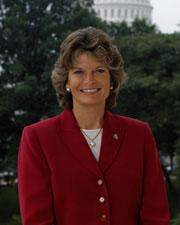
Mr. President, as residents of sparsely populated State with great natural resources but severe poverty in many of its rural areas, Alaskans have engaged in a variety of social and economic exercises…
Mr. President, as residents of sparsely populated State with great natural resources but severe poverty in many of its rural areas, Alaskans have engaged in a variety of social and economic exercises intended to improve the living standard and expand economic opportunities for our most challenged communities.
I rise today to introduce a bill to ensure that one of the most successful of those exercises is allowed to continue. I am pleased to say the measure is also cosponsored by Alaska's senior senator.
The CDQ Community Preservation Act is intended to maintain the participation of all currently eligible communities along the shore of the Bering Sea in Alaska's Community Development Quota program. It is necessary because inconsistencies in statutory and regulatory provisions may require a reassessment of eligibility and the exclusion of some communities from the program. This was not the intent of the original program, nor of any subsequent changes to it. In order to clarify that fact, a legislative remedy is needed.
The Community Development Quota Program began in 1992, at the recommendation of the North Pacific Fishery Management Council, one of the regional councils formed under the Magnuson-Stevens Fishery Conservation and Management Act. Congress gave the program permanent status in the 1996 reauthorization of the Act.
The program presently includes 65 communities within a 50 nautical- mile radius of the Bering Sea, which have formed six regional non- profit associations to participate in the program. The regional associations range in size from one to 20 communities. Under the program, a portion of the regulated annual harvests of pollock, halibut, sablefish, Atka mackerel, Pacific cod, and crab is assigned to each association, which operate under combined Federal and State agency oversight. Almost all of an association's earnings must be invested in fishing-related projects in order to encourage a sustainable economic base for the region.
Typically, each association sells its share of the annual harvest quotas to established fishing companies in return for cash and agreements to provide job training and employment opportunities for residents of the region. The program has been remarkably successful.
Since 1992, approximately 9,000 jobs have been created for western Alaska residents with wages totaling more than $60 million. The CDQ program has also contributed to fisheries infrastructure development in western Alaska, as well as providing vessel loan programs; education, training and other CDQ-related benefits.
The CDQ program has its roots in the amazing success story of how our offshore fishery resources were Americanized after the passage of the original Magnuson Act in 1976. At the time, vast foreign fishing fleets were almost the only ones operating in the U.S. 200-mile Exclusive Economic Zone. American fishermen simply did not have either the vessels or the expertise to participate.
The Magnuson Act changed all that. It led to the adoption of what we called a ``fish and chips'' policy that provided for an exchange of fish allocations for technological and practical expertise. Within the next few years, harvesting fell almost exclusively to American vessels. Within a few years after that, processing almost became Americanized. Today, there are no foreign fishing or processing vessels operating in the 200-mile zone off Alaska, and the industry is worth billions of dollars each year.
The CDQ program helps bring some of the benefits of that great industry to local residents in one of the most impoverished areas of the entire country. It is a vital element in the effort to create and maintain a lasting economic base for the region's many poor communities, and truly deserves the support of this body.
I ask unanimous consent that the text of my bill be printed in the Record.

Mr. President, since the September 11th attacks against our Nation, each of us is more conscious of our individual safety and security. No example hit closer to home than when anthrax-infected…
Mr. President, since the September 11th attacks against our Nation, each of us is more conscious of our individual safety and security. No example hit closer to home than when anthrax-infected letters made their way into Senators' offices. Senators, Representatives and staffers were forced to vacate offices, advised to take strong antibiotics, and faced with the uncertainty of whether they contracted a life-threatening disease.
In response to this vulnerability that is now inherent in our everyday lives, Congress has beefed up law enforcement and intelligence tools to combat terrorism better. The key to fighting terrorism is to target those planning terrorist acts and capture them before they can realize their horrific goals. Our law enforcement communities have utilized the new tools we have provided them to respond in a dedicated and professional way to these new challenges.
Unfortunately, we are beginning to see a number of instances where cruel and depraved individuals have engaged in terrorist hoaxes. For example, people have sent letters containing powder or sugar and a note stating that the recipient has now been infected by anthrax. These hoaxes are more than a bad joke. They require a substantial and costly response--evacuation of buildings, emergency medical tests or treatment, and laboratory action. Hoaxes like these, which mimic terrorist acts, undermine public confidence by spreading panic and fear, and drain valuable resources from Federal, State, and local government agencies which must respond to the hoax.
Under current Federal law, it is a felony to perpetrate certain hoaxes, such as saying there is a bomb on an airplane. It is also illegal to communicate a threat using the facilities of interstate commerce that could cause personal injury to someone. However, because hoaxes related to anthrax or other Federal crimes do not always contain specific threats, they may not be covered by current federal law. The Congressional Research Service has noted that this is a gap within the current Federal code.
Clearly, there is a need for tough legislation to reflect the seriousness of this type of crime. This is why Senators Schumer, Cornyn, Feinstein and I are introducing the Stop Terrorist and Military Hoaxes Act of 2004. The legislation criminalizes conduct that conveys false or misleading information under circumstances where such information may reasonably be believed. The bill covers hoaxes related to biological, chemical, or nuclear weapons and other federal crimes that do not contain specific or express threats.
In addition, this bill criminalizes intentionally false statements concerning the death, injury, capture or disappearance of a member of the United States Armed Forces. During the recent liberation of Iraq, there were several cruel hoaxes played on family members of those who were risking their very lives in the service of our country. Family members sacrifice alongside service men and women who place their lives in danger in the service of our country. Those family members deserve to be treated with respect and should be free from these cruel deceptions. This bill makes sure that these malicious pranks can be punished appropriately.
America is engaged in a war on terrorisms. In addition to protecting our citizens from terrorist acts, we also need to take measures to ensure that our law enforcement resources are not needlessly wasted by responding to these offensive and expensive terrorist hoaxes. I urge my colleagues to support this measure.
Mr. President, today I am pleased to be joined by my colleagues Senators Collins and Snowe to introduce legislation which will rectify a very serious problem affecting veterans in my State and around…
Mr. President, today I am pleased to be joined by my colleagues Senators Collins and Snowe to introduce legislation which will rectify a very serious problem affecting veterans in my State and around the Nation. The bill I am introducing will clarify the treatment of the per diem payments made by the Department of Veterans Affairs, VA, to
support State Veterans Homes across the country.
For several decades, Federal law has required that the VA pay a per diem amount to States to support quality care provided to eligible veterans at qualified State Veterans Homes. This VA per diem, currently about $56 per day for nursing home care and $27 per day for domiciliary care, is intended to assist States in providing the best possible care to those who served in our armed forces.
In Colorado and a number of other States, the availability of the VA per diem is threatened by interpretations of Medicaid rules by the Centers for Medicare and Medicaid Services, CMS. CMS would treat the VA per diem payments as third-party payments, requiring that the entire amount be offset against Medicaid payments. This interpretation would deny residents of State Veterans Homes who receive Medicaid in these states any benefit whatsoever of the VA per diem payments.
I believe this runs contrary to the intent of Congress in establishing the VA per diem payment system. State Veterans Homes are required to meet stringent and costly VA standards for care as a condition for receiving these per diem payments. These standards of care exceed those required by Medicaid, and the VA per diem makes it possible for State Veterans Homes to meet the higher VA standards. Most importantly, this per diem allows our veterans to receive high quality nursing care.
An insistence by CMS on its interpretation would jeopardize the funding balance for many Medicaid-certified State Veterans Homes across the country. The result of the CMS interpretation would be to force State Veterans Homes that do not currently offset the VA per diem payments against Medicaid funding to reduce their standard of care, defer construction of needed new facilities, and possibly close certain State Veterans Homes.
The legislation we are introducing today would simply clarify that the VA per diem payments cannot not be considered to be a third-party liability under Medicaid. It would build on other precedents where Congress wanted to make sure that benefits were received by their intentional recipients, not transferred to the Medicaid program. For example, federal law already includes exceptions for similar payments, such as those made under the Indian Health program.
Our legislation recognizes that the States fund their State Veterans Homes in a variety of different manners. It preserves their flexibility to do so in a way that best serves their veterans, and ensures that no state is forced to lose the benefit of the VA per diem.
I urge my colleagues to support this legislation and move forward with a plan that will enable our State Veterans Nursing Homes to provide the high quality care that our veterans deserve.
I ask unanimous consent that the text of the bill be printed in the Record.
Mr. President, today I am pleased to be joined by my colleagues Senators Collins and Snowe to introduce legislation which will rectify a very serious problem affecting veterans in my State and around…
Mr. President, today I am pleased to be joined by my colleagues Senators Collins and Snowe to introduce legislation which will rectify a very serious problem affecting veterans in my State and around the Nation. The bill I am introducing will clarify the treatment of the per diem payments made by the Department of Veterans Affairs, VA, to
support State Veterans Homes across the country.
For several decades, Federal law has required that the VA pay a per diem amount to States to support quality care provided to eligible veterans at qualified State Veterans Homes. This VA per diem, currently about $56 per day for nursing home care and $27 per day for domiciliary care, is intended to assist States in providing the best possible care to those who served in our armed forces.
In Colorado and a number of other States, the availability of the VA per diem is threatened by interpretations of Medicaid rules by the Centers for Medicare and Medicaid Services, CMS. CMS would treat the VA per diem payments as third-party payments, requiring that the entire amount be offset against Medicaid payments. This interpretation would deny residents of State Veterans Homes who receive Medicaid in these states any benefit whatsoever of the VA per diem payments.
I believe this runs contrary to the intent of Congress in establishing the VA per diem payment system. State Veterans Homes are required to meet stringent and costly VA standards for care as a condition for receiving these per diem payments. These standards of care exceed those required by Medicaid, and the VA per diem makes it possible for State Veterans Homes to meet the higher VA standards. Most importantly, this per diem allows our veterans to receive high quality nursing care.
An insistence by CMS on its interpretation would jeopardize the funding balance for many Medicaid-certified State Veterans Homes across the country. The result of the CMS interpretation would be to force State Veterans Homes that do not currently offset the VA per diem payments against Medicaid funding to reduce their standard of care, defer construction of needed new facilities, and possibly close certain State Veterans Homes.
The legislation we are introducing today would simply clarify that the VA per diem payments cannot not be considered to be a third-party liability under Medicaid. It would build on other precedents where Congress wanted to make sure that benefits were received by their intentional recipients, not transferred to the Medicaid program. For example, federal law already includes exceptions for similar payments, such as those made under the Indian Health program.
Our legislation recognizes that the States fund their State Veterans Homes in a variety of different manners. It preserves their flexibility to do so in a way that best serves their veterans, and ensures that no state is forced to lose the benefit of the VA per diem.
I urge my colleagues to support this legislation and move forward with a plan that will enable our State Veterans Nursing Homes to provide the high quality care that our veterans deserve.
I ask unanimous consent that the text of the bill be printed in the Record.

Mr. President, I want to make a few comments about H.R. 3915 that will be considered by the Senate today. This bill contains two temporary extensions of authority. One that is general, keeping the…
Mr. President, I want to make a few comments about H.R. 3915 that will be considered by the Senate today. This bill contains two temporary extensions of authority. One that is general, keeping the Small Business Administration and its programs operating through April 2, 2004, and another that is specific to the SBA's 504 Loan Guarantee Program, keeping it operational through May 21, 2004.
I support this bill, and am relieved the 504 Loan Guarantee Program will not lose its authority to keep making loans to small businesses that are growing, creating jobs and helping our communities. However, there are other serious problems concerning the SBA's 7(a) Loan Guarantee Program and Women's Business Centers that are urgent and should be addressed before the Senate recesses tonight for a week. I introduced a bill earlier this week, S. 2186, the SBA Emergency Authorization Extension Act of 2004, which sets forth workable solutions for those issues. At that time I urged my colleagues to take immediate action and consider it. Senator Snowe also introduced a bill this week, S. 2196, which addressed the 7(a) Loan Guarantee Program funding shortfall, which I support and would have supported as an amendment to this extension. Like the small business community, I am disappointed that the bigger solution for small business lending is being delayed another couple of weeks.
Some people think a couple of weeks can do no harm. But in the 7(a) Loan Guarantee Program, small businesses caught in the middle of the administration's funding schemes might not make it. And the funding problems will fester because it will operate at a more expensive cost than if we enacted the temporary program changes that the lending and small business communities support and are strongly urging the Congress to adopt. Two weeks could mean about half a billion in lending. I disagree with the administration's tactics and I hope that during
this next brief extension they will work with the Senate and House committees to pass program changes that resolve these issues fairly, effectively and expeditiously. Their plan does not work and the small business and lending communities are opposed to it. We need a plan that does.
I look forward to working with my colleagues to resolve this as soon as possible.
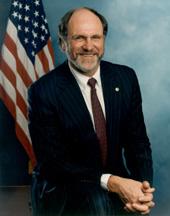
Mr. President, today I am introducing legislation to make India eligible for assistance under the Emergency Plan for AIDS Relief. India is facing a critical moment. An estimated 4.58 million people…
Mr. President, today I am introducing legislation to make India eligible for assistance under the Emergency Plan for AIDS Relief.
India is facing a critical moment. An estimated 4.58 million people are infected with the HIV virus in India and HIV/AIDS has been reported in almost all the states and union territories of the country. The epidemic is spreading rapidly from urban to rural areas and from high- risk groups to the general population. Given India's size and the mobility of its population, there is a serious threat of catastrophe.
India's political leaders, public health officials, non-governmental organizations, and medical and scientific communities have taken important steps to combat HIV/AIDS. India, the world's largest democracy, has skilled governmental and civil society actors who are committed to a new awareness of the AIDS crisis and strategic approaches to combating the disease. But significant gaps remain in the Indian health care system's ability to address the full scope of the crisis. These gaps require immediate and sustained U.S. engagement and contribution of resources.
We must continue to expand the list of eligible countries in recognition of the global nature of this pandemic. We must also accelerate assistance to African and Caribbean countries already included as focus countries. Finally, we must increase overall funding to combat HIV/AIDS. India is but one example of the enormity of the HIV/AIDS epidemic. But it is also an example of the opportunities for America to reach out and find partners in combating this scourge. It is not true that programs to fight AIDS cannot absorb more resources. There is critical and urgent work to be done and committed professionals ready to do it. They just need our help.
I ask unanimous consent that the text of the bill be printed in the Record.
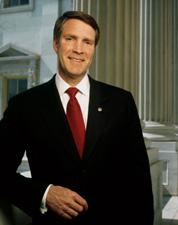
Mr. President, I ask unanimous consent that the Senate now proceed to the consideration of H.R. 3915, which is at the desk. Mr. President, I ask unanimous consent that the bill be read the third time…
Mr. President, I ask unanimous consent that the Senate now proceed to the consideration of H.R. 3915, which is at the desk.
Mr. President, I ask unanimous consent that the bill be read the third time and passed, the motion to reconsider be laid upon the table, and that any statements relating to the bill be printed in the Record.
Show 1 more

Mr. President, I ask unanimous consent that the text of the bill be printed in the Record.
Mr. President, I ask unanimous consent that the text of the bill be printed in the Record.
Bill Text
Latest available legislative text
        [Congressional Bills 108th Congress]
[From the U.S. Government Publishing Office]
[S. 2196 Introduced in Senate (IS)]

2d Session
S. 2196

To amend title 38, United States Code, to clarify that per diem
payments by the Department of Veterans Affairs for the care of veterans
in State homes shall not be used to offset payments that are made under
the medicaid program for the purpose of assisting veterans.

_______________________________________________________________________

IN THE SENATE OF THE UNITED STATES

March 11, 2004

Mr. Campbell (for himself, Ms. Collins, and Ms. Snowe) introduced the
following bill; which was referred to the Committee on Finance

_______________________________________________________________________

A BILL

To amend title 38, United States Code, to clarify that per diem
payments by the Department of Veterans Affairs for the care of veterans
in State homes shall not be used to offset payments that are made under
the medicaid program for the purpose of assisting veterans.

Be it enacted by the Senate and House of Representatives of the
United States of America in Congress assembled,

SECTION 1. TREATMENT UNDER MEDICAID PROGRAM OF DEPARTMENT OF VETERANS
AFFAIRS PER DIEM PAYMENTS TO STATE HOMES FOR VETERANS.

Section 1741 of title 38, United States Code, is amended by adding
at the end the following new subsection:
``(e) Payments to States pursuant to this section shall not be
considered a liability of a third party for any purpose under section
1902(a)(25) of the Social Security Act (42 U.S.C. 1396a(25)).''.
<all>