A bill to provide for the establishment of campaign medals to be awarded to members of the Armed Forces who participate in Operation Enduring Freedom or Operation Iraqi Freedom.

Legislative Activity
Stay on top of the latest movement without scrolling through every action
Read twice and referred to the Committee on Armed Services. (text of measure as introduced: CR S3458)
March 31, 2004
View full timeline
Introduced in Senate
March 31, 2004
Sponsor introductory remarks on measure. (CR S3457-3458)
March 31, 2004
Read twice and referred to the Committee on Armed Services. (text of measure as introduced: CR S3458)
March 31, 2004
Floor Debate
12 membersWhat members said about S. 2262 on the floor
JB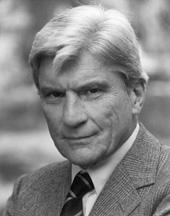 JW
JW RDF
RDF JFK
JFK EMK+7
EMK+7
Floor Debate
12 membersWhat members said about S. 2262 on the floor
Mr. President, I yield myself 6 minutes off of the time on this side, and then the remaining 4 minutes will be reserved for the Senator from Arkansas who is in the Chamber to speak. I know Senator…
Mr. President, I yield myself 6 minutes off of the time on this side, and then the remaining 4 minutes will be reserved for the Senator from Arkansas who is in the Chamber to speak. I know Senator Warner intends to speak as well.
First, I thank the majority leader, the Democratic leader, Senator Warner, and Senator Levin for their leadership in bringing this legislation to the Senate floor today for a vote.
H.R. 3104 is a bill to honor our service men and women in Iraq and Afghanistan with campaign medals that recognize--appropriately recognize, in my view--their service and their sacrifice.
A few days from now we will all honor those who have given their lives in defense of this great Nation. That is, of course, Memorial Day. This year it takes on special meaning since we clearly are engaged in two wars in which we have suffered many losses. Many fathers and mothers, sons and daughters will spend this Memorial Day not with family and friends but instead in Afghanistan or in Iraq. It is for them and their families that I believe we need to pass this legislation.
Over the last 2 weeks, we have been flooded with horrific images of Iraqi prisoners mistreated at the hands of a few soldiers. This set of incidents has cast a dark shadow over the honorable and courageous service of over 2 million men and women in uniform. Today, we have an opportunity to send a strong, unequivocal message of support for our brave young men and women who have served and continue to serve both in Iraq and in Afghanistan.
H.R. 3104 will provide the special recognition to these soldiers that, in my view, is long overdue.
The administration made a decision to award a generic global war on terrorism expeditionary medal to all of the men and women who have served in
those two theaters of war. In my view, that is an effort to essentially practice a one-size-fits-all solution. I think it missed the mark. I think we can do better. This legislation will do better.
A campaign medal, such as is contemplated in this legislation, is different from an expeditionary medal. We can look back into the history of campaign medals and expeditionary medals awarded by our Department of Defense in previous campaigns and see that the campaign medals are reserved for those engaged in actual combat, or duty that is equally hazardous as combat duty, during the operation with armed opposition. That is what our men and women are facing today both in Iraq and Afghanistan. Clearly, service in those two locations warrants the authorization of campaign medals.
I am very pleased to see many of my colleagues have chosen to cosponsor the Senate version of this bill. This bill now has 24 cosponsors, including Senators Lugar, Lott, Landrieu, Inhofe, Gregg, Johnson, Rockefeller, Pryor, Reid, Daschle, Lincoln, Boxer, Durbin, Biden, Akaka, Edwards, Kerry, Clinton, Bayh, Feingold, Nelson, Conrad, Kennedy, Stabenow, Dole, and Byrd. And, of course, I wish to thank the chairman and the ranking member of the Armed Services Committee again for their important leadership in getting this legislation enacted.
Also, I wish to acknowledge the very hard work and good work that was done by Representative Vic Snyder, who was the sponsor of this measure in the House.
This measure we are going to vote on is identical to the bill we introduced in the Senate, and Representative Snyder deserves great credit for his hard work in getting it enacted there.
Mr. President, I am informed there is some additional time. I have been informed we do not expect to start the vote until about 11:30 a.m.
Let me continue for another minute and say that after a particularly dangerous and brutal April, America now mourns the deaths of nearly 800 service men and women in Iraq, as well as 119 in Afghanistan. There have been nearly 3,000 Americans injured in those campaigns.
More than a year after the initial Iraqi invasion, the administration has announced plans to maintain a force of at least 135,000 troops in Iraq through 2005. Despite the assurances we would be able to handle this with an $87 billion supplement through this fiscal year, we now see that is not going to be possible. This is a significant military occupation. It is a significant reconstruction effort. In fact, it is the most significant we have ventured into since World War II. We must not underestimate the importance of the sacrifice these men and women are making.
Mr. President, I ask unanimous consent that I be allowed another 2 minutes.
Mr. President, I concur with that assessment, and ask the additional time between now and 11:30 a.m. be split equally between the two sides.
Mr. President, I will conclude. This legislation and the establishment of these campaign medals will also serve to honor those who will not return home from these conflicts, including those who have fallen from my home State of New Mexico: Army SP James Prittle from Carlsbad, NM; Air Force Special Operations pilot, CPT Tamara Archuleta from Albuquerque, NM, a single mother whose helicopter crashed in Afghanistan; Marine PFC Christopher Ramos of Albuquerque, NM; and Marine Cpl Aaron Austin of Lovington, NM.
These heroes gave their lives for this Nation. This medal will honor that sacrifice as well. The great men and women of our military forces are doing their jobs every day in Iraq and Afghanistan. It is appropriate that we honor them with an award that truly stands for their heroic service. The Iraq and Afghanistan campaign medals will do that.
As I indicated before, I will now yield time to my colleague from Arkansas, and he can take as much time as he would like of that which remains on our side.
Mr. President, I ask unanimous consent the order for the quorum call be rescinded.
Mr. President, how much time remains?
Mr. President, let me take another minute to conclude the discussion. Again, I thank Senator Warner particularly for his leadership in getting this bill up for a vote today, and, of course, Senator Pryor, who was here a few minutes ago to speak; I appreciate his efforts. Of course, the majority leader and Senator Daschle on the Democratic side have both participated in helping do this.
This is an important step for us to take, to honor the brave men and women who are serving our country in distant locations. I have had a similar experience to the one Senator Warner described, talking to service men and women who have returned--in the case of my State, from Afghanistan, the ones I spoke to, 2 weeks ago. They are very proud of what they have done. They have great reason to be proud of what they have done. This awarding of these campaign medals will help us to recognize that.
Let me also indicate my appreciation to David Montotya of my staff for the consistent work he has done trying to move this legislation ahead, both last year and again this year. I think the dedicated efforts of our staffs often go unrecognized. He deserves credit. Trudy Vincent, my staff legislative director, also deserves credit.
Mr. President, I rise today with my colleagues, Senators Inhofe, Landrieu, Lugar, and Lott, to introduce a bill to honor our service men and women in Iraq and Afghanistan who have served and continue…
Mr. President, I rise today with my colleagues, Senators Inhofe, Landrieu, Lugar, and Lott, to introduce a bill to honor our service men and women in Iraq and Afghanistan who have served and continue to serve their country by working for a free, independent, and stable Iraq and a new Afghanistan. These missions have been difficult and the cost has been high; nearly 600 Americans have been killed and almost 3,000 Americans have been injured in Iraq, while more than 500 Americans have been injured and more than 100 U.S. service men and women have been lost in Afghanistan.
More than a year after the initial invasion, nearly 110,000 troops are still stationed in Iraq, working to build a new, stable beacon of freedom in the region. My fellow Senators, the liberation of Iraq is turning out to be the most significant military occupation and reconstruction effort since the end of World War II. We cannot understate the importance of the work being done there today.
The administration's focus on Iraq leaves the mission in Afghanistan incomplete. Despite constant progress there, the fighting is still not over. Recent assassinations of government officials, car bombings, and the lingering presence of terrorist forces and former Taliban fighters force thousands of our troops to stay in-country.
For there courageous efforts, the Department of Defense has decided to award our brave young men and women with the Global War on Terrorism Expeditionary Medal, GWOT, and no other medal. This is despite the fact the GWOT medal is meant for any individual who has served overseas during the war on terror and may have come within a few hundred miles of a combat zone. The dangers of serving in Iraq and Afghanistan are greater; therefore, along with my colleagues, Senators Lott, Landrieu, Inhofe, and Lugar, I propose to correct this mistake by passing legislation authorizing the Iraq and Afghanistan Liberation Medals in addition to the Global War on Terrorism Expeditionary Medal.
While some of us in this body have not shared the administration's view on this war, we are united when it comes to supporting our troops. These young men and women from Active Duty, National Guard, and Reserves are all volunteers and exemplify the very essence of what it means to be a patriot. We believe that what they are doing in Iraq and Afghanistan today differs from military expeditionary activities such as peacekeeping operations or no-fly-zone enforcement.
They continue to serve, even though they do not know when they will return home to family and friends. They continue to serve despite the constant threat to their lives and the tremendous hardships they face.
There is a difference between an expeditionary medal and a campaign medal. We only need to look at an excerpt from U.S. Army Qualifications for the Armed Forces Expeditionary Medal and Kosovo Campaign Medal. In order to receive the Armed Forces Expeditionary Medal, you don't need to go to war. You only need to be ``placed in such a position that in the opinion of the Joint Chief of Staff, hostile action by foreign armed forces was imminent even though it does not materialize.''
To earn the Kosovo Campaign Medal, the standard is higher. A military member must:
Be engaged in actual combat, or duty that is equally hazardous as combat duty, during the Operation with armed opposition regardless of time in the Area of Engagement. Or while participating in the Operation, regardless of time, [the service member] is wounded or injured and required medical evacuation from the Area of Engagement.
Many within the military agree that there is a difference. According to the Army Times, ``Campaign medals help establish an immediate rapport with individuals checking into a unit.'' An expeditionary medal like the GWOT does not necessarily denote combat. A campaign medal is designed to recognize military personnel who have risked their lives in combat.
Campaign medals matter. ``When a Marine shows up at a new duty station, commanders look first at his decorations and his physical fitness score--the first to see where he's been, the second to see if he can hang. They show what you've done and how serious you are,'' said GySgt James Cuneo. ``If you're a good Marine, people are going to award you when it comes time. . . .''
My fellow colleagues, it is time. We must recognize the sacrifice of our young men and women who liberated Iraq, including great Americans like Army SPC Joseph Hudson from Alamogordo, NM, who was held as a prisoner of war. The Nation was captivated as we watched Specialist Hudson being interrogated by the enemy. Asked to divulge his military occupation, Specialist Hudson stared defiantly into the camera and said, ``I follow orders.'' Those of us with sons and daughters were united in worry with Specialist Hudson's family. The entire Nation rejoiced when he was liberated.
We have also asked much from our Reserve and National Guard Forces.
The reconstruction of Iraq would not be possible without the commitment and sacrifice of the 170,000 guardsmen and reservists currently on active duty.
My colleagues, Senators Lott, Landrieu, Inhofe, Lugar, and I are committed to honoring our over 200,000 heroes who liberated Iraq and Afghanistan. We believe that current administration policy does a disservice to our fighting men and women. Therefore we propose, in addition to the GWOT medal, new decorations that characterize the real missions in Iraq and Afghanistan, two that are distinctive and honor their sacrifice, the Iraq and Afghanistan Liberation Medals.
What we do today is not without precedent; Congress has been responsible for recognizing the sacrifice and courage of our military forces throughout history. Congress has had a significant and historically central role in authorizing military decoration. Our Nation's highest military decorations were authorized by Congress, including: the Medal of Honor, the Air Force Cross, the Navy Cross, the Army's Distinctive Service Cross, the Silver Star, and the Distinguished Flying Cross.
We have also authorized campaign and liberation medals similar to what we hope to accomplish with this legislation. A partial list includes the Spanish War Service Medal, the Army Occupation of Germany Medal, the World War II Victory Medal, the Berlin Airlift Medal, the Korean Service Medal, and the Prisoner of War Medal.
The list goes on and on. The great men and women of our military forces are doing their jobs every day in Iraq and Afghanistan. It is time to do our job and honor them with an award that truly stands for their heroic service, the Iraq and Afghanistan Liberation Medals.
I ask unanimous consent that an article from the Army Times and the text of the bill be printed in the Record.
Mr. President, I rise today with my colleagues, Senators Inhofe, Landrieu, Lugar, and Lott, to introduce a bill to honor our service men and women in Iraq and Afghanistan who have served and continue…
Mr. President, I rise today with my colleagues, Senators Inhofe, Landrieu, Lugar, and Lott, to introduce a bill to honor our service men and women in Iraq and Afghanistan who have served and continue to serve their country by working for a free, independent, and stable Iraq and a new Afghanistan. These missions have been difficult and the cost has been high; nearly 600 Americans have been killed and almost 3,000 Americans have been injured in Iraq, while more than 500 Americans have been injured and more than 100 U.S. service men and women have been lost in Afghanistan.
More than a year after the initial invasion, nearly 110,000 troops are still stationed in Iraq, working to build a new, stable beacon of freedom in the region. My fellow Senators, the liberation of Iraq is turning out to be the most significant military occupation and reconstruction effort since the end of World War II. We cannot understate the importance of the work being done there today.
The administration's focus on Iraq leaves the mission in Afghanistan incomplete. Despite constant progress there, the fighting is still not over. Recent assassinations of government officials, car bombings, and the lingering presence of terrorist forces and former Taliban fighters force thousands of our troops to stay in-country.
For there courageous efforts, the Department of Defense has decided to award our brave young men and women with the Global War on Terrorism Expeditionary Medal, GWOT, and no other medal. This is despite the fact the GWOT medal is meant for any individual who has served overseas during the war on terror and may have come within a few hundred miles of a combat zone. The dangers of serving in Iraq and Afghanistan are greater; therefore, along with my colleagues, Senators Lott, Landrieu, Inhofe, and Lugar, I propose to correct this mistake by passing legislation authorizing the Iraq and Afghanistan Liberation Medals in addition to the Global War on Terrorism Expeditionary Medal.
While some of us in this body have not shared the administration's view on this war, we are united when it comes to supporting our troops. These young men and women from Active Duty, National Guard, and Reserves are all volunteers and exemplify the very essence of what it means to be a patriot. We believe that what they are doing in Iraq and Afghanistan today differs from military expeditionary activities such as peacekeeping operations or no-fly-zone enforcement.
They continue to serve, even though they do not know when they will return home to family and friends. They continue to serve despite the constant threat to their lives and the tremendous hardships they face.
There is a difference between an expeditionary medal and a campaign medal. We only need to look at an excerpt from U.S. Army Qualifications for the Armed Forces Expeditionary Medal and Kosovo Campaign Medal. In order to receive the Armed Forces Expeditionary Medal, you don't need to go to war. You only need to be ``placed in such a position that in the opinion of the Joint Chief of Staff, hostile action by foreign armed forces was imminent even though it does not materialize.''
To earn the Kosovo Campaign Medal, the standard is higher. A military member must:
Be engaged in actual combat, or duty that is equally hazardous as combat duty, during the Operation with armed opposition regardless of time in the Area of Engagement. Or while participating in the Operation, regardless of time, [the service member] is wounded or injured and required medical evacuation from the Area of Engagement.
Many within the military agree that there is a difference. According to the Army Times, ``Campaign medals help establish an immediate rapport with individuals checking into a unit.'' An expeditionary medal like the GWOT does not necessarily denote combat. A campaign medal is designed to recognize military personnel who have risked their lives in combat.
Campaign medals matter. ``When a Marine shows up at a new duty station, commanders look first at his decorations and his physical fitness score--the first to see where he's been, the second to see if he can hang. They show what you've done and how serious you are,'' said GySgt James Cuneo. ``If you're a good Marine, people are going to award you when it comes time. . . .''
My fellow colleagues, it is time. We must recognize the sacrifice of our young men and women who liberated Iraq, including great Americans like Army SPC Joseph Hudson from Alamogordo, NM, who was held as a prisoner of war. The Nation was captivated as we watched Specialist Hudson being interrogated by the enemy. Asked to divulge his military occupation, Specialist Hudson stared defiantly into the camera and said, ``I follow orders.'' Those of us with sons and daughters were united in worry with Specialist Hudson's family. The entire Nation rejoiced when he was liberated.
We have also asked much from our Reserve and National Guard Forces.
The reconstruction of Iraq would not be possible without the commitment and sacrifice of the 170,000 guardsmen and reservists currently on active duty.
My colleagues, Senators Lott, Landrieu, Inhofe, Lugar, and I are committed to honoring our over 200,000 heroes who liberated Iraq and Afghanistan. We believe that current administration policy does a disservice to our fighting men and women. Therefore we propose, in addition to the GWOT medal, new decorations that characterize the real missions in Iraq and Afghanistan, two that are distinctive and honor their sacrifice, the Iraq and Afghanistan Liberation Medals.
What we do today is not without precedent; Congress has been responsible for recognizing the sacrifice and courage of our military forces throughout history. Congress has had a significant and historically central role in authorizing military decoration. Our Nation's highest military decorations were authorized by Congress, including: the Medal of Honor, the Air Force Cross, the Navy Cross, the Army's Distinctive Service Cross, the Silver Star, and the Distinguished Flying Cross.
We have also authorized campaign and liberation medals similar to what we hope to accomplish with this legislation. A partial list includes the Spanish War Service Medal, the Army Occupation of Germany Medal, the World War II Victory Medal, the Berlin Airlift Medal, the Korean Service Medal, and the Prisoner of War Medal.
The list goes on and on. The great men and women of our military forces are doing their jobs every day in Iraq and Afghanistan. It is time to do our job and honor them with an award that truly stands for their heroic service, the Iraq and Afghanistan Liberation Medals.
I ask unanimous consent that an article from the Army Times and the text of the bill be printed in the Record.
Mr. President, I certainly will not object, but we should clarify that the vote will now go off at 11:30 a.m. Therefore, why don't we equally divide the time and the Senator from New Mexico take such…
Mr. President, I certainly will not object, but we should clarify that the vote will now go off at 11:30 a.m. Therefore, why don't we equally divide the time and the Senator from New Mexico take such time as he wishes, and our distinguished colleague from Arkansas wishes to speak. I do not think there is any rush. The Senator can take the time he wishes.
Mr. President, I express my appreciation to Senator Bingaman and Senator Pryor and acknowledge our colleague in the House, Mr. Snyder. I would like to add to that Congressman Ike Skelton. He talked to me about it. He feels very strongly. He is a marvelous man. He is the ranking member of the House Armed Services Committee.
So I think this is a splendid initiative. I strongly urge Members of this Senate to support it. It is H.R. 3104, the act to provide for the establishment of separate campaign medals for those uniformed services participating in Operation Enduring Freedom and Operation Iraqi Freedom.
The bill before us passed the House in late March by a vote of 423 to 0. During the markup of the Defense Authorization Act for fiscal year 2005 on May 6, the committee unanimously decided to include the text of this provision in the bill as section 542. At the same time, in order to expedite its enactment, the committee also voted favorably to report out this bill. So we covered it in both ways in the Armed Services Committee, again showing our strong support.
I will touch on a little bit of history. Going back to World War II, we had a campaign medal called the Asiatic/Pacific Campaign Medal, and that covered all of the operations in the Pacific region. There was another separate medal for the Philippine campaign, to my recollection, but basically it was one to cover the many actions in the Pacific. Likewise, a second was the European/African/Middle Eastern Campaign Medal awarded to those who served between 1941 and 1946, which covered all of the operations in those three theaters.
There was a third medal which was sort of a medal that covered those who saw service, but their training and other duties did not require them to go overseas. They were largely in the continental limits of the United States and participated in actions along the coastlines of America, the Atlantic side, and, of course, the Pacific side.
Then when we came down to the campaigns in Korea, there was the Korean Service Medal given from 1950 to 1954. My distinguished colleague, Senator Bingaman, worked on a slight revision for the qualifications, which I supported, expanding the period of time, which I thought was a wise decision.
Then when we came down to the question of the service in Vietnam, again, we had the Vietnam Service Medal. So there are many precedents for this type of action regarding the very important recognition of the individuals who participate.
These particular categories of decorations indicate the geographic area where that individual saw service during the periods of conflict. Through experience I have found that the men and women of the Armed Forces--again, I say with the deepest humility I was entitled to the Korean Service Medal for very modest service--but I remember this weekend, as other Members do, where we traveled back to our States to seek out those who saw service in Iraq, and I met with six individuals in connection with a graduation speech. They had been reservists at this small college. They had been called back into active duty, and coincidentally with my visit they had just gotten home from their year obligation of service in Iraq.
The first question they asked me was, What sort of recognition do we get for service over there? Now, two of them had been wounded and, of course, received the Purple Heart, but they were anxious to know was recognition forthcoming. That is why I have joined in total support of this effort to bring to the attention of those people in this country the remarkable service that has been performed in both these theaters of operation in the past year or so.
So I strongly support this bill. The superb service rendered by our Nation's fighting forces since September 11 fully warrants the establishment of campaign medals for service in Operation Enduring Freedom and Operation Iraqi Freedom. I urge all of my colleagues to vote for it.
I again thank those who have taken a leadership role, our distinguished colleagues Senators Bingaman and Pryor, and the two individuals on the House side.
I yield the floor, and I suggest the absence of a quorum.
Mr. President, I ask unanimous consent that I can proceed for a minute or two in a colloquy with my distinguished friend from Nevada.
If I could have a brief colloquy, the leadership needs to focus on working with Senator Levin and myself, as we always do each year on this bill. We are hopeful to finish this bill this week. I think that is shared by the other side of the aisle.
Our Members are going back for the Memorial Day weekend, and the provisions in this bill are provisions that relate to so many of the men and women in the Armed Forces with whom they will undoubtedly be associating over the course of this weekend. It is definitely in the interest of Members to move forward on this bill.
While we have a hearing in the Armed Services Committee tomorrow morning on the questions related to prison abuse, the bill is going forward. Members of our committee will be in the Senate intermittently as the hearing is going on. That will not in any way, I hope, be viewed as an impediment to forward progress.
I, personally, am willing to stay here as long into the evenings as desired by our leadership to get this done. In years past, my distinguished colleague from Nevada has been most helpful in moving this piece of legislation.
I thank my distinguished colleague. I emphasize tomorrow morning's hearings will not interfere with progress on the bill. We have three of our combatant commanders, coincidentally, in Washington for a variety of reasons.
The letter Senator Levin and I sent to the Secretary of Defense scheduling additional witnesses offered the option of a teleconference hearing, thinking they would not be back, but we are fortunate they have returned for not only this hearing but a wide range of additional duties they are performing in Washington by way of consultation. That will not be an impediment. We will move forward tomorrow as scheduled with our work on the committee.
Mr. President, we are prepared to move ahead.
I ask for the yeas and nays.
Mr. President, today I am very pleased to be joined by my colleague, Senator Alexander, in introducing legislation to draw attention to the horrifying situation in northern and eastern Uganda. When…
Mr. President, today I am very pleased to be joined by my colleague, Senator Alexander, in introducing legislation to draw attention to the horrifying situation in northern and eastern Uganda.
When most of my colleagues think of Uganda, they probably think, quite rightly, of Uganda's inspiring example of how a concerted effort on the part of government and civil society can save lives in the fight against HIV/AIDS. Or perhaps they recall the brutal history of the Amin era, and reflect on the extraordinary progress that the Ugandan people have made in closing that chapter of their history and rebuilding their country. Today, so much of Uganda is vibrant and exciting. A lively debate about the pace and depth of democratization has been underway for years. Ugandan leaders, including civil society leaders, work to fight against the insidious influence of corruption, just as leaders here in our country do. Ugandan officials devote time and energy to fostering a climate the encourages enterprise and increased trade and investment so that the next generation of Ugandans might know even more progress. And importantly Uganda is a strong partner in cooperating with the United States and with the rest of the vast global coalition committed to fighting international terrorist networks.
It is in part because there is so much that is positive and promising about Uganda and about our relationship with Uganda that the situation in northern and eastern Uganda is so very shocking. For more than 17 years, a conflict has raged between the Lord's Resistance Army and the Government of Uganda. All conflict comes with costs, but this one has been particularly atrocious. The LRA's campaign has been characterized by the forced abduction of thousands of Ugandan children--possibly over 25,000 children. These children have been terrorized, tortured, forced to participate in extraordinarily brutal acts, pressed into service as soldiers and used as cannon fodder, and forced into sexual servitude. Throughout the region, about 1.4 million people are displaced, often
forced into camps by the government. They cannot plant their crops, they cannot support themselves, and insecurity makes it difficult to get humanitarian assistance to these populations. Acute malnutrition is widespread, sanitary conditions often do not meet even minimal standards.
Worse, often these camps have insufficient protection, and the LRA has targeted these civilian communities of the displaced. Just last month, a displaced persons camp was attacked by the LRA, and in a 3- hour period, some 200 unarmed civilians were hacked, shot, and burned to death. Many fear that targeting of civilians will only increase with the government's efforts to arm and train local defense forces, and local leaders warn of the potential for these forces to take the form of ethnic militias, harkening back to some of the worst days of Uganda's history.
Reputable human rights organizations have reported disturbing abuses committed by Ugandan security forces in the region, and an absence of reliable mechanisms for holding those responsible to account. The recent history of Ugandan military adventures in the Democratic Republic of the Congo, particularly in Ituri, does not inspire confidence. Thankfully, Uganda has withdrawn from the DRC. But lingering questions about the military's commitment to basic human rights standards remain. I believe that the Ugandan military and the Ugandan government want to answer those questions definitively, and to reaffirm their commitment to developing professional and responsible forces. But pretending that these questions and concerns do not exist is not in the interest of Ugandans, it is not in the interest of Americans, and it is not in the interest of the kind of solid, frank, genuine partnership that I believe we all wish to cultivate with Uganda.
The Women's Commission for Refugee Women and Children reports that at least 50,000 people--the majority of them children an adolescents--flee their homes nightly in search of secure places to stay until dawn. Dusk brings seemingly endless lines of children walking into town centers from homes that are often miles away, sleeping en masse in makeshift shelters if they are very lucky, sleeping on the streets where they are extremely vulnerable to exploitation if they are not. This is not something that happens occasionally. This has become a nightly ritual, a way of life, for the civilians caught up in this nightmare. Children, some of whom have been abducted and have escaped only to be abducted again, know much about fear. But they know little about school. They know little about safety. They know very little about the promise of a better future. And the entire structure of their community has been shattered.
The human tragedy is devastating and the implications are quite serious. If Sudan is continuing to support the LRA, I am concerned about what this tells us about the nature of the Sudanese regime. I am troubled by the prospect that some will, for their own purposes, cast the conflict in northern and eastern Uganda in purely ethnic terms, lumping civilians who have been victimized in with the LRA forces responsible for their suffering. I worry about the potential for regional fractures when one part of the country lives in such a different world from the rest, enjoying none of the stability and development that we all so admire. I want Uganda to succeed. I want the volume of positive news to increase. And that means that we must address this serious issue frankly today.
This legislation asks the administration to report to Congress on a number of issues relating to the situation in northern and eastern Uganda. I ask for these reports because I certainly do not have all of the answers. But I know enough about the problem to know that these reports will help the Congress to make informed decisions about how to proceed in our relationship with Sudan and about how to most effectively help the people of northern and eastern Uganda.
Once again, I thank my colleague from Tennessee for joining me in this effort. I urge my colleagues to support this legislation.
Show 8 more
Mr. President, today as ranking member of the Committee on Small Business and Entrepreneurship, I offer the Women's Business Center Safeguard Act, legislation to fix a funding gap that exists for the…
Mr. President, today as ranking member of the Committee on Small Business and Entrepreneurship, I offer the Women's Business Center Safeguard Act, legislation to fix a funding gap that exists for the most experienced meritorious women's business centers.
I would first like to express my sincere disappointment that the Republican majority refused to include the bipartisan women's business center compromise that was agreed to by Chair Snowe and the bipartisan leadership of the House Small Business Committee, and, in the best interest of women business owners across the country, I urge them to reconsider.
I also want to comment on the Bush administration's proposals to eliminate experienced, efficient, and effective women's business centers in favor of new, untested, and inexperienced centers. Moving forward with the administration's proposal and failing to correct this funding gap immediately would jeopardize women's business centers in 39 States and eliminate assistance for thousands of women in business. While, as my bill demonstrates, I support opening new centers to help women entrepreneurs who do not currently have access to this important assistance, this should only occur when the existing centers, whether in their initial or a later funding period, are fully funded. The administration's policy to sacrifice successful, experienced centers in the interest of opening new centers is unwarranted and unwise. Women entrepreneurs and their businesses are critically important to our economy and to U.S. job creation, and women's business centers help them succeed. I intend to continue to advocate on their behalf.
This legislation contains a small adjustment to the Women's Business Center program that updates an outdated funding formula, without added cost to the Treasury. The adjustment changes the portion of funding allowed for women's business centers in the sustainability part of the program to keep up with the increasing number of centers that will need funding this fiscal year. In short, this change directs the SBA to reserve 54 percent of the appropriated funds for the sustainability centers, instead of 30 percent, which will allow for full funding of the most experienced centers, while still allowing for new centers and protecting existing ones.
Currently there are 88 women's business centers. Of these, 35 are in the initial grant program and 53 will have graduated to the sustainability part of the program in this funding cycle. These sustainability centers make up more than half of the total women's business centers, but under the current funding formula are only allotted 30 percent of the funds. Without the change to 54 percent, all grants to sustainability centers could be cut in half--or worse, 23 experienced centers could lose funding completely. Cutting funding for these, our most efficient and successful centers, would not only be detrimental to the centers themselves, but also to the women they serve, to their local communities, to their States, and to the national economy.
As the author of the Women's Business Centers Sustainability Act of 1999, I can tell you that when the bill was signed into law, it was Congress's intent to protect the established and successful infrastructure of worthy, performing centers. The law was designed to allow all graduating Women's Business Centers that meet certain performance standards to receive continued funding under sustainability grants. This approach allows for new centers to be established--but not by penalizing those that have already demonstrated their worth. It was our intention to continue helping the most productive and well-equipped women's business centers, knowing that demand for such services was rapidly growing.
Today, with women-owned businesses opening at one-and-a-half times the rate of all privately held firms, the demand and need for women's business centers is even greater. Until Congress makes permanent the Women's Business Center Sustainability Pilot Program, as intended in Senate-passed legislation, an extension of authority and increase in sustainability funds is vital--not only to the centers themselves, but to the women's business community and to the millions of workers employed by women-owned businesses around the country.
This bill is necessary to continue the good work of SBA's Women's Business Center network, and I urge all of my colleagues to support it and its inclusion as part of any extension of SBA programs. I ask that the full text of this bill be printed in the Record.
The bill follows.
Mr. President, it is a privilege to join my colleagues in introducing the Eliminate Colorectal Cancer Act of 2004. I especially commend Senator Roberts for his leadership, assistance, and support on…
Mr. President, it is a privilege to join my colleagues in introducing the Eliminate Colorectal Cancer Act of 2004. I especially commend Senator Roberts for his leadership, assistance, and support on this important legislation. This bipartisan bill is being introduced on the final day of National Colorectal Cancer Awareness Month, as a sign of our intention to do all we can to see that more effective action is taken as soon as possible to combat this deadly disease. Our goal in this is to give every American with health insurance the right to access a full range of screening tests for colorectal cancer.
The statistics are staggering. Colorectal cancer is the second leading cause of cancer deaths among men and women in America. Last year, 148,000 people were diagnosed with colorectal cancer, and 56,000 mothers, fathers, daughters, and sons died from the disease. Tragically these deaths are taking place despite the fact that this form of cancer is curable 90 percent of the time if detected early.
We know that screening can discover this cancer early, in fact, so early that growths can be identified and removed before they become cancerous. For no other disease are the guidelines for screening better defined and nationally recognized as the best way to prevent deaths from this cancer.
Screening for colorectal cancer will save lives, and it will also avoid thousands of dollars in later treatment costs for each patient. The Institute of Medicine estimated that such screenings cost less than 1 percent of later treatment for this cancer. Screening for colorectal cancer is obviously the right thing to do, and it is also the cost- effective thing to do.
The real tragedy is that fewer than half of those who fit the guidelines for screening are actually screened within the right timeframes, if at all. As a result, only 37 percent of colorectal cancers are diagnosed at the early, most curable stages.
Many citizens are aware, at least vaguely, that they should probably be screened, but they can't afford it, because it is not covered by their health insurance. In our view, no American should be denied access to these lifesaving screening procedures simply because their health insurance company will not pay for it.
Every American with insurance should have access to screening procedures that will prevent cancer. By requiring insurers to cover colorectal cancer screening, we will save thousands of lives each year, and save money too.
Some argue that it is wrong to require insurers to cover a test for a specific disease. Yet the evidence is clear that screening makes colorectal cancer preventable, treatable, and beatable.
National Colorectal Cancer Awareness Month has brought new attention to the fact we can eliminate a disease that causes immeasurable suffering and sadness in the lives of millions of Americans. With this legislation, we can save hundreds of thousands of lives over the next 5 years.
The need is clear and so is the solution. As National Colorectal Cancer Awareness Month comes to a close, let us do the right thing and work together to approve the Eliminate Colorectal Cancer Act of 2004.
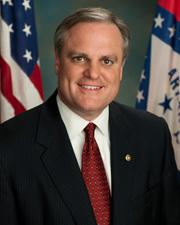
Mr. President, I rise to indicate my full support for the passage of this legislation, H.R. 3104, which requires the President to establish separate campaign medals for service members who…
Mr. President, I rise to indicate my full support for the passage of this legislation, H.R. 3104, which requires the President to establish separate campaign medals for service members who participate in Operation Enduring Freedom in Afghanistan and Operation Iraqi Freedom. My good friend and colleague, Congressman Vic Snyder of Arkansas, has worked tirelessly to pass this measure in the House. Congressman Snyder is a man of character and conviction, and he has worked to develop a bill that rightly recognizes the service of our men and women in Operation Iraqi Freedom and Operation Enduring Freedom.
This bill truly is a credit to his leadership and his ability, and once again he is demonstrating his effectiveness in the Congress.
I am a cosponsor of S. 2262, the Senate companion measure offered by Senator Bingaman, who has also shown great leadership on this issue. I want to acknowledge that and thank him for championing this measure in this distinguished body.
This is a solid measure. The Senate Armed Services Committee, whose chairman is in the Chamber today, Senator John Warner, my distinguished colleague from Virginia, has shown tremendous leadership over the last several months and even over the last years as chairman of the Senate Armed Services Committee. The committee has passed identical language in the Defense authorization during the committee markup. The committee also reported favorably H.R. 3104.
This bill was not intended to replace the administration's Global War on Terrorism Expeditionary Medal and the Global War on Terrorism Service Medal. Instead, it complements the Global War on Terrorism Medals by providing additional separate campaign medals that would be awarded to qualified service members.
As we view and read about the difficulties that our troops are facing in Iraq, we see the camaraderie that exists between people who have served in the same war. There is definitely a unique bond. Separate campaign medals for Operation Iraqi Freedom and Operation Enduring Freedom honor those two distinct and separate military campaigns.
Separate campaign medals provide our men and women in uniform who serve in these operations with tangible acknowledgment of their duty to their country. I think this humble token of acknowledgment is the least we can do, and I urge my colleagues to support this very important bill.
I yield the floor.
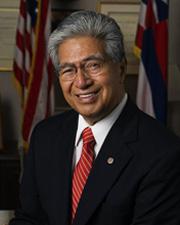
Mr. President, I rise today as a proud cosponsor to express my support of legislation introduced by Senators Bingaman, Inhofe, Landrieu, and Lugar which would establish separate campaign medals to be…
Mr. President, I rise today as a proud cosponsor to express my support of legislation introduced by Senators Bingaman, Inhofe, Landrieu, and Lugar which would establish separate campaign medals to be awarded to those members of the Armed Forces who participate in Operation Enduring Freedom, OEF, and Operation Iraqi Freedom, OIF.
Campaign medals in the United States have a long history and date back to George Washington's time when he received a gold medal from Congress for the recovery of Boston on March 17, 1776. By 1907, members of the Army were wearing newly issued campaign medals, and by 1908, the Navy and Marine Corps began to recognize exemplary service with campaign medals.
During World War II a series of area campaign medals were authorized for service in the American Theater, the Asiatic-Pacific Theater, and the European-African-Middle Eastern Theater of the war. These medals were the same for all services and inaugurated a trend that exists today by recognizing the valor and service of military members involved in specific difficult deployments.
I had the privilege of traveling to Iraq and Afghanistan in March 2004 where I met many of our men and women proudly serving our nation. It was an honor for me to witness their dedication to duty and country. While our Nation is engaged in a global war on terrorism, it is clear that our soldiers, sailors, airmen, and marines are engaged in distinct operations in Afghanistan and Iraq. Some of them have served in both operations and deserve separate medals.
Campaign medals were specifically designed to recognize the service of military members in specific operations during a period of active hostilities. Service men and women deployed in Iraq and Afghanistan deserve this distinctive honor. I fully support this bill which would establish campaign medals for members of the Armed Forces who participate in Operation Enduring Freedom or Operation Iraqi Freedom.

I agree we need 2 minutes on our side, also. We do not need the time now. Mr. President, through you to the distinguished Senator, first, on behalf of the people of the State of Nevada, and I think I…
I agree we need 2 minutes on our side, also.
We do not need the time now.
Mr. President, through you to the distinguished Senator, first, on behalf of the people of the State of Nevada, and I think I speak for the country, the way the Senator has handled this committee with Senator Levin during this very difficult time has been admirable. The Senator is my stereotype of the Senate. The Senator is a proud member of the Republican Party, yet the Senator has the wisdom and the experience to be able to set those partisan desires to one side. That is good for the country. The Senator has certainly indicated that during the past few days. We respect the Senator for that.
Mr. President, we will be happy to cooperate with the distinguished chairman in attempting to finish this bill this week. It is a big ``ask,'' because we have on our side, and the Senator has on their side, Members offering amendments. I see the distinguished junior Senator from Mississippi is shopping an amendment. We have a number of bipartisan amendments being talked about.
We are in the mode of wanting to cooperate. We understand the importance of this legislation. It may be very difficult to finish. We have Tuesday, we have Wednesday, we have Thursday, and Friday.
As the Senator knows, this is the Friday before the Memorial Day recess. The Senator is more experienced than I, but come Thursday night, Friday morning, Members will have parades and things to do so it will be very difficult to finish this bill. However, the Senator should understand that on this side we will cooperate in any way we can to finish the bill.
I announce that the Senator from Hawaii (Mr. Inouye) and the Senator from Massachusetts (Mr. Kerry) are necessarily absent.
I move to lay that motion on the table.
The motion to lay on the table was agreed to.
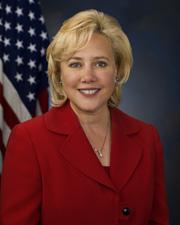
Mr. President, I rise today to support this legislation, as it recognizes America's fighting men and women serving today in Iraq and Afghanistan. These soldiers, sailors, airmen, and marines are…
Mr. President, I rise today to support this legislation, as it recognizes America's fighting men and women serving today in Iraq and Afghanistan. These soldiers, sailors, airmen, and marines are serving their country, in harms way, in two distinct theaters, and it is time that we recognize them appropriately.
The armed forces of this country have defended us valiantly for the last two hundred and twenty nine years. When our Nation has been challenged, each generation has risen to the occasion. And I do need to inform anybody in this chamber that the current generation has done the same, and that they are fighting valiantly in Iraq and Afghanistan. America knows all too well that many of our troops have given what President Lincoln called the ``last full measure of devotion.''
The generation that fought in Vietnam was given a medal for their service, as were the men and women who served in Korea. The generation that fought in World War II was awarded with a medal commemorating the victory, as well as service in the Pacific, European/African, and American theaters. And today we bestow the same honors upon the current generation that their fathers and grandfathers received.
This legislation is the right thing to do, and I am proud to join my colleague, Senator Bingaman, in this effort.
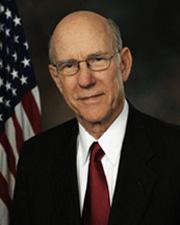
Mr. President, I ask unanimous consent that the following bill, the Eliminate Colorectal Cancer Act, be printed in the Record.
Mr. President, I ask unanimous consent that the following bill, the Eliminate Colorectal Cancer Act, be printed in the Record.
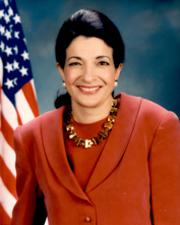
Mr. President, I ask unanimous consent that the bill be printed in the Record.
Mr. President, I ask unanimous consent that the bill be printed in the Record.
Show 1 more
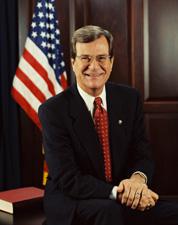
I move to reconsider the vote.
I move to reconsider the vote.
Bill Text
Latest available legislative text
        [Congressional Bills 108th Congress]
[From the U.S. Government Publishing Office]
[S. 2262 Introduced in Senate (IS)]

2d Session
S. 2262

To provide for the establishment of campaign medals to be awarded to
members of the Armed Forces who participate in Operation Enduring
Freedom or Operation Iraqi Freedom.

_______________________________________________________________________

IN THE SENATE OF THE UNITED STATES

March 31, 2004

Mr. Bingaman (for himself, Mr. Inhofe, Ms. Landrieu, and Mr. Lugar)
introduced the following bill; which was read twice and referred to the
Committee on Armed Services

_______________________________________________________________________

A BILL

To provide for the establishment of campaign medals to be awarded to
members of the Armed Forces who participate in Operation Enduring
Freedom or Operation Iraqi Freedom.

Be it enacted by the Senate and House of Representatives of the
United States of America in Congress assembled,

SECTION 1. MILITARY CAMPAIGN MEDALS TO RECOGNIZE SERVICE IN OPERATION
ENDURING FREEDOM AND OPERATION IRAQI FREEDOM.

(a) Requirement.--The President shall establish a campaign medal
specifically to recognize service by members of the Armed Forces in
Operation Enduring Freedom and a separate campaign medal specifically
to recognize service by members of the Armed Forces in Operation Iraqi
Freedom.
(b) Eligibility.--Subject to such limitations as may be prescribed
by the President, eligibility for a campaign medal established pursuant
to subsection (a) shall be set forth in uniform regulations to be
prescribed by the Secretaries of the military departments and approved
by the Secretary of Defense or in regulations to be prescribed by the
Secretary of Homeland Security with respect to the Coast Guard when it
is not operating as a service in the Navy.
<all>