NOPEC
Legislative Activity
Stay on top of the latest movement without scrolling through every action
Placed on Senate Legislative Calendar under General Orders. Calendar No. 474.
April 22, 2004
View full timeline
Introduced in Senate
April 1, 2004
Sponsor introductory remarks on measure. (CR S3569)
April 1, 2004
Read twice and referred to the Committee on the Judiciary. (text of measure as introduced: CR S3569-3570)
April 1, 2004
Committee on the Judiciary. Ordered to be reported without amendment favorably.
April 22, 2004
Committee on the Judiciary. Reported by Senator Hatch without amendment. Without written report.
April 22, 2004
Placed on Senate Legislative Calendar under General Orders. Calendar No. 474.
April 22, 2004
Floor Debate
20 membersWhat members said about S. 2270 on the floor
 EFH
EFH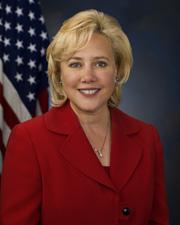 MLL
MLL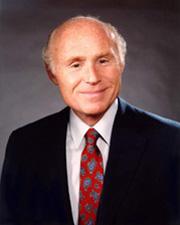 HK
HK RJDMD+15
Floor Debate
20 membersWhat members said about S. 2270 on the floor
Mr. President, less than 1 year ago, we wrapped up work on the port security bill that was signed into law as the Maritime Security Act of 2002, MTSA. That act mandated and outlined changes that are…
Mr. President, less than 1 year ago, we wrapped up work on the port security bill that was signed into law as the Maritime Security Act of 2002, MTSA. That act mandated and outlined changes that are needed to shore up security in our ports, and established for the first time a system to coordinate, plan and implement port security at U.S. seaports. While this was landmark legislation, much still needs to be done with respect to the implementation of the requirements mandated by this law.
I am very dissatisfied with the current Administration's disinterest in paying for port security, and would point out that we are approaching a crisis, as Federal mandates are being rolled out for security without Federal support. I have tried over and over to focus the attention of the Administration on this crucial need and pushed to no avail in the Senate to get the resources necessary to address this problem. But to date, I have gotten little support. In addition to appropriating much needed funds for port security, it has become apparent that keeping up with security needs at our ports is an ever evolving task, and that we may have to refocus our efforts and push harder to ensure that we coordinate our policies and maximize the limited resources that we have in this area.
Today, in order to keep up with these needs, I am introducing the ``Maritime Transportation Security Act of 2004'', along with Senator McCain, and Senator Breaux. I am pleased to have worked on this with Senator McCain, the Chairman of our Committee, as I often remark, while he has no coastline, he has worked with those of us who do have ports to work on these crucial port security issues. I am also pleased to introduce this legislation with Senator Breaux, for he has truly been one of the leading advocates of the importance of maritime shipping and the merchant marine in the U.S. Senate. He has done invaluable work for us on the Commerce Committee, and is a true expert in the field. He will be sorely missed for his expertise on all maritime issues, although I am sure, that in the future, he will still be the Captain of some small boat, yacht, or maybe even a ship.
Even though the Coast Guard, Customs and other agencies charged with the implementation of these measures have aggressively taken initial steps necessary to set up our future structure for seaport security there is still much to do, and effective action needs to occur to help coordinate and crystallize security policies and objectives. The Maritime Transportation Security Act of 2004 would attempt to mandate a coordinated Federal approach to several areas of concern in port security. It would also attempt to set performance standards for certain areas in port security and add a few enhancements to last year's legislation. Most importantly the bill would require a user fee to be established to help pay for the port security mandates.
Specifically, this bill would impose in rem liability to secure payment of penalties and fines under the Act and to help ensure compliance with the security requirements imposed by the MTSA. The bill would also include provisions to increase security in waterside cargo areas, and ensure that cargo contents of imported marine cargo containers would be required to be cleared within 5 days of entering a U.S. port, or alternatively removed after 5 days without being cleared, to a regulated warehouse where it would be opened and reviewed to verify its contents. This would in no way change any claim to possession of the goods. Importantly, the bill would require DHS to evaluate the policies and practices of sealing empty containers. According to the Federal Maritime Commission, over 4 million containers were imported into the United States empty. At a recent hearing, a representative from the ILWU longshoremen's union pointed out that treatment of empties and the sealing practices of these containers varied from locale to locale. This bill would require an analysis of current practices at U.S. ports in order to determine what steps need to occur in order to make sure that the transport of empty containers does not present a threat of terrorism, and whether a Federal policy is justified in this area.
The bill would require the Administration to produce a coordinated plan for collecting, analyzing, and disseminating maritime intelligence information collected by Federal agencies on ships, cargo, crew members and passengers. This intelligence is used to determine which ships, cargo, or crew warrant further inspection. This section of the bill requires further development of a maritime intelligence system to collect and analyze information concerning the crew, passengers and cargoes carried on vessels operating in waters under the jurisdiction of the United States. This mandate essentially restates existing law since it appears that the agencies have actually grown further apart since the passage of the Maritime Transportation Security Act. The provision in this bill would require a plan on how the Administration will coordinate collection and analysis of maritime information, and how agency personnel might be co-located to maximize resources and coordinate analysis. This plan must also indicate when long range vessel tracking will be integrated into this intelligence information. Additionally, the plan would require the government to analyze private sector resources to evaluate how they could be used to help monitor and differentiate legitimate moves of trade from those actions and players that are more suppositious. The Federal Government does not have a lot of experience monitoring commercial maritime activity, and I believe they will have to employ private sector expertise to assist in this endeavor.
The report shall also consider the abilities of the Department of Navy to collect and analyze commercial maritime information. The U.S. Navy probably has the most resources dedicated to the evaluation of commercial shipping activities, but are precluded from sharing this information. In light of our need for better information on commercial shipping, this policy has to be reevaluated. A maritime intelligence system needs to be set up to work together so that Federal agencies, State, local and the private sector can coordinate their law enforcement activities. Maritime intelligence on commercial ocean shipping is currently gathered by the Coast Guard, Customs, INS, and other agencies such as the Federal Maritime Commission under separate systems. Only the Coast Guard and the Navy currently work together. We lag far behind in this area, and each agency is operating independent of others. We are not getting the full picture of what is happening out there. It is crucial that we have the best information available so that we can target our relatively limited resources with maximum efficiency. Further, the information has to be disseminated in a fashion to maximize its utility, while still protecting that information which needs to be kept confidential. Collection and analysis of commercial maritime information is a key element of our port security that needs more focus and has to be addressed if we are to adequately protect our Nation.
Importantly, the bill will require the Administration to come up with cargo security plans to evaluate targeting systems to determine whether they are effective in deterring and protecting against potential acts of terrorism from cargo. In the event that targeting is inadequate protection, DHS would be required to increase the amount of cargo being non-intrusively inspected or x-rayed by two over the next year. The bill would also require the consolidation of intermodal cargo security programs that have the same security goals while establishing criteria and
performance goals for these security programs, which are currently operating completely independent of each other, and require certain other cargo security program enhancements. Voluntary cargo security programs are not the answer to the important problem of securing our Nation from terrorist attacks. Firm standards and goals must be in place to ensure that items that we know we don't want in marine containers are not actually in marine containers. The legislation will also require a report on the amount of actual inspections that are being done at foreign seaports.
While the Container Security Initiative was rolled out with great fanfare to work with foreign ports to inspect cargo before they get to U.S. ports, the question remains whether we are actually getting much bang for the buck. The fundamental question that needs to be addressed is whether foreign nations have been willing to use their security screening equipment for our benefit, and to what degree have they been willing to screen cargo for the benefit of our Nation. The legislation will require a report to determine whether this program needs adjustment, or is a cost-effective measure to ensure safe cargo movements into the U.S., and to update us on the progress in the installation of a system of radiation detection at U.S. ports.
Additionally, this legislation will redirect our efforts to help ensure that we can verify that security is in place to prevent an act of terrorism, and not place us in a position of having to rely on documentation and the attestations or documentation of third parties in order to determine whether we need to take actions to protect the public. The Administration has not even started to implement the certification program required to certify ``secure systems of transportation,'' 46 U.S.C. 70116, and they must get going on this vital initiative. Otherwise, it would only take one good liar to breach our system of defense. Although I understand we cannot inspect every piece of cargo, we have a credible system in place to actively increase cargo inspections, and implement a system that would ultimately allow us to reopen U.S. ports to commerce, in the event of an attack.
Additionally, the bill also would require a report from the Coast Guard on the benefits of utilizing joint operational centers at United States seaports to implement area security plans. This report should incorporate lessons learned from the three centers that have already been established, such as ``Operation SeaHawk'' in Charleston, SC, and consider which security programs could be effectively fused into these joint operational centers. The Commandant of the Coast Guard would be required by this bill to report on the effectiveness of these centers for port security and determine if it would be beneficial and cost effective to establish centers in additional areas that pose a significant security risk, and to utilize them to implement area security plans.
The bill will also make sure that port security grants are reviewed and approved, as was mandated under the terms of the MTSA, and all grants are subject to the review of the Coast Guard Captain of the Port, the regional Maritime Administration representative, and other Transportation Security Administration security officials as well as other DHS security experts, before the grants are approved. This grant program is not open-ended, it is intended to help the private sector and State and municipal governments achieve compliance with Federally approved facility plans and area maritime security plans, and the changes to the statute will ensure that the grant program operates the way we intended it to operate.
The bill also requires the Maritime Administration and the State Department to evaluate existing foreign assistance programs to determine whether the existing aid programs can be utilized to help foreign nations achieve compliance with the international standard set for port security. The MTSA requires the Coast Guard to set up a mechanism to review the practices of foreign ports to ensure that they have implemented adequate security measures, and ultimately, they can take steps that would result in the closure of commerce from ports in non-compliance with international security standards. It is in the best interests of everyone potentially impacted by such a policy implication, if we review our foreign aid programs to determine whether aid can be used to implement the necessary security measures.
The bill also requires the Maritime Administration to work with the Federal Law Enforcement Training Center, FLETC, and other DHS port security agencies such as TSA, Coast Guard and Customs to determine how to supplement their training programs to include a greater familiarization with commercial maritime practices. Port security law enforcement is much different in the aftermath of September 11, and officials involved in regulation and policing shipping will now have to approach it from a different perspective, and to be able to identify anomalies and irregularities, in order to best focus our limited police resources over an immense volume of trade. It is my understanding that the Maritime Administration has been utilizing resources at the U.S. Merchant Marine Academy and working with FLETC to formalize port security training. I think that this change will help our Federal agencies bolster their existing training programs, and achieve a greater understanding of potential security issues that could arise, and will be a healthy addition to work already done by the Maritime Administration and FLETC.
The bill rewrites the DHS mandate to conduct research and development, and would require the Science Directorate within DHS to be more accountable to Congress for those actions they are taking to develop the types of technology necessary to address security at our seaports. Importantly, the bill also requires the Coast Guard to evaluate the security risks and policies very carefully of nuclear facilities on or adjacent to navigable waterways to ensure that we have security policies in place to prevent acts of terrorism from occurring from on or under navigable waterways. Most nuclear facilities are on or adjacent to navigable waterways, and I want the Coast Guard to exercise the highest degree of security in their treatment of these facilities and the threat posed as a result of maritime commerce or the proximity to navigable waterways.
Most importantly, this bill attempts to address the fundamental issue that will face the nation as we implement the MTSA--will sufficient funding be in place to assure that our ports and agencies will robustly pursue security, or we will have to rely on sham security programs, or efforts severely restricted by funding that result in de minimus or desultory security efforts. When the Senate and House conferenced on the port security bill in the fall of 2002, the Senate conferees insisted on establishing direct funding for port security programs through a user fee, identical to the airline security fee, which would help defray the significant costs for the new port security mandates. The Administration declined to dedicate any resources for port security, and they declined to support the Senate's user fee. Unable to reach agreement with the House conferees and the Administration, I agreed to authorize just the necessary funds, but the President was required by law to report to Congress within 6 months on a funding proposal to assist States and their ports in complying with security mandates for Federal security plans. That report has never been prepared and is 9 months overdue.
When the President's budget for FY 2004 came out, after the U.S. Coast Guard had estimated that it would take $7.4 billion of funding in order to comply with the port security requirements, there was no funding for port authority compliance in that year's budget resolution. I offered an amendment to the FY 2004 Budget Resolution which was unanimously accepted to add $1 billion to help defray the first year costs of port security--ultimately it was dropped from Conference. Two weeks later, the President was presented with a direct opportunity to fund port security programs: Congressional consideration of his emergency supplemental appropriations bill to pay for the war in Iraq and bolster homeland security. Again, the Administration funding request included no funding for port authorities to help them comply with the Federal mandate, so I offered an amendment to add $1 billion to the supplemental specifically to help ports meet the new security mandates. Despite unanimous approval in
the Senate 3 weeks earlier, the amendment was opposed by the Administration and defeated on the Senate floor on a straight party line vote.
Last year, I made another effort to address the port security funding inadequacies during consideration of the FY 2004 Homeland Security Appropriations bill. Again, the Administration proposed no funding for port security grants in their 2004 request, so I offered an amendment to the bill to direct $300 million specifically to port security grants without increasing the overall cost of the bill. The Administration opposed the funding increase, and the amendment was defeated largely along party lines with only three Republicans supporting the amendment.
Until this year's budget the President has not requested one dime specifically for port security. He has opposed efforts to mandate the funds be raised from the users of the system, and this year's budget request is for only $46 million. Despite opposition from the White House, Congress has directed appropriations that have resulted in grants of $450 million to ports to help ensure compliance with the Federal security mandates, and so I know that this issue is an area of major concern. Ultimately, the funding issues must be addressed, and this bill proposes a user fee to pay for the costs of compliance of port security. I had considered the possibility of authorizing the Administration to either generate funds for port security via a user fee, or alternatively mandate that funds be directly transferred from funds collected by Customs duties, but because of jurisdictional issues determined not to do so. The maritime industry supports this approach, and I am not opposed to this approach, but want only to ensure, that one way or another, we have the necessary funding in place to set up the system of port security that this nation deserves. Simply put, there is just too much at stake to hope that security emerges.
This bill seeks to continue the work to correct the security and terrorism prevention needs at our maritime borders. There is much to be done and there is a continued need for government and industry cooperation. This bill works on some of that need, yet the major need is funding for port security, which I hope that we will be able to address in the Senate very soon.
I ask unanimous consent the text of the bill to be printed in the Record.
Mr. President, I rise to introduce and send to the desk the 21st Century Citizen Soldier Benefits Act which I introduce on behalf of myself. I thought I would take a moment this afternoon to outline…
Mr. President, I rise to introduce and send to the desk the 21st Century Citizen Soldier Benefits Act which I introduce on behalf of myself.
I thought I would take a moment this afternoon to outline the framework and the context of this bill because it has to do with our Armed Forces. It has to do with a very important component of our Armed Forces, which is our Guard and Reserve units, part of our total force, a very important part of that total force as I hope to outline.
This is an attempt to put before the Senate and the Congress a comprehensive bill--one that I find and I know people in Louisiana across party lines and in very energetic and enthusiastic ways support because the need is so great--to support our men and women in uniform, particularly our Guard and Reserve components.
If the war on terror is teaching us anything--and we are learning some tough lessons each and every day as we move forward through this war--we all know we cannot defend this Nation adequately without the strength provided by our National Guard and Reserves.
Since 9/11 when this country was attacked, the first time in this large measure since the attack on Pearl Harbor many years ago, over 355,000 guardsmen and reservists have been mobilized.
To give a grasp of that number, our Navy today, arguably the most powerful in the world, has 375,000 sailors. So in 2\1/2\ years, we have called up almost enough guardsmen and reservists to man every ship in the United States Navy. That is a lot of manpower and a lot of womanpower, and they deserve our very best effort. They are not just backfilling for Active Forces. They are serving on the front lines, as we have seen today how brutal those front lines can be. They are being wounded and killed just like our Active Forces. In fact, 97 of the 600 deaths in Iraq have been Guard and Reserve deaths.
Today 176,000 citizen soldiers wear the uniform full time, and that number, as I will show, is growing exponentially. By May 1, 40 percent of the
troops in Iraq will be members of the National Guard and Reserve. These are men and women who have full-time jobs, who are coaches, small business owners, policemen, firemen, State workers, and waiters and waitresses in our restaurants. They hold many jobs, but they are then called up. They take off their daily dress clothes and put on the uniform and go to the front lines to protect us.
In Louisiana, and I know this is true in Texas, thousands of men and women have been called up.
We have 3,051 reservists on active duty right now. Over 6,000 Louisiana reservists have been activated since 9/11. For many, their activation periods have unfortunately lasted, because of the demand on our troops, sometimes in excess of 18 months to 24 months. The 528th Engineering Battalion from Monroe, LA, recently deployed to Afghanistan, 500 Louisianans on their way serving already. Marine Reserve Company B of Bossier City, 150 Marines have just been put on alert for mobilization. Company B has already been mobilized before.
Last month, the Department of Defense put another 18,000 National Guardsmen on alert status, including 3,800 members from Louisiana's 256th Separate Infantry Brigade. I will be visiting their leaders on Monday, in Lafayette, LA, and be visiting with their families to talk about the separation that is going to occur and how we are doing as a nation, as a State, and as a community, to help them through this difficult time as they help, protect, and give us their very best in this war effort.
The National Guard and Reserve, as I said, make up now 45 percent of our forces. We simply cannot fight without them. Yet as I am going to explain, the benefits, their pensions, their compensation, their GI benefits, their retirement benefits, and even their burial benefits do not match with their level of service and do not match with the contribution they are, in fact, making.
I understand why because when the framework for the Guard and Reserves was initially put together, they were thought of as sort of a backup, as a filler.
They do other things as well other than, of course, fighting wars. They help our States mobilize at times of national and natural disasters. So I am clear, as are many of us, about why initially, as the Guard and Reserve was created and the framework developed, those rules and regulations were put into place back in the 1940s, in the 1960s, and in the 1970s.
In 2004, the times are different. The demands are great and they are meeting this challenge. As a Congress we need to meet them more than halfway.
Nearly 35,000 have been mobilized more than once. Imagine returning from Afghanistan, reuniting with your family, getting your business restarted, getting back into the desk you left before you went to serve, only to be told to get ready because you are leaving in another few months, get ready to ship out again.
We have a retention and recruiting crisis looming on the horizon. I would like to show the number of troops, reservists, who have been called up from 1953 through 1989, through the Berlin crisis of 1961, through the Cuban missile crisis, and the Vietnam war, we called up a total of 199,877, about 200,000, through all of this, three times in 40 years. Since 1990, in the last 14 years, we have called up 634,984--the Persian Gulf war, the intervention in Haiti, Bosnian peacekeeping, Operation Southern Watch, the Kosovo conflict, now our ongoing war on terrorism, which has many fronts, primarily in Afghanistan and in Iraq. That is unprecedented in terms of our recent history.
The question to us should be: Are we doing what we should as we are increasing our military budget substantially? I, for one, have supported each and every increase and almost argued in many instances for more money going to our military. What portion of that increase is going to the Guard and Reserve to make sure their pensions are intact, that when they retire their compensation is fair, that their families are cared for at least at a decent and adequate level while they serve us so magnificently and so beautifully? So we can see we are calling more and more on our Guard and Reserve.
I ask unanimous consent to have printed in the Record an excellent article that appeared in the Washington Post in January of this year by Mr. Vernon Loeb, a very excellent staff writer.
According to this reporter:
The head of the Army Reserve said yesterday that the
205,000-soldier force must guard against a potential crisis
in its ability to retain troops, saying serious problems are
being ``masked'' temporarily because reservists are barred
from leaving the military while their units are mobilized in
Iraq.
He goes on to say:
Lieutenant General Helmly told his subordinates that he was
``really tired of going to see our reserve soldiers [and
finding] they're short such simple things as goggles. It's
about damn time you listen to your lawyers less and your
conscience more. They will probably get me in trouble. But I
told them, I want this stuff fixed.''
Not only are these men and women being called up in unprecedented numbers, not only are they being prevented from leaving, which is masking a potential readiness crisis, but they are also not being provided with some of the basic tools, equipment, and body armor that they need to protect themselves; therefore, contributing to a state of unease.
Not that these guardsmen and reservists are not patriotic, not that they would not walk across hot coals, and in many instances they do every day to protect us, but we should at least be able to take these modest steps to make sure we are strengthening them and honoring their service to us.
The operations in Iraq, Afghanistan, and Kosovo are ongoing, with no end in sight. We do not know if emergent threats around the world will become real and embroil us in yet other military operations, partially because our Active Forces are stretched so thin we need to call up our Guard and Reserve, and yet because of this we could face a retention crisis.
As I said, the deployments are lengthy, the benefits and legal protections are not sufficient in many instances, and the equipment is lacking. So let us hope we can take steps through this legislation and others to fix this situation.
I hope the bill I offer today and sponsor today--and I look forward to many cosponsors joining on this bill--will improve the Guard and Reserve benefits, and legal protections. As I said, we are calling it the 21st Century Citizen Soldier Benefit Act.
We have had two major changes or improvements to the Guard and Reserve framework, one in 1940 and one in 1994. It is time, 10 years later, this year, 2004, with the unprecedented nature of their service, to step up this framework of support for our Guard and Reserve. It is time for Congress, in my opinion, to take a comprehensive look at the benefits and protections afforded to the members of the Guard and Reserve.
We have not done so since 1994. It is time that we do this. My bill does it in several ways.
First, we call for equal benefits for equal service in the area of burial benefits, for activated Guard and Reserve should be the same as Active Duty. Guardsmen and Reservists cannot be buried in national cemeteries unless they are killed in action. Think about that. A man or a woman serves not just for 6 months, but maybe 2 years, comes home, is called back to go again, dodges the bullets, gets past the landmines, perhaps is seriously injured but escapes unscathed and comes home after serving valiantly, and then is denied burial benefits because they were not ``killed in action.'' I think because of what they have done, it is time for us to give them the right opportunities for burial in our national cemeteries if they are serving the time that our Active Duty serve, with all the dignity that they would deserve in such a situation.
The bill does not authorize every member of the Guard and Reserve to these burial rights, but it is inconceivable why someone who fought overseas for our Nation cannot be buried with his or her comrades simply because one soldier was in the Reserve and one soldier was active--fighting side by side, same foxhole, same patrol, same landmine but yet not the same burial ground.
No. 2, we hope in this bill that guardsmen and reservists activated for 2 years should have active duty GI bill benefits--the GI bill, which is probably one of the best pieces of legislation this Congress has ever passed, it is referred to hundreds of time in speeches on and off the floor, and is one of the bills Americans generally know about, quote, and can say what it does. It has enabled millions of American troops to enroll in college when they returned from World War II. The GI bill created a bedrock of middle-class Americans. It was one of the cornerstones that helped us build the middle class, and it ushered in 50 years of unprecedented economic growth. Why? Because when people get good training and good education, their earning potential goes up and the contribution they can make to their community rises in a significant way.
Today, members of the Active-Duty Forces receive more in GI benefits than the Guard and Reserve personnel, and if the Guard and Reserve personnel weren't contributing in equal ways to our active duty, I would not be here arguing for them, but they are contributing in equal ways, putting their lives in danger. Our bill will allow them to participate more equally in the GI benefits.
The third part of this bill would seek to create parity between Reserve components and Active Duty in terms of their retirement age. Right now, Active Duty can leave the military once they serve 20 years. We think that is a great benefit. It is one of the attractions to the military service. Many of our military men and women serve honorably for 20 years and then retire to go off and have yet a second and third career, as lifespans continue to increase. We are proud of that. We believe and know they contribute in many ways even past their service.
But Guard and Reserve today cannot collect retirement until 60 years of age. This bill would reduce it to 55 years and end what is an unjust situation and help them. Hopefully it will address part of this retention issue by making these benefits more generous.
The fourth and I think one of the most important issues this bill seeks to address is ending the pay gap faced by guardsmen and reservists. Mr. President, I don't know if in Texas you have had a lot of people complain to you about this, but I sure have had people in Louisiana come up and say to me, Senator, I can't possibly understand how we would ask someone to put on their uniform, go to Iraq, and take a 40-percent, 30-percent, or 20-percent cut in pay, to put their life on the line while we enjoy all the benefits staying home here in a safe place here on the homefront. It is not that we have not had challenges right here on the homefront, but not to the same degree and intensity as we are finding on the front lines of the battlefield.
Yet the fact is, because there is no tax credit in our law right now and because it is not mandatory for employers--or the Federal Government, I might add, which is something Senator Durbin and I have worked very hard on together--to maintain their salaries at the level before they leave, some of these guardsmen and reservists are actually taking a 30-percent or 40-percent cut in pay to serve us and to keep us safe. That means while they are making the sacrifice on the battlefield, which many of these men and women are willing to make, we are asking their spouses and their children to give up the car, sell the house, give up their college fund, and it is simply not fair in a country that has the resources we have. In this Congress we want to give tax credits to everybody in the world for everything under the sun. I don't know how we can't find the few hundreds of millions of dollars that it would take to give this tax credit to allow people to serve in the Guard and Reserve and just maintain their salary level while they serve so it doesn't put their families in jeopardy.
I am going to go visit our troops in Lafayette on Monday. I know the community comes together. I know the women, many of them, join together for bake sales and help out and pay each other's car payments. Sometimes the community pulls together to pay the mortgage on the house. I think that is wonderful and it is the good old American spirit. But I don't know if it is necessary, not when we are giving out tax credits to companies that are taking jobs overseas, not when we are giving out tax credits to people who make millions and are not putting on the uniform. The least we can do is help our businesses to write off what they would have as a voluntary compensation package to maintain this salary level for the men and women serving overseas to minimize the sacrifice made by their families here at home. It would also require the Federal Government to step up to the plate
and, as one of the largest employers in the Nation, to make sure those salaries are compensated.
Let me share stories, one or two, from these families. There was an April 22, 2003 article from USA Today that I will ask unanimous consent to have printed in the Record.
It starts:
Drastic pay cuts. Bankruptcy. Foreclosed homes. They aren't
exactly the kind of challenges that members of America's
military reserves signed up for when they volunteered to
serve their country. But for many, the biggest threat to the
home front isn't Saddam Hussein or Osama bin Laden. It's the
bill collector.
And that is a shame. I think the two enemies mentioned before the bill collector are people we need to actually be focusing our attention on, bringing them to justice in one case and finding them in the other. I don't think our troops need to be worried about bill collectors back home, but that is the position we have them in because we have not acted, will not act, refuse to act in the face of giving everybody else tax credits, but we can't seem to find room in the budget for these 634,000 of our bravest.
I want to say for the record, in Louisiana, Janet Wright's husband Russell is in the Marine Reserves. He made $60,000 a year. Russell was activated. He will only make $30,000. Mrs. Wright says she started putting water in her children's cereal and hopes her daughter can be quickly potty trained to save on diapers. Mrs. Wright has to count every penny.
This family is from Hammond, LA. I just don't think this is right. I think we can do something about it, and this bill attempts to do that. A 50-percent tax credit to those employers to continue to pay their salaries to fill this pay gap is part of this bill.
One other point of the bill, and then a short conclusion. We put a cap on interest rates. Many of us have loans out for a variety of different purposes--automobiles, perhaps some business loans that have been made for our businesses, obviously mortgages. We put in an interest rate cap so when you are deployed, you don't have to pay more than a 6-percent rate. When rates were 20 percent and 25 percent, that made a lot of sense and it was a great benefit. But as rates are relatively low today, this bill would make a modest change to either have it at 6 percent or prime plus 1. Again, it is not a huge amount of money, but it could potentially save a family a few hundred dollars a year. It is the least we can do as part of trying to help them make ends meet while their primary breadwinner in most cases is the one deployed.
As Congress works to best give our military the tools they need to succeed in the 21st century, we must reinforce and increase the benefits and protections for our Reserves. We have asked so much of them, and they have met every challenge with excellence. As we saw unfolding on our television screens yesterday and today, we couldn't ask them to do more. The least we can do is to look at the package of benefits,
upgrade it where we can, make sacrifices in other areas of our budget, and fund them first. They are the ones who are protecting us at this time. When we can provide greater legal protections to ease the stress on the homefront, we must, when and where we can. Failure to act will just exacerbate retention challenges. It will undermine our efforts to succeed in our war on terror.
I introduce this bill today. I hope we can have a speedy hearing.
I ask my colleagues to join me in sponsoring this bill so we can have a great bipartisan effort. There are many other things we can so the Guard and Reserve really know we appreciate them, because we just do not take pictures with them but we actually put them in our budget.
I yield the floor.
Mr. President, in recent weeks, consumers all across the Nation have watched gas prices rise, seemingly without any end in sight. On March 24, U.S. gasoline prices reached a record high average of $…
Mr. President, in recent weeks, consumers all across the Nation have watched gas prices rise, seemingly without any end in sight. On March 24, U.S. gasoline prices reached a record high average of $ 1.74 a gallon. And, if consumers weren't paying enough already, just yesterday the OPEC nations decided to cut production by a million barrels a day, an action sure to drive prices even higher. Such blatantly anti-competitive action by the oil cartel violates the most basic principles of fair competition and free markets and should not be tolerated. It is for this reason that I rise today, with my colleagues Senators DeWine, Specter, Leahy, Feingold, Schumer, Coleman and Grassley, to reintroduce the ``No Oil Producing and Exporting Cartels Act'' ( ``NOPEC"). This legislation is identical to our NOPEC bill introduced in the last two Congresses, a bill which passed the Judiciary Committee unanimously in 2000.
Real people suffer real consequences every day in our nation because of OPEC's actions. Rising gas prices are a silent tax that takes hard- earned money away from Americans every time they visit the gas pump. Higher oil prices drive up the cost of transportation, harming thousands of companies throughout the economy from trucking to aviation. And those costs are passed on to consumers in the form of higher prices for manufactured goods. Higher oil prices mean higher heating oil and electricity costs. Anyone who has gone through a Midwest winter or a deep South summer can tell you about the tremendous personal costs associated with higher home heating or cooling bills.
We have all heard many explanations offered for rising energy prices. Some say that the oil companies are gouging consumers. Some blame disruptions in supply. Others point to the EPA requirement mandating use of a new and more expensive type of ``reformulated'' gas in the Midwest or other ``boutique'' fuels around the country. Some even claim that refiners and distributors have illegally fixed prices. On this issue, Senator DeWine and I have asked the Federal Trade Commission to investigate these allegations. As a result of our inquiries, the FTC has put a task force in place to find out if those allegations were true. While we continue to urge the FTC to be vigilant, the FTC has to date found no evidence of illegal domestic price fixing as a cause of higher gas prices.
But one cause of these escalating prices is indisputable: the price fixing conspiracy of the OPEC nations. For years, this conspiracy has unfairly driven up the cost of imported crude oil to satisfy the greed of the oil exporters. We have long decried OPEC, but, sadly, no one in government has yet tried to take any action. NOPEC will, for the first time, establish clearly and plainly that when a group of competing oil producers like the OPEC nations act together to restrict supply or set prices, they are violating U.S. law. It will authorize the Attorney General or FTC to file suit under the antitrust laws for redress. Our bill will also make plain that the nations of OPEC cannot hide behind the doctrines of ``Sovereign Immunity'' or ``Act of State'' to escape the reach of American justice.
The most fundamental principle of a free market is that competitors cannot be permitted to conspire to limit supply or fix price. There can be no free market without this foundation. And we should not permit any nation to flout this fundamental principle.
Some critics of this legislation have argued that suing OPEC will not work or that threatening suit will hurt more than help. I disagree. Our NOPEC legislation will, for the first time, enable our authorities to take legal action to combat the illegitimate price-fixing conspiracy of the oil cartel. It will, at a minimum, have a real deterrent effect on nations that seek to join forces to fix oil prices to the detriment of consumers. This legislation will be the first real weapon the U.S. government has ever had to deter OPEC from its seemingly endless cycle of price increases.
There is nothing remarkable about applying U.S. antitrust law overseas. Our government has not hesitated to do so when faced with clear evidence of anti-competitive conduct that harms American consumers. A few years ago, for example, the Justice Department secured record fines totaling $725 million against German and Swiss companies engaged in a price fixing conspiracy to raise and fix the price of vitamins sold in the United States and elsewhere. Their behavior harmed consumers by raising the prices consumers paid for vitamins every day and plainly needed to be addressed. As this and other cases show, the mere fact that the conspirators are foreign nations is no basis to shield them from violating these most basic standards of fair economic behavior.
Even under current law, there is no doubt that the actions of the international oil cartel would be in gross violation of antitrust law if engaged in by private companies. If OPEC were a group of international private companies rather than foreign governments, their actions would be nothing more than an illegal price fixing scheme. But OPEC members have used the shield of ``sovereign immunity'' to escape accountability for their price-fixing. The Foreign Sovereign Immunities Act, though, already recognizes that the ``commercial'' activity of nations is not protected by sovereign immunity. And it is hard to imagine an activity that is more obviously commercial than selling oil for profit, as the OPEC nations do. Our legislation will correct one erroneous twenty-year-old lower federal court decision and establish that sovereign immunity doctrine will not divest a U.S. court from jurisdiction to hear a lawsuit alleging that members of the oil cartel are violating antitrust law.
In the last few weeks, I have grown more certain than ever that this legislation is necessary. Between OPEC's decision yesterday to cut oil production and the FTC's conclusion for the last several years that there is no illegal conduct by domestic companies responsible for rising gas prices, I am convinced that we need to take action, and take action now, before the damage spreads too far.
For these reasons, I urge that my colleagues support this bill so that our nation will finally have an effective means to combat this selfish conspiracy of oil-rich nations.
Mr. President, in recent weeks, consumers all across the Nation have watched gas prices rise, seemingly without any end in sight. On March 24, U.S. gasoline prices reached a record high average of $…
Mr. President, in recent weeks, consumers all across the Nation have watched gas prices rise, seemingly without any end in sight. On March 24, U.S. gasoline prices reached a record high average of $ 1.74 a gallon. And, if consumers weren't paying enough already, just yesterday the OPEC nations decided to cut production by a million barrels a day, an action sure to drive prices even higher. Such blatantly anti-competitive action by the oil cartel violates the most basic principles of fair competition and free markets and should not be tolerated. It is for this reason that I rise today, with my colleagues Senators DeWine, Specter, Leahy, Feingold, Schumer, Coleman and Grassley, to reintroduce the ``No Oil Producing and Exporting Cartels Act'' ( ``NOPEC"). This legislation is identical to our NOPEC bill introduced in the last two Congresses, a bill which passed the Judiciary Committee unanimously in 2000.
Real people suffer real consequences every day in our nation because of OPEC's actions. Rising gas prices are a silent tax that takes hard- earned money away from Americans every time they visit the gas pump. Higher oil prices drive up the cost of transportation, harming thousands of companies throughout the economy from trucking to aviation. And those costs are passed on to consumers in the form of higher prices for manufactured goods. Higher oil prices mean higher heating oil and electricity costs. Anyone who has gone through a Midwest winter or a deep South summer can tell you about the tremendous personal costs associated with higher home heating or cooling bills.
We have all heard many explanations offered for rising energy prices. Some say that the oil companies are gouging consumers. Some blame disruptions in supply. Others point to the EPA requirement mandating use of a new and more expensive type of ``reformulated'' gas in the Midwest or other ``boutique'' fuels around the country. Some even claim that refiners and distributors have illegally fixed prices. On this issue, Senator DeWine and I have asked the Federal Trade Commission to investigate these allegations. As a result of our inquiries, the FTC has put a task force in place to find out if those allegations were true. While we continue to urge the FTC to be vigilant, the FTC has to date found no evidence of illegal domestic price fixing as a cause of higher gas prices.
But one cause of these escalating prices is indisputable: the price fixing conspiracy of the OPEC nations. For years, this conspiracy has unfairly driven up the cost of imported crude oil to satisfy the greed of the oil exporters. We have long decried OPEC, but, sadly, no one in government has yet tried to take any action. NOPEC will, for the first time, establish clearly and plainly that when a group of competing oil producers like the OPEC nations act together to restrict supply or set prices, they are violating U.S. law. It will authorize the Attorney General or FTC to file suit under the antitrust laws for redress. Our bill will also make plain that the nations of OPEC cannot hide behind the doctrines of ``Sovereign Immunity'' or ``Act of State'' to escape the reach of American justice.
The most fundamental principle of a free market is that competitors cannot be permitted to conspire to limit supply or fix price. There can be no free market without this foundation. And we should not permit any nation to flout this fundamental principle.
Some critics of this legislation have argued that suing OPEC will not work or that threatening suit will hurt more than help. I disagree. Our NOPEC legislation will, for the first time, enable our authorities to take legal action to combat the illegitimate price-fixing conspiracy of the oil cartel. It will, at a minimum, have a real deterrent effect on nations that seek to join forces to fix oil prices to the detriment of consumers. This legislation will be the first real weapon the U.S. government has ever had to deter OPEC from its seemingly endless cycle of price increases.
There is nothing remarkable about applying U.S. antitrust law overseas. Our government has not hesitated to do so when faced with clear evidence of anti-competitive conduct that harms American consumers. A few years ago, for example, the Justice Department secured record fines totaling $725 million against German and Swiss companies engaged in a price fixing conspiracy to raise and fix the price of vitamins sold in the United States and elsewhere. Their behavior harmed consumers by raising the prices consumers paid for vitamins every day and plainly needed to be addressed. As this and other cases show, the mere fact that the conspirators are foreign nations is no basis to shield them from violating these most basic standards of fair economic behavior.
Even under current law, there is no doubt that the actions of the international oil cartel would be in gross violation of antitrust law if engaged in by private companies. If OPEC were a group of international private companies rather than foreign governments, their actions would be nothing more than an illegal price fixing scheme. But OPEC members have used the shield of ``sovereign immunity'' to escape accountability for their price-fixing. The Foreign Sovereign Immunities Act, though, already recognizes that the ``commercial'' activity of nations is not protected by sovereign immunity. And it is hard to imagine an activity that is more obviously commercial than selling oil for profit, as the OPEC nations do. Our legislation will correct one erroneous twenty-year-old lower federal court decision and establish that sovereign immunity doctrine will not divest a U.S. court from jurisdiction to hear a lawsuit alleging that members of the oil cartel are violating antitrust law.
In the last few weeks, I have grown more certain than ever that this legislation is necessary. Between OPEC's decision yesterday to cut oil production and the FTC's conclusion for the last several years that there is no illegal conduct by domestic companies responsible for rising gas prices, I am convinced that we need to take action, and take action now, before the damage spreads too far.
For these reasons, I urge that my colleagues support this bill so that our nation will finally have an effective means to combat this selfish conspiracy of oil-rich nations.
Mr. President, I, too, rise to bring the attention of the Senate to a historic occasion. Those who are witnessing this debate may not realize that they are seeing a moment in the history of the…
Mr. President, I, too, rise to bring the attention of the Senate to a historic occasion. Those who are witnessing this debate may not realize that they are seeing a moment in the history of the United States of America that is not likely to be repeated.
Our colleague, the distinguished and senior Senator from West Virginia, Robert C. Byrd, has just cast his 17,000th vote in this body. I do not rise today to bring any embarrassment to my colleague. I am honored to call him friend. I rise to congratulate and honor him, and to note the historical span of his service to our country.
On January 8, 1959, Senator Byrd cast his first vote in the Senate. Fittingly, it was a vote on Senate procedure. He has since become a master of the rules of the Senate. When Senator Byrd rises and raises a parliamentary point, a hush falls over this Chamber, respectful of the fact that this man from West Virginia knows more about the procedure and rules of the Senate than any person.
On April 27, 1990, Senator Byrd cast his 12,134th vote earning him the record for the greatest number of rollcall votes in Senate history.
On May 5, 1998, he became the first Senator in history to cast 15,000 votes.
Let us put this in historic context. When Senator Byrd cast his first vote, Senators John Kennedy and Lyndon Johnson were in the Chamber with him and Richard Nixon was the Presiding Officer of the body. When he cast his first vote, Hawaii had not yet become a State and the United States had not yet launched a man into space. When he cast his first vote, a state-of-the-art computer would have taken up half the space of this Chamber and had roughly the same amount of computing power as today's Palm Pilot.
Senator Byrd has served with 11 Presidents--and I underline the word ``with'' because Senator Byrd makes it clear that he has never served under any President.
He brings to mind often the words of the Constitution which give equality to the branches of Government.
He has been a candidate for election. As he said, he stood before the bar of public opinion 11 different times, 8 times as a candidate for the Senate and 3 times as a candidate for the House. And he has never lost.
Senator Byrd has served in the Senate as majority leader and held more leadership positions in the Senate than any other Senator in the history of the United States. He has chaired the Senate Appropriations Committee, on which I am honored to serve, and currently serves as the panel's ranking member. He has earned his place as the unrivaled expert on Senate rules and he has become perhaps the most popular political figure in his home State of West Virginia. He was named ``West Virginian of the Century'' by the residents of his home State. What greater honor could they give him.
As of this Friday, Senator Byrd will have served, if my calculation is correct, 18,716 days in Congress, 51 years, 3 months, and 2 days. Of the 11,708 individuals who have served in Congress,
only 2 have served longer: Carl Hayden of Arizona for 56 years and Representative Jamie Whitten of Mississippi for 53 years.
Senator Byrd will become the longest serving Member on June 11, 2006. He has cast more rollcall votes than any other Senator in history. Strom Thurmond ranks No. 2 with 16,348 votes.
We are all privileged to have served in this body. Few Senators in the history of this institution have had such a command of both the nature and nuance of Senate debate as Robert C. Byrd of West Virginia, and few, if any, spanning the entire history of this body have had such a reservoir of knowledge, from Roman and Greek history to the deliberations of the Founding Fathers to hundreds, maybe even thousands, of poems which Senator Byrd has committed to memory.
Perhaps it is through his love of poetry that I have gained a deeper understanding of my colleague. President Kennedy once said:
When power leads man toward arrogance, poetry reminds him
of his limitations. When power narrows the areas of man's
concern, poetry reminds him of the richness and diversity of
his existence. When power corrupts, poetry cleanses, for art
establishes the basic human truths which must serve as the
touchstone of our judgment.
That is a magnificent quote which pays tribute to a man who has integrated poetry into his entire life. But if we were to end there when it comes to procedure and poetry, we would not tell the story of this great man's service.
His is not just poetry when it comes to service in the Senate. It is also powerful prose. It is not just his eloquence but his integrity. Those of us who serve with him know that during the most recent debate on the invasion of Iraq, one voice in the Senate was heard above all others. This man, after many years of service, has not forgotten his responsibility to this Nation and the people he represents. He stood up and took controversial, difficult positions and did them with the kind of force and power which won friends for him far and wide.
I have told this story before but it bears repeating. When I went to a Catholic parish in Chicago with my wife and we had come back from communion and were kneeling down, an elderly fellow walked up to me in the midst of the Iraqi debate and leaned over and said, ``Stick with Senator Byrd.''
I came back to tell him that. His fans are far and wide, in Chicago, West Virginia, and across the United States of America, because time and again he spoke the truth and did it in a way that touched the hearts of Americans far and wide.
He is an inspiration to all of us who have been honored to serve with him. He brings to this body the kind of decorum, the kind of integrity, and the kind of commitment to which all of us aspire.
For all of his great and varied achievements, Senator Byrd shows his dedication and humiliation not by wielding his power like a club but by performing the most basic requirement of a Senator more times than any other Senator in history. I wish to recognize and honor the senior Senator from West Virginia for the quality as well as for the quantity of his service. It is entirely fitting that this noted lover of history today makes history himself. My commendation and congratulations to Robert C. Byrd of West Virginia.
I yield the floor.
Mr. President, I ask unanimous consent that the order for the quorum call be rescinded.
Show 8 more
Mr. President, I wish to talk this afternoon about a bill that my colleagues, Senator Kohl, Senator Grassley, Senator Feingold, Senator Specter, Senator Schumer, Senator Leahy, Senator Coleman, and I…
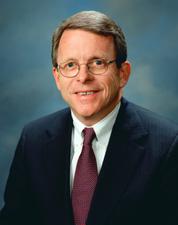
Mr. President, I wish to talk this afternoon about a bill that my colleagues, Senator Kohl, Senator Grassley, Senator Feingold, Senator Specter, Senator Schumer, Senator Leahy, Senator Coleman, and I are introducing, which is called the No Oil Producing and Exporting Cartels Act of 2004. We are introducing this bill to address the longstanding problem of foreign governments acting in the commercial arena to fix, allocate, and establish production and price levels of petroleum products.
Every consumer in America knows that gasoline prices have reached record highs over the last couple of weeks. The national average has reached a new record high for self-serve unleaded gas. That is approximately $1.80 per gallon. But over the last week in my home State of Ohio gas prices have been even higher. In Marietta, gas was $1.84; in Cleveland, $1.86; in Columbus, it topped out at $1.88 in some stations. Many analysts predict that prices could get as high as $2 per gallon, or higher, by the summer.
This is of particular interest to me because Ohio and the Midwestern States always seem to be hit especially hard by gas prices spikes. These spikes are acutely painful to persons who commute long distances and to those who live on fixed incomes such as the elderly.
What is the cause? Certainly there are many causes, but as we might expect, there are a number of factors at play. But there is surprising agreement among industry experts about the primary cause of high gas prices and that is the increase in imported crude oil prices.
We also know the biggest factor in setting crude oil prices is OPEC. The unacceptably high price of imported crude oil is a direct result of collusive agreements among OPEC nations to maintain the price of oil.
Despite the fact that gasoline prices are going through the roof, OPEC members met yesterday in Austria and decided to cut the output of oil even further. We have been through this process more than enough to know what that means for the American consumer. When demand is high and supplies are cut, that obviously means higher prices. That is exactly what OPEC did to us yesterday. It ripped off American consumers by raising gas prices even more.
this is an outrage. In fact, OPEC is probably the most notorious example of an illegal cartel in the world today, even at a time when it is widely understood that such conduct is counterproductive and ill- suited for our global economy. Supreme Court Justice Scalia in a recent case described collusion among competitors as ``the supreme evil of antitrust.'' Nation after nation has adopted antitrust enforcement principles that recognize the illegality of price fixing and output restrictions among competitors. In 1998, the Organization for Economic Cooperation and Development, then composed of twenty-nine member nations, issued a formal recommendation denouncing price fixing. OPEC's continued actions, in ongoing defiance of American and international antitrust principles, should not be tolerated.
Until now, however, OPEC has effectively received special treatment under U.S. antitrust laws--despite the fact that oil is a commodity that touches the lives of nearly every American consumer. It is time that we take steps to assure that oil is subject to the principles of the free market. The bill that we are introducing today would do just that and help in the fight to lower gas prices.
Senator Kohl and I have introduced this bill twice before--in 2000 and 2001. It is an idea whose time has come. The purpose of our NOPEC bill is simple--it would treat OPEC like any other cartel. If OPEC were a group of private companies colluding on prices, the executives could be prosecuted and sent to jail, and the firms would pay millions of dollars in fines or maybe even billions in fines. Unfortunately, however, for years enforcement has been constrained by two related court opinions.
In 1979, a Federal District Court found that OPEC's price-setting decisions were ``governmental'' acts and accordingly that they were given sovereignty status and protected by the Foreign Sovereign Immunities Act. Subsequently, in 1981, a Federal Court of Appeals declined to consider the appeal of that antitrust case based on the so- called ``act of state'' doctrine.
NOPEC would effectively reverse these decisions by making it clear that OPEC's activities are not protected by sovereign immunity and that the Federal courts should not decline to hear such a case based on the ``act of state'' doctrine. As a result, under NOPEC, the Department of Justice and the Federal Trade Commission could bring a legal antitrust enforcement action against foreign states engaging in the restraint of trade regarding oil and other petroleum products. Simply put, NOPEC assures that our U.S. antitrust agencies have jurisdiction and authority to bring such cases.
We don't intend to give up the fight for lower gasoline prices. Today, I want the members of OPEC to hear a message loud and clear--we won't quit fighting for American consumers. When OPEC wants to do business with America, it must abide by our antitrust laws.
I ask unanimous consent that the text of the bill be printed in the Record.
Mr. President, I wish to talk this afternoon about a bill that my colleagues, Senator Kohl, Senator Grassley, Senator Feingold, Senator Specter, Senator Schumer, Senator Leahy, Senator Coleman, and I…
Mr. President, I wish to talk this afternoon about a bill that my colleagues, Senator Kohl, Senator Grassley, Senator Feingold, Senator Specter, Senator Schumer, Senator Leahy, Senator Coleman, and I are introducing, which is called the No Oil Producing and Exporting Cartels Act of 2004. We are introducing this bill to address the longstanding problem of foreign governments acting in the commercial arena to fix, allocate, and establish production and price levels of petroleum products.
Every consumer in America knows that gasoline prices have reached record highs over the last couple of weeks. The national average has reached a new record high for self-serve unleaded gas. That is approximately $1.80 per gallon. But over the last week in my home State of Ohio gas prices have been even higher. In Marietta, gas was $1.84; in Cleveland, $1.86; in Columbus, it topped out at $1.88 in some stations. Many analysts predict that prices could get as high as $2 per gallon, or higher, by the summer.
This is of particular interest to me because Ohio and the Midwestern States always seem to be hit especially hard by gas prices spikes. These spikes are acutely painful to persons who commute long distances and to those who live on fixed incomes such as the elderly.
What is the cause? Certainly there are many causes, but as we might expect, there are a number of factors at play. But there is surprising agreement among industry experts about the primary cause of high gas prices and that is the increase in imported crude oil prices.
We also know the biggest factor in setting crude oil prices is OPEC. The unacceptably high price of imported crude oil is a direct result of collusive agreements among OPEC nations to maintain the price of oil.
Despite the fact that gasoline prices are going through the roof, OPEC members met yesterday in Austria and decided to cut the output of oil even further. We have been through this process more than enough to know what that means for the American consumer. When demand is high and supplies are cut, that obviously means higher prices. That is exactly what OPEC did to us yesterday. It ripped off American consumers by raising gas prices even more.
this is an outrage. In fact, OPEC is probably the most notorious example of an illegal cartel in the world today, even at a time when it is widely understood that such conduct is counterproductive and ill- suited for our global economy. Supreme Court Justice Scalia in a recent case described collusion among competitors as ``the supreme evil of antitrust.'' Nation after nation has adopted antitrust enforcement principles that recognize the illegality of price fixing and output restrictions among competitors. In 1998, the Organization for Economic Cooperation and Development, then composed of twenty-nine member nations, issued a formal recommendation denouncing price fixing. OPEC's continued actions, in ongoing defiance of American and international antitrust principles, should not be tolerated.
Until now, however, OPEC has effectively received special treatment under U.S. antitrust laws--despite the fact that oil is a commodity that touches the lives of nearly every American consumer. It is time that we take steps to assure that oil is subject to the principles of the free market. The bill that we are introducing today would do just that and help in the fight to lower gas prices.
Senator Kohl and I have introduced this bill twice before--in 2000 and 2001. It is an idea whose time has come. The purpose of our NOPEC bill is simple--it would treat OPEC like any other cartel. If OPEC were a group of private companies colluding on prices, the executives could be prosecuted and sent to jail, and the firms would pay millions of dollars in fines or maybe even billions in fines. Unfortunately, however, for years enforcement has been constrained by two related court opinions.
In 1979, a Federal District Court found that OPEC's price-setting decisions were ``governmental'' acts and accordingly that they were given sovereignty status and protected by the Foreign Sovereign Immunities Act. Subsequently, in 1981, a Federal Court of Appeals declined to consider the appeal of that antitrust case based on the so- called ``act of state'' doctrine.
NOPEC would effectively reverse these decisions by making it clear that OPEC's activities are not protected by sovereign immunity and that the Federal courts should not decline to hear such a case based on the ``act of state'' doctrine. As a result, under NOPEC, the Department of Justice and the Federal Trade Commission could bring a legal antitrust enforcement action against foreign states engaging in the restraint of trade regarding oil and other petroleum products. Simply put, NOPEC assures that our U.S. antitrust agencies have jurisdiction and authority to bring such cases.
We don't intend to give up the fight for lower gasoline prices. Today, I want the members of OPEC to hear a message loud and clear--we won't quit fighting for American consumers. When OPEC wants to do business with America, it must abide by our antitrust laws.
I ask unanimous consent that the text of the bill be printed in the Record.
Mr. President, I want to say a few words about our distinguished and beloved colleague, Senator Byrd, whose friendship I have treasured for many years--more than 20 years now. I seek and listen to…
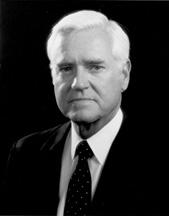
Mr. President, I want to say a few words about our distinguished and beloved colleague, Senator Byrd, whose friendship I have treasured for many years--more than 20 years now. I seek and listen to what he says, to be aware of the knowledge he possesses about so many things, and the memories he carries.
When I first arrived here, I met Senator Robert C. Byrd and extended my wishes that we would have a chance to serve together--this is 20 years ago; and 20 years is a long time, except when it is compared to more than 40 years--and that he would continue to provide the kind of leadership and inspiration that he has for all of us for all these years.
We wish him well. We want to see him continue to provide the example he has shown all of us, with his dignity and intelligence and knowledge and awareness of the rules that govern this body of ours--as fractious as they have become in recent years. We always want to pay attention when Senator Byrd issues a view of the process that is developing, about where we ought to be, about the courtesies we should extend to one another.
I will never forget Senator Byrd, with his rage at one of the Senators who was addressing the President by his first name, saying: Where is he? Where is Bill? Why isn't Bill here? Senator Byrd stood up, with all his stature in front of him, saying: How dare you. How dare you call our President Bill. In all the years I have served with Republican Presidents, never, never would I dream of calling the President Ronald or George or otherwise.
With that little reminder, he brought us all back to a reasonable state of dignity and comity that we need to be reminded about on many occasions.
Very few have the knowledge stored in our being that Senator Robert C. Byrd has.
Again, when I first arrived in the Senate, I had not been in Government before, so it was all very complicated and perplexing. But I wanted to spend some time with Senator Byrd, and he was courteous and he did it. We sat in his office, talking about the background of our society and our country. He talked about the English Kings from the period somewhere maybe about the time of William the Conqueror, the 11th century, and he talked
about how long each succeeding monarch served, the year that person took the office, and the year they left the office, what caused them to leave the office, who died, how they died, by assassination or otherwise, from the 11th century on up to contemporary times. You will hear Senator Byrd often quote from the early days of Roman and Greek civilization. It is remarkable.
I come out of the computer business. I think I can safely say that I have never met a computer the equal of Robert C. Byrd, to have the depth of knowledge that he has and to be able to call upon it at so many times.
I will bet that in the 17,000 votes Robert C. Byrd cast, he knows more about the votes he cast almost than any Senator who has been here just for 100 votes or 200 votes. He understood every one of them. He never cast a vote without thought.
Each of us has had the experience, I am sure, of disagreeing, perhaps, with one another, even with a distinguished leader such as Senator Robert C. Byrd, and have him disagree with knowledge and with experience and say: This is why I think you are wrong. You are my friend, Frank, but I disagree with you on this, and I am going to vote the other way.
It was always with respect and friendship that these exchanges took place.
So we mark a historical moment. No one before has ever cast that many votes. As a matter of fact, very few have cast a number of votes that come anywhere close to the 17,000 mark. This is a record, as I think has been said by others, that will stand probably forever. It took Robert C. Byrd some eight terms to acquire the voting record that he has. When you know that person and you see the devotion and loyalty he brings to his family--he and his wife will celebrate their 67th anniversary, I believe. That is quite a tribute in a period like we now see in our country when the institution of marriage is not what it used to be. So we wish Mrs. Byrd, Erma Byrd, a return to better health--we know she has been having some difficult times these last few years--and for them to share many more good years together and for Robert C. Byrd to stand here as our example of what can be, as an example for children across this country.
If they read the history of Robert C. Byrd, they will see his growth from a poverty stricken, uneducated, simple family, to go on as he did to reach the level of responsibility, of importance that he achieved, and the contributions he made to country in so many ways, reminding us about our responsibility to avoid conflict wherever we can do it, but always sticking up for his State and constituents who sent him here.
I think I hold a voting record also. I think I am the only Senator on the books that ever, as a freshman, cast almost 7,000 votes. That, I think, is fairly remarkable. You have to discount the first 18 years I was here, but a freshman with 7,000 votes, it doesn't compare to Senator Byrd's record, no matter what.

Mr. President, I am delighted to join with my friend and colleague Senator Mikulski to introduce today the Environmental Enforcement and Security Act (EESA) of 2004. This bill will increase…
Mr. President, I am delighted to join with my friend and colleague Senator Mikulski to introduce today the Environmental Enforcement and Security Act (EESA) of 2004. This bill will increase substantially enforcement of our Nation's environmental laws, increase environmentally related homeland security, and further protect our Nation's water supply from terrorist attack.
Our families and environment deserve communities free from intentional violators of environmental laws and terrorists who would attack our drinking water supplies.
With this dramatic new commitment to environmental enforcement and drinking water security, we will tell those who would intentionally harm us that we are coming after them.
The environment and health of our communities need vigorous prosecution of intentional violations of our Nation's environmental laws. The U.S. Environmental Protection Agency (EPA) Criminal Enforcement program investigates the most significant and egregious violators of environmental laws that pose a significant threat to human health and the environment. However, the number of EPA Criminal Enforcement Special Agents has remained constant for the last several years.
In addition, in our post-9/11 world, EPA Special Agents are needed for homeland security duties to detect, investigate and respond to terrorist threats involving chemical or biological hazards.
EPA Special Agents support the Department of Homeland Security, Federal Bureau of Investigation and the Department of Justice. EPA Special Agents are members of FBI Counter-Terrorism Response Teams and Evidence Response Teams.
However, with this new post-9/11 need to respond to the threat of terrorism, some are concerned that environmental violations may not be receiving the attention they deserve. A recent report by the EPA Inspector General, an internal review by the EPA Enforcement and Compliance Assurance program, and various media accounts tell how EPA needs more resources to meet both its environmental and homeland security duties.
Our bill responds to these calls with a dramatic new commitment to EPA's enforcement program. My bill will put 50 new EPA Criminal Enforcement Special Agents on the environmental beat. EESA will also provide for 80 Special Agents to support homeland security duties.
With our bill, we will no longer need to make a choice between protecting our homeland and protecting our environment.
With out bill, those who would intentionally hurt our families and communities through environmental harm will know that we are sending the manpower and resources needed to come after them.
We are also sending local communities new funding to protect our drinking water supplies. Every family and every business needs clean and safe drinking water. Every mother needs to know that when she turns on the tap in her kitchen sink, clean and safe water will come out.
That is why our bill devotes $100 million for additional drinking water security protections. EESA will send grant funds directly to water systems to protect against terrorist attack with fencing, intruder detection, access control and water monitoring. The need is great, but the federal government will attempt to do its share.
Our bill will also enhance EPA's ability to protect the environment and human health in several other ways. EESA will double the number of enforcement trainers and triple EPA's enforcement training budget. EESA funds will train Federal, State and local inspectors, law enforcement agents and prosecutors with the training they need to pursue environmental violations.
Our bill will also improve the environment by doubling compliance assistance funds to fill gaps in enforcement coverage, reach regulated facilities not visited by inspectors, and help the regulated community, especially small businesses, to understand EPA's complex and extensive regulatory requirements.
Our bill will also make EPA's enforcement actions more efficient and targeted by fully funding a strategic enforcement targeting program. EESA will enhance EPA's ability to target its enforcement actions to where the environment needs them most. Strategic targeting will also improve EPA's ability to identify and respond to increased noncompliance with environmental laws.
Our Nation's environmental laws exist to protect our families, our communities and our natural resources. Those who would intentionally violate our environmental laws deserve the full force of the government to stop them.
Our families and communities also deserve our most vigorous efforts to protect them from the specter of terror. Chemical and biological threats represent one of the most sinister means for men to terrorize each other.
We will send our homeland security agencies the environmental expertise and personnel they need to confront these threats.
We will also send our local communities new help for additional drinking water security protections.
Our environment deserves no less, our families deserve no less. I urge my colleagues to support passage and funding of the Environmental Enforcement and Security Act of 2004.
Mr. President, today I am introducing the Clean Cruise Ship Act of 2004. I am proud to be joined by Senators Lautenberg, Corzine, Feinstein, Kennedy and Boxer in offering this legislation. I also am…
Mr. President, today I am introducing the Clean Cruise Ship Act of 2004. I am proud to be joined by Senators Lautenberg, Corzine, Feinstein, Kennedy and Boxer in offering this legislation. I also am honored to be working with Congressman Farr, who is leading companion legislation
in the House and is a co-chair of the House Oceans Caucus.
America's oceans span nearly 4.5 million square miles, an area 23 percent larger than the nation's land area. They are a resource for travel, commerce, recreation and the global ecosystem. They comprise 70 percent of our planet.
We cannot continue to take this vast resource for granted. The Pew Commission found in June 2003 that our oceans are in crisis. The report cites five priorities: implementing a sustainable national ocean policy; coordinating the governance of ocean resources; reorienting our fisheries policy to emphasize sustainability; protecting ocean habitat and managing coastal development; and controlling the sources of pollution threatening our marine ecosystems. Today I want to concentrate on the fifth priority: controlling pollution.
With growing amounts of pollution caused by human activity, we are significantly degrading the marine environment. According to the EPA, pollution has rendered 44 percent of tested estuaries and 12 percent of ocean shoreline miles unfit for swimming, fishing or supporting aquatic life. The Coast Guard estimates that marine debris is responsible for the deaths of more than 1 million birds and 100,000 marine mammals each year. About 90 percent of Florida's coral reefs are believed to be dead or dying.
We have taken some actions to protect our oceans, but we still have a long way to go. We need to improve enforcement of our existing environmental protection laws, but we also need to update them to accommodate for the changing times.
Specifically, we need to address pollution from passenger cruise ships. The cruise line industry has grown significantly over the past 34 years. In 1970, cruise ships carried 500,000 passengers in the United States. In 2002, the cruise line industry carried 6.5 million passengers in about 150 ships in the United States, and that number has continued to grow.
In addition to a tremendous increase in the number of passengers, cruise ships themselves have grown. Today the average cruise vessel accommodates 3,100 passengers and crew. Carnival recently built the largest passenger ship in the world, the Queen Mary 2: it's 1,132 feet long, which is more than twice as long as the Washington Monument is tall; it is 236 feet high, about the height of a 23-story building; and it weights about 151,400 long tons, the rough equivalent of 390 fully loaded 747 jets.
According to the EPA, a typical 3,000 passenger cruise ship each week generates 210,000 gallons of sewage; 1 million gallons of gray water, including runoff from baths, laundry machines and dishwashers; and 37,000 gallons of oily bilge water. Ships of the size of cruise vessels today, which generate the amount of waste of today, did not exist when the Clean Water Act and other environmental laws were written in the 1970s. Therefore, our laws regarding cruise ships are grossly inadequate.
My colleagues may be shocked to learn that it is legal to dump raw sewage 3 miles from shore; and it is legal to dump sewage within 3 miles so long as it is run through a machine, which complies with a standard that is over 20 years old and which is never rigorously tested once installed. Also it is legal to dump gray water--which can contain harmful toxins and nutrients--anywhere in the ocean. Only Alaskan waters are protected by strong federal legislation enacted in 2000 that regulates sewage and graywater.
The legislation I am introducing today,the Clean Cruise Ship Act of 2004, would draw from key provisions of the federal law in place in Alaska and the Clean Water Act. This bill would: first, create a no discharge zone that would prevent dumping of sewage, graywater and oily bilge water within 12 miles of shore--to protect our coasts and estuaries; second, apply the current Alaskan standards to sewage and graywater discharges outside of 12 miles from shore; third, allow the Coast Guard and EPA to jointly issue discharge requirements based on the best available technology, with the goal of zero pollutants by 2015; and finally, strengthen enforcement.
Studies show that the Alaskan standards, which our bills applies to the rest of the country, can be achieved. Indeed, ships that have been upgraded to treat sewage and graywater with modern technology are easily meeting or exceeding standards for such constituents as fecal coliform and chlorine.
Not only is this bill technologically feasible: it is affordable. The cost to upgrade each ship will be more than $3 million. To put this into context, Carnival Cruise Lines just spent $800 million to build the new Queen Mary 2, and earned $6.7 billion in revenues last year.,
The Clean Cruise Ship Act of 2004 is a reasonable approach to an urgent problem. I urge my colleagues to support this important legislation.
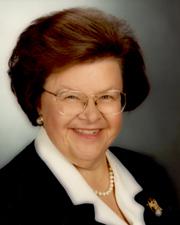
Mr. President, today I rise on behalf of myself and Senators Specter, Murray, Clinton, Landrieu, Dayton, Schumer, Daschle and Lieberman, to introduce the High-Risk Non-Profit Security and Safety…
Mr. President, today I rise on behalf of myself and Senators Specter, Murray, Clinton, Landrieu, Dayton, Schumer, Daschle and Lieberman, to introduce the High-Risk Non-Profit Security and Safety Enhancement Act of 2004. This bill provides homeland security assistance for high-risk non-profits to protect them against foreign terrorist attacks. This legislation is critical to help protect the ``soft targets'' of terrorism all over the United States.
We are all aware of recent terrorist attacks in the United States, Spain, Germany, Iraq, Tunisia, Kenya, Morocco and Turkey. These attacks by Al Qaeda on an international Red Cross building, synagogues, train stations, hotels, airports, restaurants, night clubs, and cultural centers, show its willingness to attack ``soft targets'' of all types in order to conduct its campaign of terror.
I want to make sure that our communities are protected and the buildings where citizens live, learn and work are as secure as possible to safeguard American lives from a potential terrorist attack. Local communities are on the front lines in our war against terrorism. This Congress must do its share to make sure that they do not have to bear the full cost of this war. This bill helps us do that by providing funds for security enhancements in buildings that Americans visit everyday and by providing local law enforcement with added support for the costs they incur in helping to guard these local buildings and community centers.
Specifically, this legislation will provide up to $100 million in assistance to 501(c)(3) organizations demonstrating a high risk of terrorist attack based upon very specific standards. Organizations wishing to receive security enhancements under this Act must demonstrate that they have experienced specific threats by international terrorist organizations, there were prior attacks against similarly situated organizations, there is vulnerability of the specific site, the symbolic value of the site as a highly recognized American Institution, or that they have a specific role in responding to terrorist attacks.
This bill allows the Department of Homeland Security to contract for security enhancements to help these high-risk non-profit organizations. These funds can only be used for security enhancements, such as concrete barriers, and ``hardening'' of windows and doors, as well as technical assistance to assess needs, develop plans, and train personnel. Funding under this Act can never be used for enhancements that would only be reasonably necessary to protect from neighborhood crime.
This bill also helps our vital first responders, those who are on the frontline everyday helping to protect these ``soft targets.'' These men and women have the responsibility for protecting institutions against the possibility of terrorist attack, while they are also responding to the public safety needs of the entire community. By authorizing $50 million in grant funds for local police departments, this bill provides real relief to local law enforcement who bear the growing costs associated with providing heightened security to high-risk non-profits.
As a Nation our priority in fighting the war on terror is to be able to better detect, prevent and respond to acts of terrorism. This bill gets us one step closer to meeting those goals by helping vulnerable targets better detect and prevent terrorist attacks and by making sure that if terror strikes one of these facilities, security and safety measures are in place to protect the lives of those inside and around these buildings.
Nothing the Senate does is more important than providing America security and Americans safety. I urge my colleagues to support this legislation because it does exactly that. It makes sure that there is added security for these ``soft targets'' that Americans visit everyday and it adds funding to support the local police, fire and rescue workers who are the first responders when there is a threat to one of these organizations. In the battle to protect our Nation from terrorist attacks, we must be sure to provide assistance to these high-risk non- profit organizations that provide vital health, social, cultural, and educational services to the American people.
I know others share my concerns about protecting these ``soft targets'' in our war against terrorism and that is why the United Jewish Communities, the American Red Cross, United Way, the American Hospital Association, the American Association of Museums, the National Association of Independent Colleges and Universities (NAICU), American Jewish Congress, the Theatre Communications Group, and the YMCA of the USA are all united in supporting this legislation.
This bill not only supports homeland security, it supports hometown security, making our communities stronger and safer, and I encourage my colleagues to join me in supporting this legislation and ask unanimous consent to print in the Record a letter from organizations supporting this effort and I ask unanimous consent that the text of the bill be printed in the Record.

Mr. President, I ask unanimous consent that the Committee on Commerce, Science, and Transportation be authorized to meet on Thursday, April 22, 2004, at 9:30 a.m. on the U.S. Commission on Ocean…
Mr. President, I ask unanimous consent that the Committee on Commerce, Science, and Transportation be authorized to meet on Thursday, April 22, 2004, at 9:30 a.m. on the U.S. Commission on Ocean Policy.
Mr. President, I ask unanimous consent that the Committee on Foreign Relations be authorized to meet during the session of the Senate on Thursday, April 22, 2004, at 9:30 a.m. to hold a hearing on Iraq Transition: Obstacles and Opportunities.
Mr. President, I ask unanimous consent that the Committee on Foreign Relations be authorized to meet during the session of the Senate on Thursday, April 22, 2004, at 1:30 p.m. to hold a hearing on Nominations.
Mr. President, I ask unanimous consent that the Committee on Foreign Relations be authorized to meet during the session of the Senate on Thursday, April 22, 2004, at 2:30 p.m. to hold a Subcommittee on East Asian and Pacific Affairs hearing on U.S.-China Relations: Status of Reforms in China.
Mr. President, I ask unanimous consent that the Committee on Foreign Relations be authorized to meet during the session of the Senate on Thursday, April 22, 2004, at 4 p.m. to hold a hearing on Nominations.
Mr. President, I ask unanimous consent that the Committee on the Judiciary be authorized to meet to conduct a markup on Thursday, April 22, 2004, at 11 a.m. in Senate Dirksen Building Room 226.
Agenda
I. Nominations: Henry W. Saad to be U.S. Circuit Judge for the Sixth Circuit; William Duane Benton to be United States Circuit Judge for the Eighth Circuit; Robert Bryan Harwell to be United States District of South Carolina; George P. Schiavelli to be United States District Judge for the Central District of California; and Curtis V. Gomez to be Judge for the District Court of the Virgin Islands.
II. Legislation: S. 1735. Gang Prevention and Effective Deterrence Act of
2003 [Hatch, Chambliss, Cornyn, Feinstein, Graham, Grassley, Schumer]; S. Res. 310. A resolution commemorating and acknowledging the dedication and sacrifice made by the men and women who have lost their lives while serving as law enforcement officers [Campbell, Hatch, Leahy]; H. Con. Res. 328. Recognizing and honoring the United States Armed Forces and supporting the goals and objectives of a National Military Appreciation Month; S. 2270. No Oil Producing and Exporting Cartels (NOPEC) Act of 2004 [DeWine, Durbin, Feingold, Grassley, Kohl, Leahy, Schumer, Specter]; S. 2107. A bill to authorize an annual appropriations of $10,000,000 for mental health courts through fiscal year 2009 [DeWine, Leahy]; S. 2192. Cooperative Research and Technology Enhancement (CREATE) Act of 2004 [Hatch, Feingold, Leahy]; H.R. 1561. United States Patent and Trademark Fee Modernization Act of 2004; S. 1933. Enhancing Federal Obscenity Reporting and Copyright Enforcement (ENFORCE) Act of 2003 [Hatch, Cornyn, Feinstein]; S. 2237. Protecting Intellectual Rights Against Theft and Expropriation (PIRATE) Act of 2004 [Leahy, Hatch]; and S. 1932. Artists' Rights and Theft Prevention (ART) Act of 2003 [Cornyn, Feinstein, Graham, Hatch].
Mr. President, I ask unanimous consent that the Select Committee on Intelligence be authorized to meet during the session of the Senate on April 22, 2004, at 2:30 p.m. to hold a closed business meeting.
Mr. President, I ask unanimous consent that the Committee on Health, Education, Labor, and Pensions, Subcommittee on Children and Families, be authorized to meet for a hearing on Parents Raising Children: The Workplace during the session of the Senate on April 22, 2004, at 10 a.m.
Mr. President, I ask unanimous consent that the Committee on the Judiciary Subcommittee on Immigration and Border Security be authorized to meet conduct a hearing on ``State and Local Authority To Enforce Immigration Law: Evaluating a unified approach for stopping terrorists'' on Thursday, April 22, 2004, at 2:30 p.m. in SD226
Witness List:
Panel I: Professor Kris W. Kobach, Former Counsel to the Attorney General, Professor of Law, University of Missouri-Kansas City School of Law, Kansas City, MO; E.J. Picolo, Regional Director, Florida Department of Law Enforcement, Ft. Myers, FL; Michelle Malkin, Journalist and Author of Invasion, Bethesda, MD; and David A. Harris, Balk Professor of Law and Values, University of Toledo College of Law, Toledo, OH.
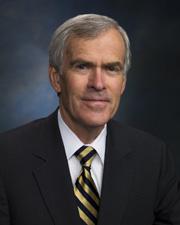
Mr. President, in conjunction with Senator Smith, I am introducing the ``Children's Vaccine Access Act of 2004.'' This legislation makes three changes to the Vaccines for Children program with the…
Mr. President, in conjunction with Senator Smith, I am introducing the ``Children's Vaccine Access Act of 2004.'' This legislation makes three changes to the Vaccines for Children program with the intent of expanding access and the delivery of vaccines to our Nation's children. This legislation is supported by the Administration and included in the Administration's budget as recommended by the Centers for Disease Control and Prevention, or CDC.
First, the legislation expands access to the Vaccines for Children, or VFC, program for children whose private health insurance does not cover immunizations by allowing children to receive their VFC vaccines at State and local public health clinics. Currently, underinsured children must go to specially designated Federal Qualified Health Centers or rural health centers to receive VFC vaccines. Consequently, our bill expands the number of access points at which children can get the vaccines they need.
According to the CDC, there are approximately 3,000 Federally Qualified Health Centers enrolled in VFC, compared with approximately 7,000 health department clinics. As the CDC notes, ``Increasing access points for VFC eligible underinsured children will allow those who may have been previously denied immunizations at public health clinics to be vaccinated with the full series of routinely administered vaccines.''
Second, the bill seeks to restore the tetanus and diphtheria vaccines to the VFC program by lifting the 1993 price caps that were in use prior to enactment of the VFC program. The price caps are so low that, for example, the tetanus booster vaccine was unfortunately dropped from VFC coverage when no vaccine manufacturer would bid on the contract at the 1993-imposed price cap levels.
CDC estimates that over 200,000 additional children would be served through VFC with these two changes.
And finally, the bill includes new authorizing language to allow the CDC to sell the VFC purchased stockpile vaccines to its grantees or back to manufacturers for use in the private sector in the event that the stockpiled vaccines are needed by non VFC-eligible children.
Immunizations are critical to both children's health and the public health care system. The VFC program began on October 1, 1994, to improve vaccine availability to children nationwide by providing vaccines free-of-charge to Medicaid-eligible, uninsured, underinsured, American Indian, or Alaska Native children through both public and private providers. The VFC program automatically covers vaccines recommended by the Advisory Committee on Immunization Practices, or ACIP, and approved by the CDC.
VFC has had an enormous impact on improving the immunization rates among our Nation's children. According to the Children's Defense Fund, ``Between 1993 and 1999, there was nearly a 20 percent increase in the number of fully immunized two year-olds.''
However, the goal of achieving a 90 percent immunization coverage rate, with the complete series of recommended vaccines, has still not been achieved. According to the National Immunization Survey (NIS), the nationwide vaccination coverage levels
among children 19-35 months of age for the 4:3:1:3:3 series of childhood immunizations was 74.8 percent in 2002. Unfortunately, the immunization rate in New Mexico was just 64.6 percent in 2002 and second worst in the Nation to only Colorado. To address that problem, in December 2001, I requested the CDC to work with the State of New Mexico on improving its immunization rate and a number of positive developments have taken place, including the creation of an Immunization Task Force at the state level and the passage of legislation to create an immunization registry by the New Mexico Legislature this past month.
It is my belief that the strides the Nation and New Mexico continue to make to further improve the childhood immunization rate is assisted by this legislation. I would like to thank the CDC for their fine work on the VFC program and their assistance with this legislation and in its assistance directly to the State of New Mexico. I would also like to thank Senator Smith for his dedication and support for this initiative to improve the health of our Nation's children.
I ask unanimous consent that the text of the bill be printed in the Record.
Show 11 more
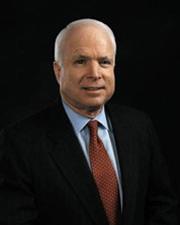
Mr. President, I am joined by Senator Hollings and other members of the Senate Commerce Committee in introducing the Rail Security Act of 2004. The recent attacks on Madrid's commuter rail system…
Mr. President, I am joined by Senator Hollings and other members of the Senate Commerce Committee in introducing the Rail Security Act of 2004.
The recent attacks on Madrid's commuter rail system demonstrated all too vividly that our own transit system, Amtrak, and the freight railroads could be vulnerable to terrorist attack. Only modest resources have been dedicated to rail security since the September 11, 2001 terrorist attacks on the United States, and efforts to address rail security remain fragmented. The Department of Homeland Security (DHS) has not completed a vulnerability assessment for the rail system, nor is there an integrated security plan that reflects the unique characteristics of passenger and freight rail operations.
The legislation we are introducing today would authorize resources to ensure rail transportation security receives a high priority in our efforts to secure our country from terrorism. The legislation directs DHS to complete a vulnerability assessment for the rail system and make recommendations for addressing security weaknesses within 180 days of enactment. It also authorizes funding to address long-standing fire and life safety needs for several tunnels along the Northeast Corridor, and authorizes appropriations to meet immediate security needs for intercity and freight rail transportation. Further, as recommended by the General Accounting Office, the proposal requires DHS to sign a memorandum of agreement with the Department of Transportation to make clear each department's roles and responsibilities with respect to rail security.
The freight railroads, individual commuter authorities, and Amtrak have, on their own initiative, completed risk assessments and taken steps to safeguard passengers, facilities, and cargo. These efforts, accomplished at a very small cost to the federal government, have helped make our rail system safer. The legislation introduced today will augment these efforts and bring these individual initiatives together in a coordinated rail security program.
More than 2 years ago, in the aftermath of the September 11th attacks, the Commerce Committee reported rail security legislation but unfortunately that proposal was not adopted by the full Senate. The Commerce Committee will meet in the coming weeks to consider this legislation and it is my hope that the proposal will be acted upon quickly by the full Senate.
I ask unanimous consent that the text of the bill be printed in the Record.
Mr. President, today I am introducing legislation to provide a technical correction that would once again allow binding arbitration clauses to be included in all contracts affecting the land within the Salt River Pima-Mariposa Indian Community (SRPMIC). A companion bill is being introduced today by Congressman Hayworth.
The SRPMIC located in Scottsdale, AZ, one of the most diversified economic development portfolios in Indian country. Blessed with a prime location in metropolitan Phoenix, the Tribe has nearly a dozen business enterprises including a sand and gravel operation, a cement company, two golf courses, and a shopping center. The tribe wants to continue diversifying their economy in the hopes of becoming economically self- sufficient. This legislation is intended to help them achieve this goal.
This bill would make technical corrections to title 2l5, U.S. Code, Section 416a(c) relating to ``binding arbitration of disputes.'' Recently, in an effort to consolidate and streamline various rules, regulations, and laws, some sections of Title 25, U.S. Code, Section 81 were repealed that affected the Bureau of Indian Affairs. An unintended consequence of this consolidation was that the definition for leases, which included sublease, substitute lease, and master lease, was altered. Simply put, this legislation would reinstate the
prior definition for leases on the reservation to include subleases, substitute leases, and master leases. Without this clarification, the tribe fears that potential tenants may be leery to invest on tribal land.
This legislation may seem minor, but it would go a long way toward helping the SRPMIC achieve the economic self-sufficiency it is working toward. Therefore, I urge my colleagues to support this legislation and work for its speedy passage.
Mr. President, I seek recognition today to introduce the High-Risk Non-Profit Security Enhancement Act of 2004 together with my colleague Senator Mikulski. Since 9/11, al-Qaida has attacked a series…
Mr. President, I seek recognition today to introduce the High-Risk Non-Profit Security Enhancement Act of 2004 together with my colleague Senator Mikulski. Since 9/11, al-Qaida has attacked a series of so-called ``soft targets'' around the globe including hotels, synagogues, social centers and facilities of the Red
Cross. This grim reality is forcing such soft targets here in the United States to confront the need for very expensive security enhancements to their facilities. This legislation will help non-profit organizations--those soft targets least able to afford these security enhancements--to do the work that they need to do such as the building of concrete barriers and the ``hardening'' of windows and doors.
On February 11, 2003, CIA Director George Tenet provided the following testimony to the Senate Select Committee on Intelligence:
Until al-Qaida finds an opportunity for the big attack, it
will try to maintain its operational tempo by striking
``softer'' targets. And what I mean by ``softer,'' Mr.
Chairman, are simply targets al-Qaida planners may view as
less well protected. . . . Al-Qaida has also sharpened its
focus on our Allies in Europe and on operations against
Israeli and Jewish targets.
Also on February 11, 2003, FBI Director Robert S. Mueller testified as follows before the Senate Select Committee on Intelligence:
Multiple small-scale attacks against soft targets--such as
banks, shopping malls, supermarkets, apartment buildings,
schools and universities, houses of worship and places of
recreation and entertainment--would be easier to execute and
would minimize the need to communicate with the central
leadership, lowering the risks of detection.
The record has sadly confirmed the words of Directors Tenet and Mueller. Al-Qaida has been responsible for a series of attacks against soft targets including numerous synagogues, A Red Cross building, train stations, hotels airports, restaurants and night clubs. These targets have been in countries throughout the world including Spain, Germany, Iraq, Tunisia, Kenya, Morocco and Turkey.
In the face of this very real terrorist threat, these soft targets have an obligation to take the necessary steps to better protect themselves and all who visit their facilities. These additional security measures place an especially heavy burden upon non-profit corporations with limited resources. Effective security measures do not come cheap.
This legislation would authorize the Secretary of Homeland Security to make available in FY 2005 up to $100 million in assistance to non profits which demonstrate a high risk of terrorist attack. In choosing which projects to fund, the secretary will give preference to those non profit organizations he determines to be at the greatest risk of international terrorist attack based upon the following criteria:
(1) Specific threats of international terrorist organizations; (2) Prior attacks against similarly situated organizations; (3) The vulnerability of the specific site; (4) The symbolic value of the site as a highly recognized American institution; or (5) The role of the institution in responding to terrorist attacks.
Applicant organizations would submit request to state homeland security authorities that would identify and prioritize high-risk institutions. Qualifying requests would be forwarded to the Secretary of Homeland Security who would allocate resources based on his assessment of the risk. Payments would be made from the Department of Homeland security directly to the contractors who will do the work.
For those programs that do not get their security projects funded, Federal loan guarantees would also be available so that they can take out loans on favorable terms. The bill also authorizes $50 million for local police departments to provide additional security in areas where there is a high concentration of high-risk non-profits.
Mr. President, the threat of terrorism is placing an enormous burden on non-profit organizations that face a higher risk of terror attack due to their affiliation of function. This bill is an important step towards helping these non-profits meet these new and expensive security needs. It is my hope that my colleagues will join me in addressing this overlooked front in the war on terror.
Thank you. Mr. President, 17,000 votes ago, I achieved a dream. I stood on the floor of the U.S. Senate and prepared to cast my first vote as a Senator from the Mountain State of West Virginia.…
Thank you.
Mr. President, 17,000 votes ago, I achieved a dream. I stood on the floor of the U.S. Senate and prepared to cast my first vote as a Senator from the Mountain State of West Virginia. Seventeen thousand votes later, I still feel much the same. It is a great honor, a great privilege to serve the people in the Senate.
Ours is a glorious country. Its people are wise. They are brave. They are hard-working and fairminded.
Once it was possible for a poor young man with no important connections, with no PR firm behind him, with no fundraising apparatus racing at full tilt, to simply go out to the people, carrying his fiddle and having a mind full of poetry, and on the strength of his energy and his convictions, to be elected to the greatest deliberative body the world has ever known.
That time is light-years away from today's reality. Too often now in America it is the size of the pocketbook that elects public officials. I regret that change. It keeps people out of public service instead of welcoming them into public service.
This Senate is the forum which exists to welcome and to protect the airing of all points of view. Both sides of the aisle need to work together to ensure that the Senate will stay true to its constitutional purpose. We swear an oath before God and man to support and defend this Constitution. Many times I have sworn that oath before God and man to support the Constitution of the United States.
I have had a good run in this wonderful institution. And like Majorian, who, when he became Emperor of the Roman Empire in 457 AD said, ``I still glory in the name of Senator.''
My patient and devoted wife Erma, with whom I will celebrate a 67- yearlong partnership 58 days from now, the Lord willing, deserves much of the credit for that good run. I also thank my talented staff for their tireless work and dedication.
No man is an island, and I have had the good fortune to have many steadfast friends and supporters over the years. To the people of West Virginia, I owe my everlasting gratitude. They have expressed their faith in me time and time again. I am proud to be their Senator, and I hope to continue to serve for a long while.
I thank my colleagues. They have been patient. They have known my shortcomings. I have said things from time to time that I regretted. We are all human. But my colleagues have been considerate of me, and I thank them.
Pericles, the brilliant Athenian statesman, gave mankind one of the greatest funeral orations ever made. This address was delivered in 431 BC as a memorial to the first Athenian soldier who fell in the Peloponnesian War. In this address, Pericles said:
It is greatness of soul alone that never grows old, nor is
it wealth that delights in the latter stage of life as some
give out, so much as honor.
And so it is honor itself that never grows old. I thank my colleagues for the honor they show today.
Finally, but most of all from Chronicles, 29th chapter, verses 11 and 12:
Thine, O Lord, is the greatness, and the power, and the
glory, and the victory, and the majesty: for all that is in
the heavens and in the earth is thine; thine is the kingdom,
O Lord, and thou art exalted as head above all.
Both riches and honor come of thee, and thou reignest over
all; and in thine hand is power and might; and in thine hand
it is to make great, and to give strength unto all.
(Applause, Senators rising.)
Mr. President, will the Senator yield quite briefly?
Mr. President, I take a moment to thank my colleagues who have spoken. They have been so gracious. I shall never, never forget the beautiful words, the lovely phrases they have uttered here today. They have made this a very beautiful day. I know that my wife Erma has listened from home.
I thank each and all of these wonderful, wonderful friends. That is what they are, they are friends. I shall never forget them. I shall not name them. The Record already has done that.
I yield the floor and thank my friend from Ohio for his graciousness in yielding.
THE PRESIDING OFFICER. The Senator from Ohio is recognized.
Mr. DeWine. I thank the Chair.
(The remarks of Mr. DeWine pertaining to the introduction of S. 2270 are located in today's Record under ``Statements on Introduced Bills and Joint Resolutions.'')
Mr. President, I add my voice as well to my seatmate, if I may. I sit in this chair by choice. Senator Byrd sits in his chair by choice as well, but he makes the choice before I do. I wanted to find…
Mr. President, I add my voice as well to my seatmate, if I may. I sit in this chair by choice. Senator Byrd sits in his chair by choice as well, but he makes the choice before I do. I wanted to find out where he was going to sit so I could sit next to him. I did that because I wanted to sit next to the best, to learn everything I possibly could about the ability of this institution to provide the kind of leadership I think the country expects of us.
Several thoughts come to mind. This is a day of obvious significance in the number of votes that have been cast, 17,000, but it is far more important to talk about quality than quantity. Quantity is not an insignificant achievement, but the quality of my colleague and friend's service is what I think about when the name Robert C. Byrd comes to my mind.
I carry with me every single day, 7 days a week, a rather threadbare copy of the United States Constitution given to me many years ago--I can't even read it well now; it is so worn out--I may need a new copy-- given to me by
my seatmate, Robert C. Byrd. I revere it. I tell people why I carry it because it reminds me of the incredible gift given to me by the people of Connecticut to serve in this Chamber, to remind me of the importance of an oath we all made, and that is to do everything we can to preserve, protect, and defend the principles upon which this Nation was founded. Robert C. Byrd, in my mind, is the embodiment of that goal.
It has often been said that the man and the moment come together. I do not think it is an exaggeration at all to say to my friend from West Virginia that he would have been a great Senator at any moment. Some were right for the time. Robert C. Byrd, in my view, would have been right at any time. He would have been right at the founding of this country. He would have been in the leadership crafting this Constitution. He would have been right during the great conflict of civil war in this Nation. He would have been right at the great moments of international threat we faced in the 20th century. I cannot think of a single moment in this Nation's 220-plus year history where he would not have been a valuable asset to this country. Certainly today that is not any less true.
I join my colleagues in thanking the Senator from West Virginia for the privilege of serving with him. He has now had to endure two members of my family as colleagues. Senator Byrd was elected to the Senate in 1958 along with my father. He served with my father in the House. I have now had the privilege of serving with Senator Byrd for 24 years, twice the length of service of my father. That is an awful lot of time to put up with members of the Dodd family. We thank Senator Byrd for his endurance through all of that time.
There is no one I admire more, there is no one to whom I listen more closely and carefully when he speaks on any subject matter. I echo the comments of my colleague from Massachusetts. If I had to pick out any particular point of service for which I admire the Senator most, it is his unyielding defense of the Constitution. All matters come and go. We cast votes on such a variety of issues, but Senator Byrd's determination to defend and protect this document which serves as our rudder as we sail through the most difficult of waters is something that I admire beyond all else.
I join in this moment in saying: Thank you for your service, thank you for your friendship, and I look forward to many more years of sitting next to you on the floor of the Senate.
I yield the floor.
Mr. President, I rise for a moment to add my voice to those who praise Senator Robert C. Byrd. I think what every public servant deserves, and occasionally gets, is a recognition that his or her…
Mr. President, I rise for a moment to add my voice to those who praise Senator Robert C. Byrd. I think what every public servant deserves, and occasionally gets, is a recognition that his or her service is in fact profoundly appreciated. That is usually not the case. The American people are not as aware of what goes on in these Halls, or even in their own legislative halls, as they ought to be.
But I take special happiness out of this day for Senator Byrd because he has accomplished something that nobody else has with his 17,000th vote. He rose to cast his vote, as he always does. When somebody comes to greet him, argue with him, plead with him, and he is at his seat, he always rises, be that a man or a woman. He has brought, in my judgment, not only a tautness to the debates that we have in this Chamber, not always agreeing with the majority or with the minority, but he knows his mind and he knows his soul, and he knows his God. He does not deviate from that and he cares not who appreciates that or who doesn't.
In other words, Senator Byrd is a man who, over the years, through the crucible of tough experiences and steadfast devotion not only to his God but also to the great figure who is not here today, who is so much part of his life and who brings out even in saying her name a great emotion in me, and that is his absolutely wonderful, wonderful wife Erma, honors us by his service.
I was with him earlier this morning as he was talking to schoolteachers from all over the United States who are trying to get their students to write better. It is called the ``writers project,'' which he has been instrumental in doing. He talked to them of public service and the need for accuracy and being fair. What he was really saying is that doing something in your life which is not only important but which you give yourself to profoundly, completely, an utter devotion to duty, is what separates the great and the near great.
I am very proud to serve with Senator Byrd. We have served together for 20 years now and have known each other for close to 40 years. Our wives are good friends; we are good friends. I sit behind him in the seat that Senator Moynihan used to occupy. I enjoy seeing people coming up to him and making their case, which talks not only of his courtesy, because he is so often on the floor, but also of his power to get things done, which then makes me say that there is no possible way to describe, from the point of view of the Senators in my State of West Virginia, what he has meant, does mean, and will mean for that State.
West Virginia is a State that has always had to struggle. We have always had to keep pushing the rock uphill, not daring to take one hand off for fear that the rock may roll back over the top of us. It takes a tough person and a moral person and a determined person to fight the battles that are needed to be won for our people in West Virginia. That comes to Senator Byrd instinctively.
I am so proud of this day because I cannot help but feel that when Senator Byrd goes to bed tonight, he will have a strong and profound sense of satisfaction--not that he needs to feel that, but that will make me feel better if he does feel that, because he serves our State and our Nation as few people have in the history of our country.
I yield the floor.
Mr. President, I join the majority leader and all the Members of our body in congratulating Senator Byrd on reaching this historic milestone. I thank him for his half century of service to the U.S.…
Mr. President, I join the majority leader and all the Members of our body in congratulating Senator Byrd on reaching this historic milestone. I thank him for his half century of service to the U.S. Congress. Seventeen thousand votes is an astonishing number. It is even more astonishing when you consider that Senator Byrd has now cast 652 more votes than the first runner-up, Senator Thurmond. He has served 2 years less than Senator Thurmond.
Here is another remarkable statistic: In the last 45 years in the Senate, Robert Byrd has voted on 98.72 percent of the questions put before this body. He has missed only about 1 percent of all votes cast over 45 years--the second highest percentage of all Senators who have cast 10,000 votes or more.
From July 25, 1984, through September 17, 1997--a period of more than 13 years--Senator Byrd did not miss one single vote. He cast 4,705 consecutive votes--the second highest consecutive vote total in Senate history. Of the 11,708 persons who have ever served in the U.S. Congress, only two have served longer than Robert C. Byrd. But what makes Senator Byrd's vote totals and voting percentages even more remarkable are some of the other achievements Senator Byrd has recorded over these last 45 years.
He is the first person ever to start and finish a law degree while serving in Congress. It took him 10 years. He graduated from American University Law School in 1963. President Kennedy was his commencement speaker.
In 1994, he fulfilled a lifelong ambition. He finally received his bachelor's degree from Marshall University summa cum laude--the first person in his family ever to go to college.
There are two reasons Senator Byrd has reached this historic 17,000- vote milestone. First, Robert C. Byrd believes, in his bones, if you have a job to do, you do it. He is a coal miner's son who has worked hard all of his life. He got his first job when he was 7, selling the Cincinnati Post. He has been a produce boy, a gas station attendant, a head butcher, and the owner of a small grocery store. He is a man who believes in earning his pay, who knows how it feels to fall asleep at night exhausted but proud for having met his responsibilities for 1 more day.
The other reason Senator Byrd has reached this milestone is because of his great love of West Virginia, of this Nation, and of the Senate.
Of course, the greatest love in Senator Byrd's life is his wife Erma. For the last 3 years, Mrs. Byrd's delicate health, and Senator Byrd's desire to be with her as much as possible, to support her, has made it even more difficult for Senator Byrd to answer every rollcall vote. Yet he has continued to do so.
We are privileged to work with him.
On this historic occasion, we congratulate him. And we thank Robert and Erma Byrd for all they have given this Senate and our Nation.
(Applause, Senators rising.)
Mr. President, I join with my more senior colleagues in paying my respects and tribute to the great Senator from West Virginia, Mr. Byrd. It is a mark of his greatness that he has had such a powerful…
Mr. President, I join with my more senior colleagues in paying my respects and tribute to the great Senator from West Virginia, Mr. Byrd. It is a mark of his greatness that he has had such a powerful effect on not only the most senior of his colleagues who have been here the longest, but also the more junior Members of the Senate, such as myself.
When I arrived here in January 2001, just a little over 3 years ago, I was one of 12 freshman Senators from both sides of the aisle. We were given many words of encouragement from our colleagues, but basically left to find our own way or flounder along the way. It was Senator Byrd who took it upon himself to convene tutorials with the 12 of us. We convened promptly at 4 o'clock in his office, and he shared with us his perspective on the Senate.
From the four volumes he has orated and published as the history of the U.S. Senate, as well as the volume he orated from his own direct knowledge and reading about the Roman Senate, there is no one who possesses more wisdom and a broader understanding of the historical role and the responsibility of this body and this great democracy and Republic.
Those of us who had the benefit of those tutorials learned more from those sessions about how to conduct ourselves in the Chamber where he has served with such greatness than from anything else.
When the time came for us to preside, as we took the majority, I had the opportunity, through many hours, to watch and listen to Senator Byrd, particularly in the fall of 2002 when we were debating the resolution to give the President authority to make the final decision on whether to commit this Nation to war in Iraq.
Senator Byrd was heroic in standing forth and taking a stand which I supported because of the compelling wisdom of his words and the power and the eloquence to remind us that we had a constitutional responsibility in this body which we were forsaking by abdicating that responsibility to the President.
I believe Senator Byrd received over 20,000 phone calls from his fellow citizens around the country. Back in my State of Minnesota, I heard time and again from those who were so admiring of his courage and his steadfastness as I was then, too. I learned more about the U.S. Constitution during that time than I had ever learned before in my life, and I learned more about the proper role of the Senate than I possibly could have learned through years of experience, just by having the benefit of serving with and listening to and learning from Senator Robert Byrd.
I am very proud to pay tribute to him today. He has been the most influential Member of this body in my development here, and I am grateful beyond words for the privilege of serving with him.
I yield the floor.

Mr. President, two and a half years ago, the United States was caught unprepared when it came to aviation security. The results were devastating. Since then, we have greatly improved our aviation…
Mr. President, two and a half years ago, the United States was caught unprepared when it came to aviation security. The results were devastating.
Since then, we have greatly improved our aviation security, and we have begun to improve our port security. We have a long way to go in both of these areas.
But, we have a longer way to go to secure our rail system--both passenger, freight, and local transit.
In October 2001, the Commerce Committee passed a rail security bill to authorize $1.77 billion over two years for Amtrak. We knew that the United States must not be caught off-guard when it comes to our passenger and freight rail systems.
Unfortunately, the bill never became law.
And, now, we have received another warning. In March, terrorists blew up commuter trains in Madrid killing nearly 200 people and injuring 1,400. We must heed this warning and address the vulnerability of America's rail systems. We must act now.
Today, I am introducing legislation that will authorize funding for more police, canine dogs, and surveillance equipment on Amtrak and local transit systems. The bill will authorize $500 million per year for five years. One-third of the funding will be spent on Amtrak based on passenger ridership and the remainder of the funding will be spent on securing rail and transit.
This is important for the entire nation, but it is especially important for California. California has the second highest Amtrak ridership in the country. Almost 9 million passenger trips began or ended in California during fiscal year 2003. Amtrak operates an average of 68 intercity and 300 commuter trains per day in California.
The freight rail system is also important for goods movement. California's ports receive over 40 percent of all of the goods that are shipped into the United States. Many of the imports are shipped by rail through California and to the rest of the nation. If there were a terrorist attack, the impact on our economy would be devastating.
Finally, local communities throughout California have mass transit systems. For example, Muni, in San Francisco, is the 7th largest transit system in the nation. There is light rail in Los Angeles, Sacramento, and San Diego. Livermore Amador Valley Transit Authority has buses that go directly to Lawrence Livermore National Laboratory, which has weapons research.
It is vitally important to ensure that our nation's entire transportation system is secure. It is time we stopped ignoring our rail systems.
Mr. President, I join my colleagues today in congratulating my friend and colleague, my neighbor from West Virginia, for his great accomplishment today but, more importantly, for his great service in…
Mr. President, I join my colleagues today in congratulating my friend and colleague, my neighbor from West Virginia, for his great accomplishment today but, more importantly, for his great service in the Senate.
When I first came to the Senate, I did what many of my colleagues have done, and that is I paid a visit to my colleague from West Virginia. I went into his historic office. He was kind enough to give me the books he has written about the Senate and was kind enough to autograph his books. Those books will always be a great treasure for me to keep.
But they have not just been something that has been in my bookcase; they are something I can pull down to then read the history of the Senate. What wonderful books they are, what wonderful references, what wonderful stories they tell about the Senate. That is so because my colleague is not only a great Senator, he is a great historian. We are reminded of that many times when he comes to the Senate floor. Not only does he have a great institutional memory from his many years of the Senate, but because of his reading not only about the United States and the U.S. Senate, but because of his great love of history, he can put what we do in the United States in its historical perspective.
As the new Members of the Senate, we take turns presiding over the Senate. One of the great benefits of doing that is to sit in the Presiding Officer's chair, as my colleague is doing now, and we have the opportunity to listen to our colleagues. I have had the opportunity, many times, to listen to Senator Byrd.
I can remember many times listening to his speeches. Sometimes it was his great annual speech on Mother's Day, sometimes a speech on the U.S. Constitution, or a speech on whatever legislation is in front of us, or about the history of the Roman Senate or, as my colleague from Illinois has said, a speech about a pending resolution. It didn't matter what it was, it was always something for us to think about, always something for us to ponder and meditate on.
Senator Byrd, thank you for your service and thank you for causing us to think. Whether we agree with you or not on every matter, you always make us think. That is the job of the Senate. As you referred a moment ago to this great deliberative body, you make sure that we are that, you make sure we continue to be that great deliberative body. I thank you for that.
Certainly, I yield.
Mr. President, I suggest the absence of a quorum.
Mr. President, I rise today to salute my senior colleague, Senator Robert C. Byrd of West Virginia. Today, the Senator passed a milestone that has never been passed before, and may never be passed…
Mr. President, I rise today to salute my senior colleague, Senator Robert C. Byrd of West Virginia. Today, the Senator passed a milestone that has never been passed before, and may never be passed again: he cast his 17,000th vote on the Senate floor. It's an amazing achievement. No other sitting Senator has cast more than 15,000 votes. Senator Thurmond, who is no longer with us, cast the next highest total of 16,348 votes.
Mr. President, Senator Byrd has had a long and distinguished career in the United States Senate. He was first elected to this body in 1958. Only Senator Thurmond served longer, but Senator Byrd may soon pass that record, too--he's only got two more years to go. He became the Democratic Leader in 1977, holding that position for six consecutive 2- year terms, three terms as majority leader, and three as minority leader. He also served as President pro tempore--third in line in the order of succession to the Presidency, after the Vice President and the Speaker of the House--from 1989 to 1995 and 2001 to 2003.
The Senator from West Virginia is also a master historian. His four- volume, 3,000 page history of the U.S. Senate has been called ``the most ambitious study of the U.S. Senate in all of our history.'' He is a passionate advocate for understanding our history, not only among Senators, but for the entire country. In 2000, the Senator's efforts led to the creation of the Teaching American History Grant Program-- commonly referred to as the Byrd grants--to encourage better teaching of American history in our schools. I was fortunate to follow his lead with a bill I introduced last year, the American History and Civics Education Act, which Senator Byrd co-sponsored. The Senate passed it unanimously last year, 91 to 0. I hope the House will act on it soon. I'm sure one reason the Senate was prepared to support such a bill is that we have all learned the value of our history from one of history's great teachers: Senator Robert C. Byrd.
I salute my colleague, the senior Senator from West Virginia, and wish him well as he sets a new record with each succeeding vote.
Mr. President, I rise to join so many of my colleagues and friends in paying tribute to the great Senator from West Virginia. As my friend from Illinois indicated, we are praising and honoring him…
Mr. President, I rise to join so many of my colleagues and friends in paying tribute to the great Senator from West Virginia. As my friend from Illinois indicated, we are praising and honoring him today not just for the number of votes he has cast but for the courage of his votes. It is one thing to cast 17,000 votes; it is another to look at the quality and the integrity behind those votes.
So I join with my colleagues in saying thank you to Senator Byrd. I was proud to join with Senator Byrd as he spoke out on the Iraq resolution and what our role in the Senate should be and is.
I went home, as did my colleagues, and over and over again people asked me did I know Senator Byrd; did I work with Senator Byrd; listen to what he is saying because he is speaking for all of us.
I also thank Senator Byrd for helping me as one of the 12 Members who came in 2000. When we were in the majority, we had the opportunity to preside over the Senate, and I am very grateful for all I learned about the Senate, about the process, about the importance of being dutiful in our responsibilities, and also about the important role we play in governing our country. I will forever be grateful to Senator Byrd for the lessons that I have learned and continue to learn.
One of the most wonderful images I have of being in the Senate actually occurred during orientation when I was first elected and coming here in December of 2000. I had the opportunity to invite my son to join me in the Old Senate Chamber where we heard from Senator Byrd, some wonderful, eloquent words and stories from the early days in the Senate. It was captivating. It was inspirational. It was motivating. It was a wonderful opportunity for me to share with my son, the new venture I was undertaking and the responsibilities I was undertaking as a Senator from Michigan.
I thank the great Senator from West Virginia for his friendship, for his courage, for his role in the Senate in helping us to understand our responsibilities and our duties to the country.
Bill Text
2 versions available
        [Congressional Bills 108th Congress]
[From the U.S. Government Publishing Office]
[S. 2270 Reported in Senate (RS)]

Calendar No. 474
108th CONGRESS
2d Session
S. 2270

To amend the Sherman Act to make oil-producing and exporting cartels
illegal.

_______________________________________________________________________

IN THE SENATE OF THE UNITED STATES

April 1, 2004

Mr. DeWine (for himself, Mr. Kohl, Mr. Grassley, Mr. Schumer, Mr.
Specter, Mr. Feingold, Mr. Leahy, Mr. Coleman, Mr. Wyden, Mr. Durbin,
Mr. Levin, and Mrs. Boxer) introduced the following bill; which was
read twice and referred to the Committee on the Judiciary

April 22, 2004

Reported favorably by Mr. Hatch, without amendment

_______________________________________________________________________

A BILL

To amend the Sherman Act to make oil-producing and exporting cartels
illegal.

Be it enacted by the Senate and House of Representatives of the
United States of America in Congress assembled,

SECTION 1. SHORT TITLE.

This Act may be cited as the ``No Oil Producing and Exporting
Cartels Act of 2004'' or ``NOPEC''.

SEC. 2. SHERMAN ACT.

The Sherman Act (15 U.S.C. 1 et seq.) is amended by adding after
section 7 the following:

``SEC. 7A. OIL PRODUCING CARTELS.

``(a) In General.--It shall be illegal and a violation of this Act
for any foreign state, or any instrumentality or agent of any foreign
state, to act collectively or in combination with any other foreign
state, any instrumentality or agent of any other foreign state, or any
other person, whether by cartel or any other association or form of
cooperation or joint action--
``(1) to limit the production or distribution of oil,
natural gas, or any other petroleum product;
``(2) to set or maintain the price of oil, natural gas, or
any petroleum product; or
``(3) to otherwise take any action in restraint of trade
for oil, natural gas, or any petroleum product;
when such action, combination, or collective action has a direct,
substantial, and reasonably foreseeable effect on the market, supply,
price, or distribution of oil, natural gas, or other petroleum product
in the United States.
``(b) Sovereign Immunity.--A foreign state engaged in conduct in
violation of subsection (a) shall not be immune under the doctrine of
sovereign immunity from the jurisdiction or judgments of the courts of
the United States in any action brought to enforce this section.
``(c) Inapplicability of Act of State Doctrine.--No court of the
United States shall decline, based on the act of state doctrine, to
make a determination on the merits in an action brought under this
section.
``(d) Enforcement.--The Attorney General of the United States and
the Federal Trade Commission may bring an action to enforce this
section in any district court of the United States as provided under
the antitrust laws.''.

SEC. 3. SOVEREIGN IMMUNITY.

Section 1605(a) of title 28, United States Code, is amended--
(1) in paragraph (6), by striking ``or'' after the
semicolon;
(2) in paragraph (7), by striking the period and inserting
``; or''; and
(3) by adding at the end the following:
``(8) in which the action is brought under section 7A of
the Sherman Act.''.

Calendar No. 474

108th CONGRESS

2d Session

S. 2270

_______________________________________________________________________

A BILL

To amend the Sherman Act to make oil-producing and exporting cartels
illegal.

_______________________________________________________________________

April 22, 2004

Reported without amendment