Farmer Tax Fairness Act of 2004

Legislative Activity
Stay on top of the latest movement without scrolling through every action
Read twice and referred to the Committee on Finance.
April 21, 2004
View full timeline
Introduced in Senate
April 21, 2004
Sponsor introductory remarks on measure. (CR S4226-4227)
April 21, 2004
Read twice and referred to the Committee on Finance.
April 21, 2004
Floor Debate
7 membersWhat members said about S. 2326 on the floor
 PJLRDF
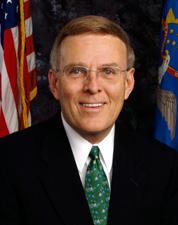 BLD
BLD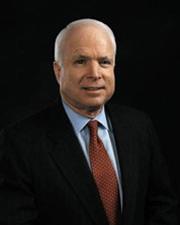 JM
JM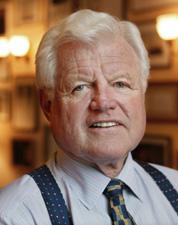 EMK+2
EMK+2
Floor Debate
7 membersWhat members said about S. 2326 on the floor
Mr. President, this past Sunday marked the start of National Crime Victims' Rights Week. We set this week aside each year to refocus attention on the needs and rights of crime victims. This year, the…
Mr. President, this past Sunday marked the start of National Crime Victims' Rights Week. We set this week aside each year to refocus attention on the needs and rights of crime victims.
This year, the Senate had been scheduled to mark the occasion by taking up S.J. Res. 1, a proposed constitutional amendment. Once again, we were going to devote days or weeks debating that proposal, even though the Republican leadership knew it had no real chance of garnering the two-thirds super-majority needed to pass. We went through a similar process four years ago, in April 2000, when the Senate debated an earlier version of the amendment during the last presidential election year.
I noted then, during that earlier debate, the fact that I have long worked to protect and advance crime victims' rights. As a prosecutor, I worked day to day and year to year alongside victims, seeking justice on their behalf. I have worked on and led many legislative efforts on behalf of victims throughout my service in the Senate. One of the most recent of those efforts was the creation of the September 11 Victim Compensation Fund, and I am grateful to have been able to take part in something that has brought some relief to so many victims.
I will never forget the victims I worked with as a prosecutor or the needs of the new victims minted each day through the crimes committed against them. I believe that victims should be notified when the defendant is in court or when he is about to be released. I believe that victims should be heard at critical stages of the prosecution. I believe that victims are entitled to restitution from offenders. In recent years, the debate was never about whether victims should be protected--of course they should. Rather, the debate was about how they should be protected, and whether the proposed constitutional amendment was the best way to do that.
I did not think the proposed amendment was the best way forward. The one thing about which every witness who testified on this issue agreed was that every right provided by the Victims Rights Amendment can be, or already is, protected by State or federal statutory law.
We have long had it in our power to enhance victims' rights through regular legislation legislation that could pass with a simple majority and make an immediate difference in the lives of crime victims. Legislative enhancements are more easily enacted, more directly applied and implemented, and more able to provide specific, effective remedies. In addition, as Chief Justice Rehnquist and others have pointed out, statutes are more easily corrected if we find, in hindsight, that they need correction, clarification or improvement.
I am delighted to be here today with the principal sponsors of S.J. Res. 1, the distinguished Senators from California and Arizona, and with others, both supporters and opponents of the constitutional amendment, to join together in our support of this crime victims' rights statute. I commend and admire Senator Feinstein and Senator Kyl for their dedication to this issue. They are deeply committed to the cause of victims' rights as are all of us who have joined together to offer this bill. It is my hope that this statute will establish more effective and enforceable rights for crime victims in the federal system, and that it can do so without delay, by a majority vote.
First, unlike S.J. Res. 1, which is limited to victims of violent crime, our statute establishes enhanced rights and protections for all victims of crime. Therefore, the elderly woman who is defrauded out of her life savings will have the same rights of notice and participation as other crime victims.
Second, our statute spells out how these rights are to be enforced, using language that Senator Kennedy and I developed in S. 805, the Crime Victims Assistance Act. In addition to providing victims with standing to assert their rights in mandamus actions, our statute would establish an administrative authority in the Department of Justice to receive and investigate victims' claims of unlawful or inappropriate action on the part of criminal justice and victims' service providers. Department of Justice employees who fail to comply with the law pertaining to the treatment of crime victims could face disciplinary sanctions, including suspension or termination of employment.
Third, our statute incorporates additional proposals from S. 805 to help States implement and enforce their own victims' rights laws. In this way, instead of replacing programs that have already been implemented by a majority of States, our statute enables States to retain their full power to protect victims in the ways most appropriate to local concerns and local needs.
Fourth, our statute calls for two annual reports, one by the Administrative Office of the Courts, and the other by the General Accounting Office. These reports will provide Congress with feedback on how the rights and procedures established by the statute are working in practice. Over time, we will be able to modify and fine-tune the statute so that it provides an appropriate degree of protection for the rights of crime victims.
I emphasize that passage of this bill will necessitate careful oversight of its implementation by Congress. If, as I hope, Federal judges and prosecutors take victims' rights seriously, there should be little need for victims to bring mandamus actions to enforce their rights. But if, for whatever reason, victims feel that they are not being treated fairly, we may see a wave of new litigation in the Federal courts, with victims and their lawyers having to insert themselves into criminal cases. We will need to monitor the situation closely.
I am committed to giving victims real and enforceable rights. But I am convinced that prosecutors should be capable of protecting those rights, once we make them clear. In my experience, prosecutors have victims' interests at heart.
Senator Kennedy and I proposed in the Crime Victims Assistance Act a limited-standing provision, which applied with respect to the victim's right to attend and observe the trial, and under which a victim could assert her right if the prosecutor refused to do so. Passing such a provision would have allowed us to observe over a period of time whether direct participation of victims in criminal proceedings has any unanticipated consequences for the administration of justice.
This Victims' Rights Act proposes a bolder experiment, entitling victims to assert a panoply of rights, regardless of whether the prosecution is already asserting the same rights on their behalf. For example, at the insistence of other sponsors, this bill will enable victims to bring mandamus actions alleging the denial of their statutory right ``to be treated with fairness and with respect for the victim's dignity and privacy,'' which may be difficult claims to adjudicate.
I note with some regret that our statute picks up language from S.J. Res. 1 denying victims a civil cause of action for damages in the event that their rights are violated. Allowing victims to vindicate their rights through separate civil proceedings instead of through mandamus actions in the criminal case could well be a more efficient as well as a more effective way of ensuring that victims' rights are honored. Certainly the prospect of being sued would provide a powerful incentive to take victims' rights seriously. But the Republican sponsors of the bill did not want to provide for damages.
Similarly, some Republican Senators did not want to allow courts to appoint attorneys to help crime victims. It is my hope and belief that victims will seldom need representation, since they already have powerful advocates in our public prosecutors. Still, it is possible that a judge would want to appoint an attorney for a victim in an extraordinary case, as for example if there is a material conflict between the victim's interests and the interests of the prosecution. By failing to provide for this possibility, our new bill may perpetuate a system of unequal justice for victims, where the wealthy have the benefit of counsel, and the poor do not.
Finally, I want to comment on the unusual genesis of this bill, and the extraordinary procedure that I expect it will follow in the Senate. As I mentioned earlier, the Senate was scheduled to begin work this week on the proposed constitutional amendment, S.J. Res. 1. On Wednesday, the Republican leadership moved to invoke cloture on the motion to proceed. I would not have opposed this motion. I voted to proceed to an earlier iteration of this constitutional amendment 4 years ago, and I would have been prepared to proceed to it again this week. Given the time this would take and the expected outcome, it could be argued that the Senate already has many pressing matters on its agenda, but I would not have opposed a debate on the constitutional amendment.
Given the Republican leadership's insistence on proceeding to the constitutional amendment this week, there has not been as much time as I would have liked to craft the statutory alternative that we introduce today. And because this bill will come to a vote almost immediately, we will not get to hold hearings on it and polish the text in Committee. I would have liked to get the views of the Office for Victims of Crime. Many victims' groups and domestic violence organizations opposed the constitutional amendment, as did many law professors, judges, and prosecutors. I would have liked to hear their views on this statute. I am concerned that the statute may not adequately address the special problems raised in domestic violence and abuse situations. Fortunately, however, this is a statute, not a constitutional amendment, and it can be modified with relative ease if the need arises.
I commend my good friend, Senator Feinstein, for mediating this consensus legislation. I know that she would have preferred to pass a constitutional amendment--she has made that clear. Nevertheless, she worked hard to produce a bill that we all can support, showing once again that she is first and foremost a legislator who wants to get things done. Due in large part to Senator Feinstein's efforts, we now have an opportunity to advance the cause of victims' rights with strong, practical, bipartisan legislation. I have never doubted Senator Feinstein or Senator Kyl's commitment to victims' rights. I am delighted that we have come together to advance that common cause.
Over more than 20 years I have sponsored and championed legislation to help victims. I have mentioned the recent September 11 Victim Compensation Fund, and I am also proud of such other advancements on behalf of victims as a law to provide assistance to victims of international terrorism, and bills to raise the cap on victims' assistance and compensation programs and to protect the rights of the victims of the Oklahoma City bombing. The legislation that we introduce today should provide us the opportunity to make progress on yet another important measure to address the needs of victims, and I urge my colleagues to support it.
Mr. President, I rise today to address an injustice in the Tax Code that is threatening family farmers and other self-employed individuals. A number of my constituents, primarily Wisconsin farmers,…
Mr. President, I rise today to address an injustice in the Tax Code that is threatening family farmers and other self-employed individuals. A number of my constituents, primarily Wisconsin farmers, have requested Congress's assistance to correct the Tax Code so they can protect their families. The legislation I introduce today, the Farmer Tax Fairness Act of 2004, will solve the problem for today and into the future.
Farming is vital to Wisconsin. Wisconsin's agricultural industry plays a large and important role in the growth and prosperity of the entire State. Wisconsin's status as ``America's Dairyland,'' is central to our State's agriculture industry. Wisconsin's dairy farmers produce approximately 23 billion pounds of milk and 25 percent of the country's butter a year. But Wisconsin's farmers produce much more than milk; they also are national leaders in the production of cheese, potatoes, ginseng, cranberries, various processing vegetables, and many organic foods. So when the hard-working farmers of Wisconsin need help, I will do all I can to assist.
One concern of Wisconsin farmers is that the Tax Code can limit their eligibility for social safety net programs, including old age, survivors, and disability insurance, OASDI, under Social Security and the hospital insurance HI part of Medicare. There programs are paid for through payroll taxes on workers and through the self-employment tax on the income of self-employed individuals. To be eligible for OSADI and HI benefits an individual must be fully insured and must have earned a minimum amount of income in the years immediately preceding the need for coverage. Every year, the Social Security Administration, SSA, sets the amount of earned income that individuals must pay taxes on to earn quarters of coverage, QCs, and maintain their benefits. An individual's eligibility requirements depend upon the age at which death or disability occurs, but for workers over 31 years of age, they must have earned at least 20 QCs within the past 10 years.
Self-employed individuals can have highly variable income, and, particularly for farmers at the whim of Mother Nature, not every year is a good year. During lean years, individuals
may not earn enough income to maintain adequate coverage under OASDI and HI. Therefore, the Tax Code provides options to allow self-employed individuals to maintain eligibility for benefits. These options allow individuals to choose to pay taxes based on $1,600 of earned income, thus allowing self-employed entrepreneurs to maintain the same Federal protections even when their income varies.
Unfortunately, both the options for farmers and nonfarmers--Social Security Act Sec. 211(a) and I.R.C. Sec. 1402(a)--have not kept pace with inflation, and they no longer provide security to families across the country. Decades ago, self-employment income of $1,600 earned an individual four QCs under SSA's calculations. In 2001, the amount needed to earn a QC rose to $830 of earned income, so individuals electing the optional methods were only able to earn one QC, making it much harder for them to remain eligible for benefits.
Congress's failure to address this problem threatens the ability of self-employed individuals to maintain eligibility for OASDI and HI. I have heard from several of my constituent who want these options to be fixed so they can make sure their families will be taken care of in the event that something unforeseen occurs.
Therefore, I am introducing the Farmer Tax Fairness Act of 2004 in order to provide farmers and self-employed individuals with a fair choice. Under this bill, they will continue to be able to elect the optional method if they so choose. When individuals do elect the option, this legislation provides an update to the Tax Code so farmers and self-employed individuals can retain full eligibility for OASDI and HI benefits. It indexes the optional income levels to SSA's QC calculations, allowing these farmers and self-employed individuals to claim enough earned income to qualify for four OCs annually. By linking the earned income level to SSA's requirements for QCs, the bill will ensure that the amount of income deemed to be earned under the optional methods will not need to be adjusted by Congress again.
In addition to providing security to self-employed individuals and farmers across the country, this solution is fiscally responsible. It actually provides a short run increase in U.S. Treasury revenues while having negligible impact upon the Social Security trust fund in the long run.
Let me take a moment to acknowledge the efforts of the Senator from Iowa, Mr. Grassley, to address this problem in the 107th Congress. As chairman of the Senate Finance Committee, he included similar legislative language in the chairman's mark for the Small Business and Farm Economic Recovery Act of 2002. The Senate Finance Committee held a markup on the legislation on September 19, 2002, but the changes to the optional methods did not become law.
When incomes fall, the Tax Code provides optional methods for calculating net earnings to ensure that farmers and self-employed individuals maintain eligibility for social safety net programs. Due to inflation, the Tax Code has not kept up and many farmers are losing eligibility for some of Social Security's programs. Congress needs to provide security to farm families and other self-employed individuals. I urge my colleagues to support the Farmer Tax Fairness Act of 2004.
Mr. President, I rise today to address an injustice in the Tax Code that is threatening family farmers and other self-employed individuals. A number of my constituents, primarily Wisconsin farmers,…
Mr. President, I rise today to address an injustice in the Tax Code that is threatening family farmers and other self-employed individuals. A number of my constituents, primarily Wisconsin farmers, have requested Congress's assistance to correct the Tax Code so they can protect their families. The legislation I introduce today, the Farmer Tax Fairness Act of 2004, will solve the problem for today and into the future.
Farming is vital to Wisconsin. Wisconsin's agricultural industry plays a large and important role in the growth and prosperity of the entire State. Wisconsin's status as ``America's Dairyland,'' is central to our State's agriculture industry. Wisconsin's dairy farmers produce approximately 23 billion pounds of milk and 25 percent of the country's butter a year. But Wisconsin's farmers produce much more than milk; they also are national leaders in the production of cheese, potatoes, ginseng, cranberries, various processing vegetables, and many organic foods. So when the hard-working farmers of Wisconsin need help, I will do all I can to assist.
One concern of Wisconsin farmers is that the Tax Code can limit their eligibility for social safety net programs, including old age, survivors, and disability insurance, OASDI, under Social Security and the hospital insurance HI part of Medicare. There programs are paid for through payroll taxes on workers and through the self-employment tax on the income of self-employed individuals. To be eligible for OSADI and HI benefits an individual must be fully insured and must have earned a minimum amount of income in the years immediately preceding the need for coverage. Every year, the Social Security Administration, SSA, sets the amount of earned income that individuals must pay taxes on to earn quarters of coverage, QCs, and maintain their benefits. An individual's eligibility requirements depend upon the age at which death or disability occurs, but for workers over 31 years of age, they must have earned at least 20 QCs within the past 10 years.
Self-employed individuals can have highly variable income, and, particularly for farmers at the whim of Mother Nature, not every year is a good year. During lean years, individuals
may not earn enough income to maintain adequate coverage under OASDI and HI. Therefore, the Tax Code provides options to allow self-employed individuals to maintain eligibility for benefits. These options allow individuals to choose to pay taxes based on $1,600 of earned income, thus allowing self-employed entrepreneurs to maintain the same Federal protections even when their income varies.
Unfortunately, both the options for farmers and nonfarmers--Social Security Act Sec. 211(a) and I.R.C. Sec. 1402(a)--have not kept pace with inflation, and they no longer provide security to families across the country. Decades ago, self-employment income of $1,600 earned an individual four QCs under SSA's calculations. In 2001, the amount needed to earn a QC rose to $830 of earned income, so individuals electing the optional methods were only able to earn one QC, making it much harder for them to remain eligible for benefits.
Congress's failure to address this problem threatens the ability of self-employed individuals to maintain eligibility for OASDI and HI. I have heard from several of my constituent who want these options to be fixed so they can make sure their families will be taken care of in the event that something unforeseen occurs.
Therefore, I am introducing the Farmer Tax Fairness Act of 2004 in order to provide farmers and self-employed individuals with a fair choice. Under this bill, they will continue to be able to elect the optional method if they so choose. When individuals do elect the option, this legislation provides an update to the Tax Code so farmers and self-employed individuals can retain full eligibility for OASDI and HI benefits. It indexes the optional income levels to SSA's QC calculations, allowing these farmers and self-employed individuals to claim enough earned income to qualify for four OCs annually. By linking the earned income level to SSA's requirements for QCs, the bill will ensure that the amount of income deemed to be earned under the optional methods will not need to be adjusted by Congress again.
In addition to providing security to self-employed individuals and farmers across the country, this solution is fiscally responsible. It actually provides a short run increase in U.S. Treasury revenues while having negligible impact upon the Social Security trust fund in the long run.
Let me take a moment to acknowledge the efforts of the Senator from Iowa, Mr. Grassley, to address this problem in the 107th Congress. As chairman of the Senate Finance Committee, he included similar legislative language in the chairman's mark for the Small Business and Farm Economic Recovery Act of 2002. The Senate Finance Committee held a markup on the legislation on September 19, 2002, but the changes to the optional methods did not become law.
When incomes fall, the Tax Code provides optional methods for calculating net earnings to ensure that farmers and self-employed individuals maintain eligibility for social safety net programs. Due to inflation, the Tax Code has not kept up and many farmers are losing eligibility for some of Social Security's programs. Congress needs to provide security to farm families and other self-employed individuals. I urge my colleagues to support the Farmer Tax Fairness Act of 2004.
Mr. President, today I am introducing bipartisan legislation to allow prescription drug importation from Canada, the European Union, and a few other countries. I am very pleased to be joined on this…
Mr. President, today I am introducing bipartisan legislation to allow prescription drug importation from Canada, the European Union, and a few other countries. I am very pleased to be joined on this bill by Senators Snowe, Kennedy, McCain, Daschle, Lott, Stabenow, Chafee, Johnson, Pryor, and Feingold.
This new bill, the Pharmaceutical Market Access and Drug Safety Act, is an important breakthrough for several reasons. First, it is a bipartisan effort, and as we all know, bipartisanship is the best way to get things done in Congress today or any day. Second, this bill addresses the safety issues that have been raised by some and makes certification by the Health and Human Services Secretary unnecessary. Therefore, it would take effect immediately and provide consumers with the urgent help they need accessing more affordable medicines.
It is my hope that the Senate will take up and pass this legislation on an expedited basis because American consumers, especially senior citizens, State and local governments, and businesses large and small are desperate for action by Congress to give them relief from high drug prices. It has been well documented that Americans are charged the highest prices in the world for the exact same medicines that consumers in other major industrialized countries buy at a fraction of the price.
For example, Lipitor, a cholesterol-lowering medicine that is the top-selling drug in the United States, is made in the same plant and put in the same bottle. One bottle is shipped to American pharmacies, and the other to Canadian Pharmacies. Both are approved by the Food and Drug Administration. The only difference? The price. One tablet purchased by a pharmacist in Canada costs $1.01; the same tablet purchased by an American pharmacist costs $1.86, 84 percent more than in Canada.
The high prices charged for prescription drugs in the United States are forcing Americans and state and local governments to turn to Canada to buy their medicines. Dozens of State and local governments--from Maine to Massachusetts to North Dakota--are now implementing drug importation programs with Canada to save their citizens and their health care programs millions of dollars. Individual Americans are now importing more than $1.1 billion in prescription drugs from Canada.
Unfortunately, they are doing so illegally, according to the FDA. The pharmaceutical industry is the only industry that benefits from a Congressional ban on re-imported products. The time has come to eliminate that barrier so American consumers, too, can benefit from the global marketplace.
Big, multi-national drug companies already reap the benefits of the world market. In fact, more than $40 billion of the prescription drugs consumed by Americans in 2002 were made in other countries, such as Ireland, Singapore, and Japan so that the drug companies could take advantage of tax breaks, cheaper labor and other incentives available abroad.
What's good for the goose should be good for the gander--American consumers, pharmacists, and drug wholesalers should be equally free to purchase FDA-approved medicines from Canada, Europe and elsewhere. The bill I am introducing today would allow just that.
This new bill is similar in many respects to the Pharmaceutical Market Access Act, sometimes called the ``Gutknecht bill'', which was passed by the House of Representatives by a wide bipartisan margin last July. For instance: Both bills allow prescription drugs to be imported from Canada, the
European Union, and some other major industrialized nations. Both bills require pharmacies and wholesalers to register with the FDA to be able to import prescription drugs. Both bills provide for the importation of FDA-approved medicines. Both bills allow for reliance on anti- counterfeiting technology to ensure drug safety. Both bills allow for drug importation to begin immediately, without first requiring certification by the HHS Secretary.
However, my cosponsor and I also believe that our bill makes a number of improvements over the Pharmaceutical Market Access Act both in terms of safety and closing loopholes to ensure that a drug importation program will not be thwarted by the big drug manufacturers. For example, this bill ensures that individual Americans who import their prescription drugs via the Internet or mail-order are doing so from safe, reliable Canadian pharmacies. This bill gives the FDA the ability to inspect Canadian exporters to assure safety. This bill enhances the FDA's ability to stop those drug imports that are unsafe. This bill would give the FDA the resources needed to ensure the safety of imported medicines.
In addition, this bill contains several provisions to close loopholes that would allow drug companies to circumvent drug importation. Unfortunately, a number of big drug companies are cutting off medicines to Canadian pharmacies that sell to Americans. This bill would make such tactics an unfair trade practice.
We will now work with the Senate leadership to get this bill enacted in the Senate promptly. The Senate has voted on drug importation legislation three times since 2000. There is no need for a protracted debate. In invite my colleagues to join me in cosponsoring this bill and in acting soon to give our constituents relief from high drug prices.
I ask unanimous consent that a summary of this bill be printed in the Record.
Mr. President, I am pleased to join Senators Dorgan, Snowe, Kennedy, Daschle, and others in introducing the Pharmaceutical Market Access and Drug Safety Act of 2004. This bill represents a strong…
Mr. President, I am pleased to join Senators Dorgan, Snowe, Kennedy, Daschle, and others in introducing the Pharmaceutical Market Access and Drug Safety Act of 2004. This bill represents a strong bipartisan compromise, and is designed to establish a system for American consumers to safely import lower cost prescription drugs.
American consumers are frustrated, and for good reason. We pay the highest prices in the world for brand name prescription drugs. Prices continue to rise at double digit rates--far outpacing inflation. With over 43 million uninsured Americans and millions more seniors without a substantial prescription drug benefit, filling a doctor's prescription is unaffordable for many people in this country. Every day, far too many families are forced to make difficult choices between life- sustaining prescription drugs and other daily necessities.
The United States represents the largest pharmaceutical market in the world. Our taxpayers make substantial investments into pharmaceutical research and development. And yet, Americans are still paying 30 to 75 percent more for their prescriptions than consumers in Canada, the European Union, and elsewhere.
In 2000, Congress passed the Medicine Equity and Drug Safety, MEDS, Act to provide Americans with a legal means to obtain lower cost prescription drugs from industrialized countries with prescription drug regulatory systems similar to our own. Yet here we are, four years later, and Americans still cannot legally access lower cost prescription drugs from other nations. The safety certification requirement contained in the MEDS Act proved to be a poison pill. In the bill we are introducing today, we have spelled out the safety measures that will be necessary for an importation program, making the certification requirement unnecessary.
According to recent polls, nearly two thirds of Americans believe the government should make it easier to import lower cost drugs from Canada and other countries. And, Americans have begun to take matters into their own hands. Last year, Americans spent an estimated $1.1 billion on prescription drugs imported from Canada, twice the amount that was spent the previous year. And states are now taking action too.
We also passed an enormous expansion to the Medicare program, last year. Unfortunately, that new law largely benefits the pharmaceutical industry and other special interests, and is already slated to cost $534 billion--$134 billion more than was estimated just a few months ago. That law, which will burden American taxpayers for generations to come and contributes substantially to the financial insolvency of the Medicare program, did practically nothing to rein in the cost of prescription drugs.
With all of the money the Federal Government will now be spending on prescription drugs, very little is being done to help reduce their costs. In fact, the Medicare package explicitly prohibits the Secretary of Health and Human Services from engaging in negotiations to lower prescription drug costs. This must change.
In the absence of Federal action, States such as Minnesota, Illinois, Iowa, Wisconsin, Vermont and New Hampshire, together with cities such as Springfield and Boston, MA, Montgomery, AL, and Los Angeles, CA, have moved this issue to the forefront. In fact, the City of Springfield recently announced that their drug importation program saved the city more than $2 million in the last 9 months alone. Despite these successes, our Federal regulators continue to oppose any effort to facilitate importation.
Throughout the debate surrounding prescription drug importation, much concern has been raised regarding consumer safety and the security of the U.S. drug supply, with a particular focus on the dangers of Internet pharmacies and counterfeit drugs. Let me be clear. None of us want American consumers to be harmed from purchasing imported prescription drugs. That is why throughout the development of this package, consumer safety has remained our primary concern. This bill includes a number of measures which will make imported drugs as safe, if not safer, than drugs purchased through the domestic supply chain. With proper government oversight, such as that which would be provided under our legislation, Americans should be able to obtain access to safe lower cost prescription drugs from Canada, the EU and other markets.
Under our proposal, during the first year after enactment, the bill would enable individual American consumers, wholesalers, and pharmacists to import FDA approved prescription drugs from FDA approved and inspected Canadian exporters. Recognizing that the Canadian market is too small to satisfy the American demand, one year after enactment, the bill would allow FDA approved pharmacists and wholesalers to import FDA approved drugs from a larger group of nations, including the European Union, Switzerland, Australia, New Zealand and Japan.
To ensure the safety of this new system, the FDA would be required to regularly inspect Canadian exporters as well as domestic importers. The legislation also would require all importers and exporters to maintain a full chain of custody, or pedigree, for the drugs imported into the
Show 3 more
Mr. President, I am pleased today to join my colleagues Senator Dorgan, Senator Snowe, Senator McCain, Senator Daschle, Senator Lott, Senator Chafee and others in introducing legislation to allow the…
Mr. President, I am pleased today to join my colleagues Senator Dorgan, Senator Snowe, Senator McCain, Senator Daschle, Senator Lott, Senator Chafee and others in introducing legislation to allow the importation of safe prescription drugs from Canada, the European Union, Australia, New Zealand and Japan.
This issue is about fairness for middle class Americans who are struggling to afford costly prescription drugs. Americans understand fairness, and they know it's wrong that Americans pay far too much for prescription drugs--more than Canadians, more than the British, more than in any other country in the world. That's not right. Prescription drugs mean the difference between sickness and health--even life and death--for millions of average Americans. It's not fair that drug companies overcharge middle class families and patients have to do without the drugs they need.
We're here to say that help is on the way.
Our legislation will legalize safe imports of U.S.-approved drugs manufactured in U.S.-approved plants. It is a creative new approach to meeting the needs of our middle class families. We know it will be opposed by the drug companies, who are determined to continue to reap windfall profits at the expense of American patients. It will be opposed by the Bush Administration, which is determined to protect the pharmaceutical industry and its powerful campaign contributors. But it will be welcomed by someone else--by every family in every community in America who needs to fill a prescription.
Every pharmaceutical company in the world wants its drugs approved for sale in the United States. We're the largest market on Earth. A decision by the Food and Drug Administration that a drug is safe and effective is the gold standard for the world. But once that drug is approved for use in the United States, the drug manufacturer applies a greedy double standard. What's fair about a system that forces American patients to pay sixty percent more than the British pay or the Swiss pay for an FDA-approved drug manufactured to FDA standards? What's fair when, on average, Americans pay two-thirds more than Canadians? What's fair when Americans pay 80 percent more than Germans and twice as much as Italians?
This legislation will end that indefensible disparity, by enabling U.S. consumers to buy FDA-approved drugs at the same fair prices as they are sold abroad.
The drug companies and the Bush Administration claim that imported drugs threaten the health of American consumers because of the possibility of counterfeiting or adulteration. Under this bill, that argument can't pass the laugh test.
One-quarter of the drugs that Americans use today are already legally imported into the United States. The American people have no idea how large a percentage of the pills they take are out-sourced--produced for U.S. drug-makers in plants overseas,
where wages are cheaper. The catch is that the law allows that. Drugs can be legally imported by the drug companies themselves, who then sell them at the high U.S. price.
If drug companies can import drugs at high prices, why can't patients import them at fair prices?
Our legislation sets up iron-clad safety procedures to guarantee that every drug imported legally into the United States is the same FDA- approved drug that was originally manufactured in an FDA-approved plant--whether the drug is manufactured abroad and shipped to the U.S., or whether it is manufactured in the United States, shipped abroad and then imported back into the United States.
Under our bill, the FDA is given new legal authority and resources to enforce the law. In fact, under this legislation, the procedures to prevent counterfeiting or adulteration of drugs shipped into the United States are actually stronger than the protections against counterfeiting of drugs manufactured for the domestic market.
Our legislation also includes strict rules to close the loopholes that drug companies may use to evade the law. Violations will be considered unfair trade practices under the Clayton Act, and violators will be subject to triple damages.
No doubt, in the months ahead, as the election approaches and the political pressure builds, drug companies and their allies in the Bush Administration and Congress will offer an alternative program. They'll call it an importation bill, but consumers beware. Counterfeit drugs have no place in American medicine cabinets, and counterfeit proposals to reduce drug prices have no place in Congress.
Year in and year out, drug companies profits are the highest of any industry in the United States. Year in and year out, patients are denied the life-saving drugs they need because those astronomical profits are obtained by equally astronomical prices--prices that drug companies can't charge anywhere else in the world because no other country in the world would tolerate such high prices. It's time to end the shameful price-gouging here at home. It's time for basic fairness. It's time to pass this bill, and I urge my colleagues in the Senate to support it.
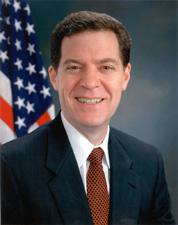
Mr. President, today I introduce, along with my colleagues Senator Talent and Senator Allen, an important resolution regarding recent developments in Hong Kong. Hong Kong has been a great friend of…
Mr. President, today I introduce, along with my colleagues Senator Talent and Senator Allen, an important resolution regarding recent developments in Hong Kong. Hong Kong has been a great friend of the United States, a key ally in the war on terrorism and an invaluable trading partner. In recent weeks, however, it has become increasingly clear that Beijing will stand in the way of Hong Kong's development into a full democracy. Such actions compel support from the members of this body.
The Hong Kong Policy Act of 1992 sets forth the guidelines for the U.S. relationship with Hong Kong. It provides for a very special and distinct relationship with the Hong Kong Special Administrative Region, even as we recognize the Hong Kong is a part of China. This special relationship rests on the notion that Hong Kong will be governed differently than the rest of China.
Unfortunately, Beijing continues to suggest that it has no intention of realizing Hong Kong's democratic potential. Recent decisions by the Standing Committee of the National People's Congress push direct election of Hong Kong's Chief Executive into the future. Hong Kong's Legislative Counsel faces a similar fate. Some observers even suggest Beijing will wait another 30 or 40 years to allow universal suffrage in the selection of executive and legislative office holders to become a reality. By then, the 50 year special arrangement will be near expiration, threatening everything the people of Hong Kong have achieved.
I traveled to Hong Kong in January. My Subcommittee on East Asia and Pacific Affairs held a hearing last month where we heard testimony from Hong Kong's leading democracy advocates. A clear message emerges from everyone with whom I have spoken on this issue: Hong Kong is ready for full democracy. The people have demonstrated the ability to create a vibrant society and they deserve universal suffrage and the ability to participate fully in the functions of government.
The resolution I submit today is simple. It recognizes the recent report from the State Department dealing with the U.S.-Hong Kong relationship. It highlights Hong Kong's autonomy as envisioned by the Hong Kong Policy Act, and it highlights the unfortunate steps taken in Beijing to frustrate Hong Kong's democratic development. As the resolution says, Congress ought to declare ``that the people of Hong Kong should be free to determine the pace and scope of constitutional developments'' and that anything less violates the vision of democracy set forth in the 1984 Joint Declaration signed by Great Britain and the People's Republic of China.
When Martin Lee came to testify about the importance of democratic development in March, Beijing referred to him as a dreamer. They meant it as an insult, but Mr. Lee embraces the label as he looks to a future of freedom in Hong Kong. This body can make a powerful statement of support for Martin Lee's democratic dreams by passing this resolution, and I hope they will move quickly to do so.
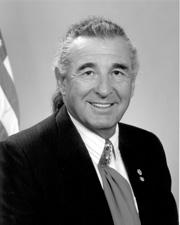
Mr. President, I ask unanimous consent that the text of the bill be printed in the Record.
Mr. President, I ask unanimous consent that the text of the bill be printed in the Record.
Bill Text
Latest available legislative text
        [Congressional Bills 108th Congress]
[From the U.S. Government Publishing Office]
[S. 2326 Introduced in Senate (IS)]

108th CONGRESS
2d Session
S. 2326

To modify the optional method of computing net earnings from self-
employment.

_______________________________________________________________________

IN THE SENATE OF THE UNITED STATES

April 21, 2004

Mr. Feingold introduced the following bill; which was read twice and
referred to the Committee on Finance

_______________________________________________________________________

A BILL

To modify the optional method of computing net earnings from self-
employment.

Be it enacted by the Senate and House of Representatives of the
United States of America in Congress assembled,

SECTION 1. SHORT TITLE.

This Act may be cited as the ``Farmer Tax Fairness Act of 2004''.

SEC. 2. MODIFICATION TO OPTIONAL METHOD OF COMPUTING NET EARNINGS FROM
SELF-EMPLOYMENT.

(a) Amendments to the Internal Revenue Code of 1986.--
(1) In general.--The matter following paragraph (15) of
section 1402(a) of the Internal Revenue Code of 1986 is
amended--
(A) by striking ``$2,400'' each place it appears
and inserting ``the upper limit'', and
(B) by striking ``$1,600'' each place it appears
and inserting ``the lower limit''.
(2) Definitions.--Section 1402 of such Code is amended by
adding at the end the following new subsection:
``(l) Upper and Lower Limits.--For purposes of subsection (a)--
``(1) Lower limit.--The lower limit for any taxable year is
the sum of the amounts required under section 213(d) of the
Social Security Act for a quarter of coverage in effect with
respect to each calendar quarter ending with or within such
taxable year.
``(2) Upper limit.--The upper limit for any taxable year is
the amount equal to 150 percent of the lower limit for such
taxable year.''.
(b) Amendments to the Social Security Act.--
(1) In general.--The matter following paragraph (15) of
section 211(a) of the Social Security Act is amended--
(A) by striking ``$2,400'' each place it appears
and inserting ``the upper limit'', and
(B) by striking ``$1,600'' each place it appears
and inserting ``the lower limit''.
(2) Definitions.--Section 211 of such Act is amended by
adding at the end the following new subsection:

``Upper and Lower Limits

``(k) For purposes of subsection (a)--
``(1) The lower limit for any taxable year is the sum of
the amounts required under section 213(d) for a quarter of
coverage in effect with respect to each calendar quarter ending
with or within such taxable year.
``(2) The upper limit for any taxable year is the amount
equal to 150 percent of the lower limit for such taxable
year.''.
(3) Conforming amendment.--Section 212 of such Act is
amended--
(i) in subsection (b), by striking ``For''
and inserting ``Except as provided in
subsection (c), for''; and
(ii) by adding at the end the following new
subsection:
``(c) For the purpose of determining average indexed monthly
earnings, average monthly wage, and quarters of coverage in the case of
any individual who elects the option described in clause (ii) or (iv)
in the matter following section 211(a)(15) for any taxable year that
does not begin with or during a particular calendar year and end with
or during such year, the self-employment income of such individual
deemed to be derived during such taxable year shall be allocated to the
two calendar years, portions of which are included within such taxable
year, in the same proportion to the total of such deemed self-
employment income as the sum of the amounts applicable under section
213(d) for the calendar quarters ending with or within each such
calendar year bears to the lower limit for such taxable year specified
in section 211(k)(1).''.
(c) Effective Date.--The amendments made by this section shall
apply to taxable years beginning after the date of the enactment of
this Act.
<all>