American Horse Slaughter Prevention Act of 2004
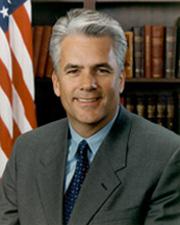 Sen. John Ensign (R-NV)
Legislative Activity
Stay on top of the latest movement without scrolling through every action
Read twice and referred to the Committee on Agriculture, Nutrition, and Forestry.
April 27, 2004
View full timeline
Introduced in Senate
April 27, 2004
Sponsor introductory remarks on measure. (CR S4432-4433)
April 27, 2004
Read twice and referred to the Committee on Agriculture, Nutrition, and Forestry.
April 27, 2004
Floor Debate
5 membersWhat members said about S. 2352 on the floor



Floor Debate
5 membersWhat members said about S. 2352 on the floor
Mr. President, I rise today to introduce the Emergency Medical Services Support Act of 2004 with my colleague, Senator Russ Feingold. This legislation will strengthen Federal efforts to support…
Mr. President, I rise along with my colleagues, Senators landrieu, Lieberman, Inouye and Collins, in order to introduce S. 2352, the American Horse Slaughter Prevention Act. As a veterinarian, I am…
Mr. President, I rise along with my colleagues, Senators landrieu, Lieberman, Inouye and Collins, in order to introduce S. 2352, the American Horse Slaughter Prevention Act. As a veterinarian, I am…
Mr. President, today I join my colleagues in introducing the American Horse Slaughter Prevention Act. This bill will prohibit the slaughter of horses for human consumption, a practice which many…
Mr. President, today I join my colleagues in introducing the American Horse Slaughter Prevention Act. This bill will prohibit the slaughter of horses for human consumption, a practice which many…
Show 2 more
Mr. President, I am pleased to join my colleague from Maine, Senator Collins, today to introduce legislation that will help improve and streamline Federal support for community-based emergency…
Mr. President, Long Island Sound holds a special place in our Nation's history, its present, and its future. It has played a key role in the development of the Nation, from the early days of the…
Bill Text
Latest available legislative text
        [Congressional Bills 108th Congress]
[From the U.S. Government Publishing Office]
[S. 2352 Introduced in Senate (IS)]

108th CONGRESS
2d Session
S. 2352

To prevent the slaughter of horses in and from the United States for
human consumption by prohibiting the slaughter of horses for human
consumption and by prohibiting the trade and transport of horseflesh
and live horses intended for human consumption, and for other purposes.

_______________________________________________________________________

IN THE SENATE OF THE UNITED STATES

April 27, 2004

Mr. Ensign (for himself, Ms. Landrieu, Mr. Lieberman, Mr. Inouye, and
Ms. Collins) introduced the following bill; which was read twice and
referred to the Committee on Agriculture, Nutrition, and Forestry

_______________________________________________________________________

A BILL

To prevent the slaughter of horses in and from the United States for
human consumption by prohibiting the slaughter of horses for human
consumption and by prohibiting the trade and transport of horseflesh
and live horses intended for human consumption, and for other purposes.

Be it enacted by the Senate and House of Representatives of the
United States of America in Congress assembled,

SECTION 1. SHORT TITLE.

This Act may be cited as the ``American Horse Slaughter Prevention
Act of 2004''.

SEC. 2. PURPOSES.

The purposes of this Act are--
(1) to prohibit the slaughter of horses for human
consumption;
(2) to prohibit the sale, possession, and trade of
horseflesh for human consumption; and
(3) to prohibit the sale, possession, and trade of live
horses for slaughter for human consumption.

SEC. 3. DEFINITIONS.

In this Act:
(1) Euthanasia.--The term ``euthanasia'' means to kill an
animal humanely by means that immediately render the animal
unconscious, with this state remaining until the swift death of
the animal.
(2) Export.--The term ``export'' means to take from any
place subject to the jurisdiction of the United States to a
place not subject to that jurisdiction, whether or not the
taking constitutes an exportation within the meaning of the
customs laws of the United States.
(3) Horse.--The term ``horse'' means all members of the
equid family, including horses, ponies, donkeys, mules, asses,
and burros.
(4) Horseflesh.--The term ``horseflesh'' means the flesh of
a dead horse, including the viscera, skin, hair, hide, hooves,
and bones of the horse.
(5) Human consumption.--The term ``human consumption''
means ingestion by people as a source of food.
(6) Import.--The term ``import'' means to bring into any
place subject to the jurisdiction of the United States from a
place not subject to that jurisdiction, whether or not the
bringing constitutes an importation within the meaning of the
customs laws of the United States.
(7) Person.--The term ``person'' means--
(A) an individual, corporation, partnership, trust,
association, or other private entity;
(B) an officer, employee, agent, department, or
instrumentality of--
(i) the Federal Government; or
(ii) any State, municipality, or political
subdivision of a State; or
(C) any other entity subject to the jurisdiction of
the United States.
(8) Secretary.--The term ``Secretary'' means the Secretary
of Agriculture.
(9) Slaughter.--The term ``slaughter'' means the commercial
slaughter of 1 or more horses with an intent to sell, barter,
or trade horseflesh for human consumption.
(10) State.--The term ``State'' means--
(A) each of the several States of the United
States;
(B) the District of Columbia;
(C) the Commonwealth of Puerto Rico;
(D) Guam;
(E) American Samoa;
(F) the Commonwealth of the Northern Mariana
Islands;
(G) the Federated States of Micronesia;
(H) the Republic of the Marshall Islands;
(I) the Republic of Palau;
(J) the United States Virgin Islands; and
(K) any other territory or possession of the United
States.
(11) Transport.--The term ``transport'' means--
(A) to move by any means; or
(B) to receive or load onto a vehicle for the
purpose of movement.
(12) United states.--The term ``United States'' means the
customs territory of the United States, as defined in general
note 2 of the Harmonized Tariff Schedule of the United States.

SEC. 4. PROHIBITED ACTS.

A person shall not--
(1) slaughter a horse for human consumption;
(2) import into, or export from, the United States--
(A) horseflesh for human consumption; or
(B) live horses intended for slaughter for human
consumption;
(3) sell or barter, offer to sell or barter, purchase,
possess, transport, deliver, or receive--
(A) horseflesh for human consumption; or
(B) live horses intended for slaughter for human
consumption; or
(4) solicit, request, or otherwise knowingly cause any act
prohibited under paragraph (1), (2), or (3).

SEC. 5. PENALTIES.

(a) Criminal Penalties.--A person that violates section 4 shall be
fined under title 18, United States Code, imprisoned for not more than
1 year, or both.
(b) Civil Penalties.--
(1) In general.--In addition to any other civil or criminal
penalty that may be imposed under title 18, United States Code,
or any other provision of law, if a person violates section 4,
the Secretary shall--
(A) assess a civil penalty against the person of
not less than $2,500 but not more than $5,000; and
(B) confiscate all horses in the physical or legal
possession of the person at the time of arrest, if the
horses are intended for slaughter.
(2) Remission or mitigation of penalties.--For good cause
shown, the Secretary may remit or mitigate any civil penalty
under this Act.
(3) Debarment.--The Secretary shall prohibit a person from
importing, exporting, transporting, trading, or selling horses
in the United States, if the Secretary finds that the person
has engaged in a pattern or practice of actions that have
resulted in a final judicial or administrative determination
with respect to the assessment of criminal or civil penalties
for violations of this Act.
(c) Notice; Hearing.--No monetary penalty may be assessed against a
person for a violation under this section unless the person is given
notice and opportunity for a hearing with respect to the violation in
accordance with section 554 of title 5, United States Code.
(d) Separate Offenses.--
(1) Live horse.--Each live horse transported, traded,
slaughtered, or possessed in violation of this Act shall
constitute a separate offense.
(2) Horseflesh.--Each 400 hundred pounds or less of
horseflesh transported, traded, slaughtered, or possessed in
violation of this Act shall constitute a separate offense.

SEC. 6. ENFORCEMENT.

(a) In General.--The Secretary shall enforce this Act directly or
by agreement with any other Federal, State, or local agency.
(b) Administration.--Any person authorized by the Secretary to
enforce this Act--
(1) may execute any warrant or process issued by any
officer or court of competent jurisdiction to enforce this Act;
and
(2) if so authorized, may, in addition to any other
authority conferred by law--
(A) with or without warrant or other process,
arrest any person committing (in the presence or view
of the authorized person) a violation of this Act
(including a regulation promulgated under this Act);
(B) seize the cargo of any truck or other
conveyance used or employed to violate this Act
(including a regulation promulgated under this Act) or
that reasonably appears to have been so used or
employed; and
(C) seize, whenever and wherever found, all horses
and horseflesh possessed in violation of this Act
(including a regulation promulgated under this Act) and
dispose of the horses and horseflesh, in accordance
with this section (including regulations promulgated
under this Act).
(c) Placement of Confiscated Horses.--
(1) Temporary placement.--After confiscation of a live
horse pursuant to this Act, an arresting authority shall work
with animal welfare societies and animal control departments--
(A) to ensure the temporary placement of the horse
with an animal rescue facility that is an organization
described in section 501(c)(3) of the Internal Revenue
Code of 1986 and is exempt from taxation under section
501(a) of that Code, while the person charged with
violating this Act is prosecuted; or
(B) if placement at such a facility is not
practicable, to temporarily place the horse with--
(i) a facility that has as its primary
purpose the humane treatment of animals; or
(ii) another suitable location, as
determined by the Secretary or arresting
authority.
(2) Bonds.--
(A) In general.--The owner of a horse confiscated
under this Act may prevent permanent placement of the
horse by the facility that has temporary custody of the
horse by posting a bond with a court of competent
jurisdiction in an amount the court determines is
sufficient to provide for the necessary care and
keeping of the horse for at least 60 days, including
the day on which the horse was taken into custody.
(B) Timing.--The bond shall be filed with the court
not later than 10 days after the horse is confiscated.
(C) Lack of bond.--If a bond is not posted in
accordance with this paragraph, the custodial facility
shall determine permanent placement of the horse in
accordance with reasonable practices for the humane
treatment of animals.
(D) Treatment following bond period.--
(i) New bond.--If the animal has not yet
been returned to the owner at the end of the
time for which expenses are covered by the bond
and if the owner desires to prevent permanent
placement of the animal by the custodial
facility, the owner shall post a new bond with
the court within 10 days after expiration of
the prior bond.
(ii) Permanent placement.--If a new bond is
not posted in accordance with clause (i), the
custodial facility shall determine permanent
placement of the horse in accordance with
reasonable practices for the humane treatment
of animals.
(E) Costs for providing care for horse deducted
from bond.--If a bond is posted in accordance with this
paragraph, the custodial facility may draw from the
bond the actual reasonable costs incurred by the
facility in providing the necessary care and keeping of
the confiscated horse from the date of the initial
confiscation of the horse to the date of
final disposition of the horse in the criminal action charging a
violation of this Act.
(3) Permanent placement.--Except as provided in subsection
(d), any horse confiscated pursuant to this Act and not
returned to the owner after confiscation shall be placed
permanently with an animal rescue facility or other suitable
facility as described in this section on--
(A) the conviction under this Act of the owner of
the horse;
(B) the surrender of the horse by the owner;
(C) the failure of the owner of the horse to post a
bond as required in accordance with paragraph (2); or
(D) the inability of the Secretary to identify the
owner.
(d) Euthanasia of Horses.--
(1) Emergency circumstances.--The Secretary or any law
enforcement authority charged with enforcing this Act may order
or perform the immediate euthanasia of any horse in the field
if the horse is injured beyond recovery and suffering
irreversibly.
(2) Horses beyond recovery and unplaceable.--The Secretary
or any law enforcement authority charged with enforcing this
Act may order a licensed veterinarian to euthanize any
confiscated horse if--
(A) the confiscated horse is injured, disabled, or
diseased beyond recovery; or
(B) placement at an animal rescue facility or other
suitable facility, as described in this section, is not
practicable within 90 days of any circumstance
described in subsection (c)(3).
(3) Method.--In euthanizing a horse under paragraph (2),
the Secretary, law enforcement authority charged with enforcing
this Act, or a licensed veterinarian conducting the euthanasia
shall use a method of euthanasia rated ``Acceptable'' for
horses in the most recent Report of the American Veterinary
Medical Association's Panel on Euthanasia.
(e) Funding of Animal Rescue Facilities.--
(1) Grants.--Subject to the availability of appropriated
funds, the Secretary shall make grants to animal rescue
facilities described in subsection (c)(1)(A) that have given
adequate assurances to the Secretary that the facilities are
willing to accept horses under this Act.
(2) Penalties, fines, and forfeited property.--Amounts
received as penalties or fines under this Act, and property
forfeited under this Act, shall be used for the care of any
live horses seized from violators of this Act and taken into
the possession by the United States or placed with an animal
rescue facility or other suitable location.

SEC. 7. REPORTS.

Not later than 2 years after the date of the enactment of this Act,
and on an annual basis thereafter, the Secretary shall submit to
Congress a report on--
(1) actions taken by the Secretary and other Federal
agencies to carry out this Act; and
(2) the adequacy of resources to carry out this Act.

SEC. 8. EXEMPTIONS.

(a) In General.--Subject to section 4 and subsection (b), nothing
in this Act affects the regulation of horses by a State.
(b) Law Enforcement Authorities.--
(1) In general.--A State or local law enforcement or
arresting authority may take such actions as are necessary
under section 6 to enforce this Act.
(2) Enforcement.--A person described in section 3(7)(B) may
engage in activities described in paragraphs (2), (3), and (4)
of section 4 solely for the purposes of enforcing this Act.

SEC. 9. REGULATIONS.

The Secretary shall promulgate such regulations as are necessary to
carry out this Act.

SEC. 10. EFFECTIVE DATE.

This Act takes effect on the date that is 1 year after the date of
the enactment of this Act.
<all>