Purchase Card Waste Elimination Act of 2004

Legislative Activity
Stay on top of the latest movement without scrolling through every action
Read twice and referred to the Committee on Governmental Affairs.
April 28, 2004
View full timeline
Introduced in Senate
April 28, 2004
Sponsor introductory remarks on measure. (CR S4496-4497)
April 28, 2004
Read twice and referred to the Committee on Governmental Affairs.
April 28, 2004
Floor Debate
11 membersWhat members said about S. 2356 on the floor
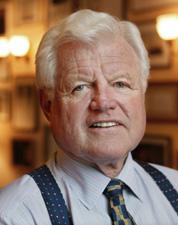 EMK
EMK RJD
RJD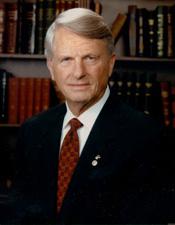 ZM
ZM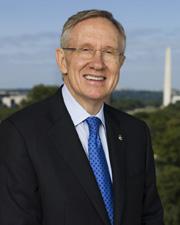 HR
HR PJL+6
PJL+6
Floor Debate
11 membersWhat members said about S. 2356 on the floor
Mr. President, it's a privilege to join my colleagues Senator Durbin, Senator Leahy, and Senator Feingold in introducing this important legislation, the ANTI-GANG Act. Gang violence is a serious…
Mr. President, it's a privilege to join my colleagues Senator Durbin, Senator Leahy, and Senator Feingold in introducing this important legislation, the ANTI-GANG Act.
Gang violence is a serious problem in many communities across the nation, and it deserves a serious response by Congress. The key to success is an effective strategy that rejects partisanship and ``lock- em-up'' sound bites in favor of tough, targeted law enforcement; aggressive steps to take guns out of the hands of criminal gang members and other violent juvenile offenders; and heavy emphasis on prevention programs that discourage gang membership and provide realistic alternatives for at-risk youth.
The past decade saw a dramatic reduction in violent juvenile crime, in large part because of these crime-fighting strategies. Many of us remember the dire ``juvenile superpredator'' predictions that were common before that reduction took place. In 1996, William Bennett and John Walters wrote that America was a ``ticking crime bomb,'' faced with the ``youngest, biggest, and baddest generation'' of juvenile offenders that our country had ever known. Fortunately, these predictions were wrong. From 1993 to 2001, arrest rates for violent juvenile crime fell by more than two-thirds. We're still reaping the benefits of this lower crime rate today.
The decrease in crime is explained partly by the sensible measures taken by Congress on gun safety in the early 1990's, including the ban on assault weapons. In 1999, the National Center for Juvenile Justice concluded that all of the increase in homicides by juveniles between the mid-1980's and mid-1990's was firearms-related. The Surgeon General concluded that guns were responsible for both the epidemic in juvenile violence in the late 1980's and the decrease in violence after 1993. ``It is now clear,'' the Surgeon General wrote, ``that the violence epidemic was caused largely by an upsurge in the use of firearms by young people. . . . Today's youth violence is less lethal, largely because of a decline in the use of firearms.'' The current ban on assault weapons is scheduled to expire in September, and given its proven results against crime, it is reckless for anyone to oppose its continuation.
Another factor that contributed to the remarkable decrease in juvenile violent crime was the innovative, cooperative crime-fighting strategy developed in Boston and other communities across the nation. The Boston strategy was neither a ``liberal'' nor a ``conservative'' approach. It engaged the entire community, including police and probation officers, clergy and community leaders, and even gang members themselves in a united effort to crack down on gang violence, strengthen after-school prevention programs, and take guns out of the hands of juvenile offenders. This strategy was very successful-- juvenile homicides dropped 80 percent from 1990 to 1995--and it succeeded without prosecuting more juveniles as adults, without housing nonviolent juvenile offenders in adult facilities, and without spending huge sums of money on new juvenile facilities.
The call for expanding federal prosecution of juveniles as adults was already controversial in those years when juvenile violent crime was at its peak. It makes no sense today, when juvenile violent crime rates have fallen to historic lows.
Unfortunately, an expansion is exactly what is sought by the supporters of S. 1735, the Gang Prevention and Effective Deterrence Act. Their bill responds to the problem of gang violence in the wrong way. They want the expanded federal prosecution of juveniles as adults. They want to federalize a broad range of street crimes now being prosecuted effectively at the local level. They want to create an unnecessary bureaucratic morass by duplicating law enforcement efforts now taking place on drug trafficking. They support a one-size-fits-all, Washington-knows-best approach to juvenile crime that ignores the achievements of the past decade and will only make the current problem of gang violence worse.
Our bill, the ANTI-GANG Act, avoids the most serious defects of S. 1735 by recognizing, first and foremost, the primary role of state and local law enforcement in responding to violent crime. The American Bar Association and the Judicial Conference have both called on Congress to consider the risks of federalizing offenses that have traditionally been the responsibility of state criminal justice systems. Many of us support the Local Law Enforcement Enhancement Act (S. 966), to deal with hate crimes. It would require the Justice Department to certify the need for federal involvement before commencing federal prosecution of a hate crime. We also oppose the enactment of federal ``concealed carry'' laws, which would undermine state and local gun-safety laws.
Instead of ignoring the primary role of state and local governments in fighting violent gang crimes in their communities, our ANTI-GANG Act strengthens that role, by giving local law enforcement and prosecutors the resources they need. It authorizes $52 million for cooperative prevention, investigation, and prosecution of gang crimes. It authorizes $20 million for technology, equipment, and training, so that state and local sheriffs, police agencies, and prosecutors can improve their identification of gang members and maintain databases with information to facilitate coordination among law enforcement and prosecutors. It authorizes $60 million for the protecting and relocation of witnesses and victims of gang crimes, and $40 million for grants for gang prevention, research, and intervention services.
The resources in our bill for witness relocation and protection are particularly important. At a Judiciary Committee hearing last September, state and local prosecutors specifically asked for Congress's help in protecting witnesses of gang crimes. Our bill responds to this need by authorizing $60 million in assistance. By contrast, the most recently revised version of S. 1735 authorizes only $12 million.
In addition, our bill amends the current law on governing federal witness relocation and protection to make clear that the Attorney General can use these provisions to support witnesses in state gang, drug, and homicide cases. We also allow states to obtain the temporary protection of witnesses in gang cases, without any requirement of reimbursement. The current complex reimbursement procedures deter state and local prosecutors from obtaining witness protection assistance from the federal government, even in emergencies. Our bill offers needed relief to state prosecutors undertaking difficult prosecutions of gang offenders, but no such relief is included in S. 1735.
The ANTI-GANG Act respects the primary role of state and local governments in fighting street crime, but it also recognizes that violent gangs can be a substantial impact on federal interests. According to the most recent National Drug Threat Assessment, criminal street gangs are responsible for the distribution of much of the cocaine, methamphetamine, heroin, and other illegal drugs being distributed in communities throughout the United States. Gang activity interferes with lawful commerce and undermines the freedom and security of entire communities.
The current provision on criminal street gangs in federal law is a seldom-used penalty enhancement. To address these legitimate federal interests, the ANTI-GANG Act replaces that provision with a stronger set of measures criminalizing participation in criminal street gangs, recruitment and retention of gang members, and witness intimidation. It also increases penalties for gang members who target minors for recruitment. It targets gang violence and gang crimes in a sensible way, avoiding the confusing and counterproductive approach taken in S. 1735. Before any federal prosecution can take place under our bill, a high-level representative from the Justice Department, after consultation with state and local prosecutors, must certify that the federal prosecution is in the public interest and necessary to achieve substantial justice.
The Act strengthens the ability of prosecutors at all levels-- federal, state and local--to prosecute violent street gangs, and it does so without increasing any mandatory minimum sentences or unnecessarily expanding the federal death penalty to include state murder offenses.
An increasing number of judges, prosecutors, defense lawyers, and other criminal justice authorities now agree that mandatory minimum sentences are, in the words of Justice Anthony Kennedy, ``unfair, unjust, and unwise.'' They are inconsistent with and undermine the sentencing guidelines that Congress established in the Sentencing
Reform Act of 1984. The supporters of S. 1735 have commendably removed some of the mandatory sentencing provisions in their original bill, but even a single increased mandatory minimum is counterproductive and unjustified.
The ANTI-GANG Act also requires the General Accounting Office to conduct a comprehensive study and report on the current treatment of juveniles by states and local governments and the capability of the Bureau of Prisons and other parts of the federal criminal justice system to take on the additional cases that would result from an expansion of the federal prosecutions of juvenile offenders as adults. This report will enable Congress to make a better informed decision on this criminal issue.
Finally, the Act encourages the recruitment and retention of highly- qualified prosecutors and public defenders by establishing a student loan forgiveness program modeled on the current program for federal employees. According to the National District Attorneys Association, this provision ``would allow prosecutors to relieve the crushing burden of student loans that now cause so many young attorneys to abandon public service.'' The provision is also strongly supported by the National Legal Aid and Defender Association and the American Council of Chief Defenders.
I commend my colleagues for their leadership in developing this important legislation to protect American communities from gang violence without undermining fundamental principles of fairness and federal-state relations. I urge the Senate to approve it.
Mr. President, today, I am joined by Senators Leahy, Kennedy, and Feinghold in introducing the American Neighborhoods Taking the Initiative--Guarding Against Neighborhood Gangs (ANTI-GANG) Act, which…
Mr. President, today, I am joined by Senators Leahy, Kennedy, and Feinghold in introducing the American Neighborhoods Taking the Initiative--Guarding Against Neighborhood Gangs (ANTI-GANG) Act, which is a comprehensive, tailored bill that will help State and local prosecutors prevent, investigate, and prosecute gang crimes in their neighborhoods.
The National Youth Gang Center has reported evidence of resurgence in gang violence, and this is clearly reflected in Chicago, IL, where 45 percent of the homicides last year were gang-related. In Chicago, there are 98 identified gangs, with an estimated 100,000 gang members; over 13 percent of the gang members nationwide are located within Chicago's city limits.
I would like to commend the State and local prosecutors and law enforcement agencies for their work in fighting this problem. The ANTI- GANG Act would authorize $862.5 million in grants over the next 5 years to provide them with the tools they need and have specifically requested of Congress to combat violent gangs.
For example, the National District Attorneys Association (NDAA) wrote the following: ``We must find new methods of protecting those individuals brave enough to come forward as
witnesses. Our biggest problem is getting the financial help to establish, and run, meaningful witness protection programs.'' The National Alliance of Gang Investigators (NAGI) also has identified a trend in witness intimidation that is ``dramatically affecting the prosecution of violent gang offenders.'' The ANTI-GANG Act responds by authorizing $300 million over 5 years for the protection of witnesses and victims of gang crimes. This bill also would allow the Attorney General to provide for the relocation and protection of witnesses in State gang, drug, and homicide cases, and it would allow States to obtain the temporary protection of witnesses in Stage gang cases through the Federal witness relocation and protection program, without any requirement of reimbursement for those temporary services.
The ANTI-GANG Act also authorizes $200 million for grants to develop gang prevention, research, and intervention services. However, these grants should not be limited to those areas already identified as ``high intensity'' interstate gang activity areas. The NAGI also has identified a trend of gangs migrating from larger cities to smaller communities, which is fueled in large part by an increase in gang involvement in drug trafficking. This may be related to the spread of methamphetamine, which is the fastest-growing drug in the United States and, according to Illinois Attorney General Lisa Madigan, the ``single- greatest threat to rural America today.'' In response to these trends, the ANTI-GANG Act would allow rural communities and other jurisdictions to apply for these grants, to prevent gang violence from occurring in the first place.
The ANTI-GANG Act also authorizes $262.5 million over five years for the cooperative prevention, investigation, and prosecution of gang crimes. Most of this funding would be for criminal street gang enforcement teams made up of local, State, and Federal law enforcement authorities that would investigate and prosecute criminal street gangs in high intensity interstate gang activity areas (HIIGAAs). Importantly, this bill would allow HIIGAAs to be integrated with High Intensity Interstate Drug Trafficking Areas (HIIDTAs), to avoid conflicts in those areas where the two entities would coexist.
The ANTI-GANG Act also authorizes $100 million over five years for technology, equipment, and training to identify gang members and violent offenders and to maintain databases to facilitate coordination among law enforcement and prosecutors.
In addition to these new resources, the ANTI-GANG Act will effectively strengthen the ability of prosecutors to prosecute violent street gangs, by creating a stronger federal criminal gang prosecution offense. This new offense criminalizes participation in criminal street gangs, recruitment and retention of gang members, and witness intimidation. At the same time, it responds to concerns raised by the NDAA regarding potential conflicts with local investigation and prosecution efforts, by requiring certification by the Department of Justice before any prosecution under this bill could be undertaken in federal court.
The ANTI-GANG Act also promotes the recruitment and retention of highly-qualified prosecutors and public defenders by establishing a student loan forgiveness program modeled after the current program for federal employees. Almost a third of prosecutors' offices across the country have problems with recruiting or retaining staff attorneys, and low salaries were cited as the primary reason for recruitment and retention problems. This proposed loan forgiveness program is supported by the American Bar Association, the NDAA, the National Association of Prosecutor Coordinators, the National Legal Aid and Defender Association, and the American Council of Chief Defenders.
The ANTI-GANG Act will effectively strengthen the ability of prosecutors at the local, state, and federal level to prosecute violent street gangs, and it will give state and local governments the resources they need to protect witnesses and prevent youth from joining gangs in the first place. This bill achieves these important goals without increasing any mandatory minimum sentences, which conservation jurists such as Justice Anthony Kennedy have criticized as ``unfair, unjust, unwise.'' It also does not unnecessarily expand the federal death penalty--a measure which has been included in other federal gang legislation but is opposed by the Leadership Conference on Civil Rights, NAACP, ACLU, and National Association of Criminal Defense Lawyers.
Finally, the Juvenile Justice and Delinquency Prevention Coalition has raised the following concerns regarding federal gang legislation that would allow more juveniles to be prosecuted as adults in the federal system: ``[T]he fact remains that transfer of youth to the adult system, simply put, is a failed public policy. Comprehensive national research on the practice of prosecuting youth in the adult system has shown conclusively that transferring youth to the adult criminal justice system does nothing to reduce crime and actually has the opposite effect. In fact, study after study has shown that youth transferred to the adult criminal justice system are more likely to re- offend and to commit more serious crimes upon release than youth who were charged with similar offenses and had similar offenses histories but remained in the juvenile justice system. Moreover, national data show that young people incarcerated with adults are five times as likely to report being a victim of rape, twice as likely to be beaten by staff and 50 percent more likely to be assaulted with a weapon than youth held in juvenile facilities. A Justice Department report also found that youth confined in adult facilities are nearly 8 times more likely to commit suicide than youth in juvenile facilities.''
In light of these concerns, the ANTI-GANG Act provides Congress with the necessary data to decide whether to expand the federal role in prosecuting juvenile offenders, by requiring a comprehensive report on the current treatment of juveniles by the states and the capability of the federal criminal justice system to take on these additional cases and house additional prisoners. The American Bar Association has written that this study is ``the more prudent course of action at this time.''
The ANTI-GANG Act is a comprehensive, common-sense approach to fight gang violence. I urge my colleagues to join me in support of this important legislation.
Mr. President, I ask unanimous consent that a summary of the bill be printed in the Record.
Madam President, we live in perilous times. The leader of the free world's power has become so neutered he cannot, even with the support of the majority of the Senate, appoint highly qualified…
Madam President, we live in perilous times. The leader of the free world's power has become so neutered he cannot, even with the support of the majority of the Senate, appoint highly qualified individuals endorsed by the American Bar to a Federal court. He cannot conduct a war without being torn to shreds by partisans with their eyes set, not on he defeat of our enemy but on the defeat of our President.
The Senate has become just one big, bad, ongoing joke, held hostage by special interests, and so impotent an 18-wheeler truck loaded with Viagra would do no good.
Andrew Young, one of the most thoughtful men in America, recently took a long and serious look at the Senate. He was thinking about making a race for it. After visiting Washington, he concluded that the Senate is composed of:
A bunch of pompous, old--
And I won't use his word here, I would say ``folks''--
listening to people read statements they didn't even write
and probably don't believe.
The House of Representatives, theoretically the closest of all the Federal Government to the people, cannot restrain its extravagant spending nor limit our spiraling debt, and incumbents are so entrenched you might as well call off 80 percent of the House races. There are no contests.
Most of the laws of the land, at least the most important and lasting ones, are made not by elected representatives of the people but by unelected, unaccountable legislators in black robes who churn out volumes of case law and hold their jobs for life. A half dozen dirty bombs the size of a small suitcase planted around the country could kill hundreds of thousands of our citizens and bring this Nation to its knees at any time, and yet we can't even build a fence along our border to keep out illegals because some nutty environmentalists say it will cause erosion.
This Government is in one hell of a mess. Frankly, as Rett Butler said--my dear, very few people up here give a damn.
It is not funny. It is sad. It is tragic. And it can only get worse-- much worse. What this Government needs is one of those extreme makeovers they have on television, and I am not referring to some minor nose job or a little botox here and there.
Congressional Quarterly recently devoted an issue to the mandate wars, with headlines blaring: ``Unfunded Mandates Add to Woes, States Say; Localities Get the Bill for Beefed Up Security; Transportation Money Comes With Strings, and Medicare Stuck in Funding Squabbles,'' et cetera, et cetera, et cetera.
One would think that the much heralded Unfunded Mandate Reform Act of 1995 never passed. The National Conference of State Legislatures has set the unfunded mandate figure for the States at $33 billion for 2005. This, along with the budget problems they have been having for the last few years, has put States under the heel of a distant and unresponsive government. That is us. And it gives the enthusiastic tax raisers at the State level the very excuse they are looking for to dig deeper and deeper into the pockets of their taxpayers.
It is not a pretty picture. No matter who you send to Washington, for the most part smart and decent people, it is not going to change much because the individuals are not so much at fault as the rotten and decaying foundation of what is no longer a Republic. It is the system that stinks, and it is only going to get worse because that perfect balance our brilliant Founding Fathers put in place in 1787 no longer exists.
Perhaps, then, the answer is a return to the original thinking of those wisest of all men, and how they intended for this government to function. Federalism, for all practical purposes, has become to this generation of leaders, some vague philosophy of the past that is dead, dead, dead. It isn't even on life support. The line on that monitor went flat some time ago.
You see, the reformers of the early 1900s killed it dead and cremated the body when they allowed for the direct election of U.S. Senators.
Up until then, Senators were chosen by State legislatures, as James Madison and Alexander Hamilton had so carefully crafted.
Direct elections of Senators, as great and as good as that sounds, allowed Washington's special interests to call the shots, whether it is filling judicial vacancies, passing laws, or issuing regulations. The State governments aided in their own collective suicide by going along with that popular fad at the time.
Today it is heresy to even think about changing the system. But can you imagine those dreadful unfunded mandates being put on the States or a homeland security bill being torpedoed by the unions if Senators were still chosen by and responsible to the State legislatures?
Make no mistake about it. It is the special interest groups and their fundraising power that elect Senators and then hold them in bondage forever.
In the past five election cycles, Senators have raised over $1.5 billion for their election contests, not counting all the soft money spent on their behalf in other ways. Few would believe it, but the daily business of the Senate in fact is scheduled around fundraising.
The 17th amendment was the death of the careful balance between State and Federal Government. As designed by that brilliant and very practical group of Founding Fathers, the two governments would be in competition with each other and neither could abuse or threaten the other. The election of Senators by the State legislatures was the lynchpin that guaranteed the interests of the States would be protected.
Today State governments have to stand in line because they are just another one of the many special interests that try to get Senators to listen to them, and they are at an extreme disadvantage because they have no PAC.
You know what the great historian Edward Gibbons said of the decline of the Roman Empire. I quote: ``The fine theory of a republic insensibly vanished.''
That is exactly what happened in 1913 when the State legislatures, except for Utah and Delaware, rushed pell-mell to ratify the popular 17th amendment and, by doing so, slashed their own throats and destroyed federalism forever. It was a victory for special-interest tyranny and a blow to the power of State governments that would cripple them forever.
Instead of Senators who thoughtfully make up their own minds as they did during the Senate's greatest era of Clay, Webster, and Calhoun, we now have too many Senators who are mere cat's-paws for the special interests. It is the Senate's sorriest of times in its long, checkered, and once glorious history.
Having now jumped off the Golden Gate Bridge of political reality, before I hit the water and go splat, I have introduced a bill that would repeal the 17th amendment. I use the word ``would,'' not ``will,'' because I know it doesn't stand a chance of getting even a single cosponsor, much less a single vote beyond my own.
Abraham Lincoln, as a young man, made a speech in Springfield, IL, in which he called our founding principles ``a fortress of strength.'' Then he went on to warn, and again I quote, that they ``would grow more and more dim by the silent artillery of time.''
A wise man, that Lincoln, who understood and predicted all too well the fate of our republican form of government. Too bad we didn't listen to him.
I ask unanimous consent that the text of the joint resolution be printed in the Record.
Mr. President, I rise today to introduce the Healthy Employees, Healthy Small Businesses Act of 2004. This legislation addresses a number of fundamental problems: the fact that millions of hard…
Mr. President, I rise today to introduce the Healthy Employees, Healthy Small Businesses Act of 2004. This legislation addresses a number of fundamental problems: the fact that millions of hard working American families have no health insurance, they live in fear that financial ruin is just one illness away, or that a family member will need medical treatment that they simply can't afford; the fact that small businesses in this country are facing health care costs that are skyrocketing far beyond the rate of inflation, and that as much as many small business owners would like to provide health benefits to their employees, it is becoming more and more difficult for them to afford these costs; and the fact that this health care dilemma is damaging our Nation's competitive position internationally.
In 2002, 44 million Americans lived without health insurance for the entire year. 85 percent of these uninsured people belong to working families.
Think about that. The vast majority of the people in the United States of America who have no health insurance work.
These uninsured workers are trapped in the middle--in fact, most of them are middle class families. They do not receive health coverage through their jobs. They are too young to qualify for Medicare. They earn too much to qualify for a public health insurance program.
Yet they cannot afford private insurance plans.
For each one of those 44 million people, and each one of those millions of families, living without health coverage causes real and serious problems.
Living without health insurance is difficult for anyone. It is especially hard for parents with children. In addition to the constant worry about whether their child will have an accident or get sick, there are serious long-term consequences for kids who grow up without health insurance.
Uninsured kids have a higher rate of acute and infectious diseases than children who are covered by health insurance, and uninsured kids actually have a higher number of hospitalizations, because their problems don't get treated until they become serious.
Uninsured children are: four times as likely to have necessary care delayed; five times more likely to use a hospital emergency room as their regular source of care; and six times as likely as other children to go without the care they need.
But having no health care is a problem even when kids are not sick. It forces parents into the kinds of choices that none of us would want to make, and that nobody in America should have to make.
When your daughter is uninsured, you have to think twice about signing her up for a youth soccer league, because she might break her arm.
When your son has no health coverage, maybe it is not safe to let him ride his bike through the neighborhood, or try out his friend's new rollerblades.
Accidents happen to everyone, especially to active children. But when your family has no health insurance, a simple fall requiring a few stitches, a broken bone, or a minor sports-related injury could result in hundreds or even thousands of dollars in emergency room fees.
In the end, in a lot of families, living without health insurance sometimes means that kids do not get to do very much living at all.
In her book The Betrayal of Work, Beth Shulman asked Flor Segunda, a working mom with no health insurance, about how her family's uninsured status affects her kids. Segunda says:
Doctors require immediate payment before they will see you,
but many times I don't have the money. Right now, [my son]
Luis has a temperature. But I try to take care of it myself
because I can't afford to take him to the doctor every time.
It is one of the reasons I don't like my children to play
outside. They will get sick and I can't afford it.
A lack of access to health care can destroy a family's financial security in a heartbeat--that is certainly true. But it can also deny uninsured kids some of the most basic and simple pleasures of being a child: going outside to play, joining a tee-ball team, riding a bike.
Surely we can do better.
Living without health insurance is a terrible problem. So why are so many families forced to do it? Who are these families trapped in the middle--earning too much to qualify for free care, but not enough to pay for private insurance?
It turns out that more than half of the uninsured people in our country live in a family supported by someone who works for a small business--meaning a company that employs fewer than 100 workers.
This is not because small businesses are less committed to their workers than larger employers. On the contrary, the small business owners in my State seem to care a great deal about their employees. Most small business owners work closely with their employees, and they understand that the success of their enterprise depends on the loyalty of the people who work for them.
The reason small businesses are less likely to provide health insurance is simply a matter of economics.
At a small business, where people are delivering a product or service with just a handful of employees, the margin between revenues and costs can be pretty slim.
That does not leave much room for error--or for rising costs. But health care costs are spiraling out of control.
Every year for the last several years, we have seen double-digit inflation in health care prices. With health care costs rising out of sight, small business owners are rightly concerned about whether these uncontrolled prices represent too much of a risk to their overall business health.
My legislation would create a Federal refundable tax credit to reimburse small employers for part of the costs they incur for providing health insurance coverage to their employees.
The HEHSB tax credit would operate on a sliding scale, providing a large tax credit to all businesses with fewer than 50 employees, but giving the greatest tax relief to the smallest enterprises.
Last year, the average health insurance plan for a single person costs $3,383, of which the employee paid an average of $508 and the employer paid an average of $2,875.
For a family policy, the average cost totalled $9,068, with the employee bearing $2,412 and the employer shouldering $6,656.
Under my bill, companies with fewer than 10 employees would be eligible to claim a credit of 50 percent of the cost of each eligible employee's policy, up to a limit of $1,500 for an individual policy or $3,400 for a family policy.
Companies with 25 to 50 employees would be eligible to claim a credit of 35 percent of the cost of each eligible employee's policy, up to a limit of $750 for
a self-only policy or $1,700 for a family policy.
I believe that this legislation will give more small business owners the ability to do what they want to do in the first place: provide their first-rate employees with first-rate benefits.
It will shield them from the worst risks associated with rising health care costs.
And I hope that it will eventually result in families like the Segundas feeling a little more security and happiness.
Mr. President, I am pleased to cosponsor the introduction of the ANTI-Gang Act with my good friends on the Judiciary Committee, Senators Durbin, Kennedy and Feingold. The American Neighborhoods…
Mr. President, I am pleased to cosponsor the introduction of the ANTI-Gang Act with my good friends on the Judiciary Committee, Senators Durbin, Kennedy and Feingold.
The American Neighborhoods Taking the Initiative--Guarding Against Neighborhood Gangs Act of 2004 is a bill carefully crafted to target violent criminal street gangs whose activities extend beyond the neighborhood and have a substantial impact on Federal interests.
As a former county prosecutor, I have long expressed concern about making Federal crimes out of every offense that comes to the attention of Congress. I know that States have competent and able police departments, county sheriffs' offices, prosecutors and judges. Gangs are, more often than not, locally-based, geographically-oriented criminal associations, and our local communities are on the front lines of the fight against gang violence. We should be supplementing the work of our State and local law enforcement officers, not usurping them. This is why this bill specifically targets only those gangs where there is a provable Federal interest. This is why this bill requires consultation with our State and local counterparts before embarking on a Federal prosecution of historically State crimes. And this is why major provisions of the bill are directed toward helping State and local law enforcement officers prevent, investigate, and prosecute gang crimes in their own neighborhoods.
There are four major sections of the bill:
First, the bill gives State and local prosecutors financial resources to guard against neighborhood gangs by authorizing $72.5 million for the cooperative prevention, investigation, and prosecution of gang crimes; $40 million for grants to develop gang prevention,
research, and intervention services; and $60 million for the protection of witnesses and victims of gang crimes. Federal funds are also provided for hiring new Assistant U.S. Attorneys and to fund technology, equipment and training grants to increase accurate identification of gang members and violent offenders and to maintain databases with such information to facilitate state and Federal coordination.
The first defense in protecting our youth against gang influence is a good offense. I have long thought that programs aimed at combating gang activity must incorporate gang prevention and education--programs that would examine why our youth choose to associate in gangs and prey on others--to be effective. When Chairman Hatch appropriately targeted gang violence as a subject for a full Committee hearing last year, all agreed that we should be doing more to deter our youth from joining gangs in the first place. This bill heeds that call.
Another unifying theme of the expert witnesses at the Committee's hearing was the serious need for Federal assistance in protecting witnesses who will provide information about and testify against gangs from intimidation. Our bill not only provides funding to help protect witnesses, it also makes it a Federal crime to intimidate witnesses in certain State prosecutions involving gang activity.
Second, the bill defines a Federal criminal street gang by using well-established legal principles and providing recognizable limits. Rather than create yet another cumbersome and broad-reaching Federal crime that overlaps with numerous existing Federal statutes, this bill actually targets the problem that needs to be addressed: violent criminal street gangs. It recognizes that gangs are ongoing entities whose members commit crimes more easily simply because of their association with one another. Gangs prove the old adage: there is safety in numbers. Gang members can be sheep-like in their loyalty and allegiance to the gang. In this regard, the bill also explicitly and evenhandedly addresses the evidentiary significance of gang symbolism in gang prosecutions.
In addition to witness intimidation, other important crimes established by this bill include: One, participation in criminal street gangs by any act that is intended to effect the criminal activities of the gang; two, participation by committing a crime in furtherance of or for the benefit of the gang, and three, recruitment and retention of gang members. There are increased penalties for those who target minors for recruitment in a criminal street gang.
Third, the bill requires a comprehensive report on the current treatment of juveniles by the States, and the capability of the Federal criminal justice system to take on these additional cases and house additional prisoners, so that Congress can make an informed decision about whether or not to expand the Federal role in prosecuting juvenile offenders.
Some have suggested that the Federal Government has been unable to proceed effectively against gang crime because of Federal law's protections for juvenile offenders. I have not seen sufficient evidence to support his claim, but I think that Congressional consideration of this issue would benefit greatly from a comprehensive General Accounting Office study on this topic. We need to know both whether justice would be served by increasing the Federal role, and whether the Federal system--including both our prosecutors and the Bureau of Prisons--is prepared for such a step.
Fourth, the bill promotes the recruitment and retention of highly- qualified State and local prosecutors and public defenders by establishing a student loan forgiveness program modeled after the current program for Federal employees.
We have worked very hard in crafting this legislation not to further blur the lines between Federal and State law enforcement responsibilities or to add more burdens to the FBI as the primary Federal investigative agency. Federal law enforcement has been faced with a unique challenge since the September 11 attacks. The FBI is no longer just an enforcement agency, but also has a critical terrorism prevention mission. This mission is a daunting one, and our Federal law enforcement resources are not limitless. I, for one, do not want the FBI or U.S. Attorneys to focus these limited resources on cases that are best handled at the local level.
Combating gang violence should not be a partisan battle. The tragedy of gang violence affects too many. No community can afford to lose a single youth to the arms of a waiting gang. No gang should be allowed to flourish without consequence in our communities. I urge your support for this important bill.
Show 7 more
Mr. President, I rise today with my colleague, Senator Russ Feingold, to introduce the ``Purchase Card Waste Elimination Act of 2004,'' to help eliminate wasteful spending through the use of…
Mr. President, I rise today with my colleague, Senator Russ
Feingold, to introduce the ``Purchase Card Waste Elimination Act of 2004,'' to help eliminate wasteful spending through the use of governmental credit cards.
Today, the Governmental Affairs Committee explored the federal government's use of ``purchase cards,'' which are commercial charge cards used by federal agencies to buy billions of dollars worth of goods and services. The Committee heard the results of the General Accounting Office's investigation into waste, fraud, and abuse in the purchase card program.
The American people have the right to expect the federal government to spend their tax dollars carefully and wisely. While this is true at all times, it is never more so than today, when the government faces enormous fiscal pressures and a growing budget deficit.
The Governmental Affairs Committee has a mandate to help safeguard those tax dollars from waste, fraud, and abuse. To meet this mandate, the Committee has launched an initiative to root out government waste. Today's hearing was part of that effort and focused on wasteful, inefficient, and in some cases, fraudulent, transactions using purchase cards.
These cards were first introduced by the General Services Administration on a government-wide basis in 1989. Purchase cards are used primarily for making routine purchases such as office supplies, computers and copying machines. Purchase cards are similar to the personal credit cards we all carry, but with one important difference: The taxpayers pays the bill. Although the card is only supposed to be used for official purposes, the Federal Government is responsible for paying all charges by authorized cardholders, regardless of what was purchased.
While legitimate purchases are usually small, they nevertheless add up to big money. Purchase card use has soared during the past decade-- from less than $1 billion in fiscal year 1994 to more than $16 billion in fiscal year 2003. There are more than 134,000 purchase cardholders in the Defense Department alone.
This explosive growth presents both challenges and opportunities. While there are many benefits to the purchase card, such as expediting purchases, cutting red tape, and saving administrative costs, the General Accounting Office and the Inspectors General have reported that inadequate controls over purchase cards leave agencies vulnerable to waste, fraud, and abuse.
The Governmental Affairs Committee heard testimony describing how smarter use of purchase cards could save taxpayers hundreds of millions of dollars. A GAO report that I requested along with Senator Feingold and Congresswoman Schakowsky, which is being released today, highlights several wasteful purchasing practices.
The GAO concludes that many agency cardholders fail to obtain readily available discounts on purchase card buys. In too many cases, purchase cardholders are buying goods and services from vendors that already agreed to provide government discounts through the GSA schedule, yet cardholders often lack the information and training needed to obtain the discounted prices. As a result, GAO found numerous instances of cardholders paying significantly more for items for which discounts already had been negotiated. In light of the fact that conscientious shoppers often can obtain savings beyond the schedule discounts, these findings indicate that some federal agencies are substantially overpaying for routine supplies.
For example, an analysis of the Department of Interior's purchase card buys of ink cartridges found that most of the time the cardholder paid more than the government schedule price to which the vendors had already agreed. One vendor had agreed to a schedule price of $24.99 for a particular ink cartridge, yet of 791 separate purchases of this model,only two were at or below that price. Some purchasers paid $34.99 or about 40 percent more for the same item.
In conducting its investigation, the GAO examined six agencies that together account for over 85 percent of all government purchase card transactions. If the six agencies reviewed in this study negotiated automatic discounts of just 10 percent from major vendors, and if agency employees had used those discounts, GAO estimates annual savings of $300 million. Over 10 years, that's $3 billion. Pretty soon, as Senator Dirksen once observed, we're talking real money.
The GAO also found that agencies should be making greater efforts to collect and analyze data on purchase card transactions. This would help agencies to eliminate waste and to expose fraud and abuse.
We must assure taxpayers that the federal government is shopping carefully, wisely and honestly. That's why the legislation we introduce today would require the Office of Management and Budget to direct agencies to better train cardholders and to more effectively scrutinize their purchases. This legislation would also instruct the General Services Administration to increase its efforts to secure discount agreements with vendors and to better provide agencies with the tools needed to control wasteful spending. According to testimony by GAO, this legislation would be a strong first step to eliminating $300 million in wasteful spending.
The American people have the right to expect the federal government to spend their tax dollars carefully and wisely. I urge my colleagues to cosponsor this legislation and help eliminate wasteful purchase card spending.
Mr. President, I rise today with my colleague, Senator Russ Feingold, to introduce the ``Purchase Card Waste Elimination Act of 2004,'' to help eliminate wasteful spending through the use of…
Mr. President, I rise today with my colleague, Senator Russ
Feingold, to introduce the ``Purchase Card Waste Elimination Act of 2004,'' to help eliminate wasteful spending through the use of governmental credit cards.
Today, the Governmental Affairs Committee explored the federal government's use of ``purchase cards,'' which are commercial charge cards used by federal agencies to buy billions of dollars worth of goods and services. The Committee heard the results of the General Accounting Office's investigation into waste, fraud, and abuse in the purchase card program.
The American people have the right to expect the federal government to spend their tax dollars carefully and wisely. While this is true at all times, it is never more so than today, when the government faces enormous fiscal pressures and a growing budget deficit.
The Governmental Affairs Committee has a mandate to help safeguard those tax dollars from waste, fraud, and abuse. To meet this mandate, the Committee has launched an initiative to root out government waste. Today's hearing was part of that effort and focused on wasteful, inefficient, and in some cases, fraudulent, transactions using purchase cards.
These cards were first introduced by the General Services Administration on a government-wide basis in 1989. Purchase cards are used primarily for making routine purchases such as office supplies, computers and copying machines. Purchase cards are similar to the personal credit cards we all carry, but with one important difference: The taxpayers pays the bill. Although the card is only supposed to be used for official purposes, the Federal Government is responsible for paying all charges by authorized cardholders, regardless of what was purchased.
While legitimate purchases are usually small, they nevertheless add up to big money. Purchase card use has soared during the past decade-- from less than $1 billion in fiscal year 1994 to more than $16 billion in fiscal year 2003. There are more than 134,000 purchase cardholders in the Defense Department alone.
This explosive growth presents both challenges and opportunities. While there are many benefits to the purchase card, such as expediting purchases, cutting red tape, and saving administrative costs, the General Accounting Office and the Inspectors General have reported that inadequate controls over purchase cards leave agencies vulnerable to waste, fraud, and abuse.
The Governmental Affairs Committee heard testimony describing how smarter use of purchase cards could save taxpayers hundreds of millions of dollars. A GAO report that I requested along with Senator Feingold and Congresswoman Schakowsky, which is being released today, highlights several wasteful purchasing practices.
The GAO concludes that many agency cardholders fail to obtain readily available discounts on purchase card buys. In too many cases, purchase cardholders are buying goods and services from vendors that already agreed to provide government discounts through the GSA schedule, yet cardholders often lack the information and training needed to obtain the discounted prices. As a result, GAO found numerous instances of cardholders paying significantly more for items for which discounts already had been negotiated. In light of the fact that conscientious shoppers often can obtain savings beyond the schedule discounts, these findings indicate that some federal agencies are substantially overpaying for routine supplies.
For example, an analysis of the Department of Interior's purchase card buys of ink cartridges found that most of the time the cardholder paid more than the government schedule price to which the vendors had already agreed. One vendor had agreed to a schedule price of $24.99 for a particular ink cartridge, yet of 791 separate purchases of this model,only two were at or below that price. Some purchasers paid $34.99 or about 40 percent more for the same item.
In conducting its investigation, the GAO examined six agencies that together account for over 85 percent of all government purchase card transactions. If the six agencies reviewed in this study negotiated automatic discounts of just 10 percent from major vendors, and if agency employees had used those discounts, GAO estimates annual savings of $300 million. Over 10 years, that's $3 billion. Pretty soon, as Senator Dirksen once observed, we're talking real money.
The GAO also found that agencies should be making greater efforts to collect and analyze data on purchase card transactions. This would help agencies to eliminate waste and to expose fraud and abuse.
We must assure taxpayers that the federal government is shopping carefully, wisely and honestly. That's why the legislation we introduce today would require the Office of Management and Budget to direct agencies to better train cardholders and to more effectively scrutinize their purchases. This legislation would also instruct the General Services Administration to increase its efforts to secure discount agreements with vendors and to better provide agencies with the tools needed to control wasteful spending. According to testimony by GAO, this legislation would be a strong first step to eliminating $300 million in wasteful spending.
The American people have the right to expect the federal government to spend their tax dollars carefully and wisely. I urge my colleagues to cosponsor this legislation and help eliminate wasteful purchase card spending.

Mr. President, I am today introducing, along with Senators Murkowski, Domenici, Burns, Roberts, Bunning, Cochran, Crapo, Bennett, and Reid, the National Geologic Mapping Reauthorization Act of 2004.…
Mr. President, I am today introducing, along with Senators Murkowski, Domenici, Burns, Roberts, Bunning, Cochran, Crapo, Bennett, and Reid, the National Geologic Mapping Reauthorization Act of 2004. This is an act that has been very beneficial to the Nation and deserves to be reauthorized.
The National Geologic Mapping Act was originally signed into law in 1992, creating the National Cooperative Geologic Mapping Program (NCGMP). This program exists as a partnership between the USGS and the State geological surveys, whose purpose is to provide the Nation with urgently-needed geologic maps that can be and are used by a diverse clientele. These maps are vital to understanding groundwater regimes, mineral resources, geologic hazards such as landslides and earthquakes, and geology essential for all types of land use planning; as well as providing basic scientific data. The NCGMP contains three parts: FedMap--the U.S. Geological Survey's geologic mapping program, StateMap--the State geological survey's part of the act, and EdMap--a program to encourage the training of future geologic mappers at our colleges and universities. All three components are reviewed annually by a Federal Advisory Committee to ensure program effectiveness and to provide future guidance.
FedMap geologic mapping priorities are determined by the needs of Federal land-management agencies, regional customer forums, and cooperatively with the State geological surveys. FedMap also coordinates national geologic mapping standards. StateMap is a competitive program wherein the States submit proposals for geologic mapping that are critiqued by a peer review panel. A requirement of this section of the legislation is that each Federal dollar be matched one-for-one with State funds. Each participating State has a State Advisory Committee to ensure that its proposal addresses priority areas and needs as determined in the NGMA. The success of this program ensured reauthorization of similar legislation in 1997 and in 1999 with widespread bipartisan support in both the House and Senate. To date approximately $50M has been awarded to State geological surveys through StateMap, and these Federal dollars have been more than matched by State dollars.
In 2003, more than 450 new digital geologic maps were published by NCGMP, covering over 120,000 square miles of the Nation. These high quality geologic maps will be used by a very broad base of customers including geotechnical consultants, Federal, State and local land managers, and mineral and energy exploration companies. Information on how to obtain all of these maps is provided on the Internet by the National Geologic Map Database, allowing ease of access for all users.
EdMap has trained over 550 university students at 118 universities across the Nation. The best testament to the quality of this training are its beneficiaries--an unusually high percentage of these students go on to careers in Earth Science, becoming university professors, energy company exploration scientists, or mapping specialists themselves. Their EdMap program experience provides them with a remarkable self-confidence, having completed a difficult and independent field mapping experience. At this very moment, a former EdMap student, Sergeant Alexander Stewart, is serving his Nation in Operation Iraqi Freedom, where his geologic mapping skills have been put to excellent use training his unit in all aspects of map making and interpretation.
Mr. President, the National Geologic Mapping Reauthorization Act benefits numerous citizens every day by assuring there is accurate, usable geologic information available to communities and individuals so that safe, educated resource use decisions can be made. I encourage my colleagues to support this legislation and am committed to its timely consideration.
I ask unanimous consent that the text of the bill be printed in the Record.

Mr. President, I am pleased to support S. 2358, the Anti-Gang Act. This critical legislation will provide State and Federal law enforcement with the tools and resources needed to successfully fight…
Mr. President, I am pleased to support S. 2358, the Anti-Gang Act. This critical legislation will provide State and Federal law enforcement with the tools and resources needed to successfully fight the expanding presence of violent gangs that bring drugs like methamphetamine into our communities.
Time and time again, we in Congress have heard the call of prosecutors and law enforcement for more resources to combat the problem of gang violence. The Anti-Gang Act gives local prosecutors and law enforcement what they have asked Congress for most--targeted financial assistance. The bill will help combat the growth and proliferation of violent gangs by authorizing funds for the cooperative prevention, investigation, and prosecution of gang crimes. In addition, grant money will be made available for the protection of witnesses and victims of gang violence. These funds will not be tied to restrictive formulas that would keep the majority of the assistance from reaching suburban and rural communities. This money will be able to go to the communities in Wisconsin and the rest of the country where rural and smaller law enforcement agencies are financially limited in their ability to deal with the exploding increase in gang violence associated with methamphetamines and other narcotics.
The Anti-Gang Act also promotes hiring and long-term service of highly qualified prosecutors and public defenders by establishing a student loan forgiveness program. Prosecuting gangs is some of the most demanding and challenging work a prosecutor will tackle. Loan forgiveness will allow Assistant District Attorneys and Assistant Attorney Generals to remain in public service and allow them to take their wealth of experience and use it to combat gang violence.
The Anti-Gang Act also replaces the current Federal RICO statute that was never intended to be used against violent street gangs with a tough statute that not only criminalizes participation in criminal street gangs, but addresses the serious problem of the recruitment and retention of gang members. The Anti-Gang Act targets gang violence and gang crimes in a logical, straightforward manner. The bill also recognizes that the vast majority of gang investigations and prosecutions have been and will continue to be done at the State and local level. The bill requires that Federal prosecutors consult with State and local law enforcement before seeking an indictment and that a Federal prosecution is in the public interest and necessary to secure substantial justice.
Finally, the Anti-Gang Act will provide Congress with the data necessary to decide whether to expand the Federal role in prosecuting juvenile offenders by requiring a comprehensive report on the current treatment of juveniles by the States and the capability of the Federal criminal justice system to take on more juvenile cases and to house additional prisoners. Some have proposed indicting and prosecuting more juveniles in Federal courts as a way of combating gang violence without being able to tell us why this is necessary and what effect it might have on the criminal justice system. With this review, Congress can intelligently consider whether to expand the Federal role in prosecuting juveniles.
Our citizens should be able to send their children to school, use their parks and walk their streets without fearing that ever-spreading gang violence will grow unfettered in their community. The Anti-Gang Act is an important step towards making all of our neighborhoods safe and I urge my colleagues to support it.
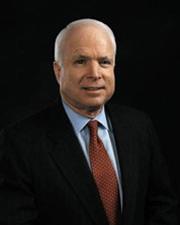
Mr. President, I am pleased to be joined today by Senator Kyl in introducing the Arizona Trail Feasibility Study Act. This bill would authorize the Secretaries of Agriculture and Interior to conduct…
Mr. President, I am pleased to be joined today by Senator Kyl in introducing the Arizona Trail Feasibility Study Act. This bill would authorize the Secretaries of Agriculture and Interior to conduct a joint study to determine the feasibility of designating the Arizona Trail as a National Scenic or National Historic Trail. A companion bill is being introduced in the House of Representatives today by Representative Kolbe and rest of the Arizona delegation.
Since 1968, when the National Trails System Act was established, Congress has designated twenty national trails. This legislation is the first step in the process of national trail designation for the Arizona Trail. If the study concludes that designating the Arizona Trail as a part of the national trail system if feasible, subsequent legislation will be introduced to designate the Arizona Trail as either a National Scenic Trail or National Historic Trail.
The Arizona Trail is a beautifully diverse stretch of public lands, mountains, canyons, deserts, forests, historic sites, and communities. The Trail begins at the Coronado National Memorial on the U.S.-Mexico border and ends in the Bureau of Land Management's Arizona Strip District on the Utah border. In between these two points, the Trail winds through some of the most rugged, spectacular scenery in the Western United States.
For the past 10 years, over 16 Federal, state and local agencies, as well as community and business organizations, have worked to form a partnership to create, develop, and manage the Arizona Trail. Designating the Arizona Trail as a national trail would help streamline the management of the Trail to ensure that this pristine stretch of diverse land is preserved for future generations to enjoy.
The corridor for the Arizona Trail encompasses the wide range of ecological diversity in the state, and incorporates a host of existing trails into one continuous trail. The Arizona Trail extends through seven ecological life zones including such legendary landmarks as the Sonoran Desert and the Grand Canyon. It connects the unique lowland desert flora and fauna in Saguaro National Park and the pine-covered San Francisco Peaks, Arizona's highest mountains at 12,633 feet in elevation. In fact, the Trail route is so topographically diverse that a person can hike from the Sonoran Desert to Alpine forests in one day. The Trail also takes travelers through ranching, mining, agricultural, and developed urban areas, as well as remote, pristine wildlands.
With nearly 700 miles of the 800-mile trail already completed, the Arizona Trail is a boon to recreationists. The Arizona State Parks recently released data showing that two-thirds of Arizonans consider themselves trail users. Millions of visitors also use Arizona's trails each year. In one of the fastest-growing states in the U.S., the designation of the Arizona Trail as a National Scenic or National Historic Trail would ensure the preservation of a corridor of open space for hikers, mountain bicyclists, cross country skiers, snowshoers, eco-tourists, equestrians, and joggers.
I commend the Arizona Trail Association for taking the lead in building
a coalition of partners to bring the Arizona Trail from its inception to a nearly completed, multiple-use, non-motorized, long-distance trail. Trail enthusiasts look forward to the completion of the Arizona Trail. Its designation as a national trail would help to protect the natural, cultural, and historic resources it contains for the public to use and enjoy.
Mr. President, I rise today to introduce the Fair Pay for Military Firefighters Act. This bill authorizes hazardous duty incentive pay for our Nation's military firefighters. It may come as a…
Mr. President, I rise today to introduce the Fair Pay for Military Firefighters Act. This bill authorizes hazardous duty incentive pay for our Nation's military firefighters.
It may come as a surprise to many of my colleagues, as it did to me, that military firefighters are not currently eligible to receive hazardous duty incentive pay. This issue was first brought to my attention in a letter I received several months ago from an Air Force Staff Sergeant stationed at Ellsworth Air Force Base. The letter stated, ``We are in one of the most dangerous jobs in the world. We face danger not only when we deploy like other jobs that get this pay but we face hazards at our home station.''
As the Staff Sergeant said, firefighting is in itself a dangerous profession, but military firefighters must confront a wide variety of threats and are exposed to toxic materials distinctive to the military. The fires they fight often involve fuel and propellants, munitions, or chemicals which present unique and extremely dangerous situations. These servicemembers face risks not only when in combat, but as a part of their every day duties. Despite these dangers, most of the approximate 5,000 military firefighters serving in the Armed Forces are not eligible to receive hazardous duty incentive pay. If these servicemembers are willing to take the risk, our nation should be willing to provide them the benefits they deserve.
In addition to being the right thing to do, I believe there are broader reasons to support hazardous duty incentive pay for military firefighters. First, there is an issue of fairness. Federal civilian firefighters, who also face great risk and are critically important to protecting our nation, rightly have risk calculated into their compensation package. This creates a situation where federal civilian and military firefighters, who often work side-by-side, are exposed to the same risk but are compensated differently.
Second, it is my understanding that each of the Services supports providing this benefit to our military firefighters because they see it as a manning and retention issue. In fact, according to survey results, lack of hazardous duty incentive pay was cited by military firefighters as one of the top three reasons for morale and retention problems. The Air Force has specifically stated that the lack of hazardous duty incentive pay is a primary factor in poor retention rates among its military firefighters. In my view, providing hazardous duty incentive pay is essential to retaining our best firefighters and maintaining this crucial capability within our Armed Forces.
Mr. President, I am pleased the Fair Pay for Military firefighters Act has been endorsed by both the Fleet Reserve Association and the Air Force Sergeants Association and I thank them for their assistance in preparing this legislation. I ask unanimous consent that the full text of two letters from these distinguished organizations be printed in the Record and the bill be printed in the Record.
I look forward to working with my colleagues to pass the Fair Pay for Military Firefighters Act and to extending hazardous duty incentive pay benefits to our nation's military firefighters. There can be no doubt that firefighting is one of the most dangerous professions. Military firefighters understand this threat and deserve the recognition of receiving hazardous duty incentive pay for the sacrifices they make and the risks they take.
Mr. President, I ask unanimous consent that the text of the bill be printed in the Record.
Mr. President, I ask unanimous consent that the text of the bill be printed in the Record.
Bill Text
Latest available legislative text
        [Congressional Bills 108th Congress]
[From the U.S. Government Publishing Office]
[S. 2356 Introduced in Senate (IS)]

108th CONGRESS
2d Session
S. 2356

To require the Director of the Office of Management and Budget to issue
guidance for, and provide oversight of, the management of
micropurchases made with Governmentwide commercial purchase cards, and
for other purposes.

_______________________________________________________________________

IN THE SENATE OF THE UNITED STATES

April 28, 2004

Ms. Collins (for herself and Mr. Feingold) introduced the following
bill; which was read twice and referred to the Committee on
Governmental Affairs

_______________________________________________________________________

A BILL

To require the Director of the Office of Management and Budget to issue
guidance for, and provide oversight of, the management of
micropurchases made with Governmentwide commercial purchase cards, and
for other purposes.

Be it enacted by the Senate and House of Representatives of the
United States of America in Congress assembled,

SECTION 1. SHORT TITLE.

This Act may be cited as the ``Purchase Card Waste Elimination Act
of 2004''.

SEC. 2. REQUIREMENT FOR GUIDANCE.

(a) Office of Management and Budget Policy Guidance.--Not later
than 180 days after the date of the enactment of this Act, the Director
of the Office of Management and Budget shall issue guidelines to assist
the heads of executive agencies in improving the management of the use
of the Governmentwide commercial purchase card for making
micropurchases. The Director shall include guidelines on the following
matters:
(1) Analysis of purchase card expenditures to identify
opportunities for achieving savings through micropurchases made
in economical volumes.
(2) Negotiation of discount agreements with major vendors
accepting the purchase card.
(3) Establishment of communication programs to ensure that
purchase card holders receive information pertaining to the
availability of discounts, including programs for the training
of purchase card holders on the availability of discounts.
(4) Assessment of cardholder purchasing practices.
(5) Collection and dissemination of best practices and
successful strategies for achieving savings in micropurchases.
(b) General Services Administration.--The Administrator of General
Services shall direct the purchase card program manager of the General
Services Administration--
(1) to continue efforts to improve reporting by financial
institutions that issue the Governmentwide commercial purchase
card so that the General Services Administration has the data
needed to identify opportunities for achieving savings; and
(2) to ensure that the acquisition center contracting
officers of the General Services Administration actively pursue
point-of-sale discounts with major vendors accepting the
purchase card so that any Federal Government purchaser using
the purchase card can benefit from such point-of-sale
discounts.
(c) Agency Reporting Requirement.--The purchase card program
manager for each executive agency shall, as directed by the Director of
the Office of Management and Budget, submit to the Director periodic
reports on the actions taken in such executive agency pursuant to the
guidelines issued under subsection (a).
(d) Congressional Oversight.--Not later than December 31 of the
year following the year in which this Act is enacted, and December 31
of each of the ensuing three years, the Director of the Office of
Management and Budget shall submit to the Committee on Governmental
Affairs of the Senate and the Committee on Government Reform of the
House of Representatives a report summarizing the progress made during
the fiscal year ending in the year in which such report is due--
(1) in improving the management of the use of the
Governmentwide commercial purchase card for making
micropurchases; and
(2) in achieving savings in micropurchases made with such
card, expressed in terms of savings achieved by each executive
agency and the total savings achieved Governmentwide.
(e) Definitions.--In this section:
(1) The term ``executive agency'' has the meaning given
such term in section 4 of the Office of Federal Procurement
Policy Act (41 U.S.C. 403).
(2) The term ``micropurchase'' means a purchase in an
amount not in excess of the micropurchase threshold, as defined
in section 32 of such Act (41 U.S.C. 428).
<all>