Lead-Free Drinking Water Act of 2004
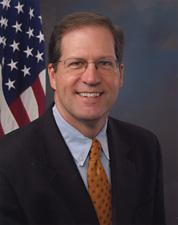
 Sen. James M. Jeffords (I-VT)
Legislative Activity
Stay on top of the latest movement without scrolling through every action
Read twice and referred to the Committee on Environment and Public Works.
May 4, 2004
View full timeline
Introduced in Senate
May 4, 2004
Sponsor introductory remarks on measure. (CR S4839-4840)
May 4, 2004
Read twice and referred to the Committee on Environment and Public Works.
May 4, 2004
Floor Debate
6 membersWhat members said about S. 2377 on the floor


 +1
+1
Floor Debate
6 membersWhat members said about S. 2377 on the floor
Mr. President, it is a privilege to introduce the Safe Orderly Legal Visas and Enforcement (SOLVE) Act of 2004. Much of the Nation's economy today depends on the hard work and the many contributions…
Mr. President, I rise today to introduce the Lead-Free Drinking Water Act of 2004 with my colleague Senator Sarbanes. We are joined by our colleagues, Congresswoman Norton, Congressman Waxman, and…
Mr. President, I rise today to introduce the Lead-Free Drinking Water Act of 2004 with my colleague Senator Sarbanes. We are joined by our colleagues, Congresswoman Norton, Congressman Waxman, and…
Mr. President, I rise today to introduce The Working Family Tax Relief Act of 2004. I would like to thank my colleague, Senator Miller, for his support of this important legislation. His leadership…
Mr. President, today I am introducing a bill to honor one of the Nation's great military visionaries, the late William ``Billy'' Mitchell. My legislation would correct an injustice that has existed…
Show 2 more
Mr. President. I arise today to introduce legislation to establish a public heliport facility in Clark County, NV. The purpose of my bill is simple: It would convey about a third of a square mile of…

Mr. President, I rise to introduce a bill that is long overdue and much needed in Indian country. On May 22nd of last year, the Committee on Indian Affairs held a hearing on the status of…
Bill Text
Latest available legislative text
        [Congressional Bills 108th Congress]
[From the U.S. Government Publishing Office]
[S. 2377 Introduced in Senate (IS)]

108th CONGRESS
2d Session
S. 2377

To amend the Safe Drinking Water Act to ensure that the District of
Columbia and States are provided a safe, lead free supply of drinking
water.

_______________________________________________________________________

IN THE SENATE OF THE UNITED STATES

May 4, 2004

Mr. Jeffords (for himself and Mr. Sarbanes) introduced the following
bill; which was read twice and referred to the Committee on Environment
and Public Works

_______________________________________________________________________

A BILL

To amend the Safe Drinking Water Act to ensure that the District of
Columbia and States are provided a safe, lead free supply of drinking
water.

Be it enacted by the Senate and House of Representatives of the
United States of America in Congress assembled,

SECTION 1. SHORT TITLE.

This Act may be cited as the ``Lead-Free Drinking Water Act of
2004''.

SEC. 2. REVISION OF NATIONAL PRIMARY DRINKING WATER REGULATION FOR
LEAD.

Section 1412(b) of the Safe Drinking Water Act (42 U.S.C. 300g-
1(b)) is amended by adding at the end the following:
``(16) Revision of national primary drinking water
regulation for lead.--
``(A) In general.--Not later than 18 months after
the date of enactment of this paragraph, the
Administrator shall finalize a rulemaking to review and
revise the national primary drinking water regulation
for lead that maintains or provides for greater
protection of health as required under paragraph (9).
``(B) Protection for individuals.--The revised
regulation shall provide adequate protection for
individuals that may be affected by lead contamination
of drinking water, particularly vulnerable populations
such as infants, children, and pregnant and lactating
women.
``(C) Maximum contaminant level.--
``(i) In general.--The revised regulation
shall--
``(I) establish a maximum
contaminant level for lead in drinking
water as measured at the tap; or
``(II) if the Administrator
determines that it is not practicable
to establish such a level with adequate
provision for variability and factors
outside of the control of a public
water system, establish a treatment
technique in accordance with
subparagraph (D).
``(ii) Basis of level.--In establishing the
maximum contaminant level under clause (i) or
an action level for lead, the Administrator
shall use as a basis the most protective of
first draw samples, flushed samples, or both
first draw and flushed samples.
``(D) Treatment technique.--If the Administrator
establishes a treatment technique for drinking water
under subparagraph (C)(i)(II), the treatment technique
shall--
``(i) prevent, to the extent achievable,
known or anticipated adverse effects on the
health of individuals;
``(ii) include an action level for lead
that is at least as stringent as the action
level established by the national primary
drinking water regulation for lead under
subpart I of part 141 of title 40, Code of
Federal Regulations (as in effect on the date
of enactment of this paragraph); and
``(iii)(I) provide for the protection of
individuals from very high lead levels in
drinking water in isolated instances;
``(II) provide for the protection of all
individuals, as opposed to a statistical
majority, from exposure to elevated lead levels
in drinking water;
``(III) promote continuing advances in
corrosion control technologies and address the
need to respond to changes in corrosion control
and water treatment technologies; and
``(IV) take into account the demonstrated
insufficiency of public notification and
education as a primary means of protecting
public health from lead in water.''.

SEC. 3. SERVICE LINE REPLACEMENT.

Section 1417(a)(1) of the Safe Drinking Water Act (42 U.S.C. 300g-
6(a)(1)) is amended by adding at the end the following:
``(C) Service line replacement.--
``(i) In general.--Upon exceeding the
maximum contaminant level or action level for
lead, a community water system or nontransient
noncommunity water system shall annually
replace at least 10 percent of the non-lead
free service lines of the community water
system or nontransient noncommunity water
system until all of the non-lead free service
lines have been replaced.
``(ii) Priority.--Priority shall be given
to non-lead free service lines that convey
drinking water to--
``(I) residences that receive
drinking water with high lead levels;
and
``(II) residences and other
buildings, such as day care facilities
and schools, used by vulnerable
populations, including infants,
children, and pregnant and lactating
women.
``(iii) Replacement responsibility.--Under
no circumstance may a community water system or
nontransient noncommunity water system avoid
the responsibility to replace any non-lead free service line by
completing lead testing such as that referred to in section 141.84 of
title 40, Code of Federal Regulations (as in effect on the date of
enactment of this subparagraph).
``(iv) Replacement of non-lead free service
lines.--
``(I) In general.--In carrying out
this subparagraph and subject to
subclause (II), a community water
system or nontransient noncommunity
water system shall replace the non-lead
free service lines, including publicly
owned and, with the permission of
applicable homeowners, privately owned
portions of the service lines.
``(II) Requirements for
permission.--In seeking permission from
a homeowner to replace the private
portion of non-lead free service lines
under subclause (I), a community water
system or nontransient noncommunity
water system shall provide to the
homeowner--
``(aa) notification of the
replacement that is separate
from the notification required
under paragraph (2);
``(bb) a detailed
description of the process by
which non-lead free service
lines will be replaced,
including the date and
approximate time of the
replacement and a description
of the ways in which property
use will be disrupted by the
replacement process; and
``(cc) a description of
actions that should be taken to
avoid any lead contamination
that may occur after
replacement of the non-lead
free service lines.
``(III) State of property.--After
completion of replacement of non-lead
free service lines, a community water
system or nontransient noncommunity
water system shall make every
reasonable effort to return property
affected by the replacement to the
state in which the property existed
before the replacement.
``(IV) Absence of permission.--If,
after 3 attempts to obtain permission
from a homeowner under subclause (II),
a community water system or
nontransient noncommunity water system
has not received permission, the water
system shall provide final notice to
the homeowner of--
``(aa) the date and
approximate time of replacement
of the publicly owned portion
of the non-lead free service
lines; and
``(bb) a detailed
description of actions that the
homeowner should take to avoid
any lead contamination that may
occur after non-lead free
service line replacement.
``(V) Exception.--
``(aa) In general.--If the
Administrator determines, after
providing an opportunity for
public notice and comment, that
the practice of replacing only
a portion of a non-lead free
service line will generally
result in higher lead levels in
drinking water during an
extended period of time (as
compared with leaving the
entire non-lead free service
line in place), the
Administrator may provide for
an exemption for the
replacement in any case in
which the applicable homeowner
refuses to grant permission to
replace portions of a non-lead
free service line under
subclause (IV).
``(bb) Requirement of
exemption.--An exemption under
item (aa) shall provide that,
on a change in ownership of
property served by a non-lead
free service line, the new
property owner may request the
community water system or
nontransient noncommunity water
system to replace the non-lead
free service line for the
property within a reasonable
period of time.
``(VI) Grants.--Using amounts
available under subsection (k)(1), the
Administrator may provide grants to
community water systems and
nontransient noncommunity water systems
for use in replacing non-lead free
service lines.''.

SEC. 4. PUBLIC NOTICE AND EDUCATION.

Section 1417(a) of the Safe Drinking Water Act (42 U.S.C. 300g-
6(a)) is amended--
(1) by redesignating paragraph (3) as paragraph (4); and
(2) by striking paragraph (2) and inserting the following:
``(2) Public notice requirements.--
``(A) In general.--The owner or operator of a
community water system or nontransient noncommunity
water system shall identify and provide notice to
individuals and entities (and, under subparagraph (D),
to specific residences) that may be exposed to lead
contamination in the drinking water supply, as
indicated by an exceedance of the maximum contaminant
level or action level for lead, in a case in which the
contamination results from--
``(i) the lead content in the construction
materials of the public water distribution
system; or
``(ii) corrosivity of the water supplied
that is sufficient to cause leaching of lead.
``(B) Contents.--Public notice materials prepared
under this paragraph shall provide a clear and readily
understandable explanation of--
``(i) detailed information on the number of
residences the drinking water of which was
tested and the areas of the city or community
in which those residences are located,
including a description of lead levels found in
the drinking water;
``(ii) the presence or absence of non-lead
free service lines for each household receiving
drinking water from the community water system
or nontransient noncommunity water system;
``(iii) the potential adverse health
effects of lead contamination of
drinking water, including a detailed description of the
disproportionate adverse effects of lead contamination of drinking
water on infants, children, and pregnant and lactating women;
``(iv) the potential sources of lead in
drinking water (including, at a minimum, non-
lead free service lines, lead solder, and lead
plumbing fixtures);
``(v) the cost and availability of lead
free plumbing fixtures for use in residences;
``(vi) reasonably available methods of
mitigating known or potential lead
contamination of drinking water, including--
``(I) a detailed, step-by-step
description of immediate actions that
should be taken, such as the use of a
certified water filter or other
acquisition of an alternative water
supply; and
``(II) a summary of more extensive
actions that could be taken, such as
the replacement of lead plumbing
fixtures;
``(vii) any steps the community water
system or nontransient noncommunity water
system is taking to mitigate lead content in
drinking water, including--
``(I) a timeline for
decisionmaking;
``(II) a description of the means
by which the public will provide input
in the decisionmaking process;
``(III) a description of the
potential health effects of any
corrosion control modifications; and
``(IV) a description of the manner
in which at least 1 other community
water system or nontransient
noncommunity water system has
successfully addressed unacceptable
levels of lead in drinking water;
``(viii) the necessity, if any, of seeking
alternative water supplies; and
``(ix) contact information for--
``(I) medical assistance, including
State and local agencies responsible
for lead programs;
``(II) the community water system
or nontransient noncommunity water
system; and
``(III) the task force established
under paragraph (3)(A)(ii).
``(C) Emphasis.--A notice under this paragraph
shall place special emphasis on--
``(i) alerting parents, caregivers, and
other individuals and entities of the
significantly greater risks to infants,
children, and pregnant and lactating women
posed by lead contamination of drinking water;
and
``(ii) encouraging individuals and entities
threatened by lead contamination in the
drinking water supply to immediately modify
behavior and follow other recommendations in
the notice so as to minimize exposure to lead
in drinking water.
``(D) Delivery of notice.--
``(i) Notice to all residences and
entities.--
``(I) In general.--The notice under
subparagraph (A) shall be provided to
each residence or entity that receives
water from the community water system
or nontransient noncommunity water
system.
``(II) Warning.--Each community
water system and nontransient
noncommunity water system shall print
on the water bill provided to each
residence and entity described in
subclause (I) a warning that there is a
public health risk from high lead
levels in the drinking water.
``(ii) Timing.--The notice required under
subparagraph (A) shall be delivered--
``(I) not later than 30 days after
the date on which the maximum
contaminant level or action level for
lead is exceeded; and
``(II) every 90 days thereafter for
as long as the exceedance continues.
``(E) Notice of test results.--Regardless of
whether the maximum contaminant level or action level
for lead is exceeded, not later than 14 days after the
date of receipt of any water lead test results
conducted by the community water system or nontransient
noncommunity water system, the water system shall
provide to the owners and occupants of each residence
tested a notice of the test results that includes--
``(i) the results of the water testing for
that residence;
``(ii) the number of residences tested;
``(iii) the overall results of the testing;
``(iv) contact information (including a
telephone number, address, and, if available,
the Internet site address) for the applicable
State or local health department or other
agency for immediate assistance with blood lead
level testing and lead remediation; and
``(v) the information and emphasis
described in subparagraphs (B) and (C).
``(F) Verification of effectiveness.--
``(i) In general.--Not later than 180 days
after the date of enactment of this
subparagraph, the Administrator shall establish
verification procedures that ensure that
notices provided under this paragraph are
effective and appropriate, taking into
consideration risks posed to individuals and
entities that may be exposed to lead
contamination in drinking water.
``(ii) Contents.--The procedures shall
provide means of verifying, at a minimum,
whether a notice--
``(I) reaches the intended
individuals and entities;
``(II) is received and understood
by those individuals and entities; and
``(III) includes an appropriate
description of the level of risk posed
to those individuals and entities by
lead contamination of drinking water.
``(3) Public education program.--
``(A) In general.--In carrying out this paragraph,
regardless of whether the drinking water of a community
water system or nontransient noncommunity water system
has exceeded the maximum contaminant level or action
level for lead, each owner or operator of the community
water system or nontransient noncommunity water system
shall establish and carry out a permanent, public
education program on lead in drinking water that
includes--
``(i) development of an action plan;
``(ii) establishment and maintenance of a
standing, community-based task force;
``(iii) development and implementation of a
voluntary household water testing program; and
``(iv) preparation of public education
materials in each relevant language.
``(B) Action plan.--The action plan developed under
subparagraph (A)(i) shall achieve the objectives of--
``(i) defining the target audience for the
public education program;
``(ii) outlining a voluntary customer water
testing program for lead;
``(iii) identifying types of educational
materials to be used at each stage of public
education; and
``(iv) determining the appropriate timing
and method of delivery of information on lead
in drinking water.
``(C) Task force.--
``(i) Membership.--In establishing the task
force under subparagraph (A)(ii), the community
water system or nontransient noncommunity water
system shall solicit the participation of--
``(I) State, city, and county
officials and agencies, including
officials and agencies responsible for
water quality, environmental
protection, and testing for elevated
lead levels in drinking water and in
individuals;
``(II) local public school systems;
``(III) public hospitals and
clinics;
``(IV) active community service
organizations and civic groups;
``(V) child care facilities; and
``(VI) interested private entities.
``(ii) Responsibilities.--The task force
shall--
``(I) assist community water
systems and nontransient noncommunity
water systems in developing and
revising action plans developed under
subparagraph (A)(i);
``(II) review the effectiveness of
public notice provided under paragraph
(2);
``(III) make recommendations to
community water systems and
nontransient noncommunity water
systems;
``(IV) respond to inquiries from
the public regarding drinking water;
``(V) provide a means by which
community water systems and
nontransient noncommunity water systems
may share information with the public;
and
``(VI) facilitate the response of a
community water system or nontransient
noncommunity water system in the event
of an exceedance of the maximum
contaminant level or action level for
lead.
``(D) Water testing program.--In developing a
voluntary water testing program under subparagraph
(A)(iii), a community water system or nontransient
noncommunity water system shall--
``(i) provide a means by which individuals
and entities may request water testing with a
single phone call, letter, or electronically
mailed letter;
``(ii) conduct applicable tests in a timely
manner, including ensuring that water samples
are retrieved from households in a timely
manner;
``(iii) ensure that tests are conducted
properly by certified laboratories; and
``(iv) provide to individuals and entities
that requested water testing the results of the
tests, and any additional applicable
information (such as information contained in
educational materials described in subparagraph
(E)) in a timely manner.
``(E) Contents.--
``(i) In general.--Public education and
consumer awareness materials provided under
this paragraph shall include--
``(I) the potential adverse health
effects of lead contamination of
drinking water, including a detailed
description of the disproportionate
adverse effects of lead contamination
of drinking water on infants, children,
and pregnant and lactating women;
``(II) the potential sources of
lead in drinking water (including, at a
minimum, non-lead free service lines,
lead solder, and lead plumbing
fixtures);
``(III) a summary of the historical
compliance of the community water
system or nontransient noncommunity
water system as evidenced by testing
conducted under the national primary
drinking water regulation for lead,
including any corrective actions taken
and the schedule for the next testing
cycle;
``(IV) the cost and availability of
lead free plumbing fixtures for use in
residences; and
``(V) contact information for--
``(aa) medical assistance,
including State and local
agencies responsible for lead
programs;
``(bb) the community water
system or nontransient
noncommunity water system; and
``(cc) the task force
established under subparagraph
(A)(ii).
``(ii) Emphasis.--A notice under this
paragraph shall place special emphasis on--
``(I) alerting parents, caregivers,
and other individuals and entities of
the significantly greater risks to
infants, children, and pregnant and
lactating women posed by lead
contamination of drinking water; and
``(II) encouraging individuals and
entities threatened by lead
contamination in the drinking water
supply to immediately modify behavior
and follow other recommendations in the
notice so as to minimize exposure to
lead in drinking water.
``(F) Delivery of public education.--
Notwithstanding any absence of an exceedance of the
maximum contaminant level or action level for lead, a
community water system or nontransient noncommunity water system shall
provide biannually to customers of the community water system or
nontransient noncommunity water system--
``(i) public education materials and notice
in accordance with this paragraph, including a
general description of other sources of lead
contamination (such as lead paint); and
``(ii) the results of the most recent water
testing conducted by the community water system
or nontransient noncommunity water system.
``(G) Exemption.--The Administrator may exempt an
individual community water system or nontransient
noncommunity water system from the requirements of this
paragraph upon a demonstration by the community water
system or nontransient noncommunity water system that
the drinking water of the system has never exceeded the
maximum contaminant level or action level for lead on
or after June 7, 1991.''.

SEC. 5. ADDITIONAL PROVISIONS.

(a) In General.--Section 1417 of the Safe Drinking Water Act (42
U.S.C. 300g-6) is amended by adding at the end the following:
``(f) Filters.--
``(1) In-home filters.--
``(A) In general.--After an exceedance of a maximum
contaminant level or action level for lead by a
community water system or nontransient noncommunity
water system, the community water system or
nontransient noncommunity water system shall provide
on-location filters described in subparagraph (C) to
each residence, school, and day care facility in the
service area of the community water system or
nontransient noncommunity water system that could
reasonably be expected to experience lead contamination
of drinking water in excess of the maximum contaminant
level or action level for lead at any time after the
date of the exceedance.
``(B) Priority.--Priority shall be given--
``(i) first, to vulnerable populations such
as infants, children, and pregnant and
lactating women; and
``(ii) second, to those residences,
schools, and day care facilities that should
have priority, based on testing results under
the national primary drinking water regulation
for lead.
``(C) Certification standards for filters.--Each
on-location filter provided under subparagraph (A)
shall be certified for lead removal by the National
Institute of Standards and Technology.
``(2) No limitation.--The provision of filters under
paragraph (1) shall not be limited to residences known to have
non-lead free service lines.
``(3) Waiver of certain requirements.--The Administrator
may waive 1 or more requirements under this subsection if the
Administrator determines that the requirements are not feasible
or necessary to carry out this subsection.
``(g) Federal Agencies.--
``(1) In general.--The General Services Administration (or
an appropriate entity designated by the General Services
Administration) shall conduct water supply testing in all
Federal buildings (except Federal buildings served by a
federally owned or operated public water system), and related
public notification and public education--
``(A) consistent with the requirements of this Act
and the national primary drinking water regulation for
lead; and
``(B) to the extent that the testing, notification,
and education are not duplicative of testing,
notification, and education conducted by public water
systems with respect to the Federal buildings.
``(2) Exceedances.--
``(A) In general.--The Administrator shall
establish a methodology for testing in a single
building to provide an equivalent level of sensitivity
and protection as provided by the national primary
drinking water regulation for lead with respect to
community-wide testing.
``(B) Alternative water supplies.--Until the lead
level in a Federal building is confirmed to be below
the maximum contaminant level or action level for lead
using testing methodology described in subparagraph
(A), the Administrator of General Services or head of
another appropriate agency shall provide alternative
water supplies to the Federal building.
``(3) Applicability.--Nothing in this subsection affects
any requirement applicable to a public water system.
``(h) 1-Time, Nationwide Testing.--
``(1) Initiation.--Except as provided in paragraph (3), in
accordance with testing requirements under the national primary
drinking water regulation for lead, and not later than 1 year
after the date of enactment of this subsection, each community
water system or nontransient noncommunity water system shall
initiate a testing program to identify, measured at the tap,
any lead contamination of the drinking water provided by the
community water system or nontransient noncommunity water
system.
``(2) Completion.--Except as provided in paragraph (3), not
later than 180 days after the date of initiation of the testing
program under paragraph (1), each community water system or
nontransient noncommunity water system shall--
``(A) complete the testing program described in
paragraph (1); and
``(B) submit to the Administrator and each State in
which the community water system or nontransient
noncommunity water system supplies drinking water, and
make available to the public, the results of the
testing program.
``(3) Exception.--If a community water system or
nontransient noncommunity water system completes a testing
program in accordance with the national primary drinking water
regulation for lead within the 180-day period beginning on the
date of enactment of this subsection, the community water
system or nontransient noncommunity water system shall not be
required to carry out additional testing under this subsection.
``(i) Monitoring.--The Administrator shall revise the monitoring
requirements under the national primary drinking water regulation for
lead to--
``(1) require monitoring at least biannually;
``(2) ensure that monitoring is statistically relevant and
fully representative of all types of residential dwellings and
commercial establishments;
``(3) ensure that monitoring frequency and scope are
enhanced for--
``(A) at least the 1-year period following any
substantial modification of the treatment of drinking
water provided; and
``(B) any period during which the drinking water of
a water system exceeds the maximum contaminant level or
action level for lead;
``(4) require that, in order to be certified to conduct
drinking water analyses under this Act, a laboratory shall
electronically report lead test results for public water
systems (and such other results or data as are determined to be
appropriate by the Administrator), in accordance with protocols
established by the Administrator, directly to the Administrator
and the applicable State or local agency; and
``(5) otherwise ensure that the Safe Drinking Water
Information System and the National Contaminant Occurrence
Database of the Administrator reliably and timely reflect
information regarding drinking water quality and compliance
with respect to lead.
``(j) Corrosion Control.--In revising the national primary drinking
water regulation for lead, the Administrator shall ensure that any
requirement for corrosion control includes a requirement that, not
later than 1 year after the date of any change in water treatment, or
of an exceedance of the maximum contaminant level or action level for
lead, each community water system and nontransient noncommunity water
system shall--
``(1) reevaluate any corrosion control plan in place for
the water system; and
``(2) implement any changes necessary to reoptimize the
plan.''.

SEC. 6. NON-LEAD FREE SERVICE LINE REPLACEMENT FUND.

Section 1417 of the Safe Drinking Water Act (42 U.S.C. 300g-6) (as
amended by section 5) is amended by adding at the end the following:
``(k) Authorization of Appropriations.--
``(1) In general.--There is authorized to be appropriated
to carry out replacement of non-lead free service lines under
subsection (a)(1)(C)(iv)(VI) $200,000,000 for each of fiscal
years 2005 through 2009.
``(2) District of columbia.--Of amounts provided under
paragraph (1), $40,000,000 for each of fiscal years 2005
through 2009 is authorized for use in replacing non-lead free
service lines in the District of Columbia.''.

SEC. 7. HARDWARE STANDARDS.

(a) Definition of Lead Free.--
(1) In general.--Section 1417(d)(2) of the Safe Drinking
Water Act (42 U.S.C. 300g-6(d)(2)) is amended by striking
``8.0'' and inserting ``0.2''.
(2) Additional definition.--Section 1461(2) of the Safe
Drinking Water Act (42 U.S.C. 300j-21(2)) is amended in the
first sentence by striking ``8'' and inserting ``0.2''.
(b) Plumbing Fixtures.--Section 1417(e)(2) of the Safe Drinking
Water Act (42 U.S.C. 300g-6(e)(2)) is amended by adding at the end the
following:
``(C) Lead free plumbing fittings and fixtures and
water meters.--On and after January 1, 2005, it shall
be unlawful to import, manufacture, process, distribute
in commerce, or install in any residence a new plumbing
fitting or fixture (including a fitting or fixture to
be used for drinking, cooking, bathing, laundering
clothes or other washing, or lawn irrigation), a water
meter, or any other plumbing part or component that is
not lead free.''.

SEC. 8. REMOVAL OF LEAD IN SCHOOLS.

(a) In General.--Section 1464 of the Safe Drinking Water Act (42
U.S.C. 300j-24) is amended by striking subsection (d) and inserting the
following:
``(d) Removal of Lead in Schools.--
``(1) Testing and remediation of lead contamination.--Not
later than 270 days after the date of enactment of the Lead-
Free Drinking Water Act of 2004, the Administrator, in
consultation with each State, shall establish a program to provide
grants to States to assist, or provide reimbursement for costs incurred
by, local educational agencies in conducting annual testing for and
remediation of lead contamination in drinking water from coolers and
from other sources of lead contamination at schools under the
jurisdiction of those agencies.
``(2) Public availability.--
``(A) In general.--The Administrator shall ensure
that a copy of the results of any testing at a school
under paragraph (1) are available in the administrative
offices of the appropriate local educational agency for
inspection by the public, including--
``(i) teachers and other school personnel;
and
``(ii) parents of students attending the
school.
``(B) Notification.--The Administrator shall ensure
that each local educational agency notifies parent,
teacher, and employee organizations of the availability
of testing results described in subparagraph (A).
``(3) Drinking water coolers.--In the case of drinking
water coolers, the program under this subsection shall require
each local educational agency to carry out such measures for
the reduction or elimination of lead contamination from
drinking water coolers that are located in schools and are not
lead free as are necessary to ensure that, not later than the
date that is 15 months after the date of enactment of the Lead-
Free Drinking Water Act of 2004, all such drinking water
coolers in schools under the jurisdiction of the local
educational agency are repaired, replaced, permanently removed,
or rendered inoperable (unless the drinking water cooler is
tested and determined, within the limits of testing accuracy,
not to contribute lead to drinking water).
``(4) Federal authority.--In a case in which a State does
not participate in the program under this subsection or, after
receiving a grant under this subsection, does not carry out the
responsibilities of the State under this subsection, the
Administrator shall carry out such a program or such
responsibilities on behalf of the State.
``(5) Funding.--
``(A) Authorization of appropriations.--There is
authorized to be appropriated to carry out this
subsection $30,000,000 for each fiscal year.
``(B) Administrative expenses.--The Administrator
may use not more than 5 percent of amounts made
available under subparagraph (A) for a fiscal year to
pay administrative expenses incurred in carrying out
this subsection for the fiscal year.''.
(b) Conforming Amendment.--Section 1465 of the Safe Drinking Water
Act (42 U.S.C. 300j-25) is repealed.

SEC. 9. REVISION OF REGULATIONS.

Not later than 18 months after the date of enactment of this Act,
the Administrator shall revise the national primary drinking water
regulation for lead to incorporate all applicable requirements of this
Act and the amendments made by this Act.
<all>